Research Articles

Daubert's Demand for Data: Why Empirical Evidence is Challenging Forensic Experience in Court
This article examines the evolving tension between the Daubert standard's requirement for empirical evidence and the traditional reliance on practitioner experience in forensic sciences.
Navigating the Complexities of DNA Mixture Interpretation: Challenges, Methods, and Best Practices for Forensic Science
This article addresses the significant challenges in interpreting DNA mixtures, which occur when evidence contains genetic material from two or more individuals.
Scientific Validation of Subjective Forensic Feature-Comparison Methods: Establishing Foundational Validity and Reliability
This article provides a comprehensive framework for the scientific validation of subjective forensic feature-comparison methods, addressing a critical need in the wake of landmark reports from the National Academy of...
Future-Proofing Digital Forensics: Robust Validation Strategies for Rapidly Evolving Tools in 2025
This article provides a comprehensive framework for researchers and forensic professionals to develop and implement robust validation strategies for digital forensics tools, which are evolving at an unprecedented pace.
Implementing Blind Testing in Forensic Crime Laboratories: A Practical Guide to Overcoming Bias and Enhancing Scientific Integrity
This article provides a comprehensive roadmap for implementing blind proficiency testing in forensic crime laboratories.
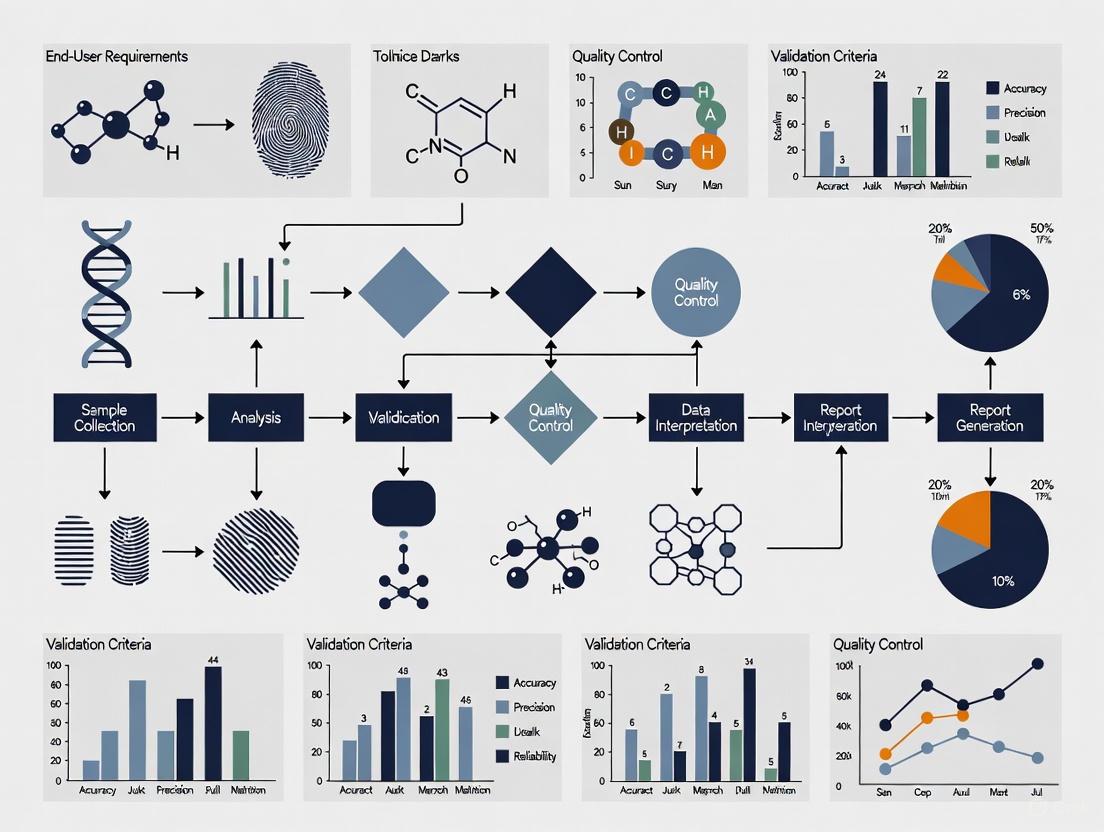
Defining End-User Requirements in Forensic Method Validation: A Strategic Framework for Researchers and Scientists
This article provides a comprehensive framework for defining and implementing end-user requirements in forensic method validation, a critical process for ensuring analytical methods are scientifically sound and legally defensible.

Foundational Validity vs. Applied Validity in Forensics: A Framework for Scientific Evidence
This article examines the critical distinction between foundational and applied validity in forensic science, a concept brought to the forefront by major reports from the National Academy of Sciences (NAS)...
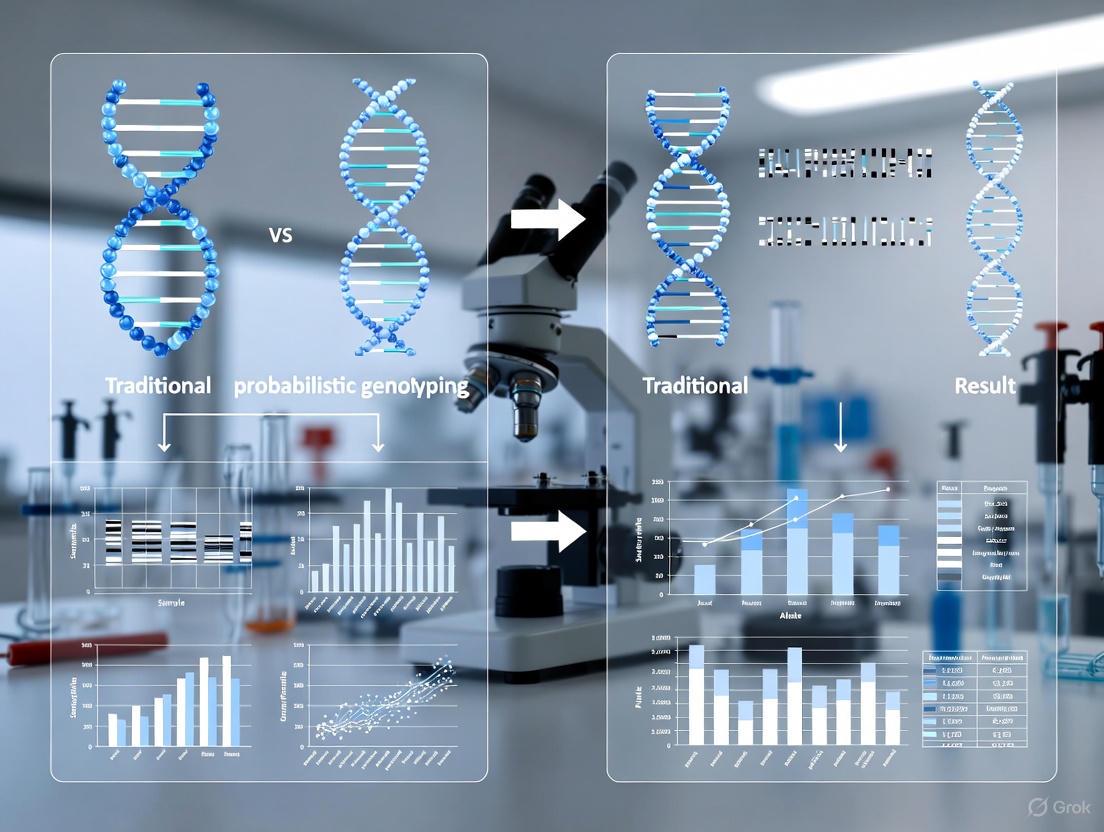
Probabilistic Genotyping vs. Traditional Methods: A Comprehensive Guide for Forensic Scientists and Researchers
This article provides a comprehensive comparison between probabilistic genotyping (PG) and traditional binary methods for forensic DNA mixture interpretation.
A Modern Framework for Likelihood Ratio Calculation in Complex DNA Mixtures: From Foundational Principles to Clinical Applications
This article provides a comprehensive guide for researchers and scientists on the interpretation of complex forensic DNA mixtures using likelihood ratios (LRs).
Hierarchy of Propositions and Activity Level Evaluation: A Framework for Credible AI in Drug Development
This article provides a comprehensive guide for researchers, scientists, and drug development professionals on integrating the forensic science principles of the hierarchy of propositions and activity level evaluation into the...