Atomic Spectroscopy Techniques for Elemental Analysis: A Comprehensive Guide for Researchers and Drug Development Professionals
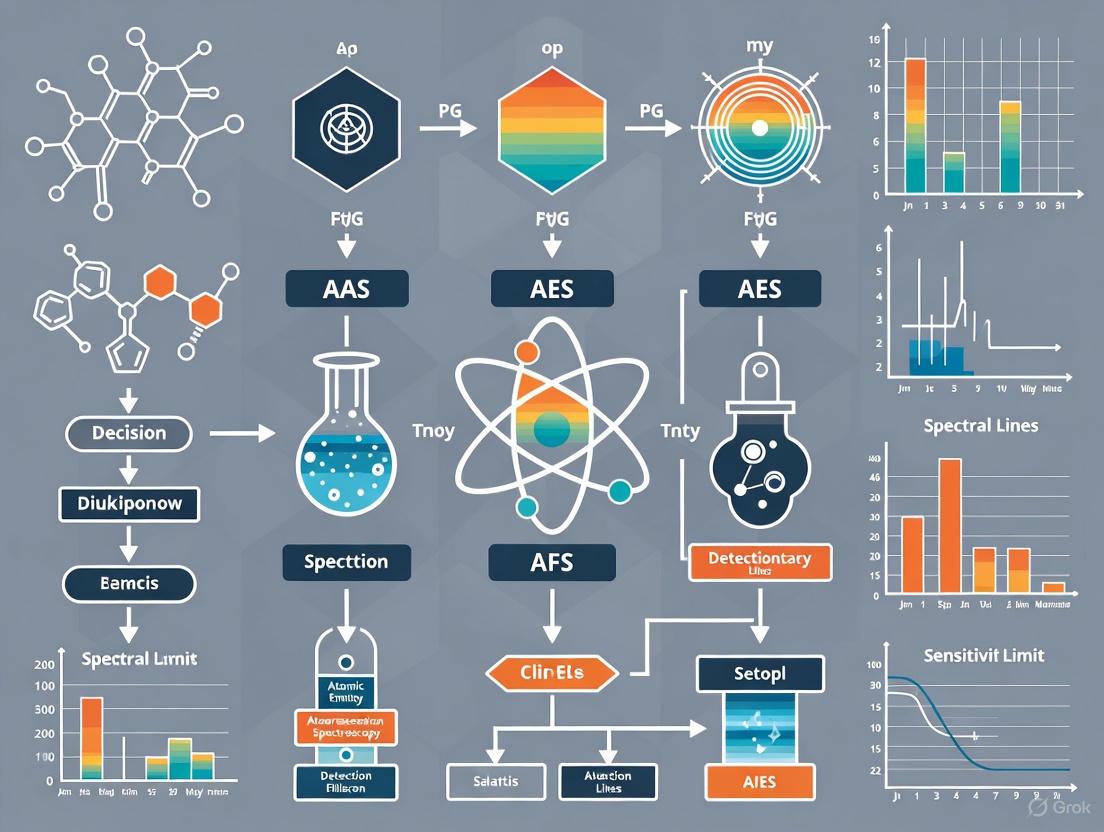
This article provides a comprehensive comparison of major atomic spectroscopy techniques—including AAS, ICP-OES, and ICP-MS—for elemental analysis.
Atomic Spectroscopy Techniques for Elemental Analysis: A Comprehensive Guide for Researchers and Drug Development Professionals
Abstract
This article provides a comprehensive comparison of major atomic spectroscopy techniques—including AAS, ICP-OES, and ICP-MS—for elemental analysis. Tailored for researchers, scientists, and drug development professionals, it covers foundational principles, methodological applications, troubleshooting for complex samples, and a data-driven comparative analysis. The guide synthesizes performance metrics, cost considerations, and regulatory compliance to empower informed technique selection for pharmaceutical quality control, environmental monitoring, and materials characterization.
Core Principles of Atomic Spectroscopy: Understanding the Fundamentals of Elemental Analysis
Atomic spectrometry techniques are foundational tools for elemental analysis, enabling the detection and quantification of metal concentrations in diverse samples from environmental, biological, and industrial matrices. Among the most prominent techniques are Atomic Absorption Spectroscopy (AAS), Atomic Emission Spectroscopy (AES), and Inductively Coupled Plasma (ICP)-based methods. Each technique operates on distinct principles—measuring the absorption of light, the emission of light from excited atoms, or utilizing a high-temperature plasma for excitation and ionization. Understanding their fundamental differences, performance characteristics, and optimal applications is crucial for researchers, scientists, and drug development professionals seeking to implement precise and efficient analytical protocols. This guide provides a comparative overview of these techniques, supported by experimental data and procedural details, to inform method selection for elemental analysis research.
Core Principles and Instrumentation
Atomic Absorption Spectroscopy (AAS)
Atomic Absorption Spectroscopy (AAS) is a technique that measures the concentration of specific elements by analyzing the absorption of light by free atoms in the gaseous state [1] [2]. The sample is vaporized in a flame or graphite furnace atomizer, and a light source (hollow cathode lamp) emits element-specific wavelengths. The amount of light absorbed at a characteristic wavelength is proportional to the concentration of the element in the sample [1].
Atomic Emission Spectroscopy (AES)
Atomic Emission Spectroscopy (AES) measures the intensity of light emitted by excited atoms as they return to the ground state [1]. The sample is introduced into an excitation source, such as a flame or plasma. The high temperature of the source excites the atoms, and as they relax, they emit light at wavelengths characteristic of each element. The intensity of this emitted light is used for quantitative analysis [1].
Inductively Coupled Plasma (ICP) Techniques
Inductively Coupled Plasma (ICP) spectroscopy uses a high-temperature plasma source (typically 6,000-10,000 K) sustained by a radiofrequency (RF) generator to both atomize and excite sample elements [1] [3]. There are two primary variants:
- ICP-Optical Emission Spectroscopy (ICP-OES): Also known as ICP-Atomic Emission Spectroscopy (ICP-AES), this technique measures the intensity of light emitted by excited atoms at specific wavelengths [3] [2].
- ICP-Mass Spectrometry (ICP-MS): This technique ionizes the sample in the plasma and then separates and detects ions based on their mass-to-charge ratio, offering ultra-low detection limits [2].
Diagram 1: Fundamental processes of AAS, AES, and ICP techniques.
Comparative Performance Data
The selection of an appropriate atomic spectrometry technique depends on a balance of performance requirements, including sensitivity, sample throughput, and cost [4]. The following tables summarize the key comparative data.
Table 1: Direct comparison of AAS, ICP-OES, and ICP-MS techniques.
| Performance Factor | AAS | ICP-OES | ICP-MS |
|---|---|---|---|
| Detection Limits | Parts-per-million (ppm) range [1] [2] | Parts-per-billion (ppb) range [2] | Parts-per-trillion (ppt) range [2] |
| Multi-Element Capability | Single element analysis [1] [2] | Simultaneous multi-element (up to ~70 elements) [1] [2] | Simultaneous multi-element analysis [2] |
| Analytical Working Range | Narrow dynamic range [2] | Wide linear range (up to 5-6 orders of magnitude) [1] | Very wide linear dynamic range [2] |
| Sample Throughput | Low (sequential analysis) [2] | High (simultaneous analysis) [1] [2] | High (simultaneous analysis) [2] |
| Typical Cost | $25,000 - $80,000 [2] | Higher than AAS [2] | $100,000 - $300,000+ [2] |
| Operation & Skill | Relatively simple, easy to use [1] [2] | Requires skilled operation [2] | Complex, requires highly skilled operation [2] |
Table 2: Analysis of key advantages and limitations.
| Technique | Key Advantages | Key Limitations |
|---|---|---|
| AAS | Cost-effective for targeted analysis [2]; High selectivity for individual elements [1]; Well-established, straightforward methodology [1] [2] | Poor multi-element capability [1] [2]; Narrow analytical working range [2]; Requires specific lamp for each element [1] [2] |
| ICP-OES | Excellent multi-element capability [1] [2]; Wide linear dynamic range [1]; Tolerant of complex sample matrices [2] | High instrument and operational cost [2]; Prone to spectral interferences [1]; Requires skilled operator [1] [2] |
| ICP-MS | Ultra-trace detection limits (ppt) [2]; High isotope-specificity and analysis capability [5]; Very high sample throughput [2] | Very high instrument and operational cost [2]; Susceptible to polyatomic and matrix interferences [5]; Highest operator skill requirement [2] |
Detailed Experimental Protocols
Graphite Furnace AAS for Trace Metal Analysis
This protocol is suitable for achieving parts-per-billion (ppb) detection limits for metals like lead or cadmium in water samples [1].
- Sample Preparation: Digest liquid samples with high-purity nitric acid to a final concentration of 1-2% v/v. For solid samples (e.g., soil, tissue), use a hotplate or microwave digester with nitric acid to create a clear solution [1].
- Instrument Setup: Install the appropriate Hollow Cathode Lamp (HCL) and set the wavelength. Program the graphite furnace temperature steps:
- Calibration: Prepare a blank and at least three standard solutions in the same acid matrix as the samples.
- Analysis & Data Processing: Inject a small aliquot (typically 10-50 µL) of the standard or sample into the graphite tube and run the temperature program. Construct a calibration curve from the standard absorbances and use it to determine unknown concentrations [1].
ICP-OES Analysis with Exact Matching for High Accuracy
This method, informed by NIST protocols, enhances accuracy by minimizing matrix effects [6].
- Sample Preparation: Prepare samples as in 3.1. The final solution should have a total dissolved solid content of <0.2% to prevent nebulizer and torch clogging.
- Internal Standard Selection: Add a non-analyte internal standard element (e.g., Yttrium or Scandium) to all samples and standards at a consistent concentration. This corrects for instrumental drift and physical interferences [1] [6].
- Exact Matching Calibration: Prepare calibration standards so that their analyte concentrations, internal standard concentrations, and acid matrix are matched as closely as possible to the samples. This practice mitigates biases from non-linear instrument responses [6].
- Instrument Operation:
- Nebulization: A peristaltic pump delivers the sample to the nebulizer, creating a fine aerosol [3].
- Plasma Generation: The aerosol is transported to the argon plasma, sustained by a 27-40 MHz RF generator at powers of 750-1600 W [4] [3].
- Analysis: Simultaneously measure analyte and internal standard emission lines using a polychromator with a CCD detector [4].
- Data Processing: The software corrects intensities using the internal standard and calculates concentrations based on the calibration curve. Apply background correction for spectral interferences [1] [6].
Diagram 2: Detailed workflow for high-accuracy ICP-OES analysis.
Essential Research Reagent Solutions
The accuracy of atomic spectrometric analysis is highly dependent on the purity and quality of reagents and materials used.
Table 3: Key reagents and materials for atomic spectrometry.
| Reagent / Material | Function | Critical Considerations |
|---|---|---|
| High-Purity Acids (HNO₃, HCl) | Sample digestion and dissolution to release analytes into solution. | Must be ultra-pure (e.g., trace metal grade) to prevent contamination of trace analytes [1]. |
| Argon Gas | Plasma support gas for ICP; purge gas for optics. | High purity (>99.996%) is essential for stable plasma formation and to minimize spectral background [3]. |
| Hollow Cathode Lamps (HCLs) | Light source for AAS that emits element-specific lines. | A separate HCL is required for each element analyzed. Lamp current and alignment must be optimized [1] [4]. |
| Certified Reference Materials (CRMs) | Quality control; verification of method accuracy and precision. | CRMs should closely match the sample matrix (e.g., river water, soil) to validate the entire analytical process [6]. |
| Internal Standard Solutions (Y, Sc, In) | Added to samples and standards to correct for instrument drift and matrix effects. | The internal standard must not be present in the original sample and must behave similarly to the analytes [1] [6]. |
Advanced Applications and Research Frontiers
Advanced applications of these techniques often involve coupling them with other technologies to address complex analytical challenges.
- Nuclear Material Characterization: Research by scientists like Benjamin T. Manard involves using laser ablation (LA) coupled with ICP-MS for the direct analysis of uranium particles for nuclear safeguards and forensics. This tandem technique provides elemental and isotopic information with minimal sample preparation [5].
- Speciation Analysis: Combining liquid chromatography (LC) with ICP-MS allows for the determination of specific chemical forms of elements (e.g., toxic vs. non-toxic arsenic species), which is critical for accurate toxicological and environmental risk assessment [5].
- High-Accuracy Metrology: Research at institutions like NIST focuses on protocols like exact matching for HP-ICP-OES to achieve relative expanded uncertainties as low as 0.2%. This is vital for the certification of Standard Reference Materials (SRMs) [6].
Atomic spectrometry techniques offer a powerful suite of tools for elemental analysis, each with a distinct profile of strengths. AAS remains a robust, cost-effective solution for labs requiring routine, single-element analysis at ppm levels. ICP-OES is the workhorse for laboratories needing high-throughput, multi-element analysis with ppb sensitivity and the ability to handle complex matrices. ICP-MS stands as the most powerful technique for applications demanding ultra-trace detection limits, isotopic information, and the highest sensitivity.
The choice of technique is not one of superiority but of appropriateness for the analytical problem at hand. Factors such as required detection limits, number of target elements, sample throughput, budget, and operator expertise must all be weighed. Furthermore, as research advances, the integration of these techniques with complementary technologies like chromatography and laser ablation continues to expand the frontiers of what is possible in elemental analysis, providing scientists with ever-more precise tools for research and drug development.
Atomic spectroscopy is a suite of analytical techniques used to determine the elemental composition of matter. These techniques are founded on the core physics of atomic transitions—the process by which atoms interact with light and energy. When atoms absorb energy, their electrons are promoted from a ground state to a higher-energy, excited state. As these excited electrons return to the ground state, they release energy in the form of photons of characteristic wavelengths. The precise energy of these photons is determined by the unique electronic structure of each element, serving as a fingerprint for its identification [7] [8].
This guide provides an objective comparison of major atomic spectroscopic techniques—Atomic Absorption Spectrophotometry (AAS), Inductively Coupled Plasma Mass Spectrometry (ICP-MS), Laser-Induced Breakdown Spectroscopy (LIBS), and X-Ray Fluorescence (XRF). We compare their operational principles, performance, and applications, supported by experimental data and detailed methodologies to aid researchers in selecting the appropriate tool for their analytical challenges.
The following table summarizes the fundamental characteristics and performance metrics of the four core techniques.
Table 1: Comparison of Major Atomic Spectroscopic Techniques
| Feature | AAS | ICP-MS | LIBS | XRF |
|---|---|---|---|---|
| Underlying Atomic Physics | Absorption of light by ground-state atoms in a flame or furnace [8] | Ionization in high-temperature plasma followed by mass-to-charge separation [9] [10] | Atomic emission from a laser-generated plasma [7] [11] | Emission of secondary X-rays after inner-shell electron ejection [12] |
| Multi-Element Capability | Low (Single element) [8] [10] | High [8] [10] | High [7] | High [12] |
| Typical Detection Limits | FAAS: ppm-ppbGFAAS: ppb-ppt [8] | ppb-ppt [8] [10] | ppm [7] | ~0.1 g/kg for P, K, Ca; ~20 mg/kg for Fe, Mn [13] |
| Analytical Speed | Moderate (FAAS) to Slow (GFAAS) [10] | Very High [10] | Very High/Rapid [14] [7] | High/Fast [12] |
| Sample Throughput | Good for FAAS, Low for GFAAS [10] | Very High [9] [10] | High [14] | High [12] |
| Sample Preparation | Liquid, often with dilution [8] | Liquid, often with dilution or digestion [10] | Minimal; solids, liquids, aerosols can be analyzed directly [7] [15] | Minimal; often pressed pellets [12] [13] |
| Cost (Equipment & Operation) | Low to Moderate [8] [10] | High [8] [10] | Moderate [7] | Moderate (Benchtop and handheld options) [13] |
Detailed Technical Comparison and Experimental Data
Performance in Environmental and Biological Analysis
Experimental studies provide direct comparisons of technique performance for real-world applications. A study on metal monitoring in brownfields compared Flame AAS and XRF for analyzing soils contaminated with Pb, Cu, and Zn. While FAAS demonstrated lower limits of detection (LOD), XRF was faster and more practical for field screening, with both providing comparable quantitative results [12]. This illustrates the trade-off between ultra-sensitive laboratory analysis and rapid, in-situ measurement.
In another study, the analytical performance of benchtop and handheld XRF systems was evaluated for the direct analysis of plant materials. Pressed pellets of sugar cane leaves were analyzed for elements including P, K, Ca, Fe, and Mn. Both systems showed comparable figures of merit, with correlation coefficients for test samples ranging from 0.9094 to 0.9948 for the handheld device and 0.9601 to 0.9918 for the benchtop system. Limits of detection were also similar, at approximately 0.1 g/kg for P, K, Ca, and S, and 20 mg/kg for Fe and Mn, demonstrating that handheld systems can provide performance equivalent to benchtop units for direct solid sample analysis [13].
Advances in LIBS and ICP-MS
Recent research has focused on improving the sensitivity and spatial resolution of LIBS. A 2025 study achieved a spatial resolution of 1 μm for mapping metallic coatings by using a picosecond laser with low pulse energy (0.4 μJ) and a tight irradiation interval (0.8 μm). The results showed good agreement with SEM-EDS, demonstrating that optimized laser ablation conditions can push LIBS into the domain of micro-analysis [14]. This advancement is crucial for applications like identifying elemental segregation in steel samples [14].
For ICP-MS, a key development is its hyphenation with other techniques. Laser Ablation ICP-MS (LA-ICP-MS) allows for the direct analysis of solid samples, such as glass fragments in forensic science, with minimal sample preparation and a small sample size of less than 250 nanograms [9]. This combination leverages the spatial resolution of the laser and the exceptional sensitivity and multi-element capability of the ICP-MS.
Experimental Protocols and Methodologies
Protocol: High-Resolution Spatial Mapping with Picosecond LIBS
This protocol is adapted from studies on high-resolution microanalysis of steel samples and metallic coatings [14].
- 1. Sample Preparation: The solid sample (e.g., steel, coated metal) is mounted on a stable stage. For high-resolution mapping, a smooth, flat surface is ideal.
- 2. Instrumentation Setup:
- Laser: Utilize a picosecond-pulsed laser (e.g., Nd:YAG at 355 nm).
- Pulse Energy: Adjust to a low level, typically around 0.4 μJ per pulse, to minimize the ablation crater size.
- Repetition Rate: Set to 35 Hz.
- Focusing Optics: Focus the laser beam to a small spot size on the sample surface.
- Spectrometer: Use an echelle spectrograph with a CCD detector to capture the broad spectrum of emitted light.
- 3. Data Acquisition:
- Raster the laser beam across the sample surface with a step size of 1-2 μm.
- At each point, fire the laser and collect the emitted spectrum.
- The time between laser ablation and photon collection (Q-switch delay) is set to minimize continuum radiation.
- 4. Data Analysis: Construct elemental distribution maps by integrating the intensity of a characteristic emission line for each element (e.g., Al, Cu, Mn) at every spatial coordinate.
Diagram 1: Picosecond LIBS workflow for high-resolution spatial mapping.
Protocol: Multi-Element Analysis of Biological Fluids via ICP-MS
This standard protocol is widely used in clinical and biological analysis for the determination of trace elements [15] [10].
- 1. Sample Preparation (Dilution):
- Pipette a small volume of the biological fluid (e.g., 100 μL of serum or urine) into a tube.
- Add a diluent, typically a dilute acid solution such as 1% nitric acid (HNO₃), to achieve a dilution factor between 10 and 50. This keeps the total dissolved solids below 0.2% to prevent nebulizer clogging and matrix effects.
- To aid with dispersion and stability, a surfactant like Triton-X100 may be added to the diluent.
- 2. Instrumentation Setup:
- Nebulizer: A pneumatic nebulizer (e.g., concentric, cross-flow) is used to create the sample aerosol.
- Spray Chamber: Removes larger droplets to ensure only a fine aerosol reaches the plasma.
- Plasma: Argon plasma is sustained in a quartz torch at a temperature of approximately 10,000 K.
- Mass Spectrometer: A quadrupole mass analyzer is tuned to separate ions by their mass-to-charge ratio (m/z).
- 3. Calibration and Quantification:
- Prepare a series of multi-element calibration standards in a matrix matching the sample diluent.
- An internal standard (e.g., Indium, Germanium) is added to all samples and standards to correct for instrument drift and matrix suppression/enhancement.
- The instrument is calibrated, and analyte concentrations are calculated based on the intensity ratio of the analyte to the internal standard.
- 4. Data Analysis: Report elemental concentrations, typically in μg/L (ppb) or nmol/L, for all target elements.
Diagram 2: ICP-MS workflow for multi-element analysis of biological fluids.
The Scientist's Toolkit: Key Reagents and Materials
Table 2: Essential Research Reagent Solutions for Atomic Spectrometry
| Reagent/Material | Function | Common Example Protocols |
|---|---|---|
| High-Purity Acids (e.g., HNO₃) | Digest organic matrices and dissolve samples; main component of diluents to stabilize trace metals in solution [10]. | Sample digestion for ICP-MS/AAS; preparation of aqueous calibration standards [10]. |
| Certified Reference Materials (CRMs) | Calibrate instruments and validate analytical methods for accuracy. Critical for robust method validation, especially in nanoparticle analysis [14] [15]. | External calibration in AAS, ICP-MS, XRF; quality control in all quantitative analyses. |
| Argon Gas | Sustain the inductively coupled plasma (in ICP-MS/OES) and act as a carrier gas. High-purity is essential for stable plasma and low background [9]. | Operation of ICP-MS and ICP-OES instrumentation. |
| Hollow Cathode Lamps (HCLs) | Provide the narrow-band, element-specific light source required for atomic absorption measurements [8]. | Elemental analysis by AAS (a separate lamp is required for each element). |
| Internal Standards | Correct for instrument drift and non-spectral interferences; added in known concentrations to all samples, standards, and blanks [9]. | Quantitative analysis by ICP-MS (e.g., using Indium or Germanium). |
| Hydride Generation Reagents (e.g., NaBH₄) | Chemically convert analyte elements (As, Se, Hg) into volatile hydrides or cold vapor for efficient introduction into the instrument [8]. | Determination of hydride-forming elements and mercury by AAS or ICP-MS. |
The selection of an atomic spectroscopy technique is a strategic decision based on the specific analytical requirements. AAS remains a robust and cost-effective choice for laboratories focused on a limited number of elements. ICP-MS is the undisputed leader for ultra-trace multi-element analysis where high sensitivity and throughput are critical. LIBS offers unparalleled speed and minimal sample preparation for direct solid analysis and spatial mapping. XRF provides a non-destructive and portable solution for rapid elemental screening in the lab and field.
Understanding the core physics of atomic transitions empowers scientists to not only operate these instruments but also to interpret data accurately and innovate method development. As the field progresses, the trend is toward hyphenated techniques, miniaturization for field-portable analysis, and advanced data processing with machine learning to extract more information from the fundamental interactions between atoms and energy [14] [15].
Atomic spectroscopy stands as a cornerstone of modern elemental analysis, providing researchers and pharmaceutical developers with critical data for everything from regulatory compliance to fundamental material characterization. The performance, accuracy, and detection limits of these techniques are fundamentally governed by their core instrumental components. This guide provides a detailed comparison of the essential hardware—light sources, atomizers, and detectors—that define the capabilities of major atomic spectroscopic techniques. Understanding these components enables scientists to select the optimal methodology for their specific analytical challenges, whether for routine metal analysis in pharmaceuticals or cutting-edge nanoparticle characterization in environmental samples.
Core Instrumentation Components in Atomic Spectroscopy
The fundamental architecture of atomic spectroscopy instruments shares common components across different techniques, though their implementation and performance characteristics vary significantly. The essential components include: a radiation source for probing atoms, an atomizer to convert samples into free atoms, a wavelength selector to isolate specific spectral lines, and a detector to measure the resulting signal.
The light source provides the specific wavelengths of radiation that ground-state atoms will absorb or against which excited atoms will emit.
- Hollow Cathode Lamps (HCLs): These are the most common radiation sources in Atomic Absorption Spectroscopy (AAS). Each HCL contains a cathode made of the element to be determined and an anode sealed in a glass tube filled with an inert gas like neon or argon [16] [8]. When voltage is applied, gas ionisation sputters atoms from the cathode, which then emit their characteristic resonance lines [8]. HCLs provide stable, narrow-bandwidth light tuned precisely to the absorption lines of specific elements [17].
- Electrodeless Discharge Lamps (EDLs): For certain elements requiring higher radiation intensity, EDLs offer superior performance [8]. These lamps contain the target element in a quartz bulb excited by radiofrequency energy, producing brighter and more intense spectral lines than HCLs for elements like arsenic and selenium [8].
- Plasma Sources: In Inductively Coupled Plasma Optical Emission Spectroscopy (ICP-OES) and ICP Mass Spectrometry (ICP-MS), the plasma itself serves as the excitation source [2] [18]. The argon plasma, sustained by a radiofrequency coil at temperatures of 6,000-10,000 K, efficiently atomizes and excites sample elements, causing them to emit characteristic photons [2] [18]. This high-temperature environment enables simultaneous multi-element analysis without requiring element-specific lamps.
Atomizers
The atomizer is a critical component that converts the sample into a cloud of free ground-state atoms, essential for both absorption and emission measurements.
- Flame Atomizers: Used in Flame AAS (FAAS), these atomizers typically employ air-acetylene (2,300°C) or nitrous oxide-acetylene (3,000°C) mixtures to produce free atoms [8] [18]. The liquid sample is nebulized to form an aerosol that is introduced into the flame, where thermal energy desolvates, vaporizes, and atomizes the sample [16] [18]. Flame atomizers offer high sample throughput but relatively short atom residence time in the light path [2].
- Graphite Furnace Atomizers: In Graphite Furnace AAS (GFAAS), electrothermal atomization occurs in a small graphite tube heated by electrical current according to a precise temperature program [16] [8]. This approach concentrates the entire sample in the light path with longer atom residence times, delivering detection limits 100-1,000 times lower than flame systems while requiring significantly smaller sample volumes (5-50 µL) [8] [17].
- Plasma Torches: ICP systems use a specialized torch where argon plasma sustains temperatures of 6,000-10,000 K [2] [18]. This extreme environment not only atomizes samples but also efficiently ionizes them, making it ideal for both optical emission and mass spectrometric detection [18]. Plasma torches handle complex matrices including solid-digested samples, wastewater, and biological fluids [2].
- Vapor Generation Systems: Specialized vapor generation accessories exist for volatile elements like mercury and hydride-forming elements (As, Se, Sb). These systems use chemical reduction (typically with sodium borohydride) to convert analytes to volatile species that are then transported to the measurement cell, offering exceptional detection limits for these specific elements [8] [17].
Detectors and Wavelength Selection
Following atomization and excitation, instruments require components to isolate and measure the analytical signals.
- Monochromators: These devices isolate specific wavelengths of light using diffraction gratings [16] [8]. In AAS, monochromators select the precise resonance line from the HCL, excluding other emission lines and stray light [16] [8]. AAS monochromators require less resolution than molecular spectrophotometers due to the narrow line widths of atomic transitions [8].
- Mass Spectrometers: In ICP-MS, a mass spectrometer replaces the optical monochromator, separating ions based on their mass-to-charge ratio [18]. This mass-based separation provides exceptional specificity and enables isotope ratio measurements [19] [18].
- Photomultiplier Tubes (PMTs): Traditional detectors in AAS and ICP-OES, PMTs convert light intensity into electrical signals with high sensitivity and fast response times [16] [8]. Modern systems increasingly employ solid-state detectors like charge-coupled devices (CCDs) or charge-injection devices (CIDs) that can measure multiple wavelengths simultaneously, dramatically improving multi-element analysis capabilities [8].
Table 1: Performance Comparison of Major Atomic Spectroscopy Techniques
| Parameter | Flame AAS | Graphite Furnace AAS | ICP-OES | ICP-MS |
|---|---|---|---|---|
| Typical Detection Limits | ppm to ppb range [18] | ppb to ppt range [8] [18] | ppm to ppb range [18] | ppb to ppt range, some applications to ppq [18] |
| Sample Throughput | High (minutes per sample) [2] | Low (several minutes per element) [2] [8] | High (simultaneous multi-element) [2] | High (simultaneous multi-element) [2] |
| Multi-element Capability | Single element [2] [8] | Single element [2] | Simultaneous [2] [18] | Simultaneous [2] [18] |
| Sample Volume | 1-5 mL [8] | 5-50 µL [8] | 1-5 mL [18] | 1-5 mL [18] |
| Linear Dynamic Range | 2-3 orders of magnitude [8] | 2-3 orders of magnitude [8] | 4-5 orders of magnitude [8] | 8-9 orders of magnitude [8] [18] |
| Initial Instrument Cost | $25,000-$80,000 [2] | Higher than Flame AAS [8] | $100,000+ [2] | $100,000-$300,000+ [2] |
Table 2: Atomizer Comparison and Applications
| Atomizer Type | Temperature/Energy | Key Applications | Advantages | Limitations |
|---|---|---|---|---|
| Flame (FAAS) | 2,000-3,000°C [8] | Routine water analysis, food products, clinical samples [2] | High throughput, simple operation, low cost [2] | Lower sensitivity, limited for refractory elements [8] |
| Graphite Furnace (GFAAS) | Up to 3,000°C [8] | Trace metal analysis in pharmaceuticals, biological tissues [2] [8] | Excellent sensitivity, small sample volumes [8] | Longer analysis time, higher interference potential [8] |
| ICP Torch | 6,000-10,000 K [2] | Environmental monitoring, material science, geochemistry [2] [20] | Handles complex matrices, multi-element capability [2] | High operational cost, requires skilled operator [2] |
| Vapor Generation | Variable (chemical energy) | Hg, As, Se, Sb in environmental and biological samples [8] | Exceptional sensitivity for specific elements [8] | Limited to specific elements, requires chemistry optimization [8] |
Experimental Protocols: Methodologies for Technique Comparison
Standardized Sample Analysis Protocol
To objectively compare atomic spectroscopy techniques, researchers employ standardized methodologies:
Sample Preparation: Liquid samples are typically digested using nitric acid in closed-vessel microwave systems to ensure complete dissolution of analytes and compatibility with nebulization systems [20]. Solid samples require dissolution through acid digestion or fusion, while powders may be analyzed directly using laser ablation introduction systems [20].
Calibration Approach: External calibration with matrix-matched standards establishes quantitative relationships [8]. The standard additions method compensates for matrix effects by spiking samples with known analyte increments [8]. Internal standards (e.g., Yttrium or Scandium in ICP-MS) correct for instrument drift and matrix suppression effects [8].
Quality Control Measures: Analysis includes certified reference materials (CRMs) to verify accuracy [20]. Continuing calibration verification standards and blanks monitor instrument performance during sequence runs [18]. Method detection limits are determined by analyzing seven replicates of a low-level standard and calculating 3× standard deviation of results [18].
Single-Particle ICP-MS Nanoparticle Characterization
Advanced applications like nanoparticle characterization demonstrate the evolving capabilities of atomic spectroscopy:
Sample Introduction: Highly diluted nanoparticle suspensions (typically 0.01-0.1 mg/L) are introduced via pneumatic nebulization to ensure individual nanoparticle events are temporally resolved [19].
Data Acquisition: Using short integration times (100 µs), time-resolved analysis captures transient signals as discrete nanoparticles enter the plasma [19]. Each nanoparticle generates a signal pulse proportional to its elemental mass [19].
Data Processing: Signals are processed to distinguish dissolved analyte (constant low signal) from particulate signals (transient high-intensity pulses) [19]. Particle size is calculated based on signal intensity using established calibration curves with nanoparticle standards of known size and composition [19].
The following workflow diagram illustrates the fundamental processes shared across atomic spectroscopy techniques, from sample introduction to data output:
Essential Research Reagent Solutions
Table 3: Key Consumables and Research Reagents in Atomic Spectroscopy
| Item | Function | Application Notes |
|---|---|---|
| Hollow Cathode Lamps | Element-specific light source for AAS [16] [8] | Require 15-30 minute warm-up; limited lifetime (~5000 mA hours) [8] |
| High-Purity Gases | Plasma generation (Argon) and atomization (Acetylene, Nitrous Oxide) [2] [18] | Gas purity critical for detection limits; high-purity argon (>99.996%) essential for ICP-MS [18] |
| Graphite Tubes & Cones | Sample containment (Furnace AAS) and interface (ICP-MS) [8] [18] | Consumables requiring regular replacement; platform tubes improve accuracy for complex matrices [8] |
| Certified Reference Materials | Method validation and quality assurance [20] | Essential for accuracy verification; matrix-matched CRMs preferred [20] |
| Nebulizers & Spray Chambers | Sample aerosol generation for introduction into flame or plasma [8] [18] | Different designs (e.g., concentric, cross-flow) optimized for specific sample matrices [8] |
| Chemical Modifiers | Matrix modification in GFAAS to control volatility of analytes/interferents [8] | Palladium/magnesium nitrate commonly used to stabilize volatile elements [8] |
The selection of appropriate instrumentation components in atomic spectroscopy directly determines analytical performance across research and pharmaceutical applications. Flame AAS remains a cost-effective solution for routine single-element analysis, while graphite furnace AAS provides exceptional sensitivity for trace metal determination. ICP-OES delivers robust multi-element capability for diverse sample matrices, and ICP-MS stands as the most sensitive technique for ultratrace analysis and specialized applications like nanoparticle characterization.
Understanding the fundamental roles of light sources, atomizers, and detectors enables scientists to match technique capabilities with analytical requirements. This component-level knowledge supports optimal method development, facilitates troubleshooting, and informs strategic instrument selection for drug development and research laboratories facing increasingly stringent analytical demands. As atomic spectroscopy continues evolving, emerging trends including hyphenated techniques, miniaturization, and automated workflow integration will further expand the analytical toolkit available to researchers.
Atomic Absorption (AAS) and Atomic Emission Spectroscopy (AES) are foundational analytical techniques in elemental analysis, yet they operate on fundamentally different physical principles. AAS measures the absorption of light by free atoms in the gaseous state, while AES measures the intensity of light emitted by excited atoms as they return to lower energy states [1] [21]. The core distinction lies in their energy pathways: AAS relies on the absorption of external radiation to promote electrons to higher energy levels, whereas AES depends on the emission of radiation when excited electrons relax to ground state [22] [23]. This mechanistic difference dictates all subsequent variations in instrumentation, applications, and performance characteristics between the two techniques.
These techniques have revolutionized elemental analysis across diverse fields including pharmaceutical development, environmental monitoring, geochemical analysis, and food safety [24] [25]. For researchers and drug development professionals, understanding these mechanistic differences is crucial for selecting the appropriate method for specific analytical challenges, whether for quantifying trace metals in pharmaceutical compounds or performing multi-element screening in biological samples.
Fundamental Principles and Mechanisms
Atomic Absorption Spectroscopy (AAS) Principles
Atomic Absorption Spectroscopy operates on the principle that ground state atoms can selectively absorb light at specific characteristic wavelengths, causing their electrons to jump from the ground state to excited states [26] [22]. The amount of light absorbed at these specific wavelengths is directly proportional to the concentration of the absorbing atoms in the sample, enabling quantitative analysis [1]. The process requires: (1) a source of characteristic radiation specific to the target element, typically a hollow cathode lamp (HCL) or electrodeless discharge lamp (EDL); and (2) an atomizer to convert the sample into a cloud of free, ground state atoms [24] [26].
The absorption phenomenon follows the Boltzmann distribution, where at analytical temperatures (2,000-3,000K), the vast majority of atoms remain in the ground state, making them capable of absorbing resonance radiation [26]. This population distribution explains AAS's exceptional sensitivity for trace element detection. The absorption spectra consist of sharp, discrete lines with narrow widths (approximately 3-10 nm) due to the fixed energy differences between atomic orbitals [22]. Each element has its unique absorption spectrum, providing the technique with high specificity [26].
Atomic Emission Spectroscopy (AES) Principles
Atomic Emission Spectroscopy operates on the fundamentally different principle of measuring light intensity emitted when excited atoms or ions return to lower energy states [27] [23]. In AES, the sample is introduced into a high-energy source (flame, plasma, arc, or spark) that serves both to atomize the sample and excite the atoms to higher electronic states [1] [23]. As these excited state atoms decay to ground state, they emit photons of characteristic wavelengths, with the intensity of emitted radiation being proportional to the concentration of atoms [23].
The excitation process in AES follows the Boltzmann expression: [ \frac{n{\text{upper}}}{n{\text{lower}}} = \frac{g{\text{upper}}}{g{\text{lower}}} e^{-(\varepsilon{\text{upper}}-\varepsilon{\text{lower}})/kB T} ] where (n{\text{upper}}) and (n_{\text{lower}}) represent the number of atoms in higher and lower energy levels, (g) terms are degeneracies, and (\varepsilon) terms are energies of the respective levels [23]. This relationship demonstrates that higher temperature sources produce larger populations of excited atoms, significantly enhancing AES sensitivity. Unlike AAS, AES does not require separate radiation sources for each element, as the emitted light originates from the excited sample atoms themselves [1] [27].
Comparative Energy Pathway Diagrams
The fundamental difference between AAS and AES energy pathways is visualized below.
Instrumentation and Methodologies
Atomic Absorption Spectroscopy Instrumentation
AAS instrumentation consists of four key components configured in sequence: (1) a line source such as a hollow cathode lamp (HCL) that emits element-specific wavelengths; (2) an atomization system that converts the sample into free atoms; (3) a wavelength selection device (monochromator); and (4) a detection and readout system [24] [26]. The hollow cathode lamp contains a cathode made of the target element or coated with it, which emits sharp, element-specific spectral lines when energized [26]. This specific wavelength correspondence is crucial, as it means AAS requires a different HCL for each element analyzed [1].
Atomization, the process of converting sample constituents into free atoms, is achieved primarily through two methods in AAS. Flame AAS uses a controlled combustion environment (typically air-acetylene or nitrous oxide-acetylene) to produce atoms, offering advantages of speed, ease of use, and continuous operation [24] [26]. Electrothermal AAS (graphite furnace) employs a small graphite tube heated by electrical current to high temperatures in a programmed sequence (drying, ashing, atomization) [24]. Graphite furnace AAS provides superior sensitivity (parts-per-billion level) compared to flame AAS (parts-per-million level) because atoms are concentrated in a small volume with essentially 100% atomization efficiency and longer residence times [24]. The graphite furnace temperature program typically includes drying (100-150°C to evaporate solvent), ashing or pyrolysis (350-1200°C to remove organic matter), and atomization (2000-3000°C to produce free atoms) stages [26].
Atomic Emission Spectroscopy Instrumentation
AES instrumentation differs fundamentally in that it requires only three main components: (1) an excitation source that both atomizes and excites the sample; (2) a wavelength selection system; and (3) a detection system [1] [27]. Unlike AAS, AES does not require an external radiation source since the emitted light originates from the excited sample atoms themselves [23]. Modern AES employs several excitation sources, with inductively coupled plasma (ICP) being most prominent for its superior performance.
Inductively coupled plasma (ICP) sources generate high-temperature plasmas (6,000-10,000 K) by ionizing a flowing stream of argon gas with an induction coil carrying an alternating current [1] [23]. The resistive heating as charged particles move through the gas maintains the plasma's extreme temperature, which provides more efficient atomization and a higher population of excited states compared to flame sources [23]. Flame emission uses combustion flames similar to AAS but operates at lower temperatures (2,000-3,000 K), making it suitable mainly for easily excitable alkali and alkaline earth metals [23]. Spark and arc AES are used primarily for direct analysis of conductive solid samples, where an electric discharge both vaporizes and excites the sample material [23].
Comparative Instrumentation Workflow
The instrumental configurations for AAS and AES highlight their mechanistic differences, as shown in the workflow below.
Analytical Performance Comparison
Quantitative Performance Metrics
The mechanistic differences between AAS and AES translate directly to distinct analytical performance characteristics, as summarized in the table below.
| Performance Parameter | Atomic Absorption Spectroscopy (AAS) | Atomic Emission Spectroscopy (AES) |
|---|---|---|
| Detection Mechanism | Absorption of external radiation by ground state atoms [22] | Emission of radiation from excited atoms returning to ground state [23] |
| Detection Limits | Flame AAS: ppm range (μg/mL)Graphite Furnace AAS: ppb range (ng/mL) [24] | ICP-AES: sub-ppb to ppm range [27] |
| Linear Dynamic Range | 2-3 orders of magnitude [24] [26] | 5-6 orders of magnitude [1] |
| Multi-element Capability | Single element analysis (requires changing HCL) [1] | Simultaneous multi-element analysis (up to 70 elements) [1] [27] |
| Spectral Interferences | Less prone to spectral interferences due to narrow HCL emission lines [1] | More spectral interferences due to dense emission line spectra [1] [27] |
| Sample Throughput | Relatively slow (sequential element analysis) [24] | High throughput (simultaneous multi-element detection) [1] |
| Operational Costs | Lower initial investment and operating costs [1] | Higher initial investment and operating costs [1] [27] |
Interference Mechanisms and Mitigation
Both techniques experience analytical interferences, but of different natures. AAS primarily suffers from matrix effects where sample constituents affect atomization efficiency, particularly in graphite furnace applications [24]. These include molecular absorption (background absorption from molecular species), chemical interferences (formation of stable compounds that resist atomization), and physical interferences (variations in sample viscosity or surface tension affecting nebulization) [24]. Modern AAS addresses these through background correction systems (deuterium arc or Zeeman-effect) and matrix modifiers that stabilize the analyte or modify the matrix [24] [26].
AES experiences primarily spectral interferences due to overlapping emission lines from different elements or background emission from plasma gases and molecular species [1] [27]. ICP-AES mitigates these through high-resolution spectrometers, background correction algorithms, and sometimes chemical separation of interfering elements [27]. The high temperature of ICP sources significantly reduces chemical interferences compared to flame-based methods but introduces greater spectral complexity [23].
Experimental Protocols and Applications
Detailed Methodologies
Flame AAS Protocol for Trace Metal Analysis: Sample preparation begins with conversion to aqueous solution through acid digestion (typically using nitric acid for organic matrices or combination acids like HNO₃-HCl for inorganic materials) [24] [26]. The liquid sample is aspirated into the nebulizer, which creates a fine aerosol mixed with fuel and oxidant gases. The aerosol-fuel mixture travels to the burner head where combustion occurs (typical temperatures: air-acetylene ~2,300°C, nitrous oxide-acetylene ~2,700°C) [26]. Ground state atoms in the flame absorb resonance radiation from the HCL, and the attenuation of light intensity is measured by the detector. Quantification employs external calibration with matrix-matched standards or standard addition methodology to compensate for matrix effects [1].
ICP-AES Protocol for Multi-element Analysis: Samples are typically digested to create aqueous solutions (exception being direct solid analysis by laser ablation) [27] [23]. A peristaltic pump delivers the sample solution to a nebulizer that creates aerosol, with larger droplets removed by a spray chamber to enhance efficiency [23]. The fine aerosol is transported to the argon plasma torch where temperatures of 6,000-10,000 K cause complete atomization and excitation [1] [23]. Emitted light is dispersed by a grating polychromator capable of measuring multiple wavelengths simultaneously, with detector arrays (typically CCD or CID) capturing the complex emission spectrum [27]. Quantification uses multi-element calibration standards with internal standardization (e.g., adding yttrium or scandium) to correct for matrix effects and instrumental drift [1].
Essential Research Reagent Solutions
The following table details key reagents and materials essential for implementing these analytical techniques.
| Research Reagent/Material | Function in Analysis | Application Technique |
|---|---|---|
| Hollow Cathode Lamps (HCLs) | Emit element-specific narrow line spectra for absorption measurements [26] | AAS |
| Graphite Furnace Tubes | Electrothermal atomization platform for high-sensitivity analysis [24] | Graphite Furnace AAS |
| Matrix Modifiers (e.g., Pd, Mg, NH₄H₂PO₄) | Stabilize volatile analytes or modify sample matrix during thermal treatment [24] | Graphite Furnace AAS |
| ICP Torches (Quartz) | Contain and sustain high-temperature argon plasma for atomization/excitation [23] | ICP-AES |
| Nebulizers & Spray Chambers | Generate fine aerosol from liquid samples and select optimal droplet size [23] | Flame AAS, ICP-AES |
| High-Purity Acids (HNO₃, HCl) | Digest samples to create aqueous solutions for analysis [24] [27] | Sample Preparation for AAS/AES |
| Certified Reference Materials | Validate method accuracy and perform instrument calibration [1] | Quality Assurance for AAS/AES |
Application Domains
AAS finds particular utility in targeted element analysis where specific metals need quantification at trace levels. Common applications include determination of toxic heavy metals (Pb, Cd, As, Hg) in pharmaceuticals and biological fluids [24] [22], quality control of metallurgical products, analysis of trace elements in environmental samples (waters, soils), and nutritional mineral analysis in food products [24]. Graphite furnace AAS is especially valuable when sample volume is limited or when ultra-trace detection is required [24].
AES, particularly ICP-AES, excels in multi-element screening and analysis of complex samples. Key applications include comprehensive elemental analysis of geological materials, simultaneous determination of multiple elements in clinical and biological samples, characterization of advanced materials (e.g., catalyst metals, semiconductor materials), petroleum products analysis, and high-throughput quality control of industrial materials [27] [23]. Spark AES specializes in direct analysis of metallic alloys for production quality control in foundry and metal casting facilities [27] [23].
Atomic Absorption and Atomic Emission Spectroscopy, while both serving elemental analysis, operate on fundamentally different mechanistic principles that dictate their respective strengths and limitations. AAS, measuring absorption by ground state atoms, offers exceptional sensitivity and selectivity for individual element quantification, particularly for metals, with relatively simple instrumentation [24] [22]. AES, measuring emission from excited atoms, provides superior multi-element capability and wider linear dynamic range, albeit with more complex instrumentation and greater spectral interference potential [1] [23].
The choice between these techniques depends fundamentally on analytical requirements. For targeted analysis of specific elements at trace concentrations, particularly in routine laboratory settings with budget constraints, AAS remains the technique of choice [1]. For comprehensive elemental characterization of complex samples requiring simultaneous multi-element detection, ICP-AES provides unparalleled capabilities [27]. Understanding these core mechanistic differences enables researchers and drug development professionals to select the optimal analytical approach for their specific elemental analysis challenges.
Sample introduction and atomization are critical steps in atomic spectroscopy, directly influencing the sensitivity, accuracy, and precision of elemental analysis. These processes convert solid or liquid samples into free ground-state atoms that can be measured by spectroscopic techniques. The fundamental challenge lies in efficiently introducing the sample into the atomization source while minimizing interferences and maximizing atomization efficiency. Researchers must select the optimal methodology based on their specific analytical requirements, including detection limit needs, sample matrix, and available instrumentation.
This guide provides a comprehensive comparison of major sample introduction and atomization techniques, including pneumatic nebulization (PN), electrothermal atomization in graphite furnaces, and vapor generation methods such as hydride generation (HG) and photochemical vapor generation (PVG). We present experimental data, detailed methodologies, and performance characteristics to inform method selection for elemental analysis research and drug development applications.
Performance Comparison of Sampling Modes
The performance characteristics of different sampling modes vary significantly, requiring researchers to select methods based on their specific analytical needs for introduction efficiency, detection limits, and reproducibility. The table below summarizes key performance metrics for Se and Te determination using different sampling modes coupled with ICP-MS.
Table 1: Performance comparison of sampling modes for Se and Te determination by ICP-MS
| Sampling Mode | Introduction Efficiency (Se) | Introduction Efficiency (Te) | Best LOD (μg L⁻¹) | Reproducibility |
|---|---|---|---|---|
| Pneumatic Nebulization (PN) | 4.71% | 4.58% | Varies by element | Best |
| Hydride Generation (HG) | 57.01% | 53.02% | Varies by element | Poorest |
| Photochemical Vapor Generation (PVG) | 45.38% | 38.84% | 0.001 (both Se and Te) | Good |
Method Selection Guidelines for Different Sample Types
Analysis of 14 geological certified reference materials (CRMs) provides practical guidance for method selection based on concentration levels:
- For samples with Se > 0.1 μg g⁻¹ and Te > 0.05 μg g⁻¹, both PN and PVG sampling modes can obtain satisfactory results, with PN being more convenient for routine analysis. [28]
- For samples with Se ≤ 0.1 μg g⁻¹ and Te ≤ 0.05 μg g⁻¹, HG or PVG sampling modes are recommended after enrichment pretreatment to achieve adequate detection limits. [28]
- PN mode offers the best reproducibility but has limited introduction efficiency, making it suitable for samples with higher analyte concentrations. [28]
- HG provides the highest introduction efficiency but suffers from poor reproducibility, making it ideal for ultra-trace analysis where reproducibility can be managed through careful method optimization. [28]
- PVG represents a balanced approach with good introduction efficiency and reproducibility, along with excellent detection limits, making it suitable for a wide range of applications. [28]
Methodologies and Experimental Protocols
Pneumatic Nebulization with ICP-MS
Principle and Workflow: Pneumatic nebulization converts liquid samples into an aerosol using the kinetic energy of a high-velocity gas stream, typically argon. This aerosol is then introduced into the ICP-MS for atomization, ionization, and detection.
Optimized Experimental Protocol:
- Instrument Parameters: Optimize RF power, sampling depth, and collision gas flow rate for specific analytes and matrices. [28]
- Sample Introduction: Introduce 3-5 mL of liquid sample for flame AAS or 0.5-10 μL for graphite furnace AAS. [29]
- Nebulization Process: The sample is drawn up through the nebulizer and broken into droplets by the high-velocity gas stream.
- Spray Chamber: Larger droplets are removed through impact, allowing only the finest aerosol (typically 1-2% of original sample) to reach the plasma. [29]
- Atomization and Detection: The aerosol is desolvated, vaporized, and atomized in the plasma, with resulting ions separated by mass-to-charge ratio in the mass spectrometer.
Performance Characteristics: PN provides introduction efficiency of approximately 4.5-5% for elements like Se and Te, with the best reproducibility among the three methods compared. [28]
Graphite Furnace Atomization
Principle and Workflow: Graphite furnace atomic absorption spectroscopy (GFAAS) uses an electrically heated graphite tube to atomize samples through a controlled temperature program. The entire sample is vaporized within the tube, creating a transient cloud of atoms that absorb light from the source lamp.
Optimized Experimental Protocol:
- Sample Introduction: A small volume (typically 0.5-10 μL) is injected into the graphite tube through a sampling hole. [29]
- Drying Stage: Heat to ~100°C to evaporate the solvent (typically 1-2 minutes). [29]
- Ashing Stage: Heat to ~800°C to remove organic matrix and other interferents (seconds to 1 minute). [29]
- Atomization Stage: Rapidly heat to 2000-3000°C to produce free ground-state atoms (milliseconds to seconds). [29]
- Absorption Measurement: Measure atomic absorption during the atomization stage, with integrated peak area used for quantification. [29]
- Cleaning Stage: High-temperature cleaning to remove residual matrix before next injection.
Performance Characteristics: GFAAS provides exceptional sensitivity with detection limits in the sub-ppb range and requires minimal sample volume. The technique is susceptible to matrix effects that require careful method development, including the use of matrix modifiers and background correction systems. [30] [31] [29]
Table 2: Comparison of flame AAS and graphite furnace AAS characteristics
| Parameter | Flame AAS | Graphite Furnace AAS |
|---|---|---|
| Detection Limit | ppm - ppb levels | sub-ppb levels |
| Sample Throughput | 15-20 sec per element | 3-4 minutes per element |
| Sample Volume | Few mL | Few μL |
| Tolerance for Dissolved Solids | 0.5-3% | ~20% (slurries possible) |
| Precision | Good | Lower than flame |
| Capital Cost | Moderate | Higher |
| Chemical Interferences | Many | Many |
| Physical Interferences | Some | Very Few |
Vapor Generation Techniques
Principle and Workflow: Vapor generation techniques convert target elements into volatile species through chemical or photochemical reactions before introduction to the atomization/excitation source.
Hydride Generation (HG) Experimental Protocol:
- Sample Pre-treatment: Reduce analytes to appropriate oxidation states (e.g., Se(VI) to Se(IV), As(V) to As(III)).
- Hydride Formation: React sample with sodium borohydride in acid medium to form volatile hydrides.
- Gas-Liquid Separation: Separate volatile hydrides from liquid matrix using inert gas stream.
- Transport to Atomizer: Transfer hydrides to heated quartz tube atomizer or plasma source.
- Atomization and Detection: Decompose hydrides to free atoms for measurement.
Photochemical Vapor Generation (PVG) Experimental Protocol:
- Sample Preparation: Prepare sample in low molecular weight organic acid medium (e.g., formic or acetic acid).
- Photochemical Reaction: Expose to UV irradiation to generate volatile species.
- Gas-Liquid Separation: Separate volatile species from liquid matrix.
- Transport and Detection: Transfer to detector for quantification.
Performance Characteristics: HG provides very high introduction efficiency (53-57% for Se and Te) but suffers from poorer reproducibility compared to other methods. PVG offers a good balance with introduction efficiencies of 39-45% for Se and Te, excellent detection limits (0.001 μg L⁻¹), and good reproducibility. [28]
The Scientist's Toolkit: Key Research Reagent Solutions
Table 3: Essential reagents and materials for sample introduction and atomization methods
| Reagent/Material | Function | Application Examples |
|---|---|---|
| Graphite Tubes | Electrothermal atomization surface | GFAAS analysis of trace metals |
| Matrix Modifiers | Modify sample matrix to stabilize analytes or volatilize interferents | Pd/Mg modifiers for volatile elements in GFAAS |
| Sodium Borohydride | Reducing agent for hydride generation | HG for As, Se, Sb, Bi determination |
| Low Molecular Weight Organic Acids | Reactants for photochemical vapor generation | Formic acid for PVG of Se and Te |
| Certified Reference Materials | Method validation and quality control | NBS SRM 1643 (Trace Metals in Water) for GFAAS verification [30] |
| Argon Gas | Inert atmosphere for graphite furnaces and plasma generation | Prevents oxidation in GFAAS, plasma gas for ICP |
| Hollow Cathode Lamps | Element-specific light sources for AAS | Element-specific determination by AAS |
Comparative Analysis of Interference Effects
Different sample introduction and atomization methods exhibit varying susceptibility to spectroscopic and non-spectroscopic interferences, which significantly impacts method selection for specific applications.
Spectral and Chemical Interferences
Background Correction in GFAAS: An important and frequent source of error is the failure of the background correction system to perform its role. Zeeman-effect background correction provides significant advantages by using a single light source, avoiding the adjustment problems associated with continuum-source correction systems. [30]
Vapor Phase Interferences: The requirement for full atomization of the analyte implies that matrix components will not form strong vapor phase bonds that remove the analyte from the atomic state required for AAS. Halides form such vapor phase bonds with many metals and this continues to be troublesome. Matrix modifiers are used to stabilize the analyte so that a char step can be used to remove much of the halide. [30]
Atomization Efficiency: For most elements determined in the furnace, the efficiency of atomization is very close to 100%. Some exceptions include rare earth elements and some alkali and alkaline earth elements, which cannot yet be determined in the furnace with confidence that the matrix will not affect the efficiency. [30]
Physical Interferences
Nebulization Efficiency: In flame AAS and ICP techniques, physical properties of the sample solution including viscosity, surface tension, and density can significantly affect nebulization efficiency and subsequent transport to the atomization source. Samples with high dissolved solids or organic solvents may produce different analytical responses compared to aqueous standards. [29]
Transport Effects: Vapor generation techniques largely eliminate physical interferences related to sample transport by separating the analyte from the sample matrix before introduction to the atomizer. This represents a significant advantage for complex sample matrices. [28]
Quality Assurance and Method Validation
Quality Control Measures
Characteristic Mass: The characteristic mass, defined as the mass of analyte in picograms that produces a 1% absorption (0.0044 absorbance) signal, serves as an important quality assurance parameter in GFAAS. Obtaining the expected characteristic mass for a particular analyte confirms proper instrument function. [30]
Reference Materials: Routine use of certified reference materials such as NBS Standard Reference Material 1643 (Trace Metals in Water) provides essential verification of analytical conditions and standards. [30]
System Suitability Tests: Elements such as Ag, Cu, and Cr can be used for test procedures to confirm that instruments are working well each day and that different instruments are working similarly. [30]
Optimization Strategies
ICP-MS Operating Parameters: For all sampling modes coupled with ICP-MS, critical parameters including RF power, flow rate of collision gas, and sampling depth must be optimized for specific analytical requirements. [28]
Temperature Programming: In GFAAS, careful optimization of drying, ashing, and atomization temperatures is essential for maximizing sensitivity while minimizing interferences. [29]
Chemical Conditions: For vapor generation techniques, parameters including acid concentration, borohydride concentration, and for PVG, UV exposure time and organic acid concentration must be systematically optimized. [28]
Technique Selection and Real-World Applications: From Routine QC to Ultra-Trace Analysis
Atomic Absorption Spectrometry (AAS) stands as a cornerstone technique for elemental analysis in research and industrial laboratories worldwide. Based on the fundamental principle that free ground-state atoms can absorb light at specific wavelengths, AAS provides quantitative measurements of elemental concentrations in diverse sample matrices [8]. The technique's high selectivity for specific metals and relatively low cost compared to other elemental analysis techniques has maintained its popularity despite the development of multi-element techniques like ICP-OES and ICP-MS [8].
The mathematical foundation of AAS is the Beer-Lambert law, which states that absorbance (A) is directly proportional to the concentration (c) of the absorbing species: A = εbc, where ε is the molar absorptivity constant and b is the optical path length [8]. In practical terms, this relationship allows analysts to determine elemental concentrations by measuring the absorption of light at characteristic wavelengths as it passes through a cloud of atomized sample.
This guide focuses on two principal atomization techniques: Flame AAS (FAAS) and Graphite Furnace AAS (GFAAS). Each method offers distinct advantages and limitations, making them suitable for different analytical scenarios in pharmaceutical and environmental testing. Understanding their fundamental differences in detection capability, analysis speed, and operational requirements enables researchers to select the optimal technique for their specific analytical challenges [32].
Fundamental Principles and Comparative Performance
Core Technological Differences
The fundamental distinction between Flame and Graphite Furnace AAS lies in their atomization mechanisms—how they convert a liquid sample into free atoms for measurement.
Flame AAS (FAAS) operates as a continuous system that steadily aspirates sample liquid and sprays it into a precisely controlled flame. The flame's intense heat (typically 2,000-2,300°C for air-acetylene or over 3,000°C for nitrous oxide-acetylene) instantly vaporizes the sample, creating a steady-state population of free atoms [32] [8]. This continuous process generates highly stable, repeatable signals ideal for high-throughput analysis of samples with higher analyte concentrations [32].
Graphite Furnace AAS (GFAAS), also known as Electrothermal AAS, employs a discrete, multi-stage system. A tiny droplet of sample (typically 5-50 µL) is placed inside a small graphite tube, which then undergoes a carefully programmed heating sequence through several stages: drying (solvent removal), pyrolysis (organic matrix decomposition), and atomization (rapid heating to create free atoms) [32] [8]. This process concentrates the analyte in a small area, resulting in significantly enhanced sensitivity compared to flame techniques.
Comprehensive Performance Comparison
The table below summarizes the key performance characteristics and operational differences between Flame AAS and Graphite Furnace AAS:
Table 1: Performance Comparison Between Flame AAS and Graphite Furnace AAS
| Parameter | Flame AAS (FAAS) | Graphite Furnace AAS (GFAAS) |
|---|---|---|
| Detection Capability | Parts-per-million (ppm) levels | Parts-per-billion (ppb) & parts-per-trillion (ppt) levels |
| Analysis Speed | Very fast (seconds per sample); ideal for large sample batches | Considerably slower (minutes per sample) |
| Sample Volume | Requires continuous sample flow (typically 1-5 mL) | Very small discrete volumes (5-50 µL) |
| Precision | Highly stable, producing very repeatable signals (RSD 1-2%) | More susceptible to small variations between runs |
| Initial Investment | Lower | Significantly higher |
| Operational Costs | Lower (common gases, fewer consumables) | Higher (high-purity argon, graphite tubes) |
| Best Application | Routine analysis of higher-concentration samples | Specialized analysis of trace-level elements |
| Multi-element Capability | Single element typically | Single element typically |
The exceptional sensitivity of GFAAS—typically 10-1000 times greater than FAAS—comes from its efficient atomization process and the concentration of analyte atoms within the small graphite tube [8]. However, this enhanced sensitivity comes at the cost of analysis speed and precision. FAAS benefits from a continuous, stable sample introduction system that constantly averages the signal over several seconds, while GFAAS relies on discrete injection of single tiny droplets where any minor variation in volume or placement can impact individual results [32].
Experimental Protocols and Methodologies
Graphite Furnace AAS Protocol for Lead in Biological Samples
Graphite Furnace AAS demonstrates particular value in clinical and environmental toxicology, where detection of trace metals in complex matrices is required. The following optimized protocol for lead determination in blood and urine exemplifies a robust GFAAS methodology [33].
Table 2: Optimized GF-AAS Instrument Parameters for Lead Determination
| Parameter | Setting |
|---|---|
| Instrument | Varian Spectra AA-880 with GTA-100 atomizer |
| Wavelength | 283.3 nm |
| Slit Width | 0.5 nm |
| Lamp Current | 10 mA |
| Background Correction | Deuterium lamp |
| Sample Volume | 10 µL |
| Total Injection Volume | 15 µL |
| Calibration Range | 10.0-100.0 µg/L |
| Atomization Temperature | 2,100°C |
Sample Preparation Protocol:
- Blood Samples: Mix 200 µL of blood with 800 µL 5% anti-foam B solution and 1,000 µL 1.6 M solution of 65% HNO₃. Allow to stabilize for 10 minutes, then centrifuge for 5 minutes at 2,884 x g RCF. Collect supernatant for analysis.
- Urine Samples: Treat 9 mL of urine with 1 mL of 65% HNO₃. Allow to stabilize for 20 minutes, then centrifuge for 10 minutes at 2,884 x g RCF. Collect supernatant for analysis.
Graphite Furnace Temperature Program:
- Step 1 (Drying): 40°C for 1.0 second, 85°C for 5.0 seconds, 95°C for 40.0 seconds, 120°C for 10.0 seconds
- Step 2 (Pyrolysis): 400°C for 5.0 seconds, 400°C for 1.0 second
- Step 3 (Atomization): 2,100°C for 1.0 second (read signal initiated)
- Step 4 (Cleaning): 2,100°C for 3.0 seconds
This validated method achieved a linear range of 10.0-100.0 µg/L with a correlation coefficient of 0.999, making it suitable for monitoring chelation therapy in cases of acute lead poisoning [33].
Flame AAS Protocol for Copper in Water Samples
Flame AAS serves as an efficient technique for metal detection in environmental waters, where concentrations often fall within its detection range. The following protocol for copper determination exemplifies FAAS application in environmental monitoring [34].
Instrument Configuration:
- Nebulizer: Standard pneumatic nebulizer
- Flame Gases: Air-acetylene (2,300°C) for conventional determination; Nitrous oxide-acetylene (3,000°C) for refractory elements
- Wavelength: 324.8 nm (primary copper line)
- Spectral Bandwidth: 0.5-1.0 nm
- Calibration: External standards in matrix-matched solutions
Sample Preparation and Analysis:
- Water Samples: Filter through 0.45 µm membrane filter, acidify to pH <2 with ultrapure nitric acid
- Wastewater Samples: Digest with HNO₃-H₂O₂ at 95°C for 2 hours, then dilute to appropriate volume
- Analysis: Aspirate standards and samples, measure absorbance at 324.8 nm
Researchers have enhanced FAAS detection limits for copper using various pre-concentration techniques. Solid-phase extraction achieved detection limits of ng/mL level, while liquid-liquid microextraction reached 0.60 μg/L for 10 mL water samples [34]. Cloud point extraction enabled determination with detection limits of 1.5 µg/L and 0.04 µg/L in different studies [34].
AAS in Pharmaceutical Cleaning Validation
AAS finds important applications in pharmaceutical quality control, particularly in cleaning validation where residual active pharmaceutical ingredients (APIs) must be quantified. The technique is especially valuable when APIs contain metal ions as part of their structure [35].
Methodology for Metal-Containing APIs:
- Esomeprazole Magnesium: Developed electrothermal AAS methods in both aqueous and ethanol medium for magnesium determination
- Lithium Carbonate: Implemented flame AAS for lithium determination in rinse samples
- Sample Preparation: Used 1% aqueous or ethanol solution of nitric acid for esomeprazole magnesium; 0.1% aqueous solution of nitric acid for lithium carbonate
These validated methods demonstrated accuracy, precision, and detection limits at the microgram level, successfully applying to rinse samples from cleaning procedures in pharmaceutical manufacturing [35].
Analytical Workflows
The analytical process for both FAAS and GFAAS follows a systematic workflow from sample preparation to final reporting. The diagram below illustrates the generalized AAS testing workflow, as implemented in professional laboratory services:
Figure 1: AAS Testing Workflow
This standardized workflow ensures reliable, reproducible results through careful quality control at each stage. The process begins with thorough consultation to define analytical requirements, followed by appropriate sample reception and pre-treatment, which may include dissolution, dilution, or digestion depending on sample type [36]. Method development and instrument calibration establish optimal analysis conditions, while rigorous testing with multiple repetitions ensures data stability. Comprehensive data analysis and validation precede the preparation of formal reports containing sample information, test results, and methodological details [36].
Essential Research Reagents and Materials
Successful AAS analysis requires high-purity reagents and specialized materials to prevent contamination and ensure accurate results. The following table details essential research reagent solutions and materials for AAS experiments:
Table 3: Essential Research Reagents and Materials for AAS Analysis
| Reagent/Material | Function/Application | Technical Specifications |
|---|---|---|
| High-Purity Acids | Sample digestion and preservation; preparation of standard solutions | Nitric acid with metal content <0.00005% [33] |
| Certified Reference Materials | Method validation; quality control | Certified pure metals or salt standards with known purity [33] |
| Matrix Modifiers | Enhance volatility of interfering matrix components in GFAAS | Palladium, magnesium nitrate, or ammonium phosphate [33] |
| Graphite Tubes | Atomization cell for GFAAS | High-purity electrographite with platform; consumable requiring regular replacement [32] |
| Hollow Cathode Lamps | Element-specific light source | Cathode made of target element; specific to each analyzed element [8] |
| Calibration Standards | Instrument calibration; quantitative analysis | Serial dilutions from stock standard solutions; matrix-matched to samples [8] |
| High-Purity Gases | Flame support (FAAS) and purge gas (GFAAS) | Acetylene, air, nitrous oxide (FAAS); high-purity argon (GFAAS) [32] [8] |
Proper selection and use of these reagents is critical for obtaining reliable data. For pharmaceutical applications, reagents must meet appropriate regulatory standards, while environmental methods may require different purity grades depending on detection limits [36] [33].
Application-Specific Considerations
Pharmaceutical Applications
In pharmaceutical analysis, AAS techniques address specific quality control challenges:
Cleaning Validation: AAS determines residual metal-containing APIs on manufacturing equipment surfaces. Techniques must demonstrate accuracy, precision, and detection limits appropriate for established acceptance criteria [35].
Raw Material Testing: FAAS and GFAAS quantify metal catalysts and impurities in excipients and active pharmaceutical ingredients, ensuring compliance with pharmacopeial limits [36].
Product Quality Control: Monitoring essential minerals in formulations or trace metal impurities in final products, with methodologies validated according to regulatory guidelines [36].
Environmental Applications
Environmental monitoring presents distinct challenges that influence technique selection:
Regulatory Compliance Testing: GFAAS enables detection of heavy metals like lead, cadmium, and arsenic at levels required by drinking water standards (e.g., lead detection in drinking water down to single-digit parts-per-billion) [32].
Water Quality Assessment: FAAS provides rapid analysis of higher-concentration elements in surface waters, wastewater, and seawater, with copper detection limits enhanced through pre-concentration techniques [34].
Complex Matrix Analysis: GFAAS programming capabilities allow handling of complex environmental samples like wastewater with high salt content through optimized thermal treatment steps that remove interfering matrix components before atomization [32].
Flame and Graphite Furnace AAS represent complementary rather than competing analytical techniques, each with distinct advantages for specific applications in pharmaceutical and environmental testing. FAAS offers speed, simplicity, and cost-effectiveness for higher-concentration analytes and routine analysis, while GFAAS provides exceptional sensitivity for trace metal determination when sample volume is limited or regulated limits require parts-per-billion detection capabilities.
The selection between these techniques should be guided by specific analytical requirements: required detection limits, sample volume availability, matrix complexity, throughput needs, and operational budget. For laboratories facing diverse analytical challenges, both techniques may represent essential tools in the elemental analysis arsenal, each addressing different segments of the concentration spectrum and application scenarios.
As atomic spectroscopy continues to evolve, both FAAS and GFAAS maintain their relevance in modern laboratories through ongoing technical improvements and their established reputation for robust, reliable metal analysis across diverse sample matrices.
Inductively Coupled Plasma Optical Emission Spectrometry (ICP-OES) has stood as one of the most widely used atomic spectroscopy techniques for decades, renowned for its robust, rapid, multi-element analysis capabilities for solutions and digested solid samples [37]. The technique utilizes inductively coupled plasma—an ionized gas containing free electrons and cations at high temperatures—to generate excited atoms and ions that emit characteristic electromagnetic radiation [38]. Each element emits photons at distinct wavelengths, and the intensity of this emitted light is directly correlated to the element's concentration, enabling precise quantification [38]. As atomic spectroscopic techniques have evolved, ICP-OES has secured a distinct position between simpler single-element techniques and more sensitive but complex multi-element methods, particularly valued in industrial settings for its balance of performance, robustness, and operational efficiency [39] [40].
Comparative Analysis: ICP-OES vs. Alternative Techniques
Technical Comparison Framework
When selecting an elemental analysis technique, researchers must evaluate several performance and operational characteristics. The table below provides a structured comparison of ICP-OES against other established techniques.
Table 1: Comparison of Atomic Spectroscopic Techniques for Elemental Analysis
| Characteristic | ICP-OES | ICP-MS | Flame AAS | Furnace AAS |
|---|---|---|---|---|
| Detection Limits | Parts per billion (ppb) for most elements [41] | Parts per trillion (ppt); up to 1000x lower than ICP-OES for some elements [37] [41] | Milligrams per liter (mg/L) range [42] | Comparable to ICP-OES [42] |
| Multi-Element Capability | Simultaneous analysis of multiple elements [39] [40] | Simultaneous multi-element analysis [41] | Single element [42] [40] | Single element [42] [40] |
| Sample Throughput | High; analysis time often less than 1 minute per sample [37] | Slower per sample due to calibration and interference checks [41] | Slow; sequential analysis per element [40] | Very slow; up to 10 min/sample/element [42] |
| Tolerance for High-Matrix Samples | High; can handle Total Dissolved Solids (TDS) up to ~30% [39] | Low; typically restricted to 0.2% TDS [42] | Susceptible to matrix effects [40] | Susceptible to matrix effects [40] |
| Operational Costs & Maintenance | Cost-effective; less maintenance than ICP-MS [41] | High purchase and maintenance costs [42] [41] | Lower initial cost, but requires flammable gases [42] | Requires inert gas [42] |
Analysis of Challenger Techniques
While ICP-OES remains a dominant technique, other emission sources have emerged with specific advantages and limitations:
- Microwave Plasma-OES (MP-OES): This technique's primary advantage is that it does not require expensive argon gas, instead using nitrogen generated from air [37]. However, for many elements—particularly those with high excitation energies like As, Se, Cd, P, Sb, and Zn—its detection limits are poorer than those achieved with ICP-OES [37].
- Laser-Induced Breakdown Spectroscopy (LIBS): LIBS offers the significant benefits of direct solid sampling and portability [37]. Its detection limits in solids, however, range from <1 ppm to >100 ppm, which is comparable to approximately <0.010 ppm to >1 ppm for a digested solid analyzed by ICP-OES. It can also suffer from matrix effects and insufficient reproducibility [37].
Practical Experimental Protocols for ICP-OES Analysis
Sample Preparation Workflow
Proper sample preparation is critical for accurate and reproducible ICP-OES results, especially for solid industrial samples. The general workflow involves several key stages.
Diagram 1: Solid Sample Preparation Workflow for ICP-OES
Key Steps in Sample Preparation:
- Drying: Solid samples are typically dried in a temperature-controlled oven at temperatures below 105°C for a consistent time across all samples to prevent analyte loss through volatilization and to eliminate variability from water content [38].
- Homogenization: The dried sample undergoes grinding, sieving, and mixing to ensure a homogeneous and representative sample, which is crucial for analytical accuracy [38].
- Acid Digestion: This step dissolves the target metals. Nitric acid (HNO₃) is frequently used due to its oxidizing properties and the high solubility of the resulting nitrate salts [38]. For complex matrices, a combination of acids—such as HNO₃, HCl, HF, or H₂O₂—may be required for complete digestion [43] [38].
- Filtration and Dilution: Post-digestion, the sample is filtered (e.g., using a 0.45 μm polypropylene filter) to remove any undissolved particles that could block the sample introduction system [38]. The final filtrate is diluted to a volume that matches the matrix of the calibration standards, a critical step for accurate quantification.
Key Research Reagent Solutions
Table 2: Essential Reagents and Materials for ICP-OES Sample Preparation
| Reagent/Material | Function | Application Notes |
|---|---|---|
| Nitric Acid (HNO₃), Trace Metal Grade | Primary digestion acid for most matrices; strong oxidizer. | Minimizes formation of insoluble salts. Use trace metal grade to prevent contamination [38]. |
| Hydrofluoric Acid (HF) | Dissolves silicates found in soils, clays, and geological samples [38]. | Requires use of specialized HF-resistant labware (e.g., PFA). Excess HF can be neutralized with boric acid [38]. |
| Hydrogen Peroxide (H₂O₂) | Aids in the oxidation of organic components in the sample matrix [38]. | Often used in combination with HNO₃. |
| Internal Standards (e.g., Sc, Y) | Corrects for physical interferences and signal drift [44]. | Must be added to all samples and standards in the same amount. Should match the analyte behavior in the plasma [44]. |
| Certified Reference Materials (CRMs) | Validates method accuracy and precision [39] [43]. | Should be matrix-matched to the samples being analyzed. |
| Polypropylene Filters (0.45 μm) | Removes undissolved solids post-digestion to prevent nebulizer clogging [38]. | Preferred over glass fiber filters as they do not adsorb or introduce metals. |
Instrument Method Development and Interference Mitigation
Developing a robust ICP-OES method involves critical decisions to optimize performance and manage interferences commonly encountered in industrial samples.
- Plasma View Configuration: The choice between axial (end-on) and radial (side-on) plasma view is a fundamental consideration. The axial view provides higher sensitivity and superior detection limits by collecting light along the central channel of the plasma but is more susceptible to matrix interferences. Conversely, the radial view offers a high linear dynamic range and better stability with high-matrix samples, albeit with lower sensitivity [44].
- Wavelength Selection: Selecting an interference-free analytical wavelength is paramount. Modern software often includes tools to aid this process. For instance, the Element Finder plug-in in Qtegra ISDS Software can automatically identify suitable wavelengths by analyzing full spectral data from the sample, significantly simplifying and speeding up method development [44].
- Interference Correction Strategies: ICP-OES is subject to spectral, physical, and chemical interferences that must be addressed for accurate results [44].
- Spectral Interferences, such as background shifts and direct overlaps, are common. They can be corrected using off-peak background corrections and inter-element corrections (IEC) [44]. Advanced techniques like multiple linear regression, which fits the sample spectrum using pure single-element spectra, provide powerful correction for complex overlaps [37].
- Physical and Chemical Interferences arise from differences in sample viscosity or matrix-induced ionization effects. These can be mitigated by using internal standardization, where a non-analyte element is added to all samples to correct for signal suppression or enhancement [44]. For severe or unknown matrix effects, the method of standard addition (MSA) can be applied [44].
Case Study: ICP-OES Analysis of Nickeliferous Minerals
A study on Cuban laterite and serpentine minerals exemplifies the application of ICP-OES for complex industrial samples. Researchers developed a method for the simultaneous quantification of up to 19 elements, including Al, Ca, Co, Cr, Cu, Fe, K, Mg, Mn, Na, Ni, P, and Zn [43].
- Sample Preparation: The protocol used microwave-assisted total acid digestion with HCl + HNO₃ + HF and HNO₃ + HClO₄ + HF acid mixtures for laterite and serpentine samples, respectively [43].
- Matrix Effect Challenge: The study highlighted significant matrix effects dictated by the principal components Fe (in laterite) and Mg (in serpentine). These effects influenced the accuracy of elemental detection [43].
- Solution: The analysts employed a dual strategy to overcome this: 1) operating the instrument in robust plasma conditions to decrease the matrix effect, and 2) using matrix-matching calibration by introducing the principal component (Fe or Mg) into the calibration standards to completely overcome the inaccuracy [43].
- Performance: This approach yielded a precision very near or lower than 10% for most elements, demonstrating the method's reliability for these challenging matrices [43].
ICP-OES remains an indispensable tool in the analytical scientist's arsenal, particularly for high-throughput, multi-element analysis of industrial samples. Its well-established position is defined by a robust balance of sensitivity, multi-element capability, tolerance for complex matrices, and operational practicality. While alternative techniques like ICP-MS offer superior detection limits for ultra-trace analysis and MP-OES provides lower operating costs, ICP-OES consistently proves to be the most versatile and efficient choice for a vast range of industrial applications. By adhering to rigorous sample preparation protocols and implementing strategic interference-correction methods, researchers can leverage the full power of ICP-OES to deliver accurate, precise, and timely elemental data that drives quality control, product development, and scientific research forward.
Elemental analysis is a cornerstone of modern analytical chemistry, playing a critical role in fields ranging from pharmaceutical development to nuclear security. Atomic spectroscopic techniques provide the sensitivity and specificity required to detect and quantify elements at trace and ultra-trace levels. Among these techniques, Inductively Coupled Plasma Mass Spectrometry (ICP-MS) has emerged as a powerful tool for ultra-trace elemental and isotopic analysis, offering exceptional sensitivity and multi-element capability. This guide provides a comprehensive comparison of ICP-MS with alternative techniques, specifically ICP-OES and XRF, focusing on their applications in nuclear forensics and pharmaceutical impurity profiling. We present experimental data, detailed methodologies, and practical considerations to enable researchers to select the optimal technique for their specific analytical challenges.
The growing regulatory focus on elemental impurity control in pharmaceuticals, guided by ICH Q3D, and the exacting requirements of nuclear forensic investigations have created a pressing need for robust analytical techniques capable of reliable trace element detection [45]. This comparison examines the fundamental principles, analytical capabilities, and practical applications of these techniques to guide method selection and implementation.
Technique Fundamentals and Comparative Performance Metrics
Fundamental Principles and Instrumentation
Inductively Coupled Plasma Mass Spectrometry (ICP-MS) utilizes an argon plasma at approximately 10,000 K to atomize and ionize sample constituents [9]. The resulting ions are then separated based on their mass-to-charge ratio in a mass spectrometer, typically a quadrupole or magnetic sector analyzer [10]. This process generates atomic and small polyatomic ions, enabling detection of metals and several non-metals at exceptionally low concentrations [9]. The fundamental compartments of a single quadrupole ICP-MS include: the sample introduction system, inductively coupled plasma, interface, ion optics, mass analyser, and detector [10]. Liquid samples are first nebulized to create a fine aerosol, which is transferred to the argon plasma for ionization before mass analysis [10].
Inductively Coupled Plasma Optical Emission Spectroscopy (ICP-OES), also known as ICP-AES, employs a similar high-temperature plasma to excite atoms in the sample [45]. Rather than detecting ions based on mass, however, ICP-OES measures the characteristic wavelengths of light emitted as excited electrons return to lower energy states [46]. The intensity of this emitted light is proportional to element concentration [45]. While the plasma source resembles that of ICP-MS, the detection mechanism is fundamentally different, relying on optical emission spectrometry rather than mass separation.
X-Ray Fluorescence (XRF) spectroscopy operates on completely different principles, exposing samples to high-energy X-rays to excite atoms [46]. These excited atoms then emit secondary (fluorescent) X-rays with wavelengths and intensities characteristic of specific elements [46]. Unlike ICP-based techniques, XRF requires minimal sample preparation, is non-destructive, and can analyze solids, liquids, and powders directly [46].
Comprehensive Performance Comparison
Table 1: Analytical Technique Performance Comparison
| Parameter | ICP-MS | ICP-OES | XRF |
|---|---|---|---|
| Detection Limits | Parts-per-trillion (ppt) range [45] | Parts-per-billion (ppb) to parts-per-million (ppm) range [45] | Parts-per-million (ppm) range [46] |
| Working Dynamic Range | 8 orders of magnitude [47] | 6 orders of magnitude [47] | 4-5 orders of magnitude |
| Isotopic Analysis | Yes [9] | No [47] | No |
| Sample Throughput | High [48] [10] | High [45] | Very High [46] |
| Multi-element Capability | Yes, full elemental range [10] | Yes, broad elemental range [45] | Yes, but limited for light elements |
| Sample Preparation | Extensive (acid digestion typically required) [46] | Extensive (acid digestion typically required) [46] | Minimal (often non-destructive) [46] |
| Sample Consumption | Low (µL volumes) [10] | Low (mL volumes) [45] | Virtually none (non-destructive) |
| Operational Costs | High [45] [10] | Moderate [45] | Low [46] |
| Capital Equipment Cost | ~$150,000+ [47] | ~$50,000+ [47] | Varies by configuration |
Table 2: Elemental and Application-Specific Considerations
| Aspect | ICP-MS | ICP-OES | XRF |
|---|---|---|---|
| Interference Challenges | Spectral interferences (polyatomic ions) [10] [9] | Spectral overlaps (complex emission spectra) [5] | Matrix effects, spectral overlaps |
| Nuclear Forensic Applications | Isotope ratio analysis, trace element fingerprinting, nuclear material characterization [5] [49] | Elemental impurity screening in nuclear materials [5] | Rapid screening of solid nuclear materials |
| Pharmaceutical Applications | ICH Q3D compliance for toxic elements (As, Cd, Hg, Pb) at strict thresholds [45] | Excipient testing, raw material screening, moderate concentration analysis [45] | Raw material inspection, API elemental impurity analysis [46] |
| Regulatory Compliance | USP <232>/ICH Q3D for ultra-trace detection [45] [46] | USP <232>/ICH Q3D for higher concentration elements [45] | Recognized in USP <232>/ICH Q3D as suitable alternative [46] |
ICP-MS provides superior sensitivity, with detection limits often 100-1000 times lower than ICP-OES [45]. This makes it indispensable for measuring toxic elements like arsenic, cadmium, mercury, and lead at regulatory thresholds defined in ICH Q3D [45]. The technique's ability to perform isotopic analysis is particularly valuable for nuclear forensic investigations, enabling precise isotope ratio measurements for origin attribution [9] [49].
ICP-OES offers a robust, cost-effective solution for applications where ultra-trace detection is unnecessary [45]. It demonstrates greater tolerance for complex sample matrices and higher total dissolved solids compared to ICP-MS [45]. This technique is well-suited for routine quality control testing of pharmaceutical raw materials and excipients where elemental concentrations are typically higher [45].
XRF spectroscopy provides the most rapid analysis with virtually no sample preparation, making it ideal for high-throughput screening applications [46]. While its detection limits are higher than plasma-based techniques, it offers non-destructive analysis capabilities valuable for precious samples or rapid material verification [46].
Experimental Protocols and Methodologies
ICP-MS Methodology for Trace Element Analysis in Nuclear Forensics
Sample Preparation Protocol: Nuclear forensic samples require meticulous preparation to achieve accurate trace element quantification. Solid samples (e.g., uranium oxides) are subjected to acid digestion using high-purity nitric acid in a controlled environment [49]. For quantitative analysis of lanthanides in uranium matrices, gravimetric dilutions are preferred over volumetric approaches to minimize uncertainty contributions [49]. A total dissolved solids content <0.2% is recommended to minimize matrix effects and nebulizer clogging [10]. Biological samples (e.g., urine, blood) typically undergo dilution with acidic or alkaline diluents, often incorporating surfactants like Triton-X-100 to solubilize lipids and membrane proteins [10].
Instrumental Configuration: Sector field ICP-MS (ICP-SF-MS) provides the high resolution required for nuclear forensic applications [49]. Typical operating conditions include:
- RF Power: 1200-1500 W
- Plasma Gas Flow: 13-18 L/min argon [9]
- Auxiliary Gas Flow: 1 L/min argon [9]
- Nebulizer Flow: Optimized for specific nebulizer type
- Sample Uptake Rate: 0.5-1 mL/min
- Resolution Settings: Medium (m/Δm = 4000) for routine analysis; High (m/Δm = 10000) for interfered isotopes
Quality Assurance Measures: Internal standardization using elements like rhodium (Rh) is essential for compensating for instrumental drift and matrix effects [49]. Certified reference materials (CRMs) from multiple suppliers should be used for calibration and quality control [49]. The zeta-score (ζ) statistical approach is recommended for comparing measured values with certified reference values:
ζ = (cmeasured - creference) / √[u²(cmeasured) + u²(creference)]
where |ζ| ≤ 2 indicates consistency within uncertainties at 95% confidence level [49].
Table 3: Research Reagent Solutions for Nuclear Forensic Analysis
| Reagent/ Material | Function | Application Notes |
|---|---|---|
| High-Purity Nitric Acid | Sample digestion and dissolution | Must be sub-boiled distilled to minimize blank contributions [49] |
| Multi-Element Certified Reference Materials | Calibration and quality control | Should include elements of interest at concentration levels matching samples [49] |
| Internal Standard Solution (Rh, Ge, In) | Compensation for instrumental drift | Selected to match mass and ionization characteristics of analytes [10] [49] |
| ETEVA, UTEVA Resins | Chromatographic separation of actinides | Pre-concentration and matrix elimination for ultra-trace analysis [5] |
| High-Purity Water (18.2 MΩ·cm) | Sample dilution and preparation | Essential for maintaining low procedural blanks |
ICP-OES Methodology for Pharmaceutical Impurity Profiling
Sample Preparation Protocol: Pharmaceutical samples (APIs, excipients) are dissolved using appropriate solvents, with acid digestion reserved for insoluble materials [45]. Samples are typically diluted to maintain total dissolved solids below 2% to ensure robust plasma operation [45]. A dilution factor of 10-50 is usually adequate for biological fluids and pharmaceutical preparations [10].
Instrumental Configuration:
- RF Power: 1100-1500 W
- Plasma Viewing Configuration: Axial or radial viewing modes
- Nebulizer Type: Concentric, cross-flow, or Babington based on sample matrix
- Spray Chamber: Cyclonic or double-pass for improved aerosol selection
- Detector: CCD or CID array for simultaneous multi-element detection
Analytical Procedure: Method development involves wavelength selection to avoid spectral interferences, particularly for complex pharmaceutical matrices [5]. For uranium analysis, an automated ion chromatography system can be implemented to isolate uranium from complex matrices, reducing spectral interferences and improving detection accuracy for trace elements [5]. Validation according to ICH Q2(R1) guidelines is essential for regulatory compliance [45].
Application-Specific Workflows and Data Analysis
Nuclear Forensic Analysis Workflow
The following diagram illustrates the complete workflow for nuclear forensic analysis using ICP-MS:
Nuclear Forensic Analysis Workflow
In nuclear forensic applications, ICP-MS enables precise measurement of trace element patterns and isotope ratios that serve as signatures for material origin and history [49]. For example, rare earth element patterns in uranium ore concentrates can reveal geological provenance and processing history [49]. A key study demonstrated that optimized separation protocols for uranium and plutonium in environmental swipe samples enhance analyte recovery and reduce blank contamination, critical for nuclear safeguards [5].
Measurement uncertainty evaluation is particularly important in nuclear forensics, as incorrectly estimated uncertainties may lead to false conclusions in comparative analyses [49]. Weighted least squares regression for calibration evaluation, combined with gravimetric sample preparation, provides the lowest measurement uncertainties [49].
Pharmaceutical Impurity Testing Workflow
Pharmaceutical Impurity Testing Workflow
For pharmaceutical applications, the ICH Q3D guideline mandates a risk-based approach to elemental impurity control [45]. The workflow begins with a comprehensive risk assessment to identify potential elemental impurities based on material sources and manufacturing processes [45]. Technique selection depends on the required detection limits, with ICP-MS necessary for Class 1 elements (As, Cd, Hg, Pb) at strict thresholds and ICP-OES or XRF sufficient for higher concentration elements [45] [46].
A comparative study of ICP technologies for analyzing impurities in uranium ore concentrates demonstrated that method selection should be based on required detection limits, sample throughput needs, and interference management capabilities [5]. Similar considerations apply to pharmaceutical analysis, where the dense emission spectrum of certain elements may complicate ICP-OES analysis, necessitating separation techniques or ICP-MS for accurate quantification [5].
Advanced Applications and Emerging Trends
Hyphenated Techniques and Specialized Applications
Laser Ablation ICP-MS (LA-ICP-MS) enables direct solid sampling, particularly valuable for nuclear forensic analysis of particulate materials [9] [5]. A tandem technique combining LA-ICP-MS with laser-induced breakdown spectroscopy (LIBS) has been developed for uranium particle analysis, providing complementary elemental and molecular information for nuclear material characterization [5].
Chromatography Coupled to ICP-MS extends the capability for elemental speciation analysis. Liquid chromatography coupled with ICP-MS (LC-ICP-MS) has been used to investigate arsenic species distribution in human urine and hair, providing critical information for toxicological assessment [50]. This approach is particularly relevant for pharmaceutical applications where element speciation dramatically influences toxicity.
Microfluidic Platforms represent an emerging trend in nuclear material analysis. Recent developments include microfluidic chip-based platforms with 100-μL or 20-μL solid-phase microextraction columns, reducing sample volume requirements by over 90% compared to conventional methods while maintaining quantitative recovery of trace elements [5].
Technique Selection Guidelines
Selecting the appropriate analytical technique requires careful consideration of analytical requirements and practical constraints:
Choose ICP-MS when:
- Ultra-trace detection limits (ppt) are required [45]
- Isotopic information is necessary [9]
- Analyzing complex matrices with potential interferences that can be resolved with mass separation [10]
- Regulatory compliance demands the strictest detection limits for toxic elements [45]
Choose ICP-OES when:
- Analyzing elements at higher concentrations (ppb-ppm) [45]
- Operational cost is a significant consideration [45]
- Sample matrices are complex but ultra-trace detection is not required [45]
- High sample throughput for routine analysis is needed [45]
Choose XRF when:
- Non-destructive analysis is essential [46]
- Rapid screening and high throughput are priorities [46]
- Minimal sample preparation is desired [46]
- Solid samples need direct analysis without digestion [46]
ICP-MS establishes the benchmark for ultra-trace elemental and isotopic analysis in both nuclear forensics and pharmaceutical impurity profiling, offering unparalleled sensitivity and isotopic discrimination capabilities. ICP-OES provides a robust, cost-effective alternative for higher concentration analyses, while XRF enables rapid, non-destructive screening with minimal sample preparation. The choice between these techniques should be guided by specific analytical requirements, including required detection limits, sample throughput needs, budgetary constraints, and regulatory considerations. As analytical challenges continue to evolve in complexity, the complementary use of these techniques within a structured analytical framework will provide the most comprehensive solution for trace element analysis across diverse applications.
Atomic spectroscopic techniques for elemental analysis require efficient sample introduction and atomization processes. For certain elements, conventional pneumatic nebulization faces challenges including poor sensitivity and spectral interferences. Hydride Generation (HG) and Cold Vapor (CV) techniques have been developed as alternative sample introduction methods that provide exceptional detection power for specific elements [51]. HG is applicable for elements such as arsenic (As) and selenium (Se), while CV is uniquely suited for mercury (Hg) [51] [52].
These techniques leverage chemical reactions to convert analytes into volatile species, separating them from the sample matrix and introducing them efficiently into the atomization or excitation source. This separation significantly enhances sensitivity and reduces interferences. This guide objectively compares HG and CV techniques, detailing their principles, applications, and performance data for the analysis of As, Hg, and Se in various sample matrices, contextualized within atomic spectroscopic research.
Fundamental Principles and Techniques
Hydride Generation (HG) Technique
Hydride Generation is a vapor generation technique applicable to elements that can form covalent, volatile hydrides. The process involves the reduction of the analyte ions in an acidified aqueous solution using a tetrahydroborate reagent (typically sodium borohydride, NaBH₄) to produce volatile hydrides [51] [52].
- Applicable Elements: The primary HG elements include As, Se, Sb, Bi, Te, and Sn [52]. For arsenic, HG can reduce various species, including inorganic As(III) and As(V), as well as methylated forms like monomethylarsonate and dimethylarsinate, to their corresponding arsines (e.g., AsH₃, CH₃AsH₂) [52].
- Reaction Mechanism: The general reaction for hydride formation with NaBH₄ in an acidic medium can be represented as:
H⁺ + NaBH₄ + 3H₂O → Na⁺ + H₃BO₃ + 8H⁻(n+4)H⁻ + E^(m+) → EHₙ + H₂ (g)↑where E^(m+) represents the analyte ion and EHₙ is the generated hydride (e.g., AsH₃, H₂Se) [52]. - Post-Generation Treatment: The generated gaseous hydrides are typically transported by an inert gas (e.g., Ar or N₂) to an atomization cell. For some elements, the hydrides are decomposed in a heated quartz tube to produce free atoms for detection [51].
Cold Vapor (CV) Technique
The Cold Vapor technique is a specialized form of vapor generation almost exclusively used for the determination of mercury. It exploits the high vapor pressure and atomic nature of elemental mercury at room temperature [51].
- Principle: Mercury ions (Hg²⁺) in solution are reduced to elemental mercury (Hg⁰). Unlike other metals, Hg⁰ is volatile and exists as free atoms at ambient temperature, eliminating the need for a high-temperature atomizer [51] [53].
- Reducing Agents: Both stannous chloride (SnCl₂) and sodium borohydride (NaBH₄) can be used as reducing agents. SnCl₂ is often preferred for dedicated mercury analysis due to higher efficiency and fewer interferences, while NaBH₄ is suitable for simultaneous multi-element vapor generation [53].
- Advantage: The CV technique provides extreme specificity for mercury. The measurement occurs at low temperature, minimizing Doppler broadening and spectral interferences, as most other elements have negligible vapor pressure at room temperature [51].
Comparative Performance Data
The effectiveness of HG and CV techniques is demonstrated by their significant improvement in detection limits compared to conventional pneumatic nebulization. The following table summarizes performance data for the determination of As, Hg, and Se using these techniques coupled with various detection methods.
Table 1: Performance Comparison of HG and CV Techniques for As, Hg, and Se Determination
| Element | Technique | Detection Method | Detection Limit | Sample Matrix | Key Experimental Conditions |
|---|---|---|---|---|---|
| As | HG | ICP-OES | 0.96 ng/mL [54] | Slim instant coffee | Pre-reduction with KI-ascorbic acid; 1% NaBH₄ in 0.1M NaOH [54] |
| Se | HG | ICP-OES | 0.55 ng/mL [54] | Slim instant coffee | Boiling with HCl for pre-reduction; 1% NaBH₄ in 0.1M NaOH [54] |
| Hg | CV (SnCl₂) | MSP-OES | 0.11 ng/mL [53] | Synthetic water, domestic sludge | SnCl₂ as reductant; Ar carrier gas; Hg I 253.6 nm line [53] |
| Hg | CV (NaBH₄) | MSP-OES | 9 ng/mL [53] | Synthetic water, domestic sludge | NaBH₄ as reductant; Ar carrier gas; Hg I 253.6 nm line [53] |
| As, Hg, Se, Sb | HG/CV | MIP-AES | Not Specified | Cryogenic Trap | Simultaneous determination after preconcentration in a cryogenic trap [51] |
Table 2: Comparison of Reducing Agents in Cold Vapor Generation for Mercury
| Parameter | SnCl₂ | NaBH₄ |
|---|---|---|
| Detection Limit | 0.11 ng/mL [53] | 9 ng/mL [53] |
| Precision (RSD) | 0.7-5% [53] | Information Missing |
| Tolerance to NaCl | Suitable for samples with 1-4% (m/v) NaCl [53] | Potential interference from high salt content [53] |
| Key Advantage | Higher reduction efficiency, lower detection limit [53] | Suitable for simultaneous multi-element vapor generation |
Detailed Experimental Protocols
Protocol for Determination of As and Se in Slim Coffee via HG-ICP-OES
This method demonstrates an optimized procedure for trace analysis in a complex organic matrix [54].
- Sample Preparation:
- Weigh 0.5 g of instant slim coffee product.
- Add 2 mL of aqua regia (3:1 v/v HCl:HNO₃) in a polypropylene tube.
- Place the mixture in an ultrasonic bath for solubilisation.
- Pre-reduction Treatment:
- For Total As: Add a pre-reduction mixture of potassium iodide (KI) and ascorbic acid to the acidified sample solution. This step reduces As(V) to As(III), which is more efficiently converted to arsine [54].
- For Total Se: Heat the sample solution with concentrated HCl. This boils and reduces Se(VI) to Se(IV), the species active in hydride generation [54].
- Hydride Generation & Detection:
- Use an external calibration with standards subjected to the same preparation.
- Acidify the sample/standard solution and mix with a 1.0% (m/v) NaBH₄ solution in 0.1 M NaOH.
- Generate hydrides (arsine AsH₃ and hydrogen selenide H₂Se) in a continuous flow or flow injection system.
- Transport the volatile hydrides with argon gas into the ICP torch for excitation and measurement by OES [54].
Protocol for Determination of Hg via CV-MSP-OES Using SnCl₂
This protocol highlights the use of a miniaturized plasma system (Microstrip Plasma - MSP) for mercury detection [53].
- Cold Vapor Generation:
- Use SnCl₂ in a continuous flow system as the reducing agent for acidified samples and standards.
- Reduce Hg²⁺ to Hg⁰ in a gas-liquid separator.
- Sweep the generated mercury vapor using an argon carrier gas stream.
- Detection with MSP-OES:
- Introduce the vapor into a 2.45 GHz argon microstrip plasma operated at atmospheric pressure.
- Monitor the atomic emission line of mercury at 253.6 nm using a CCD-based optical fiber spectrometer.
- The plasma conditions (e.g., gas flow, power) are optimized for maximum signal-to-background ratio [53].
- Analytical Performance:
- The method achieved a detection limit of 0.11 ng/mL with SnCl₂.
- Precision was reported at 0.7-5% RSD.
- Accuracy was validated using NIST SRM 2781 (Domestic Sludge), yielding a result of 3.55 ± 0.41 µg/g against a certified value of 3.64 ± 0.25 µg/g [53].
Workflow Visualization and Signaling Pathways
The analytical procedures for HG and CV can be conceptualized as a series of logical steps, from sample preparation to detection. The following diagram illustrates the generalized workflow for the determination of As, Se, and Hg using these techniques.
Diagram 1: HG and CV Analytical Workflow. This diagram outlines the core steps for determining As and Se via Hydride Generation (green) and Hg via Cold Vapor (red), culminating in detection (blue).
The Scientist's Toolkit: Essential Research Reagents and Materials
Successful application of HG and CV techniques requires specific chemical reagents and instrumentation. The following table lists key materials and their functions in the analytical process.
Table 3: Essential Reagents and Materials for HG and CV Experiments
| Item Name | Function / Role | Example Usage / Specification |
|---|---|---|
| Sodium Borohydride (NaBH₄) | Primary reducing agent for HG and optional for CV. Generates volatile hydrides and Hg⁰. | Typically used as a 0.5-3% (w/v) solution stabilized in 0.1-1% NaOH [54] [53]. |
| Stannous Chloride (SnCl₂) | Selective reducing agent for the Cold Vapor generation of mercury. | Used in acidic media; often provides superior performance for Hg compared to NaBH₄ [53]. |
| Potassium Iodide (KI) & Ascorbic Acid | Pre-reducing agent for analytical speciation. Converts As(V) to As(III) prior to HG. | Used in a mixed solution (e.g., 10% KI in 2% ascorbic acid) [54]. |
| Hydrochloric Acid (HCl) | Provides acidic medium for reduction reactions; used for pre-reduction of Se(VI) to Se(IV). | High-purity concentrated HCl is essential to minimize blank signals [54]. |
| Tetramethylammonium Hydroxide (TMAH) | Alkaline solubilizer for organic samples. An alternative to acid digestion for biological tissues. | Used to extract elements from samples like algae or animal tissues [52] [55]. |
| Sodium Hydroxide (NaOH) | Stabilizer for NaBH₄ solutions; prevents rapid decomposition. | Used at 0.1 M concentration to prepare NaBH₄ reductant solutions [54]. |
| Gas-Liquid Separator | Glass or plastic device to separate generated vapor from the liquid reaction mixture. | Inert gas (Ar) bubbles through the solution, carrying volatile species to the detector [52]. |
| Quartz Tube Atomizer | Heated cell for decomposing hydrides into free, detectable atoms for As, Se, etc. | Maintained at 800-1000°C; placed in the light path of an AAS spectrometer [51]. |
Hydride Generation and Cold Vapor techniques represent powerful solutions for elemental analysis where conventional methods fall short. HG provides exceptional sensitivity for hydride-forming elements like As and Se, while the CV technique is unmatched for the ultra-trace determination of Hg. The choice of technique and specific parameters—such as the reducing agent—critically impacts method performance, as evidenced by the superior detection limits achieved with SnCl₂ for CV of Hg. When integrated with detectors such as ICP-OES, these methods enable accurate, precise, and robust analysis of complex matrices, from food and environmental samples to biological materials, making them indispensable tools in the modern analytical laboratory.
The control of elemental impurities in pharmaceutical products is a critical aspect of patient safety, governed by a harmonized global regulatory framework. The International Council for Harmonisation (ICH) Q3D Guideline and the United States Pharmacopeia (USP) general chapters <232> and <233> establish comprehensive standards for limiting metal contaminants in drug products and ingredients [56]. These regulations categorically shift the analytical paradigm from the outdated colorimetric test (USP <231>) to modern, specific, and sensitive instrumental techniques [56]. Elemental impurities may arise from various sources, including catalysts intentionally used in synthesis, manufacturing equipment, container-closure systems, or impurities in raw materials [57]. Their presence poses potential toxicological risks to patients and can adversely impact drug stability and efficacy [57].
The ICH Q3D guideline classifies elemental impurities into three classes based on their toxicity and likelihood of occurrence in drug products [57]. Class 1 encompasses elements of significant toxicity (As, Cd, Hg, Pb) that should be avoided across all administration routes. Class 2 elements are route-dependent toxicants, further divided into Class 2A (Co, Ni, V) with high probability of occurrence, and Class 2B (e.g., Ag, Au, Pd, Pt) with low probability due to low abundance. Class 3 elements (e.g., Ba, Cr, Cu, Li, Mo, Sb, Sn) exhibit relatively low toxicity by oral administration but may require assessment for parenteral or inhalation routes [57] [56]. For researchers and drug development professionals, selecting the appropriate atomic spectroscopic technique for compliance testing requires a thorough understanding of both regulatory demands and technical capabilities of available methodologies.
Comparison of Atomic Spectroscopy Techniques for Regulatory Compliance
Atomic spectroscopy encompasses several analytical techniques used to determine the elemental composition of a sample by observing its electromagnetic or mass spectrum [58]. The fundamental principle involves the interaction of atoms with electromagnetic radiation, where electrons transition between energy levels, absorbing or emitting light at characteristic wavelengths unique to each element [59] [60]. Atomic Absorption Spectroscopy (AAS) measures the amount of light absorbed by ground-state atoms [18] [58]. Inductively Coupled Plasma Optical Emission Spectroscopy (ICP-OES) measures the light emitted by excited atoms in a high-temperature plasma [18], while Inductively Coupled Plasma Mass Spectrometry (ICP-MS) detects ions based on their mass-to-charge ratio after ionization in the plasma [18] [58].
USP <233> recognizes two primary instrumental procedures for compliance testing: ICP-OES and ICP-MS, while also allowing other validated methods including AAS [56]. The chapter categorizes procedures based on their capability to measure concentrations at parts-per-million (ppm) or parts-per-billion (ppb) levels, with ICP-MS being particularly recommended for the most sensitive requirements [56].
Technical Performance Comparison
The selection of an appropriate analytical technique depends on several performance factors, including detection limits, working range, analysis speed, and operational considerations. The table below provides a detailed comparison of the three primary atomic spectroscopy techniques for regulatory impurity analysis.
Table 1: Performance Comparison of Atomic Spectroscopy Techniques for Elemental Impurity Analysis
| Parameter | Flame AA | Graphite Furnace AA | ICP-OES | ICP-MS |
|---|---|---|---|---|
| Detection Limit Range | Few hundred ppb to few hundred ppm [18] | Mid ppt to few hundred ppb [18] | High ppt to mid % (parts per hundred) [18] | Few ppq to few hundred ppm [18] |
| Analytical Working Range | Narrow | Narrow | Wide (~4-6 orders of magnitude) [58] | Widest (~8-9 orders of magnitude) [18] [58] |
| Analysis Speed | Slow (sequential element analysis) [18] | Slowest (long furnace program) [18] | Fast (simultaneous multi-element) [18] | Fastest (simultaneous multi-element) [18] |
| Sample Throughput | Low | Very Low | High | High |
| Interference Types | Ionization, Chemical, Physical [58] | Physical, Chemical, Spectral [58] | Spectral, Matrix [58] | Mass overlap, Matrix [58] |
| Capital Cost | Low [58] | Moderate | High [58] | Highest [58] |
| Operational Cost | Low (Lamps, Gases) [18] | Moderate (Tubes, Lamps, Gases) [18] | Moderate (Argon, Glassware) [18] | High (Argon, Cones, Glassware) [18] |
| USP <233> Status | Implied (if validated) | Implied (if validated) | Explicitly Listed [56] | Explicitly Listed [56] |
Practical Considerations for Technique Selection
For laboratories handling diverse sample matrices and elements, ICP-MS often provides the most versatile solution due to its exceptional sensitivity, wide dynamic range, and capability to handle the full suite of ICH Q3D elements across all administration routes [18]. Its ability to assess multiple elements concurrently at the stringent levels required for inhalation and parenteral products makes it particularly valuable for comprehensive regulatory compliance [18]. However, ICP-OES presents a robust alternative for less demanding applications, especially for elements with higher Permitted Daily Exposure (PDE) limits or when analyzing samples with higher expected concentrations [56]. While AAS systems (both flame and graphite furnace) may suffice for specific, limited-element applications, their sequential nature and generally inferior detection limits compared to plasma-based techniques make them less efficient for full-method compliance testing [18].
Experimental Protocols for ICH Q3D and USP Compliance
Standard and Sample Preparation
Accurate quantification in atomic spectroscopy is fundamentally dependent on the quality of calibration standards and the effectiveness of sample preparation [61] [62].
- Certified Reference Materials (CRMs): Use single-element or multi-element CRMs that are traceable to NIST Standard Reference Materials [61]. For ICH Q3D compliance, standardized mixtures with element concentration ratios matching the oral, parenteral, or inhalation PDEs are commercially available (e.g., TraceCERT) [61] [56].
- Solution Matrix Selection: The stability of all 24 elements in solution is critical for analytical accuracy.
- Hydrochloric Acid (HCl) Matrix (5-10% v/v): A HCl matrix (5-10% v/v) is generally preferred for preparing mixed standards containing all 24 elements as it minimizes safety concerns (e.g., avoiding formation of volatile Osmium Tetroxide) and provides good stability for most elements, though silver may exhibit photosensitivity [62].
- Nitric Acid (HNO₃) Matrix: If a HNO₃ matrix is required, trace amounts of HCl and Hydrofluoric Acid (HF) are necessary to stabilize certain elements like Sn, Sb, and the Platinum Group Metals (PGMs). However, this matrix requires careful monitoring for OsO₄ formation and potential instability of Ag, Au, and Hg [62].
- Sample Digestion: For solid samples (e.g., APIs, excipients, packaged products), closed-vessel microwave digestion using high-purity nitric acid is a standard and effective preparation technique to achieve low detection levels (ppb) across various sample types including polymers and biological matrices [57] [62].
Instrumental Analysis and Method Validation
The following workflow diagrams a typical analytical procedure for determining elemental impurities, from sample preparation to data analysis.
Diagram 1: Elemental Impurities Analysis Workflow
A typical instrumental method for ICP-MS analysis involves the following parameters [18]:
- Nebulizer: One-pass or cyclonic spray chamber for efficient sample introduction.
- Plasma Conditions: RF power 1.4-1.6 kW, argon gas flows: plasma 14-18 L/min, auxiliary 1-1.5 L/min, nebulizer 0.8-1.2 L/min.
- Data Acquisition: Peak hopping or scanning mode; dwell time 10-100 ms per mass; 3-5 replicates per sample.
- Internal Standards: Use of elements like Sc, Ge, In, Lu, or Bi to correct for matrix effects and instrumental drift.
Method validation for compliance with USP <233> must demonstrate [56]:
- Accuracy: Spike recovery studies (70-150% recommended) for all target elements.
- Precision: Repeatability (RSD ≤ 20% for near limit levels) and intermediate precision.
- Specificity: Ability to unequivocally quantify analytes in the presence of matrix components.
- Linearity: A minimum correlation coefficient of 0.990 across the calibrated range.
- Range: From the quantitation limit to at least 150% of the target concentration.
- Detection and Quantitation Limits: Sufficiently low to detect elements at the PDE-based concentration.
Permitted Daily Exposure Limits and Analytical Considerations
The foundation of ICH Q3D and USP <232> is the establishment of Permitted Daily Exposure (PDE) limits for each element, which vary according to the route of administration due to differences in bioavailability and toxicity [57] [56]. The following table summarizes the current PDEs in μg/day.
Table 2: Permitted Daily Exposure (PDE) Limits for Elemental Impurities per ICH Q3D (R2) and USP <232> [57] [56]
| Element | Class | Oral PDE (μg/day) | Parenteral PDE (μg/day) | Inhalation PDE (μg/day) |
|---|---|---|---|---|
| Cadmium (Cd) | 1 | 5 | 2 | 3 |
| Lead (Pb) | 1 | 5 | 5 | 5 |
| Arsenic (As) | 1 | 15 | 15 | 2 |
| Mercury (Hg) | 1 | 30 | 3 | 1 |
| Cobalt (Co) | 2A | 50 | 5 | 3 |
| Nickel (Ni) | 2A | 200 | 20 | 6 |
| Vanadium (V) | 2A | 100 | 10 | 1 |
| Silver (Ag) | 2B | 150 | 15 | 7 |
| Palladium (Pd) | 2B | 100 | 10 | 1 |
| Gold (Au) | 2B | 300 | 300 | 1 |
| Lithium (Li) | 3 | 550 | 250 | 25 |
| Antimony (Sb) | 3 | 1200 | 90 | 20 |
| Copper (Cu) | 3 | 3000 | 300 | 30 |
| Tin (Sn) | 3 | 6000 | 600 | 60 |
| Chromium (Cr) | 3 | 11000 | 1100 | 3 |
The relationship between the analytical technique, its detection capability, and the resulting PDE is a critical consideration for method development. The following diagram visualizes this analytical decision-making process.
Diagram 2: Analytical Technique Selection Based on PDE Requirements
Essential Research Reagents and Materials
Successful implementation of a compliant elemental impurities method requires carefully selected, high-quality materials and reagents. The following table details key components of the "research toolkit."
Table 3: Essential Research Reagent Solutions for Elemental Impurity Analysis
| Reagent/Material | Function & Importance | Key Specifications |
|---|---|---|
| Multi-Element CRM Mixtures | Calibration and quantification; ensures accuracy and traceability to reference standards [61]. | Certified for ICH Q3D/USP <232>; traceable to NIST; available for oral, parenteral, and inhalation PDE ratios [61] [56]. |
| Single-Element CRMs | Used for method development, stock solution preparation, and supplementing multi-element mixes [61]. | High-purity; certified concentration with uncertainty; produced per ISO/IEC 17025 and ISO 17034 [61]. |
| High-Purity Acids (HNO₃, HCl) | Sample digestion and dilution matrix; critical for low blanks and avoiding contamination [62]. | "Trace metal grade" or similar; low background for target elements. |
| Internal Standard Mix | Corrects for matrix effects, instrumental drift, and suppression/enhancement in ICP-MS/ICP-OES [18]. | Contains elements not present in samples or standards (e.g., Sc, Y, In, Lu, Rh, Bi). |
| Tuning Solution | Optimization of instrument sensitivity, resolution, and mass calibration in ICP-MS [61]. | Contains key elements like Li, Y, Ce, Tl at known concentrations; often part of CRM portfolios [61]. |
| Quality Control Materials | Verifies method accuracy and precision during analysis (e.g., continuing calibration verification, spike recovery) [56]. | Second-source CRM or independently prepared control sample. |
Adherence to USP <232>, <233>, and ICH Q3D guidelines requires a strategic approach combining technical expertise with rigorous quality assurance. Among atomic spectroscopy techniques, ICP-MS stands out for its superior sensitivity, wide dynamic range, and efficiency in simultaneous multi-element analysis, making it the most robust technique for comprehensive compliance, particularly for products with stringent inhalation and parenteral PDE limits. ICP-OES provides a capable alternative for many applications, especially for oral products with less demanding detection limits. The successful implementation of any chosen technique hinges on the use of traceable certified reference materials, meticulous sample preparation, and a thoroughly validated methodology that demonstrates accuracy, precision, and reliability for its intended purpose. As regulatory guidelines evolve, maintaining current knowledge and leveraging the most advanced analytical technologies remain paramount for ensuring patient safety and regulatory compliance in pharmaceutical development.
Overcoming Analytical Challenges: Strategies for Spectral Interference and Matrix Effects
Atomic spectroscopy techniques, including Atomic Absorption Spectroscopy (AAS), Inductively Coupled Plasma Optical Emission Spectroscopy (ICP-OES), and Inductively Coupled Plasma Mass Spectrometry (ICP-MS), are fundamental tools for elemental analysis across environmental, pharmaceutical, and materials science disciplines. These techniques operate on the principle that atoms of each element have characteristic energy transitions, enabling their identification and quantification. However, the accuracy and precision of these analytical methods can be significantly compromised by various interference effects that alter the analytical signal. Interferences arise from complex interactions between the sample matrix, the analyte, and the instrumentation itself, leading to inaccurate concentration measurements if not properly identified and corrected.
Understanding the nature and origin of these interferences is paramount for developing robust analytical methods, particularly for researchers and drug development professionals working with complex sample matrices under stringent regulatory requirements. This guide provides a comprehensive comparison of interference mechanisms across major atomic spectroscopy techniques, supported by experimental data and detailed protocols for their mitigation. The systematic classification of interferences into spectral, chemical, physical, and ionization categories forms a critical framework for method development and validation in elemental analysis research, enabling analysts to select the most appropriate technique for their specific application and sample type.
Classification and Mechanisms of Interferences
Atomic spectroscopy interferences are systematically categorized based on their underlying mechanisms, which directly informs the selection of appropriate correction strategies. The following sections detail the primary interference types encountered in analytical practice.
Spectral Interferences
Spectral interferences occur when a signal from an interfering species overlaps with the analyte signal, leading to inaccurate concentration measurements. In Atomic Absorption Spectroscopy (AAS), atomic absorption lines are exceptionally narrow, making direct overlap between different elemental lines rare. More commonly, molecular absorption or scattering by undissociated sample-derived molecules, flame combustion products, or particulate matter creates broadband background absorption [63] [64]. This is particularly problematic at wavelengths below 300 nm where scattering becomes more significant and with samples containing high dissolved solids that may not fully atomize [63]. In Inductively Coupled Plasma Optical Emission Spectroscopy (ICP-OES), the high-temperature plasma excites a broad range of elements and molecules, generating complex emissions from oxides, hydroxides, and other combustion products that can produce overlapping spectral lines [65].
Table 1: Types of Spectral Interferences and Affected Techniques
| Interference Type | Description | Primary Techniques Affected |
|---|---|---|
| Molecular Absorption | Broadband absorption by undissociated molecules (e.g., oxides, hydroxides) in the light path. | AAS, ICP-OES |
| Light Scattering | Signal attenuation caused by particulates or condensed solids in the atomizer scattering the source radiation. | AAS (especially GFAA) |
| Direct Spectral Overlap | Overlap of an interfering element's emission or absorption line with the analyte line. | ICP-OES, ICP-MS |
| Polyatomic Ion Interference | Overlap of analyte mass with polyatomic ions formed from plasma gases or sample matrix (e.g., ArO⁺ on Fe⁺). | ICP-MS |
Chemical Interferences
Chemical interferences represent one of the most common challenges in atomic spectroscopy, particularly in AAS. These interferences occur in the condensed or vapor phase before atomization is complete. A primary mechanism involves the formation of stable, non-volatile compounds between the analyte and other sample components (anions), which reduces atomization efficiency. A classic example is the reaction between calcium and phosphate or sulfate to form thermally stable salts (e.g., CaSO₄) in the flame, thereby decreasing the population of free calcium atoms and suppressing the analytical signal [63] [66]. Similarly, the formation of refractory oxides or hydroxides (e.g., MO, M(OH)₂) can sequester the analyte. These effects are highly dependent on the atomization temperature and the chemical nature of the sample matrix [18].
Physical Interferences
Physical interferences are related to changes in the physical properties of the sample that affect its transport and nebulization efficiency. Variations in sample viscosity, surface tension, or density can alter the rate of sample uptake and the size distribution of the aerosol droplets generated by the nebulizer [63]. Solutions with high dissolved solids content are particularly prone to physical interferences, as they can clog the nebulizer or burner head and change the aerosol characteristics over time. In Graphite Furnace AAS, the rate of sample diffusion into the graphite tube can also be physically affected by the matrix. These interferences often manifest as a gradual drift in signal intensity and can be compounded by fluctuations in gas flow rates and flame temperature [63] [18].
Ionization Interferences
Ionization interferences occur when a portion of the analyte atoms becomes ionized in the high-temperature source (flame or plasma), rather than remaining as neutral ground-state atoms. Since techniques like AAS and ICP-OES primarily measure neutral atoms or emit light from ions, respectively, this shift in equilibrium can suppress or enhance the signal. The equilibrium for the reaction M ⇌ M⁺ + e⁻ is temperature-dependent and is influenced by the presence of easily ionizable elements (EIEs) such as potassium, sodium, or cesium [63] [66]. In AAS, ionization causes a reduction in the population of neutral atoms, leading to a negative interference. In ICP-OES and ICP-MS, the presence of EIEs can alter the plasma electron density, affecting the ionization equilibrium of other elements.
Comparative Interference Profiles Across Techniques
The susceptibility to different interference types varies significantly across atomic spectroscopy techniques, largely due to differences in their atomization and excitation sources, operating temperatures, and detection principles. Understanding these relative vulnerabilities is crucial for technique selection during method development.
Interference Susceptibility in AAS
Atomic Absorption Spectroscopy is particularly prone to chemical and physical interferences due to its relatively low-temperature atomization sources. Chemical interferences, such as the formation of non-volatile compounds (e.g., calcium phosphate), are "more common than spectral interference" in AAS [63]. The lower temperature of flames and graphite furnaces compared to a plasma is less effective at breaking down stable molecular species. Physical interferences related to sample viscosity and nebulization efficiency are also a major concern. While spectral interferences are less frequent due to the narrow width of absorption lines, background absorption from molecular species and light scattering by particulates can be severe, especially in Graphite Furnace AAS [63] [64]. Ionization interferences are manageable but present, particularly in hotter nitrous oxide-acetylene flames.
Interference Susceptibility in ICP-OES
The high temperature of the inductively coupled plasma (6000-8000 K) effectively minimizes many chemical interferences by robustly decomposing most sample matrices and molecular species [65] [18]. Consequently, chemical effects are less severe in ICP-OES than in AAS. However, the plasma's high temperature and rich emission spectrum make ICP-OES more susceptible to spectral interferences. The complex emission spectrum can include overlapping lines from the analyte, other elements, and molecular bands from species such as oxides and hydroxides [65] [67]. Ionization interferences can be notable but are often mitigated by the fact that the plasma contains abundant electrons, and the technique can measure ionic emission lines directly.
Interference Susceptibility in ICP-MS
ICP-MS, while offering superior sensitivity and detection limits, faces unique interference challenges, predominantly spectral in nature. These are categorized as isobaric overlaps (different elements with isotopes of the same mass, e.g., ⁵⁸Ni on ⁵⁸Fe) and polyatomic ion interferences. The latter are formed from combinations of ions derived from the plasma gas, sample matrix, or solvents (e.g., ⁴⁰Ar³⁵Cl⁺ on ⁷⁵As⁺, or ⁴⁰Ar¹⁶O⁺ on ⁵⁶Fe⁺) [68]. These interferences can severely compromise accuracy. Chemical and physical interferences, such as signal drift from matrix deposition on the sampler and skimmer cones, are also observed. Modern ICP-MS instruments utilize advanced collision/reaction cells (CRC) and tandem mass spectrometry (ICP-MS/MS) to effectively remove these polyatomic interferences [68].
Table 2: Comparative Overview of Interference Severity Across Major Atomic Spectroscopy Techniques
| Interference Type | Flame AAS | Graphite Furnace AAS | ICP-OES | ICP-MS |
|---|---|---|---|---|
| Spectral | Moderate (Background) | High (Background/Scattering) | High | Very High |
| Chemical | High | High | Low-Moderate | Low |
| Physical | High | High | Moderate | Moderate |
| Ionization | Moderate | Low | Moderate | Low |
Figure 1: A systematic workflow for identifying and mitigating different types of interferences in atomic spectroscopy, illustrating the decision pathway from problem identification to verification.
Experimental Mitigation Strategies and Protocols
Effective management of interferences requires a systematic approach combining instrumental techniques and sample preparation strategies. The following section outlines validated experimental protocols for identifying and correcting for each class of interference.
Protocols for Spectral Interference Correction
Background Correction with a Deuterium Lamp: This is a standard correction method in AAS. A rotating mirror alternates the light path between the sharp line source (Hollow Cathode Lamp) and the broad-emitting continuum Deuterium (D₂) lamp. The analyte atoms absorb only the HCL light, while the background absorbs both sources equally. The instrument electronically subtracts the D₂ lamp signal from the HCL signal, yielding a background-corrected absorbance [63] [64]. Protocol: Activate the D₂ background corrector in the instrument software. For best results, ensure the energy of the D₂ lamp is balanced across the wavelength range. Note that D₂ lamp correction is less effective above 330 nm and may be inadequate for structured background [63].
Zeeman Background Correction: This is a more powerful technique, especially for Graphite Furnace AAS. It applies a strong magnetic field to the atomizer, which splits the analyte's absorption line into polarized components (Zeeman effect). A polarizer is used to measure the atomic absorption plus background, and the background alone. Protocol: The instrument automatically applies the magnetic field and manages the measurement cycle. This method is highly effective for correcting structured background and is superior to D₂ correction for complex matrices [64].
Use of Alternative Analytical Lines: When facing a direct spectral overlap, selecting an alternative, interference-free emission or absorption line for the analyte is a simple and effective strategy. Protocol: Consult the instrument's wavelength tables and analyze a blank solution containing the suspected interferent to confirm the absence of signal at the alternative line. For example, if vanadium interferes with aluminum at 308.215 nm, switch to the aluminum line at 309.270 nm [63].
ICP-MS/MS with Reaction Gases: For polyatomic interferences in ICP-MS, tandem mass spectrometry with a reaction cell provides a robust solution. The first quadrupole mass-selects the analyte ion (e.g., ⁷⁵As⁺), which is then sent to a collision/reaction cell where a gas (e.g., O₂) converts it to a new species (e.g., ⁷⁵As¹⁶O⁺). The second quadrupole then measures the reaction product, free from the original interference (e.g., ⁴⁰Ar³⁵Cl⁺) [68]. Protocol: Install the appropriate reaction gas and optimize the cell parameters for the mass-shift reaction. This method was successfully used to accurately determine arsenic in samples with high rare earth element matrices [68].
Protocols for Chemical Interference Correction
Use of Releasing Agents: A releasing agent is a cation that preferentially reacts with the interferent, "releasing" the analyte. Protocol: For the phosphate interference on calcium, add a large excess (e.g., 1000-2000 mg/L) of lanthanum or strontium to all standards and samples. La³⁺ binds more strongly to phosphate than Ca²⁺, forming LaPO₄ and preventing the formation of non-volatile Ca₃(PO₄)₂ [63] [66].
Use of Protecting Agents: A protecting agent is a chelating agent that forms a stable, but volatile, complex with the analyte, shielding it from the interferent. Protocol: To mitigate interferences from silicate, phosphate, and sulfate on calcium, add Ethylenediaminetetraacetic acid (EDTA) to the sample. The Ca-EDTA complex is volatile and dissociates in the flame, preventing the analyte from forming stable salts with the interferents [63] [66].
Increase of Atomization Temperature: Elevating the temperature can provide sufficient energy to dissociate stable refractory compounds. Protocol: For AAS, switch from an air-acetylene flame (max ~2600 K) to a hotter nitrous oxide-acetylene flame (max ~3200 K). In ICP-OES, increasing the RF power can sometimes help break down more resilient molecular species [66].
Protocols for General and Ionization Interference Correction
Standard Addition Method: This is a universal technique to compensate for matrix effects that are difficult to replicate in calibration standards. It is particularly useful for complex samples where the exact matrix is unknown. Protocol: (1) Analyze the sample. (2) Spike the sample with at least three known concentrations of the analyte. (3) Re-analyze the spiked samples. (4) Plot the signal versus the added analyte concentration and extrapolate the line back to the x-axis to determine the original sample concentration. This method accounts for both multiplicative and additive interferences [63].
Use of Ionization Suppressors: To suppress the ionization of the analyte, an easily ionizable element (EIE) is added in high concentration to the samples and standards. Protocol: For the determination of alkali metals (e.g., K, Na) or alkaline earth metals (e.g., Ba, Ca) in a high-temperature flame or plasma, add 1000-2000 mg/L of an EIE like cesium (Cs) or potassium (K). The EIE donates electrons to the plasma, shifting the ionization equilibrium (M ⇌ M⁺ + e⁻) towards the neutral atom M, which is measured in AAS [63] [66].
Internal Standardization: This method is common in ICP-OES and ICP-MS to correct for physical interferences and instrument drift. Protocol: Select an internal standard element (e.g., Y, In, Sc, Bi) that is not present in the sample and has similar chemical and physical properties to the analytes. Add it at a constant concentration to all blanks, standards, and samples. The instrument then ratios the analyte signal to the internal standard signal, correcting for variations in sample uptake, nebulization efficiency, and instrumental sensitivity [18].
Table 3: Essential Research Reagent Solutions for Interference Mitigation
| Reagent / Solution | Function / Interference Mitigated | Example Protocol |
|---|---|---|
| Lanthanum Nitrate Solution | Releasing agent for chemical interferences (e.g., phosphate on Ca). | Add to all standards/samples for a final La concentration of 1% w/v. |
| Cesium Chloride Solution | Ionization suppressor; reduces analyte ionization. | Add to all standards/samples for a final Cs concentration of 0.1-0.2% w/v. |
| EDTA Solution | Protecting agent; chelates analyte to prevent compound formation. | Add to sample to form a volatile complex with the analyte (e.g., Ca). |
| Matrix-Matched Standards | Corrects for physical and some spectral/chemical effects. | Prepare calibration standards in a solution mimicking the sample's major components. |
| Internal Standard Mix (Y, Sc, In, Bi) | Corrects for physical interferences and instrumental drift in ICP. | Add to all standards and samples post-dilution at a consistent concentration. |
The successful application of atomic spectroscopy for accurate elemental analysis hinges on a thorough understanding of potential interferences and their corresponding mitigation strategies. As demonstrated, each technique—AAS, ICP-OES, and ICP-MS—presents a unique interference profile. AAS is highly susceptible to chemical and physical matrix effects, while ICP-based techniques, though more robust against these, face significant spectral challenges. The choice of technique must therefore be guided by the specific sample matrix, the required detection limits, and the analytical question at hand.
The experimental protocols and reagent solutions detailed in this guide provide a foundational toolkit for researchers to develop validated and reliable analytical methods. The continued advancement of instrumentation, such as the adoption of ICP-MS/MS and high-resolution optics, progressively enhances our ability to overcome these analytical hurdles. For scientists in drug development and other regulated environments, mastering the identification and classification of these interferences is not merely an analytical exercise but a critical component of data integrity and regulatory compliance.
In atomic spectroscopy, the accurate measurement of an analyte's characteristic radiation is often compromised by non-specific background absorption and light scattering. This background signal, if not corrected, leads to positively biased results and reduced analytical accuracy. Background correction techniques are therefore not merely optional enhancements but fundamental components of modern atomic absorption spectrometry (AAS). The development of reliable background correction methods has significantly expanded the applicability of AAS to complex matrices such as biological fluids, environmental samples, and pharmaceutical materials where matrix-induced interference is common. Among the various approaches developed, deuterium lamp and Zeeman effect correction have emerged as the two most prevalent and technically distinct solutions, each with specific performance characteristics and limitations that determine their suitability for different analytical scenarios [8] [69].
The necessity for background correction arises from several sources. Molecular absorption occurs when undissociated molecules originating from the sample matrix absorb radiation at wavelengths close to the analyte wavelength. Light scattering is caused by small particulate matter in the light path that deflects radiation, preventing it from reaching the detector. In graphite furnace AAS (GFAAS), which offers exceptional sensitivity for trace metal analysis, these effects are particularly pronounced due to the complex sample matrices often introduced and the higher concentrations of matrix components relative to the analyte. Without effective correction, both phenomena lead to erroneously high absorption measurements and consequently overestimated analyte concentrations [8] [70].
This guide provides a comprehensive comparison of deuterium lamp (D2) and Zeeman effect background correction techniques, presenting their fundamental principles, instrumental requirements, performance characteristics, and practical applications. The objective is to equip researchers and analytical scientists with the necessary information to select the appropriate correction method for their specific analytical challenges, particularly within the context of pharmaceutical research and environmental monitoring where accuracy and reliability are paramount.
Fundamental Principles and Instrumentation
Deuterium Lamp Background Correction
The deuterium lamp (D2) technique represents the earliest and still most widely implemented background correction system, particularly in flame AAS. Its operation is based on a straightforward principle of measuring two different signals sequentially. The primary measurement occurs using the sharp, element-specific emission line from a hollow cathode lamp (HCL), which is absorbed by both the analyte atoms and any background species. A second measurement is then performed using a continuum source, the deuterium lamp, which emits light across a broad wavelength range. At the analyte wavelength, background species (molecules and particulates) will absorb this continuum radiation to a similar extent as they absorb the HCL line. However, the analyte atoms, which only absorb at the very narrow resonance line, intercept only an infinitesimal fraction of the broad continuum spectrum. The difference between these two measurements yields the corrected atomic absorption signal [8] [69].
Table 1: Key Components of Deuterium Lamp Correction Systems
| Component | Function | Technical Specifications |
|---|---|---|
| Hollow Cathode Lamp (HCL) | Provides sharp, element-specific resonance line for total absorption measurement. | Cathode made of analyte element; emits narrow line spectrum. |
| Deuterium Lamp | Provides broad, continuous spectrum for background absorption measurement. | Wavelength range: 160–400 nm; typical lifespan: 2,000 hours. |
| Beam Combiner | Merges HCL and D₂ lamp beams along identical optical paths through the atomizer. | Utilizes a semi-transparent mirror or chopper. |
| Monochromator | Isolates the specific analytical wavelength before detection. | Does not require high resolution for LS AAS. |
The instrumental setup for D₂ correction can follow either a single-beam or double-beam configuration. While single-beam offers higher light throughput, double-beam designs, which split the source beam into sample and reference paths, compensate for instrumental drift, providing greater stability. The deuterium lamp itself is filled with deuterium gas (D₂) and generates intense continuum radiation in the UV region when an electrical discharge is passed through it. A major technical limitation is that the intensity of the deuterium lamp becomes very weak at wavelengths above 320 nm, rendering the correction ineffective for elements with analytical lines in the visible region [8] [69] [71].
Zeeman Effect Background Correction
Zeeman effect background correction employs a fundamentally different approach based on the interaction of magnetic fields with atomic energy states. When a magnetic field is applied to the atomizer (typically the graphite furnace), the absorption line of the analyte atom splits into multiple components, a phenomenon known as the Zeeman effect. The specific splitting pattern depends on the element and the magnetic field strength, but a common configuration produces three components: the unshifted π component and two σ components that are shifted to higher and lower wavelengths [72] [69].
This splitting is exploited for background correction. The total absorption (analyte plus background) is measured with the magnetic field off, using the original, unsplit emission profile from the HCL. The background-only absorption is measured with the magnetic field on. During this measurement, the π component is removed (often using a polarizer), and the HCL emission profile is only absorbed by the background, as it no longer overlaps with the shifted σ components of the analyte. The corrected atomic absorption is obtained from the difference between these two measurements. Because both measurements are made using the same light source and at virtually the same wavelength, this method can accurately correct for even highly structured background [72] [69] [73].
Table 2: Key Components of Zeeman Effect Correction Systems
| Component | Function | Technical Specifications |
|---|---|---|
| Magnet | Splits the atomic absorption line of the analyte. | Can be permanent or electromagnet; placed at the atomizer. |
| Polarizer | Selects specific polarized components of the split light. | Used to isolate σ+ or σ- components during background measurement. |
| Hollow Cathode Lamp | Provides the sharp emission line for measurement. | Same as used in D₂ systems. |
| Power Supply | Provides high current to energize the magnet. | Required for electromagnetic systems. |
Zeeman correction systems are technically more complex and expensive due to the incorporation of a powerful magnet and associated electronics. The two main configurations are direct (magnet applied to the atomizer) and inverse (magnet applied to the light source). The direct configuration is more common as it avoids complicating the light source. A key limitation, known as rollover, occurs at high analyte concentrations where the calibration curve can bend back toward the concentration axis. Furthermore, for certain elements, the Zeeman effect can lead to sensitivity loss, and the technique may be less effective if the background molecules are also affected by the magnetic field [72] [69] [73].
Figure 1: Workflow diagram of Zeeman Effect Background Correction. The process involves alternately applying a magnetic field to measure total and background-only absorption.
Comparative Performance Analysis
The choice between deuterium and Zeeman background correction is dictated by the analytical requirements, sample matrix, and available resources. A direct comparison of their performance characteristics reveals distinct advantages and limitations for each technique.
Table 3: Direct Comparison of Deuterium vs. Zeeman Background Correction
| Performance Characteristic | Deuterium Lamp (D₂) | Zeeman Effect |
|---|---|---|
| Principle of Operation | Measures background with a separate continuum source. | Measures background by splitting analyte line with a magnetic field. |
| Effective Wavelength Range | Up to ~320 nm (Weak in visible region). | Full spectral range (UV-Vis). |
| Correction of Structured Background | Poor, cannot correct fine structure. | Excellent, corrects all background types. |
| Signal-to-Noise Ratio (SNR) | Good, but can be reduced by source mismatch. | Generally higher due to single-source measurement. |
| Instrument Cost & Complexity | Lower cost, simpler design. | Higher cost, more complex (requires magnet). |
| Analytical Sensitivity | Can be compromised for volatile elements in GF. | Generally maintains high sensitivity; may show rollover at high conc. |
| Typical Applications | Flame AAS, simple matrices in GF. | Primarily Graphite Furnace AAS, complex matrices. |
Correction Accuracy and Limitations
The fundamental difference in how the two techniques measure background leads to significant differences in accuracy. The deuterium lamp method is susceptible to error because the two measurements (HCL and D₂) are made with different light sources having different emission profiles and spatial distributions. This can lead to incorrect background estimation, especially when the background has fine spectral structure (structured background) that the relatively low-resolution deuterium system cannot resolve. Consequently, D₂ correction is considered less accurate for complex matrices that produce structured molecular bands [8] [69].
Zeeman correction, by contrast, measures the total and background signals using the same emission profile from the same lamp, ensuring that both measurements are made at precisely the same wavelength. This makes it superior for correcting structured background and provides more accurate results across a wider range of challenging matrices. Its main limitation is the phenomenon of "rollover" at high analyte concentrations and potential sensitivity loss for some elements due to the properties of the split absorption lines [72] [69].
Sensitivity and Signal-to-Noise Performance
The Signal-to-Noise Ratio (SNR) is critical for detecting low concentrations of analytes. Deuterium lamps are engineered to provide stable and intense output, which is crucial for a good SNR. However, the process of alternating between two different lamps can introduce noise and reduce the overall light throughput, potentially impacting the SNR [69] [71].
Zeeman systems typically offer a superior SNR because they utilize a single, stable light source throughout the measurement cycle. The absence of moving parts (like lamp choppers) and the use of a single optical path contribute to a more stable baseline. This enhanced stability is particularly beneficial for graphite furnace AAS, where the detection of ultra-trace elements is required [69].
Experimental Protocols and Methodologies
Standard Protocol for Evaluating Background Correction
To systematically evaluate the performance of a background correction system, a well-defined protocol should be followed. This typically involves analyzing a series of standard reference materials and challenge solutions with known background levels.
- Instrument Setup: Calibrate the AAS according to manufacturer specifications. For Zeeman systems, ensure the magnet is properly calibrated. For D₂ systems, align the deuterium and HCL beams for optimal overlap in the atomizer.
- Preparation of Challenge Solutions:
- Non-Specific Background Solution: Prepare a solution of 1-5 g/L of NaCl or a similar matrix to generate a broad, non-specific background signal.
- Structured Background Solution: For more challenging tests, use a solution that generates structured molecular bands, such as a solution containing Fe, Al, or phosphate for specific analytes.
- Analysis Sequence:
- Run a blank solution (matrix without analyte) to establish the baseline signal and background level.
- Analyze the challenge solutions both with and without the analyte of interest present.
- Analyze a certified reference material (CRM) with a complex matrix similar to the intended samples (e.g., NIST SRM 1643f - Trace Elements in Water).
- Data Analysis:
- Calculate the apparent recovery of the analyte in the challenge solution without the analyte present. An effective correction system should report a concentration not significantly different from zero.
- For the CRM, compare the measured analyte concentration against the certified value. The accuracy and precision of the results directly reflect the efficacy of the background correction.
Protocol for Determining Correctable Background Limit
This protocol determines the maximum background level that the correction system can accurately handle.
- Prepare a standard solution of the analyte at a low concentration (e.g., 2x the detection limit).
- Prepare a series of solutions with this same analyte concentration but with increasing amounts of a background-producing substance (e.g., NaCl).
- Analyze the series and plot the measured analyte concentration against the background absorbance.
- The "correctable background limit" is the point at which the measured analyte concentration deviates by more than 5% from its expected value. Zeeman systems typically demonstrate a significantly higher correctable background limit than D₂ systems.
Essential Research Reagent and Material Solutions
The execution of reliable AAS analysis, particularly with advanced background correction, requires specific reagents and materials tailored to handle complex matrices and minimize contamination.
Table 4: Essential Research Reagent Solutions for AAS Background Studies
| Reagent/Material | Function in Analysis | Application Context |
|---|---|---|
| High-Purity Nitric Acid | Primary digesting agent for biological and environmental samples; minimizes trace metal contamination. | Sample preparation for both Flame and Graphite Furnace AAS. |
| Chemical Modifiers (e.g., Pd, Mg, NH₄H₂PO₄) | Stabilize volatile analytes (e.g., As, Se, Pb) during pyrolysis in GF-AAS, allowing higher char temperatures to remove matrix. | Critical for Zeeman GF-AAS analysis of complex matrices. |
| Sodium Borohydride (NaBH₄) | Reducing agent for Hydride Generation (HG) for elements like As, Se, Sb. Converts analyte to volatile hydride. | Vapor generation techniques for ultra-trace metal analysis. |
| Ammonium Pyrrolidinedithiocarbamate (APDC) | Chelating agent for pre-concentration and separation of trace metals from saline or complex matrices. | Solid-phase extraction to improve detection limits and reduce interferences. |
| Certified Reference Materials (CRMs) | Validate analytical methods and accuracy of background correction; quality control. | Essential for method development in pharmaceutical and environmental labs. |
| Matrix-Matched Calibration Standards | Compensate for physical interferences (viscosity, surface tension) affecting nebulization and atomization efficiency. | Used in both D₂ and Zeeman systems to improve accuracy. |
Application Contexts in Elemental Analysis Research
The selection between deuterium and Zeeman correction is heavily influenced by the application field and the specific analytical challenges encountered.
In pharmaceutical research and drug development, the analysis of catalysts residues (e.g., Pt, Pd) or potentially toxic elements (e.g., As, Cd) in active pharmaceutical ingredients (APIs) is critical. The sample matrices are often organic and can produce significant carbonaceous background in graphite furnaces. Here, Zeeman correction is generally preferred due to its ability to handle the complex, structured background, ensuring data integrity for regulatory submissions. The use of chemical modifiers is almost universal in these applications to control volatility and matrix effects [74].
For environmental monitoring, such as the determination of trace metals in seawater, soil digests, or industrial effluents, the matrix can be equally challenging. High salt content in seawater causes severe non-specific background, which both techniques can handle, but the presence of other elements may cause structured background, favoring Zeeman correction. However, for routine analysis of less complex water samples or for laboratories with budget constraints, deuterium correction in Flame AAS remains a robust and cost-effective solution for elements like copper, zinc, and iron [74].
In food and agricultural analysis, where elements like lead and cadmium must be monitored at very low levels, Zeeman GFAAS is the established technique. However, for higher concentration elements in food digests (e.g., calcium, magnesium, potassium), flame AAS with deuterium correction is perfectly adequate and offers high throughput and operational simplicity.
Both deuterium lamp and Zeeman effect background correction techniques are indispensable tools in modern atomic spectroscopy, yet they serve different segments of the analytical community based on their distinct capabilities. The deuterium lamp remains a reliable, cost-effective solution for routine analysis where matrices are relatively simple and the highest level of correction accuracy is not demanded. Its simplicity and lower cost ensure its continued popularity, particularly in flame AAS applications.
The Zeeman effect, despite its higher complexity and cost, represents the pinnacle of background correction technology. Its superior ability to correct for structured background and its operation over the entire spectral range make it the definitive choice for the most challenging analytical tasks, particularly those involving graphite furnace AAS and complex matrices found in pharmaceutical, clinical, and advanced environmental research. The choice between them ultimately hinges on a balance between analytical requirements, sample complexity, and operational resources.
In atomic spectroscopy and related elemental analysis techniques, the accuracy and precision of quantitative results are critically dependent on the analytical calibration strategy, especially when dealing with complex sample matrices. Components co-extracted with the analyte can cause matrix effects, leading to signal suppression or enhancement and ultimately, inaccurate quantification [75]. These effects are a paramount concern in fields ranging from pharmaceutical development to environmental monitoring, where they can detrimentally affect the accuracy, reproducibility, and sensitivity of an analysis [75].
This guide objectively compares three fundamental calibration strategies used to compensate for these challenges: standard addition, dilution, and the use of matrix-matched calibration with modifiers. By framing this comparison within the context of atomic spectroscopy and liquid chromatography-mass spectrometry (LC-MS), we provide researchers with a structured overview of the experimental protocols, performance data, and practical applications for each method, enabling informed selection of the most appropriate calibration strategy.
The following table summarizes the core characteristics, advantages, and limitations of the three primary calibration strategies for managing matrix effects.
Table 1: Comparison of Calibration Strategies for Complex Matrices
| Strategy | Key Principle | Best For | Key Advantages | Major Limitations |
|---|---|---|---|---|
| Standard Addition | Analyte is spiked at different concentrations into aliquots of the sample itself [75]. | Samples with unknown or variable matrix composition; endogenous analytes [75]. | Compensates for both suppression/enhancement and recovery issues; does not require a blank matrix [76] [75]. | Sample-intensive; more complex preparation; lower throughput [76]. |
| Dilution | Sample is diluted with solvent to reduce the concentration of interfering substances [75]. | Samples with high analyte concentration and moderate matrix effects; high-sensitivity methods [75]. | Simple and fast; reduces consumable cost; can eliminate minor effects effectively [75]. | Not suitable for trace analysis; can dilute the analyte below detection limits [75]. |
| Matrix-Matched Calibration | Calibration standards are prepared in a blank matrix that mimics the sample [76]. | Well-characterized and consistent matrices; high-throughput routines [76]. | Simulates the sample's chemical environment; relatively straightforward implementation [76]. | Requires a blank matrix; does not correct for recovery losses; hard to match all sample matrices perfectly [76] [75]. |
Experimental Performance Data
A study evaluating the determination of 66 pesticides in grape samples via UHPLC-MS/MS provides quantitative recovery data comparing several calibration approaches. The results, summarized below, highlight the performance of each strategy in terms of trueness (percent recovery) and precision [76].
Table 2: Experimental Recovery Data for Pesticides in a Complex Matrix (Grape) Percentage of Compounds with Recovery 70-120% and RSD <20% [76]
| Calibration Strategy | Performance at 10 μg/kg | Performance at 50 μg/kg | Performance at 100 μg/kg |
|---|---|---|---|
| Solvent Calibration (SC) | 62% | 70% | 79% |
| Matrix-Matched Calibration (MMC) | 79% | 95% | 97% |
| Procedural Standard Calibration (PSC) | 83% | 98% | 100% |
| Dilution Standard Addition Calibration (DSAC) | 83% | 98% | 100% |
The data demonstrates that standard addition-based methods (PSC and DSAC) consistently yield the highest proportion of accurate and precise results across all spike levels, effectively compensating for matrix-induced recovery problems [76]. While matrix-matched calibration (MMC) shows a significant improvement over simple solvent calibration, it does not fully correct for recovery issues affecting some compounds [76].
Detailed Methodologies and Workflows
Standard Addition Method
The standard addition method is considered a robust approach for correcting matrix effects, as the analyte is quantified in the presence of its own specific matrix composition [75].
Experimental Protocol [76] [75]:
- Sample Aliquoting: Divide a homogenized sample into at least four equal aliquots.
- Spiking: Leave one aliquot unspiked (the "sample"). Spike the remaining aliquots with known and varying concentrations of the target analyte(s).
- Preparation and Analysis: Process all aliquots through the entire sample preparation and analytical procedure identically.
- Data Plotting and Calculation: Plot the instrument response (e.g., peak area) against the concentration of the analyte added. Extrapolate the best-fit line to the x-axis; the absolute value of the x-intercept is the concentration of the analyte in the original, unspiked sample.
Standard Addition Workflow
Dilution Standard Addition Calibration (DSAC)
Dilution Standard Addition Calibration (DSAC) is a practical hybrid strategy that combines the benefits of standard addition with serial dilution to create a calibration curve from a single spiked sample [76].
Experimental Protocol [76]:
- Initial Spiking: A blank matrix sample is spiked with a known, high concentration of the target analytes.
- Serial Dilution: This spiked sample is then serially diluted with the blank matrix to produce a series of calibration points with known, decreasing concentrations, all in the same matrix.
- Analysis and Quantification: These calibration standards are analyzed, and the resulting curve is used to quantify analyte concentrations in unknown samples. This approach is faster than performing individual standard additions for each sample while still compensating for the matrix [76].
DSAC Workflow
Dilution
Sample dilution is the simplest approach to mitigate matrix effects by reducing the concentration of interfering substances.
Experimental Protocol [75]:
- Post-Extraction Dilution: After the sample preparation and extraction is complete, an aliquot of the final sample extract is diluted with a pure solvent or mobile phase.
- Assessment: The diluted sample is then analyzed, and the result is compared to that of the undiluted sample. A consistent analyte response (after accounting for the dilution factor) indicates that matrix effects have been successfully minimized.
- Consideration: This method is only feasible when the analyte concentration is sufficiently high to remain above the detection limit after dilution [75].
The Scientist's Toolkit: Essential Research Reagents and Materials
The successful implementation of these calibration strategies requires specific, high-quality materials.
Table 3: Key Research Reagent Solutions for Method Optimization
| Reagent/Material | Function and Importance | Application Notes |
|---|---|---|
| Stable Isotope-Labeled Internal Standards (SIL-IS) | Co-elutes with the analyte, perfectly matching its chemical behavior to correct for ionization suppression/enhancement and recovery losses. Considered the "gold standard" for matrix effect correction in MS [75]. | Expensive and not always commercially available for all analytes [75]. |
| Blank Matrix | A sample material free of the target analytes, used for preparing matrix-matched standards and for the DSAC method [76]. | Can be difficult or impossible to obtain for some sample types (e.g., biological fluids for endogenous compounds) [75]. |
| High-Purity Analytical Standards | Well-characterized reference materials of the target analyte(s) for spiking in standard addition and for preparing calibration curves. | Purity and stability are critical for accurate quantification. |
| Sample Diluent (Solvent/Mobile Phase) | High-purity solvent used for diluting sample extracts to mitigate matrix effects. | Must be compatible with the analytical instrumentation (e.g., HPLC-MS) to avoid causing baseline noise or contamination [75]. |
The choice of an optimal calibration strategy is context-dependent. For the highest level of accuracy in complex and variable matrices, particularly for regulatory analysis or when an authentic blank matrix is unavailable, the standard addition method and its derivative, Dilution Standard Addition Calibration (DSAC), provide superior performance by directly accounting for both ionization and recovery effects [76] [75]. For high-throughput laboratories with consistent and well-characterized matrices, matrix-matched calibration offers a robust and efficient compromise. Simple dilution remains a viable first-line strategy when analyte concentration and method sensitivity permit. By understanding the principles, data, and protocols underlying these strategies, researchers can effectively optimize their methods to ensure reliable and precise elemental analysis in the face of complex matrix challenges.
Instrument Maintenance and Calibration for Reproducible Results and Long-Term Stability
Atomic spectroscopy is a fundamental analytical technique for determining the presence and concentration of elemental analytes by their electromagnetic or mass spectrum [18]. These techniques are indispensable across numerous fields, including environmental testing, pharmaceutical quality control, food safety, and materials science [2]. The integrity of quantitative data generated in these fields is fundamentally dependent upon the consistent performance of specialized instruments [77]. This guide focuses on three primary atomic spectroscopy techniques: Atomic Absorption Spectroscopy (AAS), Inductively Coupled Plasma Optical Emission Spectroscopy (ICP-OES), and Inductively Coupled Plasma Mass Spectrometry (ICP-MS).
The consistent performance of these sophisticated instruments is non-negotiable for generating accurate, reproducible, and legally defensible scientific data [77]. This article provides a comprehensive comparison of these techniques, with particular emphasis on the critical importance of systematic maintenance and calibration protocols for ensuring long-term instrumental stability and data reliability across various analytical applications.
Comparative Analysis of Atomic Spectroscopy Techniques
Fundamental Principles and Instrumentation
Each major atomic spectroscopy technology operates on distinct physical principles, which directly influences its analytical capabilities, maintenance requirements, and optimal application areas.
Atomic Absorption Spectroscopy (AAS) is based on the principle that free atoms in the ground state absorb light of specific wavelengths [8]. The extent of light absorption is directly proportional to the number of absorbing atoms and therefore the concentration of the element, according to the Beer-Lambert law (A = εbc) [8]. AAS requires several key components: a primary light source (hollow cathode lamp or electrodeless discharge lamp), an atomizer (flame, graphite furnace, or vapor generation), a monochromator, and a detector [18] [8]. A significant limitation of traditional AAS is its single-element capability, as each element typically requires a specific light source [2] [8].
Inductively Coupled Plasma Optical Emission Spectroscopy (ICP-OES) utilizes a high-temperature argon plasma (6000-8000 K) to atomize, ionize, and excite sample elements [18]. As excited atoms relax to their ground state, they emit element-specific wavelengths of light, the intensity of which is proportional to concentration [18]. ICP-OES instruments consist of several key subsystems: a plasma torch and RF generator, a sample introduction system (nebulizer and spray chamber), an optical spectrometer, and a detector [18].
Inductively Coupled Plasma Mass Spectrometry (ICP-MS) also uses a high-temperature plasma to atomize and ionize the sample, but then passes the resulting ions into a mass spectrometer that separates them based on their mass-to-charge ratio [18]. This technique combines the high-temperature ionization source of ICP with the detection capabilities of mass spectrometry, requiring additional sophisticated components including interface cones, ion lenses, a mass analyzer, and an ion detector [18].
Technical Performance Comparison
The choice between atomic spectroscopy techniques depends heavily on required detection limits, sample throughput, multi-element capabilities, and operational considerations.
Table 1: Performance Comparison of Atomic Spectroscopy Techniques
| Feature | AAS | ICP-OES | ICP-MS |
|---|---|---|---|
| Multi-element Capability | Low (Single-element) [8] | High [8] | High [8] |
| Typical Detection Limits | Flame: ppm-ppb; Graphite Furnace: ppb-ppt [8] | ppm-ppb [8] | ppb-ppt [8] |
| Linear Dynamic Range | 2-3 orders of magnitude [8] | 4-5 orders of magnitude [8] | 8-9 orders of magnitude [8] |
| Analysis Speed | Slow (sequential element analysis) [2] | Fast (simultaneous multi-element) [2] | Very Fast (simultaneous multi-element) [2] |
| Sample Throughput | Low [2] | High [2] | Very High [2] |
| Precision (RSD) | 1-2% [8] | 1-2% [8] | 1-2% [8] |
Table 2: Cost and Operational Considerations
| Factor | AAS | ICP-OES | ICP-MS |
|---|---|---|---|
| Initial Instrument Cost | $25,000 - $80,000 [2] | Medium [8] | $100,000 - $300,000+ [2] |
| Operational Costs | Low [8] | Medium [8] | High [8] |
| Complexity of Operation | Simple workflows [2] | High (requires skilled operation) [2] | High (requires skilled operation) [2] |
| Consumables | Lamps, gases, graphite tubes (for GFAA) [18] | Argon gas, glassware (torches, nebulizers) [18] | Argon gas, cones, glassware [18] |
Application-Specific Selection Guide
Different analytical scenarios demand different technique selections based on performance requirements and practical constraints.
Pharmaceutical Quality Control and Drug Safety: ICP-MS is particularly valuable for ultra-trace metal impurity testing to comply with stringent pharmacopeial standards (e.g., USP chapters <232>, <233>) due to its exceptional sensitivity and multi-element capability [2] [18]. The technique's ability to detect elements at parts-per-trillion levels ensures compliance with strict regulatory limits for elemental impurities in drug products [18].
Environmental Testing: For routine monitoring of heavy metals (e.g., Pb, Hg, Cd) in water samples at regulatory limits, Flame AAS offers a cost-effective solution [2] [78]. However, for comprehensive environmental analysis requiring multi-element profiling at lower concentrations, ICP-OES provides superior throughput and versatility [2] [79].
Food Safety Analysis: ICP-OES strikes an optimal balance for multi-element analysis of nutritional minerals and toxic heavy metals in diverse food matrices, offering sufficient sensitivity for most regulatory requirements with higher throughput than AAS [2] [79].
Geochemical/Mining Applications: The non-destructive capability of X-ray Fluorescence (XRF) spectroscopy makes it ideal for rapid screening of solid samples in mining and geological applications [79], while ICP-OES delivers precise quantitative analysis for exploration and process control [79].
Maintenance and Calibration Protocols
Universal Maintenance Principles for Analytical Instruments
The integrity of quantitative data from atomic spectroscopy instruments fundamentally depends on consistent performance maintained through stringent, systematic approaches to instrument care [77]. Several universal principles apply across all spectroscopic techniques.
Systematic Cleaning and Decontamination: Performance degradation primarily results from accumulated dried salts, precipitated proteins, and microbial biofilms within fluid pathways and on optical surfaces [77]. A systematic protocol must address these issues before they manifest as functional failures or cross-contamination events [77]. The use of high-purity water is paramount, as tap water introduces mineral ions that obstruct fine tubing and nozzles [77].
Predictive Maintenance Scheduling: Shifting from reactive repair to predictive maintenance minimizes unexpected failures and reduces total cost of ownership [77]. A structured tiered plan ensures appropriate distribution of maintenance activities [77]:
- Operator Maintenance: Daily or weekly tasks (basic cleaning, fluid path flushing).
- Internal Technical Maintenance: Monthly or quarterly tasks (replacing consumables, system diagnostics).
- Vendor-Based Preventive Maintenance (PM): Annual or semi-annual comprehensive service.
Comprehensive Documentation: Rigorous documentation proves adherence to regulatory guidelines, ensuring data is reliable and legally defensible [77]. Records should include dates of service, identification numbers of calibration standards, performance data before and after service, and signatures of personnel [77].
Technique-Specific Maintenance Procedures
Each atomic spectroscopy technique has unique maintenance requirements critical for sustained optimal performance.
AAS-Specific Maintenance:
- Light Source Care: Hollow cathode lamps require periodic replacement and proper warm-up time for stable operation [8]. Lamp current should be optimized to balance intensity and lifetime.
- Atomizer Maintenance: For Flame AAS, the nebulizer and burner system must be cleaned regularly to prevent clogging and ensure consistent aerosol generation [8]. Graphite furnace tubes and contacts require inspection and replacement to maintain heating characteristics and prevent memory effects [18] [8].
- Background Correction Verification: Regularly verify the performance of deuterium or Zeeman background correction systems using appropriate standards to ensure accurate background compensation [8].
ICP-OES and ICP-MS-Specific Maintenance:
- Plasma Torch and Injector: Regular inspection and cleaning of the quartz torch and injector tube prevent signal drift and matrix effects [18]. Cloudy or devitrified torches should be replaced.
- Sample Introduction System: Nebulizers, spray chambers, and pump tubing are consumable items requiring scheduled replacement based on usage and sample type [18]. Peristaltic pump tubing should be replaced before cracking or stretching affects sample delivery rates.
- Interface Cones (ICP-MS): Sampler and skimmer cones require frequent cleaning and periodic polishing to remove deposits that degrade sensitivity [18]. Nickel cones offer durability while platinum cones provide better performance for specific applications.
- Vacuum System (ICP-MS): Regular monitoring of vacuum pump oil condition and pressure levels is essential for proper instrument operation and detector longevity [18].
Calibration and Performance Verification
Calibration involves metrological checks to confirm instrument subsystems function within specified tolerances [77].
Wavelength Calibration: Optical systems require regular verification of wavelength accuracy using certified reference standards (e.g., holmium oxide filters) to ensure measurements occur at correct wavelengths, minimizing photometric error [77].
Detector Linearity Verification: Verify the detector's linear response across its dynamic range using serially diluted standards [77]. Deviation from linearity indicates detector saturation, necessitating instrument adjustment or application of correction factors [77].
Mass Calibration (ICP-MS): Regularly calibrate the mass axis using solutions containing elements spanning the mass range to ensure accurate mass assignment and resolution.
Quantitative Calibration Approaches:
- External Calibration: Prepare a series of standards in a matrix similar to the sample [8].
- Standard Additions: Spike the sample with known incremental concentrations of the analyte to compensate for matrix effects [8].
- Internal Standardization: Particularly important for ICP-OES and ICP-MS to correct for instrument drift and matrix effects [8].
Experimental Protocols for Method Validation
Sample Preparation Workflow
Proper sample preparation is critical for accurate elemental analysis across all spectroscopic techniques.
Quality Control Procedures
Implementing rigorous quality control protocols is essential for generating defensible data.
Method Blank Analysis: Include a method blank with each batch of samples to monitor for contamination introduced during sample preparation and analysis. The blank should contain all reagents in the same volumes as samples but without the analyte [8].
Calibration Verification Standards: Analyze independently prepared calibration verification standards (different source from calibration standards) at the beginning, during, and at the end of each analytical run to verify calibration stability [77] [8].
Quality Control Samples: Include certified reference materials (CRMs) or quality control samples with known concentrations with each batch to assess analytical accuracy [8]. The measured values should fall within the certified range.
Duplicate Analysis: Periodically analyze sample duplicates to assess method precision. Relative percent difference between duplicates should be within acceptable limits based on method requirements [8].
Spike Recovery Experiments: Perform spike recovery tests by adding a known amount of analyte to a subset of samples before preparation. Recovery percentages should typically fall between 80-120% for most elements [8].
Essential Research Reagent Solutions
Table 3: Essential Research Reagents for Atomic Spectroscopy
| Reagent/Material | Function/Purpose | Technical Considerations |
|---|---|---|
| High-Purity Acids (HNO₃, HCl) | Sample digestion and preservation | Trace metal grade; essential for minimizing background contamination [8] |
| Certified Reference Materials (CRMs) | Quality control, method validation | Matrix-matched when possible; provides accuracy assessment [8] |
| Multi-element Calibration Standards | Instrument calibration | Commercially certified; should cover analytical mass/wavelength range [8] |
| Internal Standard Solutions | Correction for instrument drift/matrix effects | Elements not present in samples (e.g., Sc, Y, In, Bi, Re) [8] |
| High-Purity Gases | Instrument operation (Argon for ICP, Acetylene for AAS) | High purity (e.g., 99.995% Argon for ICP) critical for stability & detection limits [18] [8] |
| Matrix Modifiers (e.g., Pd, Mg salts) | Graphite Furnace AAS | Improve thermal stability of volatile analytes during asking stage [8] |
Atomic spectroscopy techniques provide powerful tools for elemental analysis across diverse scientific disciplines. AAS remains a cost-effective solution for laboratories with simpler analytical needs and budget constraints, particularly for routine single-element analysis [2]. ICP-OES offers superior multi-element capability, higher throughput, and broader dynamic range, making it ideal for laboratories analyzing diverse sample types with moderate detection limit requirements [2] [8]. ICP-MS delivers the ultimate performance in sensitivity and multi-element coverage, essential for ultra-trace analysis and the most stringent regulatory requirements [2] [18].
Regardless of the technique selected, systematic maintenance and rigorous calibration are fundamental to achieving reproducible results and long-term instrument stability [77]. A proactive approach to instrument care, combined with comprehensive quality control protocols, ensures the generation of reliable, defensible data that supports scientific research, regulatory compliance, and quality assurance across all applications of atomic spectroscopy.
Sample Preparation Best Practices to Minimize Contamination and Maximize Recovery
In atomic spectroscopy, the quality of the final analytical result is profoundly influenced by the initial steps of sample preparation. This process transforms a raw sample into a form compatible with sophisticated detection instruments such as Inductively Coupled Plasma Mass Spectrometry (ICP-MS) and Graphite Furnace Atomic Absorption Spectroscopy (GFAAS). Effective preparation aims to achieve two critical goals: maximizing the recovery of the target analytes and minimizing the introduction of contaminants. In trace and ultra-trace analysis, where detecting impurities at parts-per-billion (ppb) or parts-per-trillion (ppt) levels is common, the sample preparation stage is the largest potential source of errors [80]. Even minute contamination from reagents, equipment, or the environment can skew results, leading to inaccurate conclusions. Similarly, poor recovery due to incomplete digestion, volatilization, or adsorption of analytes compromises the accuracy and precision of the measurement. This guide compares various sample preparation methodologies, evaluating their performance in the context of modern atomic spectroscopic techniques for elemental analysis.
Comparison of Sample Preparation Techniques
Various sample preparation strategies exist, each with distinct advantages, limitations, and suitability for different sample matrices and analytical goals. The following table summarizes the key characteristics of major techniques.
Table 1: Comparison of Major Sample Preparation Techniques for Elemental Analysis
| Technique | Principle | Best For | Contamination Risk | Recovery Performance | Key Limitations |
|---|---|---|---|---|---|
| Microwave-Assisted Digestion (MAD) | Uses microwave energy and strong acids in closed vessels to oxidize organic matrix [81]. | Complex biological (tissues, blood) and environmental samples [81] [80]. | Low (closed system), but reagent purity is critical [80]. | High (>95% demonstrated for 15 elements in blood) [81]. | Requires specialized equipment; high reagent purity is essential. |
| Dilute-and-Shoot | Simple dilution of liquid samples with a diluent [81] [82]. | Clear liquids, low-matrices (e.g., urine, pre-digested solutions) [82]. | Moderate, depends on diluent and labware. | Variable; can be high but susceptible to matrix effects [81]. | Not for complex solids; matrix effects can plague instrumental analysis [81]. |
| Slurry Sampling | Dispersion of finely powdered solid in a diluent to form a suspension for introduction [82]. | Powders, soils, food samples where direct dissolution is difficult [82]. | Moderate, from diluent and grinding aids. | Good for many elements; avoids incomplete dissolution [82]. | Requires homogeneous powder; stability of suspension can be an issue. |
| Solid-Liquid Extraction | Transfer of analytes from a solid matrix to a solvent (e.g., diluted acids) [82]. | Leaching elements from food, soil, or polymers [82]. | Low to Moderate. | Selective; may not provide total elemental recovery. | Often not a total digestion; recovery is analyte and matrix-dependent. |
| Volumetric Absorptive Microsampling (VAMS) | Absorbs a fixed volume of blood onto a porous tip, which is dried and then digested or extracted [81]. | Dried blood microsampling; remote collection. | Low post-collection; risk from contaminants on tip. | High and Precise when coupled with MAD; overcomes hematocrit effect [81]. | Small sample volume challenges Limit of Quantification (LOQ). |
Detailed Experimental Protocols and Data
Protocol: Microwave-Assisted Digestion of Blood Samples Collected with VAMS
This protocol, adapted from a published method for multi-elemental analysis, demonstrates a miniaturized and efficient approach for challenging biological samples [81].
- 1. Sample Collection: Collect a precise 30 µL volume of whole blood using a VAMS device. Air-dry the tip for a few hours and store in a clean bag with desiccant until analysis.
- 2. Digestion Setup: Place the entire VAMS tip into a disposable 2.5 mL polypropylene microwave digestion vial. These vials should be pre-cleaned by rinsing with 3 mol L⁻¹ HNO₃ and ultrapure water [81].
- 3. Acid Addition: Add 100 µL of ultrapure, concentrated HNO₃ (69%) and 50 µL of high-purity H₂O₂ (30% w/w) to the vial. The use of diluted acids is a greener approach that has been shown to be effective [81].
- 4. Microwave Program: Seal the vessels and place them in the microwave rotor. Run a temperature-ramped program, for example, heating to 180°C over 15 minutes and holding for another 15 minutes, as used in the cited study [81].
- 5. Final Preparation: After cooling, quantitatively transfer the digestate to a volumetric flask. Dilute to a final volume of 10 mL with ultrapure water, resulting in a 30-fold dilution factor. The solution is now ready for analysis by ICP-MS.
Table 2: Analytical Performance Data for VAMS-MAD-ICP-MS Method for Whole Blood [81]
| Analyte | Recovery (%) | Precision (RSD%) | Key Experimental Observation |
|---|---|---|---|
| Cadmium (Cd) | 95-105 | < 5% | Suitable agreement with reference liquid sampling method. |
| Lead (Pb) | 95-105 | < 5% | Method validated against certified reference materials. |
| Selenium (Se) | 95-105 | < 5% | No matrix-matched calibration required due to efficient digestion. |
| Copper (Cu) | 95-105 | < 5% | Good performance with diluted acid digestion. |
| Iron (Fe) | 95-105 | < 5% | Low residual carbon content (<5%) confirms digestion efficiency. |
| Arsenic (As) | 95-105 | < 5% | Accurate results above the Limit of Quantification (LOQ). |
Protocol: Alkaline Treatment for Food and Biological Samples
As an alternative to acid digestion, alkaline treatment can be efficient for certain matrices.
- 1. Sample Preparation: Weigh a homogenized solid sample (e.g., 0.1-0.3 g of tissue or food powder) into a digestion tube.
- 2. Reagent Addition: Add 5-10 mL of a suitable alkaline reagent, such as tetramethylammonium hydroxide (TMAH, 10-25% w/w). TMAH is effective at digesting biological tissues [82].
- 3. Digestion: Heat the sample at 60-90°C for 1-3 hours, or allow it to stand at room temperature overnight with occasional shaking.
- 4. Dilution and Analysis: After cooling, dilute the digested solution to a known volume with ultrapure water. Mix thoroughly and centrifuge if any precipitate is observed. The supernatant can be directly analyzed by techniques like GFAAS or ICP-MS.
Best Practices for Minimizing Contamination
Contamination control is paramount for achieving low detection limits. Key considerations include:
- Laboratory Environment and Personnel: Human sweat is a significant source of trace metals like Na, Zn, Cu, and Cd [80]. Wear appropriate gloves, masks, and hair coverings. Work in a clean, dedicated space for sample preparation, ideally with laminar flow hoods [80].
- Reagent Purity: The purity of acids and water is critical. For ultra-trace analysis, use acids purified by sub-boiling distillation and Type 1 ultrapure water (18.2 MΩ·cm). In microwave digestion, a 1 ppb impurity in reagents can contribute 40 ppb to the sample analysis due to the small sample size [80].
- Labware Selection: Use labware made from fluorinated polymers (e.g., PFA, FEP) or high-purity polypropylene. Avoid colored plastics and glass, which can leach contaminants. All labware must be thoroughly cleaned with acid (e.g., 10% HNO₃ bath) and rinsed with ultrapure water before use [81] [80].
Essential Research Reagent Solutions
The following table lists key reagents and materials critical for successful sample preparation in trace elemental analysis.
Table 3: Essential Research Reagent Solutions for Trace Element Analysis
| Reagent/Material | Function | Purity Requirement & Notes |
|---|---|---|
| Ultrapure Water | Primary diluent; rinsing labware. | Type 1 (18.2 MΩ·cm); essential for preparing all solutions and final rinses [80]. |
| Nitric Acid (HNO₃) | Primary oxidizing agent for digesting organic matrices. | Trace metal grade, sub-boiling distilled. The most common acid for mineralization [81] [80]. |
| Hydrogen Peroxide (H₂O₂) | Auxiliary oxidant; improves breakdown of organics. | High-purity (30% w/w); used in combination with HNO₃ to enhance digestion efficiency [81]. |
| Tetramethylammonium Hydroxide (TMAH) | Alkaline digesting reagent for tissues. | High-purity grade; used as an alternative to acid digestion for certain biological samples [82]. |
| Palladium / Magnesium Nitrate | Chemical modifier in GFAAS. | High-purity; stabilizes volatile analytes during the pyrolysis stage, reducing interference [83] [84]. |
| Volumetric Absorptive Microsampling (VAMS) Tip | Collects a fixed volume of blood. | Medical-grade polymer; ensures accurate volume and overcomes hematocrit bias [81]. |
Sample Preparation Workflow and Decision Pathway
The following diagram illustrates a logical workflow for selecting and executing a sample preparation method, from sample collection to instrumental analysis.
Selecting the optimal sample preparation method is a critical determinant of success in elemental analysis. Techniques like microwave-assisted digestion offer high recovery and low contamination for complex matrices, while simpler approaches like dilute-and-shoot provide speed for suitable samples. The experimental data confirms that methodologies such as VAMS coupled with MAD can achieve high precision and accuracy for a wide panel of elements. Ultimately, the choice hinges on the sample matrix, the elements of interest, and the required detection limits. Regardless of the method, a relentless focus on minimizing contamination through pure reagents, scrupulous labware cleaning, and a controlled environment is non-negotiable for generating reliable, high-quality data in research and drug development.
Data-Driven Technique Comparison: Performance, Cost, and Application Fit
Atomic spectroscopy techniques are fundamental tools for elemental analysis, enabling the identification and quantification of trace metals and other elements across diverse samples. For researchers, scientists, and drug development professionals, selecting the appropriate analytical technique is critical for meeting specific application requirements, such as regulatory compliance for impurity testing in pharmaceuticals. The most prevalent techniques include Atomic Absorption Spectroscopy (AAS) in its flame (FAAS) and graphite furnace (GFAAS) variants, Inductively Coupled Plasma Optical Emission Spectrometry (ICP-OES), and Inductively Coupled Plasma Mass Spectrometry (ICP-MS). Each method operates on distinct physical principles—measuring the absorption of light, the emission of light, or the mass-to-charge ratio of ions, respectively [1] [18]. This guide provides an objective comparison of these techniques based on key performance metrics: detection limits, sensitivity, and dynamic range. It further outlines standard experimental protocols and essential research reagents, offering a scientific foundation for instrumental selection in elemental analysis research.
Comparative Performance Metrics
The analytical performance of atomic spectroscopy techniques varies significantly, influencing their suitability for different applications, from ultra-trace analysis to the measurement of major elements.
Quantitative Comparison of Key Metrics
Table 1: Comparative Performance Metrics for Atomic Spectroscopy Techniques
| Technique | Typical Detection Limits | Linear Dynamic Range | Multi-Element Capability | Tolerance for Sample Matrix (Total Dissolved Solids) |
|---|---|---|---|---|
| Flame AAS (FAAS) | ~0.1 ppm (mg/L) [18] [85] | ~3 orders of magnitude [86] | Single element [10] [18] | Up to 5-10% [87] |
| Graphite Furnace AAS (GFAAS) | 0.1-0.01 ppb (μg/L) [18] [85] | ~2-3 orders of magnitude [18] | Single element [10] | Typically < 0.1% [87] |
| ICP-OES | ~0.1-10 ppb (μg/L) [88] [18] [87] | ~6 orders of magnitude [86] [18] | Simultaneous multi-element [1] [10] | Up to 30% [87] |
| ICP-MS | 0.001-0.1 ppt (ng/L) [88] [18] [87] | Up to 9-10 orders of magnitude [86] [18] | Simultaneous multi-element [1] [10] | Typically < 0.2% [10] [87] |
Interpretation of Performance Data
Detection Limits and Sensitivity: ICP-MS offers the lowest detection limits, extending into the parts-per-trillion (ppt) range, due to the high efficiency of ion generation in the plasma and the sensitivity of mass spectrometric detection [88] [18]. This makes it indispensable for measuring ultra-trace elements, such as toxic heavy metals in pharmaceuticals. GFAAS provides superior sensitivity compared to FAAS because the entire sample is atomized within the confined graphite tube, increasing the atom residence time [1] [18]. ICP-OES occupies a mid-range, with parts-per-billion (ppb) sensitivity suitable for most environmental and industrial applications [85].
Dynamic Range: The dynamic range defines the concentration interval over which an analytical signal is linearly related to concentration. ICP-OES and ICP-MS provide the widest linear dynamic ranges (6 and up to 10 orders of magnitude, respectively), allowing for the simultaneous quantification of major and trace elements in a single run without dilution [86] [18]. In contrast, AAS techniques have a narrower dynamic range, often requiring sample dilution for higher concentration analytes [86].
Matrix Tolerance: ICP-OES is notably robust for analyzing complex sample matrices with high total dissolved solids (TDS), such as wastewater or soil digests, tolerating up to 30% TDS [87]. Conversely, ICP-MS is more susceptible to matrix effects; high TDS can cause signal suppression and deposit on interface cones, necessitating sample dilution or specialized introduction systems [10] [88]. GFAAS is also sensitive to complex matrices, which may require careful background correction [1].
Experimental Protocols for Method Comparison
To ensure the accuracy and reliability of the performance data cited, understanding the underlying experimental methodologies is essential. The following protocols outline standard procedures for instrument operation and data analysis.
Sample Preparation Protocol
Proper sample preparation is critical for all atomic spectroscopy techniques, especially for solid samples.
- Digestion: Solid samples (e.g., tissue, soil, pharmaceutical tablets) must be dissolved. Weigh the sample and use microwave-assisted acid digestion with concentrated nitric acid (HNO₃), potentially with additions of hydrochloric acid (HCl) or hydrofluoric acid (HF) for refractory matrices [10] [18]. Heat until the sample is completely dissolved and a clear digestate is obtained.
- Dilution and Matrix Matching: For liquid samples (e.g., urine, water), a simple dilution is often sufficient. Dilute the sample or digestate with a dilute acid (e.g., 1-2% HNO₃) to stabilize the analytes and minimize protein precipitation in biological samples [10]. For ICP-MS, the final TDS should ideally be <0.2% to prevent matrix effects [10] [87]. A key step is to prepare calibration standards in a matrix that closely matches the sample solution to correct for non-spectral interferences [1] [86].
- Internal Standard Addition: For ICP-OES and ICP-MS, add a known concentration of an internal standard element (e.g., Indium, Scandium, Yttrium) to all samples, blanks, and standards. This corrects for signal drift and matrix-induced suppression or enhancement [1] [10].
Instrument Calibration and Quantification Protocol
Accurate quantification relies on proper calibration, particularly at low concentrations near the detection limit.
- Preparation of Calibration Standards: Prepare a series of calibration standards from a certified multi-element stock solution by serial dilution with the same diluent as the samples. The calibration range should bracket the expected analyte concentrations in the samples [86].
- Blank Measurement: Analyze a method blank (all reagents carried through the entire preparation procedure without the sample) to correct for any background contamination.
- Calibration Curve Construction: Analyze the calibration standards and the blank. For AAS, plot absorbance versus concentration. For ICP-OES, plot emission intensity versus concentration. For ICP-MS, plot counts per second (cps) versus concentration. The instrument software typically generates a linear or quadratic regression curve [86].
- Analysis of Quality Control (QC) Samples: Analyze certified reference materials (CRMs) or independently prepared QC standards to verify the accuracy of the calibration curve.
Data Analysis and Validation Protocol
- Calculation of Detection Limits (LOD): The instrumental detection limit is typically determined as the concentration equivalent to three times the standard deviation of replicate measurements of the method blank (3σ) [89].
- Background Correction: Apply instrument-specific background correction techniques. AAS uses a deuterium lamp, while ICP-MS may use collision/reaction cells to mitigate polyatomic interferences [1] [88] [87].
- Statistical Analysis: Report results with appropriate statistical parameters, including mean, standard deviation, and percent recovery for QC samples. For regulatory compliance, ensure results fall within the acceptance criteria of the governing method (e.g., EPA 200.8 for ICP-MS, EPA 200.7 for ICP-OES) [87].
Signaling Pathways and Experimental Workflows
The fundamental principles and sample pathways of these techniques can be visualized as sequential processes, highlighting their similarities and key differences.
Fundamental Principles of Atomic Spectroscopy
The following diagram illustrates the core physical phenomena measured by each major technique.
Generalized Experimental Workflow
A generalized workflow for elemental analysis from sample to result is common to all techniques, with critical divergences in the detection stage.
The Scientist's Toolkit: Essential Research Reagents and Materials
Successful elemental analysis requires high-purity reagents and specific consumables to minimize contamination and ensure instrument stability.
Table 2: Essential Research Reagents and Consumables
| Item | Function | Technical Considerations |
|---|---|---|
| High-Purity Acids (e.g., HNO₃, HCl) | Digest organic matrices and dissolve metallic elements; used as diluents to stabilize analytes in solution [10] [90]. | Must be trace metal grade to prevent contamination, especially for ultra-trace ICP-MS and GFAAS work. |
| Certified Multi-Element Standard Solutions | Used for instrument calibration and quality control to ensure analytical accuracy [86]. | Should be traceable to a national standard (e.g., NIST). |
| Internal Standard Solution | Added to all samples and standards in ICP-OES and ICP-MS to correct for signal drift and matrix effects [1] [10]. | Elements (e.g., Sc, In, Y, Bi) are chosen so they are not present in the sample and do not interfere with analytes. |
| Argon Gas | Used to create and sustain the plasma in ICP-OES and ICP-MS; also serves as the nebulizer gas [1] [10]. | Requires high purity (typically >99.99%) to maintain plasma stability and minimize interferences. |
| Graphite Tubes & Cones | Graphite Tubes: The electrothermal atomizer for GFAAS [18]. Cones: Interface components (sampler and skimmer) in ICP-MS that separate the plasma from the high-vacuum mass spectrometer [10] [18]. | Both are consumables subject to wear; regular replacement is necessary for consistent performance. |
| Hollow Cathode Lamps (HCLs) or Electrodeless Discharge Lamps (EDLs) | Element-specific light sources required for Atomic Absorption Spectroscopy [1] [18] [90]. | A different lamp is typically needed for each element analyzed, which can limit multi-element throughput. |
Atomic spectroscopy techniques are foundational to elemental analysis in research and industrial laboratories. For researchers and drug development professionals, selecting the appropriate technique involves critical operational considerations beyond pure analytical performance. This guide provides a side-by-side comparison of three predominant techniques—Atomic Absorption Spectroscopy (AAS), Inductively Coupled Plasma Optical Emission Spectroscopy (ICP-OES), and Inductively Coupled Plasma Mass Spectrometry (ICP-MS)—focusing on the practical factors of sample throughput, automation, and ease of use that directly impact laboratory workflow and efficiency.
The choice between AAS, ICP-OES, and ICP-MS often involves a trade-off between analytical performance and operational practicality. The table below summarizes the key operational differentiators.
Table 1: Operational Comparison of Atomic Spectroscopy Techniques [2] [18]
| Operational Factor | Atomic Absorption (AAS) | ICP-OES | ICP-MS |
|---|---|---|---|
| Sample Throughput | Low (Sequential single-element analysis) | High (Simultaneous multi-element analysis) | Very High (Rapid simultaneous multi-element analysis) |
| Inherent Analysis Speed | Slow minutes per element | Fast minutes per sample for multiple elements | Very Fast minutes per sample for multiple elements |
| Automation & Sample Introduction | Primarily manual aspiration; some autosampler capability | Common automated sample introduction with autosamplers and peristaltic pumps | High degree of automation; advanced autosamplers, peristaltic pumps, and injection valves to reduce time between samples |
| Ease of Use & Operational Complexity | Simple workflows; minimal training requirements | More complex operation than AAS; requires skilled operators | Most complex; requires highly skilled operators and advanced software |
| Typical Skill Level Required | Basic | Intermediate | Advanced |
| Sample Preparation Complexity | Low to Moderate | Moderate | High (often requires extensive dilution and matrix matching) |
Detailed Factor Analysis
Sample Throughput
Throughput, defined as the number of samples processed within a specified period, is a primary differentiator.
- AAS: The fundamental limitation of AAS is its sequential elemental analysis. Each target element must be analyzed one after the other, which drastically slows down the process when multiple elements need quantification from a single sample [2]. This makes it ill-suited for high-volume or multi-element screening.
- ICP-OES and ICP-MS: Both techniques excel at simultaneous multi-element analysis, allowing dozens of elements to be measured from a single sample injection in just minutes [2]. ICP-MS generally has a faster data acquisition rate, contributing to its status as the highest-throughput technique for trace-level analysis [18]. One study notes that ICP-MS has "radically increase[d] sample throughput from dozens of samples a day to hundreds of samples a day" in environmental analysis [9].
Automation and Ease of Use
The level of automation and operational complexity directly impacts staffing requirements and reproducibility.
- AAS: This technique is recognized for its ease of use and straightforward operation [2]. It is a well-established technology with simple workflows, making it accessible and cost-effective for labs with less specialized personnel. However, it is typically less automated than ICP systems, often relying on manual sample introduction [2].
- ICP-OES: While more complex than AAS, modern ICP-OES systems incorporate a high degree of automation, including automated sample introduction and calibration [18]. Operation still requires skilled personnel to manage the instrument and software.
- ICP-MS: This is the most complex technique, requiring highly skilled operators to manage the sophisticated hardware, plasma source, and advanced software, as well as to identify and correct for potential spectral interferences [2] [9]. The sample introduction system for specialized applications, like single-cell analysis, can involve complex components such as microdroplet generators to improve efficiency and preserve sample integrity [91]. The high level of automation in sample handling is a key feature that supports its use in high-throughput environments [92].
Experimental Protocols for Throughput Assessment
To objectively compare the throughput of these techniques, a standardized experimental protocol can be employed.
Protocol: Multi-Element Water Analysis
- Objective: To determine the total instrument time required to quantify 10 different heavy metals (e.g., As, Cd, Cr, Cu, Pb, Hg, Ni, Se, Zn) in 50 samples of drinking water.
- Sample Preparation: Samples are preserved with 1% nitric acid. A series of multi-element calibration standards are prepared in the same matrix.
- Instrumental Analysis:
- AAS: Each of the 50 samples is aspirated sequentially for each of the 10 elements. The total time includes the analysis time per element and the time required to change hollow cathode lamps between elements [18].
- ICP-OES/IPC-MS: A single method is developed measuring all 10 elements simultaneously. All 50 samples are run in a single automated sequence using an autosampler [2] [92].
- Data Analysis: The total instrument time for each technique is recorded and compared. The expected outcome is that both ICP-based techniques will complete the analysis in a fraction of the time required by AAS.
Diagram: Workflow for Throughput Comparison Experiment
The Scientist's Toolkit: Key Consumables and Components
The operational workflow and maintenance burden of each technique are influenced by their required consumables.
Table 2: Essential Research Reagent Solutions and Consumables [2] [18]
| Item | Function / Description | Technique |
|---|---|---|
| Hollow Cathode Lamps (HCL) | Element-specific light source required for measurement. Each analyzed element requires its own lamp, which must be manually changed in traditional systems. | AAS |
| Graphite Tubes | Consumable component of the graphite furnace where sample atomization occurs. | GFAA |
| Argon Gas | High-purity gas used to create and sustain the high-temperature plasma. A significant and ongoing operational cost. | ICP-OES, ICP-MS |
| Nebulizer & Spray Chamber | Device and chamber that converts liquid sample into a fine aerosol and removes larger droplets before introduction to the plasma. | ICP-OES, ICP-MS |
| ICP Torch | Typically made of quartz, this concentric set of tubes contains and aligns the argon plasma. | ICP-OES, ICP-MS |
| Sampling & Skimmer Cones | Interface cones (typically nickel or platinum) that extract ions from the plasma into the mass spectrometer vacuum. They are subject to erosion and clogging. | ICP-MS |
The operational landscape for atomic spectroscopy is defined by clear trade-offs. AAS offers simplicity and a lower cost of entry but is fundamentally limited by its sequential analysis, resulting in low throughput. ICP-OES provides a balanced solution with high simultaneous multi-element throughput and greater automation, though it requires more skilled operation. ICP-MS stands at the pinnacle of speed and sensitivity, capable of determining ultra-trace elements in complex matrices at the highest throughput, but it demands significant expertise, higher operational costs, and more complex sample handling.
For drug development professionals and researchers, the choice is application-dependent. AAS remains viable for labs with a small, fixed set of elemental targets and lower sample volumes. For high-throughput laboratories requiring comprehensive elemental characterization, whether for impurity testing per ICH Q3D, environmental monitoring, or material science, the operational advantages of ICP-MS and ICP-OES often justify their greater complexity and cost, enabling faster decision-making and more efficient use of laboratory resources.
Atomic spectroscopy is a fundamental tool in analytical chemistry for determining the elemental composition of samples across numerous industries, including pharmaceutical development, environmental testing, and food safety [18]. When selecting an appropriate elemental analysis technique for a laboratory, understanding the total cost of ownership (TCO) is as critical as evaluating technical performance specifications. The TCO encompasses not only the initial capital investment but also ongoing operational expenses, including consumable supplies, maintenance requirements, and operator training costs [2] [93].
This guide provides a comprehensive comparison of the three primary atomic spectroscopy techniques: Atomic Absorption Spectroscopy (AAS), Inductively Coupled Plasma Optical Emission Spectroscopy (ICP-OES), and Inductively Coupled Plasma Mass Spectrometry (ICP-MS). Each technique offers distinct advantages and cost structures that laboratories must carefully consider based on their analytical needs, sample volumes, and budgetary constraints [2] [8]. While AAS represents a more accessible initial investment, ICP techniques offer superior multi-element capabilities and sensitivity at higher operational costs [18]. The following sections break down each cost component and provide experimental methodologies for conducting facility-specific TCO assessments.
Atomic Absorption Spectroscopy (AAS)
AAS operates on the principle that free ground-state atoms absorb light at specific wavelengths, with absorption proportional to concentration according to the Beer-Lambert law [8]. The technique requires element-specific light sources, typically hollow cathode lamps (HCLs) or electrodeless discharge lamps (EDLs), which must be purchased for each element analyzed [2] [8]. AAS systems employ different atomization sources: flame AAS (FAAS) for higher concentration analyses, graphite furnace AAS (GFAAS) for trace-level detection, and vapor generation systems for specific elements like mercury and hydride-forming species [8].
The primary limitation of conventional AAS is its single-element analysis capability, though high-resolution continuum source AAS (HR-CS AAS) systems have begun to address this limitation [94]. AAS demonstrates excellent sensitivity for many metals at parts-per-million (ppm) to parts-per-billion (ppb) levels, with GFAAS achieving parts-per-trillion (ppt) detection limits for some elements [2] [8]. The technique is particularly well-suited for laboratories with lower sample volumes, simpler matrices, and focused elemental targets.
Inductively Coupled Plasma Optical Emission Spectroscopy (ICP-OES)
ICP-OES utilizes a high-temperature argon plasma (6,000-10,000 K) to atomize, ionize, and excite sample elements, measuring the characteristic light emitted as electrons return to ground state [2] [18]. This technique offers simultaneous multi-element analysis, significantly improving throughput for laboratories processing diverse sample types [2]. ICP-OES provides a broad dynamic range with detection limits spanning from high-ppt to mid-percent concentrations, making it suitable for both trace and major element analysis [18].
The technique's ability to handle complex matrices, including wastewater, biological fluids, and industrial sludges, makes it particularly valuable for environmental, pharmaceutical, and materials science applications [2]. Modern ICP-OES systems feature advanced components such as vertical torches, simultaneous background correction, and maintenance-free plasma designs that enhance stability and reduce operational downtime [95].
Inductively Coupled Plasma Mass Spectrometry (ICP-MS)
ICP-MS combines an argon plasma source with a mass spectrometer detector, offering the highest sensitivity of the three techniques with detection limits extending to parts-per-quadrillion (ppq) levels [18]. The technique provides isotopic information and exceptional multi-element capabilities across approximately 9 orders of magnitude dynamic range [8]. ICP-MS requires more sophisticated instrumentation, including interface cones, vacuum systems, and advanced detectors, contributing to its higher acquisition and maintenance costs [18] [93].
Recent advancements in ICP-MS technology have focused on collision/reaction cell systems to reduce polyatomic interferences, high-resolution mass analyzers, and laser ablation systems for direct solid sampling [96]. These developments have expanded ICP-MS applications to include nanoparticle analysis, high-precision isotope ratio measurements, and laser ablation imaging of biological tissues [96].
Experimental Protocols for Cost Analysis
Methodology for Initial Investment Assessment
Evaluating the initial investment requires a systematic approach to instrument benchmarking. The following protocol ensures a comprehensive assessment:
Define Technical Requirements: Establish minimum performance specifications based on intended applications, including required detection limits, elemental coverage, sample throughput, and regulatory compliance needs (e.g., USP <232>/<233>, <661.1>/<661.2>) [18].
Solicit Vendor Quotations: Obtain detailed quotations from at least three manufacturers for each technique under consideration. Quotes should include all necessary components for operation, including accessories, installation, and initial training.
Verify Performance Claims: Request application notes and demonstration data for specific sample types relevant to your analyses. Where possible, arrange for sample testing to verify performance with actual laboratory matrices [97].
Assess Facility Requirements: Evaluate infrastructure needs including electrical requirements, cooling systems, gas supplies, ventilation, and space considerations. ICP techniques typically require significant argon gas supplies and adequate exhaust ventilation for plasma torches [18].
Document Implementation Timeline: Develop a timeline covering instrument ordering, delivery, installation, qualification, and operator training. Account for potential delays in custom clearance for imported instruments or facility modifications [97].
Methodology for Consumables and Maintenance Tracking
Accurately projecting ongoing operational costs requires meticulous tracking of resource consumption:
Inventory Consumable Components: Create a comprehensive list of all consumable items required for each technique, including expected lifetime and replacement costs. Key consumables differ by technique [98]:
- AAS: Hollow cathode lamps, graphite tubes, burner heads, autosampler cups
- ICP-OES: Torches, nebulizers, spray chambers, pump tubing, argon gas
- ICP-MS: Cones (sampler and skimmer), torches, nebulizers, argon gas, detector units
Establish Usage Baseline: Conduct a 30-day intensive usage study with each technique processing the laboratory's typical sample workload. Document consumption of all gases, reagents, and consumable components.
Monitor Maintenance Activities: Record all routine maintenance tasks, time requirements, and associated costs. Differentiate between daily, weekly, monthly, and annual maintenance procedures [98].
Calculate Cost Per Sample: Divide total operational costs by the number of samples processed during the evaluation period to establish a cost-per-sample benchmark for each technique.
Project Annual Operational Costs: Extrapolate the 30-day data to estimate annual consumable and maintenance expenses based on projected sample volumes.
Cost Comparison Data
Initial Investment and Operational Costs
Table 1: Comparative Cost Analysis of Atomic Spectroscopy Techniques
| Cost Component | AAS | ICP-OES | ICP-MS |
|---|---|---|---|
| Initial Instrument Cost | $25,000 - $80,000 [2] | $60,000 - $150,000 (estimated) | $100,000 - $300,000+ [2] |
| Installation & Setup | Low ($1,000 - $5,000) | Medium ($5,000 - $15,000) | High ($15,000 - $30,000) |
| Annual Consumables Cost | $2,000 - $5,000 [2] | $5,000 - $12,000 [2] | $10,000 - $20,000+ [2] |
| Maintenance Contracts | $3,000 - $6,000/year | $8,000 - $15,000/year | $15,000 - $30,000/year |
| Argon Gas Consumption | Low (Flame gases) | High [18] | High [18] |
| Operator Skill Requirements | Moderate | High [2] | Advanced [2] |
| Training Costs | Low | Medium | High |
| Technical Support Availability | Widely available | Specialized | Highly specialized |
Performance and Operational Characteristics
Table 2: Technical Performance Comparison of Atomic Spectroscopy Techniques
| Performance Characteristic | Flame AAS | Graphite Furnace AAS | ICP-OES | ICP-MS |
|---|---|---|---|---|
| Detection Limits | ppm to low ppb [18] | ppb to ppt [18] | High ppt to ppm [18] | ppt to ppq [18] |
| Multi-Element Capability | Single element [2] | Single element [2] | Simultaneous [2] | Simultaneous [2] |
| Sample Throughput | High (for single element) | Low | Very High | High |
| Precision (% RSD) | 0.5-2% [8] | 1-5% [8] | 1-3% | 2-4% |
| Linear Dynamic Range | 2-3 orders [8] | 2-3 orders [8] | 4-6 orders [8] | 8-9 orders [8] |
| Sample Volume Requirements | 1-5 mL [8] | 5-50 μL [8] | 1-5 mL | 0.1-1 mL |
| Solid Analysis Capability | Limited | Yes (with accessories) | Limited (with laser ablation) | Yes (with laser ablation) |
Technical Workflow and Decision Pathways
The analytical workflow for atomic spectroscopy techniques follows a structured sequence from sample preparation to data analysis, with technique-specific processes that impact both operational complexity and cost.
The decision pathway for selecting the most appropriate atomic spectroscopy technique involves evaluating analytical requirements against both technical capabilities and economic considerations.
Essential Research Reagent Solutions
The operation of atomic spectroscopy instruments requires various specialized consumables and reagents that contribute significantly to the total cost of ownership. The following table outlines key materials and their functions in analytical procedures.
Table 3: Essential Research Reagents and Consumables in Atomic Spectroscopy
| Item | Function | Technique Specificity |
|---|---|---|
| Hollow Cathode Lamps | Element-specific light source for atomic absorption measurements | AAS [8] |
| Graphite Tubes & Furnaces | Electrothermal atomization for improved sensitivity | Graphite Furnace AAS [8] |
| ICP Torches | Quartz assembly containing and sustaining argon plasma | ICP-OES, ICP-MS [18] |
| Nebulizers | Convert liquid sample into fine aerosol for introduction into flame or plasma | AAS, ICP-OES, ICP-MS [18] |
| Spray Chambers | Remove large droplets from aerosol to improve sampling efficiency | ICP-OES, ICP-MS [18] |
| Interface Cones | Sampler and skimmer cones facilitate ion transfer from plasma to mass spectrometer | ICP-MS [18] |
| Argon Gas | Plasma generation and support | ICP-OES, ICP-MS [18] |
| Acetylene/Nitrous Oxide | Fuel for flame atomization | Flame AAS [8] |
| Certified Reference Materials | Quality control, method validation, and calibration | All techniques |
| Matrix Modifiers | Improve volatilization characteristics in electrothermal atomization | Graphite Furnace AAS [8] |
The total cost of ownership for atomic spectroscopy techniques extends significantly beyond initial instrument acquisition, encompassing ongoing consumable expenses, maintenance requirements, and operator training costs [2] [93]. Selection criteria should balance analytical requirements with economic considerations, recognizing that no single technique optimizes all parameters.
For laboratories with limited budgets, focused analytical targets, and simpler matrices, AAS provides the most cost-effective solution [2]. Laboratories requiring multi-element analysis of diverse sample types at moderate detection levels will find ICP-OES represents a balanced investment [18]. For applications demanding ultra-trace detection capabilities, isotopic information, or the highest throughput for complex sample suites, ICP-MS justifies its substantial operational costs through superior performance [2] [8].
A comprehensive total cost of ownership analysis should project expenses over a 5-7 year instrument lifetime, accounting for both direct and indirect costs. This approach enables evidence-based decision-making that aligns technical capabilities with fiscal responsibility, ensuring sustainable analytical operations within research and drug development environments.
Atomic spectroscopy serves as a cornerstone technology for elemental analysis across diverse scientific fields, from pharmaceutical development and environmental monitoring to materials science and clinical research. Faced with multiple techniques, researchers and laboratory managers must navigate a complex decision matrix balancing analytical performance, operational requirements, and budgetary constraints. This guide provides an objective, data-driven framework for selecting the optimal atomic spectroscopy technique by comparing the operational characteristics, performance metrics, and cost considerations of Atomic Absorption Spectroscopy (AAS), Inductively Coupled Plasma Optical Emission Spectroscopy (ICP-OES), and Inductively Coupled Plasma Mass Spectrometry (ICP-MS). By synthesizing current instrumental data and experimental methodologies, we aim to equip scientists with the practical knowledge needed to align their analytical capabilities with specific research goals and resource limitations.
Technique Fundamentals and Operational Principles
Atomic Absorption Spectroscopy (AAS)
AAS operates on the principle that free ground-state atoms in the gaseous phase can absorb light at specific wavelengths characteristic of each element. The sample is atomized, typically via a flame (FAAS) or graphite furnace (GFAAS), and a light source (hollow cathode lamp) emits radiation at the element-specific wavelength. The amount of light absorbed is quantitatively measured according to the Beer-Lambert law, which relates absorption to analyte concentration [8]. This technique is predominantly used for single-element analysis, though different lamps can be sequentially switched to measure multiple elements from the same sample [2] [8].
Inductively Coupled Plasma Optical Emission Spectroscopy (ICP-OES)
ICP-OES utilizes a high-temperature argon plasma (6,000–10,000 K) to atomize and excite sample components. As the excited atoms return to lower energy states, they emit photons of characteristic wavelengths. These emissions are separated by a spectrometer and detected, with intensity proportional to element concentration [18]. The key advantage of ICP-OES is its capacity for high-speed, multi-element analysis, simultaneously quantifying dozens of elements in a single sample run [2] [18].
Inductively Coupled Plasma Mass Spectrometry (ICP-MS)
ICP-MS also uses an inductively coupled plasma as a high-efficiency ionization source. The resulting ions are then separated and quantified based on their mass-to-charge ratio (m/z) by a mass spectrometer [9] [99]. This combination provides exceptional sensitivity and the ability to perform isotopic analysis. ICP-MS is renowned for its ultra-trace detection limits and wide dynamic range, making it particularly powerful for applications requiring the lowest possible detection limits [18] [100].
The following diagram illustrates the fundamental operational workflows for these three core techniques.
Diagram 1: Core operational workflows of AAS, ICP-OES, and ICP-MS techniques.
Comparative Performance Data and Experimental Parameters
Selecting an appropriate technique requires a clear understanding of relative performance across key analytical metrics. The following tables summarize quantitative data and operational characteristics critical for decision-making.
Table 1: Analytical Performance Comparison of Atomic Spectroscopy Techniques
| Performance Metric | Flame AAS | Graphite Furnace AAS | ICP-OES | ICP-MS |
|---|---|---|---|---|
| Typical Detection Limits | Low ppm to high ppb [8] | Parts per trillion (ppt) to ppb [18] [8] | High ppt to ppm [18] | Parts per quadrillion (ppq) to ppt [18] [8] |
| Multi-Element Capability | Low (Single element) [2] | Low (Single element) [2] | High (Simultaneous) [2] [8] | High (Simultaneous) [2] [8] |
| Sample Throughput | Low (Sequential element analysis) [2] | Very Low (Long furnace programs) [18] | High (Simultaneous analysis) [2] | High (Rapid mass scanning) [9] |
| Analytical Working Range | 2-3 orders of magnitude [8] | 2-3 orders of magnitude [8] | 4-5 orders of magnitude [8] | 8-9 orders of magnitude [8] |
| Precision (% RSD) | 1-2% [8] | >5% (furnace-dependent) | <2% [18] | 1-2% [18] |
Table 2: Operational and Cost Considerations
| Consideration | AAS | ICP-OES | ICP-MS |
|---|---|---|---|
| Capital Instrument Cost | $25,000 - $80,000 [2] | ~$100,000+ | $100,000 - $300,000+ [2] |
| Operational Costs | Low (Lamps, standard gases) [2] | Medium (Argon gas, consumables) [2] [8] | High (Argon gas, specialized cones, high maintenance) [2] [18] |
| Ease of Use | Simple workflows, well-established [2] | Complex operation, requires skilled operator [2] | Highly complex, requires expert operation [2] |
| Sample Versatility | Simple matrices (water, basic pharmaceuticals) [2] | Complex matrices (wastewater, biological fluids) [2] | Complex matrices, high matrix tolerance [99] |
| Interference Management | Chemical, ionization, background absorption [8] | Spectral interferences [18] | Polyatomic, isobaric, matrix effects [9] [99] |
Detailed Experimental Protocols and Methodologies
Graphite Furnace AAS (GFAAS) for Trace Metal Analysis
Application Context: Determining ultratrace levels of heavy metals (e.g., lead, cadmium) in clinical or pharmaceutical samples where concentrations fall below the detection capability of flame AAS [8].
Workflow Steps:
- Sample Preparation: Samples (e.g., blood, urine, dissolved tissue) are typically diluted with a matrix modifier (e.g., palladium or ammonium phosphate) to stabilize volatile analytes during the heating process [8] [58].
- Instrument Setup: Install the appropriate hollow cathode lamp (HCL) for the target element. Program the graphite furnace temperature cycle.
- Temperature Programming: The furnace executes a multi-stage process [18] [8]:
- Drying: Gently heats (~100°C) to remove the solvent.
- Pyrolysis: Increases temperature to char the sample matrix and remove organic components without volatilizing the analyte.
- Atomization: Rapidly heats to a high temperature (e.g., 2000-2500°C) to vaporize and atomize the analyte element.
- Cleaning: A final high-temperature step to remove any residual material.
- Data Acquisition & Quantification: During the atomization step, light from the HCL passes through the graphite tube, and the transient absorption signal is measured. Quantification is achieved by comparing the peak area or height to a calibration curve prepared from matrix-matched standards [8].
ICP-MS for Multi-Element Ultratrace Analysis and Speciation
Application Context: Comprehensive elemental profiling in environmental samples or quantifying elemental impurities in pharmaceuticals to comply with stringent regulations like USP chapters <232> and <233> [18] [5].
Workflow Steps:
- Sample Introduction: The liquid sample is pumped to a nebulizer, creating a fine aerosol. This aerosol is passed through a spray chamber to remove large droplets, ensuring only a fine mist is transported to the plasma by the argon carrier gas [9] [99].
- Plasma Ionization: The sample aerosol is injected into the core of the argon plasma (~6000-10000 K), where it is completely desolvated, vaporized, atomized, and ionized [9] [99].
- Interface & Ion Transfer: The generated ions are extracted from the atmospheric-pressure plasma into the high-vacuum mass spectrometer through a series of conical interfaces (sampling and skimmer cones) [9] [99].
- Mass Separation: Ions are focused by ion optics and then separated by their mass-to-charge ratio (m/z) in a mass filter, most commonly a quadrupole [9] [99].
- Detection & Data Processing: Separated ions strike a detector (e.g., an electron multiplier), which generates a signal proportional to the ion count rate. This signal is processed to provide both qualitative (elemental identity based on m/z) and quantitative (concentration based on intensity) data [18] [99]. For speciation analysis (e.g., distinguishing between As(III) and As(V)), ICP-MS is coupled with a separation technique like High-Performance Liquid Chromatography (HPLC) [9].
The Scientist's Toolkit: Essential Research Reagent Solutions
Table 3: Key Consumables and Reagents in Atomic Spectroscopy
| Item | Primary Function | Technique Specificity |
|---|---|---|
| Hollow Cathode Lamps (HCLs) | Provide element-specific light source for absorption measurements. | Essential for AAS [2] [8] |
| Graphite Tubes & Platforms | Serve as the electrothermal atomizer for sample vaporization. | Used in GFAAS [18] |
| High-Purity Argon Gas | Sustains the plasma and acts as a carrier gas. | Critical for ICP-OES and ICP-MS [18] [99] |
| Nebulizer & Spray Chamber | Convert liquid sample into a fine aerosol and filter droplet size for efficient plasma introduction. | Used in ICP-OES and ICP-MS [9] [99] |
| Sampling & Skimmer Cones | Interface components that facilitate ion extraction from the plasma into the mass spectrometer vacuum. | Critical for ICP-MS [9] [99] |
| Certified Reference Materials | Calibrate instruments and validate method accuracy against a known standard. | Used across all techniques (AAS, ICP-OES, ICP-MS) [9] |
| Matrix Modifiers | Chemical additives that stabilize analytes during thermal treatment in the graphite furnace. | Primarily used in GFAAS [8] |
| Collision/Reaction Gases | Gases like helium or hydrogen used in cell-based ICP-MS to remove polyatomic interferences. | Used in ICP-MS (e.g., Triple Quadrupole) [99] |
Decision Framework: Matching Technique to Application
The following decision pathway synthesizes the performance and cost data to guide the selection process. This framework prioritizes the most common analytical scenarios faced by researchers.
Diagram 2: Decision pathway for selecting an atomic spectroscopy technique based on key application criteria.
Framework Application Guidelines
- Prioritize Flame AAS or GFAAS when: Your lab operates with a constrained budget, requires analysis of only a few key elements, and deals with relatively simple matrices like drinking water or formulated pharmaceuticals. GFAAS becomes the cost-effective choice over ICP-MS when the requirement is for ultra-trace detection of a limited number of elements [2] [8].
- Select ICP-OES when: Your workload involves high-throughput, multi-element analysis of samples with moderate complexity (e.g., wastewater, alloys) where detection limits in the ppb to low ppt range are sufficient. It offers a robust balance between performance, operational cost, and analytical efficiency [2] [18].
- Choose ICP-MS when: The application demands the ultimate sensitivity (ppt and below), broadest dynamic range, isotopic information, or analysis of complex biological/environmental matrices. This is the definitive technique for compliance with stringent regulatory limits in pharmaceuticals and for cutting-edge research in fields like geochemistry and clinical toxicology [2] [9] [100].
The selection of an atomic spectroscopy technique is a strategic decision that directly impacts a laboratory's analytical capabilities and operational efficiency. Atomic Absorption Spectroscopy (AAS) remains a viable, cost-effective solution for targeted single-element analysis in simple matrices. Inductively Coupled Plasma Optical Emission Spectroscopy (ICP-OES) provides a powerful multi-element workhorse for laboratories requiring high throughput and good detection limits for a wide range of elements. Inductively Coupled Plasma Mass Spectrometry (ICP-MS) stands as the most sensitive and versatile technique, indispensable for ultratrace analysis, isotopic studies, and handling the most complex sample types. By applying the data-driven comparisons and the logical framework outlined in this guide, researchers and laboratory managers can make informed, justified investments that optimally align with their specific analytical needs and budgetary realities.
Atomic spectroscopy, a cornerstone technique for elemental analysis, is undergoing a transformative evolution driven by artificial intelligence (AI), miniaturization, and automation. These trends are reshaping the landscape for researchers, scientists, and drug development professionals, enabling faster, more precise, and accessible analysis. The integration of these advanced technologies is pushing the boundaries of what's possible, from real-time, on-site environmental monitoring to high-throughput screening in pharmaceutical quality control [101]. This guide provides an objective comparison of how these trends are enhancing the performance of various atomic spectroscopy techniques, supported by experimental data and detailed protocols.
The AI Revolution in Instrument Operation and Data Analysis
Artificial intelligence is fundamentally changing how atomic spectroscopy instruments are operated and how their complex data outputs are interpreted.
Performance Enhancements from AI Integration
Table 1: Impact of AI on Atomic Spectroscopy Techniques
| Atomic Technique | Primary AI Application | Reported Performance Gain | Key Advantage for Researchers |
|---|---|---|---|
| ICP-MS | Spectral interference correction; predictive maintenance [101]. | Improved accuracy in complex matrices; reduced instrument downtime. | Enhanced data reliability for trace element analysis in biological samples. |
| LIBS | Chemometric data processing for classification of samples [15]. | Enabled disease diagnosis via elemental profiling of tissues [15]. | High-speed, multi-element classification for clinical and forensic science. |
| General Atomic Spectroscopy | Machine learning for optimization of analytical parameters [101] [102]. | Reduced analysis time & improved precision in multi-element detection [101]. | Streamlined method development and more robust analytical protocols. |
Experimental Protocol: AI-Assisted Spectral Analysis
A cited study on using machine learning for spectral analysis involves the following workflow [101]:
- Data Acquisition: A large dataset of spectral measurements from known standards and complex samples (e.g., biological matrices, environmental samples) is collected.
- Model Training: A deep learning model is trained on this dataset to recognize patterns, identify spectral lines, and correlate them with specific elements and concentrations.
- Validation: The model's performance is validated against traditional analysis methods and certified reference materials to ensure accuracy.
- Deployment: The trained model is integrated into the spectrometer's software, where it can automatically identify elements and correct for matrix effects in new, unknown samples, significantly reducing the need for manual intervention and expert interpretation.
Miniaturization and the Shift to Field-Portable Analysis
The miniaturization of high-resolution atomic spectroscopy instruments is bringing the laboratory to the sample, a shift with profound implications for field research and industrial quality control.
Comparative Analysis of Portable Techniques
Table 2: Comparison of Miniaturized Atomic Spectroscopy Platforms
| Technology | Key Applications | Advantages | Performance Trade-offs vs. Lab Systems |
|---|---|---|---|
| Portable LIBS | Material identification, forensic analysis, soil screening [15]. | Real-time, in-situ analysis; minimal sample preparation; elemental mapping. | Lower sensitivity and precision; requires robust calibration strategies [15]. |
| Portable XRF | Food safety screening, environmental metal monitoring, forensic evidence analysis [15]. | Non-destructive; rapid on-site results; preserves sample for other tests. | Often considered semi-quantitative; challenges with analytical calibration and validation [15]. |
| Miniaturized Atomizers (AAS) | Environmental and food safety on-site testing [103]. | Reduced gas consumption; battery operation potential. | Historically lower analytical performance than lab-grade instruments [103]. |
Experimental Protocol: On-Site Analysis with Portable XRF
A typical protocol for analyzing a solid sample (e.g., soil, food product) using a portable XRF spectrometer is as follows [15]:
- Instrument Calibration: The portable XRF is calibrated using matrix-matched certified reference materials (CRMs). The lack of harmonized calibration is a noted challenge, making this a critical step [15].
- Sample Presentation: The solid sample is placed in a sampling cup with a prolene film or presented directly to the instrument's measurement window.
- Measurement: The instrument is activated, and the sample is irradiated. The characteristic X-rays emitted by the sample are measured for a pre-set time (typically 30-60 seconds).
- Data Analysis: The instrument's software uses internal algorithms to convert the X-ray intensities into elemental concentrations. Results should be validated against a CRM analyzed under the same conditions.
- Quality Control: To ensure reliability, key performance parameters like Limit of Detection (LOD) and Limit of Quantification (LOQ) should be established and reported, which is often missing in current applications [15].
Advancing Automation and High-Throughput Workflows
Automation in atomic spectroscopy is moving beyond simple autosamplers to encompass fully integrated, chip-based systems that handle sample preparation, measurement, and data analysis with minimal human intervention.
Automated and Chip-Based Systems
Table 3: Automation Trends in Atomic Spectroscopy Techniques
| Automation Technology | Description | Impact on Workflow | Suitability for Drug Development |
|---|---|---|---|
| Chip-Based AAS | Fully automated, chip-based atomic absorption system [101]. | Processes hundreds of samples per hour; integrated AI for QC. | Ideal for high-throughput impurity screening of pharmaceutical products. |
| Flow Injection Systems (FIA, SIA) | Automated on-line systems for sample pre-treatment and introduction [103]. | Reduces reagent consumption; minimizes manual operation and error. | Suitable for continuous monitoring and analysis of dissolved elements in process streams. |
| Solid-Phase Microextraction (SPME) | Miniaturized, automated sample preparation [103]. | Solventless separation; can be coupled on-line with detectors. | Green, efficient pre-concentration for trace metal analysis in biological fluids. |
Experimental Protocol: Chip-Based Atomic Absorption Analysis
A recent patent for a chip-based AAS system describes a workflow for high-throughput analysis [101]:
- Sample Loading: Liquid samples are loaded into wells on a microfluidic chip.
- Automated Processing: The chip automates all subsequent steps:
- Micro-dispensing: Nanoliter volumes of sample are precisely dispensed.
- Desolvation and Atomization: The sample is transported to a miniaturized graphite tube or similar atomizer for thermal treatment.
- Measurement: Light from a source lamp passes through the atom cloud, and the absorption is measured.
- Integrated Data Processing: Built-in AI algorithms perform quality control, detect anomalies, and report concentrations, processing hundreds of samples per hour.
The Scientist's Toolkit: Key Research Reagents and Materials
Table 4: Essential Reagent Solutions for Advanced Atomic Spectroscopy
| Reagent/Material | Function | Application Example | Trend Association |
|---|---|---|---|
| Nanomaterials as Sorbents | Preconcentration of trace elements from samples [15]. | Solid-phase extraction prior to ICP-MS analysis. | Green Chemistry & Automation [103] |
| Ionic Liquids | Serve as green solvents for extraction [103]. | Replacement for volatile organic solvents in sample preparation. | Green Chemistry & Automation [103] |
| Certified Reference Materials (CRMs) | Method validation and quality control [15]. | Ensuring accuracy in quantitative analysis across all techniques. | AI & Data Quality |
| Element Tags (e.g., lanthanide-tagged antibodies) | Indirect detection of molecules via elemental labels [15]. | Multiplexed bioassays and immunohistochemistry using ICP-MS. | Automation & Multiplexing |
| Tuneable Gas Mixtures | Control plasma conditions in portable systems. | Optimizing performance in miniature ICP-OES or ICP-MS. | Miniaturization |
The convergence of AI, miniaturization, and automation is propelling atomic spectroscopy into a new era of capability and efficiency. AI and machine learning are enhancing data precision and simplifying operation, while miniaturization is expanding the application space beyond the traditional laboratory. Concurrently, advanced automation and chip-based methods are dramatically increasing throughput and reproducibility. For researchers and drug development professionals, these trends translate to more powerful tools for ensuring product quality, advancing clinical diagnostics, and meeting stringent regulatory requirements. The future will likely see a deeper integration of these technologies, with AI not only analyzing data but also actively controlling instrumentation and predictive modeling of experimental outcomes.
Conclusion
Selecting the optimal atomic spectroscopy technique is a critical decision that balances analytical performance, operational efficiency, and cost. While AAS remains a robust, cost-effective solution for targeted metal analysis, ICP-OES and ICP-MS offer superior multi-element capability, sensitivity, and throughput for complex applications. The convergence of atomic spectroscopy with automation, advanced data analytics, and hyphenated techniques is poised to further enhance its capabilities. For biomedical and clinical research, these advancements will enable more precise elemental impurity profiling in pharmaceuticals, deeper insights into metal-based drug interactions, and more sensitive biomarkers of disease, ultimately accelerating drug development and ensuring product safety.
References
- 1. absorption and emission Atomic | Analytical... | Fiveable spectroscopy [https://fiveable.me/analytical-chemistry/unit-5/atomic-absorption-emission-spectroscopy/study-guide/X1Lrx6YqmVsbEuWL]
- 2. Absorption Atomic ( Spectroscopy ) vs. Inductively... | Lab Manager AAS [https://www.labmanager.com/atomic-absorption-spectroscopy-aas-vs-inductively-coupled-plasma-icp-spectroscopy-which-elemental-analysis-technique-is-right-for-your-lab-33663]
- 3. Inductively coupled plasma atomic emission spectroscopy - Wikipedia [https://en.wikipedia.org/wiki/Inductively_coupled_plasma_atomic_emission_spectroscopy]
- 4. / ICP | PPTX AAS Comparison [https://www.slideshare.net/slideshow/icp-aas-comparison-74892920/74892920]
- 5. The 2025 Emerging Leader in Atomic Spectroscopy Award | Spectroscopy Online [https://www.spectroscopyonline.com/view/the-2025-emerging-leader-in-atomic-spectroscopy-award]
- 6. Improving High-Performance Inductively-Coupled Plasma Optical Emission Spectrometry (HP-ICP-OES) Through Exact Matching | NIST [https://www.nist.gov/programs-projects/improving-high-performance-inductively-coupled-plasma-optical-emission]
- 7. Laser-Induced Breakdown Spectroscopy (LIBS) [https://serc.carleton.edu/msu_nanotech/methods/libs.html]
- 8. Absorption Spectrophotometry (AAS): Principles... Atomic [https://www.sepscience.com/atomic-absorption-spectrophotometry-aas-principles-instrumentation-and-comparisons-with-other-as-techniques-12134]
- 9. Inductively coupled plasma mass spectrometry - Wikipedia [https://en.wikipedia.org/wiki/Inductively_coupled_plasma_mass_spectrometry]
- 10. Inductively Coupled Plasma Mass Spectrometry: Introduction to Analytical Aspects - PMC [https://pmc.ncbi.nlm.nih.gov/articles/PMC6719745/]
- 11. Laser-induced breakdown spectroscopy - Wikipedia [https://en.wikipedia.org/wiki/Laser-induced_breakdown_spectroscopy]
- 12. (PDF) Comparison of Faas and XRF Performance for Metal... [https://www.academia.edu/143666480/Comparison_of_Faas_and_XRF_Performance_for_Metal_Monitoring_in_Brownfields]
- 13. of analytical Comparison of benchtop and handheld... performance [https://pubs.rsc.org/en/content/articlelanding/2014/ja/c4ja00083h]
- 14. update: review of advances in the Atomic of... spectrometry analysis [https://pubs.rsc.org/en/content/articlehtml/2025/ja/d5ja90048d]
- 15. Atomic spectrometry update: review of advances in the analysis of clinical and biological materials, foods and beverages - Journal of Analytical Atomic Spectrometry (RSC Publishing) DOI:10.1039/D5JA90008E [https://pubs.rsc.org/en/content/articlehtml/2025/ja/d5ja90008e]
- 16. absorption Atomic | ppt spectroscopy [https://www.slideshare.net/slideshow/atomic-absorption-spectroscopy-23525963/23525963]
- 17. Absorption Atomic : The Science of... | Labcompare.com Spectrometry [https://www.labcompare.com/10-Featured-Articles/167294-Atomic-Absorption-Spectrometry-The-Science-of-Atomization/]
- 18. of Comparison and the... Atomic Spectroscopy Techniques [https://csanalytical.com/comparison-atomic-spectroscopy-techniques-advantages-icp-ms-vs-aa-icp-oes/]
- 19. Emerging Technology Trends in Atomic Spectroscopy Are Solving Real-World Application Problems | Spectroscopy Online [https://www.spectroscopyonline.com/view/emerging-technology-trends-atomic-spectroscopy-are-solving-real-world-application-problems]
- 20. A Brief Review of the Latest Spectroscopic Research in Environmental Analysis [https://www.spectroscopyonline.com/view/a-brief-review-of-the-latest-spectroscopic-research-in-environmental-analysis]
- 21. Atomic emission spectroscopy - Knowledge and References | Taylor & Francis [https://taylorandfrancis.com/knowledge/Engineering_and_technology/Chemical_engineering/Atomic_emission_spectroscopy/]
- 22. vs Molecular Atomic ... Absorption Spectroscopy Absorption [https://www.azooptics.com/Article.aspx?ArticleID=2443]
- 23. Atomic emission spectroscopy - Wikipedia [https://en.wikipedia.org/wiki/Atomic_emission_spectroscopy]
- 24. sciencedirect.com/topics/medicine-and-dentistry/ atomic - absorption ... [https://www.sciencedirect.com/topics/medicine-and-dentistry/atomic-absorption-spectrometry]
- 25. Spectroscopy | Lab Manager Atomic [https://www.labmanager.com/atomic-spectroscopy-1781]
- 26. Absorptionn Atomic .pdf Spectroscopy 2025 [https://www.slideshare.net/slideshow/atomic-absorptionn-spectroscopy-2025-pdf/277197556?nway-refresh=B]
- 27. Atomic Emission Spectroscopy - an overview | ScienceDirect Topics [https://www.sciencedirect.com/topics/materials-science/atomic-emission-spectroscopy]
- 28. of sampling modes for inductively coupled plasma mass... Comparison [https://pubs.rsc.org/en/content/articlelanding/2025/ay/d5ay00359h]
- 29. 6.2B: Electrothermal Atomization – Graphite Furnace - Chemistry LibreTexts [https://chem.libretexts.org/Bookshelves/Analytical_Chemistry/Molecular_and_Atomic_Spectroscopy_(Wenzel)/6:_Atomic_Spectroscopy/6.2:_Atomization_Sources/6.2B:_Electrothermal_Atomization__Graphite_Furnace]
- 30. Accuracy in Furnace Atomic Absorption Spectroscopy - PMC [https://pmc.ncbi.nlm.nih.gov/articles/PMC5181956/]
- 31. Graphite Furnace Atomization in Atomic Absorption Spectroscopic Analysis [https://lab-training.com/factors-deciding-choice-between-flame-and-graphite-furnace-atomization-in-atomic-absorption-spectroscopic-analysis/]
- 32. : Which Do You Need? - Qualitest Graphite Furnace vs Flame AAS [https://qualitest.ae/blog/graphite-furnace-aas-vs-flame-aas/]
- 33. Optimization of a GF- AAS method for lead testing in blood and urine... [https://pmc.ncbi.nlm.nih.gov/articles/PMC8311247/]
- 34. Recent trends of copper detection in water samples | Bulletin of the National Research Centre | Full Text [https://bnrc.springeropen.com/articles/10.1186/s42269-021-00677-w]
- 35. The application of atomic absorption spectrometry for the determination... [https://pubmed.ncbi.nlm.nih.gov/20923390/]
- 36. Services for Reliable Element Analysis - BOC AAS Testing Sciences [https://www.solutions.bocsci.com/aas-testing.html]
- 37. ICP-OES Capabilities, Developments, Limitations, and Any Potential Challengers? | Spectroscopy Online [https://www.spectroscopyonline.com/view/icp-oes-capabilities-developments-limitations-and-any-potential-challengers]
- 38. How ICP-OES changed the face of trace element analysis: Review of the global application landscape - ScienceDirect [https://www.sciencedirect.com/science/article/abs/pii/S0048969723058692]
- 39. Metal Contaminants | Thermo Fisher Scientific - EC [https://www.thermofisher.com/ec/en/home/industrial/environmental/environmental-contaminant-analysis/metal-contaminants.html]
- 40. Atomic Absorption Spectrometry vs. ICP-OES: Weighing the Disadvantages - Conquer Scientific [https://conquerscientific.com/atomic-absorption-spectrometry-vs-icp-oes-weighing-the-disadvantages/]
- 41. Choosing the Best Technique for Your Elemental : Analysis -MS... ICP [https://www.linkedin.com/pulse/choosing-best-technique-your-elemental-analysis-vs-dave-mccutchion-wrv8e]
- 42. Difference between ICP-OES and other techniques - HORIBA [https://www.horiba.com/int/scientific/technologies/inductively-coupled-plasma-optical-emission-spectroscopy-icp-oes/icp-oes-and-other-techniques/]
- 43. (PDF) Multielemental inductively ... coupled plasma optical emission [https://www.academia.edu/48403063/Multielemental_inductively_coupled_plasma_optical_emission_spectrometry_analysis_of_nickeliferous_minerals]
- 44. ICP-OES Data Analysis | Thermo Fisher Scientific - US [https://www.thermofisher.com/us/en/home/industrial/spectroscopy-elemental-isotope-analysis/spectroscopy-elemental-isotope-analysis-learning-center/trace-elemental-analysis-tea-information/icp-oes-information/icp-oes-data-analysis.html]
- 45. - ICP vs ICP-OES: choosing the right elemental MS test impurity [https://www.qbdgroup.com/en/blog/elemental-impurity-testing-icp-ms-vs-icp-oes]
- 46. - Comparing , ICP-OES and XRF... | Malvern Panalytical ICP MS [https://www.malvernpanalytical.com/en/learn/knowledge-center/insights/comparing-icp-ms-icp-oes-xrf-elemental-impurity-testing-pharmaceuticals]
- 47. 1.6: ICP-MS for Trace Metal Analysis - Chemistry LibreTexts [https://chem.libretexts.org/Bookshelves/Analytical_Chemistry/Physical_Methods_in_Chemistry_and_Nano_Science_(Barron)/01:_Elemental_Analysis/1.06:_ICP-MS_for_Trace_Metal_Analysis]
- 48. Thermo iCAP RQ ICP-MS | Environmental Measurements Facility [https://sdssemf.stanford.edu/equipment/inductive-coupled-plasma-spectrometer-icp-ms]
- 49. Achieving confidence in trace element analysis for nuclear forensic... [https://link.springer.com/article/10.1007/s10967-019-06795-0]
- 50. Inductively Coupled Plasma Mass Spectrometry - an overview | ScienceDirect Topics [https://www.sciencedirect.com/topics/nursing-and-health-professions/inductively-coupled-plasma-mass-spectrometry]
- 51. Hydride / Cold Vapor - Chemistry LibreTexts [https://chem.libretexts.org/Bookshelves/Analytical_Chemistry/Supplemental_Modules_(Analytical_Chemistry)/Instrumentation_and_Analysis/Atomic_Emission_Spectroscopy_(AES)/03_Introduction_of_Analyte/03_Hydride___Cold_Vapor]
- 52. Hydride Generation - an overview | ScienceDirect Topics [https://www.sciencedirect.com/topics/chemistry/hydride-generation]
- 53. of the Comparison generation using NaBH4 and SnCl2 as... cold vapor [https://link.springer.com/article/10.1007/s00604-007-0887-8]
- 54. Improvement of Determination of Trace Amounts of Arsenic and... [https://link.springer.com/article/10.1007/s12161-013-9707-4]
- 55. hydride-generation atomic-absorption spectrometry: Topics by Science.gov [https://www.science.gov/topicpages/h/hydride-generation+atomic-absorption+spectrometry.html]
- 56. Elemental Impurities - Certified Ref. Materials [https://www.sigmaaldrich.com/US/en/technical-documents/technical-article/analytical-chemistry/calibration-qualification-and-validation/elemental-impurities]
- 57. Elemental impurities per USP and ICH q3d guidelines | Labcorp [https://www.labcorp.com/education-events/articles/elemental-impurities-usp-and-ich-q3d-guidelines]
- 58. | IntechOpen Atomic Spectroscopy [https://www.intechopen.com/chapters/69423]
- 59. Comprehensive Insights into Atomic | SpringerLink Spectroscopy [https://link.springer.com/chapter/10.1007/978-981-96-5996-8_5]
- 60. | Atomic Starters | EBSCO spectroscopy Research Research [https://www.ebsco.com/research-starters/chemistry/atomic-spectroscopy]
- 61. ICP & AAS standards [https://www.sigmaaldrich.com/US/en/products/analytical-chemistry/reference-materials/icp-and-aas-standards]
- 62. and USP – Element Stability in ICP Standards 232 ICH Q 3 D [https://www.inorganicventures.com/guides-and-papers/usp-232-and-ich-q3d-element-stability-in-icp-standards]
- 63. in AAS | PPTX Interferences [https://www.slideshare.net/slideshow/interferences-in-aas/250836879]
- 64. 9.3: Interferences in Absorption Spectroscopy - Chemistry LibreTexts [https://chem.libretexts.org/Bookshelves/Analytical_Chemistry/Instrumental_Analysis_(LibreTexts)/09:_Atomic_Absorption_and_Atomic_Fluorescence_Spectrometry/9.03:_Interferences_in_Absorption_Spectroscopy]
- 65. Video: Atomic Emission Spectroscopy : Interference [https://app.jove.com/science-education/v/14823/atomic-emission-spectroscopy-interference?trialstart=1§ion=2]
- 66. 6.4A: Chemical - Interferences LibreTexts Chemistry [https://chem.libretexts.org/Bookshelves/Analytical_Chemistry/Molecular_and_Atomic_Spectroscopy_(Wenzel)/6%3A_Atomic_Spectroscopy/6.4%3A_Other_Considerations/6.4A%3A_Chemical_Interferences]
- 67. A century of spectral emission interferences ... in atomic spectroscopy [https://link.springer.com/article/10.1007/BF00474112]
- 68. Recent Advances and Trends in Inductively Coupled Plasma–Mass Spectrometry and Applications | LCGC International [https://www.chromatographyonline.com/view/recent-advances-and-trends-inductively-coupled-plasma-mass-spectrometry-and-applications]
- 69. AAS Data Analysis | Thermo Fisher Scientific - KZ [https://www.thermofisher.com/kz/en/home/industrial/spectroscopy-elemental-isotope-analysis/spectroscopy-elemental-isotope-analysis-learning-center/trace-elemental-analysis-tea-information/atomic-absorption-aa-information/aa-data-analysis.html]
- 70. Atomic absorption spectroscopy - Wikipedia [https://en.wikipedia.org/wiki/Atomic_absorption_spectroscopy]
- 71. 10 Essential Insights on Deuterium and... Lamp Performance [https://blog.jmscience.com/10-essential-insights-on-deuterium-lamp-performance-and-applications/]
- 72. Theory of Zeeman atomic absorption spectrometry - ScienceDirect [https://www.sciencedirect.com/science/article/abs/pii/0584854778800585]
- 73. Monochromatization of resonance radiation in Zeeman atomic... [https://link.springer.com/article/10.1007/s11018-007-0177-1]
- 74. Recent trends in the analysis of trace elements in the field of environmental research: A review - ScienceDirect [https://www.sciencedirect.com/science/article/abs/pii/S0026265X21001703]
- 75. Strategies for the Detection and Elimination of Matrix Effects in Quantitative LC–MS Analysis | LCGC International [https://www.chromatographyonline.com/view/strategies-detection-and-elimination-matrix-effects-quantitative-lc-ms-analysis]
- 76. calibration: A practical calibration Dilution ... standard addition strategy [https://pubmed.ncbi.nlm.nih.gov/27432791/]
- 77. Maintaining and Calibrating Microplate Instruments : A Guide for... [https://www.labx.com/resources/maintaining-and-calibrating-microplate-instruments-a-guide-for-optimal-performance/5575]
- 78. Atomic Spectroscopy Market Size to Grow USD 2.37 Billion by 2032, at a CAGR of 5.28% | Research by SNS Insider [https://www.globenewswire.com/news-release/2025/08/22/3137652/0/en/Atomic-Spectroscopy-Market-Size-to-Grow-USD-2-37-Billion-by-2032-at-a-CAGR-of-5-28-Research-by-SNS-Insider.html]
- 79. Atomic Spectroscopy Market Size, Share, Trends, Report ... [https://www.marketresearchfuture.com/reports/atomic-spectroscopy-market-11723]
- 80. Avoid Errors in Sample for Trace... | ELGA LabWater Preparation [https://www.elgalabwater.com/blog/minimizing-contamination-during-sample-preparation-trace-analysis]
- 81. A miniaturized sample preparation method for routine elemental determination in whole blood using volumetric absorptive microsampling by ICP-QQQ - PMC [https://pmc.ncbi.nlm.nih.gov/articles/PMC11163363/]
- 82. Sample preparation strategies alternative to mineralization for elemental analysis in foods by spectroanalytical techniques – A review - ScienceDirect [https://www.sciencedirect.com/science/article/abs/pii/S0026265X24001711]
- 83. The assessment of the usability of selected instrumental techniques for the elemental analysis of biomedical samples [https://www.ncbi.nlm.nih.gov/pmc/articles/PMC7881205/]
- 84. Graphite Furnace Atomic Absorption: Best Practices [https://www.numberanalytics.com/blog/graphite-furnace-atomic-absorption-best-practices]
- 85. of ICP-QQQ and MP-AES to Alternative Comparison ... Atomic [https://www.labcompare.com/10-Featured-Articles/333957-Comparison-of-ICP-QQQ-and-MP-AES-to-Alternative-Atomic-Spectrometry-Techniques/]
- 86. Calibration: Effects on Accuracy and Detection Limits in Atomic Spectroscopy | Spectroscopy Online [https://www.spectroscopyonline.com/view/calibration-effects-on-accuracy-and-detection-limits-in-atomic-spectroscopy]
- 87. Comparison of ICP-OES and ICP-MS for Trace Element Analysis | Thermo Fisher Scientific - US [https://www.thermofisher.com/us/en/home/industrial/environmental/environmental-learning-center/contaminant-analysis-information/metal-analysis/comparison-icp-oes-icp-ms-trace-element-analysis.html]
- 88. ICP-MS vs. ICP-OES: Comparative Analysis of Detection Sensitivity in Heavy Metals - Drawell [https://www.drawellanalytical.com/icp-ms-vs-icp-oes-comparative-analysis-of-detection-sensitivity-in-heavy-metals/]
- 89. Sensitivity, Detection Limit, Precision and Accuracy in Flame Emission and Atomic Absorption Spectrometry | SpringerLink [https://link.springer.com/chapter/10.1007/978-1-349-01008-0_2]
- 90. 4.3B: Atomic Absorption Spectroscopy (AAS) - Chemistry LibreTexts [https://chem.libretexts.org/Bookshelves/Inorganic_Chemistry/Map:_Inorganic_Chemistry_(Housecroft)/04:_Experimental_Techniques/4.03:_Elemental_Analysis/4.3B:_Atomic_Absorption_Spectroscopy_(AAS)]
- 91. Single-cell elemental analysis using Inductively Coupled Plasma Mass Spectrometry (ICP-MS) | ScienceDaily [https://www.sciencedaily.com/releases/2025/01/250122130026.htm]
- 92. - ICP for Trace MS | ICP Element Analysis Mass Spectrometry [https://www.spectro.com/products/icp-mass-spectrometers]
- 93. Atomic Spectroscopy Market to Grow by USD 2.46 Billion (2024-2028), Driven by Government Funding for Environmental Testing, AI Redefining the Market Landscape - Technavio [https://www.prnewswire.com/news-releases/atomic-spectroscopy-market-to-grow-by-usd-2-46-billion-2024-2028-driven-by-government-funding-for-environmental-testing-ai-redefining-the-market-landscape--technavio-302255724.html]
- 94. Absorption Atomic Market Size, Share & Growth... Spectroscopy [https://www.snsinsider.com/reports/atomic-absorption-spectroscopy-market-7960]
- 95. 2018-2019 Atomic Spectroscopy Consumables and Supplies - PerkinElmer - PDF Catalogs | Technical Documentation [https://pdf.medicalexpo.com/pdf/perkinelmer/2018-2019-atomic-spectroscopy-consumables-supplies/69673-188400.html]
- 96. Atomic spectrometry update: review of advances in atomic spectrometry and related techniques - Journal of Analytical Atomic Spectrometry (RSC Publishing) [https://pubs.rsc.org/en/Content/ArticleLanding/2025/JA/D5JA90013A]
- 97. Exploring the Dynamics of Inductively Coupled Plasma Atomic ... [https://www.linkedin.com/pulse/exploring-dynamics-inductively-coupled-plasma-atomic-emission-rwh2e/]
- 98. Maintenance, Consumables, and Resources in Atomic Absorption Spectroscopy - Separation Science [https://www.sepscience.com/maintenance-consumables-and-resources-in-atomic-absorption-spectroscopy/]
- 99. ICP-MS – Inductively Coupled Plasma Mass Spectrometry - Analytik Jena [https://www.analytik-jena.com/products/chemical-analysis/elemental-analysis/icp-ms/]
- 100. Inductively Coupled Plasma Mass Spectrometry (ICP-MS) Information | Thermo Fisher Scientific - US [https://www.thermofisher.com/us/en/home/industrial/spectroscopy-elemental-isotope-analysis/spectroscopy-elemental-isotope-analysis-learning-center/trace-elemental-analysis-tea-information/inductively-coupled-plasma-mass-spectrometry-icp-ms-information.html]
- 101. New Technologies And What's Next Atomic Spectroscopy [https://www.photonicsonline.com/doc/atomic-spectroscopy-new-technologies-and-what-s-next-0001]
- 102. Market Research Insights Report 2031 Atomic Spectroscopy [https://www.theinsightpartners.com/reports/atomic-spectroscopy-market]
- 103. Green chemistry in analytical atomic : a review - Journal... spectrometry [https://pubs.rsc.org/en/content/articlehtml/2012/ja/c2ja30214d]