Technology Readiness Levels (TRL) in Forensic Chemistry: A Roadmap from Research to Courtroom Adoption
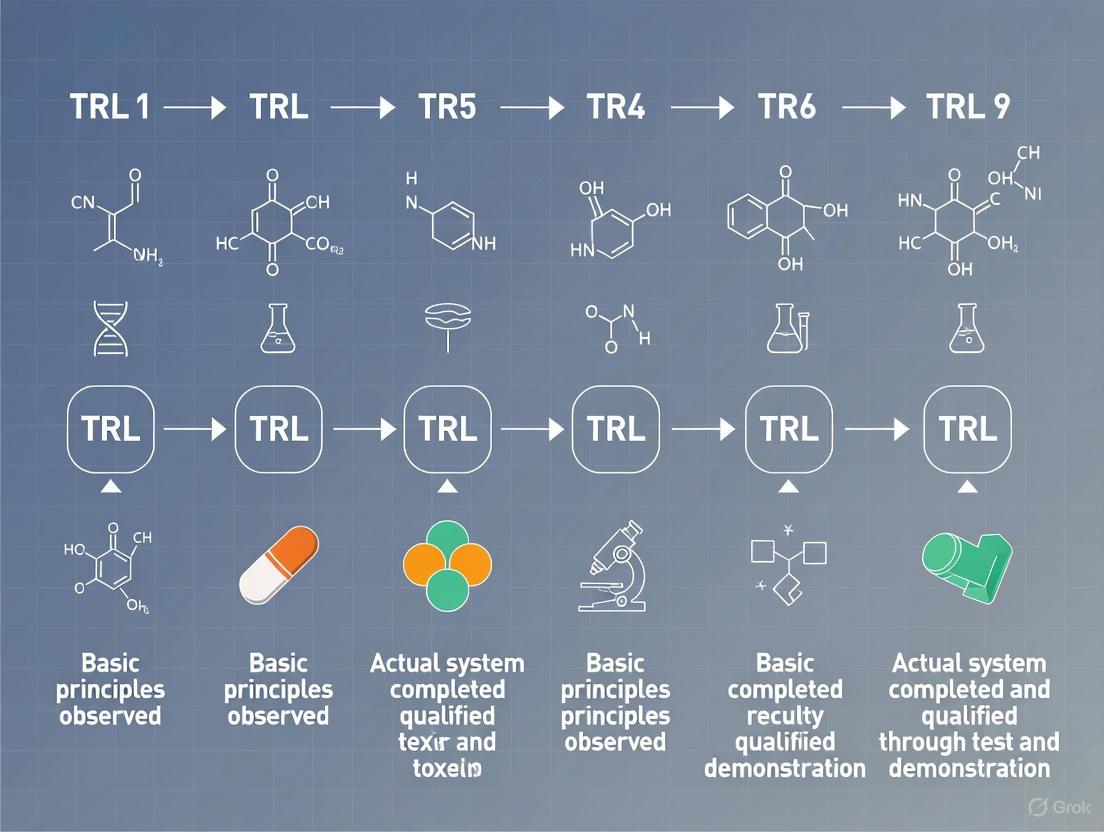
This article provides a comprehensive guide to Technology Readiness Levels (TRLs) and their critical role in translating forensic chemistry research from basic concepts into legally admissible, routine casework methods.
Technology Readiness Levels (TRL) in Forensic Chemistry: A Roadmap from Research to Courtroom Adoption
Abstract
This article provides a comprehensive guide to Technology Readiness Levels (TRLs) and their critical role in translating forensic chemistry research from basic concepts into legally admissible, routine casework methods. Tailored for researchers, scientists, and drug development professionals, it explores the foundational principles of TRLs, their specific application to forensic techniques like comprehensive two-dimensional gas chromatography (GC×GC) and chemometrics, and the path to overcoming validation and optimization challenges. By synthesizing current research and legal standards, including the Daubert Standard and Frye Standard, this review offers a practical framework for developing forensically sound technologies that meet the rigorous demands of the justice system.
From Concept to Court: Understanding TRLs and the Forensic Science Landscape
Technology Readiness Levels (TRLs) are a systematic metric used to assess the maturity of a particular technology. The framework consists of a scale from 1 to 9, where TRL 1 is the lowest level of maturity (basic principles observed) and TRL 9 is the highest (actual system proven in operational environment) [1]. This measurement system enables consistent, uniform discussions of technical maturity across different types of technology, allowing engineers, managers, and investors to quantify progress and evaluate risk throughout the development lifecycle [2] [3].
Originally developed by NASA in the 1970s, the TRL methodology has since been adopted far beyond its aerospace origins. By 2008, the European Space Agency (ESA) had implemented the scale, and the European Commission began advising EU-funded research to adopt TRLs in 2010 [2]. Today, TRLs are utilized across diverse fields including defense, energy, healthcare, and increasingly, forensic science, where they provide a structured approach for evaluating the maturity of novel analytical methods and technologies before their implementation in casework and courtroom proceedings [4] [5].
The NASA Origin of TRLs
Historical Development at NASA
The Technology Readiness Level methodology was conceived at NASA in 1974 by Stan Sadin at NASA Headquarters [2]. The approach was originally developed to provide a disciplined way to differentiate between the maturity levels of various technologies being considered for space missions. The initial application occurred when Ray Chase, the JPL Propulsion Division representative on the Jupiter Orbiter design team, used Sadin's methodology to assess the technology readiness of the proposed spacecraft design [2].
The first formal TRL definitions included seven levels, which were standardized by NASA in 1989 [2]. These original definitions were:
- Level 1 – Basic Principles Observed and Reported
- Level 2 – Potential Application Validated
- Level 3 – Proof-of-Concept Demonstrated, Analytically and/or Experimentally
- Level 4 – Component and/or Breadboard Laboratory Validated
- Level 5 – Component and/or Breadboard Validated in Simulated or Realspace Environment
- Level 6 – System Adequacy Validated in Simulated Environment
- Level 7 – System Adequacy Validated in Space [2]
In the 1990s, NASA expanded this original seven-level scale to the current nine-level version, which subsequently gained widespread acceptance across government, industry, and research sectors [2].
The Nine TRL Levels: NASA Definitions
Table 1: The Nine Technology Readiness Levels According to NASA
| TRL | Description | Key Activities and Milestones |
|---|---|---|
| 1 | Basic principles observed and reported | Scientific research begins; results translated into future R&D [1] |
| 2 | Technology concept and/or application formulated | Practical application identified but speculative; no experimental proof [1] |
| 3 | Analytical and experimental critical function proof-of-concept | Active R&D begins; analytical studies and laboratory demonstrations validate predictions [1] |
| 4 | Component validation in laboratory environment | Low-fidelity breadboard built and operated to demonstrate basic functionality [1] |
| 5 | Component validation in relevant environment | Medium-fidelity brassboard tested in simulated operational environment [1] |
| 6 | System/subsystem model demonstration in relevant environment | High-fidelity prototype demonstrated in relevant environment [1] |
| 7 | System prototype demonstration in operational environment | High-fidelity engineering unit demonstrated in actual operational environment [1] |
| 8 | Actual system completed and "flight qualified" | Final product demonstrated through test and analysis for intended environment [1] |
| 9 | Actual system proven through successful mission operations | Final product successfully operated in actual mission [1] |
Figure 1: TRL Progression from Basic Research to Mission Operations
Global Adoption and Evolution
The TRL framework progressively expanded beyond NASA throughout the 1990s and 2000s. The United States Air Force adopted TRLs in the 1990s, followed by the Department of Defense (DOD) which began using the scale for procurement in the early 2000s [2]. A pivotal 1999 report by the United States General Accounting Office examined technology transition differences between the DOD and private industry, concluding that the DOD took greater risks with less mature technologies and recommending wider use of TRLs to assess maturity prior to transition [2].
Internationally, the European Space Agency adopted the TRL scale in the mid-2000s, and the European Commission formally implemented TRLs in the Horizon 2020 research program in 2014 [2]. This global adoption led to the canonization of the TRL scale by the International Organization for Standardization (ISO) through publication of the ISO 16290:2013 standard [2].
TRLs in Forensic Chemistry Research
The Need for TRL Assessment in Forensic Science
Forensic science faces unique challenges in technology development and implementation. Analytical methods must not only demonstrate technical efficacy but also meet rigorous legal standards for admissibility as evidence in court proceedings [4]. The convergence of increasing demands for forensic services with diminishing resources creates a critical need for structured assessment of technology maturity before implementation [6].
Traditional forensic methods based on human perception and subjective judgment are increasingly recognized as susceptible to cognitive bias and logical flaws [7]. A paradigm shift is underway toward methods based on relevant data, quantitative measurements, and statistical models that are transparent, reproducible, and resistant to bias [7]. Within this context, TRLs provide a framework for systematically developing and validating new forensic technologies from basic research through courtroom implementation.
Current State of Forensic Technology Maturity
The application of TRLs in forensic science is still emerging. A 2025 review of comprehensive two-dimensional gas chromatography (GC×GC) in forensic applications utilized a simplified technology readiness scale (levels 1-4) to characterize advancements across seven forensic chemistry applications [4]. This review found that most GC×GC applications remain at lower TRLs, with only a few approaches approaching higher maturity levels suitable for courtroom implementation.
Table 2: Technology Readiness Levels in Forensic Applications: GC×GC Case Study
| Forensic Application | Current TRL Range | Key Development Needs |
|---|---|---|
| Illicit Drug Analysis | 2-3 | Standardization, validation studies, error rate analysis [4] |
| Forensic Toxicology | 2-3 | Method validation, inter-laboratory studies [4] |
| Fingermark Chemistry | 2-3 | Reproducibility studies, validation against casework samples [4] |
| Odor Decomposition | 3-4 | Database development, standardization [4] |
| CBNR Forensics | 2-3 | Sensitivity and specificity validation [4] |
| Ignitable Liquid Residue | 3-4 | Inter-laboratory validation, standardization [4] |
| Oil Spill Tracing | 3-4 | Database development, validation studies [4] |
Legal Standards and Technology Readiness
For forensic technologies to transition to higher TRLs (8-9), they must satisfy legal admissibility standards. In the United States, the Daubert Standard (from Daubert v. Merrell Dow Pharmaceuticals, Inc., 1993) requires that scientific evidence be based on methods that: (1) can be and have been tested; (2) have been peer-reviewed and published; (3) have a known error rate; and (4) are generally accepted in the relevant scientific community [4]. Similarly, Canada's Mohan Criteria require expert evidence to be relevant, necessary, absent exclusionary rules, and presented by a qualified expert [4].
These legal standards directly influence TRL progression in forensic chemistry. Technologies at TRL 7-9 must demonstrate not only technical functionality but also compliance with these legal frameworks, including defined error rates, extensive validation, and general acceptance within the forensic science community [4].
Adapting TRLs for Forensic Chemistry
Methodologies for TRL Advancement in Forensic Science
Advancing forensic technologies through TRL levels requires systematic validation and implementation strategies. The National Institute of Justice (NIJ) Forensic Science Strategic Research Plan, 2022-2026 outlines priority objectives specifically designed to mature forensic technologies [6]:
Applied Research and Development (TRL 2-4)
- Development of methods that increase sensitivity and specificity of forensic analysis
- Machine learning methods for forensic classification
- Nondestructive or minimally destructive methods that maintain evidence integrity
- Novel differentiation techniques for biological evidence
Technology Demonstration and Validation (TRL 5-7)
- Tools and workflows to enhance investigative processes
- Automated tools to support examiners' conclusions
- Standard criteria for analysis and interpretation
- Evaluation of expanded conclusion scales and likelihood ratios
System Implementation (TRL 8-9)
- Development of reference materials and databases
- Interlaboratory validation studies
- Implementation of new technologies with cost-benefit analyses
- Proficiency tests that reflect complexity and workflows
Experimental Protocols for TRL Validation
Protocol 1: Method Validation for Novel Analytical Techniques This protocol supports advancement from TRL 3-4 to TRL 5-6 for novel forensic analytical methods:
Analytical Sensitivity and Specificity Assessment: Determine limits of detection (LOD) and quantification (LOQ) using serial dilutions of reference standards. Evaluate specificity against commonly interfering substances found in forensic evidence [6] [4].
Reproducibility and Repeatability Testing: Conduct intra-day and inter-day precision studies with multiple operators. Perform tests across different environmental conditions relevant to forensic laboratory settings [6].
Reference Material and Quality Control Development: Establish certified reference materials and quality control protocols suitable for routine implementation in forensic laboratories [6].
Comparison with Established Methods: Perform parallel analysis of casework-type samples using both the novel method and currently accepted standard methods to demonstrate comparative performance [4].
Protocol 2: Legal Admissibility Preparation (TRL 7-8) This protocol supports the transition from demonstrated technology to court-admissible methodology:
Error Rate Determination: Conduct comprehensive validation studies to establish known error rates using blinded samples that represent casework complexity [4].
Inter-laboratory Validation: Coordinate multi-laboratory studies to demonstrate reproducibility across different instruments, operators, and environments [6] [4].
Standard Operating Procedure Development: Create detailed, standardized protocols suitable for implementation across diverse forensic laboratory settings [6].
Proficiency Testing: Develop and administer proficiency tests that reflect real-world casework conditions and complexities [6].
Figure 2: Forensic Technology Development Workflow with Legal Requirements
The Scientist's Toolkit: Essential Research Reagents and Materials
Table 3: Key Research Reagent Solutions for Forensic Chemistry Development
| Reagent/Material | Function in Forensic Technology Development | TRL Application Range |
|---|---|---|
| Certified Reference Materials | Provide traceable standards for method validation and quality control; essential for establishing method accuracy and precision [6] | TRL 3-9 |
| Quality Control Materials | Monitor analytical process performance; detect systematic errors and ensure ongoing method reliability [6] | TRL 4-9 |
| Proficiency Test Samples | Assess analyst competency and method performance using blinded samples that simulate casework evidence [6] | TRL 6-9 |
| Complex Matrix Simulants | Evaluate method specificity and robustness against common forensic evidence matrices (blood, soil, fabric, etc.) [6] [4] | TRL 3-7 |
| Data Analysis Software | Provide statistical interpretation tools, chemometric analysis, and likelihood ratio calculations for evidence evaluation [7] [6] | TRL 2-9 |
| Standard Operating Procedure Templates | Ensure consistent application of methods across different laboratories and analysts [6] | TRL 5-9 |
The Technology Readiness Level framework, born from NASA's need to manage technological risk in space missions, provides an invaluable structured approach for advancing forensic chemistry technologies from basic research to court-admissible applications. The systematic progression through TRL stages enables researchers, laboratory directors, and funding agencies to make evidence-based decisions about technology development, resource allocation, and implementation timelines.
For forensic chemistry, successful TRL progression requires not only technical validation but also careful attention to legal admissibility standards such as the Daubert criteria. The ongoing paradigm shift toward quantitative, statistically-grounded forensic methods creates unprecedented opportunities for TRL-guided development. By adopting and adapting the NASA-born TRL framework, the forensic science community can more effectively bridge the notorious "Valley of Death" between promising prototypes and operational implementation, ultimately strengthening the scientific foundation of forensic evidence in the courtroom.
The integration of new technologies into forensic chemistry laboratories is constrained by stringent legal and operational requirements, necessitating a robust framework to assess their maturity prior to courtroom adoption. This technical guide proposes a specialized four-level Technology Readiness Level (TRL) scale tailored for forensic chemistry applications. The framework provides a structured pathway from initial analytical research (Level 1) to legal recognition and routine casework application (Level 4). It incorporates established legal standards—including the Daubert Standard and Federal Rule of Evidence 702 in the United States and the Mohan Criteria in Canada—as critical milestones for admission as scientific evidence in legal proceedings [4]. This guide details the experimental protocols, validation requirements, and essential research tools necessary for forensic technologies to achieve practical implementation, offering a clear roadmap for researchers, scientists, and drug development professionals in the field.
Forensic science exists at the complex intersection of analytical chemistry, law enforcement, and the judicial system. The successful transition of a novel analytical technique from the research laboratory to the courtroom requires more than just demonstrated analytical performance; it must also meet rigorous legal standards for the admissibility of expert testimony [4]. General TRL scales, such as the well-known 9-level system from NASA, provide a foundational concept for technological maturity but lack the specific legal and validation benchmarks unique to forensic science [1] [2].
The development of this four-level framework is a direct response to identified crises in the field, including a documented lack of funding for forensic science research and the pressing need for objective, quantifiable interpretation of results to replace subjective conclusions [8] [9]. Emerging technologies, such as comprehensive two-dimensional gas chromatography (GC×GC), rapid DNA analysis, and Artificial Intelligence (AI)-assisted pattern recognition, show immense potential but face significant barriers to adoption without a clear, standardized path to demonstrate their reliability and validity for casework [4] [10] [11]. This guide bridges that gap by defining a forensic-specific pathway that synchronizes analytical validation with legal readiness.
The Four-Level Forensic Chemistry TRL Framework
The proposed framework consolidates traditional technology development phases into four critical levels for forensic application. Each level is defined by specific analytical and legal milestones that must be achieved before progression.
Table 1: The Four-Level Forensic Chemistry TRL Framework
| TRL Level | Designation | Analytical Milestone | Legal & Validation Milestone |
|---|---|---|---|
| Level 1 | Foundational Research & Proof of Concept | Basic principles observed; initial proof-of-concept demonstrated in a controlled laboratory environment [12]. | Research is peer-reviewed and published, establishing scientific validity for the core theory/technique [4]. |
| Level 2 | Method Development & Laboratory Validation | Technology validated in a laboratory environment; standard operating procedure (SOP) developed; initial reference materials established [13]. | Known or potential error rates are characterized through controlled studies; method is tested and has been subjected to some peer review [4]. |
| Level 3 | Real-World Demonstration & Inter-laboratory Validation | Prototype system demonstrated in an operational (casework-like) environment across multiple laboratories [1]. | Intra- and inter-laboratory validation studies completed; method demonstrates robustness and reproducibility across relevant environments [4]. |
| Level 4 | Legal Adoption & Routine Casework | Actual system proven through successful deployment in routine casework under a full range of conditions [12]. | Technology is "generally accepted" in the relevant forensic scientific community and meets legal admissibility standards (e.g., Daubert, Mohan) [4]. |
Level 1: Foundational Research & Proof of Concept
The primary goal of Level 1 is to translate basic scientific research into a practical application concept for a forensic problem.
- Core Activities: Identify basic principles and undertake analytical and experimental studies to achieve proof-of-concept [12]. For a technique like GC×GC, this involves demonstrating increased peak capacity and signal-to-noise ratio for a simple, defined mixture compared to 1D-GC [4].
- Experimental Protocol:
- Hypothesis Formulation: Define the specific forensic problem (e.g., "GC×GC-TOFMS can separate co-eluting peaks in complex illicit drug mixtures that 1D-GC-MS cannot").
- Sample Preparation: Acquire or synthesize a well-characterized control mixture of known analytes.
- Instrumental Analysis: Analyze the control mixture using both the traditional method (e.g., 1D-GC-MS) and the novel method (e.g., GC×GC-TOFMS).
- Data Analysis: Compare chromatographic data, focusing on metrics like peak resolution, number of detected analytes, and signal-to-noise ratio.
- Output: Peer-reviewed publication demonstrating the analytical proof-of-concept and its potential forensic relevance.
Level 2: Method Development & Laboratory Validation
At Level 2, the focus shifts from concept to a validated laboratory method, with an emphasis on characterizing the method's performance and limitations.
- Core Activities: Integration of basic technological components in a laboratory environment; development of a draft SOP; initial determination of error rates and validation parameters such as specificity, sensitivity, and reproducibility [4] [13].
- Experimental Protocol:
- SOP Development: Document a detailed, repeatable procedure for sample preparation, instrumental analysis, and data processing.
- Determination of Figures of Merit: Conduct experiments to establish:
- Specificity/Sensitivity: Analyze known positive and negative samples to determine false positive/negative rates.
- Linear Dynamic Range & LOD/LOQ: Analyze a series of standard concentrations.
- Precision: Perform repeatability (short-term) and intermediate precision (different days, analysts) studies.
- Error Rate Analysis: Systematically challenge the method with blank samples, closely related compounds, and complex matrices to characterize potential sources of error [4].
- Output: A validated laboratory method with a draft SOP, a detailed report on method performance characteristics, and a preliminary estimate of error rates.
Level 3: Real-World Demonstration & Inter-laboratory Validation
Level 3 assesses the method's performance in a realistic, operational environment and its transferability between laboratories, which is critical for establishing general acceptance.
- Core Activities: A model or prototype is demonstrated at pilot scale in a simulated or relevant environment, leading to inter-laboratory validation [12]. This is a critical step for assessing robustness.
- Experimental Protocol:
- Pilot Demonstration: Apply the method to authentic, casework-type samples provided by a collaborating forensic laboratory. Maintain a chain of custody.
- Blinded Study: Conduct a single-laboratory study using blinded samples with a known ground truth to assess performance under realistic conditions.
- Inter-laboratory Validation: Coordinate a multi-laboratory study using the same SOP, reference materials, and sample sets. The participating laboratories should represent a range of expected operational environments.
- Data Analysis: Statistically analyze the results from all laboratories to determine reproducibility, concordance rates, and sources of inter-laboratory variation.
- Output: A comprehensive inter-laboratory validation study report published in a peer-reviewed journal, providing strong evidence for the method's robustness and reliability.
Level 4: Legal Adoption & Routine Casework
The final level is achieved when the technology is fully integrated into forensic laboratory workflows and its results are deemed admissible in court.
- Core Activities: The technology is used in its final form under a full range of operational conditions in routine casework [12]. Its underlying principles and methodology are generally accepted by the forensic science community [4].
- Implementation Milestones:
- Implementation into Casework: The method is fully adopted by one or more operational forensic laboratories for use in actual casework.
- Legal Precedent: The methodology and its conclusions have been successfully defended under cross-examination in court, setting a precedent for admissibility.
- Standardization: The method is incorporated into official guidelines or standards by recognized bodies (e.g., ASTM International, OSAC).
- Output: Widespread adoption of the technology by forensic laboratories, successful court testimony, and formal standardization.
Experimental Workflow and Legal Pathway
The journey of a technology through the TRL framework involves parallel progress along both experimental and legal tracks. The following diagram visualizes this integrated pathway, highlighting key decision points and milestones.
Figure 1: Integrated experimental and legal readiness pathway. The horizontal flow represents the progression through experimental TRL levels, while the vertical connections show the specific legal and validation milestones required at each stage to satisfy admissibility criteria [4].
The Scientist's Toolkit: Essential Research Reagent Solutions
The development and validation of forensic chemical methods require a suite of reliable reference materials and reagents. The following table details key components essential for conducting experiments across the TRL scale.
Table 2: Key Research Reagent Solutions for Forensic Chemistry Development
| Reagent/Material | Function & Purpose | TRL Application Level |
|---|---|---|
| Certified Reference Materials (CRMs) | Provides the ground truth for method development, calibration, and specificity testing. Essential for determining error rates and validating identifications [9]. | Level 1 - Level 4 |
| Internal Standards (Isotope-Labeled) | Corrects for analytical variability in sample preparation and instrument response; critical for achieving precise and quantitative results [9]. | Level 2 - Level 4 |
| Quality Control (QC) Check Samples | Used to monitor the ongoing performance and stability of an analytical method; a cornerstone of laboratory accreditation and method validation. | Level 2 - Level 4 |
| Complex Matrix Simulants | Mimics the composition of real-world evidence (e.g., street drug mixtures, biological fluids, fire debris) to test method robustness, selectivity, and sample cleanup protocols. | Level 2 - Level 3 |
| Characterized Proficiency Test Samples | Provides a blinded, external assessment of laboratory performance; crucial for inter-laboratory studies (Level 3) and demonstrating competency for court (Level 4). | Level 3 - Level 4 |
The Forensic Chemistry TRL Scale provides a structured, four-level framework to guide the maturation of novel technologies from foundational research to court-admissible evidence. By explicitly integrating legal admissibility criteria with established analytical validation milestones, this framework addresses a critical gap in the forensic science innovation ecosystem. It offers a clear and practical roadmap for researchers, funding agencies, and laboratory managers to prioritize resources, assess progress, and ultimately accelerate the adoption of reliable and robust scientific methods into the criminal justice system. The adoption of this scale will bolster the scientific robustness of forensic chemistry, enhance the comparability of research maturity, and help fulfill the urgent need for objective, quantifiable evidence in the courtroom.
Forensic science currently faces a dual crisis: severe funding constraints that impede operational capacity coexist with pressing innovation needs required to meet evolving judicial standards. This paradoxical state demands a systematic evaluation of technology readiness levels (TRLs) across emerging forensic methodologies, particularly in forensic chemistry. The American Academy of Forensic Sciences 2025 conference highlighted these issues, with experts like Heidi Eldridge noting that federal funding uncertainties have left "agencies trying to do more with less," unable to purchase new equipment or conduct research with the latest technologies [14]. Simultaneously, novel analytical techniques such as comprehensive two-dimensional gas chromatography (GC×GC) must navigate rigorous legal admissibility standards, including the Daubert Standard and Federal Rule of Evidence 702, which require demonstrated reliability, peer review, known error rates, and general scientific acceptance [4]. This whitepaper examines this critical juncture through the lens of TRLs, providing a technical roadmap for researchers and drug development professionals working at the intersection of analytical chemistry and judicial admissibility.
The Funding Landscape: Quantitative Analysis of Resource Constraints
The forensic science funding ecosystem relies heavily on federal grant programs that have faced significant reductions, creating substantial operational challenges for laboratories nationwide. The data reveals a systematic disinvestment from critical infrastructure.
Table 1: Federal Forensic Grant Program Funding Trends (2024-2026)
| Grant Program | Primary Focus | FY 2024-2025 Funding | FY 2026 Proposed | Change | Impact |
|---|---|---|---|---|---|
| Paul Coverdell Forensic Science Improvement Grants | Multi-disciplinary forensic capacity | $35 million | $10 million | -70% | Affects all forensic disciplines, including DNA, toxicology, and trace evidence [15] |
| Capacity Enhancement for Backlog Reduction (CEBR) | DNA-specific casework backlog | $94-95 million | ~$95 million (est.) | -37% from authorized level | Remains below the $151 million authorized by Congress under the Debbie Smith Act [15] |
These funding reductions have produced measurable impacts on laboratory performance metrics. Between 2017 and 2023, turnaround times for DNA casework increased by 88%, while post-mortem toxicology ballooned by 246% and controlled substances analysis climbed 232% [15]. The National Institute of Justice's 2019 Needs Assessment identified a $640 million annual shortfall merely to meet current demand, with another $270 million needed to address the opioid crisis [15]. As Scott Hummel, president of the American Society of Crime Laboratory Directors, warned, limiting these resources "would have dire consequences on a lot of crime laboratories who depend on those funds for maintaining operations" [15].
Technology Readiness Levels in Forensic Chemistry
TRL Framework for Forensic Applications
Technology Readiness Levels provide a systematic metric for assessing the maturity of evolving technologies prior to incorporating them into operational forensic workflows. For forensic applications, this framework must integrate both analytical validation and legal admissibility requirements. We propose a modified TRL scale specific to forensic chemistry:
- TRL 1-2 (Basic Research): Initial proof-of-concept studies establishing fundamental separation science principles.
- TRL 3-4 (Applied Research): Laboratory-based validation of forensic applications using controlled samples.
- TRL 5-6 (Technology Demonstration): Intra-laboratory validation using casework-like samples and initial error rate estimation.
- TRL 7-8 (System Validation): Inter-laboratory validation, standard operating procedure development, and peer-reviewed publication.
- TRL 9 (Operational Deployment): Routine casework implementation with established proficiency testing and legal acceptance.
Current TRL Assessment of GC×GC in Forensic Applications
Comprehensive two-dimensional gas chromatography represents one of the most promising advanced separation techniques for complex forensic evidence analysis. The technique expands upon traditional 1D GC by adjoining two columns of different stationary phases in series with a modulator, dramatically increasing peak capacity and signal-to-noise ratio for trace compound analysis [4]. Current research applications have achieved varying levels of technological maturity.
Table 2: Technology Readiness Levels of GC×GC in Forensic Applications
| Forensic Application | Current TRL | Key Research Developments | Legal Admissibility Status |
|---|---|---|---|
| Illicit Drug Analysis | TRL 6-7 | Non-targeted screening for novel psychoactive substances; impurity profiling [4] | Methods peer-reviewed; error rates being established |
| Toxicology | TRL 5-6 | Simultaneous screening of pharmaceuticals, metabolites, and drugs of abuse in complex matrices [4] | Limited validation for specific analyte classes |
| Fingermark Chemistry | TRL 4-5 | Analysis of endogenous compounds and exogenous contaminants for chemical fingerprinting [4] | Primarily research phase; admissibility not established |
| Odor Decomposition | TRL 5-6 | Volatile organic compound profiling for postmortem interval estimation [4] | Validation studies ongoing; error rates not well characterized |
| Ignitable Liquid Analysis | TRL 6-7 | Improved chemical fingerprinting for arson evidence through enhanced separation of complex mixtures [4] | Some laboratory adoption; moving toward general acceptance |
| Oil Spill Tracing | TRL 7 | Environmental forensic applications with established biomarker analysis protocols [4] | Higher maturity due to environmental (non-criminal) applications |
The workflow for GC×GC analysis demonstrates the increased separation capability of this technique, which is particularly valuable for non-targeted forensic applications where a wide range of analytes must be analyzed simultaneously [4].
Diagram: GC×GC Analytical Workflow. The modulator serves as the "heart" of the system, preserving separation from the first dimension and reinjecting focused bands into the second dimension for orthogonal separation.
Experimental Protocols: Methodologies for Advancing TRLs
GC×GC-MS Method for Illicit Drug Analysis
Objective: Develop and validate a non-targeted screening method for novel psychoactive substances in complex mixtures using GC×GC-Time-of-Flight Mass Spectrometry.
Materials and Reagents:
- GC×GC System: Configured with thermal modulator
- Primary Column: Rxi-5Sil MS (30m × 0.25mm ID × 0.25μm df)
- Secondary Column: Rxi-17Sil MS (1m × 0.15mm ID × 0.15μm df)
- Mass Spectrometer: Time-of-Flight (TOF) detector with ≥50 Hz acquisition rate
- Reference Standards: Certified drug standards and internal deuterated analogs
- Solvents: HPLC-grade methanol, dichloromethane, and ethyl acetate
Sample Preparation Protocol:
- Liquid-Liquid Extraction: Add 1mL sample to 3mL ethyl acetate:dichloromethane (2:1 v/v) in a glass centrifuge tube.
- Vortex and Centrifuge: Mix vigorously for 60 seconds, then centrifuge at 3500 rpm for 5 minutes.
- Concentration: Transfer organic layer to a clean vial and evaporate under nitrogen stream at 40°C to near dryness.
- Reconstitution: Reconstitute in 100μL ethyl acetate with 10ppm internal standard (tetracosane-d50).
- Injection: Transfer to GC vial with micro-insert for 1μL splitless injection.
Instrumental Parameters:
- Injector: PTV in solvent vent mode (50°C for 0.1min, then 14.5°C/s to 300°C)
- Carrier Gas: Helium, constant flow 1.2mL/min
- Primary Oven: 40°C (2min hold), then 10°C/min to 320°C (5min hold)
- Secondary Oven: Offset +5°C relative to primary oven
- Modulator: 2.5s modulation period, 0.7s hot pulse time
- Transfer Line: 280°C
- MS Source: 230°C, electron energy 70eV, acquisition range m/z 40-600
Data Processing:
- Peak Finding: Automated peak detection with minimum S/N=100
- Deconvolution: Spectral deconvolution for coeluting compounds
- Library Matching: Forward search against NIST and custom drug libraries (minimum match factor 800/1000)
- Quantitation: Internal standard method with 5-point calibration curves
Validation Protocol for TRL Advancement
To advance from TRL 5 to TRL 7, laboratories must implement comprehensive validation studies addressing legal admissibility requirements:
Accuracy and Precision: Analyze six replicates at three concentration levels (low, medium, high) across five separate days. Calculate intra-day and inter-day precision as %RSD, with acceptance criteria ≤15% for mid and high concentrations, ≤20% for low concentration.
Specificity: Analyze 20 different blank matrix samples to demonstrate absence of interference at retention times of target analytes.
Robustness: Deliberately vary instrumental parameters (oven temperature ±2°C, flow rate ±0.1mL/min) to determine critical method parameters.
Limit of Detection/Quantitation: Serial dilution to determine LOD (S/N≥3) and LOQ (S/N≥10, precision ≤20%, accuracy 80-120%).
Carryover: Injection of blank solvent after highest calibration standard to demonstrate ≤20% of LOD response.
Stability: Bench-top, processed sample, and freeze-thaw stability assessments under various storage conditions.
The Scientist's Toolkit: Essential Research Reagents and Materials
Successful implementation of advanced forensic methodologies requires specific reagents and materials designed to meet the rigorous demands of forensic analysis while maintaining chain-of-custody integrity.
Table 3: Essential Research Reagents and Materials for Advanced Forensic Chemistry
| Reagent/Material | Function | Technical Specifications | Forensic Application |
|---|---|---|---|
| Certified Reference Materials | Quantitative calibration and method validation | Certified purity ≥98.5%, with expiration date and stability data | All quantitative analyses; essential for courtroom testimony |
| Deuterated Internal Standards | Compensation for matrix effects and recovery variations | Isotopic purity ≥99%, chemical purity ≥95% | Mass spectrometric quantification; improves accuracy and precision |
| SPME Fibers | Solventless extraction of volatile compounds | Various coatings (PDMS, CAR/PDMS, DVB/CAR/PDMS) optimized for analyte polarity | Arson analysis, decomposition odor, drug detection |
| Molecularly Imprinted Polymers | Selective solid-phase extraction | Custom synthesized for target analyte classes | Sample clean-up for complex matrices; novel psychoactive substance isolation |
| Derivatization Reagents | Enhancement of volatility and detection | MSTFA, BSTFA, PFPA for specific functional groups | Steroids, acids, polar compounds not amenable to direct GC analysis |
| Stable Isotope Labeled Compounds | Distinguish exogenous from endogenous compounds | 13C, 15N labeled versions of target analytes | Doping control, testosterone/epitestosterone ratio determination |
Innovation Under Constraints: Strategic Implementation Pathways
Despite funding challenges, several laboratories have successfully implemented innovative workflows through strategic approaches. The following decision framework illustrates pathways for laboratories to advance forensic methodologies despite resource constraints:
Diagram: Strategic Implementation Pathway for Forensic Methods. Laboratories can navigate funding constraints by aligning method selection with current TRL status and available resources.
Specific success stories demonstrate this framework in action:
Michigan State Police: Utilized competitive CEBR grants to validate low-input and degraded DNA extraction methods, resulting in a 17% increase in interpretable DNA profiles from complex evidence [15].
Louisiana State Police Crime Laboratory: Implemented Lean Six Sigma principles through a $600,000 NIJ Efficiency Grant, reducing average DNA turnaround time from 291 days to just 31 days and tripling monthly case throughput [15].
Connecticut Forensic Laboratory: Addressed a backlog of over 12,000 cases through workflow redesign supported by Coverdell grants, achieving reduction to under 1,700 cases and average DNA turnaround under 60 days [15].
The current state of forensic research represents a critical inflection point. While advanced analytical techniques like GC×GC offer unprecedented capability for complex evidence analysis, their progression to court-admissible methodologies (TRL 9) requires both strategic funding investment and systematic validation approaches. The proposed framework integrates technical advancement with practical implementation strategies, enabling laboratories to navigate the dual challenges of funding constraints and innovation demands. As forensic science continues to evolve within the judicial ecosystem, the collaboration between analytical chemists, forensic practitioners, and legal stakeholders becomes increasingly essential to ensure that scientific innovation translates to just outcomes.
The integration of novel scientific techniques into the legal system presents a significant challenge for researchers and practitioners in forensic chemistry. The admissibility of scientific evidence in a court of law serves as the ultimate benchmark for technology readiness, determining whether a method transitions from a research tool to accepted forensic practice. This transition is governed by distinct legal standards that act as gatekeepers, ensuring the reliability and relevance of expert testimony [4]. For forensic researchers, understanding these frameworks is not merely an academic exercise but a critical component of method development and validation.
In the United States, the Frye Standard and Daubert Standard provide the foundational criteria for admitting scientific evidence, while in Canada, the Mohan criteria serve a similar gatekeeping function [4] [16]. These legal precedents establish the procedural requirements that scientific evidence must meet before it can be presented to a trier of fact, whether judge or jury. For forensic chemistry research, particularly in emerging areas like comprehensive two-dimensional gas chromatography (GC×GC), meeting these criteria represents the final stage of technology readiness, signifying that a method has sufficient scientific rigor for use in legal proceedings [4].
This whitepaper provides an in-depth technical analysis of these admissibility standards, examining their historical development, core principles, and practical implications for forensic chemistry research and method validation. By framing legal admissibility as the end goal, we establish a framework for evaluating technology readiness levels in forensic science.
The Frye Standard: General Acceptance Test
Historical Development and Core Principle
The Frye Standard originated from the 1923 case Frye v. United States in the District of Columbia Court of Appeals [17] [18]. The case involved James Alphonzo Frye, who was convicted of murder and sought to introduce expert testimony based on a systolic pressure deception test, a precursor to the modern polygraph [17]. The court rejected this evidence, establishing what would become known as the "general acceptance" test.
The court's ruling articulated a fundamental principle for scientific evidence admissibility: "Just when a scientific principle or discovery crosses the line between the experimental and demonstrable stages is difficult to define. Somewhere in this twilight zone the evidential force of the principle must be recognized, and while the courts will go a long way in admitting experimental testimony deduced from a well-recognized scientific principle or discovery, the thing from which the deduction is made must be sufficiently established to have gained general acceptance in the particular field in which it belongs" [17] [18].
Application in Forensic Science
Under the Frye standard, the proponent of scientific evidence must demonstrate that the methodology, technique, or principle underlying the expert's opinion has gained widespread acceptance within the relevant scientific community [17] [19]. This requirement imposes a unique hurdle beyond having a qualified expert testify – the technique itself must be generally accepted [17].
The Frye standard has been applied to numerous forensic science techniques throughout its history, including:
- Traditional forensic methods: DNA analysis, fingerprint analysis, hair analysis, and bite-mark comparison [17]
- Instrumental analysis: Voiceprint analysis, breath tests for blood alcohol, and neutron activation blood analysis [17]
- Scientific testimony: Expert testimony on rape trauma syndrome, battered woman syndrome, eyewitness reliability, and drug trafficking practices [17]
For nearly 70 years, Frye served as the dominant standard for admitting scientific evidence in U.S. courts until it was superseded in federal courts by the Daubert standard in 1993 [17]. However, Frye remains the standard in several state jurisdictions, highlighting its enduring influence [17] [20].
The Daubert Standard: A Flexible Reliability Framework
Evolution from Frye
In 1993, the U.S. Supreme Court decision in Daubert v. Merrell Dow Pharmaceuticals, Inc. established a new standard for admitting expert testimony in federal courts [21] [22]. The Court held that the Frye standard had been superseded by the Federal Rules of Evidence, specifically Rule 702, which governs expert testimony [22] [20]. This decision transformed the trial judge's role, assigning them as "gatekeepers" responsible for ensuring that expert testimony rests on a reliable foundation and is relevant to the case [21] [22].
The Daubert standard emerged from a product liability case involving allegations that the drug Bendectin caused birth defects [22] [16]. The petitioners offered expert testimony based on chemical structure analyses, animal studies, and reanalysis of previously published studies, but the lower court dismissed the case, finding that this evidence did not meet Frye's "general acceptance" requirement [22]. The Supreme Court's ruling fundamentally changed the approach to scientific evidence by emphasizing flexibility and judicial discretion over Frye's rigid general acceptance test [22].
The Five Daubert Factors
The Daubert decision provided a non-exhaustive list of factors that trial judges may consider when evaluating the admissibility of expert testimony [21] [22]:
Whether the theory or technique can be (and has been) tested: The scientific validity of a technique is assessed by its falsifiability, refutability, and testability [22] [20].
Whether the theory or technique has been subjected to peer review and publication: Peer review and publication help identify methodological flaws and ensure that the technique meets disciplinary standards [22] [20].
The known or potential error rate: The court should consider the technique's error rate and the existence and maintenance of standards controlling its operation [21] [22].
The existence and maintenance of standards controlling the technique's operation: The court examines whether there are standards and controls for the application of the technique [22] [19].
General acceptance in the relevant scientific community: While Frye's general acceptance test is no longer the sole determinant, it remains a relevant factor under Daubert [22] [19].
Table 1: The Five Daubert Factors for Evaluating Expert Testimony
| Factor | Description | Application in Forensic Chemistry |
|---|---|---|
| Testability | Whether the method can be and has been empirically tested | Method validation studies, reproducibility experiments |
| Peer Review | Whether the method has been subjected to peer review | Publication in reputable scientific journals |
| Error Rate | The known or potential rate of error | Determination of accuracy, precision, and uncertainty measurements |
| Standards | Existence of standards and controls | Use of standard operating procedures (SOPs) and quality control measures |
| General Acceptance | Acceptance in the relevant scientific community | Adoption by professional organizations, use in multiple laboratories |
The Daubert Trilogy and Expansion
The Daubert standard was clarified and expanded through two subsequent Supreme Court cases, collectively known as the "Daubert Trilogy" [21] [22]:
General Electric Co. v. Joiner (1997): Established that appellate courts should review a trial court's decision to admit or exclude expert testimony under an "abuse of discretion" standard. The Court also emphasized that there must be a valid connection between the expert's methodology and their conclusions – an analytical gap between data and opinion cannot be bridged by the ipse dixit (unsupported assertion) of the expert [22].
Kumho Tire Co. v. Carmichael (1999): Expanded the Daubert standard to include all expert testimony, not just scientific evidence. The Court held that Daubert's factors for relevance and reliability apply to "technical, or other specialized knowledge" specified in Rule 702, including engineering and other non-scientific expertise [21] [22].
These decisions collectively strengthened the trial judge's gatekeeping role and established a more comprehensive framework for evaluating all types of expert testimony.
The Mohan Criteria: The Canadian Approach
Origins and Framework
In Canada, the admissibility of expert testimony is governed by the criteria established in R. v. Mohan [1994] 2 S.C.R. 9 [23] [4]. This case involved a pediatrician charged with sexual assault who sought to introduce expert psychiatric testimony suggesting that he did not fit the profile of someone who would commit such crimes [16]. The Supreme Court of Canada outlined a four-factor test for admitting expert evidence:
- Relevance: The evidence must be relevant to the facts at issue in the case [23] [4].
- Necessity in assisting the trier of fact: The evidence must provide information that is likely outside the ordinary knowledge and experience of the trier of fact [23] [4].
- Absence of any exclusionary rule: The evidence must not be subject to any other exclusionary rule of evidence [23] [4].
- A properly qualified expert: The witness must have sufficient specialized knowledge, skill, or training to provide the proposed evidence [23] [4].
Application and Refinement
The Mohan test employs a two-stage analytical approach for determining admissibility [23]:
First Stage – Threshold Requirements: The proponent of the evidence must establish the preconditions to admissibility, including logical relevance, necessity, absence of exclusionary rules, a properly qualified expert, and for novel science, reliability of the underlying methodology [23].
Second Stage – Gatekeeper Analysis: The judge conducts a cost-benefit analysis, weighing the potential risks and benefits of admitting the evidence. This includes considering factors such as legal relevance, necessity, reliability, and the expert's impartiality, independence, and absence of bias [23].
The Mohan criteria emphasize that expert evidence should not be admitted if its potential for prejudice outweighs its probative value, or if it would distort the fact-finding process [16]. Canadian courts have also recognized the influence of Daubert in their evolving approach to expert evidence, particularly regarding the requirement for threshold reliability [16].
Comparative Analysis of Admissibility Standards
Key Differences and Similarities
While the Frye, Daubert, and Mohan standards share the common goal of ensuring reliable expert testimony, they differ in their approaches and emphasis:
Table 2: Comparison of Legal Admissibility Standards
| Criterion | Frye Standard | Daubert Standard | Mohan Criteria |
|---|---|---|---|
| Jurisdiction | Some U.S. state courts | U.S. federal courts and most states | Canadian courts |
| Primary Focus | General acceptance in relevant scientific community | Reliability and relevance of methodology | Relevance, necessity, and reliability |
| Judicial Role | Limited gatekeeping | Active gatekeeper assessing scientific validity | Gatekeeper with discretionary balancing |
| Key Test | "General acceptance" test | Flexible five-factor reliability test | Four-factor threshold test with cost-benefit analysis |
| Novel Science | High barrier until generally accepted | More flexible approach using multiple factors | Additional reliability requirement for novel science |
| Expert Qualifications | Implicit in general acceptance | Explicit requirement under Rule 702 | Explicit threshold requirement |
Legal Admissibility and Technology Readiness in Forensic Chemistry
The progression of a forensic analytical technique from basic research to legally admissible evidence can be conceptualized through a technology readiness framework, with legal admissibility representing the highest level of maturity [4]. For techniques like comprehensive two-dimensional gas chromatography (GC×GC), meeting admissibility standards requires systematic validation and acceptance within both scientific and legal communities [4].
Diagram 1: Technology Readiness Levels for Forensic Methods
As shown in Diagram 1, legal admissibility represents the pinnacle of technology readiness for forensic methods. Current research on GC×GC applications in forensic chemistry demonstrates varying levels of technology readiness, with most applications requiring further validation before achieving legal admissibility under these standards [4].
Experimental Protocols for Meeting Admissibility Standards
Validation Framework for Novel Forensic Methods
For forensic chemistry researchers developing new analytical methods, designing validation studies that address legal admissibility criteria is essential. The following experimental protocols provide a framework for establishing reliability under Daubert, Frye, and Mohan:
Protocol 1: Method Validation and Error Rate Determination
- Objective: Establish known error rates and operational characteristics of the analytical method
- Procedure: Conduct repeated analyses (n≥30) of certified reference materials across multiple concentration levels by different analysts on different days
- Data Analysis: Calculate accuracy (percent recovery), precision (relative standard deviation), limits of detection and quantification, and uncertainty measurements
- Legal Significance: Provides known error rates required under Daubert and demonstrates reliability under Mohan [4] [22]
Protocol 2: Interlaboratory Comparison and Standardization
- Objective: Demonstrate general acceptance and transferability of the method
- Procedure: Develop standardized operating procedure and distribute to minimum of 8 independent laboratories for blinded analysis of standardized sample sets
- Data Analysis: Apply statistical analysis of variance (ANOVA) to determine interlaboratory reproducibility and consistency of results
- Legal Significance: Addresses "general acceptance" under Frye and standardization factors under Daubert [17] [4]
Protocol 3: Case-type Sample Analysis
- Objective: Establish relevance and reliability for specific forensic applications
- Procedure: Apply method to authentic case-type samples with demonstrated provenance and compare results to established reference methods
- Data Analysis: Calculate sensitivity, specificity, and likelihood ratios for method performance in realistic conditions
- Legal Significance: Demonstrates practical relevance and necessity under Mohan and relevance under Daubert [23] [22]
The Scientist's Toolkit: Essential Materials for Forensic Method Validation
Table 3: Essential Research Reagents and Materials for Forensic Method Validation
| Item | Specification | Function in Validation |
|---|---|---|
| Certified Reference Materials | NIST-traceable with documented uncertainty | Establishing accuracy and calibration traceability |
| Quality Control Materials | Independent source with predetermined acceptance criteria | Monitoring method performance and stability |
| Blinded Sample Sets | Authentic or simulated case samples with known ground truth | Assessing real-world applicability and error rates |
| Internal Standards | Stable isotope-labeled analogs of target analytes | Correcting for matrix effects and instrumental variation |
| System Suitability Test Mix | Compounds verifying instrumental performance | Ensuring proper system operation before analysis |
Legal admissibility represents the ultimate end goal for forensic chemistry research, serving as the benchmark for technology readiness and methodological maturity. The Frye, Daubert, and Mohan criteria, while jurisdiction-specific, share the common objective of ensuring that scientific evidence presented in legal proceedings meets threshold standards of reliability and relevance.
For researchers developing novel forensic methods, understanding these legal frameworks is not merely an ancillary consideration but a fundamental aspect of experimental design and validation strategy. By incorporating admissibility requirements early in the research lifecycle – through rigorous error rate determination, peer-reviewed publication, interlaboratory validation, and standardization – forensic chemists can bridge the gap between innovative research and legally admissible evidence.
As analytical technologies continue to advance, particularly in separation science and instrumentation, the interplay between scientific innovation and legal admissibility will remain critical. Future research directions should emphasize comprehensive validation studies, error rate quantification, and standardization efforts to facilitate the transition of promising techniques from experimental methods to forensically validated tools capable withstanding judicial scrutiny under the relevant admissibility standards.
The Role of Basic Research and Proof-of-Concept Studies (TRL 1-2) in Addressing Forensic Backlogs
Forensic laboratories worldwide are grappling with persistent casework backlogs, a issue that undermines criminal justice by causing investigative delays and impeding timely resolutions for victims and the accused [24] [25]. These backlogs, particularly in areas like DNA and seized drug analysis, are often perceived as a volume-based warehousing problem, leading to a cycle of short-term funding and linear solutions that have proven ineffective [24]. A shift in perspective is required: backlogs are a dynamic system, influenced by factors such as increasing case complexity, the rapid emergence of new psychoactive substances (NPS), unfunded legislative mandates, and resource constraints [24] [25] [9].
This whitepaper posits that a sustainable solution lies in strategically strengthening the earliest stages of the forensic research and development pipeline—specifically, Technology Readiness Levels (TRL) 1 and 2. The TRL framework, a systematic metric for assessing technology maturity, provides a crucial scaffold for this approach [1] [2]. TRL 1 involves basic principles observed through foundational scientific research, while TRL 2 focuses on formulating technology concepts and practical applications based on those initial findings [1]. At this stage, technologies are still speculative, with no experimental proof of concept [1]. By targeting research at these foundational levels, the forensic community can seed the development of next-generation tools and methodologies that are inherently more efficient, rapid, and robust, thereby addressing the root causes of backlog accumulation rather than just its symptoms.
Understanding the Framework: Technology Readiness Levels (TRLs) in a Forensic Context
The TRL scale, originally developed by NASA, provides a standardized framework for assessing the maturity of a given technology, from basic principles to proven operational use [1] [2]. For forensic research and development, this framework is indispensable for managing risk, guiding funding decisions, and ensuring new methods are sufficiently validated before implementation in casework.
Table: Technology Readiness Levels (TRLs) 1-4: From Basic Research to Proof-of-Concept
| TRL | Title | Description | Forensic Chemistry Example |
|---|---|---|---|
| 1 | Basic Principles Observed and Reported | Lowest level of technology readiness. Scientific research begins to be translated into applied research and development [1]. | Study of the fundamental fluorescence properties of carbon quantum dots (CQDs) or the decomposition kinetics of Tetrahydrocannabinol (THC) to Cannabinol (CBN) [25] [26]. |
| 2 | Technology Concept Formulated | Invention begins. Once basic principles are observed, practical applications can be invented. Application is speculative, and there is no proof or detailed analysis to support the concept [1] [2]. | Formulating a concept for using CQDs as a fluorescent sensor for a specific new psychoactive substance (NPS) or proposing a new GC×GC-MS data processing algorithm for ignitable liquid analysis [4] [26]. |
| 3 | Experimental Proof of Concept | Active research and development is initiated. This includes analytical studies and laboratory studies to physically validate predictions of separate elements of the technology [1]. | Constructing and testing a proof-of-concept CQD-based assay in a controlled laboratory setting to detect fentanyl analogues, yielding initial positive results [26]. |
| 4 | Technology Validated in Lab | Basic technological components are integrated to establish that they will work together. This is relatively low-fidelity compared to the eventual system [1]. | Validating a prototype CQD sensor and portable reader with multiple drug targets in a laboratory environment, demonstrating component integration [1] [26]. |
The progression from TRL 1 to TRL 4 is a critical valley of death for many forensic technologies. Research at TRL 1-2 is characterized by high uncertainty and is often considered too risky for laboratory operational budgets. However, this is precisely where the greatest potential for transformative efficiency gains exists. The transition to higher TRLs, where technologies are validated in relevant environments (TRL 5-6) and eventually proven in operational casework (TRL 7-9), is impossible without a robust pipeline of ideas emerging from foundational research [1] [4].
The Forensic Backlog as a System: Why Traditional Approaches Fail
A systems thinking approach reveals that forensic backlogs are not simple linear problems but are complex systems with feedback loops, interdependencies, and emergent behaviors [24]. Viewing a forensic laboratory as a dynamic system helps diagnose the true leverage points for intervention.
Table: Key Contributors to Forensic Casework Backlogs
| Contributing Factor | Impact on Backlog | Supporting Evidence |
|---|---|---|
| Emergence of NPS | Increases analysis time, requires specialized expertise and reference materials, complicates identification [25] [9]. | "Analytical identification of these compounds is complex as properly certified reference materials... are not readily available and are expensive" [25]. |
| Increased Case Complexity & Volume | Overwhelms existing laboratory capacity; more evidence submissions and complex analyses strain resources [24] [25]. | "New legislation regarding sexual assault kits resulted in a 150% increase in submission of kits for one laboratory" [24]. |
| Inadequate Resources & Funding | Limits hiring capacity, restricts acquisition of new instrumentation, and prevents investment in research and development [14] [25]. | "Agencies are trying to do more with less... There’s always new technology coming out... but those things are very expensive" [14]. |
| Slow Adoption of New Technology | Laboratories lack time and resources for validation and training on new, more efficient methods, perpetuating use of slower legacy techniques [4] [9]. | "Laboratories are often eager to adopt new technology, but they lack the time and resources to go through the validation, training and method development processes" [9]. |
| Evidence Degradation | Delay in analysis can lead to evidence degradation (e.g., THC loss in marijuana), causing inconclusive results and wasted resources [25]. | "As THC and CBN content significantly alters based on the storage time... the delay in examining some marijuana samples... [can cause] inconclusive results" [25]. |
The mechanistic response of simply providing more funding for backlog reduction, without addressing these systemic drivers, has proven unsuccessful [24]. A more holistic strategy involves using basic research (TRL 1-2) to reconfigure the system itself, creating technologies that reduce analysis time, simplify identification, and automate interpretation.
Core Methodologies and Experimental Protocols for TRL 1-2 Research
Strategic basic research at TRL 1-2 is the cornerstone for generating the disruptive concepts needed to overcome systemic backlog challenges. The following protocols outline foundational investigations with high potential for creating future efficiency gains.
Protocol 1: Investigating Carbon Quantum Dots (CQDs) as Fluorescent Sensors for NPS
Objective: To formulate a technology concept (TRL 2) for rapid, presumptive testing of NPS using the tunable optical properties of CQDs, potentially reducing confirmatory analysis time.
Background: CQDs are nanoscale carbon materials with exceptional optical properties, including tunable fluorescence, high biocompatibility, and ease of surface functionalization [26]. Their potential for chemical sensing and trace evidence detection makes them a compelling candidate for novel assay development.
Detailed Methodology:
- CQD Synthesis (Bottom-Up Hydrothermal Method):
- Precursor Preparation: Dissolve a carbon source (e.g., 2g citric acid) in 100 mL deionized water. For nitrogen-doping, add a nitrogen source (e.g., 1g urea) to the solution.
- Hydrothermal Reaction: Transfer the solution to a Teflon-lined stainless-steel autoclave. Heat at 180°C for 6-12 hours in a laboratory oven.
- Purification: Cool the autoclave to room temperature. The resulting brownish-yellow solution contains CQDs. Purify via filtration (0.22 μm membrane) and dialysis (500-1000 Da MWCO) against deionized water for 24 hours to remove unreacted precursors.
- Characterization: Use UV-Vis spectroscopy to confirm optical absorption and fluorescence spectroscopy to determine emission profiles. Transmission Electron Microscopy (TEM) can be used to determine particle size and morphology [26].
Surface Functionalization for NPS Targeting:
- Concept: Functionalize CQD surfaces with molecular receptors (e.g., molecularly imprinted polymers or host-guest complexes) specific to a target NPS scaffold, such as synthetic cathinones.
- Experimental Procedure: Activate carboxyl groups on CQDs using EDC/NHS chemistry. Incubate with the selected amine-functionalized receptor molecule in buffer (e.g., 0.1 M PBS, pH 7.4) for 12 hours under gentle stirring. Purify the functionalized CQDs via dialysis or centrifugation [26].
Proof-of-Concept Sensing Assay (TRL 2):
- Prepare a series of solutions containing the target NPS at various concentrations in a suitable solvent.
- Add a fixed volume of the functionalized CQD solution to each.
- Measure the fluorescence intensity (e.g., at 450 nm emission with 360 nm excitation) of each solution.
- Expected Outcome (Concept): A measurable, concentration-dependent change in fluorescence (quenching or enhancement) upon binding of the target NPS, forming the basis for a future rapid sensor.
Diagram: CQD Sensor Development Workflow. This workflow outlines the key stages for developing a carbon quantum dot-based sensor, from synthesis to proof-of-concept validation at TRL 2.
Protocol 2: Developing a Comprehensive Two-Dimensional Gas Chromatography (GC×GC) Method for Complex Mixtures
Objective: To establish the basic principles (TRL 1) and formulate a concept (TRL 2) for applying GC×GC with high-resolution mass spectrometry to achieve unparalleled separation of complex forensic samples like fire debris or NPS mixtures, reducing re-analysis and inconclusive results.
Background: GC×GC offers a significant increase in peak capacity over traditional 1D GC by using two separate separation columns connected via a modulator, resolving co-eluting compounds that would otherwise be unidentifiable [4].
Detailed Methodology:
- System Configuration and Principle Observation (TRL 1):
- Instrumentation: A GC×GC system equipped with a dual-stage thermal modulator, a primary column (e.g., non-polar 30m Rxi-5Sil MS), and a secondary column (e.g., polar 2m Rxi-17Sil MS). Detection is performed with a time-of-flight mass spectrometer (TOF-MS).
- Modulation Principle: The modulator traps and re-injects effluents from the first column onto the second column at high frequency (2-8 seconds). This creates a continuous series of fast, high-resolution second-dimension separations [4].
- Data Output: The result is a two-dimensional chromatogram where each analyte has a unique coordinate (1D retention time, 2D retention time).
- Method Formulation for Ignitable Liquid Analysis (TRL 2):
- Sample Preparation: Extract ignitable liquid residues from fire debris using headspace solid-phase microextraction (HS-SPME).
- Conceptual Separation Design: Propose an analytical method where the first column separates compounds primarily by boiling point, and the second column separates by polarity.
- Data Analysis Concept: Propose the use of structured chromatographic patterns in the 2D space for more reliable and objective identification of ignitable liquid classes compared to 1D GC, reducing reliance on subjective pattern matching [4].
The Scientist's Toolkit: Essential Reagents and Materials for TRL 1-2 Research
Table: Key Research Reagent Solutions for Foundational Forensic Chemistry Studies
| Research Reagent / Material | Function in TRL 1-2 Research | Application Example |
|---|---|---|
| Carbon Precursors (e.g., Citric Acid) | Serves as the fundamental starting material for the bottom-up synthesis of Carbon Quantum Dots (CQDs) [26]. | Synthesizing CQDs with intrinsic fluorescence properties via hydrothermal methods. |
| Heteroatom Dopants (e.g., Urea) | Modifies the electronic and optical properties of CQDs during synthesis, enhancing fluorescence and enabling selective analyte interactions [26]. | Creating nitrogen-doped CQDs (N-CQDs) with improved sensor performance for NPS. |
| Cross-linking Agents (e.g., EDC/NHS) | Activates surface carboxyl groups on nanomaterials to facilitate covalent attachment of targeting ligands or receptors [26]. | Functionalizing CQD surfaces with molecular receptors for specific drug detection. |
| GC×GC Modulator & Column Set | The heart of the GC×GC system; enables the transfer and focusing of analyte bands from the first to the second dimension, creating comprehensive 2D separation [4]. | Developing high-resolution separation methods for complex forensic mixtures like fire debris. |
| Certified Reference Materials (CRMs) | Provides the ground truth for method development and validation; essential for identifying unknowns and quantifying analytes [9]. | Confirming the identity of NPS and establishing retention indices in chromatographic methods. |
Navigating the Path to Implementation: From Concept to Courtroom
Translating a successful TRL 2 concept into a validated, court-ready methodology (TRL 9) requires early and continuous attention to legal and standardization frameworks. The admissibility of scientific evidence in the United States is governed by standards such as Daubert, which requires that a technique be tested, peer-reviewed, have a known error rate, and be generally accepted in the relevant scientific community [4]. Therefore, research at TRL 1-2 should be designed with these end goals in mind. Future work must place "a focus on increased intra- and inter-laboratory validation, error rate analysis, and standardization" to ensure eventual adoption [4]. This foresight during foundational research phases smooths the otherwise difficult transition of new technologies from the research bench to the forensic laboratory.
The pervasive challenge of forensic backlogs cannot be solved by linear thinking or simply working harder within the constraints of existing technologies. A paradigm shift is necessary, one that recognizes backlogs as a dynamic system and invests strategically in the foundational research that can reshape that system. Basic research and proof-of-concept studies at TRL 1 and 2 are not academic indulgences; they are critical, high-leverage investments in the future efficiency and effectiveness of forensic science. By fostering innovation at these earliest stages—developing novel sensors like CQDs, leveraging powerful separation science like GC×GC, and designing for objectivity and speed from the outset—the forensic community can build a pipeline of disruptive technologies. These technologies will be key to creating a more agile, robust, and timely forensic service, ultimately strengthening the administration of justice.
Bridging the Gap: Applying TRLs to Cutting-Edge Forensic Chemistry Techniques
Comprehensive two-dimensional gas chromatography (GC×GC) represents a significant advancement in analytical chemistry, offering superior separation power for complex mixtures compared to traditional one-dimensional GC. Since its first successful demonstration in 1991, GC×GC has developed into a powerful technique with growing applications across multiple scientific fields, including forensic chemistry [4]. This technique expands upon traditional separation by adjoining two columns of different stationary phases in series with a modulator, which preserves the separation from the first column by sending short retention time windows to be separated on the secondary column [4]. The modulator, often called the heart of GC×GC, allows analytes' different affinities for each column to dictate their separation, dramatically increasing overall peak capacity and the signal-to-noise ratio [4]. This case study examines the development pathway of GC×GC within the specific context of forensic chemistry research, evaluating its progress using the Technology Readiness Level (TRL) framework and analyzing the specialized requirements for adoption in legal settings where evidence must meet rigorous scientific and judicial standards.
Technical Fundamentals of GC×GC
Core Principles and Mechanism
The fundamental principle of GC×GC involves sequential separation of volatile and semi-volatile compounds through two independent separation mechanisms. A sample is first injected onto a primary column (1D column) where analytes elute according to their affinity for its stationary phase [4]. The critical differentiator from conventional GC is the modulator, which collects eluate from the primary column for set time periods (typically 1–5 seconds) and then passes these collected fractions onto the secondary column (2D column) at repeated intervals known as the modulation period [4]. The secondary column, typically shorter and with a different stationary phase, performs rapid secondary separation based on a different retention mechanism, with each modulation cycle creating a high-resolution chromatographic slice that together form a comprehensive two-dimensional data set [4].
Comparative Advantages Over Traditional GC
GC×GC offers several distinct advantages that make it particularly valuable for forensic applications involving complex mixtures:
- Enhanced Peak Capacity: The combined peak capacity equals the product of each dimension's peak capacity, far exceeding conventional GC [4]
- Improved Sensitivity and Signal-to-Noise Ratio: The focusing effect of the modulator and separation of analytes from chemical background noise significantly lowers detection limits [4]
- Structured Chromatograms: Compounds with similar chemical properties form recognizable patterns in the 2D separation space, aiding in compound identification and class separation [4]
- Increased Resolution: Co-eluting compounds in the first dimension are often resolved in the second dimension, as demonstrated by GC×GC's ability to resolve analytes that co-elute in 1D GC [4]
Table 1: Evolution of GC×GC Detection Systems
| Detection Method | Time Period | Key Capabilities | Common Forensic Applications |
|---|---|---|---|
| Flame Ionization (FID) | Early development | Robust, quantitative analysis | Petroleum products, ignitable liquids |
| Mass Spectrometry (MS) | 1990s-present | Compound identification | Drug analysis, toxicology |
| High-Resolution MS | Recent advances | Improved specificity for complex mixtures | Chemical warfare agents, trace evidence |
| Time-of-Flight MS | Recent advances | Fast acquisition rates | Decomposition odor, non-targeted analysis |
| Dual Detection (e.g., TOFMS/FID) | Cutting-edge | Simultaneous identification and quantification | Comprehensive forensic screening |
Technology Readiness Level Assessment in Forensic Chemistry
TRL Framework for Forensic Analytical Techniques
Technology Readiness Levels provide a systematic framework for assessing the maturity of developing technologies, originally developed by NASA and since adapted to various fields including analytical chemistry [27] [12] [28]. For forensic applications, the TRL scale must be considered alongside legal admissibility standards, creating a dual requirement for both technical and judicial readiness [4]. The following experimental workflow illustrates the progression of GC×GC technology through research, development, and validation stages:
GC×GC Forensic Development Workflow
Current TRL Assessment for GC×GC Forensic Applications
The technology readiness of GC×GC varies significantly across different forensic applications, reflecting diverse stages of development and validation. The following table synthesizes the current status based on published research as of 2024:
Table 2: TRL Assessment of GC×GC in Forensic Applications (as of 2024)
| Forensic Application | Current TRL | Key Demonstrations | Remaining Development Needs |
|---|---|---|---|
| Illicit Drug Analysis | TRL 4-5 | Characterization of complex drug mixtures, novel psychoactive substances [4] | Standardized methods, inter-laboratory validation, established error rates |
| Forensic Toxicology | TRL 4 | Screening for drugs and metabolites in biological samples [4] | Reference databases, quantitative validation |
| Ignitable Liquid Analysis (Arson) | TRL 5-6 | Extensive research base (30+ works), improved classification of petroleum products [4] | Transition from research to standardized casework methods |
| Oil Spill Tracing | TRL 5-6 | Environmental forensic applications with 30+ published works [4] | Standardized data interpretation protocols |
| Decomposition Odor Analysis | TRL 4-5 | Characterization of volatile organic compounds for forensic entomology [4] | Controlled field validation studies |
| Fingermark Chemistry | TRL 3-4 | Proof-of-concept for chemical profiling of fingerprint residues [4] | Method standardization, population studies |
| Chemical Warfare Agents | TRL 4-5 | Impurity profiling for chemical forensics attribution [29] | International standardization, quality control frameworks |
Experimental Protocols and Methodologies
Standard GC×GC Analytical Workflow
The following diagram outlines the generalized experimental workflow for GC×GC analysis in forensic applications, highlighting critical methodological steps:
GC×GC Forensic Analysis Workflow
Specific Methodologies by Application
Illicit Drug Analysis Protocol: Methods for seized drug analysis typically employ a primary column of moderate polarity (e.g., 35% phenyl equivalent) and a secondary polar column to separate a wide range of drug compounds and cutting agents [4] [30]. Sample preparation involves simple solvent extraction, with modulation periods optimized at 2-4 seconds to maintain first-dimension separation integrity. Detection employs mass spectrometry with electron ionization, with recent portable GC-MS systems demonstrating potential for field-based analysis [30].
Chemical Warfare Agent Forensics: Research by Säde et al. developed impurity profiling methods for chemical warfare agent precursors using GC×GC with high-resolution time-of-flight mass spectrometry [29]. The methodology focused on identifying synthetic by-products and impurities that provide chemical fingerprints for attribution purposes. Multivariate statistical analysis (principal component analysis, linear discriminant analysis) was applied to classification of samples by origin [29]. A key advancement included development of quality control samples containing a broad range of compounds in various concentrations to ensure inter-laboratory comparability [29].
Ignitable Liquid Residue Analysis: Protocols for fire debris analysis utilize GC×GC with a combination of a non-polar primary column and a polar secondary column to achieve class-based separation of petroleum hydrocarbons [4]. This structured separation enables more confident classification of ignitable liquids into standardized categories (e.g., gasoline, diesel, heavy petroleum distillates) based on hydrocarbon banding patterns in the 2D separation space [4].
Legal Admissibility Framework
Judicial Standards for Forensic Evidence
For any analytical technique to be adopted in forensic laboratories and used in evidence analysis, it must meet rigorous standards set by legal systems. The transition of GC×GC from research to courtroom faces specific judicial requirements that vary by jurisdiction [4]. The following diagram illustrates the relationship between these legal standards:
Legal Standards for Forensic Admissibility
Meeting Legal Requirements
The admission of expert testimony based on GC×GC analysis requires demonstrating compliance with these legal standards through:
- Peer Review and Publication: Extensive research literature exists across multiple forensic applications, with over 30 publications each for oil spill forensics and decomposition odor analysis [4]
- Testing and Error Rates: Current research gaps include establishing known error rates for GC×GC methods, particularly for statistical classification approaches [4] [29]
- General Acceptance: GC×GC is well-established in analytical chemistry but requires broader adoption in forensic practice to meet "general acceptance" criteria [4]
- Standardization: Methods must undergo standardization and validation according to forensic guidelines, such as those being developed for chemical warfare agent analysis through the OPCW laboratory network [29]
Essential Research Reagents and Materials
The implementation of GC×GC in forensic research requires specialized materials and instrumentation. The following table details key components of the GC×GC research toolkit:
Table 3: Essential Research Reagents and Materials for GC×GC Forensic Applications
| Component | Specifications | Forensic Application Notes |
|---|---|---|
| Primary Column | Mid-polarity (35% phenyl equivalent), 20-30m length, 0.25-0.32mm ID | Provides first dimension separation based on volatility and polarity [4] |
| Secondary Column | Polar (polyethylene glycol) or non-polar (5% phenyl), 1-2m length, 0.1-0.18mm ID | Rapid second dimension separation (2-8s) with different selectivity [4] |
| Modulator | Thermal or cryogenic, 2-6s modulation period | Heart of GC×GC system; focuses and transfers effluent between columns [4] |
| Mass Spectrometer | Time-of-flight (TOF) or quadrupole MS, electron ionization | Compound identification; TOF-MS preferred for non-targeted analysis [4] [30] |
| Calibration Mixtures | n-Alkane series for retention index calculation, internal standards | Essential for retention time alignment across multiple analyses [4] |
| Quality Control Samples | Defined mixtures with broad chemical diversity | Verification of instrument performance; critical for inter-laboratory comparability [29] |
| Data Processing Software | 2D peak finding, retention time alignment, chemometric analysis | Handles complex data; statistical classification for chemical profiling [4] [29] |
Comprehensive two-dimensional gas chromatography has demonstrated significant potential across multiple forensic chemistry applications, yet its technology readiness varies considerably between subfields. While techniques for environmental forensic applications like oil spill tracing and ignitable liquid analysis approach higher TRLs (5-6), most other applications remain at intermediate development stages (TRL 3-5). The pathway to full adoption in forensic casework requires not only continued technical refinement but also deliberate attention to legal admissibility standards, including method validation, error rate determination, and inter-laboratory standardization. Future development should prioritize bridging the gap between analytical innovation and judicial requirements, particularly through increased validation studies, standardization efforts, and establishing known error rates. As these advancements progress, GC×GC is positioned to become an increasingly valuable tool in forensic chemistry, offering enhanced separation power for complex evidence samples that exceed the capabilities of traditional one-dimensional chromatography.
The global illicit drug market is characterized by its dynamic and rapidly evolving nature, presenting continuous challenges for forensic science. The proliferation of novel psychoactive substances (NPS), alongside the persistence of classical illicit drugs, necessitates advanced analytical methodologies that are both rapid and reliable. Forensic chemists today face a complex analytical environment where the timely identification of diverse chemical compounds is crucial for law enforcement and public health responses. The technology readiness level (TRL) framework provides a systematic approach for evaluating the maturity of these analytical methods and guiding their development from basic research to operational implementation in forensic laboratories. This whitepaper examines key technological advancements in seized drug analysis, with a particular focus on rapid GC-MS screening and its position within the TRL scale, providing forensic researchers and practitioners with a technical guide to modern analytical approaches and their validation.
Technology Readiness Levels in Forensic Chemistry
The TRL framework is a systematic methodology for assessing the maturity of a particular technology, ranging from basic principles observed (TRL 1) to a fully validated system successfully deployed in operational environments (TRL 4 and beyond). In forensic chemistry, this framework helps standardize the evaluation of new analytical methods for courtroom admissibility and laboratory implementation [4]. For analytical techniques to be adopted into forensic laboratories and used in evidence analysis, they must meet rigorous standards set by legal systems, including the Daubert Standard and Federal Rule of Evidence 702 in the United States, which emphasize testing, peer review, error rates, and general acceptance in the scientific community [4].
Forensic Chemistry journal specifically categorizes research into four TRL levels [31]:
- TRL 1: Basic research phenomenon observed or basic theory proposed.
- TRL 2: Development of a theory or research phenomenon with demonstrated application to forensic chemistry.
- TRL 3: Application of an established technique to forensic chemistry with measured figures of merit and intra-laboratory validation.
- TRL 4: Refinement, enhancement, and inter-laboratory validation of a standardized method ready for implementation.
This TRL framework provides crucial guidance for developing seized drug analysis methods from initial research to court-admissible evidence.
Analytical Techniques for Seized Drug Screening
Presumptive Screening Techniques
Initial drug screening typically begins with presumptive tests that provide immediate, though preliminary, results. Color tests can provide presumptive identification of a controlled substance with a small amount of sample in only a few seconds with chemical reagents [32]. While effective for classical compounds like cocaine, methamphetamine, and heroin, these tests yield visual results that are subjective and may require complex workflows for emerging drugs. Raman spectroscopy and ion mobility spectrometry (IMS) provide more objective results with minimal sample preparation and analysis times under one minute [32]. However, these techniques can struggle with specificity and sensitivity within complex mixtures, often providing only class-level identification rather than specific compound confirmation.
Confirmatory Techniques
Mass spectrometry-based techniques represent the gold standard for confirmatory drug analysis due to their high specificity and sensitivity. Gas chromatography-mass spectrometry (GC-MS) provides two independent data dimensions for compound identification: analyte retention time and fragmentation mass spectrum [32]. This technique satisfies the analytical recommendations set by the Scientific Working Group for the Analysis of Seized Drugs (SWGDRUG) to identify controlled substances with limited uncertainty [32]. Liquid chromatography-mass spectrometry (LC-MS) is particularly valuable for analyzing thermally labile compounds that may decompose in GC systems. Nuclear magnetic resonance (NMR) spectroscopy has emerged as a powerful complementary technique, especially for structural elucidation of unknown NPS. Recent developments include automated benchtop NMR systems with pattern recognition algorithms that compare sample spectra to reference libraries of over 300 compounds [33].
Rapid GC-MS Screening: Method Development and Optimization
Method Development Parameters
Conventional GC-MS methods for drug analysis typically require 10-30 minutes per sample, creating significant bottlenecks in high-volume forensic laboratories [34] [32]. Recent advancements have focused on developing rapid GC-MS methods that dramatically reduce analysis time while maintaining data quality. Key parameters for method optimization include [34] [32]:
- Column Dimensions: Use of shorter (1-2 m) and narrower (0.18-0.25 mm) columns compared to conventional 30-m columns.
- Temperature Programming: Implementation of significantly faster heating ramps on the order of 10's °C/second instead of conventional 10's °C/minute.
- Carrier Gas Flow Rates: Optimization of helium or hydrogen flow rates to balance separation efficiency and analysis speed.
- Injection Techniques: Utilization of rapid heating injection systems like the QuickProbe for minimal sample preparation.
Through systematic optimization of these parameters, researchers have developed methods achieving complete analysis in approximately 1-10 minutes while maintaining sufficient chromatographic resolution for confident compound identification [34] [32].
Performance Comparison: Conventional vs. Rapid GC-MS
Table 1: Comparative Performance Metrics of Conventional and Rapid GC-MS Methods
| Parameter | Conventional GC-MS | Rapid GC-MS | Improvement |
|---|---|---|---|
| Total Analysis Time | 20-30 minutes [34] | 1-10 minutes [34] [32] | 67-96% reduction |
| Limit of Detection (Cocaine) | 2.5 μg/mL [34] | 1.0 μg/mL [34] | 60% improvement |
| Retention Time RSD | <1% (typical) | <0.25% [34] | >75% improvement |
| Carryover | <1% (typical) | <0.1% [32] | >90% improvement |
| Match Quality Scores | >85% (typical) | >90% [34] | Significant improvement |
The data demonstrate that properly optimized rapid GC-MS methods not only accelerate analysis but can also enhance key performance metrics including sensitivity, precision, and identification confidence compared to conventional approaches.
Experimental Protocols for Rapid GC-MS Analysis
Instrumentation and Conditions
The following protocol outlines a validated approach for rapid GC-MS screening of seized drugs [34] [32]:
Instrumentation:
- Agilent 7890B Gas Chromatograph or similar system with rapid heating capability
- Agilent 5977A or 5977B Single Quadrupole Mass Spectrometer
- Agilent J&W DB-1ht column (2 m × 0.25 mm × 0.10 μm) or DB-5 ms column (30 m × 0.25 mm × 0.25 μm)
- 7693 Autosampler or Agilent 3971 QuickProbe for minimal sample preparation
GC Parameters:
- Injection Temperature: 250-300°C
- Carrier Gas: Helium (99.999% purity)
- Flow Rate: 2 mL/min (constant flow mode)
- Injection Volume: 1 μL (split or splitless mode)
- Oven Temperature Program: Initial 80°C (hold 0.2 min), ramp at 50-100°C/min to 300°C (hold 0.5-1 min)
- Total Run Time: 1-10 minutes depending on analyte mix
MS Parameters:
- Ionization Mode: Electron Impact (EI)
- Ion Source Temperature: 230-300°C
- Quadrupole Temperature: 150-180°C
- Transfer Line Temperature: 280-300°C
- Acquisition Mode: Full Scan (m/z 40-550) or SIM for targeted analysis
- Solvent Delay: 0.5-2.0 minutes
Sample Preparation Procedures
For Solid Samples:
- Grind tablets or crystalline materials into fine powder using mortar and pestle.
- Weigh approximately 0.1 g of powdered material into test tube.
- Add 1 mL of methanol (99.9% purity) and sonicate for 5 minutes.
- Centrifuge at 3000-5000 rpm for 2-5 minutes to separate phases.
- Transfer clear supernatant to 2 mL GC-MS vial for analysis [34].
For Trace Samples:
- Use swabs pre-moistened with methanol to collect residues from surfaces.
- Employ single-direction swabbing technique with controlled pressure.
- Immerse swab tip in 1 mL methanol and vortex vigorously for 30-60 seconds.
- Transfer extract to 2 mL GC-MS vial for analysis [34].
Liquid-Liquid Extraction (for complex matrices):
- Adjust sample pH to optimize compound extraction (basic for amphetamines, neutral for cannabinoids).
- Add appropriate organic solvent (ethyl acetate, chloroform, or hexane).
- Vortex mix for 60 seconds and centrifuge to separate layers.
- Transfer organic layer to clean vial and evaporate under nitrogen stream.
- Reconstitute residue in 100 μL methanol for GC-MS analysis [32].
The Scientist's Toolkit: Essential Research Reagents and Materials
Table 2: Key Research Reagent Solutions for Seized Drug Analysis
| Reagent/Material | Function/Application | Specifications |
|---|---|---|
| Methanol (99.9%) | Primary extraction solvent for drug compounds | HPLC/GC grade, low water content |
| Deuterated DMSO | Solvent for NMR analysis | DMSO-d6, 99.9% atom D |
| Reference Standards | Qualitative and quantitative comparison | Certified reference materials (Cerilliant, Cayman) at 0.1-1.0 mg/mL in methanol |
| Helium Carrier Gas | Mobile phase for GC-MS | 99.999% purity, with inline traps |
| Derivatization Reagents | Improve volatility for GC analysis | BSTFA, MSTFA, MBTFA for silylation |
| GC-MS Columns | Stationary phases for separation | DB-5ms (5% phenyl, 95% dimethyl polysiloxane), DB-1ht (100% dimethyl polysiloxane) |
| pH Adjustment Buffers | Optimize extraction efficiency | Phosphate buffers, ammonium hydroxide, acetic acid |
| Internal Standards | Quantitation and quality control | Deuterated analogs of target analytes |
Method Validation and Quality Assurance
Comprehensive validation is essential for implementing any new analytical method in forensic casework. For rapid GC-MS methods, key validation parameters include [34] [32]:
Selectivity/Specificity: Analysis of blank samples and potential interferences to demonstrate selective detection of target analytes. Method should resolve critical peak pairs such as cocaine and phenacetin with resolution >1.5 [32].
Linearity and Range: Prepare calibration curves across expected concentration range (typically 0.1-100 μg/mL). Acceptable linearity demonstrated by correlation coefficient (R²) >0.995 [32].
Limit of Detection (LOD) and Quantitation (LOQ): Determine using signal-to-noise ratios of 3:1 and 10:1 respectively. LODs for rapid GC-MS typically range from 0.1-5 μg/mL for most drug compounds [34] [32].
Precision: Evaluate repeatability (intra-day) and intermediate precision (inter-day) using relative standard deviations (RSD). Acceptance criteria typically <5% RSD for retention times and <10% RSD for peak areas [34].
Accuracy: Assess through recovery studies of fortified samples at low, medium, and high concentrations. Acceptable recovery ranges typically 85-115% [32].
Carryover: Evaluate by injecting blank samples after high-concentration standards. Acceptance criterion typically <0.1% carryover [32].
Robustness: Determine method resilience to deliberate variations in parameters such as flow rate (±0.1 mL/min) and temperature programming (±5°C) [34].
Workflow Visualization
GC-MS Screening Workflow
TRL Progression Pathway
Forensic Intelligence and Data Integration
The analytical data generated through seized drug analysis becomes significantly more valuable when integrated into forensic intelligence frameworks. The Digital Forensic Drug Intelligence (DFDI) framework represents a novel approach that fuses digital forensic data from seized devices with traditional drug profiling data [35]. This integration allows authorities to generate valuable information about illicit drug trafficking routes and manufacturing patterns. Forensic intelligence operates at three distinct levels [35]:
- Tactical Intelligence: Supports frontline enforcement officers with specific case investigations through near real-time data.
- Operational Intelligence: Enables the identification of connections between multiple seizures with similar chemical profiles at regional levels.
- Strategic Intelligence: Provides understanding of long-term patterns in drug production and trafficking networks on national and international scales.
Chemical profiling data, when combined with physical profiling characteristics (packaging, tablet logos, appearance) and digital evidence from electronic devices, creates a comprehensive intelligence picture that supports more effective law enforcement responses to illicit drug markets [35].
Rapid GC-MS screening represents a significant advancement in forensic drug analysis, offering dramatically reduced analysis times while maintaining or improving upon the performance characteristics of conventional methods. When properly validated, these methods achieve TRL 4 status, indicating they are sufficiently mature for implementation in operational forensic laboratories. The integration of advanced analytical techniques with forensic intelligence frameworks creates powerful tools for combating illicit drug trafficking.
Future developments in the field will likely focus on further reducing analysis times through technological improvements in chromatography and mass spectrometry, enhancing data processing through artificial intelligence and machine learning algorithms, and strengthening intelligence capabilities through improved data sharing and integration platforms. Additionally, the continued development of standardized validation protocols specifically designed for rapid screening methods will facilitate more widespread adoption in forensic laboratories. As the illicit drug market continues to evolve, forensic analytical chemistry must similarly advance, with the TRL framework providing crucial guidance for translating innovative research into practical, court-admissible methodologies.
The integration of chemometrics and statistical modeling represents a paradigm shift in forensic evidence interpretation, moving the field from subjective analysis toward objective, data-driven decision-making. Chemometrics applies mathematical and statistical methods to chemical data to extract meaningful information and build robust predictive models. Within the framework of Technology Readiness Levels (TRL), these methodologies provide the quantitative foundation necessary to advance forensic techniques from basic principles (TRL 1) to operational implementation (TRL 9). The forensic chemistry domain particularly benefits from this integration across various evidence types including controlled substances, ignitable liquids, explosives, and trace materials. This whitepaper examines the critical role of chemometrics at each stage of technology development, detailing specific methodologies, experimental protocols, and validation requirements necessary for achieving scientific rigor and legal admissibility.
Technology Readiness Levels in Forensic Chemistry Research
The TRL framework provides a systematic approach for assessing maturity of forensic methodologies. Originally developed by NASA for space technologies, it has been adapted for medical countermeasures by HHS and provides a relevant model for forensic chemistry development [1] [13]. The table below outlines the specific activities and chemometric requirements at each TRL stage:
Table 1: TRL Stages and Corresponding Chemometric Activities in Forensic Chemistry
| TRL | Stage Definition | Key Chemometric Activities | Outputs/Deliverables |
|---|---|---|---|
| TRL 1-2 | Basic principles observed; practical applications formulated | Literature meta-analysis, hypothesis generation, experimental design using computer simulation [13] | Research hypotheses, preliminary experimental designs |
| TRL 3 | Proof-of-concept established; target identification | Preliminary data collection, exploratory data analysis (PCA, HCA), univariate statistics [13] | Proof-of-concept model, initial evidence of analytical viability |
| TRL 4 | Component validation in laboratory environment | Design of Experiments (DoE), multivariate calibration, model optimization [13] | Validated component methods, preliminary sensitivity/specificity data |
| TRL 5 | Integrated validation in relevant environment | Cross-validation, bootstrap resampling, robustness testing [13] | Reliable, integrated analytical system with defined operating parameters |
| TRL 6-7 | Demonstration in operational environment | Blind testing, interlaboratory studies, uncertainty quantification [13] | Protocol for deployment, proficiency testing results |
| TRL 8-9 | System complete and qualified through successful operations | Continuous monitoring, quality control charts, post-implementation validation [13] | Fully validated method ready for casework, ongoing quality assurance |
The progression through TRL stages requires increasingly sophisticated statistical approaches and more rigorous validation protocols. At lower TRLs (1-3), research focuses on exploratory analysis and proof-of-concept, while higher TRLs (6-9) demand demonstrated reliability in operational forensic environments [13].
Core Chemometric Methodologies in Forensic Chemistry
Pattern Recognition and Discrimination Techniques
Pattern recognition forms the foundation of evidence interpretation in forensic chemistry. Supervised and unsupervised learning techniques enable the classification of unknown samples based on reference databases.
Principal Component Analysis (PCA): An unsupervised technique for dimensionality reduction and exploratory data analysis. PCA identifies inherent patterns in multivariate data by transforming original variables into new, uncorrelated principal components that capture maximum variance. In forensic applications, PCA facilitates sample clustering and outlier detection without prior class information.
Linear Discriminant Analysis (LDA): A supervised classification method that maximizes separation between predefined classes. LDA creates discriminant functions that best differentiate known groups, making it invaluable for comparing chemical profiles of illicit drugs, ignitable liquids, or explosive residues. The method assumes multivariate normality and equal covariance matrices across groups.
Hierarchical Cluster Analysis (HCA): A distance-based technique that builds a hierarchy of clusters without predefined class labels. HCA is particularly useful for establishing natural groupings in forensic databases such as the Ignitable Liquids Database and Reference Collection or the Smokeless Powders Database maintained by the National Center for Forensic Science [36].
Multivariate Calibration and Quantitative Modeling
Multivariate calibration techniques establish mathematical relationships between instrumental responses and analyte properties, enabling quantitative analysis even in complex forensic matrices with overlapping signals.
Partial Least Squares (PLS) Regression: A robust regression method that projects both predictor (X) and response (Y) variables to new spaces, maximizing the covariance between components. PLS is particularly effective for spectroscopic data (NIR, Raman, MS) where variables are numerous and highly correlated. In forensic chemistry, PLS facilitates the quantification of controlled substances in complex mixtures.
Principal Component Regression (PCR): Combines PCA with classical regression, using principal components as independent variables. While less efficient than PLS for predictive modeling, PCR provides stable solutions for collinear data and offers advantages in model interpretability.
Classification Methods and Evidence Interpretation
Statistical classification provides the framework for objective evidence evaluation and source attribution in forensic casework.
Soft Independent Modeling of Class Analogies (SIMCA): A class modeling technique that creates a separate PCA model for each class. Unknown samples are assigned to classes based on their fit to these models. SIMCA is particularly valuable for authentication problems and determining if a sample belongs to a specific class, such as a particular drug formulation or explosive type.
k-Nearest Neighbors (k-NN): A non-parametric classification method that assigns unknown samples to the class most common among its k-nearest neighbors in multidimensional space. k-NN is computationally simple but effective for pattern recognition in databases such as the NIST Ballistics Toolmark Research Database or Sexual Lubricant Database [36].
Support Vector Machines (SVM): A powerful classification technique that constructs optimal hyperplanes to separate different classes in high-dimensional space. SVM excels with complex, non-linear separation boundaries and has applications in mass spectral data classification and chemical imaging analysis.
Experimental Protocols and Methodologies
Protocol for Chemometric Analysis of Controlled Substances
This protocol outlines the systematic approach for developing and validating chemometric models for drug identification and quantification, corresponding to TRL 4-5.
Table 2: Key Research Reagent Solutions for Chemometric Analysis
| Reagent/Resource | Function | Application Example |
|---|---|---|
| NIST Mass Spectral Library | Reference database for compound identification | GC-MS confirmation of controlled substances |
| Ignitable Liquids Database | Reference collection for fire debris analysis | Pattern matching of arson evidence [36] |
| STRBase | Short Tandem Repeat database for DNA analysis | Human identification and population statistics [36] |
| HypoGen Algorithm | Pharmacophore model generation | Molecular modeling of TLR7 agonists [37] |
| Traditional Chinese Medicine Database | Natural product compound library | Virtual screening for novel bioactive compounds [37] |
Sample Preparation:
- Collect representative samples (minimum n=30 per class for model development)
- Prepare calibration standards across expected concentration range (typically 0.1-100% w/w)
- Include quality control samples at low, medium, and high concentrations
- For multivariate analysis, ensure samples encompass natural variability in composition and matrix effects
Instrumental Analysis:
- Acquire data using validated analytical methods (GC-MS, LC-QTOF, Raman spectroscopy)
- Maintain consistent instrument parameters throughout data acquisition
- Incorporate internal standards to correct for instrumental variance
- Randomize sample analysis sequence to avoid batch effects
Data Preprocessing:
- Apply appropriate preprocessing: baseline correction, normalization, alignment
- For spectroscopic data: use standard normal variate (SNV), multiplicative scatter correction (MSC), or derivatives
- For chromatographic data: apply peak alignment and missing value imputation if needed
- Validate preprocessing effectiveness through visual inspection and diagnostic statistics
Model Development and Validation:
- Split data into training (70%), cross-validation (15%), and test sets (15%)
- Optimize model parameters using cross-validation to avoid overfitting
- Apply appropriate validation: k-fold cross-validation, bootstrap, or external validation
- Evaluate model performance using sensitivity, specificity, accuracy, and Cohen's kappa
Protocol for Statistical Interpretation of Forensic Evidence
This protocol outlines the statistical framework for evidence evaluation, corresponding to TRL 6-7 where methods are tested in relevant environments [13].
Likelihood Ratio Framework:
- Formulate competing propositions: prosecution (Hp) and defense (Hd) hypotheses
- Calculate likelihood ratio (LR) = P(E|Hp)/P(E|Hd), where E represents the analytical data
- Establish relevant population data for Hd using appropriate reference databases
- For trace evidence, account for within-source and between-source variability through random effects models
Uncertainty Quantification:
- Identify and quantify major sources of uncertainty: sampling, measurement, model
- Propagate uncertainty using Monte Carlo methods or analytical approximation
- Report confidence intervals for quantitative results and error rates for classification
- For database searches, account for multiple testing using false discovery rate controls
Casework Application:
- Implement blind verification procedures for casework samples
- Maintain standard operating procedures with quality control checkpoints
- Document all data processing steps and model parameters for transparency
- Establish criteria for inconclusive results and potentially misleading evidence
Signaling Pathways and Experimental Workflows
The integration of chemometrics with forensic chemistry follows a systematic workflow that progresses with increasing TRL. The following diagram illustrates this integrated pathway:
Diagram 1: Chemometrics Integration Pathway in Forensic Chemistry
The experimental workflow for implementing chemometric approaches follows a structured process from data acquisition to forensic interpretation, as detailed below:
Diagram 2: Experimental Workflow for Chemometric Analysis
Case Studies and Applications
Chemometric Analysis of Toll-Like Receptor 7 Agonists
A compelling example of advanced chemometric application comes from pharmacophore modeling of Toll-like receptor 7 (TLR7) agonists, demonstrating principles directly applicable to forensic toxicology [37]. Researchers generated chemical feature-based pharmacophore models using the HypoGen algorithm, with the best model (Hypo1) consisting of one hydrogen bond acceptor, one hydrogen bond donor, and two hydrophobic features. The model was validated through cost analysis (cost difference >60 indicating >90% probability of true correlation), Fischer's randomization test (98% significance), and test set prediction (correlation coefficient of 0.971). This approach allowed virtual screening of the Traditional Chinese Medicine Database, identifying novel TLR7 agonists with antiviral activity. In forensic contexts, similar methodologies can be applied to emerging psychoactive substances, where rapid identification and characterization are critical.
Database Applications in Forensic Evidence Interpretation
Forensic chemistry increasingly relies on specialized databases for evidence interpretation, many of which incorporate statistical and chemometric approaches [36]:
- Combined DNA Index System (CODIS): Utilizes population genetics and statistical modeling for DNA profile matching
- NIST Ballistics Toolmark Research Database: Employs pattern recognition algorithms for firearm evidence correlation
- Sexual Lubricant Database: Enables chemometric classification of trace evidence in sexual assault cases
- Ignitable Liquids Database and Reference Collection: Supports chemometric analysis of fire debris using GC-MS data
These databases provide the reference data necessary for calculating likelihood ratios and applying Bayesian statistical approaches to evidence interpretation. The Technology Readiness Levels for these resources progress from compiled data (TRL 3-4) to fully validated operational systems with established error rates (TRL 8-9) [13].
Validation and Quality Assurance
Method Validation Protocols
Advancing chemometric methods through TRL stages requires rigorous validation at each transition. Key validation parameters include:
- Accuracy: Assessed through analysis of certified reference materials and proficiency test samples
- Precision: Evaluated using repeated measurements and expressed as relative standard deviation
- Specificity: Demonstrated through analysis of interferents and potential confounding substances
- Robustness: Tested by deliberately varying method parameters (e.g., temperature, mobile phase)
- Limits of detection and quantification: Determined using signal-to-noise approaches or empirical methods
For classification models, additional performance metrics include sensitivity, specificity, positive and negative predictive values, and overall accuracy. At higher TRLs (6-9), validation must include interlaboratory studies and demonstration of reliability in casework-like conditions [13].
Continuous Monitoring and Improvement
Once implemented (TRL 8-9), chemometric methods require ongoing performance monitoring through quality control protocols [13]:
- Control charts: Track model performance over time using reference materials
- Proficiency testing: Regular participation in interlaboratory comparisons
- Error rate monitoring: Document and review false positive and false negative results
- Database maintenance: Regular updates to reference databases to ensure representativeness
- Model recalibration: Periodic adjustment to maintain performance as instruments drift or new interferences emerge
The integration of chemometrics and statistical modeling represents the future of objective evidence interpretation in forensic chemistry. Emerging trends include the application of deep learning algorithms for complex pattern recognition, Bayesian networks for evaluating complex evidence interactions, and chemometric data fusion for combining multiple analytical techniques. The progression of these methodologies through TRL stages will require close collaboration between forensic practitioners, statisticians, and data scientists.
Successful implementation of chemometric approaches depends on establishing standardized protocols, comprehensive validation frameworks, and ongoing quality assurance. By systematically advancing through TRL stages with appropriate statistical rigor, forensic chemometrics will continue to enhance the objectivity, reliability, and scientific foundation of forensic evidence interpretation. The framework outlined in this whitepaper provides a pathway for researchers and drug development professionals to develop, validate, and implement these powerful tools while meeting the exacting standards of the forensic science and legal communities.
The forensic investigation of fire scenes has historically relied on expert interpretation of burn patterns and fire dynamics to determine a fire's origin and cause. However, the subjective nature of visual assessment introduces a significant risk of error, potentially leading to incorrect conclusions about a fire's accidental or intentional nature. Fire debris analysis represents the critical scientific bridge between scene investigation and definitive, chemical evidence. This field employs sophisticated analytical chemistry techniques to detect and identify residues of ignitable liquids (ILs) within debris collected from fire scenes, providing objective data to support or refute arson claims [38] [39].
The transition from subjective comparison to objective, instrument-based analysis is a cornerstone of modern forensic chemistry. This evolution aligns with the broader adoption of Technology Readiness Levels (TRL), a framework used to assess the maturity of a particular technology from basic research (TRL 1) to routine operational use (TRL 4) [4]. For a novel analytical method to be admissible in legal proceedings, it must not only demonstrate analytical robustness but also meet specific legal standards for scientific evidence, such as the Daubert Standard in the United States or the Mohan Criteria in Canada [4]. These standards emphasize that the technique must be testable, have a known error rate, be subject to peer review, and be generally accepted within the relevant scientific community [4]. This whitepaper examines the current state of analytical techniques in fire debris analysis, evaluating their technology readiness and detailing the standardized protocols that underpin their evidentiary reliability.
The Technology Readiness Level (TRL) Framework in Forensic Chemistry
The integration of new scientific methods into the justice system requires a careful, staged approach. The Technology Readiness Level (TRL) framework provides a systematic metric for evaluating the maturity of analytical techniques, from basic principle observation to fully validated, routine application. For forensic science, this scale is directly intertwined with legal admissibility criteria [4].
- TRL 1 (Basic Principles Observed): At this stage, fundamental research demonstrates that a technique, such as comprehensive two-dimensional gas chromatography (GC×GC), can potentially separate complex mixtures more effectively than standard methods.
- TRL 2 (Technology Concept Formulated): The specific application is formulated. For example, research proposes that GC×GC can be used to resolve ignitable liquid residues from challenging background pyrolysis interferences.
- TRL 3 (Experimental Proof of Concept): Analytical and laboratory-scale studies prove the concept. Peer-reviewed research documents the successful application of GC×GC–MS to identify accelerants in controlled fire debris samples [4].
- TRL 4 (Technology Validated in Relevant Environment): The technology is tested in a simulated or real-world forensic environment. This involves intra-laboratory validation, establishing key parameters like specificity, sensitivity, and reproducibility. It is at this stage and beyond that techniques are scrutinized against legal standards, which require the method to have been tested, have a known error rate, and be subject to peer review [4].
Table 1: Legal Standards for the Admissibility of Scientific Evidence
| Standard | Key Criteria for Admissibility |
|---|---|
| Daubert Standard | - Whether the theory/technique can be/has been tested- Whether it has been peer-reviewed and published- The known or potential error rate |
| Federal Rule of Evidence 702 | - Testimony is based on sufficient facts or data- Testimony is the product of reliable principles and methods- The expert has reliably applied the principles and methods to the facts of the case [4] |
| Mohan Criteria (Canada) | - Relevance to the case- Necessity in assisting the trier of fact- Absence of any exclusionary rule- A properly qualified expert [4] |
While established techniques like Gas Chromatography-Mass Spectrometry (GC-MS) operate at a high TRL, newer methods like GC×GC are progressing through these levels. Current research in GC×GC for fire debris analysis is focused on increasing intra- and inter-laboratory validation and standardizing methods, which are critical steps for advancing its TRL and achieving widespread acceptance in courtrooms [4].
Core Analytical Techniques: From Established Methods to Emerging Frontiers
The core objective of fire debris analysis is the unambiguous detection and identification of ignitable liquid residues (ILRs) amidst a complex matrix of pyrolysis products generated from burned materials (e.g., wood, plastics, carpets). This requires a robust workflow of sample preparation, separation, and detection.
Sample Preparation and Extraction Techniques
Proper sample preparation is critical for isolating volatile ILRs from solid debris. The following techniques are commonly used to create a representative sample for instrumental analysis [38]:
- Passive Headspace Concentration: A widely accepted, non-destructive method where an adsorbent material (often charcoal) is suspended in the sealed sample container. Volatile compounds diffuse from the debris and are concentrated on the adsorbent over several hours, which is then desorbed with a solvent for analysis [38].
- Dynamic Headspace (Purge and Trap): An inert gas is bubbled through the heated debris sample to purge volatile compounds, which are then trapped and concentrated on an adsorbent trap. The trap is rapidly heated to desorb the compounds directly into the GC instrument [38].
- Solid-Phase Microextraction (SPME): A solvent-less technique where a fused silica fiber with a polymeric coating is exposed to the headspace of a heated sample. Volatile compounds adsorb to the fiber, which is then inserted directly into the GC injector for thermal desorption [38].
Separation and Detection Techniques
Table 2: Key Analytical Techniques for Fire Debris Analysis
| Technique | Principle of Operation | Key Advantages | Limitations / Challenges | Technology Readiness & Primary Role |
|---|---|---|---|---|
| GC-MS | Separates volatile compounds via gas chromatography and identifies them based on mass spectral fragmentation patterns. | - Very high sensitivity and specificity- Provides a "chemical fingerprint" for identification [38] [39] | - Can struggle with complex co-elutions- Requires skilled interpretation | TRL 4 (Established): Gold standard for confirmation [38] |
| GC-FID | Separates compounds via GC and detects them based on their ability to produce ions in a hydrogen-air flame. | - High sensitivity- Robust and reliable | - Low specificity; cannot identify unknown compounds | TRL 4 (Established): Effective for rapid screening [38] |
| GC×GC-MS | Uses two sequential GC columns with different separation mechanisms to vastly increase peak capacity. | - Superior separation of complex mixtures- Increased signal-to-noise ratio [4] | - Complex instrumentation and data analysis- Lack of standardized methods | TRL 3-4 (Emerging/Validation): Research and complex casework [4] |
| FTIR | Identifies functional groups and molecules based on their absorption of infrared light. | - Fast analysis- Can identify specific functional groups | - Less sensitive for mixtures or low concentrations in charred debris [38] | TRL 4 (Established): Supplementary technique for pure compounds |
The following workflow diagram illustrates the standard process for fire debris analysis, from evidence collection to final reporting:
Data Interpretation and Pattern Recognition
The ultimate challenge is distinguishing the chemical profile of an accelerant from the background of pyrolysis products. Analysts do not simply identify individual compounds; they examine the overall chromatographic pattern or "fingerprint" and compare it to reference databases of known ignitable liquids (e.g., gasoline, kerosene, diesel) [38]. Advanced data analysis tools, including chemometrics and template-based comparison algorithms, are increasingly used to add objectivity to this interpretation process [38].
Experimental Protocols and Methodologies
This section provides detailed methodologies for key procedures in fire debris analysis, emphasizing the standardization required for legal admissibility.
Standard Protocol for Passive Headspace with Adsorbent Tubes
This is a widely used and accepted sample preparation method [38] [39].
- Objective: To concentrate volatile ignitable liquid residues from fire debris samples for analysis by GC-MS.
- Materials:
- Airtight sample container (e.g., 1-gallon metal can)
- Heated laboratory oven
- Charcoal adsorbent tubes (e.g., 100 mg)
- Microliter syringes
- Carbon disulfide or similar desorption solvent
- Procedure:
- The sealed evidence container is heated in an oven at a controlled temperature (e.g., 60-80°C) for a set period (e.g., 4-16 hours) to volatilize residues.
- A charcoal adsorbent tube is suspended inside the container, allowing volatile compounds to adsorb onto the charcoal.
- After the heating period, the adsorbent tube is removed.
- The adsorbed analytes are desorbed from the charcoal by eluting with a small volume (e.g., 1 µL) of a suitable solvent like carbon disulfide.
- The solvent extract is injected into the GC-MS for analysis.
- Quality Control: A laboratory blank and a control sample spiked with a known ignitable liquid standard should be processed concurrently to confirm the absence of contamination and validate the method's performance.
Protocol for GC-MS Analysis of Ignitable Liquid Residues
This protocol outlines the core analytical step for identification [38].
- Objective: To separate, detect, and identify compounds present in the fire debris extract.
- Instrumentation: Gas Chromatograph coupled to a Mass Spectrometer.
- GC Conditions (Example):
- Column: Fused silica capillary column (e.g., 30m x 0.25mm ID, 0.25µm film of 5% phenyl polysiloxane)
- Injector: Split/Splitless, operated in splitless mode at 250°C
- Oven Program: 40°C (hold 2 min), ramp at 10°C/min to 280°C (hold 5 min)
- Carrier Gas: Helium, constant flow of 1.0 mL/min
- MS Conditions (Example):
- Ionization Mode: Electron Impact (EI) at 70 eV
- Ion Source Temperature: 230°C
- Transfer Line Temperature: 280°C
- Acquisition Mode: Full scan, mass range 35-350 amu
- Data Analysis: The total ion chromatogram (TIC) is compared against reference libraries and known ignitable liquid patterns. Key diagnostic ions and pattern recognition software are used for classification according to standards like ASTM E1618.
The Scientist's Toolkit: Essential Research Reagents and Materials
Table 3: Key Reagents and Materials for Fire Debris Analysis
| Item | Function/Application |
|---|---|
| Airtight Metal Cans / Nylon Bags | Evidence collection and storage; prevents loss of volatile compounds and contamination [39]. |
| Charcoal Adsorbent Strips/Tubes | Used in passive headspace concentration to trap and concentrate volatile organic compounds from debris [38]. |
| Solid-Phase Microextraction (SPME) Fibers | Solvent-less extraction; fibers with various polymeric coatings selectively adsorb volatiles for direct thermal desorption in the GC injector [38] [39]. |
| Certified Ignitable Liquid Standards | Quality control and method validation; used to create reference chromatographic patterns for comparison (e.g., gasoline, diesel, kerosene) [38]. |
| ASTM E1618 Reference Collection | Standardized reference database; essential for the objective classification of identified residues into established categories (e.g., gasoline, petroleum distillates) [38]. |
| Desorption Solvents (e.g., Carbon Disulfide) | To elute concentrated analytes from charcoal adsorbents prior to GC-MS analysis [38]. |
Signaling Pathways and Analytical Logic
In molecular biology, signaling pathways describe a sequence of biochemical events. In analytical chemistry, a similar logical flow exists, describing the decision-making process from raw data to final conclusion. The following diagram maps this "Analytical Pathway" for data interpretation in fire debris analysis, highlighting critical decision points where objective data supersedes subjective judgment.
The field of fire debris analysis has profoundly transformed, moving decisively from its roots in subjective visual comparison to a discipline grounded in objective, analytical chemistry. Techniques like GC-MS represent mature, court-accepted technologies (high TRL) that provide definitive chemical evidence for the presence of ignitable liquids. The continued advancement of technologies like GC×GC-MS promises even greater analytical power to resolve complex evidence. The future of the field lies in the ongoing validation and standardization of these emerging techniques, rigorous inter-laboratory studies to establish error rates, and the development of sophisticated data analysis tools. By steadfastly adhering to this scientific and legal framework, fire debris analysis will continue to strengthen its reliability, ensuring it meets the exacting demands of the justice system and plays an unequivocal role in the pursuit of truth.
The integration of novel analytical techniques into routine forensic casework is a structured process that must demonstrate methodological reliability and legal robustness. The Technology Readiness Level (TRL) scale provides a systematic metric for assessing the maturity of a given technology, from basic research (TRL 1) to proven operational use (TRL 4 and beyond) [4]. For forensic methods, this progression is intrinsically linked to legal admissibility standards, such as the Daubert Standard and Federal Rule of Evidence 702 in the United States, which require that a technique has been tested, peer-reviewed, has a known error rate, and is generally accepted in the scientific community [4]. This review evaluates the current TRL of advanced applications in three key areas—toxicology, fingermark chemistry, and trace evidence—focusing on the instrumental toolbox and its pathway to courtroom implementation.
Comprehensive Two-Dimensional Gas Chromatography (GC×GC): A Core Analytical Platform
Comprehensive two-dimensional gas chromatography (GC×GC) represents a significant advancement over traditional 1D-GC. The technique connects two separate chromatographic columns via a modulator, which periodically collects effluent from the first column and injects it into the second column [4]. This two-stage separation provides a dramatic increase in peak capacity and signal-to-noise ratio, making it exceptionally powerful for resolving complex mixtures encountered in forensic evidence [4].
- Instrumentation and Workflow: A sample is first injected and separated on the primary column (1D), typically based on volatility. The modulator then traps and focuses small sequential segments of this eluent (e.g., every 1-5 seconds) and rapidly injects them onto the secondary column (2D), which separates compounds based on a different chemical property, such as polarity [4]. Detection is most commonly achieved with time-of-flight mass spectrometry (TOFMS) or high-resolution MS, which provides the speed and data density required for the narrow peaks produced [4].
- Forensic Fit: The high resolution of GC×GC is particularly suited for non-targeted analysis, where a wide range of unknown analytes must be identified and characterized simultaneously in a single sample [4].
The following diagram illustrates the core components and workflow of a GC×GC-MS system.
Forensic Toxicology
Application and Workflow
In forensic toxicology, GC×GC-MS is employed to separate and identify drugs, metabolites, and unknown compounds in complex biological matrices such as blood, urine, and tissue [4]. Its superior peak capacity reduces co-elution, improving the confidence of compound identification and the detectability of trace-level substances that may be obscured in 1D-GC [4].
Experimental Protocol
A typical methodology for screening biological samples involves the following steps [4]:
- Sample Preparation: A liquid-liquid or solid-phase extraction is performed on the biological specimen (e.g., 1 mL of blood) to isolate analytes of interest from the matrix.
- Derivatization: The extract may be chemically derivatized to improve the volatility and thermal stability of target analytes.
- GC×GC-TOFMS Analysis:
- Primary Column: A non-polar or low-polarity column (e.g., 100% dimethylpolysiloxane, 30m x 0.25mm i.d.).
- Secondary Column: A mid- to high-polarity column (e.g., 50% phenyl polysilphenylene-siloxane, 1.5m x 0.1mm i.d.).
- Modulation Period: Set between 2-8 seconds, optimized for the separation.
- Mass Spectrometry: Time-of-flight (TOF) detection is used with a spectral acquisition rate of >100 Hz to adequately define the narrow 2D peaks.
- Data Processing: Specialized software is used to process the two-dimensional chromatographic data, deconvolve overlapping peaks, and identify compounds by searching against mass spectral libraries.
Technology Readiness and Key Reagents
The TRL for GC×GC in forensic toxicology is currently assessed as Level 3 (Analytical Method Designed and Validated in Laboratory), moving towards Level 4. It has been demonstrated in proof-of-concept research studies but is not yet routinely implemented in forensic laboratories [4]. Key research reagents and materials for this application are detailed below.
Table 1: Research Reagent Solutions for GC×GC in Toxicology
| Item | Function in Experimental Protocol |
|---|---|
| Certified Reference Standards (Drugs & Metabolites) | Target identification and quantification in biological matrices. |
| Stable Isotope-Labeled Internal Standards | Correction for matrix effects and losses during sample preparation. |
| Solid-Phase Extraction (SPE) Cartridges (C18, Mixed-Mode) | Clean-up and pre-concentration of analytes from complex biological samples. |
| Derivatization Reagents (e.g., MSTFA, BSTFA) | Enhance volatility and detection of polar compounds (e.g., drugs, metabolites). |
| GC×GC Columns (Non-polar 1D, Polar 2D) | Core separation components for two-dimensional analysis. |
| Quality Control (QC) Biological Material | Validation of method accuracy, precision, and recovery. |
Fingermark Chemistry
Application and Workflow
Fingermark residue is a complex mixture of eccrine secretions (water, amino acids, salts), sebaceous lipids (fatty acids, glycerides, wax esters), and environmental contaminants [4]. GC×GC-MS is used for non-targeted chemical profiling of this residue to determine an individual's lifestyle, habits, or the age of the fingermark, going beyond simple pattern matching [4]. The workflow involves sample collection from a substrate, chemical preparation, and analysis.
Experimental Protocol
A protocol for analyzing the lipid fraction of latent fingermarks is as follows [4]:
- Sample Collection: Latent fingermarks are deposited on a suitable substrate (e.g., glass, aluminum foil). The sample is then collected using a solvent-rinsed cotton swab moistened with a suitable solvent like hexane or dichloromethane.
- Sample Preparation: The swab is extracted in a minimal volume of solvent (e.g., 100 µL) via vortexing or ultrasonication. The extract is transferred to a GC vial insert for analysis. Alternatively, thermal desorption can be used to directly introduce samples into the GC×GC system.
- GC×GC-MS Analysis:
- Primary Column: A non-polar column (e.g., 5% diphenyl / 95% dimethylpolysiloxane, 30m x 0.25mm i.d.).
- Secondary Column: A polar column (e.g., 50% phenyl polysilphenylene-siloxane, 1-2m x 0.1mm i.d.).
- Temperature Program: A tailored oven temperature ramp is used to elute the wide range of lipids present.
- Ionization: Electron Impact (EI) ionization at 70 eV.
- Data Interpretation: The complex 2D chromatogram is analyzed to identify and semi-quantify lipid classes and other exogenous compounds, creating a chemical profile.
Technology Readiness and Key Reagents
The TRL for fingermark chemistry using GC×GC is Level 2 (Technology Concept and Application Formulated). Research has demonstrated feasibility, but studies are still in the early stages, focusing on characterizing the chemical composition rather than validating a method for casework [4]. The necessary reagents for this research are listed below.
Table 2: Research Reagent Solutions for Fingermark Chemistry
| Item | Function in Experimental Protocol |
|---|---|
| Inert Substrates (e.g., glass, aluminum foil) | Controlled surface for deposition of latent fingermarks for research. |
| High-Purity Solvents (e.g., hexane, dichloromethane, methanol) | Extraction of chemical components from fingermark residue. |
| Lipid Standard Mixtures | Identification and quantification of sebaceous lipids (e.g., squalene, fatty acids). |
| Amino Acid Standard Mixtures | Identification and quantification of eccrine secretions. |
| Silylation Derivatization Reagents | Volatilization of polar components (e.g., amino acids) for GC analysis. |
| GC×GC-MS with Thermal Desorption Unit | Direct, solvent-less introduction of fingermark samples for high-sensitivity analysis. |
Trace Evidence
Application and Workflow
Trace evidence encompasses materials such as paint, fibers, fire debris, and ignitable liquid residues (ILR) that transfer during contact according to Locard's Exchange Principle [40]. GC×GC provides unparalleled separation for comparing these complex chemical mixtures, such as distinguishing between different batches of paint or identifying the specific brand of gasoline in arson investigations [4]. The analysis aims to establish a potential link between a sample from a crime scene and a sample from a suspect.
Experimental Protocol for Ignitable Liquid Residue (ILR) Analysis
A standard protocol for analyzing fire debris for ILR is detailed below [4]:
- Sample Collection and Preparation: Debris from a fire scene is collected in an airtight, clean container. In the laboratory, volatile compounds from the debris are extracted using headspace concentration (e.g., passive headspace or dynamic headspace using an adsorbent tube).
- Desorption: The adsorbed volatiles are thermally desorbed from the adsorbent tube directly into the GC×GC instrument or eluted with a small volume of solvent.
- GC×GC-TOFMS Analysis:
- Primary Column: A non-polar column (e.g., 100% dimethylpolysiloxane, 30m x 0.25mm i.d.).
- Secondary Column: A mid-polarity column (e.g., 35% phenyl polysilphenylene-siloxane, 1-3m x 0.1mm i.d.).
- Modulation: A cryogenic modulator is typically used to handle the wide range of volatiles.
- Data Analysis and Comparison: The resulting 2D chromatogram of the sample is compared to reference chromatograms of known ignitable liquids (e.g., gasoline, diesel). Pattern recognition software and statistical analysis are often employed for objective comparison.
The following diagram summarizes the trace evidence analysis workflow, from collection to interpretation.
Technology Readiness and Key Reagents
The TRL for trace evidence applications like ILR and oil spill analysis is higher than other areas, at Level 3-4 (Technology Validated in Relevant/Simulated Environment). These applications have a substantial body of published research (30+ works as of 2024) and have undergone more rigorous inter-laboratory validation [4]. The key reagents for advancing this field are listed in the table below.
Table 3: Research Reagent Solutions for Trace Evidence Analysis
| Item | Function in Experimental Protocol |
|---|---|
| Ignitable Liquid Reference Collection | Essential library for comparison and identification of unknown residues. |
| Adsorbent Tubes (e.g., Tenax TA, Charcoal) | Dynamic headspace concentration of volatile compounds from fire debris. |
| Certified Paint and Fiber Standards | Microtome cross-sections and chemical standards for method validation. |
| High-Purity Solvents for Extraction | Extraction of organic components from paint chips, fibers, or soil. |
| Pattern Recognition Software | Objective data analysis and comparison of complex 2D chromatograms. |
| NIST Standard Reference Materials | Quality assurance and control for quantitative analyses. |
The adoption of advanced techniques like GC×GC in forensic laboratories is a gradual process constrained by the need for extensive validation and meeting legal standards. As this review illustrates, the TRL of GC×GC applications varies significantly:
- Toxicology: TRL 3, with a focus on method validation.
- Fingermark Chemistry: TRL 2, primarily in the research phase.
- Trace Evidence (ILR/Oil): TRL 3-4, approaching operational implementation.
For these methods to progress, future work must prioritize intra- and inter-laboratory validation studies, establish standard operating procedures, and critically, determine known error rates [4]. Furthermore, research must expand to create robust population databases for various trace materials to underpin the statistical interpretation of evidence. By systematically addressing these gaps, the forensic toolbox can continue to evolve, enhancing the objective and scientific basis of evidence presented in the courtroom.
Navigating the Valley of Death: Overcoming Hurdles in Forensic Technology Development
Common Pitfalls in Transitioning from TRL 3 (Applied Research) to TRL 4 (Inter-laboratory Validation)
The progression of a novel analytical technique from a promising concept to a validated tool ready for the forensic laboratory is a critical yet challenging pathway. The Technology Readiness Level (TRL) framework provides a systematic method for estimating the maturity of a technology, with levels ranging from 1 (basic principles observed) to 9 (actual system proven in operational environment) [1]. In forensic chemistry, this framework has been adapted to help track the evolution of techniques and filter published articles by their expected ease of implementation in operational crime lab settings [41].
The transition from TRL 3 to TRL 4 represents a pivotal developmental bridge. TRL 3 is characterized by analytical and experimental proof-of-concept, where active research and development, including laboratory studies, validate predictions about the technology's critical functions [42] [28]. In forensic terms, this is often the first application of an instrument or technique to a forensic question, or the application of a model to simulated casework [41]. The subsequent stage, TRL 4, requires component and/or system validation in a laboratory environment. This involves integrating basic technological components to establish that they will work together as a system—a "low-fidelity" prototype compared to the final system [42] [28]. For a forensic method, this stage involves developing aspects of intra-laboratory validation and making the technique practicable on commercially available instruments [41].
This transition marks the shift from purely scientific research to engineering development, where the focus moves from "does this principle work?" to "can we build a reliable system that consistently applies this principle?" [42]. Navigating this phase successfully is crucial for the eventual adoption of any new method in routine forensic casework.
Defining the Transition: TRL 3 vs. TRL 4 in Forensic Context
The distinction between TRL 3 and TRL 4 is fundamental, yet it is often blurred, leading to one of the most common pitfalls: an unclear exit criteria for TRL 3. The table below summarizes the core differences between these two stages in the context of forensic chemistry.
Table 1: Key Differences Between TRL 3 and TRL 4 in Forensic Chemistry
| Aspect | TRL 3 (Proof of Concept) | TRL 4 (Laboratory Validation) |
|---|---|---|
| Primary Goal | Validate analytical predictions; demonstrate feasibility for a forensic application [41] [42]. | Integrate components into a system; demonstrate basic functionality and reliability in a lab setting [42] [28]. |
| System Fidelity | Components are not integrated; setup may be ad-hoc with research-grade equipment [42]. | A low-fidelity, integrated system prototype is built and operated [42] [28]. |
| Experimental Focus | Critical function or characteristic is proven, often with simulated or standard materials [42]. | System-level performance is tested, often with a range of simulants and preliminary tests on actual, complex samples [42]. |
| Output | Documented experimental results validating key parameters and the core concept [28]. | Documented test performance demonstrating agreement with predictions and definition of a relevant environment [28]. |
| Forensic Example | First application of GC×GC to ignitable liquid residue analysis, showing potential for increased peak capacity [4]. | A defined GC×GC method is integrated with a standard database and tested for repeatability with a range of synthetic fire debris samples [41]. |
The Critical Junction
The move from TRL 3 to TRL 4 is the first step in determining whether individual technological components will work together as a system [42]. The laboratory system at TRL 4 is often a mix of commercial equipment and special-purpose components, but it must function as a cohesive unit. The failure to properly define the end of TRL 3 by establishing clear, measurable success criteria for the proof-of-concept often results in a technology that is stuck in a "valley of death," unable to transition to a viable system for further development.
Common Pitfalls and Technical Challenges
Inadequate System Integration and Prototyping
A frequent technical error at this stage is treating TRL 4 as merely an extension of TRL 3 testing, rather than a dedicated system integration phase.
- Component Incompatibility: Individual components that performed well in isolation (TRL 3) may fail when integrated. Examples include mismatched data transfer rates between a chromatograph and a detector, or software that cannot process the raw data output from an instrument.
- Workflow Discontinuity: The experimental "workflow" at TRL 3 is often performed in discrete, manually executed steps. At TRL 4, these steps must be integrated into a semi-automated or fully automated procedure. Failure to design and test this holistic workflow leads to methods that are not robust or practical for a laboratory environment.
Insufficient Method Validation and Defining Figures of Merit
Perhaps the most significant pitfall is the failure to initiate a comprehensive validation study, which is the cornerstone of TRL 4.
- Lack of Measured Figures of Merit: At TRL 4, researchers must move beyond demonstrating that a technique can detect an analyte and begin quantifying its performance. This includes establishing key figures of merit such as limits of detection (LOD) and quantitation (LOQ), linearity, precision (repeatability), and preliminary accuracy [41]. Without these quantitative measures, the system's performance cannot be objectively evaluated or compared to existing methods.
- Ignoring Uncertainty: A method developed at TRL 4 must begin to account for and measure sources of uncertainty in the analysis. This is a foundational requirement for forensic science, where the evidential significance of a result is paramount [4].
Overlooking Forensic Fit-for-Purpose and Legal Readiness
A technology can be analytically sound but forensically irrelevant. A narrow focus on the chemistry without considering the forensic and legal ecosystem is a critical strategic error.
- Disregarding Legal Standards: New analytical methods must eventually adhere to standards laid out by the legal system, including the Daubert Standard (which requires testing, peer review, a known error rate, and general acceptance) and the Federal Rule of Evidence 702 in the United States [4]. While full establishment of these criteria comes at higher TRLs, the groundwork must be laid at TRL 4. Researchers should be asking: "How will the output of this method be presented in court?" and "What tests are needed to establish its reliability?"
- Error Rate Neglect: The determination of a method's error rate is explicitly cited as a requirement for legal admissibility under the Daubert Standard [4]. Failure to design TRL 4 validation studies in a way that allows for the initial estimation of method performance and potential error rates creates a significant roadblock for future adoption.
Resource and Planning Shortfalls
The transition from TRL 3 to TRL 4 requires a different kind of investment, often catching research teams unprepared.
- Underestimation of Resource Needs: TRL 4 work is typically more resource-intensive than TRL 3, requiring more samples, more replicates, and more instrument time to gather the necessary validation data. A lack of dedicated funding and personnel for this less "discovery-oriented" work is a major hurdle, as noted in analyses of forensic science funding crises [8].
- Poor Data Management: The volume and complexity of data increase dramatically at TRL 4. Without a robust plan for data management, storage, and processing—especially for techniques like comprehensive two-dimensional gas chromatography (GC×GC) that generate large datasets—the validation process can become unmanageable [4].
Detailed Experimental Protocols for TRL 4 Validation
A structured, protocol-driven approach is essential to avoid the pitfalls described above. The following methodology provides a framework for the inter-laboratory validation required at TRL 4.
Protocol: Integrated System Performance Verification
Objective: To verify that all integrated components of the analytical system function together reliably to produce the expected output.
- Component Interface Testing: Systematically test each hardware and software interface. For a chromatographic system, this includes verifying communication between the autosampler, injector, oven, detector, and data system. Document any failures or data dropouts.
- Standard Operating Procedure (SOP) Development: Draft a detailed SOP for the entire analytical process, from sample preparation to data reporting. This SOP should be used for all subsequent validation experiments to ensure consistency.
- Baseline Performance Metric Acquisition: Using a certified reference material, run a series of injections (n=10) to establish baseline performance for critical parameters such as retention time stability, peak area precision, and signal-to-noise ratio. The system is considered integrated if these metrics meet pre-defined acceptance criteria (e.g., %RSD of retention time < 1%).
Protocol: Preliminary Figure of Merit Determination
Objective: To quantitatively assess the analytical performance of the integrated system.
Table 2: Experimental Design for Determining Key Figures of Merit
| Figure of Merit | Experimental Procedure | Data Analysis |
|---|---|---|
| Linearity & Range | Prepare and analyze a minimum of 5 calibration standards across the expected concentration range (e.g., 50-150% of the target level). Each concentration should be injected in triplicate. | Plot peak response (area, height) vs. concentration. Calculate the regression equation (y = mx + b), correlation coefficient (R²), and residuals. |
| Limit of Detection (LOD) / Limit of Quantitation (LOQ) | Analyze a series of low-concentration standards. Visually inspect chromatograms for signal-to-noise (S/N). | LOD: Concentration where S/N ≈ 3:1. LOQ: Concentration where S/N ≈ 10:1 and precision (RSD) < 15-20%. Can also be calculated as 3.3σ/S and 10σ/S, respectively, where σ is the standard deviation of the response and S is the slope of the calibration curve. |
| Precision (Repeatability) | Analyze a minimum of 6 replicates of a homogeneous quality control sample at a mid-range concentration within the same sequence (same day, same instrument, same analyst). | Calculate the mean, standard deviation, and percent relative standard deviation (%RSD) for the analyte's retention time and peak area. |
| Precision (Intermediate Precision) | Analyze the same QC sample as above on three different days, or using two different instruments, or by two different analysts. | Incorporate the additional source of variation and calculate the overall %RSD. This begins to assess the method's robustness. |
Protocol: Initial Robustness and Ruggedness Testing
Objective: To identify critical method parameters and assess the method's susceptibility to small, deliberate variations.
- Identify Critical Parameters: List key operational variables (e.g., mobile phase pH, column temperature, extraction time).
- Design of Experiments (DoE): Use a univariate approach or a simple factorial design (e.g., a Plackett-Burman design) to systematically vary these parameters around their setpoints.
- Analysis: Measure the effect of each variation on key outputs (e.g., resolution of a critical pair of analytes, peak area). This helps identify which parameters require tight control in the final method and establishes the method's operational limits.
Visualization of the TRL 3 to TRL 4 Transition Workflow
The following diagram illustrates the overall process, key activities, and major decision points for transitioning a technology from TRL 3 to TRL 4 in forensic chemistry.
Diagram 1: TRL 3 to 4 Transition Workflow
The Scientist's Toolkit: Essential Research Reagents and Materials
Successful validation at TRL 4 relies on the use of well-characterized materials and reagents. The following table details key items essential for the experiments described in this guide.
Table 3: Key Research Reagent Solutions for TRL 4 Validation
| Item | Function in TRL 4 Validation | Critical Specifications & Notes |
|---|---|---|
| Certified Reference Materials (CRMs) | To provide a traceable and accurate standard for establishing calibration, accuracy, and instrument performance. | Purity and uncertainty should be certified by a recognized standards body (e.g., NIST). |
| Quality Control (QC) Materials | A stable, homogeneous material used to monitor the precision and stability of the analytical system over time. | Should be matrix-matched to the intended sample type where possible (e.g., synthetic fire debris, drug mixture). |
| Chromatographic Columns & Supplies | The heart of the separation system; critical for achieving the required resolution and reproducibility. | Specifications (e.g., stationary phase, dimensions, particle size) must be documented and controlled. |
| Sample Preparation Solvents & Reagents | Used in extraction, dilution, and derivatization procedures. Their quality directly impacts background noise and recovery. | High-purity, HPLC/GC grade or better. Batch-to-batch consistency should be verified. |
| Data Analysis & Chemometrics Software | Essential for processing complex data (e.g., GC×GC), performing statistical analysis, and establishing figures of merit. | Software validation and version control are critical for reproducibility and meeting legal standards [4]. |
The journey from TRL 3 to TRL 4 is a defining moment in the lifecycle of a forensic chemistry technology. It is the point where a promising idea is stress-tested and forged into a functional, reliable system. The common pitfalls—inadequate integration, insufficient validation, and a disconnect from forensic and legal realities—are significant, but they are avoidable. By adopting a rigorous, protocol-driven approach that emphasizes system integration, comprehensive figure-of-merit determination, and early alignment with the principles of forensic validation and legal admissibility, researchers can successfully navigate this critical transition. This disciplined progression ensures that valuable research outputs do not languish in academic literature but are instead transformed into robust tools that enhance the capabilities of forensic science laboratories and the justice system they serve.
In forensic chemistry, the integration of objective, quantifiable data interpretation represents a critical pathway toward enhancing the scientific rigor and legal admissibility of analytical results. The broader thesis of Technology Readiness Levels (TRL) in forensic research provides a essential framework for this transition, charting the progression of analytical methods from basic research (TRL 1-3) to validated, court-ready tools (TRL 7-9). Forensic science laboratories currently face a paradigm shift, driven by legal standards requiring demonstrated validity and reliability for expert testimony. In the United States, the Daubert Standard guides the admissibility of scientific evidence by assessing whether theories and techniques have been tested, possess known error rates, are subject to peer review, and are generally accepted within the relevant scientific community [4]. Similarly, Canada's Mohan criteria establish requirements for relevance, necessity, absence of exclusionary rules, and properly qualified experts [4].
Meeting these legal benchmarks necessitates moving beyond subjective interpretations toward data-driven conclusions. The National Institute of Justice (NIJ) has prioritized this evolution through its Forensic Science Strategic Research Plan, emphasizing the development of "automated tools to support examiners' conclusions" and "standard criteria for analysis and interpretation" [6]. This whitepaper outlines strategic methodologies for integrating quantitative data analysis into forensic chemistry research and practice, with particular emphasis on analytical techniques approaching court-ready technology readiness. By implementing these strategies, researchers and drug development professionals can enhance methodological rigor, reduce cognitive bias, and produce forensically defensible results that meet evolving legal standards.
Technology Readiness Levels in Forensic Chemistry: A Framework for Implementation
The Technology Readiness Level framework provides a systematic metric for assessing the maturity of a particular technology, ranging from basic principles observed and reported (TRL 1) to actual systems proven through successful deployment in operational environments (TRL 9). For forensic chemistry applications, this framework is particularly valuable for evaluating the transition of quantitative analytical methods from research to practice. Current research into comprehensive two-dimensional gas chromatography (GC×GC) exemplifies this progression, with various forensic applications existing at different TRLs based on their analytical and legal readiness [4].
Table 1: Technology Readiness Levels for Forensic Chemistry Applications
| TRL | Stage Definition | Forensic Chemistry Example | Legal Considerations |
|---|---|---|---|
| 1-3 (Basic Research) | Observation, formulation, and experimental proof of concept | Early investigation of novel analytes or separation mechanisms | No legal admission; foundational research phase |
| 4-5 (Technology Development) | Validation in laboratory and relevant environments | GC×GC research for controlled substances, toxicology | Method validation studies; preliminary error rate assessment |
| 6-7 (Technology Demonstration) | System demonstration in operational environment | GC×GC for fire debris and oil spill analysis | Intra-/inter-laboratory validation; peer-reviewed publication |
| 8-9 (System Deployment) | Completion and mission success through operation | Established techniques like GC-MS and LC-MS/MS | General acceptance; established protocols and proficiency testing |
Recent analysis indicates that several forensic applications of GC×GC are advancing toward higher TRLs. Techniques for analyzing ignitable liquid residues in arson investigations and petroleum analysis for oil spill tracing have reached Technology Readiness Levels 3-4, indicating moving beyond proof-of-concept into validation studies [4]. Meanwhile, research into fingerprint residue chemistry and chemical, biological, nuclear, and radioactive (CBNR) substances remains predominantly at TRL 2-3, representing promising but early-stage research directions [4]. Understanding this framework enables researchers to strategically prioritize development efforts and resource allocation toward techniques with the greatest potential for court readiness.
Diagram 1: Technology readiness levels for forensic chemistry applications, showing the progression of analytical techniques from basic research to legally accepted methods.
Core Principles of Quantitative Data Analysis for Forensic Applications
Quantitative data analysis provides the mathematical foundation for objective forensic interpretation, transforming raw analytical data into statistically defensible conclusions. This analytical approach encompasses two primary branches: descriptive statistics, which summarize and describe the characteristics of a dataset, and inferential statistics, which enable researchers to draw conclusions about populations based on sample data [43]. For forensic chemistry applications, this distinction is critical, as analytical results often must support inferences about source attribution, concentration determination, or comparative analysis.
Foundational Statistical Measures
Descriptive statistics form the essential first step in quantitative data analysis, providing the summary measures that characterize forensic data sets. These measures include central tendency metrics (mean, median, mode), dispersion indicators (standard deviation, range), and distribution shape descriptors (skewness) [43] [44]. In forensic chemistry, these statistics provide the initial characterization of analytical results, such as the average concentration of a controlled substance across multiple samples or the variability in retention times for a target analyte.
Table 2: Core Quantitative Analysis Methods for Forensic Chemistry
| Analysis Type | Primary Function | Key Statistical Measures | Forensic Application Examples |
|---|---|---|---|
| Descriptive Analysis | Summarize and describe data characteristics | Mean, median, mode, standard deviation, range, skewness | Characterizing drug purity, calculating average concentrations |
| Diagnostic Analysis | Identify relationships and causes | Correlation analysis, regression analysis | Relating precursor chemicals to synthetic pathways |
| Predictive Analysis | Forecast trends and behaviors | Time series analysis, regression modeling | Predicting emerging drug analogs based on chemical structures |
| Inferential Analysis | Draw conclusions about populations from samples | T-tests, ANOVA, confidence intervals, error rates | Comparing seizure samples to known references, estimating uncertainty |
Inferential statistics enable forensic chemists to extend conclusions beyond immediate samples to make broader scientific statements. T-tests allow comparison between two groups of data, such as comparing the mean concentration of an active pharmaceutical ingredient in legitimate versus counterfeit medications [44]. Analysis of Variance (ANOVA) extends this capability to multiple groups, enabling comparison across different drug seizures or production batches [44]. Correlation analysis examines relationships between variables, such as the association between specific synthetic byproducts and manufacturing methods [45]. Each of these inferential techniques contributes to the weight-of-evidence approach increasingly demanded in modern forensic science practice [6].
Quantitative Methodologies for Specific Forensic Applications
Different forensic questions require specialized quantitative approaches. For controlled substance analysis, statistical classification methods can differentiate between closely related chemical structures, supporting the identification of novel psychoactive substances [46] [47]. In toxicology, regression analysis establishes concentration-response relationships and helps quantify uncertainty in measurements [4] [6]. For fire debris analysis, pattern recognition algorithms combined with statistical comparison techniques enable objective identification of ignitable liquid residues despite complex background contamination [4].
Advanced applications increasingly incorporate machine learning methods for forensic classification, as highlighted in NIJ's research priorities [6]. These automated approaches reduce subjective interpretation by applying consistent algorithmic decision-making to analytical data. Similarly, library search algorithms assist in identifying unknown compounds through statistical matching against reference databases, providing quantitative measures of confidence for identifications [6].
Experimental Protocols for Quantitative Forensic Analysis
Implementing objective data interpretation requires robust experimental methodologies designed to generate quantifiable results. The following protocols outline standardized approaches for key forensic chemistry applications, with emphasis on method validation and quantitative data generation.
Protocol: Comprehensive Two-Dimensional Gas Chromatography (GC×GC) for Complex Mixture Analysis
GC×GC provides enhanced separation power for complex forensic samples, enabling more confident identification and quantification of components in mixtures such as drug exhibits, fire debris, and biological samples [4].
Materials and Equipment:
- GC×GC system with cryogenic modulator
- Two capillary columns of differing stationary phases (e.g., non-polar × mid-polar)
- Mass spectrometric detector (preferably time-of-flight for rapid data acquisition)
- Automated liquid sampler
- Data processing software with statistical analysis capabilities
- Certified reference materials for target analytes
- Internal standards (deuterated analogs for MS detection)
Procedure:
- Sample Preparation: Prepare sample solutions at appropriate concentrations (typically 0.1-1.0 mg/mL) in compatible solvents. Include internal standards at consistent concentrations across all samples.
- System Calibration: Establish multi-point calibration curves using certified reference materials across the expected concentration range (typically 5-7 levels). Include quality control samples at low, medium, and high concentrations.
- Chromatographic Separation:
- Primary column: Separate compounds primarily by volatility (e.g., 30m × 0.25mm × 0.25μm 5% phenyl polysilphenylene-siloxane)
- Modulation: Focus effluent segments from primary column (2-6 second modulation periods)
- Secondary column: Perform rapid separation based on alternative mechanism (e.g., 1-2m × 0.1mm × 0.1μm mid-polar stationary phase)
- Data Acquisition: Operate mass spectrometer in full-scan mode (e.g., m/z 40-550) to capture complete chemical profiles for non-targeted analysis.
- Data Processing:
- Apply peak finding and integration algorithms to raw data
- Align chromatographic features across sample set
- Perform statistical comparison (e.g., Pearson correlation, principal component analysis) between samples
- Calculate relative abundances and concentration estimates for target compounds
Validation Parameters:
- Establish linearity (R² > 0.995), precision (%RSD < 15%), and accuracy (85-115% recovery)
- Determine limits of detection and quantification using signal-to-noise criteria
- Assess matrix effects through standard addition experiments
- Demonstrate reproducibility through repeated analyses (n ≥ 5)
Protocol: Statistical Validation of Analytical Method Performance
This protocol provides a framework for quantitatively assessing the performance characteristics of analytical methods, supporting their progression toward higher technology readiness levels.
Materials and Equipment:
- Certified reference materials with documented uncertainties
- Quality control materials representing typical casework samples
- Statistical analysis software (e.g., R, Python with scipy/statsmodels, or commercial packages)
- Laboratory information management system for data tracking
Procedure:
- Precision Assessment:
- Analyze quality control samples repeatedly (n ≥ 10) within a single batch (repeatability)
- Analyze quality control samples across multiple batches, operators, and instruments (reproducibility)
- Calculate relative standard deviations for concentration measurements
- Perform ANOVA to separate sources of variance (within-run, between-run, between-operator)
Accuracy Determination:
- Analyze certified reference materials at multiple concentration levels
- Calculate percent recovery relative to certified values
- Perform t-tests to evaluate statistical significance of differences from expected values
- Establish acceptance criteria (e.g., 85-115% recovery)
Measurement Uncertainty Estimation:
- Identify significant uncertainty sources (calibration, precision, reference materials)
- Quantify each uncertainty component as standard uncertainty
- Combine uncertainty components using appropriate mathematical models
- Calculate expanded uncertainty using coverage factor (k=2 for approximately 95% confidence)
Robustness Testing:
- Deliberately vary methodological parameters (temperature, mobile phase composition, etc.)
- Apply statistical experimental designs (e.g., Plackett-Burman) to efficiently evaluate multiple factors
- Use regression analysis to model relationship between parameter changes and results
Error Rate Estimation:
- Conduct blind testing with known samples
- Calculate false positive and false negative rates with confidence intervals
- Perform receiver operating characteristic (ROC) analysis for classification methods
Diagram 2: Statistical method validation workflow for forensic chemistry applications, showing key steps and performance metrics.
The Scientist's Toolkit: Essential Research Reagents and Materials
Implementing objective analytical strategies requires specific reagents, reference materials, and instrumentation. The following table details essential components for quantitative forensic chemistry research.
Table 3: Essential Research Reagents and Materials for Quantitative Forensic Chemistry
| Category | Specific Items | Function in Quantitative Analysis |
|---|---|---|
| Reference Standards | Certified reference materials (DEA, Cerilliant, etc.) | Provide traceable quantification and method validation |
| Stable isotope-labeled internal standards (e.g., deuterated analogs) | Enable correction for matrix effects and recovery variations | |
| Proficiency test materials | Assess method performance and laboratory bias | |
| Separation Materials | GC columns of varying stationary phases (non-polar, mid-polar) | Achieve orthogonal separation in GC×GC for complex samples |
| HPLC/UPLC columns (C18, HILIC, chiral) | Separate diverse analytes with different chemical properties | |
| Solid-phase extraction cartridges | Cleanup and pre-concentrate analytes from complex matrices | |
| Instrumentation | GC×GC with mass spectrometric detection | Provide enhanced separation with structured patterns for compound classes |
| LC-QTOF/MS and/or LC-Orbitrap-MS | Enable high-resolution mass measurement for unknown identification | |
| Statistical software packages (R, Python, SPSS) | Perform advanced statistical analysis and data visualization | |
| Quality Assurance | Blank matrices (urine, blood, synthetic) | Assess background interference and method specificity |
| Quality control materials at multiple concentrations | Monitor analytical performance across batches | |
| Documentation systems (electronic lab notebooks) | Maintain data integrity and audit trails |
Implementation Framework: From Research to Casework
Transitioning quantitative methods from research environments to operational forensic laboratories requires systematic planning and validation. The NIJ's Forensic Science Strategic Research Plan emphasizes "technologies that expedite delivery of actionable information" and "support the implementation of methods and technologies" [6]. This implementation framework outlines key considerations for this transition.
Validation Requirements Across TRLs
As analytical methods progress through technology readiness levels, validation requirements intensify accordingly. At TRL 4-5 (technology development), focus shifts to establishing basic performance characteristics including precision, accuracy, and working range. At TRL 6-7 (technology demonstration), comprehensive validation including intra- and inter-laboratory studies becomes essential, with particular emphasis on error rate estimation and robustness testing [4]. Finally, at TRL 8-9 (system deployment), methods must demonstrate reliability through proficiency testing and successful application to authentic casework samples.
Data Interpretation and Reporting Standards
Objective data interpretation requires standardized approaches to expressing conclusions and their associated uncertainties. The forensic science community increasingly advocates for quantitative expressions of evidential weight, such as likelihood ratios, which provide transparent, mathematically defensible frameworks for interpreting analytical results [6]. These approaches complement the continued development of standard methods for qualitative and quantitative analysis and expanded conclusion scales that more accurately represent the informational value of forensic evidence [6].
Implementation success further depends on effectiveness of communicating reports, testimony, and other laboratory results [6]. This includes developing standardized approaches for conveying statistical concepts and quantitative results to legal stakeholders, including judges, juries, and attorneys. Training in statistical interpretation and expert testimony thus represents an essential component of implementing objective data analysis in forensic chemistry practice.
The integration of objective, quantifiable data interpretation represents an essential evolution in forensic chemistry, supporting the field's continuing development as a rigorous scientific discipline. By implementing the statistical frameworks, experimental protocols, and validation strategies outlined in this whitepaper, researchers and practitioners can enhance the scientific foundation of forensic chemistry and produce more defensible analytical results. The Technology Readiness Level framework provides a valuable structure for guiding this progression, from basic research through to court-ready analytical methods.
As the field advances, priorities include increased intra- and inter-laboratory validation, standardization of analytical approaches, and continued development of statistical interpretation frameworks [4]. Through focused attention on these objectives, the forensic chemistry community can further strengthen the scientific basis of analytical results and their value within the criminal justice system. This trajectory supports the broader goals of forensic science: providing reliable, objective information to inform legal proceedings while maintaining the highest standards of scientific rigor.
Forensic science laboratories currently operate under a critical paradox: they face increasing demands for analytical services alongside diminishing resources, leading to significant evidence backlogs [6]. Within this pressured environment, the adoption of new, more efficient analytical techniques is itself hampered by the extensive time and resource investment required for method validation, a process essential for meeting legal admissibility standards such as those outlined in the Daubert Standard and Federal Rule of Evidence 702 [4]. This creates a cyclical problem where backlogs prevent modernization, and cumbersome validation processes perpetuate backlogs. This technical guide proposes a solution framework: the strategic use of Technology Readiness Levels (TRLs) to assess method maturity, coupled with the integration of protocols and templates from the National Institute of Standards and Technology (NIST) to streamline the validation pathway. By providing a structured approach and ready-to-use resources, this framework aims to equip researchers and laboratory managers to accelerate the transition of analytical methods from research (low TRL) to routine casework (high TRL), thereby enhancing laboratory efficiency and throughput without compromising scientific rigor or legal integrity.
Technology Readiness Levels (TRL): A Framework for Forensic Method Development
TRL Fundamentals and Definitions
Technology Readiness Levels (TRLs) are a systematic metric, originally developed by NASA, for assessing the maturity of a given technology. The scale ranges from TRL 1 (basic principles observed) to TRL 9 (actual system proven in operational mission) [2] [1]. This scale provides a common language for researchers, developers, and managers to consistently evaluate progress and make informed decisions about funding and technology transition [2]. For forensic chemistry, this translates to a clear pathway from initial idea to a method that is robust, legally defensible, and ready for implementation in casework.
The forensic science community has adapted the traditional 9-level scale into a more focused 4-level system tailored to the specific needs of forensic research and development, as seen in the journal Forensic Chemistry [31]. This adapted framework is crucial for contextualizing research within the forensic landscape.
Forensic Chemistry TRL Scale
Table: Technology Readiness Levels (TRLs) in Forensic Chemistry
| TRL | Level Name | Description | Key Characteristics |
|---|---|---|---|
| 1 | Basic Research | Basic phenomenon observed or theory proposed with potential forensic application. | One-off instruments, study of chemical properties, first reporting of basic measurements [31]. |
| 2 | Development | Research phenomenon has a demonstrated application to a specified forensic problem. | First application of an instrument/technique to a forensic sample, development of chemometric tools [31]. |
| 3 | Application | Established technique applied to forensic chemistry with measured figures of merit and intra-laboratory validation. | Practicable on commercial instruments, initial inter-laboratory trials may be reported [31]. |
| 4 | Implementation | Refined, inter-laboratory validated, standardized method ready for forensic laboratory use. | Fully validated methods, case reports, error rate measures, database development [31]. |
NIST's Role in Advancing Forensic Measurement Science
The NIST Forensic Chemistry Measurement Program is dedicated to "developing and facilitating the implementation of scientifically valid, robust measurement tools for the chemical characterization of drug evidence" [48]. The program addresses critical operational challenges faced by crime laboratories, including the need to improve workflow efficiency to reduce backlogs, develop algorithms to increase confidence in compound identifications, and provide discipline-specific resources and training [48]. NIST operates as a central hub, collaborating with local, state, federal, and international forensic laboratories, academic institutions, and other organizations to ensure its research and outputs are fit-for-purpose [48].
Strategic Research Priorities and Alignment
The National Institute of Justice (NIJ) Forensic Science Strategic Research Plan reinforces the objectives addressed by NIST. Its first strategic priority is to "Advance Applied Research and Development in Forensic Science," with objectives that directly mirror the needs that NIST protocols aim to fill [6]. These objectives include the application of existing technologies to maximize information from evidence, the development of novel technologies, the differentiation of evidence in complex matrices, and the creation of automated tools to support examiners' conclusions [6]. This alignment demonstrates a unified national effort to strengthen forensic science through measurement science and standardized practices.
A Tactical Guide: Streamlining Validation from TRL 2 to TRL 4
Roadmap for Method Translation
The journey from a promising concept (TRL 2) to an implementable method (TRL 4) requires deliberate, resource-conscious planning. The following workflow delineates this progression, highlighting key decision points and resource integration.
NIST provides a suite of resources that function as a "toolkit" for researchers navigating the validation pathway. These resources provide a critical head start, reducing the burden of developing everything from scratch.
Table: Key NIST Resources for Forensic Method Validation
| Resource Category | Specific Example / Function | Application in Validation |
|---|---|---|
| Standard Methods | DART-MS Analytical Methods [48] | Provides a pre-validated starting point for method development, ensuring scientific soundness. |
| Software & Data Tools | Mass Spectral Search Tools & Databases [48] | Aids in confident compound identification, a key figure of merit. Supports the use of objective algorithms. |
| Reference Materials | Matrix-Matched Glass Standards [48] | Enables instrument calibration and method accuracy testing, providing a known benchmark. |
| Implementation Guides | Example Validation Documents for DART-MS [48] | Serves as a template for designing and documenting a full validation study, saving significant time. |
Experimental Protocols for Key Validation Activities
Protocol for Robustness Testing (TRL 3)
Objective: To determine the reliability of an analytical method (e.g., GC×GC-MS for drug analysis) under deliberate, small variations in method parameters [4].
- Parameter Selection: Identify critical method parameters (e.g., column temperature ramp, modulation period, injection port temperature).
- Experimental Design: Use a factorial design to vary parameters around their nominal values.
- Sample Analysis: Analyze a control sample (e.g., a certified reference material or a characterized casework-type sample) at each parameter combination.
- Response Monitoring: Record critical peak attributes (area, retention time, resolution) and overall compound identification confidence.
- Data Analysis: Assess the impact of parameter variations on the responses. A robust method will show minimal change, ensuring results are transferable across instruments and analysts.
Protocol for an Inter-Laboratory Study (TRL 4)
Objective: To demonstrate the reproducibility and transferability of a method, a key requirement for legal admissibility under the Daubert standard [4] [6].
- Material Homogenization: Prepare a large, homogeneous batch of test samples (e.g., synthetic drug mixtures on a substrate) and characterize them thoroughly.
- Participant Recruitment: Engage 3-5 independent laboratories, ensuring they use the standardized protocol (e.g., a NIST-provided method).
- Blinded Analysis: Distribute the test samples to participating laboratories as blinded sets.
- Data Collection & Reporting: Collect raw data and results (e.g., identified compounds, quantitative results, subjective conclusions) from all participants using a standardized reporting template.
- Statistical Analysis: Calculate inter-laboratory reproducibility metrics (e.g., standard deviation, coefficient of variation) and concordance rates for qualitative identifications. This data directly informs the "known error rate" required by courts [4].
Case Studies & Quantitative Outcomes
Illustrative Data from Advanced Techniques
The implementation of structured validation using shared resources leads to tangible improvements in analytical performance. The following table summarizes demonstrated capabilities of advanced techniques like comprehensive two-dimensional gas chromatography (GC×GC), which benefits greatly from standardized validation approaches.
Table: Quantitative Performance of GC×GC in Forensic Applications
| Forensic Application | Analytical Technique | Key Performance Advantage | Impact on Backlog & Efficiency |
|---|---|---|---|
| Illicit Drug Analysis | GC×GC-MS | Increased peak capacity and detectability for trace compounds in complex mixtures [4]. | Reduces re-analysis and complex mixture interpretation time. |
| Fire Debris Analysis | GC×GC with TOF-MS | Superior separation of ignitable liquid residues from background interferences [4]. | Increases confidence and throughput in arson evidence analysis. |
| Fingermark Chemistry | GC×GC-MS | Unravels complex chemical signatures from fingerprint residue over time [4]. | Provides a pathway for intelligence-led, high-throughput evidence triage. |
The path to overcoming resource constraints and evidence backlogs in forensic science hinges on a more efficient and standardized method validation process. The integration of the Technology Readiness Level framework with NIST protocols, templates, and reference materials provides a robust and strategic solution. This guide outlines a clear pathway for researchers and laboratory managers to accelerate method development, from proof-of-concept to court-ready application. By leveraging these federally developed and vetted resources, forensic laboratories can enhance their operational efficiency, ensure the scientific validity and legal admissibility of their analyses, and ultimately, contribute to a more timely and effective criminal justice system.
The integration of novel analytical techniques into forensic chemistry represents a critical pathway from pioneering research to validated courtroom application. This transition is governed not only by scientific rigor but by a stringent legal framework that demands defensibility, reliability, and transparency. Techniques such as comprehensive two-dimensional gas chromatography (GC×GC) offer transformative potential for forensic evidence analysis, including illicit drugs, toxicological specimens, and fire debris [4]. However, their adoption in casework is contingent upon meeting specific legal standards for the admissibility of expert testimony. For researchers and drug development professionals, framing method development within the context of Technology Readiness Levels (TRLs) provides a structured approach to bridge the gap between proof-of-concept studies and legally defensible, court-ready methods. This guide details the processes for managing error rates, standardizing methods, and navigating legal admissibility criteria to ensure forensic chemistry research achieves the highest levels of technological and legal readiness.
The Legal Landscape for Admissible Forensic Evidence
Court systems impose specific benchmarks that scientific evidence must meet to be admissible. Understanding these criteria is paramount for directing research and development toward court-ready outcomes.
Foundational Legal Standards
In the United States, the Daubert Standard guides the admissibility of expert testimony in federal courts and many states. Established in the 1993 case Daubert v. Merrell Dow Pharmaceuticals, Inc., it requires the judge to act as a gatekeeper and assess several factors [4]:
- Whether the technique can be or has been tested: The method must be grounded in the scientific method and amenable to validation testing.
- Whether the technique has been peer-reviewed and published: Subjecting the method to scholarly scrutiny is a key indicator of reliability.
- The known or potential error rate of the technique: A quantitative understanding of the method's performance and limitations is required.
- The existence and maintenance of standards controlling the technique's operation: Standardized protocols ensure consistency and reliability.
- The technique's general acceptance within the relevant scientific community: Widespread acceptance is a further, though not exclusive, indicator of reliability.
The earlier Frye Standard (Frye v. United States, 1923) remains applicable in some state jurisdictions and focuses primarily on "general acceptance" within the scientific community [4]. In Canada, the Mohan Criteria establish that expert evidence must be relevant, necessary, provided by a qualified expert, and not subject to any exclusionary rule [4]. The Federal Rule of Evidence 702 codifies these principles, requiring that an expert's testimony be based on sufficient facts or data, be the product of reliable principles and methods, and that the expert has reliably applied those principles and methods to the case [4].
The Role of the Court-Appointed Expert
To independently assess the work of testing experts, the court may appoint its own expert. This court expert does not conduct new tests but instead [49]:
- Reviews evidence and testing documentation from all parties.
- Provides an independent analysis of the methodologies used.
- Questions the experts for the state and defense.
- Forms an opinion on whether evidence testing adhered to accepted standards and protocols.
- Provides an interpretation of the findings, including potential alternative explanations or sources of error.
Technology Readiness Levels in Forensic Chemistry
The TRL framework, pioneered by NASA, provides a disciplined methodology for assessing the maturity of a technology, from basic concept (TRL 1) to proven, fully operational use (TRL 9) [1]. For forensic chemistry, achieving high TRLs requires deliberate progression through stages of validation and standardization to meet legal admissibility standards.
TRLs and the Path to Legal Defensibility
The table below outlines a generalized TRL scale adapted for forensic chemistry, mapping technological maturity to the legal and scientific milestones required for courtroom defensibility.
Table 1: Technology Readiness Levels (TRLs) for Forensic Chemistry Applications
| TRL | Description | Key Forensic Milestones | Legal Defensibility Status |
|---|---|---|---|
| 1-2 | Basic principles observed; practical application formulated. | Proof-of-concept study demonstrating potential for forensic application. | Purely research; not defensible. |
| 3-4 | Analytical and laboratory studies; proof-of-concept validation. | Experimental protocol developed; initial results peer-reviewed and published. | Not defensible; foundational research for Daubert. |
| 5-6 | Technology validated in relevant environment; prototype demonstrated. | Intra-laboratory validation; preliminary error rate estimation; method standardization begun. | Building foundation for defensibility. |
| 7 | Prototype demonstrated in operational/forensic environment. | Inter-laboratory validation; established error rates; standard operating procedures (SOPs) drafted. | Nearing defensibility under Daubert. |
| 8-9 | System qualified and proven in successful casework missions. | Method fully standardized and adopted by multiple labs; error rates well-characterized; general acceptance achieved. | Fully defensible for courtroom testimony. |
Current State of Forensic TRLs: The Case of GC×GC
Research indicates that many forensic applications of advanced techniques like GC×GC are still in the mid-TRL range. A 2024 review of GC×GC forensic applications categorized them into seven areas and assigned Technology Readiness Levels based on current literature [4]. The review concluded that while research is robust in areas like oil spill forensics and decomposition odor analysis, future directions for all applications must focus on increased intra- and inter-laboratory validation, error rate analysis, and standardization to advance their TRLs and achieve legal defensibility [4]. This highlights a critical gap between analytical capability and courtroom implementation that researchers must intentionally address.
Experimental Protocols for Defensibility and Error Management
Transitioning a method to higher TRLs requires a deliberate focus on experiments that establish reliability, characterize error, and demonstrate robustness. The following protocols are essential.
Intra-Laboratory Validation (TRL 5-6)
The initial step towards defensibility is a comprehensive internal validation of the analytical method.
- Objective: To establish that the method is fit-for-purpose, reliable, and reproducible within a single laboratory setting before inter-laboratory studies.
- Key Parameters & Protocols:
- Specificity/Selectivity: Demonstrate the method's ability to unequivocally assess the analyte in the presence of expected interferents (e.g., biological matrix components). Protocol: Analyze a minimum of 10 independent, negative, and blank samples to confirm the absence of interference at the retention time(s) of interest [4].
- Accuracy and Precision: Quantify the closeness of results to the true value (accuracy) and the agreement between a series of measurements (precision). Protocol: Analyze quality control (QC) samples at multiple concentrations (low, medium, high) across a minimum of five separate runs. Report accuracy as percentage bias and precision as relative standard deviation (RSD).
- Calibration and Linearity: Establish the method's quantitative response over a specified concentration range. Protocol: Prepare and analyze a minimum of six non-zero calibration standards. The calibration model (e.g., linear, quadratic) must have a coefficient of determination (R²) of ≥ 0.99.
- Limit of Detection (LOD) and Quantification (LOQ): Determine the lowest concentration that can be reliably detected and quantified. Protocol: LOD is typically derived from a signal-to-noise ratio of 3:1, while LOQ is derived from a signal-to-noise ratio of 10:1 and must be validated for accuracy and precision (≤20% RSD).
- Robustness: Evaluate the method's capacity to remain unaffected by small, deliberate variations in method parameters (e.g., temperature, flow rate). Protocol: Use an experimental design (e.g., Plackett-Burman) to systematically vary parameters and assess their impact on key results.
Inter-Laboratory Validation (TRL 7)
This is a critical step for establishing generalizability and is a strong indicator of reliability for the courts.
- Objective: To demonstrate that the standardized method produces consistent, reproducible results across multiple independent laboratories and instrument platforms.
- Protocol: A lead laboratory prepares a detailed SOP and homogenous, blinded test samples with known analyte identities and concentrations. These are distributed to a minimum of 8 participating laboratories. Each lab analyzes the samples following the provided SOP. The resulting data is collated and analyzed statistically to determine inter-laboratory precision (reproducibility) and any consistent bias between labs [4].
Error Rate Estimation (All TRLs)
A "known or potential error rate" is a cornerstone of the Daubert Standard. In forensic science, error is inevitable and complex; its management is a tool for continuous improvement and accountability [50].
- Objective: To empirically quantify the method's performance and identify potential sources of misinterpretation.
- Protocols:
- False Positive and False Negative Rates: Conduct studies using a large set of known positive and known negative samples. The false positive rate is the proportion of known negatives incorrectly identified as positives. The false negative rate is the proportion of known positives incorrectly identified as negatives.
- Proficiency Testing: Implement ongoing, regular internal and external proficiency testing. This provides continuous, real-world data on analyst and method performance, contributing to a long-term understanding of the practical error rate [50].
- Blinded Re-Analysis: Introduce a protocol where a subset of casework samples is re-analyzed by a different analyst without their knowledge of the original result. This helps identify and quantify potential errors introduced by human factors or subtle instrumental drift.
The Scientist's Toolkit: Essential Reagents and Materials
The following table details key materials and reagents essential for developing and validating defensible forensic chemistry methods.
Table 2: Key Research Reagent Solutions for Forensic Method Development
| Item | Function in Research & Development |
|---|---|
| Certified Reference Materials (CRMs) | Provides a traceable and definitive standard for analyte identification and quantification, forming the basis for method accuracy and calibration. |
| Internal Standards (Isotope-Labeled) | Accounts for variability in sample preparation and instrument response; critical for achieving high-precision quantitative results in complex matrices. |
| Quality Control (QC) Materials | Acts as a benchmark for daily method performance; used to monitor accuracy, precision, and system stability over time during validation and routine analysis. |
| Characterized Matrix Blanks | Provides a negative control and a solvent for preparing calibration standards and QCs; essential for establishing specificity and freedom from interference. |
| Robust Data Processing Software | Enables the handling of complex data (e.g., from GC×GC-TOFMS), peak integration, and statistical analysis for error rate calculation and validation reporting. |
A Systematic Workflow for Courtroom Defensibility
Achieving defensibility requires a paradigm shift from subjective judgment to methods based on quantitative measurements, statistical models, and transparent, empirically validated systems [7]. The following diagram visualizes the integrated workflow, from foundational research to court-ready testimony, highlighting the continuous feedback loop of error management.
For researchers and developers in forensic chemistry, the path to courtroom defensibility is systematic and demanding. It requires a conscious integration of legal standards into the very fabric of the scientific process. By leveraging the Technology Readiness Level framework as a roadmap, scientists can strategically design validation studies, quantify error rates, and pursue standardization. This disciplined approach transforms a promising analytical technique from a research topic into a reliable, legally defensible tool for justice. The ultimate goal is not merely technological maturity, but the enhancement of forensic science's reliability and the public's trust through transparent, error-aware, and robust methodologies.
Technology Readiness Levels (TRLs) serve as a well-established methodological framework for assessing the maturity of emerging technologies, providing a common language for researchers, developers, and funders across diverse sectors [51]. Originally developed by NASA, the standardized nine-level scale has been widely adopted beyond aerospace, including by the European Commission and the U.S. Department of Energy, to systematically evaluate technological progression from basic principle observation (TRL 1) to successful operational deployment (TRL 9) [52] [51]. This classification system provides a disciplined approach to differentiate between technology readiness stages, offering a structured pathway for guiding development efforts from fundamental research to market-ready solutions.
In forensic chemistry, where analytical techniques must meet rigorous legal standards for admissibility, the TRL framework provides crucial guidance for method validation and implementation [53]. However, the traditional TRL model emerged in a postwar era dominated by producer-centric innovation, emphasizing linear, proprietary development pathways within single organizations [54] [51]. This approach presents significant limitations when applied to modern collaborative innovation ecosystems, particularly co-creation models that engage diverse stakeholders across organizational boundaries to accelerate forensic technology development. The increasing complexity of forensic challenges—from detecting changes in online authorship to analyzing complex chemical mixtures—demands interdisciplinary approaches that transcend traditional organizational silos [55] [53].
This technical guide examines the critical shortcomings of the conventional TRL model in forensic co-creation contexts and proposes a structured adaptation framework. By integrating empirical case studies and analytical methodologies, we present a modified TRL approach specifically designed to address the unique requirements of collaborative innovation in forensic science, supported by experimental protocols, visualization tools, and implementation guidelines for researchers and drug development professionals operating within this evolving landscape.
TRL Fundamentals and Limitations in Forensic Contexts
Standard TRL Definitions and Forensic Applications
The canonical TRL framework consists of nine distinct levels that collectively describe the maturation pathway from fundamental research to operational deployment, with each stage representing specific technological milestones and validation requirements as detailed in Table 1 [52].
Table 1: Standard Technology Readiness Levels (TRLs) and Forensic Science Applications
| TRL | Description | Forensic Chemistry Implementation Example |
|---|---|---|
| 1 | Basic principles observed and reported | Paper study of novel mass spectrometry ionization mechanism |
| 2 | Technology concept and/or application formulated | Practical application of separation science principles to forensic problem |
| 3 | Analytical and experimental critical function and/or proof of concept | Laboratory studies of comprehensive 2D gas chromatography (GC×GC) for illicit drug analysis |
| 4 | Component and/or validation in a laboratory environment | Basic GC×GC components integrated in laboratory setting with controlled samples |
| 5 | Component and/or validation in a simulated environment | GC×GC system tested with simulated casework samples in laboratory |
| 6 | System/subsystem model or prototype demonstration in simulated environment | Prototype GC×GC system tested in mock operational forensic laboratory |
| 7 | Prototype ready for demonstration in appropriate operational environment | Prototype demonstrated in operational forensic laboratory with real case samples |
| 8 | Actual technology completed and qualified through tests and demonstrations | GC×GC system proven to work in final form under expected casework conditions |
| 9 | Actual technology proven through successful deployment in operational setting | Routine implementation of GC×GC for forensic casework analysis and testimony |
In forensic contexts, TRL assessment must incorporate not only analytical validity but also legal admissibility standards such as the Daubert Standard, Frye Standard, and Federal Rule of Evidence 702 in the United States, or the Mohan Criteria in Canada [53]. For instance, comprehensive two-dimensional gas chromatography (GC×GC) has demonstrated advanced separation capabilities for complex forensic evidence including illicit drugs, fingerprint residue, and fire debris, yet its transition to routine casework requires careful attention to these legal frameworks alongside analytical validation [53].
Critical Limitations of Traditional TRL for Collaborative Forensics
The conventional TRL model presents significant limitations in co-creative forensic environments, primarily stemming from its underlying assumptions rooted in 20th-century producer innovation paradigms [51]. These limitations manifest in several critical dimensions essential for modern forensic innovation:
Linear Progression Assumption: Traditional TRL presumes a sequential development pathway that fails to accommodate the iterative, parallel development cycles characteristic of co-creative partnerships between academia, industry, and government forensic agencies [54] [51].
Single-Entity Focus: The model implicitly assumes development within a single organization with centralized control, poorly accommodating distributed ownership and collaborative IP generation in projects like the HMGCC Co-Creation Challenge for authorship analysis [55].
Technical Exclusionism: Conventional TRL emphasizes technological components while underrepresenting crucial elements in forensic contexts, including legal admissibility readiness, ethical considerations, and stakeholder acceptance [53].
Data Readiness Neglect: The framework fails to explicitly address data readiness dimensions particularly critical for artificial intelligence (AI) and machine learning (ML) applications in forensic chemistry, where training data quality directly impacts operational viability [51].
These limitations become particularly problematic in emerging forensic domains such as AI-driven authorship attribution, where the HMGCC Co-Creation Challenge requires demonstrators reaching TRL 6 within a 12-week project timeline through collaborative partnerships across organizational boundaries [55]. Similarly, the integration of AI/ML in analytical chemistry, as highlighted in the 2025 ACS Spring Meeting, necessitates modified readiness assessment that explicitly incorporates data quality, algorithm transparency, and legal defensibility alongside technical functionality [56].
Co-Creation Models in Forensic Innovation
Defining Co-Creation in Forensic Science Contexts
Co-creation represents a significant evolution beyond traditional collaboration, embodying a methodology based on iterative creation processes that deeply engage transdisciplinary actors and key stakeholders throughout the development lifecycle [51]. In forensic contexts, co-creation entails the joint development of technologies and methodologies by operational forensic scientists, academic researchers, industry partners, and legal experts to address specific challenges in criminal investigation and evidence analysis.
Unlike conventional producer-led innovation, co-creation produces outcomes that fundamentally "did not exist before" through the integration of diverse perspectives, skill sets, and experiences [51]. The HMGCC Co-Creation Challenge for detecting authorship changes in online communications exemplifies this approach, bringing together linguistic experts, data scientists, software developers, and national security professionals to develop automated solutions for identity verification in digital communications [55].
Structural Frameworks for Forensic Co-Creation
Effective co-creation in forensic science typically follows structured engagement models that balance innovation with operational constraints. The two-phase competition process implemented by HMGCC Co-Creation illustrates a representative framework:
Phase 1 - Rapid Proposal Assessment: Initial screening of brief proposals (1-page limit) based on scope alignment, technical credibility, innovation potential, and delivery feasibility, with successful applicants receiving specific feedback to inform phase 2 development [55].
Phase 2 - Detailed Proposal Development: Selected teams submit comprehensive proposals (6-page limit) addressing technical approach, project timeline, budget allocation, and team capabilities, followed by pitch presentations to selection panels [55].
This structured approach maintains competitive pressure while facilitating knowledge transfer and iterative refinement throughout the selection process. Similarly, the TRUST AI HORIZON project demonstrated how co-creative pathways can accelerate innovation cycles that might otherwise stall within conventional TRL frameworks [54].
Forensic Co-Creation Ecosystem Components
Successful co-creation ecosystems in forensic science integrate several essential components, including clear challenge definition, appropriate incentive structures, intellectual property management frameworks, and pathways to operational implementation. The HMGCC model offers £60,000 funding for successful applicants, focusing development on specific capability gaps in national security contexts while generating transferable IP with broader forensic applications [55].
Table 2: Co-Creation Project Requirements for Authorship Analysis System
| Category | Essential Requirements | Desirable Capabilities |
|---|---|---|
| Core Functionality | Authorship analysis of writing style to detect changes over time; Ability to identify new authors, additional authors, or generative AI use | Cross-case writing analysis enabling comparison across different individuals; Cross-genre analysis (SMS, social media, formal documents) |
| Linguistic Scope | Analysis in English and foreign languages including non-Latin scripts | Integration of behavioral science characteristics alongside linguistic analysis |
| Technical Architecture | N-tier architecture with UI and application layers; Containerized deployment (Docker/Kubernetes); API integration capabilities | Connection to corporate knowledge bases with historical search capabilities |
| Operational Considerations | Explainable and defensible decision outputs; Functionality with minimal word counts (short paragraphs); GDPR-compliant training data | Metadata analysis integration; Offline capability for sensitive environments |
Adapted TRL Framework for Forensic Co-Creation
Integrated TRL Assessment Model
To address the limitations of traditional TRL in collaborative forensic innovation, we propose an integrated assessment model that expands beyond technological maturity to incorporate complementary readiness dimensions essential for successful co-creative development, as illustrated in Figure 1.
Figure 1: Integrated TRL Assessment Framework for Forensic Co-Creation
This integrated model explicitly incorporates four complementary readiness dimensions that collectively determine successful implementation of co-created technologies in forensic contexts:
Data Readiness Levels (DRL): Assesses quality, diversity, and legal compliance of training data, particularly crucial for AI/ML applications in forensic authorship analysis and chemical pattern recognition [55] [51].
Legal Readiness Levels (LRL): Evaluates alignment with admissibility standards (Daubert, Frye, FRE 702), ethical considerations, and procedural requirements for court acceptance [53].
Operational Readiness Levels (ORL): Measures integration potential with existing laboratory workflows, personnel competency requirements, and operational constraint compatibility [55].
Collaborative Readiness (CRL): Assesses partnership maturity, IP management frameworks, and governance structures supporting multi-stakeholder development [54] [51].
Modified TRL Progression for Co-Creation Pathways
The adapted TRL framework modifies traditional progression pathways to accommodate the iterative, parallel development cycles characteristic of successful forensic co-creation, as visualized in Figure 2.
Figure 2: Modified TRL Progression with Parallel Development Tracks
This modified progression explicitly accommodates the parallel development tracks essential for forensic co-creation success, including continuous data curation, legal standard alignment, stakeholder feedback integration, and operational workflow planning throughout the technology maturation process.
Implementation Framework and Assessment Criteria
The successful implementation of this adapted TRL framework requires structured assessment criteria across multiple dimensions throughout the co-creation lifecycle, as detailed in Table 3.
Table 3: Integrated TRL Assessment Criteria for Forensic Co-Creation
| Readiness Dimension | Low Readiness (Levels 1-3) | Medium Readiness (Levels 4-6) | High Readiness (Levels 7-9) |
|---|---|---|---|
| Technology Readiness | Basic principles formulated; Component testing in laboratory | System integration in simulated environment; Prototype demonstration | Operational testing in real environment; Successful deployment |
| Data Readiness | Preliminary data collection; Basic quality assessment | Curated datasets; Preliminary validation; Bias mitigation | Comprehensive validation; Ongoing monitoring; Legal compliance |
| Legal Readiness | Initial admissibility assessment | Method validation aligned with legal standards; Error rate quantification | Court acceptance established; Precedent cases; Expert testimony |
| Operational Readiness | Conceptual workflow integration | Procedure development; Personnel training plans | Full workflow integration; Quality assurance; Continuous improvement |
| Collaborative Readiness | Partnership establishment; Governance framework | IP management; Communication protocols; Stakeholder engagement | Joint value realization; Partnership maturation; Scaling mechanisms |
This integrated assessment approach enables forensic co-creation teams to identify capability gaps, prioritize development resources, and accurately communicate comprehensive readiness to stakeholders across the innovation ecosystem.
Experimental Protocols for Co-Creation TRL Validation
Authorship Analysis System Development
The HMGCC Co-Creation Challenge for detecting authorship changes in online communications provides a representative experimental protocol for validating the adapted TRL framework in forensic contexts [55]. The methodology follows a structured development pathway with specific milestones aligned with integrated TRL assessment:
Phase 1 - Data Curation and Preprocessing (TRL 2-3): Collect diverse textual communication samples representing multiple genres (email, social media, formal documents) and languages (English and non-Latin scripts). Implement anonymization and synthetic data generation where necessary to ensure GDPR compliance. Apply preprocessing techniques including tokenization, normalization, and feature extraction focusing on stylistic markers (vocabulary richness, syntactic patterns, readability metrics) [55].
Phase 2 - Algorithm Development and Validation (TRL 3-5): Implement and compare multiple authorship attribution models including:
- Traditional stylometry: N-gram analysis, function word frequency, syntactic marker detection
- Machine learning approaches: Ensemble methods combining lexical, syntactic, and application-specific features
- Deep learning architectures: RNNs and transformer-based models for sequence classification
- Validate model performance using k-fold cross-validation with emphasis on explainability and defensibility of decisions [55]
Phase 3 - System Integration and Testing (TRL 5-7): Containerize components using Docker/Kubernetes with well-defined APIs for data ingress/egress. Implement role-based authentication (user/administrator) and offline capability for operational security. Conduct testing with progressively realistic datasets, focusing on performance with minimal text samples (2 short paragraphs) and cross-genre generalization [55].
Phase 4 - Operational Demonstration (TRL 7-8): Deploy prototype in simulated operational environment following black-box architecture principles. Conduct validation against essential requirements (multilingual authorship change detection, generative AI identification) and desirable capabilities (cross-case analysis, behavioral characteristic integration). Document system performance, limitations, and implementation recommendations [55].
Analytical Chemistry Method Transition
The implementation of comprehensive two-dimensional gas chromatography (GC×GC) for routine forensic analysis illustrates the experimental validation of the adapted TRL framework for analytical chemistry techniques, with specific focus on legal admissibility requirements [53]:
Stage 1 - Analytical Foundation (TRL 1-4): Establish fundamental separation principles using standard mixtures and reference materials. Optimize modulator operation, column combinations, and detector configurations for specific forensic applications (illicit drugs, fire debris, toxicology). Compare separation efficiency and peak capacity against established 1D-GC methods [53].
Stage 2 - Method Validation (TRL 4-6): Conduct comprehensive validation studies establishing figures of merit including:
- Precision: Intra-day and inter-day reproducibility of retention times and peak areas
- Accuracy: Analysis of certified reference materials and comparison with established methods
- Sensitivity: Limits of detection and quantification for target analytes in complex matrices
- Robustness: Systematic assessment of parameter variations on method performance [53]
Stage 3 - Legal Admissibility Preparation (TRL 6-8): Document method validation data following ISO 17025 requirements. Establish error rates through inter-laboratory studies and proficiency testing. Develop standard operating procedures and training protocols for implementation across multiple laboratory environments. Prepare foundational documents addressing Daubert criteria (peer review, standards, error rates, acceptance) [53].
Essential Research Reagents and Materials
The successful implementation of co-creation projects in forensic chemistry requires specific research reagents and analytical tools that enable technology development and validation across multiple TRL stages, as cataloged in Table 4.
Table 4: Essential Research Reagents and Materials for Forensic Co-Creation
| Category | Specific Reagents/Materials | Technical Function | Application Examples |
|---|---|---|---|
| Separation Science | GC×GC systems with cryogenic modulators; UHPLC columns; Capillary electrophoresis cartridges | Enhanced separation of complex mixtures; Improved peak capacity and resolution | Illicit drug analysis; Fire debris characterization; Toxicological screening [53] |
| Spectroscopy & Detection | High-resolution mass spectrometers; FTIR microscopy; Portable Raman spectrometers | Compound identification and structural elucidation; Non-destructive analysis | Controlled substance identification; Trace evidence analysis; On-site screening [57] |
| Data Science | R packages for chemometrics; Python ML libraries (scikit-learn, TensorFlow); Synthetic data generators | Multivariate statistical analysis; Pattern recognition; Data augmentation | Authorship attribution models; Chemical profile recognition; Validation data generation [55] [58] |
| Reference Materials | Certified reference materials; Proficiency test samples; Synthetic training datasets | Method validation; Quality assurance; Algorithm training | Method validation; Instrument calibration; AI model training [55] [53] |
| Computational Infrastructure | Containerization platforms (Docker, Kubernetes); Laboratory Information Management Systems (LIMS) | Reproducible deployment; Data integrity and chain of custody | System deployment; Case management; Data integrity [55] |
The evolving complexity of forensic science demands innovative approaches that transcend traditional organizational boundaries and development methodologies. The adapted TRL framework presented in this technical guide provides a structured pathway for assessing and accelerating technology maturation within collaborative ecosystems, explicitly addressing the critical dimensions of data readiness, legal admissibility, operational integration, and partnership management that determine successful implementation.
For forensic chemistry researchers and drug development professionals, this integrated approach offers practical methodologies for navigating the transition from fundamental research to court-admissible evidence analysis, while maintaining scientific rigor and legal defensibility. By embracing co-creation models and corresponding adaptations to established technology readiness assessment, the forensic science community can more effectively address emerging challenges in criminal investigation and public safety, ultimately enhancing the administration of justice through scientifically robust and legally sound analytical practices.
Proving Reliability: Validation, Legal Scrutiny, and Comparative Analysis of Forensic Methods
For decades, Gas Chromatography-Mass Spectrometry (GC-MS) has reigned as the undisputed gold standard for separating, identifying, and quantifying volatile and semi-volatile organic compounds. This hybrid technique combines the superior separation power of gas chromatography with the exceptional identification capabilities of mass spectrometry, creating an analytical tool of unparalleled specificity and sensitivity. In forensic chemistry and pharmaceutical development, the reliability of GC-MS is not merely an analytical preference but a legal and regulatory necessity. Its status as a benchmark is cemented by its proven track record in courtrooms under the Daubert Standard and Frye Standard, which govern the admissibility of scientific evidence [4]. This technical guide examines the mature ecosystem of established GC-MS methodologies and evaluates how emerging chromatographic technologies compare against this robust benchmark, with a specific focus on their Technology Readiness Levels (TRL) for applied forensic and research use.
The technique’s foundational principle involves the separation of mixture components in the GC column based on their partitioning between a mobile gas phase and a stationary liquid phase, followed by ionization and mass analysis of the eluted compounds. As one review notes, "GC–MS methods have been considered ‘gold standard’ in forensic laboratories for use in expert testimony" [4]. This established position provides the critical framework against which new technologies must be measured for analytical performance, reliability, and legal admissibility.
Technology Readiness Levels (TRL): A Framework for Forensic Chemistry
In the context of forensic chemistry research, the Technology Readiness Level (TRL) scale provides a systematic metric for assessing the maturity of a given technology. Originally developed by NASA, the TRL framework has been adapted for various fields, including medical countermeasures and analytical techniques [1] [59]. The scale ranges from TRL 1 (basic principles observed) to TRL 9 (actual system proven in operational environment), with each level representing a stage in the technology development lifecycle.
For an analytical technique to be adopted in routine forensic casework, it must achieve high TRL (8-9), indicating it has been thoroughly tested, "flight qualified," and successfully implemented in real-world scenarios [1]. This progression is particularly crucial in forensic science due to the stringent legal admissibility standards for scientific evidence, including known error rates, peer review, and general acceptance in the relevant scientific community as outlined in the Daubert and Frye standards [4]. The following diagram illustrates the progression of analytical techniques through the TRL framework specifically within forensic chemistry, highlighting the critical validation milestones required for courtroom admissibility.
This progression through TRL stages is essential for understanding how emerging technologies compare to the established benchmark of conventional GC-MS, which has already achieved TRL 9 status for numerous forensic applications.
The GC-MS Gold Standard: Technical Foundations and Methodologies
Core Principles and Instrumentation
Established GC-MS systems operate on a fundamental principle: sample components are first separated in the GC column based on their physicochemical interactions with the stationary phase, then ionized and fragmented in the MS source, and finally detected based on their mass-to-charge ratio (m/z). Modern benchtop GC-MS systems are sophisticated yet user-friendly instruments that combine "the sensitivity and selectivity of mass selective detection with the high resolving power of capillary gas chromatography" [60]. The mass spectrometer serves as an ionization-based detector where "vapor phase analyte molecules are ionized; the ionization process often leads to the molecule fragmenting, literally falling apart into smaller fragment ions" [60].
The market offers several configurations of GC-MS systems, primarily differentiated by their mass analyzer technology. Single quadrupole GC-MS systems represent a significant portion of the market due to their relatively lower cost and accessibility to a wider range of users, while triple quadrupole systems offer superior sensitivity and selectivity for more demanding analytical needs, and high-resolution systems provide unmatched resolving power for complex sample analysis [61]. Leading manufacturers including Agilent Technologies, Thermo Fisher Scientific, and Shimadzu Corporation have continued to innovate within this established paradigm, introducing enhancements such as the Agilent 8850 GC system, a compact GC platform compatible with both single and triple quadrupole mass spectrometry [62].
Fundamental Data Analysis Modes
GC-MS analysis operates through three primary data acquisition modes, each with distinct applications in qualitative and quantitative analysis:
Full Scan Mode: In this mode, "the detector continuously records mass spectra, often up to 20 or more spectra per second, depending on the scan rate and mass range selected" [60]. The resulting Total Ion Chromatogram (TIC) represents the sum of all ion signals reaching the detector throughout the analysis, providing a comprehensive overview of all detectable components in a sample. The TIC is particularly powerful for qualitative analysis as the mass spectra obtained can be interpreted using classical fragmentation patterns or compared against extensive spectral libraries [60].
Extracted Ion Chromatograms (EIC): Once the mass spectrum of a target analyte is known, analysts can extract chromatograms for specific characteristic ions. This process involves "extracting chromatograms for individual ions from the TIC" [60]. Using EICs enhances selectivity by filtering out signals that don't correspond to the ions of interest, though the instrument still collects full scan data.
Selected Ion Monitoring (SIM): In this mode, "the mass spectrometer is instructed to only detect the chosen ions; the others are not passed through the quadrupole to the detector" [60]. This specialized approach significantly increases sensitivity by reducing instrumental noise and allowing faster data acquisition rates. SIM is a separate experiment from full scan and provides one of the most sensitive quantitative analysis methods available in GC-MS [60].
Table 1: Comparison of GC-MS Data Acquisition Modes
| Analysis Mode | Primary Application | Key Advantages | Typical Use Cases |
|---|---|---|---|
| Full Scan (TIC) | Qualitative analysis, unknown identification | Universal detection, comprehensive data, library search compatibility | Forensic screening, metabolite discovery, environmental contaminant identification |
| Extracted Ion Chromatogram (EIC) | Targeted qualitative confirmation | Enhanced selectivity from full scan data, reduced chemical noise | Confirmatory analysis in complex matrices, co-elution detection |
| Selected Ion Monitoring (SIM) | Trace-level quantitative analysis | Maximum sensitivity, reduced noise, faster acquisition | Regulatory testing, pharmacokinetic studies, trace contaminant quantification |
Quantitative and Qualitative Analysis Methodologies
Qualitative analysis in GC-MS answers the fundamental question, "What is in this mixture?" [63]. This is achieved through a multi-faceted approach combining retention time matching, mass spectral interpretation, and library searching. The powerful combination of these identification techniques makes GC-MS exceptionally reliable for compound confirmation. As noted in chromatography literature, "It is reasonable to expect that a compound is positively determined if its identity by retention time matching, spectral interpretation and by spectral library searching is confirmed by all three methods" [60].
For quantitative analysis, which determines how much of an analyte is present, GC-MS relies on the principle that "peak height and area under the peak are proportional to the amount of analyte injected onto the column" [63]. To achieve accurate and precise quantification, especially given the potential for injection volume variability (which can differ by 5% or more between replicates), the use of internal standards is recommended. Internal standards are compounds added to every solution that serve as a reference for comparing the analyte's signal, normalizing for variations in injection volume and instrument response [63].
Emerging Technologies and Advanced Methodologies
Comprehensive Two-Dimensional Gas Chromatography (GC×GC)
Comprehensive Two-Dimensional Gas Chromatography (GC×GC) represents the most significant advancement in chromatographic separation technology in recent decades. This technique "expands upon the traditional separation technique of one-dimensional gas chromatography (1D GC) by adjoining two columns of different stationary phases in series with a modulator" [4]. In practice, a sample is first injected onto a primary column where separation occurs based on one physicochemical property (typically volatility), and then the modulator collects small sequential segments of the primary column effluent and transfers them to a secondary column with different separation mechanics (typically polarity) [4].
The analytical benefits of this approach are substantial. While "1D GC methods have limitations on resolution and detectability for trace compounds, GC×GC offers an increase in signal-to-noise ratio and overall larger peak capacity that enables more comprehensive separation of complex samples" [4]. This enhanced separation power is particularly valuable for non-targeted forensic applications where a wide range of analytes must be analyzed simultaneously from complex matrices [4]. When coupled with mass spectrometry (GC×GC-MS), the technique provides unprecedented analytical power for the most challenging separation and identification problems.
Miniaturization and Portable Systems
The miniaturization of GC-MS systems represents another significant technological trend, making high-performance analysis possible outside traditional laboratory settings. Companies like Agilent have introduced compact systems such as the "8850 GC, a compact gas chromatography (GC) system now compatible with both single and triple quadrupole mass spectrometry, delivering high-speed performance in a small GC-MS format" [62]. This miniaturization push reflects a broader industry trend "aimed at making high-performance instrumentation more accessible and lab-friendly, especially as space and efficiency become greater concerns in both academic and industrial labs" [62].
Portable GC-MS systems enable on-site analysis for applications such as environmental monitoring, forensic investigations at crime scenes, and pharmaceutical manufacturing quality control. The ability to perform analyses in the field rather than transporting samples back to a central laboratory can significantly reduce turnaround times and preserve sample integrity for volatile compounds.
Advanced Detectors and Hyphenated Systems
Technological innovations extend beyond the separation dimension to detection capabilities as well. "Detectors for GC×GC have evolved from early detection methods using flame ionization detection (FID) and mass spectrometry (MS) to more advanced methods including high-resolution (HR) MS and time-of-flight (TOF) MS, as well as dual detection methods such as TOFMS/FID" [4]. The integration of high-resolution mass spectrometry provides exact mass measurement capabilities, enabling more confident compound identification through determination of elemental composition.
Furthermore, the industry is witnessing increased integration of artificial intelligence and machine learning into data analysis workflows. As one market analysis notes, "By 2025, expect increased adoption of AI-driven data analysis and automation in GC and GC-MS systems. Vendors are investing heavily in integrating machine learning for faster, more accurate results" [64]. These computational advances help manage the increasingly complex datasets generated by modern instrumentation, particularly the data-rich outputs from techniques like GC×GC-MS.
Comparative Analysis: Established GC-MS vs. Emerging Technologies
Performance Benchmarking
When evaluating emerging technologies against the established GC-MS benchmark, several critical performance parameters must be considered, including separation efficiency, sensitivity, analytical scope, and operational practicality.
Table 2: Technical Comparison of Established and Emerging Chromatographic Technologies
| Performance Parameter | Conventional GC-MS | GC×GC-MS | Miniaturized/Portable GC-MS |
|---|---|---|---|
| Separation Power (Peak Capacity) | Moderate (100-1,000) | High (400-10,000+) | Limited to Moderate |
| Sensitivity | Excellent (ppb-ppt with SIM) | Enhanced (up to 10x improvement) | Good (ppm-ppb) |
| Analytical Scope | Targeted and non-targeted | Primarily non-targeted, complex mixtures | Targeted applications |
| Analysis Time | Moderate (10-60 minutes) | Long (30-120 minutes) | Fast (1-15 minutes) |
| Operational Complexity | Moderate | High | Low to Moderate |
| Technology Readiness Level (Forensics) | TRL 9 (Established) | TRL 3-7 (Application dependent) [4] | TRL 6-8 (System dependent) |
| Legal Admissibility | Established precedent | Limited to no precedent | Emerging for specific applications |
GC×GC-MS demonstrates clear advantages in separation power and sensitivity for complex mixtures. Research has shown "the ability of GC×GC to resolve analytes that co-elute in 1D GC" [4], making it particularly valuable for samples with significant compositional complexity, such as petroleum products, biological fluids, and environmental extracts. However, this comes at the cost of increased analytical complexity, longer run times, and more challenging data interpretation.
Miniaturized systems offer distinct advantages in analysis speed and field deployability but typically trade off some separation performance and sensitivity compared to their full-sized laboratory counterparts. Their value proposition lies in providing "high-speed performance in a small GC-MS format" [62] for applications where rapid results and on-site analysis outweigh the need for ultimate performance.
Technology Readiness Assessment for Forensic Applications
The adoption of new analytical technologies in forensic chemistry follows a rigorous path from research to routine application, with specific legal standards governing admissibility. Established GC-MS methods have achieved TRL 9 status—"actual system proven in operational environment" [1]—across multiple forensic applications, including drug analysis, toxicology, arson investigation, and environmental forensics.
In contrast, emerging techniques like GC×GC-MS demonstrate variable TRLs depending on the application. Current research indicates GC×GC has reached higher TRLs (6-7) in areas such as "oil spill forensics and decomposition odor as forensic evidence" which "have reached 30+ works for each application" [4]. However, for other forensic applications like drug chemistry and toxicology, the technology remains at lower TRLs (3-4), primarily in the proof-of-concept and laboratory validation stages [4].
The transition to courtroom admissibility requires meeting rigorous legal standards including the Daubert Standard, which assesses whether "(1) the technique can or has been tested, (2) the technique has been peer-reviewed and published, (3) there is a known rate of error or methods of controlling error, and (4) the theory or technique is generally accepted" [4]. Established GC-MS comfortably meets all these criteria, while emerging techniques must still accumulate the necessary validation data and community acceptance.
Experimental Design for Method Comparison
Robust comparison between established and emerging technologies requires carefully designed experimental protocols. The following methodology provides a framework for systematic evaluation:
Sample Preparation: Prepare identical sample sets representing relevant matrices (e.g., biological fluids, environmental extracts, synthetic mixtures) with known concentrations of target analytes and appropriate internal standards.
Instrument Configuration:
- Conventional GC-MS: Configure with standard 30m × 0.25mm ID capillary column, optimized temperature program, and standard EI source.
- GC×GC-MS: Implement orthogonal column combination (non-polar × polar), optimize modulation period, and maintain identical MS conditions to conventional GC-MS where possible.
- Portable GC-MS: Follow manufacturer recommendations for column and method configuration.
Data Acquisition:
- Collect data in both full scan and SIM modes for conventional and portable GC-MS.
- For GC×GC-MS, implement comprehensive 2D separation with appropriate modulation parameters.
- Maintain consistent internal standard concentrations across all analyses.
Data Analysis:
- Process data using established software platforms.
- Compare key performance metrics: detection limits, quantitative accuracy and precision, chromatographic resolution, analysis time, and data complexity.
- Perform statistical evaluation of results (e.g., ANOVA for precision comparison, correlation analysis for quantitative results).
This experimental approach enables direct, quantitative comparison across platforms, providing the necessary data for objective assessment of emerging technologies against the GC-MS gold standard.
The Scientist's Toolkit: Essential Research Reagents and Materials
Successful implementation of both established and emerging GC-MS technologies requires specific reagents, consumables, and reference materials. The following table details essential components of the analytical chemist's toolkit for GC-MS method development and application.
Table 3: Essential Research Reagents and Materials for GC-MS Analysis
| Toolkit Component | Specification/Example | Function/Purpose |
|---|---|---|
| Analytical Columns | 5% phenyl polysilphenylene-siloxane (standard GC), combined with polyethylene glycol (2D for GC×GC) | Primary separation medium; different selectivities for compound separation |
| Internal Standards | Deuterated analogs of target analytes, stable isotope-labeled compounds | Quantitative accuracy; normalization for injection volume and matrix effects |
| Calibration Standards | Certified reference materials, traceable to primary standards | Establishment of quantitative calibration curves; method validation |
| Derivatization Reagents | N,O-Bis(trimethylsilyl)trifluoroacetamide (BSTFA), Methylchloroformate | Enhance volatility and thermal stability of polar compounds |
| Sample Preparation Media | Solid-phase extraction (SPE) cartridges, molecularly imprinted polymers | Matrix cleanup; analyte preconcentration; interference removal |
| Quality Control Materials | Certified reference materials, quality control check samples | Method verification; ongoing performance monitoring; quality assurance |
| Tuning and Calibration Compounds | Perfluorotributylamine (PFTBA), CALION solution | Mass calibration; instrument performance verification; sensitivity optimization |
The established GC-MS methodology remains the undisputed gold standard for forensic applications requiring legal defensibility, offering an optimal balance of performance, reliability, and judicial acceptance. Its TRL 9 status across multiple forensic domains makes it the default choice for routine casework and regulatory compliance. Emerging technologies, particularly GC×GC-MS, demonstrate compelling advantages for specific challenging applications involving complex mixtures but require further development and validation to achieve comparable technology readiness and legal acceptance.
Strategic technology selection should be guided by application-specific requirements. For routine targeted analysis with legal implications, established GC-MS platforms provide the most appropriate solution. For research applications involving complex samples or non-targeted analysis, GC×GC-MS offers powerful capabilities despite its lower current TRL. For field applications and rapid screening, miniaturized systems present a valuable complementary technology. The ongoing evolution of GC-MS technologies ensures that analytical capabilities will continue to advance while maintaining the rigorous standards required for forensic chemistry and pharmaceutical research.
Designing Rigorous Intra- and Inter-laboratory Validation Studies for TRL 4 Readiness
Technology Readiness Levels (TRLs) provide a systematic measurement system to assess the maturity level of a particular technology, with levels ranging from basic research (TRL 1) to proven operational capability (TRL 9) [1]. In forensic chemistry, achieving TRL 4 signifies a critical milestone where an established technique is applied to a specified area of forensic chemistry with measured figures of merit, some measurement of uncertainty, and developed aspects of intra-laboratory validation [31]. At this stage, methods must be practicable on commercially available instruments and demonstrate sufficient robustness to potentially advance toward inter-laboratory validation [31]. The transition from TRL 3 to TRL 4 represents a shift from proof-of-concept demonstrations to method optimization with preliminary validation data, establishing the foundation for eventual implementation in operational forensic laboratories.
The framework for TRL 4 readiness is particularly significant in forensic science due to the stringent legal standards that govern the admissibility of scientific evidence in courtrooms. Techniques must satisfy criteria established by legal precedents such as the Daubert Standard and Federal Rule of Evidence 702 in the United States or the Mohan criteria in Canada, which emphasize testing, peer review, known error rates, and general acceptance within the scientific community [4]. Consequently, rigorous intra- and inter-laboratory validation studies serve not only scientific purposes but also legal requirements for evidence admission.
Theoretical Foundations of Method Validation
Defining Intra-laboratory and Inter-laboratory Comparisons
Validation in analytical chemistry encompasses two complementary dimensions: intra-laboratory and inter-laboratory comparisons. These distinct but related processes serve different functions in establishing method reliability and reproducibility.
Intra-laboratory comparison refers to verification activities conducted within a single laboratory to assess internal consistency, repeatability, and reproducibility under varying conditions [65]. This involves different analysts, instruments, or methods measuring the same or similar items under controlled conditions [65]. Intra-laboratory comparisons utilize internal control charts, repeatability data, and reproducibility data to monitor measurement results over time, detect trends, and verify staff competence and method stability [65]. This represents a foundational element of TRL 4 readiness, demonstrating that a method can produce consistent results within a controlled environment.
Inter-laboratory comparison (ILC), often conducted through proficiency testing (PT) or round robin tests, involves two or more independent laboratories measuring the same or similar items under predetermined conditions and comparing results [65] [66]. The primary purpose is to evaluate comparability between laboratories, identify systematic biases, and establish method transferability [66]. In formal ILCs, statistical z-scores benchmark a laboratory's results against other participants or reference values, providing an objective performance measure [66]. Successful ILCs represent a higher maturity level, typically associated with TRL 5 and beyond, but require the foundational intra-laboratory validation established at TRL 4.
Core Validation Principles
The validation process aims to establish two fundamental characteristics of a test method: reliability and relevance [67]. Reliability refers to the extent of reproducibility of results from a test within and among laboratories over time when performed using the same harmonized protocol [67]. Relevance describes the relationship between the test and the effect being measured and whether the method is meaningful and useful for a defined purpose, with clearly identified limitations [67].
For forensic applications, validation must also address error rate analysis, a critical factor for legal admissibility under the Daubert Standard [4]. The known or potential error rate of a technique influences how courts evaluate scientific evidence, making comprehensive validation studies essential for courtroom credibility.
Table 1: Technology Readiness Levels in Forensic Chemistry [31]
| TRL Level | Description | Key Characteristics |
|---|---|---|
| TRL 1 | Basic Research | Phenomenon observed or basic theory proposed; may find forensic application |
| TRL 2 | Technology Formulation | Research phenomenon with demonstrated application to forensic chemistry |
| TRL 3 | Applied Research | Application of established technique with preliminary figures of merit |
| TRL 4 | Initial Validation | Method with measured figures of merit, uncertainty measurement, and intra-laboratory validation |
| TRL 5-6 | Refined Validation | Inter-laboratory trials, enhanced validation, error rate determination |
| TRL 7+ | Implementation | Standardized methods ready for implementation in forensic laboratories |
Designing Intra-laboratory Validation Studies for TRL 4
Core Components of Intra-laboratory Validation
Intra-laboratory validation at TRL 4 requires a systematic approach to establish that a method produces reliable, reproducible results within a single laboratory setting. This involves several key components:
Figures of Merit Determination: Quantify critical analytical performance metrics including accuracy, precision, sensitivity, specificity, linearity, range, limit of detection (LOD), and limit of quantitation (LOQ). These parameters establish the fundamental capabilities and limitations of the method.
Measurement Uncertainty Estimation: Identify, quantify, and combine all significant sources of uncertainty in the measurement process. This includes contributions from sampling, sample preparation, instrument calibration, environmental conditions, and operator variability. A properly characterized uncertainty budget provides courts with realistic expectations about measurement reliability.
Repeatability and Reproducibility Assessment: Conduct studies under conditions of repeatability (same operator, equipment, and conditions over a short time) and internal reproducibility (different operators, equipment, or conditions within the same laboratory) [65]. This demonstrates method robustness to expected variations in routine practice.
Robustness Testing: Deliberately introduce small, deliberate variations in method parameters (e.g., temperature, pH, mobile phase composition) to evaluate the method's resilience to normal operational fluctuations.
Experimental Protocol for Intra-laboratory Precision
A comprehensive intra-laboratory precision study should incorporate the following elements:
Sample Design: Include a minimum of three concentration levels (low, medium, high) across the method's analytical range, with multiple replicates (typically n ≥ 6) at each level.
Operator Variability: Involve at least two different analysts to perform the complete analytical procedure independently, using the same instrumentation and reagents.
Temporal Distribution: Conduct analyses over multiple days (typically 3-6 non-consecutive days) to capture day-to-day variation in environmental conditions, reagent preparation, and instrument performance.
Data Collection: Record all raw data, calibration information, sample preparation details, and environmental conditions to facilitate troubleshooting and uncertainty calculations.
Statistical Analysis: Calculate mean, standard deviation, relative standard deviation (RSD), confidence intervals, and variance components for repeatability and intermediate precision.
The Bayesian statistical methods applied in HIV reservoir quantification studies offer a robust approach for analyzing split samples measured under varying conditions within a laboratory, accounting for both unavoidable background variation and additional sources of variability introduced by the method itself [68].
The Scientist's Toolkit: Essential Research Reagents and Materials
Table 2: Key Research Reagent Solutions for Validation Studies
| Reagent/Material | Function in Validation Studies | Application Examples |
|---|---|---|
| Certified Reference Materials (CRMs) | Provides traceable standards for accuracy determination, calibration, and quality control | Drug quantification, toxicology, explosives detection |
| Internal Standards | Corrects for analytical variability in sample preparation and instrument response | Quantitative analysis using mass spectrometry |
| Quality Control Materials | Monitors method performance over time, establishes control charts | Daily system suitability testing, longitudinal precision assessment |
| Blank Matrices | Evaluates specificity and identifies potential interferences | Method development for complex biological samples |
| Stability Samples | Assesses analyte stability under various storage conditions | Establishing sample handling protocols |
Designing Inter-laboratory Comparisons for Advanced Validation
Planning and Executing Inter-laboratory Comparisons
While full inter-laboratory validation typically corresponds to TRL 5 and beyond, initial planning for ILCs begins at TRL 4. A well-designed ILC involves several critical stages:
Conceptualization and Design: Define the scope, objectives, and acceptance criteria for the comparison based on the method's intended use and regulatory requirements [67]. Develop a detailed protocol specifying sample handling, test methods, data reporting, and statistical analysis procedures.
Participant Recruitment: Identify and recruit a sufficient number of laboratories (typically 8-12) with relevant expertise and appropriate instrumentation [67]. The OECD Test Guidelines Programme secretariat and National Coordinators can support finding participating laboratories by circulating calls in their networks [67].
Sample Preparation and Distribution: Ensure all participating laboratories receive samples from a single homogeneous batch to enable valid comparisons [67]. Characterize the samples thoroughly before distribution and establish reference values where possible.
Harmonization and Training: Conduct initial training sessions or provide detailed instructions to reduce uncertainties and misunderstandings of practical issues [67]. Harmonize experimental setups across participating laboratories while allowing for normal variations in equipment and reagents.
Data Collection and Analysis: Implement a standardized system for collecting and validating data from all participants. Apply appropriate statistical methods to evaluate between-laboratory consistency and identify outliers.
Statistical Evaluation of ILC Results
The statistical framework for interpreting ILC data typically includes performance evaluation using z-scores [66]. The z-score is calculated as:
z = (Xᵢ - Xₚₜ)/Sₚₜ
Where Xᵢ is the participant's result, Xₚₜ is the reference value, and Sₚₜ is the standard deviation for proficiency assessment [66]. Interpretation generally follows:
- |z| ≤ 2 → Satisfactory result (within normal variation)
- 2 < |z| < 3 → Questionable result (possible issue to investigate)
- |z| ≥ 3 → Unsatisfactory result (significant deviation) [66]
This statistical approach provides objective evidence of method transferability and identifies potential systematic biases between laboratories.
Workflow Integration and Data Interpretation
Integrated Validation Pathway
The following workflow diagram illustrates the complete pathway from intra-laboratory to inter-laboratory validation, highlighting key decision points and milestones:
Data Interpretation and Legal Considerations
The interpretation of validation data must extend beyond statistical significance to consider forensic relevance and legal admissibility. Key considerations include:
Error Rate Determination: Establish realistic error rates for both false positives and false negatives through comprehensive validation studies. Under the Daubert Standard, known error rates significantly influence the admissibility of expert testimony [4].
Limitations Documentation: Clearly identify and document the limitations of the method, including substances or matrices that may interfere with analysis, concentration ranges where reliability decreases, and environmental factors that may affect performance [67].
Applicability Domain Definition: Specify the classes and types of substances that can and cannot be reliably tested using the method [67]. This establishes boundaries for appropriate use and prevents misapplication in casework.
Uncertainty Communication: Develop clear protocols for communicating measurement uncertainty in forensic reports and expert testimony, ensuring fact-finders understand the limitations of scientific evidence.
Table 3: Statistical Measures for Validation Data Interpretation
| Statistical Measure | Calculation | Interpretation in Forensic Context |
|---|---|---|
| Z-score | z = (Xᵢ - Xₚₜ)/Sₚₜ | Evaluates laboratory performance relative to consensus value in ILCs |
| Relative Standard Deviation (RSD) | (Standard Deviation/Mean) × 100% | Measures precision; lower values indicate better reproducibility |
| Confidence Interval | Mean ± (t-value × SD/√n) | Expresses uncertainty around estimated parameters |
| F-statistic | Variance₁/Variance₂ | Compares precision between different conditions or laboratories |
| Bias | Measured Value - Reference Value | Indicates systematic error in measurements |
Designing rigorous intra- and inter-laboratory validation studies requires meticulous planning, execution, and data interpretation to establish forensic validity and advance toward courtroom admissibility. The pathway to TRL 4 readiness demands comprehensive intra-laboratory studies that quantify figures of merit, estimate measurement uncertainty, and demonstrate robustness under varying conditions within a single laboratory.
Successful validation requires abandoning the idea of producing a perfect assay that covers all scenarios and instead accepting defined limitations while making methodologies as simple as possible to avoid implementation complications [67]. Future directions for forensic method validation should emphasize increased intra- and inter-laboratory collaboration, standardized reporting, and transparent communication of method capabilities and limitations to all stakeholders in the justice system.
As forensic chemistry continues to evolve with techniques such as comprehensive two-dimensional gas chromatography (GC×GC) and other advanced analytical technologies, the fundamental principles of rigorous validation remain constant [4]. By establishing robust validation frameworks at TRL 4, researchers create the essential foundation for technologies to progress toward operational implementation, ultimately enhancing the reliability and scientific rigor of forensic science.
For researchers, scientists, and drug development professionals, the transition of a novel analytical technique from the research laboratory to the courtroom is a critical juncture. This journey is governed by specific legal standards that determine the admissibility of expert scientific testimony. The Daubert Standard, established by the 1993 U.S. Supreme Court case Daubert v. Merrell Dow Pharmaceuticals, Inc., places trial judges in the role of "gatekeepers" who must assess the reliability and relevance of expert testimony before it is presented to a jury [21]. This standard represents a significant evolution from the older Frye Standard, which focused primarily on whether the scientific technique was "generally accepted" in the relevant scientific community [21] [4]. Within the context of technology readiness levels (TRLs) in forensic chemistry research, understanding and planning for Daubert's requirements is not merely a procedural final step but an essential component of the research and development lifecycle itself.
The Daubert Standard is particularly crucial for analytical techniques like comprehensive two-dimensional gas chromatography (GC×GC), which offers advanced separation for complex forensic evidence including illicit drugs, toxicological evidence, and fingerprint residue [4]. For such methods to be adopted into forensic laboratories and used in evidence analysis, they must meet rigorous legal benchmarks in addition to analytical standards [4]. The legal framework effectively shapes the pathway from basic research to legally admissible evidence, making integration of Daubert considerations essential throughout technology development.
The Daubert Framework and the Forensic Scientist
The Five Daubert Factors
The Daubert Standard provides a systematic framework with five key factors for evaluating expert testimony [21] [22]:
- Whether the technique or theory can be, and has been tested: The court examines whether the expert's conclusion is based on sufficient facts or data, and whether the conclusion is the product of reliable principles and methods applied reliably to the case facts. The focus is primarily on methodology rather than conclusions [22].
- Whether the technique or theory has been subjected to peer review and publication: Peer review by other experts in the same field helps ensure only valid, reliable research is published, thereby supporting the reliability and validity of an expert's methodologies [22].
- The known or potential rate of error of the technique or theory: To assess accuracy, the court must examine the methodology for flaws that may produce errors. The inability to provide a numerical error rate may render evidence inadmissible [22].
- The existence and maintenance of standards controlling its operation: The ability to demonstrate standardized protocols and controls for testing strengthens the case for methodological reliability [22].
- Whether the technique or theory has attracted widespread acceptance within a relevant scientific community: While not the sole determinant, general acceptance within the relevant field remains a significant consideration, preserving an element of the older Frye standard [21] [22].
These factors aim to prevent unreliable or "junk science" from being presented as evidence [22]. The burden falls upon the proponent of the testimony to establish its admissibility by a preponderance of proof [22].
The Expanding Scope of Daubert
The original Daubert decision focused on scientific testimony, but subsequent rulings—General Electric Co. v. Joiner (1997) and Kumho Tire Co. v. Carmichael (1999)—expanded its scope. These three cases together are often called the "Daubert Trilogy" [21] [22]. Joiner emphasized that while methodology is paramount, there must be a valid connection between the data and the expert's opinion, stating that a court may exclude opinion evidence connected to existing data only by the "ipse dixit" (unsupported statement) of the expert [22]. Kumho Tire extended the Daubert standard to include all expert testimony based on "technical, or other specialized knowledge," making it applicable to engineering, experience-based fields, and other "soft sciences" beyond just pure science [21] [22].
Technology Readiness Levels (TRLs): A Framework for Forensic Development
Technology Readiness Levels (TRLs) provide a systematic measurement system for assessing the maturity level of a particular technology, with levels ranging from TRL 1 (basic principles observed) to TRL 9 (actual system proven through successful mission operations) [69] [1]. For forensic chemistry research, this framework is invaluable for structuring the development and validation of new analytical methods with courtroom admissibility as an end goal. The table below outlines the standard TRL definitions particularly relevant to forensic method development.
Table 1: Technology Readiness Levels (TRLs) in Context
| TRL | Definition | Description in Research Context |
|---|---|---|
| 1 | Basic principles observed and reported | Scientific knowledge generated underpinning technology concepts; transition from pure science to applied research [69] [70]. |
| 2 | Technology concept and/or application formulated | Theory and scientific principles are focused on specific forensic applications; analytical tools are developed for simulation [69] [70]. |
| 3 | Analytical & experimental critical function proof-of-concept | Experimental R&D begins with laboratory studies; technical feasibility is demonstrated using representative, though immature, prototypes [69] [70]. |
| 4 | Component validation in a laboratory environment | Standalone prototyping implementation and testing demonstrate the concept; component technology elements are integrated to validate feasibility [69] [70]. |
| 5 | Component validation in a relevant environment | Thorough testing of the component/process in an environment relevant to the end-user; basic technology elements are integrated with realistic supporting elements [69] [70]. |
| 6 | System model demonstration in a relevant environment | A fully functional prototype is demonstrated in a relevant environment; engineering feasibility is fully demonstrated [1]. |
| 7 | System prototype demonstration in an operational environment | A near full-scale system with most functions available is demonstrated in an operational environment [1]. |
| 8 | Actual system completed and qualified | A full-scale system is fully integrated into an operational environment; all functionality is tested in simulated and operational scenarios [1] [70]. |
| 9 | Actual system proven through successful operations | The technology is in at-scale long-term commercial operations [70]. |
Integrating Daubert Requirements into Technology Development
Mapping Daubert to TRLs: A Strategic Roadmap
A proactive approach to meeting Daubert standards requires integrating specific validation activities throughout the technology development pipeline. The following diagram illustrates the logical relationship between research activities, corresponding TRLs, and the Daubert factors they support.
Diagram: Strategic integration of Daubert factors into technology development stages.
Demonstrating General Acceptance
General acceptance does not require unanimity, but rather widespread acceptance within the relevant scientific community [21]. This factor is inherently built over time through structured scientific activity across TRLs.
Table 2: Building a Record of General Acceptance
| TRL Range | Key Activities for Establishing General Acceptance | Documentation & Evidence |
|---|---|---|
| TRL 1-3 (Basic Research to Proof-of-Concept) | • Presenting preliminary findings at scientific conferences• Publishing novel applications in peer-reviewed journals• Conducting initial inter-laboratory comparisons | • Conference abstracts and proceedings• Peer-reviewed publications• Letters of collaboration from other research groups |
| TRL 4-6 (Lab to Relevant Environment Validation) | • Organizing workshops on the technique's forensic application• Publishing validated methods in reputable journals• Encouraging adoption and feedback from early-adopter labs• Submitting methods to standards organizations (e.g., ASTM) | • Workshop participation records and reports• Citations of your method in others' work• Collaborative validation study publications• Method submissions to standards bodies |
| TRL 7-9 (Operational Demonstration to Routine Use) | • Publishing SOPs for widespread use• Incorporation into professional guidelines (e.g., by SWGDAM)• Testimony in hearings and trials establishing precedent• Training analysts from multiple laboratories | • Published SOPs and training manuals• Letters of endorsement or adoption from labs• Court transcripts where the method was admitted• Certification of analysts from different institutions |
Quantifying Known and Potential Error Rates
The "known or potential error rate" is a quantitative Daubert factor that demands a rigorous, systematic approach to measurement [22]. It extends beyond simple accuracy checks to a comprehensive validation of the method's reliability. The following workflow outlines a standard protocol for error rate determination suitable for techniques like GC×GC-MS.
Diagram: Experimental workflow for error rate determination.
Detailed Experimental Protocol for Error Rate Determination
1. Define the Analytical Question: Precisely frame the technique's purpose (e.g., "To identify the presence of fentanyl in street drug mixtures at concentrations ≥0.1% (w/w)"). This defines the context for all error rate calculations [4].
2. Select Validation Samples: Create a sample set that reflects real-world complexity. This should include:
- True Positives: Samples known to contain the target analyte(s).
- True Negatives: Samples known not to contain the target analyte(s).
- Challenging Matrices: Samples with potential interferents (e.g., cutting agents, mixed drug backgrounds).
- Concentration Range: Samples with analyte concentrations spanning the method's claimed range of applicability, including near the limit of detection (LOD) and limit of quantification (LOQ).
3. Establish Reference Values/Truth Data: Analyze all validation samples using a well-established "gold standard" method (e.g., traditional GC-MS for GC×GC-MS studies) to assign ground truth [4]. If no such method exists, use certified reference materials.
4. Conduct Blind Testing: The analyst performing the test method (e.g., GC×GC-MS) should be blinded to the reference truth data to prevent cognitive bias. A double-blind design, where the person preparing the samples is different, is ideal.
5. Quantitative Data Acquisition: Run the entire validation sample set through the test method following a pre-established Standard Operating Procedure (SOP). Replicate analyses (e.g., n=5 or more per sample) are crucial for measuring precision.
6. Data Analysis & Error Calculation: Calculate the following key metrics, which can be summarized in a comprehensive table for court presentation:
Table 3: Key Error Rate and Validation Metrics
| Metric | Calculation Formula | Interpretation in Daubert Context |
|---|---|---|
| False Positive Rate | (Number of False Positives / Total True Negatives) × 100% | Probability of incorrectly identifying an analyte that is not present. A critical metric for forensic evidence. |
| False Negative Rate | (Number of False Negatives / Total True Positives) × 100% | Probability of failing to identify an analyte that is present. |
| Overall Accuracy | (Number of Correct Calls / Total Analyses) × 100% | Overall correctness of the method's outputs. |
| Precision (Repeatability) | Standard Deviation or Relative Standard Deviation (RSD%) of replicate measurements | Measure of the method's reproducibility under identical conditions. |
| Sensitivity | (True Positives / (True Positives + False Negatives)) × 100% | Method's ability to correctly identify true positives. |
| Specificity | (True Negatives / (True Negatives + False Positives)) × 100% | Method's ability to correctly identify true negatives. |
| Uncertainty of Measurement | Calculated from precision, accuracy, and calibration data; expressed as a confidence interval (e.g., ± value at 95% confidence) | A quantitative indicator of the doubt that exists about the result of a measurement. |
7. Document Uncertainty and Limitations: Explicitly state the sources of uncertainty (e.g., sample preparation, instrumental variation) and the specific conditions under which the error rates are valid. This demonstrates scientific rigor and honesty, strengthening credibility.
The Scientist's Toolkit: Essential Materials for Daubert-Ready Research
Building a Daubert-admissible methodology requires specific reagents, materials, and protocols designed to withstand legal scrutiny.
Table 4: Essential Research Reagent Solutions for Forensic Validation
| Category | Specific Items & Examples | Critical Function in Daubert Context |
|---|---|---|
| Certified Reference Materials (CRMs) | • Certified drug standards (e.g., cocaine, fentanyl)• Internal standards (e.g., deuterated analogs)• Certified ignitable liquid mixtures | Provides traceable, definitive truth data for method calibration and error rate determination. Fundamental for establishing accuracy. |
| Quality Control Materials | • In-house quality control check samples• Blind proficiency test samples• Control samples with known interferents | Used to demonstrate ongoing method performance, precision, and robustness. Essential for maintaining standards and controls. |
| Sample Matrices | • Blank/silent matrices (e.g., common cutting agents, biological fluids)• Complex mixture samples | Used to test method specificity, false positive rates, and the impact of the sample background on the results. |
| Standardized Protocols | • Written Standard Operating Procedures (SOPs)• ASTM, ISO, or SWGDAM standard methods (if available)• Data processing and interpretation guidelines | Provides the documented "standards controlling its operation." Ensures consistency and reliability across analyses and analysts. |
| Data Analysis Tools | • Statistical software (e.g., R, Python with scikit-learn)• Custom scripts for peak integration/identification• Database search algorithms (e.g., NIST library) | Enables quantitative, reproducible data analysis and objective error rate calculation. Automates steps to reduce human error. |
For the forensic chemistry researcher, the path to courtroom admissibility is parallel to the path of scientific rigor. The Daubert Standard is not a barrier but a blueprint for developing robust, reliable analytical methods. By strategically integrating the requirements for general acceptance and known error rates into the Technology Readiness Level framework—from basic research (TRL 1-3) through validation (TRL 4-6) and into operational use (TRL 7-9)—scientists can build an irrefutable record of reliability. This proactive, documented approach ensures that novel techniques like GC×GC-MS will not only advance scientific capabilities but also meet the exacting standards of the legal system, thereby faithfully translating laboratory data into admissible evidence.
This technical review evaluates the Technology Readiness Level (TRL) of various forensic evidence types within the context of modern forensic chemistry research. As analytical techniques evolve from proof-of-concept to court-admissible methods, understanding their TRL becomes crucial for researchers, laboratory directors, and legal professionals. We present a structured analysis of current forensic technologies—from established methods like DNA analysis and latent fingerprint comparison to emerging applications of comprehensive two-dimensional gas chromatography (GC×GC) and ballistic analysis systems. The assessment integrates quantitative performance data, legal admissibility standards, and implementation challenges to provide a comprehensive framework for evaluating forensic technology maturation. Our analysis reveals significant disparities in TRL across forensic disciplines, with legal standards often acting as the primary barrier to operational deployment for otherwise analytically mature technologies.
Technology Readiness Levels provide a systematic metric for assessing the maturity of a particular technology, ranging from basic principles observed (TRL 1) to actual system proven in operational environment (TRL 9). In forensic science, this progression is uniquely complicated by stringent legal admissibility standards that necessitate not only analytical validity but also legal reliability. The transition from research to practice in forensics requires satisfying both scientific and judicial criteria, including the Daubert Standard and Frye Standard in the United States, which evaluate whether scientific evidence is based on reliably applied methodology that has gained general acceptance in the relevant scientific community [4].
Forensic technologies must demonstrate robust validation, known error rates, and standardized protocols before achieving court-admissible status. This review examines the TRL of various forensic evidence types through case examples, experimental protocols, and quantitative performance data to provide researchers with a clear framework for technology development in forensic chemistry.
TRL Assessment Framework for Forensic Evidence
Legal Admissibility as a TRL Gate
The progression of forensic technologies toward highest TRLs is governed not only by analytical maturity but also by legal admissibility requirements. Three key standards define this transition:
- Daubert Standard: Requires that techniques can be and have been tested, have been peer-reviewed, possess a known error rate, and are generally accepted in the relevant scientific community [4].
- Frye Standard: Focuses on general acceptance within the relevant scientific community [4].
- Mohan Criteria (Canada): Emphasizes relevance, necessity, absence of exclusionary rules, and properly qualified experts [4].
These standards collectively establish a validation threshold that forensic technologies must cross to achieve TRL 7-9, where they are considered operational in casework and court-admissible.
Technology Readiness Scale for Forensic Applications
For this assessment, we employ a forensic-specific TRL scale with four distinct levels:
- TRL 1: Basic principles observed and reported
- TRL 2: Technology concept formulated
- TRL 3: Analytical and experimental proof of concept
- TRL 4: Technology validated in laboratory environment
Technologies at TRL 4 and above require consideration of legal admissibility frameworks and extensive intra- and inter-laboratory validation [4].
Comparative TRL Analysis of Forensic Evidence Types
Table 1: TRL Assessment of Forensic Evidence Technologies
| Evidence Type | Analytical Technique | Current TRL | Key Performance Metrics | Legal Admissibility Status |
|---|---|---|---|---|
| DNA Analysis | Rapid DNA Technology | 8-9 | Integration with CODIS (July 2025); 88% increase in turnaround times (2017-2023) [71] [15] | Fully admissible with established precedent |
| Latent Fingerprints | Automated Fingerprint Identification | 8-9 | 62.6% true positive rate; 0.2% false positive rate [72] | Fully admissible with established precedent |
| Illicit Drugs & Toxicology | Traditional GC-MS | 9 | Gold standard; court-approved [4] | Fully admissible with established precedent |
| Illicit Drugs & Toxicology | Comprehensive GC×GC | 4 | Increased peak capacity; research validation stage [4] | Not yet admissible; research phase |
| Fire Debris & Arson | GC×GC with MS detection | 3-4 | Research phase with limited validation [4] | Not yet admissible |
| Oil Spill Tracing | GC×GC with MS detection | 4 | 30+ research publications; requires standardization [4] | Not yet admissible |
| Decomposition Odor | GC×GC with MS detection | 4 | 30+ research publications; requires inter-laboratory validation [4] | Not yet admissible |
| Ballistic Analysis | Automated Image Analysis with AI | 7-8 | Market value $427.2M (2025); 7% CAGR [73] | Admissible with increasing adoption |
Table 2: Quantitative Performance Metrics for Established Forensic Technologies
| Evidence Type | True Positive Rate | False Positive Rate | Inconclusive Rate | Throughput Improvement |
|---|---|---|---|---|
| Latent Fingerprints | 62.6% (on mated comparisons) [72] | 0.2% (on nonmated comparisons) [72] | 17.5% (mated); 12.9% (nonmated) [72] | NGI system enables rapid database searches |
| DNA Analysis | High (standard not quantified in results) | Low (standard not quantified in results) | Varies with sample quality | Rapid DNA: hours vs. days/weeks [71] |
| Ballistic Analysis | Increased with AI automation | Potential algorithm bias concerns | Reduced with automated comparison | Tripled case throughput (50 to 160 cases/month) [15] |
High-TRL Evidence Technologies (TRL 7-9)
DNA Analysis and Rapid DNA Technology
DNA analysis represents a TRL 9 technology with fully established protocols, known error rates, and universal legal admissibility. Recent advancements have focused on accelerating processing times while maintaining reliability.
Experimental Protocol: Rapid DNA Analysis
- Sample Collection: Biological material collected using sterile swabs.
- Automated Extraction/Purification: Integrated systems perform cell lysis, DNA extraction, and purification.
- PCR Amplification: Multiplex PCR targets STR (Short Tandem Repeat) loci using commercial kits.
- Capillary Electrophoresis: Separation of amplified fragments by size.
- Automated Genotyping: Software analysis compares fragment sizes to allele ladders.
- Database Comparison: Profiles searched against CODIS (Combined DNA Index System).
The FBI's integration of Rapid DNA technology into CODIS effective July 2025 marks the highest TRL achievement, enabling law enforcement to process DNA samples in hours rather than days or weeks [71]. This technology operates at TRL 9 with complete legal admissibility, though concerns about sample contamination and error rates necessitate strict protocol adherence.
Latent Print Examination
Latent print analysis operates at TRL 8-9, with recent studies confirming high accuracy and reproducibility when proper protocols are followed. The 2022 LPE Black Box Study demonstrated the maturity of this technology with 156 latent print examiners performing 14,224 comparisons [72].
Experimental Protocol: Latent Print Comparison
- Evidence Collection: Latent prints developed using chemical, physical, or optical methods at crime scenes.
- Digital Capture: High-resolution imaging using forensic photography standards.
- AFIS Search: Automated Fingerprint Identification System database query for candidate selection.
- Analysis Phase: Examination of level 1 (pattern), level 2 (minutiae), and level 3 (pores, edgeoscopy) details.
- Comparison Phase: Side-by-side examination of latent and exemplar prints.
- Evaluation Phase: Determination of sufficiency for identification, exclusion, or inconclusive result.
- Verification: Independent examination by second qualified latent print examiner.
The quantitative data from the Black Box study demonstrates the technology's maturity: on mated comparisons, 62.6% of responses were correct identifications (true positives), while on nonmated comparisons, 69.8% were correct exclusions (true negatives) [72]. The false positive rate was exceptionally low at 0.2%, though one participant made the majority of erroneous IDs, highlighting the continued importance of human factors even in high-TRL technologies.
Emerging Forensic Technologies (TRL 3-4)
Comprehensive Two-Dimensional Gas Chromatography
GC×GC represents a promising but lower-TRL (3-4) technology across multiple forensic applications. While the analytical principles are well-established, forensic applications remain largely in the research and validation phase.
Experimental Protocol: GC×GC for Forensic Applications
- Sample Preparation: Liquid extraction, solid-phase microextraction, or headspace sampling depending on evidence type.
- Primary Column Separation: First dimension separation using non-polar or weakly polar stationary phase (typically 15-30m length).
- Modulation: Focuses and reinjects effluent segments onto secondary column using thermal or flow modulation.
- Secondary Column Separation: Second dimension separation using polar stationary phase for orthogonal separation (typically 1-5m length).
- Detection: Time-of-flight mass spectrometry (TOFMS) or flame ionization detection (FID).
- Data Analysis: Contour plot visualization and multivariate statistical analysis.
GC×GC offers significantly increased peak capacity compared to traditional 1D-GC, enabling separation of complex mixtures that would otherwise co-elute [4]. Current research applications include:
- Illicit drug analysis: Characterization of complex drug mixtures and impurities [4]
- Fire debris analysis: Improved identification of ignitable liquid residues [4]
- Odor decomposition: Volatile organic compound profiling for postmortem interval estimation [4]
- Oil spill tracing: Chemical fingerprinting for source identification [4]
Ballistic Analysis Systems
Ballistic analysis systems represent a mid-TRL technology (7-8) that is rapidly evolving with integration of artificial intelligence and automation. The global ballistic analysis system market is projected to reach $427.2 million in 2025, with a conservative estimated CAGR of 7% [73].
Experimental Protocol: Automated Ballistic Analysis
- Evidence Collection: Fired bullets and cartridge cases recovered from crime scenes.
- Digital Imaging: High-resolution 2D or 3D imaging using specialized microscopy systems.
- Image Processing: Enhancement and segmentation of ballistic signatures (breech face marks, firing pin impressions).
- Automated Comparison: Algorithmic matching against reference databases (IBIS, NIBIN).
- Correlation Scoring: Statistical assessment of match probability.
- Verification: Manual examination by qualified firearms examiner.
The technology is transitioning toward higher TRL through AI integration, with leading players introducing AI-powered ballistic analysis software [73]. The persistence of traditional manual comparison as a substitute highlights that this technology has not yet reached full maturity (TRL 9), though its adoption is growing due to demonstrated improvements in efficiency and accuracy.
Research Reagent Solutions and Essential Materials
Table 3: Essential Research Reagents for Advanced Forensic Analysis
| Reagent/Material | Application | Function | Technology Context |
|---|---|---|---|
| Commercial STR Kits | DNA Analysis | Simultaneous amplification of multiple short tandem repeat loci | Rapid DNA technology, standard casework |
| Silica-based Extraction Kits | DNA Analysis | Nucleic acid purification from complex samples | Low-input and degraded DNA analysis |
| SPME Fibers | GC×GC Analysis | Extraction and concentration of volatile compounds | Fire debris, decomposition odor, illicit drug analysis |
| GC×GC Modulators | GC×GC Analysis | Thermal or flow-based focusing and reinjection | All GC×GC applications, heart of the system |
| TOFMS Detectors | GC×GC Analysis | High-speed mass spectral detection | Compound identification in complex mixtures |
| Ballistic Comparison Microscopes | Firearms Analysis | Simultaneous visualization of evidence and reference | Traditional and automated ballistic analysis |
| Reference Drug Standards | Chemical Analysis | Qualitative and quantitative comparison | Illicit drug analysis and toxicology |
The TRL advancement of forensic evidence technologies reveals a spectrum of maturity, with established biological methods like DNA and fingerprint analysis operating at the highest TRL (8-9), while advanced chemical analysis techniques like GC×GC remain at lower TRLs (3-4) despite their analytical sophistication. This disparity highlights the significant role that legal admissibility standards play in determining the operational deployment of forensic technologies, often creating a substantial gap between analytical capability and court acceptance.
For researchers developing new forensic technologies, this analysis underscores the necessity of early consideration of legal admissibility requirements, particularly error rate determination, protocol standardization, and inter-laboratory validation. The progression from proof-of-concept to court-admissible evidence requires deliberate planning beyond analytical validation alone, incorporating the specific standards outlined in Daubert, Frye, and Mohan criteria from the earliest stages of method development.
Future directions in forensic technology development should prioritize standardized validation protocols, error rate quantification, and legal admissibility pathway planning to accelerate the translation of promising analytical techniques from research laboratories to operational casework. As AI and machine learning become increasingly integrated across forensic disciplines, establishing standardized validation frameworks for these technologies will be particularly critical for their successful adoption at the highest TRL levels.
The Role of Standard Development Organizations (SDOs) and Quality Assurance Protocols
In forensic chemistry research, the reliability of analytical results is paramount, as they directly impact criminal investigations and legal proceedings. The maturation of a novel forensic technology from a basic principle to an operational tool is a critical pathway. This journey is systematically mapped and managed through two interconnected frameworks: Technology Readiness Levels (TRLs) and robust Quality Assurance (QA) protocols, often developed and maintained by Standard Development Organizations (SDOs). TRLs provide a structured metric to assess the maturity of a technology, ranging from basic research (TRL 1) to full operational deployment (TRL 9) [1] [2]. Concurrently, the implementation of quality standards ensures that the results produced at every stage are reliable, reproducible, and legally defensible. This guide explores the synergistic relationship between these frameworks, providing forensic researchers and drug development professionals with the technical knowledge to advance analytical methodologies with rigor and credibility.
Technology Readiness Levels (TRLs): A Framework for Development
TRL Definitions and Historical Context
Technology Readiness Levels are a systematic metric, originally developed by NASA in the 1970s, for assessing the maturity of a particular technology [2]. The scale consists of nine levels, providing a common language for researchers, engineers, and funding agencies to consistently evaluate progress and manage risk throughout the development lifecycle. The scale has since been widely adopted across numerous sectors, including forensic science.
The following table details the nine TRLs, synthesizing definitions from space, general technology, and medical device contexts to create a comprehensive framework applicable to forensic chemistry [1] [69] [74].
Table: Technology Readiness Levels (TRLs) and Their Definitions
| TRL | Stage Description | Key Activities & Exit Criteria |
|---|---|---|
| 1 | Basic principles observed and reported [1] | Scientific knowledge is generated and documented through peer-reviewed publication [69]. |
| 2 | Technology concept and/or application formulated [1] | Practical application is identified; documented description addresses feasibility and benefit [69]. |
| 3 | Analytical & experimental critical function proof-of-concept [1] | Analytical/lab studies validate predictions; a proof-of-concept model is constructed [1] [69]. |
| 4 | Component validation in a laboratory environment [1] | Low-fidelity components are integrated and tested in a lab; performance is predicted for the operational environment [69]. |
| 5 | Component validation in a relevant environment [1] | A medium-fidelity brassboard is tested in a simulated operational environment with realistic support elements [69]. |
| 6 | System/model prototype demonstration in a relevant environment [1] | A high-fidelity prototype is operated in a relevant environment to demonstrate operations under critical conditions [69]. |
| 7 | System prototype demonstration in an operational environment [1] | A high-fidelity engineering unit is operated in the actual operational environment (e.g., a forensic lab) [69]. |
| 8 | Actual system completed and qualified through test and demonstration [1] | The final product is demonstrated through test and analysis for its intended use; for diagnostics, FDA approval is acquired [69] [74]. |
| 9 | Actual system proven through successful mission operations [1] | The technology is successfully used in its final form in routine casework [69]. |
TRLs in the Context of Forensic Science Funding and Development
Understanding a project's TRL is critical for securing appropriate funding. Granting agencies and investors typically target technologies within specific maturity bands. For instance, Small Business Innovation Research (SBIR) Phase I grants often fund TRL 1-3 projects, focusing on proof-of-concept, while SBIR Phase II seeks technologies at TRL 4-6 for further development in a relevant environment [75]. Later-stage venture capital and government procurement opportunities become viable at TRL 7-9, when the technology has been proven in an operational setting [75]. This stratified funding landscape underscores the importance of accurately assessing and reporting TRL to align project goals with the correct funding sources.
Standard Development Organizations (SDOs) and Quality Assurance
The Role of SDOs in Forensic Science
Standard Development Organizations are critical entities that facilitate the creation, publication, and maintenance of technical standards. In forensic science, the Organization of Scientific Area Committees (OSAC), administered by the National Institute of Standards and Technology (NIST), plays a pivotal role. OSAC was created to address a historical lack of discipline-specific forensic science standards [76].
OSAC's mission is to strengthen the nation's use of forensic science by facilitating the development and promoting the use of high-quality, technically sound standards. These standards define minimum requirements, best practices, and standard protocols to help ensure that the results of forensic analysis are reliable and reproducible [76]. OSAC does this by drafting proposed standards and sending them to SDOs, such as the American Academy of Forensic Sciences (AAFS) Standards Board (ASB), which further develop and publish them as formal standards [76].
Quality Control and Assurance Protocols
Quality Assurance (QA) encompasses all the systematic actions necessary to provide adequate confidence that a product or service will satisfy given requirements for quality. A key component of QA is Quality Control (QC), which involves the operational techniques and activities used to fulfill requirements for quality.
For example, the ANSI/ASB Standard 054 establishes minimum requirements for quality control practices in forensic toxicology laboratories [77]. It covers the selection and care of materials used to prepare quality control samples, proper preparation and use of calibrators and controls, and requirements for data review and monitoring. Such standards are essential for maintaining accreditation and ensuring the validity of analytical results across various sub-disciplines, from postmortem toxicology to human performance toxicology [77].
Integration of TRLs and Quality Frameworks in Forensic Chemistry
The development of a new forensic chemical method, such as for drug analysis or DNA mixture interpretation, must progress in lockstep with the implementation of increasingly rigorous quality controls. The following workflow diagram illustrates how standard development and QA protocols integrate with each stage of technology maturation.
Technology Development and Quality Integration Workflow
Progression of QA from TRL 1 to TRL 9
The integration of QA and standards is not a one-time event but a continuous process that evolves with the technology's maturity.
TRL 1-3 (Basic Research to Proof-of-Concept): At these initial stages, quality focuses on research integrity—rigorous experimental design, controlled laboratory conditions, and high-quality reagents. The focus is on demonstrating feasibility. While formal standards may not yet be applied, researchers monitor scientific knowledge and identify potential targets for future standardization [74]. The output is typically proof-of-concept data published in peer-reviewed journals.
TRL 4-6 (Validation in Lab to Relevant Environment): This is a critical phase for quality integration. As a technology moves from a lab breadboard to a functional prototype, it must be tested against draft standards and protocols developed by SDOs like OSAC [76]. For a new drug analysis method, this involves rigorous validation in a simulated operational environment, determining parameters like specificity, accuracy, precision, and limit of detection. Quality control samples are prepared and used according to emerging guidelines [77]. The output is a validated method with standard operating procedures (SOPs) ready for testing in a real lab.
TRL 7-9 (Operational Demonstration to Routine Use): At these final stages, the technology must operate under the full QA program of a forensic laboratory, which is often accredited. This includes adherence to published standards on the OSAC Registry [76] and specific standards like ANSI/ASB 054 for toxicology [77]. The technology is qualified through tests, demonstrations, and ultimately, successful mission operations in actual casework. The analyst must be prepared to provide expert testimony in court, where the laboratory's adherence to published standards is crucial for establishing the reliability of the evidence [78] [79].
Experimental Protocols for Key Forensic Chemistry Analyses
This section provides detailed methodologies for two common analyses in forensic chemistry, illustrating how standardized protocols are applied at high TRLs.
Protocol for the Analysis of Seized Drugs
This protocol is aligned with standards developed by OSAC's Seized Drugs Subcommittee [76].
1. Sample Receiving and Documentation: Upon receipt, visually inspect the packaging for integrity. Document the chain of custody, noting any discrepancies. Store the evidence in a secure location until analysis.
2. Physical Examination and Microcrystalline Testing: Perform a physical description (color, consistency, number of items). For presumptive testing, use microcrystalline tests. Place a small aliquot of the sample on a microscope slide, add a specific reagent, and observe under a microscope for characteristic crystal formation.
3. Chemical Extraction and Purification: For solid samples, perform a solvent extraction. Weigh a standardized portion of the homogenized sample, add an appropriate organic solvent (e.g., methanol, chloroform), vortex-mix, and centrifuge. Transfer the supernatant for instrumental analysis.
4. Instrumental Analysis via Gas Chromatography-Mass Spectrometry (GC-MS):
- Instrument: GC-MS system with a capillary column (e.g., 30m x 0.25mm ID, 0.25µm film).
- GC Conditions: Injector temperature: 250°C. Oven program: Initial 80°C, ramp 20°C/min to 300°C, hold 5 min. Carrier gas: Helium.
- MS Conditions: Ion source temperature: 230°C. Transfer line: 280°C. Scan range: 40-550 m/z.
- Analysis: Inject 1µL of the extracted sample. Identify the controlled substance by comparing the retention time and mass spectrum to a certified reference standard analyzed under identical conditions.
5. Data Review and Reporting: Review the chromatographic and spectrometric data. Quantitate if required. Prepare a formal report stating the identity and weight of the controlled substance.
Protocol for Toxicological Analysis in Biological Fluids
This protocol is guided by standards such as ANSI/ASB Standard 054 [77].
1. Sample Preparation and Hydrolysis: Aliquot a known volume of urine or blood. For glucuronidated drugs, add a β-glucuronidase enzyme to a separate aliquot and incubate (e.g., 1 hour at 60°C) to hydrolyze conjugates.
2. Liquid-Liquid or Solid-Phase Extraction:
- Liquid-Liquid: Adjust the pH of the sample to optimize the extraction of the target drug class. Add an organic solvent (e.g., chloroform:isopropanol), mix, centrifuge, and transfer the organic layer. Evaporate to dryness under nitrogen and reconstitute in mobile phase.
- Solid-Phase: Condition a SPE cartridge (e.g., C18) with methanol and buffer. Load the sample, wash with buffer/water, and elute the analytes with a strong solvent. Evaporate and reconstitute.
3. Analysis via Liquid Chromatography-Tandem Mass Spectrometry (LC-MS/MS):
- Instrument: LC system coupled to a triple quadrupole MS.
- LC Conditions: C18 column (100 x 2.1mm, 3.5µm). Mobile phase A: Water with 0.1% formic acid. B: Acetonitrile with 0.1% formic acid. Gradient elution.
- MS/MS Conditions: Electrospray Ionization (ESI) in positive mode. Multiple Reaction Monitoring (MRM) for each analyte and its internal standard.
- Quantitation: Use a calibration curve from spiked matrix samples. Include quality control samples (low, medium, high) with each batch to ensure accuracy and precision [77].
The Scientist's Toolkit: Essential Research Reagents and Materials
The following table details key reagents and materials used in forensic chemistry analyses, along with their critical functions.
Table: Essential Reagents and Materials for Forensic Chemistry
| Item | Function & Application |
|---|---|
| Certified Reference Standards | Pure, authenticated chemical substances used to calibrate instruments and identify unknown analytes in seized drug and toxicology analysis [77]. |
| Quality Control (QC) Samples | Samples of known concentration (prepared in-house or purchased) used to monitor the accuracy and precision of each analytical batch [77]. |
| Internal Standards (IS) | Stable isotopically-labeled analogs of the target analytes added to samples to correct for variability in extraction and ionization during GC-MS or LC-MS analysis. |
| Solid-Phase Extraction (SPE) Cartridges | Disposable columns packed with sorbent used to clean up and concentrate target drugs from complex biological matrices like blood and urine prior to analysis. |
| Derivatization Reagents | Chemicals (e.g., MSTFA, PFPA) that react with functional groups of analytes to improve their volatility, stability, or chromatographic behavior for GC-MS analysis. |
| Mobile Phase Solvents | High-purity solvents (e.g., methanol, acetonitrile, water) and additives (e.g., formic acid) used as the carrier in liquid chromatography to separate analytes. |
| Presumptive Test Kits | Chemical kits (e.g., for cocaine, opioids) that provide a colorimetric reaction for initial, presumptive identification of a drug class in the field or lab. |
The path of a forensic chemistry technology from a novel concept (TRL 1) to a reliable, court-defensible tool (TRL 9) is complex and must be navigated with precision. This journey is underpinned by the synergistic relationship between the Technology Readiness Level framework and the rigorous quality standards developed by SDOs like OSAC and the AAFS-ASB. For researchers and drug development professionals, a clear understanding of this interplay is not merely academic—it is fundamental to ensuring that scientific innovation translates into trustworthy, reproducible, and impactful forensic science. By systematically adhering to this integrated framework, the field can continue to advance, enhancing the reliability of chemical evidence and bolstering the integrity of the justice system.
Conclusion
The journey of a forensic chemistry method from a basic concept (TRL 1) to a courtroom-ready tool (TRL 4) is complex, requiring not only analytical rigor but also meticulous attention to legal admissibility standards. Success hinges on a disciplined approach that integrates early-stage foundational research, robust methodological development, proactive troubleshooting of implementation barriers, and thorough validation against legal criteria like the Daubert Standard. The future of forensic chemistry depends on increasing collaborative validation efforts, standardizing error rate analysis, and developing more objective, data-driven interpretation methods. By systematically applying the TRL framework, researchers and laboratories can accelerate the adoption of innovative technologies, ultimately enhancing the efficiency, reliability, and scientific foundation of justice systems worldwide.
References
- 1. Technology Readiness Levels [https://www.nasa.gov/directorates/somd/space-communications-navigation-program/technology-readiness-levels/]
- 2. Technology readiness level [https://en.wikipedia.org/wiki/Technology_readiness_level]
- 3. Technology Readiness Levels (TRL) in Space Projects | TTMS [https://ttms.com/technology-readiness-levels-trl-in-space-projects-explanation-and-significance/]
- 4. Are We Ready for It? A Review of Forensic Applications and ... [https://pmc.ncbi.nlm.nih.gov/articles/PMC12012292/]
- 5. Adaptation of the technology readiness levels for impact ... [https://pmc.ncbi.nlm.nih.gov/articles/PMC11078766/]
- 6. Forensic Science Strategic Research Plan, 2022-2026 ... [https://nij.ojp.gov/topics/articles/forensic-sciences-strategic-research-plan-2022-2026]
- 7. Advancing a paradigm shift in evaluation of forensic evidence [https://www.sciencedirect.com/science/article/pii/S2589871X22000559]
- 8. A crisis for the future of forensic science [https://pmc.ncbi.nlm.nih.gov/articles/PMC7219127/]
- 9. Improving Forensic Chemistry: A Q&A With NIST's Ed Sisco [https://www.nist.gov/blogs/taking-measure/improving-forensic-chemistry-qa-nists-ed-sisco]
- 10. Advancing forensic science: Addressing challenges and ... [https://www.biolscigroup.us/articles/FST-8-123.php]
- 11. The future of forensics: How AI can transform investigations [https://washingtondc.jhu.edu/news/ai-in-forensics/]
- 12. Technology Readiness Level (TRL) Assessment Tool [https://ised-isde.canada.ca/site/clean-growth-hub/en/technology-readiness-level-trl-assessment-tool]
- 13. Integrated Technology Readiness Levels (TRLs) [https://medicalcountermeasures.gov/trl/integrated-trls]
- 14. AAFS 2025: Heidi Eldridge Talks About Funding Issues in ... [https://www.spectroscopyonline.com/view/aafs-2025-heidi-eldridge-talks-about-funding-issues-in-forensic-science]
- 15. How DNA Labs Are Holding the Line as Federal Funding ... [https://promega.foleon.com/theishireport/the-ishi-report-august-2025/undermined-how-dna-labs-are-holding-the-line-as-federal-funding-falters]
- 16. Kelly-Frye, Daubert, Mohan, and Why You Need to ... [https://www.axon.com/resources/kelly-frye-daubert-mohan-and-why-you-need-to-understand-these-cases]
- 17. v. United States | Research Starters | EBSCO Research Frye [https://www.ebsco.com/research-starters/law/frye-v-united-states]
- 18. Evidence Forensic & Expert Witnesses: Admissibility Standard Frye [https://www.forensicsciencesimplified.org/legal/frye.html]
- 19. The Differences Between the Frye & the Daubert Standards [https://burnswhite.com/differences-between-frye-daubert/]
- 20. Daubert standard [https://en.wikipedia.org/wiki/Daubert_standard]
- 21. Daubert Standard | Wex | LII / Legal Information Institute [https://www.law.cornell.edu/wex/daubert_standard]
- 22. The Daubert Standard | Expert Testimony, Admissibility ... [https://www.expertinstitute.com/resources/insights/the-daubert-standard-a-guide-to-motions-hearings-and-rulings/]
- 23. Legal Requirements for Qualified Expert Evidence [https://criminalnotebook.ca/index.php/Legal_Requirements_for_Qualified_Expert_Evidence]
- 24. Backlogs are a dynamic system, not a warehousing problem [https://pmc.ncbi.nlm.nih.gov/articles/PMC7662868/]
- 25. Forensic laboratory backlog: The impact of inconclusive ... [https://www.sciencedirect.com/science/article/abs/pii/S135503062100126X]
- 26. Carbon quantum dots (CQDs) in forensic investigations [https://pubs.rsc.org/en/content/articlehtml/2025/ra/d5ra05791d]
- 27. Technology Readiness Level Roadmap for Developing ... [https://pmc.ncbi.nlm.nih.gov/articles/PMC11206302/]
- 28. Technology Readiness Levels (TRLs) [https://roadmap.inemi.org/ir/technology-readiness-levels-trls]
- 29. New methods in chemical forensics [https://www.helsinki.fi/en/news/mathematics-and-science/new-methods-chemical-forensics]
- 30. Emerging Technology [https://www.cfsre.org/research/forensic-chemistry/emerging-technology]
- 31. Guide for authors - Forensic Chemistry - ISSN 2468-1709 [https://www.sciencedirect.com/journal/forensic-chemistry/publish/guide-for-authors]
- 32. Development and validation of a rapid GC–MS method for ... [https://www.sciencedirect.com/science/article/abs/pii/S2468170923000152]
- 33. Rapid Identification of Novel Psychoactive and Other ... [https://pmc.ncbi.nlm.nih.gov/articles/PMC6547625/]
- 34. Rapid GC-MS method for screening seized drugs in ... [https://www.frontiersin.org/journals/chemistry/articles/10.3389/fchem.2025.1559279/full]
- 35. Digital forensic intelligence for illicit drug analysis in forensic ... [https://pmc.ncbi.nlm.nih.gov/articles/PMC10582396/]
- 36. Websites/Forensic Chemistry Databases [https://libguides.sbuniv.edu/c.php?g=946381&p=6822937]
- 37. Toll-Like Receptor 7 Agonists: Chemical Feature Based ... [https://pmc.ncbi.nlm.nih.gov/articles/PMC3603940/]
- 38. Role of Analytical : Techniques Fire Debris Analysis [https://www.linkedin.com/pulse/role-analytical-techniques-fire-debris-ozxxc]
- 39. for Fire Debris Analysis Arson Investigation [https://www.sifsindia.com/blog-details/fire-debris-analysis-arson-investigation]
- 40. Scientific foundations and current state of trace evidence— ... [https://www.sciencedirect.com/science/article/abs/pii/S2468170920300114]
- 41. Applicability of liquid and supercritical fluid chromatographic separation... [https://www.bohrium.com/paper-details/applicability-of-liquid-and-supercritical-fluid-chromatographic-separation-techniques-with-diode-array-ultraviolet-detection-for-forensic-analysis/811832292484841473-3422]
- 42. Critical Minerals and Materials Technology Readiness... | netl.doe.gov [https://www.netl.doe.gov/resource-sustainability/critical-minerals-and-materials/program-overview/definitions]
- 43. Quantitative Data Analysis Methods & Techniques 101 [https://gradcoach.com/quantitative-data-analysis-methods/]
- 44. What is Quantitative Data Analysis: Methods Explained [https://www.tejwin.com/en/insight/quantitative-data-analysis/]
- 45. A Practical Guide to Quantitative Data Analysis Methods ... [https://www.looppanel.com/blog/quantitative-data-analysis-methods]
- 46. Forensic Technology Services in the US industry analysis [https://www.ibisworld.com/united-states/industry/forensic-technology-services/4174/]
- 47. NIJ: Anticipated Forensic Research Interests in 2025 [https://www.forensicmag.com/3594-All-News/617061-NIJ-Anticipated-Forensic-Research-Interests-in-2025/]
- 48. Forensic Chemistry | NIST [https://www.nist.gov/programs-projects/forensic-chemistry]
- 49. Testimony by Court Experts About Other Experts' Testing [https://nij.ojp.gov/nij-hosted-online-training-courses/law-101-legal-guide-forensic-expert/being-court-appointed-expert/testimony-court-experts-about-other-experts-testing]
- 50. Understanding 'error' in the forensic sciences: A primer [https://www.sciencedirect.com/science/article/pii/S2589871X24000172]
- 51. Technology Readiness Levels (TRLs) in the Era of Co- ... [https://www.preprints.org/manuscript/202308.1740]
- 52. Technology readiness levels [https://ised-isde.canada.ca/site/innovation-canada/en/technology-readiness-levels]
- 53. Are We Ready for It? A Review of Forensic Applications ... [https://pubmed.ncbi.nlm.nih.gov/40259530/]
- 54. Technology Readiness Levels (TRLs) in the Era of Co- ... [https://trustai.eu/2023/04/19/technology-readiness-levels.html]
- 55. HMGCC Co-Creation Challenge: Detecting changes in ... [https://iuk-business-connect.org.uk/opportunities/hmgcc-co-creation-challenge-detecting-changes-in-authorship-within-online-communication/]
- 56. 2025 Spring National ACS Meeting [https://acsanalytical.org/spring-national-acs-meeting/]
- 57. Forensic Chemistry Fields of Specialization & Career Paths ... [https://research.com/careers/forensic-chemistry-fields-of-specialization-and-career-paths]
- 58. Data Analytics and Statistics in Quantitative Chemical ... [https://labscievents.pittcon.org/event/pittcon-2025/planning/UGxhbm5pbmdfMjQ1Mjk2Nw==]
- 59. About Technology Readiness Levels (TRLs) [https://medicalcountermeasures.gov/trl/]
- 60. Fundamentals of Benchtop GC–MS Data Analysis and ... [https://www.chromatographyonline.com/view/fundamentals-of-benchtop-gc-ms-data-analysis-and-terminology]
- 61. Decoding Market Trends in GC/MS System: 2025-2033 ... [https://www.datainsightsmarket.com/reports/gcms-system-671498]
- 62. Agilent Introduces Advanced LC-MS and Miniaturized GC- ... [https://www.chromatographyonline.com/view/agilent-introduces-advanced-lc-ms-and-miniaturized-gc-ms-technologies-at-asms-2025]
- 63. 4.2: Quantitative and Qualitative GC and GC-MS [https://chem.libretexts.org/Courses/Duke_University/CHEM_401L%3A_Analytical_Chemistry_Lab/06%3A_Instrument_Facilities_for_CHEM401L/04%3A_Gas_Chromatogram_Mass_Spectrometer_(GCMS)/4.02%3A_Quantitative_and_Qualitative_GC_and_GC-MS]
- 64. Top GC And GC-MS Sales Companies & How to Compare ... [https://www.linkedin.com/pulse/top-gc-gc-ms-sales-companies-how-compare-them-fioae/]
- 65. Interlaboratory or Intralaboratory? How Labs Show True ... [https://www.linkedin.com/pulse/interlaboratory-intralaboratory-how-labs-show-true-anastasopoulos-o0vsc]
- 66. What is an inter laboratory comparison ? [https://www.compalab.org/pages/what-is-an-ilc/what-is-an-interlaboratory-comparison.html]
- 67. Validation, ILC and validation report [https://testguideline-development.org/validation-ilc-and-validation-report]
- 68. Assessing intra-lab precision and inter-lab repeatability of ... [https://pmc.ncbi.nlm.nih.gov/articles/PMC6481870/]
- 69. Technology Readiness Levels (TRLs) [https://esto.nasa.gov/trl/]
- 70. Technology Readiness Levels (TRLs) [https://www.masscec.com/masscec-funding/technology-market/trl]
- 71. Rapid DNA Evidence to Be Integrated into CODIS by 2025 [https://rollstechglobal.com/rapid-dna-evidence-to-be-integrated-into-codis-by-2025/]
- 72. Accuracy and Reproducibility of Latent Print Decisions on ... [https://nij.ojp.gov/library/publications/accuracy-and-reproducibility-latent-print-decisions-comparisons-searches]
- 73. Ballistic Analysis System Analysis 2025 and Forecasts 2033 [https://www.archivemarketresearch.com/reports/ballistic-analysis-system-59608]
- 74. TECHNOLOGY READINESS LEVELS (TRLs) FOR ... [https://medicalcountermeasures.gov/trl/trls-for-medical-devices]
- 75. Technology Readiness Levels (TRLs) Explained [https://www.grantify.io/us-articles/technology-readiness-levels-trls-explained]
- 76. The Organization of Scientific Area Committees for ... [https://www.nist.gov/adlp/spo/organization-scientific-area-committees-forensic-science]
- 77. Standard for a Quality Control Program in ... [https://www.aafs.org/asb-standard/standard-quality-control-program-forensic-toxicology-laboratories]
- 78. Forensic Chemistry [https://www.acs.org/careers/chemical-sciences/fields/forensic-chemistry.html]
- 79. What Does a Forensic Chemist Do? [https://www.ycp.edu/news/what-does-a-forensic-chemist-do]