Technology Readiness Levels in Forensic Science: A Researcher's Guide to Development and Courtroom Adoption
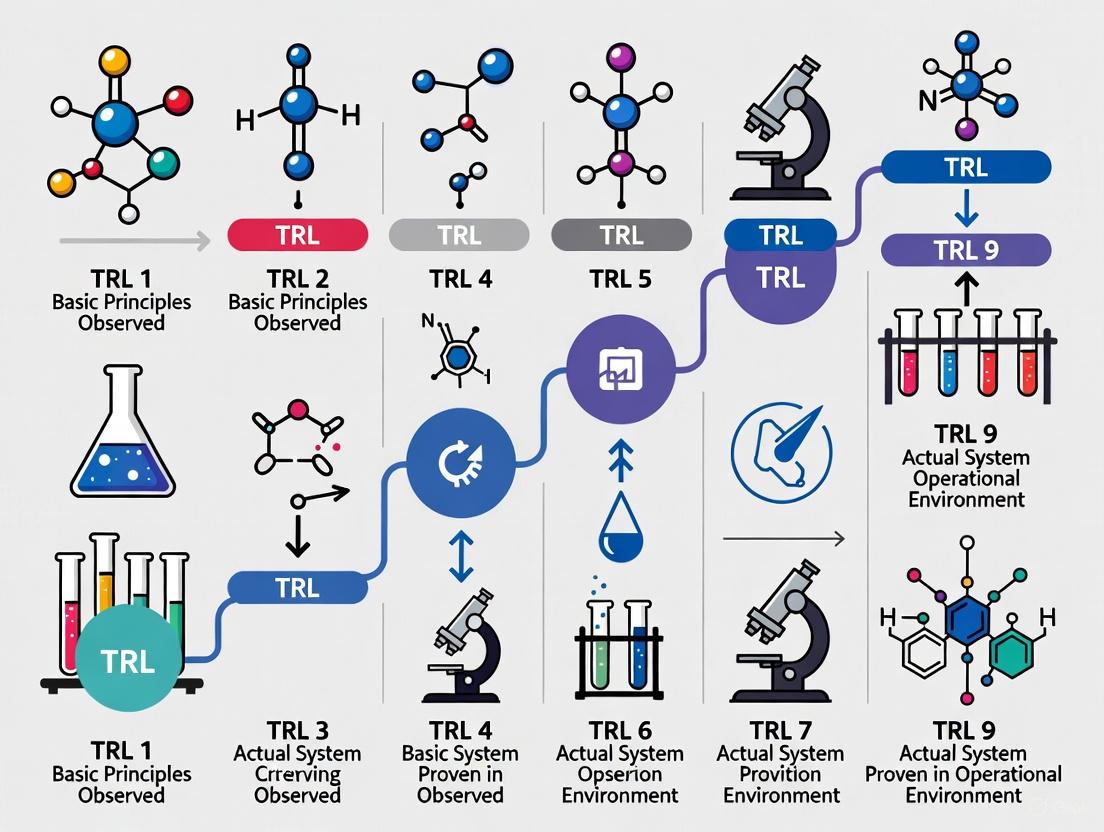
This guide provides forensic researchers and scientists with a comprehensive framework for navigating the Technology Readiness Level (TRL) pathway, from fundamental research to court-admissible methods. It details the TRL scale specific to forensic chemistry, explores methodological applications like Comprehensive Two-Dimensional Gas Chromatography (GC×GC), and addresses critical troubleshooting and optimization challenges. The article culminates with a thorough analysis of the inter-laboratory validation, error rate analysis, and legal admissibility standards required under the Daubert Standard and Federal Rule of Evidence 702 to ensure new technologies meet the rigorous demands of the justice system.
Technology Readiness Levels in Forensic Science: A Researcher's Guide to Development and Courtroom Adoption
Abstract
This guide provides forensic researchers and scientists with a comprehensive framework for navigating the Technology Readiness Level (TRL) pathway, from fundamental research to court-admissible methods. It details the TRL scale specific to forensic chemistry, explores methodological applications like Comprehensive Two-Dimensional Gas Chromatography (GC×GC), and addresses critical troubleshooting and optimization challenges. The article culminates with a thorough analysis of the inter-laboratory validation, error rate analysis, and legal admissibility standards required under the Daubert Standard and Federal Rule of Evidence 702 to ensure new technologies meet the rigorous demands of the justice system.
Understanding Technology Readiness Levels: The Forensic Science Framework
The Critical Role of TRLs in Forensic Method Development and Funding Acquisition
Technology Readiness Levels (TRLs) are a systematic metric used to assess the maturity of a particular technology. The scale typically ranges from 1 (basic principles observed) to 9 (system proven in operational environment). For forensic researchers, understanding and utilizing this framework is paramount for both methodological development and successful funding acquisition. The integration of TRLs provides a standardized language for communicating project status to stakeholders, including funding agencies, laboratory directors, and legal professionals. In an field where new analytical techniques must withstand intense legal scrutiny, the structured pathway offered by the TRL framework ensures that forensic methods meet the rigorous standards required for courtroom admissibility [1].
The forensic science community currently faces significant challenges in adopting advanced technologies. A recent National Institute of Standards and Technology (NIST) report has highlighted four "grand challenges," including the need to quantify accuracy and reliability of complex methods, develop new analytical techniques, establish science-based standards, and promote the adoption of these advances [2] [3]. Within this context, the TRL framework serves as a crucial tool for systematically addressing these challenges by providing a clear pathway from basic research to implemented practice. For forensic researchers, strategically applying this framework can dramatically enhance both the development of robust methods and the success of funding proposals aimed at advancing forensic capabilities.
TRLs and Legal Admissibility Standards
The Interplay Between Technical and Legal Readiness
For any forensic methodology, technical maturity must be paralleled by legal acceptability. Court systems maintain specific standards for admitting scientific evidence and expert testimony. In the United States, the Daubert Standard requires that a technique can be tested, has been peer-reviewed, has a known error rate, and is generally accepted in the relevant scientific community [1]. Similarly, Canada's Mohan Criteria emphasize relevance, necessity, absence of exclusionary rules, and properly qualified experts [1]. The TRL framework provides forensic researchers with a structured approach to meeting these legal requirements by systematically addressing validation, error rate determination, and community acceptance at specific maturity levels.
Forensic Science Grand Challenges and TRLs
The National Institute of Standards and Technology (NIST) has identified four grand challenges facing forensic science, each directly connected to technology maturation through the TRL framework [2] [3]:
Table: Alignment Between NIST Grand Challenges and TRL Development Stages
| NIST Grand Challenge | Relevant TRL Stages | TRL Development Focus |
|---|---|---|
| Accuracy and reliability of complex methods | TRL 3-6 | Establish statistically rigorous measures of accuracy and validity across evidence of varying quality |
| New methods and techniques | TRL 1-4 | Develop novel analytical methods leveraging AI, advanced instrumentation, and algorithms |
| Science-based standards and guidelines | TRL 6-8 | Develop rigorous standards and conformity assessment schemes across disciplines |
| Adoption of advanced methods | TRL 7-9 | Promote implementation of validated methods into routine casework |
TRL Framework for Forensic Method Development
Defining TRL Stages for Forensic Applications
The following table outlines a customized TRL framework specifically designed for forensic method development, incorporating both technical and legal readiness considerations:
Table: Technology Readiness Levels (TRLs) for Forensic Science Applications
| TRL | Stage Definition | Forensic Application Requirements | Legal Readiness Considerations |
|---|---|---|---|
| 1-2: Basic Research | Basic principles observed and formulated | Concept development for novel forensic techniques | Research idea with potential forensic relevance |
| 3-4: Proof of Concept | Experimental validation in laboratory environment | Analytical proof of concept using control samples | Initial testing of scientific foundation for Daubert considerations |
| 5-6: Technology Development | Validation in relevant environment | Testing with simulated case samples, comparison with established methods | Begin establishing error rates, peer-reviewed publications |
| 7-8: System Demonstration | Demonstration in operational environment | Validation in multiple forensic laboratories, standard operating procedure development | Meeting Daubert criteria, demonstrating general acceptance in research community |
| 9: System Proof | Actual system proven in operational environment | Successful implementation in casework, proficiency testing | Admissibility established in court, general acceptance in forensic community |
Case Study: GC×GC-MS Implementation in Forensic Chemistry
Comprehensive two-dimensional gas chromatography coupled with mass spectrometry (GC×GC-MS) provides an illustrative example of TRL progression in forensic science. This technique offers enhanced separation capabilities for complex mixtures encountered in forensic evidence, including illicit drugs, fingerprint residues, and fire debris [1].
Current TRL Status: As of 2024, GC×GC-MS applications in forensic chemistry span different readiness levels [1]:
- TRL 3-4: Forensic toxicology and chemical, biological, nuclear, radioactive (CBNR) substance analysis
- TRL 5-6: Illicit drug analysis and fingerprint residue characterization
- TRL 7-8: Petroleum analysis for arson investigations and oil spill tracing
Experimental Protocols for TRL Advancement
Protocol for TRL 3-4: Proof of Concept Validation
Objective: Establish analytical proof of concept for a novel forensic method using control samples.
Materials and Methods:
- Instrumentation: Comprehensive two-dimensional gas chromatography system with modulator, secondary column, and appropriate detector (MS, FID, or TOF-MS)
- Reference Materials: Certified reference standards of target analytes, negative controls
- Sample Preparation: Appropriate extraction and concentration techniques for target analytes
- Data Analysis: Multivariate statistical software for pattern recognition and analyte identification
Experimental Workflow:
- Optimize separation conditions using standard mixtures
- Establish analytical figures of merit (precision, accuracy, detection limits)
- Compare performance with established 1D-GC methods
- Conduct initial validation with fortified samples
Protocol for TRL 5-6: Technology Development and Validation
Objective: Validate the method with simulated case samples and establish performance metrics for admissibility.
Materials and Methods:
- Sample Types: Simulated case samples mimicking real evidence (e.g, contaminated substrates, mixed samples)
- Comparison Methods: Established reference methods for forensic analysis
- Statistical Tools: Software for calculating error rates, confidence intervals, and uncertainty measurements
- Validation Parameters: Specificity, sensitivity, reproducibility, robustness, and stability
Experimental Workflow:
- Conduct method validation following SWGDRUG or other relevant guidelines
- Determine false positive and false negative rates using blinded samples
- Establish standard operating procedures for the method
- Perform intra-laboratory reproducibility studies
The Scientist's Toolkit: Essential Research Reagents and Materials
Successful advancement through TRL stages requires specific materials and reagents tailored to forensic applications. The following table details essential components for developing and validating novel forensic methods:
Table: Essential Research Reagent Solutions for Forensic Method Development
| Reagent/Material | Function in Development | TRL Application Stage |
|---|---|---|
| Certified Reference Standards | Quantitation, method calibration, and quality control | TRL 3-9 |
| Simulated Case Samples | Method validation using forensically relevant matrices | TRL 5-7 |
| Quality Control Materials | Monitoring analytical performance and reproducibility | TRL 4-9 |
| Sample Preparation Kits | Extraction, purification, and concentration of target analytes | TRL 3-9 |
| Internal Standards | Correction for analytical variability and matrix effects | TRL 3-9 |
| Proficiency Test Materials | Inter-laboratory comparison and competency assessment | TRL 7-9 |
| Data Analysis Software | Multivariate statistics, pattern recognition, and chemometrics | TRL 2-9 |
Funding Acquisition Strategies Aligned with TRLs
Aligning Proposals with TRL Stages
Funding acquisition requires precise alignment between project scope and TRL positioning. Different funding mechanisms target specific readiness levels:
- TRL 1-3 (Basic Research): Basic science grants (e.g., NSF, NIH R01), academic research programs
- TRL 4-6 (Technology Development): Applied research grants (e.g., NIJ, FDA), public-private partnerships
- TRL 7-9 (Implementation): Implementation science funding, technology transfer programs, commercialization grants
Addressing Legal Standards in Funding Proposals
Successful forensic science funding proposals must explicitly address legal admissibility requirements. The following diagram illustrates how TRL advancement corresponds with meeting legal standards:
The integration of Technology Readiness Levels into forensic method development provides a crucial framework for advancing novel techniques from basic research to courtroom implementation. By systematically addressing both technical maturity and legal admissibility requirements at each TRL stage, forensic researchers can significantly enhance their methodological rigor and funding acquisition success. The current NIST-identified grand challenges in forensic science underscore the urgent need for this structured approach to technology development and implementation. As the field continues to evolve with emerging technologies like artificial intelligence, advanced separation techniques, and rapid analysis methods, the TRL framework offers a standardized pathway for ensuring these innovations meet the exacting standards required for forensic evidence in the judicial system.
Technology Readiness Levels (TRL) are a systematic metric used to assess the maturity level of a particular technology. The framework consists of nine levels, with TRL 1 being the lowest (basic principles observed) and TRL 9 being the highest (actual system proven in operational environment) [4]. This classification system provides a common understanding of technology status and helps in research planning, funding decisions, and technology transition strategies. In forensic chemistry, applying the TRL scale enables researchers, laboratory directors, and funding agencies to objectively evaluate the maturity and implementation readiness of new analytical methods, instruments, and techniques.
The adoption of TRL assessments in forensic science is particularly crucial due to the field's direct impact on the criminal justice system. Novel forensic technologies must not only demonstrate analytical validity but also meet stringent legal standards for admissibility as evidence. In the United States, the Daubert Standard guides the admission of expert testimony and requires assessment of whether the theory or technique has been tested, has a known error rate, has been peer-reviewed, and is generally accepted in the relevant scientific community [1]. Similarly, Canada's Mohan criteria emphasize necessity, relevance, reliability, and the absence of any exclusionary rule [1]. The TRL framework provides a structured pathway for forensic researchers to systematically advance their technologies from basic research to court-admissible methods.
The TRL Scale: Definitions and Forensic Science Interpretation
Detailed TRL Definitions
Table 1: Technology Readiness Levels (TRL) and Corresponding Definitions
| TRL | Stage | Definition | Description in Forensic Context |
|---|---|---|---|
| TRL 1 | Fundamental Research | Basic principles observed and reported | Scientific research begins with observation of properties of potential forensic techniques. |
| TRL 2 | Fundamental Research | Technology concept formulated | Practical application of basic scientific principles to forensic challenges is identified. |
| TRL 3 | Research & Development | Experimental proof of concept | Active R&D begins with analytical and laboratory studies to validate forensic feasibility. |
| TRL 4 | Research & Development | Validation in laboratory environment | Basic technology components are integrated and tested in a laboratory environment. |
| TRL 5 | Research & Development | Validation in simulated environment | Component validation occurs in a simulated forensic laboratory environment. |
| TRL 6 | Pilot & Demonstration | Prototype demonstration in simulated environment | A model or prototype representing near-desired configuration undergoes pilot-scale testing. |
| TRL 7 | Pilot & Demonstration | Prototype demonstration in operational environment | A full-scale prototype is demonstrated in an operational forensic laboratory under limited conditions. |
| TRL 8 | Pilot & Demonstration | System complete and qualified | Technology is proven to work in its final form under expected conditions in forensic laboratories. |
| TRL 9 | Early Adoption | Actual system proven through successful deployment | The technology is successfully used in casework and has been admitted as evidence in court. |
TRL Assessment Process for Forensic Chemistry
The process of determining the TRL for a forensic chemistry technology requires careful evaluation against specific criteria at each level. When conducting TRL assessments, it is essential to: start with the broader technology development stage; err on the conservative side when uncertainties exist; ensure the operating environment is well understood; and recognize that a TRL is only valid for the specific operational environment for which the technology was tested [5].
For forensic technologies, the "operational environment" extends beyond the laboratory to include court admissibility requirements. A technology is considered to have achieved a specific TRL only if it has met the requirements for that level and all prior levels [5].
Forensic Chemistry Case Study: Comprehensive Two-Dimensional Gas Chromatography (GC×GC)
Comprehensive two-dimensional gas chromatography (GC×GC) represents a significant advancement in separation science for forensic chemistry. This technique expands upon traditional 1D GC by adjoining two columns of different stationary phases in series with a modulator, dramatically increasing peak capacity and separation power [1]. The modulator, often called the "heart of GC×GC," preserves separation from the first column by sending short retention time windows to be separated on the secondary column, leveraging different affinities of analytes for each stationary phase [1].
GC×GC has been explored in multiple forensic applications, including:
- Illicit drug analysis for improved separation of complex mixtures and novel psychoactive substances [1]
- Toxicology for detecting and quantifying drugs and metabolites in biological samples [1]
- Fire debris analysis for identifying ignitable liquid residues in arson investigations [1]
- Explosives and chemical threat detection for Chemical, Biological, Nuclear, and Radioactive (CBNR) forensics [1]
- Fingermark residue analysis for chemical profiling of latent print residues [1]
- Decomposition odor analysis for volatile organic compound profiling in death investigations [1]
TRL Assessment of GC×GC in Forensic Applications
Table 2: TRL Assessment of GC×GC Across Forensic Chemistry Applications
| Forensic Application | Current TRL | Key Evidence | Legal Readiness |
|---|---|---|---|
| Illicit Drug Analysis | TRL 4-5 | Proof-of-concept studies demonstrating separation of complex drug mixtures; validation in laboratory environments [1] | Limited peer-reviewed publications; no known error rates established for court |
| Toxicology | TRL 4 | Experimental data showing detectability of drugs and metabolites; limited integration with existing workflows [1] | Meets some Daubert criteria (peer review) but lacks error rate documentation |
| Fire Debris Analysis | TRL 6-7 | Prototype methods demonstrated in simulated and operational environments; 30+ publications [1] | Closer to general acceptance; inter-laboratory validation ongoing |
| Oil Spill Tracing | TRL 6-7 | Extensive research (30+ works); demonstrated in relevant environments [1] | Well-characterized methods; approaching general acceptance |
| Fingermark Chemistry | TRL 3-4 | Early proof-of-concept studies; laboratory validation of component processes [1] | Primarily research phase; not yet ready for court |
| CBNR Forensics | TRL 3-4 | Component validation in laboratory settings; limited system integration [1] | Early research phase; significant development needed |
Experimental Protocols for GC×GC Method Development
Protocol for GC×GC Method Validation in Illicit Drug Analysis
Objective: To establish a validated GC×GC-MS method for the separation and identification of complex synthetic drug mixtures.
Materials and Equipment:
- Comprehensive two-dimensional gas chromatograph with liquid nitrogen or quad-jet thermal modulator
- Mass spectrometer detector (preferably time-of-flight for non-targeted analysis)
- Primary column: non-polar stationary phase (e.g., Rxi-5Sil MS, 30m × 0.25mm i.d. × 0.25μm df)
- Secondary column: mid-polar stationary phase (e.g., Rxi-17Sil MS, 1.5m × 0.15mm i.d. × 0.15μm df)
- Standard reference materials of target analytes
- Internal standards (e.g., deuterated analogs)
- Data processing software with GC×GC capabilities
Methodology:
- Modulator Optimization: Establish modulation period (typically 2-8 seconds) based on primary column flow rate and secondary column separation characteristics.
- Temperature Program Development: Optimize primary oven temperature ramp rate to achieve optimal wrap-around avoidance and secondary oven offset (+5-15°C).
- Flow Rate Calibration: Adjust carrier gas flow rates to achieve optimal secondary column separation within modulation period.
- Mass Spectrometer Parameters: Set transfer line temperature (typically 250-300°C), ion source temperature, acquisition rate (≥100 Hz), and mass range (e.g., 40-550 m/z).
- Method Validation:
- Precision and Accuracy: Analyze quality control samples at low, medium, and high concentrations (n=6 each) across three separate days.
- Linearity: Prepare eight-point calibration curve with internal standard correction.
- Limit of Detection (LOD) and Quantitation (LOQ): Determine via signal-to-noise ratio of 3:1 and 10:1 respectively.
- Specificity: Assess separation of 37 common synthetic cannabinoids or other target analytes in complex mixtures.
Data Analysis:
- Process raw data using GC×GC software for peak finding, integration, and identification.
- Generate contour plots for visualization of two-dimensional separation.
- Calculate peak capacity (1D × 2D) and compare to 1D-GC methods.
- Apply statistical analysis (ANOVA) for precision assessment.
Protocol for Inter-laboratory Validation Study
Objective: To assess reproducibility and transferability of GC×GC methods across multiple forensic laboratories (advancing from TRL 5 to TRL 7).
Study Design:
- Participant Recruitment: Enroll 8-10 forensic laboratories with GC×GC capabilities.
- Reference Material Preparation: Distribute identical sets of blinded samples including:
- Simple mixture standards for retention index alignment
- Complex case-type samples (e.g., seized drug material, fire debris extract)
- Quality control samples with known concentrations
- Standardized Protocol: Provide detailed operating procedures including:
- Instrument parameters (flow rates, temperature programs)
- Data acquisition settings
- Quality control criteria
- Data Submission: Collect raw data files, processed results, and method deviations.
Assessment Metrics:
- Intra-laboratory precision (repeatability)
- Inter-laboratory reproducibility
- Quantitative accuracy
- Correct identification rates
- Robustness to minor methodological variations
Advancing TRL in Forensic Chemistry: Strategic Approaches
Bridging the Valley of Death: From Research to Practice
The transition from promising research (TRL 3-4) to court-admissible methodology (TRL 8-9) represents the most significant challenge in forensic chemistry. This "valley of death" can be bridged through strategic approaches:
Collaborative Validation Networks: Establishing multi-laboratory validation consortia accelerates TRL advancement by generating the necessary data for legal acceptance. The National Institute of Justice (NIJ) facilitates such partnerships through its Forensic Science Research and Development Technology Working Group, which identifies operational needs and prioritizes research directions [6].
Standardization and Quality Assurance: Development of standardized protocols, reference materials, and proficiency tests is essential for TRL progression beyond level 6. The NIJ's research priorities specifically emphasize "standard criteria for analysis and interpretation" and "practices and protocols" that support technology implementation [7].
Error Rate Characterization: A fundamental requirement for court admissibility under Daubert is establishing known error rates [1]. Forensic chemistry research must incorporate comprehensive error rate studies through:
- Black box studies measuring accuracy and reliability of forensic examinations
- White box studies identifying specific sources of error
- Interlaboratory studies assessing reproducibility across different practitioners and laboratories [7]
Table 3: Research Reagent Solutions for Forensic Chemistry Technology Development
| Tool/Resource | Function in TRL Advancement | Representative Examples |
|---|---|---|
| Reference Materials | Method validation and quality control at TRL 4-7 | Certified synthetic drug standards, matrix-matched quality controls, internal standards |
| Data Processing Algorithms | Feature detection, peak deconvolution, and pattern recognition at TRL 3-6 | GC×GC data processing software, chemometric packages, machine learning classifiers |
| Quality Control Frameworks | Establishing reproducibility and error rates for TRL 6-8 | Standardized operating procedures, proficiency test programs, statistical quality control charts |
| Database Systems | Supporting statistical interpretation and evidence weighting at TRL 7-9 | Mass spectral libraries, retention index databases, population frequency data |
| Legal Admissibility Resources | Transitioning from TRL 8 to TRL 9 | Frye/Daubert/Mohan criteria checklists, validation documentation templates, expert testimony frameworks |
The application of the TRL scale to forensic chemistry publications provides a structured framework for assessing methodological maturity and implementation readiness. As demonstrated in the GC×GC case study, most forensic applications of advanced separation techniques currently reside at mid-TRL levels (4-7), indicating significant progress in analytical development but ongoing challenges in legal adoption. The progression from promising research to court-admissible methodology requires systematic attention to inter-laboratory validation, error rate characterization, and standardization – components that are often underrepresented in early-stage research.
Future directions for TRL advancement in forensic chemistry should emphasize increased intra- and inter-laboratory validation, explicit error rate analysis, and standardization to meet legal admissibility standards [1]. The forensic science research community must prioritize these components through collaborative networks, shared databases, and practitioner-researcher partnerships. By systematically addressing TRL progression criteria, forensic chemistry researchers can accelerate the translation of innovative technologies from the laboratory to the courtroom, ultimately enhancing the scientific foundation of forensic evidence.
For researchers, scientists, and drug development professionals, the ultimate validation of a new forensic or analytical technique extends beyond publication in scientific journals to its acceptance in a court of law. The admissibility of expert testimony based on novel scientific methods is governed by specific legal standards that act as critical gatekeepers. In the United States, the Frye and Daubert standards form the foundation for admitting expert evidence, while in Canada, the Mohan criteria serve a parallel function [1]. These legal frameworks demand that scientific evidence is not only relevant but also reliable, creating a direct bridge between the rigor of scientific research and the requirements of the justice system.
For forensic research, understanding these standards is not merely an academic exercise but a fundamental aspect of methodological development. The legal system subjects new analytical methods to special scrutiny to determine whether they meet a basic threshold of reliability before they can inform legal decisions [1] [8]. This guide provides an in-depth technical overview of these legal standards and connects them to a research and development lifecycle, providing a roadmap for forensic researchers to navigate the path from experimental concept to courtroom-ready evidence.
Core Legal Standards for Expert Evidence
The Frye Standard: General Acceptance
The Frye Standard, originating from the 1923 case Frye v. United States, established the earliest formal test for the admissibility of expert testimony in the United States [9]. This standard focuses on the "general acceptance" test, which dictates that an expert opinion is admissible only if the scientific technique on which the opinion is based is "generally accepted" as reliable in the relevant scientific community [9] [10]. The court in Frye affirmed the exclusion of testimony concerning a systolic blood pressure polygraph test, reasoning that the technique had not yet gained standing and scientific recognition among physiological and psychological authorities [9].
Application and Scope: The Frye inquiry is narrow, focusing primarily on whether the methodology, when properly performed, generates results generally accepted as reliable in the scientific community [11]. A Frye hearing is typically required only for novel scientific evidence, and universal acceptance is not a prerequisite [9]. The standard provides a clear framework for admissibility that emphasizes reliability through community consensus, though it can exclude emerging scientific techniques that have not yet gained widespread acceptance [10].
The Daubert Standard and Federal Rule of Evidence 702
In the 1993 case Daubert v. Merrell Dow Pharmaceuticals, Inc., the U.S. Supreme Court held that the Frye standard had been superseded by the Federal Rules of Evidence, establishing a new framework for federal courts [11]. The Daubert Standard enforces the role of trial judges as "gatekeepers" and shifts the inquiry from "general acceptance" to a broader assessment of reliability and relevance [11] [9].
The Daubert Court provided a non-exhaustive list of factors for judges to consider:
- Whether the method or theory can be or has been tested
- Whether it has been subjected to peer review and publication
- The known or potential rate of error
- The existence and maintenance of standards controlling the technique's operation
- Whether the method has gained general acceptance in the scientific community [11] [1]
This standard was subsequently codified in Federal Rule of Evidence 702, which was amended in 2023 to clarify and emphasize courts' gatekeeping responsibilities [12] [13]. The current rule states that an expert witness may testify if the proponent demonstrates that:
- The expert's scientific, technical, or other specialized knowledge will help the trier of fact
- The testimony is based on sufficient facts or data
- The testimony is the product of reliable principles and methods
- The expert's opinion reflects a reliable application of the principles and methods to the facts of the case [12]
The Mohan Criteria: The Canadian Framework
In Canada, the admissibility of expert evidence is governed by the criteria established in R. v. Mohan [14] [15]. This Supreme Court of Canada case set a precedent indicating that expert evidence should be excluded if it does not pass four key tests:
- Relevance: The evidence must be logically relevant to the matter at hand
- Necessity: The evidence must be necessary to assist the trier of fact
- Absence of any exclusionary rule: The evidence must not be barred by other exclusionary rules
- A properly qualified expert: The witness must have special knowledge through study or experience [15] [8]
The Mohan test comprises two steps. The first step involves determining whether the evidence passes these threshold requirements of admissibility. The second step, described as a "discretionary gatekeeping step," requires the trial judge to establish whether the benefits stemming from the admission of the expert evidence outweigh the potential harms that may result from its admission [14]. The Supreme Court of Canada has confirmed that special scrutiny is needed when determining the admissibility of novel scientific evidence, adopting the Daubert criteria for this purpose [8].
Comparative Analysis of Legal Standards
The following table provides a detailed comparison of the three primary legal standards for expert evidence admissibility:
Table 1: Comprehensive Comparison of Expert Evidence Admissibility Standards
| Criterion | Frye Standard | Daubert Standard & FRE 702 | Mohan Criteria |
|---|---|---|---|
| Origin | Frye v. United States (1923) [9] | Daubert v. Merrell Dow (1993); Federal Rules of Evidence [11] | R. v. Mohan (1994) [15] |
| Primary Focus | "General acceptance" in the relevant scientific community [10] | Relevance and reliability of methodology [11] | Relevance, necessity, and proper qualification [15] |
| Key Factors | • Acceptance within scientific field [9] | • Testability• Peer review• Error rates• Standards & controls• General acceptance [11] [1] | • Logical relevance• Necessity to trier of fact• Absence of exclusionary rules• Properly qualified expert [14] |
| Judicial Role | Limited determination of general acceptance [10] | Active gatekeeping role assessing reliability [11] [12] | Discretionary gatekeeping with cost-benefit analysis [14] |
| Scope | Primarily novel scientific evidence [9] | All expert testimony (scientific, technical, specialized) [12] | All expert witness evidence [15] |
| Burden of Proof | Not explicitly defined in original standard | Preponderance of evidence (explicit in amended FRE 702) [12] [13] | Balance of probabilities [14] |
| Current Jurisdiction | Some state courts (CA, NY, IL) [10] | U.S. federal courts and many state courts [11] [10] | Canadian courts [1] |
Visualizing the Admissibility Pathways
The following diagram illustrates the decision pathways and key criteria for each major admissibility standard:
Technology Readiness and Legal Admissibility: An Integrated Framework
For forensic researchers, the path from methodological development to courtroom application can be conceptualized through a technology readiness framework that aligns with legal admissibility requirements. The following diagram illustrates this integrated pathway:
Research Progression Through Technology Readiness Levels
Table 2: Research Maturity Alignment with Legal Admissibility Requirements
| Technology Readiness Level | Research Activities | Legal Standard Alignment | Validation Requirements |
|---|---|---|---|
| TRL 1-3 (Basic Research) | Observation of basic principles; Initial experimental studies | Potential relevance established; Initial peer review possible | Formulation of hypotheses; Laboratory-scale testing |
| TRL 4-5 (Technology Development) | Experimental proof of concept; Laboratory validation | Daubert factors: testing and peer review initiation; Error rate estimation begins | Component validation in laboratory environment; Initial method specification |
| TRL 6-7 (Technology Demonstration) | Prototype system in relevant environment; Independent validation | Daubert: Known error rates; Standards development; Mohan: Necessity assessment | System validation in relevant environment; Inter-laboratory reproducibility testing |
| TRL 8-9 (System Validation) | System complete and qualified in operational environment; Multiple validations | Frye: General acceptance building; Daubert: All factors satisfied; Mohan: Benefits outweigh costs | Actual system proven in operational environment; Widespread adoption in relevant scientific community |
Methodological Protocols for Admissible Research
Comprehensive Validation Framework
To meet legal admissibility standards, forensic research methodologies must undergo rigorous validation. The protocol below outlines critical validation components:
Table 3: Essential Methodological Validation Components for Legal Admissibility
| Validation Component | Experimental Protocol | Documentation Requirements | Legal Standard Addressed |
|---|---|---|---|
| Method Testing | Design experiments to test hypotheses under controlled conditions; Vary parameters to establish operating boundaries | Detailed experimental procedures; Raw data; Statistical analysis; Positive and negative controls | Daubert: Testability factor; Mohan: Relevance |
| Peer Review | Submit complete methodology, data, and conclusions to independent scientific journals | Manuscripts; Reviewers' comments; Revisions; Publication in reputable journals | Daubert: Peer review factor; Frye: General acceptance evidence |
| Error Rate Determination | Conduct repeated measurements on reference materials; Inter-laboratory comparisons; Proficiency testing | Quantitative error analysis; Uncertainty measurements; Statistical confidence intervals | Daubert: Known error rate factor; Mohan: Reliability assessment |
| Standards & Controls | Implement standard operating procedures (SOPs); Positive and negative controls; Calibration protocols | SOP documentation; Quality control records; Training documentation; Audit trails | Daubert: Standards & controls factor; All standards: Reliability |
| General Acceptance | Present at scientific conferences; Encourage independent verification; Publish application studies | Citations in literature; Independent validation studies; Adoption by other laboratories | Frye: General acceptance test; Daubert: General acceptance factor |
The Scientist's Toolkit: Essential Research Reagents and Materials
Table 4: Key Research Reagents and Materials for Forensic Method Development
| Research Reagent / Material | Technical Function | Application in Legal Readiness |
|---|---|---|
| Certified Reference Materials | Provides traceable standards with known properties for method calibration and validation | Establishes method accuracy and reliability for Daubert standards compliance |
| Proficiency Test Samples | Blind samples for inter-laboratory comparison and ongoing quality assurance | Demonstrates laboratory competency and method reproducibility for error rate determination |
| Quality Control Materials | Stable, well-characterized materials for routine monitoring of analytical performance | Supports maintenance of standards and controls required by all legal frameworks |
| Data Processing Software | Algorithms for data analysis, peak integration, and statistical evaluation | Must be validated and transparent to address Daubert's reliable principles requirement |
| Documentation Systems | Electronic lab notebooks, chain of custody forms, and audit trails | Creates sufficient facts/data record required by FRE 702 and Mohan criteria |
The integration of technology readiness levels with legal admissibility standards provides a strategic framework for forensic researchers to systematically advance their methodologies from basic research to courtroom application. By understanding the specific requirements of the Frye, Daubert, and Mohan standards early in the research process, scientists can design validation studies that simultaneously address scientific rigor and legal expectations.
The recent 2023 amendment to FRE 702 emphasizes that the proponent of expert testimony must demonstrate admissibility by a preponderance of the evidence, reinforcing the need for thorough methodological validation before courtroom presentation [12] [13]. Similarly, Canadian courts continue to apply the Mohan criteria with careful attention to whether expert evidence is necessary and whether the potential benefits outweigh the costs to the trial process [14].
For forensic researchers, this integrated approach represents more than procedural compliance—it embodies the essential connection between scientific validity and justice. By building legal readiness into the research lifecycle, scientists can ensure that their work not only advances their field but also serves the equitable administration of justice.
From Theory to Practice: Implementing TRLs in Forensic Research and Development
Comprehensive two-dimensional gas chromatography (GC×GC) represents a revolutionary advancement in analytical separations, offering unparalleled resolution for complex mixtures encountered in forensic evidence analysis, from fire debris to controlled substances. The deployment of such sophisticated analytical techniques within the rigorous and legally defensible context of forensic science requires a systematic approach to technology development and validation. The Technology Readiness Level (TRL) scale provides this essential framework. Originally developed by NASA, TRLs are a measurement system used to assess the maturity level of a particular technology, with levels ranging from TRL 1 (basic principles observed) to TRL 9 (actual system proven through successful mission operations) [4]. For forensic researchers, this framework ensures that GC×GC methods transition from promising research concepts to robust, legally admissible analytical tools with defined performance characteristics at each stage of development.
Technology Readiness Levels: A Framework for Forensic Method Development
The Technology Readiness Level framework consists of nine distinct levels that provide a common set of definitions for determining the progress of research and development programs [4] [16]. When applied to GC×GC method development for forensic applications, each TRL represents a specific stage of methodological maturity:
TRL 1-2 (Basic Research): At these initial levels, fundamental studies of GC×GC separation mechanisms for forensically relevant compounds are conducted. Scientific research begins with translation of results into future research directions, establishing practical applications for initial findings with little to no experimental proof of concept [4].
TRL 3-4 (Proof of Concept): Active research and design begin, with both analytical and laboratory studies conducted to determine GC×GC viability for specific evidence types. Technologies advance to TRL 4 once proof-of-concept is established and multiple component pieces (column combinations, modulation schemes, detection systems) are tested together [4].
TRL 5-6 (Technology Validation): At TRL 5, the GC×GC system undergoes rigorous testing in environments that simulate forensic casework conditions. TRL 6 is achieved when a fully functional prototype or representational model is established that can handle authentic forensic samples [4].
TRL 7-9 (Operational Deployment): TRL 7 requires demonstration of the working model in an operational forensic laboratory environment. TRL 8 indicates the method has been fully validated and "qualified" for routine use, while TRL 9 signifies the technique has been "proven" through successful application to actual case evidence, establishing legal precedent [4].
Table 1: Technology Readiness Levels for GC×GC Method Development in Forensic Science
| TRL | Stage of Development | Key Activities for GC×GC Methods | Forensic Validation Requirements |
|---|---|---|---|
| TRL 1-2 | Basic principles observed and formulated | Literature review of separation mechanisms, preliminary feasibility studies | Theoretical basis for application to evidence types |
| TRL 3-4 | Experimental proof-of-concept established | Testing column combinations, modulator performance with standards | Basic separation metrics for target compounds |
| TRL 5-6 | Component/system validation in relevant environment | Method optimization with authentic matrices, comparison to standard methods | Precision, accuracy, robustness studies with controls |
| TRL 7-8 | System demonstrated in operational environment | Mock casework samples, collaborative exercises, standard operating procedure development | Full validation per SWGTOOL/SWGDRUG guidelines, uncertainty measurements |
| TRL 9 | Actual system proven through successful mission operations | Routine casework application, testimony acceptance, proficiency testing | Ongoing proficiency testing, continuous method monitoring |
Core Principles and Instrumentation of GC×GC
Fundamental Separation Mechanism
GC×GC employs two separate separation mechanisms with orthogonal selectivity, typically connected through a thermal or flow modulator. The entire effluent from the first dimension column is sequentially focused and injected into the second dimension column in very short pulses (typically 2-8 seconds), creating a continuous series of high-speed second-dimension separations. This modulation process produces a comprehensive two-dimensional chromatogram where compounds are characterized by two independent retention times, significantly increasing peak capacity and resolution compared to conventional GC.
Instrumentation Components
A complete GC×GC system consists of several integrated components that must be carefully selected and optimized based on the specific forensic application:
GC Oven and Injector: Standard GC hardware is utilized but requires optimization for the specific column set and modulation scheme. Inlet conditions, carrier gas selection, and injection techniques must be compatible with the thermal requirements of the modulator.
First Dimension Column: Typically a conventional capillary column (20-30 m × 0.25-0.32 mm i.d.) with a non-polar stationary phase (e.g., 100% dimethylpolysiloxane, 5% phenyl polysilphenylene-siloxane) that provides the primary separation based on volatility.
Modulator: The heart of the GC×GC system, responsible for trapping, focusing, and reinjecting effluent from the first dimension to the second dimension. Modern systems primarily use thermal modulators with either liquid nitrogen or carbon dioxide for cooling and electrical heating for rapid desorption.
Second Dimension Column: A short, narrow-bore capillary column (1-2 m × 0.1-0.18 mm i.d.) with a polar stationary phase that provides very fast secondary separation based on polarity, typically completed in 2-8 seconds.
Detector: Requires high data acquisition rates (50-200 Hz) to properly define the very narrow peaks (100-200 ms baseline width) produced in the second dimension. Time-of-flight mass spectrometry (TOFMS) is particularly compatible due to its inherent fast acquisition capabilities.
Table 2: GC×GC Component Specifications for Forensic Applications
| System Component | Technical Specifications | Performance Requirements | Common Configurations for Forensic Analysis |
|---|---|---|---|
| First Dimension Column | 20-30 m length, 0.25-0.32 mm i.d., 0.25-1.0 μm film thickness | Non-polar phase (100% PDMS, 5% phenyl) | High thermal stability for temperature programming with complex mixtures |
| Second Dimension Column | 1-2 m length, 0.1-0.18 mm i.d., 0.05-0.18 μm film thickness | Polar phase (polyethylene glycol, 50% phenyl polysilphenylene-siloxane) | Ultra-fast separations (2-8 second cycles) with minimal bleed |
| Modulator | Thermal modulation with cryogenic cooling (LN₂ or CO₂) | 2-8 second modulation periods, narrow injection bands (<100 ms) | Capable of handling high boiling point compounds encountered in forensic samples |
| Detector | Time-of-flight mass spectrometer (TOFMS) | Acquisition rate 50-200 Hz, mass range 40-550 m/z | Deconvolution algorithms for coeluting peaks, library search capabilities |
| Data System | Specialty software for GC×GC data handling | Capable of processing 3D data (time1 × time2 × intensity), peak finding algorithms | Color-coded contour plots, structured chromatogram visualization, statistical comparison |
Experimental Protocol: GC×GC Method Development for Forensic Applications
Initial Method Setup and Parameter Optimization
The development of a robust GC×GC method requires systematic optimization of multiple interdependent parameters. Begin with establishing the first dimension separation by adapting a validated one-dimensional GC method for the target analytes. The temperature program should be optimized to balance separation and analysis time, typically utilizing a moderate ramp rate (1.5-3.0°C/min) to provide sufficient first-dimension peak widths (10-20 seconds) for effective modulation. The modulation period must then be carefully selected to provide 3-4 modulations across the first-dimension peak width, typically ranging from 2-8 seconds depending on the complexity of the sample and the speed of the second-dimension separation.
The second dimension separation operates under nearly isothermal conditions, with the temperature offset typically 5-20°C above the first dimension oven temperature at the time of modulation. This thermal gradient across the two dimensions enhances the orthogonality of the separation. Carrier gas linear velocity must be optimized for both dimensions, with the second dimension operating at higher linear velocity to achieve the required fast separations. Finally, detector parameters must be established to ensure sufficient data acquisition rate (50-200 Hz) to accurately capture the narrow (50-200 ms) peaks eluting from the second dimension.
Comprehensive Method Validation Protocol
For forensic applications, GC×GC methods require rigorous validation to meet evidentiary standards. The validation protocol should include the following experiments performed over at least five independent runs on different days:
Linearity and Range: Analyze a minimum of five calibration standards across the expected concentration range, including concentrations near the limit of quantification, using internal standard calibration. Acceptance criterion: r² ≥ 0.995.
Accuracy and Precision: Analyze QC samples at three concentration levels (low, medium, high) in quintuplicate over three separate days. Calculate intra-day and inter-day precision (%RSD) and accuracy (%bias). Acceptance criteria: Precision ≤ 15% RSD (≤20% at LLOQ), accuracy 85-115% (80-120% at LLOQ).
Limit of Detection (LOD) and Quantification (LOQ): Establish based on signal-to-noise ratios of 3:1 and 10:1, respectively, with verification by analysis of samples at these concentrations meeting precision and accuracy requirements.
Selectivity: Demonstrate absence of interference from blank matrix samples (minimum n=6 from different sources) at the retention times of target analytes.
Robustness: Deliberately vary critical method parameters (modulation period, temperature ramp rate, carrier gas velocity) within small ranges and measure impact on key performance metrics.
Carryover: Inject blank solvent samples following the highest calibration standard and verify absence of peaks >20% of LLOQ.
Data Analysis and Interpretation in GC×GC
Data Visualization Techniques
GC×GC generates complex three-dimensional data sets (1tʀ × 2tʀ × intensity) that require specialized visualization and processing. The most common representation is the two-dimensional contour plot, where first-dimension retention time is plotted on the x-axis, second-dimension retention time on the y-axis, and peak intensity is represented by color gradients. Structured patterns emerge in these plots, with compounds of similar chemical characteristics forming ordered clusters that aid in compound identification, even for unknown components.
Data processing involves peak detection, integration, and identification across both dimensions. Modern GC×GC software utilizes advanced algorithms for peak finding that account for the unique shape and distribution of peaks in the two-dimensional separation space. For mass spectrometric detection, spectral deconvolution algorithms are essential for resolving coeluting compounds that may be incompletely separated even in the two-dimensional space.
Quantitative Analysis Approaches
While GC×GC provides exceptional separation power, quantitative analysis requires careful method design to address the unique characteristics of the technique. Internal standardization is essential, preferably using multiple internal standards that cover different regions of the separation space. The choice of quantification approach depends on the analysis requirements:
Target Compound Analysis: For known analytes, peak volume integration in the 2D space provides the highest precision, with integration regions defined based on first- and second-dimension retention time windows.
Group-Type Analysis: For characterizing complex mixtures by chemical class, template-based integration regions can be applied to group compounds based on their position in the 2D separation space.
Non-Target Analysis: For comprehensive sample characterization, pixel-based approaches that consider the entire data set without prior peak detection enable advanced statistical analysis, including principal component analysis (PCA) for sample classification.
Table 3: Advanced Data Processing Techniques for GC×GC in Forensic Analysis
| Data Processing Technique | Methodology | Application in Forensic Science | Implementation Considerations |
|---|---|---|---|
| Structured Chromatogram Analysis | Identification of ordered patterns (homologous series, chemical classes) | Chemical profiling of complex mixtures (drug impurities, ignitable liquids) | Requires validated retention index systems in both dimensions |
| Pixel-Based Data Analysis | Statistical analysis of raw data points without peak finding | Non-targeted screening for unknown compounds, sample comparison and classification | Computationally intensive, requires specialized software |
| Multivariate Statistical Analysis | Principal component analysis (PCA), linear discriminant analysis (LDA) | Objective comparison of complex evidence samples, source attribution | Large sample sets required for statistical significance |
| Peak Capacity Calculations | Measurement of theoretical separation power under specific conditions | Method optimization, comparison with alternative techniques | Actual utilization typically 20-40% of theoretical maximum |
| Contour Plot Visualization | Color-coded intensity representation with optimized color gradients | Data interpretation, presentation in legal proceedings | Color schemes must be accessible (color blindness compatible) |
The Scientist's Toolkit: Essential Research Reagent Solutions
Successful implementation of GC×GC in forensic research requires carefully selected reagents, reference materials, and consumables. The following table details key research reagent solutions essential for developing and validating GC×GC methods for complex evidence analysis.
Table 4: Essential Research Reagent Solutions for GC×GC Method Development
| Reagent/Consumable | Technical Specifications | Function in GC×GC Analysis | Quality Control Requirements |
|---|---|---|---|
| Certified Reference Materials | Purity ≥98%, certificate of analysis with uncertainty measurements | Quantitative calibration, method validation, quality control | Traceability to national standards, stability documentation |
| Internal Standards | Stable isotope-labeled analogs of target analytes (²H, ¹³C, ¹⁵N) | Correction for matrix effects, injection volume variations, recovery calculations | Minimal isotopic interference, different retention from native compounds |
| Quality Control Materials | Characterized matrix-matched materials with assigned values | Method performance verification, ongoing quality assurance | Commutability with authentic samples, sufficient volume for long-term use |
| Derivatization Reagents | High purity silylation, acylation, or esterification reagents | Enhancement of volatility, stability, or detection of polar compounds | Reaction efficiency verification, stability under storage conditions |
| Column Qualification Test Mixes | Compounds with varying functional groups and polarities | Performance verification of column combinations, monitoring of column degradation | Coverage of relevant chemical space, stability at elevated temperatures |
| Matrix-Matched Calibrators | Prepared in extracted negative matrix with known additions | Compensation for matrix-induced enhancement or suppression | Consistent matrix source, demonstration of absence of interference |
The systematic development of comprehensive two-dimensional gas chromatography methods through the Technology Readiness Level framework provides forensic researchers with a structured pathway from fundamental investigation to court-admissible analytical capability. By progressing through defined maturity stages with specific deliverables and validation milestones at each level, laboratories can efficiently allocate resources while building the necessary documentation for legal defensibility. The exceptional separation power of GC×GC addresses fundamental challenges in forensic science, particularly for complex mixture analysis where conventional techniques prove inadequate. As this advanced analytical technique continues to mature within the forensic community, its application to evidentiary materials promises enhanced discrimination power, improved confidence in identification, and ultimately, stronger scientific evidence for the legal system.
Forensic science laboratories are continually advancing their analytical capabilities to handle complex evidence. Comprehensive Two-Dimensional Gas Chromatography (GC×GC) represents a significant evolution beyond traditional one-dimensional GC, offering superior separation power for forensic applications including illicit drug analysis, toxicology, and arson investigations [1]. This technique connects two columns of different stationary phases in series via a modulator, creating two independent separation mechanisms that dramatically increase peak capacity and improve detection of trace compounds in complex mixtures [1]. The modulator, often described as the heart of GC×GC, preserves separation from the first column by transferring narrow retention time windows to the secondary column for further separation [1]. This review examines the current state of GC×GC applications across key forensic disciplines, evaluating both analytical methodologies and technology readiness levels (TRL) for implementation in routine casework.
Core Principles and Technical Advancements of GC×GC
Fundamental Operational Mechanism
The GC×GC analytical process begins with sample injection onto the primary column (1D column), where separation occurs based on analyte affinity for its stationary phase [1]. As compounds elute from this column, the modulator collects effluent for brief periods (typically 1-5 seconds) and injects these concentrated plugs onto the secondary column (2D column) at repeated intervals known as the modulation period [1]. The secondary column employs a different retention mechanism, providing orthogonal separation that distributes compounds across a two-dimensional retention plane rather than a linear timeline [1]. This configuration produces significantly higher peak capacity compared to conventional GC, enabling resolution of co-eluting compounds that would be indistinguishable in one-dimensional analysis [1].
Detection and Data Analysis Evolution
Detection systems for GC×GC have advanced substantially from early implementations using flame ionization detection (FID) and mass spectrometry (MS). Current platforms frequently incorporate high-resolution (HR) MS and time-of-flight (TOF) MS detectors, with dual detection methods such as TOFMS/FID gaining traction for their complementary data streams [1]. These technological improvements have enhanced both sensitivity and compound identification capabilities, particularly valuable for non-targeted forensic applications where a wide range of unknown analytes must be characterized simultaneously [1]. The increased signal-to-noise ratio inherent to GC×GC modulation techniques further improves detectability of minor components in complex forensic samples [1].
Forensic Applications and Technology Readiness Assessment
Technology Readiness Levels Framework
For adoption in forensic laboratories, analytical methods must meet rigorous standards and adhere to legal admissibility criteria including the Frye Standard, Daubert Standard, Federal Rule of Evidence 702 in the United States, and the Mohan Criteria in Canada [1]. These legal frameworks emphasize reliable principles and methods, known error rates, peer review, and general acceptance in the scientific community [1]. A technology readiness scale (TRL 1-4) categorizes the advancement of GC×GC research across forensic applications as of 2024, with future directions focusing on intra- and inter-laboratory validation, error rate analysis, and standardization [1].
Illicit Drug Analysis
GC×GC-MS demonstrates particular utility for characterizing complex drug mixtures, including emerging psychoactive substances and cutting agents [1]. The technique's enhanced separation power helps resolve isomeric compounds and trace components that may be forensically significant but undetectable with traditional GC-MS [1]. Current research focuses on method development for specific drug classes, with technology readiness assessed at Level 2-3, indicating established proof-of-concept but requiring further validation for routine implementation [1].
Methodology for Drug Analysis: Sample preparation typically involves solid-phase extraction or liquid-liquid extraction from seized materials or biological matrices [17]. Following derivatization if necessary, samples are injected into the GC×GC system with a primary non-polar column (e.g., 5% phenyl polysilphenylene-siloxane) and secondary mid-polarity column (e.g., 50% phenyl polysilphenylene-siloxane) [1]. Modulation is achieved using thermal or flow-based modulators, with detection via TOF-MS for untargeted analysis or tandem MS for targeted compounds [1]. Data analysis employs specialized software to deconvolute complex two-dimensional chromatograms and compare mass spectra against spectral libraries [1].
Forensic Toxicology
In systematic toxicological analysis (STA), GC×GC-HRMS provides broad screening capabilities for drugs, metabolites, and other toxicologically relevant compounds in biological samples [17]. The technique addresses a major challenge in forensic toxicology: the simultaneous detection of numerous substances with diverse physicochemical properties, including new psychoactive substances (NPS) [17]. GC×GC complements LC-MS methods by better detecting volatile compounds like propofol, chloral hydrate, and pregabalin [1] [17]. Technology readiness for toxicological applications is currently at Level 2, with active research but limited standardization for casework [1].
Toxicology Analysis Protocol: Biological samples (blood, urine, tissues) undergo protein precipitation, enzymatic hydrolysis of conjugates, and solid-phase extraction [17]. Extracts are concentrated and derivatized if necessary before GC×GC-TOFMS analysis [17]. Data interpretation combines retention index matching in both dimensions with high-resolution mass spectral comparison against databases such as the Maurer/Pfleger/Weber mass spectral library [17]. Quality control includes analysis of positive controls, blanks, and internal standards to monitor extraction efficiency and instrument performance [17].
Arson Investigations
GC×GC applications in arson investigation focus on identifying ignitable liquid residues (ILR) from fire debris, a complex analytical challenge due to background interference from pyrolysis products [1]. The technique's enhanced separation capacity better distinguishes petroleum-based accelerants from substrate decomposition compounds compared to standard GC-MS [1]. Additionally, GC×GC is employed in environmental forensics for oil spill tracing, which shares analytical approaches with fire investigation [1]. This application area has reached Technology Readiness Level 3-4, indicating more mature methodology with some laboratories implementing routine analysis [1].
Arson Analysis Procedure: Fire debris samples are collected in airtight containers and subjected to passive headspace concentration using activated charcoal strips or solid-phase microextraction (SPME) [1]. Extracted compounds are analyzed by GC×GC-FID or GC×GC-TOFMS with column selection optimized for hydrocarbon separation [1]. Data interpretation employs pattern recognition algorithms to classify ignitable liquids based on two-dimensional chromatographic profiles and differentiate them from background interferences [1].
Table 1: Technology Readiness Levels for Forensic Applications of GC×GC
| Application Area | Technology Readiness Level | Key Advantages | Validation Needs |
|---|---|---|---|
| Illicit Drug Analysis | TRL 2-3 | Enhanced separation of complex mixtures and isomers | Standardized protocols, error rate studies |
| Forensic Toxicology | TRL 2 | Broad screening capability, detection of novel psychoactive substances | Reference databases, inter-laboratory validation |
| Arson Investigations (ILR) | TRL 3-4 | Better discrimination of ignitable liquids from background | Quantitative criteria, standardized data interpretation |
| Oil Spill Tracing | TRL 3-4 | Chemical fingerprinting of complex petroleum mixtures | Source correlation databases, standardized reporting |
| Odor Decomposition | TRL 2-3 | Comprehensive volatile organic compound profiling | Temporal studies, compound identification validation |
Experimental Workflows and Signaling Pathways
Generalized GC×GC Analytical Workflow
GC×GC Analytical Workflow
Forensic Substance Identification Pathway
Substance Identification Pathway
The Scientist's Toolkit: Essential Research Reagents and Materials
Table 2: Key Research Reagent Solutions for GC×GC Forensic Analysis
| Reagent/Material | Function | Application Specifics |
|---|---|---|
| Derivatization Reagents (e.g., MSTFA, BSTFA) | Enhances volatility and thermal stability of polar compounds | Critical for drug metabolites, steroids, and acidic compounds in toxicology |
| Solid-Phase Extraction (SPE) Cartridges | Extracts and concentrates analytes from complex matrices | Used for biological samples (blood, urine) and fire debris extraction |
| Headspace Vials and SPME Fibers | Extracts volatile compounds for analysis | Essential for arson investigations (ILR) and decomposition odor studies |
| Color Test Reagents (Marquis, Scott's, Duquenois) | Presumptive identification of drug classes | Initial screening tool; requires confirmatory analysis by GC×GC-MS [18] |
| Stationary Phase Columns (varied polarities) | Provides orthogonal separation mechanisms | Combination of non-polar (1D) and mid-polar (2D) columns most common |
| Quality Control Standards | Verifies instrument performance and method validity | Includes internal standards, continuing calibration verification |
| Reference Spectral Libraries | Compound identification through mass spectral matching | NIST, Maurer/Pfleger/Weber libraries; custom databases for novel compounds |
Analytical Considerations and Legal Admissibility
Method Validation Requirements
For GC×GC methods to transition from research to routine forensic application, comprehensive validation must address specificity, sensitivity, accuracy, precision, and robustness [1]. Key parameters include establishing limits of detection and quantification, linear dynamic range, recovery efficiency, and reproducibility across multiple instruments and operators [1]. Method robustness testing should evaluate impacts of minor variations in operational parameters such as modulation period, temperature programming, and carrier gas flow rates [1].
Legal Adherence Framework
Forensic methods must satisfy legal standards for expert testimony admission, including the Daubert Standard's requirements that techniques be tested, peer-reviewed, have known error rates, and enjoy general acceptance in the relevant scientific community [1]. For GC×GC, this necessitates establishing standardized protocols, conducting inter-laboratory studies to determine reproducibility and error rates, and publishing validation data in peer-reviewed literature [1]. The technology's foundation in generally accepted GC and MS principles provides a pathway for legal recognition, but application-specific validation remains essential [1].
GC×GC represents a powerful separation platform with demonstrated potential across multiple forensic disciplines, particularly for complex evidence analysis where conventional techniques prove inadequate. While applications in illicit drug analysis, toxicology, and arson investigations show varying technology readiness levels, ongoing research focuses on method validation, error rate determination, and standardization necessary for adoption in forensic laboratories. The technique's enhanced separation power and detection sensitivity position it as a valuable tool for addressing evolving forensic challenges, including emerging drugs and complex mixture analysis, though further work is required to establish legal admissibility across all application domains.
Within the framework of Technology Readiness Levels (TRLs) for forensic research, the systematic validation of analytical methods is a critical gateway for any technology to progress from foundational research (TRL 1-3) to routine laboratory implementation (TRL 7-9) [19] [20]. Method robustness is formally defined as "a measure of an analytical procedure's capacity to remain unaffected by small but deliberate variations in procedural parameters listed in the documentation, providing an indication of the method's suitability and reliability during normal use" [21]. In practical terms, it evaluates how well a method withstands minor, inevitable fluctuations in laboratory conditions—such as mobile phase pH or instrument temperature—that occur between analysts, instruments, and days. For forensic applications, establishing robustness is not merely a scientific formality; it is a prerequisite for legal admissibility, ensuring methods meet standards such as the Daubert Standard and Federal Rule of Evidence 702 by demonstrating reliable performance under realistic operational conditions [19].
This technical guide provides forensic researchers and drug development professionals with a structured approach to building method robustness. It details the core figures of merit for quantification, protocols for uncertainty measurement, and strategies for intra-laboratory validation, all framed within the technology maturation pathway essential for successful courtroom adoption.
Core Concepts: Robustness, Ruggedness, and Figures of Merit
A clear understanding of terminology is essential for proper experimental design. The terms robustness and ruggedness, often used interchangeably, refer to distinct concepts in method validation [21].
- Robustness assesses the impact of internal parameters specified within the method (e.g., mobile phase composition, flow rate, column temperature, pH). It is an measure of the method's inherent stability.
- Ruggedness, increasingly referred to as intermediate precision, assesses the impact of external factors not specified in the method (e.g., different analysts, laboratories, instruments, or days). It measures the method's reproducibility under normal, expected operational variations [21].
The reliability of a method is quantified using specific Figures of Merit (FMs). These metrics provide the quantitative foundation for assessing both method performance and the impact of parameter variations during robustness testing. The following table summarizes the key figures of merit, their definitions, and their role in uncertainty measurement.
Table 1: Key Figures of Merit for Quantifying Method Performance and Uncertainty
| Figure of Merit | Definition | Role in Uncertainty Measurement |
|---|---|---|
| Accuracy | The closeness of agreement between a measured value and a true reference value. | Quantifies systematic error (bias). |
| Precision | The closeness of agreement between independent measurement results obtained under stipulated conditions. | Quantifies random error; often measured as repeatability and intermediate precision. |
| Selectivity/Specificity | The ability to measure the analyte unequivocally in the presence of other components. | Ensures the uncertainty budget is not inflated by interferences. |
| Linearity & Range | The ability to obtain results directly proportional to analyte concentration within a given range. | Defines the operational bounds where uncertainty is characterized. |
| Limit of Detection (LOD) | The lowest concentration of an analyte that can be detected. | Contributes to uncertainty at trace levels. |
| Limit of Quantification (LOQ) | The lowest concentration of an analyte that can be quantified with acceptable precision and accuracy. | Defines the lower limit for reliable quantitative uncertainty estimation. |
| Sensitivity | The slope of the analytical calibration curve. | Describes how the response changes with concentration. |
Experimental Design for Robustness Testing
A robust method is one that has been systematically challenged. Moving away from inefficient univariate approaches (changing one factor at a time), modern robustness testing employs multivariate screening designs to study the effects of multiple variables simultaneously. This efficient approach reveals interactions between factors that would otherwise remain undetected [21].
Screening Design Selection
The choice of experimental design depends on the number of factors (parameters) to be investigated. The three most common screening designs are:
- Full Factorial Designs: Investigates all possible combinations of factors at their high and low levels. For k factors, this requires 2k runs. This design is comprehensive but becomes impractical for more than five factors due to the high number of runs [21].
- Fractional Factorial Designs: A carefully chosen subset (e.g., 1/2, 1/4) of the full factorial design runs. This is a highly efficient approach for investigating a larger number of factors, based on the principle that most processes are dominated by main effects and low-order interactions. The trade-off is that some effects may be confounded (aliased) [21].
- Plackett-Burman Designs: Extremely economical designs for screening a large number of factors (e.g., up to 11 factors in 12 runs) where the primary goal is to identify the most critical factors affecting the method. They are ideal for determining whether a method is robust to many changes rather than precisely quantifying each individual effect [21].
Protocol for Executing a Robustness Study
The following workflow provides a detailed methodology for planning, executing, and analyzing a robustness study.
Step 1: Define Scope and Parameters The first step involves a critical review of the analytical method to list all procedural parameters that could plausibly vary during routine use. For a liquid chromatography method, this typically includes: mobile phase pH, buffer concentration, percent organic solvent, flow rate, column temperature, detection wavelength, and gradient conditions [21]. The selection of factors and their ranges should be based on chromatographic knowledge gained during method development.
Step 2: Select Factors and Ranges For each parameter, define a nominal value (the value specified in the method) as well as a high and low value representing a small, deliberate variation. The ranges should reflect the expected variations in a routine laboratory environment. The table below provides an example for an isocratic HPLC method.
Table 2: Example Robustness Factor Selection and Limits for an Isocratic Method
| Factor | Nominal Value | Low Value (-) | High Value (+) |
|---|---|---|---|
| Mobile Phase pH | 3.10 | 3.00 | 3.20 |
| Buffer Concentration (mM) | 25 | 23 | 27 |
| % Organic Solvent | 45% | 43% | 47% |
| Flow Rate (mL/min) | 1.0 | 0.9 | 1.1 |
| Column Temperature (°C) | 30 | 28 | 32 |
| Detection Wavelength (nm) | 254 | 252 | 256 |
Source: Adapted from [21]
Step 3: Choose an Experimental Design Select an appropriate screening design based on the number of factors. For the 6 factors listed in Table 2, a 12-run Plackett-Burman design or a 16-run fractional factorial design would be highly efficient choices [21].
Step 4: Execute Runs and Collect Data Perform the experiments in a randomized order to minimize the impact of uncontrolled variables. For each run, record the responses for the key figures of merit, such as retention time, peak area, resolution from the closest peak, and tailing factor.
Step 5: Analyze Data and Identify Critical Control Factors (CCFs) Analyze the data using statistical software to perform analysis of variance (ANOVA). The goal is to identify which parameters have a statistically significant effect on each response. Parameters that exert a significant and undesirable effect on critical FMs are deemed Critical Control Factors (CCFs). These parameters may require tighter control limits in the method documentation or may trigger a method optimization step.
Step 6: Establish System Suitability Parameters Based on the results, define system suitability test (SST) limits that will ensure the validity of the analytical system throughout its use. For example, if the study shows that resolution is highly sensitive to pH, the SST must include a stringent resolution requirement [21].
Intra-laboratory Validation and the Path to Technology Readiness
Intra-laboratory validation, encompassing both robustness and intermediate precision (ruggedness), is a cornerstone of technology maturation for forensic methods. It provides the necessary data to advance from lower TRLs, focused on proof-of-concept, to higher TRLs, where methods are refined and prepared for inter-laboratory transfer [20].
The following diagram illustrates how robustness testing and validation activities integrate into the broader Technology Readiness Level framework for forensic science.
As shown, robustness evaluation begins early (TRL 4-5) and becomes more formalized through TRL 6-7, culminating in a complete intra-laboratory validation package. This package is essential for meeting the "intra- and inter-laboratory validation" and "error rate analysis" requirements outlined by legal standards for forensic evidence [19]. Successfully demonstrating method robustness directly contributes to a technology's readiness for routine forensic analysis and court-room admissibility.
The Scientist's Toolkit: Essential Research Reagent Solutions
The following table details key reagents, materials, and tools essential for conducting robustness studies and method validation in analytical chemistry, particularly for chromatographic applications.
Table 3: Essential Research Reagent Solutions for Robustness Testing and Validation
| Item | Function / Description |
|---|---|
| Certified Reference Materials (CRMs) | High-purity, well-characterized materials used to establish method accuracy, prepare calibration standards, and spike samples for recovery studies. |
| LC-MS Grade Solvents | High-purity solvents (e.g., acetonitrile, methanol, water) with minimal UV absorbance and volatile impurities, critical for achieving low baseline noise and reproducible chromatographic performance. |
| Buffer Salts & pH Standards | High-purity salts (e.g., ammonium formate, acetate) for preparing mobile phase buffers. pH standard solutions are used for accurate meter calibration to ensure robustness to pH variations. |
| Chromatography Columns (Multiple Lots) | Columns from at least three different manufacturing lots are used to test the method's robustness to column-to-column variability, a common critical parameter. |
| System Suitability Test Kits | Pre-made mixtures of analytes and impurities used to verify the chromatographic system's performance (e.g., resolution, tailing factor, plate count) before and during validation runs. |
| Data Analysis Software | Statistical software packages capable of designing experiments (DOE) and performing ANOVA to identify significant effects from robustness screening data [21]. |
The National Institute of Standards and Technology (NIST) has pioneered the development of process maps specifically for forensic science disciplines. These visual representations capture the critical steps and decision points in forensic evidence examination, providing a standardized framework for understanding complex analytical workflows [22]. For forensic researchers developing new analytical methods, aligning these innovations with established NIST process maps is crucial for ensuring smooth technology transfer from research laboratories to operational casework environments.
Process mapping serves as a foundational tool that enables forensic practitioners to identify inefficiencies, reduce errors, and highlight areas where further research or standardization would be most beneficial [23]. The visual nature of these maps allows for clear communication of complex procedures across different stakeholders, including researchers, laboratory managers, and quality assurance professionals. As the field of forensic science continues to evolve with technological advancements, the integration of new methodologies with these established processes becomes essential for maintaining both analytical rigor and operational practicality.
NIST facilitates the development of discipline-specific process maps through collaboration between the NIST Forensic Science Research Program and the Organization of Scientific Area Committees (OSAC) for Forensic Science [24]. These maps reflect current practices across the field while acknowledging variations influenced by agency size, type, policies, and jurisdictional requirements. For researchers working on novel forensic methods, understanding this landscape is the first step toward successful implementation and adoption.
Technology Readiness Levels (TRLs) for Forensic Research
TRL Framework Adaptation for Forensic Science
Technology Readiness Levels (TRLs) provide a systematic measurement framework for assessing the maturity of developing technologies. Originally developed by NASA, the TRL framework has been adapted across multiple sectors, including medical devices and diagnostics [25]. For forensic researchers, this framework offers a standardized approach to gauge development progress and communicate maturity to potential stakeholders, including laboratory directors, funding agencies, and quality managers.
The TRL framework consists of nine distinct levels, with TRL 1 representing the most basic research and TRL 9 indicating a fully proven technology operating in its intended environment [4]. This graduated system enables researchers to objectively evaluate their progress, manage project risks, and make informed decisions about resource allocation throughout the development lifecycle. For forensic science specifically, aligning new methods with this framework provides a common language that bridges the gap between research innovation and practical implementation in casework.
Detailed TRL Definitions and Forensic Applications
Table: Technology Readiness Levels (TRLs) for Forensic Method Development
| TRL | Stage Name | Key Activities | Forensic Application Examples |
|---|---|---|---|
| TRL 1 | Basic Principles Observed | Literature review, basic research, identification of scientific principles | Review of chemical interactions for new fingerprint development technique |
| TRL 2 | Technology Concept Formulated | Applied research, practical applications identified based on basic principles | Formulating concept for microfluidic DNA extraction device |
| TRL 3 | Experimental Proof of Concept | Analytical and laboratory studies, proof-of-concept validation | Testing key components of novel spectral imaging system for document analysis |
| TRL 4 | Technology Validation in Laboratory | Component/subsystem testing in laboratory environment | Validating prototype drug analyzer with controlled substances in lab setting |
| TRL 5 | Prototype Validation in Relevant Environment | Integrated prototype testing in simulated operational environment | Testing prototype mass spectrometer interface in mock forensic laboratory |
| TRL 6 | Prototype Demonstration in Relevant Environment | System/subsystem model demonstration in relevant environment | Demonstrating automated evidence screening system with case-type samples |
| TRL 7 | Prototype Demonstration in Operational Environment | System prototype demonstration in actual operational environment | Field testing portable drug identification device at controlled crime scene |
| TRL 8 | System Complete and Qualified | Final system testing and qualification in operational environment | Complete validation of automated DNA profiling system per forensic standards |
| TRL 9 | Actual System Proven in Operational Environment | Successful system operation in real-world setting | Routine implementation of validated method in active forensic casework |
The progression through TRLs 1-3 represents the fundamental research phase, where researchers transition from theoretical principles to practical demonstrations of key concepts. At TRL 1, activities focus on basic scientific research, such as studying the chemical properties of potential new reagents for latent print development [26]. TRL 2 involves formulating specific technology concepts based on these principles, while TRL 3 requires experimental proof-of-concept validation through small-scale experiments [25].
TRLs 4-6 encompass the technology development and validation phase. At TRL 4, components are tested in laboratory environments, while TRL 5 involves testing integrated prototypes in environments that simulate real-world conditions [26]. TRL 6 represents a significant milestone where a fully functional prototype is demonstrated in a relevant environment, such as testing a new DNA analysis method with casework-type samples in a laboratory setting [25].
TRLs 7-9 constitute the operational implementation phase. TRL 7 requires demonstration in an actual operational environment, while TRL 8 involves final system qualification through testing and demonstration [26]. TRL 9 represents the final stage where the technology has been proven through successful operational experience in active forensic casework [4].
Methodology for Aligning New Methods with NIST Process Maps
Integration Framework and Process
Integrating a new forensic method with existing NIST process maps requires a systematic approach that ensures compatibility with established workflows while accommodating technological innovations. The process begins with a comprehensive mapping of the new method's steps and decision points against the relevant discipline-specific process map, such as the Human Forensic DNA Analysis Process Map or the Latent Print Examination Process Map [23] [24].
Diagram: Workflow for Integrating New Methods with NIST Process Maps
The integration methodology follows a phase-gate process aligned with technology readiness levels. During early TRLs (1-3), researchers identify the relevant NIST process map for their discipline and study its structure, decision points, and critical steps [22]. At mid-level TRLs (4-6), researchers conduct a detailed comparison between their developing method and the process map, identifying areas of alignment and divergence. This includes mapping each step of the new method to corresponding components in the NIST process map and documenting any additional steps or decision points introduced by the innovation [23].
At higher TRLs (7-9), the focus shifts to operational validation and workflow integration. Researchers should utilize NIST's interactive process maps, which integrate linked content such as standards, training materials, and best practices [24]. This provides a mechanism for identifying potential conflicts with existing standards and protocols early in the development process, allowing for necessary adjustments before full implementation.
Experimental Protocols for Method Validation
Protocol 1: Process Conformity Assessment
Purpose: To systematically evaluate the alignment of a new forensic method with established NIST process maps and identify required modifications to either the method or existing workflows.
Materials:
- Relevant NIST process map (static or interactive)
- Detailed protocol for the new method
- Documentation of all method steps, decision points, and quality control measures
Procedure:
- Map Component Identification: Identify all process components (steps, decision points, outputs) in the relevant NIST process map [22].
- Step-by-Step Alignment: Document how each step of the new method corresponds to components in the NIST process map.
- Gap Analysis: Identify any steps in the new method that lack corresponding components in the process map, and any process map components not addressed by the new method.
- Divergence Justification: For each identified divergence, document the scientific or practical rationale and assess potential impacts on workflow integration.
- Modification Planning: Develop a plan for addressing gaps, which may include:
- Modifying the new method to align with established processes
- Proposing additions to existing process maps where justified by technological advancement
- Developing bridging protocols for steps without direct correspondence
Validation Metrics:
- Percentage of method steps with direct process map correspondence
- Number and significance of identified divergences
- Documented rationale for all non-conforming steps
Protocol 2: Operational Workflow Integration Testing
Purpose: To validate that the new method integrates seamlessly with existing laboratory workflows and does not introduce disruptions, errors, or inefficiencies.
Materials:
- Interactive NIST process map platform [24]
- Prototype implementation of the new method
- Simulated casework samples
- Documentation system for recording process deviations and issues
Procedure:
- Pathway Creation: Using the interactive process map platform, create a specific pathway through the process that incorporates the new method [24].
- Step Documentation: For each step in the pathway, document all linked resources (standards, best practices, training materials) that would be affected by implementation of the new method.
- Simulated Casework Testing: Conduct end-to-end processing of simulated casework samples using the new method within the context of the complete workflow.
- Integration Point Monitoring: Specifically monitor integration points between the new method and preceding/following steps in the workflow, documenting:
- Handoff requirements (sample format, data format, documentation)
- Quality control check compatibility
- Decision point logic flow
- Stakeholder Feedback: Collect structured feedback from potential users regarding workflow integration, clarity of decision points, and training requirements.
Validation Metrics:
- Successful completion rate for integrated workflow
- Number and severity of integration issues encountered
- User satisfaction with workflow integration
- Training requirements identified
Table: Key Research Reagent Solutions and Materials for Forensic Method Development
| Item/Category | Function | Application Examples | TRL Phase |
|---|---|---|---|
| Reference Standards | Provide benchmark for method validation | Certified reference materials for controlled substances, DNA quantitation standards | TRL 3-6 |
| Control Materials | Ensure analytical process reliability | Positive and negative controls for DNA analysis, known fingerprint samples | TRL 4-7 |
| Sample Collection Kits | Standardize evidence gathering | Swabs, containers, preservatives for biological evidence | TRL 5-8 |
| Reagent Kits | Provide consistent chemical processing | DNA extraction kits, chemical developers for latent prints | TRL 4-7 |
| Data Analysis Software | Enable results interpretation | Statistical analysis tools, spectral matching algorithms | TRL 3-7 |
| Prototyping Components | Facilitate instrument development | Microfluidic chips, detector elements, interface components | TRL 3-5 |
| Validation Materials | Support method performance assessment | Characterized sample sets, proficiency test materials | TRL 4-8 |
The Researcher's Toolkit encompasses essential materials and resources required for developing and validating new forensic methods. Reference standards form the foundation of method validation, providing known benchmarks against which new methods can be evaluated [25]. These include certified reference materials for forensic chemistry, DNA quantitation standards, and characterized materials for pattern evidence analysis.
Control materials are critical for establishing and maintaining analytical reliability throughout method development. These include positive and negative controls that verify proper method execution at each development stage [23]. For biological methods, this may include control DNA samples with known characteristics; for chemical methods, control samples that demonstrate expected reactions.
Reagent kits and prototyping components support the transition from theoretical concepts to practical implementations. At lower TRLs, these enable proof-of-concept testing, while at higher TRLs, they facilitate the development of robust, reproducible methods suitable for operational environments [26]. The selection of appropriate materials should align with the target TRL and consider factors such as stability, reproducibility, and compatibility with existing laboratory workflows.
Successfully integrating new forensic methods with NIST process maps requires a systematic, phased approach that aligns with technology readiness levels. The process begins with early awareness of relevant process maps during initial method development and continues through progressive refinement and validation until the method is fully integrated into operational workflows [22] [23].
Key success factors include early engagement with established process maps, iterative alignment throughout method development, and comprehensive validation within operational contexts. Forensic researchers should leverage interactive process maps, which provide access to linked resources including standards, best practices, and training materials [24]. This facilitates identification of potential integration issues early in the development process, reducing implementation barriers.
The alignment of new methods with NIST process maps ultimately serves to strengthen forensic science by ensuring that technological advancements integrate seamlessly with established workflows, maintain analytical rigor, and enhance overall efficiency and reliability [23]. As the field continues to evolve, this systematic approach to workflow integration will play an increasingly important role in translating innovative research into practical forensic capabilities.
Overcoming Development Hurdles: Optimization and Error Mitigation Strategies
Common Pitfalls in Forensic Technology Development and How to Avoid Them
Forensic technology operates at the critical intersection of science and the law, where the reliability of analytical methods has direct implications for justice and public safety. The development of new forensic techniques must therefore adhere to the highest standards of scientific rigor and legal admissibility. This guide examines the common pitfalls encountered during this development process and provides a structured framework—centered on Technology Readiness Levels (TRLs)—to navigate these challenges. TRLs provide a common set of definitions for determining the maturity of research and development programs, offering a pathway from basic research to validated, court-ready tools [16]. The journey is fraught with technical, legal, and operational hurdles; understanding them is the first step toward building robust, reliable, and defensible forensic technologies.
A Technology Readiness Framework for Forensic Science
Technology Readiness Levels (TRLs) are a systematic metric used to assess the maturity of a particular technology. The scale consists of several levels, each representing a stage in the development lifecycle, from basic principle observation (TRL 1) to full system deployment and validation in an operational environment (TRL 9). For forensic technologies, "operation" means successful application in real casework and withstanding legal scrutiny under standards such as the Daubert Standard or the Mohan Criteria [19].
The following workflow visualizes the ideal progression of a forensic technology through the TRL framework, highlighting key activities and decision points at each stage.
Diagram: Technology Readiness Level (TRL) workflow for forensic technology development, from basic research to legally admissible tools.
Common Pitfalls and Evidence-Based Mitigation Strategies
The path to a court-ready forensic technology is complex. The table below synthesizes prevalent pitfalls across technical, legal, and operational domains, alongside data-driven strategies for their mitigation.
Table: Common Pitfalls in Forensic Technology Development and Corresponding Mitigation Strategies
| Pitfall Category | Specific Pitfall | Impact on Development | Evidence-Based Mitigation Strategy |
|---|---|---|---|
| Technical & Analytical | Inadequate validation of core analytical method | Results not reproducible or reliable; method fails under scrutiny. | Conduct intra- and inter-laboratory validation early (TRL 4-5). For example, GC×GC methods require rigorous validation before routine use [19]. |
| Underestimation of sample complexity | Method fails with real-world, degraded, or mixed samples (e.g., DNA). | Develop and test using forensically relevant reference materials (e.g., degraded DNA, mixed hairs) [6]. | |
| Poor handling of data volume and complexity | Inability to process the "high volume" of data from modern sources like IoT devices or networks [27]. | Integrate Artificial Intelligence (AI) and machine learning for data classification, pattern recognition, and anomaly detection [28] [29]. | |
| Legal & Admissibility | Neglecting legal admissibility standards | Technology is forensically useful but legally inadmissible. | Design studies at TRL 7-8 specifically to establish error rates, assess subjectivity, and gauge peer acceptance per Daubert/Mohan [19]. |
| Insufficient documentation and chain of custody | Evidence derived from the technology is vulnerable to being challenged and excluded. | Implement automated audit trails and robust Chain of Custody (CoC) protocols within the technology's workflow [30]. | |
| Operational & Organizational | Development in a technological silo | Resulting tool does not meet the practical needs of forensic practitioners. | Engage a multidisciplinary practitioner community (e.g., NIJ's Forensic Science Technology Working Group) from TRL 3 onward to identify operational needs [6]. |
| Lack of maturity and readiness assessment | Organizational inability to support and implement the new technology effectively. | Adopt a maturity model (e.g., People-Process-Technology framework) to assess and build organizational capacity in parallel with tool development [30]. | |
| Inadequate anti-forensics countermeasures | Criminals use techniques like encryption (used by 68% of cybercriminals [27]) and data wiping to evade detection. | Proactively research and develop countermeasures for known anti-forensic techniques as an integral part of the technology's development roadmap [27]. |
The Scientist's Toolkit: Essential Research Reagent Solutions
The development and validation of forensic technologies rely on a suite of essential materials and reagents. The following table details key components critical for experimental protocols in this field.
Table: Key Research Reagent Solutions for Forensic Technology Development
| Item | Function in Development & Validation |
|---|---|
| Standard Reference Materials (SRMs) | Certified materials with known properties used to calibrate instruments, validate methods, and ensure analytical accuracy across laboratories. |
| Control Samples (Positive/Negative) | Samples with known outcomes used to confirm that an assay or technique is functioning correctly in each run, detecting contamination or procedural failure. |
| Population-Specific DNA Databases | Genetic databases from diverse and underrepresented populations essential for validating the statistical power and specificity of DNA-based identification methods [6]. |
| Complex Mock Evidence Samples | Artificially created samples containing mixtures, degraded materials, or contaminants used to stress-test new technologies against real-world complexity. |
| Digital Forensic Datasets | Curated datasets of digital evidence (e.g., from IoT devices, encrypted files, cloud storage) used to develop and validate digital forensic tools and algorithms [27] [31]. |
| Validated Animal Models | In fields like toxicology, animal models that accurately reflect human response are crucial for assessing the effects of substances before human application [16]. |
Detailed Experimental Protocol: Validating a Novel DNA Mixture Interpretation Tool
This protocol outlines a key experiment for a tool at TRL 6, designed to address the pitfalls of interpreting complex DNA mixtures. The objective is to determine the tool's accuracy, reliability, and robustness compared to established methods and ground truth data.
Experimental Workflow
The validation process follows a structured path from sample preparation to final analysis, as shown below.
Diagram: Workflow for validating a novel DNA mixture interpretation tool against known samples and established methods.
Methodology
Sample Preparation:
- Materials: DNA extracts from single-source donors, TE buffer, micropipettes, sterile tubes.
- Procedure: Create a series of mock casework samples with varying complexities:
- Two-person mixtures with contributor ratios of 1:1, 1:4, and 1:9.
- Three-person mixtures with different major/minor contributor profiles.
- Include samples with degraded DNA (e.g., via sonication or enzymatic digestion) and inhibitors (e.g., humic acid or hematin) to simulate challenging forensic samples [6].
DNA Analysis:
- Extract DNA from all samples using a validated protocol (e.g., silica-based magnetic beads).
- Quantify DNA using a fluorescent-based method (e.g., qPCR) to ensure accurate input.
- Amplify DNA using a commercial STR multiplex kit (e.g., GlobalFiler) following manufacturer's guidelines, but also include tests with increased PCR cycles to induce stochastic effects.
- Separate amplified fragments by capillary electrophoresis on a standard genetic analyzer.
Data Interpretation (Blinded Study):
- The generated electropherograms are analyzed independently by:
- The novel tool/algorithm under validation.
- At least two qualified human analysts using established laboratory protocols and software.
- All analysts are blinded to the ground truth (i.e., the known number and identity of contributors).
- The generated electropherograms are analyzed independently by:
Statistical Analysis and Outcome Measures:
- Compare the results from the novel tool and human analysts against the ground truth.
- Primary Outcome Measures:
- Accuracy of Contributor Number: Percentage of samples where the correct number of contributors was identified.
- Sensitivity & Specificity: Ability to correctly identify presence/absence of individual alleles.
- Interpretation Consistency: Inter- and intra-tool/analyst reproducibility.
- Statistical Confidence: Calculation of Likelihood Ratios (LR) for the proposed genotypes and comparison of their strength and reliability [6].
- Critical Deliverable: Establish a documented and transparent error rate for the novel tool under these controlled conditions [19].
The development of forensic technology demands a deliberate and disciplined approach that balances innovation with rigor. By integrating the Technology Readiness Level framework from the outset, developers can systematically navigate the complex landscape of technical and legal requirements. Success hinges on proactive validation, engagement with the forensic community, and an unwavering commitment to establishing the error rates and scientific foundations that underpin legal admissibility. The pitfalls outlined in this guide are predictable and preventable. By adopting these evidence-based strategies, researchers and developers can enhance the maturity and readiness of their technologies, ensuring they not only advance the field of forensic science but also earn the trust of the courts and the public.
Comprehensive two-dimensional gas chromatography (GC×GC) represents a fundamental advancement in the separation of complex mixtures. This technique expands upon traditional one-dimensional gas chromatography (1D GC) by connecting two columns of different stationary phases in series via a modulator [1]. The primary column is coupled to a secondary column, providing two independent separation mechanisms that significantly increase the peak capacity of the analysis [1]. The modulator, often described as the heart of the GC×GC system, preserves separation from the first dimension by transferring discrete fractions of the effluent to the secondary column for further separation [1]. This configuration offers a substantial increase in signal-to-noise ratio and overall resolution compared to 1D GC methods, which have inherent limitations in resolving power and detectability for trace compounds in complex forensic samples [1].
The evolution of multidimensional gas chromatography began with theoretical developments in the 1980s driven by the need for improved peak capacity [1]. The first successful demonstration of GC×GC occurred in 1991, resolving a 14-component, low-molecular-weight mixture [1]. Formal definitions for the field were established in 2003 and updated in 2012 [1]. For forensic applications, GC×GC has been explored for analyzing diverse evidence types including illicit drugs, fingerprint residue, chemical/biological/nuclear/radioactive (CBNR) substances, toxicological evidence, odor decomposition, and petroleum analysis for arson investigations and oil spill tracing [1] [19]. The technique is particularly valuable for nontargeted forensic applications where a wide range of analytes must be analyzed simultaneously [1].
Theoretical Foundations and System Configuration
Fundamental Principles of GC×GC
A GC×GC separation is defined as comprehensive when it meets three critical criteria established by Giddings [32]. First, every part of the sample must be subjected to two different and independent separations. Second, equal percentages (either 100% or lower) of all sample components must pass through both columns and eventually reach the detector. Third, the separation obtained in the first dimension must be essentially maintained throughout the process [32]. The qualifier "essentially maintained" is often interpreted in practical terms by specifying that the reduction in apparent first-dimension resolution should not exceed a fixed limit, such as 10% [32].
The multiplex sign (×) distinguishes comprehensive 2D separations from conventional "heart-cut" 2D separations, which use a hyphen (e.g., GC-GC) [32]. This nomenclature provides clarity in scientific literature and method documentation. The comprehensive nature of the separation ensures a faithful representation of the sample composition, which is crucial for both qualitative and quantitative analysis in forensic applications [32].
GC×GC Instrumentation and Configuration
The core components of a GC×GC system include:
- Injector: Standard GC inlet systems can be used, with optimization for the specific application.
- Primary column: Typically a conventional capillary column with appropriate dimensions and stationary phase.
- Modulator: The critical interface between dimensions that traps, focuses, and reinjects effluent fractions onto the secondary column.
- Secondary column: Generally a shorter, narrower-bore column with a different stationary phase mechanism.
- Detector: Most commonly a mass spectrometer (MS), with flame ionization detection (FID), high-resolution MS, time-of-flight (TOF) MS, and dual detection methods also employed [1].
The modulator operates at repeated intervals known as the modulation period, typically collecting effluent from the primary column for 1-5 seconds before transferring focused bands to the secondary column [1]. This process generates a series of high-speed second-dimension separations that together compose the comprehensive two-dimensional chromatogram.
Table 1: Core Components of a GC×GC System
| Component | Typical Specifications | Function in Separation Process |
|---|---|---|
| Primary Column | 15-30 m length, 0.25-0.32 mm i.d., conventional stationary phase | Initial separation based on primary chemical property (e.g., volatility) |
| Modulator | Thermal or flow-based, 1-5 second modulation period | Traps, focuses, and reinjects effluent fractions to secondary column |
| Secondary Column | 1-5 m length, 0.1-0.25 mm i.d., different stationary phase | Rapid secondary separation based on different chemical property |
| Detector | MS, FID, TOFMS, or dual detection | Data acquisition at high speed to capture narrow 2D peaks |
Addressing Co-elution Through Orthogonal Separations
The Challenge of Co-elution in Complex Mixtures
Co-elution represents a fundamental limitation in one-dimensional chromatography, particularly for complex forensic samples containing hundreds or thousands of chemical components. In traditional GC, the peak capacity—the maximum number of peaks that can be separated with unit resolution in a given separation time—is often insufficient to resolve all components in complex mixtures [1]. This limitation can lead to misidentification of compounds, inaccurate quantification, and potentially overlooked evidence in forensic analysis.
GC×GC addresses this limitation through orthogonal separation mechanisms, where the two separation dimensions exploit different physicochemical properties of the analytes [1]. A common configuration pairs a non-polar primary column (separating primarily by volatility) with a polar secondary column (separating primarily by polarity). This orthogonal approach distributes peaks across a two-dimensional plane rather than along a single time axis, dramatically increasing the total peak capacity, which becomes approximately the product of the peak capacities of each individual dimension [1].
Optimization Strategies for Maximizing Separation Orthogonality
Several key parameters can be optimized to maximize separation orthogonality and address co-elution:
Column phase selection: The choice of stationary phases for the two dimensions should exploit different retention mechanisms. Common combinations include:
- Non-polar × polar (e.g., 5% phenyl polysilphenylene-siloxane × polyethylene glycol)
- Polar × non-polar (reverse-phase configuration)
- Other orthogonal mechanisms such as chiral × achiral phases [1]
Modulation ratio optimization: The modulation ratio (MR) should be optimized to preserve first-dimension separation. Generally, 3-4 modulations across a first-dimension peak width are recommended to maintain resolution, though some studies suggest approximately two modulations may be optimal for certain LC×LC separations [32].
Temperature programming: The oven temperature program must be optimized to distribute peaks effectively across the separation space. This often involves balancing analysis time with resolution requirements.
Carrier gas velocity optimization: Flow rates must be optimized for both dimensions, considering the different column geometries and the constraints imposed by the modulator.
Table 2: Optimization Parameters for Addressing Co-elution
| Parameter | Impact on Separation | Optimization Guidelines |
|---|---|---|
| Column Phase Combination | Determines degree of orthogonality and spreading in 2D space | Select phases with different retention mechanisms (e.g., volatility × polarity) |
| Modulation Period | Affects preservation of 1D resolution and 2D peak shape | Set to provide 3-4 modulations across narrowest 1D peak of interest |
| Primary Column Dimensions | Controls overall peak capacity and analysis time | 15-30 m × 0.25 mm i.d. provides good compromise between time and resolution |
| Secondary Column Dimensions | Determines speed of second-dimension separation | 1-5 m × 0.1 mm i.d. enables fast separations within modulation period |
Enhancing Sensitivity in Trace Analysis
Sensitivity Challenges in Forensic Applications
Forensic analysis frequently involves detecting trace-level compounds in complex matrices, presenting significant sensitivity challenges. Traditional GC-MS may lack the required detectability for low-abundance analytes, particularly when they co-elute with matrix interferences. The modulation process in GC×GC provides a fundamental sensitivity advantage through peak focusing effects [1]. As the modulator accumulates effluent from the first dimension and introduces it as a narrow band to the second dimension, the resulting peaks are taller and narrower, leading to improved signal-to-noise ratios compared to 1D GC [1].
This focusing effect typically produces 2D peaks with widths of 50-200 ms, requiring detectors with fast acquisition rates to properly define the peak shapes. Time-of-flight mass spectrometry (TOFMS) is particularly well-suited for GC×GC due to its ability to acquire full-range mass spectra at rates exceeding 100 spectra per second [1]. The combination of concentration enhancement through modulation and rapid, sensitive detection makes GC×GC exceptionally powerful for trace analysis in forensic applications.
Approaches for Sensitivity Enhancement
Several technical approaches can further enhance sensitivity in GC×GC analysis:
Modulator optimization: The modulator type and operation parameters significantly impact sensitivity. Thermal modulators using cryogenic focusing typically provide superior concentration efficiency compared to flow-based modulators.
Detector selection: TOFMS detectors offer the acquisition speed necessary to properly capture narrow GC×GC peaks while providing full spectral information for compound identification [1]. High-resolution MS systems provide additional specificity for challenging separations.
Injection techniques: Large-volume injection (LVI) techniques, when combined with the increased sample capacity of GC×GC systems, can significantly improve sensitivity for trace analytes. The enhanced robustness of GC×GC systems, particularly when using appropriate guard columns, supports the use of large-volume injections [33].
Complementary techniques: Low-pressure gas chromatography (LPGC)-MS represents a complementary approach that can provide faster analysis (2-4 times) with improved sensitivity and robustness compared to traditional GC-MS [33]. LPGC utilizes vacuum outlet conditions that extend the entire analytical column length, generating taller and narrower peaks that enhance sensitivity [33].
Method Development and Optimization Protocols
Systematic Method Development Workflow
Developing a robust GC×GC method for complex mixtures requires a systematic approach:
- Define analytical objectives: Clearly identify target analytes, required detection limits, and matrix characteristics.
- Select appropriate column combination: Choose primary and secondary columns with orthogonal separation mechanisms based on the chemical properties of target analytes.
- Establish initial modulation conditions: Set modulation period based on expected peak widths in the first dimension (typically 3-4 modulations per peak).
- Optimize temperature program: Develop a ramp rate that balances analysis time with resolution requirements in both dimensions.
- Adjust carrier gas flows: Optimize flows for both dimensions, considering the constraints of the modulator and detector.
- Validate method performance: Assess resolution, sensitivity, linearity, and reproducibility using quality control samples.
Troubleshooting Common Issues
Even with careful method development, analysts may encounter specific challenges during GC×GC analysis:
- Poor peak shapes in second dimension: This may indicate inadequate modulation focusing, inappropriate secondary column temperature, or mismatch between modulation period and secondary column separation speed.
- Wrap-around effects: When highly retained compounds from one modulation period elute during the subsequent period, causing misassignment. This can be addressed by increasing secondary column temperature, reducing modulation period, or adjusting flow rates.
- Retention time drift: Can result from unstable modulation conditions, carrier gas flow fluctuations, or column degradation. Regular system maintenance and quality control checks minimize this issue.
- Low sensitivity: May be improved by optimizing modulation parameters, increasing injection volume, or adjusting detector settings.
The Scientist's Toolkit: Essential Research Materials
Table 3: Essential Research Reagents and Materials for GC×GC Analysis
| Item | Specification | Function in GC×GC Analysis |
|---|---|---|
| GC×GC Column Set | Combinations such as non-polar (5% phenyl) × mid-polar (50% phenyl) | Provides orthogonal separation mechanisms for complex mixtures |
| Modulation System | Thermal or flow-based modulator | Heart of GC×GC system; focuses and transfers effluent between dimensions |
| Mass Spectrometer | Time-of-flight (TOF) or high-resolution MS with fast acquisition | Detects narrow GC×GC peaks; provides identification capability |
| Reference Standards | Certified analyte mixtures for calibration and identification | Enables compound identification and quantitative analysis |
| Quality Control Materials | Matrix-matched control materials with known analyte concentrations | Monitors method performance and ensures data reliability |
| Data Processing Software | Specialized 2D data handling and visualization tools | Processes complex data; generates contour plots for interpretation |
| Deactivated Liners and Seals | High-temperature compatible injection port liners | Maintains system inertness; prevents analyte degradation |
Technology Readiness and Forensic Admissibility
Legal Standards for Forensic Admissibility
For analytical methods to be adopted into forensic laboratories for evidence analysis, they must meet rigorous standards set by legal systems. In the United States, the Daubert Standard (from Daubert v. Merrell Dow Pharmaceuticals, Inc., 1993) guides the admissibility of expert testimony and requires assessment of four factors: (1) whether the technique can or has been tested, (2) whether the technique has been peer-reviewed and published, (3) whether there is a known error rate or methods for controlling error, and (4) whether the theory or technique is generally accepted in the relevant scientific community [1]. The earlier Frye Standard (from Frye v. United States, 1923) required that scientific techniques be "generally accepted in the relevant scientific community" [1]. These standards were incorporated into the Federal Rule of Evidence 702 [1]. In Canada, the Mohan criteria establish that expert evidence must be relevant, necessary to assist the trier of fact, absent any exclusionary rule, and presented by a properly qualified expert [1].
Technology Readiness Levels for GC×GC Applications
Current research on GC×GC for forensic applications can be categorized according to technology readiness levels (TRL) from 1 to 4, with level 4 representing readiness for routine implementation [1]. As of 2024, various forensic applications of GC×GC have reached different stages of maturity:
- Oil spill forensics and decomposition odor analysis: These applications have seen substantial research activity (30+ works each) and are progressing toward higher technology readiness levels [1].
- Illicit drug analysis, toxicology, and other trace evidence applications: These are gaining increased research attention but require further validation before routine implementation [1].
To advance GC×GC methods toward court admissibility, future research should focus on increased intra- and inter-laboratory validation, error rate analysis, and standardization [1]. The theme of reliability in scientific expert testimony is consistently emphasized in U.S. and Canadian court standards, necessitating thorough method development, optimization, and validation for GC×GC techniques [1].
Table 4: Technology Readiness Assessment for Forensic GC×GC Applications
| Application Area | Current Research Status | Key Validation Needs |
|---|---|---|
| Oil Spill Tracing | >30 publications; approaching routine use | Standardized protocols; interlaboratory studies |
| Decomposition Odor | >30 publications; active research area | Error rate determination; population studies |
| Illicit Drug Analysis | Emerging research with promising results | Reference databases; quantitative validation |
| Fire Debris (ILR) | Research established; some validation | Standardized data interpretation guidelines |
| Fingermark Chemistry | Proof-of-concept studies | Transfer studies; background variability assessment |
Error rate analysis represents a cornerstone of reliable forensic science, serving as a critical metric for validating analytical techniques and ensuring the admissibility of evidence in legal proceedings. Within the framework of technology readiness levels (TRLs), understanding and quantifying error is not merely a procedural step but a fundamental requirement for transitioning forensic methods from experimental research (lower TRLs) to routine operational use (higher TRLs). Legal standards, notably the Daubert Standard in the United States and the Mohan criteria in Canada, explicitly require courts to consider the known or potential error rate of scientific evidence [1]. Furthermore, international quality standards, such as ISO/IEC 17025, mandate that forensic laboratories estimate the uncertainty of measurements for all testing and calibration activities [34]. For forensic researchers and developers, a robust error rate analysis is therefore not an optional extra but an indispensable component of the development pathway, providing a quantifiable measure of a technology's reliability and a mechanism for continuous improvement [35] [36]. This guide provides an in-depth technical overview of the principles and practices for establishing known error rates and controlling uncertainty, framed within the context of advancing forensic technologies toward court-ready maturity.
Legal and Scientific Foundations
The demand for error rate analysis is deeply embedded in the legal systems that govern the admissibility of scientific evidence. For a forensic technology to progress to high TRLs (e.g., TRL 8 - "system complete and qualified" or TRL 9 - "actual system proven"), it must satisfy these legal benchmarks [1] [4].
Key Legal Standards
- Daubert Standard (U.S.): This standard, stemming from Daubert v. Merrell Dow Pharmaceuticals, Inc. (1993), requires trial judges to act as gatekeepers for scientific evidence. Among its key factors for assessing reliability are whether the theory or technique can be (and has been) tested, and its "known or potential rate of error" [1] [37].
- Federal Rule of Evidence 702: Codifying Daubert, this rule requires that expert testimony be based on sufficient facts and data, the product of reliable principles and methods, and that the expert has reliably applied the principles and methods to the facts of the case [1].
- Mohan Criteria (Canada): The Canadian precedent from R. v. Mohan holds that expert evidence is admitted on the basis of its relevance, necessity in assisting the trier of fact, the absence of any exclusionary rule, and a properly qualified expert [1].
- Criminal Practice Directions (England and Wales): The courts may consider "the extent and quality of the data" and "the degree of precision or margin of uncertainty, affecting the accuracy or reliability" of results when determining the reliability of expert evidence [38].
Scientifically, the concept of "error" is multifaceted. It is crucial to distinguish between measurement uncertainty, which is an inherent part of any quantitative scientific measurement and expresses the range of values within which the true value is expected to lie, and error rates, which typically refer to the frequency of incorrect categorical conclusions (e.g., false positives or false negatives) in decision-making processes [34] [36]. Acknowledging and quantifying both is a hallmark of a mature forensic science discipline.
Defining and Categorizing Error in Forensic Contexts
A critical first step in error rate analysis is defining what constitutes an "error." This is not a monolithic concept, and different stakeholders may have different definitions and priorities [36]. A comprehensive framework for categorizing error is a prerequisite for meaningful analysis.
Table: Common Categories of Error in Forensic Science
| Error Category | Description | Typical Impact | Relevant Stakeholder |
|---|---|---|---|
| Practitioner-Level Error | Incorrect conclusions by an individual examiner (e.g., misclassification in a proficiency test). | Measures individual performance and technical competence. | Forensic Scientist, Quality Manager |
| Case-Level Error | A procedural failure or mistake in a specific case that may lead to a misleading report. | Assesses the effectiveness of internal quality control and review processes. | Quality Assurance Manager, Laboratory Manager |
| Department-Level Error | A systematic issue where laboratory processes produce misleading reports. | Informs organizational risk management and system improvement. | Laboratory Manager |
| Discipline-Level Error | A fundamental methodological limitation that contributes to wrongful convictions at a systemic level. | Gauges the overall validity and reliability of a forensic science discipline. | Legal Practitioner, Policy Maker |
These categories are not mutually exclusive. For instance, a practitioner-level error might be caught by technical review (a case-level "near miss"), or it might propagate and contribute to a discipline-level outcome like a wrongful conviction [36]. Furthermore, errors can be conceptualized as:
- False Positives: Incorrectly associating evidence with an innocent source.
- False Negatives: Failing to associate evidence with the true source [39].
Research indicates that forensic analysts generally perceive false positives to be rarer and more consequential than false negatives, reflecting a preference in the justice system to minimize the risk of wrongful incrimination [39].
Methodologies for Establishing Known Error Rates
Establishing a known error rate requires empirical validation through carefully designed studies. The choice of methodology depends on the specific technology, the type of decision being made, and the defined error category.
Black-Box Studies
These studies are designed to estimate practitioner-level and discipline-level error rates. They involve presenting a set of ground-truth known samples to examiners who are "blind" to the expected outcomes, mimicking real-case conditions as closely as possible.
- Protocol:
- Sample Selection: A representative set of samples is created, including positive, negative, and mixed samples that reflect the complexity and challenges of casework.
- Participant Selection: A representative group of qualified practitioners is recruited.
- Blinded Testing: Participants analyze the samples using the standard operating procedure for the method under review.
- Data Analysis: Participant conclusions are compared to ground truth to calculate rates of correct conclusions, false positives, false negatives, and inconclusive results.
The 2016 PCAST report emphasized the importance of such black-box studies for validating forensic feature-comparison methods [37]. A well-known example is the series of studies on firearm and toolmark examination, which have provided estimates of error rates for that discipline [37].
White-Box Studies
These studies focus on understanding the root causes of error and the contribution of specific variables to uncertainty. They are essential for method development and optimization at lower TRLs and for troubleshooting.
- Protocol:
- Variable Identification: Key variables that may influence the result are identified (e.g., sample quantity, instrument calibration, environmental conditions, data analysis parameters).
- Experimental Design: A structured experiment (e.g., a factorial design) is used to systematically vary the identified parameters.
- Controlled Testing: Analyses are performed under controlled conditions, and the outcomes are recorded.
- Statistical Modeling: The data is analyzed to determine the sensitivity of the result to each variable, often using analysis of variance (ANOVA) or regression models.
Proficiency Testing
While ongoing proficiency testing is a requirement for accredited laboratories, the aggregated results from large-scale, external proficiency tests can provide an estimate of error rates across the discipline. However, it is crucial to note that providers like Collaborative Testing Services (CTS) formally state that their test results are not appropriate for calculating definitive error rates, as these tests are educational and may not perfectly represent casework [36].
Uncertainty Budgeting for Quantitative Measurements
For disciplines that produce continuous numerical data (e.g., toxicology, breath alcohol testing), establishing an error rate involves calculating the measurement uncertainty for the entire analytical process.
- Protocol:
- Identify Uncertainty Sources: List all potential sources of uncertainty (e.g., balance calibration, pipette volume, reference material purity, environmental conditions).
- Quantify Individual Uncertainties: Estimate the magnitude of uncertainty from each source, often using data from method validation studies (precision, bias) or manufacturer specifications.
- Combine Uncertainties: The individual uncertainty components are combined using appropriate statistical methods (e.g., root sum of squares) to produce a combined standard uncertainty.
- Calculate Expanded Uncertainty: The combined standard uncertainty is multiplied by a coverage factor (typically k=2 for a 95% confidence level) to yield an expanded uncertainty. This creates an interval (e.g., 0.079 ± 0.002 g/100mL) around the reported value [34].
Table: Example Components of an Uncertainty Budget for a Blood Alcohol Concentration (BAC) Measurement
| Source of Uncertainty | How it is Quantified | Contribution to Budget |
|---|---|---|
| Calibration of Standard | Certificate of analysis for the reference material. | Systematic |
| Pipette Volume | Manufacturer's tolerance and verification data. | Random |
| Method Precision | Repeatability and reproducibility studies from validation. | Random |
| Instrument Noise | Signal-to-noise ratio data from validation. | Random |
| Sample Homogeneity | Replicate measurements of the same sample. | Random |
A Framework for Controlling and Mitigating Uncertainty
Establishing an error rate is only the beginning. A robust system for controlling and mitigating uncertainty is necessary to maintain and demonstrate reliability.
Quality Assurance and Control Systems
- Accreditation to ISO/IEC 17025: This international standard provides a framework for technical competence and quality management, requiring methods to be validated, personnel to be competent, and equipment to be calibrated [38].
- Proficiency Testing: Regular participation in internal and external proficiency testing to monitor ongoing performance.
- Technical and Administrative Review: A multi-layered review process for casework is a critical safety net for detecting errors before a report is issued [36].
Method Validation
As mandated by the UK Forensic Science Regulator, validation is "the process of providing objective evidence that a method, process or device is fit for the specific purpose intended" [38]. A full validation study characterizes the method's performance in terms of:
- Specificity/Selectivity: Ability to distinguish the analyte from interferences.
- Precision (Repeatability & Reproducibility): The closeness of agreement between independent results.
- Accuracy/Bias: The closeness of agreement between a test result and an accepted reference value.
- Limit of Detection (LOD) & Quantification (LOQ): The smallest amount that can be detected/quantified.
- Robustness: The capacity of a method to remain unaffected by small, deliberate variations in method parameters.
- Measurement Uncertainty (for quantitative methods) [38].
Cognitive Forensic Practices
Human factors are a significant source of error in many forensic disciplines. Mitigation strategies include:
- Linear Sequential Unmasking: Revealing case information to the examiner in a structured sequence to minimize cognitive biases.
- Blinded Verification: Having a second examiner verify results without knowledge of the first examiner's findings.
- Context Management Protocols: Policies to filter out potentially biasing task-irrelevant information from examiners [36].
The Scientist's Toolkit: Essential Research Reagent Solutions
The following table details key methodological components, rather than physical reagents, that are essential for conducting rigorous error rate analysis and validation studies.
Table: Essential Methodological Components for Error Rate Analysis
| Tool / Component | Function in Error Rate Analysis |
|---|---|
| Proficiency Test Samples | Provides ground-truth specimens for blinded black-box studies and ongoing performance monitoring. |
| Certified Reference Materials (CRMs) | Acts as a known standard for quantifying accuracy/bias and calibrating instruments, forming a key part of the uncertainty budget. |
| Statistical Analysis Software | Used for calculating error rates, confidence intervals, measurement uncertainty, and for modeling data from white-box studies. |
| Standard Operating Procedure (SOP) | Defines the exact method under test, ensuring consistency and repeatability across all validation and error rate experiments. |
| Validation Data Package | The comprehensive record of all experiments and data demonstrating the method is fit-for-purpose, serving as the foundational evidence for an error rate claim. |
Integrating Error Rate Analysis with Technology Readiness Levels
Error rate analysis is not a single event but an ongoing process that evolves as a technology matures. The table below outlines how error rate considerations integrate with the progression of TRLs in a forensic research context.
Table: Integration of Error Rate Analysis with Technology Readiness Levels
| TRL Stage | Definition (Adapted for Forensic Science) | Error Rate Analysis Activities |
|---|---|---|
| TRL 1-3 (Basic Research to Proof-of-Concept) | Observation of basic principles, formulation of concept, and experimental proof-of-concept. | Qualitative assessment of feasibility; identification of potential sources of error. |
| TRL 4-5 (Lab Validation) | Technology validated in a laboratory environment and then in a relevant environment. | Initial white-box studies to understand key variables; preliminary estimates of precision and robustness; beginning of formal validation. |
| TRL 6-7 (Prototype Demonstration) | Model/prototype demonstrated in a relevant/operational environment (e.g., mock casework). | Controlled black-box studies with practitioners; refinement of uncertainty budget; established initial error rates under simulated operational conditions. |
| TRL 8-9 (System Qualified & Operationally Proven) | System complete, qualified, and proven successful in actual casework. | Ongoing proficiency testing and performance monitoring; publication of error rates from inter-laboratory studies; error rates are "known" and documented for court. |
The following diagram illustrates the logical workflow for integrating error rate analysis into the technology development lifecycle, from basic research to operational deployment.
Technology Development and Error Analysis Workflow
For forensic researchers, a systematic and transparent approach to error rate analysis is a non-negotiable component of the scientific and technology development process. It is the bridge between a promising scientific idea and a reliable, court-ready technology. By rigorously defining, measuring, and controlling for error and uncertainty throughout the technology readiness lifecycle—from initial white-box studies at lower TRLs to large-scale black-box studies and ongoing monitoring at higher TRLs—researchers can provide the objective evidence of reliability demanded by the legal system. This not only fulfills the requirements of standards like Daubert and ISO/IEC 17025 but, more importantly, builds the foundation of trust and integrity upon which the entire forensic science enterprise depends.
The transition from innovative research prototypes to standardized, court-ready analytical protocols represents a critical yet challenging journey in forensic science. Novel analytical techniques, such as comprehensive two-dimensional gas chromatography (GC×GC), offer revolutionary capabilities for separating complex mixtures in evidence including illicit drugs, fingerprint residues, and ignitable liquids [1]. However, their adoption into routine forensic casework requires surmounting significant analytical and legal hurdles. For forensic researchers and drug development professionals, this process extends beyond mere technical validation to encompass strict adherence to legal standards governing expert testimony in judicial proceedings [1]. The pathway to court-admissible evidence demands a systematic approach to protocol standardization that balances analytical sophistication with regulatory compliance, reproducibility, and error rate quantification. This guide examines strategic frameworks for advancing forensic technologies through defined Technology Readiness Levels (TRLs), with particular emphasis on meeting the rigorous demands of legal standards such as Daubert, Frye, and Mohan criteria [1]. By implementing structured validation methodologies, robust data management practices, and legally-aware development processes, forensic researchers can effectively bridge the gap between laboratory innovation and forensic standardization.
Technology Readiness Levels for Forensic Research
A Framework for Forensic Applications
Technology Readiness Levels (TRLs) provide a systematic framework for assessing the maturity of analytical methods destined for forensic applications. This scale, ranging from 1 to 4 in forensic contexts, enables researchers to objectively evaluate their prototypes and strategically plan their development pathway toward courtroom adoption [1]. Each level represents a significant milestone in technical validation, reproducibility, and legal preparedness.
Table 1: Technology Readiness Levels for Forensic Analytical Methods
| TRL | Stage of Development | Key Characteristics | Forensic Legal Considerations |
|---|---|---|---|
| 1 | Basic Principle Formulated | Initial proof-of-concept; technique feasibility demonstrated | Research primarily academic; no courtroom applicability |
| 2 | Technology Formulated | Application to forensic evidence demonstrated; method development initiated | Limited validation; not yet suitable for legal proceedings |
| 3 | Analytical Validation | Experimental validation performed; reproducibility established across multiple evidence types | Initial alignment with legal standards; error rate characterization begins |
| 4 | Protocol Standardization | Inter-laboratory validation completed; standardized operating procedures established | Meets Daubert/Frye/Mohan criteria; ready for courtroom adoption [1] |
As evidenced in Table 1, progression through TRLs requires increasing rigor in validation protocols and attention to legal admissibility standards. At TRL 1, research focuses on establishing basic principles and demonstrating feasibility for forensic applications. GC×GC techniques for forensic analysis began at this level with early proof-of-concept studies between 1999-2012 [1]. Transition to TRL 2 occurs when the technology is formulated into a specific application for forensic evidence, with initial method development demonstrating advantages over existing techniques.
Reaching TRL 3 requires extensive analytical validation, including reproducibility studies across multiple evidence types and operators. It is at this stage that initial alignment with legal standards begins, particularly through preliminary error rate characterization [1]. The highest level, TRL 4, represents protocol standardization suitable for courtroom adoption. This requires inter-laboratory validation, established standard operating procedures, and comprehensive documentation meeting all relevant legal criteria for expert testimony.
Current Status of Forensic Techniques
Research indicates varying TRLs across different forensic applications of advanced separation techniques. As of 2024, oil spill forensics and decomposition odor analysis have reached the most advanced stages of development, with over 30 published works each demonstrating progressive maturation toward standardization [1]. Other applications, including drug chemistry, toxicology, and chemical, biological, nuclear, and radioactive (CBNR) forensics, are at earlier stages but gaining increased research attention [1].
Technology and Legal Readiness Progression
Legal and Regulatory Frameworks for Forensic Evidence
Legal Standards for Admissibility
Forensic protocols must satisfy stringent legal standards before their results become admissible as evidence. These standards vary by jurisdiction but share common requirements for scientific validity and reliability. In the United States, the Daubert Standard guides federal courts and many state courts in assessing expert testimony, requiring that: (1) the technique can be and has been tested; (2) it has been peer-reviewed and published; (3) there is a known error rate; and (4) it is generally accepted in the relevant scientific community [1]. The earlier Frye Standard, maintained in some jurisdictions, focuses primarily on "general acceptance" within the scientific community [1]. For Canadian courts, the Mohan Criteria establish that expert evidence must be relevant, necessary for assisting the trier of fact, absent any exclusionary rule, and presented by a properly qualified expert [1].
The Federal Rule of Evidence 702 codifies these standards, requiring that expert testimony be based on sufficient facts or data, derived from reliable principles and methods, and reliably applied to the case facts [1]. These legal frameworks create essential benchmarks that forensic researchers must address throughout method development rather than as an afterthought.
Implementing Legal Standards in Protocol Development
Successfully addressing legal admissibility standards requires strategic integration of legal considerations throughout the technology development process. For the Daubert Standard's testing requirement, researchers must design validation studies that systematically challenge method performance across expected operating conditions. This includes testing with authentic forensic evidence samples that represent casework complexity rather than relying solely on clean standard materials.
Addressing the peer-review requirement necessitates submission to reputable scientific journals and participation in scientific conferences to subject methods to critical expert evaluation. The known error rate requirement presents particular challenges for novel techniques, necessitating comprehensive validation studies that quantify both false positive and false negative rates across realistic forensic scenarios [1]. Finally, achieving general acceptance requires engagement with the broader forensic science community through publications, presentations, inter-laboratory collaborations, and potential adoption in proficiency testing programs.
Table 2: Addressing Legal Standards in Protocol Development
| Legal Standard | Development Phase Implementation | Validation Metrics | Documentation Requirements |
|---|---|---|---|
| Daubert: Testing | Robust method validation studies; precision, accuracy, LOD/LOQ determination | Reproducibility across operators, instruments, time; sensitivity/specificity measurements | Standard Operating Procedures (SOPs); validation study reports with statistical analysis |
| Daubert: Peer Review | Publication in reputable scientific journals; presentation at professional conferences | Acceptance by disciplinary experts; citation in subsequent research | Publication records; presentation materials; peer review comments and responses |
| Daubert: Known Error Rate | Comprehensive specificity testing; interference studies; proficiency testing | False positive/negative rates; uncertainty quantification | Error rate statistical analysis; blind testing results; proficiency test reports |
| Daubert: General Acceptance | Inter-laboratory collaboration; adoption in multiple laboratories | Use in casework by independent laboratories; inclusion in professional guidelines | Letters of adoption from independent laboratories; inclusion in method databases |
Experimental Design for Protocol Validation
Validation Methodology Framework
Transitioning from research prototype to standardized protocol requires exhaustive validation using systematically designed experiments. The validation process must demonstrate that the method consistently produces reliable results across its intended application range. For forensic techniques like GC×GC, key validation parameters include specificity, accuracy, precision, limit of detection, limit of quantification, linearity, and robustness [40].
Specificity experiments must demonstrate that the method can distinguish analytes of interest from complex matrices encountered in forensic evidence, including co-eluting compounds that might be present. For GC×GC applications, this involves demonstrating enhanced separation of compounds that co-elute in traditional one-dimensional chromatography [1]. Accuracy studies typically employ fortified samples with known analyte concentrations to establish recovery rates, while precision experiments evaluate method repeatability (within-day) and reproducibility (between-day, between-operator, between-instrument).
Linearity assessments establish the quantitative working range through calibration curves, essential for reliable quantification in forensic analysis. Robustness testing deliberately introduces small, intentional variations in method parameters (e.g., temperature gradients, flow rates) to determine critical control points and establish acceptable operating tolerances in the final standardized protocol.
Statistical Framework for Forensic Validation
Robust statistical analysis forms the foundation for demonstrating method reliability and establishing known error rates required by legal standards. Quantitative data analysis in validation studies progresses from descriptive statistics to inferential testing, providing objective evidence of method performance [41].
Univariate analysis, including frequency distributions and measures of central tendency, provides initial characterization of method performance data [41]. For quantitative forensic methods, control charts for quality control materials establish method stability over time, while analysis of variance (ANOVA) techniques can parse sources of variation to demonstrate reproducibility across different operators, instruments, and laboratories.
Statistical hypothesis testing provides objective criteria for assessing method performance against acceptance criteria. For example, t-tests can verify that measured values do not significantly differ from reference values, establishing accuracy. F-tests can demonstrate that method precision meets or exceeds required specifications. These statistical approaches provide the quantitative foundation for establishing known error rates referenced in legal standards [1].
Forensic Method Validation Workflow
Data Management and FAIR Principles
Implementing FAIR Data Practices
Effective data management following FAIR principles (Findable, Accessible, Interoperable, and Reusable) is essential for protocol standardization and legal acceptance [42]. For forensic researchers, implementing these principles begins with comprehensive data classification distinguishing between quantitative data (numerical measurements) and qualitative data (descriptive observations) [42]. Further categorization includes discrete data (distinct, countable values) and continuous data (measurable values that can be subdivided) [42].
Structured data organization requires development of standardized formats for datasets rather than simply depositing raw files in supplementary information [42]. Effective data structure prevents loss of contextual details and enables computer-assisted queries and analysis. This includes consistent variable naming, explicit definition of response options, and comprehensive metadata documentation that captures experimental conditions essential for interpretation and reproducibility.
Data preservation through deposition in repositories with persistent identifiers ensures long-term accessibility, a crucial consideration for forensic methods that may be re-examined years later in appeals processes. Proper data citation practices that reference underpinning datasets strengthen research transparency and allow independent verification of findings [42].
Quantitative Data Preparation and Analysis
Standardized data preparation is fundamental for producing reliable, court-defensible results. The process begins with codebook development that documents how data is translated from original observations into analyzable numerical formats [41]. For survey instruments or categorical data, this includes assigning numerical values to response options and defining variable names that facilitate analysis.
Data entry protocols must include quality control measures such as double-entry verification or random sample checking to identify and correct inconsistencies [41]. Missing data management requires predefined strategies for handling skipped questions or incomplete measurements, typically employing specific numeric indicators (e.g., -9, 999) to distinguish truly missing data from legitimate zero values [41].
Data cleaning through frequency distribution analysis identifies potential entry errors or unexpected values that fall outside predefined codebook ranges [41]. This quality assurance step is essential before proceeding to more complex statistical analysis, as it ensures the dataset accurately represents the original observations.
Implementation Strategies and Research Toolkit
Essential Research Reagents and Materials
Successful protocol standardization requires careful selection and documentation of research materials. The following table details essential components for developing and validating forensic analytical methods, particularly focusing on separation techniques like GC×GC.
Table 3: Research Reagent Solutions for Forensic Method Development
| Material/Reagent | Technical Function | Protocol Standardization Role | Quality Control Requirements |
|---|---|---|---|
| Certified Reference Materials | Quantification standards; method calibration | Establish traceability and accuracy; ensure inter-laboratory comparability | Certification documentation; purity verification; stability monitoring |
| Quality Control Materials | Precision monitoring; method performance verification | Ongoing method validation; demonstration of continued reliability | Commutability with authentic samples; defined acceptance criteria |
| Chromatography Columns | Analytical separation; compound resolution | Reproducible retention times; separation efficiency | Column performance testing; lot-to-lot consistency documentation |
| Sample Preparation Consumables | Extraction, purification, and concentration | Standardized recovery rates; minimization of matrix effects | Blank testing; extraction efficiency verification; interference screening |
| Instrument Calibration Standards | System performance qualification; detection verification | Inter-instrument reproducibility; longitudinal performance tracking | Traceable reference values; multi-point calibration verification |
Strategic Implementation Pathway
Successful transition from research prototype to standardized protocol requires coordinated implementation of multiple strategic elements. Stakeholder engagement begins early in development, incorporating feedback from forensic practitioners, legal experts, and quality assurance managers to ensure practical applicability and alignment with legal requirements. This collaborative approach facilitates identification of potential adoption barriers and development of mitigation strategies.
Documentation systems must evolve from laboratory notebooks to formal Standard Operating Procedures (SOPs) with sufficient detail to ensure reproducible application across different operators and laboratories. Effective SOPs include theoretical background, detailed step-by-step instructions, troubleshooting guides, and clearly defined quality control criteria [40].
Training programs ensure consistent application of standardized protocols, with competency assessment through proficiency testing and demonstration of acceptable performance with reference materials. Continuous monitoring systems track method performance over time through quality control charts, periodic re-validation, and incorporation of technological improvements while maintaining method consistency and comparability.
Protocol Implementation Strategy
The transition from research prototype to standardized forensic protocol represents a multifaceted process requiring coordinated advancement in technical validation, legal preparedness, and operational standardization. By systematically addressing Technology Readiness Levels, forensic researchers can strategically plan development milestones that progressively build court-admissible scientific methods. Incorporation of legal standards throughout development—rather than as a final step—ensures alignment with Daubert, Frye, and Mohan criteria from inception. Robust experimental design, comprehensive statistical validation, and FAIR data management practices provide the technical foundation for reliable, reproducible methods. Ultimately, successful protocol standardization enables the forensic science community to leverage advanced analytical capabilities while maintaining the rigorous standards of evidence required for judicial proceedings. Through implementation of these strategic frameworks, researchers can effectively bridge the gap between analytical innovation and forensic practice, bringing sophisticated scientific tools to bear on legal questions while maintaining scientific integrity and legal defensibility.
Achieving Courtroom Admissibility: Validation, Standardization, and Legal Readiness
For forensic researchers and drug development professionals, the translation of a novel analytical technique from a research-grade method to evidence admissible in a court of law is a critical pathway. This process is governed by specific legal standards that determine the admissibility of expert scientific testimony. In the United States, this landscape is primarily shaped by two historic standards—Frye and Daubert—and the modern federal statute, Rule 702 of the Federal Rules of Evidence [1] [9]. The legal admissibility of a forensic method is a cornerstone of its technology readiness, signifying it is sufficiently robust, reliable, and validated for use in casework [1]. Understanding these legal frameworks is not merely an academic exercise; it is a practical necessity for designing validation studies, establishing standard operating procedures, and ultimately ensuring that scientific evidence can withstand legal scrutiny. This guide provides a comparative analysis of these standards, contextualized for scientists aiming to advance the technology readiness levels (TRL) of their forensic applications.
The Evolution of Admissibility Standards: From Frye to Daubert
The legal criteria for admitting expert testimony have evolved significantly over the past century, moving from a simple test of general acceptance to a more nuanced judicial assessment of reliability.
The Frye Standard: The "General Acceptance" Test
Originating from the 1923 case Frye v. United States, this standard established that an expert's scientific technique must be "generally accepted" within the relevant scientific community to be admissible [1] [9]. The case involved a precursor to the polygraph test, and the court ruled that the evidence was inadmissible because the principle had not yet gained standing and scientific recognition among physiological and psychological authorities [9]. The core tenet of Frye is that the "thing from which the deduction is made must be sufficiently established to have gained general acceptance in the particular field in which it belongs" [9]. Under Frye, the scientific community itself acts as the primary gatekeeper. The court's inquiry is typically narrow, focusing almost exclusively on whether the methodology, rather than the conclusions, has achieved widespread acceptance [43] [44]. This standard offers predictability but can be conservative, potentially excluding novel yet reliable scientific techniques that have not yet achieved consensus [45].
The Daubert Standard and the "Daubert Trilogy"
In 1993, the U.S. Supreme Court's decision in Daubert v. Merrell Dow Pharmaceuticals, Inc. marked a pivotal shift in federal courts, holding that the Frye standard was incompatible with the Federal Rules of Evidence, which had been enacted in the interim [46] [9]. The Daubert standard re-cast the trial judge as the active "gatekeeper" for expert testimony, with a mandate to ensure that any proffered expert evidence is not only relevant but also reliable [46] [44].
The Supreme Court provided a non-exclusive checklist of five factors that judges could use to assess reliability:
- Testability: Whether the expert's theory or technique can be (and has been) tested [46] [44].
- Peer Review: Whether the method has been subjected to peer review and publication [46] [44].
- Error Rate: The known or potential rate of error of the technique [46] [44].
- Standards: The existence and maintenance of standards controlling the technique's operation [46] [44].
- General Acceptance: The degree to which the theory or technique is "generally accepted" within the relevant scientific community—a nod to the Frye standard [46] [44].
The Daubert standard was further refined by two subsequent Supreme Court cases, often referred to collectively as the "Daubert Trilogy":
- General Electric Co. v. Joiner (1997): This ruling emphasized that a trial court may exclude expert testimony if there is "too great an analytical gap between the data and the opinion proffered" [46]. It also established that appellate courts should review a trial judge's admissibility decision under an "abuse of discretion" standard [46].
- Kumho Tire Co. v. Carmichael (1999): This decision expanded the judge's gatekeeping role, clarifying that the Daubert standard applies not only to scientific testimony but to all expert testimony based on "technical, or other specialized knowledge" [46] [47].
Federal Rule of Evidence 702
The principles from the Daubert trilogy were subsequently codified into the text of Federal Rule of Evidence 702 [47] [46]. This rule provides the direct statutory basis for admitting expert testimony in federal courts. A witness qualified as an expert may testify if the proponent demonstrates to the court that it is more likely than not that:
- The expert’s knowledge will help the trier of fact understand evidence or determine a fact;
- The testimony is based on sufficient facts or data;
- The testimony is the product of reliable principles and methods; and
- The expert has reliably applied the principles and methods to the facts of the case [47].
In December 2023, Rule 702 was amended to clarify and emphasize that the proponent of the expert testimony has the burden to prove, by a preponderance of the evidence, that all these requirements are met [48] [12]. The amendment also changed subsection (d) to state that "the expert’s opinion reflects a reliable application of the principles and methods to the facts of the case," reinforcing the judge's role in examining whether the expert's conclusions logically follow from their stated methodology [48] [12].
Comparative Analysis of Admissibility Frameworks
The following table provides a structured, quantitative comparison of the core standards, highlighting the key differences in their focus and application.
Table 1: Core Comparative Analysis of Daubert, Frye, and Federal Rule 702
| Feature | Frye Standard | Daubert Standard | Federal Rule 702 |
|---|---|---|---|
| Originating Case | Frye v. United States (1923) [9] | Daubert v. Merrell Dow (1993) [46] | Codification of Daubert principles [47] |
| Core Question | Is the methodology generally accepted in the relevant scientific community? [45] [9] | Is the methodology reliable and relevant? [45] [9] | Has the proponent demonstrated the testimony is based on reliable principles/methods applied reliably? [47] |
| Primary Gatekeeper | Scientific community [43] | Trial judge [46] [45] | Trial judge [48] [12] |
| Scope of Application | Novel scientific techniques [9] | All scientific, technical, and other specialized knowledge [46] | All expert testimony [47] |
| Key Factors | 1. General acceptance [9] | 1. Testability2. Peer review3. Known error rate4. Existence of standards5. General acceptance [46] [44] | 1. Helpfulness to trier of fact2. Sufficient facts/data3. Reliable principles/methods4. Reliable application [47] |
| Treatment of New Science | Conservative; excludes until consensus forms [45] | Flexible; can admit if shown to be reliable [45] | Flexible; can admit if proponent meets burden of proof [48] |
| Jurisdictional Prevalence | A minority of state courts (e.g., CA, IL, NY) [45] [43] | Federal courts and the majority of states [45] [43] | All federal courts [47] |
Visualizing the Admissibility Decision Pathway
The following diagram illustrates the logical decision process a court follows when evaluating expert testimony under the Daubert standard and Federal Rule of Evidence 702, which is the most complex of the three frameworks.
Diagram 1: Expert Testimony Admissibility Pathway
State-by-State Application
While federal courts uniformly apply Daubert/Rule 702, state courts exhibit a diverse patchwork of standards. The following table summarizes the adoption of these standards across a selection of states, which is critical for forensic researchers whose work may be used in state-level proceedings.
Table 2: State-by-State Application of Expert Testimony Standards (as of 2025)
| State | Governing Standard | State | Governing Standard |
|---|---|---|---|
| Alabama | Daubert [43] | Montana | Information Missing |
| Alaska | Daubert [43] | Nebraska | Information Missing |
| Arizona | Daubert [43] | Nevada | Information Missing |
| Arkansas | Daubert [43] | New Hampshire | Information Missing |
| California | Frye [45] [43] | New Jersey | Daubert & Frye (case-dependent) [43] |
| Colorado | Daubert (via Shreck) [43] | New Mexico | Daubert/Alberico [43] |
| Connecticut | Daubert (via Porter) [43] | New York | Frye [45] [43] |
| Florida | Frye [43] | North Carolina | Information Missing |
| Georgia | Daubert [43] | Ohio | Information Missing |
| Illinois | Frye [45] [43] | Oregon | Modified Daubert [43] |
| Indiana | Modified Daubert [43] | Pennsylvania | Information Missing |
| Iowa | Modified Daubert [43] | Rhode Island | Daubert [43] |
| Kansas | Information Missing | South Carolina | Information Missing |
| Kentucky | Information Missing | South Dakota | Information Missing |
| Louisiana | Information Missing | Tennessee | Modified Daubert [43] |
| Maine | Neither (more Daubert-like) [43] | Texas | Modified Daubert [43] |
| Maryland | Daubert [43] | Utah | Information Missing |
| Massachusetts | Daubert [45] | Vermont | Daubert [43] |
| Michigan | Information Missing | Virginia | Modified Daubert [43] |
| Minnesota | Information Missing | Washington | Information Missing |
| Mississippi | Daubert [43] | West Virginia | Daubert [43] |
| Missouri | Information Missing | Wisconsin | Information Missing |
| Wyoming | Daubert [43] |
Experimental Protocols for Meeting Legal Admissibility Criteria
For the forensic researcher, the legal standards described above translate directly into a set of methodological and validation requirements. The following experimental protocols are designed to generate the evidence necessary to satisfy the Daubert standard and Federal Rule of Evidence 702.
Protocol for Establishing Foundational Reliability (Daubert Factors)
This protocol outlines the key experiments and studies required to build a dossier of reliability for a novel analytical technique.
Table 3: Research Reagent Solutions for Legal Admissibility
| Research "Reagent" | Function in Legal Admissibility |
|---|---|
| Validation Study Suite | A set of experiments designed to characterize the method's performance, including specificity, accuracy, precision, and robustness. Directly addresses testability and error rate [1] [46]. |
| Standard Operating Procedure (SOP) | A detailed, written protocol that ensures the method is performed consistently. Establishes the existence of standards and controls [46] [44]. |
| Blinded Proficiency Tests | Tests to demonstrate that the method can be reliably applied by different analysts in different laboratories to produce consistent, correct results. Supports reliable application and informs error rate [1]. |
| Peer-Reviewed Publication | Submission of validation data and methodology to a reputable scientific journal. The peer-review process directly satisfies the peer review Daubert factor and contributes to general acceptance [1] [46]. |
| Inter-laboratory Collaborative Study | A study involving multiple independent laboratories applying the same method to the same set of samples. Provides robust data on the method's reproducibility and inter-lab error rates [1]. |
Methodology:
- Hypothesis Testing & Error Rate Determination: Design experiments to test the method's fundamental principles. For a quantitative method, this includes:
- Accuracy: Compare results to a known standard or reference method.
- Precision: Perform repeatability (same analyst, same day) and reproducibility (different analysts, different days, different instruments) studies.
- Specificity: Demonstrate that the method can unequivocally identify the analyte in the presence of potential interferents common to the sample matrix.
- Limit of Detection (LOD) & Quantification (LOQ): Establish the smallest amount of analyte that can be reliably detected and quantified.
- Uncertainty Measurement: Calculate measurement uncertainty or a defined error rate from the validation data [1] [46].
- Standardization: Develop a detailed, step-by-step Standard Operating Procedure (SOP). The SOP must define all critical parameters, including sample preparation, instrument conditions, data acquisition settings, and quality control criteria that must be met for a result to be considered valid [46].
- Peer Review and Independent Validation: Submit the complete validation study, methodology, and SOP for peer-reviewed publication. Furthermore, facilitate inter-laboratory studies where independent labs use the SOP to analyze a standardized set of blinded samples. This process tests both the clarity of the SOP and the robustness of the method itself [1] [46].
Protocol for Casework Application and Testimony Preparation
This protocol ensures that the reliable method is applied appropriately to case-specific evidence and that the expert's testimony effectively communicates this to the court.
Methodology:
- Evidence Handling & Data Acquisition:
- Maintain a strict chain of custody for all evidence.
- Follow the validated SOP without deviation. Any deviation must be documented and justified scientifically.
- Analyze the evidence alongside appropriate controls, including positive controls, negative controls, and matrix blanks, to demonstrate the analysis is functioning as expected and the results are specific to the evidence.
- Data Analysis & Interpretation:
- Use predefined, objective criteria for data interpretation, established during the validation phase.
- Document all data processing steps. The expert must be prepared to explain how raw data was transformed into the reported conclusion.
- Apply statistical models, if used, appropriately and be prepared to explain their limitations. The expert must account for obvious alternative explanations for the data [47].
- Report Writing & Expert Testimony:
- The expert's report and testimony must clearly distinguish between observations, inferred conclusions, and the underlying basis for those conclusions.
- The expert must be prepared to explain the method's principles, the validation data supporting its reliability, the steps taken in the specific case, and how the application of the method to the case data led to their conclusion [48] [12].
- The expert must "stay within the bounds" of their expertise and what the data supports, avoiding unsupported extrapolation [46] [48].
The journey of a forensic technique from the research bench to the courtroom is a rigorous process of validation and scrutiny. The Daubert standard and Federal Rule of Evidence 702, with their emphasis on the judge as a gatekeeper and the proponent's burden to demonstrate reliability, provide a clear, if demanding, framework for this journey [46] [48]. The older Frye standard, while more straightforward, can act as a barrier to the admission of novel scientific techniques until a consensus is reached [45]. For the forensic researcher, a proactive integration of these legal admissibility criteria into the method development and validation lifecycle is paramount. By systematically addressing factors such as testability, error rate, and the existence of standards through robust experimental protocols, scientists can systematically elevate the technology readiness level of their applications. This ensures that their work not only advances scientific knowledge but also meets the rigorous demands of the legal system, thereby bridging the critical gap between laboratory research and lawful justice.
Validation is a critical component of the scientific process, serving as the foundation for generating robust, reliable, and defensible analytical results. In laboratory sciences, validation involves performing tests to verify that a particular instrument, software program, or measurement technique is working properly [49]. These validation experiments typically examine precision, accuracy, and sensitivity, which collectively determine the reliability, reproducibility, and robustness of measurements—often termed the "3 R's" of scientific measurements [49]. For forensic researchers operating within a Technology Readiness Level (TRL) framework, validation provides the essential empirical evidence required to advance a methodology from basic principles (TRL 1) to proven operational use (TRL 9) [4] [50].
The process of bringing a new procedure online in a forensic laboratory typically follows a structured pathway: (a) installation of instrumentation or software and purchase of assay reagents, (b) learning about the technique and how to perform it properly, (c) validation of the analytical procedure to define its range and reliability, (d) creation of standard operating procedures with interpretation guidelines based on validation studies, (e) training of other personnel on the technique, and (f) each trained analyst passing a qualification test for initial use in casework [49]. This systematic approach ensures that technologies are thoroughly vetted before being deployed in critical applications where results may have significant legal, medical, or safety implications.
Validation Fundamentals and Technology Readiness Levels
Core Principles of Scientific Validation
At its essence, validation establishes two fundamental properties of a test method: reliability and relevance [51]. Reliability refers to the extent of reproducibility of results from a test within and among laboratories over time when performed using the same harmonized protocol. Relevance describes the relationship between the test and the effect on the target species and whether the test method is meaningful and useful for a defined purpose, with clearly identified limitations [51]. In regulated environments, validation is not merely a scientific best practice but a mandated requirement. Laboratories accredited under the ISO/IEC 17025 standard must validate their methods, though the standard specifies that methods must be validated without providing a rigid framework for how this should be accomplished [52].
For forensic science disciplines, four key guidelines have been proposed to establish validity, inspired by the Bradford Hill Guidelines for causal inference in epidemiology [37]:
- Plausibility: The theoretical foundation supporting the method.
- Sound Research Design: The construct and external validity of the experimental design.
- Intersubjective Testability: The ability to replicate and reproduce results.
- Valid Individualization: The availability of a sound methodology to reason from group data to statements about individual cases [37].
Technology Readiness Levels (TRL) Framework
The Technology Readiness Level (TRL) scale is a systematic metric developed by NASA for assessing the maturity of a particular technology [4] [50]. The scale ranges from TRL 1 (basic principles observed) to TRL 9 (actual system proven in operational environment), providing a common understanding of technology status and supporting decision-making for technology funding and transition [50]. The table below outlines the complete TRL scale with its significance for validation studies.
Table 1: Technology Readiness Levels (TRL) and Their Validation Implications
| TRL | Description | Validation Focus |
|---|---|---|
| TRL 1 | Basic principles observed and reported | Fundamental research; no formal validation |
| TRL 2 | Technology concept and/or application formulated | Theoretical application; no experimental proof |
| TRL 3 | Analytical and experimental critical function proof-of-concept | Experimental validation of key functionalities in controlled settings |
| TRL 4 | Component and/or breadboard validation in laboratory environment | Component-level intra-laboratory validation |
| TRL 5 | Component and/or breadboard validation in relevant environment | Rigorous testing in simulated realistic conditions |
| TRL 6 | System/subsystem model or prototype demonstration in relevant environment | Integrated system validation; initial inter-laboratory studies |
| TRL 7 | System prototype demonstration in operational environment | Advanced inter-laboratory validation in real-world conditions |
| TRL 8 | Actual system completed and qualified through test and demonstration | Comprehensive validation meeting all regulatory standards |
| TRL 9 | Actual system proven through successful mission operations | Continuous monitoring and proficiency testing in operational use |
The TRL framework provides a structured pathway for technology development, with each level requiring increasingly sophisticated validation approaches. For forensic researchers, understanding this progression is essential for planning appropriate validation activities at each development stage, from initial proof-of-concept to final operational deployment [4].
Designing Intra-laboratory Validation Studies
Purpose and Scope of Intra-laboratory Studies
Intra-laboratory comparison, also known as within-laboratory validation, is carried out within a single laboratory using different analysts, instruments, or methods to measure the same or similar items under controlled conditions [53]. The primary purpose is to verify internal consistency and assess the repeatability and reproducibility of results within that laboratory [53]. This form of validation serves as an ongoing internal quality control tool, supporting the monitoring of methods, personnel, and equipment performance [53]. In the context of Technology Readiness Levels, intra-laboratory validation is particularly crucial at TRL 3-5, where the focus shifts from basic principles to component validation in laboratory and relevant environments [4].
Intra-laboratory studies establish the fundamental performance characteristics of a method, including precision, accuracy, sensitivity, specificity, and linearity. These studies define the procedural limitations, identify critical components that require quality control and monitoring, and establish standard operating procedures and interpretation guidelines [49]. For forensic disciplines, intra-laboratory validation provides the initial evidence that a method is robust and reliable before engaging in the more resource-intensive inter-laboratory studies [51].
Key Components and Experimental Protocol
A comprehensive intra-laboratory validation study should address multiple performance parameters through carefully designed experiments. The following experimental protocol outlines the core components of an intra-laboratory validation study for a quantitative method, such as the anti-AAV9 neutralizing antibody microneutralization assay described in the search results [54].
Table 2: Key Parameters for Intra-laboratory Validation Studies
| Parameter | Experimental Approach | Acceptance Criteria |
|---|---|---|
| Precision (Repeatability) | Analyze multiple replicates (n≥5) of same sample in one run by same analyst | CV% < 20-25% for biological assays [54] |
| Intermediate Precision | Analyze same sample across different days, analysts, equipment | CV% < 30-35% for complex bioassays [54] |
| Accuracy | Compare measured values to known reference or spike recovery | 80-120% recovery for complex matrices |
| Sensitivity | Serial dilution of target analyte to determine limit of detection | Consistent detection at stated concentration |
| Specificity | Challenge assay with potentially interfering substances | <20% interference at relevant concentrations [54] |
| Linearity & Range | Analyze samples across expected concentration range | R² > 0.95 across stated range |
The experimental workflow begins with defining validation parameters and establishing clear acceptance criteria based on the intended use of the method. This is followed by developing a detailed Standard Operating Procedure (SOP) that describes instructions on how to perform a test method in a comparable, uniform way [51]. The core experimental phase involves conducting precision experiments to assess both repeatability (same analyst, same equipment, short time frame) and intermediate precision (different days, different analysts, different equipment). Subsequent steps establish the analytical range and linearity, evaluate sensitivity and specificity, and culminate in comprehensive documentation. This systematic approach ensures that all critical method attributes are thoroughly characterized before proceeding to inter-laboratory studies.
Data Management and Analysis
For intra-laboratory studies, internal control charts are graphical tools used to monitor measurement results over time, helping detect trends, shifts, or out-of-control conditions within the same laboratory [53]. Repeatability data measures the variation when the same operator, equipment, and method are used under identical conditions over a short time, while reproducibility data measures the variation when different operators, equipment, or conditions within the same lab perform the same test [53]. Statistical analysis should include calculation of means, standard deviations, coefficients of variation (CV%), and appropriate measures of bias and uncertainty. For quantitative assays, regression analysis and determination coefficients (R²) establish linearity across the working range [54].
Designing Inter-laboratory Validation Studies
Purpose and Scope of Inter-laboratory Studies
Inter-laboratory comparison (ILC) involves two or more independent laboratories measuring the same or similar items under predetermined conditions and comparing the results [53]. Its primary purpose is to evaluate comparability between laboratories and identify any systematic biases that may not be apparent in intra-laboratory studies [53]. Inter-laboratory studies are typically conducted at higher TRL levels (6-8), where technologies are demonstrated in relevant environments and prepared for operational deployment [4]. These studies provide objective evidence of performance against external peers, help detect systematic bias, and are often required for method standardization and regulatory acceptance [51] [53].
A well-executed inter-laboratory study demonstrates that a method is transferable to different laboratory environments and produces consistent results regardless of the operator, equipment, or location. This is particularly important for forensic methods that may be used across multiple laboratories or for regulatory purposes where data mutual acceptance is desired [51]. The OECD Guidelines emphasize that validation contributes strongly to the international acceptance of any proposed test method and encourages worldwide Mutual Acceptance of Data [51].
Key Components and Experimental Protocol
Designing a robust inter-laboratory study requires careful planning and coordination among participating laboratories. The experimental protocol must be meticulously standardized to ensure comparable results. Based on successful ILC designs from the literature [54] [51], the following components are essential:
Table 3: Essential Components of Inter-laboratory Validation Studies
| Component | Description | Best Practices |
|---|---|---|
| Participant Recruitment | Selection of qualified laboratories with relevant expertise | Include 8-12 laboratories for statistical power; seek geographic diversity [51] |
| Test Materials | Well-characterized samples distributed to all participants | Use single batch of materials; include blinded samples; provide sufficient quantity [51] |
| Harmonized Protocol | Detailed SOP ensuring consistent execution across labs | Include pre-study training; establish communication channel for troubleshooting [51] |
| Data Collection | Standardized reporting format for results | Use electronic templates; specify required metadata; define reporting timeline [51] |
| Statistical Analysis | Objective assessment of between-laboratory variability | Calculate z-scores; determine reproducibility standard deviation [53] |
The inter-laboratory validation workflow begins with conceptualization and study design, where the purpose, scope, and experimental plan are defined. This is followed by a call for participation and careful selection of laboratories to ensure appropriate expertise and representation. A critical harmonization and training phase ensures all participants understand and can consistently execute the protocol. The material distribution and testing phase requires careful logistics to ensure all laboratories receive identical test materials. Data collection and statistical analysis follows, using standardized approaches to assess between-laboratory variability. The process concludes with performance assessment and reporting, where results are evaluated against pre-established acceptance criteria.
Data Analysis and Performance Assessment
In inter-laboratory comparisons, statistical z-scores or performance ratings are used to benchmark a laboratory's results against those of other participants, providing an objective measure of performance and identifying deviations from the assigned reference value [53]. Z-scores are numerical indicators that show how a laboratory's result compares to the overall group, telling you how many "standard deviations" your result is from the accepted value [53]. The standard interpretation is:
- |z| ≤ 2 → Satisfactory result (within normal variation)
- 2 < |z| < 3 → Questionable result (possible issue to investigate)
- |z| ≥ 3 → Unsatisfactory result (significant deviation) [53]
For the anti-AAV9 neutralizing antibody assay validation described in the search results, the inter-assay variation for the low positive quality control was 22-41% across laboratories, and the titers of blind samples showed excellent reproducibility with a geometric coefficient of variation (%GCV) of 23-46% between laboratories [54]. These metrics provide quantitative measures of method performance across different laboratory environments.
Essential Research Reagents and Materials
Successful validation studies require careful selection and standardization of critical reagents and materials. The following table outlines key research reagent solutions based on the methodologies described in the search results, particularly the anti-AAV9 microneutralization assay [54].
Table 4: Essential Research Reagents and Materials for Validation Studies
| Reagent/Material | Function | Quality Control Requirements |
|---|---|---|
| Reference Standards | Quantification and calibration against known values | Certified purity; documentation of origin and characterization [54] |
| Quality Control Samples | Monitoring assay performance over time | Pooled negative and positive controls; established acceptance ranges [54] |
| Cell Lines | Biological substrate for cell-based assays | Authenticated cell banks; defined passage number limits (e.g., ≤50 passages) [54] |
| Viral Vectors | Challenge agent for neutralization assays | Characterized genome titer; defined percentage of empty capsids (<10%) [54] |
| Assay Substrates | Signal generation and detection | Lot-to-lot consistency testing; stability documentation [54] |
| Matrix Materials | Diluent representing sample environment | Pre-screened for interference; consistency across batches [54] |
Standardized reagents are particularly important for inter-laboratory studies where consistency across laboratories is essential. For the anti-AAV9 assay validation, the use of a common virus stock and standardized cell lines across participating laboratories was critical for obtaining comparable results [54]. Similarly, the use of a mouse neutralizing monoclonal antibody in human negative serum as a system quality control required inter-assay titer variation of <4-fold difference or geometric coefficient of variation (%GCV) of <50% [54].
Integration with Technology Readiness Assessment
The relationship between validation studies and Technology Readiness Levels is iterative and progressive. Intra-laboratory studies predominantly support advancement through TRL 3-5, where technologies progress from experimental proof-of-concept to validation in relevant environments [4]. Inter-laboratory studies are essential for TRL 6-8, where system/subsystem models are demonstrated in relevant environments and actual systems are completed and qualified [4]. At TRL 9, where actual systems are proven in operational environments, ongoing proficiency testing and continuous monitoring become the primary validation activities [4].
This progression ensures that validation activities are appropriately scaled to the maturity of the technology, with resources allocated efficiently throughout the development lifecycle. Forensic researchers should design validation studies that directly address the evidence needs for transition to the next TRL, focusing on the most critical technical risks and performance parameters at each stage of development.
Designing effective intra- and inter-laboratory validation studies requires meticulous planning, execution, and analysis. Intra-laboratory studies establish the fundamental reliability of a method under controlled conditions, while inter-laboratory studies demonstrate transferability and robustness across different operational environments. When structured within the Technology Readiness Level framework, validation activities provide the critical evidence needed to advance forensic methodologies from basic research to operational deployment. By adhering to the principles and protocols outlined in this guide, forensic researchers can generate the robust, defensible data necessary to support the adoption of new technologies in both scientific and legal contexts.
Forensic science demands analytical techniques that provide uncompromising separation, identification, and quantification of compounds in complex evidentiary samples. Traditional one-dimensional gas chromatography (1D-GC) has long been the workhorse for analyzing volatile and semi-volatile mixtures, from ignitable liquids in arson investigations to controlled substances. However, its limited peak capacity often results in unresolved co-elutions, particularly in samples with high complexity or challenging matrices [55]. Comprehensive two-dimensional gas chromatography (GC×GC) was developed to address these limitations by coupling two separate columns with distinct stationary phases via a modulator, creating an orthogonal separation system that dramatically increases peak capacity and resolution [56] [57]. For forensic researchers operating within the rigorous framework of technology readiness levels (TRLs) and courtroom admissibility standards, understanding the quantitative performance benchmarks of GC×GC relative to established 1D-GC methods is essential for method validation and adoption [1]. This technical guide provides an in-depth comparison of these techniques, focusing on sensitivity, separation power, and practical implementation in forensic casework.
Fundamental Principles and Technical Architecture
GC×GC System Configuration
The core innovation of GC×GC lies in its modulator interface, which connects two separation columns in series. The primary column (typically 30-60 m in length) provides the first dimension of separation based on one chemical property (e.g., volatility). The modulator continuously traps, focuses, and reinjects narrow bands of effluent from the first dimension onto a secondary column (typically 0.5-1.5 m), which performs rapid separations based on a different chemical property (e.g., polarity) [56] [55]. This process occurs throughout the entire analysis with modulation periods typically ranging from 2-8 seconds [56].
Two primary modulator technologies exist: thermal modulators, which use alternating cold and hot jets to trap and inject analytes, providing superior sensitivity for trace analysis; and flow modulators, which use valve switching to direct effluent bands, offering a lower-cost alternative where ultimate sensitivity is not required [55]. The entire effluent from the first dimension is analyzed in the second dimension, making the technique "comprehensive" and preserving the quantitative nature of the analysis.
Detection System Integration
GC×GC systems are coupled with various detectors suited to forensic applications:
- Time-of-Flight Mass Spectrometry (TOF-MS): Provides full-spectrum data at acquisition rates (e.g., 100-200 Hz) sufficient to capture narrow second-dimension peaks, enabling deconvolution of co-eluting compounds and library searching for compound identification [56] [58].
- Flame Ionization Detection (FID): Offers wide dynamic range and excellent quantification capabilities for hydrocarbon analysis, with data collection typically at 100 Hz or higher to properly define second-dimension peaks [56].
- Micro-Electron Capture Detector (μECD): Highly sensitive for halogenated compounds such as persistent organic pollutants, with the first accredited GC×GC method for routine analysis utilizing this detector [57].
Table 1: Core System Components for GC×GC Analysis
| Component | Configuration Options | Forensic Application Considerations |
|---|---|---|
| Primary Column | 30-60 m, non-polar phase (e.g., VF-1MS) | Provides separation primarily by volatility |
| Secondary Column | 0.5-1.5 m, polar phase (e.g., SolGel-Wax) | Provides orthogonal separation by polarity |
| Modulator | Thermal (cryogenic) or flow-based | Thermal modulators preferred for trace analysis |
| Detector | TOF-MS, FID, μECD | TOF-MS enables untargeted screening and compound identification |
Quantitative Sensitivity Comparison: Method Detection Limits
Sensitivity enhancement remains a crucial benchmark for evaluating any new analytical technique. In GC×GC, the modulation process focuses analytes into narrow bands, increasing peak height and improving signal-to-noise ratios (S/N) compared to 1D-GC. Multiple studies have demonstrated this effect quantitatively using Method Detection Limit (MDL) calculations based on U.S. Environmental Protection Agency procedures [56].
Experimental Protocol for MDL Determination
A rigorous comparison study evaluated MDLs for compounds of varying polarities using both GC×GC and 1D-GC coupled to TOF-MS and FID detection. The experimental parameters included:
- Instrumentation: Agilent 6890 GC with liquid nitrogen cryogenic modulator coupled to Pegasus III TOF-MS and FID
- Column Set: VF-1MS primary column (30 m × 0.25 mm, 1.00 µm df) coupled to SolGel-Wax secondary column (1.5 m × 0.25 mm, 0.25 µm df)
- Temperature Program: Multiple ramps from 40-50°C initial to 150-280°C final
- Sample Introduction: Pulsed splitless mode injection at 280°C
- Carrier Gas: Helium at constant flow of 1.4-1.6 mL/min
- Modulation Periods Tested: 2 s, 4 s, 6 s, and 8 s [56]
The MDL determination followed the EPA approach, where an estimated detection limit (EDL) is first established at S/N ratios of 2.5-5, followed by preparation and analysis of eight replicate aliquots at 1-5× the EDL concentration. The MDL is calculated as: MDL = t_(n-1, 1-α=0.99) × S, where S is the standard deviation of replicate measurements and t is the Student's t-value for a 99% confidence level with n-1 degrees of freedom [56].
Comparative Sensitivity Results
The study demonstrated consistent sensitivity improvements with GC×GC across multiple compound classes:
Table 2: Method Detection Limit Comparison (GC×GC vs. 1D-GC)
| Compound Class | Example Analytes | Detection | MDL Improvement Factor (GC×GC vs. 1D-GC) | Key Experimental Conditions |
|---|---|---|---|---|
| n-Alkanes | n-Nonane, n-Decane, n-Dodecane | TOF-MS | 5-10× | Modulation period: 4 s |
| n-Alkanes | n-Nonane, n-Decane, n-Dodecane | FID | 3-8× | Modulation period: 4 s |
| Alcohols | 3-Octanol | TOF-MS | 4-7× | Modulation period: 4 s |
| Polycyclic Aromatic Hydrocarbons | Pyrene | TOF-MS | 5-9× | Modulation period: 6 s |
| Long-chain n-Alkanes | n-Eicosane, n-Docosane, n-Tetracosane | FID | 4-6× | Modulation period: 6 s |
The sensitivity enhancement stems primarily from the band compression during modulation, which increases mass flow rate into the detector, thereby improving S/N ratios. Previous studies reported S/N increases of 10-27× through modulation, though practical MDL improvements are typically in the 3-10× range depending on compound characteristics and modulation conditions [56].
Separation Power and Peak Capacity
Beyond sensitivity, the enhanced separation power of GC×GC provides transformative benefits for complex forensic samples. Where 1D-GC might reveal a region of unresolved compounds, GC×GC distributes these components across the second dimension, often in structured patterns that facilitate compound identification.
Experimental Workflow for Comparative Separation Assessment
Diagram 1: Comparative GC×GC vs 1D-GC Workflow
Peak Capacity and Compound Identification
The two-dimensional separation creates a structured chromatogram where chemically related compounds cluster in specific regions, enabling group-type analysis and more confident identification. This structured separation is particularly valuable for:
- Ignitable Liquid Analysis: Separation of petroleum-derived compounds from background interference in fire debris [55]
- Environmental Forensics: Fingerprinting of complex contaminant mixtures like PCBs, PAHs, and chlorinated paraffins for source identification [57] [1]
- Illicit Drug Profiling: Separation of complex mixtures in synthetic drugs and cannabis products for manufacturing route identification [57]
- Decomposition Odor Analysis: Comprehensive profiling of volatile organic compounds in taphonomy studies [1]
In practical forensic applications, GC×GC can increase the number of positively identified compounds by 3-5× compared to 1D-GC, providing more comprehensive chemical fingerprints for evidentiary comparisons [55].
Technology Readiness and Courtroom Admissibility
For forensic techniques to transition from research to casework, they must progress through technology readiness levels (TRLs) and meet legal standards for admissibility. GC×GC currently exists at various TRLs across different forensic applications.
Technology Readiness Assessment
Table 3: Technology Readiness Levels (TRLs) for Forensic GC×GC Applications
| Forensic Application | Current TRL | Key Demonstrations | Remaining Barriers |
|---|---|---|---|
| Oil Spill Tracing | TRL 4-5 (Component Validation) | Multiple peer-reviewed studies; source differentiation demonstrated [1] | Standardized protocols; interlaboratory validation |
| Arson Investigations (ILR) | TRL 4 (Lab Validation) | Successful comparison to ASTM methods; reduced false negatives [55] | Equivalency demonstration; established error rates |
| Illicit Drug Profiling | TRL 3-4 (Proof of Concept) | Manufacturing route differentiation; impurity profiling [57] | Reference databases; controlled substance specificity |
| Decomposition Odor | TRL 3 (Proof of Concept) | Volatile profile characterization; time-since-death estimation [1] | Environmental variability; validation across scenarios |
| Forensic Toxicology | TRL 3 (Proof of Concept) | Metabolite profiling in complex matrices [1] | Correlation with physiological effects; cutoff establishment |
Legal Admissibility Framework
Courtroom admissibility requires meeting specific legal standards, which vary by jurisdiction:
- Daubert Standard (U.S. Federal Courts): Requires that the technique (1) can be and has been tested, (2) has been peer-reviewed and published, (3) has a known error rate, and (4) is generally accepted in the relevant scientific community [1].
- Frye Standard (Some U.S. State Courts): Focuses on "general acceptance" in the relevant scientific community [1].
- Mohan Criteria (Canada): Requires relevance, necessity, absence of exclusionary rules, and properly qualified expert testimony [1].
Currently, GC×GC has strong peer-reviewed literature supporting its technical capabilities but requires more extensive intra- and inter-laboratory validation studies to establish known error rates and standardized protocols necessary for full courtroom admissibility [1]. The first accredited GC×GC method for routine analysis was developed by the Canadian Ministry of the Environment and Climate Change for persistent organic pollutants in environmental matrices, establishing a precedent for forensic applications [57].
Essential Research Reagents and Materials
Successful implementation of GC×GC in forensic research requires specific materials and consumables:
Table 4: Essential Research Reagents and Materials for GC×GC Forensic Methods
| Item | Specification | Function in Analysis |
|---|---|---|
| Reference Standards | Certified target analytes in appropriate solvent | Quantification and method calibration |
| Internal Standards | Deuterated or otherwise labeled analogs | Correction for injection volume and matrix effects |
| Column Set | Matched primary (non-polar) and secondary (polar) columns | Orthogonal separation of complex mixtures |
| Modulator Consumables | Liquid nitrogen (cryogenic) or modulator seals (flow) | Efficient analyte trapping and reinjection |
| Inlet Liners | Deactivated, single taper or splitless | Minimal analyte degradation during vaporization |
| Carrier Gas | Ultra-high purity helium or hydrogen | Mobile phase with consistent flow characteristics |
| Sample Preparation | Solid-phase extraction (SPE) cartridges or SPME fibers | Matrix clean-up and analyte concentration |
Implementation Protocol for Forensic Laboratories
Transitioning from 1D-GC to GC×GC requires method development and validation protocols:
Method Transfer and Optimization
When adapting existing 1D-GC methods to GC×GC, key parameters require optimization:
- Modulation Period: Must be short enough to preserve first-dimension separation (typically 2-4× the second-dimension runtime)
- Temperature Program: May require adjustment to optimize the compromise between analysis time and resolution
- Data Acquisition Rate: Must be sufficient to capture narrow second-dimension peaks (typically 50-200 Hz depending on detector)
- Carrier Gas Flow: Optimized to balance first-dimension separation and second-dimension analysis time
Data Analysis Workflow
GC×GC generates complex, high-volume data sets requiring specialized processing:
Diagram 2: GC×GC Forensic Data Analysis Pipeline
Advanced data processing techniques, including template matching and peak-region features, address retention time alignment challenges across multiple chromatograms [58]. Machine learning methods—particularly Support Vector Machines (SVM), Random Forests, and Principal Component Analysis (PCA)—have demonstrated effectiveness in pattern recognition for chemical fingerprinting, with Quadratic SVM achieving up to 90% average accuracy across diverse classification problems [58].
GC×GC provides demonstrated advantages over traditional 1D-GC in sensitivity, separation power, and chemical fingerprinting capability for forensic applications. Quantitative benchmarks show consistent 3-10× improvements in method detection limits and significantly increased compound identification in complex matrices. For forensic researchers operating within technology readiness frameworks, GC×GC represents a maturing technology that is progressing toward full courtroom admissibility through increased validation, error rate determination, and standardization. Future development should focus on establishing accredited methods, expanding reference databases, and conducting interlaboratory studies to position GC×GC as the benchmark technique for the next generation of forensic chemical analysis.
For forensic researchers, the path from a novel idea to a widely adopted, standardized practice is critical for ensuring the validity, reliability, and reproducibility of scientific results. This pathway is intrinsically linked to the maturity of the underlying technology or methodology. Within a framework of Technology Readiness Levels (TRL), standardization acts as a key indicator and facilitator of maturity, moving a technique from speculative research (TRL 1-3) to an operational, trusted component of the justice system (TRL 9). The Organization of Scientific Area Committees (OSAC) for Forensic Science, administered by the National Institute of Standards and Technology (NIST), is the central body for fostering this development in the United States [59]. This guide provides a detailed roadmap for forensic researchers and drug development professionals to effectively navigate the standardization ecosystem, aligning their research and development lifecycle with the requirements of OSAC and Standards Development Organizations (SDOs).
Technology Readiness Levels (TRL) in Forensic Research
Technology Readiness Levels (TRL) are a systematic metric for assessing the maturity of a technology. The scale ranges from TRL 1 (basic principles observed) to TRL 9 (actual system proven in successful mission operations) [4]. For forensic science, this translates to the progression of a method from pure theoretical research to a routine, validated, and quality-controlled procedure used in casework.
Table: Technology Readiness Levels (TRL) - Definitions and Forensic Science Applications
| TRL | Description | Forensic Science Example |
|---|---|---|
| TRL 1 | Basic principles observed and reported [60]. | Paper-based study of a chemical reaction's fundamental properties for a new drug trace detection method. |
| TRL 2 | Technology concept formulated [60]. | Formulating a theoretical application of a new mass spectrometry technique for seized drug analysis. |
| TRL 3 | Experimental proof of concept [4] [26]. | Conducting initial lab studies to validate key functions of the new mass spectrometry technique for a specific drug class. |
| TRL 4 | Technology validated in lab [4] [26]. | Testing the prototype mass spectrometer with multiple drug standard components in a controlled laboratory environment. |
| TRL 5 | Technology validated in relevant environment [60]. | A prototype drug analysis system is tested in a simulated operational laboratory setting. |
| TRL 6 | Technology demonstrated in relevant environment [4]. | A fully functional prototype of the analysis system is demonstrated in a functioning forensic laboratory. |
| TRL 7 | System model/prototype demonstration in operational environment [60]. | The prototype system is verified in a real casework environment, perhaps processing authentic but non-critical evidence. |
| TRL 8 | System complete and qualified [4]. | The drug analysis system is fully manufactured, qualified, and meets all regulatory requirements for use in casework. |
| TRL 9 | Actual system proven in operational environment [4]. | The system is successfully used for multiple cases, producing reliable, reproducible results that have been upheld in court. |
The progression from TRL 4 to TRL 7 is often termed the "Valley of Death" in technology development, where promising technologies risk abandonment due to a lack of investment from either academia or the private sector [60]. Successful engagement with the standardization process is a powerful strategy for bridging this valley, as it provides a structured framework for validation and peer review, thereby de-risking the technology for broader adoption.
The Standardization Landscape: OSAC and SDOs
The Organization of Scientific Area Committees (OSAC)
OSAC is a collaborative body that brings together forensic practitioners, academic researchers, statisticians, and other experts to identify and develop high-quality, technically sound standards [59]. Its primary output is the OSAC Registry, a repository of published and proposed standards that define minimum requirements, best practices, standard protocols, and terminology to promote valid, reliable, and reproducible forensic results [61]. As of the latest data, the registry contains 245 standards, comprising 162 SDO-published standards and 83 OSAC Proposed Standards [61].
OSAC's process is built on consensus, requiring a two-thirds majority vote from both the relevant subcommittee and the Forensic Science Standards Board for a standard to be placed on the registry [61]. This rigorous review ensures that standards are vetted by a wide range of stakeholders.
Standards Development Organizations (SDOs)
SDOs are independent, recognized organizations that facilitate and oversee the development of voluntary consensus standards. OSAC works closely with SDOs, rather than replacing them. Key SDOs in the forensic science domain include:
- ASTM International: Particularly its Committee E30 on Forensic Sciences.
- ASB (Academy Standards Board): Overseen by the AAFS.
OSAC's role is to identify the need for a standard and shepherd it through the SDO's established development process. An OSAC Proposed Standard is a draft that has undergone OSAC's technical review but is still undergoing the SDO's consensus process. Once the SDO publishes the standard, it can replace the proposed standard on the OSAC Registry as an SDO-published standard [61].
The International Framework: ISO 21043
On the international stage, the ISO 21043 series provides a comprehensive international standard for forensic sciences. It encompasses the entire forensic process, with parts dedicated to vocabulary, recovery and storage of items, analysis, interpretation, and reporting [62]. For researchers aiming for global impact, aligning method development with the principles of ISO 21043, particularly its emphasis on transparent and reproducible methods, is crucial.
The Standardization Pathway: A Step-by-Step Guide
The following workflow delineates the pathway from initial research to a published, registry-listed standard, highlighting the critical interaction between technology maturation and standardization activities.
Stage 1: Pre-Standardization Research & Development (TRL 1-5)
1. Identify Standardization Gap: During early technology validation (TRL 3-5), researchers should actively survey the OSAC Registry and SDO publications to identify unmet needs or areas where new research can improve upon existing standards [61]. Engaging with the relevant OSAC subcommittee early, even as an observer, provides invaluable insight into current challenges and priorities.
2. Develop Robust Experimental Protocol: A methodology intended for standardization must be transparent, reproducible, and empirically calibrated under conditions resembling casework [62]. The experimental design must statistically validate the method's reliability, defining key parameters such as:
- Specificity and Selectivity: Against a panel of relevant interferents.
- Sensitivity (LOD/LOQ): For quantitative assays.
- Precision and Accuracy: Intra- and inter-laboratory reproducibility.
- Robustness: Performance under minor, deliberate variations in method parameters.
Table: Essential Research Reagents and Materials for Forensic Method Development
| Item/Category | Function in Development & Validation |
|---|---|
| Certified Reference Materials (CRMs) | Provides the ground truth for method calibration, determination of accuracy, and establishing specificity against target analytes (e.g., specific drug compounds). |
| Internal Standards (IS) | Corrects for analytical variability in sample preparation and instrument response, critical for achieving precise and reliable quantitative results. |
| Negative & Positive Controls | Ensures the method is functioning correctly and helps distinguish true negative/positive results from artifacts or cross-reactivity. |
| Simulated Evidence Matrices | Validates the method's performance in a relevant environment by testing extraction and analysis recovery from complex substrates like fabrics, papers, or synthetic biological fluids. |
| Calibrators | A series of standards of known concentration used to construct the calibration curve, which is essential for quantifying unknown samples. |
Stage 2: The Standards Development Process (TRL 6-8)
3. Propose New Work Item to OSAC and an SDO: Once a method has been demonstrated in a relevant environment (TRL 6-7), researchers are well-positioned to formally engage. This involves submitting a proposal to the relevant OSAC Subcommittee (e.g., Seized Drugs, Toxicology) and simultaneously to a partner SDO like ASTM International. The proposal must comprehensively detail the need, scope, and technical basis for the proposed standard, supported by validation data [61].
4. SDO Consensus Process - Balloting and Revision: The SDO forms a task group to draft the standard. This draft undergoes iterative balloting by the SDO's membership, a consensus process where negative votes and comments must be formally addressed. The researcher's role is to provide technical expertise, respond to comments, and help revise the draft until consensus is achieved [61]. This stage rigorously stress-tests the method.
5. SDO Publication: Upon successful balloting, the SDO formally publishes the standard. It is now an SDO-published standard.
Stage 3: Implementation and Refinement (TRL 9)
6. OSAC Registry Listing and Implementation: After publication, the OSAC Subcommittee can recommend the standard for inclusion on the OSAC Registry [61]. Placement on the registry signifies it is a high-quality standard ready for implementation by forensic service providers. The researcher's role evolves to promoting adoption, training, and monitoring the standard's performance in the field, corresponding to TRL 9.
Practical Engagement Strategies for Researchers
- Identify the Relevant OSAC Subcommittee: Align your research with one of OSAC's specific subcommittees (e.g., Seized Drugs, Forensic Biology, Trace Materials) [61]. Attend their public meetings to understand current work items and gaps.
- Develop Submission-Ready Validation Data: Structure your research outputs to meet the anticipated requirements of a standard. This includes comprehensive data on reproducibility, error rates, and robustness, often requiring inter-laboratory studies.
- Engage Early and Often: Do not wait for a technology to be fully mature before engaging with the community. Presenting preliminary findings at OSAC open meetings or through public comments on proposed standards builds relationships and credibility.
- Navigate the "Valley of Death" via Collaboration: As exemplified by TWI's collaborations with industry partners, strategic partnerships can provide the resources and operational context needed to advance a technology from TRL 4 to TRL 7, making it a viable candidate for standardization [60].
For forensic researchers, the journey from a laboratory breakthrough to a standardized practice is a deliberate and collaborative process that runs in parallel with technology maturation. By understanding and actively engaging with the frameworks of Technology Readiness Levels and the structured pathways of OSAC and SDOs, researchers can ensure their work achieves maximum impact. This engagement accelerates the adoption of reliable science into the justice system, strengthens the overall rigor of the field, and ultimately bridges the critical "Valley of Death" between promising research and real-world application.
Conclusion
Successfully navigating the Technology Readiness Level pathway is paramount for forensic researchers aiming to translate innovative methods from the lab to the courtroom. This journey requires a disciplined approach that encompasses rigorous foundational research, robust methodological development, proactive troubleshooting, and comprehensive validation. The ultimate goal is not merely scientific publication but the creation of standardized, reliable methods with known error rates that satisfy the stringent admissibility standards of the legal system. Future progress in the field hinges on a concerted focus on large-scale inter-laboratory studies, continued error rate analysis, and active collaboration with standards bodies. By systematically advancing through the TRLs, forensic scientists can ensure their work delivers actionable, defensible evidence that upholds the integrity of the justice system.
References
- 1. Are We Ready for It? A Review of Forensic Applications and ... [https://pmc.ncbi.nlm.nih.gov/articles/PMC12012292/]
- 2. NIST Report Highlights Key Challenges in Forensic ... [https://forensicstats.org/blog/2024/10/15/nist-report-highlights-key-challenges-in-forensic-science-and-provides-strategies-for-addressing-them/]
- 3. NIST Report Outlines Forensic Challenges, Opportunities [https://www.forensicmag.com/3594-All-News/614941-NIST-Report-Outlines-Forensic-Challenges-Opportunities/]
- 4. Technology Readiness Levels [https://www.nasa.gov/directorates/somd/space-communications-navigation-program/technology-readiness-levels/]
- 5. Technology Readiness Level (TRL) Assessment Tool [https://ised-isde.canada.ca/site/clean-growth-hub/en/technology-readiness-level-trl-assessment-tool]
- 6. Forensic Science Research and Development Technology ... [https://nij.ojp.gov/topics/articles/forensic-science-research-and-development-technology-working-group-operational]
- 7. Forensic Science Strategic Research Plan, 2022-2026 ... [https://nij.ojp.gov/topics/articles/forensic-sciences-strategic-research-plan-2022-2026]
- 8. Lessons from Canadian Courts for All Expert Witnesses [https://jaapl.org/content/early/2019/05/16/JAAPL.003838-19]
- 9. The Frye Standard | Expert Testimony, Admissibility, History [https://www.expertinstitute.com/resources/insights/admitting-expert-testimony-under-the-frye-standard-the-ultimate-guide/]
- 10. The Frye Standard and Expert Witnesses: Important Facts ... [https://www.brandonjbroderick.com/frye-standard-and-expert-witnesses-important-facts-know]
- 11. The Differences Between the Frye & the Daubert Standards [https://burnswhite.com/differences-between-frye-daubert/]
- 12. Unpacking Rule Changes on Expert Testimony [https://dicellolevitt.com/unpacking-rule-changes-on-expert-testimony/]
- 13. Recent Applications of FRE 702 [https://dontsaydaubert.com/recent-applications-of-fre-702/]
- 14. Anderson v Anderson: The Admissiblity of Expert Opinion ... [https://welpartners.com/blog/2025/02/anderson-v-anderson-the-admissiblity-of-expert-opinion-evidence-in-a-will-challenge/]
- 15. R. v. Mohan: A Precedent in Admitting Expert Witness ... [https://www.davismartindale.com/admitting-expert-witness-evidence/]
- 16. About Technology Readiness Levels (TRLs) [https://medicalcountermeasures.gov/trl/]
- 17. Overview of systematic toxicological analysis strategies ... [https://pmc.ncbi.nlm.nih.gov/articles/PMC10989544/]
- 18. Drug Analysis [https://forensicresources.org/forensic-disciplines/drug-analysis/]
- 19. Are We Ready for It? A Review of Forensic Applications ... [https://pubmed.ncbi.nlm.nih.gov/40259530/]
- 20. Integrated Technology Readiness Levels (TRLs) [https://medicalcountermeasures.gov/trl/integrated-trls]
- 21. Method Validation and Robustness [https://www.chromatographyonline.com/view/method-validation-and-robustness]
- 22. Process Mapping | NIST [https://www.nist.gov/spo/forensic-science-program/process-mapping]
- 23. OSAC's Human Forensic Biology Subcommittee Develops ... [https://www.nist.gov/news-events/news/2022/05/osacs-human-forensic-biology-subcommittee-develops-dna-analysis-process-map]
- 24. Interactive Process Maps | NIST [https://www.nist.gov/spo/forensic-science-program/interactive-process-maps]
- 25. TECHNOLOGY READINESS LEVELS (TRLs) FOR ... [https://medicalcountermeasures.gov/trl/trls-for-medical-devices]
- 26. Technology Readiness Level (TRL) 1 to 9 Explained - DefProc [https://www.defproc.co.uk/insights/technology-readiness-level-trl-explained/]
- 27. Current Challenges in Digital Forensics Investigations [https://www.mailxaminer.com/blog/current-challenges-in-digital-forensics-investigations/]
- 28. The future of forensics: 2025 predictions [https://www.frpadvisory.com/insights/detail/forensic-services-annual-review-our-experts-share-their-top-2025-predictions-part-one/]
- 29. Advancing forensic science: Addressing challenges and ... [https://www.biolscigroup.us/articles/FST-8-123.php]
- 30. Indicators for maturity and readiness for digital forensic ... [https://www.sciencedirect.com/science/article/abs/pii/S0167404821000614]
- 31. Challenges in Digital Forensics for the Internet of Things [https://westoahu.hawaii.edu/cyber/forensics-weekly-executive-summmaries/challenges-in-digital-forensics-for-the-internet-of-things/]
- 32. Nomenclature and Conventions in Comprehensive ... [https://www.chromatographyonline.com/view/nomenclature-and-conventions-comprehensive-multidimensional-chromatography-update]
- 33. There is No Time to Waste: Low-Pressure Gas ... [https://www.chromatographyonline.com/view/there-is-no-time-to-waste-low-pressure-gas-chromatography-mass-spectrometry-is-a-proven-solution]
- 34. Measurement Uncertainty [https://forensicresources.org/forensic-disciplines/measurement-uncertainty/]
- 35. Understanding 'error' in the forensic sciences: A primer [https://www.sciencedirect.com/science/article/pii/S2589871X24000172]
- 36. Understanding 'error' in the forensic sciences: A primer - PMC [https://pmc.ncbi.nlm.nih.gov/articles/PMC11240290/]
- 37. Scientific guidelines for evaluating the validity of forensic ... [https://pmc.ncbi.nlm.nih.gov/articles/PMC10576079/]
- 38. Forensic science providers: validation (accessible) [https://www.gov.uk/government/publications/forensic-science-providers-validation/forensic-science-providers-validation-accessible]
- 39. Perceptions and estimates of error rates in forensic science [https://forensicstats.org/blog/portfolio/perceptions-and-estimates-of-error-rates-in-forensic-science-a-survey-of-forensic-analysts-2/]
- 40. Design a Clinical Research Protocol: Influence of Real-World ... [https://pmc.ncbi.nlm.nih.gov/articles/PMC10454664/]
- 41. 15. Quantitative Data Analysis [https://uen.pressbooks.pub/researchmethodscriminaljusticestudents/chapter/chapter-15-quantitative-data-analysis/]
- 42. Behind every good research there are data. What are they and ... [https://pmc.ncbi.nlm.nih.gov/articles/PMC10867567/]
- 43. Daubert vs. Frye: A State-by-State Comparison [https://www.expertinstitute.com/resources/insights/daubert-versus-frye-a-national-look-at-expert-evidentiary-standards/]
- 44. Navigating Daubert vs. Frye Standards | Get The Facts [https://www.mlpime.com/daubert-standard/]
- 45. The Daubert Standard vs. The Frye Standard and How ... [https://www.brandonjbroderick.com/daubert-standard-vs-frye-standard-and-how-they-impact-personal-injury-cases]
- 46. The Daubert Standard | Expert Testimony, Admissibility ... [https://www.expertinstitute.com/resources/insights/the-daubert-standard-a-guide-to-motions-hearings-and-rulings/]
- 47. Rule 702. Testimony by Expert Witnesses - Cornell Law School [https://www.law.cornell.edu/rules/fre/rule_702]
- 48. New Federal Rule 702 Clarifies Expert Admissibility ... [https://www.pedersenhoupt.com/newsroom-alerts-74.html]
- 49. What Is Validation? | Thermo Fisher Scientific - US [https://www.thermofisher.com/us/en/home/industrial/forensics/human-identification/forensic-dna-analysis/forensic-dna-data-interpretation/valid-validation-software/what-is-validation.html]
- 50. Technology readiness level [https://en.wikipedia.org/wiki/Technology_readiness_level]
- 51. Validation, ILC and validation report [https://testguideline-development.org/validation-ilc-and-validation-report]
- 52. Forensic Science Validation - ForensicRTI [https://forensicrti.org/forensic-validation/]
- 53. Interlaboratory or Intralaboratory? How Labs Show True ... [https://www.linkedin.com/pulse/interlaboratory-intralaboratory-how-labs-show-true-anastasopoulos-o0vsc]
- 54. Methodological Validation and Inter-Laboratory ... [https://pmc.ncbi.nlm.nih.gov/articles/PMC11512302/]
- 55. Comprehensive two-dimensional gas chromatography (GCxGC) [https://chemistry-matters.com/chemicals/comprehensive-two-dimensional-gas-chromatography-gcxgc/]
- 56. Sensitivity of Comprehensive Two-dimensional Gas ... [https://www.chromatographyonline.com/view/sensitivity-comprehensive-two-dimensional-gas-chromatography-gcxgc-versus-one-dimensional-gas-chroma]
- 57. Comprehensive two-dimensional gas chromatography in ... [https://www.sciencedirect.com/science/article/abs/pii/S0165993618300840]
- 58. Benchmarking machine learning methods for ... [https://www.sciencedirect.com/science/article/abs/pii/S002196731930158X]
- 59. Forensic Science Standards Program | NIST [https://www.nist.gov/spo/forensic-science-standards-program]
- 60. What are Technology Readiness Levels (TRL)? - TWI [https://www.twi-global.com/technical-knowledge/faqs/technology-readiness-levels]
- 61. OSAC Registry | NIST [https://www.nist.gov/osac/registry]
- 62. A guide to ISO 21043 Forensic Sciences from the ... [https://www.sciencedirect.com/science/article/pii/S1355030625000887]