Strategies for Reducing Sample-to-Sample Contamination During Homogenization: A Guide for Researchers
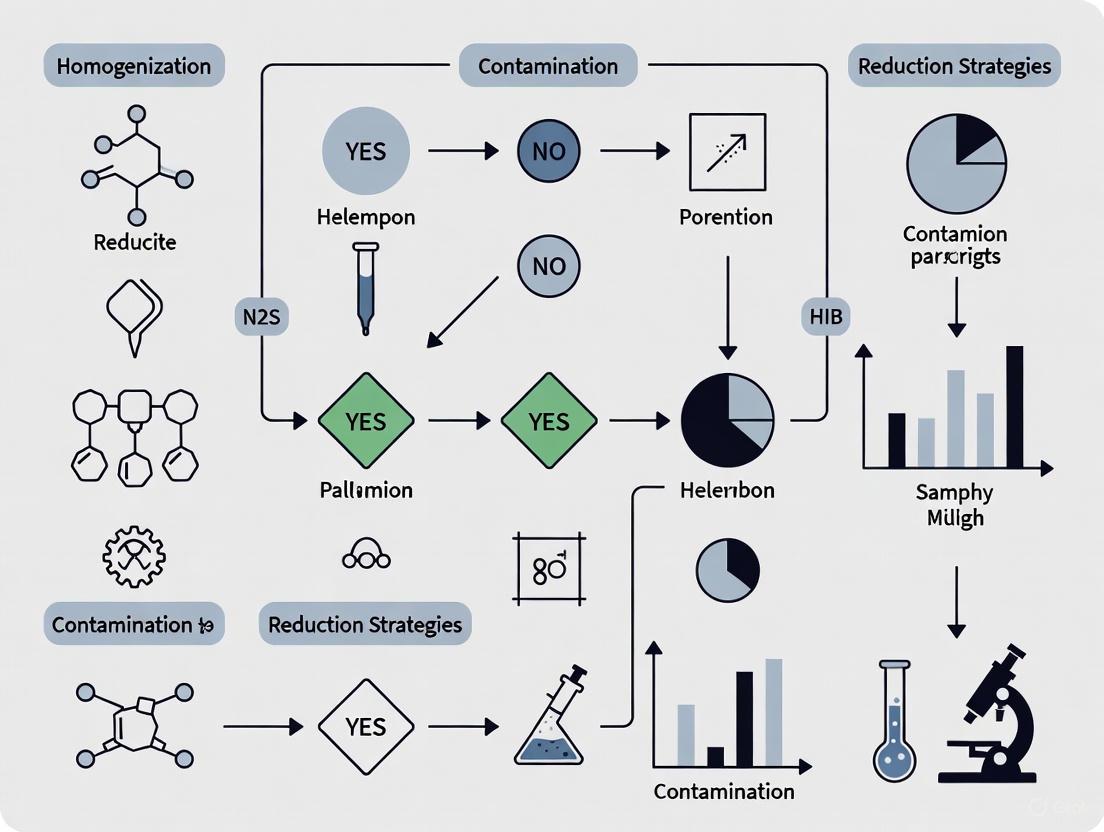
Cross-contamination during homogenization poses a significant threat to data integrity in biomedical and pharmaceutical research.
Strategies for Reducing Sample-to-Sample Contamination During Homogenization: A Guide for Researchers
Abstract
Cross-contamination during homogenization poses a significant threat to data integrity in biomedical and pharmaceutical research. This article provides a comprehensive framework for researchers and drug development professionals to understand, prevent, and troubleshoot contamination. Covering foundational principles, modern methodological applications, optimization techniques, and validation protocols, it synthesizes current best practices to ensure reproducible and reliable results in sensitive downstream analyses like LC-MS/MS, proteomics, and nucleic acid studies.
Understanding the Risks: How Cross-Contamination Compromises Data Integrity
The Critical Impact of Contamination on Research Reproducibility and Drug Development
Contamination during sample preparation is a critical yet often overlooked factor that can severely compromise research reproducibility. In drug discovery, the inability to reproduce results is a frequent and costly stumbling block, with studies indicating that approximately 50% of research is not reproducible, costing the U.S. life sciences sector alone an estimated $50 billion annually [1]. A significant majority of laboratory errors—up to 75%—occur during the pre-analytical phase, which includes sample handling and homogenization [2]. This technical support center provides targeted troubleshooting guides and FAQs to help researchers mitigate sample-to-sample contamination, thereby enhancing the reliability of their data and accelerating the path from discovery to development.
FAQs on Homogenization and Contamination
How does sample contamination directly impact my research results?
Contamination introduces unwanted variables that interfere with true experimental signals, leading to:
- Altered Results: Contaminants can mask the presence of your target analyte or produce false positives, skewing data and leading to erroneous conclusions [2].
- Reduced Reproducibility: Introduced contaminants make it difficult to achieve consistent results across experimental repeats, undermining the reliability of your findings [2] [1].
- Diminished Sensitivity: Contaminants can dilute or mask target analytes, making it harder to detect molecules at low concentrations and reducing the overall sensitivity of your assays [2].
The primary sources of contamination during the homogenization process include:
- Tools: Improperly cleaned or maintained homogenizer probes are a major source of cross-contamination. Residual material from a previous sample can be carried over to the next [3] [2].
- Reagents: Impurities in chemicals, buffers, or water used during homogenization can introduce contaminants [2].
- Environment: Airborne particles, dust, and contaminants from lab surfaces, benches, or personnel (skin, hair, clothing) can enter the sample [2] [4].
What type of homogenizer probe should I use to minimize cross-contamination?
The choice of probe involves a balance between convenience, cost, and the nature of your samples:
- Stainless Steel Probes: Durable and effective for tough, fibrous tissues, but require rigorous cleaning between samples, which is time-consuming and poses a cross-contamination risk if not done meticulously [2].
- Disposable Plastic Probes (e.g., Omni Tips): Virtually eliminate the risk of cross-contamination and save time by removing the cleaning step. Ideal for high-throughput labs processing many samples daily, though they may be less robust for very hard tissues and incur recurring costs [2].
- Hybrid Probes (e.g., Omni Tip Hybrid): Combine a stainless steel outer shaft with a disposable plastic inner rotor, offering durability for challenging samples and the convenience of disposability to reduce contamination risk [2].
How can I effectively clean a reusable stainless steel homogenizer probe?
To prevent analyte carry-over with a reusable probe, follow this protocol:
- Disassemble the probe if possible.
- Rinse the probe thoroughly with sterile water.
- Wash the probe with a suitable detergent or disinfectant.
- Perform three successive washes in 70% ethanol, wiping with a clean lab wipe (e.g., Kimwipe) after each wash [3].
- Perform a final rinse with sterile water [3].
- For added assurance, run a blank solution through the homogenizer after cleaning to verify the absence of residual analytes [2].
My research involves homogenizing tough, fibrous tissues. What is the best practice?
For tissues with high connective tissue content (e.g., skin, muscle), use a rotor-stator generator probe with a saw tooth design and oversized windows. The saw tooth edge efficiently shears the tough fibers, while the oversized windows allow for better flow of the tissue through the probe, ensuring complete and efficient disruption [3].
Troubleshooting Guides
Problem 1: Inconsistent Results Between Sample Replicates
| Possible Cause | Diagnostic Steps | Corrective Action |
|---|---|---|
| Cross-contamination from reusable probe | Inspect probe for residue; run a blank control after homogenization. | Switch to disposable probes; validate cleaning protocol for reusable probes [2]. |
| Inhomogeneous starting sample | Visually inspect sample pre-homogenization for varying chunk sizes. | Standardize sample size and mince tissue so no piece is larger than half the probe's diameter [3]. |
| Variable homogenization parameters | Document speed and time for each sample. | Use a consistent protocol with timed intervals (e.g., 15-20 second bursts with 5-second rests) [3]. |
Problem 2: Low Recovery of Target Analytes (e.g., RNA, Bacteria)
| Possible Cause | Diagnostic Steps | Corrective Action |
|---|---|---|
| Inefficient disruption of tough tissue | Check tissue consistency and homogenate for large particles. | Use a specialized saw-tooth probe for fibrous tissues; extend homogenization time with rest intervals to avoid overheating [3] [5]. |
| Improper homogenization technique | Observe process for foam generation. | Keep the probe tip against the side of the tube and half the distance from the bottom to minimize foaming, which can degrade sensitive analytes [3]. |
| Degradation of analytes post-homogenization | Check storage conditions and time before analysis. | Immediately process or store homogenates at appropriate ultra-low temperatures; use stabilizing buffers [2] [6]. |
Problem 3: Visible Microbial Contamination or Unusual Assay Readings
| Possible Cause | Diagnostic Steps | Corrective Action |
|---|---|---|
| Contaminated reagents or labware | Inspect reagents for cloudiness; test reagents alone. | Use high-quality, aliquoted reagents; employ sterile, single-use labware where possible [2] [4]. |
| Non-sterile probes or work environment | Swab and culture probes and biosafety cabinet surfaces. | Strictly follow aseptic technique; rigorously clean reusable probes; use 70% ethanol or DNA Away on surfaces [2] [4]. |
| Background contamination from environment | Review air handling system; audit lab cleanliness. | Work in a laminar flow hood; regularly disinfect incubators and work surfaces [2] [4]. |
Experimental Protocols for Contamination Control
Protocol 1: Homogenization of Frozen Tissue for RNA Extraction
This detailed protocol, adapted from NIEHS guidelines, ensures complete disruption while preserving RNA integrity and minimizing contamination [3].
Research Reagent Solutions:
| Item | Function |
|---|---|
| RNAlater | RNA-stabilizing preservative for tissue storage. |
| RLT Buffer (with β-mercaptoethanol) | Lysis buffer that inactivates RNases to protect RNA integrity. |
| Disposable Saw Tooth Probes | Ensures efficient shearing of fibrous tissue without cross-contamination. |
| Round-bottom Tubes | Facilitates better flow of material around the probe compared to conical tubes. |
Methodology:
- Weighing: Quickly remove a tissue cube from the cryovial, weigh it, and place it on dry ice.
- Lysis Buffer Preparation: Under a hood, add 10 µL of beta-mercaptoethanol per 1 mL of RLT buffer.
- Mincing: Pour the frozen tissue into a weigh boat with βME/RLT buffer. Using two sterile razor blades, mince the tissue until no piece is larger than half the diameter of your homogenizer probe.
- Homogenization:
- Transfer the minced tissue to a round-bottom tube containing the remaining buffer.
- Use a disposable probe. Place the tip halfway down the tube and against the tube wall.
- Homogenize at medium speed (high speed is not necessary) in intervals of 15-20 seconds, with 5-second rests in between, for a total of 60 seconds.
- Between intervals, decrease the speed and gently tap the probe on the tube side to remove adhering sample.
- Probe Disposal: After homogenization, discard the single-use probe and proceed with RNA extraction.
Protocol 2: Assessing Homogenization Efficiency for Microbial Recovery from Food Matrices
This protocol, based on a systematic comparison study, is critical for food safety testing and any research involving bacterial recovery from a complex matrix [5].
Methodology:
- Sample Spiking: Inoculate food samples (e.g., chicken breast for surface contamination; salami or meat paste for inner-matrix contamination) with a known concentration of a model pathogen like Salmonella enterica.
- Homogenization Comparison: Homogenize replicate samples using different methods (e.g., Stomaching, bead milling with FastPrep-24 or SpeedMill, sonication) in parallel.
- Viability Plating: Plate serial dilutions of the homogenates onto selective agar plates to enumerate culturable bacteria.
- Efficiency Calculation: Compare the colony-forming units (CFU) recovered from each method to the known inoculation titer to calculate the recovery rate.
Data Interpretation: The table below summarizes findings from such a comparative study, highlighting that the optimal method depends on the sample matrix [5].
Table: Comparison of Homogenization Methods for Microbial Recovery
| Homogenization Method | Principle | Suitability for Surface Contamination | Suitability for Inner-Matrix Contamination | Parallel Sample Processing |
|---|---|---|---|---|
| Stomaching (BagMixer) | Blending by paddles | Good (+) | Variable | Poor (-) |
| Bead Milling (FastPrep-24) | Bead-mediated grinding | Good (+) | Excellent (++) | Good (+) |
| Bead Milling (SpeedMill) | Bead-mediated grinding | Good (+) | Ambiguous (+/-) | Good (+) |
| Sonication | Ultrasound energy | Good (+) | Poor (-) | Poor (-) |
Visual Workflows for Contamination Control
Contamination Pathways and Prevention Strategy
Homogenization Best Practice Workflow
Sample-to-sample carryover contamination is a critical challenge in research and drug development, directly compromising data integrity, reproducibility, and the validity of experimental results. During homogenization, the process of disrupting cells or tissues to release target analytes presents significant risks for the transfer of material between samples. This guide details the common sources of this carryover, from intrinsic equipment design to everyday cleaning practices, and provides actionable protocols to mitigate these risks for researchers and scientists.
Understanding Carryover Contamination
Carryover contamination is the inadvertent transfer of minute quantities of a previous sample into a subsequent one. In sensitive applications like PCR, NGS, or mass spectrometry, this can lead to false positives, skewed quantitative results, and a complete loss of experimental reproducibility. [2]
The chain of contamination involves a source (a previous sample), a vector (the contaminated tool or surface), and a new recipient sample. In homogenization, the primary vectors are the homogenizer probes themselves, reusable tools, and improper cleaning protocols. Studies suggest that a significant portion of laboratory errors originate in the pre-analytical phase, often due to such improper handling and cleaning. [7] [2]
Probe Design and Hardware
The physical design and type of homogenization equipment are foundational to contamination risk.
- Rotor-Stator (Probe) Homogenizers: Traditional probes that directly contact the sample are a major source of carryover. Residues can lodge in microscopic scratches, threads, and crevices of the probe, especially after processing fibrous tissues. [3] [2] Even with diligent cleaning, residual analytes can persist and contaminate the next sample. [2]
- Probe-Free (Non-Contact) Homogenizers: This technology uses focused acoustics to homogenize samples through a tube wall, eliminating the primary vector for carryover. Because the sample remains in a sealed, disposable tube and never contacts a reusable probe, the risk of carryover from metal surfaces is removed at the source. This is crucial for high-throughput or sensitive genomics workflows. [8]
- Aerosol and Splash Generation: The high-energy process of probe homogenization can create aerosols and splashes, spreading microscopic droplets of the sample to adjacent tubes, rack surfaces, and the probe shaft. These droplets then become a source of contamination for future samples or the laboratory environment. [8]
Table: Comparison of Homogenizer Types and Carryover Risks
| Homogenizer Type | Carryover Mechanism | Key Risks | Best For |
|---|---|---|---|
| Rotor-Stator (Probe) | Direct contact with sample; residual material in probe crevices and threads. [2] | Aerosol generation; probe surface scratches; inadequate cleaning. [8] [2] | Tough, fibrous tissues; smaller sample volumes; labs with robust cleaning SOPs. |
| Probe-Free (Acoustic) | No direct contact; risk is virtually eliminated with proper tube handling. | Well-to-well cross-contamination in plates if seals are removed improperly. [2] | Sensitive assays (NGS, PCR); high-throughput labs; precious or infectious samples. [8] |
Cleaning Protocol Deficiencies
Ineffective or inconsistent cleaning is perhaps the most common cause of carryover.
- Inadequate Contact Time: Disinfectants and cleaning solutions require a specific contact time (or "wet time") to be effective. Wiping a surface or probe without ensuring it remains wet for the manufacturer-recommended time renders the process ineffective. [9]
- Use of Incompatible Disinfectants: Not all disinfectants are compatible with all equipment materials. Using a corrosive disinfectant can damage probe surfaces, creating micro-fissures that harbor contaminants and make future cleaning more difficult. [9]
- Improper Technique and Storage: Common mistakes include:
- Double-dipping cleaning cloths into a portable container of solution, which contaminates the entire container. [10]
- Shaking mop heads and cleaning cloths, which disperses contaminated dust or droplets. [10]
- Storing soiled mop heads and cloths soaking in buckets, which allows microorganisms to proliferate. [10]
- Storing disinfectant wipes with lids open, causing them to dry out and become ineffective. [9]
Handling and Storage of Shared Equipment
Carryover risk extends beyond homogenizers to shared lab items.
- Non-Critical Medical/ Lab Items: Items labeled "non-critical" are often overlooked. Blood pressure cuffs, oxygen sensors, and even medical tape can become reservoirs for pathogens and contaminants. One literature review found microbial contamination on 23% to 100% of such portable clinical items. [9] Medical tape, which cannot be disinfected, has been found to harbor numerous microbial species and is a suspected vector in healthcare-associated infections. [9]
- Therapy Toys and Books: In relevant research settings, shared toys, especially those with cloth or fur, are difficult to disinfect and can have a high pathogen load. [9]
Troubleshooting and Mitigation Guides
Troubleshooting Common Homogenization Carryover Issues
Diagram: Troubleshooting Path for Carryover Contamination
Step-by-Step Cleaning and Validation Protocol for Reusable Probes
This protocol is critical for ensuring that reusable rotor-stator probes do not contribute to carryover.
Materials Needed:
- Personal Protective Equipment (PPE)
- Laboratory-grade detergent
- 70% Ethanol or an EPA-registered disinfectant [9] [2]
- DNA/RNA decontamination solution (e.g., DNA Away) [2]
- Ultrasonic cleaning bath (optional, for deep cleaning)
- Autoclave
- Lint-free wipes
Procedure:
- Immediate Initial Rinse: Immediately after use, rinse the probe thoroughly with clean, warm water to remove gross sample material. [3]
- Detergent Wash: Wash the probe with a laboratory-grade detergent and a soft brush, paying close attention to threads and crevices. Disassemble the probe if the manufacturer's instructions allow. [3]
- Rinse: Rinse thoroughly with distilled water to remove all detergent residues.
- Disinfection:
- Final Rinse: Rinse with sterile water to remove disinfectant residue. [3]
- Dry: Allow the probe to air dry completely in a clean, dust-free environment.
- Sterilization (if required): Autoclave the probe according to the manufacturer's specifications. [3]
- Validation with Blank Control:
- After the probe is cleaned and dried, process a blank solution (e.g., pure lysis buffer) as if it were a real sample.
- Analyze this blank using your standard downstream assay (e.g., PCR, spectrophotometry). [2]
- A clean baseline result confirms effective decontamination. Any signal indicates persistent carryover and necessitates repeating the cleaning process.
Research Reagent and Material Solutions
Table: Essential Materials for Contamination Control
| Item | Function | Considerations for Contamination Control |
|---|---|---|
| Disposable Plastic Probes [2] | Single-use homogenizer probes. | Eliminates cleaning and carryover risk between samples. Ideal for high-throughput labs. Less effective for very tough tissues. |
| Probe-Free Homogenizer [8] | Uses acoustics for non-contact homogenization. | Removes the probe as a contamination vector. Ideal for sensitive genomics work and precious samples. |
| EPA-Registered Disinfectant [9] | For surface and equipment decontamination. | Must be verified for efficacy and material compatibility. Contact time is critical. |
| Nucleic Acid Decontamination Solution [2] | Specifically degrades DNA/RNA residues. | Crucial for molecular biology workflows (e.g., PCR, NGS) to prevent amplification of contaminants. |
| Lint-Free Wipes | For applying disinfectants. | Prevents introduction of fibers and ensures even application. Should not be re-used. |
Frequently Asked Questions (FAQs)
Q1: Our lab uses stainless steel probes. How can I be sure they are clean enough? A: The most reliable method is to validate your cleaning protocol with a blank control. After cleaning, run a blank solution through your entire homogenization and downstream analysis process. If the blank shows no signal (e.g., no detectable DNA, RNA, or protein), your cleaning is effective. Any signal indicates persistent carryover. [2]
Q2: Are there homogenizer technologies that completely eliminate probe-related carryover? A: Yes, probe-free ultrasonic homogenizers use focused acoustics to process samples through the wall of a sealed tube. Since no probe enters the sample, the risk of carryover from that vector is eliminated. This technology is highly recommended for sensitive, high-throughput, or regulated workflows. [8]
Q3: What is the most commonly overlooked mistake in cleaning shared lab equipment? A: Two key mistakes are:
- Not observing disinfectant contact time: Applying a disinfectant but not letting the surface stay wet for the required time to kill microorganisms. [9]
- Double-dipping: Contaminating a communal supply of cleaning solution by re-using a soiled cloth or wipe. Always use a fresh cloth for each application. [10]
Q4: How should shared "non-critical" items like lab tape be managed to prevent carryover? A: Items that cannot be disinfected, like medical tape, pose a significant risk. The best practice is to dedicate them to a single patient or sample batch or use single-use, individually packaged units whenever possible. Avoid storing unpackaged rolls in open, shared areas. [9]
Q5: What is a "clean-to-dirty" workflow and why is it important? A: This is a fundamental principle for environmental cleaning. It means you should always clean areas in an order that prevents re-contamination. For example:
- Clean low-touch surfaces before high-touch surfaces.
- Clean patient areas before patient toilets.
- Process control samples before high-concentration samples. This systematic approach prevents spreading contamination from dirty to clean areas. [10]
Sample-to-sample carryover poses a significant threat to data integrity in biomedical research and drug development. This contamination, where residual DNA, protein, or other analytes from a previous sample interfere with subsequent analyses, can lead to false positives, inaccurate quantification, and erroneous conclusions. This guide provides quantitative data on carryover risks, detailed experimental protocols for its assessment, and targeted troubleshooting strategies to uphold the highest standards of data quality in your homogenization research.
Quantitative Data on Carryover
The risk of carryover is not merely theoretical; it is a measurable variable that can be systematically quantified. The tables below summarize key findings from empirical studies.
Table 1: Quantified DNA Carryover in a Diagnostic Context
This study demonstrates how carryover in sampling equipment can directly impact diagnostic test results [11].
| Context | Finding | Quantitative Risk |
|---|---|---|
| PCR diagnosis of S. aureus mastitis from milk samples collected via shared milking units and milk meters [11] | A statistically significant association was found between the cycle threshold (Ct) values of cows milked consecutively with the same equipment [11]. | If the previous cow was negative (Ct=40), ~60% of subsequent cows tested negative. If the previous cow had a high DNA load (Ct<31.3), only ~20% of subsequent cows tested negative, indicating a high probability of false positives from carryover [11]. |
Table 2: Homogenization Method Efficacy on Microbial Recovery
The sample homogenization process itself can be a source of variable recovery, affecting perceived contamination levels [5].
| Homogenization Device | Principle | Performance on Surface Contamination | Performance on Inner-Matrix Contamination |
|---|---|---|---|
| Stomacher (BagMixer) | Blending by movable paddles [5] | Good (+) [5] | Variable, often poor recovery [5] |
| FastPrep-24 | Bead-mediated milling [5] | Good (+) [5] | Consistently good recovery (+) [5] |
| SpeedMill | Bead-mediated milling [5] | Good (+) [5] | Moderate/Ambiguous (+/-) [5] |
| Sonication (Branson) | Ultrasound [5] | Good (+) [5] | Poor (-) [5] |
Experimental Protocols for Assessing Carryover
Protocol 1: Assessing DNA Carryover in Sample Streams
This protocol is adapted from a study on milk sample analysis and can be adapted to other liquid sample streams [11].
- Experimental Design: Collect samples in a sequential manner from a process where equipment is reused (e.g., automated samplers, shared probes). Record the precise order of sampling [11].
- Sample Analysis: Analyze all samples using a highly sensitive, quantitative method such as real-time PCR (for DNA) or LC-MS (for proteins/small molecules) [11].
- Data Analysis: Perform a statistical analysis (e.g., multinomial logistic regression) to determine the association between the quantitative result (e.g., Ct value, peak area) of a sample and the result of the sample that immediately preceded it in the sequence [11]. A significant association indicates carryover.
- Interpretation: Establish threshold values for definitive positive, uncertain, and negative statuses based on the carryover risk [11].
Protocol 2: Evaluating Homogenization Efficiency for Microbial Recovery
This protocol helps validate that your homogenization method does not itself cause loss of culturability, which can mask true contamination levels [5].
- Sample Spiking: Use a model pathogen (e.g., Salmonella enterica) spiked onto a surface (e.g., chicken breast) or into an inner matrix (e.g., salami, meat paste) at known concentrations [5].
- Homogenization: Apply different mechanical homogenization techniques (e.g., stomaching, bead milling, sonication) to the spiked samples for varying durations [5].
- Plating and Enumeration: Serially dilute the homogenates and plate on selective media. Enumerate colony-forming units (CFU) after incubation to determine recovery rates [5].
- Calculation: Compare the recovered CFU/g to the known spiked concentration for each method. The method with the highest and most consistent recovery rate is optimal for that matrix [5].
Visualizing Carryover Investigation Workflows
Diagram 1: DNA Carryover Diagnosis
Diagram 2: Homogenization Efficacy Test
The Scientist's Toolkit: Essential Reagent Solutions
Table 3: Key Materials for Minimizing Carryover
| Item | Function & Importance |
|---|---|
| Silanized / Deactivated Vials | Prevents adsorption of basic or polar compounds to the glass surface, a common source of carryover in LC-MS [12]. |
| PTFE/Silicone Septa | Low-adsorption material for vial caps that minimizes the introduction of leachables and reduces contamination risk [12]. |
| Matrix-Matched Calibration Standards | Standards prepared in a solution that mimics the sample matrix are crucial for accurate quantification and identifying ion suppression/enhancement in MS [13]. |
| Stable Isotope-Labeled Internal Standards | Added to samples before preparation, these correct for losses during cleanup and compensate for matrix effects, improving quantitative accuracy [13]. |
| Strong Needle Wash Solvents | A combination of strong organic (e.g., acetonitrile) and aqueous solvents used in autosamplers to fully dissolve and remove residual analytes from the needle and injection port [12] [14]. |
| High-Quality, MS-Grade Solvents | Minimize background interference and contaminant introduction from impurities in solvents used for sample preparation and mobile phases [13]. |
Troubleshooting FAQs
Q1: My blank samples consistently show a low-level signal of my target analyte. What are the most likely sources?
This is a classic sign of carryover. The systematic investigation should cover:
- Autosampler/Injector: This is the most common source. Check for insufficient needle wash volume or inappropriate wash solvent. Ensure the wash solvent is stronger than your mobile phase. Inspect the needle, needle seat, sample loop, and rotor valve for wear or damage, which can create dead volumes where sample accumulates [15] [12] [14].
- Column: Analyte can stick to the column and slowly elute in later runs. Perform a column cleaning with a strong solvent gradient. If the problem persists, switch to a column with more inert hardware to prevent chelation [15].
- Mobile Phase/Solvents: Contamination can originate from the mobile phase or solvents used in sample prep. Test this by injecting a null injection after increasing equilibration times; if the peak grows, the mobile phase is likely contaminated [15].
- Sample Preparation Materials: Leachables from vial caps or plasticware, or contaminated solvents used in sample prep can be the culprit [15] [12].
Q2: How can I optimize my autosampler's needle wash procedure to minimize carryover?
Optimizing the wash procedure is one of the most effective steps:
- Use Dual-Solvent Washes: Implement a wash cycle that uses a combination of a strong organic solvent (e.g., acetonitrile or methanol) to dissolve non-polar residues and an aqueous solution (e.g., with acid or counter-ions) to address polar or ionic contaminants [12] [14].
- Increase Wash Volume and Cycles: For sticky or high-concentration analytes, simply increasing the volume of wash solvent (e.g., to 500–1000 µL) and performing multiple rinse cycles can be highly effective [12].
- Tailor the Wash Solvent: The wash solution should be treated with the same importance as the mobile phase. For ionic samples, include counterions. For hydrophobic samples, ensure a high organic content [14]. Change wash solvents regularly to prevent microbial growth.
Q3: My homogenization process for complex food matrices is inefficient. How can I improve pathogen recovery and reduce cross-contamination risk?
The choice of homogenization technology is critical and depends on the sample matrix [5].
- For Surface Contamination: Methods like stomaching, sonication, and bead milling are generally applicable and cause minimal loss of culturability [5].
- For Inner-Matrix Contamination (e.g., sausages, processed foods): Bead-mediated milling devices (e.g., FastPrep-24) have been shown to provide consistently good recovery rates, whereas stomaching and sonication often perform poorly. Inner-matrix pathogens may not be homogeneously distributed, so sampling strategy is also crucial [5].
Q4: What routine maintenance and lab practices are non-negotiable for preventing carryover?
- Preventive Maintenance: Follow the vendor's schedule for replacing worn injector parts (seals, rotors, needles) to eliminate dead volumes where sample can hide [14].
- System Flushing: Implement a regular, strong-solvent flushing protocol for the entire HPLC system, including the autosampler, lines, and column, especially after analyzing high-concentration samples or when switching methods [12].
- Run Blanks: Always run blank injections after high-concentration samples to monitor carryover levels. An acceptable carryover is typically <0.1% [12].
- Lab Organization: Maintain a clean, organized workspace. Use laminar flow hoods with HEPA filters for sample prep, wear proper PPE, and change gloves frequently to prevent environmental and cross-contamination [16].
In the pursuit of reproducible and reliable scientific data, reducing sample-to-sample contamination is not just a best practice—it's a necessity. Traditional homogenization methods, specifically the mortar and pestle and basic rotor-stator homogenizers, present significant, often overlooked, limitations that can compromise sample integrity. These tools, while foundational, are prone to inherent design and operational flaws that introduce contamination, create variability, and ultimately jeopardize downstream analyses. This technical support article details why these older methods fall short and provides actionable troubleshooting and FAQs to help researchers, particularly in drug development, mitigate these risks and transition to more robust solutions.
The Troubles with Traditional Methods: A Comparative Analysis
The following table summarizes the core limitations of traditional homogenization methods that contribute to sample contamination and variability.
Table 1: Key Limitations of Traditional Homogenization Methods
| Limitation | Mortar and Pestle | Basic Rotor-Stator Homogenizers |
|---|---|---|
| Cross-Contamination Risk | Very High: Porous surfaces and intricate shapes trap sample residues, making sterilization between samples difficult and time-consuming. [2] | High: Complex generator probe design with tight tolerances can harbor residual particles and bacteria, requiring intensive cleaning. [17] |
| Sample Variability | High: Results are highly dependent on operator technique, strength, and duration, leading to inconsistent particle sizes and extraction yields. [18] | Moderate to High: Manual operation can introduce variability in processing time and applied force between users and runs. [18] |
| Process Throughput | Very Low: Manual, single-sample processing is extremely time-consuming and labor-intensive, making it unsuitable for high-volume labs. [18] | Low to Moderate: Sequential sample processing is faster than mortar and pestle, but cleaning requirements between samples create a significant bottleneck. [2] |
| Aerosol Generation | Low: Typically low, contained within the mortar. | High: The high-speed rotation can create aerosols, spreading sample material to surrounding surfaces and samples. [19] |
| Automation Potential | None: Entirely manual process. | Low: Handheld models are manual. Some benchtop models can be partially automated, but probe cleaning remains a manual task. |
Troubleshooting Common Contamination Issues
FAQ: How can I tell if my homogenization method is causing contamination?
Signs of contamination include inconsistent results between replicates, high background noise in downstream assays (like PCR), false positives in detection methods, and unreliable or irreproducible data across different operators or experiment runs. [2]
FAQ: My rotor-stator homogenizer probe is seizing up. What should I do?
Probe seizure is often caused by material build-up in the narrow gap between the rotor and stator. To address this:
- Clean Immediately: Clean the probe as soon as possible after use to prevent samples from drying and hardening. [17]
- Use Appropriate Solvents: Perform a solvent rinse compatible with your sample to dissolve residues. [17]
- Employ Intensive Cleaning: For stubborn residues, use methods like ultrasonic baths or steam jets to dislodge particles. [17]
- Inspect Bearings: Check Teflon bearings for discoloration or damage, as worn bearings can increase noise and friction, indicating a need for replacement. [17]
Diagram 1: Rotor-Stator Probe Seizure Troubleshooting
Advanced Strategies for Contamination Control
Transition to Automated Homogenization Systems
Automation is a powerful strategy to eliminate human error and variability. Automated homogenizers can process multiple samples (from 6 to 96) simultaneously with standardized parameters for time, speed, and cycles. [18] [20] This ensures every sample is processed identically, dramatically reducing cross-contamination risks and improving data reproducibility. [18]
Implement Single-Use and Hybrid Consumables
For rotor-stator systems, a major contamination vector is the reusable probe. Switching to disposable probes or hybrid models (with a stainless steel outer shaft and disposable plastic inner rotor) can virtually eliminate cross-contamination between samples by removing the cleaning step altogether. [2]
Adopt Rigorous and Validated Cleaning Protocols
If reusable probes are necessary, a rigorous, documented cleaning protocol is essential. This goes beyond a simple rinse.
Table 2: Validated Cleaning and Sterilization Methods for Reusable Probes
| Method | Procedure | Best For | Contamination Control Efficacy |
|---|---|---|---|
| Solvent Rinse | Operate the homogenizer in an appropriate solvent immediately after use. [17] | Removing the bulk of sample residue between similar samples. [17] | Moderate |
| Chemical Sterilization | Immerse or operate the probe in a germicidal solution (e.g., alcohol, phenol). Always follow with a sterilized water rinse. [17] | Disinfection and preventing bacterial biofilm formation. [17] | High |
| Ultrasonic Bath | Place disassembled probe parts in an ultrasonic bath, often with a pre-soak in enzymes. [17] | Removing small, lodged particles that rinsing cannot. [17] | Very High |
| Autoclaving | Sterilize parts using pressurized steam at high temperatures (120–190°C). [17] | Achieving full sterilization; often required after mechanical cleaning. [17] | Highest (Sterilization) |
Diagram 2: Strategic Pathways to Reduce Contamination
The Scientist's Toolkit: Essential Reagent Solutions
Table 3: Key Reagents for Decontamination and Sample Integrity
| Reagent / Solution | Function | Application Note |
|---|---|---|
| Germicidal Solutions (e.g., 70% Ethanol, 5-10% Bleach) | General surface and equipment disinfection to reduce microbial load. [19] [2] | Common for wiping down motor units and lab surfaces between samples. [19] |
| Specialized Decontaminants (e.g., DNA Away) | Removes specific residual biomolecules like DNA or RNA from surfaces and tools. [2] | Critical for PCR and other sensitive molecular biology workflows to prevent false positives. [2] |
| Sterilized Water | A final rinse after chemical sterilization to remove any residual disinfectant that could contaminate future samples or cause probe corrosion. [17] | An essential but often overlooked step in cleaning protocols. [17] |
| Enzyme Pre-Soaks | Used in conjunction with ultrasonic cleaning to break down complex biological residues. [17] | Enhances the effectiveness of ultrasonic baths for removing lodged organic material. [17] |
Modern Homogenization Techniques to Minimize Contamination
Frequently Asked Questions (FAQs)
Q1: Why are disposable consumables considered critical for preventing sample-to-sample contamination? Disposable consumables are single-use, eliminating the risk of cross-contamination that can occur with reused equipment. Research shows that reusable "non-critical" items, like probes or holders, frequently remain contaminated with clinically significant microorganisms (CSOs) even after standard manual decontamination [21] [9]. Using disposables removes the variability and potential failures of cleaning protocols, ensuring every sample starts with a pristine, sterile surface [22] [23].
Q2: What is the evidence that reusable equipment poses a contamination risk in research? Quantitative studies in clinical settings provide a clear parallel. One investigation found that 25% (23/91) of reusable medical equipment tested positive for CSOs after standard manual cleaning [21]. Another literature review found contamination rates on shared non-invasive items ranged from 23% to 100%, with pathogenic organisms present on up to 86% of items [9]. This demonstrates the high risk that reusable items can pose to sample integrity.
Q3: Aren't disposable consumables prohibitively expensive and environmentally unfriendly? While the direct financial and environmental costs are considerations, a full analysis must account for the cost of a contaminated experiment. Disposables can reduce costs associated with reprocessing, which requires labor, chemicals, and utilities [22]. Furthermore, the use of disposable supplies has been linked to a 10% reduction in total procedure costs in some surgical settings due to shorter setup and operation times [22]. For environmental concerns, the industry is advancing with biodegradable medical products that meet stringent safety and performance standards [23].
Q4: What key quality assurances should I look for in disposable consumables? Ensure products adhere to international regulatory standards (e.g., ISO, FDA) [23]. Manufacturers should conduct rigorous testing, including:
- Sterility Testing: To ensure no microbial contamination.
- Biocompatibility Testing: To confirm materials will not leach interfering substances.
- Performance Testing: To validate functionality, such as precise fluid dispensing or lack of leachates [24] [23]. Comprehensive documentation and traceability are also hallmarks of a quality supplier [23].
Troubleshooting Guides
Problem: Unexplained Contamination in Homogenized Samples
| Potential Cause | Investigation Method | Corrective & Preventive Action |
|---|---|---|
| Contaminated reusable forceps or tools. | Swab reusable tools and culture the swabs. | Switch to disposable, sterile forceps for handling samples and consumables. |
| Aerosol contamination from previous samples. | Review lab workflow for physical separation of sample processing steps. | Use disposable bench covers and single-use, sealed homogenization bags to contain aerosols. |
| Leachable compounds from low-quality disposable plastics. | Run a blank control (homogenization buffer only) through the entire process. | Source disposables from suppliers that provide full biocompatibility testing data [23]. |
| Inadequate sterilization of the disposable itself. | Confirm that the product is certified sterile and the packaging is intact. | Only use disposables from reputable manufacturers with validated sterilization processes (e.g., gamma irradiation, ETO) [23]. |
Problem: Selecting the Right Disposable for Your Homogenization Application
Use the following checklist to guide your selection:
- Define Contact Requirements: Will the consumable contact the sample directly (critical) or only intact external surfaces (non-critical)? The required sterility level depends on this [9].
- Identify Material Compatibility: Ensure the disposable material (e.g., specific polymer) is chemically resistant to your homogenization buffer or solvent to avoid degradation or leaching.
- Verify Sterility Certification: Look for a sterile certification (e.g., SAL 10⁻⁶) and check for packaging integrity upon receipt [23].
- Confirm Functional Testing: For filtered tips or complex consumables, verify the manufacturer has performed functional tests like leak or blockage tests to ensure performance [24].
Experimental Data on Contamination
The following table summarizes key findings from a study comparing standard manual decontamination to an automated system (SUDS) for reusable hospital equipment, highlighting the inherent risks of reuse [21].
Table 1: Contamination Rates of Reusable Non-Critical Equipment After Decontamination
| Decontamination Method | Sample Size (n) | Culture Positive with CSOs | Contamination Rate | Multiple Organisms Present |
|---|---|---|---|---|
| Standard Manual | 91 | 23 | 25% | 15% of equipment |
| SUDS (Automated) | 91 | 0 | 0% | 0% |
Experimental Protocol: In-use Contamination Testing [21]
- Objective: To evaluate the effectiveness of decontamination methods on portable equipment in a high-turnover setting.
- Methodology:
- Setting: Patient care areas in a high-volume emergency department.
- Sample Collection: Microbiological swabs were collected from a standardized 3 cm² area on predefined portable equipment (e.g., stands, cables, electronics) immediately after manual decontamination and prior to the next patient use.
- Intervention: The same equipment was then treated with the SUDS decontamination device and re-swabbed from the identical site.
- Analysis: Swabs were semi-quantitatively cultured for clinically significant microorganisms (CSOs), including MRSA, VRE, and gram-negative bacteria.
Visual Workflows: Contamination Pathways and Prevention
Diagram 1: Sample-to-sample contamination pathway when reusing equipment versus the prevention achieved with disposable consumables.
The Scientist's Toolkit: Research Reagent Solutions
Table 2: Essential Disposable Consumables for Homogenization Research
| Item | Function in Contamination Prevention |
|---|---|
| Sterile Homogenization Bags | Sealed, single-use containers that prevent the release of aerosols and eliminate cross-contact between samples. |
| Disposable Pestles & Probes | Guarantee a sterile, contaminant-free surface for tissue disruption without the need for cleaning, which can be ineffective on complex geometries [21] [9]. |
| Sterile Microcentrifuge Tubes | Provide pre-sterilized, inert containers for storing homogenates, preventing introduction of nucleases, proteases, or microbes. |
| Filtered Pipette Tips | Aerosol barrier tips prevent liquid and aerosol carryover into the pipette shaft, a hidden source of cross-contamination. |
| Disposable Forceps & Scalpels | Ensure each sample is handled with a sterile instrument from start to finish, preventing the transfer of residue or microbes via tools [9]. |
The Closed-Tube Advantage: Fundamental Principles
Bead mill homogenization is a mechanical method used to break down samples into a uniform mixture by agitating them with small beads inside a sealed tube. This closed-tube design is the cornerstone of its effectiveness for PFAS analysis and other sensitive applications, as it fundamentally minimizes the risk of cross-contamination and exposure.
- Mechanism of Action: The homogenization occurs through rapid agitation of beads within a closed tube. The process relies on several physical forces to achieve a uniform sample mixture: collisions between the sample and the beads (which reduce particle size on a macro-scale), collisions between the beads or between the beads and the tube wall (which reduce particle size on a micro-scale), and, to a lesser extent, shear forces caused by the rapidly moving beads [25].
- Critical Role in PFAS Analysis: For PFAS testing, preventing contamination is paramount. The closed-tube system eliminates sample aerosolization, protecting both the user from hazardous substances and the sample from environmental contaminants [25]. Furthermore, because PFAS analytes are known to adsorb onto glass surfaces, using sealed tubes made of appropriate materials like polypropylene and specialized beads is a documented method to prevent this specific source of contamination [26].
Troubleshooting Common Bead Mill Challenges
Even with a robust system, researchers can encounter issues. The following table outlines common problems, their potential causes, and evidence-based solutions, with a focus on maintaining data integrity and preventing contamination.
| Problem | Possible Cause | Solution |
|---|---|---|
| Incomplete Homogenization | Incorrect bead size or material for sample toughness [27] [28]. | Use larger, denser beads (e.g., zirconium oxide, stainless steel) for hard, fibrous tissues [29]. For bacterial cells, use smaller, denser beads [30]. |
| Low Analytic Recovery (PFAS-specific) | PFAS adsorption to glass components [26]; Inefficient extraction chemistry [26]. | Use ceramic beads and polypropylene tubes instead of glass [26]. Optimize solvent (e.g., 0.3% NH4OH in methanol) and perform pH adjustment with acetic acid post-extraction [26]. |
| Inconsistent Results Between Samples | Improper bead-to-sample ratio [27]; Inconsistent run parameters (speed/time) or sample temperature rise [27]. | Maintain a consistent bead-to-sample volume ratio (general guideline is 10-20% beads) [27]. Standardize speed and time settings; use short pauses or cooling to prevent heat degradation [26] [27]. |
| Sample Overheating | Friction from extended processing at high speeds [27]. | Use shorter run times with intermittent pauses [26] [27]. Utilize a bead mill with a built-in cooling system or place samples on ice during processing [27] [28]. |
| Cross-Contamination | Tube breakage or improper sealing during agitation [29]. | Use a front-loading homogenizer with a properly sealed chamber to contain leaks. Ensure tube caps are securely fastened [29]. |
Detailed Experimental Protocol: PFAS Extraction from Fish Tissue
This protocol, adapted from established methodologies, details the steps for homogenizing and extracting PFAS from solid samples like fish tissue using the closed-tube bead mill system [26].
Objective
To efficiently homogenize and extract PFAS analytes from fish tissue into a liquid extract suitable for LC-MS/MS analysis, while minimizing contamination and maximizing recovery.
Materials and Reagents
- Bead Mill Homogenizer (e.g., Biotage Lysera, Omni Bead Ruptor)
- Polypropylene homogenization tubes (DO NOT use glass [26])
- Ceramic homogenization beads (2.8mm recommended for hard tissues [29])
- Frozen fish tissue samples (semi-thawed for processing [26])
- Extraction solvent: 0.3% Ammonium Hydroxide (NH4OH) in Methanol
- Acetic acid for pH adjustment
Step-by-Step Procedure
- Sample Preparation: Weigh 0.1 to 0.5 grams of semi-thawed fish tissue into a polypropylene homogenization tube [26].
- Add Beads and Solvent: Add ceramic beads (approximately 10-20% of the sample volume) [27] and 1-2 mL of 0.3% NH4OH in methanol extraction solvent to the tube [26].
- Homogenize: Securely cap the tube and load it into the bead mill.
- Run Conditions: Homogenize for a total time of approximately 15 minutes. It is recommended to use short cycles (e.g., 1-2 minutes) with brief pause intervals in between to prevent the sample from overheating [26].
- Solid-Liquid Extraction: The homogenization step also serves as the liquid-solid extraction. The vigorous agitation in the closed tube efficiently releases PFAS analytes from the solid matrix into the methanol solvent [26].
- Separate and Adjust pH:
- Centrifuge the homogenized tubes to pellet the solid debris and beads.
- Carefully pipette the liquid supernatant (the extract) into a clean tube.
- pH adjustment is critical for optimal chromatography. Acidify the extract with a small volume of acetic acid to achieve a neutral pH prior to LC-MS/MS analysis [26].
- Analysis: The final extract is now ready for injection into the LC-MS/MS system.
Essential Research Reagent Solutions
The correct selection of consumables is non-negotiable for success in sensitive analyses like PFAS testing. The table below catalogs key reagents and their optimized functions.
| Reagent / Material | Function & Optimization Guide |
|---|---|
| Ceramic Beads | Function: Chemically inert beads for mechanical tissue disruption. Selection: Ideal for PFAS work as they do not adsorb analytes like glass can. Use 2.8mm beads for hard tissues (muscle, heart) and 1.4mm for soft tissues (liver, brain) [26] [29]. |
| Polypropylene Tubes | Function: Primary container for homogenization. Selection: Critical for PFAS analysis. Polypropylene prevents adsorption of PFAS compounds, which is a known issue with glass surfaces. Ensures maximum analyte recovery [26]. |
| Methanol with NH4OH | Function: Extraction solvent. Selection: A solution of 0.3% NH4OH in methanol has been shown to effectively extract PFAS from solid matrices like fish tissue in short timeframes (~15 minutes) [26]. |
| Acetic Acid | Function: pH adjustment additive. Selection: Used to acidify the methanolic extract post-homogenization. This step promotes superior reversed-phase chromatographic separation on the LC-MS/MS, leading to improved analytical quantification [26]. |
| Stainless Steel Beads | Function: High-impact disruption. Selection: The hardest and most dense beads; ideal for extremely tough samples like bone, hair, and seeds. Use 2.4mm beads for standard tubes [29]. |
| Zirconium Oxide Beads | Function: Durable homogenization of tough samples. Selection: High density and hardness make them suitable for breaking down organisms with a dense exterior matrix without introducing contamination [29]. |
| Garnet Beads | Function: Aggressive disruption for environmental samples. Selection: Highly robust for homogenizing difficult matrices like soil, clay, sediment, and wastewater [29]. |
Frequently Asked Questions (FAQs)
Q1: Why is a bead mill preferred over other homogenizers for PFAS analysis?
Bead mills are preferred because they operate as a closed-tube system, which is essential for preventing two major risks: the adsorption of PFAS onto labware (by using non-glass tubes and beads) and the aerosolization of hazardous samples. This contained environment is superior to open-system methods like rotor-stators for maintaining analyte integrity and user safety [26] [25].
Q2: My tissue isn't fully homogenizing. What should I check first?
First, verify your bead selection. Tough, fibrous tissues require larger, denser beads (e.g., 2.8mm ceramic or stainless steel) to generate sufficient impact force for disruption [29] [28]. Second, ensure your bead-to-sample ratio is adequate; a general guideline is 10-20% beads by volume [27].
Q3: How does the closed-tube system specifically reduce sample-to-sample contamination?
The system keeps each sample isolated in its own sealed vessel throughout the entire homogenization process. This prevents the release of liquids or aerosols, which is the primary cause of cross-contamination. Furthermore, front-loading homogenizer designs provide an additional layer of containment, minimizing risk even in the event of a tube breakage [29] [25].
Q4: Can I use my own lysis buffer with a bead mill protocol?
Yes, you can typically use your own lysis buffers. However, for optimal results, it is crucial to ensure the chemical compatibility of your buffer with the tube material and the bead mill protocol. Buffer composition can affect extraction efficiency, foam formation, and downstream analysis [31].
Q5: What is the maximum sample size I can process in a bead mill?
Bead mills are generally designed for small-scale samples. The maximum volume is typically a few milliliters, with wet tissue weights ranging from 1 mg to a maximum of about 1 gram, depending on the specific tube and instrument used [31] [25]. Always consult your homogenizer's manual for specific capacity limits.
Troubleshooting Guides
Common Operational Issues and Solutions
Problem: Inconsistent Homogenization Quality
- Possible Cause 1: Probe wear or clogging. Disposable plastic probes can degrade, and stainless steel probes may not be properly cleaned.
- Possible Cause 2: Inappropriate homogenization speed or time for the sample type.
- Solution: Refer to established protocols for your tissue type. Fibrous tissues like heart may require higher speeds or longer duration than softer tissues like liver [32]. Validate and document optimal settings for each sample matrix.
- Possible Cause 3: Improper sample loading or tube placement.
- Solution: Use only recommended tube types and ensure they are securely seated in the deck racks. Verify that the robotic gripper arm moves without obstruction [33].
Problem: Suspected Cross-Contamination
- Possible Cause 1: Carryover from a previous run due to inadequate probe cleaning.
- Possible Cause 2: Liquid splash or aerosol generation during homogenization.
- Solution: Ensure the system's active cooling system is functional to maintain samples at 4°C, reducing aerosol formation. Verify that tube caps are secure [32].
- Possible Cause 3: Contamination from the gripper arm or other system components.
- Solution: Implement regular decontamination washes for the liquid handling components using reagents like DNA Away for nucleic acid workflows [2].
Problem: System Errors During Weighing or Liquid Handling
- Possible Cause 1: Low reagent or tip supply.
- Solution: The system software typically provides alerts. Ensure all reservoirs are filled and tip boxes are loaded before initiating a run [34].
- Possible Cause 2: Barcode reader failure causing sample misidentification.
- Solution: Check that barcode labels are clean and properly aligned within the reader's field of view. Re-scan the sample if an error is reported [34].
- Possible Cause 3: Clogged pipette tips or lines.
- Solution: Use the system's built-in liquid level and clog detection features. Replace tips and run purge cycles if necessary [34].
Frequently Asked Questions (FAQs)
Q1: How does the Omni LH 96 specifically reduce human error compared to manual processing? The system automates the entire sample prep workflow, including weighing, buffer addition, homogenization, and reformatting. This eliminates variability introduced by manual pipetting, inconsistent homogenization technique, and fatigue. One study showed a 40% increase in throughput and significantly improved consistency after implementation [32].
Q2: What is the best way to prevent cross-contamination when processing high-value samples? The most effective strategy is to use disposable Omni Tip probes, which are single-use and eliminate carryover between samples [32] [2]. If using stainless steel probes, a rigorous cleaning protocol using the onboard ultrasonic cleaning bath is mandatory. Furthermore, spinning down sealed well plates before opening and carefully removing seals can reduce well-to-well contamination during liquid handling steps [2].
Q3: Our lab handles both soft and tough fibrous tissues. Can one system handle both effectively? Yes. The Omni LH 96 offers different probe types for various applications. You can select soft tissue (deaggregation) Omni Tips for standard work and hard tissue (frozen) Omni Tips or even Hybrid probes for more challenging, fibrous samples [33]. The homogenization speed and duration are also fully customizable to suit the tissue type [32].
Q4: How does automation help with data integrity and regulatory compliance? Automated platforms like the Omni LH 96 integrate an analytical scale that logs sample weights directly, preventing transcription errors [32]. Systems designed for regulated environments, such as those with Fluent Gx compliance software, provide advanced process control, electronic records, and operator authentication, supporting compliance with standards like FDA 21 CFR Part 11 [34].
Experimental Protocols for Validation and Contamination Control
Protocol 1: Validating Homogenization Efficiency
Objective: To confirm that the automated homogenization process achieves comparable or superior analyte recovery compared to a manual or bead-based method.
Materials:
- Omni LH 96 Automated Workstation [32]
- Control tissue samples (e.g., liver, heart)
- Appropriate lysis buffer
- Disposable Omni Tips (specify for soft or hard tissue) [33]
- Manual homogenizer or bead mill (e.g., FastPrep-24) for comparison [5]
Methodology:
- Sample Preparation: Divide a homogeneous tissue sample into identical aliquots for the automated and manual methods.
- Automated Homogenization: Load samples and reagents onto the Omni LH 96. Program the method for your specific tissue, including weigh time, buffer volume, and a 45-second homogenization cycle [32].
- Manual Homogenization: Process the control samples using the standard manual protocol, typically with a handheld motorized homogenizer for 45 seconds per sample [32].
- Analysis: Centrifuge all homogenates and compare the yield and quality of the target analyte (e.g., protein concentration, DNA/RNA yield and integrity).
- Data Comparison: A successful validation shows that the Omni LH 96 produces lysates of equal or better quality while significantly reducing hands-on time.
Protocol 2: Testing for Cross-Contamination
Objective: To empirically verify the absence of sample carryover between consecutive homogenization cycles.
Materials:
- Omni LH 96 Automated Workstation
- Two distinct sample types:
- High-Analyte Sample: Tissue sample spiked with a known, high concentration of a traceable molecule (e.g., a unique DNA plasmid).
- Blank Sample: Tubes containing only lysis buffer.
- Disposable Omni Tips and Stainless Steel probes (for comparison) [2]
Methodology:
- Run Order: Program the workstation to process the high-analyte sample first, followed immediately by the blank sample.
- Probe Testing: Perform this test twice: once using disposable Omni Tips and once using cleaned stainless steel probes.
- Detection: Analyze the blank samples for the presence of the traceable molecule from the high-analyte sample using a sensitive method like PCR or mass spectrometry.
- Interpretation: The absence of the tracer in the blank sample confirms a lack of cross-contamination. Disposable tips are expected to perform best in this test [2].
System Workflow and Contamination Control
The following diagram illustrates the automated workflow of a system like the Omni LH 96 and key points where contamination is controlled.
Research Reagent Solutions
The following table details key consumables and reagents critical for successful and contamination-free automated homogenization.
Essential Materials for Automated Homogenization
| Item | Function | Application Notes |
|---|---|---|
| Disposable Omni Tips | Single-use plastic homogenizer probes that eliminate cross-contamination between samples. | Ideal for PCR, RNA, and DNA workflows. Available in soft tissue and hard tissue (frozen) versions [32] [33]. |
| Omni Tip Hybrid Probes | Combine a stainless steel outer shaft with a disposable plastic inner rotor. | Offer a balance of durability for tough tissues and disposable convenience to minimize cleaning and contamination risk [2] [33]. |
| Stainless Steel Probes | Reusable probes for large sample volumes or very tough tissues. | Resistant to organic solvents. Require rigorous cleaning via an ultrasonic cleaning bath between samples to prevent carryover [32] [2]. |
| Lysis Buffer | Chemical solution to break down tissue and cells, releasing target analytes. | High-salt solutions with enzymes or detergents are common. Viscosity can affect homogenization efficiency and aerosol formation [2] [35]. |
| Decontamination Solutions | Reagents like 70% ethanol, bleach, or specialized solutions (e.g., DNA Away). | Used for routine cleaning of work surfaces, robotic grippers, and other system components to maintain a contaminant-free environment [2]. |
| Ultrasonic Cleaning Bath | Multi-stage cleaning station (flush, rinse, ultrasonic) integrated into the workstation. | Critical for effectively decontaminating reusable stainless steel probes between samples to ensure no analyte residue remains [32] [33]. |
Troubleshooting Guides
Q1: How do I resolve issues with my homogenizer probe showing signs of decreased efficiency or unusual noise?
Decreased performance or unusual noises often point to mechanical wear or contamination buildup. The table below outlines common symptoms and solutions.
| Problem Symptom | Possible Cause | Recommended Solution | Prevention Tips |
|---|---|---|---|
| Increased noise or vibration during operation | Worn PTFE bearings; Damaged rotor/stator; Misalignment [36] [37]. | Inspect and replace worn lower PTFE bearings; Check for rotor knife contact with stator and replace damaged components [36]. | Clean probe thoroughly after each use to prevent residue from causing imbalance or seizing [17]. |
| Sample carryover or cross-contamination | Inadequate cleaning between samples; Residual material in probe grooves [17] [38]. | Implement a multi-step cleaning protocol (solvent rinse, ultrasonication, chemical sterilization) [17] [39]. For critical work, use disposable generator probes [2] [38]. | Perform a solvent rinse immediately after use before residues dry [17]. |
| Motor unit seizing or failure to operate | Residue buildup around bearings; Worn-out carbon motor brushes [17]. | Clean the area where the probe attaches to the motor; For units with brushes, replace both carbon motor brushes as a pair [17]. | Wipe down the motor unit between uses with a mild detergent; avoid solvents [17]. |
Q2: What should I do if I notice my homogenizer is leaking material?
Leaks typically occur at seal points and can compromise both the sample and the instrument.
| Problem Symptom | Possible Cause | Recommended Solution |
|---|---|---|
| Leakage from the homogenizing valve or probe assembly | Worn or damaged O-rings, seals, or gaskets [40] [41]. | Inspect seals, gaskets, and O-rings for damage and replace them as needed [40] [41]. |
| Fluid bypassing the homogenizing head | Loose seals in the assembly [37]. | Dismantle the generator probe as per manufacturer instructions and ensure all seals are properly fitted and tightened [36]. |
Frequently Asked Questions (FAQs)
Q3: What is the most effective way to clean my rotor-stator probe to prevent cross-contamination?
The most effective method depends on your application's contamination requirements. A robust, multi-step protocol is recommended for critical applications to remove particulate and decontaminate the probe thoroughly [17] [39]:
- Initial Solvent Rinse: Immediately after use, operate the homogenizer in an appropriate solvent to dissolve and remove the bulk of the sample residue. This prevents materials from drying and lodging in the components [17].
- Ultrasonic Bath (For thorough particulate removal): Remove the generator probe from the motor unit and submerge the disassembled parts in an ultrasonic bath. The cavitation bubbles effectively blast away adherent particles from complex geometries [17] [39].
- Chemical Sterilization/Disinfection: Immerse the probe components in a germicidal solution (e.g., alcohol, phenol) to eliminate microbial contamination. Afterwards, operate the unit in sterilized water to rinse off chemical residues [17].
- Final Sterilization (If required): Use autoclaving (moist heat) or a steam jet for final sterilization. Important: Always remove all residue via previous cleaning steps before autoclaving, as the heat can bake on contaminants [17].
Q4: How can I quantify and minimize DNA carryover during homogenization?
Studies have quantified DNA and protein carryover by homogenizing a sample with a known high concentration of analyte, followed by a series of wash steps and then processing a blank solution. The blank solution is subsequently analyzed for the presence of the analyte (e.g., using spectrophotometry or PCR) [38].
To minimize DNA carryover:
- Validate Cleaning: Run a blank solution through your cleaning process and test it for contamination to validate your protocol [2] [38].
- Use DNA-Specific Decontaminants: Use solutions like DNA Away to eliminate residual DNA from probes and work surfaces [2].
- Employ Disposable Probes: For highly sensitive assays, disposable plastic Omni Tip probes can virtually eliminate the risk of nucleic acid cross-contamination [2] [38].
Q5: How often should I perform maintenance on my homogenizer's generator probe?
Regular inspection and maintenance are crucial. Key components to check include:
- PTFE Bearings: Replace the lower PTFE bearing if it fits loosely on the shaft or can be wiggled. This bearing prevents the rotor and stator from rubbing together [17] [36].
- Motor Brushes: For models with brushed motors, the carbon brushes will wear down over time and need replacement in pairs when the motor fails to operate [17].
- General Inspection: Regularly dismantle the probe, inspect all parts for wear, and lubricate threads as instructed by the manufacturer [17] [36].
Q6: My homogenizer motor is overheating. What could be the cause?
Motor overheating can result from:
- Excessive Load: Processing samples with very high viscosity or running the homogenizer continuously beyond its rated capacity [37] [42].
- Mechanical Friction: Worn or damaged bearings increase friction, placing an additional load on the motor [40] [37].
- Dry Running: Operating the generator probe without a liquid sample can cause PTFE bearings to burn out, leading to damage and increased motor strain [36].
- Insufficient Cooling: Poor ventilation around the motor housing can cause heat to build up [42].
Experimental Protocol for Quantifying Contamination Carryover
Objective: To determine the effectiveness of a probe cleaning protocol in removing residual DNA between samples.
Methodology:
- Spike a Control Sample: Homogenize a control sample containing a known, high concentration of DNA (e.g., 100 ng/μL) using your standard protocol [38].
- Apply Cleaning Protocol: Clean the stainless steel generator probe according to the specific protocol being tested (e.g., solvent rinse, chemical disinfection).
- Homogenize a Blank: Immediately after cleaning, homogenize a blank solution (e.g., nuclease-free water or buffer) that is free of the target DNA.
- Quantify Carryover: Analyze the blank solution using a sensitive method like UV-Vis spectrophotometry or quantitative PCR (qPCR) to detect any carried-over DNA [38].
- Iterate and Validate: Repeat the wash steps (Steps 2-4) multiple times to create a dilution curve of contamination. Compare different cleaning methods to identify the most effective one.
Cleaning and Decontamination Workflow
The following diagram illustrates the logical decision-making process for selecting and applying the appropriate cleaning and decontamination method for your rotor-stator homogenizer probe.
Research Reagent Solutions for Decontamination
The table below lists key reagents and materials used for effective cleaning and decontamination of rotor-stator homogenizer probes.
| Reagent/Material | Function | Application Notes |
|---|---|---|
| Laboratory Solvents | Dissolves and removes the bulk of the sample residue after homogenization. | Choose a solvent compatible with your sample (e.g., water, ethanol, acetone). Perform immediately after use [17]. |
| Germicidal Solutions | Chemical sterilization to destroy microbial contaminants and prevent biofilm formation. | Common choices include alcohol, phenol, and formalin. Always rinse with sterilized water afterwards to remove chemical residues [17]. |
| Enzyme Soaks | Pre-soak to break down complex biological molecules before ultrasonication. | Used as part of the ultrasonic cleaning process to prevent residues from drying on [17] [39]. |
| DNA Decontamination Solutions | Specifically degrades and removes residual DNA to prevent amplification in PCR assays. | Use solutions like DNA Away to wipe down probes and work surfaces for DNA-sensitive work [2]. |
| Disposable Plastic Probes | Eliminates cleaning and cross-contamination risk by single-use. | Ideal for high-throughput or highly sensitive assays where carryover is a major concern [2] [38]. |
This technical support center provides targeted guidance for a critical challenge in life science research: reducing sample-to-sample contamination during the homogenization of diverse biological matrices. For researchers in drug development and diagnostics, consistent, contaminant-free sample preparation is the foundation of reliable data. The following FAQs, troubleshooting guides, and detailed protocols are designed to help you tailor your techniques for tissue, cell, and environmental samples, ensuring the integrity of your downstream analyses.
FAQs on Contamination Control
1. What are the most common sources of sample contamination during homogenization?
The most prevalent sources of contamination stem from laboratory tools, reagents, and the environment [2].
- Tools: Improperly cleaned homogenizer probes are a major source of cross-contamination. Residual analytes from a previous sample can be carried over to the next [2].
- Reagents: Impurities in chemicals used for sample preparation can introduce contaminants. Even high-grade reagents can contain trace-level impurities that interfere with sensitive assays [2].
- Environment: Airborne particles, dust, and contaminants from human sources (skin, hair, breath) can compromise sample integrity. This is especially critical when working with concentrated forms of analytes, such as cell culture media or sera, in the same workspace [43].
2. How does sample matrix influence the choice of homogenization method?
The physical properties of the sample matrix—such as hardness, fat content, and fibrousness—directly determine the optimal homogenization method. Using a sub-optimal technique can lead to poor recovery, low yield, and increased contamination risk.
- Tissues: Optimal lipid extraction protocols vary significantly between tissues. For instance, one study found the butanol:methanol (BUME) protocol superior for adipose tissue, while methyl tert-butyl ether (MTBE) was best for liver tissue [44].
- Food Matrices: Pathogen recovery efficiency depends on whether contamination is on the surface or within the inner matrix. For surface contamination (e.g., on chicken breast), methods like stomaching, sonication, and bead milling work well. For inner-matrix contamination (e.g., in salami), large-volume bead milling (FastPrep-24) demonstrated consistently good recovery rates, while sonication was ineffective [5].
3. What practical steps can I take to minimize cross-contamination between samples?
Proactive measures in your workflow can drastically reduce cross-contamination.
- Use Disposable Probes: Single-use plastic homogenizer probes virtually eliminate the risk of carryover between samples [2].
- Validate Cleaning Protocols: If using reusable stainless-steel probes, rigorously validate your cleaning procedure. Run a blank solution through the cleaned probe to check for residual analytes [2].
- Maintain a Clean Workspace: Clean all work surfaces and equipment with appropriate disinfectants (e.g., 70% ethanol, 10% bleach) before starting. For DNA-specific work, use solutions like DNA Away to eliminate contaminants [2].
- Use Filtered Pipette Tips: Employ aerosol barrier tips to prevent contamination of pipettors and samples [43].
- Secure Samples During Incubation: Place microtiter strips in a zip-lock bag during incubation steps to protect them from airborne contamination, as an alternative to plate-sealing tape which can introduce variability [43].
Troubleshooting Guides
Table 1: Troubleshooting Common Homogenization and Contamination Issues
| Problem | Possible Cause | Solution |
|---|---|---|
| High Background/Non-Specific Binding in ELISA | Contamination of kit reagents by concentrated analyte sources in the lab [43]. | Dedicate a clean area for the assay, away from upstream sample processing. Use dedicated pipettes and filter tips [43]. |
| Poor Duplicate Precision | Airborne contamination of individual microtiter plate wells [43]. | Work in a laminar flow hood, avoid talking or breathing over the uncovered plate, and use a plastic bag to cover the plate during incubations [43]. |
| Low Analytical Sensitivity | Contaminants masking or diluting target analytes; suboptimal homogenization method [2] [5]. | Verify reagent purity and use a homogenization method proven for your specific matrix (see Table 2). |
| Low Cell Viability/Recovery Post-Dissociation | Overly aggressive mechanical dissociation or prolonged enzymatic treatment [45]. | Optimize enzyme cocktails and mechanical force parameters for your specific tissue type. Consider integrated microfluidic devices that combine gentle mechanical and chemical digestion [45]. |
| Clogging of Microfluidic Chips | Cellular debris or cell-free DNA fouling the device [45]. | Incorporate pre-filtration steps or use chips designed with clog-resistant architectures, such as those with hierarchical channel networks [45]. |
Experimental Protocols for Specific Matrices
Protocol 1: Tissue-Specific Lipid Extraction for Mass Spectrometry
This protocol is adapted from a comprehensive evaluation of lipid extraction techniques for diverse tissue types [44].
1. Sample Preparation:
- Use either lyophilized or fresh frozen tissue samples.
- For adipose tissue, the butanol:methanol (BUME) (3:1) protocol is recommended.
- For liver tissue, methyl tert-butyl ether (MTBE) with ammonium acetate is most effective.
- For heart tissue, BUME (1:1) is optimal.
2. Homogenization:
- Homogenize the tissue in the selected solvent system using a validated method (e.g., bead beating, probe homogenization) to ensure complete disruption.
3. Liquid-Liquid Extraction:
- For biphasic systems (e.g., MTBE), add water and/or other solvents as required to induce phase separation. Vortex and centrifuge.
- Carefully collect the organic layer containing the lipids.
4. Analysis:
- Evaporate the solvent under a stream of nitrogen and reconstitute the lipids in a suitable solvent for LC-MS analysis.
- Expected Outcomes: This tissue-specific approach yielded 886, 707, and 311 lipids (CV < 30%) from adipose, liver, and heart tissues, respectively, demonstrating superior coverage and reproducibility compared to a one-size-fits-all method [44].
Protocol 2: Mechanical Dissociation of Inner-Matrix Food Contamination for Pathogen Recovery
This protocol is designed for the efficient recovery of culturable pathogens from within processed food matrices [5].
1. Sampling:
- Be aware that pathogens may not be homogenously distributed in the food matrix. Sample different regions (core, intermediate, rim) to ensure a representative analysis [5].
2. Homogenization via Bead Milling:
- Recommended Device: FastPrep-24 or similar large-volume bead mill.
- Add the food sample to a lysis tube containing appropriate grinding beads.
- Process for a duration sufficient to homogenize the tough matrix (up to 8 minutes may be required for salami).
- Note: Stomaching and sonication were found to be less effective for this application, with sonication resulting in poor recovery rates [5].
3. Culturing and Enumeration:
- Plate the homogenate on selective media and incubate to enumerate viable bacterial colonies.
The workflow below contrasts the optimal paths for different sample types based on matrix properties.
Table 2: Comparison of Homogenization Methods for Different Matrices
This table summarizes quantitative data on the performance of various homogenization devices, helping you select the right tool for your sample type [5].
| Method | Principle | Suitability for Surface Contamination | Suitability for Inner-Matrix Contamination | Parallel Sample Prep | Key Considerations |
|---|---|---|---|---|---|
| Stomaching (BagMixer) | Blending by movable paddles | Good (+) | Variable | No (-) | Good for larger volumes (<400 mL); less effective for tough, inner matrices. |
| Bead Milling (FastPrep-24) | Bead-mediated milling | Good (+) | Good (+) | Yes (2-48 samples)* | Highly adaptable with various beads; excellent for tough, processed foods. |
| Bead Milling (SpeedMill) | Bead-mediated milling | Good (+) | Ambiguous (+/-) | Yes (2-20 samples) | Portable; suitable for on-site use; limited to small volumes (<2 mL). |
| Sonication (Branson) | Sonication | Good (+) | Poor (-) | No (-) | Can generate heat; not suitable for recovering pathogens from inner matrices. |
*Note: Parallel preparation of 48 samples is for volumes <2 mL [5].
The Scientist's Toolkit: Key Research Reagent Solutions
Table 3: Essential Materials for Contamination-Control and Homogenization
| Item | Function | Application Notes |
|---|---|---|
| Disposable Homogenizer Probes (e.g., Omni Tips) | Single-use probes to eliminate cross-contamination between samples. | Ideal for high-throughput labs processing many samples daily; may not be robust for very fibrous samples [2]. |
| Hybrid Homogenizer Probes | Combine a stainless-steel shaft with a disposable plastic inner rotor. | Balance durability and contamination control; good for challenging samples where pure plastic probes may fail [2]. |
| Matrix-Specific Solvent Kits | Pre-optimized solvent mixtures for extracting analytes like lipids from specific tissues. | Critical for precision lipidomics; using a one-size-fits-all solvent system reduces coverage and yield [44]. |
| Proteolytic Enzymes (e.g., Collagenase, Dispase II) | Chemically dissociate the extracellular matrix to free cells from tissues. | Enzyme choice and combination are highly tissue-dependent (e.g., collagenase D + dispase II for myogenic cells) [45]. |
| Aerosol Barrier Pipette Tips | Prevent aerosols from contaminating the pipette shaft and subsequent samples. | Essential for all molecular biology work, especially when handling concentrated analyte stocks [43]. |
| Specialized Decontamination Solutions (e.g., DNA Away) | Remove persistent molecular contaminants like DNA from lab surfaces and equipment. | Crucial for creating a DNA-free environment for PCR or other sensitive nucleic acid assays [2]. |
The following workflow integrates chemical and mechanical strategies for modern tissue processing, minimizing manual steps and contamination risk.
Optimizing Your Workflow: Practical Strategies for Contamination Control
Developing an Effective Decontamination and Cleaning Protocol Between Samples
FAQs: Addressing Common Decontamination Challenges
Q1: What are the most common sources of sample-to-sample contamination during homogenization?
The most common sources include improperly cleaned reusable tools (like homogenizer probes), impurities in reagents, airborne particles, and contaminants from analyst clothing or skin [2]. One study found that procedural contamination from these sources accounted for over 70% of total microparticles found in samples when strict protocols were not followed [46]. Specifically, clothing worn by research personnel was identified as a predominant contamination source [46].
Q2: How can I validate that my cleaning protocol between samples is actually effective?
Effectiveness can be validated through several methods:
- Fluorescent markers: Use fluorescent dyes or powders placed on surfaces before cleaning; their removal is checked with UV LED torches [47].
- ATP bioluminescence: Use portable meters to measure Adenosine Triphosphate, which indicates residual organic matter [47].
- Microbial culture: Take swabs for microbial culture to quantify bioburden reduction [47].
- Control samples: Run blank solutions through cleaned equipment to check for residual analytes [2].
Q3: Are disposable probes better than stainless steel for preventing cross-contamination?
Both have advantages and limitations. Disposable plastic probes virtually eliminate cross-contamination risk and save time between samples [2]. However, they may lack robustness for very tough or fibrous samples and incur recurring costs. Stainless steel probes are durable but require meticulous cleaning between each use, creating potential bottlenecks and contamination risks if not properly cleaned [2]. Hybrid probes with stainless steel outer shafts and disposable plastic inner rotors offer a compromise between durability and contamination prevention [2].
Q4: What environmental factors contribute to sample contamination?
Airborne particulate contamination, residual analytes on lab surfaces, and contaminants from human sources (breath, skin, hair, clothing) all impact sample integrity [2]. Environmental controls such as laminar flow hoods, controlled airflow rooms, and regular surface decontamination with appropriate disinfectants (e.g., 70% ethanol, 5-10% bleach, DNA-specific decontamination solutions) are essential countermeasures [2].
Troubleshooting Guides
Problem: Consistently High Background Contamination in Processed Samples
| Possible Cause | Diagnostic Steps | Corrective Actions |
|---|---|---|
| Inadequately cleaned reusable tools | Run blank control after cleaning; check for residual analytes [2] | Implement validated cleaning procedure: (1) Physical removal of gross material, (2) Chemical cleaning with appropriate solvent, (3) Rinse with purified water, (4) Verification testing [48] [2] |
| Airborne contamination | Place open control substrates in work area during processing; analyze for settled contaminants [46] | Use laminar flow hoods; limit room traffic; wear cotton lab coats; control airflow [2] [46] |
| Sample-to-sample transfer | Check for contamination patterns correlating with sample sequence | Use disposable equipment where possible; establish unidirectional workflow from clean to dirty areas [2] [10] |
| Contaminated reagents | Test reagent blanks alongside samples | Use high-purity reagents; aliquot to prevent bulk contamination; verify supplier certificates of analysis [7] |
Problem: Inconsistent Results Between Sample Batches
| Possible Cause | Diagnostic Steps | Corrective Actions |
|---|---|---|
| Variable cleaning effectiveness | Implement fluorescent marker verification for each cleaning cycle [47] | Standardize cleaning method, contact time, and agent concentration; use automated dispensing to eliminate human error [49] |
| Carryover from previous samples | Document sample sequence to identify patterns of contamination | Increase cleaning rigor between different sample types; implement strategic sample ordering from low to high expected contamination [10] |
| Environmental condition fluctuations | Monitor and record temperature, humidity, and particulate levels | Implement environmental controls; standardize processing conditions across batches [2] |
| Personnel technique variability | Observe different technicians performing the same procedure | Develop detailed SOPs; implement competency-based training; use job aids and checklists [7] [10] |
Data Presentation: Contamination Control Effectiveness
Table 1. Efficacy of Contamination Control Measures in Reducing Procedural Contamination
| Control Measure | Contamination Reduction | Implementation Considerations | Reference |
|---|---|---|---|
| Team-wide anti-contamination protocols | 36.9% reduction in procedural contamination | Requires comprehensive training and adherence monitoring | [46] |
| Rigorous QA/QC protocols during sampling | Reduced procedural contamination from 70.7% to 33.8% of total microparticles | Must be applied consistently across all sampling events | [46] |
| Ready-to-use disinfectant wipes | Improved compliance and reduced errors in cleaning protocols | Eliminates variability from manual dilution/mixing | [49] |
| Pulsed Xenon UV (PX-UV) disinfection | 100% reduction of Gram-negative microorganisms after manual cleaning | Requires capital investment; 15.6 minutes/room processing time | [50] |
Table 2. Comparison of Homogenizer Probe Types for Contamination Control
| Probe Type | Contamination Risk | Best Application | Limitations |
|---|---|---|---|
| Stainless Steel | High if not properly cleaned between samples | Tough or fibrous samples; low-volume workflows | Time-consuming cleaning; risk of residual contamination |
| Disposable Plastic | Very low | High-throughput labs; sensitive assays | Higher ongoing cost; may lack durability for tough samples |
| Hybrid Probes | Low | Mixed workloads; balancing cost and contamination control | More complex than single-material options |
Experimental Protocols for Contamination Assessment
Protocol 1: Assessing Tool Cleaning Effectiveness
Purpose: Validate that cleaning procedures for reusable equipment effectively eliminate carryover contamination.
Materials:
- Freshly cleaned homogenizer probe or other equipment
- Appropriate blank solution (without analytes)
- Analytical instrumentation for target analyte detection
- Clean containers
Procedure:
- Process a sample containing known high concentration of target analytes using the equipment.
- Perform established cleaning procedure according to SOP.
- Immediately process blank solution using the same equipment.
- Analyze the blank solution for presence of target analytes.
- Repeat with three separate replicates to establish consistency.
Interpretation: The blank should show analyte levels below the method's limit of detection or at an acceptable predefined threshold (e.g., <0.1% carryover) [2].
Protocol 2: Monitoring Airborne Contamination
Purpose: Quantify airborne particulate contamination in sample processing areas.
Materials:
- Filter papers or other collection substrates
- Forceps
- Sealed containers
- Microscope or analytical instrumentation
Procedure:
- Place clean collection substrates in work area during normal processing activities.
- Expose for a defined period (e.g., 1 hour) that represents typical processing time.
- Collect substrates using clean forceps and place in sealed containers.
- Analyze substrates for contaminants of concern (e.g., microfibers, particulates).
- Compare against controls processed immediately without exposure.
Interpretation: Identifies predominant airborne contamination sources and evaluates effectiveness of environmental controls [46].
Workflow Visualization
Sample Processing with Contamination Control
The Scientist's Toolkit: Essential Research Reagent Solutions
Table 3. Key Reagents and Materials for Effective Decontamination
| Item | Function | Application Notes |
|---|---|---|
| Disposable Homogenizer Probes | Eliminate cross-contamination between samples | Ideal for high-throughput labs; validate for sample type compatibility [2] |
| Fluorescent Markers | Visual verification of cleaning effectiveness | Use with UV-A to visible violet LED torches (350-430 nm) for detection [47] |
| ATP Bioluminescence Testers | Quantitative measurement of organic residue | Provides immediate feedback on cleaning effectiveness [47] |
| DNA/RNA Decontamination Solutions | Specific removal of nucleic acid contaminants | Essential for molecular biology applications (e.g., DNA Away) [2] |
| Ready-to-Use Disinfectant Wipes | Consistent surface decontamination | Pre-mixed, pre-measured formulations reduce human error [49] |
| Laboratory Pure Water | Final rinse for cleaning processes | Prevents introduction of contaminants during rinsing steps [7] |
| Cotton Lab Coats | Reduce contamination from clothing | Natural fibers shed less particulate than synthetic materials [46] |
Homogenizer Selection Guide
Homogenizer Technology Comparison
| Homogenizer Type | Best For Sample Types | Typical Particle Size Achieved | Throughput Range | Key Contamination Risks |
|---|---|---|---|---|
| Rotor-Stator | Tissues, fibrous materials, high-viscosity liquids [51] [52] | ~2-3 µm and larger [52] | Milliliters to liters [51] | Cross-contamination from reusable probes; can be mitigated with disposable probes [2] [51] |
| Ultrasonic | Liquid samples, cell culture suspensions [51] [52] | Below 100 nm [52] | µL to 20 L [52]; Lab scale: mL/min, Industrial: L/h [53] | Titanium contamination from probe wear [52]; Heat generation [51] |
| Bead Mill | Tough tissues, bacteria, yeast, soil [51] [30] | Varies with bead size and material [30] | µL to low mL [51] | Contamination from bead material (e.g., glass, ceramic) [52]; Mitigated by using sealed, single-use tubes [51] |
| High-Pressure | Large-scale production (e.g., food, pharmaceuticals) [53] | Varies with pressure and design | Up to thousands of liters per hour [53] | Leakage from valves and seals [41] |
| Paddle Blender (Stomacher) | Solid samples [52] | Macro-homogenization | Varies by model | Bag integrity and cross-contamination if bags are reused |
Key Selection Criteria
- Sample Characteristics: Evaluate sample type (tissue, cells, emulsion), viscosity, and sensitivity to heat [51] [52]. Tough, fibrous tissues require powerful mechanical shearing from rotor-stators or bead mills, while cell suspensions can be processed with ultrasonic homogenizers [51].
- Application Needs: Determine required particle size, sample volume, and need for batch or continuous processing [51] [52]. Consider temperature sensitivity, as heat is a byproduct of many homogenization methods [51].
- Throughput Requirements: Calculate the volume of material to be processed per unit of time [53]. High-throughput industrial production needs homogenizers capable of thousands of liters per hour, while laboratory research may only need milliliters per minute [53].
- Contamination Control: For highly sensitive downstream assays like PCR, consider technologies that leverage single-use, disposable probes or sealed tube systems to eliminate cross-contamination [2] [51].
Homogenizer Selection Workflow
Contamination Prevention Strategies
Procedural and Engineering Controls
- Use Disposable Probes and Tubes: Single-use plastic probes or hybrid probes (stainless steel outer shaft with disposable plastic inner rotor) virtually eliminate the risk of cross-contamination between samples [2]. Sealed bead mill tubes and well plates also provide a closed system for processing [51] [30].
- Implement Rigorous Cleaning Protocols: For reusable stainless steel probes, clean immediately after each use to prevent material residues from harboring bacteria [54]. Validate cleaning procedures by running a blank solution through the cleaned probe to ensure no residual analytes are present [2].
- Optimize Laboratory Design: Establish a specific cell culture area away from high-traffic zones [55]. Use Biological Safety Cabinets (BSCs) with HEPA filtration and consider incubators with copper internal chambers for inherent antimicrobial properties [55].
- Employ Proper Handling Techniques: In well-plate formats, spin down sealed plates before removing seals to reduce well-to-well contamination [2]. Work with one cell line at a time to prevent unintentional switching [55].
Contamination Prevention Strategy
Essential Research Reagent Solutions
Homogenization Consumables and Their Functions
| Consumable | Primary Function | Key Considerations for Contamination Control |
|---|---|---|
| Disposable Probes (Omni Tips) | Single-use homogenizer probes for sample processing | Eliminates cross-contamination between samples; ideal for sensitive assays like PCR [2] |
| Homogenizer Tubes | Closed vessels for containing samples during processing | Screw caps provide a tight seal to prevent leakage and sample loss; minimize environmental exposure [30] |
| Homogenizer Beads | Mechanical grinding media for cell lysis and tissue disruption | Bead material (glass, ceramic, steel) must be selected to avoid introducing contaminants; small, dense ceramic beads are effective for bacterial lysis [30] |
| 96-Well Plates | High-throughput platform for parallel sample processing | Enable standardization; spinning down plates before seal removal reduces well-to-well contamination [2] [30] |
| Bead Beating Matrix | Combination of bead types for complex samples (e.g., GI tissue) | A 'microbiome homogenizing mix' of large and small beads can optimize lysis efficiency for heterogeneous samples, improving yield and data integrity [30] |
Frequently Asked Questions
Selection and Setup
Q1: How do I choose between a handheld and a benchtop homogenizer model? The choice depends on your sample volume and required power. Processing small volumes typically requires less power, making a handheld unit suitable. For homogenizing large volumes of viscous material, a benchtop model with a larger motor is often necessary [56].
Q2: My homogenizer is not building pressure. What should I check? For high-pressure homogenizers, first verify that flush fluid is flowing into the plunger well and that product is entering the machine at a sufficient feed pressure [57]. Listen to the machine run; loud banging may indicate cavitation, while an unusually smooth run could suggest blocked suction or discharge valves [57]. Inspect belts, packings, and valves for wear or damage [41] [57].
Q3: Why is black residue appearing in my sample? Black residue often indicates that internal components, such as PTFE bearings, are wearing out and need replacement [56]. This is a sign that your homogenizer requires immediate maintenance to prevent further contamination and potential damage.
Operation and Maintenance
Q4: What is the proper way to operate a probe homogenizer for the first time? Always begin homogenizing at a low RPM and gradually increase to your target speed. A quick increase can push the sample away from the probe and inhibit homogenization. For small volumes, avoid running at max speed to prevent "dry homogenizing," which can damage the probe and homogenize pockets of air [54].
Q5: What are the signs that my homogenizer probe needs maintenance? Key signs include: the sample or motor unit becoming hot to the touch, black residue in your sample, discoloration on internal components, or the generator probe seizing up. If the probe has never been taken apart for cleaning, it likely needs maintenance [56].
Q6: How can I reduce heat generation during homogenization? Heat is a byproduct of kinetic energy from friction. To reduce its effect, select the correct generator probe for your application to minimize processing time [56]. Some homogenizers, like certain bead mills, offer built-in cooling systems [51] [56]. Using pulse-mode operation can also help manage temperature [51].
Contamination and Troubleshooting
Q7: My high-pressure homogenizer is making unusual knocking noises. What does this mean? Unusual noise can indicate mechanical failure. Potential causes include severely damaged bearings, loose or missing connecting rod nuts and bolts, excessive wear on bearing pads, or worn shaft pins and bushings. A loose pulley can also be the culprit [41].
Balancing Throughput and Contamination Risk in High-Volume Labs
This technical support center provides targeted guidance for researchers and scientists facing operational challenges in high-throughput laboratories. The following troubleshooting guides and FAQs address specific issues encountered during experiments, with a focus on reducing sample-to-sample contamination during homogenization research.
Troubleshooting Guides
Guide 1: Addressing Contamination During Sample Homogenization
Problem: Recurring cross-contamination between samples during the homogenization process, leading to compromised data integrity.
Application Context: High-throughput homogenization of diverse biological samples (e.g., tissue, soil, plant matter) using mechanical bead mills or rotor-stator homogenizers.
| Observation | Possible Root Cause | Investigation Method | Corrective Action |
|---|---|---|---|
| Visible carryover between samples | Ineffective cleaning/decontamination of equipment between samples [58] | Visual inspection under UV light for fluorescent contaminants; swab testing for protein residue | Implement stringent decontamination protocols between samples: use of fresh disposable supplies, thorough cleaning with appropriate solvents, UV irradiation where applicable [59] |
| Unexplained outliers in negative controls | Aerosol generation during homogenization [60] | Introduce control samples with known contaminants to identify aerosol spread patterns | Use sealed homogenization tubes/containers; employ equipment with HEPA-filtered enclosures; increase physical distance between processing stations [60] |
| Inconsistent results with fibrous samples | Incomplete homogenization leading to unrepresentative sub-sampling [58] | Process sample multiple times and analyze different aliquots to assess homogeneity | Optimize homogenization parameters (time, speed, bead type/mass); perform validation checks to ensure homogenate consistency [58] [61] |
| PCR inhibition or aberrant sequencing results | Leaching of contaminants from sample tubes or equipment [60] | Run blank samples through entire process to identify source of introduction | Use high-quality, certified nucleic acid-free consumables; employ tantalum or titanium homogenizer probes instead of stainless steel to prevent metal leaching [58] |
Preventive Measures:
- Engineering Controls: Prioritize equipment with physical barriers. Automated liquid handlers with sealed enclosures and homogenizers with sealed tube systems isolate the hazard [62].
- Administrative Controls: Establish and validate a rigorous decontamination Standard Operating Procedure (SOP) for homogenization equipment. Utilize a Responsible, Accountable, Supporting, Consulted, Informed (RASCI) matrix to clarify staff roles in contamination prevention [63].
- Process Validation: Periodically validate the entire homogenization workflow by processing a well-characterized control sample and analyzing multiple aliquots to ensure result consistency and absence of cross-contamination [63].
Guide 2: Managing DNA Degradation in High-Throughput Workflows
Problem: Significant DNA shearing/fragmentation during sample preparation, rendering genetic material unsuitable for downstream analysis.
Application Context: High-throughput nucleic acid extraction from challenging samples (e.g., bone, soil, formalin-fixed tissues) requiring vigorous homogenization.
| Observation | Possible Root Cause | Investigation Method | Corrective Action |
|---|---|---|---|
| Low DNA yield and high fragmentation | Overly aggressive mechanical homogenization [60] | Analyze DNA integrity using fragment analyzers or gel electrophoresis | Optimize homogenization speed and duration; use specialized bead types (e.g., ceramic) designed for specific sample types to balance lysis efficiency with DNA preservation [60] |
| Poor amplification of long amplicons in PCR | DNA shearing from excessive heat generation during processing [60] | Monitor temperature of homogenate post-processing with a calibrated thermometer | Use homogenizers with integrated cooling/cryogenic capabilities; perform homogenization in short, pulsed cycles to minimize heat buildup; pre-chill samples and adapters with dry ice [60] [58] |
| Inconsistent results across sample batches | Enzymatic degradation (nuclease activity) during processing delays [60] | Introduce nuclease-specific fluorescent assays to homogenates at different processing stages | Incorporate nuclease inhibitors (e.g., EDTA) into lysis buffers; ensure samples are rapidly transferred to lysis buffer immediately after weighing/sub-sectioning; maintain cold chain [60] |
Preventive Measures:
- Protocol Optimization: Systematically optimize buffer composition, homogenization time, speed, and temperature for each new sample matrix. Techniques like Response Surface Methodology can be used for efficient optimization [61].
- Equipment Selection: Utilize homogenizers that provide precise control over parameters and have effective temperature management systems, such as the Bead Ruptor Elite with cryo-cooling options [60].
- Sample Preservation: Flash-freeze samples in liquid nitrogen immediately after collection and store at ≤ -80°C to preserve DNA integrity until processing [60].
Frequently Asked Questions (FAQs)
Q1: In a high-volume setting, what is the single most effective strategy to minimize cross-contamination?
A1: The most effective strategy is the implementation of robust engineering controls, which protect multiple operators simultaneously and do not rely on constant human vigilance. This includes using homogenizers with sealed, single-use tubes or disposable probes, and placing equipment within physical enclosures or ventilated hoods. This approach is superior to relying solely on administrative controls like SOPs, which are less reliable [62] [59].
Q2: How can we quickly validate that our homogenization process is not causing cross-contamination?
A2: A rapid validation method is to run a blank sample (a tube containing only buffer solution) immediately after processing a sample with a high concentration of a known analyte. Process the blank through the entire workflow and analyze it. The absence of the analyte in the blank indicates a lack of carry-over contamination. This should be performed periodically as part of quality control [59].
Q3: We need to homogenize tough samples like bone or plant roots without degrading the DNA. What is the recommended approach?
A3: A combination approach is most effective. Use chemical agents like EDTA to demineralize bone or soften tough tissues, coupled with controlled mechanical homogenization using specialized bead mills. The key is to optimize the parameters (e.g., bead type, speed, duration, and temperature) to be vigorous enough to lyse cells but gentle enough to prevent excessive DNA shearing. Using a homogenizer with cryogenic cooling can significantly reduce thermal degradation [60].
Q4: Our lab is facing supply chain issues for homogenization kits and reagents. How can we mitigate this risk?
A4: Proactive risk management is essential. Diversify your vendors and build relationships with secondary suppliers to create redundancy. Forecast your demand over longer horizons to secure product allocations. Most importantly, conduct risk assessments on your key suppliers to evaluate their geographic location, political exposure, and historical lead time performance [64].
Q5: What are the key performance indicators (KPIs) we should monitor to ensure our high-throughput homogenization workflow is efficient and effective?
A5: While specific KPIs for homogenization are nuanced, overall lab process efficiency can be tracked with these metrics [65]:
| KPI | Healthy Benchmark |
|---|---|
| Sample-to-Analysis Latency | ≤ 7 days |
| Rate of Sample Rejection due to Prep Issues | ≤ 2% |
| Contamination Incident Rate (e.g., positive control in blank) | ≤ 1% |
Experimental Protocols for Contamination Control
Protocol 1: Validating Homogenization Efficiency and Cross-Contamination
Objective: To quantitatively assess the effectiveness of homogenization in lysing target material and to test for cross-contamination between samples.
Materials:
- Homogenizer (ead mill or rotor-stator)
- Sealed sample tubes
- Test samples (e.g., tissue, microbial pellets)
- Lysis buffer with nuclease inhibitors
- "Blank" samples (buffer only)
- DNA/RNA quantification system (e.g., Qubit, Nanodrop)
- Downstream analysis capability (e.g., PCR, protein assay)
Methodology:
- Spike-and-Recovery Test: Spike a set of samples with a known, measurable target (e.g., a specific cell type, an internal DNA standard). Homogenize according to your standard protocol.
- Cross-Contamination Test: Process a high-concentration sample, followed immediately by a blank sample containing only buffer.
- Analysis:
- Efficiency: Quantify the recovery of the spiked target from the test samples. High recovery indicates efficient lysis and release of intracellular components [61].
- Contamination: Analyze the blank sample for the presence of the target from the previous sample. Its absence confirms a lack of cross-contamination [59].
- Documentation: Record all parameters (homogenization time, speed, bead type) and results. This data is crucial for troubleshooting and for the laboratory's document management system [63].
Protocol 2: Implementing a Decontamination SOP for Homogenization Equipment
Objective: To establish a standardized, verifiable procedure for decontaminating homogenizer parts that contact samples (e.g., probes, grinding blades).
Materials:
- Laboratory detergents (e.g., Contrad 70)
- Chemical decontaminants (e.g., 10% bleach, 70% ethanol)
- DNase/RNase decontamination solutions (e.g., RNaseZap)
- Ultrasonic bath
- Autoclave (if applicable)
- ATP bioluminescence swab test kit or protein assay kits
Methodology:
- Initial Rinse: Immediately after use, rinse the parts with deionized water to remove gross sample residue.
- Sonication: Submerge parts in a warm laboratory detergent solution and sonicate for 15-30 minutes.
- Chemical Decontamination: Immerse parts in a suitable chemical decontaminant (e.g., 10% bleach for 30 minutes, followed by 70% ethanol to neutralize and rinse). For molecular biology applications, treat with a commercial DNase/RNase removal product [60].
- Final Rinse: Perform three successive rinses with DNase/RNase-free water.
- Sterilization (if required): Autoclave at 121°C for 20 minutes.
- Validation: Periodically, validate the decontamination process by swabbing the equipment and testing for ATP, protein, or specific nucleic acids to confirm the absence of contaminants [59]. Retain these records as part of the laboratory's quality management system [63].
Workflow Visualization
The following diagram illustrates a systematic workflow for managing contamination risk during homogenization, integrating prevention, monitoring, and response actions.
Homogenization Contamination Control Workflow
The Scientist's Toolkit: Essential Research Reagent Solutions
The following table details key reagents and materials critical for successful and contamination-free homogenization.
| Item | Function & Application | Key Consideration |
|---|---|---|
| Sealed Bead Tubes | Contain sample and beads for mechanical lysis in a closed system, preventing aerosol release [60]. | Prefer tubes certified DNA/RNA-free. Select bead material (ceramic, steel, glass) based on sample toughness [60]. |
| Nuclease Inhibitors (e.g., EDTA) | Chelating agent that inactivates metal-dependent nucleases, protecting nucleic acids from degradation during and after homogenization [60]. | Concentration must be optimized; excess EDTA can inhibit downstream PCR [60]. |
| Specialized Lysis Buffers | Chemical solution designed to break down cell membranes and release cellular components, working synergistically with mechanical force [60]. | Buffer composition (pH, detergents, salts) must be optimized for specific sample matrix and downstream application [61]. |
| Dry Ice | Used for cryogenic grinding. Keeps samples frozen and brittle, making homogenization more efficient and reducing heat-induced degradation [58]. | Requires careful handling and dedicated CO₂ extraction units for ventilation due to sublimation risks [66]. |
| Validated Decontamination Solutions | Chemical agents (e.g., bleach, RNaseZap) used in SOPs to remove contaminants and inactivate nucleases from reusable equipment surfaces [59]. | Must be proven effective against your specific contaminants and not damage sensitive equipment. |
Preventing Contamination from Sample Adhesion and Aerosolization
Frequently Asked Questions (FAQs)
1. What are the most common sources of contamination during sample homogenization? The most common sources include improperly cleaned or maintained tools (like homogenizer probes), impurities in reagents, and the laboratory environment (airborne particles, surface residues) [2] [67]. Sample-to-sample cross-contamination is a significant risk, especially when reusable tools are not meticulously cleaned between uses [2].
2. How can I select the right homogenizer probe to minimize contamination risk? The choice of probe involves balancing efficiency, cost, and application demands [2]:
- Stainless Steel Probes: Durable and good for tough tissues, but require thorough, time-consuming cleaning between samples, posing a cross-contamination risk [2].
- Disposable Plastic Probes: Virtually eliminate cross-contamination and save time, but may lack robustness for very fibrous samples [2].
- Hybrid Probes: Combine a stainless-steel shaft with a disposable plastic inner rotor, offering durability and reduced contamination risk [2].
3. What cleaning and validation procedures are critical for reusable labware? After cleaning reusable tools like pipettes, run a blank solution through them to check for residual analytes [2]. Automated cleaning can be far more effective than manual methods; one study showed automated pipette washing reduced contamination from nearly 20 ppb to below 0.01 ppb for elements like sodium and calcium [68]. Segregate labware for specific uses (e.g., high-concentration vs. low-concentration samples) to prevent memory effects and cross-contamination [68].
4. How does the sample matrix influence the risk of contamination? The sample matrix determines the required homogenization intensity and method. For surface contamination, many homogenization approaches work with minimal impact on cell viability. However, for inner-matrix contamination (e.g., within sausages), more intensive methods like large-volume bead milling are often necessary to achieve good recovery, and the distribution of pathogens within the matrix can be uneven, affecting sampling [5].
5. What environmental and personal factors can lead to contamination? Laboratory air, dust, HVAC systems, and even personnel can introduce contaminants. One study found that nitric acid distilled in a regular laboratory had high levels of aluminum, calcium, and iron, while acid distilled in a HEPA-filtered clean room showed significantly lower contamination [68]. Personnel can introduce contaminants via lab coats, cosmetics, perfumes, lotions, and jewelry [68].
Troubleshooting Guides
Problem: Inconsistent or Unexpected Results After Homogenization
Potential Cause and Solution:
- Cause: Cross-contamination from reusable homogenizer probes or labware.
- Solution: Validate cleaning protocols by running blank solutions after cleaning [2]. Consider switching to disposable probes or tips for sensitive assays [2]. For pipettes, implement automated washing systems which have been proven to reduce contamination significantly compared to manual cleaning [68].
- Cause: Contaminated reagents or water.
- Solution: Use high-purity acids and water verified for low elemental contamination. Check the certificate of analysis for all reagents [68].
- Cause: Improper handling or environmental contamination.
Problem: Poor Pathogen Recovery from Complex Food Matrices
Potential Cause and Solution:
- Cause: Ineffective homogenization method for the specific matrix type.
- Solution: Select a homogenization technology suited to your sample. The following table summarizes a systematic comparison of different methods for pathogen isolation:
| Homogenization Method | Principle | Suitability for Surface Contamination | Suitability for Inner-Matrix Contamination | Key Considerations |
|---|---|---|---|---|
| Stomaching (e.g., BagMixer) | Blending by paddles [5] | Good [5] | Variable performance [5] | Good for larger volumes; widely used for cultivation [5]. |
| Bead Milling (e.g., FastPrep-24) | Bead-mediated milling [5] | Good [5] | Good, consistent recovery [5] | Highly adaptable to different matrices; allows parallel sample preparation [5]. |
| Sonication (e.g., Branson Sonifier) | Ultrasound application [5] | Good [5] | Poor recovery [5] | Can generate heat; may not be suitable for all cell types [5]. |
- Cause: Non-uniform distribution of the target analyte within the sample.
- Solution: Develop a standardized sampling protocol that accounts for potential heterogeneity. Research on spiked sausages showed pathogens can concentrate in specific regions (core or intermediate), so consistent sampling location is critical [5].
Research Reagent Solutions
The following table details key materials and reagents essential for reducing contamination during sample preparation.
| Item | Function | Contamination Control Consideration |
|---|---|---|
| High-Purity Water (e.g., ASTM Type I) | Diluting standards and samples [68]. | Using low-purity water can directly contaminate samples; the highest purity is needed for trace-level analysis [68]. |
| High-Purity Acids (ICP-MS Grade) | Sample digestion and preservation [68]. | Low-purity acids can introduce significant elemental contaminants; always check the certificate of analysis [68]. |
| Disposable Homogenizer Probes | Processing samples without cross-contact [2]. | Eliminates the risk of carryover between samples, saving time and protecting sample integrity [2]. |
| Fluoropolymer (FEP) Labware | Storing and preparing samples [68]. | Preferred over glass for trace metal analysis to avoid contamination from boron, silicon, or sodium that can leach from glass [68]. |
| Powder-Free Gloves | Personal protective equipment [68]. | Powdered gloves often contain high concentrations of zinc, which can be a source of contamination [68]. |
Experimental Workflow for Contamination Control
The following diagram outlines a logical workflow for planning and executing a homogenization protocol with contamination control as a core consideration.
This diagram maps the primary sources of contamination during sample preparation to corresponding mitigation strategies, creating a clear logical relationship.
The Role of Solvents and Cleaning Agents in Efficient Probe Decontamination
Troubleshooting Guides
Common Probe Decontamination Issues and Solutions
Problem: Persistent Cross-Contamination Between Samples
- Possible Cause: Inadequate cleaning of reusable homogenizer probes between samples, leading to residual analyte carryover.
- Solution: For stainless steel probes, validate cleaning procedures by running a blank solution after cleaning to ensure no residual analytes are present [2]. Consider switching to disposable plastic probes like Omni Tips to virtually eliminate cross-contamination risk in high-throughput environments [2].
Problem: Reduced Disinfection Efficacy
- Possible Cause: Organic material or biofilm formation on probe surfaces that interferes with disinfectant activity.
- Solution: Implement a mandatory two-step process: thorough cleaning followed by disinfection. Studies show that residual organic material absorbs germicidal molecules and inactivates them, compromising the entire disinfection process [69].
Problem: Corrosion or Damage to Probe Surfaces
- Possible Cause: Use of inappropriate cleaning agents that degrade probe materials.
- Solution: While sodium hypochlorite shows high decontamination efficacy (98% contamination removal), it cannot be used routinely on stainless steel surfaces due to potential damage [70]. Consider alternatives like solutions containing 10⁻² M anionic surfactants and 20% isopropyl alcohol, which demonstrated approximately 90% global effectiveness with better material compatibility [70].
Efficacy of Decontamination Agents Against Various Contaminants
Table 1: Performance Comparison of Common Decontamination Solutions
| Decontamination Agent | Overall Efficacy | Best For | Limitations |
|---|---|---|---|
| Sodium Hypochlorite | 98% contamination removal [70] | Broad-spectrum decontamination | Cannot be routinely used on stainless steel [70] |
| Hand Sanitiser | Highly effective [71] | Rapid decontamination | Limited contact time may reduce efficacy |
| Hydrogen Peroxide | >5-log₁₀ viral reduction [72] | Resistant pathogens, automated systems | May require specialized equipment |
| Isopropyl Alcohol (70%) | 80.7% effectiveness [70] | Less hydrophilic molecules | Variable performance based on contaminant hydrophilicity |
| Anionic Surfactant + 20% IPA | ~90% effectiveness [70] | Hydrophilic compounds | Requires proper formulation |
| Methylated Spirit | 34% usage prevalence [71] | General purpose | Moderate efficacy compared to alternatives |
Frequently Asked Questions (FAQs)
Q1: What is the most critical step in the probe decontamination process? The most critical step is meticulous cleaning to remove organic material and bioburden before disinfection. Proper cleaning alone can achieve at least a 99% reduction in microbial/organic load, which is mandatory for subsequent disinfection to be effective [69]. Without adequate cleaning, residual materials like tissue, body fluids, or ultrasound gel can create a barrier that inactivates germicidal molecules [69].
Q2: How does probe material selection impact decontamination efficiency and cross-contamination risk? Probe material significantly impacts decontamination workflow and contamination risk. Stainless steel probes are durable but require time-consuming cleaning between samples, creating bottlenecks and cross-contamination risks [2]. Disposable plastic probes eliminate cross-contamination but may lack robustness for tough samples [2]. Hybrid probes with stainless steel outer shafts and disposable plastic inner rotors offer a balance of durability and contamination control [2].
Q3: What is the recommended protocol for decontaminating probes used with antineoplastic agents? For probes contaminated with antineoplastic agents, solutions containing 10⁻² M anionic surfactants (like sodium dodecyl sulfate) with 20% isopropyl alcohol have shown the highest efficiency/safety ratio, achieving approximately 90% global effectiveness [70]. Sodium hypochlorite, while highly effective (98% contamination removal), may damage stainless steel surfaces and cannot be routinely recommended [70].
Q4: How does the hydrophilicity/hydrophobicity of contaminants affect cleaning solution selection? Contaminant hydrophilicity significantly influences cleaning solution effectiveness. Ultrapure water is effective on hydrophilic molecules (97.1% efficacy for cytarabine) but less effective on hydrophobic contaminants [70]. Isopropyl alcohol/water (70/30) performs better on less hydrophilic molecules (85.2% for doxorubicin) [70]. Surfactant-based solutions with adjusted hydrophilic/lipophilic balance can address both contaminant types effectively.
Experimental Protocols
Standardized Probe Decontamination and Efficacy Testing Protocol
Objective: To evaluate the efficacy of different decontamination techniques on contaminated probes and monitor recontamination rates over time.
Materials Needed:
- Test probes (stainless steel, plastic, or hybrid)
- Decontamination solutions (see Table 1 for options)
- Sterile swabs
- Nutrient agar plates
- Incubator (37°C)
- Timing device
- Absorbent cloths [73]
- Household alcohol (for contact cleaning) [73]
Methodology:
- Contamination Assessment: Swab probe surfaces before decontamination and culture on nutrient agar for 24 hours at 37°C to establish baseline contamination levels [71].
- Decontamination Application: Apply decontamination solutions using standardized technique, ensuring complete surface coverage.
- Immediate Efficacy Testing: Swab surfaces immediately after decontamination (within 30 seconds) and culture as in step 1 [71].
- Recontamination Monitoring: Repeat swabbing at 10-minute intervals up to 40 minutes post-decontamination to assess recontamination rates [71].
- Data Analysis: Quantify colony-forming units (CFUs) at each time point and calculate percentage reduction compared to baseline.
Table 2: Key Reagent Solutions for Probe Decontamination Research
| Reagent/Material | Function in Decontamination Research | Application Notes |
|---|---|---|
| Sodium Hypochlorite | High-level disinfectant with broad-spectrum efficacy | 98% contamination removal; avoid routine use on stainless steel [70] |
| Isopropyl Alcohol (70%) | Disinfectant for less hydrophilic molecules | Effective for hydrophobic contaminants [70] |
| Anionic Surfactants (e.g., SDS) | Surface active agents that enhance contaminant removal | 10⁻² M concentration with 20% IPA shows ~90% efficacy [70] |
| Hydrogen Peroxide | Oxidizing disinfectant | >5-log₁₀ reduction in viral load; suitable for automated systems [72] |
| Nutrient Agar | Microbial growth medium for efficacy testing | 24-hour incubation at 37°C for contamination assessment [71] |
| Sterile Swabs | Sample collection from probe surfaces | For pre- and post-decontamination contamination assessment [71] |
Expected Outcomes:
- Immediate contamination reduction should be significant (p < 0.001) for all effective decontamination methods [71].
- Recontamination rates can be monitored over time, with some methods showing sustained protection.
- Performance comparison between different decontamination agents under standardized conditions.
Probe Decontamination Workflow
Key Research Findings on Decontamination Efficacy
Recent studies evaluating decontamination techniques in eye care facilities found that all common decontamination methods demonstrated efficacy in reducing contamination levels on ophthalmic instruments [71]. Hand sanitiser, Parazone (sodium hypochlorite), autoclave, and UV light showed highly effective decontamination activity compared to methylated spirit, hydrogen peroxide, and isopropyl alcohol [71]. The research documented a significant reduction in contamination for each time point measured (p < 0.001), except for 40 minutes after decontamination (p = 0.063), when compared to pre-decontamination contamination levels [71].
For specialized applications involving antineoplastic agents, comprehensive testing revealed that cleaning solutions with specific physicochemical properties—including appropriate hydrophilic/hydrophobic balance, oxidizing power, and solubilization capacity—are essential for effective decontamination [70]. The addition of isopropyl alcohol to surfactant solutions enhanced their decontamination efficiency on less hydrophilic molecules, highlighting the importance of matching solution properties to contaminant characteristics [70].
Measuring Success: Validation and Comparative Analysis of Homogenization Methods
How to Validate Your Homogenization Process for Minimal Carryover
This guide provides a systematic approach to validating your homogenization process, ensuring sample integrity and minimizing costly cross-contamination.
Core Principles of Homogenization Validation
Effective validation rests on three core principles, which help in designing a robust process that prevents sample carryover.
- Proactive Prevention: Implementing physical and chemical barriers is the most effective strategy. This includes using disposable probes where possible and selecting appropriate wash solvents that match the polarity of your analytes to actively prevent residue buildup [2] [74].
- Strategic Monitoring: You cannot manage what you do not measure. Strategically placed blank controls are essential for detecting carryover. Running a blank sample immediately after a high-concentration sample, and at the end of a sequence, provides a clear signal of process cleanliness [74].
- Comprehensive Documentation: A validation process is only as good as its documentation. Maintaining detailed records of protocols, cleaning procedures, and all results is crucial for proving that your process is both effective and reproducible, a key requirement for regulatory compliance [75] [76].
Experimental Protocols for Validation
Protocol 1: The Blank Control Run-Through
This is a fundamental test to detect and quantify carryover in your process.
- Objective: To determine if your homogenization process, including probe cleaning, effectively eliminates residual analytes from one sample to the next.
- Materials: High-concentration standard of your target analyte, appropriate blank matrix (e.g., solvent or initial LC conditions), homogenization device with probe [74].
- Procedure:
- Homogenize a high-concentration standard to simulate a "dirty" probe state.
- Perform your standard cleaning procedure on the probe.
- Immediately homogenize a blank sample using the cleaned probe.
- Analyze the blank using your standard detection method (e.g., HPLC, MS).
- Interpretation: The absence of your target analyte's peak in the blank chromatogram indicates successful cleaning. Any detectable signal signifies carryover, necessitating a review of your cleaning protocol [74].
Protocol 2: Systematic Wash Solvent Selection
This protocol helps you identify the optimal solvent or solvent mixture for cleaning your specific analytes.
- Objective: To empirically determine the most effective wash solvent composition for removing your target analytes from the homogenizer probe.
- Materials: Multiple wash solvents (e.g., water, methanol, acetonitrile, isopropyl alcohol, acetone), acidifiers (e.g., 1% formic acid), homogenization device [74].
- Procedure:
- Spike the probe with a known quantity of your analyte.
- Rinse with a test solvent and collect the waste.
- Analyze the waste to measure the amount of analyte recovered, indicating cleaning efficiency.
- Repeat with different solvent combinations.
- Interpretation: Solvents that recover the most analyte from the probe are the most effective. For a broad range of analytes, a mixture covering multiple polarities (e.g., 25:25:25:25 methanol/acetonitrile/IPA/water) is often effective. Adding 1% formic acid can prevent adsorption of basic compounds to metal surfaces [74].
Troubleshooting Common Homogenization Issues
Table: Troubleshooting Guide for Homogenization Carryover
| Problem | Potential Cause | Solution |
|---|---|---|
| Consistent carryover in blanks | Ineffective wash solvent | Increase organic solvent strength for non-polar analytes; add acid for basic compounds [74]. |
| Inadequate physical cleaning | Disassemble and manually clean reusable probes; validate cleaning with blanks [3]. | |
| High background in all samples | Contaminated labware or reagents | Use sterile, single-use consumables; run reagent blanks to identify contamination source [77] [78]. |
| Cross-contamination during workflow | Implement a one-way workflow; use fresh gloves and clean surfaces between samples [78]. | |
| Variable/erratic results | Inconsistent cleaning technique | Develop and adhere to a detailed Standard Operating Procedure (SOP); train all staff [75]. |
| Probe damage or wear | Regularly inspect probes for cracks or damage; replace disposable probes as needed [3]. |
FAQ: Addressing Specific Scenarios
Q: My target analytes are hydrophobic "sticky" steroids. What wash solvent should I use? A: For non-polar compounds like steroids, you need a wash solvent with high non-polar character. Start with a mixture high in isopropyl alcohol (IPA) or acetone, such as 45:45:10 acetonitrile/IPA/acetone with 1% formic acid. The IPA and acetone help dissolve hydrophobic residues, while the acid prevents adsorption to metallic probe components [74].
Q: How can I be sure my reusable stainless steel probe is truly clean? A: After your standard cleaning process (e.g., rinsing with solvent and water), perform a final validation step: homogenize a blank solution and analyze it. If no analyte is detected, the probe is clean. This extra step provides data-driven confidence in your cleaning efficacy [2].
Q: We process many samples daily. How can we maintain throughput without contamination risk? A: Consider using disposable plastic probes or hybrid probes (stainless steel outer shaft with a disposable plastic inner rotor). This eliminates the cleaning bottleneck and virtually removes the risk of cross-contamination between samples, balancing efficiency and integrity [2].
Quantitative Data for Homogenization Validation
Table: Comparison of Homogenization Methods for Pathogen Recovery [5]
| Homogenization Method | Principle | Suitability for Surface Contamination | Suitability for Inner-Matrix Contamination | Parallel Sample Prep |
|---|---|---|---|---|
| Stomaching (BagMixer) | Blending by movable paddles | Good (+) | Variable | Poor (-) |
| FastPrep-24 | Bead-mediated milling | Good (+) | Good (+) | Good (+) |
| SpeedMill | Bead-mediated milling | Good (+) | Ambiguous (+/-) | Good (+) |
| Sonication | Sonication | Good (+) | Poor (-) | Poor (-) |
Research Reagent Solutions for Contamination Control
Table: Essential Reagents for Homogenization and Decontamination
| Item | Function/Benefit |
|---|---|
| Disposable Omni Tip Probes | Single-use probes that eliminate cross-contamination risk between samples, ideal for high-throughput settings [2]. |
| Strong Wash Solvents | Custom mixtures (e.g., MeOH/ACN/IPA/Water + 1% Formic Acid) to cover a wide spectrum of analyte polarities during probe washing [74]. |
| DNA/RNA Decontamination Solutions | Specialized solutions like DNA Away or diluted bleach to remove residual nucleic acids from work surfaces and reusable equipment [77] [78]. |
| Beta-Mercaptoethanol (βME)/RLT Buffer | A lysis buffer used for RNA extraction that inactivates RNases during tissue homogenization, preserving target analyte integrity [3]. |
| Personal Protective Equipment (PPE) | Gloves, masks, and lab coats act as a barrier to prevent contamination of samples from the researcher [77]. |
Homogenization Validation Workflow
The following diagram maps the logical workflow for validating your homogenization process, from planning to final implementation.
Homogenization Validation Workflow
Carryover Source Identification
This troubleshooting flowchart guides you through the process of identifying the root cause of contamination in your results.
Carryover Source Identification
Troubleshooting Guides
Guide 1: Addressing Cross-Contamination
Problem: Ghost peaks or inconsistent results in sensitive assays, suggesting sample carryover.
Explanation: Cross-contamination occurs when residual analytes from a previous sample are introduced into a new sample. This is a significant risk with reusable stainless steel probes if cleaning protocols are not meticulously followed [2]. Contaminants can adhere to microscopic surface imperfections on the probe [79].
Solution:
- For Stainless Steel Probes: Implement and validate a rigorous cleaning protocol. After cleaning, run a blank solution through the homogenizer to confirm the absence of residual analytes [2].
- For Disposable Probes: Switch to a new, sterile disposable probe for each sample. This virtually eliminates the risk of sample-to-sample carryover [2].
- General Practice: Use dedicated cleaning solutions like DNA Away to eliminate persistent contaminants from lab surfaces and reusable tools [2].
Guide 2: Managing Temperature-Sensitive Samples
Problem: Sample degradation during homogenization, leading to poor yields or invalid results.
Explanation: The homogenization process can introduce significant heat through friction. Rotor-stator homogenizers, in particular, generate heat within the sample itself, which is difficult to dissipate with external cooling [80]. This can degrade heat-sensitive targets like RNA or proteins.
Solution:
- Equipment Selection: Consider using a bead mill homogenizer, which can be optimized to generate less heat. Some models are efficient enough to be used in a cold room without significant heat buildup [80].
- Process Adjustment: Keep samples on ice before and after homogenization. For reusable probes, pre-chill the probe itself.
- Protocol Optimization: Use shorter, pulsed homogenization cycles to allow for heat dissipation between bursts.
Guide 3: Solving Throughput and Workflow Bottlenecks
Problem: Slow sample processing speed, creating a bottleneck in the research workflow.
Explanation: Throughput is limited by the time required for both homogenization and cleaning. Cleaning a stainless steel probe thoroughly between each sample is a time-consuming process that significantly slows down overall processing, especially when handling 10 or more samples a day [2].
Solution:
- Adopt Disposable Probes: Using disposable probes allows for swift movement from one sample to the next without any cleaning steps, drastically increasing throughput [2].
- Use High-Throughput Systems: Implement automated bead mill homogenizers that can process dozens of samples simultaneously in a few minutes, offering high reproducibility and hands-free operation [80] [81].
- Hybrid Approach: For labs with diverse sample types, a hybrid probe that combines a stainless steel shaft with a disposable plastic inner rotor can offer a balance of durability and convenience [2].
Frequently Asked Questions (FAQs)
FAQ 1: What is the single biggest factor affecting cross-contamination during homogenization? The choice of probe technology is critical. Reusable stainless steel probes require exhaustive cleaning and validation between samples to prevent carryover, whereas disposable probes offer a guaranteed clean surface for every sample, effectively eliminating this risk [2].
FAQ 2: Are disposable probes suitable for homogenizing tough, fibrous tissues? While standard disposable plastic probes may lack the robustness for very tough samples, hybrid options are available. These feature a durable stainless steel outer shaft with a disposable plastic inner rotor, providing the strength needed for challenging samples while maintaining the contamination control of disposable components [2].
FAQ 3: How does the total cost of ownership compare between disposable and stainless steel systems? Stainless steel systems typically have a higher upfront capital expenditure (CAPEX) but can offer long-term savings due to their durability. Disposable (Single-Use) systems have a lower initial CAPEX but result in higher ongoing operating expenditures (OPEX) due to the recurring cost of consumables. A full lifecycle cost analysis is necessary for an accurate comparison [82].
FAQ 4: Which homogenization technology is best for avoiding aerosols with infectious samples? Bead mill homogenizers are ideal for hazardous materials. Because they use a fully sealed tube system with no probes, the risk of samples becoming aerosolized is significantly reduced, protecting both the operator and the environment from contamination [81].
FAQ 5: Can the surface properties of stainless steel probes contribute to contamination? Yes. Stainless steel surfaces can be prone to corrosion and pitting over time, creating microscopic crevices where contaminants and microorganisms can hide and escape cleaning procedures [79] [83]. Surface treatments or inert coatings can mitigate this.
Table 1: Quantitative Comparison of Homogenization Probe Systems
| Feature | Disposable Probes | Stainless Steel Probes | Hybrid Probes |
|---|---|---|---|
| Risk of Cross-Contamination | Very Low [2] | High (if not properly cleaned) [2] | Low [2] |
| Cleaning Downtime | None [2] | High (time-consuming) [2] | Low (disposable inner part) [2] |
| Upfront Cost (CAPEX) | Low | High [82] | Moderate |
| Operational Cost (OPEX) | High (ongoing purchases) [82] | Low | Moderate |
| Durability & Robustness | Lower (may not handle tough samples) [2] | Very High [2] | High [2] |
| Environmental Impact | Higher (plastic waste) [82] | Lower (reusable) | Moderate |
Table 2: Operational Cost and Savings Comparison (Biomanufacturing Context)
| Cost Factor | Single-Use System | Stainless Steel System |
|---|---|---|
| Consumables Cost | Higher | Lower |
| Water & Buffer Use | 37% reduction [82] | Baseline |
| Cleaning Validation | Not required | Required (adds cost) [84] |
| Labor Costs | Reduced (less cleaning/maintenance) [82] | Higher |
Experimental Protocols
Protocol 1: Validating Cleaning Procedures for Stainless Steel Probes
Objective: To ensure that a reusable stainless steel homogenizer probe is free of residual analytes after cleaning.
Materials:
- Reusable stainless steel probe
- Validated cleaning solutions (e.g., 70% ethanol, 5-10% bleach, specific decontaminants like DNA Away)
- Blank solution (a solution free of the target analyte)
- Analytical equipment capable of detecting the target analyte (e.g., PCR machine, HPLC)
Methodology:
- Homogenization: Process a sample with a high concentration of the target analyte using the stainless steel probe.
- Cleaning: Perform the standard laboratory cleaning protocol for the probe.
- Validation Run: Homogenize a volume of the blank solution with the freshly cleaned probe as if it were a real sample.
- Analysis: Analyze the blank solution using the relevant analytical method.
- Interpretation: The absence of the target analyte in the blank solution confirms effective cleaning. If the analyte is detected, the cleaning protocol must be reviewed and strengthened [2].
Protocol 2: Direct Contamination Comparison Study
Objective: To empirically compare the rate of sample carryover between disposable and stainless steel probe systems.
Materials:
- Disposable probes and compatible homogenizer
- Stainless steel probe and compatible homogenizer
- High-concentration sample (Sample A)
- Blank solvent
- Equipment for detecting analyte from Sample A
Methodology:
- Initial Homogenization: Homogenize a known, high-titer Sample A using one probe type (e.g., stainless steel).
- Standard Cleaning: Clean the stainless steel probe according to the standard lab protocol. For the disposable probe, simply discard it.
- Subsequent Homogenization: Using a new disposable probe or the cleaned stainless steel probe, homogenize a volume of blank solvent.
- Analysis: Analyze the blank solvent for the presence of analyte from Sample A.
- Replication: Repeat this process multiple times (n>5) for each probe type to gather statistically significant data on the frequency and level of carryover.
Workflow and System Diagrams
The Scientist's Toolkit: Essential Research Reagent Solutions
Table 3: Key Reagents for Contamination Control in Homogenization
| Item | Function |
|---|---|
| Disposable Homogenizer Probes (Omni Tips) | Single-use probes that eliminate cross-contamination between samples by providing a fresh, sterile surface for each homogenization [2]. |
| DNA/RNA Decontamination Solutions (e.g., DNA Away) | Specific cleaning reagents used to degrade and remove residual nucleic acids from lab surfaces, reusable tools, and homogenizer components to prevent PCR contamination [2]. |
| Ethanol (70% v/v) | A common disinfectant used to clean lab surfaces and reusable equipment. It is effective against many biological contaminants but may not eliminate all analyte residues [2] [83]. |
| Bleach (5-10% solution) | A powerful oxidizing agent used for general decontamination and disinfection of work areas and tools to control biological contaminants [2]. |
| SilcoNert / Dursan Coating | An inert, silicon-based coating applied to stainless steel flow paths. It prevents adsorption of sticky analytes (e.g., proteins, H2S) and corrosion, thereby reducing sample loss and contamination [85]. |
| NanoXHAM D Coating | A hydrophobic nanotechnological coating for stainless steel that reduces bacterial adhesion and nesting, improving cleanability and reducing microbial contamination [83]. |
Frequently Asked Questions
What are the major sources of contamination during sample homogenization for PFAS analysis? Contamination can be introduced from tools, reagents, and the laboratory environment. Using improperly cleaned reusable homogenizer probes is a primary cause of sample-to-sample (cross) contamination, as residual analytes can carry over between samples [2]. Impurities in solvents and reagents, as well as airborne particles or contaminants from a researcher's skin or clothing, can also compromise sample integrity [2] [86].
Which homogenization method is most effective for different sample types? The optimal homogenization method depends on whether the contamination is on the surface or within the sample's inner matrix. A systematic comparison reveals that for surface contamination (e.g., on chicken breasts), methods like Stomaching, bead milling (FastPrep-24, SpeedMill), and sonication all perform well with minimal loss of cell viability [5]. However, for inner-matrix contamination (e.g., in sausages or meat paste), only large-volume bead milling (FastPrep-24) consistently provided high recovery rates, while Stomaching yielded variable results and sonication was ineffective [5].
How can I reduce the risk of cross-contamination from my homogenization tools? To minimize cross-contamination:
- Use Disposable Probes: Single-use plastic homogenizer probes (like Omni Tips) virtually eliminate the risk of carryover between samples [2].
- Validate Cleaning Procedures: If using reusable stainless-steel probes, clean them meticulously between samples and validate your protocol by running a blank solution afterward to check for residual analytes [2].
- Consider Hybrid Probes: Hybrid probes with a stainless-steel outer shaft and a disposable plastic inner rotor offer a balance of durability and reduced contamination risk [2].
What are the consequences of contamination on my PFAS analysis? Contamination can severely impact your results by:
- Skewing Data: Leading to false positives or false negatives [2].
- Reducing Reproducibility: Making it difficult to achieve consistent results across experimental batches [2].
- Lowering Sensitivity: Masking or diluting target analytes, which is particularly critical for PFAS detection at parts-per-trillion levels [2] [87].
Troubleshooting Guides
Problem: Inconsistent PFAS recovery rates across sample batches.
- Potential Cause 1: Inefficient homogenization failing to extract analytes from the inner matrix.
- Solution: For tough or fibrous inner-matrix samples, switch to a high-performance bead mill like the FastPrep-24, which has been shown to provide superior and consistent recovery compared to stomaching or sonication [5].
- Potential Cause 2: Contamination from reusable labware or the environment.
- Potential Cause 3: Inadequate sample handling after homogenization.
- Solution: Ensure samples are stored in conditions that prevent analyte degradation (e.g., at ultra-low temperatures for sensitive targets) and in appropriate vials (e.g., amber vials for light-sensitive samples) [2].
Problem: High background signals or unexplained peaks in LC-MS analysis.
- Potential Cause 1: Contaminated solvents or mobile phases.
- Potential Cause 2: Sample carryover in the LC-MS system itself.
- Solution: Utilize a divert valve to direct initial effluent away from the mass spectrometer. Implement and regularly use a shutdown method to flush the system, and follow a routine cleaning and maintenance schedule as recommended by the instrument vendor [88].
Experimental Data & Protocols
Table 1: Comparison of Homogenization Method Performance for Pathogen Recovery [5] This data, from a study using Salmonella enterica as a model contaminant, demonstrates how homogenization efficiency varies with sample matrix.
| Method | Principle | Suitability for Surface Contamination | Suitability for Inner-Matrix Contamination | Parallel Sample Preparation | Available Volume Range |
|---|---|---|---|---|---|
| Stomaching (BagMixer) | Blending by movable paddles | Good (+) | Variable | Poor (-) | Good (+/-) |
| FastPrep-24 | Bead-mediated milling | Good (+) | Good (+) | Good (+) | Good (+) |
| SpeedMill | Bead-mediated milling | Good (+) | Ambiguous (+/-) | Good (+) | Ambiguous (+/-) |
| Sonication (Branson) | Sonication | Good (+) | Poor (-) | Poor (-) | Good (+) |
Detailed Protocol: Evaluating Homogenization Efficiency for Inner-Matrix Contamination [5] This protocol is adapted from a study using spiked sausages to simulate inner-matrix contamination.
- Sample Preparation: Artificially contaminate a food matrix (e.g., salami or meat paste) with a known concentration of a target microbe or analyte during the production process.
- Homogenization: Divide the sample into representative portions. Homogenize each portion using the different devices under evaluation (e.g., Stomacher, FastPrep-24, SpeedMill, Sonicator) according to manufacturers' instructions. Vary the homogenization time (e.g., from 30 seconds to 8 minutes) to assess impact.
- Analysis: For microbiological studies, plate the homogenates on selective media and enumerate the colony-forming units (CFU) after incubation. For chemical analysis like PFAS, use a validated method (e.g., EPA Method 1633) to quantify analyte concentration [89].
- Calculation: Calculate the recovery rate as a percentage of the theoretical known concentration. The method that yields the most consistent and highest recovery rate across different sample types is the most efficient.
The Scientist's Toolkit: Essential Research Reagent Solutions
| Item | Function | Application Note |
|---|---|---|
| Disposable Homogenizer Probes | Single-use probes to eliminate cross-contamination between samples during homogenization. | Ideal for high-throughput labs processing many samples daily. May be less effective with very tough, fibrous tissues [2]. |
| LC-MS Grade Solvents | High-purity solvents with minimal background contamination, essential for sensitive PFAS detection. | Aqueous mobile phases should be prepared fresh weekly to prevent bacterial or algal growth [88] [86]. |
| Validated Dilution Solvents | Clean solvents used for sample dilution in "dilute-and-shoot" methods. | Insufficient dilution can cause contaminants to enter and foul the mass spectrometer [88]. |
| Solid-Phase Extraction (SPE) Cartridges | Used to concentrate analytes and remove interfering contaminants from the sample matrix during preparation. | An effective sample preparation step to enhance detection sensitivity and reduce background noise [88]. |
| EPA Method 1633 | A multi-laboratory validated analytical method for measuring a suite of PFAS compounds in various matrices, including wastewater. | Recommended by the EPA as the best available method for PFAS monitoring in water, replacing modified drinking water methods [89]. |
Experimental Workflow and Contamination Control
The diagram below outlines a generalized workflow for sample homogenization and analysis, highlighting key decision points for contamination control.
Homogenization and Contamination Control Workflow
Contamination during sample homogenization is not merely a minor inconvenience; it represents a critical failure point that can compromise research integrity, lead to irreproducible results, and incur substantial financial losses. Studies indicate that up to 75% of laboratory errors originate during the pre-analytical phase, often due to improper handling or contamination [2]. The financial impact can be staggering, with the average cost of a single pharmaceutical recall estimated at $10 million, not including reputational damage [90]. This technical guide provides a comprehensive cost-benefit framework and practical troubleshooting protocols to help researchers justify investments in contamination prevention, demonstrating how strategic upfront costs yield substantial long-term returns in laboratory efficiency and data reliability.
Homogenization Method Comparison
The choice of homogenization technique significantly influences both contamination risk and analytical outcomes. Different methods offer varying trade-offs between sample throughput, cross-contamination risk, and suitability for different sample matrices.
Table 1: Comparison of Homogenization Methods and Contamination Risk Profiles
| Method | Principle | Parallel Samples | Cross-Contamination Risk | Best Application |
|---|---|---|---|---|
| Stomaching [5] | Blending by movable paddles | Low (Sequential) | Moderate (requires bag integrity) | Surface contamination; soft tissues |
| Rotor-Stator (Probe) [2] | Mechanical shearing | Low (Sequential) | High (unless disposable probes used) | Tough, fibrous tissues |
| Bead Milling (FastPrep-24) [5] | Bead-mediated grinding | High (2-48) | Low (single-use tubes) | Inner-matrix contamination; microbial cells |
| Sonication [5] | Ultrasound cavitation | Low (Sequential) | Low (direct immersion rare) | Cell lysis; biofilm disruption |
Quantitative Cost-Benefit Analysis
Investing in contamination prevention requires evaluating both direct and indirect costs. The following table breaks down common contamination events versus preventive investments.
Table 2: Cost-Benefit Analysis of Contamination Prevention Strategies
| Cost Factor | Reactive Cost (After Contamination) | Preventive Investment | ROI/Benefit |
|---|---|---|---|
| Sample Loss | Loss of irreplaceable samples, re-collection costs (~$1k-$5k per sample) | Single-use consumables (e.g., disposable probes, tubes) | Preservation of unique samples and research timeline |
| Reagent Waste | Wasted expensive reagents per failed run | Validated cleaning protocols; reagent purity checks | Direct cost savings on reagents; increased reliability |
| Personnel Time | 20-40 hours per incident for re-preparation, re-analysis | Training programs; standardized SOPs | >75% reduction in rework time; increased productivity [2] |
| Equipment | Decontamination costs; potential instrument damage | Dedicated equipment for high-risk samples | Extended equipment lifespan; reduced downtime |
| Project Delays | Regulatory submissions delayed; missed deadlines | Robust quality control systems | Faster time-to-market for products; maintained funding |
Troubleshooting Guides
FAQ: High Background Contamination in Negative Controls
Q: My negative controls consistently show microbial growth or background signal after homogenization. What are the most likely sources?
A: This indicates contamination introduced during the homogenization process. The most common sources and solutions are:
- Source #1: Reusable Homogenizer Probes. Residual analyte from previous samples is the most probable culprit [2].
- Solution: Implement and validate a rigorous cleaning protocol between samples. For critical applications, switch to disposable plastic probes or hybrid probes with disposable components to eliminate cross-contamination risk entirely [2].
- Source #2: Contaminated Reagents or Buffers.
- Solution: Filter-sterilize all buffers (0.22 µm) and use molecular-grade reagents. Aliquot reagents into single-use volumes to minimize freeze-thaw cycles and repeated pipetting [77].
- Source #3: Aerosol Generation During Homogenization.
- Solution: Use homogenizer tubes with aerosol-containing lids. Perform homogenization in a dedicated clean area or under a laminar flow hood.
FAQ: Inconsistent Results Between Sample Replicates
Q: I am getting high variability between technical replicates processed simultaneously through homogenization. Why?
A: Inconsistent homogenization leads to differential extraction of analytes, causing high inter-replicate variability.
- Cause #1: Inconsistent Homogenization Time or Power.
- Solution: Develop a Standard Operating Procedure (SOP) that specifies exact parameters (e.g., time, speed, power) for each sample type and ensure all personnel adhere to it strictly. Use homogenizers with digital settings for reproducibility.
- Cause #2: Variable Sample Mass or Volume.
- Solution: Keep sample mass-to-buffer volume ratios consistent across all replicates. For tissue samples, ensure uniform sample size prior to homogenization.
- Cause #3: Poorly Validated Method.
- Solution: The homogenization method must be tailored to the sample matrix. For example, inner-matrix contamination in salami required longer processing times (up to 8 minutes) with a bead mill for consistent recovery, while surface contamination on chicken was easier to homogenize [5]. Validate your method by spiking a known quantity of target analyte and measuring recovery rates.
FAQ: Low Recovery of Target Analyte
Q: My homogenization protocol yields low amounts of my target pathogen/nucleic acid/protein. How can I improve recovery?
A: Low recovery suggests the homogenization method is insufficient to lyse cells or release the target from the matrix, or the process is degrading it.
- Cause #1: Insfficient Mechanical Force.
- Solution: For tough samples like bacterial spores or fibrous tissues, a more aggressive method like bead milling is often required. One study found that for inner-matrix contamination in meat products, only large-volume milling (e.g., FastPrep-24) consistently provided good recovery rates [5].
- Cause #2: Target Degradation.
- Solution: Keep samples on ice before and during homogenization. Use lysis buffers containing inhibitors for RNases or proteases if applicable. Minimize the time between homogenization and downstream analysis.
- Cause #3: Non-Optimal Buffer Chemistry.
- Solution: Re-evaluate the composition of your homogenization buffer (e.g., pH, salt concentration, detergent type) to maximize stability and release of your specific target.
Essential Research Reagent Solutions
The following reagents and materials are critical for establishing a contamination-controlled homogenization workflow.
Table 3: Essential Research Reagent Solutions for Contamination Prevention
| Item | Function | Contamination Control Feature |
|---|---|---|
| Disposable Homogenizer Probes [2] | Mechanical sample disruption | Eliminates cross-contamination between samples; no cleaning validation required. |
| DNA/RNA Decontamination Solutions (e.g., DNA Away) [2] | Surface decontamination | Degrades residual nucleic acids on lab benches, pipettors, and equipment to prevent PCR contamination. |
| Aerosol-Resistant Pipette Tips | Liquid handling | Preents carryover of aerosols into pipette shafts, a common source of cross-contamination. |
| Sterile, Single-Use Buffer Pouches | Homogenization medium | Prevents microbial introduction from bulk reagent bottles; ensures sterility. |
| Validated Cleaning Solvents (e.g., 70% EtOH, 10% Bleach) [2] | Equipment sanitation | Effective against a broad spectrum of microbial contaminants; used in defined cleaning SOPs. |
Implementing a Contamination Control Strategy
A proactive Contamination Control Strategy (CCS) is a systematic, holistic approach to managing contamination risks, as recommended by regulatory bodies like EMA EU GMP Annex 1 [90]. The following workflow outlines the key stages for developing and implementing a robust CCS in a research setting.
Contamination Control Strategy Workflow
The diagram above visualizes a systematic approach to contamination control. It begins with a Risk Assessment to identify potential contamination sources (e.g., personnel, equipment, environment) [90]. Based on this assessment, Control Points are defined, such as using disposable probes, implementing cleaning validation, and establishing environmental monitoring [90] [2]. These controls are then implemented through staff Training and standardized procedures. The strategy is cyclical, requiring continuous Monitoring (e.g., using negative controls) and Verification to detect contamination. If contamination is found, the process flows to Continuous Improvement, feeding back to update the risk assessment and refine controls, ensuring the strategy remains effective over time [59].
Frequently Asked Questions
What are the most common sources of contamination in proteomics samples? The most common contaminants are keratins (from skin, hair, and nails), polymers (from pipette tips, certain wipes, and surfactants like Tween or Triton X-100), and residual salts and urea from cell lysis buffers [91] [92]. Keratin alone can constitute over 25% of the peptide content in a sample, severely masking the detection of low-abundance proteins [92].
How can I tell if my LC-MS/MS system is contaminated? Mass spectrometers can detect contaminant peptides. For example, polymer contamination like polyethylene glycol (PEG) appears as a series of regularly spaced peaks (44 Da apart) in the mass spectrum [92]. A more direct indicator is a significant amount of instrument time (30-50%) being spent sequencing known contaminant peptides like keratins instead of your target analytes [91].
My peptide recovery after homogenization is low. What could be the cause? Peptides can adsorb to the surfaces of your sample vials or micropipette tips, leading to significant losses, especially for low-abundance targets [92]. This can occur rapidly, within an hour of placing the sample in a vial. Using "high-recovery" vials and minimizing sample transfers can mitigate this [92].
Does the homogenization method really affect my downstream proteomics results? Yes, significantly. The choice of homogenization method impacts the recovery rate of viable pathogens or proteins from your sample, especially from complex or inner-matrix food products [5]. An inefficient method will yield less starting material for analysis, compromising your results.
Troubleshooting Guides
Problem: High Keratin Contamination in LC-MS/MS Samples
Potential Causes:
- Sample exposure to skin, hair, dust, or woolen clothing [91] [92].
- Performing sample preparation in open lab air instead of a controlled environment [92].
Solutions:
- Wear gloves at all times and change them after touching potentially contaminated surfaces like lab notebooks or pens [92].
- Perform all sample preparation steps in a laminar flow hood [91] [92].
- Avoid wearing natural fiber clothing like wool in the lab [92].
- Once proteins are digested, consider not wearing gloves, as they can be a source of polymer contamination [92].
Problem: Poor Peptide Identification and Signal Suppression
Potential Causes:
- Use of polymers and surfactants (e.g., Tween, Triton X-100) in cell lysis buffers [92].
- Trifluoroacetic acid (TFA) in the mobile phase, which can suppress ionization [92].
- Old or contaminated solvents and mobile phases [88] [92].
Solutions:
- Avoid surfactant-based lysis methods where possible. If you must use them, employ solid-phase extraction (SPE) to remove surfactants prior to analysis [92].
- Use formic acid instead of TFA for acidifying mobile phases. If TFA is needed for sample preparation, use formic acid in the mobile phase [92].
- Use fresh, high-quality, LC/MS-grade solvents and water [88] [91]. Do not use mobile phases that are more than one week old [88].
Problem: Inefficient MS Instrument Time and Data Acquisition
Potential Causes:
- The mass spectrometer is spending a large portion of its time sequencing abundant contaminant peptides [91].
Solutions:
- Use an exclusion list. This is a predefined list of masses corresponding to common contaminant peptides (e.g., keratins, trypsin) that instructs the MS to ignore them during analysis. Empirically generated exclusion lists have been shown to reduce time spent on contaminants by 30-50% [91].
Experimental Data and Protocols
Comparing Homogenization Method Recovery Rates
A systematic study compared the efficacy of different homogenization methods for recovering Salmonella enterica from various food matrices. The table below summarizes the key findings for inner-matrix contamination, which is most relevant for tissue homogenization in proteomics [5].
Table 1: Homogenization Method Efficacy for Inner-Matrix Contamination Models
| Homogenization Method | Underlying Principle | Suitability for Surface Contamination | Suitability for Inner-Matrix Contamination | Key Findings |
|---|---|---|---|---|
| Stomaching (Bagmixer) | Blending by movable paddles | Good (+) | Variable | Long treatments required for inner-matrix; recovery inconsistent. |
| Milling (FastPrep-24) | Bead-mediated milling | Good (+) | Excellent (+) | Consistently good recovery rates for complex, inner-matrix samples. |
| Milling (SpeedMill) | Bead-mediated milling | Good (+) | Ambiguous (+/-) | Less effective than large-volume milling devices for some matrices. |
| Sonication (Branson) | Sonication | Good (+) | Poor (-) | Poor recovery rates for pathogens within a food matrix. |
Protocol: Bead-Assisted Homogenization for Complex Tissues
This protocol is adapted for optimal recovery from complex, inner-matrix samples, based on the findings that bead-milling (e.g., FastPrep-24) is highly effective [5].
- Sample Preparation: Cut the tissue sample into small pieces (e.g., ~3g) using a sterile razor blade [5].
- Loading: Transfer the sample to a lysing tube containing a matrix-specific blend of ceramic or silica beads.
- Homogenization: Homogenize in the bead mill device at a high speed (e.g., 6-8 m/s) for a defined period (e.g., 30-60 seconds). Multiple cycles may be required for tough tissues.
- Centrifugation: Centrifuge the lysate at a high speed (e.g., 21,000 x g for 15 minutes) to pellet insoluble debris and the defined pellet of material [88].
- Collection: Carefully aspirate the clarified supernatant, ensuring the autosampler needle does not disturb the pellet, for downstream processing [88].
Visual Guide: Homogenization to Analysis Workflow
The following diagram outlines the critical steps in the sample preparation workflow, highlighting key decision points and contamination control checkpoints.
Visual Guide: Homogenization Method Decision Process
This flowchart provides a logical guide for selecting the most appropriate homogenization method based on your sample type.
The Scientist's Toolkit: Research Reagent Solutions
Table 2: Essential Materials for Contamination-Aware Sample Preparation
| Item | Function & Rationale |
|---|---|
| LC/MS-Grade Solvents & Water | High-purity solvents (ACN, methanol, water) minimize the introduction of polymeric and ionic contaminants that cause signal suppression and background noise [88] [91]. |
| Protein Low-Bind Tubes & Tips | Specially treated plasticware minimizes the adsorption of peptides and proteins to surfaces, preventing losses of low-abundance analytes [91] [92]. |
| Single-Use Reagent Ampules | For critical reagents like trypsin, single-use ampules prevent contamination from repeated handling of stock bottles and ensure activity [88]. |
| Bead Milling Kits (FastPrep-24) | Kits with matrix-specific beads (e.g., ceramic, silica) enable efficient lysis and homogenization of complex samples, providing high recovery rates [5]. |
| Solid-Phase Extraction (SPE) Cartridges | Used for sample clean-up to desalt and remove contaminants like urea, salts, and detergents before LC-MS/MS injection [92]. |
| Formic Acid (LC-MS Grade) | The preferred acidifying agent for mobile phases in proteomics, as it provides good chromatographic separation without the strong ion suppression caused by TFA [92]. |
Conclusion
Minimizing sample-to-sample contamination is not merely a technical step but a fundamental requirement for scientific rigor in research and drug development. A multi-faceted approach—combining foundational knowledge of risks, adoption of modern disposable and automated technologies, rigorous workflow optimization, and thorough validation—is essential. The future of homogenization lies in smarter, more integrated systems that prioritize contamination control by design. By adopting these strategies, laboratories can significantly enhance data reliability, improve reproducibility, and accelerate discoveries in biomedical and clinical research, ultimately leading to safer and more effective therapeutics.
References
- 1. Research Reproducibility: A Costly Stumbling Block for Drug ... [https://wewillcure.com/insights/therapeutics/research-reproducibility-a-costly-stumbling-block-for-drug-discovery]
- 2. How to Reduce Sample Contamination [https://blog.omni-inc.com/blog/how-to-reduce-sample-contamination]
- 3. Disruption and Homogenization of Tissue for the Extraction of ... [https://www.niehs.nih.gov/research/resources/protocols/extraction/disruption]
- 4. Troubleshooting Cell Culture Contamination: A Practical ... [https://www.yeasenbio.com/blogs/cell/troubleshooting-cell-culture-contamination-a-practical-solution-guide]
- 5. Sampling and Homogenization Strategies Significantly ... [https://pmc.ncbi.nlm.nih.gov/articles/PMC4619754/]
- 6. Best Practices for Sample Preparation & Assay Development [https://lifesciences.danaher.com/us/en/products/microplate-readers/topics/best-practices-sample-preparation-assay-development.html]
- 7. Help for Your New Lab Techs: Avoiding Sample Prep ... [https://blog.omni-inc.com/blog/help-for-your-new-lab-techs-avoiding-sample-prep-mistakes]
- 8. Solve Cross-Contamination Risks with Probe-free Ultrasonicator [https://www.longlight.com/probe-free-ultrasonicator/]
- 9. Strategies to Mitigate Cross Contamination of Non-critical ... [https://apic.org/noncritical-is-critical/]
- 10. Environmental Cleaning Procedures | HAIs [https://www.cdc.gov/healthcare-associated-infections/hcp/cleaning-global/procedures.html]
- 11. DNA carryover in milk samples from routine milk recording ... [https://www.sciencedirect.com/science/article/pii/S0022030217305040]
- 12. How to Reduce Carryover in HPLC: Best Practices for Cleaner ... [https://www.mastelf.com/how-to-reduce-carryover-in-hplc-best-practices-for-cleaner-runs/]
- 13. Common Mistakes Preparing Samples for Chromatography ... [https://blog.organomation.com/blog/common-mistakes-preparing-samples-for-chromatography-mass-spectrometry]
- 14. Minimizing HPLC Carryover [https://www.labmanager.com/minimizing-hplc-carryover-1850]
- 15. Tips for Troubleshooting Analyte Contamination in the LC [https://www.restek.com/chromablography/tips-for-troubleshooting-analyte-contamination-in-the-lc?srsltid=AfmBOoq5wlp2ucWzUusHPt5c8Lm5TqN3Q3N4leO0YiUcjes7Dhwm90kb]
- 16. How to Avoid Contamination in Lab Samples [https://www.aurorabiomed.com/how-to-avoid-contamination-in-lab-samples/?srsltid=AfmBOopPl-P1j_DQRtoXXvDLA95eSf4cVYD0fEB2nkPYhgdgrtW_lkpV]
- 17. Cleaning and Maintaining a Rotor-Stator Homogenizer | Blog [https://homogenizers.net/blogs/blog/cleaning-and-maintaining-a-rotor-stator-homogenizer]
- 18. How to Streamline Sample Prep with Automated ... [https://blog.omni-inc.com/blog/how-to-streamline-sample-prep-with-automated-homogenization]
- 19. How to Avoid Contamination in Lab Samples [https://www.aurorabiomed.com/how-to-avoid-contamination-in-lab-samples/?srsltid=AfmBOoqkv4_UrZPixBnxQZtvwzfmw9FCnhVCI8sP266XR-Bwtl_B-TWQ]
- 20. How to leverage automation of tissue homogenization ... [https://www.revvity.com/blog/how-leverage-automation-tissue-homogenization-address-sample-prep-challenges-drug-discovery]
- 21. Contamination of equipment in emergency settings [https://pmc.ncbi.nlm.nih.gov/articles/PMC2731103/]
- 22. Preventing healthcare associated infections: disposable ... [https://clinicalview.gehealthcare.com/article/preventing-healthcare-associated-infections-disposable-supplies-can-play-key-role-while]
- 23. Quality Assurance in Disposable Medical Products [https://psidispo.com/blogs/quality-assurance-in-disposable-medical-products-ensuring-maximum-safety/?srsltid=AfmBOoqBQRt3TpgfPgQ9tPkJA8APlSRJjyfrDoMHo9XGfhTlYvQhSdYz]
- 24. How to Develop a Testing Process for Disposable Medical ... [https://www.cincinnati-test.com/blog/disposable-medical-device-testing-process]
- 25. Bead Mill Homogenization [https://homogenizers.net/pages/ac-bead-mill-homogenization]
- 26. Homogenization and Extraction of PFAS from Solid Samples [https://www.biotage.com/blog/homogenization-and-extraction-of-pfas-from-solid-samples]
- 27. Factors Affecting Bead Mill Homogenization - Z-mixer [https://z-mixer.com/factors-affecting-bead-mill-homogenization-the-key-elements-you-need-to-know/]
- 28. How to Homogenize Tissue | Blog [https://labsup.net/blogs/blog/13637793-how-to-homogenize-tissue?srsltid=AfmBOoqKtGmg-5CQm5tw2xAW71vWxu5E41PZUZHttKaW_F3Obh8JZ_dj]
- 29. Choosing the Right Bead Mill Homogenization Technology ... [https://blog.omni-inc.com/blog/choosing-the-right-bead-mill-homogenization-technology-for-your-laboratory]
- 30. 2024's Guide to Homogenizer Consumables: Tubes, ... [https://blog.omni-inc.com/blog/2024s-guide-to-homogenizer-consumables-tubes-beads-well-plates]
- 31. FAQ | Frequently Asked Questions [https://www.preomics.com/faq?f5d85edd_page=3]
- 32. Sample Preparation Workstation LH 96 Automated [https://omni-inc.com/lh-96-automated-sample-preparation-workstation]
- 33. High-Throughput Homogenization - Automated Prep Omni ... 96 Omni [https://www.readkong.com/page/automated-high-throughput-homogenization-omni-prep-96-1422412]
- 34. Tecan Fluent 自动化工作站- 标准高效的高通量自动化解决方案 [https://lifesciences.tecan.cn/fluent-laboratory-automation-workstation]
- 35. CN105368697B - 避免交叉污染的生物样本处理装置 [https://patents.google.com/patent/CN105368697B/zh]
- 36. Generator Probe Maintenance [https://proscientific.com/generator-probe-maintenance?srsltid=AfmBOor-IWyAPmLouAuF4rb4XFq_5tsOyag6v_R7dMStd2SZbumv-Tl0]
- 37. Troubleshooting Common Issues with Industrial Mixer ... [https://www.yuxiangmachinery.com/article/detail/troubleshooting-common-issues-with-industrial-mixer-homogenizers-3.html]
- 38. Quantifying Cross-Contamination from Tissue ... [https://app.omni-inc.com/blog/quantifying-cross-contamination-from-tissue-homogenization]
- 39. How to Maintain your Laboratory Homogenizer [https://catscientific.com/cleaning-tips-for-cat-scientific-homogenizers/]
- 40. Troubleshooting Common Issues in Vacuum Homogenizer ... [https://www.yuxiangmachinery.com/article/detail/troubleshooting-common-issues-in-vacuum-homogenizer-mixers.html]
- 41. Common Troubleshooting of High Pressure Homogenizer [https://www.caspeter.com/news/common-troubleshooting-of-high-pressure-homogenizer/]
- 42. Common Failures in External Circulation Emulsifying Mixers ... [https://www.orisunmachinery.com/common-failures-in-external-circulation-emulsifying-mixers-and-how-to-fix-them.html]
- 43. Troubleshooting & FAQs [https://www.cygnustechnologies.com/resources/guidelines?srsltid=AfmBOoqvKeBXNVJWWCFOCL4V648EuXrW50rPyjO7R2e9Juy0ybj3fSt4]
- 44. Evaluation of tissue-specific extraction protocols for ... [https://www.sciencedirect.com/science/article/pii/S0003267025001850]
- 45. Preparation of Tissues and Heterogeneous Cellular ... [https://www.intechopen.com/chapters/78769]
- 46. Are we contaminating our samples? A preliminary study to ... [https://www.sciencedirect.com/science/article/abs/pii/S0025326X21011292]
- 47. Current Challenges in Environmental Decontamination and ... [https://pmc.ncbi.nlm.nih.gov/articles/PMC11583872/]
- 48. Hazardous Waste - Decontamination | Occupational Safety ... [http://www.osha.gov/hazardous-waste/decontamination]
- 49. Streamline cleaning protocols - FMJ Magazine [https://fmj.ifma.org/streamline-cleaning-protocols]
- 50. Efficacy of Environmental Cleaning Protocol Featuring ... - PMC [https://pmc.ncbi.nlm.nih.gov/articles/PMC10044567/]
- 51. What to consider when choosing a homogenizer for your lab. [https://www.revvity.com/blog/what-consider-when-choosing-homogenizer-your-lab]
- 52. Factors to Consider When Purchasing a Homogenizer [https://www.labmanager.com/factors-to-consider-when-purchasing-a-homogenizer-29562]
- 53. What is the throughput of a homogenizer? - Blog [https://www.scientzbio.com/blog/what-is-the-throughput-of-a-homogenizer-1859474.html]
- 54. Homogenizer Tips [https://proscientific.com/homogenizer-tips?srsltid=AfmBOor9jz-A6NEP0EVPgo49i4yXe0Tbf2QVg2XHgvscwUe7pOA_Hqto]
- 55. 3 Best Practices for Preventing Contamination in Life ... [https://www.pion-inc.com/blog/3-best-practices-for-preventing-contamination-in-life-science-laboratories]
- 56. Getting the Most Out of Your Homogenizer [https://www.labmanager.com/getting-the-most-out-of-your-homogenizer-1954]
- 57. Your High Pressure Homogenizer Won't Build ... - Triplex Blog [https://triplexblog.com/2022/05/20/your-high-pressure-homogenizer-wont-build-pressure-heres-what-to-check/]
- 58. Processing Whole Fish Samples [https://www.epa.gov/choose-fish-and-shellfish-wisely/processing-whole-fish-samples]
- 59. Preventing Contamination in Your Lab [https://www.labmanager.com/preventing-contamination-in-your-lab-32029]
- 60. How to Work with Challenging or Limited Genomic ... [https://blog.omni-inc.com/blog/how-to-work-with-challenging-or-limited-genomic-samples-updated-for-2025]
- 61. Sample Preparation Techniques for Precision in Analysis [https://www.phenomenex.com/knowledge-center/spe-knowledge-center/sample-preparation-techniques-for-precision-in-analysis?srsltid=AfmBOoqWlzXb5fB9pvLIMwZ8XDuZP2eNgCxPL-cdTUsFgjGtwlUkb2oi]
- 62. Risk Management in High-Throughput Industrial ... [https://www.labmanager.com/risk-management-in-high-throughput-industrial-environments-34579]
- 63. Laboratory quality management system fundamentals - PMC [https://pmc.ncbi.nlm.nih.gov/articles/PMC12133829/]
- 64. What Supply Chain Disruptions and Tariffs Mean for ... [https://blog.sekisuidiagnostics.com/dxdialogue/what-supply-chain-disruptions-and-tariffs-mean-for-diagnostic-labs-in-2025]
- 65. Mid-Year 2025 Laboratory Revenue Health Check [https://www.adsc.com/blog/mid-year-2025-laboratory-revenue-health-check-are-you-on-track]
- 66. SGS Announces New Sample Homogenization Services [https://www.sgs.com/en-fr/news/2023/12/sgs-announces-new-sample-homogenization-services]
- 67. What If the Sample Is Contaminated? How to Avoid It ... - Mastelf [https://www.mastelf.com/what-if-the-sample-is-contaminated-how-to-avoid-it-and-what-to-do/]
- 68. A Common Sense Laboratory Guide to Reducing Errors ... [https://www.spectroscopyonline.com/view/common-sense-laboratory-guide-reducing-errors-and-contamination-icp-and-icp-ms-analysis]
- 69. How to Clean an Ultrasound Probe [https://www.civco.com/in-the-know/how-to-clean-an-ultrasound-probe/]
- 70. Evaluation of decontamination efficacy of cleaning ... [https://pubmed.ncbi.nlm.nih.gov/23223271/]
- 71. Efficacy of common decontamination techniques used in ... [https://www.sciencedirect.com/science/article/pii/S2950253524000248]
- 72. Optimizing Ultrasound Probe Disinfection for Healthcare ... [https://www.mdpi.com/2076-2607/12/12/2394]
- 73. How to Clean Your Probe: A Step-by-Step Guide [https://support-blueriiot.helpshift.com/hc/en/3-blueriiot/faq/133-how-to-clean-your-probe-a-step-by-step-guide/]
- 74. How to Monitor and Prevent Sample Carryover during ... [https://www.biotage.com/blog/how-to-monitor-and-prevent-sample-carryover-during-method-development]
- 75. 2025 Cleaning Validation Guide [https://contractorplus.app/blog/cleaning-validation]
- 76. How to be prepared for Pharmaceutical Validation in 2025 [https://www.gillsprocess.com/blog-1/2024/12/11/how-to-be-prepared-for-pharmaceutical-validation-in-2025]
- 77. Guidelines for preventing and reporting contamination in ... [https://www.nature.com/articles/s41564-025-02035-2]
- 78. How Contamination Happens in Labs (and How to Prevent It) [https://www.msesupplies.com/blogs/news/how-contamination-happens-in-labs-and-how-to-prevent-it?srsltid=AfmBOorqPz0Gve6nGT1vIwsJKQd297--YVa1STh6Pcpfrnin8fH0NrRN]
- 79. Stainless Steel - Surface Contamination in Fabrication [https://www.azom.com/article.aspx?ArticleID=1143]
- 80. Homogenization Technology Overview [https://www.nextadvance.com/bullet-blender-homogenizer/homogenizer-tissue-cell-culture-bullet-blender-support/homogenization-technology-overview/]
- 81. How to Choose the Right Homogenizer for Your Laboratory [https://blog.omni-inc.com/blog/how-to-choose-the-right-homogenizer-for-your-laboratory]
- 82. Single-Use vs Stainless Steel – Choosing the Best ... [https://www.technologynetworks.com/biopharma/blog/single-use-vs-stainless-steel-choosing-the-best-technology-for-your-biomanufacturing-needs-384481]
- 83. Antibacterial Effect of Stainless Steel Surfaces Treated with ... [https://pmc.ncbi.nlm.nih.gov/articles/PMC7910924/]
- 84. The Single-Use or Stainless Steel Decision Process [https://www.bioprocessintl.com/single-use/the-single-use-or-stainless-steel-decision-process-a-cdmo-perspective]
- 85. How To Identify & Prevent Analytical Test Problems [https://www.silcotek.com/blog/how-to-identify-prevent-analytical-test-problems]
- 86. Contaminants Everywhere! Tips and Tricks for Reducing ... [https://www.chromatographyonline.com/view/contaminants-everywhere-tips-and-tricks-reducing-background-signals-when-using-lc-ms]
- 87. A perspective of emerging trends in integrated PFAS detection ... [https://pubs.rsc.org/en/content/articlehtml/2025/sc/d5sc01624j]
- 88. Top 10 Things Users Can Do to Minimize Contamination of ... [https://sciex.com/support/knowledge-base-articles/the-top-10-things-users-can-do-to-minimize-contamination_en_us]
- 89. Frequent Questions about PFAS Methods for NPDES Permits [https://www.epa.gov/cwa-methods/frequent-questions-about-pfas-methods-npdes-permits]
- 90. , Cross- Contamination , And Mix-Ups... | GMP Insiders Contamination [https://gmpinsiders.com/contamination-cross-contamination-and-mix-ups-in-pharmaceutical-manufacturing/]
- 91. Exclusion lists to reduce contamination with HPLC-MS/MS [https://pmc.ncbi.nlm.nih.gov/articles/PMC3714598/]
- 92. Pitfalls in Proteomics: Avoiding Problems That Can Occur ... [https://www.chromatographyonline.com/view/pitfalls-in-proteomics-avoiding-problems-that-can-occur-before-data-acquisition-begins]