Spectroscopic Methods Decoded: A Comparative Analysis of Advantages, Limitations, and Applications in Drug Development
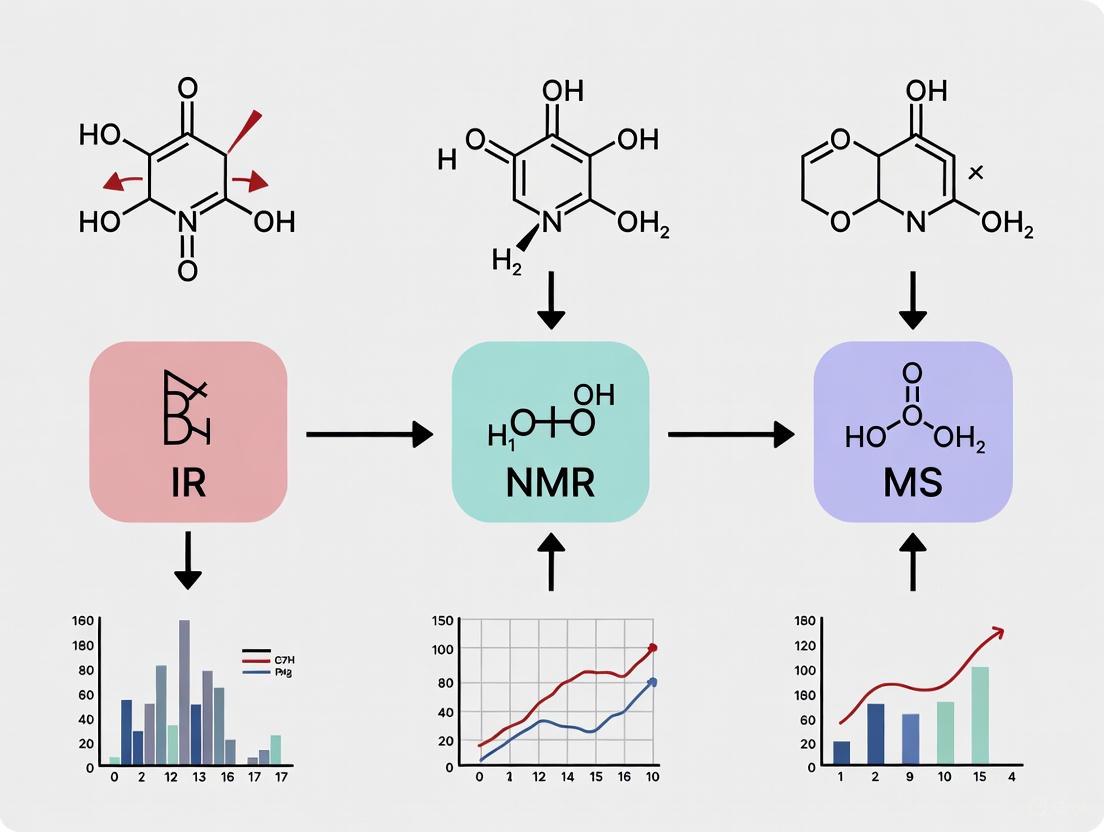
This article provides a comprehensive comparative analysis of major spectroscopic techniques, including NMR, MS, UV-Vis, NIR, and IR spectroscopy, tailored for researchers and drug development professionals.
Spectroscopic Methods Decoded: A Comparative Analysis of Advantages, Limitations, and Applications in Drug Development
Abstract
This article provides a comprehensive comparative analysis of major spectroscopic techniques, including NMR, MS, UV-Vis, NIR, and IR spectroscopy, tailored for researchers and drug development professionals. It explores the fundamental principles, operational methodologies, and specific applications of each technique, addressing common troubleshooting scenarios and offering optimization strategies. A direct comparative evaluation equips scientists with the knowledge to select the most appropriate method for their specific analytical challenges, from routine quality control to complex structural elucidation in biomedical research.
Core Principles of Spectroscopic Techniques: Building Your Analytical Foundation
Spectroscopy is the scientific discipline concerned with the measurement and interpretation of spectra resulting from the interaction of electromagnetic radiation with matter [1]. As a cornerstone of analytical chemistry, it provides invaluable insights into molecular composition, structure, and dynamics by analyzing how materials absorb, emit, or scatter light across the electromagnetic spectrum [2]. The fundamental process involves illuminating a sample with electromagnetic energy and measuring its response across various wavelengths, generating a unique spectral fingerprint for each material [3] [4]. These light-matter interactions are governed by quantum mechanical principles, where energy is transferred in discrete packets called photons, and molecules undergo transitions between discrete energy states [3]. The resulting data, often characterized as "big data" due to the large number of wavelengths measured, enables both qualitative identification and quantitative determination of substances across diverse fields including pharmaceutical development, materials science, and clinical diagnostics [2] [4].
The Electromagnetic Spectrum and Light-Matter Interactions
The electromagnetic spectrum encompasses multiple regions defined by wavelength, frequency, and photon energy, each probing distinct molecular phenomena through specific light-matter interactions [3] [2]. Figure 1 illustrates the fundamental relationship between spectroscopic techniques and their corresponding electromagnetic regions.
The photon energy (E=hν) varies significantly across the spectrum, determining which molecular phenomena can be probed by each technique [2]. In the X-ray regime (0.1-100 nm), the high photon energy causes excitation of core electrons and can ionize atoms, making it suitable for elemental analysis [2]. The ultraviolet and visible (UV-Vis) regime (100 nm-1 μm) is dominated by electronic transitions in molecules, particularly affecting chromophores and molecules with aromatic and conjugated pi-electron systems [3] [2]. The infrared regime (1-30 μm) is commonly subdivided into near-infrared (NIR, overtone and combination vibrations) and mid-infrared (MIR, fundamental vibrations) regions [3] [2]. The terahertz regime (30-3000 μm) probes low-frequency vibrations of intermolecular bonds such as hydrogen bonds and dipole-dipole interactions, while the microwave regime (3-300 mm) utilizes even lower energies to study molecular rotations [2].
Fundamental Interaction Mechanisms
Absorption Processes
Absorption occurs when incident photon energy matches the energy difference between two molecular quantum states, promoting the molecule to a higher energy level [3]. The resulting absorption spectrum represents a plot of absorbed radiation versus wavelength or frequency, providing characteristic molecular fingerprints [2]. The Beer-Lambert law quantifies this relationship, establishing that absorbance is proportional to concentration, path length, and a molecular absorption coefficient, forming the basis for quantitative analysis [2].
In UV-Vis spectroscopy, measurements focus on electronic transitions between molecular orbitals in the 190-800 nm range [3] [5]. Specific chromophores absorb at characteristic wavelengths: nitriles (~160 nm), acetylenes (~170 nm), alkenes (~175 nm), ketones (180 nm & 280 nm), and aldehydes (190 nm & 290 nm) [3]. Infrared absorption involves vibrational transitions where molecules absorb specific frequencies corresponding to natural vibrational energies of their chemical bonds [3]. Different functional groups demonstrate characteristic fundamental vibrations: C-H stretching (methyl, methylene, aromatic), O-H stretching, N-H stretching, C=O stretching (carbonyl), and C-F stretching [3].
Scattering Phenomena
Scattering techniques involve irradiating a sample and analyzing the elastically or inelastically scattered light [2]. Rayleigh scattering represents elastic scattering where incident and scattered photons have the same energy, while Raman scattering is an inelastic process where energy transfer occurs between photons and molecules [2]. It is crucial to note that scattering is a virtually instantaneous process (femtosecond timescale), distinct from absorption-emission processes like fluorescence which occur over pico- to microsecond timescales [2].
Raman spectroscopy provides complementary information to IR spectroscopy, particularly advantageous for aqueous samples because water exhibits weak scattering [3] [2]. Dominant Raman spectral features include acetylenic -C≡C- stretching, olefinic C=C stretching (1680-1630 cm⁻¹), N=N (azo-) stretching, S-H (thio-) stretching, C=S stretching, and S-S stretching bands [3]. Raman instrumentation typically offers high signal-to-noise ratio, compatibility with fiber optics, and requires minimal sample preparation [3].
Emission Processes
Emission occurs when excited molecules return to lower energy states, releasing energy as photons [2]. Fluorescence spectroscopy involves photon absorption promoting electrons to excited singlet states, followed by emission of lower-energy photons during relaxation [6]. Modern instrumentation like the Edinburgh Instruments FS5 v2 spectrofluorometer and Horiba's Veloci A-TEEM Biopharma Analyzer simultaneously collect absorbance, transmittance, and fluorescence excitation-emission matrix (A-TEEM) data, providing powerful alternatives to traditional separation methods for biopharmaceutical applications including monoclonal antibody analysis, vaccine characterization, and protein stability studies [6].
Comparative Analysis of Spectroscopic Techniques
Table 1: Quantitative Comparison of Major Spectroscopic Methods
| Technique | Spectral Range | Primary Interactions | Key Applications | Detection Limits | Sample Requirements |
|---|---|---|---|---|---|
| UV-Vis [3] [5] | 190-800 nm | Electronic transitions | Concentration determination, dissolution testing, impurity monitoring | ppm range | Optically clear solutions, minimal particulates |
| NIR [3] [2] | 780-2500 nm | Overtone & combination vibrations | Process monitoring, moisture analysis, raw material identification | 0.1% range | Minimal preparation, compatible with fibers |
| MIR [3] [5] | 2.5-30 μm | Fundamental vibrations | Structural elucidation, functional group identification, polymorph screening | <1% range | Solids (KBr pellets), liquids (ATR), limited by water interference |
| Raman [3] [2] | 1800-1000 cm⁻¹ | Molecular vibrations | Aqueous samples, polymorph identification, material characterization | 1-5% range | Minimal preparation, non-destructive, avoids fluorescence |
| Fluorescence [6] | UV-Vis range | Emission from excited states | Trace analysis, protein folding, binding studies | ppb-ppt range | Requires fluorophores, sensitive to environment |
| Microwave [6] [2] | 3-300 mm | Molecular rotations | Gas-phase structure determination, conformational analysis | High purity required | Gas phase, small molecules |
Table 2: Performance Characteristics for Pharmaceutical Analysis
| Technique | Specificity | Sensitivity | Analysis Speed | Cost Considerations | Regulatory Acceptance |
|---|---|---|---|---|---|
| UV-Vis [5] | Moderate | High for chromophores | Very fast (<1 min) | Low instrument cost | Well-established in pharmacopeias |
| NIR [2] [1] | Low to moderate (requires chemometrics) | Moderate | Fast (seconds) | Moderate cost | PAT applications, requires validation |
| MIR [5] | High (specific fingerprints) | High | Moderate (minutes) | Moderate to high cost | Standard for identity testing |
| Raman [2] | High (sharp peaks) | Moderate to high | Fast (seconds-minutes) | High initial cost | Growing in PAT applications |
| Fluorescence [6] | Very high | Very high | Fast (seconds) | High cost for advanced systems | Specialized applications |
| NMR [5] | Very high (atomic resolution) | Moderate | Slow (minutes-hours) | Very high cost | Gold standard for structure elucidation |
Experimental Methodologies and Protocols
UV-Vis Spectroscopy Protocol
Sample Preparation: Prepare optically clear solutions free from particulate matter to avoid scattering effects [5]. Select solvents transparent in the spectral region of interest (e.g., acetonitrile for UV below 210 nm) [5]. For solid samples, use appropriate dissolution techniques with filtering if necessary [5].
Instrument Calibration: Perform wavelength accuracy verification using holmium oxide or didymium filters [5]. Validate photometric accuracy with potassium dichromate standards [5]. Establish baseline correction with blank solvent in matched quartz cuvettes [5].
Data Collection: Measure absorbance within the optimal range of 0.1-1.0 AU for linear Beer-Lambert behavior [5]. For quantitative analysis, develop calibration curves using minimum five standard concentrations covering the expected sample range [5]. Collect spectra with appropriate resolution (typically 1-2 nm) and scan speed based on application requirements [5].
FT-IR Spectroscopy Protocol
Sample Preparation Techniques: For ATR-FTIR, ensure good contact between sample and crystal (diamond, ZnSe, or Ge) with consistent pressure [5]. For transmission measurements, prepare KBr pellets using 1-2 mg sample in 200 mg dried KBr, pressed under vacuum [5]. For liquid samples, use sealed liquid cells with defined pathlengths (0.1-1.0 mm) [5].
Spectral Acquisition: Acquire background spectrum under identical conditions before sample measurement [6]. Collect minimum 32 scans at 4 cm⁻¹ resolution for acceptable signal-to-noise ratio [5]. Maintain consistent atmospheric conditions (purge with dry air or nitrogen) to minimize water vapor and CO₂ interference [5].
Data Processing: Apply atmospheric suppression algorithms to remove residual water vapor and CO₂ contributions [5]. For quantitative analysis, select absorption bands with high specificity and establish univariate or multivariate calibration models [5]. For the Bruker Vertex NEO platform, utilize the vacuum ATR accessory to eliminate atmospheric interferences throughout the optical path [6].
Raman Spectroscopy Protocol
Sample Considerations: Minimal preparation required; samples can be analyzed in glass containers or through transparent packaging [3]. Avoid fluorescent containers that may interfere with measurements [3]. For solid dosage forms, ensure consistent positioning and laser focus on the sample surface [2].
Instrument Parameters: Select appropriate laser wavelength (785 nm for reducing fluorescence, 1064 nm for fluorescence avoidance) [6]. Optimize laser power to prevent sample degradation while maintaining adequate signal intensity [2]. Set integration time and number of accumulations based on sample properties and desired signal-to-noise ratio [2].
Spectral Validation: Perform wavelength calibration using silicon or neon emission standards [2]. Verify intensity response with NIST-traceable standards [2]. For quantitative applications, develop multivariate calibration models using partial least squares (PLSR) regression with appropriate validation [2].
Advanced Instrumentation and Emerging Technologies
The field of spectroscopic instrumentation continues to evolve with significant advancements in 2024-2025. Atomic spectrometry has seen innovations like multi-collector ICP-MS systems designed with flexibility and versatility, featuring unique designs that enable users to customize each analysis with high-resolution multi-collector capability to resolve isotopes of interest from their interferences [6].
In molecular spectroscopy, the division between laboratory and field instruments has become more pronounced. For fluorescence applications, the Edinburgh Instruments FS5 v2 spectrofluorometer offers increased performance targeting photochemistry and photophysics communities, while Horiba's Veloci A-TEEM Biopharma Analyzer provides simultaneous collection of absorbance, transmittance, and fluorescence excitation emission matrix data specifically for biopharmaceutical applications [6].
Microspectroscopy has gained importance with instruments addressing increasingly smaller samples. The Jasco and PerkinElmer microscope accessories for FT-IR systems incorporate features like auto-focus, multiple detector capabilities, and guided workflows to simplify contaminant analysis [6]. Quantum Cascade Laser (QCL) based microscopy systems like the Bruker LUMOS II ILIM and Protein Mentor from Protein Dynamic Solutions offer enhanced imaging capabilities, with the latter specifically designed for protein-containing samples in the biopharmaceutical industry [6].
Emerging technologies include microwave spectroscopy with BrightSpec's commercial broadband chirped pulse microwave spectrometer, based on technique developed in 2006 but only recently available as commercial instrumentation [6]. This platform measures microwave rotational spectra of small molecules to unambiguously determine structure and configuration in the gas phase, with applications in academia, pharmaceutical, and chemical industries [6].
Data Analysis and Preprocessing Techniques
Spectroscopic data analysis encompasses various approaches from simple univariate calibration to complex multivariate techniques. Qualitative analysis typically involves cross-correlation of measured spectra with reference spectral databases [2]. Quantitative analysis may utilize univariate approaches when specific spectral signatures can be assigned to parameters of interest, or multivariate techniques like partial least-squares regression (PLSR), support vector machines (SVM), and artificial neural networks (ANN) for complex samples with overlapping spectral features [2].
Data preprocessing is essential for handling spectroscopic "big data" recorded across numerous wavelengths, typically [350-2500] nm in 1 nm increments [4]. Raw data often requires mathematical transformation to correct for instrumental artifacts, noise, and scattering effects [4]. Common preprocessing methods include:
- Mean centering: Subtracting the average spectrum to enhance spectral differences [4]
- Standard Normal Variate (SNV): Transforming data to zero mean and unit variance to remove scatter effects [4]
- Derivative techniques: Enhancing resolution of overlapping bands (Savitzky-Golay filtering) [4]
- Multiplicative Scatter Correction (MSC): Compensating for light scattering variations [4]
Statistical preprocessing functions, particularly affine transformation (min-max normalization) and standardization (zero mean, unit variance), have demonstrated superior performance in preserving original data relationships while accentuating spectral features like peaks, valleys, and trends [4]. These approaches maintain local maxima, minima, and underlying trends while enhancing pattern recognition in subsequent multivariate analysis [4].
Essential Research Reagent Solutions
Table 3: Key Reagents and Materials for Spectroscopic Analysis
| Reagent/Material | Technical Specification | Primary Function | Application Context |
|---|---|---|---|
| Deuterated Solvents [5] | D₂O, CDCl₃, DMSO-d₆ (99.8% deuterium) | NMR solvent without proton interference | Structural elucidation, quantitative NMR |
| KBr (Potassium Bromide) [5] | FT-IR grade, spectroscopic purity | Pellet formation for solid samples | Transmission FT-IR measurements |
| ATR Crystals [5] | Diamond, ZnSe, Ge elements | Internal reflection element | ATR-FTIR sampling with durability |
| Spectrophotometric Solvents [5] | HPLC grade, low UV cutpoint | Sample dissolution medium | UV-Vis spectroscopy |
| NMR Reference Standards [5] | TMS (tetramethylsilane), DSS | Chemical shift calibration | Quantitative chemical shift measurement |
| Calibration Standards [5] | NIST-traceable materials | Instrument performance verification | Wavelength and photometric accuracy |
| Ultrapure Water [6] | 18.2 MΩ·cm resistivity | Sample preparation, dilution | Minimize background interference |
Decision Framework for Technique Selection
Selecting appropriate spectroscopic methods requires systematic evaluation of multiple factors. Figure 2 outlines a logical decision workflow for technique selection based on analytical requirements and sample characteristics.
Key selection criteria include:
- Nature of the analyte: Organic/inorganic composition, molecular size, physical state, and degradation susceptibility under measurement conditions [2]
- Analysis type: Qualitative identification, quantitative determination, structural elucidation, or purity assessment [2] [5]
- Sensitivity requirements: Detection limits ranging from percent levels for NIR to parts-per-billion for fluorescence techniques [2]
- Sample matrix effects: Compatibility with aqueous environments (favors Raman), presence of interferents, and need for sample preparation [2]
- Throughput needs: Analysis speed ranging from seconds for UV-Vis to hours for sophisticated NMR experiments [2] [5]
- Regulatory compliance: Validation requirements according to ICH Q2(R1) guidelines and pharmacopeial standards [5]
No single spectroscopic method universally addresses all analytical needs, and strategic combination of complementary techniques often provides the most comprehensive solution for complex pharmaceutical analysis [2].
Nuclear Magnetic Resonance (NMR) spectroscopy is a powerful analytical technique that exploits the magnetic properties of atomic nuclei to determine the structure, dynamics, reaction state, and chemical environment of molecules. This method provides detailed information at the atomic level, making it indispensable across chemistry, biochemistry, pharmaceuticals, and materials science. NMR spectroscopy is particularly valuable for studying biological molecules in their natural state, offering insights into molecular conformation and interactions that are difficult to obtain with other techniques [7].
The fundamental principle of NMR involves observing local magnetic fields around atomic nuclei. When placed in a strong external magnetic field, nuclei with an odd number of protons or neutrons (such as ^1H, ^13C, ^15N, ^19F, and ^31P) possess a property called nuclear spin, which gives rise to a magnetic moment. These nuclei can absorb electromagnetic radiation at specific frequencies, resonating between different energy states. The resonance frequency is highly dependent on the atom's chemical environment, providing a detailed fingerprint of the molecular structure [7].
Theoretical Foundations and Instrumentation
Fundamental Principles
NMR spectroscopy is based on the interaction between atomic nuclei and an external magnetic field. Key principles include:
- Nuclear Spin: Nuclei with an odd mass number (such as ^1H or ^13C) possess intrinsic spin angular momentum, resulting in a magnetic moment that enables NMR observation [7].
- Zeeman Effect: When placed in a strong external magnetic field (B₀), these magnetic moments align with or against the field, creating distinct energy levels. The energy difference between these levels corresponds to radiofrequency radiation [7].
- Resonance: At characteristic frequencies dependent on the magnetic field strength and nuclear environment, nuclei absorb energy and transition between energy states. This resonance condition forms the basis for NMR spectroscopy [7].
- Chemical Shift: The resonant frequency of a nucleus is slightly shifted by its local electronic environment, providing crucial information about molecular structure and functional groups. This is measured in parts per million (ppm) relative to a standard reference compound [8].
Instrument Components
Modern NMR spectrometers consist of several essential components [7]:
- Magnet and Sample Holder: The magnet generates a strong, stable, and homogeneous magnetic field. Traditional superconducting magnets require cryogenic cooling, while newer benchtop systems use permanent magnets. Samples are typically held in glass tubes.
- Radiofrequency (RF) Transmitter: Produces short, powerful pulses of radio waves to excite the nuclei.
- Probe and Coil: Positioned surrounding the sample, the coil serves both to transmit RF pulses and to detect the NMR signal.
- Receiver: Detects the radio frequencies emitted as excited nuclei relax to their lower energy state.
- Computer System: Processes the detected signal (Free Induction Decay) through Fourier transformation to generate the interpretable frequency-domain spectrum, and controls the instrument operation.
Experimental Methodologies and Protocols
Standard NMR Experiment Workflow
The following diagram illustrates the generalized workflow for a protein-ligand interaction study using NMR spectroscopy, a common application in drug discovery:
Sample Preparation Protocols
Proper sample preparation is critical for obtaining high-quality NMR data. The specific protocol varies depending on the sample type and experiment goal.
For small organic molecules (< 1000 Da):
- Solvent Selection: Dissolve 2-10 mg of sample in 0.6-0.7 mL of deuterated solvent (CDCl₃, DMSO-d₆, D₂O, or CD₃OD). The deuterated solvent provides a signal for the field frequency lock [9].
- Reference Standard: Add 0.1% tetramethylsilane (TMS) as an internal chemical shift reference, or use the solvent's residual proton peak as a secondary reference [9].
- Sample Filtration: Filter the solution through a 0.45 μm filter to remove particulate matter that could degrade spectral resolution.
- Tube Loading: Transfer the solution to a clean, dry NMR tube (standard 5 mm or 3 mm for limited sample), avoiding bubbles.
For protein-ligand interaction studies:
- Protein Preparation: Concentrate the isotopically labeled (^15N, ^13C) protein to 0.1-0.5 mM in an appropriate buffer (e.g., 20 mM phosphate, 50 mM NaCl, pH 6.5-7.5) using centrifugal filtration devices [10].
- Solvent Exchange: Exchange into deuterated buffer using gel filtration or dialysis to minimize the strong water signal. Alternatively, use water suppression techniques during data acquisition.
- Ligand Titration: Add small aliquots of ligand stock solution directly to the NMR tube, mixing gently after each addition. Typical ligand:protein ratios range from 0.5:1 to 10:1 for binding affinity measurements.
- Temperature Control: Maintain constant temperature during data acquisition, typically 25-30°C for proteins, unless studying temperature-dependent phenomena.
Key NMR Experiments and Methodologies
NMR spectroscopy encompasses a diverse set of experiments, each providing specific structural information.
One-Dimensional (1D) Experiments:
- ¹H NMR: The most basic experiment revealing hydrogen environments, electronic surroundings, and relative proton counts through integration [8].
- ¹³C NMR: Provides information about carbon frameworks in molecules, though lower natural abundance (1.1%) requires longer acquisition times. DEPT editing distinguishes CH₃, CH₂, CH, and quaternary carbons [8].
- Pulsed Gradient Spin-Echo (PGSE): Measures diffusion coefficients to study molecular size, aggregation, and binding.
Two-Dimensional (2D) Experiments:
- COSY (Correlation Spectroscopy): Identifies scalar-coupled protons (typically through 2-3 bonds) within a molecule, establishing proton-proton connectivity [8].
- HSQC (Heteronuclear Single Quantum Coherence): Correlates directly bonded ^1H and ^13C/^15N nuclei, providing a fingerprint of molecular structure. Particularly valuable for protein studies with ^15N-labeled samples to monitor ligand binding through chemical shift perturbations [8] [10].
- HMBC (Heteronuclear Multiple Bond Correlation): Detects long-range ^1H-^13C couplings (typically 2-3 bonds), crucial for establishing connectivity between molecular fragments [8].
- NOESY/ROESY (Nuclear Overhauser Effect Spectroscopy): Measures through-space dipolar couplings between nuclei (<5 Å), providing critical distance restraints for 3D structure determination and studying molecular conformation [8].
Specialized Advanced Experiments:
- Saturation Transfer Difference (STD): Identifies ligand atoms in close contact with protein surfaces, useful for mapping binding epitopes [9].
- TROSY (Transverse Relaxation-Optimized Spectroscopy): Reduces relaxation effects, enabling NMR studies of larger proteins and complexes (>50 kDa) [10].
- In-Cell NMR: Uses isotopically labeled molecules in living cells to study structures and interactions in native environments.
Research Reagent Solutions
The following table details essential reagents and materials required for NMR spectroscopy experiments:
Table 1: Essential Research Reagents for NMR Spectroscopy
| Reagent/Material | Function and Importance | Application Notes |
|---|---|---|
| Deuterated Solvents (CDCl₃, DMSO-d₆, D₂O) | Provides field frequency lock; minimizes strong solvent proton signals that would otherwise overwhelm sample signals [9]. | Choice depends on sample solubility; residual solvent peaks serve as secondary chemical shift references [9]. |
| Internal Standards (TMS, DSS) | Provides reference point (0 ppm) for chemical shift calibration [9]. | TMS for organic solvents; DSS for aqueous solutions. Critical for accurate chemical shift reporting [9]. |
| Isotope-Labeled Precursors (^13C-glucose, ^15N-NH₄Cl) | Incorporates NMR-active isotopes into proteins for structural studies; enables detection of low-abundance nuclei [10]. | Essential for protein NMR; specific labeling strategies (e.g., side-chain selective) simplify spectra [10]. |
| NMR Tubes | Holds sample in magnetic field; quality affects spectral resolution. | Standard 5 mm outer diameter; higher quality tubes provide better resolution for demanding applications. |
| Shift Reagents (Eu(fod)₃) | Induces predictable chemical shifts to determine stereochemistry or resolve overlapping signals. | Chiral shift reagents distinguish enantiomers; paramagnetic reagents enhance relaxation. |
| Buffer Components (deuterated salts, DTT) | Maintains pH and protein stability/activity during analysis. | Phosphate buffer common; avoid amines; use deuterated or reductant forms for compatibility. |
Comparative Analysis with Other Structural Techniques
NMR vs. X-ray Crystallography and Mass Spectrometry
The selection of structural elucidation technique depends on the specific research question, sample properties, and required information. The following table provides a quantitative comparison of NMR spectroscopy with other major analytical techniques:
Table 2: Comparative Analysis of Structural Elucidation Techniques
| Parameter | NMR Spectroscopy | X-ray Crystallography | Mass Spectrometry (MS) |
|---|---|---|---|
| Structural Detail | Full molecular framework, stereochemistry, and dynamics [8] | High-resolution 3D atomic coordinates | Molecular weight, fragmentation pattern |
| Stereochemistry Resolution | Excellent (chiral centers, conformers via NOESY) [8] | Limited to crystal conformation | Limited |
| Quantification Ability | Accurate without external standards [8] | Limited | Requires standards or internal calibrants |
| Sample State | Solution or solid (natural state) [11] [12] | Single crystal required | Gas phase (vaporized) |
| Sample Integrity | Non-destructive (sample recovery) [12] | Destructive (crystal disruption) | Destructive (sample consumed) |
| Hydrogen Atom Detection | Direct observation | Inferred, not directly observed [10] | Indirect (via fragmentation) |
| Molecular Weight Range | < 50 kDa routinely (up to ~1 MDa with TROSY) [10] | No strict upper limit | Virtually unlimited |
| Dynamic Information | Real-time kinetics, molecular motions [11] | Static snapshot only [11] | Limited |
| Key Limitations | Low sensitivity; expensive equipment; complex data interpretation [12] | Requires crystallization; no dynamics [11] | No 3D structure; ionization dependencies |
Instrument Type Comparison
The NMR spectroscopy market offers various instrument types tailored to different applications and budgets:
Table 3: NMR Spectrometer Types and Characteristics
| Instrument Type | Field Strength | Key Features | Applications | Market Share (2024) |
|---|---|---|---|---|
| High-Field NMR | 400-1200 MHz | Highest resolution and sensitivity; requires cryogenic cooling | Protein structure, complex natural products, metabolomics | 54.33% [13] |
| Benchtop NMR | 60-100 MHz | Compact, cryogen-free, lower cost and maintenance [13] | Teaching labs, quality control, reaction monitoring | Fastest growing segment (8.37% CAGR) [13] |
| Solid-State NMR | 200-1000 MHz | Specialized for insoluble materials; magic angle spinning | Polymers, membrane proteins, pharmaceuticals | Niche but essential segment |
Advantages and Limitations of NMR Spectroscopy
Key Advantages
NMR spectroscopy offers several compelling advantages that explain its widespread adoption:
- Non-Destructive Analysis: Samples can be recovered after analysis, which is particularly valuable for precious synthetic compounds or biological samples [12]. This also allows for longitudinal studies of the same sample over time.
- Atomic-Level Resolution: Provides detailed information about molecular structure, including bond connectivity, stereochemistry, and conformation at atomic resolution [8].
- Solution-State Studies: Enables analysis of molecules in near-physiological conditions, preserving native conformations and dynamics that might be lost in crystallization [11] [10].
- Dynamic Information: Unique ability to probe molecular motions and interactions across various timescales (ps-s), providing insights into binding kinetics, conformational exchange, and protein folding [11].
- Versatile Nuclei Observation: Can study multiple NMR-active nuclei (^1H, ^13C, ^15N, ^19F, ^31P) within the same molecule, providing complementary structural information [12].
- Quantitative Capabilities: Enables precise concentration measurements without external calibration standards, useful for purity assessment and reaction monitoring [8].
Current Limitations and Challenges
Despite its powerful capabilities, NMR spectroscopy faces several limitations:
- Low Sensitivity: Relatively weak interaction energies result in poor sensitivity compared to techniques like mass spectrometry, often requiring concentrated samples (0.1-5 mM for proteins) and longer acquisition times [12].
- High Instrument Cost: High-field NMR spectrometers represent significant capital investments ($500,000-$5+ million), with substantial maintenance costs for cryogenic systems [12].
- Spectral Complexity: Interpretation requires significant expertise, particularly for larger molecules where signal overlap becomes problematic [11] [12].
- Molecular Size Limitations: Conventional solution NMR becomes challenging for proteins >50 kDa due to increased signal overlap and faster relaxation, though TROSY and other advanced methods extend this limit [10].
- Deuterated Solvents Requirement: Necessity for deuterated solvents adds to experimental costs and may affect solubility for some samples [9].
Applications in Pharmaceutical Research and Drug Discovery
NMR spectroscopy plays an increasingly crucial role in modern drug discovery, with several key applications:
Structure-Based Drug Design (SBDD)
NMR-driven structure-based drug design (NMR-SBDD) has emerged as a powerful alternative to purely X-ray crystallography-driven approaches. This methodology combines ^13C amino acid precursors, selective side-chain labeling strategies, and straightforward NMR approaches with advanced computational tools to generate protein-ligand structural ensembles [10]. This provides reliable and accurate structural information about protein-ligand complexes that closely resembles the native state distribution in solution [10].
A significant advantage of NMR in SBDD is its ability to directly detect hydrogen atoms and their interactions, which are invisible to X-ray crystallography. Protons with large downfield chemical shift values typically act as hydrogen bond donors in classical H-bond interactions, while those with large upfield chemical shift values correspond to hydrogen bond donors with aromatic ring systems in CH-π and Methyl-π interactions [10]. This information is crucial for rational drug design aimed at optimizing binding interactions.
Fragment-Based Drug Discovery (FBDD)
NMR-based fragment screening has become a powerful strategy for identifying small molecules that bind to target proteins. This approach involves screening libraries of low-molecular-weight compounds (typically 150-300 Da) to identify fragments that interact with the protein of interest [14]. The hits identified through this method can then be optimized into potent and selective drug candidates. NMR's ability to provide detailed information on binding interactions at the atomic level makes it ideal for this purpose, even for weak binders (K_d in μM-mM range) [14].
Protein-Ligand Interaction Studies
NMR provides multiple approaches for studying protein-ligand interactions:
- Chemical Shift Perturbation (CSP): Monitoring changes in chemical shifts of protein signals upon ligand binding identifies binding sites and sometimes binding affinity.
- Saturation Transfer Difference (STD): Identifies ligand moieties in close proximity to the protein surface, enabling epitope mapping [9].
- INPHARMA NMR: Uses inter-ligand NOEs to investigate binding modes and competition between ligands, even in proteins with multiple binding sites [9].
These approaches provide critical information about binding affinity, kinetics, and stoichiometry that guides medicinal chemistry optimization.
Emerging Trends and Future Directions
The field of NMR spectroscopy continues to evolve with several exciting developments:
- AI and Machine Learning Integration: Deep-learning models such as DeepSAT can extract atom-level structures from 2D spectra faster than manual analysis, addressing the spectroscopist shortage and improving throughput [13]. AI is being applied to automated spectral analysis, predictive modeling, and structure elucidation [15].
- Benchtop NMR Revolution: Compact, cryogen-free benchtop NMR systems (60-100 MHz) are increasing accessibility, with the segment scaling at an 8.37% CAGR to 2030 [13]. These systems bring NMR capabilities to quality control laboratories, teaching facilities, and smaller research groups.
- Hyperpolarization Techniques: Methods like Dynamic Nuclear Polarization (DNP) can enhance NMR sensitivity by several orders of magnitude, potentially revolutionizing the study of low-abundance species and real-time metabolic tracking [10].
- Integrated Structural Biology: Combining NMR with cryo-electron microscopy (cryo-EM) and X-ray crystallography provides complementary structural information, overcoming limitations of individual methods [10].
- Operando and Inline Applications: Flow-chemistry integration is turning NMR into an inline process-control sensor that verifies reaction conversions in real time, shrinking batch times and waste [13].
- Helium-Free Systems: Growing focus on sustainable magnet technologies addresses concerns about helium scarcity and operational costs [13] [15].
The global NMR spectroscopy market reflects these trends, projected to grow from USD 1.68 billion in 2025 to approximately USD 2.73 billion by 2034, at a CAGR of 5.54% [15]. This growth is driven by expanding applications in pharmaceuticals, metabolomics, materials science, and the development of more accessible and automated systems.
Nuclear Magnetic Resonance spectroscopy remains a cornerstone technique for molecular structure determination across scientific disciplines. Its unique capabilities for probing atomic-level structure and dynamics in solution, combined with its non-destructive nature, make it particularly valuable for studying biological systems and guiding drug discovery efforts. While challenges remain in sensitivity, cost, and data interpretation, ongoing technological advancements in instrumentation, computational methods, and AI integration continue to expand its applications and accessibility.
As part of the broader spectroscopic toolkit, NMR provides complementary information to techniques like X-ray crystallography and mass spectrometry, often revealing molecular insights unavailable through other methods. The continued evolution of NMR technology promises to further solidify its role in addressing complex scientific questions in structural biology, medicinal chemistry, and materials science.
Mass Spectrometry (MS) is a powerful analytical technique that identifies and quantifies molecules by measuring the mass-to-charge ratio (m/z) of gas-phase ions. It has become a cornerstone in modern laboratories, enabling precise analysis across fields like pharmaceuticals, environmental testing, proteomics, and clinical diagnostics [16] [17]. The core principle of MS involves converting sample molecules into ions, separating these ions based on their m/z, and detecting them to generate a mass spectrum that serves as a molecular fingerprint [18]. This technical guide delves into the core components, methodologies, and applications of mass spectrometry, providing a detailed comparison of its techniques within the broader context of spectroscopic research.
The fundamental process of mass spectrometry can be broken down into three key stages: ionization, where neutral molecules are converted into ions; mass analysis, where ions are separated based on their m/z; and detection, where the separated ions are detected and data is transformed into a interpretable mass spectrum [18] [19]. The following diagram illustrates this core workflow and the essential components of a mass spectrometer.
Ionization Techniques
Ionization, the process of converting neutral molecules into charged ions, is the critical first step in mass spectrometry. The choice of ionization method depends on the sample's physical properties, volatility, and molecular weight. These techniques are broadly categorized as "hard" or "soft" based on the amount of energy transferred to the analyte during ionization.
Hard Ionization techniques, such as Electron Ionization (EI), impart high energy to molecules, resulting in extensive fragmentation. This provides valuable structural information but may obscure the molecular ion peak. Soft Ionization techniques, such as Electrospray Ionization (ESI) and Matrix-Assisted Laser Desorption/Ionization (MALDI), impart lower energy, resulting in little fragmentation and a clear molecular ion peak, making them suitable for large, labile molecules like proteins and peptides [20] [19] [21].
The following table summarizes the key characteristics of prevalent ionization methods.
| Ionization Method | Type | Typical Sample Form | Mass Range | Key Applications | Advantages | Disadvantages |
|---|---|---|---|---|---|---|
| Electron Impact (EI) [20] [19] | Hard | Gas, volatile | < 600 Da | GC-MS, environmental analysis, forensic analysis [20] [19] | High fragmentation for structural info; robust and reproducible [19] | Extensive fragmentation; requires volatile samples [20] |
| Electrospray Ionization (ESI) [16] [20] [19] | Soft | Liquid, polar | Broad (small to large molecules) | LC-MS, proteomics, pharmaceuticals [16] [20] [19] | Produces multiply charged ions for large molecules; compatible with LC [20] [19] | Sensitive to salts and impurities; complex spectra for mixtures [19] |
| Matrix-Assisted Laser Desorption/Ionization (MALDI) [16] [20] [19] | Soft | Solid, co-crystallized with matrix | Broad, up to millions of Da | Large biomolecules (proteins, peptides), imaging MS [16] [20] [19] | Minimal fragmentation; high mass range; single-charged ions simplify spectra [19] | Requires suitable matrix; spot-to-spot variability; quantitative challenges [19] |
| Atmospheric Pressure Chemical Ionization (APCI) [20] [19] | Soft | Liquid, less polar than ESI | < 1500 Da | LC-MS, less polar molecules, lipids [19] | Handles less polar compounds than ESI; good for thermostable molecules [19] | Less effective for large, thermally labile biomolecules [19] |
| Inductively Coupled Plasma (ICP) [19] [21] | Hard | Liquid (aqueous) | Elements | Trace metal analysis, elemental speciation [19] | Excellent for trace element and isotope analysis; high temperature plasma [19] | Primarily for elemental analysis, not molecular |
The workflows for two of the most common soft ionization techniques, ESI and MALDI, are detailed below.
Mass Analyzers
Following ionization, the mass analyzer separates the generated ions based on their mass-to-charge ratio (m/z). Different types of analyzers offer varying trade-offs between resolution, mass accuracy, speed, and cost. Resolution is a key parameter, defined as the ability of the mass spectrometer to distinguish between ions with small differences in m/z [16] [18] [17].
The selection of a mass analyzer is dictated by the analytical requirements, such as the need for high mass accuracy, high throughput, or detailed structural information via tandem MS (MS/MS). The following table provides a comparative overview of the most common mass analyzers.
| Mass Analyzer | Resolution | Mass Accuracy | m/z Range | Key Features | Best For | Limitations |
|---|---|---|---|---|---|---|
| Quadrupole (Q) [16] [18] | Low to Medium (~2000) [16] | Low | Up to 3000 m/z [16] | Robust, cost-effective, good for quantification [16] | Routine targeted quantification (e.g., clinical labs, QA/QC) [16] | Medium resolution; limited for complex mixtures [16] |
| Time-of-Flight (TOF) [16] [18] [17] | High | High | Essentially unlimited (m/z ∞) [16] | Rapid analysis; high mass accuracy [16] [18] | Untargeted analysis, proteomics, polymer analysis [16] [17] | Requires pulsed ionization (e.g., MALDI); can have low resolution (~350) in some configurations [16] |
| Ion Trap (IT) [16] [18] [17] | Medium (~1500) [16] | Medium | ~2000 m/z [16] | Can perform MSⁿ in a single device; compact [16] | Structural elucidation, forensic analysis, trace detection [16] | Lower resolution than TOF or Orbitrap [16] |
| Orbitrap [16] [18] [17] | Very High (>100,000) [17] | Very High | Excellent | Exceptional resolution and accuracy; no superconducting magnet [16] [17] | High-resolution analysis (proteomics, metabolomics) [16] | Expensive; requires significant space and expertise [16] |
| FT-ICR [17] | Ultra-High | Ultra-High | High | Unparalleled resolution and mass accuracy [17] | Ultra-complex mixture analysis (e.g., petroleomics, metabolomics) [17] | Very expensive; requires superconducting magnet; complex operation [17] |
Hybrid Mass Spectrometers
To leverage the strengths of different analyzers, hybrid instruments have been developed. These systems combine multiple analyzers in tandem, enhancing capabilities for specific applications.
- Quadrupole-Time-of-Flight (Q-TOF): Combines the mass-filtering capability of a quadrupole with the high resolution and mass accuracy of a TOF analyzer. Ideal for accurate mass measurement of precursor and product ions, facilitating unknown compound identification and metabolomics [18] [17].
- Quadrupole-Orbitrap: Combines a quadrupole mass filter with the high-resolution Orbitrap detector. Excellent for targeted and untargeted screening with high mass accuracy, widely used in proteomics and metabolomics [18] [17].
- Tribrid Systems: Incorporate three independent analyzers, such as a quadrupole, an Orbitrap, and a linear ion trap, offering unparalleled flexibility for complex experimental designs in top-down proteomics and PTM analysis [18].
Experimental Protocol: Metabolomics Profiling
Metabolomics, the comprehensive study of small molecules (metabolites) in a biological system, heavily relies on LC-MS platforms. The following protocol outlines a typical workflow for a global (untargeted) metabolomics study using liquid chromatography coupled to a high-resolution mass spectrometer (e.g., Q-TOF or Quadrupole-Orbitrap) [22].
Sample Preparation and Metabolite Extraction
- Sample Collection and Quenching: Collect biological samples (e.g., cells, tissue, plasma) rapidly. To immediately halt metabolic activity, use rapid quenching methods such as flash-freezing in liquid nitrogen or submerging in cold methanol (-80 °C). This step is critical for capturing an accurate metabolic snapshot [22].
- Metabolite Extraction:
- Add a pre-chilled extraction solvent (e.g., methanol:chloroform, 2:1 v/v) to the quenched sample. The use of a biphasic solvent system allows for the simultaneous extraction of polar (methanol/water phase) and non-polar lipids (chloroform phase) [22].
- Vortex vigorously and incubate on ice or at -20°C for a set time (e.g., 20 minutes).
- Centrifuge at high speed (e.g., 14,000 x g, 15 min, 4°C) to separate phases and precipitate protein.
- Carefully collect the supernatant containing the metabolites.
- Quality Control (QC) and Standardization:
- Internal Standards: Add a mixture of stable isotope-labeled internal standards to the extraction solvent before processing. This corrects for variability during extraction and analysis and aids in quantification [22].
- Pooled QC: Create a pooled QC sample by combining a small aliquot of every experimental sample. This pooled QC is injected repeatedly throughout the analytical sequence to monitor instrument stability and for data normalization.
LC-MS Analysis and Data Processing
- Chromatographic Separation: Separate the extracted metabolites using reversed-phase or hydrophilic interaction liquid chromatography (HILIC) coupled online to the mass spectrometer. This separation reduces ion suppression and complexity at the ion source [22].
- Mass Spectrometry Detection:
- Acquire data in data-dependent acquisition (DDA) or data-independent acquisition (DIA) mode.
- For broad coverage, operate the mass spectrometer in both positive and negative electrospray ionization (ESI) modes with switching.
- Use the pooled QC samples to condition the system and then run them periodically (e.g., every 6-10 injections) throughout the batch.
- Data Processing:
- Use software (e.g., XCMS, MS-DIAL, Compound Discoverer) for peak picking, alignment, and integration to generate a feature table with metabolite intensities across all samples.
- Perform statistical analysis (e.g., PCA, t-tests) to identify metabolites that are significantly altered between experimental groups.
- Metabolite Annotation: Putatively identify metabolites by matching the accurate mass (often within 5 ppm error) and MS/MS fragmentation spectra against databases such as HMDB, METLIN, or mzCloud [22].
The Scientist's Toolkit: Essential Research Reagents and Materials
Successful mass spectrometry analysis, particularly in complex fields like metabolomics and proteomics, requires careful selection of reagents and materials. The following table details key solutions used in the featured metabolomics protocol and beyond.
| Item | Function / Role in MS Analysis |
|---|---|
| Stable Isotope-Labeled Internal Standards (e.g., ¹³C, ¹⁵N) [22] | Correct for analyte loss during sample preparation and ion suppression during ionization; enable absolute quantification. |
| LC-MS Grade Solvents (e.g., Methanol, Acetonitrile, Water) [22] | Minimize background chemical noise and ion suppression; ensure chromatographic performance and reproducibility. |
| Metabolite Extraction Solvents (e.g., Methanol/Chloroform, MTBE) [22] | Precipitate proteins and efficiently extract a broad range of metabolites of varying polarity from the biological matrix. |
| MALDI Matrices (e.g., CHCA, SA, DHB) [19] [21] | Absorb laser energy and facilitate soft desorption and ionization of the analyte with minimal fragmentation. |
| Ammonium Formate/Acetate | Common volatile buffers used in LC-MS mobile phases to improve chromatographic separation and aid in protonation/deprotonation in ESI. |
| Trypsin (Proteomics Grade) | A specific protease used in proteomics to digest proteins into predictable peptides, which are more amenable to MS analysis. |
Mass spectrometry stands as a pivotal analytical technique, offering unparalleled capabilities for the identification and quantification of chemical entities. Its versatility stems from the synergistic combination of various ionization sources and mass analyzers, each with distinct advantages and limitations that make them suitable for specific analytical challenges. When evaluated against other spectroscopic methods, MS consistently demonstrates superior sensitivity, specificity, and dynamic range, particularly for analyzing complex mixtures in biological matrices.
The continuous innovation in ionization methods, mass analyzer technology, and hybrid instrument design is pushing the boundaries of MS applications. Emerging areas such as single-cell analysis, spatial metabolomics, and clinical diagnostics are increasingly reliant on MS technology [17] [23]. As protocols become more standardized and instruments more sensitive and accessible, mass spectrometry is poised to deepen its impact as an indispensable tool for researchers and drug development professionals, solidifying its role in advancing scientific discovery and improving human health.
Ultraviolet-Visible (UV-Vis) spectroscopy is a foundational analytical technique in modern scientific research and industrial applications. This method measures the absorption of ultraviolet and visible light by a sample, providing critical insights into electronic structure, composition, and concentration [24] [25]. The technique operates on the principle that molecules undergo electronic transitions when they absorb specific wavelengths of light in the UV (typically 190-400 nm) and visible (400-700 nm) regions of the electromagnetic spectrum [26].
The significance of UV-Vis spectroscopy extends across multiple disciplines due to its versatility, relative simplicity, and cost-effectiveness [25]. In pharmaceutical development, it facilitates drug discovery and quality control [26]. In biochemistry, it enables the quantification of biomolecules like proteins and nucleic acids [27] [28]. Environmental scientists employ it for contaminant detection, while materials researchers use it to characterize compounds with conjugated systems [26]. This technique occupies a unique position in the spectroscopic toolkit, offering particular strengths for quantitative analysis while presenting certain limitations in structural elucidation compared to other spectroscopic methods.
Fundamental Principles: Electronic Transitions
At its core, UV-Vis spectroscopy probes the energy required to promote electrons from ground state orbitals to higher energy, excited state orbitals [29]. When a photon of light possesses energy precisely matching the energy gap (ΔE) between a molecular orbital containing electrons and an empty higher-energy orbital, that photon may be absorbed [30]. This event, termed an electronic transition, reduces the intensity of the transmitted light at that specific wavelength, creating a measurable absorption signal [24].
The energy of the absorbed photon is inversely proportional to its wavelength, described by the equation E = hc/λ, where h is Planck's constant, c is the speed of light, and λ is the wavelength [30]. Shorter wavelengths (UV region) carry more energy and can induce more demanding electronic transitions, while longer wavelengths (visible region) carry less energy and correspond to smaller energy gaps [24].
Types of Electronic Transitions
Molecules contain various types of electrons, each with different energy requirements for excitation. The primary electronic transitions observed in UV-Vis spectroscopy are summarized in Table 1.
Table 1: Characteristics of Major Electronic Transitions in UV-Vis Spectroscopy
| Transition Type | Electrons Involved | Typical Energy/Wavelength Range | Molar Absorptivity (ε) [L·mol⁻¹·cm⁻¹] | Example Compounds |
|---|---|---|---|---|
| σ → σ* | σ-bonding electrons | High Energy / <150 nm (Far UV) | Very High | H₂, CH₄ [31] [30] |
| n → σ* | Non-bonding electrons (e.g., in O, N, S, halogens) | 150-250 nm | Low to Moderate | H₂O, CH₃OH, CH₃Cl [31] |
| π → π* | π-bonding electrons (in double/triple bonds) | 170-300 nm (longer if conjugated) | High (1,000 - 10,000) | Ethene (170 nm), Conjugated Dienes [31] [30] |
| n → π* | Non-bonding electrons adjacent to π-bonds (e.g., in C=O) | 270-350 nm | Low (10 - 100) | Acetone, Aldehydes [31] |
Chromophores are molecular functional groups containing valence electrons of relatively low excitation energy, responsible for absorbing UV or visible light [29] [31]. Extended conjugation in a molecule, such as in β-carotene which possesses 11 conjugated double bonds, significantly reduces the HOMO-LUMO energy gap, shifting the absorption to longer wavelengths (lower energies) and often into the visible region, thereby imparting color [29] [30].
Figure 1: Basic workflow of a UV-Vis spectrophotometer, showing the key components and the path of light and signal processing.
Instrumentation and Methodology
A UV-Vis spectrophotometer is designed to execute a fundamental process: generate light across a spectrum of wavelengths, direct it through a sample, and measure how much light is absorbed at each wavelength [24] [25]. The instrument's design directly impacts its accuracy, sensitivity, and applicability.
Core Components
The essential components of a typical UV-Vis spectrophotometer, as illustrated in Figure 1, include:
- Light Source: Provides broad-spectrum radiation covering UV and visible ranges. Common sources include xenon lamps (for both UV and visible), deuterium lamps (for UV), and tungsten or halogen lamps (for visible light) [24] [26]. The lamp must offer stable and continuous output across the wavelength range of interest.
- Wavelength Selector (Monochromator): This component isolates a narrow band of wavelengths from the broad output of the light source. Diffraction gratings are most common, where rotating the grating selects specific wavelengths. Filters (absorption, interference, bandpass) may also be used, often in conjunction with monochromators, to enhance precision [24]. The groove frequency of the grating (e.g., 1200 grooves/mm) determines the balance between optical resolution and usable wavelength range [24].
- Sample Compartment: Holds the sample, typically contained in a cuvette. The material of the cuvette is critical: quartz is required for UV measurements below 350 nm as it is transparent to most UV light, while glass or plastic cuvettes, which absorb UV light, can be used for visible wavelengths only [24]. Modern systems also include cuvette-free setups for very small sample volumes (e.g., 2 µL), using microfluidic capillaries [24] [28].
- Detector: Converts the transmitted light intensity into an electrical signal. Photomultiplier tubes (PMTs) are highly sensitive detectors that amplify the signal from weak light, making them ideal for low-light applications [24]. Semiconductor-based detectors, such as photodiodes and charge-coupled devices (CCDs), are also widely used for their compactness and multi-wavelength detection capabilities [24] [26].
Quantitative Analysis: The Beer-Lambert Law
UV-Vis spectroscopy is a powerful quantitative tool, primarily governed by the Beer-Lambert Law [24] [25] [28]. This law states that the absorbance (A) of a solution is directly proportional to the concentration (c) of the absorbing species and the path length (L) of the light through the solution:
A = εlc
Where:
- A is the measured absorbance (unitless).
- ε is the molar absorptivity or extinction coefficient (L·mol⁻¹·cm⁻¹), a substance-specific constant at a given wavelength.
- l is the path length of the cuvette (cm).
- c is the concentration of the solution (mol·L⁻¹).
Absorbance is defined as A = log₁₀(I₀/I), where I₀ is the intensity of the incident light and I is the intensity of the transmitted light [24] [25]. For accurate quantification, absorbance values should generally be kept below 1 to remain within the instrument's linear dynamic range [24].
Experimental Protocol: Protein Quantification at 280 nm
A standard application of UV-Vis spectroscopy is determining the concentration of proteins in solution [28]. The following protocol outlines a typical procedure using a conventional cuvette-based spectrophotometer.
Table 2: Key Reagents and Materials for Protein Quantification via UV-Vis
| Item | Function/Description | Critical Notes |
|---|---|---|
| Purified Protein Sample | The analyte of interest. | Must contain aromatic residues (Trp, Tyr) or disulfide bonds to absorb at 280 nm. |
| Reference Buffer | The solvent used to dissolve or dialyze the protein. | Serves as the "blank"; must be identical to the protein solvent to correct for background absorption. |
| Quartz Cuvette | Container for sample and reference during measurement. | Quartz is essential for UV transmission. Pathlength is typically 1 cm. |
| UV-Vis Spectrophotometer | Instrument for measuring light absorption. | Must be calibrated and capable of measurements at 280 nm. |
Step-by-Step Procedure:
- Instrument Warm-up and Initialization: Turn on the spectrophotometer and allow the lamp and electronics to stabilize for at least 15-30 minutes. Initialize the instrument software and select the absorbance mode.
- Sample and Blank Preparation: Prepare the protein sample in an appropriate buffer. Centrifuge if necessary to remove any particulate matter. Pipette the reference buffer into a clean quartz cuvette, ensuring the meniscus is below the light path and no bubbles are on the optical surfaces.
- Blank Measurement: Place the cuvette containing the reference buffer into the sample compartment. Close the lid and execute a "blank" or "zero" measurement. This sets the baseline for 100% transmittance (A=0), correcting for any minor absorption from the solvent and cuvette.
- Sample Measurement: Carefully replace the reference cuvette with a cuvette containing the protein solution. Ensure the cuvette is oriented consistently. Measure the absorbance at 280 nm.
- Data Analysis and Concentration Calculation: Record the absorbance value (A₂₈₀). Calculate the protein concentration using the Beer-Lambert law: c = A₂₈₀ / (ε × l), where ε is the theoretical or known molar absorptivity of the specific protein at 280 nm and l is the path length in cm.
Troubleshooting and Best Practices:
- High Absorbance: If A₂₈₀ > 1, dilute the sample and remeasure. The calculated concentration must then be multiplied by the dilution factor [24].
- Buffer Compatibility: Ensure the buffer components do not significantly absorb at 280 nm. Common interfering substances include EDTA and some detergents.
- Cuvette Handling: Always handle cuvettes by the opaque sides; never touch the transparent optical faces.
Applications in Research and Industry
The utility of UV-Vis spectroscopy spans qualitative identification, quantitative analysis, and dynamic monitoring across diverse fields. Its role in the comparative analysis of spectroscopic methods is defined by its specific strengths and limitations.
Key Application Areas
Quantitative Analysis of Biomolecules: This is one of the most prevalent applications.
- Nucleic Acid Quantification: DNA and RNA are quantified by measuring absorbance at 260 nm. The ratio A₂₆₀/A₂₈₀ is a standard metric for assessing purity (a ratio of ~1.8 is indicative of pure DNA) [28].
- Protein Quantification: As detailed in the protocol above, proteins are quantified based on absorbance from aromatic amino acids at 280 nm [27] [28].
- Hemoglobin Analysis: Specific assays like the SLS-Hemoglobin method are employed for precise Hb quantification in the development of blood substitutes, valued for their specificity and safety over cyanmethemoglobin-based methods [27].
Pharmaceutical Analysis: UV-Vis is used extensively in drug development and quality control for identifying active pharmaceutical ingredients (APIs), quantifying impurities, and assessing dissolution profiles [26].
Chemical Reaction Kinetics: By monitoring absorbance changes at a specific wavelength over time, researchers can track the concentration of a reactant or product, enabling the study of reaction rates and mechanisms [25] [28].
Quality Control in Food and Beverage: The technique is used to quantify concentrations of specific ingredients, such as caffeine in beverages, or to detect contaminants, ensuring compliance with labeling and safety regulations [26].
Strengths and Limitations in Comparison to Other Techniques
When framed within a broader thesis on spectroscopic methods, the position of UV-Vis spectroscopy becomes clear.
Strengths:
- High Quantitative Accuracy: When used appropriately, it provides highly precise and accurate concentration data [28].
- Simplicity and Speed: Experiments are typically straightforward to set up and execute, with measurements taking seconds to minutes [26] [25].
- Cost-Effectiveness: Instrumentation and operational costs are generally lower than for techniques like NMR, MS, or HPLC [25].
- Non-Destructive: Samples can often be recovered after analysis [28].
Limitations:
- Limited Structural Information: UV-Vis spectra are typically broad and provide less detailed structural information compared to NMR or IR spectroscopy. They are best for identifying the presence of chromophores rather than full molecular structure [25].
- Spectral Overlap: Mixtures of chromophores can have overlapping absorptions, making it difficult to resolve individual components without separation techniques prior to analysis [25].
- Solvent and pH Dependence: Absorption spectra can be significantly influenced by the solvent polarity and the pH of the solution, which can shift λmax and ε values [31] [25].
- Deviation from Beer-Lambert Law: At high concentrations (>0.01 M), electrostatic interactions between molecules can cause non-linear deviations from the Beer-Lambert law. Instrumental factors like stray light can also lead to deviations, especially at high absorbances [25].
Figure 2: A generalized workflow for a quantitative analysis experiment using UV-Vis spectroscopy, highlighting the key steps from sample preparation to data analysis.
UV-Visible spectroscopy remains an indispensable tool in the scientific arsenal, primarily due to its robust quantitative capabilities, operational simplicity, and broad applicability. Its fundamental principle—tracking electronic transitions by measuring the absorption of light—provides a direct window into the electronic structure of chromophores. While techniques like Mass Spectrometry and Nuclear Magnetic Resonance offer more detailed structural elucidation, and Infrared Spectroscopy provides finer vibrational fingerprints, UV-Vis excels in rapid, cost-effective quantification and kinetic studies. Understanding its operating principles, instrumental components, and methodological best practices, as outlined in this guide, enables researchers and drug development professionals to leverage this technique effectively. Its continued evolution, particularly in miniaturization and high-throughput automation, ensures its relevance for addressing contemporary analytical challenges across chemistry, biology, and materials science.
This technical guide provides an in-depth comparison of Near-Infrared (NIR) and Infrared (IR) spectroscopy, with a focused examination of their fundamental principles grounded in molecular vibrations. Within the broader context of evaluating spectroscopic methods, this whitepaper delineates the theoretical underpinnings, instrumental requirements, and experimental protocols for both techniques. It further presents a critical analysis of their respective advantages and limitations, supported by contemporary applications in pharmaceutical development and industrial process control. The objective is to equip researchers and scientists with the necessary knowledge to select the appropriate spectroscopic method based on specific analytical challenges.
Vibrational spectroscopy encompasses analytical techniques that probe the vibrational states of molecules. When molecules interact with infrared light, they can absorb energy, leading to transitions in their vibrational energy levels. This interaction forms the basis for both Near-Infrared (NIR) and mid-Infrared (IR or mid-IR) spectroscopy. Although both techniques belong to the broader category of vibrational spectroscopy, they differ significantly in the energy of the photons involved, the types of vibrational transitions they induce, and the resulting analytical applications. The global infrared spectroscopy market, valued at approximately $1.3 billion in 2023 and projected to grow to $2 billion by 2032, underscores the critical importance of these techniques, particularly in the pharmaceutical sector which commands about 42% of the molecular spectroscopy market [32] [33]. This guide delves into the specifics of NIR and IR spectroscopy, with a concentrated focus on their relationship to molecular vibrations.
Fundamental Principles and Molecular Vibrations
The Electromagnetic Spectrum and Vibrational Energy
The NIR region occupies the segment of the electromagnetic spectrum from approximately 780 to 2500 nanometers (nm), situated between the visible and the mid-IR regions [34] [35] [36]. The mid-IR region spans from about 2500 to 25,000 nm [37]. A fundamental distinction lies in the energy of the photons: NIR radiation is higher in energy compared to mid-IR radiation [35]. The energy of a vibrational transition is quantized, meaning molecules can only vibrate at specific frequencies. According to quantum mechanics, these vibrational energy levels are described by the equation ( E = (v + 1/2)hν ), where ( v ) is the vibrational quantum number, ( h ) is Planck's constant, and ( ν ) is the vibrational frequency [38].
Types of Molecular Vibrations and Selection Rules
Molecular vibrations are primarily categorized as stretching (changes in bond length) and bending (changes in bond angle) [38]. For a vibration to be observed in an IR or NIR spectrum, it must cause a change in the dipole moment of the molecule [38]. This is the primary selection rule for vibrational spectroscopy.
The core difference between NIR and IR spectroscopy lies in the types of vibrational transitions they probe:
- IR Spectroscopy: Fundamental Vibrations. Mid-IR spectroscopy measures the absorption of light that promotes molecules from the ground vibrational state (v=0) to the first excited vibrational state (v=1). These are known as fundamental vibrations and are highly intense and specific to functional groups [35] [38].
- NIR Spectroscopy: Overtones and Combinations. NIR spectroscopy involves transitions from the ground state (v=0) to higher energy states (v=2, 3, ...), known as overtones, or the simultaneous excitation of two or more different vibrations, called combination bands [34] [35] [36]. These transitions have a lower probability of occurring than fundamental vibrations, resulting in absorption bands that are typically 10 to 1000 times weaker than those in the mid-IR region [35]. This phenomenon is often explained by an anharmonic oscillator model, which deviates from the simple harmonic oscillator model [38].
Table 1: Comparative Overview of Vibrational Transitions in NIR and IR Spectroscopy
| Feature | Mid-Infrared (IR) Spectroscopy | Near-Infrared (NIR) Spectroscopy |
|---|---|---|
| Spectral Range | 2500 – 25,000 nm (4000 – 400 cm⁻¹) [37] | 780 – 2500 nm [34] |
| Primary Transitions | Fundamental vibrations (v=0 → v=1) [35] | Overtones & combination bands (v=0 → v=2,3,...) [34] [35] |
| Absorption Intensity | Strong [35] | Weak (10 to 1000x weaker than IR) [35] |
| Information Depth | Surface characterization (with ATR) [35] | Bulk composition analysis [35] |
| Typical Applications | Functional group identification, qualitative analysis [35] [37] | Quantification of chemical & physical parameters [35] |
Experimental Protocols and Methodologies
Sample Presentation and Interaction with Light
The choice of sampling technique is critical and depends on the sample's physical state and optical properties.
- Transmission: Incident light passes through the sample, and the transmitted light is measured. It is suitable for transparent liquids and gases [39]. The Beer-Lambert law often governs the quantitative relationship between absorption and concentration.
- Diffuse Reflectance: Incident light is scattered in various directions upon interacting with a solid, particulate sample. This method is ideal for heterogeneous, opaque materials like grains or powders without extensive preparation [39].
- Transflectance: A combination of transmission and reflectance where light penetrates the sample and is reflected from a backing surface. This is valuable for semi-transparent samples [39].
- Attenuated Total Reflectance (ATR): A dominant technique in mid-IR for solids and liquids. The sample is placed in contact with a high-refractive-index crystal. IR light undergoes total internal reflection, and an evanescent wave penetrates the sample, absorbing energy at characteristic frequencies. This method requires minimal sample preparation and is highly surface-sensitive [35] [37].
Detailed Experimental Protocol: Pharmaceutical Tablet Analysis by NIR
Aim: To identify and quantify the Active Pharmaceutical Ingredient (API) in a solid dosage form using a handheld NIR spectrometer in diffuse reflectance mode.
Materials:
- Handheld NIR spectrometer with a diffuse reflectance probe.
- Set of calibration standards with known API concentrations (e.g., 50 mg, 75 mg, 100 mg).
- Validation set of tablets with known API concentrations.
- Unknown tablet samples.
Procedure:
- Calibration Model Development:
- Acquire NIR spectra of all calibration standard tablets. For each tablet, collect multiple scans and average them to improve the signal-to-noise ratio.
- Using a reference method (e.g., HPLC), determine the exact API concentration for each calibration standard [36] [40].
- Apply chemometric techniques, such as Partial Least Squares Regression (PLSR), to develop a mathematical model that correlates the spectral data (X-matrix) with the reference concentration data (Y-matrix) [36] [39].
- Model Validation:
- Scan the validation set of tablets and use the developed PLSR model to predict their API concentrations.
- Compare the predicted values to the known reference values. Calculate statistical metrics like the Root Mean Square Error of Prediction (RMSEP) and the correlation coefficient (R²) to evaluate the model's accuracy and robustness [36].
- Analysis of Unknown Samples:
- Scan the unknown tablet with the NIR spectrometer using the same instrumental parameters as during calibration.
- Input the unknown spectrum into the validated PLSR model to obtain a prediction of the API concentration.
Detailed Experimental Protocol: Polymer Functional Group Identification by IR-ATR
Aim: To identify the functional groups present in an unknown polymer film using FT-IR spectroscopy with an ATR accessory.
Materials:
- FT-IR spectrometer equipped with an ATR accessory (e.g., diamond crystal).
- Unknown polymer film sample.
- Solvent (e.g., ethanol) for cleaning the ATR crystal.
Procedure:
- Background Collection:
- Clean the ATR crystal thoroughly with solvent and allow it to dry.
- Collect a background spectrum (or single-beam spectrum) with no sample in contact with the crystal. This records the instrument and environment response.
- Sample Measurement:
- Place the polymer film directly onto the ATR crystal, ensuring good optical contact. Apply consistent pressure using the spectrometer's pressure clamp.
- Collect the sample single-beam spectrum.
- Data Processing:
- The instrument software automatically generates a transmittance or absorbance spectrum by ratioing the sample single-beam spectrum against the background spectrum.
- Apply standard processing functions such as baseline correction and atmospheric suppression (if necessary).
- Spectral Interpretation:
- Identify the key absorption bands in the spectrum and correlate them to known functional group frequencies using a correlation chart or spectral library.
- For example, a strong band at ~1700 cm⁻¹ indicates a carbonyl (C=O) stretch, common in polyesters or polycarbonates. Aliphatic C-H stretches appear between 2850-2950 cm⁻¹ [38] [37].
Critical Comparison: Advantages and Limitations
Advantages of NIR Spectroscopy
- Minimal Sample Preparation: NIR spectroscopy requires little to no sample preparation. Solids can be analyzed directly in vials, and liquids in disposable glass vials, unlike IR which may require KBr pellets or careful administration to ATR crystals [35].
- Bulk Analysis and Penetration Depth: The higher energy NIR light penetrates deeper into a sample, providing information about the bulk material rather than just surface characteristics, as is often the case with IR-ATR [35].
- Quantitative Proficiency: While IR is often used for identification, NIR's complex spectra are highly amenable to multivariate calibration, making it a powerful tool for quantification [35].
- Fiber Optics and Process Compatibility: NIR radiation can be transmitted over long distances using fiber optic cables, enabling remote analysis and direct implementation in process environments. This is not feasible with mid-IR radiation due to physical limitations [35].
Limitations of NIR Spectroscopy
- Indirect Technique and Model Dependency: NIR is generally not a direct analysis technique. It requires building calibration models using reference data, which can be time-consuming and require significant expertise [36] [39].
- High Detection Limit: The technique is not suitable for trace analysis due to its relatively high detection limit [36].
- Spectral Complexity: NIR spectra consist of broad, overlapping overtones and combination bands, making them difficult to interpret directly without chemometrics [36].
Advantages of IR Spectroscopy
- Direct Structural Elucidation: IR spectra provide direct, interpretable information about functional groups present in a molecule, serving as a molecular "fingerprint" [32] [38].
- High Sensitivity for Fundamentals: The fundamental vibrations measured in IR are intense and specific, allowing for the detection of subtle structural differences.
Limitations of IR Spectroscopy
- Sample Preparation: Traditional transmission IR can require laborious sample preparation (e.g., KBr pellets). While ATR has simplified this, it remains more involved than typical NIR analysis [35].
- Surface Sensitivity (with ATR): ATR-IR primarily characterizes the surface of a sample in direct contact with the crystal, which may not be representative of the bulk [35].
Table 2: Summary of Pros, Cons, and Primary Applications
| Aspect | Mid-Infrared (IR) Spectroscopy | Near-Infrared (NIR) Spectroscopy |
|---|---|---|
| Primary Advantages | Direct functional group identification; High specificity; Mature technique [35] [38] | Non-destructive; Minimal sample prep; High penetration; Quantitative; Portable & process-capable [34] [35] |
| Key Limitations | Can require sample prep; Surface-sensitive (ATR); Not ideal for quantification [35] [36] | Indirect method (requires calibration); Weak absorption bands; Not for trace analysis; Complex spectra [36] |
| Dominant Applications | Qualitative identification of unknowns; Structural elucidation; Forensic analysis [35] [37] | Quantitative analysis (moisture, API); Raw material identification; Process Analytical Technology (PAT) [35] [36] |
The Scientist's Toolkit: Essential Research Reagents and Materials
Table 3: Key Materials and Reagents for Spectroscopic Analysis
| Item | Function/Brief Explanation |
|---|---|
| Potassium Bromide (KBr) | A transparent, non-absorbing material used to prepare pellets for transmission IR analysis of solid samples [37]. |
| ATR Crystals (Diamond, ZnSe) | High-refractive-index crystals used in ATR accessories. Diamond is durable for hard materials, while ZnSe offers a broader spectral range for softer samples [35] [37]. |
| NIR Calibration Standards | A set of samples with known chemical composition or physical properties, used to build the chemometric model for quantitative analysis [36] [39]. |
| Chemometric Software | Software packages for multivariate data analysis (e.g., PCA, PLS). Essential for extracting meaningful information from complex NIR spectra [36] [41] [39]. |
| Fiber Optic Probes (NIR) | Rugged, low-dispersion probes that allow remote sampling. Enable the transfer of NIR methods from the lab directly into process environments [35]. |
Contemporary Applications and Case Studies
Pharmaceutical Analysis: Combating Substandard and Falsified Medicines
A 2025 study in Nigeria compared a handheld AI-powered NIR spectrometer to HPLC for screening pharmaceuticals. The study analyzed 246 samples and found that while HPLC identified a 25% failure rate, the NIR device showed a sensitivity of 11% and specificity of 74% for all medicines, with improved performance for analgesics (37% sensitivity). This highlights NIR's potential for rapid, on-site screening but also underscores the current challenge of achieving the sensitivity required to ensure no poor-quality medicines reach patients [40].
Industrial Process Control: Leather Tanning Monitoring
A 2025 study demonstrated the use of NIR spectroscopy coupled with Principal Component Analysis (PCA) for quality control in the leather industry. The technique successfully differentiated leathers tanned with traditional (chrome, vegetable) and innovative (zeolite, bio-based) processes. Furthermore, it monitored the exhaustion of tanning agents in bath solutions in real-time, showcasing its utility for optimizing resource consumption, ensuring product conformity, and supporting sustainability initiatives [41].
NIR and IR spectroscopy, while both rooted in the analysis of molecular vibrations, are complementary rather than competing techniques. IR spectroscopy is the undisputed method for direct structural identification and qualitative analysis, providing a clear "fingerprint" of functional groups. In contrast, NIR spectroscopy excels in quantitative analysis, rapid screening, and non-destructive process monitoring, albeit with a reliance on robust chemometric models. The choice between them is not a matter of superiority but of strategic application alignment. For researchers in drug development and other industrial settings, understanding the core principles of molecular vibrations that underpin these methods is paramount for leveraging their respective strengths—IR for definitive identification and NIR for efficient quantification and control—within a comprehensive analytical framework.
Spectroscopy, the study of the absorption and emission of light by matter, is a cornerstone of modern analytical chemistry, providing insights into the physical, chemical, and structural properties of substances across diverse fields from pharmaceuticals to environmental science [42]. While traditional spectroscopic methods offer significant advantages—including capabilities for qualitative and quantitative analysis, structural determination, and often non-destructive testing—they also harbor inherent limitations such as susceptibility to interference, limited specificity in complex matrices, and in some cases, a requirement for extensive sample preparation [42].
The increasing complexity of analytical challenges, particularly in areas like drug development and food authentication, has catalyzed a paradigm shift beyond the use of single techniques. Emerging hybrid techniques, which combine two or more spectroscopic methods, are rapidly expanding the analytical toolbox. These integrated approaches synergistically leverage the complementary strengths of individual techniques to provide a more comprehensive picture of a sample's composition and structure. For instance, while one technique might excel at molecular fingerprinting, another may provide superior elemental analysis. The fusion of their respective data streams enables researchers to overcome the limitations of individual methods, yielding superior classification accuracy, more robust authentication, and deeper structural insights. This guide explores the latest developments in these hybrid spectroscopic platforms, detailing their operational principles, experimental protocols, and significant advantages for scientific research and industry.
Key Emerging and Hybrid Platforms
The landscape of hybrid spectroscopy is diverse, encompassing integrations of established techniques to create powerful new analytical tools. The following table summarizes several prominent hybrid platforms and their applications.
Table 1: Key Hybrid Spectroscopic Techniques and Their Applications
| Hybrid Technique | Combined Methods | Key Synergistic Advantages | Exemplary Applications |
|---|---|---|---|
| Hybrid Raman/LIBS | Raman Spectroscopy, Laser-Induced Breakdown Spectroscopy (LIBS) | Simultaneous molecular fingerprinting (Raman) and elemental analysis (LIBS) significantly improves product classification accuracy [43]. | Food authentication (cheese, coffee), pharmaceutical raw material verification, material science [43]. |
| A-TEEM | Absorbance, Transmittance, and Fluorescence Excitation-Emission Matrices (A-TEEM) | Provides a multi-dimensional data profile from a single instrument, offering an alternative to traditional separation methods [6]. | Biopharmaceutical analysis (monoclonal antibodies, vaccine characterization, protein stability) [6]. |
| Integrated QCL Microscopy | Quantum Cascade Laser (QCL), FT-IR Microscopy | Provides high-sensitivity, high-speed infrared imaging in the mid-IR range (1800-950 cm⁻¹) with room-temperature operation [6]. | Protein and impurity identification, stability studies in biopharmaceuticals [6]. |
| SPM-Raman | Scanning Probe Microscopy (SPM), Raman/Photoluminescence Spectroscopy | Correlates nanoscale topographic and electronic properties (SPM) with chemical and structural information (Raman) [6]. | Advanced materials characterization, semiconductors, nanotechnology [6]. |
A notable example of a truly novel instrumental development is the broadband chirped pulse microwave spectrometer from BrightSpec [6]. This is the first commercial product using a technique developed in 2006, which allows for the unambiguous determination of gas-phase molecular structure and configuration by measuring the microwave rotational spectrum of small molecules [6]. This highlights that innovation in the spectroscopic toolbox includes not only the hybridization of existing techniques but also the commercialization of entirely new methodologies.
Deep Dive: The Hybrid Raman-LIBS System for Authentication
Principle and Superior Performance
The hybrid Raman and Laser-Induced Breakdown Spectroscopy (Hy-R-LIBS) system is a powerful demonstration of the hybrid concept. Raman spectroscopy provides a structural fingerprint by measuring inelastic scattering of light, allowing for the identification of specific molecules [43]. In contrast, LIBS uses a high-power laser pulse to generate a microplasma on the sample surface, and the analysis of the emitted atomic and ionic spectral lines enables qualitative and quantitative elemental analysis [43].
The power of this hybrid approach was demonstrated in food authentication studies. Research on Alpine-style cheeses and Arabica coffee beans showed that the fusion of Raman and LIBS spectral data, when processed with multivariate feature selection and machine-learning classifiers like the elastic net (ENET) approach, boosted classification accuracy by approximately 10% compared to using data from either technique alone [43]. This significant improvement directly addresses critical needs in fields like food fraud prevention, where accurately distinguishing between highly similar products is paramount.
Experimental Protocol for System Validation
The following workflow details the key steps for validating a hybrid Raman-LIBS system, using polystyrene (PS) beads as a standard reference material [43].
- Sample Preparation: Mount PS beads on a stable sample stage. Ensure a clean, flat surface for analysis to minimize signal variability.
- Instrument Setup:
- Hy-R-LIBS Configuration: The portable hybrid system typically integrates a single spectrometer with a CCD detector. A pulsed laser (e.g., ~1064 nm) is used for LIBS, and a continuous-wave laser (e.g., ~785 nm) is used for Raman excitation. A single focusing objective is used for both lasers, and the collected light is directed to the spectrometer [43].
- Reference Instruments: Acquire reference spectra using a commercial benchtop Raman spectrometer (often with an ICCD detector for higher sensitivity) and a commercial handheld LIBS instrument [43].
- Data Acquisition:
- Raman: Collect spectra from ten different locations on the PS bead (e.g., with 1 mm intervals). At each location, acquire ten single-shot spectra and average them to improve the signal-to-noise ratio [43].
- LIBS: Using the hybrid system, collect LIBS spectra from multiple locations on the sample.
- Simultaneous Detection: Perform a measurement where both the Raman and LIBS lasers are used to collect signals nearly simultaneously to confirm the system's integrated operation [43].
- Data Analysis and Validation:
- Raman Spectrum: Identify characteristic PS peaks in the Hy-R-LIBS spectrum and compare them to the reference Raman spectrum. Key peaks include the C-C breathing mode at ~984 cm⁻¹, C-C stretch at ~1158 cm⁻¹, and C=C stretch at ~1584 cm⁻¹. A minor spectral shift (e.g., ~2.3 cm⁻¹) may be observed due to different laser excitation wavelengths [43].
- LIBS Spectrum: Confirm the presence of expected molecular bands from the polymer, such as CN (~388.2 nm) and C₂ (Swan band, e.g., ~516.2 nm), and compare their resolution and sensitivity to the reference LIBS instrument [43].
- Simultaneous Data: Check for potential spectral overlaps, such as the C₂ LIBS peak around 562 nm overlapping with the Raman spectral range. Use algorithms (e.g., Lorentzian function fitting) to subtract interfering peaks from the line profile [43].
The Scientist's Toolkit: Essential Reagents and Materials
Table 2: Key Research Reagent Solutions for Hybrid Raman-LIBS
| Item | Function / Role in Experiment |
|---|---|
| Polystyrene Beads | Standard reference material for system validation and calibration. Its well-defined Raman and LIBS spectra serve as a benchmark [43]. |
| Alpine-Style Cheeses / Coffee Beans | Complex real-world samples used for application testing and to demonstrate the improved classification power of the hybrid system [43]. |
| High-Purity Solvents | Used for cleaning optical components and sample surfaces to prevent contamination that can generate spurious spectral signals (e.g., Na peak) [43]. |
| CCD Spectrometer | The core detector in the compact hybrid system, capable of capturing both Raman and LIBS spectral data across a defined wavelength range [43]. |
| Pulsed & Continuous Lasers | Integrated laser sources for LIBS (pulsed, ~1064 nm) and Raman (continuous, ~785 nm) excitations, enabling dual-modal analysis [43]. |
Data Fusion and Visualization in Hybrid Systems
The principal challenge and greatest opportunity of hybrid techniques lie in data fusion—the intelligent combination of datasets from different spectroscopic sources. Effective fusion creates a new, information-rich dataset that is more than the sum of its parts. For Hy-R-LIBS, two common strategies are:
- Concatenation: The Raman and LIBS spectra are joined end-to-end to create a single, combined spectrum for each sample, which is then processed by machine learning algorithms [43].
- Coaddition: The spectra from both techniques are superimposed, which can enhance common features but requires careful management to avoid signal interference [43].
Multivariate feature selection methods, such as the Elastic Net (ENET), are critical for identifying the most relevant variables from the large, fused dataset, thereby improving the performance and interpretability of classification models [43].
Furthermore, as data complexity and volume grow, robust visualization becomes essential. In mass spectrometry imaging (MSI), for example, tools like the Datacube Explorer (DCE) and Volume Explorer (VE) have been developed to handle the immense data sizes from 2D and 3D imaging experiments, allowing for full-resolution data exploration and visualization [44]. The move towards open data formats like imzML facilitates this process and enables the comparison of data from different instrument vendors and techniques [44]. Proper visualization is not merely illustrative; it is a fundamental component of data analysis and interpretation, as underscored by findings in magnetic resonance spectroscopy (MRS) where poor visualization practices were found to hinder the judgment of data validity and replicability [45].
The integration of spectroscopic techniques into hybrid platforms represents a significant leap forward for analytical science. By moving beyond the limitations of single-method analysis, systems like Hy-R-LIBS, A-TEEM, and integrated microscopy provide a more holistic and information-dense view of samples. The demonstrated ~10% improvement in classification accuracy for authenticating food products is a powerful testament to the value of this approach [43]. The successful implementation of these methods hinges on robust experimental design, careful system validation, and sophisticated data fusion and visualization strategies. As these hybrid technologies continue to mature and become more accessible, they are poised to become indispensable tools for researchers and professionals in drug development, food safety, material science, and beyond, fundamentally expanding the analytical toolbox.
Technique Selection and Real-World Applications: From Theory to Practice
Nuclear Magnetic Resonance (NMR) spectroscopy has established itself as a cornerstone analytical technique in structural biology and biomedical research, providing unparalleled insights into molecular structure, dynamics, and interactions under physiological conditions. Unlike destructive analytical methods or those requiring crystallization, NMR enables the study of biomolecules in solution, preserving their native conformational states and dynamic behavior [46] [11]. This technical guide explores three principal applications of NMR spectroscopy—3D structural elucidation, protein dynamics characterization, and metabolomics—within the broader context of comparative spectroscopic methodologies. The unique capability of NMR to provide atomic-level resolution combined with dynamic information makes it particularly valuable for drug discovery programs, where understanding both structure and flexibility is crucial for designing therapeutic compounds [47] [14].
The fundamental principle of NMR spectroscopy involves exploiting the magnetic properties of certain atomic nuclei (such as ¹H, ¹³C, ¹⁵N, ³¹P) when placed in a strong magnetic field. These nuclei absorb and re-emit electromagnetic radiation at characteristic frequencies that are exquisitely sensitive to their local chemical environment [47] [12]. This phenomenon results in spectra that provide detailed information about molecular structure through parameters including chemical shifts, coupling constants, and signal intensities [14]. The intrinsic quantitative nature of NMR signals, combined with the technique's non-destructive and highly reproducible character, has positioned it as a "gold standard" platform technology across medical and pharmacological studies [47] [48].
NMR in 3D Structural Elucidation
Principles and Methodologies
NMR spectroscopy provides powerful approaches for determining the three-dimensional structures of proteins, nucleic acids, and their complexes at atomic resolution. Solution-state NMR enables structural elucidation of biomolecules under near-native conditions, capturing their conformational flexibility—a distinct advantage over techniques requiring crystallization [46]. The process involves multiple NMR experiments that generate structural restraints, including interatomic distances derived from Nuclear Overhauser Effect (NOE) measurements, dihedral angles obtained from J-coupling constants, and orientational constraints from residual dipolar couplings [46] [49].
For structure determination, the collected restraints are used in computational calculations to generate three-dimensional models that satisfy all experimental constraints. The information obtained by NMR allows the distance between atoms and also bond angles to be calculated. These distance and angle values are used as restraints to perform computational calculations of the structure [46]. Recent advances have extended NMR's capabilities to larger systems; for example, the structure of chaperone SecB in complex with unstructured proPhoA (total mass 119 kDa) was successfully resolved using NMR techniques [47].
Comparison with Other Structural Techniques
Table 1: Comparison of Major Structural Biology Techniques
| Technique | Optimal Resolution | Sample Requirements | Key Advantages | Major Limitations |
|---|---|---|---|---|
| NMR Spectroscopy | Atomic to sub-nanometer (solution state) | Soluble biomolecules, isotopic labeling often required | Studies dynamics and interactions under physiological conditions; provides atomic-level information on flexibility | Limited to smaller proteins (< 100 kDa typically); requires significant sample amounts; expensive instrumentation |
| X-ray Crystallography | Atomic (typically 1-3 Å) | High-quality crystals | Very high resolution; well-established and automated; relatively cheap compared to other approaches | Requires crystallization; static picture; crystallization may alter native structure |
| Cryo-Electron Microscopy (Cryo-EM) | Near-atomic to atomic (typically 2-4 Å) | Vitreous ice-embedded samples, particularly suitable for large complexes | No crystallization needed; handles large complexes and membrane proteins | Sample preparation can be arduous; very expensive equipment; extensive data processing required |
NMR provides unique capabilities that complement other structural biology techniques. While X-ray crystallography provides exceptionally high resolution of static structures, it requires crystallization and provides limited dynamic information [46] [11]. Cryo-EM excels for large complexes and membrane proteins but has limitations for smaller proteins and provides less detailed dynamic information [46]. NMR's particular strength lies in its ability to study biomolecules in solution under physiological conditions while providing atomic-level insights into flexibility and interactions [46] [11].
Fragment-Based Drug Discovery (FBDD)
NMR has become indispensable in fragment-based drug discovery (FBDD), with several FDA-approved drugs originating from this approach [49]. FBDD identifies small, weakly binding fragment compounds (molecular weight ≤300 Da) that exhibit high ligand efficiency, which are then optimized into potent leads [49]. NMR-based fragment screening can identify compounds binding to target proteins with dissociation constants (Kd) in the micromolar to millimolar range, interactions often missed by other screening methods [47] [49].
Table 2: NMR Applications in Different Stages of Drug Discovery
| Drug Discovery Stage | NMR Application | Key NMR Techniques | Typical Experimental Parameters |
|---|---|---|---|
| Target Validation | Structure and dynamics characterization of drug targets | 2D ¹H-¹⁵N HSQC, relaxation measurements | 0.1-1 mM protein in appropriate buffer, ¹⁵N/¹³C labeling |
| Hit Identification | Fragment screening | Ligand-observed: STD, WaterLOGSY; Target-observed: 2D ¹H-¹⁵N HSQC | 10-100 μM protein, fragment libraries (200-2000 compounds) |
| Hit Validation | Binding affinity and site mapping | Chemical shift perturbation, titration experiments | Protein concentration 50-200 μM, compound titrations |
| Lead Optimization | Structure of protein-lead complexes | NOESY, paramagnetic relaxation enhancement | ¹³C/¹⁵N-labeled protein (0.5-1 mM) with compound |
| ADMET Properties | Solubility, lipophilicity, pKa | qNMR, DOSY | Compound concentration 0.1-10 mM in relevant solvents |
Diagram 1: NMR in Fragment-Based Drug Discovery Workflow. This flowchart illustrates the iterative process of FBDD utilizing NMR at multiple stages, from initial library screening to lead compound identification.
NMR in Studying Protein Dynamics
Characterizing Biomolecular Motions
NMR spectroscopy uniquely enables the quantification of protein dynamics across multiple timescales, from picosecond-nanosecond bond fluctuations to microsecond-millisecond conformational exchanges that are often critical for biological function [50] [46]. These dynamic properties are essential for understanding molecular recognition, allosteric regulation, and catalytic mechanisms. NMR parameters including relaxation rates (R₁, R₂), heteronuclear NOEs, and residual dipolar couplings provide quantitative information about motions occurring at different timescales [50].
Molecular dynamics (MD) simulations integrated with NMR data provide particularly powerful insights into biomolecular motions, aiding studies on protein folding, ligand binding, and enzyme catalysis [50]. By interpreting parameters like nuclear Overhauser effects (NOEs) and relaxation times, MD enables modeling of flexible or disordered protein regions that are often refractory to crystallization [50].
Experimental Approaches for Dynamics Studies
Several specialized NMR experiments are utilized for protein dynamics studies:
- Relaxation measurements: ¹⁵N R₁ (longitudinal) and R₂ (transverse) relaxation rates and ¹H-¹⁵N NOE values provide information on ps-ns timescale motions of the protein backbone [46].
- Chemical Exchange Saturation Transfer (CEST): Detects "invisible" excited states present at low populations that exchange with the major conformation on the μs-ms timescale [50].
- Residual Dipolar Couplings (RDCs): Provide information about the average orientation of bond vectors relative to a common alignment frame, offering insights into domain motions and conformational flexibility [50].
- Paramagnetic Relaxation Enhancement (PRE): Measures long-range distance restraints (up to 25-30 Å) that can reveal transient conformations and dynamic processes [50].
NMR in Metabolomics
NMR Methodologies in Metabolite Analysis
NMR-based metabolomics has emerged as a powerful approach for comprehensive analysis of small molecule metabolites in biological systems, providing a direct readout of physiological status and biochemical activity [51] [48]. The technique enables simultaneous identification and quantification of numerous metabolites in complex biological mixtures with high reproducibility and minimal sample preparation [51] [48].
The most common NMR approach in metabolomics involves ¹H one-dimensional (1D) experiments with water signal suppression, typically NOESY-1D with presaturation or Carr-Purcell-Meiboom-Gill (CPMG) sequences to suppress protein signals and enhance metabolite detection [51]. Approximately 60 metabolites can be identified in an untargeted ¹H NMR spectrum using a 600 MHz spectrometer from samples like human urine with minimal sample preparation [51]. For more complex mixtures, two-dimensional (2D) experiments such as ¹H-¹³C Heteronuclear Single Quantum Coherence (HSQC) and ¹H-¹H Total Correlation Spectroscopy (TOCSY) provide enhanced spectral resolution at the cost of longer acquisition times [51].
Diagram 2: NMR-Based Metabolomics Workflow. This flowchart outlines the key steps in metabolomics studies, from sample collection to biological interpretation, highlighting the streamlined process enabled by NMR spectroscopy.
Stable Isotope Resolved Metabolomics (SIRM)
NMR plays a crucial role in stable isotope resolved metabolomics (SIRM), which determines activities of metabolic reactions and metabolic fluxes through pathways [51]. By using substrates labeled with stable isotopes (¹³C, ¹⁵N), SIRM enables tracking of the metabolic fate of nutrients or drugs through biochemical pathways [51]. NMR provides positional labeling information—a recognized advantage in discerning metabolite fate—as it can detect exactly which atoms in a metabolite become labeled, providing more detailed metabolic pathway information than possible with mass spectrometry alone [51].
Quantitative NMR (qNMR) in Metabolite Profiling
Quantitative NMR (qNMR) represents a particularly powerful application in metabolomics, enabling both relative and absolute concentration determinations of metabolites without requiring compound-specific calibration curves [52] [48]. The inherent quantitative nature of NMR signals—where peak areas are directly proportional to the number of nuclei—allows simultaneous concentration determination of multiple metabolites in a mixture using a single internal standard [52]. Typical qNMR accuracy is below 5% coefficient of variation, with linear response over concentrations ranging from 10 μM to 1 M and limits of detection as low as 1 μM under optimal conditions [48].
Table 3: NMR Applications in Metabolomics and Drug Discovery
| Application Area | Specific NMR Use | Key Advantages | Typical Experimental Parameters |
|---|---|---|---|
| Metabolite Identification | Structure elucidation of unknown metabolites | Non-destructive; provides complete structural information; identifies isomeric compounds | 1D and 2D NMR (COSY, HSQC, HMBC) on purified or complex mixtures |
| Metabolite Quantification | Absolute concentration determination using qNMR | Inherently quantitative without calibration curves; simultaneous multi-analyte quantification | Internal standards (DSS, TSP); acquisition parameters optimized for full relaxation |
| Metabolic Flux Analysis | Tracking stable isotope incorporation (SIRM) | Provides positional labeling information; non-destructive | ¹³C-glucose or other labeled precursors; ¹H-¹³C HSQC experiments |
| Drug Metabolism Studies | Identification and quantification of drug metabolites | Direct structure elucidation; studies in biofluids without separation | 1D and 2D NMR on urine, plasma; comparison to pre-dose samples |
| ADMET Property Assessment | Solubility, log P, pKa measurements | Low sample requirement; no method development needed | qNMR with internal standard; various solvent systems |
Essential Research Reagent Solutions
Successful implementation of NMR studies requires specific reagents and materials designed to maintain sample integrity and maximize data quality. The following table details key research reagent solutions essential for NMR-based structural biology and metabolomics research.
Table 4: Essential Research Reagent Solutions for NMR Studies
| Reagent/Material | Function | Application Specifics | Technical Considerations |
|---|---|---|---|
| Deuterated Solvents (D₂O, d₆-DMSO, CDCl₃) | NMR-invisible solvent for lock signal | Maintains field frequency stability; minimizes solvent background | Choice depends on sample solubility; 99.9% deuterium minimum |
| Internal Standards (DSS, TSP) | Chemical shift reference and quantification | Referencing (0 ppm) and concentration determination in qNMR | Chemically inert; single resonance; soluble in aqueous buffer |
| Buffer Systems (phosphate, Tris, HEPES) | pH maintenance under physiological conditions | Protein stability and native conformation preservation | Avoids amine protons; phosphate most common for neutrality |
| Isotopically Labeled Nutrients (¹³C-glucose, ¹⁵N-NH₄Cl) | Production of labeled proteins for structural studies | Uniform ¹³C/¹⁵N labeling for assignment; specific labeling for dynamics | E. coli, yeast, insect, or mammalian expression systems |
| Cryoprobes | Sensitivity enhancement | Signal-to-noise improvement by factor of 4-5 | Requires cryogenic cooling; reduces experiment time significantly |
| Shigemi Tubes | Sample volume minimization for precious samples | Reduces required sample volume by 2-3 fold | Matched magnetic susceptibility to solvent; careful handling needed |
Comparative Analysis with Other Spectroscopic Methods
When evaluating NMR alongside other spectroscopic and structural techniques, distinct advantages and limitations emerge that dictate their appropriate application domains. NMR's unique capability to study biomolecules under physiological conditions provides complementary information to high-resolution methods like X-ray crystallography and cryo-EM [46] [11].
A significant advantage of NMR lies in its ability to provide atomic-level information about protein dynamics and transient interactions that are often crucial for biological function but inaccessible to static structural methods [50] [46]. Additionally, NMR requires no crystallization or specialized sample preparation beyond dissolution in appropriate deuterated solvents, making it particularly suitable for proteins resistant to crystallization, including intrinsically disordered proteins and membrane proteins in detergent micelles [12] [46].
However, NMR does face limitations in sensitivity compared to mass spectrometry-based approaches, typically requiring higher sample concentrations (0.1-1 mM for proteins) [12] [46]. The technique also has inherent size limitations, though recent advances have extended these boundaries to systems exceeding 100 kDa [47]. Furthermore, NMR instrumentation and maintenance costs remain substantial, though benchtop NMR systems are emerging as cost-effective alternatives for specific applications [12].
The integration of computational methods has significantly enhanced NMR capabilities in recent years. Quantum chemical methods, particularly Density Functional Theory (DFT), enable precise prediction of NMR parameters, allowing direct comparison between experimental and simulated spectra for structure verification [50]. Machine learning approaches are increasingly being applied to automate spectral analysis, reduce expert dependency, and extract meaningful biochemical information from complex datasets [50] [48].
NMR spectroscopy provides a versatile and powerful platform for 3D structural elucidation, protein dynamics characterization, and metabolomics studies, offering unique capabilities that complement other spectroscopic and structural biology techniques. Its ability to study biomolecules under physiological conditions while providing atomic-resolution structural and dynamic information makes it indispensable for modern drug discovery and development. Ongoing advancements in instrumentation, pulse sequences, computational methods, and automated data analysis continue to expand NMR's applications across structural biology, metabolomics, and pharmaceutical research. As these technological innovations progress, NMR is poised to maintain its critical role in advancing our understanding of biological systems and accelerating therapeutic development.
Mass spectrometry (MS) has become an indispensable tool in modern analytical science, enabling the precise identification, characterization, and quantification of chemical compounds and biological molecules. The core of every mass spectrometer is its mass analyzer, the component responsible for separating ions based on their mass-to-charge ratio (m/z). The choice of mass analyzer fundamentally determines the instrument's performance characteristics, including its mass resolution, accuracy, speed, and dynamic range, which in turn dictates its suitability for specific applications. In the context of broader spectroscopic method research, understanding the operational principles and performance trade-offs of different MS platforms is crucial for experimental design and data interpretation. This technical guide provides an in-depth comparison of four principal mass analyzer technologies: quadrupole, time-of-flight (TOF), Orbitrap, and ion traps, offering researchers a framework for selecting the optimal platform based on their specific analytical requirements.
The evolution of mass spectrometry has yielded a diverse array of analyzer technologies, each with distinct physical operating principles and performance characteristics. Quadrupole mass filters utilize oscillating electric fields to separate ions based on trajectory stability [53], while time-of-flight instruments separate ions in space according to their velocity after acceleration to equal kinetic energies [54]. Ion traps (including both 3D and linear configurations) use electromagnetic fields to capture and sequentially eject ions [55], whereas Orbitrap mass analyzers employ electrostatic fields to induce ion oscillations that are detected as image currents and transformed to mass spectra through Fourier transformation [56]. Each of these fundamental physical principles gives rise to specific analytical strengths and limitations that must be carefully considered during instrument selection.
Fundamental Principles of Operation
Quadrupole Mass Analyzers
Quadrupole mass analyzers consist of four parallel, precisely arranged conducting rods that create oscillating electric fields for mass separation [53]. In this configuration, opposing rod pairs are electrically connected, with one pair applying a combined radio frequency (RF) and direct current (DC) voltage, while the other pair applies a complementary voltage. The resulting electromagnetic field allows only ions of a specific m/z to maintain stable trajectories through the quadrupole to reach the detector; all other ions undergo unstable oscillations and collide with the rods [53]. By systematically varying the applied RF and DC voltages while maintaining a constant ratio, the quadrupole can be scanned across a range of m/z values, generating a complete mass spectrum [54]. This scanning operation principle, while effective, imposes fundamental limitations on acquisition speed and spectral continuity compared to parallel detection analyzers.
The triple quadrupole (QQQ) configuration represents a significant advancement, incorporating three quadrupole sections in sequence [53]. The first quadrupole (Q1) serves as a mass filter to select precursor ions of interest, which are then directed into the second quadrupole (Q2) operating as a collision cell filled with inert gas. Here, collision-induced dissociation (CID) fragments the precursor ions into product ions, which are subsequently analyzed by the third quadrupole (Q3) [18]. This sophisticated arrangement enables multiple operational modes including Selected Reaction Monitoring (SRM) and Multiple Reaction Monitoring (MRM), where specific precursor-product ion transitions are monitored for highly selective and sensitive quantification [53]. The robust nature of this design, combined with its excellent quantitative capabilities, has established triple quadrupole instruments as the gold standard for targeted analysis in applications ranging from clinical chemistry to environmental monitoring.
Time-of-Flight (TOF) Analyzers
Time-of-flight mass analyzers operate on a fundamentally different principle, separating ions based on velocity differences resulting from acceleration through a fixed potential [54]. In a TOF system, ions are pulsed from the source and accelerated to possess equal kinetic energy, after which they enter a field-free drift region known as the flight tube. According to the basic physical relationship (KE = ½mv²), ions with lower m/z values travel faster and reach the detector sooner than their heavier counterparts [54]. The flight time from acceleration to detection is precisely measured and converted to m/z values through calibration with compounds of known mass. This parallel detection approach, where all ions are analyzed simultaneously rather than sequentially, provides significant advantages in acquisition speed and overall sensitivity compared to scanning instruments.
Modern TOF instruments incorporate several refinements to enhance mass resolution and accuracy. Orthogonal acceleration separates the ionization region from the acceleration region, improving resolution by creating well-defined ion packets with uniform energy distributions [55]. Reflectron devices use electrostatic fields to reverse ion direction, effectively lengthening the flight path and compensating for small kinetic energy variations among ions of the same m/z, thereby significantly improving mass resolution [53]. The nonscanning nature of TOF analyzers enables extremely fast acquisition rates (up to 500 spectra/second) independent of mass range, making them particularly suitable for applications requiring rapid separation techniques or the analysis of transient signals [54]. This capability for high-speed full-spectrum acquisition, combined with excellent mass accuracy, positions TOF technology as ideal for untargeted analysis and compound identification.
Orbitrap Mass Analyzers
Orbitrap mass analyzers represent a relatively recent advancement in mass spectrometry technology, employing electrostatic fields to trap and mass-analyze ions [56]. The core Orbitrap component consists of a central spindle-shaped electrode surrounded by a coaxial outer barrel-like electrode. Ions are tangentially injected into the Orbitrap where they experience a balanced electrostatic field that causes them to orbit around the central electrode while simultaneously oscillating along its longitudinal axis [56]. These harmonic oscillations generate an image current on the outer electrodes, which is detected and converted to mass spectral data through Fourier transformation. This sophisticated detection mechanism provides exceptionally high mass resolution and accuracy without requiring superconducting magnets like those in FT-ICR instruments, resulting in lower operational costs and complexity.
The hybrid configuration of LTQ-Orbitrap instruments combines the capabilities of different analyzer technologies to achieve complementary strengths [56]. In these systems, the linear ion trap (LTQ) front end provides efficient ion accumulation, selection, and fragmentation, while the Orbitrap back end delivers high-resolution mass analysis [56]. This configuration enables multiple operational modes, including the FT-IT mode where full MS spectra are acquired in the Orbitrap and MS/MS fragmentation spectra are generated in the ion trap, and the FT-FT mode where both MS and MS/MS scans are analyzed in the Orbitrap for maximum resolution and mass accuracy in fragmentation data [56]. The exceptional resolution (up to 500,000 FWHM at m/z 200 in latest-generation instruments) and sub-ppm mass accuracy of Orbitrap technology have established it as a premier platform for proteomics, metabolomics, and other applications requiring detailed molecular characterization.
Ion Trap Mass Analyzers
Ion trap mass analyzers encompass two primary geometries: three-dimensional (3D) quadrupole ion traps and linear (2D) ion traps. The classic 3D ion trap consists of three electrodes: a ring electrode with a hyperbolic inner surface situated between two electrically common end-cap electrodes [55]. Through application of specific RF voltages to these electrodes, a quadrupole field is created that can trap ions within a defined m/z range. In operation, the RF voltage is systematically increased to sequentially destabilize trapped ions of increasing m/z, ejecting them toward the detector [55]. This sequential ejection process enables mass analysis while maintaining the ability to selectively retain ions of interest for further experimentation, a capability that distinguishes trap-based instruments from beam-type analyzers.
Linear ion traps (LIT) represent an evolutionary development, constructed from four hyperbolic rods arranged similarly to a conventional quadrupole but with additional DC potentials applied to end electrodes to axially confine ions [55]. This two-dimensional trapping geometry provides significantly higher ion storage capacity than 3D traps, reducing space charge effects that can degrade mass accuracy and resolution [55]. The most analytically powerful feature of both 3D and linear ion traps is their ability to perform multistage mass spectrometry (MSⁿ) experiments, where a precursor ion is isolated, fragmented, and one or more resulting product ions are subsequently isolated and fragmented in iterative cycles [57]. This capability for sequential fragmentation provides unparalleled structural elucidation power for characterizing unknown compounds and deciphering complex molecular architectures.
Comparative Performance Analysis
Technical Specifications Comparison
Table 1: Comparative Technical Specifications of Major Mass Analyzer Platforms
| Performance Parameter | Quadrupole (QQQ) | Time-of-Flight (TOF) | Ion Trap | Orbitrap |
|---|---|---|---|---|
| Mass Resolution | Low to Medium (~2000) [57] | Medium to High (Up to 60,000) [53] | Low to Medium (~1500) [57] | Very High (Up to 500,000) [56] |
| Mass Accuracy | >100 ppm | 1-5 ppm [53] | >100 ppm | <1-3 ppm [56] |
| Mass Range (m/z) | Up to 3,000 [57] | Essentially unlimited [57] | Up to 2,000 [57] | Up to 6,000 [18] |
| Acquisition Speed | Slow (scanning) | Very Fast (500 spectra/s) [54] | Medium | Medium to Fast |
| Dynamic Range | 10³-10⁵ | 10⁴ [54] | 10³-10⁴ | 10³-10⁵ |
| MS/MS Capability | Tandem (QQQ) | TOF/TOF or Q-TOF | MSⁿ (n=3-10) [55] | MS/MS (HCD, CID) |
| Quantitative Performance | Excellent (SRM/MRM) [53] | Good (Full spectrum) | Moderate | Good to Excellent |
Table 2: Advantages and Limitations of Different Mass Analyzer Technologies
| Analyzer Type | Key Advantages | Major Limitations | Ideal Application Areas |
|---|---|---|---|
| Quadrupole | Low cost, robustness, ease of use, excellent quantification (SRM/MRM) [57] [53] | Medium resolution, limited complex mixture analysis, mass range limited to ~3000 m/z [57] | Routine targeted quantification, clinical labs, pharmaceutical QC [57] |
| Time-of-Flight (TOF) | Fast acquisition, high mass accuracy, unlimited mass range, full-spectrum capability [57] [54] | Higher cost than quadrupole, requires skilled operators [57] | Proteomics, biopharmaceuticals, unknown screening, fast GC [57] [54] |
| Ion Trap | MSⁿ capability, compact design, high sensitivity for trace analysis [57] [55] | Limited dynamic range, space charge effects, lower resolution [57] [55] | Structural elucidation, forensic analysis, toxicology [57] |
| Orbitrap | Ultrahigh resolution and mass accuracy, superior dynamic range [57] [56] | Very high cost, significant space requirements, needs experienced operators [57] | Proteomics, metabolomics, pharmaceutical development, complex mixture analysis [57] [56] |
Platform Selection Guidelines
Application-Driven Selection Framework
Selecting the appropriate mass spectrometry platform requires systematic evaluation of analytical requirements against instrument capabilities. For targeted quantitative analysis, particularly in regulated environments, triple quadrupole systems offer unmatched sensitivity and precision through Selected Reaction Monitoring (SRM) and Multiple Reaction Monitoring (MRM) techniques [53]. The robust nature of these instruments, combined with their operational simplicity and lower acquisition costs, makes them ideal for high-throughput quantification of known compounds in clinical diagnostics, pharmacokinetic studies, and environmental monitoring [57]. When quantitative precision must be maintained across complex matrices with potential interferences, the exceptional selectivity of MRM transitions provides reliable analytical performance that is difficult to match with other technologies.
For untargeted discovery applications requiring comprehensive molecular characterization, high-resolution mass analyzers provide distinct advantages. Time-of-flight instruments enable rapid, full-spectrum acquisition with good mass accuracy, making them particularly suitable for screening applications, metabolomics, and fast chromatographic separations where narrow peak widths demand high acquisition speeds [54]. When maximum analytical power is required for challenging samples, Orbitrap technology delivers exceptional resolution and mass accuracy that facilitates confident compound identification, detailed characterization of complex mixtures, and discovery of novel analytes [56]. The unparalleled resolution of modern Orbitrap instruments enables separation of isobaric species that would be indistinguishable with lower-resolution technologies, providing deeper insights into complex biological and environmental samples.
Decision Workflow for Platform Selection
The following diagram illustrates a systematic approach for selecting the appropriate mass spectrometry platform based on key analytical requirements:
Practical Implementation Considerations
Beyond technical specifications, several practical factors significantly influence mass spectrometer selection and implementation. Budget constraints must encompass not only initial acquisition costs but also ongoing operational expenses including maintenance, consumables, and specialized operator training [57]. Quadrupole and ion trap systems typically represent the most economical options both for initial purchase and ongoing operation, while Orbitrap and high-end TOF instruments command premium pricing with substantial operational costs [57]. Laboratory infrastructure must be evaluated for space requirements, electrical needs, and environmental controls, with Orbitrap systems particularly demanding in terms of physical space and stable power supplies [57]. Additionally, vendor support and service availability should be carefully considered, as complex instrumentation inevitably requires technical assistance, with response times directly impacting research productivity [57].
The sample throughput and analytical workflow requirements also heavily influence platform selection. For high-throughput targeted analyses where quantitative precision is paramount, triple quadrupole systems provide robust, automated operation with minimal method development [53]. When method flexibility is required to address diverse analytical challenges, Q-TOF hybrid instruments offer a compelling balance of quantitative capability and untargeted analysis power [18]. For the most charming analytical problems requiring maximum informational content, Orbitrap-based platforms deliver exceptional performance but typically demand more extensive operator expertise and longer data acquisition and processing times [56]. The evolving landscape of hybrid instruments, which combine multiple analyzer technologies, continues to expand options for addressing complex analytical requirements that span traditional application boundaries.
Experimental Protocols and Methodologies
Research Reagent Solutions for Mass Spectrometry
Table 3: Essential Research Reagents and Materials for Mass Spectrometry Workflows
| Reagent/Material | Function | Application Examples |
|---|---|---|
| Trypsin (Sequencing Grade) | Protein digestion to peptides | Proteomics sample preparation [56] |
| Tandem Mass Tags (TMT) | Multiplexed quantitative proteomics | Protein quantification across samples [56] |
| Matrix Compounds (e.g., CHCA, SA) | Matrix for MALDI ionization | MALDI-TOF analyses [57] |
| Collision Gases (N₂, Ar) | Collision-induced dissociation | MS/MS fragmentation in QQQ and ion traps [53] |
| Calibration Standards | Mass axis calibration | Routine instrument calibration [54] |
| LC Mobile Phase Additives | Improve chromatography and ionization | Formic acid, ammonium acetate buffers |
Method Optimization for Different Platforms
Optimal performance for each mass spectrometer platform requires careful parameter optimization specific to the analyzer technology. For quadrupole instruments, method development focuses on optimizing collision energies for MRM transitions, dwell times for adequate sampling, and mass resolution settings to balance sensitivity and selectivity [53]. Time-of-flight systems require attention to mass calibration stability, acquisition rate settings matched to chromatographic peak widths, and mass resolution parameters that balance data quality with file sizes [54]. Ion trap instruments need optimization of trapping times to manage space charge effects, isolation widths for precursor selection, and collision energies for informative fragmentation patterns [55]. Orbitrap-based methods require careful consideration of resolution settings that balance analytical performance with scan duration, automatic gain control targets to optimize ion populations, and maximum injection times to ensure adequate sampling [56].
For tandem mass spectrometry experiments, platform-specific optimization is particularly critical. In triple quadrupole systems, collision energy optimization for each MRM transition significantly impacts sensitivity and reproducibility [53]. For ion trap MSⁿ experiments, careful selection of precursor ions and systematic optimization of fragmentation parameters across multiple stages is essential for generating interpretable structural data [55]. In Orbitrap-based proteomics experiments using data-dependent acquisition, parameters including dynamic exclusion duration, precursor intensity thresholds, and automatic gain control targets significantly impact protein identification rates and must be empirically optimized for specific sample types [56]. These method optimization requirements highlight the importance of both technical expertise and application knowledge in maximizing the analytical capabilities of each platform.
The selection of an appropriate mass spectrometry platform represents a critical decision that directly impacts analytical capabilities and research outcomes. Each major analyzer technology—quadrupole, time-of-flight, Orbitrap, and ion trap—offers a unique combination of strengths and limitations that must be carefully matched to specific application requirements. Quadrupole systems excel in targeted quantification, TOF platforms provide exceptional speed and mass range for untargeted analysis, Orbitrap instruments deliver unparalleled resolution and accuracy for challenging characterization, and ion traps offer unique capabilities for structural elucidation through MSⁿ experiments. As mass spectrometry technology continues to evolve, the emergence of increasingly sophisticated hybrid instruments is progressively blurring the traditional boundaries between these platform categories, providing researchers with expanded options for addressing complex analytical challenges.
Within the broader context of spectroscopic methods research, mass spectrometry platforms continue to occupy a central role due to their exceptional sensitivity, specificity, and versatility. The ongoing development of these technologies focuses on improving analytical performance metrics including resolution, speed, and sensitivity while simultaneously enhancing operational robustness and accessibility. Future directions include increased miniaturization and automation, expanded integration with separation techniques, and continued development of bioinformatics tools for extracting maximum information from complex datasets. By understanding the fundamental principles, performance characteristics, and application landscapes of different mass analyzer technologies, researchers can make informed decisions that align platform capabilities with research objectives, ensuring optimal outcomes across diverse scientific disciplines.
Ultraviolet-Visible (UV-Vis) spectroscopy is a cornerstone analytical technique in scientific research and industrial laboratories. Its principle is based on measuring the absorption of ultraviolet or visible light by a sample, which provides information about the sample's composition and concentration [24]. As the scientific landscape evolves with new challenges—from characterizing advanced pharmaceutical formulations to detecting environmental pollutants—UV-Vis spectroscopy maintains its relevance through methodological innovations and applications development. This technical guide examines the current practical applications of UV-Vis spectroscopy within the broader context of analytical technique selection, highlighting its specific advantages and limitations for quantification, purity assessment, and reaction monitoring tasks. Compared to other spectroscopic methods, UV-Vis offers a unique balance of accessibility, speed, and quantitative capability that makes it particularly valuable for routine analysis and method development.
Core Principles and Instrumentation
Fundamental Mechanisms
UV-Vis spectroscopy operates on the principle that molecules absorb light of specific wavelengths when electrons are promoted to higher energy states [24]. The amount of light absorbed follows the Beer-Lambert law, which states that absorbance (A) is directly proportional to the concentration (c) of the absorbing species, the path length (L) of the sample container, and the molar absorptivity (ε) of the species [24]. This relationship provides the foundation for quantitative analysis across diverse applications.
A typical UV-Vis spectrophotometer consists of several key components: a light source (often deuterium for UV and tungsten/halogen for visible ranges), a wavelength selector (monochromator or filters), a sample compartment, and a detector (such as photomultiplier tubes or photodiodes) [24]. Modern innovations continue to enhance these components, with recent product introductions featuring improved resolution, automated sampling, and enhanced software capabilities [6].
Advancements in Instrumentation
The field of UV-Vis spectroscopy continues to evolve with new instrumental developments. Recent introductions include laboratory instruments with advanced software functions that ensure properly collected data, as well as portable and handheld devices for field applications [6]. For specialized applications, innovations such as integrating sphere setups enable scatter-free absorption measurements for challenging samples like lipid nanoparticles [58]. These technological advancements expand the applicability of UV-Vis spectroscopy to increasingly complex analytical problems while maintaining its fundamental advantages of simplicity and accessibility.
Quantitative Analysis Applications
Environmental Analysis: Nanoplastic Quantification
The quantification of environmental nanoplastics represents an emerging application where UV-Vis spectroscopy offers practical advantages. A 2025 study demonstrated that microvolume UV-Vis spectroscopy provides a rapid, accessible, and effective method for quantifying polystyrene-based nanoplastics in stock suspensions [59]. When compared to mass-based techniques like pyrolysis gas chromatography-mass spectrometry and thermogravistic analysis, as well as number-based methods like nanoparticle tracking analysis, UV-Vis spectroscopy showed consistent results in terms of order of magnitude despite some underestimation of concentrations [59]. This makes it particularly valuable for initial screening and trend analysis where more expensive instrumentation may not be available.
Table 1: Comparison of Techniques for Nanoplastic Quantification
| Technique | Principle | Advantages | Limitations |
|---|---|---|---|
| UV-Vis Spectroscopy | Light absorption | Rapid, accessible, minimal sample volume | Some concentration underestimation |
| Pyrolysis GC-MS | Mass-based, thermal decomposition | High specificity | Destructive, complex operation |
| Thermogravimetric Analysis | Mass-based, thermal stability | Direct mass measurement | Limited speciation information |
| Nanoparticle Tracking Analysis | Number-based, light scattering | Particle size distribution | Lower concentration sensitivity |
Pharmaceutical and Biotechnology Applications
In pharmaceutical development, UV-Vis spectroscopy serves critical roles in both traditional drug purity testing and emerging biopharmaceutical characterization. For RNA quantification in lipid nanoparticles (LNPs)—such as those used in mRNA vaccines—conventional UV-Vis spectroscopy faces challenges due to light scattering by the nanoparticles [58]. A 2025 study demonstrated a scatter-free approach using an integrating sphere setup that measures absorption without scattering interference, enabling direct RNA quantification in LNPs with approximately 5% accuracy and 1.5% precision [58]. This method surpasses alternative approaches like the RiboGreen fluorescence assay in reproducibility and requires minimal sample preparation, making it suitable for routine characterization during LNP formulation research.
For drug purity assessment, USP-compliant UV-Vis testing provides a regulatory framework for pharmaceutical quality assurance [60]. The non-destructive nature of UV-Vis analysis allows for further testing on valuable samples, while its rapid analysis speed supports high-throughput quality control environments [60]. With proper method validation following USP guidelines, UV-Vis spectroscopy achieves the sensitivity and accuracy required for pharmaceutical applications, including testing of active pharmaceutical ingredients (APIs) and finished dosage forms [60].
Table 2: Quantitative Applications of UV-Vis Spectroscopy Across Industries
| Application Domain | Typical Analytes | Sample Preparation | Accuracy/Precision |
|---|---|---|---|
| Environmental Nanoplastics | Polystyrene nanoplastics | Suspension in appropriate solvent | Order-of-magnitude consistency [59] |
| RNA in LNPs | RNA in lipid nanoparticles | Minimal dilution; scatter-free measurement | ~5% accuracy, ~1.5% precision [58] |
| Pharmaceutical Purity | Active pharmaceutical ingredients | Dissolution in suitable solvent | USP-compliant validation [60] |
| Food Authenticity | Adulterants in honey | Dilution in water; chemometric analysis | Classification and quantification models [61] |
Purity Assessment and Authenticity Testing
Pharmaceutical Quality Control
In pharmaceutical quality assurance, UV-Vis spectroscopy plays a fundamental role in drug purity testing under USP guidelines [60]. The technique's effectiveness stems from its ability to detect impurities that exhibit characteristic absorption spectra, often through simple spectral comparisons or the calculation of absorbance ratios at specific wavelengths. USP-compliant implementation requires careful attention to instrument calibration, method validation, and sample preparation protocols to ensure accurate and reproducible results [60]. Specific validation parameters including specificity, linearity, accuracy, precision, and limit of detection must be established to demonstrate method suitability for its intended purpose.
The advantages of UV-Vis spectroscopy for pharmaceutical purity testing include its non-destructive nature, allowing precious samples to be recovered for additional testing [60]. Furthermore, the technique offers rapid analysis times and relatively low operational costs compared to chromatographic or mass spectrometric methods, making it economically advantageous for routine quality control operations [60]. These benefits position UV-Vis spectroscopy as a valuable first-line analytical tool in pharmaceutical quality systems, often used in conjunction with other techniques for comprehensive quality assessment.
Food Authenticity and Adulteration Detection
UV-Vis spectroscopy has emerged as a powerful tool for detecting food adulteration, particularly when combined with chemometric analysis. A 2025 study on honey authenticity demonstrated the successful discrimination between pure honey and samples adulterated with corn or agave syrups using UV-Vis spectral fingerprints coupled with the Successive Projections Algorithm (SPA) for variable selection [61]. This approach capitalizes on the cost-effectiveness of UV-Vis instrumentation while overcoming the technique's inherent limitation of broad, overlapping absorption bands through sophisticated data processing.
The methodology involves collecting UV-Vis spectra of honey samples, applying preprocessing techniques such as offset correction (OFF), linear baseline correction (LBC), and Savitzky-Golay derivatives (SGD), followed by chemometric analysis including Partial Least Squares for discriminant analysis (PLS-DA) and quantitative analysis (PLS) [61]. The successful classification and quantification of adulterants highlights how UV-Vis spectroscopy, when enhanced with appropriate multivariate statistical tools, can compete with more expensive techniques like NMR, LC-MS, and Raman spectroscopy for authenticity testing, particularly in resource-constrained settings [61].
UV-Vis Honey Authentication Workflow
Reaction Monitoring and Kinetic Studies
Principles and Methodologies
UV-Vis spectroscopy serves as a powerful technique for monitoring chemical reactions in real-time by tracking concentration changes of reactants, products, or intermediates [62]. The fundamental principle underlying this application is the direct proportionality between absorbance and concentration, as described by the Beer-Lambert law [24]. By measuring absorbance at specific wavelengths as a function of time, researchers can obtain valuable insights into reaction kinetics, mechanisms, and optimal conditions [62].
The selection of appropriate wavelengths is critical for effective reaction monitoring. Ideally, the chosen wavelength should correspond to a significant difference in molar absorptivity between reactants and products, enabling clear tracking of the reaction progress. For complex reactions with overlapping spectra, multiwavelength monitoring or full spectral scanning can provide comprehensive information about multiple species simultaneously. Environmental factors such as temperature, pH, and ionic strength must be controlled throughout the analysis, as they can significantly impact both the reaction rate and the spectral properties of the analytes [62].
Practical Implementation
Modern UV-Vis spectrophotometers offer specialized kinetic modes that automate data collection at predetermined time intervals, facilitating comprehensive reaction profiling. For the study of reaction order and rate constants, absorbance data can be fitted to appropriate kinetic models. For instance, first-order reactions exhibit an exponential decay of reactant concentration, while second-order reactions demonstrate different characteristic profiles [62]. The impact of environmental factors on observed reaction rates can be systematically investigated by monitoring kinetics under controlled variations in temperature, pH, or solvent composition.
Recent advances in instrumentation include automated sampling accessories and flow cells for continuous monitoring, expanding the applicability of UV-Vis spectroscopy to a wider range of reaction types [62]. These developments support the technique's growing role in biochemical manufacturing and process optimization, where understanding reaction kinetics is essential for scaling up production and ensuring product quality [62].
Reaction Monitoring Process
Practical Implementation and Method Optimization
The Scientist's Toolkit: Essential Research Reagents and Materials
Successful implementation of UV-Vis methodologies requires appropriate selection of reagents and materials. The following table details key components essential for reliable UV-Vis spectroscopy across various applications.
Table 3: Essential Research Reagents and Materials for UV-Vis Spectroscopy
| Item | Function | Application Notes |
|---|---|---|
| Quartz Cuvettes | Sample holder for UV range measurements | Transparent down to ~200 nm; required for UV analysis [24] |
| Spectrophotometric-Grade Solvents | Sample dissolution and reference measurements | High purity to minimize background absorption [63] |
| Holmium Oxide Filter | Wavelength accuracy verification | Standard for instrument calibration [63] |
| Certified Reference Materials (CRMs) | Method validation and accuracy verification | Known absorbance values for quality assurance [63] |
| Potassium Chloride (KCl) | Stray light verification in UV range | Identifies instrumental limitations [63] |
Enhancing Measurement Accuracy
Several critical factors must be considered to ensure accurate and reproducible UV-Vis measurements. Proper instrument calibration using standard reference materials forms the foundation for reliable data, with regular verification of wavelength accuracy and photometric linearity [63]. Sample-related considerations include the use of high-purity solvents to minimize background absorption, appropriate sample concentration to maintain absorbance within the ideal range (0.1-1.0 AU), and careful handling to avoid air bubbles or particulates that could scatter light [63].
Instrument maintenance and proper experimental design further contribute to measurement accuracy. Regular replacement of aging light sources, cleaning of optical components, and control of environmental conditions such as temperature stability prevent instrumental drift [63]. For quantitative applications, the use of matched cuvettes, consistent path lengths, and appropriate blank corrections ensures that observed absorbance differences truly reflect sample properties rather than experimental artifacts.
Comparative Analysis with Other Spectroscopic Techniques
Strategic Technique Selection
UV-Vis spectroscopy occupies a distinct position in the analytical toolkit, with characteristic strengths and limitations that guide its application relative to other spectroscopic methods. The technique's principal advantages include operational simplicity, cost-effectiveness, non-destructive nature, and quantitative reliability for a wide range of analytes [24] [60]. These attributes make it particularly valuable for routine analysis, method development, and educational applications where more sophisticated instrumentation may be unavailable or unnecessary.
The primary limitations of UV-Vis spectroscopy include its relatively low specificity compared to techniques like mass spectrometry, susceptibility to interference from turbidity or overlapping absorptions, and limited structural elucidation capability [24] [58]. These constraints often necessitate complementary techniques for comprehensive analysis while still allowing UV-Vis to serve as an efficient screening tool.
Application-Specific Considerations
The position of UV-Vis spectroscopy within the broader analytical landscape varies significantly across application domains. In pharmaceutical quality control, it serves as a workhorse technique for compendial testing where methods are well-established and validated [60]. For emerging applications like nanoplastic quantification, it offers a practical screening alternative to more specialized techniques like pyrolysis GC-MS or nanoparticle tracking analysis [59]. In food authenticity testing, UV-Vis spectroscopy combined with chemometrics provides an affordable alternative to more expensive techniques like NMR or LC-MS, particularly in resource-limited settings [61].
Recent technological developments continue to expand UV-Vis applications, addressing previous limitations. For instance, integrating sphere accessories now enable accurate measurements of scattering samples like lipid nanoparticles [58], while portable instruments support field-based analysis in environmental and agricultural contexts [6] [64]. These innovations reinforce the continuing relevance of UV-Vis spectroscopy in an evolving analytical landscape, particularly for applications where practicality, cost-effectiveness, and operational simplicity are paramount considerations.
Near-Infrared (NIR) spectroscopy has emerged as a pivotal analytical technique for rapid, non-destructive quality control across pharmaceutical and food industries. This technology leverages the absorption properties of molecules in the near-infrared region of the electromagnetic spectrum (12,500–3800 cm⁻¹ or 800–2500 nm) to provide critical chemical and physical information about samples in real-time [65] [66]. Unlike traditional analytical methods that often require extensive sample preparation, chemicals, and significant time investments, NIR spectroscopy offers a rapid, environmentally friendly alternative that has revolutionized quality assurance paradigms in regulated manufacturing environments [66] [67].
The fundamental principle underlying NIR spectroscopy involves measuring the absorption of near-infrared light by organic molecules containing C-H, N-H, or O-H bonds [66] [68]. When NIR light interacts with a sample, the energy absorbed causes rotational and vibrational transitions, resulting in overtones and combination bands that provide a unique molecular fingerprint [66] [69]. This spectral information, when coupled with appropriate chemometric techniques, enables both qualitative and quantitative analysis of diverse sample types without destruction or alteration [67].
In both pharmaceutical and food manufacturing, the implementation of NIR spectroscopy aligns with the Process Analytical Technology (PAT) framework advocated by regulatory agencies, which emphasizes real-time monitoring and quality-by-design principles [65] [70]. This technical guide explores the fundamental principles, methodological approaches, and practical applications of NIR spectroscopy while contextualizing its advantages and limitations within the broader landscape of spectroscopic techniques for industrial quality control.
Fundamental Principles and Technical Advantages
Molecular Basis of NIR Spectroscopy
The analytical power of NIR spectroscopy stems from its sensitivity to molecular vibrations involving hydrogen-containing functional groups. The technique probes overtones and combination bands of fundamental molecular vibrations, particularly those of C-H, O-H, and N-H bonds [66] [69]. While these signals are approximately 10-1000 times weaker than the fundamental absorptions in the mid-infrared region, this apparent limitation actually facilitates the analysis of intact samples without extensive dilution or preparation [69].
The NIR region encompasses the wavelength range of approximately 700 to 2500 nanometers, situated between the visible and mid-infrared regions of the electromagnetic spectrum [67]. The absorption bands in this region arise from transitions between vibrational energy states, with the first overtone occurring at approximately half the wavelength (double the energy) of the fundamental absorption, and the second overtone at approximately one-third the wavelength (triple the energy) [69]. This relationship explains the characteristic broadening and overlap of spectral features in the NIR region, necessitating sophisticated multivariate analysis for interpretation [66].
Measurement Techniques and Sampling Modalities
NIR spectroscopy offers multiple sampling approaches tailored to different sample types and analytical requirements:
- Diffuse Reflectance: Primarily used for solid samples, this technique measures light scattered from the sample surface. A key consideration is particle size consistency, as excessive dispersion can cause detrimental scattering effects [66].
- Transmission: Suitable for liquids and homogeneous colloidal samples, this method measures light passing through a sample contained in a cell with defined path length (typically 0.5-2 mm) [66].
- Transflectance: A hybrid approach combining diffuse reflection and transmission principles, particularly valuable for analyzing challenging colloidal samples with questionable homogeneity [66].
- Attenuated Total Reflectance (ATR): Though more common in mid-infrared spectroscopy, ATR accessories are increasingly available for NIR instruments, enabling analysis of surfaces with minimal preparation [66].
The versatility of sampling modalities makes NIR spectroscopy adaptable to diverse physical forms—including solids, liquids, and semi-solids—encountered in pharmaceutical and food manufacturing environments [68].
Comparative Advantages Over Traditional Analytical Methods
NIR spectroscopy offers compelling advantages that explain its rapid adoption for quality control applications:
- Non-destructive Analysis: Samples remain intact after measurement, allowing for further testing or release for distribution [67].
- Rapid Results: Analysis typically requires seconds to minutes, enabling real-time decision-making [65] [68].
- No Chemical Reagents: The technique eliminates needs for solvents, reagents, and associated waste disposal [66] [68].
- Minimal Sample Preparation: Most analyses can be performed with little or no sample pretreatment [68].
- Multi-component Analysis: Multiple parameters can often be determined from a single spectral measurement [67].
- Portability: Advancements in instrumentation have enabled handheld devices for field analysis [6].
These advantages position NIR spectroscopy as a superior alternative to traditional wet chemistry methods such as Kjeldahl protein determination (which uses concentrated sulfuric acid at 380°C) or Soxhlet extraction for fat content (requiring large volumes of organic solvents) [66].
NIR Instrumentation and Measurement Approaches
Instrumentation Platforms
NIR instrumentation has evolved significantly, with platforms now available for laboratory, process, and field applications:
- FT-NIR Spectrometers: Fourier Transform NIR systems offer high wavelength accuracy and reproducibility, making them ideal for quantitative applications requiring high precision [71] [72].
- Discrete Filter Spectrometers: Lower-cost systems suitable for specific, well-defined applications with limited analytical requirements [69].
- Diode Array Spectrometers: Provide rapid measurement speeds beneficial for process control applications [69].
- Portable/Handheld Devices: Enable field-based analysis with capabilities approaching laboratory instruments [6].
Recent innovations highlighted in the 2025 Review of Spectroscopic Instrumentation include miniaturized MEMS FT-NIR systems with improved footprints and faster data acquisition speeds, alongside specialized handheld devices capable of laboratory-quality measurements in field settings [6].
Comparison of NIR with FTIR and FT-NIR
Understanding the technical distinctions between NIR, FTIR, and FT-NIR methodologies is essential for selecting the appropriate analytical approach:
Table 1: Comparison of Spectroscopic Techniques
| Parameter | NIR Spectroscopy | FTIR Spectroscopy | FT-NIR Spectroscopy |
|---|---|---|---|
| Spectral Range | 780 nm - 2.5 μm [69] | 2.5 μm - 25 μm [69] | 780 nm - 2.5 μm [69] |
| Molecular Transitions | Overtones & combination bands [69] | Fundamental vibrations [69] | Overtones & combination bands [69] |
| Signal Strength | Weaker (10-1000×) [69] | Strong [69] | Weaker (10-1000×) [69] |
| Sample Penetration | Deep (several mm) [69] | Shallow (microns with ATR) [69] | Deep (several mm) [69] |
| Water Sensitivity | Moderate [69] | High (signals can swamp others) [69] | Moderate [69] |
| Sample Preparation | Minimal to none [69] [68] | Often required [69] | Minimal to none [68] |
| Portability | Excellent [6] | Limited [69] | Limited [69] |
| Cost | Moderate [69] | Higher [69] | Higher [69] |
The choice between these techniques depends on application requirements. NIR's deeper sample penetration makes it ideal for heterogeneous materials, while its minimal sensitivity to water enables analysis of aqueous samples that would challenge mid-IR techniques [69]. For homogeneous, dry materials where molecular specificity is paramount, FTIR may be preferable despite its more extensive sample preparation requirements.
Pharmaceutical Quality Control Applications
Content Uniformity and Potency Analysis
NIR spectroscopy has become indispensable for ensuring content uniformity in pharmaceutical solid dosage forms, offering significant advantages over traditional HPLC methods [71]. By measuring the active pharmaceutical ingredient (API) content directly in intact tablets, NIR enables rapid assessment of batch consistency without destructive testing [65] [70]. The technique is particularly valuable for analyzing powders and blends, providing real-time verification of blend homogeneity before compression [71].
Modern FT-NIR systems like the Bruker Optics MPA platform facilitate automated tablet analysis with specialized accessory configurations, including a fully automated 30-position sample wheel with customized tablet nests and an external transmission head featuring an InGaAs detector for precise measurements [71]. Quantitative analysis typically employs the 12000 – 7500 cm⁻¹ (833 – 1330 nm) spectral range, where combination bands of C-H, N-H, and O-H bonds provide distinctive spectral features for API quantification [71].
Process Monitoring and Real-Time Release
The application of NIR spectroscopy as a Process Analytical Technology (PAT) tool has transformed pharmaceutical manufacturing by enabling real-time monitoring and control [65]. Specific applications include:
- Granulation Monitoring: In-line NIR systems track granule growth and moisture content during wet granulation processes, allowing for precise endpoint determination [65].
- Drying Processes: NIR spectroscopy monitors moisture content in real-time during fluidized bed drying, ensuring optimal residual moisture levels without over-drying [65].
- Coating Operations: In-line NIR measurements track film thickness and coating uniformity during pan coating operations, providing critical quality attributes for controlled-release formulations [65] [70].
- Blending Efficiency: Multipoint NIR probes installed in blending equipment monitor powder homogeneity, determining optimal blending endpoints and preventing over-blending [70].
A particularly innovative approach involves multipoint NIR measurements on conveyor belt systems for comprehensive quality assessment of final tablets, simultaneously evaluating API distribution and content uniformity across production batches [70].
Raw Material Identification and Polymorph Characterization
NIR spectroscopy provides rapid identification of pharmaceutical raw materials through spectral fingerprint matching, ensuring correct material disposition before manufacturing [65]. Additionally, the technique can distinguish between different crystalline forms (polymorphs) of drug substances, a critical quality attribute affecting drug solubility, stability, and bioavailability [65]. This application is particularly valuable for quality control of incoming raw materials and monitoring phase transitions during manufacturing processes.
Food Industry Quality Control Applications
Compositional Analysis and Labeling Verification
NIR spectroscopy has become a mainstream technique for routine analysis of major food components, enabling rapid verification of nutritional labeling claims [66] [68]. Key applications include:
- Protein Determination: Rapid quantification of protein content in grains, meats, and dairy products without the need for Kjeldahl digestion [66] [67].
- Fat/Oil Content: Non-destructive measurement of fat concentration in various food matrices, eliminating solvent extraction requirements [66] [67].
- Moisture Analysis: Precise water content determination in products ranging from powders to high-moisture foods [67] [68].
- Carbohydrate Profiling: Quantification of sugars, starches, and dietary fiber in diverse food products [67].
The technique's capability to analyze multiple components simultaneously in less than one minute makes it ideal for high-throughput quality control environments [68]. Furthermore, the non-destructive nature allows for testing of finished products that can still be released for sale after analysis.
Authenticity Testing and Adulteration Detection
Food authenticity verification represents a growing application area for NIR spectroscopy, addressing concerns about economically motivated adulteration [67] [72]. The approach compares spectral fingerprints of test samples against established reference libraries of authentic materials, flagging deviations suggestive of adulteration [68]. Successful applications include:
- Hazelnut Quality Assessment: FT-NIR spectroscopy effectively discriminates between properly stored hazelnuts and those subjected to adverse storage conditions (high temperature/humidity) that cause rancidity and quality deterioration [72].
- Dairy Product Authentication: Detection of milk adulteration with water, whey, or non-milk proteins through spectral pattern recognition [73].
- Geographical Origin Verification: Identification of agricultural products based on growing region through chemometric analysis of NIR spectral data [72].
Process Optimization and Control
In food manufacturing, NIR spectroscopy enables real-time process monitoring and control, optimizing production efficiency and product quality [68]. Notable applications include:
- Milk Powder Production: In-line monitoring of moisture content during spray drying operations [68].
- Edible Oil Processing: Tracking refinement stages and ensuring consistent product quality [68].
- Flour Blending: Verification of blend uniformity in bakery mix preparations [68].
- Butter Manufacturing: In-line determination of water content during churning and finishing operations [68].
The implementation of NIR-based process control allows manufacturers to optimize material usage, reduce energy consumption, and minimize production of off-specification products [68].
Experimental Methodologies and Protocols
Quantitative Analysis of Pharmaceutical Tablets
Table 2: Protocol for Tablet Potency Analysis by FT-NIR
| Experimental Parameter | Specification |
|---|---|
| Instrumentation | FT-NIR Spectrometer with InGaAs detector [71] |
| Spectral Range | 12000 – 7500 cm⁻¹ (833 – 1330 nm) [71] |
| Measurement Technique | External transmission [71] |
| Resolution | 4-8 cm⁻¹ [71] |
| Scans per Spectrum | 32-64 (background), 64-128 (sample) [71] |
| Sample Presentation | Automated tablet wheel with customized nests [71] |
| Calibration Model | Partial Least Squares (PLS) regression [66] [71] |
| Data Pretreatment | Standard Normal Variate (SNV), Derivatives, MSC [66] |
| Validation | Cross-validation with independent test set [66] |
The experimental workflow begins with system qualification and calibration transfer verification using certified reference standards. Tablet spectra are acquired in controlled environmental conditions to minimize atmospheric interference, particularly from water vapor. Calibration models developed using chemometric methods correlate spectral features with reference HPLC values, with ongoing model maintenance through periodic updates incorporating new production batches [71].
Food Adulteration Detection Protocol
Table 3: Protocol for Food Adulteration Screening
| Experimental Parameter | Specification |
|---|---|
| Instrumentation | FT-NIR or dispersive NIR spectrometer [72] [68] |
| Spectral Range | 4000-10000 cm⁻¹ (1000-2500 nm) [67] |
| Measurement Technique | Diffuse reflectance for solids, transmission for liquids [67] |
| Sample Preparation | Minimal (grinding for heterogeneous solids) [67] |
| Spectral Acquisition | Multiple readings per sample for representative sampling [66] |
| Chemometric Approach | PCA for exploration, SIMCA or PLS-DA for classification [66] |
| Data Pretreatment | SNV, detrending, first or second derivatives [66] |
| Model Validation | External validation set with known adulteration levels [66] |
This methodology focuses on detecting deviations from authentic material signatures rather than quantifying specific adulterants. The approach involves building a spectral library of authentic products and establishing confidence limits for multivariate distances (e.g., Mahalanobis distance) to identify suspicious samples warranting further investigation [68].
Data Analysis and Chemometric Methods
Spectral Preprocessing Techniques
NIR spectral data requires preprocessing to remove physical light scattering effects and enhance chemical information prior to modeling [66]. Common techniques include:
- Multiplicative Scatter Correction (MSC): Corrects for both additive and multiplicative effects in diffuse reflectance spectra by aligning each spectrum to an average reference spectrum [66].
- Standard Normal Variate (SNV): Centers and scales spectral data on a sample-by-sample basis, correcting for path length differences and baseline shifts [66].
- Derivative Transformations: First and second derivatives (particularly Savitzky-Golay algorithm) enhance spectral resolution by removing baseline offsets and separating overlapping absorption bands [66].
- Detrending: Removes nonlinear baseline curvature often present in NIR spectra of powdered materials [66].
Combined preprocessing approaches (e.g., derivative + SNV) often yield optimal model performance by simultaneously addressing multiple sources of spectral variance [66].
Multivariate Modeling Approaches
The extraction of meaningful information from NIR spectra relies on chemometric techniques that establish relationships between spectral data and sample properties:
- Principal Component Analysis (PCA): An unsupervised pattern recognition method used for exploratory data analysis, outlier detection, and data structure visualization [66].
- Partial Least Squares (PLS) Regression: The predominant method for quantitative calibration models, maximizing covariance between spectral variables and reference analytical values [66].
- Principal Component Regression (PCR): Combines PCA with multiple linear regression for quantitative analysis [66].
- Support Vector Machines (SVM): Non-linear modeling approach particularly effective for classification problems involving complex spectral patterns [66].
- Artificial Neural Networks (ANN): Powerful non-linear modeling technique for addressing challenging classification and quantification tasks [66].
Model performance is evaluated using standard metrics including root mean square error of calibration (RMSEC), root mean square error of prediction (RMSEP), correlation coefficients (R²), and for classification models, sensitivity, specificity, precision, and accuracy [66].
Essential Research Reagent Solutions
Table 4: Key Materials and Reagents for NIR Spectroscopy
| Item | Function/Application | Technical Specifications |
|---|---|---|
| Certified Reference Materials | Calibration transfer and method validation [71] | Pharmacopeial standards (USP, EP) with documented purity |
| Background Reference Materials | Establishing baseline spectra [71] | Spectralon, ceramic disks, glass mirrors |
| Calibration Validation Sets | Model performance assessment [66] | Independent samples with reference method values |
| Chemometric Software | Spectral processing and model development [66] [71] | OPUS, Unscrambler, MATLAB with PLS toolbox |
| Sample Presentation Accessories | Adapted measurement geometry [71] | Tablet holders, powder cups, liquid transmission cells |
| Portable Validation Standards | Instrument performance verification [6] | Stable reference materials with certified spectral features |
Workflow and Technical Implementation
NIR Analysis Workflow
The implementation of NIR spectroscopy follows a systematic workflow encompassing sample handling, spectral acquisition, data processing, and result interpretation. This process enables both qualitative and quantitative assessment of critical quality attributes, supporting real-time decision-making in manufacturing environments.
Current Challenges and Future Perspectives
Despite its widespread adoption, NIR spectroscopy faces several technical challenges that active research seeks to address:
- Model Transferability: Calibration models developed on one instrument often require adjustment for transfer to other instruments, complicating method implementation across multiple sites [73].
- Detection Sensitivity: NIR spectroscopy may lack sufficient sensitivity for trace-level analytes (e.g., certain contaminants or low-dose drugs), necessitating complementary techniques for comprehensive analysis [73].
- Matrix Complexity: Complex sample matrices in both pharmaceuticals and foods can obscure spectral features of interest, requiring sophisticated chemometric approaches for signal extraction [73].
- Regulatory Acceptance: While regulatory agencies increasingly accept NIR methods, comprehensive validation and demonstrable robustness remain prerequisites for implementation [70].
Future developments are likely to focus on the integration of advanced computational approaches, including deep learning and artificial intelligence, to enhance model performance and generalizability [73]. Additionally, the convergence of NIR with complementary spectroscopic techniques (e.g., Raman, NMR) through data fusion approaches promises enhanced analytical capabilities surpassing those of individual techniques [72] [73].
Pharmaceutical Quality Control Process
The expanding role of NIR spectroscopy in quality control reflects its unique combination of speed, versatility, and non-destructive capabilities. As instrumentation advances and computational methods become more sophisticated, the application scope of NIR spectroscopy will continue to expand, further solidifying its position as an indispensable analytical tool in regulated manufacturing environments.
Hyphenated chromatographic systems represent a paradigm shift in analytical chemistry, combining the powerful separation capabilities of chromatography with the definitive structural elucidation provided by spectroscopic detectors. The integration of Liquid Chromatography (LC) with Mass Spectrometry (MS) and Nuclear Magnetic Resonance (NMR) spectroscopy has created unparalleled analytical platforms for resolving complex chemical mixtures. These systems have become indispensable tools across numerous scientific disciplines, including pharmaceutical development, metabolomics, environmental analysis, and natural product discovery. The fundamental strength of these hyphenated techniques lies in their complementary nature: LC separates complex mixtures into individual components, MS provides sensitive molecular mass and fragmentation data, and NMR yields definitive structural information including isomer differentiation and atomic connectivity [74] [75].
The evolution of hyphenated systems began with the initial coupling of LC with MS following the development of electrospray ionization, which provided a robust interface between the liquid phase separation and the high-vacuum requirements of mass spectrometers [74]. Early LC-NMR work commenced in the late 1970s, but was limited by sensitivity issues and solvent compatibility challenges [75]. Technological advancements over the past two decades, including improved ionization sources, more sensitive NMR probes, and sophisticated solvent suppression techniques, have transformed these hyphenated systems from specialized research tools into routine analytical platforms [74] [75] [76]. The continued refinement of these systems addresses the growing need for comprehensive analytical approaches that can not only separate complex samples but also provide unambiguous identification of components within those mixtures, particularly crucial when analyzing unknown compounds or confirming the structure of novel chemical entities [77].
Fundamental Principles and Instrumentation
Liquid Chromatography (LC) Fundamentals
Liquid Chromatography serves as the front-line separation component in hyphenated systems, resolving complex mixtures based on the differential partitioning of analytes between a stationary phase and a mobile phase. Modern High-Performance Liquid Chromatography (HPLC) and Ultra-High-Performance Liquid Chromatography (UHPLC) systems achieve remarkable separation efficiencies through the use of columns packed with micron or sub-micron particles, coupled with high-pressure pumping systems capable of delivering precise mobile phase gradients [78]. The separation mechanism can exploit various chemical properties, including hydrophobicity (reversed-phase), polarity (normal-phase), ionic character (ion-exchange), molecular size (size-exclusion), or specific molecular interactions (affinity chromatography) [79]. The choice of chromatographic mode depends on the nature of the analytes and the complexity of the sample matrix. For bioanalytical applications involving complex biological samples such as plasma, urine, or tissue extracts, reversed-phase chromatography using C18 columns with water/acetonitrile or water/methanol mobile phases remains the most prevalent approach due to its robust separation of small molecules [79].
The chromatographic process separates components over time, with each analyte exhibiting a characteristic retention time that aids in preliminary identification when compared to reference standards [79]. The LC eluent flows directly into the detection systems (MS or NMR), necessitating careful consideration of mobile phase composition to ensure compatibility with both separation requirements and detector sensitivity. Recent technological advancements focus on increasing throughput, enhancing separation efficiency, and reducing solvent consumption. Emerging trends include the development of micropillar array columns featuring lithographically engineered elements that ensure uniform flow paths, enabling processing of thousands of samples with high precision and reproducibility [80]. There is also a growing emphasis on miniaturized systems and green chemistry principles aimed at reducing mobile phase usage and operational costs while maintaining analytical performance [80].
Mass Spectrometry (MS) Detection
Mass spectrometry detection provides exceptional sensitivity and selectivity by measuring the mass-to-charge ratio (m/z) of ionized analytes. The coupling of LC with MS became practically feasible with the development of atmospheric pressure ionization (API) techniques, primarily Electrospray Ionization (ESI) and Atmospheric Pressure Chemical Ionization (APCI), which effectively bridge the gap between liquid-phase chromatography and the high-vacuum requirements of mass analyzers [74] [79]. In ESI, the column eluent is nebulized into a fine spray of charged droplets under the influence of a high electrical field, and as the solvent evaporates, charged analyte molecules are released into the gas phase for mass analysis [79]. This soft ionization technique is particularly well-suited for polar molecules, including many pharmaceuticals, metabolites, and biomolecules.
The mass analyzer represents the core of the MS system, with several types employed in hyphenated systems depending on the application requirements. Triple quadrupole instruments operating in Multiple Reaction Monitoring (MRM) mode represent the gold standard for quantitative bioanalysis, offering exceptional sensitivity and selectivity through two stages of mass filtering [79]. Time-of-flight (TOF) analyzers provide high mass accuracy and resolution, enabling precise elemental composition determination, while ion trap systems offer multi-stage fragmentation capabilities (MSⁿ) for detailed structural characterization [78]. The mass spectrometer can operate in different modes depending on the analytical objectives: full-scan mode acquires data across a wide mass range for untargeted analysis and unknown identification, while selected ion monitoring (SIM) or MRM modes focus on specific mass transitions for targeted quantification with enhanced sensitivity [79]. The tremendous advantage of MS detection lies in its extremely low limits of detection (femtomole range), high specificity, and rapid data acquisition capabilities that align well with the timescale of LC separations [74] [81].
Nuclear Magnetic Resonance (NMR) Spectroscopy
Nuclear Magnetic Resonance spectroscopy provides unparalleled structural information through the detection of magnetically active nuclei (primarily ¹H, ¹³C, ¹⁹F, ³¹P) in a powerful magnetic field [74]. Unlike MS, which depends on ionization efficiency and collision-induced fragmentation, NMR yields structural insights based on chemical shift (electronic environment of nuclei), spin-spin coupling (connectivity through bonds), and relaxation properties [74] [75]. This information allows for the definitive identification of molecular structures, including the distinction between isomers that may be indistinguishable by mass spectrometry alone [74]. NMR is also inherently quantitative, as signal intensity is directly proportional to the number of nuclei generating the signal, and non-destructive, permitting sample recovery for subsequent analyses [74].
The principal challenge in coupling LC with NMR is the relatively low sensitivity of NMR compared to MS, stemming from the small energy difference between nuclear spin states at room temperature [74]. This sensitivity gap has been addressed through several technological advancements: cryogenically cooled probes (cryoprobes) that reduce electronic noise by cooling the RF coils to approximately 20 K, providing a 2-4 fold improvement in signal-to-noise ratio; microcoil probes with small active volumes (as low as 1.5 μL) that increase analyte concentration in the detection region; and the development of higher field strength magnets that enhance both sensitivity and spectral resolution [74]. Additionally, sophisticated solvent suppression techniques such as WET (Water Suppression Enhanced through T1 effects) have been developed to overcome the challenge of detecting low-concentration analytes in the presence of much stronger solvent signals, making reversed-phase LC-NMR practically feasible [75].
Table 1: Key Characteristics of MS and NMR Detection Methods
| Parameter | Mass Spectrometry (MS) | Nuclear Magnetic Resonance (NMR) |
|---|---|---|
| Detection Principle | Mass-to-charge ratio (m/z) of ions | Magnetic properties of atomic nuclei |
| Primary Information | Molecular mass, elemental composition, fragmentation patterns | Chemical environment, molecular structure, isomer distinction |
| Sensitivity | Femtomole (10⁻¹⁵ mol) range [74] | Nanomole (10⁻⁹ mol) range [74] |
| Quantitation | Relative (requires standards) | Absolute (inherently quantitative) [74] |
| Sample Destruction | Destructive | Non-destructive [74] |
| Isomer Differentiation | Limited | Excellent [74] |
| Data Acquisition | Seconds or less for full scan | Minutes to hours for 1D; hours to days for 2D experiments [74] |
Integrated LC-MS-NMR Platforms
System Configuration and Operational Modes
The physical integration of LC, MS, and NMR into a unified analytical platform represents the pinnacle of hyphenated system development, combining the complementary strengths of each technique for comprehensive sample characterization. Several configurations have been developed to accommodate the different operational requirements and sensitivity limitations of each detector [74]. In the direct hyphenation (online) approach, the LC eluent is split between the MS and NMR detectors, typically with the MS positioned first in the flow path due to its destructive nature and faster analysis time [74] [75]. This configuration allows for real-time data acquisition from both detectors during a single chromatographic run but requires careful optimization of solvent conditions compatible with both systems.
To address the significant difference in analysis time between MS (seconds) and NMR (minutes to hours), several alternative operational modes have been developed:
On-flow LC-MS-NMR: The chromatographic separation occurs continuously with simultaneous MS and NMR data acquisition. This approach is suitable for major components present at sufficiently high concentrations to acquire useful NMR spectra within the chromatographic timescale [75].
Stop-flow LC-MS-NMR: The chromatographic flow is temporarily halted when a peak of interest reaches the NMR flow cell, allowing extended acquisition time for improved NMR signal quality. This mode enables the collection of 1D and even 2D NMR spectra but extends the total analysis time and may cause broadening of subsequent chromatographic peaks [74] [75].
Loop-storage LC-MS-NMR: Peaks of interest are automatically collected into capillary loops after MS detection and stored for subsequent offline NMR analysis. This approach decouples the NMR analysis from the chromatographic timescale, allowing optimization of NMR conditions for each stored component without compromising chromatographic integrity [74].
LC-MS-SPE-NMR: This enhanced approach incorporates Solid-Phase Extraction (SPE) after MS detection, where analytes are trapped onto cartridges, dried to remove solvents, and then eluted with deuterated solvents directly into the NMR probe. This method provides significant sensitivity improvement by concentrating analytes and enabling complete solvent exchange to deuterated solvents for optimal NMR performance [74].
The following diagram illustrates the logical relationship and workflow between these different operational modes:
Technical Challenges and Solutions
The successful integration of LC-MS-NMR requires addressing several significant technical challenges that arise from the fundamentally different operational requirements of each technique:
Mobile Phase Compatibility: The choice of LC mobile phase represents a critical compromise between optimal chromatographic separation and detector compatibility. MS performance can be severely impacted by non-volatile buffers and salts, which cause ion suppression and instrument contamination, while NMR requires deuterated solvents to avoid overwhelming the analyte signals with solvent peaks [74] [75]. A practical solution involves using volatile additives such as ammonium formate or ammonium acetate for pH control, and substituting H₂O with D₂O in the aqueous mobile phase [74] [79]. Although fully deuterated organic modifiers (acetonitrile-d₃ or methanol-d₄) are ideal for NMR, their high cost often limits use to critical applications [74].
Sensitivity Disparity: The vast difference in detection limits between MS (femtomole) and NMR (nanomole) presents a fundamental challenge in system configuration [74]. While MS can provide extensive data from minimal material, NMR often requires significant concentration of samples to obtain usable spectra, particularly for 2D experiments. This challenge is addressed through the use of microscale NMR probes with small active volumes (1-5 μL) that significantly increase concentration sensitivity, cryoprobes that enhance signal-to-noise ratio through reduced electronic noise, and SPE-based enrichment that simultaneously concentrates samples and exchanges solvents [74].
Data Acquisition Timing: The discordance between the rapid data acquisition of MS (sub-second timescale) and the prolonged measurement times required for NMR (minutes to hours) necessitates specialized operational modes as described previously [74]. The stop-flow and loop-collection approaches represent practical compromises that preserve the integrity of both datasets while accommodating their different temporal requirements.
Comparative Analysis: Advantages and Limitations
Performance Metrics and Applications Fit
The selection of an appropriate hyphenated technique depends critically on the specific analytical objectives, sample characteristics, and available resources. Each technology platform offers distinct advantages and suffers from particular limitations that determine its optimal application domain.
Table 2: Comparative Analysis of Hyphenated Chromatography Systems
| Aspect | LC-MS | LC-NMR | LC-MS-NMR |
|---|---|---|---|
| Primary Strength | High sensitivity, rapid analysis, structural information via fragmentation | Definitive structural elucidation, isomer distinction, non-destructive | Comprehensive characterization in single platform |
| Key Limitation | Difficulty distinguishing isomers, matrix effects, requires standards for identification [74] | Low sensitivity, long acquisition times, solvent interference issues [74] | System complexity, cost, operational compromises |
| Ideal Sample Amount | Nanogram to picogram [74] [81] | Microgram to milligram [74] | Microgram scale (determined by NMR requirements) |
| Analysis Time | Minutes to hours | Hours to days | Hours to days |
| Structural Elucidation | Moderate (molecular formula, fragmentation pattern) | Excellent (atomic connectivity, stereochemistry) | Comprehensive (combined molecular and structural information) |
| Quantitation Capability | Excellent (wide dynamic range) [81] | Good (inherently quantitative) [74] | Good (combining MS sensitivity and NMR quantitation) |
| Operational Costs | Moderate to high | High (deuterated solvents) | Very high |
LC-MS excels in applications requiring high sensitivity and throughput, such as drug metabolism studies, pharmacokinetic analyses, biomarker discovery, and trace contaminant detection [81] [79]. Its exceptional sensitivity enables detection of compounds at physiologically relevant concentrations, while the tandem MS capabilities provide structural information through fragmentation patterns. However, LC-MS encounters limitations in distinguishing isomeric compounds and often requires reference standards for definitive identification [74].
LC-NMR provides superior capabilities for de novo structure elucidation, isomer differentiation, and characterization of unknown compounds without requiring reference standards [74] [77]. Its non-destructive nature allows for sample recovery after analysis, making it valuable for precious samples. The primary constraints of LC-NMR are its relatively poor sensitivity and lengthy data acquisition times, particularly for 2D experiments that provide crucial structural information [74].
Integrated LC-MS-NMR represents the most comprehensive solution for complete structural characterization of unknown compounds in complex mixtures, particularly valuable in natural products discovery, metabolite identification, and impurity profiling where comprehensive structural information is essential [74] [77]. The MS data can guide NMR analysis toward components of interest, optimizing the use of valuable instrument time for the most significant analytes. The main barriers to widespread LC-MS-NMR implementation include system complexity, substantial capital and operational costs, and the need for specialized expertise to operate and maintain the integrated platform [74].
Methodological Considerations for Different Sample Types
The effective application of hyphenated systems requires careful consideration of sample characteristics and analytical goals:
For targeted quantification of known compounds in complex matrices (e.g., drug concentrations in biological fluids), LC-MS/MS typically provides the optimal combination of sensitivity, selectivity, and throughput [81]. The MRM capabilities of triple quadrupole instruments effectively filter out matrix interferences, enabling precise quantification at trace levels.
For untargeted metabolomics and biomarker discovery, where comprehensive characterization of numerous unknown compounds is required, an integrated approach leveraging both LC-MS and LC-NMR provides complementary data streams [78]. Initial LC-MS analysis identifies features of interest based on mass defects and fragmentation patterns, followed by focused LC-NMR analysis for definitive structural confirmation of significant biomarkers.
For natural products discovery, where novel compound identification is the primary objective and sample amounts may be limited, LC-MS-SPE-NMR offers a powerful approach [77]. The SPE trapping concentration step significantly enhances NMR sensitivity by eliminating solvent dilution effects and enabling multiple injections to accumulate sufficient material for comprehensive NMR characterization.
Experimental Protocols and Methodologies
Standard Operating Procedure for LC-MS-NMR Analysis
The following protocol outlines a comprehensive approach for the analysis of natural product extracts using an integrated LC-MS-SPE-NMR system, applicable to other complex mixtures with appropriate modifications:
I. Sample Preparation
- Extraction: Prepare plant material extract using appropriate solvents (e.g., methanol, ethanol, or hydroalcoholic mixtures) through maceration or sonication.
- Filtration: Pass the crude extract through a 0.45 μm or 0.22 μm membrane filter to remove particulate matter.
- Concentration: If necessary, concentrate the extract under reduced pressure and reconstitute in initial mobile phase composition at a concentration of 10-100 mg/mL for injection.
II. Liquid Chromatography Method Development
- Column Selection: Choose appropriate stationary phase (typically C18 for natural products) with dimensions optimized for either semi-preparative separation (for NMR detection) or analytical separation (for initial screening).
- Mobile Phase Optimization: Develop gradient elution method using:
- A: D₂O with 0.1% formic acid (or appropriate buffer)
- B: Acetonitrile-d₃ or Acetonitrile (HPLC grade)
- Typical gradient: 5% B to 95% B over 30-60 minutes, optimized for specific separation
- Flow Rate: 0.5-1.0 mL/min for analytical columns; 1.0-4.0 mL/min for semi-preparative columns
- Injection Volume: 10-100 μL, optimized to avoid column overloading while providing sufficient material for NMR detection
III. Mass Spectrometry Parameters
- Ionization Mode: ESI positive and/or negative mode with full scan (m/z 100-1500)
- Source Parameters:
- Capillary voltage: 3.0-4.0 kV
- Nebulizer gas: 30-50 psi
- Drying gas flow: 8-12 L/min
- Drying temperature: 300-350°C
- Data Acquisition: Full scan mode for initial analysis, followed by auto-MS/MS on significant ions
IV. Solid-Phase Extraction Trapping
- Peak Detection: Monitor UV chromatogram at appropriate wavelengths (e.g., 254 nm, 280 nm)
- Trigger Settings: Program trapping based on UV threshold or MS signal
- SPE Cartridges: Use appropriate sorbent (typically C18 or similar) conditioned with methanol followed by initial mobile phase
- Trapping Protocol: Direct eluting peaks to individual SPE cartridges; wash with D₂O to remove salts and buffers
V. NMR Analysis
- Elution from SPE: Transfer trapped analytes to NMR flow cell using minimal volume (30-50 μL) of deuterated acetonitrile or methanol
- 1H NMR Acquisition:
- Frequency: 500 MHz or higher
- Pulse sequence: Standard 1D with WET solvent suppression
- Scans: 64-512 (depending on concentration)
- Temperature: 298K
- 2D NMR Experiments (as needed):
- COSY: For proton-proton connectivity
- HSQC: For direct 1H-13C correlations
- HMBC: For long-range 1H-13C correlations
- NOESY/ROESY: For stereochemical information
Essential Research Reagent Solutions
Table 3: Key Reagents and Materials for LC-MS-NMR Experiments
| Reagent/Material | Function/Purpose | Technical Specifications |
|---|---|---|
| Deuterated Water (D₂O) | NMR-compatible aqueous mobile phase | 99.9% deuterium enrichment; with 0.1% formic acid or volatile buffer salts |
| Deuterated Acetonitrile (CD₃CN) | NMR-compatible organic modifier | 99.8% deuterium enrichment; HPLC grade |
| Ammonium Formate | Volatile buffer for pH control | LC-MS grade; 0.1-10 mM concentration in mobile phase |
| Formic Acid | Mobile phase modifier for improved ionization | LC-MS grade; 0.05-0.1% in mobile phase |
| C18 Reverse Phase Columns | Chromatographic separation | 2.1-4.6 mm ID; 1.7-5 μm particle size; 50-150 mm length |
| SPE Cartridges (C18) | Analyte trapping and concentration | 1-2 mg capacity; compatible with hyphenation system |
| Membrane Filters | Sample clarification | 0.22 μm or 0.45 μm pore size; compatible with sample solvent |
Recent Technological Advancements and Future Perspectives
The field of hyphenated chromatographic systems continues to evolve rapidly, driven by technological innovations that enhance sensitivity, throughput, and accessibility. Several key trends are shaping the future landscape of LC-MS, LC-NMR, and their integrated applications:
Artificial Intelligence and Automation: The integration of AI and machine learning algorithms is transforming both data analysis and instrument operation [80]. AI-driven systems can now automate calibration procedures, optimize instrument performance parameters in real-time, and assist in the interpretation of complex spectral data. Cloud-based solutions are enabling remote monitoring, seamless data sharing across global sites, and consistent workflow implementation [80]. These advancements are making sophisticated hyphenated systems more accessible to non-specialist users while enhancing reproducibility and efficiency.
Miniaturization and Microfluidics: The development of micropillar array columns and chip-based separation devices represents a significant advancement in column technology [80]. These engineered structures provide highly uniform flow paths that enhance separation efficiency and reproducibility while reducing solvent consumption. The trend toward miniaturized instrumentation addresses laboratory space constraints while offering improved energy efficiency and reduced operational costs [80].
Sensitivity Enhancements in NMR: Continuous improvements in NMR probe technology are gradually narrowing the sensitivity gap between MS and NMR detection. The development of cryogenically cooled probes has provided significant sensitivity gains, while high-temperature superconducting (HTS) probes promise further advancements [74]. Additionally, microcoil probes with specialized designs optimized for low-volume flow cells continue to push detection limits toward nanogram quantities, expanding the application range of LC-NMR for samples of limited availability [74].
Hybrid System Refinements: The integration of LC-MS-NMR continues to be refined with improved interfaces that minimize band broadening and dead volumes [74]. Advanced solvent handling systems enable more efficient post-column splitting and trapping, while automated software platforms streamline the coordination between the separate instruments. These developments are making fully integrated systems more robust and practical for routine analytical applications beyond specialized research laboratories.
The following diagram illustrates the technological advancements and their impact on key performance parameters in hyphenated systems:
The chromatography market reflects these technological shifts, with the global market estimated at USD 10.00 billion in 2025 and projected to reach USD 14.37 billion by 2032, exhibiting a compound annual growth rate (CAGR) of 5.3% [82]. This growth is driven by expanding applications in pharmaceutical and biotechnology industries, increased emphasis on food safety and environmental testing, and the continuous technological innovations that enhance system capabilities and accessibility [82]. North America currently dominates the market share, but the Asia-Pacific region is emerging as a high-growth market supported by expanding life sciences research and rising healthcare investments [82].
Chromatography-hyphenated systems comprising LC-MS, LC-NMR, and their integrated configurations represent some of the most powerful analytical platforms available for the characterization of complex mixtures. The complementary nature of these techniques – combining the separation power of liquid chromatography, the sensitive detection and fragmentation capabilities of mass spectrometry, and the definitive structural elucidation provided by nuclear magnetic resonance – creates a synergistic analytical approach that exceeds the capabilities of any single technique. While LC-MS has established itself as the workhorse for quantitative analysis and high-throughput applications due to its exceptional sensitivity, LC-NMR provides unparalleled structural insights particularly valuable for unknown identification and isomer distinction. The integrated LC-MS-NMR approach, despite its complexity and cost, offers the most comprehensive solution for complete structural characterization of compounds in complex mixtures.
Technological advancements continue to address the historical limitations of these systems, particularly the sensitivity challenges of NMR and the operational complexities of integrated platforms. Innovations in AI-driven automation, miniaturization, probe design, and system interfaces are making these powerful techniques more accessible, efficient, and applicable to a broader range of analytical challenges. As these trends continue, hyphenated chromatographic systems will play an increasingly vital role in advancing scientific research across diverse fields including pharmaceutical development, metabolomics, environmental monitoring, and natural products discovery.
In the fields of material science and pharmaceutical development, accurate elemental composition analysis is crucial for quality control, failure analysis, and regulatory compliance. Spectroscopic techniques provide non-destructive or minimally invasive means to determine the chemical makeup of materials, each with distinct advantages and limitations. This technical guide examines three prominent analytical methods: Optical Emission Spectrometry (OES), X-Ray Fluorescence (XRF), and Energy Dispersive X-Ray Spectroscopy (EDX).
These techniques are indispensable across various industries, from alloy manufacturing and forensic science to pharmaceutical development, where precise elemental analysis ensures material properties meet desired specifications and safety standards. This whitepaper provides an in-depth comparison of OES, XRF, and EDX technologies, detailing their fundamental principles, applications, experimental protocols, and comparative performance metrics to guide researchers in selecting the appropriate analytical tool for their specific requirements.
Fundamental Principles and Instrumentation
Core Physical Principles
Optical Emission Spectrometry (OES) utilizes a high-energy electrical spark generated between an electrode and the sample surface. This spark vaporizes a minute amount of material, exciting the atoms into higher energy states. As these atoms return to their ground state, they emit characteristic wavelengths of light, which are dispersed and measured to identify elemental composition and concentration [83].
X-Ray Fluorescence (XRF) operates by directing a primary X-ray beam onto the sample. This irradiation causes electrons in inner atomic shells to be ejected, creating electron vacancies. When electrons from higher-energy shells fill these vacancies, they emit secondary (fluorescent) X-rays with discrete energies characteristic of the elements present. These emitted X-rays are then detected and analyzed to provide qualitative and quantitative elemental data [84] [85].
Energy Dispersive X-Ray Spectroscopy (EDX) is typically integrated with a Scanning Electron Microscope (SEM). The focused electron beam from the SEM interacts with the sample surface, generating characteristic X-rays from the atoms within the excitation volume. Unlike wavelength separation in some XRF systems, EDX measures the energies of these emitted X-rays directly using a semiconductor detector, generating a spectrum that reveals the sample's elemental composition at the microscale or nanoscale [84] [86].
Technique Workflow Visualization
The following diagram illustrates the fundamental operational workflows and comparative analysis characteristics of OES, XRF, and EDX techniques:
Comparative Technical Specifications
Technique Comparison Table
The following table summarizes the key technical characteristics and performance metrics of OES, XRF, and EDX analytical techniques:
| Parameter | OES | XRF | EDX |
|---|---|---|---|
| Excitation Source | High-energy electrical spark | Primary X-ray beam | Focused electron beam (in SEM) |
| Measured Signal | Emitted light wavelengths | Fluorescent X-rays | Characteristic X-rays |
| Sample Damage | Destructive (leaves burn mark) [83] | Non-destructive [83] [87] [88] | Minimal to destructive [84] |
| Detection Range | Excellent for light elements (C, S, P) [83] | Typically sodium (Na) to uranium (U) [84] [87] | Varies, but generally lower sensitivity for light elements [84] |
| Spatial Resolution | Bulk analysis (several mm) | Bulk analysis (mm to cm) | High (microscale to nanoscale) [84] |
| Detection Limits | Very low (ppm to sub-ppm) | ppm to sub-ppm levels [87] | ~0.1% (1000 ppm) [84] |
| Analysis Depth | Several micrometers | Surface to few micrometers [88] | ~1-2 micrometers |
| Sample Requirements | Electrical conductor; requires flat, clean surface [83] | Solids, liquids, powders; minimal preparation [84] [88] | Solid, vacuum-compatible; often requires conductive coating |
| Portability | Benchtop or cart-based [83] | Excellent (handheld units available) [84] [83] | Laboratory-bound |
| Primary Applications | High-precision chemical analysis, carbon steel grading [83] | Alloy ID, scrap sorting, material verification [83], pharmaceutical screening [89] [85] | Microanalysis, failure analysis, inclusion identification |
Elemental Detection Capabilities
Light Element Analysis: OES demonstrates superior capability for detecting light elements including carbon (C), sulfur (S), and phosphorus (P), which is crucial for steel grading and metallurgical analysis [83]. XRF struggles with light elements below magnesium (Mg) due to their low energy fluorescent X-rays [83] [88], while EDX has generally lower sensitivity for lighter elements [84].
Trace Element Detection: XRF can detect trace metals such as Pb, Sn, and Mo with detection limits that can fall below milligrams per kilogram (mg/kg) level under optimal conditions [84]. OES also provides excellent trace element detection, while EDX has higher detection limits, typically around 0.1% (1000 ppm), making it less suitable for trace element analysis [84].
Bulk vs. Surface Analysis: XRF and OES provide bulk composition analysis, with XRF typically analyzing the first few micrometers of material [88]. EDX offers superior spatial resolution for localized elemental characterization, making it suitable for analyzing individual particles or studying small features in materials [84].
Experimental Protocols and Methodologies
Sample Preparation Procedures
OES Sample Preparation: Requires careful surface preparation to ensure accurate results. The sample surface must be clean, flat, and free of coatings, corrosion, or contaminants. Typically, grinding or milling is used to create a uniform analysis surface. The sample must also be an electrical conductor or properly grounded to facilitate spark generation [83].
XRF Sample Preparation: Minimal preparation is required, contributing to its efficiency. Solid samples can often be analyzed "as-is," while powders may be pressed into pellets without chemical treatment. Liquid samples can be analyzed in specialized containers. This minimal preparation makes XRF particularly valuable for pharmaceutical quality control, where it can screen oral solid dosage drug products with virtually no sample alteration [89] [85] [88].
EDX Sample Preparation: Requires samples compatible with vacuum conditions and electron beam irradiation. Non-conductive samples typically need coating with a thin conductive layer (gold, carbon) to prevent charging. Sample size is limited by the SEM chamber dimensions, and careful handling is essential to avoid surface contamination that could interfere with microanalysis [84].
Analytical Methodologies
Pharmaceutical Elemental Impurity Screening (XRF): For compliance with ICH Q3D guidelines, XRF can be implemented as a limit test for Class 1 and Class 2A elements. Sample pellets are prepared in triplicate and measured on both sides. Method validation follows Ph. Eur. requirements, with calibration curves established for elements of interest including Cd, Pb, As, Hg, Co, V, and Ni. Measurement times typically range from 10-45 minutes depending on the number of elements analyzed [89] [85].
Household Alloy Materials Analysis (XRF vs. SEM-EDX): A comparative study analyzing 15 household alloy samples demonstrated complementary strengths. XRF detected a broader range of elements (110 total detections across all samples) including trace metals, while SEM-EDX detected fewer elements (43 total) but provided superior surface-specific analysis and high spatial resolution. Statistical analysis using paired t-tests confirmed significant differences in detection capabilities between the techniques [84].
Biosorption Studies (XRF and ICP-OES Correlation): In biosorption research, XRF serves as a green analytical alternative to ICP-OES. Linear regression of data between the two methods showed strong correlations (for Cu r² = 0.9998, for Zn r² = 0.979) without additional correction. This approach enables rapid, cost-effective analysis of metal ions bound to biological sorbents with minimal sample preparation [90].
Research Reagent Solutions and Essential Materials
Key Analytical Materials Table
The following table details essential research reagents and materials required for implementing these spectroscopic techniques:
| Material/Reagent | Function | Technique Application |
|---|---|---|
| Certified Reference Materials | Calibration and method validation | All techniques (OES, XRF, EDX) |
| Conductive Coatings (Gold, Carbon) | Surface conductivity for electron beam techniques | EDX (for non-conductive samples) |
| Pellet Dies and Presses | Sample preparation for powder analysis | XRF (pharmaceutical/powder samples) [89] |
| Polishing/Grinding Equipment | Surface preparation for analysis | OES (required), XRF (optional) |
| Specialized Gas Supplies | Spark formation and plasma maintenance | OES (argon purge gas) |
| X-Ray Tubes | Primary excitation source | XRF (instrument component) |
| Semiconductor Detectors | X-ray energy measurement | EDX, EDXRF systems |
| Vacuum-Compatible Sample Holders | Sample mounting and positioning | EDX, some XRF systems |
Application-Specific Workflow
Pharmaceutical Quality Control Workflow
The following diagram illustrates the application of XRF spectroscopy in pharmaceutical quality control for elemental impurity screening:
OES, XRF, and EDX represent complementary analytical techniques with distinct strengths and limitations. OES excels in quantitative analysis of light elements in metallic samples, particularly when carbon content must be determined. XRF offers rapid, non-destructive screening capabilities across diverse sample types with minimal preparation, making it invaluable for pharmaceutical quality control and material verification. EDX provides unparalleled spatial resolution for microscale elemental characterization when integrated with SEM instrumentation.
The selection of an appropriate analytical technique depends on specific application requirements including needed detection limits, elemental range, sample preservation needs, and analysis throughput. Modern analytical laboratories often employ multiple complementary techniques to leverage the respective advantages of each method, providing comprehensive material characterization that satisfies both research and regulatory demands across material science and pharmaceutical development disciplines.
Overcoming Analytical Challenges: Troubleshooting and Workflow Optimization
Addressing Sensitivity Limitations in NMR and UV-Vis Spectroscopy
Sensitivity remains a pivotal challenge in analytical spectroscopy, directly influencing the detection and quantification of chemical species. Nuclear Magnetic Resonance (NMR) and Ultraviolet-Visible (UV-Vis) spectroscopy are foundational techniques in chemical research and drug development, yet each faces distinct sensitivity limitations that constrain their application [91]. UV-Vis spectroscopy, while renowned for its quantitative capabilities and ease of use, is constrained by its reliance on chromophores and its relative lack of structural specificity [24] [91]. Conversely, NMR spectroscopy provides unparalleled atomic-level structural information but has traditionally suffered from low inherent sensitivity, often requiring concentrated samples and long acquisition times, particularly for low-gamma nuclei [92] [93].
This guide provides an in-depth examination of the fundamental causes of sensitivity limitations in both techniques and explores contemporary strategies to overcome them. For researchers engaged in method selection, understanding these evolving capabilities is crucial for optimizing experimental design, particularly in fields like pharmaceutical development where samples may be limited in quantity or complexity is high [94] [92]. The following sections detail technical approaches that enhance sensitivity without compromising analytical resolution, enabling more powerful and efficient spectroscopic analysis.
Sensitivity Challenges in UV-Vis Spectroscopy
UV-Vis spectroscopy operates on the principle of measuring the absorption of ultraviolet or visible light by a sample, which promotes electronic transitions from the ground state to an excited state [24]. The resulting absorbance follows the Beer-Lambert law, which relates absorbance to the concentration of the absorbing species [24]. Despite its widespread use for quantification, several intrinsic factors limit its sensitivity.
A primary limitation is the dependency on chromophores. Molecules lacking conjugated systems or chromophoric groups exhibit weak or no absorption in the UV-Vis range, making them difficult or impossible to detect [91] [95]. Furthermore, the technique offers limited structural information; while it can identify the presence of certain functional groups and quantify concentration, it provides little detail on complex molecular structures or specific atomic environments [91] [95]. Sensitivity is also practically constrained by the path length and dynamic range. To maintain a linear Beer-Lambert relationship, absorbance values should ideally be kept below 1, as higher absorbances result in insufficient light reaching the detector, compromising quantitation [24]. This often necessitates sample dilution or the use of shorter path length cuvettes, which can, in turn, push concentrations below detectable limits.
Stray light and instrumental noise from the light source, monochromator, or detector also fundamentally limit the signal-to-noise ratio (SNR) and thus the minimum detectable concentration [24]. Modern instruments employ various strategies to mitigate these issues, such as using diffraction gratings with higher groove frequency for better resolution and photomultiplier tubes (PMTs) for superior low-light detection [24].
Modern Approaches to Enhance UV-Vis Sensitivity
Recent advancements focus on improving the signal-to-noise ratio, expanding application scope, and simplifying workflows to push the boundaries of UV-Vis sensitivity.
Instrumentation and Methodology Enhancements
- Advanced Detectors and Light Sources: The core of sensitivity improvement lies in optimizing key components. The use of photomultiplier tubes (PMTs) and photodiode arrays (PDAs) provides high sensitivity and the capability for simultaneous multi-wavelength detection, respectively [24] [91]. High-intensity and stable light sources, such as xenon lamps and deuterium lamps, ensure a strong initial signal across a broad wavelength range [24] [91].
- Miniaturization and Portability: The development of compact, portable UV-Vis spectrophotometers enables field-based applications and point-of-care diagnostics. This trend towards miniaturization is driven by advances in optics and microelectronics, making analytical capabilities more accessible without a significant loss in performance [94].
- Enhanced Data Analysis Software: The integration of sophisticated software allows for better data processing, including noise reduction algorithms and advanced calibration models. This software can extract more reliable information from complex samples, improving effective sensitivity and quantitative accuracy [94].
Hybrid and Complementary Techniques
For complex mixtures where UV-Vis lacks specificity, coupling with separation techniques is a powerful solution. High-Performance Liquid Chromatography coupled with UV detection (HPLC-UV) is a gold standard for quantification [92]. In this setup, HPLC separates the mixture components, which are then individually analyzed by the UV detector, thereby overcoming interference issues and significantly enhancing the effective sensitivity and accuracy for each compound [92].
Table 1: Key Experimental Parameters for HPLC-UV Quantification of Methamphetamine [92]
| Parameter | Specification | Role in Sensitivity & Quantification |
|---|---|---|
| Analytical Column | C18 reverse-phase column | Separates analytes from cutting agents/impurities to prevent spectral overlap. |
| Mobile Phase | Buffered solvent (e.g., aqueous buffer/organic modifier) | Carries sample through column; its composition affects separation efficiency. |
| Detection Wavelength | Fixed wavelength specific to analyte (e.g., ~210 nm for MA) | Selectively targets the chromophore of the analyte for detection. |
| Internal Standard | Structurally similar compound to analyte | Corrects for injection volume variability, improving quantification precision. |
Sensitivity Challenges in NMR Spectroscopy
NMR spectroscopy exploits the magnetic properties of atomic nuclei to derive detailed structural, dynamic, and quantitative information. However, its fundamental sensitivity is low, primarily because the energy difference between nuclear spin states is exceedingly small, resulting in a very small population excess in the ground state at thermal equilibrium [96] [97].
A direct consequence of low sensitivity is the need for concentrated samples. Protein NMR, for instance, often requires samples in the ~1 mM concentration range, which can be challenging or impossible to achieve for scarce biological or synthetic compounds [98]. This is compounded by long acquisition times, as achieving an acceptable SNR may require signal averaging over hours or even days, especially for insensitive nuclei like ¹³C or ¹⁵N [96]. Furthermore, the inherently low throughput of conventional NMR, dictated by the need for highly homogeneous magnetic fields and sequential sample analysis, limits its application in high-throughput screening and combinatorial chemistry [97].
Spectral complexity can also impede effective sensitivity. In benchtop NMR systems with lower magnetic fields, reduced spectral resolution leads to peak overlap, making traditional integration methods for quantification unreliable and requiring advanced processing techniques [92].
Cutting-Edge Strategies to Overcome NMR Sensitivity Limits
The NMR community has developed a multi-faceted approach to tackle sensitivity challenges, ranging from novel hardware and experimental sequences to advanced computational methods.
Instrumental and Hardware Innovations
- High-Field and Cryoprobes: The most straightforward way to boost sensitivity is to increase the magnetic field strength. High-field NMR spectrometers provide greater energy separation between spin states, leading to a higher signal and improved spectral dispersion [93]. Coupled with cryogenically cooled probes (cryoprobes), which reduce electronic noise, these systems can achieve order-of-magnitude sensitivity enhancements compared to routine instruments [93].
- Benchtop NMR with Advanced Processing: The emergence of compact, low-field benchtop NMR spectrometers has increased accessibility but at the cost of sensitivity and resolution [92]. To counter this, researchers employ quantum mechanical modelling (QMM). QMM uses known NMR parameters (e.g., chemical shifts, J-couplings) to generate ideal spectra that are fitted to the measured data, effectively deconvoluting overlapping signals and enabling accurate quantification even in complex mixtures [92].
- Parallelized Multichannel Detection: A revolutionary approach to the throughput problem is the development of multichannel Zero-to Ultralow-Field (ZULF) NMR [97]. This technique uses an array of compact optically pumped magnetometers (OPMs) inside a magnetic shield to detect multiple samples simultaneously after they have been prepolarized in a strong, inhomogeneous magnet. This setup removes the requirement for a highly homogeneous detection field, allowing for parallel analysis and a potential hundredfold increase in throughput [97].
Table 2: Research Reagent Solutions for Advanced NMR Experiments
| Reagent / Material | Function in Experiment |
|---|---|
| Deuterated Solvents (e.g., CDCl₃, D₂O) | Provides a lock signal for the magnetic field and minimizes interfering background signals from protons in the solvent. |
| Internal Standard (e.g., TMS) | Provides a reference peak (0 ppm) for calibrating chemical shifts in the spectrum. |
| Quantitative Standard (e.g., 1,3,5-trimethoxybenzene) | A compound of known concentration used to prepare calibration curves for quantitative NMR (qNMR). |
| Cryogen (Liquid Nitrogen & Helium) | Maintains the low temperature required for the superconducting magnet and cryoprobes to function. |
Advanced Pulse Sequences and Computational Optimization
- Phase-Incremented Steady-State Free Precession (PI-SSFP): Traditional NMR relies on Fourier Transform (FT) of Free Induction Decays (FIDs). The PI-SSFP technique uses a train of closely spaced radiofrequency pulses to maintain a steady-state magnetization, which can provide a higher SNR per unit time compared to FT-NMR for samples with long T₁/T₂ relaxation times [96]. Recent work has developed new processing pipelines that overcome SSFP's traditional drawbacks of poor spectral resolution and offset dependency, making it a viable high-sensitivity alternative for analytical applications [96].
- Autonomous Adaptive Optimization: For complex experiments like Chemical Exchange Saturation Transfer (CEST), which studies minor conformational states of proteins, sensitivity is a major limiting factor. Autonomous adaptive optimization using sequential Bayesian experimental design can be applied [98]. This AI-driven approach uses mutual information as a utility function to dynamically and autonomously select the most informative experimental parameters (e.g., irradiation offsets and powers) during the measurement itself. This maximizes the information gained per unit time, leading to more precise parameter estimation from limited data [98].
Below is a workflow diagram of this adaptive optimization process in NMR experiments.
The ongoing evolution of NMR and UV-Vis spectroscopy demonstrates a clear trajectory towards overcoming inherent sensitivity limitations. For UV-Vis, advancements are centered on instrumental refinement, miniaturization, and integration with separation techniques like HPLC-UV, which collectively enhance its quantitative power for complex samples [94] [92]. In the NMR realm, the path forward is being shaped by a synergy of hardware innovation, novel acquisition schemes, and intelligent computation. Techniques such as parallelized ZULF-NMR, PI-SSFP sequences, and AI-driven experimental optimization are pushing the boundaries of what is possible, reducing data acquisition times from days to hours or minutes, and enabling the study of previously inaccessible systems [96] [98] [97].
For the drug development professional, these advances translate to more powerful and efficient analytical tools. The choice between NMR and UV-Vis, or their complementary use, can now be made with an understanding of their modern capabilities. UV-Vis remains a stalwart for routine, high-throughput quantification, while NMR continues to be indispensable for structural elucidation and complex mixture analysis, with its sensitivity and throughput constraints being actively and successfully addressed by contemporary research and technology.
Inadequate sample preparation is a primary source of error in spectroscopic analysis, accounting for as much as 60% of all analytical errors [99]. The management of sample complexity—encompassing interference, matrix effects, and preparation strategies—represents a critical challenge for researchers utilizing spectroscopic techniques. The validity and accuracy of analytical findings are profoundly influenced by how samples are prepared, with improper techniques risking the generation of misleading data that can compromise research projects, quality control practices, and analytical conclusions [99].
The "matrix effect" refers to the combined influence of all sample components other than the analyte on the measurement of quantity. When specific components can be identified as causing an effect, this is referred to as interference [100]. In mass spectrometry, these effects are particularly pronounced, with matrix components frequently altering ionization efficiency when they co-elute with target analytes, leading to either ionization suppression or enhancement [100]. These phenomena can be detrimental during method validation, negatively affecting reproducibility, linearity, selectivity, accuracy, and sensitivity [100].
This technical guide examines the core challenges associated with sample complexity within the broader context of spectroscopic methods research, providing researchers with structured frameworks for addressing interference and matrix effects through optimized preparation protocols. By comparing the relative advantages and limitations of different spectroscopic techniques, this review aims to equip drug development professionals with the practical knowledge needed to select appropriate methodologies for their specific analytical challenges.
Understanding Interference and Matrix Effects
Fundamental Mechanisms
Matrix effects stem from the physicochemical interactions between analytes and the sample matrix during the analytical process. The fundamental mechanisms vary depending on the spectroscopic technique employed:
In mass spectrometry with electrospray ionization (ESI), ionization occurs in the liquid phase before charged analytes are transferred to the gas phase. Matrix components can interfere with droplet formation or evaporation, compete for available charges, or alter solution properties that affect ionization efficiency [100]. In contrast, atmospheric pressure chemical ionization (APCI) occurs in the gas phase, making it generally less prone to certain matrix effects, though still susceptible to gas-phase competition [100].
For optical spectroscopy techniques including FT-IR and UV-Vis, matrix effects may manifest as light scattering, absorption band overlapping, or solvent interference that obscures the analyte's spectral signature [99] [101]. The physical properties of the sample, including surface characteristics and particle size distribution, significantly influence how radiation interacts with the material [99].
Quantification and Assessment Methods
Proper evaluation of matrix effects is essential during method development rather than being relegated solely to validation. Three primary assessment techniques provide complementary information:
Post-Column Infusion Method: This qualitative approach involves injecting a blank sample extract through the LC-MS system while continuously infusing the analyte standard post-column via a T-piece. Matrix effects are visualized as suppression or enhancement regions in the chromatogram, identifying problematic retention time zones [100].
Post-Extraction Spike Method: This quantitative method compares the analyte response in a standard solution to that of the same analyte spiked into a blank matrix sample at identical concentrations. The deviation between responses quantifies the degree of ion enhancement or suppression [100] [102].
Slope Ratio Analysis: A semi-quantitative screening approach that evaluates matrix effects across a concentration range by comparing spiked samples to matrix-matched calibration standards, providing information beyond single-level assessment [100].
To quantify the effect of matrix on signal, matrix-matched blank samples (post-extraction) should be spiked and the signal compared with that of a neat standard at the same concentration level. If the signal in the matrix solution is 70% of the signal for the neat standard, this means 30% of signal is lost due to matrix effect [102].
Table 1: Methods for Evaluating Matrix Effects
| Method | Type of Assessment | Key Information | Limitations |
|---|---|---|---|
| Post-Column Infusion | Qualitative | Identifies retention time zones with ion suppression/enhancement | Does not provide quantitative data; laborious for multiresidue analysis |
| Post-Extraction Spike | Quantitative | Measures precise matrix effect magnitude at specific concentration | Requires availability of blank matrix |
| Slope Ratio Analysis | Semi-quantitative | Assesses matrix effects across a concentration range | Provides comparative rather than absolute quantification |
Strategic Sample Preparation Frameworks
Foundational Principles
Effective sample preparation aims to isolate target analytes from the complex sample matrix while minimizing interference and maintaining analyte integrity. The core principles of successful sample preparation include:
- Representativity: The prepared sample must accurately reflect the composition of the bulk material, requiring proper sampling techniques and homogenization [103].
- Compatibility: The prepared sample must be in a form suitable for the specific analytical technique, considering factors such as volatility, polarity, and dissolved solid content [104] [105].
- Contamination Control: Stringent protocols must prevent introduction of contaminants from reagents, equipment, or handling that could compromise analytical results [99] [105].
- Reproducibility: Standardized procedures ensure consistent results across different analysis runs and between laboratories [104].
Comprehensive Preparation Workflow
A systematic approach to sample preparation follows a logical progression from sample collection to analysis. The following diagram illustrates the comprehensive workflow for managing complex samples:
Diagram 1: Comprehensive Sample Preparation Workflow. This framework outlines the systematic progression from raw sample to analysis-ready specimen.
Technique-Specific Preparation Considerations
The optimal sample preparation strategy varies significantly depending on the spectroscopic technique employed. The selection criteria must consider the fundamental requirements of each analytical method:
Table 2: Technique-Specific Sample Preparation Requirements
| Technique | Primary Applications | Critical Preparation Requirements | Advantages | Limitations |
|---|---|---|---|---|
| XRF | Elemental composition | Flat, homogeneous surfaces; particle size <75μm; pressed pellets or fused beads [99] | Minimal sample destruction; direct solid analysis | Particle size effects; limited sensitivity for light elements |
| ICP-MS | Trace element analysis | Total dissolution; accurate dilution; particle removal; contamination shielding [99] [105] | Exceptional sensitivity; multi-element capability | High instrumental cost; complex matrix interference |
| FT-IR | Molecular structure | Grinding with KBr for pellets; appropriate solvents and cells [99] | Rich molecular information; non-destructive | Water interference; limited sensitivity |
| Raman | Molecular structure | Minimal fluorescence interference; surface enhancement for trace analysis [101] | Minimal sample preparation; water compatibility | Fluorescence interference; weak signals |
| GC-MS | Volatile compounds | Volatilization; derivatization; purification from non-volatiles [106] [104] | Excellent separation; robust libraries | Limited to volatile/derivatizable compounds |
| LC-MS | Non-volatile, polar, thermally labile compounds | Solubilization; clean-up; pH adjustment; matrix component removal [100] [104] | Broad compound coverage; high sensitivity | Matrix effects in ionization; column contamination |
Advanced Methodologies for Complex Matrices
Solid Sample Preparation Techniques
Solid samples require specialized preparation to achieve the homogeneity and surface characteristics necessary for reproducible spectroscopic analysis:
Grinding and Milling: Mechanical reduction of particle size creates homogeneous samples with uniform radiation interaction properties. The choice of grinding equipment depends on material hardness, required particle size, and contamination risks. Swing grinding machines are ideal for tough samples like ceramics and ferrous metals, while milling provides superior surface quality for non-ferrous materials like aluminum and copper alloys [99].
Pelletizing for XRF: Powdered samples are transformed into solid disks of uniform density and surface properties through pressure (typically 10-30 tons) with or without binders such as wax or cellulose. This method yields samples with consistent X-ray absorption characteristics essential for quantitative analysis [99].
Fusion Techniques: Refractory materials are completely dissolved into homogeneous glass disks through fusion with flux (typically lithium tetraborate) at high temperatures (950-1200°C). This approach, while more costly, provides unparalleled accuracy for difficult-to-analyze materials like silicates, minerals, and ceramics by eliminating particle size and mineral effects [99].
Liquid and Gas Sample Preparation
Liquid and gaseous samples present distinct challenges that require specialized preparation approaches:
Dilution and Filtration for ICP-MS: High sensitivity demands precise dilution to bring analyte concentrations into optimal detection ranges while reducing matrix effects. Filtration (typically 0.45μm or 0.2μm membranes) removes suspended particles that could contaminate nebulizers or hinder ionization. High-purity acidification with nitric acid prevents precipitation and maintains metal ions in solution [99] [105].
Solvent Selection for UV-Vis and FT-IR: Solvents must completely dissolve the sample without exhibiting spectroscopic activity in the analytical region. For UV-Vis, solvents with appropriate cutoff wavelengths (e.g., water ~190nm, methanol ~205nm) are essential. For FT-IR, deuterated solvents like CDCl3 provide minimal interfering absorption bands across the mid-IR spectrum [99].
Derivatization for GC-MS: Non-volatile or thermally labile compounds require chemical modification to increase volatility and stability. While this adds complexity to sample preparation, it significantly expands the range of compounds amenable to gas chromatographic analysis [104].
Contamination and Interference Mitigation
Contamination control is paramount throughout the sample preparation process, particularly for trace element analysis:
Reagent Purity: For ICP-MS applications, only high-purity acids and reagents should be used, with sub-boiling distillation as a cost-effective purification method for lower-grade acids [105].
Equipment-Grade Materials: Laboratory ware can introduce significant contamination, with plasticware potentially leaching alkali, alkaline earth, and transition metals. Preliminary leach tests for vial purity are recommended when changing batches or suppliers [105].
Sample Introduction Systems: In ICP-MS, specialized introduction systems capable of handling samples with elevated dissolved solids (up to 3-4%) can minimize manual dilution steps, reducing contamination risk and human error [105].
Experimental Protocols for Method Development
Protocol for Matrix Effect Assessment
Objective: To quantitatively evaluate matrix effects in LC-MS analysis.
Materials: Blank matrix (e.g., drug-free plasma, extract of control tissue), analyte standard, appropriate solvents, LC-MS system with compatible column.
Procedure:
- Prepare a neat standard solution at a known concentration in appropriate solvent.
- Process the blank matrix through the entire sample preparation procedure.
- Spike the processed blank matrix with the same concentration of analyte standard.
- Analyze both solutions using the developed LC-MS method.
- Calculate matrix effect (ME) using the formula: ME (%) = (Peak area of analyte in spiked matrix / Peak area of analyte in neat standard) × 100
- Interpretation: ME < 100% indicates suppression; ME > 100% indicates enhancement [100] [102].
Troubleshooting: If significant matrix effects are observed (>25% suppression or enhancement), consider modifying sample clean-up, chromatographic separation, or ionization technique.
Protocol for Solid Sample Homogenization
Objective: To achieve representative homogenization of solid samples for elemental analysis.
Materials: Laboratory mill appropriate for sample hardness, liquid nitrogen for embrittlement (if needed), sieves, sample divider.
Procedure:
- If the sample is moist, elastic, or tough, perform drying or embrittlement using liquid nitrogen.
- For large samples, use a sample divider to obtain a representative portion (typical minimum quantity: G [kg] = 0.07 [kg/mm] × maximum particle size z [mm]) [103].
- Select appropriate grinding tools based on sample hardness and contamination concerns.
- Grind the sample to the required particle size (typically <75μm for XRF analysis).
- Pass the ground material through appropriate sieves to ensure uniform particle size distribution.
- Mix thoroughly to ensure homogeneity before sub-sampling for analysis.
Quality Control: Process certified reference materials alongside samples to verify preparation accuracy.
The Scientist's Toolkit: Essential Research Reagents and Materials
Table 3: Essential Research Reagents and Materials for Spectroscopic Sample Preparation
| Category | Item | Technical Function | Application Notes |
|---|---|---|---|
| Grinding Aids | Liquid nitrogen | Embrittlement of elastic/tough samples | Enables grinding of temperature-sensitive materials [103] |
| Zirconium dioxide grinding jars | Contamination-free size reduction | Preferred for trace element analysis [103] | |
| Acids & Digestion Reagents | High-purity nitric acid | Sample digestion and stabilization | Essential for metal analysis by ICP-MS [105] |
| Lithium metaborate | Flux for fusion techniques | Complete dissolution of refractory materials [99] | |
| Extraction & Cleanup | Solid-phase extraction (SPE) cartridges | Selective analyte extraction and cleanup | Reduces matrix effects; concentrates analytes [106] |
| Membrane filters (0.45μm, 0.2μm) | Particle removal for liquid samples | Prevents nebulizer clogging in ICP-MS [99] | |
| Spectroscopic Accessories | KBr powder | FT-IR pellet preparation | Creates transparent pellets for transmission analysis [99] |
| Borric acid binders | XRF pellet binding | Improves pellet stability without significant interference [99] | |
| Calibration Materials | Isotope-labeled internal standards | Compensation for matrix effects | Essential for quantitative LC-MS/MS [100] |
| Certified reference materials | Method validation and quality control | Verifies preparation accuracy and analytical precision [105] |
The management of sample complexity through strategic preparation protocols represents a critical component of successful spectroscopic analysis across pharmaceutical, environmental, and materials science applications. The profound impact of matrix effects and interference on analytical accuracy necessitates rigorous assessment methods and tailored preparation strategies aligned with specific spectroscopic techniques.
The fundamental principles outlined in this review—representativity, compatibility, contamination control, and reproducibility—provide a framework for developing robust sample preparation workflows. As analytical challenges continue to evolve with increasing demands for sensitivity and precision, the implementation of these structured approaches to sample preparation will remain essential for generating reliable, reproducible spectroscopic data that advances scientific understanding and supports drug development initiatives.
Future directions in sample preparation technology will likely focus on increased automation, miniaturization, and the development of more selective extraction materials such as molecularly imprinted polymers to further enhance analytical specificity while reducing manual intervention and potential error sources.
Navigating High-Cost and Maintenance Requirements for Advanced Systems
The integration of advanced spectroscopic systems is pivotal for innovation in pharmaceutical research and drug development. However, the substantial financial investment and ongoing maintenance demands pose significant challenges for research teams. This whitepaper provides a comprehensive technical and economic analysis of these challenges, framed within a broader thesis on the pros and cons of different spectroscopic methods. We present a structured framework for selecting analytical techniques based on analytical needs, quantify the costs and benefits of different maintenance strategies, and provide detailed methodologies for implementation. The guidance is specifically tailored to help researchers, scientists, and drug development professionals optimize their instrumental investments and operational protocols.
Systematic Cost and Capability Analysis of Spectroscopic Techniques
Selecting an appropriate spectroscopic method requires balancing analytical capabilities with operational costs and maintenance burdens. The technical specifications must be aligned with the research question, whether it involves elemental analysis for impurity profiling or molecular characterization for drug formulation.
Table 1: Comparative Analysis of Spectroscopic Techniques for Elemental Analysis [107]
| Technique | Detectable Element Range | Key Strengths | Maintenance & Operational Considerations |
|---|---|---|---|
| EDXRF | Light elements at high concentrations (S, Cl, K, Ca) | Rapid, non-destructive; minimal sample preparation | Lower operational cost; limited sensitivity for trace elements |
| TXRF | Broader range, including Br (but not light elements like P, S) | Multi-elemental analysis from a single sample | Requires sample preparation; moderate operational complexity |
| ICP-OES/ICP-MS | Major, minor, and trace elements (except Cl) | High sensitivity, wide dynamic range, exceptional accuracy | High capital and operational cost; complex sample introduction systems requiring specialized maintenance |
The reliance on reactive maintenance—addressing failures only after they occur—is the most costly approach. Data from manufacturing surveys shows that the top 50% of respondents relying on reactive maintenance experienced 52.7% more unplanned downtime and 78.5% more defects compared to those using preventive and predictive strategies [108]. Transitioning to preventive maintenance, which schedules activities based on time or usage cycles, mitigates these issues. The most advanced strategy, predictive maintenance, orchestrates maintenance based on real-time monitoring of equipment health, leading to a further 18.5% reduction in unplanned downtime and a 87.3% reduction in defects compared to preventive approaches [108].
Legacy systems incur massive direct and indirect costs. A Deloitte survey found that IT departments spend 55% of their budget merely on maintaining existing systems, leaving only 19% for innovation [109]. These older systems are prone to frequent failures, difficult to integrate with modern platforms, and often require expensive custom parts and specialized training, stifling a research organization's agility and innovative capacity [109].
Experimental Protocols for Method Evaluation and Maintenance
Protocol for Assessing Spectroscopic Method Performance
This protocol outlines the evaluation of different spectroscopic methods using Certified Reference Materials (CRMs) to determine sensitivity, precision, and operational robustness [107].
- Objective: To quantitatively compare the performance of multiple spectroscopic techniques (e.g., EDXRF, TXRF, ICP-MS) for a specific application, such as multielemental analysis of biological tissues.
- Materials:
- Certified Reference Materials (CRMs) relevant to the sample matrix.
- Spectroscopic instruments to be evaluated.
- All necessary sample preparation equipment (e.g., microwaves, digestion vessels, ultrapure water).
- Methodology:
- Sample Preparation: Subject the CRMs to the standard preparation protocol for each technique. For ICP-MS, this typically involves microwave-assisted acid digestion to dissolve the solid sample into a liquid matrix [107]. Techniques like EDXRF may require minimal preparation, such as homogenization and pelleting.
- Instrument Calibration: Calibrate each instrument using a series of multi-element standard solutions, ensuring the calibration range covers the expected concentrations in the samples.
- Data Acquisition: Analyze the prepared CRM samples in replicate (e.g., n=5) across multiple days to assess both intra-day and inter-day precision.
- Data Analysis:
- Accuracy: Calculate the percentage recovery of each element by comparing the measured value to the certified value in the CRM.
- Precision: Determine the relative standard deviation (RSD%) of the replicate measurements.
- Limit of Detection (LOD): Calculate for each element and technique, typically based on 3σ of the blank signal.
- Data Interpretation: The optimal technique is identified by comparing the accuracy, precision, and LODs against the requirements of the intended research application, while also factoring in the sample throughput and cost-per-analysis.
Protocol for Implementing a Predictive Maintenance Strategy
This protocol establishes a baseline for moving from a reactive to a predictive maintenance model for high-value analytical instrumentation.
- Objective: To reduce unplanned instrument downtime and repair costs by implementing a condition-based monitoring program.
- Materials: Equipment service logs, sensor kits for monitoring key parameters (e.g., temperature, vibration, gas pressure), and a computerized maintenance management system (CMMS).
- Methodology:
- Baseline Assessment: Conduct a full audit of all target instruments. Document the system's purpose, total historical costs, frequency of failures, and user satisfaction scores [109].
- Critical Component Identification: Collaborate with equipment vendors and service engineers to identify the components most critical to instrument function and most prone to failure (e.g., turbopumps in mass spectrometers, lasers in LIBS systems).
- Sensor Deployment: Install appropriate sensors to monitor the health of these critical components. For example, vibration sensors on vacuum pumps or temperature loggers on critical heat-dissipating components.
- Threshold Establishment: Using manufacturer specifications and historical performance data, establish baseline operating thresholds for each monitored parameter. Alerts will be triggered when trends indicate a deviation beyond these thresholds.
- Workflow Integration: Integrate the alert system into the laboratory's CMMS to automatically generate maintenance work orders, ensuring a timely and documented response.
- Data Interpretation: The success of the program is quantified by tracking key performance indicators over time, including a reduction in mean time to repair (MTTR), an increase in mean time between failures (MTBF), and a lower overall cost of ownership.
Visualization of Decision Pathways and Cost Structures
The following diagrams, created with Graphviz, illustrate the core decision-making workflow and financial composition of maintaining advanced systems.
Analytical System Selection and Maintenance Workflow
Total Cost of Ownership Breakdown
The Scientist's Toolkit: Essential Research Reagents and Materials
Table 2: Key Reagents and Materials for Spectroscopic Analysis [107]
| Item | Function | Application Notes |
|---|---|---|
| Certified Reference Materials (CRMs) | Calibrate instruments and validate methodological accuracy for quantitative analysis. | Essential for demonstrating data integrity and meeting regulatory standards in drug development. |
| High-Purity Acids & Solvents | Digest and prepare solid samples for analysis by plasma techniques (e.g., ICP-MS, ICP-OES). | Trace metal grade purity is critical to avoid introducing contaminants that cause false positives. |
| Internal Standard Solutions | Compensate for signal drift and matrix effects during spectroscopic analysis. | Added to all samples, blanks, and calibration standards to improve data precision and accuracy. |
| Sample Introduction Consumables | Interface the sample with the instrument (e.g., nebulizers, torches, injectors for ICP). | These are high-wear components and a primary driver of ongoing maintenance costs and inventory. |
| AI-Based Data Processing Software | Classify complex spectral data and enhance analytical performance. | AI-developed approaches can simplify analysis and improve accuracy over conventional methods like PCA [110]. |
In the realm of modern analytical chemistry, the choice of spectroscopic and spectrometric techniques is not a matter of selecting a single superior tool, but rather of deploying a suite of complementary technologies to address specific analytical questions. Nuclear Magnetic Resonance (NMR) spectroscopy and Mass Spectrometry (MS) represent two pillars of molecular analysis, each with distinct advantages and limitations that define their optimal application spaces. NMR spectroscopy is a robust, reproducible technique that provides a holistic profile of sample composition, enabling the simultaneous elucidation and relative quantification of multiple compounds without requiring extensive sample preparation or reference standards [111]. Its key strength lies in its quantitative capabilities and non-destructive nature, making it ideal for structural elucidation and tracking metabolic pathways. However, NMR suffers from relatively lower sensitivity compared to MS techniques and can struggle with complex mixtures where signal overlap occurs.
In contrast, Liquid Chromatography-Mass Spectrometry (LC-MS) combines the superior separation power of liquid chromatography with the exceptional sensitivity and detection power of mass spectrometry [112] [113]. Contemporary LC-MS systems can detect analytes at picogram and femtogram levels, facilitating trace molecule identification in complex matrices [113]. The integration of high-resolution mass analyzers such as Orbitrap, Fourier-transform ion cyclotron resonance (FT-ICR), and time-of-flight (TOF) instruments has significantly enhanced the performance of LC-MS, providing high mass accuracy and resolution across multiple orders of magnitude of concentration [112]. The primary limitations of LC-MS include its susceptibility to matrix effects (ion suppression/enhancement) and its typically destructive nature, which prevents sample recovery [114].
This technical guide examines critical optimization strategies for maximizing data quality in both LC-NMR and MS platforms, addressing two fundamental challenges: effective solvent suppression for quantitative NMR analysis and achieving high mass accuracy in MS detection. By framing these optimization protocols within a comparative methodological context, we provide researchers with a structured framework for selecting and refining analytical approaches based on specific research objectives in drug development and natural product analysis.
Optimizing Solvent Suppression in LC-NMR
The Challenge of Multiple Signal Suppression
In LC-NMR applications, where deuterated solvents may not be feasible, the solvent signals can dominate the spectrum, obscuring the signals of interest from analytes. This is particularly challenging in complex matrices such as biological fluids or natural product extracts, where multiple solvent peaks may be present. The WET (Water suppression Enhanced through T1 effects) sequence has been traditionally used for suppressing multiple resonances simultaneously [115]. However, this method is known to be less efficient when using high-field spectrometers and/or cryoprobes due to the effect of radiation damping during selective pulses [115]. Furthermore, since most solvents contain carbons, their satellite lines must also be removed as their intensities can dominate those of the measured signals [115].
Advanced Suppression Techniques: The WEST Sequence
The WEST (Water and Ethanol Suppression Technique) sequence represents a significant advancement in multiple signal suppression for quantitative 1H NMR [115]. This approach addresses the limitations of previous methods through several key improvements:
- Platform Compatibility: WEST works on most spectrometers, including those with only two channels—the most common configuration in analytical laboratories [115].
- Minimal Pre-acquisition Adjustment: The technique tolerates small misadjustments between samples and requires minimal adjustments before acquisition [115].
- Comprehensive Suppression: It suppresses any number of signals, including satellite peaks, without losing efficiency on high-field spectrometers or cryoprobes [115].
The effectiveness of WEST has been demonstrated in challenging applications such as whisky authentication, where it efficiently suppresses the dominant water and ethanol signals to reveal the minor components essential for product differentiation and fraud detection [115].
Sample Preparation for Optimal Suppression
Proper sample preparation is crucial for effective solvent suppression and reproducible NMR results. For botanical analysis, studies have demonstrated that methanol-deuterium oxide (1:1) and methanol (90% CH₃OH + 10% CD₃OD) are among the most effective extraction solvents, yielding the broadest metabolite coverage across multiple plant species [111]. The use of 10% deuterated methanol provides sufficient deuterium for the NMR lock system while maintaining excellent extraction efficiency [111].
For analytical consistency, particularly with acidic samples like fermented products, the addition of buffer solutions is recommended to limit pH variations that cause chemical shift changes. Acetic acid buffer (pKa = 4.75) has proven effective for stabilizing commercial whisky samples (typically pH ≈ 4.43), ensuring reproducible suppression performance [115].
Table 1: Solvent Efficiency for Metabolite Extraction in NMR-Based Botanical Authentication
| Solvent System | Botanical Species | Number of NMR Spectral Variables | Key Applications |
|---|---|---|---|
| Methanol-deuterium oxide (1:1) | Camellia sinensis (tea) | 155 | Broad metabolite coverage, ideal for polar compounds |
| Methanol (90% CH₃OH + 10% CD₃OD) | Cannabis sativa | 198 | Comprehensive fingerprinting of secondary metabolites |
| Methanol (90% CH₃OH + 10% CD₃OD) | Myrciaria dubia (camu camu) | 167 | High recovery of organic acids and antioxidants |
| Deuterated chloroform | Lipophilic compounds | Varies | Extraction of non-polar metabolites (terpenes, lipids) |
Achieving Mass Accuracy in LC-MS
Instrumentation Foundations
Mass accuracy—the difference between measured and theoretical m/z values—is fundamental for compound identification and structural elucidation in LC-MS. Advancements in mass analyzer technology have dramatically improved mass accuracy capabilities across platforms. Key developments include:
- High-Resolution Mass Analyzers: Orbitrap, FT-ICR, and TOF instruments provide high mass accuracy and resolution, allowing for precise identification of compounds [112] [113].
- Hybrid Systems: Combinations such as quadrupole-Orbitrap (Q-Orbitrap) and quadrupole-TOF (Q-TOF) offer both high resolution and fragmentation capabilities for structural characterization [113].
- Ionization Source Improvements: Techniques such as electrospray ionization (ESI), atmospheric pressure chemical ionization (APCI), and atmospheric pressure photoionization (APPI) have expanded the range of analyzable compounds [113].
The exceptional mass accuracy provided by modern HRMS systems is particularly valuable in non-targeted screening applications, where unknown compounds must be identified without reference standards through precise formula generation.
LC-MS Method Optimization Parameters
Achieving optimal mass accuracy requires careful optimization of multiple LC-MS parameters, many of which are often "locked and left" after initial method development [114]. Key considerations include:
- Ionization Mode Selection: While ESI generally works best for higher-molecular-weight polar compounds and APCI for lower-molecular-weight less-polar compounds, screening analytes in both polarity modes is essential for optimizing response, especially with complex molecules [114].
- Capillary Voltage Optimization: This frequently overlooked parameter significantly impacts ionization efficiency and should be optimized for each analyte type, eluent system, and flow rate [114].
- Nebulizing and Drying Gas Settings: These requirements change with eluent composition and flow rate, and should be optimized especially when working with highly aqueous mobile phases [114].
- Source Positioning: The position of the sprayer relative to the sampling orifice (both axially and laterally) dramatically affects ion sampling efficiency and should be optimized when maximum sensitivity is required [114].
Table 2: Key Optimization Parameters for LC-MS Mass Accuracy and Sensitivity
| Parameter | Impact on Data Quality | Optimization Strategy |
|---|---|---|
| Ionization Mode | Dictates which compounds efficiently ionize | Screen all available techniques (ESI, APCI, APPI) for new analytes |
| Capillary Voltage | Affects ionization efficiency and spray stability | Optimize for each analyte/eluent combination; assess reproducibility |
| Nebulizing Gas Flow | Influences droplet formation and desolvation | Adjust based on eluent composition and flow rate |
| Drying Gas Parameters | Affects desolvation efficiency | Optimize for highly aqueous eluents; increase temperature for water-rich mobile phases |
| Declustering Voltage | Reduces adduct formation and noise | Apply accelerating voltage to disrupt cluster molecules without causing fragmentation |
| Collision Energy (MS/MS) | Controls fragmentation pattern | Optimize for each transition when performing quantitative MRM assays |
Addressing Matrix Effects
Ion suppression or enhancement effects occur when co-eluting matrix components interfere with analyte ionization, potentially compromising quantitative accuracy [114]. These effects can be mitigated through:
- Chromatographic Optimization: Improving separation to isolate analytes from interfering matrix components.
- Sample Preparation: Utilizing techniques such as solid-phase extraction or protein precipitation to remove matrix interferents.
- Eluent System Modification: Reducing ionic strength or changing buffer type to minimize competitive ionization.
- Internal Standardization: Using stable isotope-labeled internal standards that co-elute with analytes to correct for suppression effects.
Experimental Protocols for Cross-Technique Validation
Standardized Extraction for Multi-Platform Analysis
For studies comparing spectroscopic methods or seeking orthogonal verification, standardized extraction protocols enable consistent analysis across platforms. A validated approach for botanical ingredients includes:
- Sample Preparation: Homogenize plant material to ensure uniformity. For NMR analysis, use 50-300 mg (±1 mg) of material with 1-2 mL of solvent, adjusting mass based on analyte concentration and detector sensitivity [111].
- Solvent Selection: Employ methanol with 10% deuterated methanol for cross-platform NMR and LC-MS analysis, providing the broadest metabolite coverage while maintaining NMR compatibility [111].
- Extraction Procedure: Vortex samples for 60 seconds, sonicate for 15 minutes at room temperature, then centrifuge at 14,000 × g for 10 minutes. Transfer supernatant for analysis [111].
- Analysis Conditions: For NMR, use 0.01 ppm bin size to enhance resolution and accuracy in metabolite detection. For LC-MS, employ reverse-phase chromatography with gradient elution coupled to high-resolution MS detection [111].
Quantitative NMR with Efficient Solvent Suppression
For quantitative 1H NMR applications with efficient solvent suppression:
- Sample Preparation: Add 60 μL of buffer solution (1 M sodium phosphate buffer in D₂O, pD 7.4) to 540 μL of sample [115].
- Internal Standard: Include 0.1 mM DSS-d6 as a quantitative reference and chemical shift marker (set to 0 ppm) [115].
- Suppression Sequence: Implement the WEST sequence with the following parameters: 90° pulse, 4 s acquisition time, 2 s relaxation delay, 32 scans, and 64k data points [115].
- Processing: Apply 0.3 Hz line broadening before Fourier transformation and manually phase and baseline correct spectra [115].
NMR Analysis Workflow: Sample to Quantitative Results
The Scientist's Toolkit: Essential Research Reagents
Table 3: Essential Research Reagents for Optimized Spectroscopy
| Reagent/Material | Function | Application Notes |
|---|---|---|
| Deuterated Methanol (CD₃OD) | NMR solvent with deuterium lock capability | Use at 10% in extraction solvent for LC-MS compatibility [111] |
| Deuterium Oxide (D₂O) | Aqueous NMR solvent for polar metabolites | Combine 1:1 with methanol for broad metabolite coverage [111] |
| DSS-d6 (Sodium 2,2-dimethyl-2-silapentane-5-sulfonate) | NMR chemical shift and quantitation reference | Use at 0.1 mM concentration; set methyl signal to 0 ppm [115] |
| Ammonium Acetate | Volatile LC-MS buffer | Minimal ion suppression; compatible with ESI and APCI [114] |
| Formic Acid | LC-MS mobile phase modifier | Enhances protonation in positive ion mode; use at 0.1% [114] |
| Hexafluoroisopropanol-d₂ (HFIP-d₂) | NMR solvent for specific applications | Useful for challenging suppression scenarios [115] |
Optimizing data quality in spectroscopic analysis requires both technical excellence in method execution and strategic selection of appropriate technologies. NMR spectroscopy excels in providing reproducible, non-targeted molecular fingerprints with minimal sample preparation, making it ideal for authentication studies and quantitative analysis of major compounds [111]. The development of advanced solvent suppression techniques like WEST has significantly expanded its applicability to complex mixtures [115]. Conversely, LC-MS offers unparalleled sensitivity for trace analysis and structural characterization of unknown compounds, particularly when leveraging modern high-resolution mass analyzers and optimized ionization conditions [112] [113].
The most robust analytical strategies often employ these techniques orthogonally, using NMR for comprehensive profiling and LC-MS for sensitive, targeted quantification. By implementing the optimized protocols detailed in this guide—from advanced solvent suppression to mass accuracy enhancement—researchers can maximize data quality within their chosen analytical platform and make informed decisions about when to deploy each technology based on specific research objectives in pharmaceutical development and natural product analysis.
Analytical Method Selection Guide
In modern scientific research, particularly in the field of spectroscopy, the pursuit of efficiency is a multi-faceted challenge. Laboratories are under increasing pressure to enhance throughput, improve data accuracy, and manage costs, all while navigating the practical constraints of operator skill and available resources. The global laboratory automation market, valued at $5.2 billion in 2022 and projected to reach $8.4 billion by 2027, reflects this growing emphasis on streamlined workflows [116].
This technical guide examines the critical balance between automation, throughput, and operator skill within the context of spectroscopic methods. The drive for efficiency must be carefully weighed against the specific analytical requirements, the nature of the samples, and the overarching research goals. As this guide will demonstrate, the choice between manual and automated approaches is not a binary one but rather a strategic continuum that can significantly impact the success and scalability of scientific research.
Core Concepts and Definitions
- Workflow Efficiency: The optimization of all steps in an analytical process—from sample preparation and data acquisition to processing and reporting—to maximize output quality and quantity while minimizing time, cost, and resource consumption.
- Throughput: The number of samples or analyses that can be processed within a given timeframe. A high-throughput workflow is essential for large-scale studies, such as those in drug development or geochemical surveying [117].
- Automation: The use of technology, software, and robotic systems to perform analytical tasks with minimal human intervention. This ranges from automated liquid handling to fully integrated, self-driving laboratories [116].
- Operator Skill: The expertise, training, and experience required for personnel to perform analytical methods effectively. Automated systems often demand higher technical proficiency for setup and maintenance, whereas manual methods may rely more on practical experience and nuanced judgment [118].
Comparative Analysis of Spectroscopic Methods
The selection of a spectroscopic technique involves trade-offs between speed, sensitivity, required operator skill, and suitability for automation. The following table summarizes key characteristics of several common methods, highlighting their respective positions in the efficiency landscape.
Table 1: Workflow Characteristics of Different Spectroscopic Methods
| Technique | Typical Analysis Time | Sample Preparation Complexity | Throughput Potential | Primary Skill Requirements | Automation Friendliness |
|---|---|---|---|---|---|
| NIR Spectroscopy | Minutes (after calibration) | Low (often minimal) | High | Chemometrics, model development | High (autosamplers common) |
| MIR Spectroscopy | Minutes | Low to Moderate | High | Chemometrics, interpretation | High |
| Raman Spectroscopy | Minutes to tens of minutes | Low (can analyze solids directly) | Moderate to High | Spectroscopy, data analysis | Moderate |
| ¹H-NMR Spectroscopy | Tens of minutes per sample | Moderate (may require deuterated solvents) | Moderate | Advanced spectroscopy, chemistry | Moderate (requires sample changers) |
| MC-ICP-MS | 5-8 minutes per sample [117] | High (requires precise chemical separation) | High after separation | Radiogenic isotope geochemistry, clean lab techniques | High for analysis, low for traditional sample prep |
Case Study: Efficiency Gains in Strontium Isotope Analysis
The analysis of ⁸⁷Sr/⁸⁶Sr ratios in natural waters via Multi-Collector Inductively Coupled Plasma Mass Spectrometry (MC-ICP-MS) provides a powerful illustration of a throughput bottleneck and its resolution through workflow optimization. While modern MC-ICP-MS instruments can analyze 40-50 samples per day, the traditional sample preparation method—manual ion exchange chromatography (IEC)—is consumables-intensive, time-consuming, and requires a highly skilled operator working in a specialized clean lab [117].
An automated high-pressure ion chromatography (HPIC) protocol was developed to bridge this throughput gap. This method allows filtered and acidified water samples to be introduced directly into the HPIC system, where strontium is automatically separated and collected. This automation:
- Matches instrumental capacity, processing 40-50 samples in 24 hours.
- Reduces human error and operator time.
- Minimizes skill requirements for the separation step itself, as the process is standardized and controlled by software [117].
This case demonstrates that workflow efficiency is often gated by the slowest, most labor-intensive step, which may not be the spectroscopic measurement itself but the preceding sample preparation.
Case Study: Authentication of Food Products
Spectroscopic methods are increasingly used for the rapid, non-destructive authentication of food products, a field where throughput and accuracy are commercially critical. A comparative study of techniques for verifying hazelnut cultivar and geographic origin found:
- Near-Infrared (NIR) and Mid-Infrared (MIR) spectroscopy achieved ≥93% accuracy in classification models [119].
- Benchtop NIR showed slightly superior performance over MIR for geographic origin discrimination and is noted for its speed, making it a highly efficient tool for this application [119].
In a separate study quantifying adulteration of pumpkin seed oil, different spectroscopic techniques demonstrated varying levels of sensitivity and thus required different levels of operator involvement in data interpretation:
- ¹H-NMR Spectroscopy provided the lowest detection limit (3.4% w/w) but requires more expert interpretation.
- MIR Spectroscopy offered a moderate detection limit (4.8% w/w).
- Raman Spectroscopy had a higher detection limit (9.2% w/w), suitable for rapid screening [120].
These examples show that for high-throughput screening where absolute sensitivity is less critical, simpler and faster techniques like NIR may offer the best balance of efficiency and accuracy.
Experimental Protocols for Workflow Assessment
To systematically evaluate and improve workflow efficiency, researchers can implement the following detailed protocols. These methodologies are designed to generate quantitative data for comparing manual versus automated approaches and for assessing scalability.
Protocol: Throughput and Error Rate Benchmarking
Objective: To quantitatively compare the efficiency and accuracy of a manual method against an automated or semi-automated one for a specific spectroscopic workflow.
Materials:
- Identical sample sets (e.g., 40-50 natural water samples for Sr separation [117] or 300+ hazelnut samples for NIR authentication [119]).
- Equipment for both manual and automated operations (e.g., manual IEC columns vs. HPIC system [117]).
- Data logging software or sheets.
Methodology:
- Divide Sample Set: Randomly split the sample set into two statistically identical groups.
- Execute in Parallel: Process one group using the established manual protocol and the other using the automated protocol.
- Measure Time: Record the total hands-on operator time and total process time (from start to first result and from start to last result) for each method.
- Quantify Errors: For each method, track the rate of procedural failures (e.g., failed separations) and analytical errors (deviations from known standards or controls).
- Analyze Data: Calculate throughput (samples/hour) and error rates (%) for both methods. Perform a statistical analysis (e.g., t-test) to determine if observed differences are significant.
Protocol: Operator Skill Progression Analysis
Objective: To measure the learning curve and skill dependency of a spectroscopic method.
Materials:
- A standardized task (e.g., preparing samples for Judd-Ofelt analysis [121] or developing a PLS-DA classification model [119]).
- Operators with varying levels of expertise (novice, intermediate, expert).
Methodology:
- Task Definition: Define a specific, repeatable task with measurable outcomes (e.g., time to results, model accuracy, spectral quality).
- Baseline Measurement: Have each operator perform the task. Record the time taken and the quality of the outcome.
- Training Intervention: Provide a standardized training module to the novice and intermediate operators.
- Post-Training Assessment: Have all operators repeat the task.
- Skill Gap Calculation: Compare the pre- and post-training performance metrics across operator groups to quantify the skill dependency of the method and the effectiveness of training.
Visualizing Workflow Transitions
The decision to transition from a manual to an automated workflow involves several logical checkpoints. The following diagram outlines a structured decision-making pathway to guide this process.
Diagram 1: Workflow Automation Decision Pathway
The implementation of an automated system creates a new, optimized workflow. The following diagram contrasts the steps and resource demands of manual and automated approaches for a multi-stage analytical process, such as sample preparation for spectroscopic analysis.
Diagram 2: Manual vs. Automated Workflow Comparison
The Scientist's Toolkit: Research Reagent Solutions
The following table details key materials and software platforms cited in the research, which are essential for implementing efficient spectroscopic workflows.
Table 2: Essential Research Reagents and Platforms for Spectroscopic Workflows
| Item Name | Type | Primary Function | Context of Use |
|---|---|---|---|
| LOMS.cz | Open-Source Software Platform | Automates and standardizes Judd-Ofelt calculations for rare-earth spectroscopy, ensuring reproducible parameter extraction [121]. | Accelerating the discovery and optimization of rare-earth-based photonic materials. |
| High-Pressure Ion Chromatography (HPIC) System | Automated Separation Instrument | Automates the separation of Sr from isobaric interferences in natural water samples, bridging the throughput gap with MC-ICP-MS [117]. | High-throughput ⁸⁷Sr/⁸⁶Sr analysis for geochemistry and hydrology. |
| NIR Spectrometer | Analytical Spectrometer | Provides rapid, non-destructive fingerprinting for authentication of agricultural products like hazelnuts [119]. | High-throughput screening and classification of food products based on cultivar and origin. |
| Certified Reference Materials (CRMs) | Standardized Materials | Used for method validation and quality control to ensure analytical precision and accuracy across manual and automated workflows [117]. | Essential for validating new automated protocols, e.g., in Sr isotope analysis. |
| AI-Powered Chromatography Data System (e.g., OpenLab CDS) | Software with Machine Learning | Automatically optimizes LC gradients, enhances reproducibility, and integrates with digital lab environments [116]. | Streamlining method development in liquid chromatography, reducing manual input and expert time. |
Achieving optimal workflow efficiency in spectroscopy is a deliberate and strategic process. It requires a clear-eyed assessment of the trade-offs between the higher initial investment and specialized skills required for automation against the long-term gains in throughput, reproducibility, and data quality. As evidenced by advancements in fields ranging from geochemistry to food science, the most effective research programs are those that successfully integrate human expertise with automated technologies. The future of spectroscopic analysis lies not in the wholesale replacement of manual methods, but in the intelligent integration of both, guided by a clear understanding of project-specific goals and constraints. This balanced approach enables researchers to not only accelerate the pace of discovery but also to ensure that their findings are built upon a foundation of robust and reliable data.
The pursuit of new therapeutic agents from complex mixtures, particularly natural products, represents a significant frontier in drug discovery. These mixtures contain promising chemical diversity but present substantial analytical challenges for researchers. The traditional "single-target, single-disease" model in drug development is increasingly giving way to multi-target approaches, as clinical data reveal that single-target drugs often struggle to interfere with complete disease networks, developing resistance and demonstrating safety issues [122]. Natural products serve as crucial sources for multi-target drug development, with over half of approved small-molecule drugs being natural product-related [122]. However, the development pathway from natural product identification to clinically viable therapeutic is fraught with technical obstacles, including bioactive compound screening, target identification, and preclinical dosage optimization.
This case study examines the troubleshooting of a complex mixture analysis workflow within a drug discovery program focused on identifying novel multi-target therapeutics from natural sources. We explore the integration of advanced spectroscopic and chromatographic techniques to overcome specific analytical challenges, framed within a broader assessment of the pros and cons of different spectroscopic methods. The analytical workflow presented here addresses key problems in natural product research and development: unknown efficacy material basis, insufficient activity research with unclear mechanisms of action, and undefined clinical optimal dosing [122]. By implementing a coordinated analytical strategy, we demonstrate how researchers can systematically deconvolute complex mixtures to identify promising therapeutic candidates with defined mechanisms of action.
Analytical Framework and Technical Approaches
Integrated Analytical Strategy for Complex Mixtures
The analysis of complex mixtures in drug discovery requires a multifaceted approach that leverages complementary analytical techniques. Spectroscopic and chromatographic methods form the cornerstone of this framework, enabling researchers to separate, identify, and characterize compounds within intricate matrices [123]. The fundamental challenge lies in the fact that natural products are inherently complex mixtures with structural diversity and multi-target activity, requiring sophisticated analytical techniques to fully elucidate their composition and bioactive potential [122].
The analytical framework employed in this case study utilizes hyphenated techniques that combine separation technologies with advanced spectroscopic detection, creating a powerful toolkit for deconvoluting complex mixtures [123]. This approach is particularly valuable for natural product research, where minimally processed extracts may contain hundreds to thousands of distinct chemical entities with varying levels of abundance and bioactivity. Our troubleshooting process focused on optimizing each stage of the analytical workflow, from initial sample preparation to final data interpretation, with particular attention to the integration points between different techniques where information loss commonly occurs.
A critical innovation in our approach involves the application of native mass spectrometry (nMS), a technique where intact biomolecules and their noncovalent interactions are preserved during analysis [124]. This method provides significant advantages for studying binding interactions in their native folded state, allowing researchers to gain important insights to guide drug discovery and development. The nMS technique offers a powerful complement to other structural biology methods, particularly for biomolecules that are difficult to crystallize or not amenable to modification [124]. By incorporating nMS into our analytical framework, we addressed a key limitation in traditional approaches – the inability to effectively characterize noncovalent complexes that are crucial for understanding multi-target mechanisms of action.
Experimental Design and Workflow Integration
The experimental design for troubleshooting our complex mixture analysis involved a systematic evaluation of each analytical stage, with particular focus on points of method integration where information transfer is critical. We established a sequential analytical workflow that progresses from broad screening to precise characterization, allowing for iterative refinement of hypotheses based on accumulating data. This approach recognizes that no single analytical technique can provide complete structural and functional information for all components in a complex mixture.
Our optimized workflow begins with generic separation conditions using high-performance liquid chromatography (HPLC) with photodiode array detection, providing initial fingerprinting of the mixture's complexity. Fractions showing interesting chromatographic profiles or UV spectra are then subjected to bioactivity screening using high-throughput or high-content assays [122]. Active fractions undergo more detailed analysis through hyphenated LC-MS systems, with both low- and high-resolution mass spectrometry providing elemental composition information. The most promising candidates are finally characterized through multidimensional NMR experiments and native MS binding studies to elucidate complete structure and investigate biomolecular interactions [124].
A key troubleshooting insight was the implementation of online buffer exchange (OBE) for native MS analysis, which reduced sample preparation time to less than 5 minutes and improved compatibility for low-stability samples [124]. This modification addressed a critical bottleneck in our initial workflow where manual buffer exchange procedures led to sample degradation and inconsistent results. For particularly challenging samples requiring analysis directly from biological buffers, we employed submicron emitters and theta emitters to improve salt tolerance and desolvation, enabling nMS analysis without buffer exchange [124]. These technical improvements significantly enhanced our ability to characterize fragile complexes that were previously inaccessible through conventional approaches.
Technical Toolkit: Analytical Methods and Their Applications
Spectroscopic and Chromatographic Techniques
The analysis of complex mixtures in drug discovery relies on a diverse toolkit of spectroscopic and chromatographic techniques, each with distinct strengths and limitations for specific applications. Chromatographic methods, primarily high-performance liquid chromatography (HPLC) and its various modes (reversed-phase, normal-phase, hydrophilic interaction), provide the separation power necessary to resolve individual components from complex matrices [123]. The integration of chromatographic separation with spectroscopic detection, known as hyphenated techniques, has revolutionized natural product analysis by enabling simultaneous separation and characterization of mixture components [123].
Mass spectrometry has emerged as a cornerstone technology for complex mixture analysis, with particular utility in drug discovery applications. The development of native mass spectrometry (nMS) represents a significant advancement for studying intact biomolecules and their noncovalent interactions [124]. This technique preserves the native folded state of biomolecules during analysis, allowing researchers to directly observe binding events and complex stoichiometries that are crucial for understanding drug mechanisms. The nMS approach provides several key advantages, including speed and automation, low sample consumption, and label-free measurements direct from sample solution [124]. These characteristics make it particularly valuable for studying biomolecules that can only be generated in limited amounts, are heterogeneous, or not amenable to crystallization.
Nuclear magnetic resonance (NMR) spectroscopy provides complementary structural information to mass spectrometry, offering detailed insights into molecular structure, stereochemistry, and dynamics. While NMR typically requires larger sample amounts than MS and has lower sensitivity, it provides atomic-level resolution without requiring comparison to reference standards. Advanced NMR experiments including COSY, TOCSY, HSQC, and HMBC enable complete structure elucidation of novel compounds, making NMR an indispensable tool for characterizing new chemical entities from natural sources.
Table 1: Key Analytical Techniques for Complex Mixture Analysis
| Technique | Key Applications | Strengths | Limitations |
|---|---|---|---|
| LC-MS (Low Resolution) | Initial screening, molecular weight determination, purity assessment | High sensitivity, robust quantification, compatible with diverse LC methods | Limited structural information, cannot determine elemental composition |
| HR-MS (High Resolution) | Elemental composition determination, metabolite identification | Accurate mass measurement (<5 ppm), isotope pattern matching | Higher instrument cost, requires expert operation |
| Native MS | Studying noncovalent interactions, binding affinity (KD), stoichiometry | Preserves native structures, label-free, low sample consumption | Requires volatile buffers, limited for membrane proteins |
| NMR Spectroscopy | Complete structure elucidation, stereochemistry determination, dynamics | Atomic-level information, nondestructive, no standards required | Lower sensitivity, requires larger samples, complex data interpretation |
| Hyphenated Techniques | Comprehensive metabolite profiling, dereplication | Combines separation and characterization, comprehensive data | Data complexity, requires advanced informatics |
Experimental Protocols and Methodologies
Native Mass Spectrometry Protocol for Binding Studies
The nMS protocol for characterizing biomolecular interactions requires careful attention to sample preparation and instrument parameters to preserve noncovalent complexes. Begin with sample preparation by buffer-exchanging the protein and ligand samples into volatile ammonium acetate solution (100-200 mM, pH 6.8-7.2) using centrifugal filters or online buffer exchange [124]. For ternary complex studies (e.g., PROTAC-mediated interactions), incubate the protein target, E3 ligase, and degrader molecule at relevant concentrations (typically 1-10 μM each) for 30 minutes at 4°C before buffer exchange.
Instrument setup requires nanoelectrospray ionization (nanoESI) sources with small-diameter emitters (1-2 μm) to achieve gentler ionization conditions [124]. Use MS instruments capable of high mass range (time-of-flight or Orbitrap platforms) with the following optimized parameters: capillary voltage 1.2-1.5 kV, source temperature 20-50°C, collision voltage 5-50 V (lower values preserve complexes), and detector settings appropriate for high-mass ions. For data acquisition, collect spectra over m/z 1000-10,000 range with extended transients for high-resolution measurements. Perform data analysis by deconvoluting mass spectra to determine molecular weights using built-in or third-party algorithms (e.g., UniDec). Determine binding stoichiometry from the observed masses and calculate binding affinity (KD) using titration approaches or single-concentration methods with control systems of known KD values for validation [124].
LC-MS Metabolite Profiling Protocol
For comprehensive metabolite profiling of complex mixtures, begin with sample preparation using 10-100 mg of natural product extract dissolved in appropriate solvent (e.g., 80% methanol). After centrifugation, inject 1-10 μL onto the LC-MS system. Chromatographic separation employs reversed-phase C18 columns (100 × 2.1 mm, 1.7-1.8 μm) with mobile phase A (water with 0.1% formic acid) and B (acetonitrile with 0.1% formic acid). Use a gradient elution from 5% B to 100% B over 20-60 minutes at flow rates of 0.2-0.4 mL/min with column temperature maintained at 40°C.
Mass spectrometry detection should use both positive and negative ionization modes with the following settings: source temperature 300°C, desolvation gas flow 800 L/hr, cone voltage 20-40 V, capillary voltage 2.5-3.0 kV, and mass scan range m/z 50-2000. For high-resolution systems, maintain resolution >30,000 with internal calibration for mass accuracy <5 ppm. Data processing involves using software platforms (e.g., Progenesis QI, XCMS, MS-DIAL) for peak picking, alignment, and compound identification through database searching (GNPS, HMDB, MassBank). Implement dereplication strategies by comparing exact mass, isotope patterns, fragmentation spectra, and retention times against in-house or public databases to prioritize novel compounds for isolation.
Technical Implementation: Instrumentation and Data Analysis
Advanced Instrumentation for Complex Mixture Analysis
The effective implementation of analytical strategies for complex mixtures requires sophisticated instrumentation capable of high resolution, sensitivity, and structural elucidation. High-resolution mass spectrometry systems, particularly Quadrupole-Time-of-Flight (Q-TOF) and Orbitrap instruments, provide the mass accuracy (<5 ppm) and resolution (>30,000) necessary for confident elemental composition assignment in complex matrices [123]. These systems enable researchers to distinguish between isobaric compounds and detect low-abundance metabolites that may have significant bioactivity. When coupled with chromatographic separation, HR-MS systems generate comprehensive datasets that capture both chemical diversity and abundance information across sample sets.
Native mass spectrometry employs specialized instrumental configurations to preserve noncovalent interactions during analysis. Commercially available Q-TOF and Orbitrap systems can be optimized for nMS by implementing lower activation energies in the source region, using nanoelectrospray ionization sources, and maintaining lower pressure regions in the instrument [124]. The development of charge detection mass spectrometry (CDMS) has further expanded the capabilities of nMS, enabling characterization of heterogeneous populations with essentially unrestricted upper size limits [124]. Commercial instruments have successfully characterized megadalton protein assemblies up to 18 MDa, with intact mRNA analysis reaching approximately 3 MDa [124].
For structural elucidation, nuclear magnetic resonance spectroscopy remains indispensable, with advanced systems (≥500 MHz) providing the sensitivity and resolution needed for complete structure characterization of novel compounds. Cryogenically cooled probes and microprobe technologies have significantly enhanced NMR sensitivity, reducing sample requirements and enabling the study of mass-limited natural products. Automated sample changers and flow NMR systems increase throughput for natural product screening, while hyphenated LC-NMR-MS systems provide unparalleled structural information through simultaneous NMR and MS detection following chromatographic separation.
Table 2: Research Reagent Solutions for Complex Mixture Analysis
| Reagent/ Material | Function | Application Notes |
|---|---|---|
| Ammonium Acetate Solution | Volatile buffer for native MS | Preserves noncovalent interactions; typically 100-200 mM, pH 6.8-7.2 |
| NanoESI Emitters | Sample ionization for nMS | Small diameter (1-2 μm) for gentler ionization; reduced flow rates |
| Submicron/Theta Emitters | Sample introduction from biological buffers | Improved salt tolerance; enables analysis without buffer exchange |
| C18 Stationary Phases | Chromatographic separation | Various particle sizes (1.7-5 μm); core-shell technology for efficiency |
| Volatile Mobile Phase Additives | LC-MS compatibility | Formic acid, ammonium formate, ammonium hydroxide (0.1% concentration) |
| Size Exclusion Spin Columns | Rapid buffer exchange | Fast desalting (<5 min); minimal sample loss for precious natural products |
| Cryoprobes | Enhanced NMR sensitivity | 4-5x sensitivity improvement; crucial for mass-limited natural products |
| CDMS Calibration Standards | Instrument calibration | Well-characterized protein complexes for nMS method validation |
Data Analysis and Visualization Strategies
The analysis of complex mixtures generates multidimensional datasets that require sophisticated informatics approaches for meaningful interpretation. Data visualization tools constitute a core aspect of biological data analysis, providing direct and user-friendly means to gain insight into data properties [125]. Starting with inspection of raw data, visualization methods assist in exploring experimental results more effectively than simply examining numbers in large tables, as they leverage human pattern recognition capabilities to identify trends, outliers, and quality issues [125].
For LC-MS data, effective visualization must address several technical challenges. LC-MS datasets contain three or four components: chromatographic retention time (RT), m/z, ion count (intensity), and potentially ion mobility [125]. Manual data interpretation is predominantly performed using 1D visualization with mass spectral plots (intensity over m/z for specific RT) and extracted ion chromatograms (XICs: intensity over RT for specific m/z) [125]. However, exploring data through 1D plots alone does not lead to optimal comprehension of data quality. Instead, researchers benefit from a complete view across m/z and RT, examining intensities across a 2D domain [125].
Advanced streaming visualization technologies have been developed to handle large-scale LC-MS datasets efficiently. These approaches model LC-MS data as a 2D surface through selection of a sparse set of weighted B-spline basis functions [125]. By ordering and spatially partitioning the weights with an R-tree data model, efficient streaming visualizations are achieved that enable mass spectrometrists to quickly inspect whole runs for ionization/chromatographic issues, MS/MS precursors for coverage problems, or putative biomarkers for interferences [125]. These visualization strategies are particularly valuable for quality control in drug discovery pipelines, where early detection of analytical artifacts can prevent costly misdirection of research efforts.
Results and Discussion: Analytical Insights and Troubleshooting Outcomes
Technical Challenges and Resolution Strategies
The analysis of complex mixtures in drug discovery presents multiple technical challenges that require strategic troubleshooting. A primary obstacle involves the interference from high-abundance compounds that can obscure detection of potentially bioactive minor components. In our case study, this issue manifested as signal suppression in MS detection and crowded chromatographic regions that impeded proper peak integration. We addressed this challenge through multidimensional separation approaches incorporating both reversed-phase and hydrophilic interaction liquid chromatography (HILIC) modes to increase peak capacity. Additionally, we implemented selective ionization techniques including post-column infusion of modifiers to enhance ionization of specific compound classes, and applied mass defect filtering to distinguish metabolites from background interference.
A second significant challenge involved the characterization of transient biomolecular interactions that underlie multi-target mechanisms of action. Traditional analytical methods often disrupt these delicate complexes, leading to incomplete understanding of therapeutic mechanisms. The implementation of native mass spectrometry provided a breakthrough in this area, enabling direct observation of intact complexes under near-physiological conditions [124]. Through optimization of nMS parameters, including lower activation energies, nanoelectrospray ionization, and careful control of solution conditions, we successfully characterized previously elusive ternary complexes involving protein targets, E3 ligases, and degrader molecules relevant to targeted protein degradation approaches [124].
Data integration and interpretation presented a third major challenge, as multiple analytical techniques generated disparate datasets that were difficult to correlate. We addressed this through development of a unified informatics platform that enabled simultaneous visualization of chromatographic, spectrometric, and bioactivity data. This approach incorporated advanced data alignment algorithms to account for retention time shifts between analyses, and implemented multivariate statistical methods to identify correlations between chemical features and biological activity. The resulting integrated workflow significantly accelerated the identification of bioactive components within complex mixtures.
Case Study: Troubleshooting a Natural Product Analysis
A specific case study from our research involved the analysis of a medicinal plant extract with demonstrated phenotypic activity in a neurodegeneration model but unknown mechanism of action. Initial LC-MS analysis revealed a complex chromatographic profile with over 200 detectable components, while bioactivity-guided fractionation indicated that activity was distributed across multiple fractions rather than isolated to a single compound. This pattern suggested potential multi-target activity or synergistic effects between components.
Our troubleshooting approach began with implementation of LC-MS with ion mobility separation to increase peak capacity and distinguish isobaric compounds. This technique provided an additional separation dimension based on molecular shape and collision cross-section, resolving several co-eluting compounds that were indistinguishable by retention time and mass alone. We then applied high-resolution mass spectrometry with data-dependent acquisition to obtain accurate mass and fragmentation data for all major components, enabling tentative identification through database searching and molecular networking.
To investigate potential multi-target mechanisms, we employed surface plasmon resonance (SPR) and native MS to screen fraction components against a panel of protein targets relevant to neurodegeneration [124]. The nMS approach was particularly valuable for detecting weak interactions that might be missed by other techniques, and for identifying cases where multiple compounds simultaneously engaged different targets. This integrated strategy revealed that the extract's bioactivity derived from three structurally distinct compound classes that collectively modulated a network of interconnected targets, rather than a single potent inhibitor.
Table 3: Quantitative Performance Metrics of Analytical Techniques
| Performance Metric | LC-MS | Native MS | NMR |
|---|---|---|---|
| Detection Sensitivity | 1 pg-1 ng (ESI) | 1-10 pmol | 10 nmol-1 μmol |
| Sample Throughput | 10-100 samples/day | 20-50 samples/day | 5-20 samples/day |
| Mass Accuracy | <5 ppm (HR-MS) | 10-50 ppm | N/A |
| Structural Information | Molecular formula, fragments | Stoichiometry, binding | Complete structure |
| Dynamic Range | 10³-10⁵ | 10²-10⁴ | 10¹-10³ |
| Quantitation Precision | 1-5% RSD | 5-15% RSD | 2-10% RSD |
The troubleshooting of complex mixture analysis in drug discovery requires integrated analytical strategies that leverage the complementary strengths of multiple spectroscopic and chromatographic techniques. This case study demonstrates that no single methodology can fully address the challenges presented by natural products and other complex mixtures, particularly in the context of multi-target drug discovery. Instead, researchers must implement coordinated workflows that progressively increase analytical specificity while preserving information about biomolecular interactions and biological activity.
The integration of native mass spectrometry into natural product research represents a particularly promising development, as it enables direct study of noncovalent complexes that underlie multi-target mechanisms of action [124]. This technique complements traditional approaches by providing insights into binding stoichiometry, affinity, and complex stability under near-physiological conditions. When combined with high-resolution separation, structural elucidation by NMR, and bioactivity screening, nMS contributes to a comprehensive analytical framework that can deconvolute even highly complex mixtures.
Future advancements in complex mixture analysis will likely focus on increasing analytical throughput while maintaining information content, enhancing sensitivity for minor components with potentially significant bioactivity, and improving data integration across multiple analytical platforms. Computational approaches, including machine learning algorithms for pattern recognition and predictive modeling, will play an increasingly important role in extracting meaningful insights from complex multidimensional datasets. Additionally, the development of microfluidic and miniaturized separation systems may address sample limitation issues that often constrain natural product research.
As drug discovery continues to evolve toward network pharmacology and multi-target approaches, analytical strategies must correspondingly advance to address the increasing complexity of both therapeutic agents and their mechanisms of action. The integrated troubleshooting approach described in this case study provides a framework for addressing these challenges, enabling researchers to confidently navigate the complexity of natural products and other intricate mixtures in pursuit of novel therapeutic agents.
Direct Technique Comparison: Validation, Strengths, and Limitations
In the analytical landscape of chemical and biomedical research, selecting an appropriate spectroscopic technique is a critical strategic decision that directly impacts the quality, efficiency, and cost-effectiveness of research and development outcomes. This selection process requires a careful balance between analytical performance—including accuracy, sensitivity, and speed—and practical economic considerations such as initial capital investment and long-term operational costs. Within the broader thesis of evaluating the pros and cons of different spectroscopic methods, this guide provides a structured, data-driven framework to empower researchers, scientists, and drug development professionals in making informed technological choices. The continuous evolution of instrumentation, marked by trends towards miniaturization, increased automation, and integration with artificial intelligence, further complicates this decision-making matrix [6] [126]. This document synthesizes current performance data and cost information from 2025 market and research sources, presenting it in an immediately accessible, comparative format. The subsequent sections feature detailed comparative tables, elaborate on standard experimental protocols that underpin the performance data, and visualize key workflows, thereby offering a comprehensive technical toolkit for analytical strategy formulation.
Comparative Performance and Cost Analysis of Spectroscopic Techniques
The following tables provide a consolidated overview of the key operational and financial parameters for common spectroscopic techniques. This data serves as a primary reference for initial technique screening and selection.
Table 1: Performance and Cost Comparison of Elemental Analysis Techniques
| Technique | Typical Accuracy / Precision | Detection Limits (Sensitivity) | Typical Analysis Speed per Sample | Estimated Cost Range (USD) |
|---|---|---|---|---|
| ICP-MS | High (e.g., ± 1-5% RSD) | ppt (ng/L) to ppq (pg/L) level [127] | Minutes | $150,000 - $500,000+ [127] |
| ICP-OES | High (e.g., ± 1-5% RSD) | ppb (µg/L) to ppt (ng/L) level [128] | Minutes | $50,000 - $150,000 (est. based on [127]) |
| TXRF | Good for suitable elements [128] | ppm to ppb level [128] | Minutes to tens of minutes | Information Missing |
| EDXRF | Semi-quantitative to Quantitative [128] | ~100 ppm for heavier elements; best for S, Cl, K, Ca at high conc. [128] | Seconds to Minutes | Information Missing |
Table 2: Performance and Cost Comparison of Molecular & Process Analysis Techniques
| Technique | Typical Accuracy / Precision | Key Strengths & Applications | Typical Analysis Speed | Estimated Cost Range (USD) |
|---|---|---|---|---|
| FT-IR | High for molecular ID [129] | Chemical composition, structure, and phase ID of inorganic/organic materials [129] | Seconds for spectra | $50,000 - $150,000 (est. for benchtop) |
| NIR Spectroscopy | Varies with model & application [130] | Rapid, non-destructive; ideal for agriculture, pharma QC, and field analysis [6] | Seconds | Information Missing |
| Handheld Raman | High for library matching | Field-deployable, non-destructive chemical identification [6] | Seconds to Minutes | Information Missing |
| TILDAS | High-precision in dual-inlet mode [131] | Isotopic analysis (e.g., ∆'17O in CO2) for atmospheric & paleoenvironmental science [131] | Continuous / Real-time | Information Missing |
Detailed Experimental Protocols for Key Techniques
The performance metrics cited in the comparative tables are derived from standardized experimental methodologies. Reproducible, high-quality results necessitate strict adherence to these sample preparation and measurement protocols.
Protocol for Multielemental Analysis of Biological Tissues via ICP-MS and Related Techniques
A 2025 comparative study evaluating spectroscopic techniques for analyzing hair and nail samples provides a robust methodological framework [128].
- Sample Preparation (Digestion for ICP-MS/ICP-OES): Solid samples must undergo complete dissolution. This typically involves digesting ~50 mg of accurately weighed hair or nail material with high-purity concentrated nitric acid (e.g., 2-3 mL) in a controlled heating block or microwave digester. The digested sample is then diluted to a known volume (e.g., 50 mL) with high-purity deionized water. Filtration through a 0.45 μm or 0.2 μm membrane filter is critical to remove any residual particulates that could clog the ICP-MS nebulizer or torch [99].
- Sample Preparation (Non-destructive for XRF): For EDXRF and TXRF, samples can often be analyzed with minimal preparation. The study notes that EDXRF is suited for rapid, non-destructive determination of light elements like Sulfur (S) and Chlorine (Cl) in hair and nails. For TXRF, samples are typically prepared as thin films on clean quartz carriers [128].
- Instrument Calibration & Measurement: The method requires calibration using multi-element standard solutions prepared in the same acid matrix as the samples. For ICP-MS, an internal standard (e.g., Indium, Rhodium) is added online to all samples and standards to correct for instrumental drift and matrix suppression. The performance of the method is validated by analyzing Certified Reference Materials (CRMs) of similar matrix composition. The analysis is conducted by introducing the liquid sample into the plasma, and the instrument measures the mass-to-charge ratio of the resulting ions [128].
- Data Analysis: Data is processed using the instrument software to calculate elemental concentrations based on the calibration curve. Results from CRMs are compared against certified values to confirm the accuracy and precision of the entire analytical method [128].
Protocol for Bloodstain Deposition Time Estimation Using NIR and HSI
A 2025 study compared Hyperspectral Imaging (HSI) and Near-Infrared (NIR) spectroscopy for the forensic estimation of bloodstain age, demonstrating a modern approach to spectral data acquisition and modeling [130].
- Sample Preparation and Aging: Fresh blood is deposited on various substrates relevant to crime scenes (e.g., cotton, wood, tile). The stains are then aged under controlled environmental conditions (temperature, humidity, light) for a defined period, such as 60 days. Spectral measurements are taken at regular intervals throughout the aging process [130].
- Spectral Data Acquisition: At each predetermined time point, the bloodstains are analyzed using both a HSI system and a NIR spectrometer. The HSI system captures spatial and spectral information, while the NIR spectrometer collects point-based spectral data. The study highlighted NIR's promise due to its superior penetration capabilities and high sensitivity [130].
- Chemometric Data Processing: The raw spectral data is first preprocessed using Standard Normal Variate (SNV) to reduce scattering effects. The key analytical step involves employing advanced regression algorithms to model the relationship between the spectral data and the known age of the stain. The study found that partial least squares (PLS) regression with polynomial features to capture nonlinear relationships significantly enhanced prediction performance. Further improvement was achieved by using a Multilayer Perceptron (MLP) for regression prediction via fusion of the HSI and NIR datasets [130].
- Model Validation: The performance of the developed models is evaluated by predicting the age of a separate set of validation stains not used in model building. The prediction accuracy is quantified using metrics like the Root Mean Square Error of Prediction (RMSEP), which was reported to be as low as ~8 days for both techniques when used with data fusion [130].
Workflow and Relationship Visualization
The following diagrams visualize the core experimental and decision-making processes described in this guide, providing a clear, logical map for researchers.
Multielemental Analysis Technique Selection Workflow
Spectral Data Processing for Forensic Age Estimation
The Scientist's Toolkit: Essential Research Reagents and Materials
Successful spectroscopic analysis relies on a foundation of high-purity reagents and specialized materials. The following table details key items essential for the experimental protocols discussed.
Table 3: Essential Reagents and Materials for Spectroscopic Analysis
| Item | Function & Application |
|---|---|
| Certified Reference Materials (CRMs) | Crucial for method validation and ensuring analytical accuracy by providing a material with a known, certified composition for comparison [128]. |
| High-Purity Acids & Reagents | Essential for sample digestion (e.g., for ICP-MS) to minimize background contamination and ensure accurate trace-level measurements [99]. |
| Specialized Grinding/Milling Machines | Used for solid sample preparation to achieve a homogeneous powder with consistent particle size, which is critical for representative and accurate analysis in techniques like XRF [99]. |
| Pellet Presses & Binders | Used in XRF sample preparation to transform powdered samples into solid, uniform pellets of consistent density and surface quality for quantitative analysis [99]. |
| Membrane Filters (0.45 μm, 0.2 μm) | Used to remove suspended particles from liquid samples prior to analysis by ICP-MS to prevent nebulizer or torch clogging [99]. |
| Fusion Fluxes (e.g., Lithium Tetraborate) | Used in fusion techniques to fully dissolve refractory materials (e.g., minerals, ceramics) into homogeneous glass disks for XRF analysis, eliminating mineralogical effects [99]. |
| Internal Standard Solutions | Added in fixed amounts to all samples and standards in ICP-MS to correct for instrumental drift and matrix effects during analysis [99]. |
Nuclear Magnetic Resonance (NMR) spectroscopy and Mass Spectrometry (MS) represent the two most powerful analytical techniques for molecular structure determination. While both provide critical structural information, they operate on fundamentally different principles and offer complementary strengths. NMR excels in providing unparalleled detail about molecular structure, dynamics, and the specific atomic environment within a molecule, including stereochemistry, without the need for reference standards. MS provides superior sensitivity, often down to picomolar levels, and is exceptional for determining molecular weight, elemental composition, and for analyzing complex mixtures when coupled with separation techniques like chromatography. For comprehensive structural elucidation, particularly of novel compounds, the synergistic use of both techniques is often the most effective strategy, leveraging the quantitative and structural prowess of NMR with the sensitivity and molecular formula capabilities of MS.
Nuclear Magnetic Resonance (NMR) Spectroscopy
NMR spectroscopy exploits the magnetic properties of certain atomic nuclei (e.g., ( ^1H ), ( ^{13}C ), ( ^{15}N ), ( ^{31}P )). When placed in a strong magnetic field, these nuclei absorb and re-emit electromagnetic radiation at characteristic frequencies. These frequencies, known as chemical shifts, are exquisitely sensitive to the local electronic environment, providing a rich source of structural information. Key parameters obtained from NMR spectra include chemical shifts (indicating atomic environment), J-coupling constants (revealing connectivity through bonds), signal intensity (providing quantitative and stoichiometric data), and relaxation times (offering insights into molecular dynamics) [14]. NMR can be applied to samples in solution, solid, and even in vivo states, making it a versatile tool for structural biology and metabolomics [132].
Mass Spectrometry (MS)
Mass spectrometry separates and detects gas-phase ions based on their mass-to-charge ratio (( m/z )). A typical MS instrument consists of an ion source (e.g., ESI, MALDI), a mass analyzer (e.g., Quadrupole, Time-of-Flight, Orbitrap), and a detector [17]. The primary information obtained includes the molecular mass (from the molecular ion peak), elemental composition (via high-resolution MS), and fragmentation patterns (from tandem MS/MS), which reveal structural subunits and functional groups. The fundamental process involves ionizing the analyte, separating the ions by their ( m/z ), and detecting them to produce a mass spectrum. MS is particularly powerful when coupled with separation techniques like Liquid Chromatography (LC-MS) or Gas Chromatography (GC-MS) for complex mixture analysis [133].
Comparative Analysis: NMR vs. MS
The following table summarizes the core technical capabilities and performance characteristics of NMR and MS for structural elucidation.
Table 1: Technical Comparison of NMR and MS for Structural Elucidation
| Parameter | Nuclear Magnetic Resonance (NMR) | Mass Spectrometry (MS) |
|---|---|---|
| Primary Information | Atomic connectivity, molecular conformation, stereochemistry, functional groups, intermolecular interactions. | Molecular mass, elemental composition, fragmentation patterns, presence of specific functional groups. |
| Sensitivity | Low to moderate (nanogram to microgram). Requires significant sample amounts. | Very high (picogram to femtogram). Capable of detecting trace components. |
| Quantification | Inherently quantitative; signal intensity directly proportional to nucleus concentration. Excellent dynamic range [134] [132]. | Requires calibration with standards; signal can be affected by matrix and ionization efficiency. |
| Sample Preparation | Minimal for most solutions; can be non-destructive, allowing sample recovery [135] [132]. | Often extensive; may require derivatization, extraction, or chromatography. Typically destructive. |
| Molecular Size Range | Effective for small molecules to large proteins (using advanced techniques like labeling and cryoprobes). | Universal, from small metabolites to large intact proteins and complexes. |
| Throughput | Moderate; experiment time can range from minutes to hours. | High, especially with automated LC-MS systems. |
| Spatial Information | Limited in classical NMR; specialized Magnetic Resonance Imaging (MRI) can provide in-vivo spatial mapping. | Mass Spectrometry Imaging (MSI) provides detailed 2D spatial distribution of molecules on surfaces [136]. |
| Key Strength | De novo structure determination of unknowns, including stereochemistry, without prior knowledge [132]. | High sensitivity and specificity, excellent for complex mixture analysis and biomarker discovery. |
| Primary Limitation | Relatively low sensitivity. | Inability to directly distinguish between isomers (e.g., enantiomers, diastereomers). |
Table 2: Analysis of Practical Considerations for NMR and MS
| Consideration | Nuclear Magnetic Resonance (NMR) | Mass Spectrometry (MS) |
|---|---|---|
| Instrument Cost & Maintenance | High initial capital cost for high-field systems; significant maintenance costs. Benchtop systems are lower cost [135]. | High initial capital cost for high-end systems; requires skilled operators and regular maintenance. |
| Sample Throughput | Moderate; can be increased with automation and flow probes. | Generally high, enabled by automation and coupling with high-throughput chromatography. |
| Reproducibility | Exceptionally high and robust; less susceptible to matrix effects [132]. | Can suffer from "batch effects" due to ion suppression and instrument variability [135]. |
| Technique Maturity & Automation | Mature technique with established automated protocols for data collection and structure verification. | Rapidly evolving technology with high levels of automation in data acquisition, but data interpretation can be complex. |
| Hybrid/Combination Potential | Excellent; often combined with MS and other techniques (X-ray, Cryo-EM) for integrated structural biology [93] [132] [14]. | Excellent; readily coupled with separation techniques (LC, GC) and other detectors. |
Experimental Protocols for Structural Elucidation
NMR Workflow for Unknown Identification
A robust NMR-based structure elucidation protocol involves a multi-step, multi-dimensional approach to unambiguously determine molecular structure.
Table 3: Key Reagents and Materials for NMR-based Structural Elucidation
| Reagent/Material | Function/Explanation |
|---|---|
| Deuterated Solvent (e.g., D₂O, CDCl₃) | Provides a lock signal for the magnetic field and minimizes intense solvent proton signals that would obscure the analyte signals. |
| Internal Standard (e.g., TMS) | Provides a reference point (0 ppm) for chemical shift calibration. |
| NMR Tubes | High-precision glass tubes designed to fit the NMR spectrometer's probe for consistent results. |
| Cryoprobe | An advanced NMR probe cooled to cryogenic temperatures, which drastically reduces electronic noise, thereby enhancing sensitivity [137]. |
Step-by-Step Protocol:
- Sample Preparation: Dissolve ~1-10 mg of the purified unknown compound in 0.6 mL of a suitable deuterated solvent. Filter the solution if necessary to remove particulates. Transfer to a clean, high-quality NMR tube.
- Data Acquisition:
- 1D ( ^1H ) NMR: This is the first and most fundamental experiment. It provides information on the number and type of hydrogen atoms, their chemical environments (chemical shift), and their relative ratios (integration).
- 1D ( ^{13}C ) NMR (with proton decoupling): Reveals the number and type of carbon atoms in the molecule. The low natural abundance of ( ^{13}C ) makes this experiment less sensitive than ( ^1H ) NMR.
- 2D Homonuclear Experiments (COSY, TOCSY): COSY (Correlation Spectroscopy) identifies protons that are coupled to each other (typically through 2-3 bonds), establishing connectivity within the molecular framework. TOCSY (Total Correlation Spectroscopy) shows correlations between all protons within a coupled spin system, helping to identify isolated groups of interacting protons.
- 2D Heteronuclear Experiments (HSQC, HMBC): HSQC (Heteronuclear Single Quantum Coherence) directly correlates a hydrogen atom to the carbon atom it is bonded to. HMBC (Heteronuclear Multiple Bond Correlation) shows correlations between hydrogens and carbons that are 2-3 bonds away, providing crucial long-range connectivity information to piece the entire structure together.
- Data Processing and Analysis: Process the raw data (Fourier transformation, phasing, baseline correction). Assign chemical shifts to all protons and carbons. Use the correlation data from 2D experiments to map out the structural fragments and ultimately assemble the complete structure.
- Structure Verification: Compare the derived structure and predicted NMR spectra with databases or computational predictions to validate the assignment [132].
NMR Structural Elucidation Workflow
MS Workflow for Unknown Identification
MS-based identification relies on determining molecular mass and interpreting fragmentation patterns to deduce structural features.
Table 4: Key Reagents and Materials for MS-based Structural Elucidation
| Reagent/Material | Function/Explanation |
|---|---|
| LC-MS Grade Solvents | High-purity solvents (water, acetonitrile, methanol) minimize chemical noise and background signals during ionization. |
| Volatile Buffers (e.g., Ammonium Formate/Acetate) | Compatible with MS ionization sources; non-volatile salts can clog the instrument and suppress ionization. |
| Calibration Standard | A known compound mixture used to calibrate the mass analyzer for high mass accuracy. |
| Ionization Matrix (for MALDI) | A compound that absorbs laser energy and facilitates the soft ionization of the analyte [136] [17]. |
Step-by-Step Protocol:
- Sample Preparation: For complex mixtures, a separation step is crucial. Prepare the sample in a solvent compatible with the ionization source (e.g., LC-MS grade methanol/water for ESI). Partial purification or desalting may be required.
- Chromatographic Separation (LC or GC): Separate the components of the mixture using High-Performance Liquid Chromatography (HPLC) or Gas Chromatography (GC). This reduces ion suppression and simplifies the mass spectrum for each component.
- Ionization: Introduce the sample into the MS ion source. Electrospray Ionization (ESI) is common for polar, thermally labile molecules, while Matrix-Assisted Laser Desorption/Ionization (MALDI) is suitable for larger biomolecules and imaging [136] [17].
- High-Resolution Mass Analysis: Acquire the initial mass spectrum using a high-resolution mass analyzer (e.g., Q-TOF, Orbitrap, FT-ICR). The goal is to obtain an accurate mass measurement for the molecular ion (([M+H]^+), ([M-H]^-), etc.), from which the elemental composition can be proposed with high confidence.
- Tandem MS/MS Fragmentation: Select the molecular ion of interest and fragment it within the mass spectrometer (using collision-induced dissociation - CID). This generates a spectrum of product ions resulting from the breakage of specific chemical bonds.
- Data Interpretation: Interpret the MS/MS spectrum by proposing structures for the product ions. The molecular ion fragments in predictable ways, allowing the researcher to piece together the structure of the unknown by identifying neutral losses and characteristic fragment ions.
- Database Search: Compare the acquired high-resolution mass and MS/MS spectrum against commercial or public databases (e.g., HMDB, MassBank) for a potential match [17].
MS Structural Elucidation Workflow
Synergistic Applications and Future Outlook
The Complementary Power of NMR and MS
The most powerful strategy for elucidating novel or complex unknown structures involves the integrated use of NMR and MS. MS acts as a highly sensitive scout, providing the exact molecular mass and potential elemental composition quickly, even from complex mixtures. This information guides subsequent, more targeted NMR experiments. NMR then provides the atomic-level detail needed to unambiguously define the molecular structure, including relative stereochemistry and conformation, which MS cannot achieve alone [138] [132]. This synergy is particularly vital in fields like natural products discovery [138] and metabolomics, where identifying "unknown unknowns" is a primary challenge.
Emerging Trends and Technologies
Both fields are undergoing rapid technological evolution:
- NMR: Advancements include hyperpolarization techniques (e.g., SABRE, DNP) that dramatically enhance sensitivity [137], the development of higher-field magnets for increased resolution [93], and the integration of artificial intelligence and machine learning for automated spectral analysis and structure prediction [137].
- MS: Innovations continue to push the boundaries of sensitivity and resolution. Key trends are the refinement of ambient ionization techniques (e.g., DESI) for direct sample analysis [136] [17], the development of mass spectrometry imaging (MSI) for spatial mapping of compounds in tissues [136], and improvements in ion mobility spectrometry (IMS) for separating isomeric compounds [136].
The choice between NMR and MS for structural elucidation is not a matter of selecting a superior technique, but rather of applying the right tool for the specific analytical question. NMR spectroscopy is the definitive method for de novo structure determination, providing a atomic-resolution picture of the molecule in its native state. Mass spectrometry is unparalleled for its sensitivity, speed, and ability to handle complex mixtures, providing critical information on molecular mass and substructures via fragmentation. For researchers facing the challenge of identifying a complete unknown, a sequential approach that leverages the high-throughput screening capability of MS followed by the definitive structural power of NMR represents the most effective and reliable path to success.
The accurate determination of analyte concentration is a cornerstone of analytical chemistry, driving research and quality control across pharmaceutical, environmental, and food sciences. This technical guide provides an in-depth comparison of three pivotal techniques: Ultraviolet-Visible (UV-Vis) Spectroscopy, Mass Spectrometry (MS), and Near-Infrared (NIR) Spectroscopy. Each method operates on distinct physical principles, leading to significant differences in their sensitivity, applicability, and operational complexity. Framed within a broader thesis on the pros and cons of spectroscopic methods, this review equips researchers and drug development professionals with the knowledge to select the optimal technique for their specific quantification challenges, balancing analytical performance with practical considerations.
The fundamental principle underlying quantitative analysis is the relationship between a measurable signal and the concentration of the target analyte. UV-Vis spectroscopy quantifies based on the absorption of light by chromophores, MS measures the mass-to-charge ratio of ionized molecules, and NIR spectroscopy relies on the absorption of light due to molecular overtones and combination bands. Understanding these core mechanisms is essential for evaluating the strengths and limitations of each technique in practical scenarios.
Technique Fundamentals and Quantitative Foundations
Ultraviolet-Visible (UV-Vis) Spectroscopy
UV-Vis spectroscopy measures the absorption of ultraviolet (190–380 nm) and visible (380–780 nm) light by a sample. The quantification is governed by the Beer-Lambert Law, which states that absorbance (A) is proportional to the concentration (c) of the absorbing species, the path length (L) of the sample, and a molar absorptivity coefficient (ε): A = ε * c * L [24]. This direct, linear relationship is the foundation of its quantitative use. The technique is most applicable to molecules containing chromophores—functional groups like carbonyls, alkenes, and aromatics that absorb UV or visible light [3]. Its simplicity, speed, and cost-effectiveness make it a ubiquitous tool for concentration checks, nucleic acid and protein quantification, and quality control in the beverage and pharmaceutical industries, often as a detector in High-Performance Liquid Chromatography (HPLC) [24] [3].
Mass Spectrometry (MS)
Mass spectrometry separates and detects ionized atoms or molecules based on their mass-to-charge ratio (m/z). Unlike UV-Vis, quantification in MS is not based on a universal physical law but on the relationship between the ion signal intensity and the analyte concentration, which must be established using calibration standards. Its unparalleled specificity comes from its ability to separate and detect ions from co-eluting compounds and its extremely high sensitivity, capable of detecting trace-level analytes [17]. MS is particularly powerful when coupled with separation techniques like liquid chromatography (LC-MS/MS), which reduces matrix effects by separating the analyte from other sample components [81] [17]. This makes it a gold standard in proteomics, metabolomics, pharmacokinetics, and environmental analysis where precise quantification of specific molecules in complex matrices is required [17] [22].
Near-Infrared (NIR) Spectroscopy
NIR spectroscopy operates in the 780–2500 nm region of the electromagnetic spectrum, probing overtone and combination bands of fundamental molecular vibrations associated with C-H, O-H, and N-H bonds [34] [3]. These bands are typically broad and overlapping, resulting in complex, non-specific spectra. Consequently, quantitative analysis in NIR is not performed using univariate calibration (like the Beer-Lambert Law) but relies on multivariate calibration and chemometrics [34] [139]. A statistical model is built using a set of calibration samples with known reference concentrations, correlating the spectral variations to the concentration changes. This makes NIR a secondary technique, dependent on primary methods for calibration. Its major advantages are minimal-to-no sample preparation and its non-destructive nature, allowing for rapid in-line or at-line monitoring of processes in food, pharmaceutical, and agricultural industries [34] [139].
Comparative Analysis: Performance and Applications
Table 1: Technical Comparison of UV-Vis, MS, and NIR for Quantitative Analysis
| Feature | UV-Vis Spectroscopy | Mass Spectrometry (MS) | Near-Infrared (NIR) Spectroscopy |
|---|---|---|---|
| Quantification Principle | Beer-Lambert Law (A = εcL) [24] | Calibration curve based on ion signal intensity [17] | Multivariate calibration (chemometrics) [34] [139] |
| Typical Sensitivity | Moderate (µg/mL - mg/mL) | Excellent (pg/mL - ng/mL) [81] | Low to Moderate (% - mg/g) |
| Dynamic Range | ~2 orders of magnitude | 5+ orders of magnitude [81] | Varies with model and analyte |
| Analytical Specificity | Low (measures total chromophores) | Very High (based on m/z and fragmentation) [17] | Moderate (requires chemometrics for deconvolution) |
| Sample Preparation | Often minimal (may require dilution) | Extensive (extraction, purification, often with LC separation) [22] | Minimal to none (non-destructive) [34] |
| Analysis Speed | Seconds to minutes | Minutes to hours per sample | Seconds (ideal for high-throughput) [139] |
| Primary Applications | Concentration of purified compounds, HPLC detection, color analysis [24] [3] | Biomarker discovery, drug metabolism studies, trace contaminant analysis [17] [22] | Raw material identification, moisture/protein/fat content in food/ag, process monitoring [140] [139] |
Table 2: Practical Considerations for Technique Selection
| Consideration | UV-Vis Spectroscopy | Mass Spectrometry (MS) | Near-Infrared (NIR) Spectroscopy |
|---|---|---|---|
| Instrument Cost | Low | High | Moderate to High |
| Operational Expertise | Low | High (specialized training required) [81] | Moderate (requires chemometric knowledge) [139] |
| Sample Throughput | High | Low to Moderate | Very High |
| Regulatory Acceptance | Widespread and established | Gold standard for specific applications (e.g., bioanalysis) [81] | Limited but growing (requires rigorous validation) [139] |
| Key Strength | Simplicity, cost-effectiveness, and speed for suitable analytes. | Unmatched sensitivity, specificity, and ability to characterize unknowns. | Rapid, non-destructive, and ideal for in-line process control. |
| Key Limitation | Lack of specificity in complex mixtures. | High cost, complexity, and potential for matrix suppression. [81] | Indirect method requiring extensive calibration; poor for trace analysis. |
Experimental Protocols for Quantification
UV-Vis Protocol for Determining Compound Concentration in Solution
This protocol is suitable for quantifying a single, purified chromophore-containing compound in a transparent solvent [24].
- Instrument Calibration: Turn on the UV-Vis spectrophotometer and allow the lamp to warm up for the recommended time (typically 15-30 minutes). Perform an instrument blank scan with an empty cuvette holder or with a solvent-filled cuvette to establish a baseline.
- Preparation of Standard Solutions: Prepare a series of standard solutions of the target analyte with known concentrations, spanning the expected concentration range of the unknown. Use the same solvent for all standards and the unknown to ensure a consistent baseline.
- Selection of Analytical Wavelength: Identify the wavelength of maximum absorbance (λ_max) for the analyte by scanning a standard solution over the relevant UV or visible range.
- Measurement of Absorbance: Measure the absorbance of each standard solution and the unknown sample at the λ_max. Use a matched quartz or UV-transparent plastic cuvette with a standard 1 cm path length. The blank solution (pure solvent) should be measured first to zero the instrument.
- Construction of Calibration Curve: Plot the absorbance values of the standard solutions against their known concentrations. The plot should be linear, conforming to the Beer-Lambert Law.
- Quantification of Unknown: Use the linear equation of the calibration curve to calculate the concentration of the unknown sample based on its measured absorbance.
LC-MS/MS Protocol for Targeted Quantification in a Complex Matrix
This protocol is for the sensitive and specific measurement of a target analyte, such as a drug metabolite, in a biological fluid like plasma or urine [81] [22].
Sample Preparation (Sample Clean-up)
- Quenching and Extraction: Add a chilled organic solvent (e.g., methanol, acetonitrile, or a methanol/chloroform mixture) to the biological sample to precipitate proteins and extract metabolites. Internal standards (e.g., stable isotope-labeled analogs of the target analytes) are added at this stage to correct for variability in extraction and analysis [22].
- Centrifugation: Centrifuge the sample to pellet the precipitated proteins.
- Collection: Collect the supernatant containing the extracted analytes. It may be evaporated to dryness and reconstituted in a solvent compatible with the LC mobile phase.
Chromatographic Separation (Liquid Chromatography)
- Column Selection: Inject the prepared sample onto a reverse-phase LC column (e.g., C18) for separation.
- Gradient Elution: Employ a mobile phase gradient (e.g., water and acetonitrile, often with modifiers like formic acid) to separate the target analyte from other matrix components, reducing ion suppression in the MS source.
Mass Spectrometric Detection (Tandem MS)
- Ionization: The eluent from the LC is ionized using an ionization source like Electrospray Ionization (ESI) [17].
- Mass Selection (Q1): In a tandem quadrupole instrument, the first quadrupole (Q1) is set to select the precursor ion (the ionized form of the target analyte).
- Fragmentation (Q2): The selected precursor ions are passed into a collision cell (Q2) and fragmented using an inert gas (e.g., argon) to generate product ions.
- Detection (Q3): The third quadrupole (Q3) is set to select a specific, characteristic product ion.
- Quantification: The intensity of the selected product ion signal is recorded over time. A calibration curve is constructed by analyzing processed standard samples of known concentration, and the concentration of the unknown is determined by interpolating its signal intensity against this curve.
NIR Protocol for Quantitative Analysis of a Powder Blend
This protocol outlines the steps for developing a quantitative model to predict the concentration of an active pharmaceutical ingredient (API) in a powdered mixture [34] [139].
- Calibration Set Design: Prepare a set of calibration samples that accurately represent the expected chemical and physical variability of the production process. This includes varying the concentration of the API and excipients.
- Reference Analysis: Determine the "true" concentration of the API in each calibration sample using a primary, validated method (e.g., HPLC-UV).
- Spectral Acquisition: Collect NIR spectra (typically in reflectance mode for solids) for all calibration samples under consistent environmental and instrumental conditions (e.g., temperature, packing density).
- Chemometric Model Development:
- Pre-processing: Apply spectral pre-processing techniques (e.g., Savitzky-Golay derivative, Standard Normal Variate (SNV), or Multiplicative Scatter Correction (MSC)) to remove physical light scattering effects and enhance chemical signals.
- Regression: Use a multivariate regression algorithm, such as Partial Least Squares (PLS) regression, to build a model that correlates the pre-processed spectral data (X-matrix) to the reference concentration data (Y-matrix).
- Model Validation: Validate the performance of the model using an independent set of validation samples not used in the calibration. Critical validation parameters include the Root Mean Square Error of Prediction (RMSEP) and the Coefficient of Determination (R²).
- Routine Analysis: For future unknown samples, collect their NIR spectrum and use the validated PLS model to instantly predict the API concentration.
Workflow and Decision Pathways
Diagram 1: Technique selection decision pathway.
The Scientist's Toolkit: Essential Reagents and Materials
Table 3: Key Research Reagent Solutions for Quantitative Analysis
| Item | Function and Description |
|---|---|
| Quartz Cuvettes | Sample holders for UV-Vis analysis. Quartz is transparent down to ~190 nm, essential for UV range measurements, unlike plastic or glass [24]. |
| HPLC-Grade Solvents | High-purity solvents (e.g., water, acetonitrile, methanol) used for preparing mobile phases in LC-MS and standard solutions in UV-Vis to minimize background interference and noise. |
| Stable Isotope-Labeled Internal Standards | Compounds identical to the analyte but enriched with non-radioactive heavy isotopes (e.g., ¹³C, ²H). Added to samples in LC-MS/MS to correct for matrix effects and loss during sample preparation, ensuring quantification accuracy [22]. |
| Certified Reference Materials (CRMs) | Materials with a certified concentration of a specific analyte. Used for calibrating instruments and validating methods across all three techniques to ensure traceability and accuracy. |
| Chemometric Software | Essential for NIR spectroscopy. Software packages capable of multivariate regression (e.g., PLS) and spectral pre-processing are required to develop quantitative calibration models [34] [139]. |
| Molecularly Imprinted Polymers (MIPs) | Synthetic polymers with cavities designed for a specific target molecule. When integrated with techniques like SERS (a variant of Raman), they can enhance selectivity and mitigate matrix interference in complex samples [140]. |
The "quantification showdown" between UV-Vis, MS, and NIR spectroscopy reveals that there is no single victor; each technique occupies a specific and valuable niche. UV-Vis remains the workhorse for simple, cost-effective quantification of chromophores in pure solutions. Mass Spectrometry is the undisputed champion for applications demanding ultimate sensitivity, specificity, and the ability to analyze complex mixtures, despite its higher cost and operational complexity. NIR Spectroscopy excels in non-destructive, high-throughput process monitoring where speed and minimal sample preparation are critical, though it requires robust chemometric models.
The choice of technique is a strategic decision that must balance analytical performance requirements (sensitivity, specificity), practical constraints (cost, speed, expertise), and the nature of the sample itself. As the field evolves, the trend toward hyphenated techniques (like LC-MS) and the development of comprehensive assessment tools like the Red Analytical Performance Index (RAPI) and Blue Applicability Grade Index (BAGI) will further empower scientists to make informed decisions, ensuring that the selected method is not only analytically sound but also practical and sustainable [141].
In clinical diagnostics, the accuracy of a measurement can be as critical as the treatment itself. The choice between mass spectrometry (MS) and immunoassays represents a fundamental decision that impacts diagnostic reliability, patient management, and therapeutic outcomes. While immunoassays have served as workhorses in clinical laboratories for decades due to their simplicity and throughput, they often lack the specificity required for measuring well-defined molecular species amid complex biological matrices [142]. Mass spectrometry, particularly liquid chromatography-tandem mass spectrometry (LC-MS/MS), has emerged as a gold standard technology that offers superior specificity by directly analyzing molecules based on their mass-to-charge ratios [143] [81].
This technical guide examines the specificity advantage of mass spectrometry over immunoassays within clinical diagnostics. We explore the fundamental mechanisms underlying both technologies, present comparative experimental data, detail methodological protocols, and discuss implications for researchers and drug development professionals. Understanding this specificity paradigm is essential for advancing precision medicine, improving diagnostic accuracy, and developing safer, more effective therapeutics.
Fundamental Principles: How MS Achieves Superior Specificity
Analytical Mechanisms of Specificity
The superior specificity of mass spectrometry stems from its multi-dimensional approach to analyte identification:
Immunoassays rely on antibody-antigen interactions which are susceptible to cross-reactivity with structurally similar compounds, potentially leading to false positives or overestimation of target analytes [81]. This limitation becomes particularly problematic when measuring low-abundance analytes or distinguishing between closely related molecular species such as steroid hormones or drug metabolites.
Mass spectrometry employs a multi-parameter separation and identification process. First, liquid chromatography separates compounds based on chemical properties. Then, the mass spectrometer analyzes molecules through ionization, mass filtering, and fragmentation, providing multiple points of identification including retention time, parent mass, and fragment pattern [143]. This orthogonal approach virtually eliminates cross-reactivity issues that plague immunoassays.
Technical Foundations of Specificity
The specificity of LC-MS/MS is achieved through a layered analytical process:
Chromatographic Separation: Molecules are separated by their physicochemical properties (hydrophobicity, charge, size) prior to mass analysis, reducing matrix complexity.
Mass-to-Charge Discrimination: The first mass analyzer (Q1) selects ions based on their precise mass-to-charge ratio (m/z).
Fragmentation Pattern Analysis: Selected ions are fragmented in the collision cell (Q2), and the resulting fragments are analyzed by the second mass analyzer (Q3), creating a unique molecular signature.
This multi-stage filtration system allows LC-MS/MS to distinguish between isobaric compounds (identical mass but different structures) that would be indistinguishable to conventional immunoassays [81].
Comparative Analytical Data: Quantitative Evidence
Diagnostic Performance in Cushing's Syndrome
Recent comparative studies demonstrate the analytical performance differences between MS and immunoassays. A 2025 study comparing four new immunoassays with LC-MS/MS for urinary free cortisol measurement in Cushing's syndrome diagnosis revealed significant findings:
Table 1: Method Comparison for Urinary Free Cortisol Measurement (n=337)
| Method | Correlation with LC-MS/MS (Spearman r) | Proportional Bias | AUC for CS Diagnosis | Cut-off Values (nmol/24h) |
|---|---|---|---|---|
| LC-MS/MS (Reference) | - | - | - | - |
| Autobio A6200 | 0.950 | Positive | 0.953 | 178.5-272.0 |
| Mindray CL-1200i | 0.998 | Positive | 0.969 | 178.5-272.0 |
| Snibe MAGLUMI X8 | 0.967 | Positive | 0.963 | 178.5-272.0 |
| Roche 8000 e801 | 0.951 | Positive | 0.958 | 178.5-272.0 |
Data adapted from Pract Lab Med. 2025;46:e00484 [144]
All immunoassays showed strong correlations with LC-MS/MS but exhibited proportionally positive biases, highlighting standardization challenges. The consistent positive bias across platforms suggests immunoassays may overestimate cortisol levels due to cross-reactivity with structurally similar compounds [144].
Diagnostic Accuracy Comparison
A 2016 study directly compared the diagnostic accuracy of both methods for Cushing's syndrome:
Table 2: Diagnostic Performance for Cushing's Syndrome (n=160)
| Parameter | Immunoassay | Mass Spectrometry |
|---|---|---|
| Area Under Curve (AUC) | 0.77 | 0.77 |
| Optimal Cut-off (nmol/24h) | 359.0 | 258.1 |
| Sensitivity at Optimal Cut-off | 78% | 53% |
| Specificity at Optimal Cut-off | 62% | 86% |
| Sensitivity at ULN | 84% | 81% |
| Specificity at ULN | 56% | 54% |
Data adapted from Pituitary. 2016;19(5):496-502 [145]
While both methods showed identical AUC values, their performance characteristics differed significantly. Mass spectrometry offered higher specificity (86% vs. 62%) at its optimal cut-off, supporting its role in confirmatory testing. The substantially lower optimal cut-off for MS (258.1 vs. 359.0 nmol/24h) underscores the analytical differences between methods and emphasizes the need for method-specific reference ranges [145].
Methodological Protocols: Experimental Designs for Specificity Assessment
Protocol for Method Comparison Studies
Objective: To compare the analytical specificity of immunoassays versus LC-MS/MS for steroid hormone quantification.
Sample Preparation:
- Collect 24-hour urine samples from confirmed patients and controls
- Aliquot and preserve samples at -80°C until analysis
- For LC-MS/MS: Perform solid-phase extraction (SPE) or liquid-liquid extraction (LLE) to remove interfering substances [143]
- For immunoassay: Use manufacturer-recommended preparation protocols (often minimal processing required)
LC-MS/MS Analysis:
- Chromatographic Separation: Use reverse-phase C18 column with gradient elution (water/acetonitrile with 0.1% formic acid)
- Mass Spectrometric Detection: Employ electrospray ionization in positive mode with multiple reaction monitoring (MRM)
- Quantification: Use stable isotope-labeled internal standards for each analyte to correct for matrix effects and ionization efficiency [144]
Immunoassay Analysis:
- Follow manufacturer protocols for automated platforms
- Use same calibrators and quality controls across all runs
- Ensure proper dilution factors for samples exceeding linear range
Data Analysis:
- Perform Passing-Bablok regression for method comparison
- Create Bland-Altman plots to assess bias
- Calculate diagnostic sensitivity and specificity via ROC analysis
- Determine method-specific reference ranges [144]
Protocol for Specificity Challenge Testing
Objective: To evaluate method specificity against structurally similar compounds.
Interference Testing:
- Spike analyte-free matrix with known concentrations of target analyte
- Create separate samples spiked with potential interfering substances (metabolites, analogs, concomitant medications)
- Measure all samples using both immunoassay and LC-MS/MS platforms
- Calculate percent recovery for each potentially interfering compound
Cross-Reactivity Assessment for Immunoassays:
- Test antibody cross-reactivity against panel of structurally related compounds
- Quantify cross-reactivity percentage at therapeutic and supratherapeutic concentrations
Matrix Effect Evaluation for LC-MS/MS:
- Use post-column infusion to monitor ionization suppression/enhancement
- Employ post-extraction spiking to quantify matrix effects
- Implement stable isotope-labeled internal standards to compensate for matrix effects [81]
Visualizing the Specificity Advantage
Analytical Specificity Pathways
This diagram illustrates the fundamental difference in how immunoassays and mass spectrometry achieve specificity. While immunoassays rely primarily on a single recognition event (antibody binding) that is vulnerable to cross-reactivity, LC-MS/MS employs multiple orthogonal separation and identification steps that collectively eliminate interference from structurally similar compounds [142] [81].
LC-MS/MS Workflow for Optimal Specificity
The LC-MS/MS workflow incorporates multiple specificity checkpoints that collectively ensure accurate analyte identification. Chromatographic resolution separates compounds by physicochemical properties, the first mass analyzer (MS1) selects ions by precise mass, and the second mass analyzer (MS2) confirms identity through unique fragmentation patterns [143] [81]. This multi-dimensional approach provides the foundation for MS's superiority in complex analytical scenarios.
Essential Research Reagents and Materials
Table 3: Key Research Reagent Solutions for Specificity Studies
| Reagent/Material | Function | Specificity Consideration |
|---|---|---|
| Stable Isotope-Labeled Internal Standards | Quantification reference and matrix effect compensation | Enables precise correction for analyte loss during preparation and ionization suppression in MS [81] |
| Anti-Analyte Antibodies | Molecular recognition in immunoassays | Batch-to-batch variability affects specificity; requires cross-reactivity profiling [81] |
| Solid-Phase Extraction Cartridges | Sample cleanup and analyte concentration | Selectively isolates target compounds while removing interfering matrix components [143] |
| Chromatographic Columns (C18, HILIC) | Compound separation by chemical properties | Different selectivity options to resolve analytes from potential isobaric interferences [143] |
| Mobile Phase Additives | Modulate chromatography and ionization | Acidifiers/modifiers enhance separation and ionization efficiency for target analytes [143] |
| Structured Analog Panels | Specificity challenge testing | Contains structurally similar compounds to evaluate method selectivity and cross-reactivity [144] |
Applications in Drug Development and Clinical Research
Therapeutic Drug Monitoring
Mass spectrometry's specificity advantage proves particularly valuable in therapeutic drug monitoring (TDM) where accurate quantification is essential for dose optimization:
Antibiotic Monitoring: LC-MS/MS enables simultaneous quantification of multiple antibiotics in critically ill patients, allowing precise PK/PD assessment to combat sub-therapeutic treatment levels and antibiotic resistance [142].
Targeted Oncology Therapies: For small molecule inhibitors (e.g., CDK4/6 inhibitors for breast cancer), MS provides specific quantification of parent drugs and metabolites, enabling clinicians to address issues with drug-drug interactions, absorption, and patient adherence [142].
Steroid Hormone Analysis
The structural similarity of steroid hormones presents particular challenges that highlight MS's specificity advantage:
Testosterone Measurement: Comparative studies show immunological testosterone immunoassays demonstrate "significant lack of precision, accuracy, and bias" compared to LC-MS/MS, particularly at low concentrations relevant for female and pediatric populations [142].
Multi-Steroid Profiling: LC-MS/MS enables simultaneous quantification of multiple steroid pathways from single samples, providing comprehensive endocrine profiling impossible with traditional immunoassays due to antibody cross-reactivity [142].
Biopharmaceutical Development
In biopharmaceutical quality control, MS offers unprecedented specificity for monitoring critical quality attributes:
Host Cell Protein (HCP) Monitoring: While traditional immunoassays remain essential for HCP monitoring, they often lack specificity or coverage. Mass spectrometry complements these methods by enabling direct identification and quantification of individual HCPs throughout biopharmaceutical development [146].
Proteoform Characterization: MS provides superior capability for characterizing proteoforms, including post-translational modifications, clipping, and sequence variants that may impact drug safety and efficacy [142].
The specificity advantage of mass spectrometry over immunoassays represents a fundamental paradigm in clinical diagnostics and pharmaceutical research. As evidence from comparative studies consistently demonstrates, LC-MS/MS provides superior molecular specificity through its multi-dimensional approach to analyte identification, effectively eliminating the cross-reactivity issues that plague antibody-based methods.
For researchers and drug development professionals, this specificity advantage translates to more reliable data for critical decisions regarding diagnostic cut-offs, therapeutic monitoring, and product quality assessment. While immunoassays maintain important roles in high-throughput screening and point-of-care testing due to their operational simplicity, mass spectrometry has become indispensable for applications demanding the highest level of analytical specificity.
The future landscape will likely see continued refinement of both technologies, with immunoassays benefiting from improved antibody engineering and MS platforms advancing toward greater automation and accessibility. Emerging areas such as clinical proteomics and untargeted biomarker discovery will particularly benefit from MS's specificity capabilities [142]. By understanding the fundamental principles, methodological requirements, and practical applications outlined in this technical guide, researchers can make informed decisions about technology implementation to advance both diagnostic accuracy and therapeutic development.
In the fields of chemical analysis, pharmaceuticals, and food safety, the choice of analytical technique is a critical determinant of research efficiency, cost, and sample preservation. Spectroscopic methods stand as primary tools for molecular characterization, yet they differ fundamentally in their impact on sample integrity. This whitepaper examines two pivotal spectroscopic techniques—Nuclear Magnetic Resonance (NMR) spectroscopy and Near-Infrared (NIR) spectroscopy—through the lens of their destructive versus non-destructive characteristics. The preservation of sample integrity is not merely a technical convenience but a fundamental requirement in many contexts: precious biological samples available only in microgram quantities, forensic evidence that cannot be altered, pharmaceutical compounds undergoing stability testing, and cultural heritage artifacts where any damage is unacceptable. Within a broader thesis on evaluating spectroscopic methods, understanding the sample integrity implications of NMR and NIR provides researchers with critical guidance for method selection based on analytical goals and material constraints.
Both NMR and NIR have seen significant technological advancements that have reshaped their applications and limitations. Recent developments in miniaturization, artificial intelligence integration, and computational methods have further altered the traditional boundaries between these techniques [147] [50] [148]. This analysis provides a contemporary examination of how NMR and NIR balance analytical depth against sample preservation, offering researchers a structured framework for selecting the appropriate tool based on their specific integrity requirements and analytical objectives.
Core Principles and Technological Frameworks
Near-Infrared (NIR) Spectroscopy: A Non-Destructive Analytical Workhorse
NIR spectroscopy operates in the electromagnetic spectrum region between 780 nm and 2500 nm, utilizing the absorption of near-infrared light by hydrogen-containing groups (O-H, N-H, and C-H) to extract molecular information from samples [149] [150]. The technique measures overtone and combination vibrations of these fundamental molecular bonds, creating complex spectral patterns that require advanced chemometric methods for interpretation [147]. This fundamental interaction mechanism is inherently non-destructive, as the energy levels involved are insufficient to cause photochemical damage or molecular degradation in most materials.
The non-destructive nature of NIR spectroscopy stems from multiple factors: the relatively low energy of NIR photons compared to ultraviolet or mid-infrared radiation, the minimal sample preparation requirements, and the ability to perform analyses through various packaging materials or container walls [149]. These characteristics make NIR particularly valuable for applications where sample preservation is paramount, including pharmaceutical quality control, food safety assessment, and agricultural product evaluation. Technological advancements have further enhanced these non-destructive capabilities through the development of portable and handheld spectrometers that enable field-based analysis without compromising sample integrity [147].
Nuclear Magnetic Resonance (NMR) Spectroscopy: The Structural Elucidation Powerhouse
NMR spectroscopy is based on the re-orientation of atomic nuclei with non-zero nuclear spins when placed in an external magnetic field, with absorption occurring in the radio frequency region (roughly 4-900 MHz) [151]. The resonance frequency of each NMR-active nucleus depends on its chemical environment, providing detailed information about molecular structure, dynamics, and chemical environment [50]. NMR is renowned for its ability to provide atomic-level resolution and structural elucidation, making it indispensable for complex molecular characterization where other techniques fall short.
From a sample integrity perspective, NMR is fundamentally non-destructive in its detection principle, as the radiofrequency radiation does not permanently alter molecular structure [151]. However, the practical implementation of NMR spectroscopy often introduces destructive elements through extensive sample preparation requirements. The technique demands samples to be in a homogeneous state, typically requiring dissolution in deuterated solvents, which may permanently alter the native state of the material [152] [151]. This creates a critical distinction between the theoretical non-destructiveness of the measurement principle and the practical realities of sample handling that can compromise integrity.
Comparative Analysis: Quantitative Perspectives on Sample Impact
Table 1: Direct Comparison of NMR and NIR Spectroscopy Characteristics
| Parameter | NIR Spectroscopy | NMR Spectroscopy |
|---|---|---|
| Sample State | Solids, liquids, gases directly in native state | Typically requires dissolution in deuterated solvents [151] |
| Preparation Time | Minimal to none [149] | Extensive (dissolution, degassing, concentration) [152] |
| Minimum Sample | Micrograms to milligrams | 1-50 mg for ¹H NMR; more for heteronuclei [151] |
| Consumables Required | None typically | Deuterated solvents, NMR tubes [152] |
| Sample Recovery | Immediate, unchanged | May require extraction from solvent; potential decomposition |
| Analysis Time | Seconds to minutes [147] | Minutes to hours [151] |
| Throughput | High, suitable for inline monitoring [147] | Low to moderate, typically offline analysis |
| Molecular Information | Indirect, based on overtone/combination bands | Direct structural information through chemical shifts [151] |
Table 2: Applications and Integrity Considerations Across Industries
| Industry | NIR Applications | NMR Applications | Integrity Requirements |
|---|---|---|---|
| Pharmaceuticals | Raw material ID, counterfeit detection [153] | Structure verification, impurity profiling [50] | Batch consistency, regulatory compliance |
| Food & Agriculture | Adulteration detection, geographic origin [150] | Compositional analysis, metabolic profiling [154] | Safety, authenticity, minimal processing |
| Biotechnology | Fermentation monitoring [149] | Protein folding, ligand binding [50] | Native state preservation, activity |
| Materials Science | Polymer identification, quality control [149] | Molecular dynamics, structure-property [50] | Non-alteration of physical properties |
Experimental Protocols: Methodologies with Integrity Considerations
NIR Spectroscopy Protocol for Liquid Food Analysis
The following protocol exemplifies the non-destructive approach of NIR spectroscopy for assessing food quality and authenticity, adapted from recent research on liquid food analysis [150]:
Sample Presentation: Pour liquid sample (e.g., milk, oil, juice) into a standard transparent glass vial or cuvette without any pretreatment. Alternatively, analyze directly through original packaging if optically transparent in NIR region.
Instrument Calibration: Initialize portable or benchtop NIR spectrometer according to manufacturer specifications. Employ reference standards for wavelength verification. For quantitative analysis, ensure proper calibration models are loaded.
Spectral Acquisition: Place sample in instrument holder. Collect spectra in transmission mode (for liquids) or diffuse reflection mode (for solids). Typical acquisition parameters include:
- Wavelength range: 780-2500 nm
- Scan number: 16-64 scans per spectrum
- Resolution: 8-16 cm⁻¹
- Acquisition time: 15-60 seconds [147]
Data Processing: Process raw spectra using chemometric methods including:
- Scatter correction: Standard Normal Variate (SNV) or Multiplicative Scatter Correction (MSC)
- Smoothing: Savitzky-Golay filtering
- Derivative treatments: First or second derivatives to enhance spectral features [150]
Model Application: Apply pre-developed classification or quantification models (PLS, PCA, SVM) for prediction of quality parameters or authentication.
Sample Recovery: Remove sample from instrument; immediately available for additional testing, consumption, or return to storage without alteration.
This protocol highlights the minimal sample manipulation required for NIR analysis, with the entire process typically requiring less than 5 minutes from sample to result while maintaining complete sample integrity [149].
NMR Spectroscopy Protocol for Small Molecule Characterization
The following protocol for NMR sample preparation and analysis illustrates the more intensive handling that can compromise sample integrity, adapted from comprehensive guides on NMR methodology [152]:
Sample Preparation:
- Weigh 1-5 mg of compound for ¹H NMR or 5-30 mg for ¹³C NMR [152]
- Dissolve in 0.6-0.7 mL of appropriate deuterated solvent (CDCl₃, DMSO-d₆, D₂O)
- Filter through glass wool or fine filter to remove particulate matter
- For concentration, utilize nitrogen blowdown evaporation: direct controlled stream of nitrogen gas across sample surface with gentle heating (2-3°C below solvent boiling point) to accelerate solvent evaporation [152]
Tube Loading: Transfer homogeneous solution to high-quality NMR tube using Pasteur pipette, avoiding introduction of air bubbles.
Magnetic Field Optimization:
- Insert sample into magnet
- Engage deuterium lock system to maintain field stability
- Perform automated or manual shimming to optimize magnetic field homogeneity
- Adjust lock parameters and field homogeneity to meet resolution standards [151]
Acquisition Parameters:
- Set pulse width (typically 3-8 μs for 90° pulse)
- Determine relaxation delay (1-5 seconds for quantitative ¹H)
- Set number of scans (16 for ¹H, 128+ for ¹³C)
- Define spectral width appropriate for nucleus
- For 1D NOESY: use mixing time of 500-800 ms for small molecules [148]
Data Collection: Execute experiment; typical acquisition time ranges from 2-5 minutes for routine ¹H to several hours for heteronuclear or 2D experiments [151].
Data Processing: Apply Fourier transformation, phase correction, and baseline correction to raw FID data.
This protocol typically requires 30-60 minutes of preparation time before analysis can begin, with samples permanently altered through dissolution and concentration steps, potentially limiting subsequent analyses [152].
Visualizing Analytical Workflows: Integrity Considerations
NIR Analysis: Minimal Sample Impact
NMR Analysis: Integrity Challenges
The Scientist's Toolkit: Essential Research Reagents and Materials
Table 3: Essential Research Materials for NMR and NIR Spectroscopy
| Material/Reagent | Function | Application Specifics | Sample Integrity Considerations |
|---|---|---|---|
| Deuterated Solvents (CDCl₃, DMSO-d₆, D₂O) | Provides deuterium lock signal; minimizes solvent interference in ¹H NMR [152] | Essential for all solution-state NMR experiments; choice depends on sample solubility | Permanently alters native sample state; may affect molecular interactions |
| NMR Tubes | Holds sample within magnetic field; quality affects spectral resolution [151] | Various diameters (3mm, 5mm, 10mm) for different applications; precision glass required | Sample may adsorb to glass surfaces; difficult to quantitatively recover |
| Nitrogen Evaporation Systems | Concentrates samples through controlled solvent evaporation [152] | Gentle concentration method for precious samples; preferred over rotary evaporation | Potential loss of volatile compounds; possible degradation with heating |
| NIR Calibration Standards | Verifies instrument performance and wavelength accuracy [155] | Certified reference materials for specific applications (polymers, foods, pharmaceuticals) | Non-contact verification maintains standard integrity for repeated use |
| Chemometric Software | Extracts meaningful information from complex spectral data [147] | PLS, PCA, machine learning algorithms for qualitative and quantitative analysis | Computational analysis preserves physical sample integrity entirely |
| Portable NIR Spectrometers | Enables field-based analysis without sample transport [147] | Handheld devices for direct measurement of solids, liquids through packaging | Eliminates sampling damage; enables analysis in native environment |
Future Perspectives: Technological Advancements in Sample Preservation
The evolving landscape of spectroscopic methods continues to blur the traditional boundaries between destructive and non-destructive techniques. For NIR spectroscopy, emerging trends include the development of increasingly miniaturized spectrometers that enable point-of-need analysis without sample compromise [147]. The integration of artificial intelligence and machine learning with NIR data analysis enhances predictive accuracy while maintaining the technique's inherent non-destructive advantages, particularly in pharmaceutical and biomedical applications [153]. These advancements are expanding NIR into new domains such as smart packaging integration and real-time supply chain monitoring where sample preservation is fundamental.
For NMR spectroscopy, recent innovations aim to mitigate the traditional sample integrity compromises. Computational approaches, including machine learning algorithms that predict multiple NMR experiment types from single acquisitions, reduce analysis time and sample exposure [148]. The development of more sensitive probes and higher-field magnets decreases sample concentration requirements, potentially reducing the extensive preparation that traditionally compromises integrity [50]. Microfluidic NMR platforms enable analysis of minute sample volumes under controlled conditions, potentially expanding applications for precious biological samples where recovery is essential [154].
Hybrid approaches that combine the non-destructive screening capabilities of NIR with the detailed structural elucidation power of NMR represent a promising direction. Such methodologies leverage the complementary strengths of both techniques—using NIR for rapid, non-destructive initial assessment followed by targeted NMR analysis only when necessary, thereby minimizing overall sample impact while maximizing information yield [147] [50]. As both technologies continue to evolve, the distinction between destructive and non-destructive characterization may increasingly become a matter of methodological design rather than inherent technical limitation.
The comparative analysis of NMR and NIR spectroscopy reveals a fundamental trade-off between analytical depth and sample preservation. NIR spectroscopy offers truly non-destructive analysis with minimal sample preparation, rapid throughput, and direct applicability to materials in their native state, making it ideal for quality control, authentication, and screening applications where sample integrity is paramount [149] [150]. Conversely, NMR spectroscopy provides unparalleled structural elucidation capabilities but typically requires extensive sample preparation that compromises integrity, rendering it more suitable for applications where complete molecular characterization justifies the irreversible alteration of the sample [151].
Within the broader context of spectroscopic method evaluation, this comparison underscores that technique selection must be driven by both analytical requirements and sample preservation needs. For research involving precious, irreplaceable, or legally sensitive materials, the non-destructive nature of NIR may be the determining factor. For structural determination, reaction monitoring, or detailed dynamic studies where sample consumption is acceptable, NMR remains the gold standard. Contemporary technological advancements are gradually reducing these traditional compromises, offering researchers an expanding toolkit for molecular analysis that increasingly respects the imperative of sample integrity while delivering comprehensive chemical insights.
Selecting the most appropriate analytical technique is a critical step in scientific research. For researchers comparing different spectroscopic methods, a systematic approach ensures the chosen technique aligns perfectly with the experimental goals and constraints. This guide details the application of a weighted decision matrix, a robust quantitative tool, to objectively evaluate and select the optimal spectroscopic method for specific research scenarios in drug development.
The Decision Matrix: A Framework for Objective Comparison
A decision matrix, also known as grid analysis or multi-attribute utility theory, is a tool that evaluates and selects the best option between different choices based on several important factors [156]. It helps researchers move from an intuitive or emotional selection to a logical, evidence-based one.
This method is particularly powerful when:
- Comparing multiple, similar options.
- Several important factors influence the final decision.
- An objective, quantitative comparison is needed to support a hypothesis or methodological choice [156].
The process of creating and using a decision matrix involves seven key steps, which will be applied to the selection of spectroscopic methods.
Constructing the Decision Matrix for Spectroscopic Method Selection
Identify Alternative Spectroscopic Methods
The first step is to list the spectroscopic techniques under consideration. For a typical drug development scenario, this might include:
- Ultraviolet-Visible (UV-Vis) Spectroscopy
- Fourier-Transform Infrared (FTIR) Spectroscopy
- Nuclear Magnetic Resonance (NMR) Spectroscopy
- Mass Spectrometry (MS)
Identify Key Decision Criteria
Next, establish the critical factors for evaluation. Common criteria for selecting a spectroscopic method include [157]:
- Sensitivity: The ability to detect low concentrations of an analyte.
- Structural Information: The level of molecular detail the technique provides.
- Quantitative Accuracy: The precision and accuracy for concentration measurements.
- Sample Throughput: The speed of analysis and number of samples processed per day.
- Cost: Includes instrument purchase, maintenance, and consumables.
Create, Rate, and Weight the Matrix
A decision matrix skeleton is created with methods as rows and criteria as columns. Each alternative is then rated on a predetermined scale (e.g., 1-5, where 5 is best) for each criterion [156].
Table: Decision Matrix for Spectroscopic Methods (Unweighted Ratings)
| Method | Sensitivity | Structural Information | Quantitative Accuracy | Sample Throughput | Cost |
|---|---|---|---|---|---|
| UV-Vis Spectroscopy | 3 | 2 | 4 | 5 | 5 |
| FTIR Spectroscopy | 3 | 4 | 3 | 4 | 4 |
| NMR Spectroscopy | 2 | 5 | 4 | 2 | 2 |
| Mass Spectrometry | 5 | 4 | 3 | 3 | 2 |
Not all criteria are of equal importance. A weighted decision matrix accounts for this by assigning an importance weight to each criterion (typically on a scale of 1-5). The rating for each method is then multiplied by the criterion's weight [156].
Table: Weighted Decision Matrix for Spectroscopic Methods
| Criterion | Weight | UV-Vis | FTIR | NMR | MS |
|---|---|---|---|---|---|
| Sensitivity | 4 | 3 (12) | 3 (12) | 2 (8) | 5 (20) |
| Structural Info | 5 | 2 (10) | 4 (20) | 5 (25) | 4 (20) |
| Quant. Accuracy | 3 | 4 (12) | 3 (9) | 4 (12) | 3 (9) |
| Throughput | 3 | 5 (15) | 4 (12) | 2 (6) | 3 (9) |
| Cost | 2 | 5 (10) | 4 (8) | 2 (4) | 2 (4) |
| Total Score | 59 | 61 | 55 | 62 |
Final Calculation and Interpretation
The final step is to sum the weighted scores for each method. The option with the highest total score represents the most suitable choice based on the predefined criteria and their relative importance [156]. In this example, Mass Spectrometry (62) emerges as the leading technique, narrowly outperforming FTIR, driven by its high sensitivity and strong structural information capabilities.
The Scientist's Toolkit: Key Research Reagent Solutions
The practical application of these spectroscopic methods relies on a set of essential reagents and materials. The selection of these items is critical for experimental integrity and reproducibility.
Table: Essential Research Reagents for Spectroscopic Analysis
| Reagent/Material | Function | Key Considerations |
|---|---|---|
| Deuterated Solvents (e.g., CDCl₃, D₂O) | NMR-active solvent for sample preparation without interfering proton signals. | Purity grade, isotopic enrichment, and suitability for the sample of interest. |
| Internal Standards (e.g., TMS for NMR) | Reference compound for calibrating chemical shift or quantitative analysis. | Chemical inertness and a signal that does not overlap with analyte signals. |
| Spectroscopic Grade Solvents | High-purity solvents with minimal UV/IR absorption for sample preparation. | UV-cutoff wavelength, absence of water, and appropriateness for the sample and instrument cell. |
| Potassium Bromide (KBr) | Material for preparing solid pellets for FTIR transmission analysis. | Hygroscopic nature; requires drying to avoid spectral interference from water. |
| Calibration Standards | Certified reference materials for instrument calibration and quantitative method validation. | Traceability to national/international standards and concentration certainty. |
Conclusion
No single spectroscopic technique is universally superior; the optimal choice is a deliberate compromise between the need for structural detail, sensitivity, speed, and cost. NMR remains unparalleled for atomic-level 3D structure determination, while MS offers exceptional sensitivity and specificity for quantifying trace analytes. UV-Vis and NIR provide rapid, cost-effective solutions for routine quantification and quality control. The future of spectroscopy lies in the intelligent integration of these techniques, such as in LC-MS-NMR hyphenated systems, and in the increased automation and accessibility of powerful platforms like MS for clinical settings. For drug development professionals, a synergistic approach that leverages the complementary strengths of each method will be crucial for accelerating research, ensuring product quality, and advancing personalized medicine.
References
- 1. The Role of Spectroscopy in Modern Pharmaceutical Industry [https://www.simsonpharma.com/us/blog-details/the-role-of-spectroscopy-in-modern-pharmaceutical-industry]
- 2. Comparison of Optical Spectroscopy Techniques for ... [https://www.americanpharmaceuticalreview.com/Featured-Articles/618205-Comparison-of-Optical-Spectroscopy-Techniques-for-Pharmaceutical-Analysis/]
- 3. The Essentials of Analytical Spectroscopy: Theory and ... [https://www.spectroscopyonline.com/view/the-essentials-of-analytical-spectroscopy-theory-and-applications]
- 4. A Comparison of Common Statistical Techniques ... [https://irispublishers.com/amme/fulltext/A-Comparison-of-Common-Statistical-Technique-%20for-Spectroscopic-Data-Preprocessing.ID.000510.php]
- 5. Spectroscopic Methods in Pharma QA/QC: UV-Vis, IR, and ... [https://www.labmanager.com/spectroscopic-methods-in-pharma-qa-qc-uv-vis-ir-and-nmr-applications-34005]
- 6. 2025 Review of Spectroscopic Instrumentation [https://www.spectroscopyonline.com/view/2025-review-of-spectroscopic-instrumentation]
- 7. - Sanfoundry NMR Spectroscopy [https://www.sanfoundry.com/analytical-instrumentation-nmr-spectroscopy/]
- 8. 2025 Pharma Trends: Structure elucidation services by NMR [https://resolvemass.ca/structure-elucidation-services-by-nmr/]
- 9. New Insights into Nuclear Magnetic Resonance (NMR) ... [https://pmc.ncbi.nlm.nih.gov/articles/PMC11990445/]
- 10. NMR-driven structure-based drug discovery by unveiling ... [https://www.nature.com/articles/s42004-025-01542-x]
- 11. X-Ray Crystallography vs. NMR | News-Medical Spectroscopy [https://www.news-medical.net/life-sciences/X-Ray-Crystallography-vs-NMR-Spectroscopy.aspx]
- 12. and Limitations of Advantages ... Nuclear Magnetic Resonance [https://www.azooptics.com/Article.aspx?ArticleID=2460]
- 13. Nuclear Magnetic Resonance Spectroscopy Market Size & ... [https://www.mordorintelligence.com/industry-reports/nuclear-magnetic-resonance-spectroscopy-market]
- 14. NMR Spectroscopy Revolutionizes Drug Discovery [https://www.spectroscopyonline.com/view/nmr-spectroscopy-revolutionizes-drug-discovery]
- 15. Nuclear Magnetic Resonance Spectroscopy Market Size to ... [https://www.precedenceresearch.com/nuclear-magnetic-resonance-spectroscopy-market]
- 16. Advantages vs Disadvantages of Mass Analyzers [https://americanlaboratorytrading.com/a-buyers-guide-to-mass-spectrometry-platforms-pros-and-considerations/?srsltid=AfmBOop4-D2uTTvBichOuI6X5HoAUi_iiysr6WEV7RqzvnubUxGU5Sra]
- 17. Advancements and Emerging Techniques in Mass ... [https://www.chromatographyonline.com/view/advancements-and-emerging-techniques-in-mass-spectrometry-a-comprehensive-review]
- 18. Top Mass Spectrometry Instruments Compared: Features, ... [https://www.metwarebio.com/top-mass-spectrometry-technologies-comparison/]
- 19. A Beginner's Guide to Mass Spectrometry [https://www.acdlabs.com/blog/a-beginners-guide-to-mass-spectrometry-types-of-ionization-techniques/]
- 20. Mass Spectrometry Ionization Methods - Chemistry at Emory [https://chemistry.emory.edu/msc/tutorial/mass-spectrometry-ionization.html]
- 21. Mass Spectrometry Ionization: Key Techniques Explained [https://www.technologynetworks.com/analysis/articles/mass-spectrometry-ionization-347995]
- 22. Mass-spectrometry based metabolomics - PubMed Central - NIH [https://pmc.ncbi.nlm.nih.gov/articles/PMC12105183/]
- 23. Mass Spectrometry in Medicine - The Princeton Medical Review [https://medreview.odus.princeton.edu/2025/06/19/mass-spectrometry-in-medicine/]
- 24. UV-Vis Spectroscopy: Principle, Strengths and Limitations ... [https://www.technologynetworks.com/analysis/articles/uv-vis-spectroscopy-principle-strengths-and-limitations-and-applications-349865]
- 25. Ultraviolet–visible spectroscopy [https://en.wikipedia.org/wiki/Ultraviolet%E2%80%93visible_spectroscopy]
- 26. What Is the Principle of UV-Vis Spectroscopy and Why It ... [https://connect.ssllc.com/learning-center/principle-of-uv-vis-spectroscopy/]
- 27. Comparative Evaluation of UV-Vis Spectroscopy-Based ... [https://pmc.ncbi.nlm.nih.gov/articles/PMC11430504/]
- 28. UV/Vis Spectroscopy for DNA & Protein Analysis [https://www.unchainedlabs.com/uv-vis-spectroscopy/]
- 29. 5.5: Ultraviolet and visible spectroscopy [https://chem.libretexts.org/Courses/Brevard_College/CHE_202%3A_Organic_Chemistry_II/05%3A_Structural__Determination_I/5.05%3A_Ultraviolet_and_visible_spectroscopy]
- 30. Introduction To UV-Vis Spectroscopy [https://www.masterorganicchemistry.com/2016/09/16/introduction-to-uv-vis-spectroscopy/]
- 31. UV-Vis Absorption Spectroscopy - Theory [https://teaching.shu.ac.uk/hwb/chemistry/tutorials/molspec/uvvisab1.htm]
- 32. Infrared Spectroscopy Market to Grow 5% to $2 Billion by ... [https://www.spectroscopyonline.com/view/infrared-spectroscopy-market-to-grow-5-to-2-billion-by-2032-new-report-finds]
- 33. Molecular Spectroscopy Market Size & Share Analysis [https://www.mordorintelligence.com/industry-reports/molecular-spectroscopy-market]
- 34. How does Near-infrared spectroscopy work? [https://www.nirlab.com/nir-spectroscopy-nutshell/]
- 35. NIR vs IR: What is the difference? [https://www.metrohm.com/en/discover/blog/2024/nir-vs-ir.html]
- 36. Near-infrared spectroscopy applications in pharmaceutical ... [https://www.sciencedirect.com/science/article/abs/pii/S003991400600823X?trk=public_post_comment-text]
- 37. - GeeksforGeeks Infrared Spectroscopy [https://www.geeksforgeeks.org/chemistry/infrared-spectroscopy/]
- 38. of Principles and IR | Fiveable spectroscopy molecular vibrations [https://fiveable.me/spectroscopy/unit-5/principles-ir-spectroscopy-molecular-vibrations/study-guide/2h6KOqC3HrhP7URW]
- 39. Inclusive Insights: Grasping the Principles of NIR ... [https://www.si-ware.com/blogs/from-light-to-insight-grasping-the-principles-of-nir-spectroscopy]
- 40. A comparative study between Near-Infrared (NIR) ... [https://pmc.ncbi.nlm.nih.gov/articles/PMC11936202/]
- 41. The potential of near infrared (NIR) spectroscopy coupled ... [https://www.nature.com/articles/s41598-025-17598-7]
- 42. The latest spectroscopy products for 2025 [https://www.electrooptics.com/article/latest-spectroscopy-products-2025]
- 43. Hybrid Raman and Laser-Induced Breakdown ... [https://www.mdpi.com/1420-3049/28/16/6087]
- 44. Methods for full resolution data exploration and ... [https://www.sciencedirect.com/science/article/abs/pii/S138738061300448X]
- 45. Suggestions for improving the visualization of magnetic ... [https://pmc.ncbi.nlm.nih.gov/articles/PMC7481722/]
- 46. Key Techniques in Structural Biology, Their Strengths and ... [https://www.technologynetworks.com/analysis/articles/key-techniques-in-structural-biology-their-strengths-and-limitations-370666]
- 47. NMR as a “Gold Standard” Method in Drug Design and ... [https://pmc.ncbi.nlm.nih.gov/articles/PMC7594251/]
- 48. NMR and Metabolomics—A Roadmap for the Future - PMC [https://pmc.ncbi.nlm.nih.gov/articles/PMC9394421/]
- 49. Applications of Solution NMR in Drug Discovery [https://www.mdpi.com/1420-3049/26/3/576]
- 50. Exploring the Frontiers of Computational NMR: Methods ... [https://pmc.ncbi.nlm.nih.gov/articles/PMC12530207/]
- 51. Studying Metabolism by NMR-Based Metabolomics [https://www.frontiersin.org/journals/molecular-biosciences/articles/10.3389/fmolb.2022.882487/full]
- 52. NMR spectroscopy in drug discovery and development [https://pmc.ncbi.nlm.nih.gov/articles/PMC8963582/]
- 53. Quadrupole Mass Analyzer - an overview [https://www.sciencedirect.com/topics/agricultural-and-biological-sciences/quadrupole-mass-analyzer]
- 54. Comparing the Capabilities of Time-of-Flight and ... [https://www.spectroscopyonline.com/view/comparing-capabilities-time-flight-and-quadrupole-mass-spectrometers]
- 55. Ion Trap and Time of Flight Mass Analyzers [https://www.chromatographyonline.com/view/ion-trap-and-time-flight-mass-analyzers]
- 56. Focus on LTQ-Orbitrap Mass Analyzers - PMC - PubMed Central [https://pmc.ncbi.nlm.nih.gov/articles/PMC3748959/]
- 57. Advantages vs Disadvantages of Mass Analyzers [https://americanlaboratorytrading.com/a-buyers-guide-to-mass-spectrometry-platforms-pros-and-considerations/?srsltid=AfmBOor5vHbYOdls6eMcq8QVD1JuD6ksBlVli6_VloUREYvVSbIR9PX5]
- 58. Rapid and Accurate Quantification of RNA in Lipid ... [https://pubmed.ncbi.nlm.nih.gov/40199736/]
- 59. Quantitative evaluation of true-to-life nanoplastics using UV ... [https://pubs.rsc.org/en/content/articlelanding/2025/en/d5en00502g]
- 60. USP-Compliant UV-Vis Drug Purity Testing [https://eureka.patsnap.com/article/pharmaceutical-qa-usp-compliant-uv-vis-drug-purity-testing]
- 61. UV–Vis spectralprint-based discrimination and ... [https://www.sciencedirect.com/science/article/abs/pii/S0169743924002545]
- 62. Monitoring Reactions Through UV-Visible Spectroscopy [https://www.spectroscopyonline.com/view/monitoring-reactions-through-uv-visible-spectroscopy]
- 63. Improve UV Visible Spectrophotometer Measurement ... [https://www.metashcorp.com/How-to-Improve-the-Measurement-Accuracy-of-UV-Visible-Spectrophotometer.html]
- 64. Real-Time Water Quality Monitoring through UV-Vis ... [https://www.hamamatsu.com/eu/en/news/featured-products_and_technologies/2025/real-time-water-quality-monitoring-through-uv-vis-spectroscopy.html]
- 65. Recent applications of near infrared to pharmaceutical process... [https://pubmed.ncbi.nlm.nih.gov/40413709/]
- 66. The Role of Near-Infrared Spectroscopy in Food Quality ... [https://pmc.ncbi.nlm.nih.gov/articles/PMC11544831/]
- 67. Understanding Near Infrared (NIR) Spectroscopy in food ... [https://www.newfoodmagazine.com/article/243932/understanding-nir-spectroscopy-food-testing/]
- 68. Food Analysis with FT-NIR [https://www.bruker.com/en/products-and-solutions/infrared-and-raman/ft-nir-spectrometers/food-analysis-nir.html]
- 69. NIR Spectroscopic Method vs. FTIR/FT-NIR [https://www.alliedscientificpro.com/blog/our-blog-1/comparing-the-nir-spectroscopic-method-with-ftir-ft-nir-47]
- 70. Use of near-infrared spectroscopy and multipoint measurements for... [https://link.springer.com/article/10.1007/s00216-016-9756-9]
- 71. Advancing Pharmaceutical with Quality Control NIR Spectroscopy [https://www.linkedin.com/pulse/advancing-pharmaceutical-quality-control-nir-spectroscopy-inkarp-1jrgc]
- 72. FT-NIR and Raman Spectroscopic Methods Enhance Food ... [https://www.spectroscopyonline.com/view/ft-nir-and-raman-spectroscopic-methods-enhance-food-quality-control]
- 73. A review on near-infrared spectroscopy for rapid detection ... [https://pubmed.ncbi.nlm.nih.gov/41130398/]
- 74. The integration of LC-MS and NMR for the analysis of low ... [https://pmc.ncbi.nlm.nih.gov/articles/PMC6339611/]
- 75. Advantages and disadvantages of nuclear magnetic ... [https://www.sciencedirect.com/science/article/abs/pii/S0003267003011346]
- 76. - LC - NMR -NMR, Recent Technological Advancements in | 27 and LC MS [https://www.taylorfrancis.com/chapters/mono/10.1201/9781482298574-27/lc-nmr-lc-ms-nmr-recent-technological-advancements-jack-cazes]
- 77. The Importance Of LC - MS - And In The Discovery Of New... LC NMR [https://pubmed.ncbi.nlm.nih.gov/23531137/]
- 78. The future of liquid chromatography-mass spectrometry (LC ... [https://pmc.ncbi.nlm.nih.gov/articles/PMC2631423/]
- 79. Liquid Chromatography Mass Spectrometry (LC MS ... [https://www.nebiolab.com/complete-guide-on-liquid-chromatography-mass-spectrometry-lc-ms/]
- 80. Chromatography 2025: The Trends Transforming ... [https://www.sepscience.com/chromatography-2025-the-trends-transforming-laboratories-11149]
- 81. The advantages and the limitations of LC-MS/MS and Elisa ... [https://www.biotrial.com/bioanalysis-lc-ms-ms-vs-elisa/]
- 82. Chromatography Market in 2025 Detailed Study Analysis ... [https://www.openpr.com/news/4020423/chromatography-market-in-2025-detailed-study-analysis-by-2032]
- 83. XRF vs OES: Which is Right for You? [https://qualitest.ae/blog/xrf-vs-oes/]
- 84. Exploring the elemental detection on portable XRF vs SEM ... [https://www.sciencedirect.com/science/article/abs/pii/S0026265X25010215]
- 85. XRF for pharmaceutical development [https://www.malvernpanalytical.com/en/campaigns/xrf-for-pharmaceutical-development]
- 86. Advantages and disadvantages of PIXE/PIGE, XRF and ... [https://www.sciencedirect.com/science/article/abs/pii/S1044580309003659]
- 87. Understanding X-Ray Fluorescence Technology [https://centersurgentcare.net/blogs-understanding-x-ray-fluorescence-technology/physicals/]
- 88. What Are the Pros and Cons of XRF Technology? [https://www.vrxrf.com/what-are-the-pros-and-cons-of-xrf-technology/]
- 89. Application of X-ray fluorescence spectrometry for ... [https://www.sciencedirect.com/science/article/abs/pii/S0731708519319338]
- 90. Using XRF and ICP-OES in Biosorption Studies - PMC [https://pmc.ncbi.nlm.nih.gov/articles/PMC6222416/]
- 91. Difference Between UV, IR, and NMR Spectroscopy [https://www.creative-biostructure.com/difference-between-uv-ir-and-nmr-spectroscopy.htm?srsltid=AfmBOorfIJ8MRjYhFvYTWeAhTARodBnFahDPe8FIFFvlSExlOccQR0xR]
- 92. Comparative Analysis of Benchtop NMR and HPLC‐UV for ... [https://pmc.ncbi.nlm.nih.gov/articles/PMC12500361/]
- 93. Applications of high-field nuclear magnetic resonance ... [https://www.sciencedirect.com/science/article/pii/S2666441025000159]
- 94. UV-Vis Spectrophotometers 2025 Trends and Forecasts ... [https://www.archivemarketresearch.com/reports/uv-vis-spectrophotometers-494269]
- 95. How NMR Spectroscopy is different from UV- Visible ... [https://lab-training.com/how-nmr-spectroscopy-is-different-from-uv-visible-spectroscopy/]
- 96. Maximizing spectral sensitivity without compromising ... [https://www.nature.com/articles/s41467-025-61215-0]
- 97. Sensitive multichannel zero-to ultralow-field NMR with ... [https://pmc.ncbi.nlm.nih.gov/articles/PMC12202879/]
- 98. Autonomous adaptive optimization of NMR experimental ... [https://journals.plos.org/plosone/article?id=10.1371/journal.pone.0321692]
- 99. Spectroscopic Sample Preparation: Techniques for ... [https://www.metkon.com/spectroscopic-sample-preparation/]
- 100. Compensate for or Minimize Matrix Effects? Strategies ... [https://pmc.ncbi.nlm.nih.gov/articles/PMC7412464/]
- 101. Comparison of Raman and IR spectroscopy for quantitative ... [https://www.sciencedirect.com/science/article/abs/pii/S0016236115011680]
- 102. What is matrix effect and how is it quantified? [https://sciex.com/support/knowledge-base-articles/what-is-matrix-effect-how-to-quantify-it_en_us]
- 103. Sample Preparation Process - Step by step [https://www.retsch.com/products/sample-preparation/]
- 104. Mass Spectrometry Sample Preparation Guide [https://www.organomation.com/mass-spectrometry-sample-preparation-guide]
- 105. Key Steps to Create a Sample Preparation Strategy for ... [https://www.spectroscopyonline.com/view/key-steps-to-create-a-sample-preparation-strategy-for-inductively-coupled-plasma-icp-or-icp-mass-spectrometry-icp-ms-analysis]
- 106. Overview of Methods and Considerations for Handling ... [https://www.chromatographyonline.com/view/overview-methods-and-considerations-handling-complex-samples]
- 107. Evaluation of the Quantitative Performance of Different ... [https://www.sciencedirect.com/science/article/pii/S0946672X25001646]
- 108. Maintenance Costs and Advanced ... [https://pmc.ncbi.nlm.nih.gov/articles/PMC9890517/]
- 109. What Keeping Your Legacy Systems is Really Costing ... [https://stratusgrid.com/blog/keeping-legacy-systems-is-costing-you-money]
- 110. Conventional versus AI-based spectral data processing ... [https://pubs.rsc.org/en/content/articlelanding/2025/ay/d5ay00027k]
- 111. Optimization of Extraction Methods for NMR and LC-MS ... [https://pmc.ncbi.nlm.nih.gov/articles/PMC12388471/]
- 112. Latest News on Mass Specs – February 2025 [https://www.phenomenex.com/news/news/2025/02/mass-specs?srsltid=AfmBOoq1yBu6Wx6HRJZdu3T7fjfOpekT7fy4LhTepovX1FeANwvM6DIC]
- 113. Recent Advances in Liquid Chromatography–Mass ... [https://pmc.ncbi.nlm.nih.gov/articles/PMC12204688/]
- 114. Optimizing LC–MS and LC–MS-MS Methods [https://www.chromatographyonline.com/view/optimizing-lc-ms-and-lc-ms-ms-methods-1]
- 115. WEST: an “all-terrain” multiple signal suppression ... [https://www.sciencedirect.com/science/article/abs/pii/S0003267025007871]
- 116. HPLC 2025 Day 1: Automating The Analytical Laboratory [https://www.chromatographyonline.com/view/hplc-2025-day-1-automation]
- 117. A workflow-optimized protocol for accelerated sample ... [https://pubs.rsc.org/en/content/articlehtml/2025/ja/d5ja00086f]
- 118. Manual Testing vs Automated Testing: Key Differences [https://www.testrail.com/blog/manual-vs-automated-testing/]
- 119. Comparative analysis of spectroscopic methods for rapid ... [https://www.sciencedirect.com/science/article/pii/S1386142524015336]
- 120. Comparison of Spectroscopic Techniques Using the ... [https://link.springer.com/article/10.1007/s12161-023-02568-4]
- 121. LOMS.cz computational platform for high-throughput ... [https://www.nature.com/articles/s41598-025-13620-0]
- 122. A new paradigm for drug discovery in the treatment of ... [https://pmc.ncbi.nlm.nih.gov/articles/PMC11931805/]
- 123. A comprehensive review-current development in ... [https://www.sciencedirect.com/science/article/pii/S2211715625003248]
- 124. Toward routine utilisation of native mass spectrometry as ... [https://pmc.ncbi.nlm.nih.gov/articles/PMC12319726/]
- 125. Streaming visualisation of quantitative mass spectrometry data ... [https://pmc.ncbi.nlm.nih.gov/articles/PMC4405052/]
- 126. Top Spectroscopy Companies & How to Compare Them ... [https://www.linkedin.com/pulse/top-spectroscopy-companies-how-compare-them-2025-streamnauts-obome/]
- 127. Mass Spectrometer Costs: How Much Should You Budget? [https://www.excedr.com/blog/mass-spectrometer-pricing-guide]
- 128. Evaluation of the quantitative performance of different ... [https://pubmed.ncbi.nlm.nih.gov/40976144/]
- 129. Fourier transform infrared spectroscopic technique for ... [https://pubs.rsc.org/en/content/articlelanding/2025/na/d5na00522a]
- 130. Comparative analysis of hyperspectral and near-infrared ... [https://pubs.rsc.org/en/content/articlelanding/2025/ay/d4ay02167c]
- 131. Sensitivity of tunable infrared laser spectroscopic ... [https://egusphere.copernicus.org/preprints/2025/egusphere-2025-3040/]
- 132. The Future of NMR-Based Metabolomics - PMC [https://pmc.ncbi.nlm.nih.gov/articles/PMC5305426/]
- 133. Mass Spectrometry Market Analysis 2025-2030 by Product ... [https://finance.yahoo.com/news/mass-spectrometry-market-analysis-2025-093300234.html]
- 134. The strengths and weaknesses of NMR spectroscopy ... [https://pubmed.ncbi.nlm.nih.gov/25677154/]
- 135. MS vs. NMR: Which One Is a Better Pick for Bio-fluids ... [https://www.nanalysis.com/nmready-blog/2020/1/2/ms-vs-nmr-which-one-is-a-better-pick-for-bio-fluids-analysis]
- 136. Mass Spectrometry Imaging: Applications and Advances in ... [https://www.sciencedirect.com/science/article/abs/pii/S0889157525011718]
- 137. NMR spectroscopy method development [https://www.nature.com/collections/figjjdbjgi]
- 138. The application and perspective of NMR and MS based ... [https://www.sciopen.com/article/10.26599/FSHW.2024.9250003]
- 139. Regulatory Barriers: Unlocking Near-Infrared ... [https://www.spectroscopyonline.com/view/regulatory-barriers-unlocking-near-infrared-spectroscopy-s-potential-in-food-analysis]
- 140. A Review of the Latest Spectroscopic Research in Food ... [https://www.spectroscopyonline.com/view/latest-spectroscopic-research-in-food-and-beverage-analysis]
- 141. Red analytical performance index (RAPI) and software [https://pubs.rsc.org/en/content/articlehtml/2025/gc/d4gc05298f]
- 142. Mass spectrometry in clinical diagnostics | LabLeaders [https://diagnostics.roche.com/global/en/article-listing/lab-leaders/article/mass-spectrometry-in-clinical-diagnostics.html]
- 143. Applications of Mass Spectrometry for Clinical Diagnostics [https://pmc.ncbi.nlm.nih.gov/articles/PMC7896279/]
- 144. Comparative evaluation of four new immunoassays and LC ... [https://pubmed.ncbi.nlm.nih.gov/40584217/]
- 145. Accuracy of immunoassay and mass spectrometry urinary ... [https://pubmed.ncbi.nlm.nih.gov/27259502/]
- 146. Advanced mass spectrometry techniques for monitoring ... [https://pubmed.ncbi.nlm.nih.gov/40849199/]
- 147. A Comprehensive Review of Non-Destructive Monitoring of Food Freshness and Safety Using NIR Spectroscopy and Biosensors: Challenges and Opportunities [https://www.mdpi.com/2227-9040/13/11/393]
- 148. Deriving three one dimensional NMR spectra from a single ... [https://www.nature.com/articles/s41467-025-65294-x]
- 149. The Power of NIR Spectroscopy in Material Analysis [https://www.nirlab.com/the-science-behind-nir-how-it-helps-in-material-identification/]
- 150. Research progress on the application of near-infrared ... [https://bjbas.springeropen.com/articles/10.1186/s43088-025-00660-8]
- 151. Nuclear magnetic resonance spectroscopy - Wikipedia [https://en.wikipedia.org/wiki/Nuclear_magnetic_resonance_spectroscopy]
- 152. NMR Sample Preparation: The Complete Guide [https://www.organomation.com/nmr-sample-preparation-the-complete-guide]
- 153. Unveiling the transformative power of near-infrared ... [https://www.sciencedirect.com/science/article/pii/S0928098725001745]
- 154. NMR | Topic | Spectroscopy Online [https://www.spectroscopyonline.com/topic/nmr]
- 155. Near-Infrared Spectroscopy Resources [https://www.thermofisher.com/us/en/home/industrial/spectroscopy-elemental-isotope-analysis/molecular-spectroscopy/near-infrared-spectroscopy/resources.html]
- 156. 7 Quick Steps to Create a Decision Matrix, with Examples ... [https://asana.com/resources/decision-matrix-examples]
- 157. Top 6 Visualizations for Quantitative Data Analysis Methods [https://chartexpo.com/blog/quantitative-data-analysis-methods]