Raman vs IR Spectroscopy: The Ultimate Guide for Biomedical Research and Drug Development
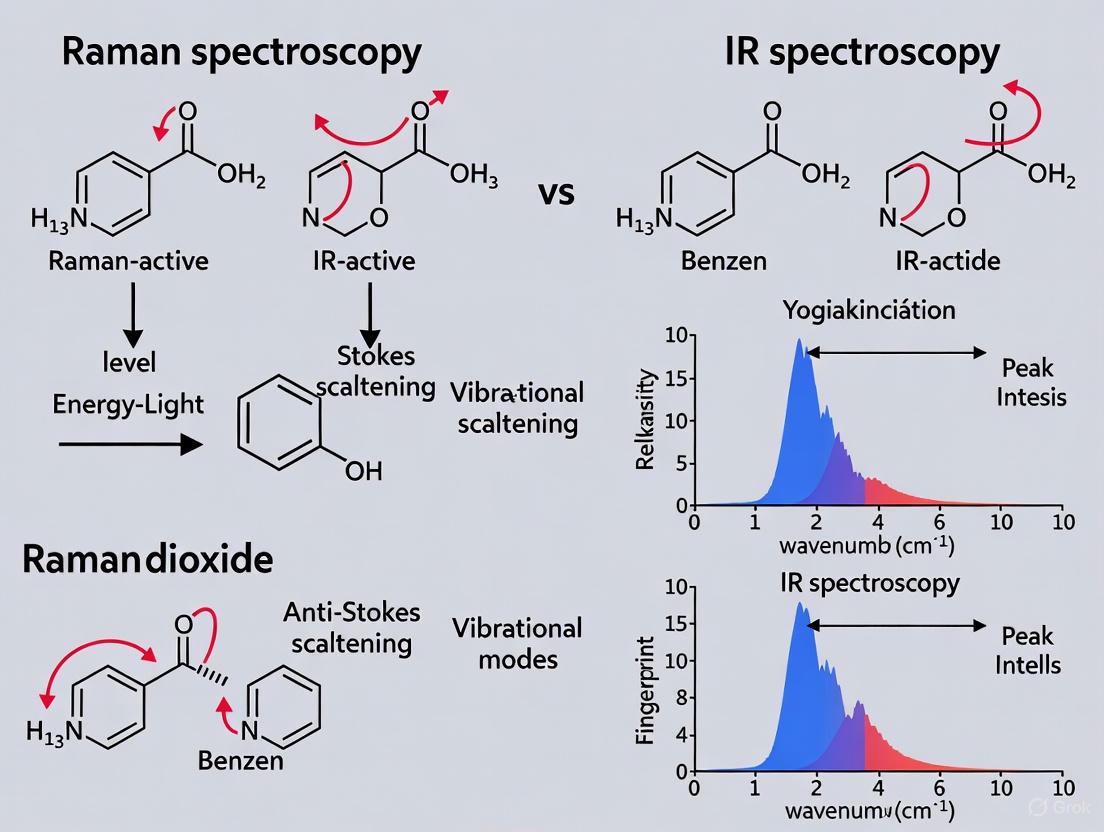
This article provides a comprehensive comparison of Raman and Infrared (IR) spectroscopy, two pivotal analytical techniques in biomedical and pharmaceutical sciences.
Raman vs IR Spectroscopy: The Ultimate Guide for Biomedical Research and Drug Development
Abstract
This article provides a comprehensive comparison of Raman and Infrared (IR) spectroscopy, two pivotal analytical techniques in biomedical and pharmaceutical sciences. Tailored for researchers and drug development professionals, it explores the fundamental principles, distinct selection rules, and complementary nature of these methods. It delves into their specific applications in cancer diagnostics, liquid biopsy analysis, protein characterization, and quality control, supported by real-world case studies. The guide also addresses practical challenges, such as fluorescence interference in Raman and water absorption in IR, and offers optimization strategies. By synthesizing validation data and emerging trends like AI integration and portable devices, this resource aims to empower scientists in selecting and implementing the optimal spectroscopic technique for their specific research and development goals.
Core Principles Unveiled: Understanding the Fundamental Mechanisms of Raman and IR Spectroscopy
Infrared (IR) and Raman spectroscopy are foundational techniques in molecular analysis that provide complementary insights into chemical structures by probing molecular vibrations through fundamentally different physical interactions with light. While IR spectroscopy relies on the absorption of infrared light by molecular bonds, Raman spectroscopy is based on the inelastic scattering of monochromatic light [1] [2]. These distinct physical mechanisms make each technique uniquely suited for different analytical scenarios while providing vibrational fingerprints crucial for identifying molecular species.
The core distinction lies in their interaction with molecular vibrations: IR spectroscopy measures molecular vibrations that cause a change in the dipole moment of a bond, making it particularly sensitive to polar functional groups. In contrast, Raman spectroscopy detects vibrations that cause a change in molecular polarizability, making it generally more sensitive to non-polar bonds and symmetric molecular vibrations [1] [2]. This complementarity means that strong IR bands often correspond to weak Raman bands and vice versa, providing chemists with a powerful dual approach for comprehensive molecular characterization.
Fundamental Physical Mechanisms
IR Spectroscopy: Quantum Transitions Through Light Absorption
IR spectroscopy operates on the principle of absorption of infrared radiation when the energy of incident photons matches the energy required to excite a molecular bond to a higher vibrational energy state. For a vibration to be IR-active, it must result in a change in the dipole moment of the molecule [1] [3]. When IR radiation passes through a sample, specific frequencies are absorbed that correspond to the natural vibrational frequencies of the chemical bonds present, with the absorption process following the quantum mechanical selection rules that govern these transitions.
The technical implementation typically involves Fourier Transform Infrared (FTIR) spectrometers, which use a Michelson interferometer to simultaneously collect spectral data across a wide wavelength range, then apply a Fourier transform to convert the interferogram into a conventional spectrum [3]. This approach provides significant advantages in signal-to-noise ratio and measurement speed compared to traditional dispersive instruments.
Raman Spectroscopy: Inelastic Scattering of Photons
Raman spectroscopy relies on the inelastic scattering of monochromatic light, typically from a laser source in the visible or near-infrared range. When photons interact with molecules, most are elastically scattered (Rayleigh scattering) at the same energy as the incident light. However, approximately 1 in 10⁷ photons undergo inelastic scattering, where energy is either lost to or gained from molecular vibrations, resulting in scattered light of different frequencies known as Raman shifts [1] [2].
The Raman effect occurs because the incident laser light temporarily excites the molecule to a "virtual" energy state, from which it can return to a different vibrational level, emitting a photon with energy different from the incident photon. Energy loss to molecular vibrations produces Stokes lines (lower energy than incident light), while energy gain from molecular vibrations produces anti-Stokes lines (higher energy) [2]. The resulting Raman spectrum represents these energy shifts relative to the excitation laser frequency, typically reported in wavenumbers (cm⁻¹).
Comparative Physical Mechanisms Diagram
The following diagram illustrates the fundamental physical processes underlying IR absorption and Raman scattering:
Experimental Comparison: Key Parameters and Performance
Direct Technique Comparison
Table 1: Fundamental comparison of IR and Raman spectroscopy techniques
| Parameter | IR Spectroscopy | Raman Spectroscopy |
|---|---|---|
| Physical Principle | Light absorption | Inelastic light scattering |
| Energy Transition | Direct vibrational energy level transition | Virtual energy state transition |
| Selection Rule | Change in dipole moment | Change in polarizability |
| Sensitivity | Polar bonds (e.g., C=O, O-H, N-H) | Non-polar bonds (e.g., C=C, S-S, C≡C) |
| Water Compatibility | Strong water interference | Minimal water interference |
| Spatial Resolution | Diffraction-limited (several to ~15 μm) | Submicron possible |
| Sample Preparation | Often requires specific cells (ATR) or thin samples | Minimal preparation; works in reflection mode |
| Key Limitations | Strong water absorbance, spectral artifacts in reflection | Fluorescence interference, weak signal |
Experimental Protocols and Methodologies
Long-Term Stability Assessment Protocol for Raman Systems
A comprehensive investigation into Raman device stability involved weekly measurements of 13 stable reference substances over ten months to characterize instrumental variations over time [4]. The experimental protocol included:
- Reference Materials: Four standard references (cyclohexane, paracetamol, polystyrene, silicon), four solvents (DMSO, benzonitrile, isopropanol, ethanol), three carbohydrates (fructose, glucose, sucrose), and two lipids (squalene, squalane) selected for stability and coverage of spectral features relevant to biological samples [4].
- Measurement Parameters: Approximately 50 Raman spectra per substance were acquired weekly using a high-throughput screening Raman system (HTS-RS) equipped with a 785 nm excitation laser at 400 mW output power with 1-second integration time [4].
- Data Analysis Pipeline: Stability was benchmarked through intensity variations, correlation coefficients, clustering, and classification accuracy. Computational methods including variational autoencoders (VAE) and extensive multiplicative scattering correction (EMSC) were employed to estimate and suppress spectral variations [4].
High-Throughput Raman Screening Protocol
Recent advances in automated Raman systems have enabled high-throughput screening essential for bioprocess development and pharmaceutical applications:
- System Configuration: An integrated system simultaneously handles eight parallel samples delivered by a pipetting robot, completing measurement, handling, cleaning, and concentration prediction within 45 seconds per sample [5].
- Sample Handling: Chemically inert PTFE sampling interface with 8 wells holding 125 μL volumes, connected through a 12-to-1 bidirectional valve multiplexer to a flow-through cuvette for spectral measurement [5].
- Spectral Acquisition: Metrohm i-Raman Plus 785 Spectrometer with 785 nm excitation wavelength, 455 mW laser power, measuring spectra from 65 cm⁻¹ to 3350 cm⁻¹ with 2048 dimensions [5].
- Machine Learning Integration: Convolutional Neural Networks (CNN) predict metabolite concentrations from Raman spectra, achieving mean absolute errors of 0.27 g L⁻¹ for glucose and 0.06 g L⁻¹ for acetate during Escherichia coli cultivations [5].
Quantitative Performance Data
Table 2: Experimental performance metrics for IR and Raman spectroscopy
| Performance Metric | IR Spectroscopy | Raman Spectroscopy |
|---|---|---|
| Spectral Acquisition Time | Seconds to minutes | 1 second to 5 minutes per spectrum [4] [5] |
| Detection Sensitivity | High for polar functional groups | Weaker signal, enhanced by SERS |
| Spatial Resolution | 3-15 μm [1] | Submicron possible [1] |
| Accuracy in Structure Elucidation | 63.79% Top-1 accuracy with AI [6] | Varies by application |
| Water Interference | Strong absorption | Minimal interference [7] |
| Fluorescence Interference | Not typically affected | Significant challenge [1] |
Advanced Applications and Research Frontiers
Pharmaceutical Applications
Vibrational spectroscopy serves critical roles in pharmaceutical development and quality control:
- Drug Polymorph Identification: Both techniques detect crystalline forms and hydrates critical for drug stability and bioavailability [3].
- Formulation Analysis: FTIR-ATR spectroscopy enables quantification of active ingredients in semi-solid formulations and tablets without extensive sample preparation [3].
- Drug Release Monitoring: FTIR-ATR techniques non-invasively monitor drug release kinetics from topical formulations and penetration enhancement effects [3].
AI-Enhanced Spectral Analysis
Recent breakthroughs in artificial intelligence have dramatically advanced spectroscopic capabilities:
- Structure Elucidation from IR: Transformer models now achieve 63.79% Top-1 and 83.95% Top-10 accuracy in predicting molecular structures directly from IR spectra by combining chemical formulas with spectral data [6].
- Spectral Interpretation: Machine learning models extract substantially more information from the complex fingerprint region (400-1500 cm⁻¹) of IR spectra than traditional manual interpretation [8].
- High-Throughput Analysis: Integration of PCA with machine learning classifiers enables rapid automated identification of complex mixtures in Raman and SERS spectra [9].
Experimental Workflow for Automated Analysis
The following diagram illustrates a modern high-throughput spectroscopy workflow incorporating automation and machine learning:
The Scientist's Toolkit: Essential Research Solutions
Reference Materials and Calibration Standards
Table 3: Essential research reagents and materials for vibrational spectroscopy
| Reagent/Material | Function | Application Examples |
|---|---|---|
| Cyclohexane | Wavenumber calibration standard | Raman spectrometer calibration [4] |
| Polystyrene | Intensity and wavenumber reference | Validation of spectral accuracy [4] |
| Paracetamol | Solid reference material | Monitoring focusing stability [4] |
| Silicon Wafer | Intensity calibration | Exposure time calibration via 520 cm⁻¹ band [4] |
| Gold Nanoparticles (GNPs) | Surface-enhanced Raman scattering | Signal amplification for trace detection [9] |
| ATR Crystals (Diamond/Ge) | Internal reflection element | FTIR-ATR measurements [3] |
| Deuterated Solvents | IR-transparent solvents | FTIR sample preparation without interference |
Emerging Technology Solutions
- O-PTIR (Optical Photothermal IR): Breakthrough technology enabling simultaneous submicron IR and Raman spectroscopy, overcoming traditional IR diffraction limits by detecting photothermal effects with a visible probe beam [1].
- Handheld Spectrometers: Portable devices enabling in-situ analysis for applications ranging from artwork authentication to hazardous material identification [2].
- Multi-modal Systems: Integrated platforms combining complementary techniques such as IR+Raman+Fluorescence for comprehensive sample characterization [1].
The physics of light interaction—whether through scattering or absorption—defines the distinctive capabilities and applications of Raman and IR spectroscopy. While their fundamental mechanisms differ, these techniques provide complementary molecular information that makes them invaluable tools for scientific research and industrial applications. Recent advancements in automation, artificial intelligence, and integrated systems have significantly enhanced their power and accessibility, enabling more sophisticated analyses and broader implementation across diverse fields from pharmaceutical development to environmental monitoring. The continued evolution of both technologies promises even greater capabilities for molecular characterization and structure elucidation in the coming years.
Vibrational spectroscopy is a cornerstone of molecular analysis in scientific research and drug development. While both Raman and Infrared (IR) spectroscopy probe molecular vibrations to provide a structural fingerprint, they are governed by fundamentally different selection rules. This guide provides an objective comparison of these techniques, explaining the core physics behind their selection rules and the practical implications for their application.
The Core Physics: Understanding the Fundamental Selection Rules
The selection rule—the physical principle that determines whether a specific molecular vibration can be observed—is the most significant difference between Raman and IR spectroscopy.
- IR Spectroscopy requires a change in the dipole moment of the molecule during the vibration [10] [11]. A dipole moment exists due to the separation of positive and negative charges within a molecule. For a vibration to be IR-active, the asymmetric stretching or bending of bonds must alter this charge separation, allowing the molecule to absorb infrared radiation directly [10] [12].
- Raman Spectroscopy depends on a change in polarizability [10] [13]. Polarizability refers to the ease with which an external electric field (like that from a laser) can distort the electron cloud of a molecule [10] [14]. For a vibration to be Raman-active, the molecular motion must change how easily the electron cloud can be deformed [13] [14].
This distinction means the two techniques often provide complementary information. A vibration that does not cause a change in dipole moment (and is thus IR-inactive) may still cause a significant change in polarizability, making it Raman-active, and vice-versa [13].
Visualizing the Mechanisms
The diagram below illustrates the different energy transitions and physical interactions that underpin IR absorption and Raman scattering.
Experimental Evidence and Comparative Data
The theoretical principles of selection rules are clearly demonstrated in experimental data. The symmetric stretch of carbon dioxide (CO₂) is a classic example that shows the complementary nature of these techniques.
Case Study: Carbon Dioxide (CO₂) Vibrations
| Vibration Mode | IR Active | Raman Active | Physical Reason |
|---|---|---|---|
| Symmetric Stretch | No [10] [14] | Yes [10] [14] | No net change in dipole moment; large change in molecular polarizability [14]. |
| Asymmetric Stretch | Yes [10] [14] | No [10] [14] | Net change in dipole moment; changes in bond polarizability cancel out [14]. |
| Bending | Yes [10] | No [14] | Change in dipole moment; no change in bond length, hence no polarizability change [14]. |
Characteristic Spectral Bands in Drug Development
The following table summarizes how different functional groups, critical in pharmaceutical compounds, respond to each technique based on their bond polarity and polarizability.
| Functional Group/Bond | IR Sensitivity | Raman Sensitivity | Key Application in Drug Development |
|---|---|---|---|
| O-H, N-H | Strong [10] [15] | Weak | Tracking hydration state, amine salt formation [11] [15]. |
| C=O | Strong [10] [15] | Weak | Monitoring ester hydrolysis, ketone reactivity [11]. |
| C-C, C=C | Weak | Strong [15] [12] | Characterizing carbon skeleton, polymorphism, crystallinity [16]. |
| S-S | Weak | Strong | Confirming disulfide bridge formation in biologics [12]. |
Detailed Experimental Protocols for Material Analysis
To ensure reproducible and high-quality data, the following protocols outline standard procedures for acquiring and analyzing Raman and IR spectra.
Protocol 1: Fourier-Transform Infrared (FTIR) Spectroscopy
Principle: Measure the frequencies of IR light absorbed by the sample as bonds vibrate [15].
- Sample Preparation:
- Solid Powders: Grind 1-2 mg of sample with ~100 mg of dry potassium bromide (KBr). Hydraulic press is used to form a transparent pellet for transmission analysis [11].
- Aqueous Solutions: Use an Attenuated Total Reflectance (ATR) accessory with a diamond crystal. Ensure the sample is in firm contact with the crystal. Path length is minimized to <10 µm to mitigate strong water absorption [11].
- Thin Films: Analyze directly via ATR-FTIR [11].
- Data Acquisition: Acquire spectrum over 4000-400 cm⁻¹ range. A background spectrum (ambient air or clean ATR crystal) is collected and automatically subtracted from the sample spectrum [11].
- Data Analysis: Identify functional groups by correlating absorption band positions (e.g., Amide I band ~1650 cm⁻¹ for proteins) with known group frequencies [11].
Protocol 2: Raman Spectroscopy
Principle: Measure the energy shift of monochromatic laser light inelastically scattered by the sample [13] [15].
- Sample Preparation:
- Minimal preparation is typically required [12]. Solids, liquids, and powders can often be analyzed directly.
- Aqueous solutions are ideal for Raman as water is a weak scatterer. Samples can be analyzed in glass vials or directly in a well plate [10].
- Note: Colored samples may absorb laser energy and cause thermal degradation; test with lower laser power or different wavelengths (e.g., NIR 785 nm laser) to mitigate fluorescence [10] [13].
- Data Acquisition: Irradiate the sample with a focused laser beam. Collect the scattered light and pass it through a notch filter to remove the intense Rayleigh line. The remaining Raman-shifted light is dispersed onto a CCD detector [13].
- Data Analysis: Peaks in the Raman spectrum are reported as Raman shift (cm⁻¹) from the laser line. Band positions and relative intensities provide information on molecular structure and polymorphism [13] [14].
Visualizing the Complementary Workflow
The logical workflow for selecting the appropriate technique based on sample properties and information goals is outlined below.
The Scientist's Toolkit: Essential Research Reagents and Materials
Successful vibrational spectroscopy requires specific instrumentation and consumables. The following table details key items and their functions in the experimental workflow.
| Item | Function in Experiment |
|---|---|
| FTIR Spectrometer with ATR | Enables analysis of aqueous samples and solids with minimal preparation by measuring the interaction of an evanescent wave with the sample [11]. |
| Raman Spectrometer (785 nm laser) | Standard for biological and pharmaceutical samples to minimize fluorescence interference while providing sufficient Raman scattering intensity [10] [13]. |
| Potassium Bromide (KBr) | Infrared-transparent matrix used to prepare solid samples for transmission FTIR analysis [11]. |
| Notch/Edge Filters | Critical optical components in Raman spectrometers that filter out the intense elastically scattered Rayleigh light, allowing the weak Raman signal to be detected [13]. |
Performance Comparison: Advantages and Limitations in Practice
The fundamental differences in selection rules translate directly into distinct practical advantages and limitations, guiding researchers on which technique to apply for specific challenges.
| Parameter | IR Spectroscopy | Raman Spectroscopy |
|---|---|---|
| Sensitivity to Water | High absorption interferes with measurements [10] [11]. | Weak scattering allows direct analysis of aqueous solutions [10] [11]. |
| Fluorescence Interference | Not an issue, as IR radiation does not induce electronic excitation [10]. | A significant problem; fluorescence can be orders of magnitude stronger than the Raman signal, obscuring it [10] [12]. |
| Sensitivity to Functional Groups | Excellent for polar bonds (O-H, N-H, C=O) [10] [15]. | Excellent for non-polar, covalent bonds (C-C, C=C, S-S) [15] [12]. |
| Sample Preparation | Can require careful preparation (e.g., KBr pellets, controlled path lengths) [11] [12]. | Typically minimal; can often analyze samples directly through glass packaging [12]. |
| General Sensitivity | Generally more sensitive for low-concentration analytes in many configurations [10]. | Can suffer from inherently weak signal, though techniques like SERS provide massive enhancement [13]. |
For researchers in drug development, the choice is often not between one technique or the other, but how to use them together. Their complementary nature, rooted in their distinct selection rules, provides a more complete picture of a sample's molecular structure, conformation, and environment [10] [15].
In the realm of molecular analysis, infrared (IR) and Raman spectroscopy stand as cornerstone analytical techniques for determining molecular structures and dynamics. Both methods probe the vibrational modes of molecules, providing unique yet complementary insights that serve as a "fingerprint" for chemical identification [1] [2]. For researchers and drug development professionals, understanding how to interpret the characteristic peaks and complex fingerprint regions from these techniques is fundamental to applications ranging from drug characterization and quality control to the analysis of biomarkers and advanced materials. This guide provides a detailed comparison of these two powerful spectroscopic methods, offering a structured framework for decoding the rich information contained within their spectral outputs.
While both techniques yield information on molecular vibrations, they arise from fundamentally different physical processes. IR spectroscopy measures the absorption of infrared light when a vibration causes a change in the dipole moment of a chemical bond [1]. In contrast, Raman spectroscopy relies on the inelastic scattering of light resulting from vibrations that cause a change in molecular polarizability [1] [13]. This fundamental difference in mechanism is the source of their complementarity; IR is generally more sensitive to polar functional groups, while Raman is often more sensitive to non-polar bonds and symmetric molecular vibrations [2].
Fundamental Principles and a Direct Comparison
The following diagram illustrates the complementary relationship and the fundamental physical principles underlying IR and Raman spectroscopy.
The core distinction lies in their underlying mechanisms, which directly informs their application strengths and weaknesses. The table below summarizes the key operational differences.
Table 1: Fundamental operational differences between IR and Raman spectroscopy
| Feature | IR Spectroscopy | Raman Spectroscopy |
|---|---|---|
| Underlying Process | Absorption of IR light [1] | Inelastic scattering of monochromatic light [1] [2] |
| Selection Rule | Requires a change in dipole moment [1] [17] | Requires a change in polarizability [1] [13] |
| Sensitivity | Strong for polar bonds (e.g., C-O, O-H, N-H) [1] [17] | Strong for non-polar/covalent bonds (e.g., C-C, C=C, S-S) [1] [13] |
| Spatial Resolution | Diffraction-limited (~several to 15 µm) [1] | Can achieve submicron resolution [1] |
| Aqueous Samples | Challenging due to strong water absorption [1] | Well-suited due to weak water scattering [18] [7] |
| Main Interference | Water vapor, sample thickness [2] | Fluorescence from impurities or sample itself [1] [19] |
Characteristic Peak Identification and the Fingerprint Region
A critical skill in spectral interpretation is recognizing the characteristic peaks of common functional groups. These peaks typically appear in the group frequency region (approximately 1500–3500 cm⁻¹) and provide immediate clues about the molecular structure [20]. The table below catalogues the signature absorptions for key bonds.
Table 2: Characteristic vibrational frequencies for common functional groups in IR and Raman spectroscopy
| Functional Group/Bond | Vibration Mode | IR Absorption (cm⁻¹) | Raman Shift (cm⁻¹) | Notes |
|---|---|---|---|---|
| O-H (Alcohol) | Stretch | 3230–3550 (broad, strong) [20] | Broad due to hydrogen bonding [20] | |
| O-H (Carboxylic Acid) | Stretch | 2500–3300 (very broad, strong) [20] | Very broad, often overlaps C-H [20] | |
| N-H | Stretch | 3300–3500 [17] | Primary amines show two bands [20] | |
| C-H (Alkane) | Stretch | 2850–3000 [21] [17] | [20] | |
| C≡N | Stretch | 2240–2260 (medium) [20] [17] | ~2250 [18] | Sharp peak [20] [18] |
| C≡C | Stretch | 2100–2260 (weak) [20] | [20] | |
| C=O | Stretch | 1630–1815 (strong) [20] | 1680–1820 [18] | Very strong, position varies by compound type [21] [20] |
| C=C (Alkene) | Stretch | 1620–1680 [20] | [20] | |
| C=C (Aromatic) | Stretch | 1550–1700 (medium) [20] | [20] | |
| C-N | Stretch | 1029–1250 [20] | [20] |
The region below 1500 cm⁻¹ is known as the fingerprint region and is critical for molecular identification [21] [20]. This spectral area contains a complex set of peaks arising from skeletal vibrations and single-bond stretches (C-C, C-O, C-N), as well as bending vibrations [21]. The pattern in this region is unique to every molecule, much like a human fingerprint, allowing for definitive identification by comparison to reference spectra [21]. In Raman spectroscopy, a specific sub-region from 1550–1900 cm⁻¹ has been identified as particularly valuable for identifying active pharmaceutical ingredients (APIs), as many common excipients show no Raman signals in this range, while APIs exhibit unique vibrations from functional groups like C=N, C=O, and N=N [18].
Experimental Protocols and Data Interpretation
Protocol for Differentiating APIs from Excipients Using Raman Spectroscopy
The following workflow outlines a specific experimental approach, derived from published research, for leveraging the "fingerprint in the fingerprint" region to identify an Active Pharmaceutical Ingredient (API) in a solid dosage form [18].
Protocol for Functional Group Analysis using IR Spectroscopy
A systematic approach is required for accurate interpretation of IR spectra to identify unknown compounds [20].
- Sample Preparation: For liquids, a thin film can be sandwiched between two polished salt plates (e.g., NaCl). Solids may be ground to a paste with mineral oil (a Nujol mull) or pressed into a transparent disk with KBr [17].
- Spectral Acquisition: Collect the background spectrum and then the sample spectrum over the standard range of 4000–500 cm⁻¹.
- Data Interpretation Strategy:
- Analyze the Group Frequency Region First (3500–1500 cm⁻¹): Systematically check for the presence of key functional groups like O-H, N-H, C-H, and C=O by looking for characteristic peaks in their expected regions [21] [20].
- Consult Reference Tables: Use a table of characteristic frequencies to assign the observed absorptions [21].
- Examine the Fingerprint Region (1500–500 cm⁻¹): Use this region to confirm structural elements or identify a specific compound by comparing its unique pattern to a reference spectrum [21] [20].
- Cross-Check Evidence: Corroborate findings by ensuring the presence of all expected peaks for a suspected functional group and noting the absence of peaks that would rule it out [20].
Essential Research Reagent Solutions
The following table details key materials and reagents commonly required for vibrational spectroscopy experiments in a research and development setting.
Table 3: Essential research reagents and materials for IR and Raman spectroscopy
| Reagent/Material | Function/Application | Experimental Notes |
|---|---|---|
| Polished Salt Plates (NaCl, KBr) | Windows for liquid and mull sample analysis in IR transmission mode [17]. | Hygroscopic; must be cleaned with dry solvent and stored in a desiccator [17]. |
| Potassium Bromide (KBr) | Matrix for creating solid sample disks under high pressure for IR transmission measurements [17]. | Must be of spectroscopic grade and scrupulously dry to avoid spectral interference from water. |
| ATR Crystals (Diamond, Ge) | Enable direct, non-destructive surface analysis of solids and liquids in Attenuated Total Reflectance (ATR) IR mode [1]. | Diamond is robust but expensive; Germanium (Ge) offers high sensitivity for low-penetration depth studies [1]. |
| Nujol (Mineral Oil) | A purified hydrocarbon oil used to prepare mulls of solid powder samples for IR analysis [17]. | Its own C-H absorptions will appear in the spectrum and must be accounted for. |
| Deuterated Solvents (CDCl₃, D₂O) | IR-transparent solvents for analyzing samples in solution, avoiding interference from C-H or O-H stretches of protons [17]. | Essential for analyzing solution-phase structure and kinetics. |
| Reference Excipient Library | A collection of spectra from common inactive ingredients (e.g., lactose, magnesium stearate) [18]. | Vital for differentiating API signals from excipient backgrounds in pharmaceutical analysis [18]. |
The choice between IR and Raman spectroscopy is not a matter of one being universally superior to the other, but rather which is best suited to the specific analytical question and sample properties.
- Choose IR spectroscopy when your analysis requires high sensitivity to polar functional groups (like C=O, O-H, N-H), when sample fluorescence is a concern, or when cost-effectiveness is a primary consideration [1] [2]. It is the established workhorse for routine qualitative analysis of organic compounds.
- Choose Raman spectroscopy when you need to analyze aqueous solutions directly, require high spatial resolution (down to the submicron level), or are investigating symmetric molecular vibrations and non-polar bonds (like C-C, C=C, S-S) that are weak in IR [1] [2] [7]. It is also ideal for samples that require minimal preparation and when analyzing through transparent packaging [18].
Ultimately, IR and Raman spectroscopy are powerfully complementary. The convergence of these techniques, as seen in emerging technologies like Optical Photothermal Infrared (O-PTIR), which allows for simultaneous IR and Raman data collection from the same submicron spot, represents the future of vibrational analysis, offering researchers a more comprehensive and unambiguous chemical profile of their samples [1].
In the analytical toolkit of researchers and drug development professionals, infrared (IR) and Raman spectroscopy stand as two pivotal vibrational spectroscopy techniques. While each can be used independently, their true power is unlocked when used together, governed by a fundamental tenet known as the complementarity principle. This principle states that the vibrational modes active in IR spectroscopy are those accompanied by a change in the molecule's dipole moment, whereas those active in Raman spectroscopy involve a change in polarizability during vibration [2] [22]. Often, vibrational modes that are weak or silent in one technique are strong in the other. Consequently, employing both methods provides a more complete vibrational fingerprint of a sample, enabling a fuller characterization of molecular structures and dynamics that is greater than the sum of its parts. This guide objectively compares the performance of these two techniques, supported by experimental data and protocols relevant to scientific and industrial applications.
Fundamental Principles and a Direct Comparison
At their core, both IR and Raman spectroscopy probe the vibrational states of molecules, but they do so through different physical mechanisms.
- IR Spectroscopy is an absorption technique. It measures how much infrared light is absorbed by a molecule when the light's energy causes a change in the dipole moment of a chemical bond, exciting it to a higher vibrational energy level [2] [22].
- Raman Spectroscopy is a scattering technique. It relies on the inelastic scattering of monochromatic light (usually from a laser). When the scattered light loses or gains energy corresponding to a molecular vibration, it provides a Raman spectrum. This requires a change in the polarizability, or the deformation of the electron cloud, of a molecule during vibration [2] [22].
The selection rules lead to their complementary nature. Antisymmetric vibrations and bonds with strong permanent dipole moments (e.g., O-H, C=O, N-H) typically yield strong IR signals. In contrast, symmetric vibrations and bonds in homo-nuclear molecules (e.g., C=C, C≡C, S-S) that are associated with a large change in polarizability are strong in Raman [2]. This is why using both techniques is essential for a comprehensive analysis.
Table 1: Fundamental Comparison of IR and Raman Spectroscopy.
| Feature | IR Spectroscopy | Raman Spectroscopy |
|---|---|---|
| Underlying Principle | Absorption of IR light | Inelastic scattering of monochromatic light |
| Physical Requirement | Change in dipole moment | Change in polarizability |
| Spectral Range | Mid-infrared (e.g., 400-4000 cm⁻¹) | Typically 400-4000 cm⁻¹ (Stokes shift) |
| Key Strength | Sensitive to polar functional groups | Sensitive to homo-nuclear covalent bonds |
| Water Compatibility | Poor (strong absorber) | Good (weak scatterer) |
| Sample Preparation | Can require specific cells or pellets | Minimal; can analyze through glass/plastic |
Performance and Applicative Comparison
The theoretical differences translate into distinct practical advantages and limitations, which determine the suitability of each technique for specific applications, particularly in pharmaceuticals and material science.
Comparative Advantages and Limitations
A key practical advantage of Raman spectroscopy is its minimal interference from water, allowing for the direct analysis of aqueous solutions and biological samples [7] [22]. It also offers flexibility for remote sensing using fiber optics and can analyze samples through glass or plastic containers. However, Raman is generally a less sensitive technique than IR, and its signal can be overwhelmed by fluorescence from the sample or impurities [2] [19]. Furthermore, the high-powered lasers used can, in some cases, cause thermal degradation of the sample [22].
IR spectroscopy, while highly sensitive and often more cost-effective [22], is notoriously susceptible to interference from water vapor and requires careful sample handling to control thickness. It is less suited for analyzing aqueous solutions directly and typically offers a lower spatial resolution compared to Raman when coupled with microscopy [19].
Quantitative Performance in Pharmaceutical Analysis
Direct comparisons in scientific studies highlight their performance nuances. One study compared Near-Infrared (NIR) and Raman imaging for predicting the drug release rate from sustained-release tablets. The study found that while both techniques could accurately predict dissolution profiles, Raman imaging provided clearer boundaries of particles and was better for components with low concentrations. In contrast, NIR instrumentation allowed for faster measurements, making it a stronger candidate for real-time process monitoring [19].
Another study evaluating the accuracy of concentration determination in powdered mixtures under different packing densities found that Raman schemes with wide-area illumination (WAI) were less sensitive to variations in packing density compared to NIR spectroscopy. This makes WAI-Raman more robust for analyzing samples with inconsistent physical properties [23].
Table 2: Experimental Performance Comparison in Key Application Areas.
| Application Area | IR Performance & Notes | Raman Performance & Notes |
|---|---|---|
| Aqueous Solutions | Poor; strong water absorption obscures solute signal [22]. | Excellent; water is a weak scatterer, allowing solute analysis [7]. |
| Pharmaceutical Powder Blends | NIR is fast but sensitive to packing density; broader spectral bands [23]. | High specificity; less sensitive to packing density with WAI; sharper bands [19] [23]. |
| Polymer & Material Analysis | Effective for identifying polar functional groups. | Superior for characterizing carbon backbones (e.g., C-C, C=C) [2]. |
| Sensitivity | Generally high sensitivity [22]. | Inherently weak signal; often requires enhancement (e.g., SERS) [22]. |
Experimental Protocols and Data Interpretation
To illustrate the practical application of the complementarity principle, consider an experiment aimed at characterizing an unknown compound in a drug development setting.
Sample Analysis Workflow
The following diagram outlines a generalized experimental workflow that leverages both techniques.
Detailed Methodologies
The protocols below are adapted from recent research to provide concrete, actionable methodologies.
Protocol 1: Determination of Chlorogenic Acid in a Protein Matrix [24]
- Objective: To rapidly and non-destructively monitor the content of chlorogenic acid (CGA) in sunflower meal, a protein-rich by-product.
- Sample Preparation: For Raman analysis, CGA standard was mixed with Bovine Serum Albumin (BSA) or defatted sunflower meal (SFM) to create model samples with concentrations ranging from 1% to 10% w/w. The mixtures were compacted into tablets using a hydraulic press. For IR analysis, 2 mg of sample was mixed with 148 mg of KBr and pressed into a pellet.
- Instrumentation & Data Acquisition:
- Raman: Spectra were acquired using a confocal Raman microscope (Horiba LabRAM HR Evolution) with a 532 nm laser. Mapping was performed on a 10x10 grid with a 555 µm step size, 10s accumulation time, and 2 accumulations.
- IR (FTIR): Spectra were recorded in transmission mode using a Perkin Elmer Spectrum 3 FTIR spectrometer in the range of 4,000–400 cm⁻¹.
- Results & Complementarity: The study successfully developed calibration models for both techniques. IR spectroscopy demonstrated a lower limit of detection (LOD) for CGA at 0.75 wt%, whereas Raman spectroscopy had an LOD of 1 wt%. This highlights IR's superior sensitivity for this specific quantitative application, while Raman provided a viable, non-destructive alternative.
Protocol 2: Chemical Imaging and Dissolution Profile Prediction of Tablets [19]
- Objective: To compare NIR and Raman chemical imaging for predicting the dissolution profile of sustained-release tablets based on the concentration and particle size of hydroxypropyl methylcellulose (HPMC).
- Sample Preparation: Tablets were manufactured with varying concentrations and particle sizes of HPMC.
- Instrumentation & Data Acquisition:
- Raman & NIR Imaging: Hyperspectral images (chemical maps) of the tablet surfaces were collected using both techniques.
- Data Processing: The chemical images were processed using Classical Least Squares (CLS) to determine the average HPMC concentration. A Convolutional Neural Network (CNN) was then applied to the same images to extract information on the particle size of HPMC.
- Results & Complementarity: Both imaging techniques provided accurate predictions of the tablet's dissolution profile. Raman imaging yielded a slightly higher average similarity factor (f2 = 62.7) compared to NIR imaging (f2 = 57.8). However, the study concluded that NIR imaging's significantly faster measurement speed made it more suitable for real-time, in-line quality control, whereas Raman provided superior spectral resolution for R&D characterization.
The Scientist's Toolkit: Essential Research Reagents and Instruments
A practical comparison guide must account for the essential tools required for experimentation.
Table 3: Key Reagents and Instruments for IR and Raman Spectroscopy.
| Item / Solution | Function / Role in Analysis |
|---|---|
| FTIR Spectrometer | Core instrument for IR analysis; measures absorption of IR radiation by the sample [24]. |
| Raman Spectrometer/Microscope | Core instrument for Raman analysis; measures inelastically scattered light from a laser source [24]. |
| Potassium Bromide (KBr) | Used for preparing transparent pellets for transmission-mode FTIR analysis [24]. |
| Hydraulic Press | Used to compress powdered samples with KBr (for IR) or alone (for Raman mapping) into solid pellets for stable analysis [24]. |
| Bovine Serum Albumin (BSA) | A standard protein used to create model protein matrices for method development, e.g., analyzing drug-protein interactions [24]. |
| ChEMBL Database | A public repository of bioactive molecules with drug-like properties, used as a source for molecular structures for computational spectroscopy [16]. |
| Gaussian 09 Software | A quantum chemistry program used for computational calculation of theoretical IR and Raman spectra (e.g., at PBEPBE/6-31G level of theory) [16]. |
The Modern Frontier: Integration with Machine Learning
The combination of vibrational spectroscopy with artificial intelligence (AI) and machine learning (ML) represents a significant leap forward. Deep learning algorithms, such as Convolutional Neural Networks (CNNs) and Transformers, are revolutionizing Raman spectral analysis by automatically identifying complex patterns in noisy data, reducing the need for manual feature extraction and preprocessing [25] [26].
In pharmaceutical analysis, AI-powered Raman spectroscopy is advancing drug development, impurity detection, and clinical diagnostics. These models can predict dissolution profiles of tablets from chemical images [19] and are being used for early disease detection by identifying biomarkers [25]. A key challenge remains the "black box" nature of some complex models, driving research into interpretable AI methods, such as attention mechanisms, to enhance transparency for regulatory and clinical use [25]. Similar ML approaches are being applied to IR spectroscopy to enhance spectral interpretation and accelerate data analysis workflows [2].
IR and Raman spectroscopy are not competing technologies but are inherently complementary partners in molecular analysis. IR excels at detecting polar functional groups, while Raman is superior for probing symmetric vibrations and covalent molecular backbones. As demonstrated, the choice between them—or the decision to use both—depends on the sample properties, the specific information required, and practical constraints like cost, speed, and the need for aqueous analysis. The ongoing integration of these techniques with machine learning and computational chemistry is further amplifying their power, enabling smarter, faster, and more informative analyses that are indispensable for modern scientific research and drug development.
Techniques in Action: Methodologies and Cutting-Edge Applications in Biomedicine and Pharma
Raman spectroscopy has emerged as a powerful analytical technique in biomedical research, particularly for cancer diagnostics and liquid biopsy analysis. This label-free, non-destructive method provides detailed molecular fingerprint information from biological samples by measuring inelastic scattering of monochromatic light. Unlike traditional diagnostic methods that often require extensive sample preparation and staining, Raman spectroscopy enables direct analysis of cells, tissues, and biofluids while preserving sample integrity. The technique's exceptional molecular specificity allows researchers to detect subtle biochemical changes associated with carcinogenesis, often before morphological alterations become apparent. Furthermore, the minimal interference from water molecules makes Raman spectroscopy particularly suitable for analyzing biological specimens and aqueous solutions [7] [2].
The clinical application of Raman spectroscopy has gained significant momentum with technological advancements in instrumentation, data processing, and artificial intelligence. Modern Raman systems have evolved from bulky laboratory instruments to compact, portable devices suitable for clinical settings and even intraoperative use. These developments, coupled with enhanced computational power for spectral analysis, have positioned Raman spectroscopy as a transformative tool in oncology. Current research explores its utility across the cancer care continuum – from early detection and diagnosis to surgical guidance and treatment monitoring [27] [28]. The technique's ability to provide real-time, objective diagnostic information addresses critical limitations of conventional histopathological methods, which are often time-consuming, subjective, and limited to single-timepoint assessments.
Fundamental Principles: Raman versus IR Spectroscopy
Infrared (IR) and Raman spectroscopy are complementary vibrational spectroscopy techniques that provide molecular structural information through different physical mechanisms. Fourier-Transform Infrared (FTIR) spectroscopy operates based on light absorption. When IR radiation interacts with a molecule, energy is absorbed when the frequency matches the vibrational frequency of chemical bonds, but only if the vibration causes a change in the dipole moment of the molecule. This makes FTIR particularly sensitive to polar functional groups such as O-H, N-H, and C=O, which are abundant in biological systems. The resulting spectrum represents these absorption patterns, providing a molecular fingerprint of the sample [1] [29].
In contrast, Raman spectroscopy relies on inelastic scattering of monochromatic light. When photons interact with molecules, most are elastically scattered (Rayleigh scattering), but approximately one in 10^6-10^8 photons undergoes inelastic scattering, resulting in energy shifts corresponding to molecular vibrational energies. This Raman effect occurs when molecular vibrations cause a change in polarizability rather than dipole moment. Consequently, Raman spectroscopy is particularly sensitive to symmetric molecular vibrations and non-polar bonds, such as C-C, C=C, and S-S, which are abundant in biological macromolecules including proteins, lipids, and nucleic acids. The resulting spectrum displays these energy shifts as peaks representing specific molecular vibrations [27] [2].
Table 1: Fundamental Differences Between Raman and IR Spectroscopy
| Characteristic | Raman Spectroscopy | FTIR Spectroscopy |
|---|---|---|
| Physical Principle | Inelastic light scattering | Light absorption |
| Molecular Requirement | Change in polarizability | Change in dipole moment |
| Spectral Resolution | High (sharp peaks) | Moderate (broader peaks) |
| Water Compatibility | Excellent (weak scatterer) | Poor (strong absorber) |
| Spatial Resolution | High (submicron with microscopes) | Lower (diffraction-limited, several microns) |
| Sample Preparation | Minimal (works through glass/plastic) | Often requires specific substrates or ATR crystal contact |
| Key Strengths | Symmetric bonds, aqueous samples, fingerprint region | Polar functional groups, high sensitivity |
The complementary nature of these techniques arises from their different selection rules. Molecular vibrations that are strong in IR may be weak in Raman, and vice versa. For instance, the symmetric stretching vibration of homonuclear diatomic molecules (e.g., O₂, N₂) is Raman-active but IR-inactive, while the asymmetric stretching of heteronuclear bonds (e.g., C=O, O-H) is typically strong in IR but weak in Raman. This complementarity provides a more comprehensive molecular understanding when both techniques are employed [1] [29] [2].
Recent technological innovations have enabled simultaneous IR and Raman measurement through Optical Photothermal Infrared (O-PTIR) spectroscopy. This technique overcomes the diffraction limit of traditional IR systems by detecting photothermal effects induced by IR absorption using a visible probe beam. O-PTIR provides submicron spatial resolution for IR measurements and allows simultaneous collection of IR and Raman spectra from the exact same sample location, eliminating registration uncertainties and providing truly correlative molecular information [1].
Experimental Approaches and Methodologies
Raman Spectroscopy Modalities for Biomedical Analysis
Several advanced Raman techniques have been developed to address specific challenges in biomedical analysis:
Confocal Raman Microscopy enhances spatial resolution by incorporating a pinhole aperture to eliminate out-of-focus light, enabling high-resolution depth sectioning of samples. This approach is particularly valuable for analyzing stratified tissues or creating three-dimensional chemical maps of cells and tissue sections. The high spatial resolution (approximately 2 μm) comes at the cost of increased acquisition time, especially at greater focal depths. Confocal Raman probes are commonly utilized for in vitro studies with cells and ex-vivo sample analysis [27].
Spatially Offset Raman Spectroscopy (SORS) enables non-invasive probing of deeper tissue layers by spatially separating the excitation and collection points. Conventional Raman spectroscopy typically samples depths of several hundred microns, while SORS effectively measures Raman signals from depths up to several millimeters. This technique collects Raman scattered photons that undergo multiple scattering events as they travel from deeper layers to the sample surface. While greater spatial offsets enable sampling from deeper tissues, they result in reduced signal intensity. SORS shows particular promise for intraoperative applications where subsurface tumor margins must be assessed without tissue sectioning [27].
Surface-Enhanced Raman Spectroscopy (SERS) dramatically improves sensitivity through plasmonic enhancement when analytes are adsorbed onto nanostructured metal surfaces (typically gold or silver). The enhancement mechanisms include electromagnetic enhancement (10^6-10^8 factor) from localized surface plasmon resonance and chemical enhancement (10^1-10^3 factor) from charge transfer between the molecule and metal surface. This signal amplification enables single-molecule detection in some cases and is particularly valuable for analyzing low-abundance biomarkers in complex biological fluids. SERS can be implemented in two primary approaches: label-free detection, where intrinsic molecular fingerprints are enhanced, and indirect detection using SERS tags with Raman reporter molecules for highly sensitive and multiplexed assays [30] [31] [28].
Coherent Raman Spectroscopy, including Coherent Anti-Stokes Raman Scattering (CARS) and Stimulated Raman Scattering (SRS), represents a class of nonlinear techniques that provide significantly stronger signals than spontaneous Raman scattering. These methods employ multiple laser fields to coherently drive molecular vibrations, resulting in signals several orders of magnitude stronger than conventional Raman. While CARS and SRS offer superior speed and sensitivity for imaging applications, they require complex instrumentation with multiple pulsed lasers and specialized spectral processing. A particular challenge for biological applications is the non-resonant background in CARS, which can complicate spectral interpretation, especially in aqueous environments [27].
Experimental Protocols for Exosome Analysis via SERS
Exosome analysis using SERS involves a multi-step process from sample collection to spectral interpretation:
1. Sample Collection and Exosome Isolation: Blood samples are collected using standard venipuncture techniques into EDTA or citrate tubes to prevent coagulation. Plasma is separated by centrifugation (typically 2,000-3,000 × g for 20 minutes) to remove cells and debris. Exosomes are then isolated from plasma using size exclusion chromatography (SEC), which separates vesicles based on hydrodynamic size while preserving their structural integrity and minimizing contamination from lipoproteins and other soluble proteins. SEC offers advantages over other isolation methods by avoiding chemical reagents that could interfere with subsequent label-free SERS detection. The exosome-containing fractions are identified through Western blotting for characteristic markers (CD9, CD63, CD81, TSG101) and characterized by nanoparticle tracking analysis (NTA) to confirm size distribution (typically 100-150 nm) and concentration [32].
2. SERS Substrate Preparation: Gold nanoparticle (AuNP)-aggregated array chips serve as the enhancing substrate. Colloidal AuNPs are precipitated and applied to (3-aminopropyl)triethoxysilane (APTES)-functionalized glass surfaces as 2.5-mm diameter dots. Each chip contains multiple detection spots (typically 10) to increase throughput. The substrate's enhancement factor is calibrated using standard analytes like rhodamine 6G (R6G), with typical enhancement factors reaching 4.28 × 10^5. Uniformity is validated by measuring signal variation across the substrate surface, with quality control standards requiring a coefficient of variation below 10% at characteristic Raman bands [32].
3. SERS Measurement and Spectral Acquisition: Isolated exosome suspensions are deposited onto the SERS substrate dots and allowed to dry thoroughly. Raman spectra are collected using a Raman microscope system equipped with a 785 nm or 633 nm laser source. For each sample, 100 spectra are typically scanned from different locations to capture statistical variations and ensure representative sampling. Integration times range from 1-10 seconds per spectrum, with laser power optimized to avoid sample degradation while maintaining sufficient signal-to-noise ratio [32].
4. Data Processing and Analysis: Raw spectra undergo preprocessing including cosmic ray removal, background subtraction, and vector normalization. Anomalous spectra resulting from irregular substrate areas or contamination are filtered out. Processed spectra are then analyzed using machine learning algorithms, typically convolutional neural networks (CNN) in a multiple instance learning framework. The model is trained to classify spectra as cancerous or normal based on collective patterns from the 100 scans per sample, with the average prediction score used as the diagnostic criterion [32].
SERS-Based Exosome Analysis Workflow
Performance Comparison and Experimental Data
Cancer Diagnostic Performance Across Technologies
Raman spectroscopy demonstrates competitive performance compared to established diagnostic techniques across multiple cancer types. The following table summarizes key performance metrics from recent studies:
Table 2: Performance Comparison of Cancer Diagnostic Techniques
| Cancer Type | Technique | Sample Type | Sensitivity | Specificity | AUC | Citation |
|---|---|---|---|---|---|---|
| Multiple Cancers (6 types) | Exosome-SERS-AI | Plasma | 90.2% | 94.4% | 0.970 (cancer presence)0.945 (tissue of origin) | [32] |
| Endometrial Cancer | Raman ('wet' plasma) | Blood Plasma | - | - | 82% (accuracy) | [33] |
| Endometrial Cancer | ATR-FTIR ('wet' plasma) | Blood Plasma | - | - | 78% (accuracy) | [33] |
| Endometrial Cancer | Combined Raman & FTIR | Blood Plasma | - | - | 86% (accuracy) | [33] |
| Endometrial Cancer | ATR-FTIR (dry plasma) | Blood Plasma | - | - | 83% (accuracy) | [33] |
| Breast Cancer (Lymph nodes) | Raman Spectroscopy | Tissue | 92% | 100% | - | [28] |
The Exosome-SERS-AI approach for simultaneous detection of six cancer types (lung, breast, colon, liver, pancreas, and stomach) represents a particularly significant advancement. This method achieved an area under the curve (AUC) of 0.970 for detecting cancer presence and a mean AUC of 0.945 for classifying the tissue of origin in early-stage cancer patients. The integrated decision model showed a sensitivity of 90.2% at a specificity of 94.4%, while correctly predicting the tumor organ for 72% of positive patients. This performance is notable for a single test capable of detecting multiple cancer types simultaneously, highlighting the potential of SERS-based liquid biopsy for multi-cancer early detection [32].
For endometrial cancer detection, Raman spectroscopy of 'wet' blood plasma samples achieved 82% diagnostic accuracy, outperforming ATR-FTIR spectroscopy applied to the same sample type (78% accuracy). Notably, the combination of both spectroscopic techniques synergistically improved diagnostic accuracy to 86%, demonstrating the complementary nature of these approaches. Interestingly, ATR-FTIR performed better with dried plasma samples (83% accuracy) than with 'wet' plasma, reflecting the technique's sensitivity to water interference [33].
In breast cancer diagnostics, Raman spectroscopy demonstrated exceptional performance for intraoperative lymph node assessment, with 92% sensitivity and 100% specificity for detecting metastasis. This performance surpasses conventional intraoperative methods like touch imprint cytology and frozen section microscopy, which typically have poorer sensitivity and require experienced pathologists for interpretation. The Raman-based approach could potentially reduce the need for secondary surgeries by enabling complete lymph node removal during the initial procedure if malignancy is detected [28].
Technical Comparison of Vibrational Spectroscopy Techniques
Table 3: Technical Comparison of Spectroscopy Techniques for Biomedical Analysis
| Parameter | Raman Spectroscopy | SERS | FTIR Spectroscopy |
|---|---|---|---|
| Detection Limit | μM-mM range | Single molecule potential | nM-μM range |
| Measurement Time | Seconds to minutes | Seconds | Seconds to minutes |
| Multiplexing Capacity | Moderate | High (narrow bands) | Limited (broad bands) |
| Fluorescence Interference | Potentially high | Quenched | Minimal |
| Reproducibility | High | Moderate (substrate-dependent) | High |
| Clinical Translation Stage | Research and early clinical | Advanced research | Research |
| Key Applications in Oncology | Tissue diagnosis, intraoperative guidance | Liquid biopsy, biomarker detection | Tissue analysis, biofluid screening |
Raman spectroscopy offers several practical advantages for clinical applications. Its compatibility with aqueous environments enables analysis of biological samples with minimal preparation, and the ability to fiber-optically deliver laser light facilitates integration with endoscopic and needle-based platforms for in vivo measurements. The non-destructive nature permits subsequent analysis of the same sample by other techniques, an important consideration for precious clinical specimens [27] [7].
The main limitations of conventional Raman spectroscopy include relatively weak signals and long acquisition times, which have largely been addressed by technological advancements. SERS dramatically improves sensitivity but introduces substrate-dependent variability and requires additional sample preparation steps. The complexity of biological spectra also necessitates sophisticated multivariate analysis tools for proper interpretation [30] [31].
FTIR spectroscopy remains a valuable complementary technique, particularly for high-throughput screening applications where its faster acquisition times and lower instrumentation costs provide practical advantages. However, its strong water absorption and poorer spatial resolution limit its utility for many in vivo and single-cell applications where Raman excels [1] [29].
The Scientist's Toolkit: Essential Research Reagents and Materials
Successful implementation of Raman-based cancer diagnostics requires carefully selected materials and reagents optimized for spectroscopic analysis:
Table 4: Essential Research Reagents for SERS-Based Exosome Analysis
| Reagent/Material | Function | Specific Examples | Performance Considerations |
|---|---|---|---|
| SERS Substrate | Signal enhancement through plasmonic resonance | Gold nanoparticle-aggregated arrays, Klarite substrates | Enhancement factors of 10^6-10^8; uniformity critical for reproducibility |
| Exosome Isolation Kits | Purification of exosomes from biofluids | Size exclusion chromatography columns, polymer-based precipitation kits | SEC preferred for SERS to avoid chemical contaminants; purity verified via Western blot |
| Plasma Collection Tubes | Sample collection and preservation | EDTA or citrate blood collection tubes | Prevents coagulation; maintains exosome integrity |
| Reference Standards | Instrument calibration and quality control | Rhodamine 6G, 4-mercaptobenzoic acid | Verifies substrate enhancement factor and instrument performance |
| Cell Culture Reagents | In vitro model systems | Cell lines, exosome-depleted FBS, characterizaton antibodies | Enables controlled experiments with known exosome sources |
| Data Analysis Software | Spectral processing and multivariate analysis | Python with scikit-learn, SIMCA, MATLAB | Machine learning algorithms essential for spectral classification |
The selection of SERS substrates represents a particularly critical consideration. Gold nanoparticles typically provide better biocompatibility and more stable surfaces compared to silver, though silver often delivers higher enhancement factors. Substrate reproducibility remains a challenge in SERS, with commercial substrates like Klarite offering improved uniformity compared to laboratory-fabricated alternatives. For exosome analysis, substrates must be optimized for the size range of extracellular vesicles (30-150 nm) to ensure efficient adsorption and enhancement [32] [30] [31].
Exosome isolation methodology significantly impacts downstream SERS analysis. Size exclusion chromatography is generally preferred over polymer-based precipitation methods for SERS applications because it avoids chemical contaminants that could produce interfering Raman signals. The purity of exosome preparations should be validated through multiple orthogonal techniques, including nanoparticle tracking analysis for size distribution, Western blot for marker expression (CD9, CD63, CD81), and electron microscopy for morphological assessment [32].
Raman spectroscopy has established itself as a powerful analytical technique with transformative potential in cancer diagnostics. The method's label-free nature, molecular specificity, and compatibility with aqueous samples position it ideally for both tissue-based diagnosis and liquid biopsy applications. The exceptional performance of SERS-based exosome analysis for multi-cancer detection, achieving AUC values exceeding 0.94 for identifying both cancer presence and tissue of origin, demonstrates the clinical viability of this approach [32].
The complementary relationship between Raman and IR spectroscopy enables more comprehensive molecular characterization when combined, as evidenced by the synergistic improvement in endometrial cancer detection accuracy from 82% (Raman alone) to 86% (combined approach) [33]. Future diagnostic platforms may increasingly leverage both techniques to maximize diagnostic accuracy.
Technical advancements continue to address initial limitations of Raman spectroscopy. Portable, cost-effective systems with improved sensitivity are facilitating clinical translation, while standardized substrate manufacturing processes are enhancing reproducibility. The integration of artificial intelligence for spectral analysis is perhaps the most significant development, enabling robust classification based on complex, multi-component spectral patterns rather than individual biomarker quantification [27] [32].
As these technologies mature, Raman-based approaches are poised to address critical unmet needs in oncology, including early detection of elusive cancers, real-time surgical guidance, and minimally invasive therapy monitoring. The ongoing transition from research laboratories to clinical settings heralds a new era of spectroscopic medicine, where molecular fingerprinting provides immediate, actionable diagnostic information to improve cancer outcomes.
Fourier Transform Infrared (FT-IR) spectroscopy has emerged as a cornerstone technique in life sciences for probing the structure and dynamics of biomolecules. This analytical method measures how molecules absorb infrared light, creating a unique "molecular fingerprint" based on the vibrational modes of chemical bonds [34]. In the context of protein analysis, FT-IR spectroscopy provides unparalleled insights into secondary structure elements, conformational changes, and biomolecular interactions that are fundamental to understanding biological function and facilitating drug development [35] [36]. The technique's sensitivity to subtle molecular alterations, combined with its non-destructive nature and minimal sample preparation requirements, has established it as an indispensable tool in research laboratories worldwide [34] [36].
When compared to complementary techniques like Raman spectroscopy, FT-IR occupies a specific niche with distinct advantages and limitations. While Raman spectroscopy depends on a change in molecular polarizability and is particularly sensitive to homo-nuclear molecular bonds (e.g., C-C, C=C), FT-IR spectroscopy depends on a change in dipole moment and excels at detecting hetero-nuclear functional group vibrations and polar bonds [12]. This fundamental difference makes FT-IR especially powerful for analyzing aqueous biological systems and characterizing the secondary structure of proteins through their amide vibrations [37] [38]. The ongoing technological advancements in FT-IR instrumentation, including enhanced imaging capabilities and high-throughput microarray systems, continue to expand its applications in pharmaceutical development and clinical diagnostics [36] [39].
Fundamental Principles of FT-IR for Protein Analysis
Key Spectral Regions for Biomolecular Characterization
FT-IR spectroscopy characterizes molecules based on how they absorb infrared light, typically in the mid-IR range (4,000–400 cm⁻¹) [40]. The resulting spectrum provides a vibrational fingerprint of the sample, with absorption peaks corresponding to specific functional groups and molecular bonds. For biological samples, several key spectral regions provide critical structural information, with the amide I and II bands being particularly valuable for protein secondary structure determination [37] [34].
Table 1: Key FT-IR Spectral Regions for Biomolecular Analysis
| Spectral Region (cm⁻¹) | Vibrational Mode | Biomolecular Information |
|---|---|---|
| 3700-2700 | O-H, N-H, C-H stretching | Protein amide A, lipid CH₂, CH₃ groups, carbohydrate O-H |
| ~3300 | N-H stretching | Amide A band of proteins |
| 3010 | =C-H stretching | Unsaturated lipids (olefinic band) |
| 2957-2852 | C-H stretching | Saturated lipids (CH₂, CH₃ antisymmetric/symmetric stretches) |
| 1740 | C=O stretching | Ester carbonyl groups in lipids |
| 1700-1600 | C=O stretching, C-N bending | Amide I band (protein secondary structure) |
| 1590-1490 | N-H bending, C-N stretching | Amide II band (protein secondary structure) |
| 1500-800 | Various molecular vibrations | "Fingerprint region" for complex biomolecular analysis |
The amide I band (approximately 1700-1600 cm⁻¹), resulting from C=O stretching (80%) and C-N stretching vibrations, is particularly sensitive to protein secondary structure [37] [38]. The exact absorption frequency within this range varies according to specific structural elements: α-helices typically absorb at 1650-1658 cm⁻¹, β-sheets at 1620-1640 cm⁻¹, and disordered structures at 1640-1650 cm⁻¹ [37]. The amide II band (1590-1490 cm⁻¹), primarily deriving from N-H bending and C-N stretching vibrations, provides complementary structural information [37].
Comparison of FT-IR with Raman Spectroscopy
FT-IR and Raman spectroscopy provide complementary approaches to vibrational analysis, with fundamental differences in their physical basis and applications.
Table 2: FT-IR versus Raman Spectroscopy for Biomolecular Analysis
| Parameter | FT-IR Spectroscopy | Raman Spectroscopy |
|---|---|---|
| Fundamental Basis | Measures absorption of IR light due to change in dipole moment | Measures inelastic scattering of light due to change in polarizability |
| Sensitivity | Hetero-nuclear functional groups, polar bonds (especially O-H in water) | Homo-nuclear molecular bonds (C-C, C=C, C≡C) |
| Sample Preparation | Constraints on sample thickness, uniformity, and dilution to avoid saturation | Little to no sample preparation required |
| Interference | Not affected by fluorescence | Fluorescence may interfere with measurements |
| Water Compatibility | Strong water absorption can interfere with measurements | Minimal interference from water |
| Protein Structure | Excellent for secondary structure via amide I and II bands | Provides complementary information on protein conformation |
The choice between these techniques depends on the specific analytical requirements. FT-IR is particularly advantageous for studying hydrated biological samples and determining protein secondary structure, while Raman spectroscopy excels in samples where water interference is problematic and when information about symmetric covalent bonds is needed [12].
Experimental Approaches for Protein Secondary Structure Analysis
Sample Preparation Methodologies
Proper sample preparation is critical for obtaining high-quality FT-IR spectra. Biological samples for FT-IR analysis can be prepared in several ways, with the choice of method depending on the sample type and experimental objectives [34]:
Transmission Mode: The most straightforward approach where IR radiation passes directly through the sample. Proteins in solution are typically placed between two infrared-transparent windows (e.g., BaF₂) separated by a thin spacer. This method requires careful control of sample thickness and buffer composition to avoid signal saturation [37] [34].
Attenuated Total Reflection (ATR): A widely used technique where the sample is placed in contact with a high-refractive-index crystal (e.g., diamond, ZnSe, or Ge). The infrared beam undergoes total internal reflection within the crystal, generating an evanescent wave that penetrates the sample. ATR requires minimal sample preparation and is ideal for solid proteins, gels, and viscous solutions [34] [40]. Recent advancements include multi-bounce ATR accessories that enhance signal-to-noise ratio for low-concentration samples [40].
Transflection Mode: Combines transmission and reflection principles, where IR radiation passes through the sample, reflects off a substrate, and passes through the sample again. This approach provides higher absorbance signals but requires reflective substrates [34].
For protein secondary structure analysis, samples must be properly concentrated (typically 1-10 mg/mL for transmission measurements) and in compatible buffers that minimize strong infrared absorptions. Phosphate buffers should generally be avoided in favor of Hepes or similar buffers with lower infrared absorption [37]. Water absorption can be mitigated by using deuterated buffers or carefully matching reference and sample buffers.
Figure 1: Experimental workflow for FT-IR protein secondary structure analysis
Hydrogen/Deuterium Exchange for Enhanced Resolution
Hydrogen/deuterium exchange (HDX) represents a powerful strategy to enhance the resolution of overlapping amide I bands in FT-IR spectroscopy [37]. This method exploits the differential exchange rates of amide hydrogens for deuterium in various secondary structure elements:
- Rapid Exchange: Disordered structures and solvent-exposed regions exchange rapidly (seconds to minutes)
- Slow Exchange: Structured elements like α-helices and β-sheets exchange more slowly due to hydrogen bonding and limited solvent accessibility
Upon deuteration, the amide I band shifts to lower wavenumbers by approximately 5-10 cm⁻¹ for partially deuterated samples and up to 12 cm⁻¹ for fully deuterated proteins [37]. This differential shifting helps separate the overlapping absorption bands of disordered structures and α-helices that normally absorb at similar frequencies. A 2021 study demonstrated that prediction errors for α-helix content were significantly reduced after 15 minutes of deuteration, while β-sheet content was better predicted in non-deuterated conditions [37].
The experimental protocol for HDX-FTIR typically involves:
- Preparing protein samples in H₂O-based buffer
- Exchanging into D₂O-based buffer via filtration or size exclusion chromatography
- Incubating for specific timepoints (e.g., 15 minutes, 1 hour, 24 hours)
- Collecting spectra at each timepoint while minimizing back-exchange
- Analyzing spectral changes in the amide I and amide II regions
High-Throughput Approaches with Protein Microarrays
Recent advancements have enabled high-throughput FT-IR analysis through the combination of protein microarrays and infrared imaging [37]. This approach involves:
- Printing nanoliter volumes of protein solutions (100 pL drops) onto infrared-transparent substrates (e.g., BaF₂) using non-contact inkjet microarrayers
- Creating arrays with spot-to-spot distances of 200 μm, allowing approximately 2,000 protein samples per cm²
- Using focal plane array (FPA) detectors to simultaneously collect spectra from multiple array spots
- Applying partial least squares (PLS) regression, support vector machine (SVM), or ascending stepwise linear regression (ASLR) for spectral analysis and structure prediction
This methodology has been successfully applied to a library of 85 soluble proteins, demonstrating FT-IR's capability for rapid secondary structure assessment across diverse protein families [37].
Research Reagent Solutions for FT-IR Protein Analysis
Table 3: Essential Research Reagents and Materials for FT-IR Protein Studies
| Item | Function/Application | Specific Examples |
|---|---|---|
| Infrared-Transparent Windows | Sample substrate for transmission measurements | BaF₂, CaF₂, ZnSe windows [37] |
| ATR Crystals | Internal reflection element for ATR measurements | Diamond, Ge, ZnSe crystals [34] [40] |
| Deuterated Buffers | Hydrogen/deuterium exchange studies | D₂O-based buffers for HDX-FTIR [37] |
| Size Exclusion Spin Columns | Buffer exchange and desalting | Bio-Rad Micro Bio-Spin columns, Amicon centrifugal filters [37] |
| Protein Microarray Systems | High-throughput FT-IR analysis | Arrayjet Marathon non-contact inkjet microarrayer [37] |
| Chemometric Software | Spectral processing and multivariate analysis | PCA, PLS, SVM, ASLR algorithms [37] [36] |
Quantitative Analysis of Protein Secondary Structure
Prediction Accuracy Across Structural Elements
FT-IR spectroscopy, particularly when combined with advanced computational approaches, provides quantitative assessment of protein secondary structure content. A comprehensive 2021 study evaluating 85 proteins revealed distinct prediction accuracies for different structural elements under various experimental conditions [37]:
- β-Sheet Structures: Consistently show the best prediction accuracy, particularly in non-deuterated conditions with errors typically below 5-7%
- α-Helical Structures: Prediction improves significantly after 15 minutes of hydrogen/deuterium exchange, with error reduction of approximately 20-30% compared to non-deuterated measurements
- Disordered Structures and Turns: Categorized as "Others," these elements show improved prediction following partial deuteration, likely due to differential exchange rates
The prediction models typically employ partial least squares (PLS) regression, which effectively handles the multicollinearity in FT-IR spectral data. Cross-validation and independent test sets (e.g., 25-protein validation sets) confirm the robustness of these quantitative approaches [37].
Comparative Performance Data
Figure 2: FT-IR data analysis workflow for protein characterization
Table 4: Quantitative Performance of FT-IR for Secondary Structure Prediction
| Secondary Structure Type | Optimal Measurement Condition | Prediction Error Range | Key Spectral Features |
|---|---|---|---|
| β-Sheet | Non-deuterated | Lower error compared to α-helix | 1620-1640 cm⁻¹ (inter-chain), 1670-1695 cm⁻¹ (intra-chain) |
| α-Helix | 15-minute deuteration | Error reduced by 20-30% after HDX | 1650-1658 cm⁻¹, shifts to 1645-1655 cm⁻¹ upon deuteration |
| Disordered Structures | 15-minute deuteration | Improved after HDX | 1640-1650 cm⁻¹, shifts markedly to lower wavenumbers upon deuteration |
| Turns and Bends | Partially deuterated | Moderate prediction accuracy | 1660-1700 cm⁻¹, variable upon deuteration |
The prediction accuracy is influenced by several factors, including spectral quality, protein concentration, and the reference method used for validation (typically X-ray crystallography or NMR spectroscopy). For most applications, FT-IR can determine secondary structure content with absolute errors of 3-8% when appropriate experimental and computational approaches are employed [37].
Applications in Pharmaceutical Development and Biomedical Research
Biopharmaceutical Characterization
FT-IR spectroscopy has become an essential tool in biopharmaceutical development, particularly for therapeutic proteins where secondary structure directly impacts stability and efficacy [37] [39]. Key applications include:
- Formulation Development: Monitoring protein structural integrity in various excipient formulations to identify optimal storage conditions [39] [40]
- Stability Studies: Detecting structural changes under stress conditions (temperature, pH, mechanical agitation) that may affect shelf life [39]
- Aggregation Assessment: Identifying early β-sheet enrichment that often precedes protein aggregation, a critical quality attribute for biologics [39]
- Higher Order Structure (HOS) Analysis: Complementing other biophysical techniques for comprehensive structural characterization required by regulatory agencies [40]
The implementation of FT-IR in quality-by-design (QbD) frameworks and process analytical technology (PAT) initiatives has strengthened its position in pharmaceutical manufacturing [40]. Recent advancements in IR microscopy, such as the Nicolet RaptIR system, enable chemical imaging of pharmaceutical formulations with high spatial resolution, permitting simultaneous assessment of API distribution and solid-form characteristics [39].
Cellular and Tissue Analysis
Beyond purified proteins, FT-IR spectroscopy finds extensive application in cellular and tissue analysis, providing insights into biomolecular composition and alterations associated with disease states [34] [41]:
- Stem Cell Research: Monitoring differentiation processes through changes in protein secondary structure and overall biomolecular composition [41]. A 2025 study demonstrated that photobiomodulation induced explicit alterations in FT-IR spectra of adipose-derived mesenchymal stem cells, including changes in lipid composition, protein secondary structure, and protein phosphorylation [41].
- Disease Diagnostics: Identifying spectral biomarkers for various pathologies, including cancer, neurodegenerative diseases, and rheumatologic disorders [36]. Research on fibromyalgia syndrome achieved high classification accuracy (Rcv > 0.93) using bloodspot samples analyzed by portable FT-IR spectrometers [36].
- Tissue Engineering: Characterizing scaffold-biomolecule interactions and monitoring tissue development at the molecular level [41].
The non-destructive nature of FT-IR analysis enables repeated measurements of the same sample, making it particularly valuable for time-course studies monitoring dynamic cellular processes [41].
Methodological Limitations and Considerations
Despite its significant utilities, researchers must acknowledge several methodological limitations when employing FT-IR for protein analysis:
- Water Interference: Strong water absorption in the mid-IR region, particularly around 1640 cm⁻¹, overlaps with the critical amide I band, necessitating careful buffer matching or the use of D₂O for solution studies [34]
- Protein Concentration Requirements: Reliable secondary structure analysis typically requires protein concentrations of 1-10 mg/mL, which may be challenging for scarce or low-solubility proteins [37]
- Overlapping Spectral Features: Despite computational resolution enhancement techniques, overlapping bands from different secondary structure elements remain a challenge, particularly for proteins with complex structural compositions [37]
- Limited Temporal Resolution: Conventional FT-IR instruments may have limited time resolution for studying rapid conformational changes, though rapid-scan and step-scan approaches can mitigate this limitation
- Semi-Quantitative Nature: The method provides semi-quantitative secondary structure estimates rather than atomic-resolution structural information, making it most powerful when combined with other structural biology techniques [37]
Recent methodological advancements continue to address these limitations, with improvements in detector technology, computational analysis, and sample handling expanding FT-IR's capabilities for biomolecular research [36] [39].
FT-IR spectroscopy remains a powerful, versatile approach for protein secondary structure analysis and biomolecular conformational studies. Its unique combination of molecular specificity, minimal sample requirements, and compatibility with diverse sample types makes it particularly valuable for life sciences research and pharmaceutical development. While the technique has certain limitations regarding resolution and quantitative accuracy, ongoing methodological advancements—particularly in high-throughput microarray applications, hydrogen/deuterium exchange protocols, and advanced computational analysis—continue to expand its capabilities.
When strategically integrated with complementary techniques like Raman spectroscopy and other biophysical methods, FT-IR provides comprehensive insights into protein structure and dynamics that are fundamental to understanding biological function and developing therapeutic interventions. As instrumentation becomes more sophisticated and accessible, and data analysis methods continue to evolve, FT-IR spectroscopy is poised to maintain its essential role in the biomolecular analytical toolkit.
In the highly regulated pharmaceutical industry, ensuring drug safety, efficacy, and quality is paramount. Raman and Infrared (IR) spectroscopy have emerged as two pivotal analytical techniques for molecular characterization, playing a critical role in identifying polymorphs, characterizing drug compounds, and maintaining rigorous quality control. These vibrational spectroscopy methods provide a non-destructive means to obtain a molecular "fingerprint" of a substance. While they share the common goal of analyzing molecular vibrations, their underlying physical principles and practical applications present distinct advantages and limitations. This guide provides an objective, data-driven comparison of Raman and IR spectroscopy to help researchers, scientists, and drug development professionals select the most appropriate technique for their specific analytical challenges.
Fundamental Principles and a Direct Comparison
To understand their applications, one must first grasp their fundamental differences. Both techniques probe molecular vibrations but are governed by different selection rules.
- IR Spectroscopy relies on the absorption of infrared light. A vibration is IR-active if it results in a change in the dipole moment of the molecule. When IR light is absorbed, the molecule is directly excited to a higher vibrational energy level [10].
- Raman Spectroscopy is based on the inelastic scattering of monochromatic light. A vibration is Raman-active if it causes a change in the polarisability of the molecule's electron cloud. The molecule is excited to a virtual energy state and, upon relaxation, emits a photon with a shifted energy level [10].
The complementary nature of these selection rules means that symmetric molecular vibrations are often strong in Raman, while asymmetric vibrations are typically strong in IR [2]. This fundamental difference is why the techniques often provide complementary information for full sample characterization.
Table 1: Core Technical Comparison of Raman and IR Spectroscopy
| Feature | Raman Spectroscopy | IR Spectroscopy |
|---|---|---|
| Basis of Measurement | Inelastic scattering of light [10] | Absorption of light [10] |
| Selection Rule | Change in polarisability [10] | Change in dipole moment [10] |
| Water Compatibility | Excellent (weak scatterer) [10] | Poor (strong absorber) [10] |
| Fluorescence Interference | Can be significant [10] [42] | Generally not an issue [10] |
| Sensitivity | Inherently weak signal; sensitive to lattice vibrations and crystal polymorphism [10] | Generally more sensitive; particularly sensitive to polar functional groups and reaction intermediates [10] |
| Sample Preparation | Minimal; can analyze through glass/plastic packaging [43] [42] | Minimal with ATR; requires contact with crystal [44] [45] |
| Key Strength in Pharma | Polymorph identification, analysis of aqueous solutions, through-container testing [10] [46] | Raw material ID, detection of contaminants, distinction of polymorphic forms [44] [45] |
Experimental Protocols and Data Analysis
A Representative Raman Spectroscopy Protocol
A study on analyzing compounded pharmaceutical formulations provides a clear protocol for qualitative identification [43].
- Objective: To verify the accuracy of compounded pharmaceutical formulations.
- Instrument: A handheld Raman spectrometer (e.g., CBEx) with a 785 nm laser excitation wavelength is typical for reducing fluorescence [43] [42].
- Method:
- Library Creation: A library of "gold standard" formulations is first created. The accurately compounded formulation is scanned, and its unique scattered light pattern is stored in the instrument [43].
- Sample Testing: The unknown sample is scanned using a "point and shoot" method. For solid formulations, the laser is focused directly on the sample; for liquids in vials or bags, the probe can often analyze through the container [43].
- Data Analysis: The software compares the unknown sample's spectrum to the library. A predetermined minimum acceptable correlation factor (e.g., r = 0.85) is used to confirm a match, providing a pass/fail result for quality control [43].
- Advanced Data Processing: For complex formulations, advanced algorithms are increasingly used. The adaptive iteratively reweighted penalized least squares (airPLS) algorithm can effectively smooth background noise. For samples with strong fluorescence, a dual-algorithm approach combining airPLS with a peak-valley interpolation method can resolve baseline drift and preserve characteristic peaks [42].
A Representative IR Spectroscopy Protocol
Attenuated Total Reflection (ATR)-IR spectroscopy is a standard method for rapid raw material verification and tablet analysis [44] [45].
- Objective: To identify and verify the identity of a raw material or analyze a pharmaceutical tablet.
- Instrument: FT-IR spectrometer equipped with an ATR accessory (diamond, ZnSe, or Ge crystal).
- Method:
- Sample Preparation: For a raw material powder or liquid, a small amount (a few milligrams or a single drop) is placed directly onto the ATR crystal [44]. For a tablet, it can be placed directly on the crystal, often by analyzing the surface or the core after breaking [45].
- Spectral Acquisition: Pressure is applied to ensure good contact between the sample and the crystal. The instrument scans the sample, typically across the mid-infrared range (4,000–400 cm⁻¹), recording absorption peaks [44].
- Data Analysis: The acquired spectrum is compared to a reference library. Advanced software uses algorithms to match the test spectrum to references, with a match of >90% often used for confirmation. For complex or high-refractive-index samples (like some tablets), spectral correction tools based on physical models may be applied to correct for distortion artifacts [44] [45].
- Finding Contaminants: Spectral subtraction techniques are used. The pure reference spectrum is subtracted from the test spectrum; any remaining peaks indicate potential contaminants or adulterants [44].
The workflow below summarizes the logical decision process for technique selection and application.
Performance Data and Comparative Studies
Quantitative studies across various samples provide objective data for comparison. The following table synthesizes key performance metrics from experimental research.
Table 2: Experimental Performance Data from Comparative Studies
| Application Context | Technique | Key Performance Metrics | Source / Study Details |
|---|---|---|---|
| Accuracy of Compounded Formulations [43] | Raman | Positive Predictive Value: 100% Sensitivity: 98% Specificity: 100% (110 tests on 9 formulations) | Prospective "testing a test" study on formulations like amiodarone, baclofen, etc. |
| Quantitative Analysis of PAO Conversion [47] | NIR | Best Model: R²P=0.97, RMSEP=1.14% | Comparison study using PLS models on 125 samples. |
| FT-IR (MIR) | Competitive Model: R²P=0.96, RMSEP=1.28% | ||
| Raman | Weaker Model: R²P=0.91, RMSEP=1.90% | ||
| Detection of Sibutramine Adulterant [48] | FT-IR | R² > 0.93, RMSEC/RMSECV: 0.8% | Analysis of adulterants in weight-loss herbal medicine. |
| Detection of Phenolphthalein Adulterant [48] | FT-IR | R² > 0.93, RMSEC/RMSECV: 2.2% |
Essential Research Toolkit
Successful implementation in a pharmaceutical context relies on more than just the spectrometer. The table below details key solutions and their functions based on cited methodologies.
Table 3: Research Reagent and Essential Material Solutions
| Item | Function in Context | Experimental Example / Note |
|---|---|---|
| Handheld Raman Spectrometer | Enables rapid, on-site quality control with minimal sample preparation and through-container analysis [43]. | Used for point-and-shoot identification of compounded drugs in vials, syringes, and bags [43]. |
| ATR-FTIR Accessory | Simplifies sample preparation for IR analysis, allowing direct solid and liquid analysis without lengthy method development [44] [45]. | Used for direct analysis of tablet surfaces and cores to identify APIs and excipients [45]. |
| Chemometric Software | Essential for multivariate data analysis, enabling quantitative modeling, spectral preprocessing, and classification [48] [47]. | Used with PLS regression to build quantitative models for conversion rates or contaminant levels [47]. |
| Validated Spectral Libraries | Provides reference data for conclusive compound identification by spectral matching, crucial for regulatory compliance [43] [44]. | Custom in-house libraries built from authenticated raw materials improve matching accuracy [44]. |
| Advanced Algorithms (e.g., airPLS) | Corrects for fluorescence and noise in Raman spectra, unlocking analysis of challenging complex mixtures [42]. | A dual-algorithm (airPLS + interpolation) resolved fluorescence issues in Amka Huangmin Tablet analysis [42]. |
Raman and IR spectroscopy are not competing but rather complementary "workhorse" techniques in the pharmaceutical analytical toolkit. The choice between them is not a matter of which is superior, but which is optimal for a specific problem.
- Choose Raman spectroscopy when your work involves polymorph identification, analyzing aqueous solutions, characterizing symmetric vibrations and homonuclear bonds, or requires minimal sample preparation such as through-package testing [43] [10] [46].
- Choose IR spectroscopy when your primary need is raw material identification, detecting polar functional groups and contaminants, and you are working with samples that are not aqueous or dark/opaque [10] [44] [45].
The ongoing integration of both techniques with advanced hardware, sophisticated algorithms, and machine learning promises to further enhance their precision, speed, and value in ensuring drug quality and safety [46] [42] [2].
Vibrational spectroscopy techniques are indispensable tools in modern analytical science, providing unique insights into molecular structure and composition. Among these, Surface-Enhanced Raman Spectroscopy (SERS), Stimulated Raman Scattering (SRS), and Fourier-Transform Infrared (FT-IR) microscopy have emerged as powerful modalities for enhancing detection sensitivity across diverse fields including pharmaceutical development, clinical diagnostics, and materials science [49] [36]. This guide provides a comprehensive comparison of these advanced techniques, focusing on their fundamental principles, performance characteristics, and practical applications to help researchers select the optimal methodology for their specific analytical challenges.
The ongoing comparison between Raman and IR spectroscopic techniques centers on their distinct molecular interaction mechanisms: Raman spectroscopy measures inelastically scattered light, while IR spectroscopy detects absorbed light [2]. Within this context, SERS and SRS represent sophisticated evolutions of Raman technology designed to overcome intrinsic sensitivity limitations, while FT-IR microscopy continues to advance with improved resolution and computational integration [49] [36]. Understanding the enhanced capabilities of these modalities is crucial for pushing detection boundaries in increasingly demanding research environments.
Fundamental Principles and Enhancement Mechanisms
Surface-Enhanced Raman Spectroscopy (SERS)
SERS operates on the principle of dramatic signal amplification achieved when analyte molecules are adsorbed onto specially designed nanostructured surfaces, typically composed of noble metals like gold, silver, or copper [49]. This enhancement stems from two primary mechanisms:
Electromagnetic Enhancement (EM): When incident light interacts with roughened metal surfaces or nanoparticles, it excites localized surface plasmons—collective oscillations of conduction electrons. This creates enhanced electromagnetic fields at specific "hot spots," particularly in nanoscale gaps and crevices, which can amplify Raman signals by factors up to 10¹⁴, enabling single-molecule detection [49]. The enhancement factor (EF) is proportional to the fourth power of the field enhancement (EF ∝ |E|⁴) [49].
Chemical Enhancement (CM): This mechanism involves charge transfer between the substrate and analyte molecules, which increases the molecular polarizability and effectively enlarges the Raman scattering cross-section [49].
SERS substrates have expanded beyond traditional noble metals to include semiconductor materials (e.g., ZnO, TiO₂, MoS₂, MXene) which offer improved biocompatibility and chemical stability, though with generally lower enhancement factors due to their limited free carrier concentrations compared to metals [49].
Stimulated Raman Scattering (SRS)
While the search results do not provide detailed information on SRS, it is recognized in the field as a coherent Raman technique that provides significantly higher sensitivity compared to spontaneous Raman scattering. Unlike SERS, which enhances signals through substrate interactions, SRS achieves signal amplification through nonlinear optical effects generated by the simultaneous application of two synchronized lasers (pump and Stokes). This results in dramatically improved detection speed and sensitivity, enabling real-time imaging of biological processes and materials characterization.
FT-IR Microscopy
FT-IR microscopy combines the molecular specificity of infrared spectroscopy with spatial resolution for microscopic analysis. The technique operates based on the fundamental principle that chemical bonds vibrate at characteristic frequencies when exposed to infrared light [50]. These vibrations provide molecular fingerprints through specific absorption patterns. The Fourier transform aspect enables simultaneous measurement of all frequencies, providing significant advantages in signal-to-noise ratio and speed compared to dispersive instruments [51].
Key working principles include:
- Molecular Vibrations: Different bond types (e.g., C-H, O-H, C=O) absorb IR radiation at specific frequencies, creating characteristic spectral patterns [50].
- Interferometry: An interferometer with a moving mirror creates an interference pattern (interferogram) containing information across the entire IR spectrum [50].
- Fourier Transformation: Mathematical processing converts the raw interferogram into an interpretable spectrum showing absorption versus wavenumber [51].
Advanced sampling techniques like Attenuated Total Reflection (ATR) have significantly expanded FT-IR applications by simplifying sample preparation and enabling analysis of challenging materials [36].
Performance Comparison and Experimental Data
Technical Comparison of Key Parameters
Table 1: Performance characteristics of SERS, SRS, and FT-IR microscopy
| Parameter | SERS | SRS | FT-IR Microscopy |
|---|---|---|---|
| Enhancement Mechanism | Electromagnetic & chemical enhancement on nanostructured surfaces | Coherent nonlinear optical amplification | Signal averaging through interferometry & ATR accessories |
| Typical Enhancement Factor | Up to 10¹⁴ [49] | Limited information in search results | Not applicable (no signal enhancement beyond instrumental advantages) |
| Spatial Resolution | Diffraction-limited (~500 nm with visible lasers) | Sub-micrometer (super-resolution capabilities possible) | Limited by IR wavelength (~1-10 μm depending on technique) |
| Detection Limit | Single-molecule detection possible [49]; Attomolar to femtomolar for probe molecules [49] | Molecule-specific; generally higher than spontaneous Raman | Varies by application; demonstrated for clinical biomarkers in bloodspots [36] |
| Acquisition Time | Seconds to minutes | Microseconds to milliseconds for imaging | Seconds to minutes (depending on resolution and signal averaging) |
| Key Advantages | Extreme sensitivity, molecular fingerprinting, single-molecule capability | High speed, label-free chemical imaging, reduced photobleaching | High wavenumber precision, excellent for functional groups, quantitative analysis |
| Major Limitations | Substrate dependency, signal reproducibility issues, potential fluorescence interference | Complex instrumentation, limited multiplexing capability, photothermal damage | Water interference, diffraction-limited resolution, sample thickness sensitivity |
Quantitative Performance Data
Table 2: Experimentally demonstrated detection capabilities
| Technique | Application | Detection Performance | Experimental Conditions |
|---|---|---|---|
| SERS | Biomolecular detection | LOD reduced to femtomolar or attomolar level for probe molecules [49] | Noble metal substrates (Au, Ag) with optimal nanostructuring |
| FT-IR | Chlorogenic acid in protein matrices | LOD of 0.75 wt% [24] | Transmission mode with KBr pellet preparation |
| FT-IR | Polystyrene standard | Wavenumber accuracy within 1.1 cm⁻¹ at 4 cm⁻¹ resolution [51] | ATR accessory, multiple instruments tested |
| FT-IR | Fibromyalgia diagnosis from bloodspots | High sensitivity and specificity (Rcv > 0.93) [36] | Portable FT-IR with OPLS-DA chemometric analysis |
| Raman (conventional) | Chlorogenic acid in protein matrices | LOD of 1.0 wt% [24] | 532 nm laser, BSA matrix, tablet formation |
Experimental Protocols and Methodologies
SERS Substrate Preparation and Measurement Protocol
SERS Substrate Fabrication:
- Nanoparticle Synthesis: Colloidal silver or gold nanoparticles (typically 20-60 nm diameter) are synthesized via chemical reduction methods (e.g., citrate reduction of chloroauric acid) [49].
- Substrate Functionalization: Nanoparticles are often modified with specific capture molecules (thiolated antibodies, aptamers, or other recognition elements) to enable selective target binding [49].
- Hot Spot Engineering: Creating optimal nanoscale gaps (sub-nanometer) between particles is crucial for maximum electromagnetic enhancement through dimer structures or carefully controlled aggregation [49].
Measurement Protocol:
- Sample Application: Apply analyte solution to SERS-active substrate and allow appropriate incubation time for adsorption (typically 10-30 minutes) [49].
- Washing: Remove unbound molecules with gentle buffer washing to minimize nonspecific signals [49].
- Spectrum Acquisition: Focus laser spot precisely on substrate surface using microscope objectives; optimize laser power to balance signal intensity against potential sample damage [49].
- Signal Collection: Collect multiple spectra from different locations to account for substrate heterogeneity and identify reproducible signals [49].
- Data Processing: Apply baseline correction and multivariate analysis when needed for complex biological samples [49].
FT-IR Microscopy Analysis Protocol for Clinical Samples
Bloodspot Analysis for Disease Diagnosis [36]:
- Sample Collection: Place fingerprick blood samples (~10-20 μL) directly onto specialized filter paper cards.
- Sample Preparation:
- Air dry bloodspots completely at room temperature (15-30 minutes).
- For transmission mode, create uniform KBr pellets containing representative sample portions.
- For ATR mode, place dried bloodspot cards directly on crystal surface with consistent pressure.
- Spectral Acquisition:
- Collect background spectrum without sample.
- Acquire sample spectra in mid-IR range (4000-400 cm⁻¹).
- Use 4 cm⁻¹ resolution for optimal balance of signal-to-noise and spectral features.
- Accumulate 64-128 scans per sample position to ensure adequate signal-to-noise.
- Data Analysis:
- Apply vector normalization to all spectra.
- Use orthogonal partial least squares discriminant analysis (OPLS-DA) for classification.
- Validate models with cross-validation and independent test sets.
- Identify biomarker bands (e.g., amide bands, aromatic amino acids) responsible for classification.
Quantification of Chlorogenic Acid in Sunflower Meal [24]:
- Standard Preparation: Prepare calibration standards by mixing chlorogenic acid (0.5-15 wt%) with KBr (2 mg analyte + 148 mg KBr).
- Pellet Formation: Press mixtures into transparent pellets using hydraulic press with one-axis pressure of ~200 kPa.
- Spectrum Collection:
- Acquire transmission FT-IR spectra in range 4000-400 cm⁻¹.
- Use pure KBr pellet as background reference.
- Quantitative Analysis:
- Measure characteristic peak intensities or areas.
- Construct calibration curve from standard series.
- Apply partial least squares (PLS) regression for complex spectral regions.
Experimental Workflow Visualization
SERS Experimental Workflow
FT-IR Clinical Analysis Workflow
The Scientist's Toolkit: Essential Research Reagents and Materials
Table 3: Key research reagents and materials for enhanced vibrational spectroscopy
| Category | Specific Items | Function/Purpose | Representative Applications |
|---|---|---|---|
| SERS Substrates | Gold nanoparticles (20-60 nm), Silver colloids, Semiconductor materials (ZnO, TiO₂, MoS₂) | Plasmonic enhancement, signal amplification | Biomarker detection, viral sensing [49] |
| FT-IR Accessories | ATR crystals (diamond, ZnSe), KBr for pellet preparation, Polystyrene calibration standard | Sample presentation, wavelength calibration | Material characterization, clinical diagnostics [51] [36] |
| Chemometric Tools | PCA, PLS, OPLS-DA algorithms, Spectral databases | Data processing, classification, quantification | Disease diagnosis, quality control [36] |
| Biological Reagents | Bovine serum albumin (BSA), Specific antibodies, Chlorogenic acid standards | Matrix simulation, target capture, calibration | Method development, validation [24] |
| Sample Preparation | Hydraulic presses, Mortar and pestle, Filter paper cards | Sample homogenization, presentation | Bloodspot analysis, solid samples [36] [24] |
Application-Specific Selection Guidelines
Pharmaceutical Development
For drug characterization and polymorph identification, FT-IR microscopy offers excellent performance due to its high wavenumber accuracy (within 1.1 cm⁻¹ at 4 cm⁻¹ resolution) and robust quantitative capabilities [51]. The technique is particularly valuable for monitoring crystal forms and investigating hydrogen bonding interactions in active pharmaceutical ingredients [36].
Biomedical Diagnostics and Biomarker Detection
SERS provides superior sensitivity for detecting low-abundance biomarkers, with applications demonstrated in SARS-CoV-2 virus detection, tumor identification, and pesticide analysis [49]. The extreme enhancement factors enable detection of specific biomarkers at clinically relevant concentrations in complex biological matrices.
FT-IR combined with advanced chemometrics has shown remarkable success in clinical diagnostics, exemplified by accurate classification of fibromyalgia from bloodspot samples with high sensitivity and specificity (Rcv > 0.93) [36]. The minimal sample preparation and potential for portable analysis make it promising for point-of-care applications.
Food and Agricultural Analysis
For quantitative analysis of components like chlorogenic acid in protein matrices, FT-IR demonstrates better detection limits (0.75 wt%) compared to conventional Raman (1.0 wt%) [24]. The simpler sample preparation (direct analysis in KBr pellets) and higher precision make FT-IR preferable for routine quality control applications in food and agricultural products.
Material Science and Nanotechnology
SERS excels in materials characterization where extreme sensitivity is required, particularly for analyzing surface interactions, molecular orientation, and trace contaminant detection [49]. The ability to provide molecular fingerprint information at the single-molecule level makes it invaluable for advanced materials development and nanomaterial characterization.
Future Perspectives and Emerging Trends
The integration of machine learning and artificial intelligence with vibrational spectroscopy represents the most significant emerging trend across all modalities [49] [36]. For SERS, current research focuses on developing more reproducible and uniform substrates, expanding semiconductor-based platforms, and creating multifunctional materials that combine plasmonic enhancement with other desirable properties [49]. Portable and handheld spectrometer development continues to accelerate, enabling field-deployable analysis for environmental monitoring, food authentication, and clinical point-of-care testing [2] [36].
Advanced computational methods are expected to further enhance the capabilities of all three techniques, with deep learning algorithms improving spectral interpretation, quantification accuracy, and classification performance [49] [36]. The ongoing miniaturization of instrumentation combined with enhanced computational power will likely make these advanced modalities more accessible across diverse research and industrial settings, potentially enabling their integration into routine analytical workflows beyond specialized laboratories.
Practical Guide: Overcoming Challenges and Optimizing Experimental Protocols
In the analytical toolkit of researchers and drug development professionals, infrared (IR) and Raman spectroscopy stand as two pivotal techniques for molecular characterization. Both methods probe molecular vibrations to provide a unique fingerprint of a sample's chemical composition and structure [2]. However, a fundamental challenge in spectroscopic analysis is that no single technique is universally optimal for all sample types. The choice between them often hinges on specific sample properties, with aqueous solutions and fluorescent samples representing two classic scenarios where each technique demonstrates a distinct advantage. This guide provides an objective, data-driven comparison of IR and Raman spectroscopy performance across these challenging sample types, equipping scientists with the knowledge to navigate these common analytical limitations.
Fundamental Principles and Technical Comparison
Core Physical Mechanisms
The operational difference between IR and Raman spectroscopy stems from their distinct physical mechanisms for exciting molecular vibrations.
Infrared (IR) Spectroscopy is an absorption technique. A molecule absorbs IR radiation when the energy of the incoming photon corresponds to the energy of a molecular vibration and the vibration causes a change in the dipole moment of the molecule. It is exceptionally sensitive to polar functional groups (e.g., -OH, C=O, N-H) [1] [2].
Raman Spectroscopy is an inelastic scattering technique. It measures the slight energy shifts that occur when monochromatic light (usually from a laser) is scattered by a molecule. This energy shift corresponds to a molecular vibration that causes a change in the molecular polarizability. Raman is generally more sensitive to non-polar bonds and symmetric molecular vibrations (e.g., S-S, C=C, ring breathing modes) [1] [2].
This fundamental difference in mechanism is the origin of their complementarity and their respective susceptibilities to different sample-based limitations.
Direct Technical Comparison
The table below summarizes the key performance characteristics of IR and Raman spectroscopy, highlighting the factors relevant to analyzing aqueous and fluorescent samples.
Table 1: Technical Comparison of IR and Raman Spectroscopy
| Parameter | Infrared (IR) Spectroscopy | Raman Spectroscopy |
|---|---|---|
| Fundamental Process | Absorption of IR light | Inelastic scattering of visible/NIR light |
| Selection Rule | Change in dipole moment | Change in polarizability |
| Sensitivity to Water | Very High (Strong absorbance) | Very Low (Weak scattering) |
| Sensitivity to Fluorescence | Not affected (IR detection) | Very High (Can swamp signal) |
| Spatial Resolution | Diffraction-limited, several to ~15 µm [1] | High, can achieve submicron levels [1] |
| Typical Sample Preparation | Often requires transmission cells or ATR crystal contact [1] | Minimal; often works in reflection mode [1] |
| Key Advantage for | Fluorescent Samples | Aqueous Solutions |
The Raman Advantage: Analysis of Aqueous Solutions
The Mechanistic Basis
Raman spectroscopy holds a decisive advantage for analyzing samples in aqueous solutions because water is a very weak Raman scatterer. The Raman signal from water is negligible, allowing the analyte's signal to be detected with minimal background interference [7]. This makes Raman ideal for studying biological molecules and processes in their native, hydrated state.
In contrast, water has very strong and broad absorption bands in the infrared region. These bands can dominate an IR spectrum, obscuring the signal from the analyte of interest, especially at low concentrations [1]. While techniques like attenuated total reflectance (ATR) can mitigate path length issues, the strong water absorption remains a significant challenge for IR analysis of aqueous samples.
The following diagram illustrates why Raman is the superior choice for aqueous solutions:
Supporting Experimental Data and Protocols
The utility of Raman for aqueous analysis is not merely theoretical; it is a key reason for its adoption in process monitoring and life sciences. In a direct comparison of analyzer technologies for monitoring a gasoline stream, a key advantage cited for Raman was that "there is no interference from water so the probe can be directly inserted into a process stream. Infrared spectroscopy requires a sample conditioner" [7]. This eliminates the need for complex sample preparation or conditioning systems, enabling real-time, in-situ analysis.
Typical Experimental Protocol for Aqueous Solution Analysis via Raman:
- Sample Presentation: The aqueous sample (e.g., a protein solution, chemical reaction mixture) is placed in a standard glass vial, cuvette, or a well plate. For process streams, a probe is directly inserted into the flow.
- Instrument Setup: A Raman spectrometer with a laser source (e.g., 785 nm or 1064 nm to minimize potential fluorescence) is used. The laser is focused on the sample through the glass container.
- Spectral Acquisition: The power at the sample and the integration time are optimized to obtain a good signal-to-noise ratio without causing thermal damage to the sample. Multiple spectra may be acquired and averaged.
- Data Analysis: The resulting spectrum is analyzed using chemometric models (e.g., Partial Least Squares, or PLS) to identify the analyte and/or determine its concentration, with the Raman bands of water serving as a negligible background [7].
The IR Advantage: Analysis of Fluorescent Samples
The Mechanistic Basis
Fluorescence is arguably the most significant practical impediment to Raman spectroscopy. Fluorescence occurs when a molecule absorbs the laser light and re-emits light at a longer wavelength in a process that is many orders of magnitude more efficient than Raman scattering. This fluorescent background can easily swamp the weak Raman signal, rendering it undetectable [2].
Infrared spectroscopy is completely immune to this problem. Because IR spectroscopy uses IR light to directly probe vibrational states without involving electronic excitation (which is the source of fluorescence), the issue of fluorescent interference does not exist [2]. This makes IR the default, robust choice for analyzing samples that are inherently fluorescent or contaminated with fluorescent impurities, which is common in biological, polymeric, and environmental samples.
The diagram below contrasts the effect of fluorescent samples on both techniques:
Mitigation Strategies and IR's Role
While strategies exist to mitigate fluorescence in Raman spectroscopy—such as using longer wavelength lasers (e.g., 1064 nm instead of 785 nm) or time-gated techniques—these often require more specialized and expensive equipment and may not be universally effective [2]. In many routine analytical scenarios, especially in quality control environments where robustness is key, the simplest and most effective solution is to switch to IR spectroscopy.
Typical Experimental Protocol for Fluorescent Sample Analysis via IR (ATR-FTIR):
- Sample Preparation: For solid or liquid samples, the simplest method is to use Attenuated Total Reflectance (ATR). The sample is placed in direct contact with the ATR crystal (e.g., diamond).
- Application of Pressure: A pressure clamp is used to ensure good optical contact between the sample and the crystal. This is a critical step for obtaining high-quality spectra.
- Background Measurement: A background spectrum (without the sample) is collected.
- Spectral Acquisition: The sample spectrum is collected. The ATR technique efficiently measures the surface in contact with the crystal, providing a high-quality spectrum with minimal preparation and no interference from fluorescence [1].
Advanced and Combined Techniques
The limitations of traditional IR and Raman have driven technological innovation. Optical Photothermal IR (O-PTIR) is a groundbreaking advancement that addresses key weaknesses of both techniques [1].
- Overcoming IR Diffraction Limit: O-PTIR uses a tunable IR laser for excitation but detects the photothermal effect with a secondary, short-wavelength visible probe beam. This allows for submicron spatial resolution for IR analysis, breaking the traditional IR diffraction limit [1].
- Eliminating IR Spectral Artefacts: O-PTIR works in a non-contact reflection mode, avoiding the spectral artefacts common in traditional IR reflection microscopy and the contact requirements of ATR [1].
- Simultaneous IR and Raman: Perhaps most powerfully, O-PTIR enables the collection of co-located, simultaneous IR and Raman spectra from the exact same submicron spot on a sample. This provides a comprehensive chemical profile without the risk of misalignment or sample loss during transfer between instruments, effectively allowing researchers to bypass the traditional aqueous vs. fluorescent trade-off for many samples [1].
The Scientist's Toolkit: Key Reagents and Materials
Table 2: Essential Research Reagent Solutions for IR and Raman Spectroscopy
| Item | Function/Brief Explanation |
|---|---|
| ATR Crystals (Diamond, Ge) | Enables simple, robust IR analysis of solids, liquids, and powders with minimal preparation by measuring the absorbed light at the crystal-sample interface [1]. |
| Paracetamol & Excipients (e.g., Microcrystalline Cellulose, Lactose) | Well-characterized model compounds used for developing and validating chemometric models in pharmaceutical analysis [23]. |
| Rhodamine 800 (Rh800) | A benchmark fluorescent dye used in advanced spectroscopic studies, such as validating the performance of new techniques like 2D-BonFIRE [52]. |
| Deuterated Solvents (e.g., D₂O, DMSO-d₆) | Shifts solvent absorption bands in IR spectra, allowing observation of analyte peaks that would otherwise be obscured (e.g., O-H stretches) [52]. |
| Quantum Cascade Lasers (QCLs) | A high-performance, tunable mid-IR laser source used in advanced IR systems and O-PTIR for rapid, high-sensitivity measurements [1]. |
| Surface-Enhanced Raman Scattering (SERS) Substrates (e.g., ZIF-67) | Nanostructured materials that dramatically enhance the weak Raman signal, enabling detection of analytes at very low concentrations [53]. |
The choice between Raman and IR spectroscopy for challenging samples is guided by clear principles: Raman spectroscopy is the superior technique for aqueous solutions, while IR spectroscopy provides a robust solution for fluorescent samples. This dichotomy is rooted in the fundamental physics of light-matter interaction for each method.
The future of vibrational spectroscopy lies in the convergence of these techniques. The integration of artificial intelligence and machine learning is already improving data analysis and interpretation for both methods [54] [2]. Furthermore, the emergence of hybrid technologies like O-PTIR, which provides simultaneous, co-located IR and Raman data, is breaking down traditional limitations and offering a more unified analytical approach [1]. As these technologies mature and become more accessible, they will empower researchers and drug development professionals to navigate sample limitations with unprecedented precision and confidence.
For researchers and drug development professionals, Raman and Infrared (IR) spectroscopy are indispensable tools for molecular fingerprinting. However, a core challenge in leveraging these techniques lies in their inherent limitations: Raman spectroscopy is plagued by weak signals and fluorescence interference, while achieving high-throughput, rapid analysis with IR can be cumbersome. This guide objectively compares the performance of modern strategies and technologies designed to overcome these hurdles, providing a clear framework for selecting the right approach for your analytical needs.
Part 1: Core Techniques for Enhancing Raman Sensitivity
The inherently weak nature of Raman scattering signals is a major constraint. The following advanced methods have been developed to enhance sensitivity and mitigate interference.
Advanced Hardware-Based Signal Recovery
These methods focus on improving signal quality at the point of acquisition.
- Shifted Excitation Raman Difference Spectroscopy (SERDS): This technique uses two laser excitations with a very narrow wavelength difference (on the scale of Raman band widths). Raman peaks shift with the excitation wavelength, while fluorescence and ambient light remain static. Subtracting the two collected spectra effectively removes the fluorescent background, a major source of interference. A limitation is its assumption of a static background; dynamically changing light conditions can introduce artefacts [55].
- Charge-Shifting Detection (CS): This employs a specialized CCD where charges are rapidly shifted (at 1-10 kHz) between illuminated and obscured rows in synchrony with laser modulation. This allows for the rejection of dynamic ambient light interference, such as from passing clouds or operator shadow, by subtracting the signals from the different row sets. However, it does not address static sample fluorescence [55].
- Combined SERDS and Charge-Shifting: Coupling these two methods provides a powerful solution for the most challenging environments. This hybrid approach can reject both static fluorescence (via SERDS) and dynamically varying ambient light (via CS), facilitating robust in-situ measurements. Research has demonstrated its effectiveness on complex, fluorescent samples under varying light conditions [55].
- Lock-In Amplification in FT-Raman: For Fourier Transform Raman spectroscopy, using a lock-in amplifier can significantly improve the signal-to-noise ratio (SNR) under low-flux conditions. This technique isolates the weak Raman signal based on its modulation frequency, enhancing the detection of very weak signals that would otherwise be lost in noise [56].
Novel Software-Based Denoising Algorithms
When hardware optimization is costly or impractical, software algorithms offer an alternative path to signal enhancement.
- Stochastic Resonance (SR) Denoising: Contrary to traditional methods that filter out noise, Stochastic Resonance leverages the noise within the signal itself. In this approach, when a weak signal, noise, and a nonlinear system are properly matched, a portion of the noise energy can be transferred to the useful signal, effectively enhancing the SNR. An Adaptive Bistable Stochastic Resonance (ABSR) algorithm has been shown to outperform traditional filters like Savitzky-Golay, better preserving Raman peak shapes and intensities while effectively denoising [57].
- Traditional Digital Filters: Methods like the Savitzky-Golay filter, Perfect Smoother, and Gaussian filter are widely used. However, their effectiveness is heavily dependent on the manual tuning of parameters (e.g., window size, polynomial order), which introduces complexity and can lead to a loss of critical spectral details if not optimized correctly [57].
Table 1: Comparison of Raman Signal Enhancement Techniques
| Technique | Core Principle | Best For Mitigating | Key Advantages | Key Limitations |
|---|---|---|---|---|
| SERDS [55] | Spectral subtraction via two excitation wavelengths | Static fluorescence & ambient light | Effectively removes fluorescent background | Assumes static background between acquisitions |
| Charge-Shifting [55] | Rapid charge shifting on CCD & signal subtraction | Dynamic ambient light | Handles fast-changing light interference | Does not remove sample fluorescence |
| SERDS + CS [55] | Combination of the two above methods | Both static & dynamic interference | Comprehensive background rejection | More complex setup and data processing |
| Lock-In Amplifier [56] | Signal recovery via modulation frequency | Noise in low-flux conditions | Enhances very weak signal detection | Applied primarily in FT-Raman systems |
| Stochastic Resonance [57] | Using noise to enhance signal via nonlinear systems | General noise interference | Enhances signal with noise; preserves peak shape | Requires algorithm tuning and validation |
Part 2: Strategies for High-Throughput IR Spectroscopy
The demand for faster analysis in quality control and drug development is driving innovation in high-throughput IR.
Technological and Workflow Accelerators
- Automation and Integrated Systems: The emergence of fully automated systems, such as rapid Raman plate readers designed for 96-well plates, demonstrates the trend toward high-throughput spectroscopic analysis. These systems integrate liquid handling and dedicated software to streamline the analysis of large sample batches, a concept directly transferable to IR spectroscopy for pharmaceutical and biopharmaceutical applications [58].
- Portable and Handheld IR Devices: The market is witnessing significant growth in portable and handheld IR spectrometers. These devices enable on-site, real-time analysis, drastically reducing the time from sampling to result. This is particularly valuable for applications in food safety, forensic investigation, and raw material identification, where waiting for lab results creates a bottleneck [59] [60].
- AI-Enhanced Data Processing: The integration of Artificial Intelligence (AI) and machine learning (ML) is revolutionizing IR data analysis. These algorithms enhance detection accuracy, enable real-time monitoring, and automate spectral interpretation. This reduces the reliance on highly skilled personnel for data analysis and accelerates the entire workflow, from measurement to actionable insight [61] [59].
Part 3: Experimental Protocols for Method Validation
To ensure the reliability of the techniques described, here are detailed protocols for key experiments.
Protocol: SERDS and Charge-Shifting for Fluorescence Rejection
This protocol is adapted from a heritage science study applicable to fluorescent samples in drug development (e.g., analyzing excipients or formulated products) [55].
- Objective: To acquire Raman spectra of a highly fluorescent sample under varying ambient light conditions with minimal interference.
- Materials:
- Custom or commercial SERDS-capable spectrometer (e.g., with integrated laser module at λ₁=829.40 nm and λ₂=828.85 nm).
- Charge-shifting CCD detector.
- Motorized stage for spatial offset (for SORS measurements).
- Fluorescent sample (e.g., a painted layer mimicking a tablet coating).
- Method:
- Setup: Configure the SORS point-like excitation-collection system. Place a custom metal mask at the spectrograph entrance slit to create a periodic pattern on the CCD sensor for charge-shifting.
- Acquisition:
- Conventional: Acquire a spectrum with laser L1 (60 mW, 35 s).
- SERDS: Acquire spectra consecutively with L1 and L2 (60 mW each, 17.5 s per spectrum). Subtract L2 spectrum from L1 to create a difference spectrum.
- CS: Operate with L1 only, triggering the laser and CCD at 1 kHz. Use an average power of 30 mW and an equivalent acquisition time of 70 s.
- SERDS+CS: Operate in CS mode but alternate between L1 and L2 lasers.
- Post-Processing: For SERDS and SERDS+CS data, use a reconstruction algorithm to convert the difference spectrum back into a recognizable Raman spectrum.
- Validation: Compare the signal-to-noise ratio (S/N) and background flatness of the spectra obtained from each modality. The combined SERDS+CS approach is expected to yield the cleanest spectrum under dynamic lighting.
Protocol: Stochastic Resonance Denoising of Raman Spectra
This protocol outlines the application of a software-based denoising algorithm [57].
- Objective: To enhance the quality of a noisy Raman spectrum using an Adaptive Bistable Stochastic Resonance (ABSR) algorithm.
- Materials:
- Noisy Raman spectrum (experimental or simulated).
- Software with implemented ABSR algorithm (e.g., in Python or MATLAB).
- Method:
- Signal Preparation: Normalize the input Raman spectrum. The ABSR model is described by the Langevin equation:
dx/dt = U'(x) + S(t) + N(t), whereU(x)is the bistable potential well,S(t)is the useful Raman signal, andN(t)is the noise. - Parameter Optimization: Use an adaptive strategy to find the optimal system parameters (e.g.,
aandbfor the potential well) that maximize the output SNR. This can be done using a genetic algorithm or particle swarm optimization. - System Solution: Solve the Langevin equation numerically (e.g., using a stochastic Runge-Kutta method) with the optimized parameters.
- Output: The solution of the equation is the denoised Raman signal.
- Signal Preparation: Normalize the input Raman spectrum. The ABSR model is described by the Langevin equation:
- Validation: Quantitatively compare the output to the original spectrum using SNR calculations and by inspecting the preservation of peak intensities and widths. Compare the results against those obtained with a Savitzky-Golay filter.
Part 4: Research Reagent Solutions Toolkit
The following table details key materials and technologies referenced in the featured experiments and field trends.
Table 2: Essential Research Reagent Solutions and Materials
| Item Name | Function/Application | Specific Example/Note |
|---|---|---|
| SERDS Laser Module | Provides two excitation wavelengths for fluorescence rejection. | Integrated module emitting at, e.g., 829.40 nm and 828.85 nm [55]. |
| Charge-Shifting CCD | Enables rejection of dynamic ambient light during acquisition. | e.g., DU420A-BR-DD-9UW (Andor Tech.) with custom masking [55]. |
| Portable FT-IR Spectrometer | Allows for high-throughput, on-site material identification. | Trend towards miniaturized, maintenance-free NIRS analyzers [58] [59]. |
| Quantum Cascade Laser (QCL) | IR source for high-sensitivity microspectroscopy. | Used in systems like the LUMOS II ILIM for high-speed IR imaging [58]. |
| Optical Photothermal IR (O-PTIR) System | Enables simultaneous sub-micron IR and Raman measurement. | Overcomes IR diffraction limit; allows non-contact, co-located analysis [1]. |
| 96-Well Plate Raman Reader | Automates high-throughput spectral acquisition. | e.g., PoliSpectra system with liquid handling integration [58]. |
Part 5: Workflow and Signaling Pathways
The following diagrams illustrate the logical workflow of the combined SERDS/CS technique and the fundamental principle of Stochastic Resonance.
Diagram 1: SERDS and Charge-Shifting Combined Workflow
This diagram outlines the experimental sequence for the combined SERDS and Charge-Shifting method, showcasing how the two techniques are integrated to tackle multiple types of interference simultaneously.
Diagram 2: Stochastic Resonance Signal Enhancement
This diagram visualizes the core mechanism of Stochastic Resonance, showing how noise energy is harnessed within a bistable system to amplify a weak underlying signal.
The choice between Raman and IR spectroscopy, and the selection of strategies to optimize their performance, is highly application-dependent. For overcoming Raman's sensitivity issues, hardware solutions like combined SERDS/CS are powerful for intractable fluorescence and ambient light, while software approaches like Stochastic Resonance offer a potent, cost-effective denoising alternative. For high-throughput IR, the paradigm is shifting toward automation, portability, and AI-driven data analysis to accelerate workflows. Ultimately, the emerging trend of integrated technologies like O-PTIR, which provide simultaneous, co-registered IR and Raman data, offers a compelling path forward, breaking down the traditional barriers between these two complementary techniques and providing a more comprehensive chemical profile for advanced research and drug development.
The fields of Raman and Infrared (IR) spectroscopy provide powerful avenues for molecular analysis, delivering distinctive "fingerprints" of chemical substances. However, the analytical journey from raw spectral data to meaningful chemical insights is fraught with challenges. Both techniques generate complex, high-dimensional datasets characterized by subtle spectral features, significant background noise, and overlapping vibrational bands that complicate interpretation [2]. Modern applications in pharmaceuticals, biomedicine, and materials science demand analytical solutions that can not only manage this complexity but extract reliable, actionable information with speed and precision.
The emergence of sophisticated machine learning algorithms and chemometric techniques has revolutionized spectral data processing, enabling researchers to overcome traditional limitations of manual analysis. These computational approaches have transformed vibrational spectroscopy from a primarily qualitative tool to a powerful quantitative and diagnostic methodology [25]. This comparative guide examines how machine learning and chemometrics are being leveraged to process and analyze complex spectral data in both Raman and IR spectroscopy, providing researchers with objective performance comparisons and experimental protocols to inform their analytical strategies.
Fundamental Data Processing Pipelines: From Raw Spectra to Chemical Insights
Core Data Challenges in Raman and IR Spectroscopy
Despite their complementary nature, Raman and IR spectroscopy present distinct data processing challenges that necessitate specialized computational approaches. Raman spectra frequently suffer from weak signals, strong fluorescence backgrounds that can swamp the desired Raman signal, and complex spectral congestion in multi-component samples [1] [2]. The inherent weakness of the Raman scattering effect means that noise reduction algorithms are particularly critical for extracting meaningful information. Conversely, IR spectroscopy datasets face challenges related to strong water absorption interference in biological samples, baseline variations, and overlapping absorption bands in complex mixtures [1]. The sensitivity of IR to moisture necessitates sophisticated correction algorithms when analyzing aqueous systems or biological tissues.
Both techniques generate high-dimensional data, especially in imaging applications where thousands of spectra may be collected from a single sample. This volume of data makes manual processing impractical and drives the need for automated, intelligent processing pipelines. The fundamental differences in the physical principles underlying these techniques—Raman measuring inelastic light scattering and IR measuring molecular absorption—mean that while similar computational frameworks can be applied, the specific preprocessing steps and algorithm optimization often differ significantly [2].
Traditional Chemometric Approaches
Traditional chemometrics has long provided the foundation for spectral data processing through multivariate statistical techniques. Principal Component Analysis (PCA) remains widely used for dimensionality reduction, helping to identify the most significant sources of variance in spectral datasets and enabling the visualization of sample clustering patterns. Partial Least Squares (PLS) regression has become the workhorse for quantitative analysis, establishing relationships between spectral features and analyte concentrations or material properties [62]. These linear methods are computationally efficient and provide interpretable models, making them particularly valuable for quality control applications in pharmaceutical and industrial settings where robustness and transparency are prioritized.
For classification tasks, methods like Linear Discriminant Analysis (LDA) and Support Vector Machines (SVM) have demonstrated strong performance in differentiating sample types based on spectral features. In pharmaceutical applications, these techniques have been successfully deployed for polymorph identification, raw material verification, and monitoring of manufacturing processes [62]. The advantages of traditional chemometrics include well-established validation protocols, relative computational simplicity, and extensive documentation in regulatory guidelines for pharmaceutical applications. However, these methods often struggle with highly nonlinear relationships in complex biological systems or heterogeneous materials, limitations that have driven the adoption of more sophisticated machine learning approaches.
Modern Machine Learning Frameworks
Deep learning architectures have dramatically expanded the capabilities of spectral data processing, particularly for handling nonlinear relationships and automated feature extraction. Convolutional Neural Networks (CNNs) have proven exceptionally powerful for spectral analysis, capable of learning hierarchical features from raw spectral data with minimal preprocessing [25]. Their spatial invariance properties make them robust to spectral shifts and baseline variations that often challenge traditional methods. In pharmaceutical analysis, CNNs have been deployed for rapid identification of counterfeit drugs, achieving high accuracy in detecting subtle spectral differences that elude conventional approaches [25].
Recurrent Neural Networks (RNNs), particularly Long Short-Term Memory (LSTM) networks, have shown promise for modeling sequential dependencies in spectral data, making them valuable for time-series monitoring of chemical reactions or manufacturing processes [25]. For generative tasks and data augmentation, Generative Adversarial Networks (GANs) can create synthetic spectral data to expand limited training datasets, a valuable capability when working with rare compounds or clinical samples with limited availability [25].
More recently, Graph Neural Networks (GNNs) and Transformer models have emerged for handling complex spectral relationships and multimodal data integration [25]. These architectures are particularly valuable for integrating spectral data with complementary analytical techniques or prior chemical knowledge, enabling more comprehensive molecular characterization. The application of attention mechanisms in Transformer models allows the network to dynamically focus on the most relevant spectral regions for specific analytical tasks, improving both performance and interpretability [25].
Table 1: Machine Learning Algorithms for Spectral Data Processing
| Algorithm Type | Key Strengths | Ideal Applications | Performance Considerations |
|---|---|---|---|
| Convolutional Neural Networks (CNNs) | Automated feature extraction, translation invariance | Spectral classification, imaging data | Reduces need for manual preprocessing; excels with large datasets |
| Recurrent Neural Networks (RNNs/LSTMs) | Models sequential dependencies | Process monitoring, kinetic studies | Effective for time-series spectral data |
| Generative Adversarial Networks (GANs) | Synthetic data generation | Data augmentation for limited samples | Mitigates overfitting with small datasets |
| Graph Neural Networks (GNNs) | Incorporates structural relationships | Molecular property prediction | Integrates spectral and structural data |
| Transformers with Attention | Dynamic feature weighting | Multi-task learning, complex mixtures | Identifies relevant spectral regions automatically |
Comparative Experimental Analysis: Raman vs. IR Data Processing
Pharmaceutical Quality Control Applications
The pharmaceutical industry represents a critical application domain where the choice between Raman and IR spectroscopy, coupled with appropriate data processing strategies, has significant implications for analytical outcomes. In a rigorous study targeting counterfeit oral medication syrups, researchers developed a method combining Raman and UV-visible spectroscopy with multivariate analysis [63]. The experimental protocol involved: (1) sample collection of both authentic and counterfeit drug syrups; (2) spectral acquisition using standardized parameters; (3) data preprocessing using standard normal variate (SNV) normalization and Savitzky-Golay smoothing; (4) feature selection using variable importance in projection (VIP) scores; and (5) classification modeling using PLS-DA. The Raman approach demonstrated exceptional performance in quantifying active pharmaceutical ingredients (APIs) like acetaminophen and guaifenesin with detection limits as low as 0.02 mg/mL, requiring no complex sample preparation [63].
Comparatively, IR spectroscopy has proven particularly valuable in biopharmaceutical characterization, where it excels in analyzing protein structures and formulations. In simultaneous IR+Raman analysis using Optical Photothermal Infrared (O-PTIR) technology, researchers could differentiate α-helix and β-sheet structures in therapeutic proteins, providing critical data for drug formulation and stability assessment [1]. The experimental workflow for such analyses typically includes: (1) sample preparation on appropriate substrates; (2) co-localized IR and Raman measurement using O-PTIR; (3) spectral preprocessing including atmospheric correction for IR; (4) secondary structure quantification using multivariate curve resolution; and (5) spatial mapping of structural distributions. The complementary nature of the two techniques became evident, with IR providing superior sensitivity to protein backbone conformation, while Raman offered better spatial resolution and compatibility with aqueous environments [1].
Biomedical Diagnostic Performance
In biomedical diagnostics, both Raman and IR spectroscopy have demonstrated significant potential when enhanced with machine learning. A comprehensive review of AI-guided Raman spectroscopy highlighted its transformative role in early disease detection, with deep learning algorithms enabling identification of subtle spectral biomarkers that escape conventional analysis [25]. The experimental protocol for such applications typically involves: (1) collection of clinical samples (tissues, biofluids, or cells); (2) spectral acquisition with controlled instrumentation; (3) extensive preprocessing including fluorescence background removal; (4) feature extraction using autoencoders or CNNs; and (5) classification using ensemble methods or specialized neural architectures. The integration of attention mechanisms has been particularly valuable for enhancing model interpretability, allowing clinicians to verify which spectral features drive diagnostic decisions [25].
IR spectroscopy has shown complementary strengths in rapid disease screening, with Fourier-transform IR (FTIR) coupled with machine learning successfully classifying various disease states based on biofluid samples. The experimental methodology typically employs: (1) high-throughput sample deposition on IR-compatible substrates; (2) rapid spectral collection in transmission or reflectance mode; (3) preprocessing including derivative spectroscopy and vector normalization; (4) dimensionality reduction using PCA; and (5) classification using SVM or random forest algorithms. While generally offering faster analysis times due to stronger signals, IR approaches may provide less molecular specificity than Raman for certain diagnostic applications, particularly those requiring differentiation of structurally similar biomarkers.
Table 2: Comparative Performance in Pharmaceutical and Biomedical Applications
| Application | Technique | Data Processing Approach | Key Performance Metrics | Limitations |
|---|---|---|---|---|
| Counterfeit Drug Detection | Raman Spectroscopy | PLS-DA with VIP feature selection | Detection limits of 0.02 mg/mL for APIs [63] | Requires fluorescence background correction |
| Protein Structure Characterization | O-PTIR (IR+Raman) | Multivariate curve resolution | Differentiation of α-helix/β-sheet structures [1] | Specialized equipment required |
| Early Disease Detection | Raman Spectroscopy | CNN with attention mechanisms | High sensitivity to biomarker changes [25] | Limited clinical validation studies |
| High-Throughput Disease Screening | FTIR Spectroscopy | PCA-SVM pipeline | Rapid analysis of biofluid samples | Less molecular specificity than Raman |
Implementation Protocols and Research Toolkit
Essential Experimental Workflows
The successful implementation of machine learning for spectral analysis requires standardized workflows that ensure reproducibility and analytical rigor. For Raman spectroscopy, a robust processing pipeline includes: (1) raw spectral preprocessing with cosmic spike removal; (2) fluorescence background subtraction using asymmetric least squares or polynomial fitting; (3) spectral normalization using vector or standard normal variate approaches; (4) wavelength calibration and alignment; (5) feature selection using genetic algorithms or recursive feature elimination; and (6) model training with cross-validation to prevent overfitting [25]. For applications requiring high spatial resolution, additional image processing steps including spatial smoothing and multivariate segmentation may be incorporated.
IR spectroscopy workflows share similarities but require technique-specific adjustments: (1) atmospheric correction for water vapor and CO₂ interference; (2) baseline correction using derivative spectroscopy or rubberband methods; (3) absorbance unit conversion for quantitative analysis; (4) scattering correction for heterogeneous samples; (5) spectral preprocessing using multiplicative signal correction; and (6) multivariate modeling with appropriate validation [62]. The stronger absorption signals in IR often reduce the need for extensive signal averaging, enabling more rapid analysis compared to Raman approaches.
The Researcher's Computational Toolkit
Implementing effective machine learning pipelines for spectral analysis requires both hardware and software components optimized for vibrational spectroscopy data. The computational toolkit can be categorized into several essential components:
Instrumentation and Data Acquisition: Modern Raman systems featuring single-, dual-, and triple-laser configurations with NIST-traceable calibration provide the foundation for reproducible data collection [63]. For IR spectroscopy, FTIR instruments with advanced detector systems and microsampling accessories enable high-quality spectral acquisition across diverse sample types. Portable and handheld devices for both techniques have expanded applications for field-based analysis, though these may present additional data processing challenges due to reduced spectral resolution and signal-to-noise ratios.
Core Processing Software: Established commercial packages like MATLAB with PLS_Toolbox, Python with scikit-learn and PyTorch/TensorFlow frameworks, and R with chemometric packages provide the algorithmic foundation for spectral analysis [25]. Instrument vendors typically supply proprietary software with basic processing capabilities, though these may lack advanced machine learning functionality.
Specialized Spectral Analysis Tools: Python libraries including HyperTools for dimensionality reduction, SpectraPy for spectral preprocessing, and RamPy for baseline correction offer technique-specific functionality. Cloud-based platforms like Google Colab and Amazon SageMaker enable resource-intensive deep learning model training without requiring local computational resources.
Validation and Interpretation Tools: Model interpretation frameworks including SHAP (SHapley Additive exPlanations) and LIME (Local Interpretable Model-agnostic Explanations) have been adapted for spectral data to enhance trust in machine learning predictions [25]. Statistical validation packages for calculating figures of merit (e.g., sensitivity, specificity, detection limits) ensure analytical rigor, particularly for regulated pharmaceutical applications.
Table 3: Essential Research Toolkit for Spectral Data Analysis
| Tool Category | Specific Solutions | Key Functionality | Application Context |
|---|---|---|---|
| Programming Frameworks | Python (scikit-learn, TensorFlow), R, MATLAB | Algorithm implementation, custom workflow development | Flexible method development and prototyping |
| Spectral Preprocessing Libraries | SpectraPy, RamPy, HyperTools | Baseline correction, normalization, alignment | Technique-specific data cleaning |
| Deep Learning Architectures | CNNs, Transformers, GANs | Automated feature extraction, complex pattern recognition | Large spectral datasets, imaging applications |
| Model Interpretation Tools | SHAP, LIME, Attention Mechanisms | Prediction explanation, feature importance | Regulatory compliance, method validation |
| Commercial Software Suites | Proprietary instrument software | Basic processing, rapid analysis | Routine analysis, quality control environments |
Future Directions and Strategic Implementation Recommendations
The integration of machine learning with vibrational spectroscopy continues to evolve, with several emerging trends shaping future applications. Explainable AI (XAI) represents a critical frontier, particularly for regulated industries like pharmaceuticals where model interpretability is essential for regulatory approval [25]. Attention mechanisms and saliency mapping approaches are being increasingly deployed to highlight which spectral regions contribute most significantly to model predictions, building trust in algorithmic decisions. The development of "glass box" machine learning models that maintain high performance while providing intuitive explanatory frameworks will be essential for widespread adoption in critical applications like medical diagnostics.
Multi-modal data integration represents another significant trend, with researchers combining spectral data from multiple techniques (Raman, IR, mass spectrometry, etc.) with complementary characterization methods to build more comprehensive molecular profiles [1]. Graph neural networks are particularly well-suited for such integrative approaches, capable of representing complex relationships between different data types. The simultaneous acquisition of IR and Raman spectra through technologies like O-PTIR provides naturally aligned multi-modal datasets that offer complementary molecular insights while overcoming the individual limitations of each technique [1].
For researchers selecting between Raman and IR spectroscopy for specific applications, several strategic considerations should guide the decision process. Raman spectroscopy generally offers advantages for aqueous samples, high spatial resolution imaging, and analysis through packaging, while IR typically provides stronger signals, faster acquisition times, and lower instrumentation costs [1] [2]. The choice of data processing approach should align with both the analytical objectives and available resources—traditional chemometrics for interpretable, robust models suitable for quality control environments, and deep learning for complex pattern recognition tasks with sufficient training data.
As the spectroscopic community continues to embrace machine learning, the development of standardized benchmark datasets, validation protocols, and performance metrics will be essential for meaningful comparison across studies. The creation of large, curated spectral databases with associated metadata will accelerate algorithm development while facilitating fair performance comparisons between different processing approaches. Such collaborative efforts, combined with ongoing advancements in both spectroscopic instrumentation and computational methods, promise to further expand the analytical capabilities of vibrational spectroscopy across scientific disciplines and industrial applications.
Vibrational spectroscopy, encompassing both Infrared (IR) and Raman techniques, provides foundational tools for molecular analysis across pharmaceutical development, materials science, and biological research. Both methods probe molecular vibrations to generate unique chemical fingerprints but operate through fundamentally different physical mechanisms. IR spectroscopy measures the absorption of infrared light when molecular vibrations cause a change in the dipole moment, making it exceptionally sensitive to polar functional groups. In contrast, Raman spectroscopy relies on inelastic scattering of laser light caused by vibrations that change molecular polarizability, rendering it particularly effective for analyzing non-polar bonds and symmetric molecular structures [1] [64]. This inherent complementarity means neither technique is universally superior; rather, the optimal choice depends critically on the specific analytical question, sample properties, and experimental constraints.
The selection between these techniques represents a critical methodological decision that can significantly impact data quality, experimental workflow, and analytical outcomes. Researchers must navigate a complex decision space encompassing factors including spatial resolution requirements, sample preparation limitations, susceptibility to interference, and analytical sensitivity needs. This guide provides a systematic framework for matching technique to application through objective performance comparisons, experimental data, and practical protocols to inform strategic instrument selection in research and development environments.
Fundamental Principles and Technical Differences
Core Physical Mechanisms
The fundamental distinction between IR and Raman spectroscopy originates from their different physical interaction mechanisms with matter. IR spectroscopy operates on absorption principles: when IR radiation illuminates a sample, chemical bonds vibrate at characteristic frequencies and absorb energy at specific wavelengths corresponding to these vibrations. The absorption occurs only when the vibration causes a change in the dipole moment of the molecule, making IR particularly effective for analyzing asymmetric bonds and polar functional groups [64]. Fourier Transform Infrared (FTIR) spectroscopy has become the standard implementation, offering enhanced signal-to-noise ratios through interferometric measurement.
Raman spectroscopy, discovered by physicist C.V. Raman, relies on a scattering phenomenon. When monochromatic laser light interacts with a sample, most photons scatter elastically (Rayleigh scattering) with unchanged energy. However, approximately 0.0000001% of photons undergo inelastic scattering, emerging with shifted energies corresponding to molecular vibrational frequencies [65]. These energy shifts create the Raman spectrum, which provides information about vibrational modes that change the molecular polarizability rather than the dipole moment. This makes Raman exceptionally sensitive to homonuclear bonds, symmetric vibrations, and aromatic systems [64].
Selection Rules and Molecular Sensitivity
The complementary selection rules governing IR and Raman activity create distinct sensitivity profiles that fundamentally guide technique selection:
- IR-active vibrations: Require a change in dipole moment during vibration; excellent for polar bonds including C=O, O-H, N-H, and C-O [64]
- Raman-active vibrations: Require a change in polarizability during vibration; excellent for non-polar bonds including C=C, C≡C, S-S, and aromatic rings [1] [64]
The practical implication is that some molecular vibrations appear exclusively in IR spectra, while others are only observable via Raman, making the techniques truly complementary for comprehensive molecular characterization. For complex samples containing diverse functional groups, many laboratories utilize both techniques to obtain a complete vibrational profile [64].
Technical Performance Comparison
Spatial Resolution and Imaging Capabilities
Spatial resolution represents a critical differentiator between techniques, particularly for heterogeneous samples or imaging applications. Traditional IR microscopy systems are diffraction-limited by the long wavelengths of infrared light, typically achieving spatial resolutions of several microns to approximately 15 μm [1]. This limitation can hinder analysis of subcellular structures or fine morphological features in materials.
Raman microscopy, employing visible lasers with substantially shorter wavelengths, achieves superior spatial resolution approaching the submicron level (typically 0.5-1 μm) [1]. This enables detailed mapping of microscopic domains in pharmaceutical formulations, stress distributions in polymers, and subcellular compartments in biological specimens.
Recent technological advances are overcoming traditional limitations. Optical Photothermal Infrared (O-PTIR) technology bypasses the IR diffraction limit by detecting photothermal effects with a visible probe beam, enabling submicron IR analysis that bridges the resolution gap [1]. Furthermore, O-PTIR permits simultaneous IR and Raman data collection from the identical sample location with equivalent spatial resolution, eliminating registration uncertainties and providing perfectly coregistered chemical images [1].
Table 1: Spatial Resolution and Imaging Capabilities
| Parameter | Traditional IR | Raman Microscopy | Advanced Techniques (O-PTIR) |
|---|---|---|---|
| Spatial Resolution | 3-15 μm [1] | 0.5-1 μm [1] | <1 μm for both IR and Raman [1] |
| Imaging Speed | Moderate | Slow traditionally; fast with new methods [19] | Moderate to fast |
| Simultaneous Measurement | Not available with Raman | Not available with IR | Simultaneous IR+Raman from same spot [1] |
| Water Compatibility | Strong absorption interferes [1] | Minimal interference [1] [7] | Varies by implementation |
Sensitivity and Detection Limits
Detection sensitivity varies significantly between techniques and depends on multiple factors including instrumentation, sample properties, and experimental conditions. Systematic analysis of limit of detection (LOD) for IR imaging spectrometers has demonstrated capabilities for detecting bovine serum albumin protein at concentrations as low as 0.075 mg/mL using optimized measurement parameters and advanced processing techniques like minimum noise fraction transformation [66]. These LOD values correspond to spotted protein masses of approximately 112 fg per pixel, highlighting the exceptional sensitivity achievable with modern IR instrumentation.
Raman spectroscopy typically faces greater sensitivity challenges due to the inherent weakness of the Raman effect, where only one in approximately 10 million photons undergoes inelastic scattering [65]. However, advanced Raman techniques substantially improve detection capabilities. Surface-Enhanced Raman Spectroscopy (SERS) employs plasmonic nanostructures to dramatically amplify signals by factors up to 10⁶-10⁸, while Stimulated Raman Scattering (SRS) microscopy provides 10³-10⁵ times stronger signals than spontaneous Raman through coherent excitation using pulsed laser systems [67]. These advanced implementations enable Raman detection at physiologically relevant concentrations for drug molecules and metabolites in complex biological environments.
Sample Preparation and Handling Requirements
Sample preparation requirements present practical considerations that significantly impact workflow efficiency and applicability to specific sample types.
Table 2: Sample Preparation Requirements
| Aspect | IR Spectroscopy | Raman Spectroscopy |
|---|---|---|
| General Requirements | Often requires thin films (<10 μm) for transmission mode or ATR contact [1] | Minimal to no preparation; works in reflection mode [1] |
| ATR Requirements | Diamond or Germanium crystal must contact sample, risk of damage or contamination [1] | Not applicable |
| Aqueous Solutions | Problematic due to strong water absorption [1] [64] | Excellent compatibility; water weak Raman scatterer [1] [64] |
| Packaging Compatibility | Cannot analyze through containers [64] | Can analyze through glass/plastic packaging [65] [64] |
| Sample Forms | Films, pellets, powders, fibers [64] | Solids, liquids, powders, surfaces |
IR spectroscopy typically requires more extensive sample preparation, particularly for transmission measurements where samples must be thin enough to transmit IR radiation. Attenuated Total Reflectance (ATR) accessories simplify sampling but require direct physical contact between the sample and an ATR crystal (typically diamond or germanium), creating potential for crystal damage, sample contamination, or poor contact with uneven surfaces [1]. Additionally, strong water absorption in the IR region makes aqueous sample analysis challenging [1].
Raman spectroscopy offers substantially more flexible sampling, requiring little to no sample preparation and functioning well in reflection mode [1]. The technique's compatibility with water (a poor Raman scatterer) enables straightforward analysis of aqueous solutions and biological samples [64]. Furthermore, Raman's use of visible laser light permits analysis through transparent packaging including glass vials and plastic containers, providing significant advantages for pharmaceutical quality control and forensic applications [65].
Application-Specific Selection Guidelines
Pharmaceutical Analysis and Drug Development
Pharmaceutical applications present distinct analytical challenges where IR and Raman offer complementary capabilities. For API polymorph characterization, excipient distribution mapping, and solid-form analysis, the techniques provide orthogonal information for comprehensive material understanding.
A comparative study evaluating paracetamol tablet analysis under varying packing densities demonstrated that Raman spectroscopy with wide-area illumination (6 mm laser spot) provided superior robustness to density variations compared to both NIR and Raman with smaller (1 mm) spot sizes [23]. The larger illumination area averaged out photon propagation differences caused by density fluctuations, maintaining analytical accuracy where other methods showed significant deterioration [23]. This density tolerance is particularly valuable for pharmaceutical tablets where compression forces may vary during manufacturing.
For dissolution profile prediction, both NIR and Raman chemical imaging coupled with artificial neural networks have shown accurate results when correlating hydroxypropyl methylcellulose (HPMC) concentration and particle size with drug release rates [19]. Raman imaging provided marginally better prediction accuracy (f₂ = 62.7 versus 57.8 for NIR), but NIR instrumentation enabled faster measurements, positioning it as a stronger candidate for real-time process analytical technology (PAT) implementation [19].
Diagram 1: Pharmaceutical Application Selection Guide (13 words)
Biological and Biopharmaceutical Applications
Biological systems present unique analytical challenges including aqueous environments, complex molecular mixtures, and sensitivity requirements that influence technique selection.
IR spectroscopy provides excellent sensitivity for protein secondary structure quantification, particularly for characterizing α-helix and β-sheet content in biopharmaceuticals [1]. However, strong water absorption can complicate biological sample analysis, and spatial resolution limitations may hinder subcellular investigation.
Raman spectroscopy, particularly in advanced forms like SRS microscopy, has emerged as a powerful tool for biological imaging. SRS provides orders-of-magnitude stronger signals than spontaneous Raman, enabling video-rate imaging (100 ns per pixel, 25 frames per second) of living cells and tissues [67]. This capability permits real-time monitoring of drug uptake, intracellular distribution, and metabolism without the need for fluorescent labels that can perturb biological systems [67]. The bioorthogonal Raman window (1800-2800 cm⁻¹) enables specific detection of alkyne-, nitrile-, and deuterium-labeled compounds against the complex cellular background, providing unparalleled insights into drug localization and metabolic processing [67].
Polymer and Materials Science
Polymer analysis represents another domain where the complementary nature of IR and Raman spectroscopy is particularly valuable. IR excels at identifying polar additives including plasticizers, stabilizers, and flame retardants through characteristic C=O, O-H, and N-H stretching vibrations [64]. These functional groups produce intense, easily identifiable bands in IR spectra that facilitate quantitative analysis.
Raman spectroscopy provides superior capability for analyzing polymer backbone structures, carbon-carbon double bonds, aromatic systems, and crystallinity [64]. The technique effectively characterizes stress-strain behavior in materials through spectral shifts and band broadening. Additionally, Raman's minimal sample preparation and compatibility with opaque or colored materials (including carbon-black-filled polymers) offers significant practical advantages for industrial applications [64].
Experimental Protocols and Methodologies
Quantitative Tablet Analysis Protocol
A robust methodology for comparative analysis of pharmaceutical tablets using vibrational spectroscopy involves these key steps:
Sample Preparation: Prepare tablets with systematic variation in component concentrations and physical properties (e.g., packing density, particle size). For the paracetamol tablet study referenced, tablets were compressed at four different forces (40, 60, 80, and 120 Kgf/cm²) to achieve packing densities of 1.1, 1.17, 1.24, and 1.29 g/cm³ [23].
Spectral Acquisition:
- Raman Measurements: Utilize wide-area illumination schemes with variable laser spot sizes (1 mm and 6 mm diameters). Employ appropriate laser wavelength (typically 785 nm or 1064 nm) to minimize fluorescence [23] [19].
- IR Measurements: Perform diffuse reflectance NIR measurements with consistent optical configuration across samples [23].
Spectral Preprocessing: Apply necessary preprocessing including baseline correction, normalization, and derivative processing to minimize physical effects and enhance chemical information [19].
Multivariate Analysis: Employ partial least squares (PLS) regression to develop quantitative models correlating spectral features with component concentrations. Validate models using cross-validation and independent test sets [23].
Chemical Imaging: Process hyperspectral data cubes using classical least squares (CLS) to generate concentration maps of individual components [19].
Deep Learning Integration: Apply convolutional neural networks (CNNs) to extract additional information from chemical images, including particle size distributions and spatial heterogeneity metrics [19].
Performance Validation: Correlate spectroscopic predictions with reference analytical data (e.g., HPLC for concentration, dissolution testing for release profiles) to establish method accuracy [19].
Simultaneous IR-Raman Analysis via O-PTIR
The innovative O-PTIR technique enables simultaneous collection of both vibrational spectra from the same sample location:
Instrument Configuration: Implement a quantum cascade laser (QCL) system tunable across the mid-IR range (typically 800-1800 cm⁻¹) coupled with a fixed-wavelength visible probe laser [1].
Photothermal Detection: Focus both beams coincidentally on the sample. When the QCL is tuned to an IR-absorbing wavelength, localized photothermal heating occurs, changing the sample's refractive index and surface expansion [1].
Signal Detection: Monitor the visible probe beam for changes in intensity or deflection caused by IR absorption. The visible laser defines the spatial resolution, overcoming the IR diffraction limit [1].
Simultaneous Raman: Collect Raman scattering generated by the visible probe beam during the same measurement, ensuring perfect spatial registration between IR and Raman data [1].
Data Correlation: Integrate both datasets to provide complementary molecular information from a single measurement location, eliminating uncertainties from sample repositioning or heterogeneity [1].
Diagram 2: O-PTIR Simultaneous Measurement Workflow (9 words)
Emerging Advancements and Future Directions
Artificial Intelligence Integration
Artificial intelligence, particularly deep learning, is revolutionizing both Raman and IR spectroscopy by enhancing data processing, feature extraction, and predictive modeling. Convolutional neural networks (CNNs), long short-term memory networks (LSTM), generative adversarial networks (GANs), and Transformer models are increasingly applied to Raman spectral analysis, automatically identifying complex patterns in noisy data and reducing manual intervention [25] [68]. These approaches enable more accurate component identification, concentration prediction, and spatial distribution mapping in complex samples including pharmaceutical formulations and biological tissues [25].
AI-guided Raman spectroscopy shows particular promise in biomedicine, where it facilitates drug structure characterization, impurity detection, drug-biomolecule interaction studies, and early disease diagnostics [25] [68]. The integration of attention mechanisms and interpretable AI methods addresses the "black box" limitation of deep learning models, enhancing transparency and trust in analytical results for regulated environments [25].
Advanced Raman Modalities
Stimulated Raman Scattering (SRS) microscopy represents a transformative advancement that addresses the speed limitations of spontaneous Raman. By employing two synchronized pulsed lasers (pump and Stokes) whose frequency difference matches molecular vibrations, SRS generates signals 10³-10⁵ times stronger than spontaneous Raman, enabling video-rate imaging of biological processes [67]. This capability permits real-time monitoring of drug uptake, intracellular distribution, and metabolism in living cells and 3D tissue models, providing unprecedented insights into drug behavior for preclinical evaluation [67].
Hyperspectral SRS imaging, combined with machine learning analysis, enables comprehensive characterization of complex biological systems and pharmaceutical formulations. These advances position SRS as an emerging tool for label-free drug discovery applications, including image-based profiling of drug effects and treatment optimization [67].
Research Reagent Solutions
Table 3: Essential Research Materials for Vibrational Spectroscopy
| Material/Reagent | Function/Application | Technical Considerations |
|---|---|---|
| ATR Crystals (Diamond, Germanium) | IR sample contact for attenuated total reflectance measurement | Diamond: durable, broad range; Germanium: higher refractive index, limited spectral range [1] |
| BSA Protein Standards | Quantitative sensitivity calibration and LOD determination | Used for systematic LOD analysis at concentrations from 0.05-10 mg/mL [66] |
| HPMC Reference Materials | Pharmaceutical excipient for dissolution performance studies | Critical for establishing correlation between spectral data and drug release profiles [19] |
| Alkyne-Tagged Compounds | Bioorthogonal Raman labels for cellular imaging | Enable specific detection in bioorthogonal window (1800-2800 cm⁻¹) [67] |
| Deuterated Solvents | NMR validation of spectroscopic findings | Provide complementary structural information for method verification |
| Stable Isotope Labels (¹³C, ¹⁵N) | Tracking molecular pathways and metabolism | Enhance specificity in complex biological systems |
The choice between Raman and IR spectroscopy should be guided by a systematic evaluation of analytical requirements against technique capabilities. IR spectroscopy generally excels for polar functional group analysis, aqueous system compatibility challenges, and when budget constraints prioritize instrument accessibility. Raman spectroscopy proves superior for non-polar bond characterization, through-container analysis, high spatial resolution mapping, and aqueous sample investigation.
For the most comprehensive molecular understanding, particularly with complex or unknown samples, the complementary application of both techniques provides the most complete vibrational profile. Emerging technologies like O-PTIR that enable simultaneous IR-Raman measurement from identical sample locations represent a powerful solution to traditional technique limitations, providing perfectly coregistered complementary data without compromise.
The ongoing integration of artificial intelligence with both spectroscopic methods continues to enhance their analytical power, enabling more accurate pattern recognition in complex data, predictive modeling of material properties, and ultimately more informed decision-making across research, development, and quality control applications.
Head-to-Head Validation: A Direct Comparison of Performance, Accuracy, and Clinical Potential
The accurate quantification of serum biomarkers such as glucose and lipids is fundamental to clinical diagnostics and therapeutic monitoring. For decades, conventional laboratory analyses have relied on invasive blood draws and enzymatic assays, which, while established, involve reagents, delays, and patient discomfort. In this landscape, vibrational spectroscopy techniques, namely Raman and infrared (IR) spectroscopy, have emerged as promising reagent-free alternatives capable of providing rapid, multi-analyte results from a single measurement [69]. This guide provides an objective comparison of the quantitative performance of Raman and mid-infrared (MIR) spectroscopy for analyzing key serum biomarkers, presenting experimental data to benchmark their accuracy and outlining the essential protocols and tools that underpin this research.
The core thesis framing this comparison is that while both techniques leverage multivariate data analysis to extract quantitative information from complex biological spectra, their underlying physical principles—Raman scattering versus infrared absorption—lead to distinct practical advantages and limitations. Raman spectroscopy benefits from minimal water interference and the potential for in-vivo applications, whereas MIR spectroscopy operates in a spectral region with strong, fundamental molecular vibrations [69] [70] [71]. The following sections will dissect their performance head-to-head, detail the methodologies for achieving these results, and visualize the critical workflows.
Performance Benchmarking: Raman vs. MIR Spectroscopy
A direct comparison of the two techniques was conducted in a clinical trial involving sera from 247 blood donors. The study utilized Partial Least Squares (PLS) analysis to quantify a panel of common serum biomarkers, delivering the quantitative performance summarized in Table 1 [69].
Table 1: Quantitative Analysis Performance of Raman vs. Mid-Infrared Spectroscopy for Serum Biomarkers
| Analyte | Mean Concentration (mg/dL) | RMSEP - MIR (mg/dL) | RMSEP - Raman (mg/dL) |
|---|---|---|---|
| Glucose | 154.0 | 14.7 | 17.1 |
| Total Protein | Not Specified | Comparable | Comparable |
| Cholesterol | Not Specified | Comparable | Comparable |
| Triglycerides | Not Specified | Comparable | Comparable |
| Urea | Not Specified | Comparable | Comparable |
| Uric Acid | Not Specified | Comparable | Comparable |
Abbreviation: RMSEP, Root Mean Square Error of Prediction.
The data demonstrates that for the central benchmark of glucose quantification, MIR spectroscopy held a slight advantage in accuracy in this particular study [69]. The researchers concluded that for their experimental setup, which used an identical sample set and mathematical procedures, the two techniques delivered comparable accuracies for the other analytes under investigation. They noted that the fundamental limitation for vibrational spectroscopy-based quantification appears to be in the range of 0.1 mmol/L [69].
The Frontier of Non-Invasive Glucose Monitoring
Recent advancements have pushed Raman spectroscopy toward its ultimate application: non-invasive glucose monitoring (NIGM). A 2025 clinical study of a Raman-based NIGM device on 50 individuals with type 2 diabetes demonstrated significant progress. The device used a pre-trained calibration model that was individualized through a brief, 10-measurement calibration phase, a major improvement over previous protocols that required weeks [72].
Performance was evaluated against capillary blood glucose references, yielding a Mean Absolute Relative Difference (MARD) of 12.8%.- A consensus error grid analysis showed that 100% of the non-invasive readings fell in clinically acceptable zones A and B, highlighting its ability to reliably track glucose levels [72]. This underscores Raman spectroscopy's potential for practical, pain-free diabetic management.
Conversely, Fourier-Transform Infrared (FT-IR) spectroscopy has also seen technological leaps. A recent 2025 study integrated multiple-reflection ATR (MATR), a quantum cascade laser (QCL), and machine learning to overcome traditional sensitivity limitations. This upgraded FT-IR method reported a record-breaking 98.8% accuracy in distinguishing diabetic from non-diabetic glucose levels [73].
Experimental Protocols for Spectroscopy-Based Quantification
The reliable quantification of biomarkers using vibrational spectroscopy depends on rigorous and well-defined experimental protocols. The following workflows are critical for generating high-quality, analyzable data.
Serum Analysis Protocol for Biomarker Quantification
This protocol outlines the general procedure for acquiring and processing spectral data from serum samples for multivariate calibration, as used in foundational comparative studies [69].
Protocol for Non-Invasive Raman Glucose Monitoring
This protocol details the specific methodology from the 2025 clinical trial, which features a streamlined calibration approach suitable for real-world application [72].
The Scientist's Toolkit: Essential Research Reagents & Materials
Successful implementation of the aforementioned protocols requires specific instrumentation, software, and consumables. The following table catalogues key solutions used in the cited research.
Table 2: Key Research Reagent Solutions for Spectroscopy-Based Biomarker Analysis
| Item / Solution | Function / Application | Example from Literature |
|---|---|---|
| Raman Spectrometer System | Non-invasive spectral acquisition from skin (e.g., thenar eminence). | Portable system with 830 nm laser, ~10 cm⁻¹ resolution [72]. |
| FT-IR Spectrometer with ATR | Spectral acquisition of serum or oral mucosa; attenuated total reflection (ATR) simplifies sample handling. | Bruker Tensor 27/Vertex 70 with ZnS ATR prism [71]. |
| Multivariate Analysis Software | Correlate spectral data to reference concentrations using algorithms like PLS or custom neural networks. | Python with NumPy, TensorFlow for CNN models [72]; PLS in MATLAB or similar [69] [70]. |
| Reference Glucose Analyzer | Provide ground-truth blood glucose values for model calibration and validation. | Roche Cobas Integra 400 (central lab); Capillary: Contour Next [72]. ID-GCMS traceable hexokinase method [70]. |
| Fatty Acid Methyl Ester (FAME) Standards | Reference compounds for lipidomics studies using Raman microscopy. | Methyl Oleate, Methyl Linoleate, etc., from Sigma-Aldrich [74]. |
| Support Vector Machine (SVM) Algorithms | Feature selection and classification of complex spectral data, e.g., for lipid composition. | MATLAB ClassificationECOC with SVM for wavenumber selection [74]. |
The quantitative showdown between Raman and IR spectroscopy reveals a nuanced landscape. Foundational serum studies demonstrate that both techniques can achieve comparable and clinically relevant accuracies for a panel of biomarkers including glucose, lipids, and proteins, with MIR holding a slight edge in some direct comparisons [69]. The choice between them often depends on the specific application.
For non-invasive, in-vivo monitoring, Raman spectroscopy has seen remarkable recent progress, with studies demonstrating clinically acceptable accuracy through advanced calibration schemes and deep-learning models [72] [70]. Meanwhile, MIR/FT-IR spectroscopy, particularly when enhanced with quantum cascade lasers and machine learning, continues to show exceptional performance for in-vitro analysis and hyperglycemia screening [73] [71].
The future of spectroscopic biomarker quantification lies in the continued refinement of hardware, the intelligent application of artificial intelligence to decipher complex spectral data, and the development of streamlined calibration protocols that facilitate real-world use. As both technologies evolve, they are poised to offer researchers and clinicians powerful, reagent-free tools for comprehensive metabolic assessment.
The transition of analytical techniques from centralized laboratories to clinical settings represents a paradigm shift in diagnostic medicine. Vibrational spectroscopy techniques, particularly Raman and Infrared (IR) spectroscopy, have emerged as promising contenders for real-time, in-clinic diagnostics due to their non-destructive nature, minimal sample preparation requirements, and ability to provide molecular-level information. This guide objectively compares the clinical translation potential of Raman versus IR spectroscopy, drawing upon recent experimental studies and technological advancements to assess their feasibility for point-of-care applications. The evaluation focuses on analytical performance, implementation requirements, and demonstrated efficacy in clinical scenarios to provide researchers and drug development professionals with a data-driven framework for technology selection.
Both techniques exploit molecular vibrations to generate characteristic spectral fingerprints but differ fundamentally in their underlying physical principles. IR spectroscopy measures the absorption of infrared light by chemical bonds, while Raman spectroscopy detects the inelastic scattering of light, providing complementary molecular information. These differences translate to distinct advantages and challenges in clinical implementation, particularly for real-time diagnostic applications where speed, accuracy, and operational simplicity are paramount.
Performance Comparison: Raman vs. IR Spectroscopy
Table 1: Technical Performance Metrics for Clinical Diagnostics
| Performance Parameter | Raman Spectroscopy | Infrared (IR) Spectroscopy |
|---|---|---|
| Typical Clinical Accuracy | 82-93% (varies by application) [75] [33] | 78-83% (varies by application) [33] |
| Sample Form | Effective with 'wet' and dry samples [33] | Traditionally dry samples; 'wet' analysis emerging [33] |
| Combined Diagnostic Power | Accuracy to 86% when combined with IR [33] | Complementary to Raman data [33] |
| Sensitivity Enhancement | Surface-Enhanced Raman Spectroscopy (SERS) enables ultra-sensitive detection [75] [76] | FTIR and ATR accessories improve signal quality |
| Water Interference | Minimal (measures scattering) | Significant (strong absorber) [33] |
| Key Spectral Regions | 700-900 cm⁻¹, 1000-1200 cm⁻¹, 2800-3000 cm⁻¹ [75] | Varies by technique (ATR-FTIR, NIR) |
| Technology Readiness | Clinical trials for cancer detection [75] [33] | Established in pharmaceutical QC; emerging in clinics [59] |
Table 2: Clinical Feasibility and Operational Considerations
| Feasibility Parameter | Raman Spectroscopy | Infrared (IR) Spectroscopy |
|---|---|---|
| Sample Preparation | Minimal for 'wet' plasma [33] | Drying often required, adding time [33] |
| Analysis Speed | Minutes for 'wet' plasma analysis [33] | Rapid with dry samples; 'wet' analysis emerging |
| Portability | Handheld devices available [77] [63] | Portable devices emerging [59] |
| AI Integration | Machine learning enhances classification [75] [25] | AI algorithms improving interpretation [59] |
| Regulatory Status | FDA-registered systems available [63] | Widely accepted for pharmaceutical QC [59] |
| Market Growth Trend | USD 2.88 billion by 2034 [77] | USD 2,170 million by 2035 [59] |
Experimental Protocols for Clinical Application Validation
Protocol 1: Liquid Biopsy Analysis via Raman Spectroscopy
This protocol is adapted from a study achieving 93.3% classification accuracy for cancer-derived exosomes [75], representing a cutting-edge approach for minimal invasive diagnostics.
Sample Preparation:
- Collect blood samples using standard venipuncture techniques.
- Isolate plasma through centrifugation at 2,500 × g for 15 minutes.
- Fractionate plasma to isolate exosomes using ultracentrifugation or commercial kits.
- For 'wet' analysis, use fresh plasma immediately. For dry analysis, spot plasma onto appropriate substrates and air-dry.
Instrumentation and Data Acquisition:
- Utilize a Raman spectrometer system with laser excitation at 785 nm or 830 nm to reduce fluorescence.
- Employ a microscope attachment for small sample analysis with spatial resolution of ~1 μm.
- Set laser power between 10-100 mW to prevent sample damage.
- Acquire spectra in the range of 500-3200 cm⁻¹ with integration times of 10-60 seconds.
- Perform calibration using a silicon standard (peak at 520.7 cm⁻¹).
Data Analysis with Machine Learning:
- Pre-process spectra: subtract background, normalize, and perform vector normalization.
- Apply Principal Component Analysis (PCA) to reduce dimensionality and extract chemically significant features.
- Train a Linear Discriminant Analysis (LDA) classifier using labeled spectra.
- Validate model performance using k-fold cross-validation.
- Calculate accuracy metrics: overall accuracy, F1 scores, and confusion matrices.
Protocol 2: Blood Plasma Analysis via ATR-FTIR Spectroscopy
This protocol is derived from research detecting endometrial cancer with 83% accuracy using dry plasma and 78% with 'wet' plasma [33], highlighting the adaptation of IR spectroscopy for clinical screening.
Sample Preparation: For Dry Plasma Analysis:
- Spot 5-10 μL of blood plasma onto ATR crystal (diamond or zinc selenide).
- Air-dry samples in a desiccator for 30-45 minutes to form homogeneous films.
- Ensure consistent spotting technique to minimize inter-sample variation.
For 'Wet' Plasma Analysis:
- Place 5-10 μL of fresh, unprocessed plasma directly onto ATR crystal.
- Use a specialized liquid cell if available to control sample thickness.
- Analyze immediately to prevent evaporation effects.
Instrumentation and Data Acquisition:
- Use an FTIR spectrometer equipped with an ATR accessory.
- Collect spectra over the range of 4000-600 cm⁻¹.
- Set resolution to 4 cm⁻¹ and accumulate 64-128 scans.
- Maintain consistent temperature during measurement.
- Include background scans before each sample or after cleaning crystal.
Spectral Processing and Multivariate Analysis:
- Pre-process spectra: apply atmospheric suppression, smooth, and perform derivatives (Savitzky-Golay).
- Normalize spectra using Standard Normal Variate (SNV) or area normalization.
- Employ Partial Least Squares-Discriminant Analysis (PLS-DA) or similar algorithms for classification.
- Use receiver operating characteristic (ROC) curves to evaluate diagnostic performance.
- Apply external validation on independent sample sets.
Protocol 3: Combined Raman and IR Spectroscopy Analysis
This integrated approach achieved 86% diagnostic accuracy for endometrial cancer detection [33], demonstrating the power of multimodal spectroscopic analysis.
Sample Handling:
- Split each clinical sample (e.g., blood plasma) into two aliquots.
- Prepare one aliquot for Raman analysis (either 'wet' or on appropriate SERS substrate).
- Prepare the second aliquot for ATR-FTIR analysis (dry film preferred for optimal IR quality).
Data Fusion and Analysis:
- Acquire Raman and IR spectra following their respective protocols.
- Pre-process each spectral dataset independently using technique-specific methods.
- Employ mid-level data fusion: extract features from each technique using PCA, then combine score matrices.
- Train a machine learning classifier (LDA, SVM, or neural network) on the fused feature set.
- Compare performance against single-technique models to validate enhancement.
Workflow Visualization for Clinical Spectroscopy
Diagram 1: Clinical Spectroscopy Diagnostic Workflow
Diagram 2: Spectral Data Analysis Pipeline
Research Reagent Solutions for Clinical Spectroscopy
Table 3: Essential Materials and Reagents for Clinical Spectroscopy
| Item | Function | Application Notes |
|---|---|---|
| ATR Crystals (diamond, ZnSe) | Enables internal reflection for FTIR measurements | Diamond offers durability; ZnSe provides broader spectral range [33] |
| SERS Substrates (AuNSt-AuCNT) | Enhances Raman signals via plasmonic amplification | Enables detection of low-concentration analytes [76] |
| Anticoagulant Tubes | Prevents blood coagulation during plasma separation | EDTA or heparin tubes compatible with spectroscopy [33] |
| Silicon Wafer Standards | Provides reference peak for Raman calibration | Essential for instrument calibration and reproducibility [75] |
| Microcentrifuge Tubes | Processes and stores biological samples | Low-binding tubes prevent analyte adhesion [75] |
| Cell Isolation Kits | Separates specific cell populations from whole blood | Enables analysis of circulating tumor cells or exosomes [75] |
| Portable Spectrometers | Enables point-of-care spectral acquisition | Handheld Raman devices now FDA-registered [63] |
The integration of Raman and IR spectroscopy into clinical diagnostics represents a significant advancement in point-of-care testing capabilities. Raman spectroscopy demonstrates particular strength in 'wet' sample analysis and, when combined with machine learning, achieves diagnostic accuracies exceeding 90% for specific applications such as cancer classification [75]. IR spectroscopy offers complementary capabilities, with established protocols for dry sample analysis and growing potential for liquid samples [33]. The convergence of these technologies with artificial intelligence, miniaturized hardware, and enhanced data analytics positions vibrational spectroscopy as a transformative tool for real-time clinical diagnostics.
Future developments will likely focus on increasing automation, standardizing protocols across platforms, and validating these techniques in large-scale clinical trials. The emergence of CMOS-based sensors [77] and portable devices [59] will further accelerate adoption in clinical settings. For researchers and drug development professionals, the current evidence supports strategic investment in both technologies, with selection dependent on specific application requirements, sample types, and implementation constraints.
Vibrational spectroscopy, encompassing both Raman and Infrared (IR) spectroscopy, has long been a cornerstone of molecular analysis in chemical and pharmaceutical research. These techniques provide unique molecular fingerprints based on how molecules interact with light. Infrared spectroscopy measures the absorption of infrared light, making it highly sensitive to functional groups with permanent dipole moments such as O-H, N-H, and C=O bonds. In contrast, Raman spectroscopy relies on the inelastic scattering of light and excels at detecting molecular vibrations in non-polar bonds with easily polarizable electron clouds, including C-C, C=C, and C-S bonds [15] [22]. This fundamental difference in detection mechanisms means the techniques provide complementary information, with each method highlighting different aspects of molecular structure.
The traditional approach of using these techniques independently has provided valuable insights, but presents limitations in complex analytical scenarios. IR spectroscopy faces challenges with aqueous samples due to strong water absorption, while Raman spectroscopy can be hampered by fluorescence interference in certain compounds and generally produces a weaker signal [22] [78]. However, the ongoing digitization of science and advances in artificial intelligence are now enabling a paradigm shift. By strategically combining these datasets and leveraging AI-driven analysis, researchers can overcome the limitations of individual techniques and unlock new capabilities in spectral interpretation, molecular identification, and predictive modeling [79] [80]. This integrated approach represents the future of spectroscopic analysis across pharmaceutical development, materials science, and biomedical diagnostics.
Fundamental Techniques Comparison: Raman vs. IR Spectroscopy
Technical Principles and Molecular Sensitivity
The physical principles underlying Raman and IR spectroscopy dictate their respective applications and strengths. IR spectroscopy operates by exposing a sample to infrared light, which is absorbed at specific frequencies corresponding to the vibrational energies of chemical bonds. The resulting spectrum represents these absorption events, providing information about molecular structure and functional groups that involve a change in dipole moment during vibration [15]. The technique typically uses the full infrared region of the electromagnetic spectrum (400-4000 cm⁻¹), with modern implementations often employing Fourier-transform infrared (FTIR) spectrometers for enhanced sensitivity and speed [22].
Raman spectroscopy employs a different mechanism, focusing on light scattering rather than absorption. When monochromatic laser light (often in visible or near-infrared regions) interacts with a molecule, most photons are elastically scattered (Rayleigh scattering). However, a tiny fraction (approximately 1 in 10⁷ photons) undergoes inelastic scattering, resulting in energy shifts known as Raman scattering. These energy shifts correspond to vibrational frequencies within the molecule [15]. The Raman effect depends on changes in the polarizability of the electron cloud during vibration, making it particularly strong for symmetric molecular vibrations and bonds with diffuse electron clouds [15] [22].
Table 1: Fundamental Comparison of Raman and IR Spectroscopy Techniques
| Parameter | Raman Spectroscopy | IR Spectroscopy |
|---|---|---|
| Physical Principle | Inelastic light scattering | Light absorption |
| Sensitive to | Changes in molecular polarizability | Changes in dipole moment |
| Key Strengths | Excellent for covalent bonds, minimal water interference, works with glass containers | Superior for polar functional groups, higher sensitivity for many organics |
| Primary Limitations | Weak effect, fluorescence interference, potential sample heating | Strong water absorption, difficult with aqueous samples, limited glass compatibility |
| Sample Preparation | Minimal (can analyze solids, liquids, gases directly) | Often requires preparation (KBr pellets, mulls) |
| Typical Lasers | 785 nm, 532 nm, 514 nm | Globar (thermal) source |
| Spectral Range | 200-4000 cm⁻¹ (typically) | 400-4000 cm⁻¹ |
Practical Advantages and Limitations in Research Settings
The practical implementation of these techniques reveals complementary advantages that make them suitable for different experimental scenarios. Raman spectroscopy offers significant benefits in sample handling and preparation. Since it is a scattering technique that typically uses visible or near-infrared lasers, samples can be analyzed in aqueous solutions with minimal interference from water, which is a weak Raman scatterer [22]. This makes it invaluable for biological and pharmaceutical applications where water is the primary solvent. Additionally, Raman spectroscopy requires little to no sample preparation, allows analysis through glass containers, and enables remote sampling via fiber optics [78]. These characteristics facilitate high-throughput screening and real-time process monitoring in drug development.
IR spectroscopy, while more established and generally less expensive than Raman systems, faces limitations with aqueous samples due to strong water absorption in the infrared region [22]. Sample preparation often involves creating potassium bromide (KBr) pellets or nujol mulls for solids, which can be time-consuming for high-throughput applications. However, IR remains exceptionally sensitive for detecting polar functional groups that are ubiquitous in pharmaceutical compounds, often providing stronger signals than Raman for these critical moieties [15] [22]. The technique's longer history has also led to more extensive reference libraries and established protocols for quantitative analysis.
The Power of Integration: Combining Raman and IR Datasets
Data Fusion Strategies and Workflows
The integration of Raman and IR spectral data creates a comprehensive molecular fingerprint that exceeds the capabilities of either technique alone. This integration is achieved through data fusion strategies that can be implemented at three distinct levels, each with specific advantages for analytical science [80].
Low-level data fusion (LLDF) represents the most fundamental approach, where raw spectral data matrices from Raman and FTIR instruments are directly concatenated into a single composite dataset. This method preserves all original spectral information but results in high-dimensional data that requires sophisticated multivariate analysis. The process involves careful preprocessing including normalization, alignment, and scaling to ensure compatibility between the different spectral types before fusion [80].
Mid-level data fusion (MLDF) addresses the challenge of high dimensionality by applying feature selection or extraction to each spectral dataset before combination. Techniques such as Principal Component Analysis (PCA) can identify the most diagnostically significant variables from each technique, which are then merged into a reduced feature set that captures the essential information from both methods while minimizing redundancy and noise [80].
High-level data fusion (HLDF) operates at the decision level, where separate classification or regression models are first developed for Raman and IR data independently. The predictions or probability outputs from these individual models are then combined through methods such as averaging or voting to produce a final consolidated result. This approach preserves the unique strengths of each technique while leveraging their complementary nature at the interpretive stage [80].
The following workflow diagram illustrates a generalized protocol for integrating Raman and IR data, from sample preparation through to final model building:
Experimental Evidence and Performance Metrics
The enhanced analytical power of combined Raman/IR approaches has been demonstrated across multiple research domains, with particularly compelling results in biomedical diagnostics. A 2024 study on lung cancer detection from blood plasma provides quantitative evidence of the performance gains achievable through data fusion [80]. Researchers collected both Raman (610-1720 cm⁻¹) and FTIR (400-4000 cm⁻¹) spectra from patient samples, then applied various fusion strategies to distinguish between cancer and healthy controls.
Table 2: Performance Comparison of Individual vs. Fused Spectroscopic Methods for Lung Cancer Detection [80]
| Method | Data Treatment | Accuracy | AUC-ROC | Key Biomarkers Identified |
|---|---|---|---|---|
| Raman Only | Feature Selection | 0.85 | 0.92 | Protein secondary structure |
| FTIR Only | Feature Selection | 0.84 | 0.88 | Amide I, Amide II bands |
| LLDF (Raman+FTIR) | Full Spectral Range | 0.86 | 0.92 | Combined protein signatures |
| LLDF (Raman+FTIR) | Feature Selection | 0.99 | 0.98 | Comprehensive protein profile |
| MLDF (Raman+FTIR) | Feature Selection | 0.85 | N/R | Protein, carbohydrate, nucleic acid features |
| HLDF (Raman+FTIR) | Full Spectral Range | 0.84 | N/R | Complementary diagnostic patterns |
The dramatic improvement to 99% accuracy with low-level data fusion and feature selection highlights the synergistic effect of combining complementary vibrational techniques. The study identified protein-related vibrations as the most significant discriminators, with both techniques contributing unique but complementary information about protein structure and conformation [80]. This integrated approach detected subtle physiological changes associated with cancer that neither technique could identify independently with the same confidence level.
Similar benefits have been demonstrated in pharmaceutical applications. Research on chlorogenic acid quantification in protein matrices achieved a limit of detection (LOD) of 0.75 wt% using IR spectroscopy and 1 wt% using Raman spectroscopy [24]. While the study did not implement formal data fusion, it illustrated how the techniques provide complementary information for analyzing complex biological matrices, with each method sensitive to different molecular features of the system.
AI-Driven Spectral Interpretation: From Data to Insights
Machine Learning and Deep Learning Approaches
The integration of Raman and IR datasets generates complex, high-dimensional data that benefits tremendously from artificial intelligence and chemometric analysis. Conventional machine learning algorithms such as Partial Least Squares (PLS), Support Vector Machines (SVM), and Random Forests have been widely applied to spectral analysis, providing robust quantitative predictions and classification [81] [79]. These methods are particularly effective when combined with feature selection techniques that identify the most diagnostically relevant spectral regions, thereby reducing dimensionality and improving model generalizability [80].
Recent advances have introduced more sophisticated deep learning architectures that automatically learn hierarchical feature representations from raw spectral data. Convolutional Neural Networks (CNNs) can identify local spectral patterns and correlations that might be overlooked by manual feature selection, while recurrent neural networks (RNNs) can model sequential dependencies in spectral data [79]. These approaches have demonstrated superior performance in applications ranging from food authentication and pharmaceutical analysis to biomedical diagnostics, where they extract subtle spectral signatures associated with quality attributes, disease biomarkers, or molecular structures [79].
Generative AI and Cross-Modality Transfer
A particularly exciting development in AI-driven spectral analysis is the emergence of generative models that can translate between different spectroscopic modalities. The SpectroGen platform, introduced in 2025, uses a physical-prior-informed variational autoencoder (VAE) to generate high-fidelity spectra across different techniques [82]. By representing spectral data as mathematical distributions (Gaussian, Lorentzian, or Voigt), the model learns the underlying relationships between different spectroscopic representations, enabling it to predict Raman spectra from IR inputs or vice versa with remarkable accuracy (99% correlation to experimental results) [82].
This cross-modality transfer has profound implications for high-throughput characterization in pharmaceutical development and materials science. Researchers can theoretically obtain comprehensive spectral information from a single measurement technique, reducing instrumentation costs and analysis time. The SpectroGen model achieved a root-mean-square error (RMSE) of just 0.01 on intensity measurements and a peak signal-to-noise ratio (PSNR) of 43 ± 4 dB compared to experimentally acquired ground-truth spectra [82]. Furthermore, in material classification tasks, the AI-generated spectra achieved 90.5% accuracy, surpassing the 69.9% accuracy obtained from experimentally acquired Raman spectra alone, demonstrating the enhanced informational content of the fused spectral representations [82].
Explainable AI for Spectral Interpretation
As AI models for spectral analysis become more complex, ensuring their interpretability has emerged as a critical requirement for scientific applications. Explainable AI (XAI) techniques address the "black box" problem by revealing which spectral features drive model predictions, thereby bridging data-driven inference with chemical understanding [79]. Methods such as SHapley Additive exPlanations (SHAP) and Local Interpretable Model-agnostic Explanations (LIME) identify the specific wavelengths and vibrational bands that contribute most significantly to classification decisions or quantitative predictions [79].
This capability is particularly valuable in pharmaceutical development, where understanding structure-activity relationships is essential. For instance, when analyzing protein therapeutics, XAI can highlight which spectral regions associated with secondary structure changes correlate with bioactivity or stability, providing insights that guide molecular optimization [79] [80]. The integration of XAI with traditional chemometric approaches creates a powerful framework for spectral interpretation that combines the predictive power of deep learning with the chemical intuition that scientists require for informed decision-making.
Experimental Protocols and Research Toolkit
Detailed Methodologies for Combined Spectroscopy
Implementing integrated Raman/IR analysis requires careful experimental design and protocol optimization. Based on published studies, the following methodology provides a robust framework for generating high-quality, complementary datasets:
Sample Preparation Protocol (adapted from [24] [80]):
- Solid Samples: For Raman analysis, lightly press powders into tablets using a hydraulic press with approximately 2 atm (200 kPa) pressure for 1.5 minutes. For FTIR, mix 2 mg of sample with 148 mg of potassium bromide (KBr) and press into transparent pellets using the same pressure parameters.
- Liquid Samples: For Raman analysis, aqueous solutions can be analyzed directly in glass vials or quartz cuvettes. For FTIR, use demountable liquid cells with calcium fluoride or barium fluoride windows for the mid-IR region, with path lengths optimized for aqueous solutions (typically 5-50 μm).
- Biological Tissues: For both techniques, flash-freeze tissues in liquid nitrogen and prepare thin sections (5-10 μm thickness) using a cryostat microtome. Mount sections on aluminum-coated glass slides for Raman or low-e slides for FTIR analysis.
Spectral Acquisition Parameters (representative settings from [24] [80]):
- Raman Spectroscopy:
- Laser wavelength: 532 nm or 785 nm to minimize fluorescence
- Laser power: 1-100 mW (optimize to avoid sample damage)
- Grating: 600 grooves/mm
- Acquisition time: 3-10 seconds per accumulation
- Accumulations: 1-10 scans depending on signal strength
- Spectral range: 610-1720 cm⁻¹ (biological fingerprint region)
- FTIR Spectroscopy:
- Resolution: 4 cm⁻¹
- Scans: 32-64 per spectrum
- Spectral range: 400-4000 cm⁻¹ (full range) or 400-1800 cm⁻¹ (fingerprint region)
- Mode: Transmission for KBr pellets, ATR for solid and liquid samples
Data Preprocessing Workflow:
- Cosmic ray removal (Raman only)
- Background subtraction (specific to each technique)
- Vector normalization (standard normal variate or min-max scaling)
- Spectral alignment (where necessary)
- Quality control based on signal-to-noise ratios
Essential Research Reagent Solutions
Successful implementation of integrated Raman/IR analysis requires specific reagents and materials optimized for each technique. The following table details key solutions for pharmaceutical and biological applications:
Table 3: Essential Research Reagents for Combined Raman/IR Studies
| Reagent/Material | Function | Application Notes |
|---|---|---|
| Potassium Bromide (KBr) | FTIR matrix for solid samples | FTIR-grade, purified; hygroscopic, must be stored dry and pressed in low-humidity environment |
| Deuterated Solvents | Raman spectroscopy in aqueous environments | Minimizes interfering Raman signals; D₂O especially useful for biological systems |
| Chlorogenic Acid Standard | Reference compound for phenolic analysis | ≥98% purity; used for calibration curves in complex matrices [24] |
| Bovine Serum Albumin (BSA) | Protein matrix model | ≥98% purity; used for creating model systems for pharmaceutical analysis [24] |
| Deuterium-Labeled Compounds | Metabolic tracing in Raman | Enables detection of newly synthesized macromolecules via C-D vibrational signatures [83] |
| Calcium Fluoride Windows | FTIR sampling for aqueous solutions | Transparent in mid-IR; compatible with aqueous samples without significant interference |
The integration of Raman and IR spectroscopy with artificial intelligence represents a transformative advancement in analytical science, particularly for pharmaceutical research and development. The complementary nature of these techniques, when combined through strategic data fusion, provides a more comprehensive molecular fingerprint than either method can deliver independently. Experimental evidence demonstrates dramatic improvements in classification accuracy, with one study achieving 99% accuracy in lung cancer detection using fused Raman/IR data compared to 85% and 84% for the individual techniques [80].
The future of integrated spectroscopic analysis will likely be shaped by several converging trends. First, the development of more sophisticated generative AI models will enable accurate cross-modality prediction, potentially reducing the need for multiple instrumental techniques while maintaining comprehensive molecular characterization [82]. Second, the increasing emphasis on explainable AI will bridge the gap between black-box predictions and chemical intuition, making AI-driven insights more actionable for scientists [79]. Finally, the integration of these technologies into unified instrumentation platforms that combine Raman and FTIR capabilities in a single device will streamline data acquisition and fusion [80].
For researchers in drug development, these advances promise to accelerate formulation optimization, enhance quality control, and improve understanding of complex biological interactions. As AI methodologies continue to evolve and spectroscopic datasets grow in size and complexity, the integrated approach detailed in this review will become increasingly central to molecular analysis, truly embodying the principle that the future of spectral interpretation is integrated.
Raman and Infrared (IR) spectroscopy are two fundamental vibrational spectroscopic techniques widely used for molecular fingerprinting across pharmaceutical, materials, and environmental sciences. While both techniques probe molecular vibrations to reveal chemical composition, structure, and interactions, they operate on fundamentally different physical principles with distinct advantages and limitations. IR spectroscopy measures the absorption of infrared light by molecular bonds that undergo a change in dipole moment during vibration, making it particularly sensitive to polar functional groups. In contrast, Raman spectroscopy relies on the inelastic scattering of light from molecules whose vibrations cause a change in polarizability, rendering it especially effective for analyzing symmetric molecular bonds and non-polar functional groups [1] [22] [12]. This fundamental difference establishes their complementarity, where each technique excels in specific application scenarios while facing particular constraints in others.
The selection between Raman and IR spectroscopy significantly impacts analytical workflows, data quality, and interpretative outcomes. This decision matrix provides a systematic framework for researchers to evaluate these techniques against their specific experimental requirements, sample characteristics, and analytical objectives. By integrating recent experimental findings and methodological advances, this guide offers evidence-based criteria for optimal technique selection across diverse application domains.
Decision Matrix: Raman vs. IR Spectroscopy
Table 1: Comprehensive comparison of Raman and IR spectroscopy for technique selection
| Decision Factor | Raman Spectroscopy | IR Spectroscopy | Key Experimental Evidence |
|---|---|---|---|
| Fundamental Principle | Inelastic light scattering; measures relative frequency shifts | Infrared light absorption; measures absolute absorption frequencies | Raman probes polarizability changes; IR requires dipole moment change [22] [12] |
| Sample Preparation | Minimal; works through glass containers, well plates | Constrained; requires specific sample thickness, dilution, or ATR crystal contact | Raman enables remote sampling with no container interference [22] [7] |
| Aqueous Samples | Excellent compatibility; water is a weak scatterer | Problematic; water has intense IR absorption bands | Raman allows direct analysis of aqueous biological and pharmaceutical samples [22] [12] |
| Spatial Resolution | High (submicron with microscopy) | Diffraction-limited (several to ~15 microns) | O-PTIR bridges gap but Raman generally offers superior spatial resolution [1] |
| Sensitivity to Bonds | Homonuclear bonds (C-C, C=C, C≡C), symmetric vibrations | Polar bonds, functional groups (OH, C=O), asymmetric vibrations | Complementary strengths: IR sensitive to ionic character, Raman to covalent character [12] [7] |
| Fluorescence Interference | Significant problem; can obscure Raman signals | Not affected by fluorescence | Fluorescence can overwhelm Raman signals, especially in biological samples [22] [12] |
| Packing Density Effects | Wide-area illumination (6mm) reduces sensitivity to density variation [23] | Significantly affected by packing density changes [23] | WAI-6 Raman provided robust compositional analysis of tablets despite density variations [23] |
| Cost Considerations | High (expensive lasers, sensitive detection) | Lower (more established, widespread technology) | Raman requires high-powered lasers and amplification for sensitive detection [22] |
| Long-Term Stability | Device drifts observed over 10-month study; correctable with computational methods [4] | Generally stable; well-established calibration protocols | Raman device variability was random rather than systematic; correctable via VAEs and EMSC [4] |
Experimental Protocols and Methodologies
Protocol 1: Assessing Instrument Stability for Raman Spectroscopy
Objective: To systematically evaluate long-term stability of Raman instrumentation for reliable deployment in clinical and pharmaceutical applications.
Materials and Reagents:
- Raman Spectrometer: HTS-RS system with 785 nm excitation laser (400 mW nominal power) [4]
- Reference Standards: 13 stable substances including cyclohexane, paracetamol, polystyrene, silicon (EP/NIST standards), solvents (DMSO, benzonitrile, isopropanol, ethanol), carbohydrates (fructose, glucose, sucrose), and lipids (squalene, squalane) [4]
- Sample Holders: Quartz cuvettes for liquids, custom aluminum holders for powders [4]
Methodology:
- Weekly Measurement Schedule: Perform Raman measurements on all 13 reference substances weekly over 10 months [4]
- Spectral Acquisition: Acquire approximately 50 Raman spectra per substance each measurement day using 1-second integration time [4]
- Control Measurements: Collect dark current and water Raman spectra on each measurement day for baseline correction [4]
- Spectral Preprocessing: Implement despiking, wavenumber calibration, baseline correction, and L2 normalization [4]
- Stability Benchmarking: Analyze intensity variations, correlation coefficients, clustering properties, and classification accuracy across measurement days [4]
- Variability Correction: Apply variational autoencoder (VAE) networks and extensive multiplicative scattering correction (EMSC) to suppress device-derived variations [4]
Key Findings: Device variability was predominantly random rather than systematic. Computational correction methods significantly improved prediction accuracy for independent measurement days, demonstrating the feasibility of mitigating long-term instrumental drifts in Raman spectroscopy [4].
Protocol 2: Comparative Analysis Under Varying Packing Densities
Objective: To evaluate and compare the accuracy tolerances of NIR and Raman spectroscopy for compositional analysis of solid mixtures with different packing densities.
Materials and Reagents:
- Sample Formulation: Paracetamol tablets (3-21 wt%) with excipients (microcrystalline cellulose, spray-dried lactose, magnesium stearate) [23]
- Tablet Preparation: Compress powders at 40, 60, 80, and 120 Kgf/cm² to achieve packing densities of 1.1, 1.17, 1.24, and 1.29 g/cm³ [23]
- Spectroscopic Systems: Diffuse reflectance NIR; Two Raman schemes with laser illumination diameters of 1mm and 6mm (WAI-1 and WAI-6) [23]
Methodology:
- Spectra Collection: Acquire spectra from all tablets using three measurement schemes (NIR, WAI-1 Raman, WAI-6 Raman) [23]
- Spectral Analysis: Characterize packing density-dependent variations in band intensity and baseline features [23]
- Chemometric Modeling: Develop Partial Least Squares (PLS) models using spectra from tablets at a single packing density [23]
- Cross-Density Prediction: Apply constructed models to predict paracetamol concentrations in tablets with three other packing densities [23]
- Accuracy Assessment: Evaluate prediction bias and slope to determine packing density tolerance [23]
Key Findings: The WAI-6 Raman scheme demonstrated superior tolerance to packing density variations, maintaining prediction accuracy even with density differences of 0.07 g/cm³. This robustness was attributed to averaging out differing photon propagations over the large illumination area during spectral acquisition [23].
Experimental Workflow Visualization
Diagram 1: Technique selection workflow based on sample properties. This workflow prioritizes the most decisive factors for choosing between Raman and IR spectroscopy.
Research Reagent Solutions
Table 2: Essential materials and reagents for vibrational spectroscopy experiments
| Item | Function/Application | Technical Specifications | Experimental Context |
|---|---|---|---|
| Quartz Cuvettes | Sample holder for liquid analysis in Raman spectroscopy | 10mm optical path, 18μL capacity for flow-through measurements [5] | Used in automated Raman systems for high-throughput bioprocess monitoring [5] |
| ATR Crystals | Contact sampling for FTIR spectroscopy | Diamond or Germanium crystal; requires physical contact with sample [1] | Enables FTIR analysis without extensive sample preparation but risks contamination [1] |
| NIST Reference Standards | Instrument calibration and validation | Cyclohexane, paracetamol, polystyrene, silicon with well-defined Raman bands [4] | Critical for wavenumber calibration and long-term stability assessment of Raman devices [4] |
| Polysaccharide Coatings | Drug delivery formulation matrix | Coatings digestible in colonic environment for targeted drug release [84] | Used in Raman-based drug release prediction studies for 5-ASA formulations [84] |
| Silver Nanoparticles | Surface-enhanced Raman scattering (SERS) substrates | Anisotropic nanoparticles, core-shell architectures for signal enhancement [85] | Enable ultra-trace PFAS detection with enhancement factors of 6-10 orders of magnitude [85] |
| Aluminum Sample Holders | Powder sample containment for Raman measurement | Custom-designed holders produced by workshop machining [4] | Provide stable positioning for powder samples compared to slide substrates [4] |
Raman and IR spectroscopy offer complementary capabilities for molecular analysis, with the optimal choice being highly dependent on specific sample properties and analytical requirements. Raman spectroscopy demonstrates distinct advantages for aqueous samples, high spatial resolution applications, and situations requiring minimal sample preparation. Conversely, IR spectroscopy remains preferable for analyzing polar functional groups, fluorescent samples, and when cost considerations are paramount. Recent advances in computational correction methods have addressed historical limitations in Raman long-term stability, while wide-area illumination schemes have improved robustness to sample presentation variations like packing density. This decision matrix provides researchers with an evidence-based framework for selecting the most appropriate vibrational spectroscopic technique for their specific analytical challenges.
Conclusion
Raman and IR spectroscopy are not competing but profoundly complementary techniques, each with distinct strengths that make them indispensable in modern laboratories. Raman excels in aqueous environments and provides superior detail on symmetric molecular vibrations and non-polar bonds, making it ideal for liquid biopsies and cellular imaging. IR spectroscopy, highly sensitive to functional groups and polar bonds, remains the gold standard for protein structure analysis and rapid quality control. The integration of machine learning and AI is revolutionizing both fields, enhancing the speed and accuracy of spectral analysis for complex biological samples. Future directions point toward the increased use of portable/handheld devices for point-of-care diagnostics, the growing importance of large, open-source spectral databases for machine learning, and the combined application of both techniques to achieve a holistic molecular understanding. For researchers in drug development and biomedical science, mastering the selection and application of these tools is crucial for driving innovation in personalized medicine, early disease detection, and therapeutic development.
References
- 1. Traditional IR vs Raman Spectroscopy—and How to Carry ... [https://www.photothermal.com/ir-vs-raman-spectroscopy-simultaneous-analysis/]
- 2. IR vs Raman Spectroscopy [https://www.sepscience.com/ir-vs-raman-spectroscopy-9516]
- 3. Pharmaceutical applications of Mid-IR and Raman ... [https://www.sciencedirect.com/science/article/abs/pii/S0169409X0500058X]
- 4. Long-term device stability for Raman spectroscopy [https://pubs.rsc.org/en/content/articlehtml/2025/an/d5an00255a]
- 5. A Setup for Automatic Raman Measurements in High ... [https://pmc.ncbi.nlm.nih.gov/articles/PMC12417782/]
- 6. Setting new benchmarks in AI-driven infrared structure ... [https://pubs.rsc.org/en/content/articlehtml/2025/dd/d5dd00131e]
- 7. Raman vs. IR Spectroscopy: Key Differences, Applications ... [https://www.process-instruments-inc.com/raman-spectroscopy/raman-vs-ir/]
- 8. Leveraging infrared spectroscopy for automated structure ... [https://www.nature.com/articles/s42004-024-01341-w]
- 9. HiT-IP Raman: An innovative high-throughput spectra ... [https://www.sciencedirect.com/science/article/abs/pii/S0026265X25034022]
- 10. Infrared or Raman Spectroscopy? [https://www.edinst.com/resource/infrared-or-raman-spectroscopy/]
- 11. Introduction to Infrared and Raman-Based Biomedical ... [https://pmc.ncbi.nlm.nih.gov/articles/PMC7731440/]
- 12. Comparison Of Raman And FTIR Spectroscopy [https://gatewayanalytical.com/comparison-of-raman-and-ftir-spectroscopy-advantages-and-limitations/]
- 13. Raman spectroscopy [https://en.wikipedia.org/wiki/Raman_spectroscopy]
- 14. 5: Raman Spectroscopy [https://chem.libretexts.org/Bookshelves/Analytical_Chemistry/Molecular_and_Atomic_Spectroscopy_(Wenzel)/5%3A_Raman_Spectroscopy]
- 15. An Introduction to IR and Raman Spectroscopy [https://www.triprinceton.org/post/ir-and-raman-spectroscopy-harnessing-the-power-of-light-in-molecular-analysis]
- 16. A Dataset of Raman and Infrared Spectra as an Extension ... [https://www.nature.com/articles/s41597-025-05289-x]
- 17. Infrared Spectroscopy [https://www2.chemistry.msu.edu/faculty/reusch/virttxtjml/spectrpy/infrared/infrared.htm]
- 18. A Fingerprint in a Fingerprint: A Raman Spectral Analysis ... [https://www.spectroscopyonline.com/view/a-fingerprint-in-a-fingerprint-a-raman-spectral-analysis-of-pharmaceutical-ingredients]
- 19. Comparing the Performance of Raman and Near-Infrared ... [https://pmc.ncbi.nlm.nih.gov/articles/PMC10534500/]
- 20. Interpreting Infrared Spectra [https://specac.com/theory-articles/interpreting-infra-red-spectroscopy/]
- 21. 12.7: Interpreting Infrared Spectra [https://chem.libretexts.org/Bookshelves/Organic_Chemistry/Organic_Chemistry_(Morsch_et_al.)/12%3A_Structure_Determination_-_Mass_Spectrometry_and_Infrared_Spectroscopy/12.07%3A_Interpreting_Infrared_Spectra]
- 22. IR Versus Raman - The Advantages and Disadvantages [https://www.azooptics.com/Article.aspx?ArticleID=1291]
- 23. Comparative evaluation of accuracy in near-infrared and ... [https://www.sciencedirect.com/science/article/abs/pii/S0003267024011115]
- 24. Raman and IR spectroscopy as a promising approach to ... [https://www.frontiersin.org/journals/chemistry/articles/10.3389/fchem.2025.1543663/full]
- 25. AI-Powered Raman Spectroscopy Signals New Era for ... [https://www.spectroscopyonline.com/view/ai-powered-raman-spectroscopy-signals-new-era-for-drug-development-and-disease-diagnosis]
- 26. Advances in deep learning-based applications for Raman ... [https://www.sciencedirect.com/science/article/abs/pii/S0026265X25000463]
- 27. Scientific Advances in Cancer Detection Using Raman ... [https://pmc.ncbi.nlm.nih.gov/articles/PMC11996111/]
- 28. The Use of Raman Spectroscopy in Cancer Diagnostics [https://www.spectroscopyonline.com/view/use-raman-spectroscopy-cancer-diagnostics]
- 29. Revising Fourier-transform infrared (FT-IR) and Raman ... [https://www.sciencedirect.com/science/article/abs/pii/S1572100022000746]
- 30. Surface-enhanced Raman spectroscopy for exosome ... [https://www.sciencedirect.com/science/article/abs/pii/S0039914025013591]
- 31. Recent Progress on Liquid Biopsy Analysis using Surface ... [https://pmc.ncbi.nlm.nih.gov/articles/PMC6376192/]
- 32. Single test-based diagnosis of multiple cancer types using ... [https://www.nature.com/articles/s41467-023-37403-1]
- 33. Infrared and Raman spectroscopy of blood plasma for ... [https://www.nature.com/articles/s41416-025-03050-0]
- 34. Exploring Fourier Transform Infrared (FTIR) spectroscopy ... [https://pmc.ncbi.nlm.nih.gov/articles/PMC11182784/]
- 35. Applications of Fourier transform infrared spectroscopy to ... [https://pubmed.ncbi.nlm.nih.gov/32116058/]
- 36. A Review of the Latest Research Applications Using FT-IR ... [https://www.spectroscopyonline.com/view/a-review-of-the-latest-research-applications-using-ft-ir-spectroscopy]
- 37. Evaluation of protein secondary structure from FTIR spectra ... [https://pmc.ncbi.nlm.nih.gov/articles/PMC8189984/]
- 38. FTIR Analysis for Biomolecules - Rocky Mountain Labs [https://rockymountainlabs.com/ftir-analysis-for-biomolecules/]
- 39. New FTIR Applications in Pharmaceutical Analysis [https://www.thermofisher.com/blog/materials/new-ftir-applications-in-pharmaceutical-analysis/]
- 40. The Power of FTIR Spectroscopy for Faster, Safer ... [https://specac.com/ftir-applications/the-power-of-ftir-spectroscopy-for-faster-safer-pharmaceutical-formulations/]
- 41. FTIR spectroscopic characterization reveals short-term ... [https://www.nature.com/articles/s41598-025-15190-7]
- 42. Advanced Raman Spectroscopy Method Boosts Precision ... [https://www.spectroscopyonline.com/view/advanced-raman-spectroscopy-method-boosts-precision-in-drug-component-detection]
- 43. Raman Spectroscopy: A Sensitive and Specific Technique ... [https://pmc.ncbi.nlm.nih.gov/articles/PMC5103648/]
- 44. How IR Spectroscopy Ensures Raw Material Quality [https://allanchem.com/how-ir-spectroscopy-ensures-raw-material-quality/]
- 45. Analysis of Tablets Using Attenuated Total Reflection ... [https://www.americanpharmaceuticalreview.com/Featured-Articles/614412-Analysis-of-Tablets-Using-Attenuated-Total-Reflection-Infrared-Spectroscopy-Spectral-Artifacts-and-Their-Correction/]
- 46. Trends in pharmaceutical analysis and quality control by ... [https://www.sciencedirect.com/science/article/pii/S0165993622001066]
- 47. Comparison between NIR, FT-IR and Raman for ... [https://www.sciencedirect.com/science/article/abs/pii/S0924203122001199]
- 48. Infrared spectroscopy technique for quantification of ... [https://pmc.ncbi.nlm.nih.gov/articles/PMC7832193/]
- 49. Recent development of surface-enhanced Raman scattering for biosensing | Journal of Nanobiotechnology | Full Text [https://jnanobiotechnology.biomedcentral.com/articles/10.1186/s12951-023-01890-7]
- 50. Fourier transform infrared spectroscopic technique for analysis ... [https://pubs.rsc.org/en/content/articlehtml/2025/na/d5na00522a]
- 51. An evaluation of resolution, accuracy, and precision in FT- ... [https://www.sciencedirect.com/science/article/abs/pii/S138614252400711X]
- 52. Two-dimensional bond-selective fluorescence spectroscopy [https://pubs.rsc.org/en/content/articlehtml/2025/sc/d5sc02628h]
- 53. Pressure effects on the surface enhanced Raman ... [https://pubs.rsc.org/en/content/articlehtml/2025/nr/d5nr00831j]
- 54. Infrared Spectroscopy Market to Grow 5% to $2 Billion by ... [https://www.spectroscopyonline.com/view/infrared-spectroscopy-market-to-grow-5-to-2-billion-by-2032-new-report-finds]
- 55. Shifted-excitation Raman difference spectroscopy and charge ... [https://pubs.rsc.org/en/content/articlehtml/2025/an/d4an01280a]
- 56. Enhancing Low-Flux Raman Signal Detection in Fourier ... [https://opg.optica.org/abstract.cfm?uri=sensors-2025-SM1D.2&origin=search]
- 57. Stochastic resonance-based Raman spectroscopy denoising [https://www.sciencedirect.com/science/article/abs/pii/S1386142525004007]
- 58. 2025 Review of Spectroscopic Instrumentation [https://www.spectroscopyonline.com/view/2025-review-of-spectroscopic-instrumentation]
- 59. IR Spectroscopy Market Size, Trends & Forecast 2025-2035 [https://www.futuremarketinsights.com/reports/ir-spectroscopy-market]
- 60. Infrared Spectroscopy 2025 Trends and Forecasts 2033 [https://www.archivemarketresearch.com/reports/infrared-spectroscopy-502263]
- 61. IR Spectroscopy Market Directional Trends 2025 [https://www.linkedin.com/pulse/ir-spectroscopy-market-directional-trends-2025-nextgen-nexuss-ss0oe]
- 62. Global IR Spectroscopy Market Size & Analysis, 2025-2032 [https://www.coherentmarketinsights.com/industry-reports/global-ir-spectroscopy-market]
- 63. Best of the Week: New Raman Spectrometer Product Line ... [https://www.spectroscopyonline.com/view/best-of-the-week-new-raman-spectrometer-product-line-best-of-spectroscopy-interviews-from-june-2025]
- 64. IR vs. Raman for Polymer Additive Analysis [https://allanchem.com/ir-vs-raman-polymer-additive-analysis/]
- 65. Guide to Raman Spectroscopy [https://www.bruker.com/en/products-and-solutions/raman-spectroscopy/raman-basics/what-is-raman-spectroscopy.html]
- 66. On the Limit of Detection in Infrared Spectroscopic Imaging [https://pmc.ncbi.nlm.nih.gov/articles/PMC10539114/]
- 67. Emerging applications of stimulated Raman scattering ... [https://pubs.rsc.org/en/content/articlehtml/2025/cs/d5cs00748h]
- 68. Artificial intelligence guided Raman spectroscopy in ... [https://www.sciencedirect.com/science/article/pii/S2095177925000887]
- 69. of mid- Comparison and infrared in the... Raman spectroscopy [https://pubmed.ncbi.nlm.nih.gov/16229633/]
- 70. Raman Spectroscopy as a Promising Tool for Noninvasive ... [https://pmc.ncbi.nlm.nih.gov/articles/PMC4455378/]
- 71. Noninvasive glucose monitoring using mid-infrared ... [https://pmc.ncbi.nlm.nih.gov/articles/PMC5772583/]
- 72. Calibration and performance of a Raman-based device for ... [https://www.nature.com/articles/s41598-025-95334-x]
- 73. Blood-Glucose Testing: AI and FT-IR Claim Improved ... [https://www.spectroscopyonline.com/view/blood-glucose-testing-ai-and-ft-ir-claim-improved-accuracy-to-98-8-]
- 74. Raman Microscopy Techniques to Study Lipid Droplet ... [https://pmc.ncbi.nlm.nih.gov/articles/PMC9939018/]
- 75. An Interview with 2025 Emerging Leader in Molecular ... [https://www.spectroscopyonline.com/view/harnessing-raman-spectroscopy-and-machine-learning-for-liquid-biopsy-classification-an-interview-with-2025-emerging-leader-in-molecular-spectroscopy-award-winner-lingyan-shi]
- 76. [2509.09851] Machine Learning Integrated Near-Infrared ... [https://arxiv.org/abs/2509.09851]
- 77. Raman Spectroscopy Market Size 2025 to 2034 [https://www.precedenceresearch.com/raman-spectroscopy-market]
- 78. Advantages and disadvantages [https://www.doitpoms.ac.uk/tlplib/raman/advantages_disadvantages.php]
- 79. Emerging Applications, Explainable AI, and Future Trends [https://www.spectroscopyonline.com/view/recent-research-in-chemometrics-and-ai-for-spectroscopy-part-ii-emerging-applications-explainable-ai-and-future-trends]
- 80. Fusion of Raman and FTIR Spectroscopy Data Uncovers ... [https://www.mdpi.com/1422-0067/25/20/10936]
- 81. Comparison of NIR and Raman Spectroscopy for ... [https://www.sciencedirect.com/science/article/abs/pii/S0169743925002370]
- 82. SpectroGen: A physically informed generative artificial ... [https://www.sciencedirect.com/science/article/abs/pii/S2590238525004771]
- 83. Lingyan Shi of the University of California, San Diego [https://www.spectroscopyonline.com/view/the-2025-emerging-leader-in-molecular-spectroscopy-lingyan-shi-of-the-university-of-california-san-diego]
- 84. Combination of machine learning and Raman ... [https://www.nature.com/articles/s41598-025-10417-z]
- 85. Experimental Raman spectra analysis of selected PFAS ... [https://www.sciencedirect.com/science/article/abs/pii/S0304389425016206]