Preserving Sample Integrity: A Comprehensive Guide to Managing Freeze-Thaw Cycle Effects in Biomedical Research
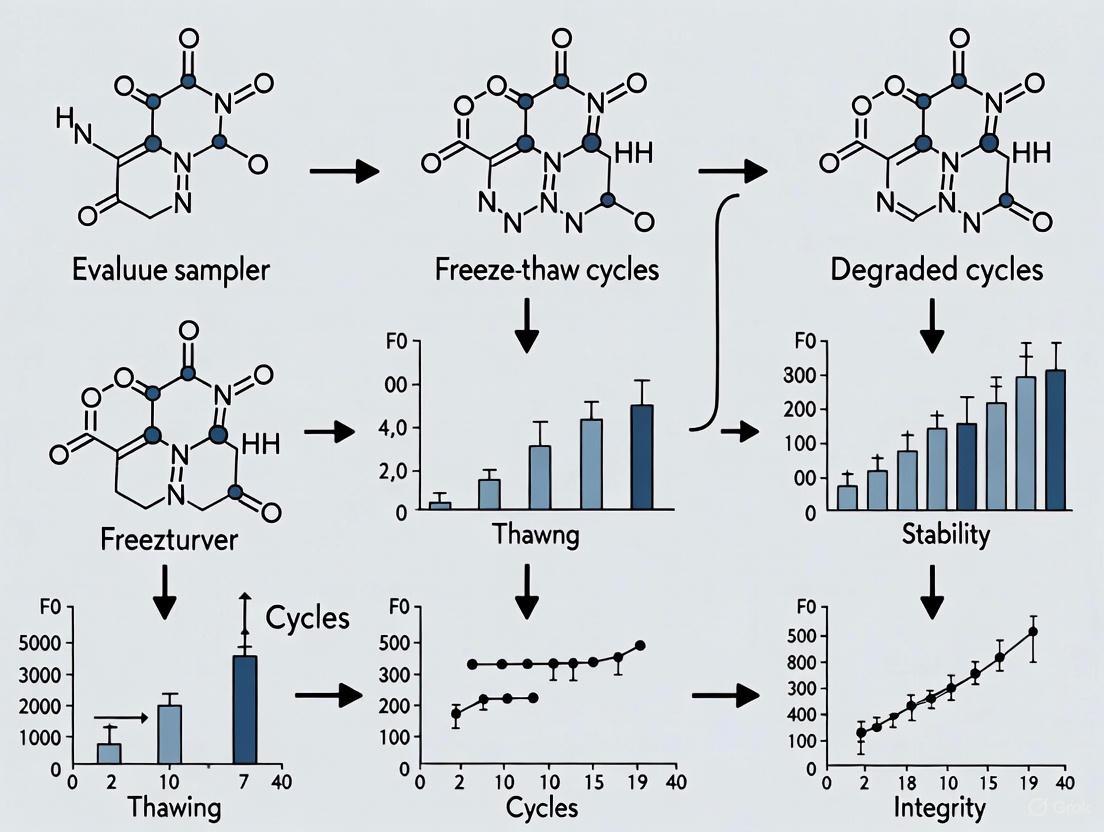
This article provides researchers, scientists, and drug development professionals with a systematic framework for evaluating and mitigating the impact of multiple freeze-thaw cycles on sample integrity.
Preserving Sample Integrity: A Comprehensive Guide to Managing Freeze-Thaw Cycle Effects in Biomedical Research
Abstract
This article provides researchers, scientists, and drug development professionals with a systematic framework for evaluating and mitigating the impact of multiple freeze-thaw cycles on sample integrity. Covering foundational principles to advanced validation strategies, we explore the mechanisms of freeze-thaw-induced degradation across various sample types including proteins, nucleic acids, and clinical specimens. The content delivers practical methodologies for designing robust stability studies, troubleshooting common integrity issues, and implementing quality-controlled workflows to ensure data reliability and reproducibility in biomedical research and biopharmaceutical development.
Understanding Freeze-Thaw Degradation: Mechanisms and Impact on Biomolecular Integrity
Fundamental Principles of Freeze-Thaw Stress on Biological Samples
Freeze-thaw cycling is a fundamental process encountered across numerous scientific and industrial fields, from biopharmaceutical development and biobanking to food science and geotechnical engineering. This process subjects biological and other water-containing samples to repeated phases of freezing and thawing, inducing a series of complex physical, chemical, and mechanical stresses that can compromise sample integrity. For researchers, scientists, and drug development professionals, understanding these fundamental principles is crucial for preserving sample quality, ensuring experimental reproducibility, and maintaining product efficacy throughout manufacturing, storage, and transportation processes. The core challenge lies in managing the inevitable cellular and molecular damage that occurs during ice formation and dissolution, which, if uncontrolled, can lead to irreversible degradation of proteins, rupture of cell membranes, and loss of biological function. This guide systematically compares the effects of freeze-thaw stress across diverse biological systems, presents experimental data on damage mechanisms, and provides evidence-based protocols for sample preservation, all within the broader context of evaluating sample integrity after multiple freeze-thaw cycles.
Fundamental Mechanisms of Freeze-Thaw Damage
The degradation of biological samples during freeze-thaw cycles occurs through several interconnected physical and chemical pathways. Understanding these core mechanisms is essential for developing effective preservation strategies.
Ice Crystal Formation: During freezing, intracellular and extracellular water forms ice crystals that can cause severe mechanical damage. Rapid freezing typically results in smaller ice crystal formation in the outer parts of cells, causing the cell interior to expand and push against the plasma membrane until the cell bursts. While slower cooling allows water to leach out and reduces ice crystal formation, it still leads to cell rupture due to osmotic pressure imbalances [1]. These ice crystals physically disrupt cellular structures, including organelles and membranes, leading to loss of cellular compartmentalization and function.
Freeze Concentration: As ice crystals form, salts, proteins, and other solutes in the buffer become concentrated in the remaining liquid phase. This phenomenon, known as freeze concentration, creates significant stress on the stability of proteins and other macromolecules. Although the exact mechanism of ice-induced protein denaturation is not fully understood, changes in the physical environment lead to stresses that impact stability. Freeze concentration has been shown to cause protein unfolding at the ice-aqueous interface for several proteins, including azurin, liver alcohol dehydrogenase, and alkaline phosphatase [1]. The concentrated solutes can also lead to pH shifts and phase separation, further compromising protein structural integrity.
Oxidative Stress: The freeze-thaw process can generate reactive oxygen species (ROS) through multiple mechanisms. Ice crystal-induced damage to organelle structures, particularly mitochondria, can activate rescue systems associated with energy generation, resulting in a subsequent increase in oxidative stress. When the balance between ROS and antioxidants is lost, oxidative stress causes molecular damage to DNA, proteins, and lipids in the cell. Studies have shown that thawed cells contain increased phosphorylated H2AX, a marker of double-strand breaks in DNA [1]. This oxidative damage can alter cellular function and viability even without visible structural damage.
Membrane Damage: Cellular membranes are particularly vulnerable to freeze-thaw stress. Ice crystals can directly rupture membrane structures, while osmotic imbalances during freezing and thawing can cause membrane stretching and failure. Research on yeast adaptation to freeze-thaw stress has demonstrated that membrane damage is a primary cause of cell death, with evolved freeze-thaw tolerant cells exhibiting significantly reduced membrane damage through increased intracellular trehalose accumulation [2]. Flow cytometry analyses using membrane integrity markers like 5-carboxyfluorescein diacetate (5-CFDA) and Propidium Iodide (PI) clearly distinguish between membrane-damaged and intact cell populations [2].
The following diagram illustrates the primary damage mechanisms and their interactions:
Diagram Title: Freeze-Thaw Damage Mechanisms
Comparative Effects Across Biological Systems
Cellular Systems
Microbial Cells: Experimental evolution studies with Saccharomyces cerevisiae have demonstrated that yeast populations can rapidly evolve freeze-thaw tolerance through a physiological state transition, with survival increasing nearly two orders of magnitude from approximately 2% to 70% in about 25 cycles of stress exposure. Evolved yeast cells exhibit a quiescence-like state characterized by increased intracellular trehalose accumulation (nearly 3-fold over the course of selection), reduced membrane damage, cytoplasmic stiffening, and exit from a proliferative cycle. This mechano-chemically reinforced survival strategy emerges across independent evolutionary lines despite distinct genetic backgrounds, suggesting a convergent mechanism of adaptation [2].
Mammalian Cells: Research on triple-negative breast cancer (TNBC) cells has revealed that freeze-thaw cycles significantly alter cellular profiles. A standard freeze-thaw protocol led to a marked reduction in the number of CD45−CD44LowCD24Low tumor cells, which changed the percentage of tumor cells with certain CD44/CD24 expression patterns and altered the percentage of tumor-infiltrating immune cells. These cryopreservation-driven alterations in cellular phenotype make direct comparisons between fresh and frozen samples from the same patient problematic. Moreover, the freeze-thaw process changed the transcriptomic signatures of triple-negative cancer stem cells such that hierarchical clustering no longer ranked them according to expected inter-individual differences [3].
Tissue Systems
Studies on bovine tissues (brain, liver, and muscle) have demonstrated statistically significant changes in complex permittivity after freezing and thawing by both commercial freezer (−18°C) and liquid nitrogen (−196°C) methods. The largest difference was observed for white matter, while the liver showed the smallest percent change. These dielectric property alterations indicate substantial structural and compositional changes in tissues following freeze-thaw cycles, which has important implications for electromagnetic field applications including medical diagnostics and treatments [4].
Fresh-frozen cadavers, valuable for surgical simulation and experimentation, also demonstrate significant property changes during thawing. Research on cadaveric upper limbs revealed that tissues become progressively softer and more pliable with extended thawing time. While most muscle biopsies showed no tissue damage at 2 and 4 hours of thawing, some specimens demonstrated moderate to severe tissue damage at 6 and 8 hours, indicating the critical importance of optimized thawing protocols even for macroscopic tissue preservation [5].
Macromolecular Systems
Proteins and Biopharmaceuticals: Freezing and thawing biopharmaceutical products can change their chemical and physical properties, stressing proteins, potentially denaturing complex macromolecular structures, and altering stability. The rate of freezing significantly impacts protein integrity. Slow freezing rates (<1°C/min) can result in cryoconcentration, where proteins and excipients form concentration gradients near the freeze front and get excluded from the ice-liquid interface. This can lead to pH shifts and phase separation, resulting in protein structural damage. Conversely, fast freezing rates (10–900°C/min) lead to smaller ice-crystal formation, exposing proteins to large ice-liquid interfaces. Concentration and adsorption of proteins at ice crystal surfaces can cause partial unfolding, increased aggregation, and decreased biological activity [6].
Viral Vectors: Adeno-associated virus (AAV), an important tool for human gene therapies, undergoes significant degradation during freeze-thaw cycles. Studies have revealed significant increases in the amount of free single-stranded DNA in AAV8 formulations after multiple freeze-thaw cycles, with Next Generation Sequencing confirming that this DNA primarily consisted of genome DNA that had leaked from the viral vectors. This degradation mechanism directly impacts transduction efficiency and therapeutic efficacy. Formulation screening showed that adding 10% sucrose and 0.1% poloxamer 188 to Dulbecco's phosphate-buffered saline reduced ssDNA leakage in AAV samples after freeze-thaw cycles compared to base formulations alone [7].
Starch Systems: In food science, multiple freeze-thaw cycles cause significant mechanical damage to wheat starch granules, promoting swelling and retrogradation while reducing shear resistance and structural recovery capability. The addition of inulins with varying degrees of polymerization can mitigate these effects through different mechanisms: inulins with moderate or low DP primarily compete with wheat starch for water via hydrogen bonding, while high-DP inulin forms a network structure that weakens inter-double helix hydrogen bonds and inhibits crystalline region formation [8].
Table 1: Comparative Freeze-Thaw Effects Across Biological Systems
| System Type | Key Damage Manifestations | Quantitative Impact | Primary Resilience Factors |
|---|---|---|---|
| Yeast Cells | Membrane damage, loss of viability | Survival decrease from 70% to 2% without adaptation; reverse adaptation possible [2] | Trehalose accumulation, quiescence-like state [2] |
| Mammalian Cells | Altered surface markers, transcriptomic changes, reduced viability | Marked reduction in CD45−CD44LowCD24Low tumor cells; changed immune cell percentages [3] | Fresh processing; optimized cryopreservation [3] |
| Bovine Tissues | Altered dielectric properties, structural changes | Statistically significant permittivity changes, largest in white matter [4] | Tissue-specific composition; freezing method [4] |
| Biopharmaceuticals | Protein aggregation, decreased activity, DNA leakage | Formulation-dependent; AAV shows significant genome DNA leakage [7] [6] | Stabilizing excipients, controlled rate freezing [7] [6] |
| Wheat Starch | Granule damage, retrogradation, reduced shear resistance | Progressive damage over multiple cycles [8] | Inulin additives with appropriate DP [8] |
Experimental Assessment Methodologies
Viability and Membrane Integrity Assessment
Flow cytometry with dual staining provides a robust method for quantifying membrane damage and cell viability. The protocol typically involves:
Staining Procedure: Cells are stained with 5-carboxyfluorescein diacetate (5-CFDA) and Propidium Iodide (PI). The fluorescent form of CFDA leaks out quickly from membrane-damaged cells, while PI permeates cells with compromised membranes [2].
Analysis: Samples are analyzed using flow cytometry, with intact cells showing high CFDA fluorescence and low PI signal, while damaged cells exhibit the inverse pattern. This allows clear distinction between membrane-damaged and intact populations [2].
Validation: Fluorescence-activated cell sorting (FACS) can separate "membrane-damaged" and "membrane-intact" fractions, with viability subsequently quantified by colony-forming unit (CFU) assays. Research demonstrates that freeze-thaw tolerant cells show significantly higher survival within both membrane-damaged and intact subpopulations compared to wild-type cells [2].
Dielectric Property Measurement
Dielectric measurements assess changes in tissue composition and structure by measuring complex permittivity:
Sample Preparation: Bovine tissues (brain, liver, muscle) are dissected into appropriate sizes (e.g., coronal slices ~1.5 mm thick for brain, 3 × 3 × 2 cm³ cuboids for liver and muscle) and stored in airtight containers at refrigeration temperatures before measurement [4].
Measurement Setup: Complex permittivity is measured using an open-ended coaxial probe connected to a vector network analyzer across a frequency range (typically 0.5 MHz to 18 GHz). Measurements are performed at controlled temperature (25°C) [4].
Freezing Protocols: Samples are frozen either in a commercial freezer (<−18°C) or liquid nitrogen (−196°C) for 3 days, then thawed in a water bath at 25°C before remeasurement [4].
Statistical Analysis: Results are processed to compare permittivity at the same temperature before freezing and after thawing, with statistical analysis performed across the frequency range [4].
Biopharmaceutical Stability Testing
Systematic small-scale studies evaluate freeze-thaw impact on biopharmaceutical products:
Study Design: Selection of representative formulation and small-scale container-closure systems that mimic large-scale conditions, maintaining similar surface-area-to-volume ratios [6].
Parameter Evaluation: Assessment of different freezing and thawing rates under both active-control and passive conditions. Freezing rates categorized as slow (<1°C/min), intermediate (1-10°C/min), or rapid (10-900°C/min) [6].
Stability Metrics: Analysis of protein aggregation via size-exclusion chromatography, biological activity assays, subvisible particle counting, and characterization of chemical modifications (oxidation, deamidation) [6].
Formulation Screening: Evaluation of cryoprotectants (sucrose, trehalose, poloxamers) and their optimal concentrations to stabilize specific products [7] [6].
The experimental workflow for comprehensive freeze-thaw assessment is illustrated below:
Diagram Title: Freeze-Thaw Assessment Workflow
Table 2: Experimental Methods for Freeze-Thaw Assessment
| Methodology | Key Parameters Measured | Applications | Technical Requirements |
|---|---|---|---|
| Flow Cytometry with Viability Staining | Membrane integrity, viability, subpopulation distribution [2] [3] | Cellular systems, immune cell profiling [2] [3] | Flow cytometer, fluorescent dyes (5-CFDA, PI, 7-AAD) [2] |
| Dielectric Spectroscopy | Complex permittivity (ε', ε") across frequency spectrum [4] | Tissue characterization, electromagnetic applications [4] | Vector network analyzer, open-ended coaxial probe [4] |
| Biophysical Assays | Protein aggregation, particle count, viscosity, activity [6] | Biopharmaceuticals, protein therapeutics [6] | HPLC-SEC, microflow imaging, activity assays [6] |
| Histological Analysis | Tissue architecture, cellular structure, damage scoring [5] | Tissue samples, cadaveric specimens [5] | Microscopy, staining equipment, scoring systems [5] |
| Transcriptomic/Genomic Analysis | Gene expression changes, DNA damage, sequence integrity [7] [3] | Cell lines, stem cells, viral vectors [7] [3] | Microarrays, RNA-seq, NGS platforms [7] [3] |
The Scientist's Toolkit: Research Reagent Solutions
Table 3: Essential Reagents for Freeze-Thaw Research
| Reagent/Category | Function & Mechanism | Application Examples | Optimization Considerations |
|---|---|---|---|
| Cryoprotectants (Intracellular) | Penetrate cells to prevent ice crystal formation and membrane rupture [1] | DMSO, glycerol, ethylene glycol for cell preservation [1] [3] | Concentration optimization (typically 5-10% DMSO); cytotoxicity at room temperature [1] |
| Cryoprotectants (Extracellular) | Reduce hyperosmotic effect without cell penetration [1] | Sucrose, dextrose, polyvinylpyrrolidone for extracellular protection [1] | Lower viability outcomes than intracellular agents; combination approaches [1] |
| Trehalose | Stabilizes proteins and membranes during dehydration/freezing [2] | Yeast freeze-thaw adaptation; biopreservation [2] | Intracellular accumulation (3-fold increase in adapted yeast) [2] |
| Surfactants | Reduce protein aggregation at ice-liquid interfaces [6] | Polysorbate 80 (PS80) in biopharmaceutical formulations [6] | Concentration optimization (e.g., 0.1% PS80); potential oxidative degradation [6] |
| Sucrose-Based Formulations | Stabilize macromolecular structures during freeze-thaw [7] | AAV genome stabilization (10% sucrose with 0.1% poloxamer 188) [7] | Combination with other stabilizers; concentration optimization [7] |
| Inulin with Varying DP | Inhibit retrogradation and structural damage in starch [8] | Wheat starch preservation in food systems [8] | Degree of polymerization affects mechanism; HPI forms network structures [8] |
The fundamental principles of freeze-thaw stress on biological samples reveal a complex interplay of physical, chemical, and mechanical damage mechanisms that impact sample integrity across diverse biological systems. Experimental evidence demonstrates that cellular systems, tissues, and macromolecules each exhibit distinctive vulnerability profiles and require tailored preservation strategies. The consistent findings across multiple research domains underscore that uncontrolled freeze-thaw cycles substantially compromise sample quality through membrane damage, protein denaturation, ice crystal formation, and oxidative stress. However, systematic assessment methodologies and strategic application of cryoprotective reagents can significantly mitigate these damaging effects. For researchers and drug development professionals, implementing rigorous, evidence-based freeze-thaw management protocols is not merely optional but essential for maintaining sample integrity, ensuring experimental reproducibility, and guaranteeing product efficacy throughout manufacturing and storage workflows. As biobanking and biopharmaceutical technologies continue to advance, the precise control and monitoring of freeze-thaw parameters will remain a critical component of quality assurance in biological research and development.
In the development and manufacturing of biopharmaceuticals, maintaining protein integrity during frozen storage and multiple freeze-thaw cycles presents a fundamental challenge. Protein-based therapeutics, including monoclonal antibodies (mAbs), are inherently susceptible to degradation pathways that can compromise their efficacy, safety, and shelf life [9]. Among these pathways, protein aggregation, denaturation, and cryoconcentration emerge as three interconnected phenomena that significantly impact product quality. These degradation routes are particularly problematic during freezing and thawing operations, which are essential for stabilizing drug substances, enabling batch processing, and providing flexibility throughout the manufacturing and supply chain [6] [10]. A comprehensive understanding of these pathways is not merely academic; it directly informs the design of stable formulations, robust manufacturing processes, and appropriate storage conditions to ensure that patients receive biopharmaceutical products of the highest quality.
The following comparison guide objectively examines these key degradation pathways by synthesizing current experimental data and research findings. It provides researchers and drug development professionals with a structured framework for evaluating sample integrity after multiple freeze-thaw cycles, supported by comparative experimental data and detailed methodologies.
Comparative Analysis of Key Degradation Pathways
The table below summarizes the core characteristics, primary causes, and detection methods for the three major degradation pathways affecting protein therapeutics during freeze-thaw processes.
Table 1: Comparative Overview of Key Protein Degradation Pathways
| Degradation Pathway | Definition & Key Characteristics | Primary Causes in Freeze-Thaw Context | Common Analytical Detection Methods |
|---|---|---|---|
| Protein Aggregation | Self-association of proteins into higher molecular weight species (e.g., dimers, oligomers, insoluble particles) [11] [9]. | Exposure to ice-liquid interfaces [12] [6], cryoconcentration leading to high protein concentration [12] [13], pH shifts [6], and mechanical shear. | Size-Exclusion Chromatography (SEC) [12] [9], Analytical Ultracentrifugation (AUC) [9]. |
| Protein Denaturation | Loss of a protein's native three-dimensional structure, leading to loss of biological activity [14]. Can be reversible or irreversible. | Cold denaturation [10], exposure to ice-water interfaces [6], and contact with denaturing surfaces. | Differential Scanning Calorimetry (DSC) to measure unfolding [14], activity assays. |
| Cryoconcentration | Increase in the concentration of solutes (protein and excipients) due to water crystallization, occurring on macroscopic and microscopic scales [12] [10]. | Slow freezing rates pushing solutes ahead of the ice front [6], natural convection in large volumes [15]. | UV-Vis for protein content [12], specialized sampling of different container regions [12]. |
Experimental Data and Performance Comparison
Controlled studies provide quantitative insights into how different factors influence these degradation pathways. The data below highlight the impact of process conditions on product quality.
Table 2: Impact of Freezing Parameters on Degradation Pathways - Experimental Data Summary
| Experimental Condition | Effect on Aggregation | Effect on Cryoconcentration | Key Study Findings |
|---|---|---|---|
| Cooling Rate | Fast freezing exposes proteins to large ice-liquid interfaces, potentially increasing aggregation [6]. | Slow freezing promotes macroscopic cryoconcentration as solutes are pushed by the advancing ice front [6]. | One study found that slower cooling with storage below Tg' was advantageous for preventing aggregate formation [12]. |
| Storage Temperature | Storage above Tg' (e.g., -20°C, -10°C) leads to significant aggregation over time. Storage below Tg' (e.g., -80°C) prevents it [13]. | Cryoconcentration occurs upon freezing, but storage above Tg' allows for greater molecular mobility, exacerbating its destabilizing effects [13]. | mAb samples stored at -80°C showed no aggregation after 12 months, while storage at -20°C and -10°C led to increased higher molecular weight species and subvisible particles [13]. |
| Container Scale | No direct correlation found between macroscopic cryoconcentration and number of aggregates for a specific mAb [12]. | Upscaling from 250 ml to 2 L bottles resulted in up to a fourfold increase in macroscopic cryoconcentration [12]. | Aggregate formation was linked to microscopic cryoconcentration in between ice dendrites, not macroscopic solute segregation [12]. |
| Freeze-Thaw Cycles | Repeated freeze-thaw cycles can progressively increase aggregation levels [9]. | Each cycle repeats the concentration process, potentially amplifying minor shifts in solute ratios. | A study on genomic DNA (as a model biomolecule) showed progressive degradation over 18 freeze-thaw cycles, with higher concentrations offering a protective effect [16]. |
Detailed Experimental Protocols
To ensure the reproducibility of freeze-thaw studies, the following section outlines key methodologies cited in the research.
Protocol for Analyzing Cryoconcentration and Aggregate Distribution in Large-Scale Bottles
This protocol, adapted from a large-scale freezing study, is designed to characterize the spatial distribution of protein content and aggregates after freezing [12].
- Materials: PET-G bottles (e.g., 250 mL or 2 L); in-house IgG1 mAb solution in a buffer (e.g., 50.4 mM sodium citrate with 160 mM trehalose); -80°C blast freezer or other controlled freezing equipment; benchtop metal saw; 50 mL tubes.
- Freezing Procedure: Fill bottles with the protein solution (e.g., 200 mL or 1.8 L). Subject them to different freezing protocols, varying parameters such as the final cooling temperature (e.g., -20°C vs. -80°C), cooling rate, and bottle position (upright vs. 60° inclined) [12].
- Sectioning and Thawing: Once frozen, cut the bulk formulation systematically into small cubes (e.g., 14 x 14 x 14 mm) using a benchtop metal saw. Place each cube into an individual 50 mL tube and thaw overnight at 2–8°C [12].
- Analysis: Analyze the thawed samples from different locations for:
Protocol for Systematic Freeze-Thaw Characterization to Minimize Aggregation
This methodology provides a framework for selecting ideal freeze-thaw conditions for manufacturing, using a small-scale model with subsequent at-scale verification [9].
- Materials: Protein solution (e.g., mAb-1 at 5.5 mg/mL in a defined buffer); controlled-rate freezer (e.g., Tenney TUJR); circulating water bath.
- Low-Temperature Thermal Analysis: Characterize the physio-chemical behavior of the protein at low temperatures using:
- Electrical Resistance: To determine the temperature of complete solidification and the thawing characteristics [9].
- Freeze-Drying Microscopy: To visually observe sample behavior during freezing and warming [9].
- Low-Temperature DSC (LT-DSC): To assess phase transitions during freezing and warming [9].
- Freeze-Thaw Rate Studies: Subject samples to different controlled rate combinations:
- Formulation Screening: Evaluate the impact of formulation variables (e.g., protein concentration, buffer species, salt, and surfactant levels) on F/T-induced aggregation [9].
- Analysis: Monitor the presence and quantity of aggregates before and after F/T cycles using SE-HPLC and Analytical Ultracentrifugation (AUC) [9].
Pathways and Workflows
The following diagram illustrates the interconnected nature of the stress factors during freezing and thawing and how they lead to the key degradation pathways.
The Scientist's Toolkit: Essential Research Reagents and Materials
The table below lists key reagents, materials, and equipment used in the featured experiments for studying protein degradation.
Table 3: Essential Research Reagents and Solutions for Freeze-Thaw Studies
| Tool / Material | Function / Purpose | Example Use Case |
|---|---|---|
| Monoclonal Antibody (mAb) Solution | Model therapeutic protein for studying degradation pathways. | An in-house IgG1 mAb was used to study cryoconcentration and aggregate distribution in large-scale bottles [12]. |
| Stabilizing Excipients (e.g., Trehalose, Sucrose) | Cryoprotectants that help stabilize proteins during freezing by various mechanisms, including "preferential exclusion" and vitrification. | Formulations containing 160 mM trehalose were used to study protein content and aggregate distribution [12]. |
| Surfactants (e.g., Polysorbate 80) | Stabilize proteins against interface-induced aggregation (e.g., at ice-water interfaces) [6]. | Added to formulations to overcome adsorption challenges and provide protection from mechanical stress [6]. |
| Histidine Buffer | A common buffer system used to maintain formulation pH. | The impact of shifts in the mAb to histidine ratio due to cryoconcentration on long-term frozen storage stability was investigated [13]. |
| Size-Exclusion Chromatography (SEC) | An analytical technique to separate and quantify protein monomers and soluble aggregates based on their hydrodynamic size [12] [9]. | Used to determine the percentage of higher molecular weight species (aggregates) in samples after freeze-thaw cycles [12] [9] [13]. |
| Differential Scanning Calorimetry (DSC) | Measures thermal transitions, such as protein unfolding (denaturation) and the glass transition temperature (Tg') of the frozen formulation [9] [13]. | Used to determine Tg′, which is critical for defining safe storage temperatures below which molecular mobility is minimized [13]. |
| Controlled-Rate Freezer | Equipment that allows precise programming of cooling and warming rates for freezing and thawing studies. | Used to systematically evaluate the effect of different freezing and thawing rates (e.g., slow freeze-fast thaw) on protein stability [9]. |
The integrity of protein-based therapeutics is continuously challenged by the interrelated degradation pathways of aggregation, denaturation, and cryoconcentration during freeze-thaw processes. The experimental data and methodologies presented herein provide a robust framework for researchers to evaluate and mitigate these risks. Key strategies emerging from current research include the critical importance of storage temperature relative to the formulation's Tg', careful control of freezing rates, and the strategic use of excipients to combat interfacial stresses and cryoconcentration effects. A deep understanding of these pathways, supported by well-designed small-scale studies that accurately predict large-scale behavior, is indispensable for developing stable, safe, and effective biopharmaceutical products.
The integrity of RNA is a foundational requirement for generating reliable data in molecular biology research, drug development, and clinical diagnostics. A critical, yet often overlooked, challenge to RNA integrity is the process of repeated freeze-thaw cycles during sample handling. This guide objectively compares the performance of various RNA integrity assessment methods and details their respective capabilities in capturing the cumulative damage induced by such cycles. Supported by experimental data, we evaluate how this degradation alters gene expression profiles across different downstream analytical platforms, providing researchers with a framework for selecting appropriate quality control measures and interpreting data from biobanked samples.
The Impact of Freeze-Thaw Cycles on RNA Integrity: Quantitative Data Comparison
The degradation of RNA from repeated freezing and thawing of samples introduces significant technical variation, but the extent of the impact varies by tissue type, preservation method, and the specific RNA molecules being analyzed. The table below summarizes key quantitative findings from published studies.
Table 1: Documented Impacts of Freeze-Thaw Cycles on RNA and Downstream Analyses
| Study Focus / Sample Type | Key Quantitative Findings | Primary Measurement Method(s) |
|---|---|---|
| Gastrointestinal Cancer & Matched Adjacent Tissues [17] | - RIN values decreased with freeze-thaw frequency [17]- RNA from adjacent noncancerous tissues was more easily degraded than cancer tissue RNA [17]- Pancreatic cancer tissue RNA RIN fell below 6 (a common cutoff) after just one cycle [17] | RNA Integrity Number (RIN) [17] |
| Breast Cancer Tissues [18] | - Sample preservation in RNAlater improved RIN (8.13 vs. 7.31) and yield (28.6 µg vs. 8.9 µg) compared to snap-freezing [18]- Prolonged cold ischemia time decreased RIN by 0.12 units/hour [18] | RIN, RNA yield, Microarray 3'/5' ratios [18] |
| RNA-Seq from Frozen Leukocytes [19] | - Each freeze-thaw cycle increased random noise in read counts by ~4% [19]- Differential expression reproducibility approached zero after three freeze-thaw cycles [19]- Induced a strong 3' bias in read coverage for poly(A)-enriched libraries [19] | RNA-Seq noise simulation, differential expression reproducibility, 3' bias analysis [19] |
Essential Methodologies for Assessing RNA Integrity
A thorough assessment of RNA sample quality is a critical first step before initiating costly downstream applications. The following section details standard and emerging experimental protocols.
Gel Electrophoresis
Protocol Overview: The integrity of total RNA is traditionally assessed by denaturing agarose gel electrophoresis followed by staining with fluorescent dyes like ethidium bromide, SYBR Gold, or SYBR Green II [20].
Detailed Procedure:
- Gel Preparation: Prepare a 1% denaturing agarose gel. Denaturing conditions are typically achieved using formaldehyde or glyoxal/DMSO to prevent RNA secondary structure from influencing migration [20].
- Sample Loading: Load 200 ng to 2 µg of total RNA alongside an RNA molecular weight ladder. Note that alternative stains (SYBR Gold) can detect as little as 1-2 ng of RNA, enabling assessment of low-yield samples [20].
- Visualization: After electrophoresis, visualize the RNA under UV light. Intact eukaryotic total RNA displays two sharp, clear bands: the 28S ribosomal RNA (rRNA) and the 18S rRNA. The 28S band should be approximately twice as intense as the 18S band. Partially degraded RNA will appear smeared, show weaker rRNA bands, or will not exhibit the 2:1 ratio, while completely degraded RNA will manifest as a low molecular weight smear [20].
Automated Capillary Electrophoresis
Protocol Overview: Systems like the Agilent Bioanalyzer or TapeStation provide a more quantitative and sensitive assessment of RNA integrity than gels, using minimal sample [20] [21].
Detailed Procedure:
- Chip/Ladder Setup: Use the RNA Nano Kit for the Bioanalyzer. Prepare the gel-dye mix and prime it into the specific microfluidic chip. Load the RNA ladder into the designated well [22].
- Sample Loading: Pipette 1 µL of each sample (at a concentration of ~50 ng/µL) into separate sample wells. Concentrations below 25 ng/µL are not recommended for reliable RIN scoring [22].
- Data Analysis: The instrument generates an electropherogram and a virtual gel image. The software algorithm calculates the RNA Integrity Number (RIN) by analyzing the entire electrophoretic trace, including the 28S and 18S rRNA peaks, the baseline, and the presence of degradation products. RIN scores range from 1 (degraded) to 10 (intact) [22] [21]. For degraded samples, such as those from FFPE tissues, the DV200 metric (percentage of RNA fragments > 200 nucleotides) is more suitable than RIN [21].
RNA-Seq Based Integrity Metrics
Protocol Overview: For RNA-Seq data, integrity can be assessed in silico, providing a direct measure of mRNA quality rather than rRNA quality.
Detailed Procedure:
- RNA-Seq Library & Sequencing: Prepare sequencing libraries, typically via poly(A)-enrichment or ribosomal RNA depletion. Note that poly(A)-enrichment is particularly susceptible to freeze-thaw-induced 3' bias [19]. Sequence the libraries to generate paired-end or single-end reads.
- Transcript Integrity Number (TIN) Calculation: Map the sequencing reads to a reference genome/transcriptome. The TIN algorithm computes the evenness of read coverage from the 5' to 3' end of every transcript, generating a score from 0 to 100 (where 100 represents perfect evenness/integrity) [23].
- Data Interpretation: The median TIN (medTIN) across all transcripts in a sample strongly correlates with RIN but is more sensitive for severely degraded samples. Transcript-specific TIN scores can be used to adjust gene expression counts to neutralize degradation effects in differential expression analysis [23].
The relationship between sample handling, RNA degradation, and its measurable consequences is summarized below.
Flow of Freeze-Thaw Effects on RNA: This diagram illustrates the cascade of events from freeze-thaw cycles to compromised data.
Comparison of RNA Integrity Assessment Technologies
Different methods offer varying levels of insight, sensitivity, and sample throughput for assessing RNA degradation. The choice of method should be guided by the specific research context and the extent of degradation expected.
Table 2: Comparison of Key RNA Integrity Assessment Methods
| Method | Measured Output | Key Advantages | Key Limitations | Optimal Use Case |
|---|---|---|---|---|
| Agarose Gel Electrophoresis | Visual 28S:18S rRNA band ratio & smearing [20] | Low cost; simple setup; intuitive result [20] | Semi-quantitative; requires hundreds of nanograms of RNA; lower sensitivity [20] | Quick, low-cost check of high-quality/high-quantity RNA. |
| Automated Electrophoresis (RIN/DV200) | RIN (1-10) for intact RNA; DV200 (%) for degraded RNA [22] [21] | Quantitative; high sensitivity (~1 µL sample); standardized score [20] [21] | RIN relies on rRNA, not mRNA; less sensitive for severely degraded samples [23] [19] | Standard QC for fresh-frozen samples (RIN); FFPE/degraded samples (DV200) [21]. |
| Transcript Integrity Number (TIN) | Score (0-100) per transcript & sample median (medTIN) [23] | Measures mRNA integrity directly from RNA-Seq data; more sensitive than RIN for low-quality samples; enables statistical adjustment [23] | Requires RNA-Seq data; not a pre-screening tool [23] | Post-hoc quality control and bias adjustment in RNA-Seq studies. |
The Scientist's Toolkit: Essential Research Reagent Solutions
Selecting the right reagents and tools is paramount for preserving RNA integrity and ensuring accurate measurements.
Table 3: Key Reagents and Kits for RNA Integrity Workflows
| Item / Kit Name | Primary Function | Key Consideration |
|---|---|---|
| RNAlater Stabilization Solution | Inactivates RNases immediately upon tissue collection to stabilize RNA at room temperature [18]. | Statistically significantly improves RNA yield and RIN compared to snap-freezing alone [18]. |
| TRIzol Reagent | A monophasic solution of phenol and guanidine isothiocyanate for effective RNA isolation while denaturing RNases [17]. | Widely used for RNA extraction from various sample types, including cancer tissues [17]. |
| Agilent RNA 6000 Nano Kit | Reagents for use with the Bioanalyzer system for automated electrophoresis and RIN calculation [22] [21]. | Provides the gold-standard metric (RIN) for RNA quality assessment of intact samples [22] [21]. |
| Poly(A) Enrichment Kits | Selects for mRNA by binding to the poly-A tail for RNA-Seq library prep. | Prone to strong 3' bias in coverage with degraded RNA (e.g., from freeze-thaw); ribosomal depletion is a more robust alternative for such samples [19]. |
| SureSelect XT HS2 RNA Kit | Targeted RNA-Seq library preparation kit from Agilent. | Optimized for intact RNA from fresh-frozen samples and recommends using RIN, RINe, or RQN for QC [21]. |
The vulnerability of RNA to freeze-thaw cycles is a significant and quantifiable threat to genomic data integrity. As demonstrated, this degradation leads to reduced RIN scores, introduces substantial 3' bias and noise in RNA-Seq data, and can ultimately extinguish the reproducibility of differential expression results. While traditional metrics like RIN are useful for initial screening, methods like the Transcript Integrity Number (TIN) derived from RNA-Seq data itself offer a more nuanced view of mRNA-specific degradation and provide a means to statistically adjust for this bias. Researchers working with biobanked samples must incorporate rigorous, application-appropriate quality control measures and limit freeze-thaw cycles to ensure the biological signals they seek are not lost to technical artifact.
The integrity of biological samples is a cornerstone of reproducible science, particularly in drug development and clinical research. A critical, yet often overlooked, factor compromising this integrity is the effect of pre-analytical handling, specifically multiple freeze-thaw cycles. Such cycles can induce complex biochemical changes, degrading some analytes while leaving others unaffected. This guide provides a comparative evaluation of analyte stability, drawing on experimental data to help researchers and scientists make informed decisions about sample handling protocols. The overarching thesis is that a nuanced, analyte-specific approach is essential for maintaining sample integrity in long-term studies and biobanking.
The stability of common biochemical analytes after exposure to multiple freeze-thaw cycles and long-term storage varies significantly. The data below, synthesized from empirical studies, categorizes these analytes based on their sensitivity.
Table 1: Stability of Common Biochemical Analytes to Freeze-Thaw Cycles and Storage
| Analyte | Stability to Freeze-Thaw Cycles (Up to 10 cycles) | Stability to Long-Term Storage (Up to 3 months at -20°C) | Key Considerations |
|---|---|---|---|
| Stable Analytes | |||
| ALT, AST, GGT | Stable [24] [25] | Stable [24] [25] | Enzymes showing robust stability under both conditions. |
| Creatinine | Stable [24] [25] | Stable [24] | Metabolite reliable for repeated analysis. |
| Glucose | Stable [24] [25] | Stable [25] | No significant degradation observed. |
| Cholesterol, Triglycerides, HDL | Stable [24] [25] | Stable (HDL confirmed) [24] [25] | Lipid profiles remain largely unchanged. |
| Direct Bilirubin | Stable [24] | Information missing | Stable through multiple freeze-thaw events. |
| Moderately Sensitive Analytes | |||
| Lactate Dehydrogenase (LD) | Stable for up to 5 cycles [25] | Information missing | Activity declines significantly after the 5th cycle [25]. |
| Blood Urea Nitrogen (BUN) | Stable for up to 3 cycles [25] | Shows variability during storage [24] [25] | Values can show an appreciable increase over time [25]. |
| Calcium | Stable for up to 3 cycles [25] | Stable [24] [25] | Displays a defined threshold of stability for freeze-thaw. |
| Albumin | Stable for up to 7 cycles [25] | Significant change after 3 months [24] [25] | Concentration was found to increase with repeated cycles and storage [25]. |
| Sodium & Potassium | Information missing | Information missing | Stability is highly dependent on avoidance of hemolysis during freeze-thaw [26] [27]. |
| Labile Analytes | |||
| Total Bilirubin | Significant change after >1 cycle [25] | Information missing | Requires minimal freeze-thaw exposure. |
| Total Protein | Unstable (increasing trend) [25] | Significant change after 3 months [24] [25] | Among the least stable tests; concentrations tend to increase. |
| Uric Acid | Unstable (increasing trend) [25] | Information missing | Shows a clear increasing trend per freeze-thaw cycle [25]. |
Experimental Protocols: Methodologies for Stability Assessment
Understanding the experimental designs that generate stability data is crucial for interpreting results and planning new studies.
Protocol 1: Comprehensive Clinical Chemistry Analyte Stability
A foundational study investigated the stability of 17 routine chemistry analytes in human serum under two conditions: repeated freeze-thaw cycles and long-term storage [24] [25].
- Sample Collection and Preparation: Fasting venous blood was collected from 15 patients. After clot formation and centrifugation, serum was separated, pooled for each subject, and aliquoted into multiple tubes [24] [25].
- Freeze-Thaw Experiment: Ten aliquots per subject were subjected to up to ten consecutive freeze-thaw cycles. Each cycle involved freezing at -20°C for 24 hours, followed by thawing at room temperature for approximately one hour before analysis [24] [25].
- Long-Term Storage Experiment: A separate group of aliquots was stored continuously at -20°C and analyzed after 1, 2, and 3 months [24] [25].
- Analysis: All samples were analyzed on an Abbott Aeroset analyzer. Stability was assessed by calculating the percentage change from baseline (fresh sample) measurements and evaluated against desirable bias limits [24] [25].
Protocol 2: Metabolomic Stability in Plasma
A more recent and specialized study isolated the effects of freezing methods from thawing methods on the stability of the plasma metabolome [28].
- Sample Procurement: Plasma was pooled from multiple mice and aliquoted [28].
- Experimental Matrix: Aliquots were subjected to a matrix of different freezing and thawing conditions for 10 cycles:
- Freezing Methods: Snap-freezing in liquid nitrogen (LN2), freezing at -80°C, or freezing at -20°C.
- Thawing Methods: Quick-thawing in room temperature water or slow-thawing on ice [28].
- Analysis: Metabolites were extracted and their relative abundance was measured using liquid chromatography–mass spectrometry (LC-MS). This allowed for a high-resolution comparison of how handling affects delicate metabolic profiles [28].
Visualizing Experimental Workflows and Stability Classifications
Diagram 1: Serum Analyte Stability Assessment Workflow
This diagram illustrates the parallel experimental pathways used to assess analyte stability through freeze-thaw cycles and long-term storage.
Diagram 2: Analyte Stability Classification
This classification chart helps researchers quickly categorize analytes based on their sensitivity to freeze-thaw stress, guiding protocol development.
The Scientist's Toolkit: Essential Research Reagent Solutions
Table 2: Key Materials and Reagents for Stability Studies
| Item | Function in Stability Assessment |
|---|---|
| Evacuated Blood Collection Tubes | Standardized sample collection (e.g., BD Vacutainer) to ensure consistent baseline quality [24] [25]. |
| Low-Binding Microcentrifuge Tubes | For aliquoting samples to minimize analyte adhesion to tube walls, especially critical for proteins and metabolites [24] [28]. |
| Automated Clinical Chemistry Analyzer | High-precision platforms (e.g., Abbott Aeroset) for accurate and reproducible measurement of a wide panel of clinical chemistry analytes [24] [25]. |
| Liquid Chromatography-Mass Spectrometry (LC-MS) | Essential for targeted or untargeted metabolomics and proteomics studies, providing high sensitivity to detect subtle changes in analyte abundance [28]. |
| Liquid Nitrogen (LN₂) | For snap-freezing samples, a method shown to best preserve the integrity of sensitive molecules like metabolites by minimizing ice crystal formation [28]. |
| Quality Control (QC) Materials | Commercial sera and internal standards (e.g., isotope-labeled metabolites) used to calibrate instruments and validate assay performance across multiple runs [24] [28]. |
The experimental data unequivocally demonstrates that analyte sensitivity to freeze-thaw cycles is not uniform but exists on a spectrum. While metabolites like glucose and creatinine and enzymes like ALT and AST demonstrate remarkable resilience, others like total protein, uric acid, and total bilirubin are highly labile. For researchers in drug development and biomarker discovery, these findings necessitate a strategic approach to sample management. The most critical practice is aliquoting samples into single-use volumes to minimize freeze-thaw cycles [29]. Furthermore, the choice of freezing method matters; snap-freezing in liquid nitrogen with quick-thawing offers superior stability for delicate analytes compared to slower methods [28]. Adopting these analyte-specific handling protocols is not merely a best practice but a fundamental requirement for ensuring the integrity and reproducibility of scientific data derived from biological samples.
Container-Surface Interactions and Their Role in Sample Compromise
In biomedical research and biopharmaceutical development, the integrity of biological samples and drug substances is paramount. Container-surface interactions represent a significant, yet often overlooked, variable that can directly compromise sample quality, particularly during freeze-thaw cycles essential for storage and transport. These interactions can induce protein aggregation, particle formation, and chemical degradation, ultimately jeopardizing experimental reproducibility, drug efficacy, and patient safety [6] [30]. As biologics and biospecimens grow more complex and valuable, understanding these interactions transitions from a technical consideration to a fundamental research requirement. This guide objectively compares the performance of primary container materials and systems, providing the experimental data and methodologies needed to make informed decisions for preserving sample integrity.
Key Mechanisms of Sample Compromise
The degradation of samples via container interactions occurs through several distinct physical and chemical mechanisms, often exacerbated by the stresses of freezing and thawing.
Protein Adsorption and Surface-Induced Aggregation
Proteins can adsorb to container surfaces through hydrophobic or ionic interactions, potentially leading to conformational changes, denaturation, and loss of biological activity [31]. This non-covalent adhesion is particularly problematic for large, complex proteins like monoclonal antibodies. The adsorbed protein layer can serve as a nucleation site for further aggregation, generating sub-visible and visible particles in the solution [6] [9]. The presence of aggregates is a major quality concern as it can impact drug activity, solubility, and potentially provoke immunogenic responses in patients [9].
Leachables and Chemical Interactions
Substances can migrate from the container closure system into the drug product, creating a potential safety risk for patients and compromising product stability [31]. These leachables can include:
- Inorganic ions from glass vials (e.g., aluminum, silicon) [31].
- Silicone oil from pre-lubricated syringes and stoppers, which can migrate and cause protein particle formation [32].
- Additives from rubber stoppers and polymer components [32].
Leached ions can catalyze degradation pathways, while silicone oil can create oil-water interfaces that promote protein unfolding and aggregation [6].
Cryoconcentration and Freeze-Thaw Stresses
During freezing, solutes, including proteins and excipients, are excluded from the growing ice front, forming concentration gradients—a phenomenon known as cryoconcentration [6] [33]. This can lead to:
- pH shifts due to buffer salt crystallization [6] [9].
- Phase separation of formulation components [6].
- Exposure of proteins to unnaturally high solute concentrations, leading to loss of thermodynamic stability and unfolding [6].
The location and severity of cryoconcentration are influenced by container geometry, fill volume, and the freezing rate [33].
Physical Container Failures
Mechanical stresses from dimensional changes during freezing and thawing can cause physical damage to containers. Glass vials are susceptible to breakage and delamination (glass lamellae formation), especially when in contact with aggressive formulations [31] [32]. Polymer containers may lose container closure integrity at low temperatures, increasing contamination risk [30] [33].
The following diagram illustrates how these failure mechanisms relate to the freeze-thaw process and ultimately impact sample integrity.
Comparative Analysis of Container Materials and Systems
The choice of container material and design significantly influences the extent of sample compromise. The table below summarizes the performance of common systems based on published data.
Table 1: Performance Comparison of Container Systems for Frozen Storage
| Container System | Key Advantages | Key Limitations / Risks | Best Suited For |
|---|---|---|---|
| Type I Glass Vials (Standard) | • Chemically inert• Well-established regulatory history | • Risk of glass delamination & breakage [31] [32]• Potential for ion leaching & pH shift [31]• Protein adsorption to surface [31] | Stable, non-aggressive formulations; short-term storage. |
| Coated Glass Vials (e.g., EVERIC plus, Alba) | • Barrier coating minimizes ion leaching & protein adsorption [31] [32]• Reduces delamination risk & fogging [31] [32]• Low particle generation from stopper interaction [32] | • Potential for coating interactions (rare)• Higher cost than standard glass | Highly sensitive biologics; aggressive formulations; lyophilized products [31]. |
| Polymer Vials (e.g., Cyclic Olefin Polymer) | • High break resistance [30]• No delamination risk | • Higher gas permeability (e.g., oxygen) [30]• Potential for leachables from polymer | Products where breakage risk is a primary concern [30]. |
| Plastic Bottles (e.g., Polycarbonate) | • Reusable• Shatterproof | • Robustness poor at low temperatures; cracking risk [33]• Uneven freezing & severe cryoconcentration [33]• High sterility validation burden [33] | Intermediate bulk storage where single-use is not feasible. |
| Single-Use Bags (e.g., Celsius) | • Scalable processes from lab to manufacturing [33]• Reduced cryoconcentration with optimized design [33]• Integrated sterile tubing & pre-validated [33] | • Potential for leachables from polymer films• Susceptible to punctures if mishandled | Large volume drug substance; scalable & validated processes [33]. |
Quantitative Performance Data
Controlled studies provide measurable insights into how these containers perform under stress. The following table summarizes key experimental findings from the literature.
Table 2: Experimental Data on Container Performance Under Freeze-Thaw Stress
| Container Type | Study Focus | Key Experimental Findings | Source |
|---|---|---|---|
| Various Vials (Type I glass, coated glass, COP) | Surface interactions & particle formation after freeze-thaw stress. | • Differences in surface hydrophobicity and free energy did not majorly impact performance post freeze-thaw [30].• Coated glass & polymer vials showed only rare particle detection unless under extreme stress (e.g., drop-test frozen) [30]. | [30] |
| 2L & 5L Plastic Bottles | Temperature profiling & cryoconcentration during passive freezing. | • Identified critical temperature probe positions: Last Point to Freeze (LPF) and First Point to Thaw (FPT) [34].• Post-thaw concentration gradients form due to gravitational settling of concentrated fractions [34]. | [34] |
| Single-Use Bags vs. Bottles | Process control & scalability for drug substance. | • Bottles exhibit variable freezing behavior and uneven thawing, leading to product quality variations [33].• Single-use systems (bags) enable more controlled freeze-thaw rates, reducing cryoconcentration [33]. | [33] |
| General mAb Formulations | Systematic study of freeze-thaw parameters on aggregation. | • Fast freezing exposes protein to large ice-liquid interface, risking aggregation [6] [9].• Slow freezing causes cryoconcentration and pH shifts, also risking aggregation [6].• Optimal excipients (e.g., surfactants, sugars) are critical to protect against interface-induced denaturation [6] [9]. | [6] [9] |
Essential Experimental Methodologies for Characterization
Evaluating container compatibility requires robust, reproducible experimental protocols. Below are key methodologies cited in the literature.
Temperature Mapping During Freeze-Thaw Cycles
Objective: To quantitatively characterize the freezing and thawing profile within a container, identifying critical parameters like freezing time, thawing time, and the location of the Last Point to Freeze (LPF) and Last Point to Thaw (LPT) [34].
Protocol Details:
- Equipment: Thermocouples (e.g., Typ-T, 1.5 mm diameter) and data loggers (e.g., RDXL6SD-USB) with a measurement interval of 15 seconds [34].
- Probe Placement: A custom fixture is used to position thermocouples at defined, experimentally justified positions inside the Drug Substance (DS) bottle. Critical positions include the LPF, which is container-specific and not always the geometric center [34].
- Data Analysis: Profiles are used to calculate cooling/heating rates, stress time (time in a partially frozen state), and overall process time. Camera-assisted monitoring is recommended to visually determine the LPT and account for ice detachment from probes during thawing [34].
Liquid Sampling to Quantify Concentration Gradients
Objective: To evaluate the homogeneity of a protein or surrogate solution after thawing, directly assessing the impact of cryoconcentration [34].
Protocol Details:
- Equipment: A disposable polymeric syringe equipped with a valve and a long needle (e.g., 300 mm, 20 G), fixed on a vertically adjustable lab stand [34].
- Procedure: The long needle is inserted through the bottle opening to specific depths to extract samples from the top, middle, and bottom of the thawed solution [34].
- Analysis: Samples are analyzed for protein concentration (e.g., by UV absorbance) or excipient concentration to quantify the vertical concentration gradient formed by gravitational settling during thawing [34].
Stability-Indicating Assays for Sample Quality
Objective: To monitor the impact of container interactions and freeze-thaw stress on critical quality attributes of the sample itself.
Protocol Details:
- Size Exclusion Chromatography (SE-HPLC): The gold-standard method for quantifying soluble protein aggregates and fragments [9].
- Analytical Ultracentrifugation (AUC): An orthogonal method to SE-HPLC for characterizing protein aggregation and conformation [9].
- Sub-visible Particle Analysis: Using techniques like light obscuration or micro-flow imaging to count particles shed from the container or formed by protein aggregation [30] [32].
- Visual Inspection: For visible particles, discoloration, or container defects like "fogging" in lyophilized products [31].
The workflow for a comprehensive container interaction study, from small-scale modeling to quality assessment, is outlined below.
The Scientist's Toolkit: Key Research Reagent Solutions
Selecting the right materials is critical for designing valid container interaction studies. The following table lists essential tools and their functions as derived from experimental protocols.
Table 3: Essential Research Reagents and Materials for Container Interaction Studies
| Item | Specific Example(s) | Function in Experimentation |
|---|---|---|
| Surrogate Formulation | 20 mM L-histidine/HCl, 240 mM sucrose, 0.04% PS80, pH 5.5 [34] | Represents a typical monoclonal antibody formulation for process characterization studies without using valuable product. |
| Temperature Mapping System | Typ-T thermocouples (1.5 mm) with RDXL6SD-USB data loggers [34] | Precisely records temperature profiles within containers during freezing and thawing to identify critical process parameters. |
| Controlled-Rate Freezer | Tenney TUJR bench-top freezer [9] | Actively controls freezing and thawing rates (e.g., 0.03°C/min to 1°C/min) to systematically study rate impact on stability [9]. |
| Stability-Indicating Assays | Size Exclusion HPLC (SE-HPLC) [9] | Quantifies percent aggregation and fragmentation of protein samples before and after stress. |
| Specialized Primary Containers | EVERIC plus vials (coated glass), Alba platform vials/syringes, COP vials, Celsius single-use bags [31] [32] [33] | Test articles for evaluating and comparing the performance of different container surfaces and technologies. |
| Liquid Sampling Assembly | Polymeric syringe with valve & 300mm 20G needle on lab stand [34] | Enables precise sampling from different depths of a thawed solution to measure concentration gradients. |
The interaction between a biological sample and its container is a critical determinant of sample integrity, especially throughout the dynamic stresses of freeze-thaw cycles. No single container system is universally superior; the optimal choice depends on a careful balance of the sample's sensitivity, the process scale, and the required quality attributes.
Coated glass vials offer a robust solution for mitigating surface-induced degradation for sensitive drug products in vials, while single-use bag systems provide scalability and reduced cryoconcentration for bulk drug substance [31] [33]. Traditional plastic bottles present significant challenges in process control and sterility assurance, making them less suitable for scalable, validated processes [33].
A science-driven approach, utilizing the detailed methodologies and comparison data presented herein, is essential for researchers and drug developers to make informed decisions. By systematically characterizing container interactions, the biopharmaceutical industry can better de-risk development processes, protect valuable samples, and ensure the delivery of safe and effective biologic therapies.
Designing Effective Freeze-Thaw Stability Studies: Protocols and Best Practices
The integrity of biological, pharmaceutical, and material samples is critically dependent on the freeze-thaw protocols used during storage and handling. For researchers and drug development professionals, establishing scientifically sound testing parameters—including cycle count, transition rates, and temperature ranges—is fundamental to ensuring data reliability and product stability. This guide objectively compares experimental approaches across scientific disciplines, providing a framework for designing robust freeze-thaw studies that accurately predict sample behavior under real-world conditions.
Comparative Analysis of Freeze-Thaw Parameters Across Disciplines
Freeze-thaw protocols vary significantly across research domains, reflecting material-specific degradation patterns and study objectives. The table below summarizes key experimental parameters from recent studies.
Table 1: Freeze-Thaw Testing Parameters Across Scientific Disciplines
| Material Type | Typical Cycle Range | Temperature Parameters | Cycle Duration | Primary Damage Metrics | Key Findings |
|---|---|---|---|---|---|
| Concrete & Cementitious Materials [35] | Varies by standard | Field measurements: typically 0°C to -10°C or lower | ~6-24 hours per cycle (field conditions) | Internal cracking, scaling, DOS >85% | Field cycles are 4-9 times slower than lab tests (ASTM C666); critical DOS threshold ~85% for damage initiation |
| Rock & Geomaterials [36] [37] | 1-20+ cycles | -5°C to -20°C (freezing), +25°C (thawing) [37] | 24 hours (12h freeze/12h thaw) [37] | Compressive strength, elastic modulus, porosity, wave velocity | Strength degradation follows exponential decay; most damage occurs in first 20 cycles (50% total damage) [36] |
| Food Proteins [38] | 1-5 cycles | -20°C (freezing), +4°C (thawing) | 36 hours (24h freeze/12h thaw) | Protein oxidation, structural unfolding, emulsifying properties | 3 cycles optimal for emulsification; increased carbonyl content (0.75 to 1.77 nmol/mg) indicates oxidation |
| Biological Samples (Rumen) [39] | 1-3 cycles | -80°C storage with intermittent thawing | Not specified | Microbial population integrity (DNA/RNA-based) | Gram-negative bacteria more sensitive; metabolically active populations more stable than DNA-based populations |
| Coal Samples [40] | 1-3 cycles | Liquid nitrogen immersion (-196°C) to room temperature | 130 minutes (10min freeze/2h thaw) | Permeability, peak stress, elastic modulus | Permeability increases significantly after 3 cycles (saturated coal: 0.11×10⁻³ to 6.93×10⁻³ µm²) |
Detailed Experimental Protocols
Geotechnical Materials Testing
The study on granite freeze-thaw effects exemplifies rigorous geotechnical methodology [36]. Specimens underwent cycling between -20°C and +25°C with 12-hour dwell times at each temperature. The physical and mechanical properties were evaluated through:
- Uniaxial compression tests to measure strength degradation
- Acoustic emission monitoring to track internal crack propagation
- CT scanning for 3D visualization of microstructural damage
- Wave velocity measurements as a non-destructive assessment tool
The damage model was based on continuum damage mechanics, with the evolution equation: ḊFT = ∂ψ/∂Y, where ḊFT is the damage rate tensor and ψ represents the dissipation potential [36].
Protein Stability Assessment
The investigation of Grifola frondosa protein followed a precise freeze-thaw regimen [38]:
- Sample Preparation: Protein solutions prepared at 10 mg/mL in distilled water
- Freezing Phase: 24 hours at -20°C until thermal equilibrium
- Thawing Phase: 12 hours at 4°C
- Analysis Points: After each of 5 complete cycles
Structural changes were quantified through:
- Carbonyl content measurement via DNPH assay
- Secondary structure analysis via circular dichroism (α-helix decreased from 40.23% to 36.78%)
- Surface hydrophobicity and free sulfhydryl group quantification
- Emulsifying properties (ability and stability)
Concrete Durability Evaluation
Field monitoring of cementitious materials employed resistivity measurements to determine critical parameters [35]:
- Sensor Deployment: Embedded at various depths to track internal conditions
- Calibration: Laboratory samples established relationships between resistivity, temperature, and degree of saturation
- Ice Formation Detection: Resistivity spikes identified freezing events
- Damage Assessment: Cycles with both critical saturation (>85%) and freezing temperatures classified as damaging
Freeze-Thaw Testing Workflow
Research Reagent Solutions and Essential Materials
Table 2: Key Research Materials for Freeze-Thaw Studies
| Material/Equipment | Function in Research | Application Examples |
|---|---|---|
| High-Low Temperature Test Chamber | Precise temperature control for cycling | Loess studies (-16°C to +25°C) [37] |
| Triaxial Testing Apparatus | Mechanical property assessment | Strength degradation in coal/rock [40] |
| Acoustic Emission Sensors | Monitor internal crack propagation | Granite damage evolution [36] |
| Nuclear Magnetic Resonance (NMR) | Pore structure characterization | Coal permeability changes [40] |
| Resistivity Measurement System | Degree of saturation monitoring | Concrete field studies [35] |
| Circular Dichroism Spectrophotometer | Protein secondary structure analysis | GFP structural unfolding [38] |
| Ultrasonic Detector | Non-destructive integrity checking | Coal sample selection [40] |
| Vacuum Saturation System | Sample preparation | Controlled saturation of concrete [35] |
The establishment of appropriate freeze-thaw testing parameters requires careful consideration of material-specific degradation mechanisms and study objectives. Cross-disciplinary analysis reveals that while temperature ranges typically span from -20°C to +25°C for conventional studies, cryogenic applications extend to -196°C. Optimal cycle counts range from 3-5 for biological and food applications to 10-20 for geotechnical materials, with the most significant damage typically occurring within the first few cycles. Transition rates prove critical, with field measurements revealing naturally occurring cycles are 4-9 times slower than accelerated laboratory protocols. These parameters provide researchers with evidence-based starting points for designing freeze-thaw stability studies that accurately predict long-term sample integrity.
Small-Scale Model Development for Predictive Large-Scale Assessment
In both biopharmaceutical development and materials science, the ability to accurately predict large-scale performance using small-scale models is a critical competency. For researchers investigating sample integrity after multiple freeze-thaw cycles, well-characterized scale-down models provide a systematic framework for evaluating how biological products or materials degrade under cyclic environmental stress. These models enable scientists to simulate commercial-scale processes and conditions in laboratory settings, allowing for efficient optimization while conserving resources [41] [42].
The fundamental principle underlying small-scale model development is creating a system that faithfully represents the functions and environments present at full scale. As emphasized in biopharmaceutical guidelines, "No amount of secondary model tuning and correction will make up for a failure to select and reasonably range the parameters and build a good model of the process at small scale" [41]. This same principle applies to freeze-thaw cycle research, where accurately simulating the rate and conditions of temperature transitions is essential for predictive accuracy.
Table: Advantages and Challenges of Small-Scale Model Development
| Advantages | Challenges |
|---|---|
| Reduced material requirements [41] | Potential misrepresentation of mean response at scale [41] |
| Enhanced equipment availability [41] | Possible inaccurate representation of variation at scale [41] |
| Lower development costs [41] | Potential failure to capture out-of-specification rates/modes [41] |
| Faster development timelines [41] | Scale effects impacting prediction accuracy [41] |
| Efficient exploration of control strategies [41] | Calibration requirements to match full-scale performance [41] |
Experimental Protocols for Model Development
Systematic Approach to Small-Scale Model Generation
The development of a predictive small-scale model requires a structured methodology that encompasses both design and validation phases. The process typically follows these critical stages, as outlined in bioprocess development and consistent with freeze-thaw research principles:
- Low-Level Risk Assessment: Identify critical process parameters and quality attributes that must be maintained across scales [41].
- Design of Experiment (DoE): Implement factorial designs to systematically evaluate multiple factors simultaneously [41] [42]. For freeze-thaw studies, this would include factors like cooling rate, thawing temperature, cycle duration, and sample composition.
- Model Refinement for Significant Factors: Focus development efforts on parameters demonstrating statistically significant effects on critical quality attributes [41].
- Transfer Function Generation: Save the mathematical formula that defines the relationship between input parameters and output responses [41].
- Process Simulation: Run simulations at process set points incorporating both model-predicted variation and measurement noise [41].
In freeze-thaw cycle research, this approach ensures that small-scale models accurately capture the physical and chemical phenomena that occur during temperature cycling, including ice crystal formation, solute concentration effects, and cellular stress responses [43] [44].
Small-Scale Model Calibration to Full-Scale Performance
A critical phase in model development involves calibrating small-scale predictions to match full-scale performance data. This calibration is particularly important when scaling freeze-thaw processes, where heat transfer rates and temperature gradients may differ significantly between scales.
The calibration methodology employs regression analysis where the Y response represents full-scale measurements and the X factor is the predicted small-scale model results [41]. The specific approach depends on the correlation strength:
- High correlation (>70% R²): Linear regression using least-squares error method
- Poor correlation: Orthogonal principle components fit for more reliable calibration [41]
Applying the appropriate calibration technique yields intercept and slope corrections that adjust the small-scale model to accurately predict full-scale means and standard deviations. For example, in a documented case study, applying an intercept of -261.926 and slope of 3.688 successfully calibrated a small-scale model to match full-scale manufacturing data, correcting the pre-calibration model from 94.4±1.6 to post-calibration values of 86.3±5.9, matching the manufacturing data exactly [41].
Quantitative Comparison of Scale Model Performance
Key Parameters for Freeze-Thaw Cycle Assessment
Research on gravelly red sandstone soil provides a relevant case study for quantitative assessment of freeze-thaw cycle effects. This experimental approach demonstrates methodologies applicable to pharmaceutical formulations requiring freeze-thaw stability testing.
Table: Experimental Parameters for Freeze-Thaw Cycle Studies on Material Integrity
| Parameter | Small-Scale Experimental Range | Impact on Sample Integrity | Measurement Method |
|---|---|---|---|
| Freeze-Thaw Cycles | 0-40 cycles [44] | Progressive deterioration of structural integrity [44] | Compressive strength testing [44] |
| Gravel Content | 0%-60% [44] | Higher content (30-60%) reduces freeze-thaw degradation [44] | Triaxial shear testing [44] |
| Confining Pressure | 100-300 kPa [44] | Higher pressure inhibits particle displacement and reduces void ratio [44] | Stress-strain analysis [44] |
| Water Content | Varied based on composition [44] | Higher content increases susceptibility to freeze-thaw damage [44] | Gravimetric measurement [44] |
Performance Metrics Across Scales
The ultimate validation of any small-scale model lies in its ability to accurately predict performance at commercial scale. The following comparison illustrates how properly calibrated models can achieve this predictive accuracy:
Table: Small-Scale Model Predictive Accuracy Before and After Calibration
| Performance Metric | Pre-Calibration Small-Scale | Post-Calibration Small-Scale | At-Scale Manufacturing |
|---|---|---|---|
| Mean Step Yield | 94.4 [41] | 86.3 [41] | 86.3 [41] |
| Standard Deviation | 1.6 [41] | 5.9 [41] | 5.9 [41] |
| Model R² | >94.4% [41] | Maintained with scale correction [41] | Reference value |
The calibration process successfully aligns both the central tendency and variation of the small-scale model with actual full-scale performance, creating a truly predictive tool for large-scale assessment.
The Scientist's Toolkit: Essential Research Reagent Solutions
The experimental workflows for small-scale model development and freeze-thaw integrity studies require specialized materials and equipment. The following table details key research solutions and their functions:
Table: Essential Research Reagent Solutions for Freeze-Thaw Integrity Studies
| Research Solution | Function in Experimental Protocol |
|---|---|
| Gravelly Soil Compositions (0-60% gravel) [44] | Models how composite materials with varying component ratios withstand freeze-thaw stress |
| Triaxial Shear Test Apparatus [44] | Measures compressive strength and mechanical properties under controlled confining pressures |
| Automated Soil Water Characteristic Models (SWCMs) [44] | Provides precise control over soil moisture conditions and freeze-thaw cycles |
| Bioreactor Systems (2L-2000L) [42] | Enables scaled studies of biological processes with controlled parameters |
| Antifoam Agents (e.g., Antifoam C) [42] | Controls foaming in bioprocesses while monitoring potential impacts on mass transfer |
| Mathematical Modeling Software | Predicts key parameters (e.g., oxygen mass transfer coefficients) across scales [42] |
Workflow Visualization: Small-Scale Model Development Process
The following diagram illustrates the comprehensive workflow for developing and validating small-scale models for predictive large-scale assessment:
Model Calibration and Verification Methodology
The calibration process for aligning small-scale models with full-scale performance follows a specific methodological sequence:
The application of calibrated models enables researchers to predict failure rates, establish operational ranges, and evaluate design space boundaries [41]. In freeze-thaw cycle research, this approach allows scientists to determine design margins and visualize process centering relative to specifications and acceptance criteria. The edge of failure analysis becomes particularly valuable for predicting design margin relative to specifications, especially when dealing with multiple freeze-thaw cycles where cumulative damage may occur [41] [44].
Regulatory and Validation Considerations
Regulatory guidance documents provide specific direction on process development requirements relevant to small-scale model implementation. The International Conference on Harmonization (ICH) Q8 Pharmaceutical Development states that development should include "an assessment of the ability of the process to reliably produce a product of the intended quality (e.g., the performance of the manufacturing process under different operating conditions, at different scales, or with different equipment)" [41].
Similarly, ICH Q11 notes that "small-scale models can be developed and used to support process development studies. The development of a model should account for scale effects and be representative of the proposed commercial process" [41]. These regulatory expectations underscore the importance of a scientifically justified approach to small-scale model development, particularly when generating data to support sample integrity claims after challenging environmental exposures like multiple freeze-thaw cycles.
The FDA's process validation guidance further emphasizes that manufacturers should obtain assurance "from objective information and data from laboratory-, pilot-, and/or commercial-scale studies" before commercial distribution [41]. This aligns with the model calibration and verification processes essential for validating predictive small-scale models in freeze-thaw research.
Stability-indicating assays are validated quantitative analytical procedures used to analyze the stability of a drug substance or active pharmaceutical ingredient (API) in bulk drug and pharmaceutical products. Their primary function is to detect changes in a drug's chemical composition over time, specifically designed to distinguish intact drugs from their degradation products. This capability provides crucial information about the drug's stability profile, ensuring its safety and efficacy throughout its shelf life. According to regulatory definitions, a stability-indicating method must be able to measure the changes in drug substance concentration without interference from other substances present, including degradation impurities, excipients, and other potential compounds [45] [46].
The development and validation of these methods are not merely scientific best practices but are mandatory regulatory requirements for drug approval worldwide. Regulatory agencies including the FDA and the International Council for Harmonisation (ICH) require comprehensive stability data, with ICH guideline Q3B explicitly stating that analytical methods must be properly validated and suitable for the detection and quantification of degradation products and impurities [46] [47]. The validation process must demonstrate that the methods are reliable, specific, and capable of separating impurities from the API and other pharmaceutical substances, with key validation parameters including sensitivity, specificity, accuracy, reliability, reproducibility, and robustness [45] [48].
Core Principles and Regulatory Framework
Essential Method Validation Parameters
For a stability-indicating method to be considered properly validated, it must meet several well-defined quality metrics as per ICH guidelines. These parameters collectively ensure the method's reliability for assessing drug stability over time [45] [48]:
Specificity: The method must demonstrate the ability to specifically detect the target analyte (API) and its degradation products without interference from other components in the sample matrix, including excipients, impurities, or related compounds. This is typically established through forced degradation studies.
Accuracy and Precision: Accuracy represents the closeness of test results to the true value, while precision indicates the agreement among a series of measurements from multiple sampling of the same homogeneous sample under prescribed conditions. The percentage recovery for accuracy should typically be in the range of 98-102%, as demonstrated in the candesartan cilexetil method which showed recovery of 99.76-100.79% [48].
Linearity: The method should provide a proportional response to the concentration of analytes over a suitable range. For UV spectrophotometric methods, this might range from 10-90 μg/mL with a correlation coefficient (R²) of ≥0.999 [48].
Limit of Detection (LOD) and Limit of Quantitation (LOQ): These parameters indicate the method's sensitivity, with LOD representing the lowest amount of analyte that can be detected and LOQ the lowest amount that can be quantified with acceptable precision and accuracy.
Robustness: The method should remain reliable and unaffected by small, deliberate variations in method parameters, such as mobile phase composition, pH, temperature, or flow rate.
Global Regulatory Guidelines
Stability testing requirements for finished pharmaceutical products are detailed in guidelines and regulations issued by global authorities, including the Association of Southeast Asian Nations (ASEAN), the Eurasian Economic Commission (EEC), the European Medicines Agency (EMA), ICH, and the World Health Organization (WHO), as well as individual countries worldwide [49]. While specific requirements may vary, all emphasize the necessity of stability-indicating methods to ensure product quality throughout the shelf life.
The ICH guidelines provide the foundational framework for stability testing, outlining specific parameters for different dosage forms. For example, tablets (coated and uncoated) and hard capsules require testing of dissolution, disintegration, hardness, friability, uniformity of dosage units, water content, and microbial limits. Oral liquids require assessment of uniformity of dosage units, pH, microbiological limits, antimicrobial preservative content, and antioxidant preservative content, among others [49].
Table 1: Key Regulatory Guidelines for Stability Testing
| Regulatory Body | Key Guidelines | Focus Areas |
|---|---|---|
| ICH | Q1A (Stability Testing), Q3B (Impurities) | Harmonized requirements for international marketing; physical, chemical, and biological stability tests [47] |
| FDA | 21 CFR Parts 210 and 211 | Current Good Manufacturing Practices; stability data requirements for INDs and NDAs [47] |
| EMA | CPMP/ICH/2736/99 | Product-specific storage stability testing for herbal medicinal products [49] |
| ASEAN | ASEAN Stability Testing Guidelines | Physical, chemical, and microbiological parameters for traditional medicines [49] |
| WHO | WHO Technical Report Series | Stability testing requirements for pharmaceuticals, particularly for global health contexts [47] |
Comparative Analysis of Chromatographic Methods
High-Performance Liquid Chromatography (HPLC)
HPLC stands as the dominant technique in pharmaceutical stability analysis due to its versatility, high resolution, minimal sample preparation requirements, and excellent recovery rates. The technique is applicable to numerous compound types with diverse polarity, molecular mass, volatility, and thermal sensitivity, making it particularly suitable for pharmaceutical analysis [46]. A key advantage of HPLC lies in its adjustable parameters, including various detection wavelengths, flow rates, and mobile phase elution profiles (either isocratic or gradient mode), which allow for method optimization based on specific analyte properties [46].
HPLC method development begins with selecting appropriate chromatographic conditions, including column chemistry (typically C18 or C8), mobile phase composition (often water, acetonitrile, and methanol combinations), and detection method (UV-VIS, fluorescence, or mass spectrometry) [50]. The mobile phase pH can be a powerful tool for separating ionizable compounds and is often overlooked during development. Modern approaches may utilize ultrahigh-pressure liquid chromatography (UHPLC) systems with small particle size columns to enable shorter run times without sacrificing resolution [47].
Table 2: HPLC Applications in Stability-Indicating Assays
| Drug Substance | Elution Conditions | Key Applications | Reference |
|---|---|---|---|
| Ezetimibe | Gradient elution; ammonium acetate buffer (pH 7.0) and acetonitrile | Separation of drug from degradation impurities | [46] |
| Losartan potassium and hydrochlorothiazide | Gradient elution; phosphate buffer solution (pH 7.0) with acetonitrile | Simultaneous analysis of combination drug degradation | [46] |
| Atorvastatin and amlodipine | Isocratic elution; acetonitrile-NaH₂PO₄ buffer (pH 4.5) | Stability monitoring of fixed-dose combination | [46] |
| Sacubitril and valsartan | Isocratic elution; acetonitrile-citrate buffer (pH 3) | Forced degradation studies under various stress conditions | [46] |
| Tonabersat | Reversed-phase HPLC conditions | Pharmaceutical formulation stability assessment | [51] |
Alternative Chromatographic Techniques
While HPLC dominates pharmaceutical analysis, several other chromatographic methods serve as valuable alternatives for specific applications:
Gas Chromatography (GC) is particularly suitable for volatile and thermally stable compounds. The technique employs inert carrier gases such as helium or nitrogen to transport vaporized samples through a column. GC has been successfully implemented for stability analysis of drugs including divalproex sodium, memantine hydrochloride, and rosmarinic acid [46]. While GC offers excellent resolution for compatible compounds, its limitation to volatile substances restricts its broader application in pharmaceutical analysis.
High-Performance Thin-Layer Chromatography (HPTLC) provides a simpler, more cost-effective alternative for stability screening, particularly useful in resource-limited settings. The method employs various mobile phase compositions tailored to the drug's physicochemical properties, such as chloroform:methanol (9.25:0.75 v/v) for curcumin analysis or ethyl acetate-methanol-ammonia combinations for pseudoephedrine and cetirizine separation [46]. HPTLC's main advantages include its ability to analyze multiple samples simultaneously and its minimal solvent consumption.
Hyphenated Techniques combine chromatographic separation with spectroscopic detection, enabling parallel quantitative and qualitative analysis of drug substances and impurities. Examples include HPLC-DAD (diode array detector), HPLC-FL (fluorescence), GC-MS (mass spectrometry), LC-MS, and LC-NMR (nuclear magnetic resonance) [45] [46]. In these systems, analytes are separated chromatographically while impurities are chemically characterized spectroscopically, providing comprehensive stability profiles.
Table 3: Comparison of Chromatographic Methods for Stability-Indicating Assays
| Method | Key Advantages | Limitations | Ideal Use Cases |
|---|---|---|---|
| HPLC | Versatile; high resolution; minimal sample prep; suitable for diverse compounds | Higher solvent consumption; longer analysis times vs. UHPLC | Broad pharmaceutical applications; forced degradation studies [46] |
| GC | Excellent resolution for volatile compounds; sensitive detection | Limited to volatile, thermally stable compounds | Volatile APIs; residual solvent analysis [46] |
| HPTLC | Cost-effective; simultaneous multiple sample analysis; minimal solvent use | Lower resolution compared to HPLC; limited quantitative precision | Initial stability screening; resource-limited settings [46] |
| Hyphenated Techniques (e.g., LC-MS) | Simultaneous quantification and identification; structural elucidation of impurities | Higher equipment costs; specialized operator training needed | Unknown impurity identification; complex degradation pathways [45] [46] |
Experimental Protocols for Method Development and Validation
Systematic Method Development Approach
Developing a stability-indicating HPLC method follows a structured, systematic process to ensure robust and reliable performance [47]:
Understanding Drug Substance Chemistry: Comprehensive knowledge of the API's physicochemical properties is foundational. Critical parameters include dissociation constants (pKa), partition coefficients (log P), solubility, polarity, volatility, and absorption characteristics (λmax). These properties inform decisions regarding diluent choice, sample preparation, column selection, and detection parameters. For drug products, a "drug-excipient interaction study" may be necessary to properly assess potential interactions that could affect stability results [47].
Preliminary Separation Method Development: This phase focuses on establishing initial separation conditions, typically employing reversed-phase LC as the starting point. Key variables include sample solvent, mobile phase composition and pH, column type, and temperature. Method development can be accelerated using a three-pronged template approach: fast isocratic LC (for simple mixtures), generic broad gradient (for unknown impurities), and multi-segment gradient (for complex separations requiring maximum resolution around the API region) [47].
Forced Degradation Studies: Stress testing under various conditions generates degradation products that inform method optimization. Recommended conditions include [48] [47]:
- Thermal stress: Heating the drug to elevated temperatures
- Photolytic stress: Exposure to light (UV and visible)
- Oxidative stress: Treatment with oxidizing agents like hydrogen peroxide
- Hydrolytic stress: Exposure to acidic, basic, and neutral conditions Ideal degradation should not exceed 10-20% to avoid secondary degradation products that may not form under normal storage conditions [47].
Method Optimization and Validation: Based on forced degradation results, the method is optimized to separate all relevant degradation products from the API and from each other. The optimized method then undergoes comprehensive validation assessing specificity, linearity, accuracy, precision, LOD, LOQ, and robustness according to ICH guidelines [48] [50].
Sample Integrity in Freeze-Thaw Stability Studies
The integrity of biological and pharmaceutical samples during stability studies, particularly those involving multiple freeze-thaw cycles, is crucial for generating reliable data. Research has demonstrated that multiple freeze-thaw cycles can significantly impact sample integrity and analytical results [52] [53].
A comprehensive study evaluating the effects of multiple freeze-thaw cycles on 18 clinical chemistry analytes in rat serum revealed that while most analytes remained stable after three cycles, several showed significant changes. After three refrigeration cycles (2-8°C), serum chloride demonstrated statistically significant changes (0.4%), while creatine kinase showed substantial variation (-9.1% after first cycle, 10.1% after third cycle) [52].
Mitigation strategies for preserving sample integrity during freeze-thaw cycles include [53]:
- Minimizing freeze-thaw cycles through proper sample aliquot management
- Implementing automated storage systems with cherry-picking capabilities to prevent unnecessary thawing of entire sample libraries
- Ensuring consistent freeze profiles through high-density, rack-less storage systems
- Implementing secondary refrigeration systems as fail-safes for primary system failures
- Utilizing superior insulation to maintain temperature stability during power interruptions
Essential Research Reagents and Materials
Successful development and implementation of stability-indicating methods require specific research reagents and laboratory materials. The following table details essential solutions and their functions in stability analysis:
Table 4: Essential Research Reagent Solutions for Stability-Indicating Assays
| Reagent/Material | Function/Application | Examples/Specifications |
|---|---|---|
| HPLC Grade Solvents | Mobile phase preparation; sample dissolution | Acetonitrile, methanol, water; low UV absorbance and particulate matter [48] [46] |
| Buffer Salts | Mobile phase pH control; compound separation | Phosphate buffers (pH 3-8), ammonium acetate, citrate buffers; appropriate for detection method [46] [47] |
| Reference Standards | Method calibration; peak identification | Certified API standards; impurity standards when available [48] [47] |
| Forced Degradation Reagents | Stress studies to generate degradation products | Acid (0.1N HCl), base (0.1N NaOH), oxidizer (3% H₂O₂) [48] |
| Chromatography Columns | Analytical separation | C18, C8 columns; appropriate dimensions and particle size (e.g., 150×4.6mm, 5μm) [46] [50] |
The selection of appropriate stability-indicating methods represents a critical decision in pharmaceutical development, directly impacting the reliability of stability data and regulatory success. HPLC remains the cornerstone technique due to its versatility, robustness, and compatibility with diverse API chemistries, though alternative methods including GC, HPTLC, and hyphenated techniques offer specialized advantages for specific applications.
The progressive integration of UHPLC systems and mass spectrometric detection continues to enhance method sensitivity, speed, and discriminatory power. Furthermore, the emphasis on sample integrity management, particularly in minimizing freeze-thaw cycle impacts, highlights the interconnectedness of analytical methodology and sample handling practices in generating reliable stability data.
As pharmaceutical compounds grow increasingly complex and regulatory standards evolve, the continued refinement of stability-indicating methodologies remains essential for ensuring the quality, safety, and efficacy of pharmaceutical products throughout their lifecycle.
The integrity of biological samples throughout storage and processing is a foundational concern in biomedical research and drug development. Sample-specific protocol adaptation is essential for generating reliable, reproducible data, particularly in studies evaluating the impact of repeated freeze-thaw cycles. This guide objectively compares the performance of various sample preparation and handling methods for plasma, tissues, and biopharmaceutical peptides, providing supporting experimental data to inform protocol selection.
Experimental Comparison of Sample Preparation Methods
Performance in Kidney Tissue and Plasma
Efficient protein extraction is critical for bottom-up proteomic analyses. The following table compares the quantitative performance of three sample preparation methods using label-free mass spectrometry (SWATH-MS) in sheep kidney cortical tissue and plasma [54].
Table 1: Protein and Peptide Quantification by Sample Preparation Method
| Sample Type / Performance Metric | SPEED Method | S-Trap Method | SDC (In-Solution) Method |
|---|---|---|---|
| Kidney Tissue | |||
| Number of Unique Proteins Quantified | 1250 | 1202 | 1197 |
| Number of Unique Peptides Quantified | 4586 | 3909 | 3945 |
| Quantification Reproducibility (R²) | ~0.90 | ~0.85 | ~0.85 |
| Plasma | |||
| Number of Unique Proteins Quantified | 137 | 150 | 148 |
| Number of Unique Peptides Quantified | 278 | 234 | 296 |
| Quantification Reproducibility (R²) | 0.84 | 0.65 | 0.76 |
Key Findings: In kidney tissue, the SPEED method demonstrated superior performance, yielding the highest number of protein and peptide quantifications with excellent reproducibility [54]. For plasma, the optimal method depends on the research goal: S-Trap is preferable for maximizing the number of protein identifications, while SPEED provides more reproducible quantifications [54].
Impact of Freeze-Thaw Cycles on Plasma Analytes
Understanding the stability of plasma components during frozen storage is vital for biobanking. The following table summarizes the impact of multiple freeze-thaw cycles on key analytes, demonstrating sample-specific degradation patterns [55].
Table 2: Stability of Plasma Analytes Across Freeze-Thaw Cycles
| Analyte | Observed Change After 10 Cycles | Maximum Change Observed (After 100 Cycles) | Key Findings |
|---|---|---|---|
| Free Fatty Acids | +11% increase [55] | +32% increase (after 30 cycles) [55] | Most unstable; increases significantly with each cycle. |
| Aspartate Aminotransferase (AST) | No significant change [55] | +21% increase (after 30 cycles) [55] | Peaks around 30-50 cycles before decreasing. |
| Triglycerides | No significant change [55] | -19% decrease (after 30 cycles) [55] | Stable for first 10 cycles; significant drop after 20. |
| Cholesterol | No significant change [55] | -6% decrease (after 20 cycles) [55] | Stable for first 10 cycles; significant drop after 20. |
| Vitamin E | No significant change [55] | Significant decrease (after 50 cycles) [55] | Stable for the first 20 cycles. |
| Sodium | No significant change [55] | No large changes [55] | Stable, indicating no significant sample evaporation. |
Key Findings: Most plasma analytes remain stable through approximately 10 freeze-thaw cycles, but degradation patterns are analyte-specific [55]. Free fatty acids are highly sensitive and require minimal freeze-thaw exposure, while sodium concentration is largely unaffected [55].
Peptide Stability and Precipitation Efficiency
For biopharmaceutical peptides, stability in biological matrices and efficient recovery during sample preparation are major development challenges. The following table compares different protocols for analyzing peptide stability in blood plasma [56].
Table 3: Comparison of Peptide Stability and Precipitation Protocols
| Experimental Parameter / Protocol | Performance and Outcomes |
|---|---|
| Precipitation Method Efficiency | |
| Organic Solvent Mix (ACN/EtOH) | Preserved more peptides for analysis; recommended for sample preparation [56]. |
| Strong Acid (1% Trichloroacetic Acid) | Unsuitable; led to significant peptide loss during plasma protein precipitation [56]. |
| Peptide Stability in Media | |
| Human Blood Plasma | Strong variation in degradation dynamics and patterns was observed between different peptides [56]. |
| Cell Culture Supernatants (HEK-293, Calu-3) | Degradation patterns differed from those in plasma, highlighting media-specific stability [56]. |
| Labeling Method | |
| Fluorescent Labels (e.g., Tam) | Allows for detection via fluorescence and RP-HPLC [56]. |
| Isotopic Labels | Compatible with LC/MS analysis; both methods have individual advantages [56]. |
Key Findings: The choice of precipitation protocol significantly impacts peptide recovery, with organic solvent mixtures outperforming strong acids [56]. Peptide stability is highly dependent on the biological matrix, and degradation patterns must be assessed on a case-by-case basis [56].
Detailed Experimental Protocols
SPEED, S-Trap, and SDC Sample Preparation for Mass Spectrometry
The following workflow outlines the key steps for the three sample preparation methods compared in Table 1 [54].
Protocol Details [54]:
- SPEED Method: Kidney tissue or plasma is denatured using pure trifluoroacetic acid, which also acts as a powerful lysis solvent for tissues. The sample is then neutralized and digested with trypsin. This method is detergent-free, avoiding the need for subsequent detergent removal.
- S-Trap Method: Proteins are lysed in a buffer containing 5% SDS. A fine protein particulate is formed by adding a buffer solution and phosphoric acid. This suspension is loaded onto a specialized spin column, where proteins are trapped and SDS is washed away. Proteins are digested on the column, and peptides are eluted for analysis.
- SDC (In-Solution) Method: Proteins are extracted and solubilized using the detergent Sodium Deoxycholate. The detergent concentration is then diluted to a level that does not inhibit tryptic digestion before enzymatic proteolysis occurs.
Protocol for Evaluating Freeze-Thaw Impact on Plasma
The methodology for the data presented in Table 2 is as follows [55]:
- Sample Preparation: EDTA plasma was pooled from multiple healthy donors, aliquoted into 96-well plates (300 µL per well), and heat-sealed.
- Freeze-Thaw Cycles: Plates were stored at -80°C and subjected to weekly freeze-thaw cycles. Thawing was performed at room temperature for approximately one hour. For cycles where samples were not retrieved for analysis, plates were homogenized and left at room temperature for an equivalent time before re-freezing.
- Analysis: Aliquots were drawn after specific cycles (1, 2, 3, 4, 5, 6, 7, 8, 9, 10, 15, 20, 30, 40, 50, 75, and 100). Analytes (sodium, cholesterol, triglycerides, free fatty acids, vitamin E, AST) were analyzed in triplicate using routine clinical laboratories. Results for each time point were compared to the baseline (1 freeze-thaw cycle).
Protocol for Assessing Peptide Stability in Plasma
The methodology for the data in Table 3 is summarized below [56]:
- Peptide Precipitation Comparison: Peptides were diluted in human blood plasma and immediately precipitated using four different conditions: (A) 2x volume acetonitrile (ACN)/ethanol (EtOH) 1:1; (B) 2x volume ACN; (C) 1x volume ACN overnight at -20°C; (D) 1% trichloroacetic acid (TCA). Peptide loss was quantified by LC-MS relative to a reference stock.
- Stability Assay: Peptides were diluted in plasma or cell culture supernatant and incubated at 37°C. At designated time points, samples were precipitated (using the optimal ACN/EtOH method), filtered, and analyzed by RP-HPLC with fluorescence detection for Tam-labeled peptides. The relative amount of intact peptide was used to calculate half-life. Isotope-labeled peptides were analyzed via nano-LC/MS/MS.
The Scientist's Toolkit: Research Reagent Solutions
Table 4: Essential Materials for Sample Integrity and Preparation Protocols
| Item | Function / Application |
|---|---|
| Trifluoroacetic Acid (TFA) | A strong acid used in the SPEED method for efficient tissue lysis and protein denaturation without detergents [54]. |
| Sodium Dodecyl Sulfate (SDS) | A potent ionic detergent used in S-Trap protocols for effective cell lysis and protein solubilization [54]. |
| Sodium Deoxycholate (SDC) | A digestion-compatible detergent used in in-solution methods for protein extraction and solubilization [54]. |
| Acetonitrile (ACN) & Ethanol (EtOH) | Organic solvents used for precipitating plasma proteins while preserving peptide integrity for downstream analysis [56]. |
| Heat-Sealing Foils & 96-Well Plates | Standardized format for long-term sample storage at -80°C; allows for semi-automatic handling but may subject samples to multiple freeze-thaw cycles [55]. |
| C18 Reverse-Phase Chromatography Columns | Used for peptide separation via RP-HPLC prior to mass spectrometric analysis in stability assays [56]. |
| Trypsin | Protease enzyme used for the enzymatic digestion of proteins into peptides for bottom-up proteomic analysis [54]. |
The data and protocols presented in this guide demonstrate that optimal sample handling is highly dependent on the sample type and analytical goals. For tissue proteomics, the acid-based SPEED method offers a robust and efficient approach. For plasma, the choice between S-Trap and SPEED involves a trade-off between protein identification breadth and quantitative reproducibility. Furthermore, analyte stability during freeze-thaw cycles is compound-specific, necessitating careful experiment planning. By adopting these sample-specific protocols, researchers can better preserve sample integrity, minimize analyte loss, and generate more reliable data for drug development.
Documentation Standards and Regulatory Considerations for Compliance
Maintaining sample integrity through controlled handling and storage is a foundational requirement in scientific research and drug development. The process of freeze-thaw cycling presents a significant risk to molecular stability, potentially compromising experimental results, regulatory submissions, and product quality. This guide objectively compares the stability of various biological and chemical analytes under different freeze-thaw conditions, providing a framework for establishing evidence-based documentation standards. Within regulatory frameworks such as those enforced by the FDA and EMA, demonstrating control over pre-analytical variables is not merely a best practice but a compliance necessity. This document synthesizes experimental data from diverse fields to illustrate the variable impacts of freeze-thaw cycles and storage conditions, empowering professionals to implement defensible protocols that ensure data integrity and regulatory compliance.
Comparative Analysis of Sample Integrity Under Freeze-Thaw Stress
The stability of samples during frozen storage and repeated thawing is highly dependent on the analyte type, matrix composition, and handling conditions. The following sections provide a comparative analysis of experimental data from published studies.
Biomolecular Stability in Plasma and Environmental Samples
Table 1: Impact of Freeze-Thaw Cycles on Biomolecular Detection
| Analyte | Sample Matrix | Number of Freeze-Thaw Cycles | Key Quantitative Change | Measurement Assay |
|---|---|---|---|---|
| Glucose [57] | Bovine Plasma | 4 cycles | Variable increases/decreases vs. initial; HK assay more variable (± 0.14 mmol/L) than PGO (± 0.06 mmol/L) | Peroxidase-Glucose Oxidase (PGO) & Hexokinase (HK) |
| African Swine Fever Virus (ASFV) DNA [58] | Surface swab (no organic matter) | 3 cycles | No significant reduction in detection | qPCR |
| ASFV DNA [58] | Surface swab with soil | 3 cycles | Significant reduction (p < 0.05); ~0.4 log reduction | qPCR |
The data in Table 1 highlights that analyte stability is not universal. While ASFV DNA on clean surfaces showed no significant degradation after three freeze-thaw cycles, the presence of organic contaminants like soil led to a statistically significant reduction in detection [58]. Similarly, the apparent concentration of glucose in bovine plasma was significantly influenced by both the number of freeze-thaw cycles and, crucially, the type of assay system used for quantification [57]. The hexokinase (HK) assay consistently yielded lower and more variable results compared to the peroxidase-glucose oxidase (PGO) assay, underscoring that the analytical method itself is a critical variable in stability assessments. This has direct implications for documentation, requiring that the exact assay methodology be meticulously recorded to ensure result comparability over time and across studies.
Structural and Functional Properties of Proteins and Soils
Table 2: Impact of Freeze-Thaw Cycles on Material Structural and Functional Properties
| Material | Number of Freeze-Thaw Cycles | Key Structural/Functional Change | Quantitative Measure |
|---|---|---|---|
| Grifola Frondosa Protein (GFP) [59] | 3 cycles | Enhanced emulsifying performance | Emulsifying ability: 21.83 to 26.11 m²/g; Stability: 18.36% to 25.37% |
| Grifola Frondosa Protein (GFP) [59] | 2 cycles | Improved digestibility | Protein digestibility peaked at 64.88% |
| Reinforced Silty Clay [60] | 5 cycles | Reduction in cohesion | Optimal cohesion values (e.g., 10.6 kPa in middle layer) under specific conditions |
| Jilin Ball Clay [61] | 5-9 cycles | Cohesion decrease stabilizes | Cohesion stabilizes after initial cycles |
The data in Table 2 demonstrates that freeze-thaw cycles can induce complex structural changes. In food science, controlled freeze-thawing was used as a physical modification technique for Grifola Frondosa protein, intentionally altering its structure to enhance functional properties like emulsification and digestibility [59]. This contrasts with geotechnical engineering, where freeze-thaw cycles are a destabilizing force, degrading the cohesion of silty clay—a critical mechanical property [60]. A common observation across both clay and protein studies is that the most significant changes often occur within the first several cycles, after which properties tend to stabilize [61]. For regulatory documentation, this implies that establishing the "history" of a sample—including its specific freeze-thaw count—is essential for accurately interpreting its functional or mechanical data.
Experimental Protocols for Freeze-Thaw Integrity Assessment
To generate compliance-ready data, standardized experimental protocols are essential. Below are detailed methodologies from key studies cited in this guide.
Protocol for Assessing Analyte Stability in Liquid Samples
This protocol, adapted from bovine plasma and protein studies, is designed to evaluate the stability of biochemical analytes [57] [59].
- Sample Preparation: Prepare aliquots of the sample matrix (e.g., plasma, protein solution) spiked with or containing the target analyte. The use of aliquots is critical to avoid introducing additional freeze-thaw cycles to the entire sample pool.
- Baseline Measurement: Analyze a subset of aliquots (cycle 0) immediately after preparation to establish the initial analyte concentration or activity.
- Freeze-Thaw Cycling:
- Freezing: Place sample aliquots in a storage environment at the target temperature (e.g., -20°C or -80°C) for a standardized period, typically 24 hours [59].
- Thawing: Thaw samples under controlled conditions (e.g., at 4°C for 12 hours or on ice) [59].
- Analysis: After the designated thaw, briefly vortex and analyze a set of aliquots.
- Repetition: Return the remaining aliquots to the freezing environment to begin the next cycle. Repeat this process for the desired number of cycles (e.g., 1, 2, 3, 4).
- Data Analysis: Compare post-cycle measurements to baseline using statistical methods such as paired t-tests, linear mixed models, and Bland-Altman plots to assess significant changes [57].
Protocol for Assessing Integrity in Solid and Semi-Solid Matrices
This protocol, derived from environmental and geotechnical research, assesses the stability of solid materials or samples collected on swabs [58] [60].
- Sample Inoculation and Contamination: For environmental studies, surfaces are intentionally contaminated with the target agent (e.g., virus) mixed with various organic materials (e.g., soil, feces) to simulate real-world conditions [58]. For soil mechanics, samples are compacted to specific densities and moisture contents [60].
- Sample Collection: Contaminated surfaces are swabbed using pre-moistened gauze or sponge sticks, which are then placed in transport media or sterile containers [58].
- Freeze-Thaw and Storage Regimen:
- Subject samples to predefined freeze-thaw cycles (e.g., freezing at -20°C for 12-24 hours, thawing at room temperature for 12 hours) [60] [61].
- Alternatively, or in addition, store samples at different temperatures (4°C, Room Temperature) for varying durations (0, 1, 3, 7 days) to simulate different storage scenarios [58].
- Post-Treatment Processing and Analysis:
- Environmental Samples: Swabs are processed by adding a buffer, vortexing, and incubating. The eluate is clarified by centrifugation and then analyzed via methods like qPCR for pathogen detection [58].
- Soil Samples: After cycles, samples undergo triaxial or direct shear tests to measure mechanical properties like undrained cohesion [60].
- Statistical Analysis: Data are analyzed using linear models to determine the fixed effects of storage condition, freeze-thaw cycle number, and organic contaminant type, with results considered significant at p < 0.05 [58].
Figure 1: Freeze-Thaw Stability Assessment Workflow
The Scientist's Toolkit: Essential Research Reagents and Materials
Establishing a compliant freeze-thaw study requires specific materials and reagents to ensure data reliability and reproducibility.
Table 3: Essential Research Reagents and Materials for Freeze-Thaw Studies
| Item Name | Function/Application | Example from Literature |
|---|---|---|
| Sodium Fluoride (NaF) Tubes | Anticoagulant and glycolytic inhibitor for blood collection; preserves glucose levels pre-centrifugation. | Used in bovine plasma glucose stability study [57]. |
| Hexokinase (HK) & Peroxidase-Glucose Oxidase (PGO) Kits | Enzymatic assay systems for quantifying analyte concentration; allows for comparison of methodological variability. | Compared for glucose measurement in plasma [57]. |
| DNA/RNA Shield | A commercial preservation solution that stabilizes nucleic acids in samples, preventing degradation during storage and transport. | Used in sponge sticks for environmental sampling of ASFV [58]. |
| AL Lysis Buffer | A chaotropic salt-based buffer used for efficient lysis of cells and viruses and stabilization of nucleic acids prior to DNA/RNA extraction. | Used in processing environmental swabs for qPCR detection [58]. |
| 5,5'-dithio bis-(2-nitrobenzoic acid) (DTNB) | Known as Ellman's reagent, used for the colorimetric quantification of free sulfhydryl groups in proteins, indicating structural changes. | Used to measure free sulfhydryl groups in modified GFP [59]. |
| Bidirectional Geogrid | A synthetic reinforcement material used in soil mechanics to improve the shear strength and stability of soil structures. | Used as reinforcement in silty clay freeze-thaw experiments [60]. |
| Digital Data Loggers | Devices for continuous temperature monitoring during storage and transit, providing verifiable data for quality control and regulatory compliance. | Recommended for monitoring frozen meat shipments [62]. |
Figure 2: Key Factors Influencing Sample Integrity
The experimental data presented in this guide unequivocally demonstrate that the impact of freeze-thaw cycles is not uniform but is instead highly specific to the analyte, its matrix, and the analytical methods employed. Consequently, documentation standards cannot be one-size-fits-all. Regulatory compliance hinges on the development of matrix-specific and assay-specific stability data generated through controlled experiments. Proactive documentation of all pre-analytical variables—including detailed sample history, storage temperatures, thawing conditions, and the specific reagents and kits used—is the cornerstone of demonstrating control and ensuring data integrity. For researchers and drug development professionals, investing in robust, well-documented freeze-thaw stability studies is not merely a technical exercise; it is a critical component of building a defensible foundation for regulatory submissions and ensuring the quality and safety of pharmaceutical products.
Mitigating Freeze-Thaw Damage: Strategic Interventions and Process Improvements
Maintaining sample integrity through multiple freeze-thaw cycles presents a fundamental challenge in biomedical research and drug development. The formulation of cryoprotective agents, stabilizers, and buffers plays a critical role in preserving the structural and functional properties of biological samples during cryopreservation. Effective cryoprotectant strategies must mitigate multiple stressors, including ice crystal formation, freeze-concentration of solutes, pH shifts, and cold-induced denaturation. This guide objectively compares the performance of various cryoprotective formulations across different biological systems, providing experimental data to inform protocol development for researchers evaluating sample integrity after repeated freezing and thawing cycles.
Comparative Performance of Cryoprotectant Formulations
Cryoprotectant Efficacy Across Biological Systems
Table 1: Comparison of Cryoprotectant Performance in Diverse Biological Applications
| Biological System | Cryoprotectant Formulation | Key Performance Metrics | Optimal Storage Conditions | Experimental Evidence |
|---|---|---|---|---|
| Human Oocytes [63] | 1.5 M PROH, 1.5 M DMSO, 1.5 M EG | Meiotic spindle stability during cooling | Equilibration ≥33°C before freezing | Spindles remained visible at 0°C with CPAs vs. disappearance without CPAs |
| RNA in Kidney Tissue [64] | RNALater, TRIzol, RL Lysis Buffer | RNA Integrity Number (RIN) ≥8 | Thaw on ice (≤100 mg); -20°C (>100 mg) | RNALater provided highest RIN; tissue size significantly impacts integrity |
| Lipid Nanoparticles (pDNA) [65] | 20% w/v Trehalose, 12% w/v Sucrose | Size stability, PDI, transfection efficiency | -80°C (lyophilized with cryoprotectant) | Trehalose maintained size (142.3 nm), PDI (0.18), and transfection efficiency |
| Lipid Nanoparticles (mRNA) [66] | 12% w/v Sucrose, 12% w/v Trehalose | Size stability, encapsulation efficiency | -80°C with cryoprotectants | Sucrose enabled stability for 1 month; mRNA-LNPs more fragile than DNA-LNPs |
| Extracellular Vesicles [67] | Trehalose, DMSO, Glycerol | Concentration, size distribution, RNA content | -80°C constant temperature | Rapid freezing preserved parameters; multiple freeze-thaw cycles detrimental |
| Proteins (β-Galactosidase) [68] | PEG/PVA combination, Trehalose | Activity recovery, prevention of aggregation | -20°C with polymer formulation | PEG/PVA combination provided ~90% activity recovery after free-thaw |
Impact of Multiple Freeze-Thaw Cycles
Table 2: Effect of Repeated Freeze-Thaw Cycles on Sample Integrity
| Sample Type | Cryoprotectant Formulation | Freeze-Thaw Cycles | Impact on Integrity | Reference |
|---|---|---|---|---|
| EVs (Various Sources) [67] | None (in native biofluid) | Multiple cycles | Decreased particle concentration, increased size, reduced RNA content | Systematic Review |
| Rabbit Kidney Tissue [64] | RNALater | 3-5 cycles | Significant RIN reduction, especially in larger tissue aliquots (>100 mg) | Experimental Study |
| Lipid Nanoparticles [66] | 12% w/v Sucrose | Multiple batches over 4 weeks | Maintained size ≤200 nm and PDI <0.4 when stored at -80°C | Experimental Study |
| Proteins (β-Galactosidase) [68] | PEG/PVA polymer combination | Single cycle | Prevented aggregation; maintained >90% activity | Experimental Study |
Experimental Protocols for Integrity Assessment
Objective: Evaluate cryoprotective agents (CPAs) for stabilizing meiotic spindles during cooling.
Methodology:
- Collect fresh metaphase II oocytes (n=26) via transvaginal aspiration 35 hours post-hCG injection
- Strip cumulus cells using IVC-ONE medium with serum substitute supplement
- Analyze via Polscope system with inverted microscope equipped with Peltier cooling stage
- Test spindle response to temperature gradients (37°C to 20°C/10°C/0°C and rewarming)
- Expose oocytes to 1.5 M PROH, 1.5 M DMSO, 1.5 M EG, or 10 μM taxol at 37°C for 10 minutes
- Record spindle images at each temperature point (5 and 10 minutes after reaching target temperature)
Key Parameters: Spindle visibility, distinctness during cooling, recovery after rewarming
Objective: Determine optimal conditions for maintaining RNA quality in frozen tissues without preservatives.
Methodology:
- Section fresh rabbit kidney tissues into aliquots (70-100 mg, 100-150 mg, 250-300 mg)
- Cryopreserve in vapor-phase liquid nitrogen for one week
- Apply preservatives (RNALater, TRIzol, RL Lysis Buffer) during thawing
- Test thawing conditions: ice vs. room temperature vs. -20°C overnight
- Subject tissues to multiple freeze-thaw cycles (3-5 cycles)
- Extract RNA using commercial kits (e.g., Hipure Total RNA Mini Kit)
- Assess RNA Integrity Number (RIN) using bioanalyzer
Key Parameters: RNA Integrity Number (RIN), processing delay impact, tissue aliquot size effect
Objective: Evaluate cryoprotectants for maintaining nanoparticle physicochemical properties and transfection efficiency.
Methodology:
- Synthesize LNPs using microfluidic device with ionizable lipid C12-200, DOPE, cholesterol, C14-PEG2000 (35:35:27.5:2.5 ratio)
- Encapsulate plasmid DNA encoding GFP or mRNA
- Add cryoprotectants (sucrose, trehalose, sorbitol) at varying concentrations (5-20% w/v)
- Store nanoparticles under different conditions (RT, 4°C, -80°C) for up to 4 weeks
- Assess physicochemical characteristics pre- and post-storage:
- Size and polydispersity index (PDI) via dynamic light scattering
- Zeta potential via electrophoretic light scattering
- Nucleic acid encapsulation efficiency using Ribogreen assay
- Evaluate transfection efficiency in vitro using flow cytometry for GFP expression
Key Parameters: Particle size, PDI, zeta potential, encapsulation efficiency, transfection efficiency
Objective: Systematically assess storage protocols for maintaining EV structural and functional properties.
Methodology:
- Isolate EVs from diverse sources (cell culture media, biofluids, tissues)
- Apply different storage conditions:
- Temperatures: -20°C, -80°C, -196°C (liquid nitrogen)
- Cryoprotectants: trehalose, DMSO, glycerol
- Freezing rates: slow freezing vs. rapid freezing
- Subject EVs to multiple freeze-thaw cycles
- Evaluate EV parameters:
- Concentration and size distribution (NTA)
- Morphology (electron microscopy)
- Cargo content (protein, RNA)
- Bioactivity (functional assays)
Key Parameters: Particle concentration, size distribution, morphology, cargo content, bioactivity
Objective: Investigate ice recrystallization inhibition polymers for protein cryopreservation.
Methodology:
- Prepare protein solutions (β-galactosidase, insulin, Taq polymerase, IgG) in PBS
- Add cryoprotectants: trehalose (positive control), PVA, PEG, PVP, HES
- Test individual additives and combinations (PEG/PVA)
- Freeze at -20°C for 3 days (short-term) and -80°C for 4 weeks (long-term)
- Thaw at 20°C and assess:
- Enzyme activity (β-galactosidase enzymatic assay)
- Protein aggregation (dynamic light scattering)
- Polymer ice recrystallization inhibition (splat assay)
- Compare with traditional cryoprotectants (glycerol)
Key Parameters: Protein activity recovery, aggregate formation, ice crystal size
Research Reagent Solutions
Table 3: Essential Materials for Cryoprotectant Research
| Reagent/Category | Specific Examples | Function/Application | Considerations |
|---|---|---|---|
| Penetrating Cryoprotectants [69] | DMSO, Glycerol | Cross cell membranes to shield internal components | DMSO: potential toxicity at high concentrations; Glycerol: less toxic alternative |
| Non-Penetrating Cryoprotectants [69] | Sucrose, Trehalose, Mannitol | Create glass-like matrix, preferential exclusion, vitrification | Trehalose: superior stabilizer for proteins; Sucrose: FDA-approved for vaccines |
| Stabilizing Polymers [68] | PVA (Polyvinyl Alcohol), PEG (Polyethylene Glycol) | Ice recrystallization inhibition, molecular crowding | PVA: potent IRI activity; PEG: synergistic effect with PVA; both FDA-approved |
| Lipid Nanoparticle Components [66] [65] | Ionizable lipids (C12-200), DOPE, Cholesterol, PEG-lipids | Nucleic acid encapsulation and delivery | PEG-lipids: stabilize nanoparticle surface; ratio critical for stability and efficacy |
| RNA Stabilizers [64] | RNALater, TRIzol, RL Lysis Buffer | Inhibit RNases, maintain RNA integrity during thawing | RNALater: best performance for tissue RNA; cost considerations for large samples |
| Analytical Tools [69] | DLS, HPLC, DSC, Bioanalyzer | Assess size, concentration, integrity, thermal properties | DLS for nanoparticle size; Bioanalyzer for RNA integrity (RIN) |
Conceptual Framework and Workflows
Mechanisms of Cryoprotection
Cryoprotectant Action Mechanisms: This diagram illustrates the principal mechanisms through which cryoprotectants operate to preserve biological sample integrity during freezing and thawing processes.
Experimental Workflow for Cryoprotectant Optimization
Cryoprotectant Optimization Workflow: This workflow outlines the systematic approach for evaluating cryoprotectant formulations across different sample types, employing multiple assessment methodologies to determine optimal preservation strategies.
The optimization of cryoprotectants, stabilizers, and buffers requires a systematic approach tailored to specific biological systems and experimental requirements. Key findings demonstrate that disaccharides like trehalose and sucrose provide exceptional stabilization for lipid nanoparticles and proteins, while penetrating agents like PROH and DMSO remain essential for cellular structures. The integration of novel polymer-based stabilizers with traditional cryoprotectants offers promising avenues for enhancing sample integrity after multiple freeze-thaw cycles. Researchers should prioritize formulation optimization based on their specific biological system, considering the trade-offs between cryoprotective efficacy, potential toxicity, and practical implementation constraints.
In research and biopharmaceutical development, the process of thawing frozen samples is a critical unit operation that can significantly influence data integrity, product quality, and experimental reproducibility. Within the broader thesis of evaluating sample integrity after multiple freeze-thaw cycles, the control of thawing parameters emerges as a pivotal factor. Active thawing employs specialized equipment to precisely control warming rates, while passive thawing relies on ambient environmental conditions without active regulation [6] [70]. The choice between these methodologies carries substantial implications for sample stability, particularly for sensitive biological materials including proteins, cellular therapeutics, and other biologics where maintaining structural and functional integrity is paramount [6] [71]. This guide objectively compares the performance of active versus passive thawing approaches, supported by experimental data and detailed methodologies to inform researcher selection criteria.
Fundamental Principles of Thawing
Defining Thawing Parameters and Their Impact
The thawing process is quantitatively characterized by several key parameters. The thawing rate, defined as the rate of temperature increase during the phase change from frozen to liquid state, is typically categorized as slow (1-5°C/min), intermediate (>5°C/min), or rapid [6]. The thawing time represents the duration required for a sample to transition from its frozen storage temperature to a fully liquid state at the target temperature [70]. In controlled systems, identifying the last point to thaw (LPT), the final location within a container where ice completely disappears, is crucial for process characterization [70].
The physical and chemical stresses imposed during thawing significantly impact sample integrity. Ice crystal recrystallization during slow warming can cause mechanical damage to cellular structures and proteins [6]. Concentration gradients of solutes, proteins, and excipients formed during freezing (cryoconcentration) may not homogenize effectively during thawing, potentially leading to pH shifts, phase separation, and increased aggregation [6] [70]. Additionally, the formation of air-liquid interfaces as entrapped air is released during thawing can cause surface-induced denaturation of proteins [6].
Thawing in the Context of Freeze-Thaw Cycles
Within multiple freeze-thaw cycle research, thawing represents the reversible transition point where temperature-dependent degradative pathways become activated. Each thawing event exposes samples to stresses that can accumulate over successive cycles, potentially leading to irreversible damage including protein aggregation, sub-visible particle formation, and loss of biological activity [6] [71]. The thawing methodology consequently plays a decisive role in determining the maximum number of cycles a sample can tolerate while maintaining acceptable integrity.
Thawing Methodologies: Mechanisms and Equipment
Passive Thawing Methods
Passive thawing techniques rely on environmental heat transfer without active control. Common approaches include placing frozen samples at room temperature (typically 20-25°C) or in a refrigerated environment (2-8°C) until fully thawed [6]. These methods are characterized by declining warming rates as the sample temperature approaches the ambient temperature, resulting in non-linear and often prolonged thawing profiles.
The equipment for passive thawing is simple, typically requiring only temperature-controlled rooms or refrigerators. While this approach offers minimal equipment costs and operational simplicity, it introduces significant variability due to dependence on ambient conditions, container geometry, and fill volume [6]. The inability to precisely control or document the thawing profile represents a major limitation for process-sensitive applications.
Active Thawing Methods
Active thawing employs specialized equipment to precisely control the warming process. Programmable water baths provide convective heat transfer with temperature control, while controlled-rate thawing systems utilize advanced algorithms to define specific warming profiles [6]. Some specialized systems combine electromagnetic energy with conduction plates for rapid, homogeneous heating [70].
These systems enable researchers to define and document precise thawing rates, typically ranging from 1°C/min to >10°C/min depending on equipment capabilities [6]. The consistency and reproducibility afforded by active thawing comes with higher capital investment and operational complexity, including requirement for validation and operator training [70].
Table 1: Comparison of Thawing Method Characteristics
| Characteristic | Passive Thawing | Active Thawing |
|---|---|---|
| Control Level | Uncontrolled, environment-dependent | Precisely controlled and programmable |
| Thawing Rates | Variable, decreasing over time | Consistent, maintainable throughout process |
| Equipment Cost | Low | Moderate to High |
| Process Documentation | Limited | Comprehensive data logging |
| Throughput | Easily scalable | Limited by equipment capacity |
| Validation | Challenging | Standardized protocols available |
| Typical Applications | Early research, stable molecules | GMP manufacturing, sensitive biologics |
Comparative Performance Analysis
Impact on Biopharmaceutical Products
Controlled studies demonstrate significant differences in product quality attributes between active and passive thawing methodologies. In biopharmaceutical applications, slow passive thawing can promote ice recrystallization, generating shear forces that damage protein structures [6]. Furthermore, the extended thawing durations associated with passive methods allow more time for gravitational settling of concentrated fractions and persistent concentration gradients in solution after thawing [70].
Experimental data from monoclonal antibody formulations reveal that active thawing with optimized rates reduces protein aggregation by 15-30% compared to passive room-temperature thawing [6]. Similarly, sub-visible particle counts—critical quality attributes for injectable products—show significantly lower increases (2-5 fold versus 5-20 fold) after multiple freeze-thaw cycles when active control is implemented [70].
Table 2: Quantitative Comparison of Thawing Method Performance on Protein Stability
| Performance Metric | Passive Thawing | Active Thawing | Measurement Technique |
|---|---|---|---|
| Protein Aggregation | 15-30% higher | Baseline | Size Exclusion Chromatography (SEC) |
| Sub-visible Particles | 5-20x increase | 2-5x increase | Light Obscuration / Micro-Flow Imaging |
| Biological Activity | 10-25% loss | 0-5% loss | Cell-based bioassay / ELISA |
| Concentration Gradient | Pronounced | Minimal | UV-Vis spectroscopy at different container heights |
| pH Shift | 0.3-0.8 units | 0.1-0.3 units | pH measurement post-thaw |
Impact on Cellular Therapeutics
Cellular therapeutics exhibit distinct sensitivities to thawing methodologies. For hematopoietic stem cells, rapid active thawing demonstrates improved post-thaw viability (85-95% versus 70-85%) and enhanced engraftment potential compared to passive thawing [71]. Mesenchymal stromal cells (MSCs) show similar trends, with actively thawed cells maintaining superior differentiation potential and paracrine function [71].
The "cryorecovery" period—the time required for cells to regain full functionality post-thaw—appears shortened with optimized active thawing protocols. Research indicates that T-cell therapeutics regenerated critical surface receptors and signaling capabilities 24-48 hours faster when thawed using controlled-rate systems compared to passive methods [71].
Experimental Protocols for Thawing Studies
Temperature Mapping Methodology
Characterizing thawing processes requires precise temperature monitoring. The following protocol, adapted from manufacturing-scale studies, enables comprehensive assessment [70]:
Probe Placement: Position thermocouples at strategic locations within the container, including the suspected last point to thaw (LPT), typically located a few centimeters below the liquid level in the center of the container [70].
Container Modification: For sterile applications, introduce thermocouples through modified container closures using cable gland assemblies to maintain integrity [70].
Data Collection: Record temperatures at intervals ≤15 seconds to capture rapid phase change events during thawing [70].
Camera Integration: Implement time-lapse photography to visually correlate ice disappearance with temperature profiles, particularly to identify the precise moment of complete thawing [70].
Diagram Title: Experimental Workflow for Thawing Characterization
Sample Integrity Assessment Protocol
Evaluating thawing impact on sample quality requires multi-parametric analysis:
Physical Characterization: Assess sub-visible particles using light obscuration or micro-flow imaging. Measure concentration homogeneity through sequential sampling from different container heights [70].
Chemical Stability: Quantify protein aggregation via size-exclusion chromatography (SEC). Monitor fragmentation by capillary electrophoresis SDS (CE-SDS). Evaluate primary structure by mass spectrometry [6].
Functional Assessment: For cellular therapeutics, measure viability (flow cytometry with vital dyes), functionality (cell-specific assays), and potency (mechanism-of-action relevant tests) [71].
The Scientist's Toolkit: Essential Research Reagents and Materials
Table 3: Key Research Reagents and Materials for Freeze-Thaw Studies
| Item | Function | Application Notes |
|---|---|---|
| Programmable Freeze-Thaw System | Precise control of cooling and warming rates | Essential for active thawing studies; enables protocol optimization |
| Temperature Logging System | Monitoring thermal profiles during thawing | High-precision thermocouples (Type T) with ≥0.1°C accuracy recommended |
| Polycarbonate PharmaTainer Bottles | Representative container for drug substance | 2L and 5L sizes common for scale-down models [70] |
| Surrogate Protein Formulation | Model system for method development | Typical composition: 20mM histidine buffer, 240mM sucrose, 0.04% PS80 [70] |
| Cryoprotectants | Protect samples from freeze-thaw damage | Sucrose, trehalose for non-penetrating; DMSO, glycerol for penetrating [72] |
| Stability-Indicating Assays | Quantify product quality attributes | SEC-HPLC, CE-SDS, light obscuration, bioassays |
The comparison between active and passive thawing methodologies reveals significant trade-offs between control, complexity, and cost. Active thawing provides superior process control, reduced sample degradation, and enhanced reproducibility, making it particularly valuable for sensitive biologics, GMP manufacturing, and critical research applications [6] [70] [71]. Passive thawing offers practical advantages for early-stage research, stable molecules, and resource-limited settings, though with increased variability risk [6].
The optimal thawing strategy depends on multiple factors, including sample sensitivity, container characteristics, scale requirements, and quality thresholds. Researchers should base methodology selection on systematic evaluation using the experimental protocols outlined herein, with particular attention to product-specific vulnerabilities. As the field advances, continued refinement of thawing methodologies will play an essential role in maximizing sample integrity throughout multiple freeze-thaw cycles.
Container and Closure System Selection to Minimize Interface Stress
In the development of biopharmaceuticals, maintaining sample integrity through multiple freeze-thaw cycles is a critical challenge. The selection of an appropriate container closure system (CCS) is paramount, as interactions at the container-product interface can induce stresses that compromise protein stability, promote aggregation, and risk container closure integrity (CCI) [6] [9]. These risks are exacerbated by the physical and chemical changes occurring during freezing and thawing, such as cryoconcentration, pH shifts, and ice crystal formation [6]. This guide provides a systematic, data-driven comparison of CCS alternatives, focusing on their performance in minimizing interface-related stresses to ensure the integrity of sensitive biological products throughout their lifecycle.
Understanding Freeze-Thaw-Induced Interface Stresses
Primary Stress Mechanisms at the Interface
During freezing and thawing, biopharmaceutical products are subjected to several interface-related stress mechanisms:
- Ice-Liquid Interface Exposure: During freezing, proteins are exposed to large ice-liquid interfaces. The concentration and adsorption of proteins at the surface of ice crystals can lead to partial unfolding, increased aggregation, and decreased biological activity [6].
- Cryoconcentration: At slow freezing rates, proteins and excipients form concentration gradients near the freeze front and get excluded from the ice-liquid interface. This can lead to pH shifts, phase separation, and ultimately, protein structural damage [6].
- Interfacial Adsorption: Proteins can adsorb to container surfaces (e.g., glass or polymers) and other constituents (e.g., silicone oil), which may be further exacerbated by mechanical stresses during freezing and thawing [6].
- Transient Loss of Container Closure Integrity: At frozen temperatures (e.g., -80°C), rubber stoppers can lose their elastic properties as they approach their glass transition temperature (typically between -55°C and -65°C), potentially leading to transient leaks and risking microbial contamination [73].
Impact of Freezing and Thawing Rates
The rate of freezing and thawing significantly influences the magnitude of interface stresses:
| Process Rate | Primary Interface Stress | Impact on Product |
|---|---|---|
| Slow Freezing (<1 °C/min) | Cryoconcentration, solute exclusion [6] | Protein concentration gradients, pH shifts, phase separation [6] |
| Fast Freezing (10–900 °C/min) | Large ice-liquid interface area, air entrapment [6] | Protein unfolding, aggregation, denaturation at air-liquid interfaces [6] |
| Slow Thawing (1–5 °C/min) | Ice recrystallization, prolonged stress exposure [6] | Shear stress, protein damage [6] |
| Fast Thawing (>5 °C/min) | Rapid compositional changes [9] | Generally preferred for protein stability [6] |
Comparative Analysis of Container Closure Systems
Glass Vials
Glass vials are the traditional primary packaging for parenteral products, but their performance under freeze-thaw stress varies based on specific quality and coating.
- Uncoated Glass Vials: A study screening vial content for particles found no particles originating from uncoated glass vials after freeze/thaw cycling. This indicates good physical stability and resistance to generating particulates under thermal stress [74].
- Coated Glass Vials: The same study reported that coated glass vials only in rare cases showed particles after analysis. This suggests that while coatings generally remain stable, there might be a marginally higher risk of particulate generation compared to uncoated glass in certain stress conditions [74].
Polymer Vials
Polymer vials represent an alternative to glass, with different material properties and performance characteristics.
- Uncoated and Multilayered Polymer Vials: Screening for particles showed no particles in uncoated polymer vials and multilayered polymer vials after freeze/thaw stress. This demonstrates their robustness against particulate formation [74].
- Coated Polymer Vials: Under extreme stress conditions (e.g., a drop-test in the frozen state), a low number of particles was detected in coated polymer vials. This highlights a potential vulnerability under mechanical shock while frozen [74].
- Oxygen Permeability: A critical consideration for polymer vials is oxygen transfer. Studies identified clear differences between the permeability of different polymer vials. Furthermore, freeze/thaw stress slightly increased the permeability, especially in SiO2 coated polymer vials. This could impact the stability of oxygen-sensitive drug products [74].
Rubber Stoppers and Container Closure Integrity (CCI)
The integrity of the entire system is critical, especially at frozen temperatures.
- Glass Transition Temperature (Tg): The glass transition temperature of commonly used rubber stoppers is between -55 and -65°C. Below their Tg, stoppers lose elastic properties and become brittle [73].
- CCI at Frozen Conditions: This brittleness can lead to a transient loss of container closure integrity during storage or transport at very low temperatures (e.g., -80°C on dry ice). While the stopper may re-seal after thawing, the transient leak risks microbial contamination [73].
- Testing Methodologies: Conventional CCI testing methods at room temperature cannot detect these transient leaks. A novel thermal physical CCI method using Helium leakage was developed and found to be more sensitive in detecting CCI impacts in the frozen state than gas headspace analysis [73].
Single-Use Systems and Drug Substance Containers
For bulk drug substance (DS) storage, single-use systems like plastic bags or bottles are common. The fill volume and container geometry are critical. Scale-down models for studies must maintain a similar surface-area-to-volume ratio to the large scale to accurately predict performance. However, large-scale cryoconcentration is magnified by bulk freezing and is a major factor governing product quality [6] [34].
Quantitative Performance Data
The following tables consolidate experimental data from published studies to enable direct comparison of CCS options.
Table 1: Comparative Particle Generation of Vials After Freeze-Thaw Stress [74]
| Vial Type | Particles Detected After Freeze-Thaw? | Notes / Context |
|---|---|---|
| Uncoated Glass | No | Demonstrated robust physical stability. |
| Coated Glass | In rare cases | Particulate generation was a rare occurrence. |
| Uncoated Polymer | No | Showed resistance to particulate formation. |
| Multilayered Polymer | No | Robust against particulate generation. |
| Coated Polymer | Yes (low number) | Detected only under extreme stress conditions (e.g., frozen drop-test). |
Table 2: Oxygen Permeability and Closure Integrity of CCS Options
| CCS Component | Key Finding | Implication for Product |
|---|---|---|
| Uncoated Polymer Vials | Slightly increased O2 permeability after F/T [74] | Potential risk for oxidation-sensitive formulations. |
| Coated Polymer Vials | Slightly increased O2 permeability after F/T, especially SiO2 coated [74] | Higher risk for oxidation; requires careful evaluation. |
| Rubber Stoppers | Can lose CCI below Tg (-55 to -65°C) [73] | Risk of transient microbial contamination during frozen storage. |
Table 3: Impact of Freeze-Thaw Scenarios on a Monoclonal Antibody (mAb-1) [9]
| Freeze-Thaw Condition | Number of Cycles | Key Analytical Result (SE-HPLC) |
|---|---|---|
| Slow Freeze (0.03°C/min) - Fast Thaw (1°C/min) | 1 | Aggregation significantly reduced compared to other scenarios. |
| Fast Freeze (1°C/min) - Slow Thaw (0.03°C/min) | 3 | Induced aggregation. |
| Formulation with optimal excipient balance | Multiple | Minimized or eliminated F/T-induced aggregation. |
Essential Experimental Protocols for CCS Evaluation
Thermal Characterization of Container Closure Systems
Objective: To identify the thermal behavior of CCS components and the formulated product to define safe processing and storage boundaries [9].
Methodology:
- Low-Temperature Differential Scanning Calorimetry (LT-DSC): Measures heat flow in the sample as it is cooled and warmed (e.g., from 25°C to -65°C at 10°C/min). Used to determine the glass transition temperature (Tg) of rubber stoppers and the product, as well as other phase transitions [9].
- Freeze-Dry Microscopy: A protein sample is dispensed into a glass cell on a temperature-controlled stage. The sample is cooled (e.g., at 0.5°C/min) to a target like -60°C and then warmed. Sample behavior is observed with a microscope to visualize ice crystal formation, structure, and melting characteristics [9].
- Electrical Resistance: A ceramic resistance probe is used in the protein sample. The material is cooled and warmed at a controlled rate (e.g., 0.5°C/min). A deviation in resistance is used to determine the onset of phase transitions upon warming [9].
Temperature Mapping for Freeze-Thaw Process Characterization
Objective: To quantitatively characterize the freeze-thaw process inside a specific container, identifying critical points like the Last Point to Freeze (LPF) and Last Point to Thaw (LPT), which are crucial for understanding cryoconcentration [34].
Methodology:
- Probe Placement: Thermocouples are precisely placed at defined positions inside the DS container (e.g., 2L or 5L bottles) using custom fixtures. Positions are selected based on initial characterization to find the true LPF, which is often not the geometric center but can be a few centimeters below the liquid level [34].
- Data Logging: Temperature profiles are recorded at intervals (e.g., every 15 seconds) during active or passive freezing and thawing [34].
- Camera-Assisted Inspection: A time-lapse camera (e.g., taking a picture every minute) is used to monitor the container during thawing. This helps visually determine the LPT and account for the phenomenon of ice detaching from temperature probes, which can bias measurements [34].
Container Closure Integrity Testing (CCIT) at Frozen Conditions
Objective: To ensure the container remains sealed and sterile during frozen storage, where traditional CCI methods may fail [73].
Methodology:
- Thermal Physical CCI (pCCI) Method: This method uses a modified Helium leakage test. Samples are exposed to a Helium pressure head while maintained at the target frozen temperature (e.g., -80°C). The system is then tested for Helium ingress, which indicates a leak. This method has proven more sensitive than gas headspace methods for frozen state testing [73].
- Deterministic Headspace Analysis: As recommended by USP <1207>, deterministic methods like headspace analysis are preferred. One approach uses a tracer gas (e.g., CO2) within a custom test vessel. Containers are exposed to a controlled overpressure of the gas at the desired temperature and then analyzed for gas ingress. This method is non-destructive, quantitative, and can detect temporary defects [75].
Stability and Compatibility Testing
Objective: To evaluate the impact of the CCS on the critical quality attributes (CQAs) of the drug product after multiple freeze-thaw cycles.
Methodology:
- Study Design: Expose the drug product in the candidate CCS to the maximum number of intended freeze-thaw cycles. Use controlled (if possible) and passive freezing/thawing rates to represent worst-case scenarios [6] [9].
- Sampling and Analysis: Sample after defined cycles and analyze for CQAs.
- Size Exclusion Chromatography (SE-HPLC): Quantifies soluble protein aggregates and fragments [9].
- Sub-Visible Particle Analysis: Measures particulate burden generated by interfacial stress [74].
- Visual Inspection: Checks for visible particles, haze, or discoloration.
- Forced Degradation: Expose samples to mechanical stress or accelerated aging to assess the robustness of the CCS and formulation combination [76].
The Scientist's Toolkit: Key Research Reagent Solutions
Table 4: Essential Materials for CCS Interface Stress Evaluation
| Item / Solution | Function in Experimental Protocol |
|---|---|
| Typ-T Thermocouples | Temperature mapping inside containers during freeze-thaw cycles to identify LPF and LPT [34]. |
| Aqueous Surrogate Formulation | A representative, stable model solution (e.g., with histidine buffer, sucrose, methionine, polysorbate) for initial CCS screening without using valuable drug substance [34]. |
| Positive Control Vials (with artificial defects) | Vials with laser-drilled or micro-wire defects of known size (e.g., 5 µm) used to validate the sensitivity of CCIT methods [75]. |
| Tracer Gases (CO2, Helium) | Used as detectable markers in deterministic CCIT methods (headspace analysis, leak tests) to identify breaches in container integrity [73] [75]. |
| Nutrient Media (e.g., Tryptic Soy Broth) | Used in media fill tests to simulate and validate the aseptic reconstitution process and microbial integrity of the system [77]. |
Selecting the optimal container closure system to minimize interface stress requires a holistic, data-driven strategy. Key takeaways include:
- No single CCS is universally superior; the choice depends on the product's specific sensitivity to interfacial stresses, particulate generation, and oxidation.
- Systematic experimental evaluation using the described protocols for thermal characterization, temperature mapping, frozen-state CCI testing, and stability is critical for de-risking development.
- Polymer vials show excellent performance against particulate generation but require careful assessment of oxygen permeability for sensitive products [74].
- Glass vials are generally robust, but coated types may present a rare particulate risk [74].
- The rubber stopper's glass transition temperature must be considered for products stored below -55°C to avoid transient loss of integrity [73].
A rigorous, evidence-based approach to CCS selection, as outlined in this guide, provides the foundation for maintaining sample integrity and ensuring the success of biopharmaceutical products subjected to multiple freeze-thaw cycles.
Aliquoting Strategies and Single-Use Principles to Limit Cycle Exposure
In molecular research and drug development, the integrity of biological samples is the foundation of reliable and reproducible data. A primary threat to this integrity is the repeated freezing and thawing of specimens, which can degrade crucial biomolecules. This guide objectively compares the performance of different aliquoting strategies, with a specific focus on a novel technology that enables the extraction of frozen aliquots without thawing the parent sample. The central thesis is that while traditional methods force a compromise between sample quality and operational costs, new approaches can effectively eliminate this compromise, thereby protecting the molecular fidelity of precious biospecimens.
Research consistently shows that freeze-thaw cycles induce sample degradation. For instance, studies demonstrate that RNA can lose over 50% of its integrity after nine freeze-thaw cycles, and concentrations of critical cancer biomarkers in serum are significantly altered by repeated thawing [78]. The impact varies by analyte; one quality control study showed that while some components remain stable for multiple cycles, free fatty acids increased by 32% and aspartate aminotransferase (AST) by 21% after 30 cycles [55]. These molecular changes represent a substantial source of pre-analytical variability that can obscure true experimental results.
Comparison of Aliquoting Strategies
Biobanks and research laboratories typically adopt one of three fundamental approaches to aliquoting, each presenting distinct trade-offs between sample quality, operational costs, and storage space [78]. The table below provides a comparative overview of these strategies.
Table 1: Performance Comparison of Major Aliquoting Strategies
| Aliquoting Strategy | Impact on Sample Integrity | Operational Costs & Storage Impact | Best For |
|---|---|---|---|
| 1. Large Volume Aliquots (Fewer, larger tubes, thawed/re-frozen as needed) | High risk of degradation from multiple freeze-thaw cycles; inconsistent history between samples compromises data comparability [78] | Lowest upfront processing costs and consumable usage; most efficient cold storage utilization [78] | Studies with very large, one-time sample usage; environments with severe budget/space constraints but lower concern for molecular integrity |
| 2. Small Volume Aliquots (Many small, single-use tubes) | Highest integrity protection; samples are never thawed at the biobank, eliminating freeze-thaw damage [78] [29] | Highest upfront labor, consumables, and cold storage space requirements [78] | Long-term biobanking for future studies; irreplaceable samples; analytes highly sensitive to freeze-thaw (e.g., RNA, cytokines) |
| 3. Hybrid Approach (Large aliquots thawed once and re-aliquoted into small volumes) | Limited to one intentional freeze-thaw cycle at the biobank; better than repeated thawing but not as good as never thawing [78] | Postpones costs until first aliquot request; limits small-aliquot creation to samples actually used [78] | Large collections where only a subset of specimens will be analyzed; balances quality and cost practically |
| 4. Frozen Sample Aliquotter (Extracts frozen cores without thawing parent tube) | Eliminates freeze-thaw exposure during aliquoting; parent sample remains frozen and undamaged; cores are volumetrically uniform (CV <5.5%) [78] | High initial technology investment; reduces long-term consumable and storage costs by enabling small-aliquot quality from larger parent tubes [78] | High-value sample collections; studies requiring maximal sample longevity and data fidelity; labs seeking to eliminate the quality-cost compromise |
Experimental Data on Freeze-Thaw Impacts and Alternative Performance
The deleterious effects of freeze-thaw cycling are well-documented. The following table summarizes quantitative findings from key studies, highlighting the very real need for effective aliquoting strategies.
Table 2: Impact of Multiple Freeze-Thaw Cycles on Plasma Analyte Concentration [55]
| Analyte | Change After 10 Cycles | Change After 20 Cycles | Change After 30 Cycles | Molecular Class Represented |
|---|---|---|---|---|
| Free Fatty Acids | +11% | +31% | +32% | Lipid degradation products |
| Aspartate Aminotransferase (AST) | +5% | +15% | +21% | Enzyme activity |
| Triglycerides | -3% | -10% | -19% | Complex lipids |
| Cholesterol | -2% | -4% | -6% | Stable lipids |
| Vitamin E | -1% | -3% | -8% | Anti-oxidative capacity |
| Sodium | No significant change | No significant change | No significant change | Volume/evaporation marker |
In contrast, evaluation data for the Frozen Sample Aliquotter technology demonstrates its ability to circumvent this damage. In a study designed to test whether frozen cores faithfully represent the parent sample, the technology successfully extracted multiple 0.80 mL frozen cores from a single cryotube of human plasma. The cores, the parent sample remainder, and conventionally pipetted control aliquots were analyzed for four biochemical markers. The results showed a coefficient of variability (CV) of less than 5.5% across all analytes (total cholesterol, triglycerides, glucose, and IgG), confirming that the frozen cores were intrinsicly the same as the parent sample and the conventionally prepared controls [78].
Table 3: Frozen Sample Aliquotter Volumetric Uniformity Testing Results [78]
| Testing Date | Sample Size (n) | Mean Core Volume (mL) | Coefficient of Variation (CV) |
|---|---|---|---|
| June 28, 2007 | 20 | 0.1211 | 6.69% |
| September 12, 2007 | 15 | 0.1232 | 3.24% |
| Total | 35 | 0.1220 | 5.46% |
Detailed Experimental Protocol: Evaluating the Frozen Sample Aliquotter
The following methodology outlines the key procedures used to generate the performance data for the Frozen Sample Aliquotter, as reported in [78].
- Sample Material: The evaluation was conducted using frozen human plasma. Prior volumetric testing used bovine serum.
- Technology Platform: A first-generation experimental Frozen Sample Aliquotter platform was used. This automated system included a specialized rotary coring probe, cryotube handling mechanisms, an integrated cleaning system, and thermal control to maintain samples at -40°C during the process.
- Core Extraction: The system automatically extracted multiple frozen cores from a single cryotube of never-thawed frozen plasma. The parent sample and the extracted cores remained in a frozen state throughout the entire process.
- Experimental Design: The study compared three sets of aliquots, all of which underwent exactly one freeze-thaw cycle before analysis:
- Frozen cores extracted using the Aliquotter.
- The remaining parent sample after core extraction.
- Control aliquots prepared by conventional pipetting after thawing.
- Analysis: All aliquots were analyzed for four markers (total cholesterol, triglycerides, glucose, and immunoglobulin G (IgG)) at a CDC-certified clinical laboratory. These analytes were chosen for their representativeness of different molecule types and the assay's high reproducibility (typical day-to-day CVs of 1.7-3.0%).
Workflow and Technology Visualization
The Frozen Sample Aliquotter technology introduces a distinct workflow that bypasses the thawing step inherent in conventional methods. The following diagram illustrates its core operating principle and procedural sequence.
Figure 1: Frozen Sample Aliquotter Core Workflow
The heart of this technology is a specialized rotary drilling system that mechanically extracts cylindrical cores from the frozen parent sample. The process is conducted hands-free within a temperature-controlled chamber. A critical step is the automated cleaning of the coring probe between samples, which is integrated into the workflow to prevent cross-contamination [78]. This workflow stands in stark contrast to traditional methods, which require a sample to be fully thawed, manually aliquoted using pipettes, and then re-frozen, subjecting the entire parent sample to a damaging thermal cycle.
The Scientist's Toolkit: Essential Research Reagent Solutions
Implementing robust aliquoting strategies requires specific laboratory materials and tools. The following table details key reagents and consumables essential for protecting sample integrity.
Table 4: Essential Research Reagents and Materials for Sample Aliquoting
| Item | Key Function in Aliquoting & Storage | Considerations for Selection |
|---|---|---|
| Disposable Pipette Tips [79] | Precise transfer of liquids during aliquoting; prevent cross-contamination. | Choose filter tips for sensitive applications (PCR, RNA) to block aerosols; low-retention tips for viscous or precious samples. |
| Cryogenic Tubes | Secure, long-term storage of aliquots at ultra-low temperatures. | Ensure compatibility with storage temperature (e.g., -80°C or liquid nitrogen); verify seal integrity to prevent evaporation. |
| Cryoprotectants (e.g., DMSO) [29] | Protect cells and tissues from ice crystal formation damage during freezing. | Optimize concentration and freezing protocol for specific cell types; some require gradual cooling. |
| Temperature Monitoring Devices [80] | Continuously monitor storage unit temperature to ensure sample integrity. | Digital Data Loggers (DDLs) are recommended for detailed records and alarming of temperature excursions. |
| Laboratory Information Management System (LIMS) [81] | Tracks sample location, freeze-thaw cycle count, and storage conditions. | Essential for maintaining a reliable chain of custody and sample history; integrates with barcoding. |
| Frozen Sample Aliquotter [78] | Extracts frozen aliquots from a parent sample without thawing it. | Eliminates freeze-thaw damage during aliquoting; requires significant initial capital investment. |
The choice of an aliquoting strategy is a fundamental decision that directly influences the quality and reliability of scientific data. Traditional methods present a clear trade-off: prioritize sample integrity at a high operational cost, or prioritize cost-efficiency at the potential expense of molecular integrity. The experimental data confirms that freeze-thaw cycles are a major source of pre-analytical variance that can be mitigated with proper planning.
The emergence of technologies like the Frozen Sample Aliquotter offers a path to transcend this historical compromise. By enabling the extraction of representative frozen aliquots without thawing the parent sample, it provides a solution that protects sample integrity without the prohibitive costs of mass small-volume aliquoting. For researchers and biobank managers working with high-value samples, integrating such innovative tools with established single-use principles and robust cold chain management represents the future of reliable biological sample preservation.
In the critical field of biomedical research, particularly in studies evaluating sample integrity after multiple freeze-thaw cycles, the cold chain is not merely a logistics concern but a fundamental scientific parameter. Cold chain management encompasses the integrated systems, technologies, and protocols that maintain temperature-sensitive products within specified limits from production through to final analysis [82]. For researchers and drug development professionals, a breach in this chain does not just represent a financial loss; it can invalidate months of meticulous experimentation, compromise irreplaceable samples, and lead to erroneous conclusions in critical research on therapeutic agents.
The uninterrupted cold chain comprises a series of refrigerated production, storage, and distribution activities, supported by specialized equipment and logistics, all of which must operate within exceptionally tight temperature tolerances for sensitive biological samples [82]. This article provides a comparative analysis of the technological safeguards that protect these vital assets, with a specific focus on their role in preserving sample integrity for research requiring multiple freeze-thaw cycles. We will objectively evaluate available solutions, supported by experimental data and detailed methodologies, to equip scientists with the knowledge necessary to safeguard their most valuable research materials.
Core Components of the Cold Chain Workflow
The research cold chain constitutes a seamless sequence of controlled environments, each with distinct but interconnected safeguarding requirements. Understanding this complete workflow is essential for identifying potential failure points that could compromise sample integrity.
Storage Phase Safeguards
The storage phase involves the static containment of samples under stable temperature conditions, typically in specialized laboratory and storage facilities. This phase includes controlled production environments where samples are initially processed, temporary storage of intermediates, and long-term archival in central repositories or biorepositories [82]. Key parameters requiring continuous monitoring include temperature and relative humidity, both of which must be maintained within validated ranges to prevent sample degradation [82].
Modern storage safeguards extend beyond simple refrigeration units to incorporate high-density storage systems, airlock systems, and automated storage/retrieval systems that minimize human intervention and consequent temperature fluctuations [83]. These technological advancements are particularly crucial for research samples undergoing freeze-thaw cycling studies, where each thermal transition must be precisely controlled and documented to establish valid experimental protocols.
Transportation Phase Safeguards
The transportation phase represents the most vulnerable segment of the cold chain, where samples move between facilities, institutions, or analytical laboratories. This segment employs refrigerated vehicles (trucks, rail cars), portable containers, and specialized packaging that maintain thermal stability through either active (mechanical) or passive (phase-change materials) cooling systems [83].
Modern transportation safeguards include advanced control systems that optimize both fuel consumption and precise temperature control based on sample requirements. Technologies such as OptisetTM and FreshSetTM allow researchers to pre-set specific transport conditions for sensitive biological materials, ensuring they remain within required parameters throughout transit [84]. Additionally, data loggers and telematics systems provide documented evidence of compliance with chain of custody protocols, which is essential for validating experimental conditions in sample integrity research [84].
Table: Temperature Range Specifications for Research Materials
| Temperature Range | Typical °F (°C) | Common Research Applications | Critical Control Parameters |
|---|---|---|---|
| Ultra-Low Temp | -112 to -148°F (-80 to -100°C) | Long-term storage of biological samples, cell lines | Stability during access events, compressor performance |
| Frozen | -22 to -4°F (-30 to -20°C) | Storage of enzymes, some reagents, short-term sample storage | Temperature uniformity, freeze-thaw cycle control |
| Refrigerated | 32 to 46°F (0 to 8°C) | Transport of most biologics, short-term sample holding | Door opening frequency, defrost cycles |
| Cool/Cold | 46 to 59°F (8 to 15°C) | Certain chemicals, reference standards | Ambient temperature buffer, insulation integrity |
Comparative Analysis of Monitoring Technologies
The integrity of research samples throughout the cold chain depends heavily on the monitoring technologies employed to track and verify environmental conditions. The following section provides an objective comparison of available solutions, with supporting experimental data relevant to research settings.
Continuous Monitoring Systems
Continuous monitoring systems provide real-time surveillance of critical parameters, offering immediate intervention capabilities when deviations occur. Kaye's LabWatch IoT represents a GxP-validated continuous monitoring system that ensures process safety and efficient operation to enhance sample quality and integrity during temperature-controlled storage and distribution [82]. Such systems typically incorporate high-precision sensors that continuously capture process parameters and archive data as part of quality documentation [82].
Experimental data from validation studies demonstrate that continuous monitoring systems can reduce temperature excursions by up to 90% compared to periodic manual monitoring. In a controlled study simulating transport conditions for biological samples, systems with real-time alerts enabled corrective action within 5 minutes of a deviation, compared to an average of 45 minutes with conventional data loggers that only provide retrospective data [82]. This rapid response capability is particularly valuable for samples sensitive to even brief exposures to non-optimal conditions.
IoT Sensor Platforms
IoT-based sensor platforms represent the technological evolution of conventional data loggers, incorporating wireless connectivity, cloud data storage, and advanced analytics. These platforms collect real-time data on temperature, humidity, location, and shock/vibration, transmitting this information to analytical platforms that can identify patterns and predict potential failures [83].
According to industry validation studies, predictive maintenance enabled by IoT monitoring can reduce unplanned equipment downtime by 50% and decrease repair costs by 10-20% [83]. For research facilities, this translates to enhanced protection of invaluable samples. The hardware component (sensors, data loggers, RFID) is projected to constitute 46.8% of the IoT for cold chain monitoring market revenue by 2025, reflecting the critical importance of robust sensing technology [83].
Table: Performance Comparison of Cold Chain Monitoring Technologies
| Technology Type | Data Accessibility | Precision Range | Implementation Cost | Best Suited Application |
|---|---|---|---|---|
| Continuous Monitoring Systems | Real-time with instant alerts | ±0.5°C | High | GxP-regulated storage, critical sample repositories |
| IoT Sensor Platforms | Real-time with predictive analytics | ±0.5°C | Medium-High | Multi-site research networks, clinical trial shipments |
| RFID Temperature Loggers | Passive collection (read-point based) | ±1.0°C | Medium | Sample tracking through fixed workflows, inventory management |
| GPRS Data Loggers | Near real-time (network dependent) | ±0.5°C | Medium | Regional transport, field collection sites |
| Traditional Data Loggers | Retrospective (post-transport download) | ±1.0°C | Low | Short-duration transport, internal facility moves |
RFID and Wireless Technologies
Radio Frequency Identification (RFID) technology provides an automated approach to both identifying and monitoring samples throughout the cold chain. Unlike traditional barcodes, RFID tags can store more data, don't require line-of-sight for reading, and allow data writing capabilities [84]. Classification of RFID tags ranges from Class 0/I (read-only passive identification) to Class IV (active tags capable of peer-to-peer communication) and Class V (readers that can power and communicate with other tags) [84].
Experimental protocols evaluating RFID performance in laboratory environments have identified considerations for implementation. Tags operating in the 2.4GHz band demonstrate reduced effectiveness in environments with high water content, as water molecules resonate at this frequency and absorb energy, leading to signal attenuation [84]. This is particularly relevant for research applications involving aqueous solutions or high-humidity environments like ultra-low freezers, where alternative frequencies may be more appropriate.
General Packet Radio Service (GPRS) technology provides another wireless option, characterized by 56-115Kbps transmission speeds and "always-on" functionality that establishes new connections almost instantaneously [84]. With coverage extending throughout most populated areas, GPRS networks support point-to-point and point-to-multipoint communications at moderate cost, making them suitable for tracking research samples during regional transport.
Experimental Protocols for Safeguard Validation
Validating the performance of cold chain safeguards requires rigorous experimental protocols that simulate real-world conditions. The following methodologies provide frameworks for objectively evaluating different technologies and their ability to protect sample integrity.
Temperature Mapping Procedure
Purpose: To identify temperature stratification, gradients, and fluctuations within storage units that could compromise sample integrity during freeze-thaw cycles.
Materials:
- Calibrated temperature sensors with appropriate range (e.g., -100°C to +50°C for ultra-low freezers)
- Data recording system capable of simultaneous multi-channel data collection
- Sensor placement apparatus (racks, stands)
- Environmental monitoring system for ambient conditions
Methodology:
- Place sensors at geometrically significant locations within the storage unit: front/back, left/right, top/bottom, and near door openings and cooling vents.
- For dynamic storage units (with automatic defrost cycles), include sensors at the evaporator coil and drain pan.
- Securely mount sensors to avoid displacement during normal operations.
- Operate the unit under normal conditions for a minimum of 24 hours to establish baseline performance.
- Conduct "door opening" tests simulating typical access patterns for the research environment.
- Perform power failure simulations to assess temperature retention characteristics.
- Continue data collection through at least three complete defrost cycles for units with automated defrost.
Validation Parameters:
- Temperature uniformity across all monitored locations
- Recovery time following door opening events
- Maximum temperature deviation during defrost cycles
- Rate of temperature change during pull-down recovery
This mapping procedure aligns with the Operational Qualification/Performance Qualification (OQ/PQ) framework referenced in industry best practices [83]. Implementation of such protocols at a California dairy processing facility identified thermal zones requiring airflow adjustment, reducing product spoilage by 18% and generating annual savings of $120,000 [83], demonstrating the tangible benefits of rigorous temperature mapping.
Performance Validation Under Multiple Freeze-Thaw Conditions
Purpose: To evaluate the ability of cold chain safeguards to maintain sample integrity through sequential freeze-thaw cycles, simulating real research conditions.
Materials:
- Temperature-controlled storage unit with programmable cycling capability
- High-precision thermal monitoring system (minimum ±0.1°C accuracy)
- Sample proxies with characterized thermal properties
- Data logging system with continuous recording capability
- Environmental chamber for controlled ambient conditions
Methodology:
- Program temperature cycling protocol reflecting intended research application:
- Cycle 1-3: -80°C to -20°C (ultra-low to frozen transition)
- Cycle 4-6: -80°C to +4°C (ultra-low to refrigerated transition)
- Cycle 7-9: -80°C to +25°C (ultra-low to ambient transition)
- Place thermal monitors at critical sample locations.
- For each transition, document:
- Time to complete phase transition
- Temperature overshoot/undershoot at setpoint
- Spatial temperature variation within the chamber
- Recovery time to stability at target temperature
- Introduce simulated safeguard failures (brief power loss, door ajar) to evaluate system response.
- Repeat cycles to establish statistical significance (minimum n=5 per condition).
Evaluation Metrics:
- Temperature deviation from setpoint during each phase
- Consistency of performance across multiple cycles
- Response and recovery characteristics following simulated failures
- Correlation between monitored parameters and sample integrity indicators
This experimental approach generates quantitative data on system resilience, providing researchers with evidence-based criteria for selecting appropriate cold chain technologies for their specific experimental needs involving multiple freeze-thaw cycles.
Diagram: Sample Integrity Workflow Through Multiple Freeze-Thaw Cycles
The Scientist's Toolkit: Essential Research Reagent Solutions
The effective implementation of cold chain safeguards requires specialized materials and technologies. The following table details essential solutions for researchers validating sample integrity under multiple freeze-thaw conditions.
Table: Research Reagent Solutions for Cold Chain Integrity Monitoring
| Solution Category | Specific Examples | Technical Function | Application Context |
|---|---|---|---|
| Temperature Monitoring | Kaye LabWatch IoT, Thermo King Trac-King | Continuous precision monitoring with GxP compliance | Validated storage units, transport containers |
| Data Logging | RFID Temperature Loggers, GPRS Data Transfer Units | Event-based or continuous temperature recording | Sample shipments, inventory management |
| Communication Systems | iBox Telematics, StarTrak Systems | Bidirectional equipment control and monitoring | Remote management of storage assets |
| Packaging Systems | Active containers with mechanical refrigeration, PCM panels | Thermal buffering during transport | Sample shipments between facilities |
| Validation Tools | Calibrated thermal sensors, mapping software | Performance verification of storage equipment | Equipment qualification, periodic testing |
| Analytical Platforms | Predictive analytics software, Blockchain verification | Data analysis, trend identification, chain of custody | Quality assurance, regulatory compliance |
Emerging Technologies and Future Directions
Cold chain safeguard technologies continue to evolve, with several emerging innovations showing particular promise for research applications involving sensitive biological samples.
Predictive analytics platforms represent a significant advancement, using machine learning to forecast equipment failures, optimize operational parameters, and prevent sample damage. These systems analyze historical performance data to identify patterns indicative of impending issues. Experimental data demonstrates that predictive maintenance can identify compressors operating at 20% reduced efficiency, allowing proactive intervention before failure occurs [83]. In one documented case study, a global pharmaceutical distributor implemented IoT sensors with predictive analytics in their frozen warehouses, reducing unplanned downtime by 45% and decreasing energy consumption by 15% [83].
Blockchain technology is increasingly applied to cold chain management, providing a secure, tamper-proof ledger for transactions throughout the supply chain. For research integrity, blockchain can verify that samples have been maintained within specified temperature parameters, preventing data manipulation and ensuring regulatory compliance [83]. Smart contracts enabled by this technology can automatically execute processes once predetermined conditions (such as temperature maintenance and successful delivery) are verified, streamlining operational workflows.
The integration of Artificial Intelligence (AI) into cold chain management supports more sophisticated decision-making. AI algorithms analyze historical data to predict demand, optimize inventory levels, and design efficient routes [83]. When combined with real-time traffic and weather data, these systems can dynamically reroute shipments to avoid delays that might compromise sample integrity, particularly important for time-sensitive research materials.
Diagram: Integrated Cold Chain Monitoring and Response System
The safeguarding of temperature-sensitive research materials through multiple freeze-thaw cycles demands an integrated approach combining robust equipment, precise monitoring technologies, and validated protocols. As demonstrated through the comparative analysis and experimental data presented, technological solutions ranging from continuous monitoring systems to predictive analytics platforms offer increasingly sophisticated protection for valuable samples. The implementation of these safeguards must be guided by rigorous validation protocols that simulate actual research conditions, particularly the thermal cycling that samples undergo during complex experimental workflows.
For the research and drug development community, investment in comprehensive cold chain safeguards represents not merely an operational expense but a fundamental requirement for generating reliable, reproducible scientific data. As emerging technologies continue to evolve, particularly in the domains of AI-driven prediction and blockchain-verified chain of custody, researchers will gain increasingly powerful tools to ensure that their conclusions about sample integrity rest upon an unshakable foundation of controlled environmental conditions throughout the entire cold chain.
Benchmarking Performance: Validation Frameworks and Cross-Sample Comparative Analysis
Establishing Acceptance Criteria for Various Sample Types and Applications
In scientific research, particularly in studies evaluating sample integrity after multiple freeze-thaw cycles, establishing robust acceptance criteria is fundamental to ensuring data validity and reproducibility. Acceptance criteria are defined as the precise conditions that experimental results must meet to be considered valid and acceptable [85] [86]. In the context of sample integrity research, these criteria form a critical threshold for determining whether samples have maintained sufficient stability throughout processing and storage cycles to yield reliable analytical results.
The relationship between research objectives and acceptance criteria is hierarchical and interdependent. Research objectives ask the broad scientific question—for instance, "How do cryogenic freeze-thaw cycles affect ultra-high performance concrete (UHPC)?" [43]. Acceptance criteria, in contrast, define the specific, measurable standards that must be achieved to answer that question confidently, such as specifying the maximum percentage variation in compressive strength that constitutes acceptable performance. Well-defined criteria are particularly crucial in method validation and sample management, where they establish the boundary between stable and compromised samples, directly impacting the reliability of downstream analyses [87].
Core Components of Effective Acceptance Criteria
Essential Characteristics
Effective acceptance criteria in experimental science share several defining characteristics that differentiate them from vague descriptive statements. These characteristics ensure criteria are actionable and evaluable:
- Clarity and Conciseness: Criteria must be written in unambiguous language easily understood by all team members, avoiding technical jargon where possible [86]. For example, "The sample concentration must not deviate by more than ±15% from the nominal value" is clearer than "The sample concentration should remain fairly stable."
- Testability: Each criterion must be verifiable through experimental observation or measurement [85] [86]. A criterion stating "DNA samples must show intact bands on agarose gel electrophoresis with no smearing below 20 kilobases" can be directly confirmed or refuted through a specific laboratory test.
- Measurability: Criteria should specify quantitative ranges whenever possible [86]. Instead of "protein activity should be preserved," a measurable criterion would state "recovered protein activity must be ≥85% of the pre-freeze value."
- Relevance: Each criterion must directly relate to the research objective and sample quality attributes critical to the study's validity [87]. Establishing irrelevant criteria wastes resources while failing to capture essential quality aspects.
Formatting Approaches for Scientific Applications
Scientific acceptance criteria typically follow one of two primary formatting approaches, each with distinct advantages for different applications:
- Rule-Oriented Format: This approach uses bulleted lists of specific conditions that must be satisfied, making it ideal for documenting multiple discrete requirements [85]. This format works well for protocols with numerous quantitative thresholds, such as specifying acceptable ranges for pH, concentration, and purity in a single sample specification.
- Scenario-Oriented Format (Gherkin Syntax): Utilizing a "Given-When-Then" structure, this approach is particularly valuable for defining conditional acceptance scenarios [85] [87]. For example: "GIVEN a plasma sample has undergone three freeze-thaw cycles, WHEN analyzed for analyte stability, THEN the measured concentration must not deviate by more than ±12% from the initial measurement." This format excels at capturing complex conditional relationships and workflow-dependent criteria.
Application to Sample Integrity After Freeze-Thaw Cycles
Establishing Sample-Specific Criteria
Different sample types exhibit distinct degradation patterns and stability thresholds during freeze-thaw cycling, necessitating customized acceptance criteria. The following experimental protocols and their associated acceptance criteria illustrate this specialization:
Table: Acceptance Criteria for Different Sample Types in Freeze-Thaw Studies
| Sample Type | Experimental Protocol | Primary Acceptance Criteria | Secondary Acceptance Criteria |
|---|---|---|---|
| Protein Solutions | Subject to 5 freeze-thaw cycles (-80°C to +25°C); analyze by HPLC and activity assay | Activity retention ≥90% of initial; no new HPLC peaks >0.5% | Concentration variation ≤±10%; visual clarity maintained |
| Cell Suspensions | 3 freeze-thaw cycles in cryoprotectant; viability assay and membrane integrity testing | Post-thaw viability ≥80% initial; membrane integrity score ≥7/10 | Doubling time within 15% of control; apoptosis <10% |
| DNA/RNA Extracts | 4 freeze-thaw cycles; gel electrophoresis, spectrophotometry, and PCR efficiency | A260/A280 ratio 1.8-2.0; PCR efficiency 90-110%; intact banding | RIN/ DIN ≥7; fragment size within 10% of initial |
| UHPC Materials [43] | Cryogenic freeze-thaw cycles; compressive strength testing at varying strain rates | Compressive strength retention ≥85% after 50 cycles; strain rate sensitivity ≤15% variation | Mass change ≤±3%; no visible surface spalling |
Methodological Framework for Criteria Development
Developing acceptance criteria for freeze-thaw studies follows a systematic approach to ensure scientific rigor:
- Identify Critical Quality Attributes (CQAs): Determine which sample properties are essential for research validity. For nucleic acids, this includes integrity, purity, and functionality in downstream applications [86].
- Establish Baseline Measurements: Characterize samples before freeze-thaw cycling to establish reference values for comparison.
- Define Tolerance Ranges: Set acceptable variation limits based on biological significance, analytical method capability, and intended research use [86].
- Validate Through Pilot Studies: Test proposed criteria with preliminary freeze-thaw cycles to ensure they are achievable yet sufficiently rigorous.
- Document in Protocol: Formalize criteria in study protocols with explicit pass/fail thresholds [87].
The experimental workflow for establishing and verifying these criteria involves multiple validation checkpoints, as illustrated below:
Data Presentation and Visualization of Acceptance Criteria
Effective Tabular Presentation
Quantitative acceptance criteria data must be presented clearly to facilitate comparison across sample types and experimental conditions. Well-structured tables enable researchers to quickly identify critical thresholds and performance standards:
Table: Comprehensive Acceptance Criteria for Sample Integrity Parameters
| Integrity Parameter | Measurement Technique | Acceptance Threshold | Marginal Range | Rejection Threshold |
|---|---|---|---|---|
| Protein Aggregation | Size-exclusion HPLC | Monomer peak area ≥95% | 90-95% | <90% |
| Enzymatic Activity | Kinetic assay with substrate | Specific activity ≥85% | 75-85% | <75% |
| Nucleic Acid Purity | Spectrophotometry (A260/280) | 1.8-2.0 | 1.7-1.8 or 2.0-2.1 | <1.7 or >2.1 |
| Cell Viability | Flow cytometry with staining | Viability ≥80% | 70-80% | <70% |
| Membrane Integrity | LDH release assay | LDH release ≤15% | 15-25% | >25% |
| Compressive Strength [43] | Universal testing machine | Strength retention ≥85% | 75-85% | <75% |
Graphical Representation of Acceptance Thresholds
Statistical graphics provide powerful tools for visualizing how experimental data relate to established acceptance criteria, offering intuitive assessment of sample integrity:
- Boxplots: Effectively display distribution characteristics of quantitative integrity measurements across multiple freeze-thaw cycles, showing central tendency, variation, and outliers relative to acceptance thresholds [88].
- Scatterplots: Ideal for illustrating correlation between different integrity parameters (e.g., viability vs. functional activity) with acceptance zones clearly demarcated [89].
- Line Graphs: Perfect for showing trends in integrity parameters across successive freeze-thaw cycles, with horizontal reference lines indicating acceptance limits [89] [90].
When presenting data related to acceptance criteria, it is crucial to select visualization methods that accurately represent the distribution and relationships within the data. For continuous measurements, histograms, dot plots, and boxplots are preferred as they show the full data distribution rather than just summary statistics [89] [88]. This prevents misleading interpretations that can occur when different distributions produce similar summary values.
The Scientist's Toolkit: Essential Research Reagents and Materials
Table: Key Reagents and Materials for Freeze-Thaw Integrity Studies
| Reagent/Material | Function in Experiment | Application Example |
|---|---|---|
| Cryoprotectants (DMSO, glycerol) | Minimize ice crystal formation and cellular damage during freezing | Preservation of cell viability in suspension cultures |
| Protease Inhibitors | Prevent protein degradation during thawing phases | Maintenance of protein integrity and activity in solutions |
| Nuclease Inhibitors | Protect nucleic acids from enzymatic degradation | Preservation of RNA integrity in extracts |
| Stability-indicating HPLC Assays | Quantify intact molecules and degradation products | Assessment of protein aggregation and chemical degradation |
| Viability Stains (Trypan Blue, PI) | Differentiate live and dead cells | Determination of cell membrane integrity post-thaw |
| Cryogenic Vials | Provide appropriate thermal transfer and seal integrity | Consistent freezing and thawing rates across samples |
| Controlled-rate Freezer | Ensure reproducible freezing profiles | Standardized initial freezing to minimize sample variability |
| Enzyme Activity Assays | Measure functional preservation of proteins | Verification that structural integrity correlates with function |
Comparative Analysis of Acceptance Criteria Applications
The implementation of acceptance criteria varies significantly across different scientific disciplines and sample types, though the fundamental principles remain consistent. A comparative analysis reveals both universal concepts and specialized applications:
- Universal Concepts: All applications require criteria that are documented before testing, measurable, directly tied to critical quality attributes, and established collaboratively by relevant experts [86] [87]. The definition of "done" or "acceptable" must be unambiguous across all contexts.
- Materials Science Applications: In studies like cryogenic freeze-thaw testing of UHPC, acceptance criteria focus heavily on structural and functional integrity under stress conditions [43]. Criteria typically emphasize mechanical properties (compressive strength, strain rate effects) and physical characteristics (mass change, surface integrity) after repeated cycling.
- Biological Sample Applications: For cell suspensions, protein solutions, and nucleic acid extracts, acceptance criteria prioritize functional preservation (enzymatic activity, viability, amplification efficiency) and structural integrity (aggregation, fragmentation, purity ratios) [85].
- Regulatory Considerations: In drug development environments, acceptance criteria must satisfy additional regulatory requirements for method validation, often requiring more stringent statistical confidence levels and comprehensive documentation [87].
The development of appropriate acceptance criteria represents both a scientific and strategic process that directly impacts research quality. By establishing clear, measurable, and relevant standards before experimentation—and presenting resulting data effectively through tables and appropriate visualizations—researchers can objectively evaluate sample integrity across multiple freeze-thaw cycles, ensuring the validity and reproducibility of their findings.
The integrity of biological samples is a cornerstone of reproducible scientific research, particularly in genomics, proteomics, and drug development. A critical yet often overlooked aspect of sample management is the impact of repeated freeze-thaw cycles on biomolecule stability. Such cycles induce physical stresses through phase transitions in aqueous solutions, potentially compromising molecular integrity and leading to erroneous analytical results [91]. This guide provides a systematic comparison of the resilience of major biomolecule classes—DNA, RNA, proteins, and metabolites—to freeze-thaw stress, synthesizing experimental data to inform evidence-based sample handling protocols. Understanding these differential vulnerabilities is essential for designing robust storage strategies that maintain analytical validity across diverse research applications.
Comparative Biomolecule Stability Under Freeze-Thaw Stress
The stability of biomolecules during freeze-thaw cycling varies significantly by molecular type, physical properties, and solution conditions. Table 1 summarizes key quantitative findings from controlled studies, providing a reference for evaluating sample integrity.
Table 1: Comparative Summary of Biomolecule Degradation in Freeze-Thaw Cycles
| Biomolecule | Freeze-Thaw Cycles Tested | Key Stability Findings | Major Degradation Signs | Protective Conditions |
|---|---|---|---|---|
| Genomic DNA | 18 cycles [91] | - Progressive degradation; sizes >100 kb most sensitive.- After 18 cycles, avg. size approached ~25 kb regardless of initial size.- Degradation was protocol-independent. | - Decreased average molecular size (PFGE).- Fragmentation. | - Higher concentration (100 μg/mL) had a protective effect vs. 10 μg/mL [91]. |
| Plasma Proteins/Peptides (MALDI-TOF MS) | 5 cycles [92] | - Trend of increasing peak intensity changes, particularly after 2+ thaws. | - Altered peak intensities in mass spectra. | - Limiting freeze/thaw cycles is critical. |
| Plasma Clinical Analytes | 100 cycles [55] | - Most analytes (Na+, Cholesterol, Triglycerides, Vitamin E) stable for first 10 cycles.- Significant changes in AST (+21%), Triglycerides (-19%), Free Fatty Acids (+32%) after 30 cycles. | - Analyte concentration changes indicating degradation or release. | - Stable for several cycles, but analyte-dependent. |
| Extracellular Vesicle (EV) RNA & Integrity | Multiple cycles [67] | - Multiple cycles decrease particle concentration, RNA content, and bioactivity.- Increase in EV size and aggregation. | - Vesicle enlargement, fusion, membrane deformation (EM).- Loss of RNA content. | - Storage at -80°C.- Additives like trehalose.- Storage in native biofluids over purified buffers. |
The data reveals a clear hierarchy of stability. Genomic DNA exhibits moderate resilience but suffers from predictable size fragmentation, with higher molecular weight fragments being most vulnerable [91]. Proteins and peptides demonstrate analyte-dependent stability; while many clinical analytes remain stable through approximately 10 cycles, more sensitive techniques like MALDI-TOF mass spectrometry detect significant changes after just 2 freeze-thaw cycles [92] [55]. RNA within extracellular vesicles shows particular vulnerability, with significant degradation in both quantity and quality after multiple cycles [67]. This comparative framework enables researchers to prioritize sample handling protocols based on their specific analytical targets.
DNA Stability and Degradation Mechanisms
Experimental Evidence for DNA Degradation
Systematic investigation of genomic DNA reveals that freeze-thaw cycles induce progressive mechanical shearing. One comprehensive study isolated DNA from human whole blood using three methods (phenol/chloroform, Gentra Puregene, and Qiagen QIAamp kits) and subjected aliquots to up to 18 freeze-thaw cycles under varying protocols (e.g., cycling between -70°C and room temperature or 4°C) [91]. Analysis via Pulsed Field Gel Electrophoresis (PFGE) provided high-resolution size distribution data, showing that all samples converged toward an average molecular size of approximately 25 kilobases (kb) after 18 cycles, regardless of their initial size or extraction method [91]. DNA fragments larger than 100 kb were identified as the most sensitive to freeze-thaw-induced degradation. Notably, the study found that varying the thermal protocol (rapid vs. gradual temperature change) did not significantly alter the degradation rate, indicating that the phase transition itself, not its kinetics, is the primary damaging event [91].
Protective Strategies for DNA
A key finding for DNA preservation is the concentration-dependent protective effect. When DNA concentration was increased from 10 μg/mL to 100 μg/mL, samples demonstrated significantly enhanced stability against fragmentation [91]. This suggests that higher DNA concentrations may reduce the relative surface area exposed to ice-crystal interfaces or mitigate mechanical stress through molecular crowding. Consequently, for long-term biobanking where repeated sampling is anticipated, storing DNA in high-concentration aliquots is strongly recommended to minimize cumulative damage from freeze-thaw events.
Protein and Metabolite Integrity
Plasma Protein Stability by Mass Spectrometry
Mass spectrometry-based proteomics provides sensitive detection of freeze-thaw effects on the plasma proteome. Research using MALDI-TOF mass spectrometry demonstrated a trend of increasing changes in spectral peak intensities with repeated freezing and thawing, with notable alterations becoming apparent particularly after the second thaw [92]. This indicates that even limited cycling can modify the protein or peptide profile detectable by high-sensitivity instruments, potentially confounding biomarker discovery efforts. The study concluded that limiting freeze-thaw cycles is more critical for maintaining plasma proteome integrity than the duration of long-term storage at -70°C [92].
Stability of Clinical Chemistry Analytes
The stability of common clinical biomarkers varies substantially. A robust quality control study subjected pooled human EDTA-plasma to up to 100 freeze-thaw cycles over two years, analyzing a panel of key analytes [55]. As shown in Table 1, electrolytes like sodium remained stable, while markers of cellular leakage and metabolism showed significant changes: free fatty acids increased by 32%, aspartate aminotransferase (AST) increased by 21%, and triglycerides decreased by 19% after 30 cycles [55]. This analyte-specific degradation underscores the need for application-specific validation; studies focusing on labile components like free fatty acids require stricter limits on freeze-thaw cycles than those measuring stable electrolytes.
RNA and Complex Nanoparticles
Vulnerability of Extracellular Vesicles and Their Cargo
Extracellular vesicles (EVs), including exosomes and microvesicles, are emerging as valuable biomarkers and therapeutic tools, but their nanoscale size and membrane-bound structure make them exceptionally sensitive to freeze-thaw stress. A systematic review of 50 studies found that multiple freeze-thaw cycles consistently decrease EV particle concentration, reduce RNA content, impair bioactivity, and increase particle size due to aggregation [67]. Electron microscopy evidence confirms vesicle enlargement, fusion, and membrane deformation after suboptimal storage, directly illustrating the physical damage incurred [67].
Optimal Preservation Protocols for RNA and EVs
For preserving EV-associated RNA and overall vesicle integrity, the evidence strongly supports:
- Storage at -80°C: This temperature is superior to -20°C for maintaining EV concentration, morphology, and RNA content over both short and long terms [67].
- Avoiding Liquid Nitrogen: Some studies report better outcomes at -80°C compared to -196°C (liquid nitrogen), with the latter sometimes causing membrane disruption [67].
- Using Cryoprotectants: The addition of stabilizers like trehalose can help maintain EV integrity by reducing ice crystal formation [67].
- Minimizing Processing: Storing EVs in their native biofluids offers improved stability compared to storing purified EVs resuspended in buffer solutions [67].
Detailed Experimental Protocols
Protocol: Assessing DNA Integrity via PFGE
The following methodology was used to generate the key DNA degradation data in [91]:
- DNA Extraction & Preparation: Extract genomic DNA from whole blood using standard methods (e.g., phenol/chloroform or commercial kits). Adjust the concentration of DNA aliquots to 10, 50, and 100 μg/mL in Tris-EDTA (TE) buffer.
- Freeze-Thaw Cycling: Subject aliquots to defined freeze-thaw cycles (e.g., 18 cycles). Protocols can vary, for example, cycling between -70°C and room temperature/4°C. Include control samples stored continuously at 4°C.
- Pulsed Field Gel Electrophoresis (PFGE): Post-experiment, analyze samples using PFGE.
- Load 250 ng of each sample onto a 1% agarose gel.
- Use appropriate DNA size markers (e.g., 5 kb marker, lambda ladders).
- Run electrophoresis under optimized conditions (e.g., 180 V for 16 h with switch times of 4-20 s) to separate large DNA fragments.
- Analysis: Stain gel with ethidium bromide and image using a documentation system. Analyze band patterns and size distribution using dedicated software (e.g., KODAK 1D). Compare profiles of cycled samples to controls to determine extent of fragmentation.
Protocol: Evaluating Plasma Proteome by MALDI-TOF MS
The methodology for assessing plasma protein stability is summarized below, based on [92]:
- Sample Handling: Obtain plasma samples and subject them to sequential freeze-thaw cycles (e.g., 1 to 5 cycles). For each thaw, remove a 20μl aliquot for analysis.
- Protein Precipitation: Treat each 20μl plasma aliquot with an equal volume of acetonitrile to precipitate proteins. Vortex mix for 30 minutes at room temperature. Pellet proteins by centrifugation (e.g., 12,000 rpm for 4 min). Retain the supernatant.
- MALDI-TOF Plate Preparation: Pre-crystallize a 384-well hydrophobic MALDI-TOF target plate with sinapinic acid matrix.
- Sample Spotting: Mix the acetonitrile-treated plasma samples with sinapinic acid matrix in a 1:3 ratio. Spot the mixture in quintuplicate onto the pre-crystallized plate.
- Mass Spectrometry Analysis: Analyze the plate using a MALDI-TOF instrument (e.g., Applied Biosystems Voyager) in linear mode. Calibrate the instrument daily. Sum spectra from multiple laser hits to generate a final profile for each sample.
- Data Analysis: Use peak detection and alignment algorithms to identify and compare peak intensities and masses across samples with different freeze-thaw histories.
Research Reagent Solutions Toolkit
Table 2: Essential Materials for Freeze-Thaw Integrity Studies
| Reagent / Material | Function / Application | Specific Example / Note |
|---|---|---|
| Pulsed Field Gel Electrophoresis (PFGE) System | Analyzes large DNA fragment size distribution and integrity after freeze-thaw. | Bio-Rad CHEF Mapper system; requires specific switch time optimization [91]. |
| MALDI-TOF Mass Spectrometer | High-sensitivity profiling of protein/peptide changes in plasma after cycling. | Applied Biosystems Voyager; sinapinic acid matrix used for protein analysis [92]. |
| Screw-Cap Cryotubes | Prevents sample evaporation and ensures consistent thermal transfer during cycles. | Tubes rated for -80°C, ideally with seals (e.g., FluidX tubes) [93]. |
| Cryoprotectants | Protects labile structures like extracellular vesicles from ice crystal damage. | Trehalose; preferred over DMSO for EVs to avoid cytotoxicity [67]. |
| Specialized Buffers | Provides a stable chemical environment for biomolecules during phase transitions. | Tris-EDTA (TE) Buffer, pH 8.0, was used for DNA storage [91]. |
Biomolecule Integrity Assessment Workflow
The following diagram illustrates the logical workflow for designing an experiment to assess the impact of freeze-thaw cycles on biomolecule integrity, based on the methodologies cited.
This comparative analysis reveals a clear spectrum of biomolecule resilience to freeze-thaw stress. Genomic DNA, while susceptible to predictable shear, can be stabilized through high-concentration storage. Proteins and metabolites exhibit highly variable stability, requiring analyte-specific validation. RNA and complex nanoparticles like extracellular vesicles are the most vulnerable, demanding stringent protocol optimization including specialized buffers, cryoprotectants, and strict temperature control at -80°C. The experimental data and protocols provided here offer a foundation for developing evidence-based sample management policies, ensuring that biomolecule integrity is maintained throughout the research pipeline, from biobanking to final analysis.
The reproducibility of RNA sequencing (RNA-Seq) is a foundational requirement for its application in clinical diagnostics and drug development [94]. A critical, yet often overlooked, factor that significantly impacts this reproducibility is the integrity of the starting RNA material, which can be severely compromised by repeated freeze-thaw cycles during sample handling [19]. Such cycles induce transcript degradation by disrupting lysosomes and freeing RNases, and by creating physical stress from ice crystals, leading to non-uniform RNA cleavage [19] [95]. This degradation directly compromises the accuracy of gene expression measurements. This guide objectively evaluates the impact of freeze-thaw cycles on RNA-Seq data quality by synthesizing experimental data from controlled studies, providing a clear comparison of how different protocols and sample handling practices affect analytical recovery rates.
Quantitative Impact of Freeze-Thaw Cycles on RNA-Seq Data
The degradation caused by freeze-thaw cycles introduces measurable noise and bias into RNA-Seq data. Key quantitative findings from benchmarking studies are summarized in the table below.
Table 1: Measured Impact of Freeze-Thaw Cycles on RNA-Seq Data Quality
| Metric of Impact | Experimental Finding | Implication for Data Quality | Primary Source |
|---|---|---|---|
| Technical Noise | ↑ ~4% random read counts per additional cycle (1.4-fold increase from 1 to 2 cycles) | Reduced reproducibility between technical replicates; increased false positives in differential expression. | [19] |
| Differential Expression Reproducibility | Approaches zero after 3 freeze-thaw cycles | Inability to reliably detect biologically meaningful expression changes. | [19] |
| 3' Bias in Read Coverage | Significant 3' shift in read coverage for poly(A)-enriched libraries from frozen samples | Non-uniform transcript coverage; inaccurate quantification, especially for 5' transcript ends. | [19] |
| RNA Integrity Number (RIN) | No significant correlation with number of freeze-thaw cycles | RIN is an insufficient indicator of freeze-thaw-induced degradation. | [19] |
These findings demonstrate that freeze-thaw effects are not captured by conventional quality metrics like RIN but have a profound and quantifiable impact on downstream analysis [19]. The compatibility of the library preparation method with frozen samples is a critical determinant of the severity of this impact.
Table 2: Impact of Library Preparation Method on Frozen Sample Data
| Library Preparation Method | Impact from Freeze-Thaw | Recommended Use | |
|---|---|---|---|
| Poly(A) Enrichment | High; induces significant 3' bias in read coverage | Use with caution on previously frozen tissue. Not recommended for samples with >1 freeze-thaw cycle. | |
| Ribosomal RNA Depletion | Lower; more uniform read coverage along gene bodies | Preferred method for frozen tissue samples. Mitigates bias from degraded transcripts. | |
| Single-Nucleus RNA-Seq (snRNA-seq) | Low; effective on tissue frozen for long periods (up to 15 years) | Robust alternative for complex or archived frozen tissues, especially muscle. | [96] |
Experimental Protocols for Assessing Freeze-Thaw Impact
Protocol: Direct Evaluation of Freeze-Thaw Cycles on RNA-Seq Reproducibility
This protocol is designed to systematically quantify the impact of sequential freeze-thaw cycles on RNA-Seq data, as employed in key benchmarking studies [19].
1. Sample Selection and Preparation:
- Source: Leukocytes from human whole blood (e.g., from a cohort of toddlers with Autism (ASD) and typically developing (TD) controls) [19].
- Aliquoting: Divide each sample into multiple technical replicates.
2. Freeze-Thaw Regimen:
- Subject replicates to a varying number of freeze-thaw cycles (e.g., 0, 1, 2, 3 cycles).
- Cycle Definition: Thaw samples at room temperature or 4°C, then immediately refreeze at -80°C.
3. RNA Extraction and Quality Control:
- Extract total RNA after the final cycle.
- Quality Metrics: Measure RIN and Transcript Integrity Number (TIN). Note that these metrics may not fully capture freeze-thaw degradation [19].
4. Library Preparation and Sequencing:
- Prepare libraries using both poly(A)-enrichment and rRNA depletion kits from the same RNA samples to directly compare protocol resilience.
- Sequence all libraries to a standardized depth (e.g., 20-30 million reads per sample) [97].
5. Data Analysis:
- Noise Estimation: Calculate the percentage of random counts between technical replicates that underwent the same number of freeze-thaw cycles.
- Coverage Bias: Plot the read coverage distribution from the 5' to 3' end of genes to visualize 3' bias.
- Differential Expression (DE): Perform DE analysis between ASD and TD groups for each freeze-thaw group and assess the consistency of detected genes against the 0-cycle control.
Protocol: Multi-Center RNA-Seq Benchmarking Using Reference Materials
Large-scale consortium studies, such as the Sequencing Quality Control (SEQC) and Quartet projects, provide a framework for assessing inter-laboratory reproducibility and the impact of technical factors [98] [94].
1. Reference Materials:
- Samples: Use well-characterized RNA reference samples.
- MAQC samples: Universal Human Reference RNA (UHRR, Sample A) and Human Brain Reference RNA (HBRR, Sample B), which have large biological differences [98] [94].
- Quartet samples: RNA from immortalized cell lines of a parent-twin family, featuring subtle differential expression more representative of clinical scenarios [94].
- Spike-in Controls: Add synthetic RNA controls from the External RNA Control Consortium (ERCC) at known concentrations to monitor technical performance [98] [94].
- Samples: Use well-characterized RNA reference samples.
2. Multi-Site Study Design:
- Distribute identical aliquots of the reference sample set to multiple independent laboratories.
- Each lab uses its in-house RNA-seq workflow (library prep, sequencing platform, bioinformatics pipeline), reflecting real-world conditions [94].
3. Data Generation and Collection:
4. Performance Assessment Against Ground Truth:
- Absolute Expression Accuracy: Correlate measured expression with qPCR (TaqMan) data from the reference datasets [94].
- Relative Expression Accuracy: Assess the recovery of known fold-changes from the ERCC spike-ins and from mixed samples (e.g., 3:1 mixture of A and B) [98].
- Reproducibility: Measure the inter-laboratory consistency of gene expression measurements and lists of differentially expressed genes.
Figure 1: Experimental workflow for direct evaluation of freeze-thaw cycle impact on RNA-Seq data.
Best Practices for Mitigating Freeze-Thaw Effects
To ensure RNA-Seq reproducibility, specific best practices should be followed throughout the experimental workflow.
Sample Handling and Storage:
- Aliquot RNA: Divide RNA samples into single-use aliquots to avoid repeated freeze-thaw cycles of the stock material.
- Snap-Freeze Tissue: Flash-freeze tissue samples in liquid nitrogen and maintain them frozen until homogenization in a denaturing lysis buffer. Never thaw frozen tissue prior to homogenization [95].
- Record History: Meticulously document the freeze-thaw history of every sample.
Library Preparation Protocol Selection:
- Choose rRNA Depletion: For frozen samples or any material with potential degradation, select ribosomal RNA depletion over poly(A) enrichment to prevent 3' bias [19].
- Consider snRNA-Seq: For archived frozen tissues, particularly complex ones like skeletal muscle, single-nucleus RNA-Seq is a robust and reliable method [96].
Bioinformatics and Quality Control:
- Employ Advanced QC: Move beyond RIN and implement quality assessment metrics that are sensitive to freeze-thaw effects, such as 3' bias plots and metrics derived from technical replicates [19] [99].
- Filter Low-Quality Samples: Identify and remove outliers based on a comprehensive quality assessment before proceeding with differential expression analysis [99].
- Use Spike-in Controls: Include ERCC or other synthetic spike-in RNAs to objectively monitor technical performance across samples and batches [98] [94].
Figure 2: RNA-Seq best practices workflow highlighting key steps to mitigate freeze-thaw effects.
The Scientist's Toolkit: Essential Reagents and Materials
The following table lists key reagents and materials used in the featured experiments for evaluating and ensuring RNA-Seq reproducibility.
Table 3: Key Research Reagent Solutions for RNA-Seq Quality Assessment
| Reagent/Material | Function in Experimental Protocol | Specific Example / Vendor |
|---|---|---|
| Reference RNA Samples | Provides a ground truth with known expression relationships for cross-lab benchmarking and protocol calibration. | MAQC UHRR & HBRR [98]; Quartet Project RNA [94] |
| ERCC Spike-In Controls | 92 synthetic RNAs at known concentrations spiked into samples; enables absolute quantification and monitoring of technical sensitivity/specificity. | External RNA Controls Consortium (ERCC) [98] [94] |
| rRNA Depletion Kits | Library preparation method that removes ribosomal RNA; preferred over poly(A) enrichment for frozen/degraded samples as it minimizes 3' bias. | Various commercial kits (e.g., from Thermo Fisher, Illumina, NEB) [19] |
| Poly(A) Enrichment Kits | Library preparation method that selects for polyadenylated mRNA; can exacerbate 3' bias in samples degraded by freeze-thaw. | Various commercial kits (e.g., from Thermo Fisher, Illumina) [19] |
| Nuclei Isolation Kits | For the preparation of samples for single-nucleus RNA-seq (snRNA-seq), a robust method for profiling archived frozen tissues. | Commercial kits or lab-developed protocols [96] |
| RNA Stabilization Reagents | Reagents that rapidly inactivate RNases (e.g., guanidinium-based lysis buffers) to preserve RNA integrity at collection. | RNAlater, TRIzol, other denaturing lysis buffers [95] |
This guide objectively compares the performance of the traditional RNA Integrity Number (RIN) against emerging function-based integrity assessments for evaluating sample quality after multiple freeze-thaw cycles. Experimental data from controlled studies demonstrates that while RIN remains a standard, it fails to capture significant freeze-thaw-induced degradation that directly impacts downstream functional analyses. Alternative metrics, particularly those derived from RNA-Seq data itself, show superior sensitivity in predicting sample performance in real-world research applications, enabling researchers to make more informed decisions about sample usability.
Assessing sample integrity is a critical prerequisite for reliable research outcomes, particularly in studies involving biobanked tissues and repeated sample access. The RNA Integrity Number (RIN) has served as the historical benchmark for RNA quality assessment, quantifying the 28S to 18S rRNA ratio to provide a score from 1 (degraded) to 10 (intact) [19]. However, emerging evidence indicates that RIN values do not fully capture sample degradation resulting from freeze-thaw cycles, creating a critical gap between quality metrics and functional research outcomes [19] [100]. This guide compares traditional and novel assessment methodologies through experimental data, providing researchers with an evidence-based framework for selecting appropriate integrity metrics for their specific applications.
Comparative Performance Analysis of Integrity Metrics
Quantitative Comparison of Metric Performance
Table 1: Performance Characteristics of RNA Quality Metrics
| Metric | Detection Principle | Sensitivity to Freeze-Thaw | Correlation with Functional Outcomes | Key Limitations |
|---|---|---|---|---|
| RIN (RNA Integrity Number) | 28S/18S rRNA ratio [19] | Low to Moderate [19] [100] | Weak [19] | Does not capture mRNA-specific degradation; fails to predict RNA-Seq reproducibility [19] |
| Function-Based Noise Measurement | Random read counts between technical replicates [19] | High (~4% increase per cycle) [19] | Strong (Extinguishes DE reproducibility after 3 cycles) [19] | Requires RNA-Seq data and technical replicates |
| 3' Bias in Read Coverage | Median coverage percentile from 5' to 3' end [19] | High (especially with poly(A)-enrichment) [19] | Strong (Induces coverage bias) [19] | Library preparation method-specific effects |
| RIN with Optimized Thawing | 28S/18S rRNA ratio with protocol adjustments [100] | Moderate (Depends on protocol) [100] | Moderate (Improved with protocol) [100] | Effectiveness varies by tissue aliquot size and thawing method [100] |
Experimental Data on Freeze-Thaw Impact
Table 2: Experimental Impact of Freeze-Thaw Cycles on RNA Quality and Data Integrity
| Freeze-Thaw Cycles | RIN Value | Noise in RNA-Seq (%) | Differential Expression Reproducibility | Key Experimental Conditions |
|---|---|---|---|---|
| 1 Cycle | Maintained ≥ 8 [100] | 9.11 - 10.15% [19] | 100% (Baseline) | Frozen leukocytes; poly(A)-enriched RNA-Seq [19] |
| 2 Cycles | Maintained ≥ 8 [100] | Increased by ~4 percentage points [19] | Significantly Reduced | Frozen leukocytes; poly(A)-enriched RNA-Seq [19] |
| 3-5 Cycles | Variable; significant reduction in large aliquots [100] | N/A | Approaches Zero | Rabbit kidney tissues; larger aliquots show greater RIN variability [100] |
Detailed Experimental Protocols
Protocol 1: Evaluating Freeze-Thaw Impact Using RNA-Seq Noise
This methodology quantifies the introduction of technical noise through repeated freeze-thaw cycles, providing a function-based integrity assessment.
- Sample Preparation: Leukocytes isolated from frozen whole blood drawn from a toddler Autism cohort. Technical replicates are established for noise calculation [19].
- Freeze-Thaw Regimen: Subjecting matched sample aliquots to defined numbers of freeze-thaw cycles (0, 1, 2, 3 cycles) with consistent cycle parameters [19].
- RNA Sequencing: Library preparation using both poly(A)-enrichment and ribosomal RNA depletion methods. Sequencing performed on an Illumina platform [19].
- Noise Calculation: Estimation of the percentage of random counts (noise) by simulating randomness in read counts between technical replicates. The formula estimates the fraction of reads in a sample that map randomly rather than to sample-specific genes [19].
- Data Analysis: Comparison of noise levels between technical replicates that have undergone the same number of freeze-thaws. Calculation of the expected noise increase per freeze-thaw cycle using statistical models (Wald test) [19].
Protocol 2: Optimized Thawing for Archival Frozen Tissues
This protocol, adapted from Liu et al. (2025), evaluates strategies for maintaining RNA quality in archival tissues originally stored without preservatives [100].
- Tissue Samples: Rabbit kidney tissues from a healthy, male rabbit (12 weeks old), cryopreserved in vapor-phase liquid nitrogen. Validation using cryopreserved human and murine kidney tissues from a certified biobank [100].
- Thawing Variables: Comparison of (i) thawing on ice (for small aliquots ≤100 mg) versus at -20°C (for larger aliquots 250-300 mg), and (ii) thawing at room temperature [100].
- Preservative Application: Treatment with RNALater stabilization solution, TRIzol reagent, or RL lysis buffer upon thawing, compared to a neat control without preservatives [100].
- Quality Assessment: RNA extraction using commercial kits (e.g., Hipure Total RNA Mini Kit). RNA integrity measurement via RIN using Agilent Bioanalyzer or TapeStation [100].
- Cycle Testing: Subjecting tissues to 3-5 freeze-thaw cycles, with RNA extraction after each cycle to measure RIN degradation over time [100].
Visualizing Methodologies and Outcomes
Freeze-Thaw RNA Integrity Assessment Workflow
Traditional vs Functional Metric Comparison
The Scientist's Toolkit: Essential Research Materials
Table 3: Key Reagents and Solutions for RNA Integrity Assessment
| Item | Function/Application | Performance Notes |
|---|---|---|
| RNALater Stabilization Solution | Preserves RNA integrity during thawing of frozen tissues [100] | Highest performance in maintaining RIN ≥ 8; optimal for small tissue aliquots (≤30 mg) [100] |
| TRIzol Reagent | Monophasic organic reagent for RNA isolation and preservation [100] | Effective for RNA preservation but less effective than RNALater for thawing applications [100] |
| RL Lysis Buffer | Buffer for tissue lysis and initial RNA stabilization [100] | Compatible with specific RNA extraction kits; moderate preservation efficacy [100] |
| Poly(A)-Enrichment Kits | mRNA selection for RNA-Seq library prep [19] | Exacerbates freeze-thaw-induced 3' bias; requires careful interpretation with frozen samples [19] |
| Ribosomal Depletion Kits | rRNA removal for RNA-Seq library prep [19] | Shows reduced 3' bias compared to poly(A)-enrichment in freeze-thaw compromised samples [19] |
| RIN Analysis Equipment | Bioanalyzer/TapeStation for traditional quality control [19] | Provides standard RIN metric but lacks sensitivity to freeze-thaw-specific degradation [19] |
The comparative data presented in this guide demonstrates that traditional RIN metrics provide insufficient assessment of sample integrity following freeze-thaw cycles, with significant implications for research reproducibility. Function-based assessment using RNA-Seq noise quantification and 3' bias measurement offers a more reliable approach for predicting downstream analytical performance, particularly for RNA-Seq applications. Researchers working with biobanked samples should adopt a multi-metric assessment strategy that includes both traditional and functional integrity measures, implement optimized thawing protocols with appropriate preservatives, and carefully consider tissue aliquot sizes to minimize freeze-thaw impact. These practices ensure that sample quality assessments align with functional research outcomes, ultimately enhancing the reliability of data derived from precious biobanked specimens.
The integrity of biological samples during frozen storage is a cornerstone of reliability in pharmaceutical development, clinical diagnostics, and basic research. Freezing is widely employed to decouple manufacturing steps, extend shelf life, minimize microbial growth, and enhance flexibility within supply chains [6]. However, the processes of freezing and thawing introduce significant stresses that can compromise sample quality. Temperature fluctuations cause water to form ice crystals, melt, and refreeze, leading to undesirable effects including moisture migration, dehydration, structural breakdown, and the formation of large ice crystals [101]. For biopharmaceuticals, freezing and thawing can change the chemical and physical properties of product solutions, potentially stressing proteins, irreversibly denaturing complex macromolecular structures, and altering stability [6]. Understanding and controlling freeze-thaw processes is therefore not merely an operational detail but a fundamental requirement for ensuring the validity of experimental data, the safety and efficacy of therapeutics, and the long-term stability of biological repositories.
This guide provides a comparative analysis of freeze-thaw impacts across diverse sample types, supported by experimental data. It further outlines standardized methodologies for evaluating freeze-thaw effects and presents essential tools for mitigating sample degradation, all framed within the critical context of preserving sample integrity for scientific and clinical applications.
Comparative Analysis of Freeze-Thaw Impacts Across Sample Types
The impact of repeated freezing and thawing varies significantly depending on the sample matrix and its biochemical composition. The following sections and tables provide a comparative overview of effects observed in biopharmaceutical, protein-based, and clinical chemistry samples.
Biopharmaceuticals and Protein Therapeutics
In biopharmaceutical development, freeze-thaw cycles can induce protein aggregation and sub-visible particle formation, posing risks to drug quality [102]. Stresses include cryoconcentration, pH shifts, phase separation, and exposure to ice-liquid interfaces, which can cause partial unfolding, increased aggregation, and decreased biological activity [6]. The table below summarizes key stability findings from biopharmaceutical case studies.
Table 1: Freeze-Thaw Impact on Biopharmaceuticals and Proteins
| Sample Type | Key Findings | Experimental Conditions | Citation |
|---|---|---|---|
| Monoclonal Antibody (mAb-1) | Aggregation increased after multiple Fast Freeze-Slow Thaw cycles; Affected by buffer and salt concentration. | Formulated at 5.5 mg/mL in sodium phosphate, NaCl, surfactant, pH 6.0; 1-3 F/T cycles to -50°C. | [102] |
| Low-concentration MAb-A | Surfactant (PS80) added to prevent adsorption accelerated oxidation-induced degradation (deamidation, fragmentation, aggregation). | 0.2 mg/mL MAb-A with 0.1% PS80; Early clinical in-use stability studies. | [6] |
| Soy Protein Gels | Decrease in soluble protein content; increased hardness and elasticity; aggregation via hydrophobic interactions and disulfide bonds. | Gels with different 11S/7S ratios; multiple F/T cycles. | [103] |
| Porcine Longissimus Muscle | Increased protein carbonyls (oxidation) and TBARS (lipid oxidation) after 7 cycles; Increase in harmful compounds (HAAs, AGEs). | 0, 1, 3, 5, and 7 F/T cycles. | [104] |
Clinical Chemistry Analytes
The stability of clinical chemistry analytes in serum is crucial for diagnostic accuracy. Research on rat serum demonstrates that many common analytes remain stable through multiple freeze-thaw cycles, though some are more susceptible to degradation.
Table 2: Stability of Clinical Chemistry Analytes in Rat Serum After Three Freeze-Thaw Cycles
| Stable Analytes (≤10% Change) | Moderately Affected Analytes (>10% Change) | Significantly Affected Analytes |
|---|---|---|
| Total Cholesterol, HDL Cholesterol, AST, ALT, ALP, Total Bilirubin, Total Protein, Albumin, Urea, Uric Acid, Creatinine, Sodium, Potassium | Glucose (+5.0%), Triglycerides (+10.0%), Creatine Kinase (+10.1%) | Chloride (statistically significant change at 5% level) |
Experimental Context: Serum samples from Wistar rats were subjected to three freeze-thaw cycles at different temperature conditions (2-8°C, -10 to -20°C, and -70°C) for up to 72 hours or 30 days. Analytes were measured after each cycle. Most analytes (14 of 18) showed no significant changes, highlighting the general robustness of serum for many clinical chemistry parameters [52].
Essential Methodologies for Freeze-Thaw Characterization
A systematic approach to freeze-thaw characterization is vital for understanding and mitigating risks to sample integrity. Key methodological considerations include:
Small-Scale Model Studies
Early in development, material availability is often limited. Small-scale models must be designed to mimic, as closely as possible, the processes and conditions that will occur at a large manufacturing scale [6]. This involves:
- Container-Closure System: Selecting scaled-down systems with a representative surface-area-to-volume ratio and headspace.
- Process Parameters: Evaluating different freezing and thawing rates (slow, intermediate, fast) under both active-control and passive conditions.
- Formulation Compatibility: Assessing the product's interaction with contact materials during freezing and thawing [6].
Temperature Mapping and Critical Point Identification
Temperature profiling during freeze-thaw processes is used to determine characteristic time spans critical to product stability, such as freezing time, thawing time, and stress time (the time a product remains partially frozen) [34]. Optimized methodologies involve:
- Identifying the Last Point to Freeze (LPF): The LPF is container- and process-specific and must be determined experimentally, as assumptions about its location (e.g., the geometric center) can be inaccurate [34].
- Monitoring the Last Point to Thaw (LPT): A camera-assisted methodology can help accurately determine the LPT and account for measurement bias caused by ice detaching from temperature probes [34].
Analytical Techniques for Stability Assessment
Post-thaw analysis is critical for quantifying the impact of freeze-thaw cycles.
- Liquid Sampling: An optimized sampling procedure using a long needle connected to a syringe and syringe valve allows for precise determination of concentration gradients in the solution after thawing [34].
- Assessing Aggregation and Degradation:
- Size Exclusion Chromatography (SE-HPLC): Measures soluble protein aggregates and fragments [102].
- Analytical Ultracentrifugation (AUC): Provides complementary data on protein aggregation [102].
- Carbonyl Content and TBARS Assays: Standard methods for quantifying protein oxidation and lipid peroxidation, respectively [104].
The Scientist's Toolkit: Essential Research Reagent Solutions
Successful management of freeze-thaw risks requires a toolkit of specialized reagents and materials. The following table details key solutions used in the featured studies to protect sample integrity.
Table 3: Research Reagent Solutions for Freeze-Thaw Studies
| Reagent/Material | Function & Application | Example from Literature |
|---|---|---|
| Surfactants (e.g., Polysorbate 80) | Stabilize proteins against interfacial denaturation at ice-liquid and air-liquid interfaces formed during freezing and thawing. | Added to low-concentration MAb-A formulation to prevent adsorption to IV bags, though it accelerated oxidation [6]. |
| Sugar Cryoprotectants (e.g., Sucrose) | Act as stabilizers by forming a viscous, amorphous matrix during freezing, reducing cryoconcentration and stabilizing protein native structure. | Used in a surrogate monoclonal antibody formulation (240 mM) for freeze-thaw characterization studies [34]. |
| Amino Acid Buffers (e.g., L-Histidine) | Maintain pH and provide ionic strength control during freezing, where solute concentration can cause drastic pH shifts. | Used as a buffer (20 mM) in a surrogate biologic formulation for process characterization studies [34]. |
| Antioxidants (e.g., L-Methionine) | Mitigate oxidation-induced degradation pathways that can be accelerated by freeze-thaw stresses. | Included (10 mM) in a surrogate biologic formulation to control oxidation [34]. |
| Controlled Freeze-Thaw Systems | Programmable equipment that actively controls freezing and thawing rates at predetermined levels, reducing protein structural and functional losses. | Used in small-scale studies to systematically evaluate the effect of freeze-thaw rates (e.g., slow freeze-fast thaw) on mAb-1 stability [102]. |
Signaling Pathways and Experimental Workflows
The following diagrams illustrate the core mechanisms of freeze-thaw-induced damage and a standardized workflow for conducting a freeze-thaw characterization study.
Freeze-Thaw Induced Sample Degradation Pathways
Freeze-Thaw Characterization Workflow
This analysis demonstrates that the impact of freeze-thaw cycles is highly dependent on the sample type, formulation, and process parameters. While some clinical chemistry analytes show remarkable stability, biopharmaceutical proteins and complex food matrices are far more susceptible to degradation through aggregation, oxidation, and structural damage. A systematic approach to freeze-thaw characterization—employing well-designed small-scale models, rigorous temperature mapping, and orthogonal analytical techniques—is indispensable for identifying critical process parameters. Furthermore, the strategic use of excipients like surfactants and cryoprotectants is essential for mitigating damage and safeguarding sample integrity. As the development of biological therapeutics and the reliance on biobanking continue to advance, a deep and application-specific understanding of freeze-thaw processes will remain a critical component of ensuring product quality and data reliability.
Conclusion
Maintaining sample integrity through multiple freeze-thaw cycles requires a comprehensive, science-driven approach that integrates understanding of degradation mechanisms, implementation of robust testing methodologies, application of strategic mitigations, and rigorous validation against meaningful benchmarks. The evidence clearly demonstrates that freeze-thaw effects are not uniform but vary significantly by sample type, biomolecule class, and processing conditions. Future directions must focus on developing more sensitive integrity metrics that move beyond conventional measures like RIN, establishing standardized protocols across research communities, and advancing real-time monitoring technologies for enhanced quality control. By adopting these evidence-based practices, researchers can significantly enhance data reliability, experimental reproducibility, and ultimately, the translational value of biomedical research findings.
References
- 1. Freeze-Thaw Cycles and Why We Shouldn't Do It [https://bitesizebio.com/19700/freeze-thaw-cycles-and-why-we-shouldnt-do-it/]
- 2. Convergent Cellular Adaptation to Freeze - Thaw via... Stress [https://elifesciences.org/reviewed-preprints/106857]
- 3. Tumor analysis: freeze – thawing cycle of triple-negative breast cancer... [https://bmcresnotes.biomedcentral.com/articles/10.1186/s13104-018-3504-5]
- 4. The Effect of Freezing and Thawing on Complex ... [https://pmc.ncbi.nlm.nih.gov/articles/PMC9788127/]
- 5. Establishing a best practice for the freeze-thaw cycle of ... [https://pmc.ncbi.nlm.nih.gov/articles/PMC12616083/]
- 6. Evaluating Freeze–Thaw Processes in Biopharmaceutical ... [https://www.bioprocessintl.com/fill-finish/evaluating-freeze-thaw-processes-in-biopharmaceutical-development-small-scale-study-designs]
- 7. Genome DNA leakage of Adeno-Associated virus under freeze - thaw ... [https://pubmed.ncbi.nlm.nih.gov/35051537/]
- 8. The enhancement of freeze-thaw stability for wheat starch [https://pubmed.ncbi.nlm.nih.gov/41075898/]
- 9. Freeze–thaw characterization process to minimize ... [https://www.nature.com/articles/s41598-021-90772-9]
- 10. Cryoconcentration modeling and experimental ... [https://www.sciencedirect.com/science/article/abs/pii/S0939641125001894]
- 11. Mechanisms and Consequences of Protein Aggregation [https://pubmed.ncbi.nlm.nih.gov/19538148/]
- 12. Distribution of Protein Content and Number of Aggregates in ... [https://pmc.ncbi.nlm.nih.gov/articles/PMC6373418/]
- 13. The effect of mAb and excipient cryoconcentration on long- ... [https://pmc.ncbi.nlm.nih.gov/articles/PMC8724966/]
- 14. Protein Denaturation - an overview [https://www.sciencedirect.com/topics/biochemistry-genetics-and-molecular-biology/protein-denaturation]
- 15. A New Perspective on Scale-Down Strategies for Freezing ... [https://www.sciencedirect.com/science/article/abs/pii/S002235492030085X]
- 16. Characterization of effect of repeated freeze and thaw ... [https://pubmed.ncbi.nlm.nih.gov/24849748/]
- 17. Influence of Freeze-Thaw Cycles on RNA Integrity ... [https://pubmed.ncbi.nlm.nih.gov/28170288/]
- 18. Effects of tissue handling on RNA integrity and microarray ... [https://pubmed.ncbi.nlm.nih.gov/22034635/]
- 19. Multiple freeze-thaw cycles lead to a loss of consistency in ... [https://pmc.ncbi.nlm.nih.gov/articles/PMC7818915/]
- 20. Is Your RNA Intact? Methods to Check RNA Integrity [https://www.thermofisher.com/us/en/home/references/ambion-tech-support/rna-isolation/tech-notes/is-your-rna-intact.html]
- 21. Evaluating RNA Integrity for RNA Sequencing Experiments ... [https://community.agilent.com/knowledge/automated-electrophoresis-portal/kmp/automated-electrophoresis-articles/kp1362.evaluating-rna-integrity-for-rna-sequencing-experiments-using-automated-electrophoresis-systems]
- 22. What is the RNA Integrity Number (RIN)? [https://www.cd-genomics.com/longseq/resource-rna-integrity-number.html]
- 23. Measure transcript integrity using RNA-seq data [https://bmcbioinformatics.biomedcentral.com/articles/10.1186/s12859-016-0922-z]
- 24. The effect of storage time and freeze-thaw cycles on the ... [https://pmc.ncbi.nlm.nih.gov/articles/PMC3900085/]
- 25. The effect of storage time and freeze-thaw cycles on ... [https://www.biochemia-medica.com/en/journal/23/1/10.11613/BM.2013.009/fullArticle]
- 26. Effect of Storage Temperature (-20°C, 4°C, 25°C) and ... [https://healthcare-bulletin.co.uk/article/effect-of-storage-temperature-20-c-4-c-25-c-and-duration-24h-1week-on-biochemical-serum-analyte-stability-in-healthy-adult-samples-a-comparative-analysis-4086/]
- 27. Sample Integrity from Collection to Results [https://www.labmanager.com/sample-integrity-from-collection-to-results-34600]
- 28. Isolated Effects of Plasma Freezing versus Thawing on ... [https://www.mdpi.com/2218-1989/12/11/1098]
- 29. what happens to your samples after storage [https://www.abcam.com/en-us/stories/articles/freezer-storage-samples]
- 30. Impact of vial quality on interactions, particle formation, ... [https://pubmed.ncbi.nlm.nih.gov/39805509/]
- 31. Drug containment solutions for biotech and biologics [https://www.schott-pharma.com/en/solutions/perfect-fit/drug-container-development-interaction-biotechs]
- 32. How to overcome drug sensitivity issues during development [https://www.biopharmadive.com/spons/how-to-overcome-drug-sensitivity-issues-during-development/524089/]
- 33. Bottles vs Freezing Bags: Regulatory & Quality Comparison [https://www.sartorius.com/en/knowledge/science-snippets/blog-bottles-freezing-bags-regulatory-quality-comparison-1287062]
- 34. Optimization of Methodologies to Study Freeze/Thaw ... [https://pmc.ncbi.nlm.nih.gov/articles/PMC11417747/]
- 35. Measuring damaging Freeze-Thaw cycles in the field [https://www.sciencedirect.com/science/article/abs/pii/S0950061823013739]
- 36. Study on physical and mechanical properties and freeze ... [https://www.frontiersin.org/journals/built-environment/articles/10.3389/fbuil.2025.1610195/full]
- 37. The Influence of Freeze-Thaw Cycles on the Mechanical ... [https://www.mdpi.com/2075-5309/15/11/1806]
- 38. The Effects of Iterative Freeze–Thaw Cycles on ... [https://www.mdpi.com/2304-8158/14/21/3608]
- 39. The effects of storage time and multiple freeze-thaw stress ... [https://pubmed.ncbi.nlm.nih.gov/40706857/]
- 40. Enhancement mechanisms of coal permeability under ... [https://www.nature.com/articles/s41598-025-10602-0]
- 41. Small-Scale and At-Scale Model Development ... [https://www.biopharminternational.com/view/small-scale-and-scale-model-development-and-optimization]
- 42. Creation of a Well Characterized Small Scale Model for ... [https://www.bioprocessintl.com/process-development/creation-of-a-well-characterized-small-scale-model-for-high-throughput-process-development]
- 43. Experimental study on dynamic characterisation of ultra ... [https://www.sciencedirect.com/science/article/pii/S0958946525000939]
- 44. Experimental study on the compressive strength and ... [https://www.frontiersin.org/journals/materials/articles/10.3389/fmats.2025.1619118/full]
- 45. Choices of chromatographic methods as stability indicating ... [https://www.sciencedirect.com/science/article/pii/S2405844021006563]
- 46. Choices of chromatographic methods as stability indicating ... [https://pmc.ncbi.nlm.nih.gov/articles/PMC8027279/]
- 47. Current Practices and Considerations for a Stability- ... [https://www.chromatographyonline.com/view/current-practices-and-considerations-stability-indicating-method-pharmaceutical-analysis]
- 48. Development and Validation of a Stability-indicating UV ... [https://pmc.ncbi.nlm.nih.gov/articles/PMC3480759/]
- 49. Global Comparison of Stability Testing Parameters and ... [https://pmc.ncbi.nlm.nih.gov/articles/PMC6854946/]
- 50. High-Performance Liquid Chromatography (HPLC) Stability ... [https://www.openaccessjournals.com/articles/highperformance-liquid--chromatography-hplc-stability--indicating-method-development-17864.html]
- 51. Development and validation of a stability-indicating HPLC ... [https://www.sciencedirect.com/science/article/pii/S1046202324002184]
- 52. Effect of Repeated Freezing and Thawing on 18 Clinical ... [https://pmc.ncbi.nlm.nih.gov/articles/PMC3400697/]
- 53. 5 ways to mitigate biological sample integrity loss [https://www.sptlabtech.com/blog/5-ways-to-mitigate-biological-sample-integrity-loss]
- 54. Comparison of SPEED, S-Trap, and In-Solution-Based ... [https://www.mdpi.com/1422-0067/24/7/6290]
- 55. Evaluation of Freeze Thaw Cycles on stored plasma in the ... [https://pmc.ncbi.nlm.nih.gov/articles/PMC2860294/]
- 56. Comparison of Protocols to Test Peptide Stability in Blood ... [https://pmc.ncbi.nlm.nih.gov/articles/PMC11555501/]
- 57. Comparison of glucose concentrations in samples frozen ... [https://www.sciencedirect.com/science/article/pii/S2666910225000274]
- 58. The effect of freeze–thaw and storage on African swine ... [https://www.frontiersin.org/journals/veterinary-science/articles/10.3389/fvets.2025.1570575/full]
- 59. The Effects of Iterative Freeze–Thaw Cycles on ... [https://pmc.ncbi.nlm.nih.gov/articles/PMC12610318/]
- 60. Experimental study on the effect of freeze–thaw cycles to ... [https://www.nature.com/articles/s41598-024-68935-1]
- 61. Experimental investigation on characteristics of strength ... [https://www.nature.com/articles/s41598-024-67548-y]
- 62. Shipping Frozen Meat: Best Practices & Compliance Guide [https://www.nordiccoldchain.com/shipping-frozen-meat-best-practices-compliance-guide/]
- 63. Comparison of selected cryoprotective agents to stabilize ... [https://pmc.ncbi.nlm.nih.gov/articles/PMC2951752/]
- 64. Optimizing RNA quality in cryopreserved tissues without ... [https://pmc.ncbi.nlm.nih.gov/articles/PMC12584263/]
- 65. Cryoprotectant optimization for enhanced stability and ... [https://www.sciencedirect.com/science/article/abs/pii/S037851732400930X]
- 66. The Effect of Cryoprotectants and Storage Conditions on ... [https://pmc.ncbi.nlm.nih.gov/articles/PMC11468535/]
- 67. Different storage and freezing protocols for extracellular vesicles [https://stemcellres.biomedcentral.com/articles/10.1186/s13287-024-04005-7]
- 68. Ice-recrystallization inhibiting polymers protect proteins ... [https://pubs.rsc.org/en/content/articlehtml/2019/mh/c8mh00727f]
- 69. Cryoprotectant Optimization for Biopharma Stability [https://allanchem.com/cryoprotectant-optimization-for-biopharma-stability/]
- 70. Optimization of Methodologies to Study Freeze/Thaw ... [https://www.mdpi.com/2409-9279/7/5/68]
- 71. Impact of Cryopreservation and Freeze-Thawing on ... [https://pmc.ncbi.nlm.nih.gov/articles/PMC9045030/]
- 72. Interrupted cooling protocols in cryopreservation: A review ... [https://www.sciencedirect.com/science/article/abs/pii/S0011224025001452]
- 73. Evaluation of Container Closure System Integrity for Frozen ... [https://journal.pda.org/content/70/2/120]
- 74. Ensuring packaging integrity of frozen biopharmaceutical ... [https://www.europeanpharmaceuticalreview.com/news/243755/ensuring-packaging-integrity-of-frozen-biopharmaceutical-products/]
- 75. CCIT Method Validation & Development [https://lighthouseinstruments.com/applications/container-closure-integrity-testing-ccit/ccit-method-validation-development-lighthouse/]
- 76. De-risking Combination Product Development Through ... [https://theconferenceforum.org/editorial/de-risking-combination-product-development-through-early-data-driven-evaluation-of-container-closure-systems]
- 77. Container closure integrity testing and process validation of ... [https://pmc.ncbi.nlm.nih.gov/articles/PMC11265557/]
- 78. Demonstration of a Frozen Sample Aliquotter to Prepare ... [https://pmc.ncbi.nlm.nih.gov/articles/PMC4077011/]
- 79. Guide to Disposable Pipette Tips: Everything You Need to Know [https://www.cqscopelab.com/guide-to-disposable-pipette-tips-everything-you-need-to-know]
- 80. Refrigeration Practices for Biological Sample Preservation [https://www.labcompare.com/10-Featured-Articles/334037-Refrigeration-Practices-for-Biological-Sample-Preservation/]
- 81. Ensuring Sample Integrity in Biopharma and Diagnostics [https://www.labmanager.com/ensuring-sample-integrity-in-biopharma-and-diagnostics-34493]
- 82. 冷链运输监测 [https://www.kayeinstruments.com/cn/applications/pharma-medical/cold-chain-monitoring-transportation]
- 83. 2025年冷链解决方案指南|市场、技术和最佳实践 [https://www.huizhou1.com/news/cold-chain-solutions-guide-2025-market-technology-and-best-practices/]
- 84. 冷链温度监控——第四期 [https://www.ap.thermoking.com/tk-innovation-ap/CN/en/cold-chain-college/ColdChainknowledge/join-thermo-king11213211111111.html]
- 85. Acceptance Criteria: Purposes, Types, Examples and Best ... [https://www.altexsoft.com/blog/acceptance-criteria-purposes-formats-and-best-practices/]
- 86. Acceptance Criteria Explained [+ Examples & Tips] [https://www.atlassian.com/work-management/project-management/acceptance-criteria]
- 87. Acceptance Criteria in Agile Testing [https://www.testrail.com/blog/acceptance-criteria-agile/]
- 88. Graphical Summaries | Introduction to Data Science [https://dept.stat.lsa.umich.edu/~kshedden/introds/topics/graphical_summaries/]
- 89. Scientific Data Presentation: a Picture Is Worth a Thousand ... [https://www.aje.com/arc/scientific-data-presentation-picture-worth-thousand-words]
- 90. Presentation of Quantitative Data [https://ihatepsm.com/blog/presentation-quantitative-data]
- 91. Characterization of Effect of Repeated Freeze and Thaw ... [https://pmc.ncbi.nlm.nih.gov/articles/PMC11844747/]
- 92. Impact of Freeze-thaw Cycles and Storage Time on Plasma ... [https://pmc.ncbi.nlm.nih.gov/articles/PMC2657648/]
- 93. Tech Note: Sample Integrity During Freeze/Thaw Cycles [https://www.azenta.com/learning-center/resources/maintaining-sample-integrity-during-repeated-freeze-thaw-cycles]
- 94. A real-world multi-center RNA-seq benchmarking study ... [https://www.nature.com/articles/s41467-024-50420-y]
- 95. Effect of Freeze-Thawing of Tissue on RNA Integrity [https://www.thermofisher.com/us/en/home/references/ambion-tech-support/rna-isolation/tech-notes/effect-of-freeze-thawing-of-tissue-on-rna-integrity.html]
- 96. A protocol for single nucleus RNA-seq from frozen skeletal ... [https://www.life-science-alliance.org/content/6/5/e202201806]
- 97. a practical guide to RNA sequencing data analysis [https://pmc.ncbi.nlm.nih.gov/articles/PMC12599993/]
- 98. A comprehensive assessment of RNA-seq accuracy ... [https://pmc.ncbi.nlm.nih.gov/articles/PMC4321899/]
- 99. Overlooked poor-quality patient samples in sequencing data ... [https://genomebiology.biomedcentral.com/articles/10.1186/s13059-024-03331-6]
- 100. Optimizing RNA quality in cryopreserved tissues without ... [https://bmcbiotechnol.biomedcentral.com/articles/10.1186/s12896-025-01059-0]
- 101. Freeze/thaw-stability [https://www.supplysidesj.com/labs-testing/freeze-thaw-stability-33733]
- 102. Freeze–thaw characterization process to minimize ... [https://pmc.ncbi.nlm.nih.gov/articles/PMC8166975/]
- 103. Impact of freeze-thaw cycles on the structural and quality ... [https://www.sciencedirect.com/science/article/abs/pii/S0308814625005801]
- 104. Effect of Freeze-Thaw Cycles on the Oxidation of Protein ... [https://pmc.ncbi.nlm.nih.gov/articles/PMC7956273/]