Portable Spectroscopy in Biomedicine: A Comparative Analysis of Techniques, Applications, and Validation for Researchers
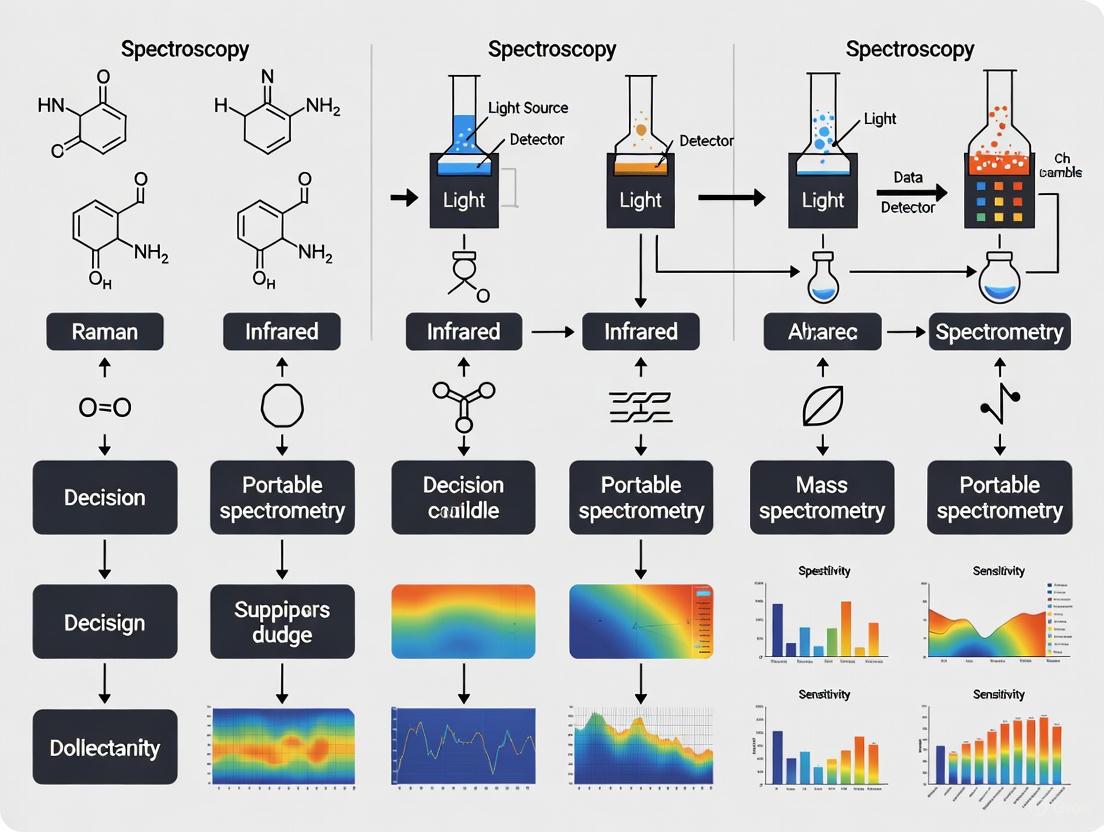
This article provides a comparative analysis of portable spectroscopy techniques—including NIR, Raman, FTIR, and LIBS—for researchers and professionals in drug development and biomedical science.
Portable Spectroscopy in Biomedicine: A Comparative Analysis of Techniques, Applications, and Validation for Researchers
Abstract
This article provides a comparative analysis of portable spectroscopy techniques—including NIR, Raman, FTIR, and LIBS—for researchers and professionals in drug development and biomedical science. It explores the foundational principles and technological advancements driving miniaturization, details specific methodological applications from raw material verification to counterfeit drug detection, and addresses key troubleshooting and optimization challenges. A critical validation section compares the performance of portable devices against gold-standard benchtop methods, synthesizing findings to outline future directions for integrating these powerful, on-site analytical tools into biomedical research and clinical practice.
The Rise of Portable Spectroscopy: Core Principles and Technological Advances
Performance Comparison: Benchtop vs. Handheld Spectrometers
The transition from benchtop to handheld spectroscopy involves critical trade-offs between performance and portability. The following data, synthesized from recent instrument specification sheets and peer-reviewed comparative studies, provides an objective comparison.
Table 1: Key Performance Metrics for UV-Vis Spectrometers
| Metric | Benchtop (e.g., Agilent Cary 3500) | Handheld (e.g., Ocean Insight STS) | Handheld (e.g., B&W Tek exemplar+) |
|---|---|---|---|
| Wavelength Range | 190 – 1100 nm | 200 – 850 nm | 200 – 1100 nm |
| Optical Resolution (FWHM) | < 0.05 nm | ~ 0.7 nm | ~ 1.5 nm |
| Signal-to-Noise Ratio | 50,000:1 (at 500 nm) | 500:1 (at 500 nm) | 300:1 (at 500 nm) |
| Photometric Accuracy | ±0.0003 A | ±0.003 A | ±0.005 A |
| Stray Light | < 0.00008% at 220 nm (NaI) | < 0.1% at 220 nm | < 0.3% at 220 nm |
| Measurement Time | 0.1 – 10 s (typical) | 10 ms – 65 s (adjustable) | 8 ms – 10 s (adjustable) |
| Weight & Portability | 35 kg (Fixed) | 0.45 kg (Highly Portable) | 0.9 kg (Highly Portable) |
Table 2: Comparative Analysis of Raman Spectrometers
| Metric | Benchtop (e.g., Thermo Fisher DXR3) | Handheld (e.g., Thermo Fisher Truscan RM) | Handheld (e.g., B&W Tek i-Raman Pro) |
|---|---|---|---|
| Laser Excitation | 532 nm, 785 nm | 785 nm | 785 nm |
| Spectral Range | 50 – 3500 cm⁻¹ | 250 – 2875 cm⁻¹ | 175 – 4200 cm⁻¹ |
| Spectral Resolution | < 1 cm⁻¹ | 8 – 10 cm⁻¹ | 3.5 cm⁻¹ |
| Signal-to-Noise Ratio | > 10,000:1 | > 400:1 | > 1000:1 |
| CCD Cooling | -70 °C (Deep Cooling) | Thermo-electric (0 °C) | Thermo-electric (-15 °C) |
Experimental Protocols for Performance Validation
Protocol 1: UV-Vis Resolution and Stray Light Assessment
Objective: To quantitatively compare the resolution and stray light of benchtop and handheld UV-Vis instruments. Materials: Deuterium and Tungsten-Halogen light source, 0.02% w/v Toluene in Hexane, 1.0 A Absorbance Standard, 50 g/L Sodium Iodide (NaI) solution, 1 cm pathlength quartz cuvettes. Method:
- Resolution: Record the absorption spectrum of the Toluene in Hexane solution from 250 to 280 nm. Measure the peak-to-valley ratio between the fine structure peaks at 269 nm and 266 nm. A higher ratio indicates superior resolution.
- Stray Light: Fill a cuvette with the NaI solution. Set the instrument wavelength to 220 nm and measure the apparent absorbance. High stray light results in a lower than expected absorbance reading, as stray light outside the 220 nm band is not absorbed.
- Photometric Accuracy: Measure the absorbance of the 1.0 A standard at 540 nm. Compare the measured value to the certified value.
Protocol 2: Raman Spectroscopy Performance Benchmarking
Objective: To evaluate the sensitivity and fluorescence rejection capabilities of Raman spectrometers. Materials: Polystyrene calibration standard, 99% pure Acetaminophen powder, 10% w/w Rhodamine 6G in Methanol (fluorescence source). Method:
- Sensitivity & Resolution: Acquire a Raman spectrum of the polystyrene standard. Measure the signal-to-noise ratio of the 1002 cm⁻¹ peak and the full width at half maximum (FWHM) of this peak.
- Fluorescence Rejection: Acquire a spectrum of the Acetaminophen powder. Then, apply a thin layer of the Rhodamine 6G solution to the sample and reacquire the spectrum. The instrument's ability to detect the Acetaminophen Raman peaks (e.g., 1650 cm⁻¹ Amide I band) amidst the fluorescent background is assessed.
Experimental Workflow and Selection Logic
Title: Spectrometer Selection Workflow
Title: Raman Scattering Pathway
The Scientist's Toolkit: Research Reagent Solutions
| Item | Function |
|---|---|
| NIST-Traceable Wavelength Standards (e.g., Holmium Oxide filter) | Calibrates the wavelength axis of the spectrometer to ensure measurement accuracy. |
| Certified Absorbance Standards | Verifies the photometric scale (Absorbance units) of UV-Vis instruments. |
| Polystyrene Raman Standard | Provides a known Raman spectrum for calibrating wavelength, resolution, and intensity. |
| 99.9% Spectroscopic Grade Solvents (e.g., Acetonitrile, Hexane) | Minimize interfering absorbance or fluorescence backgrounds in sample preparation. |
| Portable Integration Spheres (for reflectance) | Enables quantitative diffuse reflectance measurements with handheld instruments in the field. |
The evolution of spectroscopic techniques has profoundly transformed analytical capabilities across scientific and industrial landscapes. Near-Infrared (NIR), Fourier-Transform Infrared (FTIR), Raman, and Laser-Induced Breakdown Spectroscopy (LIBS) each offer unique mechanisms for material characterization. For researchers and drug development professionals, understanding the comparative advantages and limitations of these techniques is crucial for method selection and implementation. This guide provides an objective comparison of these core spectroscopic techniques, supported by experimental data and analysis of their applications in modern research contexts, with particular attention to the growing integration of artificial intelligence and machine learning for enhanced data analysis.
Technique Fundamentals and Principles
Each spectroscopy technique operates on distinct physical principles, defining its analytical capabilities and ideal application scenarios.
NIR Spectroscopy utilizes the absorption of light in the 780–2526 nm range to excite overtones and combinations of fundamental molecular vibrations, primarily of hydrogen-containing groups (O–H, C–H, N–H). Its spectra contain broad, overlapping peaks, often requiring advanced chemometrics for interpretation [1].
FTIR Spectroscopy is based on absorption of infrared light that excites fundamental molecular vibrations. Using an interferometer and Fourier transform processing, FTIR provides detailed information on functional groups and molecular structure through characteristic absorption bands. Various sampling techniques like Attenuated Total Reflection (ATR) enhance its versatility for different sample types [2].
Raman Spectroscopy relies on inelastic scattering of monochromatic light, typically from a laser. The energy shifts in scattered photons provide information about vibrational and rotational modes in molecules. Raman is particularly valuable for its minimal sample preparation, non-destructive nature, and effectiveness in analyzing aqueous solutions since water exhibits weak Raman scattering [3].
LIBS (Laser-Induced Breakdown Spectroscopy) employs a highly energetic laser pulse to ablate a small amount of material and generate a microplasma. The analysis of atomic emission lines from the cooling plasma enables elemental identification and quantification. LIBS performs rapid, stand-off chemical analysis with minimal to no sample preparation [4] [5].
Comparative Performance Analysis
The table below summarizes the key characteristics and performance metrics of the four spectroscopic techniques based on current literature and experimental studies.
Table 1: Core Technical Characteristics and Performance Comparison
| Parameter | NIR | FTIR | Raman | LIBS |
|---|---|---|---|---|
| Primary Information | Molecular overtone/combination vibrations | Fundamental molecular vibrations | Molecular vibrations, crystal structure | Elemental composition |
| Spatial Resolution | Lower [6] | Moderate | High (<5 µm) [3] | Typically 10s-100s µm |
| Measurement Speed | Very fast (seconds) [6] [7] | Fast | Traditionally slow, now faster with new systems [6] | Very fast (seconds) [4] |
| Sample Preparation | Minimal | Varies (none for ATR) | Minimal [3] | Minimal/none [4] |
| Penetration Depth | High | Moderate | Shallow | Surface ablation |
| Quantitative Performance | Excellent with calibration | Excellent | Good | Good with chemometrics [4] |
| Key Advantage | Speed, in-line capability [6] | Rich molecular structure information | Spatial resolution, aqueous compatibility [3] | Elemental analysis, stand-off capability [5] |
| Primary Limitation | Broad peaks, complex interpretation [1] | Water interference | Fluorescence interference [6] | Matrix effects [8] |
Table 2: Experimental Performance in Pharmaceutical Dissolution Profile Prediction [6]
| Technique | Average f₂ Value | HPMC Concentration Prediction | Particle Size Prediction |
|---|---|---|---|
| Raman Imaging | 62.7 | Accurate trend following | Consistent with expected range |
| NIR Imaging | 57.8 | Higher standard deviation | Consistently predicted smaller sizes |
Experimental Protocols and Methodologies
Pharmaceutical Dissolution Prediction (NIR vs. Raman)
A direct comparative study evaluated NIR and Raman imaging for predicting drug release rates from sustained-release tablets containing hydroxypropyl methylcellulose (HPMC). The experimental methodology encompassed:
- Sample Preparation: Sustained-release tablets with varying HPMC concentrations and particle sizes were manufactured.
- Chemical Imaging: Both NIR and Raman chemical maps were collected from tablet surfaces. NIR measurements were notably faster.
- Spectral Processing: Classical Least Squares (CLS) processing generated concentration maps of HPMC distribution.
- Feature Extraction: A Convolutional Neural Network (CNN) extracted HPMC particle size information from chemical images.
- Dissolution Modeling: An Artificial Neural Network (ANN) with a single hidden layer used the averaged HPMC concentration and predicted particle size as inputs to forecast dissolution profiles [6].
This rigorous protocol demonstrated both techniques could accurately predict dissolution, with Raman slightly outperforming in accuracy but NIR excelling in measurement speed.
Multi-Distance LIBS Classification with Deep Learning
Addressing the challenge of varying detection distances in practical LIBS applications (e.g., Mars exploration), researchers developed a sophisticated methodology:
- Instrumentation: A laboratory duplicate of the MarSCoDe LIBS instrument (China's Zhurong rover payload) was employed with a Nd:YAG laser (1064 nm, 9 mJ pulse energy).
- Sample Set: 37 certified geochemical reference materials processed into tablets, categorized into six classes (e.g., Carbonate Mineral, Clay, Metal Ore).
- Data Acquisition: LIBS spectra collected at eight distinct distances (2.0m to 5.0m), with 60 spectra per sample per distance, totaling 17,760 spectra.
- Preprocessing: Dark background subtraction, wavelength calibration, ineffective pixel masking, spectrometer channel splicing, and background baseline removal.
- Model Architecture: A Deep Convolutional Neural Network (CNN) was implemented with an optimized spectral sample weighting strategy that assigned tailored weights based on detection distance, improving classification accuracy from 83.61% to 92.06% compared to equal-weight schemes [5].
This approach demonstrated that modern machine learning can effectively overcome traditional LIBS limitations like distance-dependent spectral variations.
Figure 1: LIBS Multi-Distance Classification Workflow
Self-Supervised Learning for Small-Sample NIR Classification
To overcome NIR spectroscopy's traditional dependency on large labeled datasets, researchers developed a novel framework:
- Architecture: A Convolutional Neural Network (CNN)-based Self-Supervised Learning (SSL) framework with two stages.
- Pre-training Phase: The model learned intrinsic spectral features using pseudo-labeled data without human intervention.
- Fine-tuning Phase: The pre-trained model was optimized using a small set of labeled data.
- Validation: The method achieved remarkable accuracy across diverse datasets: 99.12% for tea varieties, 97.83% for mango varieties, 98.14% for pharmaceutical tablets, and 99.89% for coal types, even with only 5% labeled data [1].
This approach significantly reduces dependency on domain expertise and extensive labeling while maintaining high classification accuracy.
Research Toolkit: Essential Materials and Solutions
Table 3: Essential Research Toolkit for Advanced Spectroscopy
| Item/Solution | Function/Purpose | Example Applications |
|---|---|---|
| Hydroxypropyl Methylcellulose (HPMC) | Model sustained-release agent in pharmaceutical formulations [6] | Dissolution profile prediction studies |
| Certified Reference Materials (GBW Series) | Standardized materials for instrument calibration and validation [5] | LIBS method development, geochemical classification |
| Portable/Hyperspectral Imaging Systems | Enable chemical mapping and spatial distribution analysis [6] | Tablet homogeneity assessment, material characterization |
| Chemometric Software (PCA, PLS, ANN) | Extract meaningful information from complex spectral data [2] | Quantitative analysis, classification, pattern recognition |
| Convolutional Neural Networks (CNN) | Advanced pattern recognition in spectral and spatial data [6] [5] [1] | Particle size determination, small-sample classification |
| Self-Supervised Learning Framework | Enables accurate classification with minimal labeled data [1] | NIR analysis with limited training datasets |
Application-Specific Recommendations
Pharmaceutical Development
- Formulation Analysis: Raman spectroscopy excels in monitoring polymerization reactions, quantifying active ingredients, and detecting polymorphic forms due to its sensitivity to subtle structural changes and compatibility with aqueous environments [3] [9].
- Quality Control & Dissolution Prediction: Both NIR and Raman imaging effectively predict dissolution profiles, with NIR offering faster measurements suitable for real-time quality assurance, while Raman provides slightly higher accuracy and better spatial resolution for component distribution [6].
- Counterfeit Detection: Portable NIR and Raman systems enable rapid screening of pharmaceutical products through packaging, with demonstrated success in identifying falsified medications and detecting over 650 active pharmaceutical ingredients in field settings [7] [2].
Material Science & Geochemical Analysis
- Elemental Analysis: LIBS provides rapid, stand-off elemental analysis capabilities ideal for geochemical classification, metallurgy, and planetary exploration, particularly when combined with machine learning for classification [4] [5] [8].
- Carbon Materials & Polymers: Raman spectroscopy is unparalleled for characterizing carbon allotropes (graphene, nanotubes), analyzing polymer degradation, and investigating microstructures in advanced materials [3].
- Composite Materials: FTIR delivers comprehensive molecular structure information for polymers, coatings, and ceramics, facilitating understanding of material behavior and performance characteristics [10].
Biomedical & Clinical Applications
- Disease Diagnosis: FTIR shows significant potential for rapid diagnosis of various pathologies, including fibromyalgia, rheumatoid disorders, and COVID-19, through bloodspot, saliva, or urine analysis with high sensitivity and specificity [2].
- Cellular & Protein Studies: Raman spectroscopy enables non-destructive analysis of cells, proteins, DNA, and tissues, even in aqueous environments, making it valuable for biological research and disease marker detection [3].
- Lipid Research: FTIR with ATR accessories facilitates detection and characterization of various phospholipids and sphingolipids in biological samples, advancing understanding of cellular processes [2].
The comparative analysis of NIR, FTIR, Raman, and LIBS techniques reveals distinct strengths aligning with specific application requirements in research and drug development. NIR spectroscopy offers unparalleled speed for real-time process monitoring and quality control. FTIR provides comprehensive molecular structure information across diverse sample types. Raman spectroscopy delivers high spatial resolution and specificity for detailed material characterization. LIBS enables rapid elemental analysis with unique stand-off capability. The integration of artificial intelligence, particularly convolutional neural networks and self-supervised learning frameworks, is dramatically enhancing all four techniques, improving classification accuracy, enabling small-sample analysis, and overcoming traditional limitations. Selection should be guided by the specific analytical question—molecular structure, elemental composition, spatial distribution, or process dynamics—with the understanding that these techniques often provide complementary rather than competing information.
The field of analytical science is undergoing a significant transformation, driven by a growing need for immediate, data-driven decisions directly at the point of need. For researchers, scientists, and drug development professionals, this shift from centralized laboratories to decentralized, on-site analysis is redefining operational workflows. Portable spectroscopy techniques are at the forefront of this change, offering the powerful capabilities of traditional benchtop instruments in compact, field-deployable formats. The global portable spectrometer market, valued at $1,675.7 million in 2020, is a testament to this trend, projected to reach $4,065.7 million by 2030, registering a compound annual growth rate (CAGR) of 9.1% [11]. Another analysis focusing on handheld devices projects the market will reach approximately USD 1.5 billion by 2025, growing at a CAGR of 6.5% through 2033 [12]. This growth is fueled by key drivers including advancements in sensor technology, stringent regulatory requirements for quality control, and a pervasive industry-wide emphasis on efficiency and rapid decision-making [12]. This guide provides an objective comparison of leading portable spectroscopy techniques, supporting a broader thesis on their evolving role in scientific research.
Quantitative Market and Technology Landscape
The demand for on-site analysis is reflected in both market projections and the specific technological advantages of portable systems. The following tables summarize key quantitative data.
Table 1: Global Market Outlook for Portable Spectrometers
| Market Segment | 2020/2021 Baseline Value | 2030 Projected Value | Projected CAGR | Key Drivers |
|---|---|---|---|---|
| Overall Portable Spectrometer Market | $1,675.7 Million (2020) [11] | $4,065.7 Million [11] | 9.1% (2021-2030) [11] | Demand for rapid, on-site analysis; technological advancements [11] |
| Portable Handheld Spectrometer Market | N/A | ~$1.5 Billion (2025) [12] | 6.5% (2025-2033) [12] | Quality control, regulatory compliance, need for immediate decision-making [12] |
| World Production of Portable Handheld Spectrometers | N/A | N/A | N/A | Advancements in miniaturization, sensitivity, and demand for on-site solutions [12] |
Table 2: Comparative Analysis of Portable Spectroscopy Technologies
| Technique | Key Strengths | Common Applications | Limitations |
|---|---|---|---|
| Portable NIR [13] | Rapid quantification of key parameters (moisture, protein, fat); intuitive use; cloud-based data | Agriculture (harvest timing), pharmaceuticals (raw material ID), food safety [13] | Lower resolution than benchtop NIR; requires robust calibration models |
| Portable LIBS [14] | Measures lighter elements (C, N, P, Na, Mg); suitable for soil NPK testing | Soil health analysis, elemental analysis in agriculture [14] | Less effective for heavier elements compared to XRF; can be destructive |
| Portable Raman [11] [15] | Molecular fingerprinting; requires no sample preparation; non-invasive | Biopharmaceutical process monitoring, counterfeit drug detection [11] [15] | Can be susceptible to fluorescence interference; weaker signal |
| Portable XRF [14] [11] | Strong elemental analysis for heavier metals | Metal identification, mining, environmental testing for heavy metals [12] | Cannot measure lighter elements (C, N, P); limited organic analysis [14] |
The value proposition of portable systems is further clarified by a direct comparison with traditional benchtop instruments. Portable NIR solutions, for instance, offer distinct advantages in portability, cost efficiency, and ease of use, with lower upfront costs and reduced maintenance [13]. Crucially, with advancements in prediction modeling, portable NIR is now achieving a level of accuracy comparable to traditional table-top systems, accelerating the shift towards more flexible and efficient solutions [13].
Experimental Protocols for On-Site Analysis
To illustrate the practical application of these techniques, the following are detailed methodologies for key experiments cited in recent literature.
Protocol 1: Inline Raman Spectroscopy for Bioprocess Monitoring
This protocol is used for real-time monitoring of product aggregation and fragmentation during clinical bioprocessing [15].
- Setup Integration: A Raman spectrometer with a fiber-optic probe is integrated directly into the bioreactor. The system is coupled with hardware automation and machine learning software for data processing.
- Calibration and Modeling: Develop a chemometric model using historical process data to correlate Raman spectral features with critical quality attributes (CQAs) like aggregation and fragmentation.
- Real-Time Data Acquisition: The automated system collects spectra at predefined intervals (e.g., every 38 seconds). The robotic system reduces calibration and validation efforts and increases data throughput.
- Spectral Analysis: Acquired spectra are processed in real-time using the pre-trained machine learning model to quantify the levels of aggregation and fragmentation.
- Process Control: The results are fed back to the process control system, enabling immediate adjustments to bioprocess parameters to maintain product quality within specified limits.
Protocol 2: Handheld XRF for Forensic Analysis of Cigarette Ash
This non-destructive technique provides a method for forensic investigation by differentiating tobacco brands based on elemental composition [11].
- Sample Preparation: Cigarette ash is collected and placed on a clean, stable surface. No further preparation is required, preserving sample integrity.
- Instrument Calibration: The handheld XRF (HHXRF) spectrometer is calibrated using a standard reference material appropriate for light element analysis in organic matrices.
- Measurement: The HHXRF probe is placed in direct contact with the ash sample. Multiple measurements are taken for a set time (e.g., 30-60 seconds) to ensure a representative elemental profile.
- Data Collection: The instrument generates a spectrum and provides quantitative or semi-quantitative data on the concentration of elements present in the ash.
- Statistical Analysis: Multivariate statistical analysis (e.g., Principal Component Analysis) is performed on the elemental concentration data from various brands to identify distinguishing patterns and differentiate between them.
Protocol 3: Portable LIBS for Soil NPK Analysis
This protocol enables on-site assessment of soil health by measuring essential nutrients [14].
- Sampling: Collect soil samples from a representative area of a field. The samples may be lightly homogenized.
- Analysis: A portable LIBS instrument is positioned so its laser pulse is directed onto the soil sample. The laser ablates a micro-volume of the sample, creating a plasma.
- Light Collection and Detection: The emitted light from the plasma is collected by the instrument's optics and resolved by a spectrometer.
- Spectral Identification: The unique atomic emission lines for nitrogen (N), phosphorus (P), and potassium (K) are identified within the spectrum.
- Quantification: The intensity of these characteristic lines is measured and converted into concentration values for each nutrient using built-in calibration algorithms, providing immediate NPK values.
The workflow for a generalized on-site analysis campaign, from planning to decision-making, is visualized below.
The Scientist's Toolkit: Essential Research Reagent Solutions
The effective implementation of the experimental protocols above relies on a suite of essential materials and reagents.
Table 3: Key Research Reagent Solutions for Portable Spectroscopy
| Item | Function in Experimental Protocol |
|---|---|
| Bioprocess Cell Culture Media [15] | Serves as the nutrient medium for cell growth in biopharmaceutical production; its composition is critical for inline Raman monitoring of product quality. |
| Protein A Affinity Resin [15] | Used in chromatography for monoclonal antibody (mAb) purification; optimization is monitored via inline UV-vis spectroscopy. |
| Size Exclusion Chromatography (SEC) Columns [15] | Used in SEC-ICP-MS protocols to separate protein-bound metals from free metals in solution for ultra-trace metal analysis in therapeutic proteins. |
| Co-crystal Co-formers (e.g., Nicotinamide) [15] | Used in pharmaceutical co-crystallization to improve drug properties like solubility; the resulting crystalline identity is characterized by PXRD. |
| Monoclonal Antibody (mAb) Standards [15] | Provide reference material for calibrating spectroscopic methods like Raman and UV-vis during bioprocess development and quality control. |
| Stable Isotope-Labeled Standards | Used with ICP-MS for precise and accurate quantification of trace elements in complex matrices like cell culture media or pharmaceutical products. |
The convergence of technological miniaturization, enhanced data analytics, and the pressing need for operational efficiency solidifies the role of portable spectroscopy as an indispensable tool in modern research and industry. For researchers and drug development professionals, these techniques are not merely convenient alternatives but are pivotal in enabling real-time process understanding, ensuring product quality, and accelerating development cycles. As machine learning and AI integration deepen, the capabilities and accuracy of portable instruments will continue to expand, further blurring the line between the laboratory and the field and firmly establishing on-site analysis as the new paradigm in analytical science.
The evolution of spectroscopy from a confined laboratory technique to a versatile field-deployable tool rests on three critical technological enablers: miniaturization, battery technology, and connectivity. These pillars have collectively transformed portable spectrometers from specialized novelties into powerful instruments that rival their benchtop counterparts in performance while offering unprecedented analytical flexibility. Miniaturization has progressed beyond simply shrinking components to fundamentally re-engineering spectroscopic systems using micro-optical-electro-mechanical systems (MEMS), organic photodetectors, and bias-tunable photodetectors that can fit on a smartphone [16] [17]. Concurrently, advances in battery technology have enabled extended field operation, while sophisticated connectivity solutions have created seamless data exchange ecosystems. This transformation is driving a massive market expansion, with the portable spectrometer market projected to grow from $1.68 billion in 2020 to over $4.06 billion by 2030, registering a compound annual growth rate of 9.1% [11]. Within this sector, the miniaturized spectrometer segment specifically is expected to reach $1.91 billion by 2029 [17]. This guide provides a comparative analysis of how these enablers are reshaping spectroscopic capabilities across research and drug development applications.
Miniaturization Technologies: Core Architectures and Performance
Miniaturization represents the foundational enabler, with multiple technological pathways achieving instrument portability through different physical principles.
Miniaturization Architecture Comparison
Table 1: Comparative Analysis of Miniaturization Technologies in Portable Spectroscopy
| Technology | Physical Principle | Spectral Range | Key Advantages | Performance Limitations | Representative Devices |
|---|---|---|---|---|---|
| MEMS-Based | Micro-fabricated optical components | UV to NIR | Mass production potential, low cost | Limited resolution vs. benchtop | Various smartphone spectrometers |
| Filter-Based | Tunable or fixed filters | UV-Vis to NIR | Simplicity, robustness | Limited spectral range | Portable NIR devices |
| Fabry-Perot | Tunable interferometer | UV to NIR | High spectral resolution | Temperature sensitivity | Specialized gas sensors |
| Bias-Tunable OPD | Voltage-dependent spectral response [16] | 400-1000 nm | Ultra-compact (pixel-sized) | Emerging technology | NC State prototype [16] |
| Traditional Miniaturized | Shrunk conventional optics | Full spectrum | Performance continuity | Size/weight tradeoffs | Handheld Raman, XRF [18] |
The NC State University breakthrough demonstrates how miniaturization extremes are being achieved through organic photodetectors (OPDs) with bias-tunable spectral response. This technology operates at less than 1 volt and can complete spectral measurements in under a millisecond, achieving sensitivity comparable to commercial photodetection devices despite its millimeter-scale dimensions [16].
Performance Tradeoffs in Miniaturized Systems
Miniaturization necessitates careful balancing of performance parameters. Portable near-infrared (NIR) systems typically exhibit slightly reduced signal-to-noise ratios and resolution compared to benchtop systems, though the practical impact varies by application.
In a direct comparison study evaluating benchtop Fourier-transform NIRS (FT-NIRS, 1000-2500 nm) versus portable short wave NIRS (SW-NIRS, 740-1070 nm) for detecting citric acid adulteration in lime juice, both systems achieved high accuracy (94% for PLS-DA models), with the benchtop system showing marginally better performance in class-modeling approaches (98% vs. 94.5% for portable SW-NIRS) [19]. This minimal performance differential demonstrates how portable systems now deliver sufficient accuracy for many field applications.
Battery Technology: Powering Extended Field Operation
Advanced battery systems provide the operational independence essential for field-deployable spectroscopy, with performance requirements varying significantly by technique.
Battery Performance Requirements by Technique
Table 2: Battery Technology Requirements Across Spectroscopic Techniques
| Spectroscopy Technique | Typical Power Requirements | Field Operation Time | Charging Considerations | Application Constraints |
|---|---|---|---|---|
| Portable NIRS | Low to moderate | 4-8 hours | Standard charging | Minimal |
| Handheld Raman | Moderate | 4-6 hours | Fast charging beneficial | None |
| Handheld XRF | Moderate to high | 4-6 hours | Often hot-swappable batteries | None |
| fNIRS Neuroimaging | Low | >50 hours continuous [20] | Extended life critical | Patient monitoring constraints |
| LIBS | High | 3-5 hours | Power management critical | None |
Advanced Power Management through Impedance Spectroscopy
A groundbreaking development in battery technology directly impacts spectroscopic applications: dynamic impedance spectroscopy for real-time battery monitoring. Researchers at Fraunhofer IFAM have developed this method to perform high-resolution measurements (up to 1 million times per second) of battery status during operation, enabling predictive safety management and lifespan extension [21]. This technology allows battery management systems to immediately respond to dangerous conditions like local overheating—a critical safety advancement for sensitive research applications where power interruptions could compromise valuable experimental data.
Connectivity Ecosystems: Data Flow and Integration
Connectivity forms the third critical enabler, transforming portable spectrometers from data collection devices into networked analytical nodes.
Connectivity Architecture in Portable Spectroscopy
The connectivity ecosystem encompasses multiple layers:
- Device-Level Connectivity: Bluetooth and Wi-Fi enable real-time data transfer from spectrometer to mobile devices or directly to cloud platforms [20] [17].
- Cloud Integration: Cloud-based spectral data management facilitates instant analysis, sharing across research teams, and access to expanding spectral libraries [13].
- AI-Enhanced Analytics: Integration with AI-powered analytical tools, such as those demonstrated by Anritsu's frequency spectrum awareness systems, enables sophisticated signal detection and classification that surpasses conventional analysis methods [22].
- Cybersecurity Protocols: For medical and pharmaceutical applications, Internet of Medical Things (IoMT) security protocols, including Graph Convolutional Network (GCN)-transformer AI models to detect cyberattacks, ensure data integrity and regulatory compliance [20].
Experimental Data Integration Workflow
The following diagram illustrates how connectivity enables end-to-end experimental data flow in modern portable spectroscopy applications:
Comparative Experimental Data: Portable vs. Benchtop Performance
Rigorous comparative studies provide the evidence base for evaluating portable spectrometer capabilities relative to traditional benchtop systems.
Experimental Protocol: Food Adulteration Detection
Objective: To compare the performance of benchtop FT-NIRS and portable SW-NIRS spectrometers for detecting citric acid adulteration in lime juice [19].
Methodology:
- Sample Preparation: 16 authentic lime fruit samples authenticated by botanical experts, with juices prepared using cold press method and homogenized with ultra-turrax homogenizer. 28 adulterated samples provided by food regulatory authorities with adulteration confirmed via LC-MS/MS reference method.
- Spectral Acquisition:
- Benchtop FT-NIRS: Buchi N-500 spectrometer, 1000-2500 nm range, 4 cm⁻¹ resolution, 2 mm pathlength cuvette, triplicate measurements.
- Portable SW-NIRS: 740-1070 nm range, identical sample presentation protocol.
- Chemometric Analysis: Principal Component Analysis (PCA) for exploratory analysis, Partial Least Squares Discriminant Analysis (PLS-DA) for discriminant modeling, and Soft Independent Modeling of Class Analogy (SIMCA) for class modeling. Data preprocessing with Standard Normal Variate (SNV) and multiplicative scatter correction.
Results: The benchtop system demonstrated marginally superior performance with 98% overall accuracy in SIMCA modeling compared to 94.5% for the portable system. However, the portable system achieved equivalent accuracy (94%) in PLS-DA models, indicating sufficient performance for field screening applications [19].
Experimental Protocol: Muscle Oxygenation Monitoring in Athletics
Objective: To evaluate the reliability of wearable near-infrared spectroscopy (NIRS) for monitoring muscle oxygen saturation (SmO₂) in trained cyclists [11].
Methodology:
- Device: Commercially available Moxy muscle oximeter (wearable NIRS monitor).
- Study Design: Measurements on trained cyclists during standardized exercise protocols, with assessment of inter-session reliability and side-to-side differences.
- Data Analysis: Intraclass correlation coefficients for reliability, paired statistical tests for side differences.
Results: The wearable NIRS device demonstrated good reliability for SmO₂ measurement but revealed statistically significant side-to-side differences that must be accounted for in practical applications—highlighting both the capability and consideration requirements for wearable spectroscopic monitoring [11].
The Scientist's Toolkit: Essential Research Solutions
Successful implementation of portable spectroscopy in research and drug development requires specific technical solutions across multiple application domains.
Research Reagent and Essential Materials
Table 3: Key Research Reagent Solutions for Portable Spectroscopy Applications
| Material/Reagent | Function | Application Examples | Technical Considerations |
|---|---|---|---|
| Certified Reference Materials (CRMs) | Instrument calibration and validation | All quantitative applications | Matrix-matched to samples; traceable certification |
| SERS Substrates | Signal enhancement for Raman | Biomarker detection, pharmaceutical analysis [20] | Noble metal nanoparticles; reproducible fabrication |
| Optical Phantoms | System validation for biomedical apps | fNIRS, tissue oximetry calibration | Stable optical properties; tissue-simulating |
| Stabilization Buffers | Sample integrity for field analysis | Biofluid analysis (sweat, saliva) | Enzyme inhibition; composition preservation |
| Surface Modification Reagents | Enhanced specificity for sensors | Molecularly imprinted polymers; aptamer functionalization | Binding affinity; non-specific blocking |
The convergence of miniaturization, advanced battery technology, and robust connectivity has established portable spectroscopy as a indispensable tool rather than a compromised alternative. Technical comparisons demonstrate that performance differentials between portable and benchtop systems have narrowed sufficiently to make portable instruments viable for most field applications and many laboratory scenarios. For researchers and drug development professionals, selection criteria should emphasize application-specific requirements: detection limits, required spectral resolution, operational environment, and data integration needs. The documented capabilities in pharmaceutical analysis, food safety, biomedical monitoring, and materials characterization provide a robust evidence base for strategic technology adoption. As these enabling technologies continue to advance, portable spectroscopic systems will increasingly become the primary rather than supplemental analytical solution across the research continuum.
Methodology in Action: Deploying Portable Spectrometers in Biomedical and Pharmaceutical Workflows
Pharmaceutical Raw Material Identification and Verification
In the pharmaceutical industry, verifying the identity of raw materials is a fundamental quality control (QC) requirement mandated by regulations such as 21 CFR 211.84, which stipulates that at least one test must be performed to confirm the identity of each component of a drug product [23]. Traditional methods often involve sending samples to a laboratory for analysis using techniques like High-Performance Liquid Chromatography (HPLC), a process that can take several days and delay production [24]. The emergence of portable spectroscopy technologies has revolutionized this practice by enabling rapid, on-site identification of raw materials directly at the receiving dock, significantly reducing the time between material receipt and release for manufacturing [11] [24].
Portable spectrometers move the laboratory to the sample, providing specific and actionable information to operators outside the laboratory and enabling immediate, informed decision-making [11]. This guide provides an objective comparison of the three primary portable spectroscopy techniques used for raw material identification—Near-Infrared (NIR), Raman, and Mid-Infrared (Mid-IR) spectroscopy. It evaluates their performance based on speed, accuracy, and regulatory compliance, supported by experimental data and detailed protocols to aid researchers, scientists, and drug development professionals in selecting the appropriate technology for their specific applications [25].
Technology Comparison: Performance and Experimental Data
Comparative Analysis of Portable Spectroscopy Techniques
The following table summarizes the core characteristics, performance metrics, and ideal use cases for NIR, Raman, and Mid-IR spectroscopy techniques.
Table 1: Comparative Performance of Portable Spectroscopy Techniques for Raw Material Identification
| Feature | Near-Infrared (NIR) Spectroscopy | Raman Spectroscopy | Mid-Infrared (Mid-IR) Spectroscopy |
|---|---|---|---|
| Underlying Principle | Overtone and combination vibrations of C-H, N-H, O-H bonds [26] | Inelastic scattering of light by molecular vibrations [24] | Fundamental vibrational transitions of functional groups [25] |
| Typical Sample Presentation | Directly through transparent packaging (e.g., plastic bags); diffuse reflection for solids [27] [24] | Directly through transparent packaging (e.g., glass vials, plastic bags); minimal sample prep [24] | Requires direct contact; often requires potassium bromide (KBr) pellet preparation [24] |
| Measurement Speed | Very Fast (typically 30 seconds with no sample prep) [27] | Fast (seconds to minutes, auto-optimized for signal) [24] | Moderate to Slow (sample preparation can be time-consuming) |
| Key Advantage | Rapid, non-destructive, excellent for hydrated samples | Excellent selectivity, minimal interference from water, sharp spectral peaks for fingerprinting [24] | High specificity, extensive reference libraries |
| Primary Limitation | Broad, overlapping peaks; requires chemometrics for analysis [24] | Signal can be masked by fluorescence in some compounds; weak signal for some materials [24] | Poorly suited for aqueous samples; generally not suitable for through-package analysis [24] |
| Ideal Application Scope | High-throughput raw material ID, blend homogeneity, moisture quantification [27] [28] | Identification of APIs and excipients with strong Raman scatterers; contamination detection [24] | Laboratory-based identity confirmation of specific functional groups |
Quantitative Performance Data from Experimental Studies
Experimental studies provide concrete data on the accuracy and reliability of these techniques. The following table consolidates key performance metrics from published research.
Table 2: Experimental Performance Data for Spectroscopy-Based Raw Material Identification
| Experiment Description | Technique Used | Reported Performance & Accuracy | Source/Reference |
|---|---|---|---|
| Identification of 34 chemically different solid raw materials [26] | FT-NIR (COMPARE Algorithm) | All validation samples (different batches/suppliers) passed; correlation threshold >0.98, discrimination >0.05 [26] | Spectroscopyonline.com, 2018 |
| Discrimination of 7 different grades of Avicel (microcrystalline cellulose) [26] | FT-NIR (SIMCA Algorithm) | Successfully distinguished grades based on physical properties (particle size, moisture); clear separation in PCA scores plot [26] | Spectroscopyonline.com, 2018 |
| Authentication of 28 common pharmaceutical excipients and APIs [24] | Handheld Raman (Probability-Based Algorithm) | 28 of 32 materials successfully identified; 4 materials (e.g., talc, colloidal silica) gave weak signals or fluorescence [24] | PharmTech.com, 2008 |
| Detection of glycerin contamination with 20% diethylene glycol [24] | Handheld Raman (Probability-Based Algorithm) | Wavelength correlation incorrectly passed (r=0.96), but probability-based algorithm correctly failed (p-value = 3.2 × 10⁻³) [24] | PharmTech.com, 2008 |
Experimental Protocols for Raw Material Verification
Protocol 1: Raw Material Identity Verification using Portable NIR Spectroscopy
This protocol is adapted from a study on verifying pharmaceutical raw materials using FT-NIR spectroscopy [26].
- Principle: A sample's NIR spectrum, caused by overtone and combination bands of fundamental molecular vibrations, serves as a unique fingerprint. Identification is achieved by comparing an unknown sample's spectrum against a library of reference spectra using a correlation algorithm [26].
- Materials & Equipment:
- Fourier Transform Near-Infrared (FT-NIR) spectrometer with a reflectance module.
- Glass vials or Petri dishes for solid samples.
- Library of reference spectra for all raw materials to be verified.
- Procedure:
- Instrument Calibration: Verify wavelength precision and photometric noise using manufacturer-supplied standards per pharmacopoeial guidelines (e.g., USP <856>) [27].
- Sample Presentation: Place the powdered raw material in a glass vial. For through-package verification, ensure the packaging is transparent and non-interfering.
- Spectral Acquisition: Position the vial on the NIR reflectance module and collect the spectrum. A typical method uses a wavelength range of 1000-2500 nm, 8 cm⁻¹ resolution, and 32 scans per spectrum [26].
- Data Analysis (COMPARE Algorithm):
- The software calculates the correlation coefficient (r) between the unknown spectrum and each reference spectrum in the library.
- A perfect match yields a score of 1. The sample "passes" if the correlation to the correct reference exceeds a pre-set threshold (e.g., 0.98) and the discrimination from the second-best match is sufficient (e.g., >0.05) [26].
- Troubleshooting: For chemically similar materials (e.g., different grades of cellulose), advanced chemometric algorithms like SIMCA (Soft Independent Modeling of Class Analogies) are required to model batch-to-batch variation and achieve discrimination [26].
Protocol 2: Raw Material Authentication using Handheld Raman Spectroscopy
This protocol is based on an experimental study using a handheld Raman spectrometer for raw-material authentication [24].
- Principle: Monochromatic laser light interacts with a sample, causing inelastic (Raman) scattering. The resulting shifts in photon energy provide a vibrational fingerprint specific to the molecule's covalent bonds [24].
- Materials & Equipment:
- Handheld Raman spectrometer (e.g., 785 nm laser, cooled CCD detector).
- Transparent packaging (e.g., polyethylene bags) or glass vials.
- Procedure:
- Method Selection: From the instrument's menu, select the analytical method corresponding to the raw material to be authenticated.
- Sample Presentation: Position the instrument's laser aperture against the transparent packaging or vial containing the sample.
- Automated Spectral Acquisition: Initiate the measurement. The instrument's software typically auto-optimizes parameters (exposure time, laser power, accumulations) to achieve a target signal-to-noise ratio efficiently [24].
- Data Analysis (Probability-Based Algorithm):
- The acquired spectrum is statistically compared to the reference spectrum, considering all measurement uncertainties (e.g., exposure, temperature).
- The output is a p-value, representing the probability that observed differences are due to random chance. A p-value ≥ 0.05 (default) indicates a "Pass," meaning the sample is consistent with the reference material [24].
- Troubleshooting: Some materials like talc or cellulose derivatives may fluoresce, overwhelming the Raman signal. Mitigation strategies include using a longer-wavelength laser (e.g., 1064 nm), short acquisition times, or photobleaching the sample [24].
Workflow and Decision Pathways
The following diagram illustrates the logical workflow for deploying portable spectrometers in a pharmaceutical raw material inspection process, integrating both NIR and Raman technologies based on their strengths.
Figure 1: Raw Material Verification Workflow. This workflow integrates NIR and Raman spectroscopy for efficient on-site identification, reserving laboratory methods for non-conforming or ambiguous results.
The Scientist's Toolkit: Essential Research Reagents and Materials
Successful implementation of a portable spectroscopy program requires more than just the instrument. The following table details key materials and their functions.
Table 3: Essential Materials for Spectroscopy-Based Raw Material Verification
| Item | Function/Application | Critical Notes |
|---|---|---|
| Certified Reference Materials (CRMs) | Used for instrument performance verification and method validation. Provides traceability and ensures accuracy. | Must be chemically and physically similar to production samples. |
| Robust Spectral Library | A collection of reference spectra for all raw materials, excipients, and APIs. The heart of the identification system. | Should include multiple lots and suppliers to account for natural variation. |
| Standardized Sample Containers | Glass vials or polyethylene bags for consistent presentation of samples to the spectrometer. | Transparency and consistent thickness are critical for through-package measurements [24]. |
| Chemometrics Software | Software for developing qualitative and quantitative models (e.g., SIMCA, PLS). Essential for interpreting NIR data. | Must be 21 CFR Part 11 compliant if used in a GMP environment [27]. |
| System Suitability Standards | Stable, well-characterized materials used for daily instrument qualification to ensure performance. | Typically provided by the instrument manufacturer. |
Regulatory Compliance and Industry Outlook
Portable NIR spectroscopy is recognized as a compliant technique for identity testing in major pharmacopoeias, including the United States Pharmacopeia (USP <856>) and the European Pharmacopoeia (Ph. Eur. 2.2.40) [27]. Instruments and their associated software can be configured to meet the electronic records and signature requirements of 21 CFR Part 11 [27].
The market for portable spectrometers is projected to grow significantly, from $1.68 billion in 2020 to over $4.06 billion by 2030, reflecting increasing adoption across industries, including pharmaceuticals [11]. Future advancements are focused on greater miniaturization, the integration of artificial intelligence (AI) for data interpretation, and enhanced connectivity for real-time data sharing and remote diagnostics [11] [18]. These trends promise to make portable spectroscopy even more accessible and integral to robust quality control systems in pharmaceutical manufacturing.
Detection of Substandard and Falsified (SF) Medicines
The proliferation of substandard and falsified (SF) medical products represents a critical global public health threat. The World Health Organization (WHO) estimates that 1 in 10 medical products in low- and middle-income countries is substandard or falsified, leading to severe health consequences, including treatment failure, poisoning, antimicrobial resistance, and loss of public trust in healthcare systems [29]. Substandard medicines are authorized legal products that fail to meet quality standards or specifications, whereas falsified medicines are deliberate frauds that misrepresent their identity, composition, or source [30] [29]. Addressing this challenge requires robust detection technologies that can be deployed at various points in the supply chain.
Portable spectroscopy techniques have emerged as powerful tools for the rapid, on-site identification and quantification of SF medicines. These techniques move the laboratory to the point of need, enabling researchers, regulators, and healthcare professionals to make informed decisions outside traditional lab settings [11]. This guide provides a comparative analysis of the primary portable spectroscopy techniques—Raman, Infrared (IR), and Near-Infrared (NIR) spectroscopy—evaluating their performance, applications, and limitations based on current experimental data and research. The global portable spectrometer market, valued at $1,675.7 million in 2020, is projected to reach $4,065.7 million by 2030, reflecting a compound annual growth rate (CAGR) of 9.1% and underscoring the growing importance of these technologies [11].
Comparative Analysis of Portable Spectroscopy Techniques
Performance Metrics and Experimental Data
The effectiveness of portable spectroscopy techniques is evaluated through key performance metrics such as limit of detection (LOD), accuracy, specificity, and robustness against adulterants. The following table summarizes experimental data from controlled studies, providing a direct comparison of these core techniques.
Table 1: Comparative Performance of Portable Spectroscopy Techniques for SF Medicine Detection
| Technique | Typical Limit of Detection (LOD) | Key Strengths | Key Limitations | Reported Accuracy (vs. Reference Methods) |
|---|---|---|---|---|
| Portable Raman Spectroscopy | 10-40% cocaine in mixtures [31]; Excellent for curcuminoids in turmeric [32] | Non-destructive; Can analyze through packaging; High selectivity (Category A technique) [31] | Fluorescence interference from dyes/impurities; Challenging for low-concentration mixtures [33] [31] | 97.5% True Positive Rate for cocaine in case samples (n=3,168) [31] |
| Portable IR Spectroscopy | 25% cocaine with common adulterants [33] | Less severe adulterant interference vs. Raman; Minimal fluorescence issues [33] | Lower LOD than Raman for some compounds; Contact with sample often required (ATR) [33] | Determined superior to color tests and portable Raman for cocaine HCl in a controlled study [33] |
| Portable NIR Spectroscopy | Excellent for curcuminoids in turmeric [32] | Rapid; Excellent for quantitative analysis of organic compounds; Minimal sample preparation [34] [32] | Limited sensitivity for low-dose active ingredients; Complex spectra require robust chemometric models [34] | RMSEP of 0.41% w/w for curcuminoids, demonstrating excellent agreement with benchtop NIR and HPLC [32] |
| Color-Based Field Tests | 10% cocaine with adulterants [33] | Very low cost per test; Extremely simple operation [33] | High false-positive rate (e.g., lidocaine); Destructive; Subjective interpretation [33] | Known for false positives leading to wrongful incarcerations; not reliable for definitive identification [33] |
Analysis of Experimental Results
The data reveals a clear trade-off between operational simplicity and analytical performance. Portable Raman spectrometers demonstrate high specificity and the unique advantage of analyzing substances through sealed packaging, reducing operator exposure risk [31]. However, their performance is highly dependent on sample composition, with LODs for cocaine varying between 10-40 wt% based on the cutting agent used [31]. A large-scale retrospective study comparing Raman results with Gas Chromatography–Mass Spectrometry (GC-MS) analysis of 3,168 case samples confirmed a high true positive rate (97.5%) and no false positives, underscoring its reliability for presumptive testing of street samples where drug concentration is typically high [31].
Portable IR spectroscopy was determined to be superior to both color tests and portable Raman for the on-scene analysis of cocaine HCl in a controlled experimental comparison, primarily due to a lower LOD and less severe interference from common adulterants [33]. While both IR and Raman are vibrational techniques, their complementary nature means that one may be better suited for specific analytes or sample matrices.
Portable NIR spectroscopy excels in quantitative applications, as demonstrated in food quality control, which is directly transferable to the analysis of herbal medicines and supplements. A study on turmeric powder showed that portable NIR could quantify curcuminoids with a Root Mean Square Error of Prediction (RMSEP) of 0.41% w/w, a performance on par with benchtop NIR instruments and reference HPLC methods [32]. This highlights its potential for quantifying active ingredient concentration in products, a key indicator of substandard medicines.
Detailed Experimental Protocols
To ensure reproducibility and provide a clear framework for implementation, detailed protocols for key experimental validations are outlined below.
Protocol 1: Validation of Handheld Raman Spectrometers for Drug Detection
This protocol is adapted from a comprehensive performance evaluation of a handheld Raman spectrometer for cocaine detection [31].
- Objective: To determine the Limit of Detection (LOD) and false positive/negative rates of a handheld Raman spectrometer for a target drug in the presence of common cutting agents.
- Materials:
- Handheld Raman spectrometer (e.g., TruNarc with a 785 nm laser).
- Pure reference standard of the target drug (e.g., cocaine HCl).
- Common adulterants and cutting agents (e.g., levamisole, lidocaine, paracetamol, caffeine, mannitol, procaine).
- Analytical balance.
- Methodology:
- Sample Preparation: Create binary mixtures of the target drug with each adulterant. Prepare a series of concentrations (e.g., 0%, 1%, 5%, 10%, 25%, 50%, 100% drug by mass).
- Data Acquisition: For each mixture, perform Raman analysis according to the manufacturer's instructions. A typical analysis involves pointing the spectrometer at the sample (which can be in a glass vial or plastic bag) and triggering the measurement.
- Data Analysis:
- Built-in Software: Record the binary result (positive/negative for the target drug) provided by the instrument's proprietary library search algorithm.
- Chemometric Modeling: Export the raw spectral data. Develop a combined Partial Least Squares Regression (PLS-R) and Discriminant Analysis (PLS-DA) model. Use the PLS-R model to predict the drug concentration and the PLS-DA model to classify the sample as positive or negative based on a defined concentration threshold.
- Retrospective Comparison: Compare the results from the handheld Raman analysis of actual case samples (n > 3,000) with confirmatory laboratory results from GC-MS.
- Key Outcomes: The study established that the LOD is dependent on the specific adulterant, ranging from 10-40% for cocaine. It also reported a 97.5% true positive rate and no false positives in real-world case samples, validating the device for presumptive detection [31].
Protocol 2: Benchtop vs. Portable Spectrometer Performance Comparison
This protocol, derived from a study on turmeric, provides a framework for validating portable instruments against laboratory standards [32].
- Objective: To assess the competency of portable NIR and Raman spectrometers for the quantitative determination of active ingredients by comparing their performance with benchtop instruments and a reference HPLC method.
- Materials:
- Benchtop and portable versions of NIR and Raman spectrometers.
- Reference samples (e.g., turmeric powder) with a known baseline concentration of the active ingredient (curcuminoids) via HPLC.
- Pure active ingredient standard for spiking.
- HPLC system with validated method.
- Methodology:
- Calibration Set Preparation: Use geometric dilution to create a set of samples (e.g., n=40) with a range of active ingredient concentrations (e.g., 6-13% w/w for curcuminoids).
- Spectroscopic Measurement: Acquire spectra from all samples using both benchtop and portable NIR and Raman spectrometers. Follow standard operating procedures for each instrument (e.g., sample cup filling for NIR, pellet pressing for Raman).
- Reference Method Analysis: Determine the true concentration of the active ingredient in all samples using the validated HPLC method.
- Chemometric Modeling: For each spectroscopic dataset (benchtop NIR, portable NIR, etc.), develop a Partial Least Squares Regression (PLSR) model. Use the HPLC values as the reference and the spectral data as the predictor variables.
- Validation: Use an independent set of validation samples (not used in model calibration) to test the models. Calculate performance metrics like RMSEP to compare the accuracy of the different instruments.
- Key Outcomes: The study demonstrated that portable spectrometers can achieve performance statistically equivalent to benchtop instruments, with portable NIR and Raman reporting RMSEP values of 0.41% w/w and 0.44% w/w, respectively, for curcuminoid quantification [32].
Workflow and Signaling Pathways
The process of detecting and responding to SF medicines using portable spectroscopy is a systematic sequence involving multiple stakeholders and technologies. The following diagram illustrates this integrated workflow.
The Scientist's Toolkit: Essential Research Reagents and Materials
Successful experimental validation and deployment of portable spectroscopy techniques require specific materials and reagents. The following table details key items and their functions in a typical research or screening context.
Table 2: Essential Research Reagents and Materials for SF Medicine Analysis
| Item | Function in Research & Analysis | Example Use Cases |
|---|---|---|
| Drug Reference Standards | Provides a pure spectral fingerprint for library development and instrument calibration; essential for quantitative model training. | Cocaine HCl for narcotics libraries [31]; Curcuminoid standards for herbal product analysis [32]. |
| Common Excipients & Adulterants | Used to create realistic mixture models to test specificity, LOD, and robustness of the spectroscopic method against interferences. | Lidocaine, caffeine, mannitol, paracetamol [33] [31]. |
| Validated Chemometric Models | Software models (e.g., PLS-R, PLS-DA) that translate complex spectral data into qualitative or quantitative results; can improve upon built-in algorithms. | PLS-R/DA models for cocaine quantification improved instrument performance [31]; PLSR for curcuminoid content [32]. |
| Portable Raman Spectrometer | The primary analytical device for non-destructive, through-packaging identification of substances based on molecular vibrations. | TruNarc device used for on-scene cocaine detection [31]. |
| Portable NIR Spectrometer | The primary analytical device for rapid, quantitative analysis of organic constituents and active ingredient concentration. | Used for quantification of curcuminoids in turmeric powder [32]. |
| Portable IR Spectrometer | The primary analytical device providing complementary molecular vibration data to Raman, often with less fluorescence interference. | Smiths Detection HazMatID Elite used for cocaine analysis [33]. |
Portable spectroscopy techniques provide a powerful arsenal in the fight against substandard and falsified medicines. The experimental data demonstrates that portable Raman spectroscopy is highly reliable for the presumptive identification of falsified medicines, especially in law enforcement and supply chain checkpoint scenarios. Portable NIR spectroscopy shows exceptional promise for quantifying active ingredients, making it ideal for detecting substandard products that contain insufficient API. While portable IR spectroscopy also offers robust performance, with specific advantages in certain interference scenarios.
The choice of technology is not one-size-fits-all and must be guided by the specific public health goal—whether it is rapid case-finding for enforcement action or sentinel surveillance for estimating market-wide prevalence [35]. The ongoing miniaturization and integration of these technologies, coupled with advanced chemometrics and connectivity, will further empower researchers and health professionals to safeguard the integrity of the global medicine supply chain.
In-Process Quality Control and Cleaning Validation
In the tightly regulated field of pharmaceutical manufacturing, in-process quality control and cleaning validation are critical for ensuring final product purity, patient safety, and regulatory compliance. Traditional methods often involve lengthy sample collection and laboratory analysis, creating production bottlenecks. The emergence of portable spectroscopic instruments transforms this dynamic by moving the laboratory directly to the production line and equipment surfaces, enabling real-time, on-the-spot decision-making [11] [36].
This guide provides an objective comparison of the primary portable spectroscopy techniques—Raman, Near-Infrared (NIR), Mid-Infrared (Mid-IR), and Fourier Transform Infrared (FTIR)—for in-process monitoring and cleaning validation. We summarize performance data from recent studies, detail standardized experimental protocols for fair comparison, and visualize their workflows to help scientists and drug development professionals select the optimal technology for their specific quality control challenges.
Comparative Analysis of Portable Spectroscopy Techniques
The table below provides a quantitative comparison of the four main portable spectroscopy techniques based on key performance metrics relevant to pharmaceutical quality control and cleaning validation.
Table 1: Performance Comparison of Portable Spectroscopy Techniques for Pharmaceutical QC & Cleaning Validation
| Technique | Spectral Range | Key Pharmaceutical Applications | Reported Accuracy (from studies) | Sample Preparation | Key Advantages | Primary Limitations |
|---|---|---|---|---|---|---|
| Portable Raman Spectroscopy | Typically with 785 nm or 1064 nm laser excitation | Raw material ID, counterfeit drug detection, cleaning verification (surface residue) [37] | 90-95% comparable to benchtop models [37] | Minimal; can analyze through some packaging [36] | Molecular "fingerprinting"; non-destructive; standoff detection possible [11] [36] | Fluorescence interference; limited depth penetration [37] [36] |
| Portable NIR Spectroscopy | ~780 - 2500 nm | Blend homogeneity, moisture content, identity testing, cleaning validation (TOC, residues) [11] [38] | High (R² > 0.999 in pharmaceutical QC) [39] | Minimal; can use fiber optic probes | Fast; good for organic functional groups; penetrates packaging | Complex spectra require multivariate calibration; weaker signals than Mid-IR |
| Portable FTIR Spectroscopy | Mid-IR: ~4000 - 400 cm⁻¹ | Cleaning validation (residue ID), raw material verification, contamination analysis [39] | High (R² = 0.96 in food authentication; R² = 0.88 in forensic analysis) [39] | Minimal for ATR; may require compression for transmission | High specificity; rich structural information; robust libraries | Sensitive to water; ATR contact may be required for some samples |
| Portable Mid-IR Laser Absorption Spectroscopy (LAS) | Mid-IR (specific laser lines) | Environmental monitoring (gas fluxes); potential for headspace analysis in vials and equipment [38] | High agreement for CO₂ (nRMSE: 5.79-16.70%) and N₂O (nRMSE: 14.63-24.64%) vs. GC [38] | Gas phase analysis; can be connected directly via tubing | High precision and temporal resolution; real-time gas monitoring | Currently less common for direct solid surface analysis in pharma |
Experimental Protocols for Method Evaluation
To ensure a fair and accurate comparison between different portable spectrometers, a standardized experimental methodology must be employed. The following protocol outlines the key steps for evaluating a technique's performance for cleaning validation applications.
Protocol for Swab Sampling and Analysis
This method is designed to quantitatively assess the effectiveness of equipment cleaning procedures by detecting residual Active Pharmaceutical Ingredient (API) or cleaning agent on manufacturing equipment surfaces [40].
1. Surface Preparation and Contamination:
- Use coupons (e.g., 316 stainless steel) representative of manufacturing equipment surfaces.
- Apply a known concentration of the target analyte (API or detergent) in a controlled area (e.g., 10x10 cm²).
- Allow the solvent to evaporate completely under ambient conditions or a controlled environment to create a uniform residue film.
2. Swab Sampling:
- Use a standardized swab (e.g., polyester or cotton) and a defined, validated wetting agent (e.g., isopropanol/water mixture suitable for the analyte) [41].
- Swab the surface using a consistent, pressure-controlled pattern (e.g., horizontally, vertically, and diagonally) to ensure maximum recovery.
- Immediately transfer the swab to a clean container with a known volume of extraction solvent. Shake or sonicate for a specified duration to extract the residue.
3. Spectroscopic Analysis:
- Portable NIR: Analyze the liquid extract directly in a suitable transmission vial or cuvette. Employ pre-developed Partial Least Squares (PLS) regression models to quantify the analyte concentration based on spectral features [11] [38].
- Portable Raman/FTIR: Place a droplet of the extracted solution onto an appropriate substrate (e.g., aluminum slide for Raman, ATR crystal for FTIR). Allow the solvent to evaporate, and then analyze the dried residue [39]. Quantification is achieved by comparing the peak intensity or area of key vibrational bands against a pre-established calibration curve.
4. Data Analysis and Validation:
- Calculate the amount of residue recovered per unit area (e.g., µg/cm²).
- Compare the results against the predefined acceptance criterion, which is often derived from a Health-Based Exposure Limit (HBEL) or a calculated Maximum Allowable Carryover (MACO) [41] [42].
- Report the recovery efficiency (%) for the combined swabbing and analytical method, which is critical for validating the protocol's sensitivity.
Direct Surface Analysis Protocol
For techniques capable of non-contact or direct surface measurement, this protocol offers a rapid, non-destructive assessment.
1. Surface Preparation: Follow the same procedure as in Section 3.1. 2. Instrument Measurement:
- Portable Raman: Position the spectrometer's probe at a defined standoff distance and angle from the contaminated surface. Acquire spectra with integration times optimized to achieve sufficient signal-to-noise without causing sample photodecomposition [36].
- Portable FTIR (with ATR): Bring the ATR crystal into direct, firm contact with the residue on the surface. Ensure consistent pressure across measurements to achieve reproducible results [39]. 3. Data Analysis:
- Use instrument software to generate spectral maps or single-point measurements.
- Employ classical least squares (CLS) or multivariate curve resolution (MCR) algorithms to quantify the residue level directly from the surface spectrum, using a validated calibration model [39].
The workflow for these experimental protocols, from setup to data interpretation, is visualized in the following diagram.
The Scientist's Toolkit: Essential Research Reagents and Materials
Successful implementation of the experimental protocols requires specific materials and reagents. The following table lists these essential items and their functions.
Table 2: Key Research Reagent Solutions for Cleaning Validation Studies
| Item Name | Function/Application | Technical Specifications & Considerations |
|---|---|---|
| Standardized Swabs | Sample collection from equipment surfaces for residue analysis [40]. | Material (e.g., polyester, cotton) must have high recovery efficiency and be compatible with the analyte and extraction solvent [41]. |
| Extraction Solvent | Dissolving and extracting residues from swabs or surfaces for analysis [41]. | Must effectively dissolve the target analyte (API, detergent) without interfering with the spectroscopic analysis (e.g., solvent background bands). |
| Reference Standards | Calibration curve generation and method validation [39]. | High-purity (>98%) samples of the target Active Pharmaceutical Ingredient (API) and cleaning agents. Essential for accurate quantification. |
| Surface Coupons | Representative test surfaces for method development and validation [41]. | Material (e.g., 316L stainless steel, glass) should be identical to the manufacturing equipment surface being validated. |
| Chemometric Software | Spectral data processing, multivariate calibration, and classification [39]. | Software capable of performing Pre-processing (SNV, Derivatives), Principal Component Analysis (PCA), and Partial Least Squares (PLS) regression. |
The comparative data and protocols presented in this guide demonstrate that portable Raman, NIR, and FTIR spectrometers are viable and powerful alternatives to traditional wet-chemical methods for in-process control and cleaning validation. The choice of the optimal technique is not universal but depends on the specific application: Portable Raman excels in identifying specific molecular structures through packaging, Portable NIR is superior for rapid quantification and organic functional group analysis, and Portable FTIR offers high specificity for a wide range of chemical residues.
The ongoing miniaturization of these technologies, coupled with advancements in AI-driven data interpretation and IoT connectivity, is set to further enhance their role in creating smarter, more responsive, and fully data-integrated pharmaceutical manufacturing operations [11] [37]. By adopting these portable analytical techniques, scientists and drug development professionals can significantly improve the efficiency, reliability, and safety of pharmaceutical production.
The field of analytical science is undergoing a profound transformation, driven by the miniaturization of spectroscopic instruments and their evolution into wearable formats. For decades, techniques such as Raman, near-infrared (NIR), and mid-infrared spectroscopy were anchored in laboratories through bulky, stationary instruments [20]. Today, a confluence of advancements in flexible electronics, miniaturized optics, and AI-powered data analytics has enabled the development of wearable biosensors that provide continuous, molecular-level monitoring outside clinical settings [20] [43]. This shift moves the laboratory to the sample—whether on a patient's skin, in their clothing, or integrated into their daily life—enabling real-time, non-invasive tracking of physiological status [11] [20]. This guide provides a comparative analysis of these emerging portable spectroscopy techniques, focusing on their performance, underlying mechanisms, and applications in research and drug development.
Technical Comparison of Portable Spectroscopy Modalities
Wearable biosensors leverage various spectroscopic and electrochemical techniques to monitor biomarkers non-invasively. The table below compares the principal modalities featured in contemporary research.
Table 1: Comparison of Wearable Biosensing Modalities
| Technique | Principle of Operation | Key Biomarkers | Primary Biofluids | Advantages | Limitations |
|---|---|---|---|---|---|
| Raman & Surface-Enhanced Raman Scattering (SERS) | Detects inelastic scattering of light from molecular vibrational bonds [20]. | Metabolites (e.g., glucose, lactate), electrolytes, cytokines [20] [44]. | Sweat, interstitial fluid [20]. | High molecular specificity, minimal water interference, capable of multiplexing with SERS [20]. | Inherently weak signal; requires enhancement (SERS); sensitive to motion artifacts [20]. |
| Near-Infrared (NIR) & functional NIRS (fNIRS) | Measures light absorption and scattering in the 700-2500 nm range to quantify chromophores like hemoglobin [11] [20]. | Hemoglobin oxygenation (muscle, brain), hydration, macronutrients (fat, protein) [11] [20]. | Tissue (muscle, brain), blood [11] [20]. | Deep tissue penetration (several centimeters), proven for oximetry, flexible organic photodetectors available [11] [20] [43]. | Overlapping absorption bands; complex data analysis requires chemometrics; signal can be affected by blood flow changes [20]. |
| Electrochemical | Measures electrical current or potential change from biochemical reactions at a transducer [43] [45]. | Glucose, lactate, ions (Na+, K+), cortisol, cytokines [44] [43] [46]. | Sweat, interstitial fluid, tears [43] [45] [46]. | High sensitivity, low cost, ease of miniaturization and integration into wearable patches/bands [43] [45]. | Susceptible to fouling; requires calibration; can be influenced by skin pH and temperature [45]. |
Quantitative Performance Data in Biomarker Monitoring
The analytical performance of these wearable sensors is critical for research and clinical applications. The following tables summarize key performance metrics from recent studies.
Table 2: Analytical Performance of Wearable Biosensors in Detecting Inflammatory Biomarkers
| Biomarker | Biosensor Technique | Biofluid | Reported Detection Range | Key Findings/Performance | Reference Context |
|---|---|---|---|---|---|
| IL-1β, IL-6, IL-8, TNF-α | Electrochemical / Optical Patches | Sweat / Interstitial Fluid (ISF) | Not fully quantified across studies | Levels in ISF of lesional skin significantly elevated vs. non-lesional and healthy skin. Sweat kinetics mimic serum expression, but concentration levels can be inconsistent [44]. | [44] |
| IL-10, IFN-γ, TNF-α, TGF-β | Not Specified | ISF | Not fully quantified across studies | Marked increase identified in patients with post-kala-azar dermal leishmaniasis (PKDL), underscoring ISF cytokines as robust biomarkers for localized inflammation [44]. | [44] |
| CRP | Electrochemical / Optical Patches | Sweat | Not fully quantified across studies | Detected in sweat as an acute-phase inflammatory indicator; however, correlations between sweat and blood concentrations require further validation [44]. | [44] |
Table 3: Performance of Portable vs. Benchtop Spectrometers in Metabolic Analyte Quantification
| Analyte | Instrument Type | Correlation Coefficient (r) | Classification Accuracy | Experimental Notes | Reference Context |
|---|---|---|---|---|---|
| Triglycerides (TRI) | Benchtop Raman | > 0.81 | > 90% | Strong correlation and high classification accuracy for clinical screening potential [47]. | [47] |
| Triglycerides (TRI) | Portable Raman | > 0.81 | > 90% | One portable model matched benchtop performance for TRI and COL [47]. | [47] |
| Cholesterol (COL) | Benchtop Raman | > 0.81 | > 90% | Strong correlation and high classification accuracy for clinical screening potential [47]. | [47] |
| Cholesterol (COL) | Portable Raman | > 0.81 | > 90% | One portable model matched benchtop performance for TRI and COL [47]. | [47] |
| Glucose | Benchtop & Portable Raman | Not significantly enhanced with solution addition | Not Reported | Adding a glucose solution to serum did not improve prediction correlation or error, indicating matrix complexity [47]. | [47] |
Experimental Protocols for Key Applications
Protocol 1: Monitoring Muscle Oxygenation (SmO₂) with Wearable NIRS
This protocol is adapted from studies investigating the reliability of muscle oxygenation measurements in athletes [11].
1. Objective: To assess the reliability and site-specific differences in muscle oxygen saturation (SmO₂) in trained cyclists using a wearable NIRS device.
2. Materials:
- Wearable NIRS Monitor: A commercially available muscle oximeter (e.g., Moxy Monitor [11]).
- Calibration Phantom: Provided by the device manufacturer for pre-experiment calibration.
- Data Logger: Smartphone or dedicated device for recording data via Bluetooth.
- Cycling Ergometer: A stationary bike with adjustable resistance.
3. Methodology:
- Sensor Placement: Attach two NIRS sensors to the left and right vastus lateralis (quadriceps) muscles of each participant. Ensure consistent anatomical placement and secure attachment using double-sided adhesive patches and an opaque cover to block ambient light.
- Calibration: Perform a pre-test calibration according to the manufacturer's instructions using the calibration phantom.
- Experimental Procedure:
- Participants perform a standardized warm-up on the ergometer.
- They then undergo a graded exercise test where workload is increased incrementally until exhaustion.
- SmO₂ data from both legs is recorded continuously throughout the test and during a supervised recovery period.
- Data Analysis:
- Calculate the mean and standard deviation of SmO₂ at baseline, during each workload stage, and at peak exercise.
- Use intraclass correlation coefficients (ICC) to determine the reliability of measurements between trials.
- Employ paired t-tests to identify statistically significant differences in SmO₂ between the left and right legs.
Protocol 2: Detection of Inflammatory Biomarkers in Sweat using a Wearable Patch
This protocol outlines a general approach for detecting cytokines in sweat, synthesized from reviews on non-invasive inflammation monitoring [44].
1. Objective: To continuously monitor the concentration of pro-inflammatory cytokines (e.g., IL-1β, IL-6, TNF-α) in sweat using a flexible, wearable biosensor patch.
2. Materials:
- Wearable Patch: A flexible electrochemical or optical biosensor integrated into a skin-adhesive patch [44] [43].
- Microfluidic System: A component of the patch that wicks and transports sweat to the sensing electrodes [43].
- Potentiostat/Readout Module: A small, portable device that applies a potential and measures the resulting current (for electrochemical sensors) or optical signal.
- Sweat Stimulant: A safe pharmacological agent like pilocarpine for iontophoresis-induced sweating, if natural sweating is insufficient.
3. Methodology:
- Patch Functionalization: Immobilize specific capture elements (e.g., antibodies, aptamers) for the target cytokines onto the working electrodes of the sensor.
- Subject Preparation: Clean the skin site (e.g., forearm) with isopropanol and deionized water. Apply the wearable patch firmly to ensure full contact.
- Sweat Induction and Sampling: If necessary, use a low-level iontophoresis protocol to stimulate sweat production locally. The integrated microfluidic system will automatically collect and transport the sweat over the sensing area.
- Signal Acquisition: The potentiostat/readout module continuously applies the relevant measurement technique (e.g., amperometry for electrochemical sensors) and wirelessly transmits the data to a receiver.
- Data Analysis:
- Convert the raw signal (e.g., current) into concentration values using a pre-established calibration curve.
- Plot the temporal profile of cytokine concentration.
- Correlate the sensor readings with gold-standard measurements (e.g., ELISA of simultaneously collected sweat samples) to validate accuracy.
Signaling Pathways and Experimental Workflows
The following diagrams illustrate the core operational principles and experimental workflows for the technologies discussed.
Diagram 1: Generalized Workflow for Wearable Biosensor Experiments. This flowchart outlines the common steps involved in conducting experiments with wearable biosensors, from sensor application to data analysis.
Diagram 2: Biosensor Mechanism from Biofluid to Signal. This diagram details the functional components of a biosensor, showing the path from biomarker in the biofluid to a measurable electronic signal.
The Researcher's Toolkit: Essential Reagents and Materials
For scientists developing or working with wearable biosensors, the following reagents and materials are fundamental.
Table 4: Essential Research Reagent Solutions for Wearable Biosensor Development
| Item | Function/Application | Specific Examples & Notes |
|---|---|---|
| Flexible Substrate Materials | Provides a comfortable, skin-conforming base for the sensor. | Polyethylene, Polydimethylsiloxane (PDMS) [43]. These polymers offer flexibility, strength, and biocompatibility. |
| Conductive Nanomaterials | Enhances electrode sensitivity and selectivity for electrochemical sensing. | Graphene, Carbon Nanotubes, Metal Nanoparticles [43]. Their high surface area improves biomolecule interaction. |
| Biorecognition Elements | Provides specificity by binding to the target biomarker. | Enzymes (for glucose/lactate), Antibodies (for cytokines), Aptamers (nucleic acid probes) [44] [45]. |
| Hydrogels | Acts as an interface between the sensor and skin, facilitating biofluid wicking and analyte transport. | Polyvinyl alcohol, Agarose-based hydrogels [43]. They are biocompatible and mimic body tissue properties. |
| Calibration Standards | Essential for validating sensor accuracy and creating dose-response curves. | Synthetic sweat/ISF matrices with known concentrations of target analytes (e.g., IL-6, glucose) [44] [47]. |
| Encapsulation Materials | Protects sensitive electronic components from moisture and the biological environment. | Medical-grade silicone, epoxy resins. Critical for device stability and longevity during wear [20]. |
Overcoming Practical Hurdles: A Guide to Optimization and Best Practices
Addressing Fluorescence Interference in Raman Spectroscopy
Raman spectroscopy is a powerful analytical tool, but its application in biological and pharmaceutical research is often hindered by one pervasive challenge: fluorescence interference. This guide compares the primary techniques researchers use to overcome this obstacle, providing an objective analysis of their performance, supported by recent experimental data.
Comparison of Fluorescence Mitigation Techniques
The following table compares the core characteristics, advantages, and limitations of the main methods for handling fluorescence in Raman spectroscopy.
| Technique | Principle | Optimal Experimental Parameters | Key Advantages | Major Limitations |
|---|---|---|---|---|
| SERDS (Shifted Excitation Raman Difference Spectroscopy) [48] [49] | Acquires two spectra with slightly shifted excitation wavelengths; fluorescence remains constant, Raman peaks shift. | Excitation: 830 nm.Optimal Shift: 2.4 nm (for biological samples) [48].Laser Power: 60 mW [49]. | Effectively removes fluorescence, etaloning, and ambient light [48].High diagnostic sensitivity (up to 98.7%) [50]. | Struggles with dynamically changing backgrounds [49]. |
| Fluorescence-Guided Raman Spectroscopy (FGRS) [50] | Uses a blue-shifted fluorescent protein tag (e.g., mTagBFP2) to locate proteins of interest before Raman interrogation. | Excitation: 532 nm.Fluorophore: mTagBFP2 (emission at 454 nm). | Isolates spectral signatures of specific proteins in native cellular environments [50].Enables training of robust machine learning classifiers [50]. | Requires genetic engineering to tag proteins.Limited to the study of proteins that can be fluorescently tagged without functional impairment [50]. |
| Charge-Shifting Detection (CS) [49] | Uses a specialized CCD with masked rows and rapid charge shifting to subtract dynamic background in real-time. | Modulation Frequency: 1 kHz [49].Laser Power: 30 mW (50% duty cycle) [49]. | Mitigates fast-evolving interference (e.g., varying ambient light) [49]. | Cannot remove static fluorescence from the sample itself [49]. |
| Wavelength Selection [51] | Selecting a laser excitation wavelength that minimizes the excitation of fluorescent compounds in the sample. | Examples: UV (e.g., 325 nm) or NIR (e.g., 1064 nm) can avoid exciting fluorophores in the visible range [51] [52]. | Can prevent fluorescence at the source, avoiding complex post-processing [51]. | Not universally applicable; the "best" wavelength is sample-dependent and unpredictable [51]. |
Detailed Experimental Protocols
Protocol for Optimized SERDS
The following methodology is adapted from a 2025 study that optimized SERDS for highly fluorescent biological samples like lymph nodes [48].
- Instrumentation: A tunable Ti:Sapphire laser (e.g., SolsTIS 5000) is used to achieve precise excitation wavelengths around 830 nm. A fibre optic Raman probe and a spectrometer with a CCD detector are used for signal collection [48].
- Sample Preparation: Biological tissues (e.g., ex vivo human lymph nodes) are measured directly. No specific preparation is required, which is ideal for in vivo applications [48].
- Data Acquisition:
- Collect the first spectrum at the base excitation wavelength (e.g., λ₁ = 829.40 nm).
- Collect the second spectrum at a shifted wavelength. The identified optimal shift for biological samples is 2.4 nm (e.g., λ₂ = 828.85 nm) [48] [49].
- Laser power at the sample is set to 60 mW for each acquisition.
- Acquisition time is halved for each spectrum (e.g., 17.5 s each) compared to a conventional measurement to keep the total energy delivered to the sample constant [49].
- Data Processing:
- Difference Spectrum: Subtract the second spectrum from the first. This step cancels out the fluorescence background, which remains constant, leaving a first-derivative-like spectrum of the Raman signals.
- Reconstruction: Use a reconstruction algorithm (e.g., in Python or other software) to integrate the difference spectrum and obtain a pure, background-free Raman spectrum [48] [49].
Protocol for Combined SERDS and Charge-Shifting Detection
For challenging environments with both static fluorescence and dynamic light changes, a hybrid approach is effective [49].
- Instrumentation: A custom SORS system with a SERDS laser module (e.g., λ₁ = 829.40 nm, λ₂ = 828.85 nm) coupled to a spectrograph and a custom charge-shifting CCD (e.g., Andor DU420A) with a micromachined mask [49].
- Data Acquisition:
- The charge-shifting CCD is operated at a high frequency (1 kHz), synchronizing the laser wavelength switching with the charge shifting on the sensor.
- The two lasers are rapidly toggled, and the charges on the CCD are shifted between illuminated and obscured rows.
- Laser power is set to 60 mW for each wavelength, with a total acquisition time of 35 seconds per laser [49].
- Data Processing: The signals from the alternating rows of the CCD are subtracted during readout, effectively rejecting the dynamic ambient light interference. The resulting two spectra are then processed using the standard SERDS difference and reconstruction method to remove the static fluorescence [49].
Technical Workflow Diagrams
SERDS Technique Workflow
The following diagram illustrates the core principle and process of the SERDS technique.
Combined SERDS and Charge-Shifting Workflow
For complex environments, SERDS can be combined with Charge-Shifting detection, as shown below.
The Scientist's Toolkit: Key Research Reagents and Materials
The table below lists essential reagents and materials used in the featured experiments for addressing fluorescence.
| Item | Function/Description | Application Context |
|---|---|---|
| Tuneable Ti:Sapphire Laser [48] | Provides the two precisely controlled excitation wavelengths needed for SERDS. | SERDS optimization studies [48]. |
| mTagBFP2 Fluorophore [50] | A blue-shifted fluorescent protein (emission: 454 nm) that does not interfere with a 532 nm Raman laser. | FGRS for tagging and locating specific proteins like Connexin 43 in cells [50]. |
| Charge-Shifting CCD [49] | A specialized detector (e.g., Andor DU420A) that allows rapid subtraction of dynamic backgrounds. | Combined SERDS-CS measurements under varying ambient light [49]. |
| Polycyclic Aromatic Hydrocarbons (PAHs) [51] | A calibration mixture of highly fluorescent compounds used to study the origins of and model fluorescence interference. | Fundamental research into fluorescence behavior and carbonization [51]. |
| Fibre Optic Raman Probe [48] | Enables in vivo and ex vivo measurements of biological samples, though it can introduce silica background signals. | Clinical and pre-clinical measurements of human tissues [48]. |
The comparative data shows that SERDS is a highly effective and robust technique for general suppression of structured and unstructured fluorescence in biological and pharmaceutical samples. Its integration with advanced detection methods like charge-shifting creates a powerful solution for complex real-world scenarios. Meanwhile, FGRS represents a specialized but highly insightful approach for proteomics and targeted drug development, enabling the direct spectral isolation of specific biomarker proteins.
The evolution of portable Raman spectrometers, particularly those using longer wavelengths like 1064 nm to inherently reduce fluorescence, is making these advanced techniques more accessible for point-of-need analysis in quality control and clinical settings [52]. The future of overcoming fluorescence interference lies in the intelligent combination of these hardware solutions with sophisticated data analysis, including artificial intelligence and machine learning, to further enhance sensitivity and specificity [53].
Ensuring Sample Representativeness and Measurement Reproducibility
For researchers, scientists, and drug development professionals, the migration of spectroscopic analysis from controlled laboratories to the field presents significant challenges in maintaining data integrity. Two pillars of analytical science, sample representativeness and measurement reproducibility, become exponentially more difficult to ensure when using portable spectroscopy techniques in diverse and often unpredictable environments. The global portable spectrometer market, valued at approximately $1.2 billion and projected to reach $2.1 billion by 2030, reflects the growing adoption of these technologies across sectors, including pharmaceuticals, environmental monitoring, and food safety [18]. This growth is fueled by advancements in miniaturization, connectivity, and the integration of artificial intelligence (AI) and machine learning (ML) algorithms [18]. This guide provides an objective comparison of portable spectroscopy techniques, focusing on their performance in guaranteeing representative sampling and reproducible results, supported by experimental data and detailed methodologies.
Comparative Performance of Portable Spectroscopy Techniques
The selection of a portable spectroscopy technique involves trade-offs between performance, cost, and operational practicality. The table below summarizes key performance metrics for common portable techniques, drawing from market data and published comparative studies.
Table 1: Performance Comparison of Portable Spectroscopy Techniques for Representativeness and Reproducibility
| Technique | Typical Applications | Key Reproducibility Metrics | Sample Representativeness Considerations | Reported Limitations |
|---|---|---|---|---|
| Portable NIR Spectroscopy [18] [19] [54] | Food adulteration detection [19], pharmaceutical QA [54], agriculture [54] | In lime juice adulteration, achieved 94% accuracy vs. LC-MS/MS using PLS-DA models [19]. | Homogeneity is critical; requires sample homogenization for liquid analysis [19]. | Limited to molecular overtone and combination vibrations; less sensitive for trace analysis. |
| Portable IR Spectroscopy [18] [33] | Illicit drug identification [33], material verification, polymer analysis | For cocaine HCl, provided reliable identification with fewer false positives than color tests; LOD ~25% in mixtures [33]. | ATR sampling minimizes preparation, analyzes small, potentially non-representative areas [33]. | Sensitive to water vapor and CO₂; diamond ATR is durable but measures small spot sizes. |
| Portable Raman Spectroscopy [18] [54] [33] | Drug detection [18] [33], gemology [18], biopharmaceuticals [54] | Can provide reliable identification; suffers from fluorescence interference with common drugs like heroin [33]. | Can analyze through transparent packaging, improving safety and representativeness [33]. | Fluorescence from impurities or samples can swamp the Raman signal [33]. |
| Portable XRF Spectrometry [18] | Alloy and precious metal analysis [18], mineral exploration, ROHS compliance [18] | High precision for metal composition; requires matrix-matched calibration for quantitative reproducibility. | Spot analysis that may not represent bulk material; requires clean, flat surface for accurate results. | Poor sensitivity for light elements (lithium, beryllium); requires safety precautions for X-rays. |
Experimental Protocols for Technique Validation
To ensure that portable spectroscopy techniques meet the rigorous demands of scientific research, validation through controlled experimentation is essential. The following protocols outline methodologies for assessing the reproducibility and representativeness of portable NIR and IR spectrometers, based on published studies.
Protocol 1: Assessing Portable NIR for Food Adulteration
This protocol is adapted from a 2022 study comparing benchtop and portable NIR for detecting citric acid-adulterated lime juice [19].
Objective: To evaluate the reproducibility and detection capability of a portable Short Wave NIR (SW-NIRS) device compared to a benchtop FT-NIRS instrument for a common food fraud application.
Materials & Reagents:
- Samples: Genuine lime fruit (Citrus latifolia) and citric acid-adulterated lime juice samples.
- Instrumentation: Benchtop FT-NIRS apparatus (e.g., Buchi N-500, 1000-2500 nm) and portable SW-NIRS device (e.g., 740-1070 nm).
- Reference Method: LC-MS/MS system for quantitative determination of citric acid to iso-citric acid ratio [19].
- Software: Chemometrics software (e.g., for PCA, PLS-DA, SIMCA).
Methodology:
- Sample Preparation: Authentic lime fruits are juiced using a cold press juicer. The juice is carefully homogenized using an ultra-turrax homogenizer to ensure sample uniformity, a critical step for representativeness. Adulterated samples are prepared by adding exogenous citric acid [19].
- Spectral Acquisition:
- For the benchtop FT-NIRS, triplicate diffuse reflectance spectra are collected in the 1000-2500 nm range using a 2 mm path length cuvette.
- For the portable SW-NIRS, triplicate spectra are collected in the 740-1070 nm range directly from the homogenized juice samples.
- Ambient temperature is recorded and maintained as consistently as possible during analysis [19].
- Data Analysis & Chemometrics:
- Spectra are pre-processed using techniques like Standard Normal Variate (SNV) or Multiplicative Scatter Correction (MSC) to reduce light-scattering effects.
- Principal Component Analysis (PCA) is performed to visually inspect natural clustering of genuine and adulterated samples.
- Discriminant models (Partial Least Squares Discriminant Analysis, PLS-DA) and class-modeling approaches (Soft Independent Modeling of Class Analogy, SIMCA) are developed on a training set and validated on a separate test set [19].
Key Workflow Steps: The following diagram illustrates the critical stages of this experimental protocol, highlighting the parallel paths for benchtop and portable analysis.
Protocol 2: Comparing Portable IR/Raman for Illicit Drug Analysis
This protocol is based on a study comparing portable spectrometers to color-based tests for the on-scene analysis of cocaine [33].
Objective: To determine the limit of detection, specificity, and false-positive rates of portable IR and Raman spectrometers compared to traditional color tests for controlled substances.
Materials & Reagents:
- Samples: Pure cocaine HCl and common adulterants (e.g., lidocaine, mannitol, caffeine, artificial sweetener, powdered baby formula) [33].
- Instrumentation: Portable IR spectrometer (e.g., with diamond ATR) and portable Raman spectrometer.
- Comparison: Commercial color-based field test kit (e.g., NIK Test G).
Methodology:
- Mixture Preparation: Two-component mixtures are created with pure cocaine HCl and each adulterant at concentrations of 0.1, 0.5, 1, 5, 10, 25, 35, 50% by mass to evaluate the limit of detection [33].
- Analysis:
- Color Test: Tests are performed according to manufacturer directions, with results documented photographically.
- Portable IR/Raman: Samples are presented to the instruments, and spectra are collected. A positive identification is recorded if the library search returns a "hit" for cocaine HCl.
- Data Analysis: The limit of detection for each method is determined. Specificity is assessed by analyzing pure adulterants for false positives. The ease of use, analysis time, and destructive nature of each method are evaluated [33].
The Scientist's Toolkit: Essential Research Reagents and Materials
Successful field deployment and validation of portable spectrometers rely on a suite of supporting materials and reagents. The following table details key items essential for ensuring sample representativeness and measurement reproducibility.
Table 2: Essential Research Reagents and Materials for Field Spectroscopy
| Item | Function/Application | Critical for |
|---|---|---|
| Certified Reference Materials (CRMs) [18] | Calibrating instruments and verifying analytical accuracy for specific sample matrices. | Reproducibility: Provides a traceable benchmark to ensure consistent instrument performance over time and location. |
| Sample Homogenization Equipment (e.g., portable grinders, ultra-turrax) [19] | Creating a uniform and consistent sample matrix from heterogeneous field samples. | Representativeness: Ensures the small portion analyzed by the spectrometer is representative of the entire bulk sample. |
| Chemometrics Software [19] [54] | Processing spectral data, developing classification/prediction models (PCA, PLS-DA, SIMCA). | Reproducibility & Representativeness: Extracts meaningful information from complex spectra and creates robust models that account for sample variability. |
| Ruggedized Cuvettes & Sampling Accessories [19] | Holding liquid or powder samples for analysis in a consistent and reproducible geometry. | Reproducibility: Standardizes the sampling process, minimizing variability introduced by inconsistent sample presentation. |
| Portable Power Supply [18] | Providing extended operational time for battery-powered instruments during extended field campaigns. | Reproducibility: Prevents data loss or instrument shutdown mid-analysis, ensuring a complete and consistent dataset. |
The comparative analysis of portable spectroscopy techniques reveals that no single technology is universally superior; rather, the optimal choice is dictated by the specific application and the relative priority of factors such as detection limits, resistance to interference, and sampling requirements. Ensuring sample representativeness demands rigorous protocols for sample homogenization and presentation, while measurement reproducibility hinges on robust instrument calibration, environmental control where possible, and the application of sophisticated chemometric models. As the market evolves, trends like AI integration and improved detector sensitivity [18] [54] promise to further enhance the reliability of these powerful tools. For researchers and drug development professionals, a thorough, validated methodology—combining the right portable technique with appropriate reference methods and data science—is the definitive path to generating trustworthy analytical data in the field.
The Critical Role of Robust Calibrations and Chemometric Models
In the evolving landscape of portable spectroscopy, the sophistication of the hardware is only one part of the analytical solution. The critical differentiator between mere data collection and generating reliable, actionable results lies in the development and implementation of robust calibrations and chemometric models. As spectroscopic techniques like Raman and Fourier Transform Infrared (FT-IR) spectroscopy transition from controlled laboratory environments to field-deployable portable systems, the demands on these mathematical frameworks intensify significantly [55] [56]. These models must compensate for environmental variables, instrument-to-instrument differences, and sample presentation inconsistencies that are inherently more challenging outside the laboratory.
The pharmaceutical industry, with its stringent regulatory requirements for drug quality, formulation consistency, and polymorph identification, provides a compelling context for examining these challenges [55] [57]. For researchers and drug development professionals, the choice between techniques is not merely about the instrument's portability but about the entire analytical ecosystem—including the reliability of the calibrations that transform spectral data into meaningful, quantitative results. This guide provides an objective comparison of portable spectroscopy techniques, focusing on the experimental evidence that underscores the critical role of robust chemometrics.
Comparative Analysis of Portable Spectroscopy Techniques
Fundamental Principles and Technical Specifications
Table 1: Fundamental Principles and Technical Specifications of Portable Spectroscopy Techniques
| Aspect | Portable Raman Spectroscopy | Portable FT-IR Spectroscopy |
|---|---|---|
| Primary Principle | Inelastic scattering of monochromatic laser light [58] | Absorption of infrared light [58] |
| Spectral Range | 50–4000 cm⁻¹ (Raman shift) [55] | 5000–500 cm⁻¹ (MIR); 10000–4000 cm⁻¹ (FT-NIR) [55] [59] |
| Sensitivity | Strong for non-polar bonds (C=C, S-S) [58] | Strong for polar bonds (O-H, C=O, N-H) [58] |
| Water Compatibility | Excellent (weak Raman signal from water) [58] | Limited (water strongly absorbs IR light) [58] |
| Sample Throughput | Very high (can provide spectral information within 15 seconds) [55] | Varies, but generally fast due to FT technology |
| Key Advantage for Pharma | Ideal for polymorph identification and in-situ process monitoring [58] | Excellent for bulk material characterization and functional group identification [58] |
Quantitative Performance in Pharmaceutical Analysis
Experimental data from direct comparisons reveals how these techniques perform in real-world pharmaceutical applications. A 2024 study quantifying different crystal forms of Sinomenine Hydrochloride (SH) provides a clear, data-driven comparison.
Table 2: Quantitative Performance in Crystal Form Analysis of Sinomenine Hydrochloride [55]
| Performance Metric | Portable Raman (PR) | Fourier Transform Near Infrared (FT-NIR) |
|---|---|---|
| Optimal Preprocessing Method | Ensemble Preprocessing | Ensemble Preprocessing |
| Key Advantage for Crystals | More sensitive to different molecular arrangement structures [55] | Relies on detecting hydrogen-containing groups [55] |
| Prediction Bias in Validation | Higher overall bias compared to FT-NIR [55] | Lower overall bias compared to PR [55] |
| Interpretation of Results | Raman scattering signals from molecular vibrations better highlight internal solid-state arrangement [55] | Signals from hydrogen-containing groups may be less specific for certain crystal forms in this study [55] |
Experimental Protocols for Robust Model Development
Methodology for Crystal Form Quantification
The comparative data in Table 2 was generated using a rigorous experimental protocol focused on model robustness and predictive accuracy [55]:
- Sample Preparation: Three distinct solvates (crystalline forms) of Sinomenine Hydrochloride (SH) were prepared using different solvents (water, ethanol, and a water-ethanol mixture) to simulate common industrial processing conditions. Binary and ternary mixtures of these crystal forms were created to serve as calibration and validation sets.
- Instrumentation & Spectral Acquisition: Spectra were collected using both a Portable Raman spectrometer (Ava Raman-785TEC) and a Thermo Scientific Antaris II FT-NIR spectrometer. The portable Raman system completed testing within 15 seconds per sample without complex pre-processing.
- Chemometric Modeling and Validation: The critical step involved building quantitative models using the spectral data. To overcome challenges like baseline oscillation and absorption scattering, an integrated spectral preprocessing technique was employed. This method uses experimental design to rapidly select the best combination of preprocessing techniques from many possibilities, creating a more robust and reliable model [55]. The models were validated with external test sets not used in the calibration process, a fundamental practice for proving real-world applicability [60].
Protocol for Calibration Transfer to Portable Instruments
A key challenge in portable spectroscopy is ensuring a model developed on a master laboratory instrument performs reliably on a portable field instrument. A 2025 soil analysis study demonstrated a protocol for this, which is directly applicable to pharmaceuticals [59]:
- Calibration Set Development: A robust Partial Least Squares Regression (PLSR) model is first developed using a high-performance laboratory spectrometer [59].
- Calibration Transfer Techniques: The study evaluated four methods to "transfer" this calibration to a portable IR spectrometer:
- External Parameter Orthogonalization (EPO): Removes signal variation caused by the external environment or instrument differences.
- Direct Standardization (DS): A mathematical transformation that maps spectra from the portable instrument to mimic those from the lab instrument.
- Slope and Bias Correction (SB): A simpler correction for linear and offset differences.
- Spiking with Extra Weights: Augmenting the original calibration dataset with a small number of carefully selected spectra from the portable instrument.
- Performance Validation: The research found that spiking with extra weights was the most consistent and effective calibration transfer method, allowing the portable instrument to achieve prediction accuracy on par with the laboratory instrument [59].
Visualization of Workflows and Decision Pathways
Chemometric Model Development and Validation Workflow
The following diagram illustrates the critical pathway for developing and validating a robust chemometric model, from sample preparation to final deployment, highlighting stages where validation is essential to prevent model failures.
Technique Selection Logic for Pharmaceutical Analysis
This decision pathway assists scientists in selecting the appropriate spectroscopic technique based on specific sample properties and analytical goals, ensuring the alignment of the technique's strengths with the application's requirements.
The Scientist's Toolkit: Essential Research Reagents and Materials
Table 3: Key Reagents and Materials for Spectroscopic Model Development
| Item Name | Function in Research | Application Context |
|---|---|---|
| Sinomenine Hydrochloride (SH) | Model Active Pharmaceutical Ingredient (API) for polycrystalline form quantification studies [55] | Used as a subject to develop and validate methods for quantifying different crystal forms in solid oral drugs [55] |
| Organic Solvents (Ethanol, Water) | Used to prepare different solvates (crystalline forms) of an API [55] | Creating calibration sets with known variations in crystal structure to build robust quantitative models [55] |
| Attenuated Total Reflectance (ATR) Accessory | Enables surface analysis of samples with minimal preparation for FT-IR [2] [58] | Essential for analyzing solids, pastes, and liquids directly, widely used in polymer and pharmaceutical analysis [2] |
| Calibration Transfer Standards | Stable reference materials used to correct for differences between instruments [59] | Critical for transferring a calibration model from a lab spectrometer to a portable field instrument using methods like spiking [59] |
| Chemometric Software Packages | Provide algorithms (PLSR, PCA, preprocessing) for transforming spectral data into predictive models [55] [60] | The computational core of modern spectroscopy, used for everything from quantitative analysis to disease diagnostics based on spectral fingerprints [2] [60] |
The comparative analysis of portable Raman and FT-IR spectroscopy reveals that neither technique is universally superior. Instead, the optimal choice is dictated by the specific analytical question, sample properties, and the required operational context. Portable Raman excels in applications involving aqueous samples, non-polar bonds, and polymorph identification, while portable FT-IR is powerful for identifying organic compounds and polar functional groups. The common factor underpinning success with either technology is an unwavering commitment to rigorous model development and validation. As portable spectrometers continue to achieve performance levels rivaling their laboratory counterparts [59], the true value and reliability of these tools for drug development will be determined by the robustness of the chemometric models that give their data meaning.
The adoption of portable spectroscopy techniques represents a significant advancement in pharmaceutical development and manufacturing, moving analytical capabilities from centralized laboratories directly to the point of need—whether on the manufacturing floor, in warehouse receiving areas, or during field-based counterfeit drug screening. This paradigm shift enables real-time decision-making and dramatically reduces the time between sampling and results, aligning with Process Analytical Technology (PAT) initiatives and quality-by-design principles [61] [62]. However, this transition from laboratory to field introduces a critical paradox: the very miniaturization that enables portability often comes at the expense of certain performance characteristics that researchers have traditionally relied upon in benchtop systems.
This comparative analysis examines three fundamental limitations—battery life constraints, sensitivity considerations, and user training requirements—across leading portable spectroscopy platforms, with a specific focus on pharmaceutical applications. While portable Raman spectroscopy has gained significant traction for raw material identification and counterfeit detection, and near-infrared (NIR) systems have found applications in blend uniformity monitoring, each technology presents distinct trade-offs that scientists must navigate when implementing these tools in research and quality control environments [61] [63]. Understanding these limitations is not merely an academic exercise but a practical necessity for designing robust analytical methods that maintain data integrity while leveraging the benefits of field-based analysis.
The following sections provide an objective comparison of current portable spectroscopy technologies, supported by experimental data and detailed methodologies to help researchers make informed decisions about technology implementation. By critically evaluating battery performance, analytical sensitivity across multiple sample types, and the human factors affecting results reproducibility, this guide aims to equip pharmaceutical scientists with the knowledge needed to successfully integrate portable spectroscopy into their analytical toolkit while maintaining scientific rigor and regulatory compliance.
Comparative Performance Analysis of Portable Spectroscopy Techniques
Battery Life and Operational Endurance
Battery life represents a critical operational parameter for portable spectrometers, directly impacting their utility in extended fieldwork, manufacturing campaigns, and remote testing scenarios. Unlike benchtop instruments with continuous power access, portable systems must balance performance with power consumption, creating significant engineering challenges that manufacturers address through different approaches.
Portable Raman spectrometers typically demonstrate varied battery performance based on their laser technology and operational design. Standard 785 nm systems generally offer 4-8 hours of continuous operation, while units employing 1064 nm excitation often exhibit shorter run times of 2-4 hours due to higher power requirements for comparable signal levels [64]. This disparity stems from the inherent efficiency differences between silicon-based detectors (used with 785 nm lasers) and the indium gallium arsenide (InGaAs) detectors required for 1064 nm systems, with the latter consuming more power to maintain adequate signal-to-noise ratios while mitigating fluorescence interference [62] [64].
Modern portable NIR instruments show similar endurance patterns, with most commercial systems providing 4-6 hours of continuous data collection on a single charge [63]. However, advanced power management features such as programmable sleep modes, rapid boot sequences, and adjustable measurement intervals can extend operational availability significantly. The MicroNIR PAT-U, for instance, incorporates intelligent power cycling that can maintain the instrument in a ready state for full 8-hour shifts with intermittent use [63].
Emerging ultra-compact spectrometers that leverage smartphone integration demonstrate the most diverse battery performance profile. While some minimally-sized units depend entirely on the host device's power supply, others incorporate dedicated batteries offering 2-4 hours of dedicated use [64]. This approach highlights the fundamental trade-off between size and operational endurance, with the smallest devices (as compact as 6.3 × 3.9 × 1.7 cm) sacrificing battery capacity for minimal form factor [64].
Table 1: Battery Performance Comparison of Portable Spectroscopy Platforms
| Instrument Category | Typical Battery Life (Hours) | Recharge Time (Hours) | Power Management Features | Impact on Performance |
|---|---|---|---|---|
| Portable Raman (785 nm) | 4-8 | 2-3 | Sleep mode, adjustable laser power | Stable performance throughout charge cycle |
| Portable Raman (1064 nm) | 2-4 | 3-4 | Eco mode, pulsed laser operation | Gradual sensitivity loss near end of charge |
| Portable NIR | 4-6 | 2-3 | Programmable measurement intervals, quick start | Minimal performance degradation |
| Smartphone-based Systems | 2-4 (standalone) | 1-2 | Host device power management | Significant sensitivity variation with battery level |
Analytical Sensitivity and Technical Limitations
The analytical sensitivity of portable spectrometers remains a primary consideration for pharmaceutical applications, particularly for detecting low-concentration active pharmaceutical ingredients (APIs), identifying counterfeit products with subtle compositional changes, or monitoring blend uniformity of potent compounds. The miniaturization process inherently affects sensitivity through multiple mechanisms, including reduced optical path lengths, smaller detectors, and power constraints not encountered in laboratory instruments.
Experimental data directly comparing portable and benchtop NIR systems reveals measurable performance differences. In a study examining a complex powder mixture containing three APIs and five excipients, a portable MicroNIR instrument demonstrated higher prediction errors for API concentration compared to benchtop counterparts, particularly for low-dose components [63]. For example, in at-line content uniformity assessment, the portable system achieved root mean square error of cross-validation (RMSECV) values of 1.118% for ibuprofen (high concentration), 0.558% for paracetamol (medium concentration), and 0.319% for caffeine (low concentration) [63]. While still suitable for quality control applications, these values represent approximately 15-25% higher error margins compared to benchtop systems analyzing the same formulations.
Portable Raman systems face different sensitivity challenges, particularly regarding fluorescence interference from colored compounds, excipients, or impurities [62]. Experimental results demonstrate that fluorescence can reduce effective sensitivity by obscuring the Raman signal, with the problem being particularly pronounced for materials like microcrystalline cellulose (a weak Raman scatterer) or compounds with fluorescent impurities [62]. Modern portable Raman instruments address this limitation through multiple approaches: mathematical background correction algorithms, shifted excitation techniques, and longer wavelength lasers (785 nm or 1064 nm versus standard 532 nm) [64]. Each approach carries trade-offs—longer wavelength systems typically show reduced fluorescence but require higher laser power or longer integration times to achieve comparable signal-to-noise ratios, creating a fundamental sensitivity constraint.
The limited spectral range and resolution of some portable spectrometers further impact their utility for certain pharmaceutical applications. While benchtop Raman systems might offer spectral resolution below 2 cm⁻¹ across a range of 200-4000 cm⁻¹, portable systems typically provide 8-16 cm⁻¹ resolution over a more constrained range [64]. This resolution limitation can affect the ability to distinguish between closely related polymorphs or hydrates, which is critical for API characterization. Similarly, portable NIR systems often cover narrower spectral ranges (e.g., 908-1676 nm) compared to benchtop instruments, potentially missing informative spectral regions for certain analytes [63].
Table 2: Sensitivity Comparison for Pharmaceutical Analysis Applications
| Application | Technique | Performance Metric | Portable System Performance | Benchtop System Performance |
|---|---|---|---|---|
| API Content Uniformity | NIR Spectroscopy | RMSECV for caffeine (low dose) | 0.319% [63] | 0.24% (estimated from comparative data) |
| Raw Material ID | Raman Spectroscopy | Success rate for strong Raman scatterers | >98% [61] | >99.5% |
| Raw Material ID | Raman Spectroscopy | Success rate for weak Raman scatterers | 85-90% (improves with method optimization) [62] | >98% |
| Blend Monitoring | NIR Spectroscopy | Detection limit for low-dose API | ~0.5% w/w [63] | ~0.2% w/w |
| Counterfeit Detection | Raman Spectroscopy | Ability to detect formulation deviations | >95% for major component changes [61] | >99% |
User Training and Operational Complexity
The implementation of portable spectroscopy in pharmaceutical environments involves significant consideration of human factors and training requirements. While manufacturers often design these systems for operation by non-expert users, experimental evidence suggests that analyst proficiency significantly impacts data quality and interpretation accuracy, particularly for method development and troubleshooting activities.
Controlled studies evaluating operator performance with portable Raman systems reveal that minimal training (1-2 hours) suffices for routine material verification tasks when using established methods with pre-defined spectral libraries [61]. However, method development and library creation require substantially greater expertise, including understanding of critical parameters such as laser wavelength selection, integration time optimization, spectral preprocessing, and fluorescence mitigation strategies [62]. Experimental data demonstrates that non-expert users successfully identify known materials using portable Raman in >95% of attempts following brief training, but this success rate drops to <70% when analyzing unfamiliar samples or troubleshooting unexpected results [61].
The complexity of modern portable spectrometers varies significantly between platforms. Simplified handheld Raman analyzers like the TruScan RM incorporate automated decision algorithms that evaluate measurement uncertainty in real-time based on sample characteristics, instrument telemetry, and environmental conditions [61]. This automation effectively compensates for certain operator skill gaps but can also create over-reliance on black-box decision making without understanding underlying principles. In contrast, more advanced portable systems offering greater flexibility in measurement parameters and data processing options require correspondingly greater operator knowledge to utilize effectively.
NIR systems present different operational challenges, particularly regarding sample presentation and the development of robust multivariate calibration models [63]. Experimental protocols demonstrate that variations in sample distance, orientation, and pressure against measurement windows introduce significant spectral variance that can impact quantitative results. While modern systems incorporate features to minimize these effects, operator technique remains a factor in measurement reproducibility, with trained users achieving 3-5x better reproducibility compared to novice operators according to inter-laboratory comparison studies [63].
Experimental Protocols for Performance Validation
Battery Endurance Testing Protocol
Standardized testing protocols enable objective comparison of battery performance across portable spectroscopy platforms. The following methodology assesses both continuous operation and typical use scenarios:
Apparatus: Portable spectrometer, fully charged battery, calibrated power meter, environmental chamber (optional), stopwatch or automated timer, standardized reference material for periodic measurement.
Procedure:
- Condition the instrument battery by performing complete charge-discharge cycles three times prior to testing.
- Fully charge the instrument and place in an environment controlled at 23±2°C and 50±10% relative humidity.
- Initiate continuous operation using predefined method settings: For Raman systems—laser power at 100%, integration time of 1 second, continuous scanning mode. For NIR systems—integration time of 100 ms, continuous scanning with ambient light exclusion.
- Record initial spectrum of reference material and continue operation until automatic shutdown.
- Document total operation time and record performance metrics (signal-to-noise ratio, spectral resolution) at 30-minute intervals using the reference material.
- For typical use simulation, employ an intermittent testing protocol: 5 minutes of operation followed by 10 minutes standby, repeated until system shutdown.
Data Analysis: Calculate effective operational duration until: (1) automatic shutdown, and (2) performance degradation exceeding 15% from initial values. Plot signal-to-noise ratio against operation time to identify performance decay patterns.
Sensitivity and Limit of Detection Protocol
This protocol determines minimum detection limits for API quantification using portable NIR spectroscopy, applicable to powder blends and tablet formulations:
Apparatus: Portable NIR spectrometer, analytical balance, powder mixer, API reference standard, excipients (lactose monohydrate, microcrystalline cellulose, magnesium stearate), sample cups or glass vials.
Calibration Set Preparation:
- Prepare calibration samples spanning expected concentration range (e.g., 0.5-5.0% w/w for low-dose API) using geometric dilution to ensure homogeneous distribution.
- For each concentration level, prepare three replicate samples (n=3) following standardized mixing procedure (10 minutes in turbula mixer).
- Validate homogeneity through HPLC analysis of subsamples from different locations within each powder blend.
Spectral Acquisition:
- Allow portable spectrometer to stabilize in measurement environment for 30 minutes prior to analysis.
- Acquire spectra in reflectance mode using static acquisition: 32 scans per spectrum, 8 cm⁻¹ resolution (or instrument equivalent).
- For each calibration sample, collect spectra from five different positions, rotating sample between measurements.
- Include background reference scans every 30 minutes to account for potential instrument drift.
Chemometric Modeling:
- Apply standard normal variate (SNV) and detrend preprocessing to minimize light scattering effects.
- Develop partial least squares (PLS) regression models using full cross-validation.
- Determine detection limits based on RMSECV and the criterion of 3×RMSECV for minimum detectable concentration.
Operator Proficiency Assessment Protocol
This experimental design quantifies the impact of training level on analytical results using portable spectrometers:
Apparatus: Portable spectrometer, validated spectral library, test samples of known composition (including challenging samples with spectral interferences), data collection software.
Participant Groups:
- Group A: Novice operators (≤2 hours training, basic operation only)
- Group B: Intermediate operators (8-16 hours training, including basic troubleshooting)
- Group C: Expert operators (>40 hours experience, method development capability)
Experimental Procedure:
- Pre-test: All operators complete a theoretical knowledge assessment (20 questions).
- Practical assessment 1: Material identification test using 20 samples (15 known matches, 5 non-matches) with pre-established library methods.
- Practical assessment 2: Method optimization challenge—improve measurement parameters for a weak Raman scatterer (e.g., microcrystalline cellulose) to achieve signal-to-noise ratio >20:1.
- Practical assessment 3: Troubleshooting exercise—diagnose and resolve simulated instrument issues (fluorescence interference, container background, low signal).
Evaluation Metrics:
- Success rate for correct material identification
- False positive/negative rates
- Time to complete each assessment phase
- Signal quality metrics (signal-to-noise ratio, baseline stability)
- Problem-solving effectiveness
Visualization of Experimental Workflows
Portable Spectrometer Performance Validation Workflow
The following diagram illustrates the comprehensive workflow for validating key performance parameters of portable spectrometers in pharmaceutical applications:
Sensitivity Optimization Decision Pathway
The following decision pathway illustrates the systematic approach to optimizing sensitivity and mitigating common limitations in portable spectroscopy:
The Scientist's Toolkit: Essential Research Reagents and Materials
Successful implementation of portable spectroscopy in pharmaceutical research requires carefully selected reference materials, calibration standards, and specialized accessories. The following table details essential components of the portable spectroscopy toolkit with specific applications in method validation and performance verification:
Table 3: Essential Research Materials for Portable Spectroscopy Applications
| Material/Category | Function/Application | Technical Specifications | Performance Validation Data |
|---|---|---|---|
| API Reference Standards | Spectral library development; quantitative calibration | >99.5% purity; well-characterized polymorphic form | Enables detection limits of 0.1-0.5% w/w in formulated products [63] |
| Polymorphic Systems | Specificity testing; method robustness | Anhydrate/hydrate pairs; known polymorphic forms | Critical for distinguishing spectral differences of 2-5 cm⁻¹ in Raman spectra [62] |
| Stearate Compounds | Challenging material verification | Magnesium stearate, calcium stearate, zinc stearate | Requires customized chemometric models for reliable differentiation [61] |
| Pharmaceutical Excipients | Matrix matching; interference studies | Lactose, microcrystalline cellulose, povidone | Microcrystalline cellulose shows weak Raman scattering requiring method optimization [62] |
| NIST-Traceable Reference Materials | Instrument performance verification | Polystyrene, naphthalene, rare earth oxides | Verifies spectral resolution (6-16 cm⁻¹) and wavelength accuracy [64] |
| SERS Substrates | Sensitivity enhancement; fluorescence quenching | Gold/silver nanoparticles on solid supports | Can enhance signal 10³-10⁶ times for trace detection [64] |
| Custom Spectral Libraries | Material identification methods | Vendor-specific format with validated reference spectra | Success rates >98% for correct material identification when properly validated [61] |
The comparative analysis of battery life, sensitivity, and user training requirements across portable spectroscopy platforms reveals that while significant technological advancements have occurred, strategic implementation remains essential for success in pharmaceutical applications. Battery technology continues to limit extended fieldwork, with current systems typically providing 4-6 hours of continuous operation, necessitating careful planning for extended testing campaigns or the availability of charging infrastructure. Analytical sensitivity, while sufficient for most quality control applications, may not reach the detection limits of benchtop systems, particularly for low-concentration APIs or complex mixture analysis. Perhaps most significantly, user training requirements should not be underestimated, as operator skill directly impacts data quality, with expert users achieving significantly better reproducibility and more effective troubleshooting compared to minimally-trained operators.
The experimental protocols and validation workflows presented provide structured approaches for objectively evaluating these limitations in specific application contexts. By implementing systematic performance verification and operator proficiency assessment, organizations can make informed decisions about technology deployment while maintaining data integrity. As portable spectroscopy continues to evolve, addressing these fundamental limitations through both technological innovation and optimized implementation strategies will further expand their utility across the pharmaceutical development lifecycle, from early research to commercial manufacturing and post-market surveillance.
Performance Validation: Benchmarking Portable Devices Against Gold Standards
The global challenge of substandard and falsified (SF) medicines represents a critical public health crisis, particularly in low- and middle-income countries (LMICs). It is estimated that SF medicines cause approximately 1 million deaths annually [65] [66]. Traditional laboratory-based methods like High-Performance Liquid Chromatography (HPLC) provide definitive analytical results but lack the portability needed for rapid field screening. In contrast, portable Near-Infrared (NIR) spectrometers offer a promising, rapid, and non-destructive alternative for on-site analysis, though questions remain about their diagnostic performance relative to gold-standard methods [65] [66] [67].
This guide provides an objective comparison of portable NIR and HPLC, focusing on a recent, comprehensive case study from Nigeria. It details experimental protocols, presents quantitative performance data, and situates these findings within the broader context of analytical technique selection for pharmaceutical analysis and drug quality screening.
Experimental Protocol: A Direct Comparative Study
A 2025 study in Nigeria directly compared the performance of a proprietary, AI-powered handheld NIR spectrometer against HPLC for detecting SF medicines, providing a robust framework for evaluation [65] [66].
Sample Collection and Preparation
- Source: Researchers purchased 246 drug samples from randomly selected retail pharmacies across six geopolitical regions of Nigeria [65] [66].
- Drug Categories: Samples covered four key therapeutic categories: analgesics (44.7%), antimalarials (27.2%), antibiotics (15.5%), and antihypertensives (12.6%) [65] [66].
- Reference Method: HPLC analysis was conducted at Hydrochrom Analytical Services Limited (Lagos, Nigeria) using an Agilent 1100 HPLC system. A validated method was employed for each molecule, with system suitability confirmed prior to analysis [66].
NIR Spectrometer Analysis
- Device: A patented, handheld NIR spectrometer with a dispersive range of 750 to 1500 nm was used [65] [66].
- Technology: The device utilizes a proprietary machine-learning algorithm to compare a drug's spectral signature against a cloud-based AI reference library of authentic products. It assesses both the signature match (for falsified drugs) and spectral intensity (for substandard drugs) [65].
- Procedure: Each measurement took approximately 20 seconds, with results sent to a smartphone app, demonstrating the potential for real-time, on-site analysis without sample destruction [65] [66].
The experimental workflow from this case study is summarized below.
Results: Quantitative Performance Comparison
The study revealed a significant disparity in the prevalence of SF medicines detected, with 25% of samples failing the HPLC test, establishing a high baseline of poor-quality medicines in the region [65] [66]. The performance metrics of the portable NIR spectrometer, relative to HPLC as the reference standard, are summarized in the table below.
Table 1: Sensitivity and Specificity of Portable NIR vs. HPLC for Medicine Quality Screening
| Drug Category | Sensitivity (%) | Specificity (%) | Key Findings |
|---|---|---|---|
| All Medicines | 11 | 74 | The NIR device failed to identify the majority of SF medicines detected by HPLC [65] [66]. |
| Analgesics | 37 | 47 | Performance was best, though still limited, for this category [65] [66]. |
| Non-Analgesics | Not Reported | Not Reported | The device showed negligible failure rates for antimalarials, antibiotics, and antihypertensives, indicating very poor sensitivity for these categories [65]. |
Analysis of Performance Metrics
- Low Sensitivity: The overall sensitivity of 11% indicates a high false-negative rate, meaning the NIR device would miss nearly 9 out of every 10 SF medicines that HPLC would correctly identify. This poses a significant risk to patient safety [65] [66].
- Specificity: The moderate specificity of 74% suggests the device is reasonably good at confirming authentic medicines, though it still yields a false-positive rate of 26%, which could lead to unnecessary rejection of good-quality products [65] [66].
- Analgesics vs. Other Categories: The markedly better performance for analgesics (mostly paracetamol) may be because three common analgesic brands were pre-existing in the device's reference library. This highlights the critical importance of a comprehensive and well-populated spectral library for each specific drug formulation [65].
Technological and Application Context
The following diagram illustrates the core operational logic of the portable NIR device as described in the case study and contrasts it with the fundamental principles of HPLC.
The Evolving Landscape of Portable Instrumentation
While the featured case study highlights current limitations, the broader field of portable analytics is advancing rapidly.
- Portable NIR Trends: The portable NIR market is growing, driven by advancements in micro-electromechanical systems (MEMS) and cloud-connected data analytics [68] [69]. These devices are becoming integral to quality control in agriculture, food, and pharmaceuticals, valued for their non-destructive and rapid analysis [69] [70].
- Portable HPLC Developments: Truly portable LC systems are an emerging area. Recent innovations include "lab-in-a-van" and "lab-in-a-ute" deployments for environmental monitoring of nutrients and PFAS, using compact, self-contained systems with minimized reagent requirements and power consumption [71] [67]. The definition of "portable" in chromatography is evolving to emphasize transportability, self-sufficiency, and the ability to deliver data on-site over mere size and weight [71].
The Scientist's Toolkit: Key Research Reagents & Materials
Table 2: Essential Materials and Reagents for Pharmaceutical Quality Analysis
| Item | Function / Application | Context from Study |
|---|---|---|
| Handheld NIR Spectrometer | Field-based, non-destructive screening of solid dosage forms via spectral signature analysis. | AI-powered device with a spectral range of 750-1500 nm; requires a cloud-based reference library [65] [66]. |
| HPLC System with UV Detector | Gold-standard method for quantitative analysis of Active Pharmaceutical Ingredients (APIs). | Agilent 1100 system used for confirmatory testing; provides quantitative and definitive results [66] [72]. |
| Reference Standards | Certified materials used to calibrate instruments and validate methods. | Critical for establishing system suitability in HPLC and for building the spectral library for NIR [65] [66]. |
| Chromatography Solvents & Eluents | High-purity mobile phases for HPLC separation. | Specific solvents and eluent compositions are part of validated methods for each analyte [66] [72]. |
| Spectral Reference Library | A curated database of spectral signatures from verified authentic medicines. | The cornerstone of NIR screening; the lack of a comprehensive library was a major limitation in the case study [65]. |
The direct comparison reveals a clear performance trade-off. Portable NIR spectroscopy offers unmatched advantages in speed, portability, and cost-effectiveness for field deployment, making it a valuable tool for initial screening. However, the low sensitivity (11%) reported in the Nigerian case study is a critical limitation, indicating it cannot reliably exclude the presence of SF medicines on its own [65] [66].
In contrast, HPLC remains the undisputed gold standard for confirmatory quantitative analysis, despite its requirements for a laboratory setting, skilled operators, and longer analysis times [65] [72].
For researchers and regulators, the optimal strategy involves a tiered approach: using portable NIR for high-throughput, initial field screening, with all suspicious results and a random subset of passed samples referred to laboratory-based HPLC for definitive confirmation. Future efforts should focus on improving the sensitivity of portable devices and expanding their reference libraries with diverse drug formulations to close the current performance gap and better safeguard patients from the dangers of SF medicines.
Fourier Transform Infrared (FTIR) spectroscopy is a cornerstone analytical technique that provides molecular fingerprinting of materials through their absorption of infrared light. The core of FTIR lies in its ability to excite molecular vibrations (stretching, bending, and twisting) by infrared radiation, resulting in a unique spectral pattern for each chemical substance [73] [74]. The market now offers two primary forms of this technology: traditional, high-performance benchtop spectrometers and agile, on-site portable spectrometers. For researchers and drug development professionals, the choice between these involves a critical trade-off between analytical performance and operational flexibility. This guide provides an objective, data-driven comparison of their spectral accuracy to inform instrument selection within a broader research context on portable spectroscopy techniques.
The following table summarizes the core differences in performance and operational characteristics between portable and benchtop FTIR spectrometers, as established by current research and application studies.
Table 1: Direct Comparison of Portable and Benchtop FTIR Spectrometers
| Feature | Portable FTIR Spectrometers | Benchtop FTIR Spectrometers |
|---|---|---|
| Spectral Resolution | Typically lower (e.g., 2 cm⁻¹) [73] | Superior, high resolution (e.g., 0.5 cm⁻¹) [73] |
| Signal-to-Noise Ratio | Lower, potentially leading to less accurate results [73] | Higher, providing greater sensitivity and accuracy [73] [39] |
| Spectral Range | Can be limited, restricting analysis of complex samples [73] | Wide, comprehensive range for diverse applications [73] |
| Primary Advantage | Portability, on-site analysis, minimal sample prep, cost-effectiveness [73] [39] [75] | Superior spectral resolution, sensitivity, and data quality [73] [39] |
| Best-Suited For | Field analysis, rapid screening, quality control at point-of-need [75] [2] | Laboratory research, detailed quantitative analysis, method development [73] [39] |
Experimental Data and Performance Metrics
Direct Comparative Study: Pathogen Detection in Bone Grafts
A seminal 2023 study directly compared a handheld Agilent 4300 FTIR against a benchtop Perkin Elmer Spectrum 100 ATR-IR spectrometer for detecting Staphylococcus epidermidis on human bone grafts, providing critical experimental data on their relative accuracy [73].
Table 2: Key Parameters from Direct Comparative Study [73]
| Parameter | Agilent 4300 (Handheld) | Perkin Elmer Spectrum 100 (Benchtop) |
|---|---|---|
| Spectral Resolution | 2 cm⁻¹ | 0.5 cm⁻¹ |
| Spectral Range | 650 cm⁻¹ to 4000 cm⁻¹ | 650 cm⁻¹ to 4000 cm⁻¹ |
| Scanning Procedure | 8 scans per sample | 8 scans per sample from three positions |
| Key Finding | Effectively detected bone quality loss due to infection. | Also detected infection; provided higher resolution data. |
| Data Analysis | Principal Component Analysis (PCA) was successful with both instruments. |
The study concluded that both instruments were effective in diagnosing the infection and detecting a loss in bone quality, despite the differences in inherent resolution. This demonstrates that for classification and identification tasks, portable FTIR can achieve a level of accuracy comparable to benchtop systems, especially when coupled with robust chemometric analysis [73].
Application-Based Performance in Food Analysis
Studies in food integrity monitoring further validate the capabilities of portable FTIR. Research has shown that portable and handheld FTIR spectrometers can achieve comparable results to benchtop systems in terms of detection limits, correlation coefficient (R²) values, and discrimination power when used with multivariate statistics [75]. For instance, portable FTIR has been successfully deployed for:
- Food adulteration detection, such as melamine in milk [75].
- Quality evaluation of oils, honey, and spices directly in the supply chain [75].
- Authentication of food products to verify origin and composition [75].
These applications underscore that the perceived gap in accuracy is often bridgeable with advanced data processing, making portable FTIR a powerful tool for on-site decision-making.
Experimental Protocols for Comparative Analysis
To ensure valid and reproducible comparisons between portable and benchtop FTIR, adhering to standardized protocols is essential. Below is a generalized workflow for conducting such a comparative analysis, integrating common steps from the reviewed studies.
Detailed Methodological Steps
Sample Preparation:
- The bone graft study used fresh-frozen human bone samples, washed with PBS and dried in an aspirator [73]. For pharmaceutical applications, samples could include raw materials, finished tablets, or contaminated surfaces.
- Consistency is critical: identical sample sets must be used for both portable and benchtop instruments to ensure a fair comparison. Preparation methods (e.g., grinding, pressing, liquid film formation) should be optimized for the sample type and kept uniform.
Data Acquisition:
- The instruments should be operated according to manufacturer specifications and standard practices (e.g., ASTM E168, E1252) [76].
- Key parameters to control and document include:
- Spectral Range: Typically 4000-650 cm⁻¹ for mid-IR [73] [76].
- Spectral Resolution: Set to the best available for each instrument (e.g., 0.5 cm⁻¹ for benchtop, 2-4 cm⁻¹ for portable) [73].
- Number of Scans: 8-64 scans are common to improve the signal-to-noise ratio [73].
- Environmental Conditions: Temperature and humidity should be controlled, especially for portable device testing [73].
Data Preprocessing:
- Raw spectral data requires preprocessing to minimize non-chemical spectral variations. Common techniques derived from the literature include [75]:
- Baseline Correction: To correct for scattering effects and flatten the baseline.
- Smoothing (e.g., Savitzky-Golay): To reduce high-frequency noise.
- Normalization: To account for differences in sample thickness or concentration.
- Derivatization (e.g., 2nd derivative): To resolve overlapping peaks and enhance spectral features.
- Raw spectral data requires preprocessing to minimize non-chemical spectral variations. Common techniques derived from the literature include [75]:
Chemometric Analysis and Validation:
- Unsupervised Methods like Principal Component Analysis (PCA) are used to explore natural clustering and groupings in the data without prior knowledge, as seen in the bone graft study [73].
- Supervised Methods like Partial Least Squares-Discriminant Analysis (PLS-DA) or Linear Discriminant Analysis (LDA) are used to build classification models based on known sample categories [75] [2].
- Model performance is validated using metrics such as sensitivity, specificity, and correlation coefficients (R²). Cross-validation or an independent test set is essential to prevent overfitting [75].
The Scientist's Toolkit: Essential Research Reagents and Materials
The following table lists key materials and solutions frequently used in FTIR-based research, particularly for comparative studies of material quality or contamination.
Table 3: Key Research Reagent Solutions for FTIR Experiments
| Item | Function in FTIR Analysis | Example Use-Case |
|---|---|---|
| ATR Crystals (e.g., Diamond, ZnSe) | Enables direct measurement of solids and liquids with minimal preparation via Attenuated Total Reflectance. | Standard sampling accessory on most modern benchtop and some portable FTIRs [73] [2]. |
| Potassium Bromide (KBr) | An IR-transparent salt used to prepare pellets for transmission analysis of solid samples. | Analyzing powdered pharmaceuticals or organic compounds [74]. |
| Biofluid Samples (e.g., Blood, Saliva) | Non- or minimally-invasive medium for clinical diagnostics using FTIR. | Rapid diagnosis of pathologies like fibromyalgia or Covid-19 [2]. |
| Certified Reference Materials | Provides a known spectral fingerprint for instrument calibration and validation. | Ensuring spectral accuracy and day-to-day reproducibility [76]. |
| Deuterated Triglycine Sulfate (DTGS) Detector | A common thermal detector used in FTIR spectrometers for general-purpose analysis. | Standard detector in many benchtop instruments for a wide range of applications. |
| Chemometric Software | Provides algorithms for multivariate analysis of complex spectral data. | Essential for classifying samples and extracting meaningful information from spectra [73] [75]. |
The comparative analysis reveals that the choice between portable and benchtop FTIR is not a simple matter of one being superior to the other. Instead, it is a strategic decision based on application requirements.
- Benchtop FTIR remains the gold standard for applications demanding the highest possible spectral resolution, sensitivity, and detailed quantitative analysis in a controlled laboratory environment [73] [39].
- Portable FTIR has matured into a technology capable of providing analytically valid results for a wide range of qualitative identification, classification, and on-site screening tasks. Its accuracy is often sufficient for these purposes, especially when enhanced by modern chemometric tools [73] [75] [2].
The future of FTIR spectroscopy lies in the synergistic use of both technologies. Benchtop systems can be used for deep laboratory investigation and method development, while portable systems extend the laboratory's capabilities to the field, production floor, or clinic, enabling real-time, data-driven decisions. For researchers in drug development, this means portable FTIR can be reliably deployed for raw material identification, in-process checks, and counterfeit drug detection, while benchtop systems remain indispensable for rigorous formulation analysis and regulatory documentation.
Evaluating the Impact of Integrated AI and Machine Learning on Accuracy
The integration of artificial intelligence (AI) and machine learning (ML) with portable spectroscopy represents a paradigm shift in analytical science, moving these tools from mere data collectors to intelligent, decision-support systems [77]. This evolution is particularly critical for portable devices, which, despite advantages in cost and field-deployment, have historically faced limitations in performance compared to sophisticated benchtop systems [13]. Modern AI and ML techniques, including deep learning and ensemble methods, are now closing this performance gap by enhancing sensitivity, managing complex sample matrices, and enabling robust calibration transfer between instruments [78] [79] [77]. This guide provides a comparative analysis of the performance of AI-powered portable spectrometers against traditional benchtop and laboratory methods, supported by experimental data and detailed protocols from recent research.
Performance Comparison: Portable vs. Benchtop and Traditional Methods
The following tables summarize quantitative findings from recent studies that directly compare portable spectrometers enhanced with AI/ML against established benchtop or laboratory techniques across various fields.
Table 1: Comparative Performance in Biological and Food Quality Analysis
| Application | Instrumentation | AI/ML Model | Performance | Comparative Method |
|---|---|---|---|---|
| Mosquito Age Grading [80] | Portable NIRvascan (900-1700 nm) | Artificial Neural Network (ANN) | 90% Accuracy (Classification: < or ≥10 days) | Benchtop Labspec 4i: 94% Accuracy |
| Mosquito Blood-Feeding History [80] | Portable NIRvascan (900-1700 nm) | Artificial Neural Network (ANN) | 71.4% Accuracy | Benchtop Labspec 4i: 82.8% Accuracy |
| Kiwifruit Ripeness Classification [81] | Portable NIR (900-1700 nm) | Artificial Neural Network (ANN) | 97.8% Correct Classification (R²=0.95) | Based on reference SSC & Firmness |
| Kiwifruit Firmness (FF) Prediction [81] | Portable NIR (900-1700 nm) | PLSR with SNV Preprocessing | R²P = 0.74, RMSEP = 12.342 N | Destructive physical measurement |
| Kiwifruit Soluble Solids (SSC) Prediction [81] | Portable NIR (900-1700 nm) | Raw-PLS Model | R²P = 0.93, RMSEP = 1.142 °Brix | Destructive chemical analysis |
Table 2: Comparative Performance in Pharmaceutical and Material Analysis
| Application | Instrumentation | AI/ML Model | Performance | Comparative Method |
|---|---|---|---|---|
| Drug Quality Analysis [66] | Handheld NIR Spectrometer (750-1500 nm) | Proprietary Cloud-Based AI | Sensitivity: 11%, Specificity: 74% | HPLC (Laboratory Gold Standard) |
| Drug Analysis (Analgesics only) [66] | Handheld NIR Spectrometer (750-1500 nm) | Proprietary Cloud-Based AI | Sensitivity: 37%, Specificity: 47% | HPLC (Laboratory Gold Standard) |
| Wheat Flour Sedimentation (SV) [82] | Portable Miniaturized NIR (900-1700 nm) | SOA-SVR with iWOA/SPA | RP = 0.9605, RMSEP = 0.2681 mL | Traditional Chemical Assay (Zeleny) |
| Wheat Flour Falling Number (FN) [82] | Portable Miniaturized NIR (900-1700 nm) | SOA-SVR with RFE/iWOA | RP = 0.9224, RMSEP = 0.3615 s | Traditional FN Analyzer |
| Spot Permeability in Rocks [83] | TinyPerm 3 Portable Permeameter | N/A (Direct Measurement) | Strong agreement (R² > 0.9), No significant difference (P-value > 0.05) | Laboratory AutoScan System |
Detailed Experimental Protocols
To ensure reproducibility and provide insight into the methodological rigor behind the data, this section details the experimental protocols from key cited studies.
Protocol: Mosquito Age and Blood-Feeding History Characterization
This protocol is adapted from a study comparing benchtop and portable NIR spectrometers for predicting the age and blood-feeding history of Aedes aegypti mosquitoes [80].
- Sample Preparation: Three separate cohorts of laboratory-reared female Ae. aegypti mosquitoes were collected at three age groups: 1, 10, and 17 days old. Treatment groups included control (unfed), single blood-fed, and twice blood-fed mosquitoes. After collection, specimens were stored at 4°C for 5–18 days before scanning.
- Benchtop Spectrometry (Labspec 4i): The benchtop spectrometer was configured with an external fibre optic probe. Prior to scanning, the instrument was calibrated using a clean spectralon panel and recalibrated every 30 minutes. Each mosquito was placed on its right side on the spectralon panel, and the probe was positioned 2 mm above the insect's head and thorax to collect spectral signatures [80].
- Portable Spectrometry (NIRvascan): The handheld spectrometer was connected to a smartphone via Bluetooth. Each mosquito was placed directly on the device's detector, which scans the sample from underneath with an internal light source, resulting in spectral profiles that are inverse to those from the benchtop instrument due to the difference in measurement geometry [80].
- Data Analysis & AI Modeling: Spectral data from both instruments were analyzed separately using JMP Pro software. Artificial Neural Networks (ANN) with K-fold cross-validation (K=5) were trained to develop predictive models for classifying mosquito age into two groups (< or ≥10 days) and determining blood-feeding history [80].
Protocol: Kiwifruit Ripeness Assessment
This protocol summarizes the methodology for non-destructive ripeness classification of kiwifruit using a portable NIR device [81].
- Sample Preparation: Yellow-fleshed kiwifruits were monitored from the pre-harvest phase through 60 days of storage. Key quality parameters, including Soluble Solids Content (SSC) and Firmness (FF), were measured using standard destructive methods to create a reference dataset.
- Spectral Acquisition: A portable NIR spectrometer (900–1700 nm) was used to collect spectral data from the fruit. The study tested multiple spectral preprocessing methods, including Standard Normal Variate (SNV).
- AI/ML Model Development: Two types of models were built. For predicting continuous parameters (SSC and FF), Partial Least Squares Regression (PLSR) models were developed, with performance evaluated based on the coefficient of determination for prediction (R²P) and root mean square error of prediction (RMSEP). For classifying the ripening stage, an Artificial Neural Network (ANN) model was trained and its classification accuracy was calculated [81].
Protocol: Pharmaceutical Quality Detection
This protocol is based on a study evaluating a handheld NIR device for detecting substandard and falsified (SF) medicines in Nigeria [66].
- Sample Collection: 246 drug samples from four categories (analgesics, antimalarials, antibiotics, and antihypertensives) were purchased from retail pharmacies across Nigeria.
- Portable NIR Analysis: A patented, AI-powered handheld NIR spectrometer (750-1500 nm) was used. The device compares a pill's spectral signature and its intensity against a cloud-based AI reference library of authentic products. A result is generated in approximately 20 seconds, indicating a match or non-match [66].
- Reference Laboratory Analysis: A weighted sub-sample of the drugs was analyzed using High-Performance Liquid Chromatography (HPLC) at a certified laboratory. This established the true quality of the samples against which the portable device was judged.
- Statistical Validation: The sensitivity and specificity of the portable NIR device were calculated by comparing its results with the HPLC reference data [66].
The AI-Powered Spectroscopy Workflow
The integration of AI and ML transforms the traditional spectroscopic workflow into an intelligent, iterative process. The diagram below outlines the core steps and logical relationships in a typical AI-powered spectroscopy system.
The Scientist's Toolkit: Essential Research Reagent Solutions
This table details key materials, algorithms, and instrumental solutions frequently employed in AI-powered portable spectroscopy research.
Table 3: Essential Reagents and Materials for AI-Spectroscopy Research
| Item Name | Function/Description | Example Use Case |
|---|---|---|
| Spectralon Panel | A diffuse reflectance standard with >99% reflectance used for instrument calibration (white referencing) to ensure accurate and reproducible spectral measurements. | Calibrating benchtop spectrometers before sample scanning [80]. |
| Portable NIR Spectrometer | A handheld device (e.g., 900-1700 nm range) that enables on-site spectral data collection. Often includes Bluetooth and dedicated mobile apps. | In-field quality assessment of agricultural produce [81] or drug screening [66]. |
| Artificial Neural Networks (ANN) | A machine learning model inspired by biological neural networks, capable of learning complex, non-linear relationships in high-dimensional data. | Classifying mosquito age [80] and kiwifruit ripeness stages with high accuracy [81]. |
| Partial Least Squares Regression (PLSR) | A robust linear multivariate calibration method that projects predictive and response variables to a new, latent space, ideal for correlated spectral variables. | Predicting quantitative parameters like Soluble Solids Content and Firmness in fruits [81]. |
| Support Vector Regression (SVR) | A supervised learning algorithm effective for non-linear regression tasks, which can be optimized with algorithms like the Starfish Optimization Algorithm (SOA). | Quantifying wheat flour quality parameters (Sedimentation Value, Falling Number) [82]. |
| Cloud-Based AI Reference Library | A centralized database of spectral signatures from authenticated reference materials, used for real-time comparison and verification of unknown samples. | Detecting substandard and falsified drugs by matching spectral fingerprints [66]. |
The drive to move analytical capabilities from the central laboratory directly to the sample source represents a paradigm shift across scientific disciplines. Portable spectrometers and mass spectrometers offer compelling advantages for field applications, including rapid results, minimized sample transport, and the ability to inform real-time decisions in forensic investigations, environmental monitoring, and point-of-care diagnostics [84] [85]. However, this enhanced mobility inherently involves a series of engineering and scientific compromises. The miniaturization of complex analytical systems often necessitates trade-offs in performance metrics that are taken for granted in their benchtop counterparts. This guide objectively examines the critical balance between portability and analytical performance, providing a comparative framework grounded in experimental data to assist researchers, scientists, and drug development professionals in selecting the appropriate tool for their specific application.
The core challenge lies in the fundamental constraints of physics and engineering. As instruments shrink, so too does the space for optical paths, detector sizes, and components that contribute to high sensitivity and resolution [86] [87]. Furthermore, portable devices must operate on limited power budgets, which can restrict the use of high-energy sources essential for certain techniques. Understanding these trade-offs is not merely an academic exercise; it is a practical necessity for ensuring that data generated in the field is fit for purpose. As noted in a review of portable spectroscopy, while some handheld instruments possess capabilities "on par with their benchtop counterparts... there is no single portable spectrometer able to analyze all samples" [84]. This guide delves into the specific performance differences across technologies, supported by experimental protocols and data, to empower users in navigating this complex landscape.
Performance Comparison of Portable vs. Benchtop Instruments
Quantitative Performance Metrics Across Techniques
The selection of a portable analytical instrument requires a careful evaluation of its performance against standard laboratory systems. The following table synthesizes data on key performance parameters for common analytical techniques, highlighting the typical compromises encountered in portable formats.
Table 1: Comparative Performance Metrics of Portable vs. Benchtop Instruments
| Analytical Technique | Key Performance Metric | Typical Benchtop Performance | Typical Portable Performance | Primary Trade-offs in Portability |
|---|---|---|---|---|
| FT-IR Spectroscopy | Spectral Resolution, Signal-to-Noise | Bruker Tensor 27 with DHR accessory: High SNR, superior for quantitative modeling [88]. | Agilent 4300 Handheld FTIR: Slightly lower SNR, but PLS calibrations for soil properties (e.g., SOC, N) were as good as or better than benchtop DRIFT [88]. | Slightly increased measurement noise; performance highly dependent on sampling accessory [88]. |
| Raman Spectroscopy | Sensitivity, Fluorescence Interference | High throughput and sensitivity; capable of analyzing a wide range of sample types and concentrations [86]. | Struggles with fluorescent, dark, or colored materials; limited for low-concentration mixtures (e.g., trace fentanyl in pills) [86]. | Lower laser power; smaller detectors leading to reduced sensitivity and difficulty with trace analysis [84] [86]. |
| Mass Spectrometry (MS) | Mass Resolution, Versatility | Resolution can be up to eight times greater than portable HPMS; accommodates a wider range of inlets and separations (e.g., GC, LC) [86]. | Portable GC/MS limited by column type/length; HPMS has lower resolution; MEMS-MS is an emerging, less mature technology [86] [89]. | Limited vacuum system performance; smaller ion traps or mass analyzers; reduced pumping capacity [86] [89]. |
| General Performance | Limit of Detection (LOD) | Superior for trace analysis, often in the parts-per-trillion range for targeted MS assays. | Generally higher LODs; may fail to detect analytes present at very low concentrations (<1%) in complex mixtures [86]. | Compromised sensitivity due to shorter path lengths, less powerful sources, and smaller detectors [86]. |
Direct Experimental Comparison: A Case Study in Soil Analysis
A controlled study provides a direct, quantitative comparison between portable and benchtop instruments. Researchers evaluated a portable Agilent 4300 Handheld FTIR (DRIFT accessory) against a benchtop Bruker Tensor 27 spectrometer equipped with both a DRIFT accessory and a directional hemispherical reflectance (DHR) integrating sphere [88].
Experimental Protocol:
- Sample Preparation: 40 soil samples from agricultural plots were air-dried and ground to a particle size of <100 μm to ensure homogeneity and minimize environmental variables [88].
- Spectral Acquisition: All spectra were collected in the mid-infrared range. The Bruker DHR measurements were conducted in a nitrogen-purged environment. For each instrument and configuration, multiple scans were co-added to improve the signal-to-noise ratio [88].
- Data Analysis: The inherent noise in the spectra was quantified using wavelet analysis. The accuracy of partial least squares (PLS) regression calibrations for five key soil properties—soil organic carbon (SOC), total nitrogen (N), pH, clay, and sand content—was evaluated using a repeated 10-fold cross-validation approach [88].
Key Findings: The study concluded that "measurements and multivariate calibrations with the handheld device were as good as or slightly better than Bruker equipped with a DRIFT accessory, but not as accurate as with directional hemispherical reflectance (DHR) data collected with an integrating sphere" [88]. This indicates that for DRIFT measurements on prepared samples, the portable instrument can perform comparably to a benchtop system using the same technique. However, the gold-standard laboratory method (DHR with an integrating sphere) still outperformed both. The variations in noise between instruments did not markedly affect the final accuracy of the multivariate calibrations, suggesting that for many quantitative applications, the portable FTIR is a viable alternative [88].
Detailed Experimental Protocols from Key Studies
Protocol 1: Evaluating Portable Spectrometers for Trace Fentanyl Detection
Objective: To assess the limitations of portable spectrometers in detecting low-dose (∼1%) fentanyl in pharmaceutical pills where the dominant component is acetaminophen [86].
Materials:
- Test Samples: Fentanyl pills with ∼1% fentanyl and ∼99% acetaminophen.
- Portable Instruments: A suite of portable spectrometers, including Raman, IR, and ion mobility spectrometry (IMS) devices.
- Reference Method: Laboratory-based mass spectrometry.
Methodology:
- Direct Analysis: Scans of the intact pills were performed using portable Raman, NIR, and IR spectrometers. The spectral outputs were analyzed for characteristic fentanyl peaks [86].
- Ion Mobility Spectrometry: A swab of the pill surface was introduced into the portable IMS for analysis [86].
- Data Interpretation: The resulting spectra or ionograms were examined for unambiguous signatures of fentanyl. The ability of each technique to distinguish the fentanyl signal from the overwhelming spectral contribution of acetaminophen was recorded [86].
Results and Interpretation: Most portable techniques failed to detect the 1% fentanyl. IR and Raman spectra were dominated by acetaminophen peaks, which overlap with fentanyl, and the techniques' limits of detection were insufficient for this low concentration. Portable mass spectrometry was overwhelmed by the high concentration of acetaminophen. Only IMS could detect the fentanyl, though the technique can suffer from false positives from ions of similar size and mobility [86]. This protocol highlights a critical limitation: for trace analytes in complex mixtures, sample preparation is often necessary, even in the field.
Protocol 2: Field-Portable Tool Kit for Pharmaceutical Ingredient Identification
Objective: To determine if a multi-technique tool kit of portable devices could reliably identify active pharmaceutical ingredients (APIs) outside a laboratory setting [86].
Materials:
- Test Samples: 88 different active pharmaceutical ingredients.
- Portable Instruments: A tool kit containing handheld or portable Raman, FT-IR, and mass spectrometers.
- Reference Method: Analysis in a full-service laboratory.
Methodology:
- Sequential Analysis: Each of the 88 APIs was analyzed using the portable Raman, FT-IR, and mass spectrometers according to manufacturer protocols [86].
- Data Analysis: The spectra from each technique were compared against onboard libraries for identification.
- Result Compilation: A successful detection was recorded if the instrument's library search correctly identified the API. The results were aggregated to determine the detection rate for each single technique and for the tool kit when at least two techniques were used [86].
Results and Interpretation: The study by the U.S. Food and Drug Administration found that using at least one of the three portable techniques, 81 of the 88 APIs (92%) could be detected. When at least two techniques were used, the combined tool kit successfully identified all 88 APIs, and the results were as reliable as those from a full-service lab [86]. This protocol demonstrates that the limitations of one portable technique can be mitigated by supplementing it with another, leveraging the complementary strengths of different analytical principles.
The Scientist's Toolkit: Key Research Reagent Solutions
The effective use of portable instrumentation, especially for challenging samples, often relies on a suite of ancillary materials and reagents. The following table details key solutions used in the featured experiments and the broader field.
Table 2: Essential Research Reagents and Materials for Field Analysis
| Item Name | Function / Application | Brief Explanation |
|---|---|---|
| Solvent Extraction Kits | Concentrating trace analytes from mixtures. | Used to separate and pre-concentrate target analytes (e.g., fentanyl) from a complex matrix (e.g., a pill) to levels detectable by portable IR spectroscopy [86]. |
| Colorimetric Test Kits | Presumptive field testing for drugs. | Provide a rapid, low-cost initial screen but are prone to false positives/negatives; not definitive [86]. |
| Certified Reference Materials | Instrument calibration and method validation. | Essential for verifying the accuracy and performance of portable instruments in the field, ensuring data reliability [90]. |
| Microfluidic Chips (Lab-on-a-Chip) | Automated micro-scale fluid handling for POCT. | Integrated into portable diagnostic systems to analyze small fluid volumes (e.g., blood) with high speed and accuracy, critical for point-of-care medicine [85]. |
| Specialized Sampling Swabs & Kits | Surface sampling for portable IMS and MS. | Allow for the collection and introduction of trace residues from surfaces into portable spectrometers for analysis [86]. |
Visualizing Trade-offs and Workflows
The Portability vs. Performance Trade-off Diagram
The fundamental relationship between an instrument's portability and its analytical performance can be conceptualized as a trade-off, influenced by several key engineering and physical constraints. The following diagram illustrates this core concept and its drivers.
(Diagram 1: The Core Trade-off: Portability vs. Performance)
Experimental Workflow for Method Validation
Validating a portable instrument for a specific application requires a structured experimental workflow to ensure data quality is sufficient for its intended use. The following diagram outlines a generalized protocol based on the cited studies.
(Diagram 2: Portable Method Validation Workflow)
The evolution of portable analytical instrumentation continues to redefine the boundaries of field-based science. While inherent trade-offs between portability and performance persist, the gap is steadily narrowing. Technological advancements such as miniaturized quantum cascade lasers (QCL) for IR microscopy, field-programmable gate array (FPGA)-based neural networks for enhanced data analysis, and innovative optical designs like variable-spacing concave gratings are pushing the limits of what portable systems can achieve [54] [87]. Furthermore, the integration of artificial intelligence and machine learning is proving to be a powerful tool for compensating for hardware limitations, helping to digitally parse spectral data and uncover signals hidden in complex mixtures [84] [86].
The future of portable analysis is not necessarily centered on a single, perfect instrument, but on intelligent tool kits that combine complementary techniques [86], and on integrated systems that pair sophisticated instrumentation with automated sample preparation [85] [86]. For researchers and professionals, the key is a thorough and application-driven understanding of these trade-offs. By systematically evaluating performance requirements against operational constraints, as outlined in this guide, scientists can confidently leverage portable technologies to gather robust, actionable data wherever their work takes them.
Conclusion
Portable spectroscopy represents a paradigm shift, moving analytical capabilities from the central lab directly to the point of need. This analysis confirms that while trade-offs exist, portable techniques like NIR and Raman offer compelling advantages in speed, cost, and operational flexibility for pharmaceutical and biomedical applications. The future of the field hinges on overcoming current challenges through continued technological innovation, particularly in AI-driven data analysis, the development of more sensitive and robust hardware, and the establishment of standardized validation protocols. The successful integration of these devices promises to enhance drug quality surveillance, accelerate research and development, and pave the way for new diagnostic and monitoring tools in clinical practice.
References
- 1. The Marriage of Near-Infrared Spectroscopy with AI [https://www.spectroscopyonline.com/view/the-marriage-of-near-infrared-spectroscopy-with-ai-the-small-sample-breakthrough]
- 2. A Review of the Latest Research Applications Using FT-IR ... [https://www.spectroscopyonline.com/view/a-review-of-the-latest-research-applications-using-ft-ir-spectroscopy]
- 3. Guide to Raman Applications [https://www.bruker.com/en/products-and-solutions/raman-spectroscopy/raman-basics/raman-applications.html]
- 4. Application of Laser-Induced Breakdown Spectroscopy ... [https://pmc.ncbi.nlm.nih.gov/articles/PMC9321926/]
- 5. A multi-distance laser-induced breakdown spectroscopy ... [https://www.nature.com/articles/s41598-025-24644-x]
- 6. Comparing the Performance of Raman and Near-Infrared ... [https://pmc.ncbi.nlm.nih.gov/articles/PMC10534500/]
- 7. FIELDLAB - develop NIR spectroscopy Apps for any ... [https://www.nirlab.com/fieldlab/]
- 8. Analysis of the State of the Art: LIBS [https://www.spectroscopyonline.com/view/analysis-state-art-libs]
- 9. The Latest Applications in Raman Spectroscopy [https://www.spectroscopyonline.com/view/the-latest-applications-in-raman-spectroscopy]
- 10. 7 Applications of FTIR Analysis [https://www.richmondscientific.com/what-are-the-applications-of-ftir?srsltid=AfmBOopA_ZTQfCsBVoG9IGbJQ01J8Qxdyp1RpKdyZ9LHAbxkWmAMfr7m]
- 11. Portable and Wearable Spectrometers in Our Future [https://www.spectroscopyonline.com/view/portable-and-wearable-spectrometers-in-our-future]
- 12. Portable Handheld Spectrometer Analysis 2025 and ... [https://www.archivemarketresearch.com/reports/portable-handheld-spectrometer-438371]
- 13. Portable vs. Benchtop NIR – Which One Will Lead the ... [https://www.nirlab.com/portable-vs-benchtop-nir-which-one-will-lead-the-future-of-spectroscopy/]
- 14. Enhancing soil health with portable LIBS technology [https://www.news-medical.net/whitepaper/20240821/Enhancing-soil-health-with-portable-LIBS-technology.aspx]
- 15. A Review of the Latest Spectroscopic Research in ... [https://www.spectroscopyonline.com/view/review-latest-spectroscopic-research-pharmaceutical-and-biopharmaceutical-applications]
- 16. New Spectrometer Is Small Enough to Fit on Your Phone [https://news.ncsu.edu/2025/07/tiny-spectrometer/]
- 17. Miniaturized Spectrometer Market Trends 2025-2029 [https://natlawreview.com/press-releases/miniaturized-spectrometer-market-trends-2025-2029-regional-outlook-and]
- 18. Portable Spectrometers: Top Picks for 2025 [https://www.accio.com/plp/portable_spectrometers]
- 19. Comparison of Portable and Benchtop Near-Infrared ... [https://pmc.ncbi.nlm.nih.gov/articles/PMC10024328/]
- 20. Wearable Vibrational Spectroscopy is Here For Real-Time ... [https://www.spectroscopyonline.com/view/wearable-vibrational-spectroscopy-is-here-for-real-time-sensing]
- 21. Real-Time Measuring Method Extends Lifespan and ... [https://www.fraunhofer.de/en/press/research-news/2025/august-2025/time-measuring-method-extends-lifespan-and-enhances-safety-of-batteries.html]
- 22. Anritsu to Showcase Future Connectivity Towards 6G at ... [https://www.anritsu.com/en-us/test-measurement/news/news-releases/2025/2025-02-07-us01]
- 23. Are you confirming the ID of your raw materials before use? [https://gmptrends.com/are-you-confirming-the-id-of-your-raw-materials-before-use/]
- 24. Raw-Material Authentication Using a Handheld Raman ... [https://www.pharmtech.com/view/raw-material-authentication-using-handheld-raman-spectrometer]
- 25. Spectroscopy Versus Chromatography for Potency Analysis [https://www.cannabissciencetech.com/view/spectroscopy-versus-chromatography-potency-analysis]
- 26. Verification of Pharmaceutical Raw Materials Using FT-NIR ... [https://www.spectroscopyonline.com/view/verification-pharmaceutical-raw-materials-using-ft-nir-spectroscopy]
- 27. NIR spectroscopy: a 21 CFR Part 11 compliant tool for QC ... [https://www.metrohm.com/en/discover/blog/20-21/nir-spectroscopy--a-21-cfr-part-11-compliant-tool-for-qc-and-pro.html]
- 28. Recent applications of near infrared to pharmaceutical ... [https://pubmed.ncbi.nlm.nih.gov/40413709/]
- 29. Substandard and falsified medical products [https://www.who.int/news-room/fact-sheets/detail/substandard-and-falsified-medical-products]
- 30. 'Prevalence, experience and awareness of substandard and ... [https://pmc.ncbi.nlm.nih.gov/articles/PMC12104888/]
- 31. Performance evaluation of handheld Raman spectroscopy ... [https://pmc.ncbi.nlm.nih.gov/articles/PMC8248000/]
- 32. A Comparative Study of Benchtop and Portable NIR ... [https://www.mdpi.com/2304-8158/11/15/2187]
- 33. A Comparison of Portable Infrared Spectrometers ... [https://www.spectroscopyonline.com/view/comparison-portable-infrared-spectrometers-portable-raman-spectrometers-and-color-based-field-tests]
- 34. Applications of benchtop and portable spectroscopy ... [https://www.sciencedirect.com/science/article/abs/pii/S1386142525010200]
- 35. Substandard and Falsified Medicines: Proposed Methods for ... [https://publichealth.jmir.org/2021/8/e29309/]
- 36. The Future of Portable Spectroscopy | Spectroscopy Online [https://www.spectroscopyonline.com/view/future-portable-spectroscopy]
- 37. Portable Raman Spectrometer Market Optimization 2025 [https://www.linkedin.com/pulse/portable-raman-spectrometer-market-optimization-2025-u38cc]
- 38. Technical note: Gas Chromatography vs. Mid-Infrared Laser ... [https://egusphere.copernicus.org/preprints/2025/egusphere-2025-2862/]
- 39. Advances and Applications of FTIR Spectroscopy [https://www.jpbsci.com/index.php/jpbs/article/view/37]
- 40. 2025 Cleaning Validation Guide [https://contractorplus.app/blog/cleaning-validation]
- 41. Building a Robust Cleaning Validation Protocol [https://www.leucine.io/cleaning-validation-blogs/pharma-cleaning-validation-protocol-blueprint-2025]
- 42. Pharmaceutical Cleaning Validation Market Size & Share ... [https://www.metastatinsight.com/report/pharmaceutical-cleaning-validation-market]
- 43. Advances in Wearable Biosensors for Healthcare [https://www.mdpi.com/2079-6374/14/11/560]
- 44. Non-Invasive Wearables in Inflammation Monitoring [https://pmc.ncbi.nlm.nih.gov/articles/PMC12190971/]
- 45. Wearable Biosensors: An Alternative and Practical ... [https://pmc.ncbi.nlm.nih.gov/articles/PMC7867046/]
- 46. Wearable Biosensors for Non-invasive Glucose Monitoring [https://mgesjournals.com/ijsrtm/article/view/6105]
- 47. Comparison of different Raman spectrometer models in the ... [https://pubmed.ncbi.nlm.nih.gov/40095085/]
- 48. Optimising Shifted Excitation Raman Difference Spectroscopy ... [https://pubs.rsc.org/en/content/articlehtml/2025/an/d4an01264j]
- 49. Shifted-excitation Raman difference spectroscopy and charge ... [https://pubs.rsc.org/en/content/articlehtml/2025/an/d4an01280a]
- 50. Fluorescence Guided Raman Spectroscopy enables the ... [https://www.nature.com/articles/s41598-025-08425-0]
- 51. A Proposal for the Origin of the Near-Ubiquitous ... [https://www.spectroscopyonline.com/view/a-proposal-for-the-origin-of-the-near-ubiquitous-fluorescence-in-raman-spectra]
- 52. Portable Raman Spectrometer Industry's Evolution and ... [https://www.marketreportanalytics.com/reports/portable-raman-spectrometer-20197]
- 53. Open and FAIR Raman spectroscopy. Paving the way for ... [https://chemrxiv.org/engage/chemrxiv/article-details/6830ee783ba0887c338c5e36]
- 54. 2025 Review of Spectroscopic Instrumentation [https://www.spectroscopyonline.com/view/2025-review-of-spectroscopic-instrumentation]
- 55. Portable Raman spectroscopy and fourier transform near ... [https://www.sciencedirect.com/science/article/abs/pii/S0731708524006095]
- 56. AI-Powered Raman Spectroscopy Signals New Era for ... [https://www.spectroscopyonline.com/view/ai-powered-raman-spectroscopy-signals-new-era-for-drug-development-and-disease-diagnosis]
- 57. Molecular Spectrometer for Pharmaceutical Market Outlook ... [https://www.intelmarketresearch.com/molecular-spectrometer-for-pharmaceutical-market-6633]
- 58. FTIR vs Raman Spectroscopy: Which Technique Suits Your ... [https://www.labmanager.com/ftir-vs-raman-spectroscopy-which-technique-suits-your-analysis-33682]
- 59. Portable Infrared Spectrometers Rival Lab Accuracy for ... [https://www.spectroscopyonline.com/view/portable-infrared-spectrometers-rival-lab-accuracy-for-soil-analysis-using-smart-calibration-transfer]
- 60. Validation of chemometric models – A tutorial [https://www.sciencedirect.com/science/article/abs/pii/S0003267015008922]
- 61. Raman Spectroscopy Analysis in Pharmaceutical ... [https://www.thermofisher.com/us/en/home/industrial/spectroscopy-elemental-isotope-analysis/portable-analysis-material-id/portable-pharmaceutical-qa-qc-manufacturing-solutions/raman-spectroscopy-analysis-pharmaceutical-drug-manufacturing-faqs.html]
- 62. Developing Portable Raman Spectroscopy Methods for ... [https://www.spectroscopyonline.com/view/developing-portable-raman-spectroscopy-methods-identification-raw-materials-used-pharmaceutical-deve]
- 63. Testing the Limits of a Portable NIR Spectrometer [https://pmc.ncbi.nlm.nih.gov/articles/PMC7924328/]
- 64. Portable Raman Spectrometers: How Small Can They Get? [https://www.spectroscopyonline.com/view/portable-raman-spectrometers-how-small-can-they-get-]
- 65. A comparative study between Near-Infrared (NIR) ... [https://pmc.ncbi.nlm.nih.gov/articles/PMC11936202/]
- 66. A comparative study between Near-Infrared (NIR ... [https://journals.plos.org/plosone/article?id=10.1371/journal.pone.0319523]
- 67. A Review of Portable High-Performance Liquid ... [https://link.springer.com/article/10.1007/s10337-020-03944-6]
- 68. Near-infrared Spectroscopy Market Size & Share Analysis [https://www.mordorintelligence.com/industry-reports/near-infrared-spectroscopy-market]
- 69. Near Infrared Portable Spectrometer Market Size 2025-2032 [https://www.360iresearch.com/library/intelligence/near-infrared-portable-spectrometer]
- 70. Comparison of qualitative and quantitative performance of ... [https://www.sciencedirect.com/science/article/abs/pii/S0026265X24012426]
- 71. HPLC 2025 Preview: On The Road With Your ... [https://www.chromatographyonline.com/view/hplc-2025-preview-on-the-road-with-your-chromatograph-]
- 72. Simple, Sensitive and Reproducible High-performance ... [https://pubmed.ncbi.nlm.nih.gov/40632494/]
- 73. Comparison of Mid-Infrared Handheld and Benchtop ... [https://pmc.ncbi.nlm.nih.gov/articles/PMC10525239/]
- 74. Fourier transform infrared spectroscopic technique for analysis ... [https://pubs.rsc.org/en/content/articlehtml/2025/na/d5na00522a]
- 75. Rapid Sensing: Hand-Held and Portable FTIR Applications ... [https://pmc.ncbi.nlm.nih.gov/articles/PMC10179800/]
- 76. Fourier Transform Infrared Spectrometry ASTM E168, ... [https://www.intertek.com/polymers-plastics/testlopedia/ftir/]
- 77. AI-Powered Spectroscopy with Compact Spectrometers [https://www.findlight.net/blog/ai-powered-spectroscopy-compact-spectrometers/]
- 78. Intelligent Non-Invasive Testing of Food Quality [https://www.sciencedirect.com/science/article/abs/pii/S0924224425004935]
- 79. Recent Research in Chemometrics and AI for ... [https://www.spectroscopyonline.com/view/recent-research-in-chemometrics-and-ai-for-spectroscopy-part-i-foundations-definitions-and-the-integration-of-artificial-intelligence-in-chemometric-analysis]
- 80. Comparative Evaluation of Benchtop and Portable Near ... [https://www.mdpi.com/2075-4450/16/11/1143]
- 81. Portable NIR Spectroscopy Combined with Machine ... [https://www.mdpi.com/2076-3417/15/11/6233]
- 82. Machine-Learning-Algorithm-Assisted Portable Miniaturized ... [https://pmc.ncbi.nlm.nih.gov/articles/PMC12111035/]
- 83. Comparative study of laboratory and portable spot ... [https://www.nature.com/articles/s41598-025-00697-w]
- 84. Portable Spectroscopy and Forensic Analysis: Trends and ... [https://www.spectroscopyonline.com/view/portable-spectroscopy-and-forensic-analysis-trends-and-emerging-technologies]
- 85. The 3 pillars of point-of-care diagnostics: How sensitivity ... [https://www.selectscience.net/article/the-3-pillars-of-point-of-care-diagnostics-how-sensitivity-speed-and-portability-are-changing]
- 86. Portable Spectrometers Give On-Site Drug Testing a Boost [https://pmc.ncbi.nlm.nih.gov/articles/PMC9951272/]
- 87. Spectroscopy on the go: Innovations in the design ... [https://www.spie.org/news/spectroscopy-on-the-go-innovations-in-the-design-of-portable-broadband-spectrometers]
- 88. Comparison of Portable and Bench-Top Spectrometers for ... [https://www.mdpi.com/1424-8220/18/4/993]
- 89. Onsite environmental analysis by portable mass spectrometry [https://www.sciencedirect.com/science/article/abs/pii/S0165993625003292]
- 90. Analytical Instrumentation Market Size and Trends, 2025- ... [https://www.coherentmarketinsights.com/market-insight/analytical-instrumentation-market-5217]