Optimizing Compound AI Systems: Topology and Parameter Tuning for Accelerated Drug Discovery
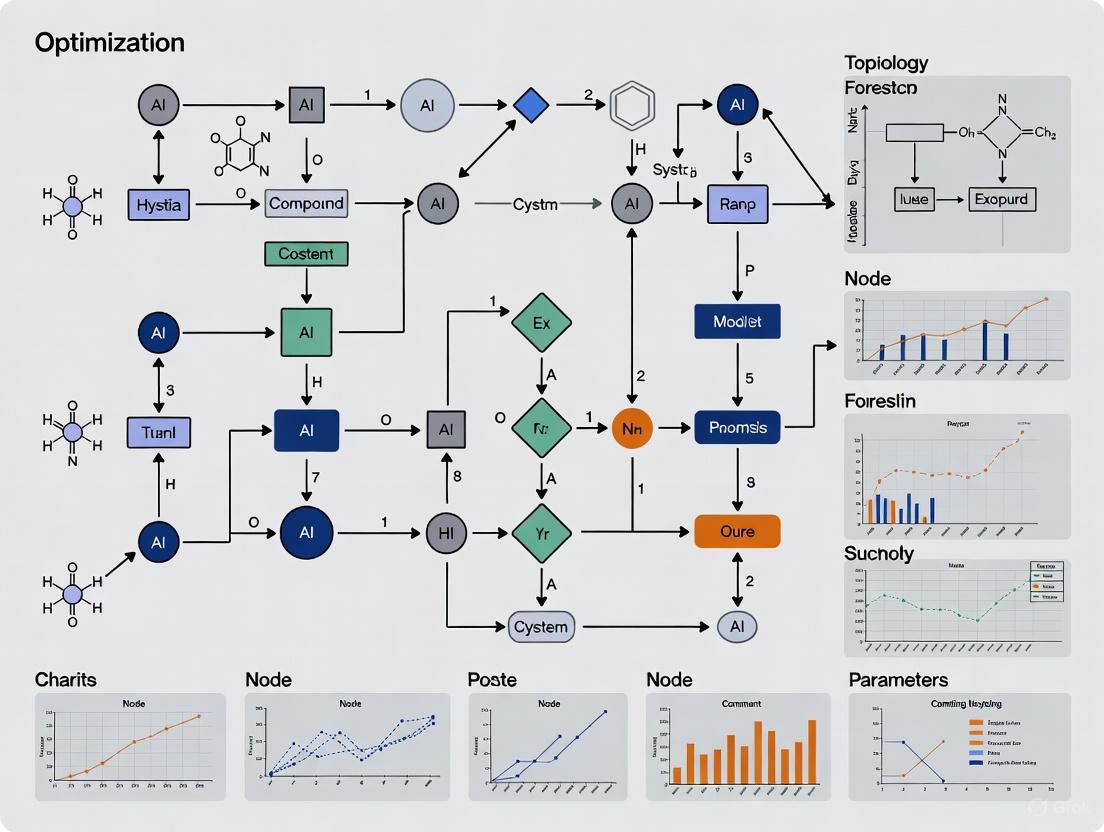
This article provides a comprehensive guide for researchers and drug development professionals on optimizing compound AI systems for biomedical applications.
Optimizing Compound AI Systems: Topology and Parameter Tuning for Accelerated Drug Discovery
Abstract
This article provides a comprehensive guide for researchers and drug development professionals on optimizing compound AI systems for biomedical applications. It explores the foundational principles of compound AI architectures, details methodological approaches for designing and applying these systems to specific drug discovery tasks like target identification and molecular design, outlines advanced troubleshooting and parameter optimization techniques to enhance performance and cost-efficiency, and establishes a framework for rigorous validation and comparative analysis using domain-specific metrics. The content synthesizes the latest research and industry trends to equip scientists with the knowledge to build more efficient, reliable, and impactful AI-driven research tools.
The Architecture of Intelligence: Deconstructing Compound AI Systems for Biomedical Research
Technical Support Center
Troubleshooting Guides
Troubleshooting Guide 1: Resolving Performance Degradation in Multi-Agent AI Systems
- Problem: A compound AI system for literature review and hypothesis generation, which integrates a retrieval agent, a summarization agent, and a reasoning agent, is experiencing slow overall task completion and a drop in the quality of its final output reports.
- Background: This system is used by researchers to rapidly analyze new scientific publications. The system's topology involves a sequential workflow where the output of the retrieval agent is passed to the summarization agent, whose output is then passed to the reasoning agent.
- Diagnosis Steps:
- Isolate the Component: Run diagnostic inputs separately through each agent (retrieval, summarization, reasoning) to identify if a single component is the bottleneck [1].
- Check Communication Overhead: Monitor the latency introduced by the communication protocols between agents. High overhead can significantly slow down a sequential workflow [1].
- Analyze Resource Allocation: Check if computational resources (CPU/GPU) are being dynamically allocated based on agent demand. A resource-intensive agent might be starving others if allocation is static [1].
- Review Agent Prompts: Examine the textual parameters (prompts) of each agent. Vague prompts can lead to poor output quality, which compounds through the workflow [2].
- Solution:
- If a single agent is slow: Optimize the prompts of the slow agent or consider replacing it with a more efficient, specialized model [3].
- If communication overhead is high: Consider a more efficient data exchange format or a parallel execution topology where possible [1].
- If resource allocation is poor: Implement an orchestration platform that can dynamically manage resources, scaling them based on real-time demand [4] [1].
- For prompt issues: Implement an automated prompt optimization technique, such as using a separate LLM to provide textual feedback for prompt updates [2].
Troubleshooting Guide 2: Addressing Coordination Failures in Decentralized AI Agent Swarms
- Problem: A decentralized system of AI agents, designed for collaborative drug target identification, is producing conflicting results. The agents (e.g., a genomics data analyzer, a literature mining agent, a pathway modeling agent) are not effectively synthesizing their findings into a coherent recommendation.
- Background: In this decentralized setup, agents operate with autonomy and interact peer-to-peer. The lack of a central coordinator is leading to context collapse and accountability issues [5].
- Diagnosis Steps:
- Audit Communication Logs: Examine the messages exchanged between agents to identify misunderstandings or contradictions in the data being shared [1].
- Check Shared Memory Consistency: Verify that the shared knowledge base or memory that agents use to maintain context is being updated correctly and consistently [1].
- Evaluate Decision Logic: Analyze the local decision-making rules of each agent to ensure they are not based on conflicting assumptions or goals.
- Solution:
- Implement a Hierarchical Orchestrator: Introduce a lightweight supervisory agent (a hierarchical approach) to manage the interactions and synthesize final decisions from the specialized agents, reducing conflict [1].
- Standardize Communication: Enforce stricter, domain-specific communication protocols (ACPs) to ensure all agents use a common language and data format [1].
- Introduce a Reflection Mechanism: Build in a feedback loop where agents can critique each other's preliminary outputs before a final decision is made, allowing for self-correction [1].
Frequently Asked Questions (FAQs)
FAQ 1: What is the fundamental difference between a monolithic AI model and an orchestrated intelligence system?
A monolithic AI model is a single, large model (e.g., a general-purpose LLM) that handles all aspects of a task, from data processing to final output. While simple to deploy, it can be expensive, brittle, and hard to debug for complex tasks [3]. In contrast, an orchestrated intelligence system (or Compound AI System) coordinates multiple specialized components—such as models, tools, and data sources—to solve a problem [2] [6]. Think of it as moving from a solo musician to a full orchestra, where a conductor (the orchestrator) ensures each specialist plays its part in harmony. This leads to greater efficiency, scalability, and better performance on sophisticated tasks [4] [1].
FAQ 2: Our research team wants to build a compound AI system for optimizing clinical trial design. What is the first step in designing the system's topology?
The first step is to formally decompose your high-level goal into smaller, manageable subtasks [1]. For clinical trial design, this could involve:
- Task 1: A data retrieval agent to fetch relevant historical trial data, medical literature, and regulatory guidelines.
- Task 2: A patient cohort modeling agent to simulate patient populations and predict enrollment.
- Task 3: A protocol authoring agent to help draft the trial protocol based on the synthesized information. Once the tasks are defined, you can structure them into a computational graph, which defines the flow of data and control between these specialized components [2]. Frameworks like LangGraph or AutoGen can help you model this execution as a directed acyclic graph (DAG) or a stateful workflow [3].
FAQ 3: We have a working topology for our multi-agent system, but the final output is often inaccurate. How can we optimize the system without changing its core structure?
This is a classic problem of optimizing node parameters within a fixed structure [2]. You can focus on:
- Prompt Tuning: The textual parameters (prompts) for each agent are critical. Systematically refine these prompts using heuristic bootstrap-based methods or automated techniques where an auxiliary LLM provides feedback on prompt updates [2].
- Introducing Verification Nodes: Add a new, specialized "verifier" or "critic" agent to your existing topology. This agent's role is to check the outputs of other agents for accuracy, consistency, or compliance before the final result is produced, creating a quality control layer [6].
FAQ 4: How can we ensure our orchestrated AI system remains compliant with regulatory standards (e.g., FDA, HIPAA) in drug development?
AI orchestration platforms provide centralized governance features that are essential for compliance [4] [7]. You can:
- Implement Governance Guardrails: Apply policies across all models and tools for data access, security, and ethical use [7].
- Ensure Auditability: Use the orchestration layer's logging and monitoring capabilities to maintain a complete, immutable record of the system's processes, data flow, and decisions. This provides the transparency required for regulatory audits [4] [7].
- Incorporate Human-in-the-Loop Oversight: Design workflows that automatically escalate high-risk decisions or anomalous outputs to human researchers for review [7].
Experimental Data & Protocols
Table 1: Comparison of Compound AI System Optimization Methods
| Method Category | Key Principle | Ideal Use Case | Example Framework/Tool |
|---|---|---|---|
| Fixed-Structure Optimization [2] | Optimizes node parameters (e.g., prompts, weights) without changing the system's graph topology. | Systems with a validated, effective workflow that need fine-tuning for accuracy or efficiency. | LangChain [4], Prompt optimization via auxiliary LLM feedback [2] |
| Structure-Evolving Optimization [2] | Modifies the system's computational graph itself, including adding/removing nodes or edges. | Exploring novel system architectures or adapting a system to entirely new tasks or data types. | AutoGen [3], CrewAI [3] |
| Numerical Feedback Learning | Uses quantitative metrics (e.g., accuracy, latency) as signals for optimization, often via reinforcement learning. | Optimizing for well-defined, quantifiable objectives like task success rate or response time. | Reinforcement Learning (RL) [2] [1] |
| Language-Based Feedback Learning [2] | Uses natural language critiques (from humans or AI) as signals to guide system improvement. | Optimizing complex tasks where success is easier to describe qualitatively than to define with a single metric. | LLM-generated textual feedback [2] |
Table 2: Research Reagent Solutions for Compound AI Systems
| Reagent Solution | Function in AI Research | Relevance to Drug Development |
|---|---|---|
| Orchestration Platform (e.g., IBM watsonx Orchestrate, UiPath Maestro) [4] [7] | Provides the foundational layer for deploying, integrating, and managing multi-component AI systems at scale. | Manages end-to-end AI-driven workflows in drug discovery, ensuring governance and compliance across models and data sources. |
| Agent Framework (e.g., LangGraph, AutoGen, CrewAI) [2] [3] | A toolkit for building and experimenting with multi-agent systems, defining roles, communication, and workflows. | Enables the creation of specialized AI agents for tasks like literature review, genomic analysis, and clinical trial simulation. |
| Vector Database [7] | Enables efficient storage and retrieval of unstructured data (e.g., scientific papers, molecular data) for AI agents. | Powers retrieval-augmented generation (RAG) systems that provide AI models with access to the latest research and proprietary lab data. |
| Decentralized Knowledge Graph (e.g., OriginTrail) [8] | Provides a verifiable and auditable trail for data provenance, crucial for trust and reproducibility. | Secures and tracks the origin and integrity of training data and model outputs, which is critical for regulatory submissions. |
Experimental Protocol: Optimizing a Fixed-Topology Compound AI System
Objective: To improve the performance metric (\mu) (e.g., accuracy of generated drug synergy reports) of a fixed-topology compound AI system (\Phi = (G, \mathcal{F})) by optimizing its textual parameters (\theta_{i,T}) (prompts) [2].
Methodology:
- System Definition: Define your system (\Phi) as a graph (G=(V,E)) where nodes (V) represent agents (e.g.,
Data_Retriever,Analysis_Agent,Report_Generator) and edges (E) represent the data flow. - Baseline Establishment: Run the system on a curated validation set (\mathcal{D}) and measure the baseline performance using metric (\mu).
- Optimization Loop: For a set number of iterations: a. Generate Variants: Create new candidate prompts (\theta'{i,T}) for one or more nodes. This can be done manually or automatically (e.g., using an LLM to generate prompt variations). b. Evaluate: Run the system with the new parameters on (\mathcal{D}) and compute (\mu(\Phi(qi), mi)) for each query. c. Select: Compare the average performance against the baseline. If improved, adopt the new parameters (\theta'{i,T}) as the current best.
- Validation: Apply the optimized parameters to a held-out test set to confirm performance improvement.
System Visualization: Architecture and Optimization
Compound AI System Topology
Parameter Optimization Workflow
Frequently Asked Questions (FAQs)
Q1: What is the fundamental difference between an AI Model and a Compound AI System? An AI Model is a single statistical model, like a Transformer that predicts the next token in text. In contrast, a Compound AI System is a configuration that tackles AI tasks by combining multiple interacting components, such as multiple calls to models, retrievers, or external tools [9]. The key difference is that compound systems leverage the strengths of various specialized components to solve problems more effectively than a single model can [10].
Q2: What are the primary architectural choices when designing a Multi-Agent System? The two primary network architectures for Multi-Agent Systems are [11]:
- Centralized Networks: A central unit contains global knowledge, connects agents, and oversees their information. This allows for easy communication but creates a single point of failure.
- Decentralized Networks: Agents share information only with their neighbors without a global knowledge base. This architecture is more robust and modular but requires more complex coordination.
Q3: Why would a researcher choose to build a Compound AI System over using a single, more powerful LLM? There are several strategic reasons [12] [9]:
- Maximizing Performance: For high-value applications, system design (e.g., sampling multiple solutions) can often improve results more than simply using a larger model.
- Dynamic Knowledge: Systems can incorporate timely data through retrieval, overcoming the fixed knowledge of a statically trained model.
- Improved Control & Trust: Systems can include components to filter outputs, verify facts, or provide citations, reducing hallucinations and increasing reliability.
- Cost-Quality Flexibility: Systems allow developers to tailor the cost and quality of outputs by combining different models and tools, rather than being locked to a single model's performance and cost.
Q4: In the context of drug development, what is a concrete example of an AI agent's function? A prominent example is the use of AI to create "digital twins" in clinical trials. An AI agent can generate a model that predicts an individual patient's disease progression over time. This digital twin serves as a control, allowing researchers to compare the actual effects of an experimental therapy against the predicted outcome, thereby reducing the number of participants needed in a trial without compromising its statistical integrity [13].
Q5: What is "Tool Use" in Agentic AI and why is it critical? Tool Use refers to an AI agent's ability to call external services and APIs by itself. This allows agents to interact with databases, search engines, code execution environments, and other software systems. It is a key capability that amplifies an agent's functionality far beyond its built-in knowledge, turning it into a versatile tool that can perform a wider scope of tasks [14].
Troubleshooting Guides
Challenge: Unpredictable or Conflicting Agent Behavior in a Multi-Agent System
This occurs when agents in a decentralized network act autonomously in ways that conflict or lead to undesirable system-wide outcomes.
Diagnosis Steps:
- Map Agent Dependencies: Identify the goals, resources, and communication pathways of all agents involved.
- Analyze Communication Logs: Check if agents are successfully sharing information, goals, and learned policies. Look for misunderstandings or failures in the communication protocol [11].
- Check for Conflicting Goals: Determine if individual agents have objectives that are inherently in conflict, leading to competition rather than cooperation [11].
Resolution Steps:
- Implement Robust Communication Protocols: Use standardized languages like Knowledge Query Manipulation Language (KQML) or Agent Communication Language (ACL) to ensure clear communication [15].
- Adopt a Coalition or Team Structure: Temporarily unite agents (coalition) or organize them into a hierarchical structure (team) to align their efforts towards a common superordinate goal [11].
- Introduce a Mediation Mechanism: Design a lightweight overseer agent or a set of rules to arbitrate resource conflicts and negotiate between agents.
Challenge: Poor End-to-End Performance in a Compound AI System
The overall quality of a compound system (e.g., a RAG pipeline) is unsatisfactory, and it's unclear which component is the bottleneck.
Diagnosis Steps:
- Isolate and Evaluate Components: Independently test the performance of each system component. For a RAG system, this means evaluating the retriever's accuracy and the LLM's generation quality separately [12].
- Check for Component Mismatch: Ensure that the components are co-optimized to work together. For example, an LLM might be generating search queries that are not optimal for a specific retriever's design [9].
- Profile Resource Allocation: Analyze the latency and cost budget allocated to each component. An imbalance (e.g., spending 80% of the latency budget on a retriever) can severely limit the system's performance [9].
Resolution Steps:
- Develop a Strong Evaluation System: Implement a robust metrics and logging framework to track the performance of individual components and the system as a whole. Tools like MLflow can be used for this purpose [12].
- Iterate on System Design: Experiment with different component combinations and architectures. Use a modular framework that allows you to easily swap out models, retrievers, or tools [12] [9].
- Apply End-to-End Optimization: Use frameworks like DSPy, which can optimize the prompts and weights of multiple components in a pipeline to work better together, even with non-differentiable components like search engines [9].
Challenge: Agentic AI System Demonstrates Unreliable or Non-Factual Outputs
The AI agent successfully uses tools and executes tasks, but its final outputs or decisions are factually incorrect or inconsistent.
Diagnosis Steps:
- Trace the Reasoning Chain: Review the agent's step-by-step reasoning process (if available) to identify where the factual error or logical misstep was introduced.
- Audit Tool Inputs/Outputs: Verify that the data returned by external tools (e.g., databases, APIs) is accurate and current.
- Check Context Management: Assess whether the agent is being provided with the correct, up-to-date context for its decision-making, a process known as Context Engineering [14].
Resolution Steps:
- Implement a Verification Step: Add a final step in the agent's workflow where another agent or a simpler model verifies the output against source documents or knowledge bases.
- Improve Context Engineering: Carefully curate the information provided to the agent to maximize relevance and reliability. This goes beyond simple prompt engineering [14].
- Enforce Tool Use for Fact-Checking: Program the agent to use a web search or database lookup tool specifically to verify critical facts before presenting them as final.
Comparative Analysis: System Architectures
Table 1: Key Concepts and Their Characteristics in Agentic AI.
| Concept | Core Definition | Key Characteristics | Common Frameworks |
|---|---|---|---|
| Agentic AI | A branch of AI focused on agents that can make decisions, plan, and execute tasks autonomously to achieve goals [14]. | Autonomy, Goal-Orientation, Perception, Reasoning, Action [14] [16]. | LangChain, AgentFlow [14]. |
| Compound AI System | A system that uses multiple components (models, retrievers, tools) to solve an AI task more effectively than a single model [10] [9]. | Multi-component, Specialization, Dynamic Knowledge, Improved Control [10] [9]. | Custom-built architectures, often utilizing frameworks for orchestration like DSPy [9]. |
| Multi-Agent System (MAS) | A computerized system composed of multiple interacting intelligent agents that work collectively [11] [15]. | Collaboration, Coordination, Distributed Problem-Solving, Flexibility, Scalability [11]. | JADE, CAMEL [15]. |
Table 2: Troubleshooting Common Scenarios in AI Systems.
| Scenario | Likely Cause | Recommended Action |
|---|---|---|
| Repetitive agent behavior or deadlock | Lack of effective coordination mechanisms; conflicting goals. | Implement flocking or swarming behaviors (separation, alignment, cohesion) or form agent teams/coalitions [11]. |
| Compound system is too slow or expensive | Poor resource allocation between components; using a large LLM for all sub-tasks. | Profile component cost/latency; delegate specific tasks to smaller, specialized models or tools [10] [9]. |
| System outputs are factually incorrect (hallucinations) | Over-reliance on the model's internal knowledge; lack of grounding. | Integrate a retrieval (RAG) component to provide external, verifiable data sources [10] [9]. |
Experimental Protocols & Methodologies
Protocol 1: Evaluating Multi-Agent Coordination in a Simulated Environment This protocol is designed to test the efficiency of different coordination strategies in a MAS.
- Objective: To measure the task completion time and success rate of a MAS under different organizational structures (Hierarchical vs. Coalition).
- Materials: A multi-agent simulation framework (e.g., CAMEL [15]), a defined task environment (e.g., a supply chain logistics simulator [11]).
- Procedure:
- Configure Agent Team A with a hierarchical structure, where a manager agent delegates tasks to worker agents.
- Configure Agent Team B with a coalition structure, where agents temporarily group based on task requirements.
- Deploy both teams in the simulation environment with an identical complex task (e.g., "optimize package delivery routes under a new constraint").
- Record the time to complete the task and the overall success rate.
- Repeat the experiment multiple times to ensure statistical significance.
- Metrics: Average Task Completion Time, Task Success Rate, Resource Utilization Efficiency.
Protocol 2: Co-Optimization of a Compound RAG System for Scientific Q&A This protocol outlines how to systematically improve a RAG system designed for answering domain-specific questions, such as in drug discovery.
- Objective: To maximize the answer accuracy of a RAG pipeline by co-optimizing the retriever and the LLM components.
- Materials: A curated dataset of scientific questions and ground-truth answers, a vector database for document retrieval, multiple candidate LLMs (large and small), an evaluation framework like MLflow [12].
- Procedure:
- Baseline: Establish a baseline by running the dataset with a standard RAG setup (e.g., using a generic embedding model and a large LLM).
- Component Isolation: Evaluate the retriever's performance separately by measuring its recall@k for relevant documents.
- Component Swapping: Experiment with different embedding models and LLMs. For example, try a domain-specific embedding model and a smaller, fine-tuned LLM.
- Pipeline Optimization: Use an optimizer like DSPy [9] to automatically tune the prompts and interactions between the retriever and the LLM.
- End-to-End Evaluation: Measure the final answer accuracy of each configuration against the ground-truth dataset.
- Metrics: Recall@k (for retriever), Exact Match (EM) and F1 Score (for end-to-end Q&A accuracy).
System Topology Visualizations
Diagram 1: Compound AI system topology.
Diagram 2: Multi-agent system workflow.
The Scientist's Toolkit: Research Reagent Solutions
Table 3: Essential Components for Building Advanced AI Systems.
| Item | Function in Research | Example Use Case |
|---|---|---|
| LangChain Framework | An open-source framework for building LLM-powered applications. It supports chaining prompts, external tool use, memory, and building AI agents [14]. | Creating an automated workflow that takes a scientific query, searches a database, and summarizes the findings. |
| Model Context Protocol (MCP) | A standardized communication protocol that facilitates interaction between agents, language models, and other components, ensuring robust and transparent communication [14]. | Enabling different agents in a drug discovery pipeline (e.g., a genomics agent and a chemistry agent) to exchange data seamlessly. |
| Digital Twin Generator | An AI-driven model that creates a simulated version of a real-world process or entity (e.g., a patient's disease progression). Used for prediction and analysis [13]. | Generating a control arm for a clinical trial to reduce the number of required human participants and accelerate the trial timeline [13]. |
| Retrieval-Augmented Generation (RAG) | A compound AI technique that combines an LLM with a retrieval system. The retriever fetches relevant, up-to-date information from external sources to ground the LLM's responses [10] [12]. | Building a Q&A system for researchers that answers specific questions by retrieving data from the latest scientific literature and internal lab reports. |
| Orchestration Engine (e.g., watsonx Orchestrate) | A platform designed to manage, coordinate, and monitor the execution of multiple AI agents and workflows within a compound system [10] [11]. | Managing a complex multi-agent system where different agents handle tasks from patient data analysis to clinical trial optimization in a coordinated manner. |
In the modern drug discovery pipeline, Large Language Models (LLMs) offer transformative potential but face significant limitations including hallucinations, information incompleteness, and dissemination of misinformation [17]. These challenges are particularly critical in healthcare contexts where accuracy directly impacts patient outcomes [17]. This technical support center provides structured methodologies for researchers to overcome these limitations through optimized compound AI system topology and node parameter configuration.
Compound AI systems, defined as systems that tackle AI tasks using multiple interacting components, require novel optimization approaches because they are built from non-differentiable components [2]. By implementing the structured troubleshooting guides and experimental protocols below, research teams can significantly enhance the reliability and performance of LLM-integrated drug discovery workflows.
Frequently Asked Questions
Q1: Our LLM frequently generates plausible but incorrect drug-target interactions. How can we improve factual accuracy? A1: This indicates model hallucination, a known limitation where LLMs generate fluent but factually incorrect content [17] [18]. Implement a knowledge-grounded framework like DrugGPT, which incorporates three cooperative models:
- IA-LLM (Inquiry Analysis LLM) analyzes inquiries to determine required knowledge
- KA-LLM (Knowledge Acquisition LLM) extracts relevant information from verified knowledge bases
- EG-LLM (Evidence Generation LLM) generates answers based on identified evidence [18]
Q2: Our drug response predictions lack consistency across similar queries. What structural changes can help? A2: Inconsistent outputs suggest information completeness issues [17]. Optimize your system topology by:
- Implementing a Fixed Structure approach with predefined computational graph (V,E) while optimizing node parameters [2]
- Adding retrieval-augmented generation (RAG) modules to ground predictions in established biomedical knowledge bases [2]
- Applying knowledge-consistency prompting and evidence-traceable prompting strategies to improve output credibility [18]
Q3: How can we adapt general-purpose LLMs for specialized drug discovery tasks without full retraining? A3: Utilize Parameter-Efficient Fine-Tuning (PEFT) methods:
- LoRA (Low-Rank Adaptation) adds small trainable matrices to model layers while freezing original weights
- QLoRA (Quantized LoRA) enables fine-tuning of large models (up to 65B parameters) on a single GPU through 4-bit quantization [19] These approaches dramatically reduce compute requirements while enabling domain adaptation for specialized tasks like target-disease linkage analysis [19].
Q4: Our multi-component AI system suffers from integration bottlenecks. How can we optimize component interactions? A4: This requires compound AI system optimization. Formalize your system as Φ=(G,ℱ) where G is a directed graph and ℱ is a set of operations [2]. Then apply:
- Structural Flexibility analysis to determine whether to modify system topology or optimize existing node parameters [2]
- Graph-based formalization to map dependencies between components and identify optimization pathways [2]
Troubleshooting Guides
Problem 1: Hallucinations in Drug-Target Recommendation
Symptoms: Generated content appears reasonable but contains factually incorrect drug mechanisms or target interactions.
Diagnosis: Lack of grounding in verified pharmacological knowledge bases.
Solution: Implement the knowledge-grounded collaborative framework.
Experimental Protocol:
- Knowledge Base Integration
- Incorporate Drugs.com, NHS, and PubMed databases
- Construct a Disease-Symptom-Drug Graph (DSDG) modeling relationships between entities
Collaborative Mechanism Setup
- Configure IA-LLM with chain-of-thought (CoT) and few-shot prompting for inquiry analysis
- Train KA-LLM using knowledge-based instruction prompt tuning for evidence extraction
- Implement EG-LLM with knowledge-consistency prompting for answer generation
Validation Framework
- Test on MedQA-USMLE, MedMCQA, and MMLU-Medicine datasets
- Evaluate using accuracy, precision, recall, and F1 scores
- Compare against baseline LLMs (GPT-4, ChatGPT, Med-PaLM-2)
Table: Performance Comparison of DrugGPT vs. Baseline Models on Medical QA Tasks
| Model | MedQA-USMLE Accuracy | MedMCQA Accuracy | ADE-Corpus-v2 Performance | Parameters |
|---|---|---|---|---|
| DrugGPT | 87.3% | 84.7% | 89.1% | ~7B |
| GPT-4 | 76.2% | 72.8% | 74.5% | ~1.7T |
| ChatGPT | 70.1% | 68.3% | 71.2% | ~175B |
| Med-PaLM-2 | 81.5% | 79.2% | 83.7% | ~340B |
Source: Adapted from DrugGPT evaluation metrics [18]
Problem 2: Incomplete Drug-Drug Interaction Predictions
Symptoms: System identifies basic interactions but misses complex pharmacokinetic/pharmacodynamic relationships.
Diagnosis: Limited proficiency with complex, information-rich inputs [17].
Solution: Enhance system topology with specialized DDI components.
Experimental Protocol:
- Data Preparation
- Utilize DDI-Corpus with 5,028 manually annotated drug-drug interactions
- Create balanced test set with 500 positive and 500 negative samples
- Incorporate ADE-Corpus-v2 for adverse drug event relationships
System Architecture Optimization
- Implement dedicated DDI analysis node with pharmacological knowledge grounding
- Add cross-validation node against DrugBank and clinical databases
- Configure iterative refinement loops for complex query processing
Evaluation Metrics
- Measure accuracy on DDI identification tasks
- Assess response completeness using 3-point Likert scales
- Benchmark against domain-specific models and clinical experts
Problem 3: Inefficient Fine-Tuning for Domain Adaptation
Symptoms: Model adaptation requires excessive computational resources or fails to capture domain-specific nuances.
Diagnosis: Suboptimal fine-tuning strategy selection for specialized drug discovery tasks.
Solution: Implement structured fine-tuning protocol based on model size and task complexity.
Experimental Protocol:
- Task Analysis
- Categorize target task: drug recommendation, dosage optimization, or adverse reaction prediction
- Estimate data availability: low (<1k samples), medium (1k-10k), or high (>10k)
- Assess computational constraints: single GPU vs. multi-node cluster
Fine-Tuning Method Selection
- For parameter-efficient adaptation: Implement LoRA or QLoRA
- For high-resource scenarios: Consider full fine-tuning with progressive layer unfreezing
- For multi-task requirements: Deploy adapter-based approaches for task switching
Validation Framework
- Domain-specific benchmarks: DrugBank-QA, MIMIC-DrugQA, COVID-Moderna
- Generalization assessment: Cross-database performance evaluation
- Clinical relevance: Expert evaluation of output usefulness
Table: Fine-Tuning Method Comparison for Drug Discovery Applications
| Method | Best For | Compute Requirements | Parameter Efficiency | Typical Performance Gain |
|---|---|---|---|---|
| Full Fine-Tuning | High-resource domains with >10k samples | Very High | Low | 15-25% |
| LoRA | Limited data scenarios with moderate compute | Medium | High | 12-20% |
| QLoRA | Memory-constrained environments | Low | Very High | 10-18% |
| Adapter-Based | Multi-task learning and rapid switching | Medium-High | Medium | 8-15% |
Source: Adapted from fine-tuning landscape analysis [19]
The Scientist's Toolkit
Table: Essential Research Reagents for LLM-Enhanced Drug Discovery
| Reagent / Tool | Function | Application Example |
|---|---|---|
| Drugs.com Database | Comprehensive drug information source | Grounding drug mechanism predictions in verified data [18] |
| Disease-Symptom-Drug Graph (DSDG) | Knowledge graph modeling medical relationships | Enabling evidence-based drug recommendation [18] |
| LoRA (Low-Rank Adaptation) | Parameter-efficient fine-tuning method | Adapting base LLMs to specialized pharmacology tasks [19] |
| DDI-Corpus | Manually annotated drug-drug interactions | Training and validating interaction prediction models [18] |
| MedQA-USMLE Dataset | Professional medical examination questions | Benchmarking model performance on clinical reasoning [18] |
| Compound AI System Framework | Formalized approach for multi-component systems | Optimizing topology and parameters of complex AI workflows [2] |
Experimental Protocols
Protocol 1: Compound AI System Optimization for Target Identification
Objective: Optimize multi-component AI system for novel drug target identification.
Workflow:
- System Formalization
- Define computational graph G=(V,E) with nodes for target validation, literature analysis, and pathway mapping
- Specify node operations ℱ including LLM inference, database lookup, and similarity scoring
Parameter Optimization
- Apply textual parameter (θ_i,T) optimization for prompt engineering
- Implement numerical parameter (θ_i,N) tuning for model weights and temperature settings
- Utilize gradient-based or heuristic methods depending on differentiability
Performance Evaluation
- Measure target-disease linkage accuracy against known biological pathways
- Assess novelty of predictions through literature validation
- Benchmark against standalone LLM performance
Protocol 2: Hallucination Reduction in Pharmacology QA
Objective: Minimize factual errors in pharmacology question answering.
Workflow:
- Baseline Assessment
- Evaluate GPT-4, ChatGPT, and Med-PaLM-2 on MedQA-USMLE and PubMedQA datasets
- Quantify hallucination rate through expert annotation
- Identify common error patterns in drug mechanism explanations
Intervention Implementation
- Deploy three-component DrugGPT architecture with cooperative models
- Implement knowledge-consistency prompting to ensure faithfulness
- Apply evidence-traceable prompting for source transparency
Validation Metrics
- Accuracy on standardized medical examinations
- Hallucination rate reduction compared to baselines
- Expert evaluation of response quality and evidence quality
Table: Hallucination Reduction Performance Across Model Architectures
| Model Architecture | MedQA-USMLE Accuracy | Hallucination Rate | Evidence Quality Score |
|---|---|---|---|
| Standard GPT-4 | 76.2% | 18.7% | 2.1/5.0 |
| + Knowledge Grounding | 81.5% | 12.3% | 3.4/5.0 |
| + Evidence Tracing | 84.2% | 8.9% | 4.2/5.0 |
| DrugGPT (Full) | 87.3% | 4.1% | 4.7/5.0 |
Source: Adapted from DrugGPT evaluation results [18]
Compound AI systems are advanced frameworks designed to tackle complex tasks by orchestrating multiple, interacting components such as models, retrievers, and tools, rather than relying on a single monolithic model [12]. This architectural shift recognizes that many challenging problems in artificial intelligence, particularly in scientific and research domains, require a division of labor where specialized components handle specific sub-tasks like retrieval, planning, problem-solving, and verification [20].
For researchers in fields like drug development, compound systems offer significant advantages over single-model approaches. They provide better control and trustworthiness by supplying AI with accurate information from external sources and using tools to enforce output constraints [12]. These systems are also more dynamic, capable of integrating outside resources such as scientific databases, code interpreters, and permissions systems, making them more flexible and adaptable to evolving research needs [12]. Furthermore, they enable more cost-quality options, allowing research teams to achieve higher performance or reduce costs by carefully selecting and combining components [12].
Core Components and Their Functions
The Retriever
Function: The retriever component is responsible for sourcing and providing relevant, external information to the system from knowledge bases, scientific databases, or document repositories. It acts as the system's foundational knowledge access module [21] [12].
Technical Implementation:
- Query Understanding and Reformulation: Transforms natural language queries into structured queries suitable for database systems. This includes techniques like self-querying, where the retriever uses an LLM chain to write structured queries for its underlying VectorStore [21].
- Query Expansion: Generates multiple query variations to improve retrieval coverage and effectiveness [21].
- Information Grounding: Provides factual foundation for subsequent reasoning steps, crucial for maintaining scientific accuracy in drug discovery applications.
The Planner
Function: The planner performs decision-making to form sub-goals and build a path from the current state to a desired future state. It breaks down complex research problems into manageable sequential steps [21].
Technical Implementation:
- Task Decomposition: Adopts a divide-and-conquer approach, decomposing complicated multi-step tasks into several sub-tasks and sequentially planning for each [21].
- Multi-Plan Selection: Generates various alternative plans for a task, then employs task-related search algorithms to select the optimal plan for execution [21].
- Memory-Augmented Planning: Enhances planning with a memory module storing valuable information like domain-specific knowledge, past experiences, and commonsense knowledge, which is retrieved during planning as auxiliary signals [21].
The Solver
Function: The solver executes the specific computational or reasoning tasks identified by the planner. It generates solutions, hypotheses, or content based on the retrieved information and defined plan [20].
Technical Implementation:
- Reasoning Application: Employs logical methods to solve problems by making observations, generating hypotheses, and validating based on data [21].
- Thought Generation: Creates coherent cause-effect relationships to connect information and derive conclusions [21].
- Tool Utilization: Interacts with specialized external tools and environments (e.g., molecular simulators, data analysis packages) to perform actions in pursuit of research goals [21].
The Verifier
Function: The verifier assesses the quality, accuracy, and validity of the solver's outputs. It implements quality control through reflection and refinement cycles [21].
Technical Implementation:
- Output Validation: Checks solutions for factual consistency, logical soundness, and compliance with domain constraints.
- Self-Critique and Refinement: Enables the system to reflect on failures and refine outputs through iterative improvement loops [21].
- Constraint Enforcement: Ensures outputs adhere to required formats, scientific principles, and predefined research parameters.
Component Interaction Workflow
System Architecture and Design Patterns
Compound AI systems can be architected following different design patterns, each with distinct advantages for research applications. The two primary patterns are workflow-based systems and agentic systems.
Workflow-Based Systems utilize pre-defined, manually declared plans that solve problems in predictable, repeatable manners. This approach offers higher reliability through programmatic control flow while benefiting from LLM expressiveness for specific tasks [21].
Agentic Systems employ modules that autonomously decide what steps to take using capabilities like reasoning, planning, and tool usage. This offers greater flexibility in interpreting and acting on complex inputs, though with potential trade-offs in reliability [21].
Multi-Agent Collaborative Systems
In complex research domains like drug development, multi-agent systems enable collaborative problem-solving where different modules assume specialized roles and work upon each other's outputs [21]. This pattern is particularly valuable for tackling multifaceted research problems requiring diverse expertise.
Experimental Protocols and Evaluation Framework
Component-Level Evaluation Protocol
Objective: Systematically assess individual component performance to identify optimization opportunities.
Methodology:
- Retriever Evaluation:
- Prepare benchmark queries relevant to your research domain (e.g., compound-target interactions, clinical trial criteria)
- Establish ground truth relevance judgments for retrieved documents
- Calculate standard metrics: Precision@K, Recall@K, Mean Reciprocal Rank (MRR)
- Conduct ablation studies to determine optimal retrieval parameters
Planner Evaluation:
- Define complex multi-step tasks representative of research workflows
- Assess plan quality using expert evaluation rubrics measuring:
- Logical coherence of step sequence
- Appropriateness for task completion
- Efficiency in resource utilization
- Measure planning success rate across task categories
Solver Evaluation:
- Develop task-specific performance metrics aligned with research objectives
- For hypothesis generation: novelty, feasibility, scientific soundness
- For data analysis: accuracy, completeness, interpretability
- Implement A/B testing frameworks comparing different solver configurations
Verifier Evaluation:
- Create test sets containing both valid and invalid solutions
- Measure verification accuracy, precision, and recall
- Assess false positive/negative rates across error types
- Evaluate refinement effectiveness through solution improvement metrics
End-to-End System Evaluation Protocol
Objective: Measure overall system performance on complete research tasks.
Methodology:
- Task Design:
- Develop comprehensive benchmark tasks reflecting real research challenges
- Include tasks of varying complexity levels
- Ensure tasks require integrated use of all system components
Evaluation Framework:
- Employ both automated metrics and expert human evaluation
- Establish scoring rubrics assessing:
- Factual accuracy and scientific validity
- Completeness of solution
- Efficiency in task completion
- Novelty and creativity of approach
- Compare performance against baseline methods and expert performance
Iterative Optimization:
- Use evaluation results to identify system bottlenecks
- Implement targeted component improvements
- Re-evaluate to measure improvement impact
- Maintain detailed experiment logs for reproducibility
Quantitative Evaluation Metrics Table
| Component | Primary Metrics | Target Benchmarks | Measurement Frequency |
|---|---|---|---|
| Retriever | Precision@5: >0.85Recall@10: >0.90MRR: >0.80 | Domain-specificknowledge basecoverage | Per 100 queriesand monthlycomprehensive review |
| Planner | Task completion rate: >85%Step efficiency ratio: >0.75Human approval rate: >80% | Expert-definedoptimal workflowsand protocols | Per 50 complextasks and quarterlyexpert review |
| Solver | Solution accuracy: >90%Hallucination rate: <5%Response coherence: >85% | Domain expertperformance onstandardized tests | Continuous monitoringwith weeklyaggregate reporting |
| Verifier | Error detection rate: >95%False positive rate: <8%Refinement efficacy: >70% | Human expertvalidation asgold standard | Per verificationcycle and monthlycalibration |
Troubleshooting Guide: Common Issues and Solutions
Retrieval Performance Issues
Problem: The retriever consistently returns irrelevant or incomplete information for research queries.
Symptoms:
- Generated solutions lack domain-specific knowledge
- High factual error rate in solver outputs
- Poor performance on tasks requiring specialized knowledge
Diagnostic Steps:
- Check query understanding module performance using test queries
- Evaluate embedding effectiveness for domain-specific terminology
- Assess knowledge base coverage for relevant research areas
- Analyze retrieval failure patterns across query types
Solutions:
- Implement query expansion techniques (synonym generation, hyponym inclusion) [21]
- Fine-tune embeddings on domain-specific corpora
- Enhance knowledge base with specialized research sources
- Implement multi-query retrieval strategies [21]
Planning Inefficiencies
Problem: The planner creates suboptimal task decompositions or inefficient workflows.
Symptoms:
- Excessive steps for straightforward tasks
- Illogical step sequences
- Missing critical process steps
- Resource-intensive planning with minimal benefit
Diagnostic Steps:
- Analyze planning trajectories for similar tasks
- Evaluate plan optimality against expert-defined workflows
- Assess planning consistency across task variations
- Measure planning time versus execution time ratios
Solutions:
- Implement multi-plan selection with optimal plan identification [21]
- Augment planning with memory of successful previous plans [21]
- Incorporate domain-specific planning constraints and heuristics
- Establish planning templates for common research workflows
Solver Quality Problems
Problem: The solver generates inaccurate, nonsensical, or hallucinated content.
Symptoms:
- Factual inconsistencies in generated solutions
- Logical fallacies in reasoning chains
- Poor alignment with scientific principles
- Low expert approval rates
Diagnostic Steps:
- Conduct ablation studies to isolate solver vs. retrieval issues
- Evaluate solver performance with perfect retrieval inputs
- Analyze error patterns across problem types
- Assess reasoning chain coherence and validity
Solutions:
- Implement chain-of-thought reasoning with explicit validation steps [21]
- Enhance solver prompts with domain-specific constraints and examples
- Incorporate external tool usage for specialized computations [21]
- Establish solution verification checkpoints throughout generation process
Verification System Failures
Problem: The verifier misses critical errors or incorrectly flags valid solutions.
Symptoms:
- Invalid solutions passing verification
- Valid solutions rejected unnecessarily
- Inconsistent verification standards
- Limited refinement effectiveness
Diagnostic Steps:
- Analyze verification decision patterns on known-valid and known-invalid solutions
- Assess verification consistency across similar solutions
- Evaluate refinement impact on solution quality
- Measure verification module calibration
Solutions:
- Implement multi-stage verification with increasing scrutiny [21]
- Enhance verification criteria with domain-specific validation rules
- Incorporate external validation tools and resources
- Establish verification confidence scoring with appropriate thresholds
Troubleshooting Workflow Diagram
Frequently Asked Questions (FAQs)
Q1: How do we determine the optimal complexity for a compound AI system versus using a single model?
A1: The decision should be based on task complexity, reliability requirements, and available resources. Single models are sufficient for straightforward tasks with well-defined outputs. Compound systems become beneficial when tasks require: (1) integration of external or proprietary knowledge, (2) multi-step reasoning with verification, (3) specialized tools or computations, or (4) higher reliability than a single model can provide. Start with the simplest viable architecture and incrementally add components only when they address specific performance gaps [12].
Q2: What strategies are most effective for optimizing component integration in compound systems?
A2: Effective integration strategies include:
- Modular Design: Create well-defined interfaces between components to enable independent testing and optimization [12]
- Structured Communication: Establish clear data formats and protocols for component interactions
- Joint Optimization: Rather than optimizing components in isolation, assess and refine them in the context of their interactions within the full system [12]
- Iterative Refinement: Use evaluation results to identify integration bottlenecks and address them systematically
Q3: How can we effectively evaluate and benchmark compound AI systems for research applications?
A3: Implement a multi-faceted evaluation framework including:
- Component-level metrics to assess individual module performance
- End-to-end task success rates measuring overall system effectiveness
- Human expert evaluation for quality assessment of outputs
- Efficiency metrics tracking computational resource utilization
- A/B testing capabilities to compare different system configurations [12] Focus evaluation on tasks representative of real research workflows rather than artificial benchmarks.
Q4: What are the most common failure modes in compound AI systems and how can we mitigate them?
A4: Common failure modes include:
- Cascading errors: Where one component's error propagates through the system - mitigated through verification checkpoints
- Integration inconsistencies: When components use conflicting assumptions or data formats - addressed with clear interface specifications
- Reasoning chain breakdowns: Where multi-step reasoning fails at intermediate steps - improved through better planning and verification
- Knowledge retrieval gaps: When retrievers miss critical information - enhanced through better query understanding and knowledge base coverage Implement robust error handling, validation at each processing stage, and comprehensive logging for failure analysis.
Q5: How do we manage the increased computational costs and latency of compound systems?
A5: Cost and latency management strategies include:
- Selective component invocation: Only use computationally expensive components when necessary
- Caching strategies: Store and reuse frequent retrieval results or intermediate computations
- Asynchronous processing: Execute independent components in parallel where possible
- Component efficiency optimization: Focus on optimizing the most resource-intensive components first
- Intelligent routing: Direct simpler queries to less expensive processing paths Establish clear performance budgets and monitor resource utilization continuously.
The Scientist's Toolkit: Research Reagents and Solutions
Essential Components for Compound AI System Research
| Research Reagent | Function | Implementation Examples | Considerations for Drug Development |
|---|---|---|---|
| Vector Database | Stores and retrieves embeddings for semantic search | Pinecone, Weaviate, Chroma, PGVector | Must handle domain-specificterminology and structuredscientific data |
| Reasoning Engine | Executes logical reasoningand problem-solving tasks | LLMs (GPT-4, Claude,domain-specific models),Symbolic reasoning systems | Requires fine-tuning onscientific literature anddomain knowledge |
| Tool IntegrationFramework | Enables interaction withexternal tools and APIs | LangChain, LlamaIndex,Custom API integrations | Critical for connecting tospecialized research toolsand databases |
| EvaluationFramework | Measures system performanceacross multiple dimensions | MLflow, TruEra,Custom metrics pipelines | Must incorporatedomain-specific successmetrics and expert validation |
| OrchestrationPlatform | Manages componentinteractions and workflows | AutoGen, CrewAI,LangGraph, Prefect | Requires flexibility toadapt to evolving researchworkflows and protocols |
| Knowledge Bases | Provide domain-specificinformation to the system | PubMed, DrugBank,ClinicalTrials.gov,Proprietary research data | Quality and coveragedirectly impact systemreliability and usefulness |
The Economic and Scientific Imperative for Optimization in Pharma R&D
Technical Support Center
Troubleshooting Guides
Issue 1: Poor Generalization of Machine Learning Models in Virtual Screening
Problem Description Machine learning models perform well on internal validation sets but show a significant drop in performance when screening novel chemical structures or against new protein target families. Predictions become unreliable for real-world drug discovery applications [22].
Diagnostic Steps
- Performance Gap Analysis: Compare model performance on the standard test set versus a hold-out test set composed of entirely novel protein superfamilies not represented in the training data [22].
- Structural Shortcut Inspection: Analyze whether the model is relying on spurious correlations or memorizing specific structural motifs in the training data, rather than learning the underlying principles of molecular binding [22].
Resolution Protocol
- Implement a Targeted Model Architecture: Shift from a general-purpose model to a specialized architecture that is constrained to learn only from the representation of the protein-ligand interaction space. This forces the model to focus on the distance-dependent physicochemical interactions between atom pairs, which are more transferable across diverse protein families [22].
- Adopt Rigorous Benchmarking: During model validation, simulate real-world scenarios by leaving out entire protein superfamilies and all associated chemical data from the training process. This provides a more realistic assessment of the model's utility for novel target discovery [22].
- Utilize Generalizable Datasets: Train models on large, diverse, and publicly available datasets that encompass a wide variety of protein families and chemical spaces to improve inherent model robustness [22].
Issue 2: Inefficient and Unreliable AI Infrastructure for Large-Scale Training
Problem Description AI infrastructure cannot handle the computational demands of training deep learning models on massive compound libraries, leading to long training times, system instability, and an inability to scale [23] [24].
Diagnostic Steps
- Resource Utilization Check: Use monitoring tools (e.g., Prometheus, Grafana) to track GPU/CPU utilization, memory usage, and storage I/O during model training to identify bottlenecks [25].
- Workload Assessment: Determine if the workload is primarily data-intensive (processing petabytes of data) or compute-intensive (training complex neural networks), as the solutions differ [24].
Resolution Protocol
- Select Appropriate Hardware Accelerators: For compute-intensive model training, utilize GPUs (e.g., NVIDIA A100) or TPUs for their parallel processing capabilities. For specific, efficient inference tasks, consider FPGAs [24] [25].
- Implement Container Orchestration: Use Kubernetes to automate the deployment, scaling, and management of containerized AI workloads. This ensures high availability and efficient resource use [25].
- Design for Horizontal Scaling: Architect systems to scale out by adding more machines rather than scaling up a single machine. Leverage distributed computing frameworks like TensorFlow or PyTorch to parallelize training tasks across multiple nodes [24].
- Implement Infrastructure-as-Code (IaC): Use tools like Terraform or Ansible to define and provision infrastructure in a consistent, reproducible manner, reducing configuration errors and saving time [25].
Issue 3: Inaccurate Prediction of Compound Physicochemical and ADMET Properties
Problem Description Quantitative Structure-Activity Relationship (QSAR) models fail to accurately predict complex biological properties like efficacy, metabolic stability, or toxicity, leading to late-stage attrition of drug candidates [23].
Diagnostic Steps
- Data Quality Audit: Check for issues in the training data, such as small dataset size, high experimental error, or lack of diversity in the chemical space [23].
- Model Technique Evaluation: Determine if traditional QSAR models are being used for tasks that require more advanced deep learning approaches capable of handling big data [23].
Resolution Protocol
- Transition to Deep Learning Models: Employ Deep Neural Networks (DNNs) for ADMET prediction, as they have shown superior predictivity compared to traditional ML methods on large, complex datasets [23].
- Leverage Specialized Predictor Tools: Utilize industry-tested AI-based predictors (e.g., ADMET Predictor, ALGOPS) that are trained on extensive, high-quality data to forecast critical properties like lipophilicity and solubility [23].
- Incorporate Diverse Molecular Descriptors: Use advanced molecular representations, such as Coulomb matrices, molecular fingerprint recognition, and 3D atomic coordinates, as input features for the models to improve prediction accuracy [23].
Frequently Asked Questions (FAQs)
FAQ 1: What are the core architectural principles for building a scalable and reliable AI system for drug discovery?
A robust AI system should be designed around four key principles [24]:
- Scalability: The system must handle growing datasets and computational demands, typically achieved through horizontal scaling (adding more machines) and distributed computing [24].
- Reliability: Implement redundancy, fault tolerance, and automated recovery mechanisms to ensure consistent performance, which is critical for applications like medical diagnostics [24].
- Availability: Design systems with high uptime (e.g., 99.9%) using strategies like load balancing and failover mechanisms, essential for real-time applications like fraud detection or clinical trial monitoring [24].
- Maintainability: Use modular designs (e.g., separating data ingestion, preprocessing, training, and inference) and clear documentation to make systems easy to update and debug [24].
FAQ 2: How can I improve the accuracy of binding affinity predictions for novel protein targets?
Focus on improving model generalizability. A proven method is to use a task-specific model architecture that learns from the protein-ligand interaction space rather than the raw 3D structures of the protein and ligand. This approach captures the transferable principles of molecular binding, reducing the model's reliance on structural shortcuts that fail with novel targets. Rigorous benchmarking that holds out entire protein superfamilies during training is essential to validate this capability [22].
FAQ 3: Our AI models are computationally expensive. How can we manage infrastructure costs without sacrificing performance?
Optimize costs through several strategies [25]:
- Monitor Utilization: Implement cost-monitoring tools to track GPU and storage usage, identifying and eliminating underused resources.
- Use Hybrid Deployment: Leverage spot instances (cloud) or a hybrid cloud/on-premises model to optimize spending for different workload stages.
- Container Orchestration: Use Kubernetes to auto-scale resources up and down based on demand, ensuring you only pay for what you use.
- Evaluate Total Cost of Ownership (TCO): Consider operational and data transfer expenses, not just upfront costs, when choosing between cloud and on-premises solutions.
FAQ 4: What are the most impactful applications of AI in accelerating the early drug discovery pipeline?
AI impacts several key areas [23] [26] [27]:
- Virtual Screening (VS): AI algorithms can rapidly screen millions of compounds in silico, predicting bioactivity and toxicity, thus prioritizing the most promising candidates for synthesis and testing [23].
- De Novo Drug Design: Generative AI and deep learning models can design novel molecular structures that satisfy specific criteria for potency, selectivity, and ADMET properties [23] [26].
- Lead Optimization: AI can significantly shorten the design-make-test-analyze cycle, with some platforms reporting design cycles that are ~70% faster and require 10x fewer synthesized compounds than industry norms [26].
- Drug Repurposing: AI analyzes vast datasets of biological and clinical information to identify new therapeutic uses for existing drugs [27].
Experimental Protocols & Data
Protocol 1: Evaluating ML Model Generalizability for Novel Protein Targets
Objective To rigorously assess a machine learning model's ability to accurately predict protein-ligand binding affinity for novel protein families not seen during training [22].
Methodology
- Data Curation: Assemble a large, diverse dataset of protein-ligand complexes with experimentally determined binding affinities (e.g., from PDBBind).
- Data Splitting for Generalization: Partition the dataset at the level of protein superfamilies. All complexes associated with one or more entire superfamilies are completely excluded from the training and validation sets to form the final test set.
- Model Training:
- Train the model on the remaining training set.
- Use a validation set from the training superfamilies for hyperparameter tuning.
- Model Evaluation: The model's performance is exclusively evaluated on the held-out test set of novel protein superfamilies. Key metrics include Pearson's R (for affinity prediction) and AUC-ROC (for classification tasks).
Interpretation A significant performance drop on the held-out superfamily test set compared to the standard validation set indicates poor generalizability and limited utility for de novo target discovery. A small performance gap indicates a robust model [22].
Protocol 2: AI-Driven Virtual Screening Workflow
Objective To rapidly and efficiently identify high-quality "hit" compounds from a virtual chemical library using a multi-step AI screening process [23].
Methodology
- Library Preparation: Compile a virtual compound library from databases like PubChem, ChemBank, or ZINC. Standardize structures and generate relevant molecular descriptors.
- Physicochemical Property Filtering: Use AI-based QSPR models to filter out compounds with poor drug-like properties (e.g., undesirable logP, low solubility, high molecular weight).
- Pharmacophore or Structure-Based Screening:
- Ligand-Based: If known active compounds are available, use similarity search or pharmacophore models to find structurally similar compounds.
- Structure-Based: If a 3D protein structure is available, use molecular docking with an AI-powered scoring function (see Protocol 1) to rank compounds by predicted binding affinity.
- ADMET Prediction: Subject the top-ranking compounds to deep learning-based ADMET prediction models to flag potential toxicity, poor metabolic stability, or low bioavailability.
- Visual Inspection & Selection: A final, short list of compounds is selected by medicinal chemists for purchase or synthesis based on the AI outputs, structural novelty, and synthetic feasibility.
Interpretation This workflow prioritizes compounds with a high probability of being potent, selective, and drug-like, thereby reducing the number of compounds that require costly and time-consuming experimental testing [23].
Table 1: Performance of AI Methods in Drug Discovery Applications
| Application Area | AI Method | Reported Performance | Benchmark / Context |
|---|---|---|---|
| Binding Affinity Prediction | Generalizable DL Framework (Interaction-Space Focus) | Modest gains, but highly reliable | Outperforms conventional scoring functions on novel protein families; establishes a dependable baseline [22]. |
| ADMET Prediction | Deep Learning (DL) | Significant predictivity | Outperformed traditional ML on 15 ADMET datasets in a Merck-sponsored challenge [23]. |
| De Novo Drug Design | Generative AI (Exscientia) | ~70% faster design cycles | Requires 10x fewer synthesized compounds than industry standards [26]. |
| Intestinal Absorption Prediction | Artificial Neural Network (ANN) | 16% error rate | Considered acceptable given a diverse structural dataset [28]. |
| IVIVC for Inhalers | ANN | R² ≈ 80% | Successful correlation of in vitro data with in vivo outcomes [28]. |
Table 2: Key Research Reagent Solutions for AI-Driven Drug Discovery
| Reagent / Resource | Function / Application | Example / Source |
|---|---|---|
| Curated Protein-Ligand Affinity Datasets | Training and benchmarking structure-based AI models for binding affinity prediction. | PDBBind [22] |
| Virtual Chemical Libraries | Source of small molecules for virtual screening and de novo design inspiration. | PubChem, ChemBank, ZINC, DrugBank [23] |
| AI-Based ADMET Prediction Tools | In silico prediction of absorption, distribution, metabolism, excretion, and toxicity properties. | ADMET Predictor, ALGOPS program [23] |
| Generative Chemistry Platforms | AI-driven design of novel, synthetically accessible molecular structures. | Exscientia's Centaur Chemist, Insilico Medicine's Generative Tensorial Reinforcement Learning [26] |
| High-Performance Computing (HPC) Hardware | Accelerating the training of complex deep learning models on large datasets. | NVIDIA GPUs (e.g., A100), Google TPUs [24] [25] |
System Topology and Workflow Visualizations
AI System Topology for Pharma R&D
Virtual Screening Workflow
Protein-Ligand Interaction Model
Building for the Benchside: Designing and Applying AI Topologies in Drug Development
Orchestrating Specialized Agents for Core Drug Discovery Workflows
This technical support center addresses common challenges and questions researchers face when implementing and optimizing compound AI systems for drug discovery. The following troubleshooting guides and FAQs are framed within ongoing research into optimizing compound AI system topology and node parameters.
### Frequently Asked Questions (FAQs)
1. What is a compound AI system in drug discovery, and how does it differ from a single model?
A compound AI system is one that tackles complex tasks using multiple, interacting components, as opposed to a single, monolithic AI model [2]. In drug discovery, this typically involves orchestrating specialized agents—such as a planning agent, a data retrieval agent, and a synthesis agent—that work together to navigate the multi-stage drug discovery pipeline [29]. The system can be formally defined as a directed graph Φ=(G,ℱ), where G=(V,E) represents the topology (nodes and edges) and ℱ is the set of operations (e.g., an LLM forward pass, a RAG step) attached to each node [2].
2. When should I use agentic AI versus a single fine-tuned model for my project? The choice depends on the task's complexity and need for specialized tools.
- Use Agentic AI when your workflow requires autonomy, multi-step reasoning, and interaction with multiple, distinct data sources or tools (e.g., searching PubMed, querying ChEMBL, and generating a report) [30] [29].
- Use a Single Fine-Tuned Model for well-defined, single tasks that require deep domain specialization but not external tool use, such as analyzing a specific type of medical record or classifying chemical sentiment [31]. Parameter-efficient fine-tuning (PEFT) methods like LoRA are often ideal for creating such specialized models efficiently [32] [33].
3. A key agent in my workflow is underperforming. Should I optimize the node parameters or the system's topology? This is a core research question in optimizing compound AI systems. The approach depends on the nature of the performance issue [2]:
- Optimize Node Parameters (Fixed Structure): If the system's overall workflow is sound but a specific component is generating poor outputs, focus on parameter optimization. This involves tuning the node's numerical parameters (e.g., LLM weights, temperature) or, more commonly, its textual parameters (e.g., the prompt templates) without changing how agents are connected [2].
- Optimize System Topology (Structural Flexibility): If the failure is due to poor information routing or coordination between agents—for instance, a data retrieval agent is not passing the correct information to the analysis agent—then you need to modify the system's topology. This means redefining the graph's edges
(E)or potentially adding/removing nodes(V)[2].
4. My multi-agent system produces verbose or irrelevant information in its final report. How can I fix this? This is often a topology issue related to the synthesis or orchestration agent. Implement a dedicated synthesis agent whose sole function is to integrate findings from multiple sources into a concise, comprehensive report [29]. Ensure the orchestrator agent is configured to route information specifically to this synthesis node, filtering out redundant data before the final output is generated. Fine-tuning the synthesis agent's foundational model with instruction tuning can also improve its ability to follow formatting and brevity instructions [33].
### Troubleshooting Guides
Problem: Cascading Failures in a Multi-Agent Workflow
- Scenario: The failure of one specialized agent (e.g., a PubMed query agent) causes the entire workflow to halt or produce incorrect results.
- Diagnosis: This indicates a fragile system topology with insufficient error handling and feedback loops.
- Solution: Implement a robust orchestration layer with fault tolerance.
- Protocol:
- Define Fallback Protocols: The orchestrator agent should have conditional logic (defined in the edge matrix
[cij][2]) to reroute tasks if a primary agent fails or times out. - Implement Validation Nodes: Introduce lightweight agent nodes dedicated to validating the output of critical steps before they are passed to the next agent.
- Establish Retry Mechanisms: Configure the orchestrator to retry a failed agent operation a predefined number of times before initiating the fallback protocol.
- Define Fallback Protocols: The orchestrator agent should have conditional logic (defined in the edge matrix
- Protocol:
The following diagram illustrates a robust topology designed to handle such failures.
Orchestrator Handling Agent Failure
Problem: The AI System Generates Factually Inaccurate or Hallucinated Scientific Content
- Scenario: The system's output contains plausible but incorrect information about drug targets or compound properties.
- Diagnosis: This can stem from over-reliance on a single knowledge source or a foundational model that has not been specialized for the scientific domain.
- Solution: Augment agents with specialized data and implement rigorous fact-checking.
- Protocol:
- Integrate Multiple Data Tools: Use Model Context Protocol (MCP) servers to connect agents to authoritative, domain-specific databases like ChEMBL (for bioactive molecules), PubMed (for biomedical literature), and ClinicalTrials.gov [29]. This provides a ground-truth foundation.
- Fine-Tune Base Models: Employ continued pre-training or instruction tuning on a high-quality corpus of biomedical research, clinical notes, and proprietary data to adapt general-purpose models to the niche scientific domain [33] [34].
- Implement Cross-Verification: Design the workflow so that key facts generated by one agent (e.g., a data retrieval agent) are cross-verified by a separate, independent agent or tool.
- Protocol:
Problem: Inefficient Resource Utilization Leading to High Costs and Slowdowns
- Scenario: Running the compound AI system requires significant computational resources, making it expensive and slow for iterative research.
- Diagnosis: The system may be using inappropriately large models for all tasks or suffering from inefficient orchestration.
- Solution: Strategically deploy models of varying sizes and leverage parameter-efficient fine-tuning.
- Protocol:
- Adopt a Small Language Model (SLM) Strategy: Use smaller, fine-tuned models (e.g., Phi-3, SmolLM) for specific, well-defined tasks like data classification or formatting. SLMs are optimized for specific tasks, run on consumer hardware, and offer 2–10x faster inference at 90% lower cost than large model APIs [32].
- Use PEFT for Specialization: Instead of full fine-tuning, use Parameter-Efficient Fine-Tuning (PEFT) methods like LoRA (Low-Rank Adaptation) or QLoRA to adapt models to new tasks. This approach updates only 0.1–1% of parameters, drastically reducing computational demands [32] [33].
- Benchmark Training Efficiency: Utilize modern training stacks that support multi-GPU training with near-linear speedup. For example, benchmark your setup against reported gains, such as a 35.7x speed-up compared to using PEFT alone [33].
- Protocol:
### Experimental Protocols for System Optimization
The field of compound AI system optimization can be classified based on two key dimensions: Structural Flexibility (whether the method can change the system topology) and the Nature of Learning Signals (numerical vs. natural language) [2]. The following table summarizes this taxonomy and provides a methodological overview.
Table 1: Taxonomy of Compound AI System Optimization Methods [2]
| Structural Flexibility | Learning Signal | Method Class | Key Methodology | Example Application in Drug Discovery |
|---|---|---|---|---|
| Fixed Structure | Numerical | Gradient-Based | Use of proxy gradients or evolutionary strategies to optimize prompts/weights. | Fine-tuning a molecule generation agent's output for better binding affinity scores. |
| Fixed Structure | Natural Language | Language-Based Feedback | An auxiliary LLM provides textual feedback to refine prompts or actions. | Improving a literature review agent's query formulation based on summary quality critiques. |
| Variable Structure | Numerical | Architecture Search | Reinforcement learning or Monte Carlo Tree Search to alter the agent graph. | Discovering a new workflow that adds a toxicity-prediction agent to the pipeline. |
| Variable Structure | Natural Language | Language-Based Planning | An LLM planner suggests modifications to the system topology or agent roles. | Using a planner to incorporate a new clinical trial data source into the research workflow. |
Protocol 1: Fine-Tuning a Specialist Agent using PEFT
This protocol is for creating a specialized agent when the system topology is fixed.
- Objective: Adapt a base language model to perform a specific, narrow task (e.g., identifying non-medical factors in patient records) with high accuracy and efficiency [31].
- Method: Parameter-Efficient Fine-Tuning (PEFT) via QLoRA.
- Dataset Preparation: Curate a minimum of 500–1,000 high-quality, task-specific examples. Focus on data quality and diversity over quantity [32]. Format data into instruction-response pairs and split into training/validation sets.
- Model Initialization: Select a suitable base SLM (e.g., Phi-3-mini for its balance of performance and efficiency) [32]. Quantize the model to 4-bit precision using QLoRA.
- Training Configuration: Set hyperparameters: a learning rate of 1e-4 to 5e-4, batch size as large as GPU memory allows, and 3-5 epochs. Use the AdamW optimizer [32] [33].
- Training & Monitoring: Train the model, tracking training and validation loss for signs of overfitting. The process should be fast and cost-effective, often achievable on a single consumer GPU [32].
- Integration: The fine-tuned model is now a specialized agent node that can be integrated into the larger compound system.
Protocol 2: Optimizing System Topology with Language-Based Feedback
This protocol is for improving how agents are connected and coordinated.
- Objective: Improve the overall performance of a multi-agent research assistant by refining the interaction logic between specialized agents (e.g., planner, retriever, synthesizer) [29].
- Method: Language-based feedback for variable structure optimization [2].
- Base System Setup: Deploy a working multi-agent system with a defined topology, such as the research assistant using Strands Agents [29].
- Run Evaluation Tasks: Execute a set of benchmark queries (e.g., "Generate a report on target X") and collect the final outputs and all intermediate steps.
- Meta-Analysis with an LLM: Feed the entire workflow trace—including the initial query, each agent's actions, their outputs, and the final result—to a powerful "critic" LLM (e.g., Claude 3.7 Sonnet). Instruct the critic to identify bottlenecks, redundant steps, or missing connections and to propose a revised system topology [2].
- Implement and Iterate: Implement the most promising topological changes suggested by the critic LLM (e.g., adding a new data validation step or rerouting information flow) and re-run the evaluation tasks to measure performance improvement.
### The Scientist's Toolkit: Research Reagent Solutions
Table 2: Essential Components for an AI Drug Discovery Research Assistant
| Item | Function | Example Tools / Frameworks |
|---|---|---|
| Orchestration Framework | Manages the execution, state, and communication between specialized agents. | Strands Agents SDK [29], LangChain [2] |
| Foundation Models (FMs) | Provide the core reasoning and text generation capabilities for the agents. | Anthropic Claude 3.5 Sonnet/Haiku (via Amazon Bedrock) [29], Llama 3 [32] |
| Specialized Data Tools (MCP Servers) | Provide agents with access to structured, authoritative scientific data. | PubMed, ChEMBL, arXiv, ClinicalTrials.gov MCP servers [29] |
| Fine-Tuning Toolkit | Adapts base FMs into domain-specific specialists efficiently. | PEFT/LoRA libraries [33] [31], Unsloth [33], Hugging Face Transformers [32] |
| Evaluation Metrics | Quantitatively measures the performance of the entire system or individual agents. | Task-specific accuracy, ROUGE for report quality [33], custom performance metric μ(Φ(qi),mi) [2] |
The following diagram maps these toolkit components onto a functional system architecture.
Toolkit in System Architecture
Frequently Asked Questions (FAQs)
FAQ 1: What is the role of AI in modern therapeutic target discovery? Artificial Intelligence (AI) is revolutionizing therapeutic target discovery by analyzing large datasets and complex biological networks that are difficult for humans to process manually. AI and machine learning (ML) significantly impact the initial, crucial steps of drug discovery, which in turn influences the probability of success throughout the entire drug development process. By using deep learning and other AI techniques, this approach can accelerate the identification of novel targets, predict their efficacy, safety, and specificity, and help prioritize the most promising candidates for further experimental validation [35] [36] [37].
FAQ 2: What are the common types of data used in AI-driven target discovery pipelines? AI-driven target discovery relies on diverse, multimodal datasets to train its models and generate predictions. Key data types include:
- Multiomics Data: Genomics, transcriptomics, proteomics, and spatial transcriptomics data provide a comprehensive view of biological systems [35] [37].
- Clinical and Patient Data: Patient outcomes, clinical records, and histology (e.g., H&E stains) link biological targets to real-world disease manifestations [37].
- Existing Knowledge: Structured knowledge graphs linking genes, diseases, and drugs, as well as unstructured insights from scientific literature, are integrated using Large Language Models (LLMs). Data on target druggability and results from past clinical trials, including failures, are also critical for training [36] [37].
FAQ 3: Our AI model identified a target, but wet-lab validation failed. What could be the reason? This is a common challenge and often stems from a disconnect between the AI's prediction and biological reality. Key troubleshooting areas include:
- Data Quality and Relevance: The training data may not accurately reflect the disease biology or the experimental model used for validation. It is crucial to use high-quality, relevant data and ensure the experimental model (e.g., cell lines, organoids) closely resembles the human patient population [37].
- Model Explainability: Without understanding why the AI made a prediction, it is difficult to diagnose failure. Using models with built-in explainability (e.g., feature importance analysis) can help pinpoint the biological reasoning behind the target selection and identify flawed assumptions [37].
- Biological Complexity: The target's role in complex, non-linear pathway interactions might have been oversimplified by the model. Incorporating more sophisticated network topology analyses can help address this [35].
FAQ 4: How can we assess the performance of our target identification AI? Robust validation is essential. Performance can be assessed using several methods:
- Retrospective Validation: The AI model is tested on historical data where the outcomes of clinical trials are already known. The model's ability to "predict" known successful and failed targets is measured [37].
- Analysis of Failures: Continuously retraining models on both successful and failed clinical trials allows the AI to learn and become smarter over time, improving its predictive accuracy for novelty, druggability, and toxicity [37].
FAQ 5: What does "optimizing compound AI system topology" mean in this context? In AI-driven drug discovery, a "compound AI system" refers to a complex workflow integrating multiple AI components (e.g., feature extractors, classifiers, knowledge graphs, LLMs). Optimizing its topology involves:
- Enhancing Interactions: Improving the flow of information and feedback between different components of the AI pipeline, ensuring they work together synergistically [38].
- Node Parameter Tuning: Adjusting the internal parameters and configurations of individual AI models within the larger system (e.g., tuning a classifier's hyperparameters) to maximize the overall pipeline's efficiency and output quality [38] [39].
- Balancing Novelty and Confidence: The system must be tuned to navigate the trade-off between selecting novel, first-in-class targets and high-confidence targets with a greater wealth of existing biological data [35].
Troubleshooting Guides
Issue 1: Poor Quality or Insufficient Training Data
| Symptom | Potential Cause | Solution |
|---|---|---|
| Low predictive accuracy during retrospective validation. | Datasets are small, fragmented, or contain biases. | Implement rigorous data curation and preprocessing pipelines. Leverage multi-source data integration and augmentation techniques [37]. |
| AI-identified targets consistently fail in early validation. | Training data is not representative of the disease or experimental model. | Prioritize access to high-quality, multimodal patient data and ensure lab models (e.g., patient-derived organoids) closely mimic human biology [37]. |
Experimental Protocol: Data Curation and Feature Engineering
- Data Aggregation: Gather multimodal data from reliable sources (e.g., partner institutions, public repositories like ChEMBL and DepMap) [37].
- Data Cleaning: Apply normalization, handle missing values, and remove outliers.
- Feature Specification and Extraction: Define human-specified features (e.g., cellular localization). Use AI (e.g., deep learning on histology images) to extract novel, non-obvious features from complex data modalities. A typical pipeline might extract ~700 features [37].
- Knowledge Graph Integration: Link genes, diseases, drugs, and patient characteristics in a structured knowledge graph to enrich feature sets [37].
Issue 2: Model Validation and Explainability Failures
| Symptom | Potential Cause | Solution |
|---|---|---|
| Inability to understand why a target was selected. | Use of "black box" models without explainability features. | Integrate explainable AI (XAI) techniques. Use models that provide feature importance scores to trace predictions back to biological rationale [37]. |
| Failure to generalize to new disease subtypes. | Model is overfitting to narrow training data. | Employ robust validation techniques like cross-validation. Use the AI to identify patient subgroups that may respond differently to a target [37]. |
Experimental Protocol: Model Training and Retrospective Validation
- Model Selection: Choose appropriate machine learning algorithms (e.g., classifiers) for the task [37].
- Training: Train the model on curated features, using past clinical trial results as labels for success/failure.
- Validation: Test the trained model on a hold-out set of historical clinical trial data it has not seen before.
- Analysis: Measure accuracy and analyze mispredictions. Use explainability tools to understand the key features driving correct and incorrect predictions [37].
Issue 3: Integration Between AI Prediction and Experimental Validation
| Symptom | Potential Cause | Solution |
|---|---|---|
| Promising in silico targets are toxic in models. | Inadequate prediction of toxicity during the AI phase. | Use AI to analyze target expression across healthy tissues in silico to flag potential organ-specific toxicity early, guiding targeted experimental validation [37]. |
| Discrepancy between AI-predicted efficacy and lab results. | The chosen experimental model does not reflect the human disease context from which the AI learned. | Use AI to recommend the most biologically relevant experimental models (e.g., specific cell lines, culture conditions) based on patient data patterns [37]. |
Experimental Protocol: In Silico Toxicity and Efficacy Triage
- Toxicity Screening: For each candidate target, use AI to analyze its expression profiles in a wide range of healthy human tissues (e.g., from public databases or proprietary data).
- Risk Flagging: Flag targets with high expression in critical organs (e.g., heart, liver, kidneys) for potential toxicity.
- Model Recommendation: Based on patterns in patient data, the AI can suggest the most relevant in vitro or in vivo models to test the target's efficacy and flagged toxicities.
- Priority Adjustment: Use these AI-driven insights to reprioritize the target list for lab validation, focusing resources on the safest and most promising candidates.
Table 1: Key Parameters in AI-Driven Target Discovery Pipelines
| Parameter | Typical Value / Source | Function in the Pipeline |
|---|---|---|
| Data Volume & Features | ~700 extracted features [37] | Provides a rich, multi-faceted representation of a target's biological context for the AI model. |
| Process Acceleration | Target identification in 2 weeks vs. 6 months [37] | Demonstrates the significant time savings offered by AI over traditional manual research. |
| Clinical Trial Success Rate (Traditional) | ~10% [36] | Baseline metric that AI-driven approaches aim to improve by improving early target selection. |
| High-Throughput Screening (HTS) Hit Rate (Traditional) | ~2.5% [36] | Highlights the inefficiency AI can help overcome in the initial hit discovery phase. |
Workflow and Topology Visualization
AI Target Discovery Workflow
Compound AI System Topology
The Scientist's Toolkit: Research Reagent Solutions
Table 2: Essential Materials for AI-Driven Target Discovery and Validation
| Research Reagent / Material | Function in the Pipeline |
|---|---|
| Patient-Derived Xenografts (PDX) & Organoids | Advanced preclinical models that more closely mimic human tumor biology and microenvironment, used for validating AI-predicted targets [37]. |
| Spatial Transcriptomics Kits | Enable measurement of gene expression within the intact tissue architecture, providing critical data on the tumor microenvironment for feature extraction [37]. |
| Validated Cell Line Panels | Collections of well-characterized cell lines; AI can recommend specific lines from these panels that best recapitulate the disease context of a predicted target [37]. |
| Crispr-Cas9 Screening Libraries | Used for high-throughput functional genomics to validate target essentiality and mechanism of action predicted by AI models [36]. |
| Multiomic Spatial Datasets (e.g., MOSAIC) | Large-scale, proprietary databases integrating histology with molecular data, providing a unique training ground for AI to identify spatially-relevant features [37]. |
Generative AI and Multi-Agent Systems for De Novo Molecular Design
Frequently Asked Questions (FAQs)
FAQ 1: What are the common causes of poor molecular novelty and diversity in my generative model's output?
| Cause | Description & Impact | Solution |
|---|---|---|
| Mode Collapse | Model generates a limited set of similar, low-variability molecules, failing to explore chemical space broadly. | Implement Mini-batch Discrimination or Unrolled GANs to help the discriminator recognize a lack of diversity. [40] |
| Overfitting to Training Data | Model reproduces molecules from its training set instead of creating novel structures, reducing utility for de novo design. | Apply Transfer Learning: fine-tune a broad pre-trained model (prior) on a specific dataset using a limited number of steps to adapt it without overfitting. [41] |
| Suboptimal Exploration | In Reinforcement Learning (RL), the agent gets stuck in a local optimum of the chemical space. | Use Staged Learning or Curriculum Learning to gradually increase the complexity of the learning task, guiding the agent's exploration. [41] |
FAQ 2: How can I improve my model's generation of chemically valid and synthetically accessible molecules?
| Cause | Description & Impact | Solution |
|---|---|---|
| Invalid SMILES Generation | A high percentage of generated molecular strings (SMILES) do not correspond to valid chemical structures. | Utilize a Grammar VAE or an auto-regressive model (RNN, Transformer) trained on SMILES syntax to inherently learn grammatical rules. [41] |
| Poor Synthetic Accessibility (SA) | Generated molecules are theoretically possible but prohibitively difficult or expensive to synthesize. | Integrate a SA score directly into the model's objective function, using RL to penalize molecules with poor SA. [41] |
| Ignoring Key Properties | Optimization for a single property (e.g., binding affinity) leads to molecules with poor drug-likeness. | Employ Multi-Objective Optimization (e.g., simultaneous optimization for affinity, solubility, and SA) to balance critical parameters. [40] |
FAQ 3: Why is my multi-agent system failing to converge or producing conflicting molecular designs?
| Cause | Description & Impact | Solution |
|---|---|---|
| Unbalanced Reward Signals | One agent's objective (e.g., maximizing affinity) dominates, overriding other critical goals (e.g., minimizing toxicity). | Design a hybrid, context-aware reward function that dynamically balances multiple objectives from different agents. [42] |
| Lack of a Unified Context | Agents operate on different feature representations or data, leading to inconsistent optimization directions. | Implement a context-aware layer that uses techniques like N-grams and cosine similarity to create a unified semantic understanding for all agents. [42] |
| Inefficient Communication | The topology (interaction rules) between agents is poorly defined, causing redundant work or conflicting proposals. | Adopt a hierarchical agent topology where a "manager" agent coordinates specialized "worker" agents, streamlining the design process. [41] |
Troubleshooting Guides
Issue 1: Low-Quality Molecular Generation
Problem: The generative model produces a high rate of invalid molecules, lacks diversity, or fails to optimize for desired properties.
Diagnosis and Resolution Protocol:
Verify Model Architecture and Input Data
- Action: Confirm the generative model (e.g., VAE, GAN, Transformer) is appropriate for the task. Check the training dataset for quality, size, and relevance to your target domain. [40]
- Validation: Use a held-out test set to calculate the model's validity (percentage of valid SMILES) and uniqueness before any optimization.
Implement or Tune a Reinforcement Learning (RL) Framework
- Action: Integrate your generative model with an RL loop. The model (agent) generates molecules (actions) and receives a score (reward) from a scoring function. [41]
- Protocol:
- Step 1: Define a scoring function (
S) that quantifies desired molecular properties (e.g.,S(m) = w1 * QED(m) + w2 * SA(m) - w3 * Toxicity(m)). - Step 2: Initialize the generative model (e.g., a pre-trained "prior").
- Step 3: For each training step, sample molecules from the agent and calculate their scores.
- Step 4: Update the agent's parameters to maximize the expected reward, often using the augmented likelihood loss:
Loss = (1-σ) * NLL(Prior) + σ * (NLL(Agent) - Reward)whereσcontrols the influence of the prior versus the reward. [41]
- Step 1: Define a scoring function (
Apply Multi-Objective Optimization
Issue 2: Inefficient Exploration of Chemical Space
Problem: The model's search is slow, gets stuck in local optima, or fails to find high-scoring regions.
Diagnosis and Resolution Protocol:
Optimize the Exploration-Exploitation Trade-off
- Action: In RL, the agent must balance trying new strategies (exploration) and refining known good ones (exploitation).
- Protocol: Use Bayesian Optimization (BO) with a probabilistic model to guide the search in the model's latent space. Techniques like multi-step lookahead BO can improve sample efficiency by planning several moves ahead. [40]
Utilize Curriculum and Staged Learning
- Action: Gradually increase the difficulty of the learning task.
- Protocol:
- Stage 1: Train the model on a simple objective (e.g., achieving a minimum lipophilicity).
- Stage 2: Once stable, introduce a more complex objective (e.g., optimizing for both lipophilicity and a specific pharmacophore).
- This step-wise approach prevents the model from being overwhelmed and guides it more reliably toward complex solutions. [41]
Issue 3: Poor Generalization and Real-World Performance
Problem: Molecules perform well in silico but fail in experimental assays due to unrealistic properties or overfitting.
Diagnosis and Resolution Protocol:
Incorporate Domain Knowledge and Physics
- Action: Move beyond purely data-driven models by embedding physical laws and domain constraints directly into the AI.
- Protocol: Use physics-informed generative models. For example, when generating crystal structures, embed crystallographic symmetry and periodicity directly into the model's architecture to ensure generated structures are chemically realistic. [43]
Employ Hybrid Modeling Approaches
- Action: Combine different AI techniques to leverage their strengths.
- Protocol: Implement a framework like the Context-Aware Hybrid Ant Colony Optimized Logistic Forest (CA-HACO-LF). This model uses Ant Colony Optimization for intelligent feature selection and a hybrid classifier (Random Forest + Logistic Regression) for robust prediction of drug-target interactions, improving real-world relevance. [42]
Experimental Protocols & Methodologies
Protocol 1: Standard Reinforcement Learning Setup for Molecular Optimization
This protocol outlines the core methodology for optimizing a generative model using RL, as implemented in platforms like REINVENT. [41]
- Configuration: Define the experiment in a TOML or JSON file.
- Agent & Prior: Specify the architecture (e.g., RNN, Transformer) for the Agent and a pre-trained Prior model.
- Scoring Function (
S(m)): Define the multi-component function to evaluate generated molecules(m).- Example:
S(m) = [w1 * pChEMBL_Score(m)] + [w2 * NumRingAssemblies_Score(m)] + ...
- Example:
- Training Loop:
- The Agent generates a batch of molecules.
- The SMILES strings are converted to molecules. Invalid strings are heavily penalized.
- Each valid molecule is scored by
S(m). - The agent's parameters are updated to maximize the score, regularized by the Prior to maintain chemical plausibility.
- Output: The tuned Agent model, capable of generating molecules optimized for the defined objectives.
Diagram Title: Reinforcement Learning for Molecular Optimization
Protocol 2: Knowledge Distillation for Efficient Property Prediction
This protocol describes how to create smaller, faster AI models for rapid molecular property screening. [43]
- Teacher Model: Select a large, pre-trained "teacher" model with high predictive accuracy.
- Student Model: Initialize a smaller, more efficient "student" model architecture.
- Training: Train the student model to mimic the teacher's predictions (on a dataset of molecular properties) rather than learning from the raw data directly.
- Output: A compact, fast student model that retains much of the teacher's accuracy, ideal for high-throughput screening.
Diagram Title: Knowledge Distillation for Model Efficiency
The Scientist's Toolkit: Research Reagent Solutions
| Item Name | Function & Application | Key Consideration |
|---|---|---|
| Pre-trained Foundation Models (Priors) | Unbiased generators trained on large public datasets (e.g., ChEMBL, ZINC). Provide a starting point for transfer learning and act as a regularizer in RL. [41] | Ensure the training data of the prior is relevant to your chemical domain of interest (e.g., drug-like small molecules). |
| Scoring Function Components | Modular functions that quantify molecular properties. Examples: QED (drug-likeness), SAscore (synthetic accessibility), CLogP (lipophilicity), and custom Predictive Models (e.g., for affinity or solubility). [41] | Weighting of different components is critical. Poorly balanced functions can lead to suboptimal molecules. |
| Context-Aware Hybrid Model (CA-HACO-LF) | A composite model for predicting drug-target interactions. Combines Ant Colony Optimization (ACO) for feature selection with a hybrid classifier (Random Forest + Logistic Regression) for high prediction accuracy. [42] | Effective for integrating and interpreting complex, multi-modal data (e.g., textual drug descriptions and structural features). |
| Generative Framework Software (REINVENT 4) | An open-source platform providing reference implementations for common generative molecular design algorithms, including RL, curriculum learning, and transformer models. [41] | Offers a production-ready, flexible environment for building and testing custom de novo design workflows. |
| Knowledge Distillation Framework | A methodology for compressing large AI models into smaller, faster versions that are ideal for high-throughput tasks like molecular screening, reducing computational costs. [43] | The performance of the distilled "student" model is highly dependent on the quality and diversity of the data used during distillation. |
Optimizing Clinical Trial Design and Patient Recruitment with Coordinated AI
Technical Support Center
Frequently Asked Questions (FAQs)
Q1: Our AI model for patient pre-screening has a high rate of false positives, leading to many screen failures. How can we improve its accuracy?
A1: High false positive rates often stem from models trained on incomplete or biased data. Implement a tiered validation approach:
- Augment your data: Use Natural Language Processing (NLP) to extract and structure information from unstructured clinical notes in Electronic Health Records (EHRs), providing more context to your model [44].
- Employ ensemble models: Combine rule-based AI (leveraging medical expertise) with machine learning models. One company used this approach to achieve 96% accuracy and a 170x speed improvement in patient identification [45].
- Continuous validation: Establish a feedback loop where site coordinator inputs on screen-failed candidates are used to retrain and refine the AI model, improving its performance over time.
Q2: We are experiencing slow enrollment for a rare disease trial. What digital strategies can we use to reach a broader, yet targeted, patient population?
A2: For rare diseases, traditional site-based recruitment is often ineffective. A coordinated digital strategy is key.
- Precision Targeting with EHRs: Use AI to mine EHR data across multiple healthcare systems to identify hidden patient populations with specific diagnostic codes or genetic markers that may be scattered globally [44].
- Engage Online Communities: Partner with established online health communities and advocacy groups for specific diseases. These platforms host engaged patient populations and can lend credibility to your trial [44].
- Targeted Digital Outreach: Use targeted advertising on social media and search platforms to reach patients and caregivers who are actively searching for information on their condition [44].
Q3: How can we ensure our use of AI for clinical trial optimization is compliant with regulatory standards?
A3: Regulatory bodies like the FDA are actively developing frameworks for AI in drug development.
- Adopt a Risk-Based Approach: Follow the FDA's lead by implementing a risk-based regulatory framework within your own projects. Document your AI model's intended use, development process, and performance metrics thoroughly [46].
- Ensure Transparency and Explainability: Be prepared to demonstrate how the AI model arrives at its decisions (e.g., patient eligibility). The FDA emphasizes the need for transparency in AI-supported regulatory decisions [46].
- Stay Informed: The FDA has published a draft guidance, “Considerations for the Use of Artificial Intelligence to Support Regulatory Decision Making for Drug and Biological Products,” which is an essential resource for compliance [46].
Q4: Our AI-driven trial design suggests a complex, adaptive protocol. How can we validate that this design is statistically sound before implementation?
A4: Validating an adaptive design requires robust in-silico testing.
- Simulate Trial Scenarios: Use historical clinical trial data to create multiple, simulated patient cohorts and trial conditions.
- Stress-Test the Protocol: Run your AI-driven adaptive protocol against these simulated scenarios to evaluate its performance under various conditions, including different recruitment rates and treatment effect sizes.
- Measure Outcomes: Analyze key outcomes such as the Type I error rate, power, and the probability of correctly identifying a successful treatment arm to ensure the design's statistical integrity.
Troubleshooting Guides
Problem: Inefficient AI Model Integration Causing System Latency
- Symptoms: Delays in processing patient data; slow response from the user interface when querying the AI system.
- Possible Cause: The topology of your compound AI system is suboptimal, with resource-intensive models (like deep learning for molecular modeling) competing for computational resources with real-time tasks (like patient pre-screening).
- Solution:
- Topology Optimization: Apply optimization principles, such as those from the SiMPL algorithm, to your AI system's workflow. This involves structuring the computational graph to avoid "impossible" or inefficient data pathways, leading to more stable and faster convergence to a solution [47].
- Resource Partitioning: Dedicate specific computational nodes to specific tasks. For example, separate nodes for high-throughput virtual screening from nodes handling real-time patient data analysis.
- Implementation Code Snippet (Conceptual):
Problem: Data Silos Preventing Effective AI-Powered Patient Matching
- Symptoms: The AI model only performs well on data from a single hospital or region; inability to identify eligible patients from diverse populations.
- Possible Cause: The AI system's nodes are operating on isolated datasets without a unified data standard or a privacy-preserving method for federated analysis.
- Solution:
- Implement Federated Learning: Adopt a system topology where the AI model is sent to the data source (e.g., different hospitals) for training. Only the model updates (weights/gradients), not the raw data, are shared and aggregated on a central server. This maintains data privacy while improving the model's generalizability [44].
- Use Standardized Ontologies: Ensure all data nodes in the system use common data models and medical ontologies (e.g., SNOMED CT) to enable seamless data interoperability.
Quantitative Data on AI in Clinical Trials
The following table summarizes key performance metrics from real-world applications of AI in clinical trials, demonstrating its impact on speed, accuracy, and cost.
Table 1: Performance Metrics of AI in Clinical Trial Optimization
| Application Area | Specific Use Case | Metric | Performance with AI | Traditional Benchmark | Source / Example |
|---|---|---|---|---|---|
| Patient Recruitment | Patient identification from EHRs | Speed & Accuracy | 170x faster; 96% accuracy | Manual review in hours | Dyania Health [45] |
| Patient Recruitment | Processing EHRs for eligibility | Speed & Accuracy | 3x faster; 93% accuracy | Manual processing | BEKHealth [45] |
| Trial Enrollment | Meeting enrollment deadlines | Success Rate | 20% of studies succeed | 80% of studies fail | Industry Standard [44] |
| Trial Timelines | Cost of delay | Financial Impact | ~$1 million per month | N/A | Industry Estimate [44] |
| Drug Discovery | Novel drug candidate design | Timeline | 18 months | Several years | Insilico Medicine [48] |
| Virtual Screening | Identifying drug candidates | Timeline | < 1 day | Months/Years | Atomwise [48] |
Experimental Protocols
Protocol 1: Implementing an AI-Driven, Federated Patient Pre-Screening System
Objective: To rapidly and accurately identify eligible patients for a clinical trial from multiple, distributed hospital EHR systems without centralizing sensitive patient data.
Methodology:
- Data Harmonization: Collaborate with participating sites to map local EHR data fields to a common data model (e.g., OMOP CDM).
- Model Development: Develop a core machine learning model for eligibility screening. The model will be trained initially on a synthetic dataset or a limited, anonymized dataset.
- Federated Learning Setup:
- Deploy the initial model to a central coordination server.
- Install client software at each hospital site (node).
- The server sends the global model to each client node.
- Each node trains the model on its local EHR data.
- Only the model updates (not the data) are sent back to the server.
- The server aggregates these updates to create an improved global model.
- Iteration: Repeat the federated learning process for multiple rounds until the model's performance converges.
- Pre-Screening: Use the final model at each site to generate a list of potentially eligible patients for final review by site coordinators.
Protocol 2: AI-Augmented Adaptive Trial Design Simulation
Objective: To validate and optimize an adaptive clinical trial design using AI-driven simulations before real-world implementation.
Methodology:
- Scenario Definition: Define key trial parameters: primary endpoint, treatment arms, interim analysis points, and adaptation rules (e.g., dropping a treatment arm, sample size re-estimation).
- Data Generation: Use generative AI models or historical data to create a large, synthetic patient population that reflects the expected real-world patient characteristics, including variability in treatment response and dropout rates.
- Simulation Engine: Develop or use a simulation platform that can run thousands of virtual trials. In each simulation, patients are "randomized" according to the adaptive algorithm, and their outcomes are generated based on predefined statistical models.
- AI-Driven Optimization: Use an AI optimizer (e.g., based on reinforcement learning) to adjust the trial design parameters (e.g., randomization ratios, timing of interim analyses) with the goal of maximizing statistical power or minimizing expected sample size and cost.
- Output Analysis: Evaluate the simulated trials to estimate operating characteristics such as family-wise Type I error, overall power, and probability of correct selection under various assumptions.
System Topology and Workflow Visualizations
The following diagrams, generated with Graphviz, illustrate the logical structure and data flow within a coordinated AI system for clinical trials.
Diagram 1: High-Level Topology of a Coordinated AI System for Clinical Trials
Diagram 2: Federated Learning Workflow for Patient Identification
The Scientist's Toolkit: Research Reagent Solutions
Table 2: Essential AI Tools and Platforms for Clinical Trial Optimization
| Item / Platform | Function | Key Feature / Use Case |
|---|---|---|
| BEKHealth Platform | AI-powered patient recruitment and feasibility analytics. | Uses NLP to analyze structured/unstructured EHR data, identifying eligible patients 3x faster with 93% accuracy [45]. |
| Dyania Health Platform | AI-powered clinical trial recruitment software. | Automates patient identification from EHRs with 96% accuracy and 170x speed improvement via rule-based AI [45]. |
| Insilico Medicine AI Platform | AI for drug discovery and design. | Identifies novel drug candidates; designed a drug for idiopathic pulmonary fibrosis in 18 months [48]. |
| Atomwise | AI for molecular interaction prediction. | Uses convolutional neural networks (CNNs) for virtual screening; identified Ebola drug candidates in less than a day [48]. |
| Federated Learning Framework | Enables model training across decentralized data sources. | Allows training of patient matching algorithms on hospital EHR data without transferring sensitive data out of the institution [44]. |
Troubleshooting Guides and FAQs
Frequently Asked Questions
Q1: What is the primary architectural advantage of using a compound AI system like a BioGPT-based multi-agent system over a monolithic LLM for treatment planning?
A1: Compound AI systems address key limitations of monolithic models by decoupling responsibilities into specialized components. This architecture mitigates hallucinations by separating retrieval from reasoning, reduces operational costs by allocating resources based on task complexity, and enables structured workflows without extensive model retraining. In treatment planning, this means specialized agents for tasks like medical literature retrieval, plan evaluation, and parameter adjustment can collaborate to produce more accurate and verifiable results than a single general-purpose model [6] [2].
Q2: Our multi-agent system produces inconsistent or conflicting recommendations between different specialized agents. How can we improve consensus and reliability?
A2: Inconsistent outputs often stem from poorly defined agent roles or a lack of a robust aggregation mechanism. Implement the following:
- Role Specialization and Clear Mandates: Ensure each agent has a narrowly defined, non-overlapping expertise. For example, distinct agents for medical literature analysis, clinical guideline validation, and plan parameter optimization [6].
- Structured Reasoning Frameworks: Employ techniques like Chain-of-Thought (CoT) prompting to make each agent's reasoning steps explicit and transparent. This allows for better verification of the logical path [49].
- Implement a Dedicated Consensus Mechanism: Introduce a separate "mediator" or "judge" agent, potentially a differently prompted LLM, tasked with synthesizing the evidence and arguments from all specialist agents to arrive at a final, justified recommendation [49].
Q3: We are encountering high latency in our BioGPT-powered treatment planning workflow. What optimization strategies can we employ?
A3: Latency is a common challenge in compound systems. Optimization can be approached from several angles:
- Topology Optimization: Analyze your system's computation graph for bottlenecks. If certain agent responses do not depend on each other, execute them in parallel rather than sequentially [2].
- Parameter Optimization: For non-differentiable components, use heuristic or reinforcement learning methods to optimize prompts (
θ_i,Tin formal terms). Shorter, more precise prompts can significantly reduce inference time without sacrificing quality [2]. - Resource Allocation: Implement intelligent routing. Use a fast, lightweight model for simple factual checks or retrieval tasks, and reserve the more computationally intensive BioGPT model for complex reasoning and generation tasks [6].
Q4: How can we validate the factual accuracy and minimize hallucinations in BioGPT's outputs for high-stakes treatment planning?
A4: Ensuring factual accuracy is paramount. A multi-layered validation strategy is recommended:
- Retrieval-Augmented Generation (RAG): Integrate a knowledge retriever agent that fetches the most recent and relevant information from trusted sources (e.g., PubMed, clinical guidelines) and provides it as context to BioGPT. This grounds its generation in established knowledge [2].
- Formal Verification: Where possible, integrate symbolic checkers or logic validators. For instance, an agent can check if the recommended dosage parameters fall within the safe ranges defined in clinical protocols [49].
- Human-in-the-Loop (HITL) Design: The system's output should always be reviewed by a domain expert (e.g., a clinical oncologist). Design the workflow to present not just the final plan but also the key evidence and reasoning steps that led to it, facilitating efficient expert validation [50] [49].
Troubleshooting Common Experimental Issues
Issue 1: "Error in Body Stream" or "Network Error" when using the model interface.
- Description: The connection to the AI model is interrupted during response generation, often when processing long or complex requests [51].
- Solution:
- Simplify and Divide: Break down a long, complex prompt (e.g., "analyze this paper and generate a full treatment plan") into a series of smaller, sequential sub-tasks [51].
- Set Response Limits: Instruct the model to limit its output length (e.g., "in no more than 200 words") to reduce generation time and connection instability [51].
- Infrastructure Check: Ensure stable internet connectivity and disable VPNs or proxy servers that might interfere with the connection to the model's API [52].
Issue 2: Model outputs are overly generic and lack domain-specific depth.
- Description: BioGPT generates text that is plausible but not sufficiently specialized for the specific clinical or research context.
- Solution:
- Leverage Domain-Specific Vocabulary: BioGPT is trained on PubMed and has a tailored tokenizer for biomedical terminology. Use precise medical terms and concepts in your prompts to elicit more specialized responses [50] [53].
- Provide In-Context Examples: Use few-shot learning by providing 1-3 examples of the desired input-output format in your prompt. This guides the model to the required style and depth of analysis [49] [54].
- Fine-Tuning: For optimal performance on a highly specialized sub-domain (e.g., radiotherapy for head and neck cancer), consider fine-tuning BioGPT on your own curated dataset of relevant literature and clinical cases [50] [55].
Issue 3: The multi-agent system gets stuck in recursive loops or fails to progress.
- Description: Agents repeatedly query each other without reaching a conclusion or the overall workflow state does not advance.
- Solution:
- Refine Agent Triggers and Termination Conditions: Clearly define the input conditions and, crucially, the completion criteria for each agent's task. Implement a step limit or a confidence threshold to break loops [2].
- Optimize System Topology: Re-evaluate the computation graph (
G=(V,E)). The sequence of agent interactions and data flow might be suboptimal. Tools like LangGraph can help model and debug these workflows [2]. - Improve State Management: Implement a centralized "workflow state" manager that tracks progress and can intervene to re-route tasks or terminate unproductive threads [6].
Experimental Protocols & Performance Data
Detailed Methodology: GPT-RadPlan for Automated Treatment Planning
The following protocol is adapted from a seminal study that integrated a multi-modal LLM into radiotherapy planning, illustrating the principles of a compound AI system [54].
1. Objective: To automate the iterative process of radiotherapy treatment planning by leveraging the reasoning and multi-modal capabilities of an advanced LLM agent.
2. System Components (Nodes - V): The compound system, GPT-RadPlan, integrated several specialized components [54]:
- Multi-modal LLM (GPT-4V): Served as the core reasoning engine, acting as both plan evaluator and planner.
- Inverse Treatment Planning System: An in-house clinical software for calculating dose distributions.
- Knowledge Base: Three approved clinical plans with their optimization settings, provided to the LLM via in-context learning.
- API Layer: Facilitated communication between the LLM and the planning system.
3. Workflow (Edges - E):
- Step 1 - Initialization: The treatment planning system generated an initial plan based on standard protocols.
- Step 2 - Evaluation: The LLM agent evaluated the initial plan's dose distributions and Dose-Volume Histograms (DVHs) against clinical requirements.
- Step 3 - Reasoning and Feedback: The agent generated structured "textual feedback" on how to improve the plan, identifying specific deficiencies (e.g., "reduce spinal cord dose by 2 Gy").
- Step 4 - Parameter Adjustment: Based on the LLM's feedback, the planning system's parameters (e.g., weights and dose objectives) were automatically adjusted.
- Step 5 - Iteration: Steps 2-4 were repeated in an iterative loop until the plan met all clinical objectives, mimicking the behavior of a human planner [54].
4. Evaluation: The system was tested on 17 prostate and 13 head & neck cancer Volumetric Modulated Arc Therapy (VMAT) plans. The outputs were compared against clinical plans created by human experts, with metrics focusing on target coverage and organ-at-risk (OAR) dose reduction [54].
BioGPT Performance Benchmarks
The table below summarizes the state-of-the-art performance of BioGPT models on key biomedical benchmarks, demonstrating their capability as powerful nodes within a larger compound system.
Table 1: BioGPT Model Performance on Biomedical NLP Benchmarks [50] [55]
| Benchmark | Task Description | BioGPT (345M Params) | BioGPT-Large (1.5B Params) | Significance |
|---|---|---|---|---|
| PubMedQA | Biomedical literature question answering | 81.0% [50] | 81% [55] | Surpassed larger general models like Flan-PaLM (540B) and Galactica (120B) [55]. |
| BC5CDR | Chemical-disease relation extraction | 84.7% [50] | Information Missing | Demonstrates strong capability in extracting entity relationships from text [50]. |
| BioASQ | Biomedical semantic indexing | 76.5% [50] | Information Missing | Highlights proficiency in categorizing and organizing biomedical knowledge [50]. |
System Visualization
DOT Code for Compound AI System Workflow
The Scientist's Toolkit: Research Reagent Solutions
Table 2: Essential Components for Building a BioGPT-based Compound AI System
| Component / Resource | Function / Description | Example / Source |
|---|---|---|
| Core Language Model | The specialized model for biomedical text understanding and generation. Provides the foundational NLP capability. | Microsoft BioGPT / BioGPT-Large (Hugging Face / GitHub) [50] [55]. |
| Tool & API Framework | Enables the orchestration of multiple AI agents, tools, and the control flow of the compound system. | LangChain, LlamaIndex, LangGraph [6] [2]. |
| Knowledge Retrieval Agent | Fetches and validates up-to-date information from trusted biomedical sources to ground the model's responses. | RAG (Retrieval-Augmented Generation) pipeline connected to PubMed, clinical guidelines [2]. |
| Specialized Reasoning Agents | Dedicated modules for specific sub-tasks such as literature summarization, dose calculation, or protocol checking. | Custom-tuned LLM agents or symbolic solvers (e.g., for mathematical validation) [6] [49]. |
| Validation & Consensus Module | A mechanism to verify outputs, check for contradictions, and synthesize final recommendations from multiple agents. | A "judge" LLM or a rule-based engine that implements formal verification logic [49]. |
| In-Context Learning Data | A curated set of exemplars (e.g., past treatment plans with outcomes) used to guide the model's behavior on specific tasks. | Internally curated datasets of high-quality plans, successful drug-discovery pathways, etc. [54]. |
Enhancing Performance and Efficiency: Advanced Troubleshooting and Optimization Techniques
For researchers optimizing compound AI system topology and node parameters in drug discovery, selecting the right performance metrics is crucial. Two metrics are particularly vital for evaluating these complex systems: Task Success Rate, which measures the functional effectiveness of AI components, and Information Diversity Score, which quantifies the chemical and biological diversity of AI-generated outputs. This technical support guide provides detailed methodologies for measuring these metrics, addressing common experimental challenges, and integrating findings into your AI system optimization research.
Quantitative Metrics Framework
Task Success Rate Fundamentals
Definition and Calculation: Task Success Rate measures the percentage of successful AI-driven interactions completed without human intervention. This metric directly reflects your AI system's ability to autonomously resolve tasks, reducing the need for human intervention and increasing research efficiency [56].
The standard calculation is straightforward [56]:
[ \text{Task Success Rate} = \frac{\text{Number of Successful Interactions}}{\text{Total Number of Interactions}} \times 100 ]
Benchmark Values:
| System Type | Typical Success Rate | Exemplary Performance |
|---|---|---|
| Standard AI Assistants | ~90-96% | Common commercial systems [56] |
| High-Performance Systems | 98-99.88% | Stena Line (99.88%), Legal & General (98%) [56] |
| Biomedical AI Targets | Domain-dependent | Should exceed 90% for critical tasks |
Information Diversity Score in Drug Discovery
The Diversity Selection Challenge: In early drug discovery, diversity selection involves choosing structurally diverse molecules from large chemical libraries while also maximizing predicted activity. This creates a multi-objective optimization problem that is computationally NP-complete, requiring specialized heuristic approaches [57].
Key Methodologies:
- Maximum-Score Diversity Selection: Balances structural diversity with predicted biological activity [57]
- Score Erosion Heuristic: Fast algorithm for diversity selection in large datasets [57]
- Multi-objective Genetic Algorithms: NSGA-II and similar approaches for balancing competing objectives [57]
Troubleshooting Guides & FAQs
Task Success Rate Optimization
FAQ: Why does our AI system show high task success in validation but fails with real-world data?
- Potential Cause: Data distribution shift between training and production environments.
- Solution: Implement continuous monitoring and retraining pipelines. Use techniques like domain adaptation and ensure your training data encompasses the variability found in real biomedical data sources [58] [59].
FAQ: How should we handle partial successes in task completion scoring?
- Potential Cause: Overly simplistic binary success/failure metrics.
Solution: Implement multi-level success criteria instead of numerical scores. For example [60]:
- Complete success: Task performed exactly as specified
- Success with minor issues: Core task achieved with minor deviations
- Success with major issues: Core task achieved but with significant errors
- Failure: Task not completed
Avoid the common error of assigning numerical values (e.g., 1, 0.66, 0.33, 0) and averaging them, as these form ordinal rather than interval scales [60].
FAQ: Our compound AI system has variable success rates across different node types. How should we prioritize optimization efforts?
- Solution: Conduct node-level performance analysis to identify bottlenecks. Focus on nodes with both low success rates and high centrality in your system topology. Implement circuit breaker patterns to prevent cascade failures [56] [61].
Information Diversity Score Challenges
FAQ: Our diversity selection algorithm either chooses highly similar active compounds or diverse but inactive molecules. How can we balance this trade-off?
- Potential Cause: Improper weighting of diversity versus activity objectives.
- Solution: Implement and compare multiple diversity selection strategies [57]:
- Multi-objective genetic algorithms (NSGA-II) for Pareto-optimal solutions
- BB2 heuristic based on NP-completeness proof
- Score Erosion heuristic for fast, high-quality solutions on large datasets
FAQ: How can we validate that our Information Diversity Score adequately represents chemical space coverage?
- Solution: Utilize multiple diversity metrics simultaneously:
FAQ: What computational approaches scale for diversity selection in ultra-large chemical libraries?
- Solution: The Score Erosion heuristic has demonstrated superior speed while maintaining solution quality compared to genetic algorithms and BB2 for typical dataset sizes in drug discovery [57].
Experimental Protocols
Protocol 1: Measuring Task Success Rate in Compound AI Systems
Objective: Quantify task completion effectiveness across AI system nodes.
Materials:
- Compound AI system with defined node topology
- Benchmark tasks representative of research workflow
- Data collection infrastructure for node-level monitoring
Methodology:
- Define Success Criteria: Establish clear, multi-level success definitions for each task type [60]
- Execute Benchmark Tasks: Run standardized task set through the AI system
- Collect Node-Level Metrics: Record success/failure states at each system node
- Calculate System-Level Metrics: Aggregate node performance into overall success rate
- Statistical Analysis: Compute confidence intervals using Adjusted Wald method for binomial proportions [60]
Integration with System Optimization: Correlate node-level success rates with node parameters to identify optimization targets for your topology research.
Protocol 2: Calculating Information Diversity Score
Objective: Quantify the diversity of AI-generated compound recommendations while maintaining biological relevance.
Materials:
- Chemical compound dataset
- Predictive models for biological activity
- Diversity selection algorithms (Score Erosion, NSGA-II, BB2)
- KNIME analytics platform or similar environment [57]
Methodology:
- Compound Scoring: Generate predicted activity scores for all compounds [57]
- Diversity Selection: Apply multiple selection algorithms to identify compound subsets
- Diversity Quantification: Calculate pairwise similarity metrics within selected subsets
- Multi-objective Optimization: Balance diversity scores against average predicted activity [57]
- Algorithm Comparison: Evaluate trade-offs between different selection approaches
Validation: Compare diversity scores against reference compound sets and ensure coverage of relevant chemical space for your specific disease area.
The Scientist's Toolkit: Research Reagent Solutions
| Research Reagent | Function in Biomedical AI Evaluation |
|---|---|
| High-Quality Curated Datasets (e.g., Clarivate Cortellis) | Provides validated data for training and benchmarking AI models; essential for reliable task success metrics [59] |
| KNIME Analytics Platform | Workflow-based environment for implementing diversity selection algorithms and analyzing results [57] |
| Domain-Specific Benchmarks (e.g., GPQA Diamond, METR-HRS) | Standardized tasks for evaluating AI capabilities in scientific domains; enables cross-study comparisons [61] |
| Multi-objective Optimization Algorithms (e.g., NSGA-II) | Balances competing objectives like diversity versus activity in compound selection [57] |
| FHIR-Compatible Data Pipelines | Standardized healthcare data formats ensuring regulatory compliance and interoperability in biomedical AI systems [58] |
Workflow Visualization
Task Success Rate Evaluation Workflow
Diversity-Activity Optimization Challenge
Identifying and Resolving Bottlenecks in AI System Topology
Troubleshooting Guides
1. How do I identify a computational or data loading bottleneck in my AI training pipeline?
A bottleneck occurs when one component of your AI system topology limits the performance of the entire pipeline. To identify it, you must systematically profile the system to find where processing is delayed or resources are underutilized [62].
Experimental Protocol for Identification:
- Profile System-Wide: Use detailed profiling tools to measure performance and resource utilization across all nodes in your AI topology, from data input to model output [62].
- Measure GPU Utilization: A primary indicator of a bottleneck is low GPU utilization, which suggests the GPU is idle while waiting for data or other processes [62].
- Check Data Loader Operations: Investigate CPU-side operations, particularly data loading and pre-processing. Slow data loading is a common culprit for GPU idle time [62].
- Monitor Data Transfer: Measure the time taken for CPU-to-GPU memory transfer, as this can create a significant slowdown [62].
Resolution Methodology:
- Accelerate Data Loading: Optimize your data loader processing to prepare and feed data more efficiently [62].
- Reduce Transfer Time: Streamline and minimize the volume of data transferred between the CPU and GPU [62].
- Refine Synchronization: Improve synchronization mechanisms between different processing units to reduce wait times [62]. One documented implementation of this methodology achieved a 3x higher GPU utilization rate by resolving these bottlenecks [62].
Quantitative Performance Metrics: The table below summarizes key metrics to monitor before and after optimization.
| Metric | Pre-Optimization State (Symptom) | Post-Optimization Target |
|---|---|---|
| GPU Utilization | Low (e.g., significant idle time) | High and consistent [62] |
| Training Iteration Time | Long, delayed by slow data loading | Reduced cycle time [62] |
| Data Transfer Volume | Large, unnecessary data transfers | Minimized and optimized [62] |
2. How can I resolve gradient conflicts in a multi-task learning model?
Gradient conflict is a topological bottleneck in the learning algorithm itself, where different tasks send conflicting signals during model optimization, hindering learning efficiency and reducing accuracy [62].
Experimental Protocol for Identification:
- Analyze Gradient Directions: During training, monitor the gradients computed for the shared parameters of your model from each individual task.
- Identify Conflict: A bottleneck is present when gradients for different tasks have opposite directions or significantly different magnitudes for the same parameters, which hinders effective optimization [62].
Resolution Methodology:
- Implement Harmonized Training Strategies: Develop and apply training methods specifically designed to mitigate conflicting gradient signals across tasks [62].
- Balance Loss Scaling: Adjust the loss functions and their scaling to ensure that no single task dominates the learning process [62].
- Standardize Data Augmentation: Apply consistent data augmentation policies across tasks to prevent performance drops [62]. With these refinements, multi-task models have been shown to outperform single-task baselines [62].
3. My AI model's performance is slow during inference. How can I pinpoint the issue?
Inference bottlenecks often relate to inefficient model architecture or resource allocation within the system's topology.
Experimental Protocol for Identification:
- Profile Inference Timeline: Use profiling tools to break down the total inference time into stages: data input, pre-processing, model execution (layer-by-layer), and output post-processing.
- Identify the Slowest Stage: The stage with the longest duration is the primary bottleneck.
- Check for System Inefficiencies: Look for issues like excessive data copying between memory spaces or suboptimal use of hardware accelerators.
Resolution Methodology:
- Model Optimization: Techniques like pruning, quantization, and knowledge distillation can reduce model complexity and speed up execution.
- Hardware Acceleration: Leverage specialized AI accelerators or optimize code for the specific CPU/GPU architecture [62].
- Heterogeneous Computing: Strategically assign different computational tasks within your topology to the processors (CPUs, GPUs, AI accelerators) best suited for them to streamline the entire pipeline [62].
4. What is a bottleneck in compound AI system topology?
A bottleneck in a compound AI system topology is a point of congestion where one node or the connection between nodes has insufficient capacity, causing a slowdown that impacts the performance and efficiency of the entire interconnected graph of AI agents [63]. This aligns with the "7 Node Blueprint" framework for designing AI agents as interconnected graphs [63].
Experimental Protocol for Identification:
- Map the Entire Topology: Define all nodes (e.g., data loaders, reasoning models, decision engines, context databases) and their interconnections [63].
- Monitor Inter-Node Communication: Track the volume and latency of data transfer between nodes.
- Measure Queue Lengths: Identify if work is piling up in front of a specific node, indicating it cannot process inputs as fast as they are received.
Resolution Methodology:
- Node Scaling: Increase the processing capacity of the bottlenecking node (e.g., vertical scaling).
- Topology Re-architecture: Redesign the graph to add parallel processing paths or redistribute the workload [63].
- Connection Optimization: Improve the data serialization and transfer protocols between nodes.
Experimental Protocol: A Workflow for Bottleneck Analysis
The following diagram illustrates a generalized, iterative workflow for identifying and resolving bottlenecks in an AI system.
AI Bottleneck Analysis Workflow
The Scientist's Toolkit: Research Reagent Solutions
| Research Reagent | Function & Explanation |
|---|---|
| System Profilers | Tools to measure performance and resource utilization (CPU, GPU, memory) across the AI system topology, crucial for the initial identification of bottlenecks [62]. |
| Process Mining Tools | AI-driven software that uses event logs from IT systems to automatically reconstruct and visualize actual process flows, providing end-to-end visibility into workflows and pinpointing where work gets stuck [64]. |
| Multi-Task Learning Libraries | Software frameworks (e.g., incorporating gradient surgery algorithms) that provide built-in methods to harmonize conflicting gradient signals during training, resolving a key algorithmic bottleneck [62]. |
| Synthetic Monitoring Tools | Software that generates simulated transactions or test traffic to proactively measure performance and availability across system paths, helping to detect issues before they impact real-world operations [65]. |
| Flow-Based Monitoring | A protocol-based approach (using NetFlow, IPFIX) that analyzes metadata about network traffic flows. It is useful for tracking volumetric trends and detecting anomalies in distributed AI system communication [65]. |
Frequently Asked Questions (FAQs)
Q1: What are the common signs of a bottleneck in an AI system? Common signs include low GPU utilization, long and fluctuating training iteration times, slow response during inference, and one node in a compound system consistently operating at full capacity while others are idle [62].
Q2: Are there AI-specific monitoring protocols I should use? Yes. While general system monitoring is key, techniques like flow-based monitoring (e.g., NetFlow, IPFIX) are valuable for analyzing communication patterns between distributed AI nodes. Synthetic monitoring with simulated transactions can also proactively test performance [65].
Q3: How can I prevent bottlenecks when designing a new compound AI system topology? Adopt a framework like the "7 Node Blueprint," which encourages designing AI agents as interconnected graphs with clear nodes for reasoning, data access, and decision-making. This promotes a topology that is easier to profile and optimize [63]. Furthermore, plan for Heterogeneous Computing from the start, designing your system to assign computations to the most suitable processors (CPUs, GPUs, accelerators) to streamline the pipeline [62].
Q4: In multi-task learning, how do I know if a performance issue is due to a gradient conflict? Profile the gradients of shared model parameters during training. If the gradients from different tasks consistently point in opposing directions or have highly divergent magnitudes for the same parameters, it indicates a gradient conflict that is likely causing a learning bottleneck and reduced accuracy [62].
Troubleshooting Guides
This section addresses common challenges researchers face when applying model compression techniques within compound AI systems.
Troubleshooting Pruning
Problem: Significant Accuracy Drop After Pruning
- Cause: Over-pruning or removing critical neurons/filters that contain essential information for the model's predictions [66].
- Solution: Implement a more gradual, iterative pruning process. Do not remove too many parameters at once. After each pruning step, perform fine-tuning to allow the remaining parameters to recover the model's accuracy [67] [68]. Ensure your pruning criteria (e.g., weight magnitude) are appropriate for your model and task [68].
Problem: No Latency Improvement on Standard Hardware
- Cause: Unstructured pruning creates a sparse model with many zeros, but standard CPUs and GPUs are optimized for dense matrix operations and cannot efficiently handle the irregular memory access patterns of sparse matrices [67] [68].
- Solution: For latency gains on general hardware, use structured pruning (e.g., removing entire channels or filters), which results in a smaller, dense model [67] [68]. Alternatively, deploy unstructured pruned models on hardware or software frameworks (like TensorFlow Lite) specifically designed to accelerate sparse computations [68].
Troubleshooting Quantization
Problem: Performance Degradation After Post-Training Quantization
- Cause: The approximation errors from reducing numerical precision (e.g., FP32 to INT8) have accumulated and negatively impacted sensitive layers of the model [67].
- Solution: Use Quantization-Aware Training (QAT). By simulating quantization during the training phase, the model learns parameters that are more robust to the lower precision, significantly preserving accuracy [67]. For Post-Training Quantization (PTQ), ensure you use a representative calibration dataset to determine the optimal scaling factors for weights and activations [67].
Problem: Quantized Model Fails to Converge During Training
- Cause: The gradients become too small during backpropagation through quantized layers, a problem known as the "vanishing gradient" issue in low-precision arithmetic [66].
- Solution: Use frameworks that support automatic mixed-precision training, which maintains higher precision (FP32) for gradients and a small subset of critical operations while most of the model uses lower precision (FP16/INT8). This maintains numerical stability [69].
Troubleshooting Knowledge Distillation
Problem: Student Model Fails to Learn from the Teacher
- Cause: The capacity gap between the large teacher and small student model is too vast, or the distillation loss function is not properly balancing the two learning objectives [67] [70].
- Solution: Adjust the temperature parameter in the softmax function to create a softer probability distribution from the teacher, which provides more information about class relationships [67] [70]. Tune the alpha parameter that balances the distillation loss (mimicking the teacher) and the standard cross-entropy loss (learning from the true labels) [67] [70].
Problem: Limited to Classification Tasks
- Cause: Early knowledge distillation research and implementations were predominantly focused on classification networks with softmax outputs [66].
- Solution: Explore more advanced forms of knowledge transfer for tasks like object detection and segmentation. This includes using feature-based knowledge (matching intermediate layer activations) or relation-based knowledge (matching relationships between data samples) instead of just the final output logits [66].
Frequently Asked Questions (FAQs)
Q1: Can these compression techniques be combined? Yes, these techniques are highly complementary and are often used together in a pipeline for maximum compression [66] [69]. A common strategy is to first prune a model to reduce the number of parameters, then apply quantization to reduce the precision of the remaining weights, and finally use Huffman coding for further lossless compression [69]. Studies have shown that combining pruning and quantization can reduce model size by orders of magnitude (e.g., 49x for VGG16) while still accelerating inference [66].
Q2: What are the key trade-offs when compressing a model for a compound AI system? The primary trade-off is between model size/efficiency and model accuracy/robustness [71]. Aggressive compression can lead to a faster, smaller model but may lose performance on edge cases or complex tasks. The optimal balance depends directly on the user experience and product design goals, such as the required latency for real-time inference or the available memory on the deployment hardware [71].
Q3: Should I compress a model during or after training? Both approaches are valid. Post-training compression (applying pruning or quantization after a model is fully trained) is faster to implement. Compression-aware training (integrating pruning or quantization during training) often yields better final accuracy because the model can learn to compensate for the induced constraints [67] [68]. The "train big, then compress" method has been found effective: train a large model and then heavily compress it, which can be more efficient than training a small model from scratch [69].
Q4: How do I choose which technique to use first? There is no one-size-fits-all answer, and the choice may depend on your model and goal. However, a typical and effective pipeline is:
- Knowledge Distillation: First, train a compact student model from a large teacher if a suitable teacher model exists.
- Pruning: Remove any remaining redundant parameters from the distilled model.
- Quantization: Reduce the numerical precision of the pruned model for final deployment. This sequence allows you to benefit from the architectural efficiency of distillation before further optimizing the resulting model.
Experimental Protocols & Data
Quantitative Comparison of Compression Techniques
The following table summarizes the typical performance gains and trade-offs of different compression methods, as reported in research literature. Note that actual results will vary based on the specific model and dataset [66].
| Technique | Model Size Reduction | Inference Speed-up | Potential Accuracy Impact |
|---|---|---|---|
| Pruning | 9x - 13x [66] | 3x - 5x [66] | Low to Moderate (if fine-tuned) |
| Quantization | 4x (32-bit to 8-bit) | 2x - 3x | Low (PTQ) to Very Low (QAT) |
| Knowledge Distillation | Varies by student arch. | Varies by student arch. | Moderate (depends on teacher) |
| Pruning + Quantization | 35x - 49x [66] | >3x [66] | Moderate |
Detailed Methodology: Knowledge Distillation for a Language Model
This protocol details the steps to distill a large language model (like GPT) into a smaller, deployable student model [70].
- Environment Setup: Install necessary libraries (e.g., PyTorch, Transformers, Datasets).
- Model Initialization:
- Teacher Model: Load a large pre-trained model (e.g.,
openai/gpt5-small). - Student Model: Initialize a smaller architecture (e.g.,
distilgpt2).
- Teacher Model: Load a large pre-trained model (e.g.,
- Distillation Training Loop:
- Loss Function: Implement a custom loss that combines Kullback-Leibler (KL) Divergence loss (to match the teacher's softened output distribution) and standard cross-entropy loss (to match the ground-truth labels).
- Parameters: Use a temperature parameter (T) to control the softness of the output probability distribution. Use an alpha parameter to balance the weight of the distillation loss versus the cross-entropy loss. A common starting point is
T=2.0andalpha=0.5[70]. - Training: Iterate over a dataset (e.g., WikiText), compute the combined loss for each batch, and update the student model's parameters via backpropagation.
- Post-Distillation Optimization:
- Apply post-training quantization to the distilled model to further reduce its size.
- Convert the final optimized model to a mobile-friendly format like TFLite (Android) or Core ML (iOS).
Workflow and System Diagrams
Diagram 1: Model Compression Workflow
Diagram 2: Knowledge Distillation Architecture
The Scientist's Toolkit
Table: Essential Tools & Reagents for Model Compression Research
| Tool / Reagent | Function / Explanation | Example Use Case |
|---|---|---|
| TensorFlow / PyTorch | Core frameworks for model training, providing built-in support for pruning and quantization APIs [72]. | Implementing and training teacher/student models. |
| TensorFlow Lite / PyTorch Mobile | Deployment frameworks for mobile and embedded devices, offering converters and optimizers [72]. | Converting a trained model to a .tflite format with quantization. |
| OpenVINO Toolkit | A toolkit to optimize and deploy models on Intel hardware, enabling high-performance inference [72]. | Deploying a pruned model on an Intel-based edge device. |
| Hugging Face Transformers | A library providing thousands of pre-trained models, essential for teacher models in distillation [70]. | Loading a pre-trained GPT-2 or BERT model as a teacher. |
| Calibration Dataset | A representative subset of the target data used to determine optimal scaling factors during quantization [67]. | Calibrating a model for Post-Training Quantization (PTQ). |
Mitigating the 'Communication Tax' and Coordination Failures
Compound AI systems, which integrate multiple specialized components like Large Language Models (LLMs), retrievers, and tools, are increasingly vital for complex tasks such as drug development research [73]. However, their distributed nature introduces coordination failures, where failures in information exchange between components lead to incorrect outputs, or "hallucinations" [74]. In high-stakes fields like pharmaceutical research, such failures can misinterpret critical data, potentially overlooking promising drug candidates or misallocating resources [75].
A significant challenge is the 'Communication Tax' – the computational and temporal cost incurred from inefficient data passing and synchronization between system nodes [73]. This tax manifests as slowed inference, higher compute costs, and cascading errors where one component's faulty output corrupts the entire pipeline [74]. This technical support center provides targeted guidance for researchers to diagnose, troubleshoot, and optimize these systems, directly supporting topology and parameter research.
Troubleshooting Guides & FAQs
Frequently Asked Questions (FAQs)
Q1: What is a 'coordination failure' in a compound AI system for drug development? A coordination failure occurs when individual components (e.g., a molecule property predictor and a literature analyzer) function correctly in isolation but fail to properly exchange information or align their goals when working together. This can result in confidently generated but incorrect conclusions, such as missing critical drug-drug interactions because one agent's findings were not properly communicated to another [74].
Q2: What are the primary causes of the 'Communication Tax'? The main causes are:
- Architectural Limitations: Lack of robust mechanisms for maintaining shared context across agents [74].
- Rigid Communication Structures: Predefined information pathways that cannot adapt to emerging needs during complex tasks [74].
- Non-differentiable Systems: The inability to use gradient-based optimization across the entire pipeline, making end-to-end learning difficult [73].
Q3: How can I measure if my system is suffering from a high Communication Tax? Key metrics to monitor include a high number of iterations to convergence, long end-to-end inference times, low data efficiency (requiring many full system runs), and a high rate of logical inconsistencies between the outputs of different components [47] [73].
Q4: Our system components work well individually, but global performance is poor. What optimization strategies can help? This classic symptom indicates misaligned local and global goals. Frameworks like Optimas introduce Local Reward Functions (LRF) for each component that are explicitly aligned with the global reward. This allows for more efficient, independent component updates while ensuring they collectively improve the system's overall performance [73] [76].
Troubleshooting Guide
Use the following table to diagnose and address common symptoms in your compound AI systems.
| Symptom | Potential Diagnosis | Recommended Mitigation Strategy | Experimental Validation Protocol |
|---|---|---|---|
| Contradictory outputs from different components on the same data point. | Knowledge Inconsistency or Communication Protocol Breakdown [74]. | Implement cross-agent consistency validation checks and formal assertion mechanisms [74]. | 1. Run a batch of 100 diverse input queries. 2. Extract and log outputs from each component. 3. Use a rule-based or model-based checker to flag logical conflicts. 4. Measure the inconsistency rate pre- and post-mitigation. |
| Long system runtime despite fast individual components. | High Communication Tax due to inefficient iterative cycles or sequential dependencies [47] [73]. | Profile the system to identify bottleneck nodes. Apply algorithms like SiMPL that reduce impossible solutions, cutting iterations by up to 80% [47]. | 1. Use profiling tools to measure time spent per component and in communication. 2. Implement the SiMPL algorithm on the bottleneck node. 3. Benchmark the number of iterations and total time to convergence on a standard task. |
| Cascading errors where a small upstream error leads to major downstream failure. | Lack of error containment and propagation controls [74]. | Design circuit breaker patterns and redundant verification pathways for critical information [74]. | 1. Manually inject a controlled error at an upstream component. 2. Monitor how the error propagates through the system. 3. Implement circuit breakers that halt processing upon anomaly detection. 4. Re-run the test to verify the error is contained. |
| Individually optimized components fail to improve global system score. | Local-Global Objective Misalignment [73] [76]. | Adopt the Optimas framework to learn globally-aligned Local Reward Functions (LRFs) for each component [73]. | 1. Define a global reward metric (e.g., accuracy). 2. Optimize each component in isolation and measure global reward. 3. Apply Optimas to adapt LRFs over several iterations. 4. Re-measure global reward to confirm improvement. |
| Loss of critical information or nuance between components. | Communication Protocol Breakdown; lossy information compression [74]. | Implement explicit information contracts between components and use centralized knowledge repositories [74]. | 1. Trace a data point with high uncertainty through the system. 2. Check how uncertainty information is passed between components. 3. Enforce an information contract that requires passing confidence scores. 4. Verify the final output correctly reflects the initial uncertainty. |
The Scientist's Toolkit: Research Reagent Solutions
The following table details key computational "reagents" and their functions for building and optimizing compound AI systems.
| Research Reagent | Function / Explanation | Relevant Context |
|---|---|---|
| Local Reward Function (LRF) | A per-component reward signal that correlates with the global system performance. It allows for decentralized optimization while maintaining global alignment [73]. | Core to the Optimas framework; enables independent component updates. |
| SiMPL Algorithm | An optimization algorithm that uses a latent variable space to prevent impossible solutions, dramatically improving convergence speed and stability in topology optimization [47]. | Ideal for optimizing material distribution or resource allocation patterns in system topology. |
| Cross-Agent Consistency Validator | A module that checks the logical and factual consistency of information across different agents, flagging contradictions before they propagate [74]. | Critical for mitigating hallucinations stemming from knowledge inconsistency. |
| Information Contract | A formal specification defining the format, semantics, and quality expectations for data exchanged between two components [74]. | Reduces communication protocol breakdowns by ensuring shared understanding. |
| Circuit Breaker Pattern | A mechanism that halts system processing when a consistency check or quality threshold fails, preventing cascading errors [74]. | Enhances system robustness and fault tolerance. |
| Centralized Knowledge Repository | A shared data store that serves as a single source of truth for information used by multiple agents, reducing state synchronization issues [74]. | Mitigates distributed state management challenges. |
Experimental Protocols & Workflows
Protocol: Implementing Globally-Aligned Local Reward Functions (Optimas)
This protocol allows for the decentralized optimization of heterogeneous components within a compound AI system.
1. Hypothesis: Implementing globally-aligned Local Reward Functions (LRFs) will improve the end-to-end performance of a compound AI system for multi-hop question answering in drug development literature more effectively than optimizing components in isolation.
2. Materials & Setup:
- A compound AI system with at least 3 components (e.g.,
Retriever,Reasoner,Validator). - A defined global reward metric, R_global (e.g., answer accuracy based on expert annotation).
- The Optimas framework codebase [73].
- A dataset of complex, multi-hop questions related to drug mechanisms and interactions.
3. Methodology:
1. Baseline Measurement: Run the system with default configurations and measure Rglobal.
2. Isolated Optimization: Independently optimize each component (e.g., fine-tune the Retriever for document recall, improve the Reasoner's prompt) using a local performance metric. Re-measure Rglobal.
3. LRF Initialization: Initialize an LRF for each component. Initially, these can be simple, pre-defined functions.
4. Iterative Alignment:
a. Execute: Run a mini-batch of data through the full system.
b. Evaluate: Calculate the global reward Rglobal for the mini-batch.
c. Adapt: Use the Optimas adaptation mechanism to update the parameters of each LRF. The update rule ensures that maximizing an agent's local reward, as estimated by its updated LRF, will more reliably improve Rglobal.
d. Optimize: For each component, use its current LRF as the objective function to update its configuration (e.g., via reinforcement learning for model weights, search for prompts).
5. Repeat Step 4 for a set number of iterations or until Rglobal converges.
6. Final Evaluation: Measure the final Rglobal on a held-out test set and compare it against the baseline and isolated optimization results.
4. Expected Outcome: The system using adapted LRFs is expected to achieve a higher R_global compared to both the baseline and the isolated optimization approach, demonstrating successful coordination [73].
Workflow Diagram: Coordination Failure Mitigation Loop
The following diagram illustrates the iterative workflow for diagnosing and mitigating coordination failures in a compound AI system.
Protocol: Quantifying the 'Communication Tax'
This protocol provides a methodology to measure the overhead imposed by inter-component coordination.
1. Hypothesis: A significant portion of the total inference time in a compound AI system is attributable to synchronization and data passing between components, rather than the core computation of the components themselves.
2. Materials & Setup:
- The target compound AI system.
- System profiling tools (e.g., Python profilers, custom logging).
- A benchmark dataset of input tasks.
3. Methodology:
1. Instrumentation: Modify the system code to log high-resolution timestamps at the start and end of each component's execution and at the beginning and end of each data transfer between components.
2. Data Collection: Run the benchmark dataset through the instrumented system.
3. Metric Calculation:
* Total Computation Time (Tcomp): Sum of the execution time for all components.
* Total Communication Time (Tcomm): Sum of all time spent serializing, transferring, and deserializing data between components.
* Total End-to-End Time (T_total): Total wall-clock time for the task.
* Communication Tax: Calculate as (T_comm / T_total) * 100 and (T_total - T_comp) / T_total * 100.
4. Expected Outcome: The experiment will yield a quantitative measure of the Communication Tax, which can be used to prioritize optimization efforts (e.g., if Tcomm > 40% of Ttotal, focus on improving communication protocols or system topology) [47] [73].
Cost-Control Strategies for Token-Intensive Multi-Agent Workflows
Troubleshooting Guide: Frequently Asked Questions
FAQ 1: Our multi-agent workflow costs have spiraled out of control. What are the most effective immediate actions to reduce token consumption?
The most effective immediate strategies are context optimization and dynamic model selection. Token budgets often explode in production due to redundant context transfers between agents, where complete conversation histories are passed instead of essential highlights [77]. Implement conversation truncation logic to remove outdated information and retain only valuable threads. Furthermore, audit your model usage and implement intelligent routing that sends simple, repetitive tasks to cost-effective models, reserving expensive frontier models only for complex reasoning tasks [77]. A fallback chain that starts with a cheaper model and escalates only when quality thresholds aren't met can significantly reduce costs.
FAQ 2: How can we accurately track which agent or workflow is driving our API costs?
You cannot optimize what you cannot measure. Generic cloud monitoring is insufficient; you need granular cost tracking that connects every token usage event to specific agent actions [77]. Implement a system that tags each event with agent ID, task type, conversation thread, and business context. For comprehensive visibility, especially across multiple cloud and third-party LLM APIs, consider unified FinOps platforms that ingest billing data from providers like OpenAI, Anthropic, and AWS Bedrock, mapping token usage to teams and features [78]. This allows you to attribute costs by business function (e.g., cost per customer issue resolved) for better ROI analysis.
FAQ 3: Our multi-agent conversations sometimes get stuck in loops, causing massive token waste. How can we prevent this?
This is a common issue in poorly orchestrated multi-agent systems. To prevent costly loops, design clear communication protocols that define exactly what information gets passed between agents [77]. Put concrete conversation guardrails in place, such as setting limits on how many times agents can ping each other. Implement workflow guardrails with maximum retry limits for failed operations and timeout thresholds for long-running tasks. For complex edge cases, design graceful degradation paths that route unsolvable problems to human oversight instead of burning tokens on impossible problems [77].
FAQ 4: What is the fundamental architectural choice between AI workflows and AI agents, and how does it impact cost?
The choice between workflows and agents has a major impact on cost and predictability [79].
- AI Workflows are structured, deterministic pipelines with predefined steps. They are predictable, testable, and highly cost-efficient, with token usage typically 4x lower than agents [79].
- AI Agents are autonomous systems where an LLM dynamically decides the next steps. They offer flexibility for dynamic tasks but introduce complexity and higher costs, consuming about 4x more tokens than workflows [79].
- Multi-Agentic Systems involve multiple collaborating agents and can cost up to 15x more than a simple workflow [79].
For high-volume, predictable tasks, use workflows. Reserve agents for dynamic, high-value tasks where autonomy is necessary.
FAQ 5: How do external tool integrations contribute to cost explosions, and how can we manage them?
External tool calls are a significant budget drain. A single agent task, like lead enrichment, can trigger dozens of API calls for contact info, company data, and social profiles, multiplying costs [77]. Implement smart caching for external data that doesn't change frequently, setting intelligent refresh intervals. Use rate limiting to set maximum API calls per agent and build queuing systems that batch requests. Implement cost-aware tool selection, training agents to try cheaper data sources first and escalate to premium APIs only when necessary [77].
Experimental Protocols for Cost Optimization
Protocol 1: Context Optimization and Memory Management
Objective: To reduce token consumption by minimizing context window bloat in long-running agent conversations.
Methodology:
- Implement Smart Summarization: After key agent operations, replace raw conversation logs with structured summaries. For example, a document analysis agent should output "found three compliance violations in sections 2, 5, and 8" instead of the full analysis [77].
- Apply a Sliding Window Memory: Design a memory system that automatically ages out old context. Retain detailed information for recent interactions and only summary information for older ones [77].
- Develop Context Relevance Scoring: Create a scoring algorithm that prioritizes business-critical information (e.g., customer value, issue severity) over conversational details when memory limits are reached [77].
Evaluation: Measure the average token count per agent conversation before and after implementation. Track the cost per business outcome (e.g., cost per customer issue resolved).
Protocol 2: Dynamic Model Selection and Routing
Objective: To lower inference costs by matching task complexity with an appropriately priced model.
Methodology:
- Audit Agent Tasks: Catalog all agent interactions and classify them by required complexity (e.g., pattern matching vs. strategic reasoning) [77].
- Establish a Routing Layer: Build a system that analyzes incoming requests. Route simple, repetitive tasks (e.g., data extraction from structured documents) to cost-effective models (e.g., Nova Lite, GPT-3.5-Turbo). Route complex tasks to premium models (e.g., GPT-4, Nova Pro) [77] [80].
- Implement a Fallback Chain: Configure the system to first attempt a task with a cost-effective model. If the output fails a quality check (e.g., confidence score, format validation), automatically reroute the task to a more powerful model [77].
Evaluation: Compare the monthly API costs from different model providers. Monitor the percentage of tasks successfully handled by cost-effective models.
Table 1: Cost Comparison of AI Architectural Patterns [79]
| Architectural Pattern | Relative Token Cost | Key Characteristics |
|---|---|---|
| AI Workflow | 1x (Baseline) | Deterministic, predictable, debuggable |
| AI Agent | ~4x | Dynamic, autonomous, higher complexity |
| Multi-Agentic System | Up to 15x | Collaborative, flexible, complex to manage |
Table 2: Token Optimization Strategy Impact
| Optimization Strategy | Potential Cost Saving | Implementation Complexity |
|---|---|---|
| Context Compression & Summarization | High | Medium |
| Dynamic Model Routing | High | Medium |
| Tool Call Caching & Batching | Medium | Low |
| Agent Conversation Guardrails | Medium (prevents spikes) | Low |
System Topology and Workflow Diagrams
Diagram 1: Dynamic model selection and routing.
Diagram 2: Granular cost monitoring and attribution system.
The Scientist's Toolkit: Research Reagent Solutions
Table 3: Essential Tools for Multi-Agent System Cost Optimization
| Tool / Solution | Function | Use Case |
|---|---|---|
| Unified FinOps Platform (e.g., Finout) | Provides a single view across traditional cloud and AI-specific spend (e.g., tokens), mapping costs to teams and features [78]. | For organizations needing to explain AI spend in the same language as infrastructure spend and track cost per conversation. |
| AI-Specific Governance Layer (e.g., WrangleAI) | Acts as an API-aware guardrail, allowing budget assignment per app or team and enforcing caps across LLM providers [78]. | For fast-moving teams with multiple experiments needing clear, fast budget boundaries to prevent runaway API usage. |
| GPU/K8s Optimizer (e.g., CAST AI, Kubecost) | Focuses on optimizing GPU usage inside Kubernetes clusters by scaling nodes and eliminating idle resources [78] [81]. | For GPU-intensive, containerized workloads where infrastructure waste is a primary cost driver, not API spend. |
| Scheduled Node Optimization | Automates the process of replacing suboptimal or overpriced cloud nodes with more efficient ones on a defined schedule [81]. | For FinOps processes aiming to mitigate spot instance price hikes and ensure continuous cost-efficiency in the cluster. |
| Agent Orchestration Framework (e.g., Strands SDK) | A lightweight framework for composing multi-agent systems, using a model-driven approach for orchestration decisions [80]. | For implementing collaboration patterns (like Agents as Tools or Swarms) while leveraging cost-efficient foundation models. |
Benchmarking for Success: Validation, Metrics, and Comparative Analysis of AI Architectures
Establishing a Validation Framework for AI Systems in Regulated Environments
For researchers and drug development professionals, the integration of compound AI systems—sophisticated workflows combining multiple components like large language models (LLMs), retrieval-augmented generation (RAG), and symbolic solvers—introduces unprecedented complexity for validation in regulated environments. The European Union's AI Act establishes a risk-based framework where AI systems used in healthcare and drug development are typically classified as high-risk, requiring strict compliance before deployment [82] [83]. These systems must demonstrate robustness, accuracy, cybersecurity, and transparency through adequate risk assessment, detailed documentation, and appropriate human oversight measures [82].
Simultaneously, the field of AI research has witnessed a paradigm shift toward optimizing these compound systems. As defined in recent literature, a compound AI system is one that "tackles AI tasks using multiple interacting components" [2]. The optimization challenge involves not just tuning individual model parameters but also optimizing the system topology—the arrangement and connections between components—to achieve superior performance on specific tasks [2] [84]. This creates a dual challenge: researchers must navigate rigorous regulatory requirements while simultaneously advancing the technical frontier of AI system architecture.
Regulatory Foundations for AI Validation
Core Regulatory Principles
Regulatory frameworks for AI in regulated environments like healthcare and pharmaceuticals share several common requirements that validation frameworks must address:
Transparency and Explainability: Regulations require that AI processes are not opaque "black boxes." Stakeholders must understand how AI systems make decisions, requiring systems to disclose their functionality and decision pathways [83] [85]. This is particularly challenging for complex compound AI systems where multiple components interact in non-obvious ways.
Accountability and Responsibility: Organizations developing and deploying AI systems remain responsible for their impacts. Clear accountability mechanisms must be established, with processes to assess performance and rectify issues [83]. For compound AI systems, this requires tracing decisions and errors through multiple system components.
Safety and Security: AI systems must operate safely, mitigating risks of unintended harm or malicious misuse. This involves implementing robust security measures against vulnerabilities and cyber threats [83]. High-risk AI systems require risk assessments, high-quality datasets, and human oversight [82].
Data Integrity and Privacy: AI systems handling personal or sensitive data must comply with standards like GDPR and HIPAA, ensuring data minimization, explicit consent, and protection against unauthorized access [85].
Specific Regulatory Standards
Table: Key AI Compliance Standards for Regulated Environments
| Standard | Jurisdiction/Body | Core Requirements | Applicability to AI Systems |
|---|---|---|---|
| EU AI Act | European Union | Risk-based classification; strict requirements for high-risk AI; transparency obligations | Bans unacceptable-risk AI; mandates risk assessment, documentation, and human oversight for high-risk AI in healthcare [82] [83] |
| HIPAA | U.S. Healthcare | Protection of sensitive patient health information; risk analysis; encryption; access controls | 2025 update focuses on AI explainability, algorithmic transparency, mandatory audit logs [85] |
| NIST AI RMF | U.S. National Institute of Standards and Technology | Voluntary framework based on GOVERN, MAP, MEASURE, and MANAGE functions | Promotes trustworthy AI systems; helps manage AI risks [85] |
| ISO/IEC 42001 | International Organization for Standardization | Structured approach for ethical AI deployment, risk management | Provides certification path for AI management systems [85] |
| FDA CSA Guidance | U.S. Food and Drug Administration | Risk-based approach to computer software validation; emphasis on assurance over documentation | Encourages proportional testing and critical thinking for AI-enabled clinical applications [86] |
Compound AI Systems: Optimization Meets Validation
Formalizing Compound AI Systems
From a research perspective, compound AI systems can be formally defined as systems denoted by Φ = (G, F) where:
G = (V, E)is a directed graph representing system topologyF = {fi}|V|is a set of operations attached to each node- Each node
viproduces outputYi = fi(Xi; Θi)whereXiis the input, andΘiare parameters [2]
The parameters Θi decompose into numerical parameters θi,N (e.g., model weights, temperature) and textual parameters θi,T (e.g., prompts) [2]. This formalization enables precise optimization of both the topological structure (V, E) and the node parameters Θi, which is essential for both performance and validation.
Optimization Approaches with Validation Constraints
Recent advances in compound AI system optimization reveal two primary approaches with distinct validation implications:
Fixed Structure Optimization: Assumes a predefined topology (V, E) and focuses exclusively on optimizing node parameters Θi [2]. This approach simplifies validation as the system architecture remains constant, but may limit performance gains.
Flexible Structure Optimization: Allows modifications to both the graph structure (V, E) and node parameters Θi [2]. While potentially more powerful, this approach introduces validation complexity as the system topology may evolve during development or even deployment.
Table: Optimization Techniques for Compound AI Systems
| Optimization Method | Mechanism | Validation Considerations | Best Applications |
|---|---|---|---|
| Deep Active Optimization | Uses deep neural surrogates with tree exploration to find optimal solutions in high-dimensional spaces [87] | Requires validation of surrogate model accuracy; extensive documentation of exploration process | High-dimensional problems with limited data availability |
| Natural Language Feedback | Leverages auxiliary LLMs to provide textual feedback on prompt updates or system topologies [2] | Introduces additional components requiring validation; potential for unpredictable interactions | Systems where human-like feedback is valuable |
| Reinforcement Learning (RL) | Traditional RL searches for optimal solutions through environment interactions [87] | Requires extensive training data; cumulative reward focus may not align with single-state optimization needs | Sequential decision-making tasks |
| Supervised Fine-Tuning (SFT) | Uses labeled data to adjust model parameters | More straightforward validation pathway; well-established methodology | When sufficient high-quality labeled data exists |
Technical Support Center: Troubleshooting Guides and FAQs
Frequently Asked Questions
Q1: How do we validate a compound AI system when the topology dynamically changes based on input?
A: The EU AI Act requires that high-risk AI systems have "appropriate human oversight measures" [82]. For dynamically changing topologies, implement:
- A topology validation layer that logs all architectural changes
- Static validation of possible topology configurations before deployment
- Continuous monitoring with alerts for unseen topological arrangements
- Maintain a topology registry documenting all observed configurations during testing
Q2: What documentation is required for compound AI systems under the EU AI Act?
A: For high-risk AI systems, the EU AI Act mandates [82]:
- Detailed documentation providing all information necessary on the system and its purpose for authorities to assess compliance
- Logging of activity to ensure traceability of results
- Clear and adequate information to the deployer
- Adequate risk assessment and mitigation systems
Q3: How can we ensure transparency in compound AI systems where multiple components interact non-linearly?
A: Implement the following strategies:
- Component-level explainability: Each component should provide confidence scores and rationale for its outputs
- Interaction mapping: Document and visualize how components influence each other
- Decision provenance: Track how data flows through the system and which components contributed to final decisions
- Use techniques like LRP or SHAP for feature importance attribution across components [85]
Q4: What are the specific challenges in validating AI systems for drug discovery?
A: AI-enabled clinical applications face unique challenges including [86]:
- Transparency and explainability requirements for clinical decision support
- Potential bias in training data that could affect patient safety
- Reproducibility of results across diverse patient populations
- Integration with existing clinical workflows and electronic health records
- Compliance with standards like BS30440 (2023) for AI in healthcare
Troubleshooting Common Validation Issues
Problem: Black Box Outputs Difficult to Justify in Regulatory Settings
Solution: Implement interpretable AI techniques and document AI decision logic. For compound systems, use simplification approaches that create more interpretable surrogate models without sacrificing accuracy [86]. Maintain detailed records of all model decisions during validation studies.
Problem: Performance Degradation Over Time (Model Drift)
Solution: Establish continuous validation protocols that monitor [86]:
- Input data distribution shifts
- Concept drift affecting model relevance
- Performance metrics against established baselines Implement retraining triggers and protocols, and validate any model updates before deployment.
Problem: Integration of AI Components with Existing Validated Systems
Solution: Use a risk-based approach as recommended in FDA's Computer Software Assurance guidance [86]. Focus validation efforts on high-risk components and interfaces. Create an AI integration framework that clearly separates validated legacy systems from AI components, with well-defined interfaces.
Experimental Protocols for AI System Validation
Protocol 1: Comprehensive Risk Assessment for Compound AI Systems
Objective: Identify and categorize risks associated with compound AI systems throughout their lifecycle.
Methodology:
- System Decomposition: Break down the compound AI system into individual components and interactions
- Failure Mode Analysis: For each component and interaction, identify potential failure modes
- Impact Assessment: Evaluate potential harm from each failure mode using risk matrices
- Mitigation Planning: Develop specific mitigations for high-risk scenarios
- Documentation: Compile risk assessment report with traceability to mitigation measures
Validation Artifacts:
- Risk assessment report documenting all identified risks and mitigation strategies
- Traceability matrix linking system requirements to risk controls
- Validation testing plan focused on high-risk areas
Protocol 2: Robustness and Accuracy Testing
Objective: Verify that compound AI systems perform reliably across expected operating conditions.
Methodology:
- Test Data Curation: Assemble diverse datasets representing real-world scenarios, including edge cases
- Stress Testing: Expose system to extreme inputs and operating conditions
- Adversarial Testing: Attempt to deliberately cause system failures to identify weaknesses
- Performance Benchmarking: Compare system performance against established baselines
- Statistical Analysis: Calculate confidence intervals for performance metrics
Validation Artifacts:
- Test protocols and results documentation
- Performance benchmarks against predefined thresholds
- Statistical analysis of system reliability
Protocol 3: Explainability and Transparency Assessment
Objective: Evaluate and document the explainability of compound AI system decisions.
Methodology:
- Component-Level Explainability: Assess each component's ability to provide reasoning for its outputs
- System-Level Explainability: Evaluate how component explanations combine to form system-level rationale
- Stakeholder Testing: Validate that explanations are understandable to intended users
- Completeness Assessment: Verify that all critical decisions include appropriate explanations
- Documentation: Compile explanation methodology and sample explanations
Validation Artifacts:
- Explanation methodology documentation
- Sample explanations for critical decision paths
- Stakeholder feedback on explanation usefulness
Visualization of AI Validation Framework
Regulatory Framework Structure
Compound AI System Optimization Methodology
The Scientist's Toolkit: Essential Research Reagents and Solutions
Table: Key Research Reagents for AI System Validation
| Research Reagent | Function in Validation | Regulatory Considerations |
|---|---|---|
| Synthetic Test Data | Enables comprehensive testing without privacy concerns; covers rare scenarios [86] | Must demonstrate representativeness of real data; document generation methodology |
| Validation Datasets | Benchmark system performance against known standards | Require diversity, appropriate labeling, and documentation of provenance |
| Explainability Tools (LIME, SHAP, etc.) | Provide insights into model decision-making processes [85] | Must themselves be validated; outputs should be interpretable by stakeholders |
| Adversarial Testing Frameworks | Identify system vulnerabilities and failure modes | Testing protocols should reflect realistic threat models |
| Model Monitoring Tools | Detect performance degradation and concept drift [86] | Must provide alerts with sufficient lead time for corrective action |
| Documentation Templates | Ensure consistent recording of validation activities | Should align with regulatory requirements for traceability |
| Risk Assessment Frameworks | Systematically identify and prioritize potential failures | Must be comprehensive and documented with traceability to mitigations |
| Audit Trail Systems | Track system changes and decisions for regulatory review [85] | Must be secure, tamper-evident, and comprehensive |
Establishing a robust validation framework for AI systems in regulated environments requires balancing two seemingly competing priorities: the dynamic, exploratory nature of compound AI system optimization research and the structured, evidence-based requirements of regulatory compliance. By implementing the protocols, troubleshooting guides, and documentation strategies outlined in this framework, researchers and drug development professionals can advance the state of AI optimization while maintaining compliance with evolving regulatory standards.
The key insight is that validation should not be an afterthought but an integral part of the research and development process for compound AI systems. Through careful attention to documentation, explainability, and risk management from the earliest stages of system design, researchers can accelerate both scientific discovery and regulatory approval of AI technologies that will transform drug development and healthcare.
FAQs and Troubleshooting Guides
This section addresses common challenges researchers face when quantifying the impact of compound AI systems in pharmaceutical development.
FAQ 1: How do we move beyond basic model accuracy to prove business value?
- Challenge: A model achieves high accuracy in a vacuum (e.g., 99% in predicting molecular properties) but fails to demonstrate tangible business impact, leading to stalled project funding.
- Solution: Implement a multi-layered ROI framework that connects technical performance to business outcomes from the start. Track a balanced set of metrics [88].
- Troubleshooting Guide:
- Problem: Leadership questions the investment in a complex AI system.
- Check:
- Have you established a clear baseline of key operational metrics (e.g., average cycle time for a specific task, cost per analysis) before system implementation? [88]
- Are you tracking at least one financial, one operational, and one clinical/output metric simultaneously? [88]
- Can you translate time savings into financial terms? (e.g., "A 35% reduction in data review time saves 1,200 staff hours annually, avoiding $2.4M in outsourcing costs") [88]
FAQ 2: Our compound AI system is unstable; performance varies wildly with different queries.
- Challenge: The system, composed of multiple LLMs, retrievers, and simulators, produces high-quality answers for some inputs but fails or hallucinates on others, making it unreliable for critical R&D tasks.
- Solution: This often indicates a topology optimization issue. Focus on methods that provide structural flexibility and stability, such as those that manage the flow of information between components or use adaptive topologies that change based on the input query's context [2].
- Troubleshooting Guide:
- Problem: The system retrieves irrelevant documents for the LLM, leading to incorrect or generic responses.
- Check:
- Re-ranking: Have you implemented a re-ranker model? This technique first retrieves a large number of documents and then uses a smaller, trained model to select the top-k most relevant ones for the LLM, significantly improving context quality [89].
- Hypothetical Document Embeddings (HyDE): For brief queries, is the system using techniques like HyDE? This involves using an LLM to generate a hypothetical "ideal" document, which is then used to retrieve more relevant actual documents from the database [89].
- Self-RAG: Are you using a framework that allows the system to self-evaluate retrieval and generation? Methods like Self-RAG use special tokens to let the model decide if retrieval is needed and if the generated text is supported by the context, improving reliability [89].
FAQ 3: How can we speed up the optimization process of our multi-component AI system?
- Challenge: End-to-end optimization of a system with multiple non-differentiable components (e.g., a RAG system paired with a symbolic solver) is slow, taking days or weeks to converge on a high-performance design.
- Solution: Leverage emerging optimization algorithms designed for complex systems. For instance, the SiMPL (Sigmoidal Mirror descent with a Projected Latent variable) method has been shown to dramatically improve speed and stability in iterative optimization by eliminating impossible solutions, requiring up to 80% fewer iterations [47].
- Troubleshooting Guide:
- Problem: The optimization process is computationally expensive and hits resource limits.
- Check:
- Algorithm Choice: Are you using generic optimizers? Investigate algorithms specifically designed for compound AI systems or topology optimization that can provide 4-5x efficiency gains [47].
- Parameter Search: Are you manually tuning system hyperparameters (e.g., prompts, chunking strategies, number of retrieved documents)? Frame this as a structured hyperparameter optimization problem, similar to
GridSearchCVin traditional ML, to automate and systematize the search [89].
Quantitative Data and ROI Metrics
The table below summarizes key metrics for quantifying the impact of AI systems in pharma, moving from technical performance to business ROI.
| Category | Metric | Before AI (Baseline) | After AI Implementation | Impact |
|---|---|---|---|---|
| Operational | Average cycle time for data review | 14 hours [88] | 9.1 hours (35% reduction) [88] | Faster decision-making |
| Safety case processing time | Not specified | Significant reduction [88] | Improved compliance confidence | |
| Financial | Staff hours saved annually | 0 hours | 1,200 hours [88] | $2.4M in avoided outsourcing costs [88] |
| Revenue impact from faster trial completion | Standard pace | Phase II completed 5 months sooner [88] | ~$80M additional revenue window [88] | |
| Clinical & Output | Adverse events captured automatically | Manual process | 10-15% of pilots deliver 85% of total value [88] | Improved patient safety |
| Efficiency | Time to get an answer from data | 1-2 weeks [90] | 10-15 minutes [90] | Democratized data access |
Experimental Protocols for System Optimization
Protocol 1: Establishing a Baseline for ROI Measurement
Objective: To quantitatively measure the improvement brought by a new compound AI system by first establishing a performance baseline. Methodology: [88]
- Define Scope: Isolate a specific, measurable task performed by the AI system (e.g., "reviewing adverse event cases," "annotating scientific literature").
- Pre-AI Data Collection:
- Over a defined period (e.g., one month), record the time taken, cost incurred, and error rates for the task using the existing process.
- Example: Establish that adverse event case review takes an average of 14 hours.
- Set Metrics: Choose 3-5 core metrics (at least one financial, one operational, and one clinical/output metric) [88].
- Implement Controls: Ensure data collection methods are documented and include human review checkpoints to maintain reliability and create audit trails [88].
Protocol 2: Optimizing a Multi-Component RAG System with DSPy
Objective: To automatically optimize the prompts and retrieval strategies within a RAG-based compound AI system to maximize answer quality and factuality. Methodology: (Adapted from concepts in [89])
- System Assembly: Build your RAG pipeline with defined components: a Retriever (with embedding model and vector database), a Re-ranker (optional), and an LLM.
- Define Metric: Create a quantitative metric,
μ, to evaluate the system's final answer. This could be a simple score (e.g., answer correctness on a scale of 1-5) or a compound metric combining factuality and clarity. - Formalize Optimization: Frame the problem as defined in Eq. (3) of the survey: maximize the average metric score over your training dataset
𝒟[2]. - Apply Optimizer: Use a framework like DSPy to treat the system's prompts and retrieval decisions as tunable parameters. The framework will run the system through multiple iterations on the training set, adjusting these "parameters" to improve the final metric
μ[89].
The Scientist's Toolkit: Research Reagent Solutions
| Item | Function in Compound AI System Research |
|---|---|
| ROI Framework | A structured set of financial, operational, and clinical metrics to translate AI performance into business impact [88]. |
| Compound AI System Optimizer (e.g., DSPy) | A framework that automates the tuning of prompts and other parameters within a multi-component AI system to maximize a task-specific performance metric [89]. |
Baseline Dataset (𝒟) |
A curated set of input queries (q_i) and optional metadata (m_i) used to train and evaluate the performance of the AI system against a defined metric μ [2]. |
Performance Metric (μ) |
A function that scores the system's output (a) against the metadata (m_i), providing the learning signal for optimization (e.g., answer correctness, clinical relevance) [2]. |
| Topology Optimization Algorithm (e.g., SiMPL) | An advanced algorithm that improves the speed and stability of finding optimal material layouts or system designs, reducing the number of required iterations by up to 80% [47]. |
System Topology and Workflow Visualizations
System Optimization Loop
ROI Measurement Workflow
In modern artificial intelligence, two distinct architectural paradigms are employed for tackling complex tasks: monolithic Large Language Models (LLMs) and compound AI systems. A monolithic LLM is a single, large neural network (e.g., a Transformer) trained on massive datasets to perform tasks primarily through next-token prediction [91] [92]. Its knowledge is static, fixed at the time of training, and it operates as a unified, albeit powerful, statistical model.
In contrast, a compound AI system is an architecture designed to tackle AI tasks using multiple interacting components. These components include multiple calls to models, retrievers, or external tools working in coordination [91] [93]. This paradigm represents a shift from a focus on isolated model performance to "systems thinking," where the orchestration of specialized components leads to superior outcomes that a single model cannot achieve alone [91].
The following table summarizes the core differences between these two approaches.
| Feature | Monolithic LLM | Compound AI System |
|---|---|---|
| Architecture | Single, unified neural network [92] | Multi-component, modular architecture [91] |
| Core Function | Next-token prediction [92] | Coordinated task-solving via specialized components [91] |
| Knowledge Base | Static, fixed from training data [91] | Dynamic, can incorporate real-time, external data [91] [93] |
| Typical Use Case | General-purpose text generation, translation [92] | Complex, multi-step tasks (e.g., drug discovery, experimental automation) [94] |
| Optimization Focus | Model scaling (more parameters, data) [91] | System topology and component interaction [2] |
Comparative Performance and Application in Biomedicine
Quantitative data and real-world case studies demonstrate the distinct advantages of compound systems in demanding biomedical applications, where reliability, access to current information, and multi-step reasoning are critical.
Performance Benchmarks and Case Studies
| Metric / System | Monolithic LLM (e.g., GPT-4) | Compound AI System | Implications for Biomedicine |
|---|---|---|---|
| Coding Contest Performance | Solves problems ~30-35% of the time with model scaling alone [91] | AlphaCode 2 achieves ~80% performance (85th percentile human) via multi-solution generation & filtering [91] | Enables robust in-silico tool creation for genomic analysis or molecular dynamics. |
| Medical Exam Accuracy (MMLU) | 86.4% with 5-shot prompting [93] | MedPrompt uses few-shot, chain-of-thought & ensembling to outperform specialized medical models [93] | Higher diagnostic or knowledge-retrieval accuracy for clinical decision support. |
| Protein Complex Prediction | AlphaFold3 accuracy limited for complexes, struggles with large assemblies [94] | MULTICOM4 wraps AlphaFold in ML components, improving accuracy via better MSAs & ranking [94] | More reliable prediction of protein-drug interactions and multi-protein machinery. |
| Drug Discovery Timeline | Not typically applied end-to-end | Rentosertib: Preclinical candidate nomination in 18 months (AI-driven target & compound discovery) [94] | Dramatically accelerated pipeline from hypothesis to preclinical candidate. |
| Experimental Automation | Limited by lack of tool integration | BioMARS: Uses multi-agent AI (Biologist, Technician, Inspector) for fully autonomous biological experiments [94] | Reproducible, high-throughput experimentation, reducing human-dependent variability. |
Experimental Protocol: Multi-Agent Autonomous Lab System
The BioMARS system exemplifies a compound AI system for autonomous biology. Its experimental workflow can be broken down into the following detailed methodology [94]:
- Problem Input: A human scientist provides a high-level experimental goal (e.g., "Determine the optimal growth conditions for this cell line").
- Biologist Agent:
- Function: An LLM-based agent designs the detailed experimental protocol.
- Action: It accesses and interprets relevant scientific literature from databases like PubMed to formulate a structured, executable plan.
- Output: A step-by-step protocol (e.g., "Prepare cell culture in DMEM media, incubate at 37°C, measure cell count every 24 hours for 5 days").
- Technician Agent:
- Function: A second LLM/Vision-Language Model (VLM) translates the protocol into structured, low-level instructions for specific lab hardware.
- Action: It generates code or commands for robotic pipettors, incubators, and plate readers.
- Output: Machine-specific instructions (e.g., coordinates for a robotic arm, temperature setpoints for an incubator).
- Inspector Agent:
- Function: A monitoring agent that uses visual and sensor data to detect errors in real-time.
- Action: It compares images from overhead cameras or data from sensors against expected outcomes at each protocol step.
- Output: Anomaly alerts (e.g., "Liquid spill detected in well B7") or confirmation to proceed.
- Execution & Iteration: The commands are executed by the robotic platform. The Inspector's feedback can be fed back to the Biologist or Technician agents to adjust the protocol dynamically.
The logical flow and component interactions of this compound system are visualized below.
The Scientist's Toolkit: Research Reagent Solutions
Building and optimizing compound AI systems requires a suite of software "reagents." The table below lists essential tools and their functions for constructing such systems in a biomedical research context.
| Tool / Component | Function | Use Case in Biomedicine |
|---|---|---|
| LangChain / LlamaIndex [2] | Frameworks for building applications with LLMs, orchestrating chains of components. | Chaining a retriever that queries genomic databases (e.g., ClinVar) with an LLM to generate patient-specific variant reports. |
| DSPy [93] | A programming model for optimizing the prompts and weights of LLM pipeline components. | Systematically optimizing a pipeline that uses an LLM to generate differential diagnoses from patient notes and lab data. |
| CRISPR-GPT [94] | A specialized, LLM-powered multi-agent system for gene editing experimental design. | Automating the selection of CRISPR systems, guide RNA design, and protocol generation for knocking out a disease-associated gene. |
| MULTICOM4 [94] | A compound system that enhances AlphaFold's performance for protein complex prediction. | More accurately predicting the structure of a novel protein-ligand complex for drug target identification. |
| Parameter-Efficient Fine-Tuning (PEFT) [33] | Methods (e.g., LoRA) to adapt large models to new domains with minimal compute. | Efficiently fine-tuning a general LLM on a proprietary corpus of clinical trial data to improve its domain-specific reasoning. |
Troubleshooting Guide: Optimization of System Topology and Node Parameters
This section addresses common challenges researchers face when designing and optimizing compound AI systems, framed within the context of topology and parameter research.
FAQ 1: Why does my compound system fail to outperform a general-purpose monolithic LLM on my specific biomedical task, even though I've integrated specialized components?
- Problem: This often stems from a suboptimal system topology where components are not effectively co-optimized. The failure is in the connections, not just the components.
- Solution:
- Implement End-to-End Optimization: Use frameworks like DSPy [93] to treat your entire pipeline (retriever, LLM, reranker) as a single, optimizable program. DSPy can automatically tune prompts and component interactions to maximize a final metric.
- Re-parameterize Node Functions: Instead of using off-the-shelf retrievers and models, perform Parameter-Efficient Fine-Tuning (PEFT) [33] on individual nodes (e.g., fine-tune the retriever's embedding model on your corpus of biomedical text) to better align them with the overall system's goal.
- Formalize and Experiment: Model your system as a computational graph Φ=(G,ℱ), where G is the graph of components and ℱ is the set of their operations [2]. Systematically test different graph structures (e.g., adding a feedback loop from a validator node) to find a higher-performing topology.
FAQ 2: How can I effectively manage the high cost and latency of a compound system that makes multiple, sequential calls to large models?
- Problem: The resource footprint of a compound system is a direct function of its topology and the parameters of its nodes. Naive designs are inefficient.
- Solution:
- Optimize Node Parameters for Cost: For nodes that use LLMs, experiment with parameter-efficient settings. Lower the
temperaturefor deterministic tasks and use smaller, fine-tuned models [33] for specific sub-tasks instead of a massive, general model for everything. - Restructure Topology with Caching: Introduce a caching node into your topology to store and retrieve frequent, expensive intermediate results (e.g., embeddings for common scientific terms) [91].
- Parallelize Independent Paths: Analyze your system's graph for components that can run in parallel rather than sequentially. For example, a query expansion node and a document retrieval node might operate simultaneously before their outputs are fused by a final LLM node.
- Optimize Node Parameters for Cost: For nodes that use LLMs, experiment with parameter-efficient settings. Lower the
FAQ 3: My multi-agent system becomes unstable, with agents generating conflicting instructions or diverging from the experimental objective. How can I enforce control and alignment?
- Problem: This is a classic challenge in topology design, related to a lack of global oversight and feedback mechanisms.
- Solution:
- Introduce a Supervisory Node: Modify your system's topology to include a dedicated "orchestrator" or "judge" agent [95]. This high-level node's parameter is a prompt focused on the overall goal, and it is tasked with evaluating and refining the outputs of specialized worker agents (e.g., the Biologist and Technician in BioMARS).
- Parameterize Agents with Constrained Prompts: The behavior of agent nodes is controlled by their textual parameters (prompts). Use structured output formats (e.g., JSON schema) and explicit instruction fine-tuning [33] to constrain their generations and ensure interoperability.
- Implement a Validation Loop: Add a topology edge from a final output node back to an earlier verification node. This creates a reflective loop, allowing the system to critique and correct its own work before presenting a final answer, significantly enhancing reliability [91].
FAQ 4: What are the best practices for evaluating the performance of a compound system versus its individual components, especially with non-differentiable parts?
- Problem: Traditional gradient-based backpropagation cannot optimize across non-differentiable components like retrievers or code interpreters [2].
- Solution:
- Use Language-Based Feedback: Leverage optimization methods that use natural language feedback (NLF) from an auxiliary LLM to guide updates to node parameters (e.g., prompts) or propose topology changes [2].
- Benchmark Holistically and Component-Wise: Define a global performance metric μ (e.g., accuracy on a medical Q&A dataset). Then, systematically ablate or replace individual components while holding others constant to measure their contribution to the global metric [2].
- Leverage Synthetic Data: For tasks with limited gold-standard data, use a powerful LLM node to generate synthetic training examples. These can be used to optimize other parts of the system, effectively using one component to train another [93].
The logical relationship between a system's topology, its parameters, and the resulting performance and cost is a core concept in optimization research, as shown below.
Frequently Asked Questions (FAQs)
Q1: What are the most common failure points in compound AI systems for drug development? Compound AI systems often fail due to inaccurate answers from weak retrieval, high latency from slow tool calls, and safety/compliance slips from insufficient data handling policies [96]. In drug development, where data accuracy is critical, retrieval systems must be meticulously maintained to avoid "invented answers" that can derail research [96].
Q2: How can I optimize the topology of my AI system to reduce costs? Significant cost savings can be achieved by right-sizing the AI model for each specific task in your pipeline, rather than using a single top-tier model for everything. Enforcing token budgets, caching frequent responses, and summarizing conversation history are effective strategies [96].
Q3: My AI system's responses are inconsistent in tone and factual accuracy. How can I stabilize them? This is often a problem of vague prompts and high model randomness. A fast fix is to lower the model's "temperature" setting and add a style guide with examples to the system prompt. For a long-term solution, improve your retrieval system with better chunking and metadata, and consider building a classifier to reject off-brand replies [96].
Q4: What key metrics should I track to monitor the health of a compound AI system? Focus on a small set of actionable metrics [96]:
| Metric | Target |
|---|---|
| Containment Rate | Percent of conversations solved by the bot; target varies by use case. |
| Grounded Accuracy | Percent of answers that match verified sources; requires human labeling. |
| Full Resolution Time | Time taken to complete the final action or handoff. |
| Safety Violation Rate | Flagged or blocked outputs per 1,000 messages. |
Troubleshooting Guides
Problem: Wrong or Invented Answers
This occurs when the AI's responses are not factually grounded in reliable sources [96].
- Why it happens: Grounding is weak, retrieval misses key documents, content is stale, or prompts are too vague [96].
- How to confirm: Check the retrieval hit rate, inspect the top documents returned for a query, and run a faithfulness check against source materials [96].
- Fix it fast: Narrow the AI's scope of knowledge, require citations in answers, lower the model's temperature, and add a safe fallback response [96].
- Fix it right: Adopt Retrieval-Augmented Generation (RAG), improve text chunking and metadata, rebuild knowledge indexes on a schedule, and create a test set with labeled truths [96].
Problem: High Latency or Timeouts
This manifests as slow response times, causing poor user experience [96].
- Why it happens: Input prompts are too large, upstream tools or APIs are slow, or too many tools are called sequentially instead of in parallel [96].
- How to confirm: Plot latency percentiles (p50, p95) for each system step, inspect token counts, and trace the duration of each tool call [96].
- Fix it fast: Stream partial replies to the user, trim the context length, and cache answers to frequent questions [96].
- Fix it right: Enforce token budgets, parallelize independent tool calls, add a response cache with a time-to-live (TTL), and set aggressive timeouts per tool [96].
Problem: Retrieval Misses and Stale Content
The AI cannot find or uses out-of-date information from the knowledge base [96].
- Why it happens: Poor text chunk size, weak search analyzers, lack of synonym mapping, and no scheduled knowledge refresh [96].
- How to confirm: Audit logs of missed queries, check index freshness dates, and test recall at K (hit@k) [96].
- Fix it fast: Add synonyms and query expansion, and blend vector search with keyword search [96].
- Fix it right: Version-control your indexes, enrich documents with metadata, refresh them on a calendar, and track recall as a core metric [96].
Performance Data and Experimental Protocols
The following table summarizes optimization methods for compound AI systems, as identified in recent research. "System Topology" refers to the arrangement of components, and "Node Parameters" are the configurable settings of each component [84].
| Method Category | Example Techniques | Modifies System Topology? | Optimizes Node Parameters? |
|---|---|---|---|
| Heuristic Bootstrap-based | Finding optimal in-context examples for prompts [84] | No | Yes |
| Natural Language Feedback | Using an auxiliary LLM to provide textual feedback [84] | Yes | Yes |
| Gradient-Based Analogs | Applying methods inspired by supervised fine-tuning (SFT) [84] | No | Yes |
Experimental Protocol: Optimizing Topology with the SiMPL Algorithm A key advancement in optimizing system topology is the SiMPL (Sigmoidal Mirror descent with a Projected Latent variable) algorithm [47].
- Objective: To achieve a target physical property (e.g., structural efficiency in a component design) using the least material.
- Method: The algorithm transforms the design space (e.g., material density per pixel between 0 and 1) into a "latent" space between negative and positive infinity. This prevents the generation of impossible intermediate solutions that slow down convergence [47].
- Evaluation: The design is iteratively updated, and its physical properties are simulated with each iteration. The process repeats until the design converges on a final, optimal structure [47].
- Outcome: This method has been shown to reduce the number of required iterations by up to 80%, dramatically cutting computation time from days to hours [47].
The Scientist's Toolkit: Research Reagent Solutions
The following table details key computational "reagents" essential for building and optimizing compound AI systems in research.
| Item | Function |
|---|---|
| Programmable AI Agent Framework (e.g., LangChain, LlamaIndex) | Toolkits that streamline the design of complex AI workflows by integrating multiple components like LLMs, simulators, and code interpreters [84]. |
| In-Network Computation Engine (e.g., Planter, Quark) | Frameworks that enable AI computations within network devices (switches, NICs) to reduce latency and optimize resource use for distributed AI workloads [97]. |
| Color Contrast Analyzer | Tools that ensure all UI text elements meet WCAG 2 AA contrast ratio thresholds (at least 4.5:1 for small text), making diagnostic visualizations accessible to all users [98]. |
| Retrieval-Augmented Generation (RAG) Pipeline | A system architecture that grounds an LLM's responses in a private, up-to-date knowledge base, crucial for avoiding invented answers in technical domains [96]. |
System Architecture and Workflow Visualizations
Compound AI System Topology
Troubleshooting Protocol Workflow
Protocol Comparison & Selection Guide
The following tables summarize the core characteristics of and key differences between the MCP and A2A protocols to inform your selection.
Overview of MCP and A2A Protocols
| Feature | Model Context Protocol (MCP) | Agent2Agent Protocol (A2A) |
|---|---|---|
| Primary Focus | Connecting agents to external tools, data sources, and context [99]. | Enabling direct collaboration and task coordination between agents [100]. |
| Core Strength | Standardizing access to resources and skills; foundational interoperability [99]. | Orchestrating complex, multi-agent workflows and long-running tasks [100]. |
| Key Abilities | Tool/resource integration, context sharing, sampling [99]. | Capability discovery, task lifecycle management, UI negotiation [100]. |
| Communication | Streamable HTTP, Server-Sent Events (SSE), request/response, sessions [99]. | Built on HTTP, SSE, and JSON-RPC [100]. |
| Authentication | OAuth 2.0/2.1 at the transport layer [99]. | Supports enterprise-grade schemes, parity with OpenAPI [100]. |
Decision Matrix for Protocol Selection
| Research Scenario | Recommended Protocol | Rationale |
|---|---|---|
| Enhancing a single agent (e.g., RAG system) with specialized, external tools or live data. | MCP | Excels at standardizing the connection between an agent and external resources, making new capabilities discoverable and usable [99]. |
| Orchestrating a workflow between multiple specialized agents (e.g., a data analyzer agent and a report writer agent). | A2A | Designed for task-oriented communication and state management between agents, ideal for multi-step, collaborative processes [100]. |
| Building a dynamic, multi-agent network where agents must discover each other's capabilities and collaborate on complex problems. | A2A | Its "Agent Card" and capability discovery features are purpose-built for such dynamic, multi-agent ecosystems [100]. |
| Requiring human-in-the-loop approval or input during an agent's execution. | MCP | The protocol is being actively enhanced with features like "elicitation" to support this interaction pattern [99]. |
Frequently Asked Questions (FAQs)
Q1: Our drug discovery pipeline uses multiple single-purpose AI agents. How can standards help us integrate them into a cohesive system? Adopting MCP or A2A transforms a collection of standalone agents into an integrated compound AI system. MCP is ideal if your goal is to give a central agent unified access to tools and data owned by other specialized agents. A2A is better suited if you need these specialized agents to directly coordinate, for instance, by having a molecular dynamics agent pass its results directly to a compound toxicity predictor agent, managing the entire workflow lifecycle automatically [100] [9] [99].
Q2: What is the concrete difference between MCP and A2A in practice? Think of MCP as a standardized plugin system that massively extends an agent's capabilities by giving it access to a universe of tools and data. In contrast, A2A is a collaboration language that allows autonomous agents to work together on shared tasks. An agent can use MCP to access a database, and then use A2A to delegate part of a complex analysis to another, more specialized agent [100] [99].
Q3: How do these protocols relate to the formal optimization of compound AI systems? These protocols provide the necessary standardized interfaces that make optimization tractable. In a compound system, you need to optimize both the node parameters and the system topology. MCP and A2A define clear boundaries between components (nodes), allowing researchers to focus on optimizing the internal logic of an agent (its parameters) or the structure of the agent network (its topology) for a given objective, such as maximizing throughput or accuracy [2] [9].
Q4: For a new research project, should we bet on MCP or A2A? The community is leaning towards a multi-protocol future. AWS, for example, is championing this approach, actively contributing to and implementing both standards [99]. For future-proofing, consider an architecture that can accommodate both. Start with MCP to solve immediate tool-integration challenges, while ensuring your agent design is prepared for the multi-agent collaboration capabilities that A2A provides.
Troubleshooting Guides
Issue: Agent Fails to Discover or Connect to a Peer
This guide addresses failures in the initial handshake and connection phase between agents.
1. Verify Protocol Endpoint Configuration
- Symptom: "Connection refused" or "Timeout" errors.
- Diagnosis:
- Confirm the MCP Server or A2A Remote Agent endpoint URL is correct and accessible.
- For MCP, ensure the
MCP_SERVER_URLenvironment variable in your client is set properly. - For A2A, verify the endpoint defined in the "Agent Card" is reachable from the client agent's network [100].
- Solution: Check firewalls, network policies, and DNS resolution within your research cluster.
2. Check Authentication and Authorization
- Symptom: "Unauthorized" (401) or "Forbidden" (403) errors.
- Diagnosis:
- Solution:
- For MCP, refresh the OAuth token and validate its scopes include the required tools.
- For A2A, reconfigure the client agent's credentials, ensuring they are correctly passed in the request header.
3. Validate Capability Discovery
- Symptom: Agent connects but reports "No compatible capabilities found."
- Diagnosis: The client agent cannot parse the remote agent's advertised capabilities ("Agent Card" in A2A, tool list in MCP).
- Solution:
- Manually query the remote agent's discovery endpoint.
- For MCP, call
ListToolsto see if the expected tools are returned with correct schemas. - For A2A, retrieve the "Agent Card" (JSON) and verify its
capabilitiessection is well-formed [100].
Issue: Unhandled Errors in Long-Running Tasks
This guide addresses failures in multi-step or long-duration workflows, common in experimental simulations.
1. Diagnose State Management Failures
- Symptom: Task stalls, crashes, or produces nonsense after running for minutes/hours.
- Diagnosis: The client and remote agents have lost synchronization regarding the task's state. The system may not be handling
Tasklifecycle events (e.g.,in-progress,cancelled,failed) correctly [100]. - Solution:
- Implement and monitor heartbeats or state pings for long-running tasks.
- Ensure your A2A client is listening for and can process real-time status updates and notifications from the remote agent [100].
2. Identify Resource Exhaustion
- Symptom: Agents crash or become unresponsive during high-load tasks (e.g., processing large genomic datasets).
- Diagnosis: The underlying system (e.g., LLM context window, memory, CPU) is overwhelmed.
- Solution:
- For MCP, use the resource capability to stream large data in chunks rather than loading it all into memory at once [99].
- Implement circuit breakers in your agent code to fail gracefully and provide clear error artifacts.
Issue: Performance Degradation in Multi-Agent Workflows
This guide addresses systemic slowdowns as more agents are added to a network.
1. Analyze Topology and Bottlenecks
- Symptom: System latency increases non-linearly with the number of agents or tasks.
- Diagnosis: The current topology of your compound AI system is suboptimal. A sequential chain of agents creates a critical path, while a star topology may overload a central orchestrator [2] [9].
- Solution:
- Remedial Action: Re-architect the workflow. Can some agent calls be made in parallel rather than series?
- Formal Optimization: Frame this as a compound AI system optimization problem. Treat agents as nodes in a graph
G=(V,E)and the communication patterns as edges. The goal is to find the topologyGthat minimizes latency. This can be explored using AI-driven optimization techniques [2].
2. Profile Inter-Agent Communication
- Symptom: Agents spend most of their time waiting for responses from peers.
- Diagnosis: The overhead of the protocol communication (serialization, deserialization, network latency) is dominating the computation time.
- Solution:
- Use the streaming capabilities of both protocols (SSE in MCP, native streaming in A2A) to process partial results as they become available, reducing perceived latency [100] [99].
- For A2A, leverage "User Experience Negotiation" to ensure large artifacts like images or video are transmitted in an optimal format [100].
The Scientist's Toolkit: Research Reagent Solutions
Essential Components for Compound AI System Research
| Item | Function in Research |
|---|---|
| MCP Server | A standardized component that provides tools or data. In an experiment, it acts as a controlled "reagent" offering a specific, discoverable capability to an agent [99]. |
| A2A "Agent Card" | A JSON-formatted manifest that advertises an agent's capabilities. Serves as the primary metadata for capability discovery and negotiation in multi-agent experiments [100]. |
| Protocol Client (MCP/A2A) | The library integrated into an agent to enable communication. It is the "solvent" that allows the agent to interact with the ecosystem of other reagents (servers and agents) [99]. |
| Observability Framework | Tools for monitoring, logging, and tracing. Critical for debugging the complex interactions in a multi-agent system and for collecting performance data for optimization [99]. |
Experimental Protocols
Protocol 1: Benchmarking Agent Discovery and Handshake Latency
Objective: To quantitatively measure the overhead of integrating a new specialized agent into an existing network using MCP and A2A.
Methodology:
- Setup: Deploy a client agent and a target agent with a known capability (e.g., a protein-ligand binding affinity predictor). Configure the target agent to expose its capability via MCP and A2A in separate trials.
- Measurement:
- Time to Discover (Td): From the moment the client agent initiates a search for a capability, measure the time until it receives and parses the target's "Agent Card" (A2A) or tool list (MCP).
- Time to Connect (Tc): Measure the time from the completion of discovery until a successful initial task can be sent and acknowledged.
- Execution: Repeat the experiment (n=100) for each protocol, under low and high network load. Record Td and Tc for each trial.
- Analysis: Perform a t-test to determine if the difference in mean connection latency between MCP and A2A is statistically significant (p < 0.05).
Protocol 2: Evaluating Optimization Strategies for a Multi-Agent Workflow
Objective: To compare fixed-structure parameter tuning versus topological optimization for a drug candidate screening pipeline.
Methodology:
- System Definition: Model your screening pipeline as a compound AI system
Φ = (G, ℱ)[2].V= {Compound-Fetcher, Toxicity-Predictor, Efficacy-Predictor, Report-Generator}E= The sequence of agent calls.Θ= The prompts and parameters for each agent.
- Intervention A (Fixed-Structure Optimization): Keep the graph
G(the topology) constant. Use a framework like DSPy to optimize the promptsθ_i,Tof each agent to maximize a performance metricμ, such as the F1 score against known experimental data [2] [9]. - Intervention B (Topological Optimization): Allow the graph
Gto change. For example, explore a topology where the Toxicity-Predictor and Efficacy-Predictor agents operate in parallel, and their results are synthesized by the Report-Generator. Use a search algorithm (e.g., Bayesian Optimization) to find the topology that maximizesμ[2]. - Analysis: Compare the final performance metric
μachieved by the fixed-structure system (after parameter optimization) versus the topologically optimized system.
Experimental Visualization
Agent Collaboration via A2A Protocol
MCP for Tool and Context Integration
Conclusion
Optimizing the topology and node parameters of compound AI systems is not merely a technical exercise but a strategic necessity for advancing drug discovery. By moving beyond monolithic models to structured, multi-component architectures, researchers can achieve significant gains in accuracy, efficiency, and cost-effectiveness. The key takeaways involve a deliberate design that aligns AI topology with specific biomedical workflows, continuous performance monitoring using specialized metrics, and a keen focus on managing the economic realities of multi-agent reasoning. The future of AI in pharma lies in the seamless integration of these optimized systems into end-to-end R&D processes, potentially reducing development timelines by up to 40% and increasing the probability of clinical success. As interoperability standards mature and biological data becomes more accessible, compound AI systems are poised to become the foundational technology for the next generation of therapeutics.
References
- 1. AI Agent Orchestration Explained: How Intelligent ... [https://www.xcubelabs.com/blog/ai-agent-orchestration-explained-how-intelligent-agents-work-together/]
- 2. Compound AI Systems Optimization: A Survey of Methods ... [https://arxiv.org/html/2506.08234v2]
- 3. From Monolith to Microagents: The Shift Toward Modular ... [https://medium.com/@fahey_james/from-monolith-to-microagents-the-shift-toward-modular-intelligence-in-ai-architectures-07055ae7fbc0]
- 4. What is AI Orchestration? | IBM [https://www.ibm.com/think/topics/ai-orchestration]
- 5. The Future of AI: Monolithic vs Distributed Intelligence [https://www.linkedin.com/posts/acumind_centralized-ai-to-distributed-intelligence-activity-7355248386620428288-eFTO]
- 6. Why Compound AI Systems Are Redefining the Future of AI ... [https://aishwaryasrinivasan.substack.com/p/why-compound-ai-systems-are-redefining]
- 7. What is AI orchestration? [https://www.uipath.com/ai/what-is-ai-orchestration]
- 8. Why most blockchains can't handle AI (and what changes ... [https://polkadot.com/blog/why-most-blockchains-cant-handle-ai/]
- 9. The Shift from Models to Compound AI Systems [http://bair.berkeley.edu/blog/2024/02/18/compound-ai-systems/]
- 10. What Are Compound AI Systems? [https://www.ibm.com/think/topics/compound-ai-systems]
- 11. What is a Multi-Agent System? [https://www.ibm.com/think/topics/multiagent-system]
- 12. What Are Compound AI Systems? [https://www.databricks.com/glossary/compound-ai-systems]
- 13. How AI will reshape pharma in 2025 [https://www.drugtargetreview.com/article/154981/how-ai-will-reshape-pharma-by-2025/]
- 14. 10 Agentic AI Key Concepts Explained [https://www.kdnuggets.com/10-agentic-ai-key-concepts-explained]
- 15. Multi-agent system [https://en.wikipedia.org/wiki/Multi-agent_system]
- 16. Understanding Agentic AI: Concepts, Applications, And ... [https://brittsimperial.com/understanding-agentic-ai-concepts-applications-and-challenges/]
- 17. Assessing the Current Limitations of Large Language ... [https://pmc.ncbi.nlm.nih.gov/articles/PMC11756841/]
- 18. A collaborative large language model for drug analysis [https://www.nature.com/articles/s41551-025-01471-z]
- 19. The Fine-Tuning Landscape in 2025: A Comprehensive ... [https://medium.com/@pradeepdas/the-fine-tuning-landscape-in-2025-a-comprehensive-analysis-d650d24bed97]
- 20. What Are Compound AI Systems? [https://www.truefoundry.com/blog/compound-ai-systems]
- 21. Design Patterns for Compound AI Systems ( ... - Medium [https://medium.com/@raunak-jain/design-patterns-for-compound-ai-systems-copilot-rag-fa911c7a62e0]
- 22. Vanderbilt scientist tackles key roadblock for AI in drug discovery [https://medschool.vanderbilt.edu/basic-sciences/2025/10/16/vanderbilt-scientist-tackles-key-roadblock-for-ai-in-drug-discovery/]
- 23. Artificial intelligence in drug discovery and development - PMC [https://pmc.ncbi.nlm.nih.gov/articles/PMC7577280/]
- 24. Chapter 2 — Fundamentals of System Design for AI ... [https://medium.com/@cthecm/fundamentals-of-system-design-for-ai-building-scalable-reliable-and-efficient-ai-systems-1c93cd09c616]
- 25. Building AI Infrastructure: A Practical Guide [https://www.mirantis.com/blog/build-ai-infrastructure-your-definitive-guide-to-getting-ai-right/]
- 26. Leading AI-Driven Drug Discovery Platforms [https://www.sciencedirect.com/science/article/abs/pii/S0031699725075118]
- 27. The Potential of Artificial Intelligence in Pharmaceutical Innovation: From Drug Discovery to Clinical Trials - PMC [https://pmc.ncbi.nlm.nih.gov/articles/PMC12195710/]
- 28. AI-driven innovations in pharmaceuticals: optimizing drug discovery and industry operations - RSC Pharmaceutics (RSC Publishing) DOI:10.1039/D4PM00323C [https://pubs.rsc.org/en/content/articlehtml/2025/pm/d4pm00323c]
- 29. Build a drug discovery research assistant using Strands ... [https://aws.amazon.com/blogs/machine-learning/build-a-drug-discovery-research-assistant-using-strands-agents-and-amazon-bedrock/]
- 30. Reimagining life science enterprises with agentic AI [https://www.mckinsey.com/industries/life-sciences/our-insights/reimagining-life-science-enterprises-with-agentic-ai]
- 31. LLM Fine-Tuning: A Guide for Engineering Teams in 2025 [https://www.heavybit.com/library/article/llm-fine-tuning]
- 32. The Complete Guide to Fine-Tuning LLMs and SLMs in 2025 [https://medium.com/@nraman.n6/the-complete-guide-to-fine-tuning-llms-and-slms-in-2025-75087978fc6e]
- 33. Fine-Tuning LLMs in 2025: When It Makes Sense and How ... [https://www.simplismart.ai/blog/fine-tuning-llms-in-2025-when-it-makes-sense-and-how-to-do-it-efficiently]
- 34. Artificial Intelligence in Small-Molecule Drug : A Critical... Discovery [https://pmc.ncbi.nlm.nih.gov/articles/PMC12472608/]
- 35. AI-powered therapeutic target discovery [https://www.sciencedirect.com/science/article/pii/S0165614723001372]
- 36. AI-Driven Drug Discovery: A Comprehensive Review - PMC [https://pmc.ncbi.nlm.nih.gov/articles/PMC12177741/]
- 37. AI-driven target discovery: it's a journey [https://www.owkin.com/blogs-case-studies/ai-driven-target-discovery-its-a-journey]
- 38. Compound AI Systems Optimization: A Survey of Methods, ... [https://arxiv.org/abs/2506.08234]
- 39. Automated AI Pipeline Optimization: Definition, Examples, and ... [https://www.graphapp.ai/engineering-glossary/cloud-computing/automated-ai-pipeline-optimization]
- 40. Generative artificial intelligence based models optimization ... [https://jcheminf.biomedcentral.com/articles/10.1186/s13321-025-01059-4]
- 41. Reinvent 4: Modern AI–driven generative molecule design [https://jcheminf.biomedcentral.com/articles/10.1186/s13321-024-00812-5]
- 42. AI-driven drug discovery using a context-aware hybrid ... [https://www.nature.com/articles/s41598-025-19593-4]
- 43. Smarter, faster AI models explored for molecular, materials ... [https://news.cornell.edu/stories/2025/05/smarter-faster-ai-models-explored-molecular-materials-discovery]
- 44. Clinical Trial Digital Patient Recruitment: Top 5 for 2025 [https://lifebit.ai/blog/clinical-trial-digital-patient-recruitment/]
- 45. How AI Is Transforming Clinical Trials | AHA [https://www.aha.org/aha-center-health-innovation-market-scan/2025-10-21-how-ai-transforming-clinical-trials]
- 46. Artificial Intelligence for Drug Development [https://www.fda.gov/about-fda/center-drug-evaluation-and-research-cder/artificial-intelligence-drug-development]
- 47. Faster topology optimization: An emerging industrial ... [https://www.brown.edu/news/2025-07-02/topology-optimization]
- 48. Transformative Role of Artificial Intelligence in Drug ... [https://pmc.ncbi.nlm.nih.gov/articles/PMC12406033/]
- 49. Medical Reasoning in the Era of LLMs: A Systematic ... [https://arxiv.org/html/2508.00669v1]
- 50. BioGPT - Microsoft's Advanced Biomedical Language Model [https://dr7.ai/biogpt]
- 51. ChatGPT Errors and How to Fix Them in 2025 - Tech.co [https://tech.co/news/chatgpt-errors-how-to-fix-them]
- 52. Troubleshooting ChatGPT Error Messages [https://help.openai.com/en/articles/7996703-troubleshooting-chatgpt-error-messages]
- 53. Exploring the Leading Large Language Models for ... [https://www.onhealthcare.tech/p/exploring-the-leading-large-language]
- 54. Automated radiotherapy treatment planning guided by GPT ... [https://pubmed.ncbi.nlm.nih.gov/40664228/]
- 55. microsoft/BioGPT-Large Free Chat Online [https://skywork.ai/blog/models/microsoft-biogpt-large-free-chat-online-skywork-ai/]
- 56. What is task success rate & how is it now evolving? 🔄 [https://ebi.ai/blog/task-success-rate-ai/]
- 57. Maximum-score diversity selection for early drug discovery [https://pmc.ncbi.nlm.nih.gov/articles/PMC2867167/]
- 58. Optimizing Healthcare AI Data Pipelines in 2025 [https://edenlab.io/blog/healthcare-ai-data-pipeline-optimization]
- 59. Best Practices for AI and ML in Drug Discovery ... [https://clarivate.com/life-sciences-healthcare/blog/best-practices-for-ai-and-ml-use-across-the-drug-discovery-and-development-lifecycle/]
- 60. Success Rate: The Simplest Usability Metric [https://www.nngroup.com/articles/success-rate-the-simplest-usability-metric/]
- 61. How Does Time Horizon Vary Across Domains? [https://metr.org/blog/2025-07-14-how-does-time-horizon-vary-across-domains/]
- 62. Advancing AFEELA's AI: Overcoming Bottlenecks in the ... [https://www.shm-afeela.com/en/news/2025-11-12/]
- 63. The 7 Node Blueprint: A Visual Framework for Designing ... [https://medium.com/@mustaphaliaichi/the-7-node-blueprint-a-visual-framework-for-designing-powerful-ai-agents-5307c15937f7]
- 64. AI to Identify Process Bottlenecks & Improve Efficiency [https://www.techclass.com/resources/learning-and-development-articles/using-ai-to-uncover-process-bottlenecks-across-departments?srsltid=AfmBOorZlgGA0aCOQK8P19dYp_taw_ctI7gRkzz57QXOgLp_i5K3IzJP]
- 65. Network Monitoring in 2025: Techniques, Challenges, and ... [https://www.selector.ai/learning-center/network-monitoring-in-2025-techniques-challenges-and-how-ai-can-help/]
- 66. 4 Popular Model Compression Techniques Explained [https://xailient.com/blog/4-popular-model-compression-techniques-explained/]
- 67. Deep Learning Model Optimization Methods [https://neptune.ai/blog/deep-learning-model-optimization-methods]
- 68. An Overview of Model Compression Techniques for Deep ... [https://medium.com/gsi-technology/an-overview-of-model-compression-techniques-for-deep-learning-in-space-3fd8d4ce84e5]
- 69. Model compression [https://en.wikipedia.org/wiki/Model_compression]
- 70. AI Agent Knowledge : Shrink GPT-5 Models... | Markaicode Distillation [https://markaicode.com/ai-knowledge-distillation-mobile-deployment/]
- 71. Model Compression in Practice: Lessons Learned from ... [https://arxiv.org/html/2310.04621]
- 72. Deep Learning for Edge Computing: Essential Techniques Optimizing [https://codezup.com/optimizing-deep-learning-for-edge-computing/]
- 73. Optimas: Optimizing Compound AI Systems with Globally ... [https://arxiv.org/html/2507.03041v1]
- 74. How Multi-Agent Coordination Failures Unleash ... [https://galileo.ai/blog/multi-agent-coordination-failure-mitigation]
- 75. Drug Shortage: Causes, Impact, and Mitigation Strategies - PMC [https://pmc.ncbi.nlm.nih.gov/articles/PMC8299364/]
- 76. Why Optimizing Compound AI Systems Matters [https://optimas.stanford.edu/blogs/why-matters]
- 77. Cost Optimization Strategies for Enterprise AI Agents [https://www.datagrid.com/blog/8-strategies-cut-ai-agent-costs]
- 78. How to Keep AI Costs Under Control [https://towardsdatascience.com/how-to-keep-ai-costs-under-control/]
- 79. AI Workflows vs. AI Agents vs. Multi-Agentic Systems [https://medium.com/@neeldevenshah/ai-workflows-vs-ai-agents-vs-multi-agentic-systems-a-comprehensive-guide-f945d5e2e991]
- 80. Multi-Agent collaboration patterns with Strands ... [https://aws.amazon.com/blogs/machine-learning/multi-agent-collaboration-patterns-with-strands-agents-and-amazon-nova/]
- 81. Scheduled Node Optimization for FinOps & DevOps [https://cast.ai/blog/scheduled-node-optimization-for-finops-devops/]
- 82. AI Act | Shaping Europe’s digital future [https://digital-strategy.ec.europa.eu/en/policies/regulatory-framework-ai]
- 83. AI Regulations in 2025: US, EU, UK, Japan, China & More [https://www.anecdotes.ai/learn/ai-regulations-in-2025-us-eu-uk-japan-china-and-more]
- 84. Compound AI Systems Optimization: A Survey of Methods, ... [https://arxiv.org/html/2506.08234v1]
- 85. A Detailed Guide to Understand AI Compliance in 2025 [https://www.enkryptai.com/blog/understanding-ai-compliance-in-2025]
- 86. The Next AI Revolution: Computer System Validation [https://globalforum.diaglobal.org/issue/november-2025/the-next-ai-revolution-computer-system-validation/]
- 87. Deep active optimization for complex systems [https://www.nature.com/articles/s43588-025-00858-x]
- 88. Measuring AI ROI in Pharma: Frameworks, Metrics, and ... [https://ciberspring.com/articles/measuring-ai-roi-in-pharma-frameworks-metrics-and-case-studies/]
- 89. Training Compound AI Systems [https://medium.com/emalpha/training-compound-ai-systems-261b7f26bfa3]
- 90. How generative AI transforms pharma data and ROI [https://www.biopharmadive.com/spons/from-weeks-to-minutes-how-generative-ai-transforms-pharma-data-and-roi/803095/]
- 91. Compound AI Systems: The Future of Scalable Intelligence [https://jdmeier.com/compound-ai-systems/]
- 92. AI Roadmap for Next 10 Years: LLMs to Compound Systems [https://friendlychro.com/2025/09/04/llms-vs-compound-ai-systems-future-of-ai/]
- 93. The shift from models to compound AI systems - ΑΙhub - AI Hub [https://aihub.org/2024/03/15/the-shift-from-models-to-compound-ai-systems/]
- 94. AI in Biotech: 2025 Trends, Discoveries, and Game-Changing ... [https://blackthorn.ai/blog/ai-in-biotech-trends-discoveries-and-game-changing-technologies/]
- 95. Where AI is Headed in 2025: A Builder's Guide [https://foundationcapital.com/where-ai-is-headed-in-2025/]
- 96. Troubleshooting AI‑powered Customer Experience Chatbots [https://alhena.ai/blog/troubleshooting-ai-powered-customer-experience-chatbots-a-practical-guide/]
- 97. [2505.24269] INSIGHT: A Survey of In-Network Systems for ... [https://arxiv.org/abs/2505.24269]
- 98. Elements must meet minimum color contrast ratio thresholds [https://dequeuniversity.com/rules/axe/4.8/color-contrast]
- 99. Open Protocols for Agent Interoperability Part 1: Inter- ... [https://aws.amazon.com/blogs/opensource/open-protocols-for-agent-interoperability-part-1-inter-agent-communication-on-mcp/]
- 100. Announcing the Agent2Agent Protocol (A2A) [https://developers.googleblog.com/en/a2a-a-new-era-of-agent-interoperability/]