Non-Destructive Analysis in Forensics: Preserving Evidence Integrity with Advanced Methodologies
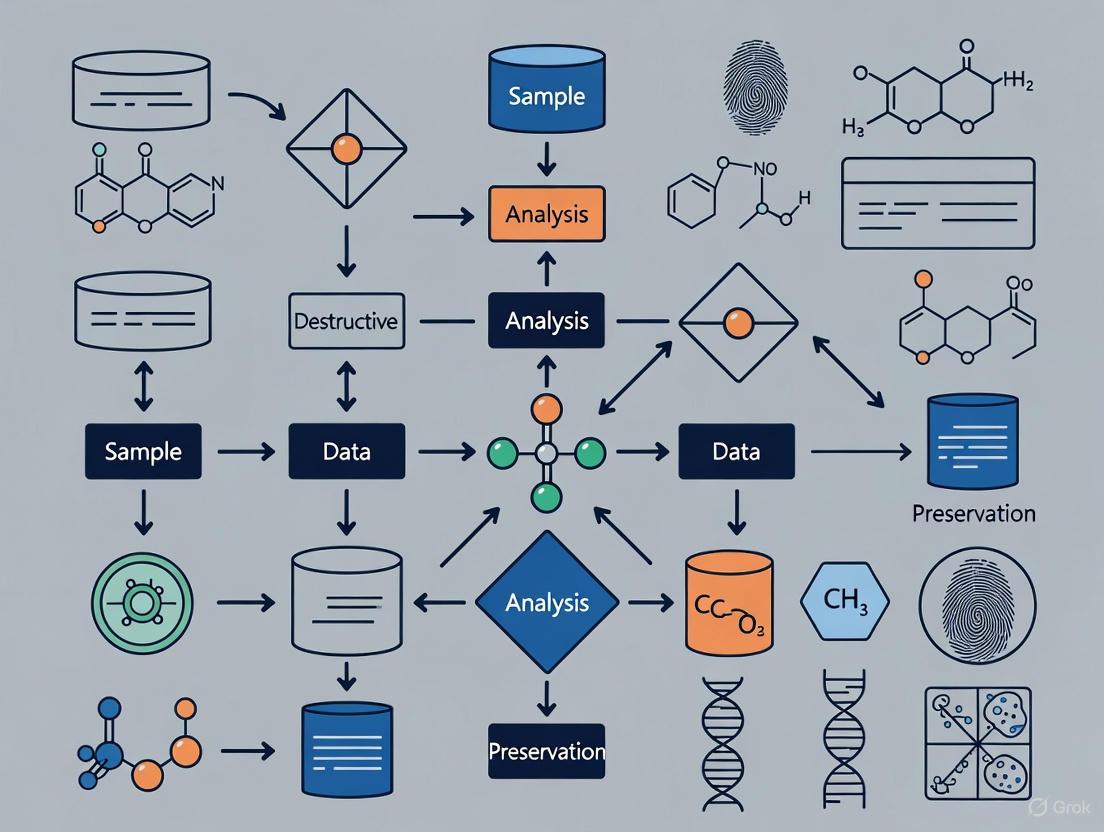
This article provides a comprehensive examination of non-destructive analysis methods revolutionizing forensic evidence preservation.
Non-Destructive Analysis in Forensics: Preserving Evidence Integrity with Advanced Methodologies
Abstract
This article provides a comprehensive examination of non-destructive analysis methods revolutionizing forensic evidence preservation. Targeting forensic researchers, scientists, and development professionals, it explores the foundational principles, cutting-edge applications, optimization strategies, and validation frameworks for techniques that maintain evidence integrity. Covering spectroscopic methods, 3D reconstruction, nanomaterials, and established NDT approaches, the content addresses operational challenges while emphasizing methodological rigor required for admissibility in legal contexts. The synthesis offers practical insights for implementing these preservation-focused methodologies across diverse forensic disciplines while outlining future directions integrating AI, advanced sensors, and standardized protocols.
The Science of Preservation: Core Principles of Non-Destructive Forensic Analysis
Non-destructive analysis (NDA) represents a paradigm shift in forensic science, enabling the examination of physical and digital evidence without alteration or destruction. These techniques preserve the integrity of evidence for subsequent analyses, courtroom presentation, and archival storage, while providing reliable, court-admissible data. The fundamental principle of NDA is the application of analytical techniques that leave evidence intact and unmodified, maintaining the chain of custody and evidentiary integrity throughout the investigative process [1] [2]. This approach stands in stark contrast to traditional destructive methods that consume or permanently alter evidence samples during analysis.
In forensic contexts, non-destructive techniques span multiple disciplines, including chemical analysis, materials characterization, and digital evidence preservation. The adoption of NDA has grown significantly due to technological advancements and increasing demands for evidence preservation and the ability to perform repeated analyses by multiple experts [1]. This document provides comprehensive application notes and experimental protocols for implementing non-destructive analysis within forensic frameworks, with particular emphasis on practical implementation for researchers and forensic professionals.
Fundamental Principles of Non-Destructive Analysis
Definition and Core Concepts
Non-destructive analysis (NDA) encompasses a wide array of analytical techniques used to evaluate the properties of materials, components, or systems without causing damage or alteration. In forensic science, this principle extends to maintaining evidence in its original state while extracting maximum informational value [3]. The core advantage of NDA lies in its ability to preserve evidence for future re-examination, defense verification, and archival purposes, which is particularly crucial in legal proceedings where evidence may need to be presented multiple times over extended periods [1] [2].
The conceptual framework of non-destructive analysis in forensic applications rests on three foundational pillars:
- Evidence Preservation: Maintaining the original state and properties of all evidence
- Analytical Reliability: Providing scientifically valid and reproducible results
- Legal Admissibility: Ensuring methodologies meet judicial standards for evidence handling
Comparison with Destructive Methods
Destructive testing methods, while valuable for determining exact failure points or material composition, result in irreversible damage to specimens [4]. These methods include tensile testing, crush testing, fracture testing, and various forms of chemical extraction that alter or consume the sample [4]. In forensic contexts, such destruction poses significant challenges for evidence preservation, chain of custody maintenance, and future re-analysis by defense experts.
Table 1: Comparative Analysis of Destructive vs. Non-Destructive Methods in Forensic Science
| Parameter | Destructive Methods | Non-Destructive Methods |
|---|---|---|
| Evidence Integrity | Permanently altered or destroyed | Fully preserved in original state |
| Re-analysis Potential | Limited or impossible | Multiple re-analyses possible |
| Analytical Focus | Bulk properties, failure points | Surface and internal structure, chemical composition |
| Sample Preparation | Often extensive, altering sample | Minimal or none required |
| Forensic Applications | Limited to cases where consumption is acceptable | Broad applicability across evidence types |
| Resource Impact | High material waste, replacement costs | Minimal waste, cost-effective over time |
Analytical Techniques and Instrumentation
Spectroscopic Methods
Fourier Transform Infrared (FTIR) Spectroscopy
FTIR spectroscopy has emerged as a cornerstone technique for non-destructive forensic analysis, providing both visual and chemical information from microscopic samples [1]. FTIR microspectroscopy combines optical microscopy with integrated FTIR, enabling rapid, non-destructive investigation of samples as small as 10 microns [1]. This technique is particularly valuable for analyzing illicit pills, hair, fibers, inks, and paints while preserving evidence integrity.
The Thermo Scientific Nicolet iN10 Infrared Microscope exemplifies modern FTIR applications in forensics, offering capabilities for visual inspection and chemical characterization without liquid nitrogen requirements, allowing laboratories to quickly evaluate evidence in any location [1]. The integrated OMNIC Picta Software simplifies microscopy operations with wizards for reflection, transmission, and ATR analysis, making the technology accessible even to inexperienced users [1].
Spectrophotometry
Spectrophotometry provides objective measurement of color and radio wavelengths, serving as a non-destructive alternative to traditional destructive procedures in crime evidence examination [2]. This method analyzes how samples reflect wavelengths, enabling differentiation of chemical composition, material type, and even brand identification of evidence [2]. UV-visible spectroscopy is particularly valuable for fiber and ink analysis, while infrared spectroscopy examines organic materials like hair, paint, and gunshot residue.
Modern spectrophotometers require no sample preparation before analysis, making them ideal for preserving evidence integrity [2]. The technique has become a gold standard in forensic analysis, employed by agencies including the FBI and American Hazardous Material Response Unit for its reliability and non-destructive characteristics [2].
Terahertz Time-Domain Spectroscopy (THz-TDS)
Terahertz spectroscopy represents an advanced approach for non-destructive identification of substances through packaging materials. Attenuated total reflection terahertz time domain spectroscopy (ATR THz-TDS) enables sample identification without opening containers by utilizing evanescent waves that penetrate packaging materials [5]. This method is particularly valuable for analyzing pharmaceuticals and illicit drugs sealed in plastic packaging, as the penetration depth of evanescent waves (typically tens of micrometers) exceeds the thickness of most plastic packaging in the sub-terahertz frequency region [5].
The ATR THz-TDS approach offers significant advantages for forensic applications, including the ability to measure thick samples, highly absorbing materials, and samples in powdered form without special preparation requirements [5]. This technique has demonstrated successful identification of saccharides like lactose through plastic packaging based on spectral fingerprints at 0.53 THz [5].
Digital Forensic Preservation Methods
Digital evidence requires specialized non-destructive approaches to preserve data integrity and maintain legal admissibility. Modern digital forensic techniques include disk imaging (creating bit-for-bit copies of storage devices), reverse steganography (extracting hidden information from files), and mobile device forensics (recovering data from smartphones and tablets) [6]. These methods ensure original evidence remains untouched while allowing comprehensive analysis.
The proliferation of security features in modern devices presents new challenges for digital evidence preservation. Features such as location-based security, automatic reboots, USB restrictions, and temporary data expiration can cause evidence degradation if not addressed promptly [7]. Contemporary digital forensic practice requires near-immediate acquisition to preserve comprehensive data, as traditional approaches of isolating devices for later analysis have become obsolete [7].
Table 2: Technical Specifications of Major Non-Destructive Analytical Techniques
| Technique | Spatial Resolution | Detection Capabilities | Primary Forensic Applications |
|---|---|---|---|
| FTIR Microscopy | ~10 microns | Chemical functional groups, molecular structure | Fibers, paints, drugs, inks, trace evidence |
| UV-Vis Spectrophotometry | Macroscopic | Color measurement, electronic transitions | Ink comparison, fiber analysis, blood detection |
| Terahertz Spectroscopy | Sub-millimeter | Molecular vibrations, crystal lattice modes | Drugs through packaging, counterfeit documents |
| Raman Spectroscopy | ~1 micron | Molecular vibrations, crystal structure | Explosives, narcotics, ink analysis |
| Digital Imaging | Bit-level | Data patterns, file structures | Computer forensics, mobile device analysis |
Application Notes: Forensic Evidence Types
Pharmaceutical and Illicit Drug Analysis
Non-destructive analysis has revolutionized the examination of pharmaceutical products and illicit drugs, enabling qualitative and quantitative assessment without consuming evidence. FTIR microscopy provides rapid analytical approaches for determining chemical composition and distribution of active components in illicit drug tablets [1]. The Nicolet iN10 MX Imaging Infrared Microscope can perform chemical imaging of prescription drugs across a 5 × 5 mm area in approximately five minutes, identifying both active ingredients and excipients without sample dissolution [1].
The OMNIC Picta Software incorporates automatic collection and analysis wizards, including a random mixture wizard that can examine and identify multiple components with a single click [1]. For forensic chemists, this enables semiquantitative distribution data and component identification through spectral library matching, providing both chemical information and insights into illegal production processes [1].
ATR THz-TDS has demonstrated particular value for identifying drugs in plastic packaging without opening containers, addressing a critical need in law enforcement and border control [5]. This approach can detect spectral fingerprints of substances like lactose at 0.53 THz through polyethylene packaging, with measurements taking approximately 30 seconds and requiring no sample preparation [5].
Trace Evidence Examination
Fiber and Hair Analysis
FTIR microscopy combines visible microscopic examination with chemical information for forensic analysis of hairs and fibers [1]. This approach can detect residual hair styling agents, conditioners, and protein structural alterations caused by chemical treatments like bleaching [1]. The oxidation of amino acid cystine to cysteic acid in bleached hair increases S=O stretching absorbance at 1040 cm⁻¹ and 1175 cm⁻¹, providing measurable indicators of treatment history [1].
For synthetic fibers, FTIR microscopy rapidly determines chemical subclass non-destructively with minimal sample preparation [1]. This capability is particularly valuable for analyzing security fibers in banknotes, where ATR microspectroscopy can identify specific polymer compositions (e.g., nylon) while providing high spectral quality with minimal cellulose contribution from the paper substrate [1].
Ink and Document Analysis
The non-destructive nature of infrared imaging and ATR FTIR microscopy provides significant benefits for assessing questioned documents [1]. FTIR microscopy enables rapid chemical imaging of both ink and paper materials, yielding unambiguous data that can be directly compared to authentic documents [1]. Chemical imaging highlights pigment distribution while ATR analysis provides detailed spectral information of the ink composition.
Modern printing technology has made visual discrimination between printing processes increasingly challenging, but FTIR analysis can distinguish between ink types and application methods [1]. The technique successfully overcomes the high infrared absorbance from cellulose between 1200-950 cm⁻¹, which previously limited infrared spectroscopy for ink analysis [1].
Fingerprint and Residue Analysis
FTIR microspectroscopic examination can reveal chemical information left behind by fingerprints beyond the friction ridge pattern [1]. This chemical information can trace a suspect's activities before committing a crime, as fingerprints contain natural sebum oil from skin (triglyceride esters) and may include contaminants from handling other materials [1]. Chemical imaging instantly determines the unique fingerprint pattern while exposing essential trace chemical information, such as fibrous wood particles or other environmental contaminants [1].
Paint and Coating Analysis
Automotive paint evidence typically consists of multiple layers of chemically diverse materials, including binders, primers, pigments, and protective resins [1]. Traditional chemical identification of paint layers requires dissolution and chemical extraction, but FTIR microscopy enables immediate chemical identification of each layer through fast mapping [1]. This approach can distinguish between the exterior protective polyurethane coating, base coat and polypropylene polymer, and paint binder layer in a single analysis [1].
Digital Evidence Preservation
Digital evidence preservation requires specialized non-destructive techniques to maintain data integrity while extracting forensically relevant information. The digital forensic investigation process follows a structured approach: identification of potential digital evidence sources, collection of devices from crime scenes, preservation through forensic imaging, analysis of evidence, and reporting of findings [6].
Contemporary challenges include modern smartphone security features that can cause evidence degradation, such as Apple's Stolen Device Protection that locks devices when moved from familiar locations, automatic reboots that purge temporary data, USB restrictions that block data connections, and self-destruct applications that wipe devices if not unlocked within specific timeframes [7]. These developments necessitate immediate acquisition rather than traditional preservation protocols that involved isolating devices in Faraday bags for later analysis [7].
Experimental Protocols
Protocol 1: FTIR Analysis of Synthetic Fibers
Scope and Application
This protocol describes the procedure for analyzing synthetic fibers using Fourier Transform Infrared (FTIR) microscopy to determine polymer subclass and chemical treatment history while preserving evidence integrity.
Equipment and Materials
- FTIR microscope with ATR capability
- Analytical balance
- Forensic tweezers
- Reference spectral libraries
- Evidence packaging materials
Procedure
Sample Preparation:
- Using clean forensic tweezers, place the fiber specimen on the microscope stage.
- Ensure the fiber is straight and securely positioned for analysis.
- No chemical preparation or coating is required.
Visual Examination:
- Using the optical microscope, examine the fiber at appropriate magnifications.
- Document physical characteristics including color, diameter, and surface features.
- Capture digital images for documentation.
Spectral Acquisition:
- Engage the ATR crystal onto the fiber specimen with consistent pressure.
- Collect infrared spectrum in the range of 4000-650 cm⁻¹.
- Set resolution to 4 cm⁻¹ with 32 scans per spectrum.
- Collect background spectrum periodically to ensure data quality.
Data Analysis:
- Compare obtained spectrum against polymer reference libraries.
- Identify characteristic absorption bands for polymer identification.
- Document any anomalies indicating chemical treatments or degradation.
Post-Analysis Handling:
- Carefully remove the fiber from the stage using clean tweezers.
- Return the fiber to appropriate evidence packaging.
- Document chain of custody continuity.
Quality Control
- Analyze known reference standards with each batch of samples
- Verify instrument performance using polystyrene calibration standards
- Maintain environmental controls to minimize atmospheric interference
Protocol 2: Non-Destructive Drug Identification Through Packaging
Scope and Application
This protocol outlines the procedure for identifying pharmaceutical substances and illicit drugs through plastic packaging using Attenuated Total Reflection Terahertz Time-Domain Spectroscopy.
Equipment and Materials
- ATR THz-TDS system with silicon prism
- Reference drug spectral database
- Plastic-packaged suspect materials
- Calibration standards
Procedure
System Preparation:
- Power on the ATR THz-TDS system and allow stabilization.
- Verify system performance using reference materials.
- Clean the silicon prism surface with appropriate solvents.
Sample Placement:
- Place the packaged material directly on the silicon prism.
- Ensure full contact between packaging and prism surface.
- Apply minimal pressure to maintain contact without damaging packaging.
Spectral Acquisition:
- Acquire time-domain THz pulse without sample as reference.
- Measure THz pulse with sample in place.
- Repeat measurement five times and average for signal-to-noise enhancement.
- Each measurement typically requires 30 seconds acquisition time.
Data Processing:
- Transform time-domain signals to frequency domain using Fourier transformation.
- Compute amplitude reflectance and phase difference.
- Calculate complex refractive index using ATR equations.
- Compare obtained spectrum to reference database.
Interpretation:
- Identify characteristic absorption features of target compounds.
- Document presence of specific spectral fingerprints.
- Note any packaging interference in the spectral profile.
Quality Assurance
- Maintain consistent contact pressure between package and prism
- Monitor signal-to-noise ratio for quality assessment
- Validate method with known standards through identical packaging
Protocol 3: Digital Evidence Preservation from Mobile Devices
Scope and Application
This protocol provides guidelines for preserving digital evidence from mobile devices while maintaining data integrity and overcoming modern security features.
Equipment and Materials
- Forensic write-blocking hardware
- Faraday bags or signal-blocking containers
- Forensic imaging software
- Certified storage media
- Documentation materials
Procedure
Device Identification:
- Document device make, model, and physical condition.
- Photograph device from multiple angles.
- Record serial numbers and other identifiers.
Signal Isolation:
- Immediately place device in Faraday bag to prevent remote wiping.
- Maintain device in powered-on state if already on.
- Do not power on devices that are off.
Immediate Acquisition:
- Connect device to forensic workstation using appropriate cables.
- Bypass USB restrictions using specialized forensic tools.
- Create forensic image using approved mobile forensics software.
- Generate hash verification of acquired data.
Data Extraction:
- Extract logical data including call logs, messages, and applications.
- Attempt physical extraction for complete data recovery.
- Document all extraction methods and success rates.
Preservation:
- Store original device in secure evidence locker.
- Create redundant copies of forensic images.
- Maintain detailed chain of custody documentation.
Quality Control
- Verify data integrity through hash verification at multiple stages
- Document all actions taken with timestamps
- Maintain specialized training on evolving mobile security features
The Scientist's Toolkit: Essential Research Reagents and Materials
Table 3: Essential Materials for Non-Destructive Forensic Analysis
| Item | Specification | Function in Analysis |
|---|---|---|
| ATR Crystals | Diamond, Germanium, or Silicon | Surface contact for internal reflection measurements |
| Reference Spectral Libraries | Certified commercial databases | Chemical identification and comparison |
| Forensic Tweezers | Anti-static, non-magnetic | Evidence handling without contamination |
| Faraday Bags | Multiple layer signal blocking | Prevention of remote data wiping during digital evidence collection |
| Silicon Prisms | High resistivity, low THz absorption | Total internal reflection for THz-TDS measurements |
| Certified Reference Materials | Traceable to national standards | Method validation and quality control |
| Forensic Imaging Software | Court-accepted applications | Bit-level data preservation and analysis |
Workflow and Signaling Pathways
Non-destructive analysis represents the future of forensic science, balancing the competing demands of comprehensive evidence examination and preservation of materials for judicial proceedings. The techniques outlined in this document—spanning spectroscopic methods, digital preservation protocols, and specialized analytical approaches—provide forensic practitioners with powerful tools for evidence characterization while maintaining integrity for future analyses.
The continued evolution of non-destructive methods will likely focus on increasing sensitivity, reducing analysis time, and expanding capabilities for through-barrier detection. As these technologies mature, their integration into standard forensic practice will further enhance the scientific rigor and reliability of forensic investigations while preserving the fundamental principle of evidence integrity throughout the judicial process.
Locard's Exchange Principle, a cornerstone of forensic science, dictates that "every contact leaves a trace" [8] [9]. Formulated by Dr. Edmond Locard in the early 20th century, this principle states that whenever two objects come into contact, there is a mutual exchange of trace material between them [8]. This foundational concept has traditionally guided criminal investigations, where microscopic evidence such as hair, fibers, or dust serves as a silent witness to events [10]. In contemporary scientific research, this principle provides a powerful theoretical framework for understanding how materials interact with their environment and with analytical instruments during non-destructive testing (NDT). The integration of Locard's principle with modern NDT methodologies creates a robust paradigm for preserving irreplaceable materials—from archaeological bones to composite materials in aerospace—while extracting critical data about their composition, history, and integrity.
The convergence of these fields addresses a critical need in evidence-based research: the necessity to derive maximum information from unique or fragile specimens without altering or destroying them. This is particularly vital in fields such as cultural heritage preservation, archaeology, and materials science, where the subject's preservation is paramount. Non-destructive evaluation (NDE) techniques enable researchers to act as forensic experts of history and material science, investigating the "crime scene" of degradation or material change without contaminating the evidence [11] [12]. This approach ensures that materials remain available for future analysis with potentially more advanced technologies, thereby extending their research lifespan and value.
Theoretical Foundations: Locard's Principle in Context
Core Concept and Historical Development
Edmond Locard (1877-1966), often called the "Sherlock Holmes of France," established the first forensic laboratory in Lyon, France, in 1910 [8]. Although the succinct phrase "every contact leaves a trace" is the common formulation, Locard himself wrote: "It is impossible for a criminal to act, especially considering the intensity of a crime, without leaving traces of this presence" [9]. This insight revolutionized forensic science by providing a theoretical basis for the systematic examination of trace evidence. Locard was inspired by multiple sources, including Sir Arthur Conan Doyle's Sherlock Holmes stories, the biometric work of Alphonse Bertillon, and the criminalistics foundations laid by Hans Gross [8].
Locard demonstrated his principle through practical investigation. In one famous 1912 case involving the murder of Marie Latelle, Locard examined skin cells from under suspect Emile Gourbin's fingernails and discovered a distinctive pink dust that was matched to custom-made face powder used by the victim [9]. This trace evidence proved crucial in securing a confession and conviction, powerfully illustrating how microscopic transfers could establish connections between people, objects, and locations.
The Principle in Modern Scientific Context
In contemporary preservation science, Locard's principle has expanded beyond its forensic origins to encompass several key theoretical concepts:
Mutual Alteration Concept: Every interaction between an object and its environment, or between an object and a measurement device, results in bidirectional transfer or alteration, however minimal [8]. This understanding necessitates careful consideration of how analysis itself might affect specimens.
Trace Evidence Persistence: Trace materials—whether physical particles or digital artifacts—persist over time and can be detected with appropriate methodologies [13]. This persistence enables researchers to reconstruct past events or conditions from present evidence.
Hierarchy of Detection: As analytical technologies advance, the scale of detectable evidence continues to decrease, with nanotechnology and molecular-level analysis now enabling detection of previously invisible traces [8].
The application of Locard's principle has naturally extended to digital forensics, where cybercrimes leave data traces such as log files, metadata, and network artifacts [13] [10]. Similarly, in preservation science, the principle guides the detection of subtle material changes, environmental interactions, and degradation patterns that inform conservation strategies.
Non-Destructive Testing Methods for Preservation Science
Non-destructive testing (NDT) comprises a wide group of analysis techniques used to evaluate material properties without causing damage [3]. Also referred to as non-destructive examination (NDE) or non-destructive evaluation (NDE), these methods are indispensable for investigating precious or irreplaceable materials where preservation is essential [11] [12]. The following sections detail prominent NDT methods relevant to preservation science across various disciplines.
Spectroscopic Techniques
Spectroscopic methods analyze the interaction between matter and electromagnetic radiation to determine material composition and properties.
Table 1: Spectroscopic NDT Methods for Material Analysis
| Method | Physical Principle | Typical Applications | Penetration Depth | Key Advantages |
|---|---|---|---|---|
| Near-Infrared (NIR) Spectroscopy | Measures molecular overtone and combination vibrations | Bone collagen quantification [12], material identification | Millimeters [12] | Rapid analysis (seconds), non-contact capability, field-portable instruments |
| Infrared Thermography (IRT) | Detects infrared energy emission variations | Building diagnostics [11], delamination detection in composites [14] | Surface to subsurface | Wide area coverage, real-time imaging, non-contact |
| X-ray Computed Tomography (XCT) | Measures X-ray attenuation through multiple projections | 3D void characterization in composites [14], internal structure visualization | Varies with material density and energy | Detailed 3D visualization, quantitative analysis |
Near-Infrared (NIR) Spectroscopy has emerged as particularly valuable for archaeological and cultural heritage applications. A 2019 study demonstrated that portable NIR spectroscopy could accurately quantify collagen content in ancient bone specimens ranging from 500 to 45,000 years old [12]. This method successfully classified specimens into preservation categories with over 90% accuracy when identifying bones with sufficient collagen (>1%) for radiocarbon dating or stable isotope analysis, all without destructive sampling [12].
Wave-Based Imaging Techniques
Wave-based methods utilize various forms of energy propagation to visualize internal structures and detect anomalies.
Table 2: Wave-Based NDT Methods for Structural Evaluation
| Method | Physical Principle | Typical Applications | Spatial Resolution | Limitations |
|---|---|---|---|---|
| Ultrasonic Testing (UT) | High-frequency sound wave propagation and reflection | Internal flaw detection [14], thickness measurement [3] | Millimeter to sub-millimeter | Requires couplant, sensitive to microstructure |
| Ground Penetrating Radar (GPR) | Electromagnetic wave reflection | Subsurface feature mapping [11], rebar localization in concrete [15] | Centimeter scale | Limited depth in conductive materials |
| Impact-Echo Testing | Analysis of stress wave reflections | Thickness measurement, delamination detection in concrete [15] | Centimeter scale | Point measurement, requires surface access |
Ultrasonic Testing (UT) presents unique challenges for anisotropic materials like fiber-reinforced polymer (FRP) composites, where wave propagation characteristics vary significantly with fiber orientation [14]. Advanced ultrasonic techniques such as Phased-Array Ultrasonic Testing (PAUT) have been developed to address these challenges through controlled beam steering and focusing, enabling more accurate defect characterization in complex composite structures [14].
Visual and Optical Methods
Visual and optical techniques enhance or extend human vision for detailed surface analysis.
Visual Testing (VT): The most fundamental NDT method, VT involves direct observation of surfaces using tools such as borescopes, magnifiers, and digital microscopes to identify visible defects, corrosion, or misalignments [3]. Fiber Optic Microscopy (FOM) has proven particularly valuable for cultural heritage applications, enabling detailed examination of architectural surfaces without physical contact [11].
Digital Image Processing (DIP): This technique enhances and analyzes digital images of surfaces to quantify decay patterns, map weathering effects, and monitor changes over time. In cultural heritage preservation, DIP has been successfully used to objectively assess cleaning interventions on historic marble surfaces [11].
Experimental Protocols for Preservation Research
Protocol 1: NIR Spectroscopy for Bone Collagen Quantification
Principle: Locard's Exchange Principle manifests in the preservation of molecular signatures in archaeological bone. The non-destructive analysis detects the persistent "traces" of original collagen through its NIR spectral signature [12].
Materials and Equipment:
- Portable NIR spectrometer with wavelength range 1000-2500 nm
- Spectralon reference standard for calibration
- Sample positioning fixture
- Computer with multivariate analysis software
Procedure:
- Allow spectrometer to warm up according to manufacturer specifications.
- Acquire reference spectrum using Spectralon standard.
- Position bone specimen securely in the sample fixture, ensuring reproducible geometry.
- Collect spectra from multiple positions on the specimen to account for heterogeneity.
- Process spectra using standard normal variate (SNV) or multiplicative scatter correction (MSC) to minimize light scattering effects.
- Apply pre-developed partial least squares (PLS) regression model to predict collagen content from spectral data.
- Classify specimens into preservation categories based on predicted collagen content (>1% suitable for radiocarbon dating; >3% for comprehensive analysis).
Validation: The method demonstrated excellent predictive power (R² = 0.91-0.97) in validation studies with bone specimens of known collagen content, with root mean square error of prediction of 1.18-1.97% collagen [12].
Protocol 2: Integrated NDT Assessment for Historic Structures
Principle: Building materials continuously exchange traces with their environment through weathering processes. Multiple NDT techniques detect and characterize these alterations without contributing to the decay [11].
Materials and Equipment:
- Infrared thermal camera
- Ground penetrating radar system with appropriate frequency antennas
- Ultrasonic pulse velocity tester
- Digital camera for high-resolution imaging
- Fiber optic microscope
Procedure:
- Macro-scale Mapping: Conduct systematic visual inspection documented with digital photography. Create detailed condition mapping using standardized decay terminology.
- Thermographic Survey: Perform active or passive thermography under appropriate environmental conditions. Identify subsurface anomalies through thermal contrast patterns.
- GPR Assessment: Systematically scan structural elements using grid methodology. Process data to identify subsurface features, moisture distribution, and structural heterogeneities.
- Ultrasonic Testing: Measure pulse velocity through structural elements following established paths. Calculate velocity variations indicative of material quality or deterioration.
- Data Integration: Correlate findings from all techniques using geographic information systems (GIS) or building information modeling (BIM) platforms. Identify convergence of evidence from multiple NDT methods.
Quality Control: Perform repeated measurements on reference areas to establish precision. Validate findings with minimal destructive sampling when absolutely necessary and ethically justified.
Visualization of Methodologies and Workflows
Logical Workflow for NDT in Preservation Science
Locard's Principle in Material Analysis Context
The Scientist's Toolkit: Essential Research Reagent Solutions
Table 3: Essential Materials for Non-Destructive Preservation Research
| Tool/Reagent | Function | Application Examples |
|---|---|---|
| Portable NIR Spectrometer | Quantitative molecular analysis via overtone vibrations | Bone collagen prescreening [12], material identification |
| Infrared Thermal Camera | Surface temperature mapping and variation detection | Building thermography [11], composite delamination detection [14] |
| Ultrasonic Pulse Velocity Tester | Internal structure assessment through sound wave propagation | Concrete integrity testing [15], composite flaw detection [14] |
| Ground Penetrating Radar | Subsurface imaging using electromagnetic wave reflection | Structural element mapping [11], rebar localization [15] |
| Fiber Optic Microscope | High-resolution visual examination without contact | Surface degradation mapping [11], material characterization |
| Multivariate Analysis Software | Spectral data processing and predictive modeling | Collagen content prediction [12], material classification |
The integration of Locard's Exchange Principle with modern non-destructive testing methodologies creates a powerful theoretical and practical framework for preservation science. This synergy enables researchers to extract maximum information from valuable specimens while maintaining their integrity for future study. The continuing advancement of NDT technologies—including the integration of artificial intelligence, digital twin technology, and multimodal inspection systems—promises to further enhance our ability to detect increasingly subtle traces of interaction and alteration [14]. As these technologies evolve, they will expand our capacity to investigate and preserve our material cultural heritage, historical artifacts, and advanced composite materials, ensuring that these valuable resources remain available for future generations of scientists and researchers. The theoretical foundation presented here establishes a basis for ethical, evidence-based preservation practice that honors both the imperative for knowledge advancement and the responsibility of material conservation.
Evidence preservation is a critical facet of the criminal justice system, forming the foundational integrity upon which forensic science is built. At every stage, handlers of evidence must ensure that it has not been compromised, contaminated, or degraded and that its chain of custody is meticulously tracked [16]. The National Institute of Justice (NIJ), as the principal federal agency supporting forensic science research and development, plays a pivotal role in advancing this field. Its research priorities are strategically designed to address the growing complexity of managing vast inventories of property and evidence, particularly with the justice system's increasing reliance on forensic evidence in casework [16] [17]. This document frames these priorities within a broader thesis on the application of non-destructive analysis methods, which allow for the evaluation of evidence properties without causing damage, thereby preserving materials for subsequent analyses and maintaining their legal integrity [18]. For researchers and scientists, understanding these priorities is essential for directing investigative efforts towards the most pressing challenges in forensic science.
NIJ's Strategic Research Framework for Forensic Science
The NIJ's research, development, testing, and evaluation (RDT&E) process is engineered to align its portfolio with the expressed needs of the forensic science community [17]. The mission of the NIJ's Office of Investigative and Forensic Sciences (OIFS) is to "improve the quality and practice of forensic science through innovative solutions" [17]. Its research and development goals are threefold and directly inform evidence preservation strategies, as outlined in the table below.
Table 1: Strategic Goals of NIJ's Office of Investigative and Forensic Sciences
| Goal Number | Strategic Goal | Implication for Evidence Preservation |
|---|---|---|
| 1 | Expand the information that can be extracted from forensic evidence and quantify its evidentiary value. | Promotes development of non-destructive and sequential analysis methods to maximize data yield from a single sample. |
| 2 | Develop reliable and widely applicable tools that allow faster, cheaper, and less labor-intensive identification, collection, preservation, and analysis of evidence. | Directly drives research into automation, triage tools, and efficient preservation techniques to reduce backlogs. |
| 3 | Strengthen the scientific basis of the forensic science disciplines. | Encourages foundational research into the stability and degradation of materials, underpinning effective preservation protocols. |
A key mechanism for identifying specific research needs is the use of Technology Working Groups (TWGs) [17]. These groups, composed of forensic science practitioners, generate a detailed list of operational and technology needs affecting day-to-day work. For the 2025 fiscal year, NIJ has released a list of anticipated research interests that highlights social science research and evaluative studies on forensic science systems and projects to identify and inform the forensic community of best practices [19]. This aligns with the broader goal of strengthening the entire ecosystem of evidence management, from the crime scene to the courtroom.
Application Note: Non-Destructive Fluorescence for Fiber Evidence Preservation
Principle and Rationale
The analysis of textile fibers is a common form of trace evidence examination in forensic investigations. A primary challenge is the need to compare a questioned fiber to a known sample without consuming or altering the evidence, thus preserving it for confirmatory testing or re-examination by defense experts. Non-destructive testing (NDT) methods are "highly valuable technique[s] that can save both money and time in product evaluation, troubleshooting, and research" [18]. Fluorescence spectroscopy has emerged as a powerful NDT method for this purpose. The technique capitalizes on the fact that many dyes and intrinsic impurities in fibers fluoresce when exposed to specific wavelengths of light. By measuring the unique excitation-emission matrix (EEM) of a single fiber, a detailed fluorescent profile can be obtained without destroying the sample [20].
Experimental Protocol for Non-Destructive Fiber Analysis
This protocol provides a step-by-step methodology for the non-destructive characterization of single textile fibers using fluorescence spectroscopy, based on research supported by the National Institute of Justice [20].
Table 2: Key Research Reagent Solutions for Fluorescence Analysis of Fibers
| Item Name | Function / Explanation |
|---|---|
| Fluorescence Spectrophotometer | Instrument capable of collecting excitation-emission matrices (EEMs). Must have a xenon lamp and capable of scanning emission wavelengths from 250-800 nm. |
| Microspectrophotometer Attachment | Essential for focusing the excitation beam and collecting emitted light from a single, microscopic fiber. |
| Non-Fluorescent Microscope Slides & Coverslips | To mount the single fiber for analysis without introducing background fluorescence. |
| Immersion Oil (Non-Fluorescent) | To secure the fiber and improve optical clarity under the microscope objective. |
| Standard Reference Materials | Such as Standard Reference Material 1597a (polycyclic aromatic hydrocarbons), for instrument calibration and validation [20]. |
Procedure:
- Sample Mounting: Isolate a single questioned fiber and a known single fiber. Using clean forceps, mount each fiber separately on a non-fluorescent microscope slide. Secure the fiber with a coverslip, using a minimal amount of non-fluorescent immersion oil if necessary.
- Instrument Calibration: Power on the fluorescence spectrophotometer and allow the lamp to stabilize. Calibrate the instrument's wavelength accuracy using the appropriate standard reference materials according to the manufacturer's protocol.
- Data Acquisition: a. Place the mounted questioned fiber on the microscope stage of the spectrophotometer. b. Set the initial excitation wavelength (e.g., 250 nm). The excitation wavelength should be selected based on the dye class, but a full spectral range is recommended for untargeted analysis. c. Scan the emission wavelength from a value slightly above the excitation wavelength up to 800 nm, recording the fluorescence intensity at each wavelength. d. Increment the excitation wavelength by a fixed step (e.g., 5-10 nm) and repeat the emission scan. e. Continue this process to generate a complete three-dimensional EEM, which is a plot of fluorescence intensity as a function of both excitation and emission wavelengths.
- Data Analysis: Subject the collected EEM data to multi-way statistical analysis, such as Parallel Factor (PARAFAC) analysis, to decompose the complex signal into the contributing fluorescent components [20]. This allows for the differentiation of fibers with visually similar colors but different chemical compositions.
- Sample Recovery: After analysis, carefully remove the fiber from the slide. The fiber remains intact and unaltered, available for further analysis with other techniques (e.g., microspectrophotometry in the visible range, Fourier-Transform Infrared spectroscopy).
Diagram 1: Non-Destructive Fiber Analysis Workflow.
Quantitative Data and Research Priorities in Evidence Management
Recent surveys and reports commissioned by the NIJ provide a quantitative backbone for understanding the current state and needs of evidence management. The NIST/NIJ Evidence Management Steering Committee conducted a national survey of evidence handlers in 2021, with the final reports published in 2025 [16]. While the full quantitative data is housed separately, the key findings highlight systemic challenges that directly inform research priorities [16] [21].
Table 3: Key Evidence Management Challenges and Research Implications
| Documented Challenge | Quantitative / Qualitative Data | Related NIJ Research Priority |
|---|---|---|
| Volume of Digital Evidence | "Considerable quantity of evidence" creates "overwhelming volume of work" and "large backlogs" for examiners [21]. | Develop tools for faster, cheaper analysis; Triage tools for detectives [19] [21]. |
| Training Gaps | Potential difficulties with prosecutors, judges, and defense attorneys not understanding digital evidence [21]. Inexperience of patrol officers in preserving evidence [21]. | Social science research on forensic systems; Education for courtroom personnel [19] [21]. |
| Resource Limitations | Small agencies lack resources for effective analysis; challenges in obtaining funding and staffing [21]. | Develop regional analysis models; Foundational/applied R&D in forensics [19] [21]. |
The NIJ's focus on digital evidence preservation is particularly salient. Digital evidence is "much more fragile" than physical evidence and can be "easily altered, deleted, or corrupted" [22]. The core principles for its preservation, which align with non-destructive ideals, include forensic soundness, a verifiable chain of custody, evidence integrity (verified via hash algorithms), and minimal handling (often using write blockers) [23] [22]. The international standard ISO/IEC 27037 provides guidelines for the identification, collection, acquisition, and preservation of digital evidence, emphasizing the need to maintain data integrity without alteration [23].
The strategic research priorities of the NIJ underscore an unwavering commitment to enhancing the integrity, efficiency, and scientific rigor of evidence preservation. The path forward is clear: a continued investment in the development and validation of non-destructive analysis methods is paramount. Techniques such as fluorescence spectroscopy for fibers, along with other NDT methods like eddy-current and ultrasonic testing [18], represent the vanguard of this effort. They allow for the maximal extraction of information from precious and often minute evidence samples while perfectly preserving the sample for the judicial process. For the research community, this translates to a clear call to action. By aligning experimental designs with the NIJ's stated goals of expanding informational yield, developing efficient tools, and strengthening scientific foundations, scientists can directly contribute to a more robust and reliable criminal justice system. The future of evidence preservation lies in innovative, non-destructive technologies that uphold the highest standards of forensic science.
Within forensic evidence preservation research, non-destructive analysis methods are paramount. These techniques allow for the initial examination of evidence without consuming or altering the original material, thereby preserving its integrity for future testing. The core pillars supporting this paradigm are a rigorously maintained chain of evidence, the capacity for evidence re-analysis, and the establishment of legal admissibility. This document outlines detailed application notes and protocols to achieve these critical objectives, providing researchers and drug development professionals with a framework to ensure their forensic workflows yield scientifically sound and legally defensible results.
The Critical Role of Chain of Evidence
The chain of evidence (CoC), also known as the chain of custody, is the chronological and documented process that records the handling, collection, transfer, storage, analysis, and presentation of physical or digital evidence [24]. It acts as the legal backbone for maintaining the integrity and admissibility of evidence in investigative and judicial processes [25] [24]. The core principle is that every piece of evidence must be accounted for at all times, from the moment it is discovered to its final presentation in court [24].
A well-maintained CoC serves several vital purposes:
- Preserving Integrity: It demonstrates that the evidence presented in court is the same as the evidence originally collected and has not been tampered with, altered, or contaminated [24].
- Establishing Authenticity: It provides a verifiable record that is essential for authenticating evidence under legal standards, such as those outlined in Section 65B of the Information Technology Act, 2000, for electronic records [25].
- Creating Accountability: It assigns responsibility to every individual who handled the evidence, creating a clear trail of custody [24].
Quantitative Metrics for Evidence Integrity
The following table summarizes key quantitative data and standards related to evidence integrity and legal admissibility, providing a quick reference for researchers.
Table 1: Standards and Metrics for Evidence Integrity and Analysis
| Category | Metric/Standard | Description | Legal/Scientific Basis |
|---|---|---|---|
| Digital Evidence Admissibility | Section 65B Certificate | A mandatory certificate for the admissibility of electronic evidence in Indian courts, affirming the integrity of the electronic record [25]. | Information Technology Act, 2000; Arjun Panditrao Khotkar v. Kailash Kushanrao Gorantyal (2020) [25]. |
| Statistical Significance | p-value | The probability of obtaining results at least as extreme as the observed results, assuming the null hypothesis is true. A p-value < 0.05 is a common threshold for statistical significance in forensic analysis. | Standard scientific practice for hypothesis testing. |
| Digital Contrast (Minimum) | 4.5:1 (Text) / 3.0:1 (Large Text) | The minimum contrast ratio between text and its background for standard WCAG Level AA compliance, ensuring legibility and reducing misinterpretation of data [26]. | WCAG Success Criterion 1.4.3 Contrast (Minimum) [26]. |
| Sample Contamination Rate | Laboratory-specific benchmark | The acceptable percentage of samples that are compromised during handling or analysis. Maintaining a low, documented rate is critical for defending the validity of results. | Laboratory accreditation standards (e.g., ISO/IEC 17025). |
Experimental Protocols for Evidence Handling
Protocol: Chain of Custody Documentation
Objective: To create an unbroken, documented trail for every item of evidence from collection to disposal.
Materials: Evidence tags, tamper-evident bags/containers, chain of custody forms (physical or digital), permanent ink pens, secure storage facility.
Methodology:
- Collection: Upon discovery, evidence is assigned a unique identifier. The collector records the date, time, location, case number, description of the item, and their name and signature on the evidence tag and CoC form [24].
- Packaging: Evidence is placed in a tamper-evident container. The container is sealed, and the seal is initialed and dated [24].
- Transfer: Every time evidence changes hands, the CoC form must be updated. The recipient documents the date, time, their name, signature, and the condition of the evidence and its seal upon receipt [24].
- Storage: Evidence is stored in a secure, access-controlled environment with conditions (e.g., temperature, humidity) appropriate to prevent degradation [24].
- Analysis: The analyst documents the date, time, and tests performed. For non-destructive analysis, the evidence remains sealed; for destructive tests, a specific request and authorization must be documented [24].
Protocol: Non-Destructive Analysis of Trace Evidence
Objective: To analyze trace evidence (e.g., fibers, paint chips) without consuming or altering the sample, enabling future re-analysis.
Materials: Sterile tweezers, microscope slides, stereomicroscope, Fourier-Transform Infrared (FTIR) spectrometer, Raman spectrometer, sealed evidence containers.
Methodology:
- Visual Examination: Under a stereomicroscope, document the physical characteristics (color, shape, size) of the trace evidence.
- Chemical Composition Analysis:
- FTIR Spectroscopy: Place the sample in the FTIR spectrometer. This technique identifies organic components by measuring the absorption of infrared light, requiring no sample preparation and being non-destructive [24].
- Raman Spectroscopy: Focus a laser on the sample to measure the scattering of light. This provides complementary molecular information to FTIR and is also non-destructive [24].
- Re-packaging: After analysis, the evidence is immediately re-sealed in its original container, and the CoC form is updated to reflect the analysis performed.
Visualization of Workflows
Evidence Lifecycle Management
Data Analysis and Re-analysis Pathway
The Scientist's Toolkit: Research Reagent Solutions
This section details essential materials and solutions used in forensic evidence preservation and analysis.
Table 2: Essential Materials for Forensic Evidence Preservation
| Item | Function | Application in Non-Destructive Analysis |
|---|---|---|
| Tamper-Evident Bags | To securely package evidence and provide visual proof if the container has been opened [24]. | Used for storing all physical evidence after initial collection and examination. |
| FTIR Spectroscopy | To identify organic and some inorganic materials by producing an infrared absorption spectrum without damaging the sample [24]. | Analysis of polymers, drugs, paints, and fibers. |
| Raman Spectroscopy | To provide a molecular fingerprint for identifying substances, complementary to FTIR, and is also non-destructive [24]. | Analysis of pigments, inks, and minerals. |
| Digital Forensic Write-Blockers | Hardware devices that allow data to be read from a storage device (e.g., hard drive) without any possibility of the data being altered. | Essential for creating a forensically sound image of digital evidence for analysis and re-analysis. |
| Secure, Barcoded Evidence Containers | To provide physical protection and allow for integrated tracking within a Laboratory Information Management System (LIMS). | Storage of all physical evidence, linking the physical item to its digital CoC record. |
Future Directions and Innovations
The field of forensic evidence preservation is evolving rapidly. Key innovations include:
- Blockchain for Chain of Custody: Implementing blockchain technology to create an immutable, transparent, and decentralized log of every transaction and handling event in the evidence lifecycle, making the CoC virtually tamper-proof [24].
- Artificial Intelligence (AI) in Pattern Recognition: Using AI and machine learning to analyze vast datasets, such as DNA mixtures or digital evidence, identifying patterns that may be missed by human analysts and providing statistical weight to findings [24].
- Portable Rapid Forensic Devices: The development of handheld devices for on-site DNA analysis (Rapid DNA) and drug testing allows for preliminary, non-destructive screening at the scene, guiding investigation while preserving the bulk of the sample for lab analysis [24].
The analysis of biological and physical evidence is a cornerstone of forensic investigations, yet the highly limiting nature of such evidence often necessitates accessing suboptimal sources. Archived microscope slides from sexual assault evidence collection kits, autopsies, or hospital visits represent a critical reservoir of potential evidence, containing hair, cells, fibers, and other materials trapped beneath coverslipping media. Traditional methods for accessing this slide-bound evidence have involved dangerous processes or solvents such as xylene and liquid nitrogen, which risk compromising the sample's integrity through chemical alteration or physical destruction. This protocol outlines a simple, nondestructive, and safe method for accessing and processing material on coverslipped slides, thereby preserving material integrity for downstream forensic analysis.
Quantitative Comparison of Coverslip Removal Methods
The following table summarizes the key characteristics of the novel nondestructive method against traditional approaches, highlighting its advantages in preserving material integrity.
Table 1: Quantitative Comparison of Coverslip Removal Methods
| Method Characteristic | Traditional Solvent Methods | Cryogenic Methods | Novel Humidification Method |
|---|---|---|---|
| Primary Mechanism | Chemical dissolution of mounting media [27] | Thermal shock via liquid nitrogen [27] | Humid environment softens media [27] |
| Sample Integrity Risk | High (Chemical alteration) [27] | High (Physical cracking) [27] | None (Nondestructive) [27] |
| User Safety Hazard | High (Use of toxic xylene) [27] | Moderate (Extreme cold handling) | Low (Uses water vapor, clear nail polish) [27] |
| Success Rate | Variable, not explicitly stated [27] | Variable, not explicitly stated [27] | 100% (across slides aged 6+ years) [27] |
| Key Advantage | Well-established protocol | Rapid action | Preserves sample for sensitive downstream analysis [27] |
Detailed Experimental Protocol for Nondestructive Coverslip Removal
Principle
This method leverages a humid environment to gradually plasticize and loosen the coverslipping mounting media, allowing for its gentle separation from the glass slide. Subsequent reinforcement of the coverslip with clear nail polish prevents cracking during removal, providing full access to the underlying sample without chemical or physical alteration [27].
Materials and Reagents
The following "Research Reagent Solutions" and materials are required for the execution of this protocol.
Table 2: Essential Materials and Reagents
| Item Name | Function / Application Note |
|---|---|
| Humid Chamber | Creates a controlled environment with high humidity to soften the mounting media without liquid water contact. A sealed container with a rack placed over distilled water suffices. [27] |
| Distilled Water | Source of vapor within the humid chamber; prevents mineral deposits on the slide. |
| Clear Nail Polish | Forms a flexible, reinforcing film over the coverslip. This layer provides structural integrity, preventing cracks and fragmentation during the lifting process. [27] |
| Fine-Tip Forceps | Precision tool for gently lifting the reinforced coverslip from the slide surface once the media has loosened. |
| Microscope Slides | The source of the archival evidence, specifically coverslipped slides with various mounting media, aged 6 years or more. [27] |
Step-by-Step Procedure
- Preparation of Humid Chamber: Place a small volume of distilled water in the base of a sealable container. Ensure a raised platform or rack is present to hold the slides above the water level, preventing direct contact.
- Humidification: Position the target coverslipped slide on the rack within the humid chamber. Seal the container and allow it to incubate at ambient room temperature. The required time may vary slightly with the age and type of mounting media but typically ranges from several minutes to an hour. The process is complete when the coverslip moves slightly when gently nudged with forceps.
- Coverslip Reinforcement: Carefully remove the slide from the humid chamber. Using the applicator brush, apply a thin, uniform layer of clear nail polish across the entire surface of the coverslip. Allow the polish to dry completely, forming a continuous, transparent film.
- Coverslip Removal: Using fine-tip forceps, gently lift one edge of the reinforced coverslip. Slowly and carefully peel the entire coverslip away from the slide. The nail polish film will bind to the coverslip, holding it together and preventing shattering.
- Sample Access: The underlying sample material (e.g., cells, hair, fibers) is now exposed on the slide surface and can be directly processed for subsequent analysis, such as DNA extraction or microscopic examination.
Workflow Visualization of the Nondestructive Protocol
The following diagram illustrates the logical sequence and key decision points in the nondestructive coverslip removal workflow.
Nondestructive Coverslip Removal Workflow
The outlined protocol provides a robust, safe, and highly effective method for accessing delicate evidence from archived microscope slides. By eliminating the use of hazardous solvents and minimizing physical stress on the sample, this nondestructive approach fundamentally supports the core thesis of material integrity preservation in forensic evidence research. The 100% success rate in accessing historical samples ensures that valuable evidence can be subjected to modern, sensitive analytical techniques without risk of alteration, thereby unlocking past evidence for future justice.
Advanced Non-Destructive Techniques: From Crime Scene to Laboratory Applications
Vibrational spectroscopy and optical emission techniques represent cornerstone methodologies for non-destructive chemical analysis within forensic science and pharmaceutical development. This article details the application notes and experimental protocols for three principal techniques: Raman spectroscopy, Fourier-Transform Infrared (FT-IR) spectroscopy, and Laser-Induced Breakdown Spectroscopy (LIBS). The drive toward non-destructive analysis is paramount in forensic contexts, where evidence preservation for subsequent re-examination and courtroom testimony is critical [28] [29]. Similarly, in pharmaceutical research, the ability to analyze materials without altering their chemical structure supports robust quality control and the fight against counterfeit drugs [29]. These techniques provide molecular-level information that enables researchers and scientists to identify unknown substances, characterize materials, and detect trace evidence with a high degree of specificity while maintaining evidence integrity.
Technique Fundamentals & Comparative Analysis
Principles of Operation
Raman Spectroscopy: This technique relies on inelastic light scattering. When monochromatic laser light interacts with a molecule, the energy shift of the scattered light corresponds to the vibrational energies of molecular bonds, providing a unique molecular fingerprint. The process measures relative frequencies at which a sample scatters radiation and depends on a change in the polarizability of a molecule [28] [30]. It is particularly sensitive to homo-nuclear molecular bonds (e.g., C-C, C=C, C≡C) [30].
Fourier-Transform Infrared (FT-IR) Spectroscopy: FT-IR operates on the principle of infrared light absorption. It measures the absolute frequencies at which a sample absorbs IR radiation, which corresponds to the vibrational frequencies of molecular bonds. This absorption requires a change in the dipole moment of the molecule and is highly sensitive to hetero-nuclear functional group vibrations and polar bonds, such as O-H stretching in water [28] [30].
Laser-Induced Breakdown Spectroscopy (LIBS): LIBS is an atomic emission technique. It involves using a high-power, pulsed laser to ablate a micro-scale amount of material, generating a transient plasma. As the plasma cools, the excited atoms and ions emit characteristic wavelengths of light. The detection of these elemental emission lines provides a quantitative and qualitative analysis of the sample's elemental composition [31] [32].
Comparative Technique Analysis
Table 1: Comparative analysis of Raman, FT-IR, and LIBS spectroscopic techniques.
| Parameter | Raman Spectroscopy | FT-IR Spectroscopy | Laser-Induced Breakdown Spectroscopy (LIBS) |
|---|---|---|---|
| Fundamental Principle | Inelastic light scattering [30] | Infrared light absorption [30] | Atomic optical emission from laser-induced plasma [31] |
| Probed Information | Molecular vibrations (phonons); chemical structure & phases [29] | Molecular vibrations; chemical bonds & functional groups [28] | Elemental composition (bulk & trace) [31] |
| Sensitivity | Sensitive to homo-nuclear bonds (C-C, C=C) [30] | Sensitive to hetero-nuclear, polar bonds (O-H, C=O) [28] [30] | High sensitivity for trace elements (ppb) [31] |
| Sample Preparation | Minimal to none; non-destructive [28] [29] | Can be extensive (e.g., KBr pellets); often destructive [28] | Minimal; micro-destructive [31] |
| Key Advantage | Little sample prep; insensitive to water; specific C-C bond ID [28] | Strong absorption for many functional groups; well-established libraries [33] | Rapid, elemental analysis; depth profiling; field-portable [31] [34] |
| Primary Limitation | Fluorescence interference can mask signal [28] [30] | Strong water absorption; sample thickness constraints [28] | Primarily elemental, not molecular information; matrix effects [32] |
Application Notes in Forensic & Pharmaceutical Contexts
Forensic Science Applications
The non-destructive nature and minimal sample preparation of Raman spectroscopy and LIBS make them exceptionally valuable for forensic evidence analysis, where preserving original evidence is paramount for legal proceedings [28] [29].
Controlled Substance Analysis: Raman spectroscopy is extensively used for the identification of illicit drugs like cocaine and novel psychoactive substances (NPS). It can detect not only the primary drug but also cutting agents and adulterants, providing intelligence on trafficking patterns [35] [29]. FT-IR serves as a complementary technique for verifying functional groups and identifying organic adulterants [28] [36].
Trace Evidence Examination:
- Gunshot Residue (GSR) & Paint: LIBS excels in the analysis of inorganic GSR particles and the depth profiling of multi-layer paint chips from hit-and-run incidents, capable of identifying all layers in a sample [31] [34].
- Inks, Toners, and Questioned Documents: Raman spectroscopy can differentiate between various ink and toner formulations on documents with up to 90% accuracy, aiding in the detection of forgeries without destroying the document [36].
- Fibers, Hairs, and Bodily Fluids: Raman can differentiate between fiber types and even determine the race of an individual from a dried bloodstain [35]. LIBS can be applied to elemental analysis of hair and nails, useful in toxicology and nutritional studies [32].
Pharmaceutical Development & Analysis
In the pharmaceutical industry, these techniques are critical for ensuring product quality, safety, and efficacy from development to manufacturing.
Active Pharmaceutical Ingredient (API) Analysis: Both Raman and FT-IR are employed for the identification and quantification of APIs in drug formulations. Their ability to provide a chemical fingerprint makes them ideal for verifying the identity of raw materials and final products against reference standards [33] [29].
Counterfeit Drug Detection: Raman spectroscopy is a powerful tool for identifying economically motivated adulteration in pharmaceuticals. It can rapidly detect the presence, absence, or wrong proportion of APIs, as well as the presence of toxic adulterants [29].
Process Analytical Technology (PAT): The speed and non-destructive nature of Raman spectroscopy allow for its use in real-time monitoring of chemical reactions and processes during drug manufacturing, such as monitoring polymerization reactions or powder blending homogeneity [33] [29].
Advanced & Emerging Applications
Portable and On-Site Analysis: The development of compact, portable LIBS [34] and Raman [35] sensors is revolutionizing crime scene investigations by enabling on-the-spot analysis of evidence, thus delivering actionable intelligence rapidly and reducing laboratory backlogs.
Microplastics and Environmental Analysis: FT-IR microscopy is a leading technique for identifying and characterizing microplastic particles in environmental and biological samples, a growing area of public health concern [33].
Biomedical and Tissue Analysis: LIBS is emerging as a valuable tool in biomedical research for mapping the elemental distribution in tissues, with applications in disease diagnosis (e.g., cancer, Alzheimer's) and studying the distribution of therapeutic metals [32].
Experimental Protocols
Protocol: Raman Spectroscopy for Forensic Drug Analysis
This protocol outlines the steps for identifying an unknown white powder using a Raman spectrometer, simulating a common forensic scenario [28].
Research Reagent Solutions & Materials: Table 2: Essential materials for Raman spectroscopy drug analysis.
| Item | Function |
|---|---|
| PeakSeeker Raman Spectrometer (785 nm laser) | Instrument for spectral acquisition [28] |
| Glass vials | Sample holder for solid powders [28] |
| Reference standards (e.g., Cocaine, Caffeine) | Known materials for library matching and validation [28] |
| Raman Spectral Library Database | Software database for automated chemical identification [28] |
Procedure:
- Sample Preparation: Transfer the unknown white powder into a clean glass vial until it is approximately 3/4 full to ensure sufficient material for the laser to analyze [28].
- Instrument Setup: Place the vial securely into the sample compartment of the Raman spectrometer. Ensure the instrument's laser is powered on and the software is initialized.
- Data Acquisition: Turn the laser to the "on" position to begin data collection. Acquire the Raman spectrum typically over the range of 200-2000 cm⁻¹ [28].
- Data Analysis:
- Library Search: Compare the acquired spectrum against the instrument's Raman spectral library database to generate a list of potential matches [28].
- Peak Assignment: Manually compare the peak positions and relative intensities in the sample spectrum with literature values and reference tables for the suspected compound (e.g., cocaine). Pay particular attention to key functional groups, such as the C-N stretch in cocaine, which can differentiate it from other similar powders [28].
- Validation: Confirm the identity by comparing the results with a known reference standard analyzed under the same conditions, if available.
Protocol: FT-IR Spectroscopy with KBr Pellet Method
This protocol describes the traditional KBr pellet method for analyzing solid samples via FT-IR transmission spectroscopy, which is a standard technique for definitive identification in pharmaceuticals [28] [33].
Research Reagent Solutions & Materials: Table 3: Essential materials for FT-IR spectroscopy with KBr pellets.
| Item | Function |
|---|---|
| FT-IR Spectrometer (e.g., Nicolet) | Instrument for IR absorption measurement [28] |
| Potassium Bromide (KBr) | Inert, IR-transparent matrix for sample dilution [28] |
| Hydraulic Press | Equipment to compress powder into a transparent pellet [28] |
| Mortar and Pestle | For grinding and homogenizing the sample-KBr mixture [28] |
| Aluminum foil & block | Support for pellet formation [28] |
Procedure:
- Weighing: Precisely weigh out 1.000 gram of dry potassium bromide (KBr) and 0.010 grams of the solid sample to be analyzed, achieving a 100:1 dilution ratio [28].
- Grinding and Mixing: Transfer both the KBr and the sample into a mortar. Grind the mixture thoroughly with a pestle to create a fine, homogeneous powder and ensure even distribution of the sample within the KBr matrix [28].
- Pellet Formation:
- Place a piece of aluminum foil on an aluminum block and use a hole punch to create a cavity.
- Transfer half of the ground mixture into the cavity and level the surface.
- Place a second aluminum block on top and insert the entire assembly into a hydraulic press.
- Apply a pressure of 18,000 psi for approximately 30 seconds to form a transparent pellet [28].
- Data Acquisition: Carefully remove the KBr pellet from the press and place it into a holder in the FT-IR spectrometer. Collect the infrared absorption spectrum.
- Data Analysis: Analyze the resulting spectrum by identifying key absorption bands corresponding to functional groups (e.g., O-H stretch, C=O stretch). Cross-reference the peak positions with literature values or a reference standard spectrum for identification, as commercial library databases may not always be available [28].
Protocol: LIBS for Elemental Analysis of Trace Evidence
This protocol describes the general use of LIBS for the elemental analysis of various trace evidence types, such as paint chips, glass, and gunshot residue, leveraging its minimal preparation requirements [31] [34].
Research Reagent Solutions & Materials: Table 4: Essential materials for LIBS analysis of trace evidence.
| Item | Function |
|---|---|
| LIBS Spectrometer (Portable or Benchtop) | Instrument for plasma generation & spectral detection [34] |
| Sample Substrate (e.g., Glass Slide, Tape) | Platform for mounting small or particulate evidence [31] |
| Standard Reference Materials | For instrument calibration and quantitative analysis [32] |
Procedure:
- Sample Presentation: For solid samples like a paint chip or a fragment of glass, mount the evidence securely on a sample stage or adhesive tape. Ensure the analysis surface is accessible to the laser. For loose residues like GSR, tap the substrate onto a double-sided conductive tape on a microscope slide [31].
- Instrument Setup:
- Position the sensor head of the LIBS instrument at the correct working distance from the sample surface.
- For a portable device, use the graphical user interface (GUI) to select the analysis mode and parameters [34].
- Data Acquisition:
- Fire a series of high-power laser pulses at the sample surface. Each pulse ablates a micro-volume of material, creating a transient plasma.
- Collect the light emitted by the cooling plasma using the built-in spectrometer.
- For layered materials (e.g., car paint), successive laser shots can be used for depth profiling, revealing the elemental composition of each layer [34].
- Data Analysis: The spectrometer software will display the emission spectrum, which consists of sharp peaks at wavelengths characteristic of the elements present. Identify elements by matching these peak positions to known elemental emission lines (e.g., Pb for gunshot residue, or various metals in paint pigments) [31] [34].
- Data Interpretation: Use the elemental fingerprint to discriminate between different sample sources (e.g., linking a paint chip from a crime scene to a specific vehicle model) [31].
In the field of forensic evidence preservation, non-destructive analysis methods are paramount for maintaining the integrity of evidence for legal proceedings. Among these methods, three-dimensional (3D) reconstruction technologies have emerged as powerful tools for accurately documenting and preserving crime scenes and physical evidence without causing alteration or damage [18]. This document provides detailed application notes and protocols for two principal 3D reconstruction technologies—laser scanning and photogrammetry—framed within the context of non-destructive forensic analysis. These techniques enable investigators to create precise digital representations of scenes, objects, and structures, facilitating detailed subsequent analysis, virtual re-examination, and reliable presentation in court [37] [38].
Fundamental Principles
Photogrammetry is a technique that utilizes photographs to measure and interpret physical objects or environmental features. By analyzing multiple images taken from different angles, photogrammetry reconstructs a 3D model of an object or scene. The fundamental principle is triangulation, where the precise positions of points on an object are determined using intersection points of lines of sight from multiple images [39]. The process involves capturing overlapping photos, software processing to identify common points, and generation of 3D models through dense point clouds that can be converted into textured meshes [39] [38].
Laser Scanning (also known as LiDAR - Light Detection and Ranging) is a technology that measures surface distances by illuminating targets with lasers and analyzing the reflected light. The core principle is time-of-flight measurement, where the time taken for a laser beam to return to the sensor is used to calculate the distance to the surface [39] [40]. Laser scanners rapidly emit a series of laser beams in a sweeping pattern, capturing millions of distance measurements per second to generate dense point clouds representing the surface geometry of scanned objects or environments [39].
Comparative Technical Analysis
The table below summarizes the key differences between photogrammetry and laser scanning to guide appropriate technology selection for forensic applications:
Table 1: Technical comparison between photogrammetry and laser scanning
| Parameter | Photogrammetry | Laser Scanning |
|---|---|---|
| Data Acquisition Method | Photographs from digital cameras, drones, or specialized photogrammetric cameras [39] | Laser beams emitted in sweeping pattern [39] |
| Accuracy & Precision | Dependent on camera quality, resolution, and environmental conditions; generally lower for fine details [39] [40] | Generally more precise (millimeter precision); less influenced by lighting conditions [39] [40] |
| Equipment & Cost | Requires good quality camera and software; generally lower cost [39] [40] | Requires specialized laser scanners; higher initial investment [39] [40] |
| Processing Time | Can be slower due to extensive image processing [39] | Typically faster in data capture but requires robust processing power for large datasets [39] |
| Lighting Dependence | Highly dependent on good, consistent lighting conditions [39] [40] | Operates effectively in various lighting conditions, including low-light [39] [40] |
| Texture & Color Data | Produces high-resolution, realistic textures and colors [40] | Highly accurate in shape but lacks realistic textures unless combined with photography [40] |
| Best Forensic Applications | Overall scene documentation, traffic accident reconstruction, general crime scene mapping [39] | Complex structures, engineering-level precision requirements, bullet trajectory analysis [39] |
Forensic Application Protocols
Scene Preservation Workflow
The following diagram illustrates the integrated workflow for forensic scene preservation using 3D reconstruction technologies:
Photogrammetry Protocol for Scene Documentation
Objective: To create accurate, high-resolution 3D models of crime scenes with photorealistic texture mapping for comprehensive documentation and analysis.
Equipment Requirements:
- High-resolution digital camera (DSLR or mirrorless) with manual controls
- Sturdy tripod
- Calibration targets and scale bars
- Lighting equipment (if indoor/low-light)
- Photogrammetry software (commercial or open-source)
Step-by-Step Procedure:
Scene Preparation
- Establish reference scale bars at multiple locations within the scene
- Place calibration targets for geometric validation
- Ensure consistent, diffuse lighting to minimize shadows and highlights
Image Acquisition
- Capture images with 60-80% overlap between consecutive shots
- Systematically cover the scene from multiple heights and angles
- Use consistent camera settings (manual mode recommended)
- Maintain perpendicular camera orientation to surfaces of interest
- Document entire area with wide shots, then focus on specific evidence with close-ups
Data Processing
- Import images into photogrammetry software (e.g., Agisoft Metashape, RealityCapture)
- Software automatically identifies common points across images (feature matching)
- Align images to create sparse point cloud
- Generate dense point cloud with high spatial density
- Build polygon mesh model from dense point cloud
- Apply texture maps from original photographs
Quality Validation
- Verify model dimensions against known measurements from scale bars
- Check for gaps or inaccuracies in reconstruction
- Ensure color and texture fidelity
Table 2: Photogrammetry camera settings for different forensic scenarios
| Scenario | Aperture | ISO | Focal Length | Additional Considerations |
|---|---|---|---|---|
| General Scene Documentation | f/8-f/11 | 100-400 | 35-50mm (full-frame equivalent) | Use tripod; maintain consistent white balance |
| Evidence Close-ups | f/11-f/16 | 100-200 | 50-100mm macro | Include scale in frame; focus stacking for depth |
| Low-Light Indoor Scenes | f/4-f/5.6 | 800-1600 | 24-35mm | Use supplemental lighting; avoid direct flash |
| Outdoor Daylight Scenes | f/8-f/11 | 100-200 | 24-70mm | Shoot during overcast conditions or consistent light |
Laser Scanning Protocol for High-Precision Documentation
Objective: To capture millimeter-accurate 3D data of crime scenes, particularly for complex geometries, structural documentation, and situations requiring precise measurements.
Equipment Requirements:
- Terrestrial laser scanner (TLS) with appropriate range and accuracy specifications
- Calibration targets for scan registration
- Laptop with processing software
- Protective cases and transportation equipment
Step-by-Step Procedure:
Scan Planning
- Identify optimal scanner positions for complete coverage with minimal occlusions
- Plan for 30-40% overlap between adjacent scan positions
- Place registration targets in positions visible from multiple scanner locations
Scanner Setup
- Set up tripod on stable surface
- Mount and level laser scanner
- Configure scan parameters (resolution, quality, range) based on scene requirements
- Perform pre-scan calibration if required by manufacturer
Data Acquisition
- Execute scans from all planned positions
- Ensure each scan captures multiple registration targets for alignment
- Document scan positions and parameters in field notes
- Consider supplemental photography for color information if scanner doesn't include camera
Data Processing and Registration
- Import scan data into processing software (e.g., Leva Cyclone, Faro Scene)
- Register individual scans using target-based or cloud-to-cloud registration methods
- Verify registration accuracy (typically <5mm error)
- Merge registered scans into unified point cloud
- Clean data by removing outliers and unnecessary points
- Apply color from photographs if available
Model Generation and Validation
- Generate surface models or meshes from point cloud data
- Verify dimensional accuracy against physical measurements
- Conduct quality checks for completeness and precision
The Scientist's Toolkit: Essential Research Reagents and Equipment
Table 3: Essential equipment and software for 3D reconstruction in forensic applications
| Tool Category | Specific Examples | Forensic Application |
|---|---|---|
| Data Acquisition Hardware | Terrestrial Laser Scanners (Faro, Leica) | High-precision scene documentation with millimeter accuracy [41] |
| UAV-mounted LiDAR systems | Large-scale outdoor scene documentation from aerial perspective | |
| High-resolution DSLR/mirrorless cameras | Photogrammetry image capture with sufficient resolution for detail [39] | |
| Calibration targets and scale bars | Ensuring dimensional accuracy and geometric validation [41] | |
| Processing Software | Point cloud processing (CloudCompare, Leica Cyclone) | Alignment, cleaning, and analysis of 3D scan data [38] |
| Photogrammetry software (Agisoft Metashape, RealityCapture) | Generating 3D models from photograph collections [39] | |
| Mesh editing software (MeshLab, Blender) | Refining and optimizing 3D models for analysis and presentation | |
| Analysis & Visualization | Forensic analysis modules (CAD, measurement tools) | Conducting specific forensic analyses (trajectory, spatial relationships) |
| Virtual reality systems | Immersive scene review and courtroom presentation | |
| Data Preservation | Blockchain-based evidence tracking systems | Maintaining chain of custody and evidence integrity [37] |
| Secure storage servers | Long-term preservation of large 3D datasets |
Quality Assurance and Evidence Integrity
Validation Methods
For both photogrammetry and laser scanning, rigorous validation is essential to ensure the reliability of 3D reconstructions for forensic applications:
- Dimensional Accuracy Assessment: Compare model measurements against known distances measured with certified equipment [41]
- Completeness Verification: Check for gaps or missing data in the reconstruction
- Geometric Fidelity: Validate against control points with known coordinates
- Repeatability Testing: Document precision through repeated measurements
Chain of Custody and Data Integrity
Maintaining the integrity of 3D reconstruction data is critical for forensic applications. The following diagram illustrates the evidence preservation workflow:
Blockchain Integration: Emerging approaches for digital evidence preservation utilize blockchain technology to create an immutable ledger, ensuring that once evidence is recorded, it cannot be tampered with. Each piece of evidence can be cryptographically hashed and stored on a distributed network, creating an unbreakable chain of custody [37].
Laser scanning and photogrammetry offer complementary approaches to 3D reconstruction for forensic scene preservation. The selection between these technologies should be guided by the specific requirements of each case, considering factors such as required precision, scene characteristics, available resources, and intended use of the data. By implementing the standardized protocols outlined in this document and maintaining rigorous quality assurance practices, forensic professionals can reliably generate accurate, court-admissible 3D documentation of crime scenes and evidence. As these technologies continue to evolve, their integration with emerging approaches such as blockchain-based evidence preservation will further enhance their value to the forensic science community.
The preservation of forensic evidence integrity while enabling highly sensitive detection presents a significant challenge in forensic science. Carbon quantum dots (CQDs), a class of fluorescent carbon-based nanomaterials typically under 10 nm in size, have emerged as powerful tools for non-destructive analysis methods essential for forensic evidence preservation research [42] [43]. These nanomaterials possess exceptional properties including low toxicity, chemical inertness, excellent biocompatibility, photo-induced electron transfer, and highly tunable photoluminescence behavior [42]. Their application in forensic detection leverages strong, tunable fluorescent properties that enable the visualization of latent evidence without compromising sample integrity or introducing destructive chemical processes.
The significance of CQDs in forensic science stems from their sustainable production pathways and operational advantages. CQDs can be fabricated from diverse, often waste-derived biomass sources, making them cost-effective and environmentally friendly—attributes that align with green forensic science methodologies [44] [45]. For latent fingerprint detection specifically, CQDs provide enhanced contrast through intense fluorescence emission under UV light, revealing minute morphological details including ridge patterns, sweat pores, and minutiae with exceptional clarity [46] [44]. This combination of sensitive detection capabilities and non-destructive application positions CQDs as transformative materials for advancing forensic analysis techniques while maintaining evidence preservation standards.
Synthesis and Key Properties of Carbon Quantum Dots
Synthesis Methodologies
CQD fabrication strategies are broadly categorized into top-down and bottom-up approaches, each offering distinct advantages for forensic application development. Top-down methods, including arc-discharge, laser ablation, and chemical exfoliation, involve breaking down larger carbon structures into nanoscale particles [45] [43]. While suitable for mass production, these approaches often require harsh conditions and complex purification steps. Conversely, bottom-up approaches such as solvothermal synthesis, microwave pyrolysis, and thermal decomposition utilize molecular precursors to build CQDs through polymerization and carbonization processes [45] [43]. These methods offer superior control over size, surface chemistry, and optical properties—critical parameters for optimizing forensic detection performance.
For forensic applications, the solvothermal method has emerged as particularly valuable due to its simplicity, control, and reproducibility. This approach involves heating precursor solutions in a sealed reactor at elevated temperatures (typically 150-200°C) for several hours, allowing for precise tuning of CQD properties through variations in precursor composition, reaction time, and temperature parameters [47] [44]. The resulting CQDs can be functionalized with various chemical groups to enhance their affinity for specific forensic targets, such as the electrostatic interactions between functionalized CQDs and fingerprint residues.
Key Properties for Forensic Detection
The forensic applicability of CQDs stems from a combination of unique optical and structural properties:
Tunable Photoluminescence: CQDs exhibit size-dependent and surface state-dependent fluorescence emissions, enabling excitation across various wavelengths including efficient up-converted photoluminescence [43]. This allows forensic examiners to select optimal excitation sources for different evidence types and substrate backgrounds.
High Quantum Yield: Advanced synthesis techniques can produce CQDs with quantum yields exceeding 38%, generating intense fluorescence signals essential for detecting trace evidence [47]. This high emission efficiency enables the detection of minute quantities of biological residues.
Excellent Photostability: Unlike traditional organic dyes, CQDs demonstrate remarkable resistance to photobleaching, maintaining fluorescence intensity through extended examination and documentation periods [46] [44].
Surface Functionalization Capacity: The abundant surface functional groups (e.g., hydroxyl, amino, carboxyl) facilitate chemical modification for targeted binding to specific forensic targets and integration with various substrates [47] [43].
Low Toxicity and Environmental Compatibility: CQDs derived from natural sources offer non-toxic, biodegradable alternatives to conventional semiconductor quantum dots containing heavy metals, aligning with workplace safety and environmental sustainability priorities [45] [44].
Table 1: Key Properties of Carbon Quantum Dots Relevant to Forensic Applications
| Property | Description | Forensic Significance |
|---|---|---|
| Size Range | Typically 2-10 nm | Penetrates microscopic evidence features without altering morphology |
| Quantum Yield | Up to 38% reported in recent studies [47] | Provides bright fluorescence for high-contrast evidence visualization |
| Excitation Wavelength | Broad absorption with tunable emission | Enables multi-wavelength analysis for different evidence types |
| Photostability | Sustained fluorescence for up to 60 days reported [46] | Allows extended examination and re-analysis of evidence |
| Surface Chemistry | Rich in functional groups (-OH, -NH₂, -COOH) | Facilitates chemical modification for specific evidence targeting |
Forensic Application: Latent Fingerprint Detection
Mechanism of Detection
Latent fingerprint detection using CQDs capitalizes on the nanomaterial's affinity for fingerprint residues and their fluorescent properties. The detection mechanism operates through multiple interactions: (1) Electrostatic attraction between charged functional groups on CQD surfaces and ionic compounds present in fingerprint residues; (2) Physical adhesion to the organic and inorganic components of latent prints; and (3) Fluorescence emission under appropriate illumination that creates contrast between the fingerprint ridges and the underlying substrate [46] [44]. When CQDs are applied to surfaces bearing latent fingerprints, they preferentially adhere to the residue pattern, enabling visualization through their characteristic fluorescence upon UV light exposure.
The implementation typically involves formulating CQDs into fingerprint development powders by integrating them with carrier particulates such as corn starch [44] or other biocompatible matrices. This composition allows efficient application through standard fingerprint brushing techniques while maintaining the fluorescence quantum yield of the CQDs. The developed fingerprints exhibit detailed morphological features including ridge patterns, sweat pores, and minutiae points with high clarity, enabling subsequent identification and analysis through both visual examination and digital pattern recognition algorithms.
Performance Metrics
Recent studies demonstrate exceptional performance of CQD-based formulations for latent fingerprint development. Bio-synthesized carbon quantum dots have shown the capability to provide detailed visualization of fingerprint ridge patterns across various non-porous surfaces including marble, glass, aluminium, and metal [46]. The developed fingerprints maintain excellent fluorescence intensity and adhesion properties, with research reporting sustained photostability for up to 60 days under proper storage conditions [46]. This extended preservation capability is particularly valuable for forensic cases requiring repeated examination or archival of evidence.
When combined with digital processing and machine learning algorithms, CQD-developed fingerprints have achieved matching scores as high as 86.94% with standard control prints, significantly outperforming conventional methods [44]. The combination of high-resolution physical development and computational analysis creates a powerful tool for human identification in forensic investigations.
Experimental Protocols
Protocol 1: Synthesis of Nitrogen-Doped CQDs from Spent Coffee Grounds for Fingerprint Detection
This protocol outlines the synthesis of highly fluorescent nitrogen-doped carbon quantum dots from spent coffee grounds using a one-step hydrothermal method, adapted from published research with a quantum yield of 19.73% [46].
Materials:
- Spent coffee grounds (dried)
- Ethylenediamine (EDA) as nitrogen source
- Deionized water
- Ethanol (absolute)
- Autoclave with Teflon liner
- Centrifuge and lyophilizer
- Dialysis membrane (MWCO 1000 Da)
- UV-Vis spectrophotometer and fluorometer
Procedure:
- Precursor Preparation: Combine 5g of dried spent coffee grounds with 50ml of deionized water and 1ml of ethylenediamine in a beaker. Stir vigorously for 30 minutes to form a homogeneous mixture.
- Hydrothermal Reaction: Transfer the mixture to a 100ml Teflon-lined autoclave, sealing it securely. Heat the autoclave at 180°C for 5 hours in a forced-air oven, then allow it to cool naturally to room temperature.
- Purification: Centrifuge the resulting dark brown solution at 12,000 rpm for 20 minutes to remove large particles and aggregates. Collect the supernatant and filter through a 0.22μm membrane.
- Dialysis: Transfer the filtered solution to a dialysis bag (MWCO 1000 Da) and dialyze against deionized water for 24 hours, changing the water every 8 hours.
- Lyophilization: Freeze the purified CQD solution at -80°C for 4 hours, then lyophilize for 48 hours to obtain solid N-doped CQDs for storage and further application.
- Characterization: Verify synthesis success through UV-Vis spectroscopy (showing absorption peaks at 280-300 nm), photoluminescence spectroscopy (emission at 535 nm under 365 nm UV light), and TEM (confirming particle size distribution of 8.71 ± 0.14 nm).
Protocol 2: Development of Latent Fingerprints Using CQD-Based Nanocomposite Powder
This protocol describes the application of CQD-based nanocomposite powder for developing latent fingerprints on non-porous surfaces, validated through published studies achieving high-resolution fingerprint images [44].
Materials:
- Synthesized CQDs (from Protocol 1 or commercial sources)
- Corn starch powder
- Milli-Q water
- Soft fiberglass brush or magnetic applicator
- UV light source (365 nm)
- Digital SLR camera with macro lens
- Various non-porous test substrates (glass, metal, plastic)
Procedure:
- Nanocomposite Preparation: In a mortar, combine 0.1g of synthesized CQDs with 5g of corn starch powder. Add 2-3ml of Milli-Q water as a binding agent and mix thoroughly using a pestle until a uniform paste forms. Sonicate the mixture for 10 minutes at room temperature to ensure homogeneous distribution, then air-dry completely to obtain a free-flowing powder.
- Fingerprint Deposition: Collect fresh latent fingerprints on various non-porous surfaces (glass slides, aluminum foil, plastic sheets) by having donors press their fingers firmly against the substrates without prior hand washing to ensure natural residue deposition.
- Powder Application: Using a soft fiberglass brush, lightly dip into the CQD-corn starch nanocomposite powder and gently tap to remove excess. Apply the powder to the latent fingerprint area using gentle brushing motions in the direction of the ridge flow until the pattern becomes visible.
- Development and Visualization: Expose the powdered fingerprints to UV light at 365 nm wavelength in a darkened environment. Observe the bright fluorescence emission characteristic of CQDs, which reveals the fingerprint details.
- Documentation: Capture high-resolution photographs of the developed fingerprints using a digital SLR camera equipped with a macro lens and appropriate UV filters. Maintain consistent distance, angle, and exposure settings across all samples for comparative analysis.
- Preservation: For long-term preservation, carefully lift the developed fingerprints using fingerprint lifting tape and transfer to fingerprint cards, storing them in dark conditions at 2-8°C to minimize fluorescence degradation.
Quality Control and Optimization
To ensure consistent results across applications, implement the following quality control measures:
- CQD Characterization: Regularly verify the optical properties of CQD batches through fluorescence spectroscopy and quantum yield measurements.
- Substrate Testing: Validate performance on various surface types common in forensic casework, noting any variations in development quality.
- Age Studies: Periodically test the method on fingerprints of different ages (fresh to 30 days old) to establish detection sensitivity timelines.
- Comparison Standards: Include control samples developed with commercial fingerprint powders to benchmark performance.
Table 2: Troubleshooting Guide for CQD-Based Fingerprint Development
| Problem | Possible Cause | Solution |
|---|---|---|
| Weak Fluorescence | Low CQD quantum yield; insufficient powder adhesion | Optimize synthesis parameters; adjust CQD to carrier ratio in nanocomposite |
| Background Staining | Excessive powder application; improper brushing technique | Use less powder; practice controlled application on practice substrates |
| Incomplete Ridge Development | Insufficient fingerprint residue; substrate interference | Apply fingerprint powder more heavily; pre-clean substrates to remove contaminants |
| Rapid Fluorescence Fade | CQD photobleaching; UV overexposure | Ensure proper CQD synthesis; limit UV exposure during visualization |
| Poor Powder Flow | Improper drying; humidity exposure | Extend drying time; store powder with desiccant; optimize binder quantity |
Research Reagent Solutions
The effective implementation of CQD-based detection methods requires specific materials and reagents optimized for forensic applications. The following table details essential components and their functions based on current research protocols.
Table 3: Essential Research Reagents for CQD-Based Forensic Detection
| Reagent/Material | Function | Application Notes |
|---|---|---|
| Carbon Precursors | Source material for CQD synthesis | Spent coffee grounds [46], marigold extract [44], citric acid [43] - selection affects quantum yield and emission wavelength |
| Nitrogen Dopants | Enhances fluorescence quantum yield | Ethylenediamine (EDA) [44], methionine [44] - introduces surface functional groups for improved binding |
| Solvents | Reaction medium for synthesis | Deionized water, ethanol [47] - affects crystallization and surface passivation during synthesis |
| Carrier Matrices | Delivery vehicle for CQD application | Corn starch [44], polyethylene glycol (PEG) [45] - provides controlled adhesion to fingerprint residues |
| Characterization Tools | Quality verification of CQDs | UV-Vis spectroscopy, photoluminescence spectroscopy, TEM, FTIR [46] [47] - essential for validating synthesis success |
| Application Tools | Practical implementation | Soft fiberglass brushes, magnetic applicators [44] - enables non-destructive application to delicate evidence |
Workflow and Signaling Mechanisms
The following diagram illustrates the complete workflow from CQD synthesis to forensic application and analysis, highlighting the integrated process for latent fingerprint detection.
The detection mechanism of CQDs in forensic applications operates through a coordinated signaling pathway that begins with excitation energy absorption and culminates in enhanced evidence visualization, as illustrated in the following diagram.
Carbon quantum dots represent a significant advancement in non-destructive detection methodologies for forensic science, particularly in the domain of latent fingerprint visualization. Their unique combination of tunable fluorescence, high quantum yield, selective adhesion to fingerprint residues, and environmental sustainability positions them as transformative tools for evidence analysis and preservation. The protocols and applications detailed in this document provide researchers with comprehensive methodologies for implementing CQD-based detection systems that maintain evidence integrity while delivering enhanced sensitivity and resolution.
The integration of CQD technology with digital processing algorithms and machine learning represents the future direction for this field, enabling both physical development and computational analysis of forensic evidence. As synthesis methods continue to evolve, producing CQDs with higher quantum yields and tailored surface properties, their application scope will expand to include other forms of trace evidence detection and analysis. This alignment of sensitive nanomaterials with non-destructive principles establishes a new paradigm in forensic science—one that simultaneously enhances detection capabilities while preserving critical evidence for subsequent analyses and judicial proceedings.
The application of Non-Destructive Testing (NDT) methods in forensic science represents a paradigm shift in how evidence is examined and preserved. These techniques, long established in industrial sectors for evaluating material integrity without causing damage, are increasingly critical for forensic investigations where evidence preservation is paramount. The National Institute of Justice (NIJ) explicitly identifies "nondestructive or minimally destructive methods that maintain evidence integrity" as a strategic research priority [48]. Traditional NDT methods—Ultrasonic, Radiographic, and Visual Testing—offer forensic scientists, researchers, and drug development professionals the capability to perform preliminary examinations, identify subsurface features, and document evidence without altering or destroying its fundamental characteristics. This approach aligns with the growing demand for forensic techniques that allow for repeated analysis, independent verification, and maintaining a complete chain of evidence integrity from crime scene to courtroom.
Ultrasonic Testing (UT) in Forensic Investigation
Principles and Forensic Adaptations
Ultrasonic Testing (UT) operates on the principle of using high-frequency sound waves, typically between 0.1-15 MHz, to examine the internal structure of materials [49]. A pulser/receiver generates electrical pulses that stimulate a piezoelectric transducer, which converts these signals into ultrasonic waves that propagate through the material. When these waves encounter interfaces, discontinuities, or boundaries with different acoustic impedance, a portion of the energy reflects back to the transducer, which converts it into an electrical signal for display and analysis [49]. In forensic contexts, this capability allows investigators to detect internal defects, delaminations, and material property changes without physically compromising the evidence.
The forensic adaptation of UT focuses on portability, resolution, and the ability to work with diverse materials encountered in evidence. Techniques like Ultrasonic Pulse Velocity (UPV) and Ultrasonic Pulse Echo (UPE) have proven particularly valuable. UPV measures the travel time of pulses through a material to assess properties like uniformity and integrity, while UPE analyzes echoes reflected from internal interfaces to identify the location, size, and orientation of defects [50].
Forensic Applications and Protocols
Application Note 1: Forensic Investigation of Concrete Structures
Ultrasonic testing has become indispensable for forensic investigation of reinforced concrete structures, especially in cases involving structural failures, fire damage, or corrosion assessment [50]. The method can determine the extent of damage, identify failure initiation points, and assess residual load-bearing capacity without destructive coring.
Protocol 1.1: Ultrasonic Pulse Velocity (UPV) for Concrete Integrity Assessment
- Objective: To assess the uniformity and integrity of concrete and detect defects such as voids, cracks, and fire damage through measurement of ultrasonic pulse velocity.
- Materials: UPV tester with transducers (54 kHz is typical for concrete), coupling agent (ultrasound gel, petroleum jelly, or grease), calibration bar, measuring tape, and surface preparation tools [50].
- Procedure:
- Surface Preparation: Clean the test surface to remove loose material, paint, or other coatings that might impede acoustic coupling.
- Transducer Arrangement: Select direct, semi-direct, or indirect transmission modes based on accessibility. For forensic documentation, maintain consistent transducer orientation and pressure.
- Coupling Application: Apply a thin, uniform layer of coupling agent to both the transducer faces and the concrete surface to ensure efficient sound energy transmission.
- Measurement: Place transducers on the prepared surface, start the measurement, and record the transit time (in microseconds) and path length (in millimeters or inches). A minimum of three readings per test location is recommended.
- Velocity Calculation: Calculate pulse velocity as V = L/T, where L is path length and T is transit time. Higher velocities generally indicate higher quality, denser concrete, while significant velocity reductions may indicate cracking, honeycombing, or fire-induced microcracking [50].
Table 1: Interpretation of UPV Values in Concrete Forensic Investigation
| Pulse Velocity (km/s) | Concrete Quality Grading | Potential Forensic Indications |
|---|---|---|
| >4.5 | Excellent | Undamaged, high-density concrete |
| 3.5 - 4.5 | Good | Good quality; minor microcracking possible |
| 3.0 - 3.5 | Medium | Moderate deterioration; possible freeze-thaw damage |
| 2.0 - 3.0 | Suspicious | Significant internal damage; fire damage, honeycombing |
| <2.0 | Poor | Severe degradation; extensive cracking, delamination |
Application Note 2: Failure Analysis of Composite Materials
UT is valuable for forensic analysis of composite materials used in automotive, aerospace, and consumer products involved in failures. It can detect internal delaminations, disbonds, and impact damage that may have contributed to the failure.
Protocol 1.2: Ultrasonic Pulse Echo (UPE) for Delamination Detection
- Objective: To identify and characterize internal delaminations, disbonds, and voids in composite materials and layered structures.
- Materials: Ultrasonic flaw detector with appropriate frequency transducer (typically 2-10 MHz for composites), coupling agent (gel or water), reference standards with known flaws, and data recording system.
- Procedure:
- Calibration: Calibrate the instrument using a reference standard of similar material and thickness with simulated flaws.
- Coupling: Apply couplant and place the transducer on the test surface.
- Scanning: Move the transducer systematically over the area of interest, maintaining consistent pressure and coupling.
- Echo Analysis: Monitor the display for internal echoes between the initial pulse and back wall echo. The presence and amplitude of these internal echoes indicate interfaces or discontinuities.
- Documentation: Record A-scan waveforms and their positions to map the location and severity of internal flaws.
Diagram 1: Ultrasonic Pulse Echo Forensic Workflow
Radiographic Testing (RT) in Forensic Science
Principles and Methodological Adaptations
Radiographic Testing (RT) utilizes penetrating radiation (X-rays or gamma rays) to examine the internal structure of components and materials. As radiation passes through an object, variations in density, thickness, and material composition cause differential absorption, creating a shadow image on a detector (film, digital detector, or fluoroscopic screen) [51] [18]. In forensic applications, this non-invasive imaging capability allows examiners to visualize internal features, hidden components, and concealed contraband without physical dissection of evidence. The method is particularly valued for its ability to provide permanent, objective records of evidence internal condition, which can be crucial for both investigation and courtroom presentation.
Forensic Applications and Protocols
Application Note 3: Investigation of Suspicious Devices and Concealed Compartments
RT is extensively used for security screening and forensic analysis of suspicious packages, vehicles, and consumer products modified to conceal contraband. The technique can reveal internal mechanisms, hidden compartments, and foreign materials without the risk of triggering potential explosive devices or damaging evidence during disassembly.
Protocol 3.1: Radiographic Examination for Internal Concealment
- Objective: To non-invasively identify and document internal components, hidden objects, or modifications within sealed evidence.
- Materials: X-ray imaging system (stationary or portable), appropriate film or digital detectors, personal protective equipment, radiation monitoring devices, and image analysis software.
- Safety Considerations: Implement strict radiation safety protocols including controlled access zones, proper shielding, and personal dosimetry for all operators [52].
- Procedure:
- Evidence Documentation: Photograph and document the external condition of the evidence before RT examination.
- System Setup: Position the evidence between the radiation source and detector. For complex shapes, multiple orientations may be necessary.
- Exposure Parameters: Select appropriate kVp, mA, and exposure time based on material density and thickness.
- Image Acquisition: Perform the exposure and process the radiographic image (film or digital).
- Image Analysis: Systematically examine the radiograph for density variations, unexpected internal structures, foreign objects, or inconsistencies with the expected internal configuration.
- Findings Documentation: Annotate images to highlight significant findings and include them in the forensic report.
Table 2: Forensic Applications of Radiographic Testing by Evidence Type
| Evidence Category | Primary Forensic Application | Key Revealed Features |
|---|---|---|
| Electronic Devices | Internal component analysis | Modified circuits, concealed storage, triggering mechanisms |
| Structural Components | Failure point identification | Internal corrosion, cracking, manufacturing defects |
| Consumer Products | Counterfeit detection | Internal construction differences from genuine items |
| Vehicles & Containers | Contraband detection | Hidden compartments, altered structures, concealed items |
| Weapons & Ordnance | Safety assessment & functionality | Internal mechanisms, chamber status, explosive fillers |
Visual Testing (VT) in Forensic Examination
Principles and Enhanced Methodologies
Visual Testing (VT) represents the most fundamental and widely used NDT method, serving as the first step in nearly all forensic examinations [53]. VT involves the direct or assisted visual observation of evidence to identify surface characteristics, conditions, and discontinuities. While simple visual examination has always been part of forensics, modern VT incorporates systematic methodologies, enhanced optical tools, and documentation standards that elevate it from casual observation to a scientifically rigorous technique. The method relies on principles of light interaction with surfaces—including specular reflection (on smooth surfaces) and diffuse reflection (on rough surfaces)—to reveal discontinuities [53]. Proper viewing angles (typically no less than 30° to the surface) and adequate lighting are critical factors for effective detection of relevant features.
Forensic Applications and Protocols
Application Note 4: Systematic Evidence Documentation and Surface Feature Analysis
Visual testing provides the foundation for forensic evidence examination across multiple disciplines, including firearms and toolmarks, document examination, trace evidence analysis, and crime scene investigation. The systematic application of VT ensures comprehensive documentation and can reveal subtle surface features such as tool marks, manufacturing signatures, wear patterns, and minute trace material deposits.
Protocol 4.1: Direct Visual Examination for Surface Discontinuity Detection
- Objective: To systematically examine evidence surfaces for discontinuities, manufacturing features, wear patterns, and trace evidence using direct visual observation.
- Materials: Magnifying lenses, oblique lighting source, measuring scales, and documentary photography equipment [53].
- Procedure:
- General Examination: Conduct an initial overall visual survey of the evidence under normal lighting conditions.
- Systematic Scanning: Implement a standardized search pattern (e.g., grid, strip) to ensure complete coverage of all surfaces.
- Oblique Lighting: Use low-angle oblique lighting to enhance visibility of subtle surface features, scratches, indented markings, or tool marks.
- Magnified Examination: Employ appropriate magnification to examine areas of interest in greater detail.
- Feature Documentation: Photographically document all relevant features with scale references and descriptive annotations.
- Findings Recording: Record observations in standardized format, including location, orientation, and characteristics of all noted features.
Application Note 5: Internal Visual Inspection of Components and Cavities
Forensic investigations often require examination of internal components, cavities, and restricted spaces where direct visual access is impossible. Remote visual inspection (RVI) tools such as borescopes, fiberscopes, and videoscopes enable non-destructive internal visualization without evidence disassembly [53].
Protocol 4.2: Remote Visual Inspection (RVI) for Internal Examination
- Objective: To examine internal surfaces, mechanisms, and components of evidence without disassembly or destruction.
- Materials: Borescope, fiberscope, or videoscope with appropriate articulation and lighting, documentation system, and evidence stabilization fixtures.
- Procedure:
- Access Point Identification: Determine appropriate natural or existing access points to minimize evidence alteration.
- Equipment Setup: Select the appropriate probe diameter and length for the application, and configure lighting and focus settings.
- Systematic Internal Survey: Carefully insert the probe and conduct a systematic survey of all accessible internal surfaces.
- Feature Documentation: Capture still images and video of significant internal features, conditions, or potential evidence.
- Findings Correlation: Correlate internal observations with other examination data to develop comprehensive understanding of evidence condition and function.
Diagram 2: Visual Testing Methodology Selection
The Scientist's Toolkit: Essential Equipment for Forensic NDT
Table 3: Essential Research Reagent Solutions and Equipment for Forensic NDT
| Equipment Category | Specific Examples | Primary Function in Forensic NDT |
|---|---|---|
| Ultrasonic Testing | Ultrasonic Flaw Detector, Transducers (single/dual element, angle beam), Calibration Blocks, Coupling Gels | Internal flaw detection, thickness gauging, material property characterization [49]. |
| Radiographic Testing | Portable X-ray Systems, Digital Detector Arrays, Radiation Safety Equipment, Image Analysis Software | Internal structure visualization, hidden feature detection, permanent evidence record creation [51]. |
| Visual Testing | Borescopes/Videoscopes, Magnifying Lenses, Microscopes, Oblique Lighting Sources, Measurement Scales | Surface discontinuity detection, internal cavity inspection, comprehensive evidence documentation [53]. |
| Specialized Forensic Adaptations | Portable UT Thickness Gauges, Digital Radiography Systems, USB Microscopes, 3D Optical Scanners | Field deployment, rapid evidence screening, high-resolution documentation, 3D feature mapping. |
Integrated Forensic Analysis: Correlating NDT Methodologies
The most powerful forensic applications of NDT emerge when multiple methods are systematically combined to provide complementary data about evidence condition and characteristics. Visual Testing often serves as the initial screening method, identifying areas requiring more detailed investigation with UT or RT. Ultrasonic Testing provides data on internal integrity and material properties, while Radiographic Testing offers comprehensive visualization of internal structures. This integrated approach aligns with the NIJ's emphasis on "technologies and workflows for forensic operations at the scene" and "expanded triaging tools and techniques to develop actionable results" [48]. For researchers and drug development professionals, this methodological integration provides a robust framework for analyzing complex evidence while maintaining its integrity for future analysis or archival preservation.
The sequential application of these methods creates a comprehensive forensic analysis protocol:
- VT for documentation of external surfaces and identification of areas of interest
- RT for internal mapping and identification of hidden features or modifications
- UT for quantitative assessment of material properties and detection of subtle internal discontinuities
This multi-modal approach maximizes the information obtained from precious forensic evidence while adhering to the fundamental principle of evidence preservation that is central to modern forensic science practice.
Field-deployable analytical technologies represent a significant advancement in moving laboratory-grade analysis to the field, enabling rapid, on-site identification and quantification of analytes. These portable instruments are particularly valuable in forensic science and environmental monitoring, where non-destructive analysis and evidence preservation are paramount. By performing analyses at the point of need, these technologies minimize sample degradation, prevent evidence chain-of-custody issues, and provide immediate results for critical decision-making. This application note details the implementation of portable chromatography and spectrometry systems for on-site analysis, with specific protocols for analyzing emerging environmental contaminants such as per- and polyfluoroalkyl substances (PFAS) in soil matrices.
Portable Instrumentation Technologies
Portable Gas Chromatography-Mass Spectrometry (GC-MS)
Gas chromatography-mass spectrometry (GC-MS) is the analytical tool of choice for the exact identification of unknown organic chemicals in environmental samples. Capillary gas chromatography, combined with the specific identification capabilities of mass spectrometry, allows the rapid and complete characterization of individual compounds in complex mixtures [54].
Recent advancements have led to the development of portable GC-MS systems with analytical performance characteristics similar to those obtained with bench-top instruments. These systems were originally designed for use by on-site inspection teams supporting the Chemical Weapons Convention (CWC), but their portability and expanded capabilities now make them useful tools for environmental monitoring and on-site analysis studies [54]. The current generation of portable instruments addresses previous limitations of field-transportable units that weighed over 100 pounds, had large size footprints, and required laboratory-based power consumption.
Portable Liquid Chromatography-Mass Spectrometry (LC-MS)
For compounds not amenable to GC analysis, portable liquid chromatography-mass spectrometry systems provide an alternative solution. A small-footprint, field-deployable LC/MS system has been developed specifically for on-site analysis of per- and polyfluoroalkyl substances (PFAS) in soil [55].
This system incorporates a portable lightweight capillary liquid chromatography (capLC) system coupled with a small footprint portable mass spectrometer configured for field-based applications. The system's design enables sensitive field site evaluation for emerging environmental pollutants of global concern, addressing a significant analytical gap in field-deployable techniques for PFAS detection [55].
Forensic Applications and Non-Destructive Analysis
Field-deployable technologies align with the core principles of forensic science: preserving evidence integrity and maintaining chain of custody. Non-destructive analytical methods are particularly valuable in forensic contexts where sample preservation is crucial for legal proceedings.
Forensic Application Areas
Portable analytical instruments support various forensic applications through non-destructive testing:
- Fingerprint Analysis: Elemental distribution imaging by micro-XRF helps visualize fingerprints on evidence without destructive processing [56].
- Bloodstain Pattern Analysis: Raman spectroscopy and micro-XRF provide chemical and elemental information for reconstructing events at crime scenes [56].
- Toxicology: Raman spectroscopy identifies organic poisons or drugs, while XRF detects toxic heavy elements such as mercury and lead [56].
- Trace Evidence Analysis: Raman spectroscopy or X-ray spectroscopy compare unknown evidence to known samples for materials like gunshot residue, glass fragments, fibers, and paints [56].
- Document and Art Forgery Analysis: X-ray fluorescence (XRF) analyzes pigments and paper composition, while Raman spectroscopy identifies inks and dyes to detect fraudulent items [56].
Non-Destructive Test Methods for Structural Forensics
In structural forensic evaluation, several non-destructive test methods gather information on in-situ properties of concrete and masonry structures:
- Sounding: Uses acoustic response to determine surface delaminations in concrete and stone [57].
- Impact Echo Testing: Determines flaws in masonry and concrete using stress wave propagation [57].
- Impulse Radar Testing: Detects delaminations in masonry or concrete structures or debonding between wythes [57].
- Infrared Testing: Identifies areas of spalls and voids through thermal imaging [57].
Experimental Protocols
Protocol for On-Site PFAS Analysis in Soil Using Portable LC-MS
Scope and Application
This protocol describes the on-site analysis of per- and polyfluoroalkyl substances (PFAS) in soil using a portable capillary liquid chromatography-mass spectrometry (capLC-MS) system. The method is suitable for rapid field site evaluation and provides quantitative data for 12 PFAS compounds with sensitivity ranging from 0.1 to 0.6 ng/g and wide dynamic ranges (1-600 ng/g) [55].
Equipment and Materials
- Portable capillary LC-MS system
- Ultrasound extraction apparatus
- Centrifuge tubes (15 mL)
- Micro-syringes
- Soil coring device
- Solvents: methanol, acetonitrile, ammonium acetate
- PFAS analytical standards
Sample Collection and Preparation
- Soil Sampling: Collect soil samples using a clean coring device at predetermined locations.
- Homogenization: Sieve samples through a 2-mm mesh and mix thoroughly.
- Portable Ultrasound-Assisted Extraction (pUAE):
- Weigh 1.0 g of soil into a 15-mL centrifuge tube.
- Add 5 mL of extraction solvent (methanol:water, 80:20, v/v).
- Subject to ultrasound extraction for 10 minutes at 40°C.
- Centrifuge at 4000 rpm for 5 minutes.
- Transfer supernatant to a clean vial for analysis.
Table 1: Optimized Parameters for Portable Ultrasound-Assisted Extraction
| Parameter | Optimal Condition | Influence on Recovery |
|---|---|---|
| Extraction Solvent | Methanol:Water (80:20, v/v) | Maximizes recovery of diverse PFAS |
| Extraction Time | 10 minutes | Balances efficiency and throughput |
| Temperature | 40°C | Enhances extraction without degradation |
| Sample Mass | 1.0 g | Provides representative sampling |
Instrumental Analysis
LC Conditions:
- Column: C18 capillary column (150 mm × 0.5 mm i.d., 3 μm)
- Mobile Phase: A: 10 mM ammonium acetate in water; B: acetonitrile
- Gradient: 10% B to 90% B over 15 minutes
- Flow Rate: 20 μL/min
- Injection Volume: 1 μL
MS Conditions:
- Ionization: Electrospray ionization (ESI) in negative mode
- Mass Range: m/z 100-600
- Scan Rate: 1 Hz
Quality Control
- Calibration Standards: Prepare daily calibration curves (1-600 ng/g)
- Quality Control Samples: Include procedural blanks and spiked samples
- System Suitability: Check retention time stability and mass accuracy
Quantitative Data Analysis
The quantitative analysis of field data requires appropriate statistical approaches to compare measurements between different sample groups. When comparing quantitative variables in different groups, the data should be summarized for each group with computation of differences between means and/or medians [58].
Table 2: Method Performance for Portable LC-MS Analysis of PFAS in Soil [55]
| PFAS Compound | Retention Time (min) | Limit of Detection (ng/g) | Recovery (%) | RSD (%) |
|---|---|---|---|---|
| PFBS | 4.2 | 0.3 | 85 | 5 |
| PFHxS | 6.8 | 0.1 | 92 | 4 |
| PFOS | 8.5 | 0.2 | 88 | 6 |
| PFOA | 7.2 | 0.4 | 79 | 8 |
| GenX | 5.6 | 0.6 | 75 | 10 |
For data presentation, appropriate visualization methods include back-to-back stemplots for small datasets, 2-D dot charts for small to moderate amounts of data, and boxplots for larger datasets [58]. These graphical representations facilitate comparison of quantitative data between different sample groups.
Workflow Visualization
Figure 1: PFAS Analysis Workflow
The Scientist's Toolkit: Research Reagent Solutions
Table 3: Essential Materials for Field-Deployable Analysis
| Item | Function | Application Notes |
|---|---|---|
| Portable GC-MS System | Separation and identification of volatile organic compounds | Provides laboratory-quality analysis in field settings; ideal for environmental forensics [54] |
| Portable LC-MS System | Separation and identification of semi-volatile and polar compounds | Essential for PFAS and other emerging contaminants; capillary systems reduce solvent consumption [55] |
| Raman Spectrometer | Molecular fingerprinting through vibrational spectroscopy | Non-destructive identification of drugs, explosives, fibers, and inks; minimal sample preparation [56] |
| Portable XRF Analyzer | Elemental composition analysis | Non-destructive analysis of gunshot residues, glass, soils, and metals; immediate results [56] |
| Ultrasound Extraction System | Efficient extraction of analytes from solid matrices | Field-deployable version enables sample preparation on-site; maintains sample integrity [55] |
Field-deployable technologies represent a transformative approach to chemical analysis, bringing laboratory capabilities directly to the sample source. The development of portable GC-MS and LC-MS systems with performance characteristics comparable to bench-top instruments enables rapid decision-making in field investigations while maintaining the integrity of evidence crucial for forensic applications. The protocols described herein for PFAS analysis in soil demonstrate the practical implementation of these technologies for addressing current environmental challenges. As these technologies continue to evolve toward smaller sizes, lower weight, and reduced power requirements, their adoption for routine field analysis is expected to expand significantly.
The preservation of forensic evidence in its unaltered state is a cornerstone of reliable criminal investigation and scientific research. Within the domain of biometric and pattern evidence, fingerprint analysis stands as a critical component. Traditional methods for visualizing latent fingerprints often involve chemical treatments or physical powders that can permanently alter or damage the evidence. This application note details advanced non-invasive visualization techniques that allow for the analysis of fingerprint evidence without compromising its integrity. Framed within a broader thesis on non-destructive analysis, these protocols provide researchers and forensic scientists with methodologies that maintain the original state of evidence for subsequent analyses, including DNA recovery or further biochemical testing.
Non-invasive techniques primarily leverage optical, physical, or gaseous interactions with fingerprint residues without chemically bonding to or permanently altering the constituent materials. The following table summarizes the key quantitative data for the principal methods discussed in this document.
Table 1: Comparison of Non-Invasive Fingerprint Visualization Techniques
| Technique | Primary Principle | Optimal Substrate | Key Performance Metric | Limitations |
|---|---|---|---|---|
| Optical Coherence Tomography (OCT) [59] | Cross-sectional imaging of internal fingerprints using low-coherence light. | Excavated human remains, challenging surfaces. | Internal fingerprints recorded up to 10 days post-burial; 7 days longer than surface prints [59]. | Specialized, potentially costly equipment. |
| RECOVER System [60] | Polymerization of disulfur dinitride (S₂N₂) vapor on fingerprint residues. | Gelatin lifts from paper, metal, glass. | Development time of 5-20 minutes under vacuum; reveals deposition sequence [60]. | Requires a vacuum chamber. |
| UV-A Illumination [61] | UV-induced visible emission contrast from fingerprint deposits. | Thermal paper. | 34% of donors produced identifiable fingerprints 24 hours after deposition [61]. | Specific to thermal paper; variable success rate. |
| Powder Suspensions (SPR) [62] | Adhesion of suspended particles (e.g., molybdenum disulfide) to wet fingerprint residues. | Wet non-porous surfaces. | Effective on wetted surfaces where traditional powders fail [62]. | Can be messy; may fill ridge details if over-applied. |
Detailed Experimental Protocols
Protocol: Visualization of Internal Fingerprints using Optical Coherence Tomography (OCT)
This protocol is designed for the recovery of fingerprints from decomposed or compromised human tissue, such as in forensic anthropology and taphonomic studies [59].
3.1.1. Research Reagent Solutions & Essential Materials
Table 2: Key Materials for OCT Fingerprint Imaging
| Item | Function/Specification |
|---|---|
| Spectral-Domain OCT Scanner | Core imaging device. Should offer high axial and lateral resolution. |
| Sample Mounting Stage | To securely and safely hold the digit or tissue sample during scanning. |
| Computer with Acquisition Software | For controlling the OCT scanner and storing high-resolution volume data. |
| Disposable Nitrile Gloves | For safe handling of human biological materials. |
| Ethical Approval Documentation | Mandatory for research involving human tissues [59]. |
3.1.2. Methodology
- Sample Preparation: Excavate or obtain the human digit. Clean the surface gently with a soft brush to remove loose debris. Avoid using liquids or chemicals.
- System Calibration: Power on the OCT system and allow it to initialize. Perform all necessary calibration routines as specified by the manufacturer.
- Data Acquisition: Place the digit on the mounting stage to minimize movement. Using the acquisition software, position the scanning probe over the region of interest (typically the fingertip). Acquire 3D volumetric scans of the fingertip. The scan should capture both the surface and the subsurface structures to a depth where the internal fingerprint (located just beneath the epidermis) is visible.
- Image Processing: Use the integrated software to reconstruct the 3D volume. Generate en-face (top-down) projections of the internal fingerprint layer. Apply minimal post-processing filters to enhance the contrast of the ridge pattern if necessary, ensuring all steps are documented and reproducible.
- Analysis: The resulting internal fingerprint image can be used for manual comparison or entered into an Automated Fingerprint Identification System (AFIS). Studies show internal fingerprints can provide higher minutiae counts than degraded surface prints [59].
Protocol: Determining Deposition Sequence using the RECOVER System
This protocol describes a two-step, non-invasive process to determine whether a fingerprint was deposited before or after text was printed on a paper document, which is critical for forensic document examination [60].
3.2.1. Research Reagent Solutions & Essential Materials
Table 3: Key Materials for the RECOVER Deposition Sequence Protocol
| Item | Function/Specification |
|---|---|
| White Gelatin Lifters | To lift fingerprint residue and ink particles from the paper surface [60]. |
| RECOVER Development Chamber | Sealed chamber to create a vacuum environment for development [60]. |
| DEVELOP Chemical (R1 Aliquot) | Proprietary chemical that generates disulfur dinitride (S₂N₂) vapors [60]. |
| Evidence Development Rack & Clips | For suspending gelatin lifts within the chamber. |
| ML Pro or Equivalent Imaging System | For high-resolution documentation of developed lifts under white light [60]. |
3.2.2. Methodology
- Lifting: Place a white gelatin lifter over the area of the document containing the fingerprint and printed text. Use a roller to apply firm, even pressure to ensure complete contact [60].
- Transfer: Carefully peel the gelatin lifter from the paper surface. The latent print residue and a trace of the ink will be transferred to the gel.
- Vapor Fuming: Suspend the gelatin lift in the RECOVER development chamber using clips. Add an R1 aliquot of the DEVELOP chemical. Seal the chamber and initiate the vacuum process. Fume the sample for 5-20 minutes, monitoring until fingerprint detail becomes clear [60].
- Imaging and Interpretation: Remove the lift and immediately capture a high-resolution image under white light.
- Fingerprint UNDER Ink: If the fingerprint was deposited first and ink was printed over it, the developed fingerprint ridge detail will appear continuous and unobstructed beneath the ink particles.
- Fingerprint OVER Ink: If the fingerprint was deposited on top of the printed text, the ink particles will disrupt and obscure the fingerprint ridges, making them appear broken or indistinct where they cross the printed text [60].
Protocol: Non-Invasive Visualization on Thermal Paper using UV-A Illumination
This speculative method visualizes latent prints on thermal paper without chemical or physical contact [61].
3.3.1. Research Reagent Solutions & Essential Materials
- High-Intensity UV-A Light Source (365 nm peak): A 250 W/m² source at 0.38 m is recommended for superior results [61].
- Orange or Long-Pass Filter: To block the visible blue component of the light source.
- Camera System with UV-Sensitive Sensor: Mounted on a tripod.
3.3.2. Methodology
- Setup: Conduct the examination in a darkened room. Position the UV-A light source at an oblique angle (e.g., 10-45 degrees) to the thermal paper surface.
- Filter Application: Place the orange filter over the camera lens.
- Imaging: Capture photographs of the illuminated thermal paper. The mechanism is proposed to be a weak color change in the thermal paper dye induced by protonated amino acids in the sweat, causing areas with fingerprint deposits to emit less visible light [61]. The fingerprint will appear as a darker ridge pattern against a brighter background.
- Analysis: The resulting images can be compared to reference prints. This method yielded identifiable fingerprints from approximately 34% of donors 24 hours after deposition [61].
Workflow and Signaling Pathways
The following diagram illustrates the logical workflow for selecting and applying the appropriate non-invasive technique based on the evidence type and research question.
Overcoming Operational Challenges: Optimization Strategies for Complex Evidence
In forensic evidence preservation research, the analytical techniques employed must balance the imperative for reliable, accurate results with the non-negotiable need to preserve the integrity of often irreplaceable physical evidence. The performance of any analytical method is fundamentally governed by two core statistical measures: sensitivity and specificity [63]. These metrics provide a mathematical description of a test's accuracy in identifying the presence or absence of a condition [63]. In the context of non-destructive analysis, understanding and optimizing these parameters is critical for developing robust field-deployable methods that can deliver confirmatory identification at a crime scene without consuming or altering the sample [64].
Sensitivity, or the true positive rate, is defined as the probability that a test will correctly identify a positive result when the condition is truly present. It is calculated as the number of true positives divided by the total number of actually sick individuals in the population [63]. Conversely, specificity, or the true negative rate, is the probability that a test will correctly exclude a condition when it is genuinely absent, calculated as the number of true negatives divided by the total number of well individuals in the population [63]. In an ideal scenario, a test would possess both high sensitivity and high specificity; however, in practice, a trade-off often exists between these two properties, necessitating careful selection of methodology based on the analytical priorities [65] [63].
Core Concepts and Their Analytical Trade-offs
Defining the Metrics
The concepts of sensitivity and specificity provide a framework for evaluating any test methodology. Their mathematical representations are as follows:
- Sensitivity = Number of True Positives / (Number of True Positives + Number of False Negatives) [63]
- Specificity = Number of True Negatives / (Number of True Negatives + Number of False Positives) [63]
A test with high sensitivity is crucial for "ruling out" a condition because it minimizes false negatives; a negative result from such a test can be trusted to exclude the target [63]. A test with high specificity is vital for "ruling in" a condition because it minimizes false positives; a positive result from such a test strongly confirms the presence of the target [63]. The selection of an appropriate test often depends on the consequence of error. For instance, in a preliminary screening, high sensitivity might be prioritized to ensure no potential evidence is overlooked, whereas a confirmatory test requires high specificity to prevent false incrimination [65].
The Sensitivity-Specificity Trade-off in Practice
The relationship between sensitivity and specificity is frequently inverse. Adjusting a test to become more sensitive (e.g., by lowering its detection threshold) can often make it less specific, as it may begin to detect analogous compounds or noise, leading to false positives. Conversely, making a test more specific can render it less sensitive to low concentrations of the target analyte, increasing the rate of false negatives [65]. This interplay creates four general scenarios for test performance, as illustrated in the table below.
Table 1: Interplay between Sensitivity and Specificity in Test Performance
| Scenario | Sensitivity | Specificity | Likely Outcome | Forensic Implication |
|---|---|---|---|---|
| Ideal Test | High | High | Accurate data with minimal false positives or negatives | Confirmatory, non-destructive analysis; the primary goal for novel methods [65]. |
| Overly Responsive Test | High | Low | Tends to report false positives | Preliminary screening may flag innocent material, requiring secondary confirmation [65]. |
| Overly Selective Test | Low | High | Tends to report false negatives | May fail to detect trace or degraded evidence, leading to lost investigative leads [65]. |
| Poor Test | Low | Low | Generates unreliable, bad data | Unsuited for forensic application due to high error rate [65]. |
Experimental Protocols for Method Evaluation
General Workflow for Characterizing a Novel Assay
The following protocol outlines a standardized procedure for determining the sensitivity and specificity of a new non-destructive analytical method, such as a biospectroscopy technique, intended for forensic body fluid identification.
Protocol 1: Determination of Sensitivity and Specificity
- Sample Preparation and Gold Standard Definition:
- Assemble a panel of characterized samples. This must include true positive samples (e.g., confirmed blood, semen, saliva stains) and true negative samples (e.g., common interferents like coffee, ketchup, synthetic dyes, and other non-target body fluids).
- Analyze all samples using a established, reliable "gold standard" method (e.g., immunochemical assays or DNA analysis) to definitively confirm their status. The new method will be evaluated against this benchmark [63].
Blinded Analysis with Novel Method:
- A researcher blinded to the gold standard results analyzes the entire sample panel using the novel non-destructive technique (e.g., Raman spectroscopy). The output is typically a quantitative measurement or a spectral profile.
Data Analysis and Threshold Determination:
- For quantitative outputs, construct a Receiver Operating Characteristic (ROC) curve by plotting the true positive rate (sensitivity) against the false positive rate (1-specificity) across a range of possible diagnostic thresholds.
- The optimal cutoff threshold is typically selected to balance sensitivity and specificity based on the study's requirements.
Calculation of Performance Metrics:
- Tally the results into a confusion matrix: True Positives (TP), False Positives (FP), True Negatives (TN), and False Negatives (FN).
- Apply the formulas to calculate:
- Sensitivity = TP / (TP + FN)
- Specificity = TN / (TN + FP) [63]
The logical relationship and workflow for this characterization process are summarized in the following diagram:
Protocol for Assessing Environmental Interference
A key limitation of many analytical methods is their vulnerability to environmental interferents, which directly impacts specificity [65]. This protocol is designed to systematically evaluate these effects.
Protocol 2: Evaluating Susceptibility to Environmental Interference
- Spiking Experiment:
- Prepare a pure sample of the target analyte (e.g., a blood standard) and split it into aliquots.
- Spike individual aliquots with potential interferents commonly encountered at crime scenes (e.g., soil components, cleaning agents, metal ions, or other body fluids).
- Include an un-spiked aliquot as a positive control.
Comparative Analysis:
- Analyze all aliquots (spiked and control) using the non-destructive method under evaluation.
- For spectroscopic methods, compare the resulting spectra or signals to the pure control.
Specificity Assessment:
- A method with high specificity will show a minimal change in the primary signal for the target analyte despite the presence of the interferent. The output for the spiked sample should be correctly identified as the target.
- A method with low specificity will show significant signal alteration or a false positive identification for a different substance. The output may be a composite signal or be misclassified.
The Scientist's Toolkit: Research Reagent Solutions
The development and validation of non-destructive forensic assays rely on a suite of essential materials and reagents. The following table details key components of the research toolkit.
Table 2: Essential Research Reagents and Materials for Non-Destructive Assay Development
| Item | Function/Description | Application in Protocol |
|---|---|---|
| Characterized Body Fluid Standards | Purified and authenticated samples of blood, semen, saliva, etc., used as reference materials. | Serves as "true positive" controls in Protocol 1, Step 1 for establishing ground truth. |
| Common Interferent Library | A curated collection of substances known to cause cross-reactivity or false signals (e.g., plant matter, soils, cleaning agents, food products). | Used in Protocol 2, Step 1 to challenge the specificity of the method and identify potential false positives. |
| Reference Standard Material | A highly pure, certified material used to calibrate instruments and validate methods. | Ensures analytical accuracy and reproducibility across experiments in both protocols. |
| Simulated Evidence Substrates | Inert materials (e.g., cotton, polyester, wood, glass) onto which standards and interferents are deposited to mimic real evidence. | Provides a realistic matrix for testing method performance on forensically relevant surfaces in all protocols. |
| Gold Standard Test Kits | Established, validated commercial kits (e.g., immunochromatographic tests for body fluids) used as a benchmark for comparison. | Provides the definitive result against which the new non-destructive method is evaluated in Protocol 1, Step 1 [63]. |
Data Presentation and Comparative Analysis
To effectively compare the performance of different analytical methods, quantitative data on their sensitivity, specificity, and operational characteristics must be summarized in a structured format. The following table provides a template for such a comparison, using the example of water detection in oil to illustrate how different principles of detection lead to varying technical limitations [65].
Table 3: Comparative Analysis of Method Performance Using Water-in-Oil Detection as a Model
| Method | Principle of Detection | Sensitivity (Estimated) | Specificity (Estimated) | Key Technical Limitations / Environmental Interference |
|---|---|---|---|---|
| Crackle Test | Audible/visual detection of water vapor bubbles upon heating. | High (~0.05%) | Low | Low specificity; any volatile substance boiling below the hotplate temperature (e.g., solvents, fuels) can cause a false positive [65]. |
| Fourier-Transform Infrared (FTIR) Spectroscopy | Detection of energy absorbed by O-H and H-H bonds. | Low | High | Low sensitivity; heterogeneous mixing of water and oil means the laser may miss water droplets. High specificity to the water molecule itself [65]. |
| Karl Fischer Titration | Chemical titration based on a specific redox reaction with water. | Very High (~0.005%) | Very High | Known interferences (e.g., formamide) though unlikely in oil. Destructive method, requires sample consumption [65]. |
| Raman/ Fluorescence Biospectroscopy | Vibrational spectroscopy or light emission from molecular interactions. | Variable (Method-Dependent) | Variable (Method-Dependent) | Susceptible to fluorescence masking from substrates or contaminants. Universal for all body fluids but requires extensive reference libraries [64]. |
The decision-making process for selecting an appropriate analytical method, informed by its sensitivity and specificity profile and the risk of environmental interference, can be visualized as follows:
The rigorous assessment of sensitivity, specificity, and vulnerability to environmental interference is not merely an academic exercise but a fundamental requirement for advancing the field of non-destructive forensic analysis. As this application note demonstrates, no single method is universally superior; each possesses inherent strengths and weaknesses that must be matched to the specific analytical question and evidence-preservation goal. The drive towards novel biospectroscopic techniques, such as Raman and fluorescence spectroscopy, is propelled by their potential to deliver high levels of both sensitivity and specificity in a non-destructive, universally applicable manner, directly addressing the critical need for on-field, confirmatory identification at a crime scene [64]. By adhering to standardized evaluation protocols and maintaining a clear understanding of the core performance metrics outlined herein, researchers and forensic professionals can make informed decisions, develop more robust analytical pipelines, and ultimately contribute to the more reliable and efficient administration of justice.
Operator Expertise and Training Requirements for Reliable Results
Within the framework of non-destructive analysis for forensic evidence preservation, the reliability of analytical outcomes is intrinsically linked to the expertise and training of the operator. Non-destructive techniques, which aim to analyze evidence without altering or destroying it, place a premium on the analyst's skill to perform precise measurements and accurate interpretations, as the integrity of the original sample is paramount for potential re-examination or legal proceedings [66]. This application note delineates the core competencies, structured training protocols, and essential supporting materials required for analysts, with a specific focus on applications in forensic chemistry and drug analysis to ensure the generation of reliable, defensible data.
Core Competency Framework
Operators must possess a blend of theoretical knowledge and practical skills. The following table summarizes the essential competency domains.
Table 1: Core Competency Domains for Reliable Non-Destructive Analysis
| Competency Domain | Key Knowledge and Skill Requirements |
|---|---|
| Scientific Foundations | Bachelor's degree or higher in forensic science, chemistry, biology, or a closely related field [67]. Understanding of instrumental analysis, physiology, and genetics [67]. |
| Technical Instrument Operation | Proficiency in operating non-destructive and minimally destructive equipment such as DART-MS, µ-XRF, LA-ICP-MS, GC-MS, and FTIR [68] [69]. Ability to perform instrumental calibration, method optimization, and basic troubleshooting. |
| Data Analysis & Interpretation | Skills in using specialized software for data analysis (e.g., FWD interpretation, spectral analysis) [66]. Competency in foundational mathematics, including calculus, for data interpretation [67]. Understanding of statistical interpretation methods, such as likelihood ratios [69]. |
| Quality Assurance & Contextual Awareness | Knowledge of chain of custody procedures and evidence handling protocols [70] [67]. Adherence to standard methods for qualitative and quantitative analysis [48]. Ability to assess the limitations of evidence and understand factors like transfer and persistence [48]. |
| Professional & Communication Skills | Capability to reconstruct events based on physical evidence and provide clear, objective expert testimony in court [67]. |
Structured Training and Proficiency Assessment
A multi-faceted training approach, extending beyond academic education, is critical for developing operator proficiency.
On-the-Job and Probationary Training
New technicians undergo extensive on-the-job training under the supervision of experienced forensic scientists [67]. This probationary period, which may last several years, covers practical aspects such as evidence collection, the use of laboratory equipment, analytical procedures, and reporting standards [67].
Specialized Protocol Training
Training must be specific to the non-destructive techniques employed. For instance, the interpretation of complex data from Ground Penetrating Radar (GPR) requires considerable expertise, and agencies often engage specialists for this purpose [66]. Similarly, training on instruments like DART-MS includes learning standardized methods and software tools provided by resources such as those from NIST [69].
Continuous Proficiency Assessment
Operators should participate in regular proficiency tests that reflect real-world complexity and analytical workflows [48]. "Black box" and "white box" studies are used to measure the accuracy and reliability of forensic examinations and to identify potential sources of error [48]. Furthermore, pursuing voluntary certifications is a recognized method for advancing professional development and demonstrating competence [67].
Experimental Protocol: Intelligence-Led Drug Analysis Using Non-Destructive and Minimally Destructive Techniques
Scope
This protocol describes a holistic workflow for the analysis of suspected illicit drug seizures by integrating physical profiling, non-destructive chemical screening, and subsequent chemical profiling using minimally destructive techniques to generate tactical, operational, and strategic forensic intelligence [68].
Principle
The process follows an intelligence cycle, converting raw data into finished intelligence. It begins with non-destructive physical analysis and chemical screening to preserve evidence integrity, followed by more detailed chemical profiling that provides information on synthesis routes, origin, and trafficking patterns [68].
Procedure
Evidence Collection & Preservation
Physical Profiling (Non-Destructive)
- Visual Inspection: Document color, texture, and shape [68].
- Logo/Score Examination: Record any identifying marks or scores on tablets [68].
- Packaging Analysis: Examine packaging materials for potential links to other seizures [68].
- Photography: Use alternative light photography to reveal sub-surface features, such as bruising, or to enhance the visibility of certain details [67].
Chemical Screening (Non-Destructive/Minimally Destructive)
- Fourier-Transform Infrared Spectroscopy (FTIR): Perform identification of organic functional groups and rapid characterization of bulk drug composition and common adulterants [68].
- Direct Analysis in Real Time Mass Spectrometry (DART-MS): Use for rapid screening and identification of drug substances, leveraging existing databases and search tools [69].
Chemical Profiling for Intelligence (Minimally Destructive)
- Gas Chromatography-Mass Spectrometry (GC-MS): Perform organic profiling to identify manufacturing by-products, impurities, and precursors, which can link seizures and indicate trafficking paths [68].
- Inductively Coupled Plasma Mass Spectrometry (ICP-MS): Conduct inorganic profiling to determine the elemental composition, providing evidence on a drug's geographic origin and synthesis route [68].
- Isotope Ratio Mass Spectrometry (IRMS): Analyze stable isotopes to reflect the environmental conditions of plant-based drugs, offering information on origin [68].
Data Analysis & Intelligence Generation
- Collation: Combine physical and chemical profile data with existing case information.
- Analysis: Identify patterns, links between seizures, and test hypotheses about production and distribution networks.
- Dissemination: Generate tactical, operational, and strategic intelligence reports for investigators and decision-makers [68].
The Scientist's Toolkit: Essential Research Reagent Solutions
The following materials and tools are fundamental for conducting the analyses described in this protocol.
Table 2: Essential Research Reagent Solutions and Materials
| Item | Function / Application |
|---|---|
| Reference Drug Standards | Certified reference materials used for instrument calibration and method validation to ensure accurate compound identification [69]. |
| DART-MS Database & Search Tools | A suite of software resources and spectral libraries provided by programs like NIST's to assist in the confident identification of unknown compounds using ambient ionization mass spectrometry techniques [69]. |
| Specialized Sampling Kits | Low-cost collection devices designed for diverse evidence matrices (e.g., swabs, containers) that preserve the integrity of microbial and chemical signatures for later analysis [70]. |
| Matrix-Matched Reference Standards | Certified reference materials that closely mimic the sample matrix (e.g., specific glass formulations), crucial for achieving accurate quantitative analysis using techniques like µ-XRF and LA-ICP-MS [69]. |
| Proficiency Test Materials | Samples used in interlaboratory studies and internal quality control to measure the accuracy and reliability of an examiner's conclusions and to identify sources of error [48]. |
The reliable application of non-destructive analysis methods in forensic evidence preservation is heavily dependent on a robust system of operator training and expertise. By establishing a clear competency framework, implementing a structured and continuous training program, and adhering to standardized protocols that prioritize evidence integrity, laboratories can ensure that the analytical results generated are scientifically valid, reliable, and meaningful for intelligence-led forensic investigations.
The integrity of forensic evidence is paramount for achieving just legal outcomes. However, evidence encountered in real-world scenarios is often complex, presenting significant analytical challenges in the form of degradation, mixed sources, and contamination. Simultaneously, the principle of forensic evidence preservation demands that analytical methods be as non-destructive as possible to retain material for subsequent re-examination and confirmatory testing. This application note details advanced protocols and non-destructive analytical methods designed to address these challenges. Focusing on Fourier Transform Infrared (FTIR) microspectroscopy, droplet digital PCR (ddPCR), and validated digital forensics frameworks, we provide researchers and scientists with detailed methodologies for processing complex evidence while adhering to the highest standards of forensic preservation.
FTIR microspectroscopy combines the visual capability of an optical microscope with the chemical characterization power of FTIR spectroscopy. It is a powerful, non-destructive technique for analyzing heterogeneous materials without the need for sample dissolution or destructive preparation, thereby preserving evidence integrity [1].
Application Note: Illicit Tablet Analysis
Illicit drug tablets are often complex mixtures of active pharmaceutical ingredients (APIs) and excipients. FTIR chemical imaging can rapidly determine the distribution and identity of these components, providing insights into the manufacturing process.
Experimental Protocol
- Equipment: Thermo Scientific Nicolet iN10 MX Imaging Infrared Microscope or equivalent, equipped with a mercury-cadmium-telluride (MCT) detector and OMNIC Picta Software [1].
- Sample Preparation:
- Place the intact tablet or a representative fragment directly onto a standard infrared-reflective microscope slide.
- Ensure the sample surface is flat and stable for imaging. No crushing or potassium bromide (KBr) pellet formation is required.
- Data Acquisition:
- Using the visual microscope, identify the region of interest (e.g., a 5 × 5 mm area on the tablet surface).
- In the software, define the mapping area and set the spatial resolution (e.g., 10-50 µm depending on the features of interest).
- Collect infrared spectra across the entire defined grid in transmission or reflection mode. A typical 5 × 5 mm area can be mapped in approximately five minutes [1].
- Data Analysis:
- Use the Multicomponent Wizard in the OMNIC Picta software to automatically identify the main chemical components by cross-correlating the collected map spectra [1].
- Generate chemical images (false-color maps) showing the spatial distribution of each identified component.
- Click on individual contours in the chemical image to view the pure spectrum of that component for identification against spectral libraries.
Table 1: Quantitative Distribution Output from an Over-the-Counter Tablet Analysis via FTIR Chemical Imaging [1]
| Component | Chemical Identity | Spatial Distribution | Relative Area Contribution (%) |
|---|---|---|---|
| Component 1 | Active Ingredient (API) | Homogeneous matrix | ~85% |
| Component 2 | Unregulated Excipient | Isolated green/red contours | ~12% |
| Component 3 | Minor Binder | Dispersed particles | ~3% |
Application Note: Fiber and Trace Evidence Analysis
The protocol for fibers and hairs is similar, leveraging the non-destructive nature of Attenuated Total Reflectance (ATR) FTIR microscopy.
Experimental Protocol
- Sample Preparation: Place the single recovered fiber or hair on a clean microscope slide.
- Data Acquisition:
- Visually locate the fiber under the microscope.
- Bring a germanium (Ge) ATR crystal into contact with the fiber for analysis.
- Collect the ATR spectrum with minimal pressure to avoid damaging the sample.
- Data Analysis:
- Compare the collected spectrum to a library of polymer spectra to determine the fiber's chemical subclass (e.g., nylon, polyester) [1].
- For hair analysis, examine spectral regions for indicators of chemical treatment, such as the S=O symmetric cysteic acid stretch (~1040 cm⁻¹) and asymmetric S=O stretch (~1175 cm⁻¹), which indicate bleaching [1].
Diagram 1: FTIR microspectroscopy workflow for mixed source evidence.
Quantitative Assessment of Degraded DNA using Droplet Digital PCR
DNA from crime scenes is often degraded due to environmental exposure. Accurate quantification of the degree of degradation is critical for selecting the appropriate downstream STR amplification method. A novel triplex ddPCR system provides an absolute and sensitive quantification of DNA degradation levels [71].
Experimental Protocol for DNA Degradation Assessment
This protocol uses a triplex ddPCR assay to simultaneously quantify three DNA targets of different lengths.
Research Reagent Solutions:
- ddPCR Supermix for Probes (No dUTP): Provides the optimal buffer for digital PCR amplification.
- Triplex ddPCR Assay: A custom assay containing primers and fluorescent probes (e.g., FAM, HEX, Cy5) for three target fragments (75 bp, 145 bp, 235 bp) from a single genetic locus [71].
- DNA Sample: Extracted DNA from forensic evidence, eluted in a low-EDTA TE buffer or water.
- DG8 Cartridges and Droplet Generation Oil: For partitioning the sample into nanoliter-sized droplets.
- QX200 Droplet Reader: For fluorescence reading of the stabilized droplets.
Procedure:
- Reaction Setup:
- Prepare a 20 µL reaction mix containing 1x ddPCR Supermix, 1x triplex assay, and 2-5 µL of the DNA sample. The total DNA input can be as low as two copies for reliable detection [71].
- Include a no-template control (NTC) to monitor contamination.
- Droplet Generation:
- Transfer the reaction mix to a DG8 cartridge, followed by 70 µL of Droplet Generation Oil.
- Place the cartridge in the QX200 Droplet Generator to create approximately 20,000 droplets per sample.
- PCR Amplification:
- Carefully transfer the emulsified samples to a 96-well PCR plate.
- Seal the plate and run the PCR with the following cycling conditions:
- 95°C for 10 minutes (enzyme activation)
- 40 cycles of: 94°C for 30 seconds (denaturation) and 60°C for 60 seconds (annealing/extension)
- 98°C for 10 minutes (enzyme deactivation)
- 4°C hold (optional)
- Droplet Reading and Analysis:
- Place the PCR plate in the QX200 Droplet Reader.
- The reader measures the fluorescence in each droplet, classifying it as positive or negative for each target.
- Use the associated software to calculate the absolute concentration (copies/µL) for each of the three targets (75 bp, 145 bp, 235 bp) based on Poisson statistics.
- Reaction Setup:
Calculation of Degradation Ratio (DR):
- The Degradation Ratio (DR) is calculated to precisely quantify the level of DNA degradation [71].
- ( \text{DR} = \frac{\text{Concentration of Long Fragment (e.g., 235 bp)}}{\text{Concentration of Short Fragment (e.g., 75 bp)}} )
- A lower DR indicates more severe degradation.
Table 2: DNA Degradation Classification Based on Droplet Digital PCR Results [71]
| Degradation Classification | Degradation Ratio (DR) Range | Recommended Downstream Action |
|---|---|---|
| Mild to Moderate | > 0.5 | Standard STR amplification kits may be successful. |
| Highly Degraded | 0.1 - 0.5 | Use mini-STR kits with shorter amplicons. |
| Extremely Degraded | < 0.1 | Consider mitochondrial DNA sequencing or NGS approaches. |
Diagram 2: ddPCR workflow for DNA degradation assessment.
Framework for the Analysis of Contaminated Digital Evidence
Digital evidence is highly susceptible to claims of contamination or tampering. A validated, open-source forensic framework ensures the integrity and legal admissibility of digital evidence by fulfilling the requirements of the Daubert Standard [72].
Experimental Protocol: Validated Open-Source Digital Forensics
This protocol outlines a three-phase framework for processing digital evidence using open-source tools to guarantee reliability and repeatability.
Equipment and Software:
- Forensic Workstation: A dedicated computer with a write-blocker to prevent alteration of original evidence.
- Open-Source Tools: Autopsy / The Sleuth Kit, ProDiscover Basic.
- Commercial Tools (for Validation): Forensic Toolkit (FTK), Forensic MagiCube.
Phase 1: Basic Forensic Process
- Identification & Preservation:
- Identify potential sources of digital evidence (hard drives, mobile devices).
- Create a forensic image of the original media using a write-blocker. Calculate the hash value (MD5/SHA-1) of the original and the image to verify an exact bit-for-bit copy.
- Collection & Examination:
- Process the forensic image, not the original evidence.
- Use open-source tools (e.g., Autopsy) to recover files, including deleted files through data carving.
- Analysis:
- Search for targeted artifacts relevant to the case (e.g., browser history, specific documents).
- Extract metadata and timeline information.
- Identification & Preservation:
Phase 2: Result Validation (Critical for Admissibility)
- Repeatability Testing: Perform the same forensic process in triplicate to establish that the open-source tools produce consistent results [72].
- Error Rate Calculation: Compare the artifacts acquired by the open-source tool (e.g., Autopsy) against a control reference and a validated commercial tool (e.g., FTK). Calculate the error rate by comparing the number of correctly acquired artifacts versus missed artifacts [72].
- Integrity Verification: Continuously verify the hash values throughout the process to ensure evidence has not been altered.
Phase 3: Digital Forensic Readiness
- Maintain a detailed log of all actions taken.
- Establish and maintain a strict chain of custody document.
- Prepare a comprehensive report suitable for court presentation, explaining the methodology, validation steps, and how the process meets the Daubert factors (testability, peer review, known error rates, and general acceptance) [72].
Table 3: Key Research Reagents and Tools for Complex Evidence Processing
| Item Name | Function/Application | Key Characteristic |
|---|---|---|
| Nicolet iN10 IR Microscope | Non-destructive chemical imaging of trace evidence [1] | Integrated optical microscope and FTIR spectrometer; requires no liquid nitrogen |
| Triplex ddPCR Assay | Simultaneous quantification of 75 bp, 145 bp, and 235 bp DNA targets [71] | Enables absolute quantification and calculation of a Degradation Ratio (DR) |
| Autopsy / Sleuth Kit | Open-source digital forensics platform for file recovery and analysis [72] | Legally admissible when used within a validated framework; cost-effective |
| Write-Blocker | Hardware device to protect original digital evidence during imaging [72] | Prevents data modification, preserving evidence integrity |
| Permeable Reactive Barriers (PRBs) | In-situ remediation for contaminated groundwater/soil [73] | Passive treatment using reactive materials (e.g., biochar, zero-valent iron) |
| OMNIC Picta Software | Software for FTIR microspectroscopy operation and data analysis [1] | Includes automated wizards for multicomponent analysis |
The protocols detailed herein provide a robust scientific foundation for addressing the principal challenges in modern forensic science. The application of FTIR microspectroscopy allows for the non-destructive characterization of mixed-source materials like drugs and fibers. The ddPCR degradation assessment method offers a highly sensitive, quantitative framework for triaging degraded DNA samples, guiding subsequent analytical strategies. Finally, the validated open-source digital forensics framework ensures the integrity and legal admissibility of digital evidence, which is increasingly crucial in criminal investigations. By adopting these advanced, preservation-focused techniques, researchers and forensic professionals can enhance the reliability of analytical results and strengthen the overall integrity of the justice system.
Within forensic evidence preservation research, the strategic integration of non-destructive and confirmatory destructive analytical methods is paramount. This approach maximizes informational yield while adhering to the fundamental principle of minimizing the consumption of precious, often irreplaceable, evidence. Non-destructive testing (NDT) comprises a suite of techniques for evaluating materials, components, or structures without causing damage [74]. These methods allow for the initial screening, localization, and characterization of evidence, preserving its integrity for subsequent confirmatory analyses. In forensic contexts, such as the analysis of body fluid traces, the first step of identification is critical; the destructive nature of a screening test must be carefully considered when only a small amount of material is available [64].
Confirmatory analysis, which may involve destructive techniques, provides a higher degree of specificity and is often required for definitive identification. The evolution of biospectroscopic techniques, including Raman and fluorescence spectroscopy, opens new opportunities for on-field, non-destructive, confirmatory methods, potentially reducing the need for destructive tests at the crime scene itself [64]. This document outlines detailed application notes and protocols for a balanced workflow, designed for researchers and scientists in forensic and drug development fields.
Core Concepts and Definitions
- Non-Destructive Analysis (NDA): An array of examination techniques used to evaluate the properties of a material, system, or component without causing permanent physical damage or alteration [74]. The primary goal is to identify flaws, contaminants, or specific characteristics early, thereby reducing downtime and preventing failures [74].
- Confirmatory Destructive Analysis (CDA): A testing method where pressure, temperature, vibration, or chemical processes are applied to an object until it is altered or destroyed to directly examine its properties or permissible limits [75]. This provides definitive data but consumes the sample.
- Workflow Integration: The systematic process of sequencing NDA and CDA to maximize data acquisition from a single evidence source. This involves using NDA for initial mapping and targeting, followed by micro-sampling or complete consumption for CDA.
The following table summarizes the key non-destructive testing methods, their principles, and primary applications, providing a basis for selection in an integrated workflow.
Table 1: Comparison of Common Non-Destructive Testing (NDT) Methods
| Method | Underlying Principle | Primary Applications | Detectable Flaws | Key Advantage |
|---|---|---|---|---|
| Radiation Transmission Testing [75] | An object is exposed to X-rays or γ-rays; internal state is determined from images projected on a film or image plate. | Inspection of welds, internal corrosion, integrity of structural components. | Internal voids, cracks, inclusions, and thickness variations. | Provides a permanent image of the internal structure. |
| Ultrasonic Testing [75] | High-frequency sound waves are introduced into a material to detect imperfections or characterize properties. | Thickness gauging, detection of internal flaws in metals, composites, and plastics. | Internal cracks, delaminations, and porosity. | High penetration depth; provides depth information. |
| Magnetic Particle Testing [75] | A ferromagnetic object is magnetized; flaws cause leakage magnetic fields that attract iron particles. | Inspection of ferromagnetic materials (e.g., steel) for surface and near-surface flaws. | Surface cracks, seams, and laps. | Highly sensitive to fine, linear discontinuities on the surface. |
| Penetration Flaw Detection [75] | A penetrant fluid is applied to a surface, drawn into surface-breaking flaws by capillary action, and revealed by a developer. | Locating surface defects in non-porous materials (metals, plastics, ceramics). | Surface-breaking cracks, porosity, and leaks. | Low cost and simple application on a variety of materials. |
| Eddy Current Testing [75] | Electromagnetic induction generates eddy currents in a conductive material; flaws disturb the flow of these currents. | Crack detection, material thickness measurement, coating thickness measurement, material sorting. | Surface and near-surface cracks, corrosion. | Does not require direct contact and offers high-speed inspection. |
Experimental Protocols
Protocol 1: Generalized Workflow for Integrated Analysis of Trace Evidence
Objective: To systematically analyze a piece of trace evidence (e.g., a metal fragment or composite material) using a sequence of non-destructive and destructive techniques to fully characterize its physical integrity, composition, and history.
Materials:
- Evidence sample
- Optical microscope
- Ultrasonic flaw detector with couplant
- SEM/EDX system
- Micro-sampling tools (e.g., micro-drill)
- ICP-MS or HPLC instrumentation
Procedure:
- Macroscopic and Microscopic Examination (NDA):
- Visually inspect the sample under white light and UV light to document surface features, color, and any fluorescent areas.
- Use a digital microscope at various magnifications (10x - 200x) to map and photograph surface morphology, including potential tool marks, corrosion, or micro-cracks.
Structural Integrity Assessment (NDA):
- Based on the material, select an appropriate NDT method from Table 1. For a metallic sample, perform Ultrasonic Testing.
- Apply a couplant to the surface and systematically scan with the ultrasonic transducer.
- Record the amplitude and time-of-flight of reflected signals to create a C-scan image, identifying internal voids, delaminations, or cracks [75].
Elemental and Microstructural Analysis (NDA):
- Transfer the sample to a Scanning Electron Microscope (SEM).
- Acquire secondary electron (SE) images for high-resolution topographical analysis.
- Perform Energy-Dispersive X-ray (EDX) spectroscopy at multiple points and areas to determine elemental composition and distribution.
Micro-sampling for Confirmatory Analysis (CDA):
- Using the maps generated from steps 1-3, identify a representative and/or anomalous region for micro-sampling.
- Using a micro-drill or focused ion beam (FIB), extract a sub-milligram sample from the pre-identified location.
Bulk Compositional Analysis (CDA):
- Digest the micro-sample in high-purity acid.
- Analyze the digestate using Inductively Coupled Plasma Mass Spectrometry (ICP-MS) for precise quantification of trace elements.
Molecular Analysis (CDA):
- If organic components are suspected, dissolve a separate portion of the micro-sample in an appropriate solvent.
- Analyze using High-Performance Liquid Chromatography (HPLC) or Gas Chromatography-Mass Spectrometry (GC-MS) to identify organic compounds.
Data Interpretation: Correlate findings from all stages. For example, an area showing a sub-surface signal in ultrasonic testing (Step 2) that corresponds with a specific elemental signature in EDX (Step 3) can be confirmed as a specific type of inclusion by ICP-MS (Step 5). This integrated approach provides a comprehensive material profile.
Protocol 2: Rapid, Non-Destructive Identification of Forensic Body Fluids at a Crime Scene
Objective: To presumptively identify body fluid stains (blood, semen, saliva) at a crime scene using non-destructive spectroscopic methods, guiding the collection of samples for subsequent laboratory-based confirmatory DNA analysis.
Materials:
- Portable Raman Spectrometer with a laser source (e.g., 785 nm)
- Portable Fluorescence Spectrometer
- Forensic light source (ALS)
- Sterile swabs and evidence collection containers
Procedure:
- Scene Documentation and Locality:
- Use an alternative light source (ALS) to scan the scene for fluorescent stains indicative of body fluids.
- Document the location and appearance of potential stains with photography.
Non-Destructive Spectroscopic Analysis:
- Position the probe of the portable Raman spectrometer over a identified stain without making contact.
- Acquire a Raman spectrum with appropriate integration time to achieve a good signal-to-noise ratio.
- Simultaneously or subsequently, acquire a fluorescence emission spectrum from the same spot.
Spectral Data Analysis:
- Compare the acquired Raman and fluorescence spectra against a pre-validated spectral library of known body fluids (blood, semen, saliva, etc.).
- The unique molecular vibrations and fluorophores in each fluid type produce characteristic spectral fingerprints, allowing for presumptive identification [64].
Targeted Sample Collection:
- Based on the spectroscopic identification, prioritize the collection of stains that are most relevant to the investigation.
- Use a sterile swab to collect the presumptively identified stain for transport to the laboratory.
Laboratory Confirmation (CDA):
- In the laboratory, perform confirmatory tests, such as immunochromatographic assays for specific proteins or DNA extraction and profiling.
- This destructive DNA analysis consumes part of the sample but provides definitive identification and individualization.
Data Interpretation: A successful workflow is achieved when a stain is presumptively identified as blood at the scene via Raman spectroscopy and this identification is later confirmed by a positive RSID test and a matching DNA profile in the lab. This validates the non-destructive method and ensures efficient use of destructive tests.
Workflow Visualization
The following diagram illustrates the logical decision process for integrating non-destructive and destructive analyses.
Integrated Forensic Analysis Workflow
Research Reagent and Essential Materials
Table 2: Key Research Reagent Solutions and Materials for Integrated Analysis
| Item | Function/Brief Explanation |
|---|---|
| Ultrasonic Couplant Gel | A viscous gel that facilitates the transmission of ultrasonic waves from the transducer into the test material, eliminating air gaps that would otherwise reflect the sound [75]. |
| Magnetic Particles (Dry or Wet) | Fine iron oxide particles that are applied to a magnetized component. They are attracted to and cluster at regions of magnetic flux leakage, visually indicating surface and near-surface defects [75]. |
| Penetrant and Developer Kits | Contains a low-viscosity penetrant fluid that seeps into surface defects, a remover to clean excess, and a developer that draws the trapped penetrant back to the surface to reveal the flaw [75]. |
| Portable Raman Calibration Standards | Materials with known and stable Raman spectra (e.g., silicon wafer) used to calibrate the wavelength and intensity response of a portable spectrometer, ensuring data accuracy and reproducibility in the field [64]. |
| High-Purity Acid for Digestion | Ultra-pure nitric or hydrochloric acid used in the laboratory to completely dissolve micro-samples of metallic evidence for subsequent elemental analysis by techniques like ICP-MS, minimizing external contamination. |
| Sterile Swabs and Evidence Containers | Pre-sterilized swabs for collecting trace evidence without introducing foreign DNA or contaminants, and specialized paper or plastic containers that preserve the integrity of evidence during transport and storage. |
Quantitative Data Comparison of Analytical Methods
The selection of an analytical method in forensic evidence preservation is guided by the balance between its analytical capabilities and associated resource constraints. The table below provides a comparative overview of key methodologies.
Table 1: Cost-Benefit Analysis of Forensic Body Fluid Analysis Methods
| Method Category | Example Techniques | Relative Cost | Analysis Time | Sample Throughput | Destructive to Sample? | Key Analytical Benefit |
|---|---|---|---|---|---|---|
| Traditional Laboratory Testing | Immunoassays, Chemical tests [64] | High | Days to Weeks | Moderate to High | Often Yes [64] | High specificity and sensitivity for individual fluids [64] |
| Advanced Spectroscopy (Non-Destructive) | Raman Spectroscopy, Fluorescence Spectroscopy [64] | Very High | Minutes to Hours | Low to Moderate | No [64] | Confirmatory, molecular-level identification; universal for all body fluids [64] |
| Rapid/On-Scene Screening | Presumptive color tests | Low | Minutes | High | Often Yes [64] | Quick, on-site preliminary results |
Experimental Protocol for Non-Destructive Body Fluid Identification
This protocol details the use of Raman spectroscopy for the confirmatory, non-destructive identification of body fluid traces at a crime scene, aligning with the goal of preserving forensic evidence for subsequent DNA analysis [64].
Materials and Reagents
Table 2: Research Reagent Solutions and Essential Materials
| Item | Function/Explanation |
|---|---|
| Portable Raman Spectrometer | The primary analytical instrument used to irradiate a sample and collect its unique molecular vibration spectrum, enabling non-destructive identification [64]. |
| Quartz or Low-Fluorescence Glass Slides | Sample substrate; these materials exhibit minimal background interference (fluorescence) during spectroscopic analysis. |
| Reference Spectral Library | A curated database of known Raman spectra from pure body fluids (e.g., blood, semen, saliva) used for comparative analysis and identification. |
| Soft-Tip Tweezers | For handling evidence without causing contamination or damage to the sample. |
| Personal Protective Equipment (PPE) | Gloves, mask, and lab coat to prevent sample contamination and analyst exposure. |
Procedure
- Scene Assessment & Sample Localization: Visually inspect the crime scene under white and alternative light sources (ALS) to locate potential body fluid stains.
- Instrument Calibration: Power on the portable Raman spectrometer and perform calibration according to the manufacturer's instructions using a provided standard (e.g., silicon wafer).
- Sample Interrogation:
- Position the spectrometer's probe at a safe distance from the identified stain, ensuring no physical contact.
- Irradiate the sample with the laser and collect the scattered light to generate a Raman spectrum.
- Repeat the measurement at 2-3 different points on the stain to account for potential heterogeneity.
- Spectral Analysis & Identification:
- Process the collected spectra to remove background fluorescence and noise.
- Compare the processed sample spectra against the reference spectral library using correlation algorithms.
- A positive identification is made when the sample spectrum matches a reference spectrum with a high degree of statistical confidence.
- Evidence Preservation & Chain of Custody: If further laboratory analysis (e.g., DNA extraction) is required, the sample remains intact and can be collected using standard procedures, maintaining the chain of custody.
Workflow Visualization
Non-Destructive Body Fluid Analysis Workflow
Method Selection Logic for Resource Optimization
The following diagram outlines the decision-making process for selecting the most appropriate analytical method based on project constraints and objectives.
Method Selection Based on Constraints and Goals
The integration of emerging technologies into forensic science presents a paradigm shift for non-destructive evidence analysis. However, the absence of standardized protocols for technologies such as Raman spectroscopy and AI-assisted interpretation creates critical gaps that threaten the reproducibility, reliability, and legal admissibility of forensic evidence [76] [77]. This application note details structured experimental methodologies and reagent solutions designed to bridge these standardization gaps, providing a framework for rigorous, reproducible, and court-defensible research in forensic evidence preservation.
Forensic science is undergoing a rapid transformation driven by technological advancements. Emerging technologies, defined as innovations poised to significantly alter technological and operational landscapes [78], are enhancing the capabilities of forensic analysts. Techniques like Raman spectroscopy and micro-XRF are celebrated for their non-destructive nature, preserving the integrity of precious evidence while providing rich molecular and elemental data [56].
Despite this potential, a significant challenge impedes their widespread adoption: a profound lack of universal standards. The global DNA forensics market, for instance, faces complexity due to "standardization gaps," where "processes still vary drastically across countries and even regions" [77]. Similarly, the use of Artificial Intelligence (AI) and machine learning in forensics is hampered by a "lack of standardization," creating challenges for forensic scientists and justice professionals, "particularly in relation to the admissibility of evidence in court" [76]. This document addresses these gaps by providing actionable protocols and resources for the research community.
Quantitative Landscape of Forensic Technologies
The following tables summarize key quantitative data and technological applications relevant to the current forensic science landscape, highlighting areas where standardization is most urgently needed.
Table 1: Global Market Forecast and Key Challenges in DNA Forensics
| Aspect | Forecast & Data | Implication for Standardization |
|---|---|---|
| Market Projection | Projected to grow from $3.3 billion in 2025 to $4.7 billion by 2030 at a CAGR of 7.7% [77]. | Rapid market growth accelerates technological innovation, outpacing the development of consensus-based protocols. |
| Legal Admissibility | AI tools have faced rejection in European courts for failing to meet evidentiary standards [77]. | Underscores the need for protocols that are co-developed with legal experts to ensure compliance with judicial requirements. |
| Key Challenge | Processes vary drastically across countries and regions [77]. | Highlights the necessity for international harmonization of technical standards and validation procedures. |
Table 2: Non-Destructive Analytical Techniques in Forensic Science
| Technique | Primary Forensic Applications | Key Standardization Gaps |
|---|---|---|
| Raman Spectroscopy | Identification of trace materials (drugs, explosives, fibers, paints, inks, gunshot residues) [56]. | Standardized spectral libraries, calibration procedures, and minimum reporting requirements for data interpretation. |
| X-ray Fluorescence (XRF) | Elemental analysis of evidence (gunshot residues, inks, glass, soils, metals) [56]. | Reference materials for quantitative analysis, standardized operating conditions for different evidence types. |
| Micro-XRF | Elemental distribution imaging; analysis of small fragments (glass, paint chips); visualizing gunshot residue patterns and hidden fingerprints [56]. | Protocols for sample presentation, scan parameters, and image analysis to ensure comparable results across instruments. |
Experimental Protocols for Emerging Technologies
Protocol for Non-Destructive Analysis of Trace Evidence Using Raman Spectroscopy
Objective: To provide a standardized method for the chemical identification of trace evidence while preserving material integrity for subsequent analyses.
Materials:
- Raman spectrometer system
- Evidence substrates (e.g., fiber, paint chip, particulate)
- Reference spectral libraries
- Non-fluorescent substrate slides
- Calibration standards (e.g., silicon wafer)
Methodology:
- Instrument Calibration: Prior to analysis, calibrate the Raman spectrometer's wavelength and intensity using a silicon standard. Document the calibration results and laser power at the sample.
- Sample Presentation: Mount the trace evidence on a non-fluorescent substrate. Ensure the sample is clean and secure to prevent movement during analysis. Use microscopic alignment to target the analysis spot.
- Data Acquisition:
- Set laser power to a level that precludes sample degradation (e.g., start at <1 mW and incrementally increase).
- Acquire spectra over a defined spectral range (e.g., 200-2000 cm⁻¹) with an appropriate integration time and number of accumulations to achieve a sufficient signal-to-noise ratio.
- Perform a minimum of three acquisitions from different spots on the sample to account for heterogeneity.
- Data Analysis & Reporting:
- Process all spectra identically (e.g., cosmic ray removal, baseline correction, vector normalization).
- Compare acquired spectra against validated reference spectral libraries. Report the hit quality index (HQI) or similar metric of confidence.
- The final report must include: sample description, instrument parameters (laser wavelength, power, grating), spectral processing steps, library used, and identification result with confidence metric.
Protocol for Validating AI-Assisted Forensic Interpretation Tools
Objective: To establish a framework for benchmarking the performance, bias, and robustness of AI/ML tools used in forensic evidence analysis, such as DNA mixture interpretation or fingerprint analysis [76].
Materials:
- Curated and validated ground-truth dataset, partitioned into training, validation, and test sets.
- AI/ML tool under evaluation.
- High-performance computing resources.
- Statistical analysis software.
Methodology:
- Data Curation & Bias Assessment: The ground-truth dataset must be meticulously curated to represent the variation encountered in casework. A critical step is to document the demographic and source composition of the dataset to assess potential algorithmic bias [76].
- Model Training & Tuning: Train the AI model using only the training set. Use the validation set for hyperparameter tuning. Document all model architecture and training details for reproducibility.
- Blinded Performance Testing: Evaluate the final model on the held-out test set. Performance metrics must include:
- Accuracy: Rate of correct identification.
- Precision & Recall: To evaluate false positive and false negative rates.
- Robustness: Test performance on noisy or incomplete data to simulate real-world conditions.
- Reporting for Legal Admissibility: The validation report must be comprehensive enough to support expert testimony. It should include the dataset description, all performance metrics, a discussion of known limitations, and an assessment of potential biases identified in Step 1 [77].
Workflow Visualization
The following diagram illustrates a generalized, standardized workflow for the non-destructive analysis of forensic evidence, integrating both spectroscopic examination and AI-powered data validation.
Standardized Non-Destructive Analysis Workflow. This chart outlines a harmonized process from evidence intake to knowledge sharing, ensuring consistency and reliability. The workflow highlights critical stages where standardized protocols for data acquisition and AI validation are applied, with continuous interaction against a standardized data library.
The Scientist's Toolkit: Essential Research Reagent Solutions
The successful implementation of the aforementioned protocols relies on a suite of essential materials and reference standards.
Table 3: Key Research Reagents and Materials for Non-Destructive Forensic Analysis
| Item | Function / Application | Standardization Role |
|---|---|---|
| Silicon Wafer Standard | Calibration of Raman spectrometer for wavelength and intensity. | Ensures instrumental accuracy and allows for cross-laboratory data comparison. |
| Certified Reference Materials (CRMs) | Controlled samples with known composition (e.g., specific polymer, metal alloy). | Serves as a ground truth for validating analytical results from techniques like XRF and Raman. |
| Non-Fluorescent Microscope Slides | Substrate for mounting trace evidence for spectroscopic analysis. | Prevents interference from substrate fluorescence, which can obscure the sample's Raman signal. |
| Validated Spectral Libraries | Digital databases of reference spectra for chemical identification. | Provides the benchmark for automated and manual material identification; library quality is critical. |
| Curated Ground-Truth Datasets | Annotated data for training and validating AI/ML models [76]. | Essential for benchmarking algorithm performance, assessing bias, and ensuring reliable outputs. |
Validation Frameworks and Method Comparison: Ensuring Scientific Rigor
Establishing Foundational Validity and Reliability for Non-Destructive Methods
Non-destructive methods are paramount in forensic science as they preserve evidence integrity for subsequent analyses, re-examination, and courtroom presentation. Establishing foundational validity and reliability for these methods ensures that forensic results are scientifically sound, reproducible, and legally defensible. Foundational validity refers to the ability of a method to accurately measure what it purports to measure, while reliability denotes the method's consistency and stability in producing results under specified conditions [48]. These properties are essential for making well-informed decisions in criminal investigations and for preventing wrongful convictions [48].
The research and implementation of these methods are guided by strategic priorities, including the advancement of applied research and the support of foundational research to assess the fundamental scientific basis of forensic analysis [48]. This document outlines the application notes and experimental protocols necessary to establish this foundational scientific basis for non-destructive techniques.
Quantitative Framework for Validity and Reliability
Quantitative data analysis is essential for statistically demonstrating the validity and reliability of non-destructive methods. This process relies on both descriptive and inferential statistics [79].
Descriptive statistics summarize the key characteristics of a dataset. In validation studies, they provide a macro and micro-level view of the data and help spot potential errors [79]. Common measures include:
- Mean, Median, and Mode: Central tendency measures that indicate the average, middle, and most frequent values in a data set [79] [80].
- Standard Deviation and Variance: Dispersion metrics that quantify the typical spread or variability of observations around the mean [79] [80].
- Range: The difference between the maximum and minimum values [80].
- Skewness: Indicates the symmetry of a data distribution [79].
Inferential statistics allow researchers to make predictions about a population based on sample data. These are critical for testing hypotheses about a method's performance [79]. Key techniques include:
- t-tests and z-tests: Used to compare sample means when the population variance is unknown (t-test) or known (z-test) [80].
- Hypothesis Testing: A formal process for evaluating a claim about a population parameter by comparing sample evidence against a null hypothesis (H₀). The resulting p-value quantifies the probability of observing the results if the null hypothesis is true [80].
- ANOVA (Analysis of Variance): Tests whether the means of two or more groups are significantly different. A one-way ANOVA examines one independent variable, while a two-way ANOVA can evaluate two independent variables and their interaction [80].
- Regression Analysis: Estimates relationships between a dependent variable and one or more independent variables, which can be useful for understanding how different factors influence the non-destructive method's output [80].
Table 1: Key Quantitative Metrics for Method Validation
| Metric Category | Specific Metric | Definition and Role in Validation |
|---|---|---|
| Descriptive Statistics | Mean, Median, Mode | Describes the central tendency of measurement data; helps identify a standard or expected value. |
| Standard Deviation, Variance | Quantifies the dispersion or variability in repeated measurements; lower values indicate higher precision. | |
| Range (Min, Max) | Shows the spread of the data; useful for identifying potential outliers. | |
| Inferential Statistics | t-test / z-test | Determines if there is a statistically significant difference between the means of two groups or from a known standard. |
| p-value | Quantifies the strength of evidence against the null hypothesis; a low p-value (typically <0.05) indicates the observed effect is unlikely due to chance. | |
| F-statistic (in ANOVA) | Used to test the overall significance of a model or to compare the variances between multiple groups. |
Experimental Protocols for Foundational Testing
Protocol 1: Establishing Repeatability and Reproducibility (Precision)
1. Objective: To quantify the intra-operator (repeatability) and inter-operator/inter-instrument (reproducibility) precision of the non-destructive method.
2. Materials and Equipment:
- Non-destructive analytical instrument (e.g., Raman spectrometer, X-ray fluorescence (XRF) analyzer, digital microscope).
- Homogeneous, stable reference standards with known properties.
- Data recording software.
3. Procedure:
- Repeatability (Intra-operator Precision):
- A single trained operator analyzes the same reference standard using the same instrument and settings.
- The operator performs a minimum of 10 replicate measurements in a single session.
- All environmental conditions (e.g., temperature, humidity) are kept constant.
- The key quantitative output (e.g., peak intensity, elemental concentration, spectral match score) is recorded for each measurement.
- Reproducibility (Inter-operator/Laboratory Precision):
- Multiple trained operators (at least 3) or multiple instruments of the same model analyze the same reference standard.
- Each operator/instrument performs a minimum of 5 replicate measurements following an identical, documented procedure.
- Measurements should be conducted over different days to account for temporal variations.
4. Data Analysis:
- For both sets of data, calculate the descriptive statistics: mean, median, standard deviation, and variance.
- The coefficient of variation (CV = Standard Deviation / Mean) should be calculated as a normalized measure of dispersion. A lower CV indicates higher precision.
- An ANOVA test can be used to determine if statistically significant differences exist between the means obtained by different operators or instruments [80].
Protocol 2: Establishing Method Accuracy and Trueness
1. Objective: To determine the closeness of agreement between the measurement result obtained by the non-destructive method and an accepted reference value.
2. Materials and Equipment:
- Non-destructive analytical instrument.
- Certified Reference Materials (CRMs) with traceable and known values for the property being measured.
- Alternative validated destructive method for comparison (if CRMs are unavailable).
3. Procedure:
- Select a range of CRMs that cover the expected concentration or property range of real casework samples.
- Analyze each CRM a minimum of 5 times using the non-destructive method, following the standard operating procedure.
- Record the quantitative result for each measurement.
4. Data Analysis:
- Calculate the mean of the measurements for each CRM.
- Calculate the bias (Meanmeasured - Reference Value) and the relative bias ((Bias / Reference Value) * 100%).
- Use a one-sample t-test to evaluate whether the mean measured value is statistically significantly different from the certified reference value. A non-significant p-value suggests no evidence of bias.
- Linear regression can be used to model the relationship between the measured values and the reference values across the concentration range. The ideal outcome is a slope of 1 and an intercept of 0 [80].
Table 2: Experimental Protocols for Key Validation Parameters
| Validation Parameter | Experimental Design | Key Quantitative Outputs |
|---|---|---|
| Precision (Reliability) | Repeated measurements of a homogeneous sample by one operator (repeatability) and multiple operators/instruments (reproducibility). | Standard Deviation, Variance, Coefficient of Variation (CV). ANOVA to compare means across groups [80]. |
| Accuracy (Validity) | Comparison of method results against Certified Reference Materials (CRMs) or a validated reference method. | Bias, Relative Bias. One-sample t-test against the reference value. Regression analysis [80]. |
| Limit of Detection (LOD) | Analysis of blank samples and low-concentration samples to determine the smallest detectable amount. | Signal-to-Noise Ratio, standard deviation of the blank. LOD is often calculated as 3.3 × (SD of blank / slope of calibration curve). |
| Robustness | Deliberate, small variations in method parameters (e.g., temperature, humidity, sample positioning) to assess the method's resilience. | Descriptive statistics (mean, SD) for results under each varied condition. A robust method will show minimal change in results. |
Workflow for a Comprehensive Validation Study
The following workflow diagrams the logical process for designing and executing a study to establish the validity and reliability of a non-destructive method.
The Scientist's Toolkit: Research Reagent Solutions
The following table details essential materials and their functions in experiments aimed at validating non-destructive methods for forensic evidence preservation.
Table 3: Essential Research Reagents and Materials for Validation Studies
| Item | Function in Validation Studies |
|---|---|
| Certified Reference Materials (CRMs) | Provides a traceable and known value to establish the accuracy and trueness of the non-destructive method. Serves as a benchmark for calibration and measurement. |
| Homogeneous Control Samples | Used to assess the precision (repeatability and reproducibility) of the method. The homogeneity ensures that variability in measurements is due to the method, not the sample. |
| Calibration Standards | A series of standards with known concentrations used to construct a calibration curve, which is essential for quantifying analytes and ensuring the method's response is linear and accurate. |
| Sample Substrates | Inert surfaces or matrices on which control samples and simulated evidence are deposited. Critical for testing methods on forensically relevant surfaces and evaluating substrate interference. |
| Data Analysis Software | Enables the application of descriptive and inferential statistics (e.g., mean, standard deviation, t-tests, ANOVA) to quantitatively assess validity and reliability parameters [79] [80]. |
| Stable Instrumental Standards | Materials used for daily performance checks and qualification of the non-destructive instrument to ensure it is operating within specified parameters before validation data is collected. |
Within forensic evidence preservation research, the paradigm is shifting from traditional destructive techniques toward non-destructive analysis (NDA) methods. This application note provides a comparative performance analysis, structured protocols, and visualization tools to guide researchers and scientists in evaluating and implementing NDA. The quantitative data and methodologies detailed herein underscore the capacity of NDA to maintain evidence integrity while providing reproducible, data-driven insights critical for drug development and forensic science.
The fundamental requirement for evidence preservation in forensic research necessitates analytical techniques that preclude sample alteration or destruction. Traditional destructive testing (DT), while providing definitive mechanical property data, is inherently incompatible with this requirement, as it renders specimens unusable for subsequent analysis or legal proceedings [4] [81]. Non-destructive analysis (NDA) encompasses a wide group of techniques for evaluating the properties of a material, component, or system without causing damage [18]. Framed within a broader thesis on forensic evidence preservation, this document provides a comparative performance analysis, detailed application notes, and experimental protocols for NDA methods against traditional destructive techniques, with a focus on hyperspectral imaging, acoustic emission, and ultrasonic testing as representative NDA modalities.
Performance Metrics: NDA vs. Destructive Techniques
The selection of an analytical method involves a critical evaluation of performance metrics. The following tables provide a comparative summary of key parameters.
Table 1: Comparative Analysis of Generic Method Characteristics
| Performance Metric | Non-Destructive Analysis (NDA) | Destructive Testing (DT) |
|---|---|---|
| Evidence Integrity | Preserved; sample remains intact and usable [81] | Compromised; sample is deformed or destroyed [4] |
| Cost per Analysis | Lower long-term cost; no sample replacement [82] | High; includes cost of sample and replacement [4] |
| Analysis Speed | Rapid; often real-time or on-site results [81] | Time-consuming; extensive preparation and testing [4] |
| In-Situ Capability | High; portable equipment for field use [83] | Low; typically requires laboratory setting |
| Flaw Detection Type | Surface, subsurface, and volumetric flaws [82] | Primarily bulk mechanical properties |
| Automation Potential | High; amenable to automated scanning and AI [84] | Low; relies on manual specimen preparation and testing |
Table 2: Quantitative Performance Metrics for Specific Techniques
| Technique | Detection Capability | Spatial Resolution | Penetration Depth | Primary Forensic Applications |
|---|---|---|---|---|
| Hyperspectral Imaging (HSI) | High (Spectral signatures) | ~10s of micrometers [84] | Surface to near-surface | Bloodstains, ink differentiation, GSR [84] |
| Ultrasonic Testing (UT) | High (Acoustic impedance) | ~Wavelength-dependent | Up to several meters [82] | Bond integrity, internal flaws, thickness gauging |
| Eddy Current Testing (ET) | Medium (Electrical conductivity) | ~Sub-millimeter | Surface to near-surface [82] | Metal composition, crack detection in conductive materials |
| Tensile Testing (DT) | Definitive (Mechanical failure) | Bulk material response | N/A | Material strength, ductility [4] [85] |
| Hardness Testing (DT) | Definitive (Plastic deformation) | Bulk material response | N/A | Resistance to indentation [81] |
Experimental Protocols for Key Non-Destructive Analyses
Protocol: Hyperspectral Imaging for Bloodstain and Gunshot Residue Analysis
Principle: This technique captures and processes a spectrum for each pixel in an image, creating a data "cube" that allows for the identification and mapping of materials based on their unique spectral signatures [84].
Materials:
- Hyperspectral imaging system (e.g., SPECIM cameras covering VNIR or SWIR ranges).
- Calibration standards (white reference panel).
- Computer with HSI data processing software (e.g., ENVI, Python with scikit-learn).
- Evidence mounting stage.
Procedure:
- System Calibration: Acquire a dark current image and a white reference image prior to sample analysis to correct for sensor and illumination irregularities.
- Evidence Placement: Secure the evidence item (e.g., fabric fragment, document) on the stage, ensuring it is flat and fully within the camera's field of view.
- Data Acquisition: Capture the hyperspectral image cube across the desired wavelength range (e.g., 400-1000 nm for visible bloodstains). Maintain consistent illumination and focus.
- Data Pre-processing: Apply calibration corrections. Perform noise reduction and spectral smoothing algorithms.
- Spectral Analysis & Classification:
- Reference Library Building: Extract representative spectral signatures from known reference materials.
- Pixel Classification: Use machine learning algorithms (e.g., Support Vector Machines - SVM, Random Forest) to classify each pixel in the image cube based on its similarity to the reference spectra [84].
- Visualization: Generate false-color maps to visualize the spatial distribution of the target substance (e.g., blood, GSR) on the evidence.
- Validation: Where possible, validate findings with complementary, minimally invasive techniques.
Protocol: Acoustic Emission Testing for Structural Integrity Monitoring
Principle: This method detects transient elastic waves generated by the rapid release of energy within a material (e.g., crack growth, fiber breakage) under an applied stress [4] [85].
Materials:
- Acoustic emission system with piezoelectric sensors.
- Preamplifiers.
- Waveform analysis software.
- Controlled load application system.
Procedure:
- Sensor Coupling: Attach multiple acoustic emission sensors to the structure or component using a coupling gel to ensure efficient acoustic wave transmission.
- System Setup: Define the sampling rate, threshold amplitude, and location criteria. Perform a pencil-lead break test to verify sensor functionality and calibrate source location.
- Load Application: Apply a controlled load (e.g., mechanical pressure, thermal cycle) to the structure. The load must be sufficient to activate microscopic damage mechanisms.
- Data Recording: Continuously monitor and record acoustic emission signals (hit-driven or waveform-streaming) throughout the loading period.
- Data Analysis:
- Source Location: Triangulate the source of emissions using time-of-arrival differences at multiple sensors.
- Signal Characterization: Analyze signal parameters including amplitude, duration, energy, and frequency content to classify the type of damage.
- Activity Assessment: Correlate emission rates and energy with the applied load to assess structural criticality.
- Interpretation: Generate a report mapping emission sources and characterizing the severity of active flaws.
Visualization of Workflows and Signaling Pathways
The following diagrams, generated with DOT language and adhering to the specified color palette, illustrate the logical workflows for evidence analysis.
HSI Forensic Analysis Workflow
NDA vs DT Decision Pathway
The Scientist's Toolkit: Research Reagent Solutions
Table 3: Essential Materials for Non-Destructive Forensic Analysis
| Item | Function / Application | Key Characteristics |
|---|---|---|
| Hyperspectral Imaging System | Non-contact identification and mapping of chemical compositions on evidence surfaces [84]. | High spectral resolution, calibrated radiometrically, covers VNIR-SWIR ranges. |
| Piezoelectric Acoustic Sensors | Detection of high-frequency stress waves emitted by growing cracks or deformations [85]. | High sensitivity, resonant frequency matched to material, requires acoustic coupling. |
| Ultrasonic Transducer (Phased Array) | High-resolution internal imaging of structures for flaw detection and thickness measurement [18] [82]. | Multi-element design, enables electronic beam steering and focusing. |
| Eddy Current Probe | Detection of surface and near-surface flaws in electrically conductive materials [18] [82]. | Absolute or differential configuration, specific frequency range. |
| Liquid Penetrant (Fluorescent) | Enhancement of visual contrast for detection of surface-breaking defects [18] [83]. | High fluorescence, low surface tension, compatible with developer. |
| Magnetic Particles (Fluorescent) | Visualization of magnetic flux leakage at surface/sub-surface defects in ferromagnetic materials [18] [83]. | Fine particle size, high permeability, visible under UV light. |
| Support Vector Machine (SVM) Algorithm | Machine learning classifier for robust categorization of spectral or signal data [84]. | Effective in high-dimensional spaces, versatile kernel functions. |
Non-destructive testing (NDT) comprises a wide group of analysis techniques used in science and technology to evaluate the properties of a material, component, or system without causing damage [18]. These methods are also commonly referred to as nondestructive examination (NDE), nondestructive inspection (NDI), and nondestructive evaluation (NDE) [18]. Within forensic science, particularly in forensic DNA analysis, NDT methods are regarded as crucial evidence types upon which important decisions in intelligence and justice are based [86]. The reliability of these methods depends significantly on proper error rate quantification and a thorough understanding of uncertainty sources throughout the analytical process. This application note provides a structured framework for quantifying error rates and identifying uncertainty sources in non-destructive analysis, with specific application to forensic evidence preservation research and drug development contexts.
Quantitative Error Rate Data in Forensic Analysis
Comprehensive error rate studies provide valuable benchmarks for quality improvement and reliability assessment across analytical domains. The table below summarizes key findings from a five-year study conducted at the Human Biological Traces Department of the Netherlands Forensic Institute (NFI), which serves as a model for systematic error tracking.
Table 1: Error Frequencies and Impact in Forensic DNA Analysis (2008-2012) [86]
| Error Category | Relative Frequency | Primary Causes | Impact Level | Detectability |
|---|---|---|---|---|
| Quality Failures | Comparable to clinical laboratories | Systemic issues | Moderate | Varies by subsystem |
| Contamination Incidents | Common | Cross-contamination, procedural failure | High (often irreversible) | Often detected before report issuance |
| Human Errors | Common | Manual processing mistakes | Variable (often correctable) | High correctability rate |
| Post-analytical Errors | Limited number reported | Interpretation/transcription errors | Severe consequences | Often detected after report issuance |
This data demonstrates that the frequency of quality failures remained constant over the five-year study period, suggesting consistent error tracking methodologies but also highlighting the challenge of systemic quality improvement [86]. The most significant errors with irreversible consequences typically resulted from gross contamination in crime samples, while many human errors could be corrected before final reporting.
Understanding uncertainty sources is essential for developing robust analytical protocols. The following table categorizes and describes primary uncertainty sources across NDT methodologies.
Table 2: Uncertainty Sources in Non-Destructive Analysis [86] [18]
| Uncertainty Category | Specific Sources | Impact on Results | Control Methods |
|---|---|---|---|
| Analytical Process | Contamination, human error, equipment calibration | False positives/negatives, erroneous conclusions | Quality controls, standardization, training |
| Material Properties | Material heterogeneity, surface conditions | Signal variation, detection limitations | Reference standards, method validation |
| Interpretation | Subjective pattern recognition, data ambiguity | Inconsistent conclusions between analysts | Blind verification, decision guidelines |
| Environmental | Temperature, humidity, electrical interference | Measurement drift, increased noise | Environmental monitoring, shielding |
| Transfer & Persistence | Secondary transfer, substrate interactions | Incorrect source attribution | Context evaluation, transfer studies |
These uncertainty sources manifest differently across NDT methods. For example, in forensic DNA analysis, contamination presents a high-impact risk, while in structural mechanics applications, material heterogeneity may pose greater challenges [86] [18].
Experimental Protocols for Error Rate Quantification
Protocol for Prospective Error Rate Monitoring
This protocol establishes a framework for systematic error detection and quantification in analytical processes.
- Objective: To quantitatively monitor error rates across analytical batches to establish baseline performance metrics and detect deviations from quality standards.
- Materials: Reference standards with known properties, standardized documentation forms, quality control samples, data management system.
- Procedure:
- Embed quality control samples indistinguishable from routine samples in each analytical batch (recommended: 5-10% of batch size)
- Analyze all samples following standard operating procedures
- Document all deviations from expected results and procedural anomalies
- Categorize errors by type (contamination, human error, instrumental, interpretation)
- Calculate error rates by category relative to total analyses performed
- Review trends monthly and investigate significant deviations
- Data Analysis: Calculate relative frequencies with confidence intervals for each error category; implement statistical process control charts to detect significant shifts in error rates.
Protocol for Contamination Assessment in Forensic Analysis
This protocol specifically addresses contamination detection and quantification, particularly relevant to forensic evidence preservation.
- Objective: To quantify and identify sources of contamination in analytical processes.
- Materials: Sterile sampling equipment, negative controls, environmental monitoring plates, DNA-free consumables.
- Procedure:
- Process negative controls alongside casework samples throughout analytical workflow
- Monitor laboratory environment regularly using surface swabs and air sampling
- Implement reagent blanks in all preparation steps
- Document all contamination incidents with detailed contextual information
- Trace contamination sources through genetic mapping and process review
- Categorize contamination by source (analyst, environment, reagent, cross-sample)
- Data Analysis: Calculate contamination rates as number of incidents per analytical batch; classify by impact level (critical, major, minor); implement corrective actions based on source identification.
Visualization of NDT Error Assessment Workflow
The following diagrams illustrate key processes in error quantification and quality assurance for non-destructive analysis.
NDT Error Categorization Framework
Quality Control Cascade in NDT Processes
The Scientist's Toolkit: Essential Research Reagents and Materials
The following table details key reagents, materials, and equipment essential for implementing robust error quantification protocols in non-destructive analysis.
Table 3: Essential Research Materials for NDT Error Quantification Studies [86] [18] [87]
| Item | Function/Application | Specification Guidelines |
|---|---|---|
| Reference Standards | Method validation, equipment calibration, analyst proficiency testing | Certified materials with documented properties; should mimic actual samples |
| Quality Control Samples | Process monitoring, error detection | Stable, well-characterized materials; embedded blind in analytical batches |
| Negative Controls | Contamination detection | Substance-free materials processed identically to test samples |
| Data Management System | Documentation, trend analysis, statistical process control | SQL-based or specialized NDT software (e.g., INSIDE NDT) [87] |
| Environmental Monitors | Laboratory condition surveillance | Air sampling plates, surface swabs, temperature/humidity loggers |
| Proficiency Test Materials | Analyst performance assessment | Challenging samples with documented ground truth |
| Documentation System | Error recording, corrective action tracking | Standardized forms, electronic laboratory notebook |
Implementation of these materials within a quality management system provides the foundation for reliable error rate quantification and uncertainty assessment. The data organization model INSIDE NDT represents an example of a database-oriented tool for managing NDT information flows and supporting statistical evaluations of detectability [87].
Communication of Error Rates and Uncertainties
Transparent communication of error rates and uncertainties is essential for the appropriate interpretation of forensic and analytical results. Error rates reported for quality improvement and benchmarking purposes, while valuable for system assessment, are generally irrelevant in the context of a particular case [86]. For case-specific applications, probabilities of undetected errors should be reported separately from match probabilities when requested by the court or when internal or external indications for error exist [86]. Bayesian networks and other statistical models provide valuable frameworks for integrating various uncertainties and demonstrating their effects on the evidential value of analytical results [86]. This approach acknowledges that while general error rates provide context for reliability assessment, they should not be directly applied to specific cases without consideration of case-specific circumstances.
The Daubert standard is the primary legal test for the admissibility of expert scientific testimony in federal courts and many state courts. For researchers and scientists developing non-destructive analysis methods for forensic evidence, understanding and designing protocols that satisfy Daubert considerations is critical for ensuring analytical results are admissible in legal proceedings. This framework emphasizes the reliability and relevance of scientific evidence, directly impacting method validation and courtroom acceptance [88].
Core Legal Standards and Quantitative Comparison
The Daubert Standard
Established in Daubert v. Merrell Dow Pharmaceuticals, Inc., 509 U.S. 579 (1993), this standard charges trial judges with a "gatekeeping responsibility" to ensure expert testimony is both relevant and reliable. The Court provided a non-exhaustive list of factors to consider [88]:
- Testing and Reliability: Whether the expert's technique or theory can be, and has been, tested.
- Peer Review: Whether the technique or theory has been subjected to peer review and publication.
- Error Rates: The known or potential rate of error of the technique.
- Standards and Controls: The existence and maintenance of standards controlling the technique's operation.
- General Acceptance: Whether the technique has gained general acceptance in the relevant scientific community.
The standard was broadened in Kumho Tire Co. v. Carmichael to apply not only to scientific testimony but also to testimony based on "technical, or other specialized knowledge" [88].
Comparative Analysis of Admissibility Standards
Table 1: Comparison of Expert Testimony Admissibility Standards
| Feature | Daubert Standard | Frye Standard |
|---|---|---|
| Governing Case | Daubert v. Merrell Dow Pharmaceuticals, Inc. (1993) [88] | Frye v. United States (1923) [88] |
| Primary Test | Relevance and reliability of the testimony [88] | "General acceptance" in the relevant scientific community [88] |
| Judicial Role | Active gatekeeper assessing multiple factors [88] | Determines if the method is generally accepted |
| Factors Considered | Testing, peer review, error rates, standards, general acceptance (non-exhaustive) [88] | Singular focus on general acceptance |
| Applicability | Scientific, technical, and specialized knowledge [88] | Primarily scientific principles |
| Prevalence | Federal courts and approximately 27 states (with variations) [88] | A minority of state courts [88] |
Application Notes: Validating Non-Destructive Methods for Daubert
Experimental Protocols for Forensic Analysis
Non-destructive techniques like Fourier Transform Infrared (FTIR) spectroscopy are vital for preserving evidence integrity. The following protocols detail specific methodologies for analyzing different types of forensic materials.
Table 2: Experimental Protocol for FTIR Analysis of Forensic Evidence
| Evidence Type | Sample Preparation | Instrumental Method | Key Spectral Markers & Data Interpretation | Quality Control & Validation |
|---|---|---|---|---|
| Ink on Paper | Minimal handling; place note on stage. No extraction or cutting [1]. | FTIR microscopy with ATR (Attenuated Total Reflectance) objective; rapid chemical imaging mode to map distribution [1]. | Cellulose absorption (1200-950 cm⁻¹); distinct spectral features of ink polymers/dyes vs. paper substrate [1]. | Compare spectra to reference library of known inks; analyze multiple areas to confirm homogeneity/heterogeneity. |
| Hairs & Fibers | Place intact fiber on slide; ensure clean contact with ATR crystal [1]. | Visual inspection via integrated microscope followed by ATR-FTIR microspectroscopy [1]. | Protein structure changes (e.g., S=O stretch at ~1040 cm⁻¹ & 1175 cm⁻¹ from cystine oxidation in bleached hair); polymer identification for synthetic fibers (e.g., Nylon) [1]. | Analyze multiple segments of hair; compare to untreated reference samples; search against polymer spectral libraries. |
| Illicit Tablets | Analyze tablet directly; no dissolution or crushing required [1]. | FTIR chemical imaging mapping (e.g., 5x5 mm area); use automated component analysis wizards [1]. | Distribution of active pharmaceutical ingredient (API) vs. excipients; identify unregulated components via spectral library matching [1]. | Use multicomponent wizard for semi-quantitative distribution data; verify API and excipient identity with validated spectral libraries. |
| Paint Chips | Analyze cross-section of multi-layer chip intact [1]. | Fast mapping FTIR microscopy across layers [1]. | Chemical identification of each layer: protective coating (e.g., polyurethane), base coat, primer, binder layer [1]. | Create chemical image showing layer distribution; identify each polymer layer via library search. |
| Latent Fingerprints | Analyze impression on reflective slide or other surface without development [1]. | FTIR microspectroscopy in reflection or ATR mode on specific regions of interest [1]. | Primary component: triglyceride esters (sebum oil); trace contaminants (e.g., fibrous wood particles, cosmetics) [1]. | Chemical imaging to visualize fingerprint pattern via sebum distribution; identify unique contaminants for potential sourcing. |
The Scientist's Toolkit: Essential Research Reagents & Materials
Table 3: Key Reagents and Materials for Non-Destructive Forensic Analysis
| Item | Function/Application |
|---|---|
| FTIR Microscope (e.g., Thermo Scientific Nicolet iN10) | Integrated instrument combining optical microscopy and FTIR spectroscopy for visual and chemical analysis of micro-samples [1]. |
| ATR (Attenuated Total Reflectance) Objective | Enables non-destructive, high-quality spectral collection with minimal sample preparation by measuring energy absorbed from evanescent wave [1]. |
| Spectral Library Databases | Curated collections of reference spectra for known inks, polymers, fibers, drugs, and excipients; essential for component identification and validation [1]. |
| High-Quality Reflective Microscope Slides | Provide a non-interfering, reflective surface for analyzing trace evidence and fingerprints via reflection absorption techniques [1]. |
| Software with Automated Wizards (e.g., OMNIC Picta) | Simplifies and standardizes data collection and analysis (e.g., reflection, transmission, ATR, multicomponent analysis), reducing operator-dependent variability [1]. |
| System Performance Verification Software | Provides documented, software-driven checks of microscope performance, offering the court confidence in data reliability [1]. |
Workflow Visualizations
Daubert Evidence Admissibility Logic
Non-Destructive Evidence Analysis Workflow
Interlaboratory Studies and Proficiency Testing for Method Validation
Interlaboratory studies and proficiency testing are foundational to method validation in analytical sciences, providing critical assessments of a method's precision, accuracy, and robustness across multiple laboratories and operational conditions [89]. Within forensic evidence preservation research, these studies take on heightened importance as they validate non-destructive analytical techniques that maintain evidence integrity for subsequent examinations and legal proceedings [64]. The shift toward non-destructive methods represents a paradigm change in forensic practice, enabling investigators to characterize unknown stains at crime scenes without consuming precious sample material [64]. This article establishes detailed protocols and application notes for implementing interlaboratory studies specifically framed within the context of non-destructive analysis methods for forensic evidence.
Theoretical Framework and Statistical Foundations
Prediction Methods for Laboratory Performance Assessment
The statistical evaluation of interlaboratory study data relies on sophisticated prediction methods to assess laboratory bias and true mean values. Under a one-way completely randomized model (CRM), individual laboratory true mean and bias are considered random variables that can be predicted using the following methods [89]:
- Best Predictor (BP): Applicable when all salient parameters are known, including the consensus true overall mean (μ) and both repeatability (σ²r) and reproducibility (σ²R) variance components.
- Best Linear Unbiased Predictor (BLUP): Used when repeatability and reproducibility components are known, but the overall mean (μ) is estimated using the generalized least squares estimator.
These predictors are derived by minimizing the mean-square error under CRM assumptions and essentially represent the conditional expectation of laboratory true mean and bias given the sample laboratory mean [89].
Quantitative Data Presentation for Method Validation Studies
Proper visualization of quantitative data from validation studies is essential for accurate interpretation. Histograms provide an effective graphical representation for numerical data such as measurement values, with class intervals defined to be equal in size and typically numbering between 5 and 20 depending on the dataset [90]. For comparative studies between two groups (e.g., different analytical methods), frequency polygons offer superior visualization by connecting points placed at the midpoint of each interval at height equal to the frequency, thereby emphasizing the distribution characteristics of the data [90].
Figure 1: Statistical workflow for interlaboratory study data analysis incorporating BP and BLUP methods.
Experimental Protocols for Interlaboratory Studies
Study Design and Implementation Protocol
Objective: To validate non-destructive analytical methods for forensic body fluid identification through a multi-laboratory comparison study.
Materials and Equipment:
- Standardized reference materials with certified properties
- Non-destructive analytical instruments (spectrometers, optical scanners)
- Controlled environmental chambers for sample preservation
- Data recording and transmission systems
Procedure:
Study Initiation Phase:
- Define study scope, target analytes, and performance criteria
- Recruit participating laboratories (minimum 8 recommended)
- Develop and distribute standardized operating procedures
- Establish timeline for sample distribution, analysis, and data reporting
Sample Preparation and Distribution:
- Prepare identical sets of reference materials for all participants
- Ensure sample homogeneity and stability throughout study duration
- Implement blind testing protocols to minimize bias
- Document chain of custody for forensic materials
Analysis Phase:
- Participating laboratories analyze samples using standardized non-destructive methods
- Record all experimental conditions and instrument parameters
- Capture raw spectral or imaging data for centralized evaluation
- Document any deviations from prescribed protocols
Data Collection and Management:
- Implement standardized data reporting templates
- Establish secure data transmission channels
- Verify data completeness and quality upon receipt
- Maintain confidentiality of laboratory identities during initial analysis
Statistical Analysis Protocol
Data Preparation:
- Compile all laboratory results into a unified database
- Screen for outliers using standardized statistical tests (e.g., Grubbs' test)
- Verify normality assumptions for parametric statistical methods
Variance Component Analysis:
- Calculate within-laboratory repeatability (σ²r)
- Determine between-laboratory reproducibility (σ²R)
- Compute overall method precision estimates
Performance Assessment:
- Apply BP method when reference values are certified
- Implement BLUP when consensus values are derived from study data
- Calculate z-scores for individual laboratory performance
- Generate bias estimates with associated confidence intervals
Application to Non-Destructive Forensic Analysis
Forensic Body Fluid Analysis Workflow
Non-destructive analysis of forensic evidence requires specialized methodologies that preserve sample integrity. The workflow integrates spectroscopic techniques with statistical validation approaches to maintain evidentiary value while providing reliable identification.
Figure 2: Integrated workflow for non-destructive forensic analysis with evidence preservation.
Advanced Spectroscopic Techniques
Recent advances in laser technology and light detection systems have dramatically improved spectroscopic methods for molecular characterization [64]. These developments enable the creation of novel biospectroscopy techniques for forensic applications:
- Raman Spectroscopy: Provides molecular fingerprint information without sample destruction
- Fluorescence Spectroscopy: Offers high sensitivity for detecting trace body fluids
- Multimodal Approaches: Combine multiple spectroscopic techniques for enhanced discrimination
The application of these novel biospectroscopy methods opens exciting opportunities for developing on-field, non-destructive, confirmatory identification of body fluids at crime scenes [64]. Unlike traditional techniques that are valid for individual fluids only, biospectroscopy methods are universally applicable to all body fluids including blood, semen, saliva, vaginal fluid, urine, and sweat [64].
Data Analysis and Interpretation
Quantitative Data Presentation
Interlaboratory study data should be presented using appropriate graphical representations to facilitate interpretation. The following table summarizes recommended visualization approaches for different data types in method validation studies:
Table 1: Data Visualization Methods for Interlaboratory Study Results
| Data Type | Recommended Visualization | Key Features | Interpretation Guidance |
|---|---|---|---|
| Continuous Measurement Values | Histogram [90] | Bars represent frequency within numerical intervals | Reveals distribution shape, central tendency, and outliers |
| Method Comparison Data | Frequency Polygon [90] | Points connected by straight lines at interval midpoints | Highlights distribution differences between methods |
| Laboratory Performance Metrics | Bar Chart [90] | Categorical bars representing individual laboratories | Facilitates direct comparison of laboratory bias |
| Proficiency Testing Z-scores | Control Chart | Sequential plot with control limits | Monitors laboratory performance over time |
Statistical Results Interpretation
The interpretation of interlaboratory study results requires careful consideration of both statistical significance and practical implications:
Bias Assessment:
- Statistically significant bias may not necessarily indicate practically relevant deviation
- Consider analytical requirements of the intended application
- Evaluate bias in context of historical method performance
Precision Evaluation:
- Repeatability variance (σ²r) indicates internal laboratory consistency
- Reproducibility variance (σ²R) reflects method robustness across environments
- High reproducibility relative to repeatability suggests sensitivity to operational differences
Method Acceptance Criteria:
- Establish predefined acceptance limits based on intended use
- Consider regulatory requirements for forensic applications
- Incorporate technical feasibility and practical constraints
Research Reagent Solutions and Essential Materials
Table 2: Essential Research Materials for Non-Destructive Forensic Analysis Validation
| Item | Function | Application Specifics |
|---|---|---|
| Certified Reference Materials | Provide traceable standards for method calibration | Essential for establishing measurement traceability and accuracy claims |
| Standardized Sampling Kits | Ensure consistent sample collection across participants | Critical for interlaboratory studies to minimize introduction of extraneous variables |
| Spectral Calibration Standards | Verify instrument performance and wavelength accuracy | Required for spectroscopic methods including Raman and fluorescence techniques |
| Environmental Monitoring Devices | Track conditions that may affect analytical results | Temperature, humidity, and light exposure monitoring for sensitive analyses |
| Data Reporting Templates | Standardize result submission format | Facilitate statistical analysis by ensuring consistent data structure across laboratories |
| Quality Control Materials | Monitor analytical process stability | Incorporated within sample batches to detect methodological drift |
| Statistical Analysis Software | Perform complex calculations including BP and BLUP | Enables robust data interpretation following established statistical protocols |
Interlaboratory studies and proficiency testing provide the fundamental framework for validating non-destructive analytical methods in forensic science. The integration of advanced statistical approaches, including best predictor and best linear unbiased predictor methods, enables rigorous assessment of method performance across multiple laboratories while maintaining the integrity of evidentiary materials. The ongoing development of novel biospectroscopy techniques promises to revolutionize forensic practice by enabling confirmatory identification of body fluids directly at crime scenes without sample destruction. Through the systematic application of the protocols and methodologies outlined in this document, researchers and drug development professionals can establish validated, robust analytical methods that meet the exacting requirements of modern forensic science while preserving precious evidence for subsequent judicial proceedings.
The Weight of Evidence (WoE) framework is a systematic, integrative approach used in scientific evaluation to assess the totality of available data related to a specific question [91]. In the context of non-destructive analysis and forensic evidence preservation, WoE methodology provides a robust foundation for interpreting complex analytical results while maintaining sample integrity. This approach is particularly valuable for researchers and drug development professionals who must draw reliable conclusions from multiple, sometimes conflicting, non-destructive testing (NDT) results without altering or damaging evidentiary materials [91] [92].
Non-destructive analysis methods encompass a wide range of techniques including infrared thermography, ultrasonic testing, radiographic imaging, and advanced spectroscopic methods that preserve the physical and chemical properties of evidentiary samples [93] [94] [18]. The WoE framework enables scientists to move beyond isolated analytical results to form scientifically justified conclusions that reflect the full scope of available evidence, thereby preventing overreactions to isolated or sensational findings [91]. This is especially critical in forensic evidence preservation where materials must remain unaltered for future analyses or legal proceedings [92] [72].
Quantitative Framework for WoE Assessment
Core Statistical Concepts
The Weight of Evidence framework employs quantitative measures to evaluate the predictive power of independent variables and analytical findings. The two primary metrics used in this assessment are Weight of Evidence (WOE) and Information Value (IV), which evolved from credit risk modeling and have since been adapted for scientific and forensic applications [95].
The Weight of Evidence for a particular analytical finding or variable grouping is calculated using the natural logarithm of the ratio between the percentage of non-events and events [95]: WOE = ln(% of non-events ÷ % of events)
The overall predictive power of a variable is then quantified through the Information Value [95]: IV = ∑(% of non-events - % of events) × WOE
Table 1: Interpretation Guidelines for Information Value
| Information Value | Variable Predictiveness |
|---|---|
| Less than 0.02 | Not useful for prediction |
| 0.02 to 0.1 | Weak predictive Power |
| 0.1 to 0.3 | Medium predictive Power |
| 0.3 to 0.5 | Strong predictive Power |
| >0.5 | Suspicious Predictive Power |
Application to Non-Destructive Analysis
In non-destructive testing scenarios, these statistical frameworks allow researchers to quantitatively rank the importance of various analytical signals and indicators. For example, in forensic material analysis using techniques such as X-ray diffraction (XRD) or multispectral UV imaging, multiple parameters can be evaluated for their contribution to accurate material classification or defect identification [93] [94]. The WoE transformation handles categorical variables without needing dummy variables and can manage outliers effectively, making it particularly suitable for heterogeneous forensic samples [95].
Experimental Protocols for WoE Integration in Non-Destructive Analysis
Protocol 1: WoE-Driven Multi-Technique Material Characterization
Purpose: To integrate findings from multiple non-destructive techniques for comprehensive material characterization while preserving sample integrity.
Materials and Equipment:
- Infrared thermography system (e.g., Thermosensorik QWIP Dualband 384) [96]
- X-ray diffraction instrumentation [94]
- Multispectral UV imaging system [93]
- Computational resources for data fusion and WoE calculation
Methodology:
- Data Collection Phase: Perform independent analyses using each non-destructive technique according to established protocols [96].
- Quality Assessment: Evaluate each dataset for technical quality using predefined criteria including signal-to-noise ratio, resolution, and methodological appropriateness [91].
- WOE Calculation: For each technique, calculate Weight of Evidence values based on the technique's demonstrated reliability for similar analyses and the specific quality metrics of the current data [95].
- Data Integration: Systematically combine results using the WoE framework, assigning greater influence to higher-quality and more relevant data [91].
- Conclusion Formulation: Develop integrated conclusions that account for all available evidence, with explicit acknowledgment of any discrepancies and their potential sources [91].
Validation: Confirm WoE-based conclusions through limited destructive testing of representative samples or comparison with established reference materials [96].
Protocol 2: Forensic Evidence Preservation Assessment
Purpose: To evaluate the impact of environmental conditions on forensic evidence preservation using non-destructive monitoring and WoE analysis.
Materials and Equipment:
- Non-destructive chemical analysis tools (e.g., Raman spectroscopy) [93]
- Environmental monitoring sensors (temperature, humidity, pH)
- Microscopic imaging systems [92]
- Bone diagenesis assessment tools [92]
Methodology:
- Baseline Characterization: Perform comprehensive non-destructive analysis of evidence samples to establish baseline properties [92].
- Environmental Monitoring: Continuously track environmental conditions using non-invasive sensors [92].
- Periodic Re-assessment: At predetermined intervals, re-analyze samples using the same non-destructive methods.
- Change Detection: Identify alterations in material properties, with particular attention to chemically relevant changes such as dissolution, recrystallization, or collagen breakdown [92].
- WoE Integration: Systematically evaluate the relationship between environmental conditions and material changes using WoE principles, giving greater weight to consistent patterns across multiple analytical techniques [91] [92].
- Preservation Risk Assessment: Develop evidence-based preservation recommendations using the integrated WoE analysis [92].
Workflow Visualization
Diagram 1: WoE Analysis Workflow. This diagram illustrates the systematic process for integrating multiple lines of non-destructive evidence.
Diagram 2: Experimental Validation Protocol. This workflow outlines the process for validating non-destructive testing methods within the WoE framework.
The Researcher's Toolkit: Essential Materials and Reagents
Table 2: Essential Research Tools for Non-Destructive Analysis and WoE Assessment
| Tool/Reagent | Function | Application Notes |
|---|---|---|
| Infrared Thermography System | Non-contact detection of subsurface features and defects | Use pulsed thermography for quantitative analysis; applies to CFRP and hybrid materials [96] |
| Raman Spectroscopy System | Non-destructive chemical analysis of materials | Enables semi-quantitative chemical analysis of mineral solid-solutions; applicable to gemstones and cultural heritage [93] |
| X-ray Diffraction (XRD) Instrumentation | Identification of crystalline compounds in water-formed deposits | Can be coupled with EDX, XRF for improved accuracy; useful for scale deposits and corrosion analysis [94] |
| Multispectral UV Imaging System | Non-destructive assessment of physico-chemical parameters | Can estimate API content and tablet hardness in pharmaceutical applications [93] |
| Digital Evidence Management System | Maintains chain of custody for digital forensic data | Employs cryptographic hashing and automated audit logging for evidence integrity [97] |
| Open-Source Digital Forensic Tools | Cost-effective alternative for digital evidence analysis | Tools like Autopsy and ProDiscover require validation frameworks for legal admissibility [72] |
Advanced Application: WoE in Digital Evidence Management
The WoE framework extends beyond physical materials to digital evidence preservation, where it helps assess the reliability and admissibility of digitally stored information. For digital evidence, key considerations include [97] [72]:
- Authenticity Verification: Using cryptographic hashing and automated audit logging to maintain evidence integrity
- Chain of Custody Documentation: Comprehensive tracking of all interactions with digital evidence
- Tool Validation: Establishing error rates and reliability metrics for both commercial and open-source forensic tools
- Compliance Assessment: Evaluating adherence to international standards such as ISO/IEC 27037:2012
The Daubert Standard provides a legal framework for evaluating digital evidence, emphasizing testability, peer review, established error rates, and general acceptance within the scientific community [72]. These factors align directly with WoE principles, enabling quantitative assessment of digital evidence reliability.
The Weight of Evidence framework provides a robust statistical foundation for interpreting results from non-destructive analysis methods while preserving evidentiary materials for future research or legal proceedings. By systematically integrating multiple lines of evidence with appropriate consideration of quality and relevance, researchers can draw more reliable conclusions that withstand scientific and legal scrutiny. The protocols and methodologies outlined in this document offer practical guidance for implementing WoE approaches across diverse research domains, from material science to digital forensics, with particular relevance for drug development professionals and forensic researchers engaged in evidence preservation.
Conclusion
Non-destructive analysis methods represent a paradigm shift in forensic science, fundamentally enhancing how evidence is preserved, analyzed, and presented in legal contexts. The integration of spectroscopic techniques, advanced imaging, nanomaterials, and adapted NDT methods provides forensic professionals with powerful tools to maintain evidence integrity while extracting crucial information. Future advancements will likely focus on increased automation through AI and machine learning, development of more sophisticated field-deployable sensors, enhanced data integration frameworks, and establishment of universal standards for method validation. These developments will further bridge the gap between laboratory research and operational implementation, ensuring that non-destructive methodologies continue to strengthen the scientific foundation of forensic investigations while preserving evidence for future re-examination and contributing to more just legal outcomes.
References
- 1. and crime scene investigation with FTIR Forensic analysis [https://www.news-medical.net/whitepaper/20250505/Advancing-forensic-analysis-and-crime-scene-investigation-with-FTIR.aspx]
- 2. Spectrophotometry in Forensics | HunterLab [https://www.hunterlab.com/blog/spectrophotometry-in-forensics/]
- 3. NDT: The Complete Guide to Non - Destructive Testing [Updated for...] [https://mfe-is.com/non-destructive-testing/]
- 4. Destructive vs Non‑Destructive Testing: Types & Examples [https://ndtblog-us.fujifilm.com/blog/destructive-versus-non-destructive-testing/]
- 5. Non-Destructive Identification of Drugs in Plastic Packaging Using Attenuated Total Reflection Terahertz Time Domain Spectroscopy [https://www.mdpi.com/2673-3269/3/2/12]
- 6. Digital Forensic Investigation Techniques - Top Methods to Follow [https://www.mailxaminer.com/blog/digital-forensic-investigation-techniques/]
- 7. Disappearing Evidence —Why Your Phone Can’t Wait For Forensics [https://www.forbes.com/sites/larsdaniel/2025/03/24/disappearing-evidence-why-your-phone-cant-wait-for-forensics/]
- 8. 's Locard | exchange Starters | EBSCO principle Research Research [https://www.ebsco.com/research-starters/science/locards-exchange-principle]
- 9. 's Locard | HowStuffWorks Exchange Principle [https://science.howstuffworks.com/locards-exchange-principle2.htm]
- 10. 's Locard - Wikipedia exchange principle [https://en.wikipedia.org/wiki/Locard%27s_exchange_principle]
- 11. Non-destructive techniques as a tool for the protection of built cultural heritage - ScienceDirect [https://www.sciencedirect.com/science/article/abs/pii/S0950061813002547]
- 12. Saving Old Bones: a non-destructive method for bone collagen prescreening - PMC [https://pmc.ncbi.nlm.nih.gov/articles/PMC6763469/]
- 13. Tracing the Invisible: Applying Locard ’s Principle in Cybercrime... [https://www.linkedin.com/pulse/tracing-invisible-applying-locards-principle-rahul-pandey-vapyc]
- 14. Recent Trends in Non-Destructive Testing Approaches for Composite Materials: A Review of Successful Implementations - PMC [https://pmc.ncbi.nlm.nih.gov/articles/PMC12250815/]
- 15. Non-Destructive Concrete Evaluation & testing (NDT) | Concrete Preservation Alliance [https://www.wesavestructures.info/non-destructive-testing]
- 16. Management | NIST Evidence [https://www.nist.gov/forensic-science/interdisciplinary-topics/evidence-management]
- 17. 3 Research Operations of the National of Institute Justice [https://nap.nationalacademies.org/read/21772/chapter/5]
- 18. Nondestructive testing - Wikipedia [https://en.wikipedia.org/wiki/Nondestructive_testing]
- 19. Agency Update: NIJ Releases Anticipated FY 2025 Interests Research [https://research.wayne.edu/development/news/agency-update-nij-releases-anticipated-fy-2025-research-interests-65107]
- 20. Fluorescence developments for the nondestructive analysis of forensic fiber evidence - ScienceDirect [https://www.sciencedirect.com/science/article/abs/pii/B9780443132612000011]
- 21. Digital Evidence and the U.S. Criminal Justice System... | RAND [https://www.rand.org/pubs/research_reports/RR890.html]
- 22. How Is Digital Evidence Preserved in Modern Investigations? | American Military University (AMU) [https://www.amu.apus.edu/area-of-study/criminal-justice/resources/how-is-digital-evidence-preserved/]
- 23. Cybercrime Module 4 Key Issues: Standards and best practices for digital forensics [https://sherloc.unodc.org/cld/en/education/tertiary/cybercrime/module-4/key-issues/standards-and-best-practices-for-digital-forensics.html]
- 24. and Investigative Forensics: Bridging Law and Science in... Legal [https://www.linkedin.com/pulse/legal-investigative-forensics-bridging-law-science-criminal-sharma-mihoc]
- 25. Forensic and Electronic Evidence : 2025 Custody... - Free Law Chain of [https://www.freelaw.in/legalarticles/Forensic-and-Electronic-Evidence-2025-Chain-of-Custody-DNA-and-Admissibility]
- 26. Text has minimum contrast[proposed] | ACT Rule | WAI | W3C [https://www.w3.org/WAI/standards-guidelines/act/rules/afw4f7/proposed/]
- 27. Simple and nondestructive to access and process material... method [https://pubmed.ncbi.nlm.nih.gov/40369772/]
- 28. : Forensic versus Chemistry - An... Raman FTIR Spectroscopy [http://article.sapub.org/10.5923.j.jlce.20241202.01.html]
- 29. Unveiling molecular secrets: Raman as a versatile tool... spectroscopy [https://www.syncsci.com/journal/MER/article/view/MER.2023.01.005]
- 30. Of Comparison And Raman : Advantages And... FTIR Spectroscopy [https://gatewayanalytical.com/comparison-of-raman-and-ftir-spectroscopy-advantages-and-limitations/]
- 31. Up and Coming Forensics Tools for Processing Trace Evidence - Applied Spectra [https://appliedspectra.com/laser-ablation-elemental-analysis-forensics-tools.html]
- 32. Medical application of laser-induced breakdown spectroscopy (LIBS) for assessment of trace element and mineral in biosamples: Laboratory and clinical validity of the method - ScienceDirect [https://www.sciencedirect.com/science/article/abs/pii/S0946672X23001177]
- 33. of Applications | Fourier Transform Infrared FTIR Spectroscopy [https://www.masontechnology.ie/blog/applications-of-fourier-transform-infrared-spectroscopy/]
- 34. Compact LIBS Sensor Modernizes Crime Scene Forensics [https://www.spectroscopyonline.com/view/compact-libs-sensor-modernizes-crime-scene-forensics]
- 35. (PDF) Bloodstains, paintings, and drugs : Raman ... spectroscopy [https://www.academia.edu/113188196/Bloodstains_paintings_and_drugs_Raman_spectroscopy_applications_in_forensic_science]
- 36. (PDF) Validation of Raman and FTIR Methods in... Spectroscopy [https://www.academia.edu/9503674/Validation_of_Raman_and_FTIR_Spectroscopy_Methods_in_Forensic_Analysis_of_Questioned_Documents]
- 37. Evidence Preservation in Digital Forensics: An Approach Using Blockchain and LSTM-Based Steganography [https://www.mdpi.com/2079-9292/13/18/3729]
- 38. A Comprehensive Review of Vision-Based 3D Reconstruction Methods - PMC [https://pmc.ncbi.nlm.nih.gov/articles/PMC11014007/]
- 39. vs Photogrammetry - SCANOLOGY Laser Scanning [https://www.3d-scantech.com/photogrammetry-vs-laser-scanning/]
- 40. LiDAR and Photogrammetry : A Comparison [https://www.linkedin.com/pulse/lidar-photogrammetry-comparison-josh-belden-jdglc]
- 41. A Comparative Study of Terrestrial Laser and... Scanning [https://civilejournal.org/index.php/cej/article/view/5632]
- 42. A review of carbon quantum dots and their applications in wastewater treatment - PubMed [https://pubmed.ncbi.nlm.nih.gov/32142942/]
- 43. Carbon Dots: Synthesis, Properties and Applications - PMC [https://pmc.ncbi.nlm.nih.gov/articles/PMC8705349/]
- 44. Harnessing fluorescent carbon from... | PLOS One quantum dots [https://journals.plos.org/plosone/article?id=10.1371/journal.pone.0296270]
- 45. Frontiers | Recent Advances on Synthesis and Potential Applications of Carbon Quantum Dots [https://www.frontiersin.org/journals/materials/articles/10.3389/fmats.2022.906838/full]
- 46. Highly Fluorescent Bio-Synthesized Carbon for Latent... Quantum Dots [https://pubmed.ncbi.nlm.nih.gov/39776093/]
- 47. 高荧光量子产率的CO [http://www.cjcu.jlu.edu.cn/CN/10.7503/cjcu20250091]
- 48. Forensic Science Strategic Research Plan, 2022-2026 (Version 1.1) | National Institute of Justice [https://nij.ojp.gov/topics/articles/forensic-sciences-strategic-research-plan-2022-2026]
- 49. Guide to Ultrasonic : Process, Advantages & Testing Applications [https://voliro.com/blog/ultrasonic-testing/]
- 50. Nondestructive Testing for Forensic Investigation of Concrete [https://fprimec.com/nondestructive-testing-for-forensic-investigation/]
- 51. ‑ Non in Destructive : Choosing the Right Tool for Flaw... Testing 2025 [https://www.linkedin.com/pulse/nondestructive-testing-2025-choosing-right-tool-flaw-detection-ekici-czcdf]
- 52. What is NDT? Ultimate Guide to Nondestructive Testing Methods and Career Paths (2025) [https://scanndt.com/what-is-ndt-ultimate-guide-to-nondestructive-testing-methods-and-career-paths-2025/]
- 53. Visual Testing (VT) Method for NDT Inspections [https://www.asnt.org/what-is-nondestructive-testing/methods/visual-testing]
- 54. A small, portable gas chromatograph-quadrupole mass spectrometer... [https://digital.library.unt.edu/ark:/67531/metadc1387996/]
- 55. Small-Footprint, Field - Deployable LC/MS System for On - Site ... | CoLab [https://colab.ws/articles/10.1021%2Facs.analchem.1c02193]
- 56. Science - HORIBA Forensic [https://www.horiba.com/int/materials/applications/forensic-science/]
- 57. Test Forensic - Gale Associates Nondestructive Methods [https://galeassociates.com/2017/11/28/forensic-nondestructive-test-methods/]
- 58. 14 Comparing between individuals | quantitative ... data Scientific [https://bookdown.org/pkaldunn/SRM-Textbook/BetweenQuantData.html]
- 59. - Non identification of excavated human remains... invasive forensic [https://pubmed.ncbi.nlm.nih.gov/39893276/]
- 60. A preliminary investigation of a two-step, non - invasive process to... [https://www.nature.com/articles/s41598-022-16740-z?error=cookies_not_supported]
- 61. A Noninvasive and Speculative Method of Visualizing Latent... [https://pubmed.ncbi.nlm.nih.gov/25824276/]
- 62. Relevant visualization technologies for latent fingerprints on wet... [https://link.springer.com/article/10.1186/s41935-019-0129-3]
- 63. and Sensitivity - Wikipedia specificity [https://en.wikipedia.org/wiki/Sensitivity_and_specificity]
- 64. of body fluids for Analysis purposes: from laboratory testing... forensic [https://pubmed.ncbi.nlm.nih.gov/19328638/]
- 65. eSource: Test Methodology Sensitivity and Specificity [https://www.alsglobal.com/en/News-and-publications/2022/06/esource-116-test-methodology-sensitivity-and-specificity]
- 66. Chapter 5 - Non - Destructive Testing | Guide for Conducting Forensic ... [https://nap.nationalacademies.org/read/22507/chapter/6]
- 67. Becoming a Forensic Technician [ Science Updated] 2025 [https://www.careerherd.com/forensic-science-technician/]
- 68. Digital forensic intelligence for illicit drug analysis in forensic investigations - PMC [https://pmc.ncbi.nlm.nih.gov/articles/PMC10582396/]
- 69. Forensic Chemistry | NIST [https://www.nist.gov/programs-projects/forensic-chemistry]
- 70. Sampling and Preservation Methods - Science Needs for Microbial Forensics - NCBI Bookshelf [https://www.ncbi.nlm.nih.gov/books/NBK234869/]
- 71. A novel droplet digital PCR method for assessing the quantity and... [https://pubmed.ncbi.nlm.nih.gov/41237531/]
- 72. The admissibility of digital evidence from open-source forensic tools: Development of a framework for legal acceptance - PMC [https://pmc.ncbi.nlm.nih.gov/articles/PMC12431127/]
- 73. Groundwater Contamination Solutions & Mining Innovations 2025 [https://farmonaut.com/mining/groundwater-contamination-solutions-mining-innovations-2025]
- 74. - Non Testing (NDT) Software in the Real World: 5 Uses... destructive [https://www.linkedin.com/pulse/non-destructive-testing-ndt-software-real-world-ywjdf]
- 75. 20 Non - Destructive Testing (NDT) Service Companies in 2025 [https://us.metoree.com/categories/5666/]
- 76. The Future of Forensic Science [https://www.numberanalytics.com/blog/future-of-forensic-science]
- 77. The Global DNA Forensics Market: Where Innovation Meets Investigation [https://blog.bccresearch.com/the-global-dna-forensics-market-where-innovation-meets-investigation]
- 78. Emerging technologies | Research Starters | EBSCO Research [https://www.ebsco.com/research-starters/technology/emerging-technologies]
- 79. & Techniques 101 - Grad Coach Quantitative Data Analysis Methods [https://gradcoach.com/quantitative-data-analysis-methods/]
- 80. : Quantitative , Examples, and Tools Data Analysis Methods [https://www.quadratichq.com/blog/quantitative-data-analysis-methods-examples-and-tools]
- 81. Non-Destructive Testing vs Destructive Testing | QCC [https://quakercitycastings.com/non-destructive-testing-vs-destructive-testing/]
- 82. and Destructive - Non Testing Methods: A Destructive Comparison [https://blog.eddyfi.com/en/destructive-and-nondestructive-testing-methods-a-comparison]
- 83. Non Destructive Testing Methods: The Complete Guide in 2023 - HQTS [https://www.hqts.com/ndt-testing-quality-control/]
- 84. Hyperspectral Imaging In Forensic Investigations Applications And... [https://www.photonicsonline.com/doc/hyperspectral-imaging-in-forensic-investigations-applications-and-case-studies-0001]
- 85. Destructive vs Non-destructive Testing - OnestopNDT [https://www.onestopndt.com/ndt-articles/destructive-vs-non-destructive-testing]
- 86. in Error DNA analysis: definition, numbers, impact and... rates forensic [https://pubmed.ncbi.nlm.nih.gov/24905336/]
- 87. NDT Data Organisation and Flow Model [https://www.ndt.net/article/wcndt00/papers/idn776/idn776.htm]
- 88. vs. Frye: Daubert of Standards for Expert Testimony Admissibility [https://www.expertinstitute.com/resources/insights/daubert-vs-frye-navigating-the-standards-of-admissibility-for-expert-testimony/]
- 89. Use of prediction methods to assess laboratory bias and mean values... [https://pubmed.ncbi.nlm.nih.gov/24830176/]
- 90. Presenting Quantitative Data Graphically | Mathematics for the Liberal Arts [https://courses.lumenlearning.com/waymakermath4libarts/chapter/presenting-quantitative-data-graphically/]
- 91. of Weight - Center for Research on Ingredient Safety Evidence [https://cris.msu.edu/news/everyday-toxicology/weight-of-evidence/]
- 92. Bone Diagenesis and Extremes of Preservation in Forensic Science [https://www.mdpi.com/2673-9461/5/1/2]
- 93. non-destructive chemical analysis: Topics by Science.gov [https://www.science.gov/topicpages/n/non-destructive+chemical+analysis]
- 94. Nondestructive Technique - an overview | ScienceDirect Topics [https://www.sciencedirect.com/topics/engineering/nondestructive-technique]
- 95. of Weight (WOE) and Information Value (IV) Explained Evidence [https://www.listendata.com/2015/03/weight-of-evidence-woe-and-information.html]
- 96. Numerical and Non-Destructive Analysis of an - ProQuest [https://www.proquest.com/docview/2612813999]
- 97. Digital Evidence Management Challenges in 2025 and Smart Solutions [https://digitalevidence.ai/blog/digital-evidence-management-challenges-in-2025-and-smart-solutions]