Navigating Uncertainty: A Practical Guide to the Assumptions Lattice and Uncertainty Pyramid Framework in Drug Development
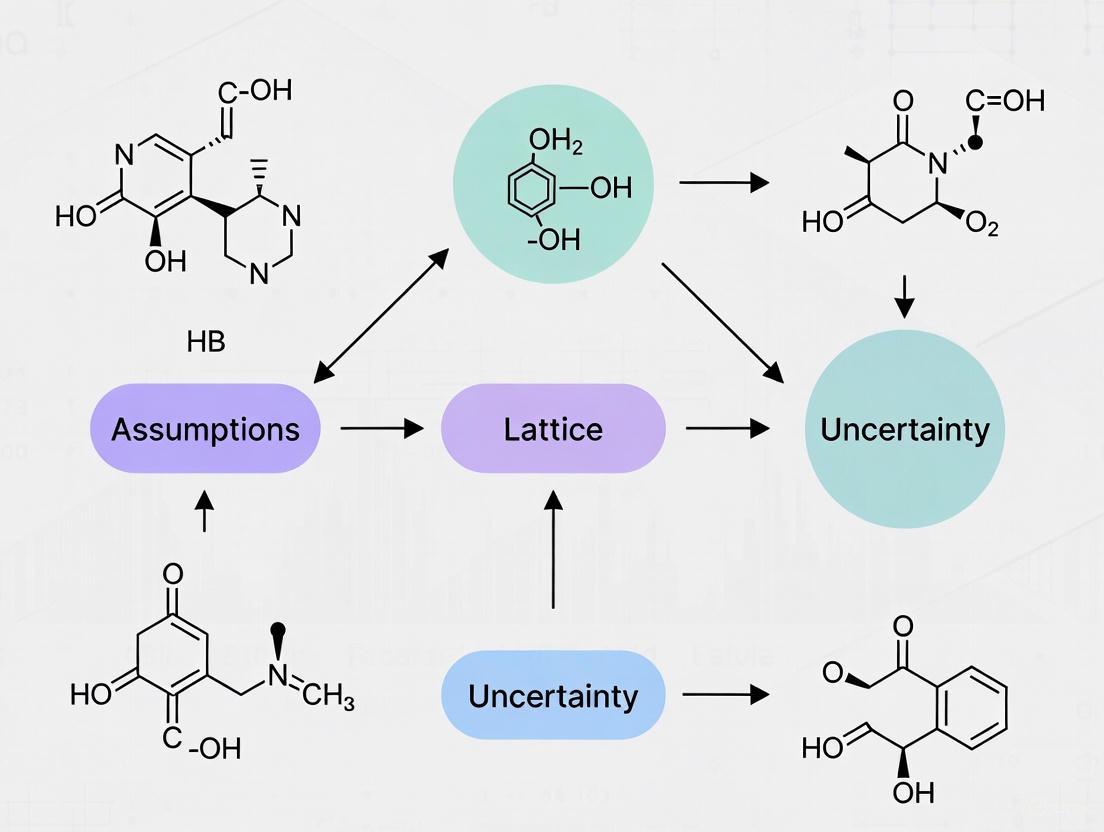
This article provides a comprehensive guide to the Assumptions Lattice and Uncertainty Pyramid framework, a structured approach for quantifying and communicating uncertainty in pharmaceutical research and development.
Navigating Uncertainty: A Practical Guide to the Assumptions Lattice and Uncertainty Pyramid Framework in Drug Development
Abstract
This article provides a comprehensive guide to the Assumptions Lattice and Uncertainty Pyramid framework, a structured approach for quantifying and communicating uncertainty in pharmaceutical research and development. Tailored for researchers, scientists, and drug development professionals, it explores the foundational principles of the framework, details its methodological application from preclinical translation to clinical decision-making, addresses common troubleshooting and optimization challenges, and validates its utility through comparative analysis with other uncertainty quantification methods. By synthesizing these core intents, the article aims to equip practitioners with the tools to improve risk assessment, enhance regulatory communication, and ultimately build more resilient drug development pipelines.
Deconstructing Uncertainty: Understanding the Assumptions Lattice and Uncertainty Pyramid Framework
The Translation Challenge: Navigating the 'Valley of Death'
The transition from promising preclinical results to successful clinical applications represents one of the most significant challenges in drug development. This gap, often termed the "valley of death," sees the majority of potential therapeutic candidates failing to cross from bench to bedside [1] [2].
The Scale of the Problem
Table: Attrition Rates in Drug Development
| Development Phase | Failure Rate | Primary Causes of Failure |
|---|---|---|
| Preclinical Research | 80-90% of projects fail before human testing [1] | Poor hypothesis, irreproducible data, ambiguous preclinical models |
| Phase I Clinical Trials | 9 out of 10 drug candidates fail [2] | Safety issues, pharmacokinetic problems |
| Phase II Clinical Trials | High failure rates [3] | Lack of effectiveness, unexpected toxicity |
| Phase III Clinical Trials | Approximately 50% fail [1] | Lack of effectiveness, poor safety profiles not predicted in preclinical studies |
| Overall Approval | Only 0.1% of candidates reach approval [1] | Cumulative effects of above factors |
This crisis in translation stems from multiple factors, including poor hypothesis generation, irreproducible data, ambiguous preclinical models, statistical errors, and insufficient characterization of uncertainty in experimental systems [3] [1]. The fundamental issue often lies in the lack of "robustness" in preclinical science - defined as stability and reproducibility in the face of challenges that occur when moving to human trials [3].
The Uncertainty Pyramid Framework: A Systematic Approach
The assumptions lattice and uncertainty pyramid framework provides a structured method for assessing uncertainty in translational research. This approach requires researchers to explicitly consider and document the range of assumptions underlying their experimental models and resulting data interpretations.
Uncertainty Pyramid: Cumulative Impact of Assumptions on Decision Risk
Each level of the pyramid represents a category of assumptions that must be tested and validated. The framework explores the range of results attainable by models that satisfy stated criteria for reasonableness, enabling researchers to better understand relationships among interpretation, data, and assumptions [4].
Troubleshooting Common Experimental Scenarios
Assay Development and Validation Issues
Problem: No assay window in TR-FRET assays
- Potential Cause: Incorrect instrument setup or improper emission filter selection [5].
- Solution: Verify instrument configuration using compatibility portals and test reader setup with existing reagents before beginning assays. Ensure exact recommended emission filters are used, as filter choice can critically impact assay performance [5].
Problem: Differences in EC₅₀/IC₅₀ values between laboratories
- Potential Cause: Variability in stock solution preparation, typically at 1 mM concentrations [5].
- Solution: Standardize compound preparation protocols across collaborating laboratories and verify compound purity and concentration through quality control measures.
Problem: Inconsistent results in cell-based kinase assays
- Potential Causes: Compound inability to cross cell membranes, cellular efflux mechanisms, or targeting of inactive kinase forms [5].
- Solution: Use binding assays (e.g., LanthaScreen Eu Kinase Binding Assay) for studying inactive kinase forms and verify compound permeability through complementary assays.
Preclinical Model Validation
Problem: Poor translational predictability of animal models
- Potential Causes: Narrow experimental conditions that don't reflect human genetic diversity, age variations, or disease complexity [3] [2].
- Solution: Implement systematic heterogenization by varying genetic backgrounds, environmental conditions, and using multiple models to triangulate evidence [6].
Problem: Inflated effect sizes in exploratory studies
- Potential Cause: Low sample sizes leading to the "winner's curse" phenomenon where only large effect sizes achieve statistical significance [6].
- Solution: Conduct within-lab replications with refined experimental designs and increased sample sizes to decrease outcome uncertainty before proceeding to confirmatory studies [6].
Data Analysis and Interpretation
Problem: Determining appropriate sample sizes for preclinical studies
- Potential Cause: Underpowered experiments that increase false positive rates and effect size inflation [6].
- Solution: Define smallest effect size of interest reflecting biological or clinical relevance through discussion with clinicians and biostatisticians. Use this to inform sample size planning [6].
Problem: Assessing assay performance robustness
- Potential Cause: Over-reliance on assay window size without considering variability [5].
- Solution: Calculate Z'-factor that incorporates both assay window size and data variability. Assays with Z'-factor > 0.5 are considered suitable for screening [5].
Table: Z'-Factor Interpretation Guide
| Z'-Factor Value | Assay Quality Assessment |
|---|---|
| > 0.5 | Excellent assay suitable for screening |
| 0.5 - 0 | Marginal assay that may require optimization |
| < 0 | Assay not suitable for screening |
Experimental Protocols for Enhanced Robustness
Protocol: Preclinical Confirmatory Study Design
Purpose: To generate robust preclinical evidence supporting clinical translation decisions [6].
Methodology:
- Define Minimum Validity Criteria: Establish thresholds for internal validity (randomization, blinding), external validity (sources of variation), and translational validity (clinical relevance) [6].
- Implement Multicenter Design: Conduct studies across independent sites using shared protocols to identify site-specific effects and increase generalizability [6].
- Systematic Heterogenization: Introduce controlled variation in genetic backgrounds, environmental conditions, and technical procedures to test robustness across conditions [6].
- Triangulation Approach: Combine different methods and approaches to support the same claim, increasing validity at potential cost of added complexity [6].
- Sample Size Justification: Base sample sizes on smallest effect size of interest rather than arbitrary power calculations alone [6].
Protocol: ELISA Assay Qualification and Troubleshooting
Purpose: To ensure reliable performance of immunoassays for critical biomarkers and impurity testing [7].
Methodology:
- Control Preparation: Create 2-3 controls (low, medium, high) using your source of analyte in your sample matrices, with low control at 2-4 times the assay Limit of Quantitation (LOQ) [7].
- Bulk Preparation: Prepare controls in bulk, aliquot for single use, and store at -80°C until stability is established [7].
- Quality Monitoring: Use laboratory-specific controls rather than curve fit parameters (R square, slope, etc.) for quality control, as the latter lack sensitivity and specificity to detect assay problems [7].
- Replicate Analysis: Use duplicate analysis when precision is good (%CV < 5%), repeating any sample with %CV > 20% without outlier editing in duplicate analyses [7].
Preclinical Confirmation Workflow: From Exploration to Clinical Decision
Research Reagent Solutions for Robust Experimentation
Table: Essential Research Reagents and Their Functions
| Reagent/Assay Type | Primary Function | Key Applications |
|---|---|---|
| TR-FRET Assays (e.g., LanthaScreen) | Distance-dependent detection of molecular interactions | Kinase activity studies, protein-protein interactions [5] |
| Z'-LYTE Assay Systems | Enzyme activity measurement through ratio-metric detection | Kinase inhibition profiling, enzyme characterization [5] |
| Cell-Based Assay Systems | Evaluation of compound activity in cellular context | Target validation, compound screening [5] |
| ELISA Kits (e.g., Cygnus Technologies) | Quantification of protein impurities and biomarkers | Host cell protein detection, process impurity monitoring [7] |
| 3D Organoid Systems | Better representation of human tissue architecture | Compound screening, disease modeling [2] |
| Patient-Derived Xenograft Models | Preservation of tumor heterogeneity and clinical relevance | Oncology drug development, personalized medicine approaches [6] |
Frequently Asked Questions
Q1: What are the minimum criteria that should be met before proceeding to a confirmatory preclinical study?
Before engaging in confirmatory studies, research should meet minimum thresholds for both reliability and validity. For reliability, ensure adequate sample sizes to avoid effect size inflation and false positives. For validity, address three domains: internal validity (through randomization, blinding, validated methods), external validity (through systematic heterogenization), and translational validity (through clinical relevance of models and endpoints) [6].
Q2: How can we improve the translational predictivity of animal models?
Improve translational predictivity by: (1) Using multiple models to triangulate evidence rather than relying on a single model system; (2) Implementing systematic heterogenization to introduce genetic and environmental variation; (3) Ensuring model systems reflect the human disease pathophysiology and patient population characteristics (e.g., using aged animals for age-related diseases); (4) Incorporating human tissue models where possible to bridge species gaps [6] [2].
Q3: What strategies can reduce the high failure rates in Phase III clinical trials?
Key strategies include: (1) Implementing more robust preclinical experimentation that tests interventions under diverse conditions resembling human population variability; (2) Conducting preclinical confirmatory multicenter trials to weed out false positives; (3) Using the assumptions lattice framework to explicitly characterize uncertainty; (4) Improving target validation through human tissue studies and multi-omics approaches; (5) Establishing clear Go/No-Go decision criteria early in development [3] [6].
Q4: How should we handle modifications to established assay protocols?
When modifying established protocols (e.g., ELISA methods), carefully qualify that changes achieve acceptable accuracy, specificity, and precision. Modifications to sample volume, incubation times, or sequential schemes can significantly alter sensitivity and specificity. Always perform thorough validation when implementing protocol changes, and contact technical support for guidance on optimal modifications for specific analytical needs [7].
Q5: What is the role of computational approaches in improving translational success?
Computational methods including artificial intelligence and machine learning can: (1) Predict how novel compounds will behave in different biological environments; (2) Identify potential off-target effects; (3) Accelerate drug repurposing efforts; (4) Support clinical trial design through better patient stratification. However, these approaches require high-quality input data to generate reliable predictions [2].
This technical support center provides guidance for researchers applying the Assumptions Lattice and Uncertainty Pyramid frameworks in scientific experiments, particularly in drug development. These frameworks help structure your hypotheses and systematically quantify the uncertainty in your computational models and experimental results.
The Assumptions Lattice provides a structured way to organize and evaluate the foundational assumptions in your research. Formally, a lattice is a partially ordered set in which every two elements have a unique supremum (least upper bound or join) and a unique infimum (greatest lower bound or meet) [8]. In practical terms, this allows you to map the relationships between your different experimental assumptions, understanding how they support or conflict with one another.
The Uncertainty Pyramid is a Bayesian deep learning framework for quantifying uncertainty in complex models, such as those used for semantic segmentation in autonomous driving or predictive modeling in drug discovery [9]. It helps you distinguish between different types of uncertainty in your results, which is crucial for making reliable inferences and decisions.
Frequently Asked Questions (FAQs)
Q1: My Bayesian SegNet model is running too slowly during uncertainty evaluation. What optimization strategies can I implement?
A: This is a common issue when working with Monte Carlo (MC) Dropout sampling. Based on research by Gal et al. [9], we recommend these specific troubleshooting steps:
- Reduce MC-Dropout Layers: Simplify your network by implementing MC-Dropout only in the deeper layers of the network rather than every layer. This maintains uncertainty capture while significantly reducing computational overhead.
- Implement Pyramid Pooling: Introduce a pyramid pooling module to improve sampling efficiency, which can reduce the total number of sampling iterations required.
- Balanced Sampling: Find the optimal balance between the number of forward propagation samples and model performance. Start with 20-30 samples and adjust based on your specific accuracy requirements.
Q2: How can I formally validate that my set of experimental assumptions forms a proper lattice structure?
A: To validate your Assumptions Lattice structure, you must verify these mathematical properties [8]:
- Partial Order: Demonstrate that a "support" or "implies" relationship exists between your assumptions, creating a hierarchy.
- Join Existence: For any two assumptions, identify their most specific common consequence (join).
- Meet Existence: For any two assumptions, identify their most general common premise (meet).
- Use directed acyclic graphs (DAGs) to visualize these relationships, and employ formal concept analysis to verify the lattice properties mathematically.
Q3: What are the minimum contrast requirements for visualization elements in research diagrams and publications?
A: For accessibility and clarity, ensure your diagrams meet these enhanced contrast ratios [10] [11]:
Table: Minimum Color Contrast Requirements for Visual Elements
| Element Type | Minimum Contrast Ratio | Examples & Notes |
|---|---|---|
| Standard Text | 7:1 | Body text, axis labels, legends |
| Large-Scale Text | 4.5:1 | 18pt+ or 14pt+bold text |
| Data Points | 4.5:1 | Chart markers, graph symbols |
| Diagram Elements | 4.5:1 | Arrows, shapes, connectors |
Q4: How do I distinguish between aleatoric and epistemic uncertainty in my Pyramid Bayesian model outputs?
A: The Uncertainty Pyramid framework differentiates these uncertainty types as follows [9]:
- Aleatoric Uncertainty: This is inherent randomness in your data. It's measured by training the model to predict an uncertainty value alongside each output using a special loss function.
- Epistemic Uncertainty: This stems from model limitations. It's quantified using MC-Dropout during inference by running multiple forward passes and measuring the variation in predictions.
- Use metrics like mPAvPU (mean Pixel Accuracy vs. Uncertainty) to quantitatively evaluate your uncertainty calibration, particularly for image-based data in drug discovery assays.
Experimental Protocols & Methodologies
Protocol: Implementing Pyramid Bayesian Uncertainty Estimation
This protocol adapts the Bayesian SegNet framework for general scientific use [9]:
Materials Required:
- Dataset with labeled training examples
- Computational environment with GPU acceleration
- Python with PyTorch/TensorFlow and Bayesian deep learning libraries
Procedure:
- Network Modification: Integrate MC-Dropout layers into the decoder section of your segmentation/classification network rather than throughout the entire architecture.
- Pyramid Pooling Integration: Add a pyramid pooling module after the final encoder layer to capture multi-scale contextual information.
- Training: Train the network using a combined loss function that includes both standard segmentation/classification loss and uncertainty estimation terms.
- Inference with MC Sampling: Perform 20-50 forward passes with dropout activated during prediction to generate multiple output samples.
- Uncertainty Quantification: Calculate the mean of samples as your prediction and the variance as your uncertainty measure.
- Validation: Evaluate using mIoU (mean Intersection over Union) for accuracy and mPAvPU for uncertainty calibration.
Troubleshooting Tips:
- If uncertainty estimates appear noisy, increase the number of MC samples (step 4)
- If training fails to converge, reduce the number of MC-Dropout layers initially
- For memory issues during inference, reduce batch size rather than MC samples
Protocol: Constructing and Validating an Assumptions Lattice
Procedure:
- Assumption Enumeration: List all explicit and implicit assumptions in your experimental design.
- Relationship Mapping: For each assumption pair, determine if one supports (implies) the other, if they conflict, or are independent.
- Lattice Construction: Organize assumptions hierarchically with more fundamental assumptions at the base and derived assumptions higher up.
- Join/Meet Calculation: For each assumption pair, identify their most specific common consequence (join) and most general common premise (meet).
- Validation: Verify that your structure satisfies the lattice properties: reflexivity, antisymmetry, transitivity, and the existence of all pairwise joins/meets.
- Sensitivity Analysis: Test how violation of assumptions at different lattice levels affects your conclusions.
Research Reagent Solutions
Table: Essential Computational Tools for Lattice and Pyramid Frameworks
| Tool/Reagent | Function | Application Notes |
|---|---|---|
| MC-Dropout Layers | Approximate Bayesian inference | Place in deeper network layers only [9] |
| Pyramid Pooling Module | Multi-scale context aggregation | Improves sampling efficiency in Uncertainty Pyramid [9] |
| Directed Acyclic Graphs (DAGs) | Visualize assumption relationships | Essential for lattice structure validation [8] |
| Markov Chain Monte Carlo (MCMC) | Alternative to MC-Dropout | More accurate but computationally intensive [9] |
| Semantic Segmentation Networks | Pixel-level classification | Base architecture for Bayesian SegNet [9] |
| Formal Concept Analysis | Mathematical lattice validation | Verifies join/meet existence for all element pairs [8] |
Diagnostic Diagrams & Workflows
Uncertainty Pyramid Framework
Assumptions Lattice Structure
Experimental Workflow Integration
Troubleshooting Guides
Guide 1: Diagnosing and Addressing Poor Model Performance
Problem: Your scientific model shows poor predictive performance when applied to new data or in real-world conditions.
| Step | Action | Expected Outcome | Underlying Issue |
|---|---|---|---|
| 1 | Check for Variability in input data: Calculate variance, standard deviation, and range of key input parameters. [12] | Identification of inherent heterogeneity in your data population. | High variability in inputs (e.g., patient body weight, environmental conditions) is being treated as error, leading to an oversimplified model. |
| 2 | Quantify Uncertainty in parameter estimates: Perform sensitivity analysis or calculate confidence intervals for model parameters. [13] [14] | Understanding of the confidence in your model's fitted parameters (e.g., a dose-response slope). | High parameter uncertainty suggests a lack of knowledge, often due to insufficient or low-quality data. |
| 3 | Validate Model Structure: Compare predictions from alternative model structures or use a design of experiments (DOE) approach. [13] [15] | Insight into whether the model's fundamental equations are appropriate. | Structural uncertainty is present; the model may be oversimplified or miss key relationships. |
| 4 | Implement a Refined Approach: Use probabilistic techniques (e.g., Monte Carlo analysis) to propagate both variability and uncertainty. [12] [14] | A distribution of outcomes that honestly represents the total potential error in predictions. | Variability and uncertainty were conflated, giving a false sense of precision. |
Guide 2: Selecting and Validating a Model for Clinical Precision Dosing
Problem: Choosing an inappropriate population pharmacokinetic (PopPK) model for Model-Informed Precision Dosing (MIPD) leads to inaccurate dosing recommendations. [16]
| Consideration | Diagnostic Question | Implication of a "No" Answer |
|---|---|---|
| Target Population [16] | Was the model developed in a patient population with similar demographics (age, ethnicity), health status, and clinical care environment? | The model may not be generalizable, introducing structural and parametric uncertainty. |
| Dosing Scenario [16] | Does the model account for the same drug, dosing regimen, and route of administration you intend to use? | Introduces scenario uncertainty, as the model's predictive power is untested for your specific use case. |
| Sampling & Assays [16] | Were the model's underlying data obtained from a high-quality sampling strategy and assays replicable at your institution? | Underlying data may have high measurement error, increasing overall uncertainty. |
| Model Validation [16] | Have you validated the model's performance using example patient data from your own institution? | Failure to conduct prospective validation leaves model uncertainty uncharacterized, risking patient safety. |
Frequently Asked Questions (FAQs)
FAQ 1: What is the fundamental difference between uncertainty and variability?
- Variability refers to the inherent heterogeneity or diversity in a system or population. It is a property of the real world that cannot be reduced with more data, only better characterized. [12] Examples include the variation in body weight among a study population or differences in breathing rates. [12]
- Uncertainty describes a lack of knowledge or incomplete information about the system. It can arise from measurement errors, use of surrogate data, or an incomplete understanding of the model structure. [12] [17] Unlike variability, uncertainty can often be reduced by collecting more or better data. [12]
FAQ 2: Why is it critical to distinguish between them in drug development?
Distinguishing between the two is essential because they have different implications for decision-making and risk assessment. [17]
- Variability informs you about the diversity of responses you can expect in your target population. This is crucial for understanding the range of effective and safe doses.
- Uncertainty informs you about your confidence in the model's predictions. High uncertainty means you cannot be sure if the model is accurate, which is a major risk for regulatory approval and patient safety. [16] Conflating the two can lead to overstated conclusions and poor clinical decisions. [13]
FAQ 3: How can I visually conceptualize the relationship between uncertainty, variability, and model assumptions?
The relationship can be framed within an "Assumptions Lattice Uncertainty Pyramid" framework. This framework posits that a model is built on a lattice of interconnected assumptions. The pyramid structure represents the propagation and amplification of different sources of uncertainty and variability from the base (fundamental assumptions) to the apex (final model prediction).
FAQ 4: What are common methods for quantifying uncertainty and variability?
The following table summarizes key techniques for addressing uncertainty and variability. [12] [14]
| Method | Best Used For | Brief Description |
|---|---|---|
| Monte Carlo Simulation [12] [14] | Forward propagation of uncertainty and variability. | Repeated random sampling from input distributions to compute a distribution of possible outcomes. |
| Sensitivity Analysis [12] [14] | Identifying which uncertain inputs contribute most to output uncertainty. | Systematically varying model inputs to determine their effect on the output. |
| Bayesian Estimation [16] [14] | Reducing parameter uncertainty by incorporating new data. | Updates prior knowledge (a model) with new observed data to produce a posterior estimate with reduced uncertainty. |
| Disaggregating Data [12] | Characterizing variability in a population. | Separating data into categories (e.g., by age, sex) to better understand the sources of heterogeneity. |
The Scientist's Toolkit: Research Reagent Solutions
This table details key methodological "reagents" for experiments focused on quantifying uncertainty and variability. [12] [16] [14]
| Tool / Solution | Function in Analysis |
|---|---|
| Probabilistic Programming Languages (e.g., Stan, PyMC) | Facilitates Bayesian analysis, allowing for the formal integration of prior knowledge with new data to update parameter estimates and quantify their uncertainty. |
| Monte Carlo Simulation Software | Enables the propagation of input variability and parameter uncertainty through complex models to generate a full probability distribution of outcomes. |
| Sensitivity Analysis Packages (e.g., Sobol, Morris) | Systematically tests how the variation in a model's output can be apportioned to different sources of variation in its inputs. |
| Population PK/PD Modeling Software (e.g., NONMEM) | Specifically designed to quantify between-subject variability (BSV) and residual unexplained variability (RUV) in pharmacokinetic and pharmacodynamic models. [16] |
| Design of Experiments (DOE) Software | Helps plan efficient experiments to map a process's "design space," characterizing how input variables affect Critical Quality Attributes (CQAs) while managing uncertainty. [15] |
Experimental Protocol: Systematic Audit of Model-Related Uncertainty
Aim: To conduct a systematic audit of uncertainty quantification and reporting in a set of scientific publications, based on the methodology from an interdisciplinary audit. [13]
Materials
- A curated library of scientific papers from your field of interest (e.g., from two representative journals over a specific time period).
- Data extraction sheet (digital or physical).
- The "Sources of Uncertainty" framework (Response, Explanatory, Parameters, Model Structure). [13]
Workflow Diagram
Method
- Paper Selection: Define your field and time period of interest. Identify and gather all original research papers from two representative journals for that period. [13]
- Data Extraction: For each paper, determine if it uses a statistical or mathematical model. For papers that do, audit them against the four sources of uncertainty: [13]
- Response Variable: Did the study quantify measurement or observation error in the primary outcome being measured?
- Explanatory Variable: Did the study account for potential error or noise in the variables used to explain the response?
- Parameter Estimates: Were the uncertainties in the model's parameter estimates reported (e.g., standard errors, confidence intervals)?
- Model Structure: Did the study compare, contrast, or average the results of alternative model structures to test for structural uncertainty?
- Synthesis: Tabulate the frequency with which each source of uncertainty is quantified across the audited papers. This provides a snapshot of the current state of practice in your field. [13]
Expected Results and Interpretation
This audit will likely reveal that no field fully considers all possible sources of uncertainty. [13] The area of explanatory variable uncertainty is most frequently overlooked. [13] The results can be used to identify specific gaps in common practice and to formulate guidelines for more complete uncertainty reporting in your domain.
In scientific research and drug development, uncertainty is not a single entity but a spectrum with distinct characteristics. The two primary categories are epistemic uncertainty (arising from a lack of knowledge and theoretically reducible) and aleatoric uncertainty (stemming from inherent randomness and essentially irreducible) [18] [19]. Understanding this distinction is critical for making robust inferences, designing effective experiments, and communicating findings accurately. This guide provides troubleshooting advice and methodologies to help you identify, quantify, and manage these different uncertainties within your research, framed within the advanced context of the assumptions lattice and uncertainty pyramid framework [20] [21] [4].
Core Concepts FAQ
What is the fundamental difference between epistemic and aleatoric uncertainty?
- Epistemic Uncertainty (Reducible): This is uncertainty due to incomplete knowledge about the system or phenomenon. It can be reduced by collecting more data, improving models, or refining measurements [18] [19]. For example, uncertainty about a model parameter or the true functional form of a relationship is epistemic.
- Aleatoric Uncertainty (Irreducible): This is uncertainty due to the inherent randomness or stochasticity of a process. It cannot be reduced by gathering more data, only better characterized [18] [14]. The natural variability in experimental measurements or the randomness in a biological outcome are classic examples.
Is the distinction between epistemic and aleatoric uncertainty always clear-cut?
No, the distinction can be context-dependent and is sometimes debated [22] [19]. Some argue that all uncertainty ultimately stems from incomplete information. However, from a practical modeling perspective, the distinction is highly useful. It helps decide where to allocate resources: seeking more data to reduce epistemic uncertainty, or accepting and quantifying the inherent noise of aleatoric uncertainty.
How does this distinction relate to the 'assumptions lattice' and 'uncertainty pyramid' framework?
The assumptions lattice is a framework that maps the hierarchy of assumptions made during an analysis, from very conservative to more speculative [20] [21] [4]. The uncertainty pyramid conceptualizes how uncertainty propagates and potentially expands as one moves up this lattice of increasingly strong assumptions. In this context:
- Aleatoric uncertainty is the base-level variability that exists even under the most conservative assumptions.
- Epistemic uncertainty is reflected in the range of results obtained across different levels of the assumptions lattice, as our knowledge and modeling choices change.
Why is it critical to characterize both types of uncertainty when reporting a Likelihood Ratio (LR) or similar statistic?
A single Likelihood Ratio value depends on a specific set of modeling assumptions. Without characterizing the uncertainty in the LR itself, its meaning is limited [20] [21] [4]. A proper uncertainty analysis explores how the LR changes across the assumptions lattice, revealing its stability (low epistemic uncertainty) or sensitivity (high epistemic uncertainty) to modeling choices. This provides a "fitness for purpose" assessment of the reported value [4].
Troubleshooting Guide: Identifying and Managing Uncertainty
Problem: My model fits the training data well but generalizes poorly to new data.
| Potential Cause | Type of Uncertainty | Diagnostic Check | Mitigation Strategy |
|---|---|---|---|
| Overfitting | Epistemic (Model Uncertainty) | - Performance gap between training and validation sets.- Large parameter values/overly complex model. | - Apply regularization (L1/L2).- Simplify the model structure.- Increase training data. |
| Insufficient Data | Epistemic (Parameter Uncertainty) | - Wide confidence intervals on parameter estimates.- High sensitivity to data resampling (e.g., bootstrapping). | - Collect more data, if possible.- Use Bayesian methods to quantify parameter uncertainty. |
| Incorrect Model Structure | Epistemic (Structural Uncertainty) | - Residuals show clear patterns (not random).- Model fails to capture known physics/biology. | - Incorporate domain knowledge into the model.- Test alternative model architectures. |
Problem: My experimental results are inconsistent, with high variability between replicates.
| Potential Cause | Type of Uncertainty | Diagnostic Check | Mitigation Strategy |
|---|---|---|---|
| Inherent Randomness | Aleatoric (Sampling Uncertainty) | - Variability is consistent and cannot be eliminated.- Replicates form a stable distribution. | - Quantify the variability (e.g., estimate variance).- Increase sample size to better estimate the population distribution. |
| Uncontrolled Experimental Variables | Epistemic (Measurement Uncertainty) | - Variability changes with experimental conditions or operators.- Trends in data over time. | - Standardize experimental protocols.- Identify, control, or measure key confounding variables. |
| Measurement Instrument Noise | Aleatoric (Measurement Uncertainty) | - Noise level is constant and documented in instrument specs.- Observed in control experiments with known standards. | - Use more precise instrumentation.- Apply signal processing or filtering techniques. |
Problem: I am unsure if my computational model accurately represents the real-world system.
| Potential Cause | Type of Uncertainty | Diagnostic Check | Mitigation Strategy |
|---|---|---|---|
| Model Discrepancy/Inadequacy | Epistemic (Structural Uncertainty) | - Systematic bias between model predictions and validation data, even after parameter tuning. | - Perform bias correction or model calibration using experimental data [14].- Enhance the model to include missing physics/biology. |
| Numerical Approximation Errors | Epistemic (Algorithmic Uncertainty) | - Results change with solver type, step size, or mesh density. | - Perform convergence studies.- Use higher-fidelity numerical methods (if computationally feasible). |
| Uncertain Input Parameters | A mix of Aleatoric & Epistemic (Parameter Uncertainty) | - Input parameters are not known precisely (e.g., drawn from a distribution). | - Propagate input uncertainty using Monte Carlo simulation or polynomial chaos expansion [14]. |
Experimental Protocols for Uncertainty Quantification
Protocol: Quantifying Aleatoric and Epistemic Uncertainty in a Regression Model
This protocol uses a Bayesian neural network to separately estimate both types of uncertainty [19].
Workflow Diagram: Uncertainty Quantification in Regression
Methodology:
- Model Definition: Define a neural network where the weights are represented as probability distributions rather than fixed values.
- Training: Train the model using a method like Variational Inference, which learns the parameters of these weight distributions.
- Prediction & Sampling: For a new input
x, perform multiple stochastic forward passes (e.g., 100-1000 times), each time sampling a new set of weights from their posterior distributions. This generates a distribution of outputs{ŷ₁, ŷ₂, ..., ŷ_T}. - Uncertainty Decomposition:
- Epistemic Uncertainty: Calculate the variance of the
Tpredicted means. This reflects the model's uncertainty about its parameters. - Aleatoric Uncertainty: Calculate the mean of the
Tpredicted variances (the model also learns to predict data noise). This reflects the inherent noise in the data.
- Epistemic Uncertainty: Calculate the variance of the
Key Research Reagent Solutions:
| Reagent / Tool | Function in Protocol |
|---|---|
| Probabilistic Programming Framework (e.g., Pyro, TensorFlow Probability) | Provides the infrastructure to define and train models with probabilistic weights. |
| Variational Distribution (e.g., Mean-Field Gaussian) | An approximation to the true, intractable posterior distribution of the model weights. |
| Evidence Lower Bound (ELBO) | The objective function optimized during training to fit the variational distribution. |
Protocol: Applying the Assumptions Lattice to a Likelihood Ratio Calculation
This protocol provides a framework for assessing the robustness of a forensic likelihood ratio (LR) but is applicable to any model-based comparison [20] [21] [4].
Workflow Diagram: The Assumptions Lattice & Uncertainty Pyramid
Methodology:
- Define the Lattice: Explicitly list the key assumptions made in your analysis. Structure them into a hierarchy (lattice) from most conservative/safe (Level 1) to most specific/optimistic (Level N). Example assumptions include:
- Choice of prior distribution in a Bayesian analysis.
- The functional form of the statistical model.
- The set of variables included in the model.
- Compute Across the Lattice: Calculate your statistic of interest (e.g., the Likelihood Ratio) at each level of the assumptions lattice.
- Construct the Uncertainty Pyramid: Analyze the range of results obtained. A wide range (a broad pyramid) indicates high sensitivity to assumptions (high epistemic uncertainty). A narrow range indicates robustness.
Key Research Reagent Solutions:
| Reagent / Tool | Function in Protocol |
|---|---|
| Statistical Modeling Software (e.g., R, Stan) | Allows for flexible re-calculation of models under different assumptions and priors. |
Sensitivity Analysis Package (e.g., sensitivity in R) |
Automates the process of varying model inputs/assumptions and tracking outputs. |
| Benchmark Dataset (with known ground truth) | Used to validate and compare the performance of models based on different assumptions. |
The Assumptions Lattice and Uncertainty Pyramid form a structured framework for assessing how different assumptions and modeling choices affect scientific conclusions, particularly when evaluating the strength of evidence via metrics like Likelihood Ratios (LRs) [4].
- Assumptions Lattice: This is a systematic map of the analytical choices made during an evaluation. Imagine a tree structure where each node represents a specific assumption. Moving from the base to the tip of the tree involves making progressively more specific choices about data processing, statistical models, and parameter sets. The lattice framework explicitly acknowledges that multiple reasonable analytical paths exist, and the goal is to explore the range of results these different paths produce [4].
- Uncertainty Pyramid: This concept visualizes the framework's exploration process. The base of the pyramid represents a broad set of plausible models and assumptions. As one applies stricter criteria or "reasonableness" filters to select models (moving up the pyramid), the range of potential results (e.g., LR values) typically narrows. Analyzing this pyramid helps experts and decision-makers understand the sensitivity of a conclusion to the underlying assumptions and assess its robustness [4].
Frequently Asked Questions (FAQs)
Q1: Why is it necessary to use this framework instead of reporting a single, best-estimate result? Reporting a single value can mask the underlying uncertainty and subjectivity involved in its calculation. This framework is necessary because it provides a transparent method to demonstrate how conclusions depend on personal choices made during assessment. It shifts the focus from a single, potentially misleading number to a comprehensive understanding of the result's stability and reliability, which is critical for evaluating its fitness for purpose [4].
Q2: In what specific research areas is this framework most applicable? This framework is highly valuable in any field that relies on complex model-based inference where expert findings inform critical decisions.
- Forensic Science: For transparently conveying the weight of evidence through Likelihood Ratios, accounting for variability in model selection [4].
- Drug Discovery and Development: For analyzing Quantitative Structure-Activity Relationship (QSAR) models, where different molecular descriptors and statistical methods can lead to varying predictions [23].
- Materials Science: For predicting the equivalent properties of complex structures like honeycombs, where different homogenization techniques and theoretical models yield a range of answers [24].
Q3: What is the practical output of conducting an analysis using this framework? The primary output is not a single number, but a range of plausible results (e.g., a distribution of LR values) and a clear documentation of the assumption paths that lead to them. This provides decision-makers with a realistic picture of the evidence's strength and the confidence they can place in it [4].
Q4: How does this framework relate to traditional sensitivity analysis? While traditional sensitivity analysis might test variations around a single "best" model, the assumptions lattice and uncertainty pyramid advocate for a broader and more systematic exploration. It encourages the evaluation of fundamentally different, yet still reasonable, models and assumptions, going beyond minor parameter adjustments to reveal larger potential uncertainties [4].
Troubleshooting Common Experimental & Computational Issues
Problem: Computational results are highly sensitive to the initial choice of molecular descriptors.
- Solution: Do not rely on a single set of descriptors. Follow a structured feature selection process:
- Filtering: Start by removing descriptors with low variance or high correlation to others to reduce redundancy [23].
- Systematic Selection: Use automated feature selection routines (e.g., forward selection, backward elimination) or expert intuition to identify the most prominent descriptors [23].
- Lattice Exploration: Construct an assumptions lattice where each branch represents a different, valid set of descriptors. Run your model for each major branch to see how the final conclusion changes [4].
Problem: The model performs well on training data but fails to predict new experimental data accurately.
- Solution: This indicates overfitting. The framework mandates an uncertainty assessment.
- Validate Across the Lattice: Use hold-out validation or cross-validation not just on one model, but on multiple models defined by different assumption paths in your lattice [23] [4].
- Report Performance Ranges: The "true" performance of your modeling approach should be reported as a range observed across the various validated models, giving a more honest account of predictive uncertainty [4].
Problem: Inconsistent conclusions are drawn from the same dataset by different researchers.
- Solution: This is a classic case highlighting the need for the framework.
- Map the Composite Lattice: Document the different analytical choices made by each researcher (e.g., data pre-processing methods, statistical algorithms, parameter priors).
- Build an Uncertainty Pyramid: Consolidate these choices into a unified lattice. The collective results from all paths will form the base of your uncertainty pyramid. Applying consensus fitness criteria will help narrow down the most reliable conclusions and identify the most contentious assumptions [4].
Key Experimental Protocols & Data Presentation
Protocol: Developing a QSAR Model with Uncertainty Assessment
This protocol is adapted from ligand-based drug design methodologies for use within the assumptions lattice framework [23].
Descriptor Generation:
- Generate a comprehensive set of molecular descriptors for all compounds under investigation. This can include 1D-descriptors (e.g., molecular weight), 2D-descriptors (e.g., molecular connectivity indices, structural fingerprints), and 3D-descriptors (e.g., molecular volume, solvent-accessible surface area) [23].
- Framework Integration: The choice of descriptor type (1D, 2D, 3D) represents a major branch point in the assumptions lattice.
Feature Selection:
- Reduce the descriptor set to avoid overfitting. Use a combination of automated methods (e.g., variance filtering, correlation analysis) and expert knowledge to select the most relevant features [23].
- Framework Integration: Different feature selection methods create sub-branches within the main descriptor-type branches of the lattice.
Model Building and Validation:
- Choose a statistical or machine learning method (e.g., linear regression, partial least squares, neural networks) to correlate descriptors with biological activity.
- Validate the model using robust techniques like k-fold cross-validation or leave-one-out validation. The critical step is to repeat this process for each significant path in the assumptions lattice [23].
- Framework Integration: The choice of algorithm creates another dimension in the lattice. The final output is a distribution of model performances (e.g., R², prediction error) across the lattice, forming the base of the uncertainty pyramid.
The following tables summarize key data types and reagent solutions used in related fields, illustrating the framework's utility.
Table 1: Categories of Molecular Descriptors for QSAR Modeling [23]
| Descriptor Dimensionality | Example Descriptors | Information Captured | Computational Cost |
|---|---|---|---|
| 1D-Descriptors | Molecular Weight, Atom Count | Constitutive, bulk properties | Very Low |
| 2D-Descriptors | Molecular Connectivity Index (χ), Wiener Index (W) | Size, branching, shape, flexibility | Low |
| 3D-Descriptors | Molecular Volume, Polar Surface Area, GRID/K CoMFA Fields | 3D shape, surface properties, interaction energies | High to Very High |
Table 2: Research Reagent Solutions for Material & Computational Analysis
| Reagent / Solution | Function / Application | Key Considerations |
|---|---|---|
| Finite Element Analysis (FEA) Software | Predicts equivalent linear elastic properties (e.g., stiffness, modulus) of complex structures like honeycombs by approximating them as homogeneous materials [24]. | Model complexity (computational load) vs. accuracy of the equivalent properties. |
| Physics-Guided Neural Networks (PGNN) | Machine learning models used for predicting nonlinear equivalent performance of structures under large deformations [24]. | Integrates physical laws to improve model reliability and reduce purely data-driven errors. |
| Sequential & Categorical Color Palettes | Used in data visualization to ensure accessibility and avoid false data associations in charts and graphs [25]. | Must meet WCAG 2.1 contrast ratios (≥ 3:1); colors alone should not convey meaning. |
Framework Visualization with Graphviz
Assumptions Lattice Structure
Assumptions Lattice Map
Uncertainty Pyramid Workflow
Uncertainty Pyramid Workflow
From Theory to Practice: Implementing the Uncertainty Framework in Pharmaceutical R&D
In drug development, an Assumptions Lattice is a structured framework that maps and prioritizes the critical uncertainties and hypotheses at each stage of the process. This guide provides a technical support center to help you construct and validate your own lattice, with a focus on the solid-form selection of an Active Pharmaceutical Ingredient (API). The framework is built upon the Uncertainty Pyramid, which conceptualizes the layered nature of risk, from fundamental molecular-level assumptions to high-level product performance predictions. Properly implemented, this approach de-risks development by forcing the explicit testing of your most critical assumptions through targeted experiments and computational tools [26] [27].
Frequently Asked Questions (FAQs)
Q1: What is the single most critical assumption in early-stage solid form selection? The most critical assumption is often the identification of the most stable polymorph of your API. A late-appearing, more stable polymorph can drastically alter the drug's solubility, bioavailability, and stability, jeopardizing the entire development program and even causing market recalls. Your lattice must explicitly document the assumption that the currently known polymorph is the most stable one and outline a plan to test it [27].
Q2: Our computational models predict a lattice energy that doesn't match our experimental observations. What should we troubleshoot? This discrepancy can arise from several sources. Follow this troubleshooting guide:
- Check Conformational Flexibility: Does your molecule have multiple rotatable bonds? Standard QSPR models trained on rigid molecules may be inaccurate for flexible, drug-like compounds. Verify that the computational method is validated for your chemical space [26].
- Inspect the Input Structure: For crystal structure prediction (CSP), the accuracy of the generated crystal packings is highly sensitive to the input molecular conformation. Ensure your starting geometry is correct [27].
- Review the Experimental Data: How was the experimental sublimation enthalpy (ΔHsub) measured? High temperatures can cause decomposition. Consider using calculated lattice energies from a known crystal structure as a more reliable benchmark for your model [26].
Q3: How can we be confident that our crystal structure prediction (CSP) method isn't missing a risky, unknown polymorph? This is a fundamental uncertainty. To manage it:
- Demand Large-Scale Validation: Use or develop CSP methods that have been validated on a large and diverse set of molecules (dozens to hundreds), not just a few proof-of-concept cases. This tests the method's ability to handle diverse functional groups and flexibility [27].
- Perform Hierarchical Ranking: Employ a method that combines fast force fields with more accurate machine learning force fields and periodic DFT calculations. This ensures robust energy rankings of predicted polymorphs [27].
- Conduct a Clustering Analysis: Many predicted structures are trivial duplicates. Cluster similar structures (e.g., using RMSD) to avoid over-prediction and focus on genuinely novel, low-energy polymorphs that pose a real risk [27].
Q4: The electron density map for our protein-ligand complex is ambiguous. How should we interpret the binding mode for our lattice? This is a common pitfall. Never overinterpret unclear data.
- Critically Assess the Density: Use validation tools to check if the reported ligand has sufficient continuous electron density to support its presence and location. A significant number of PDB deposits have poorly supported ligands [28].
- Document the Uncertainty: Your assumption lattice must clearly state that the proposed binding mode is a hypothesis based on a model with limited resolution or clarity. Plan follow-up experiments (e.g., mutagenesis, biophysical assays) to test this specific hypothesis, rather than treating the model as ground truth [28].
Experimental Protocols & Methodologies
Protocol: Validating a Lattice Energy Predictive Model
Purpose: To build and validate a Quantitative Structure-Property Relationship (QSPR) model for predicting the lattice energy of drug-like molecules using only their 2D structure.
Workflow:
- Data Curation: Compile a dataset of known crystal structures for in-house drug molecules. Calculate their lattice energies using established atom-atom summation methods [26].
- Descriptor Calculation: From the 2D molecular structure, calculate relevant molecular descriptors (e.g., molecular weight, topological polar surface area, hydrogen bond acceptors/donors, conformational flexibility) [26].
- Model Training: Use a machine learning algorithm to train a model that correlates the molecular descriptors with the calculated lattice energies. Split data into training and test sets [26].
- Proof-of-Concept: Build a parallel model using experimental sublimation enthalpies to demonstrate interchangeability with the calculated lattice energy model [26].
- Validation: Test the model's accuracy on a blind set of molecules not used in training. The model is successful if it predicts lattice energies with acceptable accuracy for your chemical space [26].
Protocol: Computational Polymorph Screening (CSP) to De-Risk Solid Form Selection
Purpose: To identify all low-energy polymorphs of an API computationally, highlighting potential risks from undiscovered forms.
Workflow:
- Systematic Packing Search: Use a crystal packing search algorithm to generate thousands of potential crystal structures across common space groups. This explores the "Z' = 1" search space (one molecule in the asymmetric unit) [27].
- Hierarchical Energy Ranking:
- Stage 1 (FF): Use a classical force field for initial optimization and ranking.
- Stage 2 (MLFF): Re-optimize and re-rank the top candidates using a machine learning force field for higher accuracy.
- Stage 3 (DFT): Perform final ranking of the shortlist using periodic Density Functional Theory (e.g., r2SCAN-D3 functional) [27].
- Clustering and Analysis: Cluster predicted structures based on similarity (e.g., RMSD < 1.2 Å) to remove duplicates. The known experimental polymorph should be ranked among the top candidates. Any new, low-energy predicted polymorphs represent a potential development risk [27].
The diagram below illustrates this hierarchical workflow.
Data Presentation: Key Properties Affecting Lattice Energy
The following table summarizes the core physical properties you must quantify and the computational tools used to predict them. These form the quantitative foundation of your assumptions lattice.
Table 1: Key Properties and Computational Methods for the Assumptions Lattice
| Property | Impact on Development | Recommended Computational Method | Quantitative Benchmark for De-risking |
|---|---|---|---|
| Lattice Energy | Determines intrinsic solubility, physical stability, and processability [26]. | Bespoke QSPR model (for early stage) [26], Periodic DFT (for accurate ranking) [27]. | Model predicts lattice energy within acceptable accuracy (e.g., ± a few kJ/mol) for your chemical space [26]. |
| Polymorph Landscape | Identifies risk of late-appearing, more stable forms that can alter product properties [27]. | Crystal Structure Prediction (CSP) with hierarchical ranking (FF -> MLFF -> DFT) [27]. | All known experimental polymorphs are reproduced and ranked in the top 10 predicted structures [27]. |
| Crystal Structure | Provides atomic-level understanding of intermolecular interactions packing energy [26]. | X-ray Crystallography (experimental), Crystal Structure Prediction (computational) [26] [27]. | Calculated lattice energy matches value derived from experimental crystal structure [26]. |
The Scientist's Toolkit: Essential Research Reagents & Materials
This table lists critical materials and tools required for building and validating the solid-form segment of your assumptions lattice.
Table 2: Essential Research Reagents and Computational Tools
| Item / Reagent | Function / Explanation | Technical Specification / Purpose |
|---|---|---|
| High-Purity API | The subject of the solid-form screen. Essential for all experimental work. | Purity >99% to ensure crystallization experiments are not biased by impurities. |
| Crystallization Solvent Kit | To explore diverse crystallization conditions for polymorph screening. | A diverse library of > 50 solvents (polar, non-polar, protic, aprotic) and solvent mixtures. |
| X-ray Diffractometer | To determine the crystal structure of single crystals obtained from screening. | Provides experimental electron density maps to derive atomic coordinates and calculate lattice energy [26]. |
| Validated CSP Software | To computationally predict the crystal structure and polymorph landscape. | Software must be validated on a large, diverse set of drug-like molecules [27]. |
| Machine Learning Force Field | For accurate energy ranking of predicted crystal structures. | A pre-trained model (e.g., QRNN) that includes long-range electrostatic and dispersion interactions [27]. |
| Periodic DFT Code | For the highest-accuracy final ranking of predicted polymorphs. | Code with functionals like r2SCAN-D3 for robust treatment of van der Waals forces in molecular crystals [27]. |
The Integrated Assumptions Lattice Workflow
The following diagram synthesizes the core concepts, methodologies, and decision points into a single, integrated Assumptions Lattice workflow. This provides a visual map for navigating the de-risking process.
FAQs: Uncertainty in Preclinical Pharmacokinetic Prediction
Uncertainty in predicting human PK parameters arises from multiple sources during the translation from preclinical models. Key areas include:
- Parameter Uncertainty: This represents limited knowledge of the true parameter values (e.g., clearance, volume of distribution) in the mathematical model used for prediction. It is not a system property and can be reduced as more information is gathered [29].
- Model Structure Uncertainty: The choice of the mathematical model itself (e.g., allometric scaling vs. physiologically-based pharmacokinetic (PBPK) modeling) can introduce uncertainty, as different models may make different assumptions about the underlying biological processes [29].
- Interspecies Differences: Fundamental physiological and metabolic differences between animal species and humans are a major source of uncertainty, particularly for parameters like bioavailability that are influenced by gut physiology and enzymatic activity [29].
- Variability vs. Uncertainty: It is crucial to distinguish variability (a property of the system, such as genetic or environmental variations in a population) from uncertainty (limited knowledge about the system). The main concern in the scaling process is typically the inherent uncertainty in the methodology itself [29].
What are the typical uncertainty ranges for key human PK parameters like Clearance and Volume of Distribution (Vss) based on current prediction methods?
The performance of prediction methods is often evaluated by the percentage of compounds for which the predicted parameter falls within a certain fold of the true human value. The table below summarizes reported uncertainties for two critical parameters:
Table 1: Typical Uncertainty Ranges for Human PK Parameter Predictions
| PK Parameter | Common Prediction Methods | Reported Prediction Performance | Suggested Uncertainty Range |
|---|---|---|---|
| Clearance (CL) | Allometric scaling, In vitro-in vivo extrapolation (IVIVE) | - Best allometric methods: ~60% of compounds within 2-fold of human value [29].- IVIVE methods: 20–90% of compounds within 2-fold, varying with experimental setup [29]. | A factor of 3 (approximated by a lognormal distribution where there is a 95% chance the true value falls within 3-fold of the prediction) [29]. |
| Volume of Distribution at Steady State (Vss) | Allometry, Oie-Tozer method | Little consensus on the best method; predictive power is compound-dependent [29] [30]. | A factor of 3 of the true value [29]. |
What methodologies are available to quantify and integrate these uncertainties for dose prediction?
Several methodologies can be used to quantify and propagate uncertainty from individual parameters into a final dose prediction.
- Monte Carlo Simulation: This is a powerful probabilistic method that quantifies overall uncertainty by simultaneously integrating all sources of input uncertainty. It runs thousands of simulations, each time sampling parameter values from their defined probability distributions. The main output is a distribution of the predicted dose, which captures the combined effect of all uncertainties [29].
- Generalized Polynomial Chaos (gPC): This is a more advanced, non-sampling method for uncertainty quantification. It represents random variables (uncertain parameters) and the system's solution (e.g., drug concentration over time) as expansions of orthogonal polynomials in the random space. This method can be more computationally efficient than Monte Carlo simulation and can describe the random variation of the system state [31].
- Sensitivity Plots and Tables: These are simpler methods that communicate uncertainty in one or two parameters at a time at discrete points. While easy to generate, they risk information overload if all aspects are covered or a lack of information if only selected instances are shown [29].
Troubleshooting Guide: Addressing Common Challenges in Uncertainty Quantification
Problem: Poor Predictive Accuracy When Applying a Model to a New Patient Population or Dosing Regimen
Potential Cause: The model's predictive accuracy is often context-specific. A model developed for one population (e.g., healthy volunteers) or a specific dosing regimen may not generalize well to another (e.g., critically ill patients) due to unaccounted-for physiological or pathophysiological differences [32].
Solutions:
- Internal-External Validation: Develop the model on one dataset (e.g., from one hospital) and rigorously evaluate it on an external dataset from a different center using a different dosing regimen. This tests the model's generalizability [32].
- Incorporate Machine Learning (ML) with Uncertainty Quantification: Consider using interpretable ML models (e.g., CatBoost) that can find complex patterns from data. Enhance these models with distribution-based uncertainty quantification methods, such as a Quantile Ensemble, to provide individualized uncertainty ranges for each prediction, alerting the user to potentially less reliable outputs in new contexts [32].
- Use a Lattice of Assumptions (Uncertainty Pyramid): Frame your uncertainty analysis within a "lattice of assumptions," where each level of the pyramid represents a different set of assumptions about the model structure and parameters. This helps in assessing which assumptions contribute most to the overall uncertainty [33].
Problem: How to Determine the Appropriate Loading Dose for a Drug with High Tissue Distribution
Potential Cause: The loading dose is directly proportional to the volume of distribution (Vd). A drug with a high Vd has a greater propensity to redistribute from the plasma into tissues, meaning a higher initial dose is required to achieve the target plasma concentration [30].
Solution:
- Use Steady-State Volume of Distribution (Vss): The most clinically relevant volume for calculating a loading dose is the volume of distribution at steady-state (Vss), as it best represents the drug's distribution after the initial redistribution phase [30].
- Calculation: The loading dose can be calculated using the formula:
Loading dose (mg) = [Desired Plasma Concentration (mg/L) x Vss (L)] / Bioavailability (F)[30]. Note: For intravenous administration, bioavailability (F) is 1.
Experimental Protocols for Key Uncertainty Quantification Methods
Protocol: Quantifying Dose Prediction Uncertainty Using Monte Carlo Simulation
This protocol outlines the steps for propagating parameter uncertainty to human dose prediction [29].
1. Define the Pharmacokinetic Model and Dose Equation:
- Select a structural PK model (e.g., a one-compartment model with first-order absorption).
- Define the equation for the human dose, which is typically a function of key PK parameters like clearance (CL), volume of distribution (Vss), target exposure (AUC), and bioavailability (F). For example:
Dose = (Target AUC × CL) / F.
2. Characterize Input Parameter Distributions:
- For each input parameter in the dose equation (CL, Vss, F), define a probability distribution that represents its uncertainty.
- These distributions (e.g., log-normal for CL and Vss) should be based on literature evaluations, as shown in Table 1. For instance, clearance (CL) might be defined as
CL ~ LogNormal(Mean, SD), where the standard deviation is set so that the 95% interval spans a 3-fold range.
3. Execute the Monte Carlo Simulation:
- Perform a large number of iterations (e.g., 10,000). In each iteration:
- Randomly sample a value for each input parameter from its defined distribution.
- Calculate the resulting dose using the dose equation.
- Collect all the calculated dose values from all iterations.
4. Analyze and Communicate the Output:
- The collection of simulated doses forms a predictive distribution.
- Plot this distribution as a histogram or a cumulative distribution function.
- Communicate the results using percentiles (e.g., the 5th, 50th, and 95th percentiles) to inform decision-makers about the range of plausible doses, highlighting the median prediction and the uncertainty around it [29].
Protocol: Implementing a Quantile Ensemble for Machine Learning-Based Predictions
This protocol describes a method to add distribution-based uncertainty quantification to any machine learning model that can optimize a quantile function [32].
1. Model Training:
- Select a regression model, such as CatBoost or XGBoost.
- Instead of training a single model to predict the mean, train multiple instances of the model to predict different quantiles (e.g., the 10th, 50th, and 90th quantiles) of the target variable (e.g., drug concentration). This is done by using a quantile loss function during training.
2. Forming the Predictive Distribution:
- For a new input, each of the trained quantile models makes a prediction.
- These predicted quantiles (
q10,q50,q90) are then used to construct an approximate cumulative distribution function (CDF) for that individual prediction.
3. Evaluation of Uncertainty Calibration:
- Use proposed metrics like the Distribution Coverage Error (DCE) and Absolute Distribution Coverage Error (ADCE) to evaluate the calibration of the uncertainty estimates [32].
- The DCE indicates whether the predictive distribution is too narrow (undercovered) or too wide (overcovered), while the ADCE provides an overall measure of miscalibration. The goal is a well-calibrated (DCE near 0) and sharp (narrow) predictive distribution.
Method Visualization and Workflows
Uncertainty Quantification Method Selection Workflow
This diagram illustrates a decision pathway for selecting an appropriate uncertainty quantification method based on the research context and available data.
The Lattice of Assumptions in an Uncertainty Pyramid Framework
This diagram conceptualizes how different levels of assumptions contribute to the overall uncertainty in a translational PK/PD prediction, forming an "uncertainty pyramid" [33].
Research Reagent Solutions for PK/PD Modeling
Table 2: Key Materials and Tools for PK/PD Uncertainty Quantification
| Item / Reagent | Function in Experiment / Analysis |
|---|---|
| Preclinical in vivo PK Data | Provides the foundational data (e.g., concentration-time profiles) for estimating PK parameters and their variability in animal models [29]. |
| Human Hepatocytes / Liver Microsomes | Critical for in vitro-in vivo extrapolation (IVIVE) methods to predict human hepatic metabolic clearance and its uncertainty [29]. |
| Monte Carlo Simulation Software (e.g., R, NONMEM, Matlab) | The computational engine for performing probabilistic simulations to propagate input uncertainty to model outputs [29]. |
| Machine Learning Libraries (e.g., CatBoost, Scikit-learn) | Provide algorithms for building predictive models from complex data and for implementing advanced uncertainty quantification techniques like quantile regression [32]. |
| Generalized Polynomial Chaos (gPC) Solver | Specialized software or code for implementing the gPC methodology, a efficient alternative to Monte Carlo for solving systems with random parameters [31]. |
FAQs: Uncertainty in Human Dose Prediction
FAQ 1: What are the primary sources of uncertainty in predicting human dose from preclinical data? Uncertainty enters human dose prediction from several key areas. Pharmacokinetic (PK) uncertainty arises from predicting parameters like human clearance and volume of distribution; for instance, even high-performance methods may have an uncertainty factor of three (a 95% chance the true value falls within a threefold range of the prediction) [29]. Pharmacodynamic (PD) uncertainty stems from species differences in biology and the translatability of preclinical efficacy models, which can vary significantly between drug projects [29]. Model structure uncertainty concerns the choice of the mathematical model itself (e.g., allometry vs. physiologically-based pharmacokinetic modeling) [29]. Furthermore, uncertainty in absorption and bioavailability is common, especially for compounds with low solubility or permeability [29].
FAQ 2: How does the assumptions lattice and uncertainty pyramid framework apply to dose prediction? The assumptions lattice is a framework that maps the hierarchy of choices made during model development, from fundamental assumptions to specific modeling decisions [4] [21]. In dose prediction, this could range from choosing a scaling method (e.g., allometry vs. in vitro-in vivo extrapolation) to selecting specific correction factors. The uncertainty pyramid concept illustrates how these cascading assumptions contribute to the total uncertainty in the final prediction, the Likelihood Ratio (LR) or, in this context, the predicted dose [4] [21]. Using this framework forces a systematic evaluation of how sensitive the final dose prediction is to changes at various levels of the assumption lattice.
FAQ 3: Why is a Monte Carlo simulation preferred over a single point estimate for dose prediction? A traditional forecast produces a single, fixed value, which fails to communicate the range of possible outcomes inherent in drug development [34]. A Monte Carlo simulation, in contrast, uses input ranges and probability distributions for key parameters to run thousands of computational experiments [29] [34]. The output is a probability distribution of the predicted human dose, which provides a much more realistic and informative view of risk. It enables decision-makers to understand not just a single estimate, but the likelihood of achieving a target dose, helping to set rational action standards for project progression [34].
FAQ 4: My Monte Carlo simulation shows a very wide dose distribution. What does this indicate and how can I proceed? A wide dose distribution is a direct reflection of high uncertainty in your input parameters [34]. This should not be seen as a failure of the model, but as a valuable diagnostic tool. To proceed, you should:
- Identify Key Drivers: Perform a sensitivity analysis to determine which input parameters (e.g., predicted clearance, bioavailability, or efficacy target) contribute most to the variance in the final dose.
- Refine Critical Assumptions: Use the assumptions lattice to pinpoint which high-level assumptions have the greatest impact. Focus research efforts on refining the data and models for these key drivers, perhaps by running additional experiments.
- Make Risk-Informed Decisions: With a clear understanding of the uncertainty, you can make more strategic decisions. For example, you might proceed with development only if there is a high probability (e.g., >90%) that the dose is below a pre-defined feasibility threshold [34].
Troubleshooting Guides
Problem 1: Poor Convergence of Monte Carlo Simulation Results
| Step | Action | Principle |
|---|---|---|
| 1 | Verify the number of simulation runs. | A small number of runs (e.g., 1,000) may not fully represent the parameter space. Increase to 10,000 or more for stability [34]. |
| 2 | Check the specified input distributions. | Incorrectly specified distributions (e.g., using a Normal distribution for a parameter that is log-normal) can skew results. Review the underlying data for each parameter [29]. |
| 3 | Analyze parameter correlations. | Ignoring strong correlations between input parameters (e.g., between clearance and volume of distribution) can produce invalid output. Incorporate correlation matrices if needed. |
Problem 2: Translational Failure Due to Incorrect PK/PD Assumptions
| Step | Action | Principle |
|---|---|---|
| 1 | Revisit the preclinical PK/PD model. | Ensure the exposure-response relationship is well-established in a pharmacologically relevant animal model. Weakness here is a major source of clinical failure [35]. |
| 2 | Interrogate key assumptions in the lattice. | Systematically test alternative assumptions for scaling PK and PD. For example, compare allometric scaling to IVIVE methods for clearance [29]. |
| 3 | Incorporate validated biomarkers. | Using translatable PD biomarkers measured in accessible tissues (e.g., blood) greatly reduces uncertainty in predicting the pharmacologically active dose in humans [35]. |
Problem 3: Handling Sparse or Low-Quality Preclinical Input Data
| Step | Action | Principle |
|---|---|---|
| 1 | Choose appropriate input distributions. | For parameters with high uncertainty and poor data quality, use a Uniform distribution with conservative (wide) min-max values to avoid false precision [34]. |
| 2 | Leverage prior knowledge and literature. | Use published uncertainty estimates for common prediction methods (see Table 1) to define input ranges when project-specific data is limited [29]. |
| 3 | Clearly communicate data limitations. | The uncertainty pyramid framework mandates transparency. The output distribution should be interpreted with caution, and the underlying data limitations must be part of the decision-making process [4]. |
Quantitative Data for Parameter Uncertainty
Table 1: Typical Uncertainty Ranges for Human PK Parameter Predictions [29]
| Parameter | Prediction Method | Typical Uncertainty (Fold) | Notes / Rationale |
|---|---|---|---|
| Clearance (CL) | Allometry (Monkey) | ~3-fold | Best-performing allometric method predicts ~60% of compounds within 2-fold [29]. |
| Clearance (CL) | In vitro-in vivo extrapolation (IVIVE) | 2-3 fold | Success rates vary widely (20-90% within 2-fold) based on experimental setup and corrections [29]. |
| Volume of Distribution (Vss) | Allometry / Oie-Tozer | ~3-fold | Little consensus on best method; physicochemical properties must conform to model assumptions [29]. |
| Bioavailability (F) | BCS-based / PBPK | Highly variable | High uncertainty for low solubility/permeability compounds (BCS II-IV); often under-predicted by PBPK models [29]. |
Table 2: Key Inputs and Distributions for a Monte Carlo Dose Prediction Model
| Model Input | Description | Suggested Distribution Type | Justification |
|---|---|---|---|
| Predicted Human CL | Point estimate from scaling method (e.g., 1 mL/min/kg). | Lognormal | Accounts for multiplicative error and ensures values remain positive [29]. |
| Uncertainty Factor for CL | The fold-error around the point estimate (e.g., 3-fold). | Constant or Distribution | Can be fixed based on literature (Table 1) or itself given a distribution if its uncertainty is known. |
| Target Trough Concentration (Cmin) | The PD-driven target exposure. | Lognormal or Uniform | Use lognormal if variability is known; use uniform if the therapeutic window is poorly defined. |
| Dosing Interval (τ) | Fixed value (e.g., 24 hours). | Constant | Typically a fixed design parameter. |
| Competitor Launch Date | Discrete event impacting market share. | Discrete (Binary/Probability) | Modeled as a scenario with an assigned probability of occurrence [34]. |
The Scientist's Toolkit: Research Reagent Solutions
Table 3: Essential Materials and Methods for Uncertainty Analysis
| Item / Reagent | Function in Dose Prediction & Uncertainty Analysis |
|---|---|
| Preclinical In Vivo PK Data | Provides the foundational data for allometric scaling or model fitting to estimate primary PK parameters [29]. |
| Human Liver Microsomes / Hepatocytes | Critical in vitro systems used in IVIVE methods to predict human metabolic clearance and potential drug-drug interactions [29]. |
| Validated Pharmacodynamic Biomarker Assay | Quantifies the drug's effect; a translatable biomarker is crucial for reducing PD uncertainty and establishing the target exposure in humans [35]. |
| Monte Carlo Simulation Software | The computational engine that propagates input uncertainties through the dose prediction model to generate a probability distribution of outcomes [34]. |
| Assumptions Lattice Framework | A structured, conceptual tool (non-physical) used to map and document all modeling assumptions, enabling systematic sensitivity and uncertainty analysis [4]. |
Experimental Protocols
Protocol 1: Implementing a Monte Carlo Simulation for Human Dose Prediction
Objective: To propagate uncertainty in key input parameters to generate a probability distribution for the predicted human efficacious dose.
Background: The dose is often calculated using a simple pharmacokinetic equation for the average steady-state concentration: ( C{ss} = \frac{F \times Dose}{CL \times \tau} ). Rearranging for dose: ( Dose = \frac{C{ss, target} \times CL \times \tau}{F} ). Uncertainty exists in CL, F, and C_{ss, target}.
Workflow:
Steps:
- Define the Deterministic Model: Establish the mathematical relationship for dose calculation (e.g., ( Dose = \frac{C_{ss, target} \times CL \times \tau}{F} )) [29].
- Characterize Input Uncertainty: For each variable, define a probability distribution.
CL: Lognormal distribution with mean = point estimate and 95% interval based on method performance (e.g., 3-fold) [29].F: Beta or Uniform distribution, depending on data quality and confidence [34].C_{ss, target}: Lognormal or Uniform distribution, based on understanding of the preclinical PK/PD relationship [35].
- Execute Simulation: Run a large number (e.g., 10,000) of iterations. In each iteration, randomly sample a value from each input distribution and compute the dose [34].
- Analyze Output: The stored results form a probability distribution for the dose. Analyze this for the median, mean, and key percentiles (e.g., 5th and 95th) [34].
- Perform Sensitivity Analysis: Run a global sensitivity analysis (e.g., using Sobol indices) to quantify which input parameters contribute most to the variance in the final dose prediction.
Protocol 2: Building an Assumptions Lattice for a Dose Prediction Model
Objective: To create a structured map of all assumptions, enabling a systematic evaluation of their impact on prediction uncertainty. Background: The assumptions lattice organizes assumptions from general (base of pyramid) to specific (apex), helping to frame the uncertainty analysis [4]. Workflow:
Steps:
- Identify Fundamental Assumptions (Level 1): Document the highest-level, often un-testable, beliefs. Example: "The animal species used in PK studies is a suitable predictor of human PK." [4]
- Define Methodological Choices (Level 2): List the specific scientific and statistical methods selected. Example: "Allometric scaling with a fixed exponent of 0.75 will be used to predict human clearance," or "An Emax model will be used to describe the PK/PD relationship." [29]
- Specify Parameterization and Data Sources (Level 3): Detail the specific data, estimates, and numerical values used to populate the models from Level 2. Example: "The allometric scaling will use clearance values from rat, dog, and monkey studies," or "The in vivo Emax value will be taken from the mouse xenograft experiment conducted on 2023-11-01." [29]
- Map to Uncertainty Pyramid: Use the lattice to perform sensitivity analysis. Systematically vary assumptions at each level (e.g., try IVIVE instead of allometry at Level 2) to see how the spread of the final dose prediction (the uncertainty pyramid) changes. This identifies the most critical assumptions [4] [21].
FAQs on Uncertainty Communication
1. What is the "assumptions lattice and uncertainty pyramid" framework? This framework, proposed by researchers at the National Institute of Standards and Technology (NIST), is a structured approach for assessing uncertainty in scientific evaluations, such as the calculation of a Likelihood Ratio (LR) in forensic evidence [21] [4]. The assumptions lattice explores the range of plausible results (e.g., LR values) attainable under a wide-ranging and explicitly defined class of models and assumptions [4]. The uncertainty pyramid organizes these findings, providing a structure to understand how the choice of assumptions impacts the final result and its associated uncertainty, helping experts and decision-makers assess its fitness for purpose [21].
2. Why is it important to visualize data uncertainty for regulators? Visualizing uncertainty is critical for building credibility and supporting informed decision-making [36]. Regulators need to assess the robustness and reliability of scientific findings. Presenting a single likelihood ratio value without characterizing its uncertainty can be misleading [4]. Effective visualization of uncertainty, such as exposing data conflicts or missing data, allows regulators to understand the potential variability in the results and the confidence they can place in them [37].
3. What are common pitfalls when visualizing uncertainty for stakeholders?
- Misleading Charts: Using inappropriate chart types that hide or distort uncertainty [36].
- Ignoring Accessibility: Using color palettes with insufficient contrast or that are not perceptible to users with color vision deficiencies, excluding part of your audience [36] [10].
- High Cognitive Load: Presenting cluttered and complex visuals that overwhelm viewers and obscure key insights [37] [38].
- Lacking Context: Failing to provide clear titles, labels, and annotations to guide the interpretation of the uncertain data [36] [38].
4. How can we effectively show data inconsistencies from multiple sources? A matrix-based layout with overlaid layers can be an effective technique [37]. This method, as used in the MediSyn system for biomedical data, allows for the direct comparison of information from different curated datasets. Inconsistencies become visually salient when data points from different sources do not align within the same matrix structure, prompting further investigation into their causes [37].
5. What technical aspects should I check to ensure my visualization is accessible?
- Color Contrast: Ensure the highest possible contrast between text and its background. For standard text, the enhanced contrast requirement is a ratio of at least 7:1. For large-scale text, the minimum ratio is 4.5:1 [10] [11].
- Color Independence: Never use color as the only means to convey information. Supplement with patterns, shapes, or direct labels [36].
- Clear Labeling: Every visualization must have comprehensive titles, axis labels, and legends to act as a guide and prevent misinterpretation [36] [38].
Troubleshooting Guide: Uncertainty Visualization
| Problem | Possible Cause | Solution |
|---|---|---|
| Stakeholders misinterpret the confidence in results. | Presenting a single value (e.g., a Likelihood Ratio) without its uncertainty range [4]. | Implement the uncertainty pyramid framework. Visually communicate the range of possible results from the assumptions lattice, for example, using error bars or confidence bands on graphs [21]. |
| Visualizations are cluttered and hard to understand. | Low data-ink ratio, with excessive gridlines, labels, and decorative elements creating noise [36]. | Maximize the data-ink ratio. Strip away non-essential components like heavy borders and 3D effects to reduce cognitive load and focus attention on the data [36]. |
| Users fail to see conflicts between two data sources. | Datasets are presented in isolated views, making direct comparison difficult [37]. | Use a synthesized visualization with overlaid layers. A matrix-based view that integrates both datasets allows inconsistencies to become immediately apparent [37]. |
| Colorblind users cannot read your charts. | Using a non-accessible color palette, typically one that relies on red-green contrasts [36]. | Use tools like ColorBrewer to select accessible palettes. Test visualizations with color-blindness simulators and encode information with more than color alone [36]. |
| The key "message" of the data is not obvious. | Lack of strategic highlighting and narrative guidance [38]. | Use annotations, callouts, and a strategic accent color to highlight key data points, trends, and insights. Provide a clear, descriptive title [36] [38]. |
Experimental Protocol: Implementing the Uncertainty Pyramid
This protocol outlines the steps to apply the assumptions lattice and uncertainty pyramid framework to quantify and visualize uncertainty in a calculated metric.
Objective: To characterize the uncertainty in a Likelihood Ratio (LR) resulting from different reasonable analytical assumptions and to effectively report this uncertainty to stakeholders.
Materials:
- Primary dataset
- Statistical computing software (e.g., R, Python)
- Data visualization library (e.g., ggplot2, Matplotlib)
Methodology:
- Define the Core Metric: Clearly state the quantitative metric you are evaluating (e.g., a specific Likelihood Ratio).
- Construct the Assumptions Lattice: Systematically list all subjective choices and assumptions that can influence the calculation of your metric. This may include:
- Choice of statistical model (e.g., different distributional families).
- Selection of input parameters and their prior distributions.
- Data pre-processing and normalization methods.
- Compute the Metric Range: For each unique pathway through the assumptions lattice, calculate the resulting value of your metric (e.g., the LR).
- Build the Uncertainty Pyramid: Organize the results from step 3. The base of the pyramid represents the widest range of results from all plausible models, with higher levels representing narrower ranges based on stricter, more conservative assumptions [21] [4].
- Visualize and Report: Create a visualization that clearly communicates the findings from the uncertainty pyramid. The diagram below illustrates the logical workflow, and results should be summarized in a structured table for easy comparison.
Data Presentation: Uncertainty Analysis Results
The following table summarizes a hypothetical output of an uncertainty analysis for a Likelihood Ratio, following the framework.
Table 1: Likelihood Ratio Values Under Different Analytical Assumptions
| Assumption Set | Statistical Model Used | Key Parameter Choices | Calculated Likelihood Ratio (LR) |
|---|---|---|---|
| Set A (Most Liberal) | Kernel Density Estimation | Bandwidth = 0.5 | 1,200 |
| Set B (Baseline) | Gaussian Mixture Model | 2 Components | 850 |
| Set C (Conservative) | Parametric (Normal) | Empirically-derived variance | 150 |
| Uncertainty Pyramid Level | Description | Included Assumption Sets | LR Range |
| Level 1 (Widest Range) | All plausible models | A, B, C | 150 - 1,200 |
| Level 2 (Intermediate) | Models with strong empirical support | B, C | 150 - 850 |
| Level 3 (Narrowest Range) | Most conservative model only | C | 150 |
The Scientist's Toolkit: Research Reagent Solutions
Table 2: Essential Materials for Uncertainty Communication
| Item | Function/Benefit |
|---|---|
| Accessible Color Palette | Pre-defined set of colors (e.g., #4285F4 blue, #EA4335 red, #34A853 green) that meet WCAG enhanced contrast guidelines (≥4.5:1 for large text, ≥7:1 for standard text) to ensure visualizations are readable by all audiences [10] [39]. |
| Data Visualization Software (e.g., R ggplot2, Python Matplotlib/Seaborn) | Libraries that provide fine-grained control over chart elements, enabling the implementation of a high data-ink ratio and the creation of clear, non-decorative graphics [36]. |
Uncertainty Visualization Library (e.g., Python uncertainties) |
A specialized tool that automates the propagation of uncertainties in calculations and can generate standard uncertainty plots like error bars and confidence intervals. |
| Linked Data Provenance Records | A system to track and link data back to its original source (e.g., publications, lab notes). This allows users to verify information and assess its credibility, which is crucial when explaining inconsistencies [37]. |
| Interactive Visualization Dashboard (e.g., Tableau, Plotly Dash) | A platform that allows stakeholders to filter, drill down, and explore the data and its uncertainties dynamically, facilitating a deeper understanding of the assumptions lattice [38]. |
The Assumptions Lattice and Uncertainty Pyramid framework provides a structured approach for managing uncertainty in drug development. This methodology, developed from forensic science evidence evaluation, offers a systematic way to assess how a chain of assumptions and their associated uncertainties impact critical decision points from lead optimization through early clinical trial design [21] [4].
In this framework, the assumptions lattice maps the hierarchical relationships between different assumptions made during drug development, while the uncertainty pyramid characterizes how uncertainties propagate through these interconnected assumptions [4]. For drug development professionals, this approach enables more transparent risk assessment and helps identify which uncertainties most significantly impact go/no-go decisions.
Technical Support & Troubleshooting Guides
FAQ: Framework Implementation
Q1: How do we identify and document assumptions for the lattice in lead optimization? Begin by mapping all foundational hypotheses in your current workflow. For target identification, this includes assumptions about target druggability and disease relevance [40]. For compound optimization, document assumptions about structure-activity relationships, metabolic stability, and physicochemical properties [41]. Categorize these assumptions hierarchically, with foundational assumptions at the base and derivative assumptions branching upward [4].
Q2: What criteria should we use to categorize uncertainty levels in the pyramid? Uncertainty categorization should consider three dimensions: (1) Source (model structure, parameter values, data quality), (2) Nature (reducible vs. irreducible), and (3) Level (statistical, systematic, and deep uncertainty) [42]. Quantify uncertainty where possible using confidence intervals or posterior distributions, and qualitatively describe deep uncertainties where quantification isn't feasible [4].
Q3: How can we integrate this framework with existing phase I trial design processes? Map traditional phase I design assumptions (e.g., 3+3 dose escalation rules) within the lattice structure [40]. Use the uncertainty pyramid to characterize uncertainties in maximum tolerated dose estimation, particularly regarding patient heterogeneity and long-term safety [40] [43]. This reveals limitations in classical designs and supports the adoption of model-based approaches that better account for these uncertainties.
Q4: What are common pitfalls when implementing this framework, and how can we avoid them? Common pitfalls include: (1) Incomplete assumption mapping - conduct cross-functional workshops to ensure comprehensive coverage; (2) Underestimating uncertainty interdependence - create connectivity maps between uncertainty sources; (3) Static framework application - regularly update the lattice and pyramid as new data emerges [21] [4].
Q5: How does this framework interface with AI/ML approaches in early drug development? The framework provides critical context for AI/ML model deployment by explicitly documenting assumptions about training data representativeness, feature selection, and model architecture [40]. It also helps characterize uncertainties in AI predictions, addressing challenges like model bias and generalizability when using historical data [40].
Troubleshooting Common Experimental Issues
Issue: Disconnects between in vitro predictions and in vivo outcomes during lead optimization Solution: Apply the assumptions lattice to map all translation assumptions (e.g., correlation between cellular permeability and in vivo absorption). Use the uncertainty pyramid to quantify translational uncertainties, enabling more informed compound selection [41].
Issue: High screen failure rates in early clinical trials Solution: Implement the framework during trial design optimization to test enrollment assumptions against real-world patient database information [43]. This identifies potentially over-restrictive eligibility criteria before trial initiation.
Issue: Inconsistent data quality disrupting development decisions Solution: Document data quality assumptions explicitly in the lattice, with corresponding uncertainties in the pyramid. Implement real-time data validation tools with predefined quality thresholds [44].
Issue: Unpredicted toxicity findings in first-in-human studies Solution: Expand the lattice to include all preclinical safety assumptions and use the pyramid to characterize species translation uncertainties. Incorporate zebrafish models as an intermediate filter to reduce translational uncertainty [45].
Key Data Tables for Framework Implementation
Table 1: Drug Development Stage-Specific Uncertainties
| Development Stage | Common Assumptions | Uncertainty Sources | Impact Level |
|---|---|---|---|
| Target Identification | Target is druggable; Plays key role in disease [40] | Omics data quality; Network model complexity [40] | High - 90% failure rate [40] |
| Lead Optimization | SAR predicts in vivo efficacy; Favorable ADME properties [41] | Translation to whole organism; Predictive model validity [41] | High - Costly late-stage failures [41] |
| Preclinical Testing | Animal model translatability; Toxicity predictive value [45] | Species differences; Dose scaling reliability [45] | Medium - Safety attrition [40] |
| Early Clinical Trials | MTD estimation accuracy; Patient population representation [43] | Patient heterogeneity; Protocol design limitations [43] | Medium - 40% trial termination [43] |
Table 2: Uncertainty Assessment and Mitigation Strategies
| Uncertainty Type | Characterization Method | Mitigation Approach |
|---|---|---|
| Statistical Uncertainty | Confidence intervals; Posterior distributions [4] | Increased sample sizes; Bayesian methods [4] |
| Systematic Uncertainty | Sensitivity analysis; Model comparison [4] | Multiple models; Robust study design [21] |
| Deep Uncertainty | Scenario planning; Exploratory modeling [42] | Adaptive designs; Real options analysis [43] |
| Model Structure Uncertainty | Cross-validation; Assumptions lattice [4] | Multi-model inference; Model averaging [21] |
Experimental Protocols
Protocol 1: Implementing the Framework in Hit-to-Lead Optimization
Purpose: To systematically identify and characterize uncertainties during the hit-to-lead phase using the assumptions lattice and uncertainty pyramid framework.
Materials:
- Compound screening data (in vitro potency, selectivity)
- Early ADME/PK results (microsomal stability, permeability) [41]
- Zebrafish model system for in vivo validation [45]
- Computational resources for data integration and modeling
Methodology:
- Assumption Mapping: Document all key assumptions in the hit-to-lead workflow including:
Uncertainty Characterization: For each assumption, quantify uncertainties using:
- Statistical measures of variability in replicate experiments
- Cross-species translation confidence intervals [45]
- Model prediction validation against holdout test sets
Lattice Construction: Organize assumptions hierarchically with foundational assumptions at the base (e.g., target relevance) and derivative assumptions branching upward (e.g., compound-specific SAR assumptions) [4].
Pyramid Development: Categorize uncertainties by level and impact, with statistical uncertainties forming the base and deep uncertainties at the apex [4].
Decision Framework: Use the completed lattice and pyramid to:
- Prioritize compounds based on overall uncertainty profiles
- Design experiments that target highest-impact uncertainties
- Make go/no-go decisions with explicit uncertainty consideration
Validation: Compare framework-based decisions with traditional methods using retrospective analysis of previous lead optimization campaigns.
Protocol 2: Framework Application to Clinical Trial Optimization
Purpose: To optimize early clinical trial design by explicitly modeling assumptions and uncertainties in patient recruitment, eligibility criteria, and dose escalation.
Materials:
- Electronic health records or patient database information [43]
- Clinical trial protocol drafts
- Historical clinical trial performance data
- Natural language processing tools for eligibility criteria analysis [43]
Methodology:
- Trial Design Assumption Documentation: Identify and document all key assumptions including:
Uncertainty Quantification: Characterize uncertainties using:
Structured Uncertainty Assessment: Organize uncertainties using the pyramid framework:
- Statistical uncertainties: Recruitment variability, screening failure rates
- Systematic uncertainties: Protocol design limitations, site performance variations
- Deep uncertainties: Changing standard of care, competitive landscape shifts
Adaptive Framework Implementation: Create mechanisms for updating the lattice and pyramid as new information emerges during trial planning and execution.
Optimization Output: Generate specific recommendations for:
- Eligibility criteria modifications
- Site selection and activation sequencing
- Adaptive trial design elements
- Recruitment enhancement strategies
Validation: Implement framework-optimized trials and compare performance metrics (accrual rates, screen failure rates, time to completion) with historical controls.
Framework Visualization
Diagram 1: Assumptions Lattice Structure for Lead Optimization
Diagram 2: Uncertainty Pyramid for Clinical Development
Diagram 3: Integrated Drug Development Workflow
Research Reagent Solutions
Table 3: Essential Research Materials and Applications
| Material/Model | Function | Application in Framework |
|---|---|---|
| Zebrafish Model | In vivo efficacy and toxicity screening [45] | Reduces translational uncertainty between in vitro and mammalian models [45] |
| Liver Microsomes | Metabolic stability assessment [41] | Quantifies metabolic assumption uncertainties in lead optimization [41] |
| Caco-2 Cells | Intestinal permeability prediction [41] | Tests absorption assumptions with statistical uncertainty measures [41] |
| AI/ML Platforms | Target identification and compound design [40] | Maps model assumptions in lattice; characterizes algorithm uncertainties [40] |
| Patient Databases | Trial design optimization [43] | Tests enrollment assumptions against real-world patient populations [43] |
| PBPK Modeling | Human pharmacokinetic prediction [41] | Quantifies interspecies extrapolation uncertainties [41] |
Overcoming Real-World Hurdles: Troubleshooting and Optimizing Your Uncertainty Analysis
Common Pitfalls in Uncertainty Quantification and How to Avoid Them
Frequently Asked Questions (FAQs)
FAQ 1: What is the core difference between aleatoric and epistemic uncertainty, and why does it matter?
Aleatoric uncertainty arises from the inherent stochasticity or random variability in a system (a property of the data), while epistemic uncertainty results from a lack of knowledge or imperfect models (a property of the model) [46] [47]. This distinction is critical because aleatoric uncertainty is often irreducible, whereas epistemic uncertainty can be reduced by collecting more data or improving the model. Effective Uncertainty Quantification (UQ) requires handling both types.
FAQ 2: My model fits my training data well, but I'm told its uncertainty estimates are unreliable. How is this possible?
This is a common pitfall, especially with complex models. A model can achieve high predictive accuracy while producing poor uncertainty estimates. This often occurs when the loss function used for training optimizes for accuracy but does not faithfully incentivize the quantification of epistemic uncertainty [48]. The model learns to make correct predictions but does not learn to properly represent its own lack of knowledge.
FAQ 3: What is a major challenge in constraining model parameters during UQ?
A persistent major challenge is that the many parameters involved in complex models cannot all be constrained by historical data alone [49]. This is particularly true for predicting extreme or unobserved events, where models calibrated on past data may be inadequate. Techniques like back-analysis, which uses measurements to update prior parameter distributions, are essential but can be computationally demanding [49].
FAQ 4: How does the "Lattice Uncertainty Pyramid" framework help structure UQ problems?
This framework, adapted from logistics and other fields, helps systematically categorize and map the root causes of uncertainty [50]. Instead of treating uncertainty as monolithic, it decomposes it into interconnected layers or sources (e.g., input, model, external). This structured approach allows researchers to identify which specific aspects of their workflow contribute most to overall uncertainty and target improvements more effectively.
Troubleshooting Guides
Issue 1: Overconfident Predictions from a Deep Learning Model
Problem: Your neural network makes incorrect predictions with high confidence.
Solution Steps:
- Diagnose the Type of Uncertainty: Determine if the overconfidence stems from a failure to capture epistemic uncertainty. This is likely if the model is presented with data far from its training distribution.
- Implement Monte Carlo Dropout: Activate dropout layers during prediction. Run multiple forward passes (e.g., 100) with different dropout masks. The variation in the outputs provides a distribution that captures model uncertainty [46].
- Analyze the Variance: Calculate the variance of the predictions across the multiple forward passes. A high variance indicates high epistemic uncertainty for that particular input.
Issue 2: Inadequate Sampling and Poor Uncertainty Estimates in Simulations
Problem: Your molecular dynamics or Monte Carlo simulation has run for a long time, but you suspect the sampling is inadequate, and your uncertainty estimates (error bars) are unreliable [51].
Solution Steps:
- Check for Correlated Data: Simulation steps are almost always correlated. Before calculating uncertainties, you must account for this. Calculate the correlation time (τ) of your observable of interest [51].
- Use Effective Sample Size: Compute the effective sample size, ( N_{\text{eff}} \approx N / (2\tau) ), where ( N ) is the total number of simulation steps. This gives you the number of statistically independent samples.
- Calculate Corrected Uncertainties: Estimate the standard uncertainty of the mean using the experimental standard deviation of the mean: ( s(\bar{x}) = s(x) / \sqrt{N_{\text{eff}}} ), where ( s(x) ) is the sample standard deviation [51]. This provides a more honest uncertainty estimate.
Problem: Your UQ analysis only considers uncertainty in a few input parameters, ignoring other significant sources like model form error or boundary conditions.
Solution Steps:
- Map the Uncertainty Pyramid: Identify all sources of uncertainty using a pyramid or lattice framework. Common categories include [49] [50]:
- Input Uncertainties: (X) Imperfectly known input quantities.
- Model Parameter Uncertainties: (Θm) Parameters of the model itself.
- Model Structure Uncertainties: (𝓜) Choice of the model equations and boundary conditions.
- Experimental/Observational Uncertainties: (Θo) Errors in measurement data.
- Employ Comprehensive Probabilistic Frameworks: Formulate the problem to include all these components. The joint probability distribution for an output Y, considering a model m, is given by ( f(y|x, θ_m, m) ) and must be integrated over all uncertain inputs and parameters [49].
- Use Advanced Sampling: Implement sampling methods like Markov Chain Monte Carlo (MCMC) to propagate these combined uncertainties through the model, which is more tractable for high-dimensional problems than analytical methods [46] [49].
The Scientist's UQ Toolkit: Key Reagents & Solutions
Table: Essential Components for a Robust UQ Framework
| Tool/Reagent | Primary Function | Key Considerations |
|---|---|---|
| Markov Chain Monte Carlo (MCMC) | Samples from complex posterior distributions of model parameters, enabling Bayesian inference [46]. | Computationally expensive; requires careful convergence diagnostics. |
| Ensemble Methods | Quantifies uncertainty by training multiple models; high prediction variance indicates high uncertainty [46]. | High computational cost; strategies needed to ensure model diversity. |
| Conformal Prediction | Provides model-agnostic prediction sets/intervals with guaranteed coverage (e.g., 95%) for new data [46]. | Requires a held-out calibration dataset; assures marginal, not conditional, coverage. |
| Gaussian Process Regression (GPR) | A Bayesian non-parametric method that inherently provides a mean and variance (uncertainty) for its predictions [46]. | Becomes computationally heavy for very large datasets; choice of kernel is critical. |
| Surrogate Models | Acts as a computationally cheap approximation of a high-fidelity model, enabling extensive UQ sampling [47]. | Introduces approximation error; must be validated against the original model. |
Experimental Protocol: A UQ Workflow for a Computational Biology Model
This protocol outlines a best-practice workflow for quantifying uncertainty in a computational model, such as a system of ODEs modeling a biological pathway.
1. Pre-simulation Feasibility & Planning:
- Objective: Define the model, its parameters, and the observables of interest.
- Action: Perform back-of-the-envelope calculations to determine computational feasibility. Define a tiered workflow to avoid wasting resources [51].
- Documentation: Formally specify the model
m, including its equationsEm, spatial geometrySGm, boundary conditionsBCm, and initial conditionsICm[49].
2. Data Assimilation & Model Calibration (Inverse UQ):
- Objective: Constrain model parameters using available experimental data.
- Action: Collect measurement data ( \mathcal{D} ). Specify prior distributions ( \pi(θ_m | m) ) for model parameters based on expert knowledge or literature.
- Action: Use a method like Maximum Likelihood Estimation (MLE) or Bayesian updating to calibrate the model. For Bayesian updating, compute the posterior distribution [49]: ( \pi(θm | \mathcal{D}, m) = \frac{\mathcal{L}(θm | \mathcal{D}) \pi(θm | m)}{\int \mathcal{L}(θm | \mathcal{D}) \pi(θm | m) dθm} ) where ( \mathcal{L}(θ_m | \mathcal{D}) ) is the likelihood function. Pitfall Alert: Avoid assuming calibration errors are uncorrelated without justification, as this leads to overconfident models [47].
3. Uncertainty Propagation (Forward UQ):
- Objective: Propagate all quantified uncertainties through the model to understand their effect on outputs.
- Action: Use a sampling method like Monte Carlo or Latin Hypercube Sampling [46]. For each of the many iterations:
- Sample a set of input values and parameters from their respective (posterior) distributions.
- Run the model with these sampled values.
- Record the output
y.
- Output: The collection of outputs forms a distribution ( f(y | x, θ_m, m) ) from which summary statistics (mean, variance, credible intervals) can be derived [49].
4. Validation and Reporting:
- Objective: Build credibility in the model and communicate results effectively.
- Action: Test the model on data not used for calibration. Use the uncertainty estimates to create prediction intervals and check if the empirical coverage matches the expected coverage (e.g., using tools like conformal prediction) [46].
- Reporting: Clearly report the assumptions, UQ methods, and all sources of uncertainty considered. The usefulness of a simulated result "ultimately hinges on being able to confidently and accurately report uncertainties" [51].
Frequently Asked Questions (FAQs)
1. What is the core purpose of the Assumptions Lattice Uncertainty Pyramid framework? The framework provides a structured methodology to systematically identify, structure, and prioritize the numerous assumptions—particularly about desirability, feasibility, viability, and usability—that underpin research projects and drug development programs [52]. It combines the detailed mapping capability of a lattice with the strategic prioritization of a pyramid to help teams focus their resources on testing the most critical uncertainties first [53].
2. In the context of this framework, what defines a "high-impact" assumption? A high-impact assumption is one that, if proven false, would fundamentally undermine the success of your project or cause a significant waste of resources [54]. These are often "leap-of-faith" assumptions that are central to your value proposition or technical approach but are supported by little existing evidence [53].
3. How is the "risk" of an assumption quantitatively assessed? A common and effective method is to score each assumption on two dimensions [54]:
- Impact if Wrong (1-10): The consequences of the assumption being incorrect.
- Confidence (1-10): The amount of existing evidence supporting the assumption. The Risk Score is then calculated as: Impact × (10 - Confidence). The highest scores indicate the riskiest, most critical assumptions to test immediately [54].
4. Our team has identified over 30 assumptions. How do we avoid being overwhelmed? It is neither practical nor necessary to test every assumption [53]. The framework guides you to:
- Prioritize Rigorously: Use the risk score to focus on the top 3-5 riskiest assumptions [53].
- Test in Parallel: Conduct quick, cheap experiments on multiple high-priority assumptions simultaneously to accelerate learning [53].
- Iterate: As you learn from experiments, update your assumption map and reprioritize [52].
5. How does this framework handle the inherent uncertainty in scientific research? The framework acknowledges that uncertainty is not a barrier but a resource that drives scientific advance [55]. It does not seek to eliminate all uncertainty—an impossible task—but to manage it strategically by increasing understanding and making informed decisions despite incomplete knowledge [55] [56].
Troubleshooting Guides
Guide 1: Resolving "Unclear Priorities" During Assumption Mapping
- Problem: The team cannot agree on which assumptions to test first.
Solution: Implement a structured, collaborative scoring session.
Experimental Protocol: Quantitative Assumption Prioritization
- Objective: To achieve consensus on the riskiest assumptions by scoring them quantitatively.
- Materials: Sticky notes, a whiteboard or digital collaboration tool, markers.
Methodology:
- Assumption Surfacing: Individually, each team member writes down assumptions on sticky notes. Cover all areas: user needs, technical feasibility, business viability, and market environment [54].
- Consequence Analysis: For each assumption, briefly note the consequence if it is wrong [54].
- Knowledge Inventory: List any existing data or knowledge that informs the assumption [54].
- Individual Scoring: Privately, each person scores every assumption on a scale of 1-10 for both Impact if wrong and Confidence [54].
- Consensus Workshop: Meet as a team. For each assumption, reveal scores and discuss discrepancies. Time-box discussions to 1-2 minutes per assumption. Agree on consensus scores for Impact and Confidence [54].
- Risk Calculation & Prioritization: Calculate the Risk Score [Impact × (10 - Confidence)] and sort assumptions from highest to lowest. The assumptions with the highest scores are your immediate priorities [54].
Expected Output: A prioritized backlog of assumptions, with clear consensus on which to test first.
Guide 2: Addressing "Hidden Assumptions" in Experimental Design
- Problem: The team proceeds with an experiment only to discover an untested, invalid assumption that undermines the results.
Solution: Use systematic deconstruction techniques to expose hidden assumptions.
Experimental Protocol: Uncovering Hidden Assumptions
- Objective: To reveal critical assumptions that are implicit in your ideas or experimental plans.
Methodology:
- User Story Mapping: Break down a proposed user journey or experimental workflow into discrete steps. For each step, interrogate it with key risk categories [52]:
- Value Risk: Does this step actually deliver value to the user/researcher?
- Usability Risk: Can the user/researcher figure out how to complete this step?
- Feasibility Risk: Do we have the skills and technology to build/execute this step?
- Viability Risk: Does executing this step align with our business/research goals? [52]
- System Step Analysis: Explicitly include steps performed by the system (e.g., "algorithm processes data," "assay yields result"). This is particularly effective for identifying hidden Feasibility risks [52].
- User Story Mapping: Break down a proposed user journey or experimental workflow into discrete steps. For each step, interrogate it with key risk categories [52]:
Expected Output: A comprehensive list of assumptions underlying a specific idea or process, which can then be prioritized using the quantitative method above.
Data Presentation: Assumption Scoring and Prioritization
The table below illustrates how a team can quantitatively evaluate and compare assumptions to guide their experimentation strategy.
Table 1: Example Quantitative Scoring of Research Assumptions
| Assumption | Consequence if Wrong | Impact (if wrong) | Confidence (we know this) | Risk Score [Impact x (10 - Confidence)] |
|---|---|---|---|---|
| Target protein 'X' is directly involved in the disease mechanism. | Drug candidate has no therapeutic effect; project failure. | 10 | 3 | 70 |
| Our novel assay can accurately measure compound potency against target 'X'. | All subsequent experimental data is unreliable. | 9 | 4 | 54 |
| Patients with this biomarker will respond positively to treatment. | Clinical trial fails to show efficacy in unselected population. | 9 | 6 | 36 |
| We can synthesize the lead compound at scale for clinical trials. | Cannot progress to later-stage trials; significant delay. | 8 | 5 | 40 |
The Scientist's Toolkit: Research Reagent Solutions
Table 2: Key Reagents for Testing High-Impact Assumptions
| Research Reagent | Function in Assumption Testing |
|---|---|
| Structured Interview Guide | A semi-structured protocol for conducting customer or subject matter expert interviews to gather qualitative evidence on Value and Desirability risks [52]. |
| Functional Prototype | A simplified but working model of a tool or assay used to test Feasibility and Usability risks early, before committing to full development [52]. |
| Minimum Viable Product (MVP) | The simplest version of a product or process that can deliver the core value proposition, used to test the central Value and Viability assumptions with real users [52]. |
| Prioritization Matrix | A 2x2 grid (e.g., plotting Impact against Evidence) used as a visual tool to facilitate team discussion and consensus on which assumptions are the riskiest and require immediate testing [53]. |
| Concierge Experiment | A manual simulation of a full, automated service to test the core Value hypothesis quickly and cheaply, without building any technology [52]. |
Framework Visualization: Workflow and Structure
The following diagram illustrates the core iterative workflow of the Assumptions Lattice Uncertainty Pyramid framework, from identifying a wide base of uncertainties to focusing on the most critical ones.
The pyramid model below visualizes how a large number of initial assumptions are filtered and prioritized based on their risk score, creating a focused "tip" of critical uncertainties that demand immediate experimental attention.
► FAQs on Data Scarcity and Robust Analysis
1. What is the core challenge of data scarcity in fields like drug development? Data scarcity poses a significant challenge for deep learning and quantitative models because these approaches typically require large volumes of reliable data to produce accurate and generalizable results. In drug discovery, for instance, wet-lab experiments to determine drug-target affinity (DTA) are time-consuming and resource-intensive, leading to a fundamental lack of data on which to train predictive models [57].
2. How can the "Assumptions Lattice" and "Uncertainty Pyramid" frameworks help? These frameworks provide a structured way to manage uncertainty when data is limited. The Assumptions Lattice involves explicitly mapping out the hierarchy of assumptions made during an analysis, from the most fundamental to the more specific. This allows researchers to understand how dependent their conclusions are on each assumption [21] [4]. The Uncertainty Pyramid is a companion concept that involves assessing the range of results (e.g., the range of possible Likelihood Ratio values) attainable under different, but still reasonable, models and assumptions defined in the lattice. This helps in characterizing the overall uncertainty and fitness for purpose of the analysis [21] [4].
3. What analytical strategies can mitigate the effects of limited data? Several technical strategies can help overcome data scarcity:
- Semi-Supervised Learning: This method leverages a small amount of labeled data (e.g., known drug-target affinities) alongside a large amount of unlabeled data (e.g., molecules and proteins with unknown binding) to improve the model's representations and accuracy [57].
- Multi-Task Learning: This approach trains a model on several related tasks at once. For example, a model can be trained to predict drug-target affinity while also performing a masked language modeling task on the drug and protein data. This encourages the model to learn more robust and general features [57].
- Exploratory Data Analysis (EDA): Before applying complex models, EDA is crucial. It involves "getting a feel" for the data by checking for mistakes, missing values, and underlying structures, and creating a list of anomalies. This philosophy helps researchers understand the most important elements of their limited dataset [58].
4. What is the role of data quality in a context of data scarcity? In a data-scarce environment, the quality of each individual data point is paramount. Flawed, poorly classified, or inconsistently managed data will lead to unreliable results, especially when leveraging AI. Implementing strong data governance practices and conducting regular data audits are essential to ensure data is complete, correct, and consistent, thereby maximizing the value of scarce information [59] [60].
5. How can we validate findings when we cannot use large hold-out test sets? With limited data, traditional validation methods are challenging. Confirmatory Data Analysis (CDA) becomes critical. This involves working backward from your conclusions to challenge their merits through processes like hypothesis testing, variance analysis, and regression analysis. This tests the findings to ensure quality and risk assurance [58].
► Detailed Experimental Protocol: The SSM-DTA Framework
The following protocol outlines the Semi-Supervised Multi-task training (SSM) framework, designed specifically for Drug-Target Affinity (DTA) prediction where data is scarce [57].
1. Objective To accurately predict drug-target affinity using limited labeled data by leveraging semi-supervised learning and multi-task training to create robust drug and target representations.
2. Materials and Reagent Solutions
- BindingDB, DAVIS, KIBA datasets: Public benchmark databases containing known drug-target interactions and affinity values [57].
- Large-scale unpaired molecular and protein databases: Sources of unlabeled data (e.g., PubChem, UniProt) used to pre-train and enhance model representations [57].
- Software: Python programming environment with deep learning libraries (e.g., TensorFlow, PyTorch) and specialized packages for chemoinformatics and bioinformatics (e.g., RDKit).
3. Methodology
Step 1: Data Preparation and Integration
- Collect labeled drug-target affinity pairs from your primary source (e.g., BindingDB).
- Simultaneously, gather large-scale, unpaired datasets of molecules and proteins.
- Clean and standardize all data (e.g., convert molecules to SMILES strings, proteins to amino acid sequences).
Step 2: Implement Semi-Supervised Training
- Use the unpaired molecules and proteins to pre-train separate deep learning models (e.g., a transformer-based model) for drug and target representation.
- This step helps the model learn general features of molecular and protein structures without requiring affinity labels, effectively overcoming the scarcity of labeled data [57].
Step 3: Multi-Task Training with Labeled Data
- Build a model that combines the pre-trained drug and target encoders.
- Train this model on the limited labeled DTA data using a multi-task objective:
- Primary Task: Predict the continuous value of the drug-target affinity.
- Secondary Task: Perform Masked Language Modeling (MLM) on the paired drug and target data. This involves randomly masking parts of the drug and protein sequences and training the model to predict them, which reinforces robust feature learning [57].
Step 4: Integrate a Cross-Attention Module
- Incorporate a lightweight cross-attention module into the model architecture. This mechanism allows the model to learn and focus on the most relevant interactions between a specific drug and its target, further enhancing prediction accuracy [57].
Step 5: Model Validation and Uncertainty Assessment
- Use techniques like k-fold cross-validation to evaluate model performance on the scarce labeled data.
- Apply the Uncertainty Pyramid framework: vary modeling assumptions (e.g., network architecture, hyperparameters) within a reasonable "lattice" to understand the range of possible DTA predictions and characterize the uncertainty of your final result [21] [4].
The workflow for this methodology is summarized in the following diagram:
Diagram Title: SSM-DTA Experimental Workflow
► Key Research Reagents and Materials
The table below details essential components for implementing the SSM-DTA framework and related data analysis strategies.
| Item | Type | Function in the Experiment |
|---|---|---|
| BindingDB/DAVIS/KIBA | Dataset | Provides the scarce, gold-standard labeled data for the primary task of Drug-Target Affinity prediction [57]. |
| Unpaired Molecular/Protein DBs | Dataset | Large-scale sources of unlabeled data (e.g., PubChem) used in semi-supervised learning to improve feature representation [57]. |
| Masked Language Model (MLM) | Algorithm | A secondary task in multi-task learning that helps the model learn robust, context-aware features from sequences by predicting masked elements [57]. |
| Cross-Attention Module | Model Component | A lightweight neural network layer that enables the model to learn and focus on the most relevant interactions between a specific drug and target pair [57]. |
| Assumptions Lattice | Analytical Framework | A structured map of all assumptions made in the analysis, used to systematically explore and characterize uncertainty [21] [4]. |
► Visualizing the Uncertainty Pyramid Framework
The following diagram illustrates the relationship between the Assumptions Lattice and the resulting Uncertainty Pyramid, a core framework for managing limited data.
Diagram Title: Lattice and Pyramid Uncertainty Framework
Foundational Knowledge: Troubleshooting Guide
Q1: What is model structure uncertainty, and why is it a problem in my research?
A: Model structure uncertainty is a type of epistemic uncertainty, which stems from a lack of knowledge. Specifically, it is the "unexplained variability arising from the choice of mathematical model" [61]. This means that the very equations and relationships you select to represent a real-world process can themselves be a significant source of error, independent of the data's quality [61].
The problem is critical because an incorrect model structure will lead to flawed predictions, unreliable insights, and potentially costly decisions, even if the model's parameters are perfectly tuned [62] [63]. In fields like drug discovery or clinical medicine, such overconfidence in a misspecified model can put patients at risk and waste valuable resources [64] [62].
Q2: How can I detect if my model is suffering from structure uncertainty?
A: You can identify potential model structure uncertainty by looking for these common symptoms during your experiments:
- Systematic Misfit: Your model consistently under- or over-predicts observed values, especially across different regions of the input space, and this pattern cannot be resolved by adjusting model parameters alone [63].
- Violation of Physical or Clinical Assumptions: The model's behavior or predictions contradict established domain knowledge. For example, in a study on Geographic Atrophy growth, a suitable model was expected to meet specific "physical and clinical assumptions," which served as a check for structural validity [61].
- High Uncertainty with Sufficient Data: The model's predictive uncertainty remains high even when you provide it with ample, high-quality data. This can be a sign that the model itself is incapable of capturing the underlying process [64].
Advanced Diagnostics & Resolution: FAQs
FAQ 1: What is the definitive experimental protocol for comparing model structures to quantify this uncertainty?
A: A robust protocol for quantifying model structure uncertainty involves a systematic process of model comparison and evaluation, as demonstrated in clinical research [61].
Experimental Protocol: Quantifying Model Structure Uncertainty
| Step | Action | Objective | Key Tools & Metrics |
|---|---|---|---|
| 1. Model Candidate Selection | Define a set of plausible competing models (e.g., linear, exponential, quadratic). | To ensure a wide range of possible data-generating processes are considered. | Literature review, domain expertise. |
| 2. Model Fitting | Fit all candidate models to the same training dataset. | To optimize each model's parameters for a fair comparison. | Maximum likelihood estimation, Bayesian inference. |
| 3. Goodness-of-Fit Assessment | Calculate statistical metrics for each model. | To quantify how well each model explains the observed data. | Coefficient of determination ((r^2)), Likelihood, AIC/BIC [61]. |
| 4. Uncertainty Metric Calculation | Compute a dedicated uncertainty metric for each model. | To directly measure the uncertainty inherent in each model's structure. | Uncertainty metric ((U)) as used in [61]. |
| 5. Predictive Performance Check | Validate model predictions against a held-out test dataset or via cross-validation. | To assess how well the model generalizes to unseen data. | Test set (r^2), Mean Squared Error (MSE). |
| 6. Physical/Clinical Plausibility | Evaluate if the model's predictions align with domain knowledge. | To ensure the model is not just statistically sound but also scientifically valid. | Expert judgment, adherence to known constraints [61]. |
The workflow for this protocol can be visualized as follows:
FAQ 2: Within the "assumptions lattice uncertainty pyramid" context, where does model structure uncertainty fit, and what higher-order uncertainties does it influence?
A: The "assumptions lattice uncertainty pyramid" conceptualizes uncertainty as a hierarchical structure, where lower-level uncertainties propagate upwards, affecting higher-level conclusions.
In this framework, model structure uncertainty is a fundamental, low-level uncertainty that sits near the base of the pyramid. It is a core component of epistemic uncertainty (uncertainty due to a lack of knowledge) [64] [61]. The choice of model structure is a critical assumption that lattices the entire analytical process.
This foundational uncertainty directly influences higher-order uncertainties, including:
- Prediction Uncertainty: The total uncertainty in any model output is a combination of epistemic (including model structure) and aleatoric (data inherent) uncertainty [64]. An incorrect model structure will lead to a fundamentally flawed and overconfident prediction interval.
- Decision Uncertainty: In drug discovery or clinical applications, the ultimate "go/no-go" decisions are based on model predictions. If the model structure is wrong, the risk associated with these expensive and critical decisions is severely misrepresented [62] [65].
The following diagram illustrates this hierarchical relationship:
The Scientist's Toolkit: Research Reagent Solutions
Table: Essential Methodologies for Investigating Model Structure Uncertainty
| Methodology / 'Reagent' | Function & Role in Managing Uncertainty | Key Application Notes |
|---|---|---|
| Uncertainty Metric (U) [61] | A quantitative metric to directly measure and compare the uncertainty associated with different model structures. | Crucial for objective model selection; lower values indicate a more certain and potentially suitable structure. |
| Model Comparison Statistics (AIC, BIC, (r^2)) [61] | Statistical tools to evaluate the goodness-of-fit and comparative quality of different models. | AIC/BIC balance model fit with complexity; (r^2) measures explained variance. Use together, not in isolation. |
| Linear Regression Model [61] | A simple, interpretable baseline model. Often used as a reference point to benchmark more complex models. | As demonstrated in Geographic Atrophy growth analysis, a linear model can sometimes be the most effective and practical representation [61]. |
| Monte Carlo Dropout [64] [66] | A technique to estimate predictive uncertainty in deep learning models by using dropout during inference. | Helps in quantifying the uncertainty of a neural network's predictions, revealing instability that may stem from model architecture. |
| Deep Ensembles [64] | Using multiple models with different random initializations to enhance predictive performance and quantify uncertainty. | More robust than a single model; the variance in predictions across the ensemble provides an uncertainty estimate. |
| Sparse Gaussian Processes [64] | A probabilistic model that provides native uncertainty estimates for its predictions. | Particularly useful for capturing uncertainty in the latent space of a model, though can be computationally expensive. |
Frequently Asked Questions (FAQs)
1. What is the difference between model calibration and uncertainty quantification? Model calibration ensures that a model's predicted probabilities match the real-world observed frequencies. For example, when a calibrated model predicts an event with 90% confidence, it should occur 90% of the time. Uncertainty quantification, on the other hand, is the broader process of estimating the uncertainty in a model's predictions, which can arise from data noise, model structure, or other sources. Calibration is a key component of making uncertainty estimates reliable and trustworthy [67].
2. Why is my regression model poorly calibrated even when its predictions are accurate? A regression model can have accurate predictions (low error) but poorly calibrated uncertainty estimates if the predicted error distribution does not match the empirical distribution of errors. This often occurs because the model's uncertainty output is not properly aligned with the actual residuals. A common diagnostic is to check if the mean squared error (MSE) is approximately equal to the mean predicted variance; a significant discrepancy indicates miscalibration [68] [69].
3. What is an "assumptions lattice" and how does it relate to the "uncertainty pyramid"? The assumptions lattice is a framework that organizes the set of assumptions made during an analysis, from the most restrictive to the most lenient. It allows researchers to explore how their conclusions change under different sets of reasonable assumptions. This lattice feeds into the uncertainty pyramid, which provides a structure for assessing the total uncertainty in a quantitative evaluation (like a Likelihood Ratio). The pyramid helps characterize uncertainty from multiple sources, moving from base-level data inputs up to the final evaluative conclusion, ensuring that the impact of the assumptions is fully understood [4] [21].
4. How can I visually assess the calibration of my classification model? The standard method is to use a reliability diagram. This plot groups predicted probabilities into bins (e.g., 0.0-0.1, 0.1-0.2) and plots the average predicted probability in each bin against the observed frequency (the fraction of positive classes). A well-calibrated model's diagram will lie close to the diagonal line. Significant deviations indicate miscalibration—above the diagonal suggests underconfidence, and below suggests overconfidence [68] [69].
5. What is a simple method to calibrate a deep neural network? For classification, temperature scaling is a simple and effective post-processing method. It uses a single parameter (the temperature) to smooth the output probabilities from the softmax layer, reducing overconfidence without changing the predicted class ranking. For regression, a similarly simple variance scaling method can be applied, which adjusts the predicted variance by a constant factor to better match the empirical error [69] [67].
Troubleshooting Guides
Issue: Overconfident Predictions in Classification
Symptoms:
- In the reliability diagram, the curve lies significantly below the diagonal line.
- The model's predicted probabilities are consistently higher than the actual accuracy.
Diagnosis and Solution:
- Calculate the Expected Calibration Error (ECE): This metric quantifies the degree of miscalibration. A high ECE confirms the visual diagnosis [69] [67].
- Apply Temperature Scaling:
- Split your data to create a held-out calibration set.
- Train your model as usual.
- On the calibration set, optimize a single parameter, T (temperature), to minimize the negative log-likelihood.
- During inference, adjust your model's logits:
adjusted_probability = softmax(logits / T). - A T > 1 typically reduces overconfidence [69].
Issue: Unreliable Uncertainty Estimates in Regression
Symptoms:
- The variance of your prediction errors does not match the model's predicted variance.
- The z-scores (prediction error divided by predicted uncertainty) do not have a mean of 0 and a variance of 1 [68].
Diagnosis and Solution:
- Diagnose with a Calibration Plot: Create a scatter plot of the predicted variance (or standard deviation) against the squared error for a set of predictions. For a calibrated model, the points should be distributed evenly around the line of equality [69].
- Apply Variance Scaling:
- Similar to temperature scaling, use a calibration set.
- Assume your model outputs a Gaussian distribution for each prediction (a mean and a variance).
- Optimize a scaling factor
sthat adjusts the predicted variance:adjusted_variance = s * predicted_variance. - The factor
sis optimized by minimizing the negative log-likelihood on the calibration set [69].
Experimental Protocols for Key Calibration Experiments
Protocol 1: Assessing Calibration for a Classification Model
Objective: To evaluate and visualize the calibration of a binary classifier using a reliability diagram and the Expected Calibration Error (ECE).
Materials:
- A trained classification model and a labeled test dataset.
Methodology:
- Generate Predictions: Run the test dataset through the model to obtain the predicted probability for the positive class for each instance.
- Bin Predictions: Partition the predictions into
Mfixed-width bins (e.g., 10 bins from 0.0 to 1.0). - Calculate Bin Accuracy and Confidence:
- For each bin
m, compute:- Bin Accuracy (
acc(m)): The proportion of positive instances in the bin. - Bin Confidence (
conf(m)): The average predicted probability within the bin.
- Bin Accuracy (
- For each bin
- Plot Reliability Diagram: Create a bar plot where the x-axis is the bin confidence and the y-axis is the bin accuracy. Plot the identity line for reference.
- Compute ECE: Calculate the weighted average of the calibration error across all bins.
ECE = Σ (|B_m| / n) * |acc(m) - conf(m)|where|B_m|is the number of instances in binmandnis the total number of instances [69].
Protocol 2: Evaluating Uncertainty Calibration for a Regression Model
Objective: To assess whether a regression model's uncertainty estimates (predicted variances) are well-calibrated with its prediction errors.
Materials:
- A trained regression model that outputs a predictive mean and variance, and a test dataset with ground truth.
Methodology:
- Generate Predictions: For each test point
i, obtain the predicted meanμ_iand predicted varianceσ_i². - Calculate Z-scores: Compute the z-score for each prediction:
z_i = (y_i - μ_i) / σ_i, wherey_iis the true value. - Assess Distribution of Z-scores:
- If the uncertainty is perfectly calibrated, the z-scores should follow a standard normal distribution (mean=0, variance=1).
- Calculate the empirical mean and variance of the z-scores. Significant deviations from 0 and 1 indicate miscalibration [68].
- Create a Local Z-scores Mean Squared (LZMS) Plot:
- Group test points based on their predicted uncertainty (e.g., percentiles of
σ_i). - For each group, calculate the mean squared z-score (
<Z²>). - Plot the predicted variance (or the average
σ_ifor the group) against this empirical<Z²>value. - A calibrated model will have points aligned with the line
y = x[68].
- Group test points based on their predicted uncertainty (e.g., percentiles of
Data Presentation
| Metric Name | Application Domain | Formula | Interpretation | ||
|---|---|---|---|---|---|
| Expected Calibration Error (ECE) [69] [67] | Classification | `ECE = Σ ( | B_m | / n) * |acc(m) - conf(m)|` | Weighted average gap between confidence and accuracy. Lower is better. |
| Z-score Mean (ZM) [68] | Regression | ZM = <(y - μ)/σ> |
Should be close to 0. A non-zero value indicates biased predictions. | ||
| Z-score Mean Squared (ZMS) [68] | Regression | ZMS = <((y - μ)/σ)²> |
Should be close to 1. <1 suggests overconfident uncertainties; >1 suggests underconfident uncertainties. | ||
| Relative Calibration Error (RCE) [68] | Regression | (RMV - RMSE)/RMV where RMV = √<σ²>, RMSE = √<(y-μ)²> |
A value of 0 indicates perfect calibration. Negative/positive values indicate under/overconfidence. |
Table 2: Comparison of Common Calibration Methods
| Method Name | Domain | Complexity | Key Principle | Best Suited For |
|---|---|---|---|---|
| Temperature Scaling [69] | Classification | Low (1 parameter) | Softens the softmax distribution by dividing logits by a scalar. | Models with overconfident outputs; quick post-processing. |
| Isotonic Regression [69] | Classification/Regression | Medium (non-parametric) | Learns a piecewise constant, non-decreasing function to map outputs to calibrated probabilities. | When the miscalibration pattern is non-linear. |
| Variance Scaling [69] | Regression | Low (1 parameter) | Multiplies the predicted variance by a constant scaling factor. | Regression models where uncertainty magnitude is consistent but scaled incorrectly. |
| Platt Scaling [69] | Classification | Low (2 parameters) | Fits a logistic regression model to the model's logits. | A simpler alternative to temperature scaling for binary classification. |
Workflow Visualization
Calibration and UQ Workflow
Assumptions Lattice and Uncertainty Pyramid
The Scientist's Toolkit: Research Reagent Solutions
Table 3: Essential Tools for Calibration and Uncertainty Quantification
| Item/Tool | Function | Application Context |
|---|---|---|
| Reliability Diagram [68] [69] | Visual tool to diagnose miscalibration by plotting predicted confidence against observed accuracy. | Classification model validation. |
| Z-score Analysis [68] | Validates the statistical consistency of regression uncertainties by standardizing prediction errors. | Regression uncertainty validation. |
| Expected Calibration Error (ECE) [69] [67] | A scalar summary statistic that quantifies the average gap between confidence and accuracy. | Objective comparison of classifier calibration. |
| Negative Log-Likelihood (NLL) [69] | A proper scoring rule that measures the quality of probabilistic predictions, combining accuracy and calibration. | Training and evaluation of models that output probabilities. |
| Assumptions Lattice [4] [21] | A framework to systematically map and explore the set of assumptions underlying an analysis. | Planning and critical assessment of any quantitative evaluation, especially with Likelihood Ratios. |
| Uncertainty Pyramid [4] [21] | A structured framework to assess and characterize uncertainty from data inputs up to the final conclusion. | Comprehensive uncertainty analysis for forensic evidence or complex decision-making. |
Measuring Framework Impact: Validation, Case Studies, and Comparative Analysis
The assumptions lattice and uncertainty pyramid framework provides a structured approach for assessing uncertainty in scientific evaluations, particularly when using quantitative measures like Likelihood Ratios (LRs) [4] [21]. In forensic science, the LR has been increasingly adopted to convey the weight of evidence, with proponents arguing it represents a normative approach based on Bayesian reasoning [4]. However, this paradigm faces significant theoretical and practical challenges when applied to decision-making contexts where an expert communicates information to separate decision-makers [4] [21].
The assumptions lattice conceptualizes the hierarchical structure of assumptions made during evidentiary evaluation, ranging from broad methodological choices to specific technical parameters [4]. Each level in this lattice represents a set of interrelated assumptions that collectively determine the computed value of evidentiary strength. The uncertainty pyramid framework complements this by illustrating how uncertainty propagates through different levels of analysis, from data collection through interpretation [4] [21]. This systematic approach to uncertainty characterization is essential for assessing the fitness for purpose of any transferred quantitative assessment [4].
This framework has particular relevance for drug discovery and development, where decisions must regularly be made despite imperfect information and multiple sources of uncertainty [70] [62]. The following sections explore how this framework applies to specific case studies and technical challenges in pharmaceutical research and development.
Technical Support Center: Troubleshooting Guides & FAQs
Framework Implementation FAQs
Q: How does the assumptions lattice framework apply to drug discovery contexts? A: The assumptions lattice provides a structured approach to map all methodological choices and their alternatives during drug development [4]. For example, when predicting human pharmacokinetics based on preclinical data, researchers must make assumptions about translation models, species differences, and physiological parameters [71]. Documenting these in a lattice structure allows teams to systematically evaluate how different assumption combinations affect ultimate predictions and their associated uncertainties, which is crucial for go/no-go development decisions [4] [71].
Q: What are the practical steps for constructing an uncertainty pyramid in pharmaceutical development? A: Constructing an uncertainty pyramid involves these key steps:
- Identify all potential sources of uncertainty (methodological, statistical, clinical) [70]
- Categorize uncertainties by their origin (data limitations, model selection, parameter estimation) [62]
- Quantify uncertainties where possible through sensitivity analysis [4]
- Visualize the propagation of uncertainty through different decision levels [4]
- Document how uncertainties affect benefit-risk assessments [70]
Q: How can we handle "unknown unknowns" in drug development within this framework? A: The framework acknowledges that not all uncertainties can be quantified or even identified [70]. For "unknown unknowns," the approach emphasizes:
- Implementing robust study designs with negative controls [70]
- Maintaining diverse data sources to detect unexpected signals [70]
- Applying Bayesian model averaging to account for model uncertainty [4]
- Building flexibility into development plans to accommodate emergent information [70]
Q: Why is the Likelihood Ratio (LR) considered problematic for transferring information from experts to decision-makers?
A: Bayesian decision theory indicates that the LR in Bayes' formula should be personal to the decision maker because its computation requires inescapable subjectivity [4]. When an expert provides an LR to a separate decision maker (such as a juror or regulatory reviewer), this represents a "swap" from the normative Bayesian framework [4]. The hybrid approach where Posterior Odds_DM = Prior Odds_DM × LR_Expert has no basis in Bayesian decision theory, as the LR is fundamentally subjective and personal [4].
Uncertainty Quantification Troubleshooting Guide
Table: Common Uncertainty Quantification Challenges and Solutions
| Challenge | Root Cause | Solution Approach | Framework Application |
|---|---|---|---|
| Discordant predictions from different models or data sources [71] | Divergent underlying assumptions across preclinical models | Implement assumptions lattice to map all model assumptions; conduct cross-model sensitivity analysis [4] [71] | Identify where in the lattice assumptions diverge most significantly and how this affects predictive uncertainty |
| Overconfident predictions from machine learning models [62] | Models providing single-point estimates without uncertainty quantification | Deploy Probabilistic Predictive Models (PPMs) that return full distribution of possible values [62] | Apply uncertainty pyramid to visualize how data, model, and parameter uncertainties propagate to final predictions |
| Uncertain translation from clinical trials to real-world populations [70] | Limitations in trial design and patient selection criteria | Use interlocking studies (RCTs + observational) with subgroup analysis [70] | Extend assumptions lattice to include external validity assumptions and their impact on generalizability |
| Unquantified variability in drug response across populations [70] | Human biological variability and heterogeneous subpopulations | Develop population-based simulation tools combined with physicochemical properties [71] | Implement uncertainty pyramid levels addressing biological variability, measurement error, and model uncertainty separately |
| Censored data in experimental labels [72] | Naturally occurring limits in detection or reporting | Apply censored regression methods specifically designed for uncertainty quantification [72] | Document data censoring assumptions within the lattice and their impact on uncertainty bounds |
Issue: Inability to Compare Uncertainty Across Studies Solution: Implement a standardized uncertainty characterization protocol that documents seven key sources of uncertainty in predictive models: (1) data, (2) distribution function, (3) mean function, (4) variance function, (5) link function(s), (6) parameters, and (7) hyperparameters [62]. This creates a consistent framework for comparing uncertainty across different studies and time periods [72].
Issue: Uncharacterized Methodological Uncertainty Solution: Address methodological uncertainties through a combination of approaches: for chance, calculate 95% confidence intervals; for bias, implement negative control outcomes and bias modeling; for representativeness, conduct thorough subgroup analyses [70]. Deploy sensitivity analyses across the assumptions lattice to quantify how methodological choices affect conclusions [4].
Case Study Evidence & Experimental Protocols
Pharmacokinetic Prediction Case Study
Background: The development compounds PF-184298 and PF-4776548 faced significant human pharmacokinetic prediction uncertainty, with clearance predictions ranging from 3 to >20 mL min⁻¹ kg⁻¹ for PF-184298 and 5 to >20 mL min⁻¹ kg⁻¹ for PF-4776548 based on preclinical data [71].
Table: Experimental Approach for Resolving Pharmacokinetic Uncertainty
| Experimental Phase | Methodology | Uncertainty Assessment | Outcome |
|---|---|---|---|
| Preclinical Investigation | In vivo studies in rat and dog; human in vitro studies [71] | Documented discordance between different prediction methods [71] | Wide prediction ranges indicating high model uncertainty |
| Additional Mechanistic Studies | Package of work to investigate discordance for PF-184298 [71] | Complementary data but no resolution of prediction uncertainty [71] | Persistent uncertainty requiring human data for resolution |
| Fit-for-Purpose Human Studies | Oral pharmacologically active dose for PF-184298; IV and oral microdose for PF-4776548 [71] | Direct measurement in humans to resolve model uncertainty [71] | Clear decision-making: termination of PF-4776548 and progression of PF-184298 |
| Retrospective Analysis | Population-based simulation with physicochemical properties and in vitro human intrinsic clearance [71] | Validation of predictive approach that could have reduced initial uncertainty [71] | Improved framework for future compounds |
Experimental Protocol: Resolving Discordant PK Predictions
- Problem Identification: Document divergent predictions arising from standard preclinical models (in vivo animal studies and human in vitro systems) [71].
- Uncertainty Characterization: Map all assumptions in the prediction models using an assumptions lattice, identifying specific points where methodological choices contribute to divergent outcomes [4] [71].
- Mechanistic Investigation: Conduct additional studies to understand the root causes of discordance, though note that these may not always resolve the fundamental uncertainties [71].
- Human Study Design: Implement fit-for-purpose human studies designed specifically to resolve the identified uncertainties - this may include approaches like microdosing to obtain critical human pharmacokinetic data with minimal risk [71].
- Decision Framework: Use the human data to make clear progression decisions, recognizing that well-designed uncertainty-reduction studies provide greater value than continuing with high uncertainty [71].
- Framework Validation: Conduct retrospective analysis to identify which tools and approaches would have provided better initial predictions, strengthening the framework for future compounds [71].
Machine Learning Uncertainty Quantification Protocol
Background: Machine learning models in drug discovery typically provide single-point estimates without quantifying uncertainty, potentially leading to overconfident predictions that put patients at risk or waste resources [62].
Table: Seven Sources of Uncertainty in Predictive Models
| Uncertainty Source | Description | Quantification Method |
|---|---|---|
| Data Uncertainty | inherent noise or variability in the training data [62] | bootstrapping, ensemble methods |
| Distribution Function Uncertainty | uncertainty about the probability distribution of the data [62] | multiple distribution testing, Bayesian nonparametrics |
| Mean Function Uncertainty | uncertainty about the form of the relationship between inputs and outputs [62] | model averaging, random functions |
| Variance Function Uncertainty | uncertainty about how variance changes with the mean or inputs [62] | heteroscedastic models, variance modeling |
| Link Function(s) Uncertainty | uncertainty about the function connecting linear predictors to responses [62] | multiple link function testing, flexible link functions |
| Parameters Uncertainty | uncertainty in model parameters given the model structure [62] | Bayesian inference, credible intervals |
| Hyperparameters Uncertainty | uncertainty in parameters controlling model complexity or regularization [62] | hierarchical modeling, hyperparameter marginalization |
Experimental Protocol: Implementing Probabilistic Predictive Models
- Model Selection: Choose modeling approaches that explicitly quantify uncertainty through probabilistic frameworks rather than point estimates [62].
- Uncertainty Source Mapping: Systematically identify and document all seven sources of uncertainty relevant to the specific prediction task [62].
- Uncertainty Propagation: Implement models that maintain and propagate all sources of uncertainty through to final predictions, resulting in distributional outputs rather than single values [62].
- Temporal Validation: Evaluate model performance and uncertainty quantification over time, assessing how well uncertainty estimates correspond to observed error rates as new data becomes available [72].
- Censored Data Handling: Adapt uncertainty quantification approaches to handle censored experimental labels common in drug discovery data [72].
- Decision Integration: Incorporate full uncertainty distributions into decision processes rather than relying solely on predicted values, ensuring resource allocation and patient safety considerations account for prediction uncertainty [62].
Framework Visualization
Uncertainty Pyramid Diagram
Uncertainty Pyramid
Assumptions Lattice Diagram
Assumptions Lattice
The Scientist's Toolkit: Research Reagent Solutions
Table: Essential Materials for Uncertainty Quantification in Drug Discovery
| Research Tool | Function | Application Context |
|---|---|---|
| Probabilistic Predictive Models (PPMs) | Generate distribution of predicted values representing all sources of uncertainty [62] | Toxicity prediction, molecular property prediction, clinical outcome forecasting |
| Censored Regression Methods | Handle naturally censored experimental labels common in drug discovery data [72] | Experimental data with detection limits, incomplete follow-up, or bounded measurements |
| Population-Based Simulation Tools | Predict human pharmacokinetics using physicochemical properties and in vitro data [71] | Translation from preclinical to human contexts, especially with discordant prediction models |
| Microdosing Study Designs | Obtain critical human pharmacokinetic data with minimal risk and investment [71] | Early human studies to resolve significant pharmacokinetic uncertainties |
| Bayesian Model Averaging | Account for model uncertainty by combining predictions from multiple plausible models [4] | Situations with multiple competing models or methodological approaches |
| Sensitivity Analysis Frameworks | Quantify how assumptions and parameter choices affect model outputs [4] | Systematic exploration of assumptions lattice to identify key uncertainty drivers |
| Interlocking Study Designs | Combine RCTs with observational studies to address different uncertainty sources [70] | Comprehensive benefit-risk assessment addressing both internal and external validity |
Frequently Asked Questions (FAQs)
Q1: What is the core functional difference between the Uncertainty Pyramid and Traditional Sensitivity Analysis? The Uncertainty Pyramid is a Bayesian deep learning framework that quantifies model uncertainty (epistemic) and data uncertainty (aleatoric) simultaneously, often using techniques like MC-Dropout to generate a probability distribution for outputs [9]. Traditional Sensitivity Analysis is a deterministic approach that quantifies how variations in model inputs affect the outputs, but it does not inherently characterize the model's confidence in its predictions.
Q2: During implementation, my uncertainty visualization outputs are difficult to read due to poor color contrast. How can I fix this?
This is a common issue. You must ensure sufficient color contrast between foreground elements (like text and arrows) and their backgrounds. For any node in your visualization tool (e.g., Graphviz), explicitly set the fontcolor attribute to contrast highly with the node's fillcolor [73]. A standard formula to determine text color based on background brightness is:
This ensures readability for users with low vision or color blindness [74].
Q3: Why does my Pyramid Bayesian model have a high false positive rate in complex backgrounds, and how can I mitigate this? This occurs because classic feature pyramids often fail to effectively integrate multi-scale information and assign equal importance to all regions, including dense, non-target areas [75]. To mitigate this, integrate a Cross-Attention Adaptive Feature Pyramid Network (CA-FPN). The CA-FPN uses a cross-attention mechanism to capture global correlations across multi-scale feature maps, allowing the network to focus more effectively on relevant regions and reduce false positives [75].
Q4: How do I handle blurred or indistinct boundaries in my data when using the Uncertainty Pyramid framework? Traditional methods that use Dirac delta functions for boundary modeling are insufficient for uncertain boundaries. Instead, implement an Uncertainty Boundary Modeling (UBM) framework. UBM models the positional distribution of predicted bounding boxes, often assuming a Gaussian distribution. Instead of predicting a single coordinate, the model predicts a mean and variance, providing an uncertainty estimate for the boundary itself [75].
Troubleshooting Guides
Problem: Prohibitively long sampling times in Bayesian SegNet or similar Pyramid models.
- Symptoms: Model training or inference is slow; increasing the number of forward propagation samples to improve accuracy drastically increases computation time.
- Solution: Simplify the network structure and introduce a pyramid pooling module [9].
- Reduce MC-Dropout Layers: Instead of applying MC-Dropout at every network layer, strategically place it only in the deeper layers of the network. This reduces the computational overhead per sampling pass [9].
- Implement Pyramid Pooling: Integrate a pyramid pooling module to improve sampling efficiency. This module captures multi-scale contextual information, allowing you to achieve accurate uncertainty estimates with fewer total sampling iterations [9].
- Verification: After implementation, monitor the performance metrics (e.g., mIoU, mPAvPU). A successful modification should maintain or improve these metrics while significantly reducing the sampling time [9].
Problem: Model fails to distinguish target features from dense, similar-looking background features.
- Symptoms: High false positive rate in cluttered data environments (e.g., medical images with dense tissue, autonomous driving scenes with complex objects).
- Solution: Enhance the feature pyramid with attention and prior knowledge.
- Deploy CA-FPN: Replace a standard Feature Pyramid Network (FPN) with a Cross-Attention Adaptive FPN. This enables direct and global feature fusion across different scales, improving the representation of relevant features [75].
- Incorporate Domain Knowledge: Add a Breast Density Perceptual Module (BDPM) or its domain-specific equivalent. This module uses prior information (e.g., known density maps) to weight intermediate feature maps, directing the network's focus toward regions prone to false positives [75].
Experimental Protocols
Protocol 1: Implementing and Evaluating the Pyramid Bayesian Method for Semantic Segmentation This protocol is based on the methodology tested on the Cityscapes dataset for autonomous driving perception [9].
- Objective: To evaluate model uncertainty in pixel-level semantic segmentation using a simplified Bayesian SegNet with a pyramid structure.
- Materials: See "Research Reagent Solutions" table below.
- Procedure:
- Dataset Preparation: Use the Cityscapes dataset or a similar pixel-level annotated dataset. Split into training, validation, and test sets.
- Model Modification: a. Start with a base SegNet architecture. b. Simplify Bayesian Layers: Reduce the number of MC-Dropout layers, placing them primarily in the deeper, encoder part of the network. c. Integrate Pyramid Pooling: Append a pyramid pooling module at the network's bottleneck to capture multi-scale context.
- Training: Train the model using a standard segmentation loss (e.g., cross-entropy).
- Uncertainty Quantification: a. At test time, perform multiple stochastic forward passes (e.g., 50) with dropout active. b. For each pixel, calculate the mean of the softmax probabilities across all passes as the final prediction. c. Calculate the variance (or entropy) across the passes as the uncertainty map.
- Evaluation Metrics:
- mIoU (mean Intersection over Union): Assesses segmentation accuracy.
- mPAvPU (mean Probability-based Accuracy vs. Uncertainty Pixel Percentage): Evaluates the relationship between prediction accuracy and uncertainty [9].
The workflow for this protocol is summarized in the following diagram:
Protocol 2: Integrating Uncertainty Boundary Modeling for Object Detection This protocol is adapted from work on mass detection in medical images [75].
- Objective: To achieve precise object localization in the presence of blurred or uncertain boundaries using the UBM framework.
- Materials: See "Research Reagent Solutions" table below.
- Procedure:
- Dataset Preparation: Use an object detection dataset (e.g., BCS-DBT for medical imaging) where bounding boxes have inherent ambiguity.
- Model Architecture: a. Employ a standard detection backbone (e.g., ResNet) with a CA-FPN for feature extraction. b. Replace the standard bounding box regression head with a UBM head.
- UBM Head Implementation: a. The head will output four values for each coordinate (ymin, xmin, ymax, xmax): a mean (μ) and a variance (σ²). b. Assume the predicted coordinates follow a Gaussian distribution: y_min ~ N(μymin, σ²ymin).
- Training: Use a loss function that minimizes the negative log-likelihood of the ground-truth coordinates under the predicted Gaussian distribution.
- Evaluation Metrics:
- Sensitivity at 2 FPs/volume: Measures true positive rate at a fixed false-positive level.
- Average Precision (AP): Standard detection metric.
- Uncertainty Calibration: Assess how well the predicted variance correlates with localization error.
The logical structure of the UBM framework is as follows:
Research Reagent Solutions
| Item Name | Function / Description | Example Use Case |
|---|---|---|
| Bayesian SegNet | Base convolutional neural network for semantic segmentation, modified with a Bayesian layer for uncertainty estimation [9]. | Pixel-level scene understanding and uncertainty evaluation in autonomous driving [9]. |
| MC-Dropout | A technique used during testing where multiple forward passes are performed with dropout active to approximate Bayesian inference and model uncertainty [9]. | Sampling the posterior distribution of model weights to generate uncertainty maps [9]. |
| Pyramid Pooling Module | A neural network module that gathers multi-scale contextual information by applying pooling operations at different rates [9]. | Improving the sampling efficiency and receptive field in Bayesian SegNet [9]. |
| Cross-Attention Adaptive FPN (CA-FPN) | A feature pyramid network that uses a cross-attention mechanism to enable global and direct fusion of multi-scale features [75]. | Enhancing detection of multi-scale objects and reducing false positives in cluttered images [75]. |
| Uncertainty Boundary Modeling (UBM) | A framework that models bounding box coordinates as probability distributions (e.g., Gaussian) to quantify localization uncertainty [75]. | Precisely localizing objects with blurred or indistinct boundaries [75]. |
| Cityscapes Dataset | A large-scale dataset containing pixel-level annotations for street scene understanding [9]. | Training and evaluating semantic segmentation models for urban driving environments [9]. |
Technical Support Center: FAQs on Decision-Making Frameworks
FAQ 1: What is the core difference between traditional decision-making and Decision Making under Deep Uncertainty (DMDU) approaches as applied during the COVID-19 pandemic?
Traditional decision-making relies on a "predict and act" model, which assumes that experts can accurately forecast future events and that optimal policies can be designed based on these predictions. In contrast, DMDU approaches, necessary during the COVID-19 pandemic, are based on "prepare, monitor, and adapt" [76]. This shift acknowledges that under conditions of deep uncertainty, predictions are impossible or highly contested. Instead of seeking an optimal solution, the goal is to reduce a strategy's vulnerability to an unpredictable future by designing adaptive policies, monitoring key indicators, and being prepared to implement contingency plans [76].
FAQ 2: What are the most common information-processing failures that hampered decision-making during the crisis, and how can they be countered?
Based on observations from the pandemic, group decision-making is vulnerable to three key information-processing failures [77]:
- Failure to search for and share information: This can be caused by groupthink, where the desire for consensus overrides the appraisal of alternative options.
- Failure to elaborate on and analyze information: This involves a narrow focus on a single solution (e.g., containing the virus) while failing to critically analyze information that contradicts the current course of action.
- Failure to revise and update conclusions: This is often due to escalation of commitment, where decision-makers remain committed to a failing course of action despite evidence of its shortcomings. The proposed antidote to these failures is fostering group reflexivity—a deliberate process where teams discuss their goals, processes, and outcomes, using structured tools to challenge assumptions and biases [77].
FAQ 3: How does the Double Pyramid Model help visualize decision-making shifts under high uncertainty?
The Double Pyramid Model theorizes how decision-making procedures adapt under growing complexity and pressure, as witnessed during the pandemic [78]. It visualizes a shift from standard, rule-based algorithms at the base of the first pyramid towards a peak where healthcare professionals and policymakers must operate in "uncharted territory." This requires resolving practical challenges and normative (legal and ethical) conflicts that were not anticipated in original plans, thereby securing operational continuity during a crisis [78].
Troubleshooting Guides for Common Experimental & Research Challenges
Challenge 1: Inability to Revise Policies with New Evidence (Escalation of Commitment)
- Problem Statement: Researchers and policymakers continue to invest in an initial strategy or model despite emerging data indicating poor performance.
- Root Cause: Escalation of commitment, a bias where previous investments of time, resources, or reputation make it difficult to change course [77].
- Solution - Pre-Mortem Analysis: Before fully committing to a policy or experimental design, the team assumes a future failure. Team members then generate reasons for this hypothetical failure, which helps identify potential vulnerabilities and institutional biases early, making it easier to abandon or adjust the course later [77].
- Validation: Monitor for a culture that rewards critical feedback and evidence-based course correction rather than adherence to a predetermined plan.
Challenge 2: Failure to Integrate Diverse Information Types
- Problem Statement: Decision-making is siloed, focusing only on virological data (e.g., infection rates) while neglecting broader societal impacts (e.g., mental health, economic damage).
- Root Cause: A narrow problem definition and failure to engage a multidisciplinary range of experts and stakeholders [76] [77].
- Solution - Dynamic Adaptive Planning (DAP): Implement a structured, iterative planning process [76].
- Step I: Frame the problem with input from a wide range of disciplines (public health, economics, social science).
- Step II: Assemble a basic policy.
- Step III: Identify the vulnerabilities and opportunities of this policy.
- Step IV: Define signposts (what to monitor) and triggers (when to act).
- Step V: Specify pre-planned responsive actions for when triggers are activated.
- Validation: Successful implementation of a monitoring system that tracks a wide array of indicators beyond the immediate crisis domain, with clear accountability for initiating adaptive actions.
Challenge 3: Dealing with Highly Unreliable or Contradictory Predictive Models
- Problem Statement: Predictive models of pandemic spread or intervention effectiveness produce widely varying and contradictory results, leading to decisional paralysis.
- Root Cause: Deep uncertainty regarding key parameters, system behavior, and outcome valuations [76].
- Solution - Exploratory Modeling (EM) and Scenario Discovery (SD): Move from a "predict-then-act" to a "explore-and-assess" paradigm [76].
- Exploratory Modeling: Run thousands of computational experiments using a variety of model structures and parameterizations to explore how the system could behave under a wide range of plausible assumptions, rather than seeking a single "correct" forecast.
- Scenario Discovery: Use algorithms to analyze the database of model runs to identify the precise combinations of conditions under which proposed strategies succeed or fail. This reveals a strategy's robustness across many futures.
- Validation: Development of robust strategies that perform adequately across a wide range of scenarios, instead of being optimal for a single predicted future.
Data Presentation: Comparative Analysis of Pandemic Decision-Making
Table 1: Comparison of Decision-Making Paradigms in Crisis Management
| Feature | Traditional 'Predict and Act' | DMDU 'Prepare, Monitor, Adapt' |
|---|---|---|
| Core Approach | Forecast the future and implement the optimal policy for that forecast [76]. | Acknowledge deep uncertainty and develop strategies that are robust across many possible futures [76]. |
| Basis for Decision | Predictive models and expert consensus on a most-likely future. | Vulnerability analysis and adaptive planning [76]. |
| Policy Design | Static, long-term master plans. | Dynamic, adaptive policies with built-in checkpoints [76]. |
| Monitoring Focus | Tracking deviation from a predicted path. | Monitoring signposts to detect which plausible future is unfolding [76]. |
| Example from COVID-19 | Relying on case projection models to set fixed lockdown durations. | South Korea's system of monitoring and pre-planned contingency actions, allowing for quick adaptation [76]. |
Table 2: Information-Processing Failures and Reflexive Antidotes
| Information-Processing Failure | Underlying Bias/Error | Reflexivity Tool & Function |
|---|---|---|
| Failure to search for and share information | Groupthink [77] | Devil's Advocate: Assigning a team member to deliberately challenge prevailing opinions to surface alternative information and viewpoints. |
| Failure to elaborate on information | Narrow problem framing [77] | After-Action Review: A structured session to analyze what worked, what didn't, and why, fostering a deeper analysis of outcomes. |
| Failure to revise and update conclusions | Escalation of Commitment [77] | Pre-Mortem Analysis: Hypothesizing future failure to proactively identify and mitigate risks, making it psychologically safer to change course. |
Experimental Protocols & Methodologies
Protocol 1: Conducting a Pre-Mortem Analysis to Mitigate Escalation of Commitment
- Objective: To identify potential risks and failures in a proposed decision or experimental plan before implementation.
- Materials: Facilitator, writing materials or shared digital document, proposed plan document.
- Procedure:
- Preparation: The facilitator presents the proposed plan or policy to the team, assuming it has been fully implemented.
- Imagine a Fiasco: Team members individually spend 3-5 minutes silently generating reasons for why the project failed spectacularly. They should list all possible causes, including technical, human, organizational, and external factors.
- Share Reasons: The facilitator goes around the room, asking each member to share one item from their list. This continues until all reasons are captured and listed publicly.
- Discuss and Categorize: The team discusses the generated list, identifying the most concerning and likely threats.
- Revise Plan: The plan is revised to address the top identified threats, either by incorporating mitigating actions or by monitoring for specific warning signs (triggers) [77].
- Expected Outcome: A more robust plan with pre-defined responses to potential failure modes, reducing the likelihood of escalation of commitment.
Protocol 2: Implementing a Dynamic Adaptive Planning (DAP) Cycle
- Objective: To create a flexible, adaptive policy that can be adjusted over time as new information and events occur.
- Materials: Multidisciplinary team, system models (if available), monitoring infrastructure.
- Procedure (based on the 5-step DAP framework) [76]:
- Framing the Triggering Issue: Define the problem, objectives, constraints, and available policy options. Specify what constitutes success.
- Assembling a Basic Policy: Design a promising initial policy and outline the conditions required for its success.
- Identifying Vulnerabilities and Opportunities: Use tools like Exploratory Modeling and Pre-Mortems to stress-test the basic policy and determine how it could fail or succeed beyond initial expectations.
- Defining Signposts and Triggers: Establish specific, measurable indicators (signposts) to monitor. Set predetermined thresholds (triggers) that, when reached, will initiate a predefined adaptive action.
- Specifying Responsive Actions: Develop a set of contingency actions that can be deployed if and when triggers are activated.
- Expected Outcome: A living policy document that includes the initial action plan, a monitoring protocol, and a portfolio of pre-authorized contingency actions, thereby increasing the resilience of the strategy.
Visualizations: Framework and Workflow Diagrams
Dynamic Adaptive Planning Cycle
Uncertainty Pyramid Framework
The Scientist's Toolkit: Essential Research Reagent Solutions
Table 3: Key Analytical Frameworks for Decision-Making Under Uncertainty
| Tool/Framework | Primary Function | Application Context |
|---|---|---|
| Robust Decision Making (RDM) | Identifies strategies that perform adequately across a wide range of plausible futures, using computational models and scenario discovery [76]. | Stress-testing long-term policies (e.g., pandemic preparedness plans) against countless future states to find robust options. |
| Dynamic Adaptive Policy Pathways (DAPP) | Maps out a network of possible policy actions over time, showing when and under what conditions to switch from one pathway to another [76]. | Visualizing and planning adaptive strategies for complex, long-term crises with multiple potential intervention points. |
| Exploratory Modeling (EM) | A computational technique to run thousands of models to explore the system's behavior under a wide variety of assumptions, rather than to predict a single outcome [76]. | Understanding the range of possible outcomes for intervention strategies when key system parameters are deeply uncertain. |
| Group Reflexivity Tools | Structured exercises (e.g., Pre-Mortem, After-Action Review) designed to help teams challenge assumptions and process information more effectively [77]. | Counteracting groupthink and escalation of commitment in high-stakes decision-making teams. |
| Assumption-Based Planning (ABP) | A method to identify the critical assumptions underlying a plan's success and to develop measures to monitor and protect those assumptions [76]. | Making the implicit assumptions in a crisis response plan explicit and defensible. |
Troubleshooting Guides and FAQs
FAQ 1: What are the most critical factors causing variability in drug discovery benchmarking results?
Several factors can introduce significant variability and errors in benchmarking outcomes. Key issues often relate to the ground truth data and evaluation metrics used.
- Ground Truth Inconsistencies: The choice of database for drug-indication associations (e.g., Comparative Toxicogenomics Database (CTD) vs. Therapeutic Targets Database (TTD)) can dramatically alter performance results. For example, one platform showed 7.4% top-10 accuracy with CTD data versus 12.1% with TTD data for the same drugs [79].
- Data Splitting Methods: The protocol for splitting data into training and testing sets (e.g., k-fold cross-validation, temporal splits based on drug approval dates) can impact the generalizability of results and introduce bias if not carefully chosen [79].
- Correlation with Dataset Properties: Benchmarking performance can be moderately to weakly correlated with factors like the number of known drugs for an indication and the intra-indication chemical similarity. These inherent dataset properties can skew results if not accounted for [79].
- Misleading Metrics: Over-reliance on certain metrics, like Area Under the Curve (AUC), has been questioned for its relevance to real-world drug discovery. Experts recommend supplementing these with more interpretable metrics like precision, recall, and accuracy at specific, clinically relevant thresholds [79].
FAQ 2: How can I evaluate the "fitness-for-purpose" of a benchmarking protocol within the Assumptions Lattice Uncertainty Pyramid framework?
The Assumptions Lattice Uncertainty Pyramid framework emphasizes tracing and validating assumptions at multiple levels. To assess fitness-for-purpose, your benchmarking protocol must actively test the core assumptions at each tier of your discovery pipeline.
- Objective Criteria Mapping: Evaluate your benchmark's outputs against a set of objective, measurable criteria that align with your purpose. These should be directly observable in the results without subjective interpretation [80]:
- Coherence: Does the benchmark result maintain logical consistency with established biological and chemical principles?
- Accuracy: Does the benchmark correctly rank or identify known drug-indication associations based on your chosen ground truth?
- Relevance: Are the metrics and outcomes directly relevant to the specific decision you need to make (e.g., prioritizing compounds for lead optimization)?
- Clarity: Are the results of the benchmark clear and unambiguous, allowing for straightforward interpretation?
- Efficiency: Does the benchmarking protocol provide a sufficient signal without being prohibitively resource-intensive?
- Tiered Validation: Design experiments that stress-test assumptions at different levels—from data integrity (base of the pyramid) to predictive model validity (middle tiers) and final clinical relevance (apex). A benchmark is "fit-for-purpose" if it can quantify uncertainty and validate assumptions at the tier relevant to your specific decision point.
FAQ 3: What are the best practices for creating a robust benchmarking dataset to minimize error rates?
Avoiding common pitfalls in dataset creation is crucial for reducing errors and ensuring reliable benchmarks.
- Use Dynamic, High-Quality Data: Static datasets quickly become outdated. Prefer data pipelines that incorporate new, expertly curated data in near real-time to ensure benchmarks reflect the current landscape [81].
- Ensure Comprehensive Data Aggregation: Data must be aggregated in a way that accounts for non-standard drug development paths, such as skipped clinical phases or combination therapies. Traditional methods that assume a linear phase progression often overestimate success rates [81].
- Enable Detailed Filtering: The dataset should allow for advanced filtering based on a multitude of dimensions, such as modality, mechanism of action (MoA), disease severity, line of treatment, and biomarker status. This enables accurate benchmarking in specific and complex treatment settings [81].
- Acknowledge Performance Correlations: Be transparent about how dataset properties (e.g., chemical similarity, number of known drugs) might correlate with performance metrics. This helps in interpreting whether good performance is generalizable or an artifact of the data [79].
Experimental Protocols for Key Benchmarking Experiments
Protocol 1: Cross-Validation for Drug-Indication Association Prediction
This protocol assesses the performance of a computational platform in predicting novel drug-disease relationships.
1. Objective: To evaluate the accuracy and robustness of a drug discovery platform in recapitulating known drug-indication associations using k-fold cross-validation.
2. Materials & Reagents:
- Ground Truth Database: e.g., Therapeutic Targets Database (TTD) or Comparative Toxicogenomics Database (CTD) [79].
- Drug Discovery Platform: The computational pipeline to be benchmarked (e.g., CANDO) [79].
- Computing Environment: High-performance computing cluster capable of handling large-scale bioinformatics analyses.
3. Workflow:
- Step 1: Data Compilation. Compile a list of known drug-indication associations from the chosen ground truth database.
- Step 2: Data Splitting. Randomly partition the list of drug-indication associations into k mutually exclusive folds (typically k=5 or k=10).
- Step 3: Iterative Training and Testing. For each fold i (where i ranges from 1 to k):
- a. Set fold i aside as the test set.
- b. Use the remaining k-1 folds as the training set to inform the platform's model.
- c. Use the trained model to predict drug-indication associations for all drugs in the test set.
- d. Record the ranking of the known true associations within the list of predictions.
- Step 4: Performance Calculation. After all iterations, aggregate the results. Calculate metrics such as the percentage of known drugs ranked in the top 10, top 100, etc., and compute the Area Under the Precision-Recall Curve (AUPRC) [79].
Protocol 2: Temporal Hold-Out Validation
This protocol evaluates a model's ability to predict future drug approvals based on past data, simulating a real-world discovery scenario.
1. Objective: To assess the predictive power of a discovery platform by training on historical data and testing on subsequently approved drugs.
2. Materials & Reagents:
- Time-Stamped Ground Truth Database: A database where drug-indication associations are tagged with their first approval or discovery date.
- Drug Discovery Platform: The computational pipeline to be benchmarked.
3. Workflow:
- Step 1: Data Curation. Compile drug-indication associations and filter for those approved up to a specific cutoff date (e.g., everything before January 1, 2020).
- Step 2: Training. Train the platform's model using all associations approved before the cutoff date.
- Step 3: Testing. Use the trained model to predict associations for drugs that received approval after the cutoff date. The known post-cutoff associations form the test set.
- Step 4: Performance Evaluation. Evaluate how highly the model ranks the truly approved post-cutoff drugs. This measures its capability to "predict the future," which is a strong indicator of real-world utility [79].
Data Presentation
Table 1: Common Benchmarking Metrics in Computational Drug Discovery
| Metric | Formula/Description | Use-Case | Advantages | Limitations |
|---|---|---|---|---|
| Top-k Accuracy | Percentage of true drug-indication associations ranked within the top k predictions. | Candidate prioritization for experimental validation. | Intuitive and directly relevant to lead selection. | Highly sensitive to the value of k; does not consider the full ranking list. |
| Area Under the Receiver Operating Characteristic Curve (AUC-ROC) | Measures the model's ability to distinguish between true positives and false positives across all classification thresholds. | Overall model performance assessment on balanced datasets. | Provides a single-figure summary of classification performance. | Can be overly optimistic for imbalanced datasets common in drug discovery [79]. |
| Area Under the Precision-Recall Curve (AUPRC) | Plots precision against recall across different probability thresholds. | Model assessment on imbalanced datasets (where few true associations exist). | More informative than AUC-ROC for highly skewed datasets [79]. | Can be more difficult to interpret than AUC-ROC. |
| Recall at Fixed Precision | The fraction of true positives found when the model's precision is fixed at a specific, high value (e.g., 90%). | When the cost of false positives is very high, and a high level of confidence is required. | Focuses on a clinically or economically relevant operating point. | Does not provide a full picture of the performance curve. |
Table 2: Research Reagent Solutions for Benchmarking Experiments
| Reagent / Resource | Type | Function in Experiment | Key Considerations |
|---|---|---|---|
| Therapeutic Targets Database (TTD) | Data Repository | Provides a curated ground truth of known drug-target and drug-indication associations for training and testing models [79]. | Data content and curation standards may differ from other databases, affecting benchmark results. |
| Comparative Toxicogenomics Database (CTD) | Data Repository | Provides manually curated drug-gene-disease relationships to establish a benchmark ground truth [79]. | Like TTD, its scope and curation process can introduce variability when used for benchmarking. |
| DrugBank | Data Repository | Provides comprehensive data on drug molecules, their mechanisms, interactions, and targets. | Often used as a secondary source to validate or supplement primary ground truth data. |
| CANDO Platform | Software Platform | An example of a multiscale therapeutic discovery platform that can be benchmarked using the described protocols [79]. | Platform-specific parameters and algorithms must be documented for reproducible benchmarking. |
| Dynamic Benchmarking Solutions | Software/Data Service | Provides continuously updated, deeply filtered historical clinical trial data for probability of success (POS) calculations [81]. | Addresses limitations of static data by incorporating near real-time updates and advanced analytics. |
Workflow Visualizations
Diagram 1: Drug Discovery Benchmarking workflow
Diagram 2: Uncertainty Pyramid Framework
Technical Support Center: Troubleshooting Guides and FAQs
This technical support center provides guidance for researchers, scientists, and drug development professionals applying the Assumptions Lattice and Uncertainty Pyramid framework in their work, particularly at the intersection of explainable AI (XAI) and deep learning for molecular sciences.
Troubleshooting Guide: Framework Implementation
Q1: Our model's uncertainty quantification is poorly calibrated, leading to overconfident predictions in drug property forecasts. How can we diagnose and fix this?
A: Poor calibration often stems from unaccounted heteroscedasticity in experimental data or inadequate separation of uncertainty types. Follow this diagnostic protocol [82]:
Experimental Protocol for Uncertainty Calibration:
- Implement Deep Ensembles: Train multiple models (recommended: 5-10) with different initial weights on your molecular property dataset [82].
- Quantify Uncertainties Separately: For a given prediction, calculate:
- Apply Post-hoc Calibration: Fine-tune the weights of the last layers of your ensemble models on a held-out validation set to better align predicted probabilities with observed frequencies [82].
- Validate with Calibration Curves: Plot predicted probabilities against observed frequencies. A well-calibrated model will have a curve close to the diagonal [83].
Connection to Framework: This process directly instantiates the Uncertainty Pyramid. Each step (base model → ensemble → calibrated model) rests on a stronger set of assumptions, providing a clearer view of the overall uncertainty landscape [21] [4].
Q2: How can we rationalize a high-uncertainty prediction for a novel compound to drug development stakeholders who are not machine learning experts?
A: Use explainable AI (XAI) techniques to attribute uncertainty to specific molecular structures, moving beyond a single, uninterpretable uncertainty score [82].
Experimental Protocol for Atom-Based Uncertainty Attribution:
- Obtain Model Gradients: For a given input molecule, compute the gradients of the predicted uncertainty (either aleatoric or epistemic) with respect to the input features or atom embeddings [82].
- Generate Attribution Masks: Use these gradients to create an attribution map over the molecular graph, highlighting which atoms or functional groups contribute most to the high uncertainty [82].
- Contextualize with Chemical Insight: Correlate high-attribution atoms with known chemical moieties. For example, high uncertainty might be attributed to a rare functional group not well-represented in the training data (high epistemic uncertainty) or to a flexible side chain known to introduce experimental variability (high aleatoric uncertainty) [82].
Connection to Framework: This atom-based attribution provides the "explainability" layer for the Assumptions Lattice. It allows you to trace high uncertainty back to specific assumptions in the model or data generation process, making the framework's output actionable for chemists and pharmacologists [82].
Q3: Our likelihood ratio (LR) calculations for evidence weighting in preclinical studies are highly sensitive to the choice of background data. How can we robustly present this uncertainty?
A: This sensitivity is a core concern the Assumptions Lattice is designed to address. Avoid presenting a single LR value and instead perform a systematic sensitivity analysis [21] [4].
Experimental Protocol for LR Uncertainty Analysis:
- Construct the Lattice: Define a set of plausible background datasets or probability models, ordered by the strength of their underlying assumptions (e.g., from a simple general population model to a complex disease-specific model) [21] [4].
- Compute the LR Pyramid: Calculate the likelihood ratio for your evidence under every model in the lattice. This will generate a distribution or range of LR values [21] [4].
- Report the Range: Present the span of LR values, clearly documenting which assumptions lead to the most conservative and most extreme estimates. This transparently communicates the robustness (or lack thereof) of the evidence weighting [21] [4].
Connection to Framework: This protocol is a direct application of the Assumptions Lattice and Uncertainty Pyramid. It formally recognizes that an LR is not a single ground-truth value but a conclusion that is contingent on a pyramid of modeling choices [21] [4].
The Scientist's Toolkit
Table 1: Key Research Reagent Solutions for Explainable Uncertainty Quantification
| Item Name | Function/Explanation |
|---|---|
| Deep Ensembles | A collection of neural networks trained independently to approximate Bayesian inference. Used to separately quantify aleatoric and epistemic uncertainty [82]. |
| Atom Attribution Maps | Visual explanations that attribute a model's prediction or estimated uncertainty to specific atoms in a molecule, providing chemical insight [82]. |
| Calibration Validation Set | A held-out dataset used to assess and improve the agreement between a model's predicted probabilities and the true observed frequencies [83] [82]. |
| Assumptions Lattice Catalog | A documented set of plausible statistical models and background data, ordered by the strength of their assumptions, used for sensitivity analysis in LR calculation [21] [4]. |
| Uncertainty Pyramid Workflow | A structured framework that propagates uncertainty through increasing levels of assumption complexity, from basic measurements to final interpreted results [21] [4]. |
Experimental Protocol: Quantifying Aleatoric & Epistemic Uncertainty
This is a detailed methodology for troubleshooting miscalibrated models (Q1) and forms the basis for explainable attributions (Q2) [82].
- Model Architecture Setup: Modify a standard neural network for molecular property prediction. The final layer should be split into two parallel layers that output the mean (μ(x)) and variance (σ²(x)) of a Gaussian distribution [82].
- Ensemble Training:
- Train ( M ) instances (e.g., M=10) of the model from Step 1 on the same dataset, but with different random weight initializations [82].
- The loss function for each model is the Negative Log-Likelihood (NLL): ( -\ln(L) \propto \sum{k=1}^{N} \frac{1}{2\sigmam^2(xk)} (yk - \mum(xk))^2 + \frac{1}{2} \ln(\sigmam^2(xk)) ) where ( (xk, yk) ) are the input molecules and target properties [82].
- Inference and Uncertainty Decomposition: For a new molecule ( x^* ):
- Predictive Mean: ( \mu{pred}(x^) = \frac{1}{M} \sum{m=1}^{M} \mu_m(x^) )
- Aleatoric Uncertainty: ( \sigma{ale}^2(x^) = \frac{1}{M} \sum{m=1}^{M} \sigma_m^2(x^) )
- Epistemic Uncertainty: ( \sigma{epi}^2(x^) = \frac{1}{M-1} \sum{m=1}^{M} (\mum(x^) - \mu{pred}(x^))^2 )
- Total Uncertainty: ( \sigma{total}^2(x^) = \sigma{ale}^2(x^) + \sigma_{epi}^2(x^) ) [82].
- Post-hoc Calibration: Refine the aleatoric uncertainty estimates by freezing most of the network's weights and fine-tuning the final layers on a validation set using the NLL loss. This adjusts the variance estimates to be better calibrated without retraining the entire model [82].
Uncertainty Visualization Workflow
The following diagram illustrates the core troubleshooting workflow for implementing the Uncertainty Pyramid framework, connecting data inputs to actionable insights through a structured uncertainty decomposition.
Uncertainty Quantification Workflow
Table 2: Uncertainty Types and Their Characteristics in Molecular Prediction
| Uncertainty Type | Source | Reducible? | Common Quantification Method | Interpretation in Drug Development |
|---|---|---|---|---|
| Aleatoric | Inherent noise in data (e.g., experimental variability) [83]. | No (inherent) [83]. | Predictive variance of a probabilistic model [82]. | High value suggests unreliable experimental data for that compound class. |
| Epistemic | Lack of knowledge in the model (e.g., from sparse data) [83]. | Yes, with more data [83]. | Variance across an ensemble of models [82]. | High value flags novel chemical structures, guiding targeted data acquisition. |
Conclusion
The Assumptions Lattice and Uncertainty Pyramid framework provides a powerful, systematic methodology for navigating the inherent uncertainties of drug development. By moving from foundational concepts to practical application, troubleshooting, and rigorous validation, this framework empowers researchers and scientists to make more informed, transparent, and resilient decisions. The key takeaways underscore the necessity of explicitly characterizing uncertainty to improve preclinical to clinical translation, enhance stakeholder communication, and strengthen regulatory submissions. Future directions for the framework include deeper integration with machine learning models for explainable uncertainty attribution, adaptation for emerging therapeutic modalities, and the development of standardized reporting guidelines to foster a culture of quantitative risk assessment across the biomedical industry, ultimately leading to more efficient and successful drug development programs.
References
- 1. Lost in translation: the valley of death across preclinical and clinical divide – identification of problems and overcoming obstacles | Translational Medicine Communications | Full Text [https://transmedcomms.biomedcentral.com/articles/10.1186/s41231-019-0050-7]
- 2. Translational research: Bridging the gap between preclinical and clinical research - PMC [https://pmc.ncbi.nlm.nih.gov/articles/PMC10043823/]
- 3. Uncertainty in the Translation of Preclinical Experiments to Clinical Trials. Why do Most Phase III Clinical Trials Fail? - PMC [https://www.ncbi.nlm.nih.gov/pmc/articles/PMC2864134/]
- 4. Likelihood Ratio as Weight of Forensic Evidence: A Closer Look [https://pmc.ncbi.nlm.nih.gov/articles/PMC7339646/]
- 5. Drug Discovery Assays Support—Troubleshooting [https://www.thermofisher.com/us/en/home/technical-resources/technical-reference-library/drug-discovery-development-support-center/drug-discovery-assays-support/drug-discovery-assays-support-troubleshooting.html]
- 6. Planning preclinical confirmatory multicenter trials to strengthen translation from basic to clinical research – a multi-stakeholder workshop report | Translational Medicine Communications | Full Text [https://transmedcomms.biomedcentral.com/articles/10.1186/s41231-022-00130-8]
- 7. Troubleshooting & FAQs [https://www.cygnustechnologies.com/resources/faqs/?srsltid=AfmBOopkHn5vKf-bjzH4ebrrG5sM4dop0lOIloiTexpuF7WIJHsM2HLU]
- 8. Lattice (order) [https://en.wikipedia.org/wiki/Lattice_(order)]
- 9. Pyramid Bayesian Method for Model Uncertainty ... [https://link.springer.com/article/10.1007/s42154-021-00165-x]
- 10. Text has enhanced contrast | ACT Rule | WAI [https://www.w3.org/WAI/standards-guidelines/act/rules/09o5cg/]
- 11. Text has enhanced contrast - Rules - Siteimprove [https://alfa.siteimprove.com/rules/sia-r66]
- 12. Uncertainty and Variability | US EPA [https://www.epa.gov/expobox/uncertainty-and-variability]
- 13. Insights into the quantification and reporting of model-related ... [https://pmc.ncbi.nlm.nih.gov/articles/PMC9712693/]
- 14. Uncertainty quantification [https://en.wikipedia.org/wiki/Uncertainty_quantification]
- 15. Pharmaceutical Validation Guide: Proper Implementation [https://dicksondata.com/pharmaceutical-validation-6-principles-for-effective-implementation?srsltid=AfmBOoq1OUNnyqdmZ908zGwpH7t5SDU-ebxbQPLcNM4xukMv3G0RzRBh]
- 16. Tutorial on model selection and validation of model input into ... [https://pmc.ncbi.nlm.nih.gov/articles/PMC10725261/]
- 17. Uncertainty and Variability - NCBI - NIH [https://www.ncbi.nlm.nih.gov/books/NBK214636/]
- 18. Types of Uncertainty [https://dictionary.helmholtz-uq.de/content/types_of_uncertainty.html]
- 19. Epistemic and aleotoric uncertainty in statistical models [https://andrewcharlesjones.github.io/journal/epi-ali-uncertainty.html]
- 20. Likelihood Ratio as Weight of Forensic Evidence [https://arxiv.org/abs/1704.08275]
- 21. Likelihood Ratio as Weight of Forensic Evidence: A Closer ... [https://www.nist.gov/publications/likelihood-ratio-weight-forensic-evidence-closer-look]
- 22. Ale Epi [https://www.stat.berkeley.edu/~aldous/Real_World/ale_epi.html]
- 23. Modeling Structure-Activity Relationships - NCBI - NIH [https://www.ncbi.nlm.nih.gov/books/NBK6353/]
- 24. Advances in the analysis of honeycomb structures [https://www.sciencedirect.com/science/article/pii/S1359836825000988]
- 25. Color palettes and accessibility features for data visualization [https://medium.com/carbondesign/color-palettes-and-accessibility-features-for-data-visualization-7869f4874fca]
- 26. De-Risking Early-Stage Drug Development With a ... [https://www.sciencedirect.com/science/article/abs/pii/S0022354919303806]
- 27. A robust crystal structure prediction method to support ... [https://www.nature.com/articles/s41467-025-57479-1]
- 28. The future of crystallography in drug discovery - PMC - NIH [https://pmc.ncbi.nlm.nih.gov/articles/PMC4106240/]
- 29. Quantifying and Communicating Uncertainty in Preclinical ... [https://pmc.ncbi.nlm.nih.gov/articles/PMC4429578/]
- 30. Volume of Distribution - StatPearls - NCBI Bookshelf - NIH [https://www.ncbi.nlm.nih.gov/books/NBK545280/]
- 31. Uncertainty quantification for the random HIV dynamical ... [https://www.sciencedirect.com/science/article/abs/pii/S0022519324001796]
- 32. Development and evaluation of uncertainty quantifying ... [https://bmcmedinformdecismak.biomedcentral.com/articles/10.1186/s12911-022-01970-y]
- 33. [PDF] A response to "Likelihood ratio as weight of evidence [https://www.semanticscholar.org/paper/00e9d0e11112b4e95e8e44290ecf1c491bb1f1aa]
- 34. Monte Carlo-Based Forecasting: How to Deal With ... [https://drug-dev.com/market-forecasting-monte-carlo-based-forecasting-how-to-deal-with-uncertainty/]
- 35. Prediction of active human dose: learnings from 20 years ... [https://www.sciencedirect.com/science/article/pii/S1359644620300283]
- 36. 10 Essential Data Visualization Best Practices for 2025 [https://www.timetackle.com/data-visualization-best-practices/]
- 37. MediSyn: uncertainty-aware visualization of multiple ... [https://pmc.ncbi.nlm.nih.gov/articles/PMC5606218/]
- 38. Data Visualization: Best Practices for Your Org [https://qohash.com/data-visualization-best-practices/]
- 39. Google Logo 4 Colors #4285f4, #ea4335, #fbbc05, #34a853 [https://colorswall.com/palette/170959]
- 40. Integrating artificial intelligence in drug discovery and early ... [https://pmc.ncbi.nlm.nih.gov/articles/PMC11909971/]
- 41. Integrating DMPK Early in Drug Development: A Strategic ... [https://blog.crownbio.com/integrating-dmpk-early-in-drug-development-a-strategic-imperative-for-success]
- 42. The ambiguities of uncertainty: A review ... [https://www.sciencedirect.com/science/article/pii/S0016328722000180]
- 43. Conceptual Framework to Support Clinical Trial Optimization ... [https://pmc.ncbi.nlm.nih.gov/articles/PMC6873934/]
- 44. Clinical Trial Data Management Challenges & Solutions [https://www.egnyte.com/guides/life-sciences/clinical-trial-data-management-challenges]
- 45. Hit-to-Lead Optimization with Zebrafish: Early Drug ... [https://www.zeclinics.com/blog/hit-to-lead-zebrafish-early-drug-development]
- 46. What is uncertainty quantification in machine learning? [https://www.ibm.com/think/topics/uncertainty-quantification]
- 47. Introductory Chapter: Challenges of Uncertainty ... [https://www.intechopen.com/chapters/55731]
- 48. Pitfalls of Epistemic Uncertainty Quantification through ... [https://arxiv.org/abs/2203.06102]
- 49. Addressing challenges in uncertainty quantification - GMD [https://gmd.copernicus.org/articles/16/1601/2023/]
- 50. The causes of logistics uncertainty – husdal.com [https://husdal.com/2010/06/19/the-causes-of-logistics-uncertainty/]
- 51. Best Practices for Quantification of Uncertainty and Sampling ... [https://pmc.ncbi.nlm.nih.gov/articles/PMC6286151/]
- 52. Assumption Prioritization Canvas: How to Identify And Test ... [https://www.productcompass.pm/p/assumption-prioritization-canvas]
- 53. Prioritising Assumptions [https://blog.zeroblockers.com/p/prioritising-assumptions]
- 54. Prioritise the riskiest assumptions in big problem spaces [https://services.blog.gov.uk/2022/11/03/prioritise-the-riskiest-assumptions-in-big-problem-spaces/]
- 55. Is Uncertainty a Barrier or Resource to Advance Science? The ... [https://pmc.ncbi.nlm.nih.gov/articles/PMC8294236/]
- 56. Those Uncertain Scientists [https://senseaboutscience.org/guides/making-sense-of-uncertainty/uncertainty-in-science/]
- 57. Breaking the barriers of data scarcity in drug-target affinity ... [https://pubmed.ncbi.nlm.nih.gov/37903413/]
- 58. Data analytics FAQs | RSM Ireland [https://www.rsm.global/ireland/insights/data-analytics-faqs]
- 59. Building a Robust Data Strategy: A Step-by-Step Guide [https://www.adaptconsultingcompany.com/2025/03/21/building-a-robust-data-strategy-a-step-by-step-guide/]
- 60. How To Ensure Robust Data Collection for Accurate Insights [https://www.askyazi.com/articles/how-to-ensure-robust-data-collection-for-accurate-insights]
- 61. Model Structure Uncertainty in the Characterization and ... [https://pmc.ncbi.nlm.nih.gov/articles/PMC8107635/]
- 62. Quantifying sources of uncertainty in drug discovery ... [https://www.sciencedirect.com/science/article/pii/S2667318521000040]
- 63. CFD: How to Deal with Errors and Uncertainties [https://skill-lync.com/blogs/technical-blogs/cfd-cfd-how-to-deal-with-errors-and-uncertainties]
- 64. Understanding Model Uncertainty in Machine Learning [https://imerit.net/resources/blog/a-comprehensive-introduction-to-uncertainty-in-machine-learning-all-una/]
- 65. Estimating the Uncertainty of Structured Pharmaceutical ... [https://bioprocessingjournal.com/estimating-the-uncertainty-of-structured-pharmaceutical-development-and-manufacturing-process-execution-risks-using-a-prospective-causal-risk-model-pcrm/]
- 66. Semi-supervised medical image segmentation via uncertainty rectified pyramid consistency - ScienceDirect [https://www.sciencedirect.com/science/article/abs/pii/S1361841522001645]
- 67. Calibration and uncertainty quantification for deep learning ... [https://www.sciencedirect.com/science/article/pii/S1569843225002109]
- 68. Calibration in Machine Learning Uncertainty Quantification [https://arxiv.org/html/2309.06240v2]
- 69. Evaluating and Calibrating Uncertainty Prediction in ... [https://pmc.ncbi.nlm.nih.gov/articles/PMC9330317/]
- 70. Characterizing Uncertainty in the Assessment of Benefits and ... [https://www.ncbi.nlm.nih.gov/books/NBK207303/]
- 71. Case studies addressing human pharmacokinetic ... [https://pubmed.ncbi.nlm.nih.gov/21992032/]
- 72. Enhancing uncertainty quantification in drug discovery with ... [https://www.sciencedirect.com/science/article/pii/S2667318525000042]
- 73. Elements must meet minimum color contrast ratio thresholds [https://dequeuniversity.com/rules/axe/4.8/color-contrast]
- 74. Change text color based on brightness of the covered ... [https://stackoverflow.com/questions/11867545/change-text-color-based-on-brightness-of-the-covered-background-area]
- 75. Cross-Attention Adaptive Feature Pyramid Network with ... [https://www.mdpi.com/2306-5354/12/2/196]
- 76. Decision making under deep uncertainty for pandemic policy ... [https://pmc.ncbi.nlm.nih.gov/articles/PMC10156381/]
- 77. Optimizing Decision-Making Processes in Times of COVID ... [https://www.frontiersin.org/journals/psychology/articles/10.3389/fpsyg.2021.650525/full]
- 78. A pyramid model to describe changing decision making ... [https://pubmed.ncbi.nlm.nih.gov/35940628/]
- 79. Strategies for robust, accurate, and generalizable ... [https://pmc.ncbi.nlm.nih.gov/articles/PMC12607264/]
- 80. Evaluating LLM Metrics Through Real-World Capabilities [https://arxiv.org/html/2505.08253v1]
- 81. Better Benchmarking Improves Drug Development ... [https://www.intelligencia.ai/better-benchmarking-elevates-pharma-decision-making/]
- 82. Explainable uncertainty quantifications for deep learning ... [https://jcheminf.biomedcentral.com/articles/10.1186/s13321-023-00682-3]
- 83. Introduction to Uncertainty in Machine Learning Models [https://blog.paperspace.com/aleatoric-and-epistemic-uncertainty-in-machine-learning/]