Mitigating and Managing Carryover in Chromatography: A Comprehensive Guide for Pharmaceutical Analysis
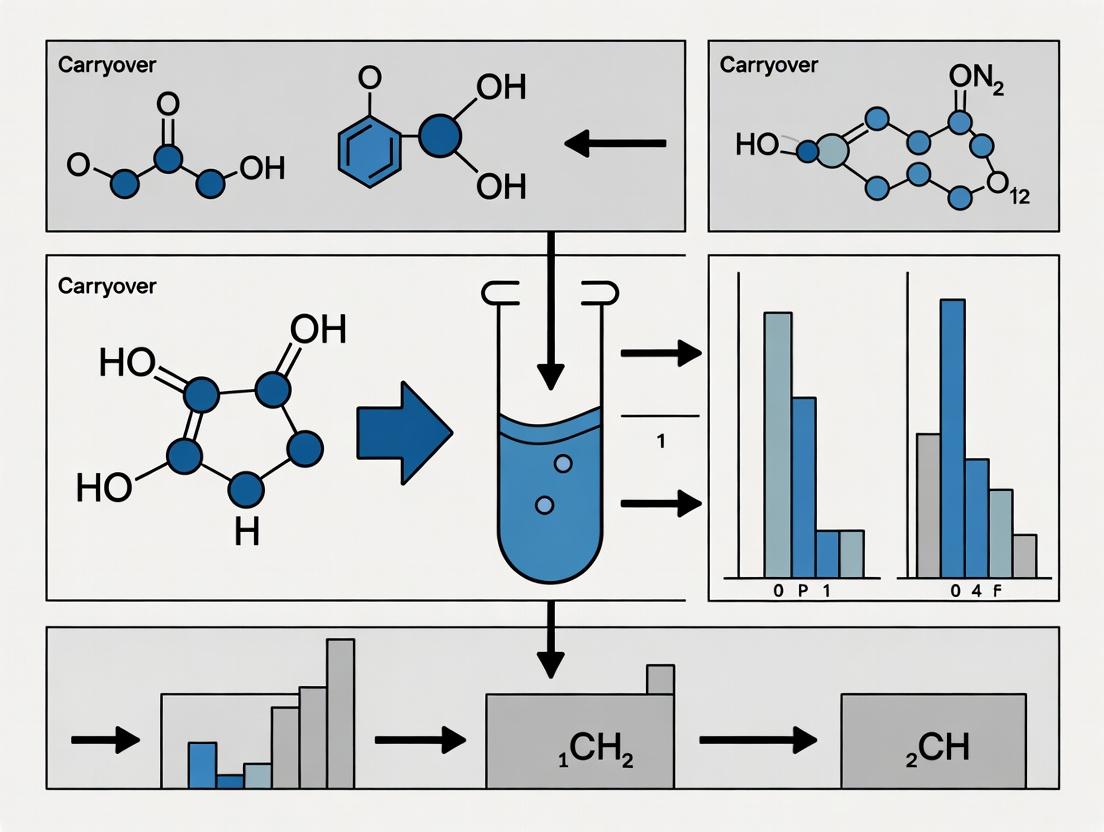
This comprehensive guide addresses the critical challenge of carryover in chromatographic methods, a persistent issue that compromises data integrity in pharmaceutical research and quality control.
Mitigating and Managing Carryover in Chromatography: A Comprehensive Guide for Pharmaceutical Analysis
Abstract
This comprehensive guide addresses the critical challenge of carryover in chromatographic methods, a persistent issue that compromises data integrity in pharmaceutical research and quality control. The article explores the foundational causes of carryover, including adsorption, sample volatility, and hardware design. It details methodological strategies for prevention, systematic troubleshooting workflows for optimization, and validation protocols to ensure compliance with ICH Q2(R2) and regulatory standards. Designed for researchers, scientists, and drug development professionals, this resource provides actionable insights for developing robust, reliable analytical methods.
Understanding Carryover: Defining the Problem and Its Impact on Data Integrity
What is Chromatographic Carryover? Definitions and Key Concepts.
Chromatographic carryover is the undesired phenomenon where a sample analyte, or a portion of it, is retained within the chromatographic system and is subsequently detected in later injections of blank or unrelated samples. It manifests as peaks or elevated baselines in chromatograms where none should be present. This can lead to inaccurate quantification, compromised data integrity, and false positives, posing significant risks in research and regulated environments like drug development.
Key Concepts and Terminology
- System Carryover vs. Injector Carryover: System carryover originates from components like the autosampler needle, injection valve, or seals. Injector carryover is a subset, specifically linked to the sample introduction pathway.
- Sample-Dependent vs. Sample-Independent Carryover: Sample-dependent carryover is influenced by the chemical properties (e.g., hydrophobicity, protein binding) of a specific analyte. Sample-independent carryover is consistent across analytes and often points to a mechanical or flushing issue.
- Primary vs. Secondary Carryover: Primary carryover refers to contamination from the immediate previous injection. Secondary (or tertiary) carryover stems from injections further back in the sequence.
Troubleshooting Guides and FAQs
FAQ 1: How do I diagnose if my peak is actually carryover?
A: Follow this diagnostic protocol:
- Sequence Test: Run a sequence: High Concentration Sample -> Blank Solvent (multiple injections) -> Different Sample.
- Observation: If a peak at the same retention time as the high-concentration sample diminishes over successive blanks but reappears upon injection of a different sample (due to needle cooldown or solvent effects), it is likely carryover.
- Quantification: Calculate carryover as a percentage:
(Peak Area in Blank / Peak Area in High Concentration Sample) * 100%. Regulatory guidelines often require carryover to be ≤0.1% or ≤20% of the LLOQ area.
Diagnostic Experimental Protocol:
- Preparation: Prepare a high-concentration standard (e.g., at the upper limit of quantification, ULOQ) and a blank matrix (e.g., mobile phase or processed sample matrix).
- Instrumentation: Use your standard LC-MS/MS or HPLC method.
- Sequence: Inject the ULOQ standard in triplicate. Then, inject the blank matrix for at least 5-7 consecutive injections.
- Data Analysis: Integrate peaks in all blank injections at the retention time of the analyte. Calculate the percentage relative to the average ULOQ response.
FAQ 2: My method shows high carryover. What are the systematic steps to reduce it?
A: Address issues in order of increasing method impact:
Step 1: Optimize Autosampler Wash Protocol.
- Action: Increase wash solvent volume, cycle count, or use a stronger wash solvent. Implement a needle wash (external) and a flush port wash (internal to the injector).
- Protocol: In the autosampler software, create a wash method using a stronger solvent than your mobile phase (e.g., 50:50 Acetonitrile:Water with 0.1% Formic Acid for reversed-phase). Perform a wash before and after aspiration. Test volumes from 500 µL to 2000 µL.
Step 2: Inspect and Replace Worn Components.
- Action: Visually inspect and replace the autosampler needle, injection valve rotor seal, and syringe if worn or scratched.
- Protocol: Schedule preventive maintenance. For diagnosis, replace the needle and rotor seal with new ones and re-run the diagnostic sequence.
Step 3: Modify the Chromatographic Method.
- Action: Implement a needle wash step in the gradient or include a strong wash column step to elute persistent compounds.
- Protocol: Add a 1-2 minute isocratic segment at a high organic percentage (e.g., 95% organic) at the end of each gradient before re-equilibration.
Step 4: Use a Dedicated Wash Vial for Problematic Samples.
- Action: For known problematic, sticky compounds, use a separate wash vial containing a strong solvent like DMSO or isopropanol.
- Protocol: Configure the autosampler to wash in this special vial after injecting the problematic sample.
Step 5: Redesign Sample Preparation.
- Action: For protein-bound compounds, ensure thorough protein precipitation or solid-phase extraction to remove phospholipids and proteins that can co-precipitate analyte in the injector.
Experimental Protocol: Evaluating Wash Solvent Efficacy
- Objective: Identify the optimal wash solvent to minimize carryover for a hydrophobic analyte.
- Materials: See "Research Reagent Solutions" table.
- Procedure: a. Prepare a stock solution of the problematic analyte at 10x ULOQ in matrix. b. Prepare four different wash solvents: W1 (Water), W2 (50:50 ACN:H₂O), W3 (50:50 MeOH:H₂O), W4 (ACN:H₂O:IPA, 50:30:20). c. For each wash solvent, run a sequence: ULOQ Sample -> Wash Solvent Blank (3 injections). d. Integrate the carryover peak area in the first blank.
- Data Analysis: Tabulate results. The solvent yielding the lowest carryover percentage is optimal.
Data Presentation
Table 1: Carryover Percentage with Different Wash Solvents (Hypothetical Data)
| Wash Solvent Composition | Carryover in 1st Blank (%) | Carryover in 3rd Blank (%) |
|---|---|---|
| 100% Water | 1.50% | 0.80% |
| 50% Acetonitrile / 50% Water | 0.40% | 0.05% |
| 50% Methanol / 50% Water | 0.55% | 0.10% |
| 50% ACN / 30% H₂O / 20% IPA | 0.10% | 0.01% |
Table 2: Systematic Carryover Troubleshooting Checklist
| Component to Check | Symptom | Corrective Action |
|---|---|---|
| Autosampler Needle | Scratches, bent tip | Replace needle |
| Injection Valve Rotor Seal | Scoring, wear lines | Replace seal |
| Wash Solvent | Weak strength, low volume | Optimize solvent strength & volume |
| Chromatographic Gradient | No strong wash step | Add high-organic column wash |
| Sample Solubility | Precipitates in needle/mobile phase | Change sample solvent or add surfactant |
The Scientist's Toolkit: Research Reagent Solutions
| Item | Function in Carryover Mitigation |
|---|---|
| Polymer-Coated Autosampler Vials | Reduce adsorption of hydrophobic compounds to glass surfaces. |
| Stainless Steel or PEEK Needles | PEEK is chemically inert but can adsorb proteins; SS is robust but can catalyze reactions. Choice is analyte-dependent. |
| Strong Needle Wash Solvents (e.g., DMSO, IPA) | Effectively dissolve and remove "sticky" compounds that mobile phase cannot. |
| Seal Wash Kit | Continuously flushes the back of the injection valve rotor seal to prevent buffer crystallization and sample leakage. |
| LC-MS Compatible Surfactants (e.g., TFA, FA) | Added to sample or wash solvent to improve solubility and disrupt protein/analyte binding. |
| Needle Seat Assembly | A critical, often replaced part where sample residue can accumulate; regular replacement is key. |
Visualization of Concepts and Workflows
Title: Carryover Root Cause Analysis Flow
Title: Carryover Mitigation Stepwise Protocol
Troubleshooting Guides & FAQs
Q1: What are the most common symptoms of analyte adsorption in my LC-MS/MS method, and how can I confirm it?
A: Symptoms include poor peak shape (tailing or fronting), low and inconsistent recovery, nonlinear calibration curves at low concentrations, and a concentration-dependent response. To confirm, perform a recovery experiment: compare the response of a neat standard injected directly to the response of the same standard spiked into a pre-extracted blank matrix. Significant loss indicates adsorption. A second test is to inject a series of low-concentration standards; adsorption often manifests as improved linearity after the first few injections as active sites become saturated.
Q2: My blanks show peaks after running high-concentration samples. Is this carryover from NVRs or the autosampler?
A: It could be either. To diagnose, run this sequence: Blank Solvent > High Concentration Sample > Blank Solvent > Blank Matrix Extract. If the first blank solvent is clean but the second shows carryover, the issue is likely in the LC flow path (column, tubing, detector cell). If both blanks are clean but the blank matrix extract shows peaks, the carryover is from NVRs in the autosampler (e.g., syringe, needle seat, injection valve). NVRs are dissolved by the organic solvent in the sample but not by the weak needle wash.
Q3: How do I differentiate between carryover caused by adsorption and that caused by a system design flaw (e.g., a poorly flushed loop)?
A: Use the following diagnostic protocol:
- Inject a high-concentration sample.
- Follow with 5-10 consecutive blank injections.
- Plot peak area of the carryover peak vs. injection number.
- Adsorption: Shows an exponential decay. The first blank has high carryover, decreasing rapidly as adsorbed analyte is slowly desorbed.
- System Design Flaw (e.g., fixed loop with partial loop injection): Shows a consistent, flat level of carryover across all blanks, indicating a fixed volume of residual sample is being transferred each time.
Q4: What are the most effective needle wash solutions to combat NVR-based carryover?
A: The wash solution must be stronger than your sample solvent. A standard 50/50 water/methanol wash is often insufficient. Effective solutions are:
| Wash Solution Composition | Best For | Mechanism |
|---|---|---|
| 90:10 Methanol:Water | Polar to mid-polar NVRs | Strong elution strength |
| 50:45:5 Methanol:Water:Isopropyl Alcohol | Broader range of NVRs | Adds IPA for increased solubility of lipophilic residues |
| 0.1% Formic Acid in Methanol | Basic analytes | Protonates analytes, increasing solubility in organic solvent |
| 0.1% Ammonium Hydroxide in Methanol | Acidic analytes | Deprotonates analytes, increasing solubility |
Protocol: Optimizing Needle Wash:
- Prepare a high-concentration stock of your problematic analyte.
- Inject the sample using your current method.
- Run 5 blank injections with the current weak needle wash (e.g., 10% methanol). Note carryover in the first blank.
- Change the wash solvent to a stronger mix (e.g., 90% methanol with 0.1% modifier).
- Repeat the sequence. A significant reduction in the first blank's carryover indicates successful removal of NVRs.
Q5: What specific system design flaws in UHPLC autosamplers contribute to carryover?
A: Common flaws include:
- Needle-to-Port Geometry: Poor alignment causes droplets to form on the needle exterior.
- Static Injector Loop: Using a static loop in a "partial loop injection" mode leaves a stagnant portion of sample that is not flushed to the column.
- Syringe Design: Syringes with dead volumes (e.g., at the plunger tip) or made of adsorptive materials (some polymers) can trap sample.
- Insufficient Wash Volumes: The total wash volume (internal + external) is insufficient to displace the sample plug within the needle and injection valve.
Table 1: Carryover Reduction Efficacy of Different Wash Strategies
| Intervention | Typical Carryover Reduction | Primary Mechanism | Cost & Complexity |
|---|---|---|---|
| Strong Needle Wash Solvent | 60-90% | Dissolves NVRs | Low |
| Increased Wash Volume/Time | 30-70% | Better displacement | Low |
| Passive Needle Wash (Port) | 40-80% | Cleans needle exterior | Medium (hardware) |
| Use of a Pre-/Post-Inject Wash | 70-95% | Cleans entire flow path | Medium (method time) |
| Column Switching Valves | >99% | Physically diverts residual bolus | High (hardware/software) |
Table 2: Impact of Sample Solvent on NVR Formation and Adsorption
| Sample Solvent | Relative Risk of NVR | Relative Risk of Adsorption | Recommended Wash Strength |
|---|---|---|---|
| 100% Aqueous Buffer | Very High | High (for hydrophobic analytes) | Very Strong Organic (≥90%) |
| < 30% Organic | High | Moderate-High | Strong Organic (70-90%) |
| 30-70% Organic | Moderate | Low-Moderate | Matching or Slightly Stronger Organic |
| > 70% Organic | Low | Low (unless on active sites) | Matching Organic |
Experimental Protocols
Protocol 1: Comprehensive Carryover Diagnosis Workflow
Objective: Systematically identify the source (adsorption, NVR, design) and location of carryover.
Materials: LC-MS/MS system, analytical column, mobile phases, neat standard solution, blank matrix.
Procedure:
- System Preparation: Equilibrate system with starting mobile phase.
- Blank Baseline: Inject 5 injections of your sample solvent (e.g., 50% methanol). Confirm system is clean.
- High Concentration Injection: Inject a standard at the upper limit of quantification (ULOQ).
- Sequence of Diagnostic Blanks: a. Blank 1 (Strong Wash): Inject a blank using a needle wash of 90% methanol/0.1% formic acid. b. Blank 2 (Weak Wash): Inject a blank using your standard method's weak needle wash (e.g., 10% methanol). c. Blank 3 (Matrix): Inject a processed blank matrix sample.
- Analysis: Compare carryover peaks in Blanks 1, 2, and 3.
- High in Blank 2 & 3, Low in Blank 1: NVR in autosampler is the dominant source.
- High in Blank 1, 2, & 3: Adsorption in the LC flow path or column is dominant.
- High only in Blank 3: Potential for NVRs that are only soluble in a matrix-like environment.
Protocol 2: Determination of Active Site Adsorption on Column Inlet
Objective: Quantify and mitigate adsorption losses on the stationary phase head.
Materials: LC system, analytical column, standard solution, sacrificial guard column (or pre-column filter), low-adsorption vial inserts (e.g., silanized glass).
Procedure:
- Direct Injection: Inject a low-concentration standard (e.g., 1 ng/mL) in a silanized glass insert. Record peak area (A_direct).
- Condition Column: Flush column with 50 column volumes of a strong solvent (e.g., 95% organic).
- Matrix Injection: Inject the same concentration of standard prepared in a clean, but non-silanized, matrix or vial. Record peak area (A_matrix).
- Calculate % Recovery: % Recovery = (Amatrix / Adirect) * 100.
- Mitigation Test: Install a small guard column (same stationary phase) before the analytical column. Repeat steps 1-4.
- Interpretation: If % recovery improves significantly (>85%) with the guard column, active site adsorption at the column inlet is confirmed. The guard column acts as a sacrificial adsorbent.
Visualizations
Title: Carryover Root Cause Diagnosis Decision Tree
Title: NVR-Based Carryover Mechanism
The Scientist's Toolkit: Key Reagent Solutions
| Item | Function | Key Consideration |
|---|---|---|
| Silanized Glass Vial Inserts | Minimizes adsorption of hydrophobic analytes to glass surfaces. | Essential for low-concentration or adsorptive compounds. |
| Low-Adsorption, Polymer Vials | Alternative to glass; surface is treated to minimize binding. | Test for compatibility with your solvent/analyte. |
| High-Purity Needle Wash Solvents | Removes NVRs without leaving its own residues. | Use LC-MS grade with low UV absorbance. |
| Pre-Column Filter (0.5μm) | Traps particulate matter that can create new active sites on the column frit. | Change regularly to prevent backpressure. |
| Sacrificial Guard Column | Contains and saturates active sites, protecting the expensive analytical column. | Should match the analytical column chemistry. |
| Strong Flush Solvent | For periodic system flushing (e.g., 90% IPA) to remove accumulated NVRs from the entire flow path. | Must be compatible with system seals and columns. |
The Direct Impact of Carryover on Accuracy, Precision, and Method Sensitivity (LOD/LOQ)
Technical Support Center: Troubleshooting Carryover in Chromatography
Frequently Asked Questions (FAQs)
Q1: My calibration curves are showing poor linearity at low concentrations. Could carryover be the cause? A: Yes. Systematic carryover from a high-concentration sample artificially elevates the measured response of the subsequent low-concentration sample. This distorts the true concentration-response relationship, most notably at the lower end of the curve, leading to non-linearity, inaccurate slope calculations, and ultimately incorrect quantification of low-level analytes.
Q2: How does carryover affect the precision (RSD%) of my replicate injections? A: Carryover introduces a non-random, systematic error. If the injection sequence places a blank after a high-concentration sample, the carryover peak in the blank will be consistently present, artificially improving precision. However, in a real sample sequence, variability in the concentration of preceding samples leads to variable carryover contributions, significantly worsening inter-replicate precision (RSD%).
Q3: I am trying to validate a method with a low LOD/LOQ, but my blanks are contaminated. Is this a carryover issue? A: Absolutely. Method sensitivity (LOD and LOQ) is determined by the signal-to-noise ratio. Carryover contributes directly to the baseline noise and can manifest as a peak in blank injections. This elevated baseline noise increases the calculated LOD and LOQ, degrading the method's ability to detect and quantify trace levels of analyte.
Q4: My accuracy (%Recovery) fails for QC samples injected after the calibration standard at the upper limit of quantification (ULOQ). What should I check? A: This is a classic symptom of carryover. The ULOQ standard deposits a significant amount of analyte in the flow path, which is then carried over into the next injection (your QC), causing its measured concentration to be biased high. Implement and optimize a wash step in the autosampler method and review the injection sequence to avoid placing critical low/mid-level QCs directly after the ULOQ.
Troubleshooting Guides
Issue: Consistently High Blank Readings Following Calibration Standards
- Step 1: Confirm the source. Inject a pure mobile phase blank, then a system suitability standard, then multiple blanks in sequence. A peak in the first blank that diminishes in subsequent blanks confirms autosampler-based carryover.
- Step 2: Inspect and clean the autosampler needle. Check for nicks, scratches, or deposits. Perform a manual wash according to the manufacturer's protocol.
- Step 3: Optimize the wash solvent. The wash solvent should be stronger than the mobile phase for the analyte. Test mixtures of organic solvent, acid, or base. Use at least two wash cycles: one aggressive wash port and one weak wash (mobile phase) port.
- Step 4: Evaluate the injection volume. Excessive injection volume can overwhelm the wash cycle; consider reducing it if method sensitivity allows.
Issue: Poor Precision in Replicate Injections of Mid-Level Samples
- Step 1: Review the injection sequence. Are the replicates injected consecutively, or are they separated by other samples of varying concentrations? Consecutive injection provides the best precision but is not realistic. Scatter replicates throughout the batch.
- Step 2: Quantify carryover. Inject a blank immediately after the highest concentration standard (ULOQ). Calculate carryover as a percentage: (Peak Area in Blank / Peak Area of ULOQ) * 100%. A value >0.1% is often problematic for sensitive methods.
- Step 3: Increase the wash volume or time. If the wash solvent is appropriate, increase the volume drawn and dispensed during the wash cycle.
- Step 4: Check for chromatographic peak tailing. A severely tailing peak indicates column or strong retention site issues, which can exacerbate carryover. Consider modifying the mobile phase or replacing the guard/analytical column.
Experimental Protocols for Assessing Carryover
Protocol 1: Determining Carryover Percentage
- Prepare a high-concentration standard at the method's Upper Limit of Quantification (ULOQ) and a blank matrix (e.g., processed mobile phase or sample matrix without analyte).
- Sequentially inject: 1) Blank, 2) ULOQ Standard (seven times to condition the system), 3) Blank.
- Measure the peak area in the blank injection following the ULOQ standard (Ablank) and the average peak area of the ULOQ standards (AULOQ).
- Calculate: %Carryover = (Ablank / AULOQ) * 100.
Protocol 2: Evaluating Carryover Impact on LOD/LOQ
- Prepare and inject ten (n=10) independent blank matrix samples interspersed throughout a calibration curve run.
- Perform the standard LOD/LOQ calculation using the signal-to-noise method (S/N=3 for LOD, S/N=10 for LOQ).
- Separately, inject a blank immediately after the ULOQ standard in a separate sequence.
- Measure the peak response in this "carryover blank."
- Compare the LOD/LOQ from the independent blanks to the signal from the carryover blank. If the carryover blank signal is >30% of the LOD signal, carryover is critically impacting stated method sensitivity.
Data Presentation
Table 1: Impact of Autosampler Wash Solvent on Carryover and Precision
| Wash Solvent Composition | %Carryover (Mean ± SD) | RSD% of Mid-Level QC (n=6) | Calculated LOD (ng/mL) |
|---|---|---|---|
| Weak Wash (10% Methanol) | 0.25 ± 0.04 | 8.7 | 1.5 |
| Strong Wash (90% Methanol) | 0.05 ± 0.01 | 2.1 | 0.5 |
| Optimized Wash (50% ACN with 0.1% Formic Acid) | 0.01 ± 0.002 | 1.5 | 0.2 |
Table 2: Effect of Injection Sequence on Apparent Accuracy of Low-Concentration Samples
| Sequence Order (Sample Type) | Measured Conc. (ng/mL) | Expected Conc. (ng/mL) | %Bias |
|---|---|---|---|
| 1: ULOQ Standard (1000 ng/mL) | 998 | 1000 | -0.2 |
| 2: LLOQ QC (5 ng/mL) | 6.8 | 5.0 | +36.0 |
| 3: Repeat LLOQ QC | 5.2 | 5.0 | +4.0 |
| 4: Repeat LLOQ QC | 5.1 | 5.0 | +2.0 |
Visualization: Carryover Impact Pathways
Diagram Title: Primary Impacts of Analytical Carryover
Diagram Title: Carryover Troubleshooting Workflow
The Scientist's Toolkit: Key Research Reagent Solutions
| Item | Function in Addressing Carryover |
|---|---|
| Strong Needle Wash Solvent | A solvent stronger than the mobile phase (e.g., 90% Acetonitrile with 0.1% Formic Acid) to dissolve and flush residual analyte from the autosampler needle and injection port. |
| Weak Needle Wash Solvent | A solvent matching the initial mobile phase conditions (e.g., 5% Methanol) to re-equilibrate the needle and prevent precipitation when introducing the strong wash to the mobile phase stream. |
| Seal Wash Kit | A dedicated system for flushing the outside of the autosampler injection seal to prevent crystallization and sample residue accumulation, a common source of carryover. |
| Vial Inserts with Polymer Feet | Inserts that position the sample vial opening closer to the needle, reducing the depth the needle must descend and minimizing droplet adhesion on its outside surface. |
| Low-Adsorption/Deactivated Vials & Inserts | Vials and inserts treated to minimize non-specific binding of hydrophobic or proteinaceous analytes, reducing a potential source of residual sample. |
| In-Line Filter or Guard Column | Traps particulates that can create active adsorption sites on the analytical column; replacing the guard is a standard step in troubleshooting persistent carryover. |
Technical Support Center: Troubleshooting Chromatographic Carryover
Troubleshooting Guides
Guide 1: Diagnosing Source of Carryover in HPLC/UHPLC Methods
Symptoms: Peaks appearing in blank injections following a high-concentration sample, inaccurate quantitation of low-level analytes, inconsistent baseline.
| Step | Action | Expected Outcome | If Issue Persists |
|---|---|---|---|
| 1 | Run a blank solvent after a high-concentration standard. | Clean baseline with no analyte peaks. | Proceed to Step 2. |
| 2 | Replace the autosampler injection needle and wash/seal assembly. | Significant reduction in carryover. | Carryover is likely in the flow path (Step 3). |
| 3 | Bypass the autosampler, manually inject high standard, then blank. | Clean baseline. | Issue is within autosampler. If not, issue is in column or detector (Step 4). |
| 4 | Replace the analytical column and flush detector cell. | Elimination of carryover. | Contamination is in tubing or other system components; perform full system flush. |
Guide 2: Systematic Approach to Eliminate Carryover
Objective: Isolate and mitigate the root cause of analyte retention in the chromatographic system. Protocol:
- Identify: Inject a high-concentration standard (e.g., 80-100% of calibration range), followed by at least three blank injections (e.g., mobile phase). Measure peak area in each blank.
- Quantify: Calculate carryover percentage:
(Area in Blank 1 / Area of High Standard) * 100. - Isolate:
- Autosampler: Perform a needle wash method study. Test different wash solvent compositions (e.g., higher organic strength, pH adjustment).
- Column: Perform a column wash study. Implement a strong wash step in the method gradient.
- System: Disconnect the column and inject a high standard with detector monitoring. Any signal indicates carryover in the injector or detector flow path.
- Implement & Verify: Optimize wash steps and re-quantify carryover. It should be ≤ 0.1% (or within predefined method acceptance criteria).
Frequently Asked Questions (FAQs)
Q1: Our method validation shows 0.15% carryover. Is this acceptable from a regulatory standpoint? A: While there is no universally fixed limit, regulatory expectations (per ICH Q2(R1), FDA data integrity guidance) are that carryover should be "minimized and understood." A common benchmark in the industry is ≤0.1%. A result of 0.15% may be acceptable if it is justified, demonstrated to not impact the accuracy and precision of the method for its intended use, and is consistently controlled. It must be documented and addressed in the method's risk assessment.
Q2: Which ALCOA+ principle does carryover most directly violate? A: Carryover primarily risks violating Accuracy (the "A" in ALCOA+) by causing falsely elevated results in subsequent samples. It also impacts Attributability and Traceability as data from a sample is influenced by a previous sample, breaking the clear chain of association.
Q3: We only see carryover in one of our six similar LC-MS/MS methods. What's the most likely cause? A: This points to a method-specific issue rather than general system contamination. The most likely causes are:
- Insufficient Needle Wash: The wash solvent for this specific method is not strong enough to fully solubilize and clear the particular analyte(s).
- Incomplete Elution: The chromatographic gradient or column chemistry is causing partial retention of the analyte, leading to slow bleed in later injections. Action: First, optimize the autosampler wash solvent composition and volume for that specific method.
Experiment: Injection of 100 µg/mL API standard followed by blank mobile phase. Carryover % measured in Blank 1. (Hypothetical data based on common trends).
| Needle Wash Solvent Composition | Carryover % | Meets ≤0.1% Criteria |
|---|---|---|
| 50/50 Water/Methanol | 0.45% | No |
| 30/70 Water/Acetonitrile | 0.22% | No |
| 10/90 Water/Acetonitrile + 0.1% Formic Acid | 0.08% | Yes |
| 5/95 Water/Acetonitrile + 0.1% Trifluoroacetic Acid | 0.03% | Yes |
Experimental Protocol: Protocol for Quantifying and Mitigating Autosampler Carryover
Title: Determination of Autosampler-Induced Carryover and Wash Solvent Efficacy.
Methodology:
- Preparation: Prepare a high-concentration standard (HC) and a blank solution (mobile phase).
- Chromatographic System: Use a qualified UHPLC system with a defined autosampler wash program.
- Sequence:
- 1x Injection of Blank (to confirm system cleanliness).
- 1x Injection of HC Standard.
- 6x Consecutive Injections of Blank.
- Data Analysis: Integrate the analyte peak in the HC standard and in all subsequent blank injections.
- Calculation: Calculate % Carryover for each blank:
(Peak Area_Blank_n / Peak Area_HC) * 100. - Wash Optimization: If carryover >0.1% in Blank 1, modify the wash solvent (increase organic percentage, add modifier, increase wash volume) and repeat the sequence.
- Acceptance: The method is considered optimized when the average carryover from Blank 1-3 is ≤0.1% and is non-detectable by Blank 6.
Diagram: Workflow for Root Cause Analysis of Carryover
Title: Root Cause Analysis Workflow for LC System Carryover
The Scientist's Toolkit: Research Reagent Solutions for Carryover Mitigation
| Item | Function in Carryover Mitigation |
|---|---|
| Strong Needle Wash Solvent | Typically >90% organic (ACN/MeOH) often with acidic/basic modifiers. Dissolves and flushes adsorbed analyte from injection needle and seal. |
| Seal Wash Solvent | Flushes the exterior of the syringe plunger, preventing crystallization and transfer of analyte between samples. |
| Low Adsorption Vials & Inserts | Vials made of deactivated glass or polymer with specially treated surfaces to minimize analyte binding. |
| High-Purity Mobile Phase Additives | Reduces non-specific binding and improves peak shape, aiding complete elution. |
| Column Regeneration Solvents | Strong solvents (e.g., 100% ACN, Isopropanol, 0.1% TFA) used in a method's wash step to fully elute retained components from the column. |
| In-Line Filters | Traps particulates that could adsorb analyte and cause late elution, but must be changed regularly to avoid becoming a source of carryover. |
Technical Support Center: Troubleshooting Guides & FAQs
This support center is framed within the thesis that systematic identification and mitigation of carryover sources are critical for developing robust, reproducible chromatographic methods in pharmaceutical research and development.
FAQ & Troubleshooting Guide
Q1: My chromatograms show peak area variability and ghost peaks in blank runs after a high-concentration sample. What is the most likely cause and how do I diagnose it? A: This is a classic symptom of carryover. The most common culprits, in order of prevalence, are:
- Autosampler Needle: Adsorption/desorption on the needle's outer or inner surface.
- Injection Valve Rotor Seal: Trapping of analyte in the seal grooves or pores.
- Sample Loop: Incomplete flushing of a fixed loop.
- Column Chemistry: Irreversible binding sites on the stationary phase.
Diagnostic Protocol:
- Needle Wash Test: Perform a series of injections: solvent blank → high-concentration standard → solvent blank (multiple). Observe the blank after the high standard.
- Valve Bypass Test: Disconnect the column and connect the detector directly to the injection valve outlet. Run the same sequence. Any carryover peak is from the injector (needle, valve, loop).
- Needle-Only Test: Use the instrument's "inject" position without the "load" position to see if sample is being picked up on the needle exterior.
Q2: I've replaced my injection valve rotor seal, but carryover persists. What should I check next? A: Focus on the autosampler needle and its wash procedure. Experimental Protocol for Needle Wash Optimization:
- Prepare a strong wash solvent. It should be more elutropic than your mobile phase (e.g., for a reversed-phase method with acetonitrile/water, use 80:20 ACN/Water or a solvent containing 0.1% formic acid).
- In the autosampler software, increase the wash volume (e.g., from 500 µL to 2000 µL) and the number of wash cycles (e.g., from 2 to 5).
- Implement a "needle wash" step in both the pre- and post-injection phases of the cycle.
- For sticky samples, use a dedicated "needle wash" port with a strong solvent, not just the mobile phase.
- Test the improvement using the Diagnostic Protocol (Q1).
Q3: How does column chemistry contribute to carryover, and how can it be addressed methodologically? A: Secondary interactions (ionic, hydrophobic) with active sites (e.g., residual silanols, metal impurities) in the column can cause tailing and carryover. Experimental Protocol for Column Conditioning & Cleaning:
- Conditioning: After installing a new column, flush with 20 column volumes (CV) of the starting mobile phase.
- Preventive Flushing (Daily): At the end of a sequence, flush with a strong solvent (e.g., 95:5 MeOH/Water for RP) for 30 minutes at a slow flow rate (0.2 mL/min).
- Curative Cleaning (For observed carryover):
- Reverse-Phase: Flush sequentially with: 20 CV water → 20 CV acetonitrile → 20 CV isopropanol → 20 CV hexane → back to isopropanol → acetonitrile → storage solvent.
- HILIC/Ion-Exchange: Flush with a high-ionic-strength buffer (e.g., 200 mM ammonium acetate), then re-equilibrate.
Q4: What are the quantitative benchmarks for acceptable carryover in regulated bioanalysis? A: Industry guidelines typically set strict limits, as summarized below.
Table 1: Quantitative Benchmarks for Carryover in Regulated Bioanalysis
| Parameter | Typical Acceptance Criterion | Measurement Method |
|---|---|---|
| Carryover in Blank | ≤ 20% of the Lower Limit of Quantification (LLOQ) peak response. | Inject blank after an upper calibration standard (ULOQ). |
| Injection Precision | %RSD of peak areas for replicate injections ≤ 15% (20% at LLOQ). | Measures needle/valve reproducibility. |
| System Suitability | Tailing Factor ≤ 2.0; Theoretical Plates ≥ 2000. | Indicates column health and lack of active sites. |
Experimental Protocols Cited
Protocol 1: Comprehensive Carryover Diagnosis Workflow
- Initial Test: Inject triplicate solvent blanks. Inject a high-concentration standard (near ULOQ). Inject five consecutive solvent blanks.
- Quantify: Calculate carryover as
(Peak Area in Blank 1 / Peak Area of High Standard) * 100%. - Isolate Source:
- If carryover is present, perform the Valve Bypass Test (see Q1).
- If carryover disappears during bypass, the column is the source. Proceed with Column Cleaning (Protocol 3).
- If carryover persists, the injector is the source.
- Optimize Wash: For injector carryover, execute Needle Wash Optimization (Protocol 2).
- Verify: Repeat the Initial Test to confirm reduction below the 20% of LLOQ threshold.
Protocol 2: Needle & Valve Seal Maintenance
- Visual Inspection: Weekly, inspect the needle for bends, burrs, or scratches under magnification.
- Seal Replacement: Replace the injection valve rotor seal every 10,000 injections or at the first sign of leakage or pressure fluctuation.
- Lubrication: When replacing the seal, apply a tiny amount of the recommended lubricant (e.g., glycerin) only to the seal's guide ribs, not the sealing surface.
- Needle Alignment: After any maintenance, verify needle alignment with the vial septum and injection port.
The Scientist's Toolkit: Research Reagent Solutions
Table 2: Essential Materials for Carryover Investigation & Mitigation
| Item | Function & Rationale |
|---|---|
| Strong Needle Wash Solvent (e.g., 80:20 ACN/H2O w/ 0.1% FA) | Effectively dissolves and flushes hydrophobic/ionic analytes stuck to the needle exterior or internal fluid path. |
| Seal-Compatible Lubricant (High-Purity Glycerin) | Reduces wear on the rotor seal, prevents sticking and micro-leaks that can trap sample. Must be chemically inert. |
| Replacement Rotor Seals (Polyether Ether Ketone - PEEK) | Standard replacement part. Ceramic seals offer higher durability for high-pressure methods. |
| Needle Wash Vial & Station | Dedicated, clean reservoir for strong wash solvent, separate from mobile phase bottles. |
| Column Regeneration Solvents (e.g., IPA, Hexane, 200mM Buffer) | Used in sequential flushing to remove strongly retained compounds from the stationary phase. |
| Certified Needle/Seal Alignment Tool | Ensures precise alignment post-maintenance, preventing needle damage and inefficient injection. |
Visualizations
Proactive Prevention: Method Development Strategies to Minimize Carryover
Designing Mobile Phases and Sample Solvents for Optimal Wash-Out Efficiency
Troubleshooting Guides & FAQs
Q1: We have persistent carryover of a lipophilic basic drug in our reversed-phase LC-UV method. The peak appears in subsequent blank injections. How can we address this? A: This is a common issue. The problem often lies in the sample solvent being too strong (high organic content) or the mobile phase wash strength being insufficient. Implement the following protocol:
- Modify Sample Solvent: Prepare the sample in a solvent with a composition equal to or slightly weaker than the initial mobile phase (e.g., if starting at 10% organic, use 5-10% organic).
- Implement a Needle Wash: Configure the autosampler to use a weak needle wash solvent (e.g., 5-10% organic in water with 0.1% formic acid) and a strong needle wash solvent (e.g., 50:50 water:acetonitrile with 0.1% formic acid).
- Optimize Wash Step in Gradient: Add a high organic wash step (e.g., 95% organic) and hold for 1-2 column volumes, followed by a 5-minute re-equilibration. Experimental Protocol: Carryover Reduction Test
- Prepare a high-concentration standard (e.g., at the upper limit of quantification).
- Inject the standard, followed by at least three blank injections (using the proposed modified sample solvent).
- Measure the peak area in the first blank. A carryover of <0.1% of the original peak area is typically acceptable.
Q2: For a method using a silica-based HILIC column, we see peak broadening and irreproducible retention times, suggesting poor wash-out. What is the primary factor? A: In HILIC, the primary concern is maintaining a consistent layer of adsorbed water on the stationary phase. The key is ensuring the sample solvent is miscible and does not disrupt this layer. Troubleshooting Protocol:
- Ensure Solvent Miscibility: The sample solvent must be ≥80% organic (e.g., acetonitrile). Aqueous samples >20% will cause peak distortion.
- Use a Strong Wash Solvent: Implement a post-run flush with a solvent containing a high percentage of water (e.g., 50:50 acetonitrile:water) to remove polar contaminants, followed by a long re-equilibration (≥10 column volumes) with the initial mobile phase to re-establish the water layer.
Q3: How do I quantitatively compare the wash-out efficiency of two different strong wash solvents? A: Perform a systematic carryover test and calculate the Carryover Percentage. Experimental Protocol:
- Solvent A: 50:50 Water:Acetonitrile + 0.1% Formic Acid.
- Solvent B: 30:70 Water:Isopropanol + 0.1% Ammonium Hydroxide (for basic compounds).
- Inject a high-concentration standard (n=3), followed by a blank (n=3) for each wash solvent protocol.
- Calculate: Carryover % = (Mean Peak Area in Blank / Mean Peak Area of Standard) x 100%.
- Compare results using the table below.
Table 1: Quantitative Comparison of Wash Solvent Efficacy for Compound X
| Strong Wash Solvent Composition | Mean Standard Area (mAU*sec) | Mean Blank Area (mAU*sec) | Calculated Carryover (%) | Recommendation |
|---|---|---|---|---|
| 50:50 Water:ACN / 0.1% FA | 12540 ± 210 | 18.5 ± 4.2 | 0.15% | Acceptable for screening |
| 30:70 Water:IPA / 0.1% NH4OH | 12390 ± 190 | 3.1 ± 1.1 | 0.025% | Optimal for validation |
The Scientist's Toolkit: Key Research Reagent Solutions
| Item | Function & Rationale |
|---|---|
| LC-MS Grade Water | Minimizes background ions and contamination for sensitive detection. |
| LC-MS Grade Acetonitrile & Methanol | High-purity solvents reduce baseline noise and system contamination. |
| Ammonium Formate/Acetate Buffers | Volatile salts for MS-compatible mobile phases, providing pH control. |
| Formic Acid (≥98%) | Common acidic mobile phase modifier to promote protonation and improve peak shape. |
| Ammonium Hydroxide (28-30%) | Basic modifier for deprotonation; crucial for washing strongly retained acidic compounds. |
| Isopropanol (HPLC Grade) | Strong eluotropic solvent. Essential for washing hydrophobic compounds and column regeneration. |
| Phosphoric Acid | Non-volatile acid for UV-methods requiring stringent control of silica surface activity. |
| Needle Wash Vials | Contain weak and strong wash solvents for autosampler syringe exterior cleaning. |
Workflow for Diagnosing and Solving Carryover
HPLC Autosampler Wash & Injection Pathway
Troubleshooting Guide & FAQs
Q1: What are the primary symptoms of inadequate strong wash steps in a reversed-phase gradient method?
A: The main symptoms are carryover peaks in subsequent blank injections, variability in peak areas for low-abundance analytes, and shifting retention times. Quantitatively, carryover exceeding 0.1% of the original peak area is typically considered problematic and indicates insufficient washing.
Q2: How do I determine the optimal length and solvent composition for a strong wash step?
A: The optimal wash is determined by analyzing blank runs after a high-concentration sample. A systematic approach is required:
- Experiment: Inject a high-concentration standard, followed by a blank injection with a candidate wash step.
- Vary Parameters: Test different wash durations (e.g., 1-5 column volumes) and solvent strengths (e.g., 70% to 95% strong solvent B).
- Measure: Quantify the peak area of any carryover peak in the blank.
- Criteria: The wash is sufficient when carryover is <0.1% and retention times are stable.
Table 1: Effect of Strong Wash Composition on Carryover
| Wash Solvent (%B) | Wash Duration (Col. Vol.) | Mean Carryover (%) | Retention Time RSD (%) |
|---|---|---|---|
| 70% | 2 | 0.85% | 0.15% |
| 85% | 2 | 0.12% | 0.05% |
| 95% | 2 | 0.05% | 0.03% |
| 95% | 5 | <0.01% | 0.02% |
Q3: Why does my chromatogram show baseline disturbances or negative peaks during the equilibration step?
A: This is usually caused by a mismatch in solvent composition or pH between the end of the wash step and the starting conditions of the gradient. A step gradient to transition back to starting conditions, rather than a single step, can minimize mixing disturbances. Ensure your equilibration volume is sufficient (typically 5-10 column volumes) for the system to reach complete compositional and thermal equilibrium.
Q4: How can I verify that my equilibration step is complete and reproducible?
A: Monitor system pressure and baseline stability. A stable pressure indicates thermal and viscosity equilibrium. Conduct replicate injections of a test mix and calculate the RSD of retention times; an RSD >0.5% often suggests inadequate equilibration. The following protocol provides a definitive test:
Experimental Protocol: Equilibration Sufficiency Test
- Method: Use your standard gradient method.
- Modification: Program a series of 5-10 identical, consecutive injections of a standard mixture without changing the method.
- Data Collection: Record the retention time for each peak in each injection.
- Analysis: Calculate the %RSD for the retention time of each analyte from injections 2 through 10.
- Acceptance Criterion: Equilibration is sufficient if all retention time RSDs are ≤ 0.3%. If RSDs are higher, increase the equilibration volume/time.
Q5: Can I shorten the strong wash or equilibration steps to increase throughput?
A: While possible, it requires careful validation. Shortening the wash increases carryover risk, especially for hydrophobic or adsorbed compounds. Reducing equilibration time compromises retention time reproducibility. Any modifications must be supported by a robustness study testing extremes of sample matrices and concentrations.
The Scientist's Toolkit: Key Research Reagent Solutions
Table 2: Essential Materials for Carryover Mitigation Studies
| Item | Function & Rationale |
|---|---|
| High-Purity Water (LC-MS Grade) | Prevents contamination and baseline noise that can obscure carryover detection. |
| Strong Solvent (e.g., Acetonitrile, Methanol) | Primary component of the strong wash. Must be high-purity to avoid system contamination. |
| Needle Wash Solvent | A strong solvent (often matching the wash) used externally to the column to clean the injection needle. |
| Test Mix (Hydrophobic Probes) | A set of compounds with varying logP (e.g., corticosteroids, fatty acids) to challenge wash efficacy. |
| Inert Sample Vials/Inserts | Prevent adsorption of analytes to container walls, which can be a source of non-system carryover. |
Visualizing the Workflow and Problem-Solving Logic
Strategic Gradient with Troubleshooting Pathway
Carryover Sources and Mitigation Links
Troubleshooting Guides
High Carryover Between Samples
Q1: After running a high concentration sample, subsequent blank injections show significant peaks corresponding to the analyte. What should I check first?
A: This indicates needle or flow path carryover. Follow this protocol:
- Inspect Wash Solvent: Verify the wash solvent is appropriate for your analyte (see Table 1). Ensure the wash bottle is not contaminated and is filled sufficiently.
- Check Wash Port Seal: A worn or damaged wash port seal is a primary cause. Inspect for cracks, swelling, or scratches. Replace the seal if any damage is found.
- Increase Wash Volume/Duration: Temporarily increase the wash volume (e.g., from 500 µL to 1000 µL) and the number of wash cycles in your sequence. If carryover decreases, the original wash protocol was insufficient.
- Perform Needle Wash Port Maintenance: Execute the cleaning protocol below.
Q2: I observe inconsistent peak areas, and the problem seems linked to the autosampler. What are the likely culprits?
A: Inconsistent wash port performance can cause this. Troubleshoot as follows:
- Check for Clogs: Manually command the autosampler to move the needle to the wash port. Visually inspect if solvent is being dispensed and aspirated freely. A partial clog can cause variable wash efficiency.
- Verify Needle Position: Use the software's alignment tools to ensure the needle is precisely centered over the wash port. Misalignment leads to incomplete washing.
- Monitor Wash Solvent Flow: Disconnect the wash line at the pump (if possible) and flush it into a vial to check for consistent, bubble-free flow.
Frequently Asked Questions (FAQs)
Q: How do I select the best needle wash solvent for my method? A: The ideal wash solvent should be stronger than your mobile phase for dissolving the analyte and should be compatible with your chromatographic system. Use a systematic approach: 1. Analyte Properties: Consider solubility (in aqueous and organic solvents), polarity, and ionic character. 2. Empirical Testing: Inject a high-concentration standard, followed by a series of blank injections washed with different solvent candidates. The solvent yielding the lowest blank response is optimal. 3. Prevent Precipitation: Ensure the wash solvent is miscible with your sample solvent and mobile phase to avoid precipitation in the needle or loop.
Q: How often should I perform maintenance on the wash port and needle? A: There is no fixed schedule; it depends on usage and sample cleanliness. However, include these checks in your routine: * Daily: Visually inspect the needle for bends or debris. * Weekly: Check and refill wash solvents. Run a carryover test protocol (high sample followed by blank). * Monthly or after 1000 injections: Replace the wash port seal. Perform a full flush of the wash lines.
Q: Can I use a high percentage of organic or strong solvent as a wash if my mobile phase is aqueous? A: Yes, this is common practice to ensure efficient removal of hydrophobic compounds. However, you must include a subsequent equilibration step (e.g., aspirating a portion of your starting mobile phase or a weak solvent) before the next injection to prevent precipitating salts or buffers and to maintain reproducibility. Failure to re-equilibrate can cause peak shape issues.
Q: What is the most common cause of wash port failure? A: The deterioration of the wash port seal (septum) is the most frequent point of failure. Repeated needle punctures wear it out, leading to poor sealing, loss of vacuum/suction, solvent leakage, and ultimately, ineffective washing and high carryover.
Data Presentation
Table 1: Common Needle Wash Solvents and Applications
| Solvent | Typical Composition | Best For | Considerations |
|---|---|---|---|
| Strong Organic | Acetonitrile, Methanol, Isopropanol (80-100%) | Non-polar to moderately polar analytes, proteins, lipids. | Ensure miscibility with aqueous samples to prevent precipitation. |
| Acidic Wash | Water with 0.1-1.0% Formic Acid or Phosphoric Acid | Basic analytes, improves solubility and reduces adsorption. | Check system compatibility; can accelerate wear on certain components. |
| Basic Wash | Water with 0.1-0.5% Ammonium Hydroxide | Acidic analytes. | Caution: Incompatible with silica-based columns; use only with polymer or stable C18 columns. |
| Miscible Wash | Matches mobile phase starting conditions (e.g., 5% ACN) | Methods where sample solvent is weak. | Lowers risk of precipitation but may be less effective for strong carryover. |
| Dedicated Solvent | DMSO, DMF, Strong Alkali/Acid | Extremely stubborn carryover in discovery/screening. | Use with a dedicated wash station if available. Requires extensive flushing to protect analytical flow path. |
Experimental Protocols
Protocol 1: Quantitative Carryover Test
Purpose: To empirically determine carryover percentage and evaluate wash efficiency. Materials: Autosampler, HPLC/UHPLC system, blank solvent (mobile phase), standard solution of analyte at upper limit of quantification (ULOQ). Procedure:
- Prepare one vial of your analyte at the ULOQ concentration and several vials of blank solvent.
- Create an injection sequence: One injection from the ULOQ vial, followed by at least three consecutive injections from the blank vial.
- Process the data. Measure the peak area of the analyte in the ULOQ injection (AULOQ) and in the first blank injection (ABlank).
- Calculate carryover as a percentage: % Carryover = (ABlank / AULOQ) * 100%. Industry best practice typically targets <0.05% carryover for bioanalytical methods.
- The second and third blank injections confirm the wash's effectiveness in removing residual analyte.
Protocol 2: Wash Port Seal Inspection and Replacement
Purpose: To maintain the wash port's sealing integrity. Materials: Manufacturer-specified seal replacement kit, lint-free wipes, isopropanol. Procedure:
- Access: Power down the autosampler. Follow the manufacturer's guide to safely access the wash port assembly.
- Remove Old Seal: Carefully remove any retaining clip or collar. Use a non-metallic tool to gently lift out the old seal.
- Clean: Wipe the seal housing with a lint-free wipe dampened with isopropanol to remove any debris or crystallized solvent.
- Install New Seal: Place the new seal into the housing, ensuring it is seated evenly. Replace the retaining mechanism. Do not overtighten.
- Prime: Power the system on and perform a prime/flush operation on the wash line to remove air and wet the new seal before use.
Mandatory Visualization
Diagram: Systematic Troubleshooting for Autosampler Carryover
Diagram: Carryover Test and Validation Workflow
The Scientist's Toolkit
Table 2: Essential Reagents & Materials for Autosampler Maintenance & Carryover Studies
| Item | Function | Key Consideration |
|---|---|---|
| HPLC-Grade Needle Wash Solvents (ACN, MeOH, IPA, Water) | Primary wash agents for dissolving and purging analytes from the flow path. | Use high-purity solvents to avoid introducing contaminants. |
| Acidic/Basic Additives (Formic Acid, Phosphoric Acid, Ammonium Hydroxide) | Modifies wash solvent pH to improve solubility of ionizable analytes and reduce surface adsorption. | Must be compatible with system materials (e.g., avoid strong alkali with PEEK). |
| Wash Port Seal/Septum Kit | Replaces the consumable seal in the wash port that maintains a tight seal around the needle. | Manufacturer-specific part. Keep spares and replace proactively. |
| Needle Assembly/Insert | The injector needle and associated tubing. Can be replaced or cleaned. | A bent or clogged needle is a direct source of carryover and imprecision. |
| Seal Wash Solvent (for some models) | A separate solvent used to clean the injection valve's rotor seal, distinct from the needle wash. | Often a weak solvent (e.g., 5-10% organic) to prevent seal damage. |
| Carryover Test Standard | A high-concentration solution of a representative, stable analyte for empirical testing. | Should be at the ULOQ for the method and prepared in a relevant matrix. |
| Lint-Free Wipes & Isopropanol | For cleaning external surfaces and housing during maintenance. | Prevents fiber introduction into fluidic paths. |
This technical support center is framed within the context of a broader thesis focused on mitigating analyte carryover in high-performance liquid chromatography (HPLC) and ultra-high-performance liquid chromatography (UHPLC). Carryover, the unintended transfer of a sample from one injection to the next, critically impacts data accuracy, precision, and method sensitivity in quantitative bioanalysis and impurity profiling during drug development. Proper selection of autosampler injector hardware—specifically the injector design and flow path materials—is a primary engineering control to address this persistent challenge.
Troubleshooting Guides & FAQs
FAQ 1: What is the fundamental difference between Partial Loop and Full Loop injector designs, and how does this impact carryover?
Answer: The core difference lies in how the sample loop is filled and injected.
- Partial Loop Mode: A precise, selected volume of sample (less than the loop's total capacity) is drawn into a section of the loop and then injected. The sample is always bracketed by the injection solvent (e.g., weak needle wash).
- Full Loop Mode: The entire sample loop is completely filled and overfilled (typically by 2-5x the loop volume) to ensure a homogeneous, undiluted sample plug is injected.
Impact on Carryover: Partial loop injection often exhibits lower carryover for sticky, adsorptive compounds because the strong needle wash solvents can effectively clean the interior walls of the loop segment used. In full loop mode, the entire loop interior is exposed to the sample, requiring more rigorous wash protocols. However, full loop mode provides superior injection volume precision and accuracy, especially for small volumes.
FAQ 2: I am observing high carryover (>0.05%) for a basic drug compound despite using a strong needle wash. Which hardware factors should I investigate first?
- Answer: After confirming your wash solvent is appropriately strong (e.g., high organic with pH modifier), investigate these hardware aspects:
- Flow Path Material Incompatibility: Standard stainless steel (SS) flow paths can cause ionic interaction with basic compounds. Switch to a flow path made of a chemically inert material like polyether ether ketone (PEEK), polypropylene (PP), or titanium (Ti).
- Injector Valve Rotor Seal: The rotor seal is a high-wear component. Abrasion can create micro-porous surfaces that trap analyte. Ensure you are using the correct seal material (e.g., ceramic, diamond, or specialized polymers) for your mobile phase and consider preventative replacement schedules.
- Needle and Seat Geometry: A damaged needle tip or a worn needle seat (where the needle seals during injection) can create a void volume that traps sample. Inspect and replace these components as needed.
FAQ 3: How do I experimentally determine which injector design (Partial vs. Full Loop) is best for my new method development?
Answer: Perform a systematic carryover and precision test. Use the following experimental protocol:
Protocol: Injector Design Evaluation for Carryover
- Step 1: Prepare a high-concentration standard (e.g., at the Upper Limit of Quantification - ULOQ) of your analyte and a blank matrix (e.g., processed plasma or mobile phase).
- Step 2: Set up the sequence: 1) Inject blank, 2) Inject ULOQ standard, 3) Inject blank (repeat this blank 3-5 times).
- Step 3: Run the sequence twice: once with the autosampler configured for Partial Loop mode and once for Full Loop mode. Keep all other parameters (needle wash, column, mobile phase) identical.
- Step 4: Calculate % Carryover for each subsequent blank:
(Peak Area in Blank / Peak Area of ULOQ Standard) * 100%. - Step 5: Evaluate both the magnitude of carryover in the first blank and the number of injections required for it to return to baseline. Also, compare the injection precision (%RSD) of the ULOQ standard across multiple injections in each mode.
FAQ 4: When should I consider using a "Needle-in-Flow" or "Flow-through-Needle" design versus a "Needle-to-Waste" design?
Answer: This relates to how the sample is transferred from the vial to the loop.
- Needle-in-Flow (Flow-through-Needle): The sample is drawn through the needle directly into the loop. The needle is part of the high-pressure flow path during injection. This minimizes dead volume and is excellent for precision but exposes the needle's interior to the sample, requiring robust internal needle washing.
- Needle-to-Waste: The sample is drawn into the syringe, then the needle moves to a waste position to expel excess sample before injecting the precise volume from the syringe to the loop. The needle's interior is less exposed to the final injected volume, potentially reducing carryover risk, but adds complexity and may slightly impact precision.
Choose Needle-in-Flow for maximum precision in full loop mode. Consider Needle-to-Waste (if available) for challenging, sticky analytes where isolating the needle from the main flow path is beneficial, typically in partial loop mode.
Data Presentation: Quantitative Comparison of Hardware Configurations
The following table summarizes hypothetical but representative data from an internal study evaluating carryover for a basic analyte (pKa ~9.5) under different hardware configurations.
Table 1: Carryover Performance of Injector Configurations for a Basic Analyte
| Injector Design | Flow Path & Seal Material | Needle Wash Solvent | Avg. % Carryover (1st Blank) | %RSD of ULOQ (n=6) | Recommended Use Case |
|---|---|---|---|---|---|
| Partial Loop | Standard SS / Ceramic | 50/50 MeCN/H₂O | 0.12% | 1.8% | General methods, neutral compounds. |
| Partial Loop | PEEK / Polymer | 50/50 MeCN/H₂O | 0.08% | 2.1% | Methods sensitive to metal interaction. |
| Partial Loop | PEEK / Polymer | 90/10 MeCN/20mM Phosphate (pH 2.5) | <0.01% | 1.9% | Best for sticky, basic compounds. |
| Full Loop | Standard SS / Ceramic | 90/10 MeCN/20mM Phosphate (pH 2.5) | 0.05% | 0.5% | High precision quantitation for clean samples. |
| Full Loop | Titanium / Diamond | 90/10 MeCN/20mM Phosphate (pH 2.5) | 0.02% | 0.4% | High precision, low carryover for demanding GxP methods. |
Experimental Protocols
Protocol 1: Comprehensive Flow Path Decontamination and Testing
- Objective: To diagnose and address carryover stemming from the entire autosampler fluidic pathway.
- Materials: See "The Scientist's Toolkit" below.
- Method:
- Disconnect the column and connect a union or a restriction capillary in its place.
- Prepare a concentrated "challenge" solution containing a known problematic analyte (e.g., 100 µg/mL).
- Program the autosampler to repeatedly inject this challenge solution (e.g., 10 injections of 10 µL) to saturate potential adsorption sites.
- Switch to a strong, compatible wash solvent (e.g., 50:50 Isopropanol:MeCN with 0.1% Formic Acid). Flush the entire system, including the injector in bypass mode, for 30-60 minutes at a low flow rate (e.g., 0.2 mL/min).
- Reconnect the column. Perform the carryover test sequence from FAQ 3 Protocol.
- Interpretation: Persistent carryover after this aggressive wash indicates a need for physical hardware inspection or replacement of components like the rotor seal or needle.
Visualizations
Diagram 1: Carryover Troubleshooting Decision Pathway
Diagram 2: Partial Loop vs. Full Loop Injection Workflow
The Scientist's Toolkit: Essential Research Reagents & Materials
Table 2: Key Materials for Injector Hardware Evaluation and Carryover Mitigation
| Item | Function & Rationale |
|---|---|
| PEEK or Polypropylene (PP) Replacement Tubing & Fittings | Creates a metal-free flow path to prevent ionic interaction and adsorption of basic/chelating compounds. |
| Ceramic or Diamond-Coated Rotor Seals | Provides exceptional hardness and chemical resistance, reducing wear-related surface pores that trap analyte. |
| Low-adsorption, Certified Max Recovery Vials/Inserts | Minimizes sample loss prior to injection, ensuring accurate representation of carryover from the injector itself. |
| Needle Wash Solvents (Gradient Grade): • High Organic (e.g., 90% MeCN/IPA)• Buffered Wash (e.g., 20mM Phosphate, pH 2.5)• Chaotropic (e.g., 6M Guanidine HCl) | Solubilizes a wide range of analytes. Disrupts ionic interactions. Disrupts strong hydrophobic/protein-binding interactions. |
| Inert Needles (e.g., Teflon-tipped, Tapered) | Reduces physical adhesion of sample droplets and compatibility with vial septa. |
| Carryover Test Mix | A standard solution containing known "sticky" compounds (basic, acidic, hydrophobic) to stress-test the system. |
Sample Preparation Techniques to Reduce Matrix Complexity and Sticky Compounds
Troubleshooting Guides & FAQs
FAQ 1: Addressing Poor Recovery of Target Analytes
Q: My recovery rates for target analytes are consistently low after Solid-Phase Extraction (SPE). What could be the cause? A: Low recovery often stems from analyte loss during sample loading or elution. For "sticky" compounds (e.g., basic drugs or phospholipids), ensure the sorbent chemistry is appropriate. Use mixed-mode (reverse-phase and ion-exchange) sorbents for better retention of ionic analytes. A wash step with 5% methanol in water can remove salts without eluting the analyte. The primary elution solvent must be strong enough (e.g., 2% ammonium hydroxide in methanol for basic compounds). Always condition and equilibrate the cartridge properly to prevent channeling.
FAQ 2: Managing High Background/Matrix Interference in LC-MS
Q: My LC-MS chromatograms show high background noise, suggesting insufficient matrix removal. How can I improve this? A: High background is frequently caused by co-eluting phospholipids and proteins. Incorporate a phospholipid removal SPE cartridge in your workflow or use supported liquid extraction (SLE), which effectively removes phospholipids. For proteinaceous matrices, precipitation using cold acetonitrile (2:1 v/v, sample:ACN) followed by centrifugation and further clean-up with dispersive SPE (d-SPE) with C18 or zirconia-coated sorbents can significantly reduce complexity.
FAQ 3: Reducing Carryover from Sticky Compounds in the Autosampler
Q: I observe significant carryover peaks in subsequent runs after analyzing sticky compounds. How do I mitigate this? A: Autosampler carryover for sticky compounds requires aggressive washing protocols. Implement a needle wash with a strong solvent (e.g., DMSO:ACN 50:50 or isopropanol) in addition to the standard wash. In your LC method, include a delayed needle retraction (e.g., 5-10 seconds) to allow full dispense. Consider using a dedicated washing station. For the column, include a strong wash step at the end of the gradient (e.g., 95% organic for 5 column volumes).
FAQ 4: Overcoming Clogging and Pressure Issues During Filtration
Q: My samples clog syringe filters rapidly, causing high back pressure and inconsistent volumes. A: Clogging indicates incomplete protein precipitation or particulate removal. Prior to filtration, always centrifuge samples at >10,000 RCF for 10 minutes. For very dirty samples, use a pre-filter (e.g, glass fiber) or perform a two-step filtration with decreasing pore sizes (e.g., 1.0 µm followed by 0.2 µm). Alternatively, replace membrane filtration with a centrifugation-based clean-up method like SLE or d-SPE.
Experimental Protocols
Protocol 1: Dispersive SPE for Plasma Phospholipid Removal
Aim: To effectively remove phospholipids from plasma samples, reducing matrix effects in LC-MS/MS.
- Precipitation: Mix 50 µL of plasma with 150 µL of cold 1% formic acid in acetonitrile in a microcentrifuge tube.
- Vortex & Centrifuge: Vortex for 30 seconds, then centrifuge at 14,000 RCF for 10 minutes at 4°C.
- d-SPE Clean-up: Transfer 150 µL of supernatant to a new tube containing 50 mg of zirconia-coated silica d-SPE sorbent.
- Shake & Centrifuge: Shake vigorously for 30 seconds, then centrifuge at 5,000 RCF for 2 minutes.
- Collection: Transfer the final supernatant to an autosampler vial for analysis.
Protocol 2: Supported Liquid Extraction (SLE) for Basic, Sticky Compounds
Aim: To achieve high recovery and clean extracts for basic, sticky drugs from biological fluids.
- Sample Loading: Dilute 100 µL of plasma with 200 µL of water containing 0.1% formic acid. Load the entire mixture onto an SLE+ cartridge (e.g., 96-well plate format).
- Adsorption Period: Allow the sample to absorb onto the diatomaceous earth support for 5 minutes.
- Elution: Elute the analytes by passing 2 x 600 µL of methyl tert-butyl ether (MTBE) through the cartridge into a collection plate.
- Evaporation & Reconstitution: Evaporate the eluent to dryness under a gentle nitrogen stream at 40°C. Reconstitute the dry residue in 100 µL of initial mobile phase (e.g., 5% acetonitrile in water).
- Analysis: Vortex and centrifuge before LC-MS/MS injection.
Data Presentation
Table 1: Comparison of Sample Preparation Techniques for Matrix Complexity Reduction
| Technique | Key Mechanism | Avg. Phospholipid Removal (%)* | Avg. Protein Removal (%)* | Typical Recovery Range (%) | Best For Compounds |
|---|---|---|---|---|---|
| Protein Precipitation (PPT) | Solvent-induced denaturation | <10 | >95 | 70-90 | Non-polar, stable molecules |
| Solid-Phase Extraction (SPE) | Partitioning/Adsorption | 70-90 | >99 | 60-110 (method dependent) | Wide range, targeted clean-up |
| Dispersive SPE (d-SPE) | Bulk adsorption | >90 | >99 | 85-105 | Multi-residue analysis, QuEChERS |
| Supported Liquid Extraction (SLE) | Liquid-liquid partitioning on support | >85 | >99 | 80-110 | Neutral and basic compounds |
| HybridSPE-Precipitation | Zirconia-coated plates post-PPT | >95 | >99 | 70-100 | Phospholipid-sensitive methods |
*Representative values from literature; actual performance is method-dependent.
Table 2: Troubleshooting Common Issues and Solutions
| Observed Problem | Likely Cause | Immediate Fix | Long-Term Solution |
|---|---|---|---|
| Low Recovery | Weak elution solvent, analyte adsorption to hardware | Increase elution strength; add modifier (e.g., acid/base) | Use mixed-mode SPE; implement silanol blockers |
| High Matrix Effect | Incomplete removal of phospholipids/ionics | Dilute-and-shoot post-clean-up; change ionization mode | Implement selective SLE or hybrid SPE-PPT |
| Carryover | Sticky compounds in flow path | Extensive needle/loop wash with DMSO/ACN | Use hardware with fluidics compatible with strong washes |
| Irreproducible Results | Inconsistent evaporation or reconstitution | Standardize time/temp for evaporation | Use internal standards; automate evaporation (e.g., TurboVap) |
| Column Degradation | Accumulation of matrix on head | Use guard column; increase flush time | Improve upfront clean-up; use LC column with dense bonding |
Mandatory Visualization
Title: Solid-Phase Extraction (SPE) Generic Workflow
Title: Systematic Troubleshooting Path for Carryover
The Scientist's Toolkit: Research Reagent Solutions
| Item | Function/Benefit |
|---|---|
| Mixed-Mode SPE Cartridges (e.g., C8/SCX, C18/SAX) | Combine reversed-phase and ion-exchange mechanisms for superior retention of ionic, sticky compounds and cleaner extracts. |
| Zirconia-Coated Sorbents (e.g., in d-SPE or plates) | Selectively bind phosphorylated molecules (phospholipids) via Lewis acid-base interaction, drastically reducing matrix effects. |
| Phospholipid Removal Plate (PRP) | Specialized 96-well plate format SPE containing zirconia-based sorbent for high-throughput phospholipid removal. |
| Supported Liquid Extraction (SLE+) Plates | Diatomaceous earth support for efficient liquid-liquid extraction without emulsions, ideal for broad compound classes. |
| Silanol Blocking Reagents (e.g., alkylamines) | Added to samples or mobile phases to passivate active silanol sites on glassware and silica-based sorbents, improving peak shape for basic compounds. |
| Strong Needle Wash Solvents (e.g., DMSO:ACN 50:50) | Effectively solubilize highly non-polar or sticky compounds adhered to autosampler injection needle, reducing carryover. |
| LC-MS Compatible Volatile Buffers (e.g., ammonium formate, ammonium acetate) | Provide pH control during extraction and chromatography without causing ion suppression or source contamination. |
| Internal Standard Mix (Stable Isotope Labeled) | Corrects for variability in recovery, evaporation, and matrix effects during sample preparation and analysis. |
Systematic Troubleshooting: Diagnosing and Solving Persistent Carryover Issues
Troubleshooting Guides & FAQs
Q1: I am observing persistent carryover peaks in my chromatograms. What is the first step in diagnosing the source? A: Begin with a systematic blank injection sequence. Perform three consecutive injections of your blank solvent (e.g., mobile phase) immediately after analyzing a high-concentration standard. Monitor the blank chromatograms. If the carryover peak decreases progressively (e.g., peak area: Blank 1 > Blank 2 > Blank 3), the source is likely the column or a system volume. If it remains constant and significant across all blanks, the autosampler is the primary suspect.
Q2: How can I definitively isolate an autosampler issue from a column issue? A: Execute a "Injector Bypass" or "Needle Port-to-Port" test. Connect a short, narrow-bore piece of tubing (e.g., 0.005" ID, 10-20 cm) directly from the autosampler's needle seat outlet to the detector, completely bypassing the column and any mixing tees. Inject your high-concentration standard followed by blanks. Any observed carryover is now exclusively from the autosampler (needle, seat, valve, or associated tubing).
Q3: After bypassing the column, I still see no carryover. Does this rule out the detector? A: No. Detector cell contamination can manifest as baseline drift or altered noise, but true peak-shaped carryover is less common. To test the detector, perform a "Flow-Cell Only" test. Connect the column outlet directly to the detector's waste line, preventing flow through the cell. Then, manually introduce a plug of your high-concentration analyte directly into the detector cell inlet using a calibrated syringe and a zero-dead-volume connection. Flush with mobile phase. Any resulting peak or baseline disturbance indicates detector contribution.
Experimental Protocol 1: Autosampler Needle and Seat Wash Efficiency Test
- Prepare a high-concentration standard of your analyte and a blank solvent.
- Configure your autosampler's wash program to use two wash solvents (typically a strong solvent like 50:50 Acetonitrile:Water and a weak solvent like mobile phase).
- Run a sequence: High-concentration standard, followed by 5 blank injections.
- Variant 1: Repeat the sequence but modify the wash volume (e.g., increase from 500 µL to 1500 µL per wash solvent).
- Variant 2: Repeat the sequence but modify the wash solvent composition (e.g., add 0.1% Formic Acid for acidic compounds or 0.1% Ammonium Hydroxide for basic compounds).
- Compare carryover peak areas in the first blank across the different wash protocols. The protocol yielding the lowest carryover indicates the optimal wash conditions.
Experimental Protocol 2: Column Conditioning and Blank Elution Profile
- After observing column-related carryover, equilibrate the column with a strong flushing solvent (e.g., 95:5 Acetonitrile:Water for reversed-phase) at a slow flow rate (0.2 mL/min) for 30-60 minutes.
- Re-equilibrate with the starting mobile phase for at least 10 column volumes.
- Perform a series of 5-10 blank injections while monitoring the UV baseline at a wavelength specific to your analyte.
- Generate a "blank elution profile" by overlaying these blank runs. Persistent peaks at the retention time of your analyte indicate strongly adsorbed contaminants that may require more aggressive cleaning or column replacement.
Data Presentation
Table 1: Diagnostic Test Results & Source Attribution
| Diagnostic Test | Procedure | Observation | Implied Source |
|---|---|---|---|
| Sequential Blank Injection | Inject high conc. std, then 3 blanks. | Carryover decreases with each blank. | Column or system volumes. |
| Carryover remains constant. | Autosampler. | ||
| Injector Bypass Test | Connect needle seat directly to detector. | Carryover is observed. | Autosampler (Needle, Seat, Valve). |
| No carryover observed. | Autosampler is clean. Probe column. | ||
| Detector Flow-Cell Test | Bypass flow-cell, inject analyte plug manually. | Peak/Baseline shift appears. | Detector Cell Contamination. |
| No signal. | Detector is clean. | ||
| Wash Solvent Efficacy Test | Vary wash solvent strength/volume. | Carryover reduces >80% with new wash. | Insufficient Autosampler Washing. |
Table 2: Research Reagent Solutions Toolkit
| Reagent/Material | Function in Diagnostics |
|---|---|
| Needle Wash Solvents (Strong & Weak) | Removes residual analyte from autosampler needle exterior and interior. Strong solvent dissolves analyte; weak solvent matches mobile phase to prevent precipitation. |
| Seal Wash Solvent | Flushes the rotor seal of the injection valve to prevent carryover from sample-to-sample diffusion in the seal groove. |
| Strong Column Flushing Solvent | A solvent stronger than the mobile phase (e.g., high % organic for RP, pure THF for normal phase) to strip strongly adsorbed compounds from the column stationary phase. |
| Needle Guide/Seat | The consumable part where the needle seals. A worn or scratched seat is a major source of carryover and should be replaced regularly. |
| Zero-Dead-Volume Fittings & Tubing | For constructing bypass loops for diagnostic tests with minimal extra-column volume. |
| Guard Column | A sacrificial cartridge that traps irreversibly adsorbed material, protecting the expensive analytical column. High carryover on a guard column indicates it should be replaced. |
Visualizations
Title: Carryover Source Diagnostic Decision Tree
Title: Autosampler Needle Wash Cycle Steps
Advanced Cleaning Procedures for Syringes, Needles, and Injection Valves.
Troubleshooting Guides & FAQs
Q1: My chromatograms show ghost peaks in blanks run after a high-concentration sample. I suspect syringe/needle carryover. What is the most critical first step? A1: The first critical step is to identify the source. Perform a systematic carryover test: Inject a high-concentration standard, followed by 3-5 consecutive blank solvent injections. If ghost peak area decreases with each blank, the issue is likely in the autosampler injection system (syringe, needle, valve). If the peak remains constant, the issue may be in the column or detector. A quantitative assessment is key.
Q2: What are the recommended solvent sequences for cleaning syringes and needles used for reversed-phase (RP) and normal-phase (NP) methods? A2: The sequence should progress from strongest to weakest solvent for the contaminant. Below is a standard protocol. Always consult your instrument's chemical compatibility guide.
Table 1: Recommended Solvent Wash Sequences
| Method Type | Contaminant Nature | Recommended Sequence (Strong to Weak) | Notes |
|---|---|---|---|
| Reversed-Phase | Non-polar / Lipophilic | 1. Strong Non-polar (e.g., Toluene, Hexane)2. Strong Organic (e.g., Dichloromethane, Chloroform)3. Medium Polarity (e.g., Isopropanol, Acetone)4. Polar/Aqueous (e.g., Methanol, Water) | For stubborn lipids, start with 100% toluene. |
| Reversed-Phase | Polar / Ionic | 1. Acidic Wash (e.g., 25mM Phosphoric Acid)2. Polar Solvent (e.g., Water)3. Strong Organic (e.g., Acetonitrile, Methanol)4. Final Rinse (e.g., Weak Mobile Phase) | Acid helps dissolve ionic residues. |
| Normal-Phase | Polar / Hydrophilic | 1. Strong Polar (e.g., Water, Methanol)2. Medium Polarity (e.g., Isopropanol, Acetone)3. Weak Polar/NP Solvent (e.g., Ethyl Acetate, Chloroform)4. Non-polar (e.g., Hexane) | Ensure water is thoroughly removed before non-polar solvents. |
Q3: How do I clean the rotor seal and injection valve on my HPLC/UHPLC system to minimize carryover? A3: Valve and rotor seal cleaning requires a proactive flushing protocol. Important: Power off the instrument before any manual intervention.
- Manual Flush Ports: Use a blunt-tip syringe to forcefully flush the needle port, injection valve inlet, and outlet lines with appropriate solvents from Table 1 (e.g., 5-10 mL each). This dislodges particles.
- Rotor Seal Cleaning: Program the system's "Purge" or "Prime" function to flush the entire injection pathway at a high flow rate (e.g., 5 mL/min) for 10-15 minutes with a strong solvent like 50:50 Isopropanol:Acetonitrile. For severe carryover, use a series of purges following the sequences in Table 1.
- Physical Inspection & Replacement: If carryover persists, the rotor seal may be scratched or contaminated beyond cleaning. Follow the manufacturer's manual to inspect and replace the rotor seal and valve stator. Worn seals are a primary cause of irreversible carryover.
Q4: What is an effective experimental protocol to validate my cleaning procedure's efficacy? A4: Implement a Carryover Validation Protocol.
- Step 1: Preparation. Prepare a high-concentration standard ("High STD") at or near the upper limit of quantification (ULOQ) and a blank solvent (e.g., mobile phase A).
- Step 2: Injection Series.
- Inject the blank (n=3) to establish baseline.
- Inject the High STD (n=1).
- Immediately inject the blank (n=5).
- Step 3: Data Analysis. Measure the peak area of the analyte in the first post-high STD blank (Blank 1). Calculate carryover as a percentage:
(Area_Blank1 / Area_High_STD) * 100%. - Step 4: Acceptance Criteria. Carryover should typically be
< 0.1%or< 0.05%of the High STD area. If failed, iterate cleaning procedures and re-test.
Logical Workflow for Diagnosing and Addressing Carryover
Title: Carryover Diagnosis & Resolution Workflow
The Scientist's Toolkit: Key Reagents & Materials for Advanced Cleaning
Table 2: Essential Research Reagent Solutions for Injection System Cleaning
| Item | Function & Purpose |
|---|---|
| HPLC-Grade Toluene | Strong, non-polar solvent for dissolving hydrophobic contaminants like lipids, steroids, and non-polar polymers. |
| HPLC-Grade Dichloromethane (DCM) | Medium-polarity solvent with strong elution strength for a wide range of mid-polarity organic residues. |
| HPLC-Grade Isopropanol (IPA) | Excellent for removing water-insoluble compounds and flushing water from lines; also a good general-purpose cleaner. |
| Phosphoric Acid Solution (e.g., 25mM) | Mild acid wash for dissolving ionic and basic compound residues that stick to metal or ceramic surfaces. |
| Needle-Wash Solvent Vial | Dedicated vial containing strong wash solvent (e.g., 90:10 IPA:Water for RP) for the autosampler's external needle wash station. |
| Blunt-Tip Luer-Lock Syringes (e.g., 5-10 mL) | For manual, forceful flushing of injection valve ports and transfer lines without damaging fittings. |
| Ultrasonic Bath | For degassing cleaning solvents and assisting in cleaning detached needle assemblies or valve parts. |
| Replacement Rotor Seals & Needle Seat Seals | Critical spare parts; physically worn seals cannot be cleaned effectively and must be replaced. |
Column Conditioning and Cleaning Regimens for Stubborn Contamination
This technical support center addresses common challenges in managing column contamination and carryover in chromatographic analysis, a critical focus within broader research on method robustness.
Troubleshooting Guides & FAQs
Q1: My HPLC column has severely reduced plate count and increased backpressure. What is the first-step diagnosis and action?
A: This typically indicates particulate blockage and/or non-eluted contaminants. First, reverse-flush the column (if permitted by the manufacturer) using a strong solvent (e.g., 100% methanol or acetonitrile) at half the standard flow rate for 30 minutes. Check system pressure before and after. If pressure remains high, the blockage may be at the frit; consider replacing the inlet frit if column hardware allows.
Q2: After running multiple plasma samples, I observe ghost peaks in subsequent blank injections. What cleaning regimen is recommended?
A: Ghost peaks signify carryover from sticky matrix components. Implement a stepped, aggressive wash protocol:
- Flush with 20 column volumes (CV) of water.
- Flush with 30 CV of 50:50 acetonitrile:water.
- Flush with 30 CV of 75:25 isopropanol:acetonitrile (for normal-phase contaminants).
- Flush with 20 CV of 95:5 dichloromethane:methanol (for lipids, ensure compatibility with column chemistry).
- Re-equilibrate with starting mobile phase.
Q3: My UPLC column used for ion-pairing chromatography shows performance decay. How can I clean it without damaging the stationary phase?
A: Ion-pairing reagents (e.g., TFA, alkyl sulfonates) are notoriously difficult to remove. Use a regimented conditioning protocol:
- Daily: Flush with 10 CV of 5-10% acetonitrile in water after use.
- Weekly: Wash with 20 CV of the mobile phase without ion-pairing reagent.
- For recovery: Flush with 30 CV of a 50 mM ammonium acetate (pH 5.0) solution, followed by 20 CV of 80:20 acetonitrile:water. Always consult the column care card for pH and solvent limits.
Table 1: Efficacy of Different Cleaning Solvents on Common Contaminants
| Contaminant Class | Recommended Cleaning Solvent | Volume (Column Volumes) | Restoration of Efficiency (% of Original) |
|---|---|---|---|
| Proteins & Peptides | 70:30 Acetonitrile: 1% Trifluoroacetic Acid | 30-40 | 85-95% |
| Lipids & Hydrophobic | 90:10 Isopropanol: Chloroform | 20-30 | 90-98% |
| Inorganic Salts | Deionized Water / 20 mM Buffer (no salt) | 40-50 | 95-100% |
| Strongly Retained Organics | 100% Tetrahydrofuran (THF)* | 10-15 | 75-90% |
| Use only with columns rated for 100% THF. Test on a guard column first. |
Table 2: Standardized Cleaning Protocol for Reversed-Phase Columns
| Step | Solvent | Flow Rate | Duration (min) | Purpose |
|---|---|---|---|---|
| 1 | Water | 0.2 mL/min | 30 | Remove salts & buffers |
| 2 | Acetonitrile | 0.2 mL/min | 30 | Remove organic residues |
| 3 | 50:50 Isopropanol:Acetonitrile | 0.2 mL/min | 60 | Dissolve lipids & non-polar compounds |
| 4 | Water | 0.2 mL/min | 30 | Rec equilibrate to aqueous |
| 5 | Storage Solvent (e.g., 80:20 ACN:H2O) | 0.1 mL/min | 20 | Long-term storage |
Experimental Protocols
Protocol 1: Evaluating Cleaning Efficacy for Carryover Reduction Objective: Quantify the reduction in carryover after applying a cleaning-in-place (CIP) protocol. Materials: Contaminated column, HPLC/UPLC system, test analyte mix, blank solvent (mobile phase A). Method:
- Inject a high-concentration standard (10x usual loading) of the test analytes. Record the chromatogram.
- Perform three consecutive blank injections (mobile phase A only). Measure peak area of any carryover peaks in blank #3.
- Apply the designated CIP protocol (e.g., from Table 2) to the column.
- Re-equilibrate the column with the starting mobile phase.
- Repeat the blank injection sequence (step 2).
- Calculation: % Carryover = [(Peak Area in Blank after Cleaning) / (Original Peak Area)] * 100%. Aim for <0.1%.
Protocol 2: Determination of Optimal Cleaning Volume via Stepwise Elution Objective: Empirically determine the minimal volume of a strong solvent needed to elute stubborn contaminants. Materials: Used column, HPLC system with UV detector, strong wash solvent (e.g., THF or IPA). Method:
- After sample runs, switch the detector to a wavelength indicative of broad organic absorption (e.g., 254 nm).
- Replace mobile phase with the strong wash solvent.
- Begin pumping at 0.1 mL/min, continuously monitoring the UV baseline.
- The UV signal will rise as contaminated material is eluted, then plateau and eventually return to baseline.
- The total volume pumped from the start of the wash until the baseline stabilizes is the minimal effective cleaning volume. Add 5-10 CV as a safety margin for future protocols.
Visualizations
Decision Tree for Column Contamination Troubleshooting
Step-by-Step Column Cleaning Protocol
The Scientist's Toolkit: Research Reagent Solutions
Table 3: Essential Materials for Column Cleaning & Conditioning
| Item | Function & Application |
|---|---|
| HPLC-Grade Isopropanol | A strong, semi-polar solvent essential for dissolving lipids and stubborn medium-polarity contaminants. Used in 50-90% mixtures. |
| HPLC-Grade Tetrahydrofuran (THF) | A very strong, aprotic solvent for dissolving highly hydrophobic polymers and organic residues. Caution: Can degrade some column chemistries and must be stabilized with BHT. |
| Trifluoroacetic Acid (TFA), 1% Solution | Ion-pairing agent and strong acid. Effective for cleaning columns used in peptide/protein analysis to disrupt ionic and hydrophobic interactions. |
| Dichloromethane (DCM) / Chloroform | Non-polar solvents for extreme lipid and hydrocarbon contamination. Use only with columns rated for 100% organic solvents and with proper solvent compatibility check. |
| In-Line Filter (0.5 µm) & Guard Column | Placed before the analytical column to trap particulates and sacrifice for harsh cleaning procedures, protecting the expensive main column. |
| Ammonium Acetate Buffer (50-100 mM, pH 5.0-7.0) | A volatile buffer used to wash out non-volatile ion-pairing reagents or salts from the stationary phase without leaving residue. |
| Column Backpressure Adapter | Hardware accessory that allows safe reversal of column flow direction to dislodge particulates from the inlet frit. |
Software Tools and Data Review Techniques for Quantifying and Tracking Carryover
This technical support center provides troubleshooting guidance for researchers quantifying carryover in chromatographic methods, framed within thesis research on mitigating this critical analytical issue.
FAQs & Troubleshooting Guides
Q1: Our blank injections after a high-concentration sample show inconsistent carryover peaks, not a steady decline. What could cause this? A: This "random" pattern often indicates injector-related issues, not adsorption/desorption in the column or autosampler needle. Primary suspects are:
- Incomplete Seal Wash: The seal wash procedure or volume is insufficient to clean the injection valve rotor.
- Carryover in the Seal Wash Line or Solvent: The seal wash solvent itself is contaminated. Flush lines with strong solvent and prepare fresh wash solvent daily.
- Worn Autosampler Rotor Seal: A scratched or worn seal can trap analyte. Perform a preventative maintenance check and replace the rotor seal according to the instrument vendor's schedule.
Q2: When using a data review tool to trend carryover, the calculated %Carryover is highly variable. How can we improve measurement reliability? A: High variability often stems from low signal-to-noise in the blank injection. Implement this protocol:
- Increase Blank Injection Volume: Inject 2-3x your method volume to ensure any carryover is fully transferred to the column and detected.
- Replicate Measurements: Perform n=3 consecutive blank injections after the high standard. Use the average peak area of these three blanks for calculation.
- Review Integration: Manually review and consistently integrate the small peaks in blank chromatograms. Set a fixed retention time window for the carryover peak to ensure consistent integration.
Q3: Which software metric is more reliable for tracking carryover over time: peak area or peak height? A: For trending, peak area is generally more robust. Peak height is more sensitive to minor changes in chromatographic peak shape (e.g., slight broadening), which can occur independently of the absolute mass of carryover. Area correlates more directly with the total quantity of analyte carried over.
Q4: Our method passes the %Carryover criterion (<0.1%) but still shows a visible peak in the blank. Is this acceptable? A: This depends on the Limit of Quantitation (LOQ) of your method. You must assess the absolute impact. Calculate the concentration equivalent of the carryover peak using the calibration curve. If this value is <30% of the LOQ, it is typically considered negligible and acceptable for bioanalytical assays, as it will not bias the quantification of subsequent actual samples.
Table 1: Comparison of Software Features for Carryover Analysis
| Software Tool | Automated %Carryover Calculation | Blank Injection Peak Flagging | Trend Analysis/Charting | Direct Link to Sequence Data |
|---|---|---|---|---|
| Chromeleon | Yes (via custom report) | Yes (via Peak Assignment) | Yes (in Audit Trail) | Yes |
| Empower | Yes (in Processing Method) | Yes (via Review Note) | Limited (custom fields needed) | Yes |
| MassLynx / TargetLynx | Yes (built-in QC component) | Yes (as a QC flag) | Yes (in custom reports) | Yes |
| Skyline | Requires manual data import | No (manual review) | No (external tool needed) | No |
| Analyst | Yes (via Macro or Tool) | Yes (custom script) | Yes (with IS script) | Yes |
Table 2: Typical Acceptability Thresholds for Carryover in Different Fields
| Research/Development Field | Typical Acceptable Carryover Threshold | Common Basis for Threshold |
|---|---|---|
| Regulated Bioanalysis (GLP) | ≤0.20% of LLOQ standard | FDA/EMA Guidance on Bioanalytical Method Validation |
| Pharmaceutical QC (Stability) | ≤0.10% of nominal concentration | ICH Q2(R1) Validation Guidelines |
| Metabolomics / Discovery | ≤1.0% (or no visual peak in blank) | Data integrity for low-abundance metabolites |
| Gene Therapy (Viral Vector Titer) | ≤0.05% of high titer standard | Critical due to very wide dynamic range required |
Experimental Protocols
Protocol 1: Systematic Carryover Quantification Experiment This experiment establishes a baseline carryover percentage for method validation.
- Preparation: Prepare a high-concentration standard (H) at the upper limit of quantification (ULOQ) and a blank matrix sample (B).
- Injection Sequence: Run the sequence: B1 → H1 → B2 → B3 → B4 → H2 → B5 → B6. Use n=3 pre-study validation runs.
- Data Analysis: Calculate %Carryover for the first high standard:
%C = (Mean Area of B2, B3, B4) / (Area of H1) * 100. Confirm that carryover from H1 does not affect the accuracy of H2. - Documentation: Record the carryover value and the chromatograms of all blank injections.
Protocol 2: Troubleshooting & Source Identification Workflow This protocol isolates the source of carryover.
- Needle Wash: Perform the standard carryover experiment (Protocol 1). Note the %Carryover.
- Injector Valve: Manually perform an extra strong wash of the injector (e.g., flush with 50/50 methanol/isopropanol for 5 minutes) using the manual control software. Repeat the experiment.
- Column: Replace the analytical column with a new or guard column. Repeat the experiment.
- Data Review: Compare %Carryover from each step. A significant drop after a specific step identifies the primary contamination source.
Visualizations
Title: Carryover Source Identification Troubleshooting Workflow
Title: Software Data Review Workflow for Carryover
The Scientist's Toolkit: Research Reagent Solutions
Table 3: Essential Materials for Carryover Investigation Experiments
| Item | Function in Carryover Studies |
|---|---|
| Matrix-Based Blank (e.g., blank plasma) | Simulates real sample conditions for accurate assessment of system carryover. |
| Strong Needle Wash Solvent (e.g., 50:50 Acetonitrile:Isopropanol) | Effectively solubilizes non-polar analytes stuck to the autosampler needle. |
| Seal Wash Solvent (e.g., 90:10 Water:MeOH with 0.1% Formic Acid) | Flushes the injector valve seal to prevent cross-contamination between injections. |
| Guard Column (Matching analytical column chemistry) | Traps irreversibly absorbed material; replacement indicates column as carryover source. |
| ULOQ Standard (Standard at upper calibration limit) | Provides the high-concentration sample needed to challenge the system and measure carryover. |
| Data Analysis Software (e.g., Empower, Chromeleon) | Required for precise integration of low-level carryover peaks and automated calculation of %Carryover. |
Troubleshooting Guides & FAQs
FAQ 1: What are the primary sources of carryover in UHPLC methods for highly adsorptive small molecule APIs? Carryover in these methods is primarily caused by non-specific adsorption to system components. Key sources include the autosampler syringe, needle, injection valve (rotor seal), and transfer lines. Molecules with high logP, ionic interactions, or metal-chelating properties are particularly prone. Secondary sources can be poorly flushed column frits or a contaminated flow cell.
FAQ 2: How does carryover manifest differently for biologics (e.g., monoclonal antibodies) versus small molecules? The mechanisms differ significantly. For biologics, carryover is often due to non-specific binding to polymeric surfaces (e.g., PEEK) or residual protein sticking to exposed silanols on column frits. It can be concentration-dependent and may involve partial denaturation. For small molecules, it's more often due to solubility limitations or strong chemical interactions with metal surfaces.
FAQ 3: What are the most effective needle wash solutions for challenging carryover? The optimal wash solution is analyte-specific. A tiered approach is recommended:
- High Organic: e.g., 50-80% Acetonitrile or Methanol in water to disrupt hydrophobic interactions.
- Acidic/Basic: e.g., 1-5% Formic Acid or 0.1-1% Ammonium Hydroxide to address ionic binding.
- Chaotropic/Detergent: e.g., 20-30% Isopropanol, 1-2% TFA, or 0.1% Tween-20 for stubborn proteinaceous carryover. A strong needle wash (plunger-overdraw) is more effective than a weak needle wash (needle exterior only).
FAQ 4: When should hardware modifications be considered? Consider hardware changes when exhaustive method optimization fails. This includes:
- Replacing standard injection valves with "carryover reduction" kits (e.g., wider bore flush ports).
- Switching from stainless steel to ceramic or PEEK-sleeved rotor seals.
- Using glass-lined or PEEK autosampler syringe and sample loops.
- Installing a dedicated wash pump for online column cleaning.
FAQ 5: What column conditioning or cleaning steps can reduce carryover? Implement a robust column cleaning and equilibration protocol post-injection. For small molecules, a high-strength wash (e.g., 90% organic for 5-10 column volumes) followed by re-equilibration is key. For biologics, a periodic wash with 0.1% Phosphoric Acid or 20-30% Isopropanol can remove adsorbed protein. Always follow manufacturer pH/temperature guidelines.
Experimental Protocol: Systematic Carryover Investigation
Objective: Identify the source and mitigate carryover for a highly adsorptive small molecule drug candidate (logP >5, basic pKa).
Materials: UHPLC system with autosampler, C18 column, analytical balance, pH meter, solvents (ACN, MeOH, Water, Formic Acid, Ammonium Hydroxide).
Protocol:
- System Blank Injection: Inject a double blank (matrix without analyte) after a high-concentration standard. Integrate any peak at the analyte's retention time. This is the total system carryover.
- Isolate Autosampler: Bypass the column by connecting the autosampler outlet directly to the detector. Perform the same injection sequence. The observed peak indicates autosampler-specific carryover.
- Needle Wash Screen: Prepare a panel of 5-8 wash solvents (see FAQ 3). Using a high-concentration standard, perform triplicate injections followed by a blank, testing each wash solvent in the weak and strong wash ports. Record % carryover.
- Rotor Seal Flush Evaluation: Increase the needle-to-seat flush volume (e.g., from 10 µL to 50 µL) and the flush port rate (e.g., from 0.5 mL/min to 2 mL/min) in the autosampler method. Re-measure carryover.
- Column Contribution Test: Reconnect the column. Inject a high standard, then perform an extended gradient (e.g., 5-95% organic over 30 min) followed by a blank injection. A peak indicates analyte trapped and released from the column.
- Data Analysis: Quantify carryover as a percentage: (Peak Area of Blank after High Standard / Peak Area of High Standard) * 100%. The goal is <0.05%.
Data Presentation: Carryover Mitigation Strategies Effectiveness
Table 1: Quantitative Efficacy of Needle Wash Solvents for a Basic, Lipophilic Small Molecule (cLogP=5.2)
| Wash Solvent Composition (Strong Wash Port) | Mean % Carryover (n=3) | Standard Deviation |
|---|---|---|
| 50/50 Water/ACN | 0.25% | 0.03% |
| 80/20 ACN/Water | 0.15% | 0.02% |
| 50/50 MeOH/Water | 0.22% | 0.04% |
| 1% Formic Acid in Water/ACN (50/50) | 0.08% | 0.01% |
| 0.1% Ammonium Hydroxide in 80/20 ACN/Water | 0.12% | 0.02% |
| 30% Isopropanol in Water | 0.18% | 0.03% |
| No Strong Wash (Weak Only) | 1.85% | 0.15% |
Table 2: Impact of Hardware Configuration on mADC (Monoclonal Antibody Drug Conjugate) Carryover
| System Configuration Modification | Carryover (% of 5 mg/mL peak) | Notes |
|---|---|---|
| Standard Stainless Steel Needle & Valve | 0.45% | Baseline - unacceptable for PK studies. |
| + Aggressive Wash (25% IPA, 1% H3PO4) | 0.18% | Improvement, but variable. |
| PEEK Needle & Ceramic Rotor Seal | 0.06% | Most significant reduction. Consistent performance. |
| Glass-Lined Sample Loop | 0.05% | Marginal additional benefit over PEEK/ceramic combo. |
The Scientist's Toolkit: Research Reagent Solutions
| Item / Reagent | Primary Function in Carryover Mitigation |
|---|---|
| Polypropylene Autosampler Vials | Reduce non-specific adsorption vs. glass. Use low-adsorption, certified vials. |
| PEEK-Sleeved or Ceramic Rotor Seals | Minimize active binding sites for adsorptive molecules vs. standard stainless steel. |
| Needle Wash Solvents (ACN, MeOH, IPA) | Dissolve hydrophobic analytes stuck to syringe or needle interior. |
| Acidic/Additive Washes (Formic, TFA, H3PO4) | Displace analytes bound via ionic interactions to surfaces or column frits. |
| Detergents (Tween-20, CHAPS) | Passivate surfaces and solubilize proteins/biologicals (use with caution for MS). |
| Strong Needle Wash Kit (High-Volume) | Increases flush volume over rotor seal, physically removing residual analyte. |
| Post-Injection Column Wash Pump | Allows a high-strength wash step immediately after elution of the analyte. |
| Passivation Solutions (e.g., 6N HNO3) | For stainless steel lines, removes iron ions and passivates surface (offline procedure). |
Workflow & Relationship Diagrams
Systematic Carryover Investigation Workflow
Analyte Property Dictates Mechanism and Solution
Validation and Compliance: Quantifying Carryover and Meeting Regulatory Standards
Troubleshooting Guides & FAQs
Q1: During carryover assessment, my blank injection following a high-concentration sample shows a peak, but it's inconsistent. What could be the cause? A: Inconsistent blank peaks often point to issues with autosampler washing procedure efficiency or sample adsorption/desorption on system surfaces. First, verify that your wash solvent is stronger than your mobile phase and that wash volumes (needle wash, seal wash, etc.) are sufficient. Second, check for carryover sources beyond the injector, such as a contaminated column (consider using a guard column) or detector cell. Implement a rigorous needle wash protocol with multiple solvents (e.g., high organic followed by a solvent matching the initial mobile phase).
Q2: I am setting acceptance criteria for carryover. What is a typical industry standard, and how do I justify a different value? A: A common acceptance criterion in regulated bioanalysis is that carryover should not exceed 20% of the lower limit of quantification (LLOQ) area response and should be less than 5% of the internal standard response. This is based on FDA and EMA guidance documents. You may justify a stricter criterion (e.g., <15% of LLOQ) for methods where precision at the LLOQ is critical or if the drug is highly potent/toxic. The criterion must be supported by your validation data and the intended use of the method.
Q3: My experimental design for carryover uses a sequence of three blank injections after the high standard. Why three, and is this sufficient? A: The triple blank design is a standard best practice. The first blank quantifies the primary carryover magnitude. The second and third blanks confirm that the carryover effect is diminishing and that the system can be returned to a clean baseline, proving the effectiveness of the washing protocol. It is generally sufficient. If significant peaks persist into the second or third blank, your washing procedure is inadequate and must be optimized.
Q4: What is the recommended concentration for the "high-concentration sample" in a carryover experiment? A: The high-concentration sample should be at the upper limit of quantification (ULOQ) of your method. This represents the worst-case scenario for potential carryover. Testing at the ULOQ ensures that any carryover observed at lower concentrations encountered during routine analysis will be within acceptable limits.
| Industry / Guidance Source | Recommended Acceptance Criterion | Basis / Comment |
|---|---|---|
| FDA Bioanalytical Method Validation | Carryover should not be greater than 20% of the LLOQ. | Ensures carryover does not significantly impact accuracy at the lowest measurable level. |
| EMA Guideline on Bioanalytical Method Validation | Carryover should not affect accuracy and precision. Should be evaluated and minimized. | Recommends assessment via blank after high concentration sample; specific % is less defined but 20% of LLOQ is industry standard. |
| Standard Industry Practice (Small Molecules) | ≤20% of LLOQ analyte response AND ≤5% of internal standard response. | Protects both the quantitation of the analyte and the integrity of the IS used for correction. |
| Potent Compounds / Cell & Gene Therapy | Often stricter, e.g., ≤15% or ≤10% of LLOQ. | Justified by high potency, low dose, or very low baseline requirements in specialized matrices. |
Experimental Protocol: Quantitative Carryover Assessment
Objective: To quantitatively measure carryover in a liquid chromatography (LC) system and establish that it is within predefined acceptance criteria.
Materials & Reagent Solutions:
- Research Reagent Solutions:
- Mobile Phase A/B: As per the validated method.
- Wash Solvent 1: A strong solvent (e.g., 90:10 Water:Acetonitrile with 0.1% Formic Acid) for general residue removal.
- Wash Solvent 2: A solvent matching the initial mobile phase conditions (e.g., 95:5 Water:Acetonitrile) for re-equilibration.
- Stock Solution of Analyte: High-purity reference standard.
- Blank Matrix: The biological or sample matrix without the analyte (e.g., plasma, buffer).
- LLOQ Solution: Spiked sample at the Lower Limit of Quantification.
- ULOQ Solution: Spiked sample at the Upper Limit of Quantification.
Procedure:
- System Preparation: Equilibrate the LC system with the starting mobile phase until a stable baseline is achieved.
- Sequence Setup: Program the autosampler and data system with the following injection sequence: a. Injection 1: Blank matrix (to confirm system cleanliness). b. Injection 2: ULOQ standard (to introduce high analyte load). c. Injection 3: Blank matrix ("Carryover Blank 1"). d. Injection 4: Blank matrix ("Carryover Blank 2"). e. Injection 5: Blank matrix ("Carryover Blank 3"). f. Injection 6: LLOQ standard (to confirm system performance and sensitivity recovery).
- Analysis: Process the sequence using the intended analytical method.
- Data Calculation: Measure the peak area of the analyte in Carryover Blank 1.
- Calculation: Calculate carryover as a percentage:
- % Carryover = (Area of Analyte in Carryover Blank 1 / Mean Area of LLOQ) x 100%
- Acceptance: The calculated % carryover must be ≤ the pre-defined acceptance criterion (e.g., 20%). Additionally, Carryover Blanks 2 and 3 should show no significant peak (e.g., <5% of LLOQ).
The Scientist's Toolkit: Key Reagents & Materials
| Item | Function / Purpose |
|---|---|
| Strong Needle Wash Solvent | Typically a solvent with high elution strength (e.g., high organic content) to dissolve and flush residual analyte from the injection needle and loop. |
| Seal Wash Solvent | Flushes the autosampler rotor seal to prevent cross-contamination between samples. Often a different solvent than the needle wash. |
| Blank Matrix | The analyte-free biological fluid or solvent that mimics the sample. Essential for preparing standards and assessing background interference and carryover. |
| ULOQ & LLOQ QC Samples | Solutions at the Upper and Lower Limits of Quantification. The ULOQ creates the carryover challenge; the LLOQ provides the benchmark for calculating the carryover percentage. |
| Guard Column | A small, disposable column placed before the analytical column. It traps irreversibly adsorbed matrix components, protecting the main column and becoming a known, replaceable source of potential carryover. |
Experimental Workflow for Carryover Assessment
Integrating Carryover Assessment into Method Validation per ICH Q2(R2) and USP <621>
Technical Support Center
Troubleshooting Guides & FAQs
Q1: During method validation, our carryover assessment fails because the blank injection after a high-concentration sample shows a peak > x% of the target analyte peak. What are the primary root causes and corrective actions?
- A: This is a common failure. Primary causes and actions are:
- Autosampler Contamination: The syringe or injection port may be contaminated. Perform extensive flushing with a strong solvent (e.g., 50:50 methanol:water or a solvent stronger than the mobile phase). Implement and validate a needle wash protocol between injections.
- Column Carryover: Analyte adsorption on active sites in the column. Use a longer wash step in the gradient or a stronger wash solvent at the end of the gradient sequence. Consider using a guard column.
- System Suitability: Ensure the autosampler is maintained per manufacturer guidelines. Replace worn syringe seals, wash valves, or injection needles.
Q2: How do we define an appropriate "high concentration" sample for carryover testing as per ICH Q2(R2)?
- A: ICH Q2(R2) states the concentration should be at the upper limit of the calibration curve or at the high end of the analytical range. A common practice is to use a sample at the Upper Limit of Quantification (ULOQ). The subsequent blank should be evaluated for responses that interfere with the quantitation of the lower limit.
Q3: What is the acceptance criterion for carryover in a validated method? USP <621> mentions it should be "not significant." How is this defined quantitatively?
- A: While "not significant" is qualitative, quantitative acceptance criteria must be established during method validation. A widely accepted criterion is: The response in the blank injection following the high-concentration standard should not exceed 20% of the response of the Lower Limit of Quantification (LLOQ) sample, and preferably be ≤ 5% of the LLOQ. Some guidelines accept carryover ≤ 0.1% of the high-concentration sample response.
Q4: Our method uses a mass spectrometric (MS) detector. Are carryover assessment strategies different compared to UV detection?
- A: Yes, sources can differ. Besides LC autosampler carryover, MS-specific sources include:
- Ion Source Contamination: Build-up in the ionization chamber.
- Detector Saturation: From very high concentrations.
- Memory Effects in the MS Interface.
- Actions: Include source cleaning in the troubleshooting workflow. Use longer divert-to-waste periods post-injection and ensure adequate desolvation gas flows.
Experimental Protocols for Carryover Assessment
Protocol 1: Standard Carryover Assessment Experiment
- Preparation: Prepare system suitability standards, a blank (the sample diluent), a standard at the LLOQ, and a high-concentration standard (e.g., at ULOQ).
- Sequence: Inject in the following order:
- Blank (to confirm system cleanliness)
- LLOQ standard
- Blank
- High-concentration standard (ULOQ)
- Blank (This is the critical "carryover blank" injection)
- LLOQ standard (to confirm system performance after the high load).
- Evaluation: Measure the analyte peak area in the critical carryover blank (B). Calculate carryover as:
% Carryover relative to LLOQ = (Area of B / Area of LLOQ) * 100%% Carryover relative to High Conc. = (Area of B / Area of ULOQ) * 100%
- Acceptance: The area in blank (B) is typically required to be ≤20% of the LLOQ area and ≤0.1% of the high-concentration standard area.
Protocol 2: Investigation of Carryover Source (LC System)
- Isolate Autosampler: Perform a "injector-only" test. Bypass the column by connecting the autosampler outlet directly to the detector (UV or MS).
- Run Sequence: Perform the injection sequence from Protocol 1.
- Interpretation: If carryover is observed, the source is definitively within the autosampler (syringe, needle, injection valve, seat, or transfer lines). If no carryover is seen, the source is likely the column or a post-injector component.
Data Presentation: Typical Carryover Assessment Results
Table 1: Example Carryover Assessment Data for Hypothetical Drug 'X'
| Injection Sequence | Sample Description | Concentration (ng/mL) | Analyte Peak Area | Internal Standard Peak Area | Notes |
|---|---|---|---|---|---|
| 1 | System Blank (Mobile Phase) | 0 | 0 | 125 | Baseline established. |
| 2 | LLOQ Standard | 1.0 | 1050 | 9985 | System suitability passed. |
| 3 | Blank (Diluent) | 0 | 15 | 10110 | Confirms no residual from LLOQ. |
| 4 | High Concentration (ULOQ) | 500.0 | 525,000 | 10,050 | Potential carryover source. |
| 5 | Carryover Blank (Critical) | 0 | 85 | 9950 | Evaluated for carryover. |
| 6 | LLOQ Standard (Post-Carryover) | 1.0 | 1035 | 10020 | Confirms system recovery. |
Calculation:
- Carryover relative to LLOQ: (85 / 1050) * 100% = 8.1% (Passes ≤20% criterion)
- Carryover relative to ULOQ: (85 / 525,000) * 100% = 0.016% (Passes ≤0.1% criterion)
Table 2: Key Research Reagent Solutions & Materials
| Item | Function/Description |
|---|---|
| Needle Wash Solvent | A solvent, often stronger than the mobile phase (e.g., high organic content or solvent matching diluent), used to flush the autosampler syringe and needle externally and internally between injections to prevent carryover. |
| Strong Column Wash Solvent | A solvent used at the end of a chromatographic gradient (e.g., 95% organic) to elute strongly retained compounds from the column that could carry over to the next injection. |
| High-Purity Reference Standard | A well-characterized, high-purity sample of the analyte used to prepare the high-concentration (ULOQ) solution for carryover testing. |
| Appropriate Sample Diluent | A solvent matching the initial mobile phase composition or sample matrix used to prepare blanks for carryover assessment. Must not cause precipitation. |
| Guard Column | A small, disposable column with similar packing placed before the analytical column to trap contaminants and protect the main column, which can be a source of carryover. |
Visualizations
Diagram 1: Carryover Assessment Experimental Workflow
Diagram 2: Carryover Source Isolation Logic Tree
Technical Support Center: Troubleshooting & FAQs
Q1: During a Needle-in-Needle (NiN) method run, I observe peak area variability and suspect residual carryover in the inner needle. What are the primary troubleshooting steps?
A1: This indicates insufficient washing of the inner needle volume. Follow this protocol:
- Verify Wash Solvent Compatibility: Ensure your wash solvent (e.g., 50:50 Acetonitrile:Water with 0.1% Formic Acid) is stronger than your sample solvent and fully miscible. Precipitated sample in the needle can cause this.
- Increase Inner Needle Wash Volume/Time: In the autosampler method, increase the "Post-Inner Needle Wash" volume. A typical starting point is 100 µL, but problematic samples may require 200-300 µL. Ensure the wash flow rate is high enough (e.g., 100 µL/s) to create turbulent flow.
- Check for Physical Damage: Visually inspect the inner needle under a microscope for bends, scratches, or coating degradation that can trap material.
- Protocol: Inner Needle Wash Efficacy Test: Inject a high-concentration sample (e.g., 100 µg/mL of your analyte), followed by 5 blank injections using the enhanced wash settings. Quantify the analyte peak in each blank. Carryover should fall below 0.05% after the first blank.
Q2: With a Dual Wash Station (DWS) system, my blanks show contamination from the previous sample, particularly with highly retained compounds. What should I check?
A2: This suggests cross-contamination at the wash station itself or needle surface wash failure.
- Perform a Wash Port Flush: Manually initiate a deep purge/flush of both wash port solvent lines to remove any trapped air bubbles or accumulated contaminants. Replace the wash vials with fresh solvent.
- Optimize Wash Station Solvents: The primary wash (e.g., 90:10 Water:MeOH) should be tailored to remove polar interferences. The secondary wash (e.g., 10:90 Water:MeOH or isopropanol) must address hydrophobic, sticky compounds. Incorrect solvent strength is the most common cause.
- Inspect and Clean the Wash Station Seals: Worn or contaminated seals on the wash port septa can transfer material to the needle exterior. Replace seals according to the maintenance schedule.
- Protocol: Dual Wash Solvent Selection Experiment: Prepare a concentrated sample of your sticky compound. Test different secondary wash solvents (MeOH, ACN, IPA with 0.1% TFA) and measure carryover into a blank. Use the table below to guide selection.
Q3: Active Wash (or Dynamic Wash) is not reducing carryover as expected for my phospholipid-rich bioanalytical method. How can I optimize it?
A3: Active Wash uses a strong solvent plug from the HPLC pump. Failure often relates to plug composition, timing, or mixing.
- Confirm Plug Composition and Volume: The active wash plug must be a very strong solvent (e.g., >95% organic, possibly with a stronger additive like 0.5% Ammonium Hydroxide for phospholipids). Ensure the plug volume (e.g., 500-1000 µL) is sufficient to reach and cleanse the entire flow path from injection valve to column head.
- Synchronize Timing: The active wash must fire immediately after the injection valve returns to the load position. A delay allows the sample to adsorb irreversibly.
- Check for Mixing Inefficiency: If your system uses a "make-up" tee for the active wash, ensure the tubing ID and length are correct to promote efficient mixing before the column. A mismatch can lead to a diluted, ineffective wash.
- Protocol: Active Wash Gradient Scouting: Keep injection and LC method constant. Systematically vary the Active Wash solvent (%B from 90% to 100%) and duration (0.5 to 2 min). Inject a placebo sample extract after a standard. Measure phospholipid and analyte carryover via MRM transitions.
Table 1: Comparative Performance Metrics of Carryover Mitigation Technologies
| Technology | Typical Carryover Reduction (%) | Optimal Use Case | Key Limitation | Additional Solvent Consumption (per inj.) | Complexity / Cost |
|---|---|---|---|---|---|
| Needle-in-Needle (NiN) | 85 - 95% | Methods with moderate carryover; aqueous/organic soluble compounds. | Less effective for compounds that adsorb to metal surfaces. | Low (50 - 200 µL) | Moderate |
| Dual Wash Station (DWS) | 95 - 99% | Broad applicability; sticky small molecules; routine analysis. | Requires optimization of two wash solvents; seal maintenance. | Medium (1 - 2 mL) | Moderate |
| Active Wash (AW) | >99.5% | Intractable carryover (e.g., phospholipids, matrix-heavy samples); late-eluting peaks. | Can cause peak broadening if not timed correctly; uses LC pump. | High (0.5 - 2 mL) | High |
Table 2: Example Experimental Results from a Published Mitigation Study Analyte: Proprietary Drug Compound (Log P > 4) in Plasma Matrix
| Injection Sequence | No Mitigation | NiN Only | DWS Only | Active Wash Only | DWS + Active Wash |
|---|---|---|---|---|---|
| High Conc. Sample (1000 ng/mL) | 100% Area | 100% Area | 100% Area | 100% Area | 100% Area |
| Subsequent Blank 1 | 1.25% | 0.15% | 0.04% | <0.01% | <0.005% |
| Subsequent Blank 2 | 0.45% | 0.03% | <0.01% | <0.005% | <0.001% |
The Scientist's Toolkit: Key Research Reagent Solutions
Table 3: Essential Materials for Carryover Mitigation Experiments
| Item / Reagent | Function / Purpose |
|---|---|
| LC-MS Grade Water, MeOH, ACN | Primary solvents for mobile phases and wash solutions. High purity prevents background interference. |
| Additives (Formic Acid, Ammonium Acetate, TFA, Ammonium Hydroxide) | Modify wash solvent strength and pH to improve solubility of ionizable or sticky analytes. |
| Isopropanol (IPA) | Strong, semi-viscous wash solvent for dissolving highly hydrophobic compounds and phospholipids. |
| Plasma/Serum Placebo | Matrix blank for preparing calibration standards and testing matrix-specific carryover. |
| System Suitability Mix | A test solution containing your analyte and known "sticky" compounds to challenge and validate mitigation setups. |
| Autosampler Vials & Caps (Certified Clean) | Pre-cleaned vials and inert septa (e.g., PTFE/silicone) minimize background contamination from sources other than the needle. |
Experimental Workflow & Decision Pathway
Decision Pathway for Selecting Carryover Mitigation Technology
Active Wash Flow Path During Cleansing Phase
Establishing System Suitability Tests (SSTs) for Ongoing Carryover Monitoring
Technical Support Center
Troubleshooting Guide: Common Carryover Issues in HPLC/UHPLC
Q1: Our SST for carryover is failing despite having a clean blank injection. The carryover value calculated from the blank after a high-concentration standard is exceeding the 0.1% limit. What are the primary causes? A: A failing SST with a visible peak in the blank typically indicates physical contamination. The most common sources are:
- Autosampler Needle/Wash Port: Incomplete washing of the injection needle, or contamination of the wash solvent reservoir/vials.
- Injector Seal/ Rotor Seal: Worn or damaged seals that trap and slowly release analyte.
- Sample Loop: A partially blocked or contaminated sample loop.
- Pump/Inlet Check Valves: Contamination in the low-pressure fluid path before the column.
Protocol for Diagnosis:
- Perform a Needle Wash Test: Create a high-concentration standard (e.g., 150% of test concentration). Inject it, followed by 5-10 consecutive injections of wash solvent (strong solvent like 50:50 methanol:water for reversed-phase). Monitor the baseline. A decaying contaminant peak points to needle or loop carryover.
- Inspect and Replace Seals: If the needle wash test does not resolve the issue, follow the manufacturer's procedure to replace the injector rotor seal and other inlet seals as per the maintenance schedule.
- Flush the Low-Pressure Path: Manually flush the solvent lines, degasser, pump, and autosampler draw path with a strong wash solvent (e.g., 50% acetonitrile) for at least 30 minutes.
Q2: We observe "ghost peaks" or elevated baseline in chromatograms long after injecting a high-concentration sample, but our targeted analyte does not show peak carryover. What does this mean? A: This indicates non-specific carryover, often from strongly retained impurities or degradation products in the sample matrix. These components adhere to the column or system and elute later, interfering with subsequent runs.
Protocol for Mitigation:
- Implement a Modified Gradient with a Wash Step: Add a strong washing step at the end of your chromatographic method. For a C18 column, this could be holding at 95% organic phase (e.g., acetonitrile) for 2-3 column volumes, followed by an extended equilibration at starting conditions.
- Use a Guard Column: Install a guard column of the same chemistry. Replace it regularly as it will trap these strongly retained interferences.
- Analyze Blank Extractions: Inject a processed blank sample (placebo matrix). If ghost peaks appear, they originate from the sample preparation process or matrix components.
Q3: How do we establish an appropriate SST acceptance criterion (e.g., 0.1% vs. 0.5%) for carryover? A: The criterion must be justified based on the method's purpose and the sensitivity required. It should be stricter than the impact on quantitation at the Lower Limit of Quantification (LLOQ).
Protocol for Justification:
- Calculate Theoretical Impact: Calculate the potential error if carryover from the upper limit of quantification (ULOQ) contaminates the LLOQ.
- Example: If ULOQ = 1000 ng/mL and LLOQ = 1 ng/mL, a 0.1% carryover from ULOQ adds 1 ng/mL (1000 * 0.001) to the LLOQ, causing a 100% bias. This is unacceptable.
- Conclusion: For this scenario, a carryover limit of ≤0.05% or lower must be established to ensure ≤5% bias at the LLOQ. The SST limit should be set at this justified value.
FAQ: Best Practices for SST Design
Q4: What is the recommended experimental design to validate and then monitor carryover as part of SST? A: A standard sequence for validation and routine monitoring is recommended.
Protocol for Carryover SST Sequence:
- Injection 1: System Blank (e.g., diluent)
- Injection 2: High Concentration Solution (e.g., ULOQ standard)
- Injection 3: System Blank (e.g., diluent)
- Calculate: Carryover % = (Peak Area in Blank 2 / Peak Area of High Conc. Standard) * 100%
- Acceptance Criterion: Carryover % ≤ Justified Limit (e.g., 0.05% or 0.1%). This sequence should be included at the start and end of each sample batch.
Q5: Which wash solvents are most effective for reducing carryover in reversed-phase HPLC methods? A: The optimal wash solvent depends on analyte solubility. A dual-solvent wash protocol is often most robust.
Table 1: Common Autosampler Wash Solvent Strategies
| Wash Solvent | Typical Composition | Primary Function | Best For |
|---|---|---|---|
| Strong Solvent Wash | 50:50 Acetonitrile:Water or Methanol:Water | Dissolves and removes the target analyte from needle surfaces. | General purpose for polar to mid-polar analytes. |
| Weak Solvent Wash | 10:90 Acetonitrile:Water or 5:95 Methanol:Water | Re-equilibrates the needle to the sample solvent composition, preventing precipitation. | Proteins, peptides, or analytes in high aqueous buffers. |
| Needle Surface Wash | 5-10% Isopropanol in Water | Reduces surface adsorption for very sticky compounds; improves wetting. | Basic compounds, phospholipids, or proteins prone to adsorption. |
Data Presentation: Carryover Assessment
Table 2: Example Carryover SST Data from a Method Validation Study
| Analyte | ULOQ Conc. (ng/mL) | Blank Area After ULOQ | ULOQ Peak Area | Carryover % | Justified Acceptance Limit | SST Pass/Fail |
|---|---|---|---|---|---|---|
| Drug Compound A | 1000 | 152 | 1,520,000 | 0.010% | ≤0.05% | Pass |
| Metabolite B | 500 | 1,850 | 1,850,000 | 0.100% | ≤0.15% | Pass |
| Internal Standard | 50 | 55 | 500,000 | 0.011% | ≤0.1% | Pass |
Experimental Protocol: Comprehensive Carryover Test
Objective: To characterize and identify the source of carryover in an LC system. Materials: See The Scientist's Toolkit below. Procedure:
- Prepare Solutions: A diluent blank, a high-concentration standard (at the method's ULOQ), and wash solvents (strong and weak).
- Initial System Clean: Flush the entire system with a strong wash solvent (e.g., 50:50 methanol:water) for 30 minutes. Equilibrate with the starting mobile phase.
- Baseline Blank: Inject the diluent blank. Record the chromatogram. This is the baseline reference.
- High Concentration Injection: Inject the ULOQ standard. Record the peak area (A_high).
- Sequential Blank Monitoring: Inject the diluent blank. Record any peak area at the retention time of the analyte (A_blank1). Repeat this blank injection 5-7 more times, labeling them Blank 2, Blank 3, etc.
- Data Analysis: Calculate carryover for each blank: %Carryovern = (Ablankn / Ahigh) * 100%. Plot %Carryover vs. Injection Number.
- Interpretation:
- A sharp drop to zero after 1-2 blanks suggests needle/loop carryover.
- A slow, exponential decay over many blanks suggests column carryover or a contaminated flow path.
Visualization: Carryover SST Workflow
SST Carryover Check Sequence
The Scientist's Toolkit: Research Reagent Solutions
Table 3: Essential Materials for Carryover Investigation
| Item | Function | Example/Notes |
|---|---|---|
| ULOQ Standard Solution | High-concentration sample to challenge the system and measure carryover magnitude. | Prepared in the same matrix as study samples, at the validated Upper Limit of Quantification. |
| System Suitability Blank | The interference-free solution used to measure residual analyte. | Typically the sample diluent (e.g., mobile phase A, water:methanol mix). |
| Strong Needle Wash Solvent | To dissolve and flush the target analyte from the autosampler needle and loop. | 50:50 Acetonitrile:Water for reversed-phase methods. Compatibility with instrument seals must be verified. |
| Weak Needle Wash Solvent | To prevent analyte precipitation when drawing aqueous samples after a strong wash. | 10:90 Acetonitrile:Water or a buffer matching the initial mobile phase. |
| Seal Wash Kit | To flush and clean the injector sealing surfaces, preventing cross-contamination. | Contains appropriate seals and tools; use as per manufacturer's maintenance schedule. |
| Guard Column | A small, inexpensive column placed before the analytical column to trap irreversibly retained compounds. | Same stationary phase chemistry as the analytical column. Replaced frequently. |
Technical Support Center
Troubleshooting Guides & FAQs
Q1: How do I diagnose and isolate the source of carryover in my HPLC method? A: Follow this systematic troubleshooting protocol.
- Perform a Blank Injection: Inject a strong solvent (e.g., 100% organic modifier) or mobile phase after the high-concentration standard. Analyze the blank for the analyte peak.
- Isolate System Components:
- Autosampler: Perform the injection sequence but bypass the column by connecting the autosampler outlet directly to the detector. Any peak indicates autosampler (injector needle, valve, or loop) carryover.
- Column: Replace the column with a zero-dead-volume union and repeat. A clean baseline points to the column as the source.
- Detector Cell: Rare, but can be checked by manufacturer-specific flushing procedures.
- Vary Wash Solvent: Test different wash solvent compositions (e.g., higher organic strength, different pH) in the autosampler wash program. Improvement identifies an inadequate washing condition.
Q2: My carryover is inconsistent and intermittent. What could be the cause? A: Intermittent carryover often points to mechanical issues or solubility problems.
- Check Autosampler Mechanics: Inspect the injector syringe for stiction or air bubbles. Ensure the needle seat (seal) is not worn or damaged.
- Review Sample Solubility: Analyze the sample solvent versus the initial mobile phase conditions. If the sample precipitates upon injection, it can cause erratic carryover. Ensure the sample solvent is compatible with or weaker than the starting mobile phase.
- Monitor Temperature: Ensure the autosampler cooling tray temperature is stable and appropriate. Condensation or crystallization can occur with temperature fluctuations.
Q3: I have optimized my wash protocol, but carryover still exceeds my 0.1% limit. What are my next steps? A: When wash optimization is insufficient, consider these advanced strategies:
- Needle Wash with Mixing: Implement a wash step where the needle aspirates and dispenses wash solvent in a vial multiple times (e.g., 5-10 cycles) to create turbulent cleaning.
- Use a Dedicated Wash Vial: Employ a dedicated, large-volume "waste" vial for aggressive washing to prevent re-contamination of the wash solvent reservoir.
- Hardware Modification: Consult the instrument manufacturer about alternative needle designs (e.g., tapered tip), larger loop flush volumes, or kits for backflushing the injection valve.
Q4: How should I document my carryover investigation for a regulatory submission? A: Documentation must be thorough and auditable. Include:
- Objective: A clear statement of the carryover study's purpose.
- Experimental Protocol: The exact sequence (see table below) with concentrations, injection volumes, and number of replicates.
- System Suitability Data: System performance data before and after the carryover experiment.
- Raw Data & Calculations: Chromatograms and the calculated carryover percentage using the formula:
% Carryover = (Area of Analyte in Blank / Area of High Concentration Standard) * 100. - Justification for the Limit: A rationale linking the established carryover limit (e.g., ≤0.1%) to its impact on accuracy at the Lower Limit of Quantification (LLOQ) and its acceptance per ICH Q2(R1) guidelines.
- Mitigation Procedures: The final, validated wash procedure integrated into the method.
Experimental Protocols & Data
Standard Carryover Assessment Protocol
| Step | Description | Details |
|---|---|---|
| 1 | System Equilibration | Condition system with method mobile phase until stable baseline is achieved. |
| 2 | Blank Injection | Inject the sample diluent (n=3). Confirm no interfering peaks at the analyte retention time. |
| 3 | High Concentration Standard | Inject an upper calibration standard or a concentration near the solubility limit (n=5). |
| 4 | Subsequent Blank Injection(s) | Inject the sample diluent immediately after the high standard (n=3). This is the critical "carryover blank." |
| 5 | Analysis | Integrate peaks in the high standard and the carryover blank. Calculate the mean carryover percentage. |
Typical Carryover Data Summary
| Analyte | High Conc. (ng/mL) | Mean Area High Std | Mean Area Carryover Blank | % Carryover | Acceptable Limit (≤) | Pass/Fail |
|---|---|---|---|---|---|---|
| Compound A | 1000 | 1,250,000 | 850 | 0.068% | 0.10% | Pass |
| Compound B | 1000 | 980,000 | 1,520 | 0.155% | 0.10% | Fail |
| Internal Std | 500 | 675,000 | 0 | 0.000% | 0.20% | Pass |
Visualizations
Title: Carryover Investigation Decision Tree
Title: Thesis Structure on Carryover Research
The Scientist's Toolkit: Research Reagent Solutions
| Item | Function in Carryover Studies |
|---|---|
| Needle Wash Solvents | High-strength solvents (e.g., 90:10 Methanol:Water, Acid/Base modifiers) used in autosampler wash stations to dissolve residual analyte from the injection pathway. |
| Strong Needle Wash Vials | Dedicated vials containing wash solvents, often separate from the primary wash bottle, for more aggressive or larger volume flushing. |
| Zero-Dead-Volume Unions | Used to replace the chromatography column during troubleshooting to isolate the autosampler as the source of carryover. |
| Certified Low-Carryover Vials/Inserts | Vials and inserts with specially deactivated glass or polymer surfaces that minimize analyte adsorption. |
| High-Purity Mobile Phase Additives | Quality acids, bases, or ion-pairing reagents that prevent non-specific binding and improve peak shape, reducing tailing-related carryover. |
| System Suitability Test Mix | A standard containing the analyte at high and low concentrations to formally assess carryover as part of method performance verification. |
Conclusion
Effectively managing chromatographic carryover is not a singular task but a continuous, systematic process integral to method lifecycle management. A deep foundational understanding of its mechanisms enables the development of inherently robust methods, while proactive troubleshooting and hardware optimization ensure long-term reliability. Crucially, the rigorous validation and quantification of carryover are imperative for regulatory compliance and the generation of trustworthy data. As analytical challenges evolve with novel modalities like ADCs, oligonucleotides, and complex formulations, the principles outlined here will remain foundational. Future directions will likely involve smarter, more connected instrumentation with predictive diagnostics and AI-driven wash optimization, further embedding carryover control into the fabric of quality-by-design (QbD) in pharmaceutical analysis.