In Situ FTIR Monitoring of Painting Cleaning Processes: A Non-Invasive Approach for Cultural Heritage Conservation
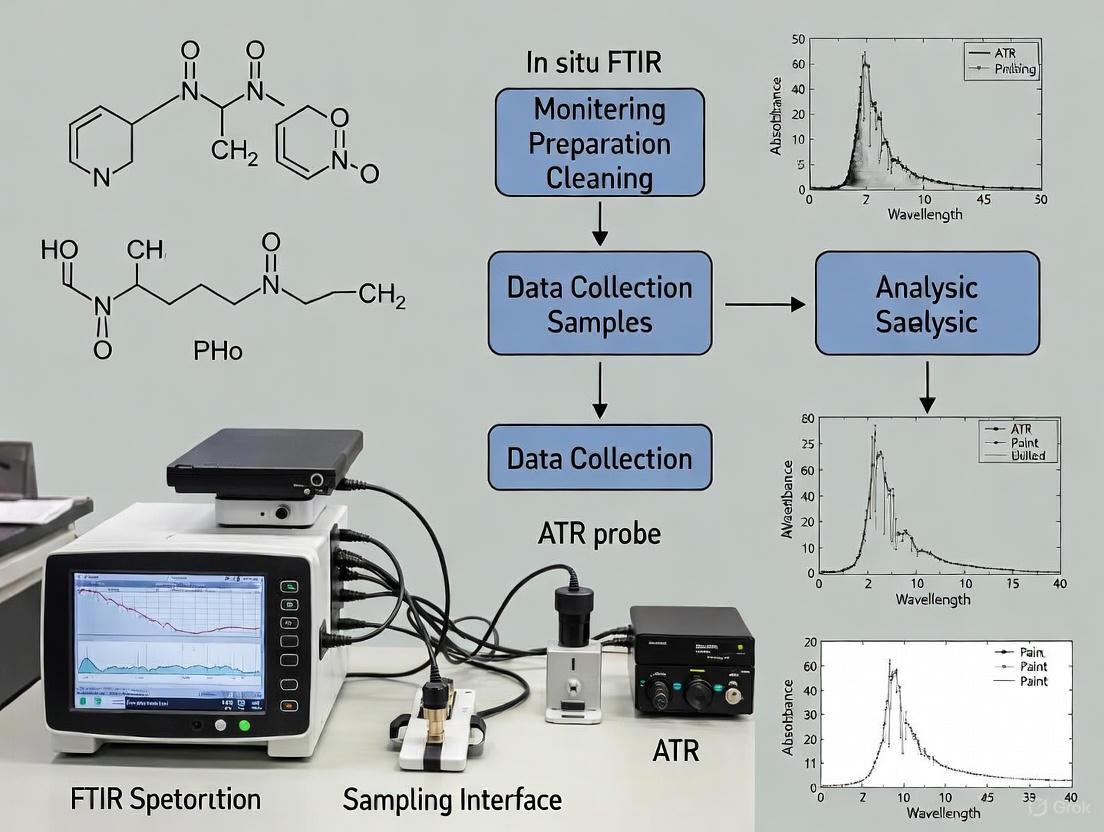
This article explores the transformative role of in situ Fourier Transform Infrared (FTIR) spectroscopy in the non-invasive monitoring of painting cleaning processes.
In Situ FTIR Monitoring of Painting Cleaning Processes: A Non-Invasive Approach for Cultural Heritage Conservation
Abstract
This article explores the transformative role of in situ Fourier Transform Infrared (FTIR) spectroscopy in the non-invasive monitoring of painting cleaning processes. It provides a comprehensive overview of the foundational principles of reflection FTIR spectroscopy, detailing its application for real-time, in situ analysis of artwork surfaces without sampling. The methodological section presents practical protocols for monitoring the removal of varnishes, overpaints, and soil, as well as the critical detection of hazardous cleaning agent residues. The discussion extends to troubleshooting common analytical challenges and optimizing measurement parameters. Finally, the article validates the technique's efficacy through comparative case studies with other analytical methods, establishing its indispensable value for conservators and scientists in ensuring precise, effective, and safe cleaning interventions for cultural heritage.
Principles and Promise of Non-Invasive FTIR for Art Conservation
Fourier transform infrared (FT-IR) spectroscopy has established itself as a cornerstone analytical technique for molecular characterization across numerous scientific disciplines. Its utility is particularly pronounced in the field of cultural heritage conservation, where in situ FTIR—analysis performed directly on the object in its location—has become an indispensable, non-destructive tool for conservators and scientists [1]. This approach enables the direct characterization of molecular structures, monitoring of chemical reactions, and identification of degradation products without the need to remove samples, thus preserving the integrity of invaluable artworks [2].
The fundamental principle of FTIR involves measuring the absorption of infrared light by molecules, which causes vibrational transitions between quantized energy states. When IR radiation interacts with a sample, specific frequencies are absorbed corresponding to the vibrational modes of molecular bonds, such as stretching, bending, or twisting. These absorption bands provide a molecular fingerprint, allowing for both qualitative identification and quantitative analysis [2].
Modern FTIR instruments achieve this through an interferometer, most commonly of the Michelson design. A moving mirror generates an interferogram—a complex pattern of constructive and destructive interference that encodes all spectral frequencies simultaneously. This interferogram is then transformed into a conventional intensity-versus-wavenumber spectrum using a Fast Fourier Transform (FFT) algorithm. This design confers several key advantages, including Fellgett's (multiplex) advantage for superior signal-to-noise ratio, Jacquinot's (throughput) advantage for higher energy throughput, and Connes' advantage for precise wavelength calibration [2].
Application in Monitoring Painting Cleaning Processes
The cleaning of paintings is a delicate and critical process in art restoration, aimed at removing non-original superimposed layers, aged varnishes, and degradation products to reveal the original painted surface. In situ FTIR spectroscopy plays a pivotal role in supporting these efforts by providing real-time, molecular-level information that guides conservators [3].
Key applications in this context include:
- Identification of Superimposed Layers and Degradation Products: FTIR can distinguish between original materials and non-original overpaints, as well as identify specific degradation compounds. A prime example is the detection of calcium oxalate, a persistent degradation product that often forms a thick, durable patina on painting surfaces. This substance originates from oxalic acid produced by the metabolic activity of fungi and bacteria, or from oxidative processes affecting organic materials within the painting [3].
- Real-time Assessment of Cleaning Efficacy: During cleaning treatments, in situ FTIR allows conservators to monitor the removal of unwanted materials and verify that the cleaning process does not harm the original pictorial layers. This is crucial when the coating to be removed has a chemical composition similar to the original materials beneath [3].
- Mapping of Compound Distribution: Advanced techniques like Macroscopic FTIR scanning in reflection mode (MA-rFTIR) convert traditional point-by-point analysis into a comprehensive mapping technique. This allows for the visualization of the distribution of organic and inorganic compounds across a surface, providing a clear before-and-after picture of cleaning treatments [3].
Experimental Protocols and Methodologies
Protocol 1: Point-by-Point Reflection FTIR (rFTIR) for Surface Analysis
This protocol is ideal for initial assessment and for targeting specific, localized areas of interest on a painting surface [3].
Workflow Diagram: Point-by-Point rFTIR Analysis
Detailed Methodology:
Instrument Preparation:
- Utilize a portable FT-IR spectrometer equipped with an external reflectance module (e.g., Bruker ALPHA-II).
- Ensure the instrument is purged with dry air or nitrogen to minimize spectral interference from atmospheric water vapor and CO₂ [2].
- Verify instrument calibration using a built-in internal laser reference.
Background Acquisition:
- Acquire a background reference spectrum (
R_0) from a clean, representative area of the substrate or a dedicated reference material before analysis. - This step is critical for correcting atmospheric contributions [2].
- Acquire a background reference spectrum (
Spectral Acquisition on Sample:
- Position the spectrometer probe head perpendicularly and in gentle contact with the area of interest, if using an ATR accessory. For non-contact reflection, maintain a consistent working distance.
- Acquire the sample spectrum (
R). Typical parameters for the ALPHA-II instrument are [3]:- Spectral Range: 7000–360 cm⁻¹
- Resolution: 4 cm⁻¹
- Number of Scans: 64 (to achieve a high signal-to-noise ratio)
- The spectrum is represented as pseudo-absorbance, calculated as
log(1/R).
Data Interpretation:
- Identify key absorption bands indicative of specific molecular bonds. Be aware that reflection mode can cause derivative-like distortions or band inversion (Reststrahlen effect) for some materials [3].
- Compare spectra acquired before, during, and after cleaning treatments to track the diminution of bands associated with unwanted materials.
Protocol 2: MA-rFTIR Mapping for Treatment Efficacy Assessment
This protocol provides a two-dimensional map of chemical distribution, offering a comprehensive view of cleaning effectiveness across a larger area [3].
Workflow Diagram: MA-rFTIR Mapping for Cleaning Assessment
Detailed Methodology:
System Setup:
- Mount the FTIR spectrometer (e.g., Bruker ALPHA-II) on a motorized 3-axis scanning system.
- Use a distance sensor (e.g., self-contained TOF laser sensor) to maintain the IR beam at the correct focal point on the potentially uneven painting surface.
Mapping Parameters:
- Lateral Resolution: Approximately 1.5 mm.
- Acquisition Grid: Program the scanner to move in precise intervals (e.g., 2 mm in both vertical and horizontal directions) [3].
- Each acquisition point records a full IR spectrum using parameters similar to the point-by-point method.
Data Processing and Map Generation:
- The collection of spectra forms a three-dimensional data cube (X position, Y position, wavenumber).
- Using specialized software, select a characteristic absorption band for a compound of interest (e.g., the carbonyl band at ~1690 cm⁻¹ for a methacrylate-based coating, or a specific band for calcium oxalate).
- Generate a false-color map by integrating the area under this band at every measurement point. The intensity of the color corresponds to the concentration of the compound.
- Compare maps generated before and after cleaning to visually confirm the successful and uniform removal of the target material.
Data Presentation and Analysis
Table 1: Key FTIR Spectral Bands for Monitoring Painting Cleaning Processes
| Compound / Material | Characteristic IR Bands (cm⁻¹) | Band Assignment | Significance in Cleaning |
|---|---|---|---|
| Calcium Oxalate | 1320, 1620 (H₂O) | C-O stretching, H-O-H bending [3] | Primary indicator of biological degradation; target for removal. |
| Proteinaceous Binder | 1650 (Amide I), 1550 (Amide II) | C=O stretch/N-H bend, C-N stretch/N-H bend [2] | Original material; monitor for damage during cleaning. |
| Methacrylate Polymer Coating | ~1690-1720 (Carbonyl) | C=O stretching [1] | Synthetic coating; track removal via intensity decrease. |
| Oil/Lipidic Binder | 1740, 1165 | C=O ester, C-O ester [2] | Original material; monitor for oxidation or damage. |
| Calcium Carbonate (Filler) | 1420, 875, 712 | CO₃²⁻ vibrations [1] | Common paint component; distinguishes original from overpaint. |
Table 2: Typical Instrument Parameters for In Situ FTIR in Conservation
| Parameter | Point-by-Point rFTIR | MA-rFTIR Mapping | Rationale |
|---|---|---|---|
| Spectral Resolution | 4 cm⁻¹ | 4 cm⁻¹ | Optimal balance between detail and signal-to-noise for condensed-phase samples [2] [3]. |
| Number of Scans | 64 | 64 per point | Sufficient for high signal-to-noise; practical for time-efficient data collection [3]. |
| Spectral Range | 7000–360 cm⁻¹ | 7000–360 cm⁻¹ | Covers functional group region and fingerprint region for comprehensive analysis [3]. |
| Measurement Geometry | ~20°/20° external reflection | ~20°/20° external reflection | Non-contact; suitable for delicate painted surfaces [3]. |
| Spatial Resolution | ~3-5 mm | ~1.5 mm (lateral) | Mapping requires finer resolution to visualize chemical distribution effectively [3]. |
The Scientist's Toolkit: Essential Research Reagent Solutions
Table 3: Key Materials and Reagents for In Situ FTIR Studies in Art Conservation
| Item / Solution | Function / Application | Notes |
|---|---|---|
| ATR Cleaning Solvents | Gentle cleaning of ATR crystal (e.g., diamond) between measurements. | Use mild solvents like ethanol; avoid abrasives to prevent crystal damage [2]. |
| Dry Air / Nitrogen Supply | Purging the instrument's optical path. | Critical for eliminating spectral interference from atmospheric water vapor and CO₂ [2] [3]. |
| Calibration Reference Standards | Verifying wavenumber accuracy and instrument performance. | Polystyrene films are commonly used for routine checks. |
| Synthetic Cleaning Gels | Used in the cleaning treatment itself (e.g., to deliver chelators or solvents). | FTIR can monitor the interaction of these gels with the painting surface and the extraction of degradation products. |
| Potassium Phthalimide Reagent | Chemical method for quantitative analysis of specific components (e.g., Free Fatty Acids in oils) [2]. | Highlights how FTIR can be combined with reagents for enhanced quantification, even if not used directly in situ. |
Fourier-Transform Infrared (FT-IR) spectroscopy in reflection mode is a powerful technique for the in situ, non-invasive analysis of cultural heritage objects, including the monitoring of painting cleaning processes. When applied to the analysis of paintings, this technique allows conservators to chemically monitor the removal of unwanted materials—such as aged varnishes, oxalates, and surface grime—without physical sampling. Unlike traditional transmission or Attenuated Total Reflection (ATR) techniques, external reflection FT-IR does not require contact with the delicate surface of an artwork, making it ideal for analyzing priceless and irreplaceable paintings during conservation treatments [4] [5].
The fundamental principle involves shining infrared light onto the painting's surface and collecting the reflected radiation. The resulting spectrum provides molecular-level information about the chemical composition of the surface layers. In the context of cleaning monitoring, this enables the conservator to verify the removal of specific compounds and to ensure that original paint layers remain unaffected. For instance, studies have successfully used mid-FTIR fibre-optic reflectance spectroscopy to monitor the removal of calcium oxalate and a terpenic varnish from an oil painting during treatment with a chelating agent, triammonium citrate [4].
Core Principles of External Reflectance
In external reflection FT-IR spectroscopy, the collected signal is composed of two primary components: surface reflection (RS) and volume reflection (RV). The interplay between these components determines the spectral profile and its interpretability [5].
- Surface Reflection (RS): This component arises from the radiation that is reflected directly at the sample's surface. It is governed by Fresnel's law and is highly dependent on the surface's optical properties. For absorption bands where the absorption coefficient (k) is less than 1, RS produces derivative-like spectral features due to the anomalous dispersion of the refractive index (n). For strong oscillators (k >> 1), it can result in inverted bands, a phenomenon known as the reststrahlen effect. RS is the primary source of significant spectral distortion in reflectance measurements [5].
- Volume Reflection (RV): This component originates from the radiation that penetrates the surface, undergoes multiple scattering, absorption, and refraction events within the material, and is subsequently re-emitted. RV produces spectra that are more similar in shape to conventional transmission spectra, though band broadening and changes in relative intensity can occur. The penetration depth of RV is inversely proportional to both the absorption and scattering coefficients of the material [5].
The total reflectance (RT) spectrum is a combination of RS and RV. For heterogeneous and complex materials like painting surfaces, both components usually coexist in unknown proportions, making direct spectral interpretation challenging without mathematical corrections such as the Kramers-Kronig (KK) transform or Kubelka-Munk (KM) correction [5].
Table 1: Characteristics of Reflection Components in External Reflectance FT-IR.
| Component | Origin | Spectral Appearance | Primary Influence |
|---|---|---|---|
| Surface Reflection (RS) | Reflection at the sample-air interface | Derivative-like or inverted bands (Reststrahlen effect) | Surface optical properties, Fresnel's law |
| Volume Reflection (RV) | Scattering and absorption within the material bulk | Similar to transmission spectra, but with potential band distortions | Material's absorption and scattering coefficients |
Fiber-Optic Probe Technologies
Fiber-optic probes are the critical interface that delivers light to the painting and collects the reflected signal, enabling truly in situ analysis. The design of these probes significantly influences the quality and reproducibility of the collected data [6] [7].
Probe Design and Configuration
The most common design for reflectance measurements is the bifurcated (Y-bundle) probe. These probes feature separate legs for transmitting light from the source to the sample and for collecting the reflected light and delivering it to the spectrometer [8] [6]. The physical arrangement of the optical fibers at the probe's tip is a key design parameter:
- Six-Around-One Configuration: A common configuration where six illumination fibers surround a single central collection fiber. This design maximizes the collection of light that has interacted with the sample material [6].
- Single-Fiber vs. Multi-Fiber Legs: The source and spectrometer legs can be composed of a single fiber or a bundle of fibers. A single-fiber spectrometer leg is suitable for general applications, while a linear bundle of six fibers on the spectrometer leg can increase light throughput, which is beneficial for low-light applications or for samples sensitive to heating [8] [6].
Critical Operational Factors
The performance of a fiber-optic probe is not determined by its design alone; its operational use is equally critical.
- Probe-to-Target Distance (PTD): The distance between the probe tip and the painting's surface is a crucial parameter. Changes in PTD alter the illumination area on the sample, the light-collection efficiency, and the effective sampling volume from which the collected signal originates. Maintaining a stable and reproducible PTD is therefore essential for acquiring quantitative and comparable data [7].
- Stability and Reproducibility: For laboratory-based measurements, securing the probe in a fixed mount or a dedicated reflection probe holder ensures stability and reproducibility. This is vital for acquiring an accurate background reference spectrum from a reflectance standard and for ensuring that the sample is measured under identical geometrical conditions [8].
Figure 1: Fiber-Optic Reflection FT-IR Setup and Probe Configurations
Experimental Protocols for In Situ Cleaning Monitoring
The following protocol outlines the procedure for using external reflectance FT-IR with a fiber-optic probe to monitor the cleaning of paintings, based on methodologies successfully applied in conservation research [4] [9].
Pre-Cleaning Assessment and Setup
- Instrument Preparation: Configure the FT-IR spectrometer with an external reflectance module and a compatible fiber-optic probe. A bifurcated probe with a six-around-one configuration is typically effective.
- System Alignment and Background Measurement: Secure the probe in a fixed mount. Acquire a background reference spectrum using a diffuse reflectance standard (e.g., Spectralon or a polished gold surface). Ensure the standard is placed at the exact distance and angle that the painting surface will be during measurement.
- Initial Surface Characterization: Before any cleaning treatment, collect FT-IR reflectance spectra from multiple areas of the painting slated for cleaning. Also, collect spectra from an unvarnished or untreated edge, if available, to serve as a reference for the original substrate [4].
In Situ Monitoring During Cleaning
- Real-Time Measurement: After applying a cleaning agent (e.g., triammonium citrate solution) or performing a laser cleaning pulse, gently blot the area with a dry cotton swab.
- Spectral Acquisition: Place the probe over the cleaned area and acquire a new reflectance spectrum. Ensure the probe-to-target distance is identical to that used for the background and initial measurements.
- Iterative Monitoring: Repeat the cleaning and measurement cycle (e.g., swabbing followed by spectral acquisition) while monitoring the FT-IR spectra for chemical changes. The successful removal of a varnish, for instance, will be indicated by the decrease or disappearance of its characteristic absorption bands (e.g., C=O stretch of resins around 1700 cm⁻¹) [4].
Data Interpretation and Analysis
- Spectral Identification: Identify the key molecular fingerprints in the acquired spectra.
- Aged Varnish: Look for carbonyl (C=O) stretches around 1700 cm⁻¹.
- Calcium Oxalate: Identify the characteristic bands of calcium oxalate, often found as a patina on aged surfaces [4].
- Proteinaceous Binders: Amide I and II bands (~1650 cm⁻¹ and ~1550 cm⁻¹) can indicate the underlying paint layer.
- Corroboration with Other Techniques: To strengthen conclusions, correlate FT-IR findings with other non-invasive techniques. For example, Optical Coherence Tomography (OCT) can provide stratigraphic information and confirm the physical removal of layers detected chemically by FT-IR [9].
Table 2: Key Spectral Signatures for Monitoring Painting Cleaning.
| Target Material | Key IR Absorption Bands (Approx.) | Significance in Cleaning Monitoring |
|---|---|---|
| Aged Natural Varnish | ~1700 cm⁻¹ (C=O stretch) | Primary target for removal; decrease indicates successful cleaning [4]. |
| Calcium Oxalate | 1320, 1360 cm⁻¹, ~1620 cm⁻¹ | Surface patina; removal confirms cleaning effectiveness [4]. |
| Triammonium Citrate | ~1400 cm⁻¹, ~1550 cm⁻¹ | Cleaning agent residue; detection indicates need for further rinsing [4]. |
| Proteinaceous Binder | ~1650 cm⁻¹ (Amide I), ~1550 cm⁻¹ (Amide II) | Original painting material; stable intensity indicates no damage to underlying layer [4]. |
Figure 2: Workflow for In Situ FT-IR Monitoring of Painting Cleaning
The Scientist's Toolkit: Essential Research Reagents and Materials
Table 3: Essential Materials for In Situ FT-IR Monitoring of Painting Cleaning.
| Item | Function / Application | Example Specifications / Notes |
|---|---|---|
| FT-IR Spectrometer | Core instrument for acquiring infrared spectra. | Portable models (e.g., JASCO VIR 9500) are essential for in situ work [4]. |
| Fiber-Optic Reflection Probe | Delivers light to the sample and collects reflected signal. | Bifurcated (Y-bundle) design; six-around-one fiber configuration; suitable wavelength range (e.g., 4000-900 cm⁻¹) [4] [6]. |
| Broadband NIR Light Source | Provides illumination for the spectroscopic measurement. | High-power sources (e.g., 20 W halogen lamp) improve signal-to-noise ratio [8]. |
| Diffuse Reflectance Standard | Critical for acquiring a background reference spectrum. | Material with high, uniform reflectivity (e.g., Spectralon or polished gold). |
| Probe Holder / Mount | Ensures stability and reproducibility of probe position. | Adjustable stand (e.g., RPH-SMA) to maintain fixed probe-to-target distance [8] [6]. |
| Portable OCT Scanner | Complementary technique providing stratigraphic information. | Allows correlation of chemical (FT-IR) data with physical layer thickness and structure [9]. |
In the specialized field of cultural heritage science, the analysis and conservation of paintings represent a unique intersection of art, history, and analytical science. The fundamental mandate for conservators and conservation scientists is the principle of minimal intervention, a guiding ethic that prioritizes the preservation of an artwork's material integrity and historical authenticity above all else [10]. For researchers focusing on in situ FTIR monitoring of painting cleaning processes, this principle is not merely theoretical—it forms the foundational constraint and objective of all methodological development. Traditional analytical approaches often required the removal of physical samples from artworks, resulting in irreversible alterations to unique cultural objects [1] [11]. This application note delineates the critical importance of non-invasive analysis, with specific focus on FTIR methodologies that enable sophisticated material characterization without compromising the integrity of irreplaceable paintings during cleaning treatment and monitoring.
The Consequences of Analytical Intervention: Risks to Artistic Integrity
The imperative for non-destructive analysis stems from the inherent vulnerability and irreplaceable nature of cultural heritage objects. Sampling, even at a micro-scale, inevitably causes permanent physical change, and the cumulative impact of repeated sampling for analysis can lead to significant aesthetic and structural compromise [10] [11]. As outlined in research on precious artifacts, "sampling such a small amount may not be representative of the chemical makeup of the larger area from which it has been removed" [1]. Furthermore, continuous monitoring of a restoration process is not desirable when it requires ongoing sampling, as this would necessitate "greater alteration" of the original object [1]. These concerns are particularly acute for paintings on non-traditional substrates, such as metal plates, where cross-sectional analysis is often precluded due to the artwork's supreme value, thereby necessitating the development of completely non-invasive analytical protocols [12].
Table 1: Potential Impacts of Invasive vs. Non-Invasive Analytical Methods on Artwork Preservation
| Analytical Approach | Physical Impact | Representativeness of Data | Suitability for Continuous Monitoring | Ethical Status |
|---|---|---|---|---|
| Laboratory-based (Micro-destructive) | Permanent physical alteration; removal of original material [10] | Limited to specific sampling point [1] | Low (cannot be repeated frequently) [1] | Requires strict ethical justification |
| In situ Non-Invasive (e.g., pFTIR) | No physical contact or alteration [13] [14] | High (multiple areas can be analyzed) [1] | High (enables systematic, repeated examination) [15] | Aligns with preservation ethics |
FTIR Spectroscopy: A Cornerstone of Non-Invasive Analysis
Fourier-Transform Infrared (FTIR) spectroscopy has emerged as a premier technique for the non-invasive characterization of painting materials, including pigments, binders, and varnishes. Its value lies in its "sensitivity, specificity, and non-destructive capabilities" [1]. Portable FTIR (pFTIR) spectrometers allow for in situ analysis directly at the artwork, overcoming the disadvantages of micro-sampling and enabling comprehensive examination of entire surfaces [15]. Different FTIR sampling modes offer varying degrees of non-invasiveness:
- External Reflectance FTIR (ER-FTIR): This is a truly non-contact method where spectra are collected from a spot size of approximately 5 mm in diameter at a distance of about 15 mm from the surface [13]. It is ideal for analyzing large, flat areas and has been successfully used for identifying both organic and inorganic materials on mural paintings and easel paintings [13] [16].
- Diffuse Reflectance Infrared Fourier Transform Spectroscopy (DRIFTS): Used in portable systems for the screening of varnish coatings on paintings, this method provides valuable molecular characterization without physical contact [15].
- Attenuated Total Reflection (ATR-FTIR): While ATR requires contact with the sample for high-quality spectra, its micro-invasive nature is often acceptable for analyzed samples. However, for true non-invasiveness on the artwork itself, external reflectance is the preferred mode [11].
Table 2: Key FTIR Modalities for Non-Invasive Analysis in Art Conservation
| FTIR Modality | Degree of Contact | Primary Applications in Painting Analysis | Spectral Considerations |
|---|---|---|---|
| External Reflectance (ER-FTIR) | Non-contact [13] [14] | Pigments, binders, varnishes on large, flat surfaces [13] [16] | Requires Kramers-Kronig transformation for interpretation [14] |
| Diffuse Reflectance (DRIFTS) | Non-contact [15] | Screening of varnish coatings and organic materials on painted surfaces [15] | Provides spectra without significant sample preparation |
| ATR-FTIR | Direct contact required [11] | High-resolution analysis of micro-samples; stratigraphic imaging of cross-sections [11] | Provides high spatial resolution; spectra comparable to transmission |
The following workflow illustrates a systematic non-invasive approach for analyzing conservation materials on a painting, integrating multiple complementary techniques:
Experimental Protocols for In Situ FTIR Monitoring of Cleaning Processes
Protocol 1: Non-Invasive Screening of Varnish Coatings Using Portable DRIFTS
Application Context: Identification of natural and synthetic varnish types (e.g., dammar, mastic, Laropal K 80) applied to paintings, which is crucial for developing appropriate cleaning strategies [15].
Materials & Equipment:
- Portable FTIR spectrometer equipped with diffuse reflectance accessory
- Gold mirror for background collection
- Portable X-Ray Fluorescence (pXRF) spectrometer for complementary elemental analysis
- Surface microscopy and multispectral imaging systems for initial examination
Procedure:
- Pre-Analysis Imaging: Conduct raking light photography and UVA-induced fluorescence photography to map varnish distribution and select analysis areas [15].
- Instrument Setup: Configure the pFTIR spectrometer with a DRIFTS accessory. Collect a background spectrum on a gold mirror [15].
- Spectral Acquisition: Position the instrument probe perpendicular to the painting surface at a distance of 1-2 mm. Collect spectra from multiple representative areas of the varnished surface (parameters: 4000-400 cm⁻¹ range, 4 cm⁻¹ resolution, 128-200 scans) [15] [14].
- Data Processing: Transform reflectance spectra to pseudo-absorbance (Log(1/R)) and apply Kramers-Kronig transformation if needed to correct for spectral distortions [14].
- Validation: Compare in situ pFTIR spectra with reference spectra from known varnish materials to confirm identification [15].
Protocol 2: In Situ Identification of Pigments and Binders on Wall Paintings
Application Context: Characterization of pigments and binding media in ancient architectural heritage, such as tombs and grottoes, where sampling is strictly prohibited [10] [13].
Materials & Equipment:
- Portable ER-FTIR spectrometer (e.g., Bruker ALPHA) with external reflectance module
- Portable digital microscope for surface examination
- Optional complementary techniques: pXRF, Raman spectroscopy
Procedure:
- Microscopic Examination: Use a portable digital microscope (e.g., KEYENCE VHX-600E) to examine surface morphology and select analysis points [13].
- ER-FTIR Measurement: Position the spectrometer approximately 15 mm from the painting surface, targeting a spot size of ~5 mm diameter. Collect spectra from carefully selected points (parameters: 4000-400 cm⁻¹ range, 4 cm⁻¹ resolution, 128 scans) [13].
- Extended Range Analysis: For inorganic pigments with weak mid-IR signals, extend measurements into the far-IR region (7500-360 cm⁻¹) to capture diagnostic peaks [16].
- Spectral Interpretation: Analyze the ER-FTIR spectra, noting that band shapes may be distorted by surface roughness and optical effects. Use principal component analysis (PCA) to classify spectral data and identify material distributions [13].
- Data Correlation: Correlate FTIR results with elemental data from pXRF to confirm pigment identifications (e.g., detection of Cu in azurite, Hg in vermillion) [10] [12].
The Scientist's Toolkit: Essential Research Reagent Solutions
Table 3: Key Analytical Instruments and Their Functions in Non-Invasive Painting Analysis
| Instrument/Technique | Primary Function | Key Analytical Information | Limitations/Considerations |
|---|---|---|---|
| Portable ER-FTIR Spectrometer | Molecular identification of organic and inorganic materials [13] [1] | Functional groups; molecular structure; pigment, binder, varnish composition [16] [15] | Spectral distortion in reflectance mode; requires KK transformation [14] |
| Portable Digital Microscope | Surface morphology examination [13] | Coating structure; surface defects; painting technique | Limited to surface information; no chemical data |
| Optical Coherence Tomography (OCT) | Non-invasive cross-sectional imaging [13] | Varnish and layer thickness; subsurface structure | Limited penetration depth; primarily structural information |
| Portable XRF Spectrometer | Elemental composition analysis [10] [12] | Elemental fingerprints of pigments; material sourcing | Does not provide molecular speciation; matrix effects |
The relationship between these techniques in a comprehensive non-invasive analysis strategy is illustrated below:
The development and refinement of non-invasive analytical protocols, particularly in situ FTIR methodologies, represent a paradigm shift in the conservation and study of painted cultural heritage. By enabling detailed material characterization without physical intervention, these approaches uphold the fundamental ethical obligation to preserve irreplaceable artworks for future generations. The systematic application of portable FTIR spectroscopy—whether through external reflectance, diffuse reflectance, or related modalities—provides conservation scientists with powerful diagnostic capabilities essential for documenting original materials, understanding degradation processes, and monitoring cleaning treatments in real-time. As portable instrumentation continues to advance, the potential for truly comprehensive non-invasive analysis will only expand, further cementing the role of FTIR spectroscopy as an indispensable tool in the interdisciplinary field of art conservation science.
Fourier Transform Infrared (FTIR) spectroscopy has emerged as a cornerstone analytical technique for the in situ monitoring of painting cleaning processes. Within the context of conservation science, the ability to analyze artworks non-invasively, directly on site, provides a significant advantage over traditional micro-destructive laboratory methods. This application note details how the key advantages of in situ FTIR—real-time feedback, exceptional chemical specificity, and comprehensive wide-area assessment—collectively address critical challenges in conservation practice. By enabling conservators to make informed, evidence-based decisions during treatment, these capabilities significantly enhance the safety, efficacy, and precision of cleaning interventions on painted surfaces.
Advantages of In Situ FTIR Monitoring in Painting Cleaning
The table below summarizes the three key advantages of using in situ FTIR for monitoring painting cleaning processes.
Table 1: Key Advantages of In-Situ FTIR for Cleaning Monitoring
| Advantage | Technical Basis | Impact on Conservation Practice |
|---|---|---|
| Real-Time Feedback | Immediate acquisition of reflection FTIR spectra before, during, and after cleaning treatment. [17] | Enables immediate adjustment of cleaning parameters (e.g., solvent choice, application time) to minimize risk to the original paint layers. [17] |
| Chemical Specificity | Identification of molecular functional groups and specific compounds via unique infrared absorption fingerprints (e.g., varnishes, binders, oxalates, cleaning residues). [3] [18] | Allows distinction between original materials, degradation products, and non-original layers; confirms targeted removal and identifies potentially harmful residues. [17] [19] [3] |
| Wide-Area Assessment | Macro-scanning (MA-rFTIR) capabilities to collect spectra over large areas (e.g., spot size ~1.5-5 mm, with 2 mm step intervals). [3] | Moves beyond unrepresentative point analysis; creates distribution maps of compounds to verify homogeneity of cleaning across a surface. [3] |
Experimental Protocols
Protocol A: Non-Invasive Monitoring of Cleaning Residues
This protocol, adapted from Moretti et al., uses portable reflection FTIR to detect non-volatile residues from cleaning gels on polychrome surfaces. [17]
1. Instrument Setup:
- Equipment: Portable FTIR spectrometer (e.g., Bruker ALPHA II) equipped with an external reflection module.
- Spectral Acquisition Parameters: Spectral range: 4000–375 cm⁻¹; Resolution: 4 cm⁻¹; Number of scans: 64; Acquisition mode: Reflection (log(1/R)). [17] [3]
2. Pre-Cleaning Baseline Measurement:
- Position the spectrometer probe head at a 20°–20° geometry relative to the painting surface.
- Using the integrated camera, identify and select the area to be cleaned.
- Acquire and store FTIR spectra from multiple points within this area to establish a molecular baseline of the surface before intervention. [17]
3. Cleaning Intervention & In-Situ Monitoring:
- Apply the selected cleaning system (e.g., gel with thickener, surfactant, and/or chelating agent) to the surface.
- After the prescribed contact time, mechanically remove the gel and perform a clearance step with a appropriate solvent if required.
- Immediately after clearance, acquire post-cleaning FTIR spectra from the exact same locations measured in Step 2. [17]
4. Data Analysis and Residue Identification:
- Process the raw reflection spectra (e.g., using Kramers-Kronig transformation) to convert distortion artifacts into classical absorption-like spectra for interpretation. [18]
- Compare pre- and post-cleaning spectra, focusing on the appearance of new absorption bands.
- Identify residual compounds (e.g., Klucel G, Ethomeen C/12, citric acid) by matching the new bands against a custom reference spectral library of pure cleaning materials. [17]
Protocol B: Wide-Area Mapping for Cleaning Efficacy
This protocol employs Macro-reflection FTIR (MA-rFTIR) mapping to assess the uniformity and completeness of a cleaning treatment over a large area, as demonstrated on a 13th-century wooden cross. [3]
1. Instrument Setup and Area Definition:
- Equipment: FTIR spectrometer (e.g., Bruker ALPHA II) mounted on a motorized X-Y-Z translational stage.
- Mapping Parameters: Define the area of interest (e.g., 10 cm x 10 cm). Set a lateral resolution of 1.5 mm with a step interval of 2 mm in both vertical and horizontal directions. [3]
2. Spectral Acquisition and Mapping:
- Acquire a pre-cleaning FTIR spectrum at each defined point (node) across the entire grid to create a baseline map.
- Perform the cleaning treatment on the entire defined area.
- Acquire a post-cleaning FTIR spectrum from every node in the same grid.
3. Data Processing and Compound Distribution:
- Process all spectra (e.g., vector normalization, Kramers-Kronig transformation if needed).
- For a target compound (e.g., calcium oxalate patina, varnish, surfactant residue), identify its characteristic infrared band (e.g., carbonyl stretch).
- Use software to generate false-color maps based on the intensity of this characteristic band, visualizing the spatial distribution of the compound both before and after cleaning. [3]
4. Efficacy Assessment:
- Compare the pre- and post-cleaning distribution maps.
- Successful cleaning is indicated by a significant reduction or complete disappearance of the signal from the target compound across the entire mapped area. The technique is particularly effective for verifying the removal of challenging degradation layers like calcium oxalate. [3]
The Scientist's Toolkit: Research Reagent Solutions
The table below lists key reagents and materials used in the development and application of cleaning systems for paintings, whose potential residues can be monitored via in situ FTIR.
Table 2: Key Research Reagents in Cleaning Formulations
| Reagent / Material | Category | Primary Function in Cleaning | FTIR Monitoring Relevance |
|---|---|---|---|
| Klucel G (Hydroxypropylcellulose) | Thickener | Increases viscosity of aqueous cleaning solutions to localize application and limit solvent penetration. [17] | Can persist as a hazardous residue; identifiable by its specific IR fingerprint. [17] |
| Carbopol (Polyacrylic acid) | Thickener | Forms gel networks in water, providing rheological control for cleaning. [17] | Its residues can be detected non-invasively on the paint surface post-treatment. [17] |
| Ethomeen C/12, C/25 | Surfactant | Lowers surface tension, enhancing the detergent action of cleaning solutions. [17] | Non-volatile; FTIR is used to detect its permanence on the surface after cleaning. [17] |
| Triammonium Citrate (TAC) | Chelating Agent | Binds to metal ions, aiding in the dissolution of inorganic surface crusts or soap formations. [17] [19] | Can remain on the surface; identifiable via its carboxylate bands in the IR spectrum. [17] |
| Tetrasodium EDTA | Chelating Agent | Strong chelating agent used to complex metal ions in degradation products. [17] | Detection of its residues is critical as it can promote degradation if left on the painting. [17] |
| Calcium Oxalate | Degradation Product | A common, often hard, patina on paintings formed by degradation of organic materials or microbial activity. [3] [18] | A key target for cleaning; FTIR mapping verifies its complete removal. [3] |
Protocols in Practice: Implementing FTIR for Cleaning Verification and Monitoring
The cleaning of painted works of art is a critical conservation practice aimed at removing non-original, degraded, or obscuring materials from the surface of paintings to restore their aesthetic coherence and ensure their long-term preservation [4]. This process represents a profound intervention into an often unique and irreplaceable object, where the complex system of cleaning agent, material to be removed, and original artist materials is unique for every project and hardly reproducible in laboratory conditions [4]. Consequently, every cleaning procedure carries inherent risks and may yield unpredictable results, necessitating in situ, on-line monitoring of the painting treatment for an accurate understanding of the processes taking place [4].
The development of non-invasive methodologies and portable instrumentation for in situ studies has been subject to great research in recent years in the field of conservation science [4]. Despite this interest, the implementation of these techniques for monitoring cleaning treatments has remained limited. This application note addresses this gap by presenting a strategic workflow incorporating Fourier Transform Infrared (FTIR) spectroscopy as a principal analytical tool for guiding cleaning interventions from initial assessment through final verification.
Fundamental Principles of FTIR Spectroscopy
Fourier Transform Infrared (FTIR) spectroscopy measures molecular vibrations, providing both qualitative and quantitative data through the absorption of IR light by molecules [2]. When IR radiation interacts with a sample, specific frequencies are absorbed that correspond to molecular bond vibrations, such as stretching, bending, or twisting of dipoles [2]. The resulting signal at the detector presents as a spectrum representing a molecular fingerprint of the sample, typically from 4000 cm⁻¹ to 400 cm⁻¹ [20].
FTIR spectroscopy offers several advantages for cultural heritage applications, including its non-destructive nature, molecular specificity, and adaptability to in situ analysis through portable instrumentation [2]. The technique can identify organic, polymeric, and, in some cases, inorganic materials, making it particularly valuable for analyzing complex, multi-material systems like paintings [20].
FTIR Sampling Techniques for Painting Analysis
Different FTIR sampling geometries can be employed depending on the analytical requirements and constraints of the artwork:
Fibre-Optic Reflectance Spectroscopy (FORS): Enables non-contact in situ analysis directly on the painting surface [4]. The portable instrument consists of a spectrophotometer equipped with a fibre-optic sampling probe containing chalcogenide glass fibres, allowing collection of spectra from 6000 to 900 cm⁻¹ at a resolution of 4 cm⁻¹ [4].
Attenuated Total Reflectance (ATR): Provides excellent sensitivity for surface analysis with minimal sample preparation [2]. ATR involves using the phenomenon of internal reflectance to propagate incident energy, with penetration depth typically ~1–2 µm [2].
Macro Reflection FTIR (MA-rFTIR): A scanning approach that converts point-by-point analyses into a comprehensive mapping technique, acquiring distribution maps of organic and inorganic compounds directly in situ [3]. The lateral resolution is approximately 1.5 mm, with acquisitions recorded at intervals of 2 mm in both vertical and horizontal directions [3].
Diffuse Reflectance Infrared Fourier Transform Spectroscopy (DRIFTS): Particularly useful for powdered and rough surface materials, capturing diffusely scattered infrared radiation [21]. DRIFTS requires minimal sample preparation and is non-destructive [21].
Table 1: FTIR Techniques for In-Situ Monitoring of Painting Cleaning Processes
| Technique | Principles | Spatial Resolution | Primary Applications | Key Advantages |
|---|---|---|---|---|
| Fibre-Optic Reflectance Spectroscopy (FORS) | Measures reflected infrared radiation from surface | ~1-3 mm | Monitoring cleaning treatments in real-time; identifying removed materials [4] | Non-contact; truly non-invasive; suitable for fragile surfaces |
| Macro Reflection FTIR (MA-rFTIR) | Motorized scanning system collects spectra across surface | 1.5 mm with 2 mm step size [3] | Mapping distribution of degradation products; verifying cleaning efficacy across large areas [3] | Provides spatial distribution; converts point analysis to comprehensive technique |
| Attenuated Total Reflectance (ATR) | Measures interaction at crystal-sample interface | ~1-2 µm penetration depth [2] | Identifying specific compounds in surface layers; detecting thin coatings [20] | Excellent surface sensitivity; minimal sample preparation required |
| Diffuse Reflectance (DRIFTS) | Captures diffusely scattered IR radiation from powders/rough surfaces | Varies with particle size (<40 µm ideal) [21] | Analyzing powdered materials; catalyst studies; materials characterization [21] | Minimal sample preparation; non-destructive; Kubelka-Munk transformation enables quantification |
Strategic Workflow for In-Situ Monitoring
The following workflow provides a systematic approach for integrating FTIR spectroscopy into painting cleaning processes, from initial assessment through final verification.
Diagram 1: Strategic Workflow for In-Situ FTIR Monitoring of Painting Cleaning Processes. This workflow outlines the systematic approach from initial assessment through final verification, incorporating FTIR analysis at each stage to inform decision-making.
Phase 1: Initial Assessment and Pre-Cleaning Characterization
Objective: Establish comprehensive understanding of painting materials and condition before cleaning.
Protocol:
- Visual Examination: Document initial state using standardized photography and condition reporting.
- FTIR Survey Analysis:
- Employ portable FTIR with reflectance module for non-invasive survey across different colored areas and regions with varying surface characteristics [4].
- Collect spectra from 4000-650 cm⁻¹ at 4 cm⁻¹ resolution with 64-128 scans to ensure adequate signal-to-noise ratio [3] [17].
- Include analysis of unvarnished edges or protected areas for reference spectra of original materials [4].
- MA-rFTIR Mapping: For systematic assessment of large or complex areas, implement macroscopic mapping to document distribution of original materials, degradation products, and non-original layers [3].
- Micro-sampling (if permitted): When micro-destructive analysis is authorized, collect minute samples for laboratory Micro-FTIR analysis in transmission mode to inform cleaning strategy [3].
Phase 2: Cleaning Agent Selection and Testing
Objective: Identify appropriate cleaning agents and validate their effectiveness and safety on discrete areas.
Protocol:
- Cleaning Agent Selection: Choose agents based on materials identified in Phase 1, considering:
- Aqueous solutions: For water-soluble surface layers and deposits [17].
- Chelating agents: For complexed metal ions in degradation products (e.g., triammonium citrate for calcium oxalate) [4].
- Gelled systems: For localized application and controlled penetration (e.g., Carbopol, Klucel G) [17].
- Surfactants: For detergent function (e.g., Ethomeen, Tween) [17].
- Discrete Area Testing:
- Apply selected cleaning agents to small, discreet areas.
- Monitor in real-time with rFTIR during application and clearance.
- Evaluate effectiveness through spectral changes indicating removal of target materials.
- Assess safety through absence of spectral changes in original paint layers.
Table 2: Research Reagent Solutions for Painting Cleaning Applications
| Reagent Category | Specific Examples | Chemical Composition | Primary Function | FTIR Monitoring Considerations |
|---|---|---|---|---|
| Chelating Agents | Triammonium Citrate | C₆H₈O₇·3H₃N | Complexes metal ions in degradation products [4] | Monitor disappearance of calcium oxalate bands (1320, 1310 cm⁻¹) [4] |
| Thickeners/Gelling Agents | Klucel G | Hydroxypropylcellulose | Localizes treatment; minimizes solvent penetration [17] | Detect residues through cellulose ether bands (1100-1000 cm⁻¹) [17] |
| Surfactants | Ethomeen C/12 | Polyethoxylated amine | Detergent function for non-polar solvents [17] | Identify residues through amine and ether bands (1100, 1050 cm⁻¹) [17] |
| Solvents | Aqueous Solutions | H₂O (with additives) | Removes water-soluble surface layers [17] | Monitor removal of hydroscopic materials; detect water residues |
| Enzyme Systems | Proteases, Lipases | Protein-based catalysts | Targeted breakdown of specific materials [17] | Monitor substrate disappearance and potential enzyme residues |
Phase 3: In-Process Monitoring
Objective: Provide real-time feedback during cleaning procedure to guide conservator actions.
Protocol:
- Real-time rFTIR Monitoring:
- Position portable FTIR instrument for continuous access to treatment area.
- Collect sequential spectra at predetermined intervals (e.g., every 30-60 seconds) during cleaning application.
- Focus on key spectral regions corresponding to target materials:
Interface Detection:
- Monitor for spectral changes indicating transition between layers.
- Watch for emergence of original paint layer signatures as overlying materials are removed.
- Alert conservator when spectral features indicate approaching original layer.
Process Adjustment:
- Provide immediate spectroscopic feedback to inform decisions on:
- Cleaning agent contact time
- Mechanical action intensity
- Need for clearance steps
- Termination of cleaning in specific areas
- Provide immediate spectroscopic feedback to inform decisions on:
Phase 4: Post-Cleaning Verification
Objective: Comprehensively assess cleaning efficacy and detect potential residues.
Protocol:
- Efficacy Assessment:
- Repeat MA-rFTIR mapping across treated areas [3].
- Compare with pre-cleaning maps to verify removal of target materials.
- Document uniformity of cleaning through consistent spectral features across treated surface.
Residue Detection:
- Employ high-sensitivity rFTIR for detection of cleaning agent residues [17].
- Focus on spectral regions characteristic of common residue materials:
- Thickeners (e.g., Klucel G): 1100-1000 cm⁻¹
- Surfactants (e.g., Ethomeen): 1100, 1050 cm⁻¹
- Chelating agents: 1580, 1400 cm⁻¹ (carboxylate stretches) [17]
- Implement multivariate analysis (PCA) for enhanced detection limits in complex spectral data [22].
Final Assessment:
- Correlate spectroscopic findings with visual examination.
- Document any areas requiring further treatment.
- Provide comprehensive report integrating spectroscopic evidence with conservation outcomes.
Case Study Applications
Monitoring Calcium Oxalate Removal from Oil Painting
Context: A 1917 oil painting, "La Porta Aperta" by Venanzio Zolla, presented with darkened, altered varnish layer and calcium oxalate deposits obscuring the original image [4].
Application of Workflow:
- Initial Assessment: Fibre-optic mid-FTIR reflectance spectroscopy identified calcium oxalate (1320, 1310 cm⁻¹) and terpenic varnish (1700-1720 cm⁻¹) as primary materials obscuring original paint [4].
- Cleaning Agent Selection: A 1% aqueous solution of triammonium citrate (pH 7.4) was selected based on its chelating action on calcium ions [4].
- In-Process Monitoring: Sequential FTIR spectra during cleaning verified progressive decrease in calcium oxalate bands and terpenic varnish signatures [4].
- Verification: Post-cleaning FTIR confirmed removal of target materials while preserving original paint layers. Subsequent GC-MS analysis of cleaning swabs provided complementary validation [4].
Assessing Cleaning Treatment Efficacy on Ancient Paintings
Context: Two historic artworks—a 13th-century wooden painted cross and a 15th-century panel painting—required removal of non-original superimposed layers [3].
Application of Workflow:
- Initial Assessment: Micro-FTIR spectroscopy on micro-samples informed selection of appropriate cleaning treatments [3].
- Pre-cleaning Documentation: MA-rFTIR mapping established baseline distribution of degradation products and non-original layers [3].
- Verification: Post-treatment MA-rFTIR mapping demonstrated effective removal of target materials while preserving original components, confirming treatment success [3].
Detection of Cleaning System Residues
Context: Concerns regarding potential persistence of non-volatile cleaning compounds (thickeners, surfactants, chelating agents) on painted surfaces after treatment [17].
Application of Workflow:
- Method Development: Reflection FT-IR spectroscopy was optimized for sensitivity to common residue components [17].
- Testing: Controlled experiments on model paints determined detection limits for various compounds (e.g., Klucel G, Ethomeen, citric acid) [17].
- Implementation: The technique successfully identified residues on aged paint mock-ups and an actual 19th-century varnished oil painting after cleaning with different gel formulations [17].
- Verification: The method enabled real-time, non-invasive detection of cleaning residues, informing improved clearance protocols [17].
Data Analysis and Interpretation
Spectral Processing and Multivariate Analysis
Protocol:
- Spectral Pre-processing:
- Apply atmospheric compensation (CO₂, H₂O vapor).
- Perform baseline correction using standardized algorithms.
- Employ vector normalization or standard normal variate (SNV) for reflectance spectra.
- Multivariate Analysis:
- Implement Principal Component Analysis (PCA) for exploration of hyperspectral data sets [22].
- Generate score value maps using chromatic scales to visualize spatial distribution of components [22].
- Apply brushing approach to link score clusters in scatter plots with specific areas in false color maps [22].
- Create RGB composite images from multiple PC score maps for comprehensive visualization of material distributions [22].
Quantitative Assessment Methods
Protocol:
- Band Ratio Analysis:
- Calculate ratios between characteristic bands of target materials and reference bands.
- Monitor changes in ratios during cleaning process to quantify removal efficiency.
- Kubelka-Munk Transformation:
The strategic workflow presented herein establishes a comprehensive framework for integrating FTIR spectroscopy into the painting cleaning process, from initial assessment through final verification. By providing molecular-specific information in real-time, this approach transforms conservation practice from empirically-guided intervention to scientifically-informed treatment.
Key advantages demonstrated through case studies include:
- Non-invasive characterization of materials before cleaning
- Real-time feedback during treatment application
- Objective verification of cleaning efficacy
- Sensitive detection of potentially harmful residues
- Comprehensive documentation for conservation records
The integration of FTIR monitoring represents a significant advancement in conservation science, enabling more precise, controlled, and documented cleaning treatments that maximize preservation of cultural heritage materials while effectively addressing condition issues.
Within the conservation of paintings, the removal of non-original layers such as aged varnishes and degradation products like metal oxalates is a critical, high-risk intervention. These processes require precise monitoring to ensure the complete removal of undesired materials while safeguarding the original paint layers. Fourier Transform Infrared (FTIR) spectroscopy has emerged as a powerful tool for the in situ, non-invasive monitoring of these cleaning treatments [17] [3]. This case study details the application of reflection FTIR spectroscopy to monitor the cleaning of a historical painting using triammonium citrate (TAC), a chelating agent widely adopted in conservation practice for its efficacy and safety profile [23] [24]. The protocols herein are framed within a broader research thesis on advancing in situ analytical methods for cultural heritage.
Experimental Protocols
Preparation of Triammonium Citrate (TAC) Solution
- Reagent: Triammonium citrate, technical grade or higher.
- Concentration: Prepare a 2.5% (w/w) aqueous solution. Dissolve 2.5 grams of TAC in 100 mL of deionized water [24].
- pH Adjustment: The pH of the solution is a critical parameter. While TAC can be used at near-neutral pH, its chelating efficiency can be modulated by pH adjustment. For this protocol, the pH was used as supplied (approximately neutral) based on its documented success for surface cleaning [24]. Monitor the pH with a calibrated meter.
- Gelling (Optional): To localize the cleaning action and minimize penetration, the aqueous solution can be gelled. Incorporate the TAC solution into a suitable gelling agent, such as Carbopol Ultrez 21 (polyacrylic acid) or Klucel G (hydroxypropylcellulose), following the manufacturer's instructions for preparation [17].
2In SituReflection FTIR Monitoring Methodology
The following protocol was executed using a portable FTIR spectrometer (e.g., Bruker ALPHA II) equipped with an external reflection module.
Pre-Cleaning Baseline Acquisition:
- Position the spectrometer on a stable tripod, maintaining a working distance of approximately 15 mm from the painting's surface.
- Focus the integrated camera on the area targeted for cleaning.
- Collect reflection FTIR spectra from multiple points within the area. Acquisition parameters: spectral range of 7000–360 cm⁻¹, resolution of 4 cm⁻¹, and 64 scans per spectrum [3]. Save these as the baseline reference.
Application of TAC Cleaning System:
- Apply the TAC solution or gel with a soft brush or cotton swab to the characterized area.
- Allow a controlled contact time (e.g., 1-3 minutes), constantly monitoring the surface.
- Remove the cleaning system using dry cotton swabs.
Clearance Step:
- Swab the cleaned area with deionized water to remove any residual TAC and dissolved materials.
- Gently blot the area dry.
Post-Cleaning and Post-Clearance Monitoring:
Data Processing and Analysis:
- Process all reflectance spectra (pre-cleaning, post-cleaning, post-clearance) using the Kramers-Kronig transformation (KKT) or converted to pseudo-absorbance [log(1/R)] to obtain band shapes comparable to traditional absorption spectra [18] [3].
- Compare the processed spectra to identify the presence or absence of key molecular bands associated with the varnish, oxalates, and the TAC reagent itself.
Workflow for Cleaning and FTIR Monitoring
The following diagram illustrates the integrated workflow for the cleaning process and its analytical monitoring.
Data Presentation and Analysis
Key FTIR Spectral Markers for Monitoring
Reflection FTIR spectroscopy provides molecular-level identification of materials on the painting's surface. The table below summarizes the characteristic infrared bands used to monitor the cleaning process.
Table 1: Key FTIR Absorption Bands for Monitoring Varnish, Oxalate, and TAC Residues
| Material Category | Specific Compound | Characteristic FTIR Bands (cm⁻¹) | Spectral Assignment |
|---|---|---|---|
| Degradation Products | Calcium Oxalate [3] | ~1320, ~1325 | C-O stretch |
| ~1620, ~1645 | C=O stretch (asymmetric) | ||
| Cleaning Reagent | Triammonium Citrate (TAC) [17] | ~1390, ~1575 | Carboxylate stretches (COO⁻) |
| Original Paint Components | Terpenic Varnish [18] | ~1690, ~1275, ~1160 | C=O, C-O stretches |
| Oil Binder | ~1740 (ester C=O), ~2920, ~2850 (aliphatic C-H) | Ester carbonyl, CH₂ stretches |
Interpretation of Spectral Data
The success of the cleaning process is determined by tracking the intensity of the characteristic bands outlined in Table 1.
- Effective Removal: A successful cleaning is indicated by a significant decrease in the intensity of the marker bands for calcium oxalate (~1320, ~1620 cm⁻¹) and terpenic varnish (~1690 cm⁻¹) in the post-cleaning and post-clearance spectra when compared to the baseline [3].
- Residue Detection: The presence of TAC residues is indicated by the appearance or persistence of its carboxylate bands (~1390 and ~1575 cm⁻¹) in the post-clearance spectrum. This detection allows conservators to perform additional clearance steps in real-time to prevent the long-term risks associated with leaving cleaning agents on the paint surface [17].
The Scientist's Toolkit
The following table details the essential reagents and materials used in the featured cleaning and monitoring experiment.
Table 2: Key Research Reagent Solutions and Materials
| Item Name | Function / Role in Experiment |
|---|---|
| Triammonium Citrate (TAC) | Chelating agent that binds to metal ions (e.g., calcium in oxalates), facilitating their solubilization and removal from the paint surface [23] [24]. |
| Portable FTIR Spectrometer | Enables in situ, non-invasive molecular analysis for identifying surface materials and monitoring the cleaning process in real-time [18] [3]. |
| Reflection Module | An accessory for the FTIR spectrometer that allows for contactless measurement of reflected IR light from the surface of artworks. |
| Carbopol / Klucel G | Gelling agents used to thicken the aqueous TAC solution, providing better control and localization of the cleaning action to minimize solvent penetration [17]. |
| Calcium Oxalate | A common degradation product found on paintings that forms a durable, often discolored, patina requiring chelating agents like TAC for removal [3]. |
Within the framework of research on in situ FTIR monitoring of painting cleaning processes, the detection of hazardous residues represents a critical analytical challenge. The removal of non-original materials from polychrome surfaces is a delicate operation, and the persistence of non-volatile compounds—including thickeners, surfactants, and chelating agents—poses significant risks to the long-term preservation of artworks [17]. These residues can induce degradation phenomena such as cracking, swelling, delamination, and chemical alterations through reactions with original paint materials [17]. Traditional analytical approaches relying on micro-sampling are often incompatible with the preservation of art objects and lack representativeness of the entire treated surface [17]. This application note details protocols utilizing reflection FT-IR spectroscopy as a non-invasive methodology for real-time, in situ identification and monitoring of these hazardous residues, enabling conservators to verify cleaning efficacy and prevent unintended long-term damage to cultural heritage.
Key Principles and Detection Methodology
Fourier Transform Infrared spectroscopy in reflection mode (rFT-IR) operates on the principle of detecting molecular vibrations from infrared radiation reflected from a surface. When applied to residue detection, the technique identifies specific functional groups characteristic of common cleaning agents, providing a molecular fingerprint that allows for their identification directly on painting surfaces without physical contact [17]. The penetration depth of the mid-infrared radiation (typically 2.5-25 μm) enables the examination of surface and near-surface layers where residues accumulate, though this depth can vary based on the optical properties of the materials [3].
A significant advantage of rFT-IR for this application is its sensitivity to organic compounds that constitute most thickeners, surfactants, and chelating agents used in cleaning formulations [3]. The technique can be implemented in two complementary approaches: (1) point-by-point analysis using portable spectrometers for specific location checking, and (2) Macro rFTIR (MA-rFTIR) mapping that systematically scans larger areas to create chemical distribution maps of residual compounds [3]. This dual approach provides both specific identification and comprehensive spatial assessment of residue distribution across treated surfaces.
Research Reagent Solutions and Materials
The following table summarizes key reagents mentioned in research for studying cleaning residues, along with their primary functions in conservation cleaning systems.
Table 1: Key Research Reagents in Cleaning Formulations and Their Functions
| Reagent Name | Category | Primary Function in Cleaning Systems |
|---|---|---|
| Klucel G [17] | Thickener (Hydroxypropylcellulose) | Gelling agent to localize cleaning action and minimize solvent penetration |
| Carbopol Ultrez 21 [17] | Thickener (Polyacrylic acid) | Rheology modifier for creating controlled-viscosity cleaning gels |
| Ethomeen C/12 and C/25 [17] | Surfactant (Polyethoxylated amines) | Detergent function for solubilizing and removing hydrophobic materials |
| Tween 20 [17] | Surfactant (Polysorbate) | Emulsifying agent for cleaning microemulsions |
| Citric acid + TEA [17] | Chelating system | Metal-complexing agent for disrupting coordinate bonds in degradation products |
| Tetrasodium EDTA salt [17] | Chelating agent | Sequestering metal ions present in inorganic deposits or paint layers |
| Triammonium citrate [25] | Chelating agent | Aqueous cleaning agent for removing metal-based degradation products |
Experimental Protocols
Protocol 1: Non-invasive Point Analysis by Reflection FT-IR
This protocol outlines the procedure for identifying cleaning residues at specific locations on a painting surface using a portable FT-IR spectrometer with reflection capabilities [17].
Materials and Equipment:
- Portable FT-IR spectrometer with external reflectance module (e.g., Bruker ALPHA-II)
- Coaxial digital camera for positioning
- Spectral reference database of pure cleaning compounds
- Soft brushes for surface preparation
Procedure:
- Instrument Setup: Configure the FT-IR spectrometer with an external reflectance module featuring a 20°/20° geometry. Verify instrument calibration using a certified background reference standard.
- Spectral Acquisition Parameters: Set spectral range to 4000–650 cm⁻¹, resolution to 4 cm⁻¹, and accumulate 64 scans per measurement. Perform triplicate measurements for each analyzed point to ensure reproducibility.
- Surface Positioning: Use the integrated camera to precisely position the measurement spot on areas suspected of residue retention, particularly focusing on surface depressions, crack networks, and areas adjacent to previous cleaning boundaries.
- Data Processing: Transform acquired reflection spectra to pseudo-absorbance using log(1/R) transformation, where R represents reflectance. Identify characteristic absorption bands while recognizing that reflection geometry may cause derivative-like band distortions or Reststrahlen effects (band inversions) [3].
- Spectral Interpretation: Compare processed spectra against reference spectra of potential residue compounds (thickeners, surfactants, chelating agents). Focus identification on key marker bands specific to each compound class.
Protocol 2: MA-rFTIR Mapping for Residue Distribution Assessment
This protocol describes the methodology for creating chemical maps of residue distribution across larger areas using Macro rFTIR scanning technology, providing comprehensive assessment of cleaning efficacy [3].
Materials and Equipment:
- FT-IR spectrometer mounted on a 3-axis motorized scanning system (e.g., Bruker ALPHA-II with Standa scanner)
- Distance sensor for automatic focal point adjustment (e.g., Keyence TOF Laser Sensor)
- Computer with LabVIEW or equivalent control software
- Vibration-isolated platform for instrument stability
Procedure:
- System Configuration: Mount the FT-IR spectrometer on the motorized stage and connect the distance sensor for Z-axis control. Establish communication between the spectrometer, positioning system, and control software.
- Area Definition and Scanning Parameters: Define the rectangular area to be mapped. Set the step size to 2 mm in both vertical and horizontal directions, with a lateral resolution of approximately 1.5 mm. The system automatically positions the IR beam at the focal point for each measurement.
- Automated Spectral Acquisition: Initiate the automated scanning sequence, which synchronizes spectrometer acquisition with scanner positioning. The system collects spectra at each predefined point across the entire mapped area.
- Data Processing and Chemical Imaging: Process all acquired spectra similarly to Protocol 1. Generate chemical maps by integrating specific absorption bands characteristic of target compounds (e.g., cellulose ether bands for Klucel G, carbonyl stretches for Carbopol).
- Interpretation and Assessment: Analyze distribution maps to identify regions with significant residue retention. Correlate residue distribution with surface topography and painting features to understand retention patterns and guide additional cleaning if necessary.
The following workflow diagram illustrates the sequential process for residue detection using these complementary FTIR approaches:
Data Presentation and Detection Limits
Research studies have established detection capabilities for various cleaning compounds using reflection FT-IR spectroscopy. The following table summarizes experimental detection limits for common residue components based on controlled studies using model paint systems.
Table 2: Detection Limits for Common Cleaning Residues via Reflection FT-IR Spectroscopy
| Compound Category | Specific Compounds | Key FT-IR Marker Bands (cm⁻¹) | Approximate Detection Limits |
|---|---|---|---|
| Thickeners | Klucel G (cellulose ether) [17] | 1100-1000 (C-O-C stretch) | Clearly detected after dry gel removal |
| Carbopol Ultrez 21 (polyacrylate) [17] | ~1700 (C=O stretch) | ≤10 µg/cm² (based on radiometric data) | |
| Surfactants | Ethomeen C/12, C/25 [17] | ~2900 (C-H stretch), 1100-1000 (C-O) | 11-169 µg/cm² (based on radiometric data) |
| Tween 20 [17] | ~2900 (C-H stretch), 1100 (C-O) | Detected on aged mock-ups | |
| Chelating Agents | Citric acid + TEA [17] | ~1580, ~1400 (COO⁻ stretches) | Clearly detected after clearance step |
| Tetrasodium EDTA [17] | ~1600, ~1400 (COO⁻ stretches) | Clearly detected after dry gel removal | |
| Degradation Products | Calcium oxalate [3] [25] | ~1320, ~780 | Successfully monitored during removal |
Case Study Applications
Cleaning Residue Detection on Aged Paint Mock-ups
Controlled studies on aged paint mock-ups have demonstrated the efficacy of rFT-IR for detecting residues after cleaning with gel formulations. Researchers applied gelled systems containing the studied non-volatile components to artificially aged paint models simulating historical compositions. After cleaning procedures and subsequent clearance steps (swabbing with water or solvents), reflection FT-IR spectroscopy clearly identified residual compounds including Klucel G, Ethomeen C/12 and C/25, and chelating agents (citric acid + TEA, tetrasodium EDTA) [17]. Notably, detection was achieved not only after dry removal of gels but in some cases also following the clearance step, highlighting the technique's sensitivity to problematic residue retention that might otherwise go unnoticed [17].
Monitoring Cleaning of a 19th-Century Oil Painting
In practical application, non-invasive FT-IR spectroscopy successfully monitored the cleaning of a 19th-century varnished oil painting (Male portrait from the Cultural Heritage Agency of the Netherlands). The methodology provided real-time feedback during cleaning operations, enabling conservators to verify the removal of unwanted materials while detecting any potentially hazardous residues from the cleaning systems themselves [17]. This case validated the approach for real-world conservation settings where minimal intervention and non-destructive analysis are paramount considerations.
Calcium Oxalate Removal Assessment
Research on a 13th-century wooden painted cross employed MA-rFTIR mapping to assess the removal of calcium oxalate films—tenacious degradation products that often require aggressive cleaning agents. The mapping approach successfully visualized the distribution of calcium oxalate before and after treatment, providing conservators with clear evidence of treatment efficacy and identifying any areas requiring further attention [3]. This application demonstrates the value of the technique not only for detecting cleaning agent residues but also for monitoring the removal of target degradation products.
The protocols detailed in this application note establish reflection FT-IR spectroscopy as an essential analytical tool for detecting hazardous residues from cleaning treatments on painted surfaces. The method provides the sensitivity and specificity required to identify problematic compounds at concentration levels relevant to conservation practice, while its non-invasive nature permits comprehensive assessment of treated surfaces without additional risk to artworks. The combination of point analysis and macroscopic mapping addresses both specific analytical questions and overall treatment efficacy evaluation. As conservation science continues to develop increasingly sophisticated cleaning systems, the implementation of these FT-IR monitoring protocols will play a crucial role in ensuring that cleaning treatments do not inadvertently introduce new conservation problems through residue retention, thereby supporting the long-term preservation of our cultural heritage.
The cleaning of paintings, whether through solvent-based or laser-assisted methods, is one of the most critical and potentially hazardous interventions in art conservation. Traditional approaches often rely on visual assessment, which provides limited information about underlying chemical changes or the precise removal of material layers. Within the broader context of thesis research on in situ FTIR monitoring of painting cleaning processes, this application note addresses the powerful synergy achieved by integrating Fourier-Transform Infrared (FTIR) spectroscopy with Optical Coherence Tomography (OCT). This complementary approach provides conservators and scientists with a comprehensive diagnostic methodology that delivers both molecular composition data and high-resolution stratigraphic information non-invasively. The methodology outlined herein was developed and validated through interdisciplinary research within the IPERION CH project, specifically via the European mobile infrastructure MOLAB, which provides access to advanced non-invasive analytical techniques for cultural heritage research [26] [9].
Technique Comparison and Complementary Nature
Fourier-Transform Infrared (FTIR) spectroscopy and Optical Coherence Tomography (OCT) operate on fundamentally different physical principles, which accounts for their remarkable complementarity in the analysis of complex layered structures such as easel paintings.
FTIR spectroscopy provides chemical characterization of surface compounds by measuring the absorption of infrared light at specific wavelengths corresponding to molecular vibrations. This technique is highly sensitive to functional groups present in organic materials (e.g., varnishes, binders, adhesives) and inorganic compounds (e.g., oxalates, sulfates), enabling identification of both original and non-original materials on painting surfaces [26] [27]. Reflection FTIR spectroscopy has proven particularly effective for in situ identification of aged varnishes, oxalate patinas, and other surface deposits that commonly require removal during cleaning treatments.
Optical Coherence Tomography utilizes low-coherence interferometry of near-infrared light to generate cross-sectional images of semi-transparent and turbid materials. In painting conservation, OCT provides non-contact visualization of layer build-up with an axial resolution of approximately 2.2 μm and lateral resolution of about 13 μm, allowing detailed assessment of varnish layer thickness, distribution, and stratigraphy [28] [9]. The technique is analogous to ultrasound imaging but uses light instead of sound, with the interference pattern of backscattered light revealing structural information at micron-scale resolution.
The table below summarizes the fundamental characteristics and complementary strengths of each technique:
Table 1: Comparison of FTIR and OCT Techniques for Painting Analysis
| Parameter | FTIR Spectroscopy | Optical Coherence Tomography |
|---|---|---|
| Primary Information | Chemical composition (molecular fingerprints) | Structural/stratigraphic (cross-sectional images) |
| Measured Properties | Molecular bonds, functional groups | Scattering/reflection at optical interfaces |
| Spatial Resolution | ~10-30 μm (lateral) [22] | ~2.2 μm (axial), ~13 μm (lateral) [9] |
| Penetration Depth | Surface/subsurface (few microns) | Several hundred microns [28] |
| Key Applications in Cleaning | Varnish identification, oxalate detection, monitoring material removal | Thickness measurement, layer removal assessment, interface visualization |
| Data Output | Spectra with absorption bands | 2D/3D tomograms (false-color images) |
The true synergy emerges from combining these techniques, where FTIR identifies the chemical nature of materials while OCT precisely measures their spatial distribution and thickness. During cleaning monitoring, spectral variations from FTIR corresponding to the gradual decrease of varnish components are consistently correlated with the reduction in number and thickness of layers visible in OCT images [26]. This complementary approach significantly enhances the conservator's ability to make informed decisions during critical cleaning procedures.
Experimental Protocols
Integrated OCT-FTIR Monitoring Workflow
The following workflow outlines the standardized protocol for complementary OCT-FTIR assessment during cleaning interventions, applicable to both solvent-based and laser cleaning methodologies:
Diagram 1: Integrated OCT-FTIR assessment workflow for painting cleaning monitoring (Title: Cleaning Monitoring Workflow)
OCT Imaging Protocol
Instrumentation Setup:
- Utilize a Fourier-domain OCT system operating in near-infrared spectrum (770-970 nm) [9]
- Ensure probing beam power at object surface is below 0.8 mW for material safety [9]
- Set working distance at approximately 43 mm from the examined object surface [9]
Data Acquisition Parameters:
- Axial resolution: ~2.2 μm (in materials with refractive index ~1.5) [9]
- Lateral resolution: ~13 μm [9]
- B-scan (cross-section) acquisition time: 0.15 seconds [9]
- Scanning area: Up to 17 × 17 mm² in single measurement [9]
Measurement Procedure:
- Perform OCT mapping on predefined test areas before cleaning
- Acquire multiple B-scans (cross-sectional images) across each test area
- Combine cross-sections to create 3D data representing varnish thickness distribution [26]
- Repeat identical measurements after each cleaning step
- Document all tomograms in false colors, where warm colors indicate high scatter/reflection and cold colors mark low-scatter areas [9]
Data Interpretation:
- Identify layer interfaces as distinct lines in tomograms (air-varnish interface appears as strong green line) [26]
- Measure thickness of individual layers before and after cleaning
- Assess uniformity of layer removal across the scanned area
- Identify any potential subsurface damage or alterations
Reflection FTIR Spectroscopy Protocol
Instrumentation Setup:
- Employ a portable FTIR spectrophotometer with fiber-optic reflectance probe [27]
- Configure spectrometer with mercury-cadmium-telluride (MCT) detector cooled by liquid nitrogen [27] [22]
- Use mid-infrared spectral range (4000-650 cm⁻¹) at resolution of 4 cm⁻¹ [22]
Data Acquisition Parameters:
- Spectral range: 4000-650 cm⁻¹ [22]
- Resolution: 4 cm⁻¹ [27] [22]
- Number of scans: 64-128 (optimize based on signal-to-noise ratio)
- Acquisition mode: Reflection (non-contact) or μATR with germanium/silicon crystal [22]
Measurement Procedure:
- Collect background spectrum with probe not in contact with sample surface [22]
- Position probe at defined measurement spots within cleaning test areas
- Acquire FTIR spectra from each test location before cleaning
- Repeat measurements after each cleaning intervention at identical spots
- Ensure consistent probe positioning and pressure throughout monitoring
Spectral Analysis:
- Identify characteristic absorption bands of varnish components (e.g., carbonyl stretch at ~1700 cm⁻¹ for resins) [26]
- Monitor intensity changes in marker bands associated with materials being removed
- Detect potential residues of cleaning agents or newly formed compounds
- Use multivariate analysis (PCA) for complex spectral data sets [22]
Complementary Data Correlation Protocol
The synergistic power of this approach emerges during the data correlation phase:
- Spatial Registration: Align OCT imaging areas with FTIR measurement spots using visual landmarks
- Temporal Correlation: Ensure OCT and FTIR measurements are conducted at identical intervention stages
- Quantitative Integration: Correlate FTIR band intensity changes with layer thickness measurements from OCT
- Interpretative Synthesis: Combine chemical identification (FTIR) with structural changes (OCT) for comprehensive assessment
This protocol enables researchers to confirm that spectral changes observed with FTIR correspond directly to physical removal of material layers visualized with OCT, providing validation that cleaning procedures are achieving their intended outcomes without unintended effects on underlying original materials [26].
Research Reagent Solutions and Essential Materials
The table below details key reagents, materials, and instrumentation essential for implementing the complementary OCT-FTIR methodology:
Table 2: Essential Research Reagents and Materials for OCT-FTIR Cleaning Monitoring
| Category | Item/Specification | Function/Application |
|---|---|---|
| OCT Instrumentation | Fourier-domain OCT system (770-970 nm) [9] | Cross-sectional imaging of painting layers |
| Axial resolution: ~2.2 μm [9] | Differentiation of thin varnish layers | |
| Near-infrared light source | Penetration of semi-transparent layers | |
| FTIR Instrumentation | Portable FTIR spectrophotometer [27] | In situ chemical analysis |
| Fiber-optic reflectance probe [27] | Non-contact measurement capability | |
| MCT detector (liquid nitrogen cooled) [22] | Enhanced sensitivity for IR detection | |
| ATR objective with germanium crystal [22] | Micro-scale analysis capability | |
| Reference Materials | Triammonium citrate (1% aqueous solution, pH 7.4) [27] | Chelating agent for surface cleaning tests |
| Neutral organic solvents [27] | Solvent cleaning tests (varnish removal) | |
| Aged varnish reference samples [26] | Method validation and calibration | |
| Data Analysis | Multivariate analysis software (PCA capability) [22] | Processing complex spectral datasets |
| OMNIC/OMNIC Picta software [22] | FTIR spectral manipulation and mapping | |
| Custom OCT processing software [9] | 3D reconstruction and thickness measurement |
Applications in Cleaning Monitoring
Solvent Cleaning Assessment
The complementary OCT-FTIR approach has been systematically validated for monitoring solvent-based cleaning of easel paintings. In application studies, this methodology has demonstrated particular effectiveness for:
Varnish Removal Monitoring:
- OCT provides quantitative measurement of varnish layer thickness reduction during solvent application
- FTIR simultaneously confirms the chemical identity of removed materials through decreasing intensity of characteristic bands (e.g., carbonyl stretches for resinous varnishes) [26]
- The combined data ensures that thinning observed in OCT corresponds specifically to targeted varnish removal rather than unintended effects on underlying layers
Selectivity Assessment:
- Multi-layered systems with complex stratigraphy benefit particularly from the combined approach
- FTIR identifies potential leaching of original binding media or other components not visually detectable
- OCT monitors potential swelling, delamination, or other structural changes induced by solvent action
- Together, they provide comprehensive safety assessment beyond visual inspection alone [26]
Laser Cleaning Optimization
For laser cleaning interventions, the OCT-FTIR combination enables precise optimization of operative parameters:
Laser Parameter Validation:
- Systematic testing of fluence values and pulse numbers with real-time assessment
- OCT identifies the exact ablation depth per laser pulse under different parameter sets
- FTIR detects potential chemical modifications (oxidation, carbonization) at marginal fluence levels [9]
- Complementary data enables establishment of safe operational windows for specific painting substrates
Process Control:
- OCT monitoring provides real-time feedback on layer-by-layer removal during laser ablation
- FTIR analysis between laser passes confirms complete removal of target materials without residue
- The combination is particularly valuable for UV laser cleaning (e.g., KrF excimer at 248 nm), where precise control is essential to avoid damage to underlying pigments [9]
Oxalate and Patina Removal
The methodology has proven equally valuable for monitoring removal of inorganic surface deposits:
Calcium Oxalate Patina:
- FTIR specifically identifies metal oxalate complexes through characteristic absorption bands [27]
- OCT monitors the progressive thinning of oxalate crusts during chemical or laser cleaning
- The combination is crucial for distinguishing between complete patina removal and over-cleaning of original surfaces [9]
Historical Painting Case Study: In a documented case study on the historical "Floral painting" from the Rijksmuseum collections, the OCT-FTIR approach successfully monitored the removal of multiple non-original layers, including a red ochre overpaint and several organic coatings, with a total thickness ranging from 40-60 μm. OCT precisely measured the removal depth, while FTIR confirmed the chemical composition of each layer being removed, enabling conservators to selectively target non-original materials while preserving underlying original strata [9].
Data Interpretation Guidelines
OCT Data Analysis
Tomogram Interpretation:
- Upper medium appears black (represents air above the object surface)
- Air-varnish interface visible as a strong green line of high reflection
- Varnish layers appear as black/dark blue stripes (low scattering)
- Interfaces between varnish layers visible as thin bluish lines (enhanced by dirt particles) [26]
Quantitative Measurements:
- Measure layer thicknesses at multiple points to assess uniformity
- Calculate volume of removed material by comparing pre- and post-cleaning 3D data sets
- Assess surface roughness changes as indicators of selective or uneven cleaning
FTIR Spectral Analysis
Key Spectral Markers:
- Carbonyl stretch (~1700 cm⁻¹): Indicator for resinous varnishes [26]
- Oxalate bands (~1320, 1625 cm⁻¹): Identification of calcium oxalate patinas [27]
- Silicate absorptions (1000-1100 cm⁻¹): Detection of dirt and deposition compounds
Multivariate Analysis:
- Apply Principal Component Analysis (PCA) to complex spectral data sets [22]
- Generate chemical maps from score values to visualize component distribution
- Utilize brushing approach to correlate spectral features with spatial locations [22]
Correlation Methodology
Spatial Alignment:
- Register OCT imaging areas with FTIR measurement spots using fiduciary markers
- Create overlays of FTIR chemical maps on OCT structural images
Temporal Correlation:
- Establish direct relationships between FTIR band intensity reduction and OCT layer thickness decrease
- Calculate removal rates based on correlated data sets
The robust correlation between decreasing FTIR spectral features for specific compounds and the corresponding thickness reduction of layers measured by OCT provides validation of selective cleaning effectiveness, significantly enhancing the safety profile of restoration treatments [26].
Solving Analytical Challenges: Ensuring Data Reliability in Complex Environments
Fourier Transform Infrared (FT-IR) spectroscopy has become an indispensable tool for the in situ monitoring of painting cleaning processes, valued for its speed, minimal sample preparation, and non-destructive nature [29]. However, the accurate interpretation of spectra can be compromised by two significant phenomena: the Reststrahlen effect and surface roughness. The Reststrahlen effect, a spectral distortion caused by strong light absorption and subsequent reflection from crystalline materials, can alter band shapes and intensities. Simultaneously, surface roughness, whether inherent to the original paint or resulting from cleaning procedures, can induce light scattering, leading to baseline shifts and intensity variations. Within the context of cultural heritage research, overcoming these distortions is paramount for reliably detecting potentially harmful residues from cleaning agents—such as thickeners (e.g., Klucel G), surfactants (e.g., Ethomeen C/12), and chelating agents—which can remain on polychrome surfaces and pose long-term risks to their integrity [17]. This Application Note provides detailed protocols and methodologies to identify and correct for these effects, ensuring the generation of high-fidelity, chemically accurate data for conservation science.
Theoretical Background and Key Challenges
The Reststrahlen Effect in Cultural Heritage Materials
The Reststrahlen effect manifests when infrared radiation interacts with materials possessing strong, narrow absorption bands, often found in crystalline inorganic compounds. In such cases, the material's reflectivity is dramatically increased at the frequencies of these absorption bands, contrary to the typical absorption behavior observed in transmission spectroscopy. For the analysis of paintings, this is particularly relevant when studying substrates or pigments containing crystalline minerals. The effect can cause derivative-like band shapes and a general distortion of the spectral profile, which, if not properly accounted for, can lead to misidentification of chemical compounds. When employing reflection FT-IR spectroscopy for in situ monitoring, this effect is not merely an artifact but a fundamental property of the light-matter interaction that must be understood and corrected.
Impact of Surface Roughness on Spectral Quality
Surface roughness is a critical parameter in FT-IR spectroscopy as it directly influences the optical path of the incident radiation. Rough surfaces scatter light, leading to a loss of specular reflection and the introduction of a significant scattering component into the collected signal [30]. This scattering results in:
- Baseline shifts and curvature, often exhibiting a sloping background that increases with wavenumber.
- Reduced and distorted peak intensities, which complicates both qualitative identification and quantitative analysis.
- Increased spectral noise, which can obscure weak absorption bands from thin residue layers.
During the cleaning of paintings, the physical action of swabbing or gel removal can alter the micro-topography of the paint surface, potentially amplifying its roughness [17] [30]. Consequently, the non-invasive detection of minute amounts of cleaning residues—a key strength of reflection FT-IR—becomes profoundly more challenging without appropriate strategies to mitigate these scattering effects.
Table 1: Common Spectral Distortions and Their Impact on Residue Detection
| Distortion Type | Primary Cause | Effect on Spectrum | Impact on Residue Detection |
|---|---|---|---|
| Reststrahlen Bands | Strong absorption/reflection by crystalline materials | Derivative-shaped bands, increased reflectivity | Misidentification of pigment bands as organic residues |
| Baseline Shift | Light scattering from surface roughness | Sloping baseline (often upward toward higher wavenumbers) | Obscures weak absorbance bands, hinders quantification |
| Band Saturation / Overloading | Sample thickness > evanescent wave penetration depth (ATR) | Flattened, distorted peak tops; non-linear absorbance [31] | Inaccurate determination of residue concentration |
| Intensity Variation | Inconsistent sample-crystal contact (ATR) or surface topology | Unreparable peak intensities between measurements | Compromises reproducibility and library matching |
Experimental Protocols for ReliableIn SituAnalysis
Protocol A: Reflection FT-IR for Non-Invasive Residue Mapping
This protocol is designed for the direct, non-contact assessment of a painting's surface before, during, and after cleaning interventions.
1. Pre-measurement Calibration and Setup
- Instrument: Portable FT-IR spectrometer with a reflection accessory.
- Calibration: Prior to analysis, perform a background measurement using a certified gold mirror as a reference standard.
- Spatial Definition: Define the measurement area using a visible laser spot. For residue mapping, a spot size of 50-100 µm is typically effective, balancing spatial resolution with sufficient signal-to-noise.
- Spectral Acquisition Parameters: Set resolution to 4 cm⁻¹ and co-add a minimum of 64 scans to ensure an adequate signal-to-noise ratio for detecting thin residue films [17].
2. Data Acquisition on the Artwork
- Surface Mapping: Establish a measurement grid across the area to be cleaned. Acquire a pre-cleaning baseline spectrum for each point in the grid.
- In-Process Monitoring: After cleaning and clearance steps (e.g., dry swabbing or solvent clearance), re-acquire spectra from the same grid points.
- Control Area: Always include measurements from an uncleaned, stable area of the painting to control for inherent surface properties.
3. Data Preprocessing and Analysis
- Preprocessing: Apply a linear baseline correction to compensate for scattering effects. Use vector normalization to correct for minor path-length variations.
- Spectral Interpretation: Subtract the pre-cleaning spectrum from the post-cleaning spectrum to isolate the spectral features of potential residues. Compare the resulting difference spectrum against a library of reference spectra for common cleaning agents (e.g., Klucel G, Ethomeen C/12, Carbopol) [17].
Protocol B: ATR-FTIR for Ex Situ Validation and Reference Database Creation
While not in situ, this protocol is essential for creating validated reference spectra from mock-up samples, which are critical for interpreting in situ data.
1. Sample and Instrument Preparation
- Instrument: Benchtop FT-IR spectrometer equipped with a diamond ATR crystal.
- Crystal Care: Clean the ATR crystal thoroughly with isopropyl alcohol and a soft, lint-free cloth before each measurement. Verify crystal cleanliness by collecting a background spectrum.
- Sample Preparation: Apply a controlled, minimal amount of the pure cleaning agent (e.g., gel, surfactant solution) to the center of the ATR crystal.
2. Optimized Spectral Acquisition
- Contact Pressure: Engage the pressure clamp consistently to a predetermined torque setting to ensure intimate sample-crystal contact without inducing crystal overloading, which can cause band saturation [31].
- Spectral Collection: Collect spectra at 4 cm⁻¹ resolution with 32 scans. For liquid samples, ensure no air bubbles are trapped at the crystal interface.
- Reference Library: Build a library of cleaning agent spectra acquired under these standardized, optimal conditions.
3. Advanced Data Preprocessing for Distortion Correction
- Preprocessing Pipeline: Implement a sequence of preprocessing steps to correct for common artifacts [29]:
- Baseline Correction: Use a concave rubber-band algorithm to remove scattering-induced baselines.
- Scatter Correction: Apply Standard Normal Variate (SNV) or Multiplicative Scatter Correction (MSC) to correct for multiplicative interferences.
- Derivatization: Calculate second-derivative spectra (Savitzky-Golay filter, 2nd polynomial order, 9-15 smoothing points) to resolve overlapping peaks and suppress baseline effects.
- Validation: Chemometric models (e.g., PCA, PLS) built from preprocessed data show significantly improved accuracy and robustness for residue classification [29].
Diagram 1: Integrated experimental workflow for in situ monitoring and ex situ validation.
Data Preprocessing and Correction Strategies
Effective data preprocessing is the critical bridge between raw, distorted spectra and chemically meaningful information [29]. The following structured approach is recommended:
1. Baseline Correction: This is the first and most crucial step for addressing scattering from surface roughness. The "rubber-band" method (which fits a convex hull to the spectrum) is highly effective for removing non-linear baselines. The algorithm identifies the baseline by connecting the lowest points in the spectrum, effectively subtracting the scattering component.
2. Scatter Correction (SNV/MSC): Both Standard Normal Variate (SNV) and Multiplicative Scatter Correction (MSC) are designed to compensate for additive and multiplicative scattering effects. SNV processes each spectrum individually by centering it (subtracting the mean) and then scaling it by its standard deviation. MSC, conversely, models the scattering based on a reference spectrum (often the mean spectrum of the dataset) and removes it.
3. Derivative Spectroscopy: Applying the second derivative is a powerful technique for resolving overlapping absorption bands, which is common in complex mixtures like cleaning residues. It also has the beneficial effect of eliminating constant and linear baseline offsets. However, derivatives also amplify high-frequency noise, so a Savitzky-Golay filter must be applied simultaneously for smoothing.
Table 2: Data Preprocessing Techniques for Spectral Distortion Correction
| Technique | Primary Function | Key Parameters | Advantages | Limitations |
|---|---|---|---|---|
| Baseline Correction | Removes scattering-induced sloping baselines | Polynomial order, anchor points | Simple, intuitive, addresses major visual distortion | Risk of removing broad, real spectral features if over-fitted |
| Standard Normal Variate (SNV) | Corrects multiplicative & additive scatter | Applied to each spectrum individually | No reference required, good for particle size effects | Can be sensitive to spectral noise, may alter absolute intensities |
| Multiplicative Scatter Correction (MSC) | Corrects multiplicative & additive scatter | Uses an ideal reference spectrum (e.g., mean) | Effective for path-length differences | Quality depends on choice of reference spectrum |
| Second Derivative | Resolves overlapping peaks, removes baseline | Polynomial order, window size | Enhances spectral resolution, eliminates flat/linear baselines | Amplifies high-frequency noise, requires careful smoothing |
The Scientist's Toolkit: Essential Reagents and Materials
A well-curated toolkit is fundamental for both the development of cleaning systems and the analytical verification of their safe use.
Table 3: Key Research Reagent Solutions for Cleaning and Analysis
| Item Name | Function / Purpose | Application Context |
|---|---|---|
| Klucel G | Thickener (Hydroxypropylcellulose) | Gelling agent in aqueous cleaning systems to control solvent penetration and localization [17]. |
| Carbopol Ultrez 21 | Thickener (Polyacrylic Acid) | Gelling agent used to form clear, high-viscosity gels for application on painted surfaces [17]. |
| Ethomeen C/12 and C/25 | Surfactants (Polyethoxylated Amines) | Detergent function in cleaning formulations for polar and non-polar solvents [17]. |
| Tetrasodium EDTA | Chelating Agent | Metal-complexing agent used to disrupt and remove insoluble metal soaps or inorganic crusts [17]. |
| Diamond ATR Crystal | High-refractive-index crystal | Durable crystal material for ATR-FTIR analysis of reference samples and mock-ups [31]. |
| Gold Mirror | Reference Standard | Non-oxidizing, highly reflective surface for collecting optimal background spectra in reflection FT-IR [17]. |
The reliable in situ monitoring of painting cleaning processes via FT-IR spectroscopy is an achievable goal when the confounding influences of the Reststrahlen effect and surface roughness are systematically addressed. This Application Note has outlined robust experimental protocols for both non-invasive reflection measurements and ex situ ATR validation, emphasizing the indispensable role of a rigorous data preprocessing workflow. By integrating these methodologies—from careful spectral acquisition to advanced chemometric correction—conservation scientists can significantly enhance the accuracy of their analyses. This, in turn, enables the confident detection of potentially harmful residues, ensuring that the primary goal of cleaning, the long-term preservation of our cultural heritage, is met without introducing unforeseen risks. The future of this field points towards the increased integration of machine learning algorithms for automated spectral correction and the development of even more sensitive, purpose-built portable instrumentation.
Diagram 2: Root causes, manifestations, and solutions for key spectral distortions.
In the field of cultural heritage science, the non-invasive analysis of complex, multi-component materials in artworks like wall paintings presents a significant analytical challenge. The application of chemometric methods, particularly Principal Component Analysis (PCA), to spectroscopic data is crucial for interpreting the vast and complex datasets obtained from in situ analytical campaigns. This protocol details the application of PCA for identifying organic materials and their spatial distribution on wall painting surfaces, framed within a broader thesis on in situ FTIR monitoring of painting cleaning processes [32]. The methodologies described herein provide researchers with a structured framework for data processing, interpretation, and visualization to derive meaningful chemical information from non-invasive reflectance infrared spectroscopy.
Experimental Protocols
Non-Invasive Data Collection via Fiber Optic Mid-FTIR Reflectance Spectroscopy
Objective: To collect high-quality, non-invasive mid-FTIR reflectance spectra from multiple points on a wall painting to create a dataset for chemometric analysis.
Materials and Equipment:
- Fiber Optic Mid-FTIR Spectrometer
- Fiber optic reflectance probe
- Positioning tripod or stand
- Spectralon or similar white reference material for background collection
- Computer with instrument control and data collection software
Procedure:
- System Setup: Calibrate the FTIR spectrometer according to manufacturer specifications. Attach the fiber optic reflectance probe to the instrument and positioning tripod.
- Background Measurement: Collect a background spectrum using the Spectralon reference standard under the same analytical conditions (e.g., number of scans, resolution) as the sample measurements.
- Spectral Acquisition: Position the probe head perpendicular to and at a consistent distance from the painting surface (typically 1-2 mm, ensuring no physical contact).
- Grid Definition: Define a measurement grid over the area of interest on the painting. The grid density should be appropriate for the research question (e.g., higher density for heterogeneous areas).
- Data Collection: Collect reflectance spectra from each point in the grid. For each point, record the spectrum and its spatial coordinates. A typical setup might use 64-128 scans per spectrum at 4 cm⁻¹ resolution [32].
- Data Export: Export all collected spectra and their metadata in a compatible format (e.g., .SPA, .CSV) for subsequent data processing.
Data Pre-processing for PCA
Objective: To prepare the raw spectral data for robust and effective PCA by minimizing unwanted signal variations.
Procedure:
- Spectral Format Conversion: If necessary, convert reflectance spectra to absorbance (log(1/R)) or Kubelka-Munk units to facilitate linearization with concentration.
- Spectral Cropping: Crop all spectra to the most informative spectral range (e.g., 1800-900 cm⁻¹) to focus on the fingerprint region for organic materials.
- Baseline Correction: Apply a linear or polynomial baseline correction to remove additive baseline effects caused by light scattering.
- Vector Normalization: Normalize each spectrum to its vector norm (Standard Normal Variate, SNV, can also be used) to minimize variations due to path length or surface topography differences.
Principal Component Analysis (PCA) Execution and Interpretation
Objective: To reduce the dimensionality of the spectral dataset and identify underlying patterns, clusters, and outliers related to the spatial distribution of chemical components.
Procedure:
- Data Matrix Construction: Construct a data matrix X (m x n), where m is the number of spectra (samples) and n is the number of wavenumber variables (features).
- PCA Calculation: Perform PCA on the pre-processed data matrix. This involves the decomposition: X = TPᵀ + E, where T is the scores matrix, P is the loadings matrix, and E is the residual matrix.
- Model Diagnostics:
- Scree Plot: Examine the scree plot (eigenvalue vs. principal component number) to determine the number of significant Principal Components (PCs) to retain.
- Scores Analysis: Analyze the scores plots (e.g., PC1 vs. PC2) to identify clusters of spectra with similar chemical composition. The spatial coordinates of each spectrum can be used to color-code the scores, linking chemical similarity to physical location.
- Loadings Analysis: Interpret the loadings plots for the significant PCs. Peaks (positive or negative) in the loadings indicate which wavenumbers contribute most to the variance captured by that PC, enabling identification of specific molecular vibrations and, thus, chemical compounds [32].
- Spatial Distribution Mapping: Create false-color maps by projecting the scores of a specific PC onto the spatial grid of measurement points. This visually represents the distribution of a chemical component (or mixture) across the painting surface.
Data Presentation
Table 1: Key steps for data pre-processing prior to PCA.
| Step | Purpose | Common Parameters / Notes |
|---|---|---|
| Format Conversion | Linearize relationship between signal and concentration. | Convert Reflectance to Absorbance (log(1/R)) or Kubelka-Munk. |
| Spectral Cropping | Focus analysis on relevant spectral regions. | Typically 1800-900 cm⁻¹ for organic materials. |
| Baseline Correction | Remove additive baseline drift from scattering. | Linear, quadratic, or polynomial fitting. |
| Vector Normalization | Minimize non-chemical, intensity-based variations. | Normalize each spectrum to its vector norm (SNV). |
Table 2: Interpretation of PCA model components.
| Component | Description | Interpretation in Painting Analysis |
|---|---|---|
| Scores (T) | Projection of original spectra onto the new PCs. Represents "sample space." | Clusters indicate groups of measurement points with similar chemical composition. |
| Loadings (P) | Weight of each original variable (wavenumber) in the PC. Represents "variable space." | Peaks identify specific chemical functional groups (e.g., C=O stretch of a binder) responsible for clustering in scores. |
| Variance | Percentage of total data variance explained by each PC. | Indicates the importance and significance of the pattern captured by a PC. |
Workflow Visualization
Figure 1: A flowchart detailing the comprehensive workflow from non-invasive FTIR data collection to the chemometric interpretation of results using Principal Component Analysis (PCA). The process begins with strategic planning of the measurement grid on the artwork, followed by spectral acquisition. Raw spectral data then undergoes critical pre-processing steps (format conversion, cropping, baseline correction, normalization) to ensure data quality. The processed spectra are assembled into a data matrix, which serves as the input for PCA. The resulting model is evaluated through diagnostics of scores and loadings, leading to the final stage of spatial and chemical interpretation, where results are reported in the context of the research objectives.
Figure 2: This diagram illustrates the core interpretation loop in PCA. The process begins with the analysis of the scores plot to identify clusters of spectrally similar points. These chemical patterns are then projected onto the physical artwork using a spatial distribution map. Concurrently, the loadings plot is analyzed to identify the specific vibrational bands responsible for the separation seen in the scores. Finally, the chemical identity inferred from the loadings is mapped onto the spatial distribution, completing the interpretation from spectral data to spatially-resolved chemical information.
The Scientist's Toolkit
Table 3: Essential research reagents and materials for non-invasive analysis of organic materials in paintings.
| Item | Function / Application |
|---|---|
| Fiber Optic FTIR Spectrometer | Core instrument for non-invasive, in-situ collection of mid-infrared reflectance spectra from artwork surfaces [32]. |
| Spectralon Diffuse Reflectance Target | A highly reflective, Lambertian reference standard used for collecting background spectra to correct for instrument and environmental effects. |
| Positioning Tripod & Staging | Enables precise, stable, and reproducible positioning of the fiber optic probe at a fixed, non-contact distance from the painting surface. |
| PCA Software Package | Chemometric software (e.g., PLS_Toolbox, The Unscrambler, or open-source R/Python with scikit-learn) for performing multivariate data analysis. |
| Reference Spectral Databases | Libraries of known reference materials (e.g., proteins, gums, oils, resins) essential for assigning chemical identities to features in PCA loadings [32]. |
Fourier Transform Infrared (FTIR) spectroscopy has emerged as a cornerstone technique for the in situ monitoring of painting cleaning processes in cultural heritage conservation. This non-invasive analytical method enables real-time assessment of surface composition during cleaning interventions, providing conservators with critical molecular-level information to guide treatment decisions. The reliability of the data obtained, however, is fundamentally dependent on the careful optimization of key measurement parameters. This application note provides detailed protocols and evidence-based guidelines for optimizing scans, spot size, and signal-to-noise ratio (SNR) specifically within the context of cleaning process monitoring, ensuring that researchers can acquire data of the highest quality for informed conservation practice.
Parameter Optimization Guidelines
The following section consolidates quantitative and practical guidance for the principal parameters affecting FTIR measurement quality in the reflection mode commonly used for in situ painting analysis.
Table 1: Optimization Guidelines for Key FTIR Measurement Parameters
| Parameter | Recommended Setting | Technical Rationale | Impact on Measurement |
|---|---|---|---|
| Number of Scans | 16 scans per spectrum (for handheld) [33]; 64 scans for high-quality lab analysis [34] | Balances signal averaging benefits (√M improvement in SNR) with practical time constraints and instrument stability during in situ work [33] [35]. | Increased scans enhance SNR but prolong measurement time, risking slight misalignment in situ. |
| Spot Size | ~1.25 mm diameter (diffuse reflection) [36]; 1.76 mm² (specular reflection) [33] | A smaller spot enables targeted analysis of specific residues; a larger spot provides better surface averaging. Must be chosen based on analysis goal. | Smaller spots allow precise residue localization; larger spots yield more representative surface averaging. |
| Spectral Resolution | 4 cm⁻¹ [34] | Standard for molecular identification of painting materials and cleaning residues. Effectively resolves characteristic functional group bands. | Lower resolution (e.g., 8 cm⁻¹) sacrifices detail; higher resolution (e.g., 2 cm⁻¹) requires significantly longer acquisition. |
| Spectral Range | 4000 – 900 cm⁻¹ [34] | Covers molecular fingerprints of common organics (binders, varnishes, thickeners, surfactants) and inorganics (pigments, oxalates). | A restricted range may omit crucial diagnostic bands for certain residues or paint components. |
Signal-to-Noise Ratio (SNR) and the Multiplex Advantage
The Multiplex (Fellgett) Advantage is a core principle underlying FTIR performance. Unlike dispersive instruments that measure wavelengths sequentially, FTIR spectrometers collect all wavelengths simultaneously. This results in a significant SNR improvement for a given measurement time, quantified by a factor of √M, where M is the number of resolution elements [35]. For a spectrum collected from 4000 to 400 cm⁻¹ at 4 cm⁻¹ resolution, M is 900, yielding an SNR improvement of approximately 30 times over a dispersive instrument for the same measurement duration [35]. This high SNR is critical for detecting trace-level cleaning residues on complex paint surfaces.
Experimental Protocols
Protocol 1: Non-Invasive Reflection FT-IR for Detecting Cleaning Residues on Paintings
This protocol is adapted from methodologies successfully applied to detect residues of thickeners, surfactants, and chelating agents on polychrome surfaces [17].
1. Goal: To identify and monitor non-volatile residues from cleaning systems (e.g., gels, microemulsions) on original paint layers post-treatment.
2. Materials:
- Portable FTIR spectrometer equipped with a reflection accessory (specular or diffuse) [36].
- Spectral library of common cleaning agents (e.g., Klucel G, Carbopol, Ethomeen, Tweens, citric acid) [17].
- Soft, clean brushes and microfabric cloths for surface maintenance.
3. Methodology: 1. Pre-cleaning Baseline: Collect reflection FT-IR spectra from multiple representative areas of the surface to be cleaned. This establishes the spectral baseline of the original paint and any pre-existing varnishes or dirt. 2. Cleaning Intervention: Perform the cleaning procedure using the selected gel or aqueous system. 3. Post-cleaning Assessment: After mechanical removal of the gel and any clearance step (swabbing with solvent), collect FT-IR spectra from the treated areas. 4. Spectral Analysis: Compare the post-cleaning spectra against the baseline and the reference library. Key steps include: * Identifying new absorption bands not present in the baseline. * Using chemometric analysis or simple band integration for semi-quantitative assessment of residue presence. * Mapping the distribution of residues across the surface by collecting spectra in a grid pattern.
4. Data Interpretation: The clear detection of marker bands (e.g., C-O-C stretching of cellulose ethers at ~1050 cm⁻¹ for Klucel G) confirms residue persistence. Studies have shown this method can detect residues even after a clearance step [17].
Protocol 2: Sample Size Estimation for Representative Surface Measurement
This protocol provides a statistical method to determine the number of measurement points needed on a given surface to ensure results are representative of the true surface condition, a crucial consideration for heterogeneous painted surfaces [33].
1. Goal: To determine the number of FTIR measurements (N) required per area to ensure confidence that the average result is within a specified Margin of Error (MOE) of the true mean contamination level.
2. Materials:
- Hand-held FTIR spectrometer.
- Software for statistical calculation (e.g., Minitab, Excel).
3. Methodology: 1. Preliminary Scans: On a representative and inhomogeneously contaminated area, collect a preliminary set of at least 10-15 FTIR measurements at random locations. 2. Predict Concentration: Use a pre-developed calibration model to predict the surface concentration (e.g., µg/cm²) for each measurement. 3. Calculate RSD: Calculate the Relative Standard Deviation (RSD) of this set of predicted concentrations. 4. Determine Sample Size: Use the RSD to calculate the required sample size (N) for future measurements on similar surfaces using the Margin of Error (MOE) formula for a desired confidence level: * MOE = Z * (RSD / √N) * Where Z is the Z-score (e.g., 1.96 for 95% confidence). The user can solve for N to achieve a specific MOE, for example, to ensure the measured average is within 10% of the true average.
4. Data Interpretation: This method ensures that a scientifically justified number of measurements are taken, moving beyond subjective spot-checking and providing statistically robust data on cleaning efficacy or residue distribution [33].
Workflow Visualization
The following diagram illustrates the logical workflow for optimizing FTIR measurements and applying them to monitor a painting cleaning process.
The Scientist's Toolkit
Table 2: Essential Research Reagents and Materials for In Situ FTIR Monitoring
| Item Name | Function/Application in Research |
|---|---|
| Klucel G (Hydroxypropylcellulose) | A common thickener/gelling agent used in aqueous cleaning formulations for paintings. Its detection post-treatment indicates residue permanence [17]. |
| Ethomeen C/12 and C/25 | Polyethoxylated amine surfactants used in cleaning systems. FTIR can identify their characteristic bands on the paint surface after cleaning [17]. |
| Triammonium Citrate | A chelating agent used to remove metallic soaps or insoluble salts. Its application and effectiveness can be monitored in situ with FTIR [25]. |
| Carbopol (Polyacrylic Acid) | A cross-linked polyacrylate used as a rheological modifier in cleaning gels. It is a target compound for residue detection [17]. |
| Potassium Bromide (KBr) | An IR-transparent matrix used in Diffuse Reflectance (DRIFTS) measurements for the analysis of powdered samples in the lab [37]. |
| Germanium ATR Crystal | The crystal material used in micro-ATR objectives for FTIR microscopy of cross-sections, offering high spatial resolution but requiring contact with the sample [34]. |
| Portable FTIR Spectrometer | Instrumentation enabling in situ analysis. Key features include a reflection accessory and portability for use in museums or conservation studios [36]. |
Within the broader research on the in situ FT-IR monitoring of painting cleaning processes, the reliability of spectral data is paramount. This application note addresses two critical, yet often underestimated, practical challenges: managing environmental vibration and ensuring accessory cleanliness. In the context of monitoring delicate cleaning processes on cultural heritage objects, such as unvarnished oil paintings, these factors can significantly impact the quality of the analytical data and the subsequent conservation decisions. Inexperienced users may not be able to distinguish between "good" and "bad" spectra, and instrument malfunctions or poor practices can manifest as unwanted features in the data [38]. A disciplined approach to these practical pitfalls is essential for generating robust, reproducible results.
Managing Instrument Vibration
The Impact of Vibration on FT-IR Data
Fourier Transform Infrared (FT-IR) spectrometers are inherently sensitive to environmental vibrations due to the high precision required by the interferometer. External vibrations can disturb the pathlength of the infrared beam, introducing noise and spurious spectral features into the interferogram, which then corrupt the final spectrum after the Fourier transformation [38]. In a research environment focused on in situ analysis, such as monitoring cleaning processes in a museum laboratory, common sources of vibration include building HVAC systems, foot traffic, and nearby equipment.
Quantitative Vibration Criteria (VC)
To maintain a low-vibration environment suitable for sensitive FT-IR measurements, the vibration amplitudes must be quantified and controlled. The established Vibration Criterion (VC) levels provide design guidelines for facilities housing vibration-sensitive equipment [39]. The following table outlines these generic VC levels, which are applicable for site selection, facility certification, and continuous monitoring.
Table 1: Vibration Criterion (VC) Levels for Sensitive Equipment
| VC Level | Vibration Amplitude (μm/s) | Typical Applications and Sensitive Instruments |
|---|---|---|
| VC-A (Workshop) | 50 | Suitable for less sensitive processes. |
| VC-B (Office) | 25 | Adequate for standard optical microscopes. |
| VC-C | 12.5 | Suitable for microbalances and optical microscopes to 400x. |
| VC-D | 6.25 | Appropriate for most FT-IR spectrometers and optical microscopes to 1000x. |
| VC-E | 3.12 | Necessary for highly sensitive systems, such as FT-IR with nano-spectroscopy capabilities, electron microscopes to 100,000x. |
| VC-F (Most Exacting) | 1.56 | For the most demanding research-grade equipment. |
For most in situ FT-IR monitoring applications in a conservation setting, maintaining an environment that meets the VC-D or VC-E standard is recommended to ensure data integrity [39].
Experimental Protocol: Vibration Assessment and Mitigation
Objective: To verify that the FT-IR instrument's operating environment meets the required vibration criteria for reliable data acquisition.
Materials and Reagents:
- Triaxial piezoelectric accelerometer or a dedicated vibration monitoring system.
- Data acquisition system and analysis software.
- A vibration isolation table or optical breadplate (if available).
Methodology:
- Site Selection: Prior to instrument installation, perform vibration measurements at the proposed location. Compare the recorded vibration spectra, particularly in the 1-100 Hz range, against the VC curves in Table 1.
- Certification Testing: After instrument installation and with all building systems (e.g., HVAC) operating, conduct formal vibration certification. Measure vibrations directly at the instrument's optical bench.
- Continuous Monitoring: In dynamic environments or during nearby construction, implement a continuous vibration monitoring system. This provides real-time data and alerts if vibrations exceed pre-set thresholds (e.g., VC-D) [39].
- Mitigation: If vibrations exceed acceptable limits, implement mitigation strategies. These can include:
- Placing the instrument on a proprietary vibration isolation table.
- Relocating the instrument away from vibration sources.
- Installing inertial bases or isolated flooring slabs.
Data Interpretation: The vibration data is typically presented in one-third octave bands. The measured vibrations should fall below the target VC curve for the majority (e.g., 99% of the time, represented by the L1 statistical level) of the measurement period [39].
Ensuring Accessory Cleanliness
The Critical Role of ATR Cleanliness
Attenuated Total Reflectance (ATR) is one of the most common and easiest sampling techniques for in situ analysis, as it allows for direct interrogation of a surface with minimal sample preparation [38] [2]. However, it is also a technique that can readily generate false data. The most common problem in an ATR analysis is collecting a background spectrum with a dirty ATR crystal (e.g., diamond, ZnSe). Contaminants on the crystal will produce absorption bands in the background spectrum. When a sample spectrum is ratioed against this contaminated background, the result is an absorbance spectrum containing negative features, which distort the true sample spectrum and can lead to misinterpretation [38].
ATR Troubleshooting Guide
The following table outlines common ATR-related issues and their solutions.
Table 2: Common ATR-FT-IR Pitfalls and Remedial Actions
| Problem | Spectral Manifestation | Root Cause | Corrective Action |
|---|---|---|---|
| Contaminated ATR Crystal | Negative absorption bands in the sample spectrum [38]. | Background collected with a dirty ATR element. | Clean the ATR crystal with a suitable solvent (e.g., ethanol, isopropanol), wipe dry with a lint-free cloth, and collect a new background spectrum. |
| Surface vs. Bulk Chemistry | Differences in spectral features when analyzing the surface versus a freshly exposed bulk layer [38]. | ATR probes only the top 0.5-2 µm of a sample. Plasticizers can migrate, or surfaces can oxidize. | Be aware of sample heterogeneity. For layered materials, consider analyzing a cross-section. The surface effect can be used advantageously to study stratification. |
| Poor Sample Contact | Absorbance bands are weak and noisy. | Inadequate pressure or the sample is too hard/rigid to make good contact with the crystal. | Ensure the ATR clamp applies sufficient, even pressure. For very hard samples, alternative techniques like diffuse reflectance (DRIFTS) may be required. |
| Residue Carryover | Unexplained peaks from a previous sample analysis. | Incomplete cleaning of the ATR crystal between samples. | Perform a thorough cleaning protocol between analyses and verify by collecting a background spectrum. |
Experimental Protocol: ATR Cleaning and Background Collection
Objective: To establish a standard operating procedure for obtaining a clean background spectrum and reliable sample analysis using an ATR accessory.
Materials and Reagents:
- Lint-free laboratory wipes.
- High-purity solvents (e.g., HPLC-grade methanol, ethanol, or isopropanol).
- Compressed air duster (optional).
Methodology:
- Visual Inspection: Inspect the ATR crystal for visible residue or debris.
- Dry Cleaning: Gently brush the crystal or use compressed air to remove any loose particles.
- Solvent Cleaning: Apply a small amount of a compatible solvent to a lint-free wipe. Gently wipe the entire surface of the ATR crystal. Allow the solvent to evaporate completely.
- Verification: Collect a single-beam background spectrum. Visually inspect the spectrum for any residual absorption features. If peaks are present (e.g., from water vapor, CO₂, or contaminants), repeat the cleaning process.
- Background Collection: Once the crystal is clean, formally collect and save the background spectrum. The instrument software will use this for ratioing against subsequent sample spectra.
- Sample Analysis: Place the sample on the crystal and apply consistent pressure using the instrument's clamp. Collect the sample spectrum.
- Post-Measurement Cleaning: Immediately after analysis, clean the crystal again using steps 1-3 to prevent residue from hardening.
Data Interpretation: A correctly collected spectrum should have a flat baseline in regions where the sample does not absorb. The presence of sharp, negative-going bands is a clear indicator of a contaminated background and requires recollecting the background on a freshly cleaned crystal [38].
The Scientist's Toolkit
Table 3: Essential Research Reagent Solutions and Materials
| Item | Function/Brief Explanation |
|---|---|
| High-Purity Solvents | For cleaning ATR crystals without leaving interfering residues. |
| Lint-Free Wipes | To clean optical surfaces without introducing fibers or scratches. |
| Portable Vibration Analyzer | To measure and quantify floor vibration in the instrument's environment against VC curves. |
| Vibration Isolation Table | Provides passive or active isolation to dampen environmental vibrations transmitted to the FT-IR instrument. |
| Nanorestore Gel Hydrogels | Used in the cleaning of cultural heritage objects, these gels can be applied to remove soiling from water-sensitive surfaces like unvarnished paintings, which are then monitored by in situ FT-IR [40]. |
| ATR Accessory | Enables direct, non-destructive surface analysis of painting cleaning processes without sampling. |
Workflow for Reliable In-Situ FT-IR Monitoring
The following diagram illustrates the integrated workflow for managing vibration and cleanliness to ensure reliable FT-IR data during the monitoring of painting cleaning processes.
Proven Efficacy: Validating FTIR Against Established Methods and in Real-World Case Studies
In the evolving landscape of surface analysis for both pharmaceutical manufacturing and art conservation, verification of cleaning efficacy is paramount. Traditional methods, primarily swab and rinse sampling, have long been the standard for detecting residual contaminants. However, these indirect techniques present significant limitations in recovery efficiency, spatial representation, and real-time feedback. This application note details how Fourier Transform Infrared (FTIR) spectroscopy emerges as a powerful analytical tool that not only complements traditional methods by providing molecular-level confirmation but also surpasses them by enabling direct, non-destructive, and spatially resolved surface analysis. Framed within pioneering research on in situ FTIR monitoring of painting cleaning processes, this document provides structured performance data and detailed protocols to guide researchers and scientists in adopting this advanced methodology.
The established paradigm for cleaning verification, particularly in pharmaceutical manufacturing, has relied heavily on indirect sampling methods. Swab sampling involves physically wiping a defined surface area with a cloth or material (often moistened with a solvent), followed by extraction and analysis of the collected residue. Rinse sampling entails analyzing a solvent that has been flushed through a piece of equipment to dissolve any residual contaminants [41]. While these methods are well-documented, they suffer from several inherent drawbacks:
- Poor and Variable Recovery: The ability to quantitatively remove residue from a surface (recovery efficiency) is often incomplete and can vary significantly based on the operator, the swab material, the solvent, and the surface geometry [41] [42]. This variability compromises the accuracy of quantitative results.
- Low Spatial Resolution: These techniques provide an average concentration over a large area, failing to identify small but critical localized contaminants or "hot spots" [41].
- Time-Consuming and Destructive: The multi-step process of sampling, extraction, and analysis is labor-intensive and slow, generating results in hours or days rather than minutes. It is also inherently destructive, as the sample is permanently removed [42].
These limitations have driven the search for superior analytical techniques. In parallel, the field of art conservation—where non-destructiveness is absolutely mandatory—has pioneered the use of in situ FTIR spectroscopy to monitor the cleaning of priceless paintings, offering a compelling model for pharmaceutical applications [4] [3] [9].
The FTIR Advantage: Principles and Complementary Data
Fourier Transform Infrared spectroscopy operates by measuring the absorption of infrared light by a material, resulting in a spectrum that is a unique molecular "fingerprint." When applied to surface analysis in external reflection mode, it can identify both organic and inorganic compounds directly from the surface without contact or sampling [43] [1].
The following table summarizes a direct performance comparison between FTIR and traditional methods, synthesizing data from pharmaceutical and conservation studies.
Table 1: Benchmarking FTIR against Traditional Swab and Rinse Sampling
| Parameter | Swab/Rinse Sampling | FTIR Spectroscopy |
|---|---|---|
| Sampling Mode | Indirect, destructive | Direct, non-destructive |
| Analysis Speed | Hours to days (including extraction and LC/MS analysis) | Near real-time (seconds to minutes per spectrum) [42] |
| Spatial Information | Average over a large area (e.g., 25 cm²) | High resolution (can map areas down to ~1.5 mm lateral resolution) [3] |
| Recovery Efficiency | Variable and often poor; a major source of error | Not applicable; measurement is direct |
| Chemical Specificity | Excellent for target analyte (e.g., via LC-MS) | Excellent for molecular functional groups (organic & inorganic) |
| Primary Application | Quantitative analysis of a specific target analyte | Identification and distribution of multiple chemical components |
| Key Limitation | Inability to detect localized contamination | Limited quantification capabilities at very low levels (e.g., <1 µg/cm²) [42] |
The Power of Complementarity
FTIR does not necessarily render swab sampling obsolete; rather, it complements it to create a more robust verification system.
- FTIR for Screening and Mapping: FTIR can be used to rapidly scan large or critical areas of equipment or a painting surface to identify the presence, identity, and distribution of residual contaminants. A handheld or portable FTIR system can survey 100% of a critical surface area, something swabbing cannot practically achieve [1].
- Swab for Targeted Quantification: If FTIR detection indicates a potential issue in a specific area, a targeted swab sample can be taken from that precise location for traditional, highly sensitive quantitative analysis (e.g., LC-MS). This ensures that quantitative data is generated from the most relevant location.
Experimental Protocols forIn SituFTIR Monitoring
The following protocols are adapted from successful applications in the monitoring of painting cleaning processes, which provide a rigorous framework for any cleaning verification scenario.
Protocol 1: Macro-Reflection FTIR (MA-rFTIR) Mapping for Cleaning Efficacy
This protocol uses a motorized FTIR scanner to create chemical maps of a surface before and after cleaning [3].
Application: To objectively assess the effectiveness of a cleaning treatment by visualizing the removal of specific chemical compounds across a defined area.
Materials & Reagents:
- Portable FTIR spectrometer with external reflection module (e.g., Bruker ALPHA-II).
- Motorized scanning stage for X-Y-Z movement.
- Software for hyperspectral data cube acquisition and processing (e.g., Bruker OPUS or similar).
- Distance sensor for automatic focus maintenance.
Procedure:
- Define the Area of Interest (AOI): Select a representative region on the surface (e.g., a 10 x 10 cm area on a painting or a specific section of pharmaceutical equipment).
- Pre-Cleaning Mapping:
- Mount the instrument on the scanning stage and position it over the AOI.
- Set the acquisition parameters: spectral range 4000–600 cm⁻¹, resolution 4 cm⁻¹, 64 scans per spectrum.
- Program the lateral step size (e.g., 2 mm) to create a grid of measurement points.
- Initiate the automated scan. The system will acquire a full IR spectrum at every grid point.
- Perform Cleaning: Execute the standard cleaning procedure (e.g., solvent swabbing, laser ablation, detergent rinse).
- Post-Cleaning Mapping: Repeat step 2 using the exact same instrument parameters and grid coordinates.
- Data Analysis:
- Process all spectra (e.g., conversion to pseudo-absorbance [log(1/R)]).
- Identify key vibrational bands for the contaminant (e.g., C=O stretch at ~1690 cm⁻¹ for aged varnishes, oxalate bands at ~1320 and 1620 cm⁻¹).
- Generate chemical distribution maps by integrating the intensity of the characteristic bands across the AOI for both pre- and post-cleaning datasets.
- Compare the maps to visually confirm the reduction or elimination of the target compound.
Protocol 2: Point-by-Point Reflection FTIR for Real-Time Process Optimization
This protocol is designed for real-time feedback during a cleaning process, allowing the operator to adjust parameters immediately [4] [9].
Application: To monitor the chemical changes on a surface during a cleaning process to determine the optimal endpoint and prevent over-cleaning.
Materials & Reagents:
- Portable fibre-optic FTIR spectrometer (e.g., JASCO VIR 9500 with mid-infrared fibre-optic probe).
- Chalcogenide glass fibre-optic probe.
- Software for real-time spectral display.
Procedure:
- Baseline Acquisition: Select several key points on the untreated surface and acquire FTIR reflection spectra for each.
- Identify Target Compound Signatures: Analyze the baseline spectra to confirm the presence of the contaminant to be removed (e.g., a terpenic varnish, calcium oxalate, or API residue).
- Initiate Cleaning and Monitor:
- Begin the cleaning treatment (e.g., application of a chelating agent like triammonium citrate, or a solvent).
- At regular intervals, pause the treatment and place the fibre-optic probe at the pre-selected measurement points to acquire a new spectrum.
- Compare the new spectra to the baseline in real-time, focusing on the decrease in intensity of the contaminant's characteristic IR bands.
- Determine Endpoint: The cleaning endpoint is reached when the spectral signatures of the contaminant are no longer detectable and the signals from the underlying original surface (e.g., the paint layer or equipment substrate) stabilize.
- Documentation: Save spectra from each point at each interval to create a time-resolved record of the cleaning process.
Workflow Visualization
The following diagram illustrates the logical decision-making process for integrating FTIR into a cleaning verification workflow, highlighting its complementary role with destructive sampling.
Essential Research Reagent Solutions
The successful implementation of the aforementioned protocols relies on a suite of essential materials and tools.
Table 2: Key Research Reagents and Materials for FTIR Cleaning Verification
| Item | Function/Description | Application Example |
|---|---|---|
| Portable FTIR Spectrometer | A compact, mobile instrument capable of acquiring IR spectra in reflection mode directly on-site. | In situ analysis of painting surfaces [1] or pharmaceutical equipment [42]. |
| Fibre-Optic Reflection Probe | A bifurcated cable with chalcogenide glass fibres transmitting IR light to and from the sample. | Enables remote, non-contact measurement in hard-to-reach areas [4]. |
| Motorized X-Y Mapping Stage | A precision stage that moves the spectrometer or sample for automated spatial scanning. | Creates chemical maps of contaminants over large areas (MA-rFTIR) [3]. |
| Hyperspectral Imaging FPA Detector | A focal-plane array detector that captures full IR spectra for every pixel in an image simultaneously. | Rapid acquisition of chemical images (e.g., 11x11 cm in 8 min) [43]. |
| Triammonium Citrate Solution | A chelating agent used in aqueous cleaning systems to remove metal soaps or organic layers. | Cleaning of altered varnish from an oil painting, monitored by FTIR [4]. |
| Reference Spectral Library | A curated database of IR spectra for pure compounds (binders, pigments, APIs, excipients). | Essential for accurate identification of unknown residues on a surface. |
The benchmarking data and protocols presented herein unequivocally demonstrate that FTIR spectroscopy represents a significant advancement in cleaning verification science. By providing direct, non-destructive, and chemically specific information with high spatial resolution, it addresses the critical weaknesses of traditional swab and rinse methods. The pioneering work in art conservation, monitoring the delicate cleaning of paintings, provides a validated and transferable model for pharmaceutical and other industrial applications. While swab sampling retains its value for targeted, highly sensitive quantification, the future of efficient, comprehensive, and reliable cleaning verification lies in the integration of FTIR as a primary tool for screening, mapping, and real-time process control.
The cleaning of paintings is a critical conservation practice aimed at removing non-original or degraded layers to reveal the original painted surface. This process requires precise monitoring to ensure effectiveness and prevent damage to the underlying artwork [17]. The complex nature of painting materials and their degradation products necessitates an analytical approach that combines multiple techniques, as no single method provides a complete picture [3]. This application note details a correlative methodology employing Fourier Transform Infrared (FTIR) spectroscopy, Gas Chromatography-Mass Spectrometry (GC-MS), and Optical Coherence Tomography (OCT) to monitor cleaning treatments. By integrating data from these complementary techniques, conservators can achieve a comprehensive understanding of the cleaning process, from chemical composition to physical structure, enabling more informed decision-making during restoration activities.
The Analytical Triad: Techniques and Complementarity
The proposed methodology leverages the unique strengths of three analytical techniques, creating a synergistic workflow for evaluating painting cleaning processes.
FTIR Spectroscopy: This technique provides molecular-level information about organic and inorganic materials through their characteristic vibrational fingerprints. Its primary strength in cleaning monitoring lies in identifying specific chemical compounds present on the painting surface, such as original components (binders, varnishes) and degradation products (metal oxalates, carboxylates) [17] [3]. Portable and fiber-optic systems enable in situ, non-invasive analysis,
Gas Chromatography-Mass Spectrometry (GC-MS): GC-MS offers high sensitivity for identifying specific organic compounds, particularly those present in complex mixtures. It excels at characterizing binding media, varnishes, and organic residues from cleaning agents that may remain on the surface [44] [25]. While typically requiring micro-sampling, its integration provides definitive identification of materials that FTIR may only suggest, resolving ambiguities in complex spectral interpretations.
Optical Coherence Tomography (OCT): OCT is a non-invasive imaging technique that provides high-resolution cross-sectional images of painting layers. It functions as a non-destructive counterpart to microscopic cross-section analysis, measuring the thickness of varnish and paint layers and visualizing their structure [3]. During cleaning, OCT objectively monitors the progressive removal of surface layers, providing a physical measure of treatment efficacy that complements chemical data from FTIR and GC-MS.
Table 1: Core Analytical Techniques for Cleaning Monitoring and Validation
| Technique | Primary Function in Cleaning Monitoring | Key Advantages | Inherent Limitations |
|---|---|---|---|
| FTIR Spectroscopy | Identification of molecular functional groups; detection of residues, degradation products, and original materials [17] [3]. | Non-invasive; portable for in situ use; provides definitive compound identification for many materials. | Point-by-point analysis can miss heterogeneity; spectra from complex mixtures can be challenging to deconvolute. |
| GC-MS | Definitive identification and quantification of specific organic compounds in complex mixtures (e.g., binders, cleaning residues) [44] [25]. | Extremely high sensitivity and specificity; excellent for complex organic mixtures. | Typically requires micro-sampling; not a real-time technique; destructive. |
| OCT | Non-invasive visualization of layer structure and thickness; monitoring of material removal during cleaning [3]. | Provides direct physical measurement of layer thickness; real-time imaging capability. | Does not provide specific chemical identification; limited penetration depth in highly scattering materials. |
Experimental Protocols for Cross-Validated Analysis
Pre-Cleaning Assessment and Baseline Establishment
A comprehensive pre-cleaning analysis is fundamental for planning the treatment and establishing a baseline against which progress is measured.
- Documentation: Begin with high-resolution visible-light and UV-fluorescence photography of the area to be treated. UV imaging can reveal previous restorations and the condition of varnish layers [3].
- OCT Scanning: Perform OCT measurements at multiple, clearly marked points of interest. This will record the initial thickness and structure of the superficial layers (e.g., varnish, dirt, overpaint) targeted for removal.
- FTIR Analysis (Point and Mapping): Conduct reflection FTIR measurements.
- Point Analysis: Using a portable FTIR spectrometer, collect spectra from several representative spots within the area to be cleaned, ensuring coverage of visually distinct features [17] [25].
- Spectral Mapping (MA-rFTIR): For a more comprehensive overview, employ Macro-rFTIR (MA-rFTIR) mapping over a larger area (e.g., 10x10 cm). This technique acquires spectra at intervals of 1-2 mm, creating a chemical map that reveals the distribution of key compounds before cleaning [3].
- Micro-sampling for GC-MS: If permissible, take micro-samples (sub-millimeter) from representative and discreet locations. These samples should include material from the surface layer. Analyze the samples using GC-MS to definitively identify the molecular composition of varnishes, binders, or surface deposits [25].
In-Process Monitoring During Cleaning
Real-time monitoring guides the conservator's hand, ensuring the cleaning process stops at the intended original layer.
- Iterative FTIR and OCT Checks: After applying a cleaning agent (e.g., a gel-based system) and clearing it, the process of analysis repeats.
- Use portable FTIR to check for the diminution of signal from the target material (e.g., varnish) and the non-appearance of signals from the original paint layers [17].
- Use OCT to measure the reduction in thickness of the surface layer objectively.
- Residue Detection with FTIR: A key application of FTIR is detecting non-volatile residues from cleaning systems (e.g., thickeners like Klucel G, surfactants like Ethomeen C/12, or chelating agents) after the clearance step. Specific marker bands for these compounds can be identified even after dry removal [17].
Post-Cleaning Validation
This phase confirms the success of the cleaning and ensures no harmful residues remain.
- Repeat OCT and FTIR Mapping: Repeat the MA-rFTIR mapping and OCT scanning performed in the pre-cleaning phase on the same areas. This direct comparison visually and chemically demonstrates the removal of the target layer and the uniform cleanliness of the surface [3].
- Swab Analysis via GC-MS: Analyze the cotton swabs used during the final clearance step by GC-MS. This serves as a non-invasive method to confirm the nature of the removed materials and to check for the presence of any cleaning agent residues that may have been dissolved during the process [25].
The following workflow diagram illustrates the integrated stages of this correlative analytical process.
Data Correlation and Interpretation
The true power of this methodology lies in the systematic correlation of data from all three techniques to build a coherent and defensible interpretation of the cleaning process.
Table 2: Cross-Technique Data Correlation for Cleaning Validation
| Analytical Finding | FTIR Evidence | GC-MS Corroboration | OCT Visual Evidence |
|---|---|---|---|
| Successful Varnish Removal | Decrease/absence of ester carbonyl band (~1730 cm⁻¹) and resin-specific bands [3]. | Identification of ditterpenoid acids (e.g., abietic acid) in clearance swabs, confirming varnish removal. | Measurable reduction in the thickness of the superficial, transparent layer. |
| Detection of Cleaning Residues | Presence of marker bands for e.g., cellulose ethers (~1050 cm⁻¹) or polyacrylic acids [17]. | Detection of surfactant molecules (e.g., Ethomeen C/25) or gel thickeners in final clearance swabs [17]. | Potential subtle change in surface texture, though often not visible. |
| Presence of Degradation Layer | Identification of calcium oxalate bands (e.g., ~1320, 1625 cm⁻¹) on the surface [3]. | Not typically a primary technique for oxalate identification. | A persistent, often opaque surface layer that remains after initial cleaning attempts. |
| Reaching the Original Paint | Appearance of spectral features of the original binder (e.g., proteinaceous or oil) without signals from overlying varnish or oxalates. | Identification of the original binding medium (e.g., linseed oil, egg) in the first swab that shows minimal varnish components. | The cleaning endpoint is reached when the OCT signal shows a distinct, stable paint layer with no further overlying material to remove. |
Essential Research Reagent and Material Solutions
The following table details key materials and reagents commonly encountered in the development and application of cleaning systems for paintings, knowledge of which is essential for interpreting FTIR and GC-MS data.
Table 3: Key Materials and Reagents in Painting Cleaning Research
| Material/Reagent | Category | Primary Function in Cleaning | FTIR Monitoring Notes |
|---|---|---|---|
| Klucel G (Hydroxypropylcellulose) | Thickener | Used to gel cleaning solvents, localizing application and minimizing penetration [17]. | identifiable by its cellulose-specific ether and OH bands [17]. |
| Carbopol (Polyacrylic acid) | Thickener | Creates gels with aqueous cleaning systems; allows for high viscosity and controlled release [17]. | Detectable via its characteristic carboxylic acid C=O and C-O bands [17]. |
| Ethomeen C/12, C/25 | Surfactant | Acts as a detergent to lower surface tension, improving the cleaning efficacy of aqueous solutions [17]. | Can be detected by its alkyl and ether bands; persistence indicates inadequate clearance [17]. |
| Triammonium Citrate | Chelating Agent | Binds to and solubilizes metal ions, used to remove metal-soaps or other inorganic crusts [25]. | Monitoring involves the disappearance of the target salt bands and potential detection of citrate residues. |
| Calcium Oxalate | Degradation Product | A common, often hard crust on paintings formed by degradation of organic materials or microbial activity [3]. | The primary target for removal; identified by its sharp, characteristic doublet bands [3]. |
The integration of FTIR, GC-MS, and OCT provides a robust, multi-faceted framework for monitoring and validating the cleaning of paintings. FTIR serves as the workhorse for real-time, in situ chemical tracking, GC-MS delivers definitive identification of organic materials, and OCT offers an unambiguous measure of physical change. This cross-validated approach moves conservation science beyond reliance on single-technique assessments, minimizing the risk of misinterpretation and ensuring that cleaning treatments are both effective and safe for the long-term preservation of our cultural heritage. The protocols and correlation tables outlined herein provide a practical guide for researchers and conservators to implement this powerful analytical triad.
Fourier-transform infrared (FTIR) spectroscopy has revolutionized the conservation of cultural heritage, providing a scientific basis for diagnosing material composition and monitoring treatment processes. Within the specific context of cleaning paintings—a delicate and often irreversible procedure—in situ FTIR spectroscopy has emerged as a critical tool for validating cleaning interventions in real-time. This application note details successful field applications, from the murals of the Han Dynasty to 19th-century easel paintings, framing them within the broader research on in situ FTIR monitoring of painting cleaning processes. The non-invasive, molecular-specific data provided by FTIR allows conservators to identify coating materials, guide cleaning agent selection, and confirm the complete removal of undesired substances without damaging the original work [13] [45]. The following case studies and protocols provide a framework for researchers and scientists to adapt these methodologies in both archaeological and fine art contexts.
Case Studies in In Situ FTIR Monitoring
Non-Invasive Analysis of Conservation Materials on Han Dynasty Murals
Project Overview: In-situ non-invasive analysis was performed on the mural paintings within the Dahuting Han Dynasty Tomb (202 BCE – 220 CE) to identify historical conservation materials without any physical sampling [13].
Methodology: A systematic analytical process was employed, integrating three portable non-invasive techniques:
- Digital Microscopy (DM): For preliminary observation of surface morphology and coating characteristics.
- External Reflectance FTIR (ER-FTIR): For chemical identification of organic and inorganic materials on the mural surfaces.
- Optical Coherence Tomography (OCT): For measuring the thickness of identified coating layers.
Key Outcomes: ER-FTIR spectroscopy successfully identified cellulose nitrate and poly(methyl methacrylate) as synthetic conservation materials applied to different areas of the murals. Furthermore, it determined that the painting ground layer and edge reinforcement material were calcium carbonate. Principal Component Analysis (PCA) of the collected IR spectra enabled the spatial distribution of these materials to be mapped across the tomb. OCT measurements provided quantitative data on the thickness of the cellulose nitrate and PMMA coatings, which was vital for planning subsequent removal protocols [13]. This multi-analytical approach established a solid foundation for the subsequent conservation and restoration of these ancient murals.
Varnish Removal from a 19th-Century Wall Painting
Project Overview: A deteriorated synthetic varnish on "The Last Judgment," a 19th-century neo-Gothic wall painting by Ernst Wante in Belgium, was obscuring the original paint layers. Previous cleaning attempts using mechanical methods and free solvents had risked damage to the fragile paint [45].
Methodology and FTIR Role: The conservation strategy employed a polyvinyl alcohol–borax/agarose (PVA–B/AG) hydrogel loaded with solvents for controlled cleaning.
- Pre-Cleaning Analysis: FTIR spectroscopy was used first to identify the deteriorated varnish layer.
- Process Monitoring: During the cleaning process, FTIR served as a monitoring tool to guide conservators.
- Post-Cleaning Validation: After cleaning, FTIR analysis was repeated on micro-samples to confirm the complete removal of the varnish and to verify that no degradation or diffusion of the binding medium had occurred.
The use of a hydrogel confined the cleaning agent (10% propylene carbonate) to the varnish layer, minimizing penetration. In-situ FTIR validation was crucial for ensuring the cleaning process was both effective and safe, preserving the original paint layers [45].
Screening of Varnish Coatings on Edvard Munch Paintings
Project Overview: The National Museum of Art in Norway undertook a study to identify the non-original varnish coatings on its collection of Edvard Munch paintings, which had been a subject of historical controversy [15].
Methodology: Portable Diffuse Reflectance Infrared Fourier Transform Spectroscopy (pDRIFTS) was used for the non-invasive, in-situ screening of the painted surfaces. Reference spectra were created from known varnish samples used historically by the museum, including dammar, mastic, and synthetic resins like Laropal K 80.
Key Outcomes: The portable FTIR spectrometer allowed for the examination of multiple spots across the paintings, providing a comprehensive overview of the varnish composition without micro-sampling. This screening method successfully distinguished between natural and synthetic resin varnishes and identified the specific materials applied during past restoration campaigns, informing future conservation decisions [15].
Table 1: Summary of Field Application Case Studies
| Artwork / Context | Primary FTIR Technique | Target Material Identified | Key Outcome |
|---|---|---|---|
| Dahuting Han Dynasty Murals [13] | Portable ER-FTIR | Cellulose nitrate, Poly(methyl methacrylate) | Identified and mapped modern conservation coatings on ancient murals for targeted removal. |
| 19th-Century Wall Painting [45] | ATR-FTIR (post-micro-sampling) | Degraded synthetic varnish | Validated the success of hydrogel cleaning and integrity of the original paint layer. |
| Edvard Munch Easel Paintings [15] | Portable DRIFTS | Dammar, Mastic, Laropal K80 (Polycyclohexanone) | Non-invasively screened and identified disputed varnish types across a collection. |
Experimental Protocols for In Situ Analysis and Cleaning Validation
Protocol 1: In-Situ Non-Invasive Analysis of Mural Coatings
This protocol is adapted from the methodology successfully applied in the Dahuting Han Dynasty Tomb [13].
1. Site Preparation and Preliminary Examination:
- Conduct a thorough visual and raking light examination of the mural surface to identify areas of interest, including those with apparent coatings, discoloration, or deterioration.
- Use digital microscopy (20-200x magnification) to document the surface morphology and select specific, representative spots for FTIR analysis.
2. In-Situ ER-FTIR Spectral Acquisition:
- Instrumentation: Portable FTIR spectrometer with an external reflectance module.
- Background Measurement: Collect a background spectrum from a gold-coated mirror.
- Parameters:
- Spectral Range: 4000–400 cm⁻¹
- Resolution: 4 cm⁻¹
- Number of Scans: 128
- Data Collection: Position the spectrometer approximately 15 mm from the mural surface, ensuring the analysis spot (approx. 5 mm diameter) is on a flat, representative area. Collect spectra from multiple pre-determined points for statistical robustness.
3. Data Processing and Analysis:
- Convert spectra to pseudo-absorbance (A' = log(1/R)).
- Focus analysis on the 2000–600 cm⁻¹ region to exclude systematic noise.
- Perform Principal Component Analysis (PCA) on the spectral dataset to classify and map the distribution of different materials.
- Identify specific compounds by comparing spectral features with reference libraries (e.g., carbonyl stretch ~1730 cm⁻¹ for acrylic resins).
4. Coating Thickness Measurement (Optional):
- Use Optical Coherence Tomography (OCT) on areas where coatings were identified to measure their thickness non-invasively.
Protocol 2: FTIR-Monitored Hydrogel Cleaning of Synthetic Varnishes
This protocol is derived from the successful cleaning of the 19th-century wall painting [45].
1. Pre-Cleaning Material Characterization:
- Micro-sampling: If permissible, take a minuscule sample from an edge or damaged area that includes the varnish and underlying paint layer.
- Laboratory Analysis:
- Analyze the sample using FTIR microscopy in ATR mode to definitively identify the varnish composition.
- Use Cross-Sectional SEM-EDX and XRD to understand the stratigraphy and elemental composition of the layers.
2. Hydrogel Preparation and Testing:
- Gel Formulation: Prepare a PVA–borax/agarose (PVA-B/AG) double-network hydrogel.
- Solvent Loading: Incorporate selected solvents (e.g., propylene carbonate, ethyl acetate) based on the varnish's solubility. Test various concentrations (e.g., 10% v/v).
- Cleaning Tests: Apply small patches of the loaded hydrogel to discreet test areas for a controlled duration (e.g., 1-5 minutes).
3. In-Process and Post-Cleaning FTIR Validation:
- Monitoring: After hydrogel removal and surface clearance, use a portable FTIR spectrometer to analyze the cleaned test spot in situ.
- Validation Criteria: The IR spectrum from the cleaned area should show the disappearance of characteristic varnish peaks (e.g., C=O stretch for acrylics) and the emergence of spectral features belonging to the original paint or ground layer.
- Final Verification: Once the optimal cleaning parameters are established and applied to the entire artwork, conduct a final FTIR validation check to ensure uniformity and completeness of varnish removal.
Figure 1: Workflow for FTIR-monitored hydrogel cleaning of paintings.
The Scientist's Toolkit: Essential Research Reagents & Materials
The following table details key materials and instruments used in the featured experiments for in-situ analysis and cleaning.
Table 2: Key Research Reagent Solutions and Essential Materials
| Item Name | Function / Application | Example Use Case |
|---|---|---|
| Portable FTIR Spectrometer [13] [15] | Enables non-invasive, in-situ molecular analysis of artwork surfaces. | Identification of varnishes and conservation coatings directly in the tomb or museum gallery. |
| PVA-Borax/Agarose Hydrogel [45] | A gelling material that confines solvents, allowing controlled, localized application and reduced penetration. | Safe removal of a degraded synthetic varnish from a 19th-century wall painting. |
| Propylene Carbonate [45] | A solvent effective at swelling and softening certain degraded synthetic varnishes. | Used at 10% concentration in hydrogel for cleaning the wall painting "The Last Judgment". |
| Reference Spectral Libraries [15] | Databases of known materials (varnishes, binders, pigments) for accurate identification of unknown spectra. | Identification of Laropal K80 and MS2A varnishes on Munch paintings by spectral matching. |
| Digital Microscope [13] [46] | Provides high-magnification visual documentation of surface morphology before, during, and after analysis/cleaning. | Observing the effects of conservation materials on mural surfaces and evaluating cleaning tests. |
The integration of in-situ FTIR spectroscopy into the cleaning and conservation of paintings represents a significant advancement in heritage science. The documented success stories—from mapping modern polymers on 2nd-century Chinese tombs to validating the gentle removal of disfiguring varnishes from 19th-century masterpieces—demonstrate the technique's versatility, precision, and critical role in risk mitigation. By providing a molecular-level "fingerprint" at every stage, from initial assessment to final validation, FTIR spectroscopy transforms conservation from an art reliant on visual judgment into a scientifically-grounded practice. The protocols and toolkits outlined herein provide a reproducible framework for researchers and conservators to advance the field, ensuring that cleaning interventions are not only effective but also meticulously documented and validated.
Fourier Transform Infrared (FTIR) spectroscopy has emerged as a powerful analytical technique for the in situ monitoring of painting cleaning processes in cultural heritage conservation. Its utility stems from the ability to provide a molecular "fingerprint" of materials, enabling the identification of both original components and non-original materials targeted for removal [47]. For researchers and scientists, a clear understanding of the technique's detection limits and material-specific sensitivities is paramount for designing effective conservation strategies, accurately interpreting analytical data, and avoiding potential damage to irreplaceable artworks. This application note details these critical parameters within the specific context of monitoring the removal of degraded varnishes, overpaints, and surface patinas.
Fundamental Detection Limits of FTIR Spectroscopy
The detection capability of FTIR spectroscopy is not a single value but is influenced by the measurement technique, the sample itself, and the specific instrument configuration. The following table summarizes the key detection limits relevant to the analysis of painting surfaces.
Table 1: Key Detection Limits for FTIR Spectroscopy in Painting Analysis
| Parameter | Typical Range | Context and Implications for Painting Analysis |
|---|---|---|
| General Detection Limit | 1-10 wt% (quantification); 5-20% (identification) [48] | Suitable for identifying major components in a layer (e.g., a varnish resin) but may miss minor pigments or dilute contaminants. |
| Depth Resolution (ATR) | ~0.1 - 1 micron [48] | Probes only the very surface. Ideal for assessing the topmost varnish or degradation layer but blind to underlying paint layers. |
| Lateral Resolution/ Probe Size | > 15 - 50 µm [48] | A single measurement point samples an area larger than many paint particles, resulting in spectra that are often averages of multiple components. |
| Film Thickness (Limit of Detection) | ~100 nm [48] | Films thinner than this may not produce a detectable signal, which can be critical when monitoring the complete removal of a thin coating. |
Material-Specific Sensitivity and Spectral Identification
FTIR spectroscopy exhibits varying sensitivity to different classes of materials found in paintings. Its strength lies in identifying organic functional groups and specific molecular structures.
Table 2: Material-Specific Sensitivity of FTIR Spectroscopy
| Material Class | FTIR Sensitivity & Detectable Compounds | Examples in Painting Context |
|---|---|---|
| Organic Compounds | High sensitivity. Identifies functional groups and specific compounds via spectral "fingerprints" [49] [48]. | Aged natural varnishes (e.g., dammar, mastic), waxes, modern coatings, binders (e.g., oils, proteins), and degradation products like oxalates [9] [3]. |
| Polymeric Materials | High sensitivity. Excellent for identification and quantification [47]. | Synthetic adhesives, consolidants, or modern restoration materials like acrylic paints [49]. |
| Inorganic Compounds | Variable sensitivity. Specific species only [48]. | Yes: Silicates (in dirt), carbonates, nitrates, sulfates [48]. These can be found in degradation patinas or as pigments. No: Simple ions (Na+, Cl-), titania, many metal oxides [48]. |
| Water | Strong absorber, can interfere with analysis [48]. | Can complicate the analysis of aqueous cleaning gels or damp surfaces. |
Experimental Protocols for In Situ Monitoring
The following protocols are adapted from recent research for the in situ assessment of laser and chemical cleaning processes on paintings.
Protocol A: Point-by-Point Reflection FTIR for Cleaning Assessment
This protocol uses a portable spectrometer to assess specific spots on the painting surface before and after cleaning [3].
Materials & Equipment:
- Portable FTIR spectrometer (e.g., Bruker ALPHA-II) with an external reflectance module [3].
- Coaxial digital camera for precise positioning.
- Software for spectral collection and analysis (e.g., OPUS).
Procedure:
- Pre-cleaning Baseline: Position the instrument probe steadily over the area of interest. The coaxial camera aids in precise location.
- Spectral Acquisition: Collect a reflection FTIR spectrum. Typical parameters: 64 scans, spectral resolution of 4 cm⁻¹, over a range of 7000–360 cm⁻¹ [3].
- Data Processing: Transform the reflectance (R) spectrum to pseudo-absorbance [log(1/R)] for easier interpretation [3]. Note potential spectral distortions like derivative-like shapes or Reststrahlen bands.
- Post-cleaning Verification: After the cleaning intervention, reposition the probe at the exact same location and re-acquire the spectrum using identical parameters.
- Analysis: Compare pre- and post-cleaning spectra. A successful cleaning is indicated by the reduction or disappearance of absorption bands associated with the material targeted for removal (e.g., varnish or oxalate) [3].
Protocol B: Macro FTIR Mapping for Distribution Analysis
This protocol employs a motorized scanner to create chemical maps of larger areas, providing a comprehensive view of cleaning efficacy [3].
Materials & Equipment:
- FTIR spectrometer (e.g., Bruker ALPHA-II) mounted on a 3-axis motorized scanning system (e.g., Standa) [3].
- Distance sensor (e.g., Keyence TOF Laser Sensor) to maintain optimal focus.
- Control and synchronization software (e.g., LabVIEW).
Procedure:
- System Setup: Define the rectangular area to be mapped on the painting surface. The distance sensor ensures the IR beam is correctly focused across the entire area.
- Grid Acquisition: The scanner moves the spectrometer head in a raster pattern (e.g., in 2 mm steps in X and Y directions). At each point, an FTIR spectrum is automatically acquired [3].
- Data Compilation: Thousands of spectra are compiled into a data hypercube, where each pixel contains a full FTIR spectrum.
- Chemical Mapping: Using software, select a characteristic absorption band for the target compound (e.g., the carbonyl stretch of a varnish). Generate a false-color map showing the intensity distribution of this band across the analyzed area.
- Pre-/Post-cleaning Comparison: By comparing chemical maps generated before and after cleaning, the removal of the target material can be visualized directly, and any residual patches can be identified [3].
Diagram 1: FTIR monitoring workflow for cleaning assessment.
The Scientist's Toolkit: Key Research Reagent Solutions
Table 3: Essential Materials and Equipment for In Situ FTIR Monitoring of Paintings
| Item | Function/Application |
|---|---|
| Portable FTIR Spectrometer (e.g., Bruker ALPHA-II, Thermo Scientific Nicolet Summit) | The core analytical instrument for in situ measurement. Must be equipped with a reflection module [3] [49]. |
| ATR Accessory (Diamond, Germanium crystal) | Enables non-destructive, minimal-preparation analysis of surfaces. Diamond ATR is common for its durability and wide spectral range [49] [50]. |
| Motorized Scanning Stage | Allows for automated Macro FTIR mapping over large areas to visualize chemical distribution, moving beyond single-point analysis [3]. |
| Spectral Library Databases | Reference collections of known compounds (varnishes, binders, pigments) essential for identifying unknown materials in the painting [47]. |
| Calibration Standards | Known materials used to verify instrument performance and, if needed, for quantitative analysis of specific components [48]. |
Critical Limitations and Mitigation Strategies
Understanding the boundaries of FTIR is crucial for its successful application in conservation science.
- Surface Sensitivity: ATR-FTIR typically probes only the first 0.1–1.0 µm of a surface [48]. This can be a limitation if information from underlying layers is required. Mitigation: Couple FTIR with a complementary technique like Optical Coherence Tomography (OCT), which provides stratigraphic information about layer thicknesses and structures [9].
- Spectral Complexity and Overlap: Complex mixtures, such as aged paints with multiple degradation products, can produce overlapping spectral bands that are difficult to deconvolute. Mitigation: Use multivariate statistical analysis on mapping data sets to identify and separate the contributions of different components.
- Spectral Artifacts: Reflection spectra, in particular, can be affected by optical phenomena like the Reststrahlen effect, which produces derivative-shaped or inverted bands [3]. Mitigation: Use software correction algorithms and carefully interpret spectra with knowledge of these potential artifacts.
- Limited Inorganic Detection: The inability to detect many common pigments and simple ions means FTIR provides an incomplete picture of the painting's composition [48]. Mitigation: FTIR must be part of a multi-analytical approach, combined with techniques such as X-ray Fluorescence (XRF) for elemental analysis [3].
Diagram 2: Key FTIR limitations and mitigation strategies.
FTIR spectroscopy is an indispensable tool for the in situ monitoring of painting cleaning processes, offering unparalleled molecular specificity for organic materials. Its defined detection limits and material sensitivities provide a rigorous framework for experimental design. By employing the detailed protocols for point analysis and chemical mapping, and by acknowledging its inherent limitations through a complementary analytical strategy, conservation scientists can leverage FTIR to deliver optimized, safe, and effective cleaning interventions, ensuring the preservation of our cultural heritage.
Conclusion
In situ FTIR spectroscopy has unequivocally established itself as a cornerstone analytical technique for the monitoring of painting cleaning processes. By providing real-time, molecule-specific information non-invasively, it empowers conservators to make informed decisions, ensuring the precise removal of unwanted materials while safeguarding the original artwork. The integration of FTIR with complementary techniques like Optical Coherence Tomography creates a powerful multimodal assessment strategy, offering a holistic view of both chemical and physical changes. Future directions point towards the development of more compact and user-friendly portable systems, advanced data processing algorithms for automated interpretation, and the establishment of standardized protocols for wider adoption in conservation studios. This technological evolution promises to further elevate the science of art conservation, ensuring that cleaning treatments are not only effective but also meticulously documented and safe for our shared cultural patrimony.
References
- 1. Handheld FTIR Analysis for the Conservation and ... [https://www.spectroscopyonline.com/view/handheld-ftir-analysis-conservation-and-restoration-fine-art-and-historical-objects]
- 2. FT-IR Spectroscopy Mini-Tutorial: Principles, Practice, and ... [https://www.spectroscopyonline.com/view/ft-ir-spectroscopy-mini-tutorial-principles-practice-and-applications-across-disciplines]
- 3. Using MA-rFTIR Mapping as a Tool to Assess the Efficacy ... [https://www.mdpi.com/2079-6412/14/4/511]
- 4. The application of in situ mid-FTIR fibre-optic reflectance ... [https://www.sciencedirect.com/science/article/abs/pii/S1386142509004685]
- 5. Advantages of External Reflection and Transflection over ... [https://pmc.ncbi.nlm.nih.gov/articles/PMC8878977/]
- 6. Fiber Optic Bundle Reflection/Backscatter Probes [https://www.thorlabs.com/newgrouppage9.cfm?objectgroup_id=7794]
- 7. Effects of fiber-optic probe design and probe-to-target distance ... [https://pmc.ncbi.nlm.nih.gov/articles/PMC8527863/]
- 8. FT-NIR diffuse reflectance measurement - configuration ... [https://arcoptix.com/FT-NIR-diffuse.htm]
- 9. Laser cleaning of paintings: in situ optimization of operative ... [https://www.nature.com/articles/s40494-019-0284-8]
- 10. Review of in-situ non- and micro-destructive techniques for ... [https://www.nature.com/articles/s40494-025-01675-1]
- 11. Recent advances and applications to cultural heritage using ... [https://pubs.rsc.org/en/content/articlehtml/2022/an/d2an00005a]
- 12. Multi-Spectroscopic Approach for the Non-invasive ... [https://www.frontiersin.org/journals/chemistry/articles/10.3389/fchem.2020.00289/full]
- 13. a systematic approach in Dahuting Han Dynasty Tomb [https://www.nature.com/articles/s40494-024-01165-w]
- 14. Reflectance FTIR for Paint Analysis [https://www.azom.com/article.aspx?ArticleID=21787]
- 15. A non-invasive screening study of varnishes applied to ... [https://www.nature.com/articles/s40494-019-0327-1]
- 16. Non-invasive identification of red and yellow oxide and ... [https://www.sciencedirect.com/science/article/pii/S1296207423001425]
- 17. Non-invasive reflection FT-IR spectroscopy for on-site ... [https://www.sciencedirect.com/science/article/abs/pii/S0026265X20307761]
- 18. Contactless Analysis of Paintings with FTIR Spectroscopy [https://www.azom.com/article.aspx?ArticleID=15230]
- 19. XPS, NEXAFS and ATR-FTIR studies of wet cleaning ... [https://pmc.ncbi.nlm.nih.gov/articles/PMC4376249/]
- 20. FTIR Analysis [https://rtilab.com/techniques/ftir-analysis/]
- 21. Best practice methods for reliable results from your DRIFTS ... [https://specac.com/ftir-applications/best-practice-methods-for-reliable-results-from-your-drifts-setup/]
- 22. A Multivariate Methodological Workflow for the Analysis of ... [https://pmc.ncbi.nlm.nih.gov/articles/PMC5733134/]
- 23. A Pilot Study of the Effects of Tri-Ammonium Citrate ... [https://catalogus.cultureelerfgoed.nl/Details/fullCatalogue/200109328]
- 24. an investigation into its application for surface cleaning [https://www.semanticscholar.org/paper/Triammonium-citrate%3A-an-investigation-into-its-for-Carlyle-Townsend/74453b5af1d4c50f2d56bff7d99bd595fe3d7063]
- 25. The application of in situ mid-FTIR fibre-optic reflectance ... [https://pubmed.ncbi.nlm.nih.gov/19857991/]
- 26. Complementary use of Optical Coherence Tomography ... [https://www.sciencedirect.com/science/article/abs/pii/S0026265X17308743]
- 27. The application of in situ mid-FTIR fibre-optic reflectance ... [https://www.sciencedirect.com/science/article/pii/S1386142509004685]
- 28. Optical Coherence Tomography (OCT): Principle and ... - NCBI [https://www.ncbi.nlm.nih.gov/books/NBK554044/]
- 29. Mini-Tutorial: Cleaning Up the Spectrum Using ... [https://www.spectroscopyonline.com/view/mini-tutorial-cleaning-up-the-spectrum-using-preprocessing-strategies-for-ft-ir-atr-analysis]
- 30. In situ characterisation of surface roughness and its ... [https://www.sciencedirect.com/science/article/pii/S2214860423004220]
- 31. How ATR-FTIR Avoids Spectral Distortions From Poor Contact Or ... [https://eureka.patsnap.com/report-how-atr-ftir-avoids-spectral-distortions-from-poor-contact-or-crystal-overloading]
- 32. Non-invasive identification of organic materials in wall ... [https://pubmed.ncbi.nlm.nih.gov/19760190/]
- 33. Estimation of the Number of Scans Required per Hard-to- ... [https://pmc.ncbi.nlm.nih.gov/articles/PMC9316896/]
- 34. Comparison of ATR–FTIR and O-PTIR Imaging Techniques for ... [https://pmc.ncbi.nlm.nih.gov/articles/PMC9572732/]
- 35. FT-IR Spectroscopy [https://www.newport.com/n/introduction-to-ftir-spectroscopy]
- 36. External Reflection Analysis of Surface Coatings [https://www.spectroscopyonline.com/view/external-reflection-analysis-surface-coatings]
- 37. FTIR Spectroscopy Academy [https://www.thermofisher.com/us/en/home/industrial/spectroscopy-elemental-isotope-analysis/molecular-spectroscopy/fourier-transform-infrared-spectroscopy/resources/ftir-spectroscopy-academy.html]
- 38. Common Problems with FT-IR Instruments and How to ... [https://www.spectroscopyonline.com/view/common-problems-with-ft-ir-instruments-and-how-to-avoid-them]
- 39. Measuring Vibration for Cleanrooms and Other Advanced ... [https://www.acentech.com/resources/measuring-vibration-for-cleanrooms-and-other-advanced-technology-facilities/]
- 40. Evaluation of novel cleaning systems on mock-ups ... [https://www.nature.com/articles/s40494-021-00599-w]
- 41. Overview of Recent Analytical Development and ... [https://crimsonpublishers.com/acsr/fulltext/ACSR.000539.php]
- 42. Is FTIR the future of cleaning verification? [https://www.europeanpharmaceuticalreview.com/news/171685/is-ftir-the-future-of-cleaning-verification/]
- 43. Broad Range Mid-IR Reflection Spectroscopy for ... [https://pmc.ncbi.nlm.nih.gov/articles/PMC12560125/]
- 44. Synchronized Analysis of FTIR Spectra and GCMS ... [https://pmc.ncbi.nlm.nih.gov/articles/PMC3915895/]
- 45. Removal of a Past Varnish Treatment from a 19th-Century ... [https://pmc.ncbi.nlm.nih.gov/articles/PMC8399542/]
- 46. Photonic Applications for Restoration and Conservation of ... [https://www.mdpi.com/2079-6412/13/7/1235]
- 47. Guide to FT-IR Spectroscopy [https://www.bruker.com/en/products-and-solutions/infrared-and-raman/ft-ir-routine-spectrometer/what-is-ft-ir-spectroscopy.html]
- 48. Fourier Transform Infrared Spectroscopy (FTIR) [https://www.eag.com/techniques/spectroscopy/fourier-transform-infrared-spectroscopy-ftir/]
- 49. FTIR Applications | Thermo Fisher Scientific - US [https://www.thermofisher.com/us/en/home/industrial/spectroscopy-elemental-isotope-analysis/molecular-spectroscopy/fourier-transform-infrared-spectroscopy/applications.html]
- 50. Advantages of ATR-FTIR for materials analysis [https://specac.com/ftir-applications/what-are-the-advantages-and-limitations-of-atr-ftir-spectroscopy-for-materials-analysis/]