ICP-MS for Gunshot Residue Analysis: A Comprehensive Guide to Trace Element Detection and Method Optimization
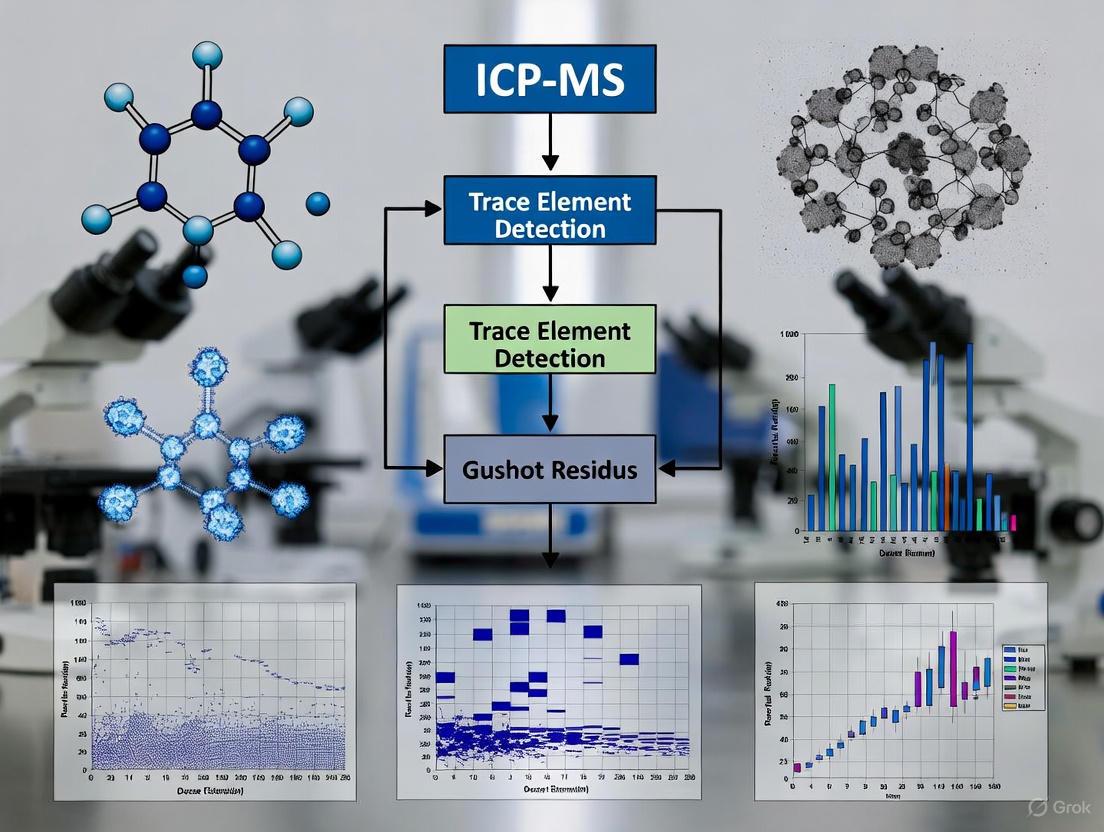
This article provides a detailed examination of Inductively Coupled Plasma Mass Spectrometry (ICP-MS) for the trace element analysis of inorganic gunshot residue (GSR).
ICP-MS for Gunshot Residue Analysis: A Comprehensive Guide to Trace Element Detection and Method Optimization
Abstract
This article provides a detailed examination of Inductively Coupled Plasma Mass Spectrometry (ICP-MS) for the trace element analysis of inorganic gunshot residue (GSR). Tailored for researchers and forensic scientists, it covers foundational principles, from the elemental composition of characteristic GSR particles to the evolving challenges posed by lead-free ammunition. The scope extends to practical methodological applications, including sample collection and novel techniques like Laser Ablation ICP-MS, alongside critical troubleshooting for contamination and interferences. A comparative analysis with established techniques such as SEM-EDX validates ICP-MS performance, highlighting its superior sensitivity and application in complex scenarios like buried evidence. This guide serves as a vital resource for method development, optimization, and reliable implementation in forensic casework.
The Elemental Fingerprint of Gunshot Residue: Foundations for ICP-MS Analysis
Inorganic Gunshot Residue (IGSR) analysis represents a cornerstone of modern forensic trace evidence examination, providing critical intelligence in firearm-related incidents. The discharge of a firearm causes the combustion of the primer and propellant, producing gases that escape through gun openings and condense into micro and nanoparticles that constitute IGSR [1]. For decades, forensic identification has centered on the elemental triad of lead (Pb), barium (Ba), and antimony (Sb) – metallic components traditionally used in primer mixtures that form characteristic particles during the firing process [1] [2]. This application note delineates the definitive classification criteria for IGSR particles centered on the Pb-Ba-Sb triad, positioned within a broader research thesis exploring advanced ICP-MS methodologies for trace element analysis in forensic contexts. We present comprehensive characterization data, detailed analytical protocols, and emerging research directions to support forensic scientists and researchers in advancing GSR analytical capabilities.
IGSR Particle Classification Framework
The American Society for Testing and Materials (ASTM) Standard E1588-20 establishes a systematic classification framework for IGSR particles based on their elemental composition as determined by analytical techniques such as Scanning Electron Microscopy-Energy Dispersive X-ray Spectroscopy (SEM-EDS) [3]. This classification system categorizes particles based on the presence of key elements from the primer mixture, with the Pb-Ba-Sb triad representing the most forensically significant combination.
Table 1: ASTM Classification Scheme for IGSR Particles Based on Elemental Composition
| Classification Category | Elemental Composition | Forensic Significance |
|---|---|---|
| Characteristic of IGSR | Contains all three elements: Pb, Ba, Sb [1] [3] | Considered definitive evidence of GSR origin |
| Consistent with IGSR | Contains two of the three characteristic elements (e.g., Pb-Ba, Pb-Sb, Ba-Sb) or other combinations such as Pb-Ba-Ca-Si, Ba-Ca-Si, Sb-Ba, Pb-Sb, Ba-Al, Pb-Ba [1] [3] | Strongly indicative of GSR, but requires additional contextual assessment |
| Commonly Associated with IGSR | Contains only one of the characteristic elements (Pb, Ba, or Sb) [1] | May contribute to overall assessment when found with higher-category particles |
The classification system acknowledges that IGSR particles are created under high temperatures and pressures in a fraction of a second, resulting in predominantly spheroidal morphologies, typically ranging from 0.5 to 10 micrometers in diameter [4]. The ASTM standard emphasizes that morphological characteristics alone should not be used for definitive identification due to potential variations and environmental influences [2].
Analytical Techniques for IGSR Characterization
Established and Emerging Methodologies
The evolving landscape of ammunition formulations, including the proliferation of lead-free and non-toxic variants, necessitates complementary analytical approaches that can provide rapid, sensitive, and specific detection of IGSR particles.
Table 2: Comparison of Analytical Techniques for IGSR Detection
| Analytical Technique | Key Capabilities | Limitations | Analysis Time |
|---|---|---|---|
| SEM-EDS (Gold Standard) | Single-particle analysis, morphology characterization, elemental composition, non-destructive [2] [4] | Time-consuming (2-10 hours per sample), limited throughput, high instrumentation cost [1] [2] | 4-10 hours [2] |
| spICP-TOFMS | High-throughput, multi-element analysis, detects nanoparticles (>80 nm), quantitative particle counting [3] [5] | Destructive, no morphological information, limited to liquid samples [3] | Minutes [5] |
| ICP-OES | Bulk analysis, multi-element detection, good sensitivity for Pb, Ba, Sb [6] [7] | Destructive, no single-particle or morphological information [4] | Minutes [7] |
| LIBS | Rapid screening, spatial resolution, minimal sample destruction, portable options [2] [4] | Less established for routine casework, requires SEM-EDS confirmation [2] | ~1 minute [4] |
| LC-MS/MS with Complexation | Simultaneous OGSR and IGSR analysis from same sample [8] | Specialized sample preparation requiring complexing agents [8] | <20 minutes [8] |
Single-Particle ICP-MS Advancements
Single-particle Inductively Coupled Plasma Mass Spectrometry (spICP-MS) represents a significant advancement for high-throughput IGSR analysis. This technique enables the detection and elemental characterization of individual nanoparticles suspended in liquid samples introduced via nebulization [1]. The high sensitivity of ICP-MS makes it ideal for trace metal analysis, with single-particle mode (spICP-MS) allowing analysis of undigested particles to provide information on particle size and number concentration [1].
Time-of-Flight (TOF) mass analyzer configurations (spICP-TOFMS) provide simultaneous monitoring of all elements, enabling comprehensive elemental fingerprinting of each particle [3] [5]. Research demonstrates that spICP-TOFMS can detect smaller IGSR particles (180 nm for leaded, 320 nm for lead-free) compared to SEM-EDS, resulting in up to two times more particles detected per volume [5]. This technique has shown capability to classify over 80% of multi-metal particles in mixed samples with no false-positive assignments [5].
Diagram 1: Comprehensive analytical workflow for GSR analysis showing parallel confirmation and screening pathways.
Detailed Experimental Protocols
Sample Collection and Preparation
Hand Washing Technique: Collect samples by washing each shooter's hand with 50 mL of ultrapure water dispensed from a wash bottle. Add formaldehyde (0.2%) to the sample to prevent fungal growth. Transfer samples using a pre-cleaned funnel into 50 mL polystyrene tubes [1].
Swab Technique: Utilize cotton swabs moistened with high-purity water to sample specific areas of interest. The swab technique typically yields less sample volume for investigative purposes compared to hand washing [1].
Alternative Substrates: Recent research demonstrates successful IGSR detection from unconventional matrices including cadaveric maggots and pupae, expanding forensic capabilities in decomposed remains. Sample preparation involves acid digestion followed by ICP-MS analysis [9].
ICP-OES Method for IGSR Analysis
Instrument Optimization: Multivariate optimization for ICP-OES analysis identifies the following optimal operating conditions for Pb, Ba, and Sb measurement: radio frequency power of 1300 W, nebulizer gas flow of 1.2 L min⁻¹, and aspiration rate of 1.0 mL min⁻¹. Studies indicate nebulizer gas flow represents the most critical parameter for signal intensity optimization [7].
Sample Digestion: For bulk analysis, samples require digestion with concentrated nitric acid. Microwave-assisted digestion provides efficient and controlled sample preparation. Alternatively, alkaline fusion with KHSO₄ offers complete dissolution of refractory barium compounds (e.g., BaSO₄) that may resist acid digestion [10].
Quality Control: Implement quality control measures including procedural blanks, certified reference materials, and spike recovery tests. Calculate Standard Deviation Index (SDI) to evaluate method performance, with |SDI| < 2 indicating satisfactory performance [6].
Single-Particle ICP-MS Protocol
Instrument Configuration: Employ spICP-TOFMS for comprehensive elemental characterization. Critical parameters include dwell time (DT) and settling time (ST), both optimized to 100 μs or less for dual-element analysis to prevent signal loss and false positives [1].
Sample Introduction: Introduce liquid samples containing IGSR particles via microflow nebulizer. The instrument records transient signals (∼200-500 μs duration) corresponding to individual particles vaporizing in the plasma [1].
Data Processing: Process data using particle-finding algorithms that identify signal pulses above dissolved ion background. Elemental ratios and particle size distributions are calculated from pulse intensities [3] [5].
The Scientist's Toolkit: Essential Research Reagents and Materials
Table 3: Essential Research Reagents and Materials for IGSR Analysis
| Reagent/Material | Specification | Research Application |
|---|---|---|
| Ultrapure Water | 18 MΩ·cm resistance | Sample collection and dilution to minimize background contamination [1] [6] |
| High-Purity Nitric Acid | Trace metal grade, double-distilled | Sample digestion and acidification of solutions for ICP-based analysis [6] [10] |
| Complexing Agents | 18-crown-6-ether, Tartaric acid | LC-MS/MS analysis of IGSR by forming complexes with Pb, Ba, and Sb for chromatographic separation [8] |
| Certified Reference Materials | NIST-traceable multi-element standards | Instrument calibration and quality control for quantitative analysis [6] [10] |
| Quality Control Standards | Synthetic GSR particles (e.g., PLANO SPS-C6-A) | SEM-EDS performance verification and interlaboratory comparison [6] [4] |
| Potassium Hydrogen Sulfate | Analytical reagent grade | Alkaline fusion for complete dissolution of refractory barium compounds [10] |
Interference and Environmental Considerations
A critical challenge in IGSR analysis involves distinguishing true gunshot residues from environmental particles with similar elemental composition. Common interference sources include:
- Brake pads: Contain Sb, Ba, Cu, Zn, and Fe [3]
- Fireworks: Produce particles containing Sr, Ba, Cu, Al, Ti, Sb, and Zn [3]
- Mineral sunscreens: Contain TiO₂ and ZnO nanoparticles that may interfere with lead-free GSR analysis [3]
- Occupational sources: Welding, mechanical work, and electrical fields may introduce particles containing elements similar to IGSR [2]
Statistical discrimination approaches utilizing elemental ratios, size distributions, and population statistics can enhance specificity. The increasing prevalence of lead-free ammunition further complicates analysis, as these formulations utilize elements such as titanium, zinc, copper, strontium, and potassium that have significant environmental backgrounds [3] [2] [5].
Diagram 2: Decision pathway for IGSR particle classification based on elemental composition with consideration of environmental interferences.
The definitive identification of characteristic IGSR particles containing the Pb-Ba-Sb triad remains foundational to forensic firearms evidence, supported by robust classification frameworks and analytical methodologies. While SEM-EDS continues as the legally accepted standard for confirmatory analysis, emerging techniques including spICP-TOFMS and complementary OGSR analysis present opportunities for enhanced throughput, sensitivity, and evidentiary confidence. Future research directions should focus on developing expanded standard reference materials encompassing modern ammunition varieties, establishing quantitative population databases for statistical interpretation, and validating integrated analytical workflows that combine the strengths of multiple techniques. These advancements will strengthen the scientific foundation of GSR evidence in judicial proceedings while addressing evolving challenges posed by new ammunition formulations and complex transfer scenarios.
The transition toward lead-free ammunition represents a significant shift in forensic science and environmental health, driven by increasing regulatory pressure and awareness of the toxicological impacts of lead [11] [12]. This evolution necessitates advanced analytical approaches, as traditional gunshot residue (GSR) analysis has predominantly relied on detecting heavy metals like lead (Pb), barium (Ba), and antimony (Sb) [13] [11]. The emerging lead-free formulations present a complex analytical challenge, replacing these characteristic elements with alternative metallic components and organic compounds that are more prevalent in the environment [11]. Inductively Coupled Plasma Mass Spectrometry (ICP-MS) has emerged as a powerful tool for trace element analysis, offering the sensitivity, specificity, and multi-element capabilities required to address these challenges. This document details application notes and protocols for analyzing environmental contaminants derived from lead-free ammunition, framed within broader research on ICP-MS trace element analysis of gunshot residues.
Compositional Shifts in Modern Ammunition
Traditional vs. Lead-Free Formulations
The compositional differences between traditional and lead-free ammunition are fundamental to understanding the analytical challenges.
- Traditional Primer Composition: Conventional ammunition primers are primarily composed of lead styphnate (explosive), barium nitrate (oxidizer), and antimony sulfide (fuel) [13] [11]. This combination produces inorganic gunshot residue (IGSR) particles containing Pb, Ba, and Sb, which have been the definitive hallmark for forensic GSR analysis for decades [14].
- Lead-Free Formulations: In response to environmental and health concerns, new primer formulations eliminate heavy metals. These "green" alternatives may contain elements such as copper (Cu), zinc (Zn), titanium (Ti), strontium (Sr), iron (Fe), nickel (Ni), zirconium (Zr), aluminum (Al), or steel [11] [12]. Some formulations may also rely more heavily on organic explosives like tetracene, PETN, and diazodinitrophenol [11].
Table 1: Key Elemental Markers in Traditional and Lead-Free Ammunition
| Ammunition Type | Characteristic Elements | Primary Sources | Forensic Value |
|---|---|---|---|
| Traditional | Lead (Pb), Barium (Ba), Antimony (Sb) | Primer mixture [11] | High: The co-occurrence of Pb, Ba, and Sb is highly characteristic of GSR [14]. |
| Lead-Free | Copper (Cu), Zinc (Zn), Titanium (Ti), Strontium (Sr) | Primer, projectile, jacket [11] [12] | Lower: These elements are more common in environmental backgrounds, requiring advanced statistical analysis for discrimination [11]. |
Environmental and Health Implications
The drive toward lead-free ammunition is primarily motivated by the reduction of lead pollution. However, the alternative metals and their physical forms still pose potential health risks.
- Lead Toxicity: Lead is a cumulative toxicant known to cause neurological, cardiovascular, and renal damage. Its persistence in the environment from spent ammunition is a well-documented concern [15].
- Copper-Based Emissions: Studies on lead-free frangible (LFF) ammunition emissions have reported adverse health effects in firing range instructors, including respiratory irritation, chest tightness, and metallic taste, despite measured copper exposure levels often being below occupational limits [12].
- Ultrafine and Nanoparticulate Matter: Emissions from LFF ammunition are rich in ultrafine particles (UFPs), which are particles less than 100 nanometers in diameter [12]. These UFPs can deposit deeply in the alveolar region of the lungs, potentially translocating into the bloodstream and inducing oxidative stress and inflammatory responses [12]. Furthermore, the detection of lead nanoparticles in game meat harvested with lead-containing bullets highlights a previously overlooked source of dietary lead exposure with unknown toxicological consequences [15].
ICP-MS Methodologies for GSR Analysis
The analysis of GSR, particularly from lead-free ammunition, requires methods capable of detecting a wide range of elements at trace levels. ICP-MS is uniquely suited for this task.
Single-Particle ICP-MS (sp-ICP-MS)
Single-particle ICP-MS is an advanced technique that allows for the characterization of metallic nanoparticles, providing information on particle size, size distribution, number concentration, and elemental composition.
- Principle: A highly diluted suspension of particles is introduced into the ICP-MS. Each particle is vaporized, atomized, and ionized in the plasma, generating a discrete cloud of ions that produces a transient signal spike. The intensity of this spike is proportional to the particle's mass, which can be converted to particle size [16] [15].
- Application to GSR: GSR particles are inherently particulate, making sp-ICP-MS an ideal technique. It can rapidly analyze thousands of particles per minute, enabling the detection of characteristic multi-elemental signatures from both traditional and lead-free ammunition [16].
- Application to Environmental Contaminants: sp-ICP-MS has been successfully used to detect lead nanoparticles in game meat at concentrations of 27 to 50 million particles per gram, with median diameters of approximately 60 nm, originating from lead-based bullets [15]. This method could be similarly applied to characterize copper or other metal particles from lead-free ammunition in environmental samples.
Single-Particle ICP-Time-of-Flight-MS (sp-ICP-TOF-MS)
ICP-TOF-MS represents a further advancement, as it simultaneously detects all elements in each individual particle, providing a complete elemental fingerprint.
- Advantage over Quadrupole ICP-MS: While traditional quadrupole ICP-MS measures one mass at a time, TOF-MS measures the entire mass spectrum simultaneously for each particle. This is critical for accurately correlating multiple elements within the same, often heterogeneous, GSR particle [16].
- Multi-elemental Fingerprinting: This capability allows researchers to move beyond simple ternary compositions (Pb-Ba-Sb) and develop complex multi-elemental fingerprints for different types of lead-free ammunition, supporting more robust source attribution [16].
Table 2: Comparison of ICP-MS Techniques for GSR Analysis
| Technique | Analytical Focus | Key Advantages | Limitations |
|---|---|---|---|
| Conventional ICP-MS | Bulk elemental analysis | High throughput for dissolved samples; excellent sensitivity and quantification [17] [18] | Loses all particle-specific information (size, composition of individual particles) |
| Single-Particle ICP-MS (sp-ICP-MS) | Nanoparticle analysis | Provides particle size, number concentration, and elemental composition [15] | Typically measures one isotope at a time, which can misrepresent multi-element particles |
| Single-Particle ICP-TOF-MS (sp-ICP-TOF-MS) | Nanoparticle analysis with full elemental fingerprint | Simultaneous detection of all elements in each particle; ideal for complex, multi-element GSR [16] | Higher instrument cost and complexity of data analysis |
Experimental Protocols
Sample Collection and Preparation
Proper collection and preparation are critical for accurate trace metal analysis.
- Collection Methods:
- Surface Sampling: Use acid-moistened swabs (e.g., with 5% nitric acid) or adhesive tape lifts to collect residues from hands, clothing, or surfaces [14].
- Biological/Environmental Matrices: For game meat, soil, or plant matter, collect samples using ceramic titanium knives or other trace-metal-free tools to avoid contamination. Store samples in pre-cleaned, non-colored plastic containers to prevent leaching of contaminants like Sb, Zn, or Fe [19].
- Sample Digestion:
- Liquid Samples (e.g., surface swab extracts): May be diluted with a dilute nitric acid solution (e.g., 2% v/v) and analyzed directly if total dissolved solids are low [19].
- Solid Samples (e.g., meat, soil): Weigh 0.2 - 0.5 g of homogenized sample into a digestion vessel. Add 5-10 mL of high-purity concentrated nitric acid (HNO₃). Digest using a microwave-assisted digestion system with a controlled temperature ramp (e.g., to 180°C over 20 minutes, hold for 15 minutes). After cooling, dilute the digestate to a final volume with deionized water, targeting an acid concentration of 2-5% v/v HNO₃ [15].
- Note: For the analysis of organic gunshot residue (OGSR), separate sample preparation involving solvent extraction followed by techniques like Gas Chromatography-Mass Spectrometry (GC-MS) is required [13] [14].
ICP-MS Instrumental Analysis
The following protocol is adapted for an Agilent 7900 ICP-MS but is broadly applicable.
- Instrument Setup and Tuning:
- Instrument Start-up: Power on the instrument, allow the system to stabilize, and initiate the plasma.
- Daily Tuning: Optimize the instrument for sensitivity (Li, Co, Y, Tl), oxide formation (CeO/Ce), and doubly charged ions (Ce²⁺/Ce) using a multi-element tuning solution to ensure robust performance [18] [19].
- sp-ICP-MS Specific Setup: For single-particle analysis, set the instrument to the fastest possible data acquisition mode (dwell time < 100 µs). Precisely calibrate the sample flow rate and transport efficiency, which are critical for accurate particle size and number concentration calculations [15].
- Data Acquisition Parameters:
- RF Power: 1550 W
- Carrier Gas Flow: 1.0 L/min Argon
- Nebulizer: Micro-flow nebulizer (e.g., Micromist)
- Collision/Reaction Cell: He mode (~4 mL/min) to remove polyatomic interferences [18] [19].
- Acquisition Mode:
- Bulk Analysis: Standard quant mode.
- sp-ICP-MS: Time-resolved analysis (TRA) mode with a dwell time of 100 µs.
- Isotopes Monitored: For a comprehensive screen, monitor at least: ⁶³Cu, ⁶⁶Zn, ⁸⁸Sr, ⁴⁸Ti, ⁵⁵Mn, ⁵⁶Fe, ⁵⁹Co, ⁶⁰Ni, ⁷⁵As, ¹¹¹Cd, ¹³⁸Ba, ²⁰⁸Pb, ²⁰⁹Bi. Internal standards (e.g., ⁴⁵Sc, ⁸⁹Y, ¹¹⁵In, ¹⁵⁹Tb, ²⁰⁹Bi) should be used to correct for signal drift and matrix effects [18].
- Calibration and Quality Control:
- Prepare a multi-element calibration curve in the 0.1 - 100 µg/L range using a certified standard, diluted in the same acid matrix as the samples (e.g., 2% HNO₃).
- Include a blank and a certified reference material (CRM, e.g., NIST 1643f - Trace Elements in Water) in each batch to verify accuracy.
- For sp-ICP-MS, use ionic standard solutions for sensitivity calibration and nanoparticle reference materials (e.g., NIST 8013, Gold Nanoparticles) for size calibration and transport efficiency verification [15].
The experimental workflow from sample collection to data analysis is summarized in the diagram below.
The Scientist's Toolkit: Essential Research Reagents and Materials
Table 3: Key Reagents and Materials for ICP-MS Analysis of Ammunition-Derived Contaminants
| Item | Function/Application | Specifications & Quality Control |
|---|---|---|
| High-Purity Nitric Acid (HNO₃) | Primary digesting acid for solid samples; extraction medium for swabs. | TraceMetal Grade or equivalent. Must be verified for low blank levels of target analytes. |
| Multi-Element Calibration Standard | Instrument calibration for quantitative analysis. | Certified, acid-matched standard from a reputable supplier (e.g., NIST-traceable). |
| Certified Reference Materials (CRMs) | Quality control; verification of method accuracy. | e.g., NIST 1643f (Water), NIST 1577c (Bovine Liver), BCR-723 (Road Dust). |
| Single-Element Standard Solutions | Calibration for sp-ICP-MS; preparation of check standards. | High-purity, >1000 mg/L stocks for flexible preparation of working standards. |
| Nanoparticle Size Standards | Size calibration and transport efficiency determination in sp-ICP-MS. | e.g., NIST 8011-8013 (Gold Nanoparticles), or other mono-disperse nanoparticles. |
| Internal Standard Solution | Corrects for instrument drift and matrix suppression/enhancement. | A mix of non-interfering, non-sample elements (e.g., Sc, Y, In, Tb, Bi) added online to all samples and standards. |
| Trace-Metal-Free Consumables | Sample collection, storage, and preparation to prevent contamination. | Pre-cleaned polypropylene tubes/vials; non-colored pipette tips; ceramic scissors for tissue dissection. |
Data Interpretation and Advanced Applications
Chemometrics and Data Analysis
The shift to lead-free ammunition, with its less characteristic elemental profiles, necessitates sophisticated data analysis tools.
- Multivariate Statistical Analysis: Techniques such as Principal Component Analysis (PCA) and Linear Discriminant Analysis (LDA) can be applied to full elemental fingerprint data (e.g., from sp-ICP-TOF-MS) to discriminate between different ammunition types, brands, or lots, even in the absence of traditional Pb-Ba-Sb markers [16] [11].
- Source Attribution: The "case by case" approach remains crucial. This involves comparing the elemental profile of residues from a suspect or crime scene with those from a recovered weapon or specific ammunition to establish a potential link [14].
Future Directions
The field of GSR and environmental contaminant analysis is rapidly evolving. Future research directions include:
- Integrated OGSR and IGSR Analysis: Combining the analysis of organic and inorganic residues to increase the evidential value of findings, especially for lead-free ammunition [11].
- Toxicological Studies of Nanoparticles: Further investigation into the health impacts of inhaling or ingesting metal nanoparticles from ammunition, building on studies that have shown increased oxidative stress biomarkers in exposed individuals [12] [15].
- Development of Sensor-Based Methods: Research into portable, electrochemical sensors for rapid, on-site screening of GSR, offering a potential alternative to complex laboratory instrumentation [13].
Why ICP-MS? The Need for High Sensitivity and Multi-Element Profiling
In the realm of forensic science, particularly in the analysis of gunshot residue (GSR), the ability to definitively link a suspect to a firearm discharge is paramount. Modern ammunition produces complex residues containing a mixture of organic compounds and inorganic elements originating from the primer, projectile, jacket, and cartridge case [13]. While several analytical techniques can detect these residues, Inductively Coupled Plasma Mass Spectrometry (ICP-MS) has emerged as a powerful tool due to its unparalleled sensitivity and capability for multi-element profiling. This application note details the specific advantages of ICP-MS in GSR analysis, providing forensic researchers and scientists with detailed methodologies for its application in trace element detection.
The Forensic Context: Gunshot Residue Composition
Gunshot residue is a critical form of trace evidence that can help reconstruct a crime scene involving a firearm. Its composition is divided into two main categories:
- Organic Gunshot Residue (OGSR): Derives from the propellant and includes compounds such as nitroglycerine (NG), nitrocellulose (NC), and stabilizers like diphenylamine (DPA) [13].
- Inorganic Gunshot Residue (IGSR): Originates from the primer, cartridge case, projectile, and barrel. The classic primer composition contains heavy metals such as lead (Pb), barium (Ba), and antimony (Sb), often referred to as the "unique trio" of GSR [13].
Despite the move toward lead-free ammunition, which alters the elemental profile, the fundamental need to identify and quantify a suite of elements remains [13]. The identification of IGSR typically involves analyzing particles ranging from 0.5 to 10 μm, although larger particles up to 100 μm can also be found [13]. This complex, multi-element nature of IGSR creates a strong demand for an analytical technique that can provide a comprehensive elemental fingerprint.
The Analytical Challenge: Why ICP-MS is Indispensable
Traditional methods for GSR analysis, such as colorimetric tests, are destructive to samples and lack specificity, as they can show interference from environmental contaminants [13]. Instrumental techniques like Scanning Electron Microscopy with Energy Dispersive X-ray (SEM-EDX) are powerful for visualizing particle morphology and providing a simultaneous elemental analysis, but they can be time-consuming and may not be suited for the lowest trace-level concentrations [13].
ICP-MS addresses these limitations by offering a bulk analysis solution with the following critical advantages for forensic GSR investigations:
- Exceptional Sensitivity and Low Detection Limits: ICP-MS provides detection capabilities at or below the part-per-trillion (ppt) level [20]. This is crucial for detecting the minute quantities of GSR that may be recovered from a shooter's hands, clothing, or other surfaces, especially hours after the discharge when the particles have significantly degraded [13].
- Comprehensive Multi-Element Profiling: Unlike techniques that target a limited number of elements, ICP-MS can simultaneously determine a wide panel of elements—up to 80 from the periodic table—in a single, rapid analysis [20]. This allows forensic scientists to go beyond the "unique trio" and establish a more definitive elemental fingerprint of the ammunition, which can be crucial for comparing evidence with control samples [21].
- Isotopic Analysis: A unique capability of ICP-MS is its proficiency in measuring isotopic ratios [20]. This can be forensically significant for lead isotope ratios in bullets, providing a powerful means of comparison between GSR particles and potential source ammunition [21].
Table 1: Comparison of Elemental Analysis Techniques for GSR
| Technique | Typical Detection Limits | Multi-Element Capability | Key Advantages | Key Limitations for GSR |
|---|---|---|---|---|
| Colorimetric Tests | N/A | No | Simple, low-cost | Destructive, non-specific, high false-positive rate [13] |
| Atomic Absorption Spectroscopy (AAS) | parts-per-billion (ppb) | Limited (sequential) | 90% positive result for Pb, Ba, Sb [13] | Limited multi-element capability [20] |
| SEM-EDX | ~0.1-1% (weight) | Yes (simultaneous) | Provides morphology & composition; particle-specific [13] | Less sensitive than ICP-MS; time-consuming for bulk analysis [13] |
| ICP-MS | part-per-trillion (ppt) | Yes (simultaneous) | High sensitivity, isotopic ratios, wide dynamic range [20] [21] | Requires sample digestion; lacks morphological data |
Experimental Protocol: ICP-MS Analysis of Gunshot Residue
The following section outlines a detailed protocol for the analysis of GSR collected from a surface such as hands or clothing using swabs. This protocol is adapted from standard ICP-MS procedures for liquid samples and forensic applications [22] [21].
Reagent and Solution Preparation
- Nitric Acid (2% v/v): Carefully add 20 mL of high-purity concentrated nitric acid to approximately 900 mL of ultrapure deionized water (18 MΩ·cm). Dilute to a final volume of 1 L. This is the primary matrix for sample reconstitution.
- Internal Standard Solution: Prepare a solution containing Scandium (Sc), Yttrium (Y), and Terbium (Tb) at a concentration of 20-50 μg/L in 2% nitric acid. This is added online via a peristaltic pump to correct for signal drift and matrix effects [23].
- Calibration Standards: Prepare a multi-element calibration stock solution containing key GSR elements (e.g., Pb, Ba, Sb, Cu, Zn) from single-element certified reference materials. Serially dilute with 2% nitric acid to create a calibration curve spanning a relevant concentration range (e.g., 0.1 to 100 μg/L) [23].
Sample Collection and Digestion
- Collection: Using a swab moistened with a dilute solution of nitric acid, thoroughly sample the suspected shooter's hands, focusing on the thumb, forefinger, and the back of the hand [13].
- Digestion:
- Transfer the collection swab to a clean, pre-labeled 50 mL polypropylene tube.
- Add 10 mL of 2% (v/v) high-purity nitric acid.
- Place the tubes in a heating block or water bath at 80°C for 60 minutes, agitating periodically.
- Allow the digestate to cool to room temperature.
- Filter the solution through a 0.45 μm syringe filter into a new clean tube.
- Make up the final volume to 10 mL with 2% nitric acid [22].
ICP-MS Instrumental Analysis
- Instrument Setup: The sample is introduced via a peristaltic pump to a nebulizer, which creates a fine aerosol. This aerosol is passed through a spray chamber to remove large droplets before being transported into the plasma [20] [22].
- Plasma and Ionization: In the ICP torch, the aerosol is subjected to a high-temperature argon plasma (~6000-10000 K), which efficiently atomizes and ionizes the elements in the sample [20].
- Ion Separation and Detection:
- The resulting ions are extracted from the plasma through a series of cones (sampler and skimmer) into the high-vacuum mass spectrometer.
- The ions are separated based on their mass-to-charge ratio (m/z) by a quadrupole mass filter.
- The separated ions are detected by an electron multiplier, and the data is processed by the instrument software [20].
- Data Acquisition:
Quality Control
- Method Blanks: Process blank swabs through the entire digestion and analysis procedure to identify any background contamination.
- Certified Reference Materials (CRMs): Include a suitable matrix-matched CRM, if available, to verify analytical accuracy [23].
- Duplicate Analysis: Analyze sample duplicates to assess method precision.
Diagram Title: GSR Analysis Workflow via ICP-MS
Key Research Reagent Solutions
The following table details essential materials and reagents required for the successful ICP-MS analysis of gunshot residue.
Table 2: Essential Reagents and Materials for GSR Analysis by ICP-MS
| Item | Function/Description | Critical Specifications |
|---|---|---|
| High-Purity Nitric Acid | Sample digestion and reconstitution; minimizes background contamination. | Trace metal grade, suitable for ICP-MS (< 1 ppt impurity levels) [22]. |
| Certified Single-Element Standards | Preparation of calibration curves and quality control materials. | 1000 mg/L concentration, certified for accuracy [23]. |
| Internal Standard Mixture | Corrects for instrument drift and matrix effects during analysis. | Elements not present in samples (e.g., Sc, Y, Tb) at 20-50 μg/L [23]. |
| Ultrapure Water | Diluent for all standards and sample reconstitution. | Resistivity of 18.2 MΩ·cm at 25°C [22]. |
| Sample Collection Swabs | Non-background collection of GSR from surfaces. | Plastic stalk, acid-washed synthetic fiber (e.g., polyester) [13]. |
| Syringe Filters | Removal of undigested particulate matter prior to analysis. | 0.45 μm pore size, low trace element binding [22]. |
The power of ICP-MS in gunshot residue analysis lies in its unmatched sensitivity and comprehensive multi-element profiling capability. This technique provides forensic scientists with a robust tool for detecting the trace elemental signatures of ammunition, even when sample amounts are minimal or the residues have undergone degradation. By employing the detailed protocols and quality control measures outlined in this application note, researchers and forensic professionals can generate reliable, court-defensible data that is crucial for advancing investigations and delivering justice. The ability to perform isotopic analysis further enhances its value, solidifying the role of ICP-MS as an indispensable technique in the modern forensic laboratory.
Inductively Coupled Plasma Mass Spectrometry (ICP-MS) has emerged as a cornerstone technique for trace elemental analysis in forensic science, offering exceptional sensitivity and multi-element capabilities. In the specific context of gunshot residue (GSR) research, ICP-MS provides a powerful tool for identifying and quantifying the inorganic signatures (IGSR) that are pivotal for linking suspects to a firearm discharge event [8] [13]. Modern forensic investigations increasingly rely on this technique, as it can detect the characteristic elemental triad of lead (Pb), barium (Ba), and antimony (Sb) at trace levels, even in complex biological and environmental matrices [24] [13]. This application note delineates the core principles of ICP-MS operation, details specific protocols for GSR analysis, and frames its utility within a rigorous research framework, providing scientists with the methodologies to generate robust, defensible data.
Fundamental Principles of ICP-MS Operation
The analytical power of ICP-MS stems from its unique combination of a high-temperature inductively coupled plasma source with a mass spectrometer detector. The process can be broken down into four sequential stages:
- Sample Introduction and Nebulization: A liquid sample—typically obtained from a suspect's hands via swabbing and subsequent acid extraction—is introduced into the system via a peristaltic pump [24] [25]. This liquid is then passed through a nebulizer, which converts it into a fine aerosol. Pneumatic nebulizers are most common for routine analysis, with more specialized designs like desolvating nebulizers available to enhance sensitivity and reduce polyatomic interferences [24].
- Ionization in the Argon Plasma: The aerosol is transported into the core of an argon plasma, which is sustained by a radio-frequency (RF) coil and reaches temperatures of 5,500 to 6,500 K [26] [25]. At these extreme temperatures, sample droplets are desolvated, vaporized, atomized, and finally ionized. The plasma is efficient at producing singly charged positive ions (e.g., Pb+, Ba+, Sb+) for most elements in the periodic table [27] [25].
- Ion Separation and Mass Analysis: The generated ions are extracted from the atmospheric-pressure plasma into the high-vacuum mass spectrometer through a series of conductive cones [26] [24]. The ions are first focused by electrostatic ion optics before entering the mass analyzer. While several types exist, the quadrupole mass analyzer is the most prevalent, separating ions based on their mass-to-charge ratio (m/z) by selectively stabilizing or destabilizing their paths through oscillating electric fields [28] [25].
- Ion Detection and Data Conversion: The separated ions are directed to a detector, often an electron multiplier, which generates a measurable electrical signal (counts per second) proportional to the number of ions striking it [26]. This signal is the raw data from which quantitative analysis is performed.
The entire workflow, from sample introduction to detection, is summarized in the diagram below.
Analytical Performance and Quantitative Data
ICP-MS is renowned for its exceptional analytical figures of merit, which are critical for detecting the low-abundance elements present in GSR.
Table 1: Key Analytical Performance Metrics of ICP-MS for Trace Element Analysis
| Performance Characteristic | Capability | Importance in GSR Research |
|---|---|---|
| Detection Limits | Low parts-per-trillion (ppt or ng/L) to parts-per-billion (ppb or µg/L) range [24] [25] | Enables detection of GSR even after handwashing or with limited particle transfer. |
| Dynamic Range | 8-9 orders of magnitude [25] | Allows for simultaneous quantification of major (e.g., Ba) and minor (e.g., Sb) GSR components in a single run. |
| Multi-Element Capability | Simultaneous analysis of most elements in periodic table [24] | Facilitates detection of the Pb-Ba-Sb triad and other marker elements (e.g., Cu, Zn) from primer, cartridge, or barrel. |
| Isotopic Analysis | Capable of measuring isotopic ratios [26] [27] | Offers potential for source attribution or discrimination of GSR particles based on lead isotope ratios. |
For GSR analysis, the linear dynamic ranges for key elements using a method with complexing agents and LC-MS/MS have been reported as 0.3–200 ppb for organic GSR components and 0.1–6.0 ppm for inorganic species like Pb and Ba [8].
Table 2: Example Calibration Standards for Quantitative GSR Analysis (ICP-MS)
| Standard Solution | Pb Concentration (µg/L) | Ba Concentration (µg/L) | Sb Concentration (µg/L) | Internal Standard (e.g., Ga, In) |
|---|---|---|---|---|
| Blank | 0 | 0 | 0 | 5 µg/L |
| STD 1 | 0.5 | 0.5 | 0.2 | 5 µg/L |
| STD 2 | 1.0 | 1.0 | 0.4 | 5 µg/L |
| STD 3 | 2.0 | 2.0 | 0.8 | 5 µg/L |
Experimental Protocol: GSR Analysis by ICP-MS
Sample Collection and Preparation
Principle: GSR particles are collected from a suspect's hands using a swabbing technique to maximize recovery of both particulate and dissolved metallic species [13].
Materials:
- Swabbing kits (e.g., cotton-tipped swabs, acid-washed)
- Dilute nitric acid (HNO₃, 1-2% v/v) or alternative dilute acetic acid [13]
- Ultrapure water (18 MΩ·cm)
- Plastic vials and pipettes
Procedure:
- Swab Pre-moistening: Moisten a swab with a few drops of dilute (1-2%) nitric acid [24].
- Sample Collection: Thoroughly swab the back of the hand, fingers, and the webbing between the thumb and forefinger. Use a separate, dry swab to collect from the other hand.
- Sample Storage: Place the swabs in separate, clean plastic containers or vials, seal, and label correctly.
- Extraction: In the laboratory, add 5-10 mL of 1% nitric acid to each vial containing a swab. Agitate the vial vigorously for 60 seconds or place in an ultrasonic bath for 15 minutes to extract the metallic residues.
- Dilution: The extract may be diluted further with 1% nitric acid to bring the total dissolved solids below 0.2%, which is recommended for robust ICP-MS analysis [24] [29].
ICP-MS Instrumental Analysis
Principle: The liquid extract is analyzed using ICP-MS with external calibration and internal standardization to correct for matrix effects and instrumental drift [28] [29].
Instrument Setup:
- Nebulizer/Spray Chamber: A concentric or cross-flow pneumatic nebulizer with a Scott-type double-pass or cyclonic spray chamber.
- Plasma Conditions: RF power: 1.4 - 1.6 kW; Nebulizer gas flow: optimized for maximum signal-to-noise for a tuning solution (e.g., containing Li, Y, Ce, Tl).
- Data Acquisition: Measure isotopes: ²⁰⁸Pb, ¹³⁸Ba, ¹²¹Sb or ¹²³Sb. Dwell time: 50-100 ms per isotope.
Quantification Method:
- Calibration Curve: Prepare a blank and at least three calibration standard solutions (e.g., as in Table 2) in the same acid matrix as the samples (1% HNO₃) [28].
- Internal Standardization: Add a consistent concentration of internal standard elements (e.g., ⁷¹Ga, ¹¹⁵In) to all samples, blanks, and standards before analysis [28] [29]. This corrects for signal drift and suppression/enhancement.
- Analysis Sequence: Run samples in the sequence: Calibration Blank → STD 1 → STD 2 → STD 3 → Quality Control (QC) Sample → Unknown Samples (with QC check every 10-15 samples).
Data Analysis and Interpretation
- Quantification: The instrument software calculates the concentration of each analyte in the sample extract based on the calibration curve, corrected using the internal standard response.
- Data Quality: Acceptable QC recovery should be within ±20% of the expected value.
- Reporting: Results are reported in µg/L of the extracting solution. Interpretation should consider the specific elemental profiles and ratios consistent with GSR (e.g., the co-presence of Pb, Ba, and Sb) and compare against known background levels [8] [13].
The Scientist's Toolkit: Essential Reagents and Materials
Successful and reliable GSR analysis by ICP-MS depends on the use of high-purity reagents and calibrated materials to prevent contamination and ensure accuracy.
Table 3: Key Research Reagent Solutions for GSR Analysis by ICP-MS
| Item | Function | Specifications & Notes |
|---|---|---|
| High-Purity Nitric Acid | Sample extraction and dilution; acts as a stabilizer for trace metals in solution. | Trace metal grade, sub-boiling distilled. Prevents contamination and ensures low blank levels. |
| Single-Element Standard Solutions | Preparation of calibration standards and quality control materials. | Certified Reference Materials (CRMs) with known concentrations (±1-2% uncertainty). |
| Multi-Element Tuning Solution | Optimization of ICP-MS instrument parameters (sensitivity, resolution, oxide levels). | Contains elements (e.g., Li, Y, Ce, Tl) across a wide mass range. |
| Internal Standard Solution | Correction for matrix effects and instrumental drift during analysis. | Contains elements not present in samples (e.g., Sc, Ge, In, Bi) at a consistent concentration [28] [29]. |
| Certified GSR Reference Material | Validation of the entire analytical method, from sample preparation to quantification. | Provides a known, homogeneous material to test method accuracy and precision. |
Advanced Applications in GSR Research
The basic principles of ICP-MS can be extended with hyphenated techniques to provide deeper insights for forensic GSR research:
- LC-ICP-MS: As demonstrated in recent studies, this technique allows for the dual detection of organic and inorganic gunshot residues in a single sample. It uses complexing agents to enable the chromatographic separation and isotopic analysis of inorganic species like Pb and Ba, significantly increasing the confidence that the chemical profile originates from a gun's discharge rather than environmental contamination [8].
- Laser Ablation ICP-MS (LA-ICP-MS): This solid-sampling technique permits the direct analysis of GSR particles collected on stubs, preserving their morphological information. It is highly sensitive for the analysis of small particles and can be used for elemental mapping, providing a powerful tool for source identification [26] [27].
ICP-MS stands as an indispensable analytical platform for trace elemental analysis in gunshot residue research. Its core principles—combining efficient plasma ionization with sensitive mass spectrometric detection—provide the sensitivity, specificity, and quantitative rigor required for forensic applications. By adhering to the detailed protocols for sample preparation, instrumental analysis, and data quantification outlined in this document, researchers can generate highly reliable and defensible data. The continued integration of advanced hyphenated techniques like LC-ICP-MS ensures that this methodology will remain at the forefront of forensic chemistry, providing critical evidence for the judicial system.
From Sample to Signal: Practical ICP-MS Methodologies for GSR Detection
The reliability of trace element analysis in gunshot residue (GSR) research using Inductively Coupled Plasma Mass Spectrometry (ICP-MS) is fundamentally dependent on the pre-analytical phase. Proper sample collection, storage, and preservation are critical for maintaining the integrity of trace elemental evidence, which is often minimal, easily contaminated, and subject to degradation. This application note details standardized protocols for GSR sample handling, framed within a broader research thesis aimed at enhancing the evidentiary value of ICP-MS analysis in forensic investigations. The procedures outlined herein are designed to meet the rigorous demands of researchers and forensic scientists engaged in trace element analysis for evidentiary purposes, ensuring that analytical data generated is both forensically sound and scientifically defensible.
Experimental Protocols for GSR Collection and Preparation
Sample Collection from Hands Using Swabs
Principle: GSR particles originating from primer compositions containing lead styphnate (Pb), barium nitrate (Ba), and antimony sulfide (Sb) are deposited on the shooter's hands. The objective is to efficiently recover these particles using a swabbing technique that maximizes particle collection while minimizing contamination [30] [31].
Materials:
Procedure:
- Swab Preparation: Moisten a cotton swab with a few drops of 10% nitric acid. A pair of swabs is typically used for each sample [31].
- Sample Collection: Vigorously swab the suspected shooter's hands. Standard practice involves collecting from specific areas: the thumb, index finger, and the back of the hand [30] [31].
- Sample Drying: Place the used swabs into labeled 15 mL polypropylene tubes. Allow them to dry overnight at room temperature to prevent microbial growth and sample degradation [31].
- Field Blank: Prepare a blank swab subjected to the same handling and environmental conditions as the sample swabs, excluding contact with the hands, to control for background contamination.
Sample Collection from Surfaces and Bloodstained Evidence
Principle: GSR particles can penetrate and be trapped within fabrics or be occluded by biological materials like bloodstains, making them undetectable by surface-sensitive techniques like SEM-EDX. ICP-MS, coupled with effective digestion, can solubilize and detect these particles [30].
Materials:
Procedure for Bloodstained Cloth:
- Sampling: Use a clean surgical blade to cut a 1 cm x 1 cm section of the bloodstained cloth from the target area (e.g., around a bullet hole) [30].
- Microwave Digestion (for incident bullet holes): This method is preferred for complete dissolution of the sample matrix. Place the cloth sample into a microwave digestion vessel. Add a suitable acid mixture, typically 5-10 mL of concentrated HNO₃, potentially with added H₂O₂ for organic matter [22] [30]. Run the digestion according to the manufacturer's program. After digestion and cooling, dilute the clear solution to a final volume with DDI water, ensuring the acid concentration is below 5% [34].
- Ultrasonic Vibration (for areas around bullet hole or shooter's hand with bloodstains): This method is effective for extracting GSR particles without full matrix dissolution. Place the swab or small cloth sample in a 15 mL polypropylene tube. Add 10 mL of 10% nitric acid. Cap the tube and place it in an ultrasonic bath for a defined period (e.g., 15-30 minutes) [30]. After extraction, centrifuge the solution for 5 minutes to separate any particulate matter, and transfer the supernatant to a new tube for analysis [31].
Optimization of Sample Storage and Preservation
The stability of trace elements post-collection is paramount. Inappropriate storage can lead to analyte loss through adsorption, contamination, or species transformation, compromising data integrity.
Effects of Storage Conditions on Trace Element Stability
Research on clinical matrices provides critical insights applicable to GSR samples. A key study investigated the stability of 18 trace elements in whole blood and plasma under different storage temperatures over one year [35] [36].
Table 1: Stability of Select Trace Elements in Blood Under Different Storage Conditions [35] [36]
| Element | Matrix | Recommended Max Storage Duration | Stability Notes |
|---|---|---|---|
| Antimony (Sb) | Blood/Plasma | 6 months at 4°C / 1 year at -20°C | Stable under recommended conditions. |
| Barium (Ba) | Blood/Plasma | 6 months at 4°C / 1 year at -20°C | Stable under recommended conditions. |
| Lead (Pb) | Blood/Plasma | 6 months at 4°C / 1 year at -20°C | Stable under recommended conditions. |
| Aluminum (Al) | Urine | Short-term | Concentrations may rise over time [37]. |
| Mercury (Hg) | Urine | Short-term | Concentrations may decrease over time; HCl aids stabilization [37] [34]. |
| Molybdenum (Mo) | Whole Blood | < 6 months | Sensitivity and precision may decline after 6 months [35]. |
| Selenium (Se) | Plasma | < 6 months | Sensitivity and precision may decline after 6 months [35]. |
Best Practices for Sample Storage
- Temperature: Refrigeration (4°C) is effective for short-term storage (up to 6 months). For long-term storage (up to one year), freezing at -20°C is recommended and was found to be as effective as -80°C, which can sometimes lead to adsorption issues and requires longer thawing times [35] [36].
- Containers: Always use pre-cleaned plasticware. Polypropylene (PP), low-density polyethylene (LDPE), or fluoropolymers (PTFE, PFA) are preferred. Glass should be strictly avoided as acids and alkalis can leach metal contaminants from it [32].
- Pre-treatment of Labware: Soak plastic containers in 1% nitric acid for at least 24 hours. Rinse thoroughly three times with DDI water before use. For glassware (if essential), a several-day soak in 10% nitric acid is required [33] [32].
- Preservatives: For liquid samples like urine, refrigeration without chemical additives can be an effective preservation method for many trace elements, avoiding contamination from the additives themselves [37]. For GSR extracts and digested samples, stabilization in a dilute acid matrix (e.g., 1-2% HNO₃) is standard practice to keep elements in solution and prevent adsorption to container walls [22] [33].
The following workflow summarizes the key decision points in GSR sample handling from collection to analysis:
The Scientist's Toolkit: Essential Research Reagent Solutions
The table below lists critical reagents and materials required for reliable GSR collection and preparation for ICP-MS analysis.
Table 2: Essential Materials and Reagents for GSR Sample Preparation
| Item | Function / Use | Specifications / Notes |
|---|---|---|
| Nitric Acid (HNO₃) | Sample extraction and digestion; diluent for standards and samples. | Must be "TraceMetal Grade" or similar high purity to minimize background contamination [32] [34]. |
| Polypropylene Tubes | Sample storage, extraction, and digestion. | 15 mL or 50 mL screw-cap tubes. Clear, pigment-free plastics (PP, LDPE) are preferred over glass [32] [31]. |
| Cotton Swabs | Collection of GSR particles from hands or surfaces. | Standard Q-tip type swabs. A pair is used per sample [31]. |
| Deionized Water | Preparation of all solutions, rinsing labware. | Resistivity of 18.2 MΩ·cm is essential for trace element work [33] [34]. |
| Internal Standard Mix | Monitors and corrects for signal drift and matrix effects during ICP-MS analysis. | Typically contains elements like Indium (In) and Bismuth (Bi) added to all samples and standards post-preparation [22] [31]. |
| Multi-element Standard Solutions | Instrument calibration for quantitative analysis. | Certified reference solutions containing Sb, Ba, Pb, and other elements of interest [30] [31]. |
| Hydrogen Peroxide (H₂O₂) | Oxidizing agent for digestion of organic matrices (e.g., blood, fabric). | High-purity grade. Used in combination with HNO₃ for microwave digestion [22] [34]. |
Robust and standardized protocols for sample collection, storage, and preservation form the bedrock of reliable GSR analysis using ICP-MS. The strategies detailed in this application note—from the use of nitric-acid moistened swabs and the selection of appropriate digestion methods for complex matrices, to the adherence to validated storage conditions—are designed to safeguard the integrity of trace element evidence. By integrating these best practices into their workflows, researchers can significantly enhance the quality, reliability, and evidentiary weight of their data, thereby strengthening the conclusions drawn in gunshot residue research and forensic investigations.
Inductively Coupled Plasma Mass Spectrometry (ICP-MS) has become an indispensable tool for trace element analysis in forensic science, particularly in the detection and characterization of gunshot residue (GSR). The analysis of GSR provides critical evidence linking suspects to firearm discharges, with its evidentiary value heavily dependent on the specificity, sensitivity, and reliability of the analytical method employed [38] [39]. The sample introduction technique—the method by which the sample is introduced into the ICP-MS instrument—fundamentally shapes the analytical workflow, data quality, and forensic applicability.
The two primary introduction techniques are solution-based analysis (following sample digestion) and direct solid sampling via laser ablation (LA). Solution-based ICP-MS is a well-established, quantitative workhorse, while LA-ICP-MS offers rapid, spatially resolved analysis with minimal sample preparation [39] [40]. This application note provides a detailed comparison of these techniques within the context of advanced GSR research, presenting structured data, experimental protocols, and practical workflows to guide method selection and implementation.
Technical Comparison: Solution-Based ICP-MS vs. LA-ICP-MS
The core difference between these techniques lies in how the sample is delivered to the plasma. Solution-based nebulization requires the sample to be in a liquid form after acid digestion, while laser ablation directly vaporizes solid materials from the collection substrate [39] [40].
Table 1: Fundamental Comparison of Solution-Based ICP-MS and LA-ICP-MS for GSR Analysis.
| Parameter | Solution-Based ICP-MS | LA-ICP-MS |
|---|---|---|
| Sample Form | Liquid digestate | Solid sample on collection stub/tape |
| Sample Preparation | Extensive (digestion, dilution) | Minimal (direct analysis) |
| Spatial Information | None (bulk analysis) | Yes (elemental mapping & single-particle analysis) |
| Analysis Speed | Slower (includes prep time) | Rapid (2-10 minutes for imaging) [41] [42] |
| Destructive to Sample? | Yes (complete dissolution) | Yes, but micro-destructive (allows re-analysis) [38] |
| Key Forensic Advantage | High sensitivity for bulk concentration | Preserves particle morphology & spatial distribution [38] |
Table 2: Analytical Performance Figures of Merit for GSR Analysis.
| Performance Metric | Solution-Based ICP-MS | LA-ICP-MS |
|---|---|---|
| Sensitivity (True Positive Rate) | Not explicitly stated in search results | 91.8% for leaded GSR [41] [42] |
| Specificity (True Negative Rate) | Not explicitly stated in search results | 93.4% [41] [42] |
| Multi-element Capability | Excellent, simultaneous analysis of Pb, Ba, Sb, and others [39] | Excellent, simultaneous analysis for imaging [38] [43] |
| Particle Analysis | Only via single-particle mode (spICP-MS) [43] | Native capability (LA-ICP-TOF-MS) [44] [43] |
| Analysis of Lead-Free Ammo | Possible by targeting alternative elements (e.g., Al, Ti, Zn) [45] | Possible, though more challenging due to environmental prevalence of some elements [41] [45] |
Experimental Protocols
Protocol for Solution-Based ICP-MS Analysis of GSR
This protocol is adapted from established methods for the analysis of GSR collected from hands using swabs [39] [13].
1. Sample Collection:
- Material: Use cotton swabs moistened with a 5% (v/v) nitric acid (HNO₃) solution. Alternatively, swabs moistened with an ethylenediaminetetraacetic acid (EDTA) solution can be used as a complexing agent to improve metal recovery [38].
- Procedure: Thoroughly swab the back and palm of the suspect's hands, focusing on the thumb, forefinger, and the webbing between the thumb and index finger.
2. Sample Preparation (Microwave Digestion):
- Reagents: High-purity nitric acid (HNO₃, 65%) and hydrogen peroxide (H₂O₂, 30%).
- Workflow:
- Transfer the collected swab to a clean microwave digestion vessel.
- Add 5 mL of HNO₃ and 1 mL of H₂O₂.
- Carry out microwave-assisted digestion using a stepped program (e.g., ramp to 180°C over 10 minutes, hold for 15 minutes).
- After cooling, carefully open the vessel and dilute the digestate with deionized water to a final volume of 15 mL in a calibrated tube.
- Centrifuge or filter the solution if any particulate matter remains.
3. ICP-MS Analysis:
- Instrument Tuning: Optimize the ICP-MS for sensitivity (Li, Co, Y, Tl), oxide levels (CeO⁺/Ce⁺), and doubly charged ions (Ba²⁺/Ba⁺) using a multi-element tuning solution.
- Calibration: Prepare a multi-element calibration curve using standard solutions of Sb, Ba, and Pb, covering a relevant concentration range (e.g., 0.1 - 100 µg/L). Include an internal standard (e.g., Indium (In) or Rhodium (Rh)) to correct for instrumental drift and matrix effects.
- Data Acquisition: Introduce samples via an autosampler connected to a pneumatic nebulizer and spray chamber. Acquire data in He/Collision Cell mode to minimize polyatomic interferences.
Protocol for LA-ICP-MS Imaging Analysis of GSR
This protocol details the direct analysis of GSR particles collected on adhesive stubs, based on methodologies from recent literature [38] [41].
1. Sample Collection:
- Material: Use adhesive carbon tabs mounted on standard SEM-EDS aluminum stubs, or specialized GSR collection tapes.
- Procedure: Press the adhesive surface firmly against the skin or surface to be sampled, typically the same hand areas described in the solution-based protocol.
2. Sample Preparation:
- Minimal preparation is required. The stub or tape with the collected particles can be placed directly into the laser ablation chamber.
- To reduce interference from epidermal cells and improve laser coupling, a gentle flow of argon across the sample surface can be used within the chamber [38].
3. LA-ICP-MS Analysis:
- Laser Ablation System Optimization:
- Laser Type: Nd:YAG laser (e.g., 213 nm).
- Spot Size: 50-100 µm to encompass entire GSR particles.
- Scan Mode: Line scan or imaging mode with a stage translation speed of 50-100 µm/s.
- Fluence: ~3 J/cm².
- Repetition Rate: 10-20 Hz.
- ICP-MS Coupling:
- The ablated aerosol is transported from the chamber to the ICP torch via a carrier gas (Ar or He).
- Use a short, wide-bore transfer tube (e.g., 5 mm i.d. PTFE) to minimize aerosol dispersion and wash-out time, preserving the spatial resolution of the signal [38].
- Data Acquisition and Processing:
- The ICP-MS (preferably a time-of-flight (TOF) mass analyzer for simultaneous multi-element detection) is set to monitor a suite of isotopes (²⁰⁸Pb, ¹³⁸Ba, ¹²¹Sb, and others relevant to lead-free ammo like ⁶³Cu, ⁴⁸Ti).
- Data is collected as a continuous time-resolved signal or in imaging mode.
- Use software (e.g., MATLAB) to reconstruct the signal into 2D elemental distribution images and generate ternary plots (Pb-Ba-Sb) for visual discrimination between shooters and non-shooters [38].
Workflow Visualization
The following diagrams illustrate the logical and procedural relationships in both analytical techniques.
Diagram 1: Solution-based GSR analysis involves extensive sample preparation before analysis, yielding bulk concentration data.
Diagram 2: LA-ICP-MS workflow is significantly faster, bypassing digestion and providing spatially resolved chemical data.
The Scientist's Toolkit: Key Research Reagent Solutions
Table 3: Essential Materials and Reagents for GSR Analysis by ICP-MS.
| Item | Function/Application | Technical Notes |
|---|---|---|
| Nitric Acid (HNO₃), High Purity | Primary reagent for microwave digestion of GSR swabs. Oxidizes organic matter and dissolves metallic particles. | Use trace metal grade to minimize background contamination. Typically used at 65% concentration [39]. |
| EDTA (Ethylenediaminetetraacetic Acid) | Chelating agent used in swabbing solutions. Improves recovery of metal ions (Pb, Ba, Sb) from skin surfaces by forming stable complexes [38]. | Prepare as a dilute solution (e.g., 1-5%) for moistening swabs prior to collection. |
| Multi-Element Calibration Standards | Used to create external calibration curves for quantitative analysis in solution-based ICP-MS. | Certified standard solutions containing Sb, Ba, Pb at various concentrations (e.g., 0.1-100 µg/L). Essential for accurate quantification [39]. |
| Internal Standard Solution (e.g., Rh, In) | Added to all samples and standards in solution-based ICP-MS to correct for signal drift and matrix suppression/enhancement [40]. | Should be an element not present in the sample and have similar ionization behavior to the analytes. |
| Adhesive Carbon Tabs | Substrate for collecting GSR particles for direct analysis by LA-ICP-MS or SEM-EDS. | Provides a conductive surface that is compatible with vacuum chambers and laser ablation. Minimizes background elemental interference [38] [44]. |
| Certified Reference Materials (CRMs) | Matrix-matched solid standards for quantitative calibration in LA-ICP-MS. | Critical for accurate quantification but limited availability for GSR-specific matrices [40]. |
The choice between solution-based ICP-MS and LA-ICP-MS for GSR analysis is dictated by the specific forensic question. Solution-based ICP-MS remains a powerful, sensitive tool for determining the total bulk concentration of metallic elements, providing robust quantitative data that is straightforward to interpret. In contrast, LA-ICP-MS offers a paradigm shift towards micro-analysis, preserving the critical spatial and morphological context of GSR particles. Its ability to rapidly identify characteristic Pb-Ba-Sb particles in a single analysis, with minimal sample loss and high specificity, makes it an invaluable screening and confirmation tool [38] [41] [42].
For a comprehensive forensic strategy, these techniques are complementary. LA-ICP-MS can provide rapid, high-throughput screening and particle localization, while solution-based ICP-MS can deliver definitive quantitative results on specific samples of interest. The ongoing development of advanced mass analyzers, such as ICP-TOF-MS, and improved calibration strategies for LA-ICP-MS, will further solidify the role of these sample introduction techniques in modern forensic arsenals, enabling more precise and conclusive linkages in firearm-related investigations.
The analysis of gunshot residue (GSR) is a critical forensic process for investigating firearm-related incidents. The identification of characteristic inorganic particles on a suspect can help determine whether an individual discharged a firearm [13]. Inductively Coupled Plasma Mass Spectrometry (ICP-MS) has emerged as a powerful technique for this application due to its exceptional sensitivity, multi-element capability, and ability to achieve ultra-low detection limits [46] [31]. This application note details the key parameters for developing a robust ICP-MS method for the analysis of inorganic gunshot residues (IGSR), framed within broader research on trace element analysis.
Fundamentals of GSR and the Role of ICP-MS
Composition of Gunshot Residue
Gunshot residues are complex mixtures originating from the primer, propellant, projectile, and firearm barrel. The inorganic components, which are the primary target for ICP-MS analysis, are predominantly derived from the primer mixture [13] [47].
Table 1: Characteristic Elements in Inorganic Gunshot Residue (IGSR)
| Element | Symbol | Typical Source in Ammunition | Significance |
|---|---|---|---|
| Antimony | Sb | Fuel (Antimony sulfide) | Characteristic Element |
| Barium | Ba | Oxidizer (Barium nitrate) | Characteristic Element |
| Lead | Pb | Initiator (Lead styphnate) | Characteristic Element |
| Copper | Cu | Bullet jacket | Supplementary Element |
| Tin | Sn | Primer cup cover | Supplementary Element |
| Iron | Fe | Firearm barrel | Supplementary Element |
The presence of particles containing the unique ternary combination of lead (Pb), barium (Ba), and antimony (Sb) is considered highly characteristic of GSR [47] [6]. Modern "lead-free" ammunition may contain other elements like zinc, titanium, or aluminum, making the multi-element capability of ICP-MS particularly advantageous [13].
Advantages of ICP-MS for GSR Analysis
ICP-MS offers several compelling benefits over traditional GSR analysis techniques like scanning electron microscopy with energy-dispersive X-ray spectroscopy (SEM-EDX) or colorimetric tests:
- High Sensitivity and Low Detection Limits: Capable of detecting elements at trace and ultra-trace levels (parts-per-trillion range), which is crucial for analyzing the minute amounts of residue collected from hands or clothing [20] [24].
- Multi-element Analysis: Multiple elements, including the characteristic Pb, Ba, and Sb, can be quantified simultaneously in a single, rapid analysis [46] [31].
- Quantitative Results: Provides precise concentration data, which can be useful for comparative studies or estimating the number of shots fired [46].
- Isotopic Information: Enables lead isotope ratio measurements, which can help link a residue to a specific ammunition batch [46].
ICP-MS Method Development Workflow for GSR
The following diagram illustrates the comprehensive workflow for GSR analysis via ICP-MS, from sample collection to data interpretation.
Key Parameters in Method Development
Sample Collection and Preparation
The integrity of GSR analysis begins at the collection stage. The chosen method must be compatible with subsequent ICP-MS analysis.
Collection Techniques: The two primary methods are:
- Swabbing: The most common technique for ICP-MS. Cotton swabs moistened with a dilute acid (e.g., 5% nitric acid) are used to collect residues from the hands [47] [31]. For organic residue analysis, acetone is a suitable solvent [47].
- Tape Lifting: Adhesive tape is used to collect particles, often for simultaneous analysis by SEM-EDX. The tape must then be extracted with acid for ICP-MS analysis [13] [47].
Sample Digestion: The collected sample requires digestion to dissolve the metallic residues into a solution suitable for nebulization. A standard protocol involves adding 10 mL of 10% (v/v) ultrapure nitric acid to the swab, vortexing, and heating at 80°C for 2 hours [31]. The extract is then centrifuged, and the supernatant is analyzed.
ICP-MS Instrumental Optimization
Proper instrument setup is critical for achieving accurate and sensitive results.
- Plasma and Interface Conditions: Optimize the plasma to yield low cerium oxide (CeO+/Ce+) ratios (typically <1.5%), which indicates efficient matrix decomposition and reduces polyatomic interferences [48].
- Internal Standardization: Use internal standards such as Indium (In) and Bismuth (Bi) to correct for signal drift and matrix effects during analysis [31].
- Interference Management: GSR analysis can be affected by spectral interferences.
- Helium (He) Collision Mode: This is the simplest approach, using kinetic energy discrimination (KED) to reduce polyatomic interferences for many analytes and is a good default mode [48].
- Reaction Gas Modes: For challenging interferences, such as isobaric overlaps (e.g., 204Hg on 204Pb) or intense polyatomic ions, reaction gases like oxygen (O2) or ammonia (NH3) can be used in an ICP-MS/MS system to resolve the overlap [48] [49].
Table 2: Key ICP-MS Operating Conditions and Parameters for GSR Analysis
| Parameter | Setting/Consideration | Purpose/Rationale |
|---|---|---|
| Nebulizer | Concentric or Cross-flow | Efficient aerosol generation for introduction to plasma. |
| RF Power | 500 - 800 W | Sufficient to maintain a robust plasma for ionization. |
| Nebulizer Gas Flow | ~1.0 L/min (Optimize) | Controls aerosol droplet size and transport efficiency. |
| Sample Uptake Rate | ~1 mL/min | Consistent sample introduction. |
| Cell Gas Mode | He (KED) or Reaction Gases (e.g., O₂, NH₃) | To mitigate spectral interferences. |
| Isotopes Monitored | 121Sb, 138Ba, 206Pb, 207Pb, 208Pb | Characteristic GSR elements. Summing Pb isotopes accounts for natural variation [31]. |
| Internal Standards | 115In, 209Bi | Corrects for signal drift and matrix suppression. |
Quantification and Quality Control
- Calibration: A multi-point calibration curve (e.g., 12 points) should be prepared using certified standard solutions in the same acid matrix as the samples [31] [50].
- Quality Control: Include procedural blanks, duplicate samples, and certified reference materials (CRMs) where available to ensure data quality and monitor contamination. Performance can be assessed using standard deviation indices (SDI) for inter-laboratory comparison [6].
The Scientist's Toolkit: Essential Reagents and Materials
Table 3: Key Research Reagent Solutions for GSR Analysis via ICP-MS
| Item | Function/Application | Specification/Notes |
|---|---|---|
| Ultrapure Nitric Acid (HNO₃) | Sample digestion and preparation diluent. | Trace metal grade (e.g., Optima, NORMATOM) to minimize background contamination [31] [50]. |
| Certified Multi-Element Standard Solutions | Calibration curve preparation. | Contains Pb, Ba, Sb, and other elements of interest at certified concentrations [50]. |
| Internal Standard Solution | Correcting for signal drift & matrix effects. | Typically contains In, Bi, or other elements not present in GSR, added to all samples and standards [31]. |
| Cotton Swabs / Tape Lifts | Collection of GSR from surfaces. | Swabs should be acid-washed if not pre-cleaned. Tapes must be compatible with acid extraction [47] [31]. |
| Ethylenediaminetetraacetic Acid (EDTA) | Complexing agent for sample extraction. | Can be used in swabbing solutions to help solubilize metal particles [46]. |
The development of a robust ICP-MS method for GSR analysis requires careful attention to multiple parameters, from non-destructive sample collection to sophisticated instrumental optimization for interference removal. The high sensitivity, multi-element capability, and quantitative nature of ICP-MS make it an invaluable tool in the forensic scientist's arsenal. By adhering to the protocols outlined in this application note—including proper sample preparation, the use of internal standards, and the selection of appropriate cell gas modes—researchers can reliably detect and quantify trace elemental impurities, thereby generating critical evidence for forensic investigations.
Inductively Coupled Plasma Mass Spectrometry (ICP-MS) has established itself as a powerful analytical technique in forensic science, particularly for the detection and quantification of trace elements in gunshot residue (GSR). Its exceptional sensitivity, with detection limits reaching parts-per-trillion levels, allows for the identification of elemental signatures long after a shooting incident and in complex environmental conditions where traditional methods fail [51] [19]. This application note frames the utility of ICP-MS within the context of advanced trace element analysis, presenting detailed case studies and validated protocols for investigating GSR persistence on decomposing remains and its stability on buried evidence. The data and methods herein are designed to equip researchers and forensic professionals with the tools to extend the investigable timeline of shooting events and interpret complex chemical evidence with high confidence.
Case Study I: GSR Persistence on Water-Immersed Remains
The post-mortem interval and environmental exposure often degrade biological evidence, complicating GSR analysis. A pivotal 2021 study investigated the detection of GSR on entry and exit wounds after immersion in stagnant water, providing critical data on residue persistence under decompositional conditions [52].
Experimental Protocol
- Sample Preparation: Sheep limbs were shot with a .22LR caliber firearm at a standard distance of 20 cm. The limbs were subsequently submerged in stagnant water and sampled for analysis at intervals of Day 0, Day 6, and Day 14 to simulate prolonged exposure [52].
- GSR Collection: Two methods were employed for residue collection from the wounds:
- For SEM-EDX analysis, wound samples were dehydrated following standard procedures to prepare for microscopic examination.
- For ICP-MS analysis, GSR was collected from the wounds using cotton swabs. This method is suitable for subsequent digestion and elemental analysis [52].
- Instrumental Analysis:
- SEM-EDX was used to search for and characterize particulate GSR based on their morphology and elemental composition.
- ICP-MS was utilized for the highly sensitive quantification of key GSR elements—Lead (Pb), Antimony (Sb), and Barium (Ba)—from the digested swabs [52].
Key Findings and Quantitative Data
The study yielded a clear comparison of the two analytical techniques under these challenging conditions.
Table 1: GSR Detection on Water-Immersed Wounds: SEM-EDX vs. ICP-MS
| Immersion Time | SEM-EDX Result | ICP-MS Result (Detection of Pb, Sb, Ba) | Wound Differentiation |
|---|---|---|---|
| Day 0 | Failed to detect characteristic GSR particles | Detected, with higher quantities in entry wounds | Entry and exit wounds differentiated |
| Day 6 | Failed to detect characteristic GSR particles | Detected, with higher quantities in entry wounds | Entry and exit wounds differentiated |
| Day 14 | Failed to detect characteristic GSR particles | Detected, with higher quantities in entry wounds | Entry and exit wounds differentiated |
The findings demonstrate that while SEM-EDX failed to identify GSR particles even before immersion, ICP-MS successfully detected and quantified the elemental components of GSR throughout the 14-day immersion period. The consistent finding of higher elemental masses in entry wounds compared to exit wounds provides a reliable metric for wound differentiation even in decomposed states [52]. The study concluded that ICP-MS is a more suitable technique than SEM-EDX for GSR identification on wounds after decomposition in stagnant water, though it noted that standardization of swabbing techniques is required to improve quantitative consistency [52].
Experimental Workflow
The following diagram illustrates the procedural workflow for this study, comparing the two analytical pathways:
Case Study II: GSR Stability on Buried Cadavers and Evidence
A critical question in forensic pathology is whether environmental heavy metals can infiltrate buried remains to create false-positive GSR signals. A 2018 study addressed this by using ultra-sensitive ICP-MS to analyze cadaveric skin samples from long-term exposed and buried individuals [53].
Experimental Protocol
- Sample Groups:
- Group A: Skin samples from 25 corpses found in open-air environments after a prolonged period.
- Group B: Skin samples from 16 corpses that had been exhumed after 11 years of burial.
- Positive Control: Skin samples from two subjects with confirmed fatal gunshot wounds.
- Negative Control: Plain paraffin slides without biological material [53].
- Analytical Method: All samples were analyzed using ICP-MS for the detection of trace levels of Lead (Pb), Barium (Ba), and Antimony (Sb)—the classic triad of elements found in traditional primer GSR [53].
Key Findings and Quantitative Data
The ICP-MS results provided definitive evidence regarding environmental contamination.
Table 2: ICP-MS Analysis of GSR Elements in Cadaveric Skin Samples
| Sample Group | Description | ICP-MS Findings for Pb, Ba, Sb | Interpretation |
|---|---|---|---|
| Group A | 25 corpses from open-air environments | Negative | No significant environmental contamination |
| Group B | 16 exhumed corpses (11 years buried) | Negative | No significant environmental contamination |
| Positive Control | Fatal gunshot wounds | High concentrations of GSR | Confirmed GSR presence |
| Negative Control | Plain paraffin slides | Negative | No contamination from materials |
The study concluded that environmental lead and other GSR elements do not contaminate cadavers exposed to open air or those buried in soil for over a decade in significant amounts that would be detected by ultra-sensitive ICP-MS [53]. This finding is crucial for the historical interpretation of GSR evidence found on remains recovered from such environments, as it significantly reduces the probability of false positives from environmental sources and strengthens the evidentiary value of a positive finding.
Comprehensive ICP-MS Protocol for Challenging GSR Evidence
The following integrated protocol is synthesized from the cited case studies and optimized for the analysis of GSR from complex matrices like decomposed tissues and bloodstained materials [52] [30] [53].
Sample Collection and Preparation
- Swab Collection: Use cotton swabs moistened with a 2% nitric acid solution to sample surfaces of interest (e.g., skin around wounds, bloodstained clothing). Swab an area of approximately 1 cm² for standardization where possible [30].
- Sample Digestion:
- For cloth/swab samples: Employ microwave-assisted digestion with 65% ultrapure nitric acid (HNO₃). This method is particularly effective for complete dissolution of particulate matter and organic matrices [30].
- For bloodstained samples: As an effective alternative, use ultrasonic vibration in an acid bath to liberate GSR elements from the biological matrix without the need for intense heat [30].
- Dilution: Dilute the digested sample with ultrapure water (18.2 MΩ·cm) to a final acid concentration of 2% HNO₃ to ensure compatibility with the ICP-MS instrumentation and to minimize matrix effects [30].
ICP-MS Instrumental Analysis
- Calibration: Prepare a multi-element calibration curve using standard solutions of Sn, Sb, Ba, and Pb at concentrations of 10, 20, 30, 50, 80, and 100 μg/L in 2% HNO₃ [30].
- Internal Standardization: Use a mixture of Iridium (Ir) and Rhodium (Rh) as internal standards, added online to all samples and calibrators, to correct for instrumental drift and matrix suppression effects [18].
- Instrument Operating Parameters:
Data Interpretation and Quality Control
- Positive Identification: Qualitatively identify GSR based on the co-detection of key element combinations (e.g., Pb-Ba-Sb for leaded ammunition; Ba-Sb-Ca-Zn for some lead-free variants) [54] [55].
- Quantitative Assessment: For wound differentiation, compare the absolute quantities or ratios of GSR elements (Pb, Sb, Ba) between different samples (e.g., entry vs. exit wounds) [52].
- Quality Control: Include procedural blanks (clean swabs taken through the entire digestion and analysis process) and certified reference materials with known element concentrations to validate each batch of analysis [19].
The Scientist's Toolkit: Essential Research Reagents and Materials
Table 3: Essential Materials for GSR Analysis via ICP-MS
| Item | Specification / Function |
|---|---|
| Nitric Acid (HNO₃) | Ultrapure grade (65%), for sample digestion and dilution to prevent contamination [30]. |
| Ultrapure Water | 18.2 MΩ·cm resistivity, for preparing standards and diluting samples to minimize background interference [30]. |
| Multi-Element Standard | Certified solution (e.g., Sn, Sb, Ba, Pb at 1000 mg/L), for instrument calibration and quantitative accuracy [30]. |
| Internal Standards | Rhodium (Rh) & Iridium (Ir) mixture, added to all samples to correct for matrix effects and signal drift [18]. |
| Cotton Swabs | Synthetic (e.g., polyamide) or acid-washed cotton, for evidence collection with low elemental background [30]. |
| Microwave Digester | For rapid, closed-vessel digestion of cloth and swab samples, ensuring complete recovery of trace elements [30]. |
| Ultrasonic Bath | For gentle extraction of GSR from bloodstained and other delicate samples [30]. |
| PTFE/Teflon Vessels | For sample preparation and digestion; preferred over glass due to lower leaching of contaminants [19]. |
The presented case studies and protocols unequivocally demonstrate that ICP-MS is an indispensable tool for extending the frontiers of GSR analysis in forensic trace element research. Its superior sensitivity and quantitative capability enable the detection of GSR signatures on evidence subjected to severe environmental degradation—including prolonged water immersion and burial over many years—scenarios where traditional SEM-EDX analysis fails. The ability to definitively rule out significant environmental contamination of buried evidence further solidifies the evidentiary value of ICP-MS findings. For researchers and forensic professionals, the adoption of these robust protocols ensures that critical investigative leads can be developed from evidence long considered too compromised for analysis, thereby advancing the capabilities of modern forensic science.
Optimizing Your ICP-MS Analysis: Solving Common GSR Challenges
In the realm of forensic science, the analysis of gunshot residue (GSR) via inductively coupled plasma mass spectrometry (ICP-MS) provides crucial evidence linking individuals to firearm discharge events [13]. GSR particles typically contain inorganic components such as lead (Pb), barium (Ba), and antimony (Sb) originating from primer compounds [13]. The evidential value of this trace evidence hinges entirely on analytical accuracy, which can be compromised by contamination introduced through laboratory environment, reagents, labware, and personnel [32] [56]. For ICP-MS, which operates with detection limits at parts-per-trillion (ppt) levels, even minimal contamination can generate false positives or obscure authentic signatures, potentially jeopardizing forensic conclusions [51] [24]. This application note establishes structured protocols for combating contamination throughout the analytical workflow, specifically framed within ICP-MS trace element analysis for gunshot residue research.
Laboratory Environment
The analysis environment itself represents a significant contamination source. Airborne particulates from ventilation systems, building materials, and laboratory equipment can introduce elements of forensic interest [32] [56].
- Cleanroom Standards: For ultratrace GSR analysis, an ISO Class 7 (Class 10,000) environment or better is recommended [32]. This classification limits airborne particles ≥0.5 microns to 352,000 per cubic meter. A more cost-effective alternative is installing a HEPA-filtered laminar flow hood specifically for sample preparation [32] [56].
- Particulate Control: Eliminate or shield common particulate sources including air conditioning vents, corroded metal surfaces, printers, personal computers, and recirculating water chillers [32]. Sticky mats at laboratory entrances significantly reduce dust introduced on footwear [32].
Table 1: Elemental Contamination in Regular vs. Clean Laboratory Environments
| Element | Regular Laboratory (ng/m³) | Clean Laboratory (HEPA-Filtered) (ng/m³) |
|---|---|---|
| Iron (Fe) | High | Significantly Lower |
| Lead (Pb) | High | Significantly Lower |
| Aluminum (Al) | High | Significantly Lower |
| Calcium (Ca) | High | Significantly Lower |
| Sodium (Na) | High | Significantly Lower |
| Magnesium (Mg) | High | Significantly Lower |
Labware and Consumables
The selection and handling of labware that contacts samples or standards is paramount. Glassware should be avoided as it leaches contaminants like boron, silicon, and sodium, and can absorb analytes such as lead and chromium [32] [56].
- Material Selection: Clear plasticware made of polypropylene (PP), low-density polyethylene (LDPE), or fluoropolymers (PTFE, FEP, PFA) is recommended for the lowest contamination levels and chemical resistance [32] [57].
- Cleaning Protocols: New labware must be pre-cleaned to remove manufacturing residues and surface contamination. An effective protocol involves soaking in a 0.1% high-purity nitric acid bath or ultrapure water, followed by triple-rinsing with ultrapure water (18 MΩ·cm) before use [32] [57]. Automated pipette washers demonstrate superior cleaning efficacy compared to manual methods [56].
- Segregation and Use: Dedicate specific labware for high-concentration (>1 ppm) and low-concentration (<1 ppm) standards. Segregate labware for metals prone to memory effects (e.g., Pb, Hg) [56].
Table 2: Comparison of Labware Cleaning Efficacy for ICP-MS (Results in ppb)
| Element | Manual Cleaning | Automated Pipette Washer Cleaning |
|---|---|---|
| Sodium (Na) | ~20 ppb | < 0.01 ppb |
| Calcium (Ca) | ~20 ppb | < 0.01 ppb |
| Other Contaminants | Significant | Drastically Reduced |
Reagents and Water
The quality of water, acids, and diluents directly defines the procedural blank and the lower limit of reliable detection.
- Water Purity: ASTM Type I water (18 MΩ·cm resistivity) is essential for preparing standards and sample dilutions [56]. The ion exchange cartridges must be maintained regularly, as elements like boron and silicon are particularly difficult to remove and can indicate depleted resin [32].
- Acid Quality: High-purity acids, specifically certified for trace metal analysis, must be used. The certificate of analysis should be checked for elemental contamination levels [56]. When decanting concentrated acids, pour a small volume into the cap or a micro-beaker instead of pipetting directly from the bottle to avoid contaminating the stock [32].
- Blank Subtraction Caution: While blank subtraction is used, it is not a remedy for poor-quality reagents. If subtraction causes a result to fall below the instrument's detection limit, the practice should be avoided [56].
The Analyst's Role and Personal Contamination
The laboratory personnel are a frequently overlooked vector of contamination.
- Personal Protective Equipment (PPE): Powder-free nitrile gloves are mandatory. Powdered gloves contain high zinc concentrations, while latex and vinyl gloves can introduce other contaminants [32] [56].
- Personal Contaminants: Cosmetics, perfumes, lotions, and hair products can introduce aluminum, zinc, and other metals. Jewelry is a known source of various elemental contaminants and should not be worn during sample handling [56].
- Technique: Recap CRM and sample vials quickly after use to minimize airborne contamination. Rinse the outside of standard containers with deionized water before opening [56].
Experimental Protocols for Reliable GSR Analysis by ICP-MS
Sample Collection and Preparation for GSR Analysis
GSR collection from hands, clothing, or surfaces is typically performed with adhesive stubs or swabbing with dilute nitric acid [13]. For ICP-MS analysis, these samples must be extracted into a liquid medium.
- Protocol: Acid Extraction of GSR Swabs
- Materials: High-purity 2% nitric acid (prepared from trace metal grade concentrated HNO₃ and ASTM Type I water), 15 mL conical polypropylene tubes, powder-free nitrile gloves.
- Procedure: Place the GSR collection swab or stub into a pre-cleaned 15 mL tube. Add 5-10 mL of 2% HNO3. Cap the tube and place it in an ultrasonic bath for 15 minutes. Subsequently, shake the tube mechanically for 30 minutes to ensure complete extraction [13] [57].
- Filtration: Centrifuge the extract or pass it through a syringe filter (e.g., 0.45 µm PVDF membrane) to remove any particulates that could clog the nebulizer [57].
- Dilution: Dilute the extract with 2% HNO3 to ensure the Total Dissolved Solids (TDS) content is < 0.2% (2000 ppm), ideally closer to 200 ppm, to minimize matrix effects and cone clogging [24] [57].
ICP-MS Analysis and Quality Control
Implementing rigorous quality control is non-negotiable for forensically defensible results.
- Protocol: ICP-MS Analysis with Integrated QC
- Sample Sequence: Analyze samples in order of increasing concentration (blanks first, then controls, followed by unknowns) to minimize carryover [57].
- Calibration: Prepare multi-element calibration standards in the same matrix as the samples (e.g., 2% HNO3). Include an internal standard (e.g., Germanium, Rhodium) to correct for instrument drift and matrix suppression/enhancement [51] [24].
- Quality Control Measures:
- Method Blank: A swab/extraction blank processed identically to samples monitors contamination from the entire analytical process.
- Matrix Spike/Spike Duplicate: Spike an aliquot of a sample with a known concentration of analytes (Pb, Ba, Sb) to evaluate recovery and matrix effects.
- Certified Reference Material (CRM): Analyze a matrix-matched CRM to verify analytical accuracy [57].
Essential Research Reagent Solutions
The following toolkit is critical for implementing contamination-controlled GSR analysis.
Table 3: Research Reagent Solutions for ICP-MS GSR Analysis
| Item | Function & Importance |
|---|---|
| High-Purity Acids (HNO₃) | Sample extraction and dilution medium; high-purity grade minimizes introduction of Pb, Ba, Sb backgrounds. |
| ASTM Type I Water (18.2 MΩ·cm) | Primary diluent for all standards and samples; defines the baseline blank level. |
| Polypropylene Tubes (15/50 mL) | Sample storage and preparation; low in trace metal contaminants compared to glass. |
| Single-Element Stock Standards (Pb, Ba, Sb) | For preparation of calibration standards and spike solutions. |
| Internal Standard Solution (e.g., Ge, Rh, Ir) | Added online or to all samples/standards to correct for instrumental drift and matrix effects. |
| Certified Reference Material (CRM) | Validates method accuracy; a soil or synthetic matrix with certified Pb, Ba, Sb values is ideal. |
| Powder-Free Nitrile Gloves | Prevents contamination from hands and powders found in other glove types. |
| HEPA-Filtered Laminar Flow Hood | Provides a clean air environment for sample prep, shielding from laboratory particulates. |
The power of ICP-MS for detecting trace GSR evidence is matched by its vulnerability to contamination. Robust, defensible results require a holistic strategy that integrates a controlled laboratory environment, meticulously selected and cleaned labware, ultra-high-purity reagents, and disciplined analyst practices. By adhering to the protocols and guidelines detailed in this application note, forensic researchers and scientists can significantly reduce analytical errors, thereby ensuring the integrity and reliability of data crucial for criminal investigations and toxicological assessments.
Inductively Coupled Plasma Mass Spectrometry (ICP-MS) has become an established technique for trace and ultratrace element analysis in forensic science, particularly for the detection of gunshot residue (GSR) [31] [58]. The technique's excellent detection limits, multi-element capability, and wide dynamic range make it ideally suited for identifying and quantifying the characteristic elemental signatures of GSR, primarily antimony (Sb), barium (Ba), and lead (Pb) [31] [13]. However, a significant challenge in achieving accurate quantification is the presence of spectral interferences, which can cause erroneous results by contributing to the analyte signal [59] [60].
Spectral interferences in ICP-MS occur when ions of different elements or molecules share the same mass-to-charge ratio (m/z), preventing the mass spectrometer from distinguishing between them [61]. These interferences are predominantly caused by polyatomic ions formed from combinations of the plasma gas (argon), sample matrix, and solvent [60]. For GSR analysis, these interferences can be particularly problematic due to the complex and variable nature of samples collected from hands, clothing, or other surfaces [38].
Collision/Reaction Cell Technology (CCT) has emerged as a powerful instrumental approach to mitigate these spectral interferences, thereby improving the accuracy and detection limits for critical GSR elements [59] [58]. This application note details the principles of CCT, provides experimental protocols for GSR analysis, and demonstrates its efficacy through representative data.
Understanding Spectral Interferences in GSR Analysis
Spectral interferences in ICP-MS can be broadly categorized into two types: isobaric overlaps and polyatomic ion interferences [62]. Isobaric overlaps occur when different elements have isotopes with the same nominal mass (e.g., (^{114})Cd and (^{114})Sn). Polyatomic interferences are more common and are formed from the combination of two or more atoms in the plasma or sample matrix [60].
Table 1: Common Spectral Interferences in GSR Element Analysis
| Analyte (Isotope) | Common Spectral Interference | Interference Origin |
|---|---|---|
| Iron (⁵⁶Fe⁺) | ⁴⁰Ar¹⁶O⁺ | Plasma gas (Ar) and sample O |
| Arsenic (⁷⁵As⁺) | ⁴⁰Ar³⁵Cl⁺ | Plasma gas (Ar) and sample Cl |
| Vanadium (⁵¹V⁺) | ³⁵Cl¹⁶O⁺, ³⁷Cl¹⁴N⁺ | Sample Cl, O, N |
| Calcium (⁴⁰Ca⁺) | ⁴⁰Ar⁺ | Plasma gas (Ar) |
The analysis of GSR presents a unique matrix where interferences can arise from the sample collection medium (e.g., cotton swabs), environmental contaminants on the sampled surface, and the inherent composition of the residue itself [38]. The presence of high levels of calcium and chlorine on a suspect's hands, for instance, can lead to the formation of ArCa⁺ and ArCl⁺ ions, which interfere with the detection of key isotopes [60].
The Need for Effective Interference Removal
Traditional methods for overcoming interferences, such as sample dilution or matrix-matched calibration, are often insufficient for ultratrace GSR analysis, as they can lead to a loss of sensitivity or introduce new inaccuracies [62]. While high-resolution magnetic sector ICP-MS can resolve some interferences by operating at higher mass resolution, this approach often results in a significant loss of ion transmission and sensitivity [58] [60]. Collision/Reaction Cell Technology provides a more universal and sensitive solution by actively removing interferences before they reach the mass analyzer [59].
Principles of Collision/Reaction Cell Technology (CCT)
Fundamental Mechanism
A collision/reaction cell is typically a multipole ion guide (quadrupole, hexapole, or octopole) located between the ion optics and the main mass analyzer [59] [60]. This cell is pressurized with a carefully selected gas. As the ion beam (containing both analyte ions and interfering species) passes through the cell, the ions undergo collisions or reactions with the gas molecules. The central principle of CCT is to selectively promote interactions that remove the interfering ions while preserving the analyte ions of interest [60].
The following diagram illustrates the position and fundamental role of the CCT within the ICP-MS system.
Operational Modes: Collision and Reaction
CCT operates primarily in two modes, each utilizing different gas types and physical principles to achieve interference removal.
- Collision Mode (KED): In this mode, an inert gas, such as helium (He), is used [59]. The ions collide with the light gas atoms, losing kinetic energy as a result. Larger polyatomic interference ions undergo more collisions and lose more energy than the typically smaller, lighter analyte ions. An energy barrier at the cell exit, a process known as Kinetic Energy Discrimination (KED), filters out the low-energy polyatomic ions, allowing the higher-energy analyte ions to pass through to the mass analyzer [59] [60].
- Reaction Mode: This mode uses a reactive gas, such as hydrogen (H₂), ammonia (NH₃), or oxygen (O₂) [58]. The gas is chosen based on its propensity to undergo chemical reactions with the interference ions, but not with the analyte ions. These reactions can take two main forms:
- Charge Transfer: The reactive gas neutralizes the interfering ion by transferring an electron to it.
- Mass-Shift: The reactive gas reacts with the analyte ion to form a new ion with a higher mass, moving it away from the original interference to a cleaner mass region for measurement [58].
Table 2: Common Cell Gases and Their Applications in GSR Analysis
| Cell Gas | Mode | Target Interference | Mechanism | Analyte Affected |
|---|---|---|---|---|
| Helium (He) | Collision | Polyatomics (e.g., ArO⁺, ArCl⁺) | Kinetic Energy Discrimination (KED) | Universal for polyatomic removal |
| Hydrogen (H₂) | Reaction | Ar⁺, ArX⁺ | Charge transfer / Chemical resolution | V, Fe, As, Se |
| Oxygen (O₂) | Reaction | Analyte ions (e.g., As⁺) | Mass-shift (formation of AsO⁺) | As, Si, Cr |
| Ammonia (NH₃) | Reaction | Polyatomics (e.g., Ar⁺) | Proton transfer / Association reactions | K, Ca, Fe |
Experimental Protocol: GSR Analysis Using ICP-MS with CCT
Reagent and Material Solutions
The following reagents and materials are essential for the preparation and analysis of GSR samples.
Table 3: Research Reagent Solutions for GSR Analysis
| Item | Specification / Purity | Function in Protocol |
|---|---|---|
| Nitric Acid (HNO₃) | TraceMetal Grade, e.g., Fisher Scientific Optima Grade [31] | Sample extraction and digestion medium |
| Internal Standard Mix | Indium (In), Bismuth (Bi) at 50 μg/L [31] | Corrects for instrument drift and matrix effects |
| Calibration Standards | Multi-element standard solutions for Sb, Ba, Pb | Instrument calibration and quantitation |
| Collision/Reaction Gas | High Purity Helium (He), Hydrogen (H₂) | Introduction into CRC for interference removal |
| Cotton Swabs | Synthetic (e.g., Q-tip) [31] | Sample collection from hands or surfaces |
| Polypropylene Tubes | 15-mL, screw-top [31] | Sample container for extraction and storage |
Step-by-Step Workflow
The detailed methodology for GSR analysis, from sample collection to data acquisition, is outlined below and summarized in the accompanying workflow diagram.
Step 1: Sample Collection. GSR samples are collected from the hands of a suspect using cotton swabs. A pair of swabs is typically used per sample (e.g., left hand palm, left hand back) [31]. Adhesive tape lifts can also be used for particle-based analysis [38].
Step 2: Sample Preparation.
- Place the swabs in a 15-mL polypropylene tube.
- Add 10.0 mL of a 10% (v/v) nitric acid solution. The acid is spiked with internal standards (e.g., 50 μg/L each of ¹¹⁵In and ²⁰⁹Bi) [31].
- Recap the tubes and vortex for approximately 1 minute.
- Place the tubes (caps removed) in an oven at 80°C for 2 hours to facilitate extraction.
- Centrifuge the samples for 5 minutes to separate the extract from the solid debris.
- Pipette the supernatant into a new polypropylene tube for analysis [31].
Step 3: ICP-MS Instrument Setup.
- Plasma & Interface: Ignite the plasma and optimize the torch position and ion lens voltages for maximum signal intensity while minimizing oxide formation (e.g., CeO⁺/Ce⁺ < 2%).
- Collision/Reaction Cell: Select the appropriate cell gas based on the analytes of interest (see Table 2). For full GSR panel (Sb, Ba, Pb), helium (He) with KED is a robust starting point. Set the gas flow rate and KED parameter as optimized during method development.
- Mass Analyzer: Set the quadrupole to monitor the following isotopes: ¹²¹Sb (or ¹²³Sb), ¹³⁸Ba, and the sum of ²⁰⁶Pb, ²⁰⁷Pb, ²⁰⁸Pb to account for natural variation in lead isotopic abundance [31].
Step 4: Data Acquisition & Analysis.
- Run the calibration standards and samples in an unattended sequence.
- The instrument software automatically subtracts the background and corrects for internal standards.
- Report element concentrations based on the calibration curve. For qualitative analysis, the presence of Sb, Ba, and Pb in a single particle can be confirmed using single-particle ICP-MS (spICP-MS) modes [63].
Application Data in GSR Research
The effectiveness of CCT is demonstrated by its ability to provide accurate quantification of GSR elements in complex matrices. The following table summarizes typical results obtained from the analysis of hand swabs from a shooter, showcasing the distribution of GSR elements.
Table 4: Representative Quantitative Data from GSR Analysis (ICP-MS with CCT) [31]
| Sample Description | Antimony (Sb) ng | Barium (Ba) ng | Lead (Pb) ng | Key Observation |
|---|---|---|---|---|
| Right Hand Palm | 0.15 | 2.10 | 5.80 | Highest concentration of Pb |
| Right Hand Back | 0.09 | 1.50 | 3.20 | Moderate GSR levels |
| Left Hand Palm | 0.11 | 1.80 | 4.90 | Significant GSR transfer |
| Left Hand Back | 0.07 | 1.20 | 2.50 | Lowest concentration in shooter |
Research has shown that techniques like ICP-MS with CCT can discriminate between shooters and non-shooters, even in the presence of potential environmental contaminants from sources like brake pads or fireworks, which may contain similar elements but in different ratios or particulate forms [38]. The use of CCT ensures that the measured signals for key isotopes like ⁷⁵As (for lead-free ammunition analysis) are free from ArCl⁺ interference, leading to more reliable forensic conclusions [58].
Advanced CCT Configurations: ICP-MS/MS
A significant advancement in interference management is ICP-tandem mass spectrometry (ICP-MS/MS) [58]. This configuration features two quadrupoles with a collision/reaction cell between them. The first quadrupole can be set to allow only the mass of the analyte ion (or the interference) to pass into the cell. This mass selection step prior to the cell provides exquisite control over the chemistry within the cell, virtually eliminating competing reactions and allowing for more effective and predictable interference removal [58].
For example, in the determination of arsenic (⁷⁵As⁺) in a high-chlorine matrix, the first quadrupole isolates m/z 75. All ions entering the cell are therefore As⁺ or any remaining ArCl⁺. By introducing oxygen into the cell, As⁺ is converted to AsO⁺ (m/z 91), while ArCl⁺ does not react. The second quadrupole then measures the signal at m/z 91, providing an interference-free measurement of arsenic [58]. This powerful approach is particularly useful for complex GSR samples or for developing robust, routine methods.
Collision/Reaction Cell Technology is a cornerstone of modern ICP-MS, providing an effective and robust solution to the challenge of spectral interferences in gunshot residue analysis. By leveraging either kinetic or chemical principles, CCT enables the accurate detection and quantification of diagnostic elements like Sb, Ba, and Pb at trace levels, even in complex forensic matrices. The implementation of the protocols described herein allows forensic scientists and researchers to generate reliable data that is critical for criminal investigations and advancing trace element research. As the technology evolves towards ICP-MS/MS configurations, the power to control interferences and extract meaningful information from challenging samples will only continue to grow.
Overcoming Washout and Memory Effects for 'Sticky' Elements like Hg and Sb
The analysis of gunshot residue (GSR) by Inductively Coupled Plasma Mass Spectrometry (ICP-MS) is a cornerstone of modern forensic trace element analysis, providing critical evidence in firearm-related incidents. GSR particles contain a complex mixture of inorganic elements originating from the primer, projectile, and cartridge case. Key inorganic components include heavy metals such as antimony (Sb), barium (Ba), and lead (Pb) [13]. However, the accurate determination of "sticky" elements like Mercury (Hg) and Antimony (Sb) is notoriously hampered by their persistent memory effects and poor washout characteristics within the ICP-MS sample introduction system. These elements readily adsorb onto internal surfaces such as cones, tubing, and spray chambers, leading to signal carryover, elevated blanks, and compromised quantitative accuracy in subsequent analyses. This application note details targeted protocols to overcome these challenges, ensuring data reliability in forensic GSR analysis.
Understanding Memory Effects and Key 'Sticky' Elements
Memory effect occurs when analyte residues from a previous sample remain in the sample introduction system or plasma torch, causing carryover and inaccurate results in subsequent measurements. This is a particular concern for elements that easily adsorb onto the instrumental components [64].
Element-Specific Challenges
- Mercury (Hg): Hg is volatile and readily adsorbs onto the plastic and glass surfaces of the sample introduction system. Its memory effect can severely distort the results of trace-level determinations [64].
- Antimony (Sb): As a key component of GSR from primer (e.g., antimony trisulfide) [13], Sb can exhibit "sticky" behavior. In solutions without hydrofluoric acid (HF), Sb (along with Sn, Te, Mo, Hf, Ta, and W) may require trace HF in the rinse to ensure stability and prevent deposition [65].
- Other Elements of Concern: The checklist also identifies B, Br, I, Bi, and Os as prone to carryover, particularly in nitric acid-dominated matrices [65].
Experimental Protocols for Mitigating Memory Effects
General System Maintenance and Washout Checks
Robust maintenance is the first line of defense against memory effects and carryover.
- Pump Tubing: Regularly inspect peristaltic pump tubing for wear and replace it. For "sticky" elements, replace PVC tubing every 12-24 hours of operation. Release tension on the tubing when the instrument is not in use [65].
- Nebulizer and Spray Chamber: Use a cyclonic spray chamber for superior washout performance compared to a Scott-style chamber. Ensure the drain is properly installed and regularly clean the spray chamber. A 2.5% (v/v) solution of RBS-25 detergent, followed by deionized water rinses, is recommended for cleaning [65].
- Washout Verification: Analyze a calibration blank before and after running the highest concentration calibration standard. Comparable signals indicate good washout; elevated counts in the post-standard blank necessitate a longer rinse time [65].
Specialized Rinse Solutions for Sticky Elements
Conventional dilute nitric acid or water rinses are often insufficient. The table below summarizes effective rinse solutions for Hg, Sb, and other problematic elements.
Table 1: Specialized Rinse Solutions for 'Sticky' Elements
| Target Element(s) | Recommended Rinse Solution | Mechanism / Notes | Protocol / Concentration |
|---|---|---|---|
| Mercury (Hg) | Potassium Bromide in HCl [64] | Bromine-containing complexes reduce Hg adsorption. | 0.5 mM KBr in 1.0% HCl [64]. |
| Mercury (Hg) | Gold Chloride [64] | Forms an alloy, preventing adsorption. | 5% solution [64]. |
| Mercury (Hg) | Thiourea or L-Cysteine [64] | Complexation of Hg ions. | 0.01-0.5% Thiourea; 2% L-Cysteine [64]. |
| Hg, Os, Bi | HCl/Thiourea Mixture [65] | Effective for particularly "sticky" elements. | Commercial solution (e.g., ICP-TRUE-RINSE) [65]. |
| B, Br, I, Hg | Ammonium Hydroxide [65] | Effective for a group of volatile/sticky elements. | 1-5% (v/v) solution [65]. |
| Sb, Sn, Mo, etc. | Dilute Acid with trace HF [65] | Stabilizes elements that hydrolyze. | Requires HF-resistant sample introduction system. [65] |
| General Memory Effect | Sodium Chloride / Nitrate [66] | Coats cone surface, prevents deposition. | 0.5% NaNO₃ or 0.3-0.5% NaCl for 60 sec [66]. |
Protocol for Determining and Addressing Mercury Memory Effect
The following workflow, based on experimental comparison of washing agents, is recommended for Hg [64]:
- Identify Contamination: Observe a persistently elevated background signal for ( ^{202}\text{Hg} ) (or other Hg isotopes) during blank analysis.
- Select a Washing Agent: Prepare a 0.5 mM solution of potassium bromide (KBr) in 1.0% hydrochloric acid. This has been identified as a highly effective and optimal washing agent [64].
- System Wash: Aspirate the KBr/HCl solution for 2-5 minutes.
- Reanalyze Blanks: Following the wash, analyze a 1% HCl blank to confirm the Hg signal has returned to baseline levels.
- Alternative Agents: If ineffective, more aggressive agents like 5% gold chloride, 0.5% thiourea, or 2% L-cysteine can be employed [64]. Avoid aqueous ammonium pyrrolidinedithiocarbamate, which degrades plastic tubing [64].
Protocol for Antimony Speciation Analysis in Leachates
The analysis of Sb species (Sb(III) and Sb(V)) migrated from PET materials (a potential environmental analogue) requires high-throughput methods.
- Method: Frontal Chromatography-ICP-MS (FC-ICP-MS) [67].
- Column: Strong cation-exchange resin [67].
- Optimal Conditions: 0.5 M HNO₃, sample flow rate of 1.7 mL/min, and a 25mm x 2mm column [67].
- Outcome: This allows for baseline separation of Sb(III) and Sb(V) in just 150 seconds with a limit of detection below 1 ng kg⁻¹, enabling rapid and green speciation analysis of Sb ultra-traces [67].
The Scientist's Toolkit: Key Research Reagent Solutions
Table 2: Essential Reagents for Managing Sticky Elements in ICP-MS
| Reagent / Solution | Primary Function | Application Note |
|---|---|---|
| Potassium Bromide (KBr) | Primary rinse for Hg memory effect [64]. | Use in 1% HCl matrix. Effective at low (0.5 mM) concentration [64]. |
| Thiourea | Complexing agent for Hg, Os, Bi [65] [64]. | Often used in a mixture with HCl. Effective at low concentrations (0.01-0.5%) [64]. |
| Sodium Chloride (NaCl) | Reduces memory effect via cone coating [66]. | A 0.3-0.5% solution for 60 seconds is effective. NaNO₃ can also be used [66]. |
| Ammonium Hydroxide (NH₄OH) | Rinse for B, Br, I, Hg [65]. | Use 1-5% (v/v) solution. |
| Hydrofluoric Acid (HF) | Stabilizer for Sb, Sn, Mo, Hf, Ta, W [65]. | Add trace amounts to rinse. Requires full HF-resistant introduction system. [65] |
| RBS-25 Detergent | General spray chamber cleaning [65]. | Use 2.5% (v/v) solution for post-batch cleaning. |
Mechanism and Workflow Visualization
The mechanism by which certain additives reduce memory effect, particularly on the sampler and skimmer cones, can be visualized as a two-pronged process, as elucidated for Li which is applicable to other elements [66].
Figure 1: Mechanism of how Na/K rinse solutions reduce memory effect on ICP-MS cones [66].
The overall procedural workflow for addressing washout and memory effect in an ICP-MS method, from problem identification to resolution, is summarized below.
Figure 2: Systematic workflow for diagnosing and overcoming washout and memory effects.
Inductively Coupled Plasma Mass Spectrometry (ICP-MS) has become a dominant technique for ultra-trace elemental analysis, prized for its extremely low detection limits and high sample throughput [68]. Its application in forensic science, particularly in gunshot residue (GSR) analysis, is a powerful example of its capability to deliver definitive evidence from minute and complex samples [13] [21]. GSR is a critical form of trace evidence composed of inorganic and organic constituents. The inorganic components (IGSR), which originate from the primer, cartridge, and bullet, often contain elements like lead (Pb), barium (Ba), and antimony (Sb) [13]. The analysis of these elements can help identify a shooter, estimate firing distance, and reconstruct crime scenes.
However, the path from sample collection to data interpretation is fraught with analytical challenges. GSR samples collected from surfaces like skin, clothing, or vehicles are complex matrices that can contain high levels of dissolved solids, organic matter, and other environmental contaminants that interfere with analysis [13] [68]. These matrices can cause spectral interferences, cone clogging, and signal drift, compromising the ruggedness of the ICP-MS system—its ability to deliver reliable, high-quality data consistently despite demanding conditions. This application note details protocols and best practices to ensure analytical ruggedness in ICP-MS trace element analysis of GSR, supporting the broader thesis that robust methodology is foundational for valid forensic conclusions.
Experimental Protocols
The following section outlines the standardized methodologies for the analysis of inorganic gunshot residues, from collection to instrumental analysis.
Sample Collection from Crime Scenes
The efficiency of GSR sample collection directly impacts the sensitivity and reliability of subsequent analysis [13]. Particles begin to degrade quickly after discharge, making rapid and proper collection critical.
- Collection Surfaces: Samples should be collected from the hands (particularly the thumb, forefinger, and webbing between them), clothing, and any other surfaces in the immediate proximity of a discharged firearm (e.g., vehicle interiors) [13].
- Collection Methods:
- Adhesive Tape Lifting: This dry method is preferred for sampling surfaces like skin and clothing. It efficiently collects GSR particulates while preserving their morphological integrity, which is crucial for techniques like Scanning Electron Microscopy (SEM) [13].
- Swabbing: A wet method using cotton swabs moistened with a diluted acid (e.g., 5% nitric acid) can be used. While effective for elemental analysis, it may dissolve the particulates, destroying their physical structure [13].
Sample Preparation and Digestion
Optimized sample preparation is the first and most critical step in ensuring data integrity and instrument ruggedness.
- Materials: Nitric acid (HNO₃, trace metal grade), hydrogen peroxide (H₂O₂, optional), ultrapure water (18 MΩ·cm), microwave digestion system, and certified GSR standard reference materials for quality control.
- Microwave Digestion Protocol:
- Transfer the sample swab or tape lift into a cleaned PTFE microwave digestion vessel.
- Add 5-10 mL of concentrated nitric acid. A small volume of hydrogen peroxide can be added for more complete organic matrix digestion.
- Seal the vessels and place them in the microwave digestion system.
- Digest using a ramped temperature program (e.g., ramp to 180°C over 20 minutes and hold for 15 minutes).
- After cooling, carefully open the vessels and transfer the digestate to a clean volumetric flask.
- Dilute to volume with ultrapure water. The final solution should typically contain 1-2% nitric acid.
Best Practice: Microwave digestion provides significant advantages, including precise elemental recovery, lower detection limits, faster throughput, and reduced contamination risk compared to open-vessel hot-block digestion [68].
ICP-MS Instrumental Analysis
This protocol is designed for a single quadrupole ICP-MS, which comprises approximately 80% of the market, though the principles apply to more advanced systems [68].
Instrument Setup:
- RF Power: 1550 W
- Nebulizer Gas Flow: Optimized for sensitivity and stability (e.g., ~1.0 L/min)
- Sample Uptake Rate: 0.3 - 0.5 mL/min using a peristaltic pump
- Spray Chamber: Scott-type double-pass, cooled to 2°C
- Cones: Nickel or platinum sampler and skimmer cones
- Analytical Isotopes: ²⁰⁸Pb, ¹³⁸Ba, ¹²¹Sb, ¹²³Sb; include ¹¹⁵In and ¹⁹³Ir as internal standards.
Data Acquisition:
- Measurement Mode: Triple mode (peak hopping, 3 points per peak, 1-3 replicates)
- Dwell Time: 50-100 ms per isotope
Best Practice for Ruggedness: To handle the complex GSR matrix, employ an innovative nebulizer with a robust, non-concentric design and a larger sample channel diameter. This design provides excellent resistance to clogging and improved tolerance to high dissolved solids, significantly enhancing uptime and throughput [68].
Data Presentation
The following tables summarize quantitative data relevant to GSR composition and ICP-MS performance, providing a clear framework for method evaluation and data interpretation.
Table 1: Key Inorganic Elements in Gunshot Residue and Their Origins
| Element | Typical Isotope(s) Monitored | Primary Origin in GSR |
|---|---|---|
| Lead (Pb) | ²⁰⁶Pb, ²⁰⁷Pb, ²⁰⁸Pb | Primer (lead styphnate), bullet core [13] |
| Barium (Ba) | ¹³⁴Ba, ¹³⁵Ba, ¹³⁷Ba, ¹³⁸Ba | Primer (barium nitrate) [13] |
| Antimony (Sb) | ¹²¹Sb, ¹²³Sb | Primer (antimony trisulfide), bullet jacket [13] |
| Copper (Cu) | ⁶³Cu, ⁶⁵Cu | Cartridge case, bullet jacket |
Table 2: Exemplary ICP-MS Performance Data for GSR Analysis
| Analytical Parameter | Target Value | Measurement Result |
|---|---|---|
| Detection Limit for Pb | < 0.1 ng/L | 0.05 ng/L |
| Internal Standard (¹¹⁵In) Recovery | 80-120% | 98% |
| Certified Reference Material Recovery | 90-110% | 102% for Pb, 95% for Ba, 104% for Sb |
| Long-term Stability (RSD over 4 hrs) | < 5% | 2.8% |
The Scientist's Toolkit: Research Reagent Solutions
The following table details essential materials and reagents required for robust GSR analysis via ICP-MS.
Table 3: Essential Reagents and Materials for ICP-MS Analysis of GSR
| Item | Function/Benefit |
|---|---|
| Trace Metal Grade Nitric Acid | High-purity acid for sample digestion and dilution, minimizing background contamination from elemental impurities. |
| Certified Gunshot Residue Standard Reference Materials | Quality control materials used to validate the entire analytical method, from digestion to instrumental analysis, ensuring accuracy. |
| Single-Element Tuning Solutions (e.g., Li, Co, Y, Ce, Tl) | Used for daily optimization of the ICP-MS instrument's sensitivity, oxide formation, and mass calibration. |
| Internal Standard Solution (e.g., In, Rh, Ir) | Corrects for instrument drift and signal suppression/enhancement caused by the sample matrix. Added to all samples, blanks, and calibrants. |
| High-Performance Nebulizer | Robust nebulizer design resistant to clogging from high dissolved solids, essential for maintaining analytical stability with complex GSR digests [68]. |
Visualized Workflows and Signaling Pathways
The analytical process for GSR, from sample to result, can be visualized as a logical workflow. The following diagram, created using the specified color palette, outlines this pathway.
GSR Analysis Workflow
For more advanced analyses, particularly in complex matrices where spectral interferences are a major concern, the principle of ICP-MS/MS operation is critical. The following diagram illustrates the reaction cell pathway used to eliminate interferences.
ICP-MS/MS Interference Removal
ICP-MS in the Forensic Toolkit: Validation and Comparison with SEM-EDX
The analysis of trace elements in complex samples is a critical task in many scientific fields, from forensic science to environmental monitoring. Two powerful techniques often employed for this purpose are Inductively Coupled Plasma Mass Spectrometry (ICP-MS) and Scanning Electron Microscopy with Energy Dispersive X-Ray Spectroscopy (SEM-EDX). While both provide elemental composition data, their underlying principles, capabilities, and optimal applications differ significantly [69]. This application note provides a detailed, head-to-head comparison of their sensitivity and detection limits, framed within the specific context of gunshot residue (GSR) research, a domain where precise trace element analysis is paramount for forensic investigations.
Fundamental Principles and Technical Comparison
ICP-MS operates by converting a liquid sample into an aerosol that is introduced into a high-temperature argon plasma (~6000-10000 K). This plasma atomizes and ionizes the sample, and the resulting ions are separated and quantified based on their mass-to-charge ratio by a mass spectrometer [24]. Its primary strengths lie in its exceptional sensitivity and capability for rapid, multi-element analysis at trace and ultra-trace concentrations.
In contrast, SEM-EDX uses a focused beam of high-energy electrons to scan the surface of a solid sample. The interaction of this beam with the sample generates various signals, including secondary electrons for topological imaging and characteristic X-rays for elemental analysis. EDX detects these X-rays to identify and quantify the elements present in a microscopic area [69] [70]. Its key advantage is the direct correlation of elemental composition with physical morphology and location.
Table 1: Core Technical Characteristics of ICP-MS and SEM-EDX
| Feature | ICP-MS | SEM-EDX |
|---|---|---|
| Analysis Type | Bulk solution analysis (typically) | Surface micro-analysis & imaging |
| Sample Form | Homogenized liquid (after digestion) | Solid, unprocessed |
| Elemental Range | Lithium to Uranium (Li - U) [69] | Beryllium to Uranium (Be - U) [69] |
| Key Output | Quantitative concentration (e.g., µg/L) | Semi-quantitative atomic % & elemental mapping |
| Spatial Information | None (bulk composition) | Yes (lateral distribution on surface) |
| Destructive | Yes (sample is dissolved) | Virtually non-destructive |
Direct Comparison of Sensitivity and Detection Limits
The most striking difference between these two techniques lies in their absolute sensitivity and detection limits, which dictates their suitability for trace versus major element analysis.
Sensitivity and Detection Limits
ICP-MS is renowned for its exceptionally low detection limits, typically in the parts-per-trillion (ppt) to parts-per-billion (ppb) range for most elements [69]. This makes it indispensable for detecting ultra-trace metal concentrations in biological and environmental samples.
SEM-EDX, while excellent for identifying the presence of major and minor elements, has significantly higher detection limits, generally in the range of 0.1 to 1 atomic percent (at%) [69], which translates to roughly 1000 parts per million (ppm) or 0.1% by weight. Its sensitivity is not sufficient for most trace-level investigations.
Table 2: Quantitative Comparison of Detection Capabilities
| Parameter | ICP-MS | SEM-EDX |
|---|---|---|
| Typical Sensitivity/Detection Limit | ppm to ppt [69] | 0.1 - 1 at% (approx. 1000 ppm) [69] |
| Quantitative Precision | High (e.g., <1% RSD) | Semi-quantitative (highly matrix-dependent) |
| Multi-element Capability | Simultaneous analysis of almost entire periodic table | Sequential analysis of elements present |
| Key Limitation | High equipment and operational cost; complex sample prep | Poor sensitivity for trace elements; surface technique only |
Performance in Gunshot Residue (GSR) Analysis
The contrast in sensitivity is clearly demonstrated in GSR analysis. Conventional GSR particles from leaded ammunition contain a unique combination of lead (Pb), barium (Ba), and antimony (Sb). SEM-EDX excels here by simultaneously revealing the spherical morphology of the particles and confirming the presence of all three "characteristic" elements, providing strong forensic evidence [71] [72].
However, with the advent of "clean" or lead-free ammunition, the primer composition has changed, often replacing heavy metals with compounds of strontium, zinc, copper, or aluminum. The resulting GSR particles can have indefinite morphology and may not contain a unique elemental signature easily identifiable by SEM-EDX, making analysis inconclusive [72]. In such cases, ICP-MS becomes the superior tool due to its high sensitivity, ability to detect a wider range of potential markers (e.g., Al, Zn, Cu, Sr), and capability to provide precise quantification even at very low concentrations collected from a shooter's hands [72]. A comparative study confirmed that ICP-MS could reliably quantify these new markers, whereas SEM-EDX struggled with detection and identification [72].
Experimental Protocols
Protocol for GSR Analysis via ICP-MS
This protocol is adapted from established methods for the analysis of gunshot residues using ICP-MS [72].
1. Sample Collection:
- Tool: Cotton swabs wetted with a 5% (v/v) solution of nitric acid (
HNO₃). - Procedure: Vigorously swab the back and palm of the suspect's hands, focusing on the thumb, forefinger, and the webbing between thumb and index finger. Use a separate swab for each hand.
- Blank: Collect a procedural blank using a clean swab processed identically.
2. Sample Preparation (Acid Digestion):
- Transfer the swab head to a clean 50 mL polypropylene tube.
- Add 5 mL of concentrated, high-purity nitric acid (
HNO₃). - Heat the sample in a laboratory microwave digestion system or a hot block (e.g., at 95°C for 60 minutes).
- Let the sample cool and then dilute to 50 mL with ultra-pure water (18.2 MΩ·cm). The final acid concentration should be ~5%
HNO₃. - Filter the solution through a 0.45 µm syringe filter prior to analysis to remove any particulate matter.
3. ICP-MS Instrumental Analysis:
- Instrument Tuning: Tune the ICP-MS for optimal sensitivity and low oxide levels (
CeO⁺/Ce⁺< 3%) using a tuning solution containing elements across the mass range. - Calibration: Prepare a multi-element calibration curve (e.g., 0.5, 1.0, 5.0, 10.0, 20.0 µg/L) using a certified standard solution. Key isotopes for GSR include
²⁰⁸Pb,¹³⁸Ba,¹²¹Sb,²⁷Al,⁶³Cu,⁶⁶Zn,⁸⁸Sr[72]. - Internal Standard: Add an appropriate internal standard (e.g.,
¹¹⁵In,¹⁰³Rh,⁴⁵Sc) online to both standards and samples to correct for instrumental drift and matrix effects. - Data Acquisition: Analyze samples, blanks, and quality control standards. Quantify results against the calibration curve.
Protocol for GSR Analysis via SEM-EDX
This protocol follows the ASTM standard guide for GSR analysis by SEM/EDX [71] [72].
1. Sample Collection:
- Tool: Adhesive aluminum stubs or carbon tape.
- Procedure: Gently press the adhesive surface onto the areas of interest on the suspect's hands (typically the same areas as for swabbing). Multiple samples can be taken.
2. Sample Preparation:
- The collected sample requires minimal preparation.
- To prevent charging in the electron microscope, the stub may need to be coated with a thin, conductive layer of carbon or gold using a sputter coater.
- Mount the stub securely in the SEM sample chamber.
3. SEM-EDX Instrumental Analysis:
- Imaging: Insert the sample into the SEM and evacuate the chamber. Use the electron beam at a suitable accelerating voltage (e.g., 20 kV) to scan the sample surface at low magnification (e.g., 100x) to locate potential GSR particles.
- Particle Identification: Switch to higher magnification (e.g., 1000-5000x) to examine candidate particles. Characteristic GSR particles are typically spherical and range from 0.5 to 5.0 µm in diameter [72].
- Elemental Analysis: Once a particle of interest is located, position the beam directly on it and acquire an EDX spectrum. The acquisition time is typically 20-60 live seconds.
- Data Interpretation: Use the EDX software to identify the elements present. A conclusive GSR particle from conventional ammunition is defined as one containing the ternary combination of Pb, Ba, and Sb [71].
Workflow Visualization
The following diagram illustrates the starkly different analytical pathways for ICP-MS and SEM-EDX, highlighting how the choice of technique dictates the entire process from sample collection to data interpretation.
The Scientist's Toolkit: Essential Research Reagents and Materials
Successful trace element analysis requires high-purity materials to prevent contamination. The following table lists key consumables for experiments like GSR analysis.
Table 3: Essential Research Reagents and Materials for GSR Analysis
| Item | Function / Application | Critical Notes |
|---|---|---|
| High-Purity Nitric Acid (HNO₃) | Sample digestion for ICP-MS; swab wetting solution. | Essential "trace metal grade" to minimize background contamination. [72] |
| Certified Multi-Element Standard Solution | Calibration curve preparation for ICP-MS. | Should contain all analytes of interest (e.g., Pb, Ba, Sb, Al, Cu, Zn, Sr). [72] |
| Internal Standard Solution (e.g., In, Rh, Sc) | Online correction for instrumental drift in ICP-MS. | Added to all samples and standards; should not be present in the original sample. |
| Adhesive Carbon Tapes / Aluminum Stubs | Sample collection and mounting for SEM-EDX. | Provides a conductive, low-background substrate for particle analysis. [71] |
| Conductive Sputter Coater (Au/Pd or C) | Sample preparation for SEM-EDX. | Coats non-conductive samples to prevent charging under the electron beam. |
| Certified Reference Materials (CRMs) | Quality control and method validation for both techniques. | e.g., NIST standards for trace elements or simulated GSR samples. |
The choice between ICP-MS and SEM-EDX is not a matter of one technique being universally superior, but rather of selecting the right tool for the specific analytical question.
SEM-EDX is the definitive choice when the analysis requires morphological confirmation and direct visualization of individual particles, as in traditional GSR analysis involving leaded ammunition. Its ability to correlate elemental composition with particle structure is unique and forensically critical.
ICP-MS is unequivocally superior when the analytical goal is the quantification of trace elements at very low concentrations, especially when the elemental signature is not unique or is spread diffusely across a surface. Its high sensitivity and multi-element capability make it indispensable for analyzing GSR from modern "clean" ammunition and for a wide range of other trace metal analysis applications in clinical, environmental, and materials science.
For the most comprehensive analytical strategy, these techniques can be complementary. Initial screening with SEM-EDX can identify characteristic particles, while subsequent analysis of collected swabs with ICP-MS can provide sensitive, quantitative data on a broader panel of elemental markers, thereby strengthening the overall forensic evidence.
Gunshot residue (GSR) is a critical form of trace evidence in firearm-related investigations, providing crucial information about incidents involving discharged firearms [13]. Modern GSR analysis recognizes two distinct but complementary categories: inorganic gunshot residue (IGSR) and organic gunshot residue (OGSR). IGSR primarily consists of metallic components originating from the primer, cartridge case, and projectile, typically containing elements like lead (Pb), barium (Ba), and antimony (Sb) [13] [73]. Conversely, OGSR derives from propellant powders and lubricants, comprising organic compounds such as nitroglycerin (NG), diphenylamine (DPA), ethyl centralite (EC), and various stabilizers [13] [73]. The synergy between analyzing both residue types significantly enhances the evidential value of GSR findings in forensic casework, particularly with the increasing prevalence of heavy metal-free ammunition that challenges traditional IGSR-focused methods [74] [75].
Table 1: Fundamental Characteristics of IGSR and OGSR
| Characteristic | Inorganic GSR (IGSR) | Organic GSR (OGSR) |
|---|---|---|
| Primary Origin | Primer, cartridge case, projectile | Propellant, lubricants |
| Key Components | Pb, Ba, Sb (traditional); various alternatives in "heavy metal-free" ammunition | Nitroglycerin (NG), diphenylamine (DPA), ethyl centralite (EC), stabilizers |
| Persistence | Generally more stable and persistent on surfaces | Tends to degrade or dissipate more quickly due to environmental factors |
| Standard Analysis Method | Scanning Electron Microscopy with Energy Dispersive X-ray Spectroscopy (SEM-EDS) | Liquid Chromatography with tandem Mass Spectrometry (LC-MS/MS) |
| Main Challenge | Increasing use of heavy metal-free ammunition | Greater susceptibility to environmental degradation |
Analytical Techniques for IGSR and OGSR
Established and Emerging Methodologies
The evolution of GSR analysis has produced sophisticated techniques for characterizing both inorganic and organic components. For IGSR, scanning electron microscopy with energy-dispersive X-ray spectroscopy (SEM-EDS) remains the standard method, allowing for simultaneous morphological and elemental analysis of characteristic particles based on ASTM E1588-20 [76] [74]. This technique provides high sensitivity for detecting unique spherical particles containing Pb, Ba, and Sb combinations. However, the forensic community increasingly complements this with inductively coupled plasma mass spectrometry (ICP-MS), which offers exceptional sensitivity for trace element detection and can analyze virtually all elements in the periodic table at low concentrations [77]. ICP-MS finds particular application in measuring trace elements in evidence such as GSR, with laser ablation (LA-ICP-MS) enabling direct solid sample analysis with minimal sample destruction [78].
For OGSR analysis, chromatography-mass spectrometry techniques dominate current practice. Liquid chromatography-tandem mass spectrometry (LC-MS/MS) provides robust identification and quantification of organic compounds like stabilizers and explosives from smokeless powders [76] [79]. This method effectively detects target compounds including ethyl centralite, diphenylamine, N-nitrosodiphenylamine, and nitroglycerin. Additionally, direct analysis in real time mass spectrometry (DART-MS) has emerged as a rapid technique requiring minimal sample preparation, capable of detecting propellant chemicals on various surfaces including bullets, cartridge cases, and GSR stubs [80].
Table 2: Comparison of Analytical Techniques for GSR
| Technique | Target Residue | Key Applications | Advantages | Limitations |
|---|---|---|---|---|
| SEM-EDS | IGSR | Identification of characteristic Pb-Ba-Sb particles; particle morphology analysis | Simultaneous elemental and morphological data; established standard method | Limited to inorganic components; equipment cost and accessibility |
| ICP-MS | IGSR | Trace element analysis; detection of alternative primer compositions | Exceptional sensitivity (ppb level); wide elemental coverage | Typically requires sample dissolution; specialized instrumentation |
| LA-ICP-MS | IGSR | Direct solid sample analysis; minimal sample destruction | Minimal sample preparation; preserves sample integrity | Limited spatial resolution compared to SEM-EDS |
| LC-MS/MS | OGSR | Identification and quantification of propellant compounds (NG, DPA, EC, etc.) | High sensitivity and selectivity for organic compounds | Destructive analysis; extensive sample preparation |
| DART-MS | OGSR | Rapid screening of organic compounds on various surfaces | Minimal sample preparation; rapid analysis (seconds) | Less established quantitative applications |
Integrated Workflow for Complementary Analysis
The synergistic approach to GSR analysis leverages the complementary strengths of multiple analytical techniques to provide a more comprehensive characterization of residues. This integrated methodology is particularly valuable for addressing complex forensic questions and overcoming the limitations of single-technique approaches.
Experimental Protocols for Combined GSR Analysis
Sample Collection and Preparation
Efficient sample collection is fundamental for successful GSR analysis. The sequential collection protocol has demonstrated superior performance for combined IGSR/OGSR analysis compared to modified stubs or single-stub approaches [79]. This method involves:
Primary IGSR Collection: Apply carbon adhesive stubs (e.g., Ted Pella Forensic Field Samplers) to relevant surfaces including hands (dominant hand prioritized), forearms, face, and clothing using firm pressure. Focus on areas likely to receive highest residue deposition including thumb web, back of hands, and palms [73].
Secondary OGSR Collection: Following IGSR sampling, use specialized adhesives (e.g., Tesa TACK) or solvent-moistened swabs for organic residue recovery from adjacent areas. Stub-based collection for OGSR should employ compatible adhesives that allow subsequent extraction for LC-MS/MS analysis [79].
Sample Preservation: Store collected samples at room temperature in dedicated GSR storage containers to prevent contamination and cross-transfer. Refrigeration may preserve organic components but condensation risks must be managed [73].
For specific research applications involving airborne particulates, Aerosol Contaminate Extractors (ACE) can collect environmental particles on conductive substrates, with subsequent "lift-off" using GSR tabs for LA-ICP-MS analysis [81].
Instrumental Analysis Procedures
SEM-EDS Analysis for IGSR
Follow ASTM E1588-20 standard practice for GSR analysis by SEM-EDS [76]:
- Sample Preparation: Mount carbon stubs on appropriate SEM stubs. Apply carbon coating if necessary to ensure conductivity.
- Instrument Parameters: Set accelerating voltage to 20 kV, beam current to 1 nA, and working distance to 15 mm [81].
- Automated Particle Analysis (APA): Implement backscattered electron (BSE) detection with brightness threshold targeting high atomic number particles (typically 96 or higher on 0-255 scale) [81].
- Particle Characterization: Analyze morphology (spherical, irregular) and elemental composition using EDS spectrum acquisition (0.6 seconds per particle) [81].
- Data Interpretation: Identify characteristic GSR particles based on Pb-Ba-Sb composition and morphological features.
LC-MS/MS Analysis for OGSR
For organic residue analysis, implement ultra-high-performance liquid chromatography tandem mass spectrometry (UHPLC-MS/MS) with the following protocol [79]:
- Sample Extraction: Extract organic compounds from collection devices using appropriate solvents (e.g., acetonitrile) with 15-minute ultrasonic agitation.
- Chromatographic Separation:
- Column: C18 reverse-phase column (e.g., 2.1 × 100 mm, 1.7 μm)
- Mobile Phase: Gradient elution with water and acetonitrile, both containing 0.1% formic acid
- Flow Rate: 0.4 mL/min
- Injection Volume: 5-10 μL
- Mass Spectrometric Detection:
- Ionization: Electrospray ionization (ESI) in positive mode
- Multiple Reaction Monitoring (MRM) for target compounds including:
- Ethyl centralite (EC): m/z 268.2 → 148.1
- Diphenylamine (DPA): m/z 170.1 → 152.1
- N-Nitrosodiphenylamine (N-nDPA): m/z 199.1 → 169.1
- Nitroglycerin (NG): m/z 258.0 → 62.0
- Quantification: Use external calibration curves with deuterated internal standards for accurate quantification.
LA-ICP-TOF-MS Protocol for Elemental Analysis
For direct solid sample analysis using laser ablation, implement this procedure [81]:
- Sample Introduction: Place GSR tabs in laser ablation cell without pretreatment.
- Laser Parameters:
- Wavelength: 213 nm
- Spot Size: 10-20 μm
- Scan Speed: 10-20 μm/s
- Fluence: 2-3 J/cm²
- Repetition Rate: 10-20 Hz
- ICP-TOF-MS Operation:
- RF Power: 1550 W
- Carrier Gas: Helium at 0.9-1.0 L/min
- Make-up Gas: Argon with 20-25% hydrogen addition
- Data Acquisition: Time-of-flight mass analyzer covering m/z 7-242
- Integration Time: 30 ms per spectrum
- Data Processing: Use element-specific isotopic signals to identify and map particle distributions.
The Scientist's Toolkit: Essential Research Reagents and Materials
Table 3: Essential Research Reagents and Materials for GSR Analysis
| Item | Function/Application | Specifications/Examples |
|---|---|---|
| Carbon Adhesive Stubs | Primary collection of IGSR particles | Ted Pella Forensic Field Samplers; 12.7mm diameter |
| Tesa TACK Adhesive | Alternative collection substrate for combined IGSR/OGSR | Double-sided adhesive compatible with SEM-EDS and extraction for LC-MS/MS |
| Acetonitrile (HPLC Grade) | Extraction solvent for OGSR analysis | High purity with 0.1% formic acid additive for LC-MS/MS |
| Formic Acid | Mobile phase additive for LC-MS/MS | 0.1% in water and acetonitrile for improved ionization |
| Certified Reference Standards | Quantification of target compounds | Ethyl centralite, diphenylamine, N-nitrosodiphenylamine, nitroglycerin |
| Deuterated Internal Standards | Quality control and accurate quantification | D5-ethyl centralite, D5-diphenylamine for isotope dilution |
| SEM Calibration Standards | Instrument calibration and quality assurance | Copper mesh for SEM; microcheck for EDS calibration |
| High-Purity Gases | ICP-MS and LA-ICP-MS operation | Argon (plasma gas), Helium (carrier gas), Hydrogen (collision gas) |
Data Interpretation and Synergistic Analysis
Complementary Evidence Integration
The synergistic approach to GSR analysis provides a powerful framework for interpreting complex forensic evidence. Integrated interpretation should consider:
Concordance Assessment: Evaluate consistency between IGSR and OGSR findings. Characteristic particles detected by SEM-EDS coupled with relevant organic compounds identified by LC-MS/MS provide strong evidence of firearm discharge association [76] [79].
Transfer and Persistence Dynamics: Recognize that IGSR and OGSR exhibit different transfer and persistence characteristics. IGSR particles are generally more stable, while OGSR degrades more rapidly and can be susceptible to secondary transfer [73] [75].
Environmental Context: Consider background levels of both inorganic and organic compounds, particularly in environments with previous firearm discharge (e.g., shooting ranges) where background contamination may occur [73].
Temporal Factors: Account for sampling timelines as GSR particles decrease significantly within the first 2-12 hours post-discharge, with organic components generally persisting for shorter durations than inorganic particles [13] [73].
Case Study: Multi-Technique GSR Analysis Protocol
Recent research demonstrates the effectiveness of integrated approaches. A 2025 study employed a novel multi-sensor methodology combining real-time atmospheric particle sampling with SEM-EDS and LC-MS/MS confirmation to understand GSR deposition mechanisms [76]. This approach revealed:
- Airborne Persistence: GSR particles can remain airborne for several hours after discharge, creating potential contamination risks for non-shooters [76].
- Differential Deposition: IGSR and OGSR may exhibit different distribution patterns based on environmental conditions and firearm type [76].
- Bystander Exposure: Non-shooters in proximity to firearm discharge can receive significant GSR deposition, complicating shooter identification based solely on particle counts [76].
For emerging challenges like 3D-printed firearms, DART-MS has proven effective for characterizing polymer and organic residues from printed gun barrels, detecting compounds like ethyl centralite, methyl centralite, and diphenylamine on bullets, cartridge cases, and GSR stubs [80].
The synergy between organic and inorganic GSR analysis represents the future of forensic firearms evidence, providing complementary data streams that enhance evidential reliability and interpretative value in increasingly complex casework scenarios.
Inductively Coupled Plasma Mass Spectrometry (ICP-MS) has emerged as a powerful analytical technique in forensic science, particularly for the analysis of gunshot residue (GSR). This application note provides a detailed framework for evaluating the critical performance metrics of sensitivity, specificity, and accuracy when applying ICP-MS to trace element analysis of GSR in authentic samples. The protocols and data presented herein support method validation for forensic laboratories and research institutions engaged in developing robust analytical procedures for firearm-related evidence.
The evolution of ammunition formulations, including the introduction of lead-free primers and non-toxic variants, has complicated traditional GSR analysis [82]. These developments necessitate advanced analytical techniques capable of detecting alternative elemental signatures while maintaining low false-positive rates. ICP-MS addresses these challenges through its exceptional sensitivity (detection at parts-per-trillion levels), multi-element capability (simultaneous analysis of numerous elements), and isotopic discrimination [77] [26]. This document outlines standardized protocols and performance validation criteria to ensure reliable GSR analysis using ICP-MS platforms.
Experimental Protocols
Sample Collection and Preparation
Proper sample collection is fundamental for accurate GSR analysis. The following protocols describe two primary collection methods for different analytical approaches.
Tape-Lift Collection for Particle Analysis
- Purpose: To collect inorganic GSR (IGSR) particles from hands, clothing, or surfaces for direct analysis via LA-ICP-MS or subsequent extraction.
- Materials: Adhesive carbon tapes or conductive adhesive stubs; clean forceps; sample storage containers.
- Procedure:
- Using clean forceps, expose the adhesive surface of the collection medium.
- Firmly press the adhesive surface onto the sampling area (e.g., the back of the hand, fingers).
- Lift the tape/stub and place it adhesive-side up in a clean, labeled sample container.
- Store samples at room temperature, protected from light and contamination [38] [13].
- Notes: This non-destructive method preserves particle morphology for complementary SEM-EDS analysis.
Swab-Based Collection with Complexing Agents
- Purpose: To collect both inorganic and organic GSR residues from hands for liquid-based analysis (e.g., LC-ICP-MS).
- Materials: Cotton or polyester swabs; aqueous solutions containing complexing agents (e.g., 18-crown-6-ether for lead and barium, tartaric acid for antimony) [82]; sample vials.
- Procedure:
- Moisten a swab with the complexing agent solution.
- Thoroughly wipe the sampling area (e.g., thumb, forefinger, and the webbing between thumb and forefinger).
- Repeat with a dry swab to collect remaining residue.
- Place both swabs from the same sample into a labeled vial and seal [82].
- Notes: Complexing agents stabilize metallic species and facilitate their analysis via chromatographic systems.
Instrumental Analysis Methods
Laser Ablation ICP-MS (LA-ICP-MS) Protocol
- Purpose: Direct, spatially-resolved analysis of GSR particles collected on tape lifts with minimal sample preparation.
- Instrumentation: LA-ICP-MS system comprising a laser ablation unit coupled to an ICP-MS.
- Parameters:
- Procedure:
- Mount the tape-lift sample in the ablation chamber.
- Ablate the adhesive surface following a predefined raster pattern or random search.
- The ablated aerosol is transported to the ICP-MS via a carrier gas stream.
- Acquire time-resolved data, monitoring selected ion traces.
- Generate elemental distribution images using software like MATLAB [38].
- Performance Note: LA-ICP-MS reduces analysis time significantly compared to automated SEM-EDS and provides complementary elemental information [38].
LC-ICP-MS Protocol for Combined OGSR/IGSR
- Purpose: Simultaneous detection of organic gunshot residue (OGSR) and IGSR from a single extracted sample.
- Instrumentation: Liquid Chromatograph coupled to ICP-MS.
- Parameters:
- Chromatography: C18 column; mobile phase: gradient of methanol/water with 0.1% formic acid; flow rate: 0.2-0.4 mL/min [82].
- ICP-MS: RF power: 1.5 kW; nebulizer: Micro-flow concentric; monitored masses: Pb, Ba, Sb (as complexes), and others.
- Procedure:
- Extract swabs in 2-5 mL of a suitable solvent (e.g., methanol with 0.1% nitric acid).
- Centrifuge the extract and transfer the supernatant to an LC vial.
- Inject an aliquot (e.g., 10-20 μL) into the LC-ICP-MS system.
- OGSR compounds (e.g., diphenylamine, nitroglycerin) are separated by the LC column and directed to the ICP-MS.
- IGSR elements, complexed with crown ethers or tartaric acid, are also separated and detected [82].
- Performance Note: This method provides a confirmatory approach by detecting both organic and inorganic components, increasing confidence in the assignment of a sample to a GSR origin [82].
Performance Metrics in Authentic Samples
Evaluating analytical methods with authentic samples from controlled shooting experiments is crucial for validating performance. The following table summarizes key performance metrics for ICP-MS-based GSR analysis methods reported in the literature.
Table 1: Performance Metrics for ICP-MS Methods in GSR Analysis of Authentic Samples
| Analytical Method | Target Analytes | Reported Sensitivity / LOD | Specificity Considerations | Accuracy / Recovery | Reference |
|---|---|---|---|---|---|
| LA-ICP-MS Imaging | Pb, Ba, Sb (as particles) | Enables detection of single GSR particles; sub-ng level ablation. | High spatial resolution discriminates GSR from diffuse environmental contamination. Visual discrimination of shooters vs. non-shooters via elemental images. | Qualitative match of elemental signature to ammunition type. | [38] |
| LC-ICP-MS | Pb, Ba, Sb (complexed); OGSR compounds | LOD in low ppb range for OGSR (0.3-200 ppb); low ppm for IGSR (0.1-6.0 ppm). | Combined detection of OGSR and IGSR in one sample drastically reduces false positives from environmental sources. | Accuracy increased when OGSR and IGSR profiles were combined. Recovery rates for elements were within 80-130%. | [82] |
| SF-HR-ICP-MS | Sb, Ba, Pb | High sensitivity for trace-level elements in bulk samples. | Use of distribution models and ternary graphs to distinguish GSR origin from random contamination on hands. | Capable of producing substantial evidence concerning the origin of metals on a suspect's hand. | [38] |
| SEM-EDS (Reference) | Pb, Ba, Sb (particle morphology) | Particle-specific analysis. | Specificity defined by ASTM criteria ("characteristic" Pb-Ba-Sb spherical particles). Risk of false positives from environmental particles with similar composition (e.g., brake pads). | Considered a standard confirmatory method, though morphology can be altered. | [83] [13] |
Analysis of Performance Data
The data in Table 1 demonstrates that ICP-MS-based methods provide a complementary and often more informative approach compared to the standard SEM-EDS method.
- Sensitivity: ICP-MS techniques offer exceptional sensitivity, detecting elements at trace (ppb) and ultra-trace (ppt) levels [77]. This is critical for analyzing GSR from lead-free ammunition or samples collected after prolonged periods post-discharge.
- Specificity: While SEM-EDS relies heavily on the unique Pb-Ba-Sb triad and spherical morphology, ICP-MS enhances specificity through:
- Expanded Elemental Panels: Ability to include additional elements (e.g., Cu, Sn, Zn) to create more distinctive signatures for different ammunition types [83].
- Organic Constituent Detection: The combination with chromatography (LC-ICP-MS) allows for the simultaneous detection of OGSR compounds, providing a second, independent line of evidence that greatly reduces the risk of false positives from environmental sources like brake pads or fireworks [82].
- Accuracy: The high precision and quantitative capabilities of ICP-MS enable accurate determination of elemental concentrations. Recovery rates for validated methods often fall within the 80-130% range, which is acceptable for trace elemental analysis [82]. The use of isotope dilution methods, possible with ICP-MS, can further improve accuracy [26].
The Scientist's Toolkit: Research Reagent Solutions
Successful GSR analysis relies on specialized reagents and materials. The following table details essential items and their functions.
Table 2: Essential Research Reagents and Materials for GSR Analysis via ICP-MS
| Item | Function / Application | Example / Specification |
|---|---|---|
| Adhesive Carbon Tapes/Stubs | Sample collection for particle analysis. Preserves particle integrity for LA-ICP-MS and SEM-EDS. | Conductive adhesive stubs; carbon tape on SEM mounts. |
| Complexing Agents | Chelate inorganic elements (Pb, Ba, Sb) for analysis via LC-ICP-MS, enabling their elution and detection. | 18-crown-6-ether (for Pb, Ba), Tartaric Acid (for Sb) [82]. |
| Certified Reference Materials (CRMs) | Quality control, method validation, and calibration to ensure analytical accuracy and traceability. | Single or multi-element reference standards (e.g., NIST standards) [83] [26]. |
| High-Purity Acids & Solvents | Sample preparation, extraction, and digestion of GSR samples. Purity is critical to minimize background contamination. | Trace metal grade HNO₃, HCl, Methanol, Acetonitrile [22] [82]. |
| Internal Standards | Correct for matrix effects, signal drift, and variations in sample introduction efficiency during ICP-MS analysis. | Rhodium (Rh), Iridium (Ir), or other elements not present in GSR [26] [84]. |
| IGSR Microparticle Standards | Quality control, interlaboratory comparisons, and validation for particle-based GSR analysis methods. | Tailor-made suspensions of GSR microparticles from defined ammunition [83]. |
Workflow and Data Interpretation
The analytical workflow for GSR analysis, from collection to interpretation, involves critical steps to ensure reliable results. The following diagram visualizes the integrated approach using ICP-MS techniques.
Data interpretation is a critical final step. For LA-ICP-MS, the coincidence of signals for Pb, Ba, and Sb in time-resolved analysis and their spatial correlation in distribution images is a strong indicator of GSR [38]. For LC-ICP-MS and bulk analysis, the use of ternary ratio diagrams (Sb, Ba, Pb) and statistical models has been shown to effectively distinguish between shooters and non-shooters, providing a more robust interpretation than concentration thresholds alone [38] [82]. The combination of data from both inorganic and organic components provides the highest level of confidence in concluding that a residue originates from a firearm discharge.
Within the framework of a broader thesis on inductively coupled plasma mass spectrometry (ICP-MS) for trace element analysis, this application note addresses a critical prerequisite for reliable data in gunshot residue (GSR) research: sample stability. GSR evidence, which characteristically contains elements like lead (Pb), barium (Ba), and antimony (Sb), is often not analyzed immediately following collection. The integrity of this evidence during storage is paramount, as the robustness of any subsequent ICP-MS analysis is fundamentally dependent on the stability of the elemental composition of the samples prior to introduction to the instrument. This document provides a structured investigation into GSR stability under varied storage conditions, accompanied by detailed protocols for validating this stability, ensuring that quantitative results generated in research and development contexts are both accurate and dependable.
Background
Gunshot Residue and its Elemental Composition
Gunshot residue is a complex mixture of organic and inorganic materials originating from the primer, propellant, cartridge case, and the firearm itself upon discharge [13]. The inorganic component (iGSR) is particularly relevant for elemental analysis. In conventional ammunition, the primer is a key source of characteristic elements, namely lead (Pb), barium (Ba), and antimony (Sb), which are often found together in unique spherical particles [38]. The identification and quantification of this elemental signature are crucial for forensic investigations and related research, linking suspects to a shooting incident.
ICP-MS as an Analytical Tool for GSR
Inductively Coupled Plasma Mass Spectrometry (ICP-MS) is a powerful analytical technique renowned for its high sensitivity, ability to detect elements at trace and ultratrace levels, and capacity for multi-element analysis [26]. In the context of GSR analysis, ICP-MS offers significant advantages over other techniques. It allows for the rapid and reliable determination of not only the classic triad (Sb, Ba, Pb) but also other elements which can provide further fingerprinting information, such as copper, zinc, and iron [31]. Techniques like Laser Ablation ICP-MS (LA-ICP-MS) further enhance its utility by enabling direct solid sampling, minimizing sample preparation, and preserving the spatial distribution of GSR particles [38]. The robustness of ICP-MS data, however, is entirely contingent on the stability of the sample from collection to analysis.
Stability of GSR Specimens: A Quantitative Review
The stability of trace elements in biological and forensic specimens is a known challenge. A focused study on the stability of clinical trace elements in whole blood and plasma provides a directly relevant model for GSR stability research. The study, which analyzed eighteen trace elements including Pb, Ba, and Sb, evaluated the effects of storage temperature and time [36].
Table 1: Stability of Trace Elements in Blood and Plasma Over Time at Different Storage Temperatures
| Storage Temperature | Storage Duration | Key Findings & Element Stability |
|---|---|---|
| 4 °C (Refrigeration) | Up to 6 months | Essentially unchanged concentrations for many trace elements. |
| -20 °C (Freezing) | Up to 1 year | Substantially consistent recoveries; suitable for long-term storage. |
| -80 °C (Ultra-freezing) | Up to 1 year | Did not improve stability; risk of adsorption/precipitation for some elements. |
The core conclusion from this data is that blood and plasma specimens can be reliably stored at 4 °C for six months or kept frozen at -20 °C for up to one year to obtain high-quality test results for trace elements [36]. This finding is directly transferable to the design of GSR stability validation protocols, establishing baseline expectations for elemental integrity under variable storage conditions.
Experimental Protocols
This section outlines detailed methodologies for conducting a robustness validation study for GSR stability, tailored for ICP-MS analysis.
Sample Collection and Preparation
Materials:
- Nitric acid (HNO₃), ultrapure grade (e.g., Fisher Scientific, Optima grade) [31]
- Hydrochloric acid (HCl), ultrapure grade (for stabilizing certain elements) [22]
- Internal standard solution (e.g., Indium (In) and Bismuth (Bi) at 50 μg/L) [31]
- Ethylenediaminetetraacetic acid (EDTA) solution (alternative complexing agent for swabs) [38]
- Cotton swabs (e.g., Q-tip) or adhesive tape for sample collection [13] [31]
- Polypropylene tubes (15 mL screw-top)
Procedure:
- Sample Collection: Collect GSR samples using cotton swabs moistened with a 5% (v/v) nitric acid solution or a 1% (v/v) EDTA solution [38]. Alternatively, use adhesive tape for tape-lift collection from surfaces [13] [38].
- Sample Storage: Immediately after collection, place swabs or tape lifts into pre-labeled polypropylene tubes. Divide samples into batches to be stored at different conditions:
- 4 °C (Refrigeration)
- -20 °C (Standard Freezing)
- -80 °C (Ultra-freezing)
- Sample Digestion: At predetermined time points (e.g., 1 day, 1 week, 1 month, 6 months, 1 year), remove samples from storage.
- Add 10.0 mL of a 10% (v/v) nitric acid solution to each tube [31].
- Recap and vortex for approximately 1 minute.
- Place tubes (caps removed) in an oven at 80°C for 2 hours [31].
- Centrifuge the solutions for 5 minutes to separate the extract from solid debris.
- Transfer the supernatant by pipette into a new polypropylene tube for analysis.
ICP-MS Analysis of Recovered GSR Extracts
Instrument Setup:
- Instrument: Agilent 4500 series ICP-MS or equivalent [31].
- RF Power: 1200 W - 1500 W.
- Plasma Gas Flow: 15 L/min.
- Carrier Gas: 1.0 L/min.
- Nebulizer: Micro-mist or concentric nebulizer.
- Spray Chamber: Scott-type or cyclonic, cooled.
- Cones: Nickel or Platinum.
Data Acquisition:
- Analytes: Sb (Isotope 121), Ba (Isotope 138), Pb (Sum of 206, 207, 208) [31].
- Internal Standards: 115In (for Sb and Ba), 209Bi (for Pb) [31].
- Calibration: Use a 12-point calibration curve from 0 to 600 μg/L for each analyte, prepared in a 2% nitric acid matrix [31] [6].
- Quality Control: Include procedural blanks and certified reference materials (CRMs) in each batch to ensure accuracy and monitor contamination.
Diagram 1: GSR stability validation workflow.
The Scientist's Toolkit: Research Reagent Solutions
Table 2: Essential Materials for GSR Analysis via ICP-MS
| Item | Function / Application | Brief Explanation |
|---|---|---|
| Ultrapure HNO₃ | Sample digestion & dilution | Provides an acidic matrix to dissolve and stabilize metal ions in solution; purity is critical to avoid contamination. |
| Internal Standards (In, Bi) | ICP-MS Quantitation | Corrects for instrument drift and matrix suppression/enhancement effects during analysis. |
| Certified Reference Materials (CRMs) | Quality Control & Validation | Verifies the accuracy and precision of the entire analytical method, from digestion to detection. |
| Polypropylene Labware | Sample handling & storage | Minimizes adsorption of trace elements to container walls compared to glass. |
| Microwave Digestion System | Alternative digestion | Offers rapid, controlled, and reproducible digestion of samples under high pressure and temperature. |
| LA-ICP-MS System | Direct solid sampling | Allows for micro-analysis of individual GSR particles without liquid digestion, preserving spatial information [38]. |
Data Analysis and Interpretation
The quantitative data obtained from ICP-MS analysis at each time point and storage condition must be statistically evaluated to determine stability.
Calculations:
- Recovery Percentage: Calculate the percentage recovery for each element at each time point relative to the concentration measured at time zero (or the nearest time point). Recovery within 80-130% is generally considered acceptable [84].
- Formula:
Recovery (%) = (Concentration at Time T / Initial Concentration) * 100
- Formula:
- Standard Deviation Index (SDI): For inter-laboratory comparisons or proficiency testing, the SDI can be used to evaluate performance. An absolute SDI value of less than 2 is considered satisfactory, with a value near zero indicating perfect agreement [6].
- Formula:
SDI = (Lab Result - Group Mean) / Group Standard Deviation
- Formula:
Interpretation: The stability profile is constructed by plotting the mean recovery percentage of each key element (Sb, Ba, Pb) against time for each storage temperature. A stable sample will show a recovery percentage that remains within the predefined acceptance criteria (e.g., 85-115%) over the entire study duration. The data summarized in Table 1 should serve as a benchmark. The choice of storage condition can then be justified based on the required sample holding time, balancing analytical robustness with practical and economic constraints.
Diagram 2: Data analysis and interpretation logic.
Conclusion
ICP-MS has firmly established itself as a powerful and often superior technique for the trace element analysis of gunshot residue, offering unparalleled sensitivity, multi-element capability, and the ability to adapt to evolving ammunition compositions. Its proficiency in detecting the characteristic Pb-Ba-Sb triad, alongside elements from lead-free primers, addresses critical gaps left by traditional SEM-EDX, especially in complex scenarios involving buried evidence or environmental contamination. The successful implementation of ICP-MS hinges on rigorous method optimization, meticulous contamination control, and a clear understanding of its complementary role with other analytical techniques. Future directions point toward increased automation, the wider adoption of direct solid sampling via LA-ICP-MS to preserve particle morphology, and the development of standardized, validated spectral libraries for both inorganic and organic GSR components. For forensic researchers and practitioners, mastering ICP-MS is no longer optional but essential for delivering robust, reliable, and definitive analytical results in firearm-related investigations.
References
- 1. Gunshot residue (GSR) analysis by single particle inductively coupled plasma mass spectrometry (spICP-MS) - ScienceDirect [https://www.sciencedirect.com/science/article/abs/pii/S0379073818302330]
- 2. Trends in composition, collection, persistence, and analysis of IGSR and OGSR: A review - ScienceDirect [https://www.sciencedirect.com/science/article/abs/pii/S2468170920300382]
- 3. Exploring particle populations of common inorganic gunshot residue interferences through single particle inductively coupled plasma time-of-flight mass spectrometry - ScienceDirect [https://www.sciencedirect.com/science/article/abs/pii/S0039914023011190]
- 4. Development of tailor-made inorganic gunshot residue (IGSR) microparticle standards and characterization with a multi-technique approach - ScienceDirect [https://www.sciencedirect.com/science/article/abs/pii/S0039914020312753]
- 5. Elemental Characterization of Leaded and Lead-Free Inorganic Primer... [https://pubmed.ncbi.nlm.nih.gov/36444990/]
- 6. Quick Guide to Classify Qualitative and Quantitative... | Research Square [https://www.researchsquare.com/article/rs-3867548/v1]
- 7. Multivariate optimisation of ICP OES instrumental parameters for Pb/Ba/Sb measurement in gunshot residues - ScienceDirect [https://www.sciencedirect.com/science/article/pii/S0026265X15000053]
- 8. Detection of organic and inorganic gunshot residues from hands using... [https://pubs.rsc.org/en/content/articlelanding/2021/ay/d1ay00778e]
- 9. Detection of Pb , Ba , and Sb in Cadaveric Maggots and Pupae by... [https://pubmed.ncbi.nlm.nih.gov/32777087/]
- 10. Measurement barium ICP-MS - Ingeniatrics [https://ingeniatrics.com/ultra-trace-level-measurement-of-barium-by-icp-ms-after-application-of-alkaline-sodium-fusion/]
- 11. Chemical Analysis of Gunpowder and Gunshot Residues - PMC [https://pmc.ncbi.nlm.nih.gov/articles/PMC10386329/]
- 12. Exposure to lead - free frangible firing emissions containing copper and... [https://pmc.ncbi.nlm.nih.gov/articles/PMC9107651/]
- 13. detection technologies—a review | Egyptian Journal... Gunshot residue [https://ejfs.springeropen.com/articles/10.1186/s41935-021-00223-9]
- 14. Gunshot residue - Wikipedia [https://en.wikipedia.org/wiki/Gunshot_residue]
- 15. Detection of lead nanoparticles in game meat by single particle ICP - MS ... [https://link.springer.com/article/10.1007/s00216-016-0132-6]
- 16. Rapid analysis of gunshot with single-particle inductively... residues [https://pubmed.ncbi.nlm.nih.gov/35074710/]
- 17. Validation and quality control of an ICP-MS method for the quantification and discrimination of trace metals and application in paper analysis: an overview - PubMed [https://pubmed.ncbi.nlm.nih.gov/25391719/]
- 18. ICP-MS trace element analysis in serum and whole blood - PMC [https://www.ncbi.nlm.nih.gov/pmc/articles/PMC7239469/]
- 19. Standard Operating Procedure for the determination of trace elements in hydrothermal fluids by Inductively Coupled Plasma Mass Spectrometry (ICP-MS) - PMC [https://pmc.ncbi.nlm.nih.gov/articles/PMC11316169/]
- 20. Guideline of inductively coupled plasma mass spectrometry “ICP–MS”: fundamentals, practices, determination of the limits, quality control, and method validation parameters | Discover Applied Sciences [https://link.springer.com/article/10.1007/s42452-019-0825-5]
- 21. – ICP - MS as a forensic tool | trace and... element analysis Analytical [https://link.springer.com/article/10.1007/s00216-003-2434-8]
- 22. ICP-MS Sample Preparation | Thermo Fisher Scientific - US [https://www.thermofisher.com/us/en/home/industrial/spectroscopy-elemental-isotope-analysis/spectroscopy-elemental-isotope-analysis-learning-center/trace-elemental-analysis-tea-information/inductively-coupled-plasma-mass-spectrometry-icp-ms-information/icp-ms-sample-preparation.html]
- 23. Reliable Water Analysis With ICP-MS | Technology Networks [https://www.technologynetworks.com/neuroscience/application-notes/reliable-water-analysis-with-icp-ms-397412]
- 24. Inductively Coupled Plasma Mass Spectrometry: Introduction to... [https://pmc.ncbi.nlm.nih.gov/articles/PMC6719745/]
- 25. - ICP : Instrumentation and MS | Technology Networks Analysis [https://www.technologynetworks.com/analysis/articles/icp-ms-icp-ms-instrumentation-icp-ms-analysis-strengths-and-limitations-341882]
- 26. Inductively coupled plasma mass spectrometry - Wikipedia [https://en.wikipedia.org/wiki/Inductively_coupled_plasma_mass_spectrometry]
- 27. Inductively coupled plasma mass spectrometry | Nature Reviews Methods Primers [https://www.nature.com/articles/s43586-023-00235-w]
- 28. Qualitative and Quantitative by Analysis - ICP | Inductively... MS [https://www.shimadzu.com/an/service-support/technical-support/inductively-coupled-plasma-mass-spectrometry/analysis-results/qualitative-and-quantitative-analysis-by-icp-ms.html]
- 29. - ICP | Thermo Fisher Scientific - DE MS Data Analysis [https://www.thermofisher.com/de/de/home/industrial/spectroscopy-elemental-isotope-analysis/spectroscopy-elemental-isotope-analysis-learning-center/trace-elemental-analysis-tea-information/inductively-coupled-plasma-mass-spectrometry-icp-ms-information/icp-ms-data-analysis.html]
- 30. A study on the measurement of GSR with bloodstains ... [https://pmc.ncbi.nlm.nih.gov/articles/PMC11630047/]
- 31. Analysis of Gunshot Residue by ICP-MS [http://read.nxtbook.com/agilent/agilentdemo/demo/gunshot-residue.html]
- 32. ICP-MS: Key Steps to Control Contamination and Achieve ... [https://www.spectroscopyonline.com/view/icp-ms-key-steps-to-control-contamination-and-achieve-low-detection-limits]
- 33. Preparing Sample Submissions [https://www.ohsu.edu/elemental-analysis-core/preparing-sample-submissions]
- 34. Key Steps to Create a Sample Preparation Strategy for ... [https://www.spectroscopyonline.com/view/key-steps-to-create-a-sample-preparation-strategy-for-inductively-coupled-plasma-icp-or-icp-mass-spectrometry-icp-ms-analysis]
- 35. Effects of storage conditions on the stability and distribution ... [https://www.sciencedirect.com/science/article/abs/pii/S0946672X21000948]
- 36. Effects of storage conditions on the stability and distribution ... [https://pubmed.ncbi.nlm.nih.gov/34111708/]
- 37. Comparison of sample preservation methods for clinical ... [https://pubmed.ncbi.nlm.nih.gov/15743743/]
- 38. Gunshot residue and gunshot residue-like material ... [https://www.sciencedirect.com/science/article/abs/pii/S0584854721000318]
- 39. Detection of Gunshot Residues Using Mass Spectrometry [https://pmc.ncbi.nlm.nih.gov/articles/PMC4055073/]
- 40. Recent advances in quantitative LA-ICP-MS analysis [https://link.springer.com/article/10.1007/s00216-015-8858-0]
- 41. Analysis of primer gunshot residue particles by laser ... [https://pubmed.ncbi.nlm.nih.gov/34346415/]
- 42. Analysis of primer gunshot residue particles by laser induced ... [https://nij.ojp.gov/library/publications/analysis-primer-gunshot-residue-particles-laser-induced-breakdown-spectroscopy]
- 43. Rapid analysis of gunshot residues with single-particle ... [https://www.sciencedirect.com/science/article/pii/S0379073822000329]
- 44. High-Speed Laser MS for Precise, Prep-Free ... [https://www.spectroscopyonline.com/view/high-speed-laser-ms-for-precise-prep-free-environmental-particle-tracking]
- 45. A chronological study of gunshot residue (GSR) detection ... [https://ejfs.springeropen.com/articles/10.1186/s41935-023-00369-8]
- 46. Measurement of gunshot residues with inductively coupled plasma mass spectrometry from a 9 mm × 25 mm police revolver and 7.62 mm × 25 mm type 64 pistol - ScienceDirect [https://www.sciencedirect.com/science/article/abs/pii/S0026265X20325613]
- 47. , forensic Gunshot and interpretation ppt 03 | PPT residue analysis [https://www.slideshare.net/slideshow/gunshot-residue-forensic-analysis-and-interpretation-ppt-03/121895616]
- 48. Key Steps in Method Development for Inductively Coupled Plasma–Tandem Mass Spectrometry (ICP-MS/MS) | Spectroscopy Online [https://www.spectroscopyonline.com/view/key-steps-in-method-development-for-inductively-coupled-plasma-tandem-mass-spectrometry-icp-ms-ms-]
- 49. Method Development with ICP-MS/MS: Tools and Techniques to Ensure Accurate Results in Reaction Mode | Spectroscopy Online [https://www.spectroscopyonline.com/view/method-development-icp-msms-tools-and-techniques-ensure-accurate-results-reaction-mode]
- 50. Development and validation of ICPMS methods for simultaneous determination of elemental impurities in topical cream containing ximenynic acid | Future Journal of Pharmaceutical Sciences | Full Text [https://fjps.springeropen.com/articles/10.1186/s43094-023-00498-w]
- 51. 1.6: ICP-MS for Trace Metal Analysis - Chemistry LibreTexts [https://chem.libretexts.org/Bookshelves/Analytical_Chemistry/Physical_Methods_in_Chemistry_and_Nano_Science_(Barron)/01:_Elemental_Analysis/1.06:_ICP-MS_for_Trace_Metal_Analysis]
- 52. Gunshot residue detection in stagnant water: SEM-EDX or ICP - MS ? [https://pubmed.ncbi.nlm.nih.gov/33934339/]
- 53. Can cadaverous pollution from environmental lead misguide to false... [https://pubmed.ncbi.nlm.nih.gov/30268034/]
- 54. Analysis of primer gunshot particles by laser induced... residue [https://pubs.rsc.org/en/content/articlelanding/2021/an/d1an00689d]
- 55. Forensic Ballistics and Gun Residue Analysis Using Advanced... [https://legaldesire.com/forensic-ballistics-and-gun-residue-analysis-using-advanced-spectroscopy/]
- 56. A Common Sense Laboratory Guide to Reducing Errors and Contamination in ICP and ICP-MS Analysis | Spectroscopy Online [https://www.spectroscopyonline.com/view/common-sense-laboratory-guide-reducing-errors-and-contamination-icp-and-icp-ms-analysis]
- 57. Solution Mode ICP-MS | Quadrupole ICP-MS Lab [https://www.jsg.utexas.edu/icp-ms/solution/]
- 58. Recent Advances and Trends in Inductively... | Spectroscopy Online [https://www.spectroscopyonline.com/view/recent-advances-and-trends-inductively-coupled-plasma-mass-spectrometry-and-applications-0]
- 59. - ICP : How Inductively Coupled Plasma Mass Spectrometry Works MS [https://www.spectro.com/inductively-coupled-plasma-mass-spectrometry-icp-ms-principle]
- 60. - ICP Systems and MS | Thermo Fisher Scientific - US Technologies [https://www.thermofisher.com/us/en/home/industrial/spectroscopy-elemental-isotope-analysis/spectroscopy-elemental-isotope-analysis-learning-center/trace-elemental-analysis-tea-information/inductively-coupled-plasma-mass-spectrometry-icp-ms-information/icp-ms-systems-technologies.html]
- 61. Spectral Interference: Types, Avoidance and Correction [https://www.inorganicventures.com/icp-guide/spectral-interference:-types-avoidance-and-correction]
- 62. Strategies to overcome spectral interference in ICP-MS detection - Journal of Analytical Atomic Spectrometry (RSC Publishing) [https://pubs.rsc.org/en/content/articlelanding/2016/ja/c5ja00497g]
- 63. Gunshot residue (GSR) analysis by single particle inductively coupled plasma mass spectrometry (spICP-MS) - PubMed [https://pubmed.ncbi.nlm.nih.gov/29807755/]
- 64. Eliminating the Memory for Effect Determination of Mercury... Correct [https://link.springer.com/article/10.1134/S2075113325700133]
- 65. Checklist to Minimize Washout and Carryover during ICP Analysis [https://www.inorganicventures.com/blog/news/checklist-to-minimize-washout-and-carryover-during-icp-analysis]
- 66. Investigating the mechanism that reduces the memory of Li on... effect [https://pubs.rsc.org/en/content/articlehtml/2025/ja/d5ja00031a]
- 67. Optimizing Antimony Speciation Analysis via Frontal Chromatography–ICP-MS to Explore the Release of PET Additives - PMC [https://pmc.ncbi.nlm.nih.gov/articles/PMC11207106/]
- 68. Best Practices for Optimizing - ICP Analytical... | Spectroscopy Online MS [https://www.spectroscopyonline.com/view/best-practices-for-optimizing-icp-ms-analytical-methodology-impact-of-the-evolving-application-landscape]
- 69. Comparison of Elemental Analysis Techniques | Measurlabs [https://measurlabs.com/blog/elemental-analysis-applications-and-method-comparison/]
- 70. Using ICP-OES and SEM-EDX in biosorption studies - PMC [https://www.ncbi.nlm.nih.gov/pmc/articles/PMC3029800/]
- 71. (PDF) A Comparative Study of SEM-EDX and ICP-MS Detection Based on Gunshot Residue Originated from AK-47 and M16 Rifles [https://www.academia.edu/63956325/A_Comparative_Study_of_SEM_EDX_and_ICP_MS_Detection_Based_on_Gunshot_Residue_Originated_from_AK_47_and_M16_Rifles]
- 72. Gunshot residues (GSR) analysis of clean range ammunition using SEM/EDX, colorimetric test and ICP-MS: A comparative approach between the analytical techniques - ScienceDirect [https://www.sciencedirect.com/science/article/abs/pii/S0026265X16301941]
- 73. Organic and Inorganic Gunshot Residue | Bericon Forensics [https://www.bericon.co.uk/organic-and-inorganic-gunshot-residue/]
- 74. Exploring Analytical Chemistry in Gunshot Residue: Innovations and Obstacles in Organic and Inorganic Analysis - PubMed [https://pubmed.ncbi.nlm.nih.gov/40434343/]
- 75. An investigation on the secondary transfer of organic gunshot residues [https://pubmed.ncbi.nlm.nih.gov/31054815/]
- 76. Uncovering gunshot residue flow and deposition mechanisms using... [https://pubs.rsc.org/en/content/articlehtml/2025/ay/d4ay02283a]
- 77. - ICP for MS | ICP Mass... | SPECTRO Trace Element Analysis [https://www.spectro.com/products/icp-mass-spectrometers]
- 78. Laser Ablation for Elemental of Forensic Samples Analysis [https://www.azom.com/article.aspx?ArticleID=21642]
- 79. Combined Collection and Analysis of Inorganic and Organic Gunshot Residues - PubMed [https://pubmed.ncbi.nlm.nih.gov/32181891/]
- 80. Analysis of Polymers and Organic GSR from 3D Printed Firearm using Direct Analysis in Real-time Mass Spectrometry (DART-MS) [https://www.forensicscijournal.com/journals/jfsr/jfsr-aid1098.php]
- 81. Evaluating the feasibility of LA- ICP -TOF- MS for the analysis of... [https://pubs.rsc.org/en/content/articlehtml/2025/ja/d5ja00009b]
- 82. Detection of organic and inorganic gunshot residues from hands using complexing agents and LC-MS/MS - Analytical Methods (RSC Publishing) DOI:10.1039/D1AY00778E [https://pubs.rsc.org/en/content/articlehtml/2021/ay/d1ay00778e]
- 83. Development of tailor-made inorganic gunshot residue (IGSR) microparticle standards and characterization with a multi-technique approach | Office of Justice Programs [https://www.ojp.gov/ncjrs/virtual-library/abstracts/development-tailor-made-inorganic-gunshot-residue-igsr]
- 84. - ICP in serum and whole blood | PLOS One MS trace element analysis [https://journals.plos.org/plosone/article?id=10.1371/journal.pone.0233357]