GC-VUV for Explosives Analysis: Optimization, Applications, and Future Directions in Forensic Science
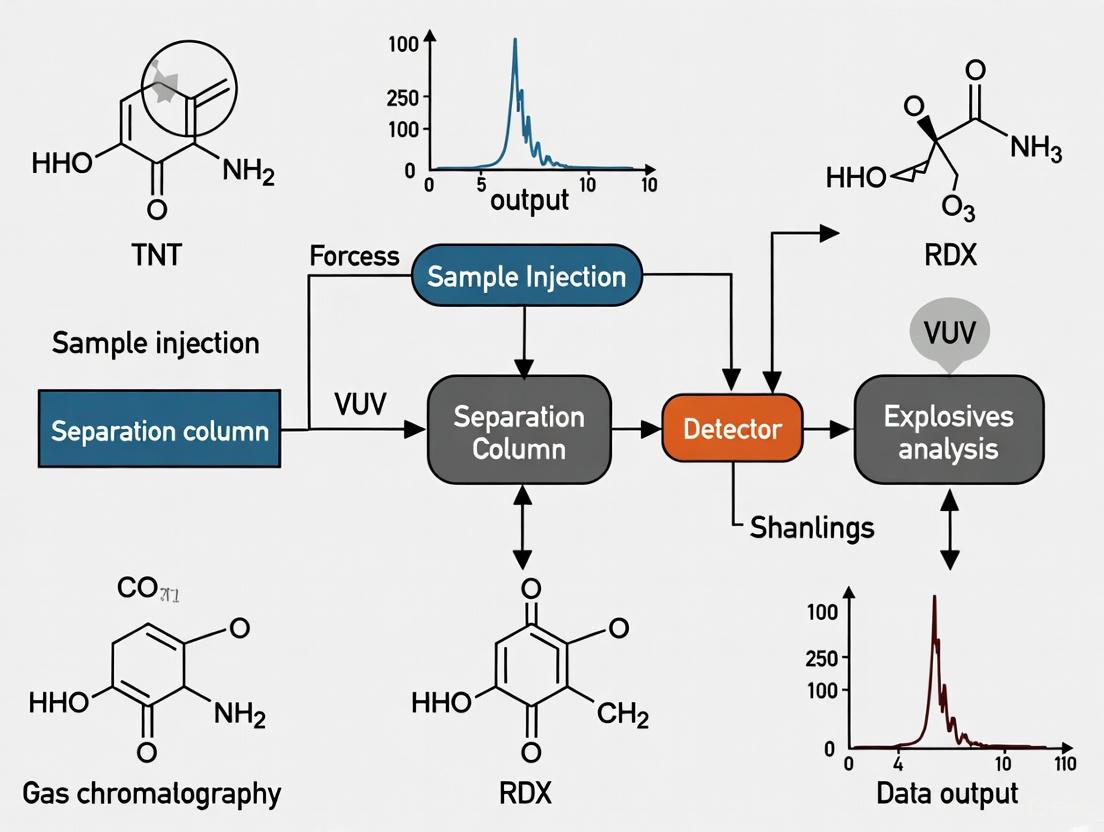
This article provides a comprehensive overview of Gas Chromatography/Vacuum Ultraviolet (GC-VUV) spectroscopy as a powerful analytical technique for the detection and analysis of explosive compounds.
GC-VUV for Explosives Analysis: Optimization, Applications, and Future Directions in Forensic Science
Abstract
This article provides a comprehensive overview of Gas Chromatography/Vacuum Ultraviolet (GC-VUV) spectroscopy as a powerful analytical technique for the detection and analysis of explosive compounds. Tailored for researchers, scientists, and drug development professionals, it covers the foundational principles of GC-VUV, detailing its enhanced specificity for distinguishing isomers and nitrate esters compared to traditional GC-MS. The scope includes a deep dive into statistically optimized methodologies for forensic applications, particularly in post-blast debris analysis, with proven success in identifying smokeless powder components. It further explores troubleshooting for thermal decomposition, performance validation against established techniques, and examines the emerging role of machine learning in spectral prediction, offering a complete guide for method development and implementation in security and pharmaceutical contexts.
Unlocking GC-VUV: Principles and Spectral Advantages for Explosive Compounds
Gas Chromatography–Vacuum Ultraviolet Spectroscopy (GC-VUV) is a universal detection technique for gas chromatography that was first introduced in a benchtop format in 2014 [1] [2]. The core innovation of GC-VUV lies in its detection window, which spans from 125 nm to 430 nm, encompassing both the vacuum ultraviolet (VUV) and standard ultraviolet (UV) regions of the electromagnetic spectrum [3] [4]. This broad wavelength range is critical because nearly all chemical species except carrier gases (hydrogen, helium, and argon) absorb in the VUV region below 200 nm due to high-energy electronic transitions [1] [4]. The technology provides three-dimensional data (time, absorbance, wavelength) that are specific to chemical structure, delivering both qualitative and quantitative information for most gas phase compounds [1].
The forensic analysis of explosives presents particular challenges that GC-VUV is uniquely positioned to address. Traditional GC-MS struggles with differentiating structural isomers and analyzing thermally labile compounds like nitrate ester explosives, which exhibit similar mass spectral fragmentation patterns [5]. GC-VUV overcomes these limitations by detecting unique spectral fingerprints for closely related compounds, including constitutional isomers that are difficult to distinguish by mass spectrometry alone [1]. For explosives research, this capability is paramount for identifying specific explosive compounds in intact materials and post-blast debris with high specificity [6] [7].
Fundamental Operating Principles
Detection Mechanism and Spectral Absorbance
The operational foundation of GC-VUV rests on the principle that gas phase molecules absorb light in the VUV-UV region through electronic transitions when exposed to photons from a deuterium lamp [1]. These transitions include σ→σ, n→σ, π→π, and n→π excitations that probe the fundamental electronic structure of molecules [3] [4]. The resulting absorption spectra serve as unique "fingerprints" that are highly specific to individual molecular structures, enabling both identification and quantification [1].
The quantitative aspect of GC-VUV operates according to the Beer-Lambert Law, which establishes a linear relationship between absorbance and concentration [1] [2]. This relationship allows for absolute determination of the number of molecules present in the flow cell when absorption cross-sections are known, without requiring calibration in the absence of chemical interferences [2]. The sensitivity of this detection method is demonstrated by mass on-column detection limits ranging from 15 pg (for benzene) to 246 pg (for water), with a linear range of 3-4 orders of magnitude [2].
Table 1: Electronic Transitions Probed in the GC-VUV Wavelength Range
| Wavelength Range | Electronic Transitions | Chemical Bonds Probed | Significance for Explosives Analysis |
|---|---|---|---|
| 125-160 nm | σ→σ* | C-C, C-H single bonds | Detects aliphatic chains in explosive compounds |
| 160-200 nm | n→σ, π→π | C=O, C-N, N=O, C=C | Identifies nitro functional groups and other chromophores |
| 200-430 nm | n→π* | Carbonyls, conjugated systems | Detects aromatic stabilizers and decomposition products |
Instrumentation and Component Configuration
The GC-VUV system consists of several key components that work in concert to separate and detect analytes. The gas chromatograph separates volatile and semivolatile compounds, which then travel through a heated transfer line to the VUV detector [1]. A makeup flow of carrier gas is introduced at the end of the transfer line to ensure efficient transfer of analytes [1]. The detector itself features a flow cell where analytes are exposed to VUV light from a deuterium lamp [1]. Specially coated reflective optics paired with a back-thinned charge-coupled device (CCD) collect high-quality VUV absorption data [1].
For explosives analysis, specific instrumental parameters have been optimized through statistical experimental design. Research has determined that the optimal configuration includes a GC carrier gas flow rate of 1.9 mL/min, VUV make-up gas pressure of 0.00 psi, and a final ramped inlet temperature of 200°C [6] [7]. The transfer line/flow cell temperature was found not to be statistically significant for explosive compounds, though 300°C is typically used as the optimized temperature to prevent condensation [6]. The VUV detector operates at ambient pressure, making it not flow rate limited—a key advantage that enables flow rate-enhanced chromatographic compression to reduce analysis times [1].
Schematic of GC-VUV Operational Workflow
Analytical Capabilities and Advantages
Spectral Differentiation and Isomer Discrimination
A paramount strength of GC-VUV in explosives research is its exceptional capability to differentiate structurally similar compounds that produce nearly identical mass spectra in traditional GC-MS analysis [5]. This includes positional isomers such as different dinitrotoluene compounds (2,4-DNT, 2,5-DNT, and 2,6-DNT), which present significant challenges in forensic explosives identification [5]. The VUV absorption spectra are highly sensitive to subtle differences in molecular structure, including the position of functional groups on aromatic rings and the geometry of aliphatic chains [1].
This discriminatory power extends to cis/trans isomers, which GC-VUV can distinguish based on their distinct VUV spectral signatures [1] [8]. For example, in fatty acid analysis—relevant to explosive research as potential matrix components—cis and trans isomers exhibit clearly differentiable spectra despite nearly identical mass spectra [8]. This capability has significant implications for explosives research, where isomeric forms of stabilizers, plasticizers, or precursor compounds may need to be identified for forensic investigations [6] [3].
Spectral Deconvolution of Co-eluting Compounds
GC-VUV technology provides a powerful solution to the common chromatographic challenge of co-elution through its spectral deconvolution capabilities [1]. Because VUV absorption is additive, the spectrum of co-eluting compounds corresponds to the sum absorbance of each individual component [1]. Software algorithms can then deconvolve these overlapping signals by matching the composite spectrum against library spectra of potential compounds [1].
This capability is particularly valuable in explosives analysis, where complex mixtures of explosive compounds, stabilizers, plasticizers, and byproducts are often present in post-blast debris [6] [3]. The deconvolution process enables accurate identification and quantification of individual components even when they don't fully separate chromatographically [1]. The goodness of fit (R² > 0.999) between sample spectra and library references confirms compound identities [1]. This advanced data processing allows analysts to deliberately shorten GC run times through flow rate-enhanced chromatographic compression while maintaining data integrity—reducing typical analysis times from 30-60 minutes to as little as 8-14 minutes for some applications [1].
Universal Detection and Compound Class Characterization
The GC-VUV detector is considered universal because virtually all chemical compounds absorb in the 125-240 nm wavelength range [2] [4]. This universal detection capability stems from the fact that VUV photons probe electronic transitions in almost all chemical bonds [1]. Unlike selective detectors that target specific functional groups, GC-VUV can detect a wide range of compounds from fixed gases to complex hydrocarbons, making it exceptionally suitable for analyzing diverse explosive compounds and their degradation products [2].
Another significant advantage is the technology's ability to perform compound class characterization based on spectral shapes [1]. Compounds within the same class share characteristic spectral features that enable rapid classification during data analysis [1]. Proprietary software applies fitting procedures to determine the relative contribution of each compound category in a sample, utilizing retention index information to limit library searching and expedite automated data processing [1]. For explosives research, this means that complex mixtures in post-blast debris can be rapidly screened for classes of compounds such as nitroaromatics, nitrate esters, nitramines, and peroxide-based explosives [6] [7].
Applications in Explosives Research
Analysis of Explosive Compounds
GC-VUV has been systematically applied to the analysis of various explosive and explosive-related compounds, including triacetone triperoxide (TATP), dimethyldinitrobutane (DMNB), nitroglycerin (NG), diphenylamine (DPA), 2,4,6-trinitrotoluene (TNT), pentaerythritol tetranitrate (PETN), and cyclonite (RDX) [6]. These compounds represent major classes of explosives: nitrate esters (NG, PETN), nitramines (RDX), nitroaromatics (TNT), nitroalkanes (DMNB), and peroxide-based compounds (TATP) [6]. Each class exhibits distinct analytical behavior under GC-VUV conditions.
Research has revealed that nitrate ester and nitramine explosives undergo thermal decomposition in the VUV flow cell, producing fine structure in their VUV spectra [7]. This decomposition, rather than being a limitation, actually enhances specificity because the resulting spectral fine structures originate from vibronic and Rydberg transitions in small decomposition products such as nitric oxide, carbon monoxide, formaldehyde, water, and oxygen [7] [5]. The decomposition temperatures for these compounds range between 244°C and 277°C [7] [5]. For nitrated compounds specifically, the nitro functional group exhibits an absorption maximum over a wide range (170-270 nm), with the exact wavelength and intensity being highly dependent on the overall molecular structure [7].
Table 2: GC-VUV Analytical Performance for Explosive Compounds
| Explosive Compound | Compound Class | Key Spectral Features | Notable Analytical Behavior | Limit of Detection |
|---|---|---|---|---|
| Nitroglycerin (NG) | Nitrate ester | Fine structure from decomposition products | Thermally decomposes in flow cell (244-277°C) | Successfully quantified in post-blast debris [3] |
| RDX | Nitramine | Fine structure from decomposition products | Thermally decomposes in flow cell (244-277°C) | Reported in optimized method [6] |
| TNT | Nitroaromatic | Nitro functional group absorption (170-270 nm) | Stable under analysis conditions | Reported in optimized method [6] |
| TATP | Peroxide-based | Distinct spectrum from molecular structure | Decomposes to acetone at elevated temperatures | Reported in optimized method [6] |
| 2,4-DNT | Nitroaromatic | Nitro functional group absorption (170-270 nm) | Stable under analysis conditions | 9 μg/mg in post-blast debris [3] |
| Diphenylamine | Stabilizer | Characteristic aromatic spectrum | Identified in single- and double-base powders | <3 μg/mg in post-blast debris [3] |
Post-Blast Debris Analysis
The application of GC-VUV to post-blast debris represents a significant advancement in forensic explosives analysis [6] [3]. Controlled studies using improvised explosive devices (IEDs) constructed from both PVC and steel pipes have demonstrated the technology's effectiveness for identifying explosive residues after detonation [6] [3]. Research has successfully quantified organic components in post-blast smokeless powder particles, including nitroglycerin, 2,4-dinitrotoluene, diphenylamine, ethyl centralite, and di-n-butyl phthalate using heptadecane as an internal standard [3].
In these applications, GC-VUV has revealed significant changes in the chemical composition of smokeless powder particles from pre- to post-blast states [3]. For single-base smokeless powders, 2,4-dinitrotoluene and diphenylamine were successfully quantified in post-blast debris, while double-base smokeless powders showed measurable levels of nitroglycerin, diphenylamine, and ethyl centralite after detonation [3]. Concentration changes between pre- and post-blast smokeless powder particles provide valuable information about combustion efficiency and chemical transformations during detonation [3]. Additionally, microscopic differences between pre- and post-blast debris offer complementary physical evidence for forensic investigations [3].
Experimental Protocols for Explosives Analysis
Optimized Method for Explosive Compounds
A central composite design (CCD) of experiments has been utilized to establish optimized GC-VUV parameters for the analysis of explosive compounds [6]. The following protocol represents the statistically optimized method for forensic analysis of explosives and post-blast debris:
Instrument Configuration:
- Gas Chromatograph: Equipped with multimode inlet
- VUV Detector: Wavelength range 125-430 nm
- Column: Appropriate for volatile and semivolatile explosives
Optimized Parameters:
- GC Carrier Gas Flow Rate: 1.9 mL/min [6] [7]
- VUV Make-up Gas Pressure: 0.00 psi [6] [7]
- Final Ramped Inlet Temperature: 200°C [6] [7]
- Transfer Line/Flow Cell Temperature: 300°C (not statistically significant, but prevents condensation) [6]
Method Details: The multimode inlet program should utilize a ramped temperature profile culminating at the optimized final temperature of 200°C [6]. The oven temperature program should be designed for efficient separation of target explosive compounds, which can be accelerated using flow rate-enhanced chromatographic compression techniques [1]. The VUV detector should collect full spectral data from 125-430 nm for all analytes, enabling both identification through spectral matching and quantification based on the Beer-Lambert Law [1] [2].
Sample Preparation for Post-Blast Debris
Materials and Reagents:
- Internal Standard Solution: 100 ppm heptadecane in acetone [3]
- Solvent: Acetone (chosen for its ability to dissolve nitrocellulose and disrupt the sample matrix) [3]
- Reference Standards: Target analytes (nitroglycerin, 2,4-dinitrotoluene, diphenylamine, ethyl centralite, di-n-butyl phthalate) at appropriate concentrations [3]
Extraction Protocol:
- Collect post-blast debris from explosion scene or controlled detonation [3]
- Recover smokeless powder particles from debris matrix
- Weigh accurate amount of particulate material
- Extract with internal standard solution (100 ppm heptadecane in acetone) [3]
- Utilize solvent extraction with agitation or sonication to ensure complete dissolution
- Transfer clear extract to GC vial for analysis
Calibration Standards: Prepare calibration curves using concentrations of 3, 5, 10, 30, 50, and 100 ppm of target analytes in the internal standard solution [3]. For higher concentration samples, extend calibration ranges to 223-892 ppm for single-base smokeless powders or 280-1118 ppm for double-base smokeless powders as needed [3].
Quantification Method: Quantitate analytes using the internal standard method with heptadecane as the reference [3]. Apply spectral deconvolution for co-eluting peaks to resolve individual component contributions to overlapping chromatographic signals [1].
Research Reagent Solutions
Table 3: Essential Materials for GC-VUV Analysis of Explosives
| Reagent/Material | Function | Application Note |
|---|---|---|
| Heptadecane in Acetone | Internal Standard Solution | Used at 100 ppm concentration for quantification; acetone disrupts nitrocellulose matrix [3] |
| Nitroglycerin Standard | Target Analytic Quantification | Purchased as 1000 μg/mL in methanol; concentrate via nitrogen blow-down for working solutions [3] |
| Explosive Standards (TATP, DMNB, RDX, etc.) | Method Development and Calibration | Single-component explosive standards from commercial sources; typically supplied at 0.1-1 mg/mL in organic solvents [6] |
| Deuterium Lamp | VUV Light Source | Essential for generating 125-430 nm light; requires periodic replacement based on usage [1] |
| High-Purity Nitrogen | Make-up Gas | Must be high purity to avoid absorption interference in VUV region [4] |
| VUV Spectral Library | Compound Identification | Customized library containing explosive compounds, stabilizers, and decomposition products [6] [1] |
GC-VUV technology represents a significant advancement in analytical chemistry for explosives research, offering unique capabilities that complement and enhance traditional GC-MS methods. The operational principles spanning 125-430 nm detection provide universal detection while delivering highly specific spectral fingerprints that enable differentiation of challenging compounds such as structural isomers and thermally labile explosives. The optimized methods for explosive analysis demonstrate robust performance for both intact materials and complex post-blast debris samples. As GC-VUV continues to evolve, its applications in forensic explosives investigation promise to expand, offering improved sensitivity, specificity, and efficiency for this critical analytical challenge.
The forensic analysis of explosives presents significant analytical challenges, including the need to differentiate between structurally similar compounds and isomers, and to identify trace residues in complex post-blast debris. Gas chromatography coupled with vacuum ultraviolet spectroscopy (GC-VUV) has emerged as a powerful analytical technique that addresses these challenges through its unique spectral library capabilities. The VUV spectral library functions as a repository of unique "fingerprints" for explosive compounds, enabling highly specific identification based on absorption characteristics in the 120-430 nm wavelength range [7]. Unlike mass spectrometry, which sometimes struggles to differentiate compounds with similar fragmentation patterns, VUV spectroscopy provides distinct spectral signatures for even closely related compounds, making it particularly valuable for forensic explosives analysis [9] [3].
The fundamental advantage of GC-VUV in this field stems from the universal absorption of photons in the VUV region by nearly all chemical compounds. This absorption results from electronic transitions (σ→σ, n→σ, π→π, and n→π) that generate unique, reproducible spectra [3]. When applied to explosives analysis, this technology enables forensic scientists to overcome traditional limitations in detecting and differentiating explosive compounds, thermal decomposition products, and post-blast residues with high specificity and sensitivity [7].
Fundamental Principles of VUV Spectroscopy for Explosives
Spectral Absorbance Characteristics of Explosive Compounds
VUV spectroscopy operates on the principle that nearly all molecules absorb light in the 120-430 nm wavelength range, with the resulting spectra serving as unique molecular fingerprints. For explosive compounds, specific functional groups exhibit characteristic absorption patterns that facilitate identification. The nitro functional group (–NO2), prevalent in many explosives, demonstrates particularly distinctive absorption characteristics with its maximum appearing across a wide range (170-270 nm), where the exact wavelength and intensity are highly dependent upon the molecular structure [7].
Different classes of explosive compounds yield characteristic VUV spectral patterns:
- Nitrate esters (e.g., nitroglycerin - NG, pentaerythritol tetranitrate - PETN) and nitramines (e.g., cyclonite - RDX) undergo thermal decomposition in the VUV flow cell, producing fine structure in their spectra resulting from vibronic and Rydberg transitions in the small decomposition compounds [7].
- Nitroaromatics (e.g., 2,4,6-trinitrotoluene - TNT) exhibit distinct absorption patterns that enable clear differentiation between isomeric forms [9].
- Peroxide-based explosives (e.g., triacetone triperoxide - TATP) demonstrate characteristic spectra that facilitate identification despite their thermal lability [6].
The reproducibility of these spectral fingerprints forms the foundation for building a comprehensive VUV spectral library for explosive identification, allowing reliable matching between unknown samples and reference spectra.
Comparative Advantages Over Traditional Detection Methods
GC-VUV offers several significant advantages for explosive analysis compared to traditional GC-MS:
Table 1: Comparison of GC-VUV and GC-MS for Explosives Analysis
| Analytical Characteristic | GC-VUV | GC-MS |
|---|---|---|
| Specificity for nitrate esters | High (distinct spectra) | Moderate (similar fragmentation) |
| Isomeric differentiation | Excellent | Limited |
| Deconvolution of co-eluting compounds | Effective library-based and mathematical approaches | Requires complex software |
| Limit of detection | ~0.7 ng absolute on column [9] | Similar range |
| Quantification approach | Straightforward (Beer-Lambert Law) | Requires internal standards |
| Thermal decomposition monitoring | Direct observation | Indirect |
The VUV detector's ability to differentiate isomeric compounds represents a particular advantage for forensic analysis, as many explosive-related compounds exist in multiple isomeric forms with identical mass spectra but distinct VUV absorption profiles [9]. This capability extends to nitroaromatic compounds, where ortho-, meta-, and para- isomers produce unique spectral signatures easily distinguishable via VUV spectroscopy [9].
Applications in Explosives Analysis
Post-Blast Debris Analysis
The application of GC-VUV to post-blast debris analysis represents one of the most significant advances in forensic explosives characterization. Controlled studies utilizing pipe bombs constructed from PVC and steel containers have demonstrated the successful identification and quantification of explosive residues following detonation [6] [3]. Through optimized methods, researchers have detected compounds including nitroglycerin, 2,4-dinitrotoluene, diphenylamine, and ethyl centralite in post-blast debris at concentrations as low as 9 μg/mg for 2,4-dinitrotoluene and <3 μg/mg for diphenylamine [3].
The analytical workflow for post-blast debris analysis typically involves:
- Sample Collection: Recovery of particulate matter from explosion scenes
- Extraction: Using solvents such as acetone to dissolve organic compounds
- Analysis: GC-VUV separation and detection
- Identification: Library matching against reference spectra
- Quantification: Using internal standards such as heptadecane
This approach has proven effective for analyzing both single-base and double-base smokeless powders after detonation, revealing significant changes in chemical composition between pre- and post-blast materials [3]. The ability to quantify these changes provides valuable information about explosive degradation patterns and residue persistence.
Thermal Decomposition Studies
VUV spectroscopy provides unique insights into the thermal behavior of explosive compounds. Nitrate ester and nitramine explosives undergo thermal decomposition in the VUV flow cell at temperatures between 244°C and 277°C, producing distinctive spectral fine structure that can be analyzed to understand decomposition pathways [7]. This thermal decomposition monitoring capability enables researchers to:
- Identify breakdown products of unstable explosive compounds
- Determine decomposition temperature ranges for different explosive classes
- Investigate decomposition mechanisms through computational analysis of spectral data
- Differentiate between intact compounds and their decomposition products
The observation of these decomposition processes directly within the analytical system provides valuable information that might be missed by other detection techniques, offering insights into both the identification and behavior of explosive compounds under various conditions.
Experimental Protocols
GC-VUV Method Optimization for Explosives
Comprehensive optimization of GC-VUV parameters for explosive analysis has been established through statistical experimental design, resulting in a standardized method for forensic applications [6]:
Table 2: Optimized GC-VUV Parameters for Explosive Analysis
| Parameter | Optimized Value | Effect on Analysis |
|---|---|---|
| Inlet Temperature | 200°C | Prevents degradation of thermally labile compounds |
| Carrier Gas Flow Rate | 1.9 mL/min | Balances separation efficiency and analysis time |
| Make-up Gas Pressure | 0.00 psi | Maximizes detection sensitivity |
| Transfer Line/Flow Cell Temperature | 300°C (not statistically significant) | Maintains compound volatility without degradation |
| Acquisition Rate | Standard (method-dependent) | Ensures sufficient data points across peaks |
| Wavelength Range | 120-430 nm | Captures complete spectral fingerprints |
This optimized method has been validated for a range of explosive and explosive-related compounds including TATP, DMNB, NG, DPA, TNT, PETN, and RDX [6]. The robustness of the method ensures consistent performance across different instrument platforms and sample matrices.
Spectral Library Development and Quality Assurance
The development of high-quality VUV spectral libraries requires careful attention to spectral acquisition parameters to ensure reproducibility and reliability. The following protocol outlines the key steps for obtaining quality spectra for library inclusion:
- Concentration Optimization: Adjust analyte concentration to avoid absorbance saturation, maintaining maximum absorbance below 1.2 AU to prevent spectral distortion [10].
- Background Selection: Choose a background region close to the analyte peak with no structural features, appearing as random noise centered around 0 AU [10].
- Retention Region Selection: Select a region on the peak where absorbance is between 0.3-1.2 AU, avoiding saturated regions near the peak apex if necessary [10].
- Spectrum Generation: Use the "Sum Ret. Reg." function to create a background-subtracted summed spectrum from multiple scans across the peak [10].
- Library Addition: Transfer the quality-checked spectrum to the Library Editor, assigning appropriate compound identification information.
Verification of spectral matches involves multiple complementary approaches [11]:
- Visual Inspection: Direct comparison of sample and library spectra
- Residual Analysis: Examination of the difference between sample and library spectra
- Chromatographic Peak Reconstruction: Overlay of reconstructed and actual chromatographic peaks
- Statistical Metrics: Evaluation of r² (closer to 1 indicates better fit) and Chi² (closer to 0 indicates better fit) values
Deconvolution of Co-eluting Compounds
The analysis of complex explosive mixtures and post-blast debris often involves chromatographic co-elution, which can be resolved through two primary deconvolution approaches in GC-VUV:
Spectral Library-Based Deconvolution: Utilizes reference spectra from established libraries to mathematically resolve co-eluting peaks, requiring that all components be present in the spectral library [9].
Non-Negative Matrix Factorization (NMF): Serves as an alternative deconvolution approach that does not require pre-existing library entries, making it suitable for identifying unknown compounds or those not yet in reference libraries [9] [12].
The implementation of both approaches provides comprehensive deconvolution capabilities, with library-based methods offering superior performance for known compounds and NMF extending analytical power to novel or unexpected components in complex samples.
Essential Research Reagents and Materials
The following reagents and materials represent the core requirements for implementing GC-VUV analysis of explosive compounds:
Table 3: Essential Research Reagents for GC-VUV Explosive Analysis
| Reagent/Material | Specification | Application Purpose |
|---|---|---|
| Nitroglycerin (NG) | 1000 μg/mL in methanol (Restek) | Primary explosive standard for double-base powders [3] |
| Pentaerythritol Tetranitrate (PETN) | 1000 μg/mL in methanol (Restek) | High explosive standard [6] |
| RDX (Cyclonite) | 1000 μg/mL in methanol (Restek) | Nitramine explosive standard [6] |
| 2,4,6-Trinitrotoluene (TNT) | Solid standard (Omni Explosives) | Nitroaromatic explosive standard [6] |
| Triacetone Triperoxide (TATP) | 100 μg/mL in acetonitrile (Accustandard) | Peroxide-based explosive standard [6] |
| Diphenylamine (DPA) | Solid (Acros Organics) | Stabilizer in smokeless powders [3] |
| 2,3-Dimethyl-2,3-dinitrobutane (DMNB) | Solid (Sigma Aldrich) | Marker compound in explosives [6] |
| Heptadecane | Solid (Acros Organics) | Internal standard for quantification [3] |
| Acetone | GC Resolv Grade (Fisher Chemical) | Solvent for extraction and analysis [3] |
| Methanol | GC Resolv Grade (Fisher Chemical) | Solvent for standard preparation [6] |
Data Analysis and Interpretation
Quantitative Analysis of Smokeless Powders
GC-VUV enables precise quantification of organic components in smokeless powders, both before and after detonation, providing valuable data on compositional changes resulting from explosion:
Table 4: Quantitative Analysis of Smokeless Powder Components via GC-VUV
| Compound | Smokeless Powder Type | Pre-blast Concentration Range | Post-blast Concentration Range | LOD |
|---|---|---|---|---|
| Nitroglycerin (NG) | Double-base | Method-dependent | Detected at 131 μg/mg [3] | Method-dependent |
| 2,4-Dinitrotoluene (2,4-DNT) | Single-base | Method-dependent | Detected at 9 μg/mg [3] | Method-dependent |
| Diphenylamine (DPA) | Both | Method-dependent | Detected at <3 μg/mg [3] | Method-dependent |
| Ethyl Centralite (EC) | Double-base | Method-dependent | Detected at <3 μg/mg [3] | Method-dependent |
Quantitative data reveals significant changes in chemical composition between pre- and post-blast smokeless powder particles, with generally reduced concentrations of organic components following explosion due to partial combustion and decomposition [3]. These quantitative capabilities support both forensic investigation and research into explosive behavior.
Limits of Detection and Sensitivity
The sensitivity of GC-VUV for explosive and explosive-related compounds has been systematically evaluated, demonstrating limits of detection (LOD) of approximately 0.7 ng absolute on column for many target compounds [9]. This sensitivity extends across multiple classes of explosives and precursors, including:
- Drug precursors (e.g., safrole, phenylacetone): 1.4-2.4 ng LOD
- Explosive precursors (e.g., nitromethane, nitroaromatics): Similar sensitivity range
- Chemical warfare agent simulants: Comparable detection levels
The linear response of VUV absorbance, following Beer-Lambert's Law, facilitates straightforward quantification across a wide concentration range, though analysts must remain mindful of absorbance saturation effects at high concentrations (>1.2 AU) that can distort spectral shapes and compromise identification reliability [10].
The VUV spectral library represents a transformative resource for explosive identification, providing unique molecular fingerprints that enable highly specific analysis of explosive compounds, their precursors, and post-blast residues. The comprehensive protocols and optimized methods detailed in this application note establish GC-VUV as a robust analytical technique that complements and extends traditional GC-MS approaches, particularly through its exceptional capability to differentiate isomeric compounds and deconvolve complex mixtures.
The continuing expansion of VUV spectral libraries, combined with ongoing method refinement, promises to further enhance forensic capabilities for explosive identification and characterization. As the technology becomes more widely adopted in forensic laboratories, its proven effectiveness in casework applications—from controlled pipe bomb detonations to real-world post-blast investigations—confirms its value as a powerful tool for both research and operational forensic analysis.
Optimization of Gas Chromatography/Vacuum Ultraviolet (GC/VUV) Spectroscopy for Explosive Compounds
Gas chromatography/vacuum ultraviolet spectroscopy (GC/VUV) has emerged as a powerful analytical technique for the detection and identification of explosive compounds in forensic and security applications. This technique provides unique capabilities for differentiating structurally similar compounds and deconvoluting co-eluting peaks through characteristic VUV absorption spectra [13]. Within the broader context of explosives research, GC/VUV offers complementary selectivity to traditional GC/MS methods, particularly for compounds with similar mass spectra but distinct VUV absorption profiles [6]. This application note details optimized protocols and analytical parameters for key explosive compounds including triacetone triperoxide (TATP), cyclonite (RDX), pentaerythritol tetranitrate (PETN), nitroglycerine (NG), and smokeless powder components, establishing standardized methodologies for researchers and forensic scientists.
Optimized GC/VUV Parameters for Explosive Analysis
A central composite design (CCD) of experiments was utilized to systematically optimize GC/VUV parameters for explosive analysis, focusing on maximizing chromatographic peak area to enhance detection sensitivity [6]. The optimized conditions provide a robust foundation for analyzing diverse explosive compound classes.
Table 1: Optimized GC/VUV Parameters for Explosive Compounds Analysis
| Parameter | Optimized Condition | Experimental Range Studied | Significance |
|---|---|---|---|
| Final Inlet Temperature | 200°C | 200°C, 250°C, 300°C | Minimizes thermal degradation of labile compounds |
| Carrier Gas Flow Rate | 1.9 mL/min | 1.9, 3.2, 4.5 mL/min | Balances separation efficiency and analysis time |
| VUV Make-up Gas Pressure | 0.00 psi | 0.00, 0.15, 0.30 psi | Maximizes detection sensitivity |
| Transfer Line/Flow Cell Temperature | 300°C (not statistically significant) | 200-300°C | No significant impact on response in optimized range |
The optimization study demonstrated that these parameters effectively accommodate diverse explosive compound classes including nitrate esters, nitramines, nitroaromatics, nitroalkanes, and peroxide-based explosives [6]. The application of these optimized conditions to post-blast debris analysis has successfully identified relevant compounds in single- and double-base smokeless powders from fragments originating from both PVC and steel pipes, confirming method applicability to real-world forensic samples [6] [14].
Thermal Behavior and Decomposition Analysis
Understanding the thermal behavior of explosive compounds in the GC/VUV system is critical for accurate interpretation of analytical results. Nitrate ester and nitramine compounds exhibit distinctive thermal decomposition patterns within the GC/VUV transfer line/flow cell assembly, which can be systematically characterized.
Table 2: Thermal Decomposition Properties of Nitrated Explosive Compounds
| Compound | Class | Decomposition Temperature Range (°C) | Key Decomposition Products |
|---|---|---|---|
| Nitroglycerine (NG) | Nitrate Ester | 222-253°C (flow rate dependent) | NO, CO, H₂CO, H₂O, O₂ |
| Pentaerythritol Tetranitrate (PETN) | Nitrate Ester | 244-277°C | NO, CO, H₂CO, H₂O, O₂ |
| Ethylene Glycol Dinitrate (EGDN) | Nitrate Ester | 244-277°C | NO, CO, H₂CO, H₂O, O₂ |
| RDX | Nitramine | 244-277°C | NO, CO, H₂CO, H₂O, O₂ |
| HMX | Nitramine | 244-277°C | NO, CO, H₂CO, H₂O, O₂ |
Decomposition temperatures show significant correlation with residence time in the transfer line/flow cell, with NG exhibiting a 31°C range across different carrier gas flow rates [15]. The decomposition profile follows a logistic function relationship, enabling precise determination of the temperature at which 50% decomposition occurs [15]. These decomposition temperatures demonstrate strong correlation with traditional thermal analysis methods, including differential scanning calorimetry (r = 0.91) and thermal gravimetric analysis (r = 0.90-0.98) [15].
Diagram 1: Thermal Decomposition Pathway in GC/VUV Analysis
Experimental Protocols
Materials Required:
- Explosive standards (TATP, DMNB, NG, DPA, TNT, PETN, RDX) at 1 mg/mL in methanol or acetonitrile [6]
- Methanol (GC Resolv) and acetone (certified ACS) as solvents [6]
- Sorbent-filled thermal desorption tubes for vapor sampling [16]
- Amber sample vials for standard preparation [16]
Direct Liquid Deposition Protocol:
- Prepare stock solutions of explosive standards at 1000 ng/μL in appropriate solvents [16]
- Create serial dilutions to achieve working standards in the range of 0.1-100 ng/μL [16]
- For vapor analysis, deposit 1-2 μL of standard solutions directly onto sorbent-filled thermal desorption tubes [16]
- Allow solvent evaporation for up to 5 minutes before analysis [17]
Solid Phase Microextraction (SPME) Protocol:
- Verify SPME fiber cleanliness through blank analysis [17]
- For headspace sampling, transfer 100-500 mg of sample to GC headspace vial [17]
- Condition at 22°C for at least 2 hours [17]
- Expose SPME fiber to headspace for 10-40 minutes depending on analyte volatility [17]
- For direct deposition, apply 10-20 μL of sample solution to SPME fiber coating [17]
- Allow solvent evaporation for up to 5 minutes before GC-VUV analysis [17]
GC/VUV Instrumental Configuration
System Preparation:
- Install new GC column with appropriate nuts and ferrules for inlet and detector connections [16]
- Perform system bake-out at near maximum operating temperature (typically 300°C) with carrier gas flow for at least 2 hours [16]
- Cool system and retighten all connections to prevent leaks [16]
- Verify system performance through quality control standards before sample analysis [17]
Optimized Method Parameters:
- Inlet Program: Ramped multimode inlet with final temperature of 200°C [6]
- Carrier Gas: Helium at 1.9 mL/min constant flow rate [6]
- Make-up Gas Pressure: 0.00 psi [6]
- Transfer Line/Flow Cell Temperature: 300°C [6]
- VUV Detection Wavelength Range: 120-240 nm [13]
- Data Acquisition Rate: 10-100 Hz (compound dependent) [6]
Data Analysis and Spectral Interpretation
Spectral Deconvolution Protocol:
- Collect VUV absorption spectra across 120-240 nm range [13]
- Apply background subtraction to remove carrier gas contributions [13]
- For co-eluting peaks, utilize spectral additivity principles for deconvolution [13]
- Reference library spectra for compound identification [6]
- For decomposing compounds, monitor characteristic breakdown products (NO, CO, H₂CO) [15]
Quantitation Approach:
- Utilize traditional internal or external standard calibration [13]
- Apply pseudo-absolute quantification through response factors when standards are limited [13]
- For vapor analysis, account for tube-to-tube variability through internal standardization [16]
- Report limits of detection based on signal-to-noise ratio of 3:1 [18]
Research Reagent Solutions
Table 3: Essential Research Reagents for Explosives Analysis by GC/VUV
| Reagent / Material | Function / Application | Specifications / Notes |
|---|---|---|
| Explosive Standards | Target analytes for method development and quantification | TATP, RDX, PETN, NG, TNT, DMNB, DPA at 0.1-1000 μg/mL in methanol or acetonitrile [6] |
| Sorbent Tubes | Vapor collection and sample introduction for thermal desorption | Containing Tenax TA, Carbograph, or similar sorbents for explosive vapor retention [16] |
| SPME Fibers | Headspace sampling and direct sample introduction | 65-μm polydimethylsiloxane/divinylbenzene (PDMS/DVB) coating recommended [17] |
| GC Solvents | Sample preparation and dilution | Methanol (Optima LC/MS grade), acetonitrile, acetone (certified ACS) [6] |
| Deuterated Internal Standards | Quantitation and process monitoring | d₅-TNT, d₈-RDX, ¹⁵N-TNT for isotope dilution methods [16] |
| Quality Control Standards | System performance verification | Containing 13 chemicals with expected retention times between 0-90 seconds [17] |
Diagram 2: GC/VUV Analytical Workflow for Explosives
Applications to Post-Blast Analysis
The optimized GC/VUV method has been successfully applied to the analysis of post-blast debris, demonstrating particular utility for identifying smokeless powder components in complex matrices [6]. The technique enables detection of relevant compounds in both single-base (nitrocellulose with NG) and double-base (nitrocellulose with NG and nitroguanidine) smokeless powders recovered from post-blast fragments originating from various pipe materials including PVC and steel [6] [14]. The VUV detection provides specific identification of thermally labile compounds through their decomposition products, adding orthogonal selectivity to traditional GC/MS analysis [15]. This capability is especially valuable for distinguishing between nitrate ester explosives that yield similar mass spectra but have distinct decomposition profiles in the VUV flow cell [15].
The optimized GC/VUV parameters and experimental protocols detailed in this application note provide researchers with a validated methodology for the sensitive detection and identification of key explosive compounds. The systematic optimization of inlet temperature, carrier gas flow rate, and make-up gas pressure ensures robust performance across diverse explosive compound classes, while understanding thermal decomposition behavior enables accurate interpretation of analytical results. The application of these methods to post-blast debris analysis confirms the technique's relevance to forensic investigations and security applications. GC/VUV spectroscopy represents a powerful complementary technique to traditional GC/MS, particularly through its ability to differentiate structurally similar compounds and deconvolute co-eluting peaks based on unique VUV absorption spectra.
Gas chromatography-mass spectrometry (GC-MS) has long been the established technique for the analysis of explosive compounds and related materials in forensic investigations [6]. However, this technique faces significant limitations when analyzing complex forensic samples, particularly in distinguishing between structural isomers and deconvoluting co-eluting compounds due to nearly identical mass spectral fragmentation patterns [5]. These challenges are especially pronounced in explosives research, where isomeric compounds and complex mixtures are frequently encountered in post-blast debris analysis [3].
The development of gas chromatography-vacuum ultraviolet spectroscopy (GC-VUV) provides a powerful complementary technique that overcomes these limitations. The VUV detector simultaneously scans wavelengths from 125-430 nm, capturing unique absorption spectra for virtually all chemical species through σ→σ, n→σ, and π→π* electronic transitions [3]. This application note details optimized methodologies and applications of GC-VUV for explosives research, demonstrating enhanced specificity for isomer differentiation and co-elution deconvolution.
Principles of GC-VUV Analysis
Fundamental Advantages Over Traditional Detection Methods
The vacuum ultraviolet detector operates on the principle that nearly all chemical compounds absorb strongly in the 120-240 nm wavelength range, with each molecule producing a unique, characteristic absorption spectrum [13]. This spectral fingerprint enables definitive compound identification and differentiation that is largely independent of retention time behavior.
Unlike mass spectrometry, which struggles with isomeric compounds exhibiting nearly identical fragmentation patterns, VUV spectroscopy readily distinguishes structural isomers based on their distinct electronic transitions [13]. This capability is particularly valuable for explosives research, where isomeric compounds such as dinitrotoluene isomers must be accurately identified for forensic evidence [5].
Additionally, the additive nature of VUV absorption spectra enables straightforward mathematical deconvolution of co-eluting compounds, allowing researchers to intentionally develop faster GC methods with co-elution while maintaining accurate identification and quantification [19].
Technical Workflow
The following diagram illustrates the fundamental GC-VUV analysis workflow and its advantages in resolving analytical challenges:
Experimental Protocols
Optimized GC-VUV Method for Explosive Compounds
A systematic optimization of GC-VUV parameters was conducted specifically for explosive and explosive-related compounds using a central composite design (CCD) approach [6]. The optimized method conditions are detailed below:
Instrumentation: VGA-100 VUV Spectrometer coupled with Agilent 7890B GC System [6] GC Column: Restek Rxi-35Sil MS (30 m × 0.25 mm ID × 0.25 μm) [6] Inlet: Multimode Inlet (MMI) with ramped temperature program [6] Carrier Gas: Helium, constant flow mode [6]
Table 1: Optimized GC-VUV Parameters for Explosive Compounds Analysis
| Parameter | Optimized Condition | Experimental Range Studied | Significance |
|---|---|---|---|
| Inlet Final Temperature | 200°C | 200-300°C | Critical for thermally labile compounds |
| Carrier Gas Flow Rate | 1.9 mL/min | 1.9-4.5 mL/min | Optimal balance of separation and speed |
| Make-up Gas Pressure | 0.00 psi | 0.00-0.30 psi | Higher pressures decrease sensitivity |
| Transfer Line/Flow Cell Temperature | 300°C | Not statistically significant | No significant impact on response |
| Oven Program | 40°C (hold 2 min), 15°C/min to 300°C (hold 5 min) | - | Complete elution of target analytes |
| VUV Detection Range | 125-430 nm | - | Captures full spectral fingerprint |
Sample Preparation Protocol for Post-Blast Debris
This protocol is adapted from validated methods for the quantitative analysis of smokeless powder particles in post-blast debris [3]:
Collection: Collect post-blast debris from controlled detonations in appropriate containers. Metallic and plastic fragments should be collected separately.
Extraction:
- Transfer representative debris samples to 4 mL vials.
- Add 2 mL of acetone containing 100 ppm heptadecane as internal standard.
- Sonicate for 15 minutes at room temperature.
- Centrifuge at 3000 rpm for 5 minutes to separate particulate matter.
Calibration Standards:
- Prepare stock solutions of target analytes (nitroglycerin, 2,4-dinitrotoluene, diphenylamine, ethyl centralite) in acetone at 1000 μg/mL.
- Prepare calibration standards at concentrations of 3, 5, 10, 30, 50, and 100 ppm in internal standard solution.
- For higher concentration samples (e.g., intact smokeless powders), include additional calibration points at 223, 446, and 892 ppm.
Analysis:
- Inject 1 μL of processed sample using a 10:1 split ratio.
- Employ the optimized GC-VUV parameters detailed in Table 1.
- Acquire VUV spectra across the full 125-430 nm range.
Results and Discussion
Enhanced Isomer Differentiation
GC-VUV demonstrates superior capability in distinguishing between structurally similar compounds that challenge traditional GC-MS analysis. Research has shown that even positional isomers and diastereomers of synthetic cannabinoids can be reliably differentiated using VUV spectroscopy with derivative spectral processing [20]. This capability directly translates to explosives research, where isomeric compounds such as dinitrotoluene isomers must be accurately identified.
The application of first and second derivative processing to VUV spectra significantly enhances differentiation power, lowering the frequency of false identifications in library searches and improving separation in principal component analysis (PCA) [20]. This derivative spectral processing approach represents a significant advancement over traditional MS-based identification for isomeric compounds.
Deconvolution of Co-eluting Compounds
GC-VUV technology enables intentional method development with co-eluting compounds to dramatically reduce analysis time while maintaining data quality. The additive nature of VUV absorption spectra allows mathematical deconvolution of co-eluting peaks, even for challenging separations such as m- and p-xylene isomers that have identical mass spectra [19] [13].
Table 2: Quantitative Analysis of Smokeless Powder Components in Post-Blast Debris Using GC-VUV [3]
| Compound | Smokeless Powder Type | Pre-blast Concentration (μg/mg) | Post-blast Concentration (μg/mg) | Container Material | LOD |
|---|---|---|---|---|---|
| Nitroglycerin | Double-base | 231 | 131 | Steel | - |
| 2,4-DNT | Single-base | 84 | 9 | Steel | 9 μg/mg |
| Diphenylamine | Single-base | 17 | <3 | Steel | <3 μg/mg |
| Ethyl Centralite | Double-base | 13 | <3 | Steel | <3 μg/mg |
| Diphenylamine | Single-base | 17 | 8 | PVC | <3 μg/mg |
The data in Table 2 demonstrates the quantitative capabilities of GC-VUV for explosives analysis, successfully quantifying organic components in post-blast smokeless powder particles at concentrations as low as 3 μg/mg [3]. The significant changes in chemical composition between pre- and post-blast samples highlight the importance of quantitative analysis for understanding explosive degradation patterns.
Thermal Decomposition Analysis
VUV spectroscopy provides unique insights into the thermal behavior of explosive compounds. Nitrate ester and nitramine explosives undergo controlled thermal decomposition in the VUV flow cell, producing distinctive fine structure in their spectra attributed to vibronic and Rydberg transitions in small decomposition products such as nitric oxide, carbon monoxide, formaldehyde, water, and oxygen [5].
Decomposition temperatures for these compounds have been determined to range between 244°C and 277°C, providing valuable thermal stability information for method development [5]. The nitro functional group exhibits an absorption maximum between 170-270 nm, with the exact wavelength and intensity being highly dependent upon molecular structure [5].
The Scientist's Toolkit
Table 3: Essential Research Reagent Solutions for GC-VUV Explosives Analysis
| Reagent/Standard | Function/Purpose | Example Application | Concentration Range |
|---|---|---|---|
| Heptadecane in Acetone | Internal Standard for Quantification | Correction for extraction and injection variability | 100 ppm |
| Nitroglycerin Standard | Target Analyte | Detection and quantification in double-base smokeless powders | 3-1000 μg/mL |
| 2,4-Dinitrotoluene Standard | Target Analyte | Marker compound in single-base smokeless powders | 3-1000 μg/mL |
| Diphenylamine Standard | Target Analyte | Stabilizer in smokeless powders | 3-1000 μg/mL |
| Ethyl Centralite Standard | Target Analyte | Stabilizer and plasticizer | 3-1000 μg/mL |
| Acetone (GC Resolv Grade) | Extraction Solvent | Dissolves nitrocellulose matrix effectively | - |
Spectral Data Analysis Workflow
The analysis of GC-VUV data employs a systematic approach to maximize the extraction of meaningful chemical information from complex samples:
GC-VUV spectroscopy represents a significant advancement in analytical capability for explosives research, effectively addressing critical limitations of traditional GC-MS methodology. The technique provides unparalleled specificity for isomer differentiation through unique VUV spectral fingerprints and enables accurate deconvolution of co-eluting compounds, allowing for dramatically reduced analysis times.
The optimized methods and applications detailed in this application note demonstrate robust performance for the quantification of explosive compounds in complex post-blast debris, with detection capabilities extending to low μg/mg concentrations. The implementation of derivative spectral processing further enhances differentiation power, while the technique's ability to characterize thermal decomposition behavior provides additional insights into explosive compound stability.
As bombing incidents continue to present significant forensic challenges worldwide, GC-VUV technology offers a powerful analytical tool for explosives investigation, enabling more efficient and definitive chemical analysis that can support forensic evidence and aid investigation efforts.
From Lab to Crime Scene: Optimized GC-VUV Methods for Post-Blast Forensics
Gas chromatography–vacuum ultraviolet spectroscopy (GC–VUV) has emerged as a powerful analytical technique for the analysis of complex mixtures, including explosive compounds [1]. Unlike mass spectrometry, which can struggle to differentiate structural isomers and compounds with low mass quantitation ions, VUV spectroscopy provides highly characteristic spectral fingerprints for nearly all gas phase compounds by probing electronic transitions in the 120–240 nm wavelength range [1]. This spectral specificity enables clear differentiation of closely related compounds and deconvolution of co-eluting analytes [1].
For forensic analysis of post-blast explosives residues, sensitivity and specificity are paramount as analysts must identify trace levels of target compounds within complex debris matrices [21]. While GC-VUV has demonstrated promise for explosives analysis, a systematic statistical optimization of instrumental parameters had not been reported until recently [6]. This application note details the implementation of a Central Composite Design (CCD) approach to optimize GC-VUV parameters for the analysis of key explosive and explosive-related compounds, providing researchers with validated methodologies for application to forensic explosives research.
Experimental Design and Optimization Strategy
Central Composite Design Framework
A Central Composite Design (CCD) was employed as a response surface methodology to systematically optimize multiple GC-VUV parameters simultaneously [6]. This statistical approach enables efficient exploration of parameter interactions and response surfaces while requiring fewer experimental runs than traditional one-factor-at-a-time approaches [6]. The optimization targeted maximization of chromatographic peak areas for seven explosive and explosive-related compounds, thereby enhancing detection sensitivity [6] [14].
The experimental framework evaluated three critical parameters at three levels (high, medium, low):
- Inlet Temperature: 200°C, 250°C, 300°C
- Carrier Gas Flow Rate: 1.9 mL/min, 3.2 mL/min, 4.5 mL/min
- Make-up Gas Pressure: 0.00 psi, 0.15 psi, 0.30 psi
Additionally, a separate "vary-one-parameter-at-a-time" approach was used to evaluate transfer line/flow cell temperature, which was ultimately determined not to be statistically significant [6] [14].
Target Analytes
The optimization encompassed seven explosive and explosive-related compounds representing diverse chemical classes commonly encountered in forensic explosives analysis [6]:
- Peroxide-based: Triacetone triperoxide (TATP)
- Nitroalkane: Dimethyldinitrobutane (DMNB)
- Nitrate Esters: Nitroglycerin (NG), Pentaerythritol tetranitrate (PETN)
- Nitroaromatic: 2,4,6-Trinitrotoluene (TNT)
- Nitramine: Cyclonite (RDX)
- Stabilizer: Diphenylamine (DPA)
This diverse set of compounds was selected to ensure the optimized method would be robust across various explosive types and their chemical constituents [6].
Experimental Workflow
The following diagram illustrates the systematic workflow employed for the statistical optimization of GC-VUV parameters:
Optimized Parameters and Results
Statistically Optimized Conditions
The CCD optimization yielded the following parameter setpoints for maximal detection sensitivity of explosive compounds [6] [14]:
Table 1: Optimized GC-VUV Parameters for Explosives Analysis
| Parameter | Range Tested | Optimized Value | Significance |
|---|---|---|---|
| Inlet Temperature | 200-300°C | 200°C | Critical for analyte transfer without degradation |
| Carrier Gas Flow Rate | 1.9-4.5 mL/min | 1.9 mL/min | Optimal chromatographic separation |
| Make-up Gas Pressure | 0.00-0.30 psi | 0.00 psi | Maximizes detection sensitivity |
| Transfer Line/Flow Cell Temperature | Varied | 300°C | Statistically non-significant |
The optimized method demonstrated sensitivity in the low parts-per-million range for explosive compounds, with some materials requiring only picograms (10⁻¹² grams) for detection [21]. The specificity of GC-VUV stems from the fact that different functional groups absorb in distinct regions of the VUV spectrum, enabling cancellation of interferences through selective wavelength filtering [21].
Research Reagent Solutions
The following table details essential materials and reagents required for implementing the optimized GC-VUV method for explosives analysis:
Table 2: Essential Research Reagents for GC-VUV Explosives Analysis
| Reagent/Material | Specifications | Function in Protocol |
|---|---|---|
| Explosive Standards | TATP, DMNB, NG, DPA, TNT, PETN, RDX (0.1-1 mg/mL in methanol or acetonitrile) | Target analytes for method development and quantification |
| Internal Standard | n-Heptadecane (100 ppm in acetone) | Quantitative reference for normalization |
| GC Solvent | Acetone (GC Resolv grade) or Methanol (GC Resolv grade) | Sample preparation and standard dilution |
| Carrier Gas | Helium or Hydrogen (high purity) | Mobile phase for chromatographic separation |
| Make-up Gas | Nitrogen (high purity) | VUV detector interface optimization |
Detailed Experimental Protocols
Sample Preparation Protocol
Stock Standard Preparation: Prepare individual stock solutions of each target explosive compound at 1 mg/mL in appropriate solvent (methanol or acetonitrile) [6] [3].
Working Standard Mixture: Combine appropriate volumes of each stock solution to create a working mixture containing all target analytes at desired concentrations [3].
Internal Standard Addition: Add heptadecane internal standard to all calibration standards and samples at a concentration of 100 ppm [3].
Post-blast Debris Extraction: Extract post-blast debris samples with acetone using ultrasonication or vigorous shaking to disrupt the matrix and dissolve organic components [3].
Sample Cleanup: Centrifuge extracts at 5000 rpm for 5 minutes and transfer supernatant to GC vials for analysis [3].
Instrumental Configuration and Analysis
GC-VUV System Setup: Configure the GC system with a multimode inlet and appropriate capillary GC column [6].
Optimized Method Parameters:
Chromatographic Conditions:
- Implement appropriate oven temperature program based on analyte volatility
- Use injection volume of 1-2 μL with split ratio optimized for sensitivity
- Employ helium or hydrogen as carrier gas
VUV Detection Parameters:
Data Analysis:
Method Validation Protocol
Linearity: Establish calibration curves using at least five concentration levels across the expected working range [3].
Sensitivity: Determine limits of detection (LOD) and quantification (LOQ) based on signal-to-noise ratios of 3:1 and 10:1, respectively [3].
Precision: Evaluate method repeatability through replicate analyses (n≥5) of quality control samples [3].
Specificity: Verify compound identification through VUV spectral matching with reference libraries [1].
The following diagram illustrates the complete analytical workflow from sample preparation to data analysis:
Application to Post-Blast Debris Analysis
The optimized GC-VUV method has been successfully applied to the analysis of post-blast debris from controlled explosions using galvanized steel and PVC pipe bombs containing single-base (IMR 4064) and double-base (Alliant Red Dot) smokeless powders [3]. The method enabled quantification of organic components in post-blast smokeless powder particles, including [3]:
- Single-base smokeless powder: 2,4-dinitrotoluene and diphenylamine
- Double-base smokeless powder: Nitroglycerin, diphenylamine, and ethyl centralite
Concentrations were detected as low as 9 μg/mg for 2,4-dinitrotoluene and <3 μg/mg for diphenylamine, demonstrating the method's sensitivity for post-blast analysis [3]. Significant changes in chemical composition were observed between pre- and post-blast smokeless powder particles, highlighting the method's utility for characterizing explosive residues after detonation [3].
The technique has proven particularly valuable for differentiating structurally similar compounds that challenge traditional mass spectrometric approaches, such as positional isomers and compounds with low mass quantitation ions [1] [21]. The universal detection capability of VUV spectroscopy, combined with the optimized parameters described herein, provides forensic researchers with a powerful tool for explosives analysis and investigation.
Analytical Application Note: GC-VUV for Explosives and Related Compounds
Gas chromatography coupled with vacuum ultraviolet spectroscopy (GC-VUV) is a powerful analytical technique for the separation and definitive identification of compounds in complex mixtures. For explosives research and forensic chemistry, the combination of chromatographic separation with unique VUV spectral fingerprints provides a tool for analyzing challenging samples, including post-blast residues [21]. This application note details a definitive method for analyzing explosive compounds and associated chemicals, specifying critical parameters such as a carrier gas flow rate of 1.9 mL/min, an inlet temperature of 200°C, and a make-up gas pressure of 0.00 psi [1]. The universal detection capability of the VUV spectrometer, where nearly all chemical compounds absorb light in the 120-240 nm range, makes it particularly suitable for detecting a wide range of explosive-related substances, from nitroaromatics to their precursors and degradation products [4] [13].
Experimental Design and Instrumental Configuration
Research Reagent Solutions and Essential Materials
The following table details key reagents, standards, and materials required for implementing this protocol.
- Table 1: Essential Research Reagents and Materials
Item Name Function/Application in Analysis Certified Explosive Standards (e.g., RDX, TNT) Quantitative calibration, method development, and quality control [21]. Deuterium Lamp High-energy light source for VUV region excitation (120-430 nm) [1]. Diatomic Nitrogen (N₂) Purge gas for VUV flow cell to prevent oxygen absorption [4]. Helium, Hydrogen, or Nitrogen Carrier Gas Mobile phase for chromatographic separation [23]. Inert GC Inlet Liners Prevent thermal degradation of labile analytes in hot injection port [21]. Solvents (e.g., Pesticide Grade Pentane) Sample preparation, dilution, and extraction of trace residues [24]. VUV Spectral Library Contains reference spectra for explosive compounds and common interferents for definitive identification [1].
Instrumental Parameters and Workflow
The analytical workflow integrates sample introduction, chromatographic separation, and spectroscopic detection. The specified method parameters are designed to ensure optimal performance for the analysis of semi-volatile explosives and related compounds.
- Table 2: Definitive GC-VUV Method Parameters
Parameter Specification GC Inlet Temperature 200°C Injection Mode Split or splitless (dependent on sample concentration) Carrier Gas Type Helium or Hydrogen Carrier Gas Flow Rate 1.9 mL/min (constant flow mode) Make-up Gas Pressure 0.00 psi (Not utilized in this method) Oven Temperature Program Ramp from 50°C (1 min hold) to 280°C at 30°C/min (final hold 2 min) Column Mid-polarity 5%-Phenyl equivalent capillary column (e.g., 30m x 0.25mm i.d. x 0.25µm) VUV Flow Cell Temperature 200°C - 300°C (spectral specificity can be temperature-dependent) [21] VUV Spectral Range 120 nm - 430 nm (enables σ→σ* and π→π* transitions) [1]
Key Applications in Explosives Research
The described method supports critical applications in security and forensic science.
Analysis of Post-Blast Residues
Following an explosion, trace amounts of unreacted explosives and their degradation products remain in debris. GC-VUV can detect and identify these residues at low parts-per-million (ppm) concentrations, which is vital for attributing the device's origin [21]. The technique's high sensitivity helps avoid false negatives, while its specificity allows for unambiguous identification of specific compounds like nitroglycerin, which is characteristic of double-base smokeless powder [21].
Differentiation of Positional Isomers
A significant advantage of GC-VUV over traditional GC-MS in explosives precursor analysis is its ability to differentiate positional isomers. Isomers such as o-, m-, and p-xylene, which are common solvents and can be used in explosive formulations, produce identical mass spectra but have distinct VUV absorption spectra [1] [24]. This allows for confident identification even when these compounds co-elute chromatographically, as their unique spectral "fingerprints" can be deconvolved.
Data Analysis and Interpretation
Spectral Deconvolution of Co-eluting Compounds
VUV absorbance is additive, meaning the signal from co-eluting analytes is the sum of their individual absorbances. If the spectra of the co-eluting compounds are in the library, software can deconvolve the combined signal to provide accurate identification and quantification for each component [1]. This capability can also be leveraged to deliberately shorten GC run times by increasing flow rates, accepting co-elution, and relying on spectral deconvolution for resolution [1] [25].
Quantitative Analysis
VUV spectroscopy follows the Beer-Lambert law, where absorbance is linearly proportional to concentration [1]. This allows for both traditional calibration with external standards and advanced "pseudo-absolute" quantification approaches [13]. The high molar absorptivity of compounds in the VUV region translates to excellent sensitivity, with limits of detection for many analytes, including alkylbenzenes, in the picogram-on-column range [24].
Within the scope of a broader thesis on the application of Gas Chromatography/Vacuum Ultraviolet Spectroscopy (GC/VUV) in explosives research, this document details specific application notes and protocols for the quantitative analysis of smokeless powder (SP) components. Smokeless powders, frequently used as the main charge in improvised explosive devices (IEDs), present a significant forensic challenge [26] [3]. Their analysis is crucial for investigating bombing incidents and providing evidence for judicial proceedings [21]. The work herein validates GC/VUV as a robust analytical technique for quantifying changes in the chemical composition of smokeless powder particles before and after an explosion, providing a reliable method for forensic explosives analysis [26] [6] [3].
Background and Significance
Smokeless powders are classified as single-base, double-base, or triple-base, depending on their energetic components [27]. Single-base powders consist primarily of nitrocellulose (NC), while double-base powders contain both NC and nitroglycerin (NG) [3] [27]. These powders also contain a variety of organic additives that act as stabilizers, plasticizers, and deterrents, such as diphenylamine (DPA), ethyl centralite (EC), 2,4-dinitrotoluene (2,4-DNT), and di-n-butyl phthalate [26] [27] [28]. The quantitative measurement of these compounds in post-blast debris is a critical step in identifying the type of explosive used [21].
Traditional analytical techniques like Gas Chromatography/Mass Spectrometry (GC/MS) can face challenges in differentiating isomeric or co-eluting compounds [3]. In contrast, GC/VUV offers enhanced specificity, as nearly all organic compounds absorb in the vacuum ultraviolet region (125-430 nm), and their spectra are highly unique to their molecular structure [3] [21]. This study demonstrates the first known application of GC/VUV for the quantification of explosives, highlighting its potential as a powerful tool in forensic chemistry [26] [3].
Experimental Protocols
Materials and Reagent Solutions
The following key reagents are essential for the sample preparation and analysis described in this protocol.
Table 1: Key Research Reagent Solutions
| Reagent/Solution | Function in the Protocol | Source / Example |
|---|---|---|
| Heptadecane in Acetone | Internal Standard Solution; used as the solvent for all sample extractions to correct for analytical variability. | Prepared at 100 ppm [3]. |
| Nitroglycerin (NG) | Primary energetic analyte for double-base powder quantification; purchased as a certified reference material. | Restek (1000 µg/mL in methanol) [3]. |
| Diphenylamine (DPA) | Stabilizer analyte for both single- and double-base powder quantification. | Acros Organics [3]. |
| 2,4-Dinitrotoluene (2,4-DNT) | Analyte for single-base powder quantification. | Spectrum Chemicals [3]. |
| Ethyl Centralite (EC) | Stabilizer analyte for double-base powder quantification. | Aldrich Chemistry [3]. |
| Acetone (GC Grade) | Solvent for effective dissolution of nitrocellulose and disruption of the smokeless powder matrix. | Fisher Chemical [3]. |
Post-Blast Debris Generation
Post-blast debris was generated through controlled explosions conducted with the assistance of the Indiana State Police Bomb Squad [26] [3]. The experimental setup involved:
- Device Assembly: Four pipe bombs were assembled using two different container materials: galvanized steel and polyvinyl chloride (PVC) [26] [3].
- Explosive Charge: Two devices were loaded with a single-base smokeless powder (IMR 4064) and two with a double-base smokeless powder (Alliant Red Dot) [3].
- Detonation and Collection: Each device was placed in a vented steel containment box and detonated. The resulting post-blast debris was carefully collected for analysis [3].
Sample Preparation Workflow
The sample preparation follows a standardized workflow to ensure consistent extraction and quantification.
GC/VUV Instrumental Analysis
The analysis was performed using a GC/VUV system, with parameters optimized for explosive compounds as detailed below [6] [3]:
- GC Column: Standard capillary column for separation.
- Carrier Gas Flow Rate: 1.9 mL/min [6].
- Inlet Temperature: 200 °C (final temperature of a ramped program) [6].
- VUV Make-up Gas Pressure: 0.00 psi [6].
- Transfer Line/Flow Cell Temperature: 300 °C [6].
- VUV Detection Wavelength Range: 125–430 nm [3].
Calibration curves were constructed using the internal standard method with concentrations of 3, 5, 10, 30, 50, and 100 ppm for all analytes. Higher concentration points (up to 1118 ppm) were included to accommodate the varying concentration ranges found in standard (pre-blast) smokeless powders [3].
Quantitative Data and Results
Analytical Findings
GC/VUV successfully quantified specific organic components in both pre- and post-blast smokeless powder particles. The quantitative data demonstrates significant changes in chemical composition resulting from the explosion [26] [3].
Table 2: Quantitative Analysis of Smokeless Powder Components Pre- and Post-Blast
| Smokeless Powder Type | Container Material | Target Analytic | Quantification Status | Representative Concentration (Post-blast) |
|---|---|---|---|---|
| Single-Base (IMR 4064) | Steel & PVC | 2,4-DNT | Successfully Quantified | 9 µg/mg [3] |
| Steel & PVC | Diphenylamine (DPA) | Successfully Quantified | <3 µg/mg [3] | |
| Steel & PVC | Nitroglycerin (NG) | Not Detected | - | |
| Double-Base (Alliant Red Dot) | Steel & PVC | Nitroglycerin (NG) | Successfully Quantified | 131 µg/mg [3] |
| Steel & PVC | Diphenylamine (DPA) | Successfully Quantified | <3 µg/mg [3] | |
| Steel & PVC | Ethyl Centralite (EC) | Successfully Quantified | <3 µg/mg [3] | |
| Steel & PVC | 2,4-Dinitrotoluene (2,4-DNT) | Not Detected | - |
Data Interpretation Pathway
The quantitative data feeds into a clear interpretive pathway for forensic conclusions.
Discussion
The data confirms that GC/VUV is a highly effective technique for the quantitative analysis of organic components in post-blast debris. The successful quantification of key additives like DPA and 2,4-DNT in single-base powders, and NG, DPA, and EC in double-base powders, provides a reliable chemical fingerprint for identifying the type of smokeless powder used in an IED [26] [3]. A critical finding is the significant change in chemical composition between pre- and post-blast particles, which underscores the importance of establishing post-blast reference data for accurate forensic investigations [3].
The sensitivity of the method was demonstrated by its ability to detect analytes at low concentrations, for example, as low as 9 µg/mg for 2,4-DNT and less than 3 µg/mg for DPA and EC [3]. Furthermore, the use of heptadecane as an internal standard proved effective for achieving reliable quantification, accounting for potential variability in sample preparation and instrument response [3].
This work establishes a foundational protocol for the use of GC/VUV in explosives residue analysis. Future work should focus on expanding the spectral library for explosive compounds, further improving sensitivity to detect parts-per-billion levels of high explosives, and applying the method to a wider array of real-world casework samples [21].
The forensic analysis of post-blast debris is critical for investigating bombing incidents. A primary challenge lies in the definitive identification of trace explosive residues, which can be present in complex mixtures and at low concentrations following detonation. This application note details a case study demonstrating the successful use of Gas Chromatography/Vacuum Ultraviolet Spectroscopy (GC/VUV) to identify and quantify components of smokeless powders in debris from both polyvinyl chloride (PVC) and galvanized steel pipe bombs.
GC/VUV has emerged as a powerful analytical technique that overcomes limitations of traditional methods like GC/MS, particularly in differentiating compounds with similar mass spectra and in analyzing thermally labile explosives [5]. The method provides high specificity because most molecules absorb in the 125-430 nm wavelength range, producing unique spectral fingerprints that are highly dependent on molecular structure [3] [29].
Experimental Protocol
The following section outlines the standardized methodology used for the analysis of post-blast debris, from sample generation to data analysis.
Figure 1: Workflow for GC/VUV analysis of post-blast debris, with optimized parameters [6] [7] [14].
Debris Generation and Collection
Post-blast debris was generated via controlled detonations of improvised explosive devices (IEDs) in a secured, vented steel containment box [3]. The IEDs were constructed from two types of containers:
- Galvanized steel pipes
- Polyvinyl chloride (PVC) pipes Each material type was loaded with either a single-base (IMR 4064) or double-base (Alliant Red Dot) smokeless powder before detonation [3].
Sample Preparation
- Solvent Extraction: Smokeless powder particles were recovered from the post-blast debris and dissolved in acetone. Acetone was selected for its ability to effectively dissolve nitrocellulose, a primary component of smokeless powders, thereby disrupting the sample matrix [3].
- Internal Standard Addition: An internal standard solution of 100 ppm heptadecane in acetone was used as the preparation solvent for all samples and calibrants. The internal standard corrects for variations during sample preparation and analysis, ensuring quantitative accuracy [3].
Instrumental Analysis: GC/VUV
Analysis was performed using a GC/VUV system with parameters statistically optimized for explosive compounds [6] [14].
- GC Column: A standard gas chromatography column for separation.
- Carrier Gas Flow Rate: 1.9 mL/min [6] [14].
- Inlet Temperature: A ramped multimode inlet program with a final temperature of 200°C [6] [14].
- VUV Make-up Gas Pressure: 0.00 psi [6] [14].
- Transfer Line/Flow Cell Temperature: 300°C (found to be statistically insignificant for the response) [6].
- VUV Detection Wavelength: 125–430 nm [3].
Key Research Reagent Solutions
Table 1: Essential materials and reagents for GC/VUV analysis of smokeless powders.
| Reagent/ Material | Function in the Protocol | Source / Example |
|---|---|---|
| Heptadecane | Internal Standard for quantification | Acros Organics [3] |
| Acetone (GC Resolv) | Solvent for sample extraction and preparation | Fisher Chemical [3] |
| Nitroglycerin (NG) | Target analyte; primary energetic material in double-base powders | Restek [3] |
| 2,4-Dinitrotoluene (2,4-DNT) | Target analyte; stabilizer and deterrent in smokeless powders | Spectrum Chemicals [3] |
| Diphenylamine (DPA) | Target analyte; stabilizer in smokeless powders | Acros Organics [3] |
| Ethyl Centralite (EC) | Target analyte; stabilizer in smokeless powders | Aldrich Chemistry [3] |
Results and Data Analysis
The optimized GC/VUV method successfully identified and quantified the chemical components of smokeless powders in post-blast debris from both PVC and steel pipes.
Table 2: Quantitative analysis of smokeless powder components in post-blast debris from PVC and steel pipe IEDs [3].
| Smokeless Powder Type | Container Material | Successfully Identified & Quantified Compounds | Concentration Range Detected (μg/mg) |
|---|---|---|---|
| Single-Base (IMR 4064) | Galvanized Steel | 2,4-Dinitrotoluene (2,4-DNT), Diphenylamine (DPA) | 2,4-DNT: ≥9; DPA: <3 |
| Single-Base (IMR 4064) | PVC | 2,4-Dinitrotoluene (2,4-DNT), Diphenylamine (DPA) | 2,4-DNT: ≥9; DPA: <3 |
| Double-Base (Alliant Red Dot) | Galvanized Steel | Nitroglycerin (NG), Diphenylamine (DPA), Ethyl Centralite (EC) | NG: 131; DPA: <3; EC: <3 |
| Double-Base (Alliant Red Dot) | PVC | Nitroglycerin (NG), Diphenylamine (DPA), Ethyl Centralite (EC) | NG: 131; DPA: <3; EC: <3 |
The data demonstrates that GC/VUV is a sensitive technique, capable of detecting compounds at concentrations as low as <3 μg/mg [3]. A key finding was the significant change in chemical composition of the smokeless powder particles from pre- to post-blast states, a crucial factor for forensic interpretation [3]. The technique proved effective for both container materials, successfully analyzing residues from complex matrices like galvanized steel and PVC pipes [6] [3].
Discussion
This case study validates GC/VUV as a robust and reliable method for the forensic analysis of post-blast explosives. The technique meets the critical requirements for such analyses:
- Sensitivity: Detection in the low parts-per-million range is achievable, which is essential for trace residue analysis [29].
- Selectivity: The GC separation effectively isolates analytes within complex mixtures from debris.
- Specificity: The unique VUV spectral fingerprints allow for unambiguous identification of explosive compounds and their additives, even overcoming limitations of GC/MS for certain isomers and thermally labile nitrated compounds [3] [5].
The successful quantification of components like nitroglycerin is forensically probative, as its identification allows investigators to infer the use of a double-base smokeless powder in the IED [29].
GC/VUV spectroscopy is a powerful and optimized tool for the identification and quantification of smokeless powder residues in post-blast debris. The method detailed herein provides forensic laboratories with a reliable protocol for analyzing evidence from IEDs constructed with different container materials, such as PVC and steel pipes. Its high specificity and sensitivity yield critical chemical intelligence that can aid in criminal investigations and contribute to the pursuit of justice. Future work may focus on pushing detection limits to parts-per-billion levels to address the challenging analysis of high-explosive residues [29].
Maximizing Sensitivity and Combating Thermal Decomposition in GC-VUV Analysis
Within the field of explosives research and pharmaceutical development, understanding the thermal degradation of nitrated compounds is critical for ensuring safety, stability, and performance. Gas chromatography/vacuum ultraviolet spectroscopy (GC/VUV) has emerged as a powerful analytical technique that not only separates and identifies these compounds but also provides unique insights into their thermal behavior [15]. This application note details the use of GC/VUV to study the decomposition temperatures of nitrate esters and nitramines, two structural classes of paramount importance in energetic materials and certain pharmaceuticals [15] [5]. The GC/VUV technique proves particularly valuable for analyzing thermally labile explosives, which can be challenging to characterize using GC/MS alone due to similar mass spectral fragmentation patterns [5]. By monitoring the onset of decomposition and the appearance of breakdown products in real-time, GC/VUV offers a robust method for determining precise decomposition parameters, essential for both forensic science and material stability assessment.
Key Quantitative Data on Decomposition
The decomposition of nitrate esters and nitramines in the GC/VUV system follows a predictable pattern, where the fraction of intact compound decreases as the temperature of the transfer line and flow cell increases. The relationship between temperature and decomposition can be fit to a logistical function, allowing for the precise determination of a 50% decomposition temperature from the inflection point of the curve [15]. The studies found that the decomposition temperatures for these compounds range between 244 °C and 277 °C [15] [30]. A critical finding was that the measured decomposition temperature is not an absolute value but is dependent on the analytical conditions, specifically the GC carrier gas flow rate, which determines the residence time of the analyte in the heated zone [15]. For instance, the decomposition temperature of nitroglycerine was shown to vary from 222 °C to 253 °C across different flow rates [15] [31].
Table 1: Experimentally Determined Decomposition Temperatures for Nitrated Compounds via GC/VUV
| Compound | Structural Class | Decomposition Temperature Range (°C) | Key Breakdown Products |
|---|---|---|---|
| Nitroglycerine (NG) | Nitrate Ester | 222 - 253 (flow rate dependent) | NO, CO, H₂CO, H₂O, O₂ [15] |
| Pentaerythritol Tetranitrate (PETN) | Nitrate Ester | 244 - 277 | NO, CO, H₂CO, H₂O, O₂ [15] |
| Ethylene Glycol Dinitrate (EGDN) | Nitrate Ester | 244 - 277 | NO, CO, H₂CO, H₂O, O₂ [15] |
| RDX | Nitramine | 244 - 277 | NO, CO, H₂CO, H₂O, O₂ [15] |
| HMX | Nitramine | 244 - 277 | NO, CO, H₂CO, H₂O, O₂ [15] |
Furthermore, the decomposition temperatures obtained via GC/VUV show strong statistical correlation with established thermal analysis methods and thermochemical properties. The correlations include differential scanning calorimetry (DSC) (r = 0.91) and thermal gravimetric analysis (TGA) (r = 0.90–0.98) [15] [30]. The data also revealed a strong positive correlation with oxygen balance (r = 0.92) and a negative correlation with the heat of explosion (r = -0.68) [15] [31].
Experimental Protocols
GC/VUV Instrumental Configuration and Method
A detailed protocol for the analysis is as follows:
- Instrumentation: Use a GC system coupled to a VUV spectrometer equipped with a heated transfer line and a flow cell. The VUV detector should operate in the spectral range of 120 nm to 430 nm [5].
- GC Column: Employ a Rxi-17Sil MS (30 m × 0.25 mm i.d. × 0.25 µm df) or equivalent capillary column [15].
- Temperature Program: Initiate the oven at 50 °C (hold 1 min), then ramp to 280 °C at a rate of 20 °C/min (hold 2.5 min). The total run time is 14.5 minutes [15].
- Carrier Gas: Use helium at a constant flow rate. Studies have utilized flow rates from 0.9 mL/min to 2.0 mL/min, noting its significant impact on measured decomposition temperature [15].
- Injection: Use a splitless injection mode with an inlet temperature of 200 °C [5].
- VUV Conditions: Set the transfer line/flow cell temperature between 200 °C and 300 °C to induce and monitor thermal decomposition. The make-up gas pressure should be set to 0.00 psi for optimized performance [15] [5].
Sample Preparation Protocol
- Source: Analytical standards of nitrated compounds (e.g., nitroglycerine, PETN, EGDN, RDX, HMX) can be obtained commercially, typically as solutions in methanol or acetonitrile at concentrations of 1000 µg/mL [15].
- Dilution: Dilute standards in optimized solvents such as methanol or chloroform to create working solutions appropriate for the detector's linear range [15].
- Post-Blast Debris Analysis: For solid samples, an appropriate extraction protocol (e.g., solvent extraction) must be developed and validated prior to analysis [5].
Data Analysis and Decomposition Temperature Determination
- Spectral Acquisition: Collect VUV spectra continuously as analytes elute from the GC column and pass through the VUV flow cell.
- Spectral Deconvolution: Use the instrument's software to deconvolve the observed spectra. The appearance of structured spectra from small molecules (NO, CO, H₂CO) indicates the onset of decomposition, while the broad absorption bands of the intact compound diminish [15].
- Logistical Fitting: For a set of analyses at different flow cell temperatures (e.g., from 200 °C to 300 °C), fit the data relating the fraction of intact compound to temperature using a logistical function [15].
- Calculate Decomposition Temperature: Determine the 50% decomposition temperature from the inflection point of the logistical curve [15].
Signaling Pathways and Workflow
The following diagram illustrates the thermal decomposition pathway of nitrate esters and nitramines within the GC/VUV system, and the subsequent detection of the breakdown products.
The diagram outlines the process from sample introduction to data analysis. The intact compound is subjected to a controlled heated environment, leading to thermal breakdown. The resulting products are detected based on their unique VUV absorption spectra. Nitric oxide (NO), carbon monoxide (CO), and formaldehyde (H₂CO) are identified as final decomposition products, while water (H₂O) and molecular oxygen (O₂) can appear as intermediate products [15] [30]. The structured spectra of these small molecules provide a highly specific signature for monitoring the decomposition event.
The Scientist's Toolkit: Research Reagent Solutions
The following table lists key materials and reagents essential for conducting thermal decomposition analysis of nitrated compounds via GC/VUV.
Table 2: Essential Research Reagents and Materials for GC/VUV Analysis of Nitrated Compounds
| Item | Function/Description | Example Specification/Note |
|---|---|---|
| Nitrated Analytical Standards | High-purity reference material for identification and calibration. | e.g., NG, PETN, EGDN, RDX, HMX at 1000 µg/mL in methanol [15]. |
| High-Purity Solvents | Dilution and preparation of standard solutions and sample extracts. | Methanol (Optima LC/MS grade), Chloroform (stabilized HPLC grade) [15]. |
| GC Capillary Column | Stationary phase for chromatographic separation of analytes. | e.g., Rxi-17Sil MS (30 m × 0.25 mm i.d. × 0.25 µm df) [15]. |
| High-Purity Helium Gas | Carrier gas for transporting vaporized samples through the GC system. | Purity can affect baseline noise and column performance. |
| VUV Spectrometer | Detection system that captures absorption spectra in the 120-430 nm range. | Enables identification via unique spectral fingerprints and decomposition product monitoring [5]. |
GC/VUV spectroscopy provides a robust and information-rich platform for studying the thermal degradation of nitrate esters and nitramines. The technique allows for the direct observation of decomposition events and the identification of breakdown products in a single analytical run. The protocols outlined herein enable researchers to determine precise, flow-rate-dependent decomposition temperatures that are highly correlated with traditional thermal analysis methods. This application note underscores the value of GC/VUV as an essential tool in the repertoire of explosives researchers and forensic scientists, offering enhanced specificity for challenging analyses and contributing to a deeper understanding of the thermal stability of energetic materials.
In the field of forensic explosives analysis, Gas Chromatography/Vacuum Ultraviolet (GC/VUV) spectroscopy has emerged as a powerful analytical technique, complementing and in some aspects surpassing traditional GC-MS. The analytical performance of GC/VUV, particularly for thermally labile explosive compounds, is profoundly influenced by critical chromatographic parameters, with carrier gas flow rate and its resultant effect on analyte residence time being among the most significant. Residence time—the duration an analyte spends in the heated transfer line and flow cell—directly affects thermal decomposition patterns, detection specificity, and ultimately, the successful identification of explosive residues in post-blast debris. This application note details the optimization of these parameters, providing forensic and research scientists with validated protocols to enhance the sensitivity and reliability of explosive compound analysis.
Key Parameter Optimization
The systematic optimization of GC/VUV parameters is crucial for achieving high-sensitivity detection of explosive compounds. A Central Composite Design (CCD) of experiments revealed the profound impact of carrier gas flow rate on analytical outcomes.
Table 1: Optimized GC/VUV Parameters for Explosive Analysis
| Parameter | Optimized Condition | Statistical Significance | Impact on Analysis |
|---|---|---|---|
| GC Carrier Gas Flow Rate | 1.9 mL/min | Statistically significant | Governs residence time in the heated zone, directly controlling thermal decomposition and detection specificity [6]. |
| VUV Make-up Gas Pressure | 0.00 psi | Statistically significant | Lower pressures increase peak area and intensity, improving sensitivity [6]. |
| Final Inlet Temperature | 200 °C | Statistically significant | Lower temperature minimizes inlet-level degradation of labile explosives [6] [14]. |
| Transfer Line/Flow Cell Temp. | 300 °C | Not statistically significant | While decomposition occurs here, its specific setpoint was less critical than other factors [7]. |
The Critical Role of Flow Rate and Residence Time
Carrier gas flow rate is the primary determinant of analyte residence time within the GC/VUV system's transfer line and flow cell, a region where temperatures can induce characteristic decomposition of explosive compounds.
Figure 1: Workflow for Flow Rate and Residence Time Optimization
For nitrate ester and nitramine explosives, the residence time in the heated zone dictates the extent of thermal decomposition, which paradoxically adds a layer of specificity to the VUV analysis. Studies have demonstrated that the measured decomposition temperature of an explosive is not a fixed value but is dependent on the carrier gas flow rate [15] [30]. For instance, the decomposition temperature of nitroglycerine (NG) was shown to range from 222 °C to 253 °C across different flow rates [15]. A lower flow rate increases residence time, allowing more time for heat to transfer to the analyte, thereby lowering its observed decomposition temperature. This relationship makes flow rate a critical lever for controlling the decomposition process to generate reproducible and identifiable spectral fingerprints.
Figure 2: Conceptual Relationship Between Flow Rate and Residence Time
Experimental Protocols
Protocol: Optimizing GC/VUV for Explosive Compounds
Objective: To establish an optimized GC/VUV method for the sensitive and specific detection of explosive and explosive-related compounds, focusing on controlling carrier gas flow rate to manage residence time and thermal decomposition.
Materials:
- GC/VUV System: Gas chromatograph equipped with a multimode inlet and coupled to a Vacuum Ultraviolet spectrometer [6].
- Column: Appropriate capillary GC column (e.g., Rxi-35Sil MS, 30 m, 0.25 mm i.d., 0.25 µm film or equivalent) [6].
- Standards: Commercially available explosive standards, including TATP, DMNB, NG, DPA, TNT, PETN, and RDX, prepared in suitable solvents like methanol or acetonitrile [6] [15].
Method:
- Initial System Configuration:
- Set the VUV make-up gas pressure to 0.00 psi [6] [32].
- Set the GC inlet in a ramped program mode with a final temperature of 200 °C [6].
- Set the transfer line and VUV flow cell temperature to 300 °C [6]. While this parameter was found to be statistically insignificant for the response optimized, this temperature is sufficient to induce informative decomposition of nitrate esters and nitramines [15] [7].
Carrier Gas Flow Rate Optimization (CCD Approach):
- Utilize a Central Composite Design (CCD) to evaluate the effect of carrier gas flow rate on chromatographic peak area.
- Test flow rates at a minimum of three levels (e.g., low: 1.9 mL/min, medium: 3.2 mL/min, high: 4.5 mL/min) [6].
- Inject standardized mixtures of target explosives at each flow rate condition.
- Measure the peak area for each analyte as the response variable.
Data Analysis and Model Fitting:
- Input the peak area data into statistical analysis software.
- Fit the data to a response surface model to identify the flow rate that maximizes peak area and thus sensitivity.
- Confirm that the optimized flow rate of 1.9 mL/min provides a suitable balance between analysis time and the controlled thermal decomposition that enhances specificity for certain explosives [6] [14].
Protocol: Determining Decomposition Temperature as a Function of Flow Rate
Objective: To characterize the thermal decomposition behavior of nitrate ester and nitramine explosives under different carrier gas flow rates (residence times) using GC/VUV.
Materials:
- Same as Protocol 3.1, with focus on nitrate esters (NG, PETN, EGDN) and nitramines (RDX, HMX) [15].
Method:
- Set a Constant Oven Temperature Program to ensure consistent elution.
- Vary Flow Rate and Temperature:
- Spectral Deconvolution:
- For each analysis, use VUV software to deconvolve the spectral data.
- Monitor the relative spectral contribution of the intact explosive versus its characteristic decomposition products (e.g., NO, CO, H₂CO) [15].
- Calculate Decomposition Temperature:
- For each flow rate, plot the fraction of intact compound remaining against the flow cell temperature.
- Fit the data to a logistical function [15] [30].
- The decomposition temperature (Tdec) is defined as the inflection point of this logistic curve, where 50% of the compound has decomposed.
- Observe the correlation between increasing flow rate (decreasing residence time) and an increase in the measured Tdec [15].
The Scientist's Toolkit: Research Reagent Solutions
Table 2: Essential Materials for GC/VUV Analysis of Explosives
| Item | Function/Description | Example from Research |
|---|---|---|
| Explosive Standard Mixtures | Pre-made calibrated solutions for method development and quantification. | Restek EPA 8330 mix; single-component standards (NG, PETN, RDX) in methanol [6] [15]. |
| Triacetone Triperoxide (TATP) | Peroxide-based explosive standard, requires careful handling. | Available as 0.1 mg/mL solution in acetonitrile from suppliers like AccuStandard [6]. |
| Deuterated Solvents | High-purity solvents for preparing standards and sample extracts. | Methanol (Optima LC/MS or GC Resolv grade) and Acetonitrile for minimizing interference [6] [15]. |
| Nitrated Compound Pharmaceuticals | Model compounds for studying decomposition behavior of nitrate esters. | Isosorbide Mono- and Dinitrate, used to compare with explosive nitrate esters [15]. |
Application to Post-Blast Debris Analysis
The optimized parameters, particularly the carrier gas flow rate of 1.9 mL/min, have been successfully applied to the analysis of post-blast debris, a primary challenge in forensic explosives chemistry [6] [7] [14]. The controlled methodology enables the identification of residual compounds from single- and double-base smokeless powders in complex matrices, such as fragments collected from PVC and steel pipes after an explosion [6] [32]. The ability of GC/VUV to differentiate between compounds with similar mass spectra—such as nitrate esters NG, PETN, and EGDN—through their unique VUV spectral fingerprints and decomposition profiles, makes it a powerful orthogonal technique to GC/MS for confirming the presence of specific explosives in real-world samples [15] [7] [33].
Table 3: Decomposition Temperatures of Explosives at Varying Flow Rates
| Compound | Class | Decomposition Temperature Range (°C) | Correlation with DSC (r-value) |
|---|---|---|---|
| Nitroglycerine (NG) | Nitrate Ester | 222 - 253 [15] [30] | 0.91 [15] |
| Pentaerythritol Tetranitrate (PETN) | Nitrate Ester | 244 - 277 [7] [30] | 0.91 [15] |
| Ethylene Glycol Dinitrate (EGDN) | Nitrate Ester | 244 - 277 [7] [30] | 0.91 [15] |
| Cyclonite (RDX) | Nitramine | 244 - 277 [7] [30] | 0.91 [15] |
The Role of Transfer Line/Flow Cell Temperature and Its Statistical Insignificance
In the field of forensic explosives analysis, Gas Chromatography/Vacuum Ultraviolet spectroscopy (GC/VUV) has emerged as a powerful analytical technique that complements traditional GC/MS methods. A fundamental aspect of optimizing any GC-coupled system involves the careful control of temperatures throughout the analyte pathway. This application note examines a seemingly paradoxical finding in GC/VUV method development for explosives: while temperature is a critical parameter in chromatography, the transfer line/flow cell temperature has been demonstrated to be statistically insignificant for the detection of explosive compounds within the studied range. This insight, drawn from systematic optimization studies, simplifies method development and highlights the robust nature of the GC/VUV interface for forensic applications.
Table 1: Optimized GC/VUV Parameters for Explosive Compound Analysis
| Parameter | Optimized Condition | Statistical Significance | Impact on Analysis |
|---|---|---|---|
| Final Ramped Inlet Temperature | 200 °C | Statistically Significant | Affects analyte vaporization and introduction [6] |
| GC Carrier Gas Flow Rate | 1.9 mL/min | Statistically Significant | Influences peak shape and retention times [6] |
| VUV Make-up Gas Pressure | 0.00 psi | Statistically Significant | Impacts spectral quality and detector response [6] |
| Transfer Line/Flow Cell Temperature | 300 °C (used, but not statistically significant) | Not Statistically Significant | No significant impact on chromatographic peak area for the explosives studied [6] |
Table 2: Thermal Behavior of Explosive Compounds in the GC/VUV Flow Cell
| Compound Class | Example Compounds | Observed Behavior at Elevated Flow Cell Temperatures |
|---|---|---|
| Nitrate Esters | Nitroglycerin (NG), Pentaerythritol Tetranitrate (PETN) | Thermally decomposes, producing fine structure in VUV spectra from decomposition products [7] [6] |
| Nitramines | Cyclonite (RDX) | Thermally decomposes, producing fine structure in VUV spectra from decomposition products [7] [6] |
| Nitroaromatics | 2,4,6-Trinitrotoluene (TNT), 2,4-Dinitrotoluene (DNT) | Stable; no decomposition observed at tested temperatures [34] |
| Peroxide-based | Triacetone Triperoxide (TATP) | Decomposes to acetone at elevated temperatures [34] |
| Nitroalkanes | Dimethyldinitrobutane (DMNB) | Information not specified in search results |
| Related Compounds | Diphenylamine (DPA) | Information not specified in search results |
Experimental Protocols
Protocol 1: Systematic Optimization of GC/VUV Parameters for Explosives
Objective: To determine the optimal instrument parameters and assess the statistical significance of the transfer line/flow cell temperature for the analysis of explosive compounds.
Materials and Reagents:
- Explosive Standards: Triacetone triperoxide (TATP), dimethyldinitrobutane (DMNB), nitroglycerin (NG), diphenylamine (DPA), 2,4,6-trinitrotoluene (TNT), pentaerythritol tetranitrate (PETN), and cyclonite (RDX) [6].
- Solvents: Methanol, acetonitrile, acetone (chromatography grade) [6].
- Instrumentation: GC/VUV system.
Methodology:
- Experimental Design:
- Employ a Central Composite Design (CCD) for Response Surface Methodology (RSM).
- Define variables and levels for testing:
- Inlet Temperature: 200 °C, 250 °C, 300 °C
- Carrier Gas Flow Rate: 1.9 mL/min, 3.2 mL/min, 4.5 mL/min
- Make-up Gas Pressure: 0.00 psi, 0.15 psi, 0.30 psi [6]
- The primary response variable for optimization is the chromatographic peak area.
Assessing Transfer Line/Flow Cell Temperature:
- Utilize a "vary-one-parameter-at-a-time" approach for this specific parameter.
- Analyze the impact of different temperatures on the chromatographic peak areas of the target explosives.
Data Analysis:
- Use statistical analysis of the data from the CCD to determine which parameters have a significant effect on the response (peak area).
- Conclusion: The transfer line/flow cell temperature was determined not to be a statistically significant parameter [6].
Protocol 2: Investigating Thermal Decomposition Signatures
Objective: To exploit the thermal decomposition of certain explosives in the flow cell to enhance specificity.
Materials and Reagents:
- Explosive Standards: Specifically NG, PETN, and RDX [7] [34].
- Instrumentation: GC/VUV system with a temperature-controlled transfer line/flow cell.
Methodology:
- Chromatographic Separation:
- Inject standards using the optimized parameters: inlet temperature of 200 °C and carrier gas flow rate of 1.9 mL/min [6].
VUV Spectral Acquisition with Controlled Decomposition:
- Maintain the transfer line/flow cell at a sufficiently high temperature (e.g., 300 °C).
- As analytes pass through the heated flow cell, nitrate esters (NG, PETN) and nitramines (RDX) will thermally decompose [7].
- The VUV detector acquires spectra in real-time (120-430 nm), capturing the unique fine structure spectra of the resulting decomposition products [7] [34].
Data Interpretation:
- Identify the target analyte not only by its retention time but also by the characteristic "fingerprint" of its decomposition products.
- This provides a second orthogonal dimension for qualitative identification, increasing the specificity of the analysis [7].
Experimental Workflow and Signaling Pathways
The following diagram illustrates the logical workflow and decision-making process for evaluating the role of temperature in the GC/VUV analysis of explosives.
The Scientist's Toolkit: Research Reagent Solutions
Table 3: Essential Materials for GC/VUV Analysis of Explosives
| Reagent/Material | Function in Analysis | Specific Example |
|---|---|---|
| Explosive Standard Mixtures | Target analytes for method development and calibration | NG, PETN, RDX, TNT, TATP, DMNB in methanol or acetonitrile [6] |
| Chromatographic Solvents | Sample dilution, dissolution, and extraction from debris | Methanol (GC Resolv), Acetone (certified ACS) [6] |
| GC/VUV System | Core instrumentation for separation and detection | Benchtop VUV spectrometer coupled to GC (120-430 nm) [7] |
| Calibration Standards | Quantitative reference for identifying explosive compounds | Single-component explosive standards (e.g., 1 mg/mL in methanol) [6] |
| Post-Blast Debris Samples | Real-world application and method validation | Fragments from PVC or steel pipes containing residues [6] |
The finding that the transfer line/flow cell temperature is statistically insignificant for chromatographic peak area simplifies the method development process for GC/VUV analysis of explosives. This robustness is a significant advantage for forensic laboratories, as it reduces the number of critical parameters that require fine-tuning. Despite its statistical insignificance for quantification, this temperature plays a functionally important role for certain compound classes. The controlled thermal environment induces decomposition of nitrate esters and nitramines, yielding highly specific VUV spectral fingerprints that provide an orthogonal identification mechanism beyond simple retention time.
This combination of a robust, easily optimized system with inherent, compound-specific spectral enhancements makes GC/VUV a powerful technique in the forensic analysis of intact explosives and post-blast debris. The application of statistically designed experiments was crucial in revealing this nuanced understanding of temperature's role, underscoring the value of systematic optimization in advancing analytical science for security and forensic applications.
Gas chromatography–vacuum ultraviolet spectroscopy (GC-VUV) is a powerful analytical technique that provides universal detection for gas phase compounds, producing highly characteristic absorbance spectra in the 120–240 nm wavelength range [1]. For explosives research, this technology offers a critical advantage: the ability to differentiate structurally similar compounds and isomers that are prohibitively difficult to distinguish using traditional mass spectrometry [1] [6]. The integration of machine learning (ML) with GC-VUV spectroscopy represents a paradigm shift, enabling automated, high-throughput analysis with enhanced predictive capabilities for identifying explosive compounds in complex forensic samples such as post-blast debris.
This application note details advanced protocols for leveraging machine learning to predict chemical properties and identities from GC-VUV spectral data, with specific application to explosives and related compounds. We cover the complete workflow from spectral acquisition and preprocessing to model training, validation, and deployment for forensic analysis.
Technical Background
GC-VUV Fundamentals in Explosives Analysis
GC-VUV detection operates on the principle that nearly all gas phase compounds absorb in the vacuum ultraviolet region, with photons probing electronic transitions (σ→σ, n→σ, π→π, n→π) in virtually all chemical bonds [1]. The resulting spectra are specific to electronic structure and functional group arrangement, serving as unique "fingerprints" for individual compounds. This characteristic is particularly valuable for explosives research, where the technology has been successfully optimized and applied to compounds including triacetone triperoxide (TATP), dimethyldinitrobutane (DMNB), nitroglycerine (NG), diphenylamine (DPA), 2,4,6-trinitrotoluene (TNT), pentaerythritol tetranitrate (PETN), and cyclonite (RDX) [6].
Machine Learning Synergy with Spectroscopy
Machine learning revolutionizes spectroscopic analysis by enabling computationally efficient predictions of electronic properties, expanding libraries of synthetic data, and facilitating high-throughput screening [35]. ML algorithms learn complex relationships within massive spectral datasets that are difficult for humans to interpret visually. For GC-VUV applications, this capability translates to more accurate compound identification, the ability to quantify prediction uncertainty, and ultimately, faster and more reliable analysis of complex mixtures encountered in explosives forensics [36].
Machine Learning Workflow for Spectral Prediction
The following diagram illustrates the integrated GC-VUV and machine learning workflow for spectral prediction and analysis in explosives research.
Essential Research Reagents and Materials
Successful implementation of ML-enhanced GC-VUV analysis requires specific reagents and materials optimized for explosive compounds. The following table details key solutions and their functions within the analytical workflow.
Table 1: Key Research Reagent Solutions for GC-VUV Analysis of Explosives
| Reagent/Material | Function/Application | Specifications/Notes |
|---|---|---|
| Explosive Reference Standards | Qualitative identification and quantitative calibration [6] | TATP, DMNB, NG, DPA, TNT, PETN, RDX; 0.1-1 mg/mL in methanol or acetonitrile [6] |
| Ionic Liquid GC Column | Separation of explosive compounds and water [22] | e.g., Watercol 1900; 30 m × 0.25 mm, 0.20 µm film thickness [22] |
| High-Purity Solvents | Sample preparation, dilution, and mobile phase | HPLC-grade methanol, acetonitrile, dichloromethane, toluene [22] |
| Molecular Sieves | Solvent drying for trace water analysis [22] | 3 Å pore size; for removing residual moisture from solvents [22] |
| Hydranal Standard | Accuracy and precision validation for water determination [22] | NIST-traceable water-in-methanol standard (e.g., 5000 ppm) [22] |
| Make-up Gas | Optimization of analyte transfer to VUV flow cell [6] | High-purity nitrogen; optimized at 0.00 psi for explosives [6] |
Spectral Data Acquisition and Preprocessing Protocols
Optimized GC-VUV Method for Explosives
A systematic optimization of GC-VUV parameters for explosive compounds using a central composite design (CCD) has established the following conditions for maximum sensitivity [6]:
- GC Column: Ionic liquid stationary phase (e.g., Watercol 1900), 30 m × 0.25 mm, 0.20 µm [22]
- Carrier Gas Flow Rate: 1.9 mL/min (helium) [6]
- Inlet Temperature: Programmed ramped temperature with final temperature of 200°C [6]
- Make-up Gas Pressure: 0.00 psi (nitrogen) [6]
- Transfer Line/Flow Cell Temperature: 275–300°C [6] [22]
- Oven Program: Initial 40°C (no hold), ramp to 180°C at 10°C/min [22]
- Detection Wavelength Range: 125–240 nm [22]
Critical Spectral Preprocessing Techniques
Raw spectral data requires preprocessing to minimize artifacts and enhance ML model performance. The following techniques are essential for preparing GC-VUV data [37]:
- Cosmic Ray Removal: Identifies and removes sharp, high-intensity spikes caused by cosmic radiation events during detection.
- Baseline Correction: Corrects for baseline drift or offset using algorithms such as asymmetric least squares or polynomial fitting.
- Spectral Normalization: Standardizes spectral intensity to a reference (e.g., unit vector or total area) to minimize concentration-dependent effects.
- Spectral Derivatives: Applies Savitzky-Golay filters for smoothing and calculation of first or second derivatives to enhance spectral features and resolve overlapping peaks.
Machine Learning Integration and Modeling
ML Model Selection and Training
Machine learning applications in spectroscopy typically follow supervised learning approaches, where models learn from known input-output pairs [35]. The selection of a model and its target is critical.
Table 2: Machine Learning Approaches for GC-VUV Spectral Analysis
| ML Task Type | Learning Target | Typical Algorithms | Advantages for GC-VUV |
|---|---|---|---|
| Regression | Continuous properties (e.g., concentration, energy) [35] | Partial Least Squares (PLS), Random Forest, Quantile Regression Forest (QRF) [36] | Direct quantitation, works with small datasets, provides uncertainty estimates (QRF) [36] |
| Classification | Categorical labels (e.g., compound identity, class) [35] | Support Vector Machines (SVM), Random Forest, k-Nearest Neighbors (k-NN) | Robust identification of explosives and isomers, handles spectral libraries |
| Quantile Regression | Full conditional distribution of predictions [36] | Quantile Regression Forest (QRF) | Provides prediction intervals and sample-specific uncertainty estimates [36] |
Uncertainty Quantification with Quantile Regression Forest
For critical applications like explosives identification, understanding prediction reliability is essential. The Quantile Regression Forest (QRF) algorithm extends Random Forest by retaining the full distribution of response values within the ensemble of trees, enabling the calculation of prediction intervals [36]. This provides both a point prediction and a measure of confidence for each sample, which is particularly valuable for values near detection limits or for complex mixtures [36].
Protocol: Implementing QRF for Spectral Prediction
- Data Preparation: Assemble a curated library of GC-VUV spectra for target explosive compounds with known concentrations or identities.
- Model Training: Train the QRF model using bootstrap samples of the spectral library. The model retains all response values (not just the mean) from the training data that fall into each leaf node of the decision trees.
- Prediction and Interval Calculation: For a new spectrum, the QRF aggregates the full distribution of predictions from all trees. Prediction intervals (e.g., 90%) are derived from the empirical quantiles of this distribution.
- Validation: Assess the accuracy of the uncertainty estimates by checking if the reported prediction intervals contain the true value for a sufficient proportion of validation samples [36].
Application to Explosives Research: Protocol and Data
Experimental Protocol: Analysis of Post-Blast Debris
Objective: Identify and quantify residual explosive compounds in post-blast debris fragments using GC-VUV and machine learning.
Procedure:
- Sample Preparation: Extract fragments (e.g., from PVC or steel pipes) with appropriate solvent (e.g., acetone or methanol). Concentrate the extract under a gentle stream of nitrogen if necessary [6].
- Instrumental Analysis: Inject the sample extract using the optimized GC-VUV method detailed in Section 5.1.
- Spectral Preprocessing: Apply the preprocessing techniques from Section 5.2 to the acquired chromatographic data.
- ML-Powered Identification and Deconvolution:
- Input the preprocessed spectrum of each chromatographic peak into a pre-trained QRF classification model.
- The model returns the predicted compound identity along with a prediction interval quantifying uncertainty.
- For co-eluting peaks (e.g., m- and p-xylene), use the unique VUV spectral fingerprints to deconvolve the overlapping signals, as VUV absorbance is additive and the individual contributions can be determined if library spectra are available [1].
- Quantitation: Use the peak area and a pre-established calibration curve to determine the concentration of identified explosives.
Representative Analytical Data
The following table summarizes exemplary quantitative performance data achievable with optimized GC-VUV methods for explosives and related analyses.
Table 3: Exemplary Analytical Figures of Merit for GC-VUV Methods
| Analyte / Application | Linear Range | Limit of Detection | Key Performance Metric |
|---|---|---|---|
| Water in Organic Solvents [22] | 10 – 10,000 ppm | < 100 ppm (ambient conditions) | Accuracy & Precision: < 3.0% (for 5000 ppm standard) |
| General Explosives (NG, TNT, RDX, etc.) [6] | Method dependent | Method dependent | Successfully identified in post-blast debris from single- and double-base smokeless powders |
| PIONA in Gasoline [1] | Not specified | Not specified | Data processing time: <1 minute per sample (reduced from 15-30 minutes) |
| Terpenes [1] | Not specified | Not specified | GC runtime reduced from 30 minutes to 9 minutes using flow rate-enhanced compression |
The integration of machine learning with GC-VUV spectroscopy creates a powerful analytical framework for advancing explosives research. The workflows and protocols detailed in this application note demonstrate how ML enhances every stage of the analysis—from robust preprocessing and rapid, confident compound identification to the critical quantification of prediction uncertainty. The optimized GC-VUV methods provide the high-quality spectral data required for ML models, which in turn unlock deeper insights from that data. This synergistic combination significantly improves the speed, accuracy, and reliability of analyzing complex explosive mixtures and post-blast residues, representing a significant step forward for forensic science and security analytics.
GC-VUV vs. GC-MS: Validating a New Gold Standard for Explosives Detection
Within the context of a broader thesis on Gas Chromatography Vacuum Ultraviolet Spectroscopy (GC-VUV) for explosives research, understanding its correlation with traditional thermal methods is paramount. Differential Scanning Calorimetry (DSC) and Thermogravimetric Analysis (TGA) are workhorse techniques in thermal analysis, providing critical data on energy changes and mass loss, respectively, as a function of temperature or time [38] [39]. This application note details how data from these established methods complements and enhances the analysis of explosives and related compounds via GC-VUV, creating a more comprehensive analytical framework for researchers and scientists in forensic and drug development fields.
Fundamentals of DSC and TGA in Energetic Materials Characterization
The characterization of energetic materials requires a deep understanding of their thermal behavior and stability. DSC and TGA provide foundational data that is crucial for safe and effective analysis.
Differential Scanning Calorimetry (DSC) measures the heat flow into or out of a sample as it is heated, cooled, or held at a constant temperature [39]. It is exceptionally adept at detecting endothermic and exothermic transitions, such as melting, crystallization, glass transitions, and decomposition events [40]. For explosives, the temperature and energy (enthalpy) associated with these transitions are critical safety and performance parameters.
Thermogravimetric Analysis (TGA), in contrast, monitors the mass of a sample as it is subjected to a controlled temperature program [39]. It reveals information about thermal stability, decomposition steps, and compositional properties such as moisture, solvent, polymer, and filler content [39] [40]. This is particularly useful for samples like nitrocellulose-based propellants, which undergo characteristic mass loss steps [41].
When used in combination as Simultaneous Thermal Analysis (STA), DSC and TGA data are collected on the same sample simultaneously, eliminating potential variations due to sample heterogeneity and measurement conditions [38] [42]. This combination is powerful for labeling the type of reaction responsible for a signal; for instance, a mass loss in TGA could be due to an endothermic decomposition or an exothermic burning process, and the coincident DSC signal immediately distinguishes between the two [42].
Table 1: Key Characteristics of DSC and TGA Techniques
| Parameter | Differential Scanning Calorimetry (DSC) | Thermogravimetric Analysis (TGA) |
|---|---|---|
| Primary Measurement | Heat flow (energy changes) [39] | Mass change [39] |
| Typical Temperature Range | -170°C to 600°C [39] | Room temperature to 1000°C [39] |
| Controlled Cooling | Yes [39] | Not typically controlled [39] |
| Key Measurables | Melting point, glass transition temperature (Tg), crystallization, oxidation, enthalpy (ΔH) [39] [40] | Thermal stability, decomposition temperatures, moisture/content, ash/residue [39] |
| Example Applications in Explosives | Melting point of TNT, decomposition energy of nitrocellulose [41] | Decomposition steps of nitrocellulose, stabilizer efficiency [41] |
Correlative Data from Thermal Analysis and GC-VUV
The true power of an integrated approach emerges when data from DSC, TGA, and GC-VUV are correlated. Thermal analysis provides a bulk property overview of a material, while GC-VUV offers specific, compound-level identification and quantification, even in complex mixtures.
Thermal Decomposition and GC-VUV Spectral Identification
Research has established that certain explosive compounds, such as nitrate esters (e.g., Nitroglycerin - NG, Pentaerythritol tetranitrate - PETN) and nitramines (e.g., RDX), undergo controlled thermal decomposition within the GC-VUV transfer line and flow cell [5]. The VUV spectra collected for these compounds are not of the intact molecule, but of their smaller decomposition products, which exhibit fine spectral structure due to vibronic and Rydberg transitions [5]. DSC and TGA data are critical for understanding this behavior. The decomposition temperature range observed in TGA and the associated energy from DSC provide context for the thermal lability observed in the GC-VUV system. This correlation confirms that the distinctive VUV "fingerprint" for these compounds is a result of their thermal decomposition, which can be leveraged for highly specific identification [5].
Quantitative Analysis of Post-Blast Residues
GC-VUV has been successfully applied to quantify organic components in post-blast debris from smokeless powders, a common class of low explosives [3]. In one study, compounds including nitroglycerin (NG), 2,4-dinitrotoluene (2,4-DNT), and diphenylamine (DPA) were quantified in debris from controlled explosions of improvised explosive devices (IEDs) [3]. The concentrations of these components were found to change significantly from pre- to post-blast states [3]. TGA and DSC data on the thermal stability and decomposition profiles of the bulk smokeless powder help rationalize these quantitative changes, linking the bulk thermal behavior observed in STA to the fate of individual chemical constituents analyzed by GC-VUV.
Table 2: Representative Quantitative Data for Smokeless Powder Components in Post-Blast Debris via GC-VUV
| Compound | Role in Formulation | Matrix | Concentration Detected (Post-Blast) |
|---|---|---|---|
| Nitroglycerin (NG) | Energetic Material (Double-Base) | PVC Pipe Bomb | 131 µg/mg [3] |
| 2,4-Dinitrotoluene (2,4-DNT) | Stabilizer Byproduct | Steel Pipe Bomb | 9 µg/mg [3] |
| Diphenylamine (DPA) | Stabilizer | Steel & PVC Pipe Bombs | <3 µg/mg [3] |
| Ethyl Centralite (EC) | Stabilizer | PVC Pipe Bomb | <3 µg/mg [3] |
Experimental Protocols
Protocol 1: Evaluating Nitrocellulose Thermal Stability and Stabilizer Efficiency via TGA/DSC
This protocol is adapted from studies on the thermal degradation energy of nitrocellulose (NC) and the efficiency of stabilizers like diphenylamine (DPA) [41].
1. Materials and Reagents:
- Nitrocellulose samples with varying nitrogen content.
- Stabilizer: Diphenylamine (DPA).
- Solvent: Acetone (for sample preparation if needed).
2. Instrumentation:
- Simultaneous Thermal Analyzer (STA) capable of TGA-DSC, or separate TGA and DSC instruments.
- Calibrated using standard reference materials for temperature and enthalpy.
3. Procedure: - Sample Preparation: For stabilizer efficiency tests, homogenize NC with DPA at various concentrations (e.g., 0.25 to 3.0 mass%) [41]. - Loading: Place 5-10 mg of sample into an open alumina or platinum crucible. - Thermal Program: - Purge with inert gas (Nitrogen) at 50 mL/min. - Heat from room temperature to 500°C at a constant scanning rate (e.g., 5 or 10°C/min) [41]. - Data Collection: Simultaneously record mass change (TGA) and heat flow (DSC) signals.
4. Data Analysis:
- From TGA: Determine mass loss steps and temperatures for decomposition.
- From DSC: Determine the onset temperature of exothermic decomposition and calculate the activation energy (Ea) using kinetic models [41].
- Compare the Ea and decomposition onset temperatures for stabilized vs. unstabilized NC to evaluate stabilizer efficiency.
Protocol 2: GC-VUV Analysis of Explosives and Post-Blast Debris
This protocol is optimized for the sensitive and specific detection of explosive and related compounds, based on established optimization work [43] [5].
1. Materials and Reagents:
- Analytical standards: TATP, NG, PETN, RDX, TNT, DPA, etc.
- Internal Standard: n-Heptadecane.
- Solvent: Acetone or Methanol (GC grade).
- Post-blast debris samples.
2. Instrumentation:
- Gas Chromatograph equipped with a Multimode Inlet.
- Vacuum Ultraviolet Spectrometer (VUV) with flow cell.
- Column: Appropriate fused-silica capillary column (e.g., DB-5MS).
3. GC/VUV Method Parameters (Optimized Conditions) [43] [5]:
- Inlet Temperature: Programmed ramp with a final temperature of 200°C.
- Carrier Gas Flow Rate: 1.9 mL/min (Helium).
- Oven Temperature Program: As required for separation of target analytes.
- VUV Make-up Gas Pressure: 0.00 psi.
- Transfer Line/Flow Cell Temperature: 300°C.
- VUV Detection Wavelength Range: 125 - 430 nm.
4. Sample Preparation:
- For post-blast debris, extract solid particles with solvent (e.g., acetone) containing an internal standard (e.g., 100 ppm heptadecane) to dissolve nitrocellulose and extract organic additives [3].
- Filter the extract if necessary before injection.
5. Data Analysis:
- Identify compounds by matching their retention times and VUV spectra against a validated library.
- For quantification, use internal standard calibration curves for each target analyte [3].
Diagram 1: Integrated Explosives Analysis Workflow
The Scientist's Toolkit: Essential Research Reagents and Materials
The following table details key materials and reagents essential for the analysis of explosives and propellants using the described thermal and chromatographic techniques.
Table 3: Essential Research Reagents and Materials for Explosives Analysis
| Item | Function/Application | Example Use |
|---|---|---|
| Nitroglycerin (NG) Standard | Target analyte for quantification; energetic material in double-base smokeless powders. | Quantifying NG content in post-blast debris via GC-VUV [3]. |
| Diphenylamine (DPA) | Stabilizer in propellants; target analyte for assessing propellant age and stability. | Evaluating stabilizer efficiency in nitrocellulose via DSC [41]; quantifying consumption in post-blast debris [3]. |
| Diphenylamine (DPA) | Stabilizer in propellants; target analyte for assessing propellant age and stability. | Evaluating stabilizer efficiency in nitrocellulose via DSC [41]; quantifying consumption in post-blast debris [3]. |
| n-Heptadecane | Internal Standard for GC-VUV quantification. | Used for generating calibration curves and normalizing analyte response in quantitative GC-VUV analysis [3]. |
| Nitrocellulose (Varying N%) | Primary energetic polymer in single and double-base propellants; model compound for thermal studies. | Determining thermal decomposition activation energy (Ea) and stability via TGA/DSC [41]. |
| Acetone (GC Grade) | Solvent for extraction and sample preparation. | Dissolving nitrocellulose matrix and extracting organic additives from smokeless powder particles [3]. |
Diagram 2: Data Correlation Logic between Techniques
Gas chromatography coupled with vacuum ultraviolet spectroscopy (GC-VUV) is an emerging powerful analytical technique for the detection and quantification of analytes in complex matrices, including explosives and drugs of abuse. The VUV detector provides unique absorption spectra for virtually all compounds in the 120-240 nm wavelength range by measuring σ→σ, n→σ, and π→π* transitions [13]. This application note details the systematic methodology for establishing the limits of detection (LOD) and limits of quantitation (LOQ) for GC-VUV analysis, with specific application to explosive compounds in post-blast debris. The quantitative performance of this technique in complex forensic matrices is critical for method validation and reliability in both research and legal contexts.
Theoretical Background: LOD and LOQ Definitions
The limit of blank (LoB), limit of detection (LOD), and limit of quantitation (LOQ) are fundamental figures of merit that describe the smallest concentration of an analyte that can be reliably measured by an analytical procedure [44].
Limit of Blank (LoB) represents the highest apparent analyte concentration expected to be found when replicates of a blank sample containing no analyte are tested. It is calculated as:
LoB = mean_blank + 1.645(SD_blank)This defines the threshold above which an analyte can be detected with 95% confidence for a Gaussian distribution [44].Limit of Detection (LOD) is the lowest analyte concentration likely to be reliably distinguished from the LoB. The LOD is determined using both the measured LoB and test replicates of a sample containing a low concentration of analyte [44]:
LOD = LoB + 1.645(SD_low concentration sample)This ensures that 95% of low concentration sample measurements will exceed the LoB, minimizing false negatives [44]. An alternative, common definition sets the LOD at a signal-to-noise ratio of 3:1 [45].Limit of Quantitation (LOQ) is the lowest concentration at which the analyte can not only be reliably detected but also quantified with predefined levels of bias and imprecision [44]. It is often defined as the concentration that yields a signal-to-noise ratio of 10:1 [45] or that meets specific precision goals (e.g., ≤20% coefficient of variation).
Experimental Protocol for GC-VUV Method Optimization
A robust protocol for establishing LODs and LOQs requires initial optimization of GC-VUV parameters to maximize sensitivity and peak response.
Instrumental Setup and Parameters
The following instrumentation and conditions are recommended based on optimized methods for explosive analysis [6] [14]:
- Gas Chromatograph: Agilent 7890A or equivalent.
- GC Column: Agilent HP-5MS UI or DB-5MS capillary column (30 m × 0.25 mm × 0.25 µm).
- VUV Detector: VUV Analytics VGA-100 or VGA-101 spectrophotometer.
- Data Collection Range: 120 - 240 nm.
Optimization Using Response Surface Methodology
For the analysis of explosives, a central composite design (CCD) was utilized to optimize parameters influencing peak area, thereby improving LODs and LOQs [6]. The optimized parameters are summarized in Table 1.
Table 1: Optimized GC-VUV Parameters for Explosive Analysis [6] [14]
| Parameter | Investigated Range | Optimized Value |
|---|---|---|
| Inlet Temperature (Final Ramped) | 200°C - 300°C | 200°C |
| Carrier Gas Flow Rate | 1.9 - 4.5 mL/min | 1.9 mL/min |
| VUV Make-up Gas Pressure | 0.00 - 0.30 psi | 0.00 psi |
| Transfer Line/Flow Cell Temp. | 250°C - 350°C | 300°C (Not statistically significant) |
The experimental workflow for this optimization and validation process is outlined below.
Quantitative Performance Data
Following method optimization, quantitative performance metrics for representative explosive and drug compounds were established. The LODs for explosives were comparable to those achieved by GC-MS in scan mode, demonstrating the competence of GC-VUV for trace analysis [46] [6].
Table 2: Quantitative Performance Figures of Merit for Explosives and Drugs of Abuse via GC-VUV
| Compound | Class | Accuracy (%) | Precision (% RSD) | Linearity (R²) | Limit of Detection (LOD) |
|---|---|---|---|---|---|
| Cocaine | Drug of Abuse | 98.5 | 1.2 | 0.9998 | 1.5 ng [46] |
| Heroin | Drug of Abuse | 99.3 | 0.94 | 0.9998 | 2.0 ng [46] |
| Fentanyl | Synthetic Opioid | 98.5 | 1.7 | 0.9752 | 9.7 ng [46] |
| TATP | Peroxide Explosive | Data not specified | Data not specified | Data not specified | Optimized per [6] |
| Nitroglycerin (NG) | Nitrate Ester Explosive | Data not specified | Data not specified | Data not specified | Optimized per [6] |
| RDX | Nitramine Explosive | Data not specified | Data not specified | Data not specified | Optimized per [6] |
The Scientist's Toolkit: Essential Research Reagents and Materials
A successful GC-VUV analysis requires specific reagents and materials. The following table details key components for analyzing explosives in post-blast debris.
Table 3: Essential Research Reagent Solutions and Materials
| Item | Function / Application | Example / Specification |
|---|---|---|
| Explosive Standards | Qualitative & Quantitative Calibration | TATP, DMNB, NG, DPA, TNT, PETN, RDX [6] |
| GC-VUV System | Separation & Detection | Agilent 7890A GC coupled to VUV Analytics VGA-101 [46] |
| Capillary GC Column | Compound Separation | Agilent HP-5MS UI (30 m x 0.25 mm x 0.25 µm) [46] |
| Carrier & Make-up Gas | Mobile Phase for GC | High-purity Helium [46] [6] |
| Extraction Solvents | Sample Preparation from Debris | Acetone, Methanol (GC-Resolv grade) [6] |
Application to Real-World Samples: Post-Blast Debris Analysis
The optimized method and established LODs/LOQs were successfully applied to the analysis of post-blast debris, demonstrating practical utility [6] [14]. Debris fragments from PVC and steel pipes were collected and extracted with appropriate solvents. The GC-VUV analysis enabled the identification of key components of single-base (e.g., nitroglycerin) and double-base smokeless powders (e.g., nitroglycerin and diphenylamine) within the complex matrix of the debris. The ability to deconvolve co-eluting peaks using unique VUV spectra was critical for accurate identification and quantification in these challenging samples [6] [13]. This confirms that the validated method is fit-for-purpose for forensic explosives analysis.
The analysis of explosive compounds presents significant challenges in forensic science, security, and environmental monitoring. Gas chromatography coupled with vacuum ultraviolet spectroscopy (GC-VUV) has emerged as a powerful analytical technique that complements traditional detection methods. This application note details the market context, regulatory standards, and optimized experimental protocols for implementing GC-VUV in explosives research, providing researchers and scientists with practical guidance for method development and validation.
The global explosives market, valued at approximately $10 billion for military applications (2023) and $13.1 billion for industrial applications (2024), continues to exhibit steady growth with a compound annual growth rate (CAGR) of 4.5-7.1% [47] [48]. This expansion, driven by defense modernization, infrastructure development, and increasing mining activities, creates a parallel demand for advanced analytical techniques capable of precise explosive detection and characterization. GC-VUV technology addresses this need by offering unique capabilities for distinguishing structurally similar compounds even with incomplete chromatographic separation.
Table 1: Global Explosives Market Overview
| Market Segment | 2023/2024 Market Size | Projected Market Value | Forecast Period CAGR | Primary Growth Drivers |
|---|---|---|---|---|
| Military Explosives | $10 billion (2023) | $15 billion by 2032 | 4.5% (2023-2032) | Defense modernization, geopolitical tensions [47] |
| Industrial Explosives | $13.1 billion (2024) | $22.7 billion by 2032 | 7.1% (2025-2032) | Mining expansion, infrastructure projects [48] |
| In-line UV-Vis Spectroscopy | $304.2 million (2025) | - | 4.5% (2025-2033) | Real-time process monitoring, regulatory requirements [49] |
Regulatory Framework and Performance Standards
ASTM E2520-21 Standard Practice
The ASTM E2520-21 Standard Practice establishes internationally recognized benchmarks for evaluating trace explosive chemical detectors [50]. This standard provides a comprehensive framework for measuring and scoring detector performance through:
- Sensitivity and Selectivity Assessment: Evaluating detector response to specific chemical analytes across eight types of explosive formulations with standard background challenge materials [50]
- Throughput Evaluation: Factoring in sampling rate, interrogated swab area, and maintenance requirements during typical operational cycles [50]
- Minimum Performance Threshold: Establishing a test score of at least 80 as the baseline for "minimum acceptable performance" for explosives detectors [50]
The standard adapts Test Method E2677 for evaluation of limit of detection (LOD), providing a combined metric of measurement sensitivity and repeatability that requires detectors to have numerical responses [50]. This represents a significant evolution from the earlier E2520-07 standard, which focused primarily on verifying minimum acceptable performance using only three explosive compounds (RDX, PETN, and TNT) [51].
Technology Adoption and Certification
The analytical instrumentation industry has demonstrated strong adoption of these regulatory standards. Recent examples include the CLX Handheld Explosives Trace Detector achieving ASTM E2520-21 certification through independent testing, confirming its ability to deliver accurate, reliable detection with a zero-false-positive rate in effective swab-sampling tests [52]. This certification process validates detector performance under realistic conditions using multiple explosive categories and standard background challenge materials.
GC-VUV Analytical Protocol for Explosive Compounds
Optimized Instrumental Parameters
Based on systematic optimization using central composite design (CCD) methodology, the following parameters have been established for robust GC-VUV analysis of explosive compounds [6]:
Table 2: Optimized GC-VUV Parameters for Explosives Analysis
| Parameter | Optimized Setting | Experimental Range | Significance |
|---|---|---|---|
| GC Inlet Temperature | 200°C (final ramped temperature) | 200-300°C | Minimizes thermal decomposition of labile explosives [6] |
| Carrier Gas Flow Rate | 1.9 mL/min | 1.9-4.5 mL/min | Balances resolution and analysis time [6] |
| VUV Make-up Gas Pressure | 0.00 psi | 0.00-0.30 psi | Maximizes detection sensitivity [6] |
| Transfer Line/Flow Cell Temperature | 300°C | Not statistically significant | Standard operating temperature [6] |
Sample Preparation and Handling
Proper sample preparation is critical for reliable explosive compound analysis:
- Standard Solutions: Prepare analytical standards in suitable organic solvents (e.g., methanol) at concentrations of 0.1-1 mg/mL [6]
- Deposition Methods: Utilize validated deposition techniques such as inkjet printing for precise, reproducible sample application when creating test materials [53]
- Swab Sampling: Follow standardized wipe sampling methods to measure collection efficiency of trace explosives residues [53]
Data Analysis and Compound Identification
The VUV detector provides broad-spectrum absorption data from 118-1050 nm, enabling:
- Spectral Fingerprinting: Unique VUV absorption spectra for different explosive classes facilitate compound identification [54]
- Co-eluting Peak Deconvolution: Spectral resolution of incompletely separated analytes without additional sample preparation [54]
- Peak Purity Assessment: Confirmation of chromatographic peak homogeneity and detection of impurities [54]
Experimental Workflow for GC-VUV Explosives Analysis
The following diagram illustrates the complete analytical workflow for GC-VUV analysis of explosive compounds, from sample preparation to data interpretation:
Research Reagent Solutions and Essential Materials
Successful implementation of GC-VUV methods for explosives research requires specific reagents and materials:
Table 3: Essential Research Reagents and Materials for GC-VUV Explosives Analysis
| Reagent/Material | Specification/Purpose | Example Compounds |
|---|---|---|
| Explosive Standards | Certified reference materials for method development and calibration | RDX, PETN, TNT, NG, TATP, DMNB [6] |
| Organic Solvents | HPLC/GC grade for sample preparation and standard dilution | Methanol, acetonitrile, acetone [6] |
| Carrier Gases | High-purity chromatographic gases | Helium or hydrogen (GC), nitrogen (make-up) [6] |
| Sample Collection Materials | Validated substrates for trace explosive collection | Swipes, wipes, filter materials [53] |
| Calibration Materials | Quantitative test materials for instrument performance verification | Inkjet-printed explosive particles [53] |
Application to Post-Blast Debris Analysis
GC-VUV has demonstrated particular utility in forensic analysis of post-blast debris. The optimized method has been successfully applied to identify relevant compounds in single- and double-base smokeless powders from post-blast fragments originating from PVC and steel pipes [6]. Key advantages for forensic applications include:
- Complementary Data to GC-MS: VUV detection provides orthogonal selectivity to mass spectrometry, particularly for distinguishing nitrate ester explosives [6]
- Enhanced Specificity: VUV spectra enable differentiation of structurally similar compounds that may produce similar mass spectra [6]
- Comprehensive Analysis: Capability to detect and identify a broad range of explosive compounds including nitroaromatics, nitramines, nitrate esters, and peroxide-based explosives in a single analytical run [6]
The integration of GC-VUV spectroscopy into explosives research provides a powerful analytical tool that addresses growing market demands and regulatory requirements. The optimized protocols detailed in this application note enable researchers to achieve robust, sensitive, and selective detection of explosive compounds across diverse sample matrices. As the global explosives market continues to expand, driven by defense, mining, and infrastructure sectors, advanced analytical techniques like GC-VUV will play an increasingly critical role in ensuring safety, supporting forensic investigations, and maintaining regulatory compliance.
Conclusion
GC-VUV spectroscopy has firmly established itself as a robust, highly specific, and sensitive technique for the analysis of explosives, successfully transitioning from research to practical forensic application. The synthesis of intents demonstrates that through statistical optimization, GC-VUV provides reliable detection and quantification of key compounds in challenging post-blast debris, while its superior spectral specificity offers a clear advantage over GC-MS for certain analytes. The successful management of thermal decomposition and the emerging integration of machine learning for spectral prediction point to a future of even greater analytical power and efficiency. For biomedical and clinical research, particularly in pharmaceutical development and quality control, the principles and methodologies refined in explosives analysis are directly transferable. The proven capability to handle complex mixtures and track specific compounds paves the way for applications in monitoring drug impurities, characterizing synthetic pathways, and ensuring product safety, positioning GC-VUV as a versatile tool at the intersection of security science and pharmaceutical innovation.
References
- 1. Gas chromatography–vacuum ultraviolet spectroscopy [https://en.wikipedia.org/wiki/Gas_chromatography%E2%80%93vacuum_ultraviolet_spectroscopy]
- 2. Vacuum ultraviolet detector for gas chromatography [https://pubmed.ncbi.nlm.nih.gov/25079505/]
- 3. Quantitative analysis of smokeless powder particles in post ... [https://pmc.ncbi.nlm.nih.gov/articles/PMC9322668/]
- 4. Gas Chromatography-Vacuum Ultraviolet Spectroscopy (GC ... [https://nij.ojp.gov/library/publications/technical-note-gas-chromatography-vacuum-ultraviolet-spectroscopy-gc-vuv]
- 5. SPECTROSCOPIC AND THERMAL ANALYSIS OF ... [https://hammer.purdue.edu/articles/thesis/SPECTROSCOPIC_AND_THERMAL_ANALYSIS_OF_EXPLOSIVE_AND_RELATED_COMPOUNDS_VIA_GAS_CHROMATOGRAPHY_VACUUM_ULTRAVIOLET_SPECTROSCOPY_GC_VUV_/17052713]
- 6. Optimization of gas chromatography/vacuum ultraviolet ... [https://www.sciencedirect.com/science/article/abs/pii/S2468170921000588]
- 7. Spectroscopic and thermal analysis of explosive and related ... [https://nij.ojp.gov/library/publications/spectroscopic-and-thermal-analysis-explosive-and-related-compounds-gas]
- 8. Gas chromatography–vacuum ultraviolet spectroscopy for ... [https://www.sciencedirect.com/science/article/abs/pii/S0308814615011875]
- 9. Evaluation and application of gas chromatography [https://www.sciencedirect.com/science/article/abs/pii/S1386142519304135]
- 10. Obtaining Quality VUV Spectra using VUVision Software [https://vuvanalytics.com/knowledge-base/quality-vuv-spectra-vuvision/]
- 11. Verifying VUV Spectral Identification [https://vuvanalytics.com/knowledge-base/vuv-spectral-identificaction/]
- 12. Evaluation and application of gas chromatography [https://pubmed.ncbi.nlm.nih.gov/31030040/]
- 13. Gas chromatography—vacuum ultraviolet spectroscopy in ... [https://pmc.ncbi.nlm.nih.gov/articles/PMC10989541/]
- 14. Optimization of gas chromatography/vacuum ultraviolet (GC ... [https://nij.ojp.gov/library/publications/optimization-gas-chromatographyvacuum-ultraviolet-gcvuv-spectroscopy-explosive]
- 15. Thermal and spectroscopic analysis of nitrated compounds ... [https://www.sciencedirect.com/science/article/abs/pii/S0003267020311715]
- 16. Quantitative Detection of Trace Explosive Vapors by ... [https://pmc.ncbi.nlm.nih.gov/articles/PMC4672936/]
- 17. Optimized Explosives Analysis Using Portable Gas ... [https://www.spectroscopyonline.com/view/optimized-explosives-analysis-using-portable-gas-chromatography-mass-spectrometry-battlefield-fore-0]
- 18. Trace explosive detection based on fluorescence sensing ... [https://www.nature.com/articles/s41598-025-08672-1]
- 19. Thinking Outside of the Box, Part 1: Coeluting Compounds ... [https://vuvanalytics.com/knowledge-base/coeluting-compounds/]
- 20. GC-VUV spectroscopy of synthetic cannabinoid isomers ... [https://www.sciencedirect.com/science/article/abs/pii/S2468170924000870]
- 21. Advances in Detecting and Identifying Explosives After an Attack [https://nij.ojp.gov/topics/articles/advances-detecting-and-identifying-explosives-after-attack]
- 22. Gas Chromatography–Vacuum Ultraviolet Absorbance ... [https://www.chromatographyonline.com/view/gas-chromatography-vacuum-ultraviolet-absorbance-spectroscopy-quantitative-determination-trace-and-0]
- 23. Gas Chromatography - Chemistry LibreTexts [https://chem.libretexts.org/Bookshelves/Analytical_Chemistry/Supplemental_Modules_(Analytical_Chemistry)/Instrumentation_and_Analysis/Chromatography/Gas_Chromatography]
- 24. A critical comparison of vacuum UV (VUV) spectrometer and electron ionization single quadrupole mass spectrometer detectors for the analysis of alkylbenzenes in gasoline by gas chromatography: Experimental and statistical aspects - ScienceDirect [https://www.sciencedirect.com/science/article/abs/pii/S0039914021000023]
- 25. Faster, Smarter Gas Chromatography: The Role of Method ... [https://www.sepscience.com/faster-smarter-gas-chromatography-the-role-of-method-optimization-11658]
- 26. Quantitative analysis of smokeless powder particles in post-blast debris via gas chromatography/vacuum ultraviolet spectroscopy (GC/VUV) | Office of Justice Programs [https://www.ojp.gov/ncjrs/virtual-library/abstracts/quantitative-analysis-smokeless-powder-particles-post-blast-debris]
- 27. The Chemical Fingerprint of Smokeless Powders [https://www.mdpi.com/2674-0516/4/3/21]
- 28. Analysis of the headspace composition of smokeless powders using GC-MS, GC-μECD and ion mobility spectrometry - PubMed [https://pubmed.ncbi.nlm.nih.gov/21109373/]
- 29. Advances in Detecting and Identifying Explosives After an ... [https://www.forensicmag.com/611500-Advances-in-Detecting-and-Identifying-Explosives-After-an-Attack/]
- 30. Thermal and spectroscopic analysis of nitrated compounds ... [https://nij.ojp.gov/library/publications/thermal-and-spectroscopic-analysis-nitrated-compounds-and-their-break-down]
- 31. Thermal and spectroscopic analysis of nitrated compounds ... [https://pubmed.ncbi.nlm.nih.gov/33384109/]
- 32. of gas chromatography/vacuum ultraviolet ( Optimization / GC )... VUV [https://www.ojp.gov/ncjrs/virtual-library/abstracts/optimization-gas-chromatography-vacuum-ultraviolet-gc-vuv]
- 33. Forensics [https://vuvanalytics.com/industry/forensics/]
- 34. Analysis of Explosives by GC-UV [https://pubmed.ncbi.nlm.nih.gov/28070907/]
- 35. Machine learning spectroscopy to advance computation ... [https://pmc.ncbi.nlm.nih.gov/articles/PMC12590498/]
- 36. Smarter Spectroscopy With a New Machine Learning ... [https://www.spectroscopyonline.com/view/smarter-spectroscopy-with-a-new-machine-learning-approach-to-estimate-prediction-uncertainty]
- 37. A review on spectral data preprocessing techniques for ... [https://www.sciencedirect.com/science/article/pii/S258900422501020X]
- 38. STA or DSC and TGA – is Combination the Key? [https://analyzing-testing.netzsch.com/en-US/blog/2021/sta-or-dsc-and-tga-is-combination-the-key]
- 39. What is the Difference Between Thermogravimetric ... [https://particletechlabs.com/ptl-press/what-is-the-difference-between-thermogravimetric-analysis-tga-and-differential-scanning-calorimetry-dsc/]
- 40. What's the difference between DSC and TGA analysis? [https://www.xrfscientific.com/difference-between-dsc-tga-analysis/]
- 41. Comparisons of TGA and DSC approaches to evaluate ... [https://www.sciencedirect.com/science/article/abs/pii/S0957582010000728]
- 42. The Benefits of Combined TGA and DSC [https://www.labmanager.com/the-benefits-of-combined-tga-and-dsc-956]
- 43. Optimization of gas chromatography/vacuum ultraviolet ... [https://www.sciencedirect.com/science/article/pii/S2468170921000588]
- 44. Limit of Blank, Limit of Detection and Limit of Quantitation [https://pmc.ncbi.nlm.nih.gov/articles/PMC2556583/]
- 45. What is the difference between Limit of Detection (LOD) ... [https://lab-training.com/difference-limit-detection-lod-limit-quantification-loq/]
- 46. Vacuum ultraviolet spectrophotometry (GC – VUV) [https://www.sciencedirect.com/science/article/abs/pii/S0039914020307529]
- 47. Military Explosives Market Report | Global Forecast From ... [https://dataintelo.com/report/global-military-explosives-market]
- 48. Industrial Explosives Market Size & Forecast Report, 2032 [https://www.persistencemarketresearch.com/market-research/industrial-explosives-market.asp]
- 49. In-line UV-Vis Spectroscopy 2025 Trends and Forecasts ... [https://www.archivemarketresearch.com/reports/in-line-uv-vis-spectroscopy-328861]
- 50. E2520 Standard Practice for Measuring and Scoring ... [https://www.astm.org/e2520-21.html]
- 51. E2520 Standard Practice for Verifying Minimum Acceptable ... [https://www.astm.org/e2520-07.html]
- 52. CLX Handheld Explosives Trace Detector Achieves ASTM ... [https://autoclear.com/clx-handheld-explosives-trace-detector-achieves-astm-e2520-21-certification/]
- 53. Standards | NIST [https://www.nist.gov/programs-projects/standards]
- 54. Advancing Pharmaceutical GC Method Development with ... [https://www.chromatographyonline.com/view/advancing-pharmaceutical-gc-method-development-with-vacuum-uv-detection-enhancing-peak-purity-sensitivity-and-selectivity]