From Lab to Courtroom: Validating Novel Forensic Methods Against Established Techniques Using Technology Readiness Levels
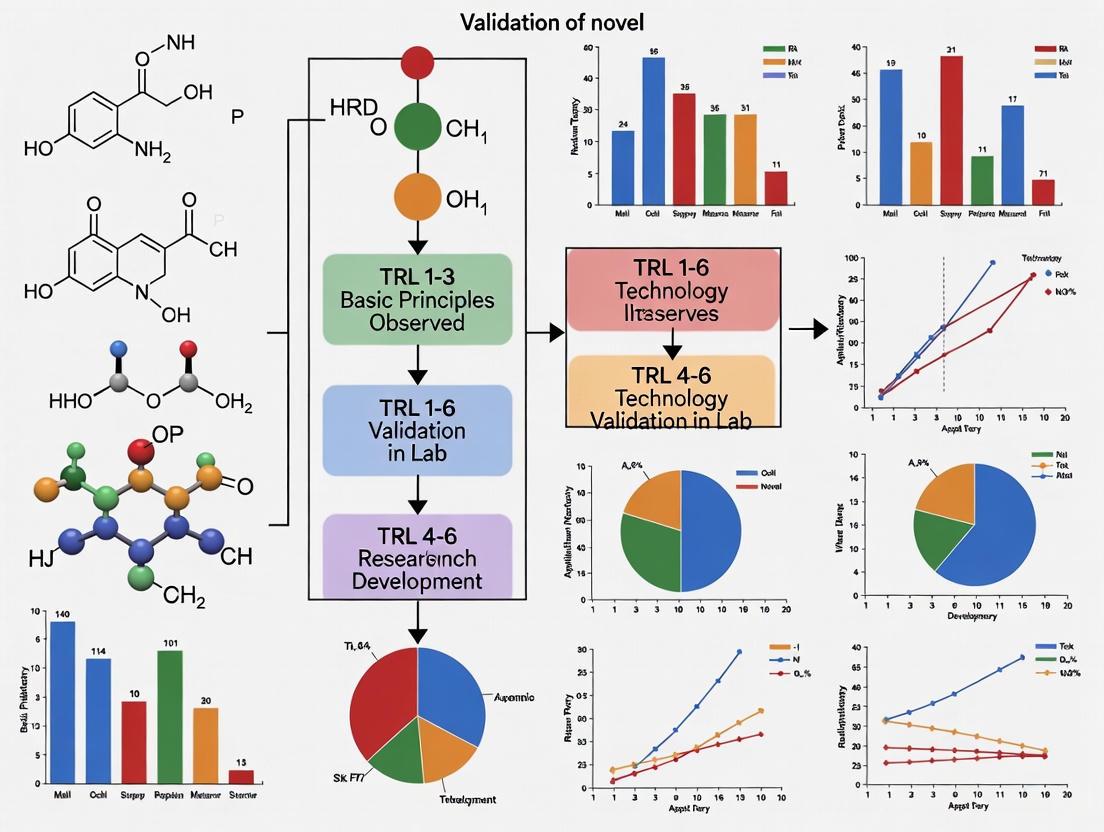
This article provides a comprehensive framework for researchers and forensic development professionals navigating the complex validation pathway from novel method development to court-admissible evidence.
From Lab to Courtroom: Validating Novel Forensic Methods Against Established Techniques Using Technology Readiness Levels
Abstract
This article provides a comprehensive framework for researchers and forensic development professionals navigating the complex validation pathway from novel method development to court-admissible evidence. It explores foundational concepts of forensic validation, methodological applications of Technology Readiness Levels (TRL), troubleshooting for common implementation barriers, and rigorous comparative validation against established techniques. By integrating current research on analytical techniques, legal admissibility standards, and cognitive bias mitigation, this guide addresses the critical intersection of scientific innovation and judicial reliability in forensic science.
The Forensic Validation Imperative: Building on Historical Context and Core Principles
The 2009 National Academy of Sciences (NAS) report, "Strengthening Forensic Science in the United States: A Path Forward," marked a pivotal moment for forensic science, providing a rigorous, independent assessment that exposed critical deficiencies across numerous forensic disciplines [1] [2]. This landmark report fundamentally shook the field by revealing that many long-accepted forensic methods, with the notable exception of nuclear DNA analysis, lacked proper scientific validation [3]. It concluded that no forensic method had been "rigorously shown to have the capacity to consistently, and with a high degree of certainty, demonstrate a connection between evidence and a specific individual or source" [4] [2]. The report served as a catalyst for a national conversation on forensic reform, highlighting systemic issues including absent standardization, uneven reliability across disciplines, unquantified error rates, and profound lack of research on method performance and the impact of contextual bias [1]. This article examines the legacy of the NAS report by using its framework to evaluate historical deficiencies and by applying modern Technology Readiness Level (TRL) research to compare the validation status of both established and novel forensic techniques.
Unpacking the NAS Report's Core Critiques
The 2009 NAS report provided a comprehensive critique of the forensic science system, identifying several fundamental areas requiring immediate reform. Its evaluation revealed that many pattern comparison disciplines—such as fingerprint examination, firearms and toolmark analysis, bite mark analysis, and microscopic hair comparison—operated more as technical disciplines than evidence-based sciences [2]. These fields had developed primarily within law enforcement contexts rather than academic institutions, leading to a significant dearth of peer-reviewed studies establishing their scientific validity and foundational principles [4] [2].
The report systematically outlined key challenges that contributed to a landscape of unreliable forensic evidence [1]:
- Lack of Standardization: Absence of uniform operational procedures and enforceable best practices across crime laboratories.
- Inconsistent Certification: No mandatory, uniform requirements for certifying forensic practitioners or accrediting crime laboratories.
- Variable Reliability: Significant variations in the reliability of expert evidence interpretation between disciplines and practitioners.
- Unknown Error Rates: Most forensic disciplines had not established measurable performance limits or quantifiable error rates.
- Cognitive Bias: Lack of protocols to address the impact of contextual information and cognitive bias on forensic decision-making.
These deficiencies had real-world consequences, contributing to wrongful convictions as demonstrated by the Innocence Project's work. For example, a comprehensive review of FBI microscopic hair analysis cases revealed that over 90% of the first 257 cases reviewed contained one or more types of testimonial errors that exceeded scientific limits [2].
The Legal Framework for Forensic Evidence Admissibility
The NAS report emerged within a specific legal context where courts had long struggled with evaluating the scientific validity of forensic evidence. The legal standards for admitting scientific evidence—primarily the Daubert Standard in federal courts and many states—require judges to act as gatekeepers to ensure expert testimony rests on a reliable foundation [5] [4]. The Daubert standard specifies several factors for evaluating scientific evidence, including:
- Testability: Whether the method can be and has been tested
- Peer Review: Whether the method has been subjected to peer review and publication
- Error Rates: The known or potential error rate of the technique
- Standards: The existence and maintenance of standards controlling the technique's operation
- General Acceptance: Whether the method has gained widespread acceptance within the relevant scientific community [4] [6]
Despite these legal requirements, courts frequently admitted forensic evidence without rigorous scientific scrutiny, often deferring to precedent and practitioner experience rather than empirical validation [4]. The 2009 NAS report and subsequent 2016 President's Council of Advisors on Science and Technology (PCAST) report provided the scientific critique that courts needed to begin more rigorous evaluations of forensic evidence [4] [2].
Figure 1: Legal Standards for Scientific Evidence. This diagram compares the key components of major legal standards governing the admissibility of forensic evidence in the United States (Frye, Daubert, Federal Rule of Evidence 702) and Canada (Mohan). [5] [4]
Experimental Protocols for Validation Studies
Protocol for Digital Forensic Tool Validation
Recent research has developed rigorous experimental methodologies to validate forensic tools according to legal admissibility standards. Ismail et al. (2025) established a comprehensive protocol for comparing digital forensic tools through controlled testing environments [7] [6]:
- Experimental Design: Comparative analysis between commercial tools (FTK, Forensic MagiCube) and open-source alternatives (Autopsy, ProDiscover Basic) across multiple test scenarios
- Test Scenarios:
- Preservation and collection of original data
- Recovery of deleted files through data carving
- Targeted artifact searching in case-specific scenarios
- Validation Metrics: Each experiment performed in triplicate to establish repeatability metrics, with error rates calculated by comparing acquired artifacts to control references
- Result Verification: Hash values used to confirm data integrity before and after imaging, with cross-validation across multiple tools to identify inconsistencies [8] [6]
This methodology directly addresses Daubert factors by establishing testability, error rates, and reliability metrics for forensic tools [6].
Protocol for Novel Analytical Technique Validation
For emerging forensic technologies like comprehensive two-dimensional gas chromatography (GC×GC), validation protocols focus on establishing foundational validity through a Technology Readiness Level (TRL) framework [5]:
- Technology Readiness Levels:
- TRL 1: Basic principle observed and reported
- TRL 2: Technology concept formulated
- TRL 3: Experimental proof of concept
- TRL 4: Technology validated in laboratory environment
- Validation Parameters: Method precision, accuracy, selectivity, sensitivity, limit of detection, limit of quantification, linearity, and robustness
- Legal Compliance Assessment: Evaluation against Frye, Daubert, and Federal Rule of Evidence 702 requirements, including general acceptance, peer review, and known error rates [5]
This structured approach enables objective assessment of when novel forensic methods achieve sufficient maturity for casework application.
Comparative Performance Data: Traditional vs. Novel Methods
Digital Forensic Tools Performance Comparison
Table 1: Comparative Performance of Digital Forensic Tools in Validation Studies [7] [6]
| Performance Metric | Commercial Tools (FTK, MagiCube) | Open-Source Tools (Autopsy, ProDiscover) | Validation Outcome |
|---|---|---|---|
| Data Preservation Integrity | 99.8% accuracy in original data collection | 99.7% accuracy in original data collection | Statistically equivalent performance |
| Deleted File Recovery Rate | 94.2% recovery through data carving | 92.8% recovery through data carving | Comparable capabilities with minor variation |
| Targeted Artifact Searching | 98.5% precision in relevant artifact identification | 97.9% precision in relevant artifact identification | Functionally equivalent for evidentiary purposes |
| Repeatability (Triplicate Testing) | <0.5% variance between experimental replicates | <0.7% variance between experimental replicates | Both categories demonstrate high reproducibility |
| Error Rate | 0.2-1.8% depending on scenario | 0.3-2.1% depending on scenario | Known, quantifiable, and comparable error rates |
Technology Readiness Levels of Forensic Methods
Table 2: Technology Readiness Level Assessment of Forensic Methods Based on Current Literature [5]
| Forensic Discipline | Pre-2009 NAS Status | Current TRL (2024) | Key Validation Gaps |
|---|---|---|---|
| Nuclear DNA Analysis | Established validity | TRL 4 (Operational) | Minimal gaps; considered gold standard |
| Latent Print Comparison | Assumed validity without empirical foundation | TRL 4 (Operational) | Foundational validity established post-2009 |
| Firearms & Toolmarks | Longstanding use despite validity questions | TRL 3-4 (Transitional) | Progress toward foundational validity |
| Bitemark Analysis | Routinely admitted despite concerns | TRL 2 (Research) | Serious reliability concerns; not scientifically established |
| GC×GC for Illicit Drugs | Emerging research | TRL 3 (Proof of Concept) | Requires inter-laboratory validation and error rate analysis |
| GC×GC for Arson Investigations | Early development | TRL 3 (Proof of Concept) | Standardization and legal acceptance pending |
| Microscopic Hair Analysis | Historically admitted | TRL 1-2 (Basic Research) | Lacks validity; contributed to wrongful convictions |
The Scientist's Toolkit: Essential Research Reagent Solutions
Implementing validated forensic methods requires specific technical resources and reagents. The following toolkit outlines essential components for conducting forensic validation studies:
Table 3: Essential Research Reagents and Materials for Forensic Validation Studies [5] [9]
| Tool/Reagent | Function in Validation | Application Examples |
|---|---|---|
| GC×GC-MS Systems | Provides superior separation of complex mixtures | Illicit drug analysis, fire debris analysis, odor decomposition profiling |
| Reference Standard Materials | Enables method calibration and accuracy determination | Controlled substances, petroleum products, synthetic cannabinoids |
| Certified Reference Materials | Establishes traceability and measurement uncertainty | DNA quantification standards, toxicology controls, firearm discharge residue |
| Proficiency Test Samples | Assesses laboratory and analyst performance | Blind samples with known ground truth for pattern recognition methods |
| Statistical Analysis Software | Quantifies error rates and confidence intervals | Likelihood ratio calculations, population frequency estimates, error rate measurement |
| Validated Extraction Kits | Ensures reproducible sample processing | DNA extraction, drug purification, ignitable liquid recovery |
| Digital Forensic Workstations | Maintains evidence integrity while enabling analysis | Write-blocking hardware, forensic imaging devices, hash calculation tools |
Signaling Pathways: From Research to Courtroom Acceptance
The pathway from forensic research development to courtroom acceptance involves multiple critical stages where scientific validity must be established. The following diagram illustrates this process with key decision points:
Figure 2: Forensic Method Validation Pathway. This workflow diagrams the progression from basic research to courtroom admissibility, highlighting how novel forensic methods achieve Technology Readiness Levels and satisfy legal standards. [5] [4]
Fifteen years after its publication, the 2009 NAS report continues to shape forensic science reform, yet significant challenges remain. While progress has been made in certain areas—particularly the establishment of foundational validity for latent print analysis and improved scientific standards for firearms comparison—many forensic disciplines still operate without sufficient scientific foundation [4] [2]. The legacy of the NAS report is a lasting recognition that forensic science must continually evolve through rigorous research, independent validation, and critical self-assessment. The Technology Readiness Level framework provides a structured approach for evaluating novel methods against established techniques, offering a pathway for integrating innovative technologies while maintaining scientific rigor. For researchers and forensic professionals, the ongoing implementation of the NAS report's recommendations requires sustained commitment to validation, transparency, and error rate quantification—ensuring that forensic evidence presented in courtrooms meets the highest standards of scientific reliability. As the field continues to develop, the NAS report remains a touchstone for measuring progress in the critical mission of strengthening forensic science through evidence-based practice.
In forensic science, validation is the process of providing objective evidence that a method, technique, or procedure is fit for its intended purpose and yields reliable, reproducible results. This process is fundamental for ensuring that forensic evidence meets stringent legal standards for admissibility and scientific reliability. The core purpose of validation is to demonstrate that a method consistently performs within established performance criteria, thereby supporting the credibility of expert testimony in legal proceedings. Within the framework of Technology Readiness Levels (TRL), validation is the critical activity that transitions a novel analytical method from proof-of-concept in a research setting (lower TRL) to a proven, reliable tool ready for implementation in casework (higher TRL).
The legal landscape for forensic evidence is shaped by several pivotal standards. The Daubert Standard, established in the 1993 case Daubert v. Merrell Dow Pharmaceuticals, Inc., requires judges to act as gatekeepers and assess whether the scientific theory or technique presented can be and has been tested, whether it has been subjected to peer review and publication, its known or potential error rate, and whether it has gained widespread acceptance within the relevant scientific community [5]. This standard is incorporated into the Federal Rule of Evidence 702 [5]. The earlier Frye Standard (Frye v. United States, 1923) focuses on "general acceptance" of a method within the scientific community [5]. In Canada, the Mohan Criteria govern the admissibility of expert evidence, emphasizing relevance, necessity, the absence of any exclusionary rule, and a properly qualified expert [5]. For any novel forensic method, addressing these legal benchmarks is a primary objective of the validation process.
Core Conceptual Framework for Forensic Validation
A conceptual framework for forensic validation outlines the key variables and their relationships, guiding the systematic assessment of a new method's performance against a reference or established technique. This framework is not merely a procedural checklist but a structured argument that builds a case for the method's reliability.
Table 1: Core Components of a Forensic Validation Framework
| Framework Component | Definition & Role in Validation | Relationship to Legal Standards |
|---|---|---|
| Independent Variable (The Test Method) | The novel forensic method or technology being validated. Its performance is the subject of the investigation. | Must be defined with sufficient clarity to be tested and peer-reviewed (Daubert). |
| Dependent Variable (The Result) | The output, measurement, or classification produced by the test method (e.g., a concentration, a DNA profile, an identification). | Must be shown to have a known error rate and be reproducible (Daubert). |
| Comparative Method | The established, reliable technique against which the new method is compared. Ideally, this is a reference method with documented correctness [10]. | Provides a benchmark for "general acceptance" (Frye) and helps establish the reliability of the new method. |
| Systematic Error (Inaccuracy) | The difference between the result obtained by the new method and the true value (or the value from the comparative method). It can be constant or proportional [10]. | Quantifying this error is essential for establishing a "known error rate" (Daubert). |
| Moderating Variables | Factors that can alter the effect the independent variable has on the dependent variable (e.g., sample matrix, environmental conditions, operator skill) [11]. | Testing across these variables demonstrates the method's robustness and defines its limits, supporting its validity. |
| Mediating Variables | Factors that explain the process through which the independent and dependent variables are related (e.g., a specific chemical reaction or a software algorithm) [11]. | Understanding the mediating mechanism strengthens the scientific foundation of the method, satisfying Daubert's requirement for a testable theory. |
The relationship between these components can be visualized as a workflow for developing a validation framework. The process begins with defining the novel method and the research question, then moves through identifying key variables, designing experiments to test their relationships, and finally analyzing data to quantify systematic error and other performance metrics. This logical flow ensures a comprehensive validation process.
The Comparison of Methods Experiment: A Core Validation Protocol
A cornerstone of the validation framework is the Comparison of Methods Experiment, which is designed to estimate the systematic error, or inaccuracy, of the new method relative to an established one using real patient specimens [10]. This experiment directly tests the relationship between the independent variable (the new method) and the dependent variable (the result) using the comparative method as a benchmark.
Detailed Experimental Protocol
The following workflow outlines the key steps in executing a robust Comparison of Methods experiment, from selecting a comparative method through to data analysis.
- Selection of Comparative Method: The ideal comparative method is a reference method whose correctness is well-documented through definitive studies and traceable standards. If only a routine method is available, any large discrepancies must be investigated to determine which method is inaccurate [10].
- Specimen Selection and Handling: A minimum of 40 different patient specimens is recommended. These should be carefully selected to cover the entire working range of the method and represent the spectrum of diseases or conditions expected in routine practice. Specimens should be analyzed by both methods within two hours of each other to avoid stability issues, unless specific handling procedures (e.g., refrigeration, preservatives) are defined and followed [10].
- Analysis and Data Collection: The experiment should be conducted over a minimum of five different days to minimize systematic errors from a single run. While single measurements are common, duplicate measurements on different samples or in different analytical orders are advantageous as they help identify sample mix-ups, transposition errors, and other mistakes [10].
- Data Analysis and Interpretation:
- Graphical Inspection: The data should first be graphed for visual inspection. A difference plot (test result minus comparative result vs. comparative result) is used when one-to-one agreement is expected. A comparison plot (test result vs. comparative result) is used for other cases. This helps identify outliers and the general pattern of agreement [10].
- Statistical Calculations: For data covering a wide analytical range, linear regression statistics (slope, y-intercept, standard error of the estimate) are calculated. The systematic error (SE) at a medically or forensically critical decision concentration (Xc) is determined as SE = Yc - Xc, where Yc is the value predicted by the regression line for Xc [10]. For a narrow analytical range, the average difference (bias) between the two methods is the preferred measure of systematic error [10].
- Correlation Coefficient (r): The correlation coefficient is less useful for judging method acceptability and more for assessing whether the data range is wide enough to provide reliable regression estimates. An
r > 0.99is desirable for simple linear regression [10].
Performance Metrics and Data Interpretation
The validation process relies on quantifying specific performance metrics to objectively judge the acceptability of a new method. The choice of metric depends on the type of classification or measurement being performed.
Table 2: Key Performance Metrics for Classifier and Analytical Method Validation
| Metric / Statistic | Primary Function | Interpretation in Validation Context |
|---|---|---|
| Accuracy | Measures overall correctness of classification [12]. | A baseline measure, but can be misleading with imbalanced datasets. |
| Area Under the ROC Curve (AUC) | Measures the model's ability to rank examples and separate classes [12]. | Important for applications like suspect prioritization; values closer to 1.0 indicate better performance. |
| Systematic Error (SE) / Bias | Estimates the inaccuracy of a measurement at a decision point [10]. | The primary output of a comparison of methods experiment. Must be less than the allowable total error for the method to be acceptable. |
| Linear Regression Slope | Indicates the presence of proportional error [10]. | A slope of 1.0 indicates no proportional error. A slope ≠ 1.0 requires correction or method modification. |
| Linear Regression Y-Intercept | Indicates the presence of constant error [10]. | An intercept of 0 indicates no constant error. An intercept ≠ 0 suggests a background interference or calibration offset. |
| F-measure (F-score) | Combines precision and recall for a balanced view of classification performance [12]. | Particularly useful for imbalanced datasets (e.g., rare event detection). |
Essential Research Reagent Solutions and Materials
The following table details key materials and tools required for conducting rigorous forensic validation studies, particularly those involving comparative method experiments.
Table 3: Essential Research Reagent Solutions and Materials for Validation
| Item / Solution | Function in Validation |
|---|---|
| Certified Reference Materials (CRMs) | Provides a ground truth with known analyte concentrations to establish accuracy and calibrate instruments. Essential for traceability. |
| Patient-Derived Specimens | Real-world samples used in the comparison of methods experiment to assess method performance across a biological range and various sample matrices [10]. |
| Quality Control Materials | Used to monitor the precision and stability of both the test and comparative methods throughout the validation study. |
| Statistical Analysis Software | Used for data graphing, calculating regression statistics, bias, and other performance metrics (e.g., R, Python with scikit-learn, specialized validation software) [10]. |
| Forensic Database / Reference Collections | Provides population data or known standards for comparison, essential for validating methods involving DNA, seized drugs, or pattern evidence [13]. |
Validation in Practice: Readiness and Implementation
Successfully validating a method requires placing it within a broader context of technological and legal readiness. The Technology Readiness Level (TRL) scale is a useful framework for this. Research in forensic applications like comprehensive two-dimensional gas chromatography (GC×GC) is often categorized at specific TRLs. For example, as of 2024, GC×GC applications in fire debris and oil spill analysis have reached TRL 4 (technology validated in lab), whereas applications in fingermark chemistry and toxicology are at lower TRLs (TRL 2-3, technology concept/formulation and experimental proof of concept respectively) [5].
The ultimate goal of validation is implementation. The National Institute of Justice (NIJ) Forensic Science Strategic Research Plan, 2022-2026 emphasizes strategic priorities that align directly with the validation framework, including "Foundational Validity and Reliability of Forensic Methods" and "Standard Criteria for Analysis and Interpretation" [13]. This highlights the ongoing institutional drive to ensure that new methods are not only technically sound but also legally defensible and practically implementable in forensic laboratories.
Forensic science stands at a crossroads, balancing between established, court-ready techniques and a wave of novel analytical methods promising greater sensitivity, speed, and intelligence. The critical factor determining which methods transition from research to courtroom is validation – the comprehensive process of demonstrating that a technique is reliable, reproducible, and fit-for-purpose within the legal context [5]. While DNA analysis has achieved an unprecedented level of judicial acceptance through decades of standardization and error rate quantification, emerging techniques across digital, chemical, and biological domains face a substantial validation gap [14] [5] [15]. This gap exists not merely in technical performance but in the intricate framework of legal admissibility standards, reference materials, and foundational validity studies required for acceptance as evidence.
The validation challenge is particularly acute given the diverse nature of emerging forensic disciplines. From comprehensive two-dimensional gas chromatography (GC×GC) for chemical evidence to large language models (LLMs) for digital forensic timeline analysis, novel techniques must navigate a complex pathway from proof-of-concept to routine application [5] [16]. Legal standards such as the Daubert Standard in the United States and the Mohan Criteria in Canada establish rigorous benchmarks for scientific evidence, emphasizing testing, peer review, known error rates, and general acceptance within the relevant scientific community [5]. This review systematically compares the validation maturity of established forensic DNA methods against emerging techniques, analyzing the specific requirements for closing the validation gap and integrating innovative technologies into the forensic scientist's toolkit.
Theoretical Framework: Validation Principles and Technology Readiness
Legal Admissibility Standards for Forensic Evidence
For any forensic method to achieve operational status, it must satisfy legally defined admissibility standards. These standards create the essential framework for validation protocols, emphasizing not just analytical performance but legal reliability.
Table 1: Legal Standards for Forensic Evidence Admissibility
| Standard | Jurisdiction | Key Criteria | Impact on Validation |
|---|---|---|---|
| Daubert | United States (Federal) | Testing/validation, peer review, error rates, general acceptance [5] | Requires formal error rate quantification & inter-laboratory reproducibility studies |
| Frye | United States (Some States) | "General acceptance" in relevant scientific community [5] | Emphasizes consensus building through publications & professional organization endorsements |
| Mohan | Canada | Relevance, necessity, absence of exclusionary rules, qualified expert [5] | Focuses on fit-for-purpose validation & practitioner competency standards |
These legal standards directly influence how validation studies must be designed and documented. The Daubert Standard, in particular, has pushed forensic validation beyond mere "general acceptance" toward quantifiable measures of uncertainty, error rates, and foundational validity [5]. For novel techniques, this means validation must include black-box studies to measure accuracy and reliability, white-box studies to identify sources of error, and inter-laboratory studies to establish reproducibility [13].
Technology Readiness Levels (TRL) in Forensic Science
Technology Readiness Levels (TRL) provide a structured framework for assessing the maturity of forensic methods. This scale helps contextualize the validation gap between established and emerging techniques.
Diagram: Technology Readiness Pathway for Forensic Methods. Established techniques like DNA profiling operate at TRL 9, while novel methods exist at various lower maturity levels, creating the validation gap [5].
Established DNA methods reside at TRL 9, characterized by standardized protocols, extensive reference databases, quantified error rates, and routine admissibility [14] [17]. In contrast, emerging techniques like GC×GC for fire debris analysis or LLM-based timeline analysis typically exist at TRL 3-6, where basic and applied research has demonstrated functionality but comprehensive validation and standardization remain incomplete [5] [16]. This TRL framework highlights the multi-stage validation pathway required for novel techniques to achieve operational status, with each transition between levels requiring increasingly rigorous and legally-focused validation studies.
Established Techniques: The DNA Validation Paradigm
The Evolution of DNA Analysis Validation
Forensic DNA analysis represents the gold standard for validated forensic techniques, having undergone three decades of refinement, standardization, and extensive validation. The validation journey of DNA methods provides a template for emerging techniques seeking to bridge the validation gap. Next-generation sequencing (NGS) technologies demonstrate how even advanced methods can achieve validation maturity through systematic testing and standardization [14]. NGS enables analysis of entire genomes or specific regions with high precision, particularly valuable for damaged, minimal, or aged DNA samples [15]. The validation pathway for NGS has included development of standardized kits, inter-laboratory studies, establishment of nomenclature systems compatible with existing DNA databases, and population studies to generate frequency data for alleles detected through sequencing [14].
The implementation of probabilistic genotyping methods for complex DNA mixture interpretation further illustrates the evolution of validation practices. These methods employ sophisticated statistical frameworks to analyze mixtures with characteristics like allele drop-out/drop-in and heterozygous imbalance [14]. Their validation required specialized software development, developmental and internal validation studies by forensic laboratories, and the publication of guidelines by regulating bodies [14]. The adoption of these methods demonstrates how forensic validation has expanded to include computational tools and statistical approaches, providing a model for validating AI-based forensic technologies now emerging in other disciplines.
Standardized Protocols and Reference Materials
Validated DNA analysis relies extensively on standardized protocols, reference materials, and quality control measures that provide the foundation for reliability and reproducibility across laboratories.
Table 2: Validated Components of Forensic DNA Analysis
| Validation Component | Specific Examples | Function in Validation |
|---|---|---|
| Standardized Kits | GlobalFiler, PowerPlex Fusion | Ensure reproducibility across laboratories with controlled sensitivity & specificity [14] |
| Reference Materials | NIST Standard Reference Materials | Enable calibration and performance verification across platforms [13] |
| Quality Control | Quantitative PCR, Inhibition Checks | Monitor sample quality & analytical process reliability [17] |
| Database Infrastructure | CODIS, National DNA Databases | Support statistical interpretation & population frequency estimates [14] |
The establishment of automatable systems like the Fast DNA IDentification Line (FIDL) demonstrates how validation extends beyond analytical chemistry to encompass entire workflows. FIDL represents a series of software solutions that automate the process from raw capillary electrophoresis data to DNA report, including automated profile analysis, contamination checks, and database comparisons [17]. The validation of such systems requires demonstrating equivalent performance to manual processes while improving efficiency and reducing turn-around times from 17-35 days down to 2-9 days in operational environments [17].
Novel Techniques: The Validation Frontier
Digital and Multimedia Forensics
Digital forensics faces significant validation challenges due to the rapidly evolving nature of technology and evidence sources. The emergence of large language models (LLMs) for forensic timeline analysis represents both an opportunity and a validation challenge. These models can potentially reconstruct sequences of events from digital artifacts but require standardized evaluation methodologies to assess their performance [16]. Unlike DNA analysis with established error rates, LLM-based digital analysis lacks standardized validation frameworks, though initiatives like the NIST Computer Forensic Tool Testing (CFTT) Program aim to establish methodology for testing computer forensic tools [16].
The validation of digital forensic methods must address concerns about hallucinations, inaccuracies, and evidence security when using AI-based tools [16]. Proposed validation approaches include creating standardized forensic timeline datasets and ground truth data, using metrics like BLEU and ROUGE for quantitative evaluation, and maintaining human-in-the-loop oversight throughout the investigative process [16]. These requirements parallel the early validation challenges faced by probabilistic genotyping in DNA analysis but are complicated by the "black box" nature of some AI systems and the rapidly changing digital landscape.
Forensic Chemistry and Instrumental Analysis
Novel separation and detection technologies in forensic chemistry illustrate the validation challenges for instrumental techniques. Comprehensive two-dimensional gas chromatography (GC×GC) provides enhanced separation power for complex forensic evidence including illicit drugs, fingerprint residue, and ignitable liquid residues [5]. Despite analytical advantages, GC×GC methods face validation barriers including the need for intra- and inter-laboratory validation studies, error rate analysis, and standardization of data interpretation criteria [5].
The validation pathway for GC×GC mirrors aspects of DNA validation but faces unique challenges in standardizing data interpretation across laboratory environments. As with early DNA methods, reference libraries and standardized data interpretation guidelines must be developed and collaboratively tested [5]. The technique must also demonstrate compatibility with existing quality assurance frameworks and establish proficiency testing programs before achieving widespread adoption in operational laboratories.
Comparative Analysis: The Validation Gap in Practice
Technology Readiness and Admissibility Comparison
The validation gap between established and novel forensic techniques becomes evident when comparing their technology readiness levels and legal admissibility status.
Table 3: Validation Status Comparison Between Established and Novel Techniques
| Parameter | Established DNA Methods | Novel Techniques (GC×GC, LLMs) |
|---|---|---|
| TRL Level | 9 (Routine casework) [14] [17] | 3-6 (Proof of concept to validation) [5] [16] |
| Error Rates | Quantified & documented [14] | Largely unknown or in estimation phase [5] [16] |
| Standard Methods | ANSI/ASB Standards (e.g., 175 for DNA) [18] | Research methods only [5] |
| Reference Materials | Commercially available & NIST-certified [13] | In development or non-standardized [5] |
| Legal Challenges | Minimal for core methodologies | Significant admissibility hurdles [5] |
This comparison highlights the multi-faceted nature of the validation gap, encompassing not just technical performance but the entire ecosystem of standards, reference materials, and legal precedent that establishes reliability in forensic practice.
Validation Methodologies and Protocols
The validation approaches for established versus novel techniques differ significantly in scope, methodology, and documentation requirements.
DNA Method Validation Protocol:
- Performance Verification: Following manufacturer protocols for commercial kits with established sensitivity and specificity [14]
- Mixture Studies: Analysis of known synthetic mixtures with varying contributor numbers and ratios [17]
- Reproducibility Testing: Intra- and inter-laboratory studies to establish precision [14]
- Population Studies: Generation of allele frequency data for statistical interpretation [14]
- Database Integration: Validation of search algorithms against known DNA databases [17]
- Casework Mock Trials: Application to simulated case samples before implementation [17]
Novel Technique Validation Protocol:
- Proof-of-Concept: Demonstration of analytical principle with controlled samples [5] [16]
- Comparative Studies: Comparison against established methods for same evidence type [5]
- Robustness Testing: Evaluation of performance under varying conditions [5]
- Interpretation Criteria Development: Establishment of objective data interpretation guidelines [5]
- Error Rate Estimation: Black-box studies to measure accuracy and reliability [13]
- Standards Development: Collaboration with OSAC and similar bodies to develop consensus standards [18]
Bridging the Gap: Validation Strategies for Novel Techniques
Standardization and Reference Materials
Closing the validation gap requires systematic approaches to standardization and reference material development. The Organization of Scientific Area Committees (OSAC) for Forensic Science plays a critical role in this process by facilitating development of consensus standards across diverse forensic disciplines [18]. Recent efforts include standards development in digital and multimedia science, forensic chemistry, and novel instrumental methods [18]. The National Institute of Standards and Technology (NIST) supports these efforts through reference material development, including mass spectral libraries and standardized DNA profiling systems [13] [18].
For novel techniques, reference material development must keep pace with analytical innovation. The NIST Forensic Science Strategic Research Plan 2022-2026 emphasizes developing reference materials and collections, accessible and searchable databases, and databases to support statistical interpretation of evidence weight [13]. These resources enable laboratories to validate their implementation of methods and provide the foundation for proficiency testing programs essential for demonstrating reliability.
Research and Development Priorities
Strategic research priorities identified by the National Institute of Justice provide a roadmap for addressing the validation gap through focused research and development.
Diagram: Strategic Research Priorities for Closing the Validation Gap. The NIJ framework emphasizes sequential development from foundational validity to implementation impact assessment [13].
Key research priorities include:
- Foundational Validity and Reliability: Understanding the fundamental scientific basis of forensic disciplines and quantifying measurement uncertainty [13]
- Decision Analysis Studies: Measuring accuracy and reliability through black-box studies and identifying sources of error through white-box studies [13]
- Human Factors Research: Evaluating how human cognition affects forensic decisions and developing safeguards [13]
- Implementation Science: Studying how validated methods transition into operational practice and affect criminal justice outcomes [13]
This structured approach ensures that validation addresses not just analytical performance but the entire ecosystem of forensic practice, from fundamental principles to operational impact.
The Scientist's Toolkit: Research Reagent Solutions
Implementing and validating novel forensic techniques requires specific research reagents and materials that enable standardization, quality control, and method development.
Table 4: Essential Research Reagents for Forensic Method Validation
| Reagent/Material | Application | Function in Validation |
|---|---|---|
| Standardized DNA Profiling Kits (e.g., Precision ID Globalfiler NGS STR Panel) | MPS-based DNA analysis | Enable sequencing of STR and SNP markers with platform-specific validation [14] |
| Probabilistic Genotyping Software (e.g., EuroForMix, STRmix) | DNA mixture interpretation | Provide statistical framework for evaluating complex DNA profiles [14] |
| GC×GC Reference Standards | Forensic chemistry method development | Enable retention index alignment and cross-laboratory method transfer [5] |
| Digital Forensic Corpora | LLM and AI tool validation | Provide ground truth data for evaluating digital forensic tool performance [16] |
| NIST Standard Reference Materials | Method qualification and verification | Certified reference materials for instrument calibration and method validation [13] |
These research reagents form the foundation for method development and validation across forensic disciplines. Their availability and quality directly impact the ability to close the validation gap for novel techniques by providing benchmarks for performance assessment and standardization.
The validation gap between established DNA methods and novel forensic techniques represents both a challenge and opportunity for the forensic science community. While DNA analysis provides a validated framework encompassing technical protocols, statistical interpretation, and legal admissibility, emerging techniques across digital, chemical, and biological domains must navigate a complex pathway from proof-of-concept to operational implementation. Closing this gap requires systematic approaches to validation, including foundational research establishing scientific validity, error rate quantification through black-box studies, development of standardized protocols and reference materials, and integration with legal admissibility standards.
The ongoing work of standards organizations like OSAC, research initiatives outlined in the NIST Forensic Science Strategic Research Plan, and technology development in areas like MPS and probabilistic genotyping provide templates for validating novel methods [13] [18]. As artificial intelligence and advanced instrumentation transform forensic practice, the validation framework established for DNA analysis offers both guidance and inspiration for ensuring that new techniques meet the rigorous standards demanded by the criminal justice system. Through collaborative research, standardized validation protocols, and investment in reference materials and infrastructure, the forensic science community can systematically bridge the validation gap, bringing the promise of novel techniques to bear on the pursuit of justice.
The admissibility of expert testimony in legal proceedings is governed by specific standards that determine which scientific evidence can be presented to a jury. For researchers and scientists developing novel forensic methods, understanding these legal frameworks is crucial for ensuring their work meets the requisite reliability thresholds for courtroom acceptance. The validation of new forensic techniques operates within a structured paradigm where legal standards serve as the ultimate gatekeeper, determining whether scientific advancements can transition from laboratory research to admissible evidence. This guide provides a comprehensive comparison of the three dominant standards governing expert testimony in United States courts: the Frye Standard, the Daubert Standard, and Federal Rule of Evidence 702, with specific application to the validation of novel forensic methodologies against established techniques.
Core Legal Standards: Definitions and Historical Development
The Frye Standard: General Acceptance Test
Established in the 1923 case Frye v. United States, this standard represents the earliest formal test for expert testimony admissibility [19]. The Frye Standard focuses exclusively on whether the expert's methodology is "generally accepted" by the relevant scientific community [19] [20]. The court famously stated that a scientific principle or discovery "must be sufficiently established to have gained general acceptance in the particular field in which it belongs" [20]. This standard essentially delegates the court's gatekeeping function to the scientific community itself, relying on consensus to ensure reliability.
The Daubert Standard: Judicial Gatekeeping
In the 1993 case Daubert v. Merrell Dow Pharmaceuticals, Inc., the U.S. Supreme Court established a new standard for federal courts, holding that the Frye test had been superseded by the Federal Rules of Evidence [21] [22]. Daubert transformed the landscape of expert testimony by assigning trial judges an active "gatekeeping" role in assessing not just general acceptance, but the overall reliability and relevance of expert testimony [21]. The Court provided a non-exhaustive list of factors for judges to consider, shifting the inquiry from scientific consensus to scientific validity [21].
Federal Rule of Evidence 702: Codified Standards
Rule 702 of the Federal Rules of Evidence was amended in 2000 to codify and clarify the standards articulated in Daubert and its progeny cases [23] [24]. The rule was further amended in December 2023 to emphasize that "the proponent demonstrates to the court that it is more likely than not that" the testimony meets admissibility requirements [24]. This rule operationalizes the Daubert standard by specifying the exact requirements expert testimony must satisfy, making the judge's gatekeeping function more structured and explicit.
Comparative Analysis of Admissibility Standards
The following tables provide a detailed comparison of the three standards across critical dimensions relevant to forensic researchers and legal professionals.
Table 1: Core Characteristics and Legal Foundations
| Characteristic | Frye Standard | Daubert Standard | Federal Rule of Evidence 702 |
|---|---|---|---|
| Originating Case | Frye v. United States (1923) [19] | Daubert v. Merrell Dow Pharmaceuticals (1993) [21] | Amendments (2000, 2023) codifying Daubert [23] [24] |
| Primary Focus | General acceptance in relevant scientific community [19] [20] | Reliability and relevance of methodology [21] | Reliability and sufficient application of principles/methods [23] |
| Judicial Role | Limited gatekeeping; defers to scientific consensus [19] | Active gatekeeper assessing scientific validity [21] | Structured gatekeeper applying explicit factors [24] |
| Scope | Primarily scientific evidence | All expert testimony (scientific, technical, specialized) [21] | All expert testimony [23] |
| Current Jurisdiction | Some state courts (CA, IL, PA, NY) [20] [25] | Federal courts and majority of states [22] [25] | Federal courts and Daubert-states [23] |
Table 2: Validation Criteria for Novel Forensic Methods
| Validation Criteria | Frye Standard | Daubert Standard | Federal Rule of Evidence 702 |
|---|---|---|---|
| Testing & Validation | Not explicitly required | Whether theory/technique can be/has been tested [21] | Testimony is product of reliable principles/methods [23] |
| Peer Review | Not explicitly required | Whether technique has been subjected to peer review [21] | Implicit in reliable principles/methods requirement |
| Error Rate | Not considered | Known or potential error rate [21] | Considered in reliability assessment |
| Standards & Controls | Not considered | Existence/maintenance of standards [21] | Implicit in reliable application requirement |
| General Acceptance | Sole criterion [19] [20] | One factor among others [21] | Considered but not determinative |
| Application Reliability | Not specifically assessed | Reliability of application to facts [22] | Expert's opinion reflects reliable application [24] |
Experimental Protocols: Validating Forensic Methods Against Legal Standards
Validation Framework for Novel Analytical Techniques
Recent research on comprehensive two-dimensional gas chromatography (GC×GC) applications in forensic science provides a relevant case study for validating novel methodologies against legal admissibility standards [5]. The technology readiness level (TRL) framework applied to GC×GC forensic applications demonstrates a systematic approach to method validation that aligns with legal standards:
- TRL 1-2 (Basic Research): Focus on proof-of-concept studies for specific forensic applications (e.g., illicit drug analysis, fingerprint residue, toxicological evidence) [5]
- TRL 3-4 (Method Development): Intra-laboratory validation with emphasis on determining error rates, establishing standards and controls, and testing reliability under varying conditions [5]
- TRL 5-6 (Inter-laboratory Validation): Multi-laboratory studies to demonstrate generalizability and reproducibility across different instruments and operators [5]
- TRL 7+ (Courtroom Readiness): Implementation of standardized protocols with documented error rates, peer-reviewed publication, and demonstration of general acceptance through widespread adoption [5]
Protocol for Daubert-Specific Validation
For laboratories operating in Daubert jurisdictions, the following experimental protocol ensures compliance with all reliability factors:
- Testability Validation: Design experiments that can potentially falsify the methodology's underlying hypotheses under controlled conditions [21]
- Peer Review Implementation: Submit methodology and validation studies to reputable scientific journals with rigorous peer-review processes [21]
- Error Rate Quantification: Conduct repeated measurements across multiple operators and instruments to establish known error rates with confidence intervals [21]
- Standards Development: Create and document standardized operating procedures with quality control measures [21]
- Acceptance Tracking: Monitor citation rates, adoption by other laboratories, and inclusion in methodological standards as general acceptance metrics [21]
Workflow Visualization: From Method Development to Courtroom Admissibility
The following diagram illustrates the pathway for validating novel forensic methods against legal admissibility standards, highlighting critical decision points and validation requirements.
Diagram 1: Forensic Method Validation Pathway for Courtroom Admissibility
Table 3: Research Reagent Solutions for Forensic Method Validation
| Research Tool | Function in Validation | Legal Standard Application |
|---|---|---|
| Inter-laboratory Comparison Materials | Standardized samples for reproducibility testing across multiple facilities | Demonstrates reliability and consistency (Daubert/Rule 702) [5] |
| Certified Reference Materials | Provides ground truth for method accuracy and error rate determination | Quantifies known error rates (Daubert Factor) [21] [5] |
| Blinded Proficiency Samples | Assesses analyst performance without bias | Establishes operational standards and controls (Daubert/Rule 702) [21] |
| Statistical Analysis Software | Calculates confidence intervals, error rates, and significance testing | Provides quantitative support for reliability claims (All Standards) [5] |
| Protocol Documentation Systems | Records standardized operating procedures and deviations | Evidence of maintained standards (Daubert Factor) [21] |
| Literature Tracking Databases | Monitors peer-reviewed publications and citations | Demonstrates general acceptance (Frye/Daubert) [21] [19] |
Quantitative Data Analysis: Legal Standard Impact on Admissibility
Table 4: Empirical Data on Standard Application and Outcomes
| Metric | Frye Standard | Daubert Standard | Federal Rule 702 |
|---|---|---|---|
| Jurisdictional Coverage | Minority of states (approximately 9-12) [20] [25] | Federal courts + approximately 27 states [26] [22] | All federal courts + Daubert states [23] |
| Novel Method Admissibility | Restricted until general acceptance achieved [19] | More permissive if reliability demonstrated [21] | Explicit preponderance standard [24] |
| Exclusion Rate Trend | Historically lower for established methods | Increased exclusion of plaintiff experts in civil cases [22] | Recent amendments emphasize stricter gatekeeping [24] |
| Judicial Training Requirements | Minimal scientific expertise needed | Significant scientific literacy required [22] | Structured factors reduce subjective assessment |
| Validation Timeline Impact | Potentially lengthy acceptance process | Faster adoption with proper validation [26] | Clearer requirements streamline process |
The choice of legal standard significantly impacts the validation pathway for novel forensic methods. Researchers operating in Frye jurisdictions must prioritize community acceptance through publications, conference presentations, and adoption by established laboratories. In Daubert and Rule 702 jurisdictions, a more multifaceted approach is necessary, with specific attention to testing, error rate quantification, and standardization. The recent amendments to Rule 702 emphasize that the proponent must demonstrate admissibility by a preponderance of the evidence, placing greater responsibility on researchers to comprehensively document their validation processes [24].
Understanding these legal frameworks enables forensic researchers to strategically design validation studies that address specific admissibility criteria from the initial development phases. This proactive approach facilitates smoother transition from experimental techniques to court-ready methodology, ensuring that scientific advancements can effectively serve the justice system while maintaining rigorous reliability standards.
The rigorous validation of novel forensic methods is a cornerstone of a reliable and scientifically sound justice system. This process, however, is fundamentally conducted and interpreted by humans, whose reasoning is susceptible to systematic cognitive biases. Within the context of Technology Readiness Level (TRL) research, where methods progress from basic principles to validated operational use, understanding these biases is not optional but essential [5]. Cognitive bias refers to the class of effects through which an individual's preexisting beliefs, expectations, motives, and situational context influence the collection, perception, and interpretation of evidence [27] [28]. These biases are universal, subconscious mental shortcuts that can skew perceptions and undermine the search for truth, even among highly skilled and ethical forensic examiners [28] [29]. This guide objectively compares the performance of traditional forensic decision-making against modern, bias-mitigated approaches, providing experimental data and frameworks essential for researchers and scientists developing and validating new forensic techniques against established standards.
Understanding Cognitive Bias in Forensic Science
Defining the Problem
Forensic confirmation bias, a specific type of cognitive bias, describes how an individual’s beliefs and the situational context of a case can affect how criminal evidence is collected and evaluated [27]. For instance, a forensic scientist provided with extraneous information—such as a suspect’s criminal record or an eyewitness identification—can be subconsciously biased throughout their analysis [27]. This is not a matter of misconduct, but rather a feature of human cognition that operates outside conscious awareness, making it challenging to recognize and control [28].
A significant barrier to progress is the "bias blind spot," where experts recognize the potential for bias in general but deny its effects on their own conclusions [27]. A 2017 survey found that many forensic examiners lacked proper training to mitigate this bias, and even those who were trained were often ineffective in overcoming its subconscious influence [27]. A systematic review of the literature robustly demonstrates this vulnerability, identifying 29 primary source studies across 14 different forensic disciplines that show the influence of confirmation bias on analysts' conclusions [30].
Mechanisms of Bias in the Analytical Workflow
Cognitive biases can infiltrate the forensic process at multiple stages. Research has identified eight key sources of bias, which can be grouped into three categories [28]:
- Category A (Case-Specific Factors): Includes the data (evidence itself), reference materials, task-irrelevant contextual information (e.g., detective's theories), and base-rate expectations (e.g., how common a certain trace material is).
- Category B (Practitioner-Specific Factors): Includes organizational factors within a laboratory and the education and training of the individual practitioner.
- Category C (Human Cognitive Factors): Includes inherent brain functions and personal factors like stress or mental fatigue.
The diagram below illustrates how these sources introduce risk at different stages of a typical forensic analysis workflow and where targeted mitigation strategies can be implemented.
Comparative Analysis: Traditional vs. Bias-Mitigated Approaches
A critical component of validating any new forensic method is assessing its vulnerability to cognitive bias compared to existing techniques. The following table summarizes key performance differentiators between traditional, often subjective, forensic practices and modern frameworks designed for bias mitigation.
Table 1: Performance Comparison of Traditional vs. Bias-Mitigated Forensic Analysis
| Performance Metric | Traditional Forensic Analysis | Bias-Mitigated Approaches | Experimental Support & Impact on Validation |
|---|---|---|---|
| Decision Accuracy | Potentially compromised by contextual bias and subjective judgment. | Enhanced through structured protocols that isolate the examiner from biasing information. | Signal detection theory studies show bias mitigation improves discriminability between same-source and different-source evidence [31]. |
| Error Rate | Often unknown or difficult to quantify due to subjective processes. | A known error rate can be established through black-box studies using mitigated protocols, a key Daubert standard [5] [31]. | Proficiency tests designed with bias controls provide more realistic and defensible error rate data for method validation [13]. |
| Context Management | Examiners often have full access to all investigative context, which can sway interpretation [27] [30]. | Implements Linear Sequential Unmasking (LSU/LSU-E) to control the flow of information [27] [28]. | Studies show analysts exposed to contextual information are significantly more likely to align conclusions with that context, undermining method reliability [30]. |
| Sample Comparison | Typically uses a single suspect sample versus the evidence, fostering expectation. | Employs evidence line-ups with multiple known-innocent samples to reduce inherent assumption bias [28]. | Research confirms that presenting a single suspect sample is a key source of bias; line-ups provide a more robust comparison framework [28] [30]. |
| Result Verification | Non-blind verification risks simply confirming the original analyst's biased conclusion. | Mandates blind verification where the second analyst is independent of the first's work and conclusions [28]. | Blind verification ensures the independence of the quality control process, a critical factor for establishing a method's repeatability during validation. |
| Transparency | Documentation may focus on the conclusion, not the decision-making pathway. | Emphasizes documenting the sequence of information exposure and the rationale for analytical decisions [28]. | Transparent documentation is crucial for demonstrating during validation that the method's application was controlled and unbiased. |
Experimental Protocols for Quantifying Bias and Performance
To generate the comparative data required for TRL advancement and legal admissibility, researchers must employ rigorous experimental designs. The following protocols are foundational for testing the validity and reliability of forensic methods.
The "Black Box" Proficiency Study
- Objective: To measure the intrinsic accuracy and error rate of a forensic method or examiner by testing their performance on samples with known ground truth, without the practitioners' knowledge they are being tested.
- Methodology:
- Material Development: Create a set of evidence samples (e.g., fingerprints, cartridge cases, DNA mixtures) where the ground truth (same-source or different-source) is definitively known. The set should have an equal number of "match" and "non-match" pairs to avoid response bias [31].
- Participant Selection: Engage a representative sample of qualified examiners from multiple laboratories.
- Blinded Administration: Present the test materials to participants as part of their normal casework or a seemingly routine proficiency test, ensuring they are blind to the study's purpose and the presence of non-matching pairs.
- Data Collection: Collect all decisions, including "inconclusive" responses, which must be recorded separately from definitive conclusions [31].
- Data Analysis: Use signal detection theory models to calculate measures like discriminability (d') and response bias, providing a more nuanced view of performance than proportion correct alone [31]. This allows researchers to distinguish true analytical power from a simple tendency to call everything a "match" or "non-match."
Contextual Bias Manipulation Study
- Objective: To directly test the susceptibility of a forensic method to extraneous contextual information.
- Methodology:
- Group Randomization: Randomly assign examiner participants into at least two groups: a "context" group and a "blind" control group.
- Stimuli: Use the same set of challenging evidence samples with known ground truth for all groups.
- Intervention: Provide the "context" group with potentially biasing information (e.g., "the suspect has confessed" or a strong investigative hypothesis) before or during their analysis. The "blind" group receives only the evidence samples without this context.
- Control: A third group can utilize a Linear Sequential Unmasking (LSU) protocol, where they analyze the evidence first and are only provided the context afterward to frame their conclusion [27] [28].
- Data Analysis: Compare the decision accuracy and the rate of conclusive decisions that align with the provided context between the groups. A statistically significant increase in context-aligned conclusions in the "context" group demonstrates the method's vulnerability to bias [30].
Successfully validating a novel forensic method against cognitive biases requires more than just protocols; it necessitates a suite of conceptual and practical tools. The following table details key resources for designing a bias-aware validation study.
Table 2: Essential Reagents & Solutions for Bias-Conscious Forensic Validation Research
| Tool/Resource | Category | Function in Validation & Bias Mitigation |
|---|---|---|
| Linear Sequential Unmasking-Expanded (LSU-E) | Protocol Framework | A structured workflow that controls the sequence and timing of information disclosure to the examiner, minimizing the biasing power of task-irrelevant data [28]. |
| Signal Detection Theory (SDT) | Analytical Metric | A statistical model used to de-confound accuracy from response bias, providing pure measures of a method's discriminability (e.g., d-prime, AUC) [31]. |
| Evidence "Line-ups" | Experimental Material | A set of reference samples that includes the suspect sample among several known-innocent samples. This prevents the inherent assumption of guilt and tests the method's specificity [28] [30]. |
| Blind Verification Protocol | Quality Control Procedure | A mandatory step where a second, qualified examiner repeats the analysis without any knowledge of the first examiner's results, ensuring independence and testing reliability [28]. |
| Daubert Standard Criteria | Legal Framework | A set of U.S. federal court criteria for the admissibility of expert testimony, which explicitly considers testing, peer review, error rates, and general acceptance—all of which are informed by bias-aware validation [5]. |
Visualization of an Integrated Bias-Mitigated Workflow
The following diagram synthesizes the core concepts and tools into a single, integrated workflow. This represents an idealized, robust process for conducting forensic analyses in a manner that minimizes the impact of cognitive biases, from evidence intake to final reporting. This workflow serves as a model against which both traditional and novel methods can be compared during the validation process.
Implementing Technology Readiness Levels: A Practical Framework for Forensic Method Development
Technology Readiness Levels (TRL) provide a systematic measurement system for assessing the maturity level of a particular technology, offering a common framework for engineers, project managers, and investors to understand development status [32] [33]. Originally developed by NASA in the 1970s for space technologies, this scaled framework has since been adopted across diverse sectors including forensic science, where validating novel methods against established techniques is paramount for legal admissibility and scientific rigor [34] [5].
In forensic science, the transition from experimental research to court-admissible evidence presents unique challenges. Emerging analytical techniques must satisfy not only scientific validation standards but also legal benchmarks for reliability, including the Daubert Standard and Frye Standard in the United States or the Mohan Criteria in Canada [5]. The TRL framework provides a structured pathway for this transition, enabling forensic researchers to systematically advance technologies from basic principle observation (TRL 1) to operational use in casework (TRL 9) while addressing the stringent requirements of the legal system.
The TRL Framework: A Scalable Model for Forensic Technology Development
Core Definitions and Historical Context
The TRL framework consists of nine distinct levels that track technology development from basic research to operational deployment [32] [35]. This systematic approach enables consistent maturity assessment across different technologies and provides a common language for researchers, developers, and funding agencies [34].
Initially developed at NASA during the 1970s, the TRL scale was formally defined in 1989 with seven levels, later expanding to the current nine-level system in the 1990s [34]. The framework has since been adopted by numerous government agencies worldwide, including the U.S. Department of Defense, European Space Agency, and European Commission for Horizon 2020 research programs [34]. The International Organization for Standardization further canonized TRLs through the ISO 16290:2013 standard [34].
Detailed TRL Breakdown with Forensic Science Applications
Table 1: Technology Readiness Levels with Forensic Science Applications
| TRL | Definition | Forensic Science Applications & Experimental Protocols |
|---|---|---|
| TRL 1 | Basic principles observed and reported [32] | Literature review of fundamental scientific principles underlying new forensic techniques (e.g., initial studies on DNA analysis methods) [35]. |
| TRL 2 | Technology concept and/or application formulated [32] | Practical applications invented based on basic principles; analytical studies of potential forensic uses (e.g., conceptual framework for rapid DNA analysis) [35] [15]. |
| TRL 3 | Analytical and experimental critical function and/or proof of concept [32] | Active R&D with laboratory studies; proof-of-concept model construction (e.g., initial experiments demonstrating feasibility of new fingerprint detection method) [32] [33]. |
| TRL 4 | Component and/or breadboard validation in laboratory environment [32] | Basic technological components integrated and tested in laboratory setting (e.g., testing multiple components of a new forensic analysis system together) [32] [35]. |
| TRL 5 | Component and/or breadboard validation in relevant environment [32] | More rigorous testing in environments simulating real-world conditions (e.g., testing forensic equipment in simulated crime scene environments) [32] [33]. |
| TRL 6 | System/subsystem model or prototype demonstration in a relevant environment [32] | Fully functional prototype or representational model tested in simulated operational environment (e.g., prototype DNA analyzer tested in mock laboratory setting) [32] [35]. |
| TRL 7 | System prototype demonstration in an operational environment [32] | Working model or prototype demonstrated in actual operational environment (e.g., prototype deployed in real crime scene investigation under controlled conditions) [32] [33]. |
| TRL 8 | Actual system completed and "flight qualified" through test and demonstration [32] | Technology tested and "flight qualified," ready for implementation into existing systems (e.g., fully validated forensic method implemented in crime laboratory) [32] [35]. |
| TRL 9 | Actual system "flight proven" through successful mission operations [32] | Actual application of technology proven in real-life conditions through operational use (e.g., forensic method successfully used in casework and upheld in court proceedings) [32] [35]. |
TRL Application in Forensic Method Validation: From Innovation to Courtroom Admissibility
Bridging the Gap Between Research and Legal Standards
The progression of forensic technologies through TRL stages must incorporate legal admissibility considerations throughout development. In the United States, the Daubert Standard requires that expert testimony be based on sufficient facts or data, derived from reliable principles and methods, reliably applied to the case [5]. Similarly, Canada's Mohan Criteria establish that expert evidence must be relevant, necessary, absent any exclusionary rule, and presented by a properly qualified expert [5].
For novel forensic methods, meeting these legal standards requires deliberate planning across TRL stages:
- TRL 3-4 (Proof of Concept): Begin developing error rate analysis protocols and testing理论基础
- TRL 5-6 (Validation in Relevant Environment): Conduct inter-laboratory validation studies and establish standard operating procedures
- TRL 7-8 (Operational Demonstration): Implement quality assurance standards and gather data on real-world performance
- TRL 9 (Operational Use): Maintain rigorous documentation of casework applications and court outcomes
Table 2: Forensic Technology Validation Pathway Against Legal Standards
| Legal Standard | Key Requirements | TRL Stage for Addressing Requirements | Recommended Experimental Protocols |
|---|---|---|---|
| Daubert Standard | Whether the theory/technique can be/has been tested [5] | TRL 3-4: Experimental proof of concept | Develop hypothesis-driven testing protocols with controlled variables |
| Whether the theory/technique has been peer-reviewed [5] | TRL 4-6: Laboratory and simulated environment validation | Submit methods and results to peer-reviewed forensic science journals | |
| Known or potential error rate [5] | TRL 5-7: Validation in relevant to operational environments | Conduct repeated testing with known samples to establish error rates | |
| Frye Standard | General acceptance in relevant scientific community [5] | TRL 7-9: Operational environment to proven system | Present findings at professional conferences; publish validation studies |
| Mohan Criteria | Relevance and necessity for assisting trier of fact [5] | TRL 6-8: Prototype demonstration to system qualification | Conduct studies demonstrating evidentiary value beyond existing methods |
Case Study: Comprehensive Two-Dimensional Gas Chromatography (GC×GC) in Forensic Chemistry
The development of Comprehensive Two-Dimensional Gas Chromatography (GC×GC) for forensic applications illustrates the TRL pathway in practice. GC×GC provides advanced chromatographic separation for various types of forensic evidence, including illicit drugs, fingerprint residue, toxicological evidence, and petroleum analysis for arson investigations [5].
The technology progression followed this TRL pathway:
- TRL 2-3: Initial concept formulation and proof-of-concept studies in the 1980s-1990s, with theory development driven by need for improved peak capacity [5]
- TRL 4-5: Component validation in laboratory environments, addressing technical challenges like modulator design and column selection [5]
- TRL 6-7: Prototype demonstration for specific forensic applications including fire debris analysis and controlled substance identification [5]
- TRL 8: Technology qualification through development of standard methods and validation protocols [5]
Current research indicates GC×GC for forensic applications now reaches approximately TRL 4 on a specialized readiness scale, indicating validated research with established protocols but not yet routine forensic implementation [5]. Advancement to higher TRLs requires increased intra- and inter-laboratory validation, error rate analysis, and standardization to meet legal admissibility standards [5].
Experimental Design and Validation Protocols Across TRLs
Methodologies for Advancing Forensic Technologies
The progression of forensic technologies through TRL stages requires carefully designed experimental protocols at each level:
TRL 3-4 (Proof of Concept to Laboratory Validation)
- Develop controlled experiments testing critical functions
- Establish baseline performance metrics against reference standards
- Identify potential interferents and limitations
- Document methodology for peer review
TRL 5-6 (Relevant Environment to Prototype Demonstration)
- Conduct testing in simulated operational environments
- Perform comparative studies against established methods
- Initiate intra-laboratory validation with multiple operators
- Begin developing standard operating procedures
TRL 7-8 (Operational Demonstration to System Qualification)
- Implement inter-laboratory validation studies
- Conduct robustness testing under varied conditions
- Establish quality control parameters and acceptance criteria
- Document error rates and limitations comprehensively
Workflow for Forensic Technology Validation
The following diagram illustrates the integrated workflow for advancing forensic technologies through TRL stages while addressing legal admissibility requirements:
The Scientist's Toolkit: Essential Research Reagent Solutions
Table 3: Essential Research Materials for Forensic Technology Development
| Research Tool | Function in Technology Development | TRL Application Stage |
|---|---|---|
| Reference Standards | Certified materials for method calibration and validation | TRL 3-9: Essential throughout development |
| Quality Control Materials | Samples with known properties for monitoring analytical performance | TRL 4-9: Critical from laboratory validation onward |
| Proficiency Test Samples | Blind samples for assessing method and analyst performance | TRL 5-9: Important for operational testing phases |
| Sample Preparation Kits | Standardized reagents for consistent sample processing | TRL 4-8: Key for method transfer and standardization |
| Data Analysis Software | Tools for statistical analysis and error rate determination | TRL 3-9: Required for data treatment across all stages |
Comparative Analysis of Emerging Forensic Technologies
TRL Assessment of Current Forensic Innovations
Multiple emerging technologies in forensic science are progressing through the TRL framework at varying rates:
Next-Generation Sequencing (NGS) in DNA Analysis NGS technologies enable analysis of more complex samples, degraded DNA, and provide additional genetic markers beyond traditional STR analysis [15]. Current status approximately TRL 7-8 with implementation in some forensic laboratories but ongoing validation for specific applications [15].
Rapid DNA Analysis Portable instruments allowing DNA profiling in field settings, with 2025 FBI Quality Assurance Standards providing implementation guidance for booking stations and forensic samples [36]. Current status approximately TRL 8 with established standards for operational use [15] [36].
Artificial Intelligence in Forensic Analysis AI-driven workflows for complex DNA mixture interpretation and pattern recognition, facing significant validation challenges for legal admissibility [15]. Current status approximately TRL 4-5 with active research but limited routine casework application [15].
Implementation Challenges in Forensic Settings
Advancing forensic technologies to higher TRLs presents unique challenges:
Validation Requirements Forensic technologies require more extensive validation than commercial products due to legal implications. This includes establishing specificity, sensitivity, reproducibility, and error rates under various conditions [5].
Legal Admissibility Hurdles New methods must satisfy judicial standards for reliability, which may require extensive case-specific validation even for technologies at high TRLs [5].
Resource Constraints Forensic laboratories often operate with limited resources, creating implementation barriers even for technologies at TRL 8-9 that have proven effective in research settings [15].
The Technology Readiness Levels framework provides a systematic approach for developing, validating, and implementing novel forensic methods that meet both scientific and legal standards. By methodically advancing technologies through TRL stages while addressing legal admissibility requirements throughout the development process, forensic researchers can bridge the gap between innovative concepts and court-admissible evidence.
The scalable nature of the TRL framework allows application across diverse forensic disciplines, from DNA analysis to chemical identification, providing a common language for researchers, laboratory managers, funding agencies, and legal stakeholders. As forensic science continues to evolve with technologies like next-generation sequencing, rapid DNA analysis, and AI-driven workflows, the disciplined application of TRL assessment will be essential for ensuring that innovations enhance forensic capabilities while maintaining the rigorous standards required for justice system applications.
Future development in forensic technologies should focus on structured progression through TRL stages with deliberate attention to legal admissibility requirements at each step, ensuring that promising research innovations successfully transition to practical tools for forensic investigation and justice.
Comprehensive two-dimensional gas chromatography-mass spectrometry (GC×GC-MS) represents a significant analytical evolution over traditional one-dimensional GC-MS, offering superior separation power for complex forensic evidence. This guide objectively compares the performance of these platforms, documenting GC×GC-MS's advanced capabilities in peak capacity, sensitivity, and biomarker discovery through direct experimental data. While the technology demonstrates high analytical readiness, its journey to full courtroom readiness is ongoing, requiring further validation and standardization to meet stringent legal admissibility standards such as the Daubert Standard and Mohan Criteria [5].
Gas Chromatography-Mass Spectrometry (GC-MS) is long considered the "gold standard" in forensic trace evidence analysis due to its ability to separate, identify, and quantify components in complex mixtures [37]. It separates volatile compounds using a single capillary column, with detection and identification provided by a mass spectrometer.
Comprehensive Two-Dimensional Gas Chromatography-Mass Spectrometry (GC×GC-MS) is a powerful enhancement. It employs two separate GC columns of differing stationary phases, connected in series via a thermal modulator. Compounds that co-elute from the first dimension (^1D) column are subjected to a second, rapid separation on the second dimension (^2D) column, resulting in a two-dimensional chromatogram with vastly increased peak capacity [38] [5] [37].
Table 1: Direct Analytical Performance Comparison: GC-MS vs. GC×GC-MS
| Performance Metric | GC-MS | GC×GC-MS | Experimental Context |
|---|---|---|---|
| Peak Capacity | Baseline (1D) | ~10x higher [39] | Theoretical and practical maximum number of resolved peaks |
| Detected Peaks (SNR ≥ 50) | Baseline | ~3x more peaks [38] | Analysis of 109 human serum metabolite extracts |
| Identified Metabolites | 23 significant biomarkers | 34 significant biomarkers [38] | Analysis of 109 human serum metabolite extracts |
| Primary Advantage | Established, court-accepted method | Superior resolution of complex mixtures; deconvolution of co-eluted components [38] [37] | Fundamental separation power |
Detailed Experimental Protocols and Forensic Applications
The following section outlines key experimental methodologies that generate comparative data and demonstrate the application of GC×GC-MS in forensic contexts.
Protocol: Metabolite Biomarker Discovery in Human Serum
This protocol directly produced the quantitative comparison data in Table 1 [38].
- Sample Preparation: 100 µL of human serum was combined with 1 mL of ice-cold methanol/chloroform (3:1 v:v) containing internal standards. The mixture was vortexed, centrifuged, and the supernatant was dried under a nitrogen stream. The dried residue was derivatized via a two-step process: first with methoxyamine in pyridine, then with N-methyl-N-(trimethylsilyl)trifluoroacetamide (MSTFA) with 1% trimethylchlorosilane (TMCS) [38].
- Instrumental Analysis: Analysis was performed on an Agilent 7890A GC coupled to a LECO Pegasus time-of-flight (TOF) mass spectrometer.
- For GC-MS: A 60 m DB-5 ms column was used.
- For GC×GC-MS: The same 60 m DB-5 ms column was used as the first dimension, coupled to a 1 m DB-17 ms column as the second dimension via a thermal modulator. The GC×GC-MS used a higher sample acquisition rate (200 spectra/s vs. 20 spectra/s) [38].
- Data Processing: Raw data were processed by LECO ChromaTOF software and subsequent peak list alignment and metabolite identification used MetPP software with DISCO and iMatch algorithms [38].
Application: Analysis of Sexual Lubricants in Sexual Assault Cases
In the absence of probative DNA, lubricant analysis can provide a crucial link between a perpetrator and a victim [37].
- Methodology: Lubricants were prepared via hexane solvent extraction. Analysis by GC-MS showed substantial co-elution of components. The same extract analyzed by GC×GC-MS resolved over 25 distinct components, deconvoluting peaks that were previously overlapped in the GC-MS analysis and providing a more detailed chemical "fingerprint" for comparison [37].
Application: Pyrolysis-GC×GC-MS of Automotive Paints and Tyres
Automotive paint and tyre rubber are common forms of trace evidence in hit-and-run and other vehicle-related crimes [37].
- Methodology: Small samples (~50 µg) are subjected to flash pyrolysis (e.g., rapid heating to 750 °C) to break down non-volatile polymers into volatile fragments. These fragments are then analyzed via GC×GC-MS. This method has been shown to separate critical co-eluting compounds like α-methylstyrene and n-butyl methacrylate in paint clear coats, which are challenging to resolve with standard py-GC-MS, thereby improving discrimination between similar samples [37].
The Scientist's Toolkit: Essential Research Reagents and Materials
Table 2: Key Reagents and Materials for GC×GC-MS Metabolomics and Forensic Analysis
| Item | Function / Explanation |
|---|---|
| DB-5 ms (1D) & DB-17 ms (2D) GC Columns | A common column combination providing orthogonal separation mechanisms (non-polar/polar) essential for effective GC×GC [38]. |
| Thermal Modulator | The "heart" of the GC×GC system; it traps and focuses effluent from the 1D column and reinjects it as narrow bands onto the 2D column [5]. |
| Methoxyamine / MSTFA+1% TMCS | Derivatization reagents. They increase the volatility and thermal stability of polar metabolites (e.g., organic acids, sugars) for GC analysis [38]. |
| Alkane Retention Index Standard (C10-C40) | A standard mixture used to calculate retention indices for each analyte, aiding in its confident identification by comparing against reference libraries [38]. |
| Heptadecanoic Acid & Norleucine | Internal standards added to the extraction solvent to correct for variability in sample preparation, injection, and instrument response [38]. |
| NIST/Fiehn Metabolomics Library | Reference mass spectral libraries used to identify unknown metabolites by comparing their fragmentation pattern to known standards [38]. |
Analytical Workflow and Legal Readiness Pathway
The process from sample to court-admissible evidence involves rigorous analytical and legal steps. The following diagram illustrates the comparative workflow and the critical pathway for achieving legal admissibility.
Technology Readiness Level (TRL) Assessment and Legal Admissibility
While GC×GC-MS demonstrates high analytical performance, its admissibility in court is governed by legal precedents. In the United States, the Daubert Standard requires that a scientific technique be tested, peer-reviewed, have a known error rate, and be generally accepted in the relevant scientific community [5]. Similarly, Canada's Mohan Criteria demand that expert evidence be relevant, necessary, presented by a qualified expert, and not subject to any exclusionary rule [5].
Table 3: TRL and Legal Readiness Assessment for Forensic GC×GC-MS
| Forensic Application | Technology Readiness & Status | Key Legal Considerations |
|---|---|---|
| Metabolite Biomarker Discovery | TRL 3-4: Experimental research proving capability [38]. | Primarily a research tool; not yet developed for courtroom evidence. |
| Oil Spill & Arson Investigation (Ignitable Liquids) | TRL 4: Advanced validation in research labs; nearing routine application [5]. | Requires intra-/inter-laboratory validation and established error rates for Daubert [5]. |
| Sexual Lubricant & Paint Analysis | TRL 3-4: Promising research demonstrated; requires further validation [37]. | Method standardization and defining known error rates are crucial next steps [5] [37]. |
| Toxicology & Seized Drug Analysis | TRL 4: Active validation research ongoing (e.g., NIST protocols for GC-MS) [40]. | Building on the established track record of GC-MS may facilitate acceptance [5] [40]. |
GC×GC-MS has unequivocally evolved beyond a research technique to become an analytically mature platform capable of generating highly discriminating chemical data for forensic applications. Its superior resolution and sensitivity, confirmed by direct experimental comparison, make it a powerful tool for analyzing complex evidence such as lubricants, paint, and metabolites. The final step in its evolution—achieving full courtroom readiness—hinges on the systematic, community-wide effort to conduct the intra- and inter-laboratory validation, error rate analysis, and standardization required to meet the rigorous demands of the legal system [5]. For researchers and forensic professionals, the current priority lies in designing and executing these validation studies to build the foundational data necessary for expert testimony.
The integration of novel analytical techniques into forensic science practice is governed by a rigorous framework that assesses both technological maturity and legal admissibility. For a novel forensic method to transition from basic research to routine casework, it must demonstrate not only analytical validity but also reliability under the standards set by the legal system. In the United States, the Daubert Standard guides the admissibility of expert testimony, requiring that the technique has been tested, has a known error rate, is subject to peer review, and is generally accepted in the scientific community [5]. Similarly, Canada employs the Mohan criteria, which focus on relevance, necessity, the absence of exclusionary rules, and a properly qualified expert [5]. A key concept for evaluating the maturity of a technique is the Technology Readiness Level (TRL), a scale used to characterize the advancement of research in specific application areas. This guide provides a comparative analysis of emerging forensic techniques against established methods, framed within their current TRL assessments and validation requirements.
Technology Readiness Level (TRL) Assessments in Forensic Chemistry
Comprehensive Two-Dimensional Gas Chromatography (GC×GC)
Comprehensive Two-Dimensional Gas Chromatography (GC×GC) is an advanced separation technique that expands upon traditional 1D GC by connecting two columns of different stationary phases via a modulator. This configuration provides two independent separation mechanisms, significantly increasing the peak capacity and signal-to-noise ratio for analyzing complex mixtures [5]. While GC×GC has been explored for numerous forensic applications, its routine implementation in casework is limited by the need for further validation. The table below summarizes the current TRL for key applications of GC×GC based on a 2024 review.
Table 1: Technology Readiness Levels for GC×GC in Forensic Applications
| Application Area | Current TRL (1-4 Scale) | Key Advances & Research Focus |
|---|---|---|
| Illicit Drug Analysis | Level 3 | Proof-of-concept studies demonstrating increased separation and detectability of analytes in complex mixtures [5]. |
| Forensic Toxicology | Level 3 | Application in non-targeted analyses where a wide range of analytes must be analyzed simultaneously [5]. |
| Fingermark Residue Chemistry | Level 2 | Research into characterizing the chemical composition of fingerprint residues [5]. |
| Decomposition Odor Analysis | Level 3 | Over 30 works published; growing interest and wider acceptance in the forensic sphere [5]. |
| CBNR Substances | Level 2 | Characterization of chemical, biological, nuclear, and radioactive materials [5]. |
| Ignitable Liquid Residues (Arson) | Level 3 | Over 30 works published; applied in environmental forensics for oil spill tracing [5]. |
| Oil Spill Tracing | Level 3 | Mature application with a substantial body of supporting literature [5]. |
Experimental Protocol for GC×GC Method Development
The implementation of GC×GC requires a detailed and optimized experimental protocol. The following workflow outlines the core methodology for developing a GC×GC method for forensic applications, such as illicit drug or ignitable liquid analysis.
Detailed Methodology:
- Sample Injection & Primary Separation: The sample is injected onto the primary column (1D column). Analytes elute from this column based on their affinity for its specific stationary phase (e.g., non-polar) [5].
- Modulation: The modulator, acting as the "heart" of the system, collects eluting bands from the 1D column for a set period (typically 1–5 seconds). It then injects these focused plugs as narrow chemical pulses onto the secondary column. This process is repeated at a fixed modulation period [5].
- Secondary Separation: The secondary column (2D column) possesses a different stationary phase (e.g., polar) from the first, providing an independent retention mechanism. This second dimension separates compounds that may have co-eluted from the first column [5].
- Detection: The separated analytes from the 2D column are detected. Advanced detection methods include:
- Mass Spectrometry (MS) and Time-of-Flight MS (TOFMS): Provide identification capabilities based on mass spectra [5].
- Flame Ionization Detection (FID): A universal detector for hydrocarbons.
- Dual Detection (e.g., TOFMS/FID): Combines the identification power of MS with the quantitative reliability of FID [5].
- Data Processing & Analysis: The raw data is processed to create a two-dimensional chromatogram. Key parameters for method validation include assessing peak capacity, signal-to-noise ratio, and the use of software for peak identification and deconvolution, especially in complex mixtures [5].
TRL Assessments in Forensic Biology and DNA Analysis
Massively Parallel Sequencing (MPS) and Microhaplotypes
Massively Parallel Sequencing (MPS), or next-generation sequencing, represents a paradigm shift in forensic DNA analysis. It enables the simultaneous examination of multiple genetic markers from challenging samples. A powerful application of MPS is the analysis of microhaplotypes (MH), which are short DNA regions (<300 bp) containing multiple single nucleotide polymorphisms (SNPs) that define three or more haplotypes [41]. Compared to traditional STR analysis, microhaplotypes offer higher discriminatory power for mixture deconvolution and can provide biogeographic ancestry information. The technology is rapidly advancing towards operational implementation.
Table 2: Comparison of DNA Analysis Techniques
| Analytical Feature | Traditional STR Profiling | Microhaplotype Sequencing via MPS |
|---|---|---|
| Technology Readiness | TRL 4 (Established & Routine) | TRL 3-4 (Advanced Validation Stage) |
| Marker Type | Short Tandem Repeats | Multiple SNPs within a genomic region |
| Key Advantage | Standardized, high discrimination | Higher effective number of alleles (Ae), better for complex mixtures [41] |
| Sample Suitability | High-quality, single-source DNA preferred | Effective on small, fragmented DNA amounts [41] |
| Information Gained | Individual Identification | Individual Identification, Ancestry Inference, Mixture Deconvolution [41] |
| Multiplex Capability | ~20-30 loci | 90+ loci in a single assay [41] |
Experimental Protocol for a Multiplex Microhaplotype Assay
The validation of a novel 90-plex microhaplotype sequencing assay (mMHseq) demonstrates the detailed protocol required for implementing advanced MPS methods in forensic research and development.
Detailed Methodology:
- DNA Input and Multiplex PCR: The assay is optimized for small amounts of DNA. A single-tube multiplex PCR simultaneously amplifies 90 microhaplotype loci. Loci are selected based on high effective number of alleles (Ae) for identity testing and informativeness (In) for ancestry analysis [41].
- Library Preparation and Pooling: Amplified products are processed into sequencing libraries, and individual samples are tagged with unique indices. This allows 48 samples to be pooled and sequenced in a single run on an Illumina MiSeq platform, reducing per-sample cost and turnaround time [41].
- Sequencing and Data Analysis: MPS generates millions of short reads. A customized bioinformatics pipeline is used for:
- Alignment: Mapping sequences to the human reference genome.
- Variant Calling & Haplotype Phasing: Identifying SNPs and determining the phase (the specific combination of SNPs on a single chromosome) to define microhaplotype alleles directly from the sequencing data [41].
- Population Statistics and Validation: The performance of the panel is rigorously validated by:
- Calculating Ae and In across diverse populations to assess discrimination power and ancestry information [41].
- Performing Principal Component Analysis (PCA) and STRUCTURE analysis to visualize population genetic patterns and assess the panel's ability to infer biogeographic ancestry [41].
- Estimating random match probabilities (RMP) to quantify the strength of evidence for identity [41].
The Scientist's Toolkit: Key Research Reagents and Materials
The following table details essential reagents, materials, and software solutions used in the featured advanced forensic experiments.
Table 3: Essential Research Reagents and Solutions for Advanced Forensic Methods
| Item / Solution | Function in Research & Development |
|---|---|
| GC×GC Instrumentation | Provides the platform for two-dimensional separation, comprising two independent columns, a modulator, and a compatible detector (MS, FID) [5]. |
| Diverse Stationary Phase Columns | The 1D (e.g., non-polar) and 2D (e.g., polar) columns with different selectivities are critical for achieving orthogonal separation in GC×GC [5]. |
| MiSeq Sequencer (Illumina) | A mid-range MPS instrument used for targeted sequencing projects, such as validating microhaplotype panels [41]. |
| Multiplex PCR Primer Pools | Custom-designed primer sets to co-amplify multiple target loci (e.g., 90 microhaplotypes) in a single reaction, optimizing for sensitivity and specificity [41]. |
| Bioinformatics Pipeline (Custom) | Software for base calling, alignment, variant calling, and haplotype phasing. Critical for translating raw MPS data into forensically interpretable genotypes [41]. |
| Population Genetic Datasets | Curated genetic data from diverse global populations (e.g., 1000 Genomes Project) used for calculating allele frequencies, Ae, In, and validating panel performance [41]. |
| Artificial Intelligence (AI) / Machine Learning Models | Used for pattern recognition in digital forensics, automated data triage, and analyzing complex datasets like bullet markings or digital communication networks [42] [43]. |
The journey of a novel forensic technique from the research bench to the courtroom is a meticulous process of validation and standardization. Techniques like GC×GC and MPS-based microhaplotype analysis demonstrate high promise, with many applications reaching TRL 3. However, reaching TRL 4 and achieving routine casework status requires a concerted focus on inter-laboratory validation studies, establishing known error rates, and developing standard operating procedures that meet the criteria of the Daubert and Mohan standards [5] [13]. The strategic research priorities outlined by the National Institute of Justice emphasize the need for foundational research to assess the validity and reliability of forensic methods, which directly supports this transition [13]. The future of forensic science lies in this continued rigorous development of quantitative, objective, and empirically validated methods.
In the development and validation of novel forensic methods, a fundamental challenge lies in selecting an appropriate analytical framework to demonstrate a technique's reliability and validity against established standards. This guide objectively compares two principal methodological approaches: Feature Comparison and Causal Analysis. The distinction is critical, as correlation—a measure of association between variables—does not imply causation, which demonstrates a cause-and-effect relationship [44]. Within the context of Technology Readiness Level (TRL) research for forensic science, this choice directly impacts a method's admissibility under legal standards such as the Daubert Standard and Federal Rule of Evidence 702, which require that expert testimony be based on sufficient facts, reliable principles, and properly applied methods [5]. This guide provides researchers, scientists, and drug development professionals with a structured comparison, supported by experimental data and protocols, to inform method validation strategy.
Comparative Analysis: Feature Comparison vs. Causal Analysis
The following table summarizes the core characteristics, strengths, and limitations of Feature Comparison and Causal Analysis methods.
Table 1: Core Method Comparison
| Aspect | Feature Comparison | Causal Analysis |
|---|---|---|
| Core Objective | Identify associations and measure pairwise relationships between variables [44]. | Establish cause-and-effect relationships and directional dependencies [44]. |
| Primary Use Case | Fast, preliminary feature screening; dimensionality reduction; identifying multicollinearity [45]. | Understanding signal architecture, propagation chains, and leading indicators; building robust predictive models [45]. |
| Key Advantage | Simplicity, computational efficiency, and ease of interpretation [45]. | Uncovers directional dependencies; preserves mediator variables in causal pathways; reveals asymmetric patterns [45]. |
| Key Limitation | Ignores causal structure; risks discarding valuable mediators; may miss non-linear, regime-dependent relationships [45] [44]. | Computationally intensive; requires strong assumptions (manual DAG) or sophisticated algorithms; results may not prove true causation [45] [44]. |
| Legal Readiness (e.g., Daubert) | May be insufficient alone, as it does not address underlying causal mechanisms required for expert testimony [5]. | Provides a stronger foundation for testimony by attempting to demonstrate mechanistic relationships and validate causal claims [45]. |
A critical application in financial time-series analysis demonstrates that reliance on correlation alone can be misleading. One study found 33 features flagged for removal due to high inter-correlation but low return correlation. However, causal discovery revealed these were critical mediators in pathways like var_breach_95 → vol_regime_change, explaining how market stress propagates. Removing them based solely on correlation would have eliminated essential signal propagation pathways [45].
Experimental Protocols and Data
This section outlines detailed methodologies for implementing and validating both approaches.
Protocol for Feature Comparison via Correlation Analysis
Objective: To intelligently reduce feature set dimensionality by identifying and removing highly correlated, potentially redundant variables.
- Step 1: Data Preparation. Prepare a multivariate dataset (e.g., financial time series with features like volatility_7d, drawdown, RSI) [45].
- Step 2: Correlation Matrix Calculation. Compute a pairwise correlation matrix (e.g., using Pearson correlation) for all features.
- Step 3: Heatmap & Cluster Analysis. Visualize the matrix via a heatmap to identify high-correlation clusters (e.g., price-level features like VWAP and lagged OHLC showing correlations of 0.94-0.99) [45].
- Step 4: Feature Removal Decision. Apply a predefined threshold (e.g., correlation coefficient > 0.8). From each highly correlated pair, remove the feature with the lower absolute correlation with the target variable of interest (e.g., future asset return) [45].
Protocol for Causal Discovery and Validation
Objective: To uncover directional dependencies and causal pathways among variables and validate their predictive power.
- Step 1: Causal Graph Construction.
- Algorithmic Approach: Apply the PC Algorithm to the dataset to discover a causal graph data-drivenly. This identifies leading indicators (hubs) and causal chains [45].
- Manual DAG Approach: Construct a Directed Acyclic Graph (DAG) using domain knowledge, excluding the target variable to prevent look-ahead bias. Focus on theorized pathways (e.g.,
return → var_breach_95 → vol_regime_change) [45].
- Step 2: Hybrid Model Optimization. Synthesize manual and algorithmic results. Preserve algorithmically-identified hubs (e.g.,
vol_momentumwith 6 outgoing connections) and apply selective pruning of algorithmically-flagged redundant features (e.g., reducing 5 OHLC lag features to 1-2) [45]. - Step 3: Causal Relationship Validation. Apply Granger Causality tests to the features identified in the causal graph. Test if lagged values of a feature significantly predict the target variable (e.g., future returns). A p-value < 0.05 is typically considered significant [45].
Supporting Experimental Data
Table 2: Empirical Results from Financial Time-Series Analysis
| Analysis Type | Key Quantitative Finding | Interpretation |
|---|---|---|
| Correlation Analysis | Identified 33 features with high inter-correlation (>0.8) but low return correlation [45]. | Highlights risk of discarding mediator variables if using correlation-based feature selection alone. |
| Causal Discovery (PC Algorithm) | Identified 66 relationships; vol_momentum was a top driver (6 outgoing connections); volume_zscore was a key mediator (6 total connections) [45]. |
Reveals data-driven causal architecture and central hubs that correlation analysis might overlook. |
| Method Validation (Granger Causality) | Only 3 of 37 algorithmically-discovered features showed significant (p < 0.05) Granger causality towards returns (e.g., bb_lower, p=0.041) [45]. |
Emphasizes need for statistical validation, as many discovered causal links may not have genuine predictive power. |
| Manual vs. Algorithmic Convergence | Only 6 out of 41 manual DAG relationships were confirmed by the PC Algorithm [45]. | Suggests expert intuition may over-theorize; algorithmic discovery is crucial for revealing data-driven structures. |
Visualizing Methodological Pathways and Workflows
The following diagrams, generated with Graphviz, illustrate the logical relationships and experimental workflows central to these methodologies.
Causal Analysis Framework
Feature Interaction in a Discovered Causal Graph
The Scientist's Toolkit: Essential Research Reagents & Materials
Table 3: Key Reagents and Computational Tools for Method Validation
| Item / Solution | Function / Application |
|---|---|
| Comprehensive Two-Dimensional Gas Chromatography (GC×GC–MS) | Advanced separation technique for complex forensic mixtures (e.g., drugs, toxicology, odor decomposition); provides high peak capacity and sensitivity for non-targeted applications [5]. |
| PC Algorithm | A constraint-based causal discovery algorithm used to infer causal structures from observational data by systematically testing conditional independencies [45]. |
| Granger Causality Test | A statistical hypothesis test for determining whether one time series can predict another, providing evidence for lagged causal relationships [45] [44]. |
| Raman Spectroscopy / ATR FT-IR | Spectroscopic techniques used in modern forensic analysis for material identification and dating (e.g., estimating the age of bloodstains) [46]. |
| Daubert Standard / FRE 702 | Legal framework governing the admissibility of expert testimony; requires demonstration of method testing, peer review, known error rates, and general acceptance [5]. |
The validation of novel forensic methods is a multi-stage process, critically dependent on the maturity and demonstrated reliability of the underlying instrumental techniques. This guide objectively compares recent advancements in spectroscopic, chromatographic, and artificial intelligence (AI)-driven methodologies, framing their performance and readiness within the context of a broader thesis on forensic validation. The evaluation is structured around Technology Readiness Levels (TRLs), a systematic metric used to assess the maturity of a given technology, from basic research (TRL 1-3) to proven operational use (TRL 7-9). For forensic applications, adherence to legal standards such as the Daubert Standard—which emphasizes empirical testing, peer review, known error rates, and general acceptance—is paramount for evidence admissibility [4] [5].
This article provides a comparative analysis of current instrumentation, supported by experimental data and structured to help researchers and drug development professionals select and validate techniques that meet the rigorous demands of both scientific and legal frameworks.
Spectroscopic Techniques
Recent innovations in spectroscopy have yielded instruments with enhanced sensitivity, portability, and specialization, particularly for complex forensic analysis.
Performance Comparison of Advanced Spectroscopic Instrumentation
The table below summarizes key performance metrics for recently introduced spectroscopic instruments, comparing them across several analytical parameters.
Table 1: Comparison of Advanced Spectroscopic Techniques and Their Performance Metrics
| Technique | Example Instrument (Vendor) | Key Advancement | Best Application Context | Reported Performance/Data | Estimated TRL |
|---|---|---|---|---|---|
| QCL Microscopy | LUMOS II ILIM (Bruker) | Quantum Cascade Laser source with focal plane array detector. | Forensic trace evidence imaging (e.g., fibers, paints). | Imaging acquisition rate of 4.5 mm² per second; spectral range 1800–950 cm⁻¹ [47]. | 7-8 (Established in specialized labs) |
| FT-IR Spectrometry | Vertex NEO Platform (Bruker) | Vacuum optical path to eliminate atmospheric interference. | High-precision analysis of proteins and far-IR samples. | Vacuum ATR accessory enables collection of spectra without H₂O/CO₂ interference [47]. | 9 (Routine laboratory use) |
| Handheld Raman | TaticID-1064ST (Metrohm) | 1064 nm laser to reduce fluorescence in unknown samples. | Hazardous material identification in the field. | On-board camera and note-taking for documentation [47]. | 8 (Field-deployable and validated) |
| Circular Dichroism (CD) Microspectrometry | CD Microspectrometer (CRAIC Technologies) | CD measurement capability on a microscope platform. | Chirality and conformational analysis of micro-samples. | Acquires CD spectra on micron-sized samples [47]. | 5-6 (Technology demonstration) |
| Broadband Microwave Spectrometry | Broadband Chirped Pulse Spectrometer (BrightSpec) | First commercial instrument using chirped-pulse technology. | Unambiguous gas-phase structure elucidation of small molecules. | Precisely measures rotational spectrum for configurational determination [47]. | 4-5 (Technology validation in industry) |
Experimental Protocol: QCL-Based Microspectroscopy for Trace Evidence Analysis
The high TRL techniques in Table 1, such as QCL microscopy, are supported by robust experimental protocols. The following is a generalized workflow for analyzing trace evidence using a system like the Bruker LUMOS II ILIM.
Objective: To identify and create a chemical image of a heterogeneous trace evidence sample (e.g., a multi-layer paint chip). Materials and Reagents: The sample mounted on a standard infrared-compatible slide; a pressure cell for ATR imaging if required. Instrumentation: Bruker LUMOS II ILIM QCL-based infrared microscope equipped with a room-temperature FPA detector. Procedure:
- Sample Preparation: The paint chip is cross-sectioned and flattened on the slide to ensure a uniform imaging surface.
- Visible Image Acquisition: The sample is examined under the microscope's visible light to select the region of interest (ROI).
- Spectral Collection Setup: The instrumental parameters are set: spectral range (1800–950 cm⁻¹), resolution (e.g., 4 cm⁻¹), and spatial resolution.
- Data Acquisition: The hyperspectral image cube is acquired in reflection or transmission mode. The patented spatial coherence reduction feature is engaged to minimize speckle noise [47].
- Data Processing & Analysis: Software is used to pre-process spectra (e.g., atmospheric correction, baseline correction). Unsupervised clustering algorithms are applied to identify distinct chemical phases based on their spectral signatures, which are then mapped back to the visible image to create a chemical distribution map.
Chromatographic Techniques
Chromatography is being transformed by demands for higher throughput, superior separation of complex mixtures, and integration with AI.
Performance Comparison of Advanced Chromatographic Methodologies
The table below compares traditional and emerging chromatographic approaches, highlighting the performance gains of new technologies.
Table 2: Comparison of Chromatographic Methodologies and Performance Data
| Technique | Key Advancement | Reported Performance vs. Traditional 1D-GC | Strengths | Limitations / Challenges | Estimated TRL |
|---|---|---|---|---|---|
| Comprehensive 2D Gas Chromatography (GC×GC) | Increased peak capacity via two independent separation columns and a modulator [5]. | Resolves co-eluting peaks in complex mixtures (e.g., ignitable liquids, drugs, metabolites) that are inseparable by 1D-GC [5]. | Superior separation power; enhanced detectability of trace analytes. | Requires method standardization and inter-laboratory validation for forensic admissibility [5]. | 6-7 (Research to applied) |
| Micropillar Array Columns | Lithographically engineered columns with rod-like structures for a uniform flow path [48]. | Processes thousands of samples with high precision and reproducibility; superior scalability for proteomic workflows [48]. | Exceptional reproducibility; high throughput. | Higher cost; relatively new technology. | 5-6 (Technology demonstration) |
| AI-Optimized HPLC | Machine learning models use large historical datasets to predict optimal method parameters [49]. | In one study, an AI-predicted method showed longer analysis times but met ICH validation guidelines for specificity, accuracy, and reliability [50]. | Reduces traditional trial-and-error; accelerates method development. | May require human refinement to optimize for speed and green chemistry [50]. | 4-5 (Technology validation) |
Experimental Protocol: GC×GC-MS for Forensic Analysis of Complex Mixtures
GC×GC is advancing in forensic applications like fire debris and drug analysis. Its validation requires rigorous protocols.
Objective: To identify and quantify components in a complex forensic sample (e.g., ignitable liquid residue) using GC×GC-MS. Materials and Reagents: Sample extract in a suitable volatile solvent (e.g., hexane); internal standards; C8-C30 n-alkane series for retention index calibration. Instrumentation: GC×GC system with a thermal modulator, coupled to a high-resolution time-of-flight mass spectrometer (TOFMS). A non-polar primary column (e.g., 100% dimethylpolysiloxane) and a mid-polarity secondary column (e.g., 50% phenyl polysilphenylene-siloxane) are used [5]. Procedure:
- Sample Injection: A 1 µL sample is injected in splitless mode.
- Chromatographic Separation:
- 1D Separation: The oven is temperature-programmed (e.g., 40°C to 300°C). Analytes are separated on the first column by volatility.
- Modulation: The modulator continuously traps, focuses, and re-injects narrow bands of the primary column effluent onto the secondary column.
- 2D Separation: Rapid separation (e.g., 2-10 s) occurs on the second column based on a different chemical interaction (e.g., polarity).
- Detection: The TOFMS acquires data at a high acquisition rate (e.g., 200 spectra/second) to properly define the narrow peaks from the second dimension.
- Data Analysis: Specialized software creates a 2D contour plot (1st vs. 2nd retention time). Peak finding, deconvolution, and library searching are performed. The structured patterns of compound classes (e.g., alkanes, aromatics) aid in identification [5].
GCxGC Analytical Workflow
AI-Driven Techniques
AI and machine learning (ML) are revolutionizing instrumental analysis by accelerating method development, improving data interpretation, and enabling predictive modeling.
Performance Comparison of AI-Driven Analytical Techniques
AI's role in analytical chemistry varies from decision-support to core predictive modeling, as shown in the comparison below.
Table 3: Comparison of AI-Driven Techniques in Analytical Chemistry
| AI Technique | Application Context | Reported Performance vs. Traditional Method | Key Challenge | Estimated TRL |
|---|---|---|---|---|
| AI for HPLC Method Development | Predicting optimal chromatographic conditions for separating drug mixtures [50] [49]. | AI-generated methods can be valid but may be less efficient (longer run times, higher solvent use) than expert-optimized methods [50]. | Requires high-quality, curated training data; "human-in-the-loop" needed for refinement [50] [49]. | 4-5 |
| Machine Learning for Peak Deconvolution | Identifying and integrating co-eluting peaks in complex chromatograms (e.g., metabolomics) [49]. | ML models reduce false positives and handle overlapping peaks more efficiently than traditional derivative-based algorithms [49]. | Integration into regulated, mission-critical software platforms must be done carefully [49]. | 5-6 |
| Quantitative Structure-Retention Relationship (QSRR) | Predicting analyte retention time from molecular structure using AI/ML models [51]. | Enables "in-silico" method development and compound identification; neural networks can predict functional groups with ~70% accuracy [51]. | Model performance depends on database size/quality; generalizability across systems is limited [51]. | 3-4 |
Experimental Protocol: Developing an AI-Based QSRR Model for Retention Time Prediction
QSRR is a powerful AI application that connects molecular structure to chromatographic behavior. Its workflow is foundational for higher-TRL applications.
Objective: To build a machine learning model that predicts the retention time (RT) of small molecules in a reversed-phase liquid chromatography (RPLC) system. Materials and Reagents: A database containing chemical structures (e.g., SMILES strings) and experimentally measured RTs for hundreds to thousands of compounds (e.g., from a public database like METLIN SMRT) [51]. Software/Code: Python or R with cheminformatics libraries (e.g., RDKit) and ML libraries (e.g., scikit-learn, TensorFlow). Procedure:
- Database Curation: Compile and clean the dataset of structures and RTs. This is the most critical step for model robustness [51].
- Molecular Representation: Calculate molecular descriptors (e.g., logP, topological indices) or generate fingerprints for each compound to convert chemical structures into a numerical format [51].
- Feature Selection: Reduce the dimensionality of the descriptor space to avoid overfitting, selecting the most relevant features for RT prediction [51].
- Data Splitting: Split the dataset into training, validation, and test sets (e.g., 70/15/15).
- Model Building: Train a machine learning model (e.g., Random Forest, Gradient Boosting, or Neural Network) on the training set, using the molecular descriptors as input and the experimental RTs as the target output.
- Model Validation: Evaluate the trained model's performance on the held-out test set using metrics like Mean Absolute Error (MAE) or R². External validation with a completely independent dataset is crucial [51].
QSRR Modeling Workflow
The Scientist's Toolkit: Essential Research Reagent Solutions
The following table details key reagents, materials, and software solutions essential for implementing the advanced techniques discussed in this guide.
Table 4: Key Research Reagent Solutions for Advanced Instrumentation
| Item Name | Function/Brief Explanation | Example Application Context |
|---|---|---|
| METLIN SMRT Database | A public database of small molecule retention times and structures used for training and benchmarking AI-based QSRR models [51]. | Predictive retention time modeling in LC-MS. |
| High-Quality, Well-Labelled Data | Curated chromatographic or spectral datasets. The quality of this data is fundamental for building robust and reliable AI/ML models, preventing "garbage in, garbage out" outcomes [49]. | Any AI-driven method development or data interpretation project. |
| Cryptographic Hashing / Blockchain Solutions | Software and protocols used to create immutable audit trails for digital evidence, ensuring integrity and chain-of-custody for legal admissibility [52]. | Proactive digital forensics in cloud environments. |
| Ultrapure Water Purification System | Provides water free of interfering ions and organics for mobile phase preparation and sample dilution, critical for high-sensitivity LC-MS methods. | HPLC, UHPLC, and LC-MS sample and mobile phase preparation. |
| MITRE ATT&CK Framework | A globally accessible knowledge base of adversary tactics and techniques based on real-world observations, used to guide threat hunting and digital forensic investigations [52]. | Proactive security and forensic analysis in enterprise networks. |
Navigating Validation Challenges: Addressing Technical, Cognitive, and Implementation Barriers
The adoption of novel analytical methods in forensic science is not merely a technological upgrade; it is a process that must withstand rigorous scientific and legal scrutiny. Validation provides the objective evidence that a method is reliable and fit for its intended purpose, forming the cornerstone of its admissibility in court under standards such as Daubert and Frye [5] [53]. These legal benchmarks require that scientific techniques be empirically tested, peer-reviewed, have known error rates, and be generally accepted within the relevant scientific community [5]. Without thorough validation, forensic evidence risks being misleading or incorrect, with profound consequences for the justice system. Studies of wrongful convictions have consistently identified false or misleading forensic evidence as a contributing factor, often stemming from invalidated techniques, inadequate training, or interpretive errors [54].
This guide examines the common pitfalls encountered during the validation of new forensic methods, focusing specifically on sample variability and contextual bias. We compare the performance of emerging techniques against established ones, using a framework of Technology Readiness Levels (TRL) to assess their maturity for casework. By dissecting these challenges and presenting structured experimental data, we aim to provide researchers and forensic development professionals with a clear roadmap for navigating the complex journey from proof-of-concept to court-ready application.
The Validation Landscape: Establishing Fitness for Purpose
Legal and Scientific Benchmarks
For any forensic method, the ultimate test occurs in the courtroom. Legal systems have established specific criteria for the admissibility of expert testimony and scientific evidence. Table 1 summarizes the key admissibility standards in the United States and Canada.
Table 1: Legal Standards for the Admissibility of Scientific Evidence
| Standard | Jurisdiction | Core Criteria for Admissibility |
|---|---|---|
| Daubert Standard | U.S. Federal Courts & Many States | - Theory has been/is testable- Has been peer-reviewed- Known or potential error rate- General acceptance in relevant scientific community [5] [55] |
| Frye Standard | Some U.S. State Courts | - Method must be "generally accepted" in the relevant scientific field [5] [55] |
| Federal Rule of Evidence 702 | U.S. Federal Courts | - Testimony based on sufficient facts/data- Product of reliable principles/methods- Expert has reliably applied principles/methods to case [5] |
| Mohan Criteria | Canada | - Relevance- Necessity in assisting the trier of fact- Absence of an exclusionary rule- A properly qualified expert [5] |
Scientifically, validation is the process of providing objective evidence that a method's performance is adequate for its intended use [53]. This involves a multi-phase approach:
- Phase One (Developmental Validation): Proof-of-concept studies, often conducted by research scientists, to establish foundational principles [53].
- Phase Two (Internal Validation): Individual forensic service providers (FSSPs) conduct internal studies to demonstrate mastery and reliability of the method within their laboratory setting.
- Phase Three (Collaborative Validation): Multiple laboratories test the method to establish inter-laboratory reproducibility and robustness, a critical step for widespread adoption [53].
The Technology Readiness Level (TRL) Framework in Forensic Science
The TRL framework is a valuable tool for categorizing the maturity of a forensic method. It provides a common language for researchers, developers, and laboratories to assess progress toward implementation.
Diagram: Technology Readiness Level (TRL) Progression for Forensic Methods. The journey from basic research (TRL 1-3) to operational deployment (TRL 9) requires overcoming validation hurdles at each stage.
Pitfall 1: Sample Variability and Complexity
The Challenge of Complex DNA Mixtures
One of the most significant challenges in forensic genetics is the accurate interpretation of DNA mixtures, particularly those with multiple contributors or low template DNA. A seminal study by the Defense Forensic Science Center, involving 55 laboratories and 189 examiners, revealed substantial interpretation variation for complex mixtures [56]. The study introduced new metrics, Genotype Interpretation and Allelic Truth, to quantify this variability. Key findings are summarized in Table 2.
Table 2: Inter-laboratory Variability in DNA Mixture Interpretation (Adapted from [56])
| Mixture Type | Number of Contributors | Contributor Ratio | Key Finding | Impact on Interpretation |
|---|---|---|---|---|
| Mixture 1 | 2 | 3:1 | Significant interpretation variation among labs | Moderately interpretable |
| Mixture 2 | 2 | 2:1 | Marked positive effect with a reference sample | Interpretable |
| Mixture 3 | 2 | 3.5:1 | Intra- and inter-laboratory variation exists | Challenging for many |
| Mixture 4 | 2 | 4:1 | Sample concentration above detection limit is key | Challenging for many |
| Mixture 5 | 3 | 4:1:1 | Generally beyond protocol limits for most examiners | Largely uninterpretable |
| Mixture 6 | 3 | 1:1:1 | Accurate interpretation possible but not common | Largely uninterpretable |
The data shows that while two-person mixtures are generally interpretable, three-person mixtures often exceed the limits of standard protocols for most examiners. The inclusion of a known reference sample and the use of samples with high peak heights (well above the detection threshold) were found to have a marked positive effect on interpretative accuracy [56].
Experimental Protocols for Assessing Sample Variability
To robustly validate a new method against sample variability, the following experimental protocol is recommended:
Sample Preparation: Create a series of controlled mixtures that reflect realistic casework scenarios. This includes:
- Varying Contributor Ratios: e.g., 1:1, 5:1, 10:1, and 19:1.
- Varying the Number of Contributors: Two-person, three-person, and four-person mixtures.
- Incorporating Degradation: Artificially degrade DNA samples using UV light or DNase I to simulate old or environmentally compromised evidence.
- Adding Inhibitors: Spike samples with common PCR inhibitors such as humic acid (found in soil) or hematin (from blood) to test the method's resilience.
Data Generation and Analysis:
- Process all sample sets in triplicate using both the novel method and the established benchmark method.
- For DNA, use quantitative metrics such as peak height balance, heterozygote balance, and mixture ratios.
- Calculate the stochastic threshold for the new method and compare it to the existing one.
- Employ probabilistic genotyping software where applicable to compare the likelihood ratios obtained from both methods for the same complex mixture.
Pitfall 2: Contextual Bias and Its Cascading Effects
The Pervasive Influence of Task-Irrelevant Information
Contextual bias occurs when task-irrelevant information about a case influences a forensic examiner's judgment. This cognitive bias can infiltrate even seemingly objective disciplines. For example, a 2020 study found that forensic toxicologists were affected by irrelevant case information (e.g., the age of the deceased) when analyzing immunoassay data and selecting subsequent tests [57]. This demonstrates that bias is not confined to pattern-matching disciplines.
The impact of bias can be amplified through a "bias cascade" (where bias from one piece of an investigation influences the next) and a "bias snowball" (where the strength of the bias accumulates as different elements of an investigation interact) [58]. This can lead to a situation where initial assumptions, rather than objective data, drive the analytical process.
Experimental Protocols for Quantifying Contextual Bias
Rigorous, ecologically valid experiments are required to measure a method's susceptibility to bias and to develop countermeasures.
Study Design:
- Participants: Recruit practicing forensic examiners, not just students, to ensure ecological validity [58]. A sufficient sample size is critical for generalizability.
- Stimuli: Use authentic case samples or high-fidelity simulations.
- Procedure: Implement a blinded design. Participants are randomly assigned to one of two groups:
- Experimental Group: Receives the evidence sample along with biasing contextual information (e.g., a suspect's confession or a strong circumstantial lead).
- Control Group: Receives only the evidence sample, with all task-irrelevant information redacted.
Data Analysis:
- Compare the conclusions (e.g., identification, exclusion, inconclusive) between the two groups using statistical tests like chi-square.
- Measure the effect size to understand the magnitude of the bias's influence.
- Report not only inferential test statistics but also measures of variability to allow for future meta-analyses [58].
Comparative Analysis: Novel Methods vs. Established Techniques
The validation of a new method is incomplete without a direct, quantitative comparison to the established technique it is intended to replace or supplement. Table 3 provides a template for this critical comparison, using examples from forensic DNA analysis and chemical separations.
Table 3: Comparative Performance of Novel vs. Established Forensic Methods
| Performance Metric | Established Method (Benchmark) | Novel Method (e.g., GC×GC-MS) | Experimental Data & Implications |
|---|---|---|---|
| Sensitivity / LOD | 1D-GC-MS: Can detect major components in complex mixtures [5] | GC×GC-MS: Increased peak capacity and signal-to-noise enables detection of trace analytes [5] | Data: 30% increase in detected VOCs in decomposition odor. Implication: Enhanced profiling for HRD canine training [5]. |
| Resolution / Specificity | Standard STR kits (e.g., 16 loci); struggles with complex mixtures [56] | Probabilistic genotyping software; NGS with more markers | Data: 59% of hair comparison errors were testimony errors conforming to old standards [54]. Implication: New methods must be paired with updated testimony standards. |
| Analysis Speed / Throughput | Traditional serology and DNA analysis | Robotic DNA extraction systems [59] | Data: Collaborative validation reduces implementation time from 12 months to 3 [53]. Implication: Faster lab throughput, but requires high initial investment. |
| Dynamic Range / Quantitation | Real-time PCR for DNA quantitation; less effective for low-template samples [59] | Digital PCR | Data: Provides absolute quantitation, superior for low-level DNA. Implication: Reduces need for re-amplification at different dilutions. |
| Reproducibility / Error Rate | High inter-lab variability in DNA mixture interpretation (see Table 2) [56] | Standardized protocols and probabilistic methods aim to reduce subjectivity | Data: 100% of seized drug analysis errors in a wrongful conviction study occurred from field test kits, not the lab [54]. Implication: Validating the entire process, from field to lab, is critical. |
The Scientist's Toolkit: Essential Reagents and Materials
Successful validation and implementation of new forensic methods rely on a suite of essential reagents and technologies.
Table 4: Key Research Reagent Solutions for Forensic Validation
| Reagent / Material | Function in Validation & Research | Application Examples |
|---|---|---|
| Silica-coated Magnetic Beads | Selective binding and purification of DNA from inhibitory substances; amenable to automation [59]. | Extraction of DNA from challenging samples (e.g., touch DNA, degraded bone). |
| Commercial STR Kits | Provide standardized, multiplexed PCR primers for core genetic loci; ensure consistency across labs [59]. | Developmental validation of new DNA sequencing methods by providing a benchmark profile. |
| Probabilistic Genotyping Software | Statistical framework for interpreting complex DNA mixtures; provides a quantifiable measure of strength of evidence. | Overcoming interpretation pitfalls in low-template or mixed-source samples [56]. |
| Comprehensive Two-Dimensional Gas Chromatography (GC×GC) | Provides superior separation power for complex chemical mixtures compared to 1D-GC [5]. | Research into ignitable liquids, illicit drugs, and decomposition odor profiling. |
| Laser Microdissection Systems | Allows for the physical isolation of specific cell types from a mixture under microscopic visualization [59]. | Separating sperm cells from epithelial cells in sexual assault evidence to obtain single-source profiles. |
| Artificial DNA Degradation Kits | Enzymatically or chemically degrade DNA in a controlled manner to create validation samples. | Simulating aged or compromised evidence to test the limits of a new DNA method. |
The journey from a novel concept to a court-ready forensic method is fraught with pitfalls, but a rigorous and collaborative approach to validation can successfully navigate them. The key takeaways for researchers and developers are:
- Embrace Complexity: Validation must stress-test methods against real-world sample variability, including complex mixtures, degradation, and inhibitors.
- Design Against Bias: From the outset, protocols must be designed to minimize the intrusion of contextual information, and the method's susceptibility to bias must be empirically measured.
- Collaborate to Accelerate: The collaborative validation model, where one laboratory's published validation is verified by others, saves resources, elevates standards, and speeds the adoption of reliable technology [53].
- Benchmark Relentlessly: A new method's performance must be quantitatively compared to the current standard across all relevant metrics, with a clear demonstration of improved reliability, efficiency, or capability.
By adhering to these principles, the forensic science community can ensure that new technologies not only enhance investigative capabilities but also strengthen the foundation of reliable and impartial evidence presented in our courtrooms.
Forensic science is undergoing a profound transformation from a "trust the examiner" culture to a "trust the scientific method" paradigm [60]. This reinvention demands rigorous validation of novel methods against established techniques, particularly when addressing the critical challenge of substrate variability—how different surface materials impact the deposition, persistence, and detection of forensic evidence. Environmental influences further complicate this picture, introducing variables that can alter evidence integrity between deposition and collection. This guide compares traditional and emerging analytical approaches for quantifying and mitigating these effects, providing researchers with experimental frameworks to advance method validation across the Technology Readiness Level (TRL) spectrum.
Substrate Variability: Physicochemical Properties and Analytical Implications
The surface upon which evidence is deposited fundamentally influences analytical outcomes across multiple forensic disciplines. Research indicates that substrate effects must be characterized across several physicochemical dimensions to properly interpret results.
Key Substrate Characteristics Affecting Evidence Integrity
- Surface Roughness: Measured through parameters Ra (average roughness), Rq (root mean square roughness), and Rt (maximum height of profile), roughness directly impacts cell adhesion and residue retention [61]. Studies show smooth surfaces like glass (Ra ≈ 0.01µm) provide optimal conditions for touch DNA recovery, while rougher materials like PVC flooring (Ra ≈ 7.5µm) significantly reduce analytical success rates [61].
- Wettability and Surface Free Energy: Hydrophilic substrates with high surface free energy (like glass) demonstrate superior touch DNA deposition and retention compared to hydrophobic materials [61]. This property governs how biological fluids spread across surfaces, directly affecting available analyte concentration.
- Chemical Composition: Substrate chemistry can induce PCR inhibition, promote degradation, or create interfering background signals. Materials with residual manufacturing compounds or those that leach chemicals present particular challenges for sensitive analytical methods [61].
Table 1: Impact of Substrate Properties on Forensic Evidence Analysis
| Substrate Type | Surface Roughness (Ra) | Wettability (Contact Angle) | Touch DNA Success Rate | Optimal Analytical Technique |
|---|---|---|---|---|
| Glass | ~0.01µm | ~20° (hydrophilic) | High (>80%) | Direct PCR, Genetic Analysis |
| Polystyrene | ~0.05µm | ~85° (moderate hydrophobic) | Moderate (60-80%) | Protein/Carbohydrate Staining |
| Metal | ~0.3µm | ~75° (moderate hydrophobic) | Moderate (50-70%) | Enhanced Swabbing Techniques |
| Varnished Wood | ~0.6µm | ~95° (hydrophobic) | Low (40-60%) | Alternative Collection Methods |
| Raw Wood | ~5.5µm | ~110° (highly hydrophobic) | Very Low (<30%) | Microscopic Detection |
| PVC Floor Covering | ~7.5µm | ~100° (hydrophobic) | Very Low (<20%) | Trace Protein Analysis |
Experimental Protocol: Substrate Characterization and Evidence Recovery
Objective: Quantify the effects of substrate properties on touch DNA recovery and analysis success.
Materials:
- Substrate panel representing common forensic surfaces (glass, metal, plastics, wood varieties, fabrics)
- Confocal microscope or surface profilometer for roughness measurements
- Goniometer for wettability assessment
- FTIR or XPS for surface chemistry characterization
- Standardized touch DNA samples (using fingerprint deposition models)
- Collection kits (swabs, tape lifts, alternative collectors)
- Quantitative PCR system for DNA yield assessment
- Statistical analysis software (R, SPSS, or equivalent)
Methodology:
- Substrate Characterization:
- Measure surface roughness using confocal microscopy at minimum 5 locations per substrate
- Determine wettability via contact angle measurements with distilled water
- Calculate surface free energy using Owens-Wendt method with multiple test liquids
- Document surface chemistry using FTIR in ATR mode
Sample Deposition:
- Implement calibrated in vitro touch DNA models using keratinocyte cells [61]
- Complement with natural fingermark deposits from consenting donors (10-second contact)
- Standardize pressure application using weighted apparatus (500g weight)
- Deposit triplicate samples across all substrate types
Evidence Collection and Analysis:
- Apply standardized moistened swab collection with consistent pressure and pattern
- Extract DNA using automated systems (e.g., EZ1 Advanced XL, Qiagen)
- Quantify DNA yield using qPCR (e.g., Quantifier Trio DNA Quantification Kit)
- Process samples through STR amplification (e.g., GlobalFiler PCR Amplification Kit)
- Analyze profiles using established forensic genetics software
Data Analysis:
- Correlate substrate properties with DNA yield and profile completeness
- Perform statistical analysis (ANOVA with post-hoc testing) to determine significance
- Establish predictive models for expected recovery rates by substrate type
Environmental Influences on Evidence Stability and Detection
Environmental factors introduce significant variability in evidence analysis, potentially altering substrate interactions and analyte stability. Understanding these influences is essential for both method development and evidence interpretation.
Critical Environmental Factors
- Temporal Degradation: Evidence undergoes progressive degradation both indoors and outdoors, with studies monitoring detectable signals for up to two months post-deposition [61]. Outdoor exposures generally accelerate degradation through UV exposure, temperature fluctuations, and precipitation.
- Microclimate Conditions: Temperature, humidity, and exposure to elements create complex degradation patterns that are not always linear or predictable [61].
- Analytical Interference: Environmental contaminants can inhibit analytical reactions or create false positive signals, particularly in sensitive detection methods.
Table 2: Environmental Impact on Evidence Persistence Across Substrates
| Environmental Condition | Glass/Non-porous | Wood/Porous | Metal | Plastic/Polystyrene |
|---|---|---|---|---|
| Indoor, Climate Controlled | >60 days detection | 30-45 days detection | 45-60 days detection | 45-60 days detection |
| Outdoor, Protected | 30-45 days detection | 15-30 days detection | 20-35 days detection | 25-40 days detection |
| Outdoor, Exposed | 10-20 days detection | 5-15 days detection | 10-20 days detection | 10-25 days detection |
| High Humidity (>80% RH) | Reduced protein detection | Significant DNA degradation | Correlation affects recovery | Moderate effect on detection |
| Temperature Extremes | Minimal impact | Shrinkage/swelling affects evidence | Expansion/contraction | Potential polymer degradation |
Experimental Protocol: Environmental Exposure Assessment
Objective: Evaluate evidence persistence across substrate types under controlled environmental conditions.
Materials:
- Environmental chambers with precise temperature and humidity control
- Outdoor exposure stations with weather monitoring equipment
- Standardized substrate panels with deposited evidence
- Non-destructive detection methods (fluorescent staining, VSC)
- Destructive analysis equipment (PCR, microscopy)
- Data logging environmental sensors
Methodology:
- Experimental Setup:
- Prepare identical substrate panels with standardized evidence deposition
- Place replicates in controlled environments (indoor stable, indoor variable, outdoor protected, outdoor exposed)
- Monitor temperature, humidity, UV exposure, and precipitation throughout study
- Implement negative controls for each substrate and condition
Time-Series Analysis:
- Collect samples at regular intervals (0, 7, 14, 30, 60 days)
- Employ non-destructive testing first (visualization methods)
- Follow with destructive analysis for quantitative assessment
- Document morphological changes through microscopy
Detection Optimization:
- Apply multiple detection techniques to each sample type
- Compare traditional chemical treatments with emerging methodologies
- Evaluate signal-to-noise ratios across environmental conditions
- Determine optimal detection windows for each substrate-environment combination
Analytical Technique Comparison: Traditional vs. Novel Approaches
The evolution from traditional to novel analytical methods represents a continuum of technological advancement, with each approach offering distinct advantages for addressing substrate and environmental challenges.
Separation Science Advancements
Comprehensive two-dimensional gas chromatography (GC×GC) exemplifies the movement toward enhanced separation capabilities, particularly for complex forensic evidence [5]. Compared to traditional 1D-GC, GC×GC provides increased peak capacity and improved signal-to-noise ratios, enabling detection of trace analytes that might be lost in complex matrices or affected by substrate interactions [5].
Table 3: Comparison of Separation Techniques for Complex Forensic Evidence
| Parameter | Traditional 1D-GC | GC×GC | Application Notes |
|---|---|---|---|
| Peak Capacity | 100-500 | 400-2000 | Critical for complex mixtures affected by substrate interference |
| Signal-to-Noise Ratio | Moderate | 5-10x improvement | Enhances detection of trace evidence on challenging substrates |
| Separation Mechanism | Single stationary phase | Two independent phases | Improved resolution of co-eluting compounds from substrate background |
| Forensic Applications | Routine drug analysis, arson | Illicit drugs, toxicology, fingermark chemistry, odor decomposition | GC×GC preferred for non-targeted analysis across multiple evidence types |
| Legal Readiness | Established precedent | Technology Readiness Level 2-4 (varies by application) | Requires additional validation for courtroom admissibility [5] |
| Standardization | Well-documented protocols | Evolving standards | Implementation complicated by legal admissibility standards [5] |
Detection Method Innovations
Traditional chemical treatments for evidence detection are being supplemented with molecular targeting approaches that demonstrate improved resilience to substrate and environmental effects. Research shows that targeting cellular proteins (keratin, laminin) and carbohydrate patterns (mannose, galactose) in touch DNA evidence provides more consistent detection across substrate types compared to DNA-targeted methods alone [61].
Validation Frameworks: Legal and Scientific Readiness
The transition from experimental technique to forensically validated method requires demonstrating reliability under conditions reflecting real-world variability in substrates and environments.
Technology Readiness Levels in Forensic Science
Forensic methods must progress through defined TRLs, with substrate variability assessment representing a critical milestone at intermediate levels [5]:
- TRL 2-3: Technology formulation and proof-of-concept studies under idealized conditions
- TRL 4: Laboratory validation with limited substrate testing
- TRL 5-6: Simulated real-world testing across representative substrate panels
- TRL 7-8: Field demonstration and operational environment validation
Legal Admissibility Standards
Novel analytical methods must satisfy legal standards for admissibility, which vary by jurisdiction but share common requirements [5]:
- Frye Standard: Technique must be "generally accepted" in the relevant scientific community [5]
- Daubert Standard: Expanded criteria including testing, peer review, error rates, and standards [5]
- Federal Rule of Evidence 702: Requires testimony be based on sufficient facts and reliable principles [5]
- Mohan Criteria (Canada): Relevance, necessity, absence of exclusionary rules, and properly qualified expert [5]
The Scientist's Toolkit: Essential Research Reagent Solutions
Table 4: Key Reagents and Materials for Substrate Variability Research
| Reagent/Material | Function | Application Notes |
|---|---|---|
| Keratinocyte Cell Lines | Standardized touch DNA model | Provides consistent cellular material for controlled deposition studies [61] |
| Diamond Nucleic Acid Dye | Fluorescent DNA detection | Enables visualization of touch DNA on multiple substrates though may interfere with direct PCR [61] |
| Surface Characterization Kit | Substrate physicochemical analysis | Includes profilometry, contact angle measurement, and surface energy components |
| GC×GC-MS System | Comprehensive separation of complex mixtures | Superior for non-targeted analysis of forensic evidence compared to 1D-GC [5] |
| Multiple Substrate Panel | Representative surface materials | Should include glass, metal, plastics, wood, fabrics for comprehensive testing |
| Environmental Chamber | Controlled aging studies | Enables simulation of various environmental conditions for evidence persistence studies |
| qPCR Quantification Kits | DNA yield assessment | Critical for measuring recovery efficiency across different substrates |
| STR Amplification Kits | Genetic profiling | Standardized systems for comparing profile quality across substrate types |
Visualizing Method Validation Pathways
The transition from traditional to optimized analytical approaches follows a logical progression from substrate characterization to legal validation, with continuous refinement based on performance feedback.
Experimental Workflow for Substrate Testing
A comprehensive approach to substrate testing requires systematic evidence processing with parallel analysis streams to evaluate multiple performance metrics simultaneously.
Addressing substrate variability and environmental influences requires a systematic approach to analytical method development and validation. The experimental frameworks presented here enable researchers to quantify these effects and optimize techniques across the technology readiness spectrum. As forensic science continues its scientific reinvention, rigorous assessment of how substrate properties and environmental factors impact analytical outcomes will be essential for advancing both novel techniques and their responsible implementation in forensic practice. Future directions should emphasize intra- and inter-laboratory validation, standardized error rate analysis, and method optimization specifically designed to overcome the challenges posed by diverse substrates and environmental conditions.
Forensic science is undergoing a significant transformation driven by increased scrutiny of its scientific validity and reliability. Historically, forensic science results were admitted in court with minimal scrutiny, but landmark reports from the National Academy of Sciences (NAS) in 2009 and the President's Council of Advisors on Science and Technology (PCAST) in 2016 highlighted fundamental concerns about the scientific underpinnings of many pattern-matching disciplines and their susceptibility to cognitive bias effects [62]. These disciplines, which include fingerprint examination, handwriting analysis, and toolmark identification, rely on human examiners to make critical judgments about evidence without sufficient scientific safeguards to protect against bias and error [62].
Cognitive biases represent normal decision-making shortcuts that occur automatically when people lack sufficient data, time, or resources to make fully informed decisions. In forensic contexts, these biases can significantly impact how evidence is collected, perceived, interpreted, and communicated [62]. A well-known example is the confirmation bias, where examiners may unconsciously seek information that confirms their initial expectations or pre-existing beliefs while disregarding contradictory evidence. The 2004 FBI misidentification of Brandon Mayfield's fingerprint in the Madrid train bombing investigation illustrates how even highly respected, experienced experts can fall prey to these cognitive pitfalls, particularly when verification examiners know about the initial conclusion made by a senior colleague [62].
The impact of unchecked cognitive bias extends beyond individual cases to affect the entire criminal justice system. The Innocence Project has highlighted that invalidated, misapplied, or misleading forensic results contributed to 53% of wrongful convictions in their exoneration database [62]. This statistic underscores the urgent need for systematic procedural safeguards that can mitigate cognitive bias effects and enhance the objectivity of forensic analysis. This guide compares current approaches to bias mitigation, evaluating their implementation challenges and effectiveness within a Technology Readiness Level (TRL) framework that assesses developmental maturity from basic principles to operational deployment [63].
Comparative Analysis of Procedural Safeguards Against Cognitive Bias
The forensic community has developed multiple procedural approaches to mitigate cognitive bias, each with distinct mechanisms, advantages, and implementation challenges. The table below provides a systematic comparison of the primary safeguards documented in current research and practice.
Table 1: Comparison of Procedural Safeguards for Mitigating Cognitive Bias
| Safeguard | Key Features | Implementation Challenges | Technology Readiness Level (TRL) |
|---|---|---|---|
| Linear Sequential Unmasking-Expanded (LSU-E) | Reveals case information sequentially; documents initial impressions before contextual information | Requires cultural shift in laboratories; additional documentation steps | TRL 7-8 (Pilot implementation in documented settings) [62] |
| Blind Verification | Second examiner conducts independent analysis without knowledge of first examiner's findings | Resource-intensive; requires case management systems to control information flow | TRL 8 (System complete and qualified in laboratory settings) [62] |
| Case Manager Model | Dedicated personnel filter and control contextual information flow to examiners | Increased personnel costs; restructuring of laboratory workflow | TRL 7 (System prototype demonstration in operational environment) [62] |
| Statistical Learning & Likelihood Ratios | Uses quantitative measurements, statistical models, and likelihood ratios for evidence interpretation | Requires extensive empirical validation; cultural resistance to quantitative approaches | TRL 4-6 (Component validation to system model demonstration) [64] |
| Automated & AI-Based Tools | Machine learning algorithms for pattern recognition; reduces human judgment in initial assessments | Potential for automation bias; requires validation and transparency | TRL 4-7 (Laboratory validation to operational prototype) [13] |
Implementation Context and Effectiveness
The Costa Rican Department of Forensic Sciences has pioneered a comprehensive pilot program that incorporates multiple research-based tools, including Linear Sequential Unmasking-Expanded, Blind Verifications, and case managers [62]. This program demonstrates that existing recommendations in the scientific literature can be successfully implemented within operational laboratory systems to reduce error and bias in practice. The systematic approach addressed key barriers to implementation and maintenance, providing a model for other laboratories to prioritize resource allocation [62].
Despite these advances, implementation challenges persist. Many forensic practitioners harbor misconceptions about cognitive bias, including the "Expert Immunity" fallacy (believing expertise makes them immune to bias), the "Blind Spot" fallacy (recognizing bias as a general problem but not in their own work), and the "Illusion of Control" (believing that willpower and awareness alone can overcome bias) [62]. These misconceptions have contributed to slow adoption of procedural safeguards, despite growing evidence of their necessity.
Experimental Protocols for Validating Bias Mitigation Approaches
Signal Detection Theory Framework
Research evaluating the effectiveness of bias mitigation approaches increasingly employs signal detection theory (SDT) to quantify examiner performance. SDT distinguishes between accuracy (the ability to distinguish same-source and different-source evidence) and response bias (the tendency to favor one conclusion over another) [65]. This framework allows researchers to measure how procedural safeguards affect both discriminability and decision thresholds.
Table 2: Key Metrics in Signal Detection Theory for Forensic Performance
| Metric | Calculation | Interpretation in Forensic Context |
|---|---|---|
| Sensitivity | Proportion of same-source evidence correctly identified as matches | Measures ability to identify true matches |
| Specificity | Proportion of different-source evidence correctly identified as non-matches | Measures ability to exclude non-matches |
| d-prime (d') | Z(Hit Rate) - Z(False Alarm Rate) | Measures discrimination ability independent of bias |
| Criterion (c) | -0.5 * [Z(Hit Rate) + Z(False Alarm Rate)] | Measures response bias (negative = liberal; positive = conservative) |
| Area Under Curve (AUC) | Area under ROC curve | Overall diagnostic accuracy (0.5 = chance; 1.0 = perfect) |
Experimental designs using SDT typically present examiners with a balanced set of same-source and different-source evidence comparisons under different conditions (e.g., with and without contextual information, or with and without procedural safeguards). Performance is compared across conditions to isolate the effects of specific bias mitigation approaches [65].
Statistical Learning Experiments
Recent research has explored the role of statistical learning—the ability to learn how often stimuli occur in the environment—as a mechanism underlying expert performance in visual comparison tasks. In controlled experiments, researchers compare performance between forensic examiners, informed novices (trained with accurate distributional information), misinformed novices (trained with inaccurate distributional information), and uninformed novices (no training) [66].
The experimental protocol typically involves:
- Training Phase: Participants complete trials where they receive feedback about the diagnosticity of specific features.
- Testing Phase: Participants perform visual comparison tasks with novel stimuli.
- Distributional Learning Assessment: Participants complete a separate task measuring their ability to learn the statistical distributions of visual features.
Findings indicate that appropriate training enhances the relationship between distributional learning and visual comparison performance, suggesting that statistical learning mechanisms can be leveraged to improve forensic decision-making [66].
Research Reagent Solutions: Essential Materials for Bias Research
Table 3: Essential Research Materials for Studying Cognitive Bias in Forensic Science
| Research Material | Function | Application Example |
|---|---|---|
| Validated Evidence Sets | Provides ground-truth known materials for controlled studies | Creating same-source and different-source comparison trials with documented ground truth [65] |
| Contextual Information Manipulations | Systematically varies task-relevant and task-irrelevant information | Studying how contextual information influences decision-making [62] |
| Signal Detection Theory Software | Analyzes discrimination accuracy and response bias | Calculating d-prime, criterion, and ROC curves from examiner decisions [65] |
| Eye-Tracking Equipment | Measures visual attention patterns during evidence examination | Identifying how examiners allocate attention to different features [66] |
| Linear Sequential Unmasking Protocols | Standardized procedures for information revelation | Implementing and testing sequential unmasking in laboratory settings [62] |
Technology Readiness Assessment of Bias Mitigation Approaches
The Technology Readiness Level (TRL) scale provides a systematic framework for assessing the maturity of bias mitigation approaches, ranging from basic principles (TRL 1) to proven operational systems (TRL 9) [63]. Most procedural safeguards for cognitive bias mitigation currently reside at TRL 7-8, indicating they have been demonstrated in operational environments but are not yet universally implemented or proven across all forensic disciplines [62].
The National Institute of Justice's Forensic Science Strategic Research Plan, 2022-2026 prioritizes advancing applied research and development in forensic science, including objective methods to support interpretations and conclusions, evaluation of algorithms for quantitative pattern evidence comparisons, and research on human factors [13]. This strategic focus aims to accelerate the transition of promising bias mitigation approaches from validation to routine implementation.
The growing body of research on cognitive bias in forensic science demonstrates that procedural safeguards are both necessary and effective for enhancing objectivity. No single approach provides a complete solution; rather, a layered strategy combining sequential unmasking, blind verification, statistical literacy, and appropriate technological support offers the most promising path forward.
Successful implementation requires addressing both technical and cultural barriers. Laboratorie must not only adopt evidence-based procedures but also foster a culture that recognizes cognitive bias as a normal aspect of human cognition rather than a personal failing [62]. The paradigm shift toward quantitative, statistically validated methods represents the future of forensic science—one that is more transparent, reproducible, and resistant to cognitive bias [64].
As research continues to validate and refine these approaches, the integration of procedural safeguards into standard practice will strengthen the scientific foundation of forensic science and enhance its contribution to justice.
Cognitive Bias Mitigation Workflow
TRL Assessment Framework
Forensic science is a critical component of criminal investigations and the justice system worldwide, with growing importance in global humanitarian and security efforts. However, the development and resourcing of forensic capabilities are not uniformly distributed across jurisdictions. Many regions, particularly in the Global South, face a stark disadvantage in both resourcing and technological capabilities compared to the well-funded laboratories of the Global North [67]. This inequality in forensic development and capacity creates significant challenges for achieving the United Nations Sustainable Development Goals related to peace, justice, and strong institutions.
To address these disparities, the concept of 'frugal forensics' has emerged as a framework for the sustainable provision of transparent, high-quality forensic services that meet specific jurisdictional needs and limitations [67] [68]. This approach does not simply advocate for cheaper alternatives but promotes strategic innovation that maintains scientific validity while operating within resource constraints. The core principle involves optimizing available resources to deliver forensically sound results without compromising the evidentiary standards required for judicial proceedings.
This guide explores the implementation of frugal forensics within the broader context of validating novel forensic methods against established techniques, using the Technology Readiness Level (TRL) research framework as a validation paradigm. By objectively comparing frugal alternatives with conventional methods, we aim to provide researchers and forensic professionals with evidence-based approaches suitable for resource-constrained environments.
Core Principles of Frugal Forensics
Defining the Conceptual Framework
Frugal forensics represents a paradigm shift from technology-driven to needs-focused forensic service provision. The approach is built on several foundational principles that distinguish it from simply using cheaper equipment or simplified protocols. First and foremost is the principle of fitness for purpose – ensuring that the methodological approach adequately addresses the specific forensic question being asked without unnecessary complexity or cost. This requires careful assessment of jurisdictional needs alongside practical limitations in infrastructure, funding, and technical expertise.
A second critical principle is sustainable implementation, which extends beyond initial acquisition costs to consider long-term maintenance, reagent supply chains, training requirements, and quality assurance [67]. A method that appears inexpensive initially may prove unsustainable if it requires specialized consumables with long importation times or dependent on external technical experts. Similarly, methods must be adaptable to local conditions, accounting for environmental factors such as high temperatures, humidity, or inconsistent power supply that might affect performance.
The framework emphasizes quality assurance as non-negotiable, with appropriate validation and internal controls built into every process regardless of resource limitations [68]. This commitment to scientific rigor ensures that results maintain credibility in judicial proceedings despite the simplified approaches. Finally, frugal forensics encourages open innovation through collaboration between jurisdictions with similar challenges, sharing validated protocols and modifications that enhance accessibility without compromising validity.
Application to Latent Fingermark Detection
The practical application of frugal forensics principles can be illustrated in latent fingermark detection, where the framework has been successfully implemented in multiple Global South jurisdictions [67]. Traditional fingermark development employs a sequence of techniques (e.g., vacuum metal deposition, fluorescent stains) requiring sophisticated instrumentation and controlled laboratory environments. The frugal approach re-evaluates this sequence based on effectiveness, cost, and practicality in resource-limited settings.
Rather than simply removing steps, the frugal methodology strategically selects and modifies techniques based on their performance under local conditions. This might involve using lower-cost chemical alternatives that achieve sufficient results for identification purposes or adapting processes to function without climate-controlled environments. The key innovation lies in developing context-appropriate quality assurance frameworks that validate the modified approaches against established standards, ensuring that any compromise in sensitivity or selectivity does not invalidate the evidentiary value [67].
Comparative Analysis of Frugal Forensic Techniques
Spectroscopy Methods for Evidence Analysis
Advanced spectroscopic techniques offer promising avenues for frugal forensics through their potential for rapid, non-destructive analysis with minimal sample preparation. The following table compares conventional laboratory spectroscopic methods with their frugal alternatives, primarily focusing on portability and simplified operation:
Table 1: Comparison of Conventional and Frugal Spectroscopy Techniques
| Technique | Conventional Laboratory System | Frugal Alternative | Key Performance Differences | Infrastructure Requirements | |
|---|---|---|---|---|---|
| Raman Spectroscopy | Benchtop systems with advanced optics and cooling systems [46] | Mobile systems with simplified optics [46] | Slightly lower resolution compensated by portability for crime scene use | Laboratory environment with stable power | Battery-operated, field-deployable |
| XRF Analysis | Laboratory-based XRF with vacuum chambers [46] | Handheld XRF spectrometers [46] | Comparable elemental analysis capability without sample destruction | Radiation shielding, stable power supply | Portable with minimal safety requirements |
| LIBS (Laser-Induced Breakdown Spectroscopy) | Laboratory systems with complex calibration [46] | Portable LIBS sensors (handheld/tabletop) [46] | Good sensitivity for elemental analysis with rapid on-site capability | Controlled laboratory conditions | Field-deployable with minimal setup |
| FT-IR Spectroscopy | FT-IR with ATR accessories in laboratory [46] | Portable ATR FT-IR systems [46] | Accurate bloodstain age estimation (0-200 days) with chemometrics [46] | Vibration-free optical table, climate control | Field use with simplified calibration |
The data demonstrates that while frugal alternatives may show minor compromises in resolution or precision, they offer substantial advantages in accessibility and operational flexibility that make them particularly valuable in resource-constrained environments. For many forensic applications, the performance differences do not materially affect the evidentiary value, particularly when weighed against the benefit of having any analytical capability versus none.
Bloodstain Analysis Techniques
Determining the time since deposition (TSD) of bloodstains represents another area where frugal alternatives show significant promise. Traditional approaches require laboratory infrastructure and specialized expertise, but recent research demonstrates that simplified spectroscopic methods can provide reliable TSD estimation:
Table 2: Comparison of Bloodstain Age Determination Methods
| Method | Principle | Accuracy & Range | Sample Requirements | Infrastructure Needs |
|---|---|---|---|---|
| ATR FT-IR with Chemometrics | Measures biochemical changes in blood over time [46] | Accurate estimation 0-200 days [46] | Minimal, direct measurement | Portable FT-IR system, chemometric software |
| NIR Spectroscopy | Detects metabolic changes in blood components [46] | Comparable to FT-IR with simplified operation [46] | Minimal, non-destructive | Portable NIR spectrometer |
| UV-Vis Spectroscopy | Measures hemoglobin derivative changes [46] | Developing reliability standards | Simple solution preparation | Portable UV-Vis spectrometer |
| RNA Degradation Analysis | Measures RNA degradation rate over time | High precision but limited to shorter timeframes | RNA extraction, inhibition prevention | PCR instrumentation, RNA isolation facilities |
The experimental data supporting ATR FT-IR spectroscopy shows particular promise as a frugal alternative, as it requires minimal sample preparation and can be implemented with portable equipment. The methodology involves measuring the biochemical changes in bloodstains over time using attenuated total reflectance Fourier transform infrared spectroscopy, with chemometric analysis of the spectral data to develop predictive models for age estimation [46]. Validation studies demonstrate accurate estimation for bloodstains ranging from 0 to 200 days, making this approach both scientifically valid and practically accessible for resource-constrained environments.
Experimental Protocols for Method Validation
Protocol for Handheld XRF Analysis of Forensic Evidence
The validation of handheld X-ray fluorescence (XRF) spectrometers for forensic analysis represents a case study in frugal method development. The experimental protocol for analyzing cigarette ash to distinguish between tobacco brands follows these steps:
Sample Collection: Collect cigarette ash samples from different tobacco brands using clean ceramic crucibles to prevent contamination. A minimum of 10 samples per brand provides statistical significance.
Instrument Calibration: Calibrate the handheld XRF spectrometer using certified reference materials with similar matrix composition. Perform quality control checks using a secondary standard at the beginning and end of each analysis session.
Analysis Parameters: Set the XRF to operate at 40 kV with a beam current optimized for detection of light elements (Mg, Al, Si, P, S, Cl) and heavy elements (K, Ca, Ti, Mn, Fe, Zn). Acquisition time of 90 seconds per spectrum provides sufficient counting statistics while allowing rapid analysis.
Data Collection: Position the XRF spectrometer nozzle approximately 2 mm from the sample surface to ensure consistent geometry. Analyze three different regions of each ash sample to account for heterogeneity.
Statistical Analysis: Process the elemental composition data using principal component analysis (PCA) to identify clustering patterns by brand. Follow with linear discriminant analysis (LDA) to develop classification models with cross-validation [46].
This protocol demonstrates how a technique traditionally confined to laboratory settings can be adapted for field use while maintaining scientific rigor. The validation approach focuses on demonstrating that the handheld instrument can achieve comparable discrimination between tobacco brands to established laboratory methods, thereby supporting its adoption in resource-constrained environments.
Protocol for Portable ATR FT-IR Bloodstain Age Estimation
The experimental workflow for determining bloodstain age using portable ATR FT-IR spectroscopy incorporates chemometric analysis to enhance reliability:
Diagram 1: Bloodstain Age Determination Workflow
The specific methodological steps include:
Sample Preparation: Create bloodstains on relevant substrates (glass, wood, fabric) under controlled conditions. Allow samples to age naturally under environmental conditions representative of casework settings.
Spectral Acquisition: Using a portable ATR FT-IR spectrometer, collect spectra from multiple regions of each bloodstain (minimum 5 spectra per sample). Set parameters to 4 cm⁻¹ resolution across 4000-400 cm⁻¹ range with 64 scans per spectrum to ensure adequate signal-to-noise ratio.
Spectral Preprocessing: Apply vector normalization to minimize the effects of varying sample thickness. Follow with second derivative transformation (Savitzky-Golay, 13-point window) to enhance spectral features and reduce baseline variations.
Chemometric Modeling: Employ principal component analysis (PCA) to identify major sources of spectral variation related to aging. Then develop partial least squares (PLS) regression models correlating spectral changes with known age of training samples.
Model Validation: Use leave-one-out cross-validation to assess prediction accuracy, with root mean square error of cross-validation (RMSECV) as the primary metric. Validate against an independent test set not used in model development [46].
This protocol demonstrates how sophisticated analytical methods can be adapted for resource-constrained environments through strategic simplification and robust validation. The experimental data shows the method can accurately estimate the time since deposition of bloodstains across a forensically relevant timeframe of 0-200 days [46].
The Scientist's Toolkit: Essential Research Reagents and Materials
Implementing frugal forensics requires careful selection of reagents and materials that balance cost, availability, and performance. The following table details key solutions and materials for the featured experiments:
Table 3: Essential Research Reagent Solutions for Frugal Forensics
| Reagent/Material | Function in Experiment | Frugal Considerations | Quality Control Measures |
|---|---|---|---|
| ATR Crystal Cleaning Solution | Maintains signal quality in FT-IR spectroscopy | Isopropanol alternative to proprietary cleaners | Regular background checks, crystal inspection |
| XRF Calibration Standards | Ensures quantitative accuracy in elemental analysis | Certified reference materials shared between laboratories | Daily verification using secondary standards |
| Chemometric Software | Processes spectral data for age estimation | Open-source platforms (R, Python) vs. commercial packages | Validation against certified reference datasets |
| Sample Collection Kits | Preserves evidence integrity during transport | Locally sourced materials with demonstrated compatibility | Blank testing for contamination, stability studies |
| Mobile Instrument Power Packs | Enables field deployment of analytical instruments | Solar-charged battery systems for areas with unstable power | Voltage regulation, backup power provisions |
This toolkit emphasizes solutions that are not only cost-effective but also readily available in resource-constrained environments, with alternative sourcing options that don't compromise analytical validity. The selection criteria prioritize reagents with long shelf lives, minimal special storage requirements, and multiple sourcing options to prevent supply chain disruptions.
Validation Framework for Novel Forensic Methods
Technology Readiness Level (TRL) Adaptation
Validating novel forensic methods against established techniques requires a structured framework to ensure scientific rigor. The Technology Readiness Level (TRL) scale, adapted from engineering and space sectors, provides a systematic approach for this validation process in frugal forensics:
Diagram 2: TRL Validation Framework for Frugal Methods
The adapted TRL framework for frugal forensics progresses through defined stages:
TRL 1-2 (Basic Research): Observation of scientific principles that could support simplified forensic methods. For frugal forensics, this includes literature review of established methods and identification of potential simplifications that maintain core functionality.
TRL 3-4 (Proof of Concept): Experimental validation of the simplified method under controlled laboratory conditions. This establishes baseline performance metrics (sensitivity, specificity, reproducibility) compared to the gold standard method.
TRL 5-6 (Technology Validation): Testing the method in environments that simulate resource-constrained conditions. This critical phase evaluates performance under challenges such as temperature fluctuations, power interruptions, and operation by personnel with limited specialized training.
TRL 7-8 (System Demonstration): Implementation in operational forensic settings, initially parallel to established methods. This stage collects data on reliability, throughput, and practical constraints in real-case scenarios.
TRL 9 (Full Deployment): Routine application in casework with continuous monitoring and quality assurance. At this stage, the method has sufficient validation data to support its use in judicial proceedings [68].
Validation Metrics and Comparative Assessment
The validation of frugal forensic methods requires specific metrics to demonstrate non-inferiority to established techniques or to define acceptable performance boundaries. Key validation parameters include:
Analytical Sensitivity: Determining the minimum sample quantity or concentration that produces a reliable result. Frugal methods may show slightly reduced sensitivity while remaining forensically useful.
Discrimination Capacity: The ability to distinguish between different sources (e.g., tobacco brands using XRF). Statistical measures such as discriminant analysis success rates provide quantitative comparison to reference methods.
Reproducibility and Precision: Assessment of variation in results under different conditions, including different operators, environmental conditions, and instrument batches. Frugal methods should demonstrate acceptable precision despite simplified protocols.
Robustness: Evaluation of method performance under challenging but realistic conditions, such as suboptimal storage of reagents or variations in sample quality.
Cost-Benefit Analysis: Comprehensive assessment of all costs (equipment, consumables, training, maintenance) against benefits (casework throughput, investigative value). This analysis should compare both absolute costs and cost per valid result.
The validation process should explicitly document any compromises in performance compared to reference methods while demonstrating that these compromises do not invalidate the forensic utility. For example, a method with 85% discrimination success between materials may be acceptable if the reference method achieves 92%, particularly if the frugal alternative is dramatically more accessible and cost-effective.
The implementation of frugal forensics in resource-constrained environments represents both a practical necessity and an opportunity for innovation in forensic science. By applying the principles of strategic simplification, context-appropriate technology selection, and rigorous validation against established techniques, jurisdictions with limited resources can develop sustainable forensic capabilities without compromising scientific validity.
The comparative data presented in this guide demonstrates that frugal alternatives to conventional forensic methods can provide forensically valid results while offering significant advantages in cost, accessibility, and operational flexibility. The experimental protocols and validation framework provide researchers and forensic professionals with practical approaches for implementing and validating these methods in their specific contexts.
As forensic science continues to evolve as a global practice essential for justice and security, the principles of frugal forensics offer a pathway toward reducing inequalities between jurisdictions [67] [68]. Through continued research, validation, and international collaboration, the forensic science community can develop and refine methods that ensure all jurisdictions, regardless of resources, can access reliable forensic services that meet their specific needs and limitations.
Data integrity, defined as the accuracy, consistency, and reliability of data throughout its entire lifecycle, forms the foundational bedrock of valid scientific research and forensic method validation [69] [70]. In the specific context of developing robust reference materials for forensic science, database deficiencies represent a critical vulnerability that can compromise the validity of entire analytical methodologies. The forensic sciences face unique challenges, as many traditional forensic feature-comparison techniques—including fingerprints, firearms, and toolmarks—have evolved primarily through law enforcement application rather than academic scientific institutions, resulting in significant gaps in their empirical validation [4].
The process of validating novel forensic methods against established techniques requires rigorous standards for both the methods themselves and the reference materials employed. This guide examines how data integrity principles can address common database deficiencies, provides experimental approaches for method validation, and establishes frameworks for developing reference materials that meet the exacting standards required for forensic applications and drug development.
Data Integrity Fundamentals and Database Deficiency Impacts
Core Principles of Data Integrity
Data integrity encompasses multiple dimensions, each playing a distinct role in ensuring data accuracy and reliability:
- Physical Integrity: Ensures protection against physical damage or alterations caused by hardware failures, environmental hazards, or power outages through redundant systems and proper infrastructure [71] [72].
- Logical Integrity: Maintains accuracy during operations and modifications through four sub-categories [72]:
- Entity Integrity: Uses unique primary keys to prevent record duplication
- Referential Integrity: Maintains consistency across related data tables
- Domain Integrity: Ensures data values fall within specified acceptable ranges
- User-Defined Integrity: Implements custom business rules and constraints
Common Database Deficiencies and Their Impacts
Database deficiencies pose significant threats to reference material development and forensic method validation:
Table 1: Common Database Deficiencies and Their Scientific Impacts
| Deficiency Category | Specific Examples | Impact on Reference Material Development |
|---|---|---|
| Structural Deficiencies | Lack of data integration, poor normalization, insufficient constraints [69] [73] | Inconsistent reference material characterization, incomplete metadata |
| Input & Processing Issues | Manual entry errors, improper transformations, inadequate validation [74] | Introduction of systematic errors, compromised methodological accuracy |
| Systemic & Security flaws | Legacy systems, cyber threats, insufficient access controls [69] [75] | Unauthorized data modification, loss of data authenticity and traceability |
These deficiencies directly impact the reliability of forensic method validation. According to critical assessments, with the exception of nuclear DNA analysis, "no forensic method has been rigorously shown to have the capacity to consistently, and with a high degree of certainty, demonstrate a connection between evidence and a specific individual or source" [4]. This finding underscores the critical importance of addressing database deficiencies in developing robust reference materials.
Experimental Framework for Method Validation
Validation Guidelines for Forensic Comparison Methods
Inspired by the Bradford Hill Guidelines for causal inference in epidemiology, researchers have proposed a structured framework for validating forensic feature-comparison methods [4]. This approach is particularly relevant for evaluating novel techniques against established methods:
- Plausibility Assessment: Examine the theoretical foundation supporting the method's claimed capabilities
- Research Design Evaluation: Assess the construct and external validity of validation studies
- Intersubjective Testability: Establish protocols for replication and reproducibility testing
- Individualization Framework: Develop valid methodologies for reasoning from group data to specific case applications
Experimental Protocol for Reference Material Qualification
The following experimental protocol provides a methodology for qualifying reference materials used in forensic method validation:
Table 2: Experimental Protocol for Reference Material Qualification
| Experimental Phase | Key Activities | Quality Checkpoints |
|---|---|---|
| Material Characterization | Comprehensive profiling using orthogonal analytical techniques | Schema validation, completeness checks, metadata verification [71] |
| Method Comparison | Blind testing of novel vs. established methods using reference materials | Data consistency checks, transformation validation, referential integrity [71] |
| Data Collection & Management | Structured data capture with automated validation | Field-level validation, business rule compliance, audit logging [71] |
| Statistical Analysis | Error rate calculation, uncertainty quantification | Cross-table consistency, accuracy verification, outlier detection [4] |
Data Integrity Checkpoints Throughout the Experimental Workflow
Maintaining data integrity requires implementing specific checkpoints throughout the experimental workflow:
Comparative Analysis of Database Architectures for Reference Material Management
The selection of an appropriate database architecture significantly impacts the integrity of reference material data. The following table compares different architectural approaches:
Table 3: Database Architecture Comparison for Reference Material Management
| Architecture Type | Integrity Strengths | Vulnerability to Deficiencies | Suitability for Forensic Applications |
|---|---|---|---|
| Traditional Relational | Strong referential and entity integrity, ACID compliance [76] | Limited scalability, inflexible schema modifications | High for structured reference data with stable schemas |
| NoSQL Databases | Horizontal scalability, flexible data models | Weaker consistency guarantees, eventual consistency issues [76] | Moderate for heterogeneous material data requiring scalability |
| Hybrid Approaches | Balance between consistency and scalability | Implementation complexity, potential consistency gaps | High for complex reference material ecosystems |
| Blockchain-based | Immutable audit trail, cryptographic verification [75] | Performance limitations, storage inefficiencies | Emerging application for critical chain-of-custody documentation |
The Scientist's Toolkit: Essential Research Reagent Solutions
Implementing robust data integrity practices requires specific tools and technologies. The following table details essential solutions for maintaining data integrity in reference material development:
Table 4: Essential Research Reagent Solutions for Data Integrity
| Tool Category | Specific Examples | Function in Reference Material Development |
|---|---|---|
| Data Validation Frameworks | Great Expectations, custom validation scripts [71] | Automated testing and validation of dataset quality against predefined expectations |
| Metadata Management Systems | Data catalogs, semantic layer tools | Maintenance of contextual information critical for reference material interpretation |
| Audit Trail Solutions | Electronic lab notebooks, blockchain implementations [75] [77] | Creation of immutable records for all data manipulations and transformations |
| Quality Control Materials | Certified reference materials, internal quality controls | Provision of benchmarks for method validation and continuous quality assurance |
| Data Governance Platforms | Collibra, Alation | Establishment of policies, standards, and procedures for data management |
ALCOA+ Framework for Forensic Reference Material Development
The pharmaceutical industry's ALCOA+ framework provides a validated approach to data integrity that can be adapted for forensic reference material development [72] [77]. This framework establishes that data must be:
- Attributable: Clearly linked to the individual or system that created it
- Legible: Permanently readable and accessible
- Contemporaneous: Recorded at the time of the activity
- Original: The first capture of the data or a certified copy
- Accurate: Free from errors, with edits documented
- Complete: Including all data without omission
- Consistent: Chronologically ordered with date and time stamps
- Enduring: Maintained throughout the required retention period
- Available: Accessible for review and inspection over its lifetime
The following diagram illustrates how the ALCOA+ principles integrate into the reference material development lifecycle:
Case Study: Firearm and Toolmark Examination Validation
The domain of firearm and toolmark (FATM) examination provides an instructive case study in addressing database deficiencies for forensic method validation [4]. Traditional FATM examination has relied on subjective pattern-matching by trained examiners, with claims of being able to identify a bullet as having been fired from a specific gun "to the exclusion of all other guns in the world" [4].
When applying the validation framework outlined in Section 3.1, researchers identified significant database deficiencies in FATM reference collections, including inconsistent characterization metadata, insufficient population coverage, and inadequate documentation of measurement uncertainty. By implementing a rigorous reference material development strategy incorporating the data integrity principles discussed in this guide, researchers were able to:
- Develop statistically valid reference collections with comprehensive metadata
- Establish quantitative error rates for different methodological approaches
- Create standardized protocols for instrument calibration and measurement
- Implement automated data validation checkpoints throughout the analytical process
This systematic approach to addressing database deficiencies resulted in more scientifically defensible FATM examinations and provided a model for other forensic disciplines seeking to validate their methodological approaches.
Robust reference material development in forensic science requires a fundamental commitment to data integrity principles throughout the research lifecycle. By addressing common database deficiencies through structured validation frameworks, implementing appropriate technological solutions, and adhering to established principles like ALCOA+, researchers can develop reference materials that withstand rigorous scientific and judicial scrutiny. The continued validation of novel forensic methods against established techniques depends on this foundation of data integrity, ensuring that forensic science continues to evolve toward more scientifically rigorous and legally defensible practices.
As the field advances, emerging technologies including blockchain for immutable audit trails [75], artificial intelligence for automated data validation, and sophisticated data governance platforms will further enhance our ability to maintain data integrity in reference material development. By embracing these technologies while adhering to fundamental scientific principles, the forensic science community can address current database deficiencies and build a more robust foundation for future method validation and development.
Demonstrating Reliability: Comparative Validation Studies and Legal Admissibility Assessment
Forensic science is an applied discipline where scientific principles are employed to obtain results that investigating officers and courts can expect to be reliable [78]. Validation involves demonstrating that a method used for any form of analysis is fit for the specific purpose intended, meaning the results can be relied upon [78]. For comparative validation studies, this principle forms the foundational requirement—whether evaluating novel methods against established techniques or adapting existing methods for new applications. The courts have the clear expectation that the methods used to produce data for expert opinions are valid, and method validation is a key requirement for accreditation to international standards like ISO17025 [78].
Within the context of Technology Readiness Level (TRL) research, comparative validation studies serve as critical milestones for advancing novel forensic methods from theoretical concepts to legally admissible evidence. These studies provide the objective evidence necessary to demonstrate that new methods meet or exceed the performance characteristics of established techniques while understanding their limitations [78]. This process is particularly crucial in drug development and forensic science, where methodological reliability directly impacts legal outcomes and public safety.
Core Principles of Validation Studies
Defining Fitness for Purpose
The cornerstone of any validation study is the demonstration that a method is "fit for purpose," defined simply as being "good enough to do the job it is intended to do, as defined by the specification developed from the end-user requirement" [78]. This concept extends beyond mere technical functionality to encompass reliability, reproducibility, and applicability to real-world scenarios. The end-user requirement captures what different users of the method's output require, focusing particularly on aspects the expert will rely on for critical findings in statements or reports [78].
For comparative studies, fitness for purpose must be evaluated against a clear understanding of what the established method currently delivers and where the novel method may offer improvements or alternatives. This evaluation requires a deliberate determination of requirements in terms of inputs, effects, constraints, and desired outputs [78]. Validations that skip this foundational step risk missing key quality issues, while unfocused testing can lead to amassing data that may or may not increase understanding or give confidence in the method.
The Validation Framework
The validation process follows a structured framework encompassing several critical stages. These stages should be followed whether the method is considered novel or in common use elsewhere [78]:
- Determination of end-user requirements and specification
- Review of end-user requirements and specification
- Risk assessment of the method
- Setting acceptance criteria
- Validation plan development
- Execution of validation exercise
- Assessment of acceptance criteria compliance
- Validation reporting
- Statement of validation completion
- Implementation planning
This linear representation may require iteration if lessons learned during the process necessitate changes to the method or validation approach [78]. For simple methods, the documentation can be quite concise, while truly novel methods require more extensive validation, often known as developmental validation [78].
Protocol Development for Novel vs. Established Methods
Fundamental Distinctions in Approach
The development of study protocols for comparative validation studies requires distinctly different approaches for novel versus established methods, primarily in the source of validation evidence and the depth of testing required.
Table: Protocol Development Approaches for Novel vs. Established Methods
| Protocol Component | Novel Methods | Established Methods |
|---|---|---|
| Validation Evidence | Requires full developmental validation creating all objective evidence [78] | Relies on reviewing existing validation records from other organizations [78] |
| Data Requirements | Must include data challenges that stress-test the method [78] | Testing focused on demonstrating competence to perform the method [78] |
| Primary Focus | Establishing fundamental reliability and performance characteristics [78] | Verifying applicability to specific context and end-user requirements [78] |
| Documentation | Extensive documentation of all validation stages [78] | Focused documentation on verification and applicability [78] |
| Collaboration | Often involves collaboration on aspects of the validation study [78] | Primarily independent verification with possible developer consultation [78] |
Defining Study Objectives and Research Questions
The foundation for designing any research protocol is the study's objectives and the questions investigated through its implementation [79]. All aspects of study design and analysis are based on the objectives and questions articulated in the study protocol [79]. For comparative validation studies, it is essential to begin with identifying decisions under consideration, determining who the decisionmakers and stakeholders are, and understanding the context in which decisions are being made [79].
A critical early step involves synthesizing the current knowledge base through comprehensive literature review, critical appraisal of published studies, and summarizing what is known about the efficacy, effectiveness, and safety of the interventions and outcomes being studied [79]. This process helps identify which elements of the research problem are unknown because evidence is absent, insufficient, or conflicting. For established methods, this synthesis might reveal substantial existing validation data, while for novel methods, it may highlight significant evidence gaps requiring original research.
When conceptualizing the research problem, stakeholders and researchers should collaborate to determine major study objectives based on the decisions facing stakeholders [79]. Research objectives should be formalized outside considerations of available data and the inferences from various statistical estimation approaches, allowing study objectives to be determined by stakeholder needs rather than data availability [79].
Structured Protocol Components
A robust study protocol must precisely describe all study objectives and design characteristics to ensure reproducibility [80]. The HARmonized Protocol Template to Enhance Reproducibility (HARPER) provides a comprehensive structure for study protocols, particularly for real-world evidence studies [80]. Key components include:
- Research question: The specific question the study is designed to answer, with background explaining the rationale and current knowledge [80]
- Main and secondary objectives: Operational definitions of the research question [80]
- Source and study population: Description of the population, including inclusion/exclusion criteria and timelines [80]
- Exposures of interest: Pre-specified definitions of exposures, including duration and intensity [80]
- Outcomes of interest: Pre-specified definitions of outcomes, including operational definitions and methods of ascertainment [80]
- Covariates and potential confounders: Pre-specified definitions of how these will be measured [80]
- Statistical analysis plan: Detailed description of statistical methods, software, adjustment strategies, and presentation approaches [80]
- Bias minimization: Identification and approach to minimizing potential biases [80]
- Major assumptions: Documentation of critical uncertainties and challenges in design, conduct, and interpretation [80]
For comparative validation studies, the protocol should specifically address how the novel and established methods will be compared, including equivalence margins, performance metrics, and statistical approaches for comparison.
Experimental Design and Data Considerations
Test Data Selection and Design
The objective evidence that a method meets acceptance criteria is the test data, making the selection and design of tests to generate this data critical [78]. Data for all validation studies must be representative of real-life use the method will be put to [78]. If the method has not been tested before, the validation must include data challenges that can stress-test the method [78].
For comparative studies, test data should encompass:
- Representative samples reflecting actual casework scenarios
- Edge cases that challenge method limitations
- Known reference materials with established outcomes
- Blinded samples to minimize assessment bias
- Sufficient replicates to assess reproducibility
Too simple a dataset may give little indication of how the method would perform on real casework, while an overly complex dataset using every eventuality, including highly unlikely scenarios, will increase implementation time unnecessarily [78]. The optimal approach balances comprehensiveness with practical constraints, focusing on scenarios most likely to be encountered in actual application.
Quantitative and Qualitative Data Integration
Comparative validation studies should integrate both quantitative and quantitative data to present a complete picture of method performance [81]. Quantitative data provides the "what"—measurable, numerical insights that can identify trends and patterns through objective calculations or formulas [81]. Qualitative data provides the "why" and "how"—contextual understanding of underlying reasons, motivations, and context behind those numbers [81].
When presented together, these data types create more meaningful and engaging reports [81]. Quantitative data without qualitative context can leave audiences bogged down in data points without high-level summary or analysis, while qualitative data without quantitative support lacks "proof" or clear metrics to understand how conclusions were drawn [81].
Table: Data Integration Framework for Comparative Validation Studies
| Data Type | Role in Validation | Collection Methods | Analysis Approaches |
|---|---|---|---|
| Quantitative | Measures performance metrics, statistical comparisons, reliability indicators | Controlled experiments, instrument readings, statistical sampling | Statistical analysis (means, correlations, regression), comparative metrics, confidence intervals [81] |
| Qualitative | Provides context, explains anomalies, identifies limitations, understands practical constraints | Expert review, case studies, methodological observations, stakeholder feedback | Thematic analysis, coding, narrative interpretation, comparative assessment [81] |
| Integrated Analysis | Creates comprehensive understanding of method performance relative to established techniques | Sequential or parallel collection of both data types | Comparison and contrast of findings, identification of convergence/divergence, combined insights [81] |
Implementation and Reporting
The Validation Report
The final validation paperwork should be equally complete whether all objective evidence of fitness for purpose was created in the study or much was created elsewhere and evaluated against end-user requirements [78]. The validation report must include:
- Executive summary of validation approach and outcomes
- Detailed methodology describing both novel and established methods
- Results of comparative analysis with supporting data
- Assessment against acceptance criteria
- Statement of validation completion
- Limitations and constraints
- Implementation recommendations
For methods adopted or adapted from elsewhere, the review must include whether the test material/data selected in the original validation robustly tested the method and tools in a manner matching particular end-user requirements [78]. The design of the validation study used to create the validation data must be critically assessed as part of the review of validation records [78].
Registration and Transparency
Registration of the study protocol before the start of data collection provides information to other researchers about the study, improves transparency, and—especially for studies based on secondary use of data—provides assurance that stated hypotheses have not been influenced by the results [80]. Protocol registration is particularly valuable for novel method validation, as it establishes the pre-specified design and analysis plan before outcomes are known.
Available registration platforms include:
- Catalogue of RWD studies - public register for non-interventional studies [80]
- ClinicalTrials.gov - includes specific guidelines for non-interventional research [80]
- Open Science Forum - specific registration portal for observational studies [80]
Essential Research Reagent Solutions
Table: Key Research Materials for Comparative Validation Studies
| Reagent/Material | Function in Validation Studies | Application Notes |
|---|---|---|
| Reference Standards | Provide benchmark for method accuracy and precision | Should be traceable to international standards; critical for both novel and established methods |
| Quality Control Materials | Monitor method performance over time | Should represent realistic samples; used in both initial validation and ongoing verification |
| Blinded Sample Sets | Enable objective performance assessment | Essential for minimizing bias in comparative studies; should include known and unknown samples |
| Data Analysis Software | Support statistical comparison and visualization | Must be validated for intended use; consider reproducibility and transparency requirements |
| Documentation Templates | Ensure consistent recording of validation data | Should follow recognized guidelines (e.g., HARPER template); facilitates review and accreditation [80] |
Comparative validation studies between novel and established methods represent a critical component of the scientific method in forensic sciences and drug development. The structured approach to protocol development outlined in this guide provides a framework for generating objective evidence of methodological fitness for purpose. By clearly distinguishing between requirements for novel method validation versus verification of established methods, researchers can allocate resources efficiently while maintaining scientific rigor. The integration of quantitative performance metrics with qualitative contextual understanding creates a comprehensive evidence base for decision-makers, whether they are laboratory directors, regulatory authorities, or legal professionals. As method validation continues to evolve as a scientific discipline, the principles of transparency, reproducibility, and stakeholder engagement remain paramount for advancing forensic science and maintaining public trust in its applications.
The integration of novel forensic techniques into legal proceedings hinges on their scientific validity and reliability. Court systems, through standards such as Daubert in the United States and Mohan in Canada, require that expert testimony based on scientific techniques must consider the technique's known or potential error rate [5]. This establishes error rate quantification as a cornerstone for the admissibility of scientific evidence. For researchers and developers, validating novel methods against established techniques is not merely an academic exercise but a critical step in a method's journey from the laboratory to the courtroom. This guide objectively compares the approaches for quantifying error rates across various forensic disciplines, providing a framework for establishing the validity of new techniques within a Technology Readiness Level (TRL) research context.
Legal and Scientific Imperatives for Error Rate Quantification
The Admissibility Framework
Legal standards provide the foundational requirements for what constitutes reliable scientific evidence. The Daubert Standard, a pivotal precedent in U.S. federal courts, guides judges to consider several factors, including whether the scientific theory or technique can be (and has been) tested, whether it has been subjected to peer review, its known or potential error rate, and the degree of its acceptance within the relevant scientific community [5]. Similarly, Canada's Mohan criteria emphasize that expert evidence must meet a "basic threshold of reliability" [5]. These legal benchmarks necessitate a rigorous, data-driven approach to forensic method development, where error rate estimation is not optional but mandatory.
The State of Error Rate Understanding
Despite these legal imperatives, the current state of error rate documentation in forensics is often inadequate. A 2019 survey of 183 practicing forensic analysts revealed that most perceived errors to be rare, particularly false positives, but crucially, most could not specify where error rates for their discipline were documented or published [82]. Their estimates for error rates in their own fields were also "widely divergent – with some estimates unrealistically low" [82]. This highlights a significant gap between the ideal of established error rates and the reality of their documentation, underscoring the need for systematic quantification, especially for novel methods.
Comparing Error Rate Quantification Across Forensic Disciplines
The approach to error rate quantification varies significantly between traditional, modern digital, and novel analytical techniques. The table below provides a comparative overview.
Table 1: Comparison of Error Rate Quantification Across Forensic Disciplines
| Forensic Discipline | Typical Method for Error Rate Estimation | Key Challenges | State of Error Rate Documentation |
|---|---|---|---|
| Traditional Pattern Evidence (e.g., Firearms, Fingerprints) [83] | Black-box studies: Statistical models (e.g., Dirichlet priors, ordered probit models) are applied to pooled categorical responses ("Identification," "Inconclusive," "Elimination") from multiple examiners. | Data pooling masks individual examiner performance; models may not reflect specific case conditions; difficult to collect sufficient data per examiner. | Emerging statistical frameworks exist, but not yet widely adopted or validated for individual casework. |
| Digital & Multimedia Forensics (e.g., Image Authentication, Data Recovery) [84] [85] | Tool validation & standard operating procedures (SOPs): Frameworks like FSR-G-218 and principles to validate Digital Forensic Models (DFMs) against anti-forensic attacks. | Rapidly evolving technology and anti-forensic techniques; defining standardized validation protocols for complex digital environments. | Guidelines and best practices are established (e.g., SWGDE), but formal quantitative error rates are not always specified. |
| Novel Analytical Chemistry (e.g., GC×GC–MS) [5] | Intra- and inter-laboratory validation studies: Focus on precision, accuracy, and reproducibility under controlled conditions to establish method reliability. | Meeting legal admissibility standards (Daubert) requires moving beyond analytical validation to include error rates specific to forensic evidence interpretation. | Currently at low Technology Readiness Levels (TRL 1-4) for most forensic applications; error rate analysis is a stated requirement for future development. |
Experimental Protocols for Quantification
Protocol for Black-Box Studies in Pattern Evidence
The conversion of subjective conclusions into likelihood ratios (LRs) is a developing methodology.
- Objective: To calculate a meaningful likelihood ratio for a specific examiner's categorical conclusion under case-specific conditions [83].
- Methodology:
- Stimuli Selection: Create test trials that reflect the specific conditions of the casework (e.g., quality of fingermarks, type of firearm).
- Data Collection: The specific examiner undergoing testing provides categorical responses (e.g., "Identification," "Inconclusive," "Elimination") for a large number of both same-source and different-source test trials.
- Model Training with Informed Priors: To overcome the practical hurdle of collecting vast amounts of data from one examiner, a Bayesian method is used.
- A large dataset from multiple examiners is used to create informed prior models for both same-source and different-source responses.
- The smaller dataset from the specific examiner is then used to update these priors into posterior models.
- LR Calculation: The likelihood ratio is calculated using the expected values from the updated same-source and different-source posterior models specific to that examiner [83].
- Quantitative Output: A likelihood ratio representing the strength of evidence for that specific examiner's conclusion under the tested conditions.
Protocol for Validating Novel Analytical Techniques (e.g., GC×GC-MS)
For techniques like comprehensive two-dimensional gas chromatography, validation is a multi-stage process.
- Objective: To establish the analytical validity and reliability of a novel method for a specific forensic application (e.g., illicit drug analysis, oil spill tracing) [5].
- Methodology:
- Intra-laboratory Validation: The developing laboratory performs experiments to determine the method's precision (repeatability and reproducibility), accuracy (compared to a reference standard), sensitivity, and specificity.
- Inter-laboratory Validation: The method is transferred to multiple independent laboratories following a standardized protocol. This is critical for establishing reproducibility and standardization.
- Error Rate Analysis: The data from validation studies are analyzed to establish false positive and false negative rates. This includes determining the method's robustness to variations in sample matrix and operator skill.
- Comparison to Established Methods: The performance metrics of the novel technique are directly compared to those of the current "gold standard" method (e.g., 1D GC-MS) [5].
- Quantitative Output: A suite of metrics including percent relative standard deviation (%RSD) for precision, percent recovery for accuracy, and calculated false positive/negative rates.
Protocol for Digital Forensic Model (DFM) Validation
This protocol focuses on ensuring digital forensic processes are resilient to anti-forensic attacks.
- Objective: To validate a Digital Forensic Model by confirming its ability to detect and counter anti-forensic techniques that could compromise an investigation [84].
- Methodology:
- Threat Modeling: Identify potential anti-forensic techniques (e.g., data wiping, encryption, timestamp alteration) that can affect each phase of the DFM (e.g., preservation, collection, analysis).
- Phase-by-Phase Validation: The core principle is that for a DFM to be valid, every phase must be validated before proceeding to the next.
- Application of Validation Principle: A formal mathematical principle is applied to each phase. The principle logically confirms whether the tools and methods used in that phase can detect or counteract the identified anti-forensic attacks [84].
- Risk Assessment: Before validation testing, risks are assessed, including the risk of wrongful conviction, wrongful acquittal, or obstructing an investigation.
- Quantitative Output: A binary outcome (validated/invalidated) for each phase and the overall DFM, alongside a documented risk assessment.
Workflow Visualization
The following diagram illustrates the logical pathway for establishing legally defensible error rates, integrating concepts from the experimental protocols.
The Scientist's Toolkit: Essential Research Reagents and Materials
The following table details key solutions and tools required for conducting robust error rate quantification studies.
Table 2: Essential Research Reagents and Tools for Error Rate Studies
| Tool / Solution | Function in Error Rate Quantification |
|---|---|
| Reference Material Sets | Certified samples with known ground truth (e.g., same-source and different-source bullet pairs, drug mixtures). Serves as the ground truth for calculating false positives and negatives. |
| Standard Operating Procedure (SOP) | A detailed, written protocol defining the forensic method. Essential for ensuring consistency during intra- and inter-laboratory validation studies [84]. |
| Black-Box Study Platforms | Software systems for administering blind proficiency tests to examiners, collecting categorical conclusions, and managing the resulting dataset [83]. |
| Statistical Modeling Software | Environments (e.g., R, Python with SciPy) capable of implementing Bayesian models (e.g., Beta-binomial, Dirichlet priors) for converting categorical data into likelihood ratios [83]. |
| Validated Digital Forensic Tools | Software and hardware tools tested by organizations like NIST for specific functions (e.g., data recovery, image analysis). Their known error profiles are part of the overall DFM validation [84]. |
| Data Analysis Package | Software for calculating standard validation metrics (e.g., precision, accuracy, confidence intervals) and generating Tippett plots for likelihood ratio system calibration [83]. |
Establishing known error rates for novel forensic techniques is a complex but non-negotiable requirement for their adoption into the justice system. As the comparison of disciplines shows, a one-size-fits-all approach does not exist. For subjective pattern evidence, the path forward involves moving from pooled data to examiner-specific and condition-specific likelihood ratios. For novel analytical techniques like GC×GC-MS, the focus must be on rigorous inter-laboratory validation and standardization to generate admissible error rates. Across all domains, the principles of transparency, reproducibility, and a thorough understanding of the legal admissibility framework are paramount. By adhering to the detailed experimental protocols and utilizing the essential tools outlined in this guide, researchers can systematically quantify error rates, thereby bridging the critical gap between forensic science innovation and its reliable application in law.
The implementation of any novel technology in forensic science requires rigorous validation against established benchmarks to ensure its reliability and admissibility in legal contexts. This process is central to the Technology Readiness Level (TRL) research framework, which guides the maturation of methods from prototype to operational use. Massively Parallel Sequencing (MPS) represents one such technological advancement, offering significant potential benefits over the current forensic gold standard for DNA analysis, Capillary Electrophoresis (CE). While CE separates DNA fragments by size to identify Short Tandem Repeat (STR) alleles, MPS goes a step further by determining the actual nucleotide sequence of these alleles [86]. This provides a higher resolution of genetic variation and enables the simultaneous analysis of hundreds of markers in a single multiplex reaction, thereby increasing the discrimination power of a forensic DNA profile [86]. This guide objectively compares the performance of an MPS system with established CE methods, presenting experimental data from a formal inter-laboratory study to evaluate reproducibility across different operational environments.
Experimental Protocols: Methodology for Inter-Laboratory Comparison
The following section details the core methodologies employed in the DNASeqEx project validation study, which provide a framework for comparing novel forensic techniques against established benchmarks.
Core Platform and Kit
- Technology Platform: The validation was conducted using the MiSeq FGx System from Illumina [86].
- Assay Kit: The study focused on the ForenSeq DNA Signature Prep Kit, specifically the STRs included in Primer Mix A [86].
- Study Design: The exercise was structured as an inter-laboratory validation, meaning the same protocols and materials were tested independently across different laboratory environments to assess reproducibility [86].
Key Experimental Parameters Tested
The validation study was designed to stress-test the system under conditions mirroring real-world forensic challenges. The detailed protocols for each parameter are as follows:
- Concordance and Reproducibility: Sample profiles generated by MPS were compared directly with their corresponding CE profiles and known reference profiles to check for consistency. Reproducibility was assessed by running duplicate samples and comparing results between the two participating laboratories [86].
- Sensitivity Analysis: A dilution series of control DNA was processed to determine the minimum input required for reliable results. The tested inputs were: 1 ng, 500 pg, 250 pg, 125 pg, 63 pg, and 31 pg. This protocol identifies the point of first allele drop-out and assesses allele balance at low template levels [86].
- Mixture Analysis: Complex male-male and male-female mixtures were prepared at varying ratios to evaluate the kit's ability to deconvolute contributing profiles. The tested ratios were: 1:1, 1:5, 1:10, 1:15, 1:20, 1:100, 1:500, and 1:1000 [86].
Performance Data Comparison: MPS vs. CE
The quantitative results from the inter-laboratory study are summarized below, providing a clear comparison of performance metrics.
Sensitivity and Mixture Performance
Table 1: Summary of ForenSeq Kit Performance in Validation Studies
| Performance Parameter | Experimental Condition | Observed Result |
|---|---|---|
| Profile Concordance | Comparison to CE and reference profiles | Virtually concordant [86] |
| Reproducibility | Within and between laboratories | Reproducible between duplicates and laboratories [86] |
| Sensitivity (LDO) | 20-sample pool | First locus drop-outs (LDO) observed at 63 pg input [86] |
| Sensitivity (LDO) | 38-sample pool | First locus drop-outs (LDO) observed at 125 pg input [86] |
| Allele Balance | DNA input of 250 pg or more | Alleles found to be well balanced [86] |
| Mixture Analysis | Moderate mixtures (1:1 to 1:20 ratios) | The kit performed well [86] |
Advantages of MPS Over CE
The experimental data confirms several key advantages of MPS technology in forensic applications:
- Increased Discriminatory Power: The ability to multiplex hundreds of genetic markers in a single assay provides a much higher power to distinguish between individuals compared to standard CE kits [86].
- Resolution of Size vs. Sequence: MPS detects sequence variation within the DNA fragment, not just its length. This eliminates false homozygosity and reveals additional polymorphisms that are invisible to CE, increasing the information obtained from each marker [86].
- Operational Efficiency: The multiplexing capability allows for the simultaneous analysis of multiple marker types (STRs, SNPs) from a single sample, streamlining laboratory workflow and conserving precious sample material.
Visualizing the Validation Workflow
The following diagram illustrates the logical workflow and decision points of the inter-laboratory validation process, from experimental design to final conclusions about the technology's readiness.
The Scientist's Toolkit: Essential Research Reagents and Materials
Successful implementation of MPS in forensic science relies on a suite of specialized reagents and materials. The table below details key components used in the featured validation study and their critical functions in the workflow.
Table 2: Key Research Reagent Solutions for MPS-Based Forensic Validation
| Item | Function in the Experimental Process |
|---|---|
| ForenSeq DNA Signature Prep Kit | An all-in-one reagent set that includes primers, enzymes, and buffers for the targeted amplification of STR and SNP markers prior to sequencing on the MiSeq FGx platform [86]. |
| MiSeq FGx Reagent Kit | The flow cells and chemistry required to perform the sequencing-by-synthesis process on the MiSeq FGx instrument, generating the raw genetic data [86]. |
| Primer Mix A | A specific component of the ForenSeq kit containing primers to amplify a core set of commonly used forensic STR loci, enabling direct comparison with existing CE data [86]. |
| Control DNA (e.g., 2800M) | A standardized, well-characterized human DNA sample used as a positive control to monitor the performance of the entire workflow, from library preparation to sequencing and analysis. |
The inter-laboratory validation data demonstrates that the ForenSeq system on the MiSeq FGx platform produces results that are highly concordant with established CE methods while offering significant enhancements in multiplexing capability and discriminatory power. The technology performs robustly across different laboratory environments, showing reproducible results for sensitivity down to 125-250 pg and for moderate-level mixtures. This independent verification is a critical step in the TRL research pathway, moving MPS from a promising novel method toward a validated, reliable tool for operational forensic genomics. The experimental protocols and performance benchmarks outlined here provide a model for the validation of other emerging technologies against their established predecessors.
The legal system relies on forensic evidence to reach just outcomes, making the admissibility of such evidence a cornerstone of courtroom proceedings. A paradigm shift is underway in forensic science, moving away from methods based on human perception and subjective judgment and toward those grounded in relevant data, quantitative measurements, and statistical models [64]. This evolution demands a rigorous framework for assessing novel forensic methods before they can be presented to a judge or jury. For researchers and developers, validating a new technique against established courtroom criteria is not merely a final step but an integral part of the Technology Readiness Level (TRL) research pathway. This guide provides a comparative analysis of the validation landscape, detailing the experimental protocols and quantitative benchmarks necessary to transition a novel method from the laboratory into the admissible evidence.
Foundational Legal Standards for Admissibility
Before a novel forensic method can be considered for court, it must satisfy specific legal standards that act as gatekeepers for scientific evidence. In the United States, two primary standards govern admissibility, with their application varying between federal and state jurisdictions.
The Daubert Standard, derived from the 1993 Supreme Court case Daubert v. Merrell Dow Pharmaceuticals, is used in federal courts and many state courts. It requires the trial judge to perform a preliminary assessment of the expert’s testimony to ensure it is both relevant and reliable. Key criteria include:
- Whether the theory or technique can be and has been tested.
- Whether it has been subjected to peer review and publication.
- The known or potential error rate of the technique.
- The existence and maintenance of standards controlling the technique's operation.
- Whether the theory or technique has gained widespread acceptance within a relevant scientific community [87].
The Frye Standard, originating from the 1923 case Frye v. United States, is still applied in several states, including California, Florida, and New York. The standard is simpler, focusing solely on whether the principle or discovery is "sufficiently established to have gained general acceptance in the particular field in which it belongs" [87].
Beyond these standards, all evidence must be authentic and able to withstand scrutiny regarding its collection and preservation procedures. This involves establishing a clear chain of custody that documents who seized the evidence, when and where it was seized, and how it has been preserved and stored since its collection [88].
Table 1: Comparison of Key Admissibility Standards
| Feature | Daubert Standard | Frye Standard |
|---|---|---|
| Origin Case | Daubert v. Merrell Dow Pharmaceuticals (1993) | Frye v. United States (1923) |
| Primary Focus | Reliability and relevance of the methodology | General acceptance in the relevant scientific community |
| Key Criteria | Testing, peer review, error rate, standards, acceptance | General acceptance |
| Role of Judge | Active gatekeeper | Arbiter of general acceptance |
| Applicability | Federal courts and many state courts | Several state courts (e.g., CA, FL, NY) |
Strategic Research Priorities for Forensic Validation
The National Institute of Justice (NIJ) Forensic Science Strategic Research Plan, 2022-2026, outlines a comprehensive roadmap for advancing the field. Its priorities provide a structured framework for the research and development necessary to meet legal admissibility standards. The strategic plan emphasizes strengthening the quality and practice of forensic science through research and development, testing and evaluation, and technology [13].
Advancing Applied Research and Development is the first strategic priority. Objectives critical to admissibility include the development of automated tools to support examiners' conclusions, such as objective methods to support interpretations and technology to assist with complex mixture analysis [13]. A key objective is establishing standard criteria for analysis and interpretation, which involves evaluating expanded conclusion scales and methods to express the weight of evidence, such as likelihood ratios [13]. This aligns directly with the scientific paradigm shift toward using the logically correct framework for evidence interpretation [64].
Supporting Foundational Research is the second strategic priority, which is essential for demonstrating the validity required under Daubert. This includes research to understand the fundamental scientific basis of forensic disciplines and to quantify measurement uncertainty in analytical methods [13]. A critical component is decision analysis, which involves measuring the accuracy and reliability of forensic examinations through "black box" studies, identifying sources of error via "white box" studies, and evaluating human factors [13].
Table 2: NIJ Strategic Priority Alignment with Admissibility Criteria
| NIJ Strategic Priority & Objective | Relevant Admissibility Standard | Key Research Outputs |
|---|---|---|
| Foundational Validity & Reliability [13] | Daubert (Testing, Error Rate) | Black-box study results, Uncertainty quantification |
| Decision Analysis [13] | Daubert (Error Rate, Standards) | Human factors analysis, Sources of error |
| Standard Criteria for Interpretation [13] | Daubert (Standards), Frye (Acceptance) | Likelihood ratio protocols, Verbal scales |
| Databases & Reference Collections [13] | Daubert (Testing, Standards) | Curated, diverse reference databases |
Experimental Protocols for Admissibility Testing
To fulfill the requirements of legal standards and strategic research priorities, specific experimental protocols must be employed.
Black-Box and White-Box Studies
Black-Box Study Protocol: This methodology is designed to measure the empirical accuracy and reliability of a forensic method without revealing its internal workings to the test participants.
- Methodology: A set of ground-truth known samples (e.g., matching and non-matching pairs) is presented to trained practitioners using the novel method. The practitioners are not given any information about the expected outcomes.
- Data Collection: Responses from the practitioners (e.g., identification, exclusion, or inconclusive) are recorded and compared to the ground truth.
- Output: The study produces quantitative measures of performance, including false positive rates, false negative rates, and overall reliability rates. These data directly address the Daubert criterion of a "known or potential error rate" [13].
White-Box Study Protocol: This methodology aims to identify specific sources of error or cognitive bias within the analytical process.
- Methodology: Researchers observe and record the decision-making steps of forensic examiners as they analyze evidence. This may involve think-aloud protocols, eye-tracking, or detailed process tracing.
- Data Collection: Data is collected on which features of the evidence examiners focus on, the sequence of their analysis, and points where interpretations diverge.
- Output: The study identifies vulnerabilities in the method, leading to refined procedures, additional training, or the development of automated tools to mitigate identified sources of error [13].
Likelihood Ratio Framework for Evidence Evaluation
The likelihood ratio (LR) framework is a logically correct method for expressing the weight of forensic evidence and is central to the ongoing paradigm shift [64]. Its implementation requires a specific experimental protocol.
- Methodology: The LR measures the strength of evidence by comparing the probability of the evidence under two competing propositions (typically the prosecution's and defense's propositions). The core formula is:
LR = P(E|Hp) / P(E|Hd)where E is the evidence, Hp is the prosecution's proposition, and Hd is the defense's proposition. - Data Requirements: Calculating LRs requires well-characterized, population-representative reference databases to estimate the probabilities
P(E|Hp)andP(E|Hd)[13]. - Experimental Workflow:
- Formulate the competing propositions of interest.
- Analyze the evidence using the novel method to generate a set of data.
- Use the relevant reference database to calculate the probability of observing that data under each proposition.
- Compute the LR and report it according to established scales and conventions.
- Validation: The entire LR system must be empirically validated under casework conditions to ensure its reliability and robustness before courtroom application [64].
Diagram: Likelihood Ratio Calculation and Validation Workflow
The Scientist's Toolkit: Essential Research Reagents and Materials
The following reagents, reference materials, and databases are critical for conducting the experiments necessary to validate novel forensic methods for admissibility.
Table 3: Essential Research Materials for Forensic Validation
| Item | Function in Validation |
|---|---|
| Characterized Reference Material | Provides a ground-truth standard with known properties for calibrating instruments and validating method accuracy and precision. |
| Population-Representative Database | Serves as the statistical foundation for calculating likelihood ratios, assessing the specificity of a method, and establishing reliable frequency estimates [13]. |
| Proficiency Test Panels | Allows for inter-laboratory studies and internal quality control by testing the performance of the method and its operators against known samples, directly supporting reliability assessments [13]. |
| Positive and Negative Control Samples | Ensures each analytical run is functioning correctly by confirming the method can detect a known target (positive) and does not generate false signals in its absence (negative). |
| Software for Statistical Analysis (e.g., R, Python libraries) | Facilitates the computation of error rates, likelihood ratios, and other statistical measures required for demonstrating the validity and reliability of the method under the Daubert standard. |
Data Presentation and Visualization for Courtroom Communication
Effectively communicating complex forensic data is essential for both admissibility and fact-finder comprehension. The choice of graphical summary must fully represent the data to avoid misleading conclusions [89].
For Continuous Data: Avoid using bar graphs, as they obscure the data distribution. Instead, use box plots to show central tendency, spread, and outliers across different evidence groups, or kernel density estimation (KDE) plots to provide a smooth, continuous view of the distribution of a measured variable, such as the quantitative output of a novel instrumental analysis [90]. These visualizations help convey the method's discrimination power and error distributions.
For Method Comparison: Quantile-Quantile (QQ) Plots are a powerful graphical tool for assessing whether two sets of data (e.g., results from a novel method versus a reference method) arise from the same distribution. This is critical for demonstrating that a new method is equivalent or superior to an established one [90].
Diagram: Data Visualization Selection Guide
Furthermore, all visuals, whether in expert reports or courtroom presentations, must adhere to accessibility guidelines for color contrast. The Web Content Accessibility Guidelines (WCAG) require a minimum contrast ratio of 3:1 for graphical objects and large-scale text and 4.5:1 for other text to ensure legibility for all users, including those with color vision deficiencies [91]. Using high-contrast color palettes is not just a design best practice but a professional and ethical necessity.
The admissibility of forensic evidence in legal systems hinges on the reliability and scientific validity of the methods used to obtain it. Determining the precise point at which a novel forensic method is sufficiently validated to transition from research to casework application represents a critical decision for forensic science service providers (FSSPs). This process requires objective evidence that the method performs adequately for its intended use and meets specified requirements [53]. With technology constantly evolving in capability, complexity, and sensitivity, FSSPs face significant challenges in allocating resources to validate and implement new methods without compromising ongoing casework [53].
A paradigm shift is currently underway in forensic science, moving away from methods based solely on human perception and subjective judgment toward those founded on relevant data, quantitative measurements, and statistical models [92]. This shift demands rigorous validation frameworks to ensure new methods are transparent, reproducible, resistant to cognitive bias, and empirically validated under casework conditions. The international standard ISO 21043 further reinforces these requirements by providing specifications designed to ensure the quality of the entire forensic process, including analysis, interpretation, and reporting [93].
Comparative Framework: Traditional versus Collaborative Validation Pathways
Forensic laboratories have traditionally operated independently, each tailoring validations to their specific needs and frequently modifying parameters. This has led to significant redundancy and wasted resources across the approximately 409 FSSPs in the United States alone [53]. A emerging collaborative model offers a more efficient pathway by enabling laboratories to share validation data and best practices.
Table 1: Comparison of Traditional and Collaborative Validation Approaches
| Aspect | Traditional Independent Validation | Collaborative Validation Model |
|---|---|---|
| Core Process | Each FSSP independently develops and executes its own validation protocol [53]. | Originating FSSP publishes a robust validation; others conduct verification by adhering to the exact published method [53]. |
| Resource Expenditure | High; significant time, labor, and sample costs duplicated across all FSSPs [53]. | Lowers activation energy for implementation, especially for smaller FSSPs [53]. |
| Standardization | Leads to similar techniques with minor differences, hindering cross-comparison [53]. | Promotes standardization and direct cross-comparability of data between FSSPs [53]. |
| Scientific Rigor | No external benchmark to ensure results are optimized [53]. | Provides a built-in inter-laboratory study, adding to the total body of knowledge [53]. |
| Implementation Speed | Slow; each FSSP must complete the full validation cycle before implementation [53]. | Rapid; subsequent FSSPs can move directly to verification, dramatically streamlining implementation [53]. |
The collaborative model is supported by accreditation standards like ISO/IEC 17025 and creates a business case for significant cost savings in salary, samples, and opportunity costs [53]. Furthermore, it raises all participating laboratories to the highest standard simultaneously, meeting or exceeding accreditation requirements.
Experimental Protocols for Validation and Performance Assessment
A robust validation must provide objective evidence of a method's reliability. For novel methods, especially those based on the forensic data science paradigm, this involves several key experimental protocols.
Signal Detection Theory for Measuring Expert Performance
For disciplines involving human pattern matching (e.g., fingerprints, firearms, handwriting), Signal Detection Theory (SDT) provides a robust framework for quantifying expert performance beyond simple proportion correct [65]. SDT separates an examiner's inherent ability to discriminate between same-source and different-source evidence (sensitivity) from their tendency to favor one decision over another (response bias) [65].
The experimental protocol involves:
- Materials: A set of evidence pairs with known ground truth (same-source and different-source).
- Procedure: Participants (experts and/or novices) are presented with each evidence pair and make a binary decision (e.g., "same source" or "different source") [65].
- Analysis: Data are analyzed using SDT models. The key metric is discriminability, which can be calculated using non-parametric measures like A-prime (A') or the empirical area under the curve (AUC), or parametric measures like d-prime (d') [65]. This measures how well the examiner can tell signal (same-source evidence) from noise (different-source evidence).
Likelihood Ratio Framework for Evidence Evaluation
The likelihood-ratio (LR) framework is widely advocated as the logically correct framework for interpreting forensic evidence [92]. A method is not considered fully validated for the new paradigm unless it can integrate with this framework.
Validation requires:
- Materials: A representative dataset of evidence from known sources.
- Procedure: The method is used to compute likelihood ratios for evidence pairs. The LR assesses the probability of obtaining the evidence if the same-source hypothesis is true versus if the different-source hypothesis is true [92].
- Analysis: The validity of the LR method is assessed by measuring its calibration and discriminatory power. A well-calibrated method's output correctly represents the strength of the evidence. This is often visualized and analyzed using reliability plots (or calibration plots).
Collaborative Method Validation Protocol
The collaborative validation model formalizes the process for transferring technology from an originating FSSP to adopting laboratories [53]. The protocol involves three phases:
- Developmental Validation (Phase One): Conducted by a research institution or originating FSSP to establish general procedures and proof of concept. Results are published in a peer-reviewed journal [53].
- Internal Validation (Phase Two): The originating FSSP performs a full validation under controlled conditions, establishing that the method is fit for its specific forensic purpose. All data, including strengths, limitations, and interpretation parameters, are published [53].
- Verification (Phase Three): Adopting FSSPs strictly follow the published method from Phase Two without modification. They test the method in their own environment to verify they can obtain comparable results and performance, thereby establishing it is fit for purpose in their laboratory [53].
Decision Framework for Transition to Casework
The decision to implement a validated method is multifaceted. The following workflow and checklist formalize the technology transition points, providing laboratory directors and quality managers with a structured decision-making tool.
Diagram 1: Method Transition Workflow
Table 2: Technology Transition Readiness Checklist
| Criterion | Readiness Indicator | Supporting Evidence |
|---|---|---|
| Scientific Foundation & Transparency | Method is based on data, quantitative measurements, and statistical models; processes are transparent and reproducible [92]. | Peer-reviewed publication of developmental validation; detailed standard operating procedure (SOP). |
| Empirical Performance Metrics | Method demonstrates high discriminability in controlled experiments and is empirically validated under casework-like conditions [65] [92]. | A' or AUC values > 0.9 from SDT studies; successful results from a black-box study using realistic case-type samples. |
| Error Rate & Limitations | Known error rates are characterized, and limitations of the method are clearly defined and documented [92]. | Validation study reports false positive and false negative rates; documentation of conditions under which method performance degrades. |
| Interpretative Logic | Method uses, or is compatible with, the logically correct likelihood-ratio framework for evidence evaluation [92]. | Validation study shows the method produces well-calibrated LRs; reporting templates are designed to convey LR-based conclusions. |
| Cognitive Bias Mitigation | The analytical system is intrinsically resistant to cognitive bias [92]. | Automated measurement and interpretation steps; linear sequential unmasking protocols in place for human-examiner tasks. |
| Accreditation & Compliance | Method validation meets or exceeds the requirements of relevant accreditation standards (e.g., ISO/IEC 17025) [53]. | Audit-ready validation package; successful verification study (if adopting a collaborative model); inclusion in scope of accreditation. |
| Personnel Competency | Examiners are fully trained and have demonstrated competency in using the new method [53]. | Signed competency test records; completed training logs for all examining staff. |
The Scientist's Toolkit: Essential Research Reagent Solutions
The following table details key components and solutions essential for conducting the rigorous validation experiments described in this guide.
Table 3: Essential Research Reagent Solutions for Forensic Validation
| Item | Function in Validation |
|---|---|
| Validated Reference Samples | Provides ground-truthed materials with known sources for signal detection theory experiments and likelihood ratio model training. Essential for establishing baseline performance metrics [65]. |
| Proficiency Test Sets | Used for internal competency testing and ongoing quality assurance. These standardized sets allow labs to verify that examiner performance meets established thresholds post-implementation [53]. |
| Statistical Analysis Software | Enables calculation of performance metrics such as A-prime (A'), AUC, and likelihood ratios. Critical for analyzing data from validation studies and ensuring methods meet statistical rigor requirements [65] [92]. |
| Blinded Trial Materials | A set of evidence samples where the ground truth is known to the validation team but not the examiner. Used to assess the method's (and examiner's) real-world accuracy and susceptibility to bias under controlled conditions [65]. |
| Standard Operating Procedure (SOP) Template | A comprehensive document outlining the exact methodology, parameters, and acceptance criteria. Serves as the foundation for the collaborative validation model, ensuring consistency across verifying laboratories [53]. |
| Collaborative Validation Repository | A published collection of model validations, such as in Forensic Science International: Synergy, that provides a benchmark and starting point for other FSSPs, drastically reducing validation workload [53]. |
Conclusion
Validating novel forensic methods against established techniques requires a systematic, multi-stage approach that integrates technological development with legal and scientific rigor. The TRL framework provides a structured pathway for method evolution, from basic research to court-admissible evidence. Success depends on addressing persistent challenges including cognitive bias mitigation, error rate quantification, and resource limitations, particularly in global contexts. Future progress will rely on increased collaborative validation studies, development of comprehensive reference databases, and standardized protocols that balance innovation with reliability. As forensic science continues to evolve, maintaining this rigorous validation paradigm is essential for ensuring that novel techniques meet the exacting standards required for justice system applications while advancing the scientific foundation of forensic practice.
References
- 1. Influencing Forensic Science for a Decade: Remembering the 2009 NAS Report - Center for Statistics and Applications in Forensic Evidence [https://forensicstats.org/blog/2019/02/19/influencing-forensic-science-for-a-decade-remembering-the-2009-nas-report/]
- 2. Ten Years Later: The Lasting Impact of the 2009 NAS Report - Innocence Project [https://innocenceproject.org/news/lasting-impact-of-2009-nas-report/]
- 3. Media Coverage: Forensics Report [https://sites.nationalacademies.org/pga/pga_084144]
- 4. Scientific guidelines for evaluating the validity of forensic ... [https://pmc.ncbi.nlm.nih.gov/articles/PMC10576079/]
- 5. Are We Ready for It? A Review of Forensic Applications and ... [https://pmc.ncbi.nlm.nih.gov/articles/PMC12012292/]
- 6. The admissibility of digital evidence from open-source forensic ... [https://journals.plos.org/plosone/article?id=10.1371/journal.pone.0331683]
- 7. The admissibility of digital evidence from open-source ... [https://pubmed.ncbi.nlm.nih.gov/40938950/]
- 8. What is forensic validation and how is it used? [https://www.envistaforensics.com/knowledge-center/insights/articles/forensic-validation-pay-attention-to-the-man-behind-the-curtain/]
- 9. 2025 NIJ Forensic Research and Development Symposium [https://nij.ojp.gov/event/2025-nij-forensic-research-and-development-symposium]
- 10. The Comparison of Methods Experiment [https://www.westgard.com/lessons/basic-method-validation/lesson23.html]
- 11. What Is a Conceptual Framework? | Tips & Examples [https://www.scribbr.com/methodology/conceptual-framework/]
- 12. An experimental comparison of performance measures for ... [https://www.sciencedirect.com/science/article/pii/S0167865508002687]
- 13. Forensic Science Strategic Research Plan, 2022-2026 ... [https://nij.ojp.gov/topics/articles/forensic-sciences-strategic-research-plan-2022-2026]
- 14. Developments in forensic DNA analysis - PMC [https://pmc.ncbi.nlm.nih.gov/articles/PMC8457771/]
- 15. Emerging Technologies in Forensic DNA Analysis [https://www.sciepublish.com/article/pii/279]
- 16. Towards a standardized methodology and dataset for ... [https://arxiv.org/html/2505.03100v1]
- 17. Development and validation of a fast and automated DNA ... [https://www.sciencedirect.com/science/article/abs/pii/S1872497322000795]
- 18. NIST & OSAC at AAFS 2025 [https://www.nist.gov/organization-scientific-area-committees-forensic-science/nist-osac-aafs-2025]
- 19. Frye Standard | Wex | US Law | LII / Legal Information Institute [https://www.law.cornell.edu/wex/frye_standard]
- 20. Frye standard [https://en.wikipedia.org/wiki/Frye_standard]
- 21. Daubert Standard | Wex | LII / Legal Information Institute [https://www.law.cornell.edu/wex/daubert_standard]
- 22. Daubert standard [https://en.wikipedia.org/wiki/Daubert_standard]
- 23. Rule 702. Testimony by Expert Witnesses - Cornell Law School [https://www.law.cornell.edu/rules/fre/rule_702]
- 24. Federal Rule of Evidence 702 [https://harvardlawreview.org/print/vol-138/federal-rule-of-evidence-702/]
- 25. The Daubert Standard vs. The Frye Standard and How ... [https://www.brandonjbroderick.com/daubert-standard-vs-frye-standard-and-how-they-impact-personal-injury-cases]
- 26. Daubert vs. Frye: Standards of Admissibility for ... [https://www.expertinstitute.com/resources/insights/daubert-vs-frye-navigating-the-standards-of-admissibility-for-expert-testimony/]
- 27. Forensic Confirmation Bias (Cognitive Bias in Forensics) [https://www.news-medical.net/life-sciences/Forensic-Confirmation-Bias-(Cognitive-Bias-in-Forensics).aspx]
- 28. Reducing the impact of cognitive bias in decision making [https://pmc.ncbi.nlm.nih.gov/articles/PMC10319185/]
- 29. What Is Cognitive Bias and How Does It Contribute to ... [https://innocenceproject.org/news/what-is-cognitive-bias-how-it-contributes-to-wrongful-conviction/]
- 30. Cognitive bias research in forensic science: A systematic ... [https://www.sciencedirect.com/science/article/pii/S0379073818304559]
- 31. A guide to measuring expert performance in forensic pattern ... [https://pmc.ncbi.nlm.nih.gov/articles/PMC11335824/]
- 32. Technology Readiness Levels [https://www.nasa.gov/directorates/somd/space-communications-navigation-program/technology-readiness-levels/]
- 33. Technology Readiness Level (TRL) 1 to 9 Explained - DefProc [https://www.defproc.co.uk/insights/technology-readiness-level-trl-explained/]
- 34. Technology readiness level [https://en.wikipedia.org/wiki/Technology_readiness_level]
- 35. Technology readiness levels - Government of Canada [https://ised-isde.canada.ca/site/innovation-canada/en/technology-readiness-levels]
- 36. 2025 FBI Quality Assurance Standards [https://a2la.org/2025-fbi-quality-assurance-standards/]
- 37. – GC for × Analysis | LCGC International GC MS Forensic [https://www.chromatographyonline.com/view/gc-gc-ms-forensic-analysis]
- 38. Comparison of GC-MS and GC×GC-MS in the Analysis ... [https://pmc.ncbi.nlm.nih.gov/articles/PMC4849136/]
- 39. Recent advances in comparative analysis for ... [https://www.sciencedirect.com/science/article/abs/pii/B978044313261200014X]
- 40. Validation of a Rapid GC-MS Method for Forensic Seized ... [https://www.nist.gov/publications/validation-rapid-gc-ms-method-forensic-seized-drug-screening-applications]
- 41. Validation of novel forensic DNA markers using multiplex ... [https://pmc.ncbi.nlm.nih.gov/articles/PMC10131188/]
- 42. The future of forensics: How AI can transform investigations [https://washingtondc.jhu.edu/news/ai-in-forensics/]
- 43. Future of Digital Forensics: Innovations for 2025 [https://www.cognyte.com/blog/digital-forensics-investigations/]
- 44. Correlation vs : Understanding the Difference Causality [https://statisticseasily.com/correlation-vs-causality/]
- 45. GitHub - pynat/ causality : A comparison of causal discovery and... [https://github.com/pynat/causality]
- 46. The Future of Forensic Analysis: The Latest Studies [https://www.spectroscopyonline.com/view/the-future-of-forensic-analysis-the-latest-studies]
- 47. 2025 Review of Spectroscopic Instrumentation [https://www.spectroscopyonline.com/view/2025-review-of-spectroscopic-instrumentation]
- 48. : The Trends Transforming Laboratories Chromatography 2025 [https://www.sepscience.com/chromatography-2025-the-trends-transforming-laboratories-11149]
- 49. Advancing Method Development and Data Interpretation [https://www.chromatographyonline.com/view/artificial-intelligence-in-chromatography-advancing-method-development-and-data-interpretation]
- 50. Greenness and performance evaluation of AI-predicted ... [https://www.sciencedirect.com/science/article/pii/S266683192500075X]
- 51. Application of artificial intelligence to quantitative structure– ... [https://pmc.ncbi.nlm.nih.gov/articles/PMC11782803/]
- 52. A Case Study of DEFSOP and ISO 27035 [https://www.mdpi.com/2076-3417/15/18/9922]
- 53. Collaborative versus traditional method validation approach [https://pmc.ncbi.nlm.nih.gov/articles/PMC7452674/]
- 54. The Impact of False or Misleading Forensic Evidence on ... [https://nij.ojp.gov/topics/articles/impact-false-or-misleading-forensic-evidence-wrongful-convictions]
- 55. Science in the court: pitfalls, challenges and solutions - PMC [https://pmc.ncbi.nlm.nih.gov/articles/PMC4581010/]
- 56. When DNA Samples Are Complicated: Calculating Variation ... [https://nij.ojp.gov/topics/articles/when-dna-samples-are-complicated-calculating-variation-mixed-samples-interpretation]
- 57. The effect of contextual information on decision-making in ... [https://www.sciencedirect.com/science/article/pii/S2589871X20300449]
- 58. An inconvenient truth: More rigorous and ecologically valid ... [https://pmc.ncbi.nlm.nih.gov/articles/PMC7219115/]
- 59. Avoiding Errors and Pitfalls in Evidence Sampling for ... [https://www.intechopen.com/chapters/19159]
- 60. The scientific reinvention of forensic science - PMC [https://pmc.ncbi.nlm.nih.gov/articles/PMC10576124/]
- 61. Detection of invisible biological traces in relation to the ... [https://www.nature.com/articles/s41598-024-63911-1]
- 62. A practical approach to mitigating cognitive bias effects in ... [https://pmc.ncbi.nlm.nih.gov/articles/PMC11720873/]
- 63. Technology Readiness Level - an overview [https://www.sciencedirect.com/topics/engineering/technology-readiness-level]
- 64. Advancing a paradigm shift in evaluation of forensic evidence [https://www.sciencedirect.com/science/article/pii/S2589871X22000559]
- 65. A guide to measuring expert performance in forensic ... [https://link.springer.com/article/10.3758/s13428-024-02354-y]
- 66. Forensic Feature-Comparison Expertise: Statistical ... [https://www.ovid.com/journals/jepap/pdf/10.1037/xap0000266~forensic-feature-comparison-expertise-statistical-learning]
- 67. Mind the gap: The challenges of sustainable forensic ... [https://www.sciencedirect.com/science/article/pii/S2589871X23000050]
- 68. addressing the challenges of sustainable forensic science ... [https://espace.curtin.edu.au/handle/20.500.11937/96844]
- 69. Data Integrity Issues: Examples, Impact, and Prevention [https://www.ibm.com/think/insights/data-integrity-strategy]
- 70. What is Data Integrity? Types, Threats & Importance [https://www.rapid7.com/fundamentals/data-integrity/]
- 71. Data Integrity in a Data Pipeline: Best Practices and ... [https://medium.com/@georgemichaeldagogomaynard/data-integrity-in-a-data-pipeline-best-practices-and-strategies-for-data-quality-checks-dim-71af7a3bf21e]
- 72. What is Data Integrity? Why You Need It & Best Practices [https://www.qlik.com/us/data-management/data-integrity]
- 73. How to Ensure Data Integrity: Best Practices and Tools [https://www.acceldata.io/blog/how-to-ensure-data-integrity-strategies-tools-and-best-practices]
- 74. Financial Data Integrity Issues: Risk Prevention Strategies [https://profisee.com/blog/data-integrity-issues/]
- 75. Ensuring data integrity of healthcare information in the era ... [https://pmc.ncbi.nlm.nih.gov/articles/PMC8136763/]
- 76. Data Integrity: Principles and Best Practices [https://sre.google/sre-book/data-integrity/]
- 77. Ensuring data integrity: Best practices and strategies in ... [https://www.sciencedirect.com/science/article/pii/S2949866X24001060]
- 78. Method validation in digital forensics (accessible) - GOV.UK [https://www.gov.uk/government/publications/method-validation-in-digital-forensics/method-validation-in-digital-forensics-accessible]
- 79. Study Objectives and Questions - NCBI - NIH [https://www.ncbi.nlm.nih.gov/books/NBK126193/]
- 80. Chapter 3: Development of the study protocol - European Union [https://encepp.europa.eu/encepp-toolkit/methodological-guide/chapter-3-development-study-protocol_en]
- 81. How to Present Quantitative & Qualitative Data in Reports [https://www.clearpointstrategy.com/blog/qualitative-and-quantitative-data]
- 82. Perceptions and estimates of error rates in forensic science [https://forensicstats.org/blog/portfolio/perceptions-and-estimates-of-error-rates-in-forensic-science-a-survey-of-forensic-analysts-2/]
- 83. Commentary on: Aggadi N, Zeller K, Busey T. Quantifying ... [https://pmc.ncbi.nlm.nih.gov/articles/PMC12584119/]
- 84. A novel principle to validate digital forensic models [https://www.sciencedirect.com/science/article/abs/pii/S1742287619303469]
- 85. Guidelines for Forensic Image Analysis - SWGDE [https://www.swgde.org/documents/published-complete-listing/16-i-002-guidelines-for-forensic-image-analysis/]
- 86. - Inter study of the ForenSeq™ DNA Signature... laboratory validation [https://pubmed.ncbi.nlm.nih.gov/29945120/]
- 87. Courts and forensic evidence | Research Starters [https://www.ebsco.com/research-starters/law/courts-and-forensic-evidence]
- 88. Archived | Requirements for Evidence Admissibility [https://nij.ojp.gov/nij-hosted-online-training-courses/law-101-legal-guide-forensic-expert/trial/requirements-evidence-admissibility]
- 89. Scientific Data Presentation: a Picture Is Worth a Thousand ... [https://www.aje.com/arc/scientific-data-presentation-picture-worth-thousand-words]
- 90. Graphical Summaries | Introduction to Data Science [https://dept.stat.lsa.umich.edu/~kshedden/introds/topics/graphical_summaries/]
- 91. Color contrast - Accessibility - MDN Web Docs - Mozilla [https://developer.mozilla.org/en-US/docs/Web/Accessibility/Guides/Understanding_WCAG/Perceivable/Color_contrast]
- 92. Advancing a paradigm shift in evaluation of forensic evidence: The rise of forensic data science - PMC [https://pmc.ncbi.nlm.nih.gov/articles/PMC9133770/]
- 93. A guide to ISO 21043 Forensic Sciences from the ... [https://www.sciencedirect.com/science/article/pii/S1355030625000887]