Feature Augmentation in Forensic Text Detection: Advanced Methods for AI-Generated Content and Authorship Analysis
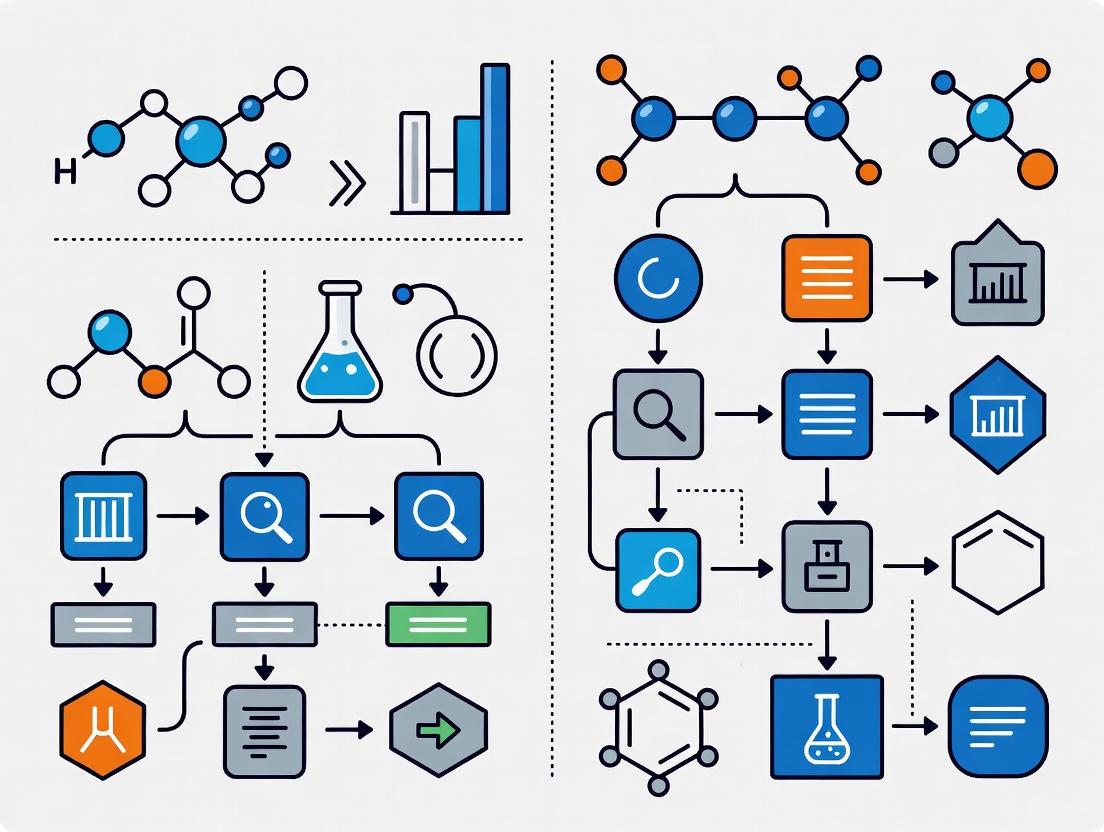
This article provides a comprehensive examination of feature augmentation techniques for modern forensic text detection systems.
Feature Augmentation in Forensic Text Detection: Advanced Methods for AI-Generated Content and Authorship Analysis
Abstract
This article provides a comprehensive examination of feature augmentation techniques for modern forensic text detection systems. Aimed at researchers and forensic professionals, it explores the foundational principles of detecting AI-generated content, plagiarism, and authorship changes. The scope spans from methodological applications of natural language processing (NLP) and machine learning to optimization strategies for handling adversarial attacks and data limitations. Through validation frameworks and comparative analysis of detection tools, this work synthesizes current trends and future directions for developing robust, generalizable forensic text analysis systems capable of addressing evolving challenges in digital content authentication.
The Forensic Text Detection Landscape: Core Concepts and Emerging Challenges
Defining Feature Augmentation in Text Forensics
Frequently Asked Questions (FAQs)
1. What is feature augmentation in the context of text forensics? Feature augmentation in text forensics involves generating new or enhanced linguistic features from existing text data to improve the performance of machine learning models. It aims to create a more robust feature set that helps in identifying deceptive patterns, emotional cues, and other forensic indicators by making models less sensitive to specific word choices and more focused on underlying psycholinguistic patterns [1] [2].
2. How does feature augmentation improve forensic text detection models? It acts as a regularization strategy, preventing overfitting by encouraging models to learn generalizable abstractions rather than memorizing high-frequency patterns or spurious correlations in the training data. This leads to better performance on unseen forensic text data [2].
3. My model is overfitting to the training data. Which augmentation strategy should I try first? Synonym replacement via word embeddings is a highly effective starting point. This method preserves the original meaning and context while varying the lexical surface structure. For instance, you can use contextual embeddings from models like BERT to replace words with their context-aware synonyms [1].
4. What is the most common mistake when applying data augmentation? The most common mistake is validating the model's performance using the augmented data, which leads to over-optimistic and inaccurate results. Always use a pristine, non-augmented validation set. Furthermore, when performing K-fold cross-validation, the original sample and its augmented counterparts must be kept in the same fold to prevent data leakage [1].
5. Can I combine multiple augmentation methods? Yes, a mix of methods such as combining synonym replacement with random deletion or insertion can be beneficial. However, it is crucial not to over-augment, as this can distort the original meaning and degrade model performance. Experimentation is needed to find the optimal combination [1].
Troubleshooting Guides
Problem: Low Model Accuracy After Augmentation
Symptoms
- Decreased accuracy on the test set.
- Increased loss during validation.
Possible Causes and Solutions
- Cause 1: Excessive Augmentation Strength. The augmentation has altered the text to the point where the original semantic meaning is lost.
- Solution: Reduce the augmentation parameters. For example, in synonym replacement, lower the percentage
pof words replaced. In random deletion, decrease the probabilitypof word removal [1].
- Solution: Reduce the augmentation parameters. For example, in synonym replacement, lower the percentage
- Cause 2: Inappropriate Augmentation Method. The chosen method may not be label-preserving for your specific forensic task.
- Cause 3: Data Leakage. The model is being validated on augmented data, giving a false sense of performance.
- Solution: Re-split your dataset, ensuring the validation set contains only original, non-augmented text [1].
Problem: Limited Improvement in Model Generalization
Symptoms
- High performance on training data but poor performance on unseen test data, even after augmentation.
Possible Causes and Solutions
- Cause 1: Lack of Diversity in Augmented Samples. The generated data lacks sufficient linguistic variety.
- Cause 2: Class Imbalance. The original dataset may have a severe class imbalance that augmentation has not adequately addressed.
- Solution: Apply augmentation strategically to the minority class only. Generate a higher number of synthetic samples for the under-represented class to balance the dataset [1].
Quantitative Data on Augmentation Techniques
The table below summarizes the performance impact of different data augmentation techniques on an NLP model for tweet classification, demonstrating how augmentation can improve model generalization [1].
Table 1: Impact of Data Augmentation on Model Performance (Tweet Classification)
| Augmentation Technique | Description | ROC AUC Score (Baseline: 0.775) | Key Consideration |
|---|---|---|---|
| None (Baseline) | Original training data without augmentation. | 0.775 | Benchmark for comparison. |
| Synonym Replacement | Replacing n words with their contextual synonyms using word embeddings. |
0.785 | Preserves context effectively; optimal n is a key parameter. |
| Theoretical: Back-translation | Translating text to another language and back to the original. | Not Reported | Good for paraphrasing; quality depends on the translation API. |
| Theoretical: Random Deletion | Randomly removing words with probability p. |
Not Reported | Introduces noise; can help model avoid relying on single words. |
Experimental Protocols
Protocol 1: Implementing Synonym Replacement for a Forensic Text Classifier
This protocol outlines the steps to augment a dataset of suspect statements or messages using contextual synonym replacement to improve a deception detection model [1].
1. Objective: To increase the size and diversity of a text corpus for training a robust forensic classification model.
2. Materials:
* A labeled dataset of text samples (e.g., transcribed interviews, messages).
* Python programming environment.
* The nlpaug library.
3. Methodology:
* Step 1 - Data Preparation: Split the original dataset into training and validation sets. Crucially, the validation set must remain non-augmented [1].
* Step 2 - Augmenter Initialization: Initialize a contextual word embeddings augmenter within nlpaug.
Protocol 2: A Psycholinguistic Feature Augmentation Framework for Suspect Identification
This protocol is based on research that uses advanced NLP techniques to augment analytical features for identifying persons of interest from their language use [4] [5].
1. Objective: To augment a suspect's text with derived psycholinguistic features (deception, emotion) to identify key investigative leads.
2. Materials:
* A corpus of text from multiple suspects (e.g., transcribed police interviews).
* NLP libraries (e.g., Empath for deception analysis, NLTK, Scikit-learn).
* Feature calculation and correlation analysis tools.
3. Methodology:
* Step 1 - Feature Extraction: For each suspect's text, extract and calculate time-series data for:
* Deception: Using a library like Empath to identify and count words related to deception [4] [5].
* Emotion: Quantify levels of anger, fear, and neutrality over the course of the narrative [4] [5].
* Subjectivity: Measure the degree of subjective versus objective language [4] [5].
* Step 2 - N-gram Correlation: Extract n-grams (e.g., "that night", "at the park") from the text and calculate their correlation with investigative keywords and phrases related to the crime [4].
* Step 3 - Feature Augmentation & Synthesis: The calculated time-series and correlation metrics serve as augmented features. These engineered features provide a multidimensional psycholinguistic profile beyond the raw text.
* Step 4 - Suspect Ranking: Analyze the augmented feature set to identify suspects with profiles highly correlated to the crime. This includes high deception scores, specific emotional patterns, and strong n-gram correlations with the event [4] [5].
Workflow Visualization
Psycholinguistic Feature Augmentation Workflow
NLP Data Augmentation Decision Pathway
The Scientist's Toolkit: Research Reagent Solutions
Table 2: Essential Tools and Libraries for Feature Augmentation in Text Forensics
| Item Name | Function / Application | Relevant Protocol |
|---|---|---|
| NLPAug | A comprehensive Python library for augmenting NLP data at character, word, and sentence levels. Supports both contextual (BERT) and non-contextual (Word2Vec) embeddings. | Protocol 1 |
| Empath | A Python library used to analyze text against lexical categories, enabling the calculation of deception levels and other psychological cues over time. | Protocol 2 |
| Transformer Models (BERT, RoBERTa) | Provide state-of-the-art contextual embeddings for understanding and generating text. Used for high-quality synonym replacement and feature extraction. | Protocol 1, 2 |
| NLTK / SpaCy | Standard NLP libraries for essential preprocessing tasks (tokenization, lemmatization) and grammatical analysis. | Protocol 1, 2 |
| Scikit-learn | A machine learning library used for building the final classification or clustering models using the augmented features. | Protocol 1, 2 |
Frequently Asked Questions (FAQs)
Q1: Our lab's AI-text detector shows a high false positive rate on scientific manuscripts. What could be the cause? A high false positive rate often stems from a concept known as "feature domain mismatch." Your detector was likely trained on general web text, not the specific linguistic and statistical features of scientific literature [6]. This mismatch causes it to flag formal, structured academic writing as AI-generated. To troubleshoot, retrain your classifier on a curated dataset of human-authored scientific papers from your field and their AI-generated counterparts. Furthermore, review the model's decision boundaries; it may be overly reliant on features like sentence length or paragraph structure, which are poor indicators in scientific writing [7].
Q2: Why does our forensic detection model fail to identify text from the latest LLMs like GPT-4? This is a problem of model generalization. Detection models often experience significant performance degradation when faced with text from a newer or more advanced generator than what was in their training data [7] [8]. This is because newer LLMs produce text with statistical signatures and perplexity profiles that are increasingly human-like. The solution involves implementing a continuous learning pipeline that regularly incorporates outputs from the latest LLMs into your training dataset. Augmenting your approach with model-based features, such as the probability curvature of the text, can also improve robustness against evolving generators [8].
Q3: How can we reliably detect AI-generated text that has been paraphrased to evade detection? Paraphrasing is a known adversarial attack that can degrade the performance of many detectors [8]. Relying on a single detection method is insufficient. You should adopt a multi-feature fusion strategy.
- Enhance your feature set: Move beyond simple statistical features. Integrate semantic embeddings from models like BERT to understand if the underlying ideas are coherent in a way characteristic of LLMs, even if the surface-level words have changed [7].
- Implement ensemble methods: Combine the outputs of multiple detectors, including those based on linguistic style, semantic coherence, and external LLM-based classifiers [8]. A consensus approach can be more resilient to manipulation.
- Explore watermarking: For internally generated text, advocate for the use of LLMs that incorporate robust, imperceptible watermarks, which can survive paraphrasing attacks [7] [8].
Q4: What is the most critical step in building an effective feature-augmented forensic text detector? The most critical step is the creation of a high-quality, balanced, and domain-relevant benchmark dataset [7] [9]. The performance of your entire detection framework is bounded by the data it learns from. This dataset must include:
- A substantial volume of human-authored text from your target domain (e.g., drug development research papers).
- A comparable volume of AI-generated text created from multiple LLMs (e.g., ChatGPT, Gemini, Copilot) and tailored to the same domain [9].
- Careful labeling and, if possible, augmentation to ensure the model learns robust features rather than dataset-specific artifacts [9].
Troubleshooting Guides
Issue: Poor Generalizability to New Text Domains
Symptoms:
- The detector performs well on its original test set but poorly on text from new scientific disciplines.
- Accuracy drops significantly when processing text from non-English languages.
Diagnostic Steps:
- Perform Domain Shift Analysis: Compare the statistical characteristics (e.g., average word length, lexical diversity, sentence complexity) of your training data with the new domain. A significant divergence indicates a feature domain shift [6].
- Evaluate Feature Importance: Use model interpretation tools (e.g., SHAP) to identify which features are driving classifications. You may find the model is over-indexing on domain-specific jargon rather than general AI-generation cues.
Resolution Protocol:
- Apply Feature-Augmentation by Soft Domain Transfer: This technique harnesses intermediate layer representations from pre-trained neural models to create domain-invariant features. It allows knowledge from a resource-rich domain (e.g., general news) to improve performance in a resource-scarce domain (e.g., specialized medical literature) [6].
- Implement Multi-Domain Training: Actively expand your training corpus to include a diverse set of domains and languages. Data augmentation using Gen-AI tools can help generate synthetic training samples for underrepresented domains [9].
- Adopt a Hybrid CNN-BiLSTM Architecture: This architecture is particularly effective for generalization as it captures both local syntactic patterns (via CNN) and long-range semantic dependencies (via BiLSTM), making it less reliant on domain-specific stylistic rules [7].
Issue: Classifier Performance Degradation Over Time
Symptoms:
- Gradual decrease in detection accuracy and F1-score.
- Increase in false negatives as new, more capable LLMs are released.
Diagnostic Steps:
- Model Drift Detection: Continuously monitor the performance of your detector on a held-out validation set that is periodically updated with samples from the latest LLMs. A steady decline indicates model drift.
- Adversarial Robustness Testing: Systematically test your detector against paraphrased text, text with injected noise, and outputs from newly published model checkpoints [8].
Resolution Protocol:
- Establish a Continuous Learning Framework: Create an automated pipeline that periodically queries the latest LLMs using a fixed set of prompts, generates new training data, and fine-tunes your detection model. This is essential for keeping pace with the rapid evolution of generative AI [9] [8].
- Incorporate "Human-in-the-Loop" Verification: For borderline cases, integrate a manual review step. The decisions of human experts can be fed back into the system as new labeled data to reinforce correct learning [8].
- Shift to a Retrieval-Based Detection Paradigm: Instead of a pure classifier, consider a system that checks if a given text passage is too similar to content that could be generated by a known LLM. This method can be more adaptable to new models without requiring full retraining [8].
Experimental Data & Protocols
Table 1: Performance Comparison of AI-Text Detection Models
This table summarizes the quantitative performance of various detection approaches as reported in the literature, highlighting the effectiveness of hybrid and feature-augmented models. [7]
| Model / Framework | Accuracy (%) | Precision (%) | Recall (%) | F1-Score (%) | Key Features |
|---|---|---|---|---|---|
| Proposed Hybrid CNN-BiLSTM | 95.4 | 94.8 | 94.1 | 96.7 | BERT embeddings, Text-CNN, Statistical features |
| RoBERTa Baseline | ~90* | ~89* | ~91* | ~90* | Transformer-based fine-tuning |
| DistilBERT Baseline | ~87* | ~85* | ~86* | ~85* | Lightweight transformer |
| Zero-Shot LLM Prompting | Moderate | Varies | Varies | Moderate | No training, prompt-based |
| Gen-AI Augmented Dataset | ~10% Increase | Improvement | Improvement | Improvement | Expands dataset from 1,079 to 7,982 texts [9] |
Note: Baseline values are approximated from the context of [7].
Table 2: Research Reagent Solutions for Forensic Text Detection
This table lists key digital "reagents" – software tools and datasets – essential for building and testing feature-augmentation forensic text detection systems. [7] [9] [8]
| Reagent Name | Type | Function in Experiment |
|---|---|---|
| BERT / sBERT | Model / Embedding | Generates deep contextual semantic embeddings for text, used as input features for classifiers [7] [9]. |
| Text-CNN | Feature Extractor | A convolutional neural network that extracts local, n-gram style syntactic patterns from text [7]. |
| BiLSTM Layer | Neural Network Component | Captures long-range dependencies and contextual flow in text, modeling sequential information [7]. |
| Turnitin / iThenticate | Software Service | Commercial plagiarism and AI-detection tool used for benchmarking and initial screening [10]. |
| CoAID / Custom Benchmarks | Dataset | Public and proprietary datasets used for training and evaluating the generalizability of detection models [7]. |
| OpenAI ChatGPT / Google Gemini | Generative AI | Used for data augmentation to create synthetic AI-generated text for training detectors [9]. |
Experimental Workflow Visualizations
Forensic Text Detection Workflow
Feature Augmentation by Domain Transfer
Continuous Learning for AI Detection
Forensic text detection systems have evolved into a multi-faceted scientific discipline focused on three core pillars: Detection (identifying AI-generated content), Attribution (determining the specific AI model involved), and Characterization (understanding the underlying intent of the text) [11]. This technical support center provides researchers and scientists with the experimental protocols and troubleshooting knowledge necessary to advance this critical field, with a specific focus on feature-augmented forensic systems.
Frequently Asked Questions (FAQs)
FAQ 1: What is the fundamental difference between plagiarism detection and AI-generated content detection?
Plagiarism detection identifies text copied from existing human-written sources, while AI-generated content detection distinguishes between human-authored and machine-generated text, even if the machine-generated text is entirely original [12]. The former looks for duplication, the latter for statistical and stylistic patterns indicative of AI models.
FAQ 2: How accurate are current AI detection tools, and what is the most critical metric for research settings?
Accuracy varies significantly between tools. However, for academic and research applications, the false positive rate (incorrectly flagging human-written text as AI-generated) is the most critical metric due to the severe consequences of false accusations [13]. While some mainstream tools can identify purely AI-generated text with high accuracy, their performance drops significantly when the text has been paraphrased or edited [13] [14].
FAQ 3: Can AI-generated content pass modern, "authentic" assessments?
Yes. Multiple studies have found that generative AI can produce content for "authentic assessments" that passes the scrutiny of experienced academics. AI tools are increasingly capable of long-form writing and complex tasks, with some models employing multi-step strategies that make their output highly convincing [13].
FAQ 4: What are the main technical approaches to AI-generated text detection?
The two primary approaches are watermarking (embedding a detectable pattern during text generation) and post-hoc detection (analyzing text after it is generated). Post-hoc detection can be further divided into supervised methods (trained on labeled datasets) and zero-shot methods [11]. Feature-augmented detectors often incorporate stylometric, structural, and sequence-based features to improve performance [11].
FAQ 5: Why might a detection tool misclassify human-written text?
Misclassification can occur with text written by non-native English speakers, highly formal prose, or technical scientific writing. This is often due to biases in the training data, which may over-represent certain writing styles [14]. Furthermore, edited or "humanized" AI content can significantly reduce detection performance [14].
Troubleshooting Common Experimental Challenges
Challenge 1: High False Positive Rates in Your Dataset
- Problem: Your detection model is flagging an unacceptable amount of human-written text as AI-generated.
- Solution:
- Re-evaluate Your Training Data: Ensure your human-text dataset is diverse and representative of the target domain (e.g., scientific manuscripts). Incorporate texts from non-native speakers and various stylistic formats [14].
- Prioritize Specificity: Adjust your classification threshold to favor specificity over sensitivity. A tool with a lower false positive rate is more suitable for high-stakes research environments [13].
- Benchmark Against Established Tools: Compare your model's outputs against mainstream tools known for low false positive rates, such as Turnitin, to identify potential biases in your system [13].
Challenge 2: Detecting Paraphrased or "AI-Humanized" Content
- Problem: Adversarial edits and paraphrasing tools are easily circumventing your detection system.
- Solution:
- Incorporate Robust Feature Sets: Move beyond basic classifiers. Augment your model with features that are harder to obscure through paraphrasing, such as:
- Stylometry: Analyze phraseology, punctuation, and linguistic diversity [11].
- Structural Features: Model the factual structure and contextual flow of the text [11].
- Sequence-based Features: Leverage information-theoretic principles like Uniform Information Density (UID) to quantify the smoothness of token distribution [11].
- Train on Hybrid Data: Include datasets that contain mixtures of AI-generated and human-edited text to make your model robust to these evasions [14].
- Incorporate Robust Feature Sets: Move beyond basic classifiers. Augment your model with features that are harder to obscure through paraphrasing, such as:
Challenge 3: Generalizing to New or Unseen AI Models
- Problem: Your detector performs well on text from known AI models (e.g., GPT-4) but fails on outputs from newer or open-source models.
- Solution: Focus on developing transferable detection methodologies. This involves using domain-invariant training strategies and feature sets that capture the fundamental differences between human and machine text, regardless of the specific model architecture [11].
Experimental Protocols & Methodologies
Protocol: Evaluating AI Detection Tool Performance
Aim: To quantitatively assess the performance of AI content detection tools on a specific corpus of scientific text.
Materials:
- Corpus of human-written scientific abstracts (e.g., from PubMed).
- Corpus of AI-generated scientific abstracts (created using prompts based on the human abstract topics).
- Access to selected AI detection tools (e.g., via API or web interface).
- Statistical analysis software (e.g., R, Python).
Methodology:
- Dataset Curation: Create a balanced, labeled dataset of human and AI-generated text samples. Ensure the AI-generated samples are produced with varying levels of prompting sophistication.
- Tool Selection: Select a range of detectors, including mainstream paid tools and newer entrants.
- Blinded Analysis: Submit each text sample to the detection tools in a blinded fashion, recording the score or classification provided.
- Data Collection: Record the following metrics for each tool:
- True Positives (TP), False Positives (FP), True Negatives (TN), False Negatives (FN).
- Statistical Analysis: Calculate key performance indicators:
- Accuracy: (TP+TN) / (TP+TN+FP+FN)
- Precision: TP / (TP+FP)
- Recall/Sensitivity: TP / (TP+FN)
- Specificity: TN / (TN+FP)
- F1-Score: 2 * (Precision * Recall) / (Precision + Recall)
Troubleshooting: If false positive rates are unacceptably high (>5%), re-run the experiment focusing on the tool's "human" score and adjust the classification threshold accordingly [13].
Protocol: Feature Augmentation for Improved Detection
Aim: To enhance a baseline detector by incorporating stylometric and structural features.
Materials:
- Baseline pre-trained language model (PLM) classifier (e.g., based on RoBERTa).
- Feature extraction libraries (e.g., for linguistic diversity, syntax trees).
- Labeled dataset of human and AI-generated text.
Methodology:
- Baseline Establishment: Run the baseline PLM classifier on your test dataset and record performance metrics.
- Feature Extraction: For each text sample, extract a set of augmenting features. Refer to the table below for key feature categories.
- Feature Fusion: Combine the feature vectors from the PLM with the newly extracted stylometric/structural features.
- Model Training & Evaluation: Train a new classifier (e.g., a neural network ensemble) on the fused feature set. Compare its performance against the baseline model using the same test dataset and metrics.
Feature Augmentation Workflow for Forensic Text Detection
Performance of Selected AI Detection Tools
Table 1: Accuracy of tools in identifying purely AI-generated text. Note: Performance is highly dependent on text origin and detector version, so these figures are indicative rather than absolute [13].
| Detection Tool | Kar et al. (2024) Accuracy | Lui et al. (2024) Accuracy | Perkins et al. (2024) Accuracy | Weber-Wulff (2023) Accuracy |
|---|---|---|---|---|
| Copyleaks | 100% | - | 64.8% | - |
| Turnitin | 94% | - | 61% | 76% |
| GPTZero | 97% | 70% | 26.3% | 54% |
| Originality.ai | 100% | - | - | - |
| Crossplag | - | - | 60.8% | 69% |
| ZeroGPT | 95.03% | 96% | 46.1% | 59% |
Table 2: Key performance metrics to calculate during tool evaluation, based on the experimental protocol in Section 4.1.
| Metric | Formula | Interpretation in Research Context |
|---|---|---|
| Accuracy | (TP+TN) / Total | Overall correctness, but can be misleading with imbalanced data. |
| Precision | TP / (TP+FP) | The proportion of flagged texts that are truly AI-generated. High precision is critical to avoid false accusations. |
| Recall | TP / (TP+FN) | The tool's ability to find all AI-generated texts. High recall is needed for comprehensive screening. |
| F1-Score | 2(PrecisionRecall)/(Precision+Recall) | The harmonic mean of precision and recall; a single balanced metric. |
| False Positive Rate | FP / (FP+TN) | The rate of misclassifying human text as AI. The most critical metric for academic integrity contexts [13]. |
The Scientist's Toolkit: Research Reagents & Materials
Table 3: Essential components for building and testing feature-augmented forensic text detection systems.
| Tool / Material | Function / Rationale | Examples & Notes |
|---|---|---|
| Pre-trained Language Models (PLMs) | Serve as powerful baseline classifiers for text sequence analysis. | RoBERTa, BERT, DeBERTa. Fine-tuned versions (e.g., GPT-2 detector) are common starting points [11]. |
| Stylometry Feature Extractors | Quantify nuances in writing style to distinguish between human and AI authors. | Libraries to analyze punctuation density, syntactic patterns, lexical diversity, and readability scores [11]. |
| Structural Analysis Libraries | Model the organization and factual flow of text, which can differ between humans and AI. | Tools for parsing syntax trees, analyzing discourse structure, and modeling entity coherence [11]. |
| Benchmark Datasets | Provide standardized, labeled data for training and fair comparison of detection models. | Include both public datasets (e.g., HC3) and custom, domain-specific corpora (e.g., scientific abstracts). |
| Adversarial Training Data | Improves model robustness against evasion techniques like paraphrasing and word substitution. | Datasets containing AI-text that has been processed by paraphrasing tools or manually edited [14]. |
| Sequence Analysis Tools | Implement information-theoretic measures to detect the "smoothness" characteristic of AI text. | Calculate metrics like perplexity, burstiness, and Uniform Information Density (UID) [11] [14]. |
Current Trends in Natural Language Processing for Forensic Analysis
FAQs: Feature Augmentation for Forensic Text Detection
1. What is feature augmentation, and why is it critical for forensic text detection?
Feature augmentation enhances forensic text detection systems by integrating multiple types of linguistic and statistical features beyond basic text classification. This approach improves the system's ability to distinguish between human-written and AI-generated text, especially as Large Language Models (LLMs) become more sophisticated. Augmenting standard models with stylometric, structural, and psycholinguistic features helps capture subtle nuances in writing style, making detectors more robust and transferable across different AI models [11].
2. My detection model performs well on training data but generalizes poorly to new LLMs. What feature augmentation strategies can improve transferability?
This is a common challenge due to the rapid evolution of LLMs. To enhance transferability:
- Integrate Stylometry Features: Augment your model with features that capture an author's unique stylistic choices, such as phraseology, punctuation patterns, and linguistic diversity. These features are often less model-specific and can improve detection of AI-generated tweets and other content [11].
- Use Domain-Invariant Training: Employ training strategies that force the model to learn features that are generalizable across different AI generators, rather than overfitting to the characteristics of a specific model in your training set [11].
3. How can psycholinguistic features be leveraged to identify deception or suspicious entities in forensic text analysis?
Psycholinguistic features help bridge the gap between language and psychological states, which is valuable for forensic analysis.
- Analyze Deception and Emotion Over Time: Use libraries like Empath to calculate deception levels in text. Track emotions like anger, fear, and neutrality over time, as shifts in these can be indicative of deceptive behavior or heightened stress [4] [5].
- Correlate with Investigative Keywords: Identify key entities or suspects by measuring the correlation of their language (e.g., in emails or transcribed interviews) with specific investigative keywords and phrases related to the case. This can help narrow down a pool of candidates [4] [5].
4. What are the primary limitations of current AI-generated text detectors, and how can feature augmentation mitigate them?
The main limitations include:
- Dependence on Training Data: Supervised detectors can struggle with new AI models not represented in their training data [11].
- Evolving AI Sophistication: As LLMs better mimic human writing, the distinguishing features become subtler [11].
- Bias and Incomplete Outputs: LLMs and detectors can inherit biases from their training data [15]. Feature augmentation mitigates these issues by providing a richer, multi-faceted feature set that is harder for new AI models to replicate perfectly. Combining stylistic, structural, and psycholinguistic signals creates a more robust profile of AI-generated content [11] [4].
5. In a forensic investigation, how can I process text from encrypted or privacy-focused platforms?
The shift to secure cloud services presents a challenge. Modern digital forensics tools can sometimes simulate app clients to download user data from servers of applications like Telegram or Facebook using their APIs. By providing valid user account credentials (e.g., through a legal process), investigators can access and decrypt this data, as the server perceives the activity as user-initiated [15].
Troubleshooting Guides
Problem: Low Accuracy in Detecting AI-Generated News Articles
Possible Cause & Solution:
- Cause: The model may rely on basic text features that are insufficient for detecting high-quality, persuasive AI-generated news.
- Solution: Augment the feature set with journalism-standard features. Evaluate the text's compliance with standards like the Associated Press Stylebook. AI-generated news often deviates from these professional writing conventions, providing a strong signal for detection [11].
Problem: Model Fails to Differentiate Between Human and AI-Generated Social Media Posts
Possible Cause & Solution:
- Cause: The model may not be capturing the unique structural and contextual patterns of short-form social media content.
- Solution: Implement a multi-branch network architecture like TriFuseNet. This network explicitly models stylistic, contextual, and other features simultaneously, augmenting the model's capability to detect AI-generated tweets and posts by providing a more comprehensive view of the text [11].
Problem: Inability to Identify "Authorship" of AI-Generated Text (Model Attribution)
Possible Cause & Solution:
- Cause: Standard detection models are designed for a binary human/AI classification and lack the features to distinguish between different source LLMs (e.g., GPT-4 vs. Llama).
- Solution: Focus on attribution as a separate pillar of the forensic system. Develop features and models specifically designed to trace text back to a source model. This goes beyond detection and is crucial for understanding the origin of AI-generated misinformation or propaganda [11].
Experimental Protocols
Protocol 1: Augmenting a Detector with Stylometric and Structural Features
This protocol outlines the methodology for enhancing a base text classifier.
1. Hypothesis: Augmenting a pre-trained language model (PLM) with stylometric and structural features will improve its accuracy and robustness in detecting AI-generated text.
2. Materials/Reagents: Table: Key Research Reagent Solutions
| Item Name | Function in Experiment |
|---|---|
| Pre-trained Language Model (e.g., RoBERTa, BERT) | Serves as the base feature extractor for deep contextual text understanding. |
| Labeled Dataset (Human & AI-generated texts) | Provides ground truth for training and evaluating the supervised detector. |
| Stylometry Feature Extractor | Calculates features like punctuation density, syntactic complexity, and lexical diversity. |
| Structural Analysis Module (e.g., Attentive-BiLSTM) | Models relationships between sentences and long-range text structure. |
3. Methodology:
- Step 1: Data Preparation. Compile a dataset with texts labeled as "Human" or "AI-generated." Ensure the AI texts are generated from a variety of LLMs to test generalizability.
- Step 2: Feature Extraction.
- Extract deep contextual features using the final hidden layers of the PLM.
- Run the text through a stylometry module to get statistical features (e.g., average sentence length, unique word ratio).
- Use a structural module (like replacing the classifier's feed-forward layer with an Attentive-BiLSTM) to learn robust, interpretable features from the text sequence [11].
- Step 3: Feature Fusion. Combine the PLM features, stylometry features, and structural features into a single, augmented feature vector.
- Step 4: Classification & Evaluation. Train a classifier (e.g., SVM, Multi-layer Perceptron) on the augmented features. Evaluate performance on a held-out test set using metrics like accuracy, F1-score, and area under the ROC curve (AUC). Compare against a baseline model that uses only PLM features.
The workflow for this experimental protocol is as follows:
Protocol 2: Psycholinguistic Analysis for Suspect Prioritization
This protocol uses NLP to analyze text for deception and emotional cues.
1. Hypothesis: Measuring deception, emotion, and subjectivity over time in suspect narratives can help identify and prioritize key persons of interest in an investigation.
2. Materials/Reagents: Table: Key Research Reagent Solutions for Psycholinguistic Analysis
| Item Name | Function in Experiment |
|---|---|
| Text Corpus (e.g., interview transcripts, emails) | The primary data for analysis, containing text from multiple suspects. |
| NLP Library (e.g., SpaCy, NLTK) | Provides tools for tokenization, part-of-speech tagging, and dependency parsing. |
| Emotion/Deception Library (e.g., Empath, LIWC) | Quantifies emotional tone, subjectivity, and potential deceptive cues in text. |
| Topic Modeling Algorithm (e.g., LDA) | Identifies latent topics within the text corpus to find thematic correlations. |
3. Methodology:
- Step 1: Data Collection & Preprocessing. Gather text data from all subjects (e.g., transcribed police interviews). Clean and standardize the text.
- Step 2: Temporal Psycholinguistic Analysis.
- Segment each subject's text into temporal chunks (e.g., by question in an interview).
- For each segment, calculate metrics for deception (using a library like Empath), emotion (anger, fear, neutrality), and subjectivity [4] [5].
- Plot these metrics over time to identify subjects with anomalous patterns.
- Step 3: Keyword and Topic Correlation.
- Step 4: Entity Ranking. Rank the subjects (entities) based on a combined score of their psycholinguistic anomalies and their correlation to the investigative topics. This ranked list helps investigators prioritize resources.
The logical flow for this analysis is visualized below:
The following table summarizes key quantitative findings from the research literature on feature-enhanced forensic NLP systems.
Table: Performance of Feature-Augmented Forensic Text Detection Systems
| Feature Augmentation Type | Base Model/Context | Key Performance Finding | Source |
|---|---|---|---|
| Stylometry & Journalism Features | PLM-based Classifier | Improved detection of AI-generated tweets and news articles by capturing nuanced stylistic variations. | [11] |
| Structural Features (Attentive-BiLSTM) | RoBERTa-based Classifier | Enhanced detection capabilities by learning interpretable and robust structural features from text. | [11] |
| Psycholinguistic Features (Deception, Emotion) | NLP Framework for Suspect Analysis | Successfully identified guilty parties in a fictional crime scenario by analyzing deception and emotion over time, creating a prioritized suspect list. | [4] [5] |
Performance and Adoption Context
The following tables summarize key quantitative data on AI model performance, global investment, and organizational adoption, providing essential context for the challenges in forensic detection.
Table 1: AI Model Performance on Demanding Benchmarks (2023-2024) [16]
| Benchmark | Description | Performance Increase (2023-2024) |
|---|---|---|
| MMMU | Tests massive multi-task understanding | 18.8 percentage points |
| GPQA | Challenging graduate-level Q&A | 48.9 percentage points |
| SWE-bench | Evaluates software engineering capabilities | 67.3 percentage points |
Table 2: Global AI Investment and Adoption (2023-2024) [16] [17]
| Metric | Figure | Context/Year |
|---|---|---|
| U.S. Private Investment | $109.1 Billion | 2024 |
| Generative AI Investment | $33.9 Billion | 2024 (18.7% increase from 2023) |
| Organizations Using AI | 78% | 2024 (up from 55% in 2023) |
| Organizations Scaling AI | ~33% | 2024 (Majority in piloting/experimentation) |
Troubleshooting Guide: Frequently Asked Questions
FAQ 1: My detection model, trained on a specific generator, shows a significant performance drop when tested on a new model. What are the primary remediation strategies?
This is a classic case of model generalization failure, exacerbated by the rapid evolution of AI generators [11]. The performance drop occurs because your detector has overfitted to the specific artifacts of its training data.
- Recommended Protocol: Feature-Augmented Transferable Detection
- Objective: To build a detector that learns domain-invariant features, making it robust to new, unseen generators.
- Methodology:
- Feature Augmentation: Enhance your base classifier (e.g., a RoBERTa or BERT model) by incorporating stylometric features. These include [11]:
- Phraseology and Punctuation: Analyze writing style patterns.
- Linguistic Diversity: Measure vocabulary richness and sentence structure complexity.
- Journalism-Standard Features: Check compliance with style guides (e.g., Associated Press Stylebook).
- Information-Theoretic Features: Calculate metrics like Uniform Information Density (UID) to quantify the smoothness of token distribution, which often differs between human and AI text.
- Domain-Invariant Training: Train your augmented model on a diverse dataset containing outputs from multiple AI generators. The goal is to force the model to learn the core, abstract features of AI-generated text rather than memorizing artifacts from a single source.
- Feature Augmentation: Enhance your base classifier (e.g., a RoBERTa or BERT model) by incorporating stylometric features. These include [11]:
- Expected Outcome: A detector with higher robustness and improved cross-generator generalization, though it may trade off a small amount of peak accuracy on the original generator.
FAQ 2: I am dealing with a class-imbalanced dataset where human-written text samples far outnumber AI-generated ones. How can I improve my model's performance on the minority class?
Data imbalance is a common issue that biases models toward the majority class. The strategy is to artificially balance your training data.
- Recommended Protocol: Text Data Augmentation for Minority Class
- Objective: To increase the quantity and diversity of AI-generated training samples.
- Methodology: Apply one or both of the following techniques to your AI-generated text data [18]:
- Back Translation (BT):
- Translate the original AI-generated text (e.g., in Romanian) into an intermediate language (e.g., German).
- Translate the German text back into the original Romanian.
- Use this new, paraphrased text as an additional training sample. This preserves semantic meaning while altering syntactic structure.
- Easy Data Augmentation (EDA):
- Synonym Replacement: Replace n random non-stop words with their synonyms.
- Random Insertion: Insert a random synonym of a random word at a random position, repeated n times.
- Random Swap: Randomly swap the positions of two words in the sentence, repeated n times.
- Random Deletion: Randomly remove each word in the sentence with a probability p.
- Back Translation (BT):
- Expected Outcome: A more balanced dataset that reduces model bias, leading to improved recall for the AI-generated class and a higher overall F1 score.
FAQ 3: How can I move beyond simple binary detection to gain more forensic insights into the AI-generated text?
Advanced forensic analysis requires moving from detection to attribution and characterization [11].
- Recommended Protocol: Multi-Task Forensic Analysis
- Objective: To not only detect AI-generated text but also identify its source model (attribution) and its potential intent (characterization).
- Methodology:
- Attribution as Classification: Frame the attribution task as a multi-class classification problem. The labels are the set of known source models (e.g., GPT-4, Llama, Gemini). Train a model on a dataset where texts are labeled with their origin.
- Leverage Model Fingerprints: The hypothesis is that different LLMs leave distinct "fingerprints" in their outputs—structured patterns in their use of vocabulary, grammar, and style. Your feature-augmented detector should be trained to recognize these subtle, model-specific clues.
- Characterization via Intent Analysis: For intent characterization (e.g., detecting misinformation or propaganda), treat this as a separate classification or sequence-labeling task, potentially using the features extracted for detection and attribution as a starting point.
- Expected Outcome: A more comprehensive forensic system that can answer "Was this AI-generated?", "Which model generated it?", and "What was its likely purpose?".
The Scientist's Toolkit: Research Reagent Solutions
Table 3: Essential Materials for AI-Generated Text Forensics Research
| Item | Function in Research |
|---|---|
| Pre-trained Language Models (PLMs) | Base models (e.g., RoBERTa, DeBERTa) used as the foundation for building specialized detection classifiers [11]. |
| Benchmark Datasets (e.g., HFFD, FF++) | Large-scale, labeled collections of real and fake face images or text used for training and, more importantly, standardized evaluation and comparison of different detection methods [19]. |
| Stylometry Feature Extractors | Software tools or custom algorithms to quantify writing style, including readability scores, lexical diversity, n-gram stats, and punctuation density [11]. |
| Structured Feature Mining Framework (e.g., MSF) | A data augmentation framework designed to force CNN-based detectors to look at global, structured forgery clues in images (and conceptually adaptable to text) by dynamically erasing strong and weak correlation regions during training [19]. |
| AI Text Generators (for data synthesis) | A suite of various LLMs (e.g., GPT-4, Llama, Claude) used to create a diverse set of AI-generated text samples for training and adversarial testing of detectors [11]. |
Experimental Protocol: Feature-Augmented Detection
This protocol provides a detailed methodology for developing a robust, feature-augmented forensic text detection system.
Title: Developing a Transferable AI-Generated Text Detector via Stylometric Feature Augmentation.
Objective: To train a classifier that distinguishes human-written from AI-generated text with high accuracy and robust generalization across multiple AI text generators.
Materials & Datasets:
- Base Classifier: A pre-trained Transformer model like RoBERTa-base.
- Datasets: A mix of human-written texts (e.g., Wikipedia articles, news) and AI-generated texts from multiple models (e.g., GPT-3.5, GPT-4, Llama 2, Gemini). The dataset should be split into training, validation, and testing sets, with a portion of the AI-generated texts held back from training to test generalization.
- Feature Extraction Libraries: Libraries for calculating text statistics (e.g., textstat), NLP toolkits (e.g., spaCy, NLTK) for part-of-speech tagging and dependency parsing.
Step-by-Step Methodology:
- Data Collection and Preprocessing:
- Compile your dataset, ensuring it is balanced between human and AI-generated classes.
- Clean and tokenize all text samples.
- For the AI-generated portion, create a meta-dataset labeling which source model generated each text.
Feature Extraction:
- Deep Learning Features: Pass tokenized text through the RoBERTa model to obtain a [CLS] token embedding or mean pooling of the last hidden layer outputs. This will serve as your base feature vector.
- Stylometric Features: For each text sample, calculate a suite of hand-crafted features. This includes [11]:
- Lexical: Type-Token Ratio, average word length, sentence length variance.
- Syntactic: Frequency of certain part-of-speech tags, usage of passive voice.
- Readability: Flesch Reading Ease, Gunning Fog Index.
- Punctuation: Density of commas, semicolons, exclamation marks.
- Information-Theoretic Features: Calculate perplexity using a standard language model and derive Uniform Information Density (UID) measures [11].
Feature Fusion:
- Normalize all hand-crafted feature vectors to have zero mean and unit variance.
- Concatenate the normalized stylometric and information-theoretic feature vector with the deep learning feature vector from RoBERTa to create a fused, augmented feature representation.
Model Training and Validation:
- Add a classification head on top of the fused feature vector.
- Train the model on the training set, using the validation set for hyperparameter tuning and early stopping. Monitor for overfitting.
Evaluation and Generalization Testing:
- In-Distribution Test: Evaluate the final model on the standard test set containing texts from known generators.
- Out-of-Distribution (Generalization) Test: Evaluate the model on the held-back test set containing texts from unseen AI models. Compare the performance (Accuracy, F1-score) against a baseline model trained only on deep learning features.
System Visualization: Forensic Analysis Workflow
Advanced Protocol: Multi-Task Forensic System
This protocol expands on the previous one to include model attribution and intent characterization.
Title: Building a Multi-Task Forensic System for Detection, Attribution, and Characterization of AI-Generated Text.
Objective: To create a unified system that can detect AI-generated text, identify its source model, and classify its potential malicious intent (e.g., misinformation, propaganda).
Materials & Datasets:
- All materials from the previous protocol.
- Attribution Labels: Data must be labeled with the specific AI model that generated it (e.g., "GPT-4", "Llama 2 70B").
- Characterization Labels: A subset of the data (particularly AI-generated) must be labeled for intent (e.g., "Benign", "Misinformation", "Propaganda"). This may require expert annotation.
Step-by-Step Methodology:
- Follow Steps 1-3 from the "Feature-Augmented Detection" protocol to create a fused feature vector for each text sample.
Multi-Task Head Architecture:
- The fused feature vector is fed into three separate classification heads:
- Detection Head: A binary classifier (Human vs. AI).
- Attribution Head: A multi-class classifier (number of classes = number of known source models + 1 for "Human" or "Unknown").
- Characterization Head: A multi-class classifier for intent (number of classes = number of defined intent categories).
- The fused feature vector is fed into three separate classification heads:
Joint Training:
- The model is trained with a combined loss function, typically a weighted sum of the individual losses for each task (e.g., Cross-Entropy for detection, attribution, and characterization).
- This allows the shared feature extractor to learn representations that are useful for all three forensic tasks simultaneously.
Evaluation:
- Evaluate each task head independently on its respective metrics (e.g., F1 for detection, accuracy for attribution and characterization).
- Analyze the trade-offs between the tasks and how performance on one affects the others.
Implementing Feature Augmentation: Techniques and Workflows for Effective Detection
FAQ: Stylometric and Syntactic Analysis for Forensic Text Detection
Q1: What is the core difference between stylometric and syntactic analysis in forensic text detection?
Stylometric analysis is a quantitative methodology for authorship attribution that identifies unique, unconscious stylistic fingerprints in writing. It focuses on the statistical distribution of features like function words (the, and, of), punctuation patterns, and lexical diversity, which are largely independent of content [20] [21]. Syntactic analysis, a core component of Natural Language Processing (NLP), involves parsing text to understand its grammatical structure, conforming to formal grammar rules to draw out precise meaning and build data structures like parse trees [22] [23]. In forensic systems, stylometry helps answer "who wrote this?" by analyzing style, while syntactic analysis helps understand "how is this sentence constructed?" by analyzing grammar, with both serving as complementary features for detection models [11].
Q2: Why are function words so powerful for stylometric analysis in forensic detection?
Function words (e.g., articles, prepositions, conjunctions) are highly effective style markers because they are used in a largely unconscious manner by authors and are mostly independent of the topic of the text [24] [25]. This makes them a latent fingerprint that is difficult for a would-be forger to copy consistently. Stylometric methods like Burrows' Delta rely heavily on the frequencies of the most frequent words (MFW), which are predominantly function words, to measure stylistic similarity and attribute authorship [25] [21].
Q3: Our supervised detector for AI-generated text performs well on known LLMs but fails on new models. How can we improve its transferability?
This is a well-known challenge, as supervised detectors often overfit to the specific characteristics of the AI models in their training set [11]. To enhance transferability:
- Focus on Generalizable Features: Prioritize features that are fundamental to human language, such as those based on the Uniform Information Density (UID) hypothesis, which suggests humans distribute information more evenly than AI models [11]. Stylometric features like syntactic patterns and punctuation use have also shown good cross-model performance [26].
- Incorporate Domain-Invariant Training: Use machine learning strategies that explicitly train models to learn features invariant across different AI generators, preventing over-reliance on model-specific artifacts [11].
- Feature Augmentation: Augment your feature set with a wider array of stylometric and structural features to build a more robust model. Ensembles of stylometry features and pre-trained language model classifiers have been shown to bolster effectiveness [11].
Q4: What are the key limitations of using stylometry as evidence in forensic or legal contexts?
While powerful, stylometry currently faces hurdles for admissibility in legal proceedings. A primary limitation is the lack of a universally accepted, coherent probabilistic framework to assess the probative value of its results [27]. Conclusions are often presented as statistical probabilities rather than definitive proof. Furthermore, an author's style can vary over their career or be deliberately obfuscated through adversarial stylometry, potentially undermining the reliability of the analysis [21] [27]. Courts require validated methodologies with known error rates, a standard still being solidified for many stylometric techniques [27].
Troubleshooting Common Experimental Issues
Problem: Low accuracy in distinguishing between human and advanced LLM (e.g., GPT-4) generated text.
- Potential Cause 1: Over-reliance on a single feature type (e.g., only using lexical diversity).
- Solution: Implement feature augmentation. Combine multiple feature types to create a more robust model. The table below summarizes key feature categories to consider [11] [26]:
- Potential Cause 2: The dataset is too small or lacks a balanced representation of human and AI-generated texts.
- Solution: Utilize existing benchmark datasets, such as the Beguš corpus of short stories, or create your own using a structured protocol with predefined prompts for both humans and LLMs [25]. Ensure your dataset is balanced and of sufficient size for statistical power.
Problem: Inconsistent results when performing syntactic analysis with a parser.
- Potential Cause: The grammar rules defined for the parser are not adequate for the complexity of the sentences in your corpus.
- Solution: Use a robust, pre-existing grammar framework like Context-Free Grammar (CFG) [22] [23]. For complex texts, leverage modern NLP libraries like NLTK in Python, which come with pre-trained parsers capable of handling a wide range of grammatical structures [23].
Problem: An author is deliberately trying to hide their writing style to fool the forensic system.
- Potential Cause: This is an instance of adversarial stylometry, where an individual alters their style to avoid detection [21].
- Solution: Research is ongoing, but potential solutions include developing detection methods that are sensitive to the practice of adversarial stylometry itself, as the obfuscation process may introduce new, detectable stylistic signals. Using a wider array of deeply ingrained, subconscious features (e.g., specific syntactic constructions) can also make style-masking more difficult [21].
Experimental Protocols & Methodologies
Protocol for Stylometric Analysis using Burrows' Delta
This protocol is adapted from studies comparing human and AI-generated creative writing [25].
Objective: To quantitatively measure stylistic differences between a set of texts and visualize their grouping.
Materials:
- A corpus of texts (e.g., the Beguš corpus, which contains human and LLM-generated short stories) [25].
- Natural Language Toolkit (NLTK) in Python.
- Scripts for calculating Burrows' Delta and performing clustering.
Methodology:
- Preprocessing: Clean the text data by converting to lowercase, removing non-alphanumeric characters, and optionally lemmatizing tokens.
- Feature Extraction: Identify the N Most Frequent Words (MFW) across the entire corpus. Typically, these will be function words.
- Frequency Normalization: Calculate the z-scores for the frequency of each MFW in each text. This standardizes the data.
- Calculate Delta: For each pair of texts, compute Burrows' Delta, which is the mean of the absolute differences between the z-scores of all MFW. A lower Delta indicates greater stylistic similarity.
- Clustering and Visualization: Apply hierarchical clustering with average linkage to the matrix of Delta values. Visualize the results using a dendrogram. Alternatively, use Multidimensional Scaling (MDS) to project the high-dimensional relationships into a 2D scatter plot.
The workflow for this analysis can be summarized as follows:
Protocol for Syntactic Analysis using Constituency Parsing
This protocol outlines the process of extracting a sentence's grammatical structure [23].
Objective: To generate a parse tree that represents the grammatical structure of a sentence.
Materials:
- A sample sentence (e.g., "This tree is illustrating the constituency relation").
- The NLTK Python module.
Methodology:
- Tokenization: Split the input sentence into individual words (tokens).
- Part-of-Speech (POS) Tagging: Assign a grammatical tag (e.g., Noun
NN, VerbVB, DeterminerDT) to each token. - Define a Grammar: Specify a set of phrase structure rules that define how words form phrases. Example:
NP: {<DT>?<JJ>*<NN>}# Noun Phrase: optional Determiner, any number of Adjectives, followed by a Noun.VP: {<VB.*> <NP|PP>*}# Verb Phrase: A verb followed by any number of Noun Phrases or Prepositional Phrases. - Parsing: Use a parser (e.g., NLTK's
RegexpParser) to apply the grammar rules to the POS-tagged sentence. - Output: Generate and visualize the constituency-based parse tree.
Table 1: Performance of Stylometric Classification (Human vs. AI-Generated Text)
| Model Type | Text Type | Classification Scenario | Performance Metric | Score | Source |
|---|---|---|---|---|---|
| Tree-based (LightGBM) | Short Summaries | Binary (Wikipedia vs. GPT-4) | Accuracy | 0.98 | [26] |
| Tree-based (LightGBM) | Short Summaries | Multiclass (7 classes) | Matthews Correlation Coefficient | 0.87 | [26] |
Table 2: Key Stylometric Features for Discriminating Human and AI-Generated Text
| Feature Category | Example Features | Utility in Forensic Detection |
|---|---|---|
| Lexical | Word length, vocabulary richness, word frequency profiles (Zipf's Law) | Measures diversity and sophistication of vocabulary; AI text may be more uniform [25] [27]. |
| Syntactic | Sentence length, part-of-speech n-grams, grammar rules, phrase structure | Analyzes sentence complexity and structure; AI can show greater grammatical standardization [26]. |
| Structural | Punctuation frequency, paragraph length, presence of grammatical errors | Captures layout and formatting habits; humans may make more "casual" errors [11]. |
| Function Words | Frequency of "the", "and", "of", "in" (Burrows' Delta) | Acts as a latent, unconscious fingerprint of an author or AI model [25] [24]. |
The Scientist's Toolkit: Research Reagent Solutions
Table 3: Essential Software and Tools for Stylometric and Syntactic Analysis
| Tool Name | Type | Primary Function | Reference |
|---|---|---|---|
| Natural Language Toolkit (NLTK) | Python Library | Provides comprehensive modules for tokenization, POS tagging, parsing, and frequency distribution analysis. | [25] [24] [23] |
| Burrows' Delta | Algorithm/ Script | A foundational stylometric method for calculating stylistic distance between texts based on most frequent words. | [25] |
| Stylo (R package) | R Library | An open-source R package dedicated to a variety of stylometric analyses, including authorship attribution. | [21] |
| JGAAP | Software Platform | The Java Graphical Authorship Attribution Program provides a graphical interface for multiple stylometric algorithms. | [21] |
This technical support center assists researchers in implementing two advanced feature sets for forensic text detection: the NELA Toolkit, which provides hand-crafted content-based features, and RAIDAR, which utilizes rewriting-based features from Large Language Models (LLMs). These methodologies support feature augmentation approaches for detecting AI-generated text, a critical need in maintaining information integrity across scientific and public domains [11].
NELA Toolkit: Technical Support
Frequently Asked Questions
Q1: What are the main feature groups in the NELA toolkit and what do they measure? The NELA feature extractor computes six groups of text features normalized by article length [28]:
- Style: Captures writing style and structure via part-of-speech tags, quotes, punctuation, and capitalized words.
- Complexity: Measures writing complexity through lexical diversity, reading difficulty metrics, and word/sentence length.
- Bias: Identifies subjective language using counts of hedges, factives, assertives, implicatives, and opinion words.
- Affect: Quantifies sentiment and emotion using VADER sentiment analysis.
- Moral: Applies Moral Foundation Theory to assess moral reasoning in text.
- Event: Captures temporal and spatial context through counts of locations, dates, times, and time-related words.
Q2: How do I install the NELA features package and what are its dependencies?
Install using pip: pip install nela_features. The package automatically handles Python dependencies and required NLTK downloads. For research use only [28].
Q3: What is the proper way to extract features from a news article text string?
You can also extract feature groups independently: extract_style(), extract_complexity(), extract_bias(), extract_affect(), extract_moral(), and extract_event() [28].
Troubleshooting Guide
Problem: "LIWC dictionary not found" error
- Cause: Current NELA versions don't include LIWC features due to licensing.
- Solution: Contact Dr. James Pennebaker (pennebaker@utexas.edu) for LIWC dictionary access or purchase LIWC from official sources [28].
Problem: Inconsistent feature scaling across analyses
- Cause: NELA features are normalized by text length but aren't uniformly scaled.
- Solution: Apply standard scaling (Z-score normalization) to features before model training to ensure consistent performance [28].
Problem: Poor generalization to new domains
- Cause: Features were originally designed and validated on news content.
- Solution: For non-news domains (social media, academic text), perform domain adaptation with target-domain labeled data to recalibrate feature importance [29].
RAIDAR Rewriting Features: Technical Support
Frequently Asked Questions
Q1: What is the core principle behind RAIDAR's detection method? RAIDAR exploits the finding that LLMs tend to make fewer edits when rewriting AI-generated text compared to human-written text. This "invariance" property stems from LLMs perceiving their own output as high-quality, thus requiring minimal modification [30] [31].
Q2: What rewriting change measurements are most effective for detection?
- Bag-of-words edit score: Measures lexical changes while ignoring word order.
- Levenshtein distance: Quantifies character-level editing differences.
- Iterative rewriting distance: Computes edit distance between original and iteratively rewritten versions for enhanced signal [31].
Q3: How does prompt selection affect RAIDAR performance? Using multiple diverse prompts (typically 7) increases rewritten version diversity and detection robustness. Prompt variety should cover different rewriting styles (paraphrasing, formalization, simplification) to comprehensively capture invariance patterns [32].
Troubleshooting Guide
Problem: High computational cost and latency
- Cause: Multiple LLM rewriting calls required per text sample.
- Solution: Implement batch processing and consider smaller, distilled LLMs for rewriting. The L2R (Learn to Rewrite) fine-tuning framework can optimize smaller models specifically for this task [31].
Problem: Performance degradation against adversarial attacks
- Cause: Sophisticated paraphrasing attacks can reduce rewriting distance differences.
- Solution: Employ iterative rewriting and combine with NELA features for multi-perspective detection. The L2R training framework improves robustness through hard sample training [31].
Problem: Inconsistent results across domains
- Cause: Optimal edit distance thresholds vary by text type and domain.
- Solution: Implement domain-specific calibration or use machine learning classifiers (like XGBoost) instead of fixed thresholds to determine generation likelihood [29].
Experimental Protocols
Protocol 1: NELA Feature Extraction and Classification
Purpose: Distinguish human-written from AI-generated text using content-based features [29].
Materials:
- Text corpus with human/AI labels
- nela_features Python package
- Classification library (XGBoost, Scikit-learn)
Methodology:
- Preprocessing: Clean text, remove extraneous formatting, handle encoding issues.
- Feature Extraction:
- Feature Scaling: Apply standard scaler to normalize all features.
- Model Training: Train XGBoost classifier with 70% data, using cross-validation for hyperparameter tuning.
- Evaluation: Test on held-out 30% dataset, reporting accuracy, precision, recall, and F1-score.
Validation: Compare performance against baseline models using only lexicon-based features.
Protocol 2: RAIDAR Detection Implementation
Purpose: Leverage LLM rewriting invariance for AI-generated text detection [30] [32].
Materials:
- Access to LLM API (Llama-3.1-70B or equivalent)
- Text corpus with human/AI labels
- Edit distance calculation library
Methodology:
- Prompt Preparation: Prepare 7 diverse rewriting prompts (paraphrase, formalize, simplify, etc.).
- Rewriting Phase: For each text sample, generate 7 rewritten versions using the LLM with different prompts.
- Feature Calculation: For each rewritten version, compute:
- Bag-of-words edit score
- Normalized Levenshtein distance
- Sentence-level modification rate
- Classification: Use edit distance features to train classifier or apply threshold-based detection.
- Validation: Evaluate cross-domain performance and compare against commercial detectors.
Research Reagent Solutions
| Reagent/Solution | Function in Research | Implementation Notes |
|---|---|---|
| nela_features Python Package | Extracts 6 groups of linguistic features from text | Install via pip; requires NLTK; research use only [28] |
| LLM Rewriting Engine (e.g., Llama-3.1-70B) | Generates rewritten versions for RAIDAR analysis | API or local deployment; multiple prompts enhance diversity [32] |
| XGBoost Classifier | Integrates features for detection | Handles mixed feature types; provides feature importance scores [29] |
| LIWC Dictionary | Provides psycholinguistic features (separate from NELA) | Requires license purchase; contact Dr. Pennebaker [33] |
| Edit Distance Calculators | Quantifies text modifications in RAIDAR | Implement bag-of-words and Levenshtein distances for comprehensive analysis [31] |
Performance Data
Table 1: Comparative Performance of Feature Sets in AI-Generated Text Detection (F1 Scores)
| Domain | NELA Features Only | RAIDAR Features Only | Combined Features |
|---|---|---|---|
| News Articles | 0.89 | 0.82 | 0.90 |
| Academic Writing | 0.85 | 0.79 | 0.86 |
| Social Media | 0.81 | 0.76 | 0.83 |
| Creative Writing | 0.83 | 0.81 | 0.84 |
| Student Essays | 0.87 | 0.84 | 0.88 |
Table 2: NELA Feature Groups and Their Detection Effectiveness (Mean AUC Scores)
| Feature Group | Human vs. AI Detection | Model Attribution |
|---|---|---|
| Style | 0.81 | 0.75 |
| Complexity | 0.79 | 0.72 |
| Bias | 0.83 | 0.78 |
| Affect | 0.76 | 0.71 |
| Moral | 0.74 | 0.69 |
| Event | 0.72 | 0.68 |
| All Features | 0.89 | 0.82 |
Workflow Diagrams
NELA Feature Extraction Workflow
RAIDAR Detection Methodology
Integrated Feature Augmentation Framework
Frequently Asked Questions
Q1: My XGBoost model on forensic text data is running out of memory. What can I do?
XGBoost is designed to be memory efficient and can usually handle datasets containing millions of instances as long as they fit into memory. If you're encountering memory issues, consider these solutions:
- Use the
external memoryversion that processes data in chunks from disk - Implement distributed training frameworks mentioned in the XGBoost documentation
- For large text datasets in forensic applications, ensure you're using efficient feature representations like LFCCs which have demonstrated superior performance in forensic audio analysis [34] [35]
Q2: Why does my XGBoost model show slightly different results between runs on the same forensic text data?
This is expected behavior due to:
- Non-determinism in floating point summation order
- Multi-threading variations
- Potential data partitioning changes in distributed frameworks Though the exact numerical results may vary slightly, the general accuracy and performance on your forensic text detection task should remain consistent across runs [34].
Q3: Should I use BERT or XGBoost for CPT code prediction from pathology reports?
Research indicates the optimal choice depends on which text fields you utilize:
- When using only diagnostic text alone, BERT outperforms XGBoost
- When utilizing all report subfields, XGBoost significantly outperforms BERT
- Performance gains from using additional report subfields are particularly high for XGBoost models For forensic text classification tasks, consider experimenting with both architectures and different text sources to optimize performance [36].
Q4: How does XGBoost handle missing values in forensic text feature data?
XGBoost supports missing values by default in tree algorithms:
- Branch directions for missing values are learned during training
- The
missingparameter can specify what value represents missing data (default is NaN) - For linear boosters (gblinear), missing values are treated as zeros This automatic handling is particularly useful for forensic datasets where feature completeness can be variable [34].
Q5: What's the difference between using sparse vs. dense data with XGBoost for text features?
The treatment depends on your booster type:
- Tree booster treats "sparse" elements as missing values
- Linear booster treats sparse elements as zeros
- Conversion from sparse to dense matrix may fill missing entries with 0, which becomes a valid split value for decision trees For text-derived features, be consistent in your representation to ensure reproducible results [34].
Experimental Protocols & Methodologies
Comparative Performance Analysis
Table 1: Performance Comparison of ML Classifiers on Pathology Report CPT Code Prediction
| Classifier | Text Features Used | Accuracy | Key Findings |
|---|---|---|---|
| BERT | Diagnostic text alone | Higher than XGBoost | Better with limited text sources |
| XGBoost | All report subfields | Significantly higher | Leverages diverse text features better |
| XGBoost | Diagnostic text alone | Lower than BERT | Less effective with limited context |
| SVM | Various text configurations | Moderate | Baseline performance |
Source: Adapted from comparative analysis of pathology report classification [36]
XGBoost Hyperparameter Tuning Protocol
Objective: Optimize XGBoost for forensic text classification tasks
Methodology:
- Initialize baseline model with default parameters
- Perform cross-validation using 10-fold validation on forensic text dataset
- Iteratively tune key parameters:
max_depth: Start with 3-10, typically begin at 6learning_rate: Test range 0.01-0.3, lower for more stable optimizationcolsample_bylevel: Experiment with 0.5-1.0 to prevent overfittingn_estimators: Increase until validation error plateaus (use early stopping)
- Apply regularization:
alpha(L1) andlambda(L2) for feature sparsity and overfitting reductiongammafor minimum loss reduction required for further partitioning
Expected Outcomes: Typical performance improvement of 15-20% in RMSE or comparable metric after tuning, as demonstrated in Boston housing price prediction studies [37].
BERT Fine-tuning Protocol for Forensic Text Detection
Objective: Adapt pre-trained BERT for specific forensic text classification tasks
Methodology:
- Data Preprocessing:
- Tokenize text using BERT tokenizer
- Segment text into sequences ≤512 tokens
- Add special tokens ([CLS], [SEP]) for classification tasks
Model Configuration:
- Use pre-trained BERT base (12-layer, 768-hidden) or large (24-layer, 1024-hidden)
- Add task-specific classification layer on [CLS] token representation
- Initialize with pre-trained weights except classification layer
Training Protocol:
- Lower learning rates (2e-5 to 5e-5) for fine-tuning
- Small batch sizes (16-32) due to memory constraints
- Progressive unfreezing of layers for stability
Application Note: In pathology report analysis, BERT demonstrated strong performance when using diagnostic text alone, suggesting its strength in capturing semantic nuances in specialized medical language [36].
The Scientist's Toolkit: Research Reagent Solutions
Table 2: Essential Research Reagents for Forensic Text Detection Experiments
| Reagent/Tool | Function | Application Example |
|---|---|---|
| LFCC (Linear Frequency Cepstral Coefficients) | Acoustic feature extraction capturing temporal and spectral properties | Superior performance in audio deepfake detection, outperforming MFCC and GFCC [35] |
| Gradient Boosting Framework | Ensemble learning with sequential error correction | XGBoost implementation for structured text-derived features [38] |
| Transformer Architecture | Contextual text representation using self-attention | BERT model for semantic understanding of medical texts [36] |
| Topic Modeling | Uncovering latent themes in text corpora | Identifying 20 topics in 93,039 pathology reports for feature augmentation [36] |
| SHAP/Grad-CAM | Model interpretability and feature importance | Explaining forensic model decisions for validation and trust [35] |
| Probability List Features | Capturing model family characteristics | PhantomHunter detection of privately-tuned LLM-generated text [39] |
| Cross-Validation | Robust performance estimation | 10-fold CV in XGBoost parameter tuning [37] |
| Contrastive Learning | Learning family relationships in feature space | PhantomHunter's approach to detecting text from unseen privately-tuned LLMs [39] |
Workflow Visualization
XGBoost for Forensic Text Classification
BERT vs XGBoost Comparative Workflow
Ensemble Method for Enhanced Forensic Detection
Writing Style Change Detection (SCD) for Multi-Author Document Analysis
Frequently Asked Questions
FAQ 1: What are the core subtasks in Style Change Detection? Style Change Detection involves several granular subtasks that build upon one another. The fundamental subtasks, as defined by the PAN evaluation lab, are: SCD-A (classifying a document as single or multi-authored), SCD-B/C (identifying the exact positions of writing style changes at the sentence or paragraph level), SCD-D (determining the total number of authors), and SCD-E (assigning each text segment uniquely to an author) [40]. Addressing these subtasks in sequence helps break down the complexity of the overall problem.
FAQ 2: What is the difference between post-hoc detection and watermarking? These are two primary approaches for identifying machine-generated text. Watermarking involves embedding a detectable signal into text during its generation by an LLM, requiring cooperation from the model developer. Post-hoc detection, on the other hand, analyzes the text after it has been generated to distinguish it from human-written text, without needing any prior cooperation. Post-hoc methods are more widely applicable, especially for detecting text from maliciously deployed models [11].
FAQ 3: My supervised detector performs poorly on text from new AI models. How can I improve its generalizability? This is a common challenge known as model generalization. You can explore these strategies:
- Feature Augmentation: Enhance your classifier's feature set beyond basic text representations. Incorporate stylometric features (e.g., punctuation patterns, linguistic diversity, phraseology) and structural features (e.g., factual structure, syntactic patterns) to make the model more robust to content variations [11].
- Transferable Detector Designs: Focus on developing methodologies that incorporate domain-invariant training strategies. The goal is to learn features that are effective across different AI text generators, not just the ones in your training set [11].
- Hybrid Approaches: Consider merit-based fusion frameworks that combine the strengths of multiple NLP models and weight optimization techniques to create a more powerful and generalized ensemble model [41].
FAQ 4: Can modern Large Language Models (LLMs) perform Style Change Detection directly? Yes, recent research shows that state-of-the-art LLMs are sensitive to writing style variations, even at the sentence level. In a zero-shot prompting setting—where the model is not specifically fine-tuned for the task—LLMs can establish a strong baseline performance for SCD, sometimes outperforming traditional baselines [42]. Their performance can be further guided by using prompts that instruct them to focus on specific linguistic features and to disregard topical differences [42].
FAQ 5: Should I remove special characters during text preprocessing for SCD? Contrary to common practice in many NLP tasks, you should avoid aggressively removing special characters for SCD. Characters such as specific punctuation marks, contractions, and short words can be highly indicative of an author's unique writing style. Conducting experiments on both raw and cleaned datasets is a recommended practice to empirically determine the impact of these features on your specific task [41].
Troubleshooting Guides
Issue 1: Low Detection Accuracy on Topically Uniform Documents
Problem: Your SCD model performs well on documents where topics change frequently (e.g., "Easy" mode in PAN datasets) but fails when all paragraphs are on the same topic (e.g., "Hard" mode) [43] [42]. This indicates the model is over-reliant on topic shifts as a proxy for author changes.
Solution: Refocus your model on genuine stylistic signals.
- Feature Audit: Analyze your current feature set. If you are using n-gram or TF-IDF features, they likely capture topical information.
- Incorporate Stylometric Features: Engineer or integrate features that are topic-agnostic. The table below lists robust categories.
| Feature Category | Description | Example Features |
|---|---|---|
| Lexical | Word- and character-level patterns [40] | Average word/sentence length, frequency of function words, character n-grams [41]. |
| Syntactic | Grammatical structure patterns [40] | Part-of-Speech (POS) tag frequencies, syntactic tree structures. |
| Application-Specific | Patterns specific to multi-author docs [40] | Conversational patterns, paragraph structure consistency. |
| Structural | Overall organization of the text [11] | Factual structure, use of headings and lists. |
- Prompt Engineering for LLMs: If using a zero-shot LLM, explicitly instruct it in your prompt to "disregard the differences in topic and content" and base its decision solely on linguistic features like punctuation, use of modal verbs, rare words, and typographical errors [42].
- Model Validation: Always test your model on a dedicated "Hard" dataset where topics are controlled, such as the PAN benchmark datasets [43].
Issue 2: Implementing a Robust SCD Experimental Pipeline
Problem: Inconsistent or non-reproducible results when developing an SCD solution.
Solution: Follow a standardized experimental protocol.
- Objective: To build and evaluate a supervised learning model for detecting style changes between consecutive paragraphs in a multi-author document.
- Input: A document segmented into paragraphs.
- Output: A sequence of binary labels for each consecutive paragraph pair, where
1indicates a style change and0indicates no change [43].
Step-by-Step Protocol:
- Data Acquisition: Use benchmark datasets like those from PAN CLEF for training and evaluation. These are typically split into training (70%), validation (15%), and test (15%) sets [43].
- Data Preprocessing: Decide on a preprocessing strategy (see FAQ 5). You may want to lower-case text and correct obvious spelling errors, but retain most punctuation.
- Feature Extraction: Implement a multi-faceted feature extraction process. The workflow for this is outlined in the diagram below.
- Model Training: Train a classifier. Feed the fused feature vector into a supervised learning model. Feed-Forward Neural Networks (FFNN) with pre-trained embeddings have shown high performance [40]. For a more robust solution, consider a merit-based fusion framework that ensembles multiple transformers and uses optimization techniques (e.g., Particle Swarm Optimization) to assign optimal weights to each model's output [41].
- Evaluation: Use the F1-score (macro) as your primary metric to evaluate performance on the test set, as it balances precision and recall and is the standard for PAN competitions [43].
Issue 3: Interpreting Model Predictions and Building Trust
Problem: Your SCD model is a "black box," making it difficult to understand why it predicts a style change.
Solution: Enhance interpretability.
- For Traditional ML Models:
- Feature Importance: Use techniques like SHAP or LIME to determine which features (e.g., a sudden drop in average sentence length, a change in punctuation density) were most influential for a specific prediction.
- Attention Mechanisms: If your model uses an architecture with attention (e.g., Transformers), analyze the attention weights to see which words or tokens the model focused on when making a decision.
- For LLM-Based Solutions:
- Linguistically-Informed Prompting (LIP): Guide the LLM by asking it to base its decision on a predefined set of stylistic features. You can even ask it to provide a brief rationale, which offers a degree of interpretability [42].
- Structured Output: Prompt the LLM to not only give a binary decision but also to list the top stylistic cues that led to that decision.
Experimental Data & Reagents
The following table summarizes key quantitative data from recent SCD research, providing benchmarks for your own experiments.
| Model / Approach | Key Features | Dataset | Performance (F1) | Notes |
|---|---|---|---|---|
| Supervised ML (FFNN) [40] | Pre-trained based representations | PAN Benchmark | High Performance | Reported as best-performing method. |
| Zero-Shot LLM (Claude) [42] | Strategic prompting, assumes ~3 authors | PAN 2024/2025 | Challenging Baseline | Outperforms PAN baselines; sensitive to style, not just topic. |
| Merit-Based Fusion [41] | Multiple transformers, weight optimization (e.g., PSO) | PAN Benchmark | Significant Improvement | Improves over existing solutions for multiple SCD tasks. |
| Random Baseline [42] | 3 random changes per document | PAN 2024/2025 | ~0.495 | Provides a lower-bound performance threshold. |
| "No Change" Baseline [42] | Predicts no changes anywhere | PAN 2024/2025 | ~0.443 | Highlights dataset imbalance. |
The Scientist's Toolkit: Research Reagent Solutions
| Item Name | Function in SCD Research | Specification / Example |
|---|---|---|
| PAN CLEF Datasets [43] | Benchmark data for training & evaluation | Contains Easy, Medium, and Hard subsets based on topic variability. |
| Pre-trained Language Models (PLMs) [11] | Provide powerful base representations for text. | BERT, RoBERTa, GPT-2 detector. Used for embeddings or fine-tuning. |
| Stylometric Feature Set [11] [40] | Capture topic-agnostic author fingerprints. | Lexical (word length), Syntactic (POS tags), Structural (paragraph length). |
| Weight Optimization Algorithms [41] | Find optimal weights for model fusion. | Particle Swarm Optimization (PSO), Nelder-Mead, Powell's method. |
| Sentence Transformers [42] | Compute semantic similarity between segments. | sentence-transformers/all-MiniLM-L6-v2 for measuring content influence. |
| XGBoost Classifier [42] | Auxiliary model for predicting meta-features. | Predicts the number of authors in a document to guide LLM prompts. |
Advanced Workflow: Zero-Shot SCD with LLMs
For researchers wanting to quickly benchmark or utilize SCD without training a model, the following workflow details a zero-shot LLM approach.
Methodology:
- Input Preparation: Segment your document into a sequential list of sentences [42].
- Prompt Engineering: Construct a detailed prompt containing:
- Task Description: "For the following sequence of sentences, analyze the writing style and output a JSON array indicating with 1 or 0 if a style change occurs between each consecutive sentence pair."
- Stylistic Guidance: Explicitly instruct the model to "disregard differences in topic and content" and focus on linguistic features like punctuation, phrasal verbs, rare words, and humor [42].
- Strategic Guiding: You may guide the model by stating a common a priori assumption, e.g., "Assume there are approximately 3 authors in the text" [42].
- Output Formatting: Require a strict JSON output for easy parsing.
- LLM Inference: Send the prompt to a state-of-the-art LLM (e.g., Claude, GPT-4).
- Output Parsing: Extract and parse the JSON output to obtain the final style change array.
Frequently Asked Questions
Q1: What are the most common causes of poor feature extraction performance in text classification? Poor performance often stems from inadequate text preprocessing and incorrect feature engineering techniques. If raw text contains unhandled punctuation, uppercase letters, or numerical values, it creates noise that degrades feature quality [44]. Using a single feature extraction method like Bag-of-Words (BoW) for complex tasks can also limit performance, as it ignores semantic relationships between words [44]. Always ensure proper text cleaning (lowercasing, punctuation removal) and select feature extraction methods (TF-IDF, word embeddings) appropriate for your specific classification task and dataset characteristics [44].
Q2: How can I address severe class imbalance in my training dataset for a forensic text detector? Data augmentation (DA) is the primary strategy for mitigating class imbalance [9] [45]. For text data, you can use Generative AI (Gen-AI) tools like OpenAI ChatGPT, Google Gemini, or Microsoft Copilot to generate synthetic training samples for underrepresented classes [9]. A 2025 study successfully expanded a Lithuanian educational text dataset from 1,079 to 7,982 samples using these tools, which significantly increased subsequent model accuracy [9]. Alternatively, employ algorithmic approaches like adjusting class weights in your model or using sampling techniques (SMOTE) to rebalance the dataset.
Q3: My model performs well on training data but generalizes poorly to new text samples. What steps should I take? This indicates overfitting. Solutions include: (1) Increasing your training data through data augmentation [9] [45]; (2) Applying regularization techniques (L1/L2 regularization, dropout in neural networks); (3) Simplifying your model architecture by reducing the number of features or model complexity; (4) Implementing cross-validation during training to better estimate real-world performance [46]; and (5) Enhancing your feature set to be more discriminative, for instance, by trying different word embeddings or incorporating domain-specific features [44].
Q4: What is the recommended way to convert raw text into numerical features for classification? The optimal method depends on your task:
| Method | Best For | Considerations |
|---|---|---|
| Bag-of-Words (BoW) | Simple, baseline models; topic classification [44] | Ignores word order and semantics; can result in high-dimensional data. |
| TF-IDF | Highlighting important, discriminative words [44] | Effective for keyword-heavy tasks; still ignores word context. |
| Word Embeddings (Word2Vec, GloVe) | Tasks requiring semantic understanding; deep learning models [44] | Captures meaning and word relationships; requires more data and computation. |
| Contextual Embeddings (sBERT) | Complex tasks like semantic similarity search [9] | Captures context-dependent word meanings; highest computational cost. |
Q5: How do I integrate a newly trained classifier into a production system? Deployment involves creating a reliable API endpoint for your model so that other applications can send new text data and receive predictions [47] [48]. After deployment, continuous monitoring is crucial to track the model's performance and accuracy over time, as data patterns can change (model drift) [48]. Establish a retraining pipeline to periodically update the model with new data to maintain its effectiveness [48].
Troubleshooting Guides
Issue 1: Low Accuracy Across Multiple Model Architectures
Symptoms: Consistently poor performance (e.g., low F1-score) regardless of the classifier used.
| Step | Action | Expected Outcome |
|---|---|---|
| 1 | Audit Data Quality: Check for label errors, inconsistencies, and adequate sample size per class. | A clean, well-labeled dataset. |
| 2 | Analyze Feature Discriminativity: Perform exploratory data analysis to see if your current features separate the classes. | Identification of weak or non-discriminative features. |
| 3 | Enhance Feature Engineering: Experiment with advanced feature extraction methods (e.g., switch from BoW to word embeddings) and add domain-specific features (e.g., NER, POS tags) [44]. | A more robust and informative feature set. |
| 4 | Validate Data Splits: Ensure your training, validation, and test sets are representative and stratified. | Reliable evaluation metrics. |
| 5 | Conduct Hyperparameter Tuning: Systematically optimize model hyperparameters using grid or random search. | A fully optimized model for your specific task. |
Issue 2: Feature Extraction Process is Too Slow for Large-Scale Text Data
Symptoms: Protracted training times; inability to process data in a timely manner.
Resolution Protocol:
- Algorithmic Optimization: Switch to more efficient feature extraction techniques. For example, use HashingVectorizer instead of CountVectorizer to avoid storing a large vocabulary dictionary in memory.
- Computational Scaling: Leverage parallel processing capabilities. Most modern feature extraction libraries in Python (like scikit-learn) have
n_jobsparameters to utilize multiple CPU cores [47]. - Pipeline Refactoring: Integrate feature extraction into a consolidated ML pipeline. Using
sklearn.pipeline.Pipelineensures that the same transformation steps are applied efficiently during both training and prediction [47]. - Resource Provisioning: If using deep learning models with embeddings, ensure access to GPUs, which can dramatically accelerate computation.
Experimental Protocol: Evaluating Data Augmentation Techniques
Objective: To quantitatively assess the impact of different Gen-AI-based text augmentation tools on the performance of a forensic text classification model.
Methodology:
- Baseline Dataset: Start with a validated dataset of human-authored and AI-generated texts (e.g., from an educational context) [9].
- Augmentation: Create multiple augmented datasets using different Gen-AI tools (e.g., OpenAI ChatGPT, Google Gemini, Microsoft Copilot) to generate synthetic samples [9]. Maintain a controlled expansion (e.g., 5x original size).
- Model Training: Train multiple classifier types (e.g., Random Forest, Multilayer Perceptron, Gradient Boosted Trees) on each augmented dataset and the original baseline [9].
- Feature Extraction: Process the text into numerical data using at least two methods (e.g., Bag-of-Words and sBERT) for comprehensive comparison [9] [44].
- Evaluation: Use a held-out test set to evaluate all models. Key metrics: Accuracy, Precision, Recall, and F1-Score.
Experimental Protocol: End-to-End Pipeline Implementation
Objective: To build, train, and deploy a robust forensic text detection classifier.
Methodology:
- Data Ingestion & Preprocessing: Collect raw text data from diverse sources (databases, web scraping, PDFs) [44]. Clean the text by lowercasing, removing punctuation/noise, and handling missing values [44].
- Feature Engineering & Augmentation: Convert cleaned text into numerical features using selected methods (TF-IDF, embeddings). Apply data augmentation techniques to address class imbalance if needed [9] [45].
- Model Training & Tuning: Split data into training/validation/test sets. Train multiple classifiers and perform hyperparameter tuning using the validation set [47] [48].
- Model Evaluation: Select the best-performing model based on comprehensive metrics on the test set.
- Deployment & Monitoring: Package the model and deploy it as an API. Continuously monitor its performance in production [48].
The Scientist's Toolkit: Research Reagent Solutions
| Reagent / Tool | Function in Forensic Text Pipeline |
|---|---|
| Scikit-learn | Provides a unified framework for building ML pipelines, including feature extraction (CountVectorizer, TfidfVectorizer), model training, and evaluation [47]. |
| NLTK / spaCy | Essential for advanced text preprocessing and linguistic feature engineering (tokenization, lemmatization, Part-of-Speech tagging, Named Entity Recognition) [44]. |
| Pre-trained Language Models (e.g., sBERT) | Used to generate high-quality, contextual word and sentence embeddings, capturing deep semantic information for improved classification [9]. |
| Gen-AI Augmentation Tools (ChatGPT, Gemini) | Applied to generate synthetic training data, helping to balance datasets and improve model robustness and generalization [9]. |
| MLflow / Weights & Biases | Platforms for tracking experiments, logging parameters, metrics, and models to ensure reproducibility and streamline the model development lifecycle. |
Optimizing Detection Systems: Addressing Performance Limitations and Data Challenges
Combatting Adversarial Attacks and Sophisticated Paraphrasing
Troubleshooting Guides
Guide 1: Evasion of Detection via Adversarial Paraphrasing
- Problem Statement: My forensic text detection system is being consistently evaded by paraphrased AI-generated content. The detection rates drop significantly, even when using detectors known to be robust against simple paraphrasing.
- Underlying Cause: Adversaries are using advanced paraphrasing techniques that are optimized against your specific detection model. Unlike simple paraphrasing, which may only change surface-level features, adversarial paraphrasing uses a detector in the loop to guide the paraphrasing process, explicitly generating text that minimizes the detector's confidence score [49].
- Diagnosis Steps:
- Test with Simple Paraphrasing: First, run your detector on texts that have been paraphrased using a basic, non-adversarial tool. If performance drops only slightly, the issue might be general robustness. If it drops severely, an adversarial attack is more likely.
- Gradient-based Analysis: If your detector is a differentiable neural network, analyze the gradient signals during inference. Unusually small or manipulated gradients for certain inputs can indicate an adversarial example.
- Transferability Check: Test if a text that evades your model (Detector A) also evades a different, independently trained detector (Detector B). High transferability is a hallmark of effective adversarial attacks [49] [50].
- Solution Steps:
- Implement Adversarial Training: Incorporate adversarially paraphrased texts into your training dataset. This involves using an attack method (like the one described below) to generate hard examples and retraining your model on them to improve robustness [49] [50].
- Adopt Ensemble Detection: Use multiple detectors with different architectures or training data simultaneously. An ensemble can reduce the risk that a single adversarial strategy will bypass all defenses [51].
- Explore Non-Differentiable Defenses: Integrate detection features that are not easily differentiable or predictable, such as semantic consistency checks or watermark verification, making it harder for adversaries to optimize against them [51].
Guide 2: Poor Generalization in Cross-Dataset Scenarios
- Problem Statement: My feature augmentation-based detector performs well on its training dataset but shows a significant performance drop when applied to new, unseen datasets or different types of AI-generated content.
- Underlying Cause: The model has overfitted to the high-frequency features and artifacts specific to the training data distribution. It has failed to learn the general, invariant signatures of generated text [52] [51].
- Diagnosis Steps:
- Cross-Dataset Evaluation: Benchmark your model's performance on a held-out dataset from a different source or generated by a different model family (e.g., training on GAN data, testing on Diffusion model data) [51].
- Feature Analysis: Use visualization techniques to analyze the features your model relies on for classification. If they are dominated by dataset-specific noise rather than fundamental artifacts, generalization will be poor.
- Solution Steps:
- Apply High-Frequency Diversified Augmentation (HFDA): Borrowing from image forensics, apply data augmentation in the frequency domain. For text, this can be translated to augmenting the feature space by injecting controlled noise or varying stylistic features to broaden the model's understanding of "real" and "fake" feature distributions [52].
- Implement Forgery Artifact Consistency Learning: When using augmented data, ensure the core forgery artifacts are preserved. This can be done by adding a loss function term that minimizes the feature discrepancy between a raw sample and its augmented version, forcing the model to focus on consistent, robust artifact signals [52].
- Utilize Multi-Task Learning: Train the model to perform auxiliary tasks, such as predicting the generating model or the paraphrasing method, which can encourage the learning of more general features [51].
Frequently Asked Questions (FAQs)
Q1: What is the fundamental difference between simple paraphrasing and adversarial paraphrasing?
A1: Simple paraphrasing aims only to change the wording of a text while preserving its meaning, without targeting any specific system. In contrast, adversarial paraphrasing is a training-free attack framework that uses an instruction-following LLM to paraphrase text under the explicit guidance of a target text detector. The goal is to produce output that is specifically optimized to bypass that detector, making it a much more potent evasion technique [49].
Q2: How effective are current detectors against these sophisticated attacks?
A2: Recent studies show that even robust detectors can be severely compromised. For example, one study found that while simple paraphrasing could increase a detector's True Positive Rate (T@1%F) by 8-15%, adversarial paraphrasing reduced it by 64.49% on RADAR and a striking 98.96% on Fast-DetectGPT. On average, this attack achieved an 87.88% reduction in T@1%F across a diverse set of detectors [49]. The table below summarizes the quantitative impact.
Table 1: Impact of Adversarial Paraphrasing on Detection Performance (T@1%F) [49]
| Detection System | Simple Paraphrasing | Adversarial Paraphrasing (Guided by OpenAI-RoBERTa-Large) |
|---|---|---|
| RADAR | +8.57% | -64.49% |
| Fast-DetectGPT | +15.03% | -98.96% |
| Average across diverse detectors | Not Specified | -87.88% |
Q3: Are there trade-offs for attackers when using these methods?
A3: Yes. There is a known trade-off between the success of the evasion attack and the quality of the generated text. More aggressive perturbations to evade the detector can lead to a slight degradation in the text's coherence, fluency, or semantic faithfulness. However, research indicates that it is possible to find a balance where detection rates are significantly reduced with only a minor impact on text quality [49].
Q4: How can I test the robustness of my own forensic text detection model?
A4: You should develop a standardized adversarial evaluation protocol. This involves:
- Building a Benchmark: Create a dataset of AI-generated texts that have been processed through various adversarial paraphrasing methods.
- Measuring Key Metrics: Evaluate your model not just on accuracy, but on metrics like True Positive Rate at a very low False Positive Rate (e.g., T@1%F), which is critical for security-sensitive applications [49].
- Testing Generalizability: Conduct cross-model and cross-dataset evaluations to see if your defenses hold against varied attack methods and data distributions [51].
Experimental Protocols
Protocol 1: Executing an Adversarial Paraphrasing Attack
This protocol outlines the methodology for a training-free adversarial paraphrasing attack, as derived from recent research [49].
- Objective: To humanize AI-generated text, making it evade detection while preserving its original meaning and high quality.
- Materials:
- Source Text: The AI-generated text to be humanized.
- Paraphraser LLM: An instruction-following Large Language Model (e.g., a powerful commercial or open-source model like GPT-4 or Claude 3).
- Guide Detector: The target AI-text detector to be evaded. This detector's feedback is used to guide the paraphraser.
- Procedure:
- Initialization: Input the source AI-generated text into the system.
- Iterative Paraphrasing: a. The Paraphraser LLM generates a candidate paraphrase of the source text. b. The Candidate Paraphrase is fed into the Guide Detector to obtain a detection score or label. c. The detection result is formatted into a natural language Guidance Prompt (e.g., "The previous text was detected as AI-generated. Please rewrite it to sound more human and avoid this detection."). d. The Guidance Prompt is fed back to the Paraphraser LLM to generate a new, improved candidate.
- Termination: The loop continues for a pre-defined number of iterations or until the Guide Detector classifies the text as "human-written."
- Output: The final adversarially paraphrased text that successfully evades the detector.
The following diagram illustrates this iterative workflow:
Protocol 2: High-Frequency Diversified Augmentation (HFDA) for Generalization
This protocol adapts a method proven effective in deepfake detection for feature augmentation in forensic analysis [52].
- Objective: To improve the generalization capability of a forensic detector by augmenting the training data with diversified high-frequency features, preventing overfitting to a narrow set of artifacts.
- Materials:
- Training Dataset: The original set of real and forged text samples (or their feature representations).
- Fast Fourier Transform (FFT) Algorithm: For converting data into the frequency domain.
- Procedure:
- Feature Transformation: For a given input sample, compute its frequency domain representation using FFT, obtaining the Amplitude Spectrum and Phase Spectrum.
- Amplitude Perturbation: Apply a multiplicative jitter (random noise) to the Amplitude Spectrum. Critically, the perturbation strength should increase for higher-frequency components.
- Reconstruction: Combine the perturbed Amplitude Spectrum with the original Phase Spectrum.
- Inverse Transform: Perform an inverse FFT to reconstruct a new, augmented version of the input sample in the original feature space.
- Consistency Learning: During training, use a consistency loss (e.g., Mean Squared Error) to minimize the feature discrepancy between the model's output for the original sample and its augmented counterpart. This ensures the model learns stable forgery artifacts despite the augmentation.
The following diagram visualizes the HFDA process:
Research Reagent Solutions
Table 2: Essential Tools and Datasets for Forensic Text Detection Research
| Item Name | Type | Function in Research |
|---|---|---|
| Instruction-Following LLMs (e.g., GPT-4, Claude) | Software Tool | Serves as the core engine for generating baseline AI-text and for executing adversarial paraphrasing attacks to test detector robustness [49]. |
| AI-Text Detectors (e.g., RADAR, Fast-DetectGPT) | Software Tool | Act as the system under test (SUT) for evaluating robustness, and can be used as the guide detector within an adversarial paraphrasing attack framework [49]. |
| Forensic Feature Datasets (e.g., FaceForensics++, Celeb-DF) | Dataset | Provide standardized, labeled datasets of real and synthesized content (initially for images/video) for training and benchmarking detector models in cross-dataset scenarios [52] [51]. |
| Fast Fourier Transform (FFT) Library | Software Library | Enables the transformation of data into the frequency domain, a critical step for performing frequency-based analysis and High-Frequency Diversified Augmentation (HFDA) [52]. |
| Adversarial Training Framework | Software Framework | Provides a structured environment to generate adversarial examples and retrain models on them, which is a primary defense mechanism against evasion attacks [49] [50]. |
Feature Selection and Dimensionality Reduction Strategies
Frequently Asked Questions
Q1: My model is suffering from long training times and seems to be overfitting. What is the most likely cause and how can I address it?
A: This is typically caused by the curse of dimensionality, where your dataset contains too many irrelevant, redundant, or noisy features [53]. This high-dimensional data creates "blind spots" in the feature space and makes it difficult for models to extract meaningful patterns [54]. To address this:
- First, apply filter-based feature selection methods like Correlation or Chi-squared tests. These are computationally efficient and will quickly remove clearly irrelevant features [55] [54].
- For a more robust solution, use wrapper methods like Forward Selection or Boruta, which evaluate feature subsets using your model's performance metric. Be aware these are more computationally expensive [54].
- If you have a very large feature set, start with a filter method to reduce the pool, then apply a wrapper method to the remaining features for a balance of efficiency and effectiveness [54].
Q2: What is the practical difference between Feature Selection and Feature Extraction, and when should I choose one over the other?
A: Both aim to reduce dimensionality, but they use fundamentally different approaches [53].
- Feature Selection identifies and keeps a subset of the original features. It preserves the interpretability of the features, which is crucial in forensic text detection where you need to understand which words, n-grams, or stylistic markers are most predictive [53] [54].
- Feature Extraction (e.g., PCA, LDA) creates new, transformed features from the original set. These new features are often more powerful for prediction but are not directly interpretable [56].
Choose Feature Selection when model interpretability is required for your forensic analysis. Choose Feature Extraction when pure predictive performance is the top priority and you are willing to sacrifice some transparency [53] [56].
Q3: I have implemented feature selection, but my model's performance on unseen data is poor. What might be wrong?
A: This can happen if the feature selection process itself overfitted to the training data, especially if you used a wrapper method with a complex model [57]. To fix this:
- Ensure feature selection is performed only on the training set. Any scaling, ranking, or subset selection must not use information from the test or validation set to prevent data leakage [55] [56].
- Use stronger regularization techniques (e.g., L1/Lasso regularization) during model training. This can act as an embedded feature selection method and improve generalization [57].
- Validate your feature set using a rigorous cross-validation scheme that includes the feature selection step inside each fold.
Troubleshooting Guides
Problem: High Computational Time and Resource Usage
Symptoms: Model training takes impractically long, consumes excessive memory.
Diagnosis: The dataset has high dimensionality with many features, and the chosen feature selection or model training algorithm is computationally intensive [54].
Solutions:
- Start with a Fast Filter Method: Use a filter feature ranking (FFR) method like Mutual Information or Variance Threshold for an initial, rapid reduction in features [55].
- Use a Hybrid Approach: Leverage interim representations of feature combinations to approximate the thoroughness of wrapper methods with the speed of filter methods. Research has shown this can reduce temporal costs by a mean of 85% while maintaining competitive performance [54].
- Switch to Embedded Methods: Use models with built-in feature selection, such as Lasso regression or tree-based algorithms (Random Forest, Gradient Boosting), which provide feature importance scores during training [55] [54].
Problem: Model Performance Degradation After Dimensionality Reduction
Symptoms: Accuracy, F1-score, or other key metrics decrease significantly after applying feature selection or extraction.
Diagnosis: The reduction process has removed features that were important for prediction, possibly due to unaccounted feature interactions or an unsuitable method for the data type [55] [56].
Solutions:
- Check for Feature Interactions: Some filter methods evaluate features independently. Use a wrapper or subset selection method (e.g., CFS) that can capture interactions between features [55].
- Re-evaluate Your Reduction Method: Try a different technique. For example, if PCA performed poorly, test a feature selection method that retains original features. In intrusion detection, Filter-Feature Subset Selection (FSS) approaches like CFS have been found more suitable than FFR or Wrapper methods in some cases [55].
- Adjust the Number of Features: You may have been too aggressive. Use a cross-validation curve to find the optimal number of features or components that gives the best validation score.
Problem: Inconsistent Results Across Different Datasets
Symptoms: A feature set that works well on one dataset (e.g., one type of forensic text) performs poorly on another.
Diagnosis: The selected features are not generalizable and are overfitted to the specific characteristics of the first dataset.
Solutions:
- Perform Stability Analysis: Use stability metrics to assess how consistent the feature selection algorithm is across different subsets of your data [53].
- Use Domain Adaptation Techniques: Incorporate knowledge from the target domain (the new dataset) during the feature selection process.
- Data Augmentation for Features: In the context of text, this could involve generating synthetic training samples using techniques like synonym replacement, back-translation, or style transfer to create a more robust feature set, similar to how SMILES enumeration is used in drug discovery [58] [57].
Experimental Data & Protocols
Table 1: Comparison of Feature Selection Method Types
| Method Type | Mechanism | Advantages | Disadvantages | Best Use Cases |
|---|---|---|---|---|
| Filter | Selects features based on statistical scores (e.g., correlation, chi-squared). | Fast, computationally efficient, model-agnostic, less prone to overfitting [55] [54]. | Ignores feature interactions, may select redundant features [54]. | Pre-processing for a very large initial feature set; resource-constrained environments [55]. |
| Wrapper | Uses a specific ML model's performance to evaluate feature subsets (e.g., Recursive Feature Elimination). | Considers feature interactions, often finds high-performing subsets [54]. | Computationally expensive, prone to overfitting to the model used [55] [54]. | Smaller datasets where computational cost is acceptable; final stage of feature tuning [54]. |
| Embedded | Performs feature selection as part of the model construction process (e.g., Lasso, Tree-based importance). | Balances efficiency and performance, model-specific [54]. | Tied to a specific learning algorithm [54]. | General-purpose modeling; when using tree-based models or regularized linear models [55]. |
Table 2: Empirical Performance of FS Methods in Intrusion Detection
Performance data based on a study classifying network traffic flows in IoT environments [55].
| Feature Selection Approach | Example Algorithms | Key Findings | Achieved F1-Score | Attribute Reduction |
|---|---|---|---|---|
| Filter-Feature Ranking (FFR) | Chi-squared, Info Gain | May select correlated attributes [55]. | > 0.99 | > 60% |
| Filter-Subset Selection (FSS) | CFS | More suitable than FFR; selects uncorrelated subsets [55]. | > 0.99 | > 60% |
| Wrapper (WFS) | Boruta, RFE | Can tailor subsets but has lengthy execution times [55]. | > 0.99 | > 60% |
Detailed Experimental Protocol: Benchmarking Feature Selection Methods
This protocol is adapted from an empirical evaluation of feature selection methods for ML-based intrusion detection [55].
Objective: To systematically evaluate and compare the performance of different feature selection (FS) methods on a specific dataset and select the optimal one.
Materials:
- A labeled dataset (e.g., for forensic text detection, this could be a corpus of authentic and manipulated documents).
- Machine learning environment (e.g., Python with scikit-learn).
- Computational resources for running wrapper methods.
Methodology:
Data Preprocessing:
- Clean and normalize the text data (tokenization, stemming/lemmatization, etc.).
- Extract features (e.g., using TF-IDF, n-grams, syntactic features, embedding features) to create a high-dimensional feature matrix.
- Split the data into training, validation, and test sets. Crucially, all subsequent steps (including feature selection) must use only the training set to avoid data leakage.
Apply Feature Selection Methods:
- Filter Methods: Calculate a statistical score (e.g., chi-squared, mutual information) for each feature with the target label on the training set. Rank features and select the top k.
- Wrapper Methods: Use a search strategy (e.g., forward selection, backward elimination) with a chosen classifier (e.g., Random Forest) and a performance metric (e.g., F1-score) to find the best feature subset. The search is performed exclusively on the training set.
- Embedded Methods: Train a model like a Lasso classifier or a Random Forest on the training set and extract the feature importance scores.
Model Training and Evaluation:
- Train your final predictive model (e.g., a classifier) on the training data that has been reduced to the selected feature subset.
- Evaluate the model's performance on the validation set (which was transformed using the same feature selection parameters) to tune hyperparameters and select the best FS method.
- Finally, assess the generalization performance of the best model on the held-out test set.
Workflow and Pathway Diagrams
The Scientist's Toolkit: Research Reagent Solutions
Table 3: Essential Tools for Feature Selection Experiments
| Tool / Technique | Category | Function in Experimentation |
|---|---|---|
| Tree-Based Algorithms (e.g., J48, Random Forest) | Embedded / Wrapper | Provides built-in feature importance scores; often used as the core model in wrapper methods for evaluation [55]. |
| Principal Component Analysis (PCA) | Feature Extraction | Creates a set of new, linearly uncorrelated variables (principal components) to reduce dimensionality while preserving variance [56]. |
| Linear Discriminant Analysis (LDA) | Feature Extraction / Selection | Finds a linear combination of features that characterizes or separates classes; can be used for classification or dimensionality reduction [56]. |
| Recursive Feature Elimination (RFE) | Wrapper Method | Recursively removes the least important features (based on a model's coefficients or feature importance) and builds a model with the remaining features [55]. |
| Mutual Information | Filter Method | Measures the statistical dependency between two variables, capturing both linear and non-linear relationships, to rank feature relevance [55]. |
| Correlation Feature Selection (CFS) | Filter Subset Selection | Evaluates the worth of a subset of features by considering the individual predictive ability of each feature along with the degree of redundancy between them [55]. |
| L1 (Lasso) Regularization | Embedded Method | Adds a penalty equal to the absolute value of the magnitude of coefficients, which can shrink some coefficients to zero, effectively performing feature selection [57]. |
Handling Low-Resource Languages and Limited Training Data
Frequently Asked Questions (FAQs)
FAQ 1: What are the primary challenges when building a feature augmentation forensic text detection system for a low-resource language?
The core challenges stem from data scarcity, linguistic complexity, and technical infrastructure limitations [59] [60]. Specifically:
- Data Scarcity: There is a lack of large, well-annotated datasets necessary for training robust models. In many cases, standardized tools and linguistic resources like grammars or dictionaries are also missing [59].
- Linguistic Diversity: Low-resource languages often have complex grammatical structures, diverse vocabularies, and unique social contexts that standard NLP techniques struggle to capture [59]. They may also be morphologically rich, with complex inflections and agglutinative morphology [60].
- Bias in Models: Pre-trained language models can contain substantial biases, including implicit stereotypes that are not mitigated by standard alignment techniques, which can skew forensic analysis [61].
- Lack of Benchmarks: The absence of standard evaluation tasks and benchmarks for these languages makes it difficult to measure progress and compare model performance [60].
FAQ 2: Which data augmentation strategies are most effective for creating training data in a low-resource setting?
Effective strategies focus on generating synthetic data to expand limited datasets. The table below summarizes quantitative results from recent studies:
Table 1: Performance of Data Augmentation Techniques
| Augmentation Technique | Language / Domain | Model Used | Performance Result | Source |
|---|---|---|---|---|
| Synonym Replacement + LLM Auto-labeling (SLSG) | Scientific Literature (Paragraph-level) | SciBERT-GCN | F1 score of 86% (18% improvement over baseline) | [62] |
| Google Translate API | Azerbaijani News Text | Pre-trained RoBERTa | F1 score of 0.87 (0.04 improvement) | [63] |
| Neural Machine Translation (mBart50) | Azerbaijani News Text | Pre-trained RoBERTa | F1 score of 0.86 | [63] |
| Contextual Word Embeddings Augmentation (CWEA) | Urdu Named Entity Recognition | BERT Multilingual | Macro F1 score of 0.982 | [64] |
FAQ 3: How can I adapt a large language model for a low-resource language when computational resources are limited?
Parameter-efficient fine-tuning (PEFT) methods are designed for this exact scenario. Research on author profiling for digital text forensics has demonstrated that strategies like Low-Rank Adaptation (LoRA) and Quantized LoRA (QLoRA) significantly reduce computational costs and memory requirements while maintaining performance comparable to full fine-tuning [65]. These methods avoid the need to update all of the model's billions of parameters, making adaptation feasible on consumer-grade hardware.
FAQ 4: Our forensic tool needs to understand dialectal Arabic. Can we use a generic multilingual model, or is a specialized model necessary?
For optimal performance, a specialized model is superior. A case study on Moroccan Arabic (Darija) showed that models specifically fine-tuned for the dialect, such as Atlas-Chat, significantly outperformed both state-of-the-art general-purpose LLMs and even other Arabic-specialized models [66]. For instance, a 9B parameter Atlas-Chat model achieved a 13% performance boost on a Darija evaluation suite compared to a larger 13B general model [66].
FAQ 5: What are the best pre-trained models to use as a starting point for a low-resource language project?
Multilingual models pre-trained on vast corpora are the best starting points as they enable cross-lingual knowledge transfer [59] [60]. Key models include:
- mBERT (Multilingual BERT): Supports 104 languages and is a widely used baseline.
- XLM-R (XLM-RoBERTa): Offers stronger cross-lingual performance than mBERT.
- BLOOM / BLOOMZ: Open-access multilingual LLMs covering 46 languages.
- AfriBERTa: A model pre-trained specifically on African languages, which has been shown to significantly outperform models not trained on relevant language data [66].
Troubleshooting Guides
Problem 1: Severe Model Underperformance Due to Minimal Labeled Data
Symptoms: Low accuracy and F1 scores on validation and test sets; model fails to generalize.
Solution: Implement a hybrid data augmentation pipeline.
- Step 1: Back-Translation. Use machine translation models (e.g., Google Translate API, mBart50 [63]) to translate sentences from your low-resource language to a high-resource language and back again. This generates paraphrased versions of your original text.
- Step 2: Contextual Augmentation. For tasks like Named Entity Recognition (NER), employ a method like Contextual Word Embeddings Augmentation (CWEA). This technique uses a pre-trained language model to generate new, context-aware training samples by replacing words with their semantic equivalents [64].
- Step 3: LLM-based Synthetic Data Generation. For complex functional structure recognition, use a Large Language Model to auto-label new text based on lexical functions and patterns from your small labeled set [62]. A workflow for this method is detailed in the diagram below.
Problem 2: Model Exhibits Bias or Fails to Capture Cultural/Linguistic Nuances
Symptoms: The model makes erroneous predictions based on stereotypes or performs poorly on text that uses local slang, code-mixing, or culturally specific references.
Solution: Mitigate bias and adapt the model to linguistic nuances.
- Step 1: Bias Evaluation. Use culturally adapted benchmarks, such as Filipino CrowS-Pairs and Filipino WinoQueer, to assess both sexist and anti-queer biases in your model [66]. Studies show that bias in a language is often correlated with the amount of pretraining data in that language [66].
- Step 2: Leverage Code-Mixed Data. For languages like Bengali, source and annotate data from social media (Facebook, YouTube) where code-mixing is prevalent to ensure your model can handle realistic language use [66].
- Step 3: Community-Driven Adaptation. Collaborate with native speakers and use community engagement platforms to collect authentic data and refine model outputs. Grassroots efforts like the Masakhane project for African languages are exemplary models for this approach [60].
Problem 3: Lack of Standardized Data for Evaluating Forensic Text Detection Systems
Symptoms: Inability to reliably benchmark your system against others or track progress over time.
Solution: Utilize newly developed forensic datasets and validation frameworks.
- Step 1: Dataset Acquisition. Use specialized forensic datasets like ForensicsData, a Question-Context-Answer (Q-C-A) dataset with over 5,000 triplets sourced from real malware analysis reports [67]. This provides a structured, domain-relevant resource for training and evaluation.
- Step 2: Implement a Multi-Layered Validation Framework. Adopt a rigorous validation methodology that combines:
- Automated format checks and semantic deduplication.
- Similarity filtering to remove redundant entries.
- An "LLM-as-Judge" evaluation to ensure the forensic relevance and accuracy of generated or used data [67].
The workflow below outlines the process for creating and validating a synthetic forensic dataset, which can also serve as an evaluation benchmark.
The Scientist's Toolkit: Essential Research Reagents
Table 2: Key Resources for Low-Resource NLP in Forensic Contexts
| Resource Name | Type | Function in Research |
|---|---|---|
| ForensicsData [67] | Dataset | A Q-C-A dataset from malware reports; used for training and evaluating forensic text analysis models. |
| Multilingual BERT (mBERT) [59] [60] | Pre-trained Model | A baseline multilingual model for cross-lingual transfer learning to low-resource languages. |
| XLM-RoBERTa [59] [60] | Pre-trained Model | A robust multilingual model with stronger cross-lingual performance than mBERT. |
| LoRA / QLoRA [65] | Fine-tuning Method | Parameter-efficient fine-tuning techniques to adapt large models with minimal computational resources. |
| Polyglot-based Models [65] | Fine-tuned Model | Shows high effectiveness in author profiling tasks (e.g., age and gender prediction) for digital forensics. |
| BnSentMix [66] | Dataset | A sentiment analysis dataset for code-mixed Bengali; useful for training models on realistic, informal text. |
| Atlas-Chat [66] | Fine-tuned Model | A collection of LLMs specifically adapted for Moroccan Arabic, demonstrating the value of dialect-specific adaptation. |
Addressing Algorithmic Bias and Ensuring Model Fairness
FAQs: Understanding and Diagnosing Algorithmic Bias
What is algorithmic bias and why is it a critical concern in forensic text detection? Algorithmic bias occurs when a machine learning model produces outcomes that systematically disadvantage specific groups or individuals. In forensic text detection, this can lead to discriminatory outcomes against historically marginalized groups based on race, gender, or other protected attributes. This bias often stems from flawed assumptions in model development or non-representative training data that reflects historical inequalities [68]. For researchers, this is critical because biased forensic systems can amplify existing societal prejudices and compromise the integrity of your findings.
What are the main types of bias we might encounter in our feature augmentation research? Several bias types can affect feature augmentation forensic text detection systems [68]:
- Historical Bias: Pre-existing biases in society that become reflected in your training data.
- Representation Bias: Occurs from how populations are defined and sampled, such as lacking demographic diversity in datasets.
- Measurement Bias: Arises from how specific features are chosen, analyzed, and measured.
- Evaluation Bias: Happens during model evaluation when using inappropriate or disproportionate benchmarks.
- Algorithmic Bias: Bias created by the algorithm itself, not present in the input data.
Our model performs well on validation data but generalizes poorly to new datasets. Could bias be the cause? Yes. This is a classic sign of poor generalization often linked to representation and evaluation biases in your training data. If your training data lacks the high-frequency feature diversity present in real-world forensic texts, your model will overfit to a narrow range of patterns [52]. This is particularly relevant in feature augmentation systems where artificial text patterns may not represent the full spectrum of real forgeries.
How can we quantitatively measure fairness in our models? Fairness can be quantified using various metrics that evaluate differences in model performance across protected subgroups. The table below summarizes key fairness metrics adapted for forensic text detection contexts [69] [70]:
Table 1: Quantitative Fairness Metrics for Model Auditing
| Metric Name | Technical Formula | Interpretation in Forensic Context | Ideal Value |
|---|---|---|---|
| Demographic Parity | P(Ŷ=1 | A=0) = P(Ŷ=1 | A=1) | Equal probability of being flagged as synthetic across groups | Ratio of 1.0 |
| Equalized Odds | P(Ŷ=1 | A=0, Y=y) = P(Ŷ=1 | A=1, Y=y) for y∈{0,1} | Similar false positive/negative rates across subgroups | Difference of 0 |
| Predictive Parity | P(Y=1 | A=0, Ŷ=1) = P(Y=1 | A=1, Ŷ=1) | Equal precision across groups; flagged texts are equally likely to be true forgeries | Ratio of 1.0 |
Troubleshooting Guides: Bias Detection & Mitigation
Problem: Suspected Historical Bias in Training Data
Symptoms: Model replicates known societal stereotypes; performance disparities correlate with demographic subgroups.
Diagnosis Protocol:
- Stratified Performance Audit: Calculate accuracy, F1-score, and false positive rates across race, gender, and geographic subgroups using the metrics in Table 1 [69] [70].
- Feature Disparity Analysis: Use model explainability tools (e.g., SHAP, LIME) to identify if protected attributes are inadvertently being used as predictive features.
- Data Provenance Check: Document the sources, collection methods, and demographic composition of your training data to identify representation gaps [71].
Resolution Strategy:
- Implement Bias-Aware Data Collection: Actively curate datasets to include underrepresented communities and text styles.
- Apply Pre-processing Techniques: Use reweighting methods to balance the influence of different subgroups in your training data.
- Document Data Limitations: Maintain transparent documentation of known data biases and constraints for future research.
Problem: Model Fails to Generalize Across Domains
Symptoms: High performance on original benchmark datasets but significant performance drops on cross-dataset validation or real-world deployment.
Diagnosis Protocol:
- Cross-Dataset Validation: Test your model on at least three external forensic text datasets with different demographic distributions.
- Frequency Domain Analysis: As done in deepfake detection research, analyze the high-frequency component distributions across your datasets to identify feature inconsistencies [52].
- Feature Invariance Test: Evaluate whether your model's predictions remain stable when non-semantic, protected attributes of text are systematically varied.
Resolution Strategy:
- High-Frequency Diversified Augmentation (HFDA): Implement augmentation techniques that perturb high-frequency features in your training texts to expose your model to a wider variation range, preventing overfitting to dataset-specific artifacts [52].
- Domain Adaptation: Apply transfer learning techniques specifically designed to align feature distributions across different domains.
- Federated Learning: Consider training your model across decentralized data sources to naturally exposure it to more diverse data distributions while preserving privacy [69].
Problem: Achieving Fairness-Accuracy Trade-offs
Symptoms: Bias mitigation efforts successfully reduce performance disparities but significantly decrease overall model accuracy.
Diagnosis Protocol:
- Pareto Frontier Analysis: Systematically plot fairness metrics against accuracy to visualize the trade-off landscape.
- Constraint Analysis: Identify which specific fairness constraints are creating the largest accuracy reductions.
- Subgroup Error Analysis: Determine if accuracy losses are concentrated in specific subgroups or distributed globally.
Resolution Strategy:
- Multi-Objective Optimization: Formulate model training with fairness as an explicit objective rather than a post-hoc constraint.
- Fair Representation Learning: Implement architectures that learn intermediate feature representations invariant to protected attributes while preserving predictive information [69].
- Ensemble Methods: Combine multiple models optimized for different fairness-accuracy trade-offs to achieve more balanced performance.
Experimental Protocols for Bias Assessment
Protocol 1: Comprehensive Model Auditing
Purpose: Systematically evaluate potential discriminatory impacts across protected subgroups.
Materials:
- Validation dataset with protected attribute labels
- Model predictions on the validation set
- Statistical analysis software (Python, R)
Methodology:
- Stratification: Partition validation data by protected attributes (race, gender, geographic origin).
- Metric Calculation: For each subgroup, compute:
- Standard performance metrics (accuracy, precision, recall, F1-score)
- Fairness metrics from Table 1 (demographic parity, equalized odds)
- Disparity Measurement: Calculate disparity ratios (max/min across groups) and difference scores (max-min across groups).
- Statistical Testing: Perform hypothesis tests (e.g., t-tests) to determine if performance disparities are statistically significant.
- Visualization: Create disparity dashboards showing performance metrics across subgroups.
Protocol 2: High-Frequency Diversified Augmentation for Enhanced Generalization
Purpose: Improve model robustness to high-frequency feature variations across different datasets.
Materials:
- Original training dataset of forensic texts
- Fourier Transform libraries
- Model training infrastructure
Methodology:
- Frequency Transformation: Convert text representations (e.g., character embeddings, syntax trees) to frequency domain using appropriate transform methods.
- Amplitude Perturbation: Apply multiplicative jitter to amplitude spectra of training data, with increasing perturbation strength at higher frequencies [52].
- Consistency Learning: Implement a forgery artifact consistency learning strategy to maintain discriminative power despite augmentations by minimizing feature discrepancies between original and augmented samples [52].
- Model Retraining: Train detection models on the augmented dataset with consistency constraints.
- Cross-Dataset Validation: Evaluate generalization on multiple external datasets to measure improvement.
The Scientist's Toolkit: Research Reagent Solutions
Table 2: Essential Resources for Bias-Aware Forensic Text Detection Research
| Tool/Resource | Function | Application Context |
|---|---|---|
| AI Fairness 360 (AIF360) | Comprehensive open-source toolkit containing 70+ fairness metrics and 10+ bias mitigation algorithms | Pre-processing, in-processing, and post-processing bias mitigation [70] |
| Fairlearn | Python package to assess and improve fairness of AI systems | Model evaluation and mitigation, with visualization capabilities [70] |
| SHAP/LIME | Model explainability tools that attribute predictions to input features | Identifying potential proxy variables for protected attributes in complex models [69] |
| HFDA Framework | High-Frequency Diversified Augmentation method for increasing feature variation in training | Improving model generalization across datasets with different statistical characteristics [52] |
| Federated Learning Infrastructure | Privacy-preserving distributed learning framework that trains models across decentralized data sources | Training on diverse datasets without centralizing sensitive information [69] |
Workflow Visualization
Bias Assessment Workflow
Bias Mitigation Techniques
Test-Time Adaptation and Prototype Augmentation for Unseen Domains
Troubleshooting Guides
Troubleshooting Common TTA Implementation Issues
Problem 1: Unstable Model Performance During Single-Image Test-Time Adaptation
- Symptoms: High variance in prediction quality, deteriorating performance on sequential test images, inconsistent batch normalization statistics.
- Root Cause: Traditional TTA methods relying on batch normalization are highly sensitive to small batch sizes, leading to unstable and inaccurate statistics when processing individual images [72] [73].
- Solution: Implement Source-Aligned Batch Enhancement (SABE). For each non-Source-Friendly Target (SFT) image, select top-K similar images from the SFT pool based on latent feature similarity to create an enhanced batch for robust normalization [73]. Use Class Compact Density analysis to identify reliable SFT images that align closely with the source model's knowledge [73].
Problem 2: Catastrophic Forgetting During Continual Adaptation
- Symptoms: Model performance degrades on previously adapted domains, loss of original source domain knowledge, accumulation of errors over time.
- Root Cause: Backpropagation-based TTA methods using unsupervised losses (entropy minimization, pseudo-label self-training) often fail to align with true source distribution, causing error accumulation [73].
- Solution: Employ non-backpropagation methods with Similarity-driven Feature Fusion (SFF). Maintain SFT image and feature pools managed with first-in-first-out strategy to handle evolving distributions without parameter updates [73]. Consider Buffer Layer approaches that preserve pre-trained backbone integrity while adapting to new domains [72].
Problem 3: Poor Cross-Domain Generalization in Forensic Detection
- Symptoms: Model fails to detect deepfakes from unseen manipulation techniques, performance drops significantly on novel generative models, inability to adapt to distribution shifts.
- Root Cause: Fixed decision boundaries learned during training cannot adapt to forgery techniques and data distributions unseen at deployment [74]. Over-reliance on domain-invariant features overlooks inter-domain discrepancies [74].
- Solution: Implement Test-Time Projection of Augmented Prototypes (TTP-AP). Learn diverse domain-specific features as prototypes from amplitude spectrum of training data rather than common forgery features [74]. Enhance prototypes based on training difficulty of samples and update prototype basis during training [74].
Problem 4: Domain Misalignment in Diffusion-Driven TTA
- Symptoms: Synthetic data generated for adaptation appears visually similar to source but exhibits significant feature distribution mismatch, suboptimal adaptation performance.
- Root Cause: Synthetic data in diffusion-driven TTA, while visually indistinguishable from source data, may be markedly different for deep networks [75].
- Solution: Apply Synthetic-Domain Alignment framework with Mix of Diffusion process. Fine-tune source model with synthetic data and employ both conditional and unconditional diffusion models to add noise and denoise samples before fine-tuning [75].
Performance Optimization Issues
Problem 5: Inefficient Forensic Feature Extraction
- Symptoms: Slow processing of video content, inability to capture subtle forgery artifacts, missed detection of advanced deepfakes.
- Root Cause: Modeling only spatial features without capturing temporal inconsistencies and 3D facial dynamics [76].
- Solution: Implement Dual-Branch Network extracting both 3D-temporal sequences via RNN and fine-grained texture representations via Vision Transformer [76]. Use 3D landmarks from videos to construct temporal sequences and apply Temporal Consistency-aware Loss for explicit supervision [76].
Frequently Asked Questions (FAQs)
Q1: What is the fundamental difference between traditional domain adaptation and test-time adaptation for forensic systems? Traditional domain adaptation aligns source and target domains through image translation or feature alignment requiring source data access, while TTA adapts pre-trained models to unlabeled target data during inference without needing source data [73]. This is crucial for forensic applications where data privacy concerns restrict source data access [73].
Q2: How does prototype augmentation specifically improve detection of unseen deepfake techniques? Prototype augmentation enables learning of maximally diverse prototype basis that can potentially represent unseen domains [74]. By capturing domain-specific features from amplitude spectrum rather than common forgery features, it enhances representational capacity and enables "known-to-represent-unknown" principle for better cross-domain generalization [74].
Q3: What are the practical limitations of current TTA methods in real-world forensic scenarios? Current limitations include: (1) requirement for large test batch sizes impractical for real-time processing [73], (2) assumption of stationary target domain distributions not reflecting clinical/real-world variability [73], and (3) sensitivity to batch statistics causing instability with single-image adaptation [72] [73].
Q4: How can researchers ensure their TTA methods remain robust against evolving generative AI technologies? Implement forensic-oriented augmentation strategies that guide detectors toward intrinsic low-level artifacts rather than high-level semantic flaws [77]. Focus on frequency-domain analysis through wavelet decomposition to capture stable, transferable domain-specific cues resistant to evolving generative architectures [77].
Q5: What metrics are most appropriate for evaluating TTA methods in forensic contexts? Beyond standard accuracy metrics, evaluate: cross-family generalization (detection across different generative model types), cross-category performance (detection across different image classes), and cross-scene robustness (performance across datasets with distinct distributions) [51]. These reflect real-world deployment challenges more accurately.
Experimental Protocols & Methodologies
Protocol 1: Buffer Layer Implementation for TTA
Table 1: Buffer Layer Configuration Parameters
| Parameter | Recommended Setting | Function |
|---|---|---|
| Layer Position | After convolutional blocks | Domain adaptation point |
| Update Frequency | Per-batch during test time | Continuous adaptation |
| Gradient Flow | Frozen backbone, adaptive buffer | Prevents catastrophic forgetting |
| Integration | Modular addition to existing architectures | Compatibility with various models |
Step-by-Step Implementation:
- Initialization: Insert Buffer layers after convolutional blocks in pre-trained model without modifying original parameters [72].
- Source Training: Train entire model on source domain data using standard supervised learning.
- Test-Time Adaptation: For each test batch, update only Buffer layer parameters using unsupervised loss (entropy minimization) while keeping backbone frozen [72].
- Inference: Use adapted model for prediction on target domain data.
Validation Method: Compare performance against normalization-based TTA methods under significant domain shifts, measuring robustness to small batch sizes and resilience to forgetting [72].
Protocol 2: TTP-AP for Generalized Deepfake Detection
Table 2: TTP-AP Component Specifications
| Component | Implementation Details | Forensic Benefit |
|---|---|---|
| Prototype Basis | Amplitude spectrum features from training data | Captures stable domain-specific artifacts |
| Projection Mechanism | Known-to-represent-unknown principle | Enables representation of unseen manipulations |
| Augmentation Module | Difficulty-based prototype enhancement | Improves diversity for unknown domains |
| Test-Time Adaptation | Prototype mapping without parameter updates | Computational efficiency for deployment |
Step-by-Step Implementation:
- Amplitude Spectrum Extraction: Transform training images to frequency domain and extract amplitude spectra [74].
- Prototype Learning: Learn domain-specific features as prototypes rather than common forgery features to enhance representational capacity [74].
- Prototype Augmentation: Enhance prototypes based on training difficulty of samples, updating prototype basis during training [74].
- Test-Time Projection: During inference, project test samples to known domains using learned prototypes to leverage decision boundaries for improved discrimination [74].
Validation Method: Cross-manipulation and cross-dataset evaluations comparing against state-of-the-art baseline models, measuring performance on unseen domains [74].
Protocol 3: Forensic-Oriented Augmentation for AI-Generated Video Detection
Step-by-Step Implementation:
- Wavelet Decomposition: Apply wavelet transform to video frames to separate frequency bands [77].
- Frequency Band Replacement: Replace specific frequency-related bands to drive model toward relevant forensic cues [77].
- Model Training: Train detector using data from single generative model with augmented samples [77].
- Generalization Testing: Evaluate on videos from diverse generative models to assess cross-model performance [77].
Key Insight: This approach forces the detector to identify intrinsic low-level artifacts from generative architectures rather than high-level semantic flaws specific to individual models [77].
Research Reagent Solutions
Table 3: Essential Research Components for TTA and Prototype Systems
| Research Component | Function | Implementation Example |
|---|---|---|
| Buffer Layers | Modular test-time adaptation | Preserves backbone integrity while adapting to target domains [72] |
| Amplitude Spectrum Prototypes | Domain-specific feature capture | Extracts stable forgery artifacts resistant to content changes [74] |
| Class Compact Density | Source-friendly target identification | Measures uncertainty and alignment with source knowledge [73] |
| Similarity-driven Feature Fusion | Feature alignment without backpropagation | Enhances compatibility of latent features [73] |
| Forensic-Oriented Augmentation | Training data enhancement | Guides model toward intrinsic generative artifacts [77] |
| Dual-Branch Architecture | Spatial-temporal feature extraction | Captures both 3D-temporal dynamics and texture details [76] |
Methodological Visualizations
TTP-AP System Architecture
Buffer Layer TTA Workflow
Single-Image Continual TTA Process
Forensic Deepfake Detection Pipeline
Benchmarking Forensic Detection Systems: Performance Metrics and Comparative Analysis
## Troubleshooting Guide: Common Experimental Challenges
Q1: My AI-generated text detector performs well on training data but generalizes poorly to new generative models. What steps can I take?
A: Poor generalization indicates overfitting to specific artifacts rather than learning fundamental forensic signals. Implement these solutions:
- Action 1: Utilize Forensic-Oriented Data Augmentation. During training, augment your data to force the model to focus on low-level, model-agnostic artifacts. A proven method is frequency band manipulation via wavelet decomposition [77]. This technique replaces specific frequency bands in the training data, guiding the model towards more generalizable features.
- Action 2: Adopt a Hardness-Aware Benchmark. Evaluate your model on a benchmark like SHIELD, which includes texts processed with a "humanification" framework. This framework creates a controlled gradient of text hardness, helping you identify if your model fails on samples where machine text has been altered to appear more human [78].
- Action 3: Review Evaluation Metrics. Move beyond basic metrics like accuracy. Monitor the False Positive Rate (FPR) rigorously, as even a 1% FPR means 1 in 100 human-written texts are misclassified—a critical failure in real-world applications [78]. Ensure your evaluation includes cross-model validation.
Q2: I am getting inconsistent results when comparing my method to PAN baselines. How can I ensure a fair comparison?
A: Inconsistencies often stem from incorrect data handling or evaluation protocol. Adhere to the following:
- Action 1: Use the Official TIRA Platform. PAN evaluations require submission of software via Docker containers to the TIRA platform [79] [80]. This ensures a standardized, reproducible environment and prevents accidental data leakage or hardware-based variations. Do not rely on local train/test splits for final results.
- Action 2: Verify Your Output Format. For the Generative AI Detection task, your software must output a specific JSONL file. Each line must contain the
"id"from the input and a confidence"label"between 0.0 and 1.0 [80]. Malformed files will cause evaluation errors. - Action 3: Replicate the Baseline Pipeline. Use the official PAN baseline code locally to ensure your preprocessing (e.g., tokenization) matches. The baselines include SVM with TF-IDF, a compression-based cosine model, and Binoculars, a zero-shot detector [80].
Q3: What are the critical pitfalls in preprocessing multi-omics data for a survival analysis benchmark, and how can I avoid them?
A: While not directly related to text forensics, this question highlights universal benchmarking challenges. The SurvBoard framework for multi-omics cancer survival analysis identifies key pitfalls [81]:
- Pitfall 1: Data Leakage between Training and Test Sets. This can occur if normalization is applied before splitting the data or when using pan-cancer models.
- Solution: Implement strict sample-wise splits and perform all preprocessing, including normalization and imputation, after splitting, using parameters learned only from the training set.
- Pitfall 2: Inconsistent Handling of Missing Modalities. Simply discarding samples with missing data can introduce bias and reduce dataset size.
- Solution: Utilize benchmark frameworks like SurvBoard that explicitly support and provide methods for evaluating models on datasets with missing modalities [81].
- Pitfall 3: Non-Standardized Evaluation Metrics.
- Solution: Use a standardized benchmark that pre-defines a suite of metrics. For survival analysis, this includes metrics that assess both discrimination (e.g., C-index) and calibration of the survival function [81].
## Frequently Asked Questions (FAQs)
Q1: Where can I find and download the official PAN datasets for the 2025 tasks?
A: The datasets for PAN 2025 tasks are hosted on Zenodo. You must first register on the TIRA experimentation platform and then request access to the dataset using the same email address. The datasets contain copyrighted material and are for research purposes only, with redistribution not permitted [80].
Q2: What are the core evaluation metrics used in the PAN 2025 Generative AI Detection task, and which is most important?
A: The task uses a comprehensive set of metrics to evaluate different aspects of performance [80]:
- ROC-AUC: Measures overall separability between human and AI classes.
- C@1: A version of accuracy that treats non-committal predictions (score=0.5) neutrally.
- F1: The harmonic mean of precision and recall.
- F0.5u: A precision-weighted measure that penalizes non-answers as false negatives.
- Brier: Measures the accuracy of probabilistic predictions.
The "mean" of these metrics is used for the final ranking. The most important metric depends on your application: for instance, a low FPR is critical in high-stakes scenarios like academic integrity checking [78].
Q3: How can I improve the stability of my detector against adversarial attacks and paraphrasing?
A: Stability—maintaining consistent performance with a fixed decision threshold across different conditions—is a key challenge. To improve it:
- Incorporate Adversarial Examples: Train your model on texts that have been paraphrased or lightly perturbed. The SHIELD benchmark's "humanification" strategies (random mutation, AI-flagged word swap) are designed to create such data [78].
- Focus on Fundamental Artifacts: Move beyond surface-level patterns. The "forensic-oriented augmentation" approach, which focuses on intrinsic generative artifacts, has been shown to improve generalization to new models, a form of stability [77].
- Use Stability-Aware Metrics: Evaluate your model using metrics that explicitly measure threshold stability across different datasets or attack types, as proposed in newer benchmarks [78].
Q4: My research is on feature augmentation for text detection. How do PAN's tasks relate to this goal?
A: PAN's tasks are the perfect testbed for feature augmentation research. The core challenge in the 2025 Generative AI Detection task is that AI models are instructed to mimic a specific human author, and the test set contains unknown obfuscations [80]. This directly forces researchers to develop augmented features that are robust to style variation and deliberate hiding attempts. Your feature augmentation techniques should aim to capture deeper, more abstract traces of AI generation that persist even when surface-level style is manipulated.
## Experimental Protocols & Data Summaries
### PAN 2025 Generative AI Detection Evaluation Protocol
This protocol outlines the steps for evaluating a detector on the PAN 2025 Voight-Kampff task [80].
- Software Containerization: Package your detection software into a Docker container. It must be executable via the command line as:
mySoftware $inputDataset/dataset.jsonl $outputDir. - Input Processing: The system will receive an input JSONL file (
dataset.jsonl) containing texts with only"id"and"text"fields. - Output Generation: For each input text, your software must write a single JSONL file to the output directory. Each line must contain the original
"id"and a confidence"label" between 0.0 (human) and 1.0 (AI). A score of 0.5 indicates non-committal. - Evaluation: The PAN evaluation script will compare your output against the ground truth, calculating the suite of metrics (ROC-AUC, C@1, F1, F0.5u, Brier) and their mean.
Table 1: Performance of Baseline Models on PAN 2025 Generative AI Detection (Validation Set) [80]
| Baseline Model | ROC-AUC | C@1 | F1 | F0.5u | Mean |
|---|---|---|---|---|---|
| TF-IDF SVM | 0.996 | 0.984 | 0.980 | 0.981 | 0.978 |
| Binoculars | 0.918 | 0.844 | 0.872 | 0.882 | 0.877 |
| PPMd Compression | 0.786 | 0.757 | 0.812 | 0.778 | 0.786 |
Table 2: Comparison of LLM-Generated Text Detection Benchmarks [78]
| Benchmark Name | Human Samples | LLM Samples | Multiple LLMs? | Hardness Levels? | Fairness-Oriented Metric? |
|---|---|---|---|---|---|
| SHIELD (Ours) | 87.5k | 612.5k | Yes | Yes | Yes |
| MAGE | 154k | 295k | Yes | No | No |
| M4GT-Bench | 65k | 88k | Yes | No | No |
| RAID | 15k | 509k | Yes | No | No |
| HC3 | 59k | 27k | No | No | No |
## Methodology & Workflow Visualizations
### Workflow for Forensic Text Detection Evaluation
### SHIELD Benchmark Hardness-Aware Evaluation Logic
## The Scientist's Toolkit: Research Reagent Solutions
Table 3: Essential Resources for Forensic AI Detection Research
| Resource Name | Type | Primary Function in Research |
|---|---|---|
| PAN-CLEF Datasets [82] [80] | Benchmark Data | Provides standardized, human- and AI-authored texts with ground truth for training and evaluating detectors in robust and obfuscated scenarios. |
| TIRA Platform [79] [80] | Evaluation Platform | Ensures reproducible, sandboxed, and objective evaluation of detection software via Docker container submission. |
| SHIELD Benchmark [78] | Benchmark Framework | Evaluates detector reliability and stability against a gradient of "hard" humanified texts and uses fairness-oriented metrics. |
| Forensic-Oriented Augmentation [77] | Algorithmic Method | A data augmentation strategy using wavelet decomposition to guide models toward generalizable, low-level generative artifacts. |
| Linear Frequency Cepstral Coefficients (LFCCs) [35] | Acoustic Feature | In audio deepfake detection, LFCCs provide superior spectral resolution at high frequencies for capturing synthesis artifacts; a reminder of the importance of domain-specific feature engineering. |
| Binoculars Baseline [80] | Detection Model | A zero-shot detection baseline that uses text perplexity and is provided by PAN for comparative performance analysis. |
Within the domain of feature augmentation forensic text detection systems, a rigorous evaluation framework is paramount for assessing real-world viability. Researchers and scientists must move beyond simple accuracy metrics to understand how their models will perform under operational conditions. This guide addresses the critical triumvirate of performance metrics—Accuracy, Generalization, and Robustness—providing troubleshooting advice and methodologies to ensure your detection systems are reliable and trustworthy.
- Accuracy measures how correctly a model identifies AI-generated text on data similar to its training set.
- Generalization assesses how well this performance holds when the model encounters text from new, unseen sources, such as a novel generative model or a different domain of text.
- Robustness evaluates the model's resilience against intentional or unintentional manipulations, such as adversarial attacks or simple paraphrasing, designed to evade detection.
The following sections break down common challenges and provide protocols to diagnose and improve your forensic text detection systems.
Frequently Asked Questions (FAQs)
Q1: My detector achieves over 99% accuracy on my test set, but its performance drops drastically on new data. What is happening?
This is a classic sign of overfitting and poor generalization. Your model has likely learned patterns specific to your training dataset (e.g., the quirks of a specific GPT model) rather than the fundamental differences between human and machine-generated text. High accuracy on a static test set can create a false sense of security; real-world performance is measured by how the model handles distribution shifts [83].
- Troubleshooting Steps:
- Audit Your Data: Use tools like Uniform Manifold Approximation and Projection (UMAP) to visualize the feature space of your training data versus new, challenging data. This can reveal if the new data occupies a region your model was not trained on [83].
- Evaluate on a Challenging Benchmark: Test your model on a diverse benchmark like RAID, which includes over 6 million text generations from 11 models, 8 domains, and 11 adversarial attacks. This provides a true stress test for generalization [84].
- Implement Domain-Invariant Training: Retrain your model using techniques that encourage learning features that are consistent across different types of AI generators, not just features optimal for a single source [11].
Q2: How can I measure the robustness of my detection system against evasion attacks?
Robustness is not a single metric but a property evaluated through systematic stress testing. The core idea is to simulate potential attacks and measure the corresponding performance decay.
- Troubleshooting Steps:
- Employ Adversarial Attacks: Subject your detector to known attacks, such as paraphrasing, word substitution, or character-level perturbations. The RAID benchmark includes 11 such attacks, providing a standardized way to test robustness [84].
- Quantify Performance Drop: Measure the detector's performance (e.g., Accuracy, F1-Score) on clean data and then on adversarially modified data. A robust model will show a minimal drop in performance. The GRADE framework from remote sensing offers a parallel methodology, systematically linking performance decay to quantifiable data distribution shifts, which can be adapted for text [85].
- Enhance with Adversarial Training: Incorporate adversarial examples into your training process to teach the model to resist such manipulations.
Q3: What is the difference between "detection" and "attribution" in text forensics?
These are two distinct but related pillars of AI-generated text forensic systems [11].
- Detection is a binary classification task: Is this text written by a human or generated by an AI? This is the primary focus of most initial systems.
- Attribution is a more advanced multi-class problem: Given that this text is AI-generated, which specific model (e.g., GPT-4, Llama, Gemini) produced it? This is crucial for promoting transparency and accountability.
Q4: Why is explainability important for a forensic text detection system?
For a detection system to be trusted and its results to be actionable—especially in sensitive contexts—it must provide explanations for its decisions. A "black-box" model that simply outputs a score is difficult to trust and its results are hard to validate. Explainable AI (XAI) techniques like SHAP and LIME can illuminate which words or phrases influenced the model's decision, increasing transparency and helping forensic analysts verify the output [86].
Performance Metrics and Benchmarking Data
To objectively compare detectors, a consistent set of metrics evaluated on challenging benchmarks is essential. The table below summarizes key quantitative findings from the RAID benchmark, highlighting the performance gaps that occur when detectors face unseen data and attacks.
Table 1: RAID Benchmark Performance Summary Illustrating Generalization and Robustness Challenges [84]
| Detector Type | In-Domain Accuracy | Out-of-Domain Accuracy | Performance under Adversarial Attacks | Key Insight |
|---|---|---|---|---|
| Commercial Detectors | Often reported as >99% | Severely degraded | Easily fooled | Evaluations on limited benchmarks paint an overly optimistic picture. |
| Open-Source Supervised Detectors | High (>95%) | Moderate to severe degradation | Vulnerable | Struggle with text from new generative models not seen during training. |
| Zero-Shot Detectors | Lower than supervised | Relatively more stable | Varies, but often vulnerable | Do not require training data but can lack absolute performance. |
Detailed Experimental Protocols
Protocol: Evaluating Generalization Capability
Objective: To assess how well a feature-augmented text detector performs on text generated by models and from domains not represented in the training set.
Materials:
- Your trained forensic text detection model.
- The RAID benchmark dataset or a custom dataset comprising text from held-out generative models (e.g., if you trained on GPT, test on Claude or Llama generations) [84].
Methodology:
- Baseline Establishment: Calculate your model's standard performance metrics (Accuracy, F1-Score) on a held-out test set from the same distribution as your training data.
- Out-of-Distribution (OOD) Testing: Run inference on the RAID dataset partitions that correspond to unseen models and domains.
- Feature Space Analysis (UMAP): a. Extract the feature representations (e.g., from the penultimate layer of your model) for both your training data and the new OOD test data. b. Use UMAP to reduce these high-dimensional features to 2D or 3D for visualization. c. Analyze the plot. If the OOD test data clusters are completely separate from the training data, it indicates a significant distribution shift, explaining the performance drop [83].
- Calculation: Compute the relative performance drop for each OOD condition using the formula from the GRADE framework:
(Performance_in-domain - Performance_out-of-domain) / Performance_in-domain[85].
Troubleshooting: A large performance drop indicates poor generalization. Consider augmenting your training data with text from a wider variety of models or employing transfer learning and domain adaptation techniques.
Protocol: Stress-Testing for Robustness
Objective: To measure the detector's resilience against adversarial attacks and its ability to maintain performance.
Materials:
- Your trained detection model.
- A set of confirmed AI-generated texts.
- Tools for generating adversarial examples (e.g., paraphrasing tools, text attack libraries).
Methodology:
- Create Adversarial Test Suite: Apply a variety of attacks to your set of AI-generated texts. Common approaches include:
- Paraphrasing: Using another LLM to rewrite the text.
- Word-level perturbations: Inserting typos, using synonyms, or adding distracting phrases.
- Character-level attacks: Swapping letters with look-alike characters.
- Run Detection: Feed both the original and adversarial examples through your detector.
- Quantify Robustness: Calculate the Attack Success Rate (ASR)—the percentage of originally correctly identified texts that are now misclassified after the attack. Also, report the absolute drop in F1-Score.
Troubleshooting: A high ASR means your model is not robust. To mitigate this, incorporate adversarial training by adding these adversarial examples to your training set, or explore robust feature augmentation strategies that are less sensitive to small perturbations.
Visualizing the Forensic System Framework
The following diagram illustrates the core pillars of a comprehensive AI-generated text forensic system, showing the relationship between detection, attribution, and the supporting role of feature augmentation.
Diagram 1: Text Forensic System Framework
The Scientist's Toolkit: Research Reagent Solutions
Table 2: Essential Tools and Datasets for Forensic Text Detection Research
| Tool / Resource | Type | Function in Research | Relevance to Thesis |
|---|---|---|---|
| RAID Benchmark [84] | Dataset | Provides a large, challenging benchmark with diverse generators, domains, and attacks. | Critical for standardized evaluation of generalization and robustness in feature-augmented systems. |
| SHAP & LIME [86] | Software Library | Provides post-hoc explanations for model predictions, increasing transparency and trust. | Essential for validating that your feature-augmented model is using sensible evidence for its decisions. |
| UMAP [83] | Algorithm | Visualizes high-dimensional feature spaces to diagnose distribution shifts between datasets. | A diagnostic tool to understand why a model fails to generalize by revealing gaps in training data coverage. |
| Stylometry Features [11] | Feature Set | Quantifies nuances in writing style (punctuation, linguistic diversity). | A key category for feature augmentation, providing discriminative signals beyond basic word embeddings. |
| Adversarial Attack Libraries | Software Library | Generates perturbed text to stress-test detector robustness. | Used in robustness protocols to harden feature-augmented detectors against evasion. |
Frequently Asked Questions (FAQs)
Q1: Our feature-augmented detector performs well on benchmark datasets but fails dramatically on real-world, paraphrased AI text. What could be the cause and solution?
A1: This is a classic robustness issue, often caused by overfitting to the specific writing style of the AI models in your training data. Paraphrasing attacks alter surface-level text features that many detectors rely on.
- Cause: Standard detectors are often trained on "pure" AI-generated text and lack exposure to the varied linguistic patterns found in human-paraphrased or hybrid content [87].
- Solution: Incorporate adversarial training by using augmented datasets that include paraphrased AI text (e.g., using tools like PEGASUS or DIPPER) during model training. Additionally, focus on extracting more robust, invariant features such as deep syntactic structures or universal semantic patterns, rather than surface-level stylometry [87].
Q2: What is the fundamental technical difference between a "traditional" statistical model and an "augmented" machine learning model for forensic source attribution?
A2: The difference lies in feature engineering and model architecture.
- Traditional Statistical Models (e.g., Model B and C from benchmark studies): These rely on handcrafted features derived from domain knowledge. For example, in fuel source attribution, a traditional model might use peak height ratios from chromatographic data selected by a human expert. A likelihood ratio is then calculated based on statistical distributions of these pre-defined features [88].
- Augmented Machine Learning Models (e.g., CNN-based Model A): These models, particularly deep learning ones, automatically learn relevant features directly from the raw data. A convolutional neural network (CNN) can process a raw chromatographic signal and learn its own discriminative representations without being explicitly told to look for specific peaks, potentially capturing complex, non-obvious patterns [88].
Q3: How can we validate whether a feature-augmented forensic system provides a statistically meaningful improvement over a traditional one?
A3: A robust validation framework uses standardized performance metrics and a consistent dataset for a head-to-head comparison.
- Method: Use the Likelihood Ratio (LR) framework and related metrics to evaluate the strength of evidence [88].
- Key Metrics:
- Cllr (Cost of log likelihood ratio): A single scalar metric that evaluates the overall discriminative power and calibration of a forensic system. A lower Cllr indicates better performance [88].
- EER (Equal Error Rate): The point where the false positive and false negative rates are equal. A lower EER indicates better accuracy [88].
- Sensitivity and Specificity: Measure the model's ability to correctly identify positive and negative samples, respectively [88].
- Procedure: Train both the traditional and augmented models on the same dataset (e.g., chromatograms of diesel oils). Then, calculate the above metrics for both models on a held-out test set to perform a quantitative comparison [88].
Experimental Protocols & Data
Quantitative Performance Comparison
The table below summarizes a benchmark study comparing a machine learning model against traditional statistical models for the forensic attribution of diesel oil samples using gas chromatographic data [88].
Table 1: Performance Comparison of Source Attribution Models [88]
| Model Type | Model Description | Key Features | Median LR for H1 (Same Source) | Cllr (↓ is better) | Key Finding |
|---|---|---|---|---|---|
| Score-based ML (Model A) | Convolutional Neural Network (CNN) | Raw chromatographic signal | ~1800 | 0.31 | Automatically learns features from raw data. |
| Score-based Statistical (Model B) | Classical model | 10 selected peak height ratios | ~180 | 0.48 | Underperformed compared to feature-based and ML models. |
| Feature-based Statistical (Model C) | Classical model | 3 selected peak height ratios | ~3200 | 0.22 | Best performance in this specific benchmark. |
Robustness Enhancement Methods
Enhancing detector robustness is a multi-faceted challenge. The following table categorizes key focus areas and corresponding mitigation strategies.
Table 2: Strategies for Enhancing AIGT Detector Robustness [87]
| Robustness Challenge | Description | Proposed Enhancement Methods |
|---|---|---|
| Text Perturbation Robustness | Performance degradation due to character/word-level edits, paraphrasing, or adversarial attacks. | Adversarial training, data augmentation with perturbed texts, incorporating synonym invariance. |
| Out-of-Distribution (OOD) Robustness | Poor performance on text from new domains, languages, or unseen LLMs. | Domain-invariant training, cross-domain and cross-LLM evaluation, zero-shot detection methods. |
| AI-Human Hybrid Text (AHT) Detection | Difficulty in identifying text that is partially AI-generated and partially human-written. | Developing specialized models trained on hybrid text datasets, segment-level analysis. |
Visualized Workflows & Pathways
Forensic Text Detection System Workflow
Experimental Protocol for Model Benchmarking
The Scientist's Toolkit: Research Reagent Solutions
Table 3: Essential Tools for Feature-Augmented Forensic Text Detection Research
| Tool / Resource | Type / Category | Primary Function in Research |
|---|---|---|
| Pre-trained Language Models (PLMs) | Base Model | Serve as foundational feature extractors and base classifiers. Examples: RoBERTa, DeBERTa [87]. |
| Chromatographic Data (GC/MS) | Forensic Dataset | Provides complex, real-world data for benchmarking source attribution models (e.g., diesel oil samples) [88]. |
| Likelihood Ratio (LR) Framework | Statistical Framework | Provides a quantitative and forensically valid method for evaluating the strength of evidence from different models [88]. |
| Adversarial Text Generation Tools | Data Augmentation | Used to create paraphrased and perturbed text samples for robustness training and testing (e.g., PEGASUS) [87]. |
| Stylometry & Linguistic Feature Extractors | Feature Engineering | Extract traditional handwriting features (e.g., punctuation patterns, lexical diversity, readability scores) [11]. |
Core Concepts & Troubleshooting
What is the fundamental purpose of cross-domain validation in a forensic text detection system?
Cross-domain validation is a set of techniques used to estimate how an AI model will perform on new, unseen data. In forensic text detection, this is crucial for determining whether your model has learned genuine patterns of AI-generated text (a true biological signal) or if it has merely memorized irrelevant noise from its training data that will not generalize to real-world use [89]. Its primary purposes are:
- Performance Estimation: To provide a realistic measure of your model's accuracy, precision, and recall on data it wasn't trained on [90] [91].
- Algorithm Selection: To objectively compare different models or feature augmentation strategies to choose the most robust one [90].
- Hyperparameter Tuning: To find the optimal model settings without biasing the results towards the training data [90] [91].
Why does my model perform well in standard k-fold cross-validation but fails on a new dataset from a different source?
This is a classic sign of a model that has overfit to your specific training dataset and has not learned generalizable features. Standard k-fold validation can be overly optimistic if your dataset lacks diversity or has hidden biases [90]. The failure is likely due to:
- Non-representative Test Sets: Your original dataset is insufficiently representative of the broader deployment domain [90].
- Distribution Shift (Dataset Shift): The new data has a different underlying distribution of features or labels. For example, a model trained on text from one social media platform may fail on text from another due to differences in writing style, topics, or platform-specific lingo [90].
- Data Leakage During Feature Selection: A common mistake is performing feature selection (e.g., choosing the most discriminative stylometry features) using the entire dataset before cross-validation. This allows information from the "test" folds to leak into the training process, artificially inflating performance. Feature selection must be performed within each cross-validation fold, using only the training data [89].
How can I structure a cross-domain validation experiment for a forensic text detector?
A robust validation strategy involves multiple levels of testing, progressing from internal to external validation. The following workflow outlines this structured approach.
Diagram: A Workflow for Rigorous Cross-Domain Model Validation
- Intra-Cohort Cross-Validation: Begin with standard k-fold cross-validation on your primary (source) dataset. This checks for basic overfitting. Good performance here is a prerequisite but does not guarantee cross-domain success [89].
- Cross-Cohort Validation: Train your model on one complete dataset (e.g., tweets) and test it on a entirely different dataset (e.g., academic abstracts). This directly tests generalization to a new population or domain [89].
- Leave-One-Dataset-Out (LODO) Cross-Validation: If you have access to multiple datasets, iteratively train on all but one and test on the held-out dataset. This provides the most robust estimate of how your model will perform on a completely new data source [89].
What are the common pitfalls in cross-domain validation, and how can I avoid them?
The table below summarizes frequent errors and their solutions.
Table: Common Cross-Domain Validation Pitfalls and Solutions
| Pitfall | Description | Solution |
|---|---|---|
| Tuning to the Test Set [90] | Repeatedly modifying your model based on performance on a single holdout test set, which optimizes the model to that specific data. | Use a nested cross-validation approach, where the test set is completely isolated until the final evaluation [90] [91]. |
| Non-representative Splits [90] | Random splitting can create training/test sets with different distributions of hidden subclasses (e.g., text from a specific LLM), leading to biased performance. | For classification, use stratified k-fold to preserve the outcome class distribution in each fold [90] [91]. |
| Record-wise vs. Subject-wise Leakage [91] | In text data, if multiple texts from the same author or generated by the same LLM instance are split across training and test sets, the model may "cheat" by recognizing the source. | Ensure subject-wise or LLM-wise splitting, where all text from a single source is contained entirely within one fold [91]. |
| Ignoring Dataset Shift [90] | Assuming the training data distribution matches the real-world deployment environment. | Actively seek out and test your model on datasets from different domains (e.g., different platforms, genres, or time periods) during development [90]. |
Experimental Protocols & Methodologies
How do I implement a k-fold cross-validation with a holdout test set for model selection?
This protocol uses a two-tiered approach to prevent information leakage.
- Initial Split: First, split your entire dataset into a development set (e.g., 80%) and a final holdout test set (e.g., 20%). The holdout test set must be locked away and not used for any model training or tuning [90].
- Cross-Validation on Development Set: Partition the development set into k folds (typically 5 or 10).
- Iterative Training and Validation: For each of the k iterations:
- Use k-1 folds for training.
- Use the remaining 1 fold (the validation fold) for hyperparameter tuning and algorithm selection.
- It is critical that any feature selection (e.g., choosing stylometry features) is performed only on the k-1 training folds at this step to prevent data leakage [89].
- Final Model Selection: Select the best algorithm and hyperparameter set based on its average performance across all k validation folds.
- Final Training and Testing: Train the final model on the entire development set using the selected best parameters. Then, evaluate this model once on the locked-away holdout test set to get an unbiased estimate of its generalization performance [90].
What is nested cross-validation, and when should I use it?
Nested cross-validation (or double cross-validation) is the gold-standard protocol for when you need to both tune a model's hyperparameters and obtain an unbiased performance estimate. It is computationally expensive but necessary for rigorous reporting [91].
The following diagram illustrates the two layers of this process.
Diagram: Nested Cross-Validation with Inner and Outer Loops
- Outer Loop: The dataset is split into k folds. Each fold takes a turn being the test set.
- Inner Loop: For each outer training fold, a separate, inner k-fold (or other) cross-validation is performed to tune the model's hyperparameters. The inner loop uses only the data from the outer training fold.
- Process: The best hyperparameters from the inner loop are used to train a model on the entire outer training fold. This model is then evaluated on the outer test fold. This process repeats for each of the k outer folds [91].
- Output: The result is a robust performance estimate that is not biased by the hyperparameter tuning process.
The Scientist's Toolkit
Research Reagent Solutions for Feature-Augmented Forensic Text Detection
This table lists key computational "reagents" and their functions for building robust detection systems.
Table: Essential Tools for Forensic Text Detection Research
| Research Reagent | Function & Explanation |
|---|---|
| Pre-trained Language Models (PLMs) [11] | Base models (e.g., RoBERTa, BERT) used as feature extractors or fine-tuned classifiers to identify distinctive patterns between human and AI-generated text. |
| Stylometry Features [11] | Features capturing writing style nuances (phraseology, punctuation, linguistic diversity) that differ between humans and AI. Augments PLMs for improved detection. |
| Structural Features [11] | Features derived from the factual or syntactic structure of text. Can be integrated with PLMs (e.g., via attentive-BiLSTM layers) to learn more robust, interpretable detection features. |
| Sequence-based Features [11] | Information-theoretic features, such as those based on the Uniform Information Density (UID) hypothesis, which quantifies the smoothness of token distribution in text. |
| Stratified K-Fold Splitting [90] [91] | A sampling function that ensures each cross-validation fold has the same proportion of a class label (e.g., "AI" vs "Human") as the complete dataset. Critical for imbalanced data. |
| Nested CV Protocol [91] | A pre-defined experimental workflow that rigorously separates hyperparameter tuning from model evaluation, preventing optimistic bias in performance estimates. |
Advanced FAQ
For highly imbalanced datasets, how should cross-domain validation be adapted?
When your dataset has very few positive examples (e.g., only 1% AI-generated text), standard random splitting can create folds with no positive examples.
- Use Stratified Splits: Always use stratified k-fold cross-validation, which preserves the percentage of samples for each class in every fold [91].
- Consider Data Augmentation: For the training set within each fold, consider using synthetic data generation techniques to create more balanced data. However, the validation and test folds must remain pristine and unmodified to provide a truthful performance estimate [89]. In text forensics, augmentation must be applied carefully to avoid introducing false forensic signals.
How can I use cross-validation beyond performance estimation?
The power of cross-validation extends beyond a single accuracy number:
- Model Interpretation: By fitting your model to multiple different training splits (e.g., via bootstrap CV), you can obtain a distribution of feature importance weights. This allows you to identify the most stable and confident features contributing to the detection task [89].
- Algorithm Comparison: To fairly compare two different models (e.g., a random forest vs. a logistic regression classifier), use the exact same CV splits for both. This ensures the comparison is based on the model's ability to learn and not on a fortunate split of the data [89].
In the field of forensic text detection, selecting the appropriate analytical tools is a critical determinant of research validity and practical efficacy. The landscape is divided between accessible commercial detectors and highly specialized research-grade systems. Commercial tools offer cost-effectiveness and user-friendliness but may lack the rigorous validation and advanced configurability of their research-oriented counterparts. This evaluation provides a technical support framework to help researchers navigate this complex tooling ecosystem, ensuring their experimental designs and troubleshooting approaches are built on a solid foundation. The following sections are structured to directly address the common technical challenges faced when working with these systems in the context of feature augmentation research.
Frequently Asked Questions (FAQs)
1. What is the fundamental difference in accuracy between commercial and research-grade text analysis tools? Research-grade systems are typically validated in controlled studies and are designed for maximal precision on specific tasks, such as using psycholinguistic features to identify key entities or deception [4]. Commercial tools, while user-friendly, often lack published validation data and may exhibit significantly higher error rates. For instance, automated deception detection kiosks like AVATAR and iBorderCtrl have shown accuracy between 76-85% in pilots, but their performance can drop in real-world scenarios, and tools like the VeriPol text analysis system were discontinued due to a lack of judicial admissibility [92].
2. My commercial tool is flagging a high rate of false positives. How can I troubleshoot this? A high false positive rate often stems from the tool's algorithm being misaligned with your specific data context.
- Action 1: Verify Training Data Compatibility: Commercial tools are often trained on general datasets. Check if your text data (e.g., transcripts, emails) differs significantly in genre, domain, or demographic from the tool's training corpus. This mismatch is a common cause of bias and error [92].
- Action 2: Calibrate Thresholds: If the tool allows, adjust the sensitivity or classification threshold. A lower threshold for "deception" or "emotion" will increase detections but also false positives. Fine-tuning this balance is crucial.
- Action 3: Conduct a Baseline Validation: Manually code a small, representative sample of your data and compare it to the tool's output. This will quantify the error rate and help you systematically identify the types of statements or linguistic features being misclassified [4].
3. Can I use a commercial-grade tool for rigorous scientific research? Proceed with extreme caution. While convenient, commercial tools are often "black boxes" with proprietary, non-transparent algorithms. For research requiring reproducibility and scientific rigor, a research-grade system or a custom-built framework is strongly recommended. The failure of the VeriPol system in Spanish police work underscores the risk of using non-validated commercial tools in high-stakes environments [92]. If a commercial tool must be used, its performance and error profiles must be thoroughly validated against a ground-truthed dataset within your specific research context.
4. How can I improve the generalization of my forensic text detection model to new, unseen data? Generalization is a key challenge, especially when a model trained on data from one source performs poorly on data from another.
- Strategy 1: Employ Data Augmentation: Artificially expand and diversify your training set by applying carefully designed operations to the text. This technique has been proven to improve the generalization capability of forensic classifiers, making them more robust to new data [93].
- Strategy 2: Feature Enhancement: Move beyond simple features. Implement a multi-level, multi-scale feature enhancement module to capture broader contextual representations within the text, which strengthens the model's ability to handle variation [94].
- Strategy 3: Leverage Contrastive Learning: Use loss functions that pull similar data points (e.g., deceptive statements) closer together in the feature space while pushing dissimilar ones (e.g., truthful statements) farther apart. This improves the model's discriminative power on new data [94].
Performance Data Comparison
The table below summarizes quantitative data on the performance of various systems, illustrating the trade-offs between different tool classes.
Table 1: Performance Comparison of Deception Detection and Classification Systems
| System / Tool Name | Reported Accuracy | Key Metrics / Limitations | System Type |
|---|---|---|---|
| AVATAR (Kiosk) | 76-85% (varies by trial) | Flags for secondary screening; Performance dropped in field trials [92]. | Multimodal Commercial |
| iBorderCtrl (Pilot) | 76% | Tested on ~30 participants in mock scenarios; high risk of false positives at scale [92]. | Multimodal Commercial |
| VeriPol (Text) | >90% (claimed) | Claimed accuracy not independently validated; discontinued for judicial use [92]. | Text-Based Commercial |
| Feature Enhancement & Contrastive Learning (FE-PCL) | Outperformed state-of-the-art methods | Effective for multi-scale tampered region localization in images; robust to noise/compression [94]. | Research-Grade Algorithm |
| Data Augmentation & Local-Global Combination | Improved generalization | Simple yet effective method for classifying computer-graphics images from unknown rendering engines [93]. | Research-Grade Method |
Experimental Protocols for Validation
When evaluating any detector, following a rigorous experimental protocol is essential for generating reliable and reproducible results.
Protocol 1: Validating a Text-Based Deception Detector
This protocol is designed to test the core performance of a tool designed to classify text as deceptive or truthful.
- Dataset Curation: Acquire or create a ground-truthed dataset of text statements (e.g., transcribed interviews, written reports). The dataset must be labeled with known truth values and should be diverse in terms of demographics, context, and writing style [4] [92].
- Baseline Establishment: Manually code a subset of the data to establish a human-performance baseline for comparison.
- Tool Configuration & Feature Extraction: Configure the commercial or research tool according to its specifications. For research frameworks, this involves setting up the NLP pipeline to extract features such as n-grams, emotion scores (e.g., anger, fear), deception scores over time, and topic correlations [4].
- Model Training (if applicable): If the system is trainable, split the dataset into training and testing sets (e.g., 80/20). Train the model on the training set only.
- Testing & Performance Calculation: Run the tool on the held-out test set. Calculate standard performance metrics: Accuracy, Precision, Recall, F1-Score, and Mean Absolute Percentage Error (MAPE) where applicable [95] [96].
- Error Analysis: Manually review false positives and false negatives to identify patterns and potential biases in the tool's algorithm.
Protocol 2: Testing Generalization to Unseen Data
This protocol tests how well a model performs on data from a completely different source than its training data, a critical test for real-world application.
- Data Sourcing: Secure datasets originating from different sources. For example, in CG image detection, this means training on images from three rendering engines and testing on images from a fourth, held-out engine [93]. For text, this could involve training on one type of document (e.g., emails) and testing on another (e.g., social media posts).
- Model Training: Train your model on the "known source" data only.
- Cross-Source Validation: Evaluate the trained model's performance directly on the "unseen source" test set without any further fine-tuning.
- Implementation of Enhancement Techniques: To improve results, implement techniques like data augmentation on the training set or integrate a feature enhancement module to capture more robust, generalizable features [93] [94].
- Comparative Analysis: Compare the generalization performance (e.g., accuracy on the unseen data) before and after applying the enhancement techniques.
Experimental Workflow Visualization
The following diagram illustrates the high-level workflow for validating and applying a forensic text detection system, integrating both standard validation and generalization testing.
The Scientist's Toolkit: Key Research Reagents
This table outlines essential "reagent" solutions—both datasets and software libraries—critical for experiments in feature augmentation forensic text detection.
Table 2: Essential Research Reagents for Forensic Text Detection
| Reagent Solution | Type | Primary Function in Research |
|---|---|---|
| Ground-Truthed Text Corpora | Dataset | Serves as the fundamental substrate for training and validating detection models. Requires verified labels (e.g., truthful/deceptive) [4]. |
| NLP Libraries (e.g., Empath, LIWC) | Software | Functions as catalysts for feature extraction. These tools automatically analyze text to quantify psychological and linguistic features like emotion and deception [4]. |
| Data Augmentation Framework | Software | Acts as a replication agent to artificially expand and diversify training datasets, improving model robustness and generalization to new data sources [93]. |
| Contrastive Learning Loss Function | Algorithmic Component | Serves as a precision filter during model training. It improves feature discrimination by clustering similar data points and separating dissimilar ones in the representation space [94]. |
| Feature Enhancement Module (e.g., MFEM) | Algorithmic Component | Functions as a signal amplifier. It aggregates multi-level and multi-scale contextual information from data to improve localization of subtle forensic traces [94]. |
Conclusion
Feature augmentation represents a paradigm shift in forensic text detection, moving beyond simple pattern matching to sophisticated multi-feature analysis that captures nuanced linguistic artifacts. The integration of stylistic, syntactic, and semantic features with advanced machine learning classifiers has significantly improved detection capabilities for AI-generated content, plagiarism, and authorship attribution. However, challenges remain in achieving true generalization across domains, combating evolving adversarial techniques, and ensuring ethical implementation. Future research must focus on developing more interpretable models, creating comprehensive benchmark datasets, and establishing standardized evaluation protocols. As AI-generated content becomes increasingly sophisticated, continuous innovation in feature augmentation will be crucial for maintaining trust in digital communications and upholding integrity in academic, journalistic, and legal contexts.
References
- 1. Data Augmentation in NLP: Best Practices From a Kaggle ... [https://neptune.ai/blog/data-augmentation-nlp]
- 2. Text Data Augmentation for Deep Learning | Journal of Big Data [https://journalofbigdata.springeropen.com/articles/10.1186/s40537-021-00492-0]
- 3. Data augmentation approaches in natural language ... [https://www.sciencedirect.com/science/article/pii/S2666651022000080]
- 4. A psycholinguistic NLP framework for forensic text analysis ... [https://www.frontiersin.org/journals/artificial-intelligence/articles/10.3389/frai.2025.1669542/full]
- 5. A psycholinguistic NLP framework for forensic text analysis ... [https://pmc.ncbi.nlm.nih.gov/articles/PMC12582947/]
- 6. Deception Detection with Feature-Augmentation by soft ... [https://arxiv.org/abs/2305.01011]
- 7. Responsible Detection and Mitigation of AI-Generated Text ... [https://pmc.ncbi.nlm.nih.gov/articles/PMC12583390/]
- 8. A Practical Synthesis of Detecting AI-Generated Textual ... [https://arxiv.org/html/2504.02898v2]
- 9. The influence of Gen-AI tools application for text data ... [https://www.nature.com/articles/s41598-025-11877-z]
- 10. Authors, beware of plagiarism in medical writing - PMC [https://pmc.ncbi.nlm.nih.gov/articles/PMC12011331/]
- 11. A Survey of AI-generated Text Forensic Systems [https://arxiv.org/html/2403.01152v1]
- 12. Best AI Content Detectors in 2025 : 10 Top Solutions [https://www.appypieautomate.ai/blog/best-ai-content-detectors]
- 13. AI Detection and assessment - an update for 2025 [https://nationalcentreforai.jiscinvolve.org/wp/2025/06/24/ai-detection-assessment-2025/]
- 14. AI Content Detection in 2025: Trends to Watch [https://wellows.com/blog/ai-detection-trends/]
- 15. Top 6 Trends Shaping Modern DFIR in 2025 [https://belkasoft.com/dfir-trends-2025]
- 16. The 2025 AI Index Report | Stanford HAI [https://hai.stanford.edu/ai-index/2025-ai-index-report]
- 17. The State of AI: Global Survey 2025 [https://www.mckinsey.com/capabilities/quantumblack/our-insights/the-state-of-ai]
- 18. Text Data Augmentation Techniques for Fake News ... [https://www.mdpi.com/2076-3417/13/13/7389]
- 19. A data augmentation framework by mining structured ... [https://www.sciencedirect.com/science/article/abs/pii/S1077314222001655]
- 20. Stylometry Methods and Practices - Research Guides [https://guides.temple.edu/stylometryfordh]
- 21. Stylometry [https://en.wikipedia.org/wiki/Stylometry]
- 22. Natural Language Processing - Syntactic Analysis [https://www.tutorialspoint.com/natural_language_processing/natural_language_processing_syntactic_analysis.htm]
- 23. Syntactic Analysis by NLP [https://www.topcoder.com/thrive/articles/syntactic-analysis-by-nlp]
- 24. Introduction to stylometry with Python [https://programminghistorian.org/en/lessons/introduction-to-stylometry-with-python]
- 25. Stylometric comparisons of human versus AI-generated ... [https://www.nature.com/articles/s41599-025-05986-3]
- 26. Stylometry recognizes human and LLM-generated texts in ... [https://arxiv.org/html/2507.00838v1]
- 27. Stylometry and forensic science: A literature review - PMC [https://pmc.ncbi.nlm.nih.gov/articles/PMC11707938/]
- 28. nela-features [https://pypi.org/project/nela-features/]
- 29. Natural Language Features for AI-Generated Text-Detection [https://arxiv.org/abs/2503.22338]
- 30. [2401.12970] Raidar: geneRative AI Detection viA Rewriting [https://arxiv.org/abs/2401.12970]
- 31. Systems and Methods for Detecting Generated Text ... [https://patents.justia.com/patent/20250252263]
- 32. Natural Language Features for AI-Generated Text-Detection [https://arxiv.org/html/2503.22338v1]
- 33. BenjaminDHorne/The-NELA-Toolkit: The News Landscape ... [https://github.com/BenjaminDHorne/The-NELA-Toolkit]
- 34. Frequently Asked Questions — xgboost 3.1.1 documentation [https://xgboost.readthedocs.io/en/stable/faq.html]
- 35. Explainable AI for forensic speech authentication within ... [https://pmc.ncbi.nlm.nih.gov/articles/PMC12626942/]
- 36. Comparison of machine-learning algorithms for the ... [https://www.sciencedirect.com/science/article/pii/S2153353922007593]
- 37. XGBoost: A Complete Guide to Fine-Tune and Optimize ... [https://towardsdatascience.com/xgboost-fine-tune-and-optimize-your-model-23d996fab663/]
- 38. What is XGBoost Algorithm? [https://www.analyticsvidhya.com/blog/2018/09/an-end-to-end-guide-to-understand-the-math-behind-xgboost/]
- 39. Detecting Unseen Privately-Tuned LLM-Generated Text via ... [https://arxiv.org/html/2506.15683v1]
- 40. Writing style change detection: state of the art, challenges, and research opportunities | Artificial Intelligence Review [https://link.springer.com/article/10.1007/s10462-025-11402-8]
- 41. Stylometry Analysis of Multi-authored Documents for ... [https://arxiv.org/html/2401.06752v1]
- 42. Better Call Claude: Can LLMs Detect Changes of Writing Style? [https://arxiv.org/html/2508.00680v1]
- 43. Multi-Author Writing Style Analysis 2024 - PAN - Webis Group [https://pan.webis.de/clef24/pan24-web/style-change-detection.html]
- 44. An End-to-End Guide to Building Intelligent Text ... [https://medium.com/@dyavanapellirakesh/an-end-to-end-guide-to-building-intelligent-text-processing-pipelines-852be0589946]
- 45. A survey of data augmentation in named entity recognition [https://www.sciencedirect.com/science/article/abs/pii/S0925231225015280]
- 46. Building an Image Classification Pipeline from Scratch [https://keylabs.ai/blog/building-an-image-classification-pipeline-from-scratch/]
- 47. End to End ML Pipeline: A Comprehensive Guide [Updated] [https://www.labellerr.com/blog/end-to-end-ml-pipeline/]
- 48. How an end-to-end machine learning pipeline looks like? [https://pratikroy311.medium.com/how-an-end-to-end-machine-learning-pipeline-looks-like-5893654fd1ba]
- 49. A Universal Attack for Humanizing AI-Generated Text [https://arxiv.org/abs/2506.07001]
- 50. A meta-survey of adversarial attacks against artificial ... [https://www.sciencedirect.com/science/article/pii/S0925231225019034]
- 51. Methods and Trends in Detecting AI-Generated Images [https://arxiv.org/html/2502.15176v2]
- 52. Leveraging High-Frequency Diversified Augmentation for ... [https://www.sciencedirect.com/science/article/abs/pii/S2214212625000328]
- 53. A Comprehensive Review of Dimensionality Reduction ... [https://jastt.org/index.php/jasttpath/article/view/24]
- 54. Leveraging Feature Extraction to Perform Time-Efficient ... [https://www.mdpi.com/2076-3417/15/15/8196]
- 55. Empirical evaluation of feature selection methods for ... [https://www.sciencedirect.com/science/article/pii/S2542660524003081]
- 56. Enhancing malware detection with feature selection and ... [https://www.nature.com/articles/s41598-025-93447-x]
- 57. Insights from Augmented Data Integration and Strong ... [https://www.mdpi.com/2504-4990/6/3/87]
- 58. Augmented drug combination dataset to improve the ... [https://pmc.ncbi.nlm.nih.gov/articles/PMC10796434/]
- 59. Natural language processing applications for low-resource ... [https://www.cambridge.org/core/journals/natural-language-processing/article/natural-language-processing-applications-for-lowresource-languages/7D3DA31DB6C01B13C6B1F698D4495951]
- 60. Low-Resource NLP Made Simple [Challenges, Strategies ... [https://spotintelligence.com/2025/09/30/low-resource-nlp-made-simple-challenges-strategies-tools-libraries/]
- 61. Findings of the Association for Computational Linguistics [https://aclanthology.org/volumes/2025.findings-acl/]
- 62. a data augmentation method based on LLMs and lexical ... [https://link.springer.com/article/10.1007/s11192-025-05355-6]
- 63. Text data augmentation and pre-trained Language Model ... [https://pmc.ncbi.nlm.nih.gov/articles/PMC11041965/]
- 64. Enhancement of Named Entity Recognition in Low- ... [https://www.mdpi.com/2073-431X/13/10/258/review_report]
- 65. Exploring the potential of large language models for author ... [https://www.sciencedirect.com/science/article/pii/S2666281724001380]
- 66. Workshop on Language Models for Low-Resource ... [https://aclanthology.org/events/loreslm-2025/]
- 67. a Digital Forensics Dataset for Large Language Models [https://arxiv.org/html/2509.05331v1]
- 68. AI bias: exploring discriminatory algorithmic decision-making ... [https://pmc.ncbi.nlm.nih.gov/articles/PMC8830968/]
- 69. Algorithm fairness in artificial intelligence for medicine and ... [https://pmc.ncbi.nlm.nih.gov/articles/PMC10632090/]
- 70. Review Algorithmic fairness in computational medicine [https://www.sciencedirect.com/science/article/pii/S2352396422004327]
- 71. Algorithmic bias detection and mitigation: Best practices ... [https://www.brookings.edu/articles/algorithmic-bias-detection-and-mitigation-best-practices-and-policies-to-reduce-consumer-harms/]
- 72. [2510.21271] Buffer layers for Test-Time Adaptation [https://arxiv.org/abs/2510.21271]
- 73. SicTTA: Single Image Continual Test Time Adaptation for ... [https://www.sciencedirect.com/science/article/pii/S1361841525004050]
- 74. TTP-AP: Test-Time Projection of Augmented Prototypes for ... [https://www.sciencedirect.com/science/article/abs/pii/S0950705125017496]
- 75. Diffusion-driven Test-time Adaptation via Synthetic-Domain ... [https://openaccess.thecvf.com/content/CVPR2025/html/Guo_Everything_to_the_Synthetic_Diffusion-driven_Test-time_Adaptation_via_Synthetic-Domain_Alignment_CVPR_2025_paper.html]
- 76. 3D data augmentation and dual-branch model for robust ... [https://www.sciencedirect.com/science/article/pii/S1524070325000025]
- 77. Generalizable AI-generated Video Detection with Forensic ... [https://arxiv.org/abs/2506.16802]
- 78. A Text Hardness-Aware Benchmark for LLM-generated ... [https://arxiv.org/html/2507.15286v1]
- 79. Overview of PAN 2025: Generative AI Detection ... [https://link.springer.com/chapter/10.1007/978-3-031-88720-8_64]
- 80. PAN at CLEF 2025 - Voight-Kampff Generative AI Detection [https://pan.webis.de/clef25/pan25-web/generated-content-analysis.html]
- 81. standardized benchmarking for multi-omics cancer survival ... [https://pmc.ncbi.nlm.nih.gov/articles/PMC12486238/]
- 82. PAN Lab on Stylometry and Digital Text Forensics - CLEF 2025 [https://clef2025.clef-initiative.eu/index.php?page=Pages/Labs/PAN.html]
- 83. A critical examination of robustness and generalizability ... [https://www.nature.com/articles/s41524-023-01012-9]
- 84. [2405.07940] RAID: A Shared Benchmark for Robust of... Evaluation [https://arxiv.org/abs/2405.07940]
- 85. GRADE: A Generalization Robustness Assessment via ... [https://www.mdpi.com/2072-4292/17/22/3771]
- 86. Explainable AI for Digital Forensics: Ensuring Transparency in Legal... [https://www.forensicscijournal.com/journals/jfsr/jfsr-aid1089.php]
- 87. Enhancing the Robustness of AI-Generated Text Detectors [https://www.mdpi.com/2227-7390/13/13/2145]
- 88. Comparing a machine learning approach with traditional ... [https://www.sciencedirect.com/science/article/abs/pii/S246817092500061X]
- 89. Cross validation – a safeguard for machine learning models [https://ardigen.com/cross-validation-a-safeguard-for-machine-learning-models/]
- 90. A Guide to Cross-Validation for Artificial Intelligence in ... [https://pmc.ncbi.nlm.nih.gov/articles/PMC10388213/]
- 91. Practical Considerations and Applied Examples of Cross ... [https://ai.jmir.org/2023/1/e49023]
- 92. Using Non-Human means for Deception Detection [https://forensicinterviewsolutions.com/blogs/using-non-human-means-for-deception-detection/]
- 93. Simple Methods for Improving the Forensic Classification ... [https://www.mdpi.com/2673-6756/4/1/10]
- 94. Feature enhancement and supervised contrastive learning ... [https://www.sciencedirect.com/science/article/abs/pii/S1051200423001008]
- 95. Laboratory comparison of consumer-grade and research ... [https://www.frontiersin.org/journals/physiology/articles/10.3389/fphys.2025.1491401/full]
- 96. The validity of two widely used commercial and research ... [https://link.springer.com/article/10.1007/s12553-019-00392-7]