Establishing the Scientific Foundation of Forensic Chemistry: From Method Validation to Courtroom Admissibility
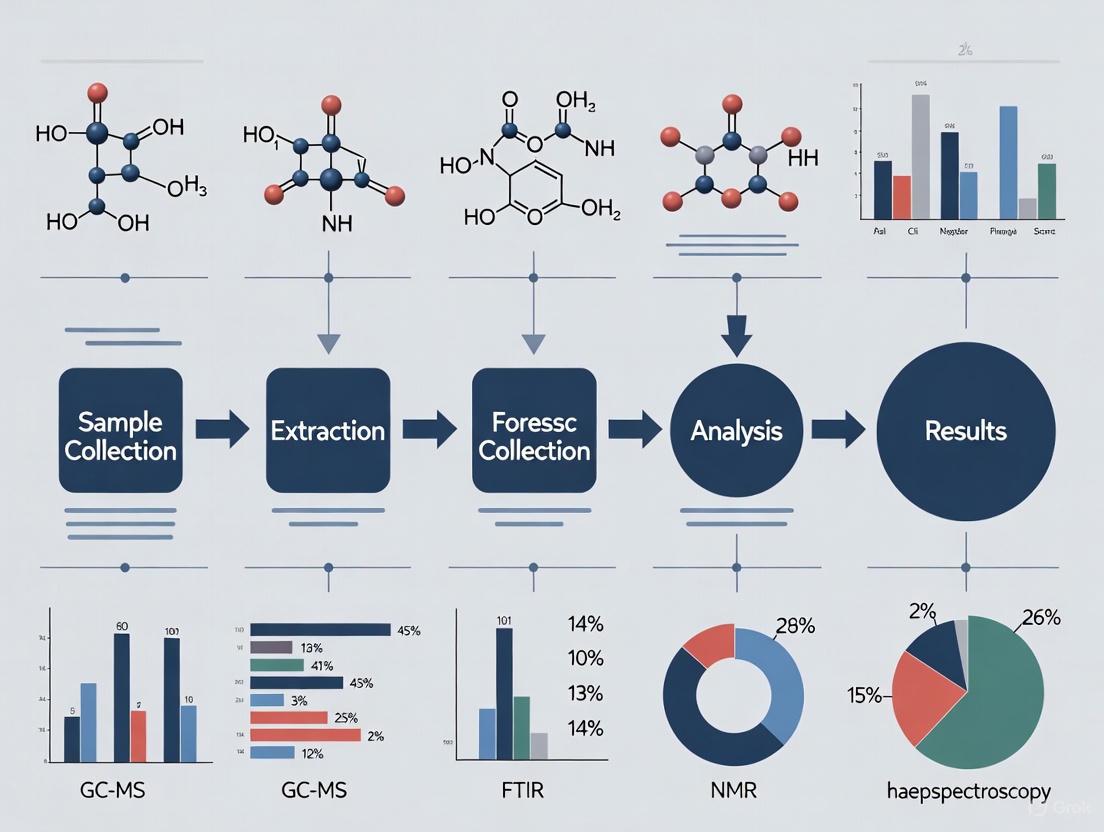
This article addresses the critical need for establishing and validating the fundamental scientific basis of forensic chemistry disciplines, a priority underscored by the National Institute of Justice.
Establishing the Scientific Foundation of Forensic Chemistry: From Method Validation to Courtroom Admissibility
Abstract
This article addresses the critical need for establishing and validating the fundamental scientific basis of forensic chemistry disciplines, a priority underscored by the National Institute of Justice. Aimed at researchers, scientists, and drug development professionals, it explores the foundational validity and reliability of forensic methods, the application of novel analytical techniques like E-LEI-MS for seized drug analysis, strategies for troubleshooting and optimizing methods within complex matrices and resource constraints, and the implementation of robust validation frameworks through standards from OSAC and ISO. By synthesizing current research, strategic priorities, and emerging standards, this review provides a comprehensive roadmap for strengthening the scientific rigor and impact of forensic chemistry in both laboratory and legal contexts.
The Scientific Pillars of Forensic Chemistry: Assessing Core Validity and Reliability
Understanding the Fundamental Scientific Basis of Forensic Disciplines
Forensic science is undergoing a fundamental transformation from a discipline reliant on subjective expert opinion to one grounded in quantitative, statistically robust methodologies. This shift is driven by legal requirements for scientific evidence to be "not only relevant but reliable," as established in the Supreme Court decision Daubert v. Merrell Dow Pharmaceuticals, Inc (1993), and by critiques such as the landmark 2009 National Academy of Sciences report that highlighted the lack of scientific validation, determination of error rates, and reliability testing in many forensic disciplines [1]. In response, forensic researchers have developed novel approaches that leverage advanced instrumentation, statistical learning frameworks, and nanotechnology to establish objective scientific bases for forensic evidence analysis. This whitepaper examines the fundamental scientific principles, quantitative methodologies, and experimental protocols that are establishing forensic chemistry and related disciplines as rigorously validated scientific fields.
Theoretical Foundations: From Qualitative Pattern Matching to Quantitative Analysis
The theoretical underpinning of modern forensic science rests on the premise that certain physical characteristics exhibit sufficient randomness and complexity to be unique at relevant microscopic length scales. For fracture evidence, this premise of uniqueness arises from the interaction between a material's intrinsic properties, microstructural features, and the exposure history of external forces [1]. The complex jagged trajectory of fractured surfaces contains information that can be quantified rather than merely visually assessed.
The Transition from Self-Affine to Unique Fracture Characteristics
Research has demonstrated that fracture surface topography exhibits self-affine or fractal properties at small length scales, meaning the roughness scales with the observation window. However, at larger length scales (typically >50-70 μm for many materials), this self-affine behavior transitions to non-self-affine characteristics where the surface roughness reaches a saturation level that captures the individuality of the fracture surface [1]. This transition scale, typically about 2-3 times the average grain size for materials undergoing cleavage fracture, provides a scientifically-defensible basis for comparison and represents the stochastic critical distance for cleavage fracture initiation [1].
Table 1: Key Length Scales in Fracture Surface Topography Analysis
| Scale Type | Typical Size Range | Characteristics | Forensic Significance |
|---|---|---|---|
| Self-Affine Region | <10-20 μm | Fractal nature with similar topographical features | Limited discrimination value |
| Transition Scale | ~50-75 μm | Shift from self-affine to unique characteristics | Sets optimal observation scale |
| Analysis Field of View | >500-750 μm | Captures multiple unique regions | Provides statistical power for comparison |
Statistical Learning Frameworks for Evidence Evaluation
Modern forensic science increasingly employs statistical learning tools to classify evidence and quantify the strength of associations. Multivariate statistical models are trained on spectral analysis of surface topography mapped by three-dimensional microscopy to distinguish matching from non-matching specimens with near-perfect accuracy [1]. These approaches generate likelihood ratios that quantitatively express the strength of evidence by comparing probabilities of observations under alternative hypotheses (e.g., the same source versus different sources) [2]. This framework provides the statistical foundation called for by scientific and legal critics of traditional forensic methods.
Quantitative Methodologies in Forensic Evidence Analysis
Fracture Surface Topography Analysis
Experimental Protocol: Quantitative Fracture Matching
Sample Preparation: Fractured specimens are mounted to ensure stability during imaging without altering surface features. Conduct initial visual examination to identify potential macro-scale correspondence.
3D Topographical Imaging: Map fracture surfaces using confocal microscopy or white light interferometry with resolution sufficient to capture features at the transition scale (typically <1 μm lateral resolution). The field of view should be at least 10 times the transition scale to avert signal aliasing [1].
Surface Roughness Quantification: Calculate the height-height correlation function, δh(δx)=√⟨[h(x+δx)-h(x)]²⟩ₓ, where the 〈⋯〉 operator denotes averaging over the x-direction. This function characterizes the surface roughness and identifies the transition from self-affine to unique characteristics [1].
Spectral Feature Extraction: Perform spectral analysis of the topography data to extract features across multiple frequency bands around the transition scale. These features serve as input for statistical classification.
Statistical Classification: Apply multivariate statistical learning algorithms (e.g., linear discriminant analysis, support vector machines) to classify specimen pairs as "match" or "non-match." The model outputs likelihood ratios expressing the strength of evidence.
Error Rate Estimation: Validate the model using known samples to establish empirical error rates and confidence intervals for the conclusions.
Figure 1: Experimental workflow for quantitative fracture surface analysis
Probabilistic Genotyping of DNA Mixtures
Experimental Protocol: Probabilistic Genotyping
DNA Extraction and Amplification: Extract DNA from evidence samples using standard extraction methods. Amplify short tandem repeat (STR) markers using polymerase chain reaction (PCR) with fluorescently labeled primers.
Capillary Electrophoresis: Separate amplified fragments by size using capillary electrophoresis. Detect alleles with laser-induced fluorescence to generate electropherograms.
Data Preprocessing: Analyze electropherograms to distinguish true alleles from artifacts (stutter, pull-up) based on peak characteristics, using quantitative (peak height) and qualitative (allele designation) information [2].
Probabilistic Modeling: Compute likelihood ratios using specialized software (e.g., STRmix, EuroForMix) that compares probabilities of the observed DNA profile under competing propositions about contributors to the mixture [2].
Interpretation and Reporting: Report likelihood ratios with appropriate uncertainty measures, following established guidelines for interpretation and communication.
Table 2: Comparison of Probabilistic Genotyping Software Approaches
| Software | Model Type | Data Utilized | Key Characteristics | Typical Output |
|---|---|---|---|---|
| LRmix Studio | Qualitative | Allele designations only | Considers detected alleles without quantitative information | Likelihood Ratio |
| STRmix | Quantitative | Allele designations and peak heights | Incorporates peak height information; continuous model | Generally higher LRs than qualitative |
| EuroForMix | Quantitative | Allele designations and peak heights | Open-source platform; quantitative model | Comparable to STRmix with minor variations |
Carbon Quantum Dots for Forensic Detection
Experimental Protocol: CQD-Based Evidence Detection
CQD Synthesis: Prepare carbon quantum dots using bottom-up approaches such as:
Surface Functionalization: Enhance CQD properties through:
Characterization: Analyze CQD properties using:
- Transmission Electron Microscopy: Determine size distribution and morphology.
- Fluorescence Spectroscopy: Measure excitation/emission profiles and quantum yield.
- FT-IR Spectroscopy: Identify surface functional groups.
Forensic Application: Apply functionalized CQDs to evidence samples using appropriate protocols for specific evidence types (e.g., fingerprint development, drug detection, biological stain identification).
Detection and Imaging: Visualize CQD-labeled evidence using appropriate illumination (typically UV or blue light) and capture fluorescence signals with specialized imaging systems.
Figure 2: Carbon quantum dots synthesis and application workflow
Research Reagent Solutions and Essential Materials
Table 3: Key Research Reagents for Advanced Forensic Analysis
| Reagent/Material | Composition/Type | Function in Forensic Analysis | Application Examples |
|---|---|---|---|
| Carbon Quantum Dots | Nanoscale carbon particles (2-10 nm) | Fluorescent probes for trace evidence detection | Fingerprint enhancement, drug identification, biological stain analysis [3] |
| STR Amplification Kits | Primer sets, polymerase, nucleotides | Simultaneous amplification of multiple STR loci | DNA profiling for human identification [2] |
| Fluorescent Dyes | Organic fluorophores (e.g., SYBR Green) | DNA staining for quantification and detection | Real-time PCR, DNA fragment analysis [2] |
| Surface Passivation Agents | Polymers (PEG), surfactants (SDS) | Prevent nanoparticle aggregation and enhance stability | Maintaining CQD dispersion in solution [3] |
| Heteroatom Dopants | Nitrogen, sulfur, phosphorus compounds | Modify CQD electronic structure and optical properties | Enhancing fluorescence intensity and selectivity [3] |
Discussion: Validity, Reliability, and Error Rates in Forensic Science
The movement toward quantitative forensic methodologies addresses fundamental scientific concerns about the validity and reliability of forensic evidence. Validity refers to whether a method actually measures what it purports to measure, while reliability concerns the consistency of results when the same evidence is examined multiple times or by different examiners [4].
Traditional forensic disciplines such as bloodstain pattern analysis (BPA) face challenges to their scientific validity due to complex interacting variables that make precise mathematical calculations difficult, and because different causes can produce similar patterns (many-to-one relationship) [4]. The quantitative approaches described in this whitepaper address these concerns by establishing clear mathematical models that define the relationship between evidence characteristics and source associations.
Cognitive bias presents another significant challenge to forensic science reliability, as contextual information and expectations can influence perceptual and interpretive processes [4]. Quantitative methodologies that incorporate Linear Sequential Unmasking—where examiners are exposed to case information gradually rather than all at once—can minimize these biases while maintaining analytical rigor [4].
Establishing known error rates remains challenging but essential for forensic methodologies. Error rate studies for fracture matching using topographic analysis and statistical learning have demonstrated near-perfect discrimination between matching and non-matching specimens [1]. Similarly, probabilistic genotyping software has been validated through extensive interlaboratory studies that examine variation in results across different laboratories and platforms [2] [4].
Future Perspectives: Integration with Artificial Intelligence and Computational Simulations
The future of forensic science lies in the deeper integration of quantitative analytical methods with artificial intelligence and computational simulations. Machine learning algorithms can enhance the discrimination power of fracture surface analysis by identifying subtle patterns not captured by traditional spectral analysis [1]. Similarly, the convergence of carbon quantum dots with AI platforms could create automated detection systems for multiple evidence types with minimal human intervention [3].
Computational fluid dynamics simulations are being developed to model bloodstain pattern formation under various conditions, potentially placing BPA on a more rigorous scientific foundation [4]. These simulations can account for the complex interacting variables that challenge traditional BPA and provide testable predictions about pattern formation.
As forensic science continues its transformation toward quantitative rigor, the fundamental scientific basis of forensic disciplines will strengthen, providing more reliable evidence for legal proceedings while maintaining scientific credibility.
Quantifying Measurement Uncertainty in Forensic Analytical Methods
Measurement uncertainty is a fundamental metrological concept that quantifies the doubt associated with the result of any scientific measurement. In forensic chemistry, particularly in seized drug analysis and toxicology, establishing valid uncertainty estimates is critical for demonstrating the scientific validity and reliability of analytical results presented in legal proceedings. Without proper uncertainty quantification, forensic conclusions lack statistical rigor and may not meet evolving evidentiary standards required by courts. The National Institute of Justice (NIJ) specifically identifies "quantification of measurement uncertainty in forensic analytical methods" as a core research objective to strengthen the foundational validity of forensic science disciplines [5].
The international standard ISO 21043 provides requirements and recommendations designed to ensure quality throughout the entire forensic process, including analysis, interpretation, and reporting [6]. Similarly, standard ANSI/ASB Standard 056, Standard for Evaluation of Measurement Uncertainty in Forensic Toxicology establishes specific protocols for uncertainty evaluation in analytical methods [7]. These standards emphasize the use of transparent and reproducible methods that are "empirically calibrated and validated under casework conditions" [6], providing the framework for implementing uncertainty quantification in operational forensic laboratories.
Table 1: Key International Standards Governing Measurement Uncertainty in Forensic Science
| Standard Identifier | Title | Scope | Relevance to Uncertainty Quantification |
|---|---|---|---|
| ISO 21043 | Forensic Sciences | Vocabulary, recovery, analysis, interpretation, and reporting | Provides overarching quality framework for uncertainty evaluation throughout forensic process |
| ANSI/ASB Standard 056 | Standard for Evaluation of Measurement Uncertainty in Forensic Toxicology | Specific to toxicological analysis | Establishes protocols for uncertainty evaluation in analytical methods |
| ANSI/ASB Standard 017 | Standard for Metrological Traceability in Forensic Toxicology | Metrological traceability requirements | Ensures measurement results can be traced to reference standards |
Methodological Approaches to Uncertainty Evaluation
Identification and Quantification of Uncertainty Components
A comprehensive uncertainty evaluation begins with systematic identification of all potential uncertainty sources throughout the analytical process. The cause-and-effect diagram (also called Ishikawa or fishbone diagram) provides a structured methodology for visualizing and categorizing these sources. For a typical forensic chemical analysis using chromatography-mass spectrometry, major uncertainty contributors include: sample preparation (weighing, dilution, extraction efficiency), instrumental analysis (calibration, detector response, retention time variation), data processing (integration algorithms, baseline correction), and reference standards (purity, stability).
Each identified uncertainty component must be quantified through experimental studies or literature data. For Type A evaluations (based on statistical analysis), replication experiments provide direct estimates of standard uncertainty. For example, intermediate precision studies conducted over 10-20 analytical runs quantify contributions from analyst-to-analyst variation, instrument performance drift, and environmental fluctuations. Method validation parameters including precision, accuracy, specificity, and linearity provide essential data for comprehensive uncertainty budgets [5].
Table 2: Experimental Protocols for Quantifying Major Uncertainty Components
| Uncertainty Component | Experimental Protocol | Calculation Method | Key Parameters |
|---|---|---|---|
| Balance Calibration | Repeat weighing of certified reference weights | Standard uncertainty from calibration certificate + temperature effects | Resolution, linearity, sensitivity |
| Sample Preparation | Multiple extractions from homogeneous sample | Standard deviation of recovery rates | Extraction efficiency, concentration factor variability |
| Instrument Response | Repeated analysis of quality control materials | Relative standard deviation of peak areas/heights | Injection volume precision, detector noise, signal drift |
| Calibration Curve | Analysis of standards at different concentrations | Residual standard error from regression statistics | Confidence intervals for predicted values |
The GUM Methodology for Uncertainty Propagation
The Guide to the Expression of Uncertainty in Measurement (GUM) provides the internationally recognized framework for combining individual uncertainty components into a combined standard uncertainty. This propagation approach mathematically models the measurement process as a functional relationship: y = f(x₁, x₂, ..., xₙ), where y is the measurand (e.g., drug concentration) and xᵢ are the input quantities. The combined standard uncertainty u_c(y) is calculated using the law of propagation of uncertainty:
uc²(y) = Σ[∂f/∂xi]²u²(xi) + 2ΣΣ(∂f/∂xi)(∂f/∂xj)u(xi,x_j)
where u(xi) are the standard uncertainties of input estimates and u(xi,x_j) are their estimated covariances. For forensic applications where expanded uncertainty is typically reported at approximately 95% confidence level, the combined standard uncertainty is multiplied by a coverage factor k=2 to yield the expanded uncertainty U [7].
Implementation Workflow for Forensic Laboratories
The implementation of robust measurement uncertainty protocols requires a systematic approach that integrates with existing quality management systems. The workflow encompasses method validation, data collection, statistical analysis, and continuous monitoring, ensuring that uncertainty estimates remain valid throughout the method's lifecycle. The process follows a logical sequence from initial uncertainty source identification through final reporting, with feedback mechanisms for ongoing improvement.
Diagram 1: Measurement Uncertainty Evaluation Workflow
Uncertainty Budget Development and Documentation
The uncertainty budget provides formal documentation of the uncertainty evaluation process, presenting a structured summary of all uncertainty components, their magnitudes, evaluation methods, and contribution to the combined uncertainty. A well-constructed budget enables forensic scientists to identify dominant uncertainty sources and prioritize method improvement efforts. It also provides transparency for technical review and courtroom testimony.
Table 3: Exemplary Uncertainty Budget for Cocaine HCl Quantification by GC-MS
| Uncertainty Source | Value | Standard Uncertainty | Probability Distribution | Sensitivity Coefficient | Contribution | Evaluation Type |
|---|---|---|---|---|---|---|
| Sample Weight (mg) | 10.2 | 0.041 | Normal | 0.98 | 0.040 | A |
| Calibration Curve | 1.00 | 0.025 | Normal | 1.02 | 0.026 | A |
| Extraction Efficiency | 98.5% | 0.015 | Rectangular | 1.01 | 0.015 | B |
| Dilution Volume | 10.0 mL | 0.032 | Triangular | 0.99 | 0.032 | B |
| Combined Standard Uncertainty | 0.057 | |||||
| Expanded Uncertainty (k=2) | 0.114 |
Uncertainty Reporting and Interpretation in Legal Contexts
Standardized Reporting Formats
Forensic reports must communicate uncertainty estimates in a manner that is both scientifically accurate and comprehensible to legal professionals. The recommended format expresses the measured value with its expanded uncertainty and coverage factor: "The concentration of cocaine was determined to be 75.2 ± 2.4 mg/g, where the reported uncertainty is an expanded uncertainty calculated using a coverage factor of k=2 which gives a level of confidence of approximately 95%." This format aligns with international guidance while maintaining clarity for non-specialists.
Interpretation Framework for Decision-Making
In forensic chemistry, measurement uncertainty directly impacts interpretative conclusions regarding compliance with legal limits or comparison between samples. When assessing whether a measured value exceeds a legal threshold, the uncertainty interval must be considered. For example, if the legal threshold for a controlled substance is 1.0% and the measured value is 1.2% with an expanded uncertainty of ±0.3%, the lower bound of the interval (0.9%) falls below the threshold, indicating the measurement does not provide conclusive evidence of non-compliance. This approach aligns with the conservative principle in forensic science, protecting against false positive conclusions.
Quality Assurance and Continuous Improvement
The Scientist's Toolkit: Essential Research Reagent Solutions
Implementing robust uncertainty quantification requires specific materials and reference standards that ensure traceability and method validity. These reagents form the foundation for producing forensically defensible measurement uncertainty estimates.
Table 4: Essential Materials for Uncertainty Evaluation in Forensic Chemistry
| Item | Function | Critical Specifications |
|---|---|---|
| Certified Reference Materials (CRMs) | Establish metrological traceability to SI units; calibrate instruments | Certified purity values with stated uncertainties; stability documentation |
| Quality Control Materials | Monitor method performance over time; validate precision estimates | Matrix-matched to authentic samples; validated homogeneity |
| Certified Balance Weights | Quantify uncertainty contribution from sample weighing | Calibration traceable to national standards; appropriate mass range |
| Class A Volumetric Glassware | Control uncertainty from dilution and preparation steps | Certified tolerances; calibration documentation |
| Chromatographic Reference Standards | Identify and quantify uncertainty from retention time and detector response | High purity; stability under storage conditions; verified identity |
Proficiency Testing and Interlaboratory Comparisons
Regular participation in proficiency testing programs and interlaboratory comparisons provides external validation of uncertainty estimates. These programs allow forensic laboratories to benchmark their measurement performance against peer institutions and identify potential bias in their methods. The statistical analysis of results from multiple laboratories following the same protocol (as described in ISO 5725) provides robust estimates of method reproducibility, a critical component of measurement uncertainty that is difficult to quantify through single-laboratory studies [5].
Ongoing monitoring of quality control data using statistical control charts enables forensic laboratories to detect changes in measurement precision over time, triggering re-evaluation of uncertainty estimates when significant deviations occur. This continuous improvement cycle ensures that reported uncertainty values accurately reflect current method performance, maintaining the scientific integrity of forensic measurements and their admissibility in legal proceedings.
The Role of Foundational Research in Preventing Wrongful Convictions
Foundational research provides the critical scientific bedrock upon which reliable and valid forensic chemistry disciplines are built. Within the criminal justice system, the accuracy of forensic evidence is paramount; errors can lead to the ultimate failure—the wrongful conviction of the innocent. Recent data from the National Registry of Exonerations records over 3,000 cases of wrongful convictions in the United States, with false or misleading forensic evidence being a significant contributing factor [8]. Foundational research systematically addresses this problem by subjecting forensic methods to rigorous scientific validation, establishing known error rates, and identifying the boundaries of reliable interpretation. This whitepaper examines the specific role of such research in validating forensic chemistry disciplines, with a particular focus on the legal standards that evidence must meet and the practical methodologies that underpin reliable forensic practice.
The Problem: Forensic Evidence and Wrongful Convictions
Scope and Scale
Wrongful convictions represent a profound travesty of justice. The Innocence Project has worked to exonerate 375 individuals, including 21 who served on death row, often with forensic science issues playing a role [8]. A comprehensive study analyzed 732 wrongful conviction cases classified as involving "false or misleading forensic evidence," encompassing 1,391 individual forensic examinations [8] [9]. This dataset provides a robust evidence base for identifying systemic weaknesses and targeting research efforts where they are most needed.
A Typology of Forensic Error
Analysis of wrongful convictions reveals that errors related to forensic evidence are not monolithic but fall into distinct, categorizable types. The developed forensic error typology is essential for diagnosing root causes [8] [9].
Table 1: Forensic Evidence Error Typology (Adapted from Morgan, 2023) [8]
| Error Type | Description | Common Examples |
|---|---|---|
| Type 1: Forensic Science Reports | Misstatement of the scientific basis of an examination. | Lab error, poor communication, resource constraints. |
| Type 2: Individualization/Classification | Incorrect individualization, classification, or interpretation. | Interpretation error, fraudulent association. |
| Type 3: Testimony | Erroneous presentation of forensic results at trial. | Mischaracterized statistical weight or probability. |
| Type 4: Officer of the Court | Errors by legal actors related to forensic evidence. | Excluded evidence, accepting faulty testimony. |
| Type 5: Evidence Handling & Reporting | Failure to collect, examine, or report potentially probative evidence. | Chain of custody breaks, lost evidence, police misconduct. |
A critical finding from this research is that most errors are not direct identification or classification mistakes by forensic scientists [9]. More frequently, errors involve miscommunication of results, failure to conform to standards, or actions by criminal justice actors outside forensic science organizations' control, such as the suppression of exculpatory evidence or reliance on unconfirmed presumptive tests [8].
High-Risk Disciplines and Techniques
Quantitative analysis of exoneration cases identifies specific forensic disciplines that have been disproportionately associated with erroneous convictions. The table below highlights disciplines with high observed rates of error, providing a clear priority list for foundational research and reform.
Table 2: Forensic Discipline Error Rates in Wrongful Convictions [8]
| Discipline | % of Examinations with ≥1 Error | % with Individualization/Classification Errors | Primary Issues Identified |
|---|---|---|---|
| Seized Drug Analysis | 100% | 100% | Primarily errors using field drug testing kits (129 of 130 errors). |
| Bitemark Comparison | 77% | 73% | Disproportionate share of incorrect identifications; examiners often outside structured labs. |
| Fire Debris Investigation | 78% | 38% | Testimony and interpretation errors. |
| Forensic Medicine (Pediatric Physical Abuse) | 83% | 22% | High rate of case errors. |
| Serology | 68% | 26% | Testimony errors, best practice failures, inadequate defense. |
| Hair Comparison | 59% | 20% | Testimony conforming to outdated standards. |
| DNA Analysis | 64% | 14% | Use of early, unreliable methods; interpretation of complex mixtures. |
| Latent Fingerprints | 46% | 18% | Fraud or clear violations of basic standards by uncertified examiners. |
The Foundational Research Framework: Validity, Reliability, and Legal Admissibility
Core Scientific Principles
For any forensic chemistry method to be reliable, its foundational validity must be established. This aligns with core principles of research validity adapted for the forensic context [10]:
- Construct Validity: Does the analytical technique accurately measure the specific chemical compound or property it claims to measure? For example, does a chromatographic method for detecting a novel synthetic cannabinoid truly measure that compound and not a similar interferent?
- Reliability: Does the method produce consistent, reproducible results when applied by different examiners in different laboratories using the same sample?
- Criterion Validity: How do the results from a new technique compare to those from an established "gold standard" method? This is crucial for demonstrating that a novel method like comprehensive two-dimensional gas chromatography (GC×GC) is as reliable as established 1D GC methods [11].
Legal Standards for Admissibility
Foundational research must ensure that forensic methods meet the legal thresholds for admissibility as expert evidence in court. These standards define the requirements for scientific validity and reliability [11].
Table 3: Legal Standards for the Admissibility of Expert Evidence [11]
| Standard | Jurisdiction | Key Criteria |
|---|---|---|
| Daubert Standard | U.S. Federal Courts | 1. Whether the theory/technique can be and has been tested.2. Whether it has been subjected to peer review and publication.3. The known or potential error rate.4. The existence and maintenance of standards controlling its operation.5. General acceptance in the relevant scientific community. |
| Frye Standard | Some U.S. State Courts | General acceptance in the relevant scientific community. |
| Federal Rule of Evidence 702 | U.S. Federal Courts | Testimony is based on sufficient facts/data, product of reliable principles/methods, and the expert has reliably applied them. |
| Mohan Criteria | Canada | Relevance, necessity in assisting the trier of fact, absence of exclusionary rules, and a properly qualified expert. |
The known or potential error rate criterion from Daubert is a direct mandate for foundational research. It requires rigorous, black-box studies to measure the accuracy of forensic methods and the individuals who use them [11] [5]. Furthermore, the legal principle of "general acceptance" necessitates that new techniques undergo extensive intra- and inter-laboratory validation and standardization before they can be implemented in routine casework [11].
Figure 1: The relationship between legal admissibility standards and the foundational research they necessitate.
Key Research Methodologies and Protocols
Foundational Validity and Reliability Studies
The National Institute of Justice's (NIJ) Forensic Science Strategic Research Plan prioritizes research that assesses the "fundamental scientific basis of forensic science disciplines" and quantifies "measurement uncertainty in forensic analytical methods" [5]. Key experimental approaches include:
- Black-Box Studies: These measure the accuracy and reliability of forensic examinations by providing certified examiners with evidence samples of known origin without revealing the ground truth. The results are compared to the known facts to calculate empirical error rates [5].
- White-Box Studies: These go beyond measuring error rates to identify the sources of error. They investigate human factors, cognitive biases, and the impact of contextual information on analytical decision-making [8] [5].
- Interlaboratory Studies: Multiple laboratories analyze the same set of samples using the same protocol. This is critical for establishing method robustness, reproducibility, and for defining standards for interpretation across the community [5].
Advanced Analytical Techniques: GC×GC as a Case Study
Comprehensive two-dimensional gas chromatography (GC×GC) represents the cutting edge of separation science for complex forensic mixtures. It offers increased peak capacity and sensitivity compared to traditional 1D-GC, making it promising for applications in illicit drug analysis, fire debris investigation, and decomposition odor analysis [11].
Experimental Protocol: GC×GC-MS for Complex Seized Drug Analysis [11]
Instrumentation: A GC×GC system is configured with:
- Primary Column: A non-polar or mid-polarity column (e.g., 30m length, 0.25mm i.d.) for the first dimension separation based primarily on boiling point.
- Modulator: The "heart" of the system, which traps, focuses, and reinjects effluent segments from the first column onto the second column at precise intervals (e.g., 2-8 second modulation periods).
- Secondary Column: A polar column (e.g., 1-2m length, 0.1mm i.d.) for rapid second dimension separation based on polarity.
- Detector: Most commonly a Time-of-Flight Mass Spectrometer (TOF-MS) due to its fast acquisition rate, which is necessary to capture the very narrow peaks produced in the second dimension.
Sample Preparation: An aliquot of the seized material is dissolved in a suitable solvent (e.g., methanol) and diluted to an appropriate concentration. An internal standard may be added for quantitative analysis.
Data Acquisition: The sample is injected into the GC×GC system. The resulting data is a three-dimensional plot (1D retention time vs. 2D retention time vs. signal intensity) that provides a unique chemical "fingerprint" of the sample.
Data Analysis and Validation:
- Targeted Analysis: Identifying and quantifying specific compounds of interest (e.g., fentanyl, synthetic cannabinoids) by comparing their retention times and mass spectra to certified reference standards analyzed under identical conditions.
- Non-Targeted Analysis: Using pattern recognition and chemometric software to identify unknown compounds or to compare the overall chemical profile of a sample to a database of known illicit drug preparations.
- Validation: The method must be validated for parameters including specificity, linearity, accuracy, precision, limit of detection (LOD), and limit of quantitation (LOQ) to meet legal admissibility standards like Daubert.
Figure 2: Generic workflow for a GC×GC-MS analysis of a complex forensic sample like seized drugs.
The Scientist's Toolkit: Essential Reagents and Materials
Table 4: Key Research Reagent Solutions for Foundational Forensic Studies [11] [5] [12]
| Item / Solution | Function in Foundational Research |
|---|---|
| Certified Reference Materials (CRMs) | High-purity analytical standards used to validate instrument response, confirm analyte identity, and establish retention indices. Essential for demonstrating method specificity. |
| Internal Standards (Isotope-Labeled) | Added to samples to correct for analytical variability and matrix effects during quantitative analysis, improving accuracy and precision. |
| Characterized Proficiency Test Samples | Samples with known composition but unknown to the analyst, used in black-box and interlaboratory studies to measure method and examiner reliability. |
| Complex Mock Evidence Matrices | Simulated, well-characterized evidence samples (e.g., drug mixtures in common cutting agents, ignitable liquids on burnt debris) used to test method robustness and the limits of detection/quantitation. |
Impact and Implementation: From Research to Practice
Foundational research's ultimate value is realized when it translates into practices that prevent wrongful convictions. The NIJ's strategic plan emphasizes maximizing the impact of research by supporting its implementation into forensic laboratories [5]. Key impacts include:
- Development of Best Practices and Standards: Foundational research directly informs the creation of standardized methods, reporting formats, and conclusion scales. For example, research on the unreliable nature of bitemark analysis has led to calls for its severely restricted use and more conservative testimony standards [8] [9].
- Improved Communication of Results: Research into cognitive bias has led to reforms such as sequential unmasking, where examiners are shielded from extraneous, biasing information until after their initial analysis is complete [8].
- Sentinel Event Analysis: Dr. John Morgan's research advocates for treating wrongful convictions as "sentinel events"—critical failures that signal major system weaknesses. Foundational research provides the tools to conduct root-cause analyses of these events and implement systemic reforms to prevent their recurrence [8].
The trajectory of foundational research is guided by both scientific innovation and the enduring imperative to ensure justice. The NIJ's strategic priorities for 2022-2026 highlight future directions, including the development of standard criteria for analysis and interpretation, the use of automated tools to support examiner conclusions, and a deeper understanding of evidence stability, transfer, and persistence [5]. For novel techniques like GC×GC, the path forward requires a concerted focus on intra- and inter-laboratory validation, error rate analysis, and standardization to advance its Technology Readiness Level for courtroom acceptance [11].
In conclusion, foundational research is not an academic exercise; it is a critical safeguard for the integrity of the criminal justice system. By rigorously validating the scientific basis of forensic chemistry methods, establishing their known error rates, and translating these findings into standardized practices, such research directly addresses the root causes of erroneous convictions. It provides the necessary evidence to meet legal admissibility standards, strengthens examiner proficiency, and ultimately builds a forensic science infrastructure capable of reliably delivering truth and justice.
The National Institute of Justice (NIJ) Forensic Science Strategic Research Plan for 2022-2026 establishes a comprehensive framework to strengthen the scientific foundations of forensic disciplines through targeted research and development. This whitepaper examines the plan's five strategic priorities with specific emphasis on implications for forensic chemistry validity research. We analyze how these priorities address critical needs in method validation, error rate quantification, and analytical technique standardization to meet both scientific and legal admissibility standards. For forensic chemists and drug development professionals, this plan emphasizes transitioning from proof-of-concept demonstrations to court-ready methodologies supported by robust foundational data and appropriate statistical measures for expressing evidential weight.
The NIJ developed its Forensic Science Strategic Research Plan to communicate a cohesive research agenda addressing the complex challenges faced by the modern forensic science community. This plan emerges against a backdrop of increasing demands for forensic services coupled with diminishing resources, creating a pressing need for innovative, efficient, and scientifically robust approaches to evidence analysis [5]. The strategic priorities outlined in the plan closely parallel opportunities and challenges identified across the forensic science ecosystem, with particular relevance for disciplines requiring advanced chemical analysis techniques.
For forensic chemistry specifically, the plan emphasizes strengthening the fundamental scientific basis of analytical methods while simultaneously advancing applied research to meet evolving casework demands [5] [13]. This dual focus recognizes that for forensic methods to withstand legal scrutiny, they must be demonstrably valid, reliable, and well-understood within their limitations. The plan explicitly notes that "if forensic methods are demonstrated to be valid and the limits of those methods are well understood, then investigators, prosecutors, courts, and juries can make well-informed decisions" [5], directly addressing the core thesis of establishing scientific validity in forensic chemistry disciplines.
Strategic Priority Analysis: Implications for Forensic Chemistry
Priority I: Advance Applied Research and Development in Forensic Science
This priority focuses on translating scientific innovation into practical solutions for forensic practitioners, with multiple objectives directly relevant to forensic chemistry research and drug development.
Table 1: Applied R&D Objectives for Forensic Chemistry
| Objective Area | Specific Research Focus | Impact on Forensic Chemistry |
|---|---|---|
| Novel Technologies & Methods | Identification/quantitation of forensically relevant analytes (e.g., seized drugs, gunshot residue) [5] [13] | Development of more specific, sensitive, and efficient analytical methods for substance identification |
| Evidence Differentiation | Methods to differentiate evidence from complex matrices or conditions [5] | Enhanced capability to isolate and identify target compounds in mixed samples |
| Automated Tools | Library search algorithms for unknown compound identification [5] | Improved analytical workflows for rapid and accurate compound matching |
| Standard Criteria | Evaluation of methods to express weight of evidence (e.g., likelihood ratios) [5] [13] | Standardized approaches for statistical interpretation and reporting of chemical findings |
A critical application area within this priority is the development and validation of comprehensive two-dimensional gas chromatography (GC×GC) techniques. Recent research has demonstrated GC×GC's superior separation capabilities for complex forensic mixtures including illicit drugs, toxicological evidence, and ignitable liquid residues [11]. However, for such advanced techniques to transition from research settings to routine casework, they must meet rigorous legal admissibility standards including the Daubert Standard and Federal Rule of Evidence 702, which require demonstrated testing, peer review, known error rates, and general acceptance in the relevant scientific community [11].
Priority II: Support Foundational Research in Forensic Science
This priority addresses the fundamental scientific underpinnings of forensic methods, with direct implications for establishing the validity of forensic chemistry disciplines.
Table 2: Foundational Research Requirements
| Research Domain | Key Questions | Methodological Approaches |
|---|---|---|
| Foundational Validity & Reliability | Understanding fundamental scientific basis of forensic disciplines [5] | Basic research on analytical principles, measurement uncertainty quantification |
| Decision Analysis | Measurement of accuracy and reliability of forensic examinations [5] | Black box studies, white box studies, interlaboratory comparisons |
| Evidence Limitations | Understanding value of evidence beyond individualization [5] | Research on activity level propositions, transfer and persistence studies |
| Error Rate Quantification | Establishing known or potential error rates [11] | Validation studies, proficiency testing, statistical analysis of casework data |
Foundational research must specifically address the legal standards for admissibility, particularly the requirements established in Daubert v. Merrell Dow Pharmaceuticals, Inc. (1993), which emphasizes whether the technique can be and has been tested, whether it has been subjected to peer review and publication, the known or potential error rate, and the degree of acceptance within the relevant scientific community [11]. For forensic chemistry methods, this translates to comprehensive validation studies that establish method robustness, specificity, sensitivity, and reliability under casework conditions.
Strategic Priorities III-V: Implementation Framework
The remaining priorities create the ecosystem necessary for research impact:
Priority III: Maximize Research Impact - Focuses on disseminating research products, implementing methods and technologies, and assessing program impact [5] [13]. For forensic chemistry, this includes developing evidence-based best practice guides and facilitating technology transfer from research to operational laboratories.
Priority IV: Cultivate Workforce - Addresses the development of current and future forensic science researchers and practitioners [5] [13]. This includes fostering the next generation of researchers, facilitating research within public laboratories, and implementing processes for workforce assessment and sustainability.
Priority V: Coordinate Across Communities - Emphasizes collaboration across academic, industry, and government sectors to maximize resources and address challenges caused by high demand and limited resources [5] [13].
Experimental Validation Pathway for Forensic Chemistry Methods
The following workflow diagram illustrates the comprehensive validation pathway for forensic chemistry methods from development to courtroom adoption:
Advanced Analytical Techniques: GC×GC Case Study
Comprehensive two-dimensional gas chromatography (GC×GC) represents an exemplary model of technology advancement aligned with the NIJ strategic priorities. The technique provides significantly enhanced separation capabilities compared to traditional 1D-GC, particularly for complex mixtures encountered in forensic chemistry applications [11].
The following diagram illustrates the GC×GC analytical workflow and its forensic applications:
Technology Readiness Levels for Forensic Applications
GC×GC research has progressed across multiple forensic chemistry domains, though at varying stages of maturity relative to courtroom admissibility requirements [11]:
- Level 4 (Court-Ready): Well-established methodologies with documented error rates and extensive validation (e.g., drug analysis, fire debris)
- Level 3 (Validation Phase): Demonstrated efficacy with ongoing interlaboratory studies (e.g., toxicology, chemical profiling)
- Level 2 (Proof-of-Concept): Established feasibility with limited validation (e.g., fingermark chemistry, decomposition odor)
- Level 1 (Early Research): Preliminary demonstrations with minimal validation data (e.g., chemical, biological, nuclear, radioactive materials)
Data Management and FAIR Principles in Forensic Research
Effective forensic chemistry research requires robust data management practices aligned with FAIR principles (Findable, Accessible, Interoperable, Reusable) [14]. Proper data classification and management are fundamental to establishing methodological validity and reliability.
Table 3: Data Classification in Forensic Chemistry Research
| Data Type | Description | Examples in Forensic Chemistry |
|---|---|---|
| Quantitative | Numerical measurements objectively collected [14] | Concentration values, peak areas, retention times, spectral intensities |
| Continuous | Measurable values that can be subdivided [14] | Temperature, pressure, response factors, calibration curves |
| Discrete | Counted values that are distinct and separate [14] | Number of peaks, identified compounds, replicate measurements |
| Qualitative | Descriptive characteristics, generally non-numerical [14] | Color tests, crystal morphology, chromatographic pattern descriptions |
| Ordinal | Qualitative data with inherent order or ranking [14] | Signal strength categories, match confidence scales |
Implementation of structured data management plans ensures that forensic chemistry research data remains accessible for verification, reanalysis, and statistical interpretation of evidentiary weight – a critical component for establishing foundational validity [5] [14].
The Scientist's Toolkit: Essential Research Reagents and Materials
Successful implementation of the NIJ strategic research priorities requires specific analytical resources and reference materials. The following table details essential research reagents and their functions in forensic chemistry research:
Table 4: Essential Research Reagents and Materials for Forensic Chemistry
| Reagent/Material | Function | Application Examples |
|---|---|---|
| Certified Reference Materials | Quantification and method validation [5] | Drug standards, controlled substance analogs, metabolite references |
| Internal Standards | Quality control and quantification accuracy [11] | Deuterated analogs, stable isotope-labeled compounds |
| Quality Control Materials | Method performance verification [5] | Proficiency test materials, internal quality control samples |
| Stationary Phases | Chromatographic separation [11] | GC columns (non-polar, mid-polar, specialized phases for GC×GC) |
| Derivatization Reagents | Analyte modification for enhanced detection [11] | Silylation, acylation, esterification reagents for GC analysis |
| Sample Preparation Materials | Extraction and cleanup [5] | Solid-phase extraction cartridges, solvents, filtration devices |
The NIJ Forensic Science Strategic Research Plan 2022-2026 establishes a comprehensive roadmap for advancing the scientific foundations of forensic chemistry through targeted research initiatives. Successful implementation requires focused attention on method validation, error rate quantification, and standardized interpretation frameworks that meet both scientific and legal standards. Future research directions should emphasize interlaboratory collaboration, open data practices, and workforce development to ensure forensic chemistry methodologies withstand evolving legal and scientific scrutiny while maintaining pace with emerging analytical technologies and complex evidence types.
Advanced Analytical Techniques in Practice: From Seized Drugs to New Psychoactive Substances
Illicit drug profiling, or chemical fingerprinting, is a fundamental process in forensic chemistry that involves the identification, quantitation, and categorization of drug samples into groups. This profiling provides investigative leads such as a common or different origin of seized samples, elucidation of synthetic pathways, identification of adulterants and impurities, and determination of geographic origin for plant-derived exhibits [15]. The global illicit drug market has seen significant growth, with approximately 275 million people consuming illicit drugs in 2020—a 10% increase from 2010—and this number is projected to increase by 11% worldwide by 2030 [15]. This expanding market, coupled with the emergence of new psychoactive substances (NPS), presents substantial challenges for law enforcement and forensic investigators, necessitating robust and sophisticated analytical approaches for drug profiling [15].
The validity of forensic chemistry disciplines, including drug profiling, requires careful scientific scrutiny. According to recent scientific guidelines, forensic feature-comparison methods must demonstrate plausibility, sound research design, intersubjective testability, and a valid methodology to reason from group data to statements about individual cases to be considered scientifically valid [16]. This article examines illicit drug profiling within this framework of scientific validity, focusing on the application of traditional and advanced analytical techniques including Gas Chromatography-Mass Spectrometry (GC-MS), Liquid Chromatography-Mass Spectrometry (LC-MS), and Inductively Coupled Plasma-Mass Spectrometry (ICP-MS).
Physical Profiling of Illicit Drugs
Physical profiling represents the initial stage of drug examination and involves documenting all physical characteristics of a seized drug sample. This includes attributes such as color, packaging material, thickness of packaging plastic, logos on tablets or packages, as well as tablet weight and dimensions [15]. These physical characteristics provide complementary information that may support subsequent chemical profiling and allow for the preliminary grouping of illicit drugs to speculate whether different samples originate from a similar source [15].
For example, if a batch of 3,4-methylenedioxymethamphetamine (MDMA) tablets or heroin blocks were pressed with a tool containing specific imperfections, these imperfections would be transferred to the entire batch, potentially providing evidence of a common source [15]. A 2012 study examining over 300 heroin samples focused on five different physical characteristics: color and weight of the substance, and width, weight, and thickness of the plastic package. The research found that film thickness was the least reliable characteristic due to significant variability between samples, while package dimensions were the most reliable and could potentially serve as a trademark for a particular production line [15].
However, physical profiling alone often provides insufficient data for definitive conclusions. Manufacturers may employ diverse concealment approaches to eliminate physical evidence that could link samples, and uncontrolled clandestine laboratory conditions can produce variations in a drug's physical characteristics [15]. Consequently, utilizing chemical profiling techniques becomes necessary for more definitive analysis and conclusions.
Chemical Profiling of Illicit Drugs
Chemical profiling involves gathering comprehensive chemical information about a drug sample and can be classified into organic and inorganic profiling based on the analytical technique applied and the type of impurity being investigated [15]. Organic profiling focuses on the active pharmaceutical ingredient, by-products, adulterants, and diluents, while inorganic profiling targets elemental traces originating from catalysts, reagents, or environmental contamination [15].
Table 1: Chemical Profiling Approaches for Illicit Drugs
| Profiling Type | Analytical Technique | Target Analytes | Information Obtained |
|---|---|---|---|
| Organic Profiling | Isotope-Ratio Mass Spectrometry (IRMS) | Stable isotopes (C, N) | Geographic origin, environmental conditions |
| Gas Chromatography-Mass Spectrometry (GC-MS) | Active compounds, by-products, impurities | Synthetic route, precursors, cutting agents | |
| Liquid Chromatography-Mass spectrometry (LC-MS) | Active compounds, by-products, impurities | Synthetic route, precursors, cutting agents | |
| Ultra-High-Performance Liquid Chromatography (UHPLC) | Active compounds, by-products, impurities | Synthetic route, precursors, cutting agents with high separation | |
| Thin Layer Chromatography (TLC) | Active compounds | Preliminary identification, separation | |
| Inorganic Profiling | Inductively Coupled Plasma-Mass Spectrometry (ICP-MS) | Elemental traces (catalysts, impurities) | Synthetic route, geographic origin |
Some countries have established specific programs that define chemical fingerprints or signatures for common illicit drugs. For example, Australia has specific signatures for amphetamine-type substances (ATS), heroin, and cocaine. ATS have two main signatures: Signature I involves analyzing by-product content to understand synthetic routes and precursors using GC-MS, while Signature II involves analyzing elemental traces using ICP-MS to reveal information about synthetic routes [15].
Organic Chemical Profiling
Isotope-Ratio Mass Spectrometry (IRMS)
Isotope-Ratio Mass Spectrometry (IRMS) is a powerful tool in forensic investigations for drug profiling, particularly for natural illicit drugs derived from plants. The technique operates on the hypothesis that plant-derived drugs exhibit IRMS profiles reflecting environmental and growth conditions, providing information about geographic origin [15].
In 2006, researchers successfully identified links between provinces in Brazil through seized marijuana samples based on analysis of carbon and nitrogen isotopes, which primarily reflect climate and other environmental plant growth conditions [15]. Similarly, nitrogen isotope analysis was used to examine large cocaine seizures in 2007, where researchers could link certain logos to specific sample groups and found significant variations in nitrogen isotopes that correlated with successive precipitation steps in processing [15].
Diagram 1: IRMS Workflow for Geographic Sourcing
Gas Chromatography-Mass Spectrometry (GC-MS)
GC-MS is one of the most widely used techniques for organic profiling of illicit drugs, providing separation capabilities combined with sensitive detection and identification. This technique is particularly valuable for analyzing volatile and semi-volatile organic compounds present in drug samples, including impurities, by-products, and cutting agents that provide information about synthetic routes and processing methods [15].
The application of GC-MS enables forensic chemists to identify specific synthetic pathways based on the by-products and intermediates detected. For example, different methods of methamphetamine production (e.g., ephedrine reduction, reductive amination) produce distinct impurity profiles that can be identified using GC-MS, providing crucial intelligence about manufacturing processes [15].
Table 2: GC-MS Parameters for Drug Profiling Analysis
| Parameter | Setting/Requirement | Purpose/Impact |
|---|---|---|
| Column Type | Fused silica capillary (5-30m length) | Compound separation |
| Stationary Phase | Non-polar to mid-polar (e.g., 5% phenyl polysiloxane) | Separation efficiency |
| Injection Mode | Split or splitless | Sensitivity, resolution |
| Injection Temperature | 250-300°C | Volatilization without degradation |
| Oven Program | Ramp from 60°C (hold 1min) to 300°C at 10-20°C/min | Optimal separation |
| Carrier Gas | Helium or Hydrogen | Mobile phase |
| Ion Source Temperature | 230-300°C | Efficient ionization |
| Mass Range | 40-500 m/z | Coverage of drug compounds |
Liquid Chromatography-Mass Spectrometry (LC-MS) and Ultra-High-Performance Liquid Chromatography (UHPLC)
LC-MS and its advanced form UHPLC have become increasingly important in illicit drug profiling, particularly for the analysis of less volatile, thermally labile, or polar compounds that may not be suitable for GC-MS analysis. These techniques are especially valuable for new psychoactive substances (NPS), which often have complex chemical structures and may decompose under high temperatures [15].
UHPLC offers improved separation efficiency, resolution, and speed compared to conventional liquid chromatography, making it particularly suitable for the analysis of complex mixtures of drugs and their impurities. The technique is often coupled with high-resolution mass spectrometry for precise identification of compounds based on exact mass measurements [15].
Inorganic Chemical Profiling
Inductively Coupled Plasma-Mass Spectrometry (ICP-MS)
ICP-MS is the primary technique used for inorganic or elemental profiling of illicit drugs, providing extremely sensitive detection of trace elements present at parts per billion (ppb) or even parts per trillion (ppt) levels. These trace elements may originate from catalysts used in synthesis, processing equipment, water sources, or environmental contamination during production or storage [15].
Elemental profiling through ICP-MS can provide complementary information to organic profiling techniques, helping to establish links between seizures, identify common sources, and determine geographic origin. The technique is particularly valuable for amphetamine-type substances (ATS), where elemental traces from catalysts can reveal information about synthetic routes [15].
Diagram 2: ICP-MS Elemental Profiling Workflow
Table 3: ICP-MS Operating Conditions for Drug Profiling
| Parameter | Typical Setting | Notes |
|---|---|---|
| RF Power | 1.3-1.6 kW | Plasma stability |
| Nebulizer Gas Flow | 0.8-1.2 L/min | Sample introduction efficiency |
| Auxiliary Gas Flow | 0.9-1.2 L/min | Plasma maintenance |
| Plasma Gas Flow | 13-18 L/min | Plasma formation |
| Sample Uptake Rate | 0.5-1.5 mL/min | Analysis speed, sensitivity |
| Dwell Time | 10-100 ms/isotope | Signal stability |
| Resolution | 0.6-0.8 amu | Mass separation |
| Collision/Reaction Cell Gas | He, H₂, or NH₃ | Interference reduction |
Experimental Protocols
Sample Preparation for Organic Profiling
Proper sample preparation is critical for accurate and reproducible drug profiling results. For organic profiling using GC-MS or LC-MS, typical sample preparation involves:
- Sample Homogenization: The entire seized sample is ground and mixed to ensure homogeneity. For tablet samples, multiple tablets from the same batch are typically pooled and homogenized.
- Weighing: Approximately 10-100 mg of homogenized sample is accurately weighed into a suitable container.
- Extraction: The weighed sample is extracted with an appropriate solvent (e.g., methanol, chloroform, or buffer solutions) using sonication, vortex mixing, or shaking for 15-30 minutes.
- Centrifugation: The extract is centrifuged at 3000-5000 rpm for 10-15 minutes to separate insoluble particulates.
- Filtration: The supernatant is filtered through a 0.22-0.45 μm membrane filter to remove any remaining particles.
- Derivatization (for GC-MS): For compounds with polar functional groups, derivatization may be performed using agents like MSTFA (N-methyl-N-trimethylsilyltrifluoroacetamide) or BSTFA (N,O-bis(trimethylsilyl)trifluoroacetamide) to improve volatility and thermal stability.
- Analysis: The prepared sample is analyzed by GC-MS or LC-MS using optimized instrument parameters.
Sample Preparation for Inorganic Profiling
Sample preparation for ICP-MS analysis requires complete digestion of organic matrix and dissolution of elements:
- Weighing: 20-100 mg of homogenized drug sample is accurately weighed into a digestion vessel.
- Acid Addition: A mixture of high-purity nitric acid (2-5 mL) and optionally hydrogen peroxide (0.5-1 mL) is added to the sample.
- Digestion: The sample is digested using microwave-assisted digestion at elevated temperature (150-200°C) and pressure for 15-30 minutes, or using hot block digestion.
- Dilution: The digested sample is diluted to a final volume (typically 25-50 mL) with high-purity deionized water.
- Internal Standard Addition: An appropriate internal standard (e.g., Rh, In, Re) is added to correct for instrument drift and matrix effects.
- Analysis: The diluted digestate is analyzed by ICP-MS using optimized operating conditions and appropriate calibration standards.
Quality Control Procedures
To ensure the validity and reliability of drug profiling results, comprehensive quality control measures must be implemented:
- Method Blanks: Prepared and analyzed with each batch of samples to monitor contamination.
- Certified Reference Materials: Analyzed to verify method accuracy when available.
- Duplicate Samples: Prepared and analyzed to assess method precision.
- Spiked Samples: Prepared by adding known amounts of target analytes to assess recovery.
- Calibration Standards: Prepared fresh for each analytical batch and used to calibrate instruments.
- Continuing Calibration Verification: Analyzed periodically during analytical runs to verify calibration stability.
The Scientist's Toolkit: Essential Research Reagents and Materials
Table 4: Essential Research Reagents and Materials for Drug Profiling
| Item | Function/Application | Notes |
|---|---|---|
| High-Purity Solvents (Methanol, Acetonitrile, Chloroform) | Sample extraction, mobile phase preparation | HPLC or LC-MS grade recommended to minimize interference |
| Derivatization Reagents (MSTFA, BSTFA, TFAA) | Chemical modification for GC analysis | Improves volatility and stability of polar compounds |
| High-Purity Acids (Nitric, Hydrochloric) | Sample digestion for elemental analysis | Trace metal grade to prevent contamination |
| Certified Reference Materials | Method validation, quality control | Certified drug standards with known purity |
| Solid Phase Extraction (SPE) Cartridges | Sample clean-up, concentration | Various phases (C18, mixed-mode) for different applications |
| ISOTOPIC Standards (¹³C, ¹⁵N labeled compounds) | Isotope ratio measurements, quantification | Essential for IRMS and isotope dilution methods |
| ICP-MS Tuning Solution | Instrument optimization | Contains elements covering full mass range |
| Mobile Phase Additives (Formic acid, Ammonium acetate) | LC-MS mobile phase modification | Enhances ionization, improves separation |
Validity Framework for Forensic Drug Profiling
The scientific validity of forensic drug profiling methods must be evaluated within established frameworks for forensic feature-comparison methods. Inspired by the Bradford Hill Guidelines for causal inference in epidemiology, the following guidelines can be applied to evaluate drug profiling techniques [16]:
- Plausibility: The theoretical foundation supporting drug profiling must be sound. For example, the hypothesis that isotopic ratios reflect geographic origin or that impurity profiles reveal synthetic pathways should be biologically and chemically plausible.
- Sound Research Design and Methods: The research design and methods used to develop and validate drug profiling techniques must demonstrate construct and external validity. This includes proper experimental controls, appropriate sample sizes, and realistic conditions.
- Intersubjective Testability: Drug profiling methods must be replicable and reproducible across different laboratories and examiners. Protocols should be clearly documented to allow independent verification.
- Valid Methodology for Individualization: The methodology must provide a valid basis for reasoning from group data (class characteristics) to statements about individual cases. This requires understanding the specificity and discrimination power of the profiling technique.
These guidelines align with the Daubert factors that U.S. courts consider when evaluating scientific evidence, including testing, error rates, standards, peer review, and general acceptance [16]. For drug profiling to be forensically valid, it must demonstrate empirical validation through properly designed studies that establish the scientific basis for linking chemical profiles to origins, routes, or common sources.
Illicit drug profiling employing traditional and advanced analytical approaches represents a critical component of modern forensic chemistry. Techniques such as GC-MS, LC-MS, and ICP-MS provide complementary information for comprehensive chemical fingerprinting of seized drugs, enabling forensic chemists to extract valuable profiling data for intelligence and investigative purposes. The continued development and validation of these methods within established scientific frameworks ensures their reliability and admissibility in legal proceedings while advancing the field of forensic chemistry as a scientifically rigorous discipline.
Forensic chemistry faces a critical challenge: the need for analytical techniques that are not only fast and reliable but also scientifically valid, as emphasized by recent judicial and scientific reviews [16]. Extractive-liquid sampling electron ionization-mass spectrometry (E-LEI-MS) emerges as a novel analytical approach that addresses this challenge by combining ambient sampling with the high identification power of electron ionization (EI) [17]. This technique fulfills the growing demand for real-time analytical results across various fields, including pharmaceutical quality control and forensic drug analysis [18].
E-LEI-MS represents a significant advancement in direct mass spectrometry (DMS), where samples are introduced directly into the mass spectrometer without chromatographic separation or extensive preparation [17]. Unlike other ambient ionization techniques that use atmospheric pressure ionization sources like ESI or APCI, E-LEI-MS is the first real-time MS technique to utilize EI for compound ionization [19]. This unique combination provides highly informative and reproducible fragmentation patterns that are directly searchable against standard reference libraries such as the National Institute of Standards and Technology (NIST) database, significantly enhancing compound identification capabilities [17] [18].
Fundamental Principles of E-LEI-MS
Theoretical Foundation and Operational Mechanism
E-LEI-MS operates on the principle of direct liquid extraction coupled with electron ionization. The technique uses a suitable solvent deposited onto the sample surface, where analytes are dissolved and immediately transferred into the EI ion source through the effect of high vacuum using a sampling tip [17]. This process occurs at atmospheric pressure and ground potential, requiring neither sample preparation nor manipulation [17].
Once the analyte solution enters the ion source, high-temperature and high-vacuum conditions promote rapid gas-phase conversion. A 70-eV electron beam then effects typical EI ionization, producing characteristic fragment patterns that provide structural information about the analytes [17]. The coupling of an EI source with liquid phase analysis was demonstrated through previous developments in Direct Electron Ionization (DEI) and Liquid Electron Ionization (LEI) interfaces [18].
A critical innovation in the E-LEI-MS system is the vaporization microchannel (VMC), positioned before the high-vacuum ion source to facilitate vaporization and transport of the liquid extract containing analytes into the ion source [18]. This component, inspired by the LEI interface, ensures efficient analyte introduction despite the challenging transition from atmospheric pressure to high vacuum.
Comparative Advantages in Forensic Analysis
The validity of forensic science methods has come under increased scrutiny, with courts requiring rigorous empirical validation of techniques [16]. E-LEI-MS addresses several key concerns in forensic chemistry:
Standardized Spectral Libraries: Unlike many ambient MS techniques that produce protonated molecules with variable adducts, E-LEI-MS generates classical EI spectra that are directly comparable to well-established reference libraries [17]. This provides a foundation for reliable identification that meets forensic standards.
Reduced Matrix Effects: Gas-phase EI ionization provides limitless small molecule applications scarcely influenced by matrix composition or compound polarity [17], potentially reducing the uncertainty introduced by complex samples.
Empirical Validation: The technique produces reproducible, searchable spectra that enable systematic validation against known standards, addressing concerns about the scientific foundation of forensic methods [16].
Technical Configuration and System Components
Core E-LEI-MS Apparatus
The E-LEI-MS system represents a sophisticated integration of sampling and ionization technologies. The complete apparatus consists of multiple precisely engineered components that work in concert to enable direct analysis at ambient conditions [17] [18].
E-LEI-MS Sampling and Ionization Workflow
Essential Research Reagents and Materials
The E-LEI-MS system requires specific components for optimal operation. The following table details the essential materials and their functions:
Table 1: Essential Research Reagent Solutions and Materials for E-LEI-MS
| Component | Specifications | Function |
|---|---|---|
| Sampling Tip (Inner Tubing) | Fused silica capillary; 30-50 μm I.D; 375 μm O.D. [17] [18] | Core sampling component; transfers analyte solution to EI source via vacuum aspiration |
| Solvent Delivery Tubing | Peek tube; 450 μm I.D.; 660 μm O.D.; 8-10 cm length [17] [18] | Delivers appropriate solvent to sampling spot for analyte extraction |
| Inlet Capillary | Fused silica; 25-30 cm length; 40-50 μm I.D. [18] | Connects valve to MS; acts as extension of inside capillary |
| Vaporization Microchannel (VMC) | 530 μm I.D.; 600 μm O.D.; 24 cm length [18] | Facilitates vaporization and transport of liquid extract into high-vacuum ion source |
| Microfluidic Valve | MV201 manual 3-port valve; 170 nL valve volume [17] | Regulates access to ion source; prevents vacuum loss during sampling |
| Extraction Solvents | Acetonitrile, Methanol [17] [18] | Dissolves analytes from sample surface for transfer to MS |
System Configuration Variations
The E-LEI-MS system has been successfully adapted to different mass spectrometer platforms, with specific modifications to optimize performance:
- E-LEI-QqQ-MS System: Utilizes a 20 cm length sampling capillary with 40 μm I.D. and 25 cm inlet capillary [18]
- E-LEI-Q-ToF-MS System: Employs a 30 cm length sampling capillary with 50 μm I.D. and 30 cm inlet capillary [18]
These variations address the disparate suction forces exerted by different vacuum systems, demonstrating the technique's adaptability across analytical platforms [18].
Experimental Protocols and Methodologies
Standard E-LEI-MS Analytical Procedure
The E-LEI-MS analysis follows a systematic protocol designed to ensure reproducible results:
Sample Preparation: No specific preparation is required. Solid samples are analyzed directly from their native state. For surface analysis, the sampling tip is positioned 0.1-0.5 mm above the surface [17].
Solvent Selection and Delivery: An appropriate solvent (typically acetonitrile or methanol) is delivered via syringe pump at flow rates of 1-5 μL/min [17] [18]. The solvent choice depends on analyte solubility and polarity.
Sampling Process: The solvent flows through the outer tubing to the sampling spot, where it dissolves analytes. The high vacuum effect (10⁻⁵ to 10⁻⁶ Torr) immediately aspirates the solution through the inner tubing [17].
Ionization and Detection: The analyte solution is vaporized in the VMC and introduced to the EI source. Ionization occurs at 70 eV, with mass analysis in either scan mode (for untargeted analysis) or SIM mode (for targeted compounds) [17].
Data Acquisition: MS acquisition begins before valve actuation. The signal typically appears approximately 1 minute after valve opening, with analysis complete within 3-5 minutes [17] [18].
Pharmaceutical Screening Protocol
For pharmaceutical applications, E-LEI-MS has been successfully applied to identify active ingredients in commercial tablets without any pretreatment [17]:
- Sample Presentation: Whole tablets are placed on the sampling stage. The sampling tip is positioned directly on the tablet surface.
- Solvent Conditions: Acetonitrile is typically used as the extraction solvent.
- Detection Parameters: Scan mode (m/z 50-500) for untargeted analysis; SIM mode for specific active ingredients.
- Identification: Experimental spectra are compared against NIST library using spectral match criteria (>90% similarity) [17].
Forensic Drug Screening Protocol
For forensic applications, particularly in drug-facilitated sexual assault (DFSA) investigations [18]:
- Sample Preparation: 20 μL of standard solutions or fortified beverages are spotted on watch glass surfaces and analyzed as dried spots.
- Target Analytes: Benzodiazepines (clobazam, clonazepam, diazepam, flunitrazepam, lorazepam, oxazepam) at concentrations of 20-100 mg/L.
- Quality Control: Blank samples and solvent controls are analyzed between specimens to prevent carryover.
- Data Interpretation: High-resolution MS capabilities enable differentiation of isobaric compounds.
Applications and Performance Data
Pharmaceutical Analysis Applications
E-LEI-MS has demonstrated remarkable capabilities in pharmaceutical analysis, successfully identifying active ingredients in various commercial formulations without sample preparation:
Table 2: E-LEI-MS Pharmaceutical Screening Applications and Results
| Pharmaceutical Product | Active Ingredient(s) | Sample Preparation | E-LEI-MS Results |
|---|---|---|---|
| Surgamyl Tablets | Tiaprofenic acid | None | Correct identification with 93.6% NIST spectral match [17] |
| Brufen Tablets | Ibuprofen | None | Undoubted identification despite excipients [17] |
| NeoNisidina Tablets | Acetylsalicylic acid (250 mg), Acetaminophen (200 mg), Caffeine (25 mg) | None | All three active ingredients detected simultaneously using SIM mode [17] |
| 20 Industrial Drugs | 16 different APIs across various therapeutic classes | None | Successful detection of APIs and excipients in all samples [18] |
Forensic Science Applications
In forensic contexts, E-LEI-MS has been applied to challenging analytical scenarios with minimal sample preparation:
Table 3: Forensic Applications of E-LEI-MS
| Application Domain | Sample Type | Analytes | Key Findings |
|---|---|---|---|
| Drug-facilitated Sexual Assault | Fortified cocktail residues on glass surfaces | 6 benzodiazepines (clobazam, clonazepam, etc.) | Accurate identification at 20 mg/L concentration; simulation of DFSA crime scene evidence [18] |
| Illicit Drug Detection | Banknotes | Cocaine | Successful determination without sample pretreatment [17] |
| Food Safety | Fruit peel | Pesticides | Detection of contaminants on food surfaces [17] |
| Art Conservation | Painting surfaces | Unknown components | Spatial distribution analysis of materials [17] |
Analytical Performance Metrics
The analytical performance of E-LEI-MS has been evaluated across multiple studies:
- Analysis Time: Complete analysis achieved in less than 5 minutes per sample [18]
- Sensitivity: Capable of detecting benzodiazepines at concentrations of 20 mg/L in complex matrices [18]
- Spectral Quality: High-quality EI spectra with >90% similarity to NIST library standards [17]
- Spatial Resolution: Capable of 2D and 3D analysis for spatial distribution studies [17]
Integration with Forensic Chemistry Validity Frameworks
Addressing Scientific Validity Requirements
Recent critiques of forensic science have emphasized the need for rigorous validation of analytical techniques [16]. E-LEI-MS addresses key aspects of forensic validity:
- Empirical Testing: The technique produces testable hypotheses regarding compound identity, with results that can be validated against reference standards [17] [16].
- Error Rate Estimation: The use of standardized spectral matching enables quantitative assessment of identification confidence [17].
- Peer Review: The fundamental principles and applications have been published in peer-reviewed scientific literature [17] [18].
- Standardization: Operational parameters can be controlled and standardized across laboratories [17].
Comparative Advantages Over Traditional Techniques
E-LEI-MS offers distinct advantages for forensic chemistry applications compared to traditional techniques:
- Speed: Analysis times of <5 minutes compare favorably with GC-MS (30+ minutes) including sample preparation [18]
- Minimal Sample Preparation: Direct analysis eliminates extensive extraction procedures required by conventional methods [17]
- Library Searchability: EI spectra provide direct searchability against extensive NIST libraries, unlike ESI-based ambient techniques [17]
- Reduced Matrix Effects: Gas-phase ionization minimizes suppression effects common in API techniques [17]
E-LEI-MS represents a significant advancement in ambient mass spectrometry, uniquely combining the practical advantages of direct sampling with the scientific rigor of electron ionization. Its ability to provide rapid, reliable analyses without sample preparation makes it particularly valuable for pharmaceutical screening and forensic investigations where time-sensitive results are critical.
The technique's compatibility with standardized spectral libraries addresses fundamental concerns about the scientific validity of forensic methods, providing a transparent, empirically-testable framework for compound identification. As forensic science continues to emphasize methodological rigor and empirical validation, E-LEI-MS offers a promising approach that balances analytical performance with scientific defensibility.
Future developments will likely focus on expanding the technique's applications to broader compound classes, improving sensitivity through interface optimization, and validating quantitative capabilities for regulatory applications. The successful coupling with high-resolution mass spectrometry already demonstrates the potential for enhanced specificity in complex analytical scenarios.
The analysis of benzodiazepines in complex matrices represents a critical frontier in forensic chemistry, directly supporting the fundamental scientific basis and validity of the discipline. Benzodiazepines (BZDs) are among the most frequently detected substances in drug-facilitated crimes (DFCs), such as sexual assaults and robberies, due to their potent sedative and amnesic effects [20] [21]. These properties render victims vulnerable and impair their ability to recall events, creating significant challenges for legal systems [20]. The core forensic challenge lies in the rapid metabolism of these substances in the body, which severely limits detection windows in biological samples like blood and urine [20] [22]. Consequently, forensic science has pivoted towards analyzing complex alternative matrices—including drink residues, food paraphernalia, and environmental samples—to prove drug administration and uphold the validity of forensic evidence in judicial proceedings [21]. This technical guide details the advanced methodologies and analytical frameworks developed to address these challenges, ensuring the reliability and scientific rigor required for forensic research and practice.
Neuropharmacology and Pharmacokinetics of Benzodiazepines
Mechanism of Action
Benzodiazepines exert their potent effects primarily by enhancing the inhibitory neurotransmission of gamma-aminobutyric acid (GABA) in the central nervous system. GABA, the major inhibitory neurotransmitter, operates through two main receptor subtypes: GABAA and GABAB [20] [22]. The GABAA receptor is a ligand-gated chloride ion channel complex that contains specific binding sites for benzodiazepines, known as the GABAA-benzodiazepine receptor complex [20].
This receptor is typically composed of five protein subunits—two α, two β, and one γ—which assemble to form the functional receptor [20]. When benzodiazepines cross the blood-brain barrier and bind to their specific site at the α/γ subunit interface, they induce a conformational change in the receptor. This allosteric modulation enhances the receptor's affinity for GABA, facilitating the opening of the chloride channel and increasing the influx of chloride ions into the neuron [20]. The resulting hyperpolarization of the neuronal membrane reduces cellular excitability, leading to the characteristic effects of CNS depression: sedation, anxiolysis, muscle relaxation, and anterograde amnesia (the inability to form new memories) [20].
Receptor subtype selectivity further determines the specific effects of different benzodiazepines. The GABAA-α1 subtype, prevalent in the cortex, thalamus, and cerebellum, is primarily responsible for sedative, anticonvulsant, and amnesic effects. In contrast, GABAA-α2/α3/α5 subtypes, found predominantly in the limbic system, motor neurons, and spinal cord, mediate anxiolytic effects [20].
Diagram 1: Neuropharmacological Mechanism of Benzodiazepine Action
Pharmacokinetic Properties Relevant to DFCs
The pharmacokinetic diversity among benzodiazepines significantly influences their potential for misuse in drug-facilitated crimes. Short-acting BZDs like midazolam (half-life: 1.5-3 hours) induce rapid sedation and anterograde amnesia, creating a high-risk profile for criminal administration [20]. However, their brief detection window means even minimal delays in sample collection can yield false-negative results in forensic investigations [20]. Conversely, long-acting BZDs such as diazepam (half-life: ~42 hours) cause prolonged impairment of memory functions, though with less pronounced amnesic effects [20]. While their extended half-life improves detectability in biological samples, it complicates determining the precise timing of ingestion—a crucial factor in distinguishing therapeutic use from criminal exposure [20].
The recent proliferation of designer benzodiazepines (DBZDs) like clonazolam, etizolam, and flualprazolam has introduced additional forensic challenges [20]. These synthetic analogues are engineered to produce enhanced sedative and amnesic effects compared to traditional BZDs and are frequently undetectable by standard immunoassay screening methods [20]. Their rapid metabolism and absence of clinical data necessitate advanced analytical techniques for reliable identification in forensic casework.
Table 1: Pharmacokinetic Properties of Benzodiazepines Relevant to DFCs
| Benzodiazepine | Half-Life (Hours) | Primary Effects | DFC Risk Profile | Detection Challenges |
|---|---|---|---|---|
| Midazolam | 1.5 - 3 | Rapid sedation, anterograde amnesia | High | Very narrow detection window; false negatives common with delayed sampling |
| Alprazolam | 6 - 12 | Anxiolysis, sedation | Moderate to High | Potent, but detectable with standard methods |
| Diazepam | ~42 | Prolonged sedation, memory impairment | Moderate | Long detectability but obscures timing of ingestion |
| Flunitrazepam | 18 - 26 | Strong sedation, amnesia | High | Often present at low concentrations in victims |
| Clonazolam (DBZD) | ~3.6 | High potency sedation, amnesia | Very High | Undetectable by standard immunoassays; requires LC-MS/MS |
| Flualprazolam (DBZD) | 9.5 - 12 | Enhanced sedation, overdose risk | Very High | Undetectable by standard immunoassays; requires LC-MS/MS |
Analytical Challenges in Complex Matrices
Biological Matrices
The forensic analysis of benzodiazepines in traditional biological matrices presents substantial challenges that can compromise investigative outcomes. The rapid metabolism of many benzodiazepines, particularly short-acting compounds like midazolam, creates an exceptionally narrow window for detection in blood and urine [20]. This metabolic efficiency means that victims who delay reporting assaults may have no detectable drug levels in these conventional samples by the time testing occurs [20]. Additionally, the amnesic properties of benzodiazepines often impair a victim's ability to recall events or even recognize that an assault has occurred, leading to reporting delays that exceed metabolic detection windows [20].
Hair analysis offers an alternative matrix with an extended detection timeline, but presents its own limitations. Single-dose detection in hair remains challenging due to negligible drug concentrations and technical difficulties associated with precise hair segmentation [21]. Furthermore, the slow growth rate of hair (approximately 1 cm per month) means that evidence of exposure may not be detectable in hair samples until weeks after the incident occurred, limiting its utility in immediate investigative timelines [21].
Environmental and Transfer Matrices
The analysis of complex environmental and transfer matrices has emerged as a critical approach for overcoming the limitations of biological sampling. Drink and food residues recovered from crime scenes often contain detectable benzodiazepine concentrations even when biological samples prove negative [21]. However, offenders frequently rinse containers or discard evidence, resulting in extremely low drug concentrations that challenge conventional analytical methods [21]. Additionally, laboratory contamination represents a significant consideration, as trace amounts of drugs can accumulate on surfaces including balances, benches, and door handles through routine evidence handling [23]. Forensic protocols must therefore distinguish between ambient background contamination and authentic evidentiary samples, particularly when analyzing trace quantities.
Advanced Methodologies for Sample Collection and Analysis
Sample Collection Protocols
Swabbing Techniques for Surface Residues
The collection of dried residues from drink and food paraphernalia requires specialized swabbing protocols to maximize recovery while minimizing contamination. The method developed by Vincenti et al. utilizes pre-packaged swabs pre-moistened with solvent that can be easily transported by crime scene investigators [21]. These swabs are designed for efficient extraction of benzodiazepine residues from various surfaces including glasses, cups, cutlery, and other containers found at crime scenes [21]. The sampling procedure involves:
- Systematic swabbing of interior surfaces of containers with focused attention on residue deposition patterns
- Immediate packaging of swabs in clean containers to prevent contamination and sample degradation
- Chain of custody documentation ensuring forensic integrity throughout the collection and transport process
This approach is particularly valuable when dealing with attempted evidence destruction, as it can recover trace amounts of benzodiazepines from apparently cleaned surfaces [21].
Laboratory Background Monitoring
The protocol established by the National Institute of Standards and Technology (NIST) and the Maryland State Police Forensic Sciences Division provides a framework for monitoring background drug levels in laboratory environments [23]. This involves:
- Regular swabbing of laboratory surfaces including benches, balances, telephones, and door handles
- Comparative sampling from evidence-receiving areas and non-laboratory office spaces
- Use of sensitive analytical techniques including Direct Analysis in Real Time Mass Spectrometry (DART-MS) and Liquid Chromatography Tandem Mass Spectrometry (LC/MS/MS) for detection [23]
This monitoring is particularly crucial when analyzing trace evidence, as it helps distinguish true case evidence from environmental contamination [23].
Analytical Techniques
Sample Preparation and Extraction
Effective sample preparation is essential for reliable benzodiazepine detection in complex matrices. The dispersive liquid-liquid microextraction (dLLME) technique has proven highly effective for extracting benzodiazepines from swab samples and other complex matrices [21]. This method offers several advantages:
- High enrichment factors enabling detection of picogram amounts of benzodiazepines
- Minimal solvent consumption making it cost-effective and environmentally friendly
- Rapid processing avoiding the drying of large solvent volumes
- Direct extraction capability from swabs within a syringe, limiting contamination risk [21]
The dLLME procedure involves creating a ternary solvent system that facilitates the rapid preconcentration of analytes, significantly improving method sensitivity for trace-level detection [21].
Chromatographic Separation and Detection
Advanced chromatographic and mass spectrometric techniques are required for definitive benzodiazepine identification and quantification in complex matrices.
High-Performance Liquid Chromatography (HPLC) utilizing mixed-mode columns provides superior separation of structurally similar benzodiazepines. The method employed by Vincenti et al. uses a PFP-C18 mixed-mode column that combines C-18 with pentafluorophenyl substituents, offering two distinct retention mechanisms for enhanced separation efficiency [21]. The addition of formic acid to the organic mobile phase promotes ionization for subsequent mass spectrometric detection [21].
High-Resolution Mass Spectrometry (HRMS) enables unambiguous identification through precise mass measurement. The HPLC-HRMS/MS method developed for benzodiazepine residue analysis operates in positive electrospray ionization mode with a full scan range between 50-800 m/z, providing comprehensive spectral data for both targeted and retrospective analysis [21].
Table 2: Analytical Techniques for Benzodiazepine Detection in Complex Matrices
| Analytical Technique | Applications | Limit of Detection | Advantages | Limitations |
|---|---|---|---|---|
| HPLC-HRMS/MS | Drug residues in drinks, food paraphernalia, swabs | Low pg levels | High sensitivity and specificity; wide analytical scope | High instrument cost; requires specialized expertise |
| LC-MS/MS | Quantitative analysis of laboratory background levels | Nanogram range | Excellent sensitivity; confirmation capability | Potential for laboratory contamination |
| DART-MS | Rapid screening of laboratory surfaces | Nanogram range | Minimal sample preparation; rapid analysis | Semi-quantitative; limited to targeted compounds |
| Immunoassay Screening | Initial biological sample testing | Varies by compound | High throughput; cost-effective | Poor detection of DBZDs; high false-negative rate |
Diagram 2: Analytical Workflow for Benzodiazepine Detection in Complex Matrices
Experimental Protocols and Method Validation
Standard Operating Procedure for Residue Analysis
The following detailed protocol for determining benzodiazepine residues in drink and food paraphernalia has been validated according to SWGTOX guidelines and applied to real casework [21]:
Materials and Reagents:
- Pre-packaged swabs moistened with extraction solvent
- Mixed-mode solid-phase extraction cartridges (if additional cleanup required)
- HPLC-grade solvents: methanol, acetonitrile, water, 2-propanol
- Formic acid (for mobile phase modification)
- Benzodiazepine reference standards (1 mg/mL stock solutions in methanol)
- Internal standards (deuterated benzodiazepines recommended)
Sample Preparation:
- Extraction from swabs: Transfer the collected swab to a glass syringe barrel and add 2 mL of isopropanol.
- dLLME procedure: Draw 1 mL of water (disperser solvent) and 200 μL of chloroform (extraction solvent) into the syringe.
- Emulsion formation: Rapidly inject the solvent mixture into a conical test tube, creating a cloudy emulsion.
- Phase separation: Centrifuge at 3500 rpm for 3 minutes to separate the organic phase.
- Collection: Carefully collect the sedimented chloroform phase (approximately 150 μL) for analysis.
HPLC-HRMS/MS Analysis:
- Chromatographic separation:
- Column: PFP-C18 mixed-mode column (150 × 2.1 mm, 3 μm)
- Mobile phase: (A) Water with 0.1% formic acid; (B) Acetonitrile with 0.1% formic acid
- Gradient program: 5% B to 95% B over 15 minutes
- Flow rate: 0.3 mL/min
- Column temperature: 30°C
- Mass spectrometric detection:
- Ionization: Positive electrospray ionization (ESI+)
- Full scan range: 50-800 m/z
- Resolution: ≥70,000 full width at half maximum
- Tandem MS fragmentation: Data-dependent acquisition triggered on precursor ions
Quality Control:
- Process blank swabs alongside case samples to monitor contamination
- Include calibration standards and quality control samples at low, medium, and high concentrations
- Use internal standards to correct for extraction efficiency and matrix effects
Method Validation Parameters
Comprehensive method validation following established forensic guidelines ensures the reliability of benzodiazepine analysis in complex matrices:
- Linearity: Calibration curves spanning 0.1-100 ng/mL with correlation coefficients (r²) >0.995
- Limit of Detection (LOD): 0.01-0.05 ng/mL depending on specific benzodiazepine
- Limit of Quantification (LOQ): 0.1 ng/mL with precision <20% RSD and accuracy ±20%
- Precision and Accuracy: Intra-day and inter-day precision <15% RSD; accuracy 85-115%
- Recovery: Extraction efficiency >80% for most benzodiazepines using dLLME
- Matrix Effects: Evaluation of suppression/enhancement effects; compensation using internal standards
- Specificity: No interference from common contaminants or co-administered substances
The Scientist's Toolkit: Essential Research Reagents and Materials
Table 3: Essential Research Reagents and Materials for Benzodiazepine Analysis
| Item | Function | Application Notes |
|---|---|---|
| Benzodiazepine Reference Standards | Qualitative and quantitative analysis | Include traditional BZDs and emerging DBZDs; 1 mg/mL stock solutions in methanol |
| Deuterated Internal Standards | Quantification accuracy and precision control | d₅-diazepam, d₄-alprazolam, or other isotope-labeled analogs correct for matrix effects |
| Mixed-Mode SPE Cartridges | Sample clean-up and concentration | Combine reversed-phase and ion-exchange mechanisms for efficient purification |
| dLLME Solvents (Chloroform, etc.) | Microextraction of target analytes | High purity solvents enable trace-level detection with minimal matrix interference |
| HPLC Mobile Phase Modifiers | Enhanced chromatographic separation and ionization | Formic acid (0.1%) improves peak shape and MS detection sensitivity |
| Pre-packaged Collection Swabs | Forensic sample acquisition at crime scenes | Solvent-moistened swabs optimize recovery of dried residues from various surfaces |
| PFP-C18 HPLC Columns | Advanced chromatographic separation | Mixed-mode stationary phase separates structurally similar benzodiazepines and metabolites |
| Mass Spectrometry Calibration Solutions | Instrument performance verification | Ensure mass accuracy and detection sensitivity throughout analytical sequences |
The analysis of benzodiazepines in complex matrices represents a critical advancement in forensic chemistry, directly addressing the challenges posed by drug-facilitated crimes. The methodologies detailed in this guide—from sophisticated sampling techniques for drink and food residues to advanced instrumental analysis using HPLC-HRMS/MS—provide the scientific rigor necessary to produce valid, court-admissible evidence. As the landscape of benzodiazepine misuse evolves with the emergence of designer analogues, forensic protocols must similarly advance through improved sensitivity, expanded compound libraries, and enhanced quality control measures. The continued refinement of these analytical approaches strengthens the fundamental scientific basis of forensic chemistry, ensuring its validity and reliability in both research and judicial contexts.
Portable and Field-Deployable Technologies for On-Site Seized Drug Analysis
The illicit drug landscape is characterized by constant evolution, with new psychoactive substances (NPSs) such as synthetic cannabinoids, cathinones, and potent opioids like fentanyl analogs emerging rapidly [24]. This dynamic environment demands analytical methods that are not only precise but also rapid and deployable at the point of need. Field-deployable technologies bridge the critical gap between initial seizure and comprehensive laboratory analysis, providing actionable intelligence for law enforcement and public health officials in near real-time. The global counterfeit drug detection device market, expected to grow from USD 1.742 billion in 2025 to USD 2.293 billion by 2030, reflects the urgent need for these technologies [25]. This technical guide examines the scientific principles, operational protocols, and performance characteristics of the primary portable technologies shaping modern forensic chemistry, framing them within the discipline's core pursuit of valid, reliable, and defensible analytical science.
Core Analytical Technologies: Principles and Applications
The cornerstone of modern on-site drug analysis is a suite of spectroscopic and spectrometric techniques, each offering a balance of selectivity, sensitivity, and portability. The following workflow outlines the typical decision process for their application on-site.
Diagram 1: On-Site Drug Analysis Workflow.
Vibrational Spectroscopy
Raman Spectroscopy is a non-destructive technique that measures the inelastic scattering of monochromatic light, typically from a laser in the visible or near-infrared range. The resulting spectrum provides a molecular "fingerprint" based on vibrational energy levels, specific to the chemical bonds and symmetry of the molecule [24].
- Experimental Protocol (Handheld Raman):
- Power On & Calibrate: Initialize the device and perform a quick calibration using an internal or external standard reference.
- Sample Presentation: Place the solid or liquid sample in a glass vial or directly in the path of the laser. For trace analysis, a swab may be used to collect residue.
- Data Acquisition: Position the device's probe head close to the sample (or bring the sample to the device) and initiate scanning. The laser illuminates the sample, and the scattered light is collected by a spectrometer.
- Spectral Matching: The instrument's software compares the acquired spectrum against a pre-loaded reference library of controlled substances and common adulterants. A match score or confidence percentage is provided, often within 10-30 seconds [25].
- Key Performance Metrics: Capable of identifying narcotics, precursors, and common cutting agents (e.g., caffeine, sugars) through unique spectral signatures. Effective for trace analysis, even through translucent packaging.
Near-Infrared (NIR) Spectroscopy probes molecular overtone and combination vibrations, which are particularly sensitive to functional groups like C-H, O-H, and N-H. This makes it highly effective for the rapid characterization of bulk organic materials [24].
- Experimental Protocol (Handheld NIR):
- System Check: Ensure the device is charged and operational.
- Direct Measurement: Press the sampling window directly against the bulk powder, pill, or liquid.
- Automated Analysis: Trigger the measurement. The device emits NIR light and collects the reflected or transmitted spectrum.
- Chemometric Analysis: Advanced algorithms, including principal component analysis (PCA) or partial least squares discriminant analysis (PLS-DA), are used to classify the sample based on its spectral profile against validated models [24].
- Key Performance Metrics: Excellent for high-throughput screening of bulk seizures. Less sensitive than Raman for trace amounts but highly robust for material identification.
Portable Mass Spectrometry (MS)
Portable MS represents the pinnacle of selectivity in field-deployable instrumentation. Devices like the MX908 utilize high-pressure mass spectrometry (HPMS) to provide definitive chemical identification with exceptional sensitivity and selectivity, reducing false alarms from chemical interferents [26].
- Experimental Protocol (e.g., MX908):
- Mission Selection: The operator selects the analysis mission (e.g., "Drugs," "Chemical Warfare," "Explosives") from the device interface.
- Sample Introduction:
- Solids: Swab the sample and place the swab in the thermal desorption unit.
- Liquids: Swab and similarly introduce for thermal desorption.
- Vapors/Aerosols: Use the internal pump to draw ambient air directly into the ionization region for real-time analysis [26].
- Ionization & Analysis: The sample is vaporized and ionized, typically by methods like atmospheric pressure chemical ionization. The resulting ions are separated by their mass-to-charge ratio (m/z) in the mass analyzer.
- Identification & Reporting: The software provides on-screen identification, often with a confidence score, by comparing the acquired mass spectrum to an internal library. The Fentanyl Analog Classifier, for example, can classify over 2,000 fentanyl-related compounds [26].
- Key Performance Metrics: The MX908 can identify threats at the nanogram and parts-per-billion (ppb) level, enabling trace screening of packages, verification of decontamination, and identification of novel analogs [26].
Advanced and Emerging Methodologies
- Ambient Ionization Mass Spectrometry (AI-MS): As utilized in NIST's RaDAR program, this technique allows for the direct analysis of trace drug residues with minimal sample preparation. Samples are analyzed within 48 hours of receipt, providing near real-time data on the illicit drug landscape, including the emergence of novel substances like xylazine and nitazenes [27].
- Hyphenated and Green Analytical Techniques: A significant trend is the adoption of green analytical methods, including solvent-free extraction and miniaturized instruments, which reduce environmental impact without sacrificing performance. The integration of chemometric algorithms is crucial for extracting maximum information from the complex data generated by these techniques [24].
Table 1: Quantitative Comparison of Portable Drug Detection Technologies
| Technology | Detection Principle | Key Metrics (LOD/Speed) | Primary Applications | Notable Examples/Features |
|---|---|---|---|---|
| Raman Spectroscopy | Inelastic light scattering | Trace (ng), 10-30 seconds | Non-destructive ID of narcotics, precursors, and cutting agents through packaging. | Thermo Fisher's TruScan; Portable, library-based matching. |
| NIR Spectroscopy | Molecular overtone vibrations | Bulk material, <30 seconds | Rapid screening of bulk powders, pills, and organic materials. | Spectral Engines' NIRONE Scanner; Cloud connectivity & algorithms. |
| Portable Mass Spectrometry | Mass-to-charge ratio separation | Nanogram/ppb, seconds | Definitive ID of novel analogs (e.g., fentanyl), CWA, explosives. | 908 Devices' MX908; Fentanyl Analog Classifier; HPMS technology. |
| Colorimetric Assays | Chemical reaction & color change | Varies, ~1-2 minutes | Presumptive screening for drug classes; low-cost and rapid. | Upgraded with smartphone analysis for semi-quantitative results. |
Experimental Protocols and Validation
Standardized Field Analytical Workflow
A rigorous, stepwise protocol is essential for ensuring the validity and defensibility of on-site analysis.
- Scene Assessment and Safety: Prioritize personal and team safety. Assume all samples may contain potent synthetic opioids like fentanyl or carfentanil and use appropriate personal protective equipment (PPE).
- Sample Documentation and Collection: Photograph the sample in situ. For heterogeneous seizures, employ incremental sampling protocols as recommended by the European Network of Forensic Science Institutes (ENFSI) to ensure a representative sample [24]. Use clean tools to collect multiple, small quantities from different locations within the exhibit.
- Presumptive Colorimetric Testing: Apply a validated colorimetric test kit. Note that a negative result is not conclusive due to potential chemical camouflage [24]. Document the color change and any other observations.
- Instrumental Analysis:
- Calibration/Verdification: Perform using a manufacturer-provided standard before analyzing evidence.
- Sample Analysis: Follow the specific protocols for the technology (as detailed in Section 2.1 and 2.2).
- Data Interpretation: Record the match result or confidence score. For novel substances not in the library, note the "unknown" or "no match" result, which may still warrant laboratory submission.
- Reporting and Chain of Custody: Generate a report from the device, if possible. Maintain a secure and documented chain of custody for all samples designated for further laboratory analysis.
Quality Assurance and Regulatory Context
The foundation of reliable forensic analysis is a robust quality management system. The U.S. Food and Drug Administration's (FDA) Current Good Manufacturing Practice (CGMP) regulations (21 CFR Parts 210 and 211) ensure the quality, safety, and strength of pharmaceutical products [28]. While not directly applicable to field detection, their principles inform quality standards in forensic science. Furthermore, the upcoming Quality Management System Regulation (QMSR), which incorporates ISO 13485 by reference, emphasizes a risk-based approach to controlling processes in medical device quality systems [29]. This evolving regulatory landscape underscores the importance of validated methods, calibrated equipment, and trained operators in all scientific disciplines, including forensic chemistry.
The Scientist's Toolkit: Essential Research Reagents and Materials
Table 2: Key Reagents and Materials for On-Site Analysis
| Item/Solution | Function/Brief Explanation |
|---|---|
| Reference Spectral Libraries | Curated databases of known drug spectra essential for instrument calibration and sample identification via spectral matching [25]. |
| Calibration Standards | Certified reference materials used to verify instrument performance and ensure analytical accuracy before evidence analysis. |
| Colorimetric Test Kits | Chemical reagents that undergo a color change in the presence of specific drug classes for rapid, presumptive screening [24]. |
| Sampling Swabs | Sterile, inert swabs used for collecting trace drug residues from surfaces for analysis by Raman or portable MS [26]. |
| DEA-Restricted Substance Libraries | Specialized spectral libraries, such as those being built by PNNL for DHS, containing data on ~50 restricted substances for definitive identification [30]. |
Portable and field-deployable technologies have fundamentally transformed the initial response to seized drugs, moving forensic chemistry from a purely laboratory-based discipline to one that generates actionable intelligence at the point of need. From the rapid screening capabilities of vibrational spectroscopy to the definitive identification power of portable mass spectrometry, these tools are essential for navigating the complexities of the modern illicit drug market. Their scientific validity is anchored in rigorous analytical principles, standardized protocols, and an evolving regulatory framework that emphasizes quality and risk management. As the threat landscape continues to evolve with the proliferation of NPS, so too must the technologies and methods, ensuring that forensic chemistry remains a robust and valid scientific discipline capable of supporting both public safety and the judicial process.
Navigating Analytical Challenges: Optimization, Error Mitigation, and Standardization
The analytical validity of results in forensic chemistry is fundamentally challenged by the presence of complex biological matrices. These matrices—such as blood, oral fluid, hair, and meconium—contain numerous endogenous and exogenous components that can interfere with the accurate detection and quantification of target analytes like drugs of abuse and novel psychoactive substances (NPS) [31]. The core scientific problem is the phenomenon of matrix effects, where these interfering components alter the analytical signal, potentially leading to false positives, false negatives, or inaccurate quantification [32]. Within the broader thesis on the fundamental scientific basis of forensic chemistry, this whitepaper establishes that rigorous methodological approaches are not merely procedural formalities but are essential to disciplinary validity. Overcoming matrix interference is therefore paramount for producing defensible scientific evidence in legal contexts.
Methodological Approaches for Matrix Challenge Mitigation
Comprehensive Method Validation
The foundation for overcoming matrix effects is a comprehensive method validation performed in accordance with established standards such as ANSI/ASB Standard 036 [32]. This process demonstrates that an analytical method is fit-for-purpose on a specific instrument. Key validation steps include:
- Specificity/SELECTIVITY: Demonstrating that the method can unequivocally differentiate the target analyte from adulterants, impurities, and endogenous matrix components. This requires analysis of blank matrix samples from at least ten different sources to establish the absence of interferences at the retention times of the analytes [32].
- Evaluation of Matrix Effects: A critical and often deficient step. Matrix effects, particularly in liquid chromatography–mass spectrometry (LC-MS) , can suppress or enhance analyte ionization, directly impacting accuracy. The use of stable isotopically labeled internal standards (SIL-IS) is essential to correct for these effects [32].
- Accuracy and Precision: Determining the closeness of agreement between the measured value and the true value (accuracy) and the closeness of agreement between independent measurements (precision) [32].
- Limits of Detection (LOD) and Quantification (LOQ): Establishing the lowest concentration that can be reliably detected and quantified, which is crucial for detecting low-concentration analytes in alternative matrices [31].
Selection and Understanding of Biological Matrices
The choice of biological matrix directly influences the analytical strategy, as each presents unique challenges and advantages for differentiating target analytes [31].
Table 1: Properties of Common Biological Matrices in Forensic Toxicology
| Matrix | Primary Advantages | Key Limitations & Matrix Challenges | Typical Detection Window |
|---|---|---|---|
| Blood (Whole, Plasma) | Reflects recent exposure and correlatable to impairment; simpler matrix [31] | Invasive collection; low analyte concentrations; subject to postmortem redistribution [31] | Hours |
| Oral Fluid | Non-invasive collection; reflects recent drug intake (free fraction) [31] | Small sample volume; risk of oral contamination; ion trapping for basic drugs [31] | 24-48 hours |
| Hair | Long detection window (months); provides history of drug exposure [31] | Complex incorporation mechanisms; low drug levels; external contamination [31] | Months |
| Vitreous Humor | Useful when blood is unavailable/degraded; protected from putrefaction [31] | Invasive collection; limited volume; less data on drug levels [31] | Variable |
Experimental Protocols for Validation and Analysis
Protocol for Assessing Matrix Effects in LC-MS/MS
Purpose: To quantitatively evaluate the impact of the biological matrix on analyte ionization efficiency.
- Prepare Solutions:
- A: Neat standard of the target analyte in solvent.
- B: Extract of a blank biological matrix (e.g., blood) fortified with the target analyte post-extraction.
- C: Blank biological matrix fortified with the target analyte prior to extraction.
- Analysis: Inject solutions A, B, and C into the LC-MS/MS system.
- Calculation: Calculate the Matrix Effect (ME) percentage using the formula: ME (%) = (Peak Area of B / Peak Area of A) × 100 An ME of 100% indicates no matrix effect; <100% indicates suppression; >100% indicates enhancement.
- Interpretation: A significant deviation from 100% necessitates the use of a stable isotopically labeled internal standard to compensate for the effect [32].
Protocol for Establishing Specificity Using Blank Matrices
Purpose: To verify the absence of interferences from the matrix at the retention time of the target analyte and internal standard.
- Source Blank Matrices: Obtain and analyze blank biological matrices from a minimum of ten different sources [32].
- Chromatographic Analysis: Process and analyze all ten blank samples using the validated method.
- Assessment: Inspect the chromatograms at the retention times of the target analyte and internal standard. The method is considered specific if the response in the blank matrices is less than 20% of the LOD for the analyte and 5% for the internal standard [32].
Table 2: Key Validation Parameters and Target Criteria
| Validation Parameter | Experimental Procedure | Acceptance Criterion |
|---|---|---|
| Specificity | Analyze blank matrix from ≥10 sources [32] | No interference ≥20% of LOD |
| Matrix Effect (LC-MS/MS) | Post-extraction fortification vs. neat standard [32] | ME% consistent and precise (Use SIL-IS) |
| Accuracy | Analyze fortified QC samples at multiple levels | ±15% of nominal value (±20% at LLOQ) |
| Precision | Repeat analysis of QC samples (within-run & between-run) | RSD ≤15% (≤20% at LLOQ) |
| Carry-over | Inject blank sample after a high-concentration calibrator | Response in blank <20% of LLOQ |
Analytical Workflow for Complex Matrices
The following workflow diagrams the logical process for developing and validating a method to overcome complex matrices, from sample preparation to data interpretation.
Workflow for Analyzing Complex Matrices
The Scientist's Toolkit: Essential Research Reagent Solutions
The following reagents and materials are critical for successfully differentiating target analytes from interference in complex matrices.
Table 3: Essential Research Reagents and Materials
| Reagent/Material | Function & Rationale |
|---|---|
| Stable Isotopically Labeled Internal Standards (SIL-IS) | Corrects for losses during sample preparation and compensates for matrix-induced suppression/enhancement of ionization in MS, thereby improving accuracy [32]. |
| Blank Matrix from Multiple Donors | Sourced from at least 10 different individuals to comprehensively test method specificity and establish a baseline for interference [32]. |
| Certified Reference Materials (CRMs) | Provides a traceable and certified source of the target analyte for accurate preparation of calibration standards, ensuring quantitative validity. |
| Selective Solid-Phase Extraction (SPE) Sorbents | Isolate and concentrate target analytes from the complex biological matrix, removing proteins, lipids, and other interfering substances for a cleaner extract. |
| Matrix-Matched Calibrators | Calibration standards prepared in the same biological matrix as the samples to account for matrix effects, which is crucial when such effects cannot be fully corrected by the internal standard [32]. |
The scientific integrity of forensic chemistry is contingent upon robust analytical methods that can withstand the challenges posed by complex biological matrices. The disciplined application of comprehensive method validation, a deep understanding of matrix-specific properties, and the strategic use of advanced reagents like stable isotopically labeled internal standards are non-negotiable for differentiating target analytes from adulterants and impurities. As novel psychoactive substances continue to emerge and analyses push into alternative matrices with lower analyte concentrations, the principles outlined in this guide will form the fundamental scientific basis for ensuring that forensic chemical data is both reliable and forensically valid.
Forensic chemistry, despite its foundation in analytical chemistry and quantitative measurements, remains vulnerable to a wide spectrum of errors that can critically impact criminal justice outcomes [33]. The validity of research in forensic chemistry disciplines hinges on the discipline's ability to identify, quantify, and mitigate these inherent sources of error. A review of notable errors collected over a combined 48 years of field experience reveals that such inaccuracies can persist for years, and even decades, before detection, often being discovered through external sources rather than internal quality controls [33] [34]. This technical guide provides an in-depth analysis of error sources, detailed protocols for validation, and robust mitigation strategies, framed within the essential context of establishing a fundamental scientific basis for the discipline's validity.
Categorization and Quantitative Analysis of Analytical Errors
Errors in forensic chemical analysis can be systematically categorized, and their impact quantified, to facilitate targeted quality control. The following table synthesizes common error types, their descriptions, and documented impacts from case reviews.
Table 1: Categorization and Impact of Errors in Forensic Chemical Analysis
| Error Category | Technical Description | Documented Impact & Persistence |
|---|---|---|
| Calibration Errors | Inaccuracies in instrument calibration curves, standard preparation, or fitting models leading to systematic bias. | Persistent undetected errors affecting thousands of cases over more than a decade [33]. |
| Traceability Errors | Breaks in the chain of metrological traceability for reference materials and critical reagents. | Compromises the fundamental validity of all quantitative measurements derived from affected standards [33]. |
| Laboratory Contamination | Introduction of analytes (e.g., drugs, toxins) or interferents from laboratory environment, reagents, or glassware. | Leads to false positive results; cross-contamination between samples is a significant risk. |
| Interfering Substances | The presence of chemical compounds that co-elute or otherwise interfere with the accurate detection or quantification of the target analyte. | A source of analytical uncertainty that must be empirically investigated during method validation [33]. |
| Source Code Defects | Bugs or algorithmic errors in the software responsible for data acquisition, peak integration, or quantitative calculation. | A pervasive and difficult-to-detect error, often embedded in proprietary instrument software [33]. |
| Reporting Errors | Mistakes in transcription, data entry, or contextual interpretation when reporting final results. | Can alter the legal significance of a finding, independent of the analytical result's technical accuracy [33]. |
| Discovery Violations | Systematic withholding of exculpatory or potentially useful evidence from defense counsel. | Undermines the adversarial process; linked to institutional resistance to disclosure [33] [34]. |
| Fraud & Misconduct | Deliberate manipulation, fabrication, or falsification of analytical data or results. | Although rare, has led to the review and overturning of thousands of criminal convictions [33]. |
Detailed Experimental Protocols for Method Validation
Ensuring the validity of a forensic method requires rigorous, documented experimental protocols. The following section outlines detailed methodologies for establishing key validation parameters.
Protocol for Determining Calibration Model Linearity and Accuracy
1. Objective: To establish the linearity, working range, and accuracy of an analytical method for a target analyte. 2. Materials:
- Certified Reference Material (CRM) of the target analyte of ≥95% purity.
- Appropriate internal standard (if used).
- Mass-compliant volumetric glassware (Class A).
- Calibrated analytical balance (0.0001 g sensitivity).
- Matrix-matched blank samples (e.g., drug-free blood, urine). 3. Procedure: a. Stock Solution Preparation: Precisely weigh 10.0 mg of CRM. Dissolve and dilute to 10.0 mL with appropriate solvent to create a 1 mg/mL primary stock solution. b. Calibrator Preparation: Serially dilute the stock solution with matrix to prepare at least six non-zero calibrators covering the entire expected concentration range (e.g., from Limit of Quantification to upper limit of linearity). c. Sample Analysis: Analyze calibrators in triplicate, in a randomized sequence, over three separate analytical batches. d. Data Analysis: Plot peak area ratio (analyte/internal standard) against nominal concentration. Perform linear regression. The coefficient of determination (R²) should be ≥0.99. Accuracy (Back-calculated concentration) should be within ±15% of the nominal value (±20% at the LOQ).
Protocol for Likelihood Ratio (LR) Method Validation
For forensic feature-comparison methods, validating the Likelihood Ratio output is critical. This guideline adapts a framework for validating computer-assisted LR methods used for evidence evaluation [35].
1. Objective: To validate the performance characteristics of a LR method, including its discriminating power and reliability. 2. Materials:
- A representative database of known-source samples.
- The LR algorithm/software to be validated.
- Computing infrastructure for large-scale comparisons. 3. Procedure: a. Performance Characteristics Definition: Define relevant performance characteristics such as Discriminating Power, Calibration, and Robustness. b. Performance Metrics Selection: Select quantitative metrics for each characteristic. For example, use the minimum log-likelihood ratio cost (minCllr) as a metric for discriminating power and calibration [35]. c. Validation Criteria Establishment: Set pass/fail criteria for each metric. For instance, a validation criterion could require that the rate of misleading evidence is below a specific threshold (e.g., 1%) [35]. d. Empirical Testing: Execute the LR method on the known-source database, performing a large set of same-source and different-source comparisons. e. Data Analysis & Criterion Check: Calculate the selected performance metrics from the test results and verify they meet the pre-defined validation criteria.
Mitigation Strategies and Quality Assurance Frameworks
Proactive mitigation requires a multi-layered approach combining technical solutions, rigorous standards, and systemic reforms.
Technical and Procedural Mitigations
- Metrological Traceability: Implement ANSI/ASB Standard 017, "Standard for Metrological Traceability in Forensic Toxicology," to ensure all measurements are traceable to SI units via certified reference materials [7].
- Uncertainty Quantification: Adhere to standards such as ANSI/ASB Standard 056, "Standard for Evaluation of Measurement Uncertainty in Forensic Toxicology," to quantitatively report the uncertainty associated with every measurement result [7].
- Comprehensive Method Validation: Before implementation in casework, all methods—especially novel techniques like Comprehensive Two-Dimensional Gas Chromatography (GC×GC)—must undergo intra- and inter-laboratory validation, including error rate analysis [11].
- Rigorous Data Review: Implement a multi-tiered data review process involving technical and administrative reviews by qualified personnel independent of the original analysis.
Systemic and Quality Systems Reforms
- Independent Accreditation: Seek and maintain accreditation to international standards such as ISO/IEC 17025, which requires demonstrable method validation and uncertainty estimation.
- Regular Third-Party Audits: Conduct unannounced audits by external entities to ensure ongoing compliance and identify latent issues internal quality controls may miss [33].
- Transparency and Full Discovery: Develop online discovery portals to provide full, transparent access to all underlying data, source code, and quality control documents [33] [34].
- Whistleblower Protections: Establish and enforce strong, non-retaliatory protections for laboratory staff who report quality concerns or misconduct [33].
- Adherence to Legal Standards: Ensure all methods meet legal admissibility standards such as the Daubert Standard, which requires testing, peer review, known error rates, and general acceptance within the scientific community [11].
Table 2: Key Research Reagents and Materials for Forensic Analysis
| Reagent/Material | Technical Function in Analysis |
|---|---|
| Certified Reference Material (CRM) | Provides the metrological traceability foundation for quantitative accuracy; a substance with one or more properties certified by a procedure that establishes traceability. |
| Isotopically-Labeled Internal Standard | Corrects for analyte loss during sample preparation and matrix effects during ionization in mass spectrometry; improves method precision and accuracy. |
| Matrix-Matched Calibrators & Controls | Calibrators and quality controls prepared in the same biological or sample matrix as casework samples; essential for compensating for "matrix effects" that can suppress or enhance signal. |
| Solid-Phase Extraction (SPE) Sorbents | Selectively bind and purify target analytes from complex sample matrices, reducing ion suppression and concentrating the analyte for improved detection. |
| Derivatization Reagents | Chemically modify target analytes to improve their chromatographic behavior (peak shape), volatility, or detectability (e.g., by adding specific mass fragments for MS). |
Visualizing Workflows and Logical Relationships
The following diagrams, generated using Graphviz DOT language, illustrate core workflows and relationships in forensic method validation and error mitigation. The color palette and contrast adhere to the specified guidelines to ensure accessibility.
Diagram 1: LR Method Validation Workflow
Diagram 2: Error Mitigation Response Process
Optimizing Workflows for Efficiency and Minimal Evidence Destruction
Forensic chemistry serves as a critical bridge between chemical science and criminal justice, applying chemical principles and techniques to analyze evidence within a legal context [36]. The discipline faces a dual challenge: the escalating incidence of drug-related crimes necessitates rapid analytical methods to reduce case backlogs and accelerate judicial processes, while the fundamental requirement for scientific validity demands that these methods preserve evidence integrity and prevent its destruction [37]. The core ethical obligation of a forensic chemist is to uncover factual evidence while maintaining the chain of custody and ensuring that analytical procedures do not compromise the material's usability for subsequent re-analysis or confirmation testing [36] [38]. This guide details advanced methodologies and optimized workflows designed to enhance throughput and efficiency without sacrificing the analytical rigor or the preservation of physical evidence, which is the foundation of valid research and conclusive legal outcomes.
Systematic optimization of forensic workflows can yield substantial improvements in key performance metrics. The following table summarizes comparative data from a validated study on a rapid screening technique, demonstrating concrete gains in analysis time and detection sensitivity [37].
Table 1: Performance Comparison of Conventional vs. Optimized Rapid GC-MS Method for Seized Drug Analysis
| Performance Metric | Conventional GC-MS Method | Optimized Rapid GC-MS Method | Improvement |
|---|---|---|---|
| Total Analysis Time | 30 minutes | 10 minutes | 67% reduction |
| Limit of Detection (LOD) for Cocaine | 2.5 μg/mL | 1 μg/mL | 60% improvement |
| LOD for Heroin | Reported as higher | At least 50% lower | >50% improvement |
| Method Repeatability (RSD) | Not specified | < 0.25% | High precision achieved |
| Identification Match Quality | Not specified | > 90% | High confidence |
The implementation of such optimized methods directly addresses operational challenges. The 13% projected job growth for forensic science technicians from 2024 to 2034—faster than the national average—underscores the increasing reliance on these forensic capabilities and the need for efficient case processing [36].
Optimized Experimental Protocol for Rapid Drug Screening
This detailed protocol describes a rapid Gas Chromatography-Mass Spectrometry (GC-MS) method developed and validated for the screening of seized drugs, focusing on speed and the minimal consumption of evidence [37].
Instrumentation and Materials
- Instrumentation: An Agilent 7890B Gas Chromatograph system coupled with an Agilent 5977A single quadrupole Mass Spectrometer (MSD), equipped with a 7693 autosampler [37].
- Separation Column: Agilent J&W DB-5 ms column (30 m × 0.25 mm × 0. 25 μm) [37].
- Carrier Gas: Helium (99.999% purity) at a constant flow rate of 2.0 mL/min [37].
- Data Acquisition: Agilent MassHunter and Enhanced ChemStation software for data collection and processing. Spectral libraries (e.g., Wiley, Cayman) are used for compound identification [37].
- Test Solutions and Reagents: Analytical standards for target compounds (e.g., Cocaine, Heroin, MDMA, synthetic cannabinoids) are prepared in high-purity methanol (99.9%) [37].
Evidence Collection and Sample Preparation (Minimizing Destruction)
Proper evidence collection is the first and most critical step in minimizing evidence destruction. General guidelines for common evidence types include [38]:
- Blood Stains (Liquid): Collect using a gauze pad or clean cotton cloth. Allow to air-dry thoroughly at room temperature without applied heat. Refrigerate or freeze promptly and submit to the laboratory within 48 hours.
- Blood Stains (Dried): On small objects, submit the entire item. On large objects, scrape the stain onto clean paper using a cleaned tool. Package each stain separately in paper containers; plastic is prohibited as it promotes degradation.
- Fibers and Hairs: Recover all visible material using tweezers, placing them in paper bindles or coin envelopes. If fibers are attached to an object, submit the entire object if possible to avoid loss.
- General Principle: All biological and chemical evidence should be air-dried, packaged in paper (not plastic), and stored appropriately (refrigerated or frozen) to preserve integrity and prevent cross-contamination.
For drug analysis, the liquid-liquid extraction procedure is applied:
- Solid Samples: Grind tablets or capsules into a fine powder. Approximately 0.1 g of powder is added to 1 mL of methanol, sonicated for 5 minutes, and centrifuged. The supernatant is transferred to a GC-MS vial for analysis [37].
- Trace Samples (Swabs): Surfaces of interest (e.g., digital scales, syringes) are swabbed with a methanol-moistened swab using a single-direction technique. The swab tip is then immersed in approximately 1 mL of methanol, vortexed vigorously, and the extract is transferred to a GC-MS vial [37].
This extraction approach consumes only a small, representative portion of the original evidence, preserving the bulk of the material for future analysis.
Optimized GC-MS Analytical Parameters
The core of the workflow optimization lies in the refined instrument method, which drastically reduces run time while maintaining chromatographic resolution [37].
Table 2: Optimized Operational Parameters for Rapid GC-MS Analysis
| Parameter | Conventional GC-MS Method | Optimized Rapid GC-MS Method |
|---|---|---|
| Injection Volume | 1 μL | 1 μL |
| Injection Mode | Split (ratio 10:1) | Split (ratio 10:1) |
| Injector Temperature | 250°C | 250°C |
| Oven Temperature Program | Ramp from 80°C to 280°C at 15°C/min | Ramp from 120°C to 280°C at 60°C/min |
| Total Run Time | 30 minutes | 10 minutes |
| MS Source Temperature | 230°C | 230°C |
| MS Quad Temperature | 150°C | 150°C |
Method Validation
The optimized method was subjected to a comprehensive validation protocol, assessing [37]:
- Detection Limits: Quantified for key substances like Cocaine and Heroin, demonstrating significant improvements.
- Repeatability and Reproducibility: Measured as Relative Standard Deviations (RSDs), which were found to be less than 0.25% for stable compounds, indicating high precision.
- Carryover: Evaluated and confirmed to be negligible to prevent cross-contamination between samples.
- Application to Real Samples: Successfully tested on 20 real case samples from Dubai Police Forensic Labs, accurately identifying diverse drug classes with high match quality scores.
Workflow Visualization and The Scientist's Toolkit
Logical Workflow for Efficient, Evidence-Conscious Analysis
The following diagram illustrates the integrated process from evidence receipt to reporting, highlighting stages critical for preserving evidence integrity and ensuring analytical validity.
Diagram 1: Forensic Analysis Workflow
The Scientist's Toolkit: Essential Research Reagent Solutions
Forensic chemistry relies on a suite of sophisticated analytical techniques and reagents. The following table details key tools and their functions in modern forensic analysis [37] [36].
Table 3: Key Research Reagent Solutions and Analytical Techniques in Forensic Chemistry
| Tool/Technique Category | Specific Example | Primary Function in Forensic Analysis |
|---|---|---|
| Chromatography | Gas Chromatography (GC) / Liquid Chromatography (LC) | Separates complex mixtures from evidence samples into individual components for identification and quantification. Essential for drug and toxicology analysis [36]. |
| Spectroscopy | Mass Spectrometry (MS) / Fourier-Transform Infrared (FTIR) | Provides definitive identification of separated compounds based on mass or molecular structure. Often coupled with GC or LC (e.g., GC-MS) [37] [36]. |
| Solvents & Reagents | High-Purity Methanol / Certified Reference Standards | Used for extracting analytes from evidence matrices and for calibrating instruments to ensure accurate and legally defensible results [37]. |
| Sample Preparation | Liquid-Liquid Extraction / Solid-Phase Extraction | Isolates and concentrates target analytes from the evidence sample, removing interfering substances to improve detection and minimize instrument damage [37]. |
| Specialized Instrumentation | Portable Spectrometers | Allows for rapid, on-site preliminary analysis of drugs, explosives, or environmental samples, guiding the investigation and lab submission strategy [36]. |
Discussion: Validity and Ethical Considerations in a High-Throughput Era
The adoption of accelerated methods must be grounded in rigorous scientific validation to maintain the fundamental validity of forensic chemistry research and its admissibility in legal proceedings. The rapid GC-MS method discussed exemplifies this, having been validated against key parameters such as selectivity, sensitivity, precision, and accuracy [37]. This aligns with established frameworks like the SWGDRUG guidelines, ensuring that results are both reliable and reproducible [37].
Ethical Dimensions and Foundational Validity
Efficiency gains must not come at the cost of ethical standards. Forensic chemists bear a significant responsibility, as their findings can directly impact judicial outcomes. Key ethical issues include [36]:
- Bias and Impartiality: Analysts must present evidence objectively, insulated from investigative pressures.
- Chain of Custody: Meticulous documentation is required to demonstrate the integrity and unbroken handling of evidence from collection to courtroom.
- Transparency and Limitations: All analytical methods have limitations. Forensic reports must clearly explain procedures and acknowledge any constraints in the analysis to prevent the overstatement of conclusions.
The foundational validity of the discipline rests on this triad of methodological rigor, ethical practice, and evidence preservation. A method that destroys evidence precludes verification, while a method that lacks validation produces scientifically unsound results. Both scenarios undermine the credibility of the forensic sciences.
Emerging Technologies and Future Outlook
The field continues to evolve with technologies that further enhance efficiency and analytical power. In 2025, influential technologies include [36]:
- High-Resolution Mass Spectrometry (HRMS): Provides unparalleled precision in identifying unknown compounds and conducting non-targeted screening.
- Artificial Intelligence (AI) and Machine Learning: Assists in managing and interpreting vast datasets from advanced instruments, helping to identify patterns and substances with greater speed and accuracy.
- Next-Generation Chromatography Systems: Offer faster and more detailed separations of complex mixtures, directly contributing to reduced analysis times.
These advancements, when integrated with optimized and forensically sound workflows, promise to further strengthen the scientific basis of forensic chemistry, enabling it to meet growing demands without compromising its core principles.
Implementing OSAC Standards for Improved Quality and Consistency
The foundational validity of forensic chemistry disciplines relies upon the principles of reliability, reproducibility, and scientific rigor. Within the framework of a broader thesis on the fundamental scientific basis of forensic research, the implementation of standardized protocols is not merely an administrative exercise but a critical component of establishing methodological validity. The Organization of Scientific Area Committees for Forensic Science (OSAC), administered by the National Institute of Standards and Technology (NIST), strengthens the nation’s use of forensic science by facilitating the development and promoting the use of high-quality, technically sound standards [39]. These standards define minimum requirements, best practices, and standard protocols to help ensure that the results of forensic analysis are reliable and reproducible [39]. For researchers and scientists in drug development and forensic chemistry, adherence to these standards provides a structured pathway to ensure that analytical data can withstand legal and scientific scrutiny, thereby bridging the gap between laboratory research and evidentiary admissibility.
The OSAC Framework and Registry
OSAC was created in 2014 to address a significant lack of discipline-specific forensic science standards [39]. The organization fills this gap through a transparent, consensus-based process involving over 800 volunteer members and affiliates with expertise across 19 forensic disciplines [39]. A key output of this process is the OSAC Registry, a repository of selected standards that have undergone rigorous review and have been endorsed by OSAC for implementation [40] [41]. The standards landscape is dynamic, encompassing various stages of development and publication as shown in Table 1.
Table 1: Quantitative Overview of Forensic Science Standards in the OSAC Library
| Standard Category | Count | Description |
|---|---|---|
| OSAC Registry | 245 [41] | SDO-published and OSAC Proposed Standards approved by OSAC for implementation. |
| OSAC Registry Archive | 29 [41] | Standards that were on the OSAC Registry but have been replaced by revised versions. |
| SDO Published | 262 [41] | Standards developed through a consensus process and formally published by a Standards Developing Organization (SDO). |
| In SDO Development | 277 [41] | Standards currently under development at an SDO. |
| Under Development in OSAC | Not Public [41] | Working drafts internal to OSAC and not yet publicly available. |
The library differentiates between several types of standards, including SDO-published standards (developed through a consensus process and available to the community) and OSAC Proposed Standards (drafted by OSAC and intended for SDO submission) [41]. The implementation of these standards is a voluntary process, and OSAC encourages forensic science service providers (FSSPs) to self-adopt them into everyday practice and voluntarily report this use [40]. This feedback loop allows OSAC to evaluate the effectiveness of standards in practice and continually improve the national forensic landscape.
Methodologies for Implementation and Adherence
Successful implementation of OSAC standards requires a systematic approach that integrates these protocols into the core of laboratory operations. The following workflow delineates the critical path from evaluation to sustained adherence.
Diagram 1: OSAC standards implementation workflow.
Experimental Protocol for Standard Implementation
The workflow illustrated in Diagram 1 is operationalized through detailed experimental and quality assurance protocols. The following methodology provides a structured approach for integrating a new OSAC-registered standard method into a laboratory's workflow, using the specific example of implementing a new analytical technique like Comprehensive Two-Dimensional Gas Chromatography (GC×GC).
Pre-Implementation Gap Analysis: Conduct a thorough review of the target OSAC-registered standard (e.g., a standard method for the analysis of seized drugs or ignitable liquid residues). Compare the requirements, specifications, and procedural steps outlined in the standard against the laboratory's existing Standard Operating Procedures (SOPs). This analysis identifies discrepancies in instrumentation, reagent specifications, calibration procedures, and acceptance criteria that must be addressed.
Validation Plan Design: Develop a comprehensive validation plan based on the standard's requirements. This plan must establish:
- Accuracy and Precision: Execute a minimum of five (n=5) replicate analyses of certified reference materials (CRMs) or known positive controls across three separate days to determine inter-day and intra-day precision (expressed as % relative standard deviation, %RSD) and accuracy (expressed as % bias from the certified value).
- Specificity and Selectivity: Analyze a panel of potential interferents and blank samples to confirm the method's ability to unequivocally identify the target analyte in a complex mixture, a critical factor in forensic drug analysis [11].
- Limits of Detection and Quantification (LOD/LOQ): Determine LOD and LOQ via signal-to-noise ratio (S/N ≥ 3 for LOD, S/N ≥ 10 for LOQ) or using the standard deviation of the response and the slope of the calibration curve.
- Robustness: Deliberately introduce small, controlled variations in method parameters (e.g., temperature fluctuations ±2°C, mobile phase composition ±5%) to assess the method's reliability.
Execution and Data Collection: Perform the validation experiments as per the designed plan. All data, including raw instrument outputs, processed chromatograms, and calculations, must be recorded in a bound, paginated notebook or a secure electronic laboratory notebook (ELN) with full traceability.
Integration into Quality Systems: Upon successful validation, formally adopt the standard by revising the laboratory's SOPs. Incorporate the standard's required controls, reporting templates, and review steps into the quality management system. This ensures that the standard governs all relevant casework moving forward.
Reporting Implementation to OSAC: As part of the continuous improvement cycle, laboratories are encouraged to submit their implementation data to OSAC via its electronic survey, providing critical feedback on the standard's real-world application and impact [40].
OSAC Standards in Action: A Case Study on Seized Drugs and Advanced Instrumentation
The theoretical framework for standardization is best understood through its application in specific forensic chemistry domains. The subfield of seized drugs analysis provides a clear example of OSAC's impact, with standards covering analysis and reporting practices [41]. Furthermore, emerging techniques demonstrate the pathway from research to court-admissible evidence.
Table 2: Key Research Reagent Solutions for GC×GC Method Development
| Reagent / Material | Function / Purpose | Technical Considerations |
|---|---|---|
| Certified Reference Materials (CRMs) | Calibration and quantification of target analytes; method validation. | Essential for establishing accuracy and traceability. Purity and source documentation are critical for legal defensibility. |
| Stationary Phase Columns (1D & 2D) | Provides the chemical separation mechanism for complex mixtures. | Selectivity is key; common combinations include non-polar/polar (e.g., 5%-phenyl polysilphenylene-siloxane / polyethylene glycol) [11]. |
| Modulator | The "heart" of GC×GC; traps and re-injects effluent from the 1D to the 2D column. | Can be thermal or flow-based. Type and modulation period (e.g., 1-5 seconds) are critical method parameters that affect peak capacity and resolution [11]. |
| Tuning & Calibration Standards | For mass spectrometer calibration (e.g., perfluorotributylamine - PFTBA). | Ensures mass accuracy and spectral reliability, which is fundamental for identifying unknown compounds in non-targeted analyses. |
| Internal Standards | Added to each sample to correct for instrumental and preparation variances. | Should be isotopically labeled analogs of the target analytes or compounds with similar chemical behavior that do not co-elute with sample components. |
The transition of an advanced technique like Comprehensive Two-Dimensional Gas Chromatography (GC×GC) from a research tool to a routine forensic method underscores the interplay between scientific advancement and standardization. GC×GC offers superior peak capacity and sensitivity compared to 1D-GC, making it highly suitable for complex forensic mixtures like illicit drugs, ignitable liquids, and toxicological samples [11]. However, for the results to be admissible in court, the method must satisfy legal benchmarks for reliability, such as those outlined in the Daubert Standard (which assesses whether the theory or technique has been tested, has a known error rate, has been peer-reviewed, and is generally accepted) [11]. The ongoing research and development of GC×GC methods, followed by their formal standardization through bodies like OSAC, is what bridges this gap, ensuring that novel scientific techniques meet the stringent requirements of the legal system [11]. The logical progression of this process is mapped in Diagram 2.
Diagram 2: Pathway from research to legally admissible standardized methods.
The systematic implementation of OSAC standards is a cornerstone for establishing the fundamental scientific validity of forensic chemistry disciplines. For researchers and scientists, these standards provide a validated framework that ensures analytical methods are reliable, reproducible, and forensically sound. The quantitative data on standard availability, the structured implementation methodologies, and the case study on advanced techniques like GC×GC collectively demonstrate a robust pathway for integrating rigorous scientific practice into forensic research and development. By adopting these standards, the scientific community not only improves quality and consistency within its own laboratories but also contributes to the broader landscape of justice by ensuring that forensic evidence presented in legal proceedings rests on an unassailable scientific foundation.
Benchmarks for Credibility: Validation Frameworks, Standards, and Comparative Studies
ISO 21043 represents a transformative development for forensic science, establishing a unified international framework designed to ensure the quality, reliability, and scientific rigor of the entire forensic process. This standard, structured in five parts, provides specific requirements and recommendations covering activities from crime scene to courtroom. For forensic chemistry disciplines, ISO 21043 directly addresses the call for strengthened fundamental validity research by mandating transparent, reproducible methods and the logically correct framework of likelihood ratios for evidence interpretation. Its implementation is poised to enhance the scientific foundation of forensic practice, improve trust in justice systems, and provide a common language for international collaboration [6] [42].
The ISO 21043 forensic sciences standard is a comprehensive international standard developed to address critical needs within the global forensic community. It emerges from a context of influential reports highlighting the necessity for improvement in forensic science's scientific foundation and quality management. Unlike previous generic standards for testing laboratories (ISO/IEC 17025) or inspection bodies (ISO/IEC 17020), ISO 21043 is specifically designed for forensic science, eliminating guesswork in application and covering the unique aspects of the forensic process [42].
Developed by ISO Technical Committee (TC) 272, with a secretariat provided by Standards Australia, this standard is the product of a worldwide collaborative effort. The technical committee comprises 27 participating members and 21 observing members, bringing together expertise from forensic science, law, law enforcement, and quality management. The recent publication of Parts 3, 4, and 5 in 2025 completes the core framework, joining Part 2 (published 2018) and Part 1 (vocabulary) [42].
The Structure of ISO 21043: A Five-Part Framework
ISO 21043 is organized into five distinct parts that collectively address the complete forensic process. Each part focuses on a specific stage while maintaining interconnectedness through shared terminology and quality requirements.
Part 1: Vocabulary
- Purpose: Establishes standardized terminology for discussing forensic science independently of the standard itself.
- Content: Provides carefully structured definitions where terms interrelate as intended, forming the fundamental building blocks for the entire standard.
- Significance: Creates a common language to overcome the fragmentation often experienced in forensic science, enabling clearer communication and understanding across disciplines and jurisdictions [42].
Part 2: Recognition, Recording, Collecting, Transport and Storage of Items
- Publication Date: August 2018
- Scope: Specifies requirements for the early stages of the forensic process involving items of potential forensic value, including scene assessment and examination.
- Application: Applicable to both crime scene activities and those occurring within a facility.
- Exclusion: Does not apply to digital data recovery procedures (covered by ISO/IEC 27037), though the physical storage medium itself may yield forensic evidence [43].
Part 3: Analysis
- Publication Date: 2025
- Focus: Applies to all forensic analysis, emphasizing issues specific to forensic science.
- Integration: References ISO 17025 (Testing and calibration laboratories) for aspects not unique to forensic science, creating a complementary relationship between the standards [6] [42].
Part 4: Interpretation
- Publication Date: June 2025
- Core Function: Specifies requirements for interpreting observations to form opinions that answer investigation- or proceeding-relevant questions.
- Applicability: Applies to all forensic disciplines, whether opinions derive from human judgement or statistical models.
- Scope: Covers interpretation at scenes, within facilities, or in judicial settings.
- Exception: Interpretation requirements do not apply when observations directly answer the relevant question without need for interpretation [44].
Part 5: Reporting
- Publication Date: 2025
- Focus: Addresses communication of forensic process outcomes, including formal reports, other communication forms, and courtroom testimony.
- Principles: Emphasizes transparent reporting as a core obligation, requiring disclosure of information about scientists' authority, compliance, basis, justification, validity, disagreements, and context [42] [45].
Table 1: ISO 21043 Part Summary and Publication Status
| Part Number | Title | Focus Area | Publication Status | Key Contribution |
|---|---|---|---|---|
| Part 1 | Vocabulary | Terminology | Published | Common language & definitions |
| Part 2 | Recognition, Recording, Collecting, Transport and Storage of Items | Crime Scene & Evidence Handling | Published August 2018 | Evidence integrity foundation |
| Part 3 | Analysis | Laboratory Examination | Published 2025 | Analytical process specificity |
| Part 4 | Interpretation | Evidence Evaluation | Published June 2025 | Logical framework for conclusions |
| Part 5 | Reporting | Communication of Findings | Published 2025 | Transparency requirements |
The Forensic Process Workflow
The ISO 21043 standard conceptualizes the forensic process as an interconnected workflow where outputs from one stage become inputs for the next. This systematic approach ensures continuity, traceability, and quality throughout the entire process [42].
Core Principles and Requirements of ISO 21043
Foundational Principles
ISO 21043 is guided by principles that align with the forensic-data-science paradigm, emphasizing methods that are transparent and reproducible, intrinsically resistant to cognitive bias, and using the logically correct framework for evidence interpretation (the likelihood-ratio framework) [6]. These principles are empirically calibrated and validated under casework conditions, addressing fundamental validity concerns that have been raised regarding various forensic disciplines.
Terminology Requirements
The standard establishes precise definitions for key terms with specific meanings:
- Items: Evidential material collected during the forensic process [42]
- Observations: Both instrumental results and direct observations with the human eye [42]
- Opinions: Includes both qualitative expert opinions and those based on statistical model outputs, reflecting that opinions are not facts and contain varying degrees of personal judgment [42]
Mandatory Language
The standard employs precise language with legally significant meanings:
- "Shall": Indicates a mandatory requirement ("comply or explain") unless impossible to implement [42]
- "Should": Indicates a recommendation with flexibility, though strong justification is required for non-compliance [42]
- "May": Indicates permission [42]
- "Can": Refers to possibility or capability [42]
Legal Context Recognition
The standard explicitly acknowledges that legal requirements always override standard requirements. However, the law may itself mandate adherence to quality management standards like ISO 21043, creating a complementary relationship between legal frameworks and standardized practices [42].
ISO 21043 in the Context of Forensic Chemistry Validity Research
Alignment with Broader Research Initiatives
ISO 21043 directly supports strategic priorities outlined by leading forensic science organizations. The National Institute of Justice's (NIJ) Forensic Science Strategic Research Plan, 2022-2026 emphasizes advancing applied research and development, supporting foundational research, and maximizing research impact – all areas where ISO 21043 provides implementation frameworks [5].
Similarly, the National Institute of Standards and Technology (NIST) identifies "grand challenges" including strengthening validity and reliability of forensic methods, developing new analytical techniques, creating science-based standards, and promoting adoption of advances – each addressed by specific provisions within ISO 21043 [46].
Addressing Foundational Validity
For forensic chemistry disciplines, ISO 21043 provides critical infrastructure for establishing foundational validity through:
- Transparent and Reproducible Methods: Requirements for methodological transparency directly address concerns about reliability and reproducibility in forensic analyses [6]
- Empirical Calibration and Validation: Mandates for empirical validation under casework conditions ensure methods perform reliably in real-world scenarios [6]
- Quantification of Measurement Uncertainty: Supports foundational research objectives to quantify measurement uncertainty in forensic analytical methods [5]
- Cognitive Bias Resistance: Structural requirements designed to minimize cognitive bias effects on analytical outcomes [6]
Interpretation Framework Standardization
ISO 21043-4 establishes standardized approaches to evidence interpretation that are particularly relevant for forensic chemistry:
- Likelihood Ratio Framework: Promotes using the logically correct framework for evidence interpretation, moving away from less scientifically defensible approaches [6]
- Proposition Development: Requires consideration of alternative propositions based on case questions, ensuring balanced evaluation of evidence [44]
- Uncertainty Communication: Provides structured approaches for communicating limitations and uncertainties in chemical analyses [44]
Table 2: Strategic Alignment Between ISO 21043 and Forensic Research Priorities
| Research Initiative | Strategic Priority | ISO 21043 Implementation |
|---|---|---|
| NIJ Foundational Research | Foundational Validity and Reliability of Forensic Methods | Requirements for transparent, reproducible, empirically validated methods [5] |
| NIJ Applied Research | Standard Criteria for Analysis and Interpretation | Standardized interpretation framework using likelihood ratios [6] [5] |
| NIST Grand Challenges | Accuracy and Reliability of Complex Methods | Requirements for quantifying accuracy measures and method validation [46] |
| NIST Grand Challenges | Science-based Standards and Guidelines | Discipline-specific requirements and recommendations based on scientific principles [46] |
| Forensic Science Community | Transparent Reporting | Comprehensive reporting requirements addressing authority, basis, justification, and limitations [45] |
Implementation Considerations for Forensic Chemistry
Transitioning from Existing Standards
Forensic chemistry laboratories already accredited to ISO/IEC 17025 will need to understand the complementary relationship between the standards. ISO 21043 addresses forensic-specific issues while referencing ISO 17025 for general testing and calibration requirements. This dual approach provides comprehensive coverage of both general quality management and forensic-specific processes [42].
Interpretation in Analytical Chemistry
ISO 21043-4 acknowledges that interpretation may not be necessary when analytical methods directly answer relevant questions without intermediate inference. For example, substance identification or classification through validated analytical chemistry methods may not require additional interpretation if methods demonstrate sufficient selectivity and sensitivity for the specific question [44].
Method Validation Requirements
Implementation of ISO 21043 requires rigorous validation of analytical methods used in forensic chemistry, including:
- Specificity and Sensitivity: Demonstration of method performance characteristics for intended applications [5]
- Limits of Detection and Quantitation: Established parameters for analytical measurements [5]
- Measurement Uncertainty: Quantified uncertainty estimates for analytical results [5]
- Casework Conditions Validation: Empirical validation under conditions reflecting real casework scenarios [6]
Successful implementation of ISO 21043 requires both conceptual understanding and practical resources. The following toolkit elements support effective adoption in forensic chemistry contexts.
Table 3: Essential Implementation Resources for ISO 21043 Compliance
| Resource Category | Specific Tools/Methods | Function in ISO 21043 Implementation |
|---|---|---|
| Interpretation Frameworks | Likelihood Ratio Models | Provides logically correct structure for evidence evaluation per ISO 21043-4 [6] [44] |
| Statistical Software | R, Python with statistical libraries | Enables quantitative interpretation and calculation of likelihood ratios [5] |
| Quality Management Systems | Document control systems, audit protocols | Supports compliance with quality requirements across all standard parts [42] |
| Reference Materials | Certified reference materials, proficiency test materials | Enables method validation and quality control as required by Parts 3 and 4 [5] |
| Data Management Tools | LIMS, electronic laboratory notebooks | Ensures data integrity, traceability, and transparency requirements [5] |
| Reporting Templates | Standardized report formats with required elements | Facilitates compliance with Part 5 transparent reporting requirements [45] |
ISO 21043 represents a significant advancement in forensic science standardization, providing a comprehensive, forensic-specific framework that addresses long-standing challenges in validity, reliability, and consistency. For forensic chemistry disciplines, the standard offers structured approaches to strengthen scientific foundations, particularly through its requirements for transparent methodologies, empirical validation, and logically correct interpretation frameworks.
By aligning with strategic research priorities outlined by NIJ, NIST, and the broader forensic science community, ISO 21043 serves as both a quality management tool and a catalyst for continued improvement in forensic chemistry practices. Its implementation promises to enhance the scientific rigor of forensic chemistry analyses, improve communication of findings, and ultimately strengthen the role of forensic science in justice systems worldwide.
The Organization of Scientific Area Committees (OSAC) for Forensic Science represents a foundational response to historical challenges within forensic practice, establishing a unified framework of science-based standards to ensure analytical validity and reliability across all disciplines. Administered by the National Institute of Standards and Technology (NIST) in partnership with the U.S. Department of Justice, OSAC maintains a curated Registry of approved standards that define best practices, standard protocols, and technical guidance for forensic analysis [47] [48]. The implementation of these standards directly addresses the critical need for a consistent scientific basis in forensic chemistry and related disciplines, strengthening the validity of research and its practical application in the justice system. By providing a trusted repository of technically sound, consensus-based standards, the OSAC Registry enables forensic science service providers to enhance the accuracy, reproducibility, and objectivity of their outputs, from crime scene investigation to laboratory analysis and expert testimony [47]. This guide details the core structure of OSAC, the protocols for implementing its standards, and the measurable impact of this standardization on the fundamental scientific integrity of forensic disciplines.
The Imperative for Standardization in Forensic Science
The genesis of OSAC lies in the landmark 2009 National Research Council (NRC) Report, Strengthening Forensic Science in the United States: A Path Forward, which identified a critical lack of uniformly high-quality, consensus-based standards across forensic disciplines and jurisdictions [48]. This inconsistency posed a significant challenge to the scientific validity and reliability of forensic evidence presented in courts. In 2014, NIST and the U.S. Department of Justice established OSAC specifically to address these criticisms by facilitating the development and widespread adoption of science-based standards [47] [48].
The Mission and Structure of OSAC
OSAC's mission is to strengthen forensic practice through two primary activities: facilitating the development of technically sound, science-based standards through formal Standards Developing Organizations (SDOs), and promoting the use of these OSAC Registry-approved standards throughout the forensic science community [49]. The organization employs a committee structure composed of forensic practitioners, academic researchers, statisticians, and measurement scientists to ensure that standards demonstrate technical merit and are developed via a consensus-based process [50]. A key innovation introduced in 2020 is the Scientific and Technical Review Panel (STRP) process, which provides an independent, critical review of draft standards to strengthen their scientific validity, objectivity, and reproducibility before they are sent to an SDO [49] [48].
The OSAC Registry: A Repository for High-Quality Standards
The OSAC Registry is a curated list of standards that have passed a rigorous, multi-layered review process. These standards define best practices and standard protocols to ensure that the results of forensic analysis are valid, reliable, and reproducible [51].
The Standard Approval Workflow
The journey of a standard onto the OSAC Registry is a meticulous process designed to ensure its scientific rigor and practical relevance. The following diagram illustrates the key stages a standard must pass through to be included on the Registry.
Quantitative Implementation Progress
The forensic community has increasingly prioritized the adoption of OSAC Registry standards. Survey data reveals a positive trend in implementation rates and perceived importance among forensic service providers.
Table: OSAC Registry Implementation Metrics
| Metric | 2021 Survey Data | 2022 Survey Data |
|---|---|---|
| Survey Respondents | 155 | 177 |
| Labs Reporting Full or Partial Implementation | Not Specified | 128 out of 177 |
| Standards Being Implemented | Not Specified | 94 out of 95 |
| Implementation Priority | Baseline | Higher priority compared to 2021 [51] |
Table: Growth of Standards on the OSAC Registry
| Description | Count (as of 2021) | Count (as of 2022) |
|---|---|---|
| Standards on OSAC Registry | Over 50 [47] | 95 [51] |
| Disciplines Impacted | 18, plus interdisciplinary [49] | Not Specified |
| Forensic Providers Implementing Standards | More than 140 [49] | Data reflected in surveys |
Implementation Framework for Forensic Science Service Providers
For researchers and laboratory managers, implementing OSAC Registry standards into existing quality systems is a structured process. The OSAC Program Office provides a detailed "How-to Guide" to assist with this transition [47].
A Stepwise Implementation Protocol
The following workflow outlines the logical steps a forensic science service provider should follow to successfully integrate OSAC standards into their operational framework.
Step 1: Management Framework & Planning: Senior management must first create a framework for implementation, assigning responsibilities to technical leaders and quality managers [49]. This top-down support is critical for allocating resources and setting organizational priorities.
Step 2: Discipline-Specific Standard Identification: Not all standards apply to every laboratory. Section leaders must identify which standards on the Registry are relevant to their specific discipline. The OSAC Program Office provides a list of Registry standards compiled by discipline to facilitate this step [47].
Step 3: Conduct Gap Analysis: Technical leaders perform a gap analysis to compare current laboratory procedures against the requirements of the target OSAC standard [49]. This identifies the specific changes needed for compliance.
Step 4: Develop Implementation Plan: The laboratory creates a detailed plan to address the gaps, outlining necessary changes to protocols, equipment, training, and documentation [47].
Step 5: Modify Quality Documents: The laboratory incorporates the standard(s) into its quality management system. This can be done via a simple statement adopting all applicable Registry standards, or by listing individual standards in the quality manual [47]. Sample language is available in the OSAC "How-to Guide."
Step 6: Training & Execution: All relevant personnel are trained on the new or revised standard operating procedures. The updated methods are then implemented in casework [47].
Step 7: Internal Audit & Declaration: The laboratory conducts internal audits to ensure conformity. Providers who have implemented standards can then complete OSAC's Standards Implementation Declaration Form to be acknowledged as an implementer and receive an OSAC Implementation Certificate [47].
Addressing Partial Implementation and Flexibility
A critical feature of the OSAC framework is its flexibility. Forensic science service providers are not required to implement all standards listed on the OSAC Registry [47]. Laboratories can choose to:
- Implement all applicable standards via a single statement in their Quality Manual.
- Selectively implement individual standards relevant to their scope of work.
- Implement only applicable portions of a standard, clearly documenting this scope in their quality documents [47] [52].
This flexible approach acknowledges the diverse needs and resources of different laboratories while still promoting progress toward standardized, high-quality practice.
Case Study: Standardizing Seized Drugs Analysis
The application of OSAC standards in forensic chemistry is exemplified by the standardization of seized drugs analysis, a discipline critical to the criminal justice system.
Experimental Protocol: Sampling Seized Drugs
Standard: ASTM E2548-11e1 (and its subsequent versions): Standard Guide for Sampling Seized Drugs for Qualitative and Quantitative Analysis [50].
Objective: To provide minimum recommendations for sampling seized drugs in a forensic chemistry laboratory, ensuring that analytical results are representative of the entire submitted exhibit.
Detailed Methodology:
- Population Definition: The entire seized drug exhibit is defined as the population to be sampled.
- Sampling Strategy Selection: The standard differentiates between statistical and non-statistical sampling approaches. The choice depends on factors such as the homogeneity of the material, the total number of items, and the legal questions being addressed [50].
- Random Sampling Procedures: For statistical sampling, the standard outlines procedures for true random selection to avoid bias. This may involve using random number generators or other objective methods to select units from a larger batch.
- Sample Analysis: The selected samples are then analyzed using validated qualitative and quantitative methods (e.g., GC-MS, FTIR) to identify the controlled substance and determine its quantity or purity.
- Reporting and Interpretation: The standard provides recommendations on how to report results based on the sampling strategy used. This includes clearly communicating the sampling protocol and the limitations of any inferences made about the unsampled portion of the exhibit [50].
The Scientist's Toolkit: Key Reagents and Materials for Seized Drug Analysis
Table: Essential Materials for Forensic Drug Analysis per OSAC Standards
| Material/Reagent | Function in Analysis |
|---|---|
| Certified Reference Materials (CRMs) | Provides absolute identification and quantitation of target drugs via comparison; essential for method validation and calibration. |
| Internal Standards (IS) | Corrects for analytical variability and loss during sample preparation; improves quantitative accuracy in techniques like GC-MS. |
| Quality Control (QC) Samples | Monitors the performance of the analytical instrument and method over time; ensures continuous reliability of results. |
| Appropriate Solvents | Used for extracting and dissolving drug particles from exhibit matrices for subsequent instrumental analysis. |
Impact on Fundamental Scientific Validity and Research
The implementation of OSAC Registry standards has a profound impact on the foundational scientific basis of forensic disciplines, directly enhancing the validity of research and practice.
Enhancing Reliability and Reproducibility
The primary benefit of standard implementation is the increase in consistency and quality in the production of laboratory outputs [47]. Uniformly higher quality leads to improved confidence in the accuracy, reliability, and reproducibility of test results, which is the cornerstone of scientific validity. This reduces the risk of errors and inconclusive outcomes, thereby strengthening the evidential value of forensic analysis [47].
Minimizing Cognitive and Procedural Bias
Bias is an inherent human factor that can manifest during evidence collection, analysis, and interpretation. High-quality OSAC standards incorporate proactive procedures to minimize bias, such as:
- Effective ethics-based training for staff.
- Guidelines for effective technical and administrative review of casework.
- Frameworks for resolving disagreements in data interpretation [48]. These measures systematically reduce subjective influences, leading to more objective and reliable forensic conclusions.
Ensuring Legal Compliance and Admissibility
The recent update to the Federal Rules of Evidence 702 (FRE 702) emphasizes that an expert's opinion must reflect a reliable application of principles and methods to the facts of the case. If a forensic science provider testifies that their analysis conforms with nationally recognized standards on the OSAC Registry, courts can have increased confidence that the testimony adheres to the amended FRE 702 [48]. This facilitates the admissibility of scientific evidence and strengthens its impact on judges and juries.
The OSAC Registry represents a transformative initiative for instilling a robust scientific foundation across forensic chemistry and other disciplines. By providing a clear, structured, and flexible path for implementing high-quality, consensus-based standards, OSAC directly addresses historical challenges related to consistency, reliability, and bias. The ongoing development of new standards and the increasing adoption rates documented in OSAC surveys indicate a sustained commitment to elevating forensic practice. For researchers and laboratory professionals, the integration of OSAC standards is not merely an administrative task but a fundamental component of conducting scientifically valid research and producing reliable, defensible results that ultimately serve the interests of justice.
Forensic chemistry disciplines play a critical role in the justice system by providing scientific proof and professional expertise to support legal proceedings [53]. The fundamental scientific validity of these disciplines has undergone intense scrutiny over the past two decades, particularly following landmark reports from the National Research Council (NRC) in 2009 and the President's Council of Advisors on Science and Technology (PCAST) in 2016 [53]. These reports revealed significant flaws in many widely accepted forensic techniques, finding that much of the forensic evidence presented in criminal trials lacked proper scientific validation, error rate estimation, or consistency analysis [53]. This comprehensive analysis examines contemporary analytical techniques within this context of heightened scientific scrutiny, focusing on the core performance metrics of sensitivity, specificity, and their ultimate relationship to courtroom admissibility standards.
Analytical Techniques in Forensic Chemistry
Core Analytical Platforms
Forensic chemistry relies on several instrumental platforms for the identification and quantification of controlled substances. The following techniques represent the current technological standards for seized drug analysis.
Gas Chromatography-Mass Spectrometry (GC-MS): This technique combines the separation power of gas chromatography with the identification capability of mass spectrometry. It remains the gold standard for confirmatory analysis in forensic laboratories due to its high specificity and robust performance [54] [55].
Rapid GC-MS: An emerging advancement that configures directly to benchtop GC-MS instruments, this technique enables screening with rapid chromatography (less than two minutes per injection) followed by traditional electron ionization (EI) mass spectrometric detection [54]. It requires minimal sample preparation and serves as a promising alternative or complement to current screening methods.
Experimental Workflow for Seized Drug Analysis
The analytical process for seized drugs typically follows a structured workflow from screening to confirmation. The diagram below illustrates this generalized protocol.
Research Reagent Solutions and Essential Materials
The following table details key reagents, reference materials, and equipment essential for conducting validated seized drug analysis according to current research protocols.
Table 1: Essential Research Reagents and Materials for Forensic Drug Analysis
| Item | Function/Purpose | Technical Specifications |
|---|---|---|
| GC-MS Instrumentation | Confirmatory identification and quantification of organic compounds | Equipped with electron ionization (EI) source; mass range typically 40-500 m/z; capillary column (e.g., 30m × 0.25mm ID × 0.25µm film) [54] |
| Rapid GC-MS System | High-throughput screening prior to confirmatory analysis | Enables chromatography in <2 minutes/injection; uses same EI detection as benchtop GC-MS [54] [55] |
| Certified Reference Materials | Method calibration and compound identification | Purity ≥98%; typically prepared at 0.25-1.0 mg/mL in suitable solvent (e.g., methanol, isopropanol) [54] |
| Organic Solvents | Sample extraction and dilution | HPLC/GC grade methanol, acetonitrile, isopropanol [54] |
| Internal Standards | Quantification and quality control | Stable isotope-labeled analogs of target analytes (e.g., d3-methamphetamine, d5-fentanyl) |
Method Validation Protocols
Comprehensive Validation Framework
For any analytical technique to produce legally defensible results, it must undergo a rigorous validation process. Recent research has developed structured templates to standardize this process, particularly for emerging technologies like rapid GC-MS [54] [55]. The following diagram outlines the key components of a comprehensive validation protocol.
Detailed Methodologies for Key Validation Experiments
Selectivity and Specificity Assessment
Protocol: Analyze single- and multi-compound test solutions containing commonly encountered seized drug compounds and potential isomers/interferents. Compare retention times and mass spectral data across multiple analyses [54].
Acceptance Criteria: The method must differentiate target analytes from potential interferents. Retention time and mass spectral search score % relative standard deviations (%RSDs) should be ≤10% [54].
Precision and Robustness Evaluation
Protocol: Prepare and analyze multiple replicates (n≥5) of quality control samples across different days, by different analysts, and using different instrument configurations where applicable [54].
Acceptance Criteria: Retention time and mass spectral search score %RSDs should be ≤10% for both intra-day and inter-day precision studies [54].
Sensitivity and Limit of Detection
Protocol: Prepare serial dilutions of target analytes to establish the minimum detectable concentration. Analyze replicates at low concentration levels and determine the concentration that produces a signal-to-noise ratio of 3:1.
Quantitative Performance Data
Comparative Technique Performance
The following table summarizes quantitative performance data for key analytical techniques used in forensic chemistry, based on current validation studies.
Table 2: Performance Metrics of Analytical Techniques in Forensic Chemistry
| Technique | Typical Sensitivity | Specificity/Selectivity | Analysis Time | Key Limitations |
|---|---|---|---|---|
| Traditional GC-MS | Low ng-range | High (via retention time & mass spectrum) | 15-30 minutes/sample | Requires extensive sample preparation; slower throughput [54] |
| Rapid GC-MS | Low ng-range | Moderate to High | <2 minutes/sample | Limited isomer differentiation for some compounds; spectral similarity challenges [54] [55] |
| Color Tests | Variable (μg-mg) | Low | <1 minute | High false positive rate; lack of specificity [54] |
Observed Limitations in Technical Performance
Recent validation studies have identified specific technical limitations that impact analytical outcomes:
Isomer Differentiation Challenges: Rapid GC-MS demonstrates variable performance in differentiating positional isomers and structurally similar compounds. In validation studies, the technique could not differentiate all isomers analyzed, particularly for compounds with high spectral similarity [54].
Spectral Fidelity: While rapid GC-MS maintains mass spectral library search capabilities, search scores may be affected by the rapid chromatographic conditions, potentially impacting compound identification confidence [54].
Courtroom Admissibility Standards
Legal Frameworks for Scientific Evidence
The admissibility of forensic evidence in United States courts is governed by several legal standards that have evolved significantly in response to scientific critiques.
Frye Standard: Established in 1923 in Frye v. United States, this standard requires scientific evidence to be "generally accepted" within the relevant scientific community [53].
Daubert Standard: Developed from the 1993 case Daubert v. Merrell Dow Pharmaceuticals, this standard requires judges to act as gatekeepers who assess whether evidence is based on scientifically valid reasoning and methodology [53]. Federal courts and many state courts now follow the Daubert standard, which emphasizes factors including testing, peer review, error rates, and general acceptance [53].
Impact of NRC and PCAST Reports
The 2009 NRC report and 2016 PCAST report fundamentally reshaped the scrutiny applied to forensic evidence [53]:
The NRC report "shattered the long-held 'myth of accuracy'" that courts had relied upon, revealing that many forensic methods lacked proper scientific validation [53].
PCAST specifically evaluated feature-comparison methods and called for stricter scientific validation, emphasizing empirical foundation, validity, and reliability assessment [53].
These reports have prompted courts to apply more rigorous standards, though implementation challenges persist due to structural issues within the criminal justice system, including "underfunding, staffing deficiencies, inadequate governance, and insufficient training" [53].
The comparative analysis of analytical techniques in forensic chemistry reveals a complex interplay between technical capabilities and legal admissibility requirements. While established techniques like GC-MS continue to provide robust performance, emerging technologies like rapid GC-MS offer promising alternatives for screening applications, albeit with identified limitations in isomer differentiation. The validation frameworks developed for these techniques represent significant progress in addressing the scientific deficiencies highlighted by the NRC and PCAST reports. Nevertheless, the ultimate admissibility of forensic evidence depends not only on technical validity but also on judicial understanding of methodological limitations and continued commitment to scientific rigor within the forensic science community. As the field evolves, the integration of more stringent validation protocols and transparent reporting of methodological limitations will be essential for maintaining the scientific integrity of forensic chemistry disciplines within the justice system.
The validity and reliability of forensic methods constitute a fundamental requirement for the integrity of the criminal justice system. Within forensic chemistry disciplines, establishing this scientific foundation increasingly relies on a structured framework of validation studies, prominently featuring black-box and white-box methodologies. Black-box studies measure a method's accuracy and reproducibility by examining inputs and outputs without regard to its internal mechanisms, effectively treating the system as an opaque unit [56]. In contrast, white-box studies investigate internal validity and sources of error by examining the underlying procedures, data processing, and decision-making pathways [5]. This paradigm is directly aligned with strategic research priorities outlined by the National Institute of Justice (NIJ), which emphasizes the "Foundational Validity and Reliability of Forensic Methods" through both "measurement of the accuracy and reliability of forensic examinations (e.g., black box studies)" and "identification of sources of error (e.g., white box studies)" [5]. The emergence of ISO 21043 as an international standard for forensic science further reinforces the necessity of employing such rigorous, transparent, and empirically validated methodologies to ensure the quality of the entire forensic process [6].
For forensic chemistry specifically, which encompasses the identification and quantification of substances such as illicit drugs, explosives, and trace evidence, the integration of both approaches provides a complementary evidence base. This dual approach validates that methods not only produce forensically defensible results for court admissibility but also that the fundamental scientific principles and limitations are thoroughly understood [57] [5]. This guide details the experimental protocols, data interpretation, and practical implementation of black-box and white-box studies tailored to the unique requirements of forensic chemistry research and development.
Theoretical Foundations: Testing Paradigms and Forensic Science
Core Principles of Black-Box and White-Box Evaluation
The terminologies of black-box and white-box testing are borrowed from software engineering, but their conceptual frameworks are universally applicable to methodological validation.
Black-Box Studies focus exclusively on the external behavior of a forensic method. The examiner is provided with the same inputs as the system (e.g., evidence samples) and records the outputs (e.g., identification, exclusion, or inconclusive results), without access to or consideration of the internal analytical steps [56]. This approach simulates the real-world conditions of a casework examination and is ideal for assessing a method's accuracy, reproducibility, and robustness across different laboratories and practitioners [58]. The primary strength of black-box design is its ability to quantify performance metrics like false positive and false negative rates in a realistic setting, free from the cognitive biases that might arise from knowing the internal workings or expected outcomes [59].
White-Box Studies require full transparency of the method's internal architecture. Researchers design experiments to probe specific components of the analytical workflow, such as sample preparation, instrumental analysis, data processing algorithms, and interpretation criteria [60] [5]. The goal is to deconstruct the system to understand its fundamental scientific basis, identify potential failure points, quantify uncertainty at each step, and optimize the overall process. In forensic chemistry, a white-box study might involve testing the limits of detection for a new mass spectrometry method, validating the specificity of a chromatographic assay against common interferents, or auditing the decision logic of a software-based identification algorithm [57] [61].
The Imperative for a Dual-Approach in Forensic Validity Research
Relying solely on one paradigm creates a blind spot that the other is designed to address. A comprehensive validation strategy must integrate both, as highlighted by NIJ's Forensic Science Strategic Research Plan [5]. Black-box studies answer the critical question: "How often does this method get the correct answer?" However, when a black-box study reveals a problem—such as a high rate of erroneous identifications—it typically cannot diagnose the root cause [58]. This is where white-box analysis becomes indispensable. It allows researchers to pinpoint whether the error stems from a chemical interference, an instrumental artifact, a flawed data-processing routine, or a subjective interpretation threshold.
Furthermore, the 2025 research agenda calls for "Understanding the Limitations of Evidence," including "activity level propositions" and "stability, persistence, and transfer of evidence" [5]. These are inherently white-box questions that require a deep understanding of the underlying science. Conversely, a method that is theoretically sound in a white-box environment may fail in practice due to unforeseen real-world complexities, which only a black-box study is likely to uncover. Therefore, the two frameworks form a symbiotic relationship, with white-box studies building a foundation of internal validity and black-box studies testing external validity and practical utility.
Experimental Protocols for Forensic Chemistry Studies
Designing a Black-Box Study for Illicit Drug Identification
The following protocol is adapted from methodologies used in developing and validating non-targeted forensic workflows for the analysis of illicit drugs and excipients in counterfeit preparations [57].
1. Objective: To determine the accuracy, false positive rate, and false negative rate of a non-targeted analytical workflow (e.g., combining GC-MS, FTIR, and LC-HRMS) for the identification of organic components in complex, unknown mixtures, without the examiners having access to reference standards or spectral libraries during the analysis phase.
2. Sample Preparation:
- Create a set of simulated and authentic casework samples. The sample set must include:
- True Positive (Mated) Samples: Known mixtures containing specified target illicit drugs (e.g., benzodiazepines) and common excipients.
- True Negative (Non-Mated) Samples: Mixtures that do not contain the target illicit drugs but may contain other pharmacologically active substances or excipients that could potentially cause false positives.
- Blank Samples: Inert matrices to test for laboratory or reagent contamination.
- The composition of all samples must be blinded to the participating examiners and laboratories.
3. Experimental Procedure:
- Distribute the blinded sample set to multiple participating laboratories or examiners.
- Each examiner/team processes the samples through the established workflow, which is defined in a standard operating procedure (SOP). The SOP may include:
- Presumptive Testing: Initial chemical color tests.
- Instrumental Analysis: A defined sequence of techniques such as GC-MS for volatile components, FTIR for structural identification, and LC-HRMS for precise identification and quantitation.
- Data Interpretation: Examiners report their conclusions (e.g., "Identified as Alprazolam," "Exclusion," "Inconclusive," or "No Value") based solely on the data generated, without access to the ground truth.
4. Data Analysis:
- Unblind the results and compare examiners' conclusions to the known ground truth.
- Calculate key performance metrics as detailed in Section 4.1.
Designing a White-Box Study for Method Optimization and Error Diagnosis
1. Objective: To identify the sources of error and limitations within an analytical method, such as a latent print examination workflow or a seized drug analysis protocol, by systematically testing its internal components [5] [61].
2. Sample Preparation:
- Prepare samples designed to stress-test specific parts of the analytical system. Examples include:
- Low-Quality/Degraded Samples: To test the robustness of detection algorithms.
- Complex Matrices: Mixtures with high levels of interferents to test the specificity of the method.
- Boundary Samples: Samples with analyte concentrations precisely at the limit of detection or quantification.
3. Experimental Procedure:
- Researchers with full knowledge of the method's internals design experiments to isolate and evaluate each component.
- For a drug analysis method using HRMS:
- Component 1: Sample Extraction. Systematically vary extraction solvents, pH, and time to measure recovery rates and its impact on the final result.
- Component 2: Instrumental Sensitivity. Run calibration curves and determine the Limit of Detection (LOD) and Limit of Quantitation (LOQ) for each target analyte.
- Component 3: Data Processing. Evaluate the performance of library search algorithms (e.g., against MzCloud) by introducing calibrated mutations to reference spectra and measuring the false negative identification rate [57].
- Component 4: Interpretation Logic. Document the decision tree used to move from spectral data to a final conclusion, validating each logical branch with control samples.
4. Data Analysis:
- The outcome is not a simple accuracy rate, but a detailed map of the method's performance characteristics and failure modes. This includes uncertainty budgets for quantitative assays, specificity profiles against known interferents, and a clear definition of the operational scope of the method.
Data Interpretation and Reporting
Quantitative Metrics for Comparison
The data from validation studies must be synthesized into standardized metrics to allow for comparison and informed decision-making. The following table summarizes the core quantitative metrics derived from black-box and white-box studies.
Table 1: Key Quantitative Metrics for Black-Box and White-Box Studies
| Metric | Definition | Application in Black-Box Study | Application in White-Box Study |
|---|---|---|---|
| False Positive Rate | Proportion of true negatives incorrectly identified as positives. | Measures the rate of erroneous identifications [58]. | Tests method specificity against a panel of known interferents. |
| False Negative Rate | Proportion of true positives incorrectly identified as negatives. | Measures the rate of erroneous exclusions/missed detections [59] [58]. | Determines sensitivity and detects biases in elimination rules based on class characteristics [59]. |
| Inconclusive Rate | Proportion of results that are indeterminate. | Assesses the method's decisiveness and potential for wasted resources [58]. | Evaluates the clarity of interpretation criteria and decision thresholds. |
| Reproducibility | The degree of agreement between results from different examiners/labs. | Quantifies inter-examiner and inter-laboratory variation [58]. | Tests the robustness of automated steps in the workflow (e.g., data processing). |
| Sensitivity (LOD) | The lowest quantity of an analyte that can be reliably detected. | Not a primary focus, as it requires internal knowledge. | A core white-box metric; establishes the fundamental limit of the technique. |
| Specificity | The ability to distinguish the target analyte from other substances. | Inferred from the false positive rate. | Directly measured by challenging the method with structurally similar compounds. |
| Code/Path Coverage | The proportion of internal logic pathways exercised during testing. | Not applicable. | Measures the thoroughness of testing the method's decision rules and algorithms [60]. |
Case Study: Latent Print Examination Black-Box Study (2022)
A seminal 2025 publication analyzed the LPE Black Box Study 2022, which evaluated the accuracy and reproducibility of latent print examiners' decisions using the FBI's Next Generation Identification (NGI) system [58]. The study gathered 14,224 responses from 156 examiners, providing a robust dataset for analysis. The results are summarized in the table below, illustrating how black-box data is presented and interpreted.
Table 2: Results from the Latent Print Examiner Black-Box Study 2022 [58]
| Response Type | Mated Comparisons (True Positives) | Non-Mated Comparisons (True Negatives) |
|---|---|---|
| Identification (Correct) | 62.6% (True Positive) | - |
| Erroneous Identification | - | 0.2% (False Positive) |
| Exclusion (Correct) | - | 69.8% (True Negative) |
| Erroneous Exclusion | 4.2% (False Negative) | - |
| Inconclusive | 17.5% | 12.9% |
| No Value | 15.8% | 17.2% |
Critical insights from this study include the stark realization that a single participant was responsible for the majority of false positives, underscoring the impact of individual performance on overall error rates [58]. Furthermore, while no false positives were reproduced by different examiners on the same pair, 15% of false negatives were reproduced, indicating a potential systematic bias in exclusion decisions for certain types of challenging samples [58]. This kind of analysis is vital for directing targeted training and implementing risk mitigation strategies.
Visualizing Workflows and Logical Relationships
Integrated Forensic Chemistry Validation Workflow
The following diagram illustrates the synergistic relationship between black-box and white-box studies within a comprehensive forensic chemistry validation framework, leading to a scientifically robust method.
White-Box Analysis of a Hypothetical Drug Identification Algorithm
This diagram deconstructs the internal logic of a simplified drug identification algorithm based on HRMS data, showing the decision paths and potential points of failure that a white-box study would investigate.
The Scientist's Toolkit: Essential Research Reagents and Materials
The following table details key reagents, reference materials, and instrumentation essential for conducting rigorous black-box and white-box studies in forensic chemistry, particularly in the domain of illicit drug analysis.
Table 3: Essential Materials for Forensic Chemistry Validation Studies
| Item | Function in Validation Studies |
|---|---|
| Certified Reference Standards | Pure, authenticated chemical compounds used as ground truth for white-box method development (e.g., determining LOD/LOQ) and for spiking samples in black-box studies to create known positive controls [57]. |
| Matrix-Matched Controls | Blank samples (e.g., typical drug cutting agents, common cloth fabrics) that mimic the composition of real evidence. Critical for white-box specificity testing and for assessing background interference and false positives in black-box studies. |
| High-Resolution Mass Spectrometer (HRMS) | An instrument like the Orbitrap used for non-targeted analysis. In white-box studies, it is used to probe the fundamental capabilities and limits of the technique. In black-box studies, it is the system under test [57]. |
| MS/MS Spectral Databases (e.g., MzCloud) | Curated libraries of high-resolution fragmentation spectra. Used in white-box studies to validate and stress-test identification algorithms. In black-box studies, examiners use them as a standard tool for identification [57]. |
| Simulated Casework Samples | Blinded samples with known composition, created to represent a range of realistic and challenging scenarios. The cornerstone of both study types, allowing for the calculation of all accuracy and error metrics [57] [58]. |
| Standard Operating Procedure (SOP) Documents | Detailed, written protocols that define the entire analytical workflow. In a black-box study, this is the only guidance given to examiners. In a white-box study, every step in the SOP is a component to be deconstructed and validated. |
| Quality Control (QC) Materials | Stable, well-characterized materials run alongside evidence samples to monitor instrument performance and analytical drift. Essential for ensuring the integrity of both white-box and black-box experiments over time. |
The rigorous application of black-box and white-box studies provides the dual pillars upon which the scientific validity of forensic chemistry methods must be built. Black-box studies offer an unbiased assessment of a method's real-world performance, delivering critical data on accuracy, reproducibility, and error rates that are essential for the legal system and for high-level policy decisions [58]. White-box studies provide the necessary diagnostic depth to understand the root causes of those errors, optimize techniques, and establish a foundational understanding of the method's capabilities and limitations [5]. As the field moves toward greater standardization and accountability, driven by initiatives like the NIJ's Strategic Research Plan and ISO 21043, the integration of these two complementary paradigms is no longer just a best practice but a fundamental requirement for any forensic science discipline seeking to maintain and strengthen its scientific standing and contribution to justice [6] [5].
Conclusion
The ongoing quest to solidify the fundamental scientific basis of forensic chemistry is a multi-faceted endeavor, integrating foundational research, advanced methodology, rigorous troubleshooting, and comprehensive validation. The convergence of strategic research priorities, such as those outlined by the NIJ, with the practical development of international standards like ISO 21043 and the growing repository of OSAC-registered methods, provides a robust framework for progress. Future directions must focus on the continued integration of transparent, data-driven approaches, including the likelihood-ratio framework for evidence interpretation, to enhance objectivity. For biomedical and clinical research, the implications are significant; the validated analytical techniques and rigorous standards developed in forensic chemistry are directly transferable to drug development, quality control, and clinical pathology, ensuring that analytical results—whether from a crime lab or a pharmaceutical lab—are reliable, reproducible, and scientifically defensible.
References
- 1. Quantitative matching of forensic evidence fragments using ... [https://www.nature.com/articles/s41467-024-51594-1]
- 2. Quantification of forensic genetic evidence: Comparison ... [https://www.sciencedirect.com/science/article/pii/S1872497322000564]
- 3. Carbon quantum dots (CQDs) in forensic investigations [https://pubs.rsc.org/en/content/articlehtml/2025/ra/d5ra05791d]
- 4. Validity, reliability, cognitive bias, and error rate [https://www.sciencedirect.com/science/article/abs/pii/S1355030625000176]
- 5. Forensic Science Strategic Research Plan, 2022-2026 ... [https://nij.ojp.gov/topics/articles/forensic-sciences-strategic-research-plan-2022-2026]
- 6. A guide to ISO 21043 Forensic Sciences from the ... [https://www.sciencedirect.com/science/article/pii/S1355030625000887]
- 7. OSAC Standards Bulletin - February 2025 | NIST [https://www.nist.gov/magazine/osac-standards-bulletin/february-2025]
- 8. The Impact of False or Misleading Forensic Evidence on ... [https://nij.ojp.gov/topics/articles/impact-false-or-misleading-forensic-evidence-wrongful-convictions]
- 9. Wrongful convictions and claims of false or misleading ... [https://pubmed.ncbi.nlm.nih.gov/36946413/]
- 10. The 4 Types of Validity in Research | Definitions & Examples [https://www.scribbr.com/methodology/types-of-validity/]
- 11. Are We Ready for It? A Review of Forensic Applications and ... [https://pmc.ncbi.nlm.nih.gov/articles/PMC12012292/]
- 12. A Quick Comparison of Experimental Results [https://www.chemedx.org/blog/quick-comparison-experimental-results]
- 13. NIJ: Forensic Science Strategic Research Plan through 2026 [https://www.forensicmag.com/587741-NIJ-Forensic-Science-Strategic-Research-Plan-through-2026/]
- 14. Behind every good research there are data. What are they and ... [https://pmc.ncbi.nlm.nih.gov/articles/PMC10867567/]
- 15. State-of-the-Art Analytical Approaches for Illicit Drug Profiling ... [https://pmc.ncbi.nlm.nih.gov/articles/PMC9571531/]
- 16. Scientific guidelines for evaluating the validity of forensic ... [https://pmc.ncbi.nlm.nih.gov/articles/PMC10576079/]
- 17. Extractive-liquid sampling electron ionization-mass ... [https://www.nature.com/articles/s41598-023-33647-5]
- 18. Drug screening in pharmaceutical and forensic ... [https://www.nature.com/articles/s41598-025-14772-9]
- 19. New MS technique identified for electron ionisation direct ... [https://www.europeanpharmaceuticalreview.com/news/183768/new-mass-spectrometry-technique-identified-for-electron-ionisation-direct-analysis/]
- 20. Forensic toxicology of benzodiazepines - PubMed Central - NIH [https://pmc.ncbi.nlm.nih.gov/articles/PMC12507772/]
- 21. Finding evidence at a crime scene: Sensitive determination ... [https://www.sciencedirect.com/science/article/abs/pii/S2468170921000230]
- 22. Forensic toxicology of benzodiazepines [https://www.frontiersin.org/journals/toxicology/articles/10.3389/ftox.2025.1639890/full]
- 23. New Protocol for Measuring Background Levels of Drugs in ... [https://www.nist.gov/news-events/news/2018/09/new-protocol-measuring-background-levels-drugs-crime-labs]
- 24. Forensic Narcotics Drug Analysis: State-of-the-Art ... [https://www.mdpi.com/2227-9717/13/8/2371]
- 25. Counterfeit Drug Detection Device Market Analysis Report ... [https://finance.yahoo.com/news/counterfeit-drug-detection-device-market-084000313.html]
- 26. MX908 | Handheld Mass Spec for Chemical Identification [https://908devices.com/products/mx908/]
- 27. Rapid Drug Analysis and Research (RaDAR) [https://www.nist.gov/programs-projects/radar]
- 28. Current Good Manufacturing Practice (CGMP) Regulations [https://www.fda.gov/drugs/pharmaceutical-quality-resources/current-good-manufacturing-practice-cgmp-regulations]
- 29. FDA Issues First Draft Guidance in the Countdown to QMSR [https://www.thefdalawblog.com/2025/11/fda-issues-first-draft-guidance-in-the-countdown-to-qmsr/]
- 30. Field-Portable Fentanyl Detection Instruments and Assays [https://www.dhs.gov/science-and-technology/publication/field-portable-fentanyl-detection-instruments-and-assays]
- 31. Alternative matrices in forensic toxicology: a critical review [https://pmc.ncbi.nlm.nih.gov/articles/PMC9715501/]
- 32. The LCGC Blog: Full Method Validation Is Still a Glaring ... [https://www.chromatographyonline.com/view/the-lcgc-blog-full-method-validation-is-still-a-glaring-deficiency-in-many-forensics-laboratories]
- 33. Errors in toxicology testing and the need for full discovery [https://www.sciencedirect.com/science/article/pii/S2589871X25000580]
- 34. Errors in toxicology testing and the need for full discovery [https://pubmed.ncbi.nlm.nih.gov/40703144/]
- 35. A guideline for the validation of likelihood ratio methods ... [https://www.sciencedirect.com/science/article/abs/pii/S0379073816301359]
- 36. Fields of Specialization & Career Paths for Forensic Chemistry 2025 [https://research.com/careers/forensic-chemistry-fields-of-specialization-and-career-paths]
- 37. Frontiers | Rapid GC-MS method for screening seized drugs in... [https://www.frontiersin.org/journals/chemistry/articles/10.3389/fchem.2025.1559279/full]
- 38. Evidence Collection Guidelines [https://www.crime-scene-investigator.net/collect.html]
- 39. The Organization of Scientific Area Committees for ... [https://www.nist.gov/adlp/spo/organization-scientific-area-committees-forensic-science]
- 40. OSAC Registry Implementation | NIST [https://www.nist.gov/adlp/spo/organization-scientific-area-committees-forensic-science/osac-registry-implementation]
- 41. Forensic Science Standards Library | NIST [https://www.nist.gov/osac/standards-library]
- 42. Finally a really forensic worldwide standard: ISO 21043 ... [https://pmc.ncbi.nlm.nih.gov/articles/PMC12166772/]
- 43. ISO 21043-2:2018 - Forensic sciences — Part 2 [https://www.iso.org/standard/72041.html]
- 44. ISO 21043-4:2025 - Forensic sciences — Part 4 [https://www.iso.org/standard/72039.html]
- 45. Transparent reporting in forensic Science: Exploring its ... [https://www.sciencedirect.com/science/article/pii/S2589871X25000592]
- 46. NIST Report Outlines Strategic Opportunities to Advance ... [https://www.nist.gov/news-events/news/2024/09/nist-report-outlines-strategic-opportunities-advance-forensic-science-us]
- 47. OSAC Registry Implementation: FAQs [https://www.nist.gov/osac/osac-registry-implementation-faqs]
- 48. Standards in the OSAC Registry—Improving Justice For All [https://www.aafs.org/article/standards-osac-registry-improving-justice-all]
- 49. Application of the OSAC Registry of Standards to Forensic ... [https://nij.ojp.gov/events/application-osac-registry-standards-forensic-science-service-providers-quality-systems]
- 50. Standard for Sampling Seized Drugs Approved for OSAC ... [https://www.legistorm.com/stormfeed/view_rss/1067911/organization/80367/title/standard-for-sampling-seized-drugs-approved-for-osac-registry.html]
- 51. OSAC Registry Implementation Survey: 2022 Report [https://forensicstats.org/blog/2023/03/02/osac-releases-report-on-the-2022-registry-implementation-survey/]
- 52. 2025 NIJ Forensic Research and Development Symposium [https://nij.ojp.gov/event/2025-nij-forensic-research-and-development-symposium]
- 53. The admissibility of forensic evidence in US courts and ... [https://www.sciencedirect.com/science/article/abs/pii/S135503062500139X]
- 54. Validation of a rapid GC–MS method for forensic seized ... [https://www.sciencedirect.com/science/article/abs/pii/S2468170924000614]
- 55. Validation of a Rapid GC-MS Method for Forensic Seized ... [https://www.nist.gov/publications/validation-rapid-gc-ms-method-forensic-seized-drug-screening-applications]
- 56. Black Box vs White Box Testing: Key Differences Explained [https://deepstrike.io/blog/black-box-vs-white-box-testing]
- 57. Development and validation of a forensic workflow for the ... [https://www.sciencedirect.com/science/article/pii/S246817092400064X]
- 58. Accuracy and Reproducibility of Latent Print Decisions on ... [https://nij.ojp.gov/library/publications/accuracy-and-reproducibility-latent-print-decisions-comparisons-searches]
- 59. Why forensic comparisons need false negative rates [https://www.sciencedirect.com/science/article/pii/S2589871X25000506]
- 60. Black Box Testing and White Box Testing: Complete 2025 ... [https://morsoftware.com/blog/black-box-testing-and-white-box-testing]
- 61. An Overview of White Box vs Black Box Testing Methods [https://www.examcollection.com/blog/an-overview-of-white-box-vs-black-box-testing-methods/]