Comparing Statistical Multivariate Analysis Methods in Chemical Forensics: A Guide for Forensic Researchers and Scientists
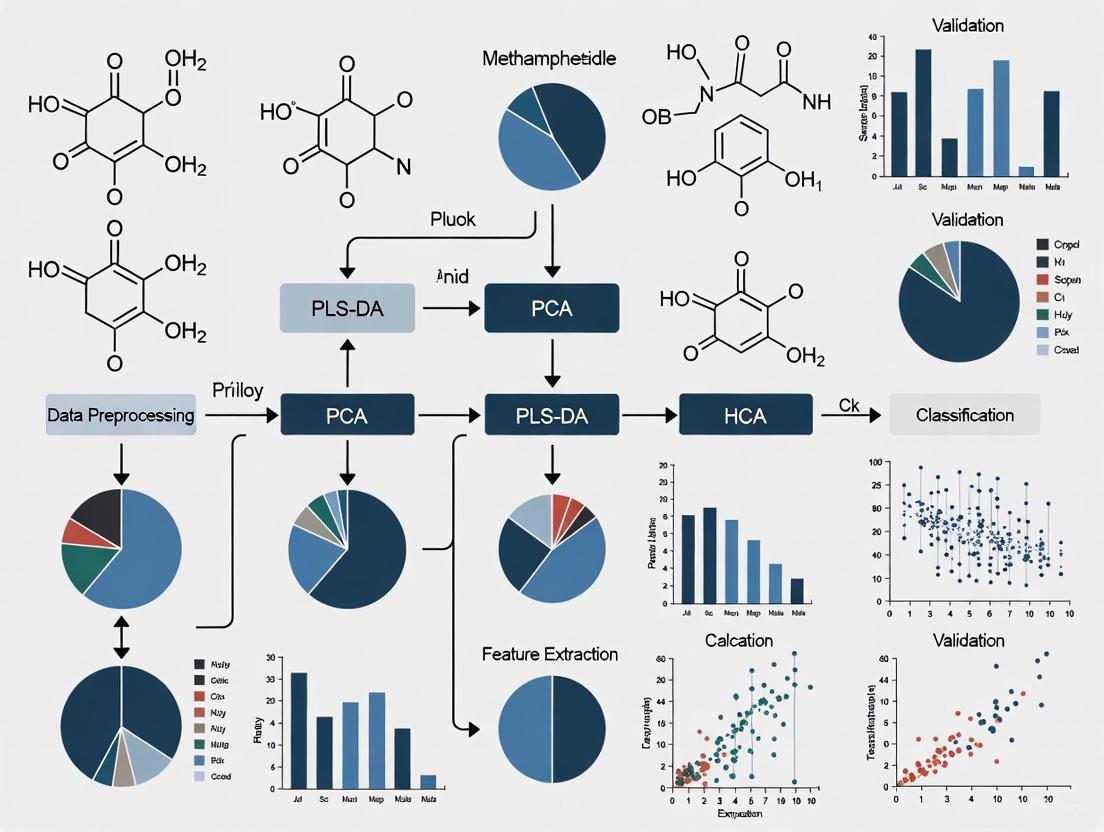
This article provides a comprehensive comparison of statistical multivariate analysis methods essential for chemical forensics, a field critical for attributing the source and origin of chemical warfare agents and other...
Comparing Statistical Multivariate Analysis Methods in Chemical Forensics: A Guide for Forensic Researchers and Scientists
Abstract
This article provides a comprehensive comparison of statistical multivariate analysis methods essential for chemical forensics, a field critical for attributing the source and origin of chemical warfare agents and other substances of forensic interest. It covers foundational principles, practical applications for impurity profiling and source identification, strategies for troubleshooting and optimizing analytical workflows, and a direct validation of method performance and comparability. Tailored for researchers, scientists, and drug development professionals, the content synthesizes current research to guide the selection, implementation, and standardization of these powerful statistical tools for robust forensic investigations.
The Role of Multivariate Analysis in Modern Chemical Forensics
Source attribution in chemical forensics is the process of linking a chemical sample to a specific origin. This field relies heavily on advanced statistical and multivariate analysis methods to objectively evaluate evidence, moving beyond traditional subjective comparisons. The imperative is clear: to provide scientifically robust, reproducible, and defensible conclusions in legal and research contexts. This guide compares the performance of established chemometric methods with emerging machine learning (ML) approaches, underpinned by experimental data and detailed protocols.
Experimental Comparison of Source Attribution Methods
A 2025 study provides a direct performance benchmark for source attribution methods, comparing a machine learning approach with two traditional statistical models using the same dataset of gas chromatography-mass spectrometry (GC-MS) chromatograms from 136 diesel oil samples [1].
Experimental Protocol [1]:
- Sample Preparation: Each diesel oil sample was diluted with approximately 7 mL of dichloromethane and transferred to a GC vial.
- Instrumental Analysis: Analysis was performed using an Agilent 7890 A GC coupled with an Agilent 5975C mass spectrometry detector.
- Data Modeling: Three models were evaluated on the same data.
- Model A (ML): A score-based model using a Convolutional Neural Network (CNN) trained on the raw chromatographic signal.
- Model B (Traditional Statistical): A score-based model using similarity scores from ten selected peak height ratios.
- Model C (Traditional Statistical): A feature-based model constructing probability densities in a 3D space defined by three peak height ratios.
- Performance Metrics: The models were compared using the log likelihood ratio cost (
Cllr), which measures the discrimination accuracy and calibration of a forensic method, with lower values indicating better performance [1].
Quantitative Performance Data [1]:
| Model | Type | Key Features | Median LR for H₁ (Same Source) | Cllr (Performance) |
|---|---|---|---|---|
| Model C | Feature-Based Statistical | Three peak height ratios | 3,200 | 0.09 |
| Model A | Score-Based Machine Learning | CNN on raw chromatographic data | 1,800 | 0.13 |
| Model B | Score-Based Statistical | Ten peak height ratios | 180 | 0.32 |
Interpretation: The feature-based statistical model (C) showed the best performance (lowest Cllr), while the score-based ML model (A) outperformed the score-based classical model (B). This demonstrates that while advanced ML is powerful, well-designed traditional methods can still lead in specific applications.
Core Methodologies: Workflows and Signaling Pathways
The analytical process in chemical forensics follows a structured workflow, from evidence to statistical interpretation.
Generalized Workflow for Chemical Forensic Analysis
The following diagram outlines the standard pathway for processing forensic evidence.
Method Selection Logic for Source Attribution
Choosing the right analytical and statistical method is critical and depends on the data and question being asked.
The Scientist's Toolkit: Essential Research Reagent Solutions
Successful chemical forensic analysis relies on a suite of analytical techniques and data processing tools.
| Category | Item / Technique | Primary Function in Source Attribution |
|---|---|---|
| Core Analytical Instruments | Gas Chromatography-Mass Spectrometry (GC-MS) | Separates and identifies volatile compounds in complex mixtures (e.g., drugs, ignitable liquids) [2]. |
| Fourier-Transform Infrared (FTIR) Spectroscopy | Provides a molecular fingerprint for material identification (e.g., fibers, paints, polymers) [2]. | |
| Inductively Coupled Plasma-Mass Spectrometry (ICP-MS) | Determines trace elemental composition for comparing glass, soil, and gunshot residue [2]. | |
| Chemometric & ML Software | Partial Least Squares Regression (PLSR) | Models the relationship between analytical data (X) and a quantitative property (Y), such as estimating the age of a sample [3]. |
| Principal Component Analysis (PCA) | An unsupervised technique for exploring data, reducing dimensionality, and identifying inherent patterns or groupings [4] [5]. | |
| Linear Discriminant Analysis (LDA) | A classification method that finds features that best separate predefined sample classes [6] [4]. | |
| Convolutional Neural Networks (CNN) | A deep learning algorithm capable of automatically learning relevant features from complex, raw data like chromatograms or images [1]. | |
| Key Chemical Reagents | Dichloromethane (DCM) | A common organic solvent for diluting non-polar evidence samples (e.g., oils, paints) prior to GC-MS analysis [1]. |
| Deuterated Solvents | Used for nuclear magnetic resonance (NMR) spectroscopy to provide a solvent signal that does not interfere with the sample analysis. |
Detailed Experimental Protocols for Key Techniques
Multivariate Regression for Forensic Dating
(O)PLS regression is widely used to estimate the age of forensic evidence like bloodstains or inks [3].
Workflow [3]:
- Sample Collection & Preparation: A set of samples of known age is collected and prepared according to standardized protocols to minimize pre-analytical variation.
- Analytical Measurement: An analytical technique (e.g., spectroscopy) is used to generate a signal (X-matrix) for each sample.
- Model Training: The known ages of the samples (Y-variable) are correlated with their analytical signals using (O)PLSR to build a predictive calibration model.
- Model Validation: The model's predictive accuracy is tested on a separate set of validation samples not used in the training step.
- Age Estimation: The validated model is used to predict the age of unknown samples from casework based on their analytical signal.
Chemometric Classification of Synthetic Fibers
A 2021 study demonstrated the use of FTIR spectroscopy with chemometrics for classifying synthetic fibers, a common form of trace evidence [5].
Workflow [5]:
- FT-IR Analysis: Fiber samples are analyzed using FTIR spectroscopy to obtain their infrared absorption spectra.
- Data Pre-processing: Spectral data is pre-processed using techniques like the Savitzky-Golay first derivative and Standard Normal Variate (SNV) to remove baseline offsets and enhance spectral features.
- Pattern Recognition: A PCA model is generated to visualize natural clustering of the different fiber types.
- Classification Model: A classification model, such as Soft Independent Modelling by Class Analogy (SIMCA), is built using the training set. This model defines a "class space" for each fiber type.
- Sample Identification: Unknown test samples are projected into the model and assigned to a class based on their fit, enabling objective identification.
Performance and Application Across Forensic Disciplines
The choice of method is often dictated by the specific forensic application and the nature of the evidence.
| Forensic Discipline | Evidence Type | Recommended Analytical Technique | Suitable Multivariate Method(s) |
|---|---|---|---|
| Arson & Fire Debris | Ignitable liquids (e.g., diesel) | GC-MS [1] [2] | CNN, Feature-based LR models, PCA [1] |
| Trace Evidence | Synthetic fibers, Paints | FTIR Spectroscopy [5] [2] | PCA, SIMCA, PLS-DA [4] [5] |
| Explosives Investigation | Homemade explosives (HMEs) | IR Spectroscopy, GC-MS [6] | PCA, LDA, PLS-DA [6] |
| Questioned Documents | Ink age | Spectroscopy, Chromatography | (O)PLSR [3] |
| Toxicology | Drugs in biological fluids | HPLC, GC-MS [2] | PLSR, ML models [4] |
Challenges and Future Directions: Despite their power, widespread adoption of these advanced data analysis methods faces hurdles. Key challenges include the need for extensive validation using known "ground-truth" samples, establishing defined procedures for legal admissibility, and the requirement for statistical expertise among forensic experts [3] [4]. The future lies in integrating artificial intelligence (AI) and machine learning more deeply to enhance real-time decision-making and improve the robustness of field-deployable technologies [6].
In chemical forensics and chemometrics, multivariate statistical techniques are indispensable for interpreting complex data from analytical instruments such as mass spectrometers and NMR spectrometers. These techniques allow scientists to extract meaningful information, classify samples, and identify trace chemical markers that are crucial for applications like forensic tracking of chemical warfare agents and biomarker discovery [7] [8]. Techniques like Principal Component Analysis (PCA), Hierarchical Cluster Analysis (HCA), Partial Least Squares Discriminant Analysis (PLS-DA), and Orthogonal Partial Least Squares Discriminant Analysis (OPLS-DA) each provide a unique lens for data analysis, ranging from unsupervised exploration to supervised classification and regression. The choice of method depends on the research objective, whether it is an initial exploratory analysis of a new dataset or building a predictive model to distinguish pre-defined sample classes [9] [10]. This guide provides an objective comparison of these core techniques, supported by experimental data and protocols from active research fields.
Technique Definitions and Core Characteristics
Unsupervised Methods
Principal Component Analysis (PCA) is an unsupervised technique used for exploring data structure without prior class labels. It reduces data dimensionality by identifying new, uncorrelated variables called Principal Components (PCs), which sequentially capture the maximum possible variance in the data. PC1 represents the direction of greatest variance, PC2 the second greatest, and so on [9] [11]. PCA is primarily used for data overview, identifying outliers, assessing the quality of biological replicates, and visualizing overall data trends [9] [12].
Hierarchical Cluster Analysis (HCA) is another unsupervised pattern recognition method. It seeks to identify inherent groupings in the data by calculating pairwise distances between samples and building a tree-like structure (dendrogram) that illustrates the hierarchy of similarities between samples [7]. It is often used in the initial stages of analysis to reveal natural clusters without using prior class information.
Supervised Methods
Partial Least Squares Discriminant Analysis (PLS-DA) is a supervised classification method. It uses known class membership information to find latent variables that maximize the covariance between the input data (X) and the class labels (Y) [9] [12]. This forces a separation between the pre-defined groups, making it a powerful tool for classification and biomarker selection. However, because it is supervised, it is prone to overfitting, especially with noisy datasets or a small number of samples, making rigorous validation essential [11] [12].
Orthogonal Partial Least Squares Discriminant Analysis (OPLS-DA) is an extension of PLS-DA, also operating as a supervised method. Its key innovation is the separation of the data variation into two distinct parts: predictive variation, which is directly correlated to the class difference, and orthogonal variation, which is uncorrelated (orthogonal) to the class difference [9] [10]. This separation simplifies model interpretation by allowing researchers to focus specifically on the variables that contribute to class separation, while filtering out unrelated systematic variation [9] [13].
The table below summarizes the core characteristics of these four techniques.
Table 1: Core Characteristics of Key Multivariate Techniques
| Feature | PCA | HCA | PLS-DA | OPLS-DA |
|---|---|---|---|---|
| Supervision Type | Unsupervised | Unsupervised | Supervised | Supervised |
| Primary Objective | Explore data structure, reduce dimensions, find outliers | Identify inherent clustering and hierarchies | Maximize class separation for classification | Separate class-predictive from unrelated variation |
| Use of Class Labels | No | No | Yes | Yes |
| Key Outputs | Scores, Loadings, Variance explained | Dendrogram | Scores, Loadings, VIP scores | Predictive Scores, Orthogonal Scores, Loadings |
| Risk of Overfitting | Low | Low | Moderate to High | Moderate to High |
| Ideal For | Data quality control, trend discovery, outlier detection | Discovering natural groupings without prior assumptions | Classification, biomarker discovery, predictive modeling | Enhanced interpretation, identifying key discriminatory variables |
Experimental Protocols and Workflows
A Representative Workflow from Chemical Forensics
A study on the impurity profiling of methylphosphonothioic dichloride, a chemical warfare precursor, provides a robust experimental protocol for applying these techniques in sequence [7].
1. Analytical Measurement: The first step involves analyzing samples using comprehensive two-dimensional gas chromatography coupled with time-of-flight mass spectrometry (GC×GC-TOFMS). This advanced separation and detection technology generates a high-dimensional chemical fingerprint for each sample [7].
2. Data Pre-processing: The raw instrument data is processed to identify and quantify chemical compounds, resulting in a data matrix where rows represent samples and columns represent the abundance of specific chemical features.
3. Hierarchical Analytical Modeling:
- Step 1 - Unsupervised Pattern Recognition: HCA and PCA are applied as initial discovery tools. These methods reveal the inherent clustering of samples based on their synthetic pathways without using prior knowledge of their origin. The natural grouping observed here provides a preliminary check of the data structure [7].
- Step 2 - Supervised Classification Modeling: OPLS-DA is then used to build a definitive classification model. In this study, the OPLS-DA model achieved 100% classification accuracy (R2 = 0.990) by identifying 15 key discriminating features (Variables Important in Projection, VIPs) that differentiate the synthetic pathways [7].
- Step 3 - Model Validation: The reliability of the OPLS-DA model is rigorously tested. This involves a permutation test (n=2000) to rule out overfitting and validation with an external set of samples (n=12) to confirm the model's predictive power, which also showed 100% accuracy in this case [7].
The following diagram illustrates this hierarchical workflow.
Figure 1: Hierarchical Analytical Workflow for Chemical Forensics.
Validation is Critical for Supervised Methods
A critical protocol element when using PLS-DA or OPLS-DA is rigorous validation, as these models can aggressively force separation even when no real biological difference exists [11]. Key validation steps include:
- Cross-validation: Used to calculate metrics like Q2 (predictive ability). A model with Q2 > 0.5 is generally considered valid, while Q2 > 0.9 is outstanding [12].
- Permutation Testing: This involves randomly scrambling the class labels numerous times (e.g., 2000 permutations) and re-running the model. A valid model will have significantly higher R2Y and Q2 values for the real data compared to the permuted data [7] [12].
- External Validation: Testing the model on a completely new set of samples not used in model building is the gold standard for assessing predictive performance [7].
Comparative Performance and Applications
Objective Performance Comparison
The table below summarizes quantitative and qualitative performance data from cited research, highlighting the distinct roles and efficacies of each technique.
Table 2: Experimental Performance and Application Comparison
| Technique | Reported Performance / Outcome | Primary Application Context | Advantages | Limitations |
|---|---|---|---|---|
| PCA | Used as QC tool; reveals major variation trends [9]. | Exploratory analysis of NMR, MS data; quality control [11] [14]. | Provides an unbiased overview; low risk of overfitting [9] [12]. | Poor separation if class difference is not the largest variance [10] [12]. |
| HCA | Revealed inherent clustering of synthetic pathways [7]. | Unsupervised discovery of sample groupings in forensics [7]. | Intuitive visual output (dendrogram); no prior group info needed. | Results can be sensitive to distance metrics used. |
| PLS-DA | Foundation for classification and VIP scores for feature selection [12]. | Classifying groups; biomarker discovery in metabolomics [9] [12]. | Maximizes class separation; handles high-dimensional data well. | Prone to overfitting without validation; model can be complex [11] [12]. |
| OPLS-DA | 100% classification and prediction accuracy; identified 15 VIP features [7]. | Discriminant analysis for two-group problems; spectral analysis [7] [10]. | Improved interpretability by separating predictive and orthogonal variation [9] [13]. | Higher computational complexity; risk of overfitting remains [9] [11]. |
Conceptual Diagram of OPLS-DA Separation
The power of OPLS-DA lies in its ability to separate different types of variation. This is conceptually different from PCA, as illustrated below.
Figure 2: OPLS-DA separates between-group from within-group variation. In PCA (top), group separation may be obscured if it's not the largest source of variance. OPLS-DA (bottom) rotates the view to maximize group separation on the predictive component, while within-group variation is captured on orthogonal components.
Essential Research Reagents and Solutions
The application of these multivariate techniques relies on data generated from sophisticated analytical platforms. The following table lists key research reagents and solutions central to the experimental workflows cited in this guide.
Table 3: Key Research Reagents and Solutions for Metabolomics and Forensics
| Item Name | Function / Application | Research Context |
|---|---|---|
| GC×GC-TOFMS | Comprehensive two-dimensional gas chromatography coupled with time-of-flight mass spectrometry for high-resolution separation and detection of complex mixtures. | Used for impurity profiling of chemical warfare precursors, generating the high-dimensional data for PCA/HCA/OPLS-DA [7]. |
| NMR Spectroscopy | Nuclear Magnetic Resonance spectroscopy for identifying and quantifying metabolites in a non-destructive manner. | Used in metabolomics studies to generate spectral data for multivariate analysis with PCA and PLS-DA [11] [14]. |
| LC-MS (HILIC Mode) | Liquid Chromatography-Mass Spectrometry using Hydrophilic Interaction Chromatography to retain and analyze polar metabolites. | Applied in multi-platform metabolomics as a complementary tool to NMR, expanding metabolite coverage for analysis [14]. |
| Chemometrics Software (e.g., SIMCA, Metware Cloud) | Software platforms dedicated to building, validating, and visualizing multivariate statistical models like PCA, PLS-DA, and OPLS-DA. | Essential for performing the computational analysis, model validation, and generating scores/loadings plots [9] [10]. |
In analytical chemistry, particularly in fields like chemical forensics and metabolomics, the data generated by Gas Chromatography-Mass Spectrometry (GC-MS) and Liquid Chromatography-Mass Spectrometry (LC-MS) is inherently multivariate. Each sample produces complex signals across retention times, mass-to-charge ratios, and peak intensities, creating multidimensional datasets that are impossible to fully interpret with univariate statistical methods alone [15]. Multivariate statistical data analysis provides a collection of methods to analyze datasets with multiple dependent or independent variables simultaneously, with the primary objective of understanding the interactions between these variables and their combined effect on outcomes [16]. This analytical approach represents a conceptual shift from examining variables in isolation to analyzing their joint behavior, reflecting the reality that variables in complex chemical systems rarely operate independently [17].
The integration of multivariate statistics with chromatographic techniques is particularly valuable in forensic science, where it brings a new level of objectivity and statistically validated interpretation to evidence analysis. By applying chemometric techniques to data from GC-MS and LC-MS platforms, forensic scientists can move beyond subjective visual comparisons toward data-driven interpretations that enhance accuracy and mitigate human bias [4]. This statistical framework is equally crucial in drug development and metabolomics, where researchers must identify subtle patterns in complex biological matrices to discover biomarkers or understand disease mechanisms [18] [15].
Comparative Analysis of GC-MS and LC-MS Platforms
Fundamental Technical Differences and Complementary Strengths
GC-MS and LC-MS represent two complementary analytical approaches with distinct operating principles and application domains. GC-MS employs gas chromatography to separate compounds based on their volatility and interaction with the chromatographic column, requiring samples to be vaporized and thus limiting its application to compounds that can withstand high temperatures without degradation [19]. This technique is exceptionally suited for analyzing volatile and semi-volatile compounds, such as environmental pollutants, fragrances, hydrocarbons, and synthetic drugs [20] [19]. In contrast, LC-MS utilizes liquid chromatography to separate compounds in a liquid mobile phase, making it particularly advantageous for analyzing non-volatile, thermally labile, or high-molecular-weight compounds that would decompose under GC-MS conditions [19]. This capability makes LC-MS ideal for analyzing biological samples, pharmaceuticals, peptides, and other complex molecules prevalent in metabolomic studies [15] [19].
The fundamental difference in separation mechanisms results in distinct application profiles for each technique. GC-MS is renowned for its exceptional separation capability and high sensitivity for volatile compounds, providing robust and reproducible results essential for routine analysis and long-term studies [19]. Meanwhile, LC-MS offers superior versatility in analyzing a broader range of compounds, with flexibility in ionization techniques such as electrospray ionization (ESI) and atmospheric pressure chemical ionization (APCI) that can be tailored to specific analytical needs [19]. Many analytical laboratories employ both techniques to achieve comprehensive metabolite coverage, as their application domains overlap minimally and together they provide a more complete picture of the sample composition [15].
Performance Comparison in Metabolomic and Forensic Applications
Experimental comparisons between GC-MS and LC-MS platforms demonstrate their complementary performance characteristics in practical applications. In metabolomic studies, GC-MS typically identifies approximately 100 metabolites, while LC-MS can detect close to 500 metabolites in the same samples [15]. This differential coverage stems from their distinct physicochemical separation mechanisms, with GC-MS excelling in the analysis of volatile organic compounds, lipids, and derivatizable molecules, while LC-MS better handles semi-polar metabolites [15].
Table 1: Performance Comparison of GC-MS and LC-MS in Metabolomic Analysis
| Parameter | GC-MS | LC-MS | Combined Approach |
|---|---|---|---|
| Number of Metabolites Typically Identified | ~100 [15] | ~500 [15] | Enhanced coverage |
| Primary Compound Classes Analyzed | Volatile compounds, organic acids, fatty acids, steroids [19] | Non-volatile, thermally labile, polar compounds [19] | Comprehensive profiling |
| Sample Preparation Complexity | Often requires derivatization [15] | Less extensive preparation [15] | Multiple protocols needed |
| Analysis of Thermally Labile Compounds | Limited [19] | Excellent [19] | Complete coverage |
Advanced GC×GC-MS systems provide even greater analytical power compared to conventional GC-MS. In a comparative study analyzing human serum samples, GC×GC-MS detected approximately three times as many peaks as GC-MS at a signal-to-noise ratio ≥ 50, and three times the number of metabolites were identified with high spectral similarity scores [21]. This enhanced capability directly translated to biomarker discovery, with 34 metabolites showing statistically significant differences between patient and control groups in GC×GC-MS data compared to only 23 in GC-MS data [21]. The improved performance was primarily attributed to the superior chromatographic resolution of GC×GC-MS, which reduces peak overlap and facilitates more accurate spectrum deconvolution for metabolite identification and quantification [21].
Multivariate Statistical Methods for Chromatographic Data
Classification of Multivariate Techniques
Multivariate statistical methods can be broadly classified into two categories: dependence techniques and interdependence techniques. This distinction is fundamental for selecting the appropriate analytical approach based on the research question and data structure [18].
Dependence techniques explore relationships between one or more dependent variables and their independent predictors [18]. These methods are employed when researchers can clearly designate certain variables as outcomes (dependent variables) that may be influenced by other measured factors (independent variables). In the context of GC-MS and LC-MS data analysis, dependence methods help determine how specific experimental conditions or sample characteristics affect the chromatographic profiles or metabolite concentrations.
Interdependence techniques, in contrast, make no distinction between dependent and independent variables but treat all variables equally in a search for underlying patterns and structures [18]. These methods are particularly valuable for exploratory analysis of complex datasets without predefined hypotheses about variable relationships, allowing the data itself to reveal its inherent organization.
Table 2: Classification of Multivariate Statistical Techniques for Chromatographic Data Analysis
| Technique Type | Specific Methods | Primary Application in GC-MS/LC-MS Data |
|---|---|---|
| Dependence Techniques | Multiple Linear Regression [18] [16] | Modeling relationship between multiple predictors and a continuous outcome variable |
| Logistic Regression [18] | Predicting categorical outcomes from multiple predictors | |
| MANOVA [16] | Comparing group means across multiple dependent variables | |
| Discriminant Analysis [16] | Classifying samples into predefined groups | |
| Interdependence Techniques | Principal Component Analysis (PCA) [18] [16] | Dimensionality reduction and exploratory data analysis |
| Factor Analysis [16] | Identifying latent variables explaining patterns in data | |
| Cluster Analysis [18] [16] | Identifying naturally occurring groups in data | |
| Canonical Correlation Analysis [16] | Exploring relationships between two sets of variables |
Key Multivariate Methods in Detail
Multiple Linear Regression
Multiple linear regression models the relationship between two or more metric explanatory variables and a single metric response variable by fitting a linear equation to observed data [18]. This technique addresses research questions such as whether age, height, and weight explain the variation in fasting blood glucose levels, or whether fasting blood glucose levels can be predicted from age, height, and weight [18]. The mathematical model for multiple regression with n predictors is expressed as:
y = β₀ + β₁X₁ + β₂X₂ + β₃X₃ + … + βₙXₙ + ε
Where β₀ represents a constant, ε represents a random error term, and β₁, β₂, β₃, etc., denote the regression coefficients associated with each predictor [18]. A partial regression coefficient indicates the amount by which the dependent variable Y changes when a particular predictor value changes by one unit, given that all other predictor values remain constant [18].
Logistic Regression
Logistic regression analysis models binary or categorical dependent variables from two or more independent predictor variables [18]. It addresses similar questions as discriminant function analysis or multiple regression but without strict distributional assumptions on the predictors [18]. The technique utilizes the logit function, which is the natural logarithm of the odds (probability of occurrence divided by probability of non-occurrence), to create a linear relationship with the predictor variables [18]. The regression equation in logistic regression takes the form:
Logₙ[p/(1 - p)] = β₀ + β₁X₁ + β₂X₂ + … + βₙXₙ
Where Logₙ[p/(1 - p)] denotes logit(p), with p being the probability of occurrence of the event in question [18]. The unique impact of each predictor in logistic regression is expressed as an odds ratio, which can be tested for statistical significance against the null hypothesis that the ratio is 1 [18].
Principal Component Analysis (PCA) and Factor Analysis
Principal Component Analysis (PCA) is a dimensionality reduction technique that converts large sets of correlated variables into smaller sets of uncorrelated components called principal components [16]. This method is particularly valuable in GC-MS and LC-MS data analysis, where datasets may contain hundreds or thousands of correlated mass spectral features. PCA simplifies these complex datasets by transforming them into a new coordinate system where the greatest variance lies on the first coordinate (first principal component), the second greatest variance on the second coordinate, and so on [16]. This allows researchers to visualize high-dimensional data in two or three dimensions while retaining as much information as possible from the original variables.
Factor analysis is a related technique that seeks to identify latent variables (factors) that explain the pattern of correlations within the observed variables [16]. While PCA focuses on explaining variance, factor analysis aims to explain covariance between variables, making it particularly useful for identifying underlying constructs that influence multiple measured variables in tandem. In forensic science, these techniques have been applied to analyze complex chemical data from techniques like FT-IR and Raman spectroscopy, revealing hidden trends that might be missed through traditional univariate analysis [4].
Experimental Protocols and Forensic Applications
Rapid GC-MS Method for Seized Drug Analysis
A recent study developed and optimized a rapid GC-MS method for screening seized drugs in forensic investigations, significantly reducing total analysis time from 30 to 10 minutes while maintaining analytical accuracy [22]. The methodology was comprehensively validated and applied to real case samples from Dubai Police Forensic Laboratories, demonstrating its practical utility in authentic forensic contexts.
The experimental protocol employed an Agilent 7890B gas chromatograph system connected to an Agilent 5977A single quadrupole mass spectrometer, equipped with a 7693 autosampler and an Agilent J&W DB-5 ms column (30 m × 0.25 mm × 0.25 μm) [22]. Helium (99.999% purity) served as the carrier gas at a fixed flow rate of 2 mL/min. The rapid GC-MS method utilized optimized temperature programming with an initial oven temperature of 80°C held for 0.3 minutes, followed by a ramp of 80°C/min to 180°C, then a second ramp of 40°C/min to 300°C held for 1.5 minutes [22]. This optimized protocol achieved a total run time of approximately 5.5 minutes, a significant reduction from conventional methods requiring 30 minutes.
The method demonstrated exceptional performance in validation studies, with limit of detection improvements of at least 50% for key substances including Cocaine and Heroin [22]. Specifically, the method achieved detection thresholds as low as 1 μg/mL for Cocaine compared to 2.5 μg/mL with conventional methods [22]. The method also exhibited excellent repeatability and reproducibility with relative standard deviations (RSDs) less than 0.25% for stable compounds under operational conditions [22]. When applied to 20 real case samples from Dubai Police Forensic Labs, the rapid GC-MS method accurately identified diverse drug classes including synthetic opioids and stimulants, with match quality scores consistently exceeding 90% across tested concentrations [22].
Chemometric Approaches in Forensic Evidence Analysis
Chemometrics applies statistical approaches to analyze complex chemical data and has shown growing utility across forensic disciplines [4]. Techniques such as principal component analysis (PCA), linear discriminant analysis (LDA), and partial least squares-discriminant analysis (PLS-DA) are widely used for pattern recognition in complex datasets, while newer methods like support vector machines (SVM) and artificial neural networks (ANNs) are emerging as powerful tools for more sophisticated modeling [4].
In forensic toxicology, chemometric models enhance the identification of unknown substances by comparing spectral data against extensive chemical databases [4]. For arson investigations, chemometrics has been employed to differentiate between accelerants and other chemical residues, providing clearer insights into fire causes [4]. The integration of chemometrics with GC×GC-MS has proven particularly powerful for analyzing complex forensic evidence such as sexual lubricants, automobile paints, and tire rubber, where traditional GC-MS often suffers from coelution issues that limit discriminatory power [20].
Diagram 1: Multivariate Analysis Workflow in Forensic Chemistry
The Scientist's Toolkit: Essential Research Reagents and Materials
Successful integration of multivariate statistics with GC-MS and LC-MS data analysis requires specific research reagents and materials optimized for chromatographic separation and mass spectrometric detection. The following table details essential solutions and their functions based on experimental protocols from recent studies.
Table 3: Essential Research Reagent Solutions for GC-MS and LC-MS Analysis
| Reagent/Material | Function | Application Context |
|---|---|---|
| Methanol (99.9%) | Extraction solvent for drugs and metabolites | Sample preparation for seized drug analysis [22] |
| Heptadecanoic Acid (10 μg/mL) | Internal standard for quantification | Quality control in metabolomic studies [21] |
| Norleucine (10 μg/mL) | Internal standard for retention time alignment | Metabolite profiling in biological samples [21] |
| Methoxyamine in Pyridine (20 mg/mL) | Derivatization reagent for GC-MS analysis | Protection of carbonyl groups in metabolites [21] |
| MSTFA with 1% TMCS | Silylation derivatization reagent | Enhancement of volatility for polar compounds in GC-MS [21] |
| DB-5 ms GC Column | (5%-phenyl)-methylpolysiloxane stationary phase | Primary separation column for GC-MS and GC×GC-MS [21] [22] |
| DB-17 ms GC Column | (50%-phenyl)-methylpolysiloxane stationary phase | Secondary separation column for GC×GC-MS [21] |
| Alkane Retention Index Standard (C10-C40) | Retention time calibration | Retention index calculation for metabolite identification [21] |
The integration of multivariate statistical methods with GC-MS and LC-MS data represents a powerful analytical framework that enhances the interpretation of complex chemical data across forensic, pharmaceutical, and metabolomic applications. The complementary nature of GC-MS and LC-MS platforms, when coupled with appropriate multivariate techniques such as multiple linear regression, logistic regression, PCA, and factor analysis, provides researchers with a comprehensive toolkit for extracting meaningful patterns from complex datasets. Experimental protocols demonstrate that optimized GC-MS methods can significantly reduce analysis times while maintaining or improving detection limits, particularly when enhanced by chemometric approaches for pattern recognition and classification. As analytical technologies continue to evolve, the synergy between sophisticated separation platforms and multivariate statistical methods will remain fundamental to advancing chemical forensics research and drug development initiatives.
In chemical forensics, impurities, by-products, and degradation products are not merely contaminants; they are critical sources of intelligence. These chemical attribution signatures (CAS) provide a chemical "fingerprint" that can reveal a compound's origin, manufacturing route, and history [23]. The systematic analysis of these signatures enables researchers and forensic investigators to perform two key functions: sample matching, which determines if two samples share a common origin, and production route sourcing, which identifies the specific synthetic method or starting materials used to produce a chemical substance [23]. The analytical workflows for characterizing these targets rely heavily on sophisticated separation techniques and multivariate statistical analysis to extract meaningful patterns from complex chemical data, forming the foundation of modern chemical attribution profiling.
Comparative Analysis of Key Forensic Targets
The table below summarizes the core characteristics and forensic intelligence value of the three key chemical targets.
Table 1: Comparative Analysis of Key Forensic Targets in Chemical Forensics
| Target | Origin & Formation | Primary Forensic Intelligence Value | Stability & Persistence | Representative Analytical Techniques |
|---|---|---|---|---|
| Impurities | Starting materials, reagents, catalysts, synthetic intermediates from the manufacturing process [24] [25]. | Reveals the specific synthetic pathway, manufacturer, and batch-to-batch variations [23]. | Typically stable under standard storage conditions; profile is consistent over time unless purified. | GC-MS [23], LC-MS [24], HPLC [24], ICP-MS [24]. |
| By-products | Formed through side reactions, incomplete reactions, or under specific reaction conditions (e.g., temperature, pressure) [23]. | Provides a highly specific signature for matching samples to a common production batch or process [23]. | Generally stable; their profile is a direct reflection of the reaction mechanics and conditions. | GC-MS [23], LC-MS [25], NMR [25], FTIR [24]. |
| Degradation Products | Formed post-manufacturing from the decomposition of the active substance due to factors like heat, light, humidity, or pH [26] [24] [25]. | Can indicate sample age, storage history, and handling; used in stability studies and to understand decomposition pathways. | Can evolve over time, changing the chemical profile; studied through forced degradation (stress testing) [26]. | Stability-indicating HPLC [26], LC-MS [26], GC-MS, NMR [25]. |
Analytical Techniques for Profiling and Comparison
The identification and quantification of chemical signatures require a suite of complementary analytical techniques. The choice of method depends on the nature of the target analyte, the required sensitivity, and the level of structural confirmation needed.
Table 2: Analytical Techniques for Signature Profiling and Comparison
| Technique | Primary Function | Key Strengths | Typical Data Output for Multivariate Analysis |
|---|---|---|---|
| Gas Chromatography-Mass Spectrometry (GC-MS) | Separation and identification of volatile and semi-volatile compounds [23]. | Excellent separation power; provides retention index and mass spectral data for confident identification [23]. | Relative peak areas, retention indices, mass spectral libraries [23]. |
| Liquid Chromatography-Mass Spectrometry (LC-MS) | Separation and identification of non-volatile, thermally labile, or polar compounds [24]. | Broad applicability; ideal for pharmaceuticals and high-molecular-weight impurities; high sensitivity. | Relative peak areas, mass-to-charge ratios, fragmentation patterns. |
| Nuclear Magnetic Resonance (NMR) Spectroscopy | Structural elucidation and confirmation of chemical structures [25]. | Powerful for de novo structure determination without pure standards; can distinguish isomers [25]. | Chemical shifts, coupling constants, integration values [25]. |
| Fourier Transform Infrared (FTIR) Spectroscopy | Functional group identification and compound characterization [24]. | Rapid analysis; provides complementary structural information to MS and NMR. | Infrared absorption spectra (fingerprint region). |
Experimental Protocol: Interlaboratory Validation of a Chemical Profiling Method
A 2023 interlaboratory study provides a robust protocol for validating a GC-MS-based chemical profiling method for a nerve agent precursor, methylphosphonic dichloride (DC), demonstrating the application of multivariate analysis for forensic comparisons [23].
Research Reagent Solutions and Materials
Table 3: Key Reagents and Materials for Chemical Profiling
| Item | Function/Description |
|---|---|
| Methylphosphonic Dichloride (DC) | The nerve agent precursor of interest, synthesized via different production routes to create distinct batches [23]. |
| CAS Reference Mixture | A solution of known impurities used for calibrating instrumentation, evaluating GC column performance, and aligning data across laboratories [23]. |
| Internal Standard | A compound not expected to be in the sample; used to normalize analytical responses. |
| Non-polar GC Column | A GC column used for separation. The study used a DB-5MS column to ensure reproducibility across labs [23]. |
| n-Alkane Solution | Used for the experimental determination of Retention Indices (RI) for each analyte, critical for aligning data from different GC systems [23]. |
Methodology and Workflow
The experimental workflow for the interlaboratory study is summarized in the diagram below.
Sample Preparation
Two distinct batches of DC, produced by different synthetic routes, were distributed to eight participating laboratories. Samples were prepared by dissolving the DC in an appropriate solvent, often dichloromethane, with the addition of an internal standard for data normalization [23].
Instrumental Analysis
All laboratories used Gas Chromatography-Mass Spectrometry (GC/MS) but were permitted to use their own established methods and instrumentation. A key harmonizing factor was the use of a common non-polar GC column and the calculation of Kovats Retention Indices (RI) for each impurity, which minimizes retention time variability between different instruments [23]. A targeted MS-library of 16 known chemical attribution signatures was used to identify relevant impurities in the chromatograms [23].
Data Processing and Multivariate Analysis
For each sample, laboratories reported:
- Retention Indices (RI) for each impurity.
- Mass spectral data for identification.
- Relative peak areas (normalized to the internal standard) for each impurity.
The compiled data—consisting of the relative abundances of multiple impurities—formed a chemical attribution profile for each sample. These profiles were then compared using Euclidean Distance as a similarity metric in a multivariate space [23].
Results and Statistical Interpretation
The interlaboratory study demonstrated the robustness of the chemical profiling method. When the within-batch data from all eight laboratories was compared, the chemical profiles showed high similarity, with values ranging from 0.720 to 0.995 [23]. This high similarity indicates excellent interlaboratory reproducibility for profiling the same batch.
In contrast, the between-batch comparison of the two different DC productions showed a much larger dissimilarity, with similarity values ranging from 0.509 to 0.576 [23]. This clear separation in multivariate space confirms that the impurity profiles were uniquely distinct for each synthesis route, enabling reliable production route sourcing and sample matching.
The forensic characterization of impurities, by-products, and degradation products is a powerful tool for generating actionable intelligence. The consistent results from the interlaboratory study confirm that with proper method harmonization—particularly using retention indices and targeted MS libraries—GC-MS profiling coupled with multivariate statistical analysis like Euclidean Distance is a robust and reliable approach for comparing chemical signatures across different laboratories [23]. This rigorous, data-driven framework is essential for supporting forensic conclusions regarding the origin and history of chemical substances, from pharmaceutical impurities to agents of security concern.
Implementing Multivariate Methods for Forensic Profiling and Source Identification
Chemical attribution profiling is a powerful forensic tool that leverages the unique pattern of impurities and by-products in a substance—known as Chemical Attribution Signatures (CAS)—to trace its origin, synthesis pathway, and batch history [23]. In the enforcement of the Chemical Weapons Convention (CWC), attributing a seized chemical warfare agent (CWA) to a specific precursor or production method is a critical forensic objective. This process relies on detecting CAS that serve as a chemical "fingerprint," providing intelligence for non-proliferation and counter-terism efforts [23] [7]. The core principle is that impurities originating from starting materials, reagents, or specific reaction conditions are carried through the synthesis process, creating a detectable linkage between a precursor and the final nerve agent [23].
The analytical challenge lies not only in detecting these trace-level impurities but also in robustly interpreting the complex, multivariate data they generate. This case study objectively compares the performance of different analytical and chemometric platforms used for the attribution of CWA precursors, focusing on methylphosphonic dichloride (DC) and methylphosphonothioic dichloride. We present supporting experimental data to guide researchers in selecting appropriate methodologies for forensic chemical analysis.
Comparative Analytical Platforms & Workflows
Two distinct analytical platforms for impurity profiling are prevalent in modern forensic laboratories: one based on standardized one-dimensional gas chromatography-mass spectrometry (GC/MS), and another employing advanced comprehensive two-dimensional GC coupled with time-of-flight MS (GC×GC-TOFMS). The following workflows and subsequent data compare their application to CWA precursor attribution.
Workflow 1: Standardized GC-MS Profiling
The first workflow utilizes a widely available GC-MS system following a standardized procedure, making it suitable for implementation across multiple designated laboratories [23].
Workflow 2: Advanced GC×GC-TOFMS-Chemometrics Platform
The second workflow employs a more advanced instrumental setup coupled with a hierarchical chemometric analysis for deeper pathway discrimination [7].
Experimental Protocols & Performance Data
Protocol A: Interlaboratory GC-MS Method for Methylphosphonic Dichloride (DC)
Sample Preparation: DC samples are dissolved in dichloromethane. A CAS reference mixture containing key impurities is used for system suitability testing and retention index (RI) calibration [23].
Chromatographic Separation:
- Column: Non-polar 5% phenyl arylene polymer GC column (e.g., DB-5MS, VF-5MS).
- Detection: Mass Spectrometer in electron ionization (EI) mode.
- RI Calibration: A homologous series of n-alkanes is used to calculate retention indices for each detected impurity, enabling alignment of GC/MS data across different laboratories and instrument setups [23].
Data Processing: Sixteen target CAS are identified by matching their mass spectra and RIs (± 14 RI units) against a targeted library. The relative peak areas of these CAS are measured to construct the chemical profile for statistical comparison [23].
Protocol B: GC×GC-TOFMS Method for Methylphosphonothioic Dichloride
Sample Preparation: The precursor sample is diluted in an appropriate solvent for direct injection [7].
Chromatographic Separation:
- System: Comprehensive two-dimensional GC (GC×GC) coupled to a Time-of-Flight Mass Spectrometer (TOFMS).
- Modulation: A thermal or cryogenic modulator is used to focus and re-inject effluent from the first column onto a second column with a different stationary phase.
- First Dimension: A non-polar column for primary separation.
- Second Dimension: A mid-polar or polar column for rapid secondary separation [7].
Data Processing: The high-resolution TOFMS data is processed using non-targeted analysis to find all detectable impurities. An impurity database is built, and peak areas are used for chemometric modeling [7].
Quantitative Performance Comparison
The table below summarizes the key performance metrics of the two analytical platforms as applied to CWA precursor profiling.
Table 1: Analytical Platform Performance Comparison
| Performance Metric | Standardized GC-MS Workflow [23] | GC×GC-TOFMS-Chemometrics Platform [7] |
|---|---|---|
| Primary Application | Sample matching & batch linkage | Synthesis pathway decoding |
| Key Precursor Studied | Methylphosphonic dichloride (DC) | Methylphosphonothioic dichloride |
| Identified Impurities | 16 target CAS | 58 unique compounds |
| Data Reproducibility | High intra-/inter-lab similarity (0.720–0.995) | Not explicitly quantified |
| Classification Accuracy | Distinct batch classes (Between-batch distance: 0.509–0.576) | 100% (R² = 0.990) via oPLS-DA |
| Traceability Threshold | Not specified | ≤ 0.5% impurity level |
| Key Chemometric Tools | Principal Component Analysis (PCA), Euclidean Distance | HCA, PCA, oPLS-DA with VIP features |
| Method Validation | Interlaboratory study (8 labs) | Permutation tests (n=2000), external validation (n=12, 100% accuracy) |
Statistical Analysis: The Role of Multivariate Methods
The interpretation of CAS data is critically dependent on multivariate statistical analysis, which distills complex impurity profiles into actionable forensic intelligence.
- Principal Component Analysis (PCA) is widely used for exploratory data analysis, as seen in both protocols, to visualize inherent clustering of samples based on their production batches or synthesis routes without prior class information [23] [7].
- Orthogonal Projections to Latent Structures-Discriminant Analysis (oPLS-DA) is a supervised method that provides superior classification performance. It maximizes the separation between predefined classes (e.g., synthesis pathways) and identifies key discriminating impurities through Variable Importance in Projection (VIP) scores [7].
- Compositional Data Analysis (CoDa) is an emerging paradigm recommended for forensic science. Since impurity profiles are compositional (the parts constitute a whole), classical statistics can lead to erroneous conclusions. CoDa, based on log-ratio transformations, yields unbiased and more interpretable results, boosting classification accuracy and reducing misclassification rates [27].
- Hierarchical Cluster Analysis (HCA) is another unsupervised technique used to reveal natural groupings within a dataset, often presented as a dendrogram [7] [6].
The Scientist's Toolkit: Essential Research Reagents & Materials
Table 2: Key Reagents and Materials for CWA Precursor Profiling
| Item | Function / Application |
|---|---|
| Non-polar GC Columns (e.g., DB-5MS) | Robust, reproducible separation of impurities; the standard for OPCW verification analyses [23]. |
| CAS Reference Mixture & n-Alkanes | System suitability testing and calculation of Retention Indices (RI) for cross-laboratory data alignment [23]. |
| Targeted MS Library | Contains mass spectra and RI data of known impurities, enabling consistent identification of CAS across instruments [23]. |
| Chemometric Software | Essential for performing multivariate statistical analyses like PCA, HCA, and oPLS-DA to interpret complex impurity profiles [23] [7] [6]. |
| Homemade Explosive (HME) Reference Materials | Used for method development and validation in the broader context of forensic chemical analysis of threat materials [6]. |
Variable selection stands as a critical preprocessing step in the development of robust chemometric models for forensic chemical analysis. The process of identifying the most relevant predictors from high-dimensional instrumental data directly influences model accuracy, interpretability, and predictive capability. Within forensic chemistry, where analytical techniques such as spectroscopy and chromatography generate datasets with numerous variables, effective variable selection becomes paramount for distinguishing meaningful chemical signatures from irrelevant noise [28] [4]. This guide provides an objective comparison of three prominent variable selection techniques—the F-ratio test, Variable Importance in Projection (VIP) scores, and model weight analysis—within the context of forensic science applications.
The adoption of chemometric approaches in forensic workflows addresses growing demands for objective, statistically validated evidence interpretation. As noted by researchers at Curtin University, these methods help mitigate human bias and improve courtroom confidence in forensic conclusions [4]. Variable selection techniques specifically enhance this process by refining multivariate models to focus on chemically significant variables, thereby improving classification accuracy and reliability in disciplines ranging from drug profiling to arson debris analysis [28].
Theoretical Foundations of Variable Selection Methods
F-Ratio Test
The F-ratio test provides a statistical framework for evaluating the discriminatory power of individual variables between predefined classes. This method operates on the principle that variables with larger between-group variance relative to within-group variance offer better separation capability. The mathematical foundation lies in calculating an F-value for each variable, representing the ratio of inter-class variance to intra-class variance [29].
In practice, researchers can derive three test statistics from what is termed the F-ratio σ²(F)/F². A Bayesian formalism then assigns weights to hypotheses and their corresponding measures, leading to complete, partial, or non-inclusion of these measures into an optimized feature vector [29]. This approach proved effective in distinguishing EEG signals of healthy patients from those diagnosed with schizophrenia, achieving 81% discriminance performance based on selectively included features [29].
Variable Importance in Projection (VIP) Scores
VIP scores emerge from Partial Least Squares (PLS) based models, particularly Partial Least Squares-Discriminant Analysis (PLS-DA). This method identifies latent variables that maximize covariance between independent variables (X) and corresponding dependent variables (Y) [30]. VIP scores quantify the contribution of each variable to the PLS model by summarizing its importance across all model components.
The VIP method enables forensic analysts to extract relevant information from high-dimensional datasets while addressing potential multicollinearity among predictors [30]. In practical applications, researchers often employ a threshold approach, typically retaining variables with VIP scores >1.0, as demonstrated in forensic document examination where VIP-based selection maintained model performance despite a 50% reduction in input variables [30].
Model Weight Analysis
Model weight analysis utilizes the coefficients from multivariate calibration models, particularly those derived from PLS regression, to identify influential variables. These weights reflect the direction and magnitude of each variable's contribution to predicting the property of interest. Unlike VIP scores which provide an overall importance measure, weight analysis offers insights into the specific relationship between variables and the predicted response.
In the context of Ordered Predictors Selection (OPS), model weight analysis forms the basis for sorting variables from informative vectors and systematically investigating regression models to identify the most relevant variable sets [31]. The core OPS algorithm examines regression models to select important variables by comparing cross-validation parameters, with newer OPS approaches demonstrating superior performance over genetic algorithms and other selection methods [31].
Comparative Experimental Analysis
Methodology for Performance Evaluation
To objectively compare the performance of F-ratio, VIP, and model weight selection methods, we established a standardized evaluation protocol based on forensic case studies from the literature. The assessment framework incorporates multiple datasets to ensure generalizability, with particular emphasis on forensic applications including document analysis, toxicology, and soil metal prediction [30] [32].
Each variable selection method was evaluated using the following protocol:
- Data Preprocessing: Raw spectral data were preprocessed using multiplicative scatter correction (MSC), standard normal variate (SNV), and Savitzky-Golay smoothing to minimize instrumental artifacts [32].
- Model Development: Partial Least Squares (PLS) and Partial Least Squares-Discriminant Analysis (PLS-DA) models were constructed following variable selection.
- Validation Procedure: Models were validated using external prediction sets and k-fold cross-validation to prevent overfitting.
- Performance Metrics: Multiple figures of merit were calculated, including root mean square error of prediction (RMSEP), residual prediction deviation (RPD), and classification accuracy.
All computations were performed in MATLAB R2023a with custom scripts for F-ratio implementation and the PLS Toolbox for VIP and model weight analyses.
Quantitative Performance Comparison
Table 1: Performance Metrics of Variable Selection Methods in Forensic Applications
| Selection Method | Application Context | Model Type | Accuracy (%) | RMSEP | RPD | Variables Selected |
|---|---|---|---|---|---|---|
| F-ratio Test | EEG Classification [29] | LDA | 81.0 | - | - | 3 (from original set) |
| VIP Scores | Document Dating [30] | ANN | 95.1 | - | - | 50% reduction |
| VIP Scores | Soil Metal Analysis [32] | PLS-DA | - | - | >2.0 | ~15-20 intervals |
| Model Weights (OPS) | Multivariate Calibration [31] | PLSR | - | Significant improvement | >2.0 | Varies by dataset |
| Firefly Algorithm | Soil Metal Prediction [32] | FFiPLS | - | Lower than deterministic methods | >2.0 (Al, Fe, Ti) | Optimal intervals |
Table 2: Method Characteristics and Implementation Requirements
| Selection Method | Computational Demand | Interpretability | Handling of Collinearity | Ease of Implementation | Best-Suited Applications |
|---|---|---|---|---|---|
| F-ratio Test | Low | High | Moderate | High | Initial feature screening, biomedical signals [29] |
| VIP Scores | Moderate | Moderate | Good | Moderate | Spectral data, forensic discrimination [30] [32] |
| Model Weights (OPS) | Moderate to High | High | Good | Moderate | Multivariate calibration, QSAR [31] |
| Genetic Algorithm | High | Low | Good | Low | Complex optimization problems [33] [31] |
The comparative analysis reveals that while VIP scores provide a balanced approach for most forensic spectroscopy applications, newer OPS strategies demonstrated superior performance in complex calibration tasks, outperforming genetic algorithms and interval-based methods in prediction capability and variable selection accuracy [31]. The F-ratio test offers computational efficiency for initial feature screening but may overlook interactive effects in complex spectral data.
Forensic Science Case Studies
Document Dating Analysis
In a comprehensive study on forensic document dating, researchers employed VIP scores to select relevant features from paper fingerprint data obtained via 2D formation sensors. The VIP approach enabled a 50% reduction in input variables while maintaining classification performance with an F1-score of 0.951 in Artificial Neural Network models [30]. This application demonstrates the value of VIP scores in maintaining model performance while significantly reducing dimensionality in forensic evidence analysis.
Soil Metal Prediction
A comparison of variable selection algorithms for predicting metals in river basin soils using near-infrared spectroscopy revealed that stochastic methods like the Firefly algorithm by intervals in PLS (FFiPLS) outperformed deterministic VIP-based approaches for certain metals [32]. The FFiPLS models for aluminum, iron, and titanium achieved RPD values greater than 2.0, indicating excellent predictive capability, while models for beryllium, gadolinium, and yttrium failed to achieve adequate performance regardless of selection method, likely due to their low concentrations in the samples [32].
Implementation Workflows
F-Ratio Test Implementation
The F-ratio test provides a statistically rigorous approach to variable selection, particularly effective for initial feature screening in classification problems. The following workflow diagram illustrates the sequential process for implementing the F-ratio test:
Figure 1: F-Ratio Test Variable Selection Workflow
The implementation begins with variance calculations for each variable across predefined classes. The F-ratio is computed as the quotient of between-group variance to within-group variance, with higher values indicating better discriminatory power [29]. A key advantage of this approach is the incorporation of Bayesian weighting to determine variable inclusion, which allows for both complete and partial inclusion of measures into the final optimized feature vector [29].
VIP Score Implementation
Variable Importance in Projection operates within the PLS-DA framework to identify variables that contribute most significantly to class separation. The implementation process involves:
Figure 2: VIP Score Variable Selection Workflow
VIP scores summarize the importance of each variable in projecting both X (predictor) and Y (response) information in PLS models [30]. The threshold for variable retention is typically set at VIP > 1.0, though this can be optimized for specific applications. This method proved particularly effective in forensic document examination, where it maintained model performance despite a 50% reduction in input variables [30].
Comprehensive Comparison Workflow
For forensic practitioners selecting an appropriate variable selection method, the following decision pathway provides guidance based on analytical objectives and data characteristics:
Figure 3: Variable Selection Method Decision Pathway
Essential Research Reagents and Materials
Table 3: Essential Research Materials for Forensic Chemometrics
| Material/Software | Specification | Application in Variable Selection |
|---|---|---|
| UHPLC-MS System | Ultra-High Performance Liquid Chromatography-Mass Spectrometry | Metabolic profiling for hypothermia detection [34] |
| NIR Spectrometer | Reflectance mode, 1000-2500 nm range | Soil metal content prediction [32] |
| 2D Formation Sensor | Techpap, France | Paper fingerprint analysis for document dating [30] |
| MATLAB | R2023a or later with PLS Toolbox | Implementation of VIP and model weight methods [30] [32] |
| Q Exactive MS | Thermo Scientific, HESI ion source | Nontargeted metabolomic profiling [34] |
| Python/R | With scikit-learn/chemometrics packages | Custom implementation of F-ratio and OPS methods [31] |
The comparative analysis of variable selection techniques reveals a nuanced landscape where method performance is highly dependent on specific application requirements. For forensic applications requiring high interpretability and statistical rigor, the F-ratio test provides a transparent approach for feature screening, particularly in classification tasks [29]. VIP scores offer a balanced solution for spectral data analysis, effectively reducing dimensionality while maintaining model performance in applications such as document dating [30]. For complex multivariate calibration challenges, newer OPS approaches and model weight analyses demonstrate superior prediction capability and variable selection accuracy [31].
The integration of chemometrics, including sophisticated variable selection techniques, represents a paradigm shift in forensic science toward more objective, statistically validated evidence interpretation [4]. As forensic science continues to embrace these methodologies, practitioners should consider the fundamental trade-offs between computational efficiency, model interpretability, and predictive performance when selecting appropriate variable selection strategies. Future developments will likely focus on hybrid approaches that leverage the strengths of multiple techniques while addressing the specific demands of forensic applications, particularly in the realms of drug profiling, toxicology, and trace evidence analysis [28] [4].
Environmental forensics leverages advanced analytical and statistical techniques to attribute environmental contamination to specific sources. This guide compares the performance of various multivariate statistical methods for classifying coal tars from different historical manufacturing processes. Based on a seminal study analyzing 23 coal tar samples from 15 former manufactured gas plants (FMGPs), we demonstrate that Principal Component Analysis (PCA) of data obtained through sophisticated chemical analysis offers superior classification potential. The performance of PCA is objectively compared against univariate analysis and other clustering methods, providing researchers with a data-driven framework for selecting appropriate methodologies in hydrocarbon fingerprinting.
Coal tar is a dense non-aqueous phase liquid (DNAPL) and a primary contaminant at thousands of former manufactured gas plant (FMGP) sites worldwide [35]. These sites represent a significant environmental challenge due to the toxicity and persistence of coal tar constituents, many of which are known carcinogens [36] [37]. The core objective in the environmental forensics of coal tars is to identify the source of contamination, a process crucial for allocating liability and guiding remediation efforts under legislations like the Comprehensive Environmental Response, Compensation, and Liability Act (CERCLA) in the U.S. [35] [38].
The chemical composition of coal tar is not uniform; it is heavily influenced by the specific historical manufacturing process used at the FMGP, such as the type of retort and operating conditions like temperature [35] [39]. This compositional disparity forms the basis for source identification. This guide directly addresses the need for a comparative evaluation of statistical methods used to detect and interpret these compositional differences, framing the discussion within the broader context of chemical forensics research.
Analytical Foundation: Chemical Fingerprinting of Coal Tar
Before statistical analysis, detailed chemical characterization is essential. Coal tar is a highly complex mixture, potentially containing up to 10,000 compounds, including polycyclic aromatic hydrocarbons (PAHs), their alkylated derivatives, phenols, and heterocyclic compounds containing nitrogen, oxygen, and sulfur [35].
Advanced Analytical Protocol
The compared statistical methods rely on data generated through a rigorous analytical workflow:
- Sample Preparation: Accelerated solvent extraction is used to prepare coal tar samples for analysis [40] [41] [39].
- Chemical Separation and Analysis: Two-dimensional gas chromatography coupled to time-of-flight mass spectrometry (GC×GC-TOFMS) is the preferred analytical technique. It provides a superior separation of complex mixtures compared to one-dimensional GC, resulting in robust chemical profiles for source differentiation [40] [35] [39]. The cited study utilized this method to assess over 3,479 peaks per sample [39].
- Data Preprocessing: The raw data must be normalized and preprocessed to ensure comparability between samples. This step is critical for the subsequent application of multivariate statistical methods [40] [39].
Comparative Performance of Statistical Methods
The effectiveness of different statistical techniques for classifying coal tars was evaluated using a set of 23 samples derived from various FMGP processes, including horizontal retorts, vertical retorts, coke ovens, and carburetted water gas generators [40] [39].
Table 1: Comparison of Statistical Methods for Coal Tar Classification
| Statistical Method | Key Function | Performance in Classification | Key Advantage | Key Limitation |
|---|---|---|---|---|
| Univariate Analysis | Compares single-variable ratios (e.g., specific PAH ratios) | Failed to effectively cluster major coal tar types [39]. | Simple to compute and interpret. | Lacks the resolving power for complex mixtures; ignores multivariate relationships. |
| Hierarchical Cluster Analysis (HCA) | Groups samples based on overall similarity in chemical profiles | Identified four main sample clusters, generally corresponding to manufacturing processes [39]. | Provides an intuitive visual dendrogram of sample relationships. | Outcome can be sensitive to the distance metric and linkage algorithm used. |
| Principal Component Analysis (PCA) | Reduces data dimensionality to reveal underlying patterns | Superior performance; achieved 82% variance explanation and successfully predicted processes for unknown samples [40] [41] [39]. | Powerful visualization; simplifies complex data while retaining essential information for classification. | Requires data normalization; results may need careful interpretation by an expert. |
Key Experimental Findings and Data
The core finding of the benchmark study was the clear superiority of multivariate methods over univariate approaches. While univariate PAH ratios were insufficient for reliable classification, multivariate techniques successfully discriminated tars based on their manufacturing origin [39].
Table 2: Relationship Between Manufacturing Process and Coal Tar Chemistry
| Manufacturing Process | Characteristic Chemical Features | Statistical Classification Outcome |
|---|---|---|
| Coke Ovens | High parent PAH content [39]. | Distinctly separated from retort tars by PCA [39]. |
| Vertical Retorts | Presence of distinctive phenolic compounds [39]. | HCA and PCA successfully grouped these samples [39]. |
| Horizontal Retorts | Unique chemical signature influenced by process conditions [39]. | Differentiated from other processes in multivariate space [39]. |
| Carburetted Water Gas (CWG) | Presence of low molecular weight alkanes [39]. | Successfully identified as a distinct class [39]. |
The Scientist's Toolkit: Essential Research Reagents and Materials
Successful forensic classification requires a suite of analytical reagents and materials. The following table details key solutions and their functions based on the cited methodologies.
Table 3: Essential Reagents and Materials for Coal Tar Forensic Analysis
| Research Reagent / Material | Function in Experimental Protocol |
|---|---|
| Certified Reference PAH Standards | Calibration and quantification of target polycyclic aromatic hydrocarbons during GC×GC-TOFMS analysis. |
| Accelerated Solvent Extraction Cells | High-pressure, high-temperature vessels for efficient and automated extraction of organic compounds from solid matrices. |
| High-Purity Solvents (e.g., acetone, methanol, benzene) | Extraction and dilution of coal tar samples; different solvent mixtures can affect derivatization and are studied for method optimization [35]. |
| Derivatization Reagents | Chemicals used to modify polar compounds (e.g., phenols) to improve their volatility and chromatographic behavior. |
| Silica Gel / Solid-Phase Extraction Cartridges | Used for sample clean-up to remove interfering compounds, either "in-cell" or as a separate step after extraction [35]. |
| GC×GC-TOFMS System | Instrumentation comprising a two-dimensional gas chromatograph coupled to a time-of-flight mass spectrometer for high-resolution separation and identification of thousands of compounds. |
Operational Workflow for Forensic Classification
Implementing a forensic classification strategy involves a sequence of logical decisions to move from raw data to a forensically sound conclusion.
Discussion and Implications
The ability to accurately classify coal tars using multivariate statistics like PCA has direct and significant applications. It provides a scientifically robust method for allocating liability at contaminated sites, directly supporting the "polluter-pays" principle enshrined in regulations like CERCLA [35] [38]. By linking a contaminated sample to a specific manufacturing process, stakeholders can more accurately identify responsible parties and recover remediation costs.
This comparison establishes that the choice of statistical methodology is not merely academic but has practical consequences for the conclusiveness of a forensic investigation. While HCA offers valuable insights, PCA of normalized, preprocessed GC×GC-TOFMS data has been demonstrated to have the greatest potential for the source identification of coal tars, including predicting the processes used to create unknown samples [40] [41] [39]. This approach forms a powerful toolkit for researchers, scientists, and environmental consultants working on hydrocarbon contamination.
Tip-Enhanced Raman Spectroscopy (TERS) represents a powerful analytical technique that combines the single-molecule sensitivity of surface-enhanced Raman spectroscopy with the exceptional spatial resolution of scanning probe microscopy. This synergy enables chemical imaging at the subnanometer scale, providing researchers with site-specific chemical fingerprints of surfaces and nanostructures [42] [43]. However, the full potential of TERS has long been constrained by a fundamental challenge: the inherent weakness of Raman signals often results in poor signal-to-noise ratios (SNRs) at the individual pixel level, particularly when attempting high-resolution imaging of complex molecular architectures [43].
The integration of multivariate analysis techniques has revolutionized TERS imaging by enabling researchers to extract meaningful chemical information from noisy spectral data. Where conventional single-peak analysis methods fail to distinguish complex molecular structures, multivariate approaches leverage the entire spectral fingerprint, providing an unbiased panoramic view of chemical identity and spatial distribution across a sample surface [42] [43]. This analytical advancement has proven particularly valuable in chemical forensics research, where precise molecular identification can provide critical evidence for investigative purposes.
This guide provides a comprehensive comparison of multivariate analysis methodologies for TERS, detailing experimental protocols, statistical frameworks, and performance metrics to assist researchers in selecting appropriate analytical techniques for their specific chemical imaging requirements.
Experimental Protocols: TERS with Multivariate Analysis
Instrumentation and Sample Preparation
The foundational TERS methodology discussed here employs a scanning tunneling microscope (STM)-controlled system operating under low temperature (≈80 K) and ultrahigh vacuum (UHV) conditions (base pressure: ~1 × 10⁻¹⁰ Torr) [43]. This configuration provides the stability necessary for subnanometer-resolution imaging. The optical component consists of a side-illumination confocal system with a continuous-wave 532 nm laser source. The photon flux is maintained at approximately 100 W cm⁻² over the junction area to ensure sufficient signal generation while minimizing potential sample damage [43].
Sample preparation involves thermal evaporation of analyte molecules onto atomically flat Ag(111) substrates. For example, in demonstrated applications, zinc-5,10,15,20-tetraphenyl-porphyrin (ZnTPP) and free-base meso-tetrakis(3,5-di-tertiarybutyl-phenyl)-porphyrin (H₂TBPP) are sequentially deposited through thermal sublimation at approximately 580 K [43]. Electrochemically etched silver tips serve dual purposes for both STM topography imaging and plasmon-enhanced Raman signal generation. The Ag nanogap between tip and substrate creates the strong plasmonic enhancement essential for detectable Raman signals [43].
Data Acquisition Parameters
For high-resolution TERS imaging, the system performs raster scanning with typical pixel resolutions of 0.22 nm per pixel across areas of interest (e.g., 7 × 7 nm²) [43]. The acquisition time for each pixel is balanced between signal accumulation and system stability, typically set at 1 second per pixel. This parameter directly impacts the signal-to-noise ratio of individual spectra while mitigating issues related to thermal drift (approximately 150 pm per minute at 80 K) [43]. During mapping, the tip maintains close proximity to the molecular layer, with stable feedback control minimizing disturbance to the sample.
Multivariate Analysis Workflow
The multivariate analysis pipeline for TERS data comprises several sequential steps, each addressing specific aspects of spectral data processing and interpretation:
- Data Preprocessing: Raw spectral data undergoes total variation-constrained denoising, baseline correction using asymmetric least squares, and vector normalization (setting the integral of each spectrum to 1) [43]. This crucial step improves SNR and enables meaningful inter-spectral comparisons.
- Principal Component Analysis (PCA): The denoised datacube is processed through PCA to identify the most significant spectral features. This step projects the data into a lower-dimensional space (typically using the first 10 principal components), preserving essential spectral information while effectively distributing uncorrelated noise [43].
- Hierarchical Clustering Analysis (HCA): In the reduced PCA space, HCA groups spectrally similar pixels based on Euclidean distance calculations in the multidimensional principal component space. The algorithm constructs a dendrogram by iteratively merging clusters, revealing natural groupings within the spectral data [43].
- Vertex Component Analysis (VCA): This final step extracts pure component spectra from the hyperspectral datacube, enabling precise chemical identification and spatial mapping of molecular species [43].
The following diagram illustrates this integrated workflow:
Figure 1: Multivariate Analysis Workflow for TERS Data
Comparative Analysis of Multivariate Methods
Performance Metrics for Chemical Imaging
The effectiveness of multivariate analysis in TERS imaging can be evaluated through several key performance metrics, including spatial resolution, chemical specificity, analytical sensitivity, and computational efficiency. Research demonstrates that the integrated PCA-HCA-VCA pipeline enables unambiguous distinction between adjacent molecules with resolutions as high as ≈0.4 nm, significantly surpassing the capabilities of conventional single-peak analysis [43]. This approach successfully resolves not only different molecular species but also subtleties such as submolecular features and variations in molecular adsorption configurations [43].
The table below summarizes the quantitative performance of various multivariate techniques applied to TERS imaging:
Table 1: Performance Comparison of Multivariate Analysis Methods for TERS
| Method | Spatial Resolution | Chemical Specificity | Noise Robustness | Computational Demand | Primary Applications |
|---|---|---|---|---|---|
| PCA-HCA-VCA Pipeline | ~0.4 nm [43] | High (full-spectrum fingerprints) [43] | Excellent (denoising integrated) [43] | Moderate to High [43] | Molecular domains, adsorption configurations [43] |
| Partial Least Squares-Discriminant Analysis (PLS-DA) | N/A (spectral classification) | Moderate (targeted analytes) [44] | Good [44] | Low to Moderate [44] | Sex identification from dry urine [44] |
| Random Forest (RF) | N/A (spectral classification) | High (ensemble learning) [44] | Excellent (resistant to overfitting) [44] | Moderate (training phase) [44] | Body fluid identification, environmental interference rejection [44] |
| Artificial Neural Networks (ANN) | N/A (spectral classification) | High (non-linear mapping) [44] | Good (with sufficient data) [44] | High (training phase) [44] | Smoker/non-smoker discrimination from oral fluid [44] |
| Support Vector Machines Discriminant Analysis (SVMDA) | N/A (spectral classification) | High [44] | Moderate [44] | Moderate [44] | Body fluid differentiation [44] |
Forensic Science Applications
In forensic science, multivariate analysis of TERS and related spectroscopic techniques has enabled significant advancements in evidence analysis. Researchers have successfully applied random forest algorithms to differentiate between Raman spectra of body fluids and common environmental interferents, achieving 100% classification accuracy with a properly optimized probability threshold (70%) [44]. This approach has proven particularly valuable for identifying semen traces while avoiding false positives from interferents such as red body paint, which received a maximum classification probability of only 0.67, below the critical threshold [44].
Similarly, PLS-DA combined with genetic algorithms for feature selection has enabled the differentiation of sex and race based on ATR FT-IR spectra of bloodstains [44]. The genetic algorithm identified spectral regions corresponding to lipids and carbohydrates as most discriminatory for sex differentiation, consistent with known biochemical differences in high-density lipoprotein cholesterol and glucose levels between males and females [44].
Essential Research Reagents and Materials
Successful implementation of TERS with multivariate analysis requires specific materials and instrumentation. The following table details key components and their functions in the experimental workflow:
Table 2: Essential Research Reagents and Materials for TERS Imaging
| Component | Specification/Example | Function/Purpose | Technical Notes |
|---|---|---|---|
| TERS Substrate | Atomically flat Ag(111) [43] | Provides uniform surface for molecular adsorption and plasmonic enhancement | Prepared through Ar⁺ sputtering and annealing cycles in UHV [43] |
| TERS Tip | Electrochemically etched Ag tip [43] | Serves as both STM probe and plasmonic nanostructure | Ag tips generate strong plasmonic enhancement in Ag nanogap [43] |
| Analyte Molecules | ZnTPP, H₂TBPP porphyrins [43] | Model compounds for methodology development | Thermal sublimation at ~580 K [43] |
| Laser Source | 532 nm continuous-wave laser [43] | Raman excitation source | Photon flux ~100 W cm⁻² over junction area [43] |
| Spectrometer | Confocal system with CCD detector [43] | Raman signal collection and detection | Side-illumination geometry [43] |
| Multivariate Analysis Software | Custom algorithms (MATLAB, Python) | Implementation of PCA, HCA, VCA pipeline | Requires optimization for hyperspectral data processing [43] |
Advanced Statistical Frameworks for Chemical Forensics
The selection of appropriate statistical methods represents a critical consideration in chemical imaging and forensics research. Comparative studies demonstrate that the choice of analytical methodology can substantially impact research conclusions. A comprehensive evaluation of 190 published interrupted time series studies revealed that statistical significance (categorized at the 5% level) frequently differed across methodological approaches, with disagreement rates ranging from 4% to 25% depending on the specific comparison [45] [46]. This highlights the importance of method preselection and cautious interpretation of statistical outcomes in analytical chemistry research [45] [46].
In quantitative microbiological risk assessment (QMRA), similar methodological considerations apply. Studies comparing statistical approaches for quantifying variability in microbial kinetics have demonstrated that simplified algebraic methods, while computationally accessible, often overestimate between-strain and within-strain variability due to error propagation in nested experimental designs [47]. More sophisticated approaches, including mixed-effects models and multilevel Bayesian models, provide unbiased estimates but require greater computational resources and expertise [47]. These findings reinforce the principle that analytical method selection involves balancing computational complexity against statistical accuracy, with implications for forensic applications of chemical imaging data.
Integrated Workflow: From Data Acquisition to Chemical Interpretation
The complete pathway from experimental setup to chemical interpretation involves multiple integrated components, as illustrated in the following comprehensive workflow diagram:
Figure 2: Integrated TERS Workflow from Sample to Interpretation
Multivariate analysis has fundamentally transformed TERS from a specialized technique into a robust analytical methodology capable of providing subnanometer-resolved chemical images with single-molecule sensitivity. The integrated PCA-HCA-VCA pipeline represents a particularly powerful approach, leveraging full-spectrum fingerprint information to overcome the signal-to-noise limitations that traditionally constrained TERS imaging [43]. This analytical framework enables researchers to distinguish adjacent molecules with ≈0.4 nm resolution and resolve subtle differences in molecular adsorption configurations [43].
For forensic science applications, the combination of TERS with multivariate analysis offers unprecedented capabilities for trace evidence characterization, with demonstrated successes in body fluid identification, environmental interference rejection, and demographic attribute determination from biological samples [44]. As these methodologies continue to evolve, researchers should carefully consider the statistical implications of their analytical choices, recognizing that method selection can substantially influence experimental conclusions [45] [46]. The ongoing integration of advanced machine learning approaches, including artificial neural networks and random forest algorithms, promises to further expand the capabilities of chemical imaging in forensic and pharmaceutical applications [44].
Overcoming Analytical Challenges and Optimizing Multivariate Workflows
Data Preprocessing and Handling Compositional Data to Avoid Bias
In forensic science, particularly in the analysis of complex chemical mixtures such as petrol, standard statistical methods often lead to erroneous conclusions due to their failure to account for the fundamental nature of compositional data [27]. Chemical compounds in such forensic analyses are typically parts of a constrained whole, where the appropriate mathematical space is the simplex rather than traditional Euclidean space [27]. When researchers apply conventional statistical techniques to these data without proper preprocessing, they obtain biased and arbitrary results that compromise forensic conclusions [27].
The emerging paradigm of Compositional Data Analysis (CoDA) addresses these limitations by providing a robust framework that respects the relative nature of compositional measurements [48]. In comparative glycomics, for instance, neglecting compositional principles has been shown to generate false-positive rates exceeding 30%, even with modest sample sizes [48]. Similarly, in forensic petrol analysis, implementing CoDA methods has demonstrated significant improvements in classification accuracy and interpretability compared to classical approaches [27]. This guide systematically compares preprocessing methodologies for compositional data, providing forensic researchers with evidence-based recommendations for avoiding analytical bias in multivariate chemical analysis.
Comparative Framework: Compositional Data Preprocessing Methods
Compositional data preprocessing techniques can be broadly categorized into three principal approaches: "leave-one-out" models (isocaloric/isotemporal), ratio-based models, and log-ratio transformation methods [49]. Each approach operates under different mathematical assumptions and is suited to specific analytical contexts, particularly regarding whether the compositional total is fixed or variable [49].
Table 1: Compositional Data Preprocessing Methods Comparison
| Method Category | Key Transformation | Mathematical Foundation | Suitable Data Types | Primary Applications |
|---|---|---|---|---|
| Leave-One-Out Models | Exclusion of reference component | Euclidean space with reference | Fixed or variable totals | Isotemporal substitution (time-use); Isocaloric substitution (dietary) |
| Ratio Variables | Proportion of total (x_i/x_total) |
Euclidean space with normalization | Primarily fixed totals | Nutrient density models; Proportion-based analysis |
| Log-Ratio Transformations | Additive Log Ratio (ALR) | Aitchison simplex with log-ratios | Fixed totals with reference | Microbiome analysis; Glycomics; Chemical forensics |
| Log-Ratio Transformations | Centered Log Ratio (CLR) | Aitchison simplex centered to geometric mean | Fixed totals without reference | High-dimensional compositional data; Petrol classification |
Experimental Evidence from Forensic Chemistry
A rigorous examination of compositional data analysis applied to petrol fraud detection provides compelling experimental evidence for the superiority of CoDA methods [27]. In this forensic application, researchers compared classical statistical approaches with compositional methods using petrol data from different stations in Brazil, where the market is highly susceptible to counterfeit products [27].
The experimental protocol involved:
- Sample Collection: Gathering petrol samples from multiple sources
- Chemical Characterization: Quantifying multiple chemical compounds present in each sample
- Data Preprocessing: Applying different transformation methods to the raw compositional data
- Multivariate Analysis: Performing Principal Component Analysis (PCA) and classification on both raw and transformed data
- Performance Evaluation: Comparing separation between subgroups and classification accuracy across methods
The results demonstrated that log-ratio analysis provided better separation between subgroups and enabled easier interpretation of results compared to classical approaches [27]. Notably, even sophisticated non-linear classification methods like random forests performed poorly when applied without compositional preprocessing, highlighting the fundamental importance of appropriate data transformation before analysis [27].
Table 2: Performance Comparison in Petrol Classification [27]
| Analytical Method | Classification Accuracy | Misclassification Rate | Interpretability | Subgroup Separation |
|---|---|---|---|---|
| Classical Statistical Analysis | Lower | Higher | Difficult with potential for bias | Poor |
| Compositional Data Analysis (CoDA) | Higher | Significantly Reduced | Easier and unbiased | Excellent |
Technical Implementation: Workflows and Transformation Protocols
Log-Ratio Transformation Methodologies
The core technical advancement in compositional data analysis comes from log-ratio transformations, which properly map data from the constrained simplex space to unconstrained real space [50] [48]. The two predominant transformations are:
Additive Log Ratio (ALR) Transformation The ALR approach transforms compositional data by taking the logarithm of the ratio between each component and a reference component [48]. For a composition with D components (x₁, x₂, ..., xD) and reference component xD, the ALR transformation is:
ALR(x_i) = ln(x_i/x_D)
This transformation effectively reduces the dimensionality by one and requires careful selection of an appropriate reference component that best recaptures the geometry achieved by CLR transformation [48].
Centered Log Ratio (CLR) Transformation The CLR transformation normalizes component abundances to the geometric mean of the entire sample, preserving all dimensionality while centering the data [48]. For a composition with D components, the CLR transformation is:
CLR(x_i) = ln(x_i / G(x)) where G(x) = (x₁ * x₂ * ... * x_D)^(1/D)
This approach is particularly valuable when no single natural reference component exists, as it treats all components symmetrically [50]. Research has demonstrated that CLR normalization improves the performance of logistic regression and support vector machine models in classification tasks with compositional data [51].
Integrated Workflow for Forensic Chemical Analysis
The following workflow diagram illustrates a comprehensive protocol for preprocessing and analyzing compositional data in forensic chemical applications:
This workflow incorporates scale uncertainty modeling to account for potential differences in the total number of molecules between conditions, which has been shown to significantly enhance sensitivity and robustness in comparative analyses [48]. The selection between ALR and CLR transformations depends on the presence of a suitable reference component, with ALR preferred when an appropriate reference exists and CLR providing a more general approach [48].
Performance Evaluation: Experimental Data and Comparative Metrics
Quantitative Performance Assessment
Recent simulation studies have systematically evaluated the performance of different compositional data approaches under controlled conditions with known effect sizes [49]. These investigations reveal that the consequences of selecting an incorrect parameterization are more severe for larger reallocations (e.g., 10-minute or 100-kcal substitutions) than for 1-unit reallocations [49]. The implications of choosing an unsuitable approach appear particularly stark in compositional data with variable totals, where models with ratio variables may produce radically different estimates despite mathematical equivalence in fixed-total scenarios [49].
In microbiome research, where compositional data challenges parallel those in chemical forensics, performance comparisons demonstrate that centered log-ratio normalization improves the performance of logistic regression and support vector machine models while facilitating feature selection [51]. Random forest models, in contrast, yield strong results using relative abundances without extensive transformation [51].
Domain-Specific Performance Considerations
The performance of compositional data preprocessing methods varies significantly across application domains:
Microbiome Research In disease classification using 16S rRNA microbiome data, CLR normalization substantially improves performance for certain classifiers while presence-absence normalization achieves similar performance to abundance-based transformations across multiple classifiers [51]. Among feature selection methods, minimum redundancy maximum relevancy (mRMR) and LASSO emerge as the most effective approaches for identifying compact feature sets in high-dimensional compositional data [51].
Glycomics Applications Comparative analysis demonstrates that ALR and CLR transformations are more effective when zero values are less prevalent, while novel transformations like Centered Arcsine Contrast (CAC) and Additive Arcsine Contrast (AAC) show enhanced performance in scenarios with high zero-inflation [50]. The integration of scale uncertainty models with log-ratio transformations has been shown to control false-positive rates while maintaining excellent sensitivity in differential expression analysis [48].
Essential Research Reagents and Computational Tools
Table 3: Research Reagent Solutions for Compositional Data Analysis
| Tool Category | Specific Solution | Function | Application Context |
|---|---|---|---|
| Statistical Frameworks | CoDA (Compositional Data Analysis) | Mathematical foundation for simplex space analysis | General compositional data |
| Log-Ratio Transformations | ALR (Additive Log Ratio) | Dimensionality reduction with reference | Data with natural reference component |
| Log-Ratio Transformations | CLR (Centered Log Ratio) | Symmetric normalization via geometric mean | High-dimensional data without reference |
| Distance Metrics | Aitchison Distance | Appropriate similarity measurement in simplex | Clustering and dimensionality reduction |
| Classification Algorithms | Random Forest | Non-linear classification of transformed data | Petrol fraud detection [27] |
| Feature Selection | mRMR (Minimum Redundancy Maximum Relevancy) | Identifies compact, informative feature sets | Microbiome biomarker discovery [51] |
| Feature Selection | LASSO (Least Absolute Shrinkage and Selection Operator) | Regularization with feature selection | High-dimensional compositional data [51] |
The experimental evidence consistently demonstrates that proper preprocessing of compositional data is not merely a statistical refinement but a fundamental requirement for valid analytical conclusions in chemical forensics and related fields [27] [48]. Classical approaches that ignore compositional constraints produce biased results with elevated misclassification rates, while compositional data analysis methods provide superior separation between subgroups and enhanced interpretability [27].
Based on the comparative performance data, we recommend that forensic researchers:
- Routinely implement log-ratio transformations (ALR or CLR) before multivariate analysis of chemical compositional data
- Select transformation approaches based on data characteristics, preferring ALR when a stable reference component exists and CLR for symmetric treatment of all components
- Incorporate scale uncertainty models to account for potential differences in absolute abundance between samples
- Validate analytical workflows using known mixtures and controlled studies to confirm methodological appropriateness
The systematic implementation of these compositional data preprocessing protocols will significantly enhance the reliability and admissibility of forensic chemical analyses in both research and judicial contexts.
The Critical Role of Quality Control Samples and Instrument Performance
In chemical forensics, the reliability of analytical results is paramount, as they can form the basis of legal proceedings and international policy decisions. Quality control (QC) samples and rigorous instrument performance monitoring are the foundational elements that ensure this reliability. These processes are especially critical when applying statistical multivariate analysis methods, which are used to identify the sources of chemical warfare agents and their precursors by analyzing by-products, impurities, and degradation products. The ultimate goal is to standardize methods so that results are comparable between different laboratories, thereby increasing their validity and admissibility as evidence [52]. This guide explores the central role of QC samples and instrument performance within this framework, objectively comparing the performance of various QC practices and the tools that support them.
Core Quality Control Methods and Their Applications
Quality control in an analytical laboratory is not a single activity but a system of interconnected procedures. Each method targets a specific potential source of error, from the analyst to the instrument to the method itself.
Key QC Methods: A Comparative Analysis
The table below summarizes the primary QC methods used to ensure data integrity, detailing their process and forensic application.
Table 1: Comparison of Common Quality Control Methods in Analytical Laboratories
| QC Method | Standardized Process | Primary Application in Chemical Forensics |
|---|---|---|
| Reference Material Monitoring [53] | Using certified reference materials (CRMs) as monitoring samples, analysed alongside test samples using the same method. | Checking instrument status and verifying the accuracy of test results for compounds like chemical warfare agent precursors. |
| Method Comparison [53] | The same analyst tests the same sample using different methods (e.g., different sample prep or instruments) to compare result consistency. | Investigating systematic errors between methods and confirming the reliability of non-standard methods developed for specific forensics applications. |
| Instrument Comparison [53] | The same analyst tests the same sample using the same method on different instruments to assess performance differences. | Monitoring performance of newly acquired or repaired instruments (e.g., GC-MS) and ensuring consistency across multiple lab instruments. |
| Recovery Test [53] | A known mass/concentration of the target analyte is added to the sample; the measured vs. known amount is calculated as a recovery percentage. | Controlling results for chemical analyses, verifying the accuracy of methods, and validating sample pretreatment effectiveness for low-abundance compounds. |
| Blank Test [53] | The analytical process is run without the sample to measure the system's background signal (e.g., reagent impurities, environmental contamination). | Evaluating error from impurities in reagents/solvents and accurately determining the detection limit of a method, which is critical for trace-level forensics. |
The Scientist's Toolkit: Essential Research Reagent Solutions
The execution of robust QC relies on specific materials and tools. The following table details key reagents and solutions essential for the featured QC experiments in chemical forensics.
Table 2: Essential Research Reagent Solutions for Quality Control
| Reagent/Material | Function in QC Experiments |
|---|---|
| Certified Reference Materials (CRMs) | Provides a sample with a known, certified concentration of the target analyte. Serves as the primary standard for verifying the accuracy and precision of an analytical method [53]. |
| Quality Control Samples | A stable, homogeneous material, often with a characterized concentration, that is processed identically to real samples to monitor the ongoing performance of the analytical process [52]. |
| Blank Samples | A sample without the analyte of interest, but with a similar matrix. Used to identify, quantify, and correct for background contamination and interference in the analytical system [53]. |
| Internal Standard Samples | A known amount of a non-target compound added to the sample at the start of analysis. Used to correct for variability in sample preparation and instrument response [53]. |
| Gas Chromatography-Mass Spectrometry (GC-MS) Systems | A core instrument for chemical forensics analysis. Its performance is monitored using tailored QC samples containing a broad range of compounds in various concentrations to check the instrument's operating condition [52]. |
Experimental Protocols for Quality Control
To ensure the comparability of results across laboratories, which is a key requirement in chemical forensics, specific experimental protocols must be followed.
Protocol for Method Comparison
This protocol is used to evaluate the systematic error between different analytical methods, such as when validating a new in-house method against a standard method [53].
- Sample Selection: Obtain a homogeneous and stable sample that is representative of the typical samples analyzed by the laboratory.
- Analysis: The same analyst tests the selected sample using both the standard (reference) method and the alternative method. The tests should be performed in a random order within a reasonably short time frame to minimize the impact of environmental and instrumental drift.
- Data Collection: Record a sufficient number of replicate results for each method to enable a robust statistical comparison.
- Statistical Analysis: Compare the determination results from the two methods. The difference should be evaluated using pre-defined criteria (e.g., t-test for significant difference, establishing equivalence limits). If the results are not equivalent, the non-standard method is deemed not applicable or requires further optimization.
Protocol for Instrument Comparison
This procedure assesses the performance consistency between different instruments, which is critical for labs using multiple gas chromatographs or mass spectrometers to ensure consistent patient or forensic results [53] [54].
- Sample and Method Selection: Select a stable sample and a standardized test method. The chosen method and test items must be suitable and fully reflect the performance of the instruments being compared.
- Analysis: A single analyst tests the same sample using the same method on all instruments designated for comparison. This controls for the variability introduced by different operators.
- Control of Conditions: It is critical to maintain consistency in all other procedural conditions (e.g., reagents, environmental conditions, sample preparation) so that any observed differences can be attributed to the instruments' performance.
- Data Evaluation: Compare the consistency of the test results across all instruments. The primary goal is to evaluate performance differences (e.g., in sensitivity, precision) and the equivalence of measurement results. Significant discrepancies may indicate a need for instrument calibration or repair.
Instrument Performance Monitoring and Peer Comparison
Monitoring instrument performance is an ongoing activity that extends beyond internal checks. External peer comparison provides an essential benchmark for a laboratory's performance.
Workflow for QC and Instrument Performance Monitoring
The following diagram illustrates the integrated workflow for internal quality control and external peer comparison, leading to reliable data for multivariate analysis.
QC and Peer Comparison Workflow
Advanced Tools for Performance Benchmarking
Digital tools have transformed instrument performance monitoring by automating data analysis and facilitating peer comparison. Platforms like navify Quality Performance enable laboratories to benchmark their QC data against peer groups, such as other labs using the same instruments and assays within a network, country, or globally [54]. This provides an external validation that internal checks cannot offer. Such platforms also support key accreditation requirements like ISO 15189 by automatically calculating advanced metrics, including Measurement of Uncertainty and Six Sigma scores [54]. These scores help determine the robustness of an assay; a high Sigma value indicates a more robust method, guiding labs on the necessary QC frequency and rules.
Programs like the CAP's Quality Cross Check provide another layer of external validation. They supply specimens for testing on multiple instruments and provide customized reports with peer group comparisons and instrument comparability statistics, helping to identify potential problems before they impact formal proficiency testing or casework [55].
Data Presentation and Statistical Analysis in Chemical Forensics
The culmination of rigorous QC is data that is fit for purpose, ready for statistical analysis and clear presentation.
Presenting Quantitative QC Data
In scientific publication, QC data must be presented clearly and objectively. Tables are ideal for presenting large amounts of data or when the message requires precise values [56]. A well-composed table should have clearly defined categories, units, and a descriptive caption [57]. For continuous data, such as instrument response over a concentration range, scatterplots are effective for showing the relationship between two variables, while box plots can display the central tendency and spread of results from different instruments or methods [56].
Application of Multivariate Analysis
In chemical forensics, multivariate statistical classification methods are applied to chemical profiling data, such as impurity patterns, to establish links between a chemical warfare agent and its source materials [52]. The reliability of these powerful methods is entirely dependent on the quality of the underlying analytical data. The consistent use of QC samples and monitoring of instrument performance ensures that the observed variations are true chemical signatures and not artifacts of analytical drift or error. This is a critical step in advancing the standardisation of methods, making results comparable between different OPCW-designated laboratories and, consequently, increasing their reliability in potential court proceedings [52].
Navigating the Impact of Variable Selection on Classification Results
In forensic chemistry, where analytical techniques generate complex, multi-dimensional data from biological specimens and physical evidence, variable selection is a critical preprocessing step that significantly impacts the reliability and interpretability of classification results. The core challenge lies in identifying the most relevant variables from a large set of potential candidates—such as specific chromatographic peaks, spectral wavelengths, or molecular descriptors—that are truly informative for distinguishing between sample classes, such as different drug origins or biological fluid types. Statistical Design of Experiments (DoE) has emerged as a valuable framework in forensic analysis, allowing researchers to systematically evaluate multiple factors while requiring fewer experiments, consuming less sample and reagents, and providing mathematical models that can predict or optimize responses according to specific research criteria [58].
The fundamental importance of variable selection extends beyond mere data reduction. In forensic dating applications—such as estimating the age of bloodstains, fingermarks, or questioned documents—the selection of appropriate variables from analytical signals directly affects the ability to reconstruct crime timelines accurately [3]. Furthermore, variable selection methods help address the "curse of dimensionality" that frequently plagues forensic datasets, where the number of variables often exceeds the number of available samples, potentially leading to overfitted models with poor predictive performance on new evidence. As such, navigating the impact of variable selection requires a thorough understanding of available methodologies, their performance characteristics under different conditions, and their alignment with the specific objectives of forensic classification tasks.
Key Variable Selection Methods: A Comparative Framework
Variable selection techniques can be broadly categorized into filter, wrapper, and embedded methods, each with distinct mechanisms and applicability to forensic chemical analysis. The comparative performance of these methods varies significantly based on dataset characteristics, requiring forensic researchers to make informed selections based on their specific analytical context.
Table 1: Categories of Variable Selection Methods in Forensic Chemistry
| Method Type | Mechanism | Key Algorithms | Advantages | Limitations |
|---|---|---|---|---|
| Filter Methods | Selects variables based on statistical measures regardless of model | VIP, UVE, CMV significance | Computationally efficient, model-agnostic | May select redundant variables, ignores model performance |
| Wrapper Methods | Uses model performance to select variable subsets | RFE, Forward Selection, Boruta | Often higher accuracy, considers interactions | Computationally intensive, risk of overfitting |
| Embedded Methods | Performs selection during model training | LASSO, RRF, aorsf methods | Balance of performance and efficiency | Algorithm-specific, may be complex to implement |
Filter Methods for Forensic Data Exploration
Filter methods operate independently of any classification model, assessing variable relevance through statistical measures such as correlation coefficients, significance tests, or variable importance projections. In chemometrics, Variable Importance in Projection (VIP) scores represent one of the most widely applied filter approaches, particularly when using Partial Least Squares (PLS) based models [59]. VIP quantifies the contribution of each variable to the PLS model, with higher scores indicating greater relevance for classification. Similarly, Unimportant Variable Elimination (UVE) and significance testing based on Cross Model Validation (CMV) provide statistical frameworks for eliminating non-informative variables [59]. These methods offer computational efficiency, making them suitable for initial data exploration with high-dimensional forensic datasets, such as spectral or chromatographic data. However, their primary limitation lies in potentially selecting redundant variables and ignoring interactions with the classification model.
Wrapper Methods for Optimized Forensic Classification
Wrapper methods evaluate variable subsets based on their actual performance with a specific classification algorithm, making them particularly effective for forensic applications where prediction accuracy is paramount. Recursive Feature Elimination (RFE) systematically removes the least important variables based on model-derived importance measures, refining the subset through iterative process [60]. The Boruta algorithm implements a wrapper approach using random forests, creating "shadow variables" through permutation and comparing actual variables against these randomized benchmarks to identify truly relevant features [60]. Another wrapper approach, Forward Selection, starts with an empty set and incrementally adds variables that most improve model performance [61]. While wrapper methods often achieve superior classification accuracy by considering variable interactions, they demand substantial computational resources, particularly with large forensic datasets, and carry higher risks of overfitting without proper validation protocols.
Embedded Methods for Efficient Forensic Model Building
Embedded methods integrate variable selection directly into the model training process, offering a balanced approach that combines the advantages of filter and wrapper techniques. The Least Absolute Shrinkage and Selection Operator (LASSO) has demonstrated strong performance across various forensic applications, applying a penalty term that shrinks some coefficients to exactly zero, effectively performing selection during estimation [61]. Regularized Random Forests (RRF) incorporate similar regularization principles into the tree-building process, while oblique random forest implementations in packages like aorsf provide advanced embedded selection capabilities [60]. These methods maintain computational efficiency while accounting for model-specific interactions, making them particularly suitable for forensic applications where both interpretability and prediction accuracy are essential.
Experimental Performance Comparison in Forensic Contexts
Comprehensive benchmarking studies provide critical insights into the relative performance of variable selection methods under conditions relevant to forensic chemical analysis. These evaluations typically employ multiple metrics, including prediction accuracy, model stability, and computational efficiency, across diverse datasets with varying characteristics.
Table 2: Performance Comparison of Variable Selection Methods Across Multiple Studies
| Method | Prediction Performance | Stability | Variables Selected | Computational Demand |
|---|---|---|---|---|
| LASSO | High (especially with correlated variables) | Moderate | Typically parsimonious | Low to Moderate |
| Forward Selection | High with small variable sets | Moderate | Depends on stopping rule | Low with small variable sets |
| RFE | Consistently high across scenarios | High | Controllable by user | Moderate to High |
| Boruta | High with complex interactions | High | Can be conservative | High |
| aorsf-Negation | High with nonlinear relationships | High | Typically parsimonious | Moderate |
| RRF | Moderate to High | Moderate | Typically parsimonious | Moderate |
Full Factorial Design Simulation Study
A comprehensive simulation study employing full factorial design (64 scenarios) systematically evaluated variable selection methods across diverse dataset characteristics, including varying sample sizes, number of variables, correlation structures, error levels, and outlier presence [61]. The results demonstrated that no single variable selection method universally outperformed all others across every scenario, highlighting the context-dependent nature of optimal method selection. However, three methods emerged as particularly strong candidates: LASSO demonstrated robust performance, particularly with correlated variables and in higher-dimensional settings; Forward Feature Selection excelled with smaller variable sets and simpler relationships; and Recursive Feature Elimination (RFE) provided consistently strong performance across diverse conditions [61]. This benchmarking underscores the importance of matching method selection to specific dataset characteristics—a critical consideration for forensic researchers working with diverse analytical platforms and evidence types.
Random Forest Variable Selection Benchmarking
A separate benchmarking study evaluating 13 random forest variable selection methods using 59 publicly available datasets provided additional insights for forensic applications [60]. The study assessed performance based on out-of-sample R², simplicity (percent reduction in variables), and computational efficiency. For axis-based random forests, methods implemented in the Boruta and aorsf packages selected the most effective variable subsets, while for oblique random forests, methods in the aorsf package demonstrated superior performance [60]. These findings are particularly relevant for forensic classification tasks involving complex, nonlinear relationships, where random forest-based approaches often excel. The study also noted that different variable selection methods frequently identified subsets with comparable prediction performance but substantially different variable compositions—a critical consideration for forensic applications where interpretability and mechanistic understanding are as important as predictive accuracy.
Experimental Protocols for Forensic Variable Selection
Protocol 1: Chemometric Analysis of Illicit Drug Profiling
This experimental protocol, adapted from heroin profiling research, demonstrates the application of variable selection to determine geographical origin of seized drugs [62]:
Sample Preparation: Homogenize seized drug samples in a mortar. Transfer 0.15-0.25 g to reaction vials. Add 200 μL of chloroform:pyridine (1:1) solution to dissolve samples, followed by 200 μL of silylating reagent (MSTFA). Heat samples at 60°C for 1 hour.
Chromatographic Analysis: Inject 2 μL of prepared samples into GC-FID system (e.g., Agilent 6890N) with split mode 50:1. Use DB-1 capillary column (30 m length, 0.25 mm internal diameter, 0.25 μm film thickness) with nitrogen carrier gas at 66.6 kPa. Employ temperature programming: hold at 150°C for 1 minute, ramp to 250°C at 10°C/min, hold at 250°C for 10 minutes.
Data Preprocessing: Calculate peak area ratios of secondary components (acetyl thebaol, 6-monoacetyl morphine, papaverine, noscapine) relative to diacetyl morphine (heroin). Compile data matrix with samples as rows and relative peak areas as columns.
Variable Selection Implementation: Apply Multiple Linear Regression (MLR) with stepwise selection, Hierarchical Cluster Analysis (HCA), and Wald-Wolfowitz runs test to identify significant variables distinguishing geographical origins. Validate models using leave-one-out cross-validation and external prediction sets.
Interpretation: Identify key chemical markers (alkaloid ratios, adulterants) that differentiate seizure locations, providing intelligence on drug trafficking patterns.
Protocol 2: Multivariate Regression for Forensic Dating
This protocol, adapted from forensic dating applications, outlines variable selection for estimating the age of evidence such as bloodstains or questioned documents [3]:
Analytical Signal Acquisition: Acquire analytical signals from forensic evidence using appropriate techniques: Raman spectroscopy for ink aging, UV-Vis spectroscopy for bloodstains, or GC-MS for ignitable liquid residues. Ensure standardized measurement conditions and minimal sample destruction.
Data Preprocessing: Apply necessary preprocessing: baseline correction, normalization, spectral alignment, and noise reduction. Extract relevant features (peak intensities, ratios, spectral regions) potentially correlated with evidence age.
Variable Selection Workflow:
- Initial Filtering: Remove non-informative variables using VIP scores or significance testing.
- Multivariate Modeling: Apply (O)PLS regression to model age-response relationships.
- Iterative Refinement: Use recursive feature elimination or regularization to identify optimal variable subset.
- Validation: Assess selected variables through cross-validation and external test sets.
Model Validation: Evaluate dating models using root mean square error of prediction (RMSEP), R², and residual analysis. Test temporal precision and accuracy across independent sample sets.
Forensic Application: Apply validated model to casework samples with appropriate uncertainty estimates, ensuring conclusions account for model limitations and population heterogeneity.
Variable Selection Workflow in Forensic Chemical Analysis
The Scientist's Toolkit: Essential Research Reagents and Materials
Table 3: Essential Research Reagents and Materials for Forensic Variable Selection Studies
| Item | Function | Example Applications |
|---|---|---|
| Chromatography Solvents (chloroform, methanol, acetonitrile) | Sample dissolution, mobile phase preparation | Drug profiling, toxicology screening [62] |
| Derivatization Reagents (MSTFA, BSTFA) | Enhance volatility and detection of target analytes | GC-based analysis of drugs and metabolites [62] |
| Reference Standards (drug standards, metabolite standards) | Method calibration and compound identification | Quantitative analysis and method validation [58] |
| Solid Phase Extraction Cartridges | Sample clean-up and analyte concentration | Biological sample preparation for toxicology [58] |
| Statistical Software (R, Python with scikit-learn) | Implementation of variable selection algorithms | All computational aspects of method comparison [60] |
| Chemometrics Packages (PLS_Toolbox, SIMCA) | Specialized multivariate analysis | PLSR, VIP scores, model interpretation [3] |
Performance Visualization Across Method Types
Performance Trade-offs Across Variable Selection Methods
The selection of appropriate variable selection methods significantly impacts classification outcomes in forensic chemical analysis, with different methods demonstrating distinct strengths across various analytical scenarios. Based on comprehensive benchmarking studies, LASSO, Recursive Feature Elimination, and Forward Selection emerge as generally strong performers, though optimal selection remains context-dependent [61]. For forensic applications requiring high interpretability, filter methods such as VIP provide transparent variable selection, while for maximum predictive accuracy with complex datasets, wrapper methods like Boruta or embedded methods such as those in the aorsf package often deliver superior performance [60].
The implementation of systematic variable selection protocols aligned with forensic objectives—whether for drug profiling, evidence dating, or toxicological analysis—enhances both the reliability and interpretability of classification results. Future methodological developments should focus on improving the stability of selected variable subsets and developing standardized validation frameworks specifically tailored to forensic requirements. As variable selection methodologies continue to evolve, their thoughtful application will remain essential for extracting forensically meaningful information from increasingly complex chemical data, ultimately strengthening the scientific foundation of evidence interpretation in legal contexts.
Strategies for Ensuring Reproducibility Across Different Laboratories
Reproducibility and replicability are fundamental pillars of the scientific method, serving as the self-correcting mechanisms that ensure the reliability and transparency of research findings. In chemical forensics, where analytical results can have significant legal and security implications, ensuring that different laboratories can obtain consistent results is paramount. The terms "reproducibility" and "replicability" are often used interchangeably, but important distinctions exist. According to the National Academies of Sciences, Engineering, and Medicine, reproducibility refers to obtaining consistent results using the same input data, computational methods, and conditions of analysis, while replicability refers to obtaining consistent results across studies using different data sets or different methodological approaches [63].
The challenge of non-reproducibility has gained increased attention across scientific disciplines. A 2016 survey in Nature revealed that in biology alone, over 70% of researchers were unable to reproduce the findings of other scientists, and approximately 60% could not reproduce their own findings [64]. In chemical forensics, where results may be presented as evidence in legal proceedings or international investigations, such statistics are particularly concerning. The Organisation for the Prohibition of Chemical Weapons (OPCW), for instance, relies on multiple designated laboratories worldwide to independently analyze samples, making reproducibility essential for valid, comparable results that can withstand scrutiny in potential court proceedings [52] [65].
This guide explores the strategies and methodologies that support reproducibility in chemical forensics, with particular emphasis on statistical multivariate analysis methods, experimental design, and standardization protocols that enable different laboratories to achieve consistent, reliable results.
Foundational Concepts and Definitions
The terminology surrounding reproducibility and replicability has evolved differently across scientific disciplines, sometimes creating confusion. In computational science and some areas of chemistry, reproducibility typically refers to the ability to recreate results using the original author's data and code, while replicability refers to verifying findings through new data collection or independent methods [63]. Researcher Barba (2018) categorized the usage of these terms into three main patterns:
- Category A: No distinction between reproducibility and replicability
- Category B1: "Reproducibility" uses original data and code; "replicability" uses new data
- Category B2: "Reproducibility" uses independent data and methods; "replicability" uses original artifacts [63]
The Association for Computing Machinery (ACM) has adopted definitions inspired by metrology vocabulary, associating "replicability" with using original digital artifacts and "reproducibility" with developing completely new artifacts [63]. For the purpose of this guide focused on cross-laboratory consistency, we will utilize the B1 framework, where reproducibility concerns the verification of results using original data and methodologies under similar conditions, while replicability addresses independent verification through new data or methods.
Critical Factors Affecting Reproducibility
Multiple factors can compromise reproducibility in scientific research, particularly when work is conducted across different laboratories. Understanding these factors is essential for developing effective strategies to mitigate them.
Table 1: Factors Affecting Reproducibility and Their Impacts
| Factor | Impact on Reproducibility | Common Examples in Chemical Forensics |
|---|---|---|
| Inadequate Methodological Details | Prevents exact recreation of experimental conditions | Insufficient description of sample preparation, instrument parameters, or data processing steps |
| Biomaterial Authentication Issues | Introduces biological variability and contamination | Use of misidentified or cross-contaminated cell lines, improper maintenance of biological materials [64] |
| Complex Data Management Challenges | Leads to improper data analysis, interpretation, and storage | Inability to handle large chromatographic datasets, improper metadata documentation [64] |
| Poor Experimental Design | Generates results highly sensitive to minor uncontrolled variables | Inadequate controls, insufficient sample size, failure to account for known sources of variation [64] |
| Cognitive Biases | Influences subjective interpretation of data | Confirmation bias, selection bias, reporting bias that favors positive results [64] |
| Competitive Research Culture | Discourages sharing of negative results and detailed methodologies | Under-reporting of studies with insignificant results, pressure to publish novel findings only [64] |
The use of misidentified, cross-contaminated, or over-passaged cell lines and microorganisms represents a particularly insidious challenge. Biological materials that cannot be traced back to their original source or that have been improperly maintained can significantly alter experimental outcomes. Several studies have demonstrated that long-term serial passaging can lead to variations in gene expression, growth rate, and other phenotypic characteristics that compromise the consistency of results across laboratories [64].
Cognitive biases represent another subtle but powerful factor affecting reproducibility. Confirmation bias leads researchers to unconsciously interpret new evidence in ways that confirm existing beliefs, while selection bias occurs when samples or data for analysis are not properly randomized. The bandwagon effect can cause too-easy acceptance of popular but unproven ideas, and reporting bias leads to underreporting of negative or undesirable experimental results [64].
Statistical Design of Experiments for Reproducibility
The Statistical Design of Experiments (DoE) provides a powerful framework for enhancing reproducibility in chemical forensics by systematically optimizing analytical methods and identifying critical factors that influence results. DoE offers significant advantages over traditional "one factor at a time" (OFAT) experimentation by requiring fewer experiments to evaluate multiple factors simultaneously, assessing interaction effects between variables, and providing mathematical models that predict system behavior under various conditions [58].
DoE Workflow in Forensic Analysis
A standardized approach to implementing DoE in forensic analysis ensures that all critical factors are properly considered and controlled. The following workflow illustrates the typical stages of applying DoE in method development:
The initial step in DoE involves carefully selecting independent variables that may impact the system under study, typically informed by preliminary screening studies or one-factor-at-a-time approaches for categorical factors [58]. This is followed by a screening phase using designs such as Full Factorial (FFD), Fractional Factorial (FrFD), or Plackett-Burman (PBD) to identify which factors significantly affect the response variables, thereby reducing the number of factors for more detailed study and conserving resources [58].
Once significant factors are identified, response surface methodologies including Central Composite (CCD), Face-Centered Central Composite (FCCCD), and Box-Behnken (BBD) designs are employed to generate polynomial equations that describe the relationship between factors and responses [58]. These mathematical models then enable optimization through Response Surface Methodology (RSM), which predicts system behavior under different conditions and identifies optimal parameter settings [58].
Application in Forensic Toxicology
In forensic toxicology, DoE has been extensively applied to optimize sample preparation procedures, which are often critical for extracting target analytes from complex biological matrices. A review of 40 studies revealed that almost all applications of DoE/RSM in forensic toxicology focused on the sample preparation step, with little exploration of chromatographic and detection phases [58]. The studies primarily aimed to optimize analytical peak signals of target compounds, suggesting that detectability is the major concern when multivariate techniques are applied to method development [58].
Common factors optimized through DoE in forensic sample preparation include solvent type, sample/solvent ratio, temperature, pH, ionic solution concentration, and sorbent type, with the goal of achieving higher target analyte recovery or enhanced peak area [58]. For chromatographic separation and detection, variables such as injection volume, injection flow, elution rate, separation column temperature, and split ratio can be optimized using DoE to shorten analysis time or improve analyte detection [58].
Standardization and Quality Control Protocols
Standardization of analytical methods and implementation of robust quality control procedures are essential for ensuring that different laboratories can produce comparable, reproducible results. This is particularly critical in chemical forensics, where methods may be applied across international laboratories with varying equipment and technical expertise.
Method Standardization in Chemical Forensics
The development of uniform standards for sample analysis allows laboratories to operate independently while still arriving at the same results, enhancing the validity and reliability of findings in potential court proceedings [52]. In her doctoral research, Solja Säde advanced the standardisation of methods for chemical forensics, focusing particularly on the analysis of chemical warfare agents [52]. This work is crucial for the OPCW, which relies on multiple designated laboratories worldwide to analyze samples related to potential chemical weapons conventions violations.
Säde's research developed a quality control sample specifically designed to ensure the optimal functioning of gas chromatography-mass spectrometers for chemical forensics applications [52]. This QC sample contains a broad range of compounds in various concentrations, allowing laboratories to measure the operating condition of their instruments and compare results across different laboratories and methodologies [65]. The sample was validated through testing in 11 laboratories worldwide, demonstrating its utility for cross-laboratory standardization [52].
Multivariate Statistical Methods for Profiling
Chemical forensics increasingly relies on statistical multivariate classification methods to establish links between chemical warfare agents and their manufacturing sources through impurity profiling and isotope ratio analysis [52]. Säde's research compared the reliability of various statistical classification methods used in chemical forensics, highlighting the importance of method selection for ensuring comparability of results between different laboratories [52] [65].
These multivariate statistical approaches can extract important forensic information about chemical warfare agents used in attacks, potentially helping to identify perpetrators by tracing materials back to their sources [65]. The development of standardized statistical approaches ensures that different laboratories can apply consistent methodologies to their analyses, enhancing the reproducibility of findings across the field.
Experimental Protocols for Reproducible Research
Implementing detailed, standardized experimental protocols is essential for achieving reproducibility across different laboratories. The following sections outline key methodologies and their components that support reproducible research in chemical forensics.
DoE-Assisted Method Development Protocol
Based on the trends observed across forensic research, the following pipeline provides a general step-by-step guide for implementing DoE in forensic analysis:
Selection of Independent Variables: Identify factors that may significantly impact the system under study, informed by preliminary screening studies or one-factor-at-a-time approaches for categorical factors [58].
Screening Phase Implementation: Apply screening designs (Full Factorial, Fractional Factorial, or Plackett-Burman) to identify which factors significantly affect response variables, thereby reducing the number of factors for detailed optimization [58].
Response Surface Methodology: Employ response surface designs (Central Composite, Face-Centered Central Composite, or Box-Behnken) to develop mathematical models describing the relationship between factors and responses [58].
Model Validation: Assess model quality through evaluation of both model adequacy (fit to experimental data) and predictive utility (performance with additional experimental data) [58].
Method Optimization: Use Response Surface Methodology to identify optimal conditions that maximize or minimize responses according to research objectives [58].
Verification Experiments: Conduct confirmatory experiments under predicted optimal conditions to validate model predictions and establish final method parameters [58].
Model Quality Assessment
The validation of mathematical models developed through DoE is critical for ensuring their utility in reproducible method development. Model quality is assessed through two key aspects:
Model Adequacy: Evaluation of how well the model fits the experimental data, typically assessed using various statistical measures to determine whether the model adequately represents the system under study [58].
Model Validation: Assessment of the model's predictive utility by comparing prediction data with additional experimental data not originally included in the dataset used for building the model [58].
Essential Research Reagents and Materials
The use of authenticated, high-quality research materials is fundamental to achieving reproducible results across different laboratories. The following table outlines key reagents and materials essential for reproducible research in chemical forensics.
Table 2: Essential Research Reagents and Materials for Reproducible Chemical Forensics
| Reagent/Material | Function | Importance for Reproducibility |
|---|---|---|
| Authenticated Reference Materials | Provide standardized samples for method development and validation | Ensure all laboratories are working with consistent, well-characterized materials [64] |
| Quality Control Samples | Monitor instrument performance and analytical consistency | Enable cross-laboratory comparison of results and instrument performance [52] |
| Certified Analytical Standards | Quantify target analytes and validate analytical methods | Provide traceable standards for accurate quantification across different laboratories |
| Chromatography Columns | Separate complex mixtures into individual components | Standardized column chemistry and dimensions enhance separation reproducibility |
| Sample Preparation Materials | Extract, concentrate, and clean up target analytes | Consistent sorbents, solvents, and procedures improve extraction efficiency reproducibility [58] |
Starting experiments with traceable and authenticated reference materials, and routinely evaluating biomaterials throughout the research workflow, significantly enhances data reliability and the likelihood of obtaining reproducible results [64]. The development of specialized QC samples, such as those containing a broad range of compounds in various concentrations specifically designed for chemical forensics applications, provides a mechanism for ensuring consistent instrument performance across different laboratories [52].
Comparative Analysis of Multivariate Statistical Methods
Chemical forensics relies heavily on multivariate statistical analysis for profiling chemical warfare agents and establishing links between substances and their sources. The following diagram illustrates the relationship between different analytical components in chemical forensics and the role of multivariate statistics:
In her doctoral research, Solja Säde compared statistical multivariate analysis methods for chemical forensics profiling of a carbamate chemical warfare agent precursor [52] [65]. This comparison is essential for ensuring the reliability and comparability of results between different methods and laboratories. The research examined widely used statistical classification methods in chemical forensics, though the specific methods compared were not detailed in the available sources.
The development and validation of standardized multivariate statistical approaches ensure that different laboratories can apply consistent methodologies to their analyses, thereby enhancing the reproducibility of chemical profiling results across international laboratories. This standardization is particularly important for organizations like the OPCW, which relies on multiple designated laboratories to independently analyze samples related to potential chemical weapons convention violations [52].
Ensuring reproducibility across different laboratories in chemical forensics requires a multifaceted approach that addresses methodological, statistical, and cultural dimensions of scientific research. The implementation of Statistical Design of Experiments provides a structured framework for method development and optimization, enabling researchers to efficiently identify critical factors and their interactions that affect analytical outcomes. The development and adoption of standardized methods and quality control protocols, such as the specialized QC samples for gas chromatography-mass spectrometry, facilitate cross-laboratory comparison and instrument performance monitoring. The comparison and standardization of multivariate statistical methods for chemical profiling ensure that different laboratories can apply consistent approaches to data analysis and interpretation.
As chemical forensics continues to evolve in response to emerging threats and technologies, maintaining focus on these fundamental principles of reproducibility will be essential for ensuring that analytical results remain reliable, comparable, and defensible in legal and policy contexts. The ongoing work at institutions like VERIFIN and within the OPCW laboratory network demonstrates the importance of international collaboration and methodological standardization in addressing these challenges.
Benchmarking Performance: A Direct Comparison of Statistical Methods
Chemical forensics research requires robust analytical techniques to extract meaningful information from complex instrumental data. Multivariate statistical methods are indispensable for identifying patterns, classifying samples, and detecting biomarkers or contaminants. This guide provides a head-to-head comparison of six fundamental techniques: Principal Component Analysis (PCA), Hierarchical Cluster Analysis (HCA), Partial Least-Squares Discriminant Analysis (PLS-DA), Orthogonal PLS-DA (OPLS-DA), k-Nearest Neighbors (k-NN), and Linear Discriminant Analysis (LDA). Understanding the strengths, weaknesses, and optimal application domains of each algorithm is crucial for developing validated forensic methods that can withstand scientific and legal scrutiny.
Methodologies at a Glance: Core Principles and Applications
The following table summarizes the core characteristics, advantages, and common applications of each method within a chemical forensics context.
Table 1: Core Characteristics of Multivariate Analysis Methods
| Method | Type | Core Principle | Key Advantage | Primary Forensic Application |
|---|---|---|---|---|
| PCA [66] [9] | Unsupervised | Reduces dimensionality by transforming variables into uncorrelated principal components that capture maximum variance. | Excellent for data exploration, quality control (outlier detection), and visualizing inherent data structure without using class labels. [9] | Exploring sample datasets for natural groupings, checking reproducibility of analytical replicates, identifying outliers. |
| HCA | Unsupervised | Builds a hierarchy of clusters based on a distance metric, creating a dendrogram to visualize sample relationships. | Intuitive visual output (dendrogram) showing the degree of similarity between all samples. | Grouping samples based on spectral or chromatographic fingerprints (e.g., linking seized drug batches). |
| PLS-DA [66] [9] | Supervised | A classification technique that finds components maximizing covariance between data (X) and class labels (Y). | Forces separation between pre-defined classes, helping to identify features (e.g., m/z, RT) responsible for class differences. [9] | Discriminating between sources of chemical evidence, identifying biomarkers for substance profiling. |
| OPLS-DA [9] | Supervised | Separates the data variation into Y-predictive and Y-orthogonal (unrelated) components. | Improves interpretability by isolating structured noise, making it easier to identify biologically/forensically relevant features. [9] | Refining biomarker discovery in complex matrices by removing variation from non-experimental factors (e.g., sample aging). |
| k-NN | Supervised | Classifies a sample based on the majority class among its 'k' nearest neighbors in the multivariate space. | Simple, intuitive, and makes no assumptions about the data distribution. Non-parametric. | Sample classification, especially effective when the decision boundary between classes is very irregular. |
| LDA | Supervised | Finds linear combinations of features that maximize separation between classes and minimize variance within classes. | Creates a clear, linear decision boundary and is computationally efficient. | Building classification models for categorical assignments, such as identifying the origin of an unknown material. |
Performance Comparison: Experimental Data and Protocols
Quantitative Performance Metrics
Experimental comparisons using synthetic and real-world datasets reveal significant performance differences, particularly regarding overfitting and classification accuracy.
Table 2: Experimental Performance Comparison Based on Published Studies
| Method | Signal-to-Noise Performance | Overfitting Risk & Notes | Reported Accuracy (Example) |
|---|---|---|---|
| PCA | Effective as a feature selector even with high noise; sometimes outperforms PLS-DA in this role. [66] | Low risk, as it is unsupervised and ignores class labels. [9] | N/A (Not a classifier) |
| PLS-DA | Prone to finding spurious separations in high-dimensional data (n << m); performance is highly dependent on the underlying data model. [66] | Medium risk. Requires rigorous cross-validation to avoid overfitting, especially when samples (n) << features (m). [66] [9] | N/A (Model overfits with n/m ratios as low as 1:2) [66] |
| OPLS-DA | Improved handling of orthogonal noise compared to PLS-DA, leading to more robust feature selection. [9] | Medium–High risk. Also requires internal cross-validation to prevent overfitting. [9] | N/A |
| k-NN | Performance can degrade with many irrelevant features; benefits from feature selection as a pre-processing step. | Low risk with appropriate 'k', but sensitive to the scale of the data. | Varies widely with data structure and parameter 'k'. |
| LDA | Requires careful attention to the ratio of samples to features to avoid overfitting. | Can overfit on high-dimensional data; performance relies on the assumption of normal distribution and equal covariance. | Varies with data structure and dimensionality. |
| Novel PLS1-DA [67] | Shows robust performance on multi-class molecular spectroscopy data (NIR, Raman). | Lower overfitting compared to traditional PLS2-DA on tested datasets. | >98% (NIR tablets), >80% (Raman tablets) [67] |
| Traditional PLS2-DA [67] | Struggled with multi-class spectral data in direct comparisons. | Showed signs of overfitting and poor generalizability in studies. | ~56% (NIR tablets), ~26% (Raman tablets) [67] |
Detailed Experimental Protocol for Method Validation
The following workflow, based on standard chemometric practices, outlines a robust experimental protocol for comparing these methods, as used in the studies cited.
Step 1: Data Acquisition and Pre-processing Data is acquired using analytical platforms like Gas Chromatography-Ion Mobility Spectrometry (GC-IMS) or LC-MS, which provide high-dimensional data ideal for multivariate analysis. [68] Pre-processing is critical and includes:
- Normalization: Adjusts for systematic biases like sample concentration or analytical drift.
- Scaling: Unit variance scaling is often applied to ensure all features contribute equally to the model.
- Alignment: Ensures consistent retention times or drift times across runs.
Step 2: Data Splitting The dataset is divided into a calibration/training set (typically 70-80%) and a hold-out validation/prediction set (20-30%). Algorithms like Kennard-Stone or SPXY can be used to ensure representative splitting. [67] Outliers should be detected and removed using methods like Leverage analysis at this stage. [67]
Step 3: Unsupervised Exploration (PCA/HCA) PCA is performed to visualize the natural clustering of samples, assess the quality of biological/analytical replicates, and identify any strong underlying trends or outliers before supervised modeling. [9] HCA can provide complementary visual clustering via dendrograms.
Step 4: Supervised Model Training and Optimization Supervised methods (PLS-DA, OPLS-DA, k-NN, LDA) are trained on the calibration set using the known class labels. Key actions include:
- Cross-Validation: Internal cross-validation (e.g., 7-fold) is mandatory for supervised models to prevent overfitting and to determine the optimal number of latent variables (for PLS-DA/OPLS-DA) or parameters like 'k' (for k-NN). [66] [9]
- Performance Metrics: Metrics like Accuracy, Precision, Recall, and Root Mean Square Error (RMSE) are calculated from the cross-validation. [66] [67]
Step 5: Model Validation The optimized model is applied to the hold-out validation set, which was not used in training or cross-validation. The performance metrics calculated here give a true estimate of the model's predictive power and generalizability. [67]
Step 6: Feature Selection and Interpretation For models like PLS-DA and OPLS-DA, features (e.g., specific ions or metabolites) driving the class separation are identified using Variable Importance in Projection (VIP) scores and loading plots. This identifies potential biomarkers or forensic signatures. [9]
The Scientist's Toolkit: Essential Reagents and Materials
Table 3: Key Research Reagent Solutions for Multivariate Analysis
| Item | Function in Analysis |
|---|---|
| GC-IMS Instrumentation [68] | Provides the core two-dimensional data (retention time vs. drift time) for volatile organic compound (VOC) profiling, a common input for these statistical models. |
| Beta Emission Ionization Source (e.g., Tritium) [68] | Ionizes analyte molecules in the IMS, forming reactant ions and enabling the detection of compounds at trace levels (ppbv-pptv). |
| Solid-Phase Microextraction (SPME) [68] | A sample preparation technique for extracting and concentrating volatile compounds from complex matrices (e.g., seized drugs, plant materials) prior to GC-IMS analysis. |
| Chemometrics Software (e.g., R, Python, mixOmics) [66] [67] | Software environments containing the necessary libraries and packages to perform PCA, PLS-DA, OPLS-DA, and other multivariate analyses. |
| Cross-Validation Algorithms | A computational procedure, not a physical reagent, but essential for model validation. It robustly estimates model performance and helps select model parameters to avoid overfitting. [66] |
The following diagram synthesizes the experimental data into a logical workflow for selecting the appropriate analytical method based on the research objective and data characteristics.
Summary of Findings:
- For Exploration and Quality Control: PCA is the undisputed starting point for any analysis. It is an unsupervised, robust method for visualizing data structure, assessing replicate consistency, and identifying outliers without the risk of overfitting. [66] [9]
- For Classification and Feature Selection: Supervised methods are required. OPLS-DA is often preferable to PLS-DA for complex forensic data because it separates biologically relevant variation from orthogonal noise, leading to more interpretable models and reliable biomarker discovery. [9] However, both require rigorous cross-validation due to a medium to high risk of overfitting, particularly when the number of features far exceeds the number of samples. [66]
- Algorithm Performance: Studies directly comparing traditional PLS2-DA with novel PLS1-DA variants on molecular spectroscopy data show a significant performance gap, with the latter achieving much higher prediction accuracy (>98% vs. ~56% for NIR data), highlighting that the specific algorithm implementation matters. [67]
- Workflow Recommendation: A standard forensic workflow should begin with PCA for quality control, followed by a supervised method like OPLS-DA for classification and feature selection, with all models rigorously validated using a hold-out test set.
Evaluating Classification Accuracy and Predictive Power with Test Sets
In modern chemical forensics, reliably identifying and classifying trace evidence is paramount for supporting legal investigations. The analytical process requires not only detecting specific chemical signatures but also statistically validating these findings against controlled test sets to ensure evidentiary reliability. This guide objectively compares the performance of current multivariate analysis methodologies employed across diverse forensic chemistry applications, focusing on their documented classification accuracy and predictive power when applied to independent test sets.
Comparative Performance of Multivariate Methods in Chemical Forensics
The table below summarizes the quantitative performance metrics of various statistical and machine learning methods as reported in recent forensic chemistry research.
Table 1: Performance Comparison of Multivariate Analysis Methods in Forensic Applications
| Analytical Method | Forensic Application | Classifier/Model Used | Reported Accuracy/Performance | Test Set Characteristics |
|---|---|---|---|---|
| Electronic Nose (E-nose) with Metal-oxide Sensors [69] | Differentiating postmortem vs. antemortem human biosamples | Optimizable Ensemble | 98.1% Accuracy | 196 total samples (98 postmortem, 98 antemortem) [69] |
| Electronic Nose (E-nose) with Metal-oxide Sensors [69] | Discriminating human from animal tissue | Optimizable Ensemble | 97.2% Accuracy | Human and animal tissue samples [69] |
| GC-IMS with Machine Learning [70] | Temporal aging classification of gel-pen ink | Categorical Boosting (CatBoost) | 100% Accuracy (Stage Classification) | Analysis of ink volatiles over time [70] |
| GC-IMS with Machine Learning [70] | Aging time prediction of gel-pen ink | Decision Tree Regression | Test R² = 0.954 | Prediction of ink age based on volatile profiles [70] |
| Optical Coherence Tomography (OCT) with Deep Learning [71] | Detecting methamphetamine use via retinal images | TransformerNeXt & Feature Engineering | 93.27% Accuracy | 2172 OCT images from 114 subjects [71] |
| In-silico Fire Debris Data & ML [72] | Classifying fire debris for ignitable liquid residue (ILR) | XGBoost | ROC AUC = 0.978 (IS Test) / 0.845 (Experimental) | 240,000 in-silico samples; 1,117 experimental samples [72] |
| Mass Spectrometry & Machine Learning [73] | Identifying fentanyl and analogs | Random Forest (Fentanyl_Finder) | F1 Score = 0.868 ± 0.02 | 772 fentanyl spectra; 4,361 non-fentanyl spectra [73] |
| Subjective Opinion Framework for ML [74] | Classifying fire debris samples | Ensemble of Random Forest models | ROC AUC = 0.849, Median Uncertainty = 1.39x10⁻² | 60,000 in-silico training samples; 1,117 lab-generated validation samples [74] |
Detailed Experimental Protocols and Workflows
Electronic Nose (E-nose) for Volatile Organic Compound (VOC) Profiling
The protocol for differentiating postmortem and antemortem samples using an E-nose involves a structured workflow from sample handling to model validation [69].
Table 2: Key Research Reagents and Materials for E-nose Analysis
| Item Name | Function in the Protocol |
|---|---|
| 32-element Metal-oxide Semiconductor (MOS) Sensor Array | The core detection unit; each sensor responds differently to various VOCs, creating a unique fingerprint for complex odors [69]. |
| Blood Plasma (Antemortem) | Reference samples collected from living, healthy individuals to establish a baseline VOC profile [69]. |
| Postmortem Biosamples (Blood, Muscle, Putrefaction Fluids) | Target samples collected from deceased individuals for comparison against the antemortem baseline [69]. |
| Pig Tissue | An ethical alternative to human tissue used as an analogue to study decomposition patterns where human samples are limited [69]. |
In-silico Fire Debris Analysis for Ignitable Liquid Residue (ILR)
This methodology addresses the challenge of limited real-world fire debris data by creating a large, computationally generated training set [72].
Table 3: Key Research Reagents and Solutions for In-silico Fire Debris Analysis
| Item Name | Function in the Protocol |
|---|---|
| Ignitable Liquids Reference Collection (ILRC) | Provides standard, unevaporated GC-MS data for a wide variety of ignitable liquids, serving as the foundational chemical data [72]. |
| Substrates Database | Contains GC-MS data from pyrolyzed common building materials and furnishings (e.g., wood, carpet, plastics) to simulate background interference [72]. |
| Digital Evaporation Algorithm | Computationally simulates the weathering of ignitable liquids, mimicking the evaporation that occurs in real fires, which alters the chemical profile [72]. |
| Fire Debris Database (1,117 samples) | A set of laboratory-generated fire debris samples with known ground truth, used exclusively for final model validation [72]. |
Fentanyl-Hunter Screening Platform
This platform combines machine learning with molecular networking to identify known and novel fentanyl analogs in complex samples like wastewater and biological fluids [73].
Table 4: Key Research Reagents and Databases for the Fentanyl-Hunter Platform
| Item Name | Function in the Protocol |
|---|---|
| Fentanyl Standards (24 unique) | Used to generate high-quality reference MS2 spectra for building the core library and training the machine learning model [73]. |
| Home-made Fentanyl Spectral Library (msp format) | A consolidated library of 772 spectra for 279 unique fentanyl molecules, assembled from in-house and public sources, used for spectral matching [73]. |
| Magnetic Solid-Phase Extraction (MSPE) | A sample preparation technique used to concentrate and clean up low-concentration fentanyl compounds from complex matrices like urine and wastewater [73]. |
| Public Spectral Libraries (e.g., Exposome-Explorer) | Provides high-quality MS2 spectra for non-fentanyl compounds, which are essential for training the classifier to distinguish fentanyls from other chemicals [73]. |
Assessing the Comparability of Results Across Multiple Analytical Laboratories
For researchers, scientists, and drug development professionals, the comparability of analytical results across different laboratories is a cornerstone of reliable scientific data. In fields ranging from chemical forensics to human biomonitoring and pharmaceutical development, ensuring that multiple laboratories can produce consistent and equivalent results is critical for data integrity, regulatory compliance, and informed decision-making [52] [75].
Formal programs such as interlaboratory comparisons (ILCs) and proficiency testing are essential components of a laboratory's quality assurance system [75]. These processes involve multiple laboratories analyzing the same sample(s) to assess the consistency of their results. A key objective is to promote the standardization and harmonization of analytical methods, which ensures that data generated in different locations and at different times can be trusted as comparable and reliable [52] [75]. This is especially vital in chemical forensics, where results may be used in legal proceedings, and in drug development, where they inform critical safety and efficacy decisions.
Key Concepts and Definitions
Understanding the following key concepts is fundamental to grasping the framework of laboratory comparability assessment.
- Interlaboratory Comparison (ILC): An exercise where two or more laboratories analyze portions of the same sample(s) by the same or different methods to assess the comparability of results between them [75].
- Proficiency Testing (PT): A type of interlaboratory comparison that serves as an external quality assessment. Laboratories analyze the same sample(s) and report results to an independent provider, which evaluates their performance against predefined criteria [75].
- External Quality Assurance Scheme (EQUAS): A rigorous assessment scheme where participants' results are compared with those from expert laboratories that use validated methods or with assigned reference values [76].
- Z-score: A statistical measure used to evaluate laboratory performance in proficiency testing. It indicates how many standard deviations a laboratory's result is from the consensus or reference value. A |Z| ≤ 2 is generally considered satisfactory [76].
Experimental Protocols for Assessing Comparability
The design and execution of a comparability study are critical to its success. The following protocol outlines the standard workflow.
Workflow for Interlaboratory Comparison
The diagram below illustrates the typical stages of an interlaboratory comparability study.
Detailed Methodological Steps
Study Design and Sample Preparation: A coordinating institution defines the study's objectives and target analytes. Samples are meticulously prepared to be homogeneous and stable. For example, in a study on Polycyclic Aromatic Hydrocarbons (PAHs), reference solutions were prepared volumetrically from a certified stock solution under ISO/IEC 17025 accreditation and distributed to participating labs in amber vials via refrigerated courier [77]. Similarly, in the HBM4EU project for aromatic amines in urine, multiple rounds of exercises were conducted with custom-prepared control materials spiked at different concentrations [76].
Sample Distribution and Analysis: Participating laboratories receive the samples with instructions for analysis, often following a standardized method like ISO 11338-2 for PAHs [77]. Labs are typically requested to use their routine methods and instruments, which may include gas chromatography-mass spectrometry (GC-MS) or high-performance liquid chromatography (HPLC) [77] [76]. This tests the real-world variability of the method.
Data Collection and Reporting: Laboratories report their quantitative results alongside relevant metadata, such as the limits of quantification (LOQ) and measurement uncertainties, to the coordinating body within a specified timeframe [75] [76].
Statistical Analysis and Performance Assessment: The coordinating organization compiles the results and performs statistical analysis to determine consensus values and acceptable ranges. A common tool for evaluation is the Z-score [75] [76]. For a study to be passed, a laboratory typically must achieve an absolute Z-score of ≤ 2 for a specific biomarker in multiple control materials across several rounds [76].
Case Studies in Comparability Assessment
Case Study 1: Chemical Forensics and Multivariate Analysis
A study directly relevant to chemical forensics research focused on the comparability of statistical multivariate analysis methods for profiling a carbamate chemical warfare agent precursor [78]. The research highlights that while multiple statistical methods exist, their comparability is essential for reliable forensic investigations.
Table 1: Compared Multivariate Methods in Chemical Forensics
| Category | Method Name | Abbreviation | Primary Use in Comparison |
|---|---|---|---|
| Classification Methods | Principal Component Analysis | PCA | Dimensionality reduction, pattern recognition |
| Hierarchical Cluster Analysis | HCA | Identifying natural groupings in data | |
| Partial Least Squares Discriminant Analysis | PLS-DA | Supervised classification and variable selection | |
| Orthogonal PLS Discriminant Analysis | OPLS-DA | Supervised classification with improved interpretability | |
| k-Nearest Neighbors | k-NN | Non-parametric classification based on proximity | |
| Linear Discriminant Analysis | LDA | Finding a linear combination of features for classification | |
| Variable Selection Methods | Fisher-ratio/Degree-of-class-separation | F-ratio/DCS | Identifying impurities most important for separating classes |
| Model Weight Values | w* | Assessing variable importance based on model weights | |
| Variable Importance in Projection | VIP | Ranking variables based on their contribution to the model |
Key Findings: The study, which involved over 90 classification analyses, found that the results of classification methods (PLS-DA, OPLS-DA, k-NN, LDA) were highly similar. However, the choice of variable selection method (F-ratio/DCS, w*, VIP) led to higher variability in results [78]. This underscores the importance of standardizing not just the analytical chemistry but also the data analysis workflows in chemical forensics to ensure results are comparable across different laboratories and studies [78] [52].
Case Study 2: Polycyclic Aromatic Hydrocarbons (PAHs) in Stack Emissions
An interlaboratory comparison involving five European laboratories quantified PAHs in four reference solutions [77]. The study isolated the quantitative analytical step to assess performance without the influence of sampling and extraction.
Table 2: Deviations in PAH Analysis Across Laboratories
| Nominal Concentration | Number of Laboratories | Laboratories with Significant Deviations | Common Issues Identified |
|---|---|---|---|
| 10 ng/ml to 500 ng/ml | 4 (5th lab data unusable) | 4 out of 4 | Systemic negative biases, deviations frequently exceeding the 37% benchmark from ISO 11338-2 |
| Analytical Technique | Performance Note | ||
| GC-MS (Used by Labs A, B, D) | Mixed performance; one lab showed large systematic negative deviations | ||
| HPLC (Used by Lab C) | Demonstrated closer agreement with reference values |
Key Findings: Significant deviations from reference concentrations were found, often exceeding the 37% benchmark from ISO 11338-2. Much of the variance was systemic, indicating potential issues with the quality of calibration stock solutions used by some laboratories [77]. This highlights that even with a standardized protocol, fundamental materials and laboratory-specific practices are critical sources of variability.
Case Study 3: Aromatic Amines in Human Biomonitoring
The HBM4EU initiative established a QA/QC programme for the analysis of aromatic amines in urine, involving three rounds of interlaboratory comparison investigations (ICIs) and external quality assurance schemes (EQUASs) between 2019 and 2020 [76].
Table 3: HBM4EU ICI/EQUAS Design for Aromatic Amines
| Program Element | Description | Target Biomarkers | Success Criteria | ||
|---|---|---|---|---|---|
| Interlaboratory Comparison Investigation (ICI) | Assesses comparability of results between participating labs. | Aniline, ortho-Toluidine (TOL), 4,4'-methylenedianiline (MDA), 4,4'-methylenebis(2-chloroaniline) (MOCA), 2,4-diaminotoluene (2,4-TDA), 2,6-diaminotoluene (2,6-TDA) | Z-score | ≤ 2 for a specific biomarker in both low and high concentration control materials | |
| External Quality Assurance Scheme (EQUAS) | Compares participants' results with those of selected expert labs. | ||||
| Overall Programme Approval | Labs must pass at least two ICI/EQUAS rounds. |
Key Findings: The programme succeeded in establishing a network of laboratories with high analytical comparability. Most participants achieved satisfactory results, though the need for low quantification limits posed a challenge. The preferred methodology for sensitive and precise determination involved hydrolysis of the sample followed by liquid-liquid extraction and subsequent analysis of the derivatised analytes by GC-MS/MS [76].
The Scientist's Toolkit: Essential Reagents and Materials
The following table details key reagents and materials essential for conducting reliable analytical measurements and participating in comparability studies.
Table 4: Essential Research Reagent Solutions for Analytical Chemistry
| Reagent/Material | Function and Importance in Analysis |
|---|---|
| Certified Reference Materials (CRMs) | Provide a traceable and reliable basis for instrument calibration and result verification, ensuring accuracy and comparability between labs [77]. |
| Isotope-Labelled Internal Standards | Correct for analyte loss during sample preparation and matrix effects during analysis, significantly improving the precision and accuracy of quantification, especially in complex matrices like urine [76]. |
| High-Purity Solvents (e.g., HPLC-grade) | Minimize background interference and signal noise in sensitive techniques like GC-MS and HPLC, which is critical for achieving low limits of detection [77]. |
| Specialized Solid Adsorbers (e.g., XAD-2, Porapak PS) | Used in sampling stack emissions to trap target analytes like PAHs from the gas phase, as prescribed by standards such as ISO 11338 [77]. |
| Quality Control (QC) Samples | In-house prepared control materials are used to monitor the ongoing performance and stability of an analytical method between formal proficiency tests [75] [76]. |
Data Analysis and Visualization for Comparability
Effective data analysis and visualization are crucial for interpreting the results of comparability studies. Statistical techniques range from basic descriptive statistics to advanced multivariate methods [78] [79].
Statistical Techniques:
- Descriptive Statistics (Mean, Standard Deviation): Provide a high-level overview of the central tendency and dispersion of the reported results [79].
- Z-scores: The primary metric for evaluating individual laboratory performance against a consensus value in proficiency testing [75] [76].
- Multivariate Analysis (PCA, PLS-DA, HCA): Used in chemical forensics to classify samples based on impurity profiles or other chemical signatures. Ensuring the comparability of these statistical methods is itself a subject of research [78].
- Bland-Altman Plots: A graphical method used to assess the agreement between two measurement techniques, also applicable in interlaboratory studies to visualize differences between a lab's result and a reference value [80].
Visualization Tools: Choosing the right chart is key to clear communication. Bar charts are excellent for comparing the reported values or performance scores of different laboratories. Line graphs can show trends in a laboratory's performance over multiple PT rounds. Scatter plots can reveal relationships between different variables or methods [81] [82].
Ensuring the comparability of results across multiple analytical laboratories is a multifaceted process that requires rigorous planning, execution, and data analysis. As demonstrated by case studies in chemical forensics, environmental monitoring, and human biomonitoring, structured programs like ILCs and PT/EQUAS are indispensable for validating methods, identifying systematic errors, and building a foundation of trust in scientific data.
For researchers in chemical forensics and drug development, the implications are clear: commitment to such quality assurance protocols is non-negotiable. The ongoing development of standardized methods, including both analytical and statistical practices, along with regular participation in proficiency testing, is essential for producing reliable, defensible, and comparable data that can advance scientific knowledge and inform critical decisions.
In modern chemical forensics, the scientific evidence presented in legal proceedings must withstand rigorous scrutiny. The core challenge lies in demonstrating that analytical results are not only scientifically sound but also comparable across different laboratories and over time. This is the essence of standardization, a process that transforms individual data points into reliable, court-admissible evidence. Recent events, including the deployment of chemical weapons and riot control agents, underscore the critical importance of robust forensic methods for attributing responsibility [52] [65]. Standardized protocols ensure that results are independent yet consistent across international laboratories, a fundamental requirement for their validity and acceptance in potential court proceedings [52].
This guide objectively compares the performance of key statistical multivariate analysis methods used in chemical forensics, with a focus on their role in standardization efforts. We provide supporting experimental data and detailed protocols to help researchers, scientists, and legal professionals understand the tools that build reliability for the justice system.
Key Chemometric Methods for Forensic Analysis
Chemometrics applies mathematical and statistical methods to chemical data to extract meaningful information. In forensics, this is crucial for classifying unknown samples, identifying their origins, and dating evidence.
Method Classifications and Workflow
The choice of chemometric method depends on the forensic question. The general workflow involves sample analysis, data pre-processing, model development, and validation. The diagram below illustrates the logical relationship between the analytical techniques, the data they produce, and the appropriate chemometric methods for different forensic goals.
Comparative Analysis of Multivariate Methods
Different chemometric methods serve distinct purposes. The table below compares the primary functions, applications, and roles in standardization for common techniques.
| Method | Primary Function | Typical Forensic Application | Role in Standardization |
|---|---|---|---|
| PCA | Unsupervised dimensionality reduction; identifies patterns and major sources of variance without prior class labels [3] [6]. | Exploratory data analysis, visualization of natural sample groupings, identification of outliers [6]. | Provides a common starting point for data analysis across labs, aiding in initial data quality assessment. |
| LDA | Supervised classification; finds features that best separate pre-defined classes [6]. | Discriminant analysis of explosive precursors [6], source attribution of materials. | Aims to create models with high and reproducible classification accuracy for evidential value. |
| PLS-DA | Supervised classification; a variant of PLSR used for categorical responses [6]. | Classification of homemade explosive (HME) formulations [6]. | Its reliability and comparability across methods and labs are a key research focus for standardization [52]. |
| PLSR | Multivariate regression; models a linear relationship between predictor variables (X) and response variables (Y) [3]. | Forensic dating (e.g., estimating age of bloodstains, fingermarks) [3]. | Standardized workflows are needed to overcome statistical challenges and ensure reliable model deployment [3]. |
| OPLSR | Multivariate regression; separates systematic variation in X into Y-predictive and Y-orthogonal components [3]. | Forensic dating; improves model interpretation by removing variation unrelated to the age of evidence [3]. | Enhances model interpretability and comparability, which is crucial for communicating results in court. |
Experimental Comparison: Profiling a Chemical Warfare Agent Precursor
A core component of recent doctoral research involved a direct comparison of statistical classification methods for chemical forensics. The study aimed to advance methodological development and facilitate the standardization of methods [52] [65].
Experimental Protocol
- Objective: To compare the reliability of multivariate classification methods for profiling a carbamate chemical warfare agent precursor and to facilitate result comparability between laboratories [52].
- Sample Preparation: A method was developed to synthesize target compounds using starting materials purchased from different producers. The resulting products contained impurities characteristic of their synthesis pathway [52].
- Data Acquisition: Samples were analyzed using techniques standard in designated OPCW laboratories, such as Gas Chromatography-Mass Spectrometry (GC-MS) and Liquid Chromatography-Mass Spectrometry (LC-MS) [52]. These techniques separate complex mixtures and provide structural information for identifying impurities.
- Data Analysis: Impurity profiles from the samples were used as the input dataset. Multiple statistical multivariate classification methods (e.g., PLS-DA, LDA) were applied to this same dataset. The performance, reliability, and outcomes of these different methods were systematically compared [52].
- Quality Control: The use of a tailored quality control sample was emphasized to ensure the optimal functioning of GC-MS instruments across different laboratories, which is a prerequisite for valid inter-laboratory comparisons [52] [65].
Key Findings and Data
The study yielded critical insights for the forensic community, summarized in the table below.
| Comparison Aspect | Findings & Implications for Standardization |
|---|---|
| Method Reliability | The study directly assessed the reliability of widely used classification methods. Establishing the reliability of these methods is fundamental to ensuring the comparability of results between different laboratories and analytical techniques [52]. |
| Source Attribution | A link between a specific synthesized product and the producers of its starting materials was successfully identified through impurity profiling and statistical classification. This demonstrates the method's power to extract crucial forensic information for attributing the origin of chemicals used in attacks [52] [65]. |
| Inter-laboratory Comparability | The research advanced the comparability of results obtained in different laboratories. A quality control sample developed for GC-MS was used to compare results across 11 international labs, a key step in standardizing instrumental outputs [52] [65]. |
The Scientist's Toolkit: Essential Reagents and Materials for Forensic Analysis
Standardized procedures require consistent, high-quality materials. The following table details key reagents and their functions in developing standardized chemical forensic methods.
| Research Reagent / Material | Function in Chemical Forensics |
|---|---|
| Quality Control (QC) Sample for GC-MS | A tailored sample containing a broad range of compounds at various concentrations. It is used to measure the operating condition of Gas Chromatography-Mass Spectrometry (GC-MS) instruments, ensuring optimal performance and allowing for direct comparison of data generated in different laboratories [52] [65]. |
| Chemical Warfare Agent Precursors | Pure, well-characterized precursor compounds (e.g., carbamates) are used to develop and validate analytical methods. They are essential for creating reference impurity profiles and testing the discriminatory power of classification algorithms [52]. |
| Certified Reference Materials (CRMs) | Commercially available materials with certified purity and composition. CRMs are used for instrument calibration, method validation, and quality assurance, providing a traceable chain of measurement that is critical for legal defensibility. |
| Deuterated Internal Standards | Stable isotope-labeled analogs of target analytes. Added to samples prior to analysis by GC-MS or LC-MS, they correct for analyte loss during sample preparation and matrix effects during ionization, significantly improving quantitative accuracy [6]. |
| Solid Phase Extraction (SPE) Sorbents | Used for sample clean-up and pre-concentration of target analytes from complex matrices like soil or body fluids. This reduces signal interference and enhances the sensitivity and reliability of the subsequent analysis [6]. |
The journey toward full standardization of chemical forensics is ongoing, but critical progress is being made. As demonstrated by the experimental comparison of multivariate methods, the field is moving from demonstrating analytical potential to establishing validated, robust protocols that can withstand legal scrutiny. The continued development of standard operating procedures, universal quality control tools, and shared databases will further strengthen the reliability of forensic evidence. For researchers and scientists, the imperative is clear: adopting and refining these standardized approaches is not merely a technical exercise but a fundamental responsibility in the pursuit of justice.
Conclusion
The comparative analysis of statistical multivariate methods underscores that techniques like PCA, HCA, PLS-DA, and OPLS-DA, when properly implemented, can yield highly similar and reliable results for chemical forensics source attribution. The key to success lies not in a single superior algorithm, but in a rigorous, standardized workflow that encompasses thoughtful variable selection, appropriate data preprocessing for compositional data, and robust inter-laboratory quality control. Future directions point towards the increased integration of machine learning, the development of universally accepted standard operating procedures, and the application of these validated methods to a broader range of chemical threats, thereby strengthening global security and the rule of law. For biomedical research, these refined profiling techniques hold significant promise for enhancing pharmaceutical product authentication and combating counterfeit drugs.
References
- 1. Comparing a machine learning approach with traditional ... [https://www.sciencedirect.com/science/article/abs/pii/S246817092500061X]
- 2. Forensic Applications of Analytical Chemistry [https://www.labmanager.com/forensic-applications-of-analytical-chemistry-34257]
- 3. Multivariate (O)PLS regression methods in forensic dating [https://www.sciencedirect.com/science/article/abs/pii/S0165993621001011]
- 4. Advancing Forensic Science with Chemometrics [https://www.spectroscopyonline.com/view/advancing-forensic-science-with-chemometrics-new-tools-for-objective-evidence-analysis]
- 5. "Multivariate Statistical Analysis Applied to the Forensic ... [https://repository.rit.edu/theses/10991/]
- 6. A Review of Analytical and Chemometric Strategies for ... [https://pmc.ncbi.nlm.nih.gov/articles/PMC12002426/]
- 7. Decoding synthetic pathways of chemical warfare precursors [https://pubs.rsc.org/en/content/articlehtml/2025/ay/d5ay00870k]
- 8. Overview of chemometrics in forensic toxicology [https://ejfs.springeropen.com/articles/10.1186/s41935-023-00371-0]
- 9. PCA vs PLS-DA vs OPLS-DA: Which One to Choose for ... [https://www.metwarebio.com/metabolomic-analyses-comparison-of-pca-pls-da-and-opls-da/]
- 10. OPLS vs PCA: Explaining Differences or Grouping Data? [https://www.sartorius.com/en/knowledge/science-snippets/explaining-differences-or-grouping-data-opls-da-vs-pca-data-analysis-507204]
- 11. PCA as a practical indicator of OPLS-DA model reliability [https://pmc.ncbi.nlm.nih.gov/articles/PMC4990351/]
- 12. PLS-DA vs PCA: Key Differences and Use Cases in Omics ... [https://www.metwarebio.com/pca-vs-pls-da-omics-data-analysis-guide/]
- 13. Is PLS-DA or OPLS-DA Generally Used to Evaluate Model ... [https://www.mtoz-biolabs.com/is-pls-da-or-opls-da-generally-used-to-evaluate-model-predictive-performance.html]
- 14. Multi-Platform Metabolomics Analyses Revealed the ... [https://pmc.ncbi.nlm.nih.gov/articles/PMC8220158/]
- 15. Integration of GC–MS and LC–MS for untargeted ... [https://www.sciencedirect.com/science/article/abs/pii/S0731708520313959]
- 16. Multivariate Statistical Data Analysis: A Comprehensive ... [https://simbi.in/multivariate-statistical-data-analysis/]
- 17. Chapter 25 Multivariate Methods | A Guide on Data Analysis [https://bookdown.org/mike/data_analysis/sec-multivariate-methods.html]
- 18. Biostatistics Series Module 10: Brief Overview of ... [https://pmc.ncbi.nlm.nih.gov/articles/PMC5527714/]
- 19. LCMS vs. GCMS: When to Choose Each for Optimal ... [https://emerypharma.com/blog/lcms-vs-gcms-when-to-choose-each-for-optimal-results-in-your-analytical-chemistry/]
- 20. GC×GC–MS for Forensic Analysis [https://www.spectroscopyonline.com/view/gc-gc-ms-forensic-analysis-1]
- 21. Comparison of GC-MS and GC×GC-MS in the Analysis ... [https://pmc.ncbi.nlm.nih.gov/articles/PMC4849136/]
- 22. Rapid GC-MS method for screening seized drugs in ... [https://www.frontiersin.org/journals/chemistry/articles/10.3389/fchem.2025.1559279/full]
- 23. Interlaboratory comparison study of a chemical profiling ... [https://www.sciencedirect.com/science/article/abs/pii/S2468170923000097]
- 24. Impurity profiling and HPLC methods for drug quality ... [https://amsbiopharma.com/drug-impurity-profiling-analysis-methods/]
- 25. Pharmaceutical impurities and degradation products [https://www.sciencedirect.com/science/article/pii/S0731708514002076]
- 26. Predicting Degradation Related Impurities and ... [https://pmc.ncbi.nlm.nih.gov/articles/PMC3909161/]
- 27. An examination of compositional data analysis with an ... [https://www.sciencedirect.com/science/article/pii/S1355030623001223]
- 28. Chemometrics in forensic chemistry - Part I: Implications to ... [https://pubmed.ncbi.nlm.nih.gov/31132550/]
- 29. F-ratio test and hypothesis weighting: a methodology to ... [https://pubmed.ncbi.nlm.nih.gov/21869885/]
- 30. Paper fingerprint by forming fabric: Analysis of periodic marks ... [https://bioresources.cnr.ncsu.edu/resources/paper-fingerprint-by-forming-fabric-analysis-of-periodic-marks-with-2d-lab-formation-sensor-and-artificial-neural-network-for-forensic-document-dating/]
- 31. Comprehensive new approaches for variable selection ... [https://pubmed.ncbi.nlm.nih.gov/31196424/]
- 32. Comparison between Variable-Selection Algorithms in PLS ... [https://www.mdpi.com/1420-3049/28/19/6959]
- 33. Comparison of different methods for variable selection [https://www.sciencedirect.com/science/article/abs/pii/S0003267001012715]
- 34. Metabolomic analysis of fatal hypothermia using ultra-high ... [https://pmc.ncbi.nlm.nih.gov/articles/PMC12040645/]
- 35. forensic investigation of derivatisation methods of Environmental ... coal [https://pureportal.strath.ac.uk/en/studentTheses/environmental-forensic-investigation-of-derivatisation-methods-of]
- 36. Coal Tar Pitch Volatiles - Hazard Recognition [http://www.osha.gov/coal-tar-pitch-volatiles/hazards]
- 37. Coal Tar and Coal-Tar Pitch - Cancer-Causing Substances [https://www.cancer.gov/about-cancer/causes-prevention/risk/substances/coal-tar]
- 38. Using Environmental Forensics to Determine Liability for ... [https://www.exponent.com/article/using-environmental-forensics-determine-liability-environmental-contamination]
- 39. Multivariate Statistical Methods for the Environmental Forensic ... [https://www.academia.edu/56666112/Multivariate_Statistical_Methods_for_the_Environmental_Forensic_Classification_of_Coal_Tars_from_Former_Manufactured_Gas_Plants]
- 40. Multivariate statistical methods for the environmental forensic... [https://pubmed.ncbi.nlm.nih.gov/22335394/]
- 41. Multivariate statistical methods for the environmental forensic ... [https://discovery.dundee.ac.uk/en/publications/multivariate-statistical-methods-for-the-environmental-forensic-c]
- 42. Subnanometer-resolved chemical imaging via multivariate ... [https://pubmed.ncbi.nlm.nih.gov/30167216/]
- 43. Subnanometer-resolved chemical imaging via multivariate ... [https://pmc.ncbi.nlm.nih.gov/articles/PMC6062048/]
- 44. Investigating Forensics Applications of Raman ... [https://www.spectroscopyonline.com/view/investigating-forensics-applications-of-raman-spectroscopy-atr-ft-ir-and-chemometrics]
- 45. Comparison of six statistical methods for interrupted time ... [https://bmcmedresmethodol.biomedcentral.com/articles/10.1186/s12874-021-01306-w]
- 46. Comparison of six statistical methods for interrupted time ... [https://pubmed.ncbi.nlm.nih.gov/34174809/]
- 47. Critical comparison of statistical methods for quantifying ... [https://www.sciencedirect.com/science/article/pii/S016816052200407X]
- 48. Compositional data analysis enables statistical rigor in ... [https://www.nature.com/articles/s41467-025-56249-3]
- 49. A comparison of methods for analysing compositional data ... [https://bmcmedresmethodol.biomedcentral.com/articles/10.1186/s12874-025-02509-1]
- 50. Review and revamp of compositional data transformation [http://www.sciencedirect.com/science/article/pii/S200103702400374X]
- 51. Exploring the role of normalization and feature selection in ... [https://pmc.ncbi.nlm.nih.gov/articles/PMC12402773/]
- 52. New methods in chemical forensics [https://www.helsinki.fi/en/news/mathematics-and-science/new-methods-chemical-forensics]
- 53. 10 Best Common Methods Of Quality Control | IPQCCO [https://www.ipqcco.com/blog/10-best-common-methods-of-quality-control-ipqcco]
- 54. navify® Quality Performance | Peer group QC comparison [https://navify.roche.com/marketplace/products/navify-quality-performance]
- 55. Quality Cross Check Programs [https://www.cap.org/laboratory-improvement/proficiency-testing/quality-cross-check-programs]
- 56. Scientific Data Presentation: a Picture Is Worth a Thousand ... [https://www.aje.com/arc/scientific-data-presentation-picture-worth-thousand-words]
- 57. Presenting data in tables and charts - PMC [https://pmc.ncbi.nlm.nih.gov/articles/PMC4008059/]
- 58. Use of statistical design of experiments (DoE) in Forensic ... [https://www.sciencedirect.com/science/article/abs/pii/S2468170924000067]
- 59. Variable Selection and Redundancy in Multivariate ... [https://www.frontiersin.org/journals/analytical-science/articles/10.3389/frans.2022.897605/full]
- 60. A comparison of random forest variable methods for... selection [https://pmc.ncbi.nlm.nih.gov/articles/PMC11891652/]
- 61. analysis of Comparative methods in... performance variable selection [https://open.metu.edu.tr/handle/11511/110503]
- 62. Multivariate Chemometrics with Regression and ... [https://pmc.ncbi.nlm.nih.gov/articles/PMC5316250/]
- 63. Understanding Reproducibility and Replicability - NCBI - NIH [https://www.ncbi.nlm.nih.gov/books/NBK547546/]
- 64. Six factors affecting reproducibility in life science research ... [https://www.nature.com/articles/d42473-019-00004-y]
- 65. New Methods and Standards Developed for Chemical ... [https://www.labcompare.com/617-News/621561-New-Methods-and-Standards-Developed-for-Chemical-Weapon-Forensic-Analysis/]
- 66. So you think you can PLS-DA? | BMC Bioinformatics | Full Text [https://bmcbioinformatics.biomedcentral.com/articles/10.1186/s12859-019-3310-7]
- 67. Comparison of a novel PLS1-DA, traditional PLS2-DA and ... [https://www.sciencedirect.com/science/article/abs/pii/S0169743920306602]
- 68. Non-Targeted Screening Approaches for Profiling of ... [https://pmc.ncbi.nlm.nih.gov/articles/PMC8468721/]
- 69. Adaptive Machine Learning for Electronic Nose‐Based ... [https://pmc.ncbi.nlm.nih.gov/articles/PMC12463043/]
- 70. Researchers Explore Gas Chromatography to Improve ... [https://www.chromatographyonline.com/view/researchers-explore-gas-chromatography-to-improve-forensic-ink-analysis]
- 71. Deep learning in forensic Analysis: Optical coherence ... [https://www.sciencedirect.com/science/article/abs/pii/S0952197625016847]
- 72. In silico created fire debris data for Machine learning [https://www.sciencedirect.com/science/article/abs/pii/S2468170924000857]
- 73. Machine learning– and multilayer molecular network–assisted ... [https://pmc.ncbi.nlm.nih.gov/articles/PMC12412648/]
- 74. Machine Learning Subjective Opinions: An Application in ... [https://www.mdpi.com/1999-4893/18/8/482]
- 75. Proficiency testing and interlaboratory comparisons | Analytical ... [https://fiveable.me/analytical-chemistry/unit-11/proficiency-testing-interlaboratory-comparisons/study-guide/4ixiOz0HSzvL27gR]
- 76. External quality assurance schemes (EQUASs) and interlaboratory... [https://pubs.rsc.org/en/content/articlehtml/2025/ay/d4ay01309c]
- 77. Inter- comparability of analytical in quantifying polycyclic... laboratories [https://link.springer.com/article/10.1007/s00769-022-01497-9]
- 78. Comparison of statistical multivariate analysis methods for ... [https://www.sciencedirect.com/science/article/pii/S2468170925000621]
- 79. Comparative Analysis Data [https://extractalpha.com/2024/08/01/comparative-analysis-data/]
- 80. [ Comparability study of analytical results between a group of clinical...] [https://pubmed.ncbi.nlm.nih.gov/26546167/]
- 81. 7 Best Comparison Charts for Effective Data Visualization [https://ninjatables.com/types-of-comparison-charts/?srsltid=AfmBOopvoKOuW_3QqnGgUNDd23isRhRurvAfHPd2Y6qNx21hpWIMbk-q]
- 82. Data Visualization: Comparison - Earl S. Richardson Library [https://library.morgan.edu/dataviz/cf]