Comparative Analysis of Presumptive Forensic Tests: Sensitivity, Specificity, and Operational Efficiency in Crime Scene Investigation
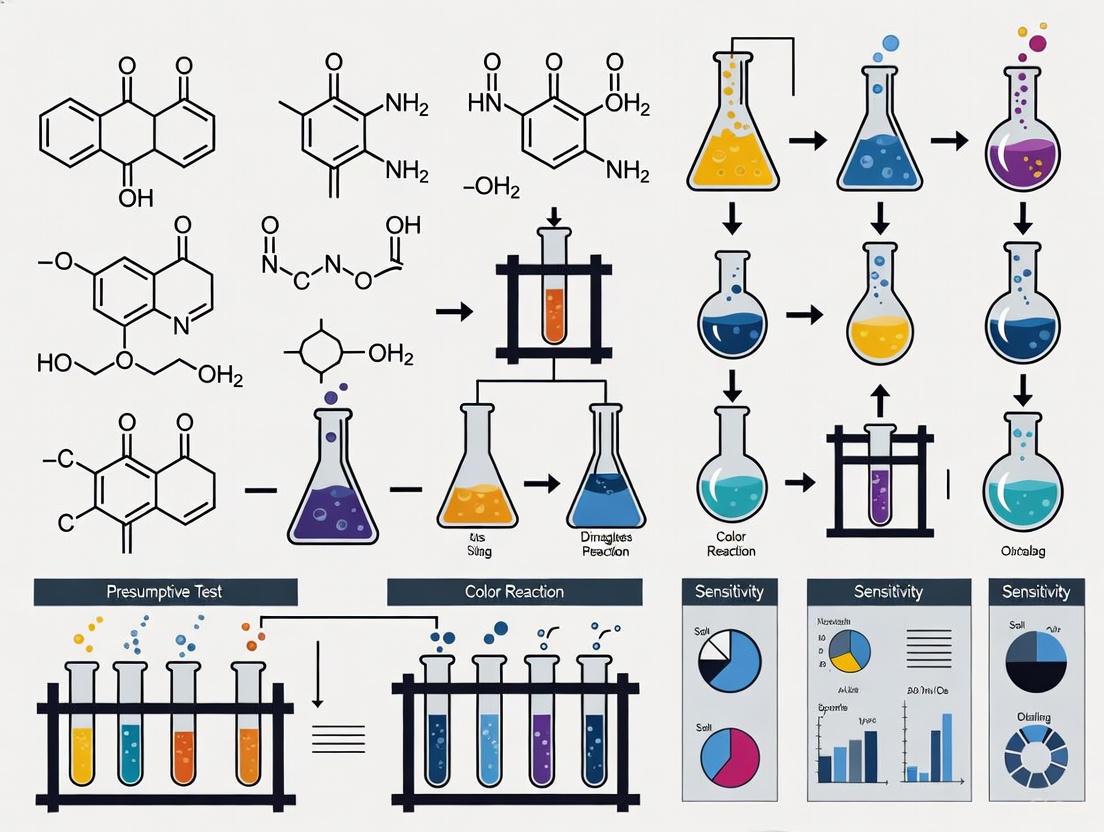
This article provides a comprehensive comparative analysis of presumptive tests used for detecting biological evidence in crime scene investigation, tailored for researchers, scientists, and drug development professionals.
Comparative Analysis of Presumptive Forensic Tests: Sensitivity, Specificity, and Operational Efficiency in Crime Scene Investigation
Abstract
This article provides a comprehensive comparative analysis of presumptive tests used for detecting biological evidence in crime scene investigation, tailored for researchers, scientists, and drug development professionals. It explores the foundational principles of common tests for blood, semen, and saliva, detailing their practical application methodologies. The scope includes rigorous troubleshooting of limitations like false positive rates and the impact of environmental substrates, alongside a critical validation of performance through sensitivity and specificity metrics. Finally, it presents a direct comparison with confirmatory techniques, discussing the implications of testing errors and operational challenges like laboratory backlogs on the forensic workflow and the judicial process.
The Principles and Purposes of Presumptive Testing in Modern Forensics
In the structured hierarchy of forensic science, presumptive tests serve as the critical first step in the analysis of unknown substances and biological stains. These tests are designed as preliminary screening tools that provide investigators with rapid, on-scene information to guide the course of an investigation. Presumptive tests are characterized by their high sensitivity—they are engineered to correctly identify the presence of a target substance when it is present, minimizing false negatives. However, this high sensitivity often comes at the cost of specificity, meaning they can sometimes yield positive results for non-target substances (false positives) [1]. The primary function of these tests is to efficiently triage evidence, allowing forensic professionals to determine which items require further, more resource-intensive analysis in a laboratory setting [2].
It is crucial to understand that a positive presumptive test result indicates only that a substance could be present. As explicitly stated in forensic guidelines, "Screening or presumptive tests make use of a target chemical to establish the possibility that a specific body tissue or fluid is present" [3]. For example, a positive Kastle-Meyer test suggests that a stain is probably blood, but it does not conclusively prove it. Confirmatory tests are therefore required to unambiguously identify the specific biological material or chemical compound [3] [1]. This two-stage testing methodology—presumptive followed by confirmatory—forms the bedrock of a robust and scientifically defensible forensic workflow, ensuring that evidence is both efficiently screened and accurately identified.
The Scientific Workflow: From Screening to Confirmation
The application of presumptive tests fits into a defined, logical sequence in forensic investigations. The process begins with the most sensitive, broad-based tests and narrows to highly specific, confirmatory analyses. This workflow ensures efficient use of resources while maintaining scientific rigor.
The following diagram illustrates the standard forensic testing pathway, highlighting the role of presumptive tests as the initial filter.
This workflow underscores a critical principle: presumptive tests are a screening filter, not a conclusive identification. A positive result justifies the time and expense of confirmatory analysis, while a negative result reliably indicates that the evidence does not require further testing for that specific target [1]. The danger of relying solely on presumptive tests is demonstrated in wrongful conviction research, which has found that "reliance on presumptive tests without confirmation by a forensic laboratory" is a key factor associated with forensic errors [4]. For instance, in drug analysis, field tests using kits can yield false positives, and subsequent confirmatory testing in a laboratory is essential to prevent miscarriages of justice [4].
Comparative Performance of Common Presumptive Tests
The utility of a presumptive test is measured by its sensitivity, specificity, and operational practicality. Sensitivity is the test's ability to detect low quantities of a substance, while specificity is its ability to distinguish the target from interfering substances [1]. Different tests offer varying balances of these properties, making them suitable for different scenarios.
Comparison of Presumptive Blood Tests
The following table summarizes key performance data for common presumptive blood tests, based on a comparative study evaluating their sensitivity and practical use [5].
Table 1: Performance Comparison of Common Presumptive Blood Tests
| Test Name | Reported Sensitivity | Ease of Use | Safety | Primary Use Context |
|---|---|---|---|---|
| Luminol | Highest sensitivity among techniques | Requires dark conditions, careful handling | Moderate chemical safety concerns | Detecting trace/trace or diluted blood at crime scenes |
| Hemastix | High sensitivity, suitable alternative to Luminol | Very easy, strip-based test | Generally safe | Rapid, on-scene testing when Luminol is not appropriate |
| Kastle-Meyer (Phenolphthalein) | High sensitivity | Easy, liquid reagents | Considerations for reagent handling | Standard for visible stains, common lab use |
| Leucomalachite Green | High sensitivity | Easy, liquid reagents | Considerations for reagent handling | Historical and contemporary use for visible stains |
| Forensic Light Source | Varies with substrate and fluid | Requires expensive equipment, technical skill | Safe (non-destructive) | Broad use for detecting various bodily fluids and patterns |
As the data indicates, the luminol test is the most sensitive technique for detecting blood, making it invaluable for revealing washed or latent stains [5]. However, its procedural complexity and chemical safety profile mean that Hemastix—a simple, dip-strip test—is often a suitable and practical alternative in many field situations [5].
Presumptive Drug Test Validation Data
The development and validation of new presumptive tests follows a rigorous protocol to establish their reliability. Recent research has focused on creating tests for emerging threats, such as "Z-drugs" used in drug-facilitated crimes. The validation parameters for a newly developed color spot test for Zolpidem, Zopiclone, and Eszopiclone are shown below [6] [7].
Table 2: Validation Data for a Presumptive Spot Test for Z-Drugs
| Validation Parameter | Result | Experimental Detail |
|---|---|---|
| Specificity | Specific to zolpidem, zopiclone, and eszopiclone classes | No cross-reactivity with common cutting agents; tested at room temperature. |
| Limit of Detection (LOD) | Zolpidem: 5 ppmZopiclone: 10 ppmEszopiclone: 6 ppm | LOD determined against reagents 0.1% diphenyl carbazone, aqueous potassium iodoplatinate, and modified cobalt thiocyanate. |
| Operational LOD | 10 ppm | The concentration at which the color test is reliably operational. |
| Time to Result | Immediate | Color change is observed instantly upon application of reagents. |
This validation process is critical. It confirms that the test is not only sensitive but also specific to the target drug class and robust against interference from substances commonly used to dilute illicit drugs [7].
Advanced Innovations: Overcoming Subjectivity with Digital Imaging
A significant limitation of traditional colorimetric spot tests is their inherent subjectivity, as the interpretation of a color change relies on the human eye. This can lead to inconsistency and error [8]. Recent technological innovations aim to mitigate this by introducing objectivity and quantitative data analysis into the presumptive testing phase.
Cutting-edge research now employs computer vision and time-resolved imaging to digitize and analyze the color changes in presumptive tests [8]. In one study, the reactions of tests like the Mandelin test for amphetamines were recorded on video. Software like Kineticolor was then used to analyze the video footage, tracking color evolution in a defined color space (e.g., CIE-L*a*b*) over time [8]. This method generates a quantitative kinetic profile of the reaction.
Table 3: Computer Vision Analysis of Mandelin Test for Amphetamines
| Drug | Maximum Color Contrast (ΔEmax) | Reaction Rate Parameter (D in seconds) | By-Eye Color Change (RAL Codes) |
|---|---|---|---|
| MDMA | Not specified in extract | Fastest | Similar qualitative result |
| Amphetamine | Not specified in extract | Intermediate | Similar qualitative result |
| Methamphetamine | 51.1 | 36 (slowest) | Yellow (RAL 1028) → Dark Green (RAL 6020) |
This digital approach revealed that while MDMA, amphetamine, and methamphetamine produced similar qualitative color changes "by-eye," their rates of reaction were distinctly different [8]. This kinetic fingerprint allows for discrimination between drugs within the same class that would otherwise be indistinguishable via traditional observation, thereby reducing false positives and bridging the gap between field tests and laboratory confirmation.
Essential Research Reagent Solutions
The execution of reliable presumptive tests requires a toolkit of specific chemical reagents. The following table details key reagents, their formulations, and their primary functions in forensic analysis [2] [8] [7].
Table 4: Key Reagents in Presumptive Testing
| Reagent Name | Target Substance/Class | Function and Positive Result |
|---|---|---|
| Luminol | Blood (Hemoglobin) | Chemiluminescence reaction catalyzed by the heme group in blood, producing a blue glow. |
| Kastle-Meyer Reagent | Blood (Hemoglobin) | Color change to pink in the presence of peroxidase-like activity of heme. |
| Mandelin Reagent | Amphetamines | Color change (e.g., yellow to black for amphetamines) upon oxidation of the target compound. |
| Cobalt Thiocyanate | Cocaine, Ketamine, Z-drugs | Forms colored complexes with specific nitrogen-containing organic compounds. |
| Marquis Reagent | Opioids, Amphetamines | Color change (e.g., colorless to red for opioids) in the presence of specific drug classes. |
| Dille-Koppanyi Reagent | Barbiturates | Color change from colorless to purple, indicating the presence of barbiturate compounds. |
| Zimmermann Reagent | Benzodiazepines | Color change from colorless to purple/red, specific to the benzodiazepine core structure. |
| Diphenyl Carbazone | Zolpidem (Z-drugs) | Used in newly validated tests for Z-drugs; produces a specific color change. |
| Potassium Iodoplatinate | Zopiclone (Z-drugs) | Used in newly validated tests for Z-drugs; produces a specific color change. |
Experimental Protocols in Presumptive Testing
To ensure reliability and reproducibility, presumptive tests must be performed following standardized protocols. Below are detailed methodologies for two critical types of tests: a color spot test for drugs and the luminol test for blood.
Protocol: Color Spot Test for Z-Drugs
This validated method outlines the procedure for the presumptive identification of zolpidem, zopiclone, and eszopiclone [6] [7].
- Principle: The test relies on a colorimetric reaction between the target drug and specific chemical reagents, forming a colored complex.
- Materials:
- Unknown sample (suspected powder or residue).
- Reagents: 0.1% diphenyl carbazone (for zolpidem), aqueous potassium iodoplatinate (for zopiclone), and modified cobalt thiocyanate reagent (for eszopiclone).
- White ceramic spot plate or weighing paper.
- Micro-spatula and pipettes.
- Procedure:
- Place a small amount (∼1 mg) of the unknown sample onto the white ceramic spot plate.
- Add 1-2 drops of the relevant reagent directly onto the sample.
- Observe immediately for any color change at room temperature.
- Interpretation: A positive result is indicated by an immediate, specific color change upon contact with the reagent. The test is considered positive only if the change corresponds to the validated result for the target Z-drug.
- Validation Notes: The test is specific for the Z-drug class and unaffected by common cutting agents. The operational limit of detection is 10 ppm, ensuring high sensitivity [7].
Protocol: Luminol Test for Latent Blood
This protocol details the application of the luminol test, known for its extreme sensitivity in detecting latent bloodstains [5].
- Principle: Luminol (5-amino-2,3-dihydro-1,4-phthalazinedione) is oxidized by hydrogen peroxide in a reaction that is catalyzed by the iron present in hemoglobin. This reaction produces 3-aminophthalate in an excited state, which emits a blue-white light as it returns to its ground state.
- Materials:
- Luminol stock solution (typically prepared in an alkaline buffer).
- Hydrogen peroxide solution (3%).
- Spray bottle or atomizer.
- A dark environment or a portable light shield.
- Procedure:
- Prepare the working solution by mixing the luminol stock solution with the oxidizing agent (hydrogen peroxide) immediately before use.
- In a darkened environment, spray a fine mist of the working solution evenly over the area being examined (e.g., a floor, wall, or piece of clothing).
- Observe the area for the appearance of a blue-white chemiluminescence.
- Interpretation: A positive result is the appearance of luminescence, indicating the possible presence of blood. The glow typically lasts for about 30 seconds, and the test should be documented photographically.
- Performance Notes: The luminol test is the most sensitive presumptive test for blood but is not specific to human blood and can be affected by strong oxidizing agents, such as bleach, which can also produce a false-positive glow [5] [1].
Presumptive tests are the indispensable, high-sensitivity sieves of the forensic workflow, enabling the efficient triage of evidence and guiding investigative direction. Their fundamental role is to screen out negative samples and indicate the potential presence of a target substance, thus preserving laboratory resources for confirmatory analysis. As the data demonstrates, tests like luminol for blood and newly validated color tests for Z-drugs provide critical rapid intelligence. However, their well-documented limitations in specificity mean that their results must be interpreted with caution and within the proper context of a two-stage testing protocol. The future of presumptive testing is being shaped by technological advancements, particularly digital imaging and computer vision, which promise to reduce human subjectivity and provide a more objective, quantitative foundation for preliminary evidence screening. For researchers and practitioners, a thorough understanding of the sensitivity, specificity, and validated procedures for these tests is paramount to their effective and scientifically sound application in crime scene investigation and forensic science.
The objective analysis of biological evidence is a cornerstone of modern crime scene investigation. Presumptive tests provide initial clues about the nature of a biological stain, guiding subsequent analytical steps and preserving valuable DNA evidence for confirmatory testing. These tests rely on specific chemical principles and reactions that detect key molecular components within body fluids. This guide provides a comparative analysis of the core chemical reactions underlying presumptive tests for three forensically significant body fluids: blood (via hemoglobin reactivity), semen (via acid phosphatase activity), and saliva (via amylase activity). Understanding the principles, performance, and limitations of these tests is essential for researchers and forensic professionals to select appropriate methodologies and accurately interpret analytical results within a structured investigative framework.
Chemical Principles and Key Reactions
Blood: Reactions of Hemoglobin
Hemoglobin (Hb), the oxygen-carrying protein in red blood cells, possesses peroxidase-like activity that is exploited in presumptive blood tests. This activity facilitates the catalytic oxidation of certain reagents in the presence of an oxidizing agent, typically hydrogen peroxide (H₂O₂), resulting in a visible color change [9].
The fundamental reaction can be summarized as: Reduced Chromogen (Colorless) + H₂O₂ → Oxidized Chromogen (Colored) + H₂O Hemoglobin acts as the catalyst in this reaction. The heme iron in hemoglobin cycles between its ferrous (Fe²⁺) and ferric (Fe³⁺) states during this process, a property central to its function [10]. The equilibrium between tense (T-state, deoxygenated) and relaxed (R-state, oxygenated) forms of hemoglobin influences oxygen binding and release, and this dynamic nature is integral to its chemical reactivity [9].
Common tests based on this principle include:
- Kastle-Meyer Test: Uses phenolphthalin as the chromogen, producing a bright pink color.
- Leucomalachite Green Test: Produces a green color.
- Luminol Test: Produces chemiluminescence (blue glow) in a reaction that also involves the formation of a superoxide radical anion (O₂•⁻) and ferric Hb [10].
Semen: Acid Phosphatase (AP) Activity
Semen contains acid phosphatase (AP), an enzyme present in much higher concentrations than in other body fluids. Presumptive tests for semen detect the catalytic activity of AP. The enzyme hydrolyzes phosphate esters in an acidic environment.
The core reaction involves: α-Naphthyl Phosphate + H₂O → α-Naphthol + Phosphate The liberated α-naphthol then couples with a diazo dye (e.g., Fast Blue B) to form an insoluble, colored compound [11].
The general reaction is: Colorless Substrate --(AP Hydrolyzes)--> Colored Product This reaction proceeds rapidly, with positive results often appearing within seconds for neat semen. The high catalytic efficiency of seminal AP is the key to the test's specificity, though some cross-reactivity can occur with vaginal fluid, fungal, or plant sources.
Saliva: α-Amylase Activity
Salivary α-amylase is a digestive enzyme that hydrolyzes the α-(1,4) glycosidic linkages in starch molecules [12] [13]. Presumptive tests for saliva detect this enzymatic activity.
The hydrolysis reaction proceeds as: Starch (Complex Carbohydrate) --(Amylase)--> Maltose, Maltotriose, and Limit Dextrins In forensic testing, the disappearance of starch is monitored using an iodine-starch complex. Iodine (I₂) forms a dark blue-black complex with intact starch. As amylase breaks down the starch, this complex can no longer form, and the color fades to that of the iodine itself (yellow or brownish) [13].
The observed reaction is: Starch + I₂ → Blue-Black Complex → Color Loss (Positive Test) The reaction is pH-sensitive, with an optimum pH around 6.9-7.0, and requires chloride ions (Cl⁻) as a necessary cofactor [13]. The enzyme is encoded by the AMY1 gene, and copy number variations can influence amylase activity between individuals [12].
Comparative Experimental Data
Table 1: Comparative Performance of Presumptive Tests for Body Fluids
| Parameter | Blood (Hemoglobin Test) | Semen (AP Test) | Saliva (Amylase Test) |
|---|---|---|---|
| Target Molecule | Heme group in Hemoglobin [9] | Acid Phosphatase (AP) Enzyme [11] | α-Amylase Enzyme [12] [13] |
| Key Reaction Principle | Peroxidase-like Catalytic Oxidation [10] | Enzymatic Hydrolysis & Diazo Coupling [11] | Enzymatic Hydrolysis of Starch [13] |
| Common Substrates | Phenolphthalin, Leucomalachite Green, Luminol | α-Naphthyl Phosphate, Brentamine Fast Blue | Starch, Iodine (for detection) |
| Visual Result | Pink, Green, or Chemiluminescence | Purple | Loss of Blue-Black Color |
| Time to Result | Seconds | Seconds (for neat semen) | Minutes |
| Reported Sensitivity | High (Dilutions > 1:1000) [11] | High | Variable; detects activity, not presence/absence [12] |
| Major Interferents | Plant Peroxidases, Chemical Oxidants | Vaginal Fluid, Some Fungi & Plants | Some Bacteria, Other Amylase Sources (e.g., fecal) |
Table 2: Analysis of Cross-Reactivity and Confirmatory Steps
| Body Fluid | Common Cross-Reactive Substances | Standard Confirmatory Method |
|---|---|---|
| Blood | Horseradish, potatoes, certain metals (e.g., Cu²⁺) [9] | Hexagon OBTI Test (Immunochromatographic for human Hb) [11] |
| Semen | Vaginal fluid, vegetable/fruit juices, some fungi [11] | Microscopy for Spermatozoa or PSA Semiquant Test [11] [14] |
| Saliva | Other amylases (e.g., pancreatic, bacterial), fecal matter [13] | RSID-Saliva Test (Immunochromatographic for salivary amylase) [11] |
Detailed Experimental Protocols
Universal Workflow for Body Fluid Detection
The following diagram outlines a generalized protocol for the presumptive identification of blood, semen, and saliva from a single biological sample, adapted from a simplified forensic method [11].
Protocol for a Simplified Multiplex Body Fluid Analysis
This protocol allows for the detection of blood, semen, and saliva from a single eluted specimen, facilitating subsequent DNA analysis [11].
Materials:
- Biological trace on a 4N6FLOQSwab
- RSID-Universal Buffer
- HEXAGON OBTI Test (Human, Wiesbaden, Germany)
- RSID-Saliva Test (Independent Forensics, Hillside, USA)
- PSA Semiquant Test (SERATEC GmbH, Goettingen, Germany)
- Christmas Tree staining solutions
- Microscope slides and coverslips
- Pipettes and sterile tips
Procedure:
- Elution: Incubate the swab containing the biological trace in 370 µL of RSID-Universal Buffer for a set time (e.g., 1-2 hours) to extract the analytes [11].
- Testing: Use the supernatant to perform the three immunochromatographic tests simultaneously:
- Apply the specified volume to the sample well of the HEXAGON OBTI test for human hemoglobin (blood) [11].
- Apply the specified volume to the sample well of the PSA Semiquant test for prostate-specific antigen (semen) [11].
- Apply the specified volume to the sample well of the RSID-Saliva test for human salivary α-amylase (saliva) [11].
- Result Interpretation: Read each test according to the manufacturer's instructions within the specified time frame. The appearance of a control line and a test line indicates a positive result.
- Confirmatory Step for Semen: If the PSA test is positive, use 10 µL of the remaining buffer eluate to prepare a smear on a microscope slide for Christmas Tree staining. Examine the entire slide under 500x magnification for the presence of spermatozoa (sperm cells) [11] [14].
- DNA Analysis: The remaining eluate can be processed for DNA extraction and profiling, ensuring that the presumptive test results and DNA data originate from the exact same specimen [11].
The Scientist's Toolkit: Key Research Reagent Solutions
Table 3: Essential Reagents for Body Fluid Detection Experiments
| Research Reagent / Kit | Primary Function | Specific Target / Mechanism |
|---|---|---|
| HEXAGON OBTI Test [11] | Immunochromatographic detection of human blood | Monoclonal antibodies against human hemoglobin; high specificity for human blood. |
| RSID-Saliva Test [11] | Immunochromatographic detection of human saliva | Monoclonal antibodies against human salivary α-amylase. |
| PSA Semiquant Test [11] | Immunochromatographic detection of semen | Monoclonal antibodies against human Prostate-Specific Antigen (PSA). |
| RSID-Universal Buffer [11] | Specimen elution and preparation | A single buffer solution compatible with OBTI, RSID-Saliva, and PSA tests, enabling multiplex analysis from one sample. |
| Christmas Tree Staining [11] [14] | Microscopic visualization of spermatozoa | A differential stain (e.g., picroindigocarmine) where sperm heads stain red/pink and tails green/blue, providing morphological confirmation of semen. |
| Starch-Iodide Reagents | Photometric/radial diffusion detection of amylase | Substrate (starch) and indicator (iodine) for detecting amylase activity via the breakdown of the starch-iodine complex [13]. |
| Synthetic Chromogens (e.g., Phenolphthalin) | Chemical-based presumptive test for blood | Substrate that oxidizes in the presence of hemoglobin/H₂O₂, producing a visible color change (e.g., pink) [9]. |
| α-Naphthyl Phosphate with Fast Blue B | Chemical-based presumptive test for semen | Substrate hydrolyzed by acid phosphatase (AP), producing a product that couples with Fast Blue B to form a purple precipitate [11]. |
Signaling Pathways and Logical Workflows
Hemoglobin's Allosteric Control of Oxygenation and Oxidation
Hemoglobin's function is governed by sophisticated allosteric controls that balance oxygenation and prevent oxidation. The diagram below illustrates the key pathways and competing reactions involving hemoglobin.
Salivary Amylase in Early-Starch Digestion and Signaling
Salivary amylase (AMY1) initiates starch digestion in the oral cavity, triggering a cascade of pre-absorptive metabolic signals that influence glucose homeostasis and satiety [12] [15].
Forensic biology has undergone a revolutionary transformation, shifting from the broad classification of body fluids through conventional serology to the precise individualization offered by DNA analysis. This evolution has fundamentally altered the role and application of presumptive assays in crime scene investigation. These assays, which provide an initial, tentative identification of biological evidence, remain a crucial gateway in the forensic workflow, ensuring that only relevant items progress to costly and time-consuming DNA analysis. This guide provides a comparative analysis of presumptive test performance, details the experimental protocols that validate them, and contextualizes their use within the modern DNA-driven forensic paradigm.
The Paradigm Shift: From Serology to DNA Profiling
The Era of Conventional Serology
Forensic serology, the branch of forensic science dealing with the identification and characterization of biological evidentiary samples such as blood, semen, and saliva, was the cornerstone of forensic biology for decades [16]. Its primary focus was on antigen-antibody reactions to determine the type of biological fluid and its species origin. A key application was the ABO blood group system, discovered by Karl Landsteiner in 1900, which allowed for the partial discrimination of populations [17]. However, the limitations of serology were significant; it could only classify individuals into groups, not uniquely identify them, and required relatively large, pristine samples to be effective.
The DNA Revolution
The advent of DNA profiling in the 1980s marked a turning point. First used in a criminal case in 1986 to exonerate an innocent suspect and identify the true perpetrator, DNA analysis provided a scientific method for absolute individualization [16] [17]. Unlike serology, DNA profiling can generate conclusive results from minute quantities of biological material, pushing the boundaries of forensic science. The following timeline charts the key developments in this technological evolution.
Timeline of Key Developments in Forensic Biology
This revolution, however, has not rendered presumptive tests obsolete. Instead, it has redefined their purpose. They now serve as a critical triage step, preventing the overwhelming of DNA laboratories with non-biological materials and guiding efficient resource allocation [16].
Comparative Analysis of Presumptive Blood Assays
Presumptive tests for blood are based on the peroxidase-like activity of hemoglobin. When hemoglobin contacts an oxidizing agent in the presence of a chromogen, it catalyzes a color-change reaction, indicating the possible presence of blood.
Experimental Protocol for Sensitivity Comparison
A standard methodology for comparing the sensitivity of presumptive blood tests involves creating a dilution series of blood and applying each test to determine its limit of detection [18].
- Sample Preparation: Whole blood is serially diluted with a suitable buffer (e.g., saline). A small, measured volume of each dilution is spotted onto a clean, non-porous surface (e.g., tile or glass) and allowed to dry completely.
- Testing Procedure: Each presumptive test is applied to the dried stains following the manufacturer's instructions. For example:
- Kastle-Meyer (KM): A swab is moistened with distilled water, rubbed on the stain, then treated with a drop of ethanol, a drop of phenolphthalin reagent, and finally a drop of hydrogen peroxide. A positive result is a rapid pink color.
- Leucomalachite Green (LMG): The stain is treated with a solution of LMG and then with hydrogen peroxide. A positive result is a green-blue color.
- Hemastix: The test strip is moistened with a drop of deionized water and pressed against the stain. The color change on the pad is compared to a reference chart after 60 seconds.
- Hexagon OBTI: This immunochromatographic test detects human hemoglobin. The sample is added to the buffer and applied to the test cartridge. The appearance of two lines indicates a positive result for human blood.
- Data Collection: The highest dilution at which a test yields a clear positive result is recorded. Each test should be performed in replicate to ensure reliability.
Performance Data and Comparison
The following table summarizes the findings from a comparative study of four presumptive blood tests, highlighting their relative sensitivities [18].
Table 1: Sensitivity Comparison of Presumptive Blood Tests
| Test Name | Principle of Detection | Reported Sensitivity (Dilution) | Primate Specificity | Key Advantage | Key Limitation |
|---|---|---|---|---|---|
| Hemastix | Peroxidase activity | Highest | No | High sensitivity, semi-quantitative | Not human-specific |
| Kastle-Meyer (KM) | Peroxidase activity | High | No | Rapid, low cost, long-established | Not human-specific, potential for false positives from chemical oxidants |
| Leucomalachite Green (LMG) | Peroxidase activity | High | No | Rapid, low cost | Not human-specific |
| Hexagon OBTI | Immunoassay (Human Hb) | Moderate (High with buffer mod.) | Yes | Human specificity; buffer can be used for subsequent DNA profiling [18] | Lower sensitivity for trace blood; higher cost |
This data demonstrates a critical trade-off: while tests like Hemastix offer superior sensitivity, the Hexagon OBTI kit provides human specificity, which is a significant investigative advantage. Furthermore, the compatibility of the OBTI buffer with downstream DNA analysis preserves the integrity of the sample for confirmation.
The Modern Forensic Workflow: Integrating Presumptive and Confirmatory Analysis
The journey of a biological trace from a crime scene to a DNA profile is a multi-stage process. Presumptive assays act as the first filter, determining which items are submitted for definitive DNA analysis. The workflow below illustrates this integrated process.
Modern Forensic Biology Workflow from Scene to Profile
Advanced DNA Technologies and the Changing Role of Presumptive Assays
The capabilities of DNA analysis continue to advance, further influencing the context in which presumptive tests are used.
Next-Generation Sequencing (NGS)
Next-Generation Sequencing (NGS) technologies move beyond traditional DNA profiling by analyzing entire genomes or specific regions with high precision [19]. This is particularly valuable for degraded DNA, complex mixtures, or when attempting to predict physical characteristics (DNA phenotyping) [20] [19]. The depth of information from NGS makes efficient triage via presumptive tests even more critical to manage analysis costs and time.
Rapid DNA Technology
Rapid DNA devices automate the entire process from sample to profile in approximately 90 minutes, enabling analysis outside the central laboratory [21] [22]. However, a field experiment using the RapidHIT system highlighted a key limitation: these devices are less sensitive than laboratory-based methods and are primarily suitable for visible, single-donor blood or saliva stains with high DNA content [22]. This reinforces the continued importance of presumptive tests to select appropriate samples for Rapid DNA analysis and avoid unsuccessful runs.
Table 2: Comparison of DNA Analysis Modalities
| Technology | Typical Turnaround Time | Sensitivity | Ideal Sample Type | Primary Use Case |
|---|---|---|---|---|
| Traditional Lab STR | Days to weeks | High (Low-template capable) | All biological samples, including complex mixtures | Gold standard for casework evidence |
| Next-Generation Sequencing (NGS) | Weeks | Very High (Degraded DNA) | Challenging samples, requires complex mixture analysis | Phenotyping, ancestry, complex kinship |
| Rapid DNA | ~1.5 hours | Lower (Requires high DNA yield) | Buccal swabs; single-donor blood/saliva stains | Booking stations; crime scene triage for high-yield samples |
The Scientist's Toolkit: Essential Research Reagents & Materials
Successful forensic research and testing rely on a suite of specialized reagents and materials. The following table details key items referenced in the studies discussed.
Table 3: Key Research Reagent Solutions in Forensic Biology
| Item | Function & Application | Specific Example |
|---|---|---|
| Splitable Swab | Allows a single trace to be split for multiple analyses (e.g., presumptive test and DNA). Ensures homogeneous distribution of material for comparative studies. | Copan 4N6 FLOQSwabs [22] |
| Immunochromatographic Test | Provides human-specific identification of body fluids (e.g., blood, saliva) via antibody-antigen binding. Redances false positives from animal blood. | Hexagon OBTI Kit [18] |
| Chelex-100 Resin | A rapid, simple DNA extraction method that chelates metal ions to protect DNA from degradation during heating. Ideal for PCR-ready DNA. | Chelex-100 Extraction [17] |
| Silica-based Kits | The most common method for high-quality DNA extraction. DNA binds to silica in the presence of chaotropic salts, is washed, and eluted. | Qiagen kits, DNA IQ System [17] |
| Polymerase Chain Reaction (PCR) Kits | Amplifies specific Short Tandem Repeat (STR) markers for human identification. The core of modern DNA profiling. | AmpFℓSTR kits, PowerPlex kits [17] |
| Laboratory Information Management System (LIMS) | Software for tracking evidence, managing case workflow, and storing data. Critical for maintaining chain of custody and lab efficiency. | Lab-wide digital management systems [21] |
The evolution from conventional serology to DNA analysis has not eliminated the need for presumptive assays but has strategically repositioned them. These tests remain an indispensable, cost-effective front-line tool for screening evidence. As DNA technologies become more powerful and portable, the role of presumptive assays in guiding their efficient application will only grow in importance. The comparative data and protocols outlined in this guide provide a foundation for researchers and practitioners to select and implement the most appropriate presumptive testing strategies, ensuring that the transformative power of DNA analysis is deployed as effectively as possible in the pursuit of justice.
Presumptive tests are a cornerstone of forensic science, providing the initial screening necessary to identify potential evidence at a crime scene. These tests allow investigators to quickly determine if a substance requires further confirmatory analysis and DNA profiling. The three major categories of presumptive tests—chemical, immunochromatographic, and catalytic—each operate on distinct biochemical principles and offer different advantages and limitations. This guide provides an objective comparison of these methodologies, focusing on their operational mechanisms, sensitivity, specificity, and practical application in forensic research and casework. Understanding these test characteristics is fundamental for selecting the appropriate analytical approach for specific forensic scenarios and evidence types.
Test Category Comparison
The table below summarizes the core characteristics of the three major categories of presumptive forensic tests.
Table 1: Comparison of Major Presumptive Test Categories
| Test Category | Principle | Key Examples | Typical Sensitivity | Primary Advantages | Primary Limitations |
|---|---|---|---|---|---|
| Chemical Tests | Chemiluminescence or fluorescence reaction with blood components | Luminol, Bluestar [23] [24] | Luminol can detect blood at dilutions up to 1:106 [23]. | High sensitivity; effective on large or cleaned areas; can detect latent or concealed blood [23]. | Can be destructive to DNA; limited specificity (can cross-react); reagent stability can be limited (e.g., Luminol ≤24 hrs) [24] [25]. |
| Immunochromatographic (IC) Tests | Antigen-Antibody binding to human-specific proteins | RSID Blood, ABAcard HemaTrace [26] [25] | Varies by kit; e.g., modified HemaTrace is highly sensitive (LOD ~0.002 nL reported) [26] [25]. | High human specificity; easy to use; can be integrated with DNA analysis from extraction buffer [27] [25]. | Susceptible to hook effect at high antigen concentrations; destructive testing; target degradation can cause false negatives [26] [25]. |
| Catalytic Tests | Catalytic activity of heme acting as a peroxidase | Kastle-Meyer (KM), Combur test [25] | Highly sensitive (varies by formulation). | Fast results; inexpensive; long-established use [25]. | Lack human specificity (reacts with animal blood, plant peroxidases); susceptible to false positives from oxidizing chemicals [25]. |
Detailed Test Analysis and Experimental Data
Chemical Tests: Luminol and Bluestar
Chemical tests like Luminol and Bluestar are vital for detecting bloodstains that are latent, concealed, or attempted to be cleaned. These tests operate on a chemical oxidation principle. The reagent, when applied in an alkaline solution in the presence of an oxidizing agent, reacts with the heme group in hemoglobin, producing a characteristic blueish chemiluminescence that is visible in darkened conditions [23].
Supporting Experimental Data: A comprehensive time-period study evaluated Luminol's effectiveness in detecting bloodstains concealed under three layers of paint on various surfaces (concrete, wood, metal) over 50 days [23]. Key findings included:
- Surface Dependency: The nature of the substrate significantly impacted the persistence of chemiluminescence. Porous surfaces like concrete retained bloodstains and gave reliable results for a longer duration compared to non-porous surfaces like metal [23].
- Aging Effect: The "time since concealment" affected the intensity and timing of the chemiluminescence. On concrete, a delayed chemiluminescence was observed in the initial days, while on metal, the intensity diminished more rapidly over time [23].
- Comparative Performance: A separate study directly comparing Bluestar and Luminol found their sensitivity to be very similar. However, a key practical difference was noted in chemical stability: the Bluestar solution remained stable for at least 7 days after preparation, whereas the Luminol solution was stable for no more than 24 hours [24].
- DNA Compatibility: Both reagents were found to allow for subsequent multiplex DNA amplification, though highly diluted stains may not yield sufficient DNA for a profile [24].
Immunochromatographic Tests: RSID and ABAcard
Immunochromatographic (IC) tests, also known as lateral flow tests, are used as confirmatory tests for human blood. They function on the principle of antigen-antibody binding. The test cassette contains monoclonal antibodies specific to human blood antigens, such as human hemoglobin (hHb) or glycophorin A (Gly-A). When a sample extract is applied, it migrates along the strip. If the target antigen is present, it forms a complex with antibody-conjugated particles, which is then captured at the test line ("T") by a second immobilized antibody, producing a visible line [28] [25].
Supporting Experimental Data:
- Sensitivity: The claimed sensitivity of commercial kits varies. A 2024 study on the modified ABAcard HemaTrace test cards found a significant increase in sensitivity, with the new cards being approximately 2.4-fold more sensitive than the old version. During validation, Limit of Detection (LOD) values as low as 0.002 nL of blood were reported for some kits, highlighting their exceptional sensitivity [26] [25].
- Hook Effect: A critical limitation identified in the newer, more sensitive HemaTrace cards is an increased susceptibility to the high-dose hook effect, where an excess of the target antigen (hemoglobin) can saturate the antibodies, leading to a false-negative result if only one test line is inspected [26].
- Integration with DNA Analysis: A key advantage of IC tests is the potential for non-destructive analysis. Protocols have been developed where the same extraction buffer used for the IC test can be subsequently used for DNA extraction and profiling, preserving the integrity of the evidence chain [27] [25].
Catalytic Tests: Kastle-Meyer (KM)
The Kastle-Meyer (KM) test is a classic presumptive catalytic test for blood. It relies on the peroxidase-like activity of the heme group in hemoglobin. The test involves applying phenolphthalin (a reduced form of phenolphthalein) and hydrogen peroxide to a sample. If heme is present, it catalyzes the oxidation of phenolphthalin by the peroxide, turning it back into phenolphthalein, which produces a bright pink color in the basic solution [25].
While not detailed in the provided search results, the KM test is widely documented in forensic literature as being extremely sensitive but lacking specificity. Its main disadvantage is the potential for false positives from chemical oxidants or substances with peroxidase activity, such as some vegetable extracts [25].
Experimental Protocols
Protocol for Luminol Testing on Concealed Bloodstains
This protocol is adapted from a study on detecting blood concealed by paint [23].
- Objective: To detect the presence of latent bloodstains on various surfaces concealed under multiple layers of paint.
- Materials:
- Grodsky luminol formulation [23].
- Surfaces of interest (e.g., concrete blocks, wooden planks, metal sheets).
- Blood sample (e.g., animal blood for presumptive testing).
- Paint (type appropriate for the surface, e.g., distemper for concrete, enamel for wood).
- Digital single-lens reflex (DSLR) camera for documentation in low-light conditions.
- Procedure:
- Surface Preparation: Apply bloodstains to the clean, dry surfaces and allow them to air-dry.
- Concealment: Apply three layers of paint over the dried bloodstains, allowing each layer to dry completely.
- Aging: Age the concealed samples for the desired time period (e.g., from 3 to 50 days) under controlled conditions.
- Application: In a darkened environment, apply the luminol reagent uniformly as a fine spray onto the painted surface.
- Observation & Documentation: Immediately observe the area for the development of a blueish chemiluminescence. Document the intensity and persistence of the glow using the DSLR camera with appropriate settings (e.g., long exposure) [23].
Protocol for Immunochromatographic Testing with DNA Recovery
This protocol describes using an IC test (e.g., SERATEC Amylase test for saliva) while preserving the sample for subsequent DNA analysis, as validated in recent studies [27].
- Objective: To identify a body fluid (e.g., saliva) and subsequently extract DNA from the exact same sample.
- Materials:
- SERATEC Amylase test (or other target-specific IC kit) with its extraction buffer and running buffer [27].
- Sterile cotton swabs.
- DNeasy Blood & Tissue kit (Qiagen) or other silica-based DNA extraction kit [27].
- Molecular biology-grade ethanol.
- Microcentrifuge tubes, pipettes, vortex mixer, thermal mixer.
- Procedure:
- Sample Collection & Extraction: Moisten a sterile cotton swab with the provided extraction buffer. Swab the suspected stain. Place the swab in a tube with 300 µL of extraction buffer and incubate with agitation at room temperature for 10 minutes [27].
- IC Testing: Remove a small aliquot (e.g., 3 drops or ~120 µL) of the extraction buffer and apply it to the IC test cassette. Interpret the results after 10 minutes according to the manufacturer's instructions [27].
- DNA Extraction from Residue: To the original tube containing the swab and the remaining extraction buffer, add additional buffer to a total volume of 400 µL. Then, follow the protocol of a silica-based DNA extraction kit, starting with the addition of Proteinase K and buffer AL. The DNA is then purified through the kit's column, washed, and eluted for quantification and STR profiling [27].
Workflow and Signaling Pathways
The following diagrams illustrate the logical workflow for evidence analysis and the biochemical principles of the key tests.
Evidence Analysis Workflow
Biochemical Principles of Tests
The Scientist's Toolkit: Key Research Reagents and Materials
Table 2: Essential Materials for Presumptive Test Research
| Item | Function/Application | Example Use-Case |
|---|---|---|
| Grodsky Luminol Formulation | A specific chemiluminescent reagent used to detect latent or concealed blood [23]. | Detecting bloodstains concealed by multiple layers of paint on different surfaces over a 50-day study [23]. |
| SERATEC Extraction Buffer | A phosphate-buffered saline (PBS)-based solution used to extract antigens from a sample swab for IC testing [27]. | Used to extract human salivary amylase from a swab for RSID Saliva test, with the residual buffer used for DNA extraction [27]. |
| RSID Universal Buffer | A single extraction buffer designed for use with multiple fluid-specific IC cassettes (blood, saliva, semen) [25]. | Enables sequential testing of a single extract for multiple body fluids and subsequent DNA typing from the same solution [25]. |
| DNeasy Blood & Tissue Kit | A silica-based column method for purifying DNA from various biological samples [27]. | Used to extract DNA from the residual buffer and swab after an IC test has been performed, enabling full evidence characterization [27]. |
| Carbon Quantum Dots (CQDs) | Nanoscale carbon materials with tunable fluorescence for sensing and imaging trace evidence [29]. | Emerging application in fingerprint enhancement, drug detection, and biological stain analysis due to high sensitivity and optical properties [29]. |
Emerging Trends and Future Perspectives
The field of forensic presumptive testing is evolving with a strong emphasis on minimizing sample consumption and maximizing information yield. The development of protocols that integrate immunochromatographic testing with downstream DNA analysis from the same extract represents a significant advancement, ensuring that valuable trace evidence is preserved for individualization [27] [25].
Furthermore, the application of advanced statistical frameworks like Design of Experiments (DoE) is being recognized as a powerful tool for optimizing analytical methods in forensic chemistry. DoE allows researchers to systematically evaluate the effect of multiple variables (e.g., solvent type, pH, temperature) on a test's performance, leading to more robust, sensitive, and validated protocols with fewer experimental runs [30].
On the technological frontier, nanomaterials like Carbon Quantum Dots (CQDs) show transformative potential. Their tunable fluorescence, high biocompatibility, and sensitivity could lead to the next generation of forensic tests for fingerprints, drugs, and biological stains. The integration of CQDs with advanced technologies like artificial intelligence may further enhance detection accuracy and analytical throughput in the future [29].
A Practical Guide to Test Selection, Protocol, and Scene Application
Presumptive tests are indispensable tools in the initial stages of forensic investigations, providing rapid, on-scene indications of the presence of biological evidence. These tests guide subsequent analytical strategies, including confirmatory testing and DNA analysis, by identifying stains of potential evidentiary value. This guide offers a comparative evaluation of three foundational presumptive tests: the Kastle-Meyer (KM) test for blood, the Acid Phosphatase (AP) test for semen, and the Phadebas Forensic Press test for saliva. We objectively compare their performance characteristics, detail standardized experimental protocols, and present quantitative data to inform researchers and forensic professionals in their selection and application of these critical reagents.
Test Comparison and Performance Data
The following tables summarize the core principles and performance metrics of the three presumptive tests, synthesizing data from validation studies.
Table 1: Fundamental Characteristics and Performance Comparison
| Feature | Kastle-Meyer (Blood) | Acid Phosphatase (Semen) | Phadebas (Saliva) |
|---|---|---|---|
| Target Molecule | Hemoglobin (peroxidase activity) [31] | Acid Phosphatase enzyme [32] | Salivary Alpha-Amylase enzyme [33] |
| Test Principle | Catalytic oxidation of phenolphthalin by heme in the presence of H₂O₂, producing a pink color [31] | Hydrolysis of organophosphate substrate by AP, producing a product that reacts with diazonium salt to cause a color change [32] | Digestion of starch microspheres with a cross-linked blue dye by amylase, releasing the blue color [32] [33] |
| Result Interpretation | Rapid development of a pink color indicates a positive presumptive result for blood [31] | Development of a specific color (e.g., dark purple) indicates a positive presumptive result for semen [32] | Appearance of a blue spot on the white sheet indicates a positive presumptive result for saliva [33] |
| Reported Sensitivity (Dilution) | Positive results with mammal and fish blood dilutions up to 1:1024; up to 1:256 for bird blood [31] | Detected in semen dilutions down to 1:50 and 1:100 on cloth [32] | Visible results with saliva stains down to dilution 1:25; weak results at 1:100 to 1:200 [33] |
| Specificity Limitations | Known false positives from tomato, red onion, and some plant peroxidases [31] | Not exclusive to semen; found in other body fluids and sources [32] | Not exclusive to saliva; amylase is present in other body fluids (e.g., semen) and microbiological sources [32] |
Table 2: Experimental and Procedural Considerations
| Feature | Kastle-Meyer (Blood) | Acid Phosphatase (Semen) | Phadebas (Saliva) |
|---|---|---|---|
| Sample Collection | Rub-testing with a moistened swab [31] | Transfer of biological material to filter paper via pressing [32] | Press-test: moistening the item and pressing the Phadebas sheet against it [32] |
| Optimal Incubation/Reaction Time | Nearly instantaneous (seconds) [31] | Color change occurs within minutes [32] | Up to 40 minutes for maximum sensitivity [32] [33] |
| Interference with DNA Analysis | KM reagent can cause DNA degradation; sodium hydroxide content reduces DNA yield [31] | The test itself is performed on transferred material, preserving the original stain [32] | DNA profiles can sometimes be obtained directly from the Phadebas sheet if the item is lost [32] |
| Recommended Application | Initial screening for the possible presence of blood; best for large, visible stains [31] | Presumptive identification of semen stains, often prior to microscopic confirmation of sperm [32] | Locating invisible or diluted saliva stains on items like clothing and bed sheets [32] [33] |
Detailed Experimental Protocols
Kastle-Meyer Test for Blood
The KM test leverages the pseudoperoxidase activity of heme to produce a colorimetric reaction.
- Reagents: Kastle-Meyer reagent (reduced phenolphthalin), ethanol, hydrogen peroxide (3%), and distilled water [31].
- Positive Control: A known bloodstain or a drop of hydrogen peroxide on a potato slice.
- Procedure:
- Rub a suspected stain with a moistened (with distilled water) filter paper or swab [31].
- Add 1-2 drops of ethanol to the sample, followed by 1-2 drops of the Kastle-Meyer reagent.
- Observe for no immediate color change (a false positive may occur if color develops at this stage).
- Add 1-2 drops of hydrogen peroxide.
- Interpretation: An immediate and intense pink color indicates a positive presumptive test for blood. The reaction is typically rapid, occurring within seconds [31].
Acid Phosphatase Test for Semen
The AP test is a biochemical assay based on the high concentration of acid phosphatase in seminal fluid.
- Reagents: AP test solution, typically containing an organophosphate substrate (e.g., alpha-naphthyl phosphate) and a diazonium salt (e.g., Brentamine Fast Blue) [32].
- Procedure:
- Transfer biological material from the item (e.g., clothing) to filter paper by pressing against it, often after moistening [32].
- Apply the AP test solution directly to the filter paper.
- Interpretation: The development of a dark purple color within minutes is a positive presumptive result for semen [32]. The test can be performed on Phadebas sheets after a saliva press test to conserve biological material [32].
Phadebas Forensic Press Test for Saliva
This test detects salivary amylase activity through the hydrolysis of a starch-dye complex.
- Reagents: Phadebas Forensic Press test sheets [33].
- Procedure:
- Lightly moisten the evidence item or a control area with distilled water.
- Place the Phadebas sheet with the white side facing up onto the dampened area.
- Apply even pressure and maintain contact for up to 40 minutes [33]. The sheet can be incubated at elevated temperatures (e.g., 37°C) to enhance sensitivity [33].
- Interpretation: The appearance of a blue spot on the white side of the sheet indicates a positive presumptive result for saliva. The intensity of the color can be semi-quantitatively related to the amount of amylase present [33].
Workflow and Signaling Pathways
The following diagrams illustrate the logical workflow for applying these tests and the chemical signaling pathways involved in the reactions.
Diagram 1: Logical workflow for applying presumptive tests. A positive result from any test can guide the examiner to proceed with confirmatory testing and DNA analysis.
Diagram 2: Kastle-Meyer chemical pathway. The heme group catalyzes the oxidation of phenolphthalin using H₂O₂, producing a pink color in basic conditions.
Research Reagent Solutions
Table 3: Essential Research Materials and Their Functions
| Reagent / Material | Primary Function in Presumptive Testing |
|---|---|
| Kastle-Meyer Reagent | A chemical solution of reduced phenolphthalin that oxidizes in the presence of heme and H₂O₂, producing a color change to indicate the possible presence of blood [31]. |
| Hemastix Strips | An alternative commercial test strip for blood based on the peroxidase-like activity of heme, using tetramethylbenzidine (TMB) as a chromogen [31]. |
| Acid Phosphatase Test Solution | A reagent containing a specific organophosphate substrate and a diazonium salt. Hydrolysis by AP produces a colored compound to indicate the possible presence of semen [32]. |
| Phadebas Forensic Press Test Sheets | A prepared substrate sheet containing starch microspheres with a cross-linked blue dye. Digestion by salivary amylase releases the dye, producing a visible blue spot [32] [33]. |
| Positive Control Samples | Authentic, known samples of blood, semen, and saliva used to verify that the test reagents and procedures are functioning correctly in each experiment [31] [33]. |
| Negative Control Samples | Samples confirmed to be free of the target substance (e.g., distilled water, sterile swabs) used to identify false positive reactions or contamination [31]. |
The efficacy of presumptive tests in crime scene investigation is highly dependent on the surface materials being tested. Dark, textured, or multicolored substrates such as carpets and fabrics present significant challenges, including low visual contrast for bloodstains and complex backgrounds that interfere with analytical techniques. This guide provides a comparative analysis of various forensic tests, evaluating their performance on these challenging surfaces to assist researchers and scientists in selecting the most appropriate methodologies for their specific contexts. The objective data presented herein, including rates of false positives and negatives, are critical for validating and refining forensic protocols.
Comparative Test Performance Data
The following tables summarize experimental data on the performance of various presumptive tests and analytical techniques when applied to challenging surfaces.
Table 1: Performance of Blood Detection Tests on Challenging Surfaces [34]
| Test Method | Surface Types Tested | Key Contaminants Studied | Performance on Recent Stains | Performance on Old/Latent Stains | False Positive/Negative Notes |
|---|---|---|---|---|---|
| Luminol | Car mat, dark tiles, unlacquered wood, sneakers | Bleach, paint, dish soap, juice, fruit, milk | Effective | Most effective; reliable on latent stains | No interference from tested contaminants |
| Forensic Lights | Various (dependent on wavelength/filter) | Bleach, paint, dish soap, juice, fruit, milk | Variable; latent stains often not detected | Limited detection of latent stains | False positives and negatives appeared with various contaminants; bleach is a primary interferent |
Table 2: Analytical Techniques for Fiber Evidence Analysis [35] [36] [37]
| Analytical Technique | Primary Function | Sample Preparation | Key Strengths | Key Limitations |
|---|---|---|---|---|
| DART-AccuTOF MS | Identify polymer type & sub-classes (e.g., nylons 6 vs. 6/6) | Little-to-no preparation | Rapid analysis (minutes); high discrimination power | Specialized, non-standard equipment |
| FT-IR Spectroscopy | Identify polymer composition; classify synthetic fibers | Minimal for ATR-FTIR; more tedious for other modes | Non-destructive; high discrimination for polymer class/sub-class | Can be less specific for dye components |
| Thin Layer Chromatography (TLC) | Compare dye components from extracted fibers | Requires destructive dye extraction | Low cost; effective for dye comparison | Does not identify polymer; destructive to dye |
| Microscopy & Microspectrophotometry | Visual analysis (color, cross-section, texture) | Mounting on slides | Non-destructive; provides physical characteristics | Does not provide chemical composition |
| Pyrolysis-GC/MS | Identify polymer composition | Requires fiber destruction | High chemical specificity for polymers | Destructive; time-consuming analysis |
Detailed Experimental Protocols
Protocol 1: Luminol Testing for Latent Blood on Challenging Surfaces
This protocol is adapted from studies comparing orientation tests for blood detection on non-porous and porous materials, including dark surfaces where contrast is low [34].
- 1. Reagent Preparation: Prepare a working solution by dissolving luminol powder in a liquid containing hydrogen peroxide (H₂O₂) and a hydroxide (OH⁻) in appropriate buffers [38].
- 2. Scene Preparation: Turn out all lights and block windows to achieve near-total darkness, which is essential for observing the chemiluminescent reaction [38].
- 3. Application: Spray the luminol mixture evenly over the suspicious area, including dark tiles and carpet surfaces. A fine mist is preferable to oversaturation [34] [38].
- 4. Observation & Documentation: Immediately observe the area for a bluish-green glow, which indicates a positive reaction. Photograph or videotape the glow pattern to permanently record the evidence, as the luminescence is transient [38].
- 5. Interpretation & Verification: Note that the reaction's speed and intensity can provide initial clues, but other tests must be conducted to confirm the presence of human blood, as household bleach can also cause luminescence [34] [38].
Protocol 2: Dye Extraction and Thin Layer Chromatography (TLC) for Fibers
This protocol provides a method for comparing colored fibers based on their dye composition, which is crucial for associating fibers from a suspect with those from a crime scene [36].
- 1. Visual Examination: Examine the fiber evidence under a microscope to document physical characteristics such as color, diameter, and cross-sectional shape [39] [36].
- 2. Dye Extraction:
- Cut a small piece of the fabric or a bundle of fibers.
- Place the sample in a labeled test tube.
- Add 0.5 mL of an appropriate extraction solvent (e.g., Pyridine/Water for wool, nylon, and polyester). The solvent is chosen based on the fiber type [36].
- Suspend the test tube in a water bath heated to 90-100°C for 15-20 minutes.
- Remove the fabric pieces, leaving the now-colored extraction solvent in the tube [36].
- 3. TLC Plate Spotting:
- Using a capillary spotter, apply a small spot (≤2 mm diameter) of the extracted dye onto a pencil line drawn 1 cm from the bottom of a TLC plate.
- Repeat for all reference and unknown samples, allowing spots to dry completely [36].
- 4. Chromatography:
- Place the spotted TLC plate in a chamber containing a prepared elution solvent (e.g., n-Butanol/acetic acid/water for nylon dyes), ensuring the solvent level is below the sample spots.
- Cover the chamber and allow the solvent to travel up the plate until the solvent front is about 1-2 cm from the top.
- Remove the plate and immediately mark the solvent front with a pencil [36].
- 5. Analysis:
- Under normal light and then an alternate light source, measure the distance each dye component (spot) has traveled from the origin.
- Calculate the Retention Factor (Rf) for each spot: Rf = (distance traveled by spot) / (distance traveled by solvent front).
- Compare the Rf values and spot colors of the unknown sample to the reference samples to include or exclude a match [36].
Forensic Analysis Workflows and Pathways
Generalized Trace Evidence Analysis Workflow
The following diagram illustrates the logical flow for analyzing trace evidence like fibers, integrating both non-destructive and destructive techniques to maximize information while preserving evidence.
Chemical Pathway of Luminol Reaction
This diagram outlines the chemical signaling pathway of the luminol reaction with hemoglobin, which is the basis for its use in detecting latent bloodstains.
The Scientist's Toolkit: Key Research Reagent Solutions
Table 3: Essential Reagents and Materials for Forensic Trace Evidence Analysis [34] [38] [36]
| Reagent/Material | Function in Analysis | Specific Application Notes |
|---|---|---|
| Luminol | Chemiluminescent presumptive test for blood | Most effective for latent stains on dark surfaces; reacts with hemoglobin. Mix with H₂O₂ and hydroxide before use [34] [38]. |
| Pyridine/Water (4:3) | Extraction solvent for dyes | Used as a first-step extraction solvent for wool, nylon, polyester, and polypropylene fibers [36]. |
| ATR-FT-IR Spectrometer | Non-destructive polymer identification | Identifies and classifies synthetic fibers (nylon, polyester, acrylic) by their molecular vibrations; minimal sample prep required [37]. |
| TLC Plates & Elution Solvents | Separation and comparison of dye components | Used after dye extraction to separate dye components by affinity; common solvents include n-Butanol/acetic acid/water mixtures [36]. |
| Polarized Light Microscope | Initial physical characterization of fibers | Analyzes fiber color, diameter, cross-sectional shape, and internal optical properties without damaging evidence [40] [39]. |
| DART-AccuTOF Mass Spectrometer | Rapid polymer identification and sub-typing | Ambient ionization mass spectrometry for quick analysis of carpet fiber polymers with little-to-no sample prep [35]. |
Within the meticulous realm of crime scene investigation, the operational efficiency of forensic analyses is paramount. The speed and seamless integration of a test into an existing workflow directly impact the pace of justice. This guide provides a comparative analysis of traditional presumptive tests and emerging RNA-based methods for body fluid identification, focusing on testing time and workflow integration. The thesis underpinning this analysis is that while traditional tests are procedurally entrenched, newer molecular methods offer significant gains in speed and analytical depth, despite requiring more sophisticated initial setup. This objective comparison is framed for researchers, scientists, and drug development professionals, offering structured experimental data and detailed protocols to critically evaluate each method's operational value.
The following table summarizes the key operational differences between traditional presumptive tests and modern RNA marker analysis for body fluid identification.
| Parameter | Traditional Presumptive Tests | RNA-Based Analysis |
|---|---|---|
| Core Principle | Chemical reaction with a specific component of a body fluid (e.g., hemoglobin in blood) [41]. | Detection of fluid-specific gene expression patterns via RNA markers [41]. |
| Typical Testing Time | Minutes to a few hours, depending on the test and fluid [41]. | Several hours to a full day, primarily due to multi-step molecular protocols [41]. |
| Key Workflow Steps | Sample collection, application of chemical reagents, visual interpretation of color change [41]. | Sample collection, RNA extraction, reverse transcription, amplification (qPCR/NGS), and data analysis [41]. |
| Level of Integration | Easily integrated into initial crime scene assessment; requires minimal equipment [41]. | Integrated into laboratory workflows; requires sophisticated instrumentation and bioinformatics support [41]. |
| Primary Operational Advantage | Rapid, low-cost, on-scene triage of evidence. | High specificity, ability to multiplex (test for multiple fluids at once), and association with genetic polymorphism for individualization [41]. |
| Primary Operational Disadvantage | Limited specificity and susceptibility to false positives [41]. | Longer turnaround time, higher cost, and requirement for stable RNA [41]. |
Detailed Experimental Protocols
Protocol for Traditional Presumptive Tests (e.g., for Blood)
This protocol outlines a standard method for a common presumptive test, the Kastle-Meyer test for blood.
- 1. Sample Collection: A small portion of the suspected stain is collected on a sterile swab moistened with distilled water.
- 2. Reagent Application:
- Add 1-2 drops of ethanol (to accelerate the reaction) to the swab.
- Add 1-2 drops of the Kastle-Meyer reagent (phenolphthalin) to the swab.
- Add 1-2 drops of a dilute hydrogen peroxide solution (3%) to the swab.
- 3. Result Interpretation: Observe the swab for an immediate color change. The rapid formation of a pink color indicates a positive presumptive result for the presence of blood.
- 4. Documentation: The result and the time taken for the reaction are recorded. This test typically concludes within 30-60 seconds of reagent application.
Protocol for RNA-Based Body Fluid Identification
This protocol details the core workflow for identifying body fluids using specific RNA markers, as highlighted in recent research [41].
- 1. RNA Extraction: Total RNA is isolated from the forensic sample (e.g., a swab or stain cutting) using a commercial silica-column or magnetic-bead based kit. This step is critical and can take 60-90 minutes.
- 2. RNA Quality and Quantity Assessment: The extracted RNA is checked for concentration and integrity using instruments like a spectrophotometer (NanoDrop) or a bioanalyzer. This ensures the RNA is of sufficient quality for downstream analysis and takes approximately 30 minutes.
- 3. Reverse Transcription Quantitative PCR (RT-qPCR):
- cDNA Synthesis: The RNA is converted into complementary DNA (cDNA) using reverse transcriptase enzyme. This step requires 60 minutes.
- qPCR Amplification: The cDNA is combined with primers and probes specific for body fluid RNA markers (e.g., miR-451 for blood, PRM1 for semen) in a qPCR instrument. The thermal cycling process typically runs for 1.5 to 2 hours.
- 4. Data Analysis: The qPCR data is analyzed using software to determine the cycle threshold (Ct) values. The expression profile of the markers is used to identify the body fluid type. Analysis and interpretation can take 30-60 minutes.
Total Estimated Hands-On and Instrument Time: The entire RNA-based workflow, from extraction to result, spans 4 to 6 hours.
Workflow Integration Analysis
The integration of an analytical method into a forensic pipeline is a key component of its operational efficiency. The diagram below illustrates and contrasts the workflows for both traditional presumptive tests and RNA-based analysis.
The workflow diagram highlights fundamental operational differences. The traditional pathway is a linear, rapid triage system [41]. Its strength lies in its quick feedback loop, guiding immediate investigative decisions at the scene. However, its lack of specificity means numerous samples may be sent for confirmatory testing that are not of probative value.
In contrast, the RNA-based pathway is a consolidated, high-information system [41]. While the initial result takes longer, it delivers highly specific fluid identification and can simultaneously provide preliminary genetic data (through polymorphism analysis) [41]. This creates a more efficient downstream workflow, as DNA analysis is performed on forensically relevant samples with greater contextual information, potentially reducing the overall casework timeline despite a longer individual test duration.
The Scientist's Toolkit: Essential Research Reagents & Materials
Successful implementation of these analytical methods, particularly RNA-based workflows, requires specific reagents and tools. The following table details key solutions and their functions.
| Item Name | Function / Explanation |
|---|---|
| RNA Stabilization Reagents | Critical for preserving labile RNA molecules in forensic samples from the point of collection, preventing degradation and ensuring reliable results in downstream assays [41]. |
| Multiplex RT-qPCR Assay Kits | Pre-optimized kits containing primers and probes for multiple body fluid-specific RNA markers, allowing for simultaneous identification of several fluids from a single sample, saving time and consumables [41]. |
| Solid-Phase Nucleic Acid Extraction Kits | Utilize silica membranes or magnetic beads to purify RNA from forensic sample lysates, removing inhibitors that can hamper subsequent enzymatic reactions like reverse transcription and PCR [41]. |
| Next-Generation Sequencing (NGS) Libraries | Kits to prepare RNA libraries for NGS platforms, enabling a comprehensive, untargeted analysis of gene expression and polymorphism, which moves beyond targeted qPCR for discovery and validation of new markers [41]. |
| Presumptive Test Chemical Reagents | Ready-to-use chemical solutions (e.g., phenolphthalin, luminol) for rapid, on-scene colorimetric or chemiluminescent testing, facilitating initial evidence screening [41]. |
The detection of latent bloodstains is a fundamental aspect of forensic science, crucial for reconstructing events at crime scenes where perpetrators may have attempted to clean or dilute evidence. Luminol (5-amino-2,3-dihydrophthalazine-1,4-dione) remains one of the most sensitive presumptive tests for detecting blood, capable of identifying traces at dilutions as high as 1:10,000,000 [42]. This case study examines the effective application of luminol for detecting diluted bloodstains and visualizing patterns, with a specific focus on its performance relative to alternative methods and emerging technological enhancements. The analysis is situated within a broader comparative study of presumptive tests for crime scene investigation, addressing the needs of researchers and forensic scientists seeking empirical data on methodological efficacy.
Despite its longstanding use, traditional luminol testing faces challenges including short luminescence duration, susceptibility to environmental interferents, and the inability to distinguish between blood sources [43] [44]. Recent research has focused on overcoming these limitations through chemical modifications of luminol, integration with digital imaging technologies, and application of chemometric modeling. This case study synthesizes current experimental data to provide an objective comparison of luminol's performance metrics against alternative approaches, with particular emphasis on its capabilities for detecting diluted bloodstains and preserving pattern information essential for reconstruction analyses.
Chemical Principles and Mechanisms
Luminol detection operates on principles of chemiluminescence, where light emission results from a chemical reaction. The luminol reaction is initiated in an alkaline environment in the presence of an oxidizing agent, typically hydrogen peroxide. Hemoglobin in blood acts as a catalyst, facilitating the oxidation of luminol and producing an excited-state product, 3-aminophthalate, which emits a blue-white light at approximately 425 nm as it returns to its ground state [42] [45].
The reaction mechanism proceeds through several key stages. In aprotic solvents, the luminol dianion facilitates spin inversion of molecular oxygen from triplet to singlet state, leading to formation of a bicyclic endoperoxide intermediate. Subsequent rearrangement releases nitrogen gas and generates the excited-state 3-aminophthalate dianion [45]. In protic solvents like water, intramolecular hydrogen transfer from the amino group to a nearby oxygen causes a blue shift in emission to 420-430 nm [45]. The iron within hemoglobin's heme group accelerates hydrogen peroxide decomposition, creating hydroxyl radicals that drive luminol oxidation. This catalytic property enables luminol to detect extremely diluted blood, as even minimal hemoglobin concentrations can initiate the chemiluminescent response.
Performance Comparison with Alternative Methods
Sensitivity and Specificity Metrics
Table 1: Comparative Performance of Blood Detection Methods
| Method | Detection Limit | Sensitivity | Specificity | Key Advantages | Key Limitations |
|---|---|---|---|---|---|
| Luminol | 1:10,000,000 dilution [42] | 90.30% accuracy [43] | Varies by surface: 100% (cotton+ceramics), 93.10% (wood+glass) [43] | Detects latent/cleaned blood; non-destructive to DNA [46] | Short luminescence; environmental interference [44] |
| Digital Luminol with Chemometrics | <1 mL reagent volume [43] | 77.78-100% by surface type [43] | 93.10-100% by surface type [43] | Distinguishes human/animal blood; estimates stain age [43] | Requires specialized equipment/analysis [43] |
| Fluorescent Reagents | Not specified in results | Not specified in results | Not specified in results | Visible without darkness [34] | Limited by contaminant interference [34] |
| Alternative Light Sources | Not specified in results | 71.7% detection rate [43] | High false negatives/positives with contaminants [34] | Non-chemical approach [34] | Weak effect on aged stains; limited penetration [43] |
Surface Performance and Interference Resistance
Luminol's effectiveness varies significantly across different surfaces commonly encountered at crime scenes. Recent research demonstrates that when combined with digital video capture and chemometric modeling, luminol achieves 100% sensitivity and specificity on cotton and ceramic surfaces, with slightly reduced performance on wood and glass (77.78% sensitivity, 93.10% specificity) [43]. This surface-dependent performance highlights the importance of contextual application in forensic investigations.
A critical advantage of luminol over other presumptive tests is its resilience against common contaminants. Comparative studies have confirmed luminol as the most effective test for detecting both fresh and latent bloodstains, with no type of contamination interfering on its reliability [34]. While substances including bleach, rust, and some paints may produce false positives, experienced examiners can typically distinguish these reactions based on luminescence patterns and kinetics [46]. This resistance to interference is particularly valuable in real-world crime scenes where cleaning agents or other chemicals may be present.
Experimental Protocols and Methodologies
Standard Luminol Application Protocol
The following protocol details the standardized methodology for luminol application in forensic settings:
Reagent Preparation: Luminol solution is typically prepared by dissolving 0.1g luminol in 5mL of sodium hydroxide solution, followed by addition of 0.5g sodium carbonate and 0.7g sodium perborate in 50mL distilled water [43] [47]. Alternative formulations include the Weber and Grodsky mixtures, which can be modified to reduce reagent consumption by up to 6 times compared to traditional protocols [43].
Scene Preparation: Prior to luminol application, all visible evidence must be documented through photography and sketching, as the spraying process may distort blood patterns [46]. Evidence collection including DNA sampling should be completed before luminol application to prevent potential dilution of genetic material [46].
Application Technique: The luminol solution is sprayed as a fine mist over the suspected area using a spray bottle, beginning with the least visible areas and progressing to more obvious stains [46]. Application should be conducted in complete darkness, with examiners allowing 10-15 minutes for dark adaptation to detect faint luminescence [46].
Documentation: The resulting chemiluminescence is typically visible for approximately 30 seconds, requiring rapid documentation through photography using long-exposure settings (typically 30-60 seconds) [46]. Modern approaches utilize smartphone cameras or CCD sensors with 3-minute video captures for subsequent frame-by-frame analysis [43].
Advanced Digital Luminol Protocol
Recent research has developed enhanced protocols integrating digital technology:
Video Documentation: A smartphone camera records the chemiluminescence reaction for 3 minutes following luminol application [43]. The camera should be stabilized with a tripod and settings configured for low-light video capture.
Frame Processing: Frames are extracted from the video at regular intervals (e.g., 5-second intervals) using software such as ImageJ [43]. Each frame is analyzed for RGB (Red, Green, Blue), HSV (Hue, Saturation, Value), and CMYK (Cyan, Magenta, Yellow, Key) color values to generate pattern recognition data.
Chemometric Analysis: The color data is processed using chemometric modeling including principal component analysis (PCA) and partial least squares discriminant analysis (PLS-DA) to differentiate blood from interferents and distinguish between human and animal blood [43]. This approach also enables estimation of stain age with a precision of 3.6 days through regression modeling of time-dependent luminescence decay patterns.
Research Reagent Solutions
Table 2: Essential Research Materials for Luminol-Based Blood Detection
| Reagent/Material | Function | Application Notes | Commercial Examples |
|---|---|---|---|
| Luminol (5-amino-2,3-dihydrophthalazine-1,4-dione) | Chemiluminescent compound that reacts with hemoglobin | Optimal concentration ~0.1g in 50mL solution; requires alkaline environment [43] | Sigma-Aldrich [43] |
| Hydrogen Peroxide (H₂O₂) | Oxidizing agent necessary for chemiluminescent reaction | Typically used at 0.7g sodium perborate equivalent per 50mL solution [43] | Various laboratory suppliers |
| Sodium Carbonate | Creates alkaline environment required for reaction | Maintains pH ~10-11; enhances reaction efficiency [43] | Various laboratory suppliers |
| Bluestar Forensic | Stabilized luminol formulation with enhanced luminosity | Tablet-based system; improved stability and intensity [42] | Bluestar [42] |
| Forensic Blood Substitute (YFBS) | Artificial blood with luminol reactivity and spatter pattern fidelity | Combines luminol reactivity with accurate bloodstain reproduction [42] | YFBS [42] |
| HRP-FBS | Horseradish peroxidase encapsulated in sol-gel polymer | Synthetic reagent control; eliminates biohazard concerns [47] | Research formulations [47] |
Technological Advancements and Future Directions
Luminol Formulation Improvements
Recent research has focused on overcoming luminol's limitations through chemical modifications and stabilized formulations. Structural modifications to the luminol molecule, including introduction of electron-donating groups and alkylation at the C-NH₂ position, have demonstrated improved luminescence efficiency and extended emission duration [45]. These derivatives stabilize the luminol dianion through resonance effects, potentially enabling effective chemiluminescence at physiological pH levels rather than requiring strongly alkaline conditions [45].
Encapsulation techniques represent another promising approach, with horseradish peroxidase (HRP) encapsulated in silicon sol-gel polymers (HRP-FBS) showing photoemission characteristics closely mimicking whole blood [47]. These synthetic alternatives address biohazard and ethical concerns associated with using whole blood as reagent controls while maintaining reliable performance across a range of crime scene conditions from neat blood to 1:1×10⁶ dilutions [47].
Integration with Emerging Technologies
The convergence of luminol testing with digital imaging systems and artificial intelligence represents the most significant advancement in recent years. The integration of smartphone video capture with chemometric modeling enables not only blood detection but also discrimination between human and animal blood with 90.30% accuracy [43]. This methodology reduces reagent consumption by 6 times compared to traditional approaches, aligning with green chemistry principles while maintaining analytical performance [43].
Future development pathways include the creation of near-infrared-emitting luminol derivatives for improved tissue penetration in bioimaging applications, enhanced storage stability through advanced formulation strategies, and integration with microfluidic platforms for lab-on-a-chip forensic analysis [45]. Additionally, the incorporation of carbon quantum dots (CQDs) with their tunable fluorescence properties may further enhance sensitivity and specificity in trace evidence detection [48]. These interdisciplinary approaches position luminol-based methodology to maintain its relevance in the evolving landscape of forensic science, particularly for detecting diluted bloodstains and preserving essential pattern information.
Navigating Limitations: False Positives, Contamination, and Systemic Challenges
Presumptive tests are indispensable, rapid screening tools in crime scene investigation, providing initial clues about the presence of specific biological fluids or substances. These tests, however, operate on a fundamental trade-off: maximizing sensitivity often comes at the cost of specificity. This inherent limitation manifests as cross-reactivity, where chemical compounds or biological molecules not targeted by the test trigger a positive response. Understanding the precise causes and rates of these false positives is therefore not merely a procedural detail, but a cornerstone of reliable forensic science [49] [50].
The problem of cross-reactivity is pervasive across forensic disciplines. In toxicology, urine drug screening (UDS) immunoassays are notoriously prone to interference from a wide array of medications and their metabolites, potentially leading to incorrect assumptions about drug exposure [51] [52]. Similarly, in biological fluid identification, tests for blood, semen, and saliva can react with non-target fluids like urine, sweat, or vaginal material, complicating the interpretation of evidence [49]. The professional and legal consequences are significant; false positives can damage the relationship between providers and patients in clinical settings, or in a legal context, contribute to wrongful accusations [51] [53]. This guide provides a detailed, data-driven comparison of common presumptive tests, focusing on their cross-reactivity profiles to aid researchers and scientists in selecting the most appropriate assays and interpreting results with empirical accuracy.
Comparative Cross-Reactivity Data for Presumptive Tests
A comprehensive analysis of false positive rates requires testing against a panel of non-target biological fluids. The following tables summarize experimental data on the specificity of common presumptive tests used to screen for blood, semen, and saliva when exposed to potential interferents.
Cross-Reactivity in Presumptive Blood Tests
Table 1: False Positive Rates for Common Presumptive Blood Tests
| Test Name | Test Type | Urine | Sweat | Vaginal Material | Faeces | Breast Milk | Plant Peroxidases |
|---|---|---|---|---|---|---|---|
| Kastle-Meyer (KM) | Chemical (Hemoglobin) | Not Detected | Not Detected | Not Detected | Not Detected | Not Detected | High [49] |
| Luminol | Chemical (Hemoglobin) | Not Detected | Not Detected | Not Detected | Not Detected | Not Detected | Not Detected [49] |
| RSID - Blood | Immunochromatographic | Not Detected | Not Detected | Not Detected | Not Detected | Not Detected | Not Detected [49] |
| ABAcard HemaTrace | Immunochromatographic | Not Detected | Not Detected | Not Detected | Not Detected | Not Detected | Not Detected [49] |
| TMB/Combur3 Test E | Chemical (Hemoglobin) | Not Detected | Not Detected | Not Detected | Not Detected | Not Detected | High [49] |
Table 1: Specificity data for presumptive blood tests when exposed to 'other' biological fluids and plant peroxidases. "Not Detected" indicates no false positive was observed in the cited study [49].
Cross-Reactivity in Presumptive Semen and Saliva Tests
Table 2: False Positive Rates for Semen and Saliva Presumptive Tests
| Test Name | Target Fluid | Test Type | Urine | Sweat | Vaginal Material | Faeces | Breast Milk |
|---|---|---|---|---|---|---|---|
| Acid Phosphatase (AP) | Semen | Chemical (Enzyme) | Not Detected | Not Detected | High | Not Detected | Not Detected [49] |
| ABAcard p30 | Semen | Immunochromatographic | Not Detected | Not Detected | Not Detected | Not Detected | Not Detected [49] |
| RSID - Semen | Semen | Immunochromatographic | Not Detected | Not Detected | Not Detected | Not Detected | Not Detected [49] |
| Phadebas 'Press' Test | Saliva | Chemical (Amylase) | Not Detected | Not Detected | Not Detected | Not Detected | Not Detected [49] |
| RSID - Saliva | Saliva | Immunochromatographic | Not Detected | Not Detected | Not Detected | Not Detected | Not Detected [49] |
Table 2: Specificity data for presumptive semen and saliva tests when exposed to 'other' biological fluids. The Acid Phosphatase test shows a known high false positive rate with vaginal material [49].
Cross-Reactivity in Urine Drug Screens (UDS)
Table 3: Common Causes of False Positives in Urine Drug Screening Immunoassays
| Drug Screen Target | Common Cross-Reactive Substances | Potential Impact on Result |
|---|---|---|
| Opiates | Poppy seeds, quinolone antibiotics (e.g., ciprofloxacin), rifampin | False Positive [52] |
| Amphetamines | Certain medications (e.g., bupropion, pseudoephedrine), other sympathomimetic amines | False Positive [51] |
| Methadone | Verapamil, quetiapine, diphenhydramine, doxylamine | False Positive [52] |
| Cannabinoids | NSAIDs (e.g., ibuprofen, naproxen), efavirenz | False Positive [51] |
| Buprenorphine | Certain medications and metabolites (structural analogs) | False Positive [51] |
Table 3: This table summarizes known cross-reactivities for common urine drug screening immunoassays. Confirmatory testing (e.g., LC-MS/MS) is required to verify presumptive positive results [51] [52] [54].
Experimental Protocols for Determining Cross-Reactivity
Specificity Testing for Biological Fluid Identification
The foundational methodology for determining false positive rates in biological fluid tests involves a structured specificity study. The protocol below is adapted from contemporary forensic science research [49] [50].
- Step 1: Sample Collection. Obtain known, reference samples of biological fluids from healthy volunteers. The core panel should include the target fluids (blood, semen, saliva) and the primary "other" fluids for testing interference: urine, sweat, vaginal material, faeces, and breast milk. All samples should be collected ethically and with informed consent.
- Step 2: Sample Preparation. For solid or viscous samples, a standardized suspension or extract must be created using a suitable buffer (e.g., phosphate-buffered saline) to ensure consistent application to the test platform. Liquid samples can be applied directly. The goal is to simulate the condition of a casework stain as closely as possible.
- Step 3: Test Execution. Apply each prepared sample to the presumptive test according to the manufacturer's instructions. This includes chemical tests (e.g., Kastle-Meyer, Acid Phosphatase), immunochromatographic tests (e.g., RSID series, ABAcard series), and other biological tests (e.g., Phadebas). Each test should be performed in replicate to establish consistency.
- Step 4: Data Analysis and False Positive Rate Calculation. A false positive is recorded when a test produces a positive result for a fluid that is not its primary target. The False Positive Rate (FPR) for a given test and non-target fluid is calculated as: > FPR = (Number of False Positive Reactions / Total Number of Non-Target Samples Tested) × 100% The results are then compiled to create a comprehensive specificity profile for each test [49].
Data-Driven Discovery of Immunoassay Cross-Reactivity
A modern, large-scale approach to discovering cross-reactivities in urine drug screens (UDS) leverages Electronic Health Record (EHR) data, moving beyond reliance on sporadic case reports [51]. The workflow for this methodology is as follows:
Discovering UDS Cross-Reactivity
- Step 1: Data Assembly. Extract a large dataset from the EHR containing linked UDS results and documented drug exposures for each patient. The drug exposures should be mapped to their active ingredients and cover a window (e.g., 1-30 days) prior to the UDS [51].
- Step 2: Statistical Analysis. For each UDS assay and drug ingredient pair, perform a logistic regression analysis. The model tests whether previous exposure to a specific ingredient increases the odds of a false-positive screen (a presumptive positive result that is not confirmed by a more specific technique like LC-MS/MS). The strength of the association is quantified as an odds ratio (OR) [51].
- Step 3: Hypothesis Prioritization. Ingredients with the highest odds ratios and statistically significant confidence intervals are prioritized for experimental validation. This data-driven method efficiently identifies candidate cross-reactants from hundreds of possible medications [51].
- Step 4: Experimental Validation. The hypothesized cross-reactivity is tested in vitro by spiking the candidate compound (or its metabolites) into drug-free urine and running the spiked sample on the UDS immunoassay. A positive result on the screen confirms the cross-reactivity [51].
The Scientist's Toolkit: Key Research Reagent Solutions
Selecting the appropriate reagents and tests is critical for designing valid experiments on cross-reactivity. The following table details essential materials and their functions in this field of research.
Table 4: Essential Reagents and Materials for Cross-Reactivity Research
| Reagent / Test Kit | Primary Function | Key Characteristics & Research Utility |
|---|---|---|
| Kastle-Meyer (KM) Test | Presumptive test for blood based on hemoglobin's peroxidase-like activity. | High sensitivity but known cross-reactivity with plant peroxidases; used as a benchmark for chemical tests [49]. |
| RSID & ABAcard Kits | Immunochromatographic tests for specific body fluids (blood, semen, saliva). | Monoclonal antibodies target human-specific proteins; used to assess specificity against non-target fluids [49]. |
| Phadebas Test | Presumptive test for saliva based on detection of alpha-amylase activity. | Used to determine the specificity of amylase-based detection against other biological materials [49]. |
| Acid Phosphatase (AP) Test | Presumptive test for semen based on high enzymatic activity. | Known for high false positive rates with vaginal material; used in studies contrasting chemical vs. immunological methods [49]. |
| Pilocarpine | Parasympathomimetic alkaloid used in sweat induction for diagnostic tests. | Used with iontophoresis in the Gibson and Cooke method or Macroduct system to collect authentic sweat samples for testing [55]. |
| Drug-Free Urine Pool | Negative control and matrix for spiking experiments in UDS cross-reactivity studies. | Essential baseline material for validating immunoassay performance and conducting controlled spiking studies [51]. |
| LC-MS/MS & GC-MS | Confirmatory techniques using mass spectrometry. | Considered the gold standard for definitive drug identification; used to verify true positive/negative status in UDS validation studies [51] [52] [54]. |
The empirical data clearly demonstrates that immunochromatographic tests (e.g., RSID, ABAcard) generally offer superior specificity compared to traditional chemical tests (e.g., Kastle-Meyer, Acid Phosphatase), which are more susceptible to interference from non-target biological fluids and plant peroxidases [49]. In toxicology, the widespread cross-reactivity of urine drug screening immunoassays underscores a non-negotiable practice: no presumptive positive result should be considered definitive without confirmation from a gold-standard technique like GC-MS or LC-MS/MS [51] [52] [54].
For researchers and forensic professionals, this comparative guide highlights critical pathways for future work. There is a pressing need to expand specificity studies to include an even broader range of potential interferents, including common household chemicals and pharmaceuticals. Furthermore, the development and adoption of highly specific immunochromatographic tests and quantitative mass spectrometry methods should be prioritized to minimize the risk of erroneous results. Finally, integrating data-driven discovery methods, like EHR analysis, can systematically uncover previously unknown cross-reactivities, moving the field beyond reliance on anecdotal evidence. By rigorously acknowledging and quantifying the limitations of presumptive tests, the forensic science community can enhance the reliability of evidence interpretation and uphold the highest standards of scientific integrity.
The Impact of Environmental Substrates and Contaminants on Test Specificity and Accuracy
In crime scene investigation (CSI), the accuracy of forensic analysis is paramount. The reliability of presumptive tests, which serve as critical gatekeepers for further evidence processing, is significantly influenced by environmental substrates and potential contaminants present on evidence items [56]. These tests determine whether an item should be submitted for costly and time-consuming DNA analysis, making their performance under various conditions a central concern for forensic science [56]. Current submission decisions often rely on the personal experience of Crime Scene Investigators (CSIs) due to a lack of objective, data-driven tools, leading to the submission of samples that yield no DNA profile or the non-submission of items that actually contain DNA [56]. This review objectively compares the performance of modern presumptive tests, focusing on their specificity and accuracy when challenged with complex environmental substrates and contaminants, to provide researchers and forensic professionals with a clear framework for test selection and implementation.
Comparative Analysis of Presumptive Test Performance
The performance of a presumptive test is quantified by its sensitivity (ability to detect true positives), specificity (ability to exclude true negatives), and its robustness against environmental interferents. The following section provides a comparative analysis based on experimental data.
Table 1: Comparative performance of presumptive tests for various evidence types.
| Test Name / Platform | Target | Reported Sensitivity | Reported Specificity | Evidence Types | Key Contaminants/Interferents Studied |
|---|---|---|---|---|---|
| ParaDNA Screening System [56] | Nuclear DNA & Gender ID | Detects a range of samples including blood, saliva, and touch DNA | Developmental validation demonstrated high reproducibility and accuracy | Blood stains, Saliva stains, Touch DNA items (e.g., fabrics, metals) | Tested inhibitor tolerance; performance confirmed on mock evidence items |
| cobas Liat GAS Assay [57] | Group A Streptococcus (GAS) | Comparable to routine central lab NAATs | Comparable to routine central lab NAATs | Pharyngeal swab specimens | Evaluated in real-world clinical setting (Express Care Clinic) by non-specialist staff |
Impact of Substrates and Contaminants on Test Accuracy
Experimental data reveals that environmental factors directly impact test outcomes. The following table summarizes the effects of specific substrates and contaminants on test accuracy, based on controlled studies.
Table 2: Impact of environmental substrates and contaminants on test accuracy.
| Environmental Factor | Test System | Observed Impact on Performance | Experimental Findings |
|---|---|---|---|
| Complex Evidence Substrates (e.g., fabrics, metals) [56] | ParaDNA Screening System | Successfully identified the presence and relative amount of DNA. | The system demonstrated effectiveness on a range of mock evidence items, providing an objective data point for submission decisions. |
| Inhibitors present in evidence samples [56] | ParaDNA Screening System | The system was tested for inhibitor tolerance. | The developmental validation confirmed the system's performance and accuracy despite potential inhibitors. |
| Point-of-Care Use by Non-Specialists [57] | cobas Liat GAS Assay | An average assay failure rate of 6.6% was observed, with variation between individual analyzers (3.7% to 11.6%). | No environmental contamination (specimen or amplicon) was detected over 26 weeks of monitoring in a clinical setting. |
| Real-World Handling & Cross-Contamination [57] | cobas Liat GAS Assay | No detectable environmental contamination from amplicon or specimen. | Weekly environmental swabbing of the instrument and benchtop yielded no positive results, demonstrating robust contamination control. |
Detailed Experimental Protocols
To ensure reproducibility and provide a clear framework for future research, the key experimental methodologies from the cited studies are detailed below.
Protocol for Evaluating a Presumptive DNA Test with Mock Evidence
This protocol is adapted from the developmental validation study of the ParaDNA Screening System [56].
- 1. Objective: To assess the sensitivity, reproducibility, accuracy, and inhibitor tolerance of a presumptive DNA test on a range of evidence items.
- 2. Materials:
- Presumptive test system (e.g., ParaDNA Instrument, sampling device, pre-loaded reaction plates).
- Mock evidence items: Substrates like fabric, metal, plastic contaminated with biological stains (blood, saliva) and touch DNA.
- Positive and negative control samples.
- 3. Procedure:
- Sample Collection: Use the designated sampling device to collect material from the mock evidence items according to the manufacturer's instructions.
- Assay Setup: Transfer the sample to the pre-loaded reaction plate.
- Amplification & Detection: Place the reaction plate into the instrument. The system uses direct PCR with fluorescent detection to identify the presence and relative amount of DNA, and can provide a gender identification result in approximately 75 minutes.
- Data Analysis: The instrument software provides a result indicating the presence/absence of DNA and its relative quantity.
- 4. Validation Metrics: Test performance is evaluated for:
- Sensitivity: The minimum amount of DNA the test can reliably detect across different evidence substrates.
- Reproducibility: The consistency of results when the test is repeated on the same sample type by different operators.
- Accuracy: The concordance between the presumptive test result and the result from a confirmatory DNA profiling method.
- Inhibitor Tolerance: The test's performance in the presence of known PCR inhibitors that may be found on evidence items.
Protocol for Assessing Test Performance and Environmental Contamination in a Point-of-Care Setting
This protocol is adapted from the prospective evaluation of the cobas Liat GAS assay [57].
- 1. Objective: To evaluate test accuracy, instrument failure rate, and the potential for environmental contamination when a molecular test is performed by minimally trained end-users in a real-world setting.
- 2. Materials:
- Point-of-care molecular platform (e.g., cobas Liat analyzer) and test cartridges.
- Clinical specimens collected with appropriate swabs and transport media.
- Environmental swabs for contamination monitoring.
- 3. Procedure:
- End-User Testing: Specimens are collected and tested immediately by the intended end-users (e.g., nurse practitioners, nurses) after minimal training. Training consists of reviewing manufacturer instructions and observing instrument use.
- Comparison Testing: The same specimen is also tested using a routine, centralized laboratory method (e.g., real-time PCR) to serve as a reference standard for calculating concordance.
- Assay Failure Tracking: All error codes from the POC instrument (e.g., invalid/indeterminate or aborted run codes) are recorded. Failed tests are repeated using a new cartridge and the original sample.
- Environmental Monitoring: A study team member collects weekly environmental swabs from the POC instrument and the surrounding benchtop. These swabs are then tested using the same POC assay to detect any specimen or amplicon contamination.
- 4. Data Analysis:
- Accuracy: Percent concordance is calculated between the POC test results and the reference laboratory method.
- Failure Rate: The number of failed tests is divided by the total number of tests run to determine the assay failure rate.
- Contamination: The results of the weekly environmental swab tests are reviewed for any positive signals, which would indicate contamination.
Workflow and Signaling Pathways
The following diagrams, created using the specified color palette, illustrate the logical workflow for test evaluation and the molecular signaling pathway of a direct PCR-based test.
Experimental Workflow for Test Validation
Signaling Pathway of a Direct PCR-Based Test
The Scientist's Toolkit: Essential Research Reagent Solutions
For researchers designing experiments on the impact of environmental substrates and contaminants, specific reagents and materials are essential. The following table details key solutions and their functions in this field.
Table 3: Key research reagent solutions for presumptive test validation.
| Research Reagent / Material | Function in Experimental Protocol |
|---|---|
| Mock Evidence Substrates (e.g., fabric, metal, plastic) [56] | Serves as the physical carrier for biological samples, simulating real-world evidence items to test substrate-specific effects on recovery and detection. |
| Biological Stain Simulants (e.g., blood, saliva, touch DNA) [56] | Provides a standardized and ethically sourced biological material for contaminating mock evidence substrates to measure test sensitivity. |
| PCR Inhibitors (e.g., humic acid, hematin, tannins) [56] | Used to spike samples and quantitatively evaluate the tolerance and robustness of the presumptive test against common environmental contaminants. |
| Environmental Swabs (e.g., ESwab Collection System) [57] | Allows for systematic monitoring of work surfaces and equipment to assess the potential for specimen or amplicon contamination during testing. |
| Pre-loaded Reaction Plates [56] | Contains all necessary lyophilized reagents for amplification and detection, standardizing the test setup and minimizing pipetting errors, especially in non-laboratory settings. |
| Positive & Negative Control Samples [57] [56] | Verifies that the test is functioning correctly within a given run, ensuring the validity of experimental results and helping to identify reagent failure or contamination. |
Forensic toxicology, a discipline rooted in analytical chemistry, faces a paradoxical crisis: despite its foundation in quantitative measurement, it remains acutely vulnerable to systemic errors and operational inefficiencies that compromise criminal justice outcomes. This analysis examines the interconnected domains of technical inaccuracies in forensic testing and the chronic backlogs plaguing laboratory systems. The reliability of forensic evidence is paramount, as errors can directly impact legal proceedings, potentially leading to wrongful convictions or the exoneration of the guilty. Within this context, understanding the performance characteristics of presumptive tests—the initial screening tools used at crime scenes—becomes critically important for researchers and practitioners alike. These tests serve as the gateway to the forensic pipeline, and their proper application influences downstream laboratory workload and the integrity of evidentiary analysis.
The following sections present a detailed examination of systemic vulnerabilities through documented case studies, an analysis of economic constraints affecting laboratory efficiency, and a comparative evaluation of presumptive blood detection tests. This multi-faceted approach provides researchers, scientists, and drug development professionals with a comprehensive perspective on the operational challenges in forensic toxicology and the technical parameters of common field tests. By integrating data on both systemic failures and analytical performance, this review aims to inform quality assurance protocols and the development of more robust forensic methodologies.
Systemic Toxicology Errors: Documented Case Studies
Forensic toxicology laboratories have demonstrated repeated patterns of failure across multiple jurisdictions, with errors often persisting for years before detection. A comprehensive review of documented cases reveals vulnerabilities spanning technical, operational, and ethical domains [58].
Patterns of Laboratory Error
An analysis of toxicology errors collected over 48 combined years of field experience identifies several categorical failures affecting thousands of cases [58] [59]. These errors were frequently discovered through external sources rather than internal quality controls, with some remaining undetected for over a decade [58].
Table 1: Categorization of Toxicology Laboratory Errors
| Error Category | Description | Representative Cases |
|---|---|---|
| Traceability Errors | Incorrect production or use of reference materials | Alaska (2010): Incorrect formula for dry gas reference material affected ~2,500 tests [58] |
| Calibration Errors | Use of inappropriate calibration methods or materials | Maryland (2021): Used single-point calibration for blood alcohol analysis since 2011 [58] |
| Discovery Violations | Systematic withholding of exculpatory evidence | Multiple jurisdictions: Failure to disclose methodological limitations and failed calibration records [58] [60] |
| Methodological Deficiencies | Inability to distinguish between chemically similar compounds | University of Illinois Chicago (2021-2024): Could not distinguish Δ9-THC from Δ8-THC [61] |
| Fraud and Misconduct | Deliberate falsification of data or certifications | Washington State (2008): Toxicologist lied under oath about performing tests [58] |
Contemporary Case Examples (2025 Updates)
Recent developments continue to demonstrate persistent vulnerabilities in toxicology testing systems:
Minnesota Breath Alcohol Testing: A DataMaster DMT breath alcohol analyzer operated for nearly one year (May 2024-May 2025) with an unknown control target due to an operator entering incorrect dry gas cylinder information, affecting 73 test results. The error was discovered through independent defense review rather than internal laboratory controls [61].
University of Illinois Chicago Laboratory: Knowingly used flawed testing methods from 2021-2024 that could not distinguish between delta-9-THC (the primary psychoactive compound in cannabis) and delta-8-THC. Despite awareness of method deficiencies as early as 2021, the laboratory failed to disclose these limitations until 2023, compromising approximately 1,600 marijuana-impaired driving cases [61].
University of Kentucky Equine Testing: Lab director Dr. Scott Stanley falsified results and failed to perform confirmatory analysis on 91 samples that had screened positive for banned substances. An audit revealed that one sample reported as analyzed had never even been opened [61].
These cases exemplify recurring patterns in forensic toxicology failures: extended detection times (errors persisting for months or years), external discovery rather than internal quality control identification, institutional resistance to transparency, and systemic impact affecting dozens to thousands of cases [61].
Economic Constraints and Laboratory Backlogs
Forensic laboratories operate within a challenging economic environment where demand for services consistently outpaces available resources. This fundamental imbalance creates operational inefficiencies that directly impact case turnaround times and evidentiary backlogs.
The Resource Demand Crisis
The economic problem facing forensic toxicology is one of limited public resources allocated against virtually unlimited service needs [62]. Between 2017 and 2023, turnaround times for DNA casework increased by 88%, while post-mortem toxicology backlogs ballooned by 246% and controlled substances cases grew by 232% [63]. The 2019 National Institute of Justice Needs Assessment identified a $640 million annual shortfall merely to meet current demand, with an additional $270 million required to address the opioid crisis [63].
Several factors contribute to this growing imbalance:
Substance Use Trends: Rapidly emerging unknown substances of abuse require constant methodological adaptation and validation [62]. The opioid crisis alone resulted in over 28,000 deaths attributed to synthetic opioids in 2016-2017, creating unprecedented demands on laboratory systems [62].
Legislative Changes: Cannabis legalization has generated substantial tax revenues but corresponding increases in forensic laboratory funding have not materialized. In Washington State, driving under the influence of drugs (DUID) toxicology cases doubled following legalization, creating a backlog of over 6,000 cases [62].
Polypharmacy Patterns: Increased poly-drug use complicates analytical protocols and interpretation, requiring more extensive testing and expert analysis [62].
Economic Impact and Efficiency Solutions
The societal costs of forensic backlogs extend beyond laboratory operations to include treatment expenses, lost productivity, and justice system impacts [62]. Modeling based on Project FORESIGHT data demonstrates significant economies of scale in toxicological analysis, with marginal costs per case decreasing as laboratory throughput increases [62]. A laboratory handling 500 toxicology antemortem cases annually faces a marginal cost of $724 per additional case, while a laboratory processing 8,000 cases has a marginal cost of only $310 [62].
Table 2: Forensic Laboratory Backlog and Turnaround Time Statistics
| Metric | Statistical Increase | Contextual Factors |
|---|---|---|
| DNA Casework Turnaround | 88% (2017-2023) | Increased demand without proportional funding [63] |
| Post-mortem Toxicology | 246% | Opioid crisis, emerging substances [63] |
| Controlled Substances | 232% | Polypharmacy, complex analytical requirements [63] |
| Average Toxicology Turnaround | 33.3 days | National Forensic Laboratory Information System data [64] |
Successful efficiency initiatives demonstrate potential pathways for improvement:
Indiana State Department of Toxicology: Implemented workflow modifications including simultaneous screening and confirmation testing for alcohol analysis, reducing turnaround time and achieving zero backlog in alcohol testing [64].
Louisiana State Police Crime Laboratory: Applied Lean Six Sigma principles to reduce average DNA turnaround time from 291 days to 31 days, while increasing throughput from 50 to 160 cases per month [63].
Connecticut Laboratory: Implemented LEAN-inspired workflow redesign to reduce DNA turnaround to under 60 days and decrease backlog from over 12,000 to below 1,700 cases [63].
These examples illustrate that strategic investment in workflow optimization can yield substantial improvements despite resource constraints.
Comparative Analysis of Presumptive Blood Tests
Presumptive tests serve as essential preliminary tools for blood detection at crime scenes, particularly on dark materials where visual identification is challenging. This comparative analysis evaluates the operational characteristics of four common presumptive tests to guide researcher selection and application.
Experimental Protocols and Methodologies
A 2019 comparative study evaluated four presumptive tests for blood detection on dark materials using standardized protocols [65]. The research design incorporated:
Test Materials: Luminol, leuko crystal violet, tetramethylbenzidine, and Combur TestE were evaluated across multiple substrates including dark cotton sheeting, tea towels, socks, synthetic carpet, and car mats [65].
Sample Preparation: Whole blood, diluted blood (1:100), and key-shaped blood transfer stains (1:10) were applied to test surfaces. Specificity was evaluated using powdered bleach as a potential interferent [65].
Assessment Metrics: Sensitivity, specificity, positive predictive value (PPV), negative predictive value (NPV), and overall misclassification rate (OMR) were calculated to quantify test performance [65].
Temporal Efficiency: Testing time for 25 items was recorded for each method to evaluate operational practicality in crime scene processing [65].
A separate 2014 study compared two immunochromatographic tests (Hexagon OBTI and FOB One-step Bioeasy) using similar methodological rigor, including triplicate tests at various dilutions and temperature-controlled storage conditions to assess stability [66].
Performance Comparison and Data Analysis
The comparative evaluation revealed significant differences in test performance characteristics, enabling evidence-based selection for specific operational scenarios.
Table 3: Quantitative Comparison of Presumptive Blood Test Performance
| Test Method | Sensitivity (Diluted Blood) | Specificity | Testing Time (25 items) | Optimal Application |
|---|---|---|---|---|
| Luminol | 79%-96% | Variable (bleach interference) | 2 hours 50 minutes | Large scenes, diluted blood [65] |
| Leuko Crystal Violet | Lower than luminol | Variable | Up to 8 hours | Pattern visualization [65] |
| Tetramethylbenzidine | Lower than luminol | Variable | Up to 8 hours | General screening [65] |
| Combur TestE | Lower than luminol | Variable | Up to 8 hours | General screening [65] |
| Hexagon OBTI | Up to 1:1,000 dilution | High (human hemoglobin) | Not specified | Diluted samples, human-specific [66] |
| FOB One-step Bioeasy | Up to 1:500 dilution | High (human hemoglobin) | Not specified | Concentrated samples [66] |
Luminol demonstrated superior performance for detecting diluted blood with the highest sensitivity (79%-96%), negative predictive value (66%-93%), and lowest overall misclassification rate (3%-15%) among the tests evaluated [65]. Additionally, luminol provided significant operational efficiency with a testing time of approximately 2 hours 50 minutes for 25 items, compared to up to 8 hours for alternative methods [65].
The Hexagon OBTI test showed enhanced sensitivity for human blood detection, identifying dilutions up to 1:1,000 compared to the FOB One-step Bioeasy's detection limit of 1:500 under optimal conditions [66]. Both tests exhibited reduced sensitivity with aged samples unless stored at low temperatures, and both were subject to the "hook effect" at high analyte concentrations that can impact reliability [66].
The workflow diagram above outlines an evidence-based protocol for selecting presumptive tests based on crime scene conditions and sample characteristics, incorporating performance data from comparative studies.
The Scientist's Toolkit: Essential Research Reagents
The following reagents and materials represent core components for conducting presumptive blood testing in research or operational contexts:
Table 4: Essential Research Reagents for Blood Detection Studies
| Reagent/Test Kit | Chemical Basis | Primary Function | Performance Considerations |
|---|---|---|---|
| Luminol | 3-aminophthalhydrazide | Chemiluminescence detection of hemoglobin | Highest sensitivity for diluted blood (79%-96%); requires darkness for optimal visualization [65] |
| Hexagon OBTI | Immunochromatographic anti-human hemoglobin | Human-specific hemoglobin detection | Detects dilutions to 1:1000; subject to hook effect at high concentrations [66] |
| Leuko Crystal Violet | Oxidized crystal violet | Peroxidase-like activity detection | Provides permanent stain; lower sensitivity than luminol [65] |
| Tetramethylbenzidine (TMB) | Chromogenic substrate | Peroxidase activity detection | Color change to green-blue; common in commercial test kits [65] |
| Combur TestE | Multianalyte test strip | Blood protein detection | Originally designed for urinary blood; adapted for forensic use [65] |
The intersection of technical errors in toxicology testing and systemic laboratory backlogs reveals fundamental vulnerabilities in forensic science systems. Documented case studies demonstrate that errors persist for extended periods—often years—before detection, typically through external mechanisms rather than internal quality controls [58] [61]. These deficiencies coincide with growing operational challenges, where demand for forensic services has dramatically outpaced resource allocation, leading to substantial backlogs and extended turnaround times [62] [63].
Within this context, the comparative performance of presumptive tests represents a critical initial step in the forensic pipeline. The empirical data demonstrates that test selection significantly impacts outcomes, with luminol showing superior sensitivity for diluted blood (79%-96%) and operational efficiency [65], while immunochromatographic tests like Hexagon OBTI provide human-specific detection at high dilution levels [66]. These performance characteristics directly influence downstream laboratory workflows, as accurate preliminary testing ensures appropriate allocation of confirmatory analysis resources.
The path forward requires integrated solutions addressing both technical competence and systemic constraints. Implementation of transparency measures—online discovery portals, mandatory data retention, independent oversight, and whistleblower protections—can mitigate the recurring patterns of error documentation [58] [60]. Simultaneously, strategic investments in workflow optimization and resource allocation informed by Project FORESIGHT economic models offer promising approaches for reducing backlogs and improving turnaround times [62] [64]. For researchers and drug development professionals, these findings underscore the importance of rigorous validation, transparent reporting, and performance-based test selection in forensic contexts.
Quality Assurance (QA) and Quality Control (QC) represent complementary systems essential for maintaining scientific integrity throughout forensic investigations. Quality Assurance encompasses the comprehensive methodology of establishing written procedures for evidence collection, handling, preservation, transportation, and laboratory analysis to ensure reliability and accuracy [67]. A robust QA program addresses every investigative action where error or inconsistencies might be introduced through standardized operating procedures (SOPs) and data quality objectives (DQOs) [67]. In contrast, Quality Control comprises the ongoing technical activities used to fulfill quality requirements, monitoring and confirming the precision and accuracy of results through mechanisms like duplicate analysis, control samples, and equipment calibration [67]. Together, these systems form a foundational framework that mitigates errors from crime scene to courtroom, ensuring that forensic conclusions withstand scientific and legal scrutiny.
The integration of QA/QC practices is particularly crucial given the evolving complexity of forensic science. As the field advances with technologies like artificial intelligence, next-generation DNA sequencing, and digital forensics, maintaining rigorous quality standards becomes increasingly challenging yet indispensable [68]. Proper implementation of QA/QC strengthens not only the technical validity of forensic evidence but also its admissibility in legal proceedings, where inadequate quality practices often form the basis for challenging expert testimony [67]. This article examines how systematic quality frameworks, coupled with proper evidence collection protocols and the strategic application of confirmatory testing, create a multilayered defense against forensic errors.
Quality Assurance in Evidence Collection
Standardized Evidence Collection Protocols
Quality assurance in evidence collection begins with implementing standardized protocols that preserve evidence integrity from the moment of discovery. A well-developed QA program establishes written standard operating procedures (SOPs) that ensure processes are carried out consistently regardless of investigator or circumstance [67]. These protocols encompass video and photo documentation of evidence in situ, sample selection criteria based on scientific rationale, evidence labeling procedures that prevent contamination or mix-ups, and sample storage protocols that maintain evidence stability [67]. The establishment of data quality objectives (DQOs) further defines specific criteria that collection programs must satisfy, providing measurable standards against which performance can be assessed.
The critical importance of substrate variation in evidence collection emerges from research on bloodstain detection across different materials. Studies demonstrate that surface characteristics significantly impact test sensitivity, with non-porous surfaces like glass and tile showing higher mean absorbance values in spectrophotometric analysis compared to porous materials like wood or cardboard [69]. This variability underscores the necessity of substrate-specific validation in QA protocols, as the same biological evidence may yield different analytical results depending on its surface medium. Furthermore, research indicates that bloodstain aging affects test reactivity, with some presumptive tests showing declined sensitivity after just three weeks, emphasizing the importance of documentation and timely analysis within QA frameworks [69].
Chain of Custody Procedures
Maintaining an unbroken chain of custody represents a fundamental QA requirement in evidence collection [67]. This process documents every individual who has handled evidence from collection through courtroom presentation, creating an auditable trail that preserves evidentiary integrity. Proper chain of custody protocols include sequential signature logs on custody forms, tamper-evident seals on evidence containers, and secure transport documentation [70]. These measures ensure that sample integrity is preserved from collection to analysis, supporting defensible results that withstand legal challenges [70]. The chain of custody not only serves as a procedural safeguard against contamination or tampering but also provides courts with assurance regarding evidence authenticity.
Quality Control in Laboratory Analysis
QC Mechanisms and Methodologies
Quality control in laboratory analysis implements specific mechanisms to verify analytical precision and accuracy throughout the testing process. Forensic laboratories employ multifaceted QC programs that typically include analyzing blanks for all reagents used in analysis, performing duplicate analysis on a percentage of samples, analyzing standard reference materials with every sample set, and running spiked samples to determine analytical accuracy [67]. These practices provide ongoing verification that analytical systems operate within acceptable parameters, detecting deviations before they compromise results. The specialized nature of forensic evidence often requires additional QC measures, including duplicate or triplicate testing of every sample, use of additional test methods for given parameters, or other forms of confirmation testing to address unique sample characteristics [67].
The critical distinction between presumptive and confirmatory tests represents a cornerstone of forensic QC. Presumptive tests, such as chemical color tests for bodily fluids, provide preliminary screening with high sensitivity but limited specificity [71]. Confirmatory tests, including instrumental methods like liquid chromatography-tandem mass spectrometry (LC-MS/MS) or microscopic examinations, deliver definitive identification through different scientific principles [70]. This tiered testing approach constitutes an essential QC strategy, ensuring that preliminary findings are verified through more specific methodologies before conclusive reporting.
Instrumentation and Technological Controls
Modern forensic laboratories implement rigorous technological controls to maintain analytical quality. Liquid chromatography-tandem mass spectrometry (LC-MS/MS) has emerged as the gold standard for confirmatory drug testing, combining separation power with high specificity and sensitivity [70]. This technology provides fully quantitative results with low detection limits (ng/mL range), overcoming the limitations of immunoassays which offer only semi-quantitative data with higher cutoff thresholds and cross-reactivity risks [70]. The QC framework for instrumental methods includes regular calibration according to manufacturer's guidelines, traceability of all standards and reference materials, and equipment maintenance logs that document proper functioning [67].
The evolution of forensic technologies continues to introduce novel QC approaches, such as perovskite-based photoluminescent detection for gunshot residue analysis. This emerging method converts lead particles from gunshot residue into a light-emitting semiconductor, creating bright green luminescence visible under UV light that enables highly sensitive detection even after extensive washing of a shooter's hands [72]. Such technological advances expand QC capabilities, providing new mechanisms for verifying evidence integrity while introducing additional requirements for method validation and standardization.
Comparative Analysis of Presumptive and Confirmatory Tests
Experimental Data on Test Performance
Evaluating the relative performance of presumptive and confirmatory tests requires examination of sensitivity, specificity, and operational characteristics across diverse forensic contexts. The following table summarizes key performance metrics for blood detection tests based on published comparative studies:
Table 1: Performance Comparison of Blood Detection Tests
| Test Name | Type | Sensitivity (Diluted Blood) | Specificity Considerations | Optimal Substrates |
|---|---|---|---|---|
| Luminol [65] | Presumptive | 79%-96% | Reacts with bleach | All materials tested |
| Leuko Crystal Violet [65] | Presumptive | Lower than Luminol | Not specified | Not specified |
| Tetramethylbenzidine [65] | Presumptive | Lower than Luminol | Not specified | Not specified |
| Combur TestE [65] | Presumptive | Lower than Luminol | Not specified | Not specified |
| Phenolphthalein [69] | Presumptive | Consistent performance up to 9 weeks | Less specific than confirmatory tests | Non-porous surfaces (glass, tile) |
| Benzidine [69] | Presumptive | Consistent performance up to 9 weeks | Less specific than confirmatory tests | Non-porous surfaces (glass, tile) |
| Leucomalachite Green [69] | Presumptive | Declines after initial period | Less specific than confirmatory tests | Non-porous surfaces |
| Takayama [69] | Confirmatory | Maintains strength at 9 weeks | High specificity | All surfaces |
| Teichmann [69] | Confirmatory | Reduced sensitivity at later stages | High specificity | All surfaces |
| RSID Tests [71] | Confirmatory | Lower sensitivity than presumptive | High specificity | Multiple substrates |
| OBTI Hexagon [71] | Confirmatory | Comparable to Kastle-Meyer/Hemastix | High specificity (immunoassay) | Multiple substrates |
Research demonstrates that presumptive tests generally offer higher sensitivity than confirmatory tests, with some studies showing presumptive tests are at least two-fold more sensitive than RSID Blood, Semen, and Saliva confirmatory tests [71]. This sensitivity advantage makes presumptive tests invaluable for initial screening where trace evidence might escape detection with less sensitive methods. However, the same studies reveal that confirmatory tests like RSID-Blood and Saliva maintain detection at dilutions where recovering sufficient DNA for STR analysis becomes unlikely, highlighting their utility for connecting chemical identification to downstream forensic analysis [71].
Body Fluid Specific Test Performance
The performance characteristics of forensic tests vary significantly across different biological fluids, necessitating fluid-specific validation within QA frameworks. For blood detection, luminol emerges as particularly effective for diluted blood, demonstrating the highest sensitivity (79%-96%), negative predictive value (66%-93%), and lowest overall misclassification rate (3%-15%) in comparative studies [65]. Luminol also offers operational efficiency, with a testing time of approximately 2 hours 50 minutes for 25 items compared to up to 8 hours for alternative methods [65]. For semen and saliva detection, Phosphatesmo KM and Phadebas represent common presumptive tests, though they similarly face limitations in specificity that require confirmatory verification [71].
The Takayama confirmatory test demonstrates exceptional reliability for blood identification, maintaining strong positive results even after nine weeks, unlike the Teichmann test which shows reduced sensitivity at later stages [69]. This longitudinal performance is particularly relevant for cases involving aged evidence or cold case investigations where biological samples may have degraded over time. The consistency of test performance across temporal intervals represents an important consideration in test selection within quality frameworks.
Advanced Technologies and Future Directions
Emerging Detection Methodologies
Forensic science continues to evolve with technological advancements that enhance detection capabilities while introducing new QA/QC considerations. Perovskite-based photoluminescent detection represents a cutting-edge method for gunshot residue analysis that converts lead particles into a light-emitting semiconductor through a chemical reaction [72]. This technique demonstrates remarkable sensitivity, detecting residue patterns even after extensive washing of a shooter's hands and identifying traces on bystanders up to two meters from the shooter [72]. Such advanced methodologies offer potential for crime scene application, enabling first responders to conduct rapid screening while securing crucial evidence previously detectable only through laboratory analysis.
The integration of artificial intelligence and machine learning into forensic analysis presents additional opportunities for quality enhancement. AI systems can identify patterns or anomalies in complex datasets that might escape human detection, potentially flagging inconsistent results for additional QC verification [68]. Next-generation sequencing technologies likewise expand forensic capabilities, enabling analysis of degraded or mixed DNA samples that challenged previous methodologies [68]. These technological advances necessitate parallel evolution in QA/QC frameworks to ensure reliable implementation while maintaining scientific rigor.
Standardization Initiatives
The establishment of standardized best practices for QA/QC represents an ongoing priority within the forensic community. Initiatives like the Metabolomics Quality Assurance and Quality Control Consortium (mQACC) focus on developing community-accepted guidance for quality practices in emerging analytical domains [73]. Such efforts prioritize the identification of universal best practices complemented by specialized protocols for particular applications, all governed by a "fit-for-purpose" principle that balances rigor with practical implementation [73]. These standardization initiatives acknowledge that while targeted analyses have established validation parameters, untargeted "omics" approaches require distinct QA/QC frameworks that address their unique methodological challenges.
The development of seven principal QC stages for untargeted metabolomics illustrates the sophisticated approach modern forensic science requires. These stages encompass planning (study design, sample collection, storage, instrument maintenance, sample preparation), data collection (system-suitability testing, QC samples, data generation), and data analysis/dissemination (data quality review, mining, interpretation, metabolite identification, data sharing) [73]. This comprehensive framework ensures quality considerations extend beyond technical analysis to encompass the entire evidentiary lifecycle from collection to interpretation and reporting.
Experimental Protocols and Methodologies
Key Experimental Workflows
Standardized experimental protocols ensure consistency and reliability across forensic analyses. The following diagram illustrates a generalized workflow for forensic testing that integrates both presumptive and confirmatory stages:
Generalized Forensic Testing Workflow
Specific methodologies vary by evidence type. For blood detection on dark materials, one documented protocol involves preparing whole blood, diluted blood (1:100), and key-shaped blood transfer stains (1:10) on substrates including dark cotton sheeting, tea towels, socks, synthetic carpet, and car mats [65]. Testing employs multiple presumptive methods (luminol, leuko crystal violet, tetramethylbenzidine, Combur TestE) with specificity evaluated against powdered bleach as an interferent [65]. Sensitivity, specificity, positive predictive value (PPV), negative predictive value (NPV), and overall misclassification rate (OMR) provide quantitative performance assessment.
For gunshot residue analysis using the novel perovskite-based method, researchers apply a specialized Lumetallix reagent to suspected residue patterns, then visualize with UV lamp illumination to detect green photoluminescence [72]. Validation experiments involve firing standard 9mm full metal jacket bullets from different pistols at cotton cloth targets at varying distances, followed by reagent application and pattern documentation [72]. This methodology enables visualization of characteristic residue distribution that informs shooting distance and angle reconstruction.
Research Reagent Solutions
The following table details essential reagents and materials used in featured forensic experiments:
Table 2: Key Research Reagent Solutions for Forensic Testing
| Reagent/Material | Function | Application Context |
|---|---|---|
| Luminol [65] | Chemiluminescent blood detection | Presumptive blood testing on dark surfaces |
| Leuko Crystal Violet [65] | Colorimetric blood detection | Presumptive blood testing |
| Tetramethylbenzidine [65] | Colorimetric blood detection | Presumptive blood testing |
| Combur TestE [65] | Test strip for blood detection | Presumptive blood testing |
| Phenolphthalein [69] | Colorimetric blood detection | Presumptive blood testing on multiple substrates |
| Benzidine [69] | Colorimetric blood detection | Presumptive blood testing (historical use) |
| Leucomalachite Green [69] | Colorimetric blood detection | Presumptive blood testing with time limitations |
| Takayama Test [69] | Microcrystal confirmation | Confirmatory blood identification |
| Teichmann Test [69] | Microcrystal confirmation | Confirmatory blood identification |
| Perovskite Reagent [72] | Photoluminescent lead detection | Gunshot residue analysis on surfaces/hands |
| Hemastix [71] | Test strip for blood detection | Presumptive blood testing in laboratory setting |
| Kastle-Meyer [71] | Colorimetric blood detection | Presumptive blood testing |
| Phosphatesmo KM [71] | Semen detection | Presumptive semen testing |
| Phadebas [71] | Saliva detection | Presumptive saliva testing |
| RSID Tests [71] | Immunochromatographic detection | Confirmatory blood, semen, saliva testing |
| OBTI Hexagon [71] | Immunoassay blood detection | Confirmatory blood testing |
The selection of appropriate reagents constitutes a critical QA consideration, as reagent quality directly impacts test reliability. Proper storage conditions, shelf-life monitoring, and lot-to-lot verification represent essential QC activities that ensure reagent performance [67]. Additionally, forensic laboratories must maintain traceability of all standards and reference materials to certified sources, documenting their qualification and appropriate application within analytical methods [67].
Effective forensic practice requires systematic integration of quality assurance, proper evidence collection, and the strategic application of confirmatory testing throughout the investigative process. These complementary mitigation strategies create a multilayered defense against errors that might otherwise compromise analytical conclusions or legal outcomes. The comparative data presented demonstrates that while presumptive tests offer valuable sensitivity for initial screening, their limitations in specificity necessitate confirmatory verification through orthogonal methodologies. This tiered approach, embedded within comprehensive QA/QC frameworks, ensures that forensic conclusions rest upon both scientifically valid methods and analytically sound implementation.
As forensic science continues evolving with technological advances, the fundamental importance of quality systems remains constant. Emerging methodologies from perovskite-based residue detection to AI-enhanced pattern recognition offer powerful new tools for forensic investigation, but their reliability depends upon rigorous validation within structured quality frameworks [72] [68]. The ongoing work of standards organizations to develop field-specific best practices reflects the forensic community's commitment to quality as a scientific imperative rather than merely a procedural requirement [73]. Through continued emphasis on QA/QC fundamentals coupled with strategic implementation of confirmatory testing protocols, forensic professionals can navigate the evolving complexities of modern evidence analysis while maintaining the scientific integrity essential to justice.
Benchmarking Performance: Sensitivity, Specificity, and Comparison with Confirmatory Methods
In forensic science, the objective evaluation of diagnostic tests is paramount, particularly in the critical initial screening of evidence. This guide provides a comparative analysis of presumptive tests for blood, foundational tools in crime scene investigation. These tests are termed "presumptive" because a positive result indicates the possible presence of blood, requiring subsequent confirmatory analysis. The performance of these tests is quantitatively evaluated using specific metrics: sensitivity, specificity, positive predictive value (PPV), and negative predictive value (NPV). These metrics provide a rigorous, data-driven framework for forensic researchers and scientists to select the most reliable tests, interpret results accurately, and understand the potential for misclassification, which could otherwise compromise an investigation.
Understanding these metrics allows for a direct comparison of various tests and reagents. For instance, while a test might be highly sensitive and rarely miss a true bloodstain, it might also react to other substances, leading to false positives. This balance between sensitivity and specificity, and the influence of the real-world context (prevalence) on PPV and NPV, forms the core of a robust, quantitative comparison. This analysis moves beyond qualitative descriptions to an objective assessment of performance, which is essential for developing standardized protocols and ensuring the validity of forensic evidence.
Foundational Quantitative Metrics
Core Definitions and Calculations
The performance of a diagnostic test is characterized by its ability to correctly identify whether a condition (e.g., the presence of blood) is present or absent. This is quantitatively assessed using a 2x2 contingency table, which cross-tabulates the test results with the true condition status, as determined by a gold standard test [74].
Table 1: Contingency Table for Diagnostic Test Performance
| Actual Status: Disease Positive | Actual Status: Disease Negative | ||
|---|---|---|---|
| Test Positive | True Positive (TP) | False Positive (FP) | Positive Predictive Value (PPV) = TP / (TP + FP) |
| Test Negative | False Negative (FN) | True Negative (TN) | Negative Predictive Value (NPV) = TN / (TN + FN) |
| Sensitivity = TP / (TP + FN) | Specificity = TN / (TN + FP) |
Based on this table, the key metrics are defined as follows [74] [75]:
- Sensitivity: The proportion of people who test positive among all those who actually have the disease. A highly sensitive test is good at correctly identifying true positives and is therefore useful for "ruling out" a condition when the test is negative. This is often remembered with the mnemonic "SNOUT" (Highly SeNsitive test, rules OUT).
- Specificity: The proportion of people who test negative among all those who actually do not have the disease. A highly specific test is good at correctly identifying true negatives and is therefore useful for "ruling in" a condition when the test is positive. The corresponding mnemonic is "SPIN" (Highly SPecific test, rules IN).
- Positive Predictive Value (PPV): The probability that an individual with a positive test result truly has the disease. This metric is highly dependent on the prevalence of the condition in the population.
- Negative Predictive Value (NPV): The probability that an individual with a negative test result truly does not have the disease. This metric is also dependent on prevalence.
Interrelationships and the Impact of Prevalence
Sensitivity and specificity are often inversely related; adjusting a test's cutoff to increase sensitivity typically decreases its specificity, and vice versa [74]. For example, in a study on Prostate-Specific Antigen (PSA) density, lowering the cutoff value for a positive test increased sensitivity from 98% to 99.6% but decreased specificity from 16% to 3% [74].
While sensitivity and specificity are considered intrinsic properties of a test, PPV and NPV are critically dependent on the prevalence of the condition in the population being tested [74] [75]. As prevalence decreases, PPV decreases because there will be more false positives for every true positive. Conversely, NPV increases as prevalence decreases because there will be more true negatives for every false negative [75].
Table 2: Example of How Prevalence Affects PPV and NPV for a Fixed Test
| Prevalence | Positive Predictive Value (PPV) | Negative Predictive Value (NPV) |
|---|---|---|
| 1% | 8% | >99% |
| 10% | 50% | 99% |
| 20% | 69% | 97% |
| 50% | 90% | 90% |
Comparative Analysis of Presumptive Blood Tests
Experimental Protocols for Comparison
The quantitative comparison of presumptive tests is typically conducted through controlled laboratory studies. The general methodology is as follows [76] [69]:
- Sample Preparation: Human and animal blood samples are collected. Potential interfering substances, or "false positives," are selected based on previous literature. These commonly include plant peroxidases (e.g., from horseradish, cabbage), cleaning products, metals, and common stains like coffee, ketchup, and nail polish [76].
- Testing Procedure: Each presumptive test reagent (e.g., Phenolphthalein, Leucomalachite Green) is applied to the prepared samples, including positive controls (known blood), negative controls (blank substrates), and the potential false positives.
- Data Collection and Analysis: The reaction (e.g., color change) is recorded. Sensitivity is calculated based on the test's ability to detect diluted bloodstains. Specificity is calculated based on the number of false-positive reactions obtained from the interfering substances. Spectrophotometric analysis may also be used to measure the absorbance and intensity of the reaction over time [69].
- Confirmatory Testing: Any stain that tests positive with a presumptive test should be subjected to a confirmatory test, such as the Takayama or Teichmann tests, which are designed to be highly specific for human blood [77] [69].
Quantitative Performance Data
The following tables synthesize experimental data from comparative studies to provide a clear, quantitative overview of the performance of common presumptive blood tests.
Table 3: Sensitivity and Specificity of Common Presumptive Tests
| Test Reagent | Reported Sensitivity | Reported Specificity | Key Findings |
|---|---|---|---|
| Phenolphthalein (Kastle-Meyer) | High (detects blood dilutions of 1 in 10^5 to 1 in 10^6) [77] | Moderate to High | Demonstrates consistent performance over extended durations (up to 9 weeks) [69]. |
| Benzidine / Tetramethylbenzidine (TMB) | High (similar to Phenolphthalein) [76] | Low to Moderate | Known for a large number of false positives [76]. Benzidine is a known carcinogen and its use is declining. |
| Leucomalachite Green (LMG) | High | Moderate to High | Shows a notable decline in sensitivity beyond the initial 3-week period [69]. One study found it and BlueStar to have better specificity versus common false positives than TMB and Ortho-tolidine [76]. |
| Luminol | Very High (can detect traces of diluted blood) | Low | Reacts with other chemicals like bleaches and metals. Its value is in revealing latent or cleaned bloodstains over large areas [77]. |
Table 4: Spectrophotometric Accuracy and Longevity on Various Substrates
| Test Reagent | Performance on Non-porous Surfaces (Glass, Tile) | Performance on Porous Surfaces (Wood, Cardboard, Linen) | Performance Over Time |
|---|---|---|---|
| Phenolphthalein | High mean absorbance values, consistent performance [69]. | Reduced reactivity compared to non-porous surfaces [69]. | Strong positive reactions up to 9 weeks [69]. |
| Benzidine | High mean absorbance values, consistent performance [69]. | Reduced reactivity [69]. | Consistent performance over extended durations [69]. |
| Leucomalachite Green | Good initial reactivity [69]. | Reduced reactivity [69]. | Significant decline in sensitivity after 3 weeks [69]. |
| Takayama (Confirmatory) | Reliable and strong results [69]. | Reliable, though may be affected. | Maintained strong positive results even after 9 weeks [69]. |
Advanced Analysis: Probabilistic Sensitivity Analysis for Misclassification
In epidemiological and observational studies, understanding the impact of misclassification is crucial. Probabilistic Sensitivity Analysis is a quantitative method used to account for uncertainty in the true values of bias parameters, such as sensitivity and specificity, and to simulate the effects of this misclassification on effect estimates [78].
Methodology
The process, often implemented via Monte Carlo Sensitivity Analysis (MCSA), involves the following steps [78]:
- Input Observed Data: The analysis begins with the observed study data, typically in a 2x2 contingency table.
- Specify Parameter Distributions: Instead of using a single value for sensitivity and specificity, the researcher specifies a plausible distribution for these parameters (e.g., a probability distribution with lower and upper bounds) based on prior literature or expert opinion.
- Run Multiple Replications: For each replication in the simulation, one sensitivity and one specificity value are randomly selected from their respective distributions. These values are used to back-calculate the expected number of true and false positives/negatives, which in turn are used to calculate Positive Predictive Value (PPV) and Negative Predictive Value (NPV).
- Reclassify Subjects: A Bernoulli trial is performed for each subject in the dataset. For example, a subject observed as exposed is reclassified as unexposed if a random number from a uniform distribution is greater than the PPV.
- Calculate Adjusted Estimate: A bias-adjusted effect estimate (e.g., a risk ratio) is calculated from the reclassified dataset. This process is repeated thousands of times to generate a distribution of adjusted estimates.
- Output Results: The output includes a simulation interval for the bias-adjusted effect estimate, which quantifies the uncertainty due to systematic misclassification error.
This method provides a more comprehensive picture of how misclassification might affect study conclusions than using a single set of sensitivity/specificity values.
The Scientist's Toolkit: Essential Research Reagents and Materials
Table 5: Key Reagents and Materials for Presumptive Blood Testing
| Item | Function/Brief Explanation |
|---|---|
| Phenolphthalein | A dye that oxidizes in the presence of hemoglobin and a peroxide agent, turning from colorless to pink. It is the core reagent in the Kastle-Meyer test [77]. |
| Leucomalachite Green (LMG) | A substance that is oxidized to a green-colored product (Malachite Green) in the presence of hemoglobin and peroxide [76]. |
| Tetramethylbenzidine (TMB) | A chromogen that produces a blue-green color upon oxidation by hemoglobin and peroxide. It is a common substitute for the carcinogenic Benzidine [77] [76]. |
| Luminol | A chemical that reacts with hemoglobin to produce chemiluminescence (a blue glow), allowing for the detection of latent bloodstains over wide areas [77]. |
| Hydrogen Peroxide | The oxidizing agent required for the catalytic reaction with hemoglobin in most presumptive tests [77]. |
| Takayama Test Reagents | A confirmatory test based on the formation of specific hemoglobin-derived crystals (hemochromogen) under controlled conditions, viewed under a microscope [69]. |
| Teichmann Test Reagents | Another confirmatory crystal test for hemoglobin, involving the formation of hemin crystals [69]. |
Visualizing Test Performance and Analysis Workflows
Diagnostic Test Outcome Relationships
Diagram 1: Diagnostic Test Outcome Relationships
Probabilistic Sensitivity Analysis Workflow
Diagram 2: Probabilistic Sensitivity Analysis Workflow
The detection and identification of bloodstains are fundamental steps in the investigation of violent crimes. When bloodstains are on dark-colored materials, visual identification becomes particularly challenging, necessitating the use of highly sensitive chemical tests [65]. Presumptive tests, which rely on the catalytic activity of hemoglobin and its derivatives, provide an initial indication that a stain may contain blood, guiding further forensic analysis and preserving valuable evidence for DNA typing [79] [25].
This guide provides a comparative evaluation of four common presumptive tests for blood—Luminol, Leuco Crystal Violet (LCV), Tetramethylbenzidine (TMB), and the Combur Test E. We focus on their performance in detecting blood on dark materials, a context where visual cues are limited. The analysis is based on experimental data concerning sensitivity, specificity, operational efficiency, and practical utility, providing researchers and forensic professionals with evidence-based criteria for test selection.
Performance Metrics and Comparative Data
A comprehensive comparative study evaluated these four tests on various dark materials, including cotton sheeting, socks, synthetic carpet, and car mats. The tests were assessed using whole blood, diluted blood (1:100), and key-shaped blood transfer stains (1:10). The following table summarizes the key performance metrics derived from that study [65].
Table 1: Performance Metrics for Presumptive Blood Tests on Dark Materials
| Test Method | Sensitivity (Diluted Blood) | Specificity | Positive Predictive Value (PPV) | Negative Predictive Value (NPV) | Overall Misclassification Rate (OMR) |
|---|---|---|---|---|---|
| Luminol | 79% - 96% | Not Specified | Not Specified | 66% - 93% | 3% - 15% |
| Leuco Crystal Violet | Lower than Luminol | Not Specified | Not Specified | Lower than Luminol | Higher than Luminol |
| Tetramethylbenzidine | Lower than Luminol | Not Specified | Not Specified | Lower than Luminol | Higher than Luminol |
| Combur Test E | Lower than Luminol | Not Specified | Not Specified | Lower than Luminol | Higher than Luminol |
Operational and Practical Characteristics
Beyond statistical metrics, practical factors like testing time, the ability to reveal patterns, and susceptibility to interference are critical for operational deployment.
Table 2: Operational Characteristics of Presumptive Blood Tests
| Test Method | Testing Time for 25 Items | Bloodstain Pattern Visualization | Key Strengths | Key Limitations |
|---|---|---|---|---|
| Luminol | ~2 hours 50 minutes | Excellent (Chemiluminescence) | Highest sensitivity for diluted blood; Low OMR; Reveals large patterns | Requires near-total darkness |
| Leuco Crystal Violet | Up to 8 hours | Good (Visible purple stain) | Permanent, visible result on light surfaces [80] | Less effective on dark surfaces; Lower sensitivity |
| Tetramethylbenzidine (TMB) | Up to 8 hours | Moderate (Color change) | Colorimetric change easy to visualize | Lower sensitivity; Longer processing time |
| Combur Test E | Up to 8 hours | Limited | Commercial strip test; Easy to use [79] | Lower sensitivity; Longer processing time |
Experimental Protocols for Comparison
The head-to-head comparison was conducted under controlled conditions to ensure a fair and reproducible assessment of each test's capabilities [65] [81].
Sample Preparation and Testing Workflow
The experimental workflow was designed to simulate realistic forensic scenarios involving challenging surfaces and dilute blood stains.
Detailed Methodological Steps
- Substrate Selection and Preparation: Five types of dark-colored materials were selected for their prevalence in forensic contexts and their challenging surfaces: cotton sheeting, tea towels, socks, synthetic carpet, and car mats [65].
- Blood Stain Creation: Test stains were meticulously prepared using whole human blood, blood diluted 1:100, and a key-shaped blood transfer stain created at a 1:10 dilution to simulate different real-world conditions, including latent and diluted bloodstains [65] [81].
- Specificity Evaluation: To challenge the tests' specificity and measure false-positive rates, powdered bleach—a common household chemical known to cause false positives in some presumptive tests—was applied to separate substrate samples [65].
- Test Application and Data Recording: Each of the four presumptive tests was applied according to its standard protocol. The results were quantitatively assessed by calculating sensitivity, specificity, Positive Predictive Value (PPV), Negative Predictive Value (NPV), and Overall Misclassification Rate (OMR). The time required to process 25 items was also meticulously recorded for each test [65].
Essential Research Reagent Solutions
The following reagents and materials are fundamental for conducting presumptive blood tests in a forensic research or casework context.
Table 3: Key Reagents and Materials for Forensic Blood Detection
| Reagent / Material | Function in Blood Detection | Key Characteristics |
|---|---|---|
| Luminol (3-Aminophthalhydrazide) | Chemiluminescent reagent reacting with hemoglobin in the presence of an oxidant to produce light [65]. | Extremely high sensitivity; capable of detecting nanogram traces; reveals large-scale patterns. |
| Leuco Crystal Violet (LCV) | Colorimetric reagent that oxidizes in the presence of heme to produce a dark purple dye [80]. | Produces a permanent, visible stain; suitable for light-colored surfaces. |
| Tetramethylbenzidine (TMB) | Color-changing chromogen oxidized by heme in a peroxidase reaction, used in solution or impregnated strips [79]. | Common in commercial kits (e.g., Hemastix, Combur Test E); easy to use. |
| Combur Test E Strip | A commercial TMB-based diagnostic strip repurposed for forensic blood screening [65] [79]. | Designed for hematuria detection; sensitive but may interfere with DNA extraction. |
| Hydrogen Peroxide (H₂O₂) | A common oxidant required for the catalytic reaction in most presumptive tests (LCV, TMB, Phenolphthalein) [79]. | Essential reaction component; typically part of the test solution. |
| Sodium Hypochlorite (Bleach) | Not a reagent, but a critical interference substance used to evaluate test specificity and false-positive rates [65]. | A strong oxidant that can cause false positives in catalytic tests. |
Based on the experimental data, Luminol emerges as the superior presumptive test for detecting blood on dark materials, particularly when dealing with diluted or latent stains. Its unmatched sensitivity (79%-96%), high negative predictive value (66%-93%), low misclassification rate (3%-15%), and operational efficiency (2 hours 50 minutes for 25 items) make it the preferred choice in challenging conditions [65]. A significant advantage is its ability to illuminate bloodstain patterns over large areas, providing both location and pattern information [65].
While LCV, TMB, and Combur Test E have roles in forensic workflows, their lower sensitivity and longer processing times render them less effective for the critical task of detecting faint bloodstains on dark surfaces. The choice of test involves a trade-off between sensitivity, operational practicality, and the need for confirmatory testing. However, for researchers and crime scene investigators prioritizing the initial detection of occult blood on dark materials, Luminol offers a distinct performance advantage.
In forensic crime scene investigation, the accurate identification of blood is a critical first step that guides subsequent analysis and evidence interpretation. This process typically employs a two-stage testing strategy: an initial presumptive test to indicate the possible presence of blood, followed by a confirmatory test to definitively prove its existence [1]. Presumptive tests, such as Kastle-Meyer (KM) and Hemastix, are prized for their high sensitivity, speed, and low cost, making them ideal for preliminary screening at crime scenes [31] [1]. Their operational principle is based on detecting the peroxidase-like activity of the heme group in hemoglobin [31].
However, this mechanism is not specific to human blood and can react with chemical oxidants or other substances, leading to false positives [31] [25] [1]. Therefore, a confirmatory test is required for conclusive identification. Modern confirmatory tests, primarily immunochromatographic (IC) assays like RSID Blood and OBTI Hexagon, use antibodies to detect specific human antigens such as human hemoglobin (hHb) or glycophorin A [25]. These tests are highly specific but may exhibit different sensitivity profiles.
This guide objectively compares the performance characteristics of these two classes of tests, focusing on the observed "sensitivity gap" and its practical implications for forensic researchers and scientists.
Performance Data Comparison
The table below summarizes key performance metrics for the commonly used presumptive and confirmatory tests, based on empirical studies.
Table 1: Performance Comparison of Presumptive and Confirmatory Blood Tests
| Test Name | Test Type | Target | Claimed/Reported Sensitivity | Specificity | Key Limitations |
|---|---|---|---|---|---|
| Kastle-Meyer (KM) | Presumptive | Peroxidase activity of heme | Wide variation in literature: from 1:10,000 to 1:100,000,000 dilution [31] | Low; known false positives from plant peroxidases (e.g., tomato, red onion) and chemical oxidants [31] [25] | Not human-specific; susceptible to false positives and false negatives (e.g., from ascorbic acid) [31] |
| Hemastix | Presumptive | Peroxidase activity of heme | Highly sensitive for animal blood in direct testing [31] | Low; more non-specific reactions than KM, including with common vegetables [31] | Not human-specific; the dye (tetramethylbenzidine) can interfere with some DNA extraction systems [31] |
| RSID Blood | Confirmatory | Human Glycophorin A | Claimed: 75 nL of fresh blood [25]. Experimental LOD can be as low as 0.002 nL [25] | Very High; cross-reactivity is negligible [25] | Potential for false negatives due to the "hook effect" or target degradation [25] |
| OBTI Hexagon | Confirmatory | Human Hemoglobin (hHb) | Comparable sensitivity to presumptive tests [71]. As low as 0.06 nL of fresh blood [25] | Very High; cross-reactivity is negligible [25] | Potential for false negatives due to the "hook effect"; may require extra dilution for intensely colored samples [82] |
Experimental Protocols from Key Studies
Validation of Presumptive Tests for Non-Human Blood
A 2020 study directly compared Kastle-Meyer and Hemastix for use in wildlife forensic casework, validating their performance on non-human blood [31].
- Objective: To validate the sensitivity, specificity, and stability of KM and Hemastix for mammal, bird, and fish blood, and to examine their interference with subsequent DNA analysis [31].
- Sample Preparation: Blood from various species (chicken, dog, salmon, horse, sheep, rabbit, guinea pig) was used. For sensitivity testing, serial dilutions of blood were prepared in distilled water (1:4 to 1:65,536) [31].
- Testing Methods:
- Direct Testing: A drop of each blood dilution was applied directly to filter paper, followed by the KM reagent or Hemastix [31].
- Rub (Transfer) Testing: Diluted blood was stained on cotton fabric, allowed to dry, and then rubbed with a moistened swab. The swab was then tested with both methods [31].
- Specificity Testing: Various vegetable and chemical substances (e.g., tomato, potato, red onion, bleach, copper metal) were tested for false-positive reactions [31].
- DNA Interference Analysis: Blood stains were tested with KM and Hemastix, and then the tested samples were subjected to DNA extraction and quantification to assess the impact on DNA recovery [31].
Simplified Protocol for Multi-Fluid Detection Using a Universal Buffer
A 2022 study developed a streamlined protocol for detecting blood, saliva, and semen from a single trace using immunochromatographic tests, including the OBTI Hexagon for blood [82].
- Objective: To enable the detection of multiple body fluids from a single eluted sample without compromising test performance or DNA quality [82].
- Sample Elution: The biological trace (collected on a swab) is incubated in 370 µL of RSID-universal buffer. The swab is removed, and the buffer supernatant is used for all subsequent tests [82].
- Immunochromatographic Testing:
- Blood Detection: 100 µL of the universal buffer eluate is loaded onto the OBTI Hexagon test cassette. If the eluate is red or pink, an extra dilution is performed to avoid the high-dose hook effect [82].
- Result Reading: Results are read 10 minutes after sample application. The intensity of the test band is compared to an internal calibration scale [82].
- DNA Analysis: The remaining buffer and the used swab are processed for DNA extraction and profiling, ensuring both body fluid identification and DNA typing are performed on the same sample [82].
Signaling Pathways and Workflows
The fundamental difference between presumptive and confirmatory tests lies in their underlying detection mechanisms. The following diagram illustrates the core chemical and immunological principles.
Figure 1: Fundamental detection pathways for presumptive and confirmatory blood tests.
The workflow for processing a biological stain at a crime scene typically follows a structured decision tree to ensure efficient and conclusive analysis, as shown below.
Figure 2: A standard forensic workflow for blood stain analysis, from detection to DNA profiling.
The Scientist's Toolkit: Key Research Reagent Solutions
The following table details essential materials and reagents used in the experiments cited and in the broader field of forensic blood identification.
Table 2: Essential Research Reagents and Materials for Blood Detection Studies
| Reagent/Material | Function & Application in Research |
|---|---|
| Kastle-Meyer Reagent | A chemical solution containing phenolphthalein, used to detect the peroxidase activity of heme. A color change to pink indicates a positive presumptive result for blood [31] [83]. |
| Hemastix Test Strips | Commercial reagent strips impregnated with tetramethylbenzidine (TMB). They change color in the presence of heme's peroxidase activity, providing a rapid presumptive test for blood [31]. |
| RSID Blood Kit | An immunochromatographic test that uses antibodies to detect human-specific glycophorin A, a protein on the surface of red blood cells, providing confirmatory identification [25] [82]. |
| OBTI Hexagon Kit | An immunochromatographic test that uses antibodies to detect human hemoglobin, serving as a highly specific and sensitive confirmatory test for human blood [71] [82]. |
| RSID-Universal Buffer | A proprietary extraction buffer designed to elute biological material from swabs or stains. It is compatible with multiple immunochromatographic tests (e.g., for blood, saliva, semen) and subsequent DNA analysis, allowing for a simplified multi-fluid testing protocol [82]. |
| 4N6 FLOQSwabs | A type of forensic collection swab with a flocked tip designed for superior sample collection and elution, minimizing sample retention and maximizing the yield for both body fluid testing and DNA analysis [82]. |
In modern forensic science, the analysis of evidence follows a logical, multi-stage process designed to efficiently utilize resources and maximize the value of analytical results. This process begins with presumptive tests, which are rapid, sensitive chemical assays used to screen for the possible presence of a substance of interest, such as blood, semen, saliva, or illicit drugs [1]. These tests serve as critical gatekeepers in forensic investigations, guiding examiners in selecting items for more sophisticated, resource-intensive definitive analysis. The strategic linkage between sensitive presumptive screening and specific confirmatory methods represents a fundamental operational principle across forensic disciplines, from biological evidence analysis to toxicology.
Presumptive tests are characterized by their high sensitivity but variable specificity [1]. They are engineered to produce few false negatives, ensuring that potentially valuable evidence is not overlooked during initial screening. However, their tendency to produce false positives means they cannot provide definitive identification alone [84] [77]. This intentional design creates an efficient triage system where negative results typically end further analysis for that substance, while positive results trigger subsequent definitive testing using techniques such as DNA profiling or LC-MS/MS [1]. This article examines how presumptive test results directly inform and guide these subsequent analytical pathways, creating an integrated forensic workflow that balances operational efficiency with scientific rigor.
Presumptive Tests in Biological Evidence Analysis and DNA Profiling
Function and Performance of Common Blood Detection Tests
In the analysis of biological evidence, presumptive tests for blood rely primarily on the peroxidase-like activity of hemoglobin [77]. When hemoglobin is present in a sample, it catalyzes the oxidation of a colorless chemical substrate into a colored product, indicating the possible presence of blood. The table below compares the operational characteristics of several common presumptive blood tests:
Table 1: Comparison of Common Presumptive Tests for Blood Detection
| Test Name | Chemical Basis | Visual Result | Key Performance Characteristics |
|---|---|---|---|
| Kastle-Meyer | Phenolphthalein dye oxidation | Colorless to pink | High sensitivity; false positives from plant peroxidases [77] |
| Luminol | Reaction with hemoglobin | Chemiluminescence (light) | Most sensitive for diluted blood (79-96%); reveals patterns; least specific [65] |
| Leuco Crystal Violet | Crystal violet dye oxidation | Colorless to violet | Good for pattern documentation; less sensitive than luminol [65] |
| Tetramethylbenzidine (TMB) | TMB oxidation | Colorless to green-blue | Component of Combur Test; moderate sensitivity [65] [77] |
The selection of an appropriate presumptive test involves balancing sensitivity with practicality. For instance, luminol demonstrates superior sensitivity for detecting diluted bloodstains (79-96% sensitivity) and can reveal bloodstain patterns on large surfaces, but it requires darkness for optimal visualization and produces more false positives [65]. In contrast, color-changing tests like the Kastle-Meyer test are simpler to implement under normal lighting conditions but may be less sensitive on certain substrates.
From Presumption to Confirmation: The DNA Analysis Pathway
Following a positive presumptive test, forensic analysts proceed to confirmatory testing for the specific body fluid, though some laboratories may proceed directly to DNA profiling if the evidence sample is minimal [1]. The critical link between presumptive testing and DNA analysis lies in selecting which items to submit for DNA extraction, purification, and profiling. This decision point is crucial because DNA analysis is time-consuming, expensive, and consumes the sample.
Recent technological advances have created systems that streamline this pathway. The ParaDNA Screening System represents an innovative approach that bridges presumptive and confirmatory analysis by providing a rapid assessment of both the presence of human DNA and its relative quantity [85] [56]. This system uses direct PCR with fluorescent detection to identify the presence of DNA and provide a gender result in approximately 75 minutes, enabling more informed submissions for traditional STR profiling [56]. This objective method helps overcome the subjectivity of relying solely on an examiner's visual assessment or the results of traditional chemical tests.
Table 2: Impact of Common Forensic Treatments on Subsequent DNA Analysis
| Treatment Type | Specific Agent | Impact on ParaDNA Screening System | Impact on STR Profiling |
|---|---|---|---|
| Blood Reagents | Luminol, Bluestar | No inhibition detected [85] | May affect DNA analysis in traditional methods [85] |
| Saliva Reagents | Phadebas (amylase test) | No inhibition detected [85] | Potential inhibition in traditional PCR [85] |
| Fingerprint Powders | Aluminium powder | Showed inhibition [85] | May interfere with DNA extraction [85] |
| Fingerprint Powders | Black, white, and magnetic powders | No inhibition detected [85] | Variable effects depending on composition |
Research indicates that while many common evidence treatments don't inhibit rapid DNA systems, certain materials like aluminium powder can interfere with analysis, highlighting the importance of understanding test interactions in integrated workflows [85].
Presumptive Testing in Toxicological Analysis and LC-MS/MS Confirmation
The Presumptive-Confirmatory Paradigm in Drug Testing
In forensic toxicology, the presumptive-definitive link follows a similar logical structure but employs different analytical techniques. Immunoassays serve as the primary presumptive testing method, using antibody-antigen interactions to detect classes of drugs or drug metabolites [84] [86]. These tests offer the advantage of rapidly screening numerous analytes simultaneously, potentially finding unexpected substances. However, a significant limitation is their susceptibility to cross-reactivity, where antibodies bind to structurally similar but different molecules, leading to false positives [84]. For example, ibuprofen may cross-react with marijuana assays [84].
A positive result on a presumptive drug test cannot definitively identify specific drugs or metabolites present and cannot provide the quantitative data essential for interpreting pharmacological effects or toxicity [84]. These limitations make confirmatory testing mandatory for forensic conclusions. The established pathway dictates that negative presumptive results typically end toxicological analysis for those substances, while positive results necessitate definitive confirmation using techniques based on chromatography-mass spectrometry platforms [84] [1].
LC-MS/MS as the Definitive Confirmatory Technology
Liquid Chromatography-Tandem Mass Spectrometry (LC-MS/MS) has emerged as a gold standard for definitive drug confirmation due to its exceptional specificity, sensitivity, and ability to quantify analytes [87] [86]. This technique combines the physical separation capabilities of liquid chromatography with the precise molecular identification of tandem mass spectrometry. Unlike immunoassays, LC-MS/MS can distinguish between closely related drug molecules and metabolites, definitively ruling out false positives from cross-reacting substances [84].
The operational advantages of LC-MS/MS over other confirmatory techniques like Gas Chromatography-Mass Spectrometry (GC-MS) include the ability to analyze polar and non-volatile molecules without requiring chemical derivatization, which simplifies sample preparation and reduces analysis time [86]. Modern LC-MS/MS systems can screen and confirm over 100 drugs and metabolites in a single run, with commercial kits available that further standardize and accelerate the process [88] [86]. This comprehensive analytical capability makes LC-MS/MS particularly valuable in forensic toxicology, where the "needle in a haystack" approach is often necessary to identify unknown substances in complex biological matrices.
Table 3: Comparison of Forensic Analysis Techniques for Drug Detection
| Characteristic | Presumptive Tests (Immunoassays) | Definitive Tests (LC-MS/MS) |
|---|---|---|
| Methodology | Antibody binding based on shape and charge [84] | Chromatographic separation + mass spectrometry [84] |
| Result Type | Qualitative (negative/presumptive positive) [84] | Qualitative and/or Quantitative [84] |
| Specificity | Class-specific; prone to cross-reactivity [84] [86] | Compound-specific; identifies exact molecules [84] |
| Throughput | Rapid; screens multiple analytes [84] | Slower but can screen 100+ compounds in one run [86] |
| Forensic Value | Screening only; not conclusive [84] | Definitive identification and quantification [84] |
Experimental Protocols and Methodologies
Protocol for Assessing Presumptive Test Impact on DNA Analysis
A representative experimental protocol for evaluating how presumptive tests affect subsequent DNA analysis involves several methodical steps [85]:
- Sample Preparation: Create mock evidence items by depositing controlled quantities of biological material (blood, saliva, touch DNA) onto relevant substrates (fabric, various surfaces).
- Presumptive Testing: Apply common forensic reagents to the samples, including blood reagents (luminol, Bluestar), saliva tests (Phadebas), and fingerprint powders (aluminium, black, white, magnetic).
- DNA Sampling and Processing: After treatment, sample the materials using the appropriate collection devices for the downstream DNA platform. For the ParaDNA System, this involves using its proprietary sampling device to collect material from the evidence item [85] [56].
- DNA Analysis: Process samples using both rapid DNA platforms (e.g., ParaDNA Screening and Intelligence Tests) and conventional STR profiling methods (e.g., AmpFlSTR SGM Plus) [85].
- Data Analysis: Compare results from treated and untreated control samples to determine the impact of each presumptive test on key parameters:
- Inhibition: Failure to detect DNA or obtain a profile when one is present.
- Sensitivity: Changes in the ability to detect low levels of DNA.
- Specificity: Maintenance of accurate gender identification and STR allele calls.
Protocol for Comprehensive Drug Screening and Confirmation
A comprehensive protocol for toxicological analysis incorporating both presumptive and definitive stages can be structured as follows [88] [86]:
Sample Preparation:
- Hydrolysis: For urine samples, enzymatic hydrolysis using a carefully selected enzyme (e.g., β-glucuronidase) is performed for 2 hours to cleave glucuronide conjugates of drugs and metabolites, ensuring complete hydrolysis of difficult compounds like codeine [86].
- Extraction: Employ efficient sample preparation techniques such as protein precipitation (PP) or liquid-liquid extraction (LLE) to isolate analytes from biological matrices (blood, urine, oral fluid) [87] [88].
- Concentration: Evaporate and reconstitute extracts in mobile phase compatible solvents to preconcentrate analytes.
LC-MS/MS Analysis:
- Chromatography: Utilize ultra-high-performance liquid chromatography (UHPLC) with a binary gradient mobile phase (e.g., water and methanol, both with 0.1% formic acid) and a reverse-phase column for efficient separation of a wide panel of drugs, often achieving run times of 15-20 minutes [87] [88] [86].
- Mass Spectrometry: Operate the triple quadrupole mass spectrometer in Multiple Reaction Monitoring (MRM) mode. This mode enhances selectivity and sensitivity by monitoring specific precursor ion → product ion transitions unique to each target analyte and its deuterated internal standard [86].
Data Interpretation:
- Identification: Confirm the presence of a drug or metabolite based on the retention time matching the calibration standard and the presence of at least two specific MRM transitions per compound with acceptable ion ratio tolerances.
- Quantification: Use calibration curves generated from spiked matrix standards to determine the concentration of quantified substances in the sample.
Visualizing the Integrated Forensic Workflow
The following diagram illustrates the logical decision pathway from evidence collection through presumptive testing to definitive analysis, highlighting the critical link between these stages.
Integrated Forensic Analysis Workflow
This workflow demonstrates how presumptive tests serve as critical decision points, conserving resources by eliminating negative evidence from further processing while routing potentially valuable positive findings toward appropriate definitive analysis methods.
Essential Research Reagent Solutions
The following table details key reagents and materials essential for implementing the presumptive-definitive testing paradigm across forensic applications.
Table 4: Key Research Reagents and Materials for Integrated Forensic Analysis
| Reagent/Material | Primary Function | Application Context |
|---|---|---|
| Luminol | Chemiluminescent presumptive test for blood; detects diluted patterns [65] | Blood detection on dark surfaces at crime scenes |
| Phadebas | Presumptive test detecting amylase activity to indicate saliva [85] | Saliva screening on evidence items prior to DNA analysis |
| Tetramethylbenzidine (TMB) | Color-changing presumptive test for blood [65] [77] | Routine blood screening on various evidence types |
| Immunoassay Test Strips | Antibody-based presumptive screening for drug classes [84] [86] | Initial drug screening in urine, saliva, or other matrices |
| Proteinase K | Enzyme for digesting proteins during DNA extraction [85] | DNA extraction from biological evidence prior to profiling |
| PCR Master Mix | Contains enzymes, nucleotides, and buffers for DNA amplification [85] [56] | Amplification of STR loci or other genetic markers |
| LC-MS/MS Mobile Phases | Solvent systems for chromatographic separation [87] [86] | Liquid chromatography component of LC-MS/MS analysis |
| Mass Spectrometry Internal Standards | Isotope-labeled analogs of target analytes for quantification [86] | Quantitative LC-MS/MS analysis of drugs and metabolites |
The strategic relationship between presumptive and definitive testing represents a cornerstone of efficient forensic science practice. Presumptive tests provide the essential screening function that enables forensic practitioners to triage evidence and prioritize resources, while definitive methods including DNA profiling and LC-MS/MS deliver the specific identification and quantification required for courtroom evidence. Understanding this integrated workflow—including the performance characteristics, limitations, and potential interactions between consecutive analytical stages—is fundamental to conducting robust forensic research and reliable casework analysis. As analytical technologies continue to evolve, particularly with the emergence of rapid DNA platforms and more comprehensive mass spectrometry methods, the fundamental presumptive-definitive linkage will continue to provide the logical framework for forensic evidence processing across disciplines.
Conclusion
This analysis synthesizes that while presumptive tests are indispensable for initial scene screening, their utility is bounded by inherent limitations in specificity. Luminol emerges as a superior choice for sensitive blood detection on dark surfaces, yet all tests require confirmation with definitive methods like DNA analysis or LC-MS/MS to withstand legal scrutiny. The forensic community must address systemic issues, including laboratory backlogs and testing errors, through enhanced quality controls, transparency, and investment in laboratory infrastructure. Future directions should focus on developing next-generation tests with reduced false positive rates, integrating direct-to-definitive protocols where feasible, and establishing robust digital data management to ensure the integrity of the entire forensic science process from crime scene to courtroom.
References
- 1. An overview of presumptive and confirmatory testing in the forensic ... [https://sites.law.duke.edu/forensicsforum/2017/03/17/an-overview-of-presumptive-and-confirmatory-testing-in-the-forensic-sciences/]
- 2. Presumptive and confirmatory tests [https://en.wikipedia.org/wiki/Presumptive_and_confirmatory_tests]
- 3. Archived | Presumptive v. Confirmatory Tests [https://nij.ojp.gov/nij-hosted-online-training-courses/laboratory-orientation-and-testing-body-fluids-and-tissues/testing-body-fluids-tissues/overview/presumptive-v-confirmatory-tests]
- 4. The Impact of False or Misleading Forensic Evidence on ... [https://nij.ojp.gov/topics/articles/impact-false-or-misleading-forensic-evidence-wrongful-convictions]
- 5. A comparison of the presumptive luminol test for blood with four... [https://pubmed.ncbi.nlm.nih.gov/16645959/]
- 6. Development and validation of presumptive spot test for the ... [https://pubmed.ncbi.nlm.nih.gov/37878164/]
- 7. Development and validation of presumptive spot test for the ... [https://link.springer.com/article/10.1007/s12024-023-00739-7]
- 8. Teaching old presumptive tests new digital tricks with ... [https://pmc.ncbi.nlm.nih.gov/articles/PMC10408571/]
- 9. Hemoglobin: Structure, Function and Allostery - PMC [https://pmc.ncbi.nlm.nih.gov/articles/PMC7370311/]
- 10. Molecular Controls of the Oxygenation and Redox Reactions ... [https://pmc.ncbi.nlm.nih.gov/articles/PMC4047995/]
- 11. A simplified protocol for the detection of blood, saliva, and ... [https://pmc.ncbi.nlm.nih.gov/articles/PMC9106612/]
- 12. Salivary Amylase: Digestion and Metabolic Syndrome - PMC [https://pmc.ncbi.nlm.nih.gov/articles/PMC6825871/]
- 13. Amylase - StatPearls - NCBI Bookshelf - NIH [https://www.ncbi.nlm.nih.gov/books/NBK557738/]
- 14. Sperm: Cells, How Long It Lives, Anatomy & Function [https://my.clevelandclinic.org/health/body/sperm]
- 15. Salivary Amylase Activity: A Potential Modulator of Glucose ... [https://www.sciencedirect.com/science/article/pii/S095528632500316X]
- 16. What Is Forensic Serology? | National University [https://www.nu.edu/blog/what-is-forensic-serology/]
- 17. DNA Profiling in Forensic Science: A Review - PMC [https://pmc.ncbi.nlm.nih.gov/articles/PMC8635824/]
- 18. Comparison of presumptive blood test kits including ... [https://pubmed.ncbi.nlm.nih.gov/18471215/]
- 19. 10 Modern Forensic Technologies Used Today [https://www.forensicscolleges.com/blog/resources/10-modern-forensic-science-technologies]
- 20. The development of forensic DNA analysis: New debates ... [https://www.sciencedirect.com/science/article/abs/pii/S1872497321001435]
- 21. Since You've Been Gone | FSD Forensics Advancements [https://www.secretservice.gov/newsroom/behind-the-shades/2025/02/youve-been-gone-fsd-forensics-advancements]
- 22. Introducing a Rapid DNA Analysis Procedure for Crime ... [https://www.mdpi.com/1424-8220/23/8/4153]
- 23. A time period study on the efficiency of luminol in ... [https://www.sciencedirect.com/science/article/abs/pii/S0379073817300439]
- 24. [A comparison of the Bluestar and luminol effectiveness in ... [https://pubmed.ncbi.nlm.nih.gov/17249372/]
- 25. Immunochromatographic Detection of Human Blood [https://www.mdpi.com/2297-8739/11/3/66]
- 26. Sensitivity assessment of the modified ABAcard® ... [https://pubmed.ncbi.nlm.nih.gov/39303371/]
- 27. Making the Most of Lateral Flow Immunochromatographic ... [https://pmc.ncbi.nlm.nih.gov/articles/PMC10801598/]
- 28. Evaluation of Rapid Stain IDentification (RSID™) Reader ... [https://www.mdpi.com/2076-3417/3/3/624]
- 29. Carbon quantum dots (CQDs) in forensic investigations [https://pubs.rsc.org/en/content/articlehtml/2025/ra/d5ra05791d]
- 30. Use of statistical design of experiments (DoE) in Forensic ... [https://www.sciencedirect.com/science/article/abs/pii/S2468170924000067]
- 31. Validation of presumptive tests for non-human blood using ... [https://www.sciencedirect.com/science/article/abs/pii/S135503061930084X]
- 32. An optimized method for presumptive saliva and semen ... [https://www.sciencedirect.com/science/article/abs/pii/S0379073818302056]
- 33. Using the new Phadebas® Forensic Press test to find crime ... [https://www.sciencedirect.com/science/article/abs/pii/S1875176808002345]
- 34. Occult bloodstains detection in crime scene analysis [https://www.sciencedirect.com/science/article/pii/S2468170921000643]
- 35. Forensic Analysis of Polymeric Carpet Fibers Using Direct ... [https://pmc.ncbi.nlm.nih.gov/articles/PMC8398551/]
- 36. Fabric Analysis – Forensic Chemistry Laboratory Manual [https://openbooks.library.unt.edu/forensicchemlabmanual/chapter/fabric-analysis/]
- 37. Forensic Analysis of Textile Synthetic Fibers Using a FT-IR ... [https://pmc.ncbi.nlm.nih.gov/articles/PMC9268719/]
- 38. How Luminol Works [https://science.howstuffworks.com/luminol.htm]
- 39. Textile Forensics: How Small Clues Can Crack a Case [https://www.forensicscolleges.com/blog/what-is-textile-forensics]
- 40. Fibers and filaments in crime scene investigations [https://www.ebsco.com/research-starters/applied-sciences/fibers-and-filaments-crime-scene-investigations]
- 41. RNA Markers in Forensic Fluid Analysis: Key Insights [https://bioengineer.org/rna-markers-in-forensic-fluid-analysis-key-insights/]
- 42. Development of forensic blood substitute [https://pmc.ncbi.nlm.nih.gov/articles/PMC12046105/]
- 43. Chemiluminescence video assisted by chemometric modeling ... [https://pubs.rsc.org/en/content/articlehtml/2025/ay/d5ay00633c]
- 44. How Luminol Stabilizes Performance in Testing Protocols? [https://eureka.patsnap.com/report-how-luminol-stabilizes-performance-in-testing-protocols]
- 45. Re-engineering luminol: new frontiers in chemiluminescence ... [https://pubs.rsc.org/en/content/articlehtml/2025/me/d5me00065c]
- 46. Luminol in crime scene investigations | Research Starters [https://www.ebsco.com/research-starters/applied-sciences/luminol-crime-scene-investigations]
- 47. Luminol reagent control materials in bloodstain pattern ... [https://www.sciencedirect.com/science/article/abs/pii/S2468170918300717]
- 48. Carbon quantum dots (CQDs) in forensic investigations [https://pmc.ncbi.nlm.nih.gov/articles/PMC12452080/]
- 49. A comprehensive study into false positive rates for 'other ... [https://www.sciencedirect.com/science/article/pii/S1355030623000291]
- 50. A comprehensive study into false positive rates for 'other ... [https://pubmed.ncbi.nlm.nih.gov/37169467/]
- 51. Discovering Cross-Reactivity in Urine Drug Screening ... [https://pmc.ncbi.nlm.nih.gov/articles/PMC7055671/]
- 52. Toxicologic Testing for Opiates: Understanding False- ... [https://pmc.ncbi.nlm.nih.gov/articles/PMC3505132/]
- 53. Why forensic comparisons need false negative rates - PMC [https://pmc.ncbi.nlm.nih.gov/articles/PMC12337876/]
- 54. The Truth About Drug Test False Positives: Busting Myths [https://www.pharmchek.com/resources/blog/drug-test-false-positives-myths]
- 55. Sweat Testing and Recent Advances [https://www.frontiersin.org/journals/pediatrics/articles/10.3389/fped.2021.649904/full]
- 56. A presumptive test for the detection of DNA on forensic ... [https://www.sciencedirect.com/science/article/pii/S1872497314000325]
- 57. Assessment of Test Performance and Potential for ... [https://pmc.ncbi.nlm.nih.gov/articles/PMC6355544/]
- 58. Errors in toxicology testing and the need for full discovery - PMC [https://pmc.ncbi.nlm.nih.gov/articles/PMC12284658/]
- 59. Errors in toxicology testing and the need for full discovery [https://www.sciencedirect.com/science/article/pii/S2589871X25000580]
- 60. The Tox Lab Discusses Our Paper on Errors in Forensic ... [https://www.aaronolson.expert/p/the-tox-lab-discusses-our-paper-on]
- 61. Recent Toxicology Testing Errors: 2025 Update [https://iaftc.org/newsletter/13548885]
- 62. The sentinel role of forensic toxicology laboratories to ... [https://pmc.ncbi.nlm.nih.gov/articles/PMC9677077/]
- 63. How DNA Labs Are Holding the Line as Federal Funding ... [https://promega.foleon.com/theishireport/the-ishi-report-august-2025/undermined-how-dna-labs-are-holding-the-line-as-federal-funding-falters]
- 64. When Days Become a Lifetime [https://gfjc.fiu.edu/news/posts/2024/when-days-become-a-lifetime.html]
- 65. A Comparison of Four Presumptive for the Detection of Blood... Tests [https://pubmed.ncbi.nlm.nih.gov/31150124/]
- 66. (PDF) Forensic Identification of Human Blood: comparison of two... [https://www.academia.edu/7849492/Forensic_Identification_of_Human_Blood_comparison_of_two_one_step_presumptive_tests_for_blood_screening_of_crime_scene_samples]
- 67. FSI - QA/QC in Evidence Gathering and Lab Analysis [https://www.gossmanforensics.com/newsletter/vol01_iss03.html]
- 68. Forensic Science in 2025: Navigating Future of Crime ... [https://drsatendra.com/forensic-science-in-2025/]
- 69. AN OBSERVATIONAL STUDY [https://www.jfmtonline.com/index.php/jfmt/article/view/638]
- 70. Pain Management Drug Confirmation Lab [https://keystonelab.com/uncategorized/pain-management-drug-confirmation-lab/]
- 71. Evaluating the sensitivity of presumptive and confirmatory ... [https://www.sciencedirect.com/science/article/abs/pii/S1875176822001007]
- 72. Researchers introduce a brand-new method to detect ... [https://www.sciencedaily.com/releases/2025/04/250416135748.htm]
- 73. Establishing a framework for best practices for quality ... [https://pmc.ncbi.nlm.nih.gov/articles/PMC10861687/]
- 74. Sensitivity, Specificity, Positive Predictive Value, and ... [https://pmc.ncbi.nlm.nih.gov/articles/PMC8156826/]
- 75. Statistics | Sensitivity, Specificity, PPV and NPV [https://geekymedics.com/sensitivity-specificity-ppv-and-npv/]
- 76. A substitute for Benzidine in blood samples recognition [https://www.sciencedirect.com/science/article/pii/S1875176817300513]
- 77. Presumptive tests for blood | Research Starters [https://www.ebsco.com/research-starters/chemistry/presumptive-tests-blood]
- 78. Probabilistic Sensitivity Analysis of Misclassification [https://www.publichealth.columbia.edu/research/population-health-methods/probabilistic-sensitivity-analysis-misclassification]
- 79. Forensic application of a rapid one-step ... [https://www.sciencedirect.com/science/article/abs/pii/S2468170916300406]
- 80. Enhancement of Bloodstains on Washed Clothing Using ... [https://www.crime-scene-investigator.net/enhancement-of-bloodstains-on-washed-clothing-using-luminol-and-lcv-reagents.html]
- 81. A Comparison of Four Presumptive Tests for the Detection ... [https://www.academia.edu/122513896/A_Comparison_of_Four_Presumptive_Tests_for_the_Detection_of_Blood_on_Dark_Materials]
- 82. A simplified protocol for the detection of blood, saliva, and ... [https://link.springer.com/article/10.1007/s12024-021-00453-2]
- 83. Detection of sensitivity and vestigiality of presumptive tests ... [https://pubmed.ncbi.nlm.nih.gov/37747678/]
- 84. Presumptive and definitive testing: make the right choice by ... [https://www.questdiagnostics.com/healthcare-professionals/diagnostic-insights/articles/2021/presumptive-definitive-testing-understand-differences]
- 85. Assessing the impact of common forensic presumptive ... [https://www.sciencedirect.com/science/article/abs/pii/S1872497315000733]
- 86. LC-MS/MS in Drugs of Abuse Testing [https://chromsystems.com/en/lc-ms-ms-in-drugs-of-abuse-testing-for-target-screening-and-quantitative-confirmation]
- 87. LC-MS/MS Application in Pharmacotoxicological Field [https://pmc.ncbi.nlm.nih.gov/articles/PMC10004468/]
- 88. Fast LC–MS/MS screening method for the evaluation of ... [https://www.sciencedirect.com/science/article/pii/S2666831922000248]