Bleach vs. Virkon: An Evidence-Based Guide to Forensic Laboratory Decontamination
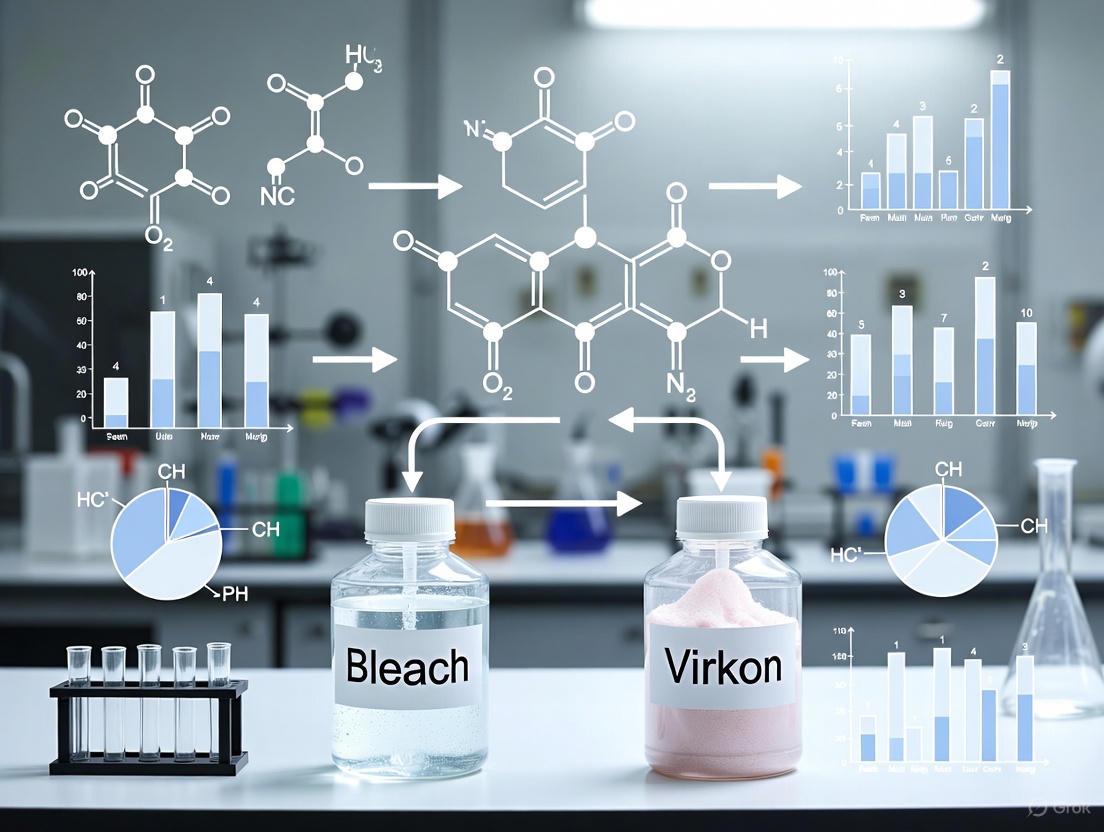
This article provides a comprehensive, evidence-based comparison of sodium hypochlorite (bleach) and Virkon for decontamination in forensic genetic and research laboratories.
Bleach vs. Virkon: An Evidence-Based Guide to Forensic Laboratory Decontamination
Abstract
This article provides a comprehensive, evidence-based comparison of sodium hypochlorite (bleach) and Virkon for decontamination in forensic genetic and research laboratories. It addresses the critical need for effective DNA and pathogen removal to prevent cross-contamination, a paramount concern given the increasing sensitivity of analytical techniques. We explore the foundational science, practical application protocols, troubleshooting for common challenges, and a direct comparative analysis of efficacy based on recent studies. Tailored for researchers, scientists, and drug development professionals, this guide synthesizes current research to support informed decision-making for robust contamination control protocols.
The Critical Need for Effective Decontamination in Modern Labs
The heightened sensitivity of modern DNA profiling techniques is a double-edged sword. While capable of generating profiles from just a few cells, this sensitivity also increases the risk of detecting contaminating DNA molecules, potentially compromising forensic results. Effective decontamination protocols are, therefore, more critical than ever. Within this context, the debate often centers on two predominant disinfectants: bleach (sodium hypochlorite) and Virkon. This article objectively compares the performance of these two agents, drawing on recent experimental data to guide researchers and scientists in implementing evidence-based decontamination strategies.
# Decontamination Mechanisms of Bleach and Virkon
The high efficacy of both bleach and Virkon stems from their potent oxidative properties, though their specific chemical mechanisms differ. The following diagram illustrates the pathway through which they cause DNA damage.
Bleach (Sodium Hypochlorite) acts primarily through hypochlorous acid, which oxidizes cellular components and causes strand breaks in DNA [1]. Virkon, a peroxygen compound, utilizes potassium peroxomonosulfate to achieve a similar destructive effect. For both agents, the ultimate result is the fragmentation of DNA into smaller and smaller pieces, rendering it unamplifiable by PCR and thus eliminating the contamination risk [2] [1].
# Comparative Efficacy: Experimental Data
Numerous studies have quantitatively evaluated the performance of bleach and Virkon. The data below summarizes key findings from recent research.
DNA Removal Efficiency on Laboratory Surfaces
A study testing the removal of amplifiable DNA from surfaces contaminated with 5 ng of DNA libraries found:
| Cleaning Reagent | Active Ingredient | DNA Recovered (%) | Efficacy Interpretation |
|---|---|---|---|
| 1% Bleach | Hypochlorite | 0% | Complete removal of amplifiable DNA [2] |
| 1% Virkon | Oxidation (KHSO₅) | 0% | Complete removal of amplifiable DNA [2] |
| 70% Ethanol | Ethanol | 4.29% | Incomplete removal [2] |
| DNA AWAY | Sodium Hydroxide | 0.03% | Near-complete removal [2] |
| 5% ChemGene HLD4L | Oxidation & Alcohols | 1.82% | Incomplete removal [2] |
This study concluded that both freshly made household bleach (at concentrations ≥1%) and Virkon were the most efficient reagents, removing all traces of amplifiable DNA [2] [3].
Efficacy Against Viruses and Body Fluids
Research on viral and biological decontamination reveals varied performance depending on the challenge:
| Challenge Material | Disinfectant | Experimental Result | Efficacy Interpretation |
|---|---|---|---|
| Poliovirus (High Titer) | 1% Virkon | >4 log₁₀ reduction | Complete inactivation [4] |
| Poliovirus (High Titer) | 5% Microchem Plus | 2.8 log₁₀ reduction | Only partial inactivation [4] |
| Cell-free DNA (Various Surfaces) | Sodium Hypochlorite | ≤0.3% DNA recovered | Highly efficient removal [5] [6] |
| Blood (Various Surfaces) | 1% Virkon | ≤0.8% DNA recovered | Highly efficient removal [5] [6] |
| Semen (on Vinyl) | Bleach-based Presept | Best overall results | Most effective on challenging combinations [7] |
| Semen (on Vinyl) | Virkon & Selgiene | Very effective | Acceptable with double spray/wipe cycles [7] |
This body of research indicates that while both are highly effective, the optimal choice can depend on the specific biological contaminant and surface type. For instance, dried semen on vinyl presents a particularly difficult challenge, where bleach may have a slight advantage [7].
# The Scientist's Toolkit: Essential Research Reagents
The following table details key reagents and materials used in standardized decontamination efficacy testing, providing a foundation for in-house validation studies.
| Reagent / Material | Function in Experimental Protocols |
|---|---|
| Sabin 1 Poliovirus Strain | A reference virus used for validating decontamination against non-enveloped, hardy viruses in compliance with WHO GAPIV guidelines [4]. |
| Quantifiler Trio DNA Quantification Kit | A real-time PCR-based kit used to quantify the amount of human DNA recovered from a surface after decontamination, providing a sensitive measure of efficacy [8]. |
| GlobalFiler STR Kit | A common kit for Short Tandem Repeat (STR) profiling used to confirm whether recovered DNA can generate a full genetic profile post-decontamination [8]. |
| DNeasy Blood & Tissue Kit | A solid-phase DNA extraction method used to isolate DNA from swabs collected from tested surfaces prior to quantification [5] [6]. |
| LAF Bench / Fume Hood | A dead-air cabinet or enclosed workspace providing a controlled, clean environment for pre-PCR sample handling to prevent external contamination during testing [2] [3]. |
# Standard Experimental Workflow for Validation
The evaluation of decontamination agents follows a structured process to ensure reproducible and meaningful results. The workflow below outlines the key steps for an in-house validation study.
The standard methodology for validating decontamination methods, based on processes like those in European Standard EN14476, involves several key stages [4] [5]:
- Surface Contamination: Surfaces (commonly plastic, metal, and wood to mimic laboratory equipment) are deliberately contaminated with a known quantity of a challenge material, such as high-titer virus, cell-free DNA, or biological fluids like blood and saliva. The material is left to dry [5] [6].
- Application of Disinfectant: The test disinfectant is applied at a specific concentration, often via a calibrated spray bottle, and wiped according to a defined procedure. Contact time is strictly controlled [2] [5].
- Post-Treatment Swabbing: The cleaned area is swabbed with a moistened cotton swab to collect any residual biological material [2].
- DNA Extraction and Quantification: DNA is extracted from the swabs. Highly sensitive quantification methods, such as real-time PCR targeting mitochondrial DNA for greater sensitivity, are used to measure the amount of DNA recovered [5] [6].
- Data Analysis and Efficacy Assessment: The quantity of DNA recovered from disinfectant-treated surfaces is compared to that from positive controls (no decontamination) to calculate the percentage of DNA removed. For viral studies, the reduction in infectivity is calculated using an endpoint dilution assay [4] [2].
# Practical Considerations for Laboratory Implementation
Beyond raw efficacy data, several practical factors influence the choice between bleach and Virkon in a forensic or research setting.
- Corrosivity and Material Compatibility: Bleach is corrosive to metals and can produce poisonous chlorine gas if it reacts with acidic solutions or components of commercial DNA extraction kits [2] [3]. Virkon is generally less corrosive, making it potentially safer for sensitive laboratory equipment [3].
- Organic Quenching: The presence of high organic load can impact performance. Bleach is notably quenched by soils with high organic content (like loam and clay), requiring extended contact times or re-application for effective decontamination. Virkon also experiences quenching but has demonstrated efficacy against poliovirus even in solutions with high organic load [4] [9].
- Health, Safety, and Environment: Both disinfectants require standard protective equipment (gloves, coats, safety glasses). Bleach is more toxic to the environment, whereas Virkon is considered less environmentally persistent, which can be a deciding factor for environmentally conscious facilities [3].
The threat of cross-contamination in the era of highly sensitive DNA profiling necessitates the use of proven, effective decontamination agents. Experimental data consistently show that both freshly diluted bleach (≥1%) and Virkon are top performers, capable of completely removing amplifiable DNA from surfaces and inactivating hardy viruses. The choice between them is not absolute but should be guided by context: bleach offers broad-spectrum efficacy and lower cost, while Virkon provides a strong profile with advantages in material compatibility and environmental impact. Ultimately, laboratories must weigh these factors against their specific operational needs and conduct in-house validation to ensure their decontamination protocols meet the stringent demands of modern forensic science.
In forensic laboratories and biomedical research facilities, effective decontamination is a critical safeguard against two distinct types of contamination: infectious pathogens that pose biological risks, and contaminating DNA molecules that can compromise forensic genetic analysis or molecular biology experiments. The choice of decontamination agent must align with the primary objective—whether that is pathogen inactivation or complete DNA removal. This guide provides an objective comparison of two common disinfectants, bleach (sodium hypochlorite) and Virkon, across these critical decontamination goals, supported by experimental data and detailed protocols.
Understanding Decontamination Objectives
Pathogen Inactivation
The primary goal of pathogen inactivation is to destroy viable microorganisms (e.g., bacteria, viruses) to prevent infection and ensure biological safety. Efficacy is typically measured in log reductions (e.g., a 4-log reduction equals a 99.99% kill rate) and can be significantly affected by organic load and disinfectant concentration [4] [9].
DNA Removal
In forensic DNA analysis and PCR laboratories, the goal is to eliminate amplifiable DNA from surfaces and equipment to prevent cross-contamination between samples. Efficacy is measured by the percentage of DNA recovered after cleaning compared to positive controls, with the most effective agents leaving no detectable amplifiable DNA [2] [6].
Experimental Comparison: Bleach vs. Virkon
Quantitative Efficacy Data
Table 1: DNA Removal Efficacy on Laboratory Surfaces
| Cleaning Agent | Active Ingredient | Concentration | DNA Recovered | Efficacy Conclusion |
|---|---|---|---|---|
| Household Bleach | Sodium hypochlorite | 1% | 0% | Complete DNA removal [3] |
| Household Bleach | Sodium hypochlorite | 0.3% | 0.66% | Partial DNA removal [3] |
| Virkon | Peroxygen (KHSO₅) | 1% | 0% | Complete DNA removal [3] |
| DNA AWAY | Sodium hydroxide (NaOH) | Not specified | 0.03% | Near-complete DNA removal [3] |
| Ethanol | Ethanol | 70% | 4.29% | Inadequate DNA removal [3] |
| Isopropanol Wipe | Isopropanol | Not specified | 9.23% | Inadequate DNA removal [3] |
Table 2: Pathogen Inactivation Efficacy
| Cleaning Agent | Target Pathogen | Test Conditions | Reduction | Efficacy Conclusion |
|---|---|---|---|---|
| 1% Virkon | Poliovirus (Sabin 1) | High organic load | >4 log₁₀ CCID₅₀ | Complete inactivation [4] |
| 1% Virkon | Poliovirus (Sabin 1) | Without organic load | >4 log₁₀ CCID₅₀ | Complete inactivation [4] |
| 5% Microchem Plus | Poliovirus (Sabin 1) | Standard conditions | 2.8 log₁₀ CCID₅₀ | Partial inactivation [4] |
| 1% Virkon | B. pseudomallei, Y. pestis, VEEV | Clay/loam soil, 60 min post-spike | ~6-log | High efficacy [9] |
| Dilute Bleach | B. pseudomallei, Y. pestis, VEEV | Clay/loam soil, 60 min post-spike | ~6-log | High efficacy (with limitations) [9] |
Key Experimental Protocols
DNA Decontamination Testing Protocol
The following methodology was used to evaluate DNA removal efficiency in forensic laboratory settings [3]:
Surface Contamination: 5 ng of massively parallel sequencing (MPS) DNA libraries were pipetted onto clean, hard surfaces and allowed to dry for 45 minutes
Application of Cleaning Agents:
- Liquid cleaning reagents were applied to absorbent wipes
- Surfaces were wiped thoroughly with the treated wipes
- Surfaces were left to dry for approximately 30 minutes
Sample Collection:
- Cotton swabs moistened with molecular grade water were used to swab the cleaned surfaces
- Swabs were extracted using QIAamp DNA Blood Mini Kit
Quantification:
- DNA extracts were quantified by real-time PCR using QIAseq Library Quant Assay Kit
- All cleaning protocols were tested in triplicate with quadruplicate qPCR reactions
Analysis:
- Percentage of DNA recovery was calculated compared to positive (uncleaned) controls
Pathogen Inactivation Testing Protocol
The efficacy of Virkon against poliovirus was evaluated using a standardized methodology based on European Standard EN14476 [4]:
Test Organisms: Poliovirus Sabin 1 strain with titre of 8.33 log₁₀ CCID₅₀/0.1 ml
Test Conditions:
- Solutions with and without high organic load
- Disinfectants tested: 1% VirkonS and 5% Microchem Plus
Exposure Method:
- Virus-disinfectant contact under controlled conditions
- Endpoint dilution assay to determine infectious titre reduction
Analysis:
- Calculation of log₁₀ reduction in CCID₅₀
- Confirmation using molecular assay for enterovirus RNA detection
- Limit of detection: >4 log₁₀ reduction indicating complete inactivation
The Scientist's Toolkit: Essential Research Reagents
Table 3: Key Reagents for Decontamination Research
| Reagent/Equipment | Primary Function | Research Application |
|---|---|---|
| Sodium Hypochlorite (Bleach) | Oxidative DNA degradation and pathogen inactivation | Positive control for DNA removal studies; assessment of corrosive properties [6] [1] |
| Virkon (Potassium peroxymonosulfate) | Broad-spectrum disinfectant with oxidative action | Testing against viruses and non-spore-forming bacteria; DNA removal efficacy [4] [3] |
| Quaternary Ammonium Compounds (e.g., Microchem Plus) | Membrane disruption in microorganisms | Comparison control for viral inactivation studies [4] |
| Real-time PCR Systems | Quantification of DNA remnants | Measuring DNA removal efficiency after decontamination [3] [6] |
| Cell Culture Systems | Assessment of viral and bacterial viability | Determining log reduction values for pathogen inactivation [4] [9] |
| Biological Indicators (G. stearothermophilus spores) | Monitoring sterilization efficacy | Validation of decontamination protocols in healthcare settings [10] |
Decision Framework: Selecting the Right Decontamination Agent
When to Prioritize Bleach
- Forensic DNA laboratories where complete elimination of contaminating DNA is paramount [3]
- Cost-sensitive applications where budget constraints are significant [3]
- Situations requiring rapid DNA degradation, such as evidence destruction prevention [1]
When to Prioritize Virkon
- Virology laboratories handling non-enveloped viruses like poliovirus [4]
- Biosafety containment facilities where broad-spectrum pathogen inactivation is required
- Environments with metal equipment where corrosion from bleach is a concern [3]
- Eco-sensitive applications where environmental toxicity must be minimized [3]
Critical Limitations and Considerations
- Bleach limitations: Corrosive to metals, produces toxic chlorine gas when mixed with acids, decreasing efficacy in organic matter, requires fresh preparation for consistent results [3] [9]
- Virkon limitations: Higher cost compared to bleach, may generate halogen gases in contact with halide compounds [3]
- Soil decontamination challenge: Both disinfectants show reduced efficacy in clay and loam soils with high organic content, requiring extended contact times or reapplication [9]
The choice between bleach and Virkon for laboratory decontamination must be guided by specific operational goals. For forensic genetic laboratories where DNA removal is paramount, 1% bleach provides uncompromised efficacy at low cost, despite corrosion concerns. For infectious disease research requiring broad-spectrum pathogen inactivation, particularly against challenging non-enveloped viruses, 1% Virkon demonstrates superior, consistent efficacy. Modern facilities facing both challenges may implement a tiered approach, using Virkon for biological safety applications and maintaining bleach for dedicated pre-PCR DNA cleaning areas, ensuring both molecular and microbiological integrity in scientific operations.
In forensic genetic laboratories, the pivotal objective is to avoid cross-sample contamination, making optimal cleaning protocols for the removal of DNA absolutely essential [3]. The high sensitivity of modern DNA analysis, capable of generating profiles from just a few cells, demands rigorous decontamination strategies to protect the integrity of forensic evidence [6]. Polymerase chain reaction (PCR), a cornerstone technique in forensic genetics since the 1990s, amplifies target DNA sequences, but this very sensitivity also increases the risk of amplifying contaminating DNA from laboratory surfaces and equipment [3]. Consequently, forensic laboratories implement a hierarchy of controls, including the physical separation of pre-PCR and post-PCR areas, unidirectional workflows, protective clothing, and regular cleaning of laboratory spaces [3]. Within this framework, the choice of chemical cleaning agents is a critical decision point. A recent survey of ten European forensic genetic laboratories revealed that while cleaning frequencies for specific surface areas are somewhat standardized, no consensus exists on cleaning reagents, with no two laboratories using the same protocol [3] [11]. This article provides a comparative guide to two of the most prominent agents discussed for forensic decontamination: sodium hypochlorite (bleach) and Virkon.
Comparative Efficacy: Experimental Data
Independent experimental studies have consistently tested the efficacy of various disinfectants to determine their ability to remove amplifiable DNA from surfaces, providing a data-driven basis for comparison.
Key Experimental Findings on DNA Removal
The following table summarizes the results from pivotal studies evaluating sodium hypochlorite and Virkon:
| Cleaning Agent | Reported Efficacy (DNA Removal) | Key Experimental Context | Source |
|---|---|---|---|
| Sodium Hypochlorite (Bleach) | Removed all amplifiable DNA from surfaces [3]. | Testing of freshly made household bleach (1% concentration, yielding 0.3-0.6% hypochlorite) on surfaces contaminated with 5 ng MPS DNA libraries [3]. | [3] |
| A maximum of 0.3% DNA recovered after decontamination of cell-free DNA on plastic, metal, and wood [6]. | Surfaces contaminated with 60 ng of cell-free DNA; cleaned with 0.54% sodium hypochlorite [6]. | [6] | |
| Best decontamination results overall against body fluids on forensic surfaces [7]. | Validation study on cleaning processes in Sexual Assault Referral Centres (SARCs); tested on dried blood, saliva, and semen on surfaces like Formica and vinyl [7]. | [7] | |
| Virkon | Removed all amplifiable DNA from surfaces [3]. | Testing of Virkon on surfaces contaminated with 5 ng MPS DNA libraries [3]. | [3] |
| A maximum of 0.8% DNA recovered after decontamination of blood [6]. | Surfaces contaminated with whole blood; cleaned with 1% Virkon [6]. | [6] | |
| Very effective for decontamination, comparable to bleach-based reagents in some scenarios [7]. | Validation study in SARCs; showed high effectiveness, though semen on vinyl proved challenging for all reagents [7]. | [7] |
Performance of Alternative Agents
For context, studies have also shown that several other commonly used agents are less effective for complete DNA destruction. Research indicates that DNA AWAY may leave small traces of DNA, while disinfectants like ethanol, isopropanol, and ChemGene HLD4L do not successfully remove all DNA [3] [11]. One study found that ethanol cleaning alone resulted in significant DNA recovery, demonstrating its inadequacy for reliable decontamination [6].
Experimental Workflow for Testing Decontamination Efficacy
Detailed Experimental Protocols
To validate decontamination protocols, researchers employ rigorous experimental methodologies. The following details are compiled from key studies to serve as a reference for laboratory validation.
This protocol is designed to test whether a cleaning agent can remove all amplifiable DNA from a hard surface.
- Surface Contamination: Massively parallel sequencing (MPS) DNA libraries (5 ng in 10 µL) or water (negative control) are pipetted onto a clean, hard surface in a previously unused room. The area is marked, and the droplet is left to dry for 45 minutes.
- Cleaning Procedure: The cleaning reagent is applied to an absorbent wipe, and the marked surface is rubbed. The surface is left to dry for approximately 30 minutes.
- Post-Cleaning Sampling: After cleaning and drying, the area is swabbed with a sterile cotton tip applicator moistened with 20 µL of molecular-grade water.
- DNA Extraction and Quantification: The swab is extracted using a commercial DNA extraction kit (e.g., QIAamp DNA Blood Mini Kit). The extracted DNA is then quantified via real-time PCR (qPCR) using an appropriate assay kit (e.g., QIAseq Library Quant Assay Kit). All steps should include replicates and controls.
This protocol evaluates decontamination strategies on different surfaces and against different types of biological evidence.
- Sample Deposition: Human DNA (e.g., 60 ng of cell-free DNA in 10 µL) or whole blood from a single donor is deposited within a marked 25 mm circle on various test surfaces (e.g., plastic, metal, painted wood). The liquid is spread with a pipette tip and left to dry for two hours.
- Application of Cleaning Agent: Liquid cleaning agents are administered using a calibrated spray bottle (one spray). The area is wiped with a dust-free paper in three circular motions by the same individual to maintain consistency.
- Sampling and Analysis: The entire marked area is swabbed with a cotton swab moistened in 0.9% sodium chloride. DNA extraction is performed, and mitochondrial DNA is quantified using a sensitive real-time PCR assay. Results are calculated as a percentage of DNA recovered compared to positive (no-treatment) controls.
The Scientist's Toolkit: Essential Research Reagents
The following table lists key materials and reagents used in the described experiments for decontamination efficacy testing.
| Item Name | Function / Description | Example Use Case |
|---|---|---|
| Sodium Hypochlorite (Bleach) | A chemical agent that removes all amplifiable DNA via oxidative damage [3]. | Freshly diluted to 1% (0.3-0.6% hypochlorite) for surface decontamination [3]. |
| Virkon | A potent oxidizing agent and disinfectant effective at removing amplifiable DNA [3]. | Prepared as a 1% solution for surface decontamination [3] [6]. |
| Real-time PCR (qPCR) Assay | A highly sensitive molecular technique to quantify trace amounts of DNA remaining after cleaning. | QIAseq Library Quant Assay Kit [3]; mitochondrial DNA assay [6]. |
| DNA Extraction Kit | A commercial kit for isolating DNA from collected swab samples. | QIAamp DNA Blood Mini Kit [3]; DNeasy Blood and Tissue Kit [6]. |
| Cell-free DNA / Whole Blood | Controlled contaminants used to artificially contaminate surfaces for testing. | 60 ng cell-free DNA or 10 µL whole blood deposited on plastic, metal, wood [6]. |
| Absorbent Wipes / Cotton Swabs | Tools for applying cleaning agents and sampling residual DNA from surfaces. | Absorbent Sitrix V1 wipe for cleaning [3]; Puritan Sterile Cotton Tip Applicator for sampling [3]. |
Mechanism and Considerations for Bleach and Virkon
Practical Considerations for Forensic Laboratories
While both sodium hypochlorite and Virkon demonstrate high efficacy in removing amplifiable DNA, several practical factors influence their suitability for routine use in a forensic laboratory.
- Material Compatibility and Safety: Sodium hypochlorite is corrosive against metals and can produce poisonous chlorine gas if it reacts with acidic solutions or components of certain commercial DNA extraction kits [3]. A rinse with 70% ethanol or water after bleach decontamination has been recommended to mitigate corrosion [3]. Virkon, also a strong oxidative agent, is less corrosive than hypochlorite but may also generate halogen gases upon contact with halide compounds [3].
- Health, Safety, and Environmental Impact: Standard personal protective equipment (gloves, laboratory coats, safety glasses) is mandatory when handling both agents [3]. From an environmental perspective, Virkon is considered less toxic than bleach, which may be a deciding factor for some facilities [3].
- Surface and Contaminant Variability: Decontamination efficiency is not universal. One study found that the type of body fluid and surface material significantly impacts outcomes. For instance, semen was the hardest body fluid to remove, and vinyl was the most challenging surface to decontaminate compared to Formica or plastic [7]. This underscores the need for protocol validation against a laboratory's specific challenges.
For forensic genetic laboratories where the complete removal of amplifiable DNA is the paramount objective, the experimental evidence strongly supports the use of either freshly diluted sodium hypochlorite (bleach) or Virkon [3] [6]. Both agents have been proven to remove all detectable DNA under controlled testing conditions, outperforming alternatives like ethanol, isopropanol, and DNA AWAY [3] [11].
The choice between them is not based on efficacy alone but on a balanced consideration of practical factors. Bleach offers a very low-cost solution but requires careful handling due to its corrosivity and potential for generating hazardous fumes. Virkon provides a strong, less corrosive alternative with a better environmental profile, albeit at a higher cost. Ultimately, a forensic laboratory's decontamination protocol must be validated against its own specific workflows, surfaces, and types of evidence to ensure it effectively safeguards the integrity of genetic analysis.
In high-stakes laboratory environments, from poliovirus essential facilities to forensic genetics centers, effective decontamination is a critical component of quality assurance and regulatory compliance. Two disinfectants—sodium hypochlorite (bleach) and Virkon—have emerged as leading solutions, each with distinct properties, efficacy profiles, and regulatory considerations. This comparison guide examines these disinfectants within the framework of two significant regulatory contexts: the World Health Organization's Global Action Plan for Poliovirus Containment, 4th edition (GAPIV) for biosafety, and quality standards for forensic laboratories where DNA contamination can compromise evidentiary integrity.
GAPIV establishes the chief guidance for poliovirus containment implementation, requiring poliovirus-essential facilities (PEFs) to demonstrate in-house validation of decontamination methods with supporting data [12]. Similarly, forensic genetic laboratories must implement optimal cleaning protocols for the removal of DNA to avoid cross-sample contamination that could jeopardize legal proceedings [3]. Within both regulatory frameworks, bleach and Virkon have been scientifically validated, but their appropriate application depends on specific laboratory contexts, material compatibilities, and risk assessments.
Regulatory Framework Analysis
GAPIV Poliovirus Containment Requirements
The WHO Global Action Plan for Poliovirus Containment, 4th edition (GAPIV), which came into force on 1 July 2022, serves as the primary guidance document for poliovirus containment implementation [12]. This framework is particularly relevant for facilities handling poliovirus infectious materials or potentially infectious materials (PIMs), which may include clinical specimens such as human stool specimens, respiratory samples, or environmental sewage that could contain eradicated or vaccine-derived polioviruses [12].
GAPIV outlines comprehensive requirements for waste management, decontamination, disinfection, and sterilization, mandating that poliovirus-essential facilities (PEFs) demonstrate in-house validation of their decontamination methods with supporting experimental data [4]. The containment certification process involves rigorous auditing against GAPIV requirements, with facilities subject to site visits, personnel interviews, and document reviews to verify implementation of containment measures [13]. These audits assess multiple categories including primary containment, decontamination protocols, hand hygiene, security, emergency response, training, and immunization practices [13].
Forensic Laboratory Quality Standards
While forensic laboratories operate under different regulatory frameworks than biomedical facilities handling pathogens, they face analogous contamination risks that necessitate stringent decontamination protocols. The core challenge in forensic genetic laboratories is avoiding cross-sample contamination that could compromise evidentiary integrity, particularly given the sensitivity of PCR-based DNA analysis methods [3].
Recent research has revealed significant variation in cleaning protocols across forensic laboratories. A survey of ten European forensic genetic laboratories found that while cleaning frequencies for different surface areas were somewhat similar, none of the laboratories used the same cleaning reagents [3]. This lack of standardization highlights the importance of evidence-based selection of decontamination agents that can reliably remove amplifiable DNA from laboratory surfaces and equipment.
Comparative Efficacy Analysis
Poliovirus Inactivation Performance
The efficacy of disinfectants against poliovirus is of particular importance for facilities operating under GAPIV guidelines. Scientific validation studies have provided quantitative data on the performance of both Virkon and bleach against high-titer poliovirus under controlled conditions.
Table 1: Poliovirus Inactivation Efficacy
| Disinfectant | Concentration | Organic Load | Titre Reduction | Inactivation Efficiency |
|---|---|---|---|---|
| Virkon | 1% | Without high organic load | ≥5.8 log~10~ CCID~50~ | Complete inactivation |
| Virkon | 1% | With high organic load | ≥6.8 log~10~ CCID~50~ | Complete inactivation |
| Microchem Plus | 5% | Not specified | 2.8 log~10~ CCID~50~ | Partial inactivation |
| Household bleach | 0.3-0.6% hypochlorite | Not specified | Complete | Complete inactivation |
Experimental methods for evaluating poliovirus inactivation typically follow the European Standard EN14476, as recommended by WHO GAPIV guidelines [4]. These protocols involve evaluating disinfectants against high-titer poliovirus (Sabin 1 strain) in solutions with and without high organic load using an endpoint dilution assay. The results demonstrate that Virkon achieves complete inactivation of poliovirus even in challenging conditions with high organic load, making it suitable for GAPIV-compliant facilities [4].
DNA Decontamination in Forensic Settings
In forensic laboratories, the primary concern is complete removal of amplifiable DNA from surfaces to prevent cross-contamination between samples. Recent research has systematically evaluated multiple cleaning reagents used in forensic genetic laboratories to determine their relative efficiencies.
Table 2: DNA Decontamination Efficacy on Laboratory Surfaces
| Disinfectant | Concentration | Amplifiable DNA After Treatment | Efficacy Rating |
|---|---|---|---|
| Freshly made household bleach | 1% (0.3-0.6% hypochlorite) | None detected | Complete removal |
| Virkon | Manufacturer's recommendation | None detected | Complete removal |
| DNA AWAY | Manufacturer's recommendation | Trace amounts detected | Partial removal |
| Ethanol | Not specified | Significant amounts detected | Inadequate |
| Isopropanol | Not specified | Significant amounts detected | Inadequate |
| ChemGene HLD4L | Manufacturer's recommendation | Significant amounts detected | Inadequate |
The testing methodology for these evaluations involved contaminating clean surfaces with 5 ng massively parallel sequencing (MPS) DNA libraries, allowing them to dry for 45 minutes, then cleaning with wipes containing the test reagents [3]. Subsequent swabbing of the surfaces and extraction/quantification of recovered DNA demonstrated that both freshly made household bleach and Virkon removed all amplifiable DNA, while other common disinfectants proved ineffective for complete DNA removal [3].
Experimental Protocols and Methodologies
Poliovirus Inactivation Testing Protocol
For facilities requiring validation of disinfectants against poliovirus according to GAPIV guidelines, the following experimental approach based on European Standard EN14476 provides a standardized methodology:
This protocol specifically evaluates disinfectants against high-titer poliovirus (approximately 8.33 log~10~ CCID~50~ in 0.1 ml) in solutions with and without high organic load using an endpoint dilution assay [4]. The critical measurement is the log~10~ reduction in the 50% cell culture infectious dose (CCID~50~), with a reduction of >4 log~10~ CCID~50~ considered effective for poliovirus inactivation [4]. Confirmation with molecular assays for enterovirus RNA detection provides additional validation of inactivation efficacy.
DNA Decontamination Assessment Protocol
For forensic laboratories requiring validation of surface decontamination methods, the following experimental approach provides a standardized methodology:
This methodology involves contaminating surfaces with quantified DNA (5 ng massively parallel sequencing libraries), applying disinfectants according to manufacturer instructions using standardized wiping techniques, then recovering any remaining DNA through swabbing followed by extraction and highly sensitive quantitative PCR [3]. Testing in triplicates with multiple quantification replicates ensures statistical reliability of the results.
The Scientist's Toolkit: Essential Research Reagents
Table 3: Key Reagents for Decontamination Validation Studies
| Reagent/Equipment | Function | Application Context |
|---|---|---|
| Poliovirus Sabin 1 strain | Reference virus for inactivation testing | GAPIV compliance validation |
| Virkon | Broad-spectrum disinfectant | Poliovirus inactivation, DNA removal |
| Sodium hypochlorite (bleach) | Oxidizing disinfectant | DNA decontamination, surface disinfection |
| Cell culture systems | Viral propagation and titration | Poliovirus infectivity assays |
| Endpoint dilution assay | Quantification of viral infectivity | Determination of log reduction values |
| Quantitative PCR systems | Detection of amplifiable DNA | Forensic decontamination validation |
| QIAseq Library Quant Assay Kit | Specific quantification of MPS libraries | DNA decontamination studies |
| QIAamp DNA Blood Mini Kit | DNA extraction from surface swabs | Forensic decontamination assessment |
Practical Implementation Considerations
Material Compatibility and Safety Profiles
When selecting between bleach and Virkon for laboratory decontamination, material compatibility and safety considerations significantly influence the appropriate choice for different applications:
Bleach advantages and limitations: Household bleach (containing 0.3-0.6% hypochlorite) effectively removes all amplifiable DNA from surfaces [3] and demonstrates efficacy against poliovirus. However, bleach produces poisonous chlorine gases if reacted with acidic solutions and may corrode metals [3]. It also has poor cleaning capabilities and can cause severe skin burns in concentrated form [14].
Virkon advantages and limitations: Virkon achieves complete inactivation of high-titer poliovirus even with high organic load [4] and effectively removes all amplifiable DNA from surfaces [3]. It is less corrosive than hypochlorite and demonstrated better decontamination efficiency on blood deposits on plastic, metal, and wood in previous studies [3]. However, it may cause skin irritation and the powder formulation may cause respiratory irritation [14].
Regulatory Compliance and Documentation
For facilities navigating GAPIV requirements, comprehensive documentation of decontamination protocols and validation studies is essential for successful containment certification. The audit process for poliovirus-essential facilities involves rigorous assessment of decontamination methods, including review of standard operating procedures, validation data, staff training records, and incident response protocols [13].
Similarly, forensic laboratories should maintain detailed records of their decontamination protocols, including regular efficacy testing, as part of their quality management systems. This documentation becomes particularly important when defending analytical results in legal proceedings where potential contamination challenges may arise.
Both sodium hypochlorite (bleach) and Virkon demonstrate validated efficacy for critical decontamination applications in regulated laboratory environments. Bleach offers a cost-effective solution for DNA decontamination in forensic settings and surfaces compatible with its corrosive properties. Virkon provides broad-spectrum activity against both viral agents and DNA contamination while offering better material compatibility. The selection between these disinfectants should be guided by specific regulatory requirements, material compatibility considerations, application-specific efficacy evidence, and practical implementation factors within each laboratory's unique operational context.
Protocols in Practice: Applying Bleach and Virkon Correctly
Within forensic genetic laboratories, the elimination of amplifiable DNA from work surfaces and equipment is a fundamental requirement to prevent cross-sample contamination that can compromise analytical results. While a variety of chemical disinfectants are available, bleach (hypochlorite) and Virkon are among the most frequently cited for decontamination protocols. This guide provides an objective, data-driven comparison of these two reagents, focusing on the critical parameters of concentration, solution freshness, and contact time, framed within the context of recent forensic science research. The sensitivity of modern DNA amplification techniques makes the choice of an effective decontaminant not merely a matter of cleanliness, but a core component of scientific integrity and legal defensibility.
Comparative Efficacy: Experimental Data
Recent studies have systematically evaluated the efficacy of various cleaning reagents for the removal of DNA in forensic settings. The quantitative data below summarizes key findings on the percentage of DNA recovered from surfaces after treatment with different agents.
Table 1: DNA Decontamination Efficacy of Common Reagents
| Treatment | Active Reagent | DNA Recovered (%) | Complete DNA Removal |
|---|---|---|---|
| Positive Control | - | 100 ± 10.3 | No |
| 1% Bleach | Hypochlorite (NaClO) | 0 | Yes |
| 3% Bleach | Hypochlorite (NaClO) | 0 | Yes |
| 1% Virkon | Oxidation (KHSO₅) | 0 | Yes |
| DNA AWAY | Alkaline (NaOH) | 0.03 ± 0 | No |
| 70% Ethanol | Ethanol | 4.29 ± 1.2 | No |
| Liquid Isopropanol | Isopropanol | 87.99 ± 7.4 | No |
| 5% ChemGene HLD4L | Oxidation + other compounds | 1.82 ± 0.4 | No |
Source: Adapted from [2]
The data demonstrates that freshly prepared household bleach and Virkon are uniquely effective, achieving complete removal of all amplifiable DNA from tested surfaces, whereas other common disinfectants like ethanol and isopropanol left significant DNA residues [2]. A separate validation study of cleaning processes confirmed that bleach-based reagents provided the best decontamination results overall, with non-bleach cleaner Virkon also performing very effectively [15].
Detailed Experimental Protocols
To critically assess the data, understanding the underlying experimental methodologies is essential. The following workflows detail the key procedures from the cited studies.
Protocol for Testing Cleaning Reagents on Laboratory Surfaces
The following diagram illustrates the methodology used to quantify the DNA-removal efficacy of different cleaning reagents, as described in International Journal of Legal Medicine [2].
Diagram 1: Workflow for Testing DNA Decontamination
Key Methodology Details:
- Surface Contamination: Massively parallel sequencing (MPS) DNA libraries (5 ng) were pipetted onto clean, hard surfaces in a contamination-free room [2].
- Cleaning Test: Surfaces were cleaned using absorbent wipes impregnated with the test reagents. Each protocol was tested in triplicate [2].
- DNA Recovery & Quantification: Post-cleaning, surfaces were swabbed, and the collected DNA was extracted and quantified using a real-time PCR assay specific for the Ion Torrent libraries used. Each extract was quantified in quadruplicate [2].
Protocol for Disinfectant Validation in Virology
The efficacy of Virkon extends beyond DNA decontamination. The following workflow is based on a method used to validate disinfectants against poliovirus, as recommended by the WHO GAPIV guidelines and European Standard EN14476 [4].
Diagram 2: Workflow for Viral Inactivation Testing
Key Methodology Details:
- Virus and Disinfectant: High-titer poliovirus (8.33 log₁₀ CCID₅₀/0.1 ml) was treated with disinfectants like 1% Virkon S in solutions with and without a high organic load to simulate dirty and clean conditions [4].
- Efficacy Assessment: The remaining viral infectivity after treatment was assessed using an endpoint dilution assay (measuring the 50% cell culture infectious dose). A reduction of >4 log₁₀ CCID₅₀ was considered effective, with results confirmed by a molecular assay [4].
Practical Implementation and Best Practices
Optimal Concentrations and Preparation
For a decontamination protocol to be effective, the correct concentration of the active reagent must be used.
Table 2: Recommended Working Solutions for Effective Decontamination
| Reagent | Recommended Working Concentration | Key Preparation Notes | Stability After Preparation |
|---|---|---|---|
| Household Bleach | 1% (v/v) or higher [2] | Freshly diluted from household bleach (typically 3-6% hypochlorite). | Solutions must be made fresh each day of use [16]. |
| Virkon | 1% (w/v) [2] | Prepared by dissolving powder in water. | Consult manufacturer datasheet; typically has a longer shelf life than bleach solutions. |
The need for daily preparation of bleach solutions is critical, as the hypochlorite active quickly degrades into salt and water when combined with tap water [16]. Furthermore, it has been demonstrated that lower concentrations of bleach (0.1% and 0.3%) were insufficient, allowing recoverable DNA, whereas 1% and higher concentrations removed all amplifiable DNA [2].
Critical Parameters for Effective Use
- Contact Time: While the definitive forensic study quantified DNA after surfaces had dried (approximately 30 minutes) [2], a study on cleaning body fluids from surfaces recommended a contact time of approximately 30 seconds before wiping for optimal effectiveness of the reagents tested [15]. For disinfecting against viruses, a contact time of 5-6 minutes is often recommended for bleach solutions [16].
- Safety and Material Compatibility: Bleach (hypochlorite) is corrosive to metals and can produce toxic chlorine gas if mixed with acidic solutions or key components of some commercial DNA extraction kits [2]. It is recommended to rinse the surface with 70% ethanol or water after bleach decontamination to prevent corrosion [2]. Virkon is a strong oxidizer but is generally considered less corrosive than hypochlorite [2]. Standard personal protective equipment (gloves, lab coat, safety glasses) is mandatory when handling either chemical.
The Scientist's Toolkit
Table 3: Essential Research Reagents and Materials for Forensic Decontamination Studies
| Item | Function in Experimental Protocol |
|---|---|
| Massively Parallel Sequencing (MPS) DNA Libraries | Provides a standardized, amplifiable DNA source for contamination studies [2]. |
| Hypochlorite (Bleach) | Active oxidizing agent that degrades DNA; requires fresh preparation daily [2] [16]. |
| Virkon (Potassium Peroxymonosulfate) | Powerful oxidizing disinfectant effective for DNA and viral decontamination [2] [4]. |
| Real-time PCR Quantification Kit | Enables sensitive detection and quantification of trace DNA amounts remaining after cleaning [2]. |
| Cotton Tipped Applicators | Used for standardized sampling of surfaces post-decontamination to collect residual genetic material [2]. |
| DNA Extraction Kit | Purifies DNA from collection swabs for downstream quantitative analysis [2]. |
| Clorox Disinfecting Bleach | A specific brand of household bleach used in dilution experiments for disinfection [16]. |
| Absorbent Wipes | Vehicle for uniform application of cleaning reagents to contaminated surfaces [2]. |
Both 1% bleach and 1% Virkon have been experimentally proven to achieve the gold standard in forensic laboratory decontamination: the complete removal of amplifiable DNA. The choice between them hinges on practical laboratory considerations. Bleach is a highly cost-effective option but demands careful daily preparation and poses risks of corrosion and gas formation. Virkon offers broad-spectrum efficacy against DNA and viruses with better material compatibility, though at a higher cost. Ultimately, a robust decontamination protocol must prioritize freshly prepared solutions at proven concentrations, adequate contact time, and a clear understanding of the trade-offs involved in selecting the primary laboratory decontaminant.
In forensic genetic laboratories, the avoidance of cross-sample contamination is paramount. The extreme sensitivity of polymerase chain reaction (PCR) techniques, while enabling analysis of minute biological evidence, also increases the risk of amplifying contaminating DNA from laboratory surfaces and equipment [2]. Within this context, establishing optimized cleaning protocols is not merely a matter of cleanliness but a fundamental requirement for ensuring the integrity of analytical results. A recent survey of ten European forensic genetic laboratories revealed that while cleaning frequencies for specific areas (such as daily for workspaces and weekly for floors) were somewhat consistent, absolutely no consensus existed on the choice of cleaning reagents, with none of the laboratories using the same protocols [2] [3].
This guide provides a detailed examination of Virkon, a leading disinfectant, directly comparing its performance and practical application against bleach and other common alternatives. Supported by experimental data, it aims to equip researchers with the information necessary to make evidence-based decisions for laboratory decontamination.
Virkon vs. Bleach: A Head-to-Head Comparative Analysis
The debate between Virkon and bleach (sodium hypochlorite) is central to forensic decontamination strategies. Both are highly effective, but they possess distinct characteristics that influence their suitability for different laboratory scenarios.
Quantitative Efficacy in DNA Removal
Recent studies have rigorously tested the efficiency of various cleaning agents in removing amplifiable DNA from surfaces. The results consistently position Virkon and freshly made household bleach as the most effective options.
Table 1: DNA Decontamination Efficiency of Common Reagents
| Cleaning Reagent | Active Ingredient | DNA Recovered (%) | Removes All Amplifiable DNA? |
|---|---|---|---|
| 1% Virkon | Potassium peroxymonosulfate (Oxidation) | 0% | Yes [2] |
| 1% Bleach | Hypochlorite (NaClO) | 0% | Yes [2] |
| 0.3% Bleach | Hypochlorite (NaClO) | 0.66% | No [2] |
| DNA AWAY | Sodium Hydroxide (Alkaline) | 0.03% | No [2] |
| 5% ChemGene HLD4L | Oxidation & other compounds | 1.82% | No [2] |
| 70% Ethanol | Ethanol | 4.29% | No [2] |
| Liquid Isopropanol | Isopropanol | 87.99% | No [2] |
As shown in Table 1, both 1% Virkon and 1% bleach completely removed all amplifiable DNA in testing, whereas other common disinfectants like ethanol and isopropanol left significant recoverable DNA [2]. Surface material and the state of the DNA (cell-free vs. cell-contained) also influence efficacy. One study found that for blood (cell-contained DNA), a maximum of 0.8% of deposited DNA was recovered after using Virkon, a level corresponding to only a few cells [5] [6].
Practical & Safety Considerations
Beyond raw efficacy, practical considerations are critical for routine laboratory use.
Table 2: Practical Comparison of Virkon and Bleach
| Characteristic | Virkon | Bleach (Sodium Hypochlorite) |
|---|---|---|
| Primary Mechanism | Strong oxidation [2] | Strong oxidation [2] |
| Corrosiveness | Less corrosive to metals [2] [3] | Corrosive against metals [2] |
| Chemical Safety | Can generate halogen gases with halides [2] | Can produce poisonous chlorine gas with acids [2] |
| Environmental Impact | Less toxic, biodegradable [2] [17] | More toxic than Virkon [2] |
| Material Compatibility | Suitable for plastics, rubber, smart cards [18] [17] | Not recommended for sensitive electronics or metals |
| Solution Stability | Dilute solution lasts ~2 weeks [17] | Freshly made dilutions recommended [2] [5] |
| Cost Profile | More expensive per concentrate | Cheaper in diluted form [2] |
Bleach is highly corrosive and can damage equipment, whereas Virkon is less corrosive and has been validated for use on sensitive materials like the plastic and microchips of smart cards in high-containment laboratories [18] [17]. Furthermore, Virkon is biodegradable and less toxic to the environment, which can be a significant factor in laboratory selection [2] [17].
Detailed Virkon Protocol: Dilution, Application, and Workflow
Recommended Dilution Ratios and Formulations
Virkon is available in multiple formulations, including powders, sachets, and tablets. The standard dilution for general laboratory disinfection is 1% (w/v) [2] [18] [17]. This translates to:
- 10 grams of powder per 1 liter of water [17].
- For smaller applications, one tablet makes 500 ml of solution [17].
It is critical to prepare solutions using tap water and use them within their effective shelf life—dilute solutions remain effective for approximately two weeks [17]. For virology work in high-containment settings, such as against poliovirus or African swine fever virus (ASFV), the manufacturer-recommended dilution (e.g., 275×) should be followed and validated in-house [4] [19].
Application Methods and Contact Time
For effective decontamination, the following protocol is recommended:
- Application: Apply the 1% Virkon solution using a spray bottle or by immersing a wipe (e.g., dust-free paper or an absorbent wipe) [2] [5]. The solution should be liberally applied to ensure the surface is thoroughly wetted.
- Contact Time: The recommended contact time for complete security is 1 hour [17]. However, efficacy against specific viruses like foot-and-mouth disease virus (FMDV) on non-porous surfaces has been demonstrated at very short contact times of 30 to 60 seconds in worst-case scenarios [18]. For general DNA decontamination in forensic settings, a contact time of 10 minutes is a common and effective practice [2] [17].
- Rinsing: Generally, rinsing is not required on materials such as plastic, glass, fibreglass, and rubber. The surface can be left to dry naturally [17]. A post-cleaning wipe with ethanol or water is not part of standard Virkon protocols but is sometimes recommended after bleach use to reduce corrosion [2].
The following workflow summarizes a standardized experimental method for validating decontamination efficacy, derived from published studies.
Experimental Workflow for Validating Decontamination Efficacy
The Scientist's Toolkit: Essential Research Reagent Solutions
The following table details key materials and reagents used in the experimental evaluation of decontamination agents, as cited in the reviewed literature.
Table 3: Essential Reagents and Materials for Decontamination Studies
| Item | Specific Example | Function in Experiment |
|---|---|---|
| Disinfectant | Virkon S (powder/tablets) | Primary decontamination agent tested [2] [18]. |
| Surfaces | Plastic, Painted Wood, Metal (Aluminum) | Mimic common lab surfaces to test efficacy across materials [5] [6]. |
| DNA Sample | AmpliSeq Libraries, Cell-free DNA, Whole Blood | Provides standardized contaminant for testing [2] [5]. |
| Application Tool | Calibrated Spray Bottle, Absorbent Sitrix V1 Wipe | Ensures consistent application of cleaning reagents [2] [5]. |
| Sampling Tool | Puritan Sterile Cotton Tip Applicator | Collects residual DNA from surfaces post-cleaning for analysis [2]. |
| DNA Extraction Kit | QIAamp DNA Blood Mini Kit (Qiagen) | Purifies DNA from collection swabs for downstream analysis [2] [5]. |
| Quantification Assay | QIAseq Library Quant Assay Kit, SYBR Green qPCR | Precisely quantifies the amount of DNA remaining after cleaning [2] [5]. |
Both Virkon and freshly diluted household bleach are proven to be highly effective for DNA decontamination in forensic laboratory settings, completely removing amplifiable DNA at standard concentrations (1%) [2]. The choice between them should be guided by a comprehensive risk assessment that extends beyond mere efficacy.
For laboratories prioritizing material compatibility, lower environmental impact, and a favorable safety profile regarding corrosion and gas emission, Virkon presents a superior all-around solution. Its effectiveness across a broad spectrum of viruses and proven performance on complex surfaces make it an exceptionally versatile disinfectant [18] [17] [15]. Conversely, while bleach is a cost-effective and potent oxidizer, its corrosive nature and potential to generate hazardous gases necessitate careful handling and may limit its application on sensitive equipment [2].
Ultimately, the establishment of a validated, in-house decontamination protocol is imperative. This guide provides the experimental data and comparative analysis to support forensic researchers and laboratory managers in making that critical decision, thereby safeguarding the integrity of genetic analyses against the persistent threat of contamination.
In forensic laboratories and crime scene investigation, the complete decontamination of surfaces from biological materials like DNA and pathogens is paramount to preventing cross-contamination and ensuring the integrity of analytical results. Inadequately decontaminated equipment can lead to secondary DNA transfer between scenes, with potential implications for judicial outcomes [8]. The sensitivity of modern DNA analysis techniques further elevates the critical need for reliable decontamination protocols [2]. Among the numerous available disinfectants, sodium hypochlorite (bleach) and Virkon (a peroxygen compound) are widely utilized. This guide objectively compares the efficacy of these two agents across common forensic surfaces—plastic, metal, wood, and vinyl—by synthesizing current experimental data, to aid researchers and scientists in making evidence-based decisions.
Key Research Reagent Solutions
The evaluation of decontamination agents involves specific reagents and materials. The table below details key items essential for conducting such research, based on the protocols cited in this guide.
Table 1: Essential Research Reagents and Materials
| Reagent/Material | Function in Decontamination Research |
|---|---|
| Sodium Hypochlorite (Bleach) | A reference disinfectant that acts as an oxidizing agent, damaging nucleic acids and proteins [2] [20]. |
| Virkon | A peroxygen-based disinfectant (active agent KHSO5) effective against a broad spectrum of viruses and bacteria, and for DNA removal [4] [2]. |
| Ethanol & Isopropanol | Common disinfectants used for comparison; however, studies show they are ineffective at completely removing amplifiable DNA [2] [3]. |
| Neutralizing Broth (e.g., Letheen Broth) | Used to halt the action of a disinfectant at the end of a defined contact time, ensuring accurate measurement of efficacy [20]. |
| Real-time PCR Assays | A highly sensitive molecular technique used to quantify trace amounts of DNA (e.g., mitochondrial DNA) remaining on surfaces after decontamination [5]. |
| Massively Parallel Sequencing (MPS) DNA Libraries | Used as a challenging contaminant to test the efficacy of cleaning protocols in removing complex DNA mixtures [2]. |
| Cell-free DNA & Whole Blood | Two forms of biological contaminants used to simulate different types of forensic evidence on surfaces [5]. |
Experimental Protocols for Efficacy Testing
To generate comparable data on decontamination efficacy, researchers follow standardized experimental workflows. The methodologies below are synthesized from key studies that directly compare bleach and Virkon.
Protocol for DNA Decontamination Testing
A study evaluating cleaning protocols in forensic genetic laboratories used the following method [2] [3]:
- Surface Contamination: 5 ng of Massively Parallel Sequencing (MPS) DNA libraries were pipetted onto 2 cm² squares of clean, hard surfaces (plastic, metal, wood) and left to dry for 45 minutes.
- Application of Disinfectant: Cleaning reagents, including 1% Virkon and freshly diluted household bleach (0.1% - 10%), were applied using an absorbent wipe. The surface was rubbed and then left to dry for approximately 30 minutes.
- Sample Collection: After cleaning, the surface was swabbed with a cotton-tipped applicator moistened with molecular grade water.
- DNA Extraction and Quantification: DNA was extracted from the swabs using a commercial kit (QIAamp DNA Blood Mini Kit). The amount of recovered DNA was quantified via real-time PCR using a library quantification assay. A successful decontamination was defined as the removal of all amplifiable DNA.
Protocol for Viral and Microbial Inactivation
Research on poliovirus containment followed a method based on European Standard EN14476 [4]:
- Viral Preparation: A high-titer poliovirus Sabin 1 strain (8.33 log10 CCID50/0.1 ml) was used as the reference virus. The virus was tested in solutions with and without a high organic load to simulate clean and dirty conditions.
- Disinfectant Exposure: The disinfectants—1% Virkon and 5% Microchem Plus (a quaternary ammonium compound)—were introduced to the virus suspension.
- Inactivation Assessment: The mixture was tested using an endpoint dilution assay to determine the remaining infectious virus titer. Efficacy was reported as a log10 reduction in the 50% cell culture infectious dose (CCID50). A reduction of >4 log10 is considered highly effective.
- Confirmation: Virus culture results were confirmed with a molecular enterovirus RNA detection assay.
The logical relationship and workflow of these testing protocols can be visualized in the following diagram.
Figure 1. Generalized Experimental Workflow for Testing Decontamination Efficacy.
Comparative Efficacy Data on Different Surfaces
The efficacy of bleach and Virkon can vary significantly depending on the surface material and the nature of the contaminant. The following tables summarize quantitative data from controlled studies.
Efficacy Against DNA Contamination
Table 2: DNA Removal Efficiency from Different Surfaces [5]
| Cleaning Agent | Surface | Contaminant | % DNA Recovered (Mean) | Efficacy Interpretation |
|---|---|---|---|---|
| 1% Virkon | Plastic | Cell-free DNA | 0% | Complete Removal |
| 0.4% Sodium Hypochlorite | Plastic | Cell-free DNA | 0% | Complete Removal |
| 1% Virkon | Metal | Cell-free DNA | 0% | Complete Removal |
| 0.4% Sodium Hypochlorite | Metal | Cell-free DNA | 0% | Complete Removal |
| 1% Virkon | Wood | Cell-free DNA | 0% | Complete Removal |
| 0.4% Sodium Hypochlorite | Wood | Cell-free DNA | 0% | Complete Removal |
| 70% Ethanol | Plastic | Cell-free DNA | ~20% | Ineffective |
| 70% Ethanol | Wood | Cell-free DNA | ~5% | Ineffective |
A separate study focusing on forensic laboratories confirmed that both 1% Virkon and ≥1% household bleach removed all amplifiable DNA from hard surfaces, whereas ethanol, isopropanol, and other specialty agents like DNA AWAY did not [2] [3]. For blood-contaminated surfaces, which present a more challenging organic load, Virkon was particularly effective, resulting in a maximum of only 0.8% DNA recovery across plastic, metal, and wood [5].
Efficacy Against Viral and Bacterial Contaminants
Table 3: Microbial Inactivation Efficacy [4] [20]
| Cleaning Agent | Target Pathogen | Reduction/Effect | Efficacy Interpretation |
|---|---|---|---|
| 1% Virkon | Poliovirus (Sabin 1) | >4 log₁₀ CCID₅₀ reduction | Complete Inactivation |
| 5% Microchem Plus (QAC) | Poliovirus (Sabin 1) | 2.8 log₁₀ CCID₅₀ reduction | Partial Inactivation |
| 1% Virkon | Staphylococcus aureus | Effective (ME ≥5) | Complete Inactivation |
| 1% Virkon | Pseudomonas aeruginosa | Effective (ME ≥5) | Complete Inactivation |
| 1% Virkon | Candida albicans | Effective (ME ≥5) | Complete Inactivation |
| 3% Virkon | Bacillus subtilis | Effective (ME ≥5) | Complete Inactivation |
| 0.525% Sodium Hypochlorite | S. aureus, P. aeruginosa, C. albicans | No significant difference from 1% Virkon | Complete Inactivation |
Discussion and Best Practice Recommendations
Surface-Specific Considerations
The data indicates that both bleach and Virkon are highly effective on non-porous surfaces like plastic and metal, achieving complete removal of DNA and inactivation of viruses and bacteria [2] [5]. For porous surfaces like wood, which can be more challenging due to the potential for contaminants to penetrate deeper, these disinfectants still show high efficacy, though the application method (e.g., spraying and wiping) may need to ensure sufficient contact with the embedded contaminant [5]. While specific data for vinyl was not present in the cited research, its non-porous nature suggests that efficacy would be similar to that observed on plastic and metal.
Practical Implementation in the Laboratory
Choosing between bleach and Virkon involves weighing efficacy against practical considerations:
Sodium Hypochlorite (Bleach):
- Advantages: Highly effective and low-cost [2] [3].
- Disadvantages: Corrosive to metals, requires daily preparation of fresh dilutions for reliable efficacy, and can produce poisonous chlorine gas if mixed with acidic solutions or certain kit components [2] [20]. Its environmental toxicity is also higher than Virkon [2].
Virkon:
- Advantages: Highly effective across a broad spectrum of pathogens and for DNA removal; less corrosive than bleach; stable for 7 days once diluted; and more environmentally friendly [2] [20].
- Disadvantages: More expensive than diluted household bleach and is a strong oxidizing agent that may generate halogen gases upon contact with halide compounds [2].
For crime scene equipment, a comprehensive study found that decontamination with 10% bleach and 5% Virkon S were both among the effective methods for complex items like cameras, flashlights, and folding knives [8]. Standard protective equipment (gloves, lab coats, safety glasses) is mandatory when handling either chemical [2].
Both sodium hypochlorite (bleach) and Virkon are proven to be highly effective for the decontamination of forensic surfaces including plastic, metal, and wood. The choice between them should be guided by the specific application. For routine, cost-sensitive DNA decontamination where surface corrosion is not a primary concern, freshly diluted bleach is an excellent choice. In environments handling diverse pathogens, requiring longer solution shelf-life, less corrosive properties, and better environmental profile, Virkon presents a robust alternative. Ultimately, this evidence-based comparison underscores that both agents, when used according to validated protocols, are cornerstones of reliable forensic laboratory practice.
In forensic science, the decontamination of complex equipment—ranging from crime scene tools to sensitive electronic devices—is a fundamental prerequisite for ensuring the integrity of analytical results. The increasing sensitivity of DNA analysis techniques, particularly modern STR typing kits, has dramatically elevated the risk of cross-contamination from minute biological residues [21]. Such contamination can compromise forensic evidence, potentially leading to severe judicial consequences. Within this context, the selection of an effective decontamination agent is paramount. This guide objectively compares two predominant disinfectants—sodium hypochlorite (bleach) and Virkon—framed within a broader research thesis evaluating their suitability for forensic laboratory decontamination. The analysis is grounded in experimental data, providing a performance-based comparison for researchers, scientists, and forensic professionals tasked with developing robust, evidence-based decontamination protocols.
Experimental Data: A Quantitative Comparison
Independent research studies consistently identify sodium hypochlorite and Virkon as top performers in decontamination efficacy. The following tables summarize key quantitative findings from controlled experiments.
Table 1: Efficacy Against Microbial Contaminants on Dental Stone Casts [20]
| Disinfectant | Concentration | Microorganism(s) Effectively Eliminated |
|---|---|---|
| Virkon | 1% | Staphylococcus aureus, Pseudomonas aeruginosa, Candida albicans |
| Virkon | 3% | Bacillus subtilis |
| Sodium Hypochlorite | 0.525% | S. aureus, P. aeruginosa, C. albicans, B. subtilis |
Table 2: Efficacy in Removing Amplifiable DNA from Surfaces [2] [3] [5]
| Disinfectant | Concentration (Effective) | Concentration (Ineffective) | DNA Removal Efficiency |
|---|---|---|---|
| Sodium Hypochlorite | 1% (Freshly made) | < 1% | Removed 100% of amplifiable DNA |
| Sodium Hypochlorite | 0.3% - 0.6% Hypochlorite | - | Sufficient for DNA decontamination |
| Virkon | 1% | - | Removed 100% of amplifiable DNA |
| Ethanol | 70% - 85% | - | Ineffective (4.29% - 87.99% DNA recovered) |
| Isopropanol | Liquid & Wipes | - | Ineffective (9.23% - 87.99% DNA recovered) |
Table 3: Performance on Body Fluids and Different Surfaces [15]
| Factor | Impact on Decontamination Efficacy |
|---|---|
| Most Effective Reagents | Bleach-based Presept, Virkon, and Selgiene were most effective. |
| Challenging Body Fluid | Semen was the most difficult fluid to decontaminate. |
| Challenging Surface | Vinyl was the most difficult surface to clean. |
| Key Cleaning Parameter | A double spray/wipe cycle with a 30-second contact time is recommended. |
Experimental Protocols for Efficacy Testing
To ensure the validity and reproducibility of decontamination studies, researchers adhere to standardized experimental protocols. The following methodologies are commonly employed in the field.
AOAC Use Dilution Method for Antimicrobial Testing
This protocol is designed to test the efficacy of disinfectants against live bacterial and fungal strains [20].
- Sample Preparation: Carriers (e.g., spherical stone beads) are inoculated by soaking in a broth culture containing a standardized concentration (e.g., 10⁷–10⁸ CFU/mL) of the target microorganism (e.g., S. aureus, P. aeruginosa).
- Drying Phase: The inoculated carriers are dried for a set period (e.g., 40 minutes at 36±1°C) on filter paper in a Petri dish.
- Disinfectant Application: The test disinfectant is sprayed onto the surface of the dried, inoculated carriers and left for a specific exposure time (e.g., 5 minutes at room temperature).
- Neutralization and Culturing: After exposure, carriers are transferred to a neutralizing broth (e.g., Letheen Broth) to halt the disinfectant's action. They are then placed in a nutrient broth.
- Viability Assessment: The nutrient broth is cultured using the pour plate method, and the number of surviving colony-forming units (CFU/mL) is counted after incubation. The microbicidal effect (ME) is calculated as the log reduction in CFU compared to positive controls.
DNA Decontamination Efficiency Testing
This protocol evaluates a cleaning agent's ability to remove or destroy contaminating DNA on laboratory surfaces and equipment [2] [5].
- Surface Contamination: A known quantity of DNA (e.g., 5 ng of a DNA library or 60 ng of cell-free DNA) is pipetted onto defined surface areas (e.g., 2 cm² squares on plastic, metal, or wood) and allowed to dry.
- Cleaning Simulation: The cleaning reagent is applied according to the test protocol, typically by wiping the surface with an absorbent wipe saturated with the solution.
- Residual DNA Collection: After the surface dries, a moistened cotton swab is used to sample the entire treated area to collect any remaining DNA.
- DNA Quantification: The DNA collected from the swabs is extracted and quantified using highly sensitive real-time PCR. The percentage of DNA recovered from cleaned surfaces is compared to the amount recovered from untreated (positive control) surfaces to determine the decontamination efficiency.
The Scientist's Toolkit: Essential Research Reagents & Materials
| Item | Function in Decontamination Research |
|---|---|
| Sodium Hypochlorite (Bleach) | A reference disinfectant that oxidizes and denatures proteins and nucleic acids; tested in various diluted concentrations (e.g., 0.525% - 10%) [20] [21]. |
| Virkon (Peroxygenic Acid) | A broad-spectrum oxidizing powder that generates peroxygen compounds in solution; effective against pathogens and DNA at 1-3% concentrations [20] [2]. |
| Neutralizing Broth (e.g., Letheen Broth) | Used in antimicrobial tests to neutralize the chemical activity of the disinfectant after the exposure time, preventing it from continuing to kill microbes during the viability assessment phase [20]. |
| Real-time PCR (qPCR) Assays | A sensitive molecular technique used to quantify trace amounts of residual DNA remaining on a surface after decontamination, providing a measure of the cleaning efficacy [2] [5]. |
| Cotton Swabs & Absorbent Wipes | Used for the standardized application of disinfectants and for the collection of residual biological material from surfaces post-cleaning for analysis [2] [21]. |
| GlobalFiler PCR Amplification Kit | A highly sensitive STR typing kit used to assess whether decontamination protocols are sufficient to prevent DNA profiling from contaminating DNA [21]. |
Decision Workflow: Selecting a Decontamination Agent
The choice between bleach and Virkon involves a trade-off between maximum decontamination efficacy and practical considerations regarding material compatibility and safety. The following diagram outlines a logical decision pathway to guide researchers in selecting the appropriate agent.
The empirical data clearly positions freshly prepared sodium hypochlorite (bleach) and Virkon as the most efficacious chemical agents for the decontamination of complex equipment in forensic contexts. Bleach solutions at or above 1% concentration and 1-3% Virkon solutions consistently demonstrate the ability to eliminate all amplifiable DNA from surfaces, a critical requirement for modern, highly sensitive DNA analysis workflows [2] [3] [5].
The choice between them for a specific laboratory or application should be guided by a nuanced consideration of the research thesis: while both achieve the primary goal of decontamination, bleach offers a cost-effective and potent solution but carries drawbacks of corrosivity to metals and the generation of toxic chlorine gas [2] [3]. Virkon presents a favorable alternative with similar efficacy, better material compatibility, lower toxicity, and a more positive environmental profile [20] [2] [3]. Ultimately, the implementation of any decontamination protocol must be validated within the specific context of use, considering the equipment materials, the nature of the contaminants, and operational constraints, to ensure that the chain of evidence remains unbroken from the crime scene to the courtroom.
Overcoming Decontamination Challenges: A Troubleshooting Guide
In forensic genetic laboratories, maintaining the integrity of genetic samples is paramount. The critical practice of decontamination, which ensures the removal of contaminating DNA and infectious agents, must be balanced with the need to preserve sensitive laboratory equipment and surfaces. This guide objectively compares two common disinfectants—sodium hypochlorite (bleach) and Virkon—focusing on their decontamination efficacy and, crucially, their material compatibility. The broader thesis contextualizing this comparison is that while both disinfectants are highly effective, their corrosion risks and material safety profiles are significantly different, influencing their suitability for various applications within forensic laboratory settings.
Decontamination Efficacy: A Comparative Analysis
Both bleach and Virkon are proven to be highly effective decontaminating agents. However, the specific conditions of their efficacy, particularly in the presence of organic matter, are essential for informed application.
Quantitative Efficacy Against Pathogens and DNA
The tables below summarize key experimental data on the performance of both disinfectants against a range of challenging pathogens and contaminating DNA.
Table 1: Efficacy Against Viruses and Viroids
| Pathogen | Disinfectant & Concentration | Key Experimental Findings | Citation |
|---|---|---|---|
| Poliovirus (Sabin 1) | 1% Virkon S | >4 log₁₀ CCID₅₀ reduction (complete inactivation) in solutions with and without high organic load. | [4] |
| Pepino Mosaic Virus (PepMV) | 2% Virkon S | Completely deactivated virus infectivity in plant model bioassays. | [22] |
| Potato Spindle Tuber Viroid (PSTVd) | 2% Virkon S | Completely deactivated viroid infectivity. | [22] |
| Tobacco Mosaic Virus (TMV) | 2% Virkon S | Completely deactivated virus infectivity. | [22] |
| Venezuelan Equine Encephalitis Virus (VEEV) | Virkon S | Achieved high levels of decontamination in soil models. | [9] |
Table 2: Efficacy in Forensic DNA Decontamination
| Contaminant | Surface | Disinfectant & Concentration | Result | Citation |
|---|---|---|---|---|
| Amplifiable DNA (MPS libraries) | Hard surfaces | Freshly made household bleach (1%) | Removed all amplifiable DNA. | [3] |
| Amplifiable DNA (MPS libraries) | Hard surfaces | Virkon | Removed all amplifiable DNA. | [3] |
| Cell-free DNA | Plastic, Metal, Wood | Sodium Hypochlorite solutions | Maximum of 0.3% DNA recovered. | [5] |
| Blood (cell-contained DNA) | Plastic, Metal, Wood | Virkon | Maximum of 0.8% of deposited DNA recovered. | [5] |
Impact of Organic Load and Soil Quenching
The performance of disinfectants can be compromised by environmental factors. A study on decontamination in soil revealed that the organic content of clay and loam soils exhibited a quenching effect on both hypochlorite (bleach) and peroxygen-based (Virkon) disinfectants. This resulted in decreased efficacy with increased pre-spike contact time, meaning the disinfectant lost potency the longer it sat in the organic-rich soil before the pathogen was introduced. This suggests that in dirty or organic-rich forensic scenarios, extended contact times or re-application may be necessary for both chemistries. In contrast, a sodium persulfate disinfectant (Klozur One) showed more consistent performance across soil types [9].
Material Compatibility and Corrosion Risks
The chemical composition of disinfectants directly influences their safety profile regarding laboratory equipment and surfaces.
Corrosion Risks of Bleach
Sodium hypochlorite (bleach) is an oxidizing agent that is notably corrosive against metals [3]. This property necessitates caution when using it on or near laboratory equipment with metal components, such as centrifuges, micropipettes, microscopes, and workbench fixtures. The corrosive nature can lead to pitting, rust, and eventual failure of sensitive instrumentation. Furthermore, bleach can produce poisonous chlorine gases if it reacts with acidic solutions or key components in several commercial DNA extraction kits, posing an additional safety hazard [3].
Material Safety of Virkon
Virkon, with its peroxygen-based oxidative mode of action, is generally considered less corrosive than hypochlorite [3]. Manufacturer information indicates it is compatible with a wide range of laboratory materials, including silicone sleeves, gaskets, and rubbers, making it suitable for decontaminating equipment like CO₂ incubators, centrifuges, and PCR machines [23]. Its chemistry is described as breaking down into "potassium salts and oxygen," which contributes to a more favorable environmental profile and reduces concerns about persistent toxic residues [24].
Experimental Protocols for Efficacy Validation
The data cited in this guide are derived from robust, standardized laboratory experiments. The methodologies below detail how key findings were established.
Protocol for Testing Decontamination of Amplifiable DNA
A 2024 study tested cleaning protocols by contaminating clean surfaces with 5 ng of massively parallel sequencing (MPS) DNA libraries [3].
- Deposition: 10 µL of the library (0.5 ng/µL) was pipetted onto a clean, hard surface and left to dry for 45 minutes.
- Decontamination: The surface was cleaned by rubbing with an absorbent wipe containing the test disinfectant.
- Sampling: After drying, the area was swabbed with a cotton swab moistened with molecular grade water.
- Analysis: DNA was extracted from the swabs and quantified using a real-time PCR assay specific for the MPS libraries. The complete removal of amplifiable DNA was the metric for success.
Protocol for Testing Virucidal Efficacy (EN14476)
A study on poliovirus decontamination followed the European Standard EN14476, as recommended by WHO guidelines [4].
- Virus Preparation: A high-titre poliovirus Sabin 1 strain was used.
- Disinfection: The disinfectants (1% Virkon S and 5% Microchem Plus) were evaluated against the virus in solutions with and without a high organic load.
- Analysis: An endpoint dilution assay (to determine the 50% cell culture infectious dose - CCID₅₀) was used to measure the reduction in viral titre. A reduction of >4 log₁₀ CCID₅₀ was considered effective. Results were confirmed with a molecular enterovirus RNA assay.
The workflow for this virological testing is summarized in the diagram below:
The Scientist's Toolkit: Key Research Reagent Solutions
The table below details essential materials and their functions for conducting decontamination efficacy research.
Table 3: Essential Reagents and Materials for Decontamination Studies
| Reagent / Material | Function in Experimental Context |
|---|---|
| Virkon S / Rely+On Virkon | Broad-spectrum disinfectant; active ingredient is a potassium peroxomonosulfate complex. [25] [23] |
| Sodium Hypochlorite (Bleach) | Common oxidizing disinfectant; active ingredient in household bleach and clinical dilutions. [3] |
| Massively Parallel Sequencing (MPS) DNA Libraries | Used as a sensitive contaminant to test the removal of amplifiable DNA from surfaces. [3] |
| Cell Culture Infectious Dose (CCID₅₀) Assay | Virological method to quantify infectious virus titre before and after disinfection. [4] |
| Real-time PCR (qPCR) | Highly sensitive molecular technique to quantify trace amounts of DNA/RNA remaining after decontamination. [5] [3] |
| Vero E6 Cells | A specific cell line used for propagating viruses like VEEV and for plaque assays to determine viral titres. [9] |
This comparison guide demonstrates that both bleach and Virkon are highly efficacious for decontamination in laboratory environments, capable of achieving complete inactivation of viruses and removal of amplifiable DNA. The critical distinction lies in their material compatibility. Bleach poses a significant corrosion risk to metals and can generate hazardous gases. In contrast, Virkon offers a safer profile for equipment and the environment, with proven efficacy across a broad spectrum of pathogens. For forensic laboratories housing sensitive and expensive instrumentation, Virkon presents a compelling alternative that maintains the highest hygiene standards while mitigating the risks of equipment degradation associated with traditional bleach-based decontamination protocols.
In forensic laboratory decontamination, the presence of organic load—complex biological materials such as blood, semen, and soil—poses a significant challenge to effective disinfection. These substances can chemically quench or physically shield contaminants, reducing the efficacy of even potent disinfectants. This guide objectively compares the performance of two common disinfectants, sodium hypochlorite (bleach) and Virkon S, under conditions relevant to forensic science, providing researchers and scientists with experimental data to inform their decontamination protocols.
Quantitative Comparison of Disinfectant Efficacy
The following tables summarize key experimental findings on how organic load impacts the efficacy of bleach and Virkon S against various pathogens and in forensic-specific scenarios.
Table 1: Efficacy Against Viruses and Viroids in the Presence of Organic Load
| Pathogen | Organic Load Condition | 1% Virkon S Efficacy | 10% Bleach Efficacy | Key Findings & Experimental Context |
|---|---|---|---|---|
| Poliovirus (Sabin 1) [4] [26] | High titre virus in solutions with and without high organic load | >4 log10 reduction (≥6.8 and ≥5.8 log10 CCID50 reduction, respectively) [4] | Not Tested | Assay: Based on EN14476; endpoint dilution assay. Virkon S achieved complete inactivation despite organic challenge. |
| Tobacco Mosaic Virus (TMV) & Tomato Mosaic Virus (ToMV) [22] | Plant sap (from infected tissue homogenate) | Complete inactivation (2% concentration) [22] | Complete inactivation [22] | Assay: Bioassay on susceptible plants; infectivity confirmed by ELISA. Both disinfectants were fully effective. |
| Potato Spindle Tuber Viroid (PSTVd) [22] | Plant sap (from infected tissue homogenate) | Complete inactivation (2% concentration) [22] | Complete inactivation [22] | Assay: Bioassay on susceptible plants; infectivity confirmed by RT-PCR. Both disinfectants were fully effective. |
| Mpox Virus (MPXV) [27] | Virus culture (without added organics) | Not Tested | Not Applicable | Note: 2% Microchem Plus (quat ammonium) and 75% ethanol effective for disinfection. Bleach and Virkon not tested in this study. |
Table 2: Efficacy in Forensic DNA Decontamination
| Contaminant / Surface | Organic Load Condition | 1% Virkon S Efficacy | Bleach Efficacy (≥1% NaOCl) | Key Findings & Experimental Context |
|---|---|---|---|---|
| Cell-free DNA (Plastic, Metal, Wood) [2] [6] | Purified DNA solution | Removed all amplifiable DNA (0% recovery) [2] | Removed all amplifiable DNA (0% recovery at ≥1% bleach) [2] | Assay: qPCR quantification of residual DNA. Both are highly effective for DNA decontamination. |
| Whole Blood (Plastic, Metal, Wood) [6] | Whole blood (cell-contained DNA) | Maximum 0.8% DNA recovered (Most effective) [6] | Effective, but less than Virkon (Concentration not specified for blood) [6] | Assay: mtDNA qPCR. Virkon was the most efficient agent tested for removing blood-derived DNA. |
| General Laboratory Surfaces [2] | Not specified | Removed all amplifiable DNA [2] | Removed all amplifiable DNA (Freshly made 1% household bleach) [2] | Assay: qPCR on cotton swab extracts. Highlights importance of fresh bleach preparation. |
Table 3: Impact of Complex Organic Matrices (e.g., Soil)
| Disinfectant | Active Chemistry | Effect of High-Organic Soil (Loam/Clay) | Efficacy in Sandy Soil (Low Organic) |
|---|---|---|---|
| Dilute Bleach | Hypochlorite | Decreased efficacy with increased pre-spike contact time; requires extended contact or re-application [9] | High efficacy sustained across pre- and post-spike timepoints [9] |
| Virkon S | Peroxygen | Decreased efficacy with increased pre-spike contact time; requires extended contact or re-application [9] | High efficacy sustained across pre- and post-spike timepoints [9] |
| Klozur One | Sodium Persulfate | Most consistent performance across all soil types and pre-spike times [9] | Effective performance [9] |
Experimental Protocols for Evaluating Organic Load Interference
To generate the data cited in this guide, researchers employed standardized and rigorous methodological approaches.
Viral Inactivation Assay (EN14476 Standard)
This protocol was used to evaluate disinfectants against poliovirus [4] [26].
- Principle: An endpoint dilution assay determines the reduction in infectious virus after contact with a disinfectant.
- Procedure:
- Virus Preparation: A high-titer stock of poliovirus Sabin 1 (8.33 log10 CCID50/0.1 ml) is prepared.
- Organic Challenge: The virus is suspended in solutions with and without a defined high organic load to simulate dirty conditions.
- Disinfectant Exposure: The virus-organic load mixture is treated with the disinfectant (e.g., 1% Virkon S) for a specified contact time.
- Titration: The remaining infectious virus is quantified using a cell culture system to observe cytopathic effects.
- Calculation: The log10 reduction in viral titre is calculated by comparing the CCID50 of treated and untreated control samples.
- Confirmation: Virus culture results are often confirmed with a molecular assay (e.g., enterovirus RNA detection) to ensure correlation.
Forensic DNA Decontamination Protocol
This method is standard for evaluating the removal of contaminating DNA from laboratory surfaces [2] [6].
- Principle: Surfaces are contaminated with a known quantity of DNA, treated with a disinfectant, and then swabbed to quantify any residual amplifiable DNA.
- Procedure:
- Surface Contamination: A precise volume (e.g., 10 µL) of cell-free DNA (e.g., 60 ng) or whole blood is deposited onto relevant surfaces (plastic, metal, wood) and allowed to dry.
- Application of Disinfectant: The cleaning agent is applied, typically via a calibrated spray bottle, and the surface is wiped with an absorbent wipe in a standardized manner.
- Sample Recovery: The entire cleaned area is swabbed with a moistened cotton swab.
- DNA Extraction and Quantification: DNA is extracted from the swabs and quantified using a highly sensitive method, such as real-time PCR for mitochondrial DNA.
- Analysis: The amount of DNA recovered from treated surfaces is calculated as a percentage of the amount recovered from untreated (positive control) surfaces.
Diagram 1: Experimental Workflow for Disinfectant Testing. This flowchart outlines the key stages for evaluating disinfectant efficacy against pathogens or DNA in the presence of organic load.
Mechanisms of Organic Load Interference
Organic materials impair disinfectant efficacy through two primary mechanisms, which affect bleach and Virkon S differently.
Diagram 2: Contrastive Mechanisms of Organic Load Interference. This diagram illustrates how organic materials chemically quench and physically shield pathogens from bleach and Virkon S, leading to reduced efficacy.
- Chemical Quenching: Organic materials, particularly proteins in blood and semen, react with and consume the active ingredients of disinfectants.
- Bleach: Sodium hypochlorite (NaOCl) in bleach reacts with organic amines and other compounds, rapidly depleting the available free chlorine. This is critical because the sporicidal and virucidal activity is primarily attributed to hypochlorous acid (HOCl), whose concentration diminishes in the presence of organic matter [28] [9].
- Virkon S: As a peroxygen-based oxidizing agent, Virkon S's active component (potassium peroxomonosulfate) is also consumed by reacting with organic matter, reducing the amount available to attack pathogens [9].
- Physical Shielding: Complex organic fluids and soils can create a physical barrier that entraps microorganisms or DNA, preventing direct contact with the disinfectant. This shielding effect is pronounced in porous materials and soil matrices with high organic content (e.g., loam, clay) [9] [6].
The Scientist's Toolkit: Essential Research Reagents
This table details key reagents and materials used in the experiments cited in this guide, providing context for their application in disinfection research.
Table 4: Key Reagents and Materials for Disinfection Research
| Reagent / Material | Function in Experimental Context |
|---|---|
| Sodium Hypochlorite (Bleach) | The active ingredient in chlorine-based disinfectants; typically diluted to 0.5%-10% for application. Critical Note: Must be freshly diluted for reliable efficacy, as its concentration degrades over time [2] [6]. |
| Virkon S | A peroxygen-based disinfectant whose active agent is potassium peroxomonosulfate; often used at 1-2% concentration for broad-spectrum efficacy [4] [22]. |
| Beta-Propiolactone (BPL) | A chemical sterilant used for inactivating viruses (e.g., Mpox virus) in laboratory samples, typically at a volume ratio of 1:1000 [27]. |
| Microchem Plus | A quaternary ammonium compound (QAC)-based disinfectant; shown to be ineffective as a sole decontaminant for poliovirus and insufficient for complete DNA removal [4] [2]. |
| Ethanol & Isopropanol | Common alcohol-based disinfectants. Effective against enveloped viruses like Mpox but ineffective for complete removal of contaminating DNA from surfaces [2] [27]. |
| Real-time PCR (qPCR) | A molecular technique used for highly sensitive quantification of residual DNA after decontamination, measuring the success of DNA removal protocols [2] [6]. |
| Endpoint Dilution Assay | A cell culture-based method for quantifying infectious virus titers before and after disinfectant treatment to calculate log10 reduction [4]. |
| Cell Culture Lines (e.g., Vero E6) | Mammalian cells used to propagate viruses and assess viral infectivity through observation of cytopathic effects (CPE) in inactivation assays [4] [27]. |
Both sodium hypochlorite (bleach) and Virkon S are highly effective disinfectants in clean conditions and are capable of inactivating resilient viruses and removing contaminating DNA. However, their performance is significantly compromised by organic load. Bleach is highly susceptible to chemical quenching by organic matter, necessitating the use of fresh solutions and potentially higher concentrations or longer contact times in soiled conditions. Virkon S demonstrates robust efficacy across a range of challenging conditions, including high organic loads, and emerges as a particularly reliable choice for DNA decontamination from complex biological stains like blood. For forensic researchers, the selection between them should be guided by the specific contaminants of concern and the expected organic burden, with protocols designed to mitigate organic interference through adequate pre-cleaning, disinfectant concentration, and contact time.
In forensic genetic laboratories, avoiding cross-sample contamination is paramount to ensuring the integrity of analytical results. The sensitivity of polymerase chain reaction (PCR) techniques, essential to modern forensic science, necessitates rigorous cleaning protocols to remove contaminating DNA from laboratory surfaces and equipment. Within this context, sodium hypochlorite (commonly found in household bleach) and Virkon have emerged as prominent decontamination agents. This guide provides an objective comparison of these two reagents, focusing on their decontamination efficacy, safety profiles, toxicity, fume management, and environmental considerations to inform researchers and scientists in selecting appropriate agents for forensic laboratory decontamination.
Decontamination Efficacy: Experimental Data Comparison
The primary function of a decontaminant in a forensic setting is the complete removal of amplifiable DNA. Independent studies have tested the efficiency of various reagents, providing quantitative data for comparison.
Table 1: DNA Decontamination Efficiency on Laboratory Surfaces
| Cleaning Reagent | Active Ingredient(s) | DNA Removal Efficiency | Key Experimental Findings | Citation |
|---|---|---|---|---|
| Sodium Hypochlorite (Bleach) | Sodium hypochlorite | Complete removal of amplifiable DNA | A 1% concentration of household bleach (providing 0.3-0.6% hypochlorite) removed all amplifiable DNA from surfaces. Lower concentrations were less effective. | [3] |
| Virkon | Potassium peroxymonosulfate | Complete removal of amplifiable DNA | A 1% solution of Virkon removed all traces of amplifiable DNA from tested surfaces. It was also the most effective agent for decontaminating blood deposits. | [3] [5] |
| DNA AWAY | Alkaline detergent | Incomplete removal | Left small, quantifiable traces of DNA on surfaces after cleaning. | [3] |
| Ethanol / Isopropanol | Alcohols | Ineffective | Did not successfully remove all DNA, though they reduced the recoverable amount. | [3] |
A study testing protocols from ten European forensic laboratories found that both freshly made household bleach (1%) and Virkon removed all amplifiable DNA from contaminated surfaces, whereas other common disinfectants like ethanol and isopropanol did not [3]. Another independent evaluation confirmed that sodium hypochlorite solutions and Virkon were the most efficient strategies, with maximum recoveries of only 0.3% and 0.8% of deposited DNA, respectively, which corresponds to residues from just a few cells [5].
Experimental Protocols for Decontamination Testing
The following methodology details the standard experimental workflow used to generate the comparative efficacy data cited in this guide. This protocol aims to simulate real-world laboratory contamination and cleaning processes.
The diagram below outlines the key stages of the experimental protocol for evaluating decontamination efficiency.
Detailed Methodology
The experimental process can be broken down into the following key stages, as derived from published research:
Step 1: Surface Contamination: Surfaces (commonly plastic, metal, and wood to mimic laboratory benches and equipment) are marked in standardized areas (e.g., 2 cm² squares). These areas are contaminated with a known quantity of DNA—typically 5-10 µL containing 60 ng of cell-free DNA or 10 µL of whole blood [3] [5]. Using cell-free DNA tests the agent's ability to remove "naked" DNA, while blood tests its efficacy against cellular DNA.
Step 2: Drying and Cleaning: The contaminated samples are left to air-dry for approximately 45 minutes [3]. The cleaning reagent is then applied according to the test protocol, often using a calibrated spray bottle or an absorbent wipe soaked in the solution. The surface is rubbed in a standardized manner (e.g., three circular movements) to ensure consistent application [5].
Step 3: Post-Cleaning Sample Collection: After the cleaned area has dried again (approx. 30 minutes), a moistened cotton swab is used to thoroughly swab the entire marked area to collect any residual DNA that the cleaning agent failed to remove [3].
Step 4: DNA Analysis: The DNA collected from the swabs is extracted using a commercial DNA extraction kit, such as the QIAamp DNA Blood Mini Kit [3]. The extracted DNA is then quantified using a highly sensitive real-time PCR (qPCR) assay. The quantity of DNA recovered from the cleaned surface is compared to the amount recovered from positive (contaminated but not cleaned) controls to calculate the percentage of DNA removed [3] [5].
Safety and Toxicity Profiles
The safety of laboratory personnel is a critical factor when choosing a decontaminant. The chemical nature of bleach and Virkon presents distinct hazards.
Table 2: Safety and Toxicity Comparison
| Consideration | Sodium Hypochlorite (Bleach) | Virkon |
|---|---|---|
| Primary Hazards | - Toxic fumes: Produces poisonous chlorine gas if mixed with acidic solutions or certain commercial extraction kit components [3].- Corrosive: Can damage metals and other surfaces [3].- Irritant & Toxic: Can cause irritation to eyes, skin, and airways; harmful if swallowed [29]. | - Strong oxidizer: May generate halogen gases if in contact with halide compounds [3]. |
| Fume Management | Requires adequate ventilation (e.g., opening windows/doors) during use [29]. Must never be mixed with other cleaners, especially ammonia-based products, due to risk of toxic gas. | Standard protective equipment is sufficient; specific major fume generation is less commonly reported compared to bleach mishaps. |
| Recommended Protective Equipment | Gloves, laboratory coats, and safety glasses are mandatory [3] [29]. | Gloves, laboratory coats, and safety glasses are recommended [3]. |
Environmental and Operational Considerations
The broader environmental impact and practicalities of use influence the long-term suitability of a decontamination agent.
Table 3: Environmental and Operational Profiles
| Consideration | Sodium Hypochlorite (Bleach) | Virkon |
|---|---|---|
| Environmental Profile | Considered more harmful to the environment [3]. | Reported to be less toxic for the environment than bleach [3]. |
| Stability & Preparation | Solutions degrade over time, especially when diluted; freshly prepared dilutions are required for reliable efficacy [3] [5]. Stored solutions lose available chlorine. | Prepared solutions are stable, making them more convenient for routine use. |
| Material Compatibility | Corrosive to metals, which can damage laboratory equipment and fixtures. Some protocols recommend a secondary wipe with 70% ethanol or water to reduce corrosion [3] [30]. | Considered less corrosive than hypochlorite, making it potentially safer for sensitive equipment [3]. |
| Cost | Generally very low-cost, especially when used in diluted form [3]. | More expensive than household bleach, though the cost is still considered small for laboratory use [3]. |
The Scientist's Toolkit: Essential Research Reagents
This table lists key materials and reagents used in decontamination efficiency experiments, providing context for researchers seeking to replicate or validate these studies.
Table 4: Essential Reagents and Materials for Decontamination Research
| Item | Function in Experiment |
|---|---|
| Sodium Hypochlorite Solution | The active decontaminant being tested; typically diluted from commercial household bleach to 1% (v/v) for use. |
| Virkon | An alternative oxidative decontaminant being tested; typically used as a 1% (w/v) aqueous solution. |
| Real-time PCR (qPCR) Assay | A highly sensitive method for quantifying trace amounts of residual DNA recovered from surfaces after cleaning. |
| DNA Extraction Kit | Used to purify and concentrate DNA collected from surface swabs prior to quantification. |
| Cotton Tipped Swabs | Used for standardized collection of residual DNA from tested surfaces post-decontamination. |
| Cell-free DNA / Whole Blood | Used as standardized contaminating material to challenge the decontamination protocols. |
Both 1% sodium hypochlorite (bleach) and 1% Virkon are highly effective at removing amplifiable DNA from laboratory surfaces, making them superior to common disinfectants like ethanol for forensic DNA decontamination. The choice between them involves a trade-off:
- Sodium Hypochlorite offers maximum efficacy at a very low cost but requires careful handling due to its corrosivity, potential for generating toxic chlorine gas, and environmental impact. Its need for fresh preparation is a practical drawback.
- Virkon offers equally complete DNA removal with the advantages of being less corrosive, less environmentally toxic, and more stable in solution. Its higher cost may be justified by its safer handling profile and material compatibility.
For forensic laboratories, Virkon may present a more operationally straightforward and material-friendly option, while bleach remains a highly effective and economical choice provided strict safety protocols, including adequate ventilation and fresh preparation, are rigorously followed.
In forensic genetic and microbiological laboratories, maintaining an environment free from cross-contamination is not merely a best practice—it is a fundamental necessity for ensuring the integrity of analytical results. The presence of trace DNA or persistent pathogens on laboratory surfaces and equipment can compromise sensitive analyses, leading to erroneous conclusions with significant scientific and legal ramifications. Within this critical framework, the selection of decontamination agents and the validation of cleaning protocols emerge as primary concerns for researchers and laboratory managers. This guide objectively compares the performance of two predominant disinfectants—bleach (sodium hypochlorite) and Virkon—within forensic and pharmaceutical decontamination contexts. The analysis is grounded in experimental data, focusing on the optimization of workflows, specifically the efficacy of double spray/wipe cycles, and the methodologies for verifying cleanliness.
The broader thesis of bleach versus Virkon is examined not through anecdotal preference but via a rigorous evaluation of quantitative efficacy data, material compatibility, and practical implementation within standardized operational procedures. By synthesizing findings from recent, independent studies, this guide provides a evidence-based resource for professionals tasked with upholding the highest standards of laboratory cleanliness.
Quantitative Comparison: Bleach vs. Virkon
The following tables summarize key experimental data comparing the decontamination efficacy of bleach and Virkon across various challenging scenarios. The results provide a clear, quantitative foundation for informed decision-making.
Table 1: Efficacy Against Biological Agents on Surfaces
| Biological Agent | Disinfectant & Concentration | Key Experimental Findings | Source |
|---|---|---|---|
| DNA | Freshly made household bleach (1%, 0.3-0.6% hypochlorite) | Removed 100% of amplifiable DNA from surfaces. | [3] |
| 1% Virkon | Removed 100% of amplifiable DNA from surfaces. | [3] | |
| DNA AWAY, Ethanol, Isopropanol | Did not remove all amplifiable DNA. | [3] | |
| Semen on Vinyl (Worst-Case) | Bleach-based Presept | Most effective reagent for this challenging combination. | [15] |
| Virkon | Very effective, though slightly less than bleach on the most difficult combination. | [15] | |
| Poliovirus (Non-enveloped Virus) | 1% Virkon | Achieved >4 log10 reduction (complete inactivation). | [4] |
| 5% Microchem Plus (QAC) | Only partial inactivation (2.8 log10 reduction). | [4] |
Table 2: Efficacy and Practical Considerations in Complex Matrices
| Parameter | Disinfectant & Concentration | Key Experimental Findings | Source |
|---|---|---|---|
| Performance in High Organic Load Soil (Clay/Loam) | Dilute Bleach & Virkon S | Efficacy decreased with increased pre-spike contact time (>15 min), requiring re-application. | [9] |
| Klozur One (Sodium Persulfate) | Performance was most consistent across all soil types. | [9] | |
| Impact of Double Spray/Wipe Cycle | All tested reagents (including Virkon and bleach-based Presept) | Effectiveness was assessed to be generally acceptable when double spray/wipe cycles were performed. | [15] |
| Contact Time | Various | A contact time of approximately 30 seconds before wiping is recommended for effective cleaning. | [15] |
Experimental Protocols and Validation Workflows
The data presented above are derived from meticulously designed experiments that simulate real-world forensic and laboratory challenges. Understanding these methodologies is crucial for interpreting the results and applying them to your own validation processes.
Protocol for Validating DNA Decontamination
A study evaluating cleaning protocols in ten forensic genetic laboratories provides a robust methodology for testing disinfectant efficacy against DNA contamination [3].
- Sample Preparation: AmpliSeq libraries (5 ng) or water (negative control) are pipetted onto a clean, hard surface and left to dry for 45 minutes.
- Cleaning Test: Surfaces are cleaned using one of the following methods:
- Liquid cleaning reagent applied with an absorbent wipe.
- A commercial isopropanol wipe.
- No cleaning (positive control).
- Sample Recovery: After the surface dries (approx. 30 minutes), the area is swabbed with a cotton-tip applicator moistened with molecular grade water.
- Analysis: DNA is extracted from the swabs using a commercial kit (e.g., QIAamp DNA Blood Mini Kit) and quantified via real-time PCR. Effective decontamination is confirmed by the absence of amplifiable DNA.
Protocol for Body Fluid Decontamination in SARCs
A comprehensive study validating cleaning processes in Sexual Assault Referral Centres (SARCs) offers a relevant protocol for challenging biological stains [15].
- Surface and Soil Selection: The test uses "worst-case" scenarios, such as dried semen on vinyl, alongside other body fluids (blood, saliva) on surfaces like Formica.
- Cleaning Procedure: The tested protocol involves a double spray/wipe cycle.
- Cleaning reagents are sprayed onto the soiled surface.
- A contact time of approximately 30 seconds is allowed before wiping.
- The process is repeated for a second cycle.
- Efficacy Assessment: The level of DNA remaining is quantified (percentage yield) to determine the decontamination capability. An environmental indicator guide is used to assess overall facility cleanliness.
Workflow for Decontamination and Verification
The following diagram illustrates the logical workflow for establishing and verifying an effective decontamination process, integrating the key experimental findings from the cited research.
Decontamination Validation Workflow
The Scientist's Toolkit: Essential Research Reagent Solutions
The following table details key reagents and materials referenced in the experimental studies, providing insight into their specific functions within decontamination research.
Table 3: Key Reagents and Materials for Decontamination Research
| Reagent / Material | Function in Research Context | Key Consideration |
|---|---|---|
| Sodium Hypochlorite (Bleach) | Powerful oxidizing agent that degrades DNA and inactivates pathogens. | Corrosive to metals; may require a post-rinse with water/ethanol. Fresh dilutions are critical. [3] [9] |
| Virkon (Peroxygen) | Broad-spectrum disinfectant effective against DNA, viruses, and bacteria. | Less corrosive than bleach; strong oxidative agent. [4] [3] [15] |
| QIAamp DNA Blood Mini Kit | For extracting DNA from swabs collected during efficacy testing. | Enables quantitative analysis of residual DNA via qPCR. [3] |
| Cotton-Tip Applicators / Swabs | Used for sampling surfaces post-cleaning to collect residual contaminants. | Material should not inhibit subsequent DNA analysis. [3] |
| Real-time PCR Assays | The primary method for quantifying trace amounts of DNA remaining after cleaning. | Provides sensitive, objective data on decontamination efficacy. [3] |
| Stainless Steel Coupons | Representative substrates used in lab-scale cleanability studies. | Allows for controlled, reproducible testing of soil removal. [31] |
The experimental data from independent studies provide a compelling evidence base for decontamination protocol optimization. Both bleach and Virkon demonstrate superior efficacy in eliminating DNA and pathogenic contaminants compared to alternatives like quaternary ammonium compounds, ethanol, and isopropanol [4] [3] [15].
For forensic laboratories, the implementation of a double spray/wipe cycle with a 30-second contact time is a critical procedural step that enhances the reliability of both bleach and Virkon [15]. While bleach may show a marginal advantage in the most challenging scenarios (e.g., semen on vinyl), Virkon presents a highly effective alternative with potentially better material compatibility [3] [15].
Verification of cleanliness must move beyond visual inspection. As mandated in pharmaceutical cleaning validation and demonstrated in forensic studies, objective methods—particularly swab sampling coupled with sensitive analytical techniques like qPCR—are essential for providing documented evidence of decontamination efficacy [3] [32]. Ultimately, the choice between bleach and Virkon should be informed by a rigorous, validated risk assessment that considers the specific contaminants, surface materials, and workflow constraints of the laboratory.
Head-to-Head: Validating Efficacy of Bleach vs. Virkon
Within forensic genetic laboratories, the complete removal of amplifiable DNA from surfaces and equipment is a critical requirement for preventing cross-sample contamination that can compromise sensitive PCR-based analyses. While numerous cleaning reagents are available, hypochlorite-based solutions and the disinfectant Virkon have emerged as leading candidates for effective DNA decontamination [2]. This objective comparison guide evaluates the performance of these and other common cleaning agents, drawing upon quantitative PCR data to provide forensic researchers and laboratory professionals with evidence-based recommendations for contamination control protocols.
Comparative Efficiency of DNA Decontamination Reagents
Research studies have systematically tested various cleaning reagents by contaminating surfaces with known quantities of DNA, applying the cleaning protocol, and then using real-time PCR to quantify any residual amplifiable DNA. The table below synthesizes key findings from these investigations.
Table 1: DNA Decontamination Efficiency of Common Cleaning Reagents
| Cleaning Reagent | Active Ingredient(s) | DNA Recovery Post-Cleaning | Reported Efficacy |
|---|---|---|---|
| Household Bleach (≥1%) | Hypochlorite (NaClO) | 0% [2] | Removes all amplifiable DNA [2] |
| Virkon (1%) | Peroxymonosulfate (KHSO₅) | 0% [2] | Removes all amplifiable DNA [2] |
| DNA AWAY | Sodium Hydroxide (NaOH) | 0.03% [2] | Leaves minimal traces of DNA [2] |
| Ethanol (70%) | Ethanol | 4.29% [2] | Does not remove all DNA [2] |
| Isopropanol | Isopropanol | 9.23% - 87.99% [2] | Inefficient; fails to remove all DNA [2] |
| ChemGene HLD4L | Oxidation compounds, alcohols, amines | 1.82% [2] | Does not remove all DNA [2] |
Performance Analysis and Key Findings
- Top Performers: Freshly diluted household bleach (at concentrations of 1% or higher) and 1% Virkon solution demonstrated the highest efficacy, successfully removing all detectable amplifiable DNA from tested surfaces in controlled studies [2].
- Ineffective Disinfectants: Common laboratory disinfectants like ethanol and isopropanol, while useful for general disinfection, were largely ineffective at destroying DNA and could leave behind a significant percentage of amplifiable genetic material [2].
- Impact of Surface and Body Fluid Type: Decontamination efficiency is not solely reagent-dependent. Studies have shown that semen on vinyl is the most challenging body fluid and surface combination to clean. Furthermore, DNA in blood is more readily removed than DNA in saliva, which in turn is more easily cleaned than DNA in semen [15].
- Protocol Matters: For sub-optimal reagents, a double spray/wipe cycle can improve decontamination. Allowing a recommended contact time of approximately 30 seconds before wiping is also critical for effectiveness [15].
Experimental Protocols for DNA Decontamination Testing
The quantitative data presented above are derived from standardized experimental methodologies designed to rigorously assess decontamination efficacy.
Standardized Surface Decontamination Assay
A common methodology for evaluating cleaning protocols involves the following steps [2] [5]:
- Surface Contamination: A precise volume (e.g., 10 µL) of a standardized DNA solution (e.g., 0.5 ng/µL) or a biological fluid like whole blood is deposited onto defined surface areas (e.g., 2 cm² squares) of various materials (plastic, metal, wood).
- Drying Phase: The contaminant is left to air-dry for a set period (e.g., 45 minutes to 2 hours).
- Application of Cleaning Reagent: The test reagent is applied, typically with an absorbent wipe, following a standardized wiping motion. The reagent is left for a specified contact time (e.g., 30 seconds [15]).
- Post-Cleaning Sample Collection: After the surface dries, a moistened cotton swab is used to thoroughly swab the entire cleaned area to collect any residual DNA.
- DNA Extraction and Quantification: The collected swabs are processed using a commercial DNA extraction kit. The resulting eluate is then quantified using a highly sensitive real-time PCR (qPCR) assay to determine the amount of amplifiable DNA that survived the cleaning process.
Methodology for Assessing Low-Template DNA
The analysis of low-template DNA samples, common in forensic touch evidence, requires careful consideration of the analytical threshold (AT) to distinguish true alleles from background noise. Optimizing the AT involves analyzing the baseline signal distribution from negative control samples to establish a level that minimizes both false positives (Type I error) and allele dropouts (Type II error) [33].
Experimental Workflow for DNA Decontamination Studies
The following diagram illustrates the logical sequence of a standardized experimental workflow used to quantify DNA removal efficacy.
The Scientist's Toolkit: Essential Reagents and Materials
Successful DNA decontamination testing and routine laboratory cleaning rely on a set of specific reagents, kits, and equipment.
Table 2: Key Research Reagents and Materials for DNA Decontamination Studies
| Item | Function/Description | Example Use Cases |
|---|---|---|
| Sodium Hypochlorite (Bleach) | Oxidizing agent that degrades DNA; requires fresh dilution for reliable efficacy [2]. | Primary decontamination of surfaces and equipment in pre- and post-PCR areas [2]. |
| Virkon | Peroxymonosulfate-based oxidizing powder; forms a potent disinfectant solution effective against DNA [2]. | General surface decontamination; effective on blood deposits on various surfaces [2] [15]. |
| Real-Time PCR (qPCR) Kit | Quantifies trace amounts of DNA with high sensitivity; essential for measuring residual DNA after cleaning [2] [5]. | Evaluation of decontamination protocol efficiency; uses assays like QIAseq Library Quant Assay [2]. |
| DNA Extraction Kit | Purifies nucleic acids from complex samples like swabs; enables downstream qPCR analysis [2] [5]. | Processing cotton swabs used to collect residual DNA from cleaned surfaces (e.g., QIAamp DNA Blood Mini Kit) [2]. |
| SYBR Green I Master Mix | Fluorescent dye for qPCR that binds double-stranded DNA; allows for detection of amplification [34]. | Amplifying and detecting target genes in DNA quantification assays [34]. |
| Direct PCR Amplification Kits | Specialized kits for amplifying DNA without prior extraction, minimizing sample loss [35]. | Generating DNA profiles from low-template touch samples where DNA loss during extraction is a concern [35]. |
For forensic laboratories where the elimination of cross-contamination is paramount, the evidence strongly supports the use of freshly diluted sodium hypochlorite (bleach) at ≥1% concentration or 1% Virkon as the most reliable reagents for removing amplifiable DNA from laboratory surfaces. The choice between them may depend on secondary factors such as material corrosion concerns, environmental toxicity, and local health and safety regulations [2]. Crucially, commonly used disinfectants like ethanol and isopropanol are not suitable for DNA decontamination purposes. Implementing a validated cleaning protocol that includes an appropriate reagent, sufficient contact time, and a double-wipe cycle for challenging contaminants is essential for maintaining the integrity of forensic genetic analyses.
In forensic laboratories, the integrity of genetic analysis hinges on the effective decontamination of workspaces to prevent cross-sample contamination and ensure the safety of personnel. The choice of disinfectant is a critical component of this process, influencing both the reliability of results and operational safety. Among the myriad of available disinfectants, sodium hypochlorite (bleach) and Virkon (a peroxygen compound) are frequently employed. This guide provides a objective, data-driven comparison of these two disinfectants, evaluating their efficacy against a range of viruses and bacteria, their utility in experimental protocols, and their practical applications within the context of forensic laboratory research. The overarching goal is to equip researchers and scientists with the evidence necessary to select the most appropriate decontamination agent for their specific needs.
Comparative Efficacy: Bleach vs. Virkon
The effectiveness of a disinfectant is measured by its microbicidal effect (ME), often defined as the log10 reduction in viable microorganisms after application. A reduction of ≥4 log10 (99.99%) is typically considered effective for viral disinfection [36]. The following tables summarize the performance of bleach and Virkon against various pathogens, as established in scientific literature.
Table 1: Efficacy of Bleach and Virkon against Bacteria and Fungi on Dental Stone Casts [20]
| Microorganism | Effective Bleach Concentration | Effective Virkon Concentration | Microbicidal Effect (Log Reduction) |
|---|---|---|---|
| Staphylococcus aureus | 0.525% | 1% | No significant difference (P > 0.05) |
| Pseudomonas aeruginosa | 0.525% | 1% | No significant difference (P > 0.05) |
| Candida albicans | 0.525% | 1% | No significant difference (P > 0.05) |
| Bacillus subtilis | 0.525% | 3% | No significant difference (P > 0.999) |
Table 2: Efficacy against Viruses in Suspension Tests
| Virus (Type) | Disinfectant | Effective Concentration & Contact Time | Key Findings / Log Reduction |
|---|---|---|---|
| Nipah Virus (Enveloped) | Ethanol | 38% for 15 sec | Complete inactivation [37] |
| 19% for >8 min | Complete inactivation [37] | ||
| Poliovirus (Non-enveloped, Small) | 1% VirkonS | Solution with/without organic load | >4 log₁₀ reduction (complete inactivation) [4] |
| 5% Micro-Chem Plus | Solution with/without organic load | ~2.8 log₁₀ reduction (only partial inactivation) [4] | |
| Mpox Virus (Enveloped) | Bleach | Recommended concentration | Complete inactivation [38] |
| Alcohol | Recommended concentration | Complete inactivation [38] | |
| Micro-Chem Plus | Recommended concentration | Complete inactivation [38] | |
| Lake Sturgeon Herpesvirus (Enveloped) | Virkon-Aquatic | 0.5% for 1 min | 100% reduction [39] |
| Ovadine | 100 ppm for 1 min | ~100% reduction [39] | |
| Hydrogen Peroxide | 1000 ppm for 30 min | ~99.5% reduction [39] | |
| Amplifiable DNA (Forensic Contaminant) | Freshly made Bleach | ≥1% (0.3-0.6% hypochlorite) | Removed all amplifiable DNA [3] |
| Virkon | Manufacturer's recommended concentration | Removed all amplifiable DNA [3] | |
| Ethanol/Isopropanol | Various concentrations | Did not remove all DNA [3] |
Key Experimental Protocols
To critically assess the data presented in comparison guides, an understanding of the underlying experimental methods is essential. Below are detailed protocols for two common types of efficacy tests: one for microbial inactivation on surfaces and another for viral inactivation in suspension.
Surface Disinfection Efficacy Test
This protocol, adapted from a study on disinfecting dental stone casts, evaluates a disinfectant's ability to inactivate microbes on a contaminated surface [20].
- Step 1: Sample Preparation and Contamination. Prepare standardized carrier material (e.g., 10 mm spherical stone beads or a defined surface area). Individually inoculate carriers by soaking in a broth culture containing a specific concentration (e.g., 10⁷–10⁸ CFU/mL) of the target microorganism(s). Remove carriers and let them dry for a defined period (e.g., 40 minutes) under controlled conditions.
- Step 2: Application of Disinfectant. Apply the test disinfectant (e.g., Virkon or sodium hypochlorite at various concentrations) to the surface of the inoculated carriers using a spray or wipe method. Ensure even coverage and maintain at room temperature for a predetermined contact time (e.g., 5 minutes).
- Step 3: Neutralization and Microbial Recovery. After the contact time, carefully transfer the carriers into sterile tubes containing a neutralizing broth (e.g., Letheen Broth) to stop the disinfectant's action. After neutralizing (e.g., 20 minutes), remove the carrier and place it in a new tube with a sterile nutrient broth.
- Step 4: Quantification of Viable Microbes. Using the pour plate method, transfer 1 mL of the nutrient broth to a petri dish and add nutrient agar. After incubation (e.g., 24 hours at 37°C), count the number of colonies (CFUs). Compare this to positive controls (inoculated but not disinfected) and negative controls (no inoculum) to calculate the microbicidal effect (ME).
Quantitative Suspension Test for Virucidal Activity
This method, used to evaluate disinfectants against viruses like Nipah virus and poliovirus, tests efficacy in a liquid suspension [37] [4].
- Step 1: Disinfectant and Virus Preparation. Prepare dilutions of the disinfectant in sterile, ultrapure water. Prepare a high-titer stock of the target virus (e.g., 8.33 log₁₀ CCID₅₀/mL for poliovirus).
- Step 2: Exposure and Neutralization. Mix a volume of the virus suspension with an equal volume of the disinfectant solution to achieve the desired final concentration. Hold the mixture at room temperature for defined contact times (e.g., 15 seconds to 8 minutes). After exposure, immediately dilute the mixture in a cold, neutralizing solution to stop the reaction.
- Step 3: Virus Titration and Calculation. Determine the infectious titer of the neutralized mixture using an appropriate assay, such as an endpoint dilution (CCID₅₀) assay on susceptible cell lines. Include controls (virus without disinfectant) to determine the starting titer. The reduction factor (RF) is calculated as the log₁₀ of the control titer minus the log₁₀ of the titer after disinfectant exposure. An RF ≥4 is considered effective.
The Scientist's Toolkit: Essential Research Reagents
Successful disinfection research and implementation rely on a suite of specialized reagents and materials. The following table details key items and their functions in the context of designing and executing efficacy studies.
Table 3: Key Reagents and Materials for Disinfection Research
| Reagent / Material | Primary Function in Research | Example Context |
|---|---|---|
| Neutralizing Broth | Stops the disinfectant's action immediately after the contact time, preventing overestimation of efficacy. | Letheen Broth used in surface disinfection tests [20]. |
| Cell Lines | Used as a host system to propagate and titrate viruses in virucidal suspension tests. | Vero E6 cells for Nipah virus [37]; WSxLS cells for lake sturgeon herpesvirus [39]. |
| Defined Carriers | Provides a standardized, reproducible surface for testing disinfectant efficacy on materials. | 10 mm spherical stone beads [20]; stainless steel coupons. |
| ATP Monitoring Systems | Allows for rapid assessment of cleaning efficacy by measuring residual organic matter on surfaces. | Not explicitly mentioned in results, but standard in field. |
| Real-Time PCR Kits | Quantifies the amount of amplifiable DNA remaining after decontamination procedures. | QIAseq Library Quant Assay Kit used in forensic lab cleaning tests [3]. |
Mechanisms of Action and Practical Considerations
Understanding how disinfectants work and their practical pros and cons is vital for selecting the right agent for a forensic laboratory environment.
Mechanisms of Inactivation
- Bleach (Sodium Hypochlorite): The primary microbicidal activity of chlorine-based disinfectants is attributed to undissociated hypochlorous acid (HOCl). HOCl is a strong oxidizing agent that denatures microbial proteins, disrupts metabolic functions, and is effective against a broad spectrum of pathogens [40]. Its efficacy is highly dependent on pH, as an increase in pH converts the more active HOCl to the less active hypochlorite ion (OCl⁻) [40].
- Virkon (Potassium Peroxymonosulfate): Virkon is a peroxygen compound that acts as a powerful oxidizing agent. It disrupts microbial membranes and protein structures, leading to cell lysis and viral inactivation [20]. It is known for its wide spectrum of action against all major human pathogens, including both enveloped and non-enveloped viruses [20] [4].
Advantages and Limitations for Forensic Labs
Bleach:
- Advantages: Broad-spectrum efficacy, inexpensive, fast-acting, and does not leave toxic residues [40]. It is highly effective at removing amplifiable DNA from surfaces, which is crucial in forensic genetics [3].
- Limitations: It is corrosive to metals, inactivated by organic matter, can bleach fabrics, and releases toxic chlorine gas if mixed with ammonia or acid [40]. It is also toxic to humans and the environment and requires daily preparation of fresh solutions for reliable activity [20] [40].
Virkon:
- Advantages: Broad-spectrum activity, effective against poliovirus (a small, non-enveloped virus, which are hardest to inactivate) [4], and has low toxicity and good environmental compatibility [20]. It is less corrosive than bleach and its solution is stable for 7 days [20]. It also effectively removes amplifiable DNA [3].
- Limitations: May require higher concentrations (e.g., 3%) for certain resilient microorganisms like B. subtilis spores [20]. It is generally more expensive than bleach and can generate halogen gases if in contact with halide compounds [3].
Both bleach and Virkon are powerful disinfectants with demonstrated efficacy against a wide array of bacteria, viruses, and forensic DNA contaminants. The choice between them is not a matter of which is universally superior, but which is most appropriate for a specific application.
- For general surface disinfection where cost is a primary concern and organic load is low, bleach is a highly effective choice, provided its corrosivity and potential health hazards are managed.
- For environments requiring a more user-friendly and environmentally compatible agent, or for inactivating resilient non-enveloped viruses like poliovirus, Virkon presents a strong case, despite its higher cost.
- Critically, for forensic genetic laboratories, the paramount concern is the complete removal of amplifiable DNA to prevent contamination. In this specific context, both freshly made household bleach (≥1%) and Virkon have been proven to remove all traces of amplifiable DNA, outperforming other common disinfectants like ethanol and isopropanol [3].
Therefore, the decision should be guided by a risk assessment that balances efficacy for the target pathogen, material compatibility, operator safety, environmental impact, and the specific analytical techniques employed in the laboratory.
In forensic laboratories, effective decontamination is a critical control point to ensure the integrity of analytical results and to maintain a safe working environment. The choice of disinfectant has far-reaching implications, not only for biosafety and biosecurity but also for operational efficiency and long-term facility costs. Among the numerous available agents, diluted household bleach (a hypochlorite solution) and Virkon S (a peroxygen compound) are frequently employed for their proven efficacy. This guide provides an objective comparison between these two disinfectants, framing the analysis within the critical context of initial cost, storage requirements, and operational efficiency. The evaluation is supported by experimental data from forensic and biomedical research to aid researchers, scientists, and laboratory managers in making evidence-based decisions for their decontamination protocols.
Technical Performance and Efficacy
The primary function of a disinfectant is to inactivate a broad spectrum of contaminants reliably. Independent studies have evaluated both bleach and Virkon S against various biological agents relevant to forensic and research settings.
Efficacy Against Biological Agents
Both disinfectants demonstrate high efficacy when used under appropriate conditions. Research on plant pathogens showed that 2% Virkon S and 10% Clorox regular bleach were the most effective treatments to completely prevent the transmission of viruses like Tomato mosaic virus and Tobacco mosaic virus, as well as Potato spindle tuber viroid [22]. Similarly, a study on soil decontamination found that both hypochlorite (bleach) and peroxygen (Virkon S) based disinfectants could achieve high levels of decontamination for non-spore-forming bacterial agents like Yersinia pestis and Burkholderia pseudomallei, though their performance was influenced by soil organic content [9].
In the specific context of forensic DNA laboratories, a 2024 study tested the efficiency of various cleaning protocols for removing amplifiable DNA from laboratory surfaces. The results demonstrated that both freshly made household bleach and Virkon removed all amplifiable DNA, whereas other disinfectants like ethanol, isopropanol, and ChemGene HLD4L did not achieve complete decontamination [3].
Table 1: Comparative Efficacy of Bleach and Virkon S Against Various Contaminants
| Contaminant Type | Bleach Efficacy | Virkon S Efficacy | Experimental Context | Key Citation |
|---|---|---|---|---|
| Viruses & Viroids | Complete deactivation at 10% concentration | Complete deactivation at 2% concentration | Greenhouse tomato production | [22] |
| Non-Spore-Forming Bacteria | High efficacy, but reduced in high-organic soil | High efficacy, but reduced in high-organic soil | Decontamination in soil matrices | [9] |
| Human DNA (Forensic) | Removes all amplifiable DNA | Removes all amplifiable DNA | Surface decontamination in genetic labs | [3] |
| Mycobacteria | Effective with extended contact time | Effective; specific dilution varies by product | Evaluation under real-world lab conditions | [41] |
Impact of Real-World Laboratory Conditions
The efficacy of a disinfectant can be significantly affected by real-world laboratory conditions. A study highlighted that standard efficacy tests are performed under specific, defined conditions, which may not accurately reflect the complex environment of a research lab, where high concentrations of microorganisms, organic matter from growth media, and specific material interactions are present [41].
This research found that the "effective ratio" (the difference between the recommended dilution and the dilution needed for efficacy under real conditions) could vary greatly among disinfectants. While quaternary ammonium compounds were found to be effective at more dilute concentrations, hypochlorite (bleach) had one of the lowest effective ratios among the tested agents, meaning it required a concentration closer to or even higher than its recommended dilution to work under challenging real-world conditions [41]. This suggests that for bleach to be reliable, it may be necessary to use it at its full recommended strength, or with extended contact time, especially when decontaminating items with heavy organic load.
Operational and Economic Analysis
Beyond pure efficacy, the practical aspects of cost, storage, and handling are essential for sustainable laboratory operations.
Initial Cost and Preparation
- Bleach: Household bleach is characterized by its low cost and easy accessibility [42]. It is typically diluted to a 10% solution for general surface decontamination and a 1:10 dilution for a 5000 ppm working concentration for broader disinfection [42] [3].
- Virkon S: This product is a commercial formulation that is generally more expensive per unit than bleach. It is commonly used as a 1% to 2% aqueous solution for disinfection [22].
Storage and Stability
- Bleach: A significant operational drawback of bleach is its chemical instability. Sodium hypochlorite decomposes over time, especially when exposed to light and heat, leading to a loss of activity. Therefore, working solutions must be prepared fresh daily to ensure efficacy [42]. This requires a consistent supply and daily preparation protocols.
- Virkon S: While specific stability data for Virkon S was not detailed in the search results, as a stabilized peroxygen compound, it is generally supplied as a solid powder, which typically has a longer shelf life than liquid bleach. This allows for bulk storage and preparation of working solutions as needed, without the daily degradation concern.
Material Compatibility and Safety
- Bleach: Hypochlorite is corrosive to metals such as stainless steel and aluminum [42]. It can also produce poisonous chlorine gas if it reacts with acidic solutions or certain commercial extraction kit components [3]. Furthermore, it is a known skin, eye, and respiratory irritant [42]. After disinfection, surfaces may need to be wiped with 70% ethanol or water to remove corrosive residues [3] [42].
- Virkon S: Virkon is a strong oxidative agent but is noted to be less corrosive than hypochlorite [3]. However, it can also generate halogen gasses if it comes into contact with halide compounds. Standard personal protective equipment (PPE) is recommended when handling either chemical [3].
Table 2: Operational and Economic Comparison of Bleach and Virkon S
| Parameter | Bleach | Virkon S |
|---|---|---|
| Relative Initial Cost | Low [42] | Higher |
| Working Solution | 10% dilution (0.5-0.6% hypochlorite) [22] [3] | 1-2% solution [22] |
| Solution Stability | Unstable; requires daily fresh preparation [42] | Longer shelf life; stable stock powder |
| Material Corrosivity | High (corrosive to metals) [42] | Lower corrosivity [3] |
| Key Chemical Hazards | Produces toxic chlorine gas with acids; skin/eye irritant [3] [42] | Can generate halogen gases; strong oxidizer [3] |
| Post-Cleaning Action | May require wiping with ethanol/water to remove residue [3] | Not typically required |
Experimental Protocols for Decontamination Validation
Laboratories must validate decontamination protocols for their specific applications. The following methodologies are derived from published studies.
Protocol for Testing Surface DNA Decontamination
This protocol is adapted from a 2024 study on cleaning protocols in forensic genetic laboratories [3].
- Contamination: Apply 5 ng of DNA (e.g., from a massively parallel sequencing library) in a 10 µL droplet onto a clean, hard surface. Air-dry for 45 minutes.
- Decontamination: Apply the disinfectant (e.g., 1% bleach or Virkon S as per manufacturer's instruction) using an absorbent wipe, ensuring the entire surface is covered. Rub the surface thoroughly.
- Contact Time: Allow the surface to air-dry completely (approximately 30 minutes).
- Sampling: Using a moistened cotton swab, thoroughly swab the entire treated surface area.
- Analysis: Extract DNA from the swab using a commercial DNA extraction kit. Quantify the recovered DNA using a sensitive method like real-time PCR. Effective decontamination is confirmed by the absence of detectable amplifiable DNA.
Protocol for Evaluating Efficacy Against Microorganisms
This general protocol mirrors approaches used in virology and bacteriology studies [22] [9] [41].
- Preparation: Prepare the disinfectant at the desired working dilution (e.g., 10% bleach, 2% Virkon S).
- Inoculation and Contact: Mix a known titer of the test microorganism (e.g., ~1 × 10⁷ CFU or PFU) with the disinfectant solution. For surface tests, the pathogen is first dried on a surface, which is then treated with disinfectant.
- Neutralization: After a predetermined contact time (e.g., 10 or 60 minutes), immediately neutralize the disinfectant to stop its action. This is typically done by dilution in a neutralization buffer or a specific chemical neutralizer.
- Viability Assay: Plate the neutralized solution onto growth media to assess for any remaining viable colonies (for bacteria) or use a plaque assay (for viruses). For plant pathogens, the treated solution may be mechanically inoculated onto susceptible host plants to test for infectivity [22].
- Calculation: The log reduction in viable count is calculated compared to a positive control that was not exposed to the disinfectant.
The Scientist's Toolkit: Key Research Reagent Solutions
The following table details essential materials and reagents used in decontamination research and protocol validation.
Table 3: Essential Reagents for Decontamination Research
| Reagent / Material | Function in Research & Validation | Example Context |
|---|---|---|
| Sodium Hypochlorite (Bleach) | The active agent being tested; typically diluted to 0.5-10% for efficacy studies. | Used as a benchmark against other disinfectants for pathogen inactivation [22] [3]. |
| Virkon S | A peroxygen-based disinfectant used as a comparative agent; typically tested at 1-2% solutions. | Evaluated for efficacy against viruses, viroids, and bacterial agents [22] [9]. |
| Neutralization Buffers | Critical for stopping the disinfectant's action at the end of the contact time to allow accurate viability testing. | Used in suspension tests to prevent carry-over effect during plating [41]. |
| Real-Time PCR Kits | Used to quantify the amount of amplifiable DNA remaining on a surface after decontamination. | Measuring the efficiency of DNA removal in forensic labs [3] [21]. |
| Cell Culture & Growth Media | Used to propagate and quantify viable microorganisms before and after disinfectant exposure. | Essential for determining log reduction values of bacterial and viral agents [9] [41]. |
| Meta-Aramid Wipes | A standardized substrate for collecting trace residues from surfaces for subsequent chemical analysis. | Used for sampling drug background levels on laboratory surfaces [43]. |
The choice between bleach and Virkon S is not a simple matter of declaring one superior to the other, but rather of matching their properties to the specific needs and constraints of the laboratory.
- Bleach presents a compelling low initial cost and demonstrates excellent efficacy against a wide range of contaminants, including the complete removal of DNA. However, its operational costs are augmented by the need for daily preparation of fresh solutions due to instability, and its corrosivity and potential to form toxic gases require careful handling and post-cleaning steps.
- Virkon S, while likely having a higher initial cost, offers practical advantages in storage stability and lower corrosivity. Its proven efficacy, equal to bleach in DNA decontamination and against a broad spectrum of pathogens, makes it a robust and operationally convenient choice.
For laboratories with limited budgets where daily solution preparation is feasible and material corrosion can be managed, bleach remains a highly effective and cost-efficient option. Conversely, for facilities prioritizing operational workflow, equipment longevity, and the ability to store disinfectant concentrates, Virkon S may offer a better total value, justifying its potentially higher upfront cost. This analysis underscores that a true cost-benefit assessment must extend beyond the price tag of the concentrate to include the full spectrum of operational and safety considerations.
The decontamination of forensic laboratories is a critical process to ensure the integrity of analytical results, prevent cross-contamination of evidence, and maintain a safe working environment for personnel. Within this context, the selection of appropriate disinfecting agents presents a significant challenge for researchers and laboratory managers. Two of the most prevalent and widely studied decontamination agents are sodium hypochlorite (bleach) and potassium peroxymonosulfate (commercially available as Virkon). This guide objectively compares the performance characteristics of these two agents based on current scientific evidence, with a specific focus on applications relevant to forensic laboratory settings, including the removal of contaminating DNA molecules and the inactivation of resilient biological agents. The synthesis of experimental data and practical considerations presented herein aims to provide a foundational decision matrix for selecting the right decontamination agent for specific forensic research applications.
Comparative Efficacy Data
Quantitative Efficacy Against Diverse Contaminants
The decontamination efficacy of bleach and Virkon has been rigorously tested against a range of contaminants critical to forensic and biological research. The following table summarizes key quantitative findings from recent studies.
Table 1: Comparative Efficacy of Bleach and Virkon Against Various Contaminants
| Contaminant Type | Agent & Concentration | Experimental Log Reduction / Efficacy | Key Findings | Citation |
|---|---|---|---|---|
| Poliovirus (Sabin 1) | 1% VirkonS | >4 log₁₀ CCID₅₀ reduction (≥6.8 and ≥5.8 with & without organic load) | Complete inactivation, suitable as sole decontaminant for poliovirus. | [4] |
| 5% Microchem Plus | 2.8 log₁₀ CCID₅₀ reduction | Only partial inactivation; not reliable as a sole decontaminant. | [4] | |
| Amplifiable DNA | 1% Bleach (0.3-0.6% Hypochlorite) | 0% DNA recovered on surfaces | Removed all amplifiable DNA. | [2] [3] |
| 1% Virkon | 0% DNA recovered on surfaces | Removed all amplifiable DNA. | [2] [3] | |
| 70% Ethanol | 4.29% DNA recovered | Did not remove all DNA. | [2] | |
| Chronic Wasting Disease (CWD) Prions | 40% Bleach (30,000 ppm) | Efficacious for prion inactivation on steel and plastic surfaces. | Effective decontamination for high-concern prions. | [44] |
| 2% Virkon-S | Efficacious for prion inactivation on steel and plastic surfaces. | Effective decontamination for high-concern prions. | [44] | |
| Bacterial Select Agents in Soil | Dilute Bleach & Virkon S | Variable efficacy; reduced in high-organic clay/loam. | Performance is context-dependent, quenched by organic matter. | [9] [45] |
Material Compatibility and Cleaning Performance
Beyond pure microbiological or biochemical efficacy, the practical performance on various surfaces and material compatibility are essential for laboratory applications.
Table 2: Material Compatibility and Practical Performance
| Parameter | Bleach (Sodium Hypochlorite) | Virkon (Potassium Peroxymonosulfate) |
|---|---|---|
| Cleaning Capabilities | Poor [14] | Satisfactory to Good [14] [46] |
| Corrosiveness | Corrosive to metals [2] [3] | Less corrosive than bleach [2] [3] |
| Recommended Post-Cleaning Rinse | Yes, with 70% ethanol or water to reduce corrosion [2] [3] | Not typically required |
| Reaction Hazards | May produce poisonous chlorine gas if mixed with acids or certain extraction kit components [2] [3] | May generate halogen gasses if in contact with halide compounds [2] [3] |
Safety and Operational Factors
The safety profile and ease of use of a decontaminant directly impact laboratory workflow and personnel safety.
Table 3: Safety and Operational Comparison
| Factor | Bleach | Virkon |
|---|---|---|
| Skin Irritation (Concentrate) | Causes severe skin burns [14] | Causes skin irritation [14] |
| Skin/Irritation (Use-Dilution) | Causes mild skin irritation [14] | Causes transient slight skin or eye irritation [14] |
| Occupational Health Concerns | Harsh chemical odour; associated with occupational asthma [14] | Powder may cause respiratory irritation [14] |
| Environmental Impact | More toxic to the environment [2] [3] | Less toxic to the environment [2] [3] |
| Ease of Use | Requires frequent mixing; difficult to validate concentration [14] | Inconvenient powder format requires complicated mixing [14] |
| Diluted Shelf Life | As little as 24 hours [14] | 7 days [14] [46] |
Experimental Protocols and Methodologies
Protocol for Validating Decontamination of DNA from Surfaces
The following workflow details a standard method used to evaluate the efficacy of decontamination agents in removing contaminating DNA from laboratory surfaces, as employed in forensic genetics studies [2] [3].
Diagram 1: DNA Decontamination Test Workflow
- Surface Contamination: Massively parallel sequencing (MPS) DNA libraries (5 ng in 10 µL) are pipetted onto clean, marked 2 cm² areas on various surfaces (e.g., plastic, metal, wood). The droplets are left to air dry for 45 minutes.
- Application of Disinfectant: The cleaning reagent is applied to an absorbent wipe. The contaminated surface is rubbed thoroughly with the soaked wipe.
- Post-Application Dwell Time: The disinfected surface is left to air dry for approximately 30 minutes, allowing for the full contact time of the agent.
- Residual DNA Collection: After cleaning and drying, the entire marked area is swabbed using a sterile cotton-tipped applicator moistened with 20 µL of molecular grade water.
- DNA Extraction and Quantification: DNA is extracted from the swabs using a commercial kit (e.g., QIAamp DNA Blood Mini Kit). The extracted DNA is then quantified via real-time PCR (qPCR) using a sensitive assay, such as the QIAseq Library Quant Assay Kit. All cleaning protocols are tested in triplicate, with qPCR performed in duplicate at different dilutions.
- Data Analysis: The amount of DNA recovered from disinfected surfaces is compared to the amount recovered from positive controls (contaminated but not cleaned). The efficiency is calculated as the percentage of DNA removed.
Protocol for Testing Virucidal Efficacy
The efficacy against viruses, such as poliovirus, is tested following standardized guidelines, which are critical for validating decontamination in poliovirus-essential facilities (PEFs) [4].
Detailed Methodology [4]:
- Test Organism and Preparation: A high-titer poliovirus Sabin 1 strain (e.g., 8.33 log₁₀ CCID₅₀ per 0.1 ml) is used as the reference virus. The test is performed in solutions with and without a high organic load to simulate clean and dirty conditions.
- Disinfectant Exposure: The disinfectants (e.g., 1% VirkonS and 5% Microchem Plus) are evaluated using an endpoint dilution assay based on processes outlined in European Standard EN14476.
- Assessment of Inactivation: After treatment, the remaining infectious poliovirus is quantified. A reduction of >4 log₁₀ CCID₅₀ is typically required for a disinfectant to be considered effective. Results at the limit of detection of the assay indicate complete, or near-complete, inactivation. Virus culture results are often confirmed with a molecular assay (e.g., for enterovirus RNA).
The Scientist's Toolkit: Key Research Reagent Solutions
The following table outlines essential materials and reagents frequently used in decontamination efficacy research, as cited in the reviewed literature.
Table 4: Essential Reagents and Materials for Decontamination Research
| Reagent / Material | Function in Research | Example Use Case |
|---|---|---|
| Sodium Hypochlorite (Bleach) | Broad-spectrum oxidizing disinfectant; destroys nucleic acids and proteins. | Positive control for DNA decontamination studies; efficacy testing against prions and viruses [2] [44]. |
| Virkon (Potassium Peroxymonosulfate) | Broad-spectrum oxidizing disinfectant; effective against viruses, bacteria, and DNA. | Evaluated for poliovirus inactivation and DNA removal on forensic laboratory surfaces [4] [2]. |
| Accelerated Hydrogen Peroxide (e.g., Prevail) | Peroxide-based disinfectant with surfactants; known for fast action and good safety profile. | Used as a comparator in commercial evaluations for virucidal, bactericidal, and fungicidal efficacy [14] [46]. |
| Quaternary Ammonium Compounds (Quats) | Disinfectants that disrupt cell membranes; generally less effective on non-enveloped viruses and DNA removal. | Included in studies as a common but often less effective alternative for DNA decontamination [2] [14]. |
| Ethanol / Isopropanol | Solvents that denature proteins; commonly used for disinfection but poor for DNA removal. | Used as a negative control or baseline in DNA decontamination studies [2] [6]. |
| Real-time PCR (qPCR) Assays | Highly sensitive method to quantify trace amounts of DNA after decontamination. | Standard method for quantifying residual amplifiable DNA on swabbed surfaces to determine decontamination efficacy [2] [6]. |
| RT-QuIC (Real-Time Quaking-Induced Conversion) | Assay to detect minute quantities of misfolded prion proteins. | Used to evaluate the efficacy of disinfectants against Chronic Wasting Disease (CWD) prions on contaminated surfaces [44]. |
| Endpoint Dilution Assay | Cell culture-based method to quantify infectious virus particles after disinfectant exposure. | Used to determine the log reduction of infectious poliovirus by disinfectants like VirkonS [4]. |
The selection between bleach and Virkon is not a matter of one being universally superior, but rather of matching the agent's properties to the specific decontamination requirement. The following decision matrix synthesizes the evidence to guide this selection.
Diagram 2: Decontamination Agent Decision Matrix
Conclusion:
The synthesis of current evidence demonstrates that both bleach and Virkon are powerful decontamination agents capable of achieving greater than 4-log reduction of resistant viruses and complete removal of amplifiable DNA when used at appropriate concentrations [4] [2]. The choice between them, as illustrated in the decision matrix, hinges on specific application constraints and priorities.
- Bleach is a consummate choice when the primary concern is the absolute inactivation of the most resilient agents, including prions, and cost is a significant factor [44]. However, its utility is tempered by its corrosiveness to equipment, potential health hazards, and rapid degradation once diluted [2] [14].
- Virkon presents a strong alternative with excellent efficacy against viruses and DNA, coupled with better material compatibility and a more favorable environmental profile [4] [2] [3]. Its drawbacks include a powdered form that requires mixing and a shorter diluted shelf-life compared to some modern alternatives [14].
Ultimately, the "right agent" is the one that is efficacious against the specific contaminant of concern, compatible with the laboratory surfaces and equipment, and can be integrated safely and reliably into the standard operating procedures of the facility. This evidence-based decision matrix provides a foundational framework for forensic researchers and laboratory managers to make that critical selection.
Conclusion
The choice between bleach and Virkon is not a matter of one being universally superior, but of selecting the right tool for specific laboratory needs. Evidence confirms that both 1% freshly diluted bleach and 1% Virkon are highly effective at removing amplifiable DNA, outperforming alternatives like ethanol and quaternary ammonium compounds. Bleach offers a cost-effective and potent solution but requires careful handling due to its corrosivity and potential to produce toxic fumes. Virkon presents a strong, broad-spectrum alternative with better material compatibility and a more favorable environmental profile, though often at a higher cost. The key to successful decontamination lies in strict adherence to validated protocols—including correct concentration, adequate contact time (approx. 30 seconds), and proper application technique—especially on challenging surfaces like vinyl or with tenacious biological fluids like semen. Future directions for biomedical research should focus on developing next-generation, non-corrosive, and rapid decontamination technologies that can keep pace with the extreme sensitivity of advanced genomic techniques, thereby further safeguarding the integrity of forensic and clinical data.
References
- 1. "Investigating the Efficacy of DNA Damage with Bleach in ... [https://digitalcommons.newhaven.edu/honorstheses/29/]
- 2. Cleaning protocols in forensic genetic laboratories - PMC [https://pmc.ncbi.nlm.nih.gov/articles/PMC11306349/]
- 3. Cleaning protocols in forensic genetic laboratories [https://link.springer.com/article/10.1007/s00414-024-03232-0]
- 4. Efficacy of commercial disinfectants Virkon®S and ... [https://www.sciencedirect.com/science/article/pii/S2588933825000263]
- 5. Evaluation of Different Cleaning Strategies for Removal ... [https://pmc.ncbi.nlm.nih.gov/articles/PMC8775027/]
- 6. Evaluation of Different Cleaning Strategies for Removal ... [https://www.mdpi.com/2073-4425/13/1/162]
- 7. Validation of forensic cleaning processes undertaken ... [https://pubmed.ncbi.nlm.nih.gov/41265232/]
- 8. Decontamination of Crime Scene Equipment - ICPSR [https://www.icpsr.umich.edu/web/NACJD/studies/37977]
- 9. Decontamination efficacy of common liquid disinfectants ... [https://pmc.ncbi.nlm.nih.gov/articles/PMC9748868/]
- 10. Comparative Analysis of Environmental Disinfection Methods [https://pmc.ncbi.nlm.nih.gov/articles/PMC12155998/]
- 11. Cleaning protocols in forensic genetic laboratories [https://pubmed.ncbi.nlm.nih.gov/38649547/]
- 12. Containment guidance and tools - GPEI [https://polioeradication.org/what-we-do-2/containment/containment-guidance-and-tools/]
- 13. Establishment of a Poliovirus Containment Program and ... [https://www.mdpi.com/2076-0817/13/2/116]
- 14. How We Compare [https://prevaildisinfectants.ca/how-we-compare/]
- 15. Validation of forensic cleaning processes undertaken ... [https://www.sciencedirect.com/science/article/pii/S1752928X25002240]
- 16. Bleach Dilution Ratio Chart for Disinfecting [https://www.clorox.com/learn/bleach-dilution-ratio-chart/]
- 17. What Is Virkon? [https://www.daltonsupplies.com/blogs/news/what-is-virkon?srsltid=AfmBOorVJEaJWhvySIDRHbGAH6F7Vzz3oWZdCVgTr8Nxj4l0jAd3706A]
- 18. Smart Card Decontamination in a High-Containment Laboratory [https://pmc.ncbi.nlm.nih.gov/articles/PMC6156686/]
- 19. A Practical Framework for ASFV Disinfectant Evaluation [https://www.mdpi.com/2076-0817/14/5/451]
- 20. Efficacy of Disinfection of Dental Stone Casts: Virkon ... [https://pmc.ncbi.nlm.nih.gov/articles/PMC4663311/]
- 21. Comparison between various DNA sterilization procedures ... [https://ejfs.springeropen.com/articles/10.1186/s41935-022-00265-7]
- 22. Evaluation of disinfectants to prevent mechanical transmission ... [https://virologyj.biomedcentral.com/articles/10.1186/s12985-014-0237-5]
- 23. Rely+On™ Virkon™: advanced disinfection for research ... [https://relyon.vioxten.com/laboratories-of-research]
- 24. Comprehensive Protection With Rely+On® Virkon® [https://www.chempoint.com/insights/comprehensive-protection-with-rely-on-virkon]
- 25. ▷ Rely+On® Virkon® | Broad Spectrum Disinfectant [https://lanxess.com/en/products-and-brands/brands/rely-on-disinfection/relyon-virkon]
- 26. Efficacy of Commercial Disinfectants Virkon®S and ... [https://papers.ssrn.com/sol3/papers.cfm?abstract_id=5312371]
- 27. Evaluation of Stability, Inactivation, and Disinfection ... [https://www.mdpi.com/1999-4915/16/1/104]
- 28. Boosting hypochlorite's disinfection power through pH ... [https://pmc.ncbi.nlm.nih.gov/articles/PMC11869716/]
- 29. chemical chlorine - New York State Department of Health [https://www.health.ny.gov/environmental/chemicals/chlorine/]
- 30. Perchloroethylene (PCE); Regulation Under the Toxic ... [https://www.federalregister.gov/documents/2024/12/18/2024-30117/perchloroethylene-pce-regulation-under-the-toxic-substances-control-act-tsca]
- 31. Cleaning Validation Program Maintenance in a Process ... [https://ispe.org/pharmaceutical-engineering/january-february-2021/cleaning-validation-program-maintenance-process]
- 32. Cleaning validation protocol for pharmaceutical industry [https://www.gmpsop.com/cleaning-validation-protocol/]
- 33. Optimizing Analytical Thresholds for Low-Template DNA ... [https://pmc.ncbi.nlm.nih.gov/articles/PMC10815623/]
- 34. A simple and cost-effective real-time PCR method using ... [https://www.nature.com/articles/s41598-024-78802-8]
- 35. Direct PCR amplification of forensic touch and other ... [https://www.sciencedirect.com/science/article/abs/pii/S1872497317302119]
- 36. A review on disinfection methods for inactivation of ... [https://pmc.ncbi.nlm.nih.gov/articles/PMC9539188/]
- 37. Evaluation and comparison of three virucidal agents on ... [https://www.nature.com/articles/s41598-022-15228-0]
- 38. Evaluating the susceptibility of various common cell lines ... [https://pubmed.ncbi.nlm.nih.gov/41217186/]
- 39. Assessing the Efficacy of Three Hatchery Disinfectants for ... [https://www.mdpi.com/1999-4915/16/7/1062]
- 40. Chemical Disinfectants | Infection Control [https://www.cdc.gov/infection-control/hcp/disinfection-sterilization/chemical-disinfectants.html]
- 41. The efficacy of commercial decontamination agents differs ... [https://pmc.ncbi.nlm.nih.gov/articles/PMC9291010/]
- 42. Comparing Different Disinfectants [https://ehs.stanford.edu/reference/comparing-different-disinfectants]
- 43. A snapshot of drug background levels on surfaces in a ... [https://pmc.ncbi.nlm.nih.gov/articles/PMC6760002/]
- 44. Detection and Decontamination of Chronic Wasting ... [https://wwwnc.cdc.gov/eid/article/31/4/24-1176_article]
- 45. Decontamination efficacy of common liquid disinfectants ... [https://pubmed.ncbi.nlm.nih.gov/36056613/]
- 46. VIRKON® S Comparison [https://peroxigard.com/virkon-s-comparison/]