Beyond the Inverted U: Evolving Trends and Complexities in Environmental Kuznets Curve Research
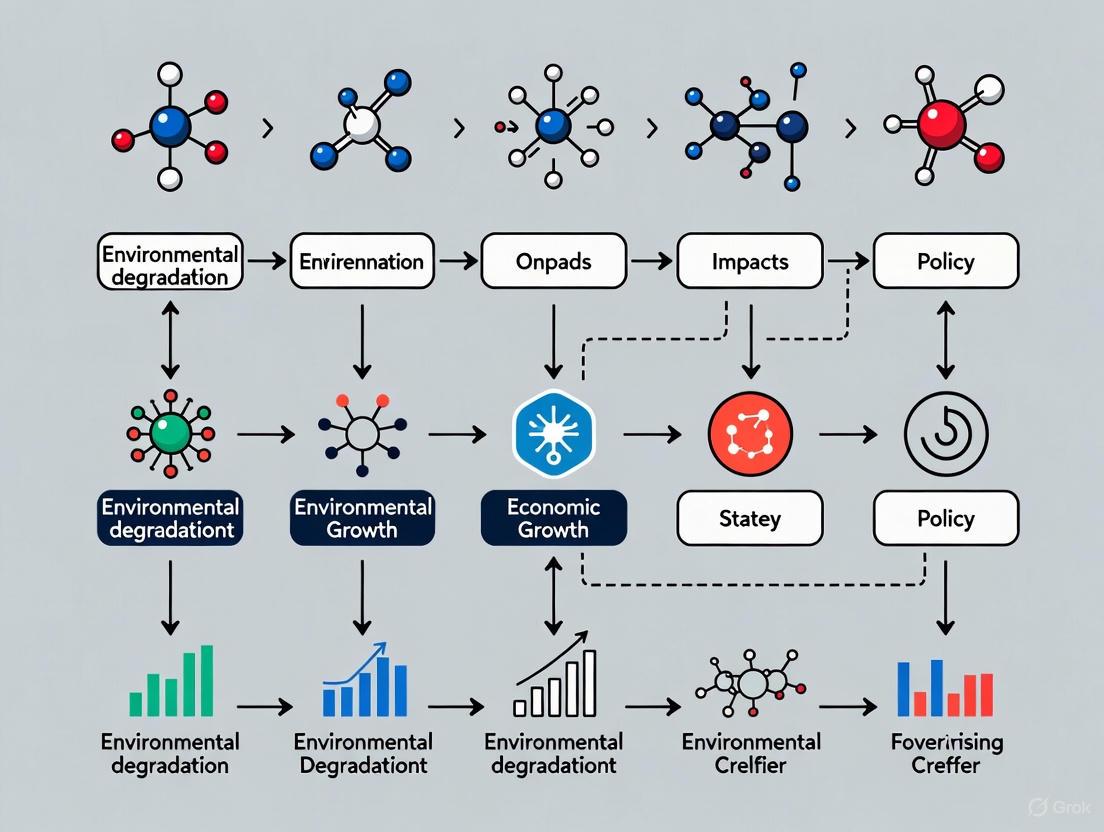
This article synthesizes contemporary research on the Environmental Kuznets Curve (EKC), moving beyond the foundational inverted U-shaped hypothesis to explore its complex modern manifestations.
Beyond the Inverted U: Evolving Trends and Complexities in Environmental Kuznets Curve Research
Abstract
This article synthesizes contemporary research on the Environmental Kuznets Curve (EKC), moving beyond the foundational inverted U-shaped hypothesis to explore its complex modern manifestations. We examine the emergence of N-shaped curves, the critical roles of methodological innovations like dynamic panel data and asymmetric modeling, and the influence of novel factors including economic policy uncertainty, digitalization, and spatial dependencies. By critically assessing the hypothesis's validity across diverse global contexts—from advanced to fragile economies—this analysis provides researchers and policymakers with a comprehensive understanding of the nuanced relationship between economic development and environmental sustainability, offering insights for crafting targeted and effective climate policies.
Revisiting the Core: The Evolution and Current State of the EKC Hypothesis
The Environmental Kuznets Curve (EKC) hypothesis represents one of the most influential and debated paradigms in environmental economics, proposing an inverted U-shaped relationship between economic growth and environmental degradation. For decades, this framework has guided policymaking and academic research, suggesting that environmental impacts inevitably increase during early development stages but eventually decline as economies reach a sufficient income threshold. However, the morphology of this relationship is undergoing a fundamental reconceptualization within contemporary environmental scholarship.
This whitepaper examines the critical evolution from the traditional inverted-U curve to more complex N-shaped and other nonlinear patterns observed in recent empirical studies. This morphological shift carries profound implications for sustainable development policy, challenging the once-prevalent "grow first, clean later" approach. We analyze the methodological innovations driving this paradigm shift, present current empirical evidence across global contexts, and provide researchers with advanced tools for investigating the increasingly complex growth-environment nexus.
Theoretical Evolution: From Inverted-U to N-Shaped Curves
Foundations of the EKC Hypothesis
The EKC hypothesis, pioneered by Grossman and Krueger (1991), emerged from the empirical observation that various environmental pollutants initially worsen then improve as per capita income increases [1] [2]. The theoretical framework explains this pattern through three interconnected effects:
- Scale Effect: In early development, expanded economic activity increases resource use and pollution.
- Composition Effect: Economies transition from industrial to service-based structures.
- Technique Effect: Advanced economies develop and implement cleaner technologies.
The original inverted-U model suggested a single turning point after which economic growth would correlate with environmental improvement, providing an optimistic narrative for developing economies [1].
The Emergence of N-Shaped Morphologies
Recent empirical evidence reveals a more complex reality, with many studies identifying N-shaped curves where environmental degradation declines after the first turning point but rises again at higher income levels [3]. This tertiary increase suggests that scale effects may eventually overcome technique and composition effects in mature economies due to:
- Rebound effects from increased consumption
- Limitations of technological decoupling
- International carbon leakage through trade
- Resource-intensive consumption patterns in wealthy nations
A 2024 global study of 214 countries confirmed a robust N-shaped EKC, with linear and cubic terms of GDP per capita being significantly positive while the quadratic term was significantly negative [3]. This pattern has been observed across multiple contexts, including top nuclear-producing countries, OPEC nations, and emerging economies [3].
Table 1: Theoretical Foundations of EKC Morphological Types
| Morphological Type | Functional Form | Theoretical Explanation | Policy Implication |
|---|---|---|---|
| Inverted-U Shape | Single turning point | Sequential dominance of scale, then technique/composition effects | "Grow first, clean later" approach |
| N-Shape | Second turning point with renewed degradation | Rebound effects, consumption patterns, international leakage | Need for continuous policy intervention |
| Monotonic Increase | No turning point | Lock-in to carbon-intensive development | Fundamental restructuring required |
| No Relationship | Statistically insignificant | Countervailing forces or inadequate measurement | Context-specific analysis needed |
Empirical Evidence: Heterogeneous Patterns Across Contexts
Global and Cross-Country Patterns
Comprehensive analyses reveal significant heterogeneity in EKC patterns across different economic and geographic contexts:
- A 2024 cross-correlation analysis of 158 countries found EKC validity varies substantially by income group, with high-income countries showing the highest percentage of alignment with decoupling hypotheses [4].
- Low-income countries predominantly exhibit a positive correlation between GDP and emissions, lacking evidence of turning points [4].
- European and Asian regions demonstrate the strongest EKC alignment, while other regions show inconsistent patterns [4].
- A 2025 data-driven approach using Bayesian Model Averaging on 84 economies found the standard inverted U-shaped EKC is not consistently supported by data, with evidence emerging for various patterns including linear, U-shaped, and cubic relationships [5].
Subnational and Regional Heterogeneity
Analysis at subnational levels reveals even greater complexity in growth-environment relationships:
- In Chinese metropolitan areas, core cities exhibit a significant inverted U-shaped relationship while non-core cities show no evidence of EKC patterns [6].
- Industrial structure advancement significantly reduces emissions in core cities but has insignificant effects in non-core cities, highlighting regional capacity differences in structural transformation [6].
- South Korean regional analysis shows pollutant-specific variations, with some air contaminants following EKC patterns while others deviate due to industrial specialization and population density [7].
Table 2: Empirical Evidence of EKC Morphologies Across Contexts
| Study Context | Time Period | Key Findings | Turning Point(s) |
|---|---|---|---|
| 214 countries [3] | Recent decades | Robust N-shaped EKC pattern | 45.08 and 73.44 thousand USD |
| 158 countries [4] | 1990-2020 | Heterogeneous patterns by income group | Varies by development level |
| Chinese metropolitan areas [6] | 2000-2020 | EKC valid in core but not non-core cities | Core cities: inverted-U |
| 84 advanced/emerging economies [5] | 1995-2015 | Mixed evidence; no consensus on functional form | Highly variable |
| South Korean regions [7] | 1999-2021 | Pollutant-specific patterns | Varies by pollutant type |
Methodological Approaches and Analytical Frameworks
Addressing Model Uncertainty and Variable Selection
Conventional EKC analyses face significant methodological challenges, particularly model uncertainty and variable selection bias [5]. Recent approaches address these limitations through:
- Bayesian Model Averaging (BMA): A data-driven technique that minimizes arbitrariness in model specification by considering multiple model structures simultaneously [5].
- Double-Selection LASSO (DSL): A frequentist approach that uses LASSO regressions for variable selection followed by OLS estimation to obtain coefficient estimates [5].
- Cross-correlation analysis: Dynamic approaches that assess lead-lag relationships between income and emissions over time [4].
These methodologies help overcome the "certain arbitrariness in empirical studies regarding the assumed functional form of the EKC" that has characterized much previous research [5].
Incorporating Additional Explanatory Variables
Contemporary EKC analyses have expanded beyond the basic income-emissions relationship to include numerous contextual factors:
- Traditional variables: Energy use, economic structure, urbanization [5]
- Institutional factors: Governance quality, geopolitical risks, institutional quality [3]
- Technological factors: ICT development, artificial intelligence, digital economy metrics [3]
- Social and resource factors: Population aging, food security, natural resource rents [3]
Studies confirm that these additional variables significantly influence EKC morphology, with institutional quality and energy transition generally reducing emissions, while geopolitical risks and food security concerns may increase them [3].
Research Toolkit: Analytical Frameworks for EKC Analysis
Experimental and Analytical Workflow
The following diagram illustrates the comprehensive methodological workflow for contemporary EKC analysis:
Diagram 1: Comprehensive Workflow for EKC Analysis
Essential Research Reagent Solutions
Table 3: Essential Methodological Approaches for Contemporary EKC Research
| Method Category | Specific Techniques | Application Context | Key Considerations |
|---|---|---|---|
| Model Specification | Quadratic terms, Cubic terms, Interaction effects | Testing inverted-U vs. N-shaped hypotheses | Risk of overfitting with higher polynomials |
| Variable Selection | Bayesian Model Averaging (BMA), Double-Selection LASSO (DSL) | Addressing model uncertainty and omitted variable bias | Computational intensity; interpretation complexity |
| Panel Data Methods | Fixed effects, Random effects, System GMM | Controlling for unobserved heterogeneity | Endogeneity concerns; dynamic relationships |
| Spatial Analysis | Spatial econometrics, Network analysis | Accounting for cross-regional spillovers and transfers | Data requirements; model specification challenges |
| Decoupling Analysis | Tapio decoupling model, Emission-GDP elasticity | Assessing dissociation between growth and emissions | Multiple decomposition methods available |
Critical Gaps and Research Directions
Conceptual and Methodological Limitations
Current EKC research faces several persistent challenges:
- Consumption vs. Production Emissions: Traditional EKC analyses focus on production-based emissions while ignoring the environmental impact of imported goods, potentially distorting the emissions trajectory over the economic growth path [2].
- Carbon Leakage: The relocation of pollutant industries from developed to developing regions may create artificial EKC patterns that reflect emission transfer rather than genuine decoupling [2] [6].
- Irreversible Environmental Damage: The environmental damage provoked in early development phases might not be repairable, even if EKC patterns eventually manifest [2].
- Inadequate Institutional Analysis: Many studies inadequately account for how political institutions, governance quality, and policy choices mediate the growth-environment relationship [1].
Promising Research Avenues
Future research should prioritize several emerging directions:
- Integration of Emerging Technologies: Systematically investigating how AI, digitalization, and smart infrastructure influence EKC morphology [3].
- Spatial Explicit Analyses: Employing spatial econometrics and network analysis to model cross-regional carbon transfers and spillover effects [6].
- Multi-scale Integrated Assessment: Connecting household, urban, regional, and national level analyses to overcome aggregation biases [6].
- Dynamic Policy Integration: Developing integrated assessment models that incorporate realistic policy scenarios and institutional dynamics [3].
The evolution of Environmental Kuznets Curve research from a simplistic inverted-U to more complex morphologies represents significant theoretical and empirical progress in understanding the growth-environment nexus. The emerging evidence for N-shaped and other complex patterns challenges the deterministic view that economic growth alone will eventually solve environmental problems and underscores the necessity for proactive, context-specific environmental governance.
For researchers and policymakers, these findings highlight that heterogeneity rather than uniformity characterizes the relationship between economic development and environmental impacts across different pollutants, regions, and institutional contexts. The morphological complexity revealed in contemporary studies necessitates more sophisticated analytical approaches and warns against one-size-fits-all policy prescriptions.
Future progress in this field will require not only methodological refinement but also conceptual expansion beyond traditional production-based metrics toward consumption-based accounting, greater attention to institutional and political factors, and more sophisticated integration of technological change dynamics. As the global community confronts accelerating environmental challenges, understanding the nuanced and evolving morphology of the growth-environment relationship remains an urgent research priority with profound implications for sustainable development strategy.
The Environmental Kuznets Curve (EKC) hypothesis represents a foundational framework in environmental economics, postulating an inverted U-shaped relationship between economic development and environmental degradation [8]. Initially conceived by Simon Kuznets to describe income inequality, this model was subsequently applied to environmental indicators, suggesting that pollution increases during early economic development but eventually declines after a certain income threshold is reached [2]. The mechanisms underlying this hypothesized trajectory are explained through three fundamental effects: the scale effect (increased economic output raising resource use), the composition effect (structural shifts from industrial to service-based economies), and the technique effect (advancements in cleaner technologies) [8].
Recent global developments, including renewed reliance on fossil fuels in developed nations and the escalating climate crisis, have prompted critical reassessment of the traditional EKC model [3]. A 2024 comprehensive analysis of 214 countries suggests the emergence of a more complex N-shaped EKC, where environmental improvement eventually reverses at very high income levels, challenging the "grow first, clean later" paradigm [3]. This technical guide examines the contemporary dynamics of scale, composition, and technology effects within this revised framework, providing methodological protocols and analytical tools for researchers investigating economic-environmental linkages.
Theoretical Evolution: From Inverted-U to N-Shaped EKC
The Traditional EKC Framework
The traditional EKC hypothesis emerged from seminal work by Grossman and Krueger (1991), who observed that various pollutants followed an inverted U-shaped pattern relative to economic growth [3] [2]. The theoretical underpinnings of this relationship stem from three sequential effects:
- Scale Effect: In early development stages, economic expansion increases resource consumption and pollution emissions, ceteris paribus.
- Composition Effect: As economies evolve, their economic structure shifts from heavy industry toward services and knowledge-intensive sectors, altering pollution profiles.
- Technique Effect: Rising incomes drive demand for environmental quality, while technological progress enables cleaner production methods [8].
The turning point at which environmental degradation begins to decline has been variably estimated across studies, reflecting methodological differences and contextual factors [2].
Contemporary Evidence for N-Shaped Patterns
Recent research utilizing expanded datasets and additional control variables challenges the permanence of environmental improvement in post-industrial economies. A 2024 study analyzing 214 countries identified a robust N-shaped EKC, where the relationship between per capita GDP and carbon emissions exhibits two inflection points [3]. The analysis found significantly positive linear and cubic GDP terms alongside a significantly negative quadratic term, indicating that environmental improvements eventually reverse at very high income levels.
The study calculated these inflection points at $45,080 and $73,440 per capita GDP respectively, suggesting that even advanced economies may experience resurgent environmental impacts without targeted policy interventions [3]. This N-shaped pattern implies that the technique effect's dominance may be temporary, with scale effects potentially reasserting themselves in hyper-consumptive societies unless technological innovation and structural changes continuously decouple growth from environmental impact.
Table 1: Key Studies on EKC Shape and Inflection Points
| Study Scope | EKC Shape Identified | Inflection Point(s) | Key Contributing Factors |
|---|---|---|---|
| 214 countries (2024) [3] | N-shaped | $45,080 and $73,440 (GDP per capita) | Geopolitical risk, ICT, food security increase emissions; institutional quality, energy transition decrease emissions |
| High-income countries (2021) [9] | Inverted U-shaped | Varies by country | Population aging weakens economy-environment link after threshold |
| Zambia (1990-2020) [10] | No EKC | Not applicable | Economic growth, energy use, population growth, and trade increase deforestation |
| Global assessment [8] | Monotonically rising | Not applicable | Most environmental impacts rise with income, though elasticity <1 |
Contemporary Analysis of Core Drivers
Scale Effects in the Modern Global Economy
The scale effect refers to the increased environmental pressure resulting from expanded economic activity, holding technology and economic structure constant. Contemporary research reveals that scale effects remain significant drivers of environmental impact, particularly in rapidly industrializing economies [10]. In Zambia, for instance, a 1% rise in economic growth resulted in a 3.5% increase in deforestation in the short run and a 2.2% increase in the long run, demonstrating persistent scale effects [10].
Globalization has complicated scale effects through international trade, potentially exporting environmental impacts from developed to developing nations—a phenomenon not fully captured in traditional EKC analyses that focus on production-based rather than consumption-based environmental accounting [2]. This suggests that apparent EKC patterns in wealthy nations may partially reflect offshoring of pollution-intensive industries rather than genuine environmental improvement.
Composition Effects: Structural Change and Dematerialization
Composition effects stem from economic restructuring during development. Historically, this entailed shifting from agriculture to industry (increasing environmental impact) and subsequently to services (theoretically reducing impact). Recent evidence suggests this transition exhibits more complexity than previously assumed.
The digital economy exemplifies this complexity, simultaneously driving dematerialization while creating new environmental challenges through energy consumption, rare earth mineral extraction, and electronic waste [11] [12]. Research indicates that the composition effect's strength varies significantly across country groups categorized by development stage and decoupling status [3].
Population aging represents another compositional factor influencing environmental outcomes. Studies examining 140 countries found that aging initially strengthens then weakens the association between economic growth and ecological footprint in high-income nations, creating a fluctuating EKC pattern as aging deepens [9]. This suggests demographic composition interacts with economic composition in determining environmental impacts.
Technology Effects: Beyond the Technique Hypothesis
Technology effects encompass both production technologies and environmental abatement technologies. Contemporary research examines several technological dimensions beyond traditional technique effects:
- Information and Communication Technology (ICT): Shows mixed impacts, with some applications improving efficiency while others increase energy consumption [3].
- Artificial Intelligence: Evidence regarding AI's environmental impact remains statistically insignificant in global analyses, suggesting heterogeneous applications with both beneficial and detrimental effects [3].
- Energy Transition Technologies: Renewable energy and energy efficiency technologies demonstrate significantly negative effects on carbon emissions, representing potent technique effects [3].
- General Purpose Technologies (GPTs): Technologies like lasers, quantum computing, and genetic engineering potentially transform multiple sectors but exhibit delayed impacts due to necessary complementary innovations [13].
The long-term relationship between technological complexity and economic growth further moderates technology effects. In the United States, technological complexity became a significant predictor of GDP growth only after the 1990s ICT revolution, despite 170 years of patent activity [14]. This indicates that the mere existence of technology insufficiently drives environmental improvement; its effective integration into economic systems determines its technique effect potency.
Table 2: Direction and Significance of Selected EKC Determinants (214-Country Study) [3]
| Variable Category | Specific Variable | Impact on CO2 Emissions | Statistical Significance |
|---|---|---|---|
| Institutional Factors | Geopolitical Risk | Positive | Significant |
| Institutional Factors | Composite Risk | Negative | Significant |
| Institutional Factors | Institutional Quality | Negative | Significant |
| Technological Factors | ICT | Positive | Significant |
| Technological Factors | Artificial Intelligence | Insufficient evidence | Insignificant |
| Technological Factors | Digital Economy | Negative | Significant |
| Resource & Energy | Energy Transition | Negative | Significant |
| Resource & Energy | Natural Resource Rents | No clear impact | Insignificant |
| Social Factors | Population Aging | Negative | Significant |
| Social Factors | Food Security | Positive | Significant |
| Economic Factors | Trade Openness | No clear impact | Insignificant |
| Economic Factors | Income Inequality | No clear impact | Insignificant |
Methodological Protocols for EKC Research
Econometric Specification and Model Selection
Contemporary EKC research requires careful methodological specification to avoid spurious results. The basic N-shaped EKC specification extends the traditional quadratic form with a cubic term:
CO2ₜ = α + β₁GDPₜ + β₂GDPₜ² + β₃GDPₜ³ + δXₜ + εₜ
Where CO2 represents per capita carbon emissions, GDP represents per capita gross domestic product, and X represents a vector of control variables [3]. Researchers must test for unit roots and cointegration to address non-stationarity in time series data, utilizing approaches like the ARDL bounds test or Vector Error Correction Models [10].
The 2024 214-country study incorporated 12 additional variables across economic, institutional, technological, resource, and social dimensions, significantly improving model robustness [3]. Control variable selection should be theoretically grounded rather than data-driven to avoid overfitting and spurious correlations.
Country Grouping Protocol: Two-Dimensional Tapio Decoupling Model
Addressing heterogeneity across countries requires sophisticated grouping methodologies. The two-dimensional Tapio decoupling model, based on N-shaped EKC inflection points, categorizes countries by both economic development stage and decoupling status:
Calculate decoupling coefficients using the formula: Decoupling Coefficient = %ΔCO2 / %ΔGDP
Identify country-specific EKC inflection points through iterative regression analysis.
Categorize countries relative to inflection points (pre-first, between, post-second).
Cross-classify countries by development stage and decoupling status, creating six homogeneous groups for subsequent regression analysis [3].
This protocol enables identification of heterogeneous impacts across country groups, revealing that most variables affect carbon emissions differently in direction and magnitude across categories [3].
Machine Learning Approaches: Comparison Data Forest
Emerging methodologies combine traditional factor analysis with machine learning. The Comparison Data Forest (CDF) approach integrates the comparison data method with random forest algorithms:
Data Simulation: Generate populations with known factorial structures using iterative algorithms (e.g., GenData function).
Feature Extraction: Calculate data characteristics including eigenvalues, matrix norms of correlation matrices, sample size, number of variables, and Gini coefficients of bivariate correlations.
Model Training: Train machine learning models (typically random forests) to predict factor numbers using extracted features.
Validation: Evaluate prediction accuracy on test samples of simulated data sets.
This approach demonstrates higher accuracy than traditional parallel analysis or comparison data methods alone, particularly for complex data structures [15].
Visualization of EKC Dynamics and Methodological Approaches
Conceptual Evolution of EKC Patterns
Methodological Workflow: Comparison Data Forest Approach
Table 3: Key Research Reagent Solutions for EKC Analysis
| Tool Category | Specific Tool/Software | Primary Function | Application Context |
|---|---|---|---|
| Econometric Software | R (plm, ardl, urca packages) | Panel data analysis, cointegration testing | Estimating EKC models with time series data |
| Machine Learning Environment | Python (scikit-learn, pandas, numpy) | Implementing CDF approach, feature engineering | Advanced factor retention analysis |
| Data Sources | World Bank Open Data, IMF Statistics | GDP, population, institutional quality indicators | Cross-country comparative analysis |
| Environmental Indicators | Global Carbon Project, Global Footprint Network | CO2 emissions, ecological footprint data | Dependent variable measurement |
| Visualization Tools | Graphviz, ggplot2, matplotlib | Creating diagrams, generating plots | Presenting EKC curves and methodologies |
| Decoupling Metrics | Tapio decoupling coefficients | Calculating economy-environment decoupling | Country grouping and classification |
This technical examination reveals that the fundamental drivers of the Environmental Kuznets Curve—scale, composition, and technology effects—operate within increasingly complex global systems. The emerging evidence for N-shaped patterns across 214 countries indicates that environmental improvements at higher income levels cannot be assumed automatic or permanent [3]. Rather, they depend on continuous technological innovation, structural economic transformation, and reinforcing institutional frameworks.
Future EKC research requires more sophisticated methodologies that account for global value chains, consumption-based environmental accounting, and heterogeneous effects across country groups [2]. The integration of machine learning approaches with traditional econometrics offers promising avenues for more robust dimensionality assessment and model specification [15]. For policymakers, these findings underscore the necessity of targeted interventions that proactively address the potential resurgence of environmental degradation in advanced economies, particularly through energy transition, institutional strengthening, and digital economy regulation [3].
As technological change accelerates—spanning artificial intelligence, biotechnology, and energy systems—its ultimate impact on the economy-environment relationship will be determined not merely by technical capacity but by governance frameworks, market structures, and societal choices that shape how technology is developed and deployed [13] [12]. The EKC, in its evolving conceptualizations, remains a valuable framework for investigating these critical interactions, though its simplistic original formulation requires continual refinement to reflect contemporary global economic realities.
The Environmental Kuznets Curve (EKC) hypothesis represents one of the most debated and empirically tested propositions in environmental economics. It posits an inverted U-shaped relationship between environmental degradation and income per capita, suggesting that pollution increases in the early stages of economic development but eventually declines after a certain income threshold is reached. This whitepaper synthesizes fresh evidence from recent comprehensive multi-country studies to assess the current validity, nuances, and policy implications of the EKC hypothesis in the context of global environmental challenges.
Recent research has significantly advanced beyond early EKC analyses by incorporating spatial dependencies, heterogeneous effects across regions and income groups, and previously overlooked social and economic variables. This global assessment leverages findings from studies spanning 191 countries, 147 nations, and detailed municipal-level analyses to provide technical guidance for researchers and policymakers navigating the complex interplay between economic development and environmental sustainability.
Theoretical Framework and Evolution of EKC Research
The EKC hypothesis finds its origins in the work of Simon Kuznets (1955), who proposed an inverted U-shaped relationship between income inequality and economic development [2]. In the early 1990s, this framework was extended to environmental quality by Grossman and Krueger (1991) and Panayotou (1993), who formally labeled it the Environmental Kuznets Curve [16] [17]. The theoretical foundation rests on three primary effects: the scale effect (increased pollution from expanded economic activity), composition effect (structural shifts from industrial to service-based economies), and technique effect (adoption of cleaner technologies with rising incomes).
Early EKC research predominantly employed simplified quadratic functions between income and pollution indicators, but methodological evolution has incorporated increasingly sophisticated approaches. Recent studies have integrated spatial econometrics, threshold panel models, and mediation analysis to capture the complex, non-uniform relationships between economic development and environmental outcomes [18] [16] [6]. This progression reflects growing recognition that the income-pollution relationship is mediated by factors including trade policies, institutional quality, technological diffusion, and spatial dependencies.
The EKC framework has expanded beyond traditional air pollutants to encompass broader environmental indicators, most notably carbon emissions and ecological footprint, with a 2022 literature review surveying more than 200 articles from 1998-2022 [2]. This evolution responds to critiques that earlier studies overlooked critical issues such as carbon leakage, consumption-based emissions, and irreversible environmental damage that may occur before the turning point is reached.
Global Empirical Evidence: Multi-Country Studies
Comprehensive Income-Emissions Analysis
A pivotal global assessment of 191 countries from 1989-2022 provides compelling evidence for the EKC hypothesis, identifying a consistent turning point at approximately $25,000 GDP per capita [19]. This analysis reveals significant variations in this threshold across economic development stages, with advanced economies typically reaching their inflection point between $35,000-$50,000, while emerging markets transition at substantially lower income levels ($5,000-$18,000).
Table 1: EKC Turning Points by Economic Development Stage
| Country Classification | Income Threshold (GDP per capita) | Representative Countries | Period of Inflection |
|---|---|---|---|
| Advanced Economies | $35,000 - $50,000 | United States, Canada, France, Australia | Mid-1990s for most economies |
| Emerging Markets | $5,000 - $18,000 | China, India | Still approaching inflection |
| Global Average | ~$25,000 | Cross-country average | Varies by development path |
This research demonstrates that climate policy stringency significantly influences the EKC shape, with market-based instruments (particularly carbon taxes) proving more effective in flattening the curve than non-market regulations [19]. At approximately the 75th percentile of policy stringency, the relationship between income and emissions effectively disappears, indicating complete decoupling.
Trade Protectionism and Heterogeneous Effects
A 2024 analysis of 147 countries from 1995-2018 substantiates the EKC hypothesis while revealing the moderating effect of trade policies [16]. This comprehensive study establishes that trade protectionism generally exacerbates environmental degradation, particularly in lower-income countries, aligning with the pollution haven hypothesis. The research identifies nuanced variations across economic development stages:
- High-income countries: Trade protection marginally reduces environmental degradation, potentially by limiting importation of emissions-intensive goods.
- Middle and low-income countries: Trade protection significantly increases environmental pressure, likely through preservation of polluting domestic industries and reduced technology transfer.
The study further validates an inverted U-shaped relationship between economic growth and both carbon emissions and ecological footprint, with rising incomes initially intensifying environmental impact before yielding eventual improvements after country-specific turning points.
Spatial Dependencies and Subnational Evidence
Recent spatial econometric approaches have challenged the homogeneity assumption in traditional EKC models. A Swedish municipal-level study (2015-2021) employing a Heterogeneous Spatial Durbin Model (HSDM) confirmed an inverted U-shaped relationship for CO, CO2, and CH4 emissions across most municipalities [18]. However, the analysis revealed significant spatial spillover effects, indicating that economic growth alone may insufficiently reduce emissions without accounting for transboundary pollution.
Table 2: Spatial EKC Evidence from Swedish Municipalities (2015-2021)
| Pollutant | Municipalities with EKC Pattern | Total Municipalities Analyzed | Spatial Spillover Effects |
|---|---|---|---|
| CO | 182 | 285 | Significant positive spatial autocorrelation |
| CO2 | 128 | 285 | Moderate spatial dependencies |
| CH4 | 158 | 285 | Strong cross-municipality effects |
Chinese metropolitan research (2000-2020) further challenges uniform EKC application, revealing that while core cities exhibit the predicted inverted U-shape, non-core cities frequently experience continued emissions growth due to industrial transfer and limited structural transformation capacity [6]. This highlights the critical importance of regional economic structures and core-periphery dynamics in shaping environmental outcomes.
Methodological Protocols for EKC Assessment
Advanced Econometric Approaches
Contemporary EKC research employs sophisticated methodological frameworks to address limitations of earlier approaches. The following experimental protocols represent current best practices:
Spatial Econometric Modeling: The Swedish municipal study implemented a Heterogeneous Spatial Durbin Model (HSDM) to account for spatial dependencies [18]. The fundamental specification extends the traditional EKC model:
[ E{it} = \rho WE{it} + \beta1Y{it} + \beta2Y{it}^2 + \delta1WY{it} + \delta2WY{it}^2 + \theta X{it} + \varepsilon{it} ]
Where (E{it}) represents emissions in municipality i at time t, (Y{it}) denotes income per capita, W is the spatial weights matrix, (X_{it}) contains control variables, and (\rho) captures spatial autocorrelation. This approach relaxes the implausible homogeneity assumption of traditional models and quantifies spillover effects between geographical units.
Threshold Panel Regression: The trade protectionism analysis employed a panel threshold model with trade openness as the threshold variable [16]. The general specification:
[ E{it} = \mui + \beta1Y{it}I(q{it} \leq \gamma) + \beta2Y{it}I(q{it} > \gamma) + \theta X{it} + \varepsilon{it} ]
Where (q_{it}) represents the threshold variable (trade openness), (\gamma) is the threshold parameter, and (I(⋅)) is the indicator function. This approach captures nonlinearities and regime-dependent relationships without imposing restrictive functional form assumptions.
Two-Way Fixed Effects with Mediation Analysis: The Chinese metropolitan study combined two-way fixed effects models with mediation analysis to identify causal pathways [6]. The model structure:
[ E{it} = \alphai + \lambdat + \beta1Y{it} + \beta2Y{it}^2 + \beta3X{it} + \varepsilon{it} ]
Followed by mediation testing through:
[ M{it} = \alphai^M + \lambdat^M + \pi1Y{it} + \pi2Y{it}^2 + \pi3X{it} + \varepsilon{it}^M ]
[ E{it} = \alphai' + \lambdat' + \beta1'Y{it} + \beta2'Y{it}^2 + \varphi M{it} + \beta3'X{it} + \varepsilon_{it}' ]
Where (M_{it}) represents the mediating variable (industrial structure advancement), enabling decomposition of direct and indirect effects.
Core-Periphery Analytical Framework
The Chinese metropolitan research established a specialized protocol for analyzing EKC heterogeneity between core and non-core cities [6]. The analytical workflow progresses through sequential stages:
Diagram 1: Core-Periphery EKC Analysis
This framework identifies divergent pathways where core cities achieve emissions decoupling through industrial advancement, while non-core cities experience carbon intensification due to transferred polluting industries and limited transformation capacity.
Research Reagent Solutions: Methodological Toolkit
Table 3: Essential Analytical Tools for Contemporary EKC Research
| Research Tool | Specification | Application Context | Key Function |
|---|---|---|---|
| Spatial Durbin Model | Heterogeneous specification with maximum likelihood estimation | Municipal/regional analyses with spatial dependencies | Captures spillover effects and spatial heterogeneity |
| Panel Threshold Regression | Fixed effects with endogenous threshold estimation | Studies with suspected regime-dependent relationships | Identifies nonlinearities and structural breaks |
| Two-Way Fixed Effects | Individual and time fixed effects with clustered standard errors | Baseline EKC estimation with panel data | Controls for unobserved heterogeneity |
| Mediation Analysis | Structural equation modeling with bootstrapped standard errors | Investigating transmission mechanisms | Decomposes direct and indirect effects |
| Ecological Footprint Metric | Comprehensive bioproductive land requirement | Alternative to singular pollution indicators | Holistic environmental impact assessment |
Critical Assessment and Research Gaps
Despite substantial empirical support, the EKC hypothesis faces several theoretical and methodological challenges. The Green Solow Model highlights three critical dilemmas: consumption-based emissions from imported goods are rarely accounted for, technological progress may be offset by scale effects, and irreversible environmental damage can occur before the turning point [2].
Recent evidence suggests that social factors significantly reshape the EKC. Income inequality transforms the traditional inverted U-shaped curve into an N-shaped relationship, complicating decoupling efforts [17]. This indicates that distributional policies must be integrated into climate strategies, particularly as COVID-19 has exacerbated global inequality.
Methodologically, EKC estimation remains sensitive to functional specification, variable selection, and sample composition. The mixed evidence in literature partly reflects this methodological diversity rather than fundamental invalidity of the hypothesis [2]. Future research must address critical gaps including:
- Consumption-based accounting to address carbon leakage
- Improved temporal dynamics capturing path dependence
- Integrated assessment of multiple environmental indicators
- Technology diffusion mechanisms across development stages
- Policy endogeneity in climate-economy relationships
This global assessment confirms the enduring relevance of the EKC hypothesis while emphasizing its contextual complexity and policy contingencies. The empirical evidence from multi-country studies demonstrates that economic development can ultimately pathway to environmental improvement, but this trajectory is neither automatic nor universal.
Effective climate governance requires differentiated strategies based on development stage, spatial context, and institutional capacity. Core policy priorities include:
- Advanced economies should intensify market-based climate policies, particularly carbon pricing, to accelerate post-turning point emissions reduction
- Emerging economies require targeted technology transfer and climate finance to lower their EKC turning points and avoid high-pollution development pathways
- Regional development policies must address core-periphery dynamics to prevent carbon leakage and ensure equitable burden-sharing
- Social policies addressing income inequality must be integrated with climate strategies to achieve synergistic improvements
The EKC hypothesis provides a valuable framework for understanding dynamic economy-environment relationships, but should not inspire complacency about automatic decoupling. Strategic policy interventions, technological innovation, and international cooperation remain essential to bending the curve more rapidly and achieving climate goals across all development stages.
The Environmental Kuznets Curve (EKC) hypothesis posits a deterministic relationship between economic development and environmental degradation, suggesting that after a certain income threshold is reached, further economic growth leads to environmental improvement. This technical guide provides an in-depth examination of the methodologies and evidence for identifying these critical income thresholds and turning points for carbon emissions. Framed within broader EKC research trends, this whitepaper synthesizes current findings on global and sub-national scales, details robust experimental protocols for threshold detection, and visualizes the complex pathways governing the income-emissions relationship. The analysis confirms that while the EKC hypothesis finds support, the turning point is not automatic but is critically mediated by factors such as industrial structure, technological innovation, and climate policy stringency.
The Environmental Kuznets Curve (EKC), drawing its name from the Kuznets curve of income inequality, provides a framework for hypothesizing an inverted U-shaped relationship between per capita income and environmental degradation [19] [20]. Initially, economic growth drives increased carbon emissions due to industrialization and resource-intensive expansion. However, upon reaching a critical income threshold, economies are theorized to undergo a structural transformation. This "critical turn" is characterized by a shift towards service-based and knowledge-intensive industries, heightened environmental awareness, and the implementation of stringent climate policies, ultimately leading to a decoupling of economic growth from carbon emissions [19] [6].
The validity and policy relevance of the EKC hypothesis remain subjects of intense academic debate. Understanding the precise mechanisms and thresholds at which this decoupling occurs is paramount for designing effective, equitable climate strategies, particularly for rapidly developing economies. This guide consolidates the latest research to equip professionals with the methodologies and evidence needed to navigate this complex field.
Quantitative Data: Global and Regional Income Thresholds
Empirical studies have identified varying income thresholds for the EKC turning point, influenced by regional contexts, methodological approaches, and time frames. The data indicates that a one-size-fits-all threshold does not exist.
Table 1: Identified Income Thresholds for the EKC Turning Point
| Scope / Region | Identified Threshold (GDP per capita, USD) | Key Context & Notes | Primary Source |
|---|---|---|---|
| Global Average | ~$25,000 | Average turning point across 191 countries; significant national variation exists. | [19] |
| Advanced Economies | $35,000 - $50,000 | Examples include Australia, Canada, France, and the United States. | [19] |
| Emerging & Developing | $5,000 - $18,000 | Lower threshold highlights different development pathways and policies. | [19] |
| BRICS Nations | Varies by country | Supported by evidence that economic growth initially raises emissions but later reduces them as economies develop. | [21] |
| Core Cities in Chinese Metropolitan Areas | City-specific | Core cities show a significant EKC, while non-core cities often do not, indicating intra-regional inequality. | [6] |
Table 2: Global Progress in Decoupling Economic Growth from CO₂ Emissions
| Country Grouping | Decoupling Status | Number of Countries | Key Findings | Primary Source |
|---|---|---|---|---|
| By Development Status | Decoupled | 49 | Most are high-income nations, primarily in Europe and Oceania. | [20] |
| Not Decoupled | 115 | Includes most African, American, and Asian countries. | [20] | |
| By Analysis Framework | Top 10% of U.S. households | N/A | Associated with 40% of U.S. national emissions in 2019; investment income is a major driver. | [22] |
| Top 1% of U.S. households | N/A | Linked to 15-17% of national emissions; over 50% of their emissions are from investment income. | [22] |
Methodological Protocols for Identifying Turning Points
Accurately identifying EKC thresholds requires robust statistical methods that address common pitfalls in the literature, such as multicollinearity and assuming uniform parameters across diverse countries.
Segmented-Sample Regression Analysis
This approach, designed to avoid multicollinearity and spurious regressions, involves splitting national data into smaller time periods to build the income-emissions relationship sequentially without imposing a pre-defined functional form [20].
Experimental Protocol:
- Data Collection: Gather long-term, nationally representative time-series data for GDP per capita and CO₂ emissions per capita. The data used in one global analysis spanned 191 countries from 1822 to 2018 [20].
- Segmentation: Divide the time series for each country into smaller, overlapping or contiguous periods (e.g., 10- or 15-year windows). A global analysis of 164 countries required 932 individual regressions [20].
- Regression Modeling: For each segment, estimate the equation: ( \ln(CO{2{cap}}) = \beta0 + \beta1 \ln(GDP{cap}) + \epsilon ) where ( \beta1 ) represents the income elasticity of emissions.
- Threshold Identification: Plot the estimated elasticities (( \beta_1 )) over time or against average income levels for each segment. The turning point is identified as the period or income level where the elasticity becomes statistically insignificant or negative, indicating decoupling.
Bivariate Distributional Copula Models
This novel method moves beyond mean regression to uncover complex, nonlinear dependence structures between income inequality (GINI index) and carbon emissions that are often hidden by simpler models [23].
Experimental Protocol:
- Data Preparation: Construct a panel dataset incorporating consumption-based CO₂ emissions (to account for trade) and the GINI coefficient for income inequality, alongside control variables (e.g., democracy level, fossil energy share, sectoral composition) [23].
- Model Specification: The copula model binds the marginal distributions of the GINI and CO₂ variables via a bivariate cumulative distribution function (CDF) to analyze their joint behavior, allowing for varying effects of covariates across the entire distribution [23].
- Stratification and Analysis: Stratify the analysis by country income groups (low, middle, high). Estimate the model to derive the conditional dependence parameter between inequality and emissions for each group.
- Interpretation: A positive dependence suggests synergies (higher inequality correlates with higher emissions), a negative dependence indicates trade-offs, and a near-zero parameter implies decoupling. This reveals how the relationship varies within and between country groups [23].
Environmental-Extended Input-Output (EEIO) Analysis for Household Emissions
This methodology links income distributions to emissions by calculating the carbon intensity of income generation across economic sectors, providing a micro-level perspective on carbon inequality [22].
Experimental Protocol:
- Calculate Emissions Intensities: Use a Multi-Region Input-Output (MRIO) model, such as the Eora database, to calculate producer-based and supplier-based GHG emissions intensities (tons of CO₂e per dollar of output) for all economic sectors [22].
- Link with Household Data: Merge these emissions intensities with detailed household income surveys (e.g., the IPUMS Current Population Survey). Link an individual's wage income from a specific industry to that industry's emissions intensity. For investment income, model emissions using weighted national average multipliers based on diversified portfolios [22].
- Aggregate and Analyze: Aggregate emissions by household and bin households into income groups (e.g., deciles, top 1%, top 0.1%). Analyze the contributions of different income groups to national emissions and the carbon intensity of various income sources (wages vs. investments) [22].
Visualization of Research Workflows and Pathways
The following diagram illustrates the core EKC hypothesis and the primary methodological pathways for its investigation, as detailed in this guide.
Diagram: EKC Hypothesis and Research Pathways. The core EKC framework (yellow/green/blue) shows the transition from low to high emissions and the "critical turn" toward decoupling. Dashed lines connect this turn to the key methodologies (white) used to identify it and their primary research outcomes (red).
Table 3: Key Research Reagents and Data Solutions for EKC Analysis
| Tool / Resource | Function / Description | Application Example |
|---|---|---|
| Multi-Region Input-Output (MRIO) Databases | Model global supply chains to calculate consumption-based and income-based carbon footprints. Eora is a prominent example. | Linking U.S. household income to global emissions by tracing over 2.8 billion inter-sectoral transfers [22]. |
| Integrated Household Surveys | Provide detailed, harmonized microdata on household income, demographics, and employment. IPUMS CPS is a key resource. | Disaggregating national data to analyze emissions responsibility across income deciles and the top 1% [22]. |
| Distributional Copula Models | Advanced statistical models that uncover nonlinear dependence structures between two variables without relying on mean effects. | Analyzing the complex, varying relationship between the GINI coefficient and carbon emissions across country groups [23]. |
| Segmented-Sample Regression Code | Custom statistical scripts (e.g., in R or Python) to automate the splitting of time-series data and sequential estimation of elasticities. | Overcoming multicollinearity to build a country-specific EKC without imposing a functional form a priori [20]. |
| Carbon Intensity Multipliers | Calculated metrics of GHG emissions (in CO₂e) per dollar of economic output for specific industries and investment portfolios. | Assigning an emissions value to wage income from the finance sector or to returns from a stock portfolio [22]. |
Advanced Analytics: Cutting-Edge Methodologies in Contemporary EKC Research
The investigation of the Environmental Kuznets Curve (EKC) hypothesis, which posits an inverted U-shaped relationship between economic growth and environmental degradation, has evolved significantly through advanced econometric methodologies. Early research relying on static panel models suffered from substantial limitations, including unaddressed endogeneity and ignored cross-sectional dependence, potentially generating biased inferences. This technical guide examines the transformative application of bias-corrected dynamic panel data models in environmental economics research. We demonstrate how methods such as the bias-corrected method of moments overcome persistent methodological challenges, offering researchers robust tools for estimating complex environmental-economic relationships. Through empirical examples from recent EKC studies and detailed experimental protocols, we provide a comprehensive framework for implementing these advanced techniques, enabling more reliable policy conclusions in sustainability research.
Research on the Environmental Kuznets Curve (EKC) has constituted a significant domain within environmental economics since its initial formulation by Grossman and Krueger (1991) [24]. The hypothesis proposes that environmental degradation increases with economic growth until a specific income threshold is reached, after which further economic development leads to environmental improvement [3]. Traditional econometric approaches to testing this hypothesis primarily utilized static panel models and early dynamic estimators that failed to adequately account for critical statistical issues including dynamic panel bias, cross-sectional dependence, and parameter heterogeneity [24].
The failure to incorporate these methodological considerations represented a fundamental limitation in early EKC research, potentially leading to mispecified models and invalid policy recommendations [3]. As noted in spatial econometric research on Sub-Saharan Africa, "the failure to include pertinent spatial spill-over factors in econometrics analysis can be a serious methodological flaw that results in inaccurate and ineffective estimates" [24]. This recognition has driven the adoption of more sophisticated estimation techniques, including spatial econometrics and bias-corrected dynamic panel models.
Bias-corrected method of moments estimators represent a significant advancement in this evolutionary path, addressing the Nickell bias that plagues dynamic panel models with fixed effects when the time dimension is small relative to the cross-sectional dimension [25]. These techniques have enabled researchers to obtain consistent estimates of the relationship between economic growth, institutional factors, and environmental outcomes while accounting for both temporal dynamics and cross-sectional dependencies.
Theoretical Foundations and Methodological Challenges
The EKC Framework and Empirical Challenges
The theoretical foundation of the EKC hypothesis originates from the observation that economic development initially intensifies environmental degradation through scale effects (increased economic activity), which may eventually be counterbalanced by technique effects (improved technology and environmental regulations) as economies mature [24]. The standard empirical specification tests this relationship through models incorporating income per capita and its quadratic (and sometimes cubic) form:
CO2_it = α + β_1GDP_it + β_2GDP²_it + β_3GDP³_it + γX_it + ε_it
Where CO2 represents environmental degradation, GDP represents income per capita, and X encompasses control variables including energy consumption, trade openness, and institutional factors [3].
Empirical testing of this relationship presents several methodological challenges:
- Dynamic Dependencies: Environmental degradation exhibits strong persistence, whereby current pollution levels depend on historical emissions [25].
- Endogeneity: Bidirectional causality between economic growth and environmental quality creates endogeneity problems [3].
- Cross-sectional Dependence: Global economic integration creates spillover effects where environmental policies or economic shocks in one country affect others [24].
- Parameter Heterogeneity: The relationship between income and environmental quality may vary across countries with different institutional characteristics [26].
Limitations of Traditional Estimation Approaches
Conventional estimation methods have proven inadequate for addressing these challenges:
- Static Fixed Effects Models: Ignore dynamic panel bias and fail to account for the persistent nature of environmental data [25].
- Early Difference GMM: Suffers from weak instrument problems, particularly when the time series is persistent [25].
- System GMM: While an improvement, can still generate biased estimates in panels with moderate time dimensions [25].
As research on 214 countries highlighted, "neglecting potential non-linearities can lead to misleading inference" about the EKC shape [3]. Similarly, studies of ASEAN nations demonstrated that failing to address cross-sectional dependence and dynamic bias can obscure the true relationship between female entrepreneurship and environmental outcomes [25].
Bias-Corrected Dynamic Panel Framework
Theoretical Model Specification
The robust estimation of EKC relationships requires a dynamic panel specification that accounts for both temporal persistence and cross-sectional dependence:
CO2_it = αCO2_i,t-1 + β_1GDP_it + β_2GDP²_it + β_3GDP³_it + γX_it + μ_i + λ_t + ε_it
Where CO2i,t-1 captures the persistence of environmental degradation, μi represents country-specific fixed effects, λt represents time-specific effects, and Xit includes control variables such as energy consumption, trade openness, and institutional quality [3].
Recent research incorporating ecological footprint and governance quality emphasizes the importance of comprehensive model specification: "We employ second-generation panel techniques that consider cross-sectional dependency and heterogeneity in panel data" [26].
Bias-Corrected Method of Moments Estimators
Bias-corrected estimators address the fundamental limitation of conventional panel estimators: the correlation between the lagged dependent variable and the error term. The transformation process eliminates individual fixed effects while minimizing the dynamic panel bias:
First Difference Transformation: ΔCO2it = αΔCO2i,t-1 + β1ΔGDPit + β2ΔGDP²it + β3ΔGDP³it + γΔXit + Δεit
Bias Correction: The bias-corrected least squares dummy variable (LSDV) estimator applies an analytical correction to the biased LSDV estimator, producing consistent estimates for panels with moderate time dimensions [25].
Moment Conditions: The estimator utilizes optimal moment conditions that exploit the orthogonality between lagged variables and the error term [25].
The ASEAN study applying this methodology noted: "The fixed-effects estimator with bias correction is deemed the most suitable model" for examining the EKC hypothesis with female entrepreneurship variables [25].
Experimental Protocol for EKC Estimation
Table 1: Experimental Protocol for Bias-Corrected EKC Estimation
| Stage | Procedure | Purpose | Technical Considerations |
|---|---|---|---|
| 1. Data Preparation | Collect balanced panel data for environmental indicators, income, and control variables | Ensure consistent estimation sample | Address missing data through interpolation or balanced panel selection |
| 2. Preliminary Testing | Cross-sectional dependence (CD) tests, unit root tests with cross-dependence | Verify statistical properties of variables | Use second-generation unit root tests (Pesaran CIPS) for robust inference |
| 3. Model Specification | Include linear, quadratic, and cubic income terms; select control variables based on theory | Capture potential EKC shapes | Test for spatial dependence; include spatial lags if necessary [24] |
| 4. Estimation | Apply bias-corrected method of moments estimator | Obtain consistent parameter estimates | Use robust standard errors to account for heteroskedasticity |
| 5. Validation | Residual diagnostics, sensitivity analysis with alternative estimators | Verify model robustness | Compare results with System GMM and spatial econometric models |
Research Reagents and Data Solutions
Table 2: Essential Research Reagents for EKC Analysis
| Reagent Category | Specific Measures | Application in EKC Research | Data Sources |
|---|---|---|---|
| Environmental Indicators | CO2 emissions, Ecological Footprint, Natural Resource Depletion | Dependent variables capturing environmental degradation | World Bank, Global Footprint Network |
| Economic Variables | GDP per capita (constant USD), GDP squared, GDP cubed | Core EKC explanatory variables | World Development Indicators |
| Energy Factors | Renewable energy consumption, Non-renewable energy consumption | Control for energy structure impacts | BP Statistical Review, IEA |
| Institutional Measures | Worldwide Governance Indicators, ND-GAIN Climate Adaptation Index | Capture institutional quality effects | World Bank, Notre Dame |
| Trade and Globalization | Trade openness (% of GDP), Foreign direct investment | Test pollution haven hypothesis | UNCTAD, World Bank |
| Technological Factors | ICT development, AI adoption indices | Digital economy environmental impacts | ITU, proprietary indices |
Implementation Workflow and Analytical Framework
The following diagram illustrates the comprehensive workflow for implementing bias-corrected dynamic panel models in EKC research:
Empirical Applications in Environmental Research
Case Study: ASEAN Economics and Female Entrepreneurship
A recent application of bias-corrected methods examined the environmental implications of female entrepreneurship in ASEAN economies [25]. The study utilized a panel of ten countries from 1980 to 2021, addressing cross-sectional dependence through bias-corrected moment estimators. Key findings included:
- N-shaped EKC: Evidence supporting a cubic relationship between income and emissions
- Female Entrepreneurship Impact: Positive association between female entrepreneurship rates and CO2 emissions
- Methodological Advantage: The bias-corrected approach enabled consistent estimation despite significant cross-sectional dependence
This study demonstrated how methodological advancements can reveal complex relationships that traditional approaches might miss.
Spatial Dependence Considerations in EKC Research
While bias-corrected methods address dynamic panel bias, spatial econometric techniques complement them by addressing geographical dependence [24]. Research on Sub-Saharan Africa found "positive spatial spill-over for natural resource depletion between neighbouring countries and negative spatial spill-over for carbon dioxide emission between close countries" [24].
The integration of spatial and dynamic considerations represents the methodological frontier in EKC research. As global studies of 214 countries note, accurate EKC estimation requires "fully considering the impact of multiple carbon emission drivers and the heterogeneity in the panel" [3].
Advanced Technical Considerations
Handling Nonlinearities and Threshold Effects
Recent EKC research has identified more complex relationships beyond the standard inverted U-shape, including N-shaped curves where environmental degradation increases again at very high income levels [3]. The global study of 214 countries found that "the linear and cubic terms of GDP per capita are significantly positive, while the quadratic term is significantly negative, regardless of whether additional variables are added" [3].
Bias-corrected estimators can accommodate these nonlinearities through appropriate polynomial specifications and interaction effects. Research on Central Asian countries emphasized that "neglecting potential non-linearities can lead to misleading inference" about the EKC shape [27].
Instrument Selection and Validity Testing
The performance of bias-corrected estimators depends critically on appropriate instrument selection. Recommended practices include:
- Using deeper lags of endogenous variables as instruments
- Applying the Hansen J-test for overidentifying restrictions
- Conducting difference-in-Hansen tests for instrument subset validity
- Comparing results across different instrument sets to assess robustness
Bias-corrected dynamic panel data models represent a significant methodological advancement in environmental Kuznets curve research, effectively addressing the limitations of earlier estimation approaches. By accounting for dynamic panel bias, cross-sectional dependence, and parameter heterogeneity, these techniques enable more reliable inference about the complex relationship between economic development and environmental quality.
The experimental protocols and analytical frameworks presented in this technical guide provide researchers with comprehensive tools for implementing these advanced methods. As EKC research continues to evolve, incorporating emerging factors including digital transformation, institutional quality, and climate adaptation policies, rigorous methodological approaches will remain essential for generating valid policy-relevant insights.
Future methodological developments will likely focus on integrating spatial and temporal dependence within unified frameworks, further enhancing our ability to understand and address the sustainability challenges at the heart of EKC research.
The Environmental Kuznets Curve (EKC) hypothesis represents a cornerstone theory in environmental economics, postulating an inverted U-shaped relationship between environmental degradation and economic development. Traditional econometric approaches examining this relationship have predominantly relied on linear or symmetric specifications. However, the complex, real-world dynamics governing interactions between economic activity, energy consumption, and environmental outcomes are fundamentally nonlinear and asymmetric in nature. The Nonlinear Autoregressive Distributed Lag (NARDL) model, pioneered by Shin et al. (2014), has emerged as a powerful methodological framework that captures these nuanced relationships by decomposing the impacts of explanatory variables into positive and negative partial sum components [28].
This technical guide examines the transformative role of NARDL methodology within contemporary EKC research, with particular emphasis on its capacity to reveal differential response patterns to increasing versus decreasing influences of key determinants such as renewable energy consumption, foreign direct investment, and economic growth. By moving beyond the restrictive assumptions of symmetric modeling, researchers can uncover previously hidden cointegration relationships and generate more accurate policy-relevant insights applicable to sustainable development challenges across diverse economic contexts.
Theoretical Foundations of the NARDL Framework
Core Theoretical Mechanism
The NARDL framework extends the linear ARDL bounds testing approach of Pesaran et al. (2001) by incorporating asymmetric adjustment processes through partial sum decomposition. This method allows researchers to dissect the independent effects of positive and negative shocks in explanatory variables on the dependent variable of interest, typically environmental quality indicators such as CO2 emissions or ecological footprint [29] [30].
The model achieves this through a simple yet powerful mathematical operation: decomposing any time series variable x into its positive and negative cumulative partial sums, denoted as x⁺ and x⁻ respectively. This decomposition enables the identification of "hidden cointegration" - situations where cointegration exists only between specific components of the underlying variables rather than between the original series themselves [28]. For EKC research, this theoretical advancement is particularly significant because it acknowledges that economic contractions and expansions may not have symmetric environmental impacts, and that policy interventions might produce differently sized effects depending on their direction (increases versus decreases).
Comparative Advantages in EKC Research
The NARDL framework offers several distinct advantages for EKC research compared to conventional approaches:
- Flexibility in Integration Orders: The bounds testing procedure remains valid irrespective of whether regressors are integrated of order zero I(0), order one I(1), or mutually cointegrated, eliminating pre-testing uncertainties [28].
- Dynamic Multiplier Effects: The model generates asymmetric cumulative dynamic multipliers that visually depict adjustment patterns following positive and negative shocks, revealing the temporal dimension of asymmetric responses [29].
- Robust Error Correction: NARDL incorporates a nonlinear error correction mechanism that captures both short-run asymmetries and long-run equilibrium relationships simultaneously.
Table 1: Comparison of Econometric Approaches for EKC Analysis
| Feature | Linear ARDL | Threshold Models | NARDL Framework |
|---|---|---|---|
| Asymmetry Handling | Symmetric adjustments only | Discrete regime shifts | Continuous partial sum decomposition |
| Cointegration Testing | Bounds testing | Complex nonlinear tests | Bounds testing with decomposed series |
| Dynamic Multipliers | Symmetric | Regime-dependent | Asymmetric positive/negative paths |
| Implementation Complexity | Low | High | Moderate |
| EKC Application | Standard inverted-U | Structural break testing | Asymmetric growth/decline phases |
Empirical Evidence: NARDL Applications in Environmental Economics
Revealing Complex EKC Patterns
Recent applications of NARDL methodology have challenged conventional understandings of the growth-environment relationship. Research on Hungary (1990-2023) confirmed an N-shaped EKC pattern rather than the standard inverted-U curve, with estimated GDP turning points at approximately 8.65 and 9.97 (logarithmic form) marking transitions between declining, rising, and final downward emission phases [29]. This finding suggests that environmental degradation may resurface at advanced development stages, contradicting the optimistic prediction of permanent decoupling in mature economies.
Similarly, a multi-country analysis of OECD nations demonstrated the EKC hypothesis with a turning point of $4,085.77 per capita, while simultaneously revealing that positive and negative shocks in renewable energy supply have differentially sized impacts on carbon emissions [31]. The error correction term in this study indicated that the system would return to long-run equilibrium approximately 4.2 years after any shock, providing valuable information for policy horizon planning.
Asymmetric Energy-Environment Nexus
The relationship between energy consumption and environmental outcomes represents a particularly fertile application area for NARDL analysis. Research on Pakistan (1980-2021) demonstrated that renewable energy consumption had a negligible impact on carbon emissions due to the country's continued dominance of non-renewable sources in its energy mix [32]. This finding highlights how structural context mediates the effectiveness of renewable energy policies.
A study on Finland's load capacity factor (1990-2022) revealed strong asymmetric effects of nuclear power generation, with positive changes increasing environmental quality and negative changes causing substantial reductions [30]. Meanwhile, patent applications exhibited nuanced impacts, with positive changes initially decreasing the load capacity factor before contributing to delayed improvements - suggesting that innovation cycles produce complex temporal patterns in their environmental effects.
Table 2: Documented Asymmetries in Environmental-Economic Relationships
| Country/Region | Time Period | Key Documented Asymmetries | Source |
|---|---|---|---|
| Hungary | 1990-2023 | 1% increase in RENC reduces CO2 by 0.22%; 1% decrease increases CO2 by 1.13% (larger impact) | [29] |
| OECD Countries | 1990-2021 | Asymmetric effects of RE and NRE supply shocks on emissions; differential magnitudes for positive/negative changes | [31] |
| Finland | 1990-2022 | Positive GDP changes reduce LCF; negative GDP changes have no substantial effect | [30] |
| Pakistan | 1980-2021 | Nonrenewable energy shocks have stronger emission impact than renewable energy influences | [32] |
| Visegrád Countries | 1991-2021 | Reductions in traditional energy use yield stronger emission benefits than equivalent renewable increases | [29] |
Methodological Protocol: Implementing NARDL Analysis
Model Specification and Estimation
The implementation of NARDL analysis follows a structured protocol that ensures robust estimation and inference. The first step involves specifying the asymmetric long-run relationship, which for a typical EKC analysis with energy determinants might take the form:
CO2ₜ = β₀ + β₁⁺GDPₜ⁺ + β₁⁻GDPₜ⁻ + β₂⁺GDPₜ²⁺ + β₂⁻GDPₜ²⁻ + β₃⁺RENCₜ⁺ + β₃⁻RENCₜ⁻ + β₄⁺FDIₜ⁺ + β₄⁻FDIₜ⁻ + εₜ
Where the positive and negative partial sums for each variable are constructed as follows:
xₜ⁺ = Σⱼ₌₁ᵗΔxⱼ⁺ = Σⱼ₌₁ᵗmax(Δxⱼ,0) xₜ⁻ = Σⱼ₌₁ᵗΔxⱼ⁻ = Σⱼ₌₁ᵗmin(Δxⱼ,0)
The model is then transformed into an error correction form that incorporates both short-run dynamics and long-run asymmetries:
ΔCO2ₜ = ρCO2ₜ₋₁ + θ⁺Xₜ₋₁⁺ + θ⁻Xₜ₋₁⁻ + Σⱼ₌₁ᵖ⁻¹φⱼΔCO2ₜ₋ⱼ + Σⱼ₌₀ᵖ⁻¹(πⱼ⁺ΔXₜ₋ⱼ⁺ + πⱼ⁻ΔXₜ₋ⱼ⁻) + εₜ
Estimation proceeds via standard OLS methods, with statistical significance of the asymmetric coefficients tested through Wald tests of the null hypothesis θ⁺ = θ⁻ for long-run symmetry and πⱼ⁺ = πⱼ⁻ for short-run symmetry [28].
Diagnostic Testing and Validation
Following estimation, comprehensive diagnostic checks are essential to validate model adequacy:
- Bounds Cointegration Test: The presence of a stable long-run relationship is verified using the Pesaran et al. (2001) bounds testing procedure, which examines the joint significance of the lagged level variables through an F-test against critical values for I(0) and I(1) regressors.
- Residual Diagnostics: Serial correlation (Breusch-Godfrey test), heteroscedasticity (White test), and functional form (Ramsey RESET test) should be conducted to ensure well-specified error properties.
- Dynamic Multiplier Analysis: The asymmetric adjustment paths are visualized through cumulative dynamic multiplier functions that show the evolution of the dependent variable to unit shocks in the positive and negative components of each regressor:
mₕ⁺ = Σⱼ₌₀ʰ∂CO2ₜ₊ⱼ/∂Xₜ⁺, mₕ⁻ = Σⱼ₌₀ʰ∂CO2ₜ₊ⱼ/∂Xₜ⁻, for h = 0,1,2,...
Figure 1: NARDL Analytical Workflow for EKC Research
Research Reagent Solutions: Essential Tools for NARDL Implementation
Table 3: Essential Analytical Tools for NARDL Implementation
| Tool Category | Specific Software/Packages | Primary Function | Application Context |
|---|---|---|---|
| Econometric Software | EViews 13+ | Native NARDL estimation with GUI interface | Preliminary analysis and pedagogical applications |
| Statistical Programming | R with 'nardl' package | Comprehensive NARDL implementation with diagnostics | Replicable research and complex model extensions |
| Python Libraries | statsmodels, linearmodels | Custom NARDL implementation | Machine learning integration and big data applications |
| Specialized MATLAB Tools | NARDL toolbox by Shin et al. | Original implementation with multiplier visualization | Methodological development and verification |
| Cointegration Testing | Pesaran et al. (2001) bounds test critical values | Cointegration determination with mixed integration orders | Pre-estimation diagnostic and model specification |
Interpretation and Policy Implications
Analyzing Asymmetric Findings
The interpretation of NARDL results requires careful attention to both the statistical significance and economic meaning of the detected asymmetries. For instance, the Hungarian case study revealed that a 1% reduction in renewable energy consumption increased CO2 emissions by 1.13%, while a 1% increase only reduced emissions by 0.22% [29]. This negative shock dominance suggests that backsliding in renewable energy adoption carries disproportionately severe environmental consequences compared to the benefits of incremental progress.
Similarly, the asymmetric effects of foreign direct investment in Hungary - where negative FDI shocks increased emissions but positive shocks showed no significant impact - indicate potential technology lock-in effects whereby the withdrawal of foreign investment eliminates access to cleaner technologies, while additional investment beyond certain thresholds yields diminishing environmental returns [29]. These nuanced interpretations fundamentally reshape policy recommendations beyond what symmetric models could suggest.
Dynamic Multiplier Analysis
The temporal dimension of asymmetric adjustments provides critical insights for policy sequencing and timing. Research on financial markets using NARDL has demonstrated that negative S&P500 movements had larger impacts on FTSE levels than positive movements, with long-term multiplier impacts taking approximately ten days to fully materialize [28]. Translated to environmental policy, similar delayed adjustment patterns suggest that the full benefits of sustainability interventions may emerge gradually while the costs of policy reversals might manifest more rapidly.
The integration of NARDL methodology within Environmental Kuznets Curve research represents a significant paradigm shift from symmetric to asymmetric modeling approaches. By systematically accounting for differential responses to increasing versus decreasing influences of economic and policy variables, this framework reveals previously obscured complexities in environment-development relationships. The empirical evidence from country-specific and multi-country applications consistently demonstrates that renewable energy adoption, foreign investment, economic growth, and technological innovation produce unequally sized impacts depending on their direction of change.
For researchers and policymakers committed to evidence-based sustainable development planning, NARDL analysis offers enhanced analytical capabilities to design more effective, context-sensitive interventions. The methodology's capacity to identify negative shock vulnerabilities - such as the disproportionate environmental damage from renewable energy rollbacks - highlights critical intervention points for maintaining progress toward climate targets. As global sustainability challenges intensify amidst economic volatility and energy transitions, embracing these sophisticated analytical tools becomes increasingly imperative for decoding the complex, asymmetric dynamics shaping our environmental future.
The Environmental Kuznets Curve (EKC) hypothesis, which postulates an inverted U-shaped relationship between economic development and environmental degradation, has traditionally been tested using standard econometric methods that assume independent observations. However, this assumption is frequently violated in geographical and economic data, where values observed at one location often depend on values observed at neighboring locations—a phenomenon known as spatial autocorrelation. The failure to account for these interdependencies represents a significant methodological limitation in traditional EKC studies, potentially resulting in biased estimates, inefficient parameters, and misleading policy conclusions [24]. Spatial econometrics has emerged as a critical framework for addressing these limitations, explicitly modeling spatial dependence and spillover effects to provide more accurate insights into the environment-income relationship.
The incorporation of spatial econometrics into EKC research marks a significant methodological advancement, moving beyond the "homogeneity assumption" that has characterized earlier models [18]. Spatial effects in environmental economics can arise through multiple channels, including transboundary pollution, technological diffusion, regional policy imitation, and integrated market systems. As Tobler's First Law of Geography states, "everything is related to everything else, but near things are more related than distant things" [24]. This spatial perspective is particularly relevant for EKC research, as environmental quality in one jurisdiction is inevitably influenced by economic and regulatory decisions in neighboring areas.
Core Spatial Econometric Frameworks for EKC Analysis
Spatial econometrics provides a suite of analytical tools designed to capture interdependencies between cross-sectional units. The fundamental concept underlying these models is the spatial weights matrix (W), which formally specifies the connectivity structure between geographical units. The choice of appropriate spatial weights—whether based on contiguity, distance, or economic similarity—represents a critical methodological decision that should be guided by theoretical considerations of the processes generating spatial dependence.
Fundamental Spatial Econometric Models
Table 1: Core Spatial Econometric Models for EKC Analysis
| Model Type | Key Characteristics | EKC Application Context |
|---|---|---|
| Spatial Lag Model (SLM) | Includes spatial dependence in the dependent variable (ρWy) | Useful when emissions in one region are directly influenced by emission levels in neighboring regions |
| Spatial Error Model (SEM) | Captures spatial dependence in the error term (λWε) | Appropriate when omitted variables or unobserved shocks spill across boundaries |
| Spatial Durbin Model (SDM) | Incorporates spatial lags of both dependent and independent variables (ρWy + θWX) | Most comprehensive approach; accounts for spillovers from both emissions and income determinants |
| Heterogeneous Spatial Durbin Model (HSDM) | Extends SDM by relaxing homogeneity assumption | Ideal for capturing region-specific variations in EKC relationships [18] |
The Spatial Durbin Model (SDM) has proven particularly valuable in EKC research as it accommodates both substantive spatial spillovers (through the spatial lag of the dependent variable) and context-dependent spillovers (through the spatial lags of independent variables). This model specification can be represented as:
y = ρWy + Xβ + WXθ + ε
Where y represents the environmental degradation variable (e.g., CO2 emissions), Wy is the spatially lagged dependent variable, X is a matrix of independent variables (including income and income squared for EKC testing), WX is the spatially lagged independent variables, ρ is the spatial autoregressive parameter, and ε is the error term [24].
Recent methodological innovations have extended these basic frameworks to account for more complex spatial interactions. The Heterogeneous Spatial Durbin Model (HSDM) relaxes the homogeneity assumption entirely, allowing for parameter heterogeneity across spatial units [18]. This approach is particularly suitable for EKC applications involving diverse regional contexts, such as analyses spanning multiple countries or heterogeneous regions within large nations.
Methodological Workflow for Spatial EKC Analysis
Table 2: Methodological Protocol for Spatial EKC Analysis
| Stage | Key Procedures | Interpretation Guidelines |
|---|---|---|
| 1. Spatial Dependence Testing | - Moran's I test for spatial autocorrelation- Lagrange Multiplier tests for lag vs error dependence- Robust LM tests for model specification | Significant spatial autocorrelation indicates need for spatial econometric approaches |
| 2. Model Specification | - SDM as general starting point- Likelihood Ratio or Wald tests for nested models- Parameter spatial fixed/random effects | SDM often preferred as it generalizes to SEM and SLM [24] |
| 3. Model Estimation | - Maximum Likelihood estimation preferred for consistency- Bias corrections for spatial fixed effects- Consideration of endogeneity issues | Interpretation requires computing direct, indirect, and total effects [18] |
| 4. Effect Decomposition | - Direct effects: impact within a location- Indirect effects: spillovers to neighbors- Total effects: sum of direct and indirect impacts | Statistical significance of indirect effects confirms spatial spillovers |
The implementation of spatial econometric methods follows a structured protocol. The process begins with testing for spatial dependence using Moran's I statistic or related tests. If spatial dependence is detected, researchers must then specify an appropriate spatial model. The Spatial Durbin Model often serves as an ideal starting point because it generalizes to both the spatial lag and spatial error models. Model estimation typically employs maximum likelihood methods, though instrumental variable approaches may be necessary when endogeneity concerns exist [24].
A critical advancement in spatial EKC methodology involves the proper interpretation of parameter estimates. Unlike standard regression coefficients, the parameters in spatial models cannot be interpreted as simple marginal effects due to feedback loops through the spatial multiplier. Instead, researchers must compute direct effects (the impact of an independent variable on the dependent variable in the same location), indirect effects (the spillover impact on neighboring locations), and total effects (the combined impact) [18]. This decomposition is essential for understanding both the local and regional implications of income changes on environmental quality.
Key Findings from Spatial EKC Applications
Empirical applications of spatial econometrics to EKC research have yielded several significant insights that challenge conclusions from traditional non-spatial approaches. These findings demonstrate the critical importance of accounting for spatial interdependencies in environment-income relationships.
Spatial Heterogeneity in EKC Patterns
A recent study of Swedish municipalities from 2015 to 2021 employed a Heterogeneous Spatial Durbin Model (HSDM) to test the EKC hypothesis for CO, CO2, and CH4 emissions. This approach revealed considerable heterogeneity in EKC relationships across municipalities, with an inverted U-shaped pattern confirmed in 182 municipalities for CO, 128 for CO2, and 158 for CH4 out of 285 total municipalities [18]. This finding demonstrates that the EKC relationship is not uniform even within a single developed country with relatively homogeneous institutions and environmental policies.
The Swedish study further confirmed the presence of "heterogeneous spatial effects," indicating that both the shape of the EKC and the magnitude of spatial spillovers vary significantly across regions [18]. This heterogeneity suggests that localized factors—including industrial composition, energy infrastructure, and environmental policy implementation—interact with income levels to produce distinct emission trajectories. The methodological implication is clear: spatial models that impose parameter homogeneity may obscure important local variations in the economic growth-environment relationship.
Spatial Spillovers in Developing Regions
Research in Sub-Saharan Africa (SSA) employing spatial econometric techniques has revealed distinct patterns of spatial dependence in environmental quality. A study of 35 SSA nations from 2002 to 2015 found "positive spatial spill-over for natural resource depletion between neighbouring countries and negative spatial spill-over for carbon dioxide emission between close countries" [24]. This differential spatial pattern for various environmental indicators underscores the complex nature of environmental interdependencies in developing regions.
The SSA analysis demonstrated that spatial spillovers occur through multiple channels, including "yardstick competition" where governments match environmental policies of neighboring countries, and "demonstration effects" where policy innovations diffuse across borders [24]. These findings highlight the limitations of analyzing environmental policies in isolation without considering strategic interactions between jurisdictions. The methodological approach in this study accounted for both spatial interdependence and individual heterogeneity through the application of the Spatial Durbin Model, avoiding potential bias and inefficiencies in parameter estimates that would occur in non-spatial models [24].
Biodiversity Risk and Spatial Dependence
The application of spatial econometrics to EKC analysis extends beyond traditional air pollutants to include broader environmental measures such as biodiversity risk. A state-level analysis of biodiversity risk across the contiguous United States found no evidence supporting the EKC hypothesis but identified significant spatial dependence [33]. The spatial lag model—identified as the preferred specification—revealed that "spatial dependence in this case study explains 30% of the variation, as risk in one state spills over into adjoining states" [33].
This research employed a Modified Index (MODEX) that incorporated measures of biological stock, human pressure, and conservation response, providing a more comprehensive assessment of biodiversity risk than simple species counts [33]. The findings demonstrate that even for environmental outcomes not directly linked to economic production processes, spatial spillovers significantly influence observed patterns. From a policy perspective, these results "support the need for coordinated efforts at state and federal levels to address the problem of biodiversity loss" [33], highlighting the practical implications of spatial interdependence.
Implementation Guide: Research Reagents and Analytical Tools
Table 3: Essential Analytical Toolkit for Spatial EKC Research
| Tool Category | Specific Solutions | Research Application and Function |
|---|---|---|
| Software Platforms | - MATLAB with Spatial Econometrics toolbox- R with spdep, spatialreg packages- Python with PySAL library- Stata with spatreg module |
Enable estimation of spatial econometric models; provide specialized functions for spatial weights creation and model diagnostics |
| Data Requirements | - Geo-referenced emission inventories- Spatial income data (municipal/regional/national)- Digital boundary files for spatial weights- Covariates (industrial composition, energy use) | Foundation for constructing spatial datasets; emission and economic data must be aligned both temporally and spatially |
| Spatial Weights Matrices | - Contiguity-based (queen, rook criteria)- Distance-based (inverse distance, k-nearest neighbors)- Economic distance (based on GDP similarity)- Hybrid weights | Formal representation of spatial connectivity structure; critical model component that should be justified theoretically |
| Diagnostic Tools | - Moran's I statistic- Lagrange Multiplier tests for lag/error dependence- Likelihood Ratio tests for model selection- Direct/indirect effect calculations | Assessment of spatial dependence; guidance for model specification; proper interpretation of spatial spillover magnitudes |
Successful implementation of spatial econometric methods in EKC research requires specialized analytical tools and careful attention to methodological details. Researchers should begin by assembling comprehensive georeferenced datasets that align environmental and economic data within consistent spatial units. The creation of spatial weights matrices requires particular attention, as misspecification of the connectivity structure can lead to biased results. Multiple weight matrices should be tested to assess the robustness of findings to different conceptions of spatial proximity [24].
Statistical software with specialized spatial econometrics capabilities is essential for proper implementation. The R programming language offers comprehensive capabilities through packages such as spdep and spatialreg, while Python's PySAL library provides similar functionality. Commercial software packages including MATLAB and Stata also offer dedicated spatial econometrics toolboxes. Regardless of the software chosen, researchers should implement comprehensive diagnostic testing for spatial dependence and carefully compare alternative model specifications [18] [24].
The integration of spatial econometrics into Environmental Kuznets Curve research has fundamentally transformed our understanding of the relationship between economic development and environmental quality. By explicitly accounting for spatial interdependencies and spillover effects, these methodological advances have revealed the limitations of traditional approaches that treat geographical units as independent observations. The empirical evidence consistently demonstrates that environmental outcomes in one jurisdiction are significantly influenced by economic and policy decisions in neighboring areas, with spatial effects explaining a substantial portion of variation in environmental indicators [18] [24] [33].
These methodological insights carry important implications for environmental policy design. The presence of significant spatial spillovers suggests that decentralized environmental policies may be inefficient without mechanisms for interjurisdictional coordination [33]. Similarly, the heterogeneous nature of EKC relationships across spatial units indicates that one-size-fits-all environmental policies are unlikely to be effective across diverse regional contexts [18]. Instead, policy frameworks should incorporate spatial considerations, leveraging positive spillovers while mitigating negative cross-border environmental externalities.
From a research perspective, the application of spatial econometrics to EKC analysis remains an evolving field with several promising directions for future work. These include the development of dynamic spatial panel models that account for both temporal and spatial dependence, the integration of spatial econometrics with network analysis to capture complex connectivity structures beyond simple geographical proximity, and the application of these methods to emerging environmental challenges beyond traditional air and water pollutants. As methodological innovations continue to enhance our ability to model spatial interdependencies, they will undoubtedly yield further insights into the complex relationship between economic development and environmental sustainability.
The Environmental Kuznets Curve (EKC) hypothesis, which posits an inverted U-shaped relationship between economic development and environmental degradation, has served as a foundational paradigm in environmental economics for decades. However, the evolving global landscape—characterized by digital transformation, shifting geopolitical tensions, and complex governance challenges—demands a re-examination of this framework. This technical guide explores the integration of four novel variables - Information and Communication Technology (ICT), Artificial Intelligence (AI), Institutional Quality, and Geopolitical Risk - into contemporary EKC research. By synthesizing cutting-edge empirical findings and outlining advanced methodological protocols, this whitepaper provides researchers and policymakers with the tools to refine environmental impact models, uncover heterogeneous effects across different national contexts, and develop targeted strategies for achieving sustainable development in a complex, interconnected world.
For nearly three decades, the Environmental Kuznets Curve (EKC) hypothesis has provided a dominant framework for analyzing the relationship between economic growth and environmental quality. The classic inverted U-shaped curve suggests that environmental degradation increases in the early stages of economic development but eventually declines after a certain income threshold is reached, due to factors like structural economic changes and heightened environmental awareness [3] [34]. However, the simplistic "grow first, clean later" narrative is increasingly challenged by contemporary global events, including backsliding on climate commitments, resurgent reliance on coal during energy crises, and the complex environmental impacts of digitalization [3].
This evolving context necessitates the incorporation of a broader set of variables into the EKC framework. Traditional models focusing primarily on income and energy are no longer sufficient to capture the multifaceted drivers of environmental outcomes. This guide addresses this gap by focusing on four critical and emerging categories of variables:
- Information and Communication Technology (ICT): The dual-role of digital infrastructure as both a driver of efficiency and a source of environmental footprint.
- Artificial Intelligence (AI): An emerging technological force with ambiguous and not yet fully quantified environmental impacts.
- Institutional Quality: The role of governance, regulatory frameworks, and control of corruption in shaping environmental policy effectiveness.
- Geopolitical Risk: The impact of international conflicts, political instability, and economic uncertainty on energy choices and environmental regulations.
Integrating these variables allows for a more nuanced understanding of the environmental-development nexus, moving beyond the conventional inverted U-shaped curve to explore more complex patterns, including the N-shaped EKC, where environmental degradation may rise again at very high income levels due to scale effects overpowering technological solutions [3].
Variable-Specific Quantitative Impacts and Mechanisms
A synthesis of recent large-N studies reveals the complex and sometimes contradictory influences of these novel variables on environmental quality. The following table summarizes their direct impacts, underlying mechanisms, and key contextual factors.
Table 1: Direct Impacts and Mechanisms of Novel Variables in EKC Frameworks
| Variable | Typical Direct Impact on CO₂ Emissions | Primary Mechanisms | Key Contextual Factors |
|---|---|---|---|
| ICT Diffusion | Mixed (Negative in some studies [35] [36]; U-shaped in others [37]) | - Negative Effect: Smart grids, energy efficiency, dematerialization, remote work.- Positive Effect: High energy consumption of ICT manufacturing and data centers, rebound effects. | Level of economic development, energy mix (renewable vs. fossil fuels), and institutional quality. |
| Artificial Intelligence (AI) | Statistically Insignificant in global panels [3] | Ambiguous; potential for optimization vs. high computational energy demands. Insufficient maturity and data for robust global measurement. | Stage of AI integration, purpose of application (e.g., grid optimization vs. crypto-mining), and policy frameworks. |
| Institutional Quality | Significantly Negative [3] [38] [35] | Effective enforcement of environmental regulations, control of corruption, stable investment environments for green technology, promotion of renewable energy. | Strength of democratic institutions, rule of law, and regulatory capacity. |
| Geopolitical Risk | Significantly Positive [3] [38] [34] | Disruption of energy supplies, reversion to coal and other polluting fuels, deterred investment in green innovation, diversion of policy attention from climate goals. | A country's energy import dependence and regional security dynamics. |
The impact of ICT is notably non-linear. Research in Saudi Arabia found a U-shaped relationship for both opportunity-driven entrepreneurship and ICT diffusion, where they initially worsen environmental quality before leading to improvements as they mature in the economy [37]. This highlights that the environmental benefits of digitalization are not automatic but depend on complementary factors and maturation over time.
Methodological Protocols for Empirical Integration
Integrating these novel variables into EKC models requires rigorous methodological approaches to address model uncertainty, variable selection bias, and heterogeneous effects.
Core Model Specification and Estimation Techniques
The foundational empirical model extends the standard EKC equation. A typical specification incorporating these novel variables is:
CO₂ₜₜ = α + β₁GDPₜₜ + β₂GDP²ₜₜ + β₃GDP³ₜₜ + γ₁ICTₜₜ + γ₂AIₜₜ + γ₃INSTₜₜ + γ₄GPRₜₜ + δXₜₜ + εₜₜ
Where:
- CO₂ₜₜ is per capita carbon dioxide emissions (or ecological footprint) for country i in year t.
- GDPₜₜ, GDP²ₜₜ, GDP³ₜₜ are the linear, quadratic, and cubic terms of per capita GDP, testing for inverted U-shaped and N-shaped relationships.
- ICTₜₜ, AIₜₜ, INSTₜₜ, GPRₜₜ are the core novel variables (ICT diffusion, AI penetration, Institutional Quality, Geopolitical Risk).
- Xₜₜ is a vector of control variables (e.g., energy intensity, trade openness, resource rents).
- εₜₜ is the error term.
Recommended Estimation Methods:
- For Long-Rrun Coefficients: Employ Dynamic Ordinary Least Squares (DOLS) and Fully Modified Ordinary Least Squares (FMOLS). These methods are robust to endogeneity and serial correlation, providing reliable long-run estimates [37] [38].
- For Heterogeneous & Conditional Effects: Implement Panel Quantile Regression [38] [34]. This technique reveals how the impacts of variables differ across countries with low, medium, and high levels of emissions, moving beyond the conditional mean.
- For Model Uncertainty: Utilize Bayesian Model Averaging (BMA) [5]. BMA addresses the "variable selection" problem by estimating thousands of model combinations and weighting results by their statistical probability, identifying the most robust determinants of emissions.
Data Sourcing and Operationalization of Variables
Precise measurement is critical. The following table details recommended proxies and data sources for these variables.
Table 2: Operationalization and Data Sources for Novel Variables
| Variable | Recommended Proxies & Metrics | Publicly Available Data Sources |
|---|---|---|
| ICT Diffusion | - ICT goods exports/imports (% of total trade)- Fixed broadband subscriptions (per 100 people)- Mobile cellular subscriptions (per 100 people) | World Bank Development Indicators (WDI), International Telecommunication Union (ITU) |
| AI Penetration | - AI patent applications- Industrial robot density- Investment in AI startups (as % of GDP) | World Intellectual Property Organization (WIPO), International Federation of Robotics (IFR) |
| Institutional Quality | - Control of Corruption index- Regulatory Quality index- Rule of Law index | Worldwide Governance Indicators (WGI), World Bank |
| Geopolitical Risk | - Geopolitical Risk (GPR) Index [38]- Economic Policy Uncertainty (EPU) Index [34] | Country-specific Economic Policy Uncertainty websites, Caldara and Iacoviello's GPR Index |
Analytical Workflow Visualization
The following diagram outlines the comprehensive methodological workflow for integrating novel variables into EKC research, from data preparation to policy interpretation.
The Researcher's Toolkit: Essential Analytical "Reagents"
To successfully execute the methodologies outlined above, researchers should be equipped with the following essential analytical tools, conceptualized as a "research reagent kit."
Table 3: Essential Research Reagents for Advanced EKC Analysis
| Tool/Reagent | Function | Application Note |
|---|---|---|
| Extended EKC Framework | The foundational model incorporating cubic income terms and novel variables to test for N-shaped curves and complex interactions. | Essential for moving beyond the simplistic inverted U-shape and capturing modern realities like rebound effects in high-income nations [3]. |
| Two-Dimensional Tapio Decoupling Model | A classification framework that groups countries based on their economic growth rate and emission growth rate, independent of the EKC shape. | Crucial for handling heterogeneity; allows for subgroup analysis (e.g., strong decoupling vs. expansive negative decoupling) to tailor policy recommendations [3]. |
| Panel Threshold Regression | An econometric technique that identifies specific, data-driven threshold levels in variables (e.g., institutional quality) at which the relationship between GDP and emissions changes. | Moves beyond arbitrary splitting of samples. For example, it can test if the effect of economic growth on emissions is different below and above a specific score of institutional quality [38]. |
| Digital Sovereignty Index | A conceptual framework for quantifying a country's control over its digital infrastructure, data, and AI supply chains. | Helps contextualize the impact of ICT and AI, as different regulatory approaches (e.g., EU's AI Act vs. US's light-touch) may lead to divergent environmental outcomes through technological decoupling [39]. |
| Composite Risk & Governance Metrics | Aggregated indices that measure overall country risk and the quality of governance structures. | Provides a more stable and comprehensive measure than single indicators. Composite risk has been shown to have a significantly negative impact on per capita carbon emissions [3]. |
The integration of ICT, AI, Institutional Quality, and Geopolitical Risk into the Environmental Kuznets Curve framework represents a necessary evolution in environmental econometrics. The empirical evidence clearly demonstrates that these factors are not peripheral but central to understanding contemporary carbon emission trajectories. The emergence of the N-shaped EKC in global studies signals that environmental progress is not a linear or guaranteed outcome of wealth, but can be reversed by scale effects, policy failures, and geopolitical disruptions [3].
Future research must prioritize the development of more refined metrics for AI's environmental impact and further explore the heterogeneous effects of these variables across different country groupings, as identified by decoupling models. For policymakers, the implications are clear: strengthening institutions, mitigating geopolitical tensions, and strategically guiding digital transformation towards green innovation are not secondary objectives but core components of any viable strategy for achieving sustainable development and a genuinely decarbonized global economy.
Challenges and Refinements: Critical Gaps and Policy Levers in EKC Analysis
The Environmental Kuznets Curve (EKC) hypothesis represents a cornerstone theoretical framework in ecological economics, positing an inverted U-shaped relationship between environmental degradation and economic development. This proposition—that pollution intensifies in the early stages of economic growth only to decline after a certain income threshold is reached—has significantly shaped sustainable development policy discourse worldwide [19] [40].
However, despite decades of empirical investigation, a fundamental question persists: does the EKC represent a universal developmental pathway, or is its manifestation constrained by contextual and regional specificities? This article examines the ongoing universality debate through a comprehensive analysis of contemporary EKC research, focusing on methodological innovations, divergent empirical findings across geographic and economic contexts, and the critical role of policy interventions in shaping the growth-environment nexus.
Theoretical Foundations and Empirical Evidence
Core EKC Hypothesis and Mechanistic Drivers
The EKC hypothesis, derived from Simon Kuznets' original work on income inequality, was first applied to environmental analysis by Grossman and Krueger in the early 1990s [41]. The theory suggests three primary effects that collectively produce the characteristic inverted U-curve:
- Scale Effect: Initial economic expansion increases resource extraction and pollution emissions through heightened production activity.
- Composition Effect: Structural economic shifts from industrial to service-based economies alter environmental impacts.
- Technique Effect: Advanced development brings technological innovations, stringent environmental regulations, and heightened public awareness, ultimately reducing degradation [40] [42].
The point where environmental degradation peaks and begins to decline represents the EKC's turning point or inflection point. Global analyses suggest this occurs at a per-capita income of approximately $25,000 on average, though significant regional variations exist [19].
Supporting Evidence: Global and Regional Confirmation
Substantial empirical research confirms the EKC pattern across various contexts. A comprehensive global assessment of 191 countries from 1989-2022 identified the characteristic inverted U-shape, with advanced economies like Nordic countries and Switzerland firmly established on the downward-sloping portion [19].
Table 1: Documented EKC Turning Points Across Economic Contexts
| Economic Context | Documented Turning Point (per-capita income) | Representative Regions/Countries |
|---|---|---|
| Global Average | ~$25,000 | 191-country sample [19] |
| Advanced Economies | $35,000-$50,000 | Australia, Canada, France, USA [19] |
| Emerging Markets | $5,000-$18,000 | Selected developing economies [19] |
| Chinese Regions | CNY 6,705 (circa 2012) | 30 provinces mainland China [43] |
| Swedish Municipalities | Heterogeneous across 285 municipalities | CO: 182 municipalities, CO₂: 128 municipalities [18] |
Sector-specific studies further corroborate the EKC pattern. In Chinese agriculture, fertilizer nitrogen and phosphate surpluses followed the predicted inverted U-shape across 22 of 30 provinces, with a national turning point reached around 2012 [43]. This demonstrates the hypothesis's relevance beyond industrial pollution to agricultural inputs.
The Contradiction: Challenging EKC Universality
Empirical Inconsistencies and Alternative Relationships
Despite supportive evidence, numerous studies challenge the EKC's universal applicability, revealing instead a spectrum of environment-income relationships:
- N-shaped curves: Observed in Developing, Middle Eastern, OECD, G-20, and Central Asian countries [42]
- Inverted N-shaped patterns: Identified in OPEC nations and among 84 advanced/emerging economies [42]
- U-shaped relationships: Documented in European, OPEC, and Central Asian countries [42]
- Monotonic increases: Persistent in regions with high cash-crop ratios and intensive agriculture [43]
A 2025 analysis of 147 countries from 1995-2018 concluded that "the validity of the Environmental Kuznets Curve hypothesis has been widely debated, with some studies finding evidence to support it, while others have challenged its universal applicability" [42]. This methodological critique highlights fundamental questions about whether economic growth automatically catalyzes environmental improvement.
Regional and Contextual Disparities
The EKC's manifestation exhibits significant geographic and developmental contingencies. While many advanced economies passed their inflection points during the mid-1990s, major emerging economies like China and India remain on the upward-sloping segment with both incomes and emissions rising [19].
Brazilian Amazon research identified two distinct municipality typologies: "cities of the forest" combining traditional knowledge with technological advances, and "cities in the forest" maintaining predatory resource relationships [44]. This regional differentiation underscores how local economic structures fundamentally reshape the growth-environment nexus.
Table 2: Factors Contributing to EKC Specification Uncertainty
| Factor Category | Specific Variables | Impact on EKC Relationship |
|---|---|---|
| Economic Structure | Industrial composition, trade openness, foreign direct investment | Influences scale and composition effects [42] [21] |
| Policy Framework | Stringency of environmental regulations, market-based instruments | Determines technique effect strength [19] |
| Geographic Context | Spatial spillovers, regional development patterns | Creates interdependencies in environmental outcomes [18] [44] |
| Innovation Ecosystem | Technological innovation, environmental innovation | Accelerates decoupling process [21] |
| Agricultural Systems | Cash-crop ratios, intensification level | Affects nutrient surplus patterns [43] |
Methodological Evolution in EKC Research
Advanced Analytical Frameworks
Contemporary EKC research has transcended conventional regression approaches through several methodological innovations:
- Spatial Econometric Models: Account for cross-regional pollution spillovers and heterogeneous effects [18]
- Bias-Corrected Dynamic Panel Data Models: Address persistence in environmental variables and endogeneity concerns [42]
- Geographically Weighted Regressions (GWR): Capture spatial heterogeneity in income-emissions relationships [44]
- Cointegrating Polynomial Regressions (CPR): Model nonstationary variables with long-run relationships [43]
These technical advances have enabled researchers to move beyond simplistic universal applications toward more nuanced, context-sensitive analyses that better reflect real-world complexities.
Experimental Protocols and Research Workflows
Table 3: Methodological Approaches for EKC Validation
| Methodology | Key Implementation | Applicable Contexts |
|---|---|---|
| Bias-Corrected Method of Moments | Addresses weak instrument problems in dynamic panels; handles persistent data and individual-specific effects [42] | Large panel datasets with endogeneity concerns |
| Spatial Durbin Model (SDM) | Estimates direct and indirect (spillover) effects; relaxes homogeneity assumption [18] | Regional analyses with cross-boundary pollution |
| Geographically Weighted Regression | Generates location-specific parameter estimates; captures spatial heterogeneity [44] | Sub-national regional studies |
| Panel Cointegrating Polynomial Regression | Models nonlinear cointegrating relationships with FM-OLS estimation [43] | Nonstationary time series with long-span data |
Critical Moderators of the EKC Relationship
Policy and Institutional Frameworks
Policy interventions significantly alter EKC dynamics, with research indicating that "climate policies make the EKC lower and flatter, thus favouring decoupling between emissions and economic activity" [19]. Market-based instruments like carbon taxes and emissions trading systems demonstrate particularly pronounced effects compared to non-market approaches [19].
Ecological protection scenarios can fundamentally reshape the EKC trajectory, with evidence from Northwestern China indicating that "ecological protection makes the ecological Kuznets curve turning point come earlier" [45]. This highlights how proactive environmental governance can accelerate the transition to sustainable development pathways.
Innovation and Technological Progress
Technological innovation serves as a critical mechanism enabling the downward slope of the EKC. In BRICS nations, "a 10% improvement in technological innovation decreases CO₂ emissions by up to 1.745% in India and 1.476% in South Africa" [21]. Environmental innovations specifically designed to reduce ecological footprints demonstrate even greater potential for decoupling economic growth from environmental degradation.
Structural Economic Factors
Industrial composition, trade patterns, and foreign direct investment flows significantly moderate EKC patterns. Studies reveal that "foreign direct investment, industrialization, and globalization" function as key moderating variables that shape the relationship between economic growth and CO₂ emissions across development stages [42]. The sectoral distribution of economic activity particularly influences the timing and magnitude of the EKC turning point.
The Scientist's Toolkit: EKC Research Reagents
Table 4: Essential Analytical Tools for EKC Research
| Research Tool | Function | Application Example |
|---|---|---|
| Bias-Corrected Method of Moments Estimator | Corrects for small-sample bias in dynamic panel models | Analysis of 147 countries with persistent emissions data [42] |
| Heterogeneous Spatial Durbin Model (HSDM) | Estimates direct and indirect spatial effects without homogeneity assumption | Swedish municipality analysis of CO, CO₂, and CH₄ emissions [18] |
| Geographically Weighted Regression (GWR) | Produces location-specific parameter estimates | Brazilian Amazon deforestation-urbanization study [44] |
| Cointegrating Polynomial Regression (CPR) | Models nonlinear cointegrating relationships with nonstationary data | Chinese provincial fertilizer surplus analysis [43] |
| Fully Modified OLS (FM-OLS) | Provides efficient estimation of cointegrating relationships | Long-run EKC assessment for fertilizer management [43] |
The Environmental Kuznets Curve hypothesis remains a compelling but contested framework for understanding the growth-environment nexus. While characteristic inverted U-shaped relationships manifest across diverse contexts, their specific forms, turning points, and underlying drivers exhibit profound regional and contextual specificities.
The evidence reviewed demonstrates that the EKC is not a universal, automatic developmental pathway but rather a contingent relationship shaped by policy choices, innovation systems, economic structures, and spatial dynamics. This recognition necessitates a shift from abstract universality debates toward context-sensitive analyses that identify the specific conditions under which economic development can indeed become a pathway toward environmental improvement.
Future EKC research should prioritize comparative regional analyses, further methodological refinement to account for complex interdependencies, and targeted investigations of the policy instruments and innovation mechanisms most effective at accelerating the transition to sustainable development trajectories across diverse economic and environmental contexts.
The Environmental Kuznets Curve (EKC) hypothesis posits an inverted U-shaped relationship between economic development and environmental degradation, suggesting that pollution initially increases with income per capita but eventually declines after reaching a turning point. While this framework has profoundly influenced environmental policy, a critical flaw in its application persists: the systematic oversight of carbon transfers and consumption-based emissions. Traditional EKC analyses and national carbon accounting primarily track emissions where they are produced, creating a dangerous blind spot for the emissions embodied in the goods and services traded globally [46].
This oversight risks creating a distorted picture of decarbonization progress. A country might appear to be successfully "decoupling" its economic growth from emissions, conforming to the downward slope of the EKC, while in reality, it has simply offloaded its carbon-intensive production to other regions [47]. This phenomenon creates "carbon leakage" and obscures the true responsibility of final consumers, undermining the equity and effectiveness of global climate agreements. For EKC research, this means that the apparent relationship between income and emissions for developed, service-oriented economies may be an artifact of accounting rather than a genuine achievement of sustainable development. This article delves into the methodologies for uncovering these hidden carbon flows, presents quantitative evidence of their significance, and discusses the profound implications for climate policy and environmental justice.
Methodological Foundations: Tracing the Hidden Carbon
To move beyond territorial accounting, researchers employ sophisticated models that trace the lifecycle of carbon emissions through global supply chains. The primary methodological approach for this is Environmentally Extended Input-Output Analysis (EEIOA).
Core Methodology: Input-Output Analysis
Input-Output Analysis is an economic method that examines the interconnections among various industrial sectors and the exchange of resources and products within an economic system [46]. When extended for environmental accounting, it allows researchers to calculate the implicit carbon emission transfers among global industrial sectors by linking economic transaction data to carbon intensity.
- Data Foundations: The analysis typically relies on cross-border input-output databases, such as Eora26, coupled with energy balance data from sources like the International Energy Agency (IEA) [46]. These datasets enable the tracking of a product from its primary production through all intermediate stages to final consumption.
- Accounting Framework: The core calculation involves multiplying the monetary value of goods and services traded between sectors and countries by their respective carbon intensity factors (e.g., CO₂ per dollar of output). This reveals the embodied carbon in trade flows that are absent from production-based accounts.
Advanced Network Analysis
To better characterize the complex structure of carbon flows, scholars are increasingly integrating spatial network analysis with EEIOA. This approach treats countries and industrial sectors as nodes in a vast network, with carbon flows representing the directed links between them [46].
- Network Construction: The "relationship data" on carbon emission transfers extracted from EEIOA is used to construct a global carbon flow network. This allows for the analysis of structural patterns, key influencers, and community clusters within the global carbon economy.
- Analytical Advantages: This method moves beyond simple bilateral transfers to identify which sectors and countries act as critical hubs or conduits in the global carbon network, balancing responsibilities between the consumption and production sides [46].
The workflow below illustrates the integrated process of using EEIOA and network analysis to map hidden carbon flows.
Table 1: Key Research Reagents and Computational Tools for Carbon Flow Analysis
| Tool/Solution | Type | Primary Function | Application in Research |
|---|---|---|---|
| Eora26 Database | Input-Output Data | Provides high-resolution, multi-region input-output tables | Foundation for tracing global supply chains and embodied carbon [46] |
| IEA Energy Data | Emissions Data | Supplies energy consumption and CO₂ emission factors by sector | Allows conversion of economic data into carbon emissions [46] |
| Network Analysis Software | Analytical Tool | Models and visualizes complex systems as nodes and links | Identifies key sectors and pathways in carbon flow networks [46] |
| Carbon Flow Metrics | Analytical Framework | Measures network influence (e.g., centrality, out-degree) | Quantifies a sector's role in transmitting carbon through the economy [46] |
Quantitative Evidence: Mapping the Scale of Carbon Transfers
Empirical studies using the above methodologies have quantified the massive scale of hidden carbon flows in the global economy, revealing a landscape where the "consumption" industries often neglect their true contributions to carbon emissions.
The Imbalance of Production versus Consumption
Research reveals a significant discrepancy in the distribution of carbon emissions between "production" and "consumption" to meet global market demands. This creates a fundamental "inequality" issue in carbon emissions responsibilities among different regions and industries [46]. The industries and countries that consume finished goods benefit from the economic activity without being held accountable for the environmental impact of production, while the carbon responsibility falls on the regions or industries emitting carbon during the manufacturing process.
Sectoral Analysis and Network Influence
Table 2: Global Industrial Sectors with Highest Hidden Carbon Emissions and Network Influence
| Industrial Sector | Characteristic Carbon Flow Role | Key Finding | Implication for EKC |
|---|---|---|---|
| Electricity & Heat Supply | High out-degree centrality | A core transmitter of carbon to other sectors; foundational to carbon flows [46] | Decarbonizing this sector is disproportionately important for genuine EKC trends. |
| Construction | High in-degree centrality | A major sink, absorbing carbon from numerous supplying sectors [46] | Apparent decarbonization in developed nations may reflect offshoring this sector's supply chain. |
| Oil & Gas | High betweenness centrality | Acts as a critical conduit in carbon flow paths between other sectors [46] | Its central role complicates simple decarbonization narratives in EKC models. |
The data shows that the Electricity and Heat Supply sector is not only a direct emitter but also the most critical node for transmitting carbon to other sectors, meaning its decarbonization is leveraged across the entire economy [46]. Conversely, the Construction sector is a major terminal point, absorbing carbon from a wide array of supplying industries. This makes its carbon footprint heavily dependent on the composition and location of its global value chain.
Implications for the Environmental Kuznets Curve Hypothesis
The revelation of vast, embedded carbon flows demands a critical re-evaluation of the EKC hypothesis and the policies derived from it.
Re-evaluating Apparent Decoupling
The observed "decoupling" of economic growth from carbon emissions in many advanced economies, which appears to validate the EKC's downward slope, may be partially illusory. The relocation of manufacturing and resource extraction to developing nations means that high-income countries can maintain consumption levels while reporting declining territorial emissions. This pattern is consistent with the EKC's turning point, which one global study identifies at a per-capita income of approximately $25,000 [19]. However, when consumption-based accounting is applied, the decline in emissions for these nations is significantly less steep, and for some product categories, may not exist at all. This suggests that the EKC may be tracking a shift in the geography of production rather than an absolute reduction in the environmental impact of consumption.
The Role of Policy and Equity
The structure of global carbon flows has profound equity implications. The diagram below illustrates how this dynamic reinforces existing global and domestic inequalities, creating a system that undermines the pursuit of a just climate transition.
Carbon trading systems, designed for efficiency, can inadvertently create localized "sacrifice zones." As one study of California's cap-and-trade program found, when large emitters like oil refineries purchase carbon credits instead of reducing their own emissions, it can lead to increased local emissions of co-pollutants such as benzene and ammonia [48]. These facilities are disproportionately located in underprivileged communities, meaning that the financial transactions of carbon markets can exacerbate existing landscapes of environmental injustice [48].
From a global perspective, this dynamic reinforces a neocolonial pattern, where the industrialized Global North benefits from goods produced in the pre-industrial Global South, which then bears the environmental and health burdens of the production process [48]. This challenges the very ethics of carbon trading and consumption-based emissions growth, raising questions about whether the rights to a clean environment are being treated as alienable [48].
The oversight of carbon transfer and consumption-based emissions represents a critical flaw in the conventional application of the EKC hypothesis. It risks mistaking the geographic shifting of emissions for genuine decarbonization and perpetuates significant environmental injustices. For EKC research to remain relevant, it must integrate consumption-based accounting to provide a truthful picture of the relationship between economic development and environmental impact.
Future research must focus on:
- Integrating Consumption into EKC Models: Future tests of the EKC hypothesis must rigorously incorporate consumption-based emission inventories to determine if the purported inverted U-curve holds when accounting for embedded carbon.
- Developing Dynamic Carbon Network Models: Enhancing our understanding of how the structure of the global carbon flow network evolves over time, and how it influences national decarbonization pathways.
- Designing Equitable Policy Instruments: Crafting international climate policy and carbon market mechanisms that account for co-pollutants and prevent the creation of sacrifice zones, ensuring that the costs and benefits of decarbonization are justly distributed [48].
Addressing the hidden flows of carbon is not merely a technical accounting exercise; it is a fundamental prerequisite for achieving equitable and effective global climate mitigation. The true pathway to lower emissions lies not in outsourcing them, but in a genuine, consumption-aware decoupling of economic activity from environmental degradation.
The Environmental Kuznets Curve (EKC) hypothesis represents a foundational framework for understanding the dynamic relationship between economic development and environmental degradation. It posits an inverted U-shaped relationship, where pollution increases during early stages of economic growth but eventually declines after reaching a certain income threshold [2]. While this theoretical model has been extensively studied, contemporary research has increasingly focused on the critical factors that can alter its trajectory—specifically, the roles of policy intervention and economic uncertainty.
Recent global developments, including economic volatility, geopolitical tensions, and heightened climate ambitions, have underscored the necessity to examine how policy frameworks and stability conditions shape the growth-environment nexus. This technical analysis examines how climate policy stringency and economic policy uncertainty (EPU) influence the EKC's shape, amplitude, and turning points. Understanding these moderating factors is essential for designing effective governance frameworks that can accelerate the decoupling of economic growth from environmental pressure across diverse development contexts.
Theoretical Foundations and Evolution of the EKC
The EKC hypothesis, derived from Simon Kuznets' original work on income inequality, has evolved significantly since its application to environmental studies in the early 1990s [2]. The classical model suggests that environmental degradation intensifies during industrialization phases dominated by resource-intensive manufacturing, then stabilizes and eventually declines as economies transition toward service-oriented structures and implement more stringent environmental regulations.
Core EKC Mechanisms
Three primary mechanisms underlie the theoretical EKC framework:
- Scale, Composition, and Technique Effects: Initial economic expansion (scale effect) typically increases resource consumption and pollution. As economies develop, their industrial composition shifts from manufacturing to services (composition effect), while technological progress (technique effect) enables more efficient production processes [2].
- Income-Driven Environmental Preference: As per capita income rises, societal demand for environmental quality increases, creating political pressure for stricter environmental regulations and governance [19].
- Technological Diffusion and Innovation: Advanced economies demonstrate greater capacity for developing and adopting environmentally efficient technologies, further accelerating decoupling processes [21].
Critical Perspectives and Spatial Considerations
While the EKC hypothesis provides a valuable heuristic model, its universal applicability remains contested. Recent research highlights significant spatial heterogeneity in EKC patterns, particularly between core and peripheral regions within integrated economic zones. Studies of Chinese metropolitan areas reveal that while core cities demonstrate typical EKC patterns, non-core cities often experience continued environmental degradation due to industrial transfer and limited structural transformation capacity [6]. This underscores the importance of regional dynamics and carbon leakage effects in EKC analysis—factors often overlooked in traditional national-level approaches.
The Moderating Role of Climate Policy
Climate change policies significantly influence the relationship between economic development and environmental outcomes, potentially accelerating the transition toward sustainable development pathways.
Policy Instruments and EKC Trajectories
Climate policies encompass diverse instruments, including market-based mechanisms (carbon taxes, emissions trading systems) and non-market approaches (regulatory standards, technology mandates). Research indicates that market-based instruments demonstrate particularly strong effects on EKC morphology. A comprehensive global assessment found that with sufficient policy stringency (approximately at the 75th percentile of observed environmental policy rigor), the relationship between per capita income and emissions effectively disappears, resulting in a flat EKC curve [19].
Table 1: Climate Policy Impacts on EKC Parameters
| Policy Instrument | Impact on EKC Turning Point | Effect on Curve Amplitude | Key Findings |
|---|---|---|---|
| Carbon Taxes | Lower income threshold | Significantly reduced peak emissions | Most effective market instrument for decoupling |
| Emissions Trading Systems | Moderate lowering | Reduced amplitude | Context-dependent effectiveness |
| Renewable Energy Mandates | Variable effect | Gradual amplitude reduction | Supports technique effect through energy transition |
| Performance Standards | Minor adjustment | Moderate reduction | Direct pollution control approach |
| Technology Subsidies | Accelerated transition | Long-term amplitude reduction | Supports innovation and diffusion |
Heterogeneous Effects Across Development Contexts
Policy effectiveness varies considerably across different economic development stages. Advanced economies typically demonstrate greater institutional capacity for implementing and enforcing climate policies, resulting in more pronounced EKC modulation. For emerging economies, the combination of climate policies with complementary measures addressing structural transformation capacity is critical [6]. Research on BRICS nations confirms that environmental innovations—spurred by appropriate policy incentives—significantly contribute to emission reductions, with a 10% improvement in technological innovation decreasing CO₂ emissions by up to 1.745% in India and 1.476% in South Africa [21].
Economic Policy Uncertainty as a Structural Moderator
Economic Policy Uncertainty (EPU) has emerged as a critical factor influencing environmental performance, with complex effects on the EKC trajectory through multiple transmission channels.
EPU-Environment Transmission Mechanisms
Economic policy uncertainty affects environmental outcomes through several interconnected pathways:
- Investment Channel: EPU induces cautious investment behavior, delaying or canceling projects in clean technologies and renewable energy [49] [50].
- Innovation Channel: Uncertainty reduces research and development expenditures, particularly for long-term environmental innovations with uncertain returns [21].
- Consumption and Production Channel: EPU leads to more conservative consumption patterns and can disrupt supply chains, affecting production efficiency and energy intensity [49].
- Policy Implementation Channel: High uncertainty complicates long-term policy planning and implementation, reducing climate policy effectiveness [50].
Table 2: Economic Policy Uncertainty Impact Channels
| Transmission Channel | Direction of Environmental Impact | Key Evidence | Moderating Factors |
|---|---|---|---|
| Investment Delay | Increased emissions intensity | Reduced green investments during high uncertainty | Financial market development |
| Technological Innovation | Slowed efficiency improvements | 10% EPU increase significantly raises emissions [21] | Intellectual property protection |
| Energy Consumption Patterns | Increased fossil fuel dependence | Conservative shifts during uncertainty | Energy infrastructure flexibility |
| Policy Consistency | Reduced policy effectiveness | Weakened environmental governance | Institutional quality |
| International Cooperation | Disrupted technology transfer | Trade protectionism exacerbates emissions [16] | Multilateral agreement stability |
Empirical analysis using monthly panel data from 20 major countries (1997-2017) confirms that climate change significantly exacerbates economic policy uncertainty, with distinct heterogeneity across national contexts [49]. This relationship is particularly pronounced in developing economies and nations with hot climates, low trade openness, strong climate impact vulnerability, and high corruption levels.
Methodological Framework for Analysis
Rigorous assessment of policy and uncertainty effects on the EKC requires advanced econometric approaches capable of addressing structural breaks, heterogeneity, and complex causal pathways.
Core Econometric Models
The fundamental EKC empirical model typically specifies:
ln(E)it = β0 + β1ln(Y)it + β2[ln(Y)]2it + β3Zit + μi + νt + εit
Where E represents environmental pressure indicators (CO₂ emissions, ecological footprint), Y denotes income per capita, Z encompasses control variables (energy structure, trade openness, innovation metrics), and μi and νt capture entity and time fixed effects.
To incorporate policy and uncertainty moderators, extended specifications include interaction terms:
ln(E)it = β0 + β1ln(Y)it + β2[ln(Y)]2it + β3Policyit + β4Policy×ln(Y)it + β5Uncertaintyit + β6Uncertainty×ln(Y)it + β7Zit + μi + νt + εit
Addressing Methodological Challenges
Contemporary EKC research employs several sophisticated approaches to enhance analytical robustness:
- Structural Break Analysis: Fourier-based unit root and cointegration tests identify both sharp and smooth structural changes in long-term relationships [47].
- Heterogeneity Accounting: Panel data methods with fixed effects, interaction terms, and subgroup analysis capture context-specific effects across different development stages and regional characteristics [6].
- Endogeneity Mitigation: Instrumental variable approaches (using instruments such as distance to equator and forest cover) address reverse causality concerns [49].
- Time-Varying Coefficient Models: Partial wavelet coherency analysis reveals evolving relationships across different time scales and frequencies [47].
Table 3: Methodological Approaches for EKC Analysis Under Uncertainty
| Methodological Challenge | Advanced Approaches | Key Applications | Limitations |
|---|---|---|---|
| Structural Breaks | Fourier ARDL, Threshold regression | France (1890-2019) analysis [47] | Computational complexity |
| Cross-sectional Dependency | Common Correlated Effects Estimator | Global panel analyses | Data requirements |
| Heterogeneous Effects | Mixed-Frequency PANIC models | BRICS nations study [21] | Interpretation challenges |
| Non-stationarity | Fourier-based unit root tests | Long-term time series analysis | Power limitations |
| Simultaneity Bias | Instrumental Variable/GMM | Climate-EPU relationship [49] | Instrument validity concerns |
Integrated Pathways and Visualization
The complex interplay between economic development, environmental pressure, policy interventions, and uncertainty can be conceptualized through an integrated pathway model.
Figure 1: Integrated Pathway of Policy and Uncertainty Effects on EKC Dynamics
This conceptual framework illustrates how policy interventions and uncertainty dimensions interact with the economic development trajectory to shape environmental outcomes. The model highlights several critical features:
- Reciprocal Relationships: Policy interventions and uncertainty factors exhibit bidirectional relationships, creating feedback loops that can either accelerate or impede progress along the EKC.
- Multiple Intervention Points: Policy instruments target different transition points along the development pathway, with varying effectiveness depending on economic context and implementation quality.
- Cross-Dimensional Spillovers: Effects propagate across dimensions, exemplified by how climate policy uncertainty can undermine the effectiveness of market-based instruments.
- Critical Junctures: The middle-income transition phase represents a particularly sensitive period where policy and uncertainty factors exert disproportionate influence on long-term environmental trajectories.
Research Tools and Applications
Analytical Toolkit for EKC Research Under Uncertainty
Table 4: Essential Analytical Framework for EKC-Policy-Uncertainty Research
| Research Component | Measurement Approaches | Data Sources | Application Considerations |
|---|---|---|---|
| Environmental Pressure | CO₂ emissions, Ecological Footprint, PM2.5 concentrations | Global Carbon Atlas, GFN, WHO | Indicator selection influences EKC shape and turning points |
| Economic Development | GDP per capita (PPP constant), Economic complexity index | World Bank, IMF | Income metrics should reflect purchasing power parity |
| Policy Stringency | Environmental Policy Stringency Index, Climate Law Index | OECD, Grantham Institute | Composite indices vs. specific instrument analysis |
| Economic Policy Uncertainty | EPU Index, World Uncertainty Index | PolicyUncertainty.com, IMF | Country-specific vs. comparative frameworks |
| Technological Innovation | Green patents, R&D expenditure, Total Factor Productivity | OECD, WIPO, national statistics | Distinction between general and environmental innovation |
| Control Variables | Energy structure, Trade openness, FDI, Institutional quality | World Development Indicators | Contextual relevance and multicollinearity assessment |
Experimental Protocol for EKC-Policy Analysis
A robust research design for investigating policy and uncertainty effects on the EKC should incorporate the following methodological sequence:
Preliminary Data Processing
- Collect balanced panel data for relevant entities (countries, regions) across appropriate time horizon
- Conduct unit root tests (ADF, PP, Fourier-based) to assess stationarity properties
- Perform cointegration analysis (Bayer-Hanck, Maki) to establish long-run relationships
Baseline EKC Specification
- Estimate fundamental EKC model without moderating variables
- Confirm inverted U-shape using quadratic parameter Wald tests
- Calculate turning point using delta method: Turning Point = exp(-β₁/2β₂)
Moderating Effects Analysis
- Introduce policy and uncertainty variables as direct effects and interaction terms with income
- Assess statistical significance and magnitude of interaction coefficients
- Conduct subgroup analysis to examine heterogeneous effects across development levels
Robustness and Validation
- Employ alternative environmental indicators and uncertainty metrics
- Implement instrumental variable approaches to address endogeneity
- Conduct time-varying parameter analysis to assess structural stability
Policy Simulation
- Develop scenario projections based on alternative policy frameworks
- Calculate potential emission reductions under optimized policy conditions
- Identify country-specific policy recommendations based on developmental context
This analysis demonstrates that the classical EKC framework requires significant refinement to incorporate the critical moderating effects of climate policies and economic uncertainty. Rather than a deterministic economic trajectory, the relationship between development and environmental impact is profoundly shaped by governance quality, policy choices, and stability conditions.
Key insights emerge for researchers and policymakers:
- Policy Quality Overcomes Determinism: Well-designed climate policies, particularly market-based instruments, can significantly lower and flatten the EKC, accelerating decoupling processes [19]. The observed $25,000 global average turning point is not immutable but can be influenced through strategic intervention.
- Uncertainty as an Independent Driver: Economic policy uncertainty operates as a significant independent factor exacerbating environmental pressures, particularly through its inhibiting effects on green innovation and investment [21]. Stabilizing economic expectations may be as important as direct environmental regulations.
- Contextual Implementation Imperative: Policy effectiveness demonstrates marked heterogeneity across development contexts, institutional frameworks, and regional characteristics [6] [16]. Uniform policy approaches likely yield divergent outcomes without accommodation of local conditions.
- Integrated Governance Approach: Simultaneously addressing policy implementation while reducing economic uncertainty creates synergistic benefits for environmental outcomes [50]. Coordinated economic and environmental governance outperforms siloed policy approaches.
Future EKC research should increasingly focus on subnational dynamics, spatial interdependence, and non-linear policy effects to better inform the complex governance challenges of sustainable development. As climate imperatives intensify, understanding how to actively shape—rather than passively observe—the EKC trajectory becomes essential for achieving timely decarbonization across diverse global contexts.
The Environmental Kuznets Curve (EKC) hypothesis represents a foundational framework in environmental economics, postulating an inverted U-shaped relationship between economic development and environmental degradation. According to this theory, pollution increases during early industrialization phases but eventually declines as economies reach higher income levels and undergo structural transformation [19] [42]. Within this conceptual framework, structural transformation—specifically the upgrading of industrial structures and energy mixes—emerges as a critical mediating mechanism enabling economic growth to eventually decouple from environmental harm.
Recent empirical evidence confirms that economic development alone does not automatically guarantee environmental improvement; rather, the relationship is mediated by deliberate structural changes. As noted in global assessments, "the tension between economic development and environmental objectives may not be inevitable as is commonly assumed" when complemented by appropriate transitions [19]. This technical guide examines the precise mechanisms through which industrial modernization and energy system transformation facilitate this decoupling process, providing researchers and policymakers with methodological approaches for quantifying these mediating effects and accelerating sustainable development pathways.
Theoretical Framework: EKC and Mediation Pathways
The Environmental Kuznets Curve Hypothesis
The EKC hypothesis establishes that "per-capita income growth is associated with increases in carbon emissions up to a certain threshold of economic development," beyond which "higher per-capity incomes are associated with lower emissions per capita" [19]. Global analyses identify this turning point at approximately $25,000 on average, though significant variation exists across economic contexts—with advanced economies typically reaching inflection points between $35,000-$50,000, while emerging markets may transition at lower income levels ( $5,000-$18,000) [19].
The inverted U-shaped pattern emerges through the interplay of scale, composition, and technique effects. Initial economic expansion typically increases pollution through scaled-up production (scale effect). Structural transformation then alters the economic composition toward less pollutive activities (composition effect), while technological advancements enable cleaner production methods (technique effect). It is the latter two effects—activated through deliberate structural changes—that facilitate the eventual descent of the EKC.
The Mediating Role of Structural Transformation
Structural transformation serves as the primary mechanism through which the descending portion of the EKC is realized. This mediation occurs through two parallel pathways:
Industrial Structure Upgrading: The transition from energy-intensive manufacturing toward service-oriented and high-value-added industries reduces the carbon intensity of economic output [51]. Research from China demonstrates that "the contribution of industrial structure upgrading to this peak is three times greater than that of energy structure transformation" [52].
Energy Mix Upgrading: The systematic shift from fossil-based energy systems toward renewable sources and low-carbon carriers (including hydrogen and electrification) decouples energy consumption from emissions [53] [54].
These structural changes do not occur automatically with economic growth but require targeted policy interventions and technological innovation. The EKC's shape and turning point are consequently not predetermined but are "critically influenced by policies to reduce emissions," with market-based instruments like carbon taxes exhibiting particularly strong effects [19].
Figure 1: Conceptual Framework of Structural Transformation as a Mediator in the EKC Relationship
Quantitative Evidence: Empirical Data on Structural Transformation Effects
Global and Regional EKC Patterns
Table 1: Empirical Evidence on EKC Turning Points and Structural Mediators
| Region/Country | EKC Turning Point (GDP per capita) | Key Structural Mediators | Emission Reduction Effect | Source |
|---|---|---|---|---|
| Global Average | ~$25,000 | Industrial composition, energy efficiency | Per-capita emissions decline after threshold | [19] |
| Advanced Economies (e.g., US, EU) | $35,000-$50,000 | Service sector dominance, green technology | 20-40% reduction from peak levels | [19] |
| China (National) | ~$8,000 (2018) | Industrial structure upgrading | 3x greater than energy structure effect | [52] |
| China (Metropolitan Core Cities) | Lower turning point | Advanced industrial structure | Significant emissions suppression | [6] |
| BRICS Nations | Varies by country | Technological innovation, financial technology | 1.5-1.7% reduction per 10% innovation increase | [21] |
Sectoral Transformation Impacts
Table 2: Quantitative Impacts of Structural Transformation Levers on Carbon Intensity
| Transformation Lever | Measurement Approach | Impact Magnitude | Context |
|---|---|---|---|
| Industrial Structure Upgrading | 1% increase in upgrading index | 0.296% decrease in carbon intensity | Chinese provincial data [51] |
| Green Total Factor Productivity | 1% increase in GTFP | 0.12% decrease in carbon intensity | Chinese provincial data [51] |
| Technological Innovation | 10% improvement in TI | 1.745% decrease in CO₂ emissions (India) | BRICS nations [21] |
| Energy Consumption Structure Optimization | Shift from coal to renewables | Significant reduction in energy intensity | China spatial analysis [55] |
| Fintech Development | Green financing platforms | Enhanced ecological resilience | E7 economies [56] |
Recent research from China demonstrates that "industrial structure upgrading will promote green total factor productivity and labor misallocation," creating a compound effect on emission reduction [51]. The spatial dimension of these effects is particularly important, as technological progress in one region generates "significant negative spillover effects that also reduce EI in neighboring regions," accounting for 43-53% of TP's total impact on energy intensity [55].
Methodological Approaches: Experimental and Analytical Protocols
Measuring Industrial Structure Upgrading
Protocol 1: Industrial Structure Advancement Index
Objective: Quantify the level of industrial structure upgrading across economic sectors.
Data Requirements:
- Gross Domestic Product (GDP) by sector (primary, secondary, tertiary)
- Employment figures by sector
- Time series data (minimum 10 years for trend analysis)
Methodology:
- Calculate the share of each sector in total GDP: ( Si = \frac{GDPi}{GDP_{total}} )
- Assign hierarchical weights based on economic development theory: Primary (1), Secondary (2), Tertiary (3)
- Compute the Industrial Structure Advancement Index: ( ISUI = \sum{i=1}^3 Si \times W_i )
- Normalize the index to a 0-1 scale for comparative analysis
Analytical Framework:
- Regress the ISUI against carbon emission intensity using fixed-effects models
- Include control variables: GDP per capita, foreign direct investment, urbanization rate
- Test for mediation effects using causal step approach or Sobel test
This approach has been validated in Chinese metropolitan studies, where "industrial structure advancement significantly curbs carbon emissions in core cities, while its effect is insignificant in non-core cities, indicating insufficient structural transformation capacity" [6].
Energy Mix Optimization Analysis
Protocol 2: Energy Structure Transformation Assessment
Objective: Evaluate the transition from fossil-based to clean energy systems.
Data Requirements:
- Total energy consumption by source (coal, oil, gas, renewables, nuclear)
- Carbon emission factors for each energy type
- Economic output data (GDP)
Methodology:
- Calculate the carbon intensity of energy supply: ( CIES = \frac{\sum (Ei \times CFi)}{TE} ) Where ( Ei ) is energy from source i, ( CFi ) is corresponding carbon factor, TE is total energy
- Compute the clean energy transition index: ( CETI = \frac{RE + NE}{TE} ) Where RE is renewable energy, NE is nuclear energy
- Develop a decoupling indicator: ( DI = \frac{\%ΔCarbon\ Emissions}{\%ΔGDP} )
Advanced Applications:
- Spatial autocorrelation analysis to identify regional clusters
- Decomposition analysis (Index Decomposition Analysis or Structural Decomposition Analysis)
- Pathway optimization using integrated assessment models
Research confirms that "optimizing the energy consumption structure," particularly by "increasing the share of renewable energy," has become a significant pathway for reducing energy intensity [55].
Green Total Factor Productivity Measurement
Protocol 3: Super-Efficiency SBM Model for GTFP
Objective: Measure economic productivity accounting for energy inputs and environmental outputs.
Data Requirements:
- Inputs: Labor, capital stock, energy consumption
- Desirable outputs: GDP
- Undesirable outputs: CO₂ emissions, other pollutants
Methodology:
- Apply the Super-Efficiency Slack-Based Measure (SBM) model:
- Incorporates both desirable and undesirable outputs
- Handles slack variables directly
- Allows for efficiency values >1 for efficient units
- Compute the Global Malmquist-Luenberger (GML) index:
- Measures productivity change over time
- Decomposes into efficiency change and technological change
- Validate results with traditional DEA and SFA approaches
Interpretation:
- GTFP > 1 indicates improved green productivity
- Decomposition reveals sources of productivity growth
- Spatial patterns identify technology diffusion pathways
Empirical applications show that "industrial structure upgrading will promote green total factor productivity," creating a significant mediating effect on carbon emission intensity reduction [51].
Figure 2: Analytical Workflow for Structural Transformation Research
The Researcher's Toolkit: Key Analytical Solutions
Table 3: Essential Research Reagents and Computational Tools for Structural Transformation Analysis
| Tool Category | Specific Solution/Software | Primary Function | Application Context |
|---|---|---|---|
| Data Platforms | World Bank WDI | International development data | Cross-country EKC analysis [19] [42] |
| China Statistical Yearbooks | Provincial and city-level data | Chinese structural transformation [6] [51] | |
| IEA Energy Statistics | Energy consumption and mix data | Energy transition analysis [53] [55] | |
| Analytical Software | Stata/R with spatial packages | Econometric modeling | Mediation analysis, spatial regressions [55] [6] |
| MaxDEA/DEAP | Data Envelopment Analysis | Green TFP computation [54] [51] | |
| ArcGIS/GeoDa | Spatial analysis | Spatial autocorrelation, cluster detection [55] [6] | |
| Methodological Frameworks | Super-efficiency SBM | Efficiency measurement | Green total factor productivity [54] |
| Spatial Durbin Model | Spatial econometrics | Spillover effect quantification [55] | |
| Bias-corrected moment estimators | Dynamic panel analysis | EKC hypothesis testing [42] [56] |
The empirical evidence confirms that structural transformation serves as a powerful mediating lever in the EKC relationship, with industrial upgrading and energy mix optimization enabling the decoupling of economic growth from environmental degradation. However, this decoupling is not automatic but requires strategic policy interventions.
Strategic Policy Recommendations
Differentiated Regional Approaches: Policies must account for the substantial heterogeneity in transformation pathways. Core cities typically demonstrate stronger "structure-embedded emission reduction pathways," while non-core cities "face a dual challenge of growth and emission reduction" [6]. Tailored strategies are essential, as demonstrated by the finding that "the central region shows the most significant effect, followed by the western region, while the eastern region shows no significant effect" from industrial structure upgrading in China [51].
Technology and Innovation Ecosystems: Targeted investments in "technological and environmental innovations are critical in reducing carbon emissions," with evidence showing a 10% improvement in technological innovation decreasing CO₂ emissions by up to 1.745% in India and 1.476% in South Africa [21]. Policy should create "stable policies" to overcome the negative impacts of "economic, trade, and oil price uncertainties" that "increase CO₂ emissions" [21].
Integrated Financial and Industrial Policy: Emerging evidence indicates that "fintech and structural change also play significant roles in enhancing ecological resilience" in emerging economies [56]. Market-based instruments including "carbon taxes, have a greater impact on the EKC than non-market-based policies" [19].
The global energy transition assessment underscores that while progress is occurring, it remains "unevenly" distributed, with easier challenges being solved while harder ones stall [53]. This technical guide provides the methodological toolkit necessary to quantify, analyze, and accelerate the structural transformations essential for achieving sustainable development within the EKC framework.
Evidence in Context: Comparative Validation of the EKC Across Economies
The Environmental Kuznets Curve (EKC) hypothesis represents a foundational concept in environmental economics, proposing an inverted U-shaped relationship between per capita income and environmental degradation [1]. For advanced economies, believed to be traversing the downward-sloping segment of this curve, the implication is that continued economic growth accompanies improving environmental quality. This paradigm of "grow first, clean later" has long informed global climate strategies [3]. However, recent empirical evidence and global events—including energy supply crises and the resurgence of coal in some advanced economies—compel a re-examination of this trajectory [3]. This analysis investigates whether advanced economies are securely on a path of decoupling economic growth from carbon emissions or if this progress is threatened by rebound effects and structural economic forces.
The core of this inquiry rests on understanding the scale, composition, and technique effects theorized to drive the EKC. As economies develop, the initial scale of economic activity increases pollution (scale effect). Subsequently, structural change towards less polluting industries (composition effect) and the adoption of cleaner technologies (technique effect) are expected to drive the decline in emissions [1]. The central question is whether these beneficial effects are permanent or can be undermined, leading to an N-shaped curve where emissions begin to rise once more after a period of decline [3].
The EKC Hypothesis: Empirical Evidence and the Advanced Economy Position
Income Thresholds and Decoupling Evidence
Global empirical studies provide evidence that the EKC inflection point occurs at a global average income threshold of approximately $25,000 [19]. For advanced economies specifically, this turning point is found at a higher range, typically between $35,000 and $50,000 [19]. Landmark research analyzing 191 countries from 1989 to 2022 confirms that many advanced economies reached this inflection point during the mid-1990s, with nations like Switzerland and the Nordic countries now demonstrating higher per-capita incomes coupled with lower per-capita emissions [19].
A comprehensive study of 164 countries (representing 98.34% of the world's population) offers a granular view of decoupling progress. The findings reveal that while decoupling is not yet a global phenomenon, it is predominantly achieved in advanced regions [20].
Table 1: Global Status of Decoupling Economic Growth from CO2 Emissions
| Region | Decoupling Status | Number of Countries | Key Findings |
|---|---|---|---|
| Europe | Mostly Decoupled | Majority of countries | Leads in decoupling efforts and achievements [20]. |
| Oceania | Mostly Decoupled | Majority of countries | Shows a positive decoupling trend [20]. |
| Africa | Mostly Not Decoupled | Majority of countries | Widespread yet to achieve decoupling [20]. |
| Americas | Mostly Not Decoupled | Majority of countries | Most nations have not decoupled [20]. |
| Asia | Mostly Not Decoupled | Majority of countries | Includes major emerging economies still on the upward EKC slope [20]. |
This regional disparity underscores that the EKC is not an automatic or universal process but is influenced by a complex interplay of economic structure, policy, and technological capacity.
The Critical Role of Climate Policy
Economic development alone does not guarantee a downward EKC trajectory. Policy stringency is a decisive factor. Research indicates that climate policies significantly alter the EKC's shape, making it "lower and flatter" and thereby promoting the decoupling of emissions from economic activity [19]. With sufficiently stringent policies—around the 75th percentile of environmental policy stringency—the positive relationship between per capita income and emissions can be eliminated entirely [19].
Furthermore, the type of policy instrument matters. Market-based mechanisms, such as carbon taxes and emissions trading systems, exert a more substantial impact on bending the EKC than non-market-based policies [19]. This highlights the importance of economic incentives in driving efficient technological adoption and behavioral change.
Challenges to the Downward Trajectory: Rebound Effects and the N-Shaped Curve
Theoretical and Empirical Foundations of Rebound Effects
The rebound effect presents a fundamental challenge to the technique effect's ability to sustainably reduce emissions. It refers to the phenomenon where gains in energy efficiency are partially or wholly offset by increased energy consumption resulting from the associated reduction in the effective cost of energy services [57].
Table 2: Rebound Effect Mechanisms and Impacts
| Mechanism | Description | Impact on Emissions |
|---|---|---|
| Direct Rebound | Improved efficiency lowers the cost of using an energy service, leading to more frequent or intensive use of the same technology (e.g., driving more after buying a fuel-efficient car). | Offsets a portion of the initial energy savings [57]. |
| Indirect Rebound | Money saved from lower energy bills is spent on other goods and services that themselves require energy to produce and deliver. | Embodied emissions of other purchases negate some of the direct savings [57]. |
| Economy-Wide Rebound | Widespread efficiency improvements stimulate broader economic growth, increasing overall energy demand across sectors. | Can lead to a significant, macro-scale increase in energy use and emissions [57]. |
Advanced economies are particularly susceptible to these effects. Computable General Equilibrium (CGE) modeling of the Scottish economy demonstrates that improvements in energy efficiency trigger complex general equilibrium responses, including a pure efficiency change that reduces emissions and a positive economic growth effect that increases them [57]. The net outcome depends on factors like the elasticity of substitution between energy and other inputs and the structure of the economy.
The Emergence of the N-Shaped Environmental Kuznets Curve
Mounting evidence suggests that the relationship between income and emissions in advanced economies may not be a simple inverted U-shape but rather an N-shaped curve [3]. This pattern implies that after the initial downward turn, emissions may begin to rise again at very high income levels.
A 2024 panel study of 214 countries found robust evidence for an N-shaped EKC. The linear and cubic terms of GDP per capita were significantly positive, while the quadratic term was significantly negative. The study identified the two inflection points for this N-shaped curve at $45,080 and $73,440 of per-capita income, respectively [3]. This indicates that for advanced economies surpassing the second, higher income threshold, the scale effect may once again be overpowering the composition and technique effects.
Recent events lend credence to this theory. During the 2022 European energy crisis triggered by the Russia-Ukraine conflict, several advanced economies, including Germany, the Netherlands, and Austria, temporarily reverted to coal for electricity generation [3]. Similarly, the U.S. withdrawal from the Paris Agreement in 2020 to restart traditional industries exemplifies how economic and geopolitical pressures can disrupt the downward emissions trajectory, suggesting that decarbonization is not an irreversible outcome of development [3].
Methodological Toolkit for EKC and Rebound Analysis
Key Experimental and Modeling Protocols
Researchers employ several robust methodologies to analyze EKC dynamics and rebound effects.
Segmented-Sample Regressions for EKC Validation: To avoid methodological flaws like multicollinearity from using polynomial terms, researchers can implement segmented-sample regressions [20].
- Procedure: For a single country's time-series data, the sample is split into consecutive, smaller periods. A regression of CO₂ emissions per capita on GDP per capita is run for each segment.
- Output: This yields a sequence of elasticities for each period, allowing the construction of a country-specific income-emissions curve without imposing a pre-determined functional form, thus providing a more robust test of the EKC hypothesis [20].
Computable General Equilibrium (CGE) Modeling for Rebound Effects: CGE models are essential for capturing the economy-wide rebound effects that simpler models miss [57].
- Model Structure: The AMOSENVI model, a CGE model of the Scottish economy, simulates the impact of an exogenous shock (e.g., a 5% improvement in energy efficiency across production sectors). The model incorporates detailed specifications of production technologies, household consumption, government, trade, and labor markets.
- Simulation Workflow: The model is solved with and without the efficiency shock. Key outcome variables—including total CO₂ emissions, GDP, and sectoral output—are compared between the two scenarios. The difference, accounting for all market-mediated responses, reveals the net effect, including the rebound [57].
Table 3: Key Research Reagents and Tools for EKC and Rebound Analysis
| Tool/Reagent | Function/Description | Application in Research |
|---|---|---|
| CGE Model (e.g., AMOSENVI) | A system of equations that simulates the functioning of an entire economy, capturing interactions between sectors, households, and governments. | Essential for quantifying economy-wide rebound effects resulting from energy efficiency policies or technological shocks [57]. |
| Panel Data Regression Models | Econometric models that use data across multiple entities (countries, regions) and over time. | The standard workhorse for empirically testing the existence and shape of the EKC hypothesis across a set of countries [3] [58]. |
| Environmental Policy Stringency Index | A composite indicator that quantifies the strictness of a country's environmental policies. | Used as a key control variable to isolate the impact of policy from economic development on emissions, clarifying the EKC's shape [19]. |
| Climate Policy Uncertainty Index | A text-based index measuring uncertainty related to climate policy from news media. | A novel tool for investigating how policy instability influences investment in clean technology and, consequently, carbon emissions [58]. |
| Tapio Decoupling Model | A model categorizing the state of decoupling based on the relationship between GDP and emissions growth rates. | Used to classify countries into decoupling states (e.g., weak decoupling, recessive decoupling) for more nuanced, group-specific analysis [3]. |
Visualizing the EKC Trajectory and Key Influencing Factors
The following diagram synthesizes the core concepts and their interactions, illustrating the potential pathways for an advanced economy on the EKC.
Diagram Title: Factors Determining the EKC Trajectory for Advanced Economies
The question of whether advanced economies are firmly on a downward EKC trajectory defies a monolithic answer. Empirical evidence confirms that decoupling is an achievable reality for many high-income nations, driven by stringent climate policies, technological advancement, and structural economic shifts [19] [20]. However, the path is not irreversible. The phenomena of rebound effects and the emergence of the N-shaped EKC provide a compelling counter-narrative, revealing that the efficiency gains and compositional changes underpinning the technique effect are vulnerable to being overwhelmed by subsequent economic growth and external shocks [57] [3].
The trajectory of an advanced economy is not predetermined by its income level but is a function of continuous and adaptive policy effort. The findings underscore that reliance on the automatic mechanism of the inverted U-shaped EKC is a risky strategy. A proactive and sustained policy commitment, particularly utilizing effective market-based instruments, is essential to mitigate rebound effects and secure a permanent state of decoupling. For global climate goals, this means that the advanced world cannot rest on its laurels; it must actively reinforce and accelerate its downward journey on the Environmental Kuznets Curve.
The global economic landscape is undergoing a significant structural shift, with emerging economies, particularly the BRICS bloc (Brazil, Russia, India, China, South Africa, Egypt, Ethiopia, Iran, Saudi Arabia, UAE, and Indonesia), demonstrating remarkable growth momentum that outstrips traditional advanced economies [59] [60]. This rebalancing of economic power occurs alongside escalating environmental challenges, creating a critical nexus between development and sustainability. The International Monetary Fund (IMF) projects BRICS nations will grow at an average rate of 3.8% in 2025, nearly four times the G7's forecast of 1.0% [61]. This economic expansion must be contextualized within the Environmental Kuznets Curve (EKC) framework, which hypothesizes that economic growth initially worsens environmental degradation before eventually mitigating it as economies develop greater technological capabilities and environmental awareness [21]. For researchers and development professionals, understanding this interplay is essential for designing sustainable development strategies that leverage economic growth while minimizing environmental externalities.
Economic Performance Analysis: Quantitative Benchmarking
BRICS vs. G7: Growth Projections and Economic Shifts
Table 1: BRICS Nations Real GDP Growth Forecasts (2025-2026)
| Country | Real GDP Growth 2025P (%) | Real GDP Growth 2026P (%) |
|---|---|---|
| Brazil | 2.4 | 1.9 |
| Russia | 0.6 | 1.0 |
| India | 6.6 | 6.2 |
| China | 4.8 | 4.2 |
| South Africa | 1.1 | 1.2 |
| Saudi Arabia | 4.0 | 4.0 |
| Egypt | 4.3 | 4.5 |
| UAE | 4.8 | 5.0 |
| Ethiopia | 7.2 | 7.1 |
| Indonesia | 4.9 | 4.9 |
| Iran | 0.6 | 1.1 |
| BRICS Average | 3.8 | 3.7 |
Table 2: G7 Nations Real GDP Growth Forecasts (2025-2026)
| Country | Real GDP Growth 2025P (%) | Real GDP Growth 2026P (%) |
|---|---|---|
| Canada | 1.2 | 1.5 |
| France | 0.7 | 0.9 |
| Germany | 0.2 | 0.9 |
| Italy | 0.5 | 0.8 |
| Japan | 1.1 | 0.6 |
| UK | 1.3 | 1.3 |
| U.S. | 2.0 | 2.1 |
| G7 Average | 1.0 | 1.2 |
The quantitative evidence reveals a striking growth differential between emerging and advanced economies. Ethiopia (7.2%), India (6.6%), and China (4.8%) are projected to lead BRICS growth in 2025 [60] [61]. This collective economic momentum has elevated BRICS' share of the global economy to 40% measured by Purchasing Power Parity (PPP) in 2024, with projections rising to 41% in 2025 [59]. This expanding economic significance provides these nations with greater influence over global commodity prices and trade flows, particularly as key suppliers of energy, food, and strategic minerals [59].
The growth outperformance stems from structural advantages, including younger populations, ongoing urbanization, significant infrastructure investment, and capacity for industrial expansion [61]. As noted by Rodrigo Cezar, professor of International Relations at Getulio Vargas Foundation, "There is no way that BRICS is not relevant, given the size of its population. And there are also countries that are key in the supply of commodities" [59]. This heterogeneity within BRICS creates both challenges and opportunities for coordinated policy responses to global challenges.
Environmental Kuznets Curve Framework: Methodology and Experimental Protocols
Theoretical Foundation and Empirical Testing
The Environmental Kuznets Curve represents a hypothesized inverted U-shaped relationship between economic development and environmental degradation. Within BRICS economies, this framework provides a critical lens for analyzing whether rapid economic growth complements or conflicts with environmental sustainability goals. Recent research has employed sophisticated econometric techniques to test the EKC hypothesis within these rapidly expanding economies [21].
Experimental Protocol for EKC Validation:
Data Collection Parameters: Studies utilize longitudinal data from 1995-2023, encompassing economic indicators (GDP growth, trade volumes), environmental metrics (CO2 emissions, deforestation rates), innovation indices (patent filings, R&D expenditure), and uncertainty measures (economic policy uncertainty, trade policy uncertainty, oil price volatility) [21].
Econometric Methodology: Researchers employ:
- Unit root tests to assess stationarity in time series data
- Cointegration tests (Bayer-Hanck and Maki) to identify long-run equilibrium relationships
- Augmented Autoregressive Distributed Lag (ARDL) and nonlinear ARDL models to capture short- and long-term dynamics
- Fourier Toda-Yamamoto causality tests to determine directional relationships between variables [21]
Variable Specification: Key variables include:
- Environmental degradation: CO2 emissions per capita
- Economic development: GDP per capita (and its square to test the EKC turning point)
- Technological innovation (TI): Patents in environmental technologies
- Environmental innovation (EI): Adoption rates of clean production methods
- Uncertainty measures: Economic policy uncertainty (EPU), trade policy uncertainty (TPU), and oil price uncertainty (OPU) indices [21]
EKC Relationship and Causal Pathways
Diagram 1: EKC Framework - BRICS Development Pathways
Research Findings: Innovation, Uncertainty and Emission Trajectories
Key Empirical Results from EKC Testing in BRICS
Recent empirical investigations within BRICS nations have yielded critical insights validating the EKC hypothesis while quantifying the impact of various factors on environmental outcomes:
Innovation Impact: A 10% improvement in technological innovation (TI) decreases CO2 emissions by up to 1.745% in India and 1.476% in South Africa. Environmental innovation (EI) demonstrates similar mitigating effects on carbon emissions [21].
Uncertainty Effects: A 10% increase in economic policy uncertainty (EPU), trade policy uncertainty (TPU), and oil price uncertainty (OPU) significantly raises carbon emissions by deterring investments in sustainable practices and clean technologies [21].
Income-Emissions Relationship: The research confirms the EKC hypothesis, with income initially raising emissions but subsequently reducing them as economies develop further, supporting the existence of a turning point in the relationship [21].
Policy Implications: The findings emphasize that reducing policy uncertainties is crucial for mobilizing green investments, while subsidies, tax incentives, and strong regulatory frameworks accelerate innovation-driven decarbonization [21].
Analytical Framework for EKC Testing
Diagram 2: EKC Empirical Testing Methodology
The Researcher's Toolkit: Analytical Frameworks and Reagents
Table 3: Essential Analytical Tools for EKC Research in Emerging Economies
| Research Tool | Function | Application in EKC Studies |
|---|---|---|
| Unit Root Tests | Determine stationarity of time series data | Pre-testing procedure to avoid spurious regression results |
| Cointegration Tests (Bayer-Hanck, Maki) | Identify long-run equilibrium relationships | Establish whether economic and environmental variables move together over time |
| ARDL/NARDL Models | Capture short- and long-term dynamics | Model relationships between GDP, innovation, and emissions with flexibility for different integration orders |
| Fourier Toda-Yamamoto Causality | Determine directional relationships | Test whether economic growth causes environmental degradation or vice versa |
| Economic Policy Uncertainty (EPU) Index | Quantify policy uncertainty | Measure impact of uncertain economic policies on environmental investments |
| Technological Innovation Metrics | Measure innovation output | Patent counts, R&D expenditure as proxies for technological advancement |
| Environmental Innovation Indicators | Track adoption of clean technologies | Measure implementation of emissions-reducing technologies and processes |
Policy Implications and Research Applications
Strategic Policy Formulation Within the EKC Framework
The empirical validation of the EKC hypothesis within BRICS economies carries significant implications for researchers, policymakers, and development professionals:
Policy Stability: Reducing economic, trade, and oil price uncertainties is paramount, as these factors exacerbate environmental challenges by deterring long-term investments in sustainable technologies [21].
Innovation Incentives: Targeted subsidies, tax incentives, and robust regulatory frameworks should prioritize both technological and environmental innovation, given their demonstrated efficacy in reducing emissions [21].
International Cooperation: Enhanced governance mechanisms and knowledge sharing are essential for navigating economic and environmental uncertainties. BRICS nations must integrate climate policies within the frameworks of the Paris Agreement and Sustainable Development Goals (particularly SDG 7, 9, and 13) [21].
Strategic Investment: Emerging economies should prioritize public investment in sustainable infrastructure and clean technologies, distinguishing between government consumption and investment spending to maximize positive multiplier effects [62].
The research findings provide a robust evidentiary base for designing climate policies that align with the Paris Agreement and Sustainable Development Goals, particularly SDG 7 (Affordable and Clean Energy), SDG 9 (Industry, Innovation, and Infrastructure), and SDG 13 (Climate Action) [21]. For development professionals, this underscores the critical importance of integrating environmental considerations into economic planning from the outset, rather than treating them as secondary concerns.
The BRICS economies stand at a critical juncture, demonstrating remarkable economic resilience and growth momentum while facing escalating environmental pressures. The validation of the Environmental Kuznets Curve hypothesis within these economies offers a promising framework for reconciling economic development with environmental sustainability. The empirical evidence indicates that with appropriate policy interventions, particularly those fostering innovation and reducing uncertainty, emerging giants can potentially accelerate through the initial environmentally damaging phases of development toward more sustainable growth trajectories.
For researchers and development professionals, this analysis underscores the multifaceted relationship between economic growth and environmental outcomes. The quantitative benchmarks, methodological frameworks, and analytical tools presented provide a foundation for ongoing investigation and policy formulation. As global economic power continues to shift toward emerging economies, their success in navigating the growth-sustainability nexus will fundamentally determine global prospects for achieving both development and environmental objectives.
The Environmental Kuznets Curve (EKC) hypothesis represents a cornerstone framework in ecological economics, postulating an inverted U-shaped relationship between economic development and environmental degradation. This hypothesis suggests that pollution increases in the early stages of economic growth but eventually declines after a certain income threshold is reached, creating a pathway toward sustainable development. However, the universality of this relationship remains fiercely contested in contemporary literature, with empirical evidence revealing significant divergences across geographic, economic, and institutional contexts.
This technical analysis examines the EKC hypothesis through three distinct regional lenses: the developing economies of West Africa, the transition economy of Central Europe (with a focus on Hungary), and the complex metropolitan systems of China. By synthesizing cutting-edge research employing advanced econometric and spatial methodologies, this whitepaper illuminates how regional economic structures, governance frameworks, and spatial dynamics produce fundamentally different environmental-development trajectories. The findings challenge the presumption of a universal EKC pattern and provide researchers and policymakers with refined analytical frameworks for context-specific environmental policy design.
Metropolitan China: Structural Heterogeneity and Core-Periphery Divergence
Empirical Context and Methodology
China's rapid industrialization and urbanization present a critical case for evaluating the EKC hypothesis within complex metropolitan systems. A recent comprehensive study employed a two-way fixed effects model and a mediation effect model to analyze panel data from prefecture-level cities in 27 national metropolitan areas from 2000 to 2020 [6]. The research specifically tested the EKC hypothesis and evaluated the mediating role of industrial structure advancement—the shift from manufacturing to service-oriented and technology-intensive industries—in influencing carbon emission trajectories.
The methodological framework involved:
- Dependent Variable: City-level carbon emissions
- Core Independent Variables: Economic growth (measured by GDP per capita) and its quadratic form to test for the inverted U-shape
- Mediating Variable: Industrial structure advancement index
- Analytical Approach: Segmented analysis of core versus non-core cities within metropolitan areas to capture spatial heterogeneity
- Econometric Techniques: Two-way fixed effects models with robust standard errors to control for unobserved city-specific and time-specific characteristics
Key Findings and Data
The analysis revealed a stark divergence in EKC patterns between core and non-core cities, summarized in the table below:
Table 1: EKC Validation and Mechanisms in Chinese Metropolitan Areas
| City Category | EKC Pattern | Turning Point | Impact of Industrial Structure Advancement | Primary Emission Trajectory |
|---|---|---|---|---|
| Core Cities | Valid Inverted U-Shape | Clearly Defined | Significant suppressive effect on emissions | "Structure-embedded" reduction pathway |
| Non-Core Cities | No EKC Pattern | Not Reached | Insignificant effect; insufficient structural transformation capacity | Dual challenge of growth and emission reduction |
| National Aggregate | Significant Inverted U-Shape | Observed at aggregate level | -- | Masks fundamental spatial heterogeneity |
The study identified that core cities have established a "structure-embedded" emission reduction pathway where economic development enables industrial advancement that subsequently suppresses carbon emissions [6]. In contrast, non-core cities face a "dual challenge" of pursuing economic growth while reducing emissions, often while hosting pollution-intensive industries relocated from core areas. This spatial differentiation suggests the apparent national-level EKC may mask a regional "carbon transfer" mechanism rather than genuine, comprehensive decoupling.
Visualization of Core-Periphery Dynamics
The following diagram illustrates the divergent pathways identified in Chinese metropolitan areas:
West Africa: Spatial Dependencies and Hypothesis Rejection
Empirical Context and Methodology
The West African context presents a fundamental challenge to the EKC hypothesis. Recent research analyzing 16 West African countries from 1994 to 2023 has employed spatial econometric models to account for cross-border spillovers and regional interdependence—a critical factor often overlooked in conventional EKC studies [63] [64].
The methodological framework incorporated:
- Spatial Durbin Model (SDM): To capture spatial dependence and cross-border spillover effects
- Moran's I Index: To quantify spatial autocorrelation and identify clustering patterns
- Long-run Cointegration Analysis: Using Fully Modified OLS (FMOLS) and Canonical Cointegration Regression (CCR) methods
- Environmental Degradation Metric: Composite index incorporating CO₂, CH₄, and N₂O emissions
- Income Group Stratification: Separate analysis of low-income and lower-middle-income countries
Key Findings and Data
The West African analysis produced findings that directly contradict the conventional EKC hypothesis:
Table 2: EKC Validation and Spatial Dynamics in West Africa
| Aspect | Finding | Implication |
|---|---|---|
| Overall EKC Validity | Hypothesis rejected for West Africa | Economic growth does not automatically lead to environmental improvement |
| Spatial Dependencies | Significant spatial spillovers (Moran's I = 0.084-0.080) | Environmental quality strongly influenced by neighboring countries |
| Cluster Patterns | Low-low, low-high, and high-low clusters identified | Spatial heterogeneity in environmental degradation |
| Income Group Heterogeneity | Divergent trajectories between low-income and lower-middle-income countries | Development stage influences emission intensity |
| Globalization Impact | FDI supports "pollution halo" hypothesis; trade exacerbates emissions | External factors significantly modify growth-emission relationship |
The spatial analysis revealed three distinct patterns of environmental deterioration: (1) low-low clusters (LL) where low-emission countries neighbor other low-emission countries; (2) low-high outliers (LH) where low-emission countries are surrounded by high-emission neighbors; and (3) high-low outliers (HL) where high-emission countries border low-emission countries [63]. This spatial dependency underscores that national environmental outcomes cannot be understood in isolation from regional contexts.
Central Europe: The N-Shaped Curve and Asymmetric Dynamics in Hungary
Empirical Context and Methodology
Hungary's experience as a transition economy within the European Union provides evidence of more complex, nonlinear relationships between development and environment. Research covering the period 1990-2023 employed both linear (ARDL) and nonlinear (NARDL) autoregressive distributed lag models to capture asymmetric effects and complex dynamics [29].
The methodological framework included:
- NARDL Modeling: To decompose variables into positive and negative partial sums for asymmetry testing
- Dynamic Multiplier Analysis: To trace the time-path of emissions following shocks
- Variable Specification: Cubic functional form of GDP to test for N-shaped curves
- Key Control Variables: Renewable energy consumption (% of total) and FDI (% of GDP)
Key Findings and Data
The Hungarian case reveals a more complex environmental-development trajectory than the simple inverted U-shape:
Table 3: EKC Pattern and Determinants in Hungary (1990-2023)
| Variable | Impact Pattern | Magnitude/Threshold | Interpretation |
|---|---|---|---|
| Economic Growth | N-shaped EKC | Turning points at log(GDP) of 8.65 and 9.97 | Emissions decline, then rise, then decline again |
| Renewable Energy (Positive Shock) | Negative impact on emissions | 1% increase reduces CO₂ by 0.22% | Moderate decarbonization effect |
| Renewable Energy (Negative Shock) | Positive impact on emissions | 1% decrease increases CO₂ by 1.13% | Strong asymmetric effect; setbacks severely harmful |
| FDI (Positive Shock) | No significant long-term effect | Statistically insignificant | Limited technology transfer benefits |
| FDI (Negative Shock) | Positive impact on emissions | 1% decrease increases CO₂ by 0.02% | Investment withdrawal harms environmental performance |
The N-shaped curve indicates that Hungary experienced an initial decline in emissions during early transition, followed by a period of increasing emissions during intermediate development, with a subsequent decline as EU integration advanced and environmental regulations tightened [29]. The pronounced asymmetries in renewable energy impacts highlight the particular vulnerability of transition economies to policy reversals and investment volatility.
Methodological Toolkit for EKC Research
Experimental Protocols and Analytical Workflows
Based on the regional analyses, this section outlines standardized methodological approaches for rigorous EKC testing:
Spatial Econometric Protocol (West Africa Model)
- Preliminary Spatial Diagnostics: Calculate Global Moran's I to test for spatial dependence
- Cluster Identification: Conduct Local Indicators of Spatial Association (LISA) analysis to map HH, HL, LH, LL clusters
- Model Selection: Use Lagrange Multiplier tests to choose between SAR, SEM, and SDM specifications
- Spatial Regression Estimation: Employ maximum likelihood estimation for spatial models
- Spillover Decomposition: Calculate direct, indirect, and total effects using partial derivative approaches
Asymmetric Dynamics Protocol (Central Europe Model)
- Nonlinearity Testing: Conduct BDS and White tests for nonlinearity
- Variable Decomposition: Split variables into positive and negative partial sums: ΔX⁺ = max(ΔX, 0) and ΔX⁻ = min(ΔX, 0)
- Bounds Cointegration Testing: Apply Pesaran et al. approach to establish long-run relationships
- NARDL Estimation: Use ordinary least squares with appropriate lag structure selection
- Asymmetric Multiplier Analysis: Plot cumulative dynamic multipliers for positive vs. negative shocks
Core-Periphery Analysis Protocol (China Model)
- Spatial Stratification: Classify cities into core and non-core based on economic centrality indicators
- Mediation Analysis: Use Baron-Keny approach to test industrial structure as mediator
- Interaction Modeling: Include interaction terms between economic development and city type
- Carbon Transfer Assessment: Analyze industrial relocation patterns using shift-share analysis
Research Reagent Solutions: Essential Analytical Tools
Table 4: Essential Research Reagents for Advanced EKC Analysis
| Research Reagent | Technical Function | Exemplary Application |
|---|---|---|
| Spatial Durbin Model (SDM) | Captures both endogenous and exogenous spatial interdependence | Modeling cross-border emission spillovers in West Africa [63] |
| NARDL Framework | Tests asymmetric responses to positive vs. negative shocks | Analyzing differential impacts of renewable energy increases/decreases in Hungary [29] |
| Bias-Corrected Method of Moments (BC-MM) | Addresses weak instrument problems in dynamic panels | Global EKC analysis with persistent emission data [42] |
| Mediation Effect Models | Disentangles direct and indirect effect pathways | Testing industrial structure as mediator between growth and emissions in China [6] |
| Fully Modified OLS (FMOLS) | Controls for endogeneity and serial correlation in cointegrated systems | Establishing long-run EKC relationships in West Africa [64] |
This regional analysis demonstrates that the EKC hypothesis requires significant refinement to account for spatial, structural, and institutional contexts. The evidence rejects a universal income-emission relationship, instead revealing:
- Metropolitan China exhibits a bifurcated pattern where core cities follow EKC trajectories while peripheral cities face emission-intensive development
- West Africa demonstrates strong spatial dependencies that invalidate the conventional EKC, with outcomes shaped by regional clusters rather than national income alone
- Central Europe (Hungary) exhibits an N-shaped curve with significant asymmetries, where environmental gains are vulnerable to policy and investment reversals
For researchers and policymakers, these findings underscore the necessity of:
- Developing spatially explicit EKC models that account for cross-border and core-periphery dynamics
- Creating asymmetric policy frameworks that account for the heightened risks of environmental reversal
- Designing targeted industrial transformation strategies rather than relying on automatic decoupling
- Strengthening regional environmental governance mechanisms to address spatial spillovers
The methodological toolkit presented enables more nuanced EKC testing that moves beyond simplistic inverted-U formulations toward contextually grounded understanding of development-environment pathways. Future research should further integrate multi-scalar spatial analysis with institutional and political economy variables to fully elucidate the contingent relationships between economic development and environmental outcomes.
Within the broader context of Environmental Kuznets Curve (EKC) research, a critical frontier has emerged: investigating the profound heterogeneities in the economic growth-environmental degradation relationship across different urban sectors and, more importantly, between different tiers of cities within regional systems. The classic EKC hypothesis posits an inverted U-shaped relationship where environmental pollution increases with economic growth up to a certain income threshold, after which further development leads to environmental improvement [19]. However, contemporary research reveals that this aggregate relationship masks significant divergences when examining core versus non-core cities within metropolitan areas and urban regions [6] [65].
Understanding these divergent pathways is crucial for researchers, policymakers, and development professionals working on urban environmental challenges. This technical guide synthesizes current methodological approaches and empirical findings on sectoral and urban heterogeneity within EKC frameworks, providing both theoretical foundations and practical research tools for investigating these critical disparities in environmental development trajectories.
Theoretical Framework and Empirical Evidence
Extending the EKC Hypothesis to Urban Spatial Structures
The traditional EKC framework primarily operates at national or regional scales, overlooking the intricate spatial dynamics within urban systems. Recent research has demonstrated that the core-periphery structure of metropolitan areas creates fundamentally different environmental-economic pathways [6]. Core cities typically concentrate high-end industries, policy resources, and green technologies, enabling earlier achievement of EKC turning points through industrial structure advancement and technological innovation [6] [21]. Conversely, non-core cities often function as recipients of industrial transfers from core cities, becoming concentrations of high-pollution, low value-added industries that delay or prevent the decoupling of economic growth from environmental degradation [6].
This spatial divergence challenges the universal applicability of the EKC hypothesis and suggests that the apparent environmental improvements in core cities may partially result from "carbon transfer" mechanisms rather than genuine decarbonization [6] [65]. The pollution haven hypothesis, traditionally applied internationally, thus finds parallel expression within metropolitan regions, where polluting industries relocate from regulated core cities to less-regulated peripheral areas [65].
Empirical Evidence of Divergent Pathways
Empirical studies across multiple geographical contexts confirm these theoretical expectations. Research on 27 national metropolitan areas in China from 2000-2020 found that while an inverted U-shaped EKC relationship existed at the aggregate level, this relationship became invalid in non-core cities when samples were disaggregated [6]. Industrial structure advancement significantly curbed carbon emissions in core cities but showed insignificant effects in non-core cities, indicating insufficient structural transformation capacity in peripheral urban areas [6].
Similar patterns emerge in European contexts. Studies of the Warsaw city region reveal how suburbanization processes create spatial separations between wealth and pollution, with affluent urbanites migrating to less-polluted suburbs while potentially exporting environmental burdens to peripheral areas [65]. This dynamic complicates the interpretation of EKC relationships at the city-region scale and highlights the need for spatially disaggregated analytical approaches.
Table 1: Key Empirical Findings on Core vs. Non-Core City Heterogeneity
| Study Context | Core Cities Findings | Non-Core Cities Findings | Primary Data Sources |
|---|---|---|---|
| 27 Chinese metropolitan areas (2000-2020) | Significant inverted U-shaped EKC; industrial structure advancement reduces emissions | EKC relationship invalid; industrial structure effects insignificant | Prefecture-level city panel data; carbon emission inventories |
| Warsaw city region | Higher income associated with lower pollution levels through suburbanization | Concentration of polluting industries; spatial fix of environmental burdens | Local GDP data; PM2.5 monitoring stations; land use data |
| Coastal Chinese cities (2007-2019) | Port development promotes decoupling through structural transformation | Heterogeneous effects based on regional characteristics | Port cargo throughput; urban economic data; pollution emissions |
Methodological Approaches
Research Designs for Urban Heterogeneity Analysis
Investigating sectoral and urban heterogeneity requires specialized research designs that move beyond conventional city-level analyses. Panel data models with interaction terms between city type and economic variables allow direct testing of differential effects across urban categories [6]. Spatial econometric models are particularly crucial as they account for pollution spillovers and inter-city dependencies that conventional models neglect [65].
Two-way fixed effects models incorporating both time and city fixed effects can control for unobserved heterogeneity across cities and temporal shocks, providing more robust estimates of the core-periphery divergence [6]. Mediation analysis frameworks further enable researchers to decompose the direct effects of economic growth on environmental outcomes from the indirect effects operating through channels like industrial structure advancement, technological innovation, and suburbanization processes [6] [65] [21].
Analytical Techniques and Estimation Strategies
Advanced analytical techniques are essential for unpacking urban heterogeneity in EKC relationships. The following DOT script visualizes a comprehensive methodological framework for investigating divergent pathways in core versus non-core cities:
Table 2: Analytical Techniques for Urban EKC Heterogeneity Research
| Technique | Application | Key Specifications | Software Implementation |
|---|---|---|---|
| Two-way fixed effects panel models | Controlling for unobserved city heterogeneity and temporal shocks | Includes city and year fixed effects; clustered standard errors | Stata (xtreg), R (plm, fixest) |
| Mediation effect models | Testing mechanisms like industrial structure advancement | Bootstrap confidence intervals; Sobel test | Stata (sgmediation), R (mediation) |
| Spatial econometric models | Accounting for pollution spillovers | Spatial lag (SAR), spatial error (SEM), and spatial Durbin models (SDM) | R (spdep), MATLAB Spatial Econometrics toolbox |
| Tapio decoupling model | Analyzing decoupling states between growth and emissions | Eight decoupling states based on elasticity coefficients | Custom implementation in R/Python |
| Threshold regression | Identifying heterogeneous income thresholds | Sample splitting based on city characteristics | Stata (xthreg), R (pdR) |
Data Requirements and Measurement Approaches
Robust analysis of urban heterogeneity demands comprehensive data collection across multiple dimensions:
- Economic data: City-level GDP, industrial output, income measures, employment by sector, and investment patterns [6] [65]
- Environmental indicators: Air pollution (PM2.5, SO2, NOx), carbon emissions inventories, water pollution metrics, and waste generation statistics [6] [65] [21]
- Spatial and structural variables: Land use patterns, urban form metrics, population density, infrastructure development, and transportation networks [65]
- Innovation and technology measures: Patent applications, R&D expenditure, environmental innovation indices, and technology adoption rates [21]
- Policy and institutional factors: Environmental regulation stringency, governance quality, and policy implementation records [19] [21]
The DOT script below illustrates the complex pathways through which economic development influences environmental outcomes differently in core versus non-core cities:
Research Reagents and Analytical Tools
Table 3: Essential Research Reagents for Urban EKC Analysis
| Research Tool | Function | Application Example | Data Sources |
|---|---|---|---|
| City classification frameworks | Distinguishing core vs. non-core cities | Administrative hierarchy; economic centrality indices; spatial connectivity metrics | Government statistical yearbooks; satellite imagery of urban form |
| Environmental performance indicators | Quantifying pollution outcomes | PM2.5 concentrations; carbon emissions per GDP unit; ecological footprint measures | Remote sensing data (MODIS, VIIRS); city environmental statistical bulletins |
| Economic structure metrics | Measuring industrial advancement | Tertiary sector share; high-tech industry proportion; green industry indices | Input-output tables; industrial census data; employment statistics |
| Technological innovation indices | Capturing innovation capacity | Patent counts; R&D expenditure; environmental innovation adoption rates | Patent databases; firm-level R&D surveys; technology adoption statistics |
| Spatial interaction data | Analyzing inter-city relationships | Commuter flows; goods transportation networks; investment networks | Mobile phone data; transportation databases; financial flow data |
The investigation of sectoral and urban heterogeneity represents a critical evolution in EKC research, moving beyond aggregate relationships to recognize the fundamental divergences between core and non-core cities. The evidence clearly demonstrates that core cities typically follow EKC-predicted pathways through industrial advancement, innovation, and stricter regulation, while non-core cities often experience invalid EKC relationships due to industrial transfer, limited innovation capacity, and weaker environmental governance [6] [65].
This field requires continued methodological innovation, particularly in developing dynamic spatial equilibrium models that can capture the evolving relationships between core and peripheral cities. Future research should also focus on identifying policy interventions that can enhance the green transition capacity of non-core cities and create more equitable regional environmental governance frameworks. By advancing these research agendas, scholars can contribute to more nuanced and effective approaches for achieving sustainable development across entire urban systems rather than merely within privileged core cities.
Conclusion
The Environmental Kuznets Curve remains a vital but vastly complex framework. The simplistic inverted U-shape has given way to more nuanced N-shaped and asymmetric relationships, underscoring that environmental improvement is not an automatic byproduct of growth but is contingent on strategic policy, technological innovation, and structural transformation. Key takeaways reveal that robust methodologies are crucial for accurate assessment, climate policies effectively flatten the EKC, and factors like economic uncertainty can significantly regress environmental progress. For future research and action, a paradigm shift from 'grow first, clean later' is imperative. This involves fostering international cooperation to prevent carbon leakage, implementing stable and market-based climate policies, and pursuing targeted, context-specific strategies that address the unique challenges faced by different economic groups and geographic regions to ensure a globally equitable and sustainable development path.
References
- 1. A Review of the Environment Kuznets' curve Literature [https://rsisinternational.org/journals/ijriss/articles/a-review-of-the-environment-kuznets-curve-literature-global-evidences-and-policy-implication/]
- 2. The evolution of the environmental Kuznets curve hypothesis ... [https://pmc.ncbi.nlm.nih.gov/articles/PMC9668524/]
- 3. Rethinking the environmental Kuznets curve hypothesis ... [https://www.nature.com/articles/s41599-024-02736-9]
- 4. Global Dynamics of Environmental Kuznets Curve: A Cross ... [https://www.mdpi.com/2071-1050/16/20/9089]
- 5. 'What's your shape?' A data-driven approach to estimating ... [https://www.sciencedirect.com/science/article/abs/pii/S0140988325004761]
- 6. Revisiting the Environmental Kuznets Curve [https://www.mdpi.com/2073-445X/14/9/1738]
- 7. Panel Analysis of Environmental Kuznets Curve ... [https://nhsjs.com/2025/panel-analysis-of-environmental-kuznets-curve-hypothesis-in-south-korea/]
- 8. Environmental Kuznets Curve - an overview | ScienceDirect Topics [https://www.sciencedirect.com/topics/earth-and-planetary-sciences/environmental-kuznets-curve]
- 9. Revisiting the Existence of EKC Hypothesis under Different ... [https://pmc.ncbi.nlm.nih.gov/articles/PMC8656983/]
- 10. Econometrics of the environmental Kuznets curve in ... [https://www.sciencedirect.com/science/article/pii/S2667010021002687]
- 11. How technology is changing the landscape of economic ... [https://researchfdi.com/how-technology-is-changing-the-landscape-of-economic-development/]
- 12. The Role of Technology and Innovation in Shaping ... [https://www.law.georgetown.edu/denny-center/blog/the-role-of-technology/]
- 13. The Impact of Science and Technology on Global ... [https://www.imf.org/en/publications/fandd/issues/2018/06/impact-of-science-and-technology-on-global-economic-growth-mokyr]
- 14. The long-term evolution of technological complexity and its ... [https://www.sciencedirect.com/science/article/pii/S0166497225000653]
- 15. A new comparison data approach to determine the number ... [https://link.springer.com/article/10.3758/s13428-023-02122-4]
- 16. Reinvestigating the environmental Kuznets curve (EKC) of ... [https://www.nature.com/articles/s41599-024-02639-9]
- 17. Does income inequality reshape the environmental Kuznets ... [https://pmc.ncbi.nlm.nih.gov/articles/PMC9561443/]
- 18. The Environmental Kuznets Curve Revisited: A Spatial ... [https://www.sciencedirect.com/science/article/pii/S014098832500060X]
- 19. Yes, there is an Environmental Kuznets Curve [https://www.bruegel.org/first-glance/yes-there-environmental-kuznets-curve-economic-development-can-be-pathway-lower-capita]
- 20. World economies' progress in decoupling from CO2 ... [https://www.nature.com/articles/s41598-024-71101-2]
- 21. Nexus between uncertainty, innovation, and environmental ... [https://www.frontiersin.org/journals/environmental-science/articles/10.3389/fenvs.2025.1570150/full]
- 22. Income-based U.S. household carbon footprints (1990–2019 ... [https://journals.plos.org/climate/article?id=10.1371/journal.pclm.0000190]
- 23. The nonlinear dependence of income inequality and ... [https://www.sciencedirect.com/science/article/abs/pii/S0921800923002793]
- 24. A spatial econometric analysis of the environment Kuznets ... [https://pmc.ncbi.nlm.nih.gov/articles/PMC10163136/]
- 25. investigation of the environmental Kuznets curve hypothesis [https://armgpublishing.com/journals/sec/volume-7-issue-2/article-9/]
- 26. Environmental Kuznets Curve Hypothesis With ... [https://www.frontiersin.org/journals/environmental-science/articles/10.3389/fenvs.2022.849676/full]
- 27. New insights on the environmental Kuznets curve (EKC) for ... [https://link.springer.com/article/10.1007/s00181-023-02520-9]
- 28. A Nonlinear Autoregressive Distributed Lag (NARDL) ... [https://www.mdpi.com/2227-9091/9/11/195]
- 29. Revisiting the environmental Kuznets curve in Hungary ... [https://link.springer.com/article/10.1007/s44274-025-00443-z]
- 30. Nonlinear ARDL analysis of economic growth, nuclear ... [https://link.springer.com/article/10.1007/s43546-025-00808-9]
- 31. new evidence from non-linear panel ARDL model [https://www.frontiersin.org/journals/environmental-science/articles/10.3389/fenvs.2023.1228296/full]
- 32. Applying the non-linear ARDL estimation - PubMed Central [https://pmc.ncbi.nlm.nih.gov/articles/PMC11269844/]
- 33. Testing the Environmental Kuznets Curve Hypothesis for ... [https://www.mdpi.com/2071-1050/3/11/2182]
- 34. The Impact of Economic Policy Uncertainty and ... [https://www.mdpi.com/2071-1050/17/1/269]
- 35. ICT diffusion, energy consumption, institutional quality, and ... [https://ui.adsabs.harvard.edu/abs/2023JEST...21.4445V/abstract]
- 36. Digital Economy and Environmental Sustainability - PMC - NIH [https://pmc.ncbi.nlm.nih.gov/articles/PMC9566091/]
- 37. Impact of ICT diffusion and opportunity entrepreneurship ... [https://www.sciencedirect.com/science/article/pii/S2405844024150402]
- 38. Revisiting the Environmental Kuznets Curve (EKC ... [https://www.sciencedirect.com/science/article/abs/pii/S0301479723024519]
- 39. The geopolitics of AI and the rise of digital sovereignty [https://www.brookings.edu/articles/the-geopolitics-of-ai-and-the-rise-of-digital-sovereignty/]
- 40. Environmental Kuznets Curve - (Principles of ... [https://fiveable.me/key-terms/principles-microeconomics/environmental-kuznets-curve]
- 41. Analysis of the Kuznets curve relationship between economic ... [https://journals.plos.org/plosone/article?id=10.1371/journal.pone.0319929]
- 42. Is the environmental Kuznets curve hypothesis valid for all ... [https://www.sciencedirect.com/science/article/abs/pii/S0301479725029366]
- 43. Investigating the environmental Kuznets curve between ... [https://pmc.ncbi.nlm.nih.gov/articles/PMC8882105/]
- 44. an environmental Kuznets curve (EKC) spatial approach to ... [https://ecologyandsociety.org/vol27/iss2/art1/]
- 45. Ecological protection makes the ecological Kuznets curve ... [https://www.nature.com/articles/s41598-024-74618-8]
- 46. Revealing the hidden carbon flows in global industrial ... [https://www.sciencedirect.com/science/article/abs/pii/S0301479724005176]
- 47. Decoupling economic growth and carbon emissions: a time ... [https://link.springer.com/article/10.1007/s10668-025-06310-4]
- 48. Carbon Emissions, Air Toxics, and Environmental Justice [https://www.frontiersin.org/journals/environmental-science/articles/10.3389/fenvs.2020.593014/full]
- 49. Climate change and economic policy uncertainty [https://www.sciencedirect.com/science/article/abs/pii/S0313592624000195]
- 50. Analysis of the Impact of Economic Policy Uncertainty on ... [https://www.mdpi.com/2071-1050/15/7/5860]
- 51. Industrial Structure Upgrading and Carbon Emission Intensity [https://www.mdpi.com/2071-1050/17/17/7639]
- 52. Restructuring effects of industrial and energy structures on ... [https://www.sciencedirect.com/science/article/pii/S2589004224017668]
- 53. The energy transition in 2025: Taking stock of progress [https://www.mckinsey.com/mgi/our-research/the-hard-stuff-2025-taking-stock-of-progress-on-the-physical-challenges-of-the-energy-transition]
- 54. The impact analysis of energy industry structure optimization ... [https://cbmjournal.biomedcentral.com/articles/10.1186/s13021-025-00335-y]
- 55. Spatial spillover effects of technological progress on ... [https://www.nature.com/articles/s41598-025-17235-3]
- 56. Advancing environmental sustainability through fintech ... [https://enveurope.springeropen.com/articles/10.1186/s12302-025-01209-3]
- 57. Energy efficiency, rebound effects and the environmental ... [https://www.sciencedirect.com/science/article/abs/pii/S0140988310002070]
- 58. Renewable Energy, Economic Policy Uncertainty and ... [https://www.mdpi.com/2071-1050/16/14/6049]
- 59. BRICS GDP outperforms global average, accounts for 40% ... [https://brics.br/en/news/brics-gdp-outperforms-global-average-accounts-for-40-of-world-economy]
- 60. BRICS vs G7: Comparing 2026 GDP Growth Forecasts [https://www.visualcapitalist.com/brics-vs-g7-comparing-2026-gdp-growth-forecasts/]
- 61. Emerging markets growth – Introduction [https://www.polyestertime.com/emerging-markets-growth/]
- 62. Jim O'Neill: Is the Emerging World Still Emerging? [https://www.imf.org/en/publications/fandd/issues/2021/06/jim-oneill-revisits-brics-emerging-markets]
- 63. Spatial dependencies and long-run dynamics of the ... [https://www.frontiersin.org/journals/environmental-science/articles/10.3389/fenvs.2025.1621251/full]
- 64. Revisiting the Environmental Kuznets Curve in West Africa [https://pubmed.ncbi.nlm.nih.gov/41130053/]
- 65. The Environmental Kuznets Curve inside a city region [https://www.sciencedirect.com/science/article/abs/pii/S0264275123001932]