Beyond Guilt or Innocence: A Scientific Framework for Formulating Prosecution and Defense Hypotheses in Forensic Science
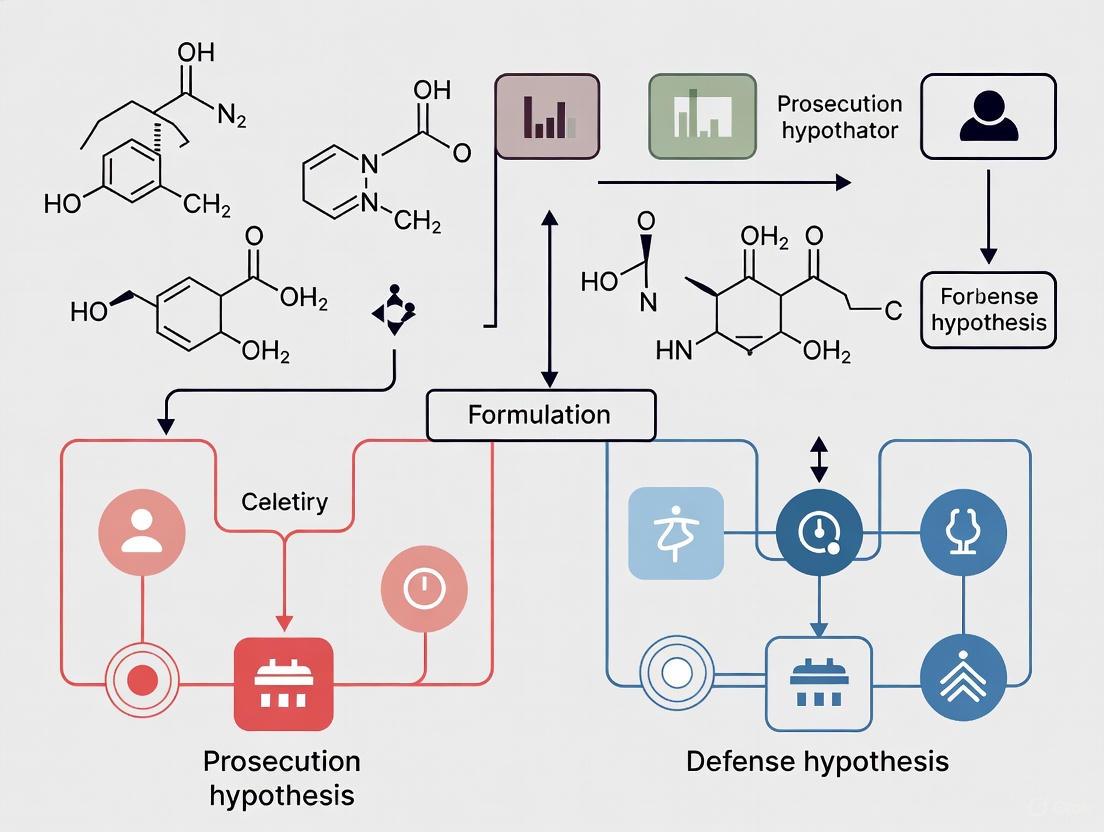
This article provides a comprehensive framework for researchers and scientific professionals on the rigorous formulation and evaluation of prosecution and defense hypotheses.
Beyond Guilt or Innocence: A Scientific Framework for Formulating Prosecution and Defense Hypotheses in Forensic Science
Abstract
This article provides a comprehensive framework for researchers and scientific professionals on the rigorous formulation and evaluation of prosecution and defense hypotheses. It explores the foundational principles of evaluative reporting, details methodological applications like Likelihood Ratios, addresses critical reasoning barriers and optimization strategies, and establishes validation techniques for robust hypothesis testing. By synthesizing insights from forensic statistics and decision science, this guide aims to enhance the objectivity, reliability, and scientific integrity of evidentiary analysis in legal and investigative contexts.
The Bedrock of Justice: Core Principles and Critical Importance of Hypothesis Formulation
In forensic science, the evaluation of biological evidence has traditionally focused on source-level propositions, which address the question of "Whose DNA is this?" [1]. However, with advancements in DNA profiling technology capable of analyzing minute quantities of material, the focus is shifting toward activity-level propositions that help address the more complex question of "How did an individual's cell material get there?" [2] [1]. This evolution reflects the reality that in modern forensic practice, the source of DNA is often not contested, whereas the mechanism of transfer and the timing of activities frequently are [1]. This technical guide examines the formulation, evaluation, and application of activity-level propositions within the context of prosecution and defense hypothesis formulation research, providing researchers and practitioners with a framework for addressing the 'how' and 'when' of evidence.
Activity-level propositions represent a crucial level in the hierarchy of propositions framework, operating above sub-source and source levels but below the ultimate offense level [2]. They require scientists to consider not just the DNA profile itself, but additional factors including transfer mechanisms, persistence dynamics, and background prevalence of DNA [1]. The proper application of this framework enables forensic scientists to provide courts with more focused and valuable contributions regarding the activities surrounding a criminal incident, moving beyond mere identification to reconstruct potential sequences of events [1].
Theoretical Framework: Concepts and Terminology
The Hierarchy of Propositions
The hierarchy of propositions provides a structured approach to formulating questions at different levels of abstraction in forensic casework. The relationship between these levels is fundamental to proper evidence evaluation:
- Sub-source Level: Concerns the source of the DNA profile itself, before any biological considerations [2]
- Source Level: Addresses the biological source of the material (e.g., "The bloodstain comes from Mr. A") [1]
- Activity Level: Pertains to the activities that led to the deposition of the material (e.g., "Mr. A punched the victim") [1]
- Offense Level: Deals with the ultimate issues before the court, typically requiring integration of all evidence [2]
It is crucial to recognize that the value of evidence calculated for a DNA profile cannot be carried over from lower to higher levels in this hierarchy [2]. Each level requires separate calculation and consideration of different factors, with activity-level evaluations incorporating transfer and persistence mechanisms not relevant to source-level assessments.
Core Components of Activity-Level Propositions
Activity-level propositions integrate several forensic concepts that extend beyond DNA profiling alone:
- Transfer Mechanisms: The processes by which DNA moves from a person to a surface or another person, including primary transfer (direct contact) and secondary transfer (via intermediate surface) [1]
- Persistence Dynamics: How DNA persists on surfaces over time and under varying environmental conditions [1]
- Background Prevalence: The presence and quantity of DNA from unknown individuals that may be expected on various surfaces in different environments [1]
- Temporal Considerations: The timeframe between the alleged activity and the recovery of evidence, affecting transfer and persistence probabilities [2]
These components collectively inform the expectations under competing activity-level propositions and enable quantitative assessment of the evidence.
Table 1: Core Concepts in Activity-Level Proposition Formulation
| Concept | Definition | Role in Activity-Level Evaluation |
|---|---|---|
| Transfer Mechanisms | Processes by which DNA is deposited on surfaces or people | Helps distinguish between direct and indirect transfer scenarios |
| Persistence | Duration that DNA remains detectable on a surface | Informs expectations about recovery likelihood over time |
| Background Prevalence | Naturally occurring DNA on surfaces in various environments | Provides context for evaluating the significance of findings |
| Hierarchy of Propositions | Framework for addressing questions at different abstraction levels | Ensures proper scope and prevents overstatement of conclusions |
Formulating Activity-Level Propositions
Principles of Proposition Formulation
Effective activity-level propositions must be balanced, relevant, and mutually exclusive to enable meaningful evidence evaluation [2]. They should ideally be set before knowledge of the forensic results to prevent cognitive biases and ensure objective analysis. A key principle is avoiding the use of the word 'transfer' in the propositions themselves, as propositions are assessed by the Court, while DNA transfer is a factor scientists consider for interpretation [2].
Properly formulated propositions:
- Address the issues actually in dispute between prosecution and defense positions [1]
- Are framed before the specific analytical results are known [2]
- Distinguish clearly between results, propositions, and explanations [2]
- Enable the scientist to assign the probability of the evidence under each proposition [2]
Proposition Pair Formulation
Activity-level propositions are always evaluated in pairs representing competing explanations for the evidence, typically aligning with prosecution and defense positions. The following diagram illustrates the logical structure of proposition development and evaluation:
Examples of Activity-Level Propositions
The following examples illustrate properly formulated activity-level proposition pairs for different forensic scenarios:
- Assault Scenario: "Mr. A punched the victim" versus "The person who punched the victim shook hands with Mr. A" [1]
- Sexual Offense Scenario: "Mr. A had sex with Ms. B" versus "Mr. A and Ms. B attended the same party, and they had social interaction only" [1]
- Burglary Scenario: "X stabbed Y" versus "An unknown person stabbed Y but X met Y the day before" [2]
These examples demonstrate how activity-level propositions specifically address the mechanism of transfer rather than merely the presence of DNA. They help courts distinguish between different explanatory frameworks that could account for the same DNA evidence being present.
Table 2: Activity-Level Proposition Examples Across Forensic Scenarios
| Scenario | Prosecution Proposition | Defense Proposition | Key Distinction |
|---|---|---|---|
| Violent Assault | The suspect grabbed the victim by the neck | The suspect and victim only shook hands earlier | Nature and intensity of physical contact |
| Sexual Assault | The suspect had forcible sexual contact with the victim | The suspect and victim had consensual contact days earlier | Type of contact and temporal framework |
| Burglary | The suspect handled the broken window during entry | The suspect's DNA was deposited during legal visit days prior | Context and timing of contact with evidence item |
| Weapons Offense | The suspect fired the weapon during the crime | The suspect handled the weapon at the shooting range week prior | Activity context and temporal association |
Quantitative Evaluation Framework
The Likelihood Ratio Approach
The evaluation of evidence given activity-level propositions employs a likelihood ratio (LR) framework to quantify the strength of evidence [2] [3]. The LR represents the probability of the observed evidence (E) under the prosecution proposition (Hp) divided by the probability of that same evidence under the defense proposition (Hd):
LR = P(E|Hp) / P(E|Hd)
Within this framework, the scientist assigns the probability of the evidence if each of the alternate propositions is true [2]. To do this effectively, the scientist must ask:
- "What are the expectations if each of the propositions is true?" [2]
- "What data are available to assist in the evaluation of the results given the propositions?" [2]
The likelihood ratio approach provides a transparent and balanced method for expressing the strength of forensic evidence, allowing recipients of expert information to understand how strongly the evidence supports one proposition over the other [3].
Bayesian Networks for Complex Evaluation
Bayesian Networks (BNs) are increasingly valuable for evaluating activity-level propositions because they force explicit consideration of all relevant possibilities in a logical way [2]. These probabilistic graphical models represent variables and their conditional dependencies via directed acyclic graphs, enabling complex reasoning under uncertainty.
The following diagram illustrates a simplified Bayesian Network for evaluating DNA transfer evidence:
Data Requirements for Quantitative Assessment
Robust evaluation of activity-level propositions requires empirical data on transfer, persistence, and background prevalence [2]. The following table summarizes key data requirements:
Table 3: Data Requirements for Activity-Level Proposition Evaluation
| Data Category | Specific Parameters | Research Methods | Application in Evaluation |
|---|---|---|---|
| Transfer Probabilities | Primary/secondary transfer rates by substrate, pressure, duration | Controlled transfer experiments | Informs expectations under different activity scenarios |
| Persistence Dynamics | Degradation rates under different environmental conditions | Time-series sampling studies | Informs expectations about recovery likelihood |
| Background Prevalence | DNA quantities and profiles on various surfaces in different environments | Systematic environmental sampling | Provides reference for evaluating significance of findings |
| Shedder Status | Variation in DNA deposition among individuals | Controlled deposition studies | Accounts for inter-individual variability in transfer |
Experimental Design for Knowledge Bases
Designing Forensically Relevant Experiments
Building reliable knowledge bases for activity-level evaluation requires careful experimental design that captures the complexity of real-world scenarios while maintaining scientific rigor [2]. Effective experiments should:
- Mimic alleged activities with sufficient variation to account for uncertainties in real case circumstances [1]
- Study the impact of different factors on DNA transfer during activities to identify which variables have substantial effects on evaluations [1]
- Incorporate realistic temporal frameworks that reflect the time elapsed between alleged activities and evidence collection
- Account for inter-individual variation in factors such as shedder status that significantly impact DNA transfer [1]
When exact details of alleged activities are unknown, experiments should incorporate the range of plausible scenarios, with sensitivity analyses determining which factors substantially affect the strength of observations [1].
Addressing Case-Specific Uncertainties
A common concern in activity-level evaluation is that each case has unique features, making laboratory data potentially inapplicable [1]. However, this challenge can be addressed through:
- Probability Weighting: Incorporating unknown factors by considering all possible states within the evaluation, weighted by probabilities informed by controlled experiments [1]
- Sensitivity Analysis: Determining how much effect unknown factors have on the value of the findings [1]
- Data Relevance Assessment: Ensuring that experimental data are relevant to the specific case circumstances [2]
This approach acknowledges uncertainties while still providing quantitative assessments based on the best available scientific knowledge.
The Scientist's Toolkit: Research Reagent Solutions
Implementation of activity-level proposition evaluation requires specific methodological approaches and analytical tools. The following table details key components of the research toolkit:
Table 4: Essential Methodologies for Activity-Level Proposition Research
| Methodology Category | Specific Techniques | Application in Activity-Level Research |
|---|---|---|
| DNA Quantification | qPCR, digital PCR | Measures DNA quantity for transfer and persistence studies |
| Profile Analysis | Probabilistic genotyping, mixture deconvolution | Interprets complex DNA mixtures from transfer experiments |
| Statistical Modeling | Bayesian Networks, likelihood ratio frameworks | Provides structure for evaluating evidence under competing propositions |
| Data Generation | Controlled transfer studies, environmental sampling | Creates empirical basis for assignment of probabilities |
| Sensitivity Analysis | Monte Carlo simulation, factor prioritization | Identifies which uncertain factors most impact conclusions |
Implementation Challenges and Solutions
Addressing Common Concerns
The implementation of activity-level propositions in forensic practice faces several perceived challenges that require systematic addressing:
- Proposition Specification: Scientists often express concern that they cannot know every aspect of alleged activities [1]. However, the evaluation framework does not require exhaustive knowledge but focuses on factors that substantially impact expectations about the evidence [1].
- Data Limitations: The lack of relevant data on transfer and persistence is frequently cited [1]. The solution involves actively building knowledge bases through targeted research and using Bayesian methods to explicitly account for uncertainties [2].
- Legal Framework Alignment: Some critics argue that probabilistic evaluation infringes on the presumption of innocence [3]. Properly implemented, the LR framework does not assign guilt but merely evaluates the strength of scientific evidence, leaving ultimate conclusions to the trier of fact [3].
Reporting and Communication
Effective communication of activity-level evaluations requires:
- Clear distinction between scientific conclusions and legal decisions
- Transparent explanation of assumptions and limitations
- Appropriate placement within the hierarchy of propositions
- Balanced consideration of competing explanations
Scientists must work within the hierarchy of propositions framework, recognizing that the value of evidence calculated for a DNA profile cannot be carried over to higher levels in the hierarchy [2].
Activity-level propositions represent a necessary evolution in forensic science, enabling more meaningful contributions to legal inquiries about how biological material was deposited at crime scenes. The proper formulation and evaluation of these propositions requires a solid theoretical framework, robust empirical data, and appropriate statistical methods. While implementation challenges exist, they can be addressed through continued research, knowledge base development, and clear communication between scientific and legal stakeholders. By embracing this framework, forensic scientists can provide courts with more nuanced and relevant information about the probative value of biological evidence in the context of alleged activities.
In both scientific research and legal proceedings, the pathway to reliable conclusions is built upon a foundation of precisely formulated hypotheses. Well-defined hypotheses establish the essential framework for rigorous evidence evaluation, ensuring that conclusions are structured, logical, and transparent. The legal system's dependence on this structured approach is profound; it creates the necessary conditions for rational decision-making by directing the collection and assessment of evidence, minimizing cognitive biases, and establishing clear boundaries for inferential reasoning. Within the context of prosecution and defense strategy, the formulation of competing hypotheses represents not merely a procedural formality but a fundamental imperative that safeguards the integrity of the fact-finding process.
The critical role of hypothesis formulation becomes particularly evident when examining the intersection of science and law, especially in cases involving complex forensic evidence or statistical data. Statistical inference, a cornerstone of evidence-based medicine and clinical research, relies on formal hypothesis testing to determine whether observed differences between treatment groups represent true effects or occurred by chance [4] [5]. This methodological parallel between scientific and legal reasoning underscores a universal principle: without clearly stated alternative explanations, any evaluation of evidence lacks structure, coherence, and ultimately, validity.
The Anatomy of Legal and Scientific Hypotheses
Fundamental Definitions and Structure
At its core, a hypothesis represents a precise, educated guess about a relationship or outcome that can be tested through systematic investigation [4]. In legal contexts, hypotheses are articulated as competing propositions that frame the evidence within a case.
- Prosecution Hypothesis (Hp): Typically asserts that the defendant is the source of the forensic evidence or committed the alleged act [6]. Example: "The DNA recovered from the crime scene originated from the defendant."
- Defense Hypothesis (Hd): Proposes an alternative explanation, often that someone other than the defendant is the source or that the incident occurred differently [6]. Example: "The DNA recovered from the crime scene originated from an unknown individual unrelated to the defendant."
This dichotomous framework mirrors the scientific method used in clinical research and drug development, where investigators formulate null hypotheses (H0) stating no statistical difference exists between groups, and alternative hypotheses (H1) stating that a significant difference does exist [4]. The parallel structure enables the same logical frameworks to be applied in evaluating evidence across disciplines.
The Role of Hypotheses in Evidence Evaluation
Well-constructed hypotheses serve multiple critical functions in legal proceedings:
- Direction of Inquiry: They guide investigators and legal professionals in determining what evidence to collect and how to evaluate its relevance [4].
- Framework for Interpretation: They provide the logical structure for interpreting forensic findings, particularly when using statistical methodologies like likelihood ratios [6].
- Safeguard Against Bias: By explicitly stating alternative explanations, they reduce the risk of confirmation bias where investigators might selectively seek or interpret evidence to support a single theory.
- Standardization: They create a consistent approach to evidence evaluation across different cases and forensic disciplines, enhancing the reliability and fairness of legal outcomes.
Quantitative Frameworks for Hypothesis Testing
Statistical Foundations in Science and Law
The evaluation of hypotheses in both scientific research and legal proceedings employs robust statistical frameworks to quantify the strength of evidence and determine significance. Descriptive statistics summarize and organize data in a meaningful way, while inferential statistics allow researchers to make generalizations about populations based on sample data and test hypotheses about true effects [5].
Table 1: Key Statistical Measures for Hypothesis Testing
| Statistical Measure | Function | Application Context |
|---|---|---|
| P-values | Probability of obtaining the observed effect if the null hypothesis is true | Determines statistical significance in clinical trials; conventionally p < 0.05 considered significant [4] |
| Confidence Intervals (CI) | Range of values likely to contain the true population parameter with a specified confidence level (typically 95%) | Provides estimate precision and clinical significance; more informative than p-values alone [4] |
| Likelihood Ratios (LR) | Measures how much more likely evidence is under one hypothesis versus another | Forensic evidence evaluation; quantifies strength of support for prosecution vs. defense hypotheses [6] |
| Type I Error (α) | Incorrectly rejecting a true null hypothesis (false positive) | Clinical trial risk management; typically set at 0.05 [4] |
| Type II Error (β) | Failing to reject a false null hypothesis (false negative) | Power calculations in research design; often set at 0.20 [4] |
Standards of Proof as Hypothesis Testing Thresholds
The legal system employs standardized thresholds for decision-making that function similarly to statistical significance levels in scientific research. These standards represent the minimum degree of certainty required to accept a factual proposition as proven in different legal contexts.
Table 2: Legal Standards of Proof as Hypothesis Testing Thresholds
| Legal Standard | Required Certainty | Application Context | Quantitative Estimate* |
|---|---|---|---|
| Beyond Reasonable Doubt | Abiding conviction that charge is true; moral certainty | Criminal conviction [7] | 90-100% (judicial surveys) [8] |
| Clear and Convincing Evidence | Highly probable | Civil cases with severe consequences (parental rights, restraining orders) [7] | Not precisely quantified |
| Preponderance of Evidence | More likely than not | Most civil litigation [7] | >50% probability |
| Probable Cause | Reasonable grounds for belief | Arrests, search warrants [7] | Similar to preponderance standard in judicial quantification [8] |
| Reasonable Suspicion | Objective, articulable reasons | Investigative detentions [7] | Not precisely quantified |
Note: Quantitative estimates for legal standards are derived from judicial survey data [8] and represent approximations, as these standards are formally expressed verbally rather than numerically.
Methodological Protocols for Hypothesis-Driven Analysis
Experimental Design in Clinical Research
Robust hypothesis testing in drug development follows rigorous methodological protocols to ensure valid and reliable results:
- Research Question Formulation: Identify gaps in current clinical practice or research based on literature review and clinical observation [4].
- Hypothesis Specification: Transform research questions into precise, testable hypotheses stating predicted relationships between variables [4].
- Study Population Definition: Establish clear inclusion/exclusion criteria to define the target population and ensure sample representativeness [5].
- Randomization and Blinding: Implement random assignment to treatment groups and blinding procedures to minimize selection bias and confounding [4].
- Data Collection Protocol: Standardize measurement instruments, timing of assessments, and data recording procedures across all study sites [5].
- Statistical Analysis Plan: Pre-specify primary and secondary endpoints, analytical methods, and significance thresholds before data collection [4] [5].
- Interpretation Framework: Establish criteria for clinical significance alongside statistical significance, considering confidence intervals and effect sizes [4].
Forensic Evidence Evaluation Using Likelihood Ratios
The likelihood ratio framework provides a formal methodology for evaluating hypotheses with forensic evidence:
- Proposition Formulation: Clearly articulate the prosecution hypothesis (Hp) and defense hypothesis (Hd) based on the case circumstances [6].
- Evidence Analysis: Conduct forensic examination to characterize the evidence (E) shared between the known and questioned samples [6].
- Probability Calculation: Calculate the probability of observing the evidence under both competing hypotheses [6]:
- LR = P(E|Hp) / P(E|Hd)
- Strength of Support Interpretation: Interpret the LR value according to standardized scales:
- LR > 1: Evidence supports the prosecution hypothesis
- LR = 1: Evidence has no probative value
- LR < 1: Evidence supports the defense hypothesis
- Communication of Findings: Report the LR value with appropriate explanations of its meaning, avoiding the prosecutor's fallacy (misinterpreting P(E|Hp) as P(Hp|E)) [6].
Visualizing the Hypothesis Testing Framework
Legal and Scientific Hypothesis Evaluation Workflow
Likelihood Ratio Calculation Process
Essential Research Reagent Solutions for Hypothesis Testing
Table 3: Essential Methodological Tools for Hypothesis-Driven Research
| Research Tool | Function | Application Context |
|---|---|---|
| Statistical Software (R, SPSS, Python) | Data analysis, significance testing, confidence interval calculation | Clinical trial analysis, forensic statistics [4] [5] |
| Probabilistic Genotyping Software | DNA mixture interpretation, likelihood ratio calculation | Complex forensic DNA analysis [3] |
| Randomization Protocols | Random assignment to treatment/control groups | Clinical trial design to minimize bias [4] |
| Blinding Procedures | Single/double-blind protocols to prevent bias | Drug trials, forensic analysis to reduce contextual bias [4] [6] |
| Standardized Reporting Frameworks (CONSORT, ENFSI guidelines) | Structured reporting of methods, results, conclusions | Clinical research publications, forensic expert testimony [4] [6] |
The integrity of both legal outcomes and scientific conclusions depends fundamentally on the rigorous formulation and testing of well-defined hypotheses. This structured approach transcends disciplinary boundaries, providing a universal framework for rational decision-making under conditions of uncertainty. In legal proceedings, precisely articulated prosecution and defense hypotheses create the necessary architecture for fair and reliable evidence evaluation, safeguarding against cognitive biases and logical fallacies while enabling appropriate application of statistical methods. For researchers and drug development professionals, this hypothesis-driven methodology ensures that conclusions about treatment efficacy and safety rest upon robust statistical foundations rather than ambiguous interpretations of data. The parallel structures underlying hypothesis testing across these domains reveal a fundamental truth: the path to valid conclusions in any complex inquiry must be paved with clearly stated, testable alternative explanations.
The wrongful conviction of Sally Clark for the murder of her two sons represents a critical case study in the consequences of flawed statistical reasoning and improper hypothesis formulation within legal proceedings. This case exemplifies a fundamental tension between legal and scientific principles: legal decisions seek finality through precedent, while scientific conclusions evolve with new evidence [6]. The Clark case demonstrates how improper handling of probabilistic reasoning can lead to grave miscarriages of justice, with lessons that extend directly to scientific research and hypothesis testing methodologies.
For researchers, particularly those in drug development and clinical sciences, the Clark case offers a powerful analogy for understanding how flawed foundational assumptions and incorrect hypothesis specification can invalidate study conclusions. Just as legal fact-finders must evaluate hypotheses about guilt or innocence, scientists continuously test hypotheses about treatment efficacy, biological mechanisms, and clinical outcomes. The statistical and logical fallacies present in Clark's case mirror common pitfalls in scientific research, making this legal case unexpectedly relevant for research professionals seeking to strengthen their methodological rigor.
Case Background: Scientific Tragedy in the Courtroom
Sally Clark, an English solicitor, experienced the sudden deaths of her two infant sons—Christopher in 1996 and Harry in 1998 [9]. Both children initially appeared healthy before their sudden collapses, with the first death attributed to Sudden Infant Death Syndrome (SIDS). Following the second death, Clark was arrested and charged with double murder, despite the absence of direct physical evidence linking her to the crimes [9].
The prosecution's case relied heavily on the statistical testimony of pediatrician Professor Sir Roy Meadow, who claimed that the probability of two SIDS deaths occurring in an affluent family like the Clarks was "1 in 73 million" [10] [9]. He presented this figure by squaring the estimated SIDS rate for similar families (1 in 8,500), vividly comparing it to an "80:1 longshot winning the Grand National horse race four years in a row" [10]. This statistical argument proved devastatingly persuasive despite its fundamental flaws, leading to Clark's conviction in 1999 and a life sentence [9].
The case underwent multiple appeals, with the Royal Statistical Society taking the unprecedented step of writing to the Lord Chancellor to object to the statistical methodology [9]. Clark's conviction was ultimately overturned in 2003 after hidden medical evidence emerged showing Harry had a potentially lethal bacterial infection that provided a natural explanation for his death [9]. Despite her release, Clark never recovered psychologically from the ordeal and died from alcohol-related causes four years later [9].
Deconstructing the Statistical and Hypothesis Formulation Errors
The Prosecutor's Fallacy: A Fundamental Confusion of Conditional Probabilities
At the heart of the statistical misunderstanding in Clark's case lies the prosecutor's fallacy—the confusion between the probability of the evidence given innocence versus the probability of innocence given the evidence [11]. This fallacy represents a fundamental error in conditional probability reasoning that can equally afflict scientific interpretation.
Professor Meadow testified that the probability of two SIDS deaths in the same family was 1 in 73 million, which the court mistakenly interpreted as the probability that Clark was innocent [10]. Mathematically, this confuses P(Evidence|Innocence) with P(Innocence|Evidence). The correct Bayesian interpretation shows that even with a low probability of observing two SIDS deaths under innocence, the posterior probability of innocence could remain substantial when considering the prior probability of a mother murdering her children [10].
The Independence Assumption Error: Ignoring Clustering Factors
Meadow's calculation multiplied the individual SIDS probabilities (1/8,500 × 1/8,500) based on the incorrect assumption that SIDS deaths within a family are independent events [9]. The Royal Statistical Society noted this violated biological reality, as genetic and environmental factors create dependencies that increase the probability of a second SIDS death within the same family [9]. Proper statistical analysis would account for this clustering effect, with some estimates suggesting the actual probability could be as high as 1 in 77, rather than 1 in 73 million [9].
Hypothesis Specification Error: Formulating Competing Hypotheses
A critical but often overlooked error concerns the formulation of the competing legal hypotheses. The prosecution presented the hypothesis as "both babies were murdered" versus "both babies died of SIDS" [12]. A more appropriate prosecution hypothesis would have been "at least one baby was murdered," which better corresponds to what would be required for conviction [12].
This hypothesis mis-specification dramatically affected the probabilistic calculations. Using the same assumptions from the case, the prior odds favored the defense hypothesis over the double murder hypothesis by 30 to 1, but favored the defense hypothesis over the "at least one murder" hypothesis by only 5 to 2 [12]. This subtle but crucial difference in hypothesis formulation fundamentally changes the statistical interpretation of the evidence.
Table 1: Impact of Hypothesis Specification on Prior Probabilities
| Hypothesis Formulation | Prior Odds (Defense vs. Prosecution) | Statistical Impact |
|---|---|---|
| Both murdered (M) vs. Both SIDS (S) | 30 to 1 in favor of S | Greatly exaggerates defense position |
| At least one murdered (H) vs. Both SIDS (S) | 5 to 2 in favor of S | More balanced assessment |
Bayesian Reasoning: The Mathematical Antidote to Flawed Logic
Bayes' Theorem as a Corrective Framework
Bayes' theorem provides the mathematical framework to correct the reasoning errors present in Clark's case. The theorem dictates that the probability assigned to a hypothesis in light of new evidence is proportional to both the conditional probability of the evidence assuming the hypothesis is true, and the prior probability of the hypothesis before considering the evidence [10].
For the Sally Clark case, a Bayesian approach would balance the unusualness of two infant deaths against the baseline rarity of double infanticide. One analysis suggested that, considering the prior probability of a mother committing double infanticide as approximately 1 in 100 million, the posterior probability of Clark's innocence would be about 58%—far from the "virtually impossible" impression created by the 1 in 73 million figure [10].
The Likelihood Ratio Framework for Evidence Evaluation
Modern forensic science increasingly uses likelihood ratios to evaluate evidence, which avoids the pitfalls of the prosecutor's fallacy [6]. The likelihood ratio compares the probability of the evidence under two competing hypotheses:
[ LR = \frac{P(E|Hp)}{P(E|Hd)} ]
where (Hp) represents the prosecution hypothesis and (Hd) the defense hypothesis [6]. This approach keeps the expert's testimony within their domain of expertise without requiring them to comment on prior probabilities or posterior probabilities of guilt, which properly remain the domain of the fact-finder [6].
Table 2: Comparison of Statistical Approaches in Evidence Evaluation
| Approach | Strengths | Limitations | Appropriate Use |
|---|---|---|---|
| Frequentist (Significance Testing) | Widely familiar, standardized thresholds | Ignores prior probabilities, prone to prosecutor's fallacy | Initial screening, controlled experiments |
| Bayesian (Posterior Probability) | Incorporates prior knowledge, provides direct probability statements | Requires subjective priors, computationally complex | Complex decision-making, sequential analysis |
| Likelihood Ratio | Avoids fallacy, respects boundaries of expertise | Less intuitive, requires clear hypothesis specification | Forensic science, expert testimony |
Parallels to Scientific Research: Lessons for Hypothesis Formulation
Proper Hypothesis Specification in Clinical Trials
The hypothesis formulation errors in Clark's case directly parallel challenges in clinical trial design. Research hypotheses should constitute a complete partition of all possible probability models, such that the alternative hypothesis can be logically inferred upon rejection of the null hypothesis [13]. Many clinical trials fail to properly specify their alternative hypotheses, leading to ambiguous conclusions upon rejection of the null [13].
Clinical researchers must carefully consider whether their alternative hypothesis claims are too strong or too weak for the biological properties being investigated [13]. An excessively strong claim (e.g., requiring hazard ratio superiority across all timepoints) may miss real treatment benefits detectable through weaker but more appropriate claims (e.g., superior median survival) [13].
Accounting for Multiple Comparisons and Dependencies
Meadow's independence assumption error mirrors a common problem in scientific research: failing to account for multiple testing and dependencies in data. Just as SIDS deaths within families aren't independent, repeated measurements within patients, genetic correlations in biological samples, or temporal correlations in longitudinal data require appropriate statistical modeling to avoid inflated significance claims.
Experimental Protocols for Robust Hypothesis Testing
A Framework for Proper Legal and Scientific Hypothesis Formulation
Based on the lessons from the Clark case and clinical research methodology, the following protocol provides a systematic approach to hypothesis formulation:
- Define the Universe of Possibilities: Explicitly delineate all possible explanations or outcomes relevant to the inquiry [13].
- Formulate Mutually Exclusive and Exhaustive Hypotheses: Ensure the competing hypotheses cover all possibilities without overlap, typically as logical negations [12] [13].
- Consider Biological/Legal Realism: Incorporate known dependencies, biological mechanisms, or contextual factors that affect probabilities [9].
- Select Appropriate Statistical Framework: Choose frequentist, Bayesian, or likelihood ratio approaches based on the decision context and available information [6].
- Pre-specify Decision Thresholds: Establish evidentiary standards (e.g., p-value thresholds, Bayes factors) before data collection [14].
Signaling Pathways: From Flawed to Sound Reasoning
The following diagram illustrates the logical progression from flawed to sound hypothesis evaluation, mapping both the errors in the Clark case and their corrective methodologies:
Research Reagent Solutions: Essential Methodological Tools
Table 3: Methodological Tools for Robust Hypothesis Testing
| Methodological Tool | Function | Application Context |
|---|---|---|
| Bayesian Analysis Software | Computes posterior probabilities from priors and likelihoods | Complex decision environments with prior knowledge |
| Multiple Testing Corrections | Controls false discovery rates in multiple comparisons | Genomic studies, high-throughput screening |
| Dependency Structure Modeling | Accounts for correlations in clustered data | Family studies, repeated measures, spatial data |
| Likelihood Ratio Calculators | Quantifies evidence strength for competing hypotheses | Forensic science, diagnostic test evaluation |
| Pre-specification Registries | Documents planned analyses before data collection | Clinical trials, confirmatory research |
The Sally Clark case remains a powerful cautionary tale about the consequences of flawed statistical reasoning and improper hypothesis formulation. For researchers and drug development professionals, this case underscores several critical principles: the necessity of proper hypothesis specification that reflects biological reality, the importance of understanding conditional probabilities, and the value of selecting statistical frameworks appropriate to the decision context.
Implementing robust methodological safeguards—including pre-specified analysis plans, appropriate statistical modeling of dependencies, and clarity about the precise definition of alternative hypotheses—can prevent analogous errors in scientific research. Just as the legal system has gradually incorporated lessons from cases like Clark's through improved statistical training and evidence guidelines, the research community must continuously refine its approach to hypothesis testing and statistical inference.
The tragedy of Sally Clark ultimately highlights the profound responsibility shared by legal and scientific professionals: to pursue truth through rigorous methodology, transparent reasoning, and humility in the face of uncertainty. By learning from these hard-won lessons, researchers can strengthen the foundation of scientific inference and avoid perpetuating statistical fallacies in their own work.
The successful adoption of new medical interventions on a global scale is a critical public health objective. However, this process is hindered by a complex array of barriers spanning socioeconomic, methodological, and cultural domains. These barriers create significant disparities in access to essential medicines, with an estimated two billion people globally lacking access [15]. Within the framework of prosecution hypothesis (the assertion of a treatment's benefit) and defense hypothesis (the challenge to this assertion) formulation in medical research, these barriers represent fundamental challenges to the validity and generalizability of clinical evidence. This whitepaper provides a technical analysis of these global adoption barriers, focusing on the reticence rooted in cultural identity, profound data gaps in clinical evidence generation, and methodological disparities in trial design and reporting. The objective is to equip researchers, scientists, and drug development professionals with a structured understanding of these challenges and the methodologies to address them, thereby strengthening the hypothesis testing and defense process in global drug development.
A data-driven assessment reveals the scale and nature of global disparities in healthcare access and research representation. The following tables summarize key quantitative findings.
Table 1: Global Burden and Access Disparities
| Indicator | Metric | Data Source / Period |
|---|---|---|
| People lacking access to essential medicines | 2 billion | UN Human Rights Report, 2025 [15] |
| Proportion of neglected tropical disease burden in LMICs | 80% (across 16 countries) | UN Human Rights Report, 2025 [15] |
| Increase in DALYs from Drug Use Disorders (DUDs), 1990-2021 | 14.7% | Global Burden of Disease Study, 2021 [16] |
| Slope Index of Inequality (SII) for DUDs burden (1990 to 2021) | 82.4 to 289.24 | Global Burden of Disease Study, 2021 [16] |
Table 2: Data Gaps in Regulatory Approvals of AI/ML Medical Devices (n=692) [17]
| Reporting Dimension | Percentage Reported | Implied Data Gap |
|---|---|---|
| Race/Ethnicity Data | 3.6% | 96.4% |
| Socioeconomic Data | 0.9% | 99.1% |
| Age of Study Subjects | 18.4%* | 81.6% |
| Comprehensive Performance Results | 46.1% | 53.9% |
| Link to Scientific Publication | 1.9% | 98.1% |
| Prospective Post-Market Surveillance | 9.0% | 91.0% |
Note: Age was reported in 19.4% of documents, with 134 documents containing information; 81.6% provided no data.
The Reticence Barrier: Cultural Identity and Pharmaceutical Skepticism
Resistance to pharmaceutical intervention, or "reticence," is not merely a matter of access but is often a conscious expression of cultural and racial identity.
Experimental Evidence of Cultural Skepticism
A focus group-based study provided direct evidence of this phenomenon. The study design and key findings are summarized below.
- Methodology: Drawing on focus groups with patients recently prescribed medication, researchers investigated the role of marginalization, measured by acculturation and race, in shaping subjective experiences with prescription drugs [18].
- Core Findings:
- Cultural Preference: Racial minorities reported a greater skepticism of prescription drugs compared to whites and expressed that they turned to prescription drugs as a last resort [18].
- Alternative Remedies: While highly acculturated participants rarely discussed alternatives, less acculturated racial minorities indicated a preference for complementary and alternative remedies [18].
- Identity Expression: This skepticism is framed as an act of "resistance" to pharmaceuticalization pressures, serving to express cultural and racial identities that may be marginalized by mainstream Western medical systems [18].
Quantitative Validation of Divergent Beliefs
A cross-sectional questionnaire study quantitatively validated the influence of cultural background on medication beliefs.
- Protocol: The study compared beliefs about medicines between UK undergraduate students of Asian and European cultural backgrounds using the Beliefs about Medicines Questionnaire (BMQ) [19]. The BMQ General scale includes sub-scales assessing beliefs about medicine being inherently harmful (General-Harm) and about doctors overprescribing them (General-Overuse) [19].
- Key Results: Students with an Asian cultural background perceived modern medicines as significantly more harmful and believed more strongly in doctor overuse than their European counterparts. This was evident after controlling for degree course, medication experience, and gender [19].
- Interpretation: These beliefs are not isolated opinions but are shaped by broader "health ideologies" and "cultural models of health" that are reproduced through the act of taking medicine [19]. This creates a significant barrier to adoption that is rooted in deeply held worldviews.
Data Gaps and Methodological Disparities in Evidence Generation
The foundation of the prosecution hypothesis—robust clinical evidence—is often undermined by significant gaps and methodological weaknesses that limit the generalizability of findings.
Deficiencies in Clinical Trial Diversity and Reporting
A critical barrier is the failure to ensure clinical trial populations are demographically representative of the intended treatment populations.
- Underrepresentation of Key Demographics: An analysis of FDA-approved AI/ML medical devices revealed a severe underreporting of demographic data in the supporting documents, as detailed in Table 2. This lack of transparency exacerbates the risk of algorithmic bias and health disparities, as the performance of these devices in specific populations cannot be verified [17].
- Scientific and Regulatory Imperative for Diversity: International guidelines (e.g., ICH) specify that clinical trial populations should be representative of the population for whom the medicine is intended [20]. Intrinsic factors (age, sex, race, ethnicity, comorbidities) and extrinsic factors (diet, drug interactions) are known to cause interindividual variability in pharmacokinetics, pharmacodynamics, and treatment response [20]. The FDA guidance "Enhancing the Diversity of Trial Populations" (2020) is a direct response to the ongoing failure to meet this imperative [20].
- Specific Impact of Age-Related Gaps: Older adults, a major consumer of medications, are often underrepresented. Age-related changes in physiology (e.g., renal function, body composition), comorbidities, and polypharmacy significantly alter drug absorption, distribution, and interaction potential [20]. Trials that fail to enroll adequate numbers of older adults generate evidence that is not generalizable to this key demographic.
Methodological Flaws in Clinical Trial Inference
Even perfectly executed clinical trials can generate false or irreproducible results due to inherent methodological shortcomings in statistical inference.
- The Challenge of Heterogeneity: A core problem is the assumption of "distributional homogeneity of subjects’ responses to medical interventions" [21]. In reality, patient samples are highly heterogeneous in unpredictable ways due to complex biological mechanisms and interactions. Statistical models that ignore this heterogeneity can lead to false conclusions about a drug's efficacy and safety for individuals or subgroups [21].
- Ethical Sampling vs. Representativeness: Ethical considerations often lead to the recruitment of subjects who are "younger, healthier and less medicated than the targeted population," making the trial sample non-representative [21]. This creates a major obstacle to extrapolating trial findings to the real-world population.
- The Role of Bias and Conflict of Interest: Beyond statistical issues, deliberate biases—such as withholding data, selective reporting, and manipulating patient inclusion criteria—have been documented, turning some trials into "marketing tools in disguise" [21]. This directly corrupts the hypothesis defense process.
The Emergence of Innovative Trial Designs
In response to the high costs and inefficiencies of traditional trials, innovative designs are being adopted, though unevenly across therapeutic areas.
- Methodology for Tracking Innovation: A large-scale analysis of ClinicalTrials.gov registrations (2005-2024) used a keyword-based algorithm (e.g., "adaptive," "Bayes," "seamless") to classify 348,818 trials as innovative or traditional [22]. A Large Language Model (LLM) was employed to classify trials by therapeutic area with high accuracy (94.6%) [22].
- Adoption Patterns: Of the analyzed trials, 5,827 were classified as innovative. Their adoption has grown since 2011, spurred by regulatory advancements and funding. These designs are predominantly observed in early-phase trials, pediatric research, and fields like neuroscience and rare diseases, but have limited representation in elderly-focused or sex-specific studies [22].
- Types of Innovative Designs:
- Adaptive Designs: Allow modifications to trial parameters (e.g., sample size, randomization ratios) based on interim results, improving efficiency and ethics by minimizing patient exposure to inferior treatments [22].
- Bayesian Designs: Incorporate prior knowledge with accumulating trial data to provide a more holistic view, which is particularly useful when historical data can guide the trial or for smaller, underrepresented populations [22].
The Scientist's Toolkit: Research Reagent Solutions
To address these barriers, researchers require a suite of methodological tools and approaches.
Table 3: Essential Research Reagents and Methodologies
| Tool / Reagent | Primary Function | Application in Addressing Barriers |
|---|---|---|
| Joinpoint Regression Analysis | Identifies significant temporal trend changes in disease burden or adoption rates. | Quantifying shifts in global health burdens (e.g., analyzing DALYs over time) to inform resource allocation [16]. |
| Slope Index of Inequality (SII) & Concentration Index (CI) | Measures absolute and relative health inequality across socioeconomic groups. | Objectively quantifying disparities in the burden of disease and access to care across countries with different SDI levels [16]. |
| Nordpred Age-Period-Cohort Model | Projects future disease burden based on past trends. | Informing long-term public health planning and intervention strategies for conditions like drug use disorders [16]. |
| Beliefs about Medicines Questionnaire (BMQ) | Quantifies cognitive representations of medication, including perceptions of harm and overuse. | Objectively measuring cultural and individual-level reticence towards pharmaceutical interventions [19]. |
| Large Language Models (LLMs) for Trial Classification | Automates the categorization of clinical trials from registries into therapeutic areas. | Enabling large-scale, real-time monitoring of trial design innovation and diversity across medical specialties [22]. |
| Adaptive & Bayesian Trial Designs | Dynamic methodologies that improve trial efficiency and ethical standards. | Accelerating development for rare diseases and pediatric populations; allowing for more complex hypothesis testing within a single trial [22]. |
Visualizing the Hypothesis Defense Framework in Global Adoption
The following diagram illustrates the interconnected barriers to global adoption and the reinforcing nature of data gaps and methodological disparities within the prosecution-defense hypothesis framework.
Diagram 1: The Hypothesis Defense Framework of Global Adoption Barriers
Visualizing the Experimental Protocol for Analyzing Clinical Trial Innovation
The workflow below details the methodology for quantifying the adoption of innovative clinical trial designs using registry data and large language models, as employed in recent research [22].
Diagram 2: Protocol for Analyzing Innovative Clinical Trial Adoption
The path to equitable global adoption of medical innovations is obstructed by a triad of deeply interconnected barriers: cultural reticence, significant data gaps, and fundamental methodological disparities. Within the context of prosecution-defense hypothesis research, these barriers collectively challenge the validity and generalizability of the central prosecution hypothesis that a drug is safe and effective for broad populations. The quantitative data reveals stark global inequalities in access and burden of disease, while analyses of regulatory approvals and clinical trials show a pervasive failure to represent diverse populations in the evidence base. Overcoming these challenges requires a multipronged strategy: the application of robust methodological tools to quantify disparities, the deliberate adoption of innovative and inclusive trial designs, and a respectful engagement with the cultural dimensions of medication use. For researchers and drug development professionals, addressing these issues is not merely an ethical imperative but a scientific necessity for generating defensible hypotheses and delivering on the promise of global health equity.
From Theory to Practice: Implementing Robust Methodologies for Hypothesis Testing
The formulation of prosecution and defense hypotheses represents a foundational step in the application of probabilistic reasoning to forensic science and legal proceedings. Properly structured hypotheses must be both mutually exclusive and exhaustive to ensure logical rigor and prevent misinterpretation of evidence [23]. When hypotheses do not meet these criteria, there is significant risk of statistical fallacies that can fundamentally undermine the validity of legal conclusions [12] [6]. The principle of mutual exclusivity requires that the hypotheses cannot both be true simultaneously, while exhaustiveness demands that together they cover all possible explanations for the evidence [23].
The impact of hypothesis formulation extends beyond theoretical importance into practical consequences, as subtle changes in the structure of alternative hypotheses can dramatically alter the resulting probabilities assigned to evidence [12]. This technical guide, situated within broader research on prosecution-defense hypothesis formulation, provides researchers and forensic professionals with methodological protocols for constructing logically sound hypothesis frameworks. Through proper implementation of these structured approaches, the scientific community can enhance the validity of evaluative reporting and maintain alignment with fundamental justice principles, including the presumption of innocence [3].
Theoretical Foundation: Principles of Logical Negation in Forensic Reasoning
The Mutual Exclusivity and Exhaustiveness Requirement
In probabilistic reasoning for forensic applications, the prosecution hypothesis (Hp) and defense hypothesis (Hd) must form a logical negation pair [12] [23]. This relationship means that if Hp is false, Hd must be true, and vice versa, with no overlapping territory between them. The requirement of exhaustiveness ensures that no possible explanation is omitted from consideration, while mutual exclusivity prevents ambiguity in evidentiary interpretation [23].
The theoretical basis for this approach stems from probability theory, where the relationship between competing hypotheses follows the principle of additivity [24]. For a set of hypotheses to be exhaustive, the sum of their probabilities must equal 1, ensuring that all possibilities are accounted for in the analytical framework. Mutual exclusivity guarantees that the probability of any two hypotheses being true simultaneously is zero [24]. When these conditions are met, Bayes' theorem can be properly applied to update prior beliefs based on new evidence through the likelihood ratio framework [6].
Consequences of Improper Hypothesis Formulation
Failure to establish properly negated hypotheses can lead to significant errors in evidence evaluation. In the notorious Sally Clark case, the prosecution presented the hypothesis "both babies were murdered" as the alternative to the defense hypothesis "both babies died of SIDS" [12]. This formulation proved problematic because it ignored intermediate possibilities such as one murder and one SIDS death. A more appropriate prosecution hypothesis would have been "at least one baby was murdered," which forms a true logical negation with the defense hypothesis [12].
The probabilistic impact of this hypothesis misspecification was substantial. Using the same assumptions as probability experts in the case, the prior odds favoring the defense hypothesis over the double murder hypothesis were 30 to 1. However, when compared to the more appropriate "at least one murder" hypothesis, the prior odds in favor of the defense reduced dramatically to only 5 to 2 [12]. This stark difference demonstrates how hypothesis formulation directly influences the perceived strength of evidence and ultimate conclusions.
Methodological Framework: Structured Approach to Hypothesis Construction
Hypothesis Formulation Protocol
The following experimental protocol provides a systematic methodology for constructing mutually exclusive and exhaustive hypothesis pairs across various forensic contexts:
Table 1: Hypothesis Formulation Experimental Protocol
| Step | Procedure | Purpose | Validation Check |
|---|---|---|---|
| 1. Define the Fundamental Question | Identify the core disputed issue requiring resolution through evidence evaluation. | Establish the conceptual boundaries for hypothesis development. | The question should be specific, answerable, and forensically relevant. |
| 2. Enumerate All Possible Explanations | Brainstorm all plausible scenarios that could account for the available evidence. | Ensure no reasonable explanation is omitted from consideration. | List should be comprehensive without being overly speculative. |
| 3. Group Explanations by Stakeholder Perspective | Categorize explanations according to prosecution and defense positions. | Create alignment with adversarial legal framework. | Each category should reflect a coherent narrative position. |
| 4. Formulate Logical Negations | Structure Hp and Hd such that they cannot simultaneously be true and cover all possibilities. | Establish proper logical relationship between competing hypotheses. | Test that Hp = NOT Hd and Hd = NOT Hp. |
| 5. Validate Mutual Exclusivity | Check that evidence supporting Hp necessarily undermines Hd, and vice versa. | Prevent overlapping hypotheses that create analytical ambiguity. | Confirm that P(Hp AND Hd) = 0. |
| 6. Validate Exhaustiveness | Verify that P(Hp) + P(Hd) = 1 given all possible scenarios. | Ensure the hypothesis pair accounts for all possible realities. | No scenario exists where neither Hp nor Hd is true. |
| 7. Document Rationale | Record the reasoning behind hypothesis formulation decisions. | Create transparency and allow for critical review. | Documentation should enable replication and critique. |
Hierarchical Hypothesis Framework
Forensic hypotheses operate at three distinct levels of specificity, each with different implications for mutual exclusivity and exhaustiveness [23]:
Source Level Hypotheses address the origin of physical traces and typically represent the most straightforward level for creating mutually exclusive and exhaustive pairs [23]. For example:
- Hp: The fingerprint on the drawer originated from the defendant's finger.
- Hd: The fingerprint on the drawer originated from someone other than the defendant.
Activity Level Hypotheses concern the actions through which traces were created or left and involve greater complexity due to multiple influencing factors [23]. For example:
- Hp: The defendant broke the window.
- Hd: Someone other than the defendant broke the window.
Crime Level Hypotheses encompass the entire criminal act and represent the ultimate question before the court [23]. These hypotheses typically extend beyond forensic science into legal domains.
Quantitative Impact Analysis: Measuring the Effect of Hypothesis Specification
Case Study: Statistical Analysis of Hypothesis Formulation
The Sally Clark case provides a compelling demonstration of how hypothesis specification dramatically impacts quantitative outcomes. The following table summarizes the probabilistic consequences of different hypothesis formulations using data from this case [12]:
Table 2: Impact of Hypothesis Formulation on Prior Probabilities in Sally Clark Case
| Hypothesis Pair | Prosecution Hypothesis (Hp) | Defense Hypothesis (Hd) | Prior Odds (Hd:Hp) | Posterior Odds with LR=5 | Qualitative Impact |
|---|---|---|---|---|---|
| Restricted Pair | Both babies murdered | Both babies died of SIDS | 30:1 | 150:1 | Greatly overstates evidence for defense |
| Exhaustive Pair | At least one baby murdered | Both babies died of SIDS | 5:2 | 25:4 | Appropriately represents modest evidence for defense |
| Probability Basis | P(Hp) = 1/2,152,224,291 | P(Hd) = 1/12,600,000 |
The table illustrates how the same evidence, expressed through a likelihood ratio of 5, produces dramatically different conclusions depending on the hypothesis formulation. The restricted pair creates a misleading impression that the evidence strongly supports the defense hypothesis, while the exhaustive pair provides a more balanced representation [12].
Likelihood Ratio Framework
The likelihood ratio (LR) provides a standardized measure of evidentiary strength under competing hypotheses [3] [6]. The formula for calculating LR is:
Where:
- P(E|Hp) = Probability of observing evidence E if prosecution hypothesis Hp is true
- P(E|Hd) = Probability of observing evidence E if defense hypothesis Hd is true
When hypotheses are mutually exclusive and exhaustive, the LR cleanly relates to the posterior odds through Bayes' theorem [6]:
This relationship provides the mathematical foundation for updating beliefs about hypotheses in light of new evidence. However, when hypotheses violate the mutual exclusivity or exhaustiveness requirements, this relationship breaks down, potentially leading to incorrect interpretations [12].
Common Errors and Fallacies in Practice
Prosecutor's Fallacy and Related Reasoning Errors
The prosecutor's fallacy represents one of the most prevalent errors in statistical reasoning within legal contexts [6] [24]. This fallacy occurs when the conditional probability P(E|Hp) is mistakenly interpreted as P(Hp|E), effectively transposing the conditional [6]. In practical terms, this means confusing the probability of finding evidence if the prosecution hypothesis is true with the probability that the prosecution hypothesis is true given the evidence.
When hypotheses are not properly formulated as logical negations, the risk of the prosecutor's fallacy increases substantially [12] [6]. In the Sally Clark case, the erroneous calculation that there was only a 1 in 73 million chance of two SIDS deaths in the same family was misinterpreted as the probability of Sally Clark's innocence, representing a classic example of this fallacy [12]. Proper hypothesis formulation creates a logical framework that helps prevent such misinterpretations.
Independence Assumption Errors
Another common error involves unjustified assumptions of independence between events [24]. In the Collins case, the prosecutor multiplied the individual probabilities of several characteristics to arrive at an astronomically small probability that a random couple would possess all characteristics [24]. This calculation incorrectly assumed these characteristics were independent, dramatically overstating the probative value of the evidence.
Proper hypothesis formulation helps mitigate independence errors by forcing explicit consideration of the relationships between different pieces of evidence and their probabilities under competing explanations [12] [24]. When constructing mutually exclusive and exhaustive hypotheses, analysts must carefully consider how different evidentiary elements interact within each hypothetical scenario.
Research Reagent Solutions: Methodological Toolkit
Table 3: Essential Methodological Tools for Hypothesis Formulation Research
| Research Tool | Function | Application Example |
|---|---|---|
| Bayesian Probability Framework | Mathematical structure for updating beliefs based on evidence | Calculating posterior probabilities from prior odds and likelihood ratios [6] [24] |
| Likelihood Ratio Calculator | Quantitative measure of evidentiary strength under competing hypotheses | Comparing P(E|Hp) to P(E|Hd) to generate LR values [3] [6] |
| Logical Negation Validator | Algorithmic check for mutual exclusivity and exhaustiveness | Verifying that Hp = NOT Hd and Hd = NOT Hp [12] [23] |
| Dependency Analyzer | Tool for identifying conditional relationships between evidentiary elements | Testing independence assumptions between different pieces of evidence [24] |
| Scenario Enumeration Protocol | Systematic method for generating all possible explanations | Ensuring comprehensive hypothesis development before categorization [23] |
| Fallacy Detection Algorithm | Computational check for common reasoning errors | Identifying prosecutor's fallacy and base rate neglect [6] [24] |
Implementation Workflow: From Theory to Practice
The implementation workflow illustrates the sequential process for developing and applying properly structured hypothesis pairs. This methodology begins with precise question formulation, proceeds through systematic scenario development, and culminates in hypothesis validation before quantitative analysis [12] [23]. Each stage builds upon the previous one, creating a robust framework for evidentiary evaluation.
Critical validation checkpoints at the mutual exclusivity and exhaustiveness stages ensure the logical integrity of the hypothesis pair before proceeding to likelihood ratio calculation [12] [6]. This prevents the propagation of structural errors into subsequent quantitative analysis, which could compromise the validity of final interpretations.
The structured formulation of prosecution and defense hypotheses as mutually exclusive and exhaustive logical negations represents a fundamental requirement for valid probabilistic reasoning in forensic science [12] [23]. Proper hypothesis specification ensures that likelihood ratios accurately represent evidentiary strength and prevents reasoning fallacies that can dramatically impact legal outcomes [6] [24].
Researchers and practitioners must adhere to methodological protocols that systematically enumerate possible scenarios, validate logical relationships between hypotheses, and maintain alignment with the principles of probability theory [12] [24]. Through rigorous application of these frameworks, the forensic science community can enhance the validity of evaluative reporting and better serve the interests of justice.
Future research should continue to develop standardized protocols for hypothesis formulation across different forensic disciplines, with particular attention to complex cases involving multiple pieces of evidence and alternative explanations. Such efforts will further strengthen the theoretical foundation and practical application of logical negation in forensic hypothesis testing.
The Likelihood Ratio (LR) framework is a quantitative method for evaluating the strength of forensic evidence, providing a standardized metric to assist legal decision-makers. This framework answers a fundamental question: how much more likely is the evidence under one proposition compared to an alternative proposition? Within the context of prosecution and defense hypothesis formulation, the LR quantitatively compares the probability of observing the evidence given the prosecution's hypothesis ((Hp)) to the probability of observing the same evidence given the defense hypothesis ((Hd)) [25]. The forensic science community has increasingly adopted this approach to convey evidential weight objectively, moving away from less standardized expressions of evidential significance [25].
The LR framework's theoretical foundation is rooted in Bayesian reasoning, a normative paradigm for decision-making under uncertainty [25]. According to the odds form of Bayes' rule, a decision-maker's posterior odds regarding a proposition are equal to their prior odds multiplied by the likelihood ratio: Posterior Odds = Prior Odds × LR [25]. This mathematical relationship formally separates the role of the forensic expert (who provides the LR based on the evidence) from the role of the legal decision-maker (who holds the prior beliefs about the case and updates them based on the expert's testimony). This separation is crucial for maintaining the respective roles within the judicial process while providing a logically coherent framework for updating beliefs in light of new evidence.
Mathematical Foundations and Formulation
Core Likelihood Ratio Equation
The likelihood ratio is mathematically defined by a deceptively simple equation that compares the probability of the evidence under two competing hypotheses:
[ LR = \frac{P(E|Hp)}{P(E|Hd)} ]
Where:
- (P(E|Hp)) = Probability of observing the evidence (E) if the prosecution's hypothesis ((Hp)) is true
- (P(E|Hd)) = Probability of observing the evidence (E) if the defense hypothesis ((Hd)) is true [25]
The numerator and denominator in this ratio represent conditioned probabilities that must be estimated based on relevant data, statistical models, and appropriate assumptions about the evidence-generating process. The LR value provides a continuous measure of evidential strength, where values greater than 1 support the prosecution's hypothesis, values less than 1 support the defense hypothesis, and values equal to 1 indicate the evidence is equally likely under both hypotheses and therefore has no probative value [25].
Bayesian Interpretation for Legal Decision-Making
The LR framework operates within a broader Bayesian interpretative structure that facilitates rational belief updating. The fundamental Bayesian equation linking the LR to prior and posterior beliefs is:
[ \text{Posterior Odds}{DM} = \text{Prior Odds}{DM} \times LR_{DM} ]
In this formulation, the decision-maker's (DM) posterior odds regarding a claim represent their revised degree of belief after considering the evidence, calculated by multiplying their prior odds by their personal likelihood ratio [25]. This equation highlights the subjectivity inherent in Bayesian reasoning – the LR used in Bayes' rule must be the personal LR of the decision-maker, as it incorporates all uncertainties relevant to that individual [25].
Table 1: Interpretation of Likelihood Ratio Values
| LR Value Range | Strength of Evidence | Direction of Support |
|---|---|---|
| >10,000 | Extremely strong | Supports (H_p) |
| 1,000-10,000 | Very strong | Supports (H_p) |
| 100-1,000 | Strong | Supports (H_p) |
| 10-100 | Moderate | Supports (H_p) |
| 1-10 | Limited | Supports (H_p) |
| 1 | No value | Neither |
| 0.1-1 | Limited | Supports (H_d) |
| 0.01-0.1 | Moderate | Supports (H_d) |
| 0.001-0.01 | Strong | Supports (H_d) |
| <0.001 | Very strong | Supports (H_d) |
Practical Implementation and Calculation
General Methodology for LR Calculation
Implementing the LR framework requires a systematic approach to evidence evaluation. The general methodology involves several critical steps. First, clearly define the competing hypotheses ((Hp) and (Hd)) at the source level. These hypotheses must be mutually exclusive and exhaustive within the context of the case. Second, identify and quantify the relevant features of the evidence that will be used to distinguish between the hypotheses. Third, develop statistical models that can calculate the probability of observing the evidence under each hypothesis. This typically requires representative background data to estimate the distribution of features in relevant populations. Finally, compute the ratio of these probabilities to obtain the LR [25] [26].
For different evidence types, specialized statistical models are necessary. In forensic disciplines involving categorical count data, such as digital forensics analyzing user-generated events, the LR can be calculated in closed form using specific probability distributions [26]. For 2×2 contingency tables commonly encountered in medical and forensic research, the log-likelihood ratio support (S) can be calculated using the formula:
[ S = \sum{i=1}^{2}\sum{j=1}^{2} O{ij} \times \ln\left(\frac{O{ij}}{E_{ij}}\right) ]
Where (O{ij}) represents the observed count in the i-th row and j-th column, and (E{ij}) represents the expected count under the null model of independence [27]. This approach forms the basis of the Likelihood Ratio Test (LRT), which has been shown to have higher statistical power compared to alternatives like the Pearson chi-square test for testing whether binomial proportions are equal [27].
Experimental Protocol for LR Assessment
A standardized experimental protocol for LR assessment ensures reliability and reproducibility. For a same-source versus different-source forensic comparison, the protocol should include these key steps. Begin with evidence collection and feature extraction, where relevant characteristics are quantified from both the crime scene evidence and known reference samples. Next, perform data preprocessing and normalization to ensure comparability across samples. Then, conduct model selection and training using appropriate background data to estimate the probability distributions under both hypotheses. Following this, compute probability densities for the evidence under both (P(E|Hp)) and (P(E|Hd)) using the trained models. Finally, calculate the LR by taking the ratio of these probability densities [26].
This protocol requires careful attention to model assumptions and uncertainty quantification. The choice of statistical model significantly impacts the resulting LR, and different reasonable models can produce substantially different LR values for the same evidence [25]. Therefore, sensitivity analyses should be conducted to evaluate how the LR changes under different modeling assumptions or parameter choices.
Table 2: Essential Research Reagents for LR Implementation
| Reagent/Category | Primary Function in LR Framework | Implementation Considerations |
|---|---|---|
| Statistical Software (R, Python) | Probability calculation and modeling | Must support appropriate probability distributions and Bayesian computation |
| Reference Databases | Providing population data for probability estimation | Must be relevant to the specific evidence type and population |
| Probability Distribution Models | Modeling the evidence under competing hypotheses | Choice affects LR validity; should be empirically validated |
| Feature Extraction Tools | Quantifying relevant evidence characteristics | Must be standardized and reproducible |
| Validation Datasets | Testing model performance and calibration | Should include ground truth for performance assessment |
Uncertainty Characterization and the Assumptions Lattice
The Uncertainty Pyramid Framework
A critical advancement in the rigorous application of the LR framework is the formal recognition and characterization of uncertainty. Even with a calculated LR value, forensic scientists must assess and communicate the uncertainty associated with this value to ensure proper interpretation by legal decision-makers [25]. The uncertainty pyramid framework provides a structured approach for this assessment, where each level of the pyramid corresponds to a different set of assumptions about the evidence evaluation process.
At the base of the pyramid lies the broadest set of plausible assumptions, resulting in the widest range of potentially defensible LR values. As one moves up the pyramid, assumptions become more restrictive, narrowing the range of possible LR values but potentially increasing the risk of model misspecification [25]. This framework acknowledges that multiple statistical models may satisfy stated criteria for reasonableness, and each may produce different LR values for the same evidence. The assumptions lattice concept complements this by providing a systematic way to explore the relationships between different sets of assumptions and their impact on the calculated LR [25].
Practical Implications of Uncertainty Assessment
In practice, uncertainty assessment requires forensic experts to conduct comprehensive sensitivity analyses that examine how the LR changes under different modeling choices, parameter estimates, or background population selections. For example, when evaluating glass evidence based on refractive index measurements, the calculated LR may vary substantially depending on the statistical model used to represent the distribution of refractive indices in the relevant population [25]. Similarly, in automated fingerprint comparison systems, the LR depends on the specific algorithm and score calibration method employed [25].
This uncertainty characterization is not merely academic; it directly impacts how LR evidence should be presented in legal proceedings. Rather than providing a single, potentially misleading LR value, experts should communicate the range of plausible LR values obtained under different reasonable assumptions, along with the key factors that contribute to this variability [25]. This approach enables legal decision-makers to better assess the fitness for purpose of the proffered evidence and its appropriate weight in their deliberations.
Communication and Comprehension Challenges
Presenting Likelihood Ratios to Legal Decision-Makers
A significant challenge in implementing the LR framework lies in effectively communicating the meaning and interpretation of likelihood ratios to legal decision-makers, particularly lay jurors. Research indicates that comprehension of LRs varies substantially among laypersons, and the format of presentation can significantly impact understanding [28]. Studies have explored various presentation formats, including numerical likelihood ratios, numerical random-match probabilities, and verbal strength-of-support statements, though few have tested comprehension of verbal likelihood ratios specifically [28].
Recent empirical research has examined whether explaining the meaning of likelihood ratios improves comprehension. In studies where participants watched video of realistic expert testimony including presented LRs, those who received an explanation of the meaning of likelihood ratios were slightly more likely to demonstrate understanding through their effective LRs (calculated as posterior odds divided by prior odds) [29]. However, this improvement was modest, and the explanation did not decrease the rate of occurrence of the prosecutor's fallacy – a common reasoning error where the probability of the evidence given the hypothesis is mistakenly interpreted as the probability of the hypothesis given the evidence [29].
Empirical Research on LR Comprehension
The existing empirical literature on LR comprehension reveals several consistent findings. First, laypersons generally struggle with probabilistic reasoning, making the interpretation of LRs challenging without specialized training [28]. Second, the provision of explanatory information about LRs produces only modest improvements in comprehension, suggesting that more innovative approaches may be necessary [29]. Third, certain reasoning errors, particularly the prosecutor's fallacy, persist even when explanations are provided [29].
These findings have important implications for the use of the LR framework in legal proceedings. They suggest that simply presenting an LR value, even with explanation, may be insufficient to ensure proper interpretation by jurors. More effective approaches might include visual aids, interactive tools, or simplified analogies that make the concept more accessible to those without statistical training. Furthermore, they highlight the importance of cross-examination and judicial instructions in correcting potential misinterpretations of statistical evidence.
Critical Analysis and Research Gaps
Theoretical Limitations of the LR Framework
Despite its growing adoption, the LR framework faces significant theoretical challenges. A primary criticism concerns the misapplication of Bayesian reasoning when experts provide LRs for use by separate decision-makers [25]. Bayesian decision theory fundamentally applies to personal decision-making, not to the transfer of information from an expert to a separate decision maker [25]. The hybrid approach represented by the equation "Posterior Odds({}{DM}) = Prior Odds({}{DM}) × LR({}_{Expert})" has no basis in Bayesian decision theory, as the LR in Bayes' rule must be the personal LR of the decision-maker [25].
This theoretical limitation has practical implications. When an expert provides an LR, it necessarily incorporates the expert's subjective choices regarding data selection, modeling approaches, and assumptions about the evidence-generating process [25]. These subjective elements may not align with the decision-maker's perspectives, creating a potential mismatch between the expert's LR and the decision-maker's personal LR. This challenge is particularly acute in legal settings where the fact-finder's role is distinct from the expert's role, yet the Bayesian framework requires integration of their respective subjective assessments.
Empirical Validation and Error Rate Assessment
Recent reports from authoritative scientific bodies have emphasized the importance of scientific validity and empirically demonstrable error rates in forensic testimony [25]. The LR framework must therefore be subject to rigorous empirical validation, typically through "black-box" studies where practitioners evaluate constructed control cases with known ground truth [25]. Such studies can provide valuable information about the performance characteristics of LR-based evaluation methods, including calibration (whether LRs of a given magnitude correspond to appropriate levels of evidence strength) and discrimination (the ability to distinguish between situations where (Hp) is true versus where (Hd) is true).
Significant research gaps remain in understanding how to optimize the presentation of LRs to maximize comprehension while minimizing reasoning errors [28]. Additionally, more work is needed to develop standardized uncertainty characterization methods that are both statistically rigorous and accessible to legal decision-makers [25]. For relatively new application areas such as digital forensics, further research is required to adapt and validate LR methods for specific types of digital evidence, as current approaches, while promising, may not yet be ready for practical casework application [26].
In forensic science, the evolution from simple source attribution to activity-level analysis represents a significant advancement in evidential reasoning. While source-level propositions address questions of origin (e.g., "Does this DNA come from this suspect?"), activity-level propositions concern the nature of activities and mechanisms by which evidence was transferred and persisted (e.g., "Did the suspect handle this drug container?" versus "Did the suspect innocently touch this contaminated surface?") [30] [1]. This shift is particularly crucial in modern forensic contexts where the presence of materials like DNA on surfaces is common, and their mere presence does not necessarily indicate participation in a criminal act [1].
Activity-level propositions are essential for comparing prosecution hypotheses with defense hypotheses in criminal cases, moving beyond mere identification to reconstruct sequences of events [30]. This guide provides a structured framework for researchers and forensic professionals to formulate robust activity-level propositions that can withstand scientific and legal scrutiny, with particular emphasis on drug-related evidence analysis.
Theoretical Foundation: The Hierarchy of Propositions
Understanding the Proposition Spectrum
Forensic propositions exist within a hierarchical framework that ranges from source-level to activity-level to offense-level propositions [1]. Activity-level propositions occupy the middle ground, connecting physical evidence to specific actions or activities.
- Source-Level Propositions: Focus exclusively on the origin of a piece of evidence [1]. These propositions are increasingly insufficient alone, as they do not address how evidence came to be in a particular location [1].
- Activity-Level Propositions: Address the mechanisms of transfer, persistence, and recovery of evidence in the context of specific activities [30] [1].
- Offense-Level Propositions: Pertain directly to whether a crime has been committed, which typically falls within the purview of the court rather than forensic scientists [1].
The Likelihood Ratio Framework
The probative strength of scientific evidence is formally evaluated using the likelihood ratio (LR), which compares the probability of the evidence under two competing propositions [30]:
Where:
- E represents the observed evidence
- H₁ typically represents the prosecution hypothesis
- H₂ typically represents the defense hypothesis
- P(E|H₁) is the probability of observing the evidence if H₁ is true
- P(E|H₂) is the probability of observing the evidence if H₂ is true [30]
A likelihood ratio greater than 1 supports the prosecution hypothesis, while a value less than 1 supports the defense hypothesis [30].
Step-by-Step Methodology for Proposition Formulation
Step 1: Comprehensive Case Information Review
Begin by gathering all available contextual information about the case. This includes:
- Crime scene reports and photographs
- Witness statements
- Defendant interviews and statements
- Temporal and spatial relationships between people, objects, and locations
- Known activities and timelines
The objective is to understand the competing narratives offered by prosecution and defense, which will form the foundation for proposition development [1]. Without clear competing narratives, it is impossible to formulate meaningful propositions or calculate a balanced likelihood ratio [1].
Step 2: Identify Key Evidence and Transfer Mechanisms
Identify the specific pieces of evidence requiring evaluation and consider their potential transfer mechanisms. For drug-related evidence, this typically includes:
- Primary transfer: Direct contact between a source and receptor
- Secondary transfer: Indirect transfer via intermediate surfaces or objects
- Persistence characteristics: How long evidence remains detectable
- Background prevalence: The random presence of similar evidence in the relevant environment [1]
Step 3: Develop Competing Activity-Level Propositions
Formulate pairs of propositions that represent the competing explanations from prosecution and defense perspectives. These should be mutually exclusive and exhaust the possible explanations for the evidence.
Table 1: Examples of Activity-Level Proposition Pairs in Drug Cases
| Case Scenario | Prosecution Proposition (H₁) | Defense Proposition (H₂) |
|---|---|---|
| Drug traces on banknotes | The suspect packaged and distributed illicit drugs using these banknotes | The suspect acquired the banknotes through normal financial activities in a drug-prevalent community [30] |
| DNA on weapon | The suspect wielded the weapon during an assault | The suspect handled the weapon innocently during a different, non-criminal context |
| Gunshot residue on clothing | The suspect discharged a firearm during a crime | The suspect was an innocent bystander during a firearm discharge |
Step 4: Define Relevant Variables and Assumptions
Explicitly state all variables and assumptions that underpin each proposition. This creates transparency and allows for proper evaluation of uncertainties. Key considerations include:
- Temporal factors: When activities occurred relative to evidence collection
- Environmental factors: Conditions that might affect transfer or persistence
- Behavioral factors: Specific actions and their intensity/duration
- Individual characteristics: Factors like shedder status that might affect DNA transfer [1]
Step 5: Incorporate Available Data and Experimental Evidence
Integrate relevant empirical data to inform probability estimates for the likelihood ratio calculation. This may include:
- Controlled experimental studies on transfer and persistence rates
- Population prevalence data for background levels of materials
- Case-specific simulations that replicate proposed activities
- Expert knowledge derived from previous casework and research [1]
Step 6: Construct Visual Models of Proposition Pathways
Create visual representations of the competing propositions to clarify logical relationships and dependencies. The following Graphviz diagram illustrates a generalized framework for activity-level proposition development:
Step 7: Calculate Likelihood Ratios and Evaluate Support
Compute the likelihood ratio using available data and the defined propositions. Interpret the results following established conventions:
Table 2: Likelihood Ratio Interpretation Guidelines
| Likelihood Ratio Value | Strength of Support | Interpretation |
|---|---|---|
| >10,000 | Very strong | Strong support for prosecution proposition |
| 1,000 - 10,000 | Strong | Moderate to strong support for prosecution |
| 100 - 1,000 | Moderately strong | Limited to moderate support for prosecution |
| 1 - 100 | Limited | Minimal support for prosecution |
| 1 | No support | Evidence equally likely under both propositions |
| <1 | Support for defense | Evidence more likely under defense proposition |
Special Considerations for Drug-Related Evidence
Drug Trace Evidence Challenges
Drug evidence presents particular challenges for activity-level interpretation due to:
- High background prevalence in certain communities and environments
- Multiple transfer pathways that can lead to contamination
- Persistence characteristics that vary by substance and surface
- Secondary transfer potential that complicates activity inference [30]
Case Example: Drug Traces on Banknotes
In a real-world drug trafficking case (adapted from Compton and Ors v R.), activity-level propositions were developed to explain the presence of drug traces on banknotes [30]:
Prosecution Proposition (H₁): The suspect packaged and distributed illicit drugs, directly transferring drug residues to the banknotes during counting and handling operations.
Defense Proposition (H₂): The suspect acquired the banknotes through normal financial activities in a community with high prevalence of drug use, with drug residues transferring indirectly through circulation.
The following Graphviz diagram illustrates the competing pathways in this drug evidence case:
Experimental Protocols for Activity-Level Evaluation
Well-designed experiments are crucial for generating data to inform activity-level propositions. Key methodological approaches include:
Transfer Probability Studies:
- Controlled simulations of proposed activities
- Systematic variation of pressure, duration, and surface types
- Multiple replicates to establish probability distributions
- Control conditions to measure background contamination
Persistence Studies:
- Time-series measurements of evidence degradation
- Environmental condition monitoring (temperature, humidity)
- Surface-specific persistence curves
- Recovery efficiency measurements
Analytical Framework Components
Table 3: Essential Components for Activity-Level Proposition Formulation
| Component | Function | Application Example |
|---|---|---|
| Bayesian Network Modeling | Visualizes probabilistic relationships between variables | Mapping dependencies between activities, transfer mechanisms, and evidence detection [30] |
| Chain Event Graphs (CEGs) | Represents asymmetric developmental paths in evidence formation | Modeling complex, time-ordered sequences of activities in criminal scenarios [30] |
| Transfer Rate Databases | Provides empirical data on evidence transfer probabilities | Estimating likelihood of DNA transfer under different contact scenarios [1] |
| Background Prevalence Studies | Quantifies random occurrence of evidence in environment | Establishing probability of innocently acquiring drug traces on possessions [1] |
| Sensitivity Analysis | Tests robustness of conclusions to varying assumptions | Determining how uncertainties in transfer probabilities affect likelihood ratios [1] |
Implementation and Reporting Considerations
Addressing Common Challenges
Researchers often encounter several challenges when formulating activity-level propositions:
- Data Limitations: Acknowledging and transparently reporting gaps in empirical data [1]
- Uncertainty Quantification: Using sensitivity analysis to test how conclusions vary with different assumptions [1]
- Proposition Specification: Ensuring propositions are mutually exclusive and exhaust reasonable explanations [1]
- Context Bias Mitigation: Implementing case management protocols to minimize contextual influences on interpretation
Reporting Standards
Effective reporting of activity-level proposition evaluation should include:
- Clear statement of competing propositions and their formulation process
- Transparent description of data sources and their limitations
- Explicit acknowledgment of assumptions and their potential impact
- Likelihood ratio calculations with measures of uncertainty where appropriate
- Visual representations of probabilistic relationships and pathways
- Conclusions framed specifically to the propositions evaluated
Formulating robust activity-level propositions requires a systematic approach that connects competing case narratives to scientific evidence through logical frameworks. By following the structured methodology outlined in this guide—from case review through proposition development to likelihood ratio calculation—researchers and forensic professionals can create defensible, transparent evaluations that effectively distinguish between prosecution and defense hypotheses.
The use of visual modeling tools like Chain Event Graphs and Bayesian Networks, combined with empirical data on transfer mechanisms and background prevalence, strengthens the scientific foundation of activity-level inference [30]. This approach is particularly valuable in drug evidence cases where mere presence of materials does not necessarily indicate criminal activity, requiring careful consideration of alternative transfer pathways and background contamination probabilities [30] [1].
As forensic science continues to evolve, the ability to formulate and test activity-level propositions will remain essential for providing meaningful scientific insights to legal decision-makers while maintaining appropriate boundaries between scientific evaluation and ultimate issue determination.
Forensic genetics has undergone remarkable advancements, evolving from the analysis of limited DNA segments to comprehensive genome-wide investigations [31]. Among the most challenging areas in modern forensic practice is the interpretation of DNA mixtures—samples containing genetic material from multiple individuals [32] [33]. These mixtures are frequently encountered in criminal casework from various evidence types including touched surfaces, sexual assault kits, and degraded samples from crime scenes [32]. The complexity of mixture interpretation arises from several factors: the unknown number of contributors, varying DNA quantity and quality, allele sharing among contributors, and technological artifacts such as allelic drop-out (failure to detect an allele) and drop-in (appearance of a sporadic foreign allele) [32] [3]. These challenges necessitate sophisticated statistical approaches to evaluate the evidence fairly under competing propositions advanced by prosecution and defense.
The interpretation of DNA mixtures has evolved significantly from early methods relying on visual assessment of electropherograms to modern probabilistic genotyping using computational software [32] [3]. This progression has been driven by the recognition that subjective interpretation can lead to significant variability between examiners and laboratories, particularly with complex mixtures containing three or more contributors [33]. Recent studies have demonstrated substantial inter-laboratory and intra-laboratory variation in mixture interpretation, highlighting the need for standardized approaches and robust statistical frameworks [33]. The formulation and testing of prosecution and defense hypotheses within a likelihood ratio framework now represents the methodological cornerstone for forensic DNA interpretation in criminal casework, providing a logically coherent approach to weighing evidence [34] [3] [35].
Technical Challenges in DNA Mixture Analysis
Biological and Technical Complexities
The interpretation of DNA mixtures is complicated by numerous biological and technical factors that introduce uncertainty into the analysis. Allele sharing among contributors occurs when individuals share one or more alleles at a genetic locus, making it difficult to determine the number of contributors and their complete genetic profiles [32]. Stochastic effects are particularly problematic in low-template DNA samples, where random fluctuations in the amplification process can lead to significant imbalances in allele peaks or complete allelic drop-out [32]. The number of contributors must be estimated before statistical analysis can proceed, and inaccurate estimates can substantially impact subsequent interpretation [33]. Mixture ratio imbalances occur when contributors provide disproportionate amounts of DNA to the sample, potentially masking minor contributors [33]. Degradation of DNA molecules over time or due to environmental exposure results in preferential amplification of shorter DNA fragments, creating a uneven profile across genetic markers [3]. Technological artifacts including stutter peaks (amplification artifacts one repeat unit smaller than true alleles), baseline noise, and pull-up effects further complicate accurate allele designation [32].
Interpretation Variability
Empirical studies have demonstrated significant variability in how DNA mixtures are interpreted across forensic laboratories and even among examiners within the same laboratory [33]. Research involving 55 laboratories with 189 examiners revealed that while most laboratories could interpret two-person mixtures with reasonable consistency, three-person mixtures often exceeded the interpretation capabilities of many protocols and analysts [33]. The inclusion of known reference profiles markedly improved interpretation accuracy, highlighting the contextual nature of mixture interpretation [33]. This variability underscores the importance of standardized protocols and the use of objective, quantitative approaches such as probabilistic genotyping to minimize subjective judgment in mixture interpretation [33].
Statistical Framework: The Likelihood Ratio Approach
Theoretical Foundation
The likelihood ratio (LR) provides a coherent statistical framework for evaluating DNA evidence under competing propositions advanced by prosecution and defense [34] [3]. The LR quantitatively compares the probability of observing the forensic evidence under two alternative hypotheses:
Where E represents the forensic evidence (the DNA mixture profile), Hp is the prosecution hypothesis (typically that a specific individual contributed to the mixture), and Hd is the defense hypothesis (typically that the individual did not contribute and the DNA came from unknown individuals) [34]. The LR measures the strength of the evidence in support of one hypothesis over the other, with values greater than 1 supporting the prosecution hypothesis and values less than 1 supporting the defense hypothesis [34] [35].
The mathematical basis for the LR approach is derived from Bayes' theorem, which describes how prior beliefs about hypotheses should be updated in light of new evidence [34]. While the LR itself does not provide the probability of guilt or innocence, it serves as an "updating factor" that multiplies the prior odds of a hypothesis to yield the posterior odds [34]. This distinction is crucial, as confusion between the probability of the evidence given a hypothesis (which is what the LR addresses) and the probability of the hypothesis given the evidence (which is the concern of the court) has led to miscarriages of justice in notable cases [34].
Hypothesis Formulation
The formulation of competing propositions is a critical step that requires careful consideration of the case circumstances and alternative explanations for the evidence [35]. The prosecution and defense hypotheses must be mutually exclusive and exhaust all reasonable possibilities given the context of the case [3]. For a DNA mixture, typical hypothesis pairs include:
- Prosecution hypothesis (Hp): The mixture contains DNA from the victim and the suspect.
- Defense hypothesis (Hd): The mixture contains DNA from the victim and an unknown, unrelated individual.
In more complex cases involving multiple contributors without known profiles, the hypotheses might be formulated as:
- Hp: The mixture contains DNA from persons A, B, and C.
- Hd: The mixture contains DNA from persons A, B, and an unknown individual.
The specific formulation dramatically impacts the resulting LR, making proper hypothesis development essential for balanced and scientifically valid evidence evaluation [35].
Table 1: Common Hypothesis Pairs in DNA Mixture Interpretation
| Case Scenario | Prosecution Hypothesis (Hp) | Defense Hypothesis (Hd) |
|---|---|---|
| Single-source sample | DNA comes from the suspect | DNA comes from an unknown person |
| Two-person mixture | DNA comes from victim and suspect | DNA comes from victim and unknown person |
| Multiple contributors | DNA comes from known individuals A, B, C | DNA comes from known individuals A, B and unknown person |
| Complex kinship | Missing person is parent of reference child | Missing person is unrelated to reference child |
Cognitive Biases and Probability Misinterpretation
Human cognition is prone to systematic errors when reasoning with probabilistic information, particularly in the context of forensic evidence [34]. Research in cognitive psychology has identified two distinct modes of reasoning: System 1 thinking is intuitive, heuristic-based, and operates rapidly, while System 2 thinking is analytical, logical, and requires conscious effort [34]. System 1 thinking is susceptible to several fallacies including baseline neglect (ignoring prior probabilities), transposition of conditional probabilities (confusing P(E|H) with P(H|E)), and the prosecutor's fallacy (misinterpreting the probability of finding the evidence under an assumption of innocence as the probability of innocence given the evidence) [34].
The case of Sally Clark, wrongly convicted of murdering her children based in part on flawed statistical testimony, exemplifies the dangers of probability misinterpretation [34]. The expert witness erroneously reported the probability of two sudden infant death syndrome (SIDS) cases in one family as 1 in 73 million, which the court mistakenly interpreted as the probability of innocence [34]. Proper application of the LR framework requires the expert to consider and present probabilities under both prosecution and defense hypotheses, helping to mitigate cognitive biases and prevent such misinterpretations [34].
Methodological Workflow for DNA Mixture Interpretation
Laboratory Analysis Pipeline
The forensic genetic analysis of DNA mixtures follows a standardized laboratory workflow that transforms biological material into interpretable genetic profiles [36] [32]. This process consists of four principal stages: Extraction, where DNA is isolated from biological material and purified from inhibitors; Quantification, which measures the amount of human DNA present to determine suitability for further analysis; Amplification, where specific short tandem repeat (STR) regions are copied millions of times using polymerase chain reaction (PCR); and Separation and Detection, where amplified DNA fragments are separated by size using capillary electrophoresis and detected via laser-induced fluorescence, producing an electropherogram [36]. The resulting DNA profile consists of alleles at multiple genetic loci, which for mixtures appear as complex patterns of peaks requiring specialized interpretation [32].
Figure 1: Workflow for forensic DNA analysis, from biological sample to statistical interpretation.
Probabilistic Genotyping Software
Complex DNA mixtures that are difficult or impossible to interpret manually are increasingly analyzed using probabilistic genotyping software [37] [32] [3]. These computational tools use biological modeling, statistical theory, and computer algorithms to calculate likelihood ratios by considering all possible genotype combinations that could explain the observed mixture [3]. The software incorporates known scientific parameters such as peak height information, stutter ratios, allelic drop-out probabilities, and drop-in rates to weight potential genotypic solutions [32]. Commonly used probabilistic genotyping systems include STRmix, EuroForMix, and TrueAllele, which employ quantitative models that consider both the qualitative (presence/absence of alleles) and quantitative (peak height) information in the electropherogram [37] [32]. Alternative qualitative software like LRmix Studio considers only the presence or absence of alleles without incorporating peak height information [37]. These tools perform hundreds of thousands of calculations that would be impractical to conduct manually, enabling the interpretation of increasingly complex mixtures [3].
Table 2: Comparison of Probabilistic Genotyping Software Platforms
| Software | Model Type | Input Data | Open Source | Key Features |
|---|---|---|---|---|
| STRmix | Quantitative | Peak heights & presence | No | Commercial, widely validated |
| EuroForMix | Quantitative | Peak heights & presence | Yes | Free, accommodates pairwise relationships |
| TrueAllele | Quantitative | Peak heights & presence | No | Commercial, Bayesian network approach |
| LRmix Studio | Qualitative | Allele presence only | Yes | Free, does not use peak heights |
| relMix | Qualitative/Quantitative | Allele presence/peak heights | Yes | Handles complex kinship relationships |
Case Study Application: Three-Person Mixture with Kinship Analysis
A recent case study exemplifies the application of prosecution and defense hypothesis testing to a complex DNA mixture [35]. The case involved three bodies discovered wrapped in garbage bags, with a bloodstain on the packaging material revealing a mixture from three individuals: two male victims and an unknown female [35]. The person of interest (a missing woman) was unavailable for testing, but her putative daughter was available as a reference sample [35]. The hypotheses were formulated as follows:
- Prosecution hypothesis (Hp): The mixture contains DNA from the missing woman (POI) and the two male victims.
- Defense hypothesis (Hd): The mixture contains DNA from an unknown woman and the two male victims.
The likelihood ratio was calculated using the formula:
Where the data included the mixture profile, the daughter's genotype, and the victims' genotypes [35]. The analysis was performed using both relMix and EuroForMix software, with the latter incorporating peak height information and yielding a higher LR due to its ability to leverage quantitative data [35]. The results provided strong statistical support for the prosecution hypothesis, demonstrating how complex mixture interpretation can be addressed even with missing persons through kinship analysis [35].
Figure 2: Logical structure of prosecution versus defense hypotheses in a three-person mixture case with kinship analysis.
Essential Research Reagents and Materials
Table 3: Key Research Reagent Solutions for DNA Mixture Analysis
| Reagent/Kit | Manufacturer | Function | Application in Mixture Analysis |
|---|---|---|---|
| Automate Express Forensic DNA Extraction System | Applied Biosystems | DNA purification from biological material | IsDNA from complex mixtures while removing inhibitors |
| PrepFiler Forensic DNA Extraction Kit | Applied Biosystems | Optimized extraction for challenging samples | Recovery of DNA from low-level and degraded mixtures |
| PowerPlex 21 System | Promega | Amplification of 21 STR loci | Generating comprehensive DNA profiles from mixtures |
| PowerPlex Y23 System | Promega | Y-chromosome STR analysis | Determining male contributors in male-female mixtures |
| Investigator Argus X-12 QS Kit | Qiagen | X-chromosome STR analysis | Resolving complex kinship in mixture deconvolution |
| GlobalFiler PCR Amplification Kit | Thermo Fisher Scientific | Amplification of 24 STR loci | Enhanced discrimination power for complex mixtures |
| 3500xL Genetic Analyzer | Applied Biosystems | Capillary electrophoresis separation | High-resolution fragment separation for accurate genotyping |
| GeneMapper ID-X Software | Applied Biosystems | Electropherogram analysis | Allele calling and mixture interpretation |
Advanced Technologies and Future Directions
Single-Cell DNA Analysis
Emerging single-cell technologies represent a paradigm shift in DNA mixture interpretation by enabling the physical separation of individual cells before genetic analysis [32]. This approach fundamentally eliminates the mixture problem at the source, as each analyzed cell contains DNA from only one contributor [32]. The single-cell workflow involves cell isolation through methods such as fluorescent-activated cell sorting (FACS) or laser capture microdissection, whole genome amplification to increase the limited DNA quantity, and subsequent STR analysis [32]. Current challenges include allele drop-out rates ranging from 8-25% and drop-in rates of approximately 0.3-1.4%, which can be addressed through consensus profiling of multiple cells from the same donor [32]. Studies have demonstrated that single-cell analysis can successfully recover full donor profiles from complex mixtures, including scenarios with related contributors that are particularly challenging for standard methods [32].
Massively Parallel Sequencing
Massively parallel sequencing (MPS), also known as next-generation sequencing, expands the scope of forensic DNA analysis beyond traditional length-based STR typing to include sequence variation within STR repeats and additional marker types [31]. MPS provides enhanced resolution for mixture deconvolution by reducing allele sharing through increased polymorphism detection [31]. The technology also enables the analysis of markers useful for investigative purposes, such as ancestry-informative markers, phenotypic predictors, and mitochondrial DNA sequences, all from the same sequencing run [31]. As MPS costs decrease and validation studies accumulate, this technology is poised to become the new standard for forensic genetic analysis of complex mixtures.
Artificial Intelligence and Machine Learning
Artificial intelligence and machine learning approaches are being developed to further automate and standardize DNA mixture interpretation [31] [3]. These technologies can potentially learn complex patterns in electropherogram data that correlate with specific contributor genotypes, mixture ratios, and artifacts [3]. AI systems may reduce the subjective decision-making currently required in mixture analysis while improving the sensitivity and specificity of contributor identification [3]. As these computational methods evolve, validation studies and standardization efforts will be crucial to ensure their reliable application in forensic casework [3].
The interpretation of DNA mixtures using prosecution and defense hypotheses represents both a significant challenge and remarkable opportunity in modern forensic genetics. The likelihood ratio framework provides a scientifically sound and logically coherent method for evaluating the strength of DNA evidence under competing propositions [34] [3]. While biological complexities and technical artifacts introduce uncertainty into mixture analysis, probabilistic genotyping approaches leverage statistical theory and computational power to objectively weigh this evidence [37] [32]. The case study application demonstrates how these principles can be successfully applied to complex real-world scenarios, including those involving multiple contributors and kinship analyses [35]. As DNA analysis technologies continue to advance toward single-cell resolution and massively parallel sequencing, the field moves closer to overcoming current limitations in mixture deconvolution [31] [32]. Nevertheless, the fundamental principles of hypothesis testing, careful consideration of alternative explanations, and clear communication of statistical meaning will remain essential for the valid and responsible application of these powerful tools in the justice system [34] [3].
Navigating Cognitive Pitfalls and Procedural Hurdles in Forensic Reasoning
The proper formulation of prosecution and defense hypotheses (Hp and Hd) is a cornerstone of rigorous scientific and legal reasoning. A fundamental error in this process—the conflation of the probability of observing evidence given a hypothesis, P(E|H), with the probability of the hypothesis being true given the evidence, P(H|E)—is known as the Prosecutor's Fallacy [38] [39]. This logical error is not merely a theoretical concern; it has led to documented miscarriages of justice, such as the wrongful murder convictions of Sally Clark and Lucia de Berk, where highly improbable evidence under the assumption of innocence was mistakenly equated with the probability of innocence itself [38] [12]. Within drug development and scientific research, this fallacy can similarly lead to catastrophic misinterpretations of diagnostic tests, clinical trial data, and forensic evidence, ultimately resulting in flawed regulatory and business decisions.
The Prosecutor's Fallacy is a specific type of logical error involving the misinterpretation of conditional probabilities [38]. It occurs when the probability of finding evidence (E) under the assumption of the prosecution's hypothesis (Hp), denoted as P(E|Hp), is incorrectly assumed to be equal to the probability of the prosecution's hypothesis being true given the evidence, denoted as P(Hp|E) [40] [39]. This subtle inversion ignores both alternative explanations (e.g., the defense hypothesis, Hd) and the prior probability (or base rate) of Hp before the evidence was encountered [38]. In the context of a broader thesis on prosecution/defense hypothesis formulation, this fallacy underscores the critical importance of precisely defining mutually exclusive and exhaustive hypotheses to ensure that evidence is evaluated against a logically sound framework [12].
The Mathematical Framework: Bayes' Theorem
The relationship between P(E|H) and P(H|E) is formally described by Bayes' Theorem, which provides a mathematical rule for updating beliefs in the light of new evidence [38] [41]. This theorem is the essential antidote to the Prosecutor's Fallacy.
Bayes' Theorem is expressed as:
P(H|E) = [P(E|H) * P(H)] / P(E)
Where:
P(H|E)is the posterior probability: the probability of the hypothesisHgiven the observed evidenceE. This is what we often want to know.P(E|H)is the likelihood: the probability of observing the evidenceEif the hypothesisHis true.P(H)is the prior probability: the initial probability ofHbefore considering the evidenceE.P(E)is the marginal probability of the evidence: the total probability of the evidenceEunder all possible hypotheses.
The following diagram illustrates this updating process visually.
To calculate P(E), one must consider both the prosecution and defense hypotheses, especially when they are mutually exclusive and exhaustive [12]. The formula is:
P(E) = [P(E|Hp) * P(Hp)] + [P(E|Hd) * P(Hd)]
This framework makes it explicit that inverting the conditional probability without considering the prior probabilities, P(Hp) and P(Hd), is a logical error. The distinction between P(E|H) and P(H|E) can be dramatic, as shown in the following table, which compares these probabilities in various scenarios relevant to drug development and diagnostics.
Table 1: Comparison of P(E|H) and P(H|E) in Different Contexts
| Scenario | P(E | H) | P(H | E) | Key Insight |
|---|---|---|---|---|---|
| Disease Diagnosis [40] | `P(Positive Test | Disease) = 99%` | `P(Disease | Positive Test) ≈ 1%` | With a low disease prevalence (1 in 10,000), a "99% accurate" test yields mostly false positives. |
| DNA Match [40] | `P(Match | Innocent) = 1 in 1,000,000` | `P(Innocent | Match)` can be significantly higher | The probability of innocence depends on the population size and the prior probability of guilt. |
| Doping Control [40] | `P(False Positive | Innocent) = 1% per test` | `P(≥1 False Positive in 10 tests | Innocent) ≈ 9.56%` | Repeated testing increases the probability of observing a false positive. |
| Fraud Detection [40] | `P(Flagged | Fraud) ≈ 100%` | `P(Fraud | Flagged) ≈ 1.96%` | When fraud is rare (1 in 10,000), most flagged transactions are false alarms. |
Consequences in Legal and Scientific Settings
Miscarriages of Justice: The Cases of Sally Clark and Lucia de Berk
The real-world impact of the Prosecutor's Fallacy is starkly illustrated by the case of Sally Clark. Her conviction for the murder of her two children was partly based on testimony from an expert witness who stated that the probability of two children in an affluent family like Clark's dying from Sudden Infant Death Syndrome (SIDS) was 1 in 73 million [12]. This figure was a classic presentation of P(E|Hd)—the probability of the evidence (two infant deaths) given the defense hypothesis (death by SIDS). The court erroneously interpreted this minuscule number as the probability of Clark's innocence, P(Hd|E) [38] [12]. This reasoning ignored both the (also very small) prior probability of a double murder and the fact that the 1 in 73 million figure was derived from the faulty assumption that two SIDS deaths in one family are independent events [12].
A related critical error in hypothesis formulation was identified in this case. The prosecution presented the hypothesis "both babies were murdered" (M) as the direct alternative to the defense hypothesis "both babies died of SIDS" (S). However, a more appropriate prosecution hypothesis would have been "at least one baby was murdered" (H) [12]. This is a crucial distinction because H is the logical negation of S. When the same statistical assumptions are applied, the prior odds in favour of the defense hypothesis over the double murder hypothesis (S vs. M) are 30 to 1. In contrast, the prior odds in favour of the defense hypothesis over the "at least one murder" hypothesis (S vs. H) are only 5 to 2, substantially weakening the defense's position [12]. This highlights how subtle changes in the choice of prosecution hypothesis can drastically alter the perceived strength of evidence.
Similarly, Lucia de Berk, a Dutch nurse, was convicted of multiple murders and attempted murders based on statistical reasoning that fell prey to the same fallacy. The prosecution argued that the probability of her being present at so many deaths and resuscitations by mere chance was 1 in 342 million, leading the court to conclude she must be guilty [38]. In both cases, the evidence, however improbable under innocence, was not properly weighed against the alternative hypothesis of guilt.
Implications for Drug Development and Diagnostic Testing
In medical and pharmaceutical contexts, the Prosecutor's Fallacy can lead to profound misinterpretations of diagnostic tests and clinical outcomes. Consider a physician interpreting a test for a rare disease or a researcher assessing a biomarker for a specific drug response.
Table 2: Reagents and Computational Tools for Probabilistic Analysis
| Tool / Reagent | Function | Application Example | ||
|---|---|---|---|---|
| Bayesian Statistical Software (e.g., R/Stan) | Enables computation of posterior probabilities via Markov Chain Monte Carlo (MCMC) methods. | Calculating the probability of a treatment effect given observed clinical trial data. | ||
| Diagnostic Test Kit | Provides the raw data (positive/negative result) which has a known sensitivity and specificity. | A rapid test for a disease, where sensitivity is `P(Positive | Disease)and specificity isP(Negative |
No Disease)`. |
| Prior Data (e.g., Epidemiological Studies) | Provides the base rate or prior probability, P(H), essential for Bayesian updating. |
Using the known prevalence of a disease in a target population to interpret a new diagnostic result. | ||
| Likelihood Ratio Calculator | Computes `P(E | Hp) / P(E | Hd)`, quantifying how much the evidence supports one hypothesis over another. | Assessing the strength of a forensic match, such as a DNA profile, in a legal or investigative context. |
A classic example, as encountered by Leonard Mlodinow, involves an HIV test [38]. Suppose a test has a 1 in 1000 false positive rate (P(Positive | Not Infected) = 0.001). A doctor may mistakenly tell a patient from a low-risk population (where, say, only 1 in 10,000 people are infected) that a positive test means a 99.9% chance of infection. This is a clear instance of the Prosecutor's Fallacy. The correct calculation, using Bayes' Theorem, shows a dramatically different result:
P(Infected) = 1/10,000 = 0.0001P(Positive | Infected) ≈ 1(assuming a high sensitivity)P(Positive) = P(Positive|Infected)*P(Infected) + P(Positive|Not Infected)*P(Not Infected) = (1 * 0.0001) + (0.001 * 0.9999) ≈ 0.0011P(Infected | Positive) = (1 * 0.0001) / 0.0011 ≈ 0.09
Therefore, the posterior probability of being infected given a positive test is only about 9%, not 99.9% [38]. This has significant implications for patient communication and the design of public health screening programs.
Experimental and Analytical Protocols for Robust Hypothesis Testing
Protocol for Evaluating Statistical Evidence in Clinical Trials
To avoid the Prosecutor's Fallacy in drug development, a rigorous Bayesian protocol for evaluating evidence should be implemented.
Define Hypotheses: Formulate mutually exclusive and exhaustive hypotheses [12].
Hp: The new drug is superior to the control.Hd: The new drug is not superior to the control.
Elicit Prior Probabilities: Quantify prior beliefs based on pre-existing data (e.g., preclinical studies, Phase I trials, or historical data) to establish
P(Hp)andP(Hd)[41] [42]. For example, in pediatric drug development, prior information from adult studies can be formally incorporated [42].Calculate Likelihoods: From the new clinical trial data, determine the likelihood of the observed outcomes under both
HpandHd. This often involves calculating a likelihood ratio (LR):LR = P(E|Hp) / P(E|Hd).Compute Posterior Probabilities: Apply Bayes' Theorem to update the prior probabilities with the trial data to obtain
P(Hp|E)andP(Hd|E)[41]. This posterior probability provides a direct statement about the probability of the drug's efficacy given all available evidence.Conduct Sensitivity Analyses: Assess the robustness of the posterior conclusions to different assumptions about the prior probabilities, as the choice of prior can be a point of contention [41].
The following workflow diagram maps this structured protocol.
Quantitative Data Analysis for Diagnostic Test Assessment
When validating a new diagnostic test, the following quantitative analysis, presented in a frequency table, can help avoid fallacious reasoning. The table below models a scenario with a disease prevalence of 1%, a test sensitivity of 98% (P(Positive|Disease)), and a false positive rate of 3% (P(Positive|No Disease)), applied to a hypothetical population of 10,000 individuals.
Table 3: Frequency Table for Diagnostic Test Evaluation (Population = 10,000)
| Condition | Test Positive | Test Negative | Total |
|---|---|---|---|
| Has Disease (Prevalence = 1%) | 98 (True Positives) | 2 (False Negatives) | 100 |
| No Disease | 297 (False Positives) | 9,603 (True Negatives) | 9,900 |
| Total | 395 | 9,605 | 10,000 |
From this table, the relevant probabilities can be calculated:
P(Positive | Disease)= 98 / 100 = 98% (Sensitivity)P(Disease | Positive)= 98 / 395 ≈ 24.8% (Posterior Probability)
This stark contrast—98% versus 24.8%—visually demonstrates the fallacy of equating P(E|H) with P(H|E). Even with a test that appears highly accurate, a positive result in a low-prevalence population has a low probability of being correct. This frequency-based approach is a practical tool for visualizing the impact of base rates [38].
The distinction between P(E|H) and P(H|E) is not a mere statistical technicality but a fundamental principle of logical and scientific reasoning. The Prosecutor's Fallacy serves as a critical warning of the perils of ignoring this distinction, with documented consequences ranging from wrongful convictions to misinformed medical diagnoses. For researchers and professionals in drug development, conquering this fallacy requires a disciplined approach to hypothesis formulation, a commitment to considering base rates and alternative explanations, and the adoption of analytical frameworks like Bayes' Theorem that explicitly account for prior knowledge.
The future of robust evidence evaluation, particularly in fields like drug development, points towards the wider adoption of Bayesian methods [41] [42]. The U.S. Food and Drug Administration (FDA) has acknowledged this shift, noting increased use of Bayesian statistics in areas like pediatric drug development, dose-finding trials in oncology, and trials for ultra-rare diseases [42]. These methods provide the formal mechanism to integrate existing evidence (the prior) with new study data, thereby generating a direct probability statement about a treatment's efficacy, P(H|E) [41]. By moving beyond the limitations of frequentist p-values—which approximate P(E|H) under a specific null hypothesis—the scientific and regulatory community can enhance the rigor of its conclusions, ultimately leading to more efficient drug development and safer, more effective patient therapies [41].
Identifying and Mitigating Cognitive Biases in Analytical Decision-Making
Cognitive biases represent systematic, non-random errors in human judgment that skew decision-making processes across professional and scientific domains. These biases distort information processing in predictable ways, making them particularly dangerous in analytical contexts where objectivity is paramount. Decades of research have demonstrated that a variety of cognitive biases can affect our judgment and ability to make rational decisions in personal and professional environments [43]. The extensive, risky, and costly nature of pharmaceutical research and development (R&D) makes it especially vulnerable to biased decision-making, but the principles discussed herein apply broadly to analytical decision-making, particularly within the context of hypothesis formulation research [43].
The framework of prosecution and defense hypothesis formulation provides a critical structure for understanding how cognitive biases manifest in analytical contexts. This approach requires explicitly contrasting alternative explanations, creating a logical structure that naturally counteracts certain biases when properly implemented. However, when inappropriate hypotheses are selected for comparison, the entire analytical foundation can be compromised, leading to catastrophic errors in conclusion [12]. This technical guide examines the manifestation of cognitive biases in analytical decision-making, provides evidence-based mitigation strategies, and establishes protocols for maintaining analytical integrity throughout complex decision processes.
Theoretical Framework: Cognitive Biases and Hypothesis Formulation
The Cognitive Psychology of Biased Decision-Making
Cognitive biases operate largely outside conscious awareness, feeling intuitive and self-evident even as they distort reasoning processes [44]. They occur in virtually the same way across different decision situations and are characterized by their specificity, systematic nature, and persistence across populations [44]. From a neural perspective, cognitive biases appear to have a "hard-wired" component, with evolutionary origins that once provided adaptive advantages but now frequently lead to suboptimal decisions in complex analytical environments [44].
The robustness and pervasiveness of the cognitive bias phenomenon is extensively documented in psychological literature, with biases affecting judgment even among highly trained professionals working with technical data [44]. These biases are particularly problematic because people tend to detect biased reasoning more readily in others than in themselves and typically feel confident about decisions even when supporting evidence is scarce [44].
Prosecution and Defense Hypothesis Framework
The prosecution and defense hypothesis framework provides a structured approach for comparing alternative explanations, serving as a foundational element for mitigating cognitive biases in analytical decision-making. Proper hypothesis formulation requires that the prosecution and defense hypotheses be logical negations of each other to enable meaningful probabilistic comparison when evidence is presented [12].
Critical Error in Hypothesis Selection: A fundamental error occurs when analysts select inappropriate prosecution hypotheses that don't represent the logical negation of the defense hypothesis. In the notorious Sally Clark case, which involved two infant deaths, the statistical comparison erroneously contrasted the defense hypothesis "both babies died of SIDS" with the prosecution hypothesis "both babies were murdered" [12]. The appropriate prosecution hypothesis should have been "at least one baby was murdered," as establishing just one murder would have been sufficient for conviction [12].
Impact of Hypothesis Error: The probabilistic impact of this hypothesis formulation error is substantial. Using the same assumptions from the Sally Clark case analysis:
- Prior odds of defense hypothesis (both SIDS) over incorrect prosecution hypothesis (both murdered): 30 to 1 in favor of defense
- Prior odds of defense hypothesis over correct prosecution hypothesis (at least one murder): 5 to 2 in favor of defense [12]
This dramatic difference demonstrates how cognitive biases in hypothesis formulation can fundamentally alter analytical outcomes. The table below summarizes common hypothesis formulation errors and their analytical consequences.
Table 1: Common Hypothesis Formulation Errors and Consequences
| Error Type | Description | Analytical Consequence |
|---|---|---|
| Non-Exhaustive Hypotheses | Failing to consider all plausible alternative explanations | Incomplete analytical framework leading to premature conclusion |
| Asymmetric Specificity | Contrasting a specific hypothesis against an overly broad alternative | Skewed probabilistic calculations and evidence weighting |
| Confirmation-Driven Formulation | Structuring hypotheses to favor preferred outcome | Systematic evidence selection bias and improper null hypothesis |
| Logical Non-Negation | Prosecution and defense hypotheses aren't true logical opposites | Impossible to calculate accurate likelihood ratios for evidence |
Cognitive Biases in Pharmaceutical Research and Development
Manifestation of Biases Across the R&D Continuum
The pharmaceutical R&D process represents an exemplary domain for studying cognitive biases in analytical decision-making due to its lengthy, risky, and costly nature. Numerous decisions are necessary over the 10+ years typically needed for a novel drug to transition from discovery through development and regulatory approval into therapeutic use [43]. Most new drug candidates fail at some point along this path, adding to the challenge of deciding which candidates to progress and which to discontinue while considering risks and uncertainties at each decision point [43].
Cognitive biases hardly ever occur in isolation when R&D decisions are made. Instead, multiple biases typically impact a single decision, creating compound effects that can dramatically skew analytical outcomes [43]. The table below summarizes how common cognitive biases manifest specifically within pharmaceutical R&D contexts, based on comprehensive industry analysis.
Table 2: Cognitive Biases in Pharmaceutical R&D and Decision-Making
| Bias Category | Specific Bias | Description | Pharma R&D Manifestation | Impact on Decision Quality |
|---|---|---|---|---|
| Stability Biases | Sunk-Cost Fallacy | Attention to historical unrecoverable costs when considering future actions | Continuing development despite underwhelming results because of prior investment | Resources wasted on low-probability projects; opportunity costs |
| Loss Aversion | Tendency to feel losses more acutely than equivalent gains | Advancing projects with low success probability due to perceived loss upon termination | Suboptimal portfolio allocation; failure to terminate failing projects | |
| Action-Oriented Biases | Excessive Optimism | Overestimating likelihood of positive events, underestimating negative ones | Providing best-case estimates for development cost, risk, and timelines | Unrealistic project planning; pipeline quality degradation |
| Overconfidence | Overestimating skill level relative to others, neglecting role of chance | Applying strategies from past successes without considering contextual differences | Failure to adapt to new challenges; repeated strategic errors | |
| Pattern-Recognition Biases | Confirmation Bias | Overweighting evidence consistent with favored beliefs | Selectively discrediting negative trial results while accepting positive results | High phase III failure rates; continued investment in ineffective compounds |
| Framing Bias | Decisions influenced by positive/negative presentation framing | Emphasizing positive outcomes while downplaying potential side effects | Distorted benefit-risk perception; poor development decisions | |
| Interest Biases | Misaligned Incentives | Adopting views favorable to individual/unit at organizational expense | Advancing compounds primarily to achieve short-term bonus metrics | Pipeline progression prioritized over pipeline quality |
| Inappropriate Attachments | Emotional attachment to people or business elements | "Not invented here" mentality; different quality bars for internal vs. external projects | Failure to terminate internal projects; rejection of superior external opportunities |
Quantitative Impact on R&D Efficiency
The aggregate effect of cognitive biases across the pharmaceutical R&D pipeline substantially impacts overall research efficiency and productivity. Industry surveys demonstrate that R&D practitioners recognize and observe biases in their professional settings and are prone to making decisions differently based on how information is presented (framing bias) [43]. This systematic distortion contributes to the surprisingly high failure rate observed in phase III clinical trials, where confirmation bias leads teams to overestimate the probability that phase II results will replicate in larger trials [43].
Bias Mitigation Strategies and Experimental Protocols
Structured Analytical Techniques
Effective mitigation of cognitive biases requires implementing structured analytical techniques that counter specific bias mechanisms. These methodologies must be embedded throughout organizational processes to achieve sustainable improvement in decision quality.
Quantitative Decision Criteria: Establishing prospectively defined quantitative decision criteria represents one of the most potent bias mitigation strategies. By defining clear go/no-go criteria before data analysis begins, organizations can counter confirmation bias, sunk-cost fallacy, and inappropriate attachments [43]. The experimental protocol for implementing this strategy involves:
- Pre-analysis Planning: Before data collection or analysis, multidisciplinary teams define specific, measurable criteria for project progression and termination
- Threshold Specification: Establish statistically rigorous thresholds for efficacy, safety, and commercial metrics that must be met for continued investment
- Blinded Analysis: Conduct initial analyses blinded to treatment groups where feasible to prevent conscious or unconscious data manipulation
- Independent Validation: Implement third-party statistical analysis to verify team interpretations
Consider the Opposite Protocol: This systematic approach requires explicitly generating reasons why initial judgments might be wrong, actively countering confirmation bias [44]. The experimental methodology includes:
- Initial Assessment: Document preliminary conclusion or hypothesis
- Contrary Evidence Generation: Brainstorm all possible reasons the initial assessment could be incorrect
- Alternative Explanation Development: Actively develop plausible alternative explanations for observed data patterns
- Evidence Re-evaluation: Systematically reweight evidence supporting initial versus alternative conclusions
Organizational and Process Interventions
Beyond individual techniques, structural organizational interventions create environments less susceptible to cognitive biases in analytical decision-making.
Multidisciplinary Reviews: Incorporating diverse perspectives from different functional areas, backgrounds, and expertise domains counters groupthink, sunflower management (tendency to align with leaders' views), and champion bias [43]. Implementation requires:
- Diverse Team Composition: Assemble review teams with representatives from relevant scientific, clinical, statistical, commercial, and operational domains
- Psychological Safety: Establish environments where dissenting opinions can be safely expressed without professional repercussion
- Structured Challenge Protocols: Implement formal "red team" exercises where specific subgroups are tasked with critiquing primary conclusions
Pre-Mortem Analysis: This prospective technique involves imagining that a decision has failed and working backward to determine what could lead to failure, effectively countering excessive optimism and overconfidence [43]. The experimental protocol includes:
- Failure Scenario Generation: Before final decision commitment, team members independently generate reasons for potential future failure
- Plausibility Assessment: Evaluate generated failure scenarios for probability and impact
- Preventive Planning: Develop specific actions to mitigate identified high-probability/high-impact failure risks
- Monitoring Triggers: Establish early warning indicators for potential failure pathways
The following diagram illustrates the integrated bias mitigation workflow incorporating these strategies:
Research Reagent Solutions: Bias Mitigation Toolkit
Implementing effective bias mitigation requires specific analytical "reagents" – tools and frameworks that enable structured decision-making. The table below details essential components of the bias mitigation toolkit.
Table 3: Research Reagent Solutions for Cognitive Bias Mitigation
| Tool/Framework | Primary Function | Application Context | Bias Targets |
|---|---|---|---|
| Evidence Framework Templates | Standardized formats for presenting evidence | Clinical trial results, portfolio reviews | Framing bias, confirmation bias |
| Reference Case Forecasting | Baseline scenarios based on historical data | Project planning, resource allocation | Anchoring, excessive optimism |
| Forced Ranking Systems | Relative prioritization across projects | Portfolio management, budget allocation | Loss aversion, status quo bias |
| Competitor Analysis Framework | Systematic evaluation of competitive landscape | Development strategy, market assessment | Competitor neglect, overconfidence |
| Independent Review Protocols | Structured external challenge processes | Key decision points, trial design | Champion bias, sunflower management |
| Quantitative Decision Models | Statistical models for objective prioritization | Go/no-go decisions, portfolio optimization | Sunk-cost fallacy, inappropriate attachments |
Advanced Mitigation: Visualization and Training Approaches
Visualization Education Platforms
With the increasing use of visualization in analytical decision-making, researchers are investigating the relationship between cognitive biases, visualizations, and decision quality [45]. The design and implementation of Visualization Education Platforms (VEPs) represents an advanced approach to bias mitigation that equips both decision-makers and visualization designers with tools to recognize and counter cognitive biases [45].
These platforms address two key audiences:
- Decision-makers who use visualizations, providing understanding of proper visualization interpretation and bias recognition
- Visualization designers who create analytical tools, offering methods to mitigate biases in visualization design [45]
The experimental protocol for evaluating visualization effectiveness includes eye-tracking studies, decision pattern analysis, and longitudinal assessment of decision quality with different visualization approaches.
Training Intervention Efficacy
Training is advocated as a primary approach to mitigate cognitive bias, but its long-term effectiveness requires careful evaluation [44]. Most bias mitigation training studies investigate effects immediately after training using the same task types employed during instruction [44]. However, for practical effectiveness, achieved bias mitigation must be retained over time and transfer across contexts [44].
Retention and Transfer Protocol: Proper evaluation of bias mitigation training requires:
- Extended Timeframes: Assessment intervals of at least 14 days post-training to evaluate retention
- Context Variation: Testing application of bias mitigation skills across different task domains and decision contexts
- Behavioral Measures: Objective assessment of decision quality rather than self-reported effectiveness
Current evidence suggests that game-based interventions show promise for retention of bias mitigation skills, with games generally proving more effective than video interventions [44]. However, the research base remains limited, with only 12 qualified studies examining retention and a single study investigating transfer of bias mitigation training as of 2021 [44].
Implementation Framework and Organizational Integration
Comprehensive Bias Mitigation System
Successful implementation of cognitive bias mitigation requires an integrated system spanning individual, team, and organizational levels. The diagram below illustrates this comprehensive framework:
Evaluation Metrics and Continuous Improvement
Establishing robust metrics for evaluating bias mitigation effectiveness represents a critical component of sustainable implementation. Organizations should track:
- Decision Quality Indicators: Project success rates, forecast accuracy, portfolio performance
- Process Adherence: Compliance with structured analytical techniques, multidisciplinary review participation
- Cultural Metrics: Psychological safety surveys, anonymous bias reporting frequency
- Training Effectiveness: Retention tests, transfer applications, behavioral change measurements
Regular evaluation and refinement of bias mitigation approaches ensures continuous improvement in analytical decision-making quality. Organizations must maintain flexibility to adapt emerging evidence from cognitive psychology and decision science as the field continues to evolve.
Cognitive biases present significant, systematic challenges to analytical decision-making across scientific domains, particularly in complex, high-stakes environments like pharmaceutical R&D and hypothesis formulation research. Through implementation of structured mitigation strategies—including quantitative decision criteria, multidisciplinary review, pre-mortem analysis, and comprehensive training—organizations can substantially improve decision quality and analytical outcomes. The prosecution and defense hypothesis framework provides particularly valuable structure for countering cognitive biases by forcing explicit consideration of alternative explanations and ensuring proper hypothesis formulation. As research continues to evolve, maintaining rigor in both recognizing and mitigating cognitive biases remains essential for excellence in analytical decision-making.
Alternative hypotheses play a critical role in mitigating cognitive bias in forensic medical and mental health opinions. Scenario-based research with forensic doctors demonstrates that the presence of alternative hypotheses significantly impacts opinions reached, confidence in judgments, and perceived consistency with plaintiff hypotheses [46]. Given the inherently subjective nature of forensic mental health evaluations, which makes them particularly vulnerable to cognitive biases, structured methodologies incorporating alternative hypothesis testing are essential for ensuring objectivity and fairness [47]. This whitepaper explores the theoretical foundations of expert bias, presents experimental evidence of alternative hypothesis effectiveness, and provides practical protocols for implementation within prosecution and defense hypothesis formulation research frameworks.
Forensic medical and mental health opinions often constitute essential evidence in criminal cases, yet the cognitive processes underlying these evaluations remain vulnerable to systematic biases that can compromise their objectivity. Research by cognitive neuroscientist Itiel Dror reveals that even ostensibly objective forensic analyses—including toxicology, DNA, and fingerprint evidence—are susceptible to cognitive contamination from contextual, motivational, and organizational factors [47]. Forensic mental health evaluations, relying on more subjective data interpretation, face even greater risks from these biasing influences.
The prosecution hypothesis defense hypothesis dynamic creates particular vulnerability in legal contexts, where experts may unconsciously align their evaluations with the retaining party's position. Dror's research identifies six expert fallacies that increase susceptibility to bias, including the mistaken belief that only unethical or incompetent practitioners are affected [47]. This whitepaper examines how the deliberate consideration of alternative hypotheses provides a proven methodological safeguard against these inherent vulnerabilities, enhancing the scientific rigor of forensic opinions in both medical and psychological domains.
Theoretical Framework: Pathways to Bias in Expert Decision-Making
Dual Process Theory and Cognitive Fallacies
Human cognition operates through two distinct systems according to Kahneman's model. System 1 thinking is fast, intuitive, and requires minimal cognitive effort, while System 2 thinking is slow, deliberate, and analytical [47]. Forensic experts, like all humans, rely on cognitive shortcuts from System 1 thinking, which can lead to systematic errors, especially when dealing with complex, ambiguous, or voluminous data.
Dror identified six key expert fallacies that prevent effective bias mitigation [47]:
Table 1: Dror's Six Expert Fallacies in Forensic Evaluation
| Fallacy | Description | Impact on Forensic Evaluation |
|---|---|---|
| Ethical Immunity | Belief that only unethical practitioners commit cognitive biases | Prevents acknowledgment of personal vulnerability |
| Incompetence Fallacy | Assumption that bias results only from incompetence | Overlooks need for bias mitigation in technically competent work |
| Expert Immunity | Notion that expertise itself shields against bias | Encourages overreliance on experience-based cognitive shortcuts |
| Technological Protection | Belief that technology eliminates subjective bias | Ignores how algorithms can embed and amplify human biases |
| Bias Blind Spot | Perception that others are vulnerable to bias, but not oneself | Prevents self-monitoring and correction |
| Bias Correction Fallacy | Belief that willpower alone can overcome bias | Neglects need for structured debiasing strategies |
The Pyramid of Biasing Elements
Dror's pyramidal model illustrates how biases infiltrate expert decisions through multiple pathways [47]. Base-level factors include cognitive vulnerabilities inherent to human information processing. Middle-level elements encompass emotional influences and organizational pressures, while the apex includes case-specific information such as irrelevant contextual details and expectations. This model demonstrates why self-awareness alone is insufficient for bias mitigation and why structured external strategies are necessary.
Experimental Evidence: Testing the Impact of Alternative Hypotheses
Experimental Protocol and Methodology
A scenario-based experiment with forensic doctors (n=20) investigated the effect of alternative hypotheses on medical opinion formation [46]. The study employed a controlled design with the following methodology:
- Stimulus Materials: Three different forensic medical scenarios were developed, representing typical case evaluations
- Experimental Manipulation: Presence or absence of alternative hypotheses was systematically varied across scenarios
- Dependent Variables: Researchers measured actual opinions reached, confidence levels in judgments, and perceived consistency with plaintiff hypotheses
- Control Procedures: Standardized case information presentation with randomized hypothesis exposure order
Key Experimental Findings
The experimental results demonstrated that in two out of three scenarios, the existence of alternative hypotheses significantly impacted multiple dimensions of expert judgment [46]:
Table 2: Experimental Findings on Alternative Hypothesis Impact
| Measurement Dimension | Impact of Alternative Hypotheses | Statistical Significance |
|---|---|---|
| Opinions Reached | Significant alteration in conclusions formed | p < 0.05 in 2/3 scenarios |
| Confidence in Judgments | Measurable change in confidence levels | p < 0.05 in 2/3 scenarios |
| Perceived Consistency with Plaintiff Hypothesis | Aligned perceptions of hypothesis support | p < 0.05 in 2/3 scenarios |
These findings provide empirical support for the role of alternative hypotheses in challenging initial assumptions and reducing cognitive entrenchment in main hypotheses. The results indicate that without explicit consideration of competing explanations, forensic medical opinions remain insufficiently tested against cognitive biases [46].
Mitigation Strategies: Implementing Alternative Hypotheses in Practice
Linear Sequential Unmasking-Expanded (LSU-E)
Linear Sequential Unmasking-Expanded adapts a forensic science protocol for mental health evaluations. This methodology structures the evaluation process to minimize contextual bias through these key steps [47]:
- Blind Evidence Review: Initial examination of data without potentially biasing contextual information
- Hypothesis Generation: Formulation of multiple alternative explanations before exposure to case theory
- Sequential Information Reveal: Controlled introduction of contextual information only after initial hypotheses are documented
- Differential Weighting: Systematic evaluation of evidence supporting each alternative hypothesis
- Conclusion Documentation: Transparent recording of which hypotheses were considered and why some were rejected
Structured Alternative Hypothesis Testing Protocol
The following workflow provides a practical methodology for implementing alternative hypothesis testing in forensic evaluation:
Diagram 1: Alternative Hypothesis Testing Workflow
Practical Implementation Framework
Implementing alternative hypothesis testing requires both individual practice modifications and organizational policy changes:
- Evaluation Protocols: Develop standardized templates requiring explicit documentation of at least three alternative hypotheses for each case
- Peer Review: Implement structured peer review processes focusing specifically on challenging hypothesis formulation and testing methods
- Cognitive Forcing Strategies: Utilize prompts and checklists that interrupt automatic thinking patterns and trigger deliberate consideration of alternatives
- Transparency Standards: Mandate disclosure of all considered hypotheses in reports and testimony, with rationale for conclusions reached
Essential Research Reagent Solutions for Bias Mitigation
The following toolkit provides essential methodological "reagents" for implementing robust alternative hypothesis testing in forensic research:
Table 3: Research Reagent Solutions for Alternative Hypothesis Testing
| Research Reagent | Function | Application in Forensic Context |
|---|---|---|
| Scenario-Based Experiments | Tests hypothesis impact under controlled conditions | Measures how alternative hypotheses influence expert judgment [46] |
| Linear Sequential Unmasking-Expanded (LSU-E) | Controls information flow to minimize bias | Structures evaluation process to prevent premature cognitive closure [47] |
| Cognitive Bias Mitigation Checklist | Triggers deliberate consideration of alternatives | Provides cognitive forcing functions during evaluation process [47] |
| Dual Process Training | Enhances metacognitive awareness | Teaches recognition of System 1 vs System 2 thinking patterns [47] |
| Hypothesis Mapping Templates | Documents competing explanations | Creates transparent record of all hypotheses considered and rejected [46] |
The strategic implementation of alternative hypotheses represents a validated methodology for reducing cognitive bias in medical and forensic opinions. Empirical research demonstrates that explicit consideration of competing explanations significantly alters opinions formed, confidence levels, and perceived alignment with initial hypotheses [46]. Within the context of prosecution and defense hypothesis formulation research, this approach provides a scientific safeguard against the well-documented vulnerabilities of expert judgment, including the six expert fallacies identified in Dror's cognitive framework [47].
As forensic evidence continues to play a critical role in legal decision-making, the systematic deployment of alternative hypothesis testing offers a practical pathway to enhanced objectivity, reliability, and fairness in both medical and mental health evaluations. Future research should focus on refining implementation protocols and expanding empirical validation across diverse forensic contexts.
Interpretive bias represents a significant challenge in scientific research, particularly in fields where evidence is evaluated to support or refute specific hypotheses. This guide provides a structured framework for minimizing such biases through the rigorous formulation and testing of prosecution (alternative) and defense (null) hypotheses. The principles outlined are universally applicable but are framed within the critical context of forensic science and drug development, where the consequences of biased interpretation can be profound. The tragic case of R v. Sally Clark, where statistical errors and improper hypothesis formulation led to a wrongful conviction, serves as a stark reminder of the real-world impact of interpretive bias [12]. By adopting the checklist and methodologies described herein, researchers can enhance the objectivity, reproducibility, and integrity of their conclusions.
Core Principles & Quantitative Framework
Principle 1: Formulate Logically Negated Hypothesis Pairs
The foundation of unbiased interpretation is the a priori definition of mutually exclusive and exhaustive hypothesis pairs. The prosecution hypothesis (Hp) and defense hypothesis (Hd) must be logical negations of each other. This prevents the creation of false dichotomies or "straw man" arguments that overstate the evidence for a favored conclusion.
Case Example: The Sally Clark Case In the Clark case, the prosecution presented the hypothesis that "both babies were murdered" (M) as the alternative to the defense hypothesis that "both babies died of SIDS" (S) [12]. This was a critical error. A more appropriate and logically negated prosecution hypothesis would have been "at least one baby was murdered" (H). The impact of this mis-specification on the prior probabilities was dramatic, as shown in the table below.
Table 1: Impact of Hypothesis Formulation on Prior Probabilities
| Hypothesis | Description | Prior Probability (Using Independence Assumptions) | Ratio (S / Hp) |
|---|---|---|---|
| Defense (S) | Both deaths are SIDS | 1 in 12.6 million | --- |
| Prosecution (M) | Both deaths are murder | 1 in 2.15 billion | S is 30x more likely than M |
| Prosecution (H) | At least one death is murder | 1 in 183 million | S is ~2.5x more likely than H |
As demonstrated, the defense hypothesis appears 30 times more likely than the prosecution's "double murder" hypothesis (M), but only 2.5 times more likely than the correct "at least one murder" hypothesis (H) [12]. This subtle change in formulation drastically alters the interpretative landscape.
Principle 2: Apply Quantitative Rigor with Bayes' Theorem
Qualitative assessments of evidence are highly susceptible to bias. A quantitative framework, namely Bayes' Theorem, must be employed to update the probability of a hypothesis in light of new evidence. The theorem is elegantly expressed in terms of the Likelihood Ratio (LR), which quantifies the strength of the evidence.
Formula:
Posterior Odds = Likelihood Ratio × Prior Odds
The Likelihood Ratio (LR):
LR = P(E|Hp) / P(E|Hd)
Where:
P(E|Hp)is the probability of observing the evidence (E) if the prosecution hypothesis is true.P(E|Hd)is the probability of observing the evidence (E) if the defense hypothesis is true.
An LR greater than 1 supports Hp, while an LR less than 1 supports Hd.
Case Example Application:
In the Clark case, one probability expert assessed the medical signs with a hypothetical LR of 5 (i.e., P(Evidence | Murder) = 1/20 and P(Evidence | SIDS) = 1/100) [12]. The impact of this evidence on the posterior probability is entirely dependent on the prior odds, which themselves depend on correct hypothesis formulation (Principle 1).
Table 2: Impact of Evidence (LR=5) Under Different Hypothesis Pairs
| Hypothesis Pair | Prior Odds (S/Hp) | Posterior Odds (S/Hp) | Interpretation |
|---|---|---|---|
| S vs. M (Double Murder) | 30 to 1 | 150 to 1 | Overwhelming support for SIDS |
| S vs. H (At Least One Murder) | 2.5 to 1 (5 to 2) | 12.5 to 1 (25 to 2) | Moderate support for SIDS |
This table illustrates that the same evidence (LR=5) leads to drastically different conclusions based solely on how the competing hypotheses were framed [12].
Principle 3: Implement Visual Documentation Protocols
Maintaining an objective record of the hypothesis-testing process is crucial for auditability and bias mitigation. Visual protocols document the workflow, key decision points, and all considered hypotheses, creating a transparent chain of reasoning.
Workflow for Hypothesis Evaluation:
Diagram 1: Hypothesis Evaluation Workflow
Tools like BioRender can be used to create and maintain detailed graphic protocols, which help in onboarding team members, ensuring methodological consistency, and maintaining a version history for reproducibility [48].
Experimental Protocols for Bias Assessment
Protocol: Quantitative Bias Impact Analysis
Objective: To numerically determine the sensitivity of a study's conclusion to potential interpretive biases in hypothesis formulation.
Materials:
- Statistical software (e.g., R, Python)
- Data set under investigation
- Graphic protocol software (e.g., BioRender [48])
Methodology:
- Define Canonical Hypotheses: Formulate the primary Hp and Hd as logically negated pairs.
- Establish Priors: Calculate or estimate the prior odds (
P(Hp)/P(Hd)) based on existing data or literature. - Compute LR for Evidence: Calculate the likelihood ratio for the observed evidence under the canonical hypotheses.
- Introduce Bias Variants: Systematically define and test alternative, incorrectly formulated hypotheses (e.g., "double murder" vs. "SIDS" instead of "at least one murder" vs. "SIDS").
- Quantify Impact: Recalculate the posterior odds for each biased hypothesis variant and compare them to the canonical result. The difference in posterior odds quantifies the impact of that specific interpretive bias.
- Document Visually: Record the entire process, including all hypothesis variants and their outcomes, in a visual workflow diagram as shown in Diagram 1.
The Scientist's Toolkit
Table 3: Essential Reagents and Solutions for Interpretive Research
| Item | Function / Description |
|---|---|
| Bayesian Statistical Software (R/Stan) | Enables computation of posterior probabilities, likelihood ratios, and complex models for evidence evaluation. |
| Graphic Protocol Platform (e.g., BioRender) | Creates clear, visual documentation of methods and decision workflows to ensure consistency and reduce errors [48]. |
| Color Contrast Checker (e.g., WebAIM) | Verifies that all visual data representations (graphs, diagrams) meet WCAG guidelines (min 4.5:1 ratio) to prevent misinterpretation [49] [50]. |
| Hypothesis Testing Checklist | A standardized list (incorporating the three principles herein) to be completed for each analysis to guard against cognitive biases. |
| Data & Code Repository | A version-controlled system (e.g., Git) for storing all data, analysis code, and visualizations to ensure full reproducibility and auditability. |
Ensuring Scientific Rigor: Validation Frameworks and Comparative Efficacy of Approaches
The foundation of rigorous scientific research lies in its ability to statistically validate hypotheses using robust and impartial data. In fields ranging from forensic science to drug development, researchers increasingly rely on sophisticated statistical frameworks to quantify the strength of evidence and inform probabilistic conclusions. This process transforms raw data into meaningful probabilities that can critically evaluate competing hypotheses, whether comparing a prosecution hypothesis against a defense hypothesis in legal contexts or testing a primary scientific hypothesis against alternative explanations in pharmaceutical research.
The evolution of computational technologies has significantly advanced hypothesis validation capabilities. Modern forensic science, for instance, now utilizes probabilistic genotyping software that performs hundreds of thousands of calculations to generate likelihood ratios—statistical measures that express the weight of evidence given two competing propositions [3]. Similarly, in market research and drug development, data augmentation techniques and synthetic data generation enable researchers to expand limited datasets, reduce sampling bias, and improve subgroup analyses, thereby strengthening the validity of hypothesis testing even with challenging sample sizes [51]. These methodological advances share a common foundation in frequentist statistical testing frameworks that enable tractable inference without restrictive distributional assumptions [52].
Theoretical Framework for Hypothesis Validation
Foundational Statistical Concepts
At its core, hypothesis validation relies on a structured framework for evaluating competing propositions using empirical data. The likelihood ratio (LR) serves as a fundamental statistical measure in this process, quantifying how much more likely the observed evidence is under one hypothesis compared to an alternative [3]. This approach forms the basis of forensic evaluative practices across multiple disciplines and is actively promoted throughout the scientific sector for its logical rigor and interpretability.
The mathematical formulation of the likelihood ratio follows a principled structure:
LR = P(E|H₁) / P(E|H₂)
Where E represents the observed evidence, H₁ typically denotes the prosecution or primary research hypothesis, and H₂ represents the defense or alternative hypothesis. This ratio provides a transparent means of updating prior beliefs about competing hypotheses in light of new evidence, following Bayesian principles of evidence interpretation. The framework enables researchers to make probabilistic statements about evidence without directly addressing the ultimate issue of guilt or innocence in legal contexts or making premature claims about causal mechanisms in scientific research [3].
The Legal and Scientific Context of Competing Hypotheses
In both legal and scientific domains, the formulation of competing hypotheses requires careful consideration to ensure fair and meaningful comparison. The presumption of innocence in legal proceedings creates a foundational asymmetry between prosecution and defense hypotheses that must be respected in statistical evaluations [3]. Similarly, in pharmaceutical research, regulatory frameworks often establish hierarchical relationships between null and alternative hypotheses that guide trial design and interpretation.
Recent technological developments have enhanced our ability to work with complex evidence evaluation. Advanced computational algorithms now enable the interpretation of intricate data relationships that were previously considered too complicated for traditional methods [3]. In forensic DNA analysis, for example, probabilistic genotyping software uses biological modeling, statistical theory, computer algorithms, and probability distributions to calculate likelihood ratios while accounting for uncertainty in random variables within the model [3]. This approach demonstrates how modern hypothesis validation must balance statistical sophistication with procedural fairness and interpretability.
Methodological Approaches to Data Collection and Preparation
Ensuring Data Robustness Through Augmentation
Data robustness represents a critical prerequisite for valid hypothesis testing, particularly when working with small sample sizes or hard-to-reach populations. Data augmentation techniques provide a methodological solution to these challenges by expanding datasets using synthetic, statistically generated, or machine-learning-enhanced inputs [51]. This approach enables researchers to boost representativeness, reduce sampling bias, improve subgroup analyses, and support robust modeling and prediction without compromising methodological integrity.
In practice, data augmentation serves to complete the analytical picture when traditional data sources fall short. For example, with only 75 responses from a niche B2B segment or rare patient population, augmenting with synthetic data—carefully modeled from existing distributions and variables—helps achieve analytical confidence without inflating error margins [51]. Purpose-built statistical engines can generate high-integrity synthetic data that mirrors real-world distributions, corrects for biases in underrepresented segments, and enhances small-sample reliability without sacrificing quality [51]. When applied ethically and transparently using validated methodologies, synthetic data enhances rather than distorts research quality, providing a powerful tool for hypothesis validation.
Protocol for Data Augmentation and Quality Control
Table 1: Data Augmentation Protocol for Robust Hypothesis Testing
| Processing Stage | Methodological Procedure | Quality Control Measures |
|---|---|---|
| Initial Data Assessment | Evaluate sample size, missing data patterns, and distributional characteristics of the raw dataset. | Check for systematic biases, outliers, and violations of statistical assumptions. |
| Synthetic Data Generation | Expand dataset using machine-learning-enhanced inputs modeled from existing distributions and variables. | Ensure generated data maintains population variance and known statistical patterns. |
| Bias Correction | Apply statistical weights and adjustment factors to address underrepresented segments. | Validate against known population parameters and external reference datasets. |
| Integration & Validation | Combine synthetic and empirical data using appropriate statistical matching techniques. | Conduct sensitivity analyses to assess impact of augmentation on final results. |
The implementation of data augmentation follows rigorous protocols to maintain research integrity. As an ISO 20252:2019 certified process, quality control protocols ensure that generated data respects population variance and is never used to fabricate claims—only to support and extend real-world insights [51]. This approach allows researchers to simulate behaviors, outcomes, or trends not yet captured in raw data while maintaining methodological transparency.
Experimental Workflow for Hypothesis Validation
The following diagram illustrates the complete experimental workflow for hypothesis validation, from data collection through statistical interpretation:
Statistical Testing Framework and Implementation
Distribution-Based Perturbation Analysis
For auditing robustness in complex analytical systems, distribution-based perturbation analysis provides a powerful frequentist hypothesis testing framework [52]. This approach reformulates perturbation analysis as a formal hypothesis testing problem, constructing empirical null and alternative output distributions within a low-dimensional semantic similarity space via Monte Carlo sampling. This enables tractable inference without restrictive distributional assumptions while yielding interpretable p-values and controlled error rates for multiple perturbations [52].
The framework operates through several key stages. First, it establishes a null distribution representing system behavior under normal conditions. Second, it introduces controlled perturbations or interventions to create an alternative distribution. Through Monte Carlo sampling, it then computes test statistics that quantify differences between these distributions, finally deriving p-values that represent the probability of observing the obtained results if the null hypothesis were true. This model-agnostic approach supports the evaluation of arbitrary input perturbations on any black-box system, providing both statistical significance measures and scalar effect sizes for comprehensive result interpretation [52].
Quantitative Standards for Statistical Evidence
Table 2: Statistical Evidence Thresholds for Hypothesis Validation
| Evidence Category | Statistical Measure | Threshold Criteria | Interpretative Guidance |
|---|---|---|---|
| Color Contrast Requirements | Contrast Ratio | 4.5:1 for small text7:1 for large text3:1 for large text (AA) | Ensures visual accessibility and reduces interpretation errors in data visualization [49] [53] |
| Likelihood Ratio Strength | Bayes Factor | 1-3: Barely worth mention3-10: Substantial evidence10-100: Strong evidence>100: Decisive evidence | Quantifies support for one hypothesis over another [3] |
| Statistical Significance | p-value | <0.05: Statistically significant<0.01: Highly significant<0.001: Very significant | Thresholds for rejecting null hypothesis [52] |
| Effect Size Magnitude | Cohen's d | 0.2: Small effect0.5: Medium effect0.8: Large effect | Quantifies practical significance beyond statistical significance [52] |
The interpretation of statistical evidence requires careful consideration of multiple quantitative measures. While likelihood ratios quantify the strength of evidence for one hypothesis over another, and p-values assess statistical significance, effect sizes determine practical importance [52] [3]. Additionally, in the visualization and presentation of results, adherence to color contrast standards ensures that data representations remain accessible and interpretable across diverse audiences [49] [53].
Computational Tools for Hypothesis Validation
Table 3: Essential Research Reagent Solutions for Computational Hypothesis Testing
| Tool Category | Specific Solution | Primary Function | Application Context |
|---|---|---|---|
| Probabilistic Genotyping Software | PG DNA Systems | Analyzes complex DNA mixtures using biological modeling and statistical theory | Forensic hypothesis testing between prosecution and defense propositions [3] |
| Data Augmentation Engines | Correlix | Generates high-integrity synthetic data mirroring real-world distributions | Enhancing small-sample reliability and correcting for biases [51] |
| Hypothesis Simulation Platforms | Modeliq | Runs custom scenario simulations to test hypotheses against real and synthetic data | Market research and drug development decision support [51] |
| Statistical Testing Frameworks | Distribution-Based Perturbation Analysis | Provides frequentist hypothesis testing with interpretable p-values | Auditing robustness in complex systems and language models [52] |
| Accessibility Validation Tools | axe-core | Tests color contrast ratios to ensure interpretability of data visualizations | Compliance with WCAG 2 AA standards for research dissemination [53] |
Interpretation and Reporting of Results
Communicating Statistical Findings Effectively
The interpretation and reporting phase represents a critical bridge between statistical analysis and practical decision-making. Effective communication requires balancing statistical precision with contextual understanding, particularly when presenting complex probabilistic information to diverse stakeholders. Research indicates that properly contextualized likelihood ratios do not infringe on the fact-finding responsibilities of judges or juries in legal contexts, nor do they override clinical judgment in medical applications, when presented with appropriate caveats and limitations [3].
The presentation format of results significantly impacts their interpretation and utility. Well-designed tables provide systematic overviews of results, presenting precise numerical values and enabling richer understanding of participant characteristics and principal research findings [54]. Tables are particularly suitable when readers require access to specific values within a dataset or when presenting information with different units of measurement side-by-side [55]. Conversely, charts and graphs offer superior visualization of patterns, trends, and relationships between variables, making them ideal for summarizing complex data relationships quickly [54] [55].
Logical Framework for Evidence Interpretation
The following diagram illustrates the logical decision process for interpreting statistical evidence in hypothesis testing:
Ethical Considerations and Presumption of Innocence
In forensic applications and beyond, hypothesis validation must operate within ethical boundaries that respect fundamental principles such as the presumption of innocence. Critics of probabilistic reporting approaches have raised concerns that likelihood ratios may appear to answer the ultimate question that triers of fact must decide, potentially infringing on the presumption of innocence [3]. However, research indicates that these concerns often stem from misunderstandings about the role and limitations of forensic evidence, the processes involved in arriving at evaluative expert opinions, and the meaning and scope of the presumption of innocence itself [3].
Properly formulated, statistical hypothesis testing does not determine guilt or innocence, but rather provides a framework for assessing the strength of evidence in relation to competing propositions. The forensic science community emphasizes that likelihood ratios should be presented as measures of evidentiary strength rather than probabilistic statements about hypotheses themselves [3]. This distinction maintains the appropriate boundaries between statistical evidence and ultimate legal determinations, preserving the presumption of innocence while still providing valuable quantitative assessment of evidence.
The validation of hypotheses through robust and impartial data represents a cornerstone of empirical scientific research across diverse domains. The statistical frameworks, methodological approaches, and interpretive principles outlined in this technical guide provide a foundation for rigorous hypothesis testing that respects both scientific standards and contextual values. As computational technologies continue to evolve, offering increasingly sophisticated tools for data augmentation, probabilistic modeling, and evidence evaluation, researchers must maintain a balanced approach that leverages statistical power while preserving ethical boundaries and interpretive transparency.
Future advancements in hypothesis validation will likely focus on enhancing the transparency and explainability of complex algorithmic approaches, developing standardized reporting frameworks for computational methods, and establishing clearer guidelines for communicating statistical uncertainty across different application contexts. By adhering to principles of methodological rigor, interpretive caution, and ethical awareness, researchers across scientific, forensic, and pharmaceutical domains can continue to strengthen their hypothesis validation practices, ensuring that data-driven probabilities inform but do not override contextual decision-making processes.
Within the rigorous framework of forensic science, the accurate evaluation of evidence is paramount. This process relies heavily on statistical frameworks to quantify the strength of evidence presented, particularly concerning deoxyribonucleic acid (DNA) profiles. Two predominant statistical measures employed for this purpose are the Likelihood Ratio (LR) and the Random Match Probability (RMP). While both metrics aim to assist legal decision-makers, their underlying philosophies, calculations, and interpretations differ significantly. The core of their application rests on the formulation of competing hypotheses: the prosecution's proposition (Hp) and the defense's proposition (Hd). A profound understanding of the distinction between LR and RMP is not merely an academic exercise; it is a critical component in ensuring the correct and just interpretation of scientific evidence within the legal system. Research into how these hypotheses are formulated and compared is essential, as subtle changes can drastically alter the perceived strength of the evidence [12].
The fundamental question these statistics address is: "How strong is the evidence?" Specifically, they evaluate the evidence (E) given two contrasting propositions. The prosecution hypothesis (Hp) typically posits that the DNA profile from a crime scene sample originated from the suspect. The defense hypothesis (Hd) offers an alternative explanation, most commonly that the DNA profile originated from a different, unrelated individual selected at random from the population [56] [57]. The RMP and LR provide different, albeit related, answers to this question. The RMP estimates the rarity of the evidence, while the LR directly compares the probability of the evidence under both competing hypotheses. The choice between these methods and the precise formulation of the hypotheses can have a profound impact on the outcome of a case, underscoring the necessity for meticulous research and understanding in this domain [12].
Defining the Statistical Measures
Random Match Probability (RMP)
The Random Match Probability (RMP) is a measure of the rarity of a DNA profile. It is defined as the probability that a single, randomly selected, unrelated individual from a specific population would have the same DNA profile as the evidence sample [56] [57]. The calculation of RMP is typically performed for single-source DNA samples or for mixtures where the contributors' profiles can be clearly distinguished.
The statistical foundation for RMP rests on the product rule. Assuming independence across different genetic loci (as required for DNA markers like STRs used in forensic analysis), the genotype frequency for the complete profile is calculated by multiplying the frequencies of the individual genotypes at each locus [57]. For example, if a DNA profile has a combined frequency of 1 in 10,000 in a given population, the RMP would be reported as 1 in 10,000. This means that one would expect to find this profile in approximately 1 out of every 10,000 unrelated individuals in that population [36]. An extremely low RMP suggests that the profile is very rare, thereby strengthening the association between the evidence and the suspect.
Likelihood Ratio (LR)
The Likelihood Ratio (LR) is a measure of the strength of the evidence regarding the pair of hypotheses presented by the prosecution and defense. It directly compares the probability of observing the evidence under the prosecution hypothesis to the probability of observing the same evidence under the defense hypothesis [56].
The formula for the LR is expressed as:
LR = Pr(E | Hp) / Pr(E | Hd)
Where:
Pr(E | Hp)is the probability of the evidence given the prosecution hypothesis.Pr(E | Hd)is the probability of the evidence given the defense hypothesis [56].
In the simplest scenario of a single-source DNA profile that matches a suspect, the numerator (Pr(E | Hp)) is typically 1 (assuming no testing errors), as the evidence is exactly as expected if the suspect is the source. The denominator (Pr(E | Hd)) is the probability that a random person would have this profile, which is the random match probability, P(x). Therefore, the LR simplifies to 1 / P(x) or 1 / RMP [56] [57]. For instance, if the RMP is 1 in 10,000, the LR would be 10,000. This LR would be interpreted as: "The evidence is 10,000 times more likely if the prosecution's hypothesis is true than if the defense's hypothesis is true."
Table 1: Core Definitions and Formulae of RMP and LR
| Feature | Random Match Probability (RMP) | Likelihood Ratio (LR) |
|---|---|---|
| Core Definition | Probability a random person matches the evidence profile [57]. | Ratio of the probability of the evidence under two competing hypotheses [56]. |
| Quantitative Question | How rare is this DNA profile? | How much does the evidence support one hypothesis over the other? |
| Typical Formula | Product of genotype frequencies across loci (Product Rule) [57]. | LR = Pr(E | Hp) / Pr(E | Hd) [56]. |
| Simple Case Relationship | Serves as the denominator (Pr(E | Hd)) in the LR. | LR ≈ 1 / RMP [56]. |
Methodological Workflows and Applications
Experimental and Interpretative Workflow
The process of generating and interpreting forensic DNA evidence follows a structured workflow, from the laboratory analysis to the final statistical evaluation. The methodology below outlines the key steps, highlighting where RMP and LR calculations are applied.
Diagram 1: DNA Analysis and Statistical Interpretation Workflow
The Scientist's Toolkit: Essential Reagents and Materials
The generation of a DNA profile relies on a series of specialized reagents and instruments. The following table details key materials used in the standard STR analysis workflow [36].
Table 2: Key Research Reagent Solutions in Forensic DNA Analysis
| Reagent / Material | Function in the Workflow |
|---|---|
| DNA Extraction Kits | Isolate and purify DNA from complex biological evidence (e.g., blood, saliva), while removing inhibitors like hemoglobin [36]. |
| Quantification Kits | Accurately measure the amount of human DNA in a sample to determine the optimal amount for PCR amplification [36]. |
| PCR Master Mix | A pre-mixed solution containing enzymes (e.g., Taq polymerase), nucleotides (dNTPs), and buffers necessary to amplify the target STR regions [36]. |
| Fluorescently-labeled Primers | Short, specific DNA sequences that bind to regions flanking the STR loci, enabling targeted amplification and detection via capillary electrophoresis [36]. |
| Capillary Electrophoresis Instrument | Separates amplified DNA fragments by size. A laser detects the fluorescently-labeled fragments, generating an electropherogram for analysis [36]. |
| Probabilistic Genotyping Software | Advanced computational tool used to calculate Likelihood Ratios for complex DNA mixtures, modeling variables like stutter and drop-out [36]. |
Application to Complex Evidence: Mixed Samples
A critical distinction between RMP and LR emerges in the analysis of mixed DNA samples, which contain genetic material from two or more individuals. The interpretation of such mixtures is far more complex than that of single-source profiles.
RMP Application: The use of RMP is generally limited to mixtures where the contributors can be clearly distinguished, such as those with a high ratio of major to minor contributor (e.g., 4:1). In these cases, a modified Random Match Probability (mRMP) can be calculated after deducing the genotypes of the major and minor contributors [57]. For more complex mixtures, RMP becomes difficult or impossible to calculate reliably.
LR Application: The likelihood ratio approach is considered particularly suitable and offers a clear advantage for mixed samples [56]. It can directly incorporate uncertainty about the number of contributors and the possibility of allelic drop-out (when an allele fails to amplify) or stutter. Instead of attempting to deduce a single genotype, probabilistic genotyping software (e.g., STRmix, TrueAllele) evaluates the probability of the entire mixed DNA profile under the prosecution and defense hypotheses, producing a LR that accounts for these complexities [36]. This makes LR a more powerful and flexible tool for the interpretation of challenging evidence.
Comparative Analysis: Advantages, Limitations, and Statistical Nuances
Direct Comparison of RMP and LR
The following table provides a structured, side-by-side comparison of the key characteristics of RMP and LR, highlighting their respective strengths and weaknesses in the context of forensic evidence evaluation.
Table 3: Comprehensive Comparison of RMP vs. LR
| Aspect | Random Match Probability (RMP) | Likelihood Ratio (LR) |
|---|---|---|
| Interpretation | Probability of a random match. Prone to misinterpretation (e.g., prosecutor's fallacy) [36]. | Strength of evidence for one hypothesis over another. More logically correct framework [56]. |
| Flexibility | Low. Best for simple, single-source profiles [57]. | High. Can handle complex mixtures, relatedness, and activity-level propositions [56] [36]. |
| Hypothesis Consideration | Indirectly considers only the defense hypothesis (Hd) via a random match [36]. | Directly and equally compares both prosecution (Hp) and defense (Hd) hypotheses [56]. |
| Communication | A single number (e.g., 1 in a million) can be misleading without proper context [36]. | A ratio (e.g., 1,000,000) requires careful explanation to avoid confusion, but is a more valid measure of evidential weight [28]. |
| Key Limitation | Can unfairly prejudice the accused by focusing only on the suspect as the reference [36]. | The result is highly sensitive to the specific formulation of the competing hypotheses [12]. |
The Critical Role of Hypothesis Formulation in LR
A central tenet of research in this field is that the strength of evidence conveyed by a Likelihood Ratio is profoundly sensitive to the precise definitions of the prosecution and defense hypotheses. Using an inappropriate hypothesis can lead to drastically different, and potentially misleading, conclusions.
This was notably illustrated in the case of R v. Sally Clark, where the initial statistical argument compared the wrong hypotheses. The prosecution hypothesis was formulated as "both babies were murdered" (M), while the defense hypothesis was "both babies died of SIDS" (S). However, a more appropriate prosecution hypothesis would have been "at least one baby was murdered" (H), as this was the logical negation of the defense hypothesis and sufficient for a conviction. The choice of hypothesis had a dramatic impact on the prior odds:
- Prior Odds (S vs. M): ~30 to 1 in favour of S [12].
- Prior Odds (S vs. H): ~5 to 2 in favour of S [12].
This demonstrates that the same evidence, evaluated with the same assumptions but with different—yet legally relevant—hypotheses, can yield vastly different interpretations of the strength of the defense's case [12]. This underscores the necessity for rigorous research and careful consideration in framing hypotheses for statistical evaluation.
Conceptual Relationships and Common Errors
The following diagram illustrates the logical relationship between the hypotheses, the evidence, and the resulting statistical measures, while also highlighting common pitfalls in their interpretation.
Diagram 2: Hypothesis Evaluation and Common Interpretative Pitfalls
The comparative analysis between Likelihood Ratios and Random Match Probabilities reveals that the LR provides a more robust, flexible, and logically sound framework for evaluating forensic DNA evidence. Its principal strength lies in its direct comparison of two competing propositions, which aligns with the core task of the court. However, this strength is contingent upon the correct and careful formulation of the prosecution and defense hypotheses, an area that demands ongoing research and scrutiny. The RMP, while a useful measure of profile rarity for simple cases, is a less comprehensive statistic that is more susceptible to misinterpretation and is ill-suited for complex evidence such as mixtures.
For researchers and practitioners, the critical takeaway is that the probative value of DNA evidence is not an intrinsic property of the profile itself, but is derived from the relationship between the evidence and the specific hypotheses being considered. Future research should continue to explore optimal methods for communicating LRs to legal decision-makers, the impact of different hypothesis formulations, and the validation of probabilistic genotyping systems that enable the application of LRs to the most complex forensic samples. The ultimate goal of this research is to ensure that the powerful tool of DNA evidence is presented in a manner that is both scientifically valid and justly interpreted.
In high-stakes research environments, such as drug development, the pressure to make correct decisions from complex, incomplete, or conflicting data can lead to analysis paralysis—a state of cognitive overload and overthinking that results in costly delays and inaction [58] [59]. This phenomenon, often rooted in the fear of making an erroneous conclusion, is exacerbated by the vast array of data and potential choices facing modern scientists [59]. The Analysis of Competing Hypotheses (ACH) framework provides a structured, disciplined methodology to overcome this paralysis by systematically testing multiple plausible explanations against evidence, thereby shifting the analytical focus from proving a preferred hypothesis to disproving alternatives [60] [61]. Originally developed by Richards J. Heuer, Jr. for the Central Intelligence Agency, ACH is designed to minimize cognitive biases such as confirmation bias and to support objective, evidence-based conclusions, making it exceptionally valuable for research scientists and drug development professionals who must navigate ambiguity [60] [61].
Framed within the context of prosecution-defense hypothesis formulation, this guide illustrates how properly defining competing hypotheses is critical to avoid significant errors in probabilistic reasoning. A classic example from the Sally Clark case demonstrates that defining the prosecution hypothesis as "both babies were murdered" instead of the more appropriate "at least one baby was murdered" drastically and erroneously altered the posterior probabilities when compared to the defense hypothesis of "both babies died of SIDS" [12]. This underscores a fundamental principle: the choice of hypotheses themselves is a foundational step that requires careful consideration to ensure they are mutually exclusive and exhaustive where possible [12] [62].
The ACH Methodology: A Structured Framework
The ACH process consists of a sequence of steps that guide the analyst from problem definition through to conclusion, ensuring transparency and auditability [60]. The following workflow diagram outlines the core process.
Figure 1: The ACH workflow provides a structured, iterative process for evaluating hypotheses.
The Seven-Step ACH Process
The table below provides a detailed description of each step in the ACH methodology, which forms the core of the analytical defense against paralysis.
Table 1: The Seven-Step ACH Process Explained
| Step | Description | Key Actions & Considerations |
|---|---|---|
| 1. Define the Question | Formulate a clear, neutral, and unbiased problem statement. | Avoid language that implies causality or blame; be specific and open-ended. Example: "What caused the unexpected reduction in tumor size in the control group?" [61]. |
| 2. Identify Hypotheses | Brainstorm all plausible explanations for the observed data or phenomenon. | Suspend judgment; use diverse teams to uncover blind spots. Include even uncomfortable or seemingly implausible hypotheses to prevent tunnel vision [60] [61]. |
| 3. List Evidence | Gather all available information, data, and arguments relevant to the problem. | Evaluate the reliability of the source and the credibility of the information. Include evidence that contradicts initial instincts to avoid cherry-picking [60] [61]. |
| 4. Analyze Consistency | Create a matrix to evaluate each piece of evidence against each hypothesis. | For each evidence-hypothesis pair, determine if the evidence is Consistent (), Inconsistent (), or Not Applicable (). "Work across" the matrix—one piece of evidence at a time—to minimize bias [60]. |
| 5. Refine the Matrix | Focus on the evidence that best discriminates between hypotheses. | Seek to disprove hypotheses by identifying those with the most significant inconsistencies. This may involve seeking new evidence to fill critical gaps [60] [61]. |
| 6. Draw Conclusions | Identify the hypothesis that is least inconsistent with the evidence. | Avoid selecting the "most comfortable" hypothesis. Document reasoning and uncertainties. The conclusion is often tentative and probabilistic, not absolute [60] [61]. |
| 7. Identify Milestones | Define future observations that could confirm or challenge the conclusion. | Establish indicators for ongoing monitoring to keep the analysis dynamic and responsive to new data [61]. |
The Critical Role of Hypothesis Formulation: Prosecution vs. Defense
A common and critical error in analytical reasoning is the improper formulation of the competing hypotheses. In a scientific or forensic context, the "prosecution" and "defense" hypotheses must be chosen with care, as they form the basis for all subsequent probabilistic evaluation [12].
The misguided approach is to frame hypotheses that are not logical negations of each other. For instance, in the Sally Clark case, the defense hypothesis (S) was "both babies died of SIDS," while the prosecution hypothesis (M) was framed as "both babies were murdered." A more appropriate and logically negating prosecution hypothesis (H) would have been "at least one baby was murdered" [12]. The impact of this subtle change is profound, as shown in the following comparison of the prior odds when using the same (albeit simplified) statistical assumptions from the case:
Table 2: Impact of Hypothesis Formulation on Prior Odds
| Hypothesis | Description | Prior Probability (Illustrative) | Relative Likelihood |
|---|---|---|---|
| S (Defense) | Both babies died of SIDS. | 1 in 73 million | Baseline |
| M (Prosecution) | Both babies were murdered. | 1 in 2.15 billion | S is 30 times more likely than M. |
| H (Prosecution) | At least one baby was murdered. | 1 in 183 million | S is only 2.5 times more likely than H. |
As this example demonstrates, the choice of the alternative hypothesis (M vs. H) drastically alters the apparent strength of the defense's case, weakening it significantly when the correct, more inclusive prosecution hypothesis is used [12]. This highlights the absolute necessity of ensuring that the set of competing hypotheses is both comprehensive and appropriately framed to avoid misleading conclusions.
Practical Application: ACH in Experimental Research
Case Study: Interpreting an UnexpectedIn VivoResult
A research team observes that a new oncology drug candidate, "Compound X," unexpectedly shrank tumors in a subset of their control group animals. Faced with conflicting data and potential project failure, they employ ACH to resolve the ambiguity.
Step 1 & 2: Problem and Hypotheses
- Core Question: Why did tumors regress in the control group?
- Hypotheses:
- H1: Contamination: The control substance was contaminated with Compound X.
- H2: Spontaneous Regression: The tumors regressed spontaneously, a known but rare phenomenon in this model.
- H3: Misclassification: Animal groups (control vs. treatment) were mislabeled during the experiment.
- H4: Environmental Factor: An unidentified environmental factor (e.g., diet, pathogen) caused the regression.
Step 3 & 4: Evidence and Matrix Analysis The team compiles evidence and populates the ACH matrix, working across to assess consistency.
Table 3: ACH Matrix for Unexplained Tumor Regression
| Evidence | H1: Contamination | H2: Spontaneous Regression | H3: Misclassification | H4: Environmental Factor |
|---|---|---|---|---|
| E1: Pharmacokinetic (PK) analysis of control animal plasma shows trace levels of Compound X. | Consistent | Inconsistent | Consistent | Inconsistent |
| E2: Regression was observed in 15% of controls, a rate higher than documented spontaneous regression (<1%). | Consistent | Inconsistent | Consistent | Consistent |
| E3: Effect was isolated to a single animal housing rack. | Not Applicable | Not Applicable | Inconsistent | Consistent |
| E4: Genetic fingerprinting confirms animals were from the correct, genetically distinct cohorts. | Not Applicable | Not Applicable | Inconsistent | Not Applicable |
Steps 5 & 6: Refining and Concluding
- Refinement: Evidence E1 and E4 are highly diagnostic. E1 strongly supports H1 and H3 while refuting H2 and H4. E4 directly refutes H3 (misclassification).
- Tentative Conclusion: H1 (Contamination) is the least inconsistent hypothesis. It is directly supported by E1, is consistent with E2, and is not refuted by any other evidence. H3 was eliminated by E4, and H2 and H4 were inconsistent with E1.
This structured approach allows the team to move past paralysis and design a focused follow-up experiment, such as a more rigorous PK study and an audit of substance handling procedures, to definitively confirm H1.
The Scientist's Toolkit: Essential Reagents for Hypothesis-Testing
The following table details key research reagents and their functions in experiments designed to test specific biological hypotheses, particularly in drug development.
Table 4: Key Research Reagent Solutions for Hypothesis Testing
| Reagent / Tool | Primary Function in Hypothesis Testing |
|---|---|
| Validated Antibodies | To specifically detect and quantify protein targets (e.g., to test hypotheses about target engagement or downstream signaling pathway activation). |
| CRISPR-Cas9 Kits | To perform gene knock-out, knock-in, or editing, enabling functional validation of hypotheses concerning a gene's role in a disease mechanism or drug response. |
| LC-MS/MS Systems | To identify and quantify small molecules (e.g., drugs, metabolites) with high sensitivity, crucial for testing pharmacokinetic or metabolic hypotheses. |
| Stable Cell Lines | Engineered cells that consistently express a gene of interest (or reporter), providing a standardized system for testing hypotheses on drug efficacy or toxicity. |
| Animal Disease Models | In vivo systems that recapitulate aspects of human disease, used to test integrative physiological hypotheses about therapeutic effect and mechanism. |
| Multiplex Cytokine Kits | To measure a panel of inflammatory biomarkers simultaneously from a small sample volume, testing hypotheses related to immune response and safety. |
Visualizing the Logical Relationships in ACH
The core logic of ACH involves evaluating the diagnostic power of evidence as it applies across a set of hypotheses. The following diagram maps these logical relationships, illustrating how highly diagnostic evidence can refute multiple hypotheses at once.
Figure 2: Logical mapping of evidence against hypotheses. Green arrows indicate consistency, red lines with T-ends indicate inconsistency. Evidence E2 is highly diagnostic, as it refutes H3.
The Analysis of Competing Hypotheses provides a powerful, systematic defense against the pervasive challenge of analysis paralysis in scientific research. By forcing the explicit formulation of multiple hypotheses, rigorously evaluating evidence for and against each, and focusing on disconfirmation rather than confirmation, ACH mitigates cognitive biases and fosters clearer, more auditable decision-making [60] [61]. For researchers in drug development, where the cost of error is high, adopting this structured approach is not merely an analytical exercise but a critical component of robust and defensible science. The methodology empowers teams to move from a state of indecision to one of confident, evidence-driven action, ensuring that projects progress based on logic and data rather than assumption and inertia.
Forensic science is undergoing a fundamental paradigm shift in how evidence is evaluated and interpreted within judicial contexts. This transformation moves away from traditional human perception-based analysis and subjective judgment toward methods grounded in quantitative measurements, statistical models, and structured frameworks for hypothesis testing [63]. This shift is largely driven by recognition of the inherent vulnerabilities in traditional forensic practice, particularly the pervasive risk of cognitive biases affecting even experienced examiners [47] [64].
The contemporary approach to forensic hypothesis evaluation centers on a systematic comparison between prosecution and defense propositions using likelihood ratios. This framework provides the logically correct structure for interpreting evidence strength while maintaining scientific rigor and reducing contextual bias [63]. Leading forensic science institutes globally are increasingly adopting these methodologies to enhance the reliability, transparency, and reproducibility of forensic evaluations, though implementation varies across jurisdictions and disciplines [65].
This technical guide examines current best practices in forensic hypothesis evaluation, with particular focus on the cognitive challenges affecting forensic decision-making, the statistical frameworks governing evidence interpretation, and the practical methodologies being implemented across the forensic science community to strengthen the scientific foundation of expert testimony.
The Cognitive Challenge: Bias in Forensic Decision-Making
Theoretical Foundations of Cognitive Bias
Human cognition operates through two distinct systems that influence forensic decision-making. System 1 thinking is fast, intuitive, and requires minimal cognitive effort, while System 2 thinking is slow, deliberate, and employs logical analysis [47]. Forensic examiners predominantly rely on System 1 thinking, which enables efficient pattern recognition but introduces significant vulnerability to cognitive biases through heuristic shortcuts and automatic processing [47] [64].
The pyramidal structure of bias infiltration demonstrates how these cognitive processes systematically affect forensic evaluations. This model illustrates how biases originating from basic human cognitive architecture ascend through layers of experience, training, case-specific information, and organizational pressures to ultimately influence expert conclusions [47]. This structure explains why even highly ethical and competent practitioners remain vulnerable to cognitive contamination despite their expertise and intentions toward objectivity.
Expert Fallacies Enabling Bias
Research by cognitive neuroscientist Itiel Dror has identified six dangerous expert fallacies that facilitate bias infiltration in forensic evaluations:
- Ethical Immunity Fallacy: The mistaken belief that only unethical practitioners succumb to cognitive biases [47]
- Incompetence Fallacy: The assumption that bias exclusively affects incompetent evaluators [47]
- Expert Immunity Fallacy: The notion that expertise itself provides protection against bias [47]
- Technological Protection Fallacy: Overreliance on tools and algorithms to eliminate bias [47]
- Bias Blind Spot: The tendency to recognize biases in others but not in oneself [47]
- Simple Solution Fallacy: Belief that straightforward measures can effectively counter complex cognitive biases [47]
These fallacies collectively create a false sense of security that prevents practitioners from implementing robust bias mitigation strategies. The technological protection fallacy is particularly relevant given increasing reliance on forensic algorithms, as tools and statistical methods themselves can incorporate and amplify biases if not properly validated and contextualized [47] [3].
Table 1: Cognitive Biases Affecting Forensic Hypothesis Evaluation
| Bias Type | Definition | Impact on Forensic Evaluation |
|---|---|---|
| Confirmation Bias | Tendency to seek or interpret evidence consistent with existing beliefs | Selective attention to case details that support initial hypothesis [64] |
| Anchoring Bias | Overreliance on initially encountered information | Initial case information disproportionately weights subsequent judgments [64] |
| Availability Bias | Estimating probability based on easily recalled examples | Overestimating likelihood of outcomes based on memorable cases [64] |
| Adversarial Allegiance | Unconscious alignment with retaining party's position | Prosecution-retained experts assign higher risk scores than defense-retained experts evaluating same case [64] |
| Contextual Bias | Influence of task-irrelevant case information | Exposure to emotionally charged details affects evidence interpretation [63] |
The Statistical Framework: Likelihood Ratio Approach
Theoretical Foundation
The likelihood ratio (LR) framework represents the cornerstone of modern forensic evidence evaluation. This approach provides a structured methodology for quantifying the strength of evidence relative to competing propositions [63]. The LR framework evaluates the probability of observing the evidence under two alternative hypotheses: the prosecution hypothesis (Hp) and the defense hypothesis (Hd) [6].
The mathematical formulation of the likelihood ratio is:
Where:
- P(E|Hp) = Probability of observing the evidence if the prosecution's hypothesis is true
- P(E|Hd) = Probability of observing the evidence if the defense's hypothesis is true [6]
This framework explicitly acknowledges the role of the decision-maker (judge or jury) in determining posterior probabilities based on their assessment of prior odds, while limiting the expert's role to providing the likelihood ratio based on their specialized knowledge [6]. This division of labor respects the boundaries between scientific expertise and legal decision-making while providing a logically sound structure for evidence evaluation.
Implementation in Forensic Practice
The likelihood ratio framework has been formally endorsed by numerous leading forensic organizations worldwide, including the European Network of Forensic Science Institutes (ENFSI), the Royal Statistical Society, the Association of Forensic Science Providers, and the National Institute of Forensic Science of the Australia New Zealand Policing Advisory Agency [63]. This consensus represents a significant advancement in standardizing forensic evidence evaluation across disciplines and jurisdictions.
In practice, the LR approach requires forensic practitioners to:
- Define competing propositions based on the prosecution and defense positions [63]
- Identify relevant data needed to evaluate these propositions [63]
- Develop statistical models based on relevant population data and empirical validation [63]
- Calculate likelihood ratios using appropriate quantitative methods [63]
- Communicate conclusions clearly while avoiding transposed conditional fallacies [6]
The framework applies to various forensic disciplines, including DNA analysis, fingerprint comparison, firearms examination, and digital forensics, though implementation complexity varies based on the availability of relevant population data and validated statistical models [3] [63].
Diagram 1: Likelihood Ratio Framework for Evidence Evaluation
Best Practice Implementation: Methodologies and Protocols
Linear Sequential Unmasking-Expanded (LSU-E)
Linear Sequential Unmasking-Expanded (LSU-E) represents a structured approach to managing the flow of case information during forensic analysis. This methodology specifically addresses contextual bias by controlling when examiners access potentially biasing information [47]. The protocol requires:
- Documenting initial observations from questioned evidence before exposure to known specimens [47]
- Sequential exposure to reference materials in controlled phases [47]
- Recording independent assessments at each stage before proceeding [47]
- Blinding examiners to task-irrelevant contextual information [47] [63]
This approach prevents bias cascade (where early exposure to information affects subsequent judgments) and bias snowball (where multiple small biases accumulate through the examination process) [64]. By structuring the information revelation process, LSU-E preserves the examiner's ability to form independent assessments of evidence without premature exposure to contextual information that may unconsciously influence interpretation.
Activity-Level Proposition Evaluation
Advanced forensic evaluation increasingly addresses activity-level propositions that answer "how" and "when" questions about evidence formation rather than merely source identification [65]. This approach provides more relevant information to fact-finders but introduces additional complexity requiring robust implementation protocols:
- Case-specific data collection regarding transfer and persistence phenomena [65]
- Empirical estimation of probabilities under competing activity scenarios [65]
- Bayesian network modeling for complex multi-activity sequences [65]
- Clear communication of limitations and assumptions in evaluation reports [65]
Despite its potential value, activity-level evaluation faces implementation barriers including inadequate empirical data, methodological variations across jurisdictions, and training deficiencies in statistical reasoning among practitioners [65].
Probabilistic Genotyping and Computational Forensics
Probabilistic genotyping (PG) using computational software represents a leading example of implementing statistical hypothesis evaluation in forensic practice. PG DNA analysis uses biological modeling, statistical theory, and computer algorithms to calculate likelihood ratios for complex DNA mixtures [3]. The implementation protocol involves:
- Model specification based on biological principles and experimental data [3]
- Software validation under casework-relevant conditions [3]
- User-defined propositions reflecting the prosecution and defense positions [3]
- Uncertainty quantification for factors like number of contributors and degradation [3]
- LR calculation through thousands of automated computations [3]
This approach demonstrates how advanced computational methods can enhance objectivity by reducing subjective human decision-making in complex evidence interpretation [3]. Similar approaches are being developed for other pattern evidence disciplines, including fingerprints, firearms, and toolmarks [63].
Table 2: Quantitative Measures in Forensic Hypothesis Evaluation
| Metric Category | Specific Measures | Application in Forensic Disciplines |
|---|---|---|
| Performance Validation | False positive rate, False negative rate, Reliability, Reproducibility | All forensic disciplines [63] |
| Statistical Measures | Likelihood ratios, Posterior probabilities, Confidence intervals | DNA, fingerprints, digital forensics [3] [63] |
| Uncertainty Quantification | Measurement uncertainty, Statistical confidence, Model uncertainty | DNA mixture interpretation, chemical analysis [3] |
| Population Statistics | Allele frequencies, Feature distributions, Database representativeness | DNA, fingerprints, voice analysis [63] |
Diagram 2: Sequential Unmasking Protocol Workflow
Research Reagent Solutions
Table 3: Essential Methodological Resources for Forensic Hypothesis Evaluation Research
| Resource Category | Specific Tools/Methods | Function in Research |
|---|---|---|
| Computational Platforms | Probabilistic genotyping software, Bayesian network modeling, Machine learning algorithms | Enable complex statistical calculations, model competing hypotheses, automate pattern recognition [3] [63] |
| Reference Databases | Population allele frequencies, Feature occurrence statistics, Material transfer databases | Provide empirical basis for probability estimates under competing propositions [65] [63] |
| Validation Frameworks | Error rate studies, Black box testing, Casework simulations, Cross-laboratory reproducibility studies | Establish foundational validity and reliability of forensic evaluation methods [63] |
| Bias Mitigation Protocols | Linear Sequential Unmasking (LSU), Evidence line-ups, Blind verification, Structured reporting templates | Control contextual influences, ensure examiner independence, document decision pathways [47] [64] |
| Statistical Packages | Likelihood ratio calculators, Probability models, Calibration tools | Quantify evidence strength, assess proposition probabilities, evaluate system performance [6] [63] |
The implementation of robust hypothesis evaluation frameworks in forensic science represents an ongoing paradigm shift toward greater empiricism, transparency, and logical rigor. Leading forensic institutes are increasingly adopting quantitative approaches grounded in likelihood ratios, supported by computational tools, and protected by structured bias mitigation protocols [63].
The future development of this field requires addressing several critical challenges: expanding empirical databases for activity-level propositions, improving interdisciplinary communication between forensic practitioners and legal professionals, developing more accessible computational tools for complex statistical analyses, and establishing universal standards for validation and reporting [65] [63].
As these methodological advances continue, forensic science is poised to strengthen its scientific foundation while enhancing its capacity to provide accurate, reliable, and transparent evidence evaluation that better serves the interests of justice. The ongoing integration of rigorous hypothesis testing frameworks represents not merely technical improvement but a fundamental transformation in how forensic science conceptualizes and communicates the meaning of evidence.
Conclusion
The rigorous formulation of prosecution and defense hypotheses is not a mere procedural formality but a cornerstone of scientific justice. This synthesis demonstrates that adherence to structured frameworks like Likelihood Ratios, active mitigation of cognitive biases through considering alternative hypotheses, and the use of logically negated propositions are paramount for robust and transparent evidence evaluation. Future directions must focus on closing the global adoption gap through standardized training, generating robust data to inform probabilities, and fostering interdisciplinary collaboration between legal and scientific communities. For researchers and drug development professionals, these principles underscore a universal truth: the integrity of any conclusion is fundamentally dependent on the clarity and objectivity of the hypotheses from which it is derived.
References
- 1. Evaluation of Forensic DNA Traces When Propositions of ... [https://pmc.ncbi.nlm.nih.gov/articles/PMC5149526/]
- 2. DNA commission of the International society for forensic ... [https://www.sciencedirect.com/science/article/pii/S1872497319304247]
- 3. Algorithms on Trial: Does evaluative probabilistic reporting of ... [https://pmc.ncbi.nlm.nih.gov/articles/PMC12221571/]
- 4. Hypothesis Testing, P Values, Confidence Intervals ... - NCBI [https://www.ncbi.nlm.nih.gov/books/NBK557421/]
- 5. Statistical analysis and significance tests for clinical trial data [https://www.sciencedirect.com/science/article/abs/pii/S1357303925000787]
- 6. The Prosecutor's Fallacy and Expert Testimony [https://arxiv.org/html/2502.03217v1]
- 7. Understanding Legal of Proof Standards [https://www.nolo.com/legal-encyclopedia/legal-standards-proof.html]
- 8. By The Numbers - Judicature - Duke University Legal Standards [https://judicature.duke.edu/articles/legal-standards-by-the-numbers/]
- 9. and wrongful conviction over... - 9Honey Sally Clark case [https://honey.nine.com.au/latest/sally-clark-case-wrongful-conviction-children-deaths-branded-baby-killer-flawed-evidence/e041cb89-149b-4422-8369-09cf26172b4a]
- 10. The Flawed Reasoning Behind the Replication Crisis - Nautilus [https://nautil.us/the-flawed-reasoning-behind-the-replication-crisis-237493/]
- 11. The Sally and the Misuse of Probability in Court | Medium Clark Case [https://medium.com/@camilasbraz/the-sally-clark-case-and-the-misuse-of-probability-in-court-09c527da4686]
- 12. Assessing evidence and testing appropriate hypotheses [https://pmc.ncbi.nlm.nih.gov/articles/PMC4306208/]
- 13. Formulating Appropriate Statistical Hypotheses for ... [https://pmc.ncbi.nlm.nih.gov/articles/PMC4254362/]
- 14. Step-by-Step Guide: Crafting a Strong Hypothesis [https://scientific-publishing.webshop.elsevier.com/manuscript-preparation/what-how-write-good-hypothesis-research/]
- 15. Bridging the global gap in access to essential medicines [https://www.ohchr.org/en/stories/2025/07/bridging-global-gap-access-essential-medicines]
- 16. Global trends and inequalities in the burden of drug use ... [https://pmc.ncbi.nlm.nih.gov/articles/PMC12611819/]
- 17. A scoping review of reporting gaps in FDA-approved AI ... [https://www.nature.com/articles/s41746-024-01270-x]
- 18. Beyond unequal access: Acculturation, race, and resistance to ... [https://pmc.ncbi.nlm.nih.gov/articles/PMC5976842/]
- 19. the effect of cultural background on beliefs about medications [https://www.sciencedirect.com/science/article/pii/S0277953604000127]
- 20. Clinical trial diversity: An opportunity for improved insight into ... [https://pmc.ncbi.nlm.nih.gov/articles/PMC9306578/]
- 21. Why statistical inference from clinical trials is likely to generate ... [https://pmc.ncbi.nlm.nih.gov/articles/PMC5568363/]
- 22. Insights into the adoption of innovative clinical trials across ... [https://www.nature.com/articles/s41598-025-18488-8]
- 23. Forensic hypotheses [https://forensicnerd.wordpress.com/techniques/forensic-hypotheses/]
- 24. Legal Probabilism - Stanford Encyclopedia of Philosophy [https://plato.stanford.edu/archives/fall2021/entries/legal-probabilism/]
- 25. Likelihood Ratio as Weight of Forensic Evidence: A Closer Look [https://pmc.ncbi.nlm.nih.gov/articles/PMC7339646/]
- 26. Likelihood ratios for categorical count data with ... [https://forensicstats.org/blog/portfolio/likelihood-ratios-for-categorical-count-data-with-applications-in-digital-forensics/]
- 27. Likelihood Ratio Test and the Evidential Approach for 2 × 2 ... [https://pmc.ncbi.nlm.nih.gov/articles/PMC11119089/]
- 28. What is the best way to present likelihood ratios? A review ... [https://www.sciencedirect.com/science/article/pii/S1355030625001261]
- 29. Does explaining the meaning of likelihood ratios improve ... [https://www.sciencedirect.com/science/article/pii/S1355030625001364]
- 30. Chain event graphs for assessing activity-level ... [https://arxiv.org/html/2404.02778v1]
- 31. Past, Present and Future Perspectives of Forensic Genetics [https://pmc.ncbi.nlm.nih.gov/articles/PMC12109078/]
- 32. Precision DNA Mixture Interpretation with Single-Cell ... [https://pmc.ncbi.nlm.nih.gov/articles/PMC8623868/]
- 33. Calculating Variation in Mixed DNA Samples Interpretation [https://www.forensicmag.com/593924-Calculating-Variation-in-Mixed-DNA-Samples-Interpretation/]
- 34. Should Medical Experts Giving Evidence in Criminal Trials ... [https://www.mdpi.com/2673-6756/5/1/13]
- 35. A crime case involving a mixture of three individuals solved ... [https://link.springer.com/article/10.1007/s00414-025-03472-8]
- 36. Forensic DNA Expert in Criminal Defense [https://www.ambeaulaw.com/news/forensic-dna-expertise-understanding-the-science-my-qualifications-and-how-it-impacts-criminal-defense/]
- 37. Statistical analysis tools of mixture DNA samples [https://www.sciencedirect.com/science/article/abs/pii/S1875176822000154]
- 38. The Prosecutor's Fallacy [https://www.cebm.ox.ac.uk/news/views/the-prosecutors-fallacy]
- 39. Prosecutor's Fallacy [https://uollb.com/blogs/uol/prosecutors-fallacy]
- 40. Prosecutor's Fallacy [https://www.geeksforgeeks.org/maths/prosecutors-fallacy/]
- 41. Application of Bayesian approaches in drug development [https://pmc.ncbi.nlm.nih.gov/articles/PMC9931171/]
- 42. Using Bayesian statistical approaches to advance our ... [https://www.fda.gov/drugs/cder-small-business-industry-assistance-sbia/using-bayesian-statistical-approaches-advance-our-ability-evaluate-drug-products]
- 43. How debunking biases in research and development ... [https://pmc.ncbi.nlm.nih.gov/articles/PMC11252826/]
- 44. Retention and Transfer of Cognitive Bias Mitigation Interventions [https://pmc.ncbi.nlm.nih.gov/articles/PMC8397507/]
- 45. Enhancing Decision Making and Mitigating Cognitive ... [https://aisel.aisnet.org/amcis2024/cog_res/cog_res/11/]
- 46. The role of alternative hypotheses in reducing bias ... [https://www.sciencedirect.com/science/article/pii/S1355030623000837]
- 47. A Forensic Science-Based Model for Identifying and ... [https://jaapl.org/content/early/2025/05/05/JAAPL.250019-25]
- 48. Graphic Protocols [https://www.biorender.com/features/graphic-protocols]
- 49. Text has enhanced contrast | ACT Rule | WAI [https://www.w3.org/WAI/standards-guidelines/act/rules/09o5cg/]
- 50. Color Palette - University Branding and Identity Guidelines [https://identity.unc.edu/brand/color-palette/]
- 51. Boost Research Impact with Data Augmentation & ... [https://www.datadiggers-mr.com/blog/boost-research-impact-with-data-augmentation-hypothesis-validation]
- 52. Statistical Hypothesis Testing for Auditing Robustness in ... [https://arxiv.org/abs/2506.07947]
- 53. Elements must meet minimum color contrast ratio thresholds [https://dequeuniversity.com/rules/axe/4.8/color-contrast]
- 54. Utilizing tables, figures, charts and graphs to enhance the ... [https://pmc.ncbi.nlm.nih.gov/articles/PMC10394528/]
- 55. Charts vs. Tables: When to Use One Over the Other? [https://wpdatatables.com/charts-vs-tables/]
- 56. Statistical Issues - The Evaluation of Forensic DNA Evidence [https://www.ncbi.nlm.nih.gov/books/NBK232615/]
- 57. Forensic statistics [https://en.wikipedia.org/wiki/Forensic_statistics]
- 58. 6 Tips to Overcome Analysis Paralysis [https://health.clevelandclinic.org/analysis-paralysis]
- 59. 8 science-backed methods for beating analysis paralysis [https://nulab.com/learn/strategy-and-planning/8-steps-stopping-analysis-paralysis-tracks/]
- 60. Analysis of competing hypotheses [https://en.wikipedia.org/wiki/Analysis_of_competing_hypotheses]
- 61. Mastering the Analysis of Competing Hypotheses (ACH) [https://sosintel.co.uk/mastering-the-analysis-of-competing-hypotheses-ach-a-practical-framework-for-clear-thinking/]
- 62. 7 Best Comparison Charts for Effective Data Visualization [https://ninjatables.com/types-of-comparison-charts/?srsltid=AfmBOopAehv4uHO0PRr82xZVG6vbXQY3q80AOl6_kpa_NpFYPahaIzl6]
- 63. Advancing a paradigm shift in evaluation of forensic evidence [https://pmc.ncbi.nlm.nih.gov/articles/PMC9133770/]
- 64. Fighting for objectivity: Cognitive bias in forensic ... [https://paloaltou.edu/resources/translating-research-into-practice-blog/fighting-objectivity-cognitive-bias-forensic-examinations/]
- 65. Current state and barriers to global adoption of forensic ... [https://www.sciencedirect.com/science/article/pii/S1355030625001200]