ATR-FTIR Spectroscopy for Polymer Analysis: A Comprehensive Guide from Fundamentals to Advanced Applications
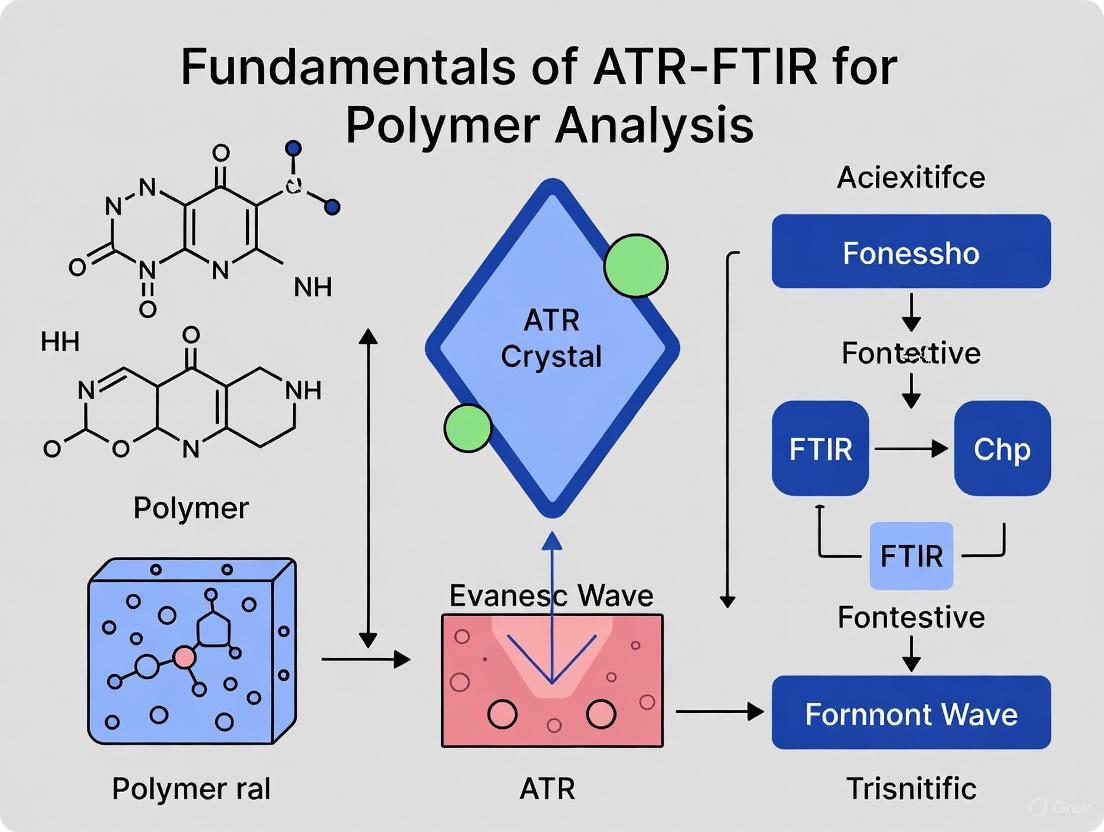
This article provides a thorough examination of Attenuated Total Reflection Fourier Transform Infrared (ATR-FTIR) spectroscopy as a pivotal analytical technique for polymer characterization.
ATR-FTIR Spectroscopy for Polymer Analysis: A Comprehensive Guide from Fundamentals to Advanced Applications
Abstract
This article provides a thorough examination of Attenuated Total Reflection Fourier Transform Infrared (ATR-FTIR) spectroscopy as a pivotal analytical technique for polymer characterization. Tailored for researchers, scientists, and drug development professionals, the content spans from foundational principles and spectral interpretation to advanced methodological applications in sectors including pharmaceuticals, environmental science, and materials engineering. It delivers practical guidance on method optimization, troubleshooting common challenges, and validating results through complementary techniques and chemometrics. The synthesis of this information aims to empower professionals in leveraging ATR-FTIR for precise polymer identification, degradation studies, formulation optimization, and quality control.
Understanding ATR-FTIR: Core Principles and Polymer Spectral Fingerprints
Fourier transform infrared (FTIR) spectroscopy measures molecular vibrations, providing both qualitative and quantitative data through the absorption of IR light by molecules [1]. When IR radiation interacts with a sample, specific frequencies are absorbed that correspond to molecular bond vibrations, such as stretching, bending, or twisting of dipoles [1]. Attenuated Total Reflectance (ATR) has emerged as the most popular modern FTIR technique for polymer analysis, enabling direct examination of solids, liquids, and gels without extensive preparation [1]. The ATR technique is based on the principle of single or multiple total reflections of radiation at the phase interface between the measured sample and a crystal with a higher refractive index [2]. This non-destructive approach has proven particularly valuable for characterizing polymer structures, monitoring chemical reactions, and quantifying analytes in diverse materials [1] [2].
Fundamental Principles of ATR-FTIR
The Physics of Internal Reflection
In ATR-FTIR measurement, a beam of IR radiation first passes through a higher refractive index medium, a transparent crystal permeable to IR radiation, then strikes the sample placed behind the crystal at a precisely defined angle [2]. The penetration depth of the incident radiation is a maximum of a few micrometers, with absorption occurring at a frequency corresponding to the vibrational frequency of the sample [2]. If the sample absorbs radiation at a certain frequency, this component will be attenuated in the resulting total reflection [2].
The fundamental equation governing the ATR phenomenon is based on the formation of an evanescent wave that extends beyond the crystal surface into the sample. The depth of penetration (dp) is a critical parameter defined by the equation:
dp = λ / [2πnc√(sin²θ - (ns/nc)²)]
Where:
- λ = wavelength of infrared radiation
- nc = refractive index of the ATR crystal
- ns = refractive index of the sample
- θ = angle of incident radiation
For effective ATR measurement, the refractive index of the crystal (nc) must be greater than that of the sample (ns). Typical penetration depths range from 0.5 to 2 μm, making the technique highly surface-sensitive [1] [2].
Comparison of FTIR Techniques
Table 1: Comparison of FTIR Sampling Techniques for Polymer Analysis
| Technique | Principle | Penetration Depth | Sample Preparation | Best For |
|---|---|---|---|---|
| ATR-FTIR | Internal reflection at crystal-sample interface | 0.5-2 μm [2] | Minimal; direct contact with crystal | Solids, liquids, gels, soft polymers [1] |
| Transmission FTIR | Direct passage of IR through sample | 5-50 μm [3] | Extensive; requires thin films or KBr pellets | Transparent films, gases [2] |
| External Reflectance (ER-FTIR) | Specular reflection from surface | Variable; no penetration for specular component [2] | None; non-contact | Large, delicate objects; reflective surfaces [2] |
| Diffuse Reflectance (DRIFTS) | Collection of scattered radiation | Variable depending on scattering | Moderate; powdered samples | Powders, rough surfaces, catalysts [1] |
Experimental Methodology for Polymer Analysis
Instrumentation and Accessories
Modern ATR-FTIR instruments can be configured with several types of internal reflection elements (IREs), each with specific advantages for polymer analysis:
- Diamond ATR: Most common for general polymer analysis; chemically inert, durable, with penetration depth of approximately 2 μm [2] [4]
- Zinc Selenide (ZnSe): Lower refractive index (n=2.4) yields deeper penetration; suitable for softer polymers [2]
- Germanium (Ge): High refractive index (n=4) provides shallow penetration (∼0.5-1 μm); ideal for surface analysis and high-resolution imaging [2]
The selection of appropriate crystal material depends on the polymer hardness, required penetration depth, and chemical compatibility. Diamond ATR crystals are particularly favored for their durability and ability to analyze a wide range of polymer types without damage [4].
Standard Experimental Protocol
Sample Preparation:
- For solid polymers, ensure flat, clean surface for optimal crystal contact
- For powdered polymers, place 5-10 mg directly onto ATR crystal [4]
- Apply even pressure (up to 75 psi) using the pressure clamp to ensure intimate contact [4]
- For soft or sticky polymers, minimal pressure is required to avoid crystal damage [2]
Spectral Acquisition:
- Collect background spectrum with clean ATR crystal
- Set resolution to 4 cm⁻¹ for most polymer applications [1] [4]
- Co-add 64 scans to achieve optimal signal-to-noise ratio [4]
- Apply nitrogen purging to reduce atmospheric water vapor and CO₂ interference [1]
Data Processing:
- Apply atmospheric suppression algorithms if needed
- Perform baseline correction to remove scattering effects
- Use normalization for quantitative comparisons
- For quantitative analysis, apply Beer-Lambert law (A = abc) where A = absorbance, a = molar absorptivity, b = pathlength, and c = concentration [4]
Table 2: Essential Research Reagent Solutions for ATR-FTIR Polymer Analysis
| Reagent/Material | Function | Application Specifics |
|---|---|---|
| Diamond ATR Crystal | Internal reflection element | Standard for most polymers; chemically inert [4] |
| ZnSe ATR Crystal | Internal reflection element | Softer polymers; higher penetration depth [2] |
| Germanium ATR Crystal | Internal reflection element | High-resolution surface analysis [2] |
| Potassium Bromide (KBr) | Reference material | Traditional transmission method comparison [4] |
| Background Reference | Atmospheric correction | Clean crystal surface for baseline [1] |
| Nitrogen Purge Gas | Environmental control | Reduces atmospheric H₂O and CO₂ interference [1] |
ATR-FTIR Workflow for Polymer Characterization
The following diagram illustrates the complete experimental workflow for ATR-FTIR analysis of polymer samples:
Polymer-Specific Analytical Considerations
Key Absorption Bands for Common Polymers
Table 3: Characteristic FTIR Absorption Bands of Common Polymers [2]
| Polymer | Key Absorption Bands (cm⁻¹) | Functional Group Assignment |
|---|---|---|
| Polyethylene (LDPE) | 2915, 2848, 1470, 1462, 730, 720 | CH₂ asymmetric/symmetric stretch, CH₂ bend, CH₂ rock |
| Polypropylene (PP) | 2950, 2915, 2838, 1455, 1376, 1165 | CH₃ asymmetric stretch, CH₂ stretch, CH₃ symmetric deformation |
| Polystyrene (PS) | 3025, 2920, 1600, 1492, 1450, 755, 700 | Aromatic C-H stretch, C=C aromatic stretch, C-H out-of-plane bend |
| PMMA | 2950, 1725, 1480, 1435, 1148, 1190, 750 | C=O ester stretch, C-O-C asymmetric stretch |
| PET | 3050, 2950, 1715, 1408, 1335, 1240, 1095, 870 | C=O ester stretch, aromatic C-H stretch, C-O stretch |
| PVC | 2970, 2900, 1425, 1330, 1250, 1095, 690, 615 | C-H stretch, C-Cl stretch |
Quantitative Analysis of Polymer Systems
ATR-FTIR enables quantitative analysis of polymer blends and composites through established chemometric methods. The Beer-Lambert law forms the foundation for quantitative measurements:
A = εbc
Where:
- A = Absorbance at specific wavenumber
- ε = Molar absorptivity (compound-specific constant)
- b = Pathlength (determined by ATR penetration depth)
- c = Concentration of analyte
For powdered polymer mixtures, micro-ATR provides repeatable quantitative results comparable to traditional KBr pellet methods, with correlation coefficients (R) exceeding 0.95 for well-developed methods [4]. The technique has been successfully applied to analyze polymer crystallinity, with studies demonstrating agreement with conventional techniques for determining crystallinity in polymers such as poly(ε-caprolactone) [1].
Advanced ATR-FTIR Applications in Polymer Research
ATR-FTIR Spectroscopic Imaging
ATR-FTIR spectroscopic imaging represents a powerful advancement for studying heterogeneous polymer systems and dissolution processes. This technique enables label-free and non-destructive characterization of component distribution and intermolecular interactions in complex polymer formulations [3]. The method provides high spatial and chemical specificity, allowing researchers to observe chemical and physical processes that occur during polymer dissolution, water ingress, swelling, and interactions with excipients [3].
For pharmaceutical polymer systems, ATR-FTIR imaging has revealed detailed dissolution mechanisms of solid oral dosage forms, characterizing three concentric fronts during polymer matrix dissolution: the water penetration front, gelification front, and erosion front [3]. This information is crucial for developing effective controlled-release polymer formulations.
Surface Analysis and Depth Profiling
The depth-profiling capability of ATR-FTIR makes it particularly valuable for studying polymer surface modifications, coatings, and degradation. By utilizing ATR crystals with different refractive indices or varying the incident angle, researchers can control penetration depth to obtain chemical information from specific regions within the top few micrometers of polymer surfaces [2].
This approach has been successfully applied to verify immobilization of active molecules in polymer matrices for drug delivery applications [1]. FTIR-ATR detected functional groups indicative of both covalent and non-covalent interactions, confirming successful drug incorporation into polymer catheter matrices [1].
Diagram: ATR-FTIR Internal Reflection Principle
ATR-FTIR spectroscopy provides an indispensable analytical tool for polymer characterization, combining minimal sample preparation with high chemical specificity. The fundamental principle of internal reflection with evanescent wave penetration enables non-destructive analysis of a wide range of polymer systems, from bulk materials to surface modifications. Understanding the interaction between the ATR crystal and polymer sample—including critical parameters such as penetration depth, crystal selection, and contact quality—is essential for obtaining reliable spectral data. As polymer research advances toward more complex formulations and applications, ATR-FTIR continues to evolve through techniques such as spectroscopic imaging and advanced quantitative methods, maintaining its position as a cornerstone analytical technique in polymer science and industrial development.
Fourier-Transform Infrared (FTIR) spectroscopy stands as a cornerstone analytical technique for characterizing polymeric materials, providing invaluable insights into their molecular composition and structure. This powerful method operates on the principle that chemical bonds within molecules vibrate at specific frequencies when exposed to infrared light, creating a unique absorption spectrum that serves as a molecular "fingerprint" for identification [5] [6]. In the specific context of polymer research, FTIR spectroscopy enables scientists to identify functional groups, monitor polymerization reactions, investigate degradation mechanisms, and determine polymer composition [7] [8]. The technique's versatility allows for the analysis of various sample types—including solids, liquids, and films—making it particularly suitable for the diverse forms in which polymers are synthesized and utilized [6].
The advent of Attenuated Total Reflectance (ATR) sampling has revolutionized FTIR analysis of polymers by significantly simplifying sample preparation. Unlike traditional transmission FTIR that requires thin films or KBr pellets, ATR-FTIR merely requires direct contact between the polymer sample and a specialized crystal, enabling rapid analysis with minimal preparation [8] [6]. This efficiency, combined with the technique's non-destructive nature, makes ATR-FTIR an indispensable tool in both academic research and industrial settings, from quality control laboratories to advanced materials development facilities [8]. When IR radiation interacts with the sample through the ATR crystal, an evanescent wave penetrates a short distance (typically 0.5-2 micrometers) into the material, where it is absorbed by molecular vibrations at characteristic frequencies, generating a spectrum that reveals the chemical identity of the sample [9] [6].
Fundamental Principles of FTIR Spectroscopy
Molecular Vibrations and Infrared Absorption
The fundamental principle underlying FTIR spectroscopy revolves around molecular vibrations and their interaction with infrared radiation. When infrared light illuminates a sample, chemical bonds within the molecules absorb specific wavelengths that match their natural vibrational frequencies [5] [10]. These vibrational modes primarily include stretching (which changes bond length) and bending (which changes bond angle) motions [10]. The exact frequency at which a bond absorbs infrared radiation depends on factors including bond strength, atomic masses, and the surrounding molecular environment [5]. Crucially, the absorption only occurs when the vibration results in a change in the dipole moment of the molecule, making FTIR particularly sensitive to polar functional groups [6].
The resulting FTIR spectrum presents a plot of absorbance (or transmittance) versus wavenumber (cm⁻¹), which serves as the fundamental data for interpretation [6]. Different functional groups produce characteristic absorption bands in distinct regions of the spectrum, allowing researchers to identify specific chemical moieties within complex polymer systems [7] [10]. For instance, carbonyl groups (C=O) typically absorb around 1700-1750 cm⁻¹, while hydroxyl groups (O-H) display broad absorptions in the 3200-3600 cm⁻¹ region [5] [11]. This predictable behavior enables the deduction of molecular structure from spectral data, forming the basis for polymer identification and characterization.
FTIR Instrumentation and ATR Technique
Modern FTIR spectrometers employ an interferometer with a moving mirror to simultaneously measure all infrared frequencies, a significant advancement over older dispersive instruments that measured wavelengths sequentially [5] [6]. The raw interferogram signal is subsequently converted into a recognizable spectrum through a mathematical process known as Fourier transformation [5] [6]. For polymer analysis, ATR-FTIR has emerged as the predominant sampling technique due to its minimal sample preparation requirements and robustness [8] [6]. In ATR-FTIR, the sample is placed in direct contact with an Internal Reflection Element (IRE) crystal—typically diamond, zinc selenide, or germanium—that has a higher refractive index than the sample [9] [6]. The infrared beam undergoes total internal reflection within the crystal, generating an evanescent wave that penetrates into the sample where absorptions occur [9] [6]. This design allows for rapid analysis of solids, liquids, gels, and powders without extensive preparation, making it ideal for routine polymer characterization [8].
Characteristic FTIR Signatures of Major Polymer Functional Groups
Hydrocarbon Backbone Vibrations
Polyolefins such as polyethylene and polypropylene exhibit distinctive vibrational patterns primarily associated with their hydrocarbon backbones. Polyethylene, consisting essentially of methylene (CH₂) groups, demonstrates characteristic absorptions at 2915-2920 cm⁻¹ (asymmetric CH₂ stretch), 2848-2850 cm⁻¹ (symmetric CH₂ stretch), and 718-720 cm⁻¹ (CH₂ rock) [7] [12]. The presence of the rocking vibration at approximately 720 cm⁻¹ specifically indicates four or more consecutive methylene groups in the polymer chain [7]. The ratio and exact positions of these absorptions can further distinguish between different polyolefin architectures. For instance, low-density polyethylene (LDPE) containing short-chain branching exhibits an additional methyl (CH₃) umbrella mode at 1377-1378 cm⁻¹, while high-density polyethylene (HDPE) with minimal branching lacks this peak [7] [12].
Polypropylene, featuring a backbone with alternating methylene and methine groups with methyl side chains, displays a more complex vibrational signature. In addition to methylene stretches similar to polyethylene, polypropylene shows characteristic bands at approximately 1376 cm⁻¹ and 1452 cm⁻¹ attributable to the symmetric and asymmetric bending vibrations of methyl groups, respectively [11]. The specific pattern and intensity ratios between these bands provide information about the tacticity and crystallinity of the polymer [11]. Naturally weathered polypropylene samples further demonstrate the formation of oxidation products including hydroxyl (3600-3200 cm⁻¹), carbonyl (1750-1700 cm⁻¹), and carboxylate (1650-1550 cm⁻¹) groups, with the relative intensities of these bands serving as indicators of degradation extent [11].
Oxygen-Containing Functional Groups
Polymers containing oxygen in their backbone or side chains exhibit additional characteristic vibrations that provide crucial structural information. Polyesters such as poly(ethylene terephthalate) (PET) and poly(butylene terephthalate) (PBT) display strong carbonyl (C=O) stretching vibrations at 1710-1715 cm⁻¹, along with C-O stretching bands in the 1300-1000 cm⁻¹ region [12]. The exact position of the carbonyl stretch is sensitive to the chemical environment, shifting slightly based on the specific ester composition and crystallinity [12]. The aromatic rings in PET further contribute distinctive C-H out-of-plane bending vibrations at approximately 723-728 cm⁻¹ and C=C stretches around 1500-1400 cm⁻¹ [12].
Acrylic polymers and methacrylates exhibit characteristic carbonyl stretches around 1730 cm⁻¹, with the specific position influenced by the ester side chain and polymer microstructure [13]. During polymerization, FTIR spectroscopy can monitor the disappearance of the C=C stretching vibration at approximately 1640 cm⁻¹ and the =C-H out-of-plane deformation bands between 810-850 cm⁻¹, providing real-time conversion data [13]. This capability makes FTIR invaluable for monitoring polymerization kinetics and optimizing reaction conditions in resin and adhesive formulation [13].
Table 1: Characteristic FTIR Vibrational Frequencies of Common Polymer Functional Groups
| Functional Group | Vibration Mode | Wavenumber Range (cm⁻¹) | Representative Polymers |
|---|---|---|---|
| Methylene (CH₂) | Asymmetric Stretch | 2915-2920 | Polyethylene [7] [12] |
| Symmetric Stretch | 2848-2850 | Polyethylene [7] [12] | |
| Rocking | 718-720 | Polyethylene [7] [12] | |
| Methyl (CH₃) | Asymmetric Bend | ~1450 | Polypropylene [11] |
| Symmetric Bend | 1376-1378 | LDPE, Polypropylene [7] [11] | |
| Carbonyl (C=O) | Stretch | 1710-1750 | PET, PBT, Acrylates [12] [13] |
| Ester (C-O) | Stretch | 1300-1000 | PET, PBT [12] |
| Hydroxyl (O-H) | Stretch | 3200-3600 | Weathered PP, PVA [11] |
| Vinyl (C=C) | Stretch | ~1640 | Unpolymerized Monomers [13] |
Table 2: FTIR Spectral Differences Between Common Polymers
| Polymer | Characteristic Peaks (cm⁻¹) | Distinguishing Features |
|---|---|---|
| Polyethylene (HDPE) | 2915, 2848, 1465, 718 [7] [12] | No methyl peak at ~1377 cm⁻¹ |
| Polyethylene (LDPE) | 2917, 2852, 1465, 1377, 718 [7] | Presence of methyl peak at 1377 cm⁻¹ |
| Polypropylene (PP) | ~2950, 2916, 2870, 2838, 1452, 1376 [11] | Doublet at ~1450 & 1375 cm⁻¹ |
| Poly(ethylene terephthalate) (PET) | 1713, 1241, 1094, 723 [12] | Strong carbonyl, aromatic C-H bend |
| Poly(butylene terephthalate) (PBT) | 1711, 1270, 1100, 728 [12] | Similar to PET with slight shifts |
Experimental Methodologies for Polymer Analysis
Standard ATR-FTIR Analysis of Solid Polymers
The analysis of solid polymer samples via ATR-FTIR follows a straightforward protocol that ensures reproducible and high-quality spectra. First, the ATR crystal must be thoroughly cleaned using a suitable solvent such as methanol or isopropanol to remove any contaminants from previous measurements [12]. The polymer sample is then placed directly on the crystal surface, ensuring intimate contact is achieved by applying consistent pressure via the instrument's clamping mechanism [12]. For rigid samples, this may require applying sufficient force to ensure complete contact with the crystal, while soft or pliable materials typically make good contact with minimal pressure [8].
Spectral acquisition parameters should be optimized for the specific application. Typical settings include a resolution of 4 cm⁻¹ with 16-32 scans to ensure an adequate signal-to-noise ratio [9] [12]. The spectral range should encompass 4000-600 cm⁻¹ to cover the diagnostically relevant mid-infrared region [10]. Background spectra must be collected with the same instrumental parameters immediately before sample measurement to account for atmospheric contributions, particularly carbon dioxide (~2350 cm⁻¹) and water vapor (~1650 cm⁻¹) [6]. For quantitative analysis, consistent pressure application is critical as variations can affect the intensity of absorption bands [8]. Modern FTIR instruments often feature pressure-sensitive accessories that provide reproducible contact, improving quantitative accuracy [8].
Specialized Methodologies for Advanced Applications
Beyond routine identification, ATR-FTIR can be coupled with various accessory techniques to extract more sophisticated information about polymer systems. Real-time polymerization monitoring involves placing monomer mixtures directly on the ATR crystal and collecting sequential spectra during the curing process [13]. By tracking the disappearance of monomer peaks (e.g., C=C stretch at ~1640 cm⁻¹ for acrylates) and the appearance of polymer peaks (e.g., C=O stretch at ~1730 cm⁻¹), researchers can determine conversion kinetics and optimize curing parameters [13]. This methodology has proven particularly valuable for studying dental adhesives and resin composites, where solvent evaporation and polymerization occur simultaneously [13].
Degradation studies employ ATR-FTIR to identify oxidation products and monitor degradation pathways in polymers subjected to environmental stress [8] [11]. For example, studying naturally weathered polypropylene reveals the formation of hydroxyl (3600-3200 cm⁻¹), carbonyl (1750-1700 cm⁻¹), and carboxylate (1650-1550 cm⁻¹) groups, whose relative intensities indicate degradation extent [11]. TGA-IR hyphenation represents another powerful approach where gases evolved during thermal decomposition are directly analyzed by FTIR, enabling identification of degradation mechanisms and decomposition products [8]. This technique has been successfully applied to failure analysis, such as identifying unexpected methyl esters in cracked cell phone covers resulting from solvent exposure [8].
The Scientist's Toolkit: Essential Research Reagents and Materials
Table 3: Essential Materials and Reagents for ATR-FTIR Polymer Analysis
| Item | Function/Application | Technical Specifications |
|---|---|---|
| ATR-FTIR Spectrometer | Core analytical instrument for spectral acquisition | Mid-IR range (4000-400 cm⁻¹), Diamond or ZnSe ATR crystal preferred [8] [12] |
| ATR Crystals | Sample interface for internal reflection | Diamond (durability, broad range), ZnSe (general purpose), Ge (high refractive index) [9] [8] |
| Cleaning Solvents | Crystal cleaning between samples | HPLC-grade methanol, isopropanol, acetone [12] |
| Spectroscopic Standards | Instrument validation and calibration | Polystyrene films with certified peak positions [8] |
| Polymeric Reference Materials | Spectral libraries and method development | Certified polymers (PE, PP, PET, etc.) for library development [12] |
| Pressure Gauge | Reproducible sample contact | Consistent pressure application for quantitative work [8] |
| Temperature Controller | Temperature-dependent studies | Heating accessory for thermal transition analysis [8] [13] |
Advanced Applications and Future Perspectives
The application of ATR-FTIR in polymer research continues to evolve with technological advancements, enabling increasingly sophisticated analyses. FTIR imaging and mapping represents a powerful extension that combines spatial resolution with chemical identification, allowing researchers to create two-dimensional chemical composition maps of polymer blends and composites [6]. This capability proves invaluable for studying phase separation, component distribution, and contamination in complex polymer systems [6]. Rheo-IR represents another innovative hybrid technique that couples rheometry with FTIR spectroscopy, enabling simultaneous measurement of mechanical properties and chemical transformations during polymer processing [8]. This approach provides unique insights into structure-property relationships, such as monitoring the chemical changes during adhesive curing while simultaneously measuring viscoelastic development [8].
The integration of multivariate analysis with ATR-FTIR data has opened new frontiers in polymer characterization, particularly for quantifying parameters traditionally difficult to assess via infrared spectroscopy. Advanced chemometric methods like Principal Component Analysis (PCA) and Partial Least Squares (PLS) regression enable researchers to correlate spectral variations with polymer properties, including molecular weight distribution and branching indices [14]. This represents a significant advancement beyond FTIR's traditional role as a qualitative technique, expanding its utility into quantitative domains previously inaccessible to infrared spectroscopy [14]. As instrument sensitivity continues to improve and computational methods become more sophisticated, ATR-FTIR is poised to remain an indispensable technique in the polymer scientist's arsenal, providing fundamental insights into polymer structure-property relationships from basic research to industrial applications [8].
Fourier Transform Infrared (FTIR) spectroscopy is a cornerstone analytical technique for the characterization of molecular structures, leveraging the unique absorption of infrared light by chemical bonds to create a definitive "chemical fingerprint" [15]. For researchers in polymer science and drug development, the choice of sampling technique is critical, as it directly impacts data quality, experimental efficiency, and analytical outcome. Historically, transmission FTIR was the standard approach, but over the past three decades, Attenuated Total Reflectance (ATR) has seen a marked increase in adoption, largely due to its ease of use and minimal sample preparation [16] [15]. This technical guide provides an in-depth comparison of ATR and Transmission FTIR, framing their operational principles, advantages, and limitations within the context of modern polymer analysis research. The objective is to equip scientists with the knowledge to select the most appropriate sampling methodology for their specific analytical challenges.
Theoretical Foundations of FTIR Sampling
At its core, FTIR spectroscopy measures the absorption of infrared light by molecules undergoing vibrational transitions [1]. Modern FTIR spectrometers employ an interferometer, typically of the Michelson design, which generates an interferogram containing all spectral frequencies simultaneously. A Fourier Transform mathematical operation then converts this raw data into a familiar intensity-versus-wavenumber spectrum [17] [15]. This process confers significant advantages, including superior signal-to-noise ratios, faster acquisition times, and higher precision compared to older dispersive instruments [1].
The interaction between the IR light and the sample, however, is governed by the sampling technique. The fundamental distinction between transmission and ATR lies in how the IR radiation interrogates the sample material, which in turn dictates the required sample preparation, the resulting spectral characteristics, and the suitability for different sample types.
Principle of Transmission FTIR
Transmission FTIR is the original sampling method. In this technique, infrared light passes directly through a prepared sample [16] [15]. The underlying principle is straightforward: frequencies of light that are absorbed by the sample correspond to excited molecular vibrations, and the transmitted light that reaches the detector reveals an absorption spectrum [15]. For this to occur effectively, the sample must be thin enough to prevent total absorbance of the IR beam, which would result in poor spectral quality [15]. This necessity drives the often-involved sample preparation, such as creating thin films or using potassium bromide (KBr) pellets for solids, to ensure the sample is optically transparent [16] [15].
Principle of ATR-FTIR
ATR-FTIR operates on a different physical principle. The technique harnesses the phenomenon of total internal reflection [18]. The IR light is directed through an Internal Reflection Element (IRE), or crystal, with a high refractive index (e.g., diamond, ZnSe) at an angle greater than the critical angle [16] [18]. This causes the light to reflect internally within the crystal. At each point of reflection, an evanescent wave protrudes a short distance (typically 0.5 - 2 micrometers) beyond the crystal surface [18]. When a sample is placed in intimate contact with the crystal, this evanescent wave is absorbed by the sample, generating the IR spectrum [18] [17]. This fundamental mechanism means ATR requires little to no sample preparation and is inherently surface-specific.
The diagram below illustrates the core components and light path in a single-bounce ATR accessory.
Comparative Analysis: ATR vs. Transmission FTIR
A direct comparison of ATR and Transmission FTIR reveals critical differences in their operation, spectral output, and practical application. The following table provides a structured overview of these distinctions.
Table 1: Key Operational Differences Between ATR and Transmission FTIR
| Feature | ATR-FTIR | Transmission FTIR |
|---|---|---|
| Fundamental Principle | Evanescent wave absorption at crystal/sample interface [18] | Direct transmission of IR light through the sample [16] |
| Sample Penetration Depth | Shallow and fixed (∼0.5-2 µm); depends on wavelength [18] | Variable; depends on sample thickness and preparation [16] |
| Sample Preparation | Minimal; direct application of solids/liquids [16] [19] | Extensive; requires KBr pellets for solids or specific cells for liquids [16] [15] |
| Sample Destructiveness | Typically non-destructive; sample is easily recovered [16] [19] | Often destructive; sample is diluted in KBr or dissolved [15] |
| Typical Analysis Time | Very fast (minutes) [16] | Slower due to preparation (tens of minutes to hours) [16] |
| Reproducibility | Highly reproducible due to consistent sampling interface [16] | Can be variable due to inconsistencies in pellet thickness or pathlength [16] |
| Spectral Libraries | Fewer dedicated libraries, but growing rapidly [16] | Extensive, well-established libraries available [16] |
Spectral Data Comparison
While ATR and transmission spectra of the same compound are very similar, they are not identical. Key differences arise from the physics of the ATR technique [16] [18]. The penetration depth of the evanescent wave is wavelength-dependent, decreasing at higher wavenumbers (shorter wavelengths) [18]. This results in lower relative intensity of peaks at higher wavenumbers in an ATR spectrum compared to its transmission counterpart [18]. Furthermore, due to optical effects like anomalous dispersion at absorption frequencies, small peak shifts can occur, particularly for strong absorbers like the carbonyl band [16]. It is crucial for researchers to be aware that these differences are normal and that most modern FTIR software includes algorithms to correct ATR spectra, making them appear more "transmission-like" for library comparisons [18] [15].
Experimental Protocols for Polymer Analysis
The following section outlines detailed methodologies for analyzing polymers using both ATR and Transmission FTIR, providing a practical guide for researchers.
This protocol demonstrates the simplicity and efficiency of ATR for identifying common polymers.
- 1. Instrumentation: FT/IR-4600 spectrometer equipped with a single-reflection ATR accessory. The ATR crystal is diamond with ZnSe lenses.
- 2. Sample Collection: Obtain polymer samples (1-4 mm²) from various parts of an automobile, such as carpet fibers, seat fabric, molded panels, and trim.
- 3. Background Measurement: Collect a background single-beam spectrum (e.g., 64 scans at 4 cm⁻¹ resolution) with a clean ATR crystal surface.
- 4. Sample Measurement:
- Place the polymer sample directly onto the ATR crystal.
- Hand-tighten the clamping arm (anvil) to apply sufficient pressure, ensuring uniform and intimate contact between the sample and the crystal.
- Collect the sample spectrum using the same parameters as the background.
- 5. Data Analysis: Identify the polymer by searching the collected spectrum against commercial or in-house ATR spectral libraries. Common identifications include Nylon-6 for carpets, Poly(ethylene terephthalate) for fabrics, and Poly(methyl methacrylate) for taillight lenses [19].
This traditional method is useful when matching against extensive transmission libraries or when ATR is unsuitable.
- 1. Instrumentation: FTIR spectrometer with a transmission holder.
- 2. Sample and Matrix Preparation:
- Grind the solid polymer sample to a fine, uniform powder to minimize light scattering.
- Mix approximately 1-2 mg of the polymer powder with 100-200 mg of dry, infrared-grade Potassium Bromide (KBr). The sample should be dilute (∼1% by weight) to avoid total absorbance [15].
- Note: Due to its hygroscopic nature, KBr must be kept dry to prevent moisture absorption, which introduces spectral artifacts [16].
- 3. Pellet Formation:
- Transfer the mixture to a die set designed for KBr pellets.
- Apply high pressure (typically several tons) under vacuum for one to two minutes to form a transparent pellet.
- 4. Background Measurement: Collect a background spectrum with an empty holder or a pure KBr pellet.
- 5. Sample Measurement: Place the KBr pellet into the transmission holder and collect the sample spectrum.
- 6. Data Analysis: Identify the polymer by searching the spectrum against transmission spectral libraries.
The logical workflow for selecting and applying the appropriate FTIR sampling technique is summarized below.
The Scientist's Toolkit: Essential Research Reagents and Materials
Selecting the correct materials is paramount for successful FTIR analysis. The table below lists key items and their functions in ATR and Transmission experiments.
Table 2: Essential Materials for ATR and Transmission FTIR Experiments
| Item | Function | Application Context |
|---|---|---|
| Diamond ATR Crystal | Internal Reflection Element (IRE); extremely hard-wearing and chemically resistant, ideal for a wide range of samples [18] [19]. | ATR-FTIR |
| Zinc Selenide (ZnSe) Crystal | IRE; suitable for day-to-day applications but can be damaged by acids, bases, and point loads from hard samples [18]. | ATR-FTIR |
| Germanium (Ge) Crystal | IRE; provides a very shallow penetration depth, useful for high refractive index samples and surface studies [18]. | ATR-FTIR |
| Potassium Bromide (KBr) | Infrared-transparent matrix; used to dilute solid samples to create pellets that are optically clear for IR transmission [16] [15]. | Transmission FTIR |
| Hydraulic Pellet Press | Applies high pressure to KBr and sample mixtures to form solid, transparent pellets for analysis [16]. | Transmission FTIR |
| Clamping Arm / Anvil | Applies controlled pressure to solid samples to ensure firm, uniform contact with the ATR crystal surface [16] [19]. | ATR-FTIR |
Both ATR and Transmission FTIR are powerful techniques for polymer identification and characterization. The choice between them is not a matter of one being universally superior, but rather which is more appropriate for the specific analytical scenario. ATR-FTIR has become the dominant technique for most routine analyses due to its speed, minimal sample preparation, excellent reproducibility, and non-destructive nature [16] [19] [15]. Its robustness, especially when using a diamond crystal, makes it ideal for rapid quality control checks, failure analysis, and analyzing a vast array of polymer forms.
However, Transmission FTIR remains highly relevant. It is the preferred method when direct comparison to extensive historical transmission libraries is required, or for specific applications like FTIR microscopy of microplastics and thin tissue sections [15]. The decision matrix for researchers ultimately balances factors such as available time, sample destructiveness, the need for library matching, and the physical state of the polymer. Understanding the fundamental principles and practical trade-offs outlined in this guide empowers scientists and drug development professionals to make an informed choice, thereby optimizing their analytical workflow and ensuring high-quality, reliable spectroscopic data.
Fourier Transform Infrared Spectroscopy (FTIR) is a powerful analytical technique used to identify a material's molecular composition by measuring how a sample absorbs infrared light [8]. In the context of polymer research, it provides detailed insights into molecular structure, making it invaluable for identifying polymer types, monitoring degradation, and understanding material properties [8]. The underlying principle is that chemical bonds in molecules vibrate at specific frequencies when exposed to infrared radiation, creating a unique absorption pattern that serves as a molecular fingerprint [5]. Attenuated Total Reflectance (ATR) is a sampling method that has largely superseded transmission measurements for many polymer applications [20]. It requires minimal sample preparation, is non-destructive, and works by passing infrared light through a crystal in contact with the sample, generating an evanescent wave that penetrates the material to a depth of up to 2 micrometers [20]. This makes ATR-FTIR particularly suitable for analyzing solid polymer samples with complex shapes or surfaces, from heritage objects to modern industrial materials [21].
Fundamental Principles of FTIR Spectral Interpretation
Molecular Vibrations and Spectral Features
The foundation of FTIR spectroscopy lies in the fact that different chemical bonds in a molecule vibrate at specific frequencies when exposed to infrared light [5]. These vibrations are directly related to molecular structure, with different types of chemical bonds and functional groups possessing unique vibrational frequencies [5]. The primary vibrational modes observed in polymer spectra include stretching (where the distance between atoms changes) and bending (where the angle between bonds changes) [5]. When plotted on a graph, the absorption pattern creates a spectrum that serves as the molecular signature of the material [5]. For hydrocarbon polymers like polyethylene and polypropylene, the spectra are dominated by C-H stretching and bending peaks from methyl (CH₃) and methylene (CH₂) groups [22] [7]. The number of C-H stretching peaks between 3000 and 2850 cm⁻¹ can indicate whether a molecule contains methyl groups only, methylene groups only, or both [7].
ATR-FTIR Methodology for Polymer Analysis
ATR-FTIR spectroscopy has become the preferred method for polymer analysis due to its simplicity and minimal sample preparation requirements [21] [20]. The standard setup for most ATR-FTIR accessories involves a 45° incident angle for single-bounce methods, though multi-bounce platforms with incident angles between 19° and 45° are also available [20]. For polymer analysis, ensuring good contact between the sample and the ATR crystal is essential, often requiring a pressure clamp for solids [21]. While this may create indentations on pliable materials, it is generally tolerated for accurate spectral acquisition [21]. The analysis of unusual shapes or curved surfaces remains possible with careful positioning, avoiding the need for destructive sample preparation such as microtoming [21].
Figure 1: ATR-FTIR Polymer Analysis Workflow
Case Study 1: Polyethylene Analysis
Spectral Features and Polyethylene Types
Polyethylene (PE) spectra are characterized by strong methylene (CH₂) vibrations, with key peaks including asymmetric stretches at ~2917 cm⁻¹, symmetric stretches at ~2852 cm⁻¹, and bending vibrations at ~1472-1464 cm⁻¹ [22] [7]. A critical diagnostic feature is the CH₂ rocking vibration at ~720 cm⁻¹, which only appears when four or more methylene groups are present in sequence [7]. The subtle differences in polyethylene spectra allow distinction between various types, primarily Low-Density Polyethylene (LDPE) and High-Density Polyethylene (HDPE) [22] [7]. LDPE exhibits a small but distinct CH₃ umbrella mode peak at ~1377 cm⁻¹ due to alkyl side chains that prevent close packing of polymer chains, resulting in lower density material [7]. In contrast, HDPE lacks this methyl peak, indicating an absence of side chains and enabling tighter chain packing [7].
Crystalline Splitting in HDPE
A notable feature in HDPE spectra is the splitting of the CH₂ rocking peak into doublets at ~730 and 720 cm⁻¹, a phenomenon known as crystalline splitting [22]. This occurs when long methylene chains orient parallel to each other, forming crystalline regions where CH₂ groups on adjacent chains interact during rocking vibrations [22]. The in-phase and out-of-phase rocking vibrations have different force constants due to molecular interactions, resulting in distinct peak positions [22]. This splitting is absent in LDPE because side chains prevent crystallization, and in liquid alkanes where chains are randomly oriented [22]. Linear Low-Density Polyethylene (LLDPE) presents an intermediate case, exhibiting both the CH₃ umbrella mode (indicating side chains) and crystalline splitting (indicating some crystalline regions), due to shorter ethyl side chains that allow partial crystallization [22].
Monitoring Polyethylene Degradation
FTIR is particularly valuable for monitoring polyethylene oxidation through the carbonyl index (CI), which tracks the evolution of carbonyl species (C=O) formed during photo- or thermo-oxidation in the range of 1850-1650 cm⁻¹ [20]. The Specified Area Under Band (SAUB) methodology has been developed as a consistent approach for CI determination, measuring the ratio of the carbonyl peak area to a reference peak area to normalize results [20]. This allows researchers to quantify oxidation levels, predict service life, and develop effective stabilization additives [20].
Table 1: Characteristic FTIR Absorption Bands for Polyethylene
| Vibration Mode | Peak Position (cm⁻¹) | Interpretation |
|---|---|---|
| CH₂ asymmetric stretch | 2915-2920 | Present in all PE forms |
| CH₂ symmetric stretch | 2848-2850 | Present in all PE forms |
| CH₂ bend | 1465-1472 | Methylene scissoring vibration |
| CH₂ crystalline bend | 1472 & 1464 | Split peak in HDPE due to crystallinity |
| CH₃ umbrella mode | ~1377 | Present in LDPE, indicates side chains |
| CH₂ rock | 720-730 | Requires ≥4 sequential CH₂ groups |
Table 2: Distinguishing Polyethylene Types by ATR-FTIR
| Polymer Type | CH₃ Umbrella Mode | CH₂ Rocking Pattern | Crystallinity Indicators |
|---|---|---|---|
| LDPE | Present at ~1377 cm⁻¹ | Single peak at ~718 cm⁻¹ | No crystalline splitting |
| HDPE | Absent | Doublet at 730 & 720 cm⁻¹ | Split peaks at 1472/1464 & 730/720 cm⁻¹ |
| LLDPE | Present at ~1378 cm⁻¹ | Doublet at 729 & 719 cm⁻¹ | Crystalline splitting with short side chains |
Case Study 2: Polypropylene Analysis
Spectral Characteristics and Tacticity
Polypropylene (PP) spectra exhibit characteristic vibrations that distinguish it from polyethylene, primarily due to the presence of methyl groups attached to the polymer backbone. The methyl groups produce asymmetric and symmetric C-H stretches between 2970-2870 cm⁻¹, a CH₃ bend at ~1375 cm⁻¹, and an asymmetric CH₃ deformation at ~1455 cm⁻¹ [20]. The tacticity of polypropylene (isotactic, syndiotactic, or atactic) influences its crystallinity and physical properties, with isotactic PP being the most commercially important form. Unlike polyethylene, polypropylene lacks the long sequential methylene chains necessary for crystalline splitting, resulting in simpler spectral patterns in the CH₂ rocking region.
Oxidation Monitoring via Carbonyl Index
Similar to polyethylene, polypropylene undergoes oxidation that can be monitored using FTIR spectroscopy through the carbonyl index [20]. However, the reference peaks used for normalization differ from those used for polyethylene. For PP, the reference peak typically falls within the range of 2700-2750 cm⁻¹ or other stable backbone vibrations [20]. The SAUB methodology provides a standardized approach for determining CI in polypropylene, enabling comparison of oxidation levels across different studies and materials [20]. This is particularly important for predicting service life and evaluating stabilizer effectiveness in various applications [20].
Table 3: Characteristic FTIR Absorption Bands for Polypropylene
| Vibration Mode | Peak Position (cm⁻¹) | Interpretation |
|---|---|---|
| CH₃ asymmetric stretch | 2970-2950 | Methyl group vibration |
| CH₃ symmetric stretch | 2875-2870 | Methyl group vibration |
| CH₂ asymmetric stretch | 2935-2920 | Methylene vibration |
| CH₂ symmetric stretch | 2865-2850 | Methylene vibration |
| CH₃ bend | ~1375 | Methyl symmetric deformation |
| CH₂ bend | 1465-1450 | Methylene scissoring |
| Backbone vibrations | 1160-1000 | C-C stretching vibrations |
Case Study 3: Nylon Analysis
Amide Signatures and Nylon Types
Nylon polymers, known chemically as polyamides, display characteristic absorption bands associated with the amide functional group. The most distinctive features include the amide I band around 1640-1660 cm⁻¹ (primarily C=O stretching) and the amide II band at 1540-1550 cm⁻¹ (N-H bending coupled with C-N stretching) [21]. The specific positions and relative intensities of these bands can help distinguish between different nylon types (e.g., nylon 6, nylon 6,6, nylon 11) based on their molecular structure and hydrogen bonding patterns. Additionally, N-H stretching vibrations appear as broad bands in the 3300-3200 cm⁻¹ region, though these can sometimes be weak or obscured in ATR spectra due to hydrogen bonding variations.
Degradation Monitoring
Nylon polymers are susceptible to hydrolytic degradation, especially in humid environments, which can be monitored through changes in the amide bands and the appearance of new absorption features [21]. Degradation often manifests as changes in the relative intensities of the amide I and amide II bands, broadening of these bands, or the appearance of oxidation products. In heritage collections, deteriorating nylon objects may exhibit brittleness, discoloration, and changes in mechanical properties that correlate with spectral changes [21].
Advanced Applications and Methodologies
Hyphenated Techniques
FTIR spectroscopy is increasingly combined with other analytical techniques to provide comprehensive polymer characterization. Thermogravimetric Analysis coupled with FTIR (TGA-IR) monitors evolved gases during thermal decomposition, identifying volatile degradation products and decomposition pathways [8]. Rheo-IR combines rheometry with FTIR to simultaneously monitor chemical transformations (e.g., monomer conversion) and mechanical property changes (viscosity, elasticity) during processing or curing [8]. These hyphenated techniques provide insights into material behavior under realistic conditions, enabling optimization of formulations and processing parameters [8].
Microplastic Identification
ATR-FTIR has become a cornerstone technique for microplastic analysis, particularly for particles >500 μm that can be manually handled [23]. Recent advancements include semi-automated systems like the Microplastic Analyzer using Reflectance-FTIR Semi-automatically (MARS), which integrates a motorized stage, imaging capabilities, and FTIR spectroscopy to rapidly identify polymer type, count, and size distribution with ~98% accuracy compared to conventional ATR-FTIR [23]. Such systems significantly reduce analysis time while providing comprehensive data on microplastic contamination in environmental samples [23].
Heritage Science Applications
ATR-FTIR plays a crucial role in heritage science, enabling non-destructive identification of historical polymers in museum collections [21]. Studies have successfully characterized cellulose acetate, cellulose nitrate, polyurethane, polycarbonate, and other historical polymers with different additives, plasticizers, and degradation states [21]. Principal Component Analysis (PCA) of spectral data can unambiguously identify polymer types even with formulation variations and differentiate aged samples through subtle spectral changes [21]. This information helps conservators understand degradation pathways and develop appropriate preservation strategies for culturally significant objects [21].
Figure 2: Advanced ATR-FTIR Polymer Characterization Pathways
Experimental Protocols
Standard ATR-FTIR Analysis Procedure
For routine polymer analysis using ATR-FTIR, the following protocol provides reliable results: (1) Ensure the ATR crystal is clean using appropriate solvents and a lint-free cloth; (2) Apply sufficient pressure using the instrument's clamp mechanism to ensure good optical contact between sample and crystal; (3) Collect background spectrum with no sample present; (4) Acquire sample spectrum with appropriate parameters (typically 32 scans at 4 cm⁻¹ resolution for quality spectra) [24]; (5) Process spectra by applying atmospheric suppression and baseline correction algorithms as needed. For challenging samples with curved surfaces or unusual shapes, careful positioning is necessary to find an area with good crystal contact, potentially requiring multiple measurements at different positions [21].
Carbonyl Index Determination
The SAUB methodology for carbonyl index determination involves the following steps: (1) Collect high-quality ATR-FTIR spectrum following standard procedures; (2) Identify the carbonyl region (1850-1650 cm⁻¹) and appropriate reference peak (e.g., 1463 cm⁻¹ for PE based on CH₂ bending) [20]; (3) Integrate the area under the carbonyl band and the reference band after baseline correction; (4) Calculate CI as the ratio of the carbonyl band area to the reference band area [20]. This method provides more consistent results than peak height measurements and enables reliable comparison of oxidation levels across different studies and materials [20].
Degradation Monitoring Protocol
For accelerated aging studies: (1) Characterize initial polymer samples using ATR-FTIR to establish baseline spectra; (2) Subject samples to controlled aging conditions (elevated temperature, UV radiation, or other relevant stressors); (3) Periodically remove samples and acquire ATR-FTIR spectra using consistent parameters; (4) Track changes in key absorption bands (e.g., carbonyl formation, changes in crystallinity indicators) relative to stable reference peaks; (5) Correlate spectral changes with physical property measurements to establish degradation pathways [8] [20]. This approach can condense years of natural aging into laboratory timescales, enabling prediction of material lifetime and evaluation of stabilization strategies [8].
Table 4: Essential Research Reagent Solutions for ATR-FTIR Polymer Analysis
| Item | Function/Application | Technical Specifications |
|---|---|---|
| Diamond ATR Crystal | Standard sampling interface for solids | Broad spectral range, durable but may require pressure |
| Ge or ZnSe ATR Crystals | Alternative for specific applications | Different refractive indices for specialized analysis |
| ATR Cleaning Solvents | Remove sample residue between measurements | HPLC-grade methanol, ethanol, or isopropanol |
| Polystyrene Standard | Instrument validation and calibration | Certified reference material for performance verification |
| Background Reference | Collect background spectrum | Ambient air or clean ATR crystal surface |
| Pressure Clamp | Ensure sample-crystal contact | Adjustable force, may leave indentations on soft samples |
ATR-FTIR spectroscopy remains an indispensable technique for polymer characterization, offering detailed molecular-level insights with minimal sample preparation. The case studies of polyethylene, polypropylene, and nylon demonstrate how subtle spectral features can distinguish polymer types, monitor degradation processes, and guide material selection and development. Standardized methodologies like the SAUB approach for carbonyl index determination enhance reproducibility and enable meaningful comparison across studies. As FTIR technology continues to evolve through integration with other analytical techniques and automation, its applications in polymer research continue to expand, particularly in emerging fields such as microplastic analysis and heritage science. The fundamental principles and practical protocols outlined in this technical guide provide researchers with a solid foundation for interpreting common polymer spectra and applying ATR-FTIR spectroscopy to diverse material challenges.
Fourier Transform Infrared (FTIR) Spectroscopy is a cornerstone analytical technique in polymer research, renowned for its ability to provide detailed molecular fingerprints. However, a precise understanding of its capabilities and limitations is fundamental to its effective application. The core distinction lies in what its spectrum represents: it is an exquisitely sensitive tool for identifying the chemical structure of polymer repeat units but is inherently blind to the molecular weight distribution of the polymer chains themselves [7]. This technical guide delineates this critical boundary, providing researchers and drug development professionals with a foundational framework for interpreting ATR-FTIR data within polymer analysis. Grasping this principle is essential to avoid misinterpretation and to strategically complement FTIR with other analytical techniques when full polymer characterization is required.
FTIR Fundamentals and the Origin of Spectral Data
Basic Principles of FTIR Spectroscopy
FTIR spectroscopy operates on the principle that chemical bonds within a molecule vibrate at specific frequencies when exposed to infrared light [5]. These vibrations are characteristic of the types of atoms bonded, the strength of the bond, and the overall molecular environment [25]. The technique measures the absorption of infrared radiation across a range of wavenumbers (typically 4000–400 cm⁻¹ for the mid-infrared region), producing a spectrum that serves as a unique molecular fingerprint [26]. The fundamental equation governing these vibrations for a simple harmonic oscillator is:
[ \tilde{\nu} = \frac{1}{2\pi c} \sqrt{\frac{k}{\mu}} ]
where (\tilde{\nu}) is the wavenumber (cm⁻¹), (c) is the speed of light, (k) is the force constant of the bond, and (\mu) is the reduced mass of the vibrating atoms. In modern FTIR instruments, this is achieved using an interferometer and the raw interferogram is converted into an interpretable spectrum via a Fourier transformation [5] [27].
The Polymer Spectrum: A Story of Repeat Units
A polymer molecule, which may comprise thousands of repeat units and have a molecular weight in the hundreds of thousands, presents a theoretical challenge. For a non-linear molecule containing (N) atoms, the number of fundamental vibrational modes is (3N-6) [7]. A polymer chain with thousands of atoms could, in principle, exhibit thousands of vibrational peaks. However, the observed infrared spectrum of a polymer is remarkably simple because the high degree of structural repetition means that each identical repeat unit contributes the same set of vibrational modes [7]. The complexity of the spectrum is therefore determined not by the total number of atoms in the polymer chain, but by the number of atoms and the symmetry of the repeat unit. This is why even a high-molecular-weight polymer like polyethylene produces a spectrum with only a handful of distinct peaks [7].
What FTIR Can Reveal: Molecular Structure
FTIR spectroscopy is exceptionally powerful for deducing the chemical structure and composition of a polymer sample. The information is derived from the position, shape, and intensity of absorption peaks in the spectrum.
Identifying Chemical Functional Groups
The primary strength of FTIR is the identification of functional groups based on their characteristic absorption bands. The infrared spectrum is typically divided into key regions, as summarized in Table 1.
Table 1: Characteristic FTIR Absorption Regions for Functional Groups
| Wavenumber Region (cm⁻¹) | Bond Vibration Mode | Functional Group / Compound Class |
|---|---|---|
| 4000–2500 | O-H, N-H, C-H Stretching | Alcohols, acids, amines, alkanes |
| 2500–2000 | C≡C, C≡N Stretching | Alkynes, nitriles |
| 2000–1500 | C=O, C=C Stretching | Carbonyls (ketones, esters), alkenes, aromatics |
| 1500–500 | C-C, C-O, C-N, C-X Stretching; Bending | Molecular fingerprint; polymers |
The "fingerprint region" (1500–500 cm⁻¹) is particularly crucial for polymers. It contains complex patterns arising from skeletal vibrations and combinations of bends that are unique to the specific polymer type, allowing for definitive identification by comparison to reference spectral libraries [25].
Advanced Structural and Compositional Insights
Beyond simple identification, FTIR can provide deeper structural insights:
- Tacticity and Crystallinity: Changes in the sharpness and splitting of certain peaks can indicate the degree of crystallinity or the tacticity of a polymer chain [7].
- Surface vs. Bulk Composition: When using Attenuated Total Reflectance (ATR) mode, the analysis is sensitive to the surface of the material. This can reveal surface oxidation, migration of additives (e.g., plasticizers), or contaminants that may not be representative of the bulk material [28].
- Degradation and Oxidation: FTIR can monitor the appearance of new functional groups (e.g., carbonyl groups from polymer oxidation) or the disappearance of existing ones, providing real-time analysis of degradation pathways [8].
- Polymer Blends and Copolymers: The spectrum can reveal the presence of multiple components in a blend or the distinct repeat units in a copolymer, allowing for semi-quantitative analysis of composition.
What FTIR Cannot Reveal: Molecular Weight
The most significant limitation of FTIR in polymer analysis is its inability to determine molecular weight (MW) or molecular weight distribution (MWD).
The Fundamental Limitation
The infrared spectrum of a polymer is a superposition of the spectra of its individual repeat units. Whether a polymer chain contains 100 repeat units or 1000 repeat units, the chemical structure of each unit is identical [7]. Since FTIR probes the vibrational modes of chemical bonds, and these are unchanged by the mere length of the chain, the resulting spectrum is effectively independent of molecular weight. A molecule of polyethylene with a molecular weight of 10,000 g/mol will have essentially the same spectrum as one with a molecular weight of 100,000 g/mol [7].
Practical Implications for Polymer Analysis
This limitation has direct consequences for research and quality control:
- FTIR cannot distinguish grades of the same polymer that differ primarily in molecular weight (e.g., different viscosity grades of polypropylene) based on their spectra alone.
- It provides no direct information on polymer processing properties like melt flow index or mechanical strength, which are highly dependent on MW and MWD.
- End-group analysis is generally not feasible for high-molecular-weight polymers because the concentration of end-groups is too low to produce a detectable signal against the overwhelming contribution from the repeat units.
Table 2: Complementary Techniques for Full Polymer Characterization
| Analytical Technique | Primary Information | Information FTIR Cannot Provide |
|---|---|---|
| Gel Permeation Chromatography (GPC) | Molecular weight averages (Mn, Mw) and molecular weight distribution (MWD) | Quantitative data on polymer chain length and dispersity. |
| Mass Spectrometry (MS) | Exact molecular weight of oligomers and polymers (depending on mode). | Molecular mass of individual polymer chains. |
| Viscosity Measurements | Indirect measure of average molecular weight in solution. | Bulk rheological properties linked to chain length. |
Experimental Protocols for Polymer Analysis by ATR-FTIR
Standard Operating Procedure for Polymer Surface Analysis
Principle: Attenuated Total Reflectance (ATR) is the most common sampling technique for polymers due to minimal sample preparation and surface sensitivity [8]. It relies on an infrared beam undergoing total internal reflection inside a crystal, generating an evanescent wave that probes the sample in contact with the crystal [26].
Materials and Reagents:
- FTIR Spectrometer with ATR accessory (e.g., diamond, ZnSe crystal).
- Laboratory Wipes (eensured lint-free).
- Solvents (e.g., methanol, isopropanol) for cleaning.
- Forceps for handling samples.
- Pressure Anvil to ensure good sample-crystal contact.
Step-by-Step Workflow:
- Instrument Initialization: Purge the spectrometer with dry air or nitrogen to minimize spectral contributions from atmospheric CO₂ and water vapor [25].
- Background Collection: Clean the ATR crystal thoroughly with an appropriate solvent and collect a background spectrum with no sample present. A dirty crystal during background collection is a common source of error, producing negative peaks in the sample spectrum [28].
- Sample Preparation: For a bulk polymer (e.g., film, molded piece), simply place a clean, flat section directly onto the ATR crystal. For powders, ensure they are dry and form a uniform layer on the crystal.
- Data Acquisition: Apply consistent pressure via the anvil to ensure intimate contact. Collect the spectrum (typically 16-32 scans at 4 cm⁻¹ resolution provides a good signal-to-noise ratio) [29].
- Spectral Processing: Apply baseline correction and atmospheric suppression (if needed) to the raw spectrum.
- Interpretation: Compare the sample spectrum to reference libraries, focusing on the fingerprint region for positive identification.
Protocol for Investigating Bulk vs. Surface Composition
Objective: To identify if surface chemistry (e.g., oxidation, plasticizer migration) differs from the bulk material.
Procedure:
- Analyze the "as-received" sample surface following the standard ATR-FTIR protocol above.
- Use a microtome to cut a thin cross-section from the sample, exposing the bulk material.
- Analyze the freshly exposed bulk surface using the same ATR-FTIR parameters.
- Compare the two spectra. Differences in peak ratios or the presence/absence of peaks (e.g., in the carbonyl region ~1700 cm⁻¹) indicate surface-specific chemistry [28]. This is critical for understanding failure mechanisms like surface embrittlement.
Diagram 1: ATR-FTIR Polymer Analysis Workflow. The dashed path highlights the molecular weight limitation.
The Scientist's Toolkit: Essential Reagents and Materials
Table 3: Key Research Reagent Solutions for ATR-FTIR Polymer Analysis
| Item | Function / Application | Technical Notes |
|---|---|---|
| ATR Crystals (Diamond, ZnSe, Ge) | High-refractive-index crystals for internal reflection. | Diamond is durable and chemically inert, ideal for hard polymers. ZnSe offers a broad spectral range but is softer. Ge has a high refractive index for good contact with hard materials. [8] |
| Solvents (Methanol, IPA, Acetone) | Cleaning ATR crystals and polymer surfaces before analysis. | Use high-purity, spectroscopic grade to avoid residue. Ensure compatibility with the polymer and ATR crystal to prevent damage. |
| NIST-Traceable Polystyrene Film | Instrument performance validation and wavenumber calibration. | Verifies spectral accuracy and precision, ensuring data integrity for regulated environments. [29] |
| KBr (Potassium Bromide) | Preparation of pellets for transmission FTIR analysis. | Allows for quantitative analysis of powder samples, though largely superseded by ATR for routine polymer analysis. |
| Microtome | Sectioning polymers to expose bulk material or create thin films. | Crucial for experiments comparing surface vs. bulk composition or for preparing samples for transmission FTIR. |
FTIR spectroscopy is an indispensable, powerful tool for polymer research, providing rapid and definitive identification of chemical structures, functional groups, and compositional changes at the molecular level. However, its fundamental blind spot is molecular weight. A clear understanding of this dichotomy—that FTIR reveals the identity of the repeat units but not the number of them in a chain—is critical for proper experimental design and data interpretation. For a complete polymer characterization, ATR-FTIR must be integrated into a complementary analytical workflow that includes techniques like Gel Permeation Chromatography to fully elucidate the properties that govern polymer performance.
Practical Protocols: Applying ATR-FTIR for Real-World Polymer Analysis
Fourier Transform Infrared spectroscopy coupled with Attenuated Total Reflectance (ATR-FTIR) has fundamentally transformed analytical approaches for polymer researchers and drug development professionals by enabling detailed molecular characterization with minimal sample manipulation. This no-prep methodology leverages the physics of internal reflection spectroscopy, where infrared light travels through a high-refractive-index crystal, generating an evanescent wave that penetrates approximately 0.5 to 2 micrometers into the sample in contact with the crystal [30]. This shallow penetration depth eliminates the need for the extensive sample preparation traditionally required for transmission FTIR, such as creating thin films or KBr pellets [31]. For researchers analyzing complex polymeric systems, including synthetic polymers, biopolymers, and pharmaceutical formulations, the ATR-FTIR approach provides a rapid, non-destructive analytical technique that preserves sample integrity while delivering high-quality spectral data rich in chemical structure information.
The operational principle of ATR-FTIR revolves around total internal reflection. When infrared light enters the ATR crystal at an angle greater than the critical angle, it undergoes total internal reflection, producing an evanescent field that extends beyond the crystal surface into the sample. The sample absorbs specific frequencies of this evanescent radiation corresponding to molecular vibrations, resulting in an attenuated reflected beam that carries the sample's molecular fingerprint [30]. This physical process enables researchers to obtain infrared spectra from virtually any solid, film, or fiber sample simply by ensuring intimate contact between the material and the ATR crystal, establishing ATR-FTIR as the cornerstone of streamlined polymer analysis.
Fundamental Principles of No-Prep ATR-FTIR Analysis
The Evanescent Wave and Sampling Interface
The foundational phenomenon enabling no-prep ATR-FTIR analysis is the evanescent wave effect. When infrared radiation undergoes total internal reflection within the ATR crystal, an electromagnetic field component decays exponentially from the crystal surface into the sample medium. This evanescent wave is typically capable of penetrating 0.5-3.0 μm into the sample, with the exact depth depending on the wavelength of light, the refractive indices of both the crystal and sample, and the angle of incident light [30] [32]. The penetration depth (dₚ) can be calculated using the following equation:
dₚ = λ / [2πn₁√(sin²θ - (n₂/n₁)²)]
Where λ is the wavelength of infrared light, n₁ is the refractive index of the ATR crystal, n₂ is the refractive index of the sample, and θ is the angle of incidence [33]. This shallow, surface-sensitive sampling depth is the key attribute that eliminates the need for traditional sample preparation, as it requires only minimal sample contact to generate a quality spectrum rather than requiring the sample to be thin enough for transmission measurements.
Critical Angle and Total Internal Reflection
For ATR-FTIR to occur, the infrared beam must strike the crystal-sample interface at an angle greater than the critical angle, which is defined by the refractive indices of the two materials. The critical angle (θc) is calculated as θc = arcsin(n₂/n₁), where n₁ is the refractive index of the ATR crystal and n₂ is the refractive index of the sample [30]. Since ATR crystals are selected for their high refractive indices (diamond = 2.4, germanium = 4.0, ZnSe = 2.4) compared to most polymer samples (typically 1.4-1.6), this condition is readily met with standard accessory configurations. Maintaining this angle ensures that the infrared beam remains entirely within the crystal through total internal reflection, while still enabling the evanescent wave to interact with the sample and generate an absorption spectrum.
Experimental Protocols for No-Prep Sampling
Universal Workflow for Solid Polymer Samples
The following diagram illustrates the streamlined, no-prep workflow for analyzing solid polymers, films, and fibers using ATR-FTIR spectroscopy:
Figure 1. No-Prep ATR-FTIR Workflow for Polymer Analysis. This universal protocol applies to solids, films, and fibers with minimal adjustments.
Protocol Specifics by Sample Type
Solid Polymers and Powders
For solid polymer pieces, the protocol requires simply placing the material directly onto the ATR crystal. The key consideration is achieving sufficient contact between the sample and crystal surface. This is accomplished using the instrument's pressure applicator, which should be firmly but carefully depressed to ensure good contact without damaging the crystal [34]. For powdered samples, a small amount (typically a few milligrams) is placed directly on the crystal. No grinding or mixing with KBr is necessary, though ensuring the powder is finely divided can improve spectral quality by increasing surface contact. The pressure applicator should be fully depressed to minimize the space between the sample and ATR crystal, but excessive force should be avoided as it may damage the crystal or distort spectral reproducibility [34].
Polymer Films and Fibers
Polymer films represent ideal samples for ATR-FTIR analysis. The protocol involves cutting a small section of the film (typically 0.5-1 cm²) and placing it directly on the crystal. For thin films, sufficient contact is usually achieved with minimal pressure. Fibers and textiles can be analyzed by laying strands directly across the crystal surface and applying moderate pressure to ensure good contact [35]. When analyzing multilayer films, ATR-FTIR can provide information about the surface composition, though for deeper layers, alternative techniques such as microtomy may still be required. The non-destructive nature of the analysis means the sample can be preserved for additional testing after ATR-FTIR characterization.
Liquid Polymers and Pastes
While this guide focuses on solids, films, and fibers, it is worth noting that liquid polymer precursors, resins, and pastes can be analyzed by placing 1-2 drops directly onto the ATR crystal [34]. The liquid forms a naturally uniform contact layer with the crystal, requiring no pressure application. For aqueous-based systems, ATR-FTIR provides a significant advantage over transmission methods as the short penetration depth minimizes strong water absorptions that would otherwise dominate the spectrum [31].
Essential Research Reagents and Materials
Successful implementation of no-prep ATR-FTIR requires several key components and reagents, as detailed in the following table:
Table 1: Essential Research Reagents and Materials for No-Prep ATR-FTIR
| Item | Function/Application | Technical Considerations |
|---|---|---|
| ATR Crystal | Sample interface for evanescent wave generation | Diamond: rugged, broad range (200 cm⁻¹) [31] [30]ZnSe: excellent throughput (>650 cm⁻¹) [31]Germanium: high resolution, low penetration (0.8 μm) [31] [35] |
| Pressure Applicator | Ensures sample-crystal contact | Controlled force optimization; excessive pressure may damage crystal or sample [35] [34] |
| Cleaning Solvents | Crystal maintenance between analyses | HPLC-grade isopropanol; acetone for non-aqueous residues [34] |
| Kimwipes/Lens Tissue | Crystal cleaning | Lint-free, solvent-resistant wipes [34] |
| Calibration Standard | Performance verification | Polystyrene film; known polymer standard [36] |
Practical Implementation and Optimization
Crystal Selection Guidelines
Choosing the appropriate ATR crystal is essential for successful no-prep analysis of different polymer types. The following table compares the properties of common ATR crystals to guide selection:
Table 2: ATR Crystal Selection Guide for Polymer Analysis
| Crystal Type | Refractive Index | Penetration Depth | Optimal Applications | Limitations |
|---|---|---|---|---|
| Diamond | 2.4 | ~1.5 μm [31] | General polymer analysis, hard samples, composites | High cost, poor throughput around 2200 cm⁻¹ [31] [30] |
| Zinc Selenide (ZnSe) | 2.4 | ~1.5 μm [31] | Organic polymers, pharmaceutical formulations | Soft, susceptible to acid and base etching [31] [30] |
| Germanium (Ge) | 4.0 | ~0.8 μm [31] | High-resolution mapping, highly absorbing samples | Brittle, limited spectral range (below 800 cm⁻¹) [31] [35] |
Diamond crystals represent the most versatile option for general polymer analysis due to their durability and broad spectral range, making them suitable for the majority of no-prep applications. Germanium crystals, with their high refractive index and shallow penetration depth, are particularly valuable for analyzing highly absorbing samples or when high spatial resolution is required in mapping experiments [35].
Spectral Acquisition Parameters
Optimizing instrumental parameters ensures high-quality spectra from no-prep samples. For most polymer analyses, a spectral resolution of 4 cm⁻¹ provides sufficient detail while maintaining acceptable signal-to-noise ratios [36]. Collecting 32-64 scans typically balances acquisition time with spectral quality, though this may be adjusted based on the specific sample and analytical requirements [37] [36]. The spectral range should encompass the mid-infrared region (4000-400 cm⁻¹) to capture all fundamental molecular vibrations characteristic of polymeric materials [36]. Prior to sample analysis, a background spectrum must be collected with the same parameters on the clean ATR crystal to establish the reference baseline [34].
Troubleshooting Common Issues
Even with no-prep methodologies, researchers may encounter specific challenges that require troubleshooting:
- Poor Contact Issues: If spectra appear noisy or weak, insufficient sample-crystal contact is the most likely cause. For hard, rigid samples, slightly increasing the applied pressure may improve contact. For uneven surfaces, repositioning the sample to find a flatter region can enhance spectral quality.
- Spectral Artifacts: The characteristic ATR effect causes stronger absorptions at lower wavenumbers, which can be corrected mathematically if comparison to transmission spectra is required [31]. Most modern FTIR software includes ATR correction algorithms that automatically compensate for this wavelength-dependent intensity variation.
- Contamination Concerns: Between samples, the ATR crystal should be thoroughly cleaned with appropriate solvents (typically isopropanol or methanol) and lint-free wipes [34]. Regular verification with a background spectrum ensures the crystal remains contamination-free.
Application-Specific Considerations for Polymer Research
Industrial Polymer Characterization
ATR-FTIR spectroscopy provides invaluable data for the characterization of common industrial polymers without sample preparation. The technique readily distinguishes between polymer types based on their characteristic infrared absorption bands. For example, polyethylene exhibits strong CH₂ stretching vibrations at 2917 cm⁻¹ and 2852 cm⁻¹, along with characteristic rocking modes at 730-720 cm⁻¹ [7]. Furthermore, ATR-FTIR can differentiate between polymer subtypes, such as distinguishing low-density polyethylene (LDPE) from high-density polyethylene (HDPE) based on the presence of a CH₃ umbrella mode at 1377 cm⁻¹ in LDPE, resulting from chain branching [7]. This capability for rapid polymer identification makes no-prep ATR-FTIR an essential quality control tool in manufacturing and recycling operations.
Pharmaceutical Polymer Analysis
In drug development, ATR-FTIR enables rapid characterization of polymeric excipients, drug-polymer interactions, and solid dispersions without altering sample integrity. The technique has been successfully employed to monitor polymer curing processes, including the curing times of adhesive polymers, by tracking the disappearance of monomer peaks and the emergence of polymer crosslinking signatures over time [30]. For controlled-release formulations, ATR-FTIR can verify polymer coating composition and uniformity directly on solid dosage forms, providing critical quality assurance data without destruction of valuable product.
Advanced Research Applications
The no-prep approach to ATR-FTIR has enabled sophisticated research applications across multiple disciplines. In conservation science, researchers have employed ATR-FTIR to investigate inorganic treatments on stone materials, monitoring reaction products and their phase variations directly in aqueous environments with time-resolved approaches [37]. In forensic science, the technique facilitates non-destructive analysis of ink on paper, fibers, hair, paint chips, and trace evidence without compromising evidentiary integrity [38]. For microplastic research, ATR-FTIR provides definitive polymer identification of environmental particulates with minimal sample handling, creating foundational data for pollution assessment and mitigation strategies [36].
Comparative Advantages Over Traditional FTIR Methods
The no-prep ATR-FTIR approach offers significant advantages over traditional transmission FTIR methodologies for polymer analysis. Most notably, it eliminates the time-consuming and technically demanding sample preparation steps such as KBr pellet formation, which requires precise grinding, mixing, and pressing under controlled humidity conditions [31]. The non-destructive nature of ATR-FTIR preserves sample integrity, allowing valuable materials to be retained for additional analyses or archival purposes. This is particularly crucial for forensic evidence, historical artifacts, and rare research samples where preservation is paramount [38]. The direct sampling approach also minimizes potential artifacts introduced by sample preparation, such as polymorphic transitions that might occur during grinding or pressing operations.
The robustness of modern ATR accessories, particularly those featuring diamond crystals, enables analysis of challenging sample types that are difficult to analyze by transmission methods. Hard polymers, composite materials, and irregularly shaped objects can be analyzed directly by simply placing them in contact with the crystal and applying sufficient pressure to ensure good optical contact [30]. This flexibility makes ATR-FTIR the technique of choice for failure analysis, quality control, and research applications where sample variety and analytical throughput are significant considerations.
The implementation of streamlined, no-prep ATR-FTIR methodologies for solids, films, and fibers represents a significant advancement in polymer characterization, offering researchers and industrial scientists a rapid, non-destructive analytical tool that maintains sample integrity while providing comprehensive molecular structure information. By eliminating extensive sample preparation requirements, ATR-FTIR enhances analytical throughput, reduces potential artifacts, and expands the range of amenable samples. As instrument technology continues to evolve with improved sensitivity, enhanced imaging capabilities, and more sophisticated data analysis algorithms, the applications of no-prep ATR-FTIR in polymer research and drug development will continue to expand, solidifying its position as an indispensable technique in the analytical scientist's toolkit.
Fourier Transform Infrared (FT-IR) spectroscopy, particularly when coupled with Attenuated Total Reflectance (ATR) sampling, has become an indispensable analytical technique in both industrial and biomedical research. Its ability to provide a unique molecular "fingerprint" of a sample in a non-destructive manner, often with minimal preparation, makes it exceptionally versatile [1] [8]. This technical guide explores the foundational principles of ATR-FTIR and its specific, critical applications within two key domains: the identification of plastic debris for environmental management and the analysis of complex drug formulations. The information is framed to support a broader thesis on the fundamentals of ATR-FTIR for polymer analysis research, providing methodologies and data interpretation frameworks for scientists and drug development professionals.
Fundamental Principles of ATR-FTIR
Core Mechanism
FTIR spectroscopy operates on the principle that chemical bonds within molecules vibrate at specific frequencies when exposed to infrared light [1] [5]. These vibrational frequencies are characteristic of particular functional groups (e.g., C=O stretch, O–H bend) and the overall molecular structure. An FTIR spectrometer uses an interferometer with a moving mirror to generate an interferogram—a complex signal that encodes all infrared frequencies simultaneously. This signal is then transformed via a Fast Fourier Transform (FFT) algorithm into a familiar intensity-versus-wavenumber (cm⁻¹) spectrum [1]. The key advantages of the FTIR approach, known as the Fellgett's (multiplex), Jacquinot's (throughput), and Connes' advantages, result in higher signal-to-noise ratios, faster acquisition, and better wavelength calibration compared to older dispersive instruments [1].
The ATR Sampling Technique
ATR has become the most prevalent sampling mode for modern FTIR analysis, especially for solids and liquids [1]. It simplifies sample preparation dramatically. The technique involves pressing the sample against a high-refractive-index crystal, known as the Internal Reflection Element (IRE) [1]. The infrared beam is directed into this crystal, where it undergoes total internal reflection. At each point of reflection, an evanescent wave protrudes a short distance (typically 0.5–2 µm) into the sample in contact with the crystal. This evanescent wave is absorbed by the sample, generating its absorption spectrum [1]. Common IRE materials include diamond for its durability and broad spectral range, and ZnSe for its general-purpose utility [39] [8].
Table 1: Common ATR Crystal Materials and Their Properties
| Crystal Material | Spectral Range (cm⁻¹) | Hardness (Knoop) | Typical Applications | Key Advantages |
|---|---|---|---|---|
| Diamond | ~45,000 - 2,500 | 7000 | Universal; hard materials, powders, polymers | Extremely durable, chemically inert, broad range [8] |
| Zinc Selenide (ZnSe) | 20,000 - 500 | 120 | Organic polymers, liquids, pharmaceuticals | Good general-purpose crystal [39] |
| Germanium (Ge) | 5,500 - 675 | 550 | High-refractive-index samples (e.g., carbon-filled polymers) | High refractive index for shallow penetration [1] |
The following workflow diagram illustrates the typical process for ATR-FTIR analysis, from sample preparation to spectral interpretation.
Application 1: Identification of Plastic Debris
Experimental Protocol for Plastic Identification
The efficient identification and sorting of plastics is fundamental to improving waste management and recycling systems, thereby reducing environmental plastic pollution [40] [39]. ATR-FTIR provides a rapid and reliable method to achieve this, even when Plastic Identification Codes (PICs) are absent.
Materials and Methods:
- Instrumentation: An FTIR spectrometer (e.g., Edinburgh Instruments IA30) equipped with an ATR accessory containing a ZnSe or diamond crystal [39].
- Sample Preparation: Cut a small piece of plastic (approximately 2 × 2 cm²). Ensure the surface is clean and dry. No further preparation is typically required [39].
- Spectral Acquisition:
- First, acquire a background spectrum with the ATR crystal clean and free of any sample.
- Place the plastic sample firmly onto the ATR crystal, using the clamping arm to apply consistent pressure for optimal contact.
- Acquire the sample spectrum with a resolution of 4 cm⁻¹, averaging 5 scans to improve the signal-to-noise ratio. Total acquisition time is approximately 15 seconds per sample [39].
- Data Analysis: Process the spectrum (background subtraction, baseline correction). Then, compare the sample's spectral "fingerprint" against a commercial spectral library (e.g., KnowItAll) for identification, which provides a percentage match to known materials [39].
Data Interpretation and Key Spectral Signatures
Different plastics exhibit distinct infrared absorption bands corresponding to their unique molecular structures. The table below summarizes characteristic peaks for common polymers.
Table 2: Characteristic FTIR Absorption Bands for Common Plastics [39]
| Plastic Type (PIC) | Acronym | Characteristic FTIR Bands (cm⁻¹) and Assignments |
|---|---|---|
| Polyethylene Terephthalate | PET | 1713 (C=O stretch), 1241 & 1094 (C-O stretch), 723 (aromatic C-H bend) [39] |
| High-Density Polyethylene | HDPE | 2915 & 2848 (asymmetric & symmetric CH₂ stretch), 1465 (CH₂ bend), 719 (CH₂ rocking) [39] |
| Polybutylene Terephthalate | PBT | 1711 (C=O stretch), ~2800-3000 (O-H stretch), 728 (C-H vibrations) [39] |
Application 2: Analysis of Pharmaceutical Formulations
Investigating Drug Formulation Stability
In pharmaceuticals, ATR-FTIR is crucial for pre-formulation studies and for assessing the stability of drug formulations. It can monitor the effect of excipients and manufacturing processes on the active pharmaceutical ingredient (API), including potential protein denaturation [41].
Experimental Protocol: Monitoring Protein Stability:
- Instrumentation: FTIR spectrometer with a temperature-controlled ATR accessory (e.g., Golden Gate Diamond ATR) [41].
- Sample Preparation: A small volume of the protein formulation (e.g., Bovine Serum Albumin - BSA) is placed directly on the diamond ATR crystal.
- Spectral Acquisition:
- A background spectrum is collected.
- The sample spectrum is acquired while applying a temperature ramp (e.g., from 30 °C to 120 °C) [41].
- Data Analysis: The Amide I band (~1600-1700 cm⁻¹), which is sensitive to protein secondary structure (alpha-helices, beta-sheets), is monitored. Shifts in the wavenumber or changes in the band shape indicate protein denaturation or structural changes induced by temperature or excipients [41].
Studying Drug Loading and Release
ATR-FTIR spectroscopic imaging can provide molecular-level insight into drug loading within carrier systems and subsequent release kinetics [41].
Experimental Protocol: In-situ Drug Loading and Dissolution:
- Instrumentation: FTIR spectrometer with an ATR imaging system and a flow-through cell capable of temperature control [41].
- Method:
- The model API (e.g., Ibuprofen) and the carrier (e.g., mesoporous silica) are mixed and placed on the ATR crystal.
- A temperature ramp is applied to simulate a hot-melt loading process. FTIR spectra are collected continuously to monitor the disappearance of crystalline ibuprofen peaks as it is absorbed into the silica pores [41].
- The temperature is then stabilized, and a dissolution medium (e.g., phosphate buffer) is introduced via the flow cell. The spectra are monitored to observe any recrystallization of the API [41].
Essential Research Reagent Solutions and Materials
Successful ATR-FTIR analysis relies on a suite of specialized accessories and reagents tailored to the sample type and analytical question.
Table 3: Essential Research Toolkit for ATR-FTIR Polymer and Formulation Analysis
| Item / Accessory | Function / Application | Key Considerations |
|---|---|---|
| Diamond ATR Crystal | Universal sampling for solids, liquids, pastes; ideal for regulated environments. | Highly durable, chemically inert, broad spectral range [8]. |
| Temperature-Controlled ATR (e.g., Golden Gate) | Studies of thermal transitions, melting, curing, and stability. | Enables controlled temperature ramps for dynamic experiments [41]. |
| Flow-Through Cell | In-situ monitoring of dissolution, chemical reactions, and release kinetics. | Can be coupled with temperature control for complex studies [41]. |
| Spectral Library Software | Automated identification of unknown materials by spectral matching. | Critical for high-throughput plastic identification; provides match confidence percentage [39]. |
| TGA-IR Hyphenation System | Couples thermal gravimetric analysis with FTIR for evolved gas analysis. | Identifies volatile decomposition products; invaluable for failure analysis [8]. |
Advanced and Integrated Techniques
The power of FTIR is magnified when integrated with other analytical methods. TGA-IR, for example, connects a thermogravimetric analyzer to an FTIR spectrometer. As a sample is heated and loses mass, the evolved gases are transported directly into the FTIR for real-time identification. This is particularly useful for understanding material decomposition, such as identifying unexpected methyl esters from a cracked phone cover exposed to solvents [8]. Another powerful combination is Rheo-IR, which integrates a rheometer with FTIR. This allows researchers to simultaneously measure a material's viscoelastic response to stress (its physical properties) and track the corresponding chemical changes (e.g., monomer consumption during adhesive curing) via the FTIR spectrum [8]. FTIR microscopy (μ-FT-IR) extends the capability to the micro-scale, enabling the chemical mapping of complex samples, such as identifying contaminants in a polymer laminate or analyzing the distribution of components in a pharmaceutical tablet [8].
The following diagram outlines the workflow of a hyphenated TGA-IR experiment for advanced material characterization.
Attenuated Total Reflection Fourier Transform Infrared (ATR-FTIR) spectroscopy has emerged as a cornerstone technique in polymer analysis research, particularly for the identification and characterization of microplastics in environmental samples. This technique provides unparalleled chemical specificity based on molecular vibrational fingerprints, allowing researchers to distinguish synthetic polymers from natural organic materials with high reliability [42] [43]. Unlike traditional methods that rely on visual identification with error rates up to 70%, ATR-FTIR enables unambiguous polymer identification, making it indispensable for accurate environmental monitoring [44].
The fundamental principle underlying ATR-FTIR involves measuring the interaction between infrared light and a sample in contact with a high-refractive-index crystal. When infrared radiation undergoes total internal reflection within the crystal, an evanescent wave penetrates a short distance (typically 0.5-2 microns) into the sample, where specific molecular vibrations absorb characteristic frequencies [3]. The resulting absorption spectrum serves as a unique molecular "fingerprint" for the material being analyzed [7]. For microplastics analysis, this approach eliminates the need for complex sample preparation and provides non-destructive analysis crucial for valuable environmental samples.
Fundamental Principles of ATR-FTIR for Polymer Analysis
Spectral Interpretation of Common Polymers
Polymer spectra derive their characteristic patterns from the vibrational modes of their chemical repeat units. Despite the high molecular weight of polymers, their IR spectra typically show simplified patterns because each repeat unit is structurally identical, meaning the spectral complexity is determined by the atoms in the repeat unit rather than the total number of atoms in the polymer chain [7].
Polyethylene provides an excellent case study for understanding polymer spectra. Its spectrum is dominated by methylene (CH₂) group vibrations: asymmetric stretch at ~2917 cm⁻¹, symmetric stretch at ~2852 cm⁻¹, and rocking mode at ~718 cm⁻¹ [7]. The presence of the rocking mode at 718 cm⁻¹ specifically indicates four or more consecutive methylene groups. Notably, ATR-FTIR can even distinguish between low-density polyethylene (LDPE) and high-density polyethylene (HDPE); LDPE displays a characteristic methyl (CH₃) umbrella mode peak at ~1377 cm⁻¹ due to alkyl side chains, while HDPE lacks this peak [7].
Table 1: Characteristic IR Absorptions of Common Environmental Microplastics
| Polymer | Characteristic Bands (cm⁻¹) | Assignment |
|---|---|---|
| Polyethylene (PE) | 2917, 2852, 1472, 718 | CH₂ asymmetric stretch, CH₂ symmetric stretch, CH₂ bend, CH₂ rock |
| Polypropylene (PP) | 2950, 2917, 2838, 1456, 1376 | CH₃ asymmetric stretch, CH₂ stretch, CH₃ symmetric stretch, CH₂ bend, CH₃ symmetric bend |
| Polystyrene (PS) | 3026, 2924, 1601, 1493, 1452 | Aromatic CH stretch, aliphatic CH stretch, aromatic C=C stretch, aromatic ring vibrations |
| Polyethylene terephthalate (PET) | 1712, 1245, 1095, 723 | C=O stretch, aromatic ester C-O stretch, aliphatic ester C-O stretch, CH₂ rock |
| Polyamide (PA, Nylon) | 3290, 3080, 1635, 1540 | N-H stretch, amide I (C=O stretch), amide II (N-H bend) |
Comparative Advantages for Microplastics Analysis
ATR-FTIR offers several distinct advantages over other analytical techniques for microplastic identification. Compared to transmission FTIR, it requires no sample thinning and can handle thick, irregularly shaped particles [3]. Unlike reflectance-FTIR, which suffers from spectral distortions from irregular particle shapes and refractive index variations [44], ATR-FTIR provides consistent spectral quality. The technique also outperforms visual identification methods, which have error rates as high as 70% [44].
When compared to pyrolysis gas chromatography-mass spectrometry (py-GCMS), ATR-FTIR provides complementary information. A blind study comparing both methods for identifying microplastics isolated from river sediments showed that both techniques differentiated plastic from non-plastic materials consistently, with 19 out of 27 particles and fibers identified as the same polymer type [42]. While py-GCMS offers superior sensitivity for complex mixtures, ATR-FTIR provides a non-destructive, rapid analysis with minimal sample preparation.
Experimental Protocol for Microplastics Analysis
Sample Collection and Preparation
Proper sample preparation is critical for reliable ATR-FTIR analysis of environmental microplastics. The following protocol has been optimized for river sediments, but can be adapted for water, soil, and biological samples:
Collection: Collect environmental samples using stainless steel equipment to avoid plastic contamination. For river sediments, grab samples from the top 2-5 cm of the sediment layer [42].
Density Separation: Transfer sediments to a separatory funnel and add a dense salt solution (e.g., NaCl, ZnCl₂). Shake thoroughly and let settle for 24 hours. The less dense microplastics will float to the surface while mineral components settle [44].
Filtration: Filter the supernatant through cellulose or glass fiber filters. Cellulose filters are cost-effective but require background subtraction during analysis [44].
Oxidation Treatment (if organic matter is present): Treat samples with H₂O₂ or Fenton's reagent to digest natural organic matter that could interfere with analysis [43].
Visual Pre-sorting: Under a stereomicroscope, manually pick potential microplastic particles (>500 μm) using forceps [23]. For smaller particles, direct analysis on the filter substrate is recommended.
Cleaning: Rinse selected particles with filtered deionized water to remove adhering contaminants.
Drying: Air-dry particles in a clean laminar flow hood to prevent contamination.
ATR-FTIR Measurement Parameters
Consistent instrumental parameters are essential for reproducible results and reliable library matching:
Instrument Setup: Use an ATR-FTIR spectrometer equipped with a diamond crystal. Diamond provides excellent durability and a wide spectral range despite its lower refractive index compared to other ATR crystals [45].
Background Measurement: Collect a background spectrum with a clean ATR crystal before each sample or set of samples.
Sample Placement: Place individual particles directly on the ATR crystal and apply consistent pressure using the instrument's pressure arm to ensure good crystal contact [23]. For fragile or aged microplastics, apply minimal pressure to avoid destruction [23].
Spectral Acquisition:
Figure 1: Experimental workflow for microplastic analysis in environmental samples using ATR-FTIR spectroscopy.
Data Processing and Analysis
Raw spectra require preprocessing before interpretation and library matching:
Atmospheric Compensation: Subtract water vapor and CO₂ contributions if necessary.
Baseline Correction: Apply automatic weighted least squares or polynomial baseline correction to remove scattering effects [45].
Spectral Normalization: Normalize spectra to the most intense peak (usually the C-H stretch around 2900 cm⁻¹) or use standard normal variate (SNV) scaling for multivariate analysis [46].
Library Matching: Compare processed spectra against commercial or custom polymer libraries using correlation algorithms (e.g., Pearson correlation) or Euclidean distance metrics. Match percentages ≥65% are typically considered reliable identifications, with >80% indicating high-confidence matches [43].
Multivariate Analysis: For complex samples, employ chemometric techniques such as principal component analysis (PCA), linear discriminant analysis (LDA), or machine learning classifiers (support vector machines, random forests) to enhance classification accuracy [46] [45].
Comparative Methodologies and Advanced Approaches
Complementary Techniques
While ATR-FTIR excels at identifying larger microplastics (>500 μm), other techniques offer complementary capabilities:
Table 2: Comparison of FTIR-Based Techniques for Microplastics Analysis
| Technique | Optimal Size Range | Advantages | Limitations |
|---|---|---|---|
| ATR-FTIR | >100 μm (optimally >500 μm) | High quality spectra, minimal sample prep, non-destructive for proper technique | Size limitations, contact required, potential for particle destruction [23] |
| Micro-FTIR Imaging | 10-500 μm | Automated analysis, spatial mapping, high throughput | Requires IR-transparent substrates, smaller analysis area [43] |
| Reflectance-FTIR | >400 μm | Non-contact, automatable, works on filters | Spectral distortions, limited libraries [44] [23] |
| TGA-FTIR | All sizes | Identifies additives, handles complex mixtures | Destructive, requires interpretation of evolved gases [46] |
Thermogravimetric Analysis coupled with FTIR (TGA-FTIR) represents a particularly powerful complementary approach. This technique heats samples progressively while monitoring mass loss and analyzing evolved gases with FTIR. Recent advances have incorporated machine learning classifiers (k-nearest neighbors, random forests, support vector classifiers) to automatically identify plastic components from their gas-phase FTIR spectra with high accuracy [46].
Automation and Machine Learning Approaches
Traditional ATR-FTIR analysis becomes time-consuming when analyzing hundreds of particles manually. Recent developments focus on semi-automated systems that integrate motorized stages, image recognition, and automated spectral collection. The newly developed MARS system (Microplastic Analyzer using Reflectance-FTIR Semi-automatically) demonstrates this capability, achieving 98% accuracy compared to conventional ATR-FTIR while reducing analysis time by 6.6 times [23].
Machine learning algorithms have shown remarkable success in classifying microplastics from ATR-FTIR spectra. In one approach, classifiers including k-nearest neighbors, random forest, support vector classifier, and multilayer perceptron were trained on TGA-FTIR data, offering precise and unambiguous identification compared to traditional spectral matching algorithms [46]. These approaches are particularly valuable for handling aged or degraded plastics whose spectra may differ from pristine polymer libraries.
The Scientist's Toolkit: Essential Research Materials
Table 3: Essential Research Reagents and Materials for ATR-FTIR Microplastics Analysis
| Item | Function | Application Notes |
|---|---|---|
| Diamond ATR Crystal | Internal reflection element | Durable, broad spectral range, suitable for most environmental samples [45] |
| Density Separation Solutions (NaCl, ZnCl₂) | Separate microplastics from mineral components | ZnCl₂ offers higher density but requires careful waste disposal [44] |
| Cellulose/Glass Fiber Filters | Sample filtration | Cost-effective; cellulose requires background subtraction [44] |
| Oxidizing Agents (H₂O₂, Fenton's reagent) | Digest natural organic matter | Critical for organic-rich samples (sediments, biological tissues) [43] |
| Polymer Spectral Libraries | Reference for identification | Commercial libraries available; custom libraries recommended for aged plastics [46] |
| Stainless Steel Sampling Equipment | Contamination-free collection | Prevents introduction of plastic contaminants during sampling [43] |
Figure 2: Relationship between research tools, analytical methods, and outcomes in microplastics identification.
Quality Assurance and Validation
Robust microplastics analysis requires stringent quality control measures throughout the analytical process:
Contamination Prevention: Implement procedural blanks throughout sample processing to monitor potential contamination from laboratory air, reagents, or equipment.
Method Validation: Validate identification accuracy through comparison with complementary techniques like py-GCMS or Raman spectroscopy [42].
Spectral Quality Metrics: Establish minimum match thresholds (typically >65% for confident identification) and manually verify borderline matches [43].
Reference Materials: Analyze well-characterized polymer standards periodically to ensure instrumental performance and spectral quality.
Statistical Representativeness: For heterogeneous environmental samples, analyze sufficient particles (≥4000) and counting fields (≥20) to ensure representative quantification [43].
ATR-FTIR spectroscopy represents a powerful, reliable technique for identifying microplastics in environmental samples, providing the chemical specificity necessary to distinguish synthetic polymers from natural materials. Its non-destructive nature, minimal sample preparation requirements, and capability for analyzing individual particles make it particularly valuable for environmental monitoring and research. While the technique has limitations for smaller microplastics (<100 μm), ongoing advancements in automation, machine learning classification, and integration with complementary techniques like TGA-FTIR continue to expand its capabilities. As microplastic pollution remains a pressing environmental concern, ATR-FTIR will continue to play a fundamental role in understanding the fate, transport, and impacts of these pervasive contaminants.
Fourier Transform Infrared (FTIR) spectroscopy, particularly in Attenuated Total Reflectance (ATR) mode, is an indispensable analytical technique for characterizing molecular structures by detecting specific chemical bond vibrations [5]. In the pharmaceutical industry, where the stability and integrity of polymeric packaging and drug delivery systems are paramount, ATR-FTIR provides a powerful, non-destructive method for monitoring polymer degradation and aging [47]. This case study examines the application of ATR-FTIR spectroscopy for evaluating aging processes in pharmaceutical polymers, detailing specific experimental protocols, data interpretation methods, and practical applications relevant to drug development professionals.
Fundamentals of ATR-FTIR for Polymer Analysis
ATR-FTIR spectroscopy operates on the principle of generating an infrared beam that undergoes multiple internal reflections within a crystal with a high refractive index [48]. At each reflection point, an evanescent wave penetrates a short distance (typically 0.5-5 μm) into the sample in contact with the crystal, where it is absorbed by the molecular bonds in the sample [48]. The resulting spectrum provides a molecular "fingerprint" of the material, with absorption peaks corresponding to specific vibrational modes of chemical bonds [5].
For polymer analysis, different regions of the IR spectrum provide distinct information:
- The fingerprint region (600-1450 cm⁻¹) reveals complex vibrations characteristic of specific polymers
- The carbonyl region (1690-1810 cm⁻¹) indicates oxidation products
- The hydroxyl region (3100-3700 cm⁻¹) shows hydroxyl group formation during degradation [49]
Unlike transmission FTIR, ATR requires minimal sample preparation and is particularly suited for analyzing solid polymers and surfaces without cutting or special processing [50]. The technique's surface sensitivity makes it ideal for detecting early-stage degradation that often begins at polymer surfaces [50].
Experimental Design and Protocols
Sample Preparation and Instrumentation
Sample Preparation:
- Prepare polymer specimens as thin films (0.1-2 mm thickness) or as finished pharmaceutical packaging/delivery systems
- For comparative studies, ensure consistent sample dimensions (e.g., 4×4 cm sheets) [50]
- Clean sample surfaces with inert solvents to remove contaminants that may interfere with spectra
- For controlled aging studies, maintain identical initial sample properties across test groups
Instrumentation Specifications:
- FTIR spectrometer with ATR accessory equipped with diamond crystal
- Temperature controller for studies at physiological (37°C) or elevated temperatures [13]
- Spectral range: 4000-400 cm⁻¹
- Recommended resolution: 4 cm⁻¹ [49]
- Number of scans: 32-64 to ensure adequate signal-to-noise ratio [49]
Accelerated Aging Protocols
Thermal Aging:
- Expose samples to controlled temperatures (e.g., 70°C) and relative humidity (e.g., 75% RH) [50]
- Duration varies from days to weeks depending on polymer stability
- Monitor samples at predetermined intervals to establish degradation kinetics
Photoaging:
- Use UV lamps with specific wavelengths (e.g., 340 nm for UVA) [49]
- Control irradiance (e.g., 12 hours light/dark cycles) and temperature (e.g., 22°C) [49]
- Exposure duration typically 20 days to several months depending on polymer sensitivity
Hydrolytic Aging:
- Immerse samples in buffers simulating pharmaceutical formulations (various pH levels)
- Maintain at specific temperatures (e.g., 37°C for physiological conditions) [13]
- Include controls for leaching and additive migration
Table 1: Key Degradation Markers and Their ATR-FTIR Spectral Signatures
| Degradation Marker | Spectral Region (cm⁻¹) | Bond Vibration | Polymer Significance |
|---|---|---|---|
| Carbonyl Formation | 1690-1810 | C=O Stretching | Photo-oxidation product [49] |
| Hydroxyl Formation | 3100-3700 | O-H Stretching | Hydrolysis or oxidation [49] |
| Ester Hydrolysis | 1300-1050 | C-O Stretching | Chain scission in polyesters [47] |
| Nitro Group Loss | 1540-1650 | NO₂ Stretching | Denitration in cellulose nitrate [50] |
| Vinyl Formation | 1600-1680 | C=C Stretching | Chain scission product [49] |
Data Analysis and Degradation Indexes
Spectral Processing and Quality Control
Before quantitative analysis, implement these preprocessing steps:
- Collect background spectrum before each sample measurement
- Apply atmospheric suppression to remove CO₂ and H₂O vapor contributions
- Perform baseline correction using established algorithms
- Normalize spectra to a reference peak that remains stable during aging
- Use second derivatives to resolve overlapping bands for more accurate identification [48]
Quantitative Degradation Indexes
Calculate these established indexes to quantify polymer degradation:
Carbonyl Index (CI):
Where AC=O is the absorbance in the carbonyl region (1690-1810 cm⁻¹) and AReference is the absorbance of a stable internal reference peak (e.g., CH₂ stretching at ~2900 cm⁻¹ for polyolefins) [49]
Hydroxyl Index (HI):
Where A_O-H is the absorbance in the hydroxyl region (3100-3700 cm⁻¹) [49]
Carbon-Oxygen Index (COI):
Where A_C-O is the absorbance in the carbon-oxygen region (1300-1050 cm⁻¹) [49]
Table 2: Application of Degradation Indexes to Different Polymer Types
| Polymer Type | Primary Degradation Mechanism | Most Sensitive Index | Pharmaceutical Application |
|---|---|---|---|
| Polyethylene | Photo-oxidation | Carbonyl Index [49] | Packaging bottles, containers |
| Polypropylene | Thermo-oxidation | Carbonyl Index [49] | Syringes, closures |
| Polyesters (PET) | Hydrolysis | Carbonyl Index [47] | Liquid product containers |
| Cellulose Nitrate | Denitration | Nitro Group Loss [50] | Historical packaging |
| Polystyrene | Photo-oxidation | Hydroxyl Index [49] | Diagnostic device components |
Advanced ATR-FTIR Applications in Pharmaceutical Context
Time-Resolved Monitoring of Degradation Processes
Advanced ATR-FTIR techniques enable real-time monitoring of degradation processes:
- Kinetic Studies: Track degradation rates under different environmental conditions
- Simultaneous Processes: Monitor concurrent phenomena like solvent evaporation and polymerization [13]
- Spatial Mapping: Use ATR-FTIR imaging to detect heterogeneity in degradation across sample surfaces [37]
For time-resolved studies, collect spectra at regular intervals (e.g., every 5 seconds [13]) throughout the aging process. This approach captures transient species and reveals degradation mechanisms.
Experimental Workflow for Pharmaceutical Polymer Analysis
The following diagram illustrates the comprehensive workflow for ATR-FTIR analysis of pharmaceutical polymer degradation:
Case Example: Monitoring Polyethylene Degradation in Pharmaceutical Packaging
A practical application involves evaluating HDPE containers for parenteral products:
- Initial Analysis: Collect ATR-FTIR spectra from container surfaces before aging
- Accelerated Aging: Expose to 70°C and 75% RH for 13 days [50]
- Periodic Monitoring: Collect spectra at 3, 7, and 13 days
- Data Analysis: Calculate Carbonyl Index using CH₂ deformation peak at 1465 cm⁻¹ as reference
- Acceptance Criteria: Establish CI limits correlating with container performance failure
Results typically show progressive CI increase from <0.1 (pristine) to >0.2 (significantly degraded), indicating oxidation that could affect container integrity and product compatibility [49].
Essential Research Reagent Solutions
Table 3: Key Materials and Reagents for ATR-FTIR Polymer Degradation Studies
| Material/Reagent | Function in Experiment | Technical Specifications | Pharmaceutical Relevance |
|---|---|---|---|
| Diamond ATR Crystal | Internal Reflection Element | High refractive index, chemical inertness | Ensures consistent contact with pharmaceutical polymers |
| Reference Polymers | Method Validation | High purity PE, PP, PET samples | Establish baseline degradation behavior [49] |
| Controlled Humidity Chambers | Accelerated Aging | Precision ±2% RH, temperature control | Simulate various storage climates [50] |
| UV Light Sources | Photoaging | Specific wavelengths (e.g., 340 nm UVA) [49] | Assess light protection adequacy |
| Spectral Libraries | Polymer Identification | Commercial or custom databases | Identify unknown pharmaceutical polymers |
| Temperature Controller | Sample Temperature Regulation | Precision ±0.5°C, range: 0-100°C | Simulate storage conditions [13] |
ATR-FTIR spectroscopy provides pharmaceutical scientists with a powerful, versatile tool for monitoring polymer degradation in pharmaceutical products and packaging systems. Through controlled aging studies and quantitative assessment of degradation indexes, researchers can predict product shelf-life, identify failure mechanisms, and develop more stable formulations and packaging solutions. The non-destructive nature of ATR-FTIR makes it particularly valuable for quality control and stability testing in pharmaceutical manufacturing, ensuring that polymeric materials maintain their integrity and protective functions throughout a product's shelf-life.
Fourier-Transform Infrared (FTIR) spectroscopy stands as a cornerstone technique in polymer analysis, providing detailed insights into molecular structure by measuring how a sample absorbs infrared light [8]. While foundational techniques like Attenuated Total Reflectance (ATR)-FTIR provide essential structural information, the integration of FTIR with microscopy and thermal analysis represents a significant technological advancement. These hybrid techniques address a critical limitation of standalone FTIR: its inability to correlate chemical composition with physical structure or behavior under thermal stress [8] [51].
The evolution of these advanced configurations has transformed FTIR from a purely chemical identification tool into a comprehensive analytical platform capable of solving complex material challenges. By combining vibrational spectroscopy with spatial resolution and thermal profiling, researchers can now obtain a complete picture of polymer behavior, from molecular structure to macroscopic performance [8]. This technical guide explores the fundamental principles, methodological considerations, and practical applications of these integrated systems within the broader context of polymer research and drug development.
FTIR-Microscopy Integration
Technical Fundamentals and System Configuration
FTIR microscopy combines the chemical specificity of infrared spectroscopy with spatial resolution capabilities, enabling the analysis of micro-scale domains within polymer samples. The system fundamentally integrates an optical microscope with an FTIR spectrometer, allowing users to visually locate areas of interest before collecting spectral data [8]. Modern FTIR microscopes, such as the RaptIR+ system mentioned in industrial applications, incorporate automated mapping stages and advanced detection systems that can rapidly characterize heterogeneous materials at the microscopic level [8].
The core principle involves focusing the IR beam onto a specific sample region, either through transmission or reflectance measurements, with the spatial resolution determined by the wavelength of IR radiation and the numerical aperture of the objectives [51]. For polymer analysis, this capability is particularly valuable for investigating multilayer films, composite interfaces, contaminant identification, and phase separation phenomena that would be obscured in bulk analysis.
Experimental Protocols and Methodologies
Sample Preparation: Proper sample preparation is critical for successful FTIR microscopic analysis. Polymer samples typically require microtoming to achieve thin sections (typically 5-20 µm) for transmission measurements. For reflectance measurements, smooth surfaces are essential to minimize scattering artifacts. For soft or malleable polymers, cryo-microtoming at temperatures below the glass transition is often necessary to preserve structural integrity during sectioning.
Data Collection Protocol:
- Visual Inspection: Begin with optical examination under visible light to identify regions of interest based on morphological features [8].
- Area Definition: Define the mapping area and spatial resolution based on the heterogeneity observed. Typical spatial resolutions range from 5-20 µm for mid-IR mapping.
- Spectral Acquisition: Configure spectral parameters (4 cm⁻¹ resolution, 32-64 scans per spectrum) to optimize signal-to-noise ratio while maintaining practical acquisition times [24].
- Chemical Imaging: Collect spectra at predefined grid points and construct chemical images based on functional group distribution.
Data Analysis Workflow: Advanced chemometric methods, particularly Principal Component Analysis (PCA) and Partial Least Squares (PLS) modeling, are essential for extracting meaningful information from hyperspectral datasets [51]. Multi-component regression analysis can differentiate between polymer layers and biological contaminants in complex systems like laminates [8].
Application in Polymer Research
FTIR microscopy has proven particularly valuable in recycling applications, where it can verify the purity of polymer powders by identifying contaminant phases [8]. In failure analysis, the technique can pinpoint chemical alterations at fracture surfaces or identify oxidation gradients that initiate material degradation. For pharmaceutical polymer systems, FTIR microscopy enables the distribution analysis of active ingredients within polymer matrices, critical for understanding drug release mechanisms from controlled-release formulations.
Table 1: FTIR Microscopy Configuration Comparison
| Parameter | Transmission Mode | ATR Imaging | Reflectance Mode |
|---|---|---|---|
| Spatial Resolution | 5-10 µm | 10-20 µm | 5-15 µm |
| Sample Requirements | Thin sections (5-20 µm) | Flat, firm contact with crystal | Smooth, reflective surfaces |
| Key Applications | Homogeneous polymers, thin films | Surface analysis, soft materials | Multilayer films, coatings |
| Data Quality | High signal-to-noise | Potential contact artifacts | Spectral distortions possible |
| Analysis Depth | Entire sample thickness | 0.5-5 µm penetration | Surface-dominated |
FTIR-Thermal Analysis Integration
TGA-IR Combined Systems
Thermogravimetric Analysis coupled with FTIR (TGA-IR) provides a comprehensive approach to studying polymer decomposition by linking mass loss with evolved gas chemistry [8]. As a polymer sample undergoes controlled heating in the TGA, the decomposition products are transferred in real-time to the FTIR spectrometer through a heated transfer line, enabling immediate chemical identification of volatile components [8].
The strength of this hyphenated technique lies in its ability to deconvolute complex decomposition processes. For example, when studying a cracked cell phone cover, TGA-IR identified unexpected methyl esters in the decomposition profile, which helped pinpoint the root cause—exposure to hand cream solvents [8]. This level of diagnostic specificity is unattainable with either technique alone.
Experimental Protocol for TGA-IR Polymer Analysis:
- Sample Preparation: Place 5-20 mg of polymer in an open TGA crucible to ensure efficient gas evolution.
- Method Development:
- Set temperature range from ambient to 800°C
- Apply heating rates of 10-20°C/min under nitrogen or air atmosphere
- Maintain transfer line temperature 20-30°C above maximum oven temperature to prevent condensation
- Simultaneous Data Collection:
- TGA records mass loss with temperature
- FTIR collects spectra continuously (typically 4 cm⁻¹ resolution, 4-8 scans per spectrum)
- Data Interpretation:
- Correlate specific mass loss events with appearance of gaseous products
- Identify decomposition mechanisms from gas evolution profiles
Rheo-IR for Simultaneous Chemo-Mechanical Analysis
Rheo-IR represents a cutting-edge integration that combines rheometry with FTIR spectroscopy, enabling researchers to observe how a material's mechanical properties change under stress while simultaneously tracking chemical transformations [8]. This is particularly valuable for studying polymer curing, deformation mechanisms, and structure-property relationships.
In a typical Rheo-IR setup, the HAAKE MARS rheometer measures viscoelastic properties while the FTIR spectrometer tracks chemical changes in real-time [8]. For instance, during adhesive curing, researchers can monitor the disappearance of acrylate monomers and the formation of ester bonds while the rheometer measures the corresponding viscoelastic response [8]. This dual approach provides a complete understanding of material behavior crucial for optimizing formulations and understanding process dynamics.
Experimental Considerations for Rheo-IR:
- Geometry Selection: Parallel plate or cone-and-plate geometries with IR-transparent crystals (e.g., diamond, ZnSe) for transmission measurements
- Sampling Constraints: Limited to thin film samples (typically 10-100 µm) to maintain sufficient IR transmission
- Temperature Control: Precise thermal management essential for studying temperature-dependent processes
- Strain Considerations: Small oscillatory strains often employed to maintain linear viscoelastic response while collecting spectral data
Table 2: Thermal Integration Techniques Comparison
| Parameter | TGA-IR | Rheo-IR | In-Situ Degradation Chambers |
|---|---|---|---|
| Primary Output | Evolved gas chemistry vs. temperature | Chemical changes during mechanical deformation | Real-time degradation monitoring |
| Temperature Range | Ambient to 1000°C+ | -50°C to 400°C (typical) | Ambient to 600°C |
| Data Correlation | Mass loss with gas evolution | Viscoelastic properties with chemical structure | Spectral changes with environmental exposure |
| Key Applications | Decomposition mechanisms, additive analysis | Cure monitoring, structure-property relationships | Accelerated aging studies |
| Polymer Examples | Thermal stabilizer effectiveness, polymer purity | Cross-linking kinetics, deformation mechanisms | Oxidation profiles, environmental resistance |
Advanced Applications in Polymer Research
Degradation and Aging Studies
Integrated FTIR systems excel in polymer degradation and aging studies, enabling researchers to simulate years of natural aging in laboratory settings. Using in-situ degradation chambers, polymers like polypropylene or polyethylene can be studied under accelerated conditions by applying heat or irradiation while monitoring evolved gases like CO₂ in real-time [8]. The FTIR tracks these changes continuously, revealing critical insights including activation energy and degradation pathways [8].
This approach has significant advantages over conventional aging studies:
- Time Compression: Years of natural aging condensed into hours of laboratory testing
- Mechanistic Insights: Identification of specific chemical pathways rather than just physical property changes
- Predictive Capability: Establishing correlation between accelerated testing and real-world performance
Pharmaceutical and Biomedical Applications
In pharmaceutical research, these advanced FTIR configurations address complex challenges in drug-polymer interaction and delivery system characterization. FTIR microscopy can map API distribution within polymer matrices, while TGA-IR identifies residual solvents or decomposition products in polymer excipients [51]. The hyphenated techniques provide essential data for regulatory submissions regarding drug-polymer composite systems.
Recent advances demonstrate FTIR's potential for rapid diagnostics of pathologies using bloodspot samples, with portable FTIR combined with chemometrics successfully classifying spectral data with high sensitivity and specificity (Rcv > 0.93) [51]. This approach identifies peptide backbones and aromatic amino acids as potential biomarkers, showcasing how polymer analysis techniques translate to biomedical applications [51].
The Scientist's Toolkit: Research Reagent Solutions
Table 3: Essential Materials for Advanced FTIR Polymer Analysis
| Item | Function | Application Notes |
|---|---|---|
| Diamond ATR Crystals | Internal reflection element for ATR measurements | Preferred for regulated labs due to durability and broad spectral range [8] |
| Germanium ATR Crystals | Internal reflection element for high refractive index samples | Higher refractive index (n=4) yields lower penetration depth [2] |
| Zinc Selenide (ZnSe) Crystals | Internal reflection element for mid-IR measurements | Lower refractive index (n=2.4) allows deeper beam penetration [2] |
| Heated Gas Cells | Analysis of volatile compounds and evolved gases | Critical for TGA-IR interface, typically maintained at 200-300°C [8] |
| Temperature-Controlled Accessories | Study of material changes under heat (e.g., Golden Gate) | Enables temperature-dependent spectral studies [8] |
| Fiber-Optic Probes | In-situ monitoring of reactions | Track reactions in real-time in manufacturing or synthesis environments [8] |
| Microtomes | Sample sectioning for microscopy | Preparation of thin sections (5-20 µm) for transmission measurements |
| Certified Polystyrene Standards | Instrument validation and performance verification | Essential for regulated environments and method validation [8] |
The integration of FTIR with microscopy and thermal analysis represents a paradigm shift in polymer characterization, moving from static chemical identification to dynamic, multi-parameter analysis. Future developments will likely focus on enhancing spatial resolution through optical innovations, increasing detection sensitivity for trace analysis, and improving data processing speeds for real-time decision making [51].
The ongoing miniaturization of FTIR systems is particularly promising, with portable devices enabling field applications and point-of-need testing [51]. Combined with advanced chemometric tools, these systems will make sophisticated polymer analysis accessible beyond traditional laboratory settings. Furthermore, the integration of artificial intelligence for spectral interpretation and predictive modeling will accelerate material development and failure analysis.
For researchers in both academic and industrial settings, mastering these advanced configurations provides a significant competitive advantage in polymer research and drug development. The ability to correlate chemical composition with spatial distribution and thermal behavior enables a fundamental understanding of material performance that is essential for innovation in polymer science and pharmaceutical development.
As these technologies continue to evolve, their impact will expand across diverse sectors—from quality control in manufacturing to advanced research in material science—ensuring FTIR's position as an indispensable tool for solving the complex material challenges of the future.
Optimizing Results: Best Practices, Troubleshooting, and Data Quality Enhancement
In Attenuated Total Reflection Fourier Transform Infrared (ATR-FTIR) spectroscopy, the quality of the physical contact between the sample and the ATR crystal is the foundational determinant of spectral reliability. Since its inception in the 1960s, ATR-FTIR has evolved into an indispensable tool for material characterization, particularly in polymer analysis and pharmaceutical development [52]. The technique operates on the principle of an evanescent wave, which extends beyond the crystal surface and interacts with the sample within a penetration depth typically ranging from 0.5 to 2 micrometers [53]. Incomplete or inconsistent contact creates microscopic air gaps that scatter radiation and diminish signal intensity, thereby compromising the accuracy and reproducibility of the resulting chemical data [52]. For researchers in drug development, where spectral fingerprints can dictate formulation decisions, mastering contact parameters is not merely methodological but essential for scientific rigor.
This guide details the core physical considerations—pressure control, surface roughness management, and material orientation—that govern sample-crystal interface quality. By examining the underlying principles and presenting standardized protocols, we provide a framework for researchers to achieve superior spectral repeatability, ensuring that observed variations authentically represent sample chemistry rather than measurement artifacts.
Fundamental Principles of the ATR Sampling Interface
The ATR measurement relies on the phenomenon of total internal reflection. When infrared radiation propagating through a high-refractive-index crystal (e.g., diamond, germanium) strikes the crystal-sample interface at an angle greater than the critical angle, it generates an evanescent electrical field that penetrates the sample [53]. The intensity of this field decays exponentially with distance from the crystal surface.
The depth of penetration ((d_p)) is defined as the distance from the crystal surface at which the electric field amplitude decays to (1/e) of its value at the surface. It is calculated using the following equation:
[ dp = \frac{\lambda}{2\pi nc\sqrt{\sin^2\theta - (ns/nc)^2}} ]
Where:
- (\lambda) is the wavelength of the infrared radiation
- (n_c) is the refractive index of the ATR crystal
- (n_s) is the refractive index of the sample
- (\theta) is the angle of incidence
A key consequence of this wavelength-dependent penetration is that band intensities in ATR spectra are stronger at lower wavenumbers (longer wavelengths) compared to transmission spectra. For a diamond ATR crystal, the penetration depth is approximately 1–2 μm at 1000 cm⁻¹ but decreases significantly at higher wavenumbers [53]. This fundamental relationship underscores why intimate and consistent sample contact is paramount: any variance in the effective contact distance directly and non-uniformly affects the recorded absorbance across the spectral range.
Pressure Control: Balancing Signal Quality and Sample Integrity
Applied pressure is the primary mechanism for ensuring sufficient contact, but it must be optimized, not maximized. Insufficient pressure results in poor optical contact and weak spectral signals, while excessive force can deform samples, alter physical properties, or even damage the ATR crystal [52] [53].
Quantitative Effects of Applied Force
The relationship between applied force and spectral intensity is not linear. As force increases, band intensities initially rise rapidly as air gaps are eliminated and more sample material enters the effective penetration depth of the evanescent wave. This effect is more pronounced at shorter wavelengths (higher wavenumbers) because material already contributing to the signal at longer wavelengths begins to contribute at shorter wavelengths as it is forced closer to the crystal [53]. The table below summarizes the key effects of applied force observed in experimental studies.
Table 1: Effects of Applied Pressure on ATR-FTIR Measurements
| Applied Force | Observed Spectral Effect | Impact on Sample Integrity |
|---|---|---|
| Insufficient | Weak signal intensity, poor signal-to-noise ratio, spectral artifacts from air gaps [52] | Minimal to none |
| Increasing | Band intensities increase, particularly at higher wavenumbers; intensity ratios between high and low wavenumber bands shift [53] | Possible reversible deformation of soft materials |
| Excessive | Band shifts, changes in relative peak intensities, altered crystallinity [53] | Permanent deformation, pressure-induced phase changes, potential damage to crystal or sample |
The potential for pressure-induced morphological changes is a critical consideration for polymer researchers. A study on low-density polyethylene demonstrated that increasing applied force could reduce crystallinity, as evidenced by changes in the CH₂ rocking bands at 730/720 cm⁻¹. Crystalline regions display a doublet, while amorphous regions show a single, broader band [53]. Similarly, a band shift of more than 10 cm⁻¹ was observed for a Si-O vibration in the mineral kaolin under high pressure, attributed to deformation of the crystal lattice [53].
Protocols for Pressure Optimization
Standardized Force Application Protocol:
- Initial Contact: Begin with minimal applied force until the crystal just contacts the sample.
- Incremental Increase: Gradually increase the force while monitoring the intensity of a key absorption band (e.g., the carbonyl stretch at ~1700 cm⁻¹ for many polymers).
- Stability Check: Once the band intensity stabilizes with further force application, note the force value. The optimal force is typically just above this stabilization point.
- Consistency: For a series of measurements, use the same, predetermined optimal force value to ensure repeatability. Document this value in the experimental record.
Verification for Anisotropic Materials: For oriented polymers (e.g., from extrusion or molding), rotate the sample 90° and recollect the spectrum at the same applied force. Significant intensity changes indicate sample orientation, necessitating a standardized sample presentation for comparable quantitative data [53].
Surface Roughness and Sample Preparation
Surface roughness presents a formidable challenge by creating microscopic air gaps that disrupt the evanescent wave, even under significant applied pressure. The roughness of a sample surface must be managed to ensure that a sufficient proportion of the surface makes intimate contact with the ATR crystal.
Mitigating Roughness Effects
For reliable analysis, samples with irregular surfaces require preparation. The primary strategy is to create a smooth, flat surface that can conform to the ATR crystal. This is often achieved by abrading or microtoming a thin, flat section from a larger sample [35]. For softer polymers, compression molding into a smooth, uniform film is an effective alternative. These techniques minimize the volume of air gaps, ensuring a more consistent and reproducible signal.
The success of a preparation technique is sample-dependent. The following workflow outlines a decision path for managing surface contact, integrating considerations for both roughness and orientation.
Diagram 1: Sample preparation and validation workflow.
Case Study: Tracking Polystyrene Degradation
A robust 24-month environmental study on polystyrene (PS) coffee cup lids exemplifies rigorous sample handling for rough, weathered materials [54]. Monthly samples were taken from lids exposed to various outdoor conditions (surface vs. buried, shaded vs. unshaded). Before ATR-FTIR analysis, a hole-punch was used to extract a disc (~5 mm diameter). These discs were gently cleaned with water to remove surface dirt and dried at ambient temperatures [54]. This minimal preparation was sufficient to limit interference from external contamination without chemically altering the degraded polymer surface, allowing successful monitoring of the carbonyl index (CI) to track photo-oxidation.
Advanced Considerations: Orientation and Crystal Selection
Managing Orientation Effects in Polymers
Many manufacturing processes (e.g., extrusion, injection molding) create polymers with molecular or filler orientation. In ATR-FTIR, the evanescent wave has different effective pathlengths for radiation polarized perpendicular (s-polarized) and parallel (p-polarized) to the plane of incidence [53]. This inherently makes the technique sensitive to the orientation of chemical bonds relative to the crystal surface.
With anisotropic samples, rotating the sample on the ATR crystal can cause significant changes in relative band intensities. For a polylactic acid cup, a 90° rotation between measurements produced spectra with a correlation index of just 0.903, well below a typical identity threshold of 0.985 [53]. Such effects can lead to misidentification or incorrect quantitative analysis if not properly managed.
Protocol for Orientation-Sensitive Analysis:
- Detection: Collect spectra at multiple sample rotations (e.g., 0°, 45°, 90°).
- Assessment: Compare the relative intensities of key diagnostic peaks.
- Standardization: If intensity variation is significant, adopt a standardized orientation for all comparative measurements.
- Averaging: If a representative bulk property is desired, collect and average spectra from multiple rotations.
ATR Crystal Selection
The choice of ATR crystal material influences the required pressure and the information depth, which can be critical for analyzing rough or inhomogeneous surfaces.
Table 2: ATR Crystal Properties and Applications
| Crystal Material | Refractive Index | Typical Penetration Depth | Hardness (Knoop) | Ideal Use Cases | Pressure Consideration |
|---|---|---|---|---|---|
| Diamond | 2.4 | Moderate | Highest (7000 kg/mm²) | Nearly universal; hard, abrasive materials [52] | High force can be applied safely. |
| Germanium (Ge) | 4.0 | Shallow | High (780 kg/mm²) | Surface-sensitive studies; high refractive index samples [35] | Lower pressure required; high index improves spatial resolution [35]. |
| Zinc Selenide (ZnSe) | 2.4 | Moderate | Low (150 kg/mm²) | Non-aqueous, soft materials; lower cost | Avoid abrasive samples; moderate force. |
The different penetration depths of crystals can reveal surface inhomogeneity. In a study of a hazelnut spread, a Ge crystal (shallow penetration) showed a lower ratio of sucrose to lipid than a ZnSe crystal (deeper penetration), proving that the lipid concentration was higher at the very surface [53].
The Scientist's Toolkit: Research Reagent Solutions
Table 3: Essential Materials and Tools for ATR-FTIR Analysis
| Item | Function/Application | Technical Notes |
|---|---|---|
| Diamond ATR Crystal | Standard crystal for most analyses, especially hard or abrasive polymers. | Extremely durable and chemically inert. Allows for high pressure application [52]. |
| Germanium (Ge) Crystal | High spatial resolution microscopy and surface-sensitive studies. | High refractive index (n=4) reduces penetration depth and effective spot size [35]. |
| Zinc Selenide (ZnSe) Crystal | General-purpose analysis of soft, non-abrasive materials. | Softer crystal; easily damaged. Unsuitable for acidic or aqueous samples [35]. |
| Microtome | Preparation of thin, smooth, flat sections from polymer samples. | Critical for reducing surface roughness effects and ensuring reproducible contact [35]. |
| Automated Pressure Control System | Applies and monitors consistent contact force via precision actuators and force sensors. | Eliminates operator-dependent variability, significantly improving spectral repeatability [52]. |
| Polarizer Accessory | Investigates molecular orientation in anisotropic polymer samples. | Essential for diagnosing and quantifying sample orientation effects [53]. |
Achieving optimal sample-crystal contact in ATR-FTIR is a multifaceted endeavor that extends beyond simply pressing a sample onto the crystal. It requires a disciplined understanding and control of pressure, a strategic approach to surface roughness, and an awareness of how material orientation and crystal selection influence the final spectrum. By adopting the systematic protocols and considerations outlined in this guide—from pressure optimization and sample preparation to the use of automated pressure control systems—researchers can transform ATR-FTIR from a simple analytical tool into a source of highly reliable, reproducible data. This rigor is fundamental for advanced applications in polymer research and drug development, where spectral integrity is paramount.
This technical guide provides a structured framework for optimizing key parameters in Attenuated Total Reflection Fourier-Transform Infrared (ATR-FTIR) spectroscopy, specifically contextualized for polymer analysis research. Selecting appropriate instrument settings and hardware is fundamental to collecting high-quality, reproducible data that can accurately resolve complex polymer chemical structures and dynamics.
Fundamental Principles of ATR-FTIR
ATR-FTIR spectroscopy is a dominant measurement technique in IR spectroscopy due to its minimal sample preparation requirements and applicability to a broad range of sample types, from liquids and pastes to solid polymers and finished products [55]. The technique operates on the principle of total internal reflection. An infrared beam is directed through a crystal with a high refractive index, and when this beam strikes the interface between the crystal and a sample with a lower refractive index at a sufficient angle, it undergoes total internal reflection [55].
During each reflection, an evanescent wave penetrates a short distance (typically 0.5-5 µm) into the sample, where it is attenuated by the sample's absorption of infrared energy at characteristic frequencies [55] [56]. This evanescent decay means the technique is highly surface-sensitive, and the depth of penetration is a critical parameter dependent on the wavelength of light, the angle of incidence, and the refractive indices of both the crystal and the sample [56].
Core Parameter Selection and Optimization
Optimizing ATR-FTIR parameters involves balancing data quality, acquisition time, and spectral integrity. The following sections provide a detailed guide on selecting these core parameters.
Spectral Resolution
Spectral resolution defines the ability of the spectrometer to distinguish between closely spaced absorption bands. For polymer analysis, where subtle differences in crystallinity, tacticity, or copolymer composition must be resolved, selecting the correct resolution is paramount.
Recommended Resolutions:
- 4 cm⁻¹: This is the standard and most widely used resolution for routine polymer analysis. It provides an excellent balance between data quality, signal-to-noise ratio, and acquisition time. It is sufficient for identifying major functional groups and most qualitative analyses [45] [57] [58].
- 2-8 cm⁻¹: The optimal resolution for a given polymer analysis depends on the specific research question and the nature of the sample. Higher resolution is necessary for distinguishing sharp peaks or analyzing samples in the gas phase [59].
Number of Scans
The number of scans (or co-added scans) averages multiple spectral measurements to improve the signal-to-noise ratio (SNR). The SNR improves with the square root of the number of scans.
Guidelines for Scan Selection:
- 32-64 scans: This range is typical for routine analysis of polymers and is commonly reported in methodological descriptions [60] [58]. It provides a high-quality spectrum suitable for most identification and qualification purposes.
- 128 scans or more: This is recommended for high-precision analyses, such as detecting subtle spectral changes, analyzing very weak absorbers, or when the highest data quality is required for multivariate analysis [59].
ATR Crystal Selection
The choice of ATR crystal material is one of the most critical decisions, as it affects the spectral range, signal quality, and durability. The selection must be based on the sample's properties and the experimental requirements. The following table summarizes the key properties of common ATR crystals.
Table 1: Properties of Common ATR Crystals for Polymer Analysis
| Crystal Material | Refractive Index @ 1000 cm⁻¹ | Spectral Range (cm⁻¹) | Depth of Penetration† | Key Advantages | Limitations for Polymer Analysis |
|---|---|---|---|---|---|
| Diamond | 2.4 | 7800-400 [61] (Std); 10000-10 [61] (Ext) | ~2.0 µm | Extremely durable and chemically inert; ideal for hard solids (pellets, rigid polymers) and high-pressure accessories [55] [61]. | High cost; phonon band absorption can increase noise between 2600-1900 cm⁻¹ [61]. |
| Zinc Selenide (ZnSe) | 2.4 | 7800-500 [61] | ~2.0 µm | Excellent signal-to-noise ratio; no significant mid-IR peaks [61]. | Low hardness—easily scratched by hard samples; reacts with acidic/basic samples (pH must be 5-9) [55] [61] [62]. |
| Germanium (Ge) | 4.0 | 5500-480 [61] | ~0.7 µm | Very high refractive index ideal for high refractive index polymers or surface-specific studies; reduced penetration depth minimizes anomalous dispersion [61] [62]. | Lower signal intensity; brittle and easily damaged; unsuitable for high-temperature studies [55] [61]. |
| Silicon (Si) | 3.4 | 8000-1350 & 500-33 [61] | ~0.9 µm | Good chemical resistance and intermediate refractive index; useful for fine-tuning penetration depth [61] [62]. | Strong phonon bands obscure the 1350-500 cm⁻¹ fingerprint region, which is critical for polymer analysis [61]. |
† Depth of penetration calculated at 1000 cm⁻¹, 45° angle of incidence, sample refractive index of 1.5 [61].
Selection Workflow: A logical sequence for crystal selection ensures compatibility with your polymer sample and experimental goals. The following diagram outlines this decision process.
Advanced Considerations for Polymer Research
Beyond basic parameter selection, several advanced factors are crucial for robust experimental design in polymer science.
Managing Atmospheric Interference
Water vapor (H₂O) and carbon dioxide (CO₂) in the spectrometer's path can introduce sharp, variable absorption bands that obscure subtle spectral features of polymers, especially in difference spectroscopy. While purging with dry, CO₂-scrubbed nitrogen or air is standard practice, software correction methods offer a significant advancement.
Advanced algorithms, such as those implemented in the open-source software VaporFit, use a multispectral least-squares approach to dynamically correct for atmospheric variability. Instead of relying on a single background subtraction, VaporFit employs multiple atmospheric reference spectra recorded during the experiment and iteratively optimizes subtraction coefficients. This is particularly useful for long-term studies or when spectrometer purge conditions are unstable [59].
Data Pre-processing for Multivariate Analysis
For complex polymer systems (e.g., blends, composites, or degraded materials), multivariate analysis of spectral data is often necessary. The raw spectra must be pre-processed to remove physical artifacts and enhance chemical information.
Common Pre-processing Techniques:
- Smoothing (e.g., Savitzky-Golay): Reduces high-frequency noise without significantly distorting the signal [59] [57].
- Derivatives (1st or 2nd): Corrects for baseline drift and enhances the resolution of overlapping peaks, which is common in the polymer fingerprint region [57] [58].
- Standard Normal Variate (SNV) or Multiplicative Scatter Correction (MSC): Corrects for light scattering effects due to differences in particle size or surface morphology in solid polymer samples [57] [58].
- Normalization: Scales all spectra to an internal standard peak (e.g., the C-H stretch), allowing for direct comparison of relative band intensities [57].
Experimental Protocol: ATR-FTIR Analysis of a Polymer Film
This protocol provides a detailed methodology for a routine polymer analysis, incorporating the parameter optimization principles discussed above.
Objective: To acquire a high-quality ATR-FTIR spectrum of a polymer film for chemical identification.
Research Reagent Solutions and Materials:
| Item | Function in Experiment |
|---|---|
| FTIR Spectrometer with ATR accessory | Core instrument for spectral acquisition. |
| Diamond ATR Crystal | Robust crystal suitable for solid polymer film contact. |
| Polymer Film Sample | The subject of analysis. |
| Lab Wipes (e.g., Kimwipes) | For cleaning surfaces. |
| Isopropanol (≥98%) | Solvent for cleaning the ATR crystal between samples [45]. |
| Forceps | For handling polymer films without fingerprint contamination. |
Step-by-Step Procedure:
- Instrument Initialization: Power on the spectrometer and allow it to warm up for at least 15 minutes to ensure thermal and electronic stability.
- Background Collection: Clean the ATR crystal thoroughly with pure isopropanol. Execute a background measurement using the optimized parameters (e.g., 4 cm⁻¹ resolution, 64 scans) with a clean, dry crystal [45].
- Sample Loading: Place the polymer film directly onto the ATR crystal. Use the accessory's pressure clamp to apply firm, uniform pressure to ensure intimate optical contact between the film and the crystal surface.
- Spectral Acquisition: Collect the sample spectrum using the exact same parameters (resolution, number of scans) used for the background measurement.
- Post-measurement Cleaning: Remove the sample and clean the crystal again with isopropanol to prevent cross-contamination.
- Data Pre-processing: Apply necessary pre-processing steps. For a simple identification, this may include automated baseline correction and normalization to the Amide I or C-H stretch peak (if applicable) before interpreting the spectrum [45] [57].
The entire experimental workflow, from setup to data output, is summarized below.
Optimal parameter selection in ATR-FTIR is not a one-size-fits-all process but a deliberate exercise in balancing competing factors. For most polymer research, starting with 4 cm⁻¹ resolution and 64 scans provides a robust foundation. The critical choice of crystal material—prioritizing diamond for durability, ZnSe for signal quality on soft, compatible samples, or germanium for high-refractive-index polymers—directly dictates the success of the measurement. By adhering to these structured guidelines and incorporating advanced correction and processing techniques, researchers can ensure their ATR-FTIR data is of the highest quality, enabling accurate and reliable insights into polymer structure and properties.
Addressing Spectral Distortions and Correcting for ATR Artifacts
Attenuated Total Reflection Fourier Transform Infrared (ATR-FTIR) spectroscopy has become a cornerstone technique in analytical chemistry, particularly for polymer analysis, due to its simplicity and minimal sample preparation requirements [63] [64]. However, the accuracy of ATR measurements can be significantly compromised by spectral distortions and artifacts, especially when analyzing complex mixtures or materials with high refractive indices such as those containing carbon black or metal oxides [63]. These distortions manifest as shifts in peak positions, alterations in band shapes, and intensity variations that can severely impact qualitative identification and quantitative analysis [63] [65]. For polymer researchers, understanding the origin of these artifacts and implementing appropriate correction methodologies is fundamental to obtaining reliable chemical insights.
The underlying cause of many ATR artifacts lies in the fundamental optical principles governing the technique. In ATR spectroscopy, the infrared beam undergoes total internal reflection within a crystal, generating an evanescent wave that penetrates a short distance (typically 0.3-3 microns) into the sample [66]. The interaction between this evanescent wave and the sample is governed by complex optical principles described by Snell's law, the Lorenz model, and Fresnel's equations [63]. When samples contain high-refractive-index materials, the critical angle for total internal reflection may exceed that used in ATR instruments, fundamentally altering the reflection process and introducing distortions that vary with wavenumber [63]. These effects are particularly pronounced in the analysis of inorganic materials, heterogeneous polymer blends, and filled composite systems commonly encountered in materials science research [5].
Optical Principles Governing ATR Spectroscopy
The theoretical foundation of ATR spectroscopy rests on several key optical principles that describe how light interacts with materials at interfaces. At the heart of the distortion problem lies the complex refractive index, expressed as n(ν) + ik(ν), where n(ν) represents the real part (refractive index) and k(ν) signifies the imaginary part (absorption index) [63]. The Fresnel equations mathematically describe the reflection and transmission of light at the interface between the ATR crystal and the sample, accounting for the angle of incidence and the polarization state of the incident light [63] [65]. When the refractive index of the sample approaches or exceeds that of the ATR crystal, the conditions for total internal reflection break down, leading to significant spectral distortions that affect both band positions and relative intensities [63].
The penetration depth of the evanescent wave, a critical parameter in ATR spectroscopy, depends on the wavelength of infrared radiation, the angle of incidence, and the refractive indices of both the ATR crystal and the sample [66] [65]. This depth varies across the spectral range, being greater at lower wavenumbers and lesser at higher wavenumbers, which introduces a wavenumber-dependent bias in band intensities [65]. For polymer researchers, this means that the relative intensities of peaks in different spectral regions may not accurately reflect the true concentration of functional groups, complicating quantitative analysis. The problem is exacerbated in samples containing high-refractive-index materials, where the effective penetration depth can differ substantially from theoretical predictions based on ideal systems [63].
Several specific phenomena contribute to artifacts in ATR-FTIR spectra, particularly when analyzing complex polymer systems:
Reststrahlen Bands: These artifacts occur primarily with inorganic materials or fillers in polymer composites, where strong absorption leads to anomalous reflection effects [67]. Reststrahlen bands manifest as derivative-like features or inverted peaks and are particularly common in spectra of pigments, minerals, and metal oxides that may be present as fillers in polymer systems [67].
Refractive Index Effects: Variations in the sample's refractive index across absorption bands cause changes in the effective path length, leading to band distortion and shifts in peak maxima [65]. This effect is especially pronounced in strongly absorbing regions of the spectrum and for samples with high refractive indices [63] [65].
Angle of Incidence Variations: The effective angle of incidence in ATR accessories can vary due to optical design and beam convergence, affecting the penetration depth and spectral appearance [68]. Manufacturing tolerances in commercial ATR accessories typically result in an angle spread of approximately ±2-3°, which can introduce measurable spectral variations [68].
Polarization Effects: Most ATR measurements use naturally polarized light, but the polarization state affects the electric field strength at the crystal-sample interface [65] [68]. The absence of polarization control in routine measurements can lead to inconsistencies when comparing spectra collected on different instruments or with different accessories [68].
Contact Inconsistencies: Inadequate contact between the sample and the ATR crystal, particularly for hard or irregularly shaped polymer specimens, results in poor-quality spectra with reduced intensity and distorted bands [66]. The contact quality is influenced by the applied pressure, sample hardness, and crystal geometry [66].
Table 1: Common ATR Artifacts and Their Characteristics in Polymer Analysis
| Artifact Type | Spectral Manifestation | Common Occurrence | Primary Cause |
|---|---|---|---|
| Reststrahlen Bands | Derivative-like or inverted peaks | Polymers with inorganic fillers | Strong absorption with reflective properties |
| Refractive Index Effects | Peak shifting and shape distortion | High-refractive-index polymers | Variation in n(ν) across absorption bands |
| Angle of Incidence Variations | Intensity changes across spectrum | All ATR measurements | Beam convergence and accessory tolerances |
| Polarization Artifacts | Altered band intensity ratios | Anisotropic polymer samples | Uncontrolled polarization state |
| Contact Inconsistencies | Reduced overall intensity | Hard or irregular polymers | Poor sample-crystal contact |
Methodologies for Spectral Correction
Theoretical Framework for ATR Correction
The development of robust correction methodologies for ATR artifacts requires a comprehensive theoretical framework based on fundamental optical principles. Recent advances have leveraged the Kramers-Kronig relations, which mathematically link the real and imaginary parts of the complex refractive index [65] [68]. These relations enable the calculation of the refractive index spectrum from the absorption spectrum and vice versa, providing a pathway for correcting distortions introduced by the ATR measurement process [65]. For accurate correction, researchers must account for several instrument-specific parameters, including the angle of incidence, the refractive index of the ATR crystal, and the polarization state of the incident light [68].
The effective pathlength approximation offers a simplified approach to understanding ATR corrections. The ATR absorbance can be expressed as:
A(ν) ≈ -log₁₀(R/R₀) = (ν · log₁₀(e) · n₂(ν) · E₀² · cos(α) · d_p · k₂(ν)) / n₁(ν)
where R and R₀ are the reflectances of the sample and reference, n₁(ν) and n₂(ν) are the refractive indices of the ATR crystal and sample, E₀ is the electric field strength, α is the angle of incidence, d_p is the penetration depth, and k₂(ν) is the absorption index of the sample [65]. This equation highlights the complex relationship between the measured ATR signal and the sample's fundamental optical properties, illustrating why simple intensity normalization is insufficient for accurate correction.
Practical Correction Algorithms and Their Implementation
Several practical algorithms have been developed to correct ATR artifacts, ranging from sophisticated dispersion analysis to simplified empirical methods:
Kramers-Kronig Transform (KKT): This rigorous approach calculates the complex refractive index function from polarized reflectance spectra [65] [68]. Traditional KKT requires knowledge of the polarization state, but recent innovations have adapted the method for unpolarized light at 45° incidence, making it more accessible for routine analysis [68]. The sophisticated correction developed by Mayerhöfer et al. runs approximately two orders of magnitude faster than iterative approaches and completes within seconds on standard office PCs [68].
Poor Man's ATR Correction (PMATRC): This semi-empirical method requires no input parameters, making it particularly useful for routine analyses [65]. The PMATRC algorithm applies a wavenumber-dependent correction factor followed by a Kramers-Kronig transform to approximate true absorbance spectra [65]. The correction is implemented as:
Acorr(νi) = (νi/1000) · A(νi) / [1 + (2·dsp/2π) · Σ (3/2 · A(νj) · νj/(νj² - ν_i²))]
where A(νi) is the measured ATR absorbance at wavenumber νi, and d_sp is the spectral resolution [65].
- Dispersion Analysis and Iterative Methods: These approaches employ an initial estimate of the absorption index, followed by Kramers-Kronig analysis to derive the refractive index, with iterative refinement of both parameters [65]. Recent improvements have reformulated these methods in terms of the dielectric function, accelerating convergence and enhancing accuracy [65].
Table 2: Comparison of ATR Correction Methods for Polymer Analysis
| Method | Theoretical Basis | Required Input Parameters | Accuracy | Implementation Complexity |
|---|---|---|---|---|
| Kramers-Kronig Transform (KKT) | Complex refractive index calculation | Polarization state, angle of incidence | High | Moderate to high |
| Poor Man's ATR Correction (PMATRC) | Semi-empirical correction | None | Moderate | Low |
| Iterative Dispersion Analysis | Dielectric function refinement | ATR crystal properties, angle of incidence | High | High |
| Commercial Software Algorithms | Proprietary implementations | Varies by manufacturer | Moderate to high | Low |
Experimental Protocols for Artifact Minimization and Correction
Standardized Measurement Procedures
Consistent and reliable ATR-FTIR analysis requires carefully controlled measurement conditions to minimize artifacts before applying computational corrections. The following protocol outlines optimal procedures for polymer analysis:
Instrument Calibration: Verify the wavenumber accuracy monthly using polystyrene standards. Confirm the intensity response using certified reference materials [66] [67].
ATR Crystal Selection: Choose the appropriate ATR crystal based on sample properties:
- Diamond: Optimal for most polymer applications, offering chemical inertness and mechanical durability despite moderate refractive index (n≈2.4) [66] [68].
- Germanium: High refractive index (n≈4.0) provides reduced penetration depth, beneficial for strongly absorbing samples or surface analysis [65] [68].
- Zinc Selenide: Lower refractive index (n≈2.4) similar to diamond but with better transmission in far-IR regions [68].
Contact Optimization: Apply consistent, firm pressure to ensure intimate contact between the polymer sample and the ATR crystal [66]. For fragile historical polymer specimens, manual holding may be necessary instead of clamping to prevent damage [66].
Background Collection: Collect background spectra immediately before sample measurement under identical conditions (number of scans, resolution, temperature) [66] [13]. For temperature-sensitive polymers, allow sufficient time for thermal equilibration.
Spectral Acquisition Parameters:
The following workflow diagram illustrates the systematic approach to addressing ATR artifacts in polymer research:
Validation and Quality Control Procedures
Rigorous validation of correction methodologies ensures reliable results in polymer analysis:
Reference Materials: Establish in-house reference spectra for common polymers under controlled conditions [66]. Use certified reference materials where available for method validation [67].
Multiple Technique Verification: Confirm ATR-FTIR results using complementary analytical techniques such as transmission FTIR, Raman spectroscopy, or X-ray diffraction when possible [5] [67].
Statistical Quality Metrics: Calculate signal-to-noise ratios (SNR) for quality assessment, with acceptable values typically exceeding 100:1 for quantitative analysis [66]. Use Pearson correlation coefficients to evaluate spectral matching against reference libraries, with values >0.95 indicating good matches [65].
Inter-laboratory Comparison: Participate in round-robin testing or exchange samples with collaborating laboratories to identify method-specific biases [66].
Successful implementation of ATR-FTIR spectroscopy for polymer research requires access to specialized instruments, reference materials, and software tools. The following table summarizes essential resources for addressing spectral distortions and artifacts:
Table 3: Research Reagent Solutions for ATR-FTIR Polymer Analysis
| Tool Category | Specific Examples | Function in Artifact Management | Implementation Notes |
|---|---|---|---|
| ATR Crystals | Diamond, Germanium, ZnSe | Control penetration depth and sensitivity | Germanium preferred for high-refractive-index samples [65] [68] |
| Reference Materials | Polystyrene films, certified polymer standards | Instrument validation and correction verification | Establish in-house references for specialized polymers [66] |
| Spectral Libraries | Commercial databases, IRUG, in-house collections | Reference for spectral matching and identification | Ensure compatibility between measurement techniques [66] [67] |
| Software Tools | Kramers-Kronig transform algorithms, PMATRC, commercial packages | Implementation of correction methodologies | Validate custom algorithms with standard samples [65] [68] |
| Calibration Standards | Wavenumber standards, intensity references | Monitor instrument performance and identify drift | Use monthly or when changing accessories [66] |
Application to Polymer Research and Future Perspectives
The accurate correction of ATR artifacts has profound implications for polymer research, particularly in the characterization of complex polymer systems. For example, distinguishing between low-density polyethylene (LDPE) and high-density polyethylene (HDPE) relies on detecting the presence of methyl groups from side chains in LDPE, manifested as a characteristic peak at 1377 cm⁻¹ [7]. Without proper artifact correction, such subtle spectral features may be obscured or misinterpreted, leading to incorrect material classification. Similarly, in monitoring polymerization reactions or degradation processes in real-time, accurate baseline correction and elimination of refractive index effects are crucial for quantifying reaction kinetics and conversion rates [13].
Recent advances in ATR correction methodologies are paving the way for more sophisticated applications in polymer science. The integration of machine learning algorithms with corrected ATR-FTIR spectra shows particular promise for the automated classification of complex polymer blends and the prediction of material properties from spectral data [69]. Furthermore, the development of rapid, non-iterative correction methods enables real-time spectral processing during in-situ studies of polymer crystallization, phase separation, and surface migration processes [68].
Future developments in ATR-FTIR spectroscopy for polymer analysis will likely focus on enhancing correction algorithms for heterogeneous systems, improving the accuracy of quantitative analysis in multi-component systems, and developing standardized correction protocols for specific polymer classes. As these methodologies mature, they will further establish ATR-FTIR as an indispensable tool in the polymer scientist's analytical arsenal, providing reliable chemical insights across diverse applications from fundamental research to industrial quality control.
Fourier-Transform Infrared (FTIR) spectroscopy is a fundamental analytical technique used to investigate the molecular composition of materials by detecting the absorption of infrared light by chemical bonds within a sample [15]. When coupled with an Attenuated Total Reflectance (ATR) accessory, this technique becomes particularly powerful for polymer analysis. ATR-FTIR spectroscopy allows researchers to obtain a "chemical fingerprint" of polymeric materials with minimal sample preparation, making it the most commonly applied form of FTIR analysis today [30]. The technique operates by measuring the interaction between infrared light and a sample placed in contact with a high-refractive-index crystal, such as diamond, with the infrared light penetrating only a few micrometers into the sample surface [30]. This shallow sampling depth provides valuable information about the molecular composition and chemical bonds present near the surface without requiring extensive sample preparation such as slicing, grinding, or dissolution [30].
Within the broader context of polymer characterization, ATR-FTIR plays a crucial role in verifying chemical identity and understanding material properties [70]. For challenging polymers such as polyethylene (PE) and polypropylene (PP), which share similar hydrocarbon backbones, ATR-FTIR offers a non-destructive method to identify and differentiate them based on their unique spectral features. This differentiation is vital across numerous fields, including pharmaceutical development where polymers are used in drug delivery systems, materials science for quality control, and environmental monitoring for identifying microplastics in ecosystems [71] [72]. The ability to accurately distinguish between PE and PP using ATR-FTIR provides researchers with a rapid, reliable analytical tool that requires minimal sample preparation and offers high sensitivity across a broad range of applications.
Theoretical Fundamentals: PE and PP Chemical Structures and Spectral Signatures
Polyethylene and polypropylene, despite both being hydrocarbon polymers, possess distinct molecular structures that yield characteristic infrared absorption patterns. Polyethylene consists of a straightforward backbone of carbon atoms with two hydrogen atoms attached to each carbon, forming long polymer chains with minimal branching in its high-density form (HDPE) and more significant branching in its low-density form (LDPE) [72]. This relatively simple chemical structure produces a correspondingly straightforward IR spectrum dominated by C-H stretching and bending vibrations, with the extent of branching creating subtle but detectable spectral differences between HDPE and LDPE.
Polypropylene, in contrast, features a more complex structure with a pendant methyl group (-CH₃) attached to every other carbon in the polymer backbone. This structural difference introduces additional vibrational modes that manifest as distinctive peaks in the infrared spectrum. The presence of these methyl groups provides the key spectral features that allow researchers to differentiate PP from PE. The methyl group vibrations occur at characteristic frequencies that are either absent or significantly less intense in polyethylene spectra, serving as reliable diagnostic markers for identification.
The following table summarizes the primary infrared absorption bands for PE and PP that will be exploited in their differentiation:
Table 1: Characteristic ATR-FTIR Absorption Bands for PE and PP
| Polymer | C-H Stretch (cm⁻¹) | C-H Bend (cm⁻¹) | Methyl Group vibrations (cm⁻¹) | Other Diagnostic Bands (cm⁻¹) |
|---|---|---|---|---|
| Polyethylene (PE) | 2915, 2848 [72] | 1465-1470, 730-720 [72] | - | 1377 (LDPE only, branching) [72] |
| Polypropylene (PP) | 2950, 2917, 2838 [72] | 1455-1465 [72] | 1376 (methyl symmetric bend) [72] | 1165, 995, 970 [72] |
These fundamental structural differences and their resulting spectral signatures form the theoretical foundation for the step-by-step differentiation protocol outlined in subsequent sections. The presence, absence, and relative intensities of these characteristic peaks provide the diagnostic information necessary for accurate polymer identification.
Experimental Protocol for ATR-FTIR Analysis of Polymers
Sample Preparation and Handling
Proper sample preparation is essential for obtaining high-quality, reproducible ATR-FTIR spectra. For solid polymer samples such as plastic fragments or pre-formed films, ensure the surface making contact with the ATR crystal is clean and flat. Remove any surface contaminants by wiping with a lint-free cloth moistened with an appropriate solvent (e.g., isopropanol), taking care to use a solvent that will not swell or degrade the polymer. For powdered samples, simply place 5-10 milligrams of the material directly onto the ATR crystal surface, ensuring even coverage of the crystal contact area [4]. For laboratory-prepared polymer samples, cast thin films directly onto the ATR crystal when possible, or press films using a laboratory press to create a uniform surface. If analyzing multiple samples, clean the ATR crystal thoroughly between measurements using the recommended cleaning procedure for the specific crystal material to prevent cross-contamination.
Instrumentation and Data Collection Parameters
Modern FTIR spectrometers equipped with ATR accessories provide reliable data collection for polymer analysis. The following parameters represent optimal starting conditions for analyzing PE and PP samples, though they may require adjustment based on specific instrument specifications and sample characteristics. Set the spectrometer to collect data in the mid-infrared range of 4000-600 cm⁻¹, which captures the fundamental vibrational modes of organic molecules. Configure the instrument for a resolution of 4 cm⁻¹, which provides sufficient spectral detail for polymer identification while maintaining acceptable signal-to-noise ratios [4]. Co-add and average 32-64 scans to enhance spectral quality while minimizing the collection time [4]. Ensure the ATR accessory is properly aligned according to manufacturer specifications, and if using a temperature-controlled accessory, set it to 25°C unless studying temperature-dependent phenomena. Apply consistent pressure to the sample using the ATR accessory's pressure clamp to ensure good contact with the crystal, noting that excessive pressure may deform soft polymer samples.
Quality Control and Spectral Validation
Before proceeding with polymer identification, validate spectral quality by checking for excessive noise, baseline stability, and appropriate absorbance values. The strongest absorption peaks should ideally fall between 0.5 and 1.0 absorbance units to remain within the linear range of the detector. Collect a background spectrum immediately before sample measurement under identical conditions (same number of scans, resolution, and crystal condition) to minimize atmospheric interference, particularly from water vapor and carbon dioxide. After data collection, apply minimal processing such as automatic baseline correction and absorbance normalization to facilitate comparison with reference spectra without obscuring diagnostic features.
Table 2: Essential Research Reagents and Materials for ATR-FTIR Polymer Analysis
| Item | Function/Application | Notes |
|---|---|---|
| FTIR Spectrometer with ATR | Core analysis instrument | Diamond ATR crystal recommended for durability [30] |
| Reference Polymers | Positive controls for PE and PP | Use certified standards when possible [72] |
| Solvents (e.g., Isopropanol) | Crystal and sample cleaning | Use HPLC grade to avoid residues |
| Lint-free Wipes | Crystal cleaning | Kimwipes or similar laboratory wipes |
| Laboratory Press | Film preparation for powders | Optional for sample preparation |
Step-by-Step Differentiation Methodology
Spectral Acquisition and Initial Assessment
Begin the differentiation process by obtaining a high-quality ATR-FTIR spectrum of the unknown polymer sample following the experimental protocol outlined in Section 3. Once acquired, examine the overall spectral profile to confirm it represents a hydrocarbon polymer, indicated by dominant aliphatic C-H stretching absorptions between 2800-3000 cm⁻¹ and C-H bending vibrations between 1300-1500 cm⁻¹. Compare the unknown spectrum to reference spectra of known PE and PP samples, either from in-house libraries or commercial databases. This initial assessment provides a preliminary classification and helps identify any obvious contaminants or spectral anomalies that might complicate the analysis. Note that heavily weathered or degraded polymer samples may exhibit additional oxidative peaks (e.g., carbonyl stretch around 1715 cm⁻¹) that could mask some diagnostic features, requiring additional spectral interpretation.
Key Spectral Regions for Differentiation
The differentiation of PE and PP relies primarily on careful examination of specific spectral regions where their structural differences manifest as distinct absorption patterns. Focus analysis on the following key regions, using the workflow illustrated below to systematically evaluate the diagnostic features:
Figure 1: ATR-FTIR Spectral Analysis Workflow for PE/PP Differentiation
The most reliable diagnostic region for distinguishing PP from PE is 1375-1380 cm⁻¹, where the symmetric bending vibration of the methyl group (-CH₃) in polypropylene produces a medium to strong absorption band at approximately 1376 cm⁻¹ [72]. This peak is particularly diagnostic because polyethylene, which lacks methyl groups in its backbone, shows minimal absorption in this region. For low-density polyethylene (LDPE) which contains some branching, a small peak may appear at 1377 cm⁻¹, but its intensity relative to the 1465 cm⁻¹ methylene scissoring vibration is significantly weaker than in polypropylene [72].
The 1460-1470 cm⁻¹ region provides additional differentiation capability. Both polymers display absorption in this range corresponding to CH₂ bending vibrations (scissoring), but polypropylene typically shows this as a doublet (two closely spaced peaks), while polyethylene generally exhibits a singlet (single peak), though LDPE may show a slight shoulder. The ratio of the 1376 cm⁻¹ peak to the 1465 cm⁻¹ peak can be quantitatively measured, with PP typically showing a ratio greater than 0.5, while PE shows a ratio less than 0.3.
The fingerprint region (1150-1000 cm⁻¹) contains additional diagnostic patterns. Polypropylene typically exhibits multiple sharp peaks in this region, including distinctive absorptions at approximately 1165, 995, and 970 cm⁻¹, which correspond to various C-C stretching and CH₃ rocking vibrations [72]. Polyethylene, in contrast, shows minimal absorption in this region, with perhaps a very weak doublet around 720-730 cm⁻¹, particularly in samples with high crystallinity.
The C-H stretching region (3000-2850 cm⁻¹) provides supporting evidence rather than definitive identification. Both polymers show strong absorptions in this region, but polypropylene typically displays a more complex pattern with distinct peaks at approximately 2950 cm⁻¹ (CH₃ asymmetric stretch), 2917 cm⁻¹ (CH₂ asymmetric stretch), and 2872 cm⁻¹ (CH₃ symmetric stretch), while polyethylene shows dominant peaks at 2915 cm⁻¹ and 2848 cm⁻¹, both corresponding to CH₂ stretching vibrations.
Differentiation Within Polyethylene Types
For comprehensive analysis, further differentiation between low-density polyethylene (LDPE) and high-density polyethylene (HDPE) may be necessary. The key spectral difference lies in the 1377 cm⁻¹ region, where LDPE exhibits a small but detectable peak due to chain branching (primarily methyl groups at branch points), while HDPE shows minimal absorption at this wavelength [72]. Additionally, the 720-730 cm⁻¹ doublet, corresponding to CH₂ rocking vibrations, tends to be more pronounced in HDPE compared to LDPE, though this feature should be used in conjunction with other analytical methods for confirmation.
Data Interpretation and Analysis
Systematic Approach to Spectral Interpretation
Implement a systematic approach to spectral interpretation to ensure accurate polymer identification. Begin by examining the diagnostic 1375-1380 cm⁻¹ region – if a medium-to-strong absorption peak is present at approximately 1376 cm⁻¹, strongly consider polypropylene as the identity. Next, assess the 1460-1470 cm⁻¹ region to determine if the CH₂ bending vibration appears as a singlet (indicating PE) or doublet (suggesting PP). Then, examine the fingerprint region (1150-1000 cm⁻¹) for the presence of multiple sharp peaks characteristic of PP or their absence suggesting PE. Finally, use the C-H stretching region as confirmation, looking for the distinctive CH₃ stretching vibration at approximately 2950 cm⁻¹ in PP versus its absence in PE. This systematic multi-region analysis provides cross-validation and increases confidence in the identification.
Quantitative Analysis Techniques
While qualitative identification suffices for many applications, quantitative analysis can enhance the reliability of polymer differentiation, particularly for complex samples or polymer blends. Measure peak height ratios between diagnostic peaks to obtain numerical values for comparison. For PP identification, calculate the ratio of the 1376 cm⁻¹ peak height to the 1465 cm⁻¹ peak height – values typically exceed 0.5 for polypropylene and are less than 0.3 for polyethylene [72]. Similarly, the ratio of the 2950 cm⁻¹ peak (CH₃ asymmetric stretch) to the 2915 cm⁻¹ peak (CH₂ asymmetric stretch) provides another quantitative measure, with PP typically showing ratios greater than 1.0 while PE shows ratios less than 0.5. These quantitative measures are particularly valuable when analyzing copolymers or polymer blends containing both ethylene and propylene units, where the ratios will reflect the relative proportions of each monomer.
Common Challenges and Troubleshooting
Several challenges may complicate the differentiation process. Weathered or oxidized samples may show additional peaks in the carbonyl region (around 1715 cm⁻¹) that can overlap with diagnostic features – in such cases, focus analysis on the C-H bending and fingerprint regions less affected by oxidation. Polymer blends containing both PE and PP require careful quantitative analysis of diagnostic peak ratios to estimate relative composition. Additives such as plasticizers, stabilizers, or fillers may introduce additional peaks that obscure diagnostic regions – when possible, extract and analyze the pure polymer base material. For very thin films or irregular surfaces, ensure good contact with the ATR crystal by applying consistent pressure, as poor contact can distort relative peak intensities crucial for differentiation.
Applications in Research and Industry
The ability to differentiate polyethylene from polypropylene using ATR-FTIR spectroscopy finds application across diverse research and industrial fields. In pharmaceutical development, this analytical capability supports excipient identification and quality control of polymer-based drug delivery systems, where the chemical identity of polymeric carriers directly impacts drug release profiles and stability [73]. Environmental scientists routinely employ this methodology to identify and quantify microplastics in environmental samples, with studies successfully distinguishing PE and PP in marine debris and biosolids to track pollution sources and pathways [71] [72]. The technique's rapid, non-destructive nature makes it particularly valuable for analyzing ingested plastics in marine organisms, providing critical data for ecotoxicological studies and environmental risk assessments [72].
In industrial settings, ATR-FTIR serves as a crucial quality control tool for plastic recycling operations, where accurate polymer identification enables efficient sorting of plastic waste streams [15]. The differentiation between PE and PP directly impacts recycling efficiency and product quality, as these polymers are incompatible in melt processing. Materials science researchers apply this methodology to study polymer degradation, composite material interfaces, and surface modifications, leveraging the technique's sensitivity to chemical structure changes. The minimal sample preparation requirement and rapid analysis time make ATR-FTIR ideal for high-throughput screening applications across these diverse fields, providing reliable chemical identification that informs decision-making in research, manufacturing, and environmental monitoring.
ATR-FTIR spectroscopy provides researchers with a powerful, accessible analytical tool for differentiating challenging polymer pairs such as polyethylene and polypropylene. The step-by-step methodology presented in this guide, focusing on diagnostic spectral features in the 1375-1380 cm⁻¹, 1460-1470 cm⁻¹, and fingerprint regions, enables reliable identification based on fundamental structural differences between these hydrocarbon polymers. The systematic approach to spectral interpretation, complemented by quantitative ratio analysis and troubleshooting guidelines, offers a comprehensive framework for analysis that delivers accurate results across diverse sample types and conditions. As polymer analysis continues to play a critical role in pharmaceutical development, materials science, and environmental monitoring, mastering these ATR-FTIR differentiation techniques remains essential for researchers seeking to understand and manipulate material properties at the molecular level. The fundamental principles and practical protocols outlined herein provide a solid foundation for applying this versatile analytical technique to both routine identifications and challenging analytical problems in polymer science.
Strategies for Analyzing Complex Shapes, Textured Surfaces, and Fragile Objects
The analysis of polymers using Attenuated Total Reflectance Fourier-Transform Infrared (ATR-FTIR) spectroscopy presents unique challenges when samples deviate from ideal laboratory standards. Researchers investigating historical artifacts, biomedical materials, or complex industrial components frequently encounter objects with intricate shapes, irregular textures, or fragile integrity that complicate spectral acquisition. Within the broader thesis on ATR-FTIR fundamentals for polymer analysis, this technical guide addresses the practical methodologies for obtaining reliable data from non-ideal specimens. The necessity for these strategies is particularly pronounced in heritage science, where museum collections contain thousands of polymer objects requiring characterization without destructive sampling [74]. Similarly, in pharmaceutical and materials development, analyzing proprietary formulations or delicate scaffolds demands specialized approaches that preserve sample integrity while yielding chemically meaningful results.
The fundamental principle of ATR-FTIR involves an infrared beam reflecting inside a crystal material and generating an evanescent wave that penetrates the sample in direct contact with the crystal. This penetration depth is typically limited to 0.5-2.0 micrometers, making the technique particularly sensitive to surface contact quality [18]. When analyzing complex shapes or fragile materials, achieving optimal crystal contact becomes the primary challenge, requiring specific adaptations to standard protocols. This guide provides researchers with a systematic framework for overcoming these challenges through technique selection, methodology adaptation, and data interpretation strategies validated through experimental applications.
Fundamental Principles of ATR-FTIR Relevant to Challenging Samples
ATR Theory and Contact Dynamics
The ATR effect depends on total internal reflection occurring when infrared light travels through an optically dense crystal with a high refractive index (n₁) toward an interface with a material of lower refractive index (n₂), typically the sample. For total internal reflection to occur, the angle of incidence (θ) must exceed the critical angle θc, defined as θc = sin⁻¹(n₂/n₁) [18]. Most ATR accessories employ a fixed incidence angle of 45°, which exceeds this critical angle for common crystal materials like diamond (n=2.4), zinc selenide (n=2.43), and germanium (n=4.0) when analyzing polymeric materials (typically n≈1.4-1.6).
The evanescent wave generated at the crystal-sample interface decays exponentially with distance from the crystal surface. The depth of penetration (dp), defined as the distance where the electric field amplitude falls to 1/e of its value at the interface, is calculated by:
$$dp = \frac{\lambda}{2\pi n1\sqrt{\sin^2\theta - (n2/n1)^2}}$$
where λ is the wavelength of infrared light [18]. This relationship explains why higher wavenumbers (shorter wavelengths) exhibit lower penetration depths, resulting in the characteristic relative intensity differences between ATR and transmission spectra. For challenging samples, this depth dependence necessitates careful consideration of surface topography effects on spectral quality.
Implications for Complex and Fragile Samples
The exponential decay of the evanescent wave makes ATR-FTIR inherently surface-sensitive, with approximately 80% of the signal originating from within one penetration depth of the crystal surface. This has crucial implications for analyzing non-ideal samples:
- Surface Topography: Irregular surfaces may only make intermittent contact with the ATR crystal, creating spectral artifacts from variable pressure points.
- Mechanical Properties: Fragile or degraded polymers may undergo permanent deformation under standard clamping pressures, compromising sample integrity.
- Chemical Heterogeneity: Surface composition may not represent bulk material, particularly for aged or phase-separated polymers, requiring multiple measurements across the surface.
Understanding these fundamentals informs the development of specialized strategies for challenging samples, ensuring that observed spectral features accurately represent the sample's chemical composition rather than arising from measurement artifacts.
Practical Strategies for Challenging Sample Types
Complex and Irregular Shapes
Samples with curved surfaces, recessed features, or non-planar geometries present contact challenges with standard ATR crystals. Historical polymer artifacts often exhibit such complexities, including threaded containers, decorative elements, and molded components with intricate designs [74].
Methodology for Curved Surfaces:
- Select appropriate crystal size and geometry: Smaller crystal facets (e.g., 1-2 mm diameter) better accommodate localized curvature by requiring less simultaneous contact area.
- Employ rotational positioning: Systematically rotate the sample to identify orientations that maximize crystal contact along the curved surface.
- Utilize pliable interface materials: For non-valuable samples, consider food-grade silicone films as conformable interfaces, though this slightly reduces spectral intensity.
- Implement multiple measurement sites: Collect spectra from 5-10 positions across the curved surface to identify consistent chemical features versus contact artifacts.
In experimental analysis of a rounded polycarbonate doll's milk bottle with threading indentations, researchers successfully obtained quality spectra despite the challenging geometry by patiently identifying optimal contact points without sample modification [74]. The key success factor was systematic exploration of the surface rather than forced contact at suboptimal positions.
Textured and Rough Surfaces
Surface roughness creates microscopic air gaps between the sample and ATR crystal, scattering infrared radiation and reducing spectral quality. This is particularly problematic for reinforced polymers, woven biomedical materials, and artificially textured surfaces.
Protocol for Textured Surface Analysis:
- Increase applied pressure judiciously: Gradually increase clamp pressure while monitoring spectral quality, but remain below the threshold that would crush or deform the sample microstructure.
- Employ higher refractive index crystals: Germanium crystals (n=4.0) provide shallower penetration depths, potentially reducing sensitivity to subsurface irregularities.
- Apply conformal coatings: For non-destructive analysis, consider applying a minimal amount of immersion oil to transparent samples to fill air gaps, with appropriate background correction.
- Implement surface replication: Create replicas using low-viscosity silicone impression materials for destructive samples, analyzing both the replica and original surface.
Experimental data from heritage science applications demonstrates that careful pressure application enables analysis of textured polymers without permanent deformation, though highly degraded materials may require replication approaches [74].
Fragile and Degraded Polymers
Fragile samples, including historically degraded plastics, delicate biomedical polymers, and brittle aged materials, present the dual challenges of obtaining quality spectra while preserving physical integrity. These materials often have compromised mechanical strength due to chemical degradation, plasticizer migration, or environmental exposure.
Methodology for Fragile Objects:
- Use pressure-spreading accessories: Implement custom spacers or flattened tips that distribute pressure over larger areas (≥10 mm²) rather than concentrating force at the crystal contact point.
- Reduce contact pressure systematically: Begin with minimal contact pressure, increasing only until a useable signal is obtained, not until "optimal" contact is achieved.
- Select analysis from existing fractures: When possible, analyze surfaces of pre-existing fragments or broken edges rather than risking damage to intact surfaces.
- Implement non-contact first-line analysis: Precede ATR-FTIR with visual inspection, microscopy, or Raman spectroscopy to identify robust areas for analysis.
Research on historical polymers has documented that ATR-FTIR analysis with pressure clamps creates visible indentations on pliable materials like polyurethane foams and plasticized PVC [74]. For these vulnerable materials, the methodology explicitly recommends using already-damaged fragments when possible or accepting that minor indentations may be necessary for analysis.
Opaque and Highly Filled Polymers
Opaque samples, including carbon-black-filled rubbers, heavily pigmented plastics, and metallized polymer coatings, present challenges due to their high absorption and scattering characteristics. The reflective nature of ATR-FTIR provides advantages for these materials compared to transmission techniques [74].
Experimental Protocol:
- Optimize number of scans: Increase scans to 64-128 for improved signal-to-noise ratio while monitoring for saturation effects.
- Verify detector linearity: Confirm that intense absorption bands remain within the detector's linear response range to avoid spectral distortions.
- Employ pressure-enhanced contact: Apply sufficient pressure to ensure the sample flows into intimate contact with the crystal, overcoming surface roughness effects.
- Implement background measurement strategy: Collect background spectra with identical pressure application to account for potential crystal deformation effects.
Experimental Design and Workflow Integration
Comprehensive Analytical Workflow
The systematic approach to analyzing challenging polymer samples integrates multiple decision points and validation steps to ensure data quality while preserving sample integrity. The following workflow diagram illustrates the optimized pathway for handling complex shapes, textured surfaces, and fragile objects:
Figure 1: Analytical workflow for challenging polymer samples using ATR-FTIR spectroscopy
The Researcher's Toolkit: Essential Materials and Equipment
Successful analysis of challenging polymer samples requires appropriate selection of instrumentation accessories and analytical materials. The following table summarizes the essential components of the researcher's toolkit for these specialized applications:
Table 1: Essential Research Reagent Solutions and Materials for Challenging Polymer Analysis
| Item | Function | Application Notes | Technical Considerations |
|---|---|---|---|
| Diamond ATR Crystal | Primary measurement surface | Universal application for most polymers | Monolithic design prevents delamination; hard wearing [18] |
| Germanium ATR Crystal | Alternative for high refractive index samples | Surface studies and textured materials | Smaller penetration depth; fragile with acidic/basic samples [18] |
| Zinc Selenide ATR Crystal | General purpose analysis | Day-to-day applications with non-abrasive samples | Avoid point loads and acidic/strongly basic samples [18] |
| Pressure Clamp for Solids | Ensures sample-crystal contact | Adjustable pressure control | Requires spacers for fragile samples to distribute pressure [74] |
| Custom Pressure Spacers | Distributes clamping force | Essential for fragile and deformable samples | Fabricated from PTFE or silicone; 0.5-2.0 mm thickness |
| Silicone Replication Materials | Creates surface replicas | Textured surfaces and destructive testing | Low-viscosity formulations capture fine detail |
| Immersion Oil (IR-transparent) | Improves contact for transparent samples | Fills air gaps on rough surfaces | Minimal application required; background correction needed |
| Microtome | Creates smooth surfaces | Last resort for extremely irregular surfaces | Destructive technique; preserves bulk chemistry |
Data Interpretation and Analytical Validation
Spectral Quality Assessment for Challenging Samples
Spectra obtained from non-ideal samples require rigorous quality assessment to distinguish genuine chemical information from measurement artifacts. Key quality indicators include:
- Band Intensity Consistency: Replicate spectra from different sample positions should show consistent relative band intensities, indicating representative sampling.
- Spectral Noise Levels: Signal-to-noise ratio should exceed 20:1 for principal absorption bands to enable reliable interpretation.
- Baseline Stability: The spectral baseline should remain stable without significant sloping or curvature, indicating consistent optical contact.
- Water Vapor/Carbon Dioxide Features: These atmospheric artifacts should be minimal, confirming proper background collection and instrument purge.
Research on historical polymers demonstrated that collecting 10 replicate spectra across different surface positions provides both representative chemical data and information about material heterogeneity [74].
Advanced Data Analysis Techniques
For challenging samples, advanced statistical methods enhance the extraction of meaningful chemical information from subtle spectral variations:
Principal Component Analysis (PCA) Implementation:
- Spectral Preprocessing: Apply vector normalization to minimize contact variation effects, followed by Savitzky-Golay derivative (second order, 13-point window) to enhance spectral resolution.
- Spectral Range Selection: Focus analysis on the 1800-600 cm⁻¹ "fingerprint region" where most polymer backbone vibrations occur.
- PCA Model Development: Construct models using 5-7 principal components to capture >95% of spectral variance while avoiding noise overfitting.
- Outlier Detection: Identify spectral outliers resulting from poor contact rather than chemical differences using Mahalanobis distance (Q-residuals > 95% confidence limit).
Experimental studies have confirmed PCA's utility for discriminating between polymer subclasses (e.g., high-density vs. low-density polyethylene) and identifying degradation in historical cellulose nitrate, even with subtle spectral differences [74]. This approach proves particularly valuable for analyzing fragile heritage objects where sample-to-sample variation originates from both chemical differences and measurement challenges.
Comparative Methodologies and Technical Specifications
The effective analysis of challenging polymer samples requires understanding the performance characteristics of different ATR configurations and methodological approaches. The following table summarizes key technical specifications and their implications for different sample types:
Table 2: Technical Specifications and Performance Characteristics for Challenging Polymer Analysis
| Parameter | Standard ATR | Complex Shapes | Textured Surfaces | Fragile Objects |
|---|---|---|---|---|
| Crystal Material | Diamond | Diamond/Small Feature | Germanium | Diamond with Spacers |
| Crystal Size (mm) | 2.0 | 1.0 | 2.0 | 2.0 with 5mm spacer |
| Pressure Setting | Manufacturer Default | Reduced (25-50%) | Increased (150%) | Minimal (10-25%) |
| Scan Number | 32 | 64 | 64 | 32 |
| Resolution (cm⁻¹) | 4 | 4 | 4 | 8 |
| Contact Time | 30 seconds | 2-5 minutes | 1-2 minutes | 30 seconds |
| Replicate Measurements | 3 | 5-10 | 5 | 3 |
| Penetration Depth (μm) | 0.5-2.0 | 0.5-2.0 | 0.2-0.8 (Ge) | 0.5-2.0 |
| Risk of Damage | Low | Low-Moderate | Moderate | High (without precautions) |
The analysis of complex shapes, textured surfaces, and fragile objects represents a significant challenge in polymer research using ATR-FTIR spectroscopy. This technical guide has outlined specific, validated methodologies for overcoming these challenges while maintaining analytical rigor and sample integrity. The strategies presented—including specialized crystal selection, pressure management techniques, and advanced data processing—enable researchers to extract meaningful chemical information from non-ideal samples that would otherwise defy conventional analysis. Particularly in heritage science and pharmaceutical development, where sample preservation is paramount, these approaches bridge the gap between analytical necessity and conservation ethics. As polymer research continues to expand into increasingly complex material systems, these methodologies will remain essential tools for comprehensive material characterization, degradation assessment, and preservation planning.
Ensuring Accuracy: Method Validation, Chemometrics, and Multi-Technique Correlation
Validating Polymer Identification with Reference Libraries and In-House Standards
Within the framework of fundamental research using ATR-FTIR for polymer analysis, the identification of unknown materials represents a critical application. However, generating spectral data is only the first step; robust validation is paramount to transforming a spectral match into a reliable chemical identification. This guide details the integrated use of commercial reference libraries and custom in-house standards to establish a rigorous, defensible polymer identification protocol. The reliability of ATR-FTIR for material identification has been demonstrated across diverse fields, from characterizing plastic marine debris ingested by sea turtles [72] [75] to cataloguing polymers in cultural heritage collections [76], underscoring its versatility as an analytical technique.
Fundamentals of Spectral Validation
The Critical Role of the Hit Quality Index (HQI)
Spectral library searching operates by mathematically comparing an unknown spectrum to every spectrum within a digital library. A search algorithm generates a Hit Quality Index (HQI), a numerical value describing the similarity between the two spectra [77]. It is crucial to understand that the HQI is a measure of spectral similarity, not a direct indicator of identification confidence.
- Interpreting HQI Values: While a higher HQI generally indicates a better match, the numerical value should never be used as the sole criterion for identification. The HQI does not represent the probability of a correct identification, nor does it guarantee purity [77].
- The Necessity of Visual Inspection: A library search will always produce a result, even if the correct polymer is not in the library. Therefore, the analyst must always visually compare the unknown spectrum to the top library matches. The HQI serves to narrow down the possibilities, but the final confirmation must come from a trained scientist examining peak positions, shapes, and relative intensities [77].
Ensuring Reproducibility and Standardization
The accuracy of any validation protocol is contingent upon consistent and high-quality spectral acquisition.
- Instrumental Resolution: The instrumental resolution of the reference library must match the resolution of the spectra being acquired for the unknowns. Libraries are often available in different resolutions (e.g., 4 cm⁻¹, 8 cm⁻¹) to accommodate this requirement [77].
- Spectral Region Selection: The entire spectral range (e.g., 4000-400 cm⁻¹) is typically used for searching. However, judicious selection of regions can improve results. Regions with interfering signals, such as water vapor or CO₂, should be excluded. Furthermore, focusing on a specific functional group region can sometimes enhance the discrimination between structurally similar compounds [77].
- Sample Preparation: The method of sample preparation can significantly impact spectral quality. For ingested plastic debris, studies have found that simple cleaning methods, such as wiping with water or cutting, are sufficient to obtain high-quality spectra for identification [75].
Building a Robust Validation Framework
A comprehensive validation strategy rests on two pillars: leveraging commercial libraries and building custom, application-specific spectral collections.
Commercial Reference Libraries
Commercial libraries provide an extensive starting point for polymer identification.
- Sources and Selection: Several vendors offer extensive infrared spectral libraries. For example, Wiley (formerly Bio-Rad/Sadtler) offers a collection of over 264,000 spectra, while Sigma-Aldrich and other companies also provide substantial libraries [77]. When selecting a library, choose one that is appropriate for your sample type (e.g., polymers, forensics, hazmat) and instrumental parameters.
- Software Integration: Modern FTIR software platforms, such as Thermo Scientific's OMNIC suite, integrate library searching and management directly into the analytical workflow. These platforms often include specialized libraries for polymers and microplastics, facilitating efficient identification [78].
Table 1: Key Commercial FTIR Library and Software Resources
| Resource Name/Provider | Type | Key Features | Reported Size / Details |
|---|---|---|---|
| Wiley (Bio-Rad/Sadtler) | Spectral Library | One of the largest commercial collections | 264,000+ spectra [77] |
| Thermo Scientific OMNIC | Software & Libraries | Integrated instrument control, analysis, and library searching; includes polymer and microplastic libraries [78] | Database-driven platform [78] |
| Bruker ATR-FTIR Library | Spectral Library | Commercial library for use with Bruker instruments and software | >26,000 reference spectra [76] |
In-House Reference Standards
While commercial libraries are invaluable, they cannot encompass every possible polymer formulation or environmental degradation state. This is where in-house standards become critical.
- The Need for Custom Libraries: "The best source of infrared spectral libraries is you," as only your lab has access to the specific sample types typical of your work [77]. Building an in-house library of verified materials creates a de facto reference that accounts for the specific conditions and sample histories in your research.
- Creating High-Quality In-House Libraries: Best practices for building a custom library include [77]:
- Certainty of Identification: Only add spectra for which you have a high-confidence identification.
- High-Quality Data: Ensure spectra added to the library are of high quality and free from artifacts.
- Consistent Parameters: Maintain consistent instrumental resolution and acquisition parameters across all library spectra.
- Sourcing Reference Materials: Standards can be sourced from a variety of places to ensure purity and traceability:
Table 2: Types of Reference Materials for In-House Libraries
| Material Type | Description | Key Characteristics | Example Use Case |
|---|---|---|---|
| NIST SRMs | Certified reference materials from a national metrology institute | Highest level of purity and traceability [72] | Method validation and ultimate accuracy confirmation [72] |
| Scientifically-Sourced Polymers | Polymers obtained from laboratory/scientific vendors | High purity, well-characterized [72] | Creating a core, high-quality spectral database [72] |
| Raw Manufacturer Polymers | Materials sourced directly from polymer producers | Represents base polymer before compounding | Identification of industrial raw materials |
| Marked Consumer Goods | Items with known resin identification codes (e.g., #1 PETE, #2 HDPE) | Represents real-world plastic products [72] [75] | Identifying sources of environmental plastic debris [72] |
Advanced Validation Protocols and Data Analysis
Experimental Workflow for Validation
The following diagram illustrates a comprehensive workflow for validating polymer identity, integrating both commercial and in-house resources.
Case Study: Differentiating Polyethylenes
A practical example of the power of a detailed validation protocol is the differentiation of high-density polyethylene (HDPE) from low-density polyethylene (LDPE). These structurally isomeric polymers are challenging to distinguish but have different physical properties and commercial applications.
- Spectral Differentiation Criterion: Although the spectra are very similar, LDPE is reported to have a unique characteristic band at 1377 cm⁻¹, representing a CH₃ bending deformation, which is absent in HDPE. This difference arises from the increased chain branching in LDPE compared to the linear HDPE chains [72].
- Validation with Complementary Techniques: The ability of ATR FT-IR to differentiate between HDPE and LDPE was confirmed using high-temperature size exclusion chromatography (HT-SEC), which provides independent information on polymer molecular weight and structure [72].
- Handling Challenging Samples: Environmental weathering or ingestion by organisms can modify spectral features. One study noted that 30% of marine polyethylene debris samples could not be differentiated as HDPE or LDPE due to spectral confusion, particularly around the intensities of the 1377 cm⁻¹ and 1368 cm⁻¹ bands [72]. This highlights the need for strict, pre-defined criteria and the value of confirmatory techniques for ambiguous samples.
Leveraging Chemometrics and Machine Learning
For complex analyses, including the identification of polymer mixtures or trace components, advanced data analysis methods are increasingly employed.
- Machine Learning for Classification: Random forest classification models and other machine learning algorithms can be trained on spectral libraries to automatically identify specific polymer types, including challenging differentiations, with high accuracy and reproducibility [79] [80].
- Quantification of Trace Components: With the use of chemometric methods like Partial Least Squares (PLS) regression, ATR FT-IR can be pushed beyond identification to quantify trace components (e.g., contaminants in food) in the parts-per-million (ppm) range, even when their bands are not visually distinguishable from the matrix [81].
Essential Materials and Reagent Solutions
The following toolkit outlines key materials required for establishing a validated ATR-FTIR polymer identification protocol.
Table 3: The Scientist's Toolkit for ATR-FTIR Polymer Validation
| Tool/Reagent | Function/Application | Technical Notes |
|---|---|---|
| ATR FT-IR Spectrometer | Core instrument for non-destructive spectral acquisition. | Portable and benchtop models available; diamond ATR crystal is common [76]. |
| Certified Polymer Standards | Provides ground truth for in-house library development. | Sourced from NIST, scientific vendors, or manufacturers [72]. |
| Commercial Spectral Library | Primary database for initial unknown identification. | Ensure library resolution matches instrumental method [77]. |
| Laboratory Software | For spectral acquisition, processing, and library management. | Platforms like OMNIC Paradigm provide workflow automation [78]. |
| Cleaning Solvents (e.g., Isopropanol) | For cleaning the ATR crystal between measurements to prevent cross-contamination. | Use lint-free wipes; perform a cleanness test before each measurement [76]. |
Validating polymer identification with ATR-FTIR spectroscopy is a multi-stage process that extends far beyond a simple database search. It requires a systematic approach that integrates commercial resources with custom, in-house standards to create a defensible and reliable analytical method. The cornerstone of this process is the analyst's critical assessment, which includes visual spectral comparison and an understanding of the limitations of automated search algorithms. By implementing the detailed protocols for standard development, spectral acquisition, and data analysis outlined in this guide, researchers can ensure their identifications are accurate, reproducible, and foundational to robust scientific conclusions in polymer analysis research.
Fourier Transform Infrared Spectroscopy with Attenuated Total Reflectance (ATR-FTIR) has become an indispensable analytical technique in polymer research, materials science, and drug development. This method provides detailed insights into a material's molecular structure by measuring how a sample absorbs infrared light, creating a unique spectral "fingerprint" for identification and analysis [8]. The development of ATR accessories has greatly simplified sample preparation by allowing direct contact with the IR sensor, eliminating the need for extensive preparation steps required by traditional transmission methods [82]. Within the context of polymer analysis, FTIR can investigate material degradation, study polymerization kinetics, monitor curing processes, and identify chemical components in complex systems [8] [13].
The analytical power of ATR-FTIR is substantially enhanced when coupled with chemometrics—the application of mathematical and statistical methods to chemical data. Chemometric methods transform complex spectral data into meaningful information, enabling researchers to perform quantitative analysis, classification, and pattern recognition that would be difficult or impossible through manual spectral interpretation alone [83] [84]. For polymer researchers and drug development professionals, this combination provides a robust framework for material characterization, quality control, and fundamental investigation of material properties.
Theoretical Foundations of PCA and PLS
Principal Component Analysis (PCA)
Principal Component Analysis (PCA) stands as a cornerstone unsupervised multivariate statistical analysis method in chemometrics. PCA strategically employs orthogonal transformations to convert potentially correlated variables into linearly uncorrelated variables called principal components [85]. The core objective of PCA is to compress raw data into principal components that vividly describe the characteristics of the original dataset while maximizing explained variance [83]. The first principal component (PC1) embodies the most salient feature in a multidimensional data matrix, with PC2 capturing the next most significant feature, and so forth [85].
In practical terms for ATR-FTIR spectroscopy, PCA performs two important roles. First, the principal component scores can graphically present the structure of original data in two- or three-dimensional spaces, which may reveal groups of observations or trends [86]. Second, PCA serves as a fundamental tool for exploratory data analysis, enabling researchers to visualize samples represented by numerous variables by projecting their original coordinates into a new set of axes designed to better visualize sample variability while maintaining distances and scales between samples [83]. A key limitation of PCA, however, is that it constructs components without considering reference information, meaning there may be a large amount of unwanted information in the PC scores when trying to relate spectral data to specific material properties [86].
Partial Least Squares (PLS) Regression
Partial Least Squares (PLS) regression represents a supervised approach that addresses limitations of PCA for quantitative analysis. Rather than calculating components using only X-variance as PCA does, the PLS algorithm takes into account the covariance between the variables X and y—the variances of X and y and the correlation between them [83]. This fundamental difference makes PLS particularly valuable for building predictive models where the goal is to relate spectral features (X-matrix) to quantitative properties of interest (y-vector), such as polymer molecular weight, degree of curing, or additive concentration [14].
The most attractive property of PLS is that it constructs factors while considering the reference information, which stipulates that PLS regression often performs better than Principal Component Regression (PCR) for quantitative analysis [86]. In PCR, PCA components are not calculated according to their link with the parameter Y but only according to the maximum variance of X, meaning Y is not always linked to the most important variations in X [83]. PLS avoids this limitation by directly incorporating the relationship between X and Y during component construction.
PLS-Discriminant Analysis (PLS-DA)
For classification problems, PLS-Discriminant Analysis (PLS-DA) extends the PLS framework to handle categorical responses. PLS-DA can be considered a "supervised" version of PCA, combining dimensionality reduction with group information consideration [85]. In practice, PLS-DA is built by creating a dummy y-matrix where each column corresponds to a class and contains either 1 if the sample belongs to the class or 0 otherwise (a complete disjunctive coding) [83]. Unlike methods like SIMCA that focus on modeling within-class variance, PLS-DA emphasizes separation between classes, making it particularly effective for authentication and classification of polymer types, identification of adulterants, or quality verification of pharmaceutical ingredients [84].
Comparative Analysis of Chemometric Methods
Table 1: Comparison of PCA, PLS-DA, and OPLS-DA for Spectral Analysis
| Feature | PCA | PLS-DA | OPLS-DA |
|---|---|---|---|
| Type | Unsupervised | Supervised | Supervised |
| Advantages | Data visualization, evaluation of biological replicates, outlier detection | Identifies differential features, builds classification models, effective for group separation | Improves accuracy and reliability of differential analysis by separating predictive and orthogonal variation |
| Disadvantages | Unable to identify differential metabolites based on class | May be affected by noise; requires validation to prevent overfitting | Higher computational complexity; requires internal cross-validation to prevent overfitting |
| Risk of Overfitting | Low | Medium | Medium–High |
| Best Suited For | Exploratory analysis, quality control | Classification, biomarker discovery | Classification with improved interpretability |
| Common Applications | All omics fields, initial data exploration | Metabolomics, proteomics, polymer classification | Proteomics, multi-omics, complex spectral analysis |
Table 2: Method Selection Guide for Polymer Analysis Using ATR-FTIR
| Research Objective | Recommended Method | Key Considerations | Typical Outputs |
|---|---|---|---|
| Initial Data Exploration & Quality Control | PCA | Use for assessing data quality, identifying outliers, understanding major sources of variation | Score plots, loading plots, variance explanation |
| Quantitative Prediction of Properties | PLS | Requires reference values for calibration; optimal when relationship exists between X and Y | Regression coefficients, prediction statistics, variable importance |
| Classification & Authentication | PLS-DA | Effective when classes are known in advance; provides probability of class membership | Classification accuracy, VIP scores, score plots |
| Complex Sample Analysis with Noise | OPLS-DA | Superior for interpreting complex data with structured noise; separates predictive from orthogonal variation | Predictive and orthogonal components, enhanced interpretability |
Experimental Protocols for Polymer Analysis
Sample Preparation and FTIR Data Acquisition
Proper sample preparation is critical for obtaining high-quality ATR-FTIR spectra for chemometric analysis. For polymer analysis, samples should be prepared according to their physical state:
- Liquid samples (monomers, adhesives, solutions): Place 5-10 μL of the sample directly on the ATR crystal using a micro-syringe [13]. Ensure complete coverage of the crystal surface and avoid bubble formation.
- Solid polymer films: Ensure flat, smooth surfaces for optimal contact with the ATR crystal. Apply consistent pressure using the instrument's pressure arm to achieve reproducible contact [82].
- Powdered polymers: Use consistent pressure to ensure good contact with the ATR crystal. Consider using a consistent particle size through grinding when possible.
FTIR spectral acquisition parameters should be standardized across all samples in a study. Typical settings include:
- Spectral range: 4000-400 cm⁻¹
- Resolution: 4 cm⁻¹
- Number of scans: 32-64 (as a compromise between signal-to-noise ratio and acquisition time)
- Temperature control: 37°C if simulating physiological conditions, or room temperature otherwise [13]
For polymerization monitoring studies, spectra should be acquired at regular intervals (e.g., every 5-10 seconds) from placement through the curing process [13].
Data Preprocessing for Chemometric Analysis
Proper data preprocessing is essential before applying PCA or PLS to ATR-FTIR spectra:
- Spectral correction: Apply atmospheric suppression to remove CO₂ and water vapor contributions if necessary.
- Baseline correction: Use asymmetric least squares or polynomial fitting to remove baseline drift.
- Normalization: Apply Standard Normal Variate (SNV) or vector normalization to account for path length differences and sample concentration variations.
- Smoothing: Use Savitzky-Golay filtering (typically second-order polynomial with 9-15 points) to reduce high-frequency noise while preserving spectral features.
- Spectral alignment: Apply correlation optimized warping or similar algorithms if peak shifting is observed between samples.
- Data scaling: Mean-centering is typically applied; additional scaling (Pareto, Unit Variance) may be used depending on data structure.
PCA Implementation Protocol
- Data organization: Compile preprocessed spectra into a data matrix X with rows representing samples and columns representing wavenumbers.
- Model building: Perform PCA on the mean-centered data matrix using the NIPALS or similar algorithm.
- Component selection: Determine the number of significant components using cross-validation, scree plots, or the eigenvalue >1 criterion.
- Interpretation: Examine score plots for sample clustering, trends, or outliers. Analyze loading plots to identify spectral regions contributing to observed patterns.
- Validation: Use cross-validation and assess model stability through bootstrap resampling if necessary.
PLS Regression Protocol
- Reference data collection: Compile quantitative reference values (e.g., concentration, molecular weight, conversion percentage) for the calibration set.
- Model calibration: Develop PLS model relating spectral data (X-matrix) to reference values (y-vector or Y-matrix for multiple properties).
- Component optimization: Determine the optimal number of latent variables using leave-one-out or k-fold cross-validation to minimize prediction error.
- Model validation: Test model performance on an independent validation set not used in model calibration. Calculate figures of merit (R², RMSEP, bias).
- Interpretation: Analyze regression coefficients and Variable Importance in Projection (VIP) scores to identify influential spectral regions.
PLS-DA Classification Protocol
- Class assignment: Define discrete classes based on known sample properties (polymer type, quality grade, origin).
- Dummy matrix creation: Construct a Y-matrix with binary coding (0/1) indicating class membership for each sample.
- Model calibration: Develop PLS-DA model using the same algorithm as PLS regression but with the categorical Y-matrix.
- Classification threshold optimization: Establish optimal prediction thresholds for class assignment, typically through ROC analysis.
- Performance evaluation: Assess classification accuracy, sensitivity, and specificity using cross-validation and independent test sets.
Applications in Polymer Research and Pharmaceutical Development
Polymer Degradation and Aging Studies
FTIR spectroscopy coupled with chemometrics provides powerful approaches for investigating polymer degradation and aging. In a study evaluating UV-C-induced degradation of polyurethane and polystyrene, researchers employed ATR-FTIR with PLS-DA, Support Vector Machine (SVM), and Random Forest classification models to non-destructively investigate chemical and structural changes [87]. The PLS-DA model showed the highest accuracy, particularly for Optical Photothermal IR (O-PTIR) data (PS:81% & PU:80%), demonstrating the effectiveness of this approach for classifying UV degradation stages even at early exposure times [87]. These methods can condense years of natural aging into hours in a lab, allowing researchers to predict material performance and evaluate product longevity [8].
Monitoring Polymerization Reactions
ATR-FTIR combined with chemometrics enables real-time monitoring of polymerization processes. In dental adhesive research, FTIR techniques have been developed to monitor process kinetics and demonstrate significant effects of drying method on final polymerized composition and polymerization level [13]. By applying PCA and PLS to time-series spectral data, researchers can quantify solvent loss (e.g., acetone evaporation) and monomer conversion simultaneously, revealing how processing conditions affect reaction rates and final material properties [13]. For adhesive curing, Rheo-IR setups that integrate rheometry with FTIR can monitor the shift from viscous monomers to elastic polymers while simultaneously tracking chemical transformations through the disappearance of acrylate monomers and formation of ester bonds [8].
Quality Control and Material Authentication
Chemometric analysis of ATR-FTIR spectra provides robust methods for quality control and authentication of polymeric materials and pharmaceutical products. In the asphalt industry, FTIR-ATR spectroscopy successfully detects and differentiates various modifiers/additives, various performance grades of neat binders, and modified binders based on their unique spectral signatures [82]. Spectral subtraction techniques improve consistency in identifying functional groups associated with specific additives, enabling quality assurance across production batches [82]. For pharmaceutical applications, PLS-DA has been successfully applied to detect adulteration of essential oils, showing detection even at low counterfeiting ratios (0.5%) with RMSEC values near zero (0.22) and R² values close to 1 (0.954) [84].
Visualizing Chemometric Workflows
ATR-FTIR Chemometric Analysis Workflow
Essential Research Reagents and Materials
Table 3: Essential Research Reagents and Materials for ATR-FTIR Polymer Analysis
| Item | Function/Application | Technical Considerations |
|---|---|---|
| ATR-FTIR Spectrometer | Core analytical instrument for spectral acquisition | Diamond ATR crystals preferred for durability and broad spectral range; temperature control capability important for kinetic studies |
| Polymer Reference Materials | Calibration standards for quantitative analysis | Certified reference materials with known properties essential for model development |
| Solvents (HPLC Grade) | Sample preparation and cleaning | Acetone, ethanol, chloroform for cleaning ATR crystal; must be spectrally pure |
| Pressure Applicator | Consistent sample contact with ATR crystal | Integrated pressure arm in ATR accessory; ensures reproducible contact for solids |
| Temperature Controller | Maintain constant temperature during analysis | Critical for polymerization monitoring and temperature-dependent studies |
| Micro-syringes | Precise liquid sample application | 5-25 μL capacity for reproducible application of liquid samples and solutions |
| Spectroscopic Software | Spectral processing and chemometric analysis | Includes preprocessing algorithms, PCA, PLS, and PLS-DA capabilities |
The integration of ATR-FTIR spectroscopy with chemometric methods, particularly PCA and PLS, creates a powerful analytical framework for polymer research and pharmaceutical development. PCA serves as an essential unsupervised tool for exploratory data analysis, quality control, and visualizing inherent data structure, while PLS and its discriminant variant PLS-DA provide supervised approaches for quantitative prediction and classification. The selection between these methods should be guided by research objectives, with PCA ideal for initial data exploration and PLS/PLS-DA more appropriate for building predictive models when reference data is available. As demonstrated across diverse applications—from monitoring polymerization kinetics and studying degradation to quality control and material authentication—this combined approach enables researchers to extract maximum information from complex spectral data, advancing both fundamental understanding and practical applications in polymer science.
Fourier Transform Infrared (FTIR) spectroscopy serves as a powerful analytical technique for identifying a material's molecular composition by measuring how a sample absorbs infrared light [8]. The attenuated total reflection (ATR) accessory revolutionizes FTIR analysis by enabling direct measurement of samples with minimal preparation, making it particularly valuable for polymer research [8]. ATR-FTIR operates on the principle that molecular bonds vibrate at specific frequencies when exposed to infrared radiation, creating a unique spectral fingerprint for each material [5]. Different chemical bonds and functional groups within molecules display characteristic vibrational frequencies, allowing researchers to deduce molecular structure and composition from the resulting absorption spectrum [5]. For polymer scientists, this capability provides critical insights into molecular structure, functional groups, and chemical composition that govern material performance and properties.
The significant advantage of ATR-FTIR lies in its versatility for analyzing diverse sample types—including solids, liquids, and gases—with minimal preparation [5]. When an infrared beam passes through an ATR crystal, it creates an evanescent wave that penetrates the sample in contact with the crystal, typically to a depth of 0.5-5 micrometers [8]. This sampling depth makes ATR-FTIR exceptionally suitable for surface analysis and thin films, which is crucial for understanding polymer surface modifications, coatings, and degradation mechanisms. The technique's non-destructive nature further enables repeated measurements of the same sample, supporting time-dependent studies of polymer curing, degradation, and surface interactions [13].
Synergistic Techniques for Comprehensive Polymer Characterization
ATR-FTIR Coupled with Thermogravimetric Analysis (TGA)
The combination of TGA and FTIR creates a powerful hyphenated technique that provides a comprehensive view of material decomposition behavior [46]. As a sample heats in the TGA furnace, it undergoes controlled thermal decomposition, and the evolved gases are immediately transported via a heated transfer line to the FTIR spectrometer for real-time analysis [46]. This coupling enables researchers to correlate specific mass loss events with the chemical identity of the volatiles released, offering unprecedented insights into decomposition mechanisms, additive composition, and thermal stability of polymeric materials.
Experimental Protocol for TGA-FTIR Analysis:
- Sample Preparation: Load 5-20 mg of polymer sample into an aluminum oxide crucible [46].
- Thermal Program: Heat from 40°C to 1000°C at a controlled rate of 10°C/min under inert atmosphere (argon or nitrogen) to prevent oxidative degradation [46].
- Gas Transfer: Maintain transfer line temperature at 200°C to prevent condensation of evolved gases [46].
- Spectral Acquisition: Continuously collect FTIR spectra throughout the thermal decomposition process, typically generating approximately 250 spectra per run [46].
- Data Processing: Apply baseline correction using algorithms like adaptive smoothness penalized least-squares, exclude uninformative regions (CO₂: 2200-2400 cm⁻¹; OH: 3150-3500 cm⁻¹), and normalize spectra using Standard Normal Variate (SNV) scaling [46].
This methodology has been successfully applied to identify and quantify plastic components in complex environmental samples, with machine learning algorithms enhancing the detection accuracy and speed of analysis [46].
ATR-FTIR Combined with Raman Spectroscopy
ATR-FTIR and Raman spectroscopy provide complementary molecular information that, when combined, delivers a more complete picture of polymer structure and composition. While ATR-FTIR measures infrared absorption related to molecular dipole moment changes, Raman spectroscopy detects inelastic scattering of light associated with changes in polarizability [88]. This complementary nature makes the two techniques particularly powerful for analyzing complex polymer systems, where different vibrational modes provide distinct but related structural information.
In practical applications, this combination has been employed to study aging-induced changes in collagen-based materials like parchment, serving as a model for complex polymer systems [88]. Researchers utilized μ-ATR/FTIR and μ-Raman spectroscopy to monitor degradation pathways through detailed analysis of amide bands (Amide I, II, and III), which provide information about protein secondary structure, and the fingerprint region below 1000 cm⁻¹, which offers insights into collagen crosslinks and disulfide bridges [88]. Band deconvolution of these spectral regions revealed characteristic changes in main components, enabling differentiation between various degradation mechanisms induced by light, relative humidity, and sulfur dioxide exposure [88].
ATR-FTIR Integrated with Chromatographic Methods
While direct coupling of ATR-FTIR with chromatography is less common, the techniques serve complementary roles in polymer analysis. Chromatographic methods like liquid chromatography (LC) and gas chromatography (GC) separate complex mixtures, while ATR-FTIR provides structural identification of individual components [89]. This combination is particularly valuable for analyzing polymer additives, degradation products, and complex formulations where multiple chemical species coexist.
In practice, researchers often employ a sequential analysis approach where chromatographic separation precedes ATR-FTIR characterization. For example, in the analysis of baijiu (a complex spirit), ATR-FTIR successfully identified spectral markers correlated with irradiation dose, achieving 100% discrimination between samples treated at different irradiation levels (0, 4, 6, and 8 kGy) [89]. The combination of ATR-FTIR with systematic chemometric approaches enabled the identification of 20 competitive spectral markers for classification, demonstrating how vibrational spectroscopy can complement traditional chromatographic methods for quality control of complex mixtures [89].
Table 1: Comparison of Techniques Combined with ATR-FTIR for Polymer Analysis
| Technique | Primary Information | Polymer Applications | Key Advantages |
|---|---|---|---|
| TGA-FTIR | Thermal stability & decomposition products | Polymer composition, additive analysis, degradation studies | Real-time analysis of evolved gases; correlates mass loss with chemical identity |
| Raman Spectroscopy | Molecular vibrations via light scattering | Crystallinity, backbone conformation, filler distribution | Complementary selection rules to FTIR; minimal sample preparation |
| Chromatography | Component separation & identification | Additive characterization, degradation product analysis | Handles complex mixtures; provides separation prior to identification |
Experimental Design and Methodologies
Integrated Workflow for Correlative Analysis
A systematic workflow ensures effective integration of multiple analytical techniques. The following diagram illustrates a generalized experimental approach for comprehensive polymer characterization:
Detailed Experimental Protocols
TGA-FTIR Protocol for Polymer Decomposition Analysis
The TGA-FTIR protocol requires careful optimization to ensure comprehensive characterization of polymer thermal behavior [46]:
- Instrument Calibration: Perform temperature calibration of TGA using magnetic standards (e.g., Alumel, Ni, Perkalloy) and frequency calibration of FTIR using a polystyrene reference standard [46].
- Sample Loading: Precisely weigh 5-20 mg of polymer sample to ensure consistent thermal profiles and representative sampling [46].
- Atmosphere Control: Maintain inert atmosphere (argon flow rate: 50 mL/min) throughout the experiment to prevent oxidation and ensure reproducible decomposition pathways [46].
- Spectral Acquisition Parameters: Set FTIR to collect 4 cm⁻¹ resolution spectra with 16-64 scans per spectrum across the 4000-400 cm⁻¹ range, synchronized with TGA temperature program [46].
- Data Processing Pipeline: Apply Savitzky-Golay smoothing to DTG data, perform baseline correction, and employ feature selection (ANOVA f-test) to identify the 200 most covariant data points for machine learning analysis [46].
This protocol enables identification of polymer components through spectral matching algorithms and machine learning classifiers, achieving high accuracy in complex mixtures [46].
ATR-FTIR and Raman Correlation Protocol
For combined ATR-FTIR and Raman analysis of polymer films or surfaces:
- Sample Preparation: For solid polymers, create uniform thin films (~100-500 μm thickness) or use smooth bulk sections. Ensure consistent surface contact with ATR crystal [88].
- ATR-FTIR Parameters: Collect spectra at 4 cm⁻¹ resolution with 64 scans. Apply consistent pressure on the ATR crystal to ensure reproducible contact [57].
- Raman Parameters: Use appropriate laser wavelength (532 nm, 785 nm, or 1064 nm) to avoid fluorescence, with power optimized to prevent sample degradation [88].
- Spectral Processing: For ATR-FTIR, apply ATR correction algorithms to account for penetration depth variation with wavelength. For both techniques, perform vector normalization and baseline correction [88].
- Data Correlation: Employ band deconvolution of key regions (amide I, II, III for proteins; carbonyl region for polyesters; crystalline/amorphous bands for polyolefins) and apply multivariate statistics like Principal Component Analysis (PCA) to identify correlated spectral features [88].
Chemometric Analysis Protocol
Effective data analysis from correlative techniques requires robust chemometric approaches [89] [57]:
- Data Preprocessing: Apply multiple preprocessing methods including derivatives (1D/2D), Standard Normal Variate (SNV), Multiplicative Scatter Correction (MSC), and smoothing (Savitzky-Golay with 9-15 points) to eliminate spectral interference and enhance relevant features [57].
- Wavelength Selection: Use competitive adaptive reweighted sampling (CARS) or interval partial least squares (iPLS) to identify informative spectral regions and reduce data dimensionality [89].
- Model Development: Construct multiple classification models (PLS-DA, SVM, Random Forest) using k-fold cross-validation (typically k=5) to prevent overfitting and ensure model robustness [57] [46].
- Validation: Apply Kennard-Stone algorithm to divide datasets into training and prediction sets in a 3:1 ratio, followed by external validation with independent samples [57].
Table 2: Key Parameters for Successful ATR-FTIR Correlative Analysis
| Parameter | TGA-FTIR | Raman Correlation | Chromatography Support |
|---|---|---|---|
| Sample Mass | 5-20 mg | 1-100 mg (varies) | Varies by separation scale |
| Spectral Range | 4000-400 cm⁻¹ | 4000-100 cm⁻¹ | N/A |
| Resolution | 4 cm⁻¹ | 2-8 cm⁻¹ | N/A |
| Key Preprocessing | Baseline correction, SNV | Vector normalization, baseline correction | Peak alignment, normalization |
| Primary Output | Evolved gas spectra vs. temperature | Complementary vibrational information | Component separation |
| Data Fusion Approach | Machine learning classifiers | Band deconvolution, PCA | Correlation of spectral features with retention times |
Advanced Applications and Data Interpretation
Machine Learning-Enhanced TGA-FTIR Analysis
Modern TGA-FTIR analysis increasingly incorporates machine learning algorithms to automate and enhance polymer identification [46]. The process involves creating a dedicated spectral library of gas-phase FTIR spectra from common polymers, then applying both custom spectral matching algorithms and machine learning classifiers including k-nearest neighbors (kNN), random forest (RF), support vector classifier (SVC), and multilayer perceptron (MLP) [46]. The spectral matching algorithm combines the average Pearson correlation of original spectra and their first derivatives, with a threshold of r > 0.7 defined for positive matches based on empirical testing [46].
Machine learning approaches significantly improve identification accuracy in complex mixtures. In comparative studies, ML techniques offered precise and unambiguous identification compared to traditional spectral matching algorithms, successfully handling increasingly complex samples and enabling semi-quantitative analysis when combined with mass loss data from TGA [46]. The integration of temperature as an additional feature in the machine learning models further enhances classification accuracy by incorporating thermal decomposition behavior as a identifying characteristic [46].
Real-Time Monitoring of Polymerization and Degradation
ATR-FTIR excels in monitoring dynamic processes such as polymerization reactions and degradation pathways. Using specialized accessories like the Golden Gate diamond ATR with temperature control, researchers can track chemical transformations in real time [13]. For example, in situ ATR-FTIR has been employed to monitor the polymerization kinetics of dental adhesives, tracking both solvent evaporation and methacrylate conversion simultaneously [13]. This approach revealed how different drying times significantly affected final composition, with acetone levels varying from 0-35% depending on processing conditions [13].
Similarly, Rheo-IR systems combine rheometry with FTIR to simultaneously monitor mechanical properties and chemical transformations during polymer processing [8]. This dual approach provides a complete understanding of material behavior during adhesive curing, where the disappearance of acrylate monomers and formation of ester bonds can be tracked spectroscopically while rheological measurements monitor the viscoelastic response [8]. Such correlative analysis is crucial for optimizing formulations and understanding process dynamics in industrial applications.
Spectral Marker Identification for Quality Control
The combination of ATR-FTIR with multivariate analysis enables identification of specific spectral markers for quality control applications. In the analysis of irradiated baijiu, researchers identified 20 competitive spectral markers that showed strong correlation with irradiation dose, enabling 100% discrimination between treatment levels [89]. Through Pearson correlation analysis, specific wavenumbers including 3320, 2982, 1656, 1085, 1044, and 875 cm⁻¹ were identified as particularly significant, with absorption intensities varying systematically with irradiation dose [89].
Similar approaches have been successfully applied to polymer systems, where spectral markers can indicate degradation, crystallinity changes, or additive distribution. The methodology typically involves:
- Collecting ATR-FTIR spectra from samples with known variations
- Applying wavelength selection methods (CARS, iPLS) to identify informative spectral regions
- Establishing correlation models between spectral features and material properties
- Validating models with independent sample sets This approach provides a rapid, non-destructive alternative to traditional analytical methods for routine quality assessment of polymeric materials [89] [57].
The Scientist's Toolkit: Essential Research Reagents and Materials
Table 3: Essential Research Reagents and Materials for ATR-FTIR Correlative Analysis
| Item | Function | Application Notes |
|---|---|---|
| Diamond ATR Crystals | Provides robust sampling surface with broad spectral range | Preferred for regulated labs due to durability; resistant to most solvents and corrosives [8] |
| Aluminum Oxide Crucibles | Sample holders for TGA-FTIR | Withstand high temperatures; inert to most polymer decomposition products [46] |
| Germanium ATR Crystals | Alternative crystal for high refractive index samples | Provides better contact with hard materials; limited spectral range [8] |
| Temperature-Controlled ATR Accessories | Enables temperature-dependent studies | Essential for monitoring polymerization, curing, and phase transitions [13] |
| Standard Reference Materials | Instrument validation and calibration | Polystyrene films for frequency verification; certified standards for quantitative analysis [8] |
| Inert Gas Supply | Creates controlled atmosphere for TGA-FTIR | High-purity argon or nitrogen prevents oxidation during thermal decomposition studies [46] |
| ATR Cleaning Solvents | Sample removal and crystal maintenance | HPLC-grade solvents (ethanol, acetone, hexanes) for residue-free cleaning between samples [57] |
| Background Reference Materials | Ensures spectral accuracy | Typically air or clean ATR crystal; establishes baseline for sample comparison [57] |
Correlative analysis combining ATR-FTIR with TGA, Raman, and chromatographic techniques represents a powerful paradigm for comprehensive polymer characterization. The synergistic application of these methods provides complementary data that enables researchers to overcome the limitations of individual techniques, offering unprecedented insights into polymer composition, structure, stability, and performance. As analytical technology continues to evolve, the integration of machine learning and automated data analysis further enhances the capability to extract meaningful information from complex spectral datasets. For polymer researchers and drug development professionals, mastering these correlative approaches provides a significant advantage in materials development, quality control, and fundamental understanding of structure-property relationships.
Fourier Transform Infrared spectroscopy coupled with Attenuated Total Reflectance (ATR-FTIR) has become a cornerstone technique for polymer analysis due to its minimal sample preparation requirements, non-destructive nature, and ability to provide detailed molecular-level information [90] [18]. For any analytical method, demonstrating rigorous performance is critical for its adoption in research, quality control, and regulatory compliance. This guide provides an in-depth technical framework for assessing the three pillars of method performance—sensitivity, specificity, and robustness—within the context of ATR-FTIR for polymer analysis, supporting a broader thesis on its foundational principles.
Core Performance Metrics: Definitions and Quantitative Benchmarks
In analytical chemistry, performance metrics validate a method's reliability. The following table synthesizes quantitative data from various ATR-FTIR applications, providing benchmarks for sensitivity, specificity, and accuracy.
Table 1: Quantitative Performance Metrics in ATR-FTIR Analysis
| Application Domain | Analysis Target | Reported Sensitivity & Detection Limits | Reported Specificity/Accuracy | Citation |
|---|---|---|---|---|
| Pharmaceutical Analysis | Diclofenac Sodium in Tablets | LOD: 0.0528% w/w, LOQ: 0.1599% w/w | Accuracy (Recovery): 99.41% - 101.54%; Excellent linearity (R² = 0.9994) | [91] |
| Clinical Microbiology | Yeast Species Identification | High sensitivity for rare species (e.g., Candida auris) | 98.4% correct species identification (564/573 isolates) with no misidentifications | [92] |
| Polymer Additive Analysis | Sorbitol-type Nucleating Agents | Predictive model with low error | Machine Learning Model (SVR) Accuracy: R² = 0.9999, RMSE = 0.100 | [93] |
| Material Classification | Diverse Bituminous Binders | N/A | Higher classification accuracy using entire spectra or first derivatives vs. specific indices | [90] |
These metrics demonstrate that ATR-FTIR, when coupled with appropriate data processing, can achieve performance on par with established techniques like HPLC or MALDI-TOF MS [92] [91].
Experimental Protocols for Performance Assessment
A method's performance is proven through structured validation experiments. Below are detailed protocols for key assays.
Protocol for Quantitative Analysis of an Active Pharmaceutical Ingredient (API)
This protocol, adapted from Fahelelbom et al., outlines the steps for determining the sensitivity, precision, and accuracy of an ATR-FTIR method for quantifying an API in a tablet formulation [91].
Materials:
- FTIR spectrometer equipped with a single-reflection ATR accessory (e.g., diamond crystal).
- Analytical balance.
- Reference standard of the target API (e.g., Diclofenac Sodium).
- Pharmaceutical tablet formulations and excipients (e.g., potassium bromide, KBr).
Calibration Curve Preparation:
- Prepare six standard concentrations of the API within a range of 0.2–1.5% w/w by accurately diluting the reference standard with spectroscopic-grade KBr.
- Grind each mixture thoroughly in a mortar for ~10 minutes to ensure homogeneity.
- For each standard, acquire an ATR-FTIR spectrum using parameters: 16 cm⁻¹ resolution, 15 scans, and a wavenumber range of 700–2000 cm⁻¹.
- Process the spectra by applying a first derivative function to enhance band separation.
- Measure the area under the curve (AUC) for a specific, non-interfering absorption band (e.g., the CO stretch at 1550–1605 cm⁻¹ for Diclofenac Sodium).
- Plot the AUC against the known concentration to generate a calibration curve and determine the linearity (R²), LOD, and LOQ.
Analysis of Tablets and Accuracy Determination:
- Accurately weigh and finely powder not less than 10 tablets.
- Prepare a test sample by homogenizing a portion of the powder equivalent to the target API concentration with KBr.
- Record and process the ATR-FTIR spectrum as described for the standards.
- Determine the API concentration from the calibration curve.
- Assess accuracy by performing a recovery study, where a known amount of the reference standard is added to a pre-analyzed sample, and the percentage recovery is calculated.
- Assess precision by repeating the analysis of the same tablet preparation multiple times and calculating the standard deviation and relative standard deviation.
Protocol for Specificity in Multicomponent Classification
This protocol, derived from a study on bituminous binders and clinical yeasts, assesses a method's ability to correctly identify and classify complex samples [90] [92].
Materials:
- ATR-FTIR spectrometer.
- A validated spectral database or a set of well-characterized reference samples.
- Unknown test isolates or samples.
Methodology:
- Spectral Acquisition and Pre-processing: Collect spectra from all reference materials and unknown test samples under standardized conditions. Apply necessary pre-processing steps, which may include baseline correction (e.g., asPLS algorithm) and normalization (e.g., Normalization to Sum (NTS) or Standard Normal Variate (SNV)) [90].
- Chemometric Modeling: Use multivariate classification techniques like Partial Least Squares-Discriminant Analysis (PLS-DA). The model is trained using the pre-processed spectra from the reference database.
- Specificity Assessment: The trained model is used to predict the identity of the unknown test samples. Specificity is calculated as the percentage of correct identifications at the species or material level against the reference method (e.g., DNA sequencing or MALDI-TOF MS) [92].
Protocol for Robustness Testing
Robustness is evaluated by deliberately introducing small, deliberate variations in method parameters and observing the impact on the results.
Parameters to Vary:
- Sample Preparation: Slight variations in grinding time or pressure applied to the sample on the ATR crystal.
- Instrumental Parameters: Number of scans (e.g., ±5 scans), spectral resolution (e.g., ±4 cm⁻¹).
- Environmental Conditions: Sample equilibration time to account for ambient humidity.
- Data Pre-processing: Slight changes in the parameters of baseline correction or derivative functions [90].
Assessment: The method is considered robust if these minor variations do not cause statistically significant changes in the quantitative result (e.g., concentration) or qualitative classification.
Visualizing the Performance Assessment Workflow
The following diagram illustrates the logical workflow and key decision points for a comprehensive ATR-FTIR method performance assessment.
ATR-FTIR Performance Assessment Workflow
The Scientist's Toolkit: Essential Research Reagents and Materials
Table 2: Key Research Reagent Solutions for ATR-FTIR Polymer Analysis
| Item | Function & Importance | Technical Considerations |
|---|---|---|
| ATR Crystals | The internal reflection element that enables spectral measurement. | Diamond: The workhorse; hard-wearing and chemically inert. ZnSe: General-purpose but avoid acids/bases and point loads. Ge: High refractive index; ideal for high-absorbance samples or surface studies due to shallow penetration depth [18]. |
| Reference Materials | Well-characterized pure compounds (APIs, polymer standards). | Critical for building calibration curves and spectral libraries. Essential for determining sensitivity, specificity, and accuracy [91] [92]. |
| Spectroscopic-Grade Diluents | Materials like Potassium Bromide (KBr). | Used to homogenize and dilute solid samples to an appropriate concentration for quantitative analysis within the linear range of the detector [91]. |
| Chemometric Software | Software for multivariate analysis (PCA, PLS-DA, SVR). | Transforms complex spectral data into actionable information (classification, quantification). Key for unlocking high specificity and sensitivity in complex matrices [90] [93]. |
| Standardized Spectral Databases | Curated collections of reference spectra. | Serves as the "gold standard" for identifying unknown samples (e.g., microbes, polymers). The database's quality and size directly impact identification specificity [92]. |
The rigorous assessment of sensitivity, specificity, and robustness is not merely a procedural formality but a fundamental requirement to establish ATR-FTIR as a reliable analytical technique in polymer research and beyond. As demonstrated, the method is capable of achieving excellent quantitative sensitivity, high classification specificity, and can be rendered robust through systematic testing. The integration of advanced chemometric tools and machine learning models further enhances its performance, solidifying ATR-FTIR's role as a powerful, green, and cost-effective solution for modern analytical challenges.
Fourier Transform Infrared (FTIR) spectroscopy is a powerful analytical technique used to identify a material's molecular composition by measuring its absorption of infrared light [8]. The versatility of FTIR spectroscopy stems from the various sampling techniques available, each with distinct advantages and limitations tailored to specific sample types and analytical goals. The three primary techniques—Attenuated Total Reflectance (ATR), Transmission, and Reflectance—enable researchers to investigate a wide range of materials, from polymers and pharmaceuticals to biological tissues and cultural heritage artifacts [51] [94].
Within the context of polymer research, FTIR spectroscopy has proven particularly valuable, serving as a "game-changer" for analyzing molecular structure, verifying product quality, understanding failure mechanisms, and studying degradation processes [8]. The technique's ability to provide precise, reliable data across research and development, manufacturing, and quality control makes it indispensable for modern material analysis. As polymer systems grow more complex, selecting the appropriate FTIR sampling technique becomes increasingly critical for obtaining accurate, reproducible results that advance scientific understanding and industrial application.
Fundamental Principles of FTIR Sampling Techniques
Attenuated Total Reflectance (ATR)
ATR operates on the principle of total internal reflection, where an infrared beam travels through an optically dense crystal with a high refractive index and reflects off the internal surface in contact with the sample [95] [18]. This reflection generates an evanescent wave that extends beyond the crystal surface and penetrates into the sample, typically to a depth of 0.5-5 micrometers [95] [18]. The evanescent wave becomes attenuated at energies corresponding to the molecular vibrations of the sample, thus producing an absorption spectrum [95].
The penetration depth of the evanescent wave depends on several factors, including the wavelength of light, the angle of incidence, and the refractive indices of both the crystal and the sample, as defined by the equation:
$$dp = \frac{\lambda}{2\pi n1 \sqrt{\sin^2\theta - \left( \frac{n2}{n1} \right)^2}}$$
where $dp$ is the penetration depth, $\lambda$ is the wavelength of incident light, $n1$ is the refractive index of the ATR crystal, $n_2$ is the refractive index of the sample, and $\theta$ is the angle of incidence [95].
ATR crystals are available in various materials with different refractive indices and chemical compatibilities, including diamond (n=2.41, hard-wearing), zinc selenide (ZnSe, n=2.40, suitable for daily use but fragile and sensitive to acids), and germanium (Ge, n=4.00, high refractive index suitable for high-index materials and surface studies) [95] [18].
Transmission Spectroscopy
Transmission FTIR is the most direct sampling technique, where infrared radiation passes through a sample, and the transmitted light is detected [16]. Specific frequencies of light are absorbed by the sample, corresponding to the vibrational energies of its chemical bonds [16]. The resulting spectrum represents the fundamental absorption of infrared energy by the sample molecules.
Sample preparation is crucial for transmission measurements, as the sample must be sufficiently thin to avoid complete absorption of the IR beam [16]. Solid samples are often ground and pressed into potassium bromide (KBr) pellets, while liquid samples are typically analyzed between two salt windows (such as NaCl or CaF₂) separated by a spacer [16]. The path length must be carefully controlled to ensure optimal absorbance values and avoid saturation effects.
Reflectance Spectroscopy
Reflectance FTIR detects the light reflected off the sample surface rather than transmitted through it, making it suitable for analyzing samples that are difficult to study by transmission or ATR [94]. There are three primary reflectance techniques:
- Reflection-Absorption (Transflectance): IR light passes through a thin sample and reflects off a reflective substrate, effectively doubling the path length [94]. This technique is ideal for analyzing very thin samples, including coatings and tissues.
- Specular Reflection: IR light reflects directly off smooth, reflective surfaces such as plastics, metals, and glasses [94]. The resulting spectra often contain distorted bands that may require mathematical correction using the Kramers-Krönig transformation (KKT) for meaningful interpretation [2] [94].
- Diffuse Reflectance (DRIFTS): This technique collects IR light scattered off rough or powdered surfaces in all directions [94]. It requires extensive sample preparation, including grinding and mixing with a non-absorbing material like KBr, and the resulting spectra often need transformation using the Kubelka-Munk function to resemble transmission spectra [94].
Comparative Analysis of Technical Parameters
The following table summarizes the key characteristics, advantages, and limitations of each FTIR sampling technique:
Table 1: Comparative Analysis of FTIR Sampling Techniques
| Parameter | ATR | Transmission | Reflectance |
|---|---|---|---|
| Principle | Evanescent wave absorption at crystal-sample interface [95] [18] | Direct transmission of IR radiation through sample [16] | Detection of reflected light from sample surface [94] |
| Sample Preparation | Minimal; direct placement on crystal [16] [8] | Extensive; requires KBr pellets for solids or salt windows for liquids [16] | Varies: minimal for specular, extensive for DRIFTS (grinding + dilution) [94] |
| Penetration Depth | Shallow (0.5-5 µm), depends on crystal and wavelength [95] [18] | Controlled by sample thickness or path length | Surface-specific for specular; varies for DRIFTS based on scattering [94] |
| Spectral Quality | High-quality spectra with minimal preparation; peaks slightly shifted vs. transmission [16] | High-quality spectra considered reference for libraries; affected by scattering in solids [16] | Specular: distorted bands require KKT correction [2]; DRIFTS: requires Kubelka-Munk transform [94] |
| Suitability for Polymers | Excellent for most solids, surfaces, and thin films [8] | Excellent for qualitative and quantitative analysis with proper preparation [8] | Specular: good for smooth surfaces; DRIFTS: powders, fillers, catalysts [94] |
| Quantitative Analysis | Good with careful contact control | Excellent with uniform sample preparation | Possible with proper sample preparation and spectral processing |
| Limitations | Potential for micro-damage to soft samples; limited penetration depth [2] | Time-consuming preparation; hygroscopic KBr; bubble formation in liquids [16] | Specular: requires smooth, reflective surfaces; DRIFTS: intensive sample preparation [94] |
Experimental Protocols for Polymer Analysis
ATR-FTIR Analysis of Polyethylene
Objective: To distinguish between low-density polyethylene (LDPE) and high-density polyethylene (HDPE) using ATR-FTIR spectroscopy based on their structural differences [7].
Materials and Equipment:
- FTIR spectrometer with ATR accessory (diamond or ZnSe crystal recommended)
- Flat-faced clamp for ensuring good sample-crystal contact
- Polyethylene samples (LDPE and HDPE)
Procedure:
- Clean the ATR crystal thoroughly with isopropyl alcohol and soft tissue, and ensure it is completely dry.
- Collect a background spectrum with no sample in contact with the crystal.
- Place the polyethylene sample directly onto the crystal surface.
- Apply uniform pressure using the clamp to ensure optimal contact between the sample and crystal.
- Acquire the infrared spectrum in the range of 4000-600 cm⁻¹ with a resolution of 4 cm⁻¹.
- Repeat for multiple sample areas to ensure representative sampling.
- Process the spectra using ATR correction algorithms if comparing with transmission spectral libraries.
Data Interpretation:
- Identify the characteristic methylene asymmetric and symmetric stretches at approximately 2917 cm⁻¹ and 2852 cm⁻¹, respectively [7].
- Examine the region around 1377 cm⁻¹ for the presence of a methyl group (CH₃) umbrella mode [7].
- LDPE displays a distinct peak at 1377 cm⁻¹ due to methyl groups in alkyl side chains, while HDPE lacks this peak [7].
- Note the methylene rocking mode at approximately 718 cm⁻¹, which may appear as a doublet (730/720 cm⁻¹) in HDPE due to crystallinity differences [7].
Transmission FTIR Analysis of Polymers
Objective: To obtain a high-quality transmission spectrum of a polymer film for quantitative analysis or library matching.
Materials and Equipment:
- FTIR spectrometer with transmission accessory
- Hydraulic press for film preparation
- KBr powder (spectroscopic grade) or solvent casting equipment
- Polymer sample
Procedure:
- For KBr Pellet Method:
- Grind 1-2 mg of polymer sample with 100-200 mg of dry KBr powder to create a homogeneous mixture.
- Transfer the mixture to a die set and apply pressure (approximately 8-10 tons) under vacuum to form a transparent pellet.
- Mount the pellet in the spectrometer sample holder.
For Solvent Casting Method:
- Dissolve the polymer in a suitable volatile solvent (e.g., THF, chloroform) to create a 1-5% solution.
- Deposit several drops of the solution onto a KBr or NaCl window.
- Allow the solvent to evaporate completely, forming a thin polymer film.
Collect a background spectrum with an empty holder or clean window.
- Acquire the sample spectrum in the range of 4000-400 cm⁻¹ with a resolution of 4 cm⁻¹.
Data Interpretation:
- Transmission spectra typically show higher intensity at higher wavenumbers compared to ATR spectra due to the wavelength-independent path length [18].
- For quantitative analysis, ensure absorbance values for key peaks fall between 0.2 and 0.8 AU by adjusting sample concentration or path length.
- Compare obtained spectra with transmission spectral libraries for polymer identification.
External Reflectance (ER) FTIR Analysis of Plastic Artwork
Objective: To non-invasively identify synthetic polymers in cultural heritage objects using external reflectance FTIR [2].
Materials and Equipment:
- FTIR spectrometer with external reflectance accessory
- Suitable positioning stage for large or fragile objects
- Reference materials for spectral validation
Procedure:
- Position the artwork to ensure the analysis area is flat and perpendicular to the IR beam [2].
- Optimize the beam focus on the area of interest.
- Collect a background spectrum from a gold reference or similar reflective standard.
- Acquire the sample spectrum with a sufficient number of scans to achieve adequate signal-to-noise ratio.
- Apply the Kramers-Krönig transformation (KKT) to correct for spectral distortions caused by specular reflection [2].
- Compare the corrected spectrum with appropriate reference libraries.
Data Interpretation:
- ER-FTIR spectra typically exhibit derivative-like or inverted reststrahlen bands before correction [2].
- After KKT correction, the spectrum should resemble absorption-like spectra for comparison with standard libraries [2].
- Successfully identified common polymers in museum collections include polyethylene (PE), polypropylene (PP), polystyrene (PS), polymethylmethacrylate (PMMA), polyethylene terephthalate (PET), and polyvinyl chloride (PVC) [2].
Experimental Workflow and Research Toolkit
FTIR Technique Selection Workflow
The following diagram illustrates the decision-making process for selecting the appropriate FTIR sampling technique based on sample characteristics and analytical objectives:
Essential Research Toolkit for Polymer Analysis
Table 2: Essential Materials and Equipment for FTIR Analysis of Polymers
| Item | Function/Application | Technical Considerations |
|---|---|---|
| ATR Crystals | Provides internal reflection element for sample interaction | Diamond: durable, chemically inert, broad range [18]; ZnSe: common but acid-sensitive [18]; Ge: high refractive index for surface studies [18] |
| KBr Powder | Matrix for transmission pellet preparation | Hygroscopic; must be kept dry; spectroscopic grade required [16] |
| Hydraulic Press | Preparation of KBr pellets and polymer films | Requires dies of various sizes; typically operates at 5-10 tons pressure |
| Salt Windows (NaCl, CaF₂) | Substrates for transmission analysis of liquids and films | NaCl: low cost but water-soluble; CaF₂: water-resistant but more expensive [16] |
| Portable FTIR | Field analysis and rapid screening | Useful for identifying polymers in environmental samples or large objects [51] |
| FTIR Microscope | Microanalysis of heterogeneous samples and contaminants | Enables mapping of polymer blends and layer structures [8] |
| Temperature Controller | Studying thermal transitions and degradation | Golden Gate ATR with temperature control for in-situ experiments [8] |
| Kramers-Krönig Algorithm | Correction of specular reflectance spectra | Built into most FTIR software packages; requires perpendicular beam incidence [2] [94] |
Advanced Applications in Polymer Research
Degradation and Aging Studies
FTIR spectroscopy, particularly ATR-FTIR, is highly effective for investigating polymer degradation and aging processes [8]. By employing in-situ degradation chambers, researchers can simulate years of natural aging in laboratory conditions by applying controlled heat or irradiation to polymers like polypropylene and polyethylene [8]. The evolved gases, such as CO₂, can be monitored in real time using coupled gas cells, providing critical insights into activation energy and degradation pathways [8]. This approach enables the prediction of material performance and longevity, which is essential for product development and failure analysis.
Hyphenated Techniques
The combination of FTIR with other analytical techniques significantly expands its capabilities for polymer characterization:
TGA-IR: This hyphenated technique pairs thermal gravimetric analysis (TGA) with FTIR spectroscopy to provide a comprehensive view of material decomposition [8]. As a polymer sample heats up in the TGA, it breaks down and releases volatile components that are immediately analyzed by the FTIR, producing spectra that reveal their chemical composition [8]. This method is particularly valuable for identifying unexpected decomposition products in failure analysis.
Rheo-IR: By integrating rheometry with FTIR, researchers can simultaneously observe a material's mechanical properties (viscosity, elasticity) and chemical transformations under stress [8]. For example, during adhesive curing, Rheo-IR can track the disappearance of acrylate monomers and the formation of ester bonds while measuring the viscoelastic response [8]. This dual approach provides a complete understanding of structure-property relationships in polymers.
Microspectroscopy and Imaging
FTIR microscopy enables the analysis of complex polymer samples at the micro level, combining spatial resolution with chemical identification [8]. This capability is particularly valuable for mapping chemical compositions in multilayer films, identifying contaminants in recycled polymers, and characterizing phase separation in polymer blends [8]. Advanced imaging systems with automated mapping and multi-component regression analysis allow researchers to evaluate layers, particles, and defects with unprecedented detail, supporting applications in failure analysis and quality control [8].
The comparative analysis of ATR, transmission, and reflectance FTIR techniques reveals a complementary relationship rather than a competitive one in polymer research. ATR-FTIR has emerged as the dominant technique for routine analysis due to its minimal sample preparation, ease of use, and versatility across most solid and liquid polymer samples [16] [8]. However, transmission FTIR remains invaluable for quantitative analysis and provides reference-quality spectra for library development [8]. Reflectance techniques, particularly external reflectance, offer unique capabilities for analyzing large, fragile, or reflective surfaces where contact methods are unsuitable [2] [94].
The future of FTIR in polymer analysis continues to evolve through advancements in automation, portability, and integration with complementary techniques like TGA and rheometry [8]. As material science addresses increasingly complex challenges—from microplastic identification to sustainable polymer development—the strategic selection and application of appropriate FTIR sampling techniques will remain fundamental to research progress and industrial innovation.
Conclusion
ATR-FTIR spectroscopy stands as an indispensable, versatile tool in the polymer analysis toolkit, offering rapid, non-destructive characterization with minimal sample preparation. Its applications are vast, spanning critical areas from ensuring drug release efficacy in pharmaceutical formulations to monitoring environmental microplastic pollution. The future of ATR-FTIR lies in its continued integration with other analytical techniques like TGA and rheology, the increased application of machine learning for automated spectral analysis, and the development of more portable systems for on-site testing. For biomedical and clinical research, these advancements promise more robust quality-by-design in drug development, a deeper understanding of polymer-based medical device failures, and innovative pathways for designing advanced polymer systems for drug delivery and tissue engineering.
References
- 1. FT-IR Spectroscopy Mini-Tutorial: Principles, Practice, and ... [https://www.spectroscopyonline.com/view/ft-ir-spectroscopy-mini-tutorial-principles-practice-and-applications-across-disciplines]
- 2. Material survey in the modern and contemporary ... [https://www.sciencedirect.com/science/article/abs/pii/S1386142525009588]
- 3. Advances in ATR-FTIR Spectroscopic Imaging for the ... [https://pmc.ncbi.nlm.nih.gov/articles/PMC10301043/]
- 4. Quantitative Analysis of Powdered Solids with FTIR-ATR [https://jascoinc.com/applications/quantitative-analysis-of-powdered-solids-with-ftir-atr/]
- 5. Fourier transform infrared spectroscopic technique for analysis ... [https://pubs.rsc.org/en/content/articlehtml/2025/na/d5na00522a]
- 6. 9. Fourier-Transform Infrared Spectroscopy (FTIR) [https://ncstate.pressbooks.pub/advancesinpolymerscience/chapter/polymer-characterization-using-fourier-transform-infrared-spectroscopy-ftir/]
- 7. The Infrared Spectra of Polymers, Part I: Introduction [https://www.spectroscopyonline.com/view/the-infrared-spectra-of-polymers-part-i-introduction]
- 8. FTIR Spectroscopy: A Game-Changer in Polymer Research [https://www.azom.com/article.aspx?ArticleID=24127]
- 9. Atr-Ftir Spectroscopy - an overview [https://www.sciencedirect.com/topics/chemistry/atr-ftir-spectroscopy]
- 10. Infrared Spectroscopy (FT-IR/ATR) [https://pccl.chem.ufl.edu/ft-ir-atr/]
- 11. Raman and ATR-FTIR unmask crystallinity changes and ... [https://pmc.ncbi.nlm.nih.gov/articles/PMC11747500/]
- 12. Plastics Identification Using ATR-FTIR Spectroscopy [https://edinburghanalytical.com/resource/plastics-identification-using-atr-ftir-spectroscopy/]
- 13. Interpretation of ATR-FTIR spectra of dental adhesives ... [https://journals.plos.org/plosone/article?id=10.1371/journal.pone.0325692]
- 14. Coupling ATR-FTIR spectroscopy with multivariate analysis ... [https://www.sciencedirect.com/science/article/pii/S2772508123000078]
- 15. Guide to FT-IR Spectroscopy [https://www.bruker.com/en/products-and-solutions/infrared-and-raman/ft-ir-routine-spectrometer/what-is-ft-ir-spectroscopy.html]
- 16. FTIR: Transmission vs ATR spectroscopy | Animated Guides [https://specac.com/theory-articles/transmission-vs-atr-spectroscopy-animated-guides/]
- 17. Explainer: The difference between IR, FTIR, and ATR-FTIR [https://specac.com/theory-articles/explain-difference-between-ftir-ir-and-atr/]
- 18. Attenuated Total Reflectance ATR-FTIR Spectroscopy ... [https://specac.com/theory-articles/introduction-to-atr-ftir-spectroscopy-part-1-the-basics/]
- 19. Analysis of Automotive Polymers using FTIR with ATR Sample ... [https://jascoinc.com/applications/analysis-automotive-polymers-using-ftir-atr-sample-measurement/]
- 20. Determination of the carbonyl index of polyethylene and p... [https://www.degruyterbrill.com/document/doi/10.1515/epoly-2020-0041/html?lang=en&srsltid=AfmBOooTYIOvFEob9N2oXKNuO33BlxXd_ADSkvW19rp6Z5XpFLdzzjXf]
- 21. Assessment of historical polymers using attenuated total ... [https://www.nature.com/articles/BMC2050-7445-1-28]
- 22. The Infrared Spectra of Polymers II: Polyethylene [https://www.spectroscopyonline.com/view/the-infrared-spectra-of-polymers-ii-polyethylene]
- 23. designed for the analysis of large microplastics [https://pubs.rsc.org/en/content/articlehtml/2025/va/d4va00400k]
- 24. FTIR-Plastics: A Fourier Transform Infrared Spectroscopy ... [https://www.sciencedirect.com/science/article/pii/S2352340924005791]
- 25. How to Interpret FTIR Results: A Beginner's Guide [https://www.azooptics.com/Article.aspx?ArticleID=2756]
- 26. Exploring Fourier Transform Infrared (FTIR) spectroscopy ... [https://pmc.ncbi.nlm.nih.gov/articles/PMC11182784/]
- 27. How Does FTIR Analysis Work? [https://www.innovatechlabs.com/newsroom/672/stuff-works-ftir-analysis/]
- 28. Common Problems with FT-IR Instruments and How to ... [https://www.spectroscopyonline.com/view/common-problems-with-ft-ir-instruments-and-how-to-avoid-them]
- 29. An evaluation of resolution, accuracy, and precision in FT- ... [https://www.sciencedirect.com/science/article/abs/pii/S138614252400711X]
- 30. Everything You Need to Know About ATR-FTIR Spectroscopy [https://specac.com/everything-you-need-to-know-about-atr-ftir-spectroscopy/]
- 31. Sampling Techniques for FTIR Spectroscopy - JASCO Inc [https://jascoinc.com/learning-center/theory/spectroscopy/fundamentals-ftir-spectroscopy/sampling/]
- 32. Comparison of ATR–FTIR and O-PTIR Imaging Techniques ... [https://pmc.ncbi.nlm.nih.gov/articles/PMC9572732/]
- 33. Quantified and Sorted through ATR-FTIR Coupled with ... [https://www.mdpi.com/2073-4395/14/10/2392]
- 34. Sample Preparation – FT-IR/ATR [https://pccl.chem.ufl.edu/sample-preparation-ft-ir-atr/]
- 35. FT-IR Microscopy, Part 2: Mid-IR Sampling with DRIFTS, ... [https://www.spectroscopyonline.com/view/ft-ir-microscopy-part-2-mid-ir-sampling-with-drifts-irras-and-atr]
- 36. FTIR-Plastics: A Fourier Transform Infrared Spectroscopy ... [https://pmc.ncbi.nlm.nih.gov/articles/PMC11252596/]
- 37. Time-Resolved ATR–FTIR Spectroscopy and Macro ... [https://pmc.ncbi.nlm.nih.gov/articles/PMC9295121/]
- 38. Forensic analysis and crime scene investigation with FTIR [https://www.news-medical.net/whitepaper/20250505/Advancing-forensic-analysis-and-crime-scene-investigation-with-FTIR.aspx]
- 39. Using ATR-FTIR Spectroscopy for Identifying Plastics [https://www.azom.com/article.aspx?ArticleID=22881]
- 40. Plastics Identification Using ATR-FTIR Spectroscopy [https://www.spectroscopyonline.com/view/plastics-identification-using-atr-ftir-spectroscopy]
- 41. Pharmaceutical formulation analyses with ATR-FTIR [https://specac.com/ftir-applications/investigation-of-pharmaceutical-dosage-forms-with-the-golden-gate/]
- 42. Comparison of μ-ATR-FTIR spectroscopy and py-GCMS as ... [https://pubmed.ncbi.nlm.nih.gov/29909455/]
- 43. How to Identify Microplastics Using FTIR [https://www.azom.com/article.aspx?ArticleID=24759]
- 44. Development of a rapid detection protocol for microplastics ... [https://pubs.rsc.org/en/content/articlehtml/2023/va/d2va00313a]
- 45. ATR-FTIR and multivariate analysis for differential ... [https://www.nature.com/articles/s41598-025-14594-9]
- 46. Automated Machine-Learning-Driven Analysis of ... [https://pmc.ncbi.nlm.nih.gov/articles/PMC12044591/]
- 47. Evaluation of Changes in Polymer Material Properties Due to ... [https://pmc.ncbi.nlm.nih.gov/articles/PMC9102830/]
- 48. Using Fourier transform IR spectroscopy to analyze biological ... [https://pmc.ncbi.nlm.nih.gov/articles/PMC4480339/]
- 49. Fourier Transform Infrared Spectroscopy to Assess the ... [https://pmc.ncbi.nlm.nih.gov/articles/PMC9961336/]
- 50. An ATR-FTIR Study of Artificially and Naturally Aged ... [https://www.mdpi.com/2073-4360/15/3/522]
- 51. A Review of the Latest Research Applications Using FT-IR ... [https://www.spectroscopyonline.com/view/a-review-of-the-latest-research-applications-using-ft-ir-spectroscopy]
- 52. ATR-FTIR Contact Quality: Pressure Control, Surface ... [https://eureka.patsnap.com/report-atr-ftir-contact-quality-pressure-control-surface-roughness-and-spectral-repeatability]
- 53. Contact and Orientation Effects in FT-IR ATR Spectra [https://www.spectroscopyonline.com/view/contact-and-orientation-effects-ft-ir-atr-spectra]
- 54. The use of ATR-FTIR to track the degradation of single-use ... [https://journals.plos.org/plosone/article?id=10.1371/journal.pone.0330354]
- 55. Attenuated Total Reflectance (ATR) [https://www.bruker.com/en/products-and-solutions/infrared-and-raman/ft-ir-routine-spectrometer/what-is-ft-ir-spectroscopy/atr-attenuated-total-reflectance.html]
- 56. Macro ATR-FT-IR Spectroscopic Imaging of Dynamic ... [https://www.spectroscopyonline.com/view/macro-atr-ft-ir-spectroscopic-imaging-dynamic-processes]
- 57. Combination ATR-FTIR with Multiple Classification ... [https://www.mdpi.com/1424-8220/25/1/50]
- 58. Potential use of the ATR-FTIR spectroscopy as an almond ... [https://link.springer.com/article/10.1007/s11694-025-03133-9]
- 59. VaporFit: an open-source software for accurate ... [https://pubs.rsc.org/en/content/articlehtml/2025/cp/d5cp01007a]
- 60. Deep learning assisted ATR-FTIR and Raman ... [https://www.sciencedirect.com/science/article/abs/pii/S0026265X25005788]
- 61. Choosing the right ATR crystal for FTIR analysis [https://specac.com/theory-articles/choosing-the-right-atr-crystal/]
- 62. Crystal Selection for ATR [https://www.piketech.com/atr-crystal-selection/]
- 63. Breaking the Distortion Barrier for ATR Infrared ... [https://www.spectroscopyonline.com/view/breaking-the-distortion-barrier-for-atr-infrared-spectroscopy-measurements]
- 64. Recent advances and applications to cultural heritage ... [https://pubs.rsc.org/en/content/articlelanding/2022/an/d2an00005a]
- 65. A simplified, effective ATR correction method for spectral ... [https://www.sciencedirect.com/science/article/abs/pii/S1386142525007310]
- 66. Non-invasive identification of polymers in cultural heritage ... [https://www.nature.com/articles/s40494-019-0336-0]
- 67. Fourier Transform Infrared (FTIR) Database of Historical ... [https://www.mdpi.com/2076-3417/15/7/3941]
- 68. Innovative New Method Speeds Up Correction of ATR ... [https://www.spectroscopyonline.com/view/innovative-new-method-speeds-up-correction-of-atr-infrared-spectra]
- 69. A novel perspective of ATR-FTIR spectroscopy combined ... [https://www.sciencedirect.com/science/article/abs/pii/S0924203125000347]
- 70. Polymer Characterization Technique Overview [https://measurlabs.com/blog/polymer-characterization-techniques/]
- 71. Comparison of ATR-FTIR and NIR spectroscopy for ... [https://pubmed.ncbi.nlm.nih.gov/38262536/]
- 72. Validation of ATR FT-IR to identify polymers of plastic ... [https://www.sciencedirect.com/science/article/abs/pii/S0025326X17310949]
- 73. Polymer Characterization Techniques - an overview [https://www.sciencedirect.com/topics/materials-science/polymer-characterization-techniques]
- 74. Assessment of historical polymers using attenuated total... [https://www.nature.com/articles/BMC2050-7445-1-28?error=cookies_not_supported&code=25e01f52-7ea1-42bd-b2de-8e4889f657fc]
- 75. Validation of ATR FT-IR to identify polymers of plastic marine debris, including those ingested by marine organisms - PubMed [https://pubmed.ncbi.nlm.nih.gov/29475714/]
- 76. evaluation, optimisation and application of portable FTIR (ATR ... [https://heritagesciencejournal.springeropen.com/articles/10.1186/s40494-019-0336-0]
- 77. Library Searching [https://www.spectroscopyonline.com/view/library-searching]
- 78. FTIR Analysis Software | Thermo Fisher Scientific - US [https://www.thermofisher.com/us/en/home/industrial/spectroscopy-elemental-isotope-analysis/molecular-spectroscopy/fourier-transform-infrared-spectroscopy/software.html]
- 79. Development and validation of a quick, automated ... [https://pmc.ncbi.nlm.nih.gov/articles/PMC10865814/]
- 80. Comparison of two rapid automated analysis tools for large ... [https://pmc.ncbi.nlm.nih.gov/articles/PMC10284987/]
- 81. Determination of trace amounts with ATR FTIR ... [https://www.sciencedirect.com/science/article/abs/pii/S0039914019305867]
- 82. Utilization of FTIR-ATR for material characterization and ... [https://www.sciencedirect.com/science/article/abs/pii/S0950061825017957]
- 83. Chemometrics and Machine Learning Methods [https://ondalys.fr/en/scientific-resources/machine-learning-methods/]
- 84. Partial Least Squares-Discriminant Analysis Classification ... [https://pmc.ncbi.nlm.nih.gov/articles/PMC10077434/]
- 85. PCA vs PLS-DA vs OPLS-DA: Which One to Choose for ... [https://www.metwarebio.com/metabolomic-analyses-comparison-of-pca-pls-da-and-opls-da/]
- 86. A new method inheriting the advantages of PLS and PCA ... [https://www.sciencedirect.com/science/article/abs/pii/S016974391630137X]
- 87. Comparing O-PTIR and portable ATR-FTIR [https://pubmed.ncbi.nlm.nih.gov/40543394/]
- 88. Spectral Features Differentiate Aging-Induced Changes in ... [https://www.mdpi.com/1420-3049/28/12/4584]
- 89. ATR-FTIR spectroscopy combined with chemometrics to ... [https://www.sciencedirect.com/science/article/abs/pii/S1386142523008478]
- 90. Evaluating the impact of data pre-processing methods on ... [https://www.sciencedirect.com/science/article/pii/S0016236124018507]
- 91. First derivative ATR-FTIR spectroscopic method as a... [https://f1000research.com/articles/9-176]
- 92. Multicenter Evaluation of Attenuated Total Reflectance Fourier ... [https://pmc.ncbi.nlm.nih.gov/articles/PMC8769734/]
- 93. Development of a Measurement System Using Infrared ... [https://pmc.ncbi.nlm.nih.gov/articles/PMC11049462/]
- 94. Reflectance Infrared (FT-IR) Spectroscopy [https://www.bruker.com/en/products-and-solutions/infrared-and-raman/ft-ir-routine-spectrometer/what-is-ft-ir-spectroscopy/reflectance-infrared-spectroscopy.html]
- 95. Attenuated total reflectance (ATR) [https://wiki.anton-paar.com/us-en/attenuated-total-reflectance-atr/]