Advancing Species Specificity in Forensic DNA Assays: From Foundational Principles to Cutting-Edge Applications
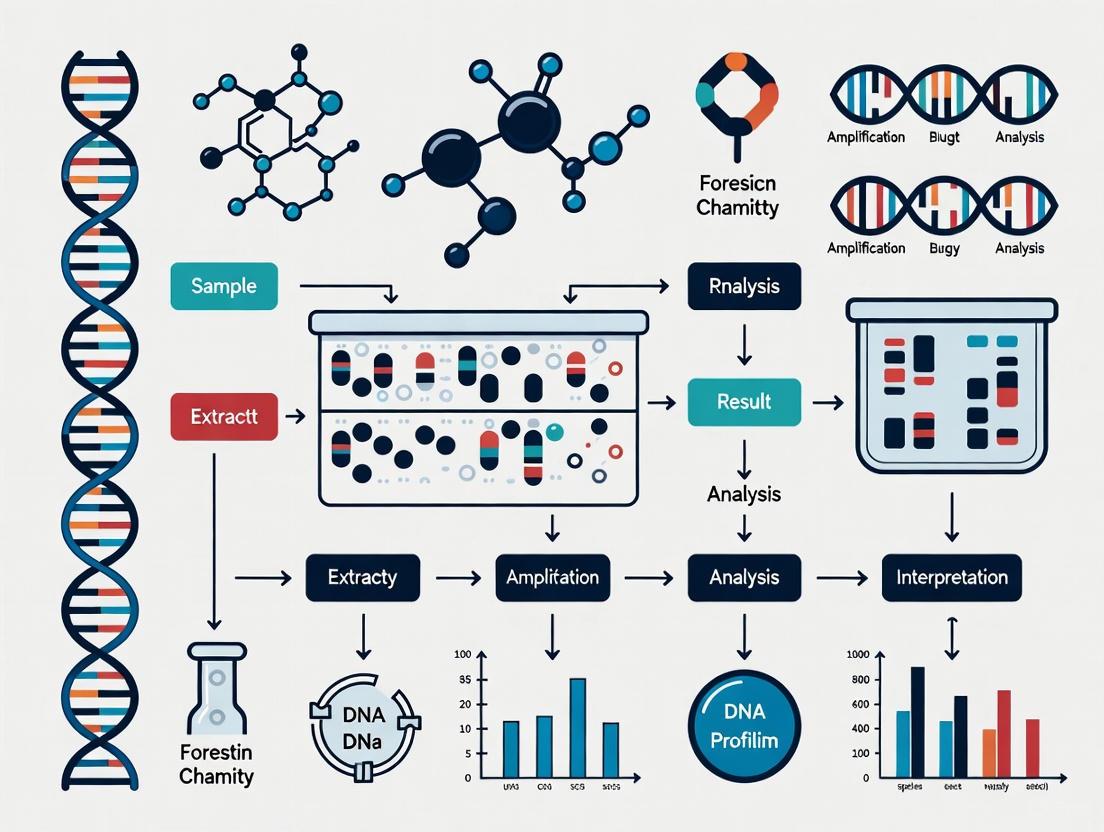
This comprehensive review addresses the critical challenge of achieving high species specificity in forensic DNA analysis, a fundamental requirement for both wildlife crime investigations and human identification in complex mixtures.
Advancing Species Specificity in Forensic DNA Assays: From Foundational Principles to Cutting-Edge Applications
Abstract
This comprehensive review addresses the critical challenge of achieving high species specificity in forensic DNA analysis, a fundamental requirement for both wildlife crime investigations and human identification in complex mixtures. We explore the evolution from traditional genetic markers to emerging technological solutions, including Next-Generation Sequencing (NGS), artificial intelligence, and advanced bioinformatics tools. The article provides methodological frameworks for assay design, optimization strategies for challenging samples, and rigorous validation protocols essential for courtroom admissibility. By synthesizing foundational principles with practical applications, this work serves as an essential resource for forensic researchers, laboratory scientists, and legal professionals seeking to enhance the precision and reliability of species identification in forensic contexts.
The Evolution and Core Principles of Species-Specific DNA Analysis
Technical Support Center
Troubleshooting Guides
FAQ: How can I improve the specificity of my DNA assay to avoid cross-species amplification?
| Problem | Possible Cause | Recommended Solution |
|---|---|---|
| False Positives / Cross-species amplification | Primer sequences bind to non-target DNA | Redesign primers and probes to have ≥2 mismatches with non-target species sequences; verify specificity with in-silico testing [1]. |
| Weak or No Amplification | PCR inhibitors present (e.g., hematin, humic acid) | Use extraction kits with additional wash steps designed to remove inhibitors; re-purify DNA to remove residual salts or proteins [2] [3]. |
| Inconsistent Results | Degraded DNA template or poor DNA integrity | Evaluate DNA integrity via gel electrophoresis; store DNA in TE buffer or molecular-grade water to prevent nuclease degradation [3]. |
| Unspecific Bands / High Background | Low annealing temperature leading to non-specific primer binding | Optimize annealing temperature stepwise (1-2°C increments); use hot-start DNA polymerases to prevent activity at room temperature [3]. |
FAQ: What steps can I take when my STR analysis produces an incomplete or unbalanced profile?
| Problem | Possible Cause | Recommended Solution |
|---|---|---|
| Allelic Dropout | Insufficient master mix concentration or too much template DNA | Optimize primer concentrations (typically 0.1–1 μM); ensure accurate pipetting and thoroughly vortex reagent mixes [2]. |
| Inhibitors Affecting Amplification | Compounds like hematin or humic acid inhibit DNA polymerase | Use inhibitor-resistant DNA polymerases with high processivity; implement additional washing during DNA extraction [2]. |
| Ethanol Carryover | Incomplete drying of DNA pellets after purification | Ensure DNA samples are completely dried post-extraction; do not shorten critical drying steps in the workflow [2]. |
| Peak Broadening / Reduced Signal | Use of degraded or poor-quality formamide | Use fresh, high-quality, deionized formamide; minimize its exposure to air and avoid repeated freeze-thaw cycles [2]. |
Experimental Protocols
Detailed Methodology: Developing a Species-Specific DNA Assay
This protocol is adapted from research aimed at identifying Staphylococcus aureus with a ubiquitous and specific chromosomal DNA fragment [4].
1. Identification of a Species-Specific Genetic Target
- Construct a Genomic Library: Create a library of the target species' genomic DNA.
- Hybridization Screening: Screen the library by hybridizing with labeled DNA from the target species against a panel of DNA from related and unrelated species.
- Select Specific Clones: Identify clones that hybridize only to the target species and not to any non-target species. For example, a 442-bp chromosomal fragment was found specific for all 82 S. aureus isolates tested [4].
2. Primer and Probe Design
- Sequence the Fragment: Sequence the validated, species-specific DNA fragment.
- Design Primers/Probes: Use software (e.g., Primer3) to design PCR primers and, if required, a hydrolysis probe.
- Ensure Specificity: Check primers and probes in-silico against sequence databases. Ensure the probe has at least two mismatches with closely related species to guarantee specificity [1].
- Amplicon Length: Design for a short amplicon (e.g., 124 bp) for use with potentially degraded DNA, common in forensic and environmental samples [1].
3. Assay Validation
- In-Silico Testing: Test primer and probe sequences against a comprehensive in-silico dataset to check for unintended binding [1].
- In-Vitro Testing:
- Specificity: Test the assay on a panel of confirmed target and non-target samples.
- Ubiquity/Sensitivity: Test the assay on a large number (e.g., 195) of target species isolates from diverse geographical locations to ensure it detects all strains [4].
- Verification: Use Sanger sequencing of PCR products from environmental or forensic samples to confirm the assay is on-target [1].
Detailed Methodology: Implementing Multilocus DNA Barcoding for Difficult Species Identification
This protocol is for when single-locus barcoding (e.g., COI) fails due to recent divergence or gene flow [5].
1. Marker Selection
- Identify Independent Nuclear Markers: Select hundreds to thousands of independent, single-copy nuclear markers. For ray-finned fishes, 4,434 loci were initially identified [5].
- Filter for Utility: Filter markers to retain those with minimal missing data across taxa and sufficient variability (e.g., p-distance). For a final panel, select a manageable number (e.g., 400-500) that provides high discrimination power [5].
2. Library Preparation and Sequencing
- DNA Extraction: Use high-quality, high-integrity DNA.
- Target Enrichment: Use cross-species gene capture to enrich the selected markers.
- Sequencing: Sequence the enriched libraries on a next-generation sequencing platform.
3. Data Analysis and Species Identification
- Sequence Alignment: Map reads to the reference set of marker sequences.
- Calculate Genetic Distances: Calculate intra- and interspecific p-distances (or a more sophisticated measure) using the multilocus data.
- Apply Species Identification Criterion: Use a method like the "all species barcodes" criterion. A clear barcoding gap between intra- and inter-specific distances should emerge with sufficient loci, enabling reliable identification [5].
Visualization of Workflows
The diagram below outlines the core workflow for developing a species-specific DNA assay, from initial screening to final validation.
Species-Specific Assay Development
For complex identifications, a multilocus barcoding approach is required, as shown below.
Multilocus Barcoding Workflow
The Scientist's Toolkit: Research Reagent Solutions
Table: Essential Reagents for Forensic and Species Identification DNA Assays
| Reagent / Material | Function in Experiment |
|---|---|
| Short Tandem Repeat (STR) Kits | Commercial kits containing primers and reagents to co-amplify core CODIS/ENFSI STR loci for human DNA profiling [6] [7]. |
| Hot-Start DNA Polymerase | A modified enzyme activated only at high temperatures, preventing non-specific amplification and primer-dimer formation at room temperature [3]. |
| Species-Specific Primers & Probes | Oligonucleotides designed to bind uniquely to the DNA of a target species, enabling specific detection via PCR or qPCR [1] [4]. |
| Deionized Formamide | A solvent used in capillary electrophoresis to denature DNA strands, ensuring proper separation by size; critical for high-resolution STR profiling [2]. |
| Mg2+ Solution (MgCl₂/MgSO₄) | A crucial cofactor for DNA polymerase activity; concentration must be optimized for efficient and specific PCR amplification [3]. |
| PCR Additives (e.g., DMSO, BSA) | Co-solvents and proteins that help amplify difficult targets (e.g., GC-rich sequences) by reducing secondary structures and neutralizing inhibitors [3]. |
| DNA Quantification Kits | Kits (e.g., qPCR-based) that accurately measure DNA concentration and assess sample quality (degradation, inhibitor presence) before downstream analysis [2]. |
Within the broader thesis on improving species specificity in forensic DNA assays, this technical support center addresses the practical experimental challenges faced by researchers. The selection of appropriate genetic markers—mitochondrial DNA (mtDNA), short tandem repeats (STRs), single nucleotide polymorphisms (SNPs), and the emerging field of microhaplotypes—is fundamental to developing robust and specific forensic assays for species identification. The following guides and FAQs provide targeted support for troubleshooting specific issues encountered during experimental workflows.
Frequently Asked Questions (FAQs) and Troubleshooting Guides
FAQ 1: What is the most suitable genetic marker for my species identification assay?
The choice of marker depends on your sample quality, required discrimination power, and available technology. The table below compares the key applications and considerations for each major marker type.
| Genetic Marker | Primary Forensic Application | Key Advantages | Key Limitations / Considerations |
|---|---|---|---|
| mtDNA | Ideal for degraded samples, hairs, bones, and ancient DNA [8] [9]. | High copy number per cell increases success rate from low-quality samples; useful for tracing maternal lineage [8]. | Lower discrimination power than nuclear markers; identifies a maternal lineage group rather than an individual [8]. |
| STRs (Nuclear) | High-power individual identification and kinship analysis; also used in multi-species panels [10]. | High polymorphism provides high discrimination power; mature, standardized CE-based technology [10]. | Requires higher quality DNA; can be difficult to amplify from highly degraded samples [9]. |
| SNPs (mtDNA or Nuclear) | Analysis of highly degraded DNA where STRs fail; inferring biogeographic ancestry [11] [9]. | Low mutation rate; good for ancestry inference; can be used on very short amplicons [11] [9]. | Lower discrimination power per locus than STRs; typically requires more loci for same power; often needs NGS/MPS platforms [11]. |
FAQ 2: How can I improve DNA yield from challenging biological samples?
Low DNA yield is a common issue with non-invasive or aged forensic samples. The troubleshooting table below outlines common problems and solutions.
| Problem | Potential Cause | Recommended Solution |
|---|---|---|
| General Low Yield | Improper sample storage or handling, leading to DNase activity. | Flash-freeze tissue samples in liquid nitrogen and store at -80°C. For frozen blood, add lysis buffer and Proteinase K directly to the frozen sample to inactivate nucleases during thawing [12]. |
| Low Yield from Tissues | Tissue pieces are too large; membrane clogging from indigestible fibers. | Cut tissue into the smallest possible pieces or grind with liquid nitrogen. For fibrous tissues (e.g., muscle, skin), centrifuge the lysate to remove fibers before column binding [12]. |
| DNA Degradation | High nuclease content in tissues (e.g., liver, pancreas); old samples. | Treat nuclease-rich tissues with extreme care, keep frozen and on ice during preparation. Use fresh (unfrozen) whole blood that is not older than one week [12]. |
FAQ 3: My sequencing results for mtDNA are ambiguous. How can I resolve this?
Ambiguous sequencing results, particularly from mtDNA, can stem from various technical and biological factors.
- Check the Chromatogram: Always visually inspect the chromatogram file from your Sanger sequencing run. Look for sharp, evenly spaced peaks. Overlapping peaks can indicate a mixed sample or contamination, while a sudden drop in quality after ~70 bases may indicate inadequate purification of the sequencing reaction [13].
- Understand Heteroplasmy: A common source of ambiguity in mtDNA analysis is heteroplasmy—the presence of more than one mtDNA type within an individual. This is a natural phenomenon where a point mutation exists in only a portion of the mtDNA molecules. Levels can vary between tissues (e.g., between different hairs from the same person), which can be misinterpreted as a sequencing error [8].
- Validate with MPS: For critical samples, consider using Massively Parallel Sequencing (MPS). MPS provides higher sensitivity and can sequence the entire mitogenome, offering increased discrimination power and a more robust assessment of heteroplasmy compared to Sanger sequencing of just the hypervariable regions [8].
Experimental Protocols for Key Assays
Protocol 1: Development and Validation of a Multi-Species STR Panel
This protocol is adapted from a validated method for simultaneously identifying 11 species (10 animals and human) using a novel five-dye STR panel [10].
Sample Collection and DNA Extraction:
- Collect reference samples from morphologically identified individuals. Store tissues at -80°C or in stabilizing reagents.
- Extract genomic DNA using a commercial kit (e.g., TIANamp Genomic DNA Kit). Quantify DNA using a spectrophotometer (e.g., NanoDrop). Re-extract if concentration is ≤1 ng/μL.
Selection of STR Loci and Primer Design:
- Select species-specific STR loci from published literature based on: a) no homology of primer sequences with other species, b) preference for tetranucleotide core repeats, and c) loci with fewer alleles.
- Use primer design software (e.g., Primer 5.0) and validate specificity with BLAST. Design primers to be multiplex-compatible and label them with distinct fluorescent dyes.
Multiplex PCR Amplification:
- Reaction Setup: Use a 10 μL reaction volume containing 1 μL DNA template (1 ng/μL), 2 μL primer mix, 4 μL master mix, and 3 μL deionized water.
- Thermal Cycling: Perform on a thermal cycler with the following conditions: 95°C for 5 min; 29 cycles of 94°C for 30 s, 59°C for 60 s, 72°C for 60 s; final extension at 60°C for 60 min.
Genotyping and Analysis:
- Separate PCR products by capillary electrophoresis (e.g., ABI 3500xL Genetic Analyzer).
- Analyze data using genotyping software. Construct allelic ladders from 20 unrelated individuals of each species to accurately determine allele sizes.
Protocol 2: mtDNA Analysis for Degraded Samples Using SNaPshot
This protocol outlines a method for mtDNA SNP analysis when standard STR profiling and HVR sequencing fail, suitable for bones, teeth, and hairs [9].
DNA Extraction:
- Extract DNA from challenging samples like hairs, teeth, or bones using specialized methods (e.g., silica-based extraction for ancient or degraded bone).
Multiplex PCR for SNP Sites:
- Design a single multiplex PCR reaction to amplify the regions containing 32 forensically informative mtDNA SNPs.
Multiplex SNaPshot Minisequencing:
- Purify the PCR product to remove excess primers and dNTPs.
- Perform a single SNaPshot reaction. This is a primer extension method where a single fluorescently-labeled ddNTP is added to a primer that binds adjacent to the SNP of interest.
Capillary Electrophoresis and Data Interpretation:
- Run the SNaPshot products on a capillary electrophoresis instrument. The resulting peaks indicate which nucleotide is present at each SNP site.
- Compile the SNP profile to infer the mtDNA haplogroup or to compare with reference samples.
Research Reagent Solutions
Essential materials and kits used in the featured experiments and broader field.
| Reagent / Kit | Function in Experiment |
|---|---|
| TIANamp Genomic DNA Kit | For the extraction of high-quality genomic DNA from various tissue and blood samples [10]. |
| Monarch Spin gDNA Extraction Kit | For purification of genomic DNA from cells, blood, and tissues; troubleshooting guides are available for low yield or degradation [12]. |
| Phenol-Chloroform:Isoamyl Alcohol | Used in traditional DNA extraction for difficult samples like hornbill casques, often yielding higher DNA quantity/quality than some commercial kits from such materials [14]. |
| Illumina MiSeq FGx | A Massively Parallel Sequencing (MPS) system dedicated to forensic applications, enabling whole mitogenome sequencing or STR/SNP panels [8]. |
| ABI 3500xL Genetic Analyzer | Capillary electrophoresis instrument for fragment analysis (STRs) and Sanger sequencing (mtDNA) [10]. |
Workflow and Pathway Visualizations
Diagram: mtDNA Analysis Workflow for Degraded Samples
Diagram: Multi-Species STR Panel Validation Pathway
Technical Support Center
Frequently Asked Questions (FAQs)
FAQ 1: What is the core challenge of phylogenetic proximity in forensic DNA assays? The core challenge is that closely related species share a high degree of DNA sequence similarity due to their recent common evolutionary ancestry. Standard assays that target conserved genetic regions may fail to distinguish between these species, leading to false positives or misidentification. This is because hybridization-based methods rely on complementary base pairing, and a probe designed for one species might bind non-specifically to the DNA of a closely related species, especially if the assay conditions are not sufficiently stringent [15].
FAQ 2: How can I troubleshoot false-positive hybridization signals in my experiments? False positives can be addressed by optimizing the stringency of your hybridization and wash conditions. Increasing the temperature or decreasing the salt concentration in your buffers can help disfavor the binding of imperfectly matched sequences. Furthermore, in-silico probe design is critical; always perform a thorough BLAST analysis to ensure your probes are unique to the target species and do not share high similarity with non-target species, especially those phylogenetically close to your target [16] [17].
FAQ 3: My target sequence has high secondary structure. How does this impact hybridization kinetics and how can I mitigate it? Secondary structures within the target or probe DNA can significantly slow down hybridization kinetics by blocking access to complementary binding sites. Research has shown that secondary structure in the middle of a DNA target sequence tends to have a more adverse effect on hybridization kinetics than structure at the ends. To mitigate this, you can:
- Increase the hybridization temperature to help melt local secondary structures, provided it does not exceed the melting temperature (Tm) of the perfect-match duplex.
- Use chemical additives in your hybridization buffer, such as formamide, which destabilizes hydrogen bonding and reduces the effective Tm.
- Re-design probes to target regions with minimal predicted secondary structure [18].
FAQ 4: What are the best practices for validating a new species identification assay? Validation must demonstrate that the assay is specific, sensitive, and reproducible.
- Specificity: Test the assay against a panel of DNA from the target species and a range of non-target species, with a focus on phylogenetically close relatives and species likely to be found in the same environment.
- Sensitivity: Determine the limit of detection (LoD) by testing serial dilutions of the target DNA.
- Reproducibility: Assess inter- and intra-assay precision across multiple runs, operators, and instruments. Following established quality assurance guidelines, such as those from the Society for Wildlife Forensic Science (SWFS), is highly recommended [19] [17].
FAQ 5: When should I use a mitochondrial DNA target versus a nuclear DNA target for species identification? Mitochondrial DNA (mtDNA) is often the primary choice for initial species identification for several reasons: it is present in high copy number per cell (beneficial for degraded samples), it has a higher mutation rate than nuclear DNA, providing more variation between species, and it contains conserved regions for primer binding that flank variable regions suitable for discrimination [17]. Nuclear DNA markers, such as Short Tandem Repeats (STRs) or Single Nucleotide Polymorphisms (SNPs), are typically used for higher-resolution analysis, such as individual identification or population assignment, after the species has been determined [19] [20].
Troubleshooting Guides
Problem: Inability to Distinguish Between Two Closely Related Species
| Step | Action | Rationale & Additional Notes |
|---|---|---|
| 1 | Verify Sequence Divergence | Identify a genetic region with sufficient variation between the two species. For animals, the mitochondrial cytochrome b (cyt b) or cytochrome c oxidase I (COI) genes are standard. For plants, consider the matK or rbcL chloroplast genes [17]. |
| 2 | Re-design Probes/Primers | Focus on the most variable sites you identified in Step 1. Position mismatches, especially G-T or A-C, centrally within the probe sequence to maximize their disruptive effect on duplex stability [18] [15]. |
| 3 | Optimize Stringency | Systematically increase the hybridization and post-hybridization wash temperatures. Use a temperature gradient to find the point where the perfect-match hybrid is stable but the mismatch hybrid is not. |
| 4 | Empirically Validate | Test the optimized assay against verified DNA samples from both target and non-target species to confirm specificity and determine the assay's confidence threshold. |
Problem: Low or Inconsistent Hybridization Signal with Degraded Samples
| Step | Action | Rationale & Additional Notes |
|---|---|---|
| 1 | Assess DNA Quality | Use methods like the Quantifiler Trio Kit to determine the Degradation Index (DI) of your sample. This confirms whether DNA fragmentation is the source of the problem. |
| 2 | Switch Target Region | If using a long amplicon, re-design your assay to target a shorter fragment of DNA. In highly degraded samples, shorter targets are more likely to be amplifiable and available for probe binding [21]. |
| 3 | Use Genome-Wide Capture | For severely degraded samples, consider moving from a targeted PCR approach to a hybridization capture enrichment method using next-generation sequencing (NGS). This technique uses many short probes to "pull down" fragmented target sequences from a whole-genome library, making it highly effective for damaged DNA [21]. |
| 4 | Modify Protocol | Implement specialized protocols from ancient DNA (aDNA) research, such as partial UDG treatment to manage molecular damage, and the use of silica-based extraction methods optimized for short fragments [21]. |
Experimental Protocols
Protocol 1: Determining Optimal Hybridization Stringency for Species-Specific Probe
Objective: To empirically determine the wash temperature that allows a probe to hybridize only to its perfectly matched target sequence and not to closely related sequences with mismatches.
Materials:
- Membrane with immobilized target DNA (perfect match) and non-target DNA (mismatches).
- Species-specific DNA probe (radiolabeled or chemiluminescent).
- Hybridization buffer.
- Stringent wash buffers (e.g., SSC buffer).
- Water bath or hybridization oven with precise temperature control.
Method:
- Pre-hybridization: Incubate the membrane with a pre-hybridization buffer to block non-specific binding sites.
- Hybridization: Add the labeled probe and incubate at a standard temperature (e.g., 42-65°C) for 4-16 hours to allow duplex formation.
- Post-Hybridization Washes: Perform a series of washes with constant salt concentration but increasing temperature.
- Wash 1: 2x SSC, room temperature, 5 minutes (low stringency).
- Wash 2: 0.1x SSC, 0.1% SDS, 42°C, 15 minutes.
- Wash 3: 0.1x SSC, 0.1% SDS, 50°C, 15 minutes.
- Wash 4: 0.1x SSC, 0.1% SDS, 55°C, 15 minutes.
- Wash 5: 0.1x SSC, 0.1% SDS, 60°C, 15 minutes (high stringency).
- Detection: After each wash step, detect the signal from the membrane. The optimal stringency is the highest temperature at which the target signal remains strong while the non-target signal is eliminated.
Protocol 2: Workflow for Species Identification from a Complex or Degraded Sample
This protocol outlines a general workflow for handling challenging non-human forensic samples, integrating steps from standard and advanced methods [21] [17].
Research Reagent Solutions
The following table details key reagents and materials used in forensic species identification assays.
| Reagent/Material | Function in Assay | Key Considerations |
|---|---|---|
| Mitochondrial Primers (e.g., for COI) | To amplify a standardized DNA barcode region for species identification via sequencing. | Select primers that are highly conserved across taxa to ensure broad applicability but flank a variable region for discrimination [17]. |
| Species-Specific Probes (e.g., on a microarray) | To bind and detect the presence of a unique nucleic acid sequence from a target species. | Designed to be complementary to a hyper-variable region; length and GC content must be optimized for specific hybridization kinetics and Tm [16] [15]. |
| Universal Bio-Signature Detection Array (UBDA) | A sequence-independent microarray containing probes for all possible 9-mer sequences to generate a unique hybridization signature for any genome. | Useful for identifying unknown or mixed pathogens without prior sequence knowledge, as it relies on a unique hybridization pattern rather than specific probe binding [16]. |
| Hybridization Capture Kit (e.g., Twist Ancient DNA) | Uses biotinylated RNA or DNA "baits" to enrich a sequencing library for target genomic regions from degraded samples. | Superior to PCR for highly fragmented DNA, as it can recover information from ultrashort fragments. Kits targeting a core set of ~1.24 million SNPs are available [21]. |
| High-Fidelity DNA Polymerase | For accurate amplification of target regions prior to sequencing or analysis. | Essential for minimizing sequencing errors, especially when working with low-template or damaged DNA where errors can be misinterpreted as genuine variation. |
Table 1: Performance Metrics of a Universal Bio-Signature Detection Array (UBDA) Data adapted from a study demonstrating the use of a 9-mer universal array for pathogen detection and phylogenomics [16].
| Metric | Value/Observation | Experimental Context |
|---|---|---|
| Number of Probes | 373,000 (covering all 262,144 possible 9-mer sequences) | Array design by Roche-Nimblegen. |
| Sensitivity Range | Detection between 121 picomolar and 364 picomolar of spiked-in 70-mer oligonucleotides. | Measured as a decrease in R² correlation coefficient when spike-in concentrations were added to human genomic DNA. |
| Specificity | Able to generate unique hybridization intensity patterns for different Brucella species and distinguish them from host species and other pathogens. | Demonstrated through unbiased cluster analysis that grouped species into known phylogenomic relationships. |
| Key Application | Can decipher the identity of mixed pathogen samples and classify genomes into known clades without prior sequence information. |
Table 2: Factors Influencing DNA Hybridization Kinetics Summary of key findings from a systematic study on predicting DNA hybridization kinetics from sequence [18].
| Factor | Impact on Hybridization Rate Constant (kHyb) | Notes |
|---|---|---|
| Temperature | Rates generally faster at 55°C vs. 37°C (average factor of 3). | Correlation exists for the same sequence at different temperatures. |
| Secondary Structure Position | Structure in the middle of the target sequence more adversely affects kinetics than at the ends. | Observed in 8 out of 13 systematically designed sequence clusters. |
| Asymptotic Yield | Over 40% of reactions did not reach >85% yield, even for structure-free sequences. | Yield is often incomplete and must be modeled separately from the initial rate constant. |
| Sequence Dependence | Rate constants varied by over 3.2 orders of magnitude (logs) at 37°C. | Highlights the profound effect of primary sequence and structure beyond simple GC-content rules. |
FAQs: Navigating Public DNA Repositories
1. What are the most common limitations of public DNA sequence databases for forensic species identification? The primary limitations revolve around data quality and coverage. Public repositories often contain sequences with:
- Incomplete or Incorrect Metadata: Sequences may be mislabeled or lack crucial information about the specimen's origin, making verification difficult [17].
- Sequence Errors: Errors can be introduced during sequencing or data submission, leading to misidentifications that propagate through the database [17].
- Insufficient Coverage: For many non-model or rare species, there are few or no reference sequences available, preventing a reliable identification [19].
- Lack of Forensic-Specific Data: These databases are often built for evolutionary or ecological studies and may not contain the standardized data or the specific marker regions required for forensic validation [19].
2. How can I verify the quality of a sequence I have retrieved from a public database? A multi-step verification protocol is recommended:
- Cross-Reference Multiple Sources: Compare the sequence against entries in other databases or specialized, curated databases for your taxonomic group of interest.
- Check Underlying Evidence: Whenever possible, review the original publication associated with the sequence for details on the identification and methodology.
- Perform Phylogenetic Analysis: Place your sequence and the reference sequence within a phylogenetic tree to see if they cluster as expected with other confirmed specimens of that species.
- Confirm with Voucher Specimen: The highest standard of verification is to use sequences derived from a vouchered specimen, which provides a physical reference for the genetic data [19].
3. Our lab is developing a new species-specific assay. What are the critical quality control steps during in-house database creation? Building a reliable in-house database requires a rigorous framework:
- Source Verification: Only use DNA from specimens that have been authoritatively identified by a taxonomist. The provenance of the sample must be meticulously documented [19].
- Standardized Protocols: Implement and validate standardized protocols for DNA extraction, amplification, and sequencing across all samples to minimize technical artifacts [17] [19].
- Replicate Sequencing: Sequence each sample in duplicate or triplicate to confirm the results and detect any inconsistencies.
- Data Curration: Manually review all chromatograms to check for base-calling errors and ensure high-quality sequence data before entry into the database.
- Metadata Standardization: Use a controlled vocabulary for all metadata fields (e.g., species name, collector, location) to ensure consistency and searchability.
4. What should I do if my forensic sample's sequence is a close, but not exact, match to a database entry? A close, but non-identical, match requires careful interpretation.
- Assess Sequence Quality: First, re-inspect your sample's sequence chromatogram to rule out sequencing errors or poor-quality data.
- Evaluate the Mismatch: Determine if the nucleotide differences are in conserved versus variable regions of the gene. Differences in highly conserved regions are more likely to indicate a different species.
- Consider Intraspecific Variation: The mismatch could represent natural genetic variation within a species. Consult population genetic studies for the taxa in question, if available.
- Report with Uncertainty: In your findings, clearly report the percentage match and the possibility that the sample could be from a closely related species or a population variant not represented in the database. A match to a curated, vouchered specimen provides the highest confidence in identification [17] [19].
Troubleshooting Guide: Common Scenarios
Issue: Inconsistent Species Identification Results
Problem: Your assay returns conflicting species IDs when using different public databases (e.g., BLAST on GenBank vs. a specialized database).
Investigation & Resolution:
- Isolate the Sequence: Identify the specific reference sequence from each database that provided the conflicting result.
- Trace the Source: Investigate the provenance of each sequence. Check the associated publications and whether they originate from a vouchered specimen. A sequence from a verified type specimen is the gold standard [19].
- Analyze the Discrepancy: Perform a multiple sequence alignment between your sample sequence and the two conflicting reference sequences. This will visually highlight the regions of difference.
- Action: Give greater weight to the identification from the database or sequence with the more robust and transparent curation policy. Your internal protocols should define a hierarchy of trusted reference sources.
Issue: Failed Amplification with a "Specific" Assay
Problem: A previously validated assay fails to amplify a sample that morphological evidence suggests is from the target species.
Investigation & Resolution:
- Control Check: First, confirm that your PCR positive control (using known DNA) amplified successfully. If it did not, the issue is with your reaction mix or cycling conditions.
- DNA Quality: Verify that the sample DNA is of sufficient quality and concentration. Check the spectrophotometric or fluorometric readings and ensure the DNA is not degraded [2].
- Inhibitor Check: Consider the sample source (e.g., soil, hide). PCR inhibitors like humic acid or hematin may be present. Re-purify the DNA using a kit designed to remove inhibitors [2].
- Primer Binding Site Mutation: If controls are good and DNA is sufficient, the failure may be due to a genetic variant in the sample at the primer binding site. This highlights a limitation in the assay's design. Consider using a different set of primers or switching to a massively parallel sequencing (MPS) approach that can target shorter fragments and is less susceptible to single nucleotide variations in primer sites [22].
Experimental Protocols for Database and Assay Validation
Protocol 1: In-House Reference Database Development
Objective: To create a validated, in-house database of DNA barcode sequences for specific taxa of forensic interest.
Materials:
- Research Reagent Solutions: See Table 2 for a detailed list.
Methodology:
- Sample Acquisition: Obtain tissue samples from museum collections, zoos, or other trusted sources. Document species identification, collector, date, and geographic origin. Critical: Use vouchered specimens whenever possible [19].
- DNA Extraction: Perform DNA extraction using a kit optimized for your sample type (e.g., tissue, bone, hide). Include negative extraction controls.
- PCR Amplification: Amplify the target barcode region (e.g., COI for animals, matK or rbcL for plants) using consensus primers. Use a master mix resistant to inhibitors if needed [17] [2].
- Sequencing: Purify PCR products and perform Sanger sequencing in both forward and reverse directions.
- Sequence Assembly & Curation: Manually inspect chromatograms from both strands. Assemble into a consensus sequence. Any ambiguities should be resolved by re-sequencing.
- Data Entry: Annotate the final sequence with complete, standardized metadata and store in your laboratory's database management system.
Protocol 2: Cross-Platform Validation of Species Assay
Objective: To validate the specificity of a newly developed species-specific assay using Sanger sequencing and Massively Parallel Sequencing (MPS).
Materials:
- Research Reagent Solutions: As in Table 2, plus a MPS kit (e.g., Precision ID Panels or ForenSeq DNA Signature Prep Kit) [22].
Methodology:
- Sample Panel: Select a panel of DNA samples, including the target species and several non-target, closely related species.
- Sanger Sequencing: Run the new assay and confirm the product size via gel electrophoresis. Purify and sequence the PCR product. BLAST the result against public and private databases.
- MPS Analysis: Using the same DNA samples, prepare libraries according to the MPS kit's instructions. This often involves a multiplex PCR targeting forensically relevant markers [22].
- Sequencing and Analysis: Run the libraries on the appropriate sequencer (e.g., Ion S5 or MiSeq FGx). Use the manufacturer's software and bioinformatic pipelines to analyze the data.
- Data Comparison: Compare the species identification results from the Sanger method and the MPS method. MPS provides sequence-level data for STRs and can detect single nucleotide polymorphisms, offering higher resolution and confirming the assay's specificity [22].
Data Presentation
Table 1: Key Quality Metrics for Evaluating DNA Databases
| Metric | Description | Ideal Standard for Forensic Work |
|---|---|---|
| Data Provenance | Origin and chain of custody of the biological sample. | Vouchered specimen in a recognized collection [19]. |
| Taxonomic Authority | Credentials and method used for species identification. | Identification by a qualified taxonomist. |
| Sequence Quality | Read length and clarity; presence of ambiguous bases. | High-quality, bidirectional sequence with Phred score > Q30. |
| Metadata Completeness | Associated data (location, date, collector). | Complete, standardized fields using controlled vocabulary. |
| Curation Policy | Process for data review, error correction, and updates. | Existence of a documented, active curation process. |
Table 2: Research Reagent Solutions for Database Development
| Item | Function | Forensic Application Example |
|---|---|---|
| DNA Extraction Kits (e.g., DNeasy Blood & Tissue) | Isolate DNA from various biological materials. | Standardized extraction from animal tissue or plant leaves for reference database building [17]. |
| PCR Inhibitor Removal Kits | Remove contaminants like humic acid or hematin. | Cleaning DNA extracted from soil-covered bones or tanned hides [2]. |
| Consensus PCR Primers | Amplify target barcode regions from diverse species. | Amplifying mitochondrial COI gene for a wide range of animal species [17]. |
| STR Multiplex Kits | Co-amplify multiple short tandem repeat loci. | For individualization or population studies beyond species ID [22]. |
| MPS Library Prep Kits (e.g., ForenSeq) | Prepare DNA libraries for massively parallel sequencing. | High-resolution analysis of multiple marker types (STRs, SNPs) from a single sample [22]. |
Workflow Visualization
Database Development and Validation Workflow
Forensic Sample Identification Decision Tree
Troubleshooting Guides
Common CRISPR-Cas Experimental Challenges and Solutions
Problem: Low Editing Efficiency
- Potential Cause 1: Ineffective guide RNA (gRNA) design. The selected gRNA may have low on-target activity.
- Potential Cause 2: Suboptimal delivery of CRISPR components.
- Solution: Consider using Ribonucleoprotein (RNP) complexes, which consist of the Cas protein pre-complexed with the gRNA. RNP delivery can lead to high editing efficiency, reduce off-target effects, and is suitable for "DNA-free" genome editing [24].
- Verify the concentration of your gRNAs and ensure an appropriate dose is delivered. Chemically synthesized, modified gRNAs can improve stability and activity [24].
- Potential Cause 3: Inadequate Cas9 or gRNA expression.
- Solution: Confirm that the promoter driving expression is suitable for your cell type. Codon-optimization of the Cas9 gene for the host organism can also improve expression levels [25].
Problem: Off-Target Effects Unwanted mutations at sites with sequences similar to the target site can occur, posing a significant challenge for both therapeutic applications and precise forensic assays [25] [26].
- Solution: Employ high-fidelity Cas9 variants engineered to reduce off-target cleavage [25].
- Solution: Use online bioinformatics tools that leverage machine learning algorithms to predict potential off-target sites during the gRNA design phase [23] [25].
- Solution: The RNP delivery method has been shown to decrease off-target mutations compared to plasmid-based methods [24].
Problem: Cell Toxicity
- Potential Cause: High concentrations of CRISPR-Cas9 components.
- Solution: Optimize the concentration of delivered components. Start with lower doses and titrate upwards to find a balance between effective editing and cell viability [25].
Machine Learning Model Implementation Challenges
Problem: Poor Generalization of Deep Learning Models
- Potential Cause: The model was trained on data not representative of your specific experimental conditions or species.
- Solution: Ensure the selected tool or model is appropriate for your application. When possible, fine-tune pre-trained models with your own dataset to improve prediction accuracy for your specific context [23].
Problem: Interpreting Model Predictions
- Potential Cause: The "black box" nature of some complex deep learning models.
Frequently Asked Questions (FAQs)
Q1: What is the core function of the CRISPR-Cas system in genetic engineering? The CRISPR-Cas system is a technology for editing DNA. It consists of a guide RNA (gRNA) and a Cas protein (e.g., Cas9). The gRNA directs the Cas protein to a specific DNA sequence, where the Cas protein acts as "molecular scissors" to cut the DNA. The cell's subsequent repair processes can then be harnessed to remove, add, or change the DNA sequence [28].
Q2: How can machine learning, specifically deep learning, improve CRISPR-Cas experiments? Deep learning models excel at identifying complex patterns within genomic data. They are primarily used to predict gRNA on-target activity (efficiency) and off-target activity (specificity), which are key determinants for a successful and precise genome editing procedure. This accelerates the design and optimization of gRNAs, moving beyond trial-and-error approaches [23].
Q3: What are the key differences between Cas9 and Cas12a that I should consider for my experiment? The choice between Cas9 and Cas12a (also known as Cpf1) depends on your experimental needs. Cas9 is a good general-purpose nuclease, particularly in species with GC-rich genomes. Cas12a may be better suited for AT-rich genomes or when targeting regions with limited design space, as it has a different Protospacer Adjacent Motif (PAM) sequence requirement, is smaller in size, and cleaves DNA in a staggered pattern [23] [24].
Q4: What are the major safety concerns when using CRISPR-Cas systems, and how can they be mitigated? The primary concerns are:
- Off-target effects: The Cas protein cuts at unintended sites in the genome. This can be mitigated by using high-fidelity Cas variants, careful gRNA design with AI tools, and RNP delivery [25] [28] [24].
- On-target rearrangements: The Cas protein cuts the correct site, but the DNA repair process introduces harmful mutations [28].
- Immunogenicity: In therapeutic contexts, the CRISPR system could trigger a dangerous immune response [28]. Robust genotyping methods, such as sequencing, are essential to detect these issues [25].
Q5: How is AI, beyond CRISPR applications, transforming forensic genetics? AI and machine learning are being integrated across the forensic workflow. They can help with resource allocation by predicting case processing times, prioritize evidence based on its potential usefulness, and synthesize results from different types of forensic evidence (e.g., DNA, fingerprints) to generate insights and investigative leads [27] [29]. In DNA profiling itself, machine learning aids in analyzing complex mixtures and probabilistic genotyping [30].
Experimental Protocols & Data Presentation
Protocol: Guide RNA Activity Validation Workflow
This protocol outlines a standard method for empirically testing the efficiency of designed gRNAs.
- gRNA Design: Use a deep learning-powered tool (e.g., tools reviewed in [23]) to design 2-3 candidate gRNAs with high predicted on-target activity.
- Component Delivery: Transfer your CRISPR-Cas system (e.g., as plasmid DNA, mRNA, or RNP) along with the candidate gRNAs into your target cells using an appropriate method (e.g., electroporation, lipofection).
- Genomic DNA Extraction: After a suitable incubation period (e.g., 48-72 hours), harvest the cells and extract genomic DNA using a standard kit or automated system [29].
- Target Site Amplification: Perform PCR to amplify the genomic region surrounding the target site.
- Editing Efficiency Analysis:
- Option A (Sequencing): Amplify and sequence the target region using Sanger sequencing or Next-Generation Sequencing (NGS). This is the most accurate method as it reveals the exact sequence changes and indel spectrum [24].
- Option B (Enzymatic Assay): Use a T7 Endonuclease I (T7EI) assay. This mismatch cleavage assay is a quicker, gel-based method to estimate editing efficiency but does not provide detailed sequence information [25] [24].
- Data Analysis: Calculate the indel percentage from sequencing data or gel analysis to quantify the editing efficiency for each gRNA.
Workflow Diagram: Integrating ML and CRISPR for Forensic Assay Development
Table: Comparison of Deep Learning Applications in CRISPR-Cas Systems
Table 1: A summary of key research areas where deep learning is applied to enhance CRISPR-Cas systems, based on recent literature (2019-2023).
| Research Focus | Brief Description | Key Benefit |
|---|---|---|
| Prediction of gRNA Activities [23] | Uses deep learning to predict the efficiency (on-target) and specificity (off-target) of guide RNAs. | Accelerates the design of highly effective and specific gRNAs, saving time and resources. |
| Prediction of Editing Outcomes [23] | Models predict diverse results of CRISPR-Cas editing, including mutational profiles and cleavage efficiency. | Provides a more comprehensive understanding of the potential consequences of a gene edit. |
| Design of High-Activity gRNAs [23] | Focuses on using deep learning to design gRNAs optimized for high activity in gene or epigenome editing. | Aims to maximize the success rate of editing experiments. |
| Anti-CRISPR Protein Identification [23] | Utilizes deep learning to identify proteins that can inhibit CRISPR-Cas systems. | Important for safety and control, allowing researchers to turn off the system if needed. |
| Cas9 Variant Activity Prediction [23] | Develops models to predict the activity of different Cas9 protein variants. | Helps select the most appropriate nuclease for a given target. |
The Scientist's Toolkit: Research Reagent Solutions
Table 2: Essential materials and reagents for conducting CRISPR-Cas experiments integrated with machine learning approaches.
| Item | Function / Explanation | Considerations for Forensic Specificity |
|---|---|---|
| CRISPR Nuclease (e.g., Cas9, Cas12a) | The enzyme that cuts the target DNA. Different nucleases have different PAM requirements and cutting patterns. | Choose a nuclease whose PAM requirement is unique in the context of the species-specific DNA target to minimize off-target editing in non-target species. |
| Chemically Modified gRNA | Directs the nuclease to the specific DNA sequence. Chemical modifications improve stability and reduce immune response. | Use ML-based design tools to ensure the gRNA sequence is unique to the target species, enhancing assay specificity for forensic identification [23] [24]. |
| Ribonucleoprotein (RNP) Complex | A pre-formed complex of Cas protein and gRNA. | Delivery as RNP can reduce off-target effects and is ideal for DNA-free editing, crucial for some forensic applications [24]. |
| Deep Learning gRNA Design Tools | Software/algorithms that predict gRNA on-target and off-target activity. | Essential for in-silico screening of gRNA candidates to prioritize those with the highest predicted specificity for the forensic DNA target [23]. |
| Next-Generation Sequencing (NGS) | A high-throughput method for sequencing DNA. | Used to generate comprehensive data on both on-target and off-target edits, which is critical for validating assay specificity and training ML models [23] [29]. |
| High-Fidelity Cas Variants | Engineered versions of Cas proteins with reduced off-target activity. | A key reagent to proactively minimize the risk of off-target effects, thereby improving the reliability of the forensic assay [25]. |
Modern Methodologies and Practical Applications for Enhanced Specificity
Next-Generation Sequencing (NGS) transforms multi-species DNA analysis by enabling untargeted identification of thousands of species from complex mixtures. This capability proves particularly valuable for forensic DNA assays, where traditional methods require prior knowledge of suspected species. Unlike targeted PCR approaches, NGS sequences all detectable DNA in a sample, providing a comprehensive species profile essential for confirming specimen authenticity, identifying illegal wildlife trafficking, and detecting food fraud in supply chains. The transition from targeted to untargeted screening represents a paradigm shift in forensic species identification, allowing laboratories to answer "Which species are present?" rather than "Is species X present?" [31].
Troubleshooting Guides and FAQs
Common NGS Preparation Problems and Solutions
The following table summarizes frequent issues encountered during NGS library preparation for multi-species analysis, their root causes, and recommended corrective actions [32].
| Problem Category | Typical Failure Signals | Common Root Causes | Corrective Actions |
|---|---|---|---|
| Sample Input / Quality | Low starting yield; smear in electropherogram; low library complexity | Degraded DNA/RNA; sample contaminants (phenol, salts); inaccurate quantification | Re-purify input sample; use fluorometric quantification (Qubit) instead of UV; check purity ratios (260/230 > 1.8) |
| Fragmentation & Ligation | Unexpected fragment size; inefficient ligation; adapter-dimer peaks | Over/under-shearing; improper buffer conditions; suboptimal adapter-to-insert ratio | Optimize fragmentation parameters; titrate adapter:insert ratios; verify fragmentation distribution before proceeding |
| Amplification & PCR | Overamplification artifacts; bias; high duplicate rate | Too many PCR cycles; inefficient polymerase; primer exhaustion | Reduce amplification cycles; use high-fidelity polymerases; optimize annealing conditions |
| Purification & Cleanup | Incomplete removal of small fragments; sample loss; carryover of salts | Wrong bead ratio; bead over-drying; inefficient washing; pipetting error | Calibrate bead:sample ratios; avoid over-drying beads; use fresh wash buffers |
Frequently Asked Questions
Q: Our forensic lab uses an untargeted NGS approach for wildlife species identification. We're experiencing persistent adapter-dimer contamination in our libraries. What steps should we take?
A: Adapter-dimer formation typically indicates issues with ligation efficiency or cleanup. First, verify your adapter-to-insert molar ratio through titration, as excess adapters promote dimerization. Second, optimize your bead-based cleanup using a higher bead-to-sample ratio to effectively remove short fragments. Finally, examine your fragmentation step—incomplete fragmentation can reduce available ligation ends, increasing dimer formation [32].
Q: How does NGS-based species identification differ from traditional PCR methods in forensic applications?
A: While real-time PCR requires predetermined targets and struggles with complex mixtures, NGS employs an untargeted approach that sequences all detectable DNA. Each species present produces unique DNA sequences that can be matched against extensive databases. This allows simultaneous identification of thousands of species without prior knowledge of sample composition, making it particularly valuable for detecting unexpected species in forensic investigations [31].
Q: We're obtaining low library yields from degraded wildlife samples. How can we improve recovery?
A: Degraded samples often require protocol modifications. First, implement additional purification steps to remove inhibitors that may remain in degraded tissue. Second, consider using specialized library preparation kits designed for damaged DNA, which often incorporate repair enzymes. Third, optimize your quantification method by combining fluorometric approaches with qPCR to accurately measure amplifiable molecules rather than total DNA [32].
Q: What quality control metrics are most critical for reliable multi-species NGS results?
A: Essential QC metrics include: (1) DNA purity (260/280 ratio ~1.8, 260/230 > 1.8); (2) library size distribution via electrophherogram to detect adapter dimers; (3) quantitative yield measurement using fluorometry; and (4) sequencing controls including negative extraction controls and positive species controls. For forensic applications, always include negative controls to detect contamination and positive controls to verify database matching reliability [32] [31].
Research Reagent Solutions for NGS-Based Species Identification
The following reagents and materials are essential for implementing robust NGS workflows in forensic species identification assays [31]:
| Item | Function |
|---|---|
| Cross-Linking Buffer | Reversible DNA protection for improved shearing efficiency in degraded samples |
| High-Fidelity DNA Polymerase | Accurate amplification with minimal bias during library PCR |
| Magnetic Beads (Size-Selective) | Cleanup and size selection to remove primers, adapters, and fragments outside target range |
| Dual-Indexed Adapters | Sample multiplexing while eliminating index hopping between samples |
| Fragmentation Enzymes | Controlled DNA shearing to optimal fragment sizes for sequencing |
| Library Quantification Standards | Accurate absolute quantification of amplifiable library molecules |
| DNA Preservation Buffer | Room-temperature archiving of field-collected evidence samples |
NGS Workflow for Multi-Species DNA Analysis
The following diagram illustrates the complete experimental workflow for forensic multi-species identification using Next-Generation Sequencing:
Species Identification and Data Analysis Pathway
The bioinformatic pathway for analyzing NGS data and identifying species comprises multiple verification steps to ensure forensic reliability:
Within forensic DNA analysis, the strategic choice between nuclear DNA (nDNA) and mitochondrial DNA (mtDNA) is fundamental. Each has distinct properties that make it suitable for specific types of biological evidence and taxonomic levels of identification, from the individual to the maternal lineage. This guide provides forensic researchers and drug development professionals with a clear framework for selecting the appropriate molecular target and troubleshooting common experimental challenges.
The table below summarizes the fundamental differences between nuclear and mitochondrial DNA that guide their forensic application.
| Feature | Nuclear DNA (nDNA) | Mitochondrial DNA (mtDNA) |
|---|---|---|
| Cellular Location | Nucleus [33] | Mitochondria in the cytoplasm [8] [34] |
| Inheritance Pattern | Biparental (50% from each parent) [33] | Strictly maternal inheritance [8] [34] |
| Copies per Cell | Two copies (diploid) [34] | Hundreds to thousands of copies [8] [34] |
| Molecular Marker | Short Tandem Repeats (STRs) [8] [33] | Sequence polymorphisms in the control region (e.g., HV1, HV2) [8] |
| Primary Forensic Use | Individual identification [33] | Maternal lineage identification [8] [34] |
| Ideal for Sample Types | Blood, saliva, tissues with intact nuclei [33] | Degraded samples, hair shafts, bones, ancient DNA [8] [34] |
Strategic selection flowchart for nuclear and mitochondrial DNA in forensic analysis.
Frequently Asked Questions (FAQs)
What is the main advantage of mtDNA in forensic casework?
The primary advantage is its high copy number. While a cell has only two copies of nDNA, it can contain hundreds to thousands of copies of mtDNA [34]. This abundance makes mtDNA much easier to recover from samples that are old, degraded, or have limited biological material, such as hair shafts, ancient bones, and teeth, where nDNA analysis often fails [8] [34].
Can mtDNA provide a unique identity like an nDNA profile?
No. Because mtDNA is inherited maternally without recombination, it is not a unique identifier. All individuals sharing a direct maternal lineage will have the same or very similar mtDNA sequence [34]. It is a lineage marker rather than an individual marker. Its power lies in exclusion or providing supportive evidence by associating a sample with a maternal relative [34]. Statistical weight is derived from the rarity of the sequence in population databases [34].
What is heteroplasmy and how does it impact mtDNA analysis?
Heteroplasmy is the presence of more than one type of mtDNA sequence within a single individual [8]. It is a naturally occurring phenomenon where a point mutation exists in only a portion of the mtDNA molecules. This can be a challenge because the level of heteroplasmy can vary between different tissues (e.g., blood vs. hair) from the same person [8]. Massively Parallel Sequencing (MPS) is highly effective for detecting low-level heteroplasmy (as low as 1-2%), which older Sanger sequencing might miss [8] [35].
What are NUMTs and why are they a problem?
Nuclear Mitochondrial DNA segments (NUMTs) are sequences of mitochondrial origin that have been inserted into the nuclear genome [36]. During sequencing, these nuclear-embedded sequences can be mistakenly aligned to the reference mtDNA genome, creating artifacts that resemble genuine mtDNA variants or heteroplasmy (pseudo-heteroplasmy) [36]. This can lead to incorrect conclusions in both forensic and clinical settings.
Troubleshooting Guides
Challenge: Failed nDNA STR Profile from a Degraded Sample
- Problem: The polymerase chain reaction (PCR) for nDNA Short Tandem Repeat (STR) markers fails or produces a partial profile due to degraded DNA, which is often fragmented into pieces smaller than the STR amplicons.
- Solution:
- Switch to mtDNA Sequencing: Due to its high copy number, even degraded samples often retain sufficient intact mtDNA for analysis. Target the hypervariable regions (HV1, HV2) using Sanger sequencing or MPS [8].
- Use Smaller nDNA Amplicons: If nDNA is required, employ alternative kits that target smaller markers. For example, the InnoTyper 21 kit amplifies Short Interspersed Nuclear Elements (SINEs) with amplicons of only 60–125 bp, which are more likely to survive degradation [35].
Challenge: Interpreting Mixed or Contaminated mtDNA Sequences
- Problem: Sequencing results show mixed base calls at a single position. This could be due to true heteroplasmy, a mixture of DNA from two or more individuals, or NUMT co-amplification [8] [36].
- Solution:
- Confirm with MPS: Use Massively Parallel Sequencing, which provides quantitative data on the proportion of each base at a position, helping to distinguish true heteroplasmy from background noise or contamination [8].
- Check for NUMTs: Be aware of the potential for NUMTs. If a variant appears at a low level and is not supported by multiple independent reads, consider NUMT origin. Specific bioinformatic filters and using long-read sequencing can help identify and remove NUMT-derived sequences [36].
Challenge: Low Quantification Result for Hair Shaft Evidence
- Problem: Standard nDNA quantification methods (e.g., qPCR) indicate very low or zero DNA in a rootless hair shaft, suggesting no further analysis is possible.
- Solution:
- Proceed Directly to mtDNA Analysis: This is a classic use case for mtDNA. Even hairs with no detectable nDNA can yield full mtDNA profiles [35] [37]. Optimize the DNA extraction protocol specifically for hair; for example, the "Investigator" method has been shown to yield higher success rates for co-genotyping nDNA and mtDNA from hair shafts [35].
- Use a Multiplex System: Consider using an all-in-one NGS system like the MGIEasy Signature Identification Library Prep Kit, which can simultaneously target nDNA markers (STRs, SNPs) and the mtDNA control region from the same low-quantity extract, maximizing information recovery [35].
The Scientist's Toolkit: Essential Research Reagents & Kits
| Reagent/Kit | Primary Function |
|---|---|
| ForenSeq mtDNA Whole Genome Panel (Qiagen) | Targeted MPS for the entire mitogenome or control region to detect variants and heteroplasmy [35]. |
| MGIEasy Signature Identification Library Prep Kit (MGI Tech) | Unique all-in-one multiplex system for concurrent genotyping of nDNA (STRs, SNPs) and mtDNA in a single reaction [35]. |
| Precision ID mtDNA Panels (Thermo Fisher Scientific) | Targeted MPS panels for forensic mtDNA analysis, enabling high-resolution sequencing of the control region or whole genome [35]. |
| Illumina DNA Prep with Exome 2.5 Enrichment | A whole-exome sequencing solution that can be supplemented with a mitochondrial panel to analyze both nDNA and mtDNA [38]. |
| InnoTyper 21 (InnoGenomics) | A nDNA genotyping kit that targets 20 SINEs with very short amplicons (60-125 bp), ideal for degraded samples where standard STRs fail [35]. |
NUMT formation and impact on sequencing analysis.
Primer Design Strategies for Cross-Species Amplification and Specificity
FAQs: Core Concepts and Troubleshooting
What are the primary factors influencing cross-species PCR success? Research indicates that the success of cross-species amplification is significantly influenced by several key factors [39]. The number of nucleotide mismatches between the primer and the target sequence in the new species is critical, with each mismatch in a primer pair decreasing success by 6–8% [39]. The GC-content of the target region is also vital; for example, one study showed amplification success rates of 74.2% for targets with GC-content below 50%, compared to only 56.9% for targets with GC-content of 50% or higher [39]. Furthermore, the degree of evolutionary distance between the species for which the primer was designed (the index species) and the target species plays a major role, with success rates declining as genetic distance increases [39].
How can I improve amplification specificity and avoid primer-dimers? To prevent primer-dimers and other non-specific amplification products, follow these guidelines [3] [40] [41]:
- Review Primer Design: Ensure primers are specific to your target and do not contain complementary sequences, especially at their 3' ends. Avoid runs of 4 or more of the same base, or dinucleotide repeats (e.g., ACCCC or ATATATAT).
- Optimize Primer Concentration: High primer concentrations can promote primer-dimer formation. The optimal concentration is typically between 0.1–1.0 µM for each primer [3] [41].
- Use Hot-Start DNA Polymerases: These enzymes remain inactive at room temperature, preventing spurious amplification during reaction setup and increasing the yield of the desired product [3].
- Increase Annealing Temperature: A low annealing temperature is a common cause of non-specific binding. Increase the temperature in 1–2°C increments to enhance specificity [3].
My PCR yield is low or absent. What should I check? Low or failed amplification can result from issues with several reaction components [3]:
- Template DNA: Assess the quantity, integrity, and purity of your DNA template. Ensure no residual PCR inhibitors are present. Increase the amount of input DNA or the number of PCR cycles if the template is limited.
- Primers: Verify the primer sequence accuracy and specificity. Check that the primers are not degraded and are stored properly in aliquots to avoid repeated freeze-thaw cycles.
- Mg2+ Concentration: Insufficient Mg2+ can drastically reduce yield. Optimize the Mg2+ concentration, as the presence of EDTA or high dNTPs may require higher levels.
- Thermal Cycling Conditions: Suboptimal denaturation, annealing, or extension times/temperatures can cause failure. Increase denaturation time for GC-rich templates and ensure extension time is sufficient for your amplicon length.
How do I handle difficult templates like GC-rich regions? Amplifying GC-rich targets (GC content >60%) requires special considerations to overcome secondary structures and high thermodynamic stability [3] [41]:
- Use Specialized Polymerases: Choose DNA polymerases with high processivity, which have a higher affinity for difficult templates.
- Employ PCR Additives: Use co-solvents like DMSO, formamide, or GC Enhancer to help denature stable secondary structures.
- Adjust Thermal Profile: Increase the denaturation temperature and/or time to ensure complete separation of DNA strands.
- Primer Design: When designing primers for GC-rich regions, space GC residues evenly and avoid having a high GC content and multiple G or C repeats at the 3' end [41].
Troubleshooting Guide: Common PCR Problems and Solutions
The table below summarizes frequent issues, their potential causes, and recommended solutions.
| Problem | Possible Causes | Recommendations |
|---|---|---|
| No Amplification | Poor template quality/quantity [3]Insufficient Mg2+ concentration [3]Suboptimal thermal cycling [3] | Re-purify template DNA; increase amount [3]Optimize Mg2+ concentration [3]Increase denaturation time/temperature; optimize annealing temperature [3] |
| Low Yield | Too few PCR cycles [3]Insufficient primer concentration [3]Low purity template [3] | Increase number of cycles (generally 25-40) [3]Optimize primer concentration (0.1-1 µM) [3]Re-purify template to remove inhibitors [3] |
| Non-specific Bands / Primer-dimers | Low annealing temperature [3]Excess primers, enzyme, or Mg2+ [3]Problematic primer design [40] | Increase annealing temperature stepwise [3]Reduce concentration of primers, enzyme, or Mg2+ [3]Use hot-start polymerase; redesign primers to avoid complementarity [3] [40] |
| Smear of Bands | Excess template DNA [3]Too many PCR cycles [3]Low annealing temperature [3] | Lower the quantity of input DNA [3]Reduce the number of cycles [3]Increase the annealing temperature [3] |
Experimental Protocols for Validation
Protocol 1: Optimizing Annealing Temperature Using a Gradient PCR
A critical step in verifying cross-species primers is determining the optimal annealing temperature (Ta) [3] [42].
- Reaction Setup: Prepare a master mix containing your template DNA, primers, dNTPs, buffer, and DNA polymerase. Aliquot it into multiple PCR tubes.
- Gradient Setup: Use a thermal cycler with a gradient function. Set a temperature gradient across the block that spans a range (e.g., 50°C to 70°C), ideally in 1–2°C increments.
- PCR Cycling: Run a standard PCR protocol with the gradient annealing step.
- Analysis: Analyze the PCR products on an agarose gel. The correct annealing temperature will produce a single, bright band of the expected size. Select the highest temperature that gives robust, specific amplification.
Protocol 2: verifying Specificity and Orthology by Sequencing
After amplification, confirming that the correct target was amplified is essential, especially in cross-species work [39].
- Gel Extraction: Separate the PCR product on an agarose gel. Excise the band of the expected size and purify it using a gel extraction kit.
- Sequencing: Sanger sequence the purified amplicon using your PCR primers.
- Sequence Analysis:
- Use BLAST to compare the obtained sequence against public databases (e.g., GenBank nr database) [39].
- The most significant match should be the ortholog of the original target gene.
- For exon targets, verify that splice signals are in the same position as in the index species [39].
- The product can be considered the intended target if sequence identity is at least 70% and structural features are conserved [39].
The Scientist's Toolkit: Essential Research Reagents
The following table details key reagents and their functions in cross-species PCR assays.
| Item | Function / Explanation |
|---|---|
| High-Fidelity DNA Polymerase | Enzymes with proofreading activity (3'→5' exonuclease) to ensure high-fidelity amplification, crucial for downstream sequencing and cloning [3]. |
| Hot-Start DNA Polymerase | Engineered to be inactive at room temperature, preventing non-specific amplification and primer-dimer formation during reaction setup, thereby enhancing specificity [3]. |
| Universal Annealing Buffer | Specialized buffers containing isostabilizing components that allow for a universal annealing temperature (e.g., 60°C), simplifying PCR setup when using multiple primer sets with different Tms [42]. |
| PCR Additives (e.g., DMSO, GC Enhancer) | Co-solvents that help denature GC-rich templates and resolve secondary structures, improving amplification efficiency of difficult targets [3]. |
| Microfluidic DNA Extraction Kits | Enable rapid, on-site DNA extraction and purification, minimizing manual handling and reducing contamination risk, which is valuable for processing diverse field samples [29]. |
| Platinum DNA Polymerases | A class of enzymes designed for use with universal annealing buffers, allowing for simplified cycling conditions without the need for extensive Ta optimization for each primer set [42]. |
Workflow and Strategy Visualization
The following diagram illustrates the logical workflow for designing and validating primers for cross-species amplification.
Cross-Species Primer Design Workflow
Key Success Factors
Technical Support Center
Troubleshooting Guides
FAQ: Why did my species identification assay fail to amplify the target DNA?
This is a common issue in wildlife forensics, often related to sample quality, the presence of inhibitors, or suboptimal assay conditions.
Possible Cause 1: Degraded or Low-Quality DNA Template Environmental exposure of wildlife evidence to heat, moisture, or UV light can fragment DNA [43]. Standard PCR assays may fail if the target amplicon is longer than the degraded DNA fragments.
Possible Cause 2: PCR Inhibition Common inhibitors in wildlife samples include humic acid from soil, hemoglobin from blood, tannins from plants, or dyes from processed materials [43].
- Solution:
- Re-purify DNA: Use silica column-based or magnetic bead-based extraction methods that include robust wash steps to remove inhibitors [43].
- Kit Additives: Choose extraction kits with dedicated inhibitor removal chemistries [43].
- PCR Additives: Include Bovine Serum Albumin (BSA) or Betaine in the PCR mix to bind to or neutralize certain inhibitors [3].
- Solution:
Possible Cause 3: Suboptimal Primer Design or Assay Conditions The genetic variation between species can lead to mismatches between your primers and the actual template, preventing amplification.
- Solution:
- Validate Assays: Test primers against a panel of known, vouchered reference samples from the target species and closely related species.
- Check Annealing Temperature: Optimize the annealing temperature using a gradient PCR cycler. A temperature that is too high can prevent primer binding, while one that is too low can cause non-specific amplification [44] [3].
- Target Appropriate Gene Region: For species identification, the mitochondrial genes cytochrome b (cyt b) and cytochrome c oxidase I (COI) are the most established and validated loci [45].
- Solution:
FAQ: How can I improve DNA yield from a challenging sample like bone, tooth, or hair shaft?
Challenging samples require tailored extraction protocols to maximize DNA recovery.
Sample Type: Bone and Tooth
- Problem: These hard tissues are heavily mineralized, trapping DNA in a calcified matrix [43].
- Solution:
- Demineralization Pre-Step: A systematic review demonstrated that incorporating a demineralization step using EDTA prior to standard lysis significantly improves DNA profiling success from hard tissues [46].
- Mechanical Disruption: Pulverize the bone to a fine powder using a freezer mill or similar device to increase the surface area for lysis [43].
- Method Selection: Solid-phase magnetic bead extraction methods have been associated with the highest DNA profiling success rates for bone [46].
Sample Type: Hair Shaft
- Problem: Hair shafts contain minimal nuclear DNA, making individual identification difficult [43].
- Solution:
- Switch to Mitochondrial DNA (mtDNA): Target mtDNA, which exists in hundreds to thousands of copies per cell, compared to two copies for nuclear DNA. This makes it much more likely to be recovered from hair shafts [45] [43].
- Thorough Lysis: Use extraction kits with high-efficiency lysis buffers designed to break down the tough keratin structure of hair [43].
FAQ: My sequencing results for a species ID assay are uninterpretable. What went wrong?
Poor sequencing results often originate from issues in the library preparation or the sequencing process itself.
- Problem Category: Library Preparation Failures The table below outlines common issues, their signals, and corrective actions based on next-generation sequencing (NGS) troubleshooting guides [32].
| Category | Typical Failure Signals | Common Root Causes | Corrective Action |
|---|---|---|---|
| Sample Input/Quality | Low library yield; smear in electropherogram | Degraded DNA/RNA; sample contaminants (phenol, salts) | Re-purify input sample; use fluorometric quantification (e.g., Qubit) over UV absorbance [32] [3]. |
| Fragmentation & Ligation | Unexpected fragment size; high adapter-dimer peaks | Over- or under-shearing; improper adapter-to-insert ratio | Optimize fragmentation parameters; titrate adapter concentrations [32]. |
| Amplification/PCR | Overamplification artifacts; high duplicate rate | Too many PCR cycles; inefficient polymerase | Reduce the number of amplification cycles; use a robust, high-fidelity polymerase [32]. |
| Purification & Cleanup | Adapter dimer carryover; high salt contamination | Wrong bead-to-sample ratio; inefficient washing | Precisely follow cleanup protocol bead ratios; ensure wash buffers are fresh and applied correctly [32]. |
Experimental Protocols
Detailed Protocol: DNA Extraction from Dried Blood Spots (DBS) for Wildlife Screening
Dried blood spots are a common sample type in field studies and neonatal screening, and optimized protocols are crucial for success.
- Background: A 2025 study directly compared five DNA extraction methods from human DBSs, relevant to wildlife applications. The Chelex boiling method yielded significantly higher DNA concentrations compared to column-based kits, making it a cost-effective option for high-throughput screening [47].
- Optimized Chelex-100 Resin Protocol [47]:
- Punch: Take one 6 mm DBS punch.
- Soak: Incubate the punch overnight at 4°C in 1 mL of Tween20 solution (0.5% Tween20 in PBS).
- Wash: Remove the Tween20 solution and add 1 mL of PBS. Incubate for 30 minutes at 4°C.
- Chelate: Remove PBS and add 50 µL of pre-heated 5% (m/v) Chelex-100 solution (56°C).
- Lyse: Pulse-vortex for 30 seconds, then incubate at 95°C for 15 minutes, with brief vortexing every 5 minutes.
- Pellet: Centrifuge for 3 minutes at 11,000 rcf to pellet Chelex beads and paper debris.
- Recover: Carefully transfer the supernatant to a new tube. A second centrifugation step with a precise pipette is recommended for a clean final extract.
- Elute: Use a small elution volume of 50 µL to maximize final DNA concentration.
- Key Optimization Data:
- Elution Volume: Decreasing the elution volume from 150 µL to 50 µL significantly increased the final DNA concentration without requiring more starting material [47].
- Starting Material: Increasing the starting material from one to two 6 mm punches did not significantly increase DNA yield in the optimized protocol [47].
Detailed Protocol: Species Identification via Mitochondrial DNA Sequencing
This is a core methodology in wildlife forensics for determining the species of origin of a sample.
- Workflow Overview: The following diagram illustrates the logical workflow for mtDNA-based species identification, from sample to conclusion.
- Methodology Details:
- DNA Extraction: Use a silica-based column method (e.g., DNeasy Blood & Tissue Kit) for most samples, or a specialized bone extraction protocol for hard tissue [48] [46].
- Gene Selection: Amplify a segment of a mitochondrial gene. The cytochrome c oxidase I (COI) gene is the standard "barcode" region [45], while cytochrome b (cyt b) is also widely used with extensive reference data [45].
- PCR Amplification: Use validated, published primer sets. Always include positive controls (DNA from a known species) and negative controls.
- Data Analysis: Compare the obtained sequence to a curated reference database. The conclusion must be based on a knowledge of both intraspecies variation and the genetic separation from closely related species to avoid false identifications [45].
The Scientist's Toolkit
Research Reagent Solutions for Wildlife DNA Forensics
The following table details essential materials and their functions for setting up a wildlife genetics laboratory.
| Item | Function & Application in Wildlife Forensics |
|---|---|
| Silica Column/Magnetic Bead Kits | Standardized DNA purification; ideal for soft tissue, blood, and scalable for high-throughput casework [43]. |
| Chelex-100 Resin | Rapid, cost-effective DNA extraction from DBSs and other samples where purity is less critical than speed and yield [47]. |
| Phenol-Chloroform | Organic extraction for complex, high-biomass, or inhibitor-rich samples; requires specialized safety procedures [43]. |
| Proteinase K | Essential enzyme for digesting protein and breaking down cellular structures during the lysis step of extraction [48]. |
| Hot-Start DNA Polymerase | Reduces non-specific amplification and primer-dimer formation in PCR, crucial for clean results from complex mixtures or low-copy DNA [44] [3]. |
| Mitochondrial Primers (COI, cyt b) | Assays for species identification; must be validated for the taxonomic group of interest [45]. |
| Reference DNA Databases | Curated sequence databases (e.g., BOLD, GenBank) are essential for comparing forensic sequences to known species [45]. |
Quality Assurance and Standards
Adherence to quality standards is non-negotiable for forensic evidence to be admissible in court.
- Key Organizations: The field is supported by dedicated groups that develop best practices, including the Society for Wildlife Forensic Science (SWFS) and the European Network of Forensic Science Institutes Animal, Plant and Soil Traces working group (ENFSI-APST) [19].
- Accreditation: Forensic laboratories are increasingly encouraged to be accredited to the ISO/IEC 17025 standard, which includes specific forensic modules [19].
- Standardized Reporting: Reporting must be based on a solid understanding of genetic variation, clearly stating the limitations of the analysis and the statistical support for the identification [45].
Technical Support Center
Frequently Asked Questions (FAQs)
Q1: What is the primary limitation of current rapid DNA systems for analyzing non-reference samples? Current rapid DNA systems are significantly less sensitive than laboratory-based DNA analysis [49]. They are prone to producing incomplete DNA profiles from samples with low DNA concentrations and are less suitable for analyzing complex mixtures, which is a trade-off for their speed and mobility [49]. For optimal results, they are best used on single-donor, visible traces with high expected DNA quantities, such as blood [49].
Q2: Which sample types are most suitable for successful analysis with rapid DNA technology? The suitability varies greatly by sample type. High-quality, single-donor samples like buccal (cheek) swabs are the gold standard and can be processed reliably [50] [51]. For human remains identification, buccal tissue is optimal for exposed remains for up to 11 days, while bone and tooth samples can yield excellent results even after a year of exposure [51]. Blood traces from crime scenes have shown better performance compared to saliva traces [49]. Complex samples like cigarette butts may not be suitable due to inhibitory substances that interfere with direct PCR [49].
Q3: What are the critical steps for validating a rapid DNA method for a new sample type? According to regulatory guidance, you must validate any sample type not covered by the manufacturer's original studies [50]. This involves:
- Demonstrating that the method minimizes contamination from the user, environment, and internal system processing [50].
- Ensuring the procedure avoids sample mix-ups [50].
- Proving that the sample's quality, quantity, and size do not compromise the final profile quality [50].
- Determining the limits of the device for the new sample type and clearly identifying which samples should and should not be processed [50].
Q4: How does the sensitivity of a rapid DNA device typically compare to laboratory-based DNA analysis? Rapid DNA techniques are less sensitive than regular DNA analysis equipment [49]. A field experiment using the RapidHIT system found it was only to a limited extent suitable for saliva traces and performed best with visible blood traces expected to have high DNA quantity from a single donor [49].
Q5: Can DNA profiles generated from rapid DNA devices be uploaded to national DNA databases? Yes, provided the system, chemistry, and entire process are approved by the relevant database authority. For example, the ANDE system has received NDIS (FBI) approval for the automated processing of buccal swabs, allowing profiles to be uploaded to the CODIS database [51] [52]. The forensic unit and its processes must meet specific technical requirements for data submission [50].
Troubleshooting Guide
Table 1: Common Issues and Solutions for Rapid DNA Analysis
| Issue | Possible Cause | Recommended Solution |
|---|---|---|
| Incomplete or Partial DNA Profile | Low DNA concentration or sample degradation [49]. | Use a sufficient quantity of high-quality starting material. For casework, prioritize visible stains from single donors [49]. |
| Inhibition from sample substrates (e.g., chemicals in cigarette butts) [49]. | Avoid sampling from materials known to contain PCR inhibitors. If necessary, use a sampling method that allows for purification [49]. | |
| Profile Mis-designation or Error | Software failure to correctly call alleles [50]. | Ensure the analysis interpretation software has been validated with a range of alleles, including rare and variant types [50]. |
| Failed Run / No Result | Insufficient sample loaded or sampling error. | Verify sampling technique and ensure the sample cartridge is loaded correctly according to the manufacturer's protocol. |
| Cartridge or reagent failure. | Run positive controls with known reference samples to verify system and reagent performance [50]. | |
| Contamination | Contamination from the user, environment, or within the instrument [50]. | Use sterile consumables and follow protocols to minimize manual handling. The validation study should demonstrate no cross-contamination between samples or runs [50]. |
Experimental Protocols for Validation and Testing
Protocol 1: Sensitivity and Limit of Detection (LOD) Determination
This protocol is designed to establish the minimum amount of DNA required by your rapid DNA system to generate a full, reliable profile, which is crucial for assessing its applicability for low-quantity samples.
- Sample Preparation: Create a dilution series from a known human DNA standard with a quantified concentration (e.g., 1 ng/µL, 0.5 ng/µL, 0.1 ng/µL, 0.05 ng/µL, 0.01 ng/µL) [53].
- Loading: Apply each dilution to the appropriate sample collection device (e.g., swab) in replicate (n≥3).
- Processing: Insert the samples into the rapid DNA device and run according to the manufacturer's instructions.
- Analysis: Analyze the resulting profiles. The LOD is typically defined as the lowest concentration at which a full, reproducible DNA profile is obtained 95% of the time or as statistically determined by your validation plan [50].
Protocol 2: Species Specificity Testing
A core requirement for your thesis context, this protocol validates that your forensic DNA assay specifically targets human DNA and does not cross-react with DNA from other species, preventing false positives.
- Sample Collection: Collect buccal or blood reference samples from common non-human species found in the testing environment. Key species include:
- Dog (Canis lupus familiaris)
- Cat (Felis catus)
- Mouse/Rat (Mus musculus/Rattus norvegicus)
- Bacteria (e.g., E. coli) as a control for microbial contamination [53].
- Processing: Load the non-human samples directly onto the rapid DNA system.
- Interpretation: A specific assay should yield no profile or a clear "no result" for non-human samples. Any signal generated should be documented and investigated to ensure it does not interfere with human STR markers [53].
Protocol 3: Performance with Degraded Samples
Simulates conditions where evidence is exposed to harsh environments, testing the system's robustness for real-world field applications.
- Sample Source: Use human bone or tooth samples that have been subjected to controlled environmental exposure over time [51].
- Sample Processing:
- Bone: Clean the surface, and crush approximately 500 mg of cortical bone (e.g., from the femur shaft) into a fine powder.
- Tooth: Extract a molar or premolar and separate the root for analysis [51].
- Analysis: Process the prepared samples in the rapid DNA system. Compare the success rate and profile quality to that of a fresh buccal reference sample from the same donor [51].
Workflow and Process Diagrams
The following diagram illustrates the key decision-making workflow for implementing a rapid DNA analysis procedure, from sample collection to database search, integrating critical validation and operational checkpoints.
Rapid DNA Analysis Workflow
The Scientist's Toolkit: Research Reagent Solutions
Table 2: Essential Materials for Rapid DNA Experiments
| Item | Function & Application | Key Considerations |
|---|---|---|
| Splitable Swab (e.g., Copan 4N6 FLOQSwabs) | Allows a single trace to be sampled once and split: one half for rapid DNA analysis, the other for traditional lab confirmation [49]. | Ensures homogeneous distribution of trace material is critical for valid split-sample comparisons [49]. |
| A-Chip / I-Chip Cartridges | Disposable, single-use microfluidic chips that automate the DNA extraction, amplification, and separation process within the ANDE system [51]. | Chip type (A or I) may be optimized for different sample types (e.g., reference vs. casework) [51]. |
| FlexPlex / GlobalFiler Express Assays | Commercially developed STR multiplex kits containing primers for co-amplifying 20+ CODIS core loci and other markers [51] [54]. | Must be FBI NDIS-approved for database upload. Check for compatibility with the specific rapid DNA instrument [52] [54]. |
| Positive Control DNA | A DNA standard of known concentration and profile used to verify that the entire rapid DNA system (instrument, cartridge, reagents) is functioning correctly [50]. | Should be run periodically as part of quality control procedures. |
| FTA Cards | Chemically treated filter paper for collecting and preserving blood and other biological samples. Inactivates microbes and protects DNA for room-temperature storage [51]. | A punching and elution step is required before analysis on some rapid DNA systems [51]. |
Overcoming Technical Challenges in Complex Forensic Samples
Managing Degraded, Inhibited, and Low-Quantity DNA Samples
For researchers focused on improving species specificity in forensic DNA assays, the integrity of DNA templates is paramount. Degraded, inhibited, or low-quantity DNA samples present significant challenges, potentially leading to allele drop-out, false negatives, or erroneous results that compromise assay specificity and reliability. This technical support center provides targeted troubleshooting guides and FAQs to help you identify, address, and prevent these common issues, ensuring the highest data quality for your forensic research.
Troubleshooting Guides
Identifying and Confirming DNA Degradation
Observed Problem: Incomplete or weak amplification of larger DNA fragments in PCR or sequencing assays.
- Primary Cause: DNA degradation, which fragments the DNA, making longer target sequences unavailable for amplification [55].
- Confirmation Method: Run an agarose gel electrophoresis.
- Expected Result for Intact DNA: A tight, high-molecular-weight band.
- Indicator of Degradation: A smear extending downward from the band location [55].
- Advanced QC Method: Use a qPCR assay that targets multiple fragment lengths. A higher quantity of short fragments compared to long fragments indicates degradation [56].
Addressing PCR Inhibition
Observed Problem: PCR amplification fails or is inefficient even when quantitation suggests sufficient DNA is present.
- Common Causes: Co-purified contaminants from the sample substrate (e.g., hematin from blood, indigo from dyes) or from extraction methods (e.g., EDTA from demineralization buffers, or inhibitors from silica columns) [57] [58].
- Solutions:
- Dilute the DNA Template: This can reduce the concentration of the inhibitor to a level that no longer affects the polymerase [58].
- Use Inhibitor-Resistant Polymerases: Many specialized PCR kits include polymerases engineered to be tolerant of common inhibitors.
- Optimize Purification: Ensure complete removal of purification reagents. Consider alternative methods like precipitation-based protocols that avoid silica columns [58].
Optimizing Workflows for Low-Quantity DNA
Observed Problem: Allele or locus drop-out, stochastic effects, and poor signal strength.
- Strategy 1: Increase Input Material
- Use larger amounts of starting material during extraction, if available [57].
- Strategy 2: Use Low-Volume/High-Efficiency Assays
- Implement microfluidic-based technologies that concentrate reactions and improve detection sensitivity [29].
- Strategy 3: Shift to Smaller Amplicon Markers
- When DNA is fragmented, transition from traditional STRs (~100-450 bp) to smaller markers like single nucleotide polymorphisms (SNPs) or insertion/deletion polymorphisms (indels) that can be targeted with amplicons under 100 bp [56].
Table 1: Alternative Genetic Markers for Degraded DNA
| Marker Type | Typical Amplicon Size | Key Advantages for Degraded DNA |
|---|---|---|
| Short Tandem Repeat (STR) | 100 - 450 bp | Standard in forensics; longer amplicons may fail [56]. |
| Insertion/Deletion (Indel) | Often < 160 bp | Smaller size increases success rate; simple length-based analysis [56]. |
| Single Nucleotide Polymorphism (SNP) | Can be < 50 bp | Very high success rate with highly fragmented DNA [56]. |
| Mitochondrial DNA (mtDNA) | Variable (targets short regions) | High copy number per cell provides more template molecules [56]. |
Frequently Asked Questions (FAQs)
Q1: My agarose gel shows smearing instead of a sharp band. What does this mean and what should I do? A1: Smearing is a classic indicator of DNA degradation, meaning the DNA has been fragmented into pieces of various sizes [55] [59]. You should: 1. Confirm the degradation by quantifying with a multi-target qPCR assay. 2. Check your sample storage conditions (see prevention guide below). 3. For downstream assays, consider designing primers for shorter amplicons or using specialized markers for degraded DNA [56].
Q2: I suspect my DNA extract contains PCR inhibitors. How can I confirm this? A2: A simple and effective test is to perform a dilution series PCR. If the amplification efficiency improves as the sample is diluted, inhibition is the likely cause. Alternatively, you can spike a known, amplifiable control DNA into your sample; if it fails to amplify, inhibitors are present.
Q3: What are the best practices for storing DNA samples to prevent degradation? A3:
- Long-term Storage: Store DNA at -15°C to -25°C (for routine use) or -80°C for maximum long-term stability [55] [57].
- Avoid Repeated Freeze-Thaw Cycles: Aliquot DNA into single-use portions to minimize damage from cycling [55].
- Use Appropriate Buffers: Store DNA in a slightly alkaline buffer (e.g., TE buffer, pH 8.0) to minimize acid hydrolysis [57].
- For Tissue Samples: Flash-freeze in liquid nitrogen immediately after collection and store at -80°C [57].
Q4: My DNA yield from a bone sample is extremely low. How can I improve extraction? A4: Bone is a challenging sample due to its mineralized matrix. An effective approach involves a combination of: - Chemical Demineralization: Using agents like EDTA to break down the mineral component [57]. - Robust Mechanical Homogenization: Using a bead mill homogenizer with optimized settings to physically disrupt the tough matrix without causing excessive DNA shearing [57]. - Care must be taken to balance EDTA use, as it can also act a PCR inhibitor if carried over [57].
Experimental Protocols for Validation
Protocol 1: Reproducible Generation of Artificially Degraded DNA
This protocol uses UV-C irradiation to create controlled, reproducible DNA fragmentation for validating assays intended for degraded samples [56].
Materials:
- DNA extract in low TE buffer.
- Custom UV-C irradiation unit (3 x 30W germicidal lamps at 254 nm).
- 0.6 mL microtubes.
Method:
- Prepare DNA aliquots (e.g., 10 µL volumes) in 0.6 mL microtubes.
- Place tubes on their side under the UV-C light source at a distance of approximately 11 cm.
- Expose aliquots for varying time intervals (e.g., 30 seconds to 5 minutes). Remove tubes at each interval.
- Quantify the degraded DNA using a qPCR assay that targets multiple fragment lengths to calculate a degradation index (DI).
Workflow for Artificial DNA Degradation
Protocol 2: Novel Inhibitor-Free DNA Purification
This precipitation-based method avoids silica columns, which can sometimes introduce enzymatic inhibitors, and efficiently removes proteins [58].
Materials:
- Chaotropic salt solution (e.g., Guanidine Hydrochloride).
- Precipitation agent (Isopropanol or Polyethylene Glycol - PEG).
- Protein dilution solution.
- Microcentrifuge.
Method:
- Simultaneous Protein Denaturation & DNA Precipitation: Add chaotropic salt and isopropanol (or PEG) directly to your sample. Mix. Incubate briefly.
- Protein Removal: Centrifuge to pellet the DNA. Remove the supernatant.
- Wash: Add a wash solution (e.g., ethanol) to remove residual salts. Centrifuge and discard supernatant.
- Resuspension: Air-dry the pellet and resuspend DNA in water or TE buffer.
Inhibitor-Free DNA Purification Workflow
The Scientist's Toolkit: Research Reagent Solutions
Table 2: Essential Reagents for Challenging DNA Samples
| Reagent / Tool | Function | Application Note |
|---|---|---|
| EDTA (Ethylenediaminetetraacetic acid) | Chelating agent that binds metal ions, inactivating nucleases. Also used to demineralize tough samples like bone. | Can inhibit PCR if not thoroughly removed post-extraction [57]. |
| Chaotropic Salts (e.g., Guanidine HCl) | Disrupt hydrogen bonding, denature proteins, and facilitate nucleic acid binding to silica or precipitation. | Key component in column-based and novel precipitation-based purification methods [58]. |
| Bead Mill Homogenizer (e.g., Bead Ruptor Elite) | Mechanical disruption of tough tissues and cells using beads. | Provides a balanced approach for efficient lysis while minimizing excessive DNA shearing through optimized speed and temperature control [57]. |
| Inhibitor-Resistant DNA Polymerases | Engineered enzymes that withstand common PCR inhibitors co-purified from complex samples. | Essential for successful amplification from samples like blood, soil, or formalin-fixed tissue without requiring extensive cleanup. |
| Multi-Target qPCR Assay | Quantifies DNA by targeting nuclear and mitochondrial DNA of different lengths. | Provides a degradation index (DI) by comparing amplification of long vs. short targets, offering a precise quality metric [56]. |
Successfully managing challenging DNA samples is a critical component of developing robust and species-specific forensic DNA assays. By systematically identifying the nature of the problem—whether degradation, inhibition, or low quantity—and applying the appropriate troubleshooting and optimization strategies outlined in this guide, researchers can significantly improve their genotyping success rates. The continued adoption of emerging technologies and validated protocols will further enhance the reliability of forensic genetic analysis in the pursuit of justice.
Strategies for Differentiating Closely Related Species and Subspecies
Frequently Asked Questions (FAQs)
FAQ 1: What is the fundamental genetic difference between species and subspecies identification? Species identification typically aims to determine the fundamental taxonomic group of an organism, often by analyzing highly variable genetic regions. Subspecies differentiation requires a higher resolution analysis to detect finer genetic variations within a species, such as single nucleotide polymorphisms (SNPs), specific signature sequences, or structural genomic differences that have arisen through population isolation or adaptation [17] [60].
FAQ 2: Which genomic regions are most suitable for subspecies differentiation?
The choice of genomic region depends on the organism. For animals, mitochondrial DNA regions like cytochrome b or cytochrome c oxidase I (COI) are standard for species-level identification [17]. For subspecies-level resolution, nuclear markers, such as microsatellites or single-copy nuclear genes, and signature sequences in housekeeping genes (e.g., rpoB) are more effective [60] [61]. In plants, a combination of chloroplast and nuclear ribosomal DNA markers is often employed.
FAQ 3: My Sanger sequencing results are ambiguous for closely related subspecies. What are my options? Ambiguous results often indicate insufficient genetic resolution. Consider these options:
- Multi-locus Analysis: Sequence multiple genetic loci (e.g.,
rpoBand a second gene likehsp65orsecA) to build a stronger phylogenetic case [62] [60]. - Higher Resolution Markers: Shift to techniques that screen for signature sequences or SNPs, such as the Subspecies-Specific Sequence Detection (SSSD) method [60] or k-mer-based analyses [61].
- Whole Genome Sequencing (WGS): For the highest resolution, WGS allows for comprehensive comparison across the entire genome, enabling the detection of structural variations and a vast number of SNPs that define subspecies [63] [61].
FAQ 4: How can I validate a new subspecies differentiation assay? Validation should demonstrate accuracy, sensitivity, and specificity.
- Accuracy: Test the assay on a panel of well-characterized reference strains from all target subspecies.
- Sensitivity: Determine the minimum quantity and quality of DNA required for a reliable result.
- Specificity: Challenge the assay with closely related non-target subspecies and species to ensure no cross-reactivity. The performance can be quantified by calculating sensitivity and specificity values with 95% confidence intervals, as demonstrated in methods like SSSD [60].
Troubleshooting Guides
Problem 1: Low DNA Yield from Degraded or Processed Biological Samples
Issue: Unable to obtain sufficient quality or quantity of DNA for PCR amplification from samples like powders, herbal preparations, or ancient bones.
Solution:
- Optimized Extraction: Use extraction kits specifically validated for the sample type (e.g., plant, bone) and follow protocols designed for degraded or processed materials. For botanical evidence, the CTAB (cetyltrimethylammonium bromide) method is often effective [63].
- Inhibitior Removal: Incorporate additional purification steps, such as column-based washes or the use of additives like polyvinylpyrrolidone (PVP) for plant samples, to remove PCR inhibitors [17].
- Target Short Fragments: Design PCR assays to amplify shorter DNA fragments (<200 bp), as these are more likely to be preserved in degraded samples [17].
Problem 2: Inconclusive or Low Support in Phylogenetic Analysis
Issue: Phylogenetic trees built from genetic sequences do not show strong statistical support (e.g., low bootstrap values or posterior probabilities) for separating subspecies clades.
Solution:
- Increase Sequence Length: Use longer, more informative gene sequences or concatenate sequences from multiple genes to increase phylogenetic signal [62].
- Check Model Fit: Use software like
jModeltestto select the most appropriate nucleotide substitution model for your data before building the tree [62]. - Expand Reference Dataset: Include more reference sequences from publicly available databases that represent the known diversity within the species complex. A lack of closely related reference sequences can lead to poor resolution.
- Define Clustering Criteria: Establish objective criteria for assigning sequences to a cluster, such as a maximum genetic distance (e.g., ≤1.5%) and a minimum statistical support (e.g., posterior probability >0.9) [62].
Problem 3: Differentiating Subspecies with High Genomic Similarity
Issue: Subspecies are genetically very close, with Average Nucleotide Identity (ANI) values above 98%, making differentiation difficult [60] [61].
Solution:
- Signature Sequence Detection (SSSD): Implement methods that identify unique, subspecies-specific k-mers or SNPs. Tools like SkIf (Specific k-mers Identification) can scan whole genomes to find these diagnostic markers [60] [61].
- Target Functional Genes: Focus on genes under selective pressure that may harbor subspecies-specific mutations. For example, the
erm(41)gene differentiates some Mycobacterium abscessus subspecies based on its functional status [60]. - Analyze Genomic Islands: Look for differences in integrative and conjugative elements (ICEs) or plasmid content, which can vary between subspecies and contribute to functional differences [61].
Experimental Protocols for Subspecies Differentiation
Protocol 1: Subspecies Differentiation via Signature Sequence Detection (SSSD)
This protocol is adapted from a method used to differentiate subspecies of Mycobacterium abscessus [60].
1. Principle: Identify short, unique DNA sequences (k-mers) that are exclusively present in one subspecies and absent in others through in silico genome comparison or DNA hybridization.
2. Reagents and Equipment:
- Genomic DNA from target and reference strains.
- Specific oligonucleotide probes or primers.
- Standard PCR reagents or DNA hybridization kit (e.g., digoxigenin-labeled).
- Thermal cycler or hybridization oven.
- Gel electrophoresis equipment or a spectrophotometer/fluorometer for detection.
3. Procedure:
- Step 1 - In silico Database Creation: Compile a virtual database of whole genome sequences for all known subspecies. This serves as the reference.
- Step 2 - Signature Identification: Use bioinformatic tools (e.g., SkIf, BLAST) to identify k-mers of a specific length (e.g., 21-31 bp) that are 100% specific to a target subspecies.
- Step 3 - Assay Design: Design PCR primers or hybridization probes based on the identified signature sequences.
- Step 4 - Wet-Lab Validation: Test the primers/probes on a panel of DNA from confirmed subspecies. A positive signal (e.g., a PCR band or hybridization signal) indicates the presence of that subspecies.
4. Key Analysis: Calculate the sensitivity and specificity of the assay against a "gold standard" method like whole-genome ANI analysis [60].
Protocol 2: Multi-Locus Sequence Typing (MLST) for Subspecies Resolution
1. Principle: Sequence internal fragments of multiple (usually 5-7) housekeeping genes. Sequence Types (STs) are assigned based on the unique combination of alleles, which can cluster into subspecies-specific groups.
2. Reagents and Equipment:
- Genomic DNA.
- PCR primers for each housekeeping gene.
- PCR reagents, sequencing reagents, or a commercial sequencing service.
- Capillary sequencer.
3. Procedure:
- Step 1 - PCR Amplification: Amplify each of the selected housekeeping genes in separate reactions.
- Step 2 - Sequencing: Purify the PCR products and perform Sanger sequencing for both forward and reverse strands.
- Step 3 - Data Analysis:
- Assemble and edit the sequences.
- Query the sequences against a dedicated MLST database (e.g., Institute Pasteur's database) to assign allele numbers and a Sequence Type (ST).
- Perform phylogenetic analysis on the concatenated sequences to visualize the relationship between your samples and reference subspecies.
4. Key Analysis: A phylogenetic tree constructed from concatenated sequences will show clear monophyletic clades corresponding to different subspecies, supported by high bootstrap values [60] [61].
Research Reagent Solutions
The following table details key reagents and materials essential for experiments in subspecies differentiation.
| Item | Function / Application | Example / Note |
|---|---|---|
| DNA Extraction Kits | Isolate high-quality DNA from diverse sample types. | For plants, kits optimized with CTAB are often necessary [17]. |
| Restriction Enzymes | Digest DNA for techniques like RFLP and AFLP. | Used in foundational marker systems for diversity studies [64]. |
| Arbitrary Primers | Amplify anonymous genomic regions in RAPD analysis. | Useful for preliminary genetic diversity screening without prior sequence knowledge [64]. |
| Species-Specific Primers | PCR amplification of target loci for DNA barcoding. | Designed for conserved regions of mitochondrial (e.g., COI) or chloroplast genes [17]. |
| Signature Probes | Detect subspecies-specific k-mers via hybridization. | Core component of the SSSD method for high-specificity detection [60]. |
| Whole Genome Sequencing Kits | Prepare libraries for high-resolution genomic analysis. | Essential for discovering new diagnostic markers and conducting ANI calculations [63] [61]. |
| Reference Genomes | Bioinformatic reference for sequence alignment and marker discovery. | Public databases (NCBI, GSA) provide genomes for comparison [63] [60]. |
Workflow and Relationship Diagrams
Subspecies ID Workflow
Genetic Marker Decision Guide
Addressing Contamination Risks in Multi-Species Analysis
FAQs: Contamination Prevention and Troubleshooting
Q1: How can I prevent DNA contamination during PCR setup in multi-species assays? Successful PCR requires stringent measures to exclude exogenous DNA. Implement physical separation by designating distinct areas for pre-PCR (reaction setup) and post-PCR activities (analysis). Use separate equipment, lab coats, and pipettes with aerosol-filter tips for each area. Never bring post-PCR reagents or equipment back into the pre-PCR area. Always include a negative control (template DNA replaced with ultrapure water) to monitor for contamination [65].
Q2: Why might my DNA quantification results be inconsistent between spectrophotometry and fluorometry? Discrepancies often occur because spectrophotometers (e.g., NanoDrop) detect any molecule that absorbs at 260 nm, including contaminants, degraded nucleic acids, and proteins. In contrast, fluorometric assays (e.g., Qubit) use dyes that specifically bind intact, double-stranded DNA and are less affected by common contaminants. If the spectrophotometer reading is significantly higher, the sample is likely contaminated. Dilution or further purification of the sample is recommended [66].
Q3: How specific are forensic DNA assays for human DNA versus animal DNA? Validation studies are essential. For instance, a study on the 36-InDelplex forensic panel demonstrated high human specificity. When tested against 57 animal samples, only isolated cross-reactivity was observed at specific loci (ID16 in all cats/dogs and ID28 in one cow sample). Crucially, the resulting peaks were distinguishable from human profiles by a ~1 base pair size difference, underscoring the importance of thorough species-specificity validation for new assays [67].
Q4: How common is cross-contamination in large-scale, multi-species sequencing projects? Cross-contamination is a pervasive risk. One study analyzing 446 samples from 116 animal species found that nearly 80% of samples were affected by between-species contamination. The primary risk factor was samples being sent to the same sequencing center on the same day. This highlights that contamination can occur outside your lab, necessitating careful sample tracking and robust bioinformatic checks post-sequencing [68].
Q5: What is an effective molecular method for identifying species in degraded or challenging samples? High-Resolution Melting (HRM) analysis is a rapid, cost-effective, and robust method. It uses species-specific primers targeting mitochondrial DNA regions to generate distinct melting curve profiles, allowing for clear discrimination between even closely related species. This method is particularly suitable for non-invasive samples (e.g., feces, shed skin) and degraded material, as it can work with shorter amplicons than some traditional methods [69].
Experimental Protocols for Validation and Control
Protocol 1: Assessing Assay Specificity Across Species
This protocol is designed to validate that a DNA assay is specific to the target species and does not cross-react with non-target species, a critical step in forensic method validation [70].
- Sample Collection: Obtain biological samples (e.g., blood, tissue) from a phylogenetically diverse panel of non-target species. The panel should include species commonly encountered in the relevant environment or context [67].
- DNA Extraction: Extract DNA from all samples using a standardized, robust method. Quantify DNA concentration using a fluorometric method (e.g., Qubit) for accuracy [66].
- Genotyping/Analysis: Process all samples through the DNA assay under validation (e.g., the 36-InDelplex PCR, HRM analysis) following standard laboratory protocols [67] [69].
- Data Analysis:
- Examine results for any amplification peaks or positive signals in non-target species.
- For any observed cross-reactivity, note the specific locus and the size/melting profile of the signal. Compare these directly to the profile from a target species (e.g., human) reference sample to identify distinguishing features [67].
- Interpretation: An assay with high specificity will show little to no amplification in non-target species. Any minor cross-reactivity must be clearly distinguishable from the target species' profile [67].
Protocol 2: Monitoring Laboratory Contamination
This routine procedure helps identify and prevent contamination within the laboratory workflow.
- Control Setup: Include a negative control (reagents only, no template) in every PCR batch. For extra vigilance, include an "environmental control" (an open tube left on the bench during sample preparation) [65].
- PCR Amplification: Run the PCR with all samples and controls.
- Analysis: Analyze the results. The negative control must show no amplification. Any signal in the negative control indicates reagent or environmental contamination, and the entire batch of samples should be considered compromised [65].
- Action: If contamination is detected, decontaminate workspaces and equipment using a surface decontaminant proven effective against nucleic acids. Review laboratory practices to ensure strict adherence to pre- and post-PCR spatial separation [65].
Table 1: Cross-Reactivity of the 36-InDelplex Forensic Panel in Non-Human Species [67]
| Species Tested | Total Samples | Loci with Cross-reactivity | Notes |
|---|---|---|---|
| Cat | 18 | ID16 (rs16646) | Observed in all cat samples. Peak size ~1 bp different from human. |
| Dog | 18 | ID16 (rs16646) | Observed in all dog samples. Peak size ~1 bp different from human. |
| Cow | 1 | ID28 (rs2067147) | Observed in one cow sample. Peak size ~1 bp different from human. |
| Horse, Sheep, Seagull, Goat, Falcon, Chicken | 30 | None | No amplification detected. |
Table 2: Prevalence of Cross-Contamination in a Multi-Species Transcriptome Study [68]
| Study Parameter | Finding |
|---|---|
| Total Samples Analyzed | 446 |
| Total Species | 116 |
| Samples with Between-Species Contamination | ~80% |
| Total Contamination Events Detected | ≥ 782 |
| Major Risk Factor Identified | Samples sent to the same sequencing center on the same day |
Research Reagent Solutions
Table 3: Essential Reagents and Kits for Contamination Control
| Reagent/Kit | Primary Function | Key Feature |
|---|---|---|
| Fluorometric Quantification Kits (e.g., Qubit dsDNA HS/BR Assay) | Accurate quantification of specific biomolecules (dsDNA, RNA) | High specificity for intact nucleic acids, ignoring common contaminants like salts or proteins [66]. |
| 36-InDelplex Panel | Human DNA identification for forensics | A multiplex PCR system demonstrating high specificity for human DNA with minimal cross-reactivity in animal species [67]. |
| High-Resolution Melting (HRM) Reagents | Species identification via melting curve analysis | Rapid, closed-tube method that reduces cross-contamination risk and is suitable for degraded samples [69]. |
| Surface Decontaminants for Nucleic Acids | Lab surface and equipment decontamination | Inactivates and removes contaminating DNA/RNA from benchtops, pipettes, and other equipment [65]. |
| Aerosol-Filter Pipette Tips | Liquid handling | Prevent aerosol-borne contaminants from entering pipette shafts and cross-contaminating samples [65]. |
Workflow Diagrams
Experimental Workflow for Specificity Validation
Contamination Prevention and Detection Pathway
Optimization of DNA Extraction Protocols for Diverse Biological Materials
Technical Support Center
Troubleshooting Guides
Common Problems and Solutions in Forensic DNA Extraction
Problem: PCR Inhibition
- Description: Substances like heme (from blood), humic acid (from soil), or dyes (from clothing) co-extract with DNA and prevent successful amplification by interfering with DNA polymerase activity [43].
- Solutions:
- Kit Selection: Use extraction kits with dedicated inhibitor removal chemistries, such as those employing silica membrane or magnetic bead technology with thorough washing steps [43].
- Internal Controls: Include internal amplification controls (IAC) in your PCR reactions to accurately assess reaction integrity and detect inhibition [43].
- Purification Methods: Implement additional purification steps, such as silica-based columns or magnetic bead clean-up, which are particularly effective at removing common PCR inhibitors [43].
Problem: DNA Degradation
- Description: Exposure to environmental factors like heat, moisture, UV radiation, or microbial activity fragments DNA, making standard STR profiling unreliable due to the loss of longer DNA fragments [43].
- Solutions:
- Fragment Size Selection: Target shorter amplification fragments using miniSTRs or mitochondrial DNA (mtDNA) analysis, which are more likely to be preserved in degraded samples [43].
- Specialized Kits: Employ extraction kits specifically designed to preserve and recover fragmented DNA, such as the InviSorb Spin Forensic Kit, which features high-efficiency lysis optimized for degraded samples [43].
- Lysis Optimization: Use rigorous mechanical disruption (e.g., pulverization for bone samples) combined with powerful, optimized lysis buffers to maximize release of damaged but usable genetic material [43].
Problem: Low Copy Number (LCN) DNA
- Description: Samples containing <100 pg of DNA, such as touch DNA or trace evidence, are highly susceptible to contamination and stochastic effects, leading to allele drop-out and imbalanced profiles [43].
- Solutions:
- Contamination Control: Work under ultra-clean conditions using dedicated pre-PCR rooms, filtered pipette tips, and contamination-controlled workstations [43].
- Sample Handling: Use low-retention consumables and minimize sample transfer steps to reduce DNA loss on plastic surfaces [43].
- Concentration Methods: Concentrate elution volumes (e.g., 50 µL instead of 100-150 µL) to maximize DNA input for downstream applications [47].
- Enhanced PCR: Apply specialized PCR protocols designed for LCN workflows, including increased cycle numbers and whole genome amplification techniques [43].
Sample-Specific Extraction Challenges
Bones and Teeth
- Challenge: Heavily mineralized structures require decalcification to access DNA embedded within the dense matrix [43].
- Protocol Adjustments:
- Begin with rigorous mechanical pulverization to increase surface area.
- Implement extended decalcification steps using specialized buffers (e.g., EDTA).
- Use powerful lysis buffers with extended digestion times (overnight incubation recommended).
- Consider specialized kits like the PrepFiler BTA Forensic DNA Extraction Kit, which includes enhanced lysis buffers for challenging samples [71].
Touch DNA
- Challenge: Minuscule quantities of DNA (often <100 pg) mixed with other individuals' DNA, creating high contamination risk [43].
- Protocol Adjustments:
- Employ ultra-sensitive extraction methods with maximum recovery efficiency.
- Implement stringent contamination control measures including separate pre-PCR workspace.
- Use concentration methods to reduce final elution volume.
- Consider whole genome amplification or enhanced PCR techniques post-extraction to increase template DNA [43].
Hair Shafts
- Challenge: Generally lack sufficient nuclear DNA, especially if naturally shed rather than forcibly removed [43].
- Protocol Adjustments:
- Target mitochondrial DNA (mtDNA) which exists in higher copy numbers.
- Use specialized lysis buffers with extended digestion times to break down keratinized structures.
- Implement PCR protocols optimized for mtDNA amplification rather than standard STR profiling [43].
Frequently Asked Questions (FAQs)
Q1: What is the most efficient DNA extraction method for dried blood spots (DBS) based on recent research?
A 2025 systematic comparison of five DNA extraction methods for DBS identified the Chelex-100 resin boiling method as significantly superior for DNA yield compared to column-based kits [47]. The optimized protocol uses one 6 mm DBS punch with 50 µL elution volume, providing an easy and cost-effective solution particularly advantageous for large-scale studies like neonatal screening programs [47].
Q2: How does sample type influence the choice between organic extraction and silica column-based methods?
The choice depends on sample complexity and workflow requirements [43]:
- Organic Extraction (Phenol-Chloroform): Preferred for complex, high-biomass samples where maximum yield is prioritized over workflow efficiency. It effectively separates DNA from proteins and lipids but is labor-intensive and uses hazardous reagents [43].
- Silica Column-Based Extraction: Ideal for most forensic casework, especially trace or degraded DNA, providing PCR-ready DNA rapidly with minimal hazardous reagent handling. Modern kits like PrepFiler and InviSorb offer optimized protocols for specific sample types [43] [71].
Q3: What are the key considerations when extracting DNA from adhesive substrates like tape lifts or cigarette butts?
Adhesive substrates present unique challenges including chemical inhibitors and difficult sample recovery [71]:
- Use specialized kits like PrepFiler BTA with enhanced lysis buffers designed for adhesive substrates.
- Implement pre-washing steps to remove adhesives and potential inhibitors.
- Consider manual dissection of sample material from adhesive surfaces when possible.
- Increase incubation times and temperatures during lysis to overcome inhibition.
Q4: How can I improve DNA yield from low-copy number touch DNA samples?
Maximizing yield from LCN samples requires a multi-faceted approach [43]:
- Concentrate eluates by reducing final elution volume (as low as 50 µL).
- Use low-binding tubes throughout the process to minimize surface adhesion.
- Choose magnetic bead-based systems like PrepFiler that show higher efficiency with trace samples.
- Implement specialized amplification techniques post-extraction, such as whole genome amplification or enhanced PCR protocols.
Comparative Performance Data
Table 1: Comparison of DNA Extraction Methods for Dried Blood Spots (Adapted from PMC Study, 2025) [47]
| Extraction Method | DNA Concentration (ACTB qPCR) | Relative Performance | Cost per Sample | Processing Time |
|---|---|---|---|---|
| Chelex-100 Boiling | 0.82 ng/µL | Highest yield | $0.50 | 2.5 hours |
| Roche High Pure Kit | 0.41 ng/µL | Moderate yield | $3.20 | 3 hours |
| QIAamp DNA Mini Kit | 0.18 ng/µL | Lower yield | $3.50 | 4 hours |
| DNeasy Blood & Tissue | 0.15 ng/µL | Lower yield | $3.00 | 4 hours |
| TE Boiling | 0.09 ng/µL | Lowest yield | $0.10 | 1.5 hours |
Table 2: Optimal Extraction Methods by Forensic Sample Type [43] [71]
| Sample Type | Recommended Method | Key Considerations | Expected Yield |
|---|---|---|---|
| Blood & Saliva | Silica Column (PrepFiler) | Remove PCR inhibitors (hemoglobin) | High (20-50 ng/µL) |
| Bone & Teeth | Specialized Silica (PrepFiler BTA) | Decalcification required; extended lysis | Variable (0.1-10 ng/µL) |
| Touch DNA | Magnetic Bead Systems | Concentrate eluate; minimize handling | Low (0.01-0.1 ng/µL) |
| Hair Shafts | Organic or Silica with mtDNA focus | Target mitochondrial DNA | Low nuclear; high mtDNA |
| Adhesive Substrates | BTA Kits with enhanced lysis | Pre-wash to remove adhesives | Variable (0.05-5 ng/µL) |
Experimental Protocols
Materials:
- Chelex-100 resin (50-100 mesh-size, dry)
- Tween20 solution (0.5% Tween20 in PBS)
- PBS buffer
- Thermal mixer or water bath
- Centrifuge with microtube capability
Procedure:
- Punch one 6 mm disk from DBS sample using sterile disposable punch.
- Incubate overnight at 4°C in 1 mL Tween20 solution (0.5% in PBS).
- Remove Tween20 solution and add 1 mL PBS for 30-minute incubation at 4°C.
- Remove PBS and add 50 µL pre-heated 5% (m/v) Chelex-100 solution (56°C).
- Pulse-vortex for 30 seconds to mix thoroughly.
- Incubate at 95°C for 15 minutes, with brief pulse-vortexing every 5 minutes.
- Centrifuge for 3 minutes at 11,000 rcf to pellet Chelex beads and paper debris.
- Transfer supernatant to new tube using P200 pipette.
- Repeat centrifugation with P20 pipette for precise transfer.
- Store extracted DNA at -20°C until analysis.
Validation: This protocol yielded significantly higher ACTB DNA concentrations (p < 0.0001) compared to column-based methods in controlled studies [47].
Materials:
- PrepFiler BTA Forensic DNA Extraction Kit or equivalent
- Tissue lysis buffer
- Proteinase K
- Magnetic particle workstations (for automated systems)
- Ethanol (96-100%) for washing steps
Procedure:
- Add sample (pulverized bone, tooth powder, or adhesive substrate) to lysis tube.
- Add 400 µL PrepFiler BTA Lysis Buffer and 40 µL Proteinase K.
- Vortex thoroughly and incubate at 65°C for 2 hours (extend to 4 hours for highly mineralized samples).
- Briefly centrifuge to remove tube lid condensation.
- Add 260 µL binding buffer and 40 µL magnetic particles.
- Mix thoroughly and incubate for 10 minutes at room temperature.
- Place tube on magnetic stand for 2 minutes until solution clears.
- Remove and discard supernatant while tube remains on magnet.
- Wash with 500 µL Wash Buffer 1, resuspend particles, and incubate 5 minutes on magnet.
- Remove supernatant and repeat with Wash Buffer 2.
- Air-dry particles for 10 minutes until no residual ethanol remains.
- Elute DNA in 50 µL Elution Buffer by incubating at 65°C for 10 minutes.
- Transfer to clean tube and store at -20°C.
Workflow Visualization
DNA Extraction Method Selection Workflow
Sample-Specific Extraction Protocols
The Scientist's Toolkit: Research Reagent Solutions
Table 3: Essential Reagents and Kits for Forensic DNA Extraction
| Product Name | Sample Applications | Key Features | Mechanism of Action |
|---|---|---|---|
| PrepFiler Forensic DNA Extraction Kit [71] | Body fluids, hair roots, trace DNA | Magnetic particle technology; inhibitor removal | Silica-based magnetic particles bind DNA in presence of chaotropic salts |
| PrepFiler BTA Forensic DNA Extraction Kit [71] | Bone, teeth, adhesive substrates | Enhanced lysis buffer; optimized for inhibitors | Specialized BTA Lysis Buffer disrupts mineralized and adhesive matrices |
| InviSorb Spin Forensic Kit [43] | Degraded and low-yield samples | High-efficiency lysis; silica membrane columns | Chaotropic salts enable DNA binding to silica membrane in spin columns |
| Chelex-100 Resin [47] | Dried blood spots, low-resource settings | Cost-effective; rapid processing; no purification | Chelating resin binds divalent cations; boiling releases DNA |
| QIAamp DNA Mini Kit [47] | Various biological materials | Silica membrane columns; standardized protocol | Selective DNA binding to silica membrane in presence of high salt |
| Organic Extraction Reagents [43] | Complex, high-biomass samples | High DNA yield; effective protein separation | Phenol-chloroform separation partitions DNA from proteins/lipids |
FAQs: Core Concepts and Troubleshooting
FAQ 1: Why is integrating protein analysis with morphological examination important in forensic science? Integrating these techniques is crucial for improving the specificity of forensic assays. While DNA analysis can identify a species, protein analysis and morphological examination can provide complementary data on tissue type, cellular function, and physiological state. This multi-faceted approach helps contextualize DNA findings, potentially linking a sample to a specific organ, body fluid, or unique individual characteristic, thereby strengthening forensic evidence [72] [17] [73].
FAQ 2: What are the most common issues when analyzing degraded non-human DNA from forensic samples? Analysis of degraded DNA, common in forensic botany and wildlife trafficking cases, faces several challenges:
- Fragmentation: DNA is broken into short pieces, reducing the utility of standard PCR and sequencing [74].
- Inhibitors: Co-extracted contaminants from the environment (e.g., soil, humic acids) or the sample itself (e.g., pigments in plants) can inhibit enzymatic reactions [17] [3].
- Low Abundance: Trace evidence often yields very little DNA, requiring highly sensitive methods [17] [74].
- Chemical Modifications: Exposure to heat, UV radiation, or moisture can cause oxidation and cross-linking, which obscures base identification [74].
FAQ 3: How can I troubleshoot low yield or specificity in PCR for degraded DNA? Low yield or specificity in PCR can be resolved by addressing several key factors, as summarized in the table below.
Table 1: Troubleshooting PCR for Degraded DNA
| Problem Area | Possible Cause | Recommended Solution |
|---|---|---|
| DNA Template | Poor integrity (degraded) | Evaluate integrity via gel electrophoresis; use DNA polymerases with high processivity and sensitivity [3]. |
| Low quantity | Increase input DNA amount if possible; increase number of PCR cycles (e.g., to 40 cycles) [3]. | |
| Co-extracted inhibitors | Re-purify DNA; use polymerases known for high inhibitor tolerance [3]. | |
| Primers | Non-specific binding | Optimize primer design to ensure specificity; use online design tools; increase annealing temperature stepwise [3]. |
| Reaction Components | Suboptimal Mg²⁺ concentration | Optimize Mg²⁺ concentration; excess can cause nonspecific products, while insufficient amounts reduce yield [3]. |
| Inappropriate polymerase | Use hot-start DNA polymerases to prevent non-specific amplification [3]. | |
| Thermal Cycling | Suboptimal annealing temperature | Use a gradient cycler to determine the optimal temperature (typically 3–5°C below primer Tm) [3]. |
| Insufficient denaturation | Increase denaturation time/temperature for GC-rich templates or those with secondary structures [3]. |
Technical Troubleshooting Guides
Guide 1: Troubleshooting Protein-Protein Interaction (PPI) Analysis
Protein-protein interactions are fundamental to cellular functions, and their study can reveal important mechanistic relationships. The choice of technique depends on your research question and the nature of the interaction [72].
Table 2: Troubleshooting Common In Vivo PPI Techniques
| Technique | Common Pitfalls | Technical Solutions & Considerations |
|---|---|---|
| Yeast Two-Hybrid (Y2H) | High false-positive/negative rate; proteins truncated or mislocalized to nucleus. | Verify protein expression with immunoblot; use multiple techniques to confirm interaction [72]. |
| Bimolecular Fluorescence Complementation (BiFC) | High false-positive rate due to in vivo "cross-linking"; many effects can overlay PPI. | Use ratiometric BiFC for more reliable, semi-quantitative detection of PPIs [72]. |
| Förster Resonance Energy Transfer (FRET) | Spectral bleed-through; concentration dependence; photobleaching. | Use FRET-FLIM (Fluorescence Lifetime Imaging) for concentration-independent, dynamic analysis, though it requires expensive equipment [72]. |
| Co-Immunoprecipitation (CoIP) | Not suitable for transient interactions; difficult with membrane proteins. | Combine CoIP with mass spectrometry (CoIP-MS) to screen for novel interactors in an unbiased manner [72]. |
Guide 2: Troubleshooting Forensic Species Identification Workflow
The following workflow outlines the critical steps for the molecular identification of species from non-human biological traces, highlighting common pitfalls and solutions across the pre-analytical, analytical, and post-analytical phases [17].
Diagram Title: Forensic Species Identification Workflow and Pitfalls
Detailed Experimental Protocols
Protocol 1: Western Blot for Specific Protein Detection
This protocol is used to detect specific proteins in a complex mixture, such as tissue homogenate, and is a cornerstone of protein analysis [73].
Key Research Reagent Solutions:
- SDS-PAGE Gel: Separates proteins based on molecular weight.
- Primary Antibody: Binds specifically to the target protein.
- Secondary Antibody: Conjugated to an enzyme (e.g., horseradish peroxidase), binds to the primary antibody for detection.
- Chemiluminescent Substrate: Reacts with the enzyme to produce a detectable signal.
Methodology:
- Protein Separation: Subject the protein sample to SDS-Polyacrylamide Gel Electrophoresis (SDS-PAGE). This separates the proteins based on their molecular weight [73].
- Protein Transfer: Electrophoretically transfer the separated proteins from the gel onto a solid support membrane (e.g., nitrocellulose or PVDF) [73].
- Blocking: Incubate the membrane with a blocking solution (e.g., BSA or non-fat milk) to prevent nonspecific binding of antibodies [73].
- Probing:
- Incubate the membrane with a primary antibody that is specific to the target protein.
- Wash the membrane to remove unbound primary antibody.
- Incubate the membrane with a secondary antibody that recognizes the primary antibody and is conjugated to a reporter enzyme [73].
- Detection: Add a chemiluminescent substrate. The enzyme conjugated to the secondary antibody catalyzes a reaction that produces light, which can be captured on X-ray film or by a digital imager to visualize the target protein [73].
Protocol 2: DNA Barcoding for Forensic Species Identification
This protocol uses specific genomic regions to identify the species of origin of an unknown biological sample [17].
Key Research Reagent Solutions:
- DNA Extraction Kit (for difficult samples): Essential for purifying DNA from complex, degraded, or inhibitor-rich samples like plant material.
- Conserved PCR Primers: Target variable regions within conserved genes (e.g., mitochondrial cox1 for animals, rbcL or matK for plants).
- PCR Master Mix with High-Fidelity Polymerase: Reduces errors during amplification, crucial for downstream sequencing.
- Sanger Sequencing Reagents: Generate accurate sequence data for comparison with databases.
Methodology:
- DNA Extraction:
- For animal samples, methods and kits validated for human DNA can often be adapted [17].
- For botanical evidence, the process is less standardized. Follow specialized literature and kit protocols designed for the specific plant tissue (e.g., leaves, wood, seeds) to overcome challenges posed by polysaccharides and secondary metabolites [17] [74].
- PCR Amplification:
- Amplify one or more standardized "barcode" regions using conserved primers.
- The choice of locus (e.g., mitochondrial cox1 for animals, rbcL for plants) depends on the required level of identification and the taxonomic group [17].
- Use optimized PCR conditions, potentially with additives, to accommodate degraded or inhibited DNA (see Table 1) [3].
- Sequencing and Analysis:
- Purify the PCR product and perform Sanger sequencing.
- Align the resulting sequence and compare it to entries in reference databases (e.g., BOLD for animals) to identify the species [17].
The Scientist's Toolkit: Essential Research Reagents
Table 3: Key Reagents for Integrated Forensic Analysis
| Reagent / Material | Function in Analysis |
|---|---|
| Hot-Start DNA Polymerase | Reduces non-specific amplification in PCR, crucial for complex or low-quality forensic DNA templates [3]. |
| Proteinase K | Digests proteins and inactivates nucleases during DNA extraction, helping to liberate and protect DNA [3]. |
| Anti-Fade Mounting Medium | Preserves fluorescence signal in morphological imaging techniques like FRET and BiFC during microscopy [72]. |
| Specific Antibodies (Primary & Secondary) | Enable detection of target proteins in techniques like Western Blotting and Immunohistochemistry, linking protein identity to tissue morphology [73]. |
| Mass Spectrometry Grade Trypsin | Proteolytically digests proteins into peptides for accurate identification and characterization by mass spectrometry [73]. |
| DNA Barcoding Primers | Conserved primers that amplify variable genomic regions to facilitate species identification via sequencing [17]. |
| PCR Additives (e.g., DMSO, BSA) | Help amplify difficult DNA templates (e.g., GC-rich, degraded) by reducing secondary structures and neutralizing inhibitors [3]. |
Validation Frameworks and Comparative Analysis of Forensic Assays
ISO Standards and Best Practices for Wildlife Forensic Method Validation
FAQ: Standards and Organizations
What are the key standards and best practice documents for wildlife forensic method validation?
While a dedicated ISO standard for wildlife forensics is still in development, several key organizations provide essential standards, guidelines, and best practices for validating methods in wildlife forensic science. Adherence to these frameworks is critical for ensuring the quality of forensic evidence presented in court [19].
- Society for Wildlife Forensic Science (SWFS): The SWFS and its predecessor, the Scientific Working Group for Wildlife Forensic Science (SWGWILD), have been foundational. SWGWILD produced the initial "Standards and Guidelines" in 2012. This work continues through the SWFS Technical Working Group (TWG), which develops globally applicable, consensus-based documents [19].
- European Network of Forensic Science Institutes (ENFSI): The ENFSI Animal, Plant and Soil Traces (APST) working group published a "Best Practice Manual for the forensic examination of non-human biological traces" in 2015, providing crucial guidance for European laboratories [19].
- Organisation of Scientific Area Committees (OSAC): In the United States, OSAC's Wildlife Forensics Biology Subcommittee (WFBS) works to establish US-centric forensic standards and best practices, including terminology, methodologies, and training requirements [19].
- ISO/IEC 17025: Forensic laboratories are increasingly required to be accredited to the ISO/IEC 17025 standard for testing laboratories. This is often supplemented by forensic-specific modules (e.g., ILAC G-19) that add quality assurance components relevant to casework. It is important to note that these are generic quality standards and do not replace wildlife forensic-specific best practices [19].
Table: Key Organizations in Wildlife Forensic Standardization
| Organization | Established | Primary Focus | Key Outputs |
|---|---|---|---|
| Society for Wildlife Forensic Science (SWFS) | 2009 [19] | International society supporting practitioners and promoting best practice [19] | Consensus-based standards and guidelines via its Technical Working Group [19] |
| ENFSI Animal, Plant & Soil Traces (APST) | 2010 [19] | Quality of forensic science for non-human biological traces and soil in Europe [19] | Best Practice Manual (2015) [19] |
| OSAC Wildlife Forensics Biology Subcommittee | 2014 [19] | Establishing US-centric forensic standards and best practices [19] | Standards and best practices for the U.S. [19] |
Why can't wildlife forensics simply use standards from human DNA forensics?
Initial calls for this approach were deemed inappropriate. Although laboratory techniques are similar, the purpose of testing and the reference data required are fundamentally different. Human forensics focuses on one species, whereas wildlife forensics must be applicable to a vast taxonomic range, requiring different markers, reference databases, and validation approaches [19].
FAQ: Core Technical Challenges
What are the major methodological challenges in achieving species specificity?
A core challenge in validating wildlife forensic assays is ensuring they are specific to the target species, especially when closely related species or domestic relatives are present. This is a central focus of research on improving species specificity [20].
- Database Limitations: Public genetic databases like GenBank are invaluable but should be used meticulously. They may contain data that is not quality-controlled, and sample origin information is often incomplete or missing, which can compromise reliable species identification if used for assay design without careful curation [20].
- Taxonomic Scope and Hybridization: Wildlife forensics encompasses a huge diversity of species. A significant challenge arises when dealing with genetically similar species, such as wild bovids and their domestic relatives (e.g., Nubian ibex and domestic goat). These species can hybridize, making genetic differentiation difficult and requiring highly specific assays to provide evidence "beyond any doubt" for poaching convictions [20].
- Marker Selection: The choice of genetic marker is critical. Mitochondrial DNA (mtDNA) markers, such as cytochrome b or COI, are commonly used for species identification due to their high mutation rate and copy number. A valid marker must have lower intra-species variability than inter-species variability to reliably distinguish between species [20]. For higher resolution, such as individualization or population assignment, nuclear DNA markers like Short Tandem Repeats (STRs) or Single Nucleotide Polymorphisms (SNPs) are used, but these require extensive, validated reference databases [19].
How can a laboratory control for bias in its entire microbiomics or metagenomic workflow?
Workflow bias can be assessed and controlled using commercial microbial community standards. These standards, such as those from ZymoBIOMICS, contain a defined mix of microbial cells ( Microbial Community Standard) and their extracted DNA ( Microbial Community DNA Standard) in known abundances [75].
- To assess DNA extraction bias: Use the cellular Microbial Community Standard. Process it through your DNA extraction protocol alongside your samples. After sequencing and analysis, compare the observed microbial composition to the theoretical composition. Major discrepancies indicate bias or flaws in the extraction protocol [75].
- To assess bias from library preparation and sequencing: Use the Microbial Community DNA Standard. By bypassing the extraction step, this standard allows you to isolate and optimize variables in the library preparation process, such as PCR cycle numbers, primers, or different kits [75].
- For ongoing quality control: After optimization, including the cellular standard as a positive control in each batch of DNA extraction monitors the consistency and accuracy of the entire workflow. A negative control (blank) is also critical for detecting contamination, especially in low-biomass samples [75].
Experimental Protocols for Validation
Protocol 1: Species Identification and Individualization in Complex Cases
This integrated methodology, derived from resolving complex poaching and poisoning cases in Israel, outlines a protocol for validating an assay's ability to distinguish between closely related wild and domestic species [20].
1. Sample and Evidence Collection:
- Exhibits (e.g., meat, bloodstains) are collected from crime scenes by enforcement rangers. Proper chain of custody procedures must be maintained [20].
2. DNA Extraction:
- DNA is extracted using a validated method, such as the Guanidinium thiocyanate (GuSCN) and silica-based DNA capture method, suitable for a variety of sample types and qualities [20].
3. Species Identification via mtDNA Analysis:
- Amplification and Sequencing: Amplify a standard mtDNA region (e.g., cytochrome b) using universal or tailored primers. Sanger sequence the amplified product [20].
- Database Comparison: Compare the resulting sequence against a curated reference database. A robust local database containing genetic profiles of local wild and domestic species is crucial for accurate species assignment and population validation [20].
- Validation Point: The assay is validated for species specificity if it consistently and uniquely identifies the target wild species (e.g., Mountain Gazelle) and differentiates it from domestic relatives (e.g., sheep) and other sympatric wildlife.
4. Individualization via Nuclear DNA Markers:
- STR Analysis: If the evidence includes multiple samples, use a panel of validated STR markers to generate individual genetic fingerprints [20].
- Validation Point: The STR panel is validated for individualization if it can confidently determine whether samples originate from the same individual, with statistical support calculated from a population-specific reference database [19] [20].
Protocol 2: Validating a Quantitative Assay for Illicit Substance Analysis
This protocol summarizes a standard approach for validating methods to quantify controlled substances, such as opioids or cathinones, using Liquid Chromatography-Tandem Mass Spectrometry (LC-MS/MS), as referenced in application notes for forensic toxicology [76].
1. Calibration and Linear Range:
- Prepare a series of calibration standards with known concentrations of the target analyte across the expected range.
- Process and analyze these standards to establish a calibration curve. The method is validated for linearity if the coefficient of determination (R²) meets acceptance criteria (e.g., R² ≥ 0.99).
2. Accuracy and Precision:
- Accuracy: Analyze Quality Control (QC) samples at low, medium, and high concentrations within the linear range. Calculate the percentage difference between the measured and nominal concentrations.
- Precision: Assess both intra-day (repeatability) and inter-day (intermediate precision) precision by analyzing replicates of QC samples. Precision is expressed as the relative standard deviation (%RSD) of the measured concentrations.
3. Specificity and Selectivity:
- Demonstrate that the method can unequivocally differentiate and quantify the analyte in the presence of other components, such as metabolites or matrix interferences. This involves analyzing blank matrices and samples spiked with potentially interfering compounds.
4. Limits of Detection (LOD) and Quantification (LOQ):
- LOD: The lowest concentration at which the analyte can be reliably detected.
- LOQ: The lowest concentration at which the analyte can be reliably quantified with acceptable accuracy and precision.
Table: Key Validation Parameters for a Quantitative Forensic Assay (e.g., LC-MS/MS)
| Validation Parameter | Experimental Procedure | Acceptance Criteria Example |
|---|---|---|
| Linearity & Range | Analysis of calibration standards across the concentration range [76]. | R² ≥ 0.990 |
| Accuracy | Analysis of QC samples at multiple levels; recovery of nominal concentration [76]. | 85-115% recovery |
| Precision | Repeated analysis of QC samples within a day and over multiple days [76]. | %RSD < 15% |
| Specificity | Analysis of blank matrix and samples with potential interferents [76]. | No interference at analyte retention time |
| LOD/LOQ | Serial dilution of analyte and signal-to-noise measurement [76]. | LOD: S/N ≥ 3, LOQ: S/N ≥ 10 |
Troubleshooting Common Scenarios
Issue: Inconsistent species identification results from a validated mtDNA assay.
- Potential Cause 1: Contamination during DNA extraction or PCR setup.
- Solution: Re-process the sample, including a negative control (extraction blank) to identify the source of contamination. Use dedicated pre-and post-PCR workspaces [75].
- Potential Cause 2: Low-quality or degraded DNA template.
- Solution: Re-assess DNA quality (e.g., via gel electrophoresis or spectrophotometry). Consider designing a smaller, shorter amplicon for degraded samples or re-extracting with a method optimized for low-yield samples [20].
Issue: An STR assay developed for a wildlife species shows stutter peaks or non-specific amplification.
- Potential Cause: Suboptimal PCR conditions or primer binding issues.
- Solution: Re-optimize the PCR protocol. This may involve titrating the magnesium chloride (MgCl₂) concentration, adjusting the annealing temperature (use a thermal gradient), or testing different primer concentrations. Validation must be repeated after any change to the protocol [19].
The Scientist's Toolkit: Key Research Reagent Solutions
Table: Essential Materials for Wildlife Forensic Method Validation
| Item | Function in Validation | Example Use Case |
|---|---|---|
| ZymoBIOMICS Microbial Community Standards [75] | Defined mock microbial community to assess bias and accuracy in DNA extraction and sequencing workflows. | Used as a positive control to validate a new DNA extraction kit for gut content analysis, ensuring the profile accurately reflects the true community. |
| Commercial STR/Kits & Reagents | Optimized, quality-controlled reagents for generating genetic profiles from nuclear DNA. | Using a commercially available non-human STR kit (e.g., from Thermo Fisher Scientific) to build a reference database for individualizing a specific species [77]. |
| Silica-Based DNA Extraction Kits | Efficient DNA purification from diverse and challenging sample types common in wildlife crime (e.g., hair, feces, dried tissue) [20]. | Extracting amplifiable DNA from a seized, tanned hide for species identification. |
| Curated Local Reference Database [20] | A locally developed, validated collection of genetic sequences from voucher specimens. Essential for accurate species and population assignment. | Differentiating between a poached, protected Nubian ibex and a legally hunted domestic goat by comparing evidence to authenticated local reference sequences. |
| Sanger Sequencing Reagents | Determining the nucleotide sequence of amplified DNA fragments (e.g., mtDNA genes) for species identification. | Confirming the identity of a seized ivory sample by sequencing the cytochrome b gene and comparing it to a database of elephant sequences. |
In forensic DNA analysis, particularly for non-human species identification, the performance of an assay is fundamentally governed by three core metrics: sensitivity, specificity,, and reproducibility. Sensitivity determines the minimum amount of DNA required to obtain a reliable result, which is crucial for analyzing trace evidence or degraded samples. Specificity ensures that the assay correctly identifies the target species without cross-reacting with non-target species. Reproducibility guarantees that the same result is obtained when the experiment is repeated, which is a foundational requirement for the admissibility of scientific evidence in legal contexts. For forensic scientists working outside the realm of human DNA—on materials ranging from illegally trafficked wildlife to plant fragments recovered from a crime scene—mastering these metrics is essential for validating methods and ensuring the integrity of forensic conclusions [17]. This guide addresses common challenges and provides troubleshooting advice to help researchers optimize these key performance parameters in their experiments.
The following table summarizes the quantitative data and key considerations for the three core performance metrics in forensic DNA assays.
Table 1: Comparative Performance Metrics for Forensic DNA Assays
| Performance Metric | Typical Optimal DNA Input | Common Challenges & Pitfalls | Key Influencing Factors |
|---|---|---|---|
| Sensitivity | 0.4 ng for modern STR kits [78]. Trace samples often have far lower DNA [78]. | - Allelic dropout from low template DNA [2].- Little to no amplification due to PCR inhibitors [2].- Highly fragmented or degraded DNA, as in cfDNA [79]. | - DNA polymerase efficiency [78].- Presence of PCR inhibitors (e.g., hematin, humic acid) [2].- Number of PCR cycles [80]. |
| Specificity | Not Applicable (primer/probe dependent) | - Cross-hybridization with non-target species DNA [81].- Non-specific amplification [17].- Misidentification due to database errors [17]. | - Primer design and binding stringency [17].- Annealing temperature during PCR [78].- Choice of genomic region (e.g., mtDNA for animals) [17]. |
| Reproducibility | Sufficient DNA to avoid stochastic effects | - Variable results from technical replicates [82].- Inconsistent laboratory procedures [2].- Algorithmic biases in bioinformatics tools [82]. | - Standardized protocols and SOPs [80].- Calibrated laboratory equipment [2].- Stable bioinformatics pipelines and parameters [82]. |
Troubleshooting Guides & FAQs
Sensitivity
Q: My assay is failing to generate a complete genetic profile, or I am seeing allelic dropout. How can I improve sensitivity?
- Problem: Low signal, partial profiles, or allelic dropout are often due to very low quantities of DNA, degradation, or the presence of PCR inhibitors.
- Investigation & Resolution:
- Accurately Quantify DNA: Use a qPCR-based quantification method (e.g., QuantiFiler Trio, Investigator Quantiplex Pro) that can assess DNA concentration and quality, and detect the presence of inhibitors [78] [2]. This ensures you are using an optimal amount of DNA in subsequent amplification steps.
- Check for Inhibitors: Review the sample's source. Common inhibitors include hematin (from blood), humic acid (from soil), or dyes from fabrics. If inhibitors are suspected, use an extraction kit designed with additional washing steps to remove these compounds [2].
- Avoid Ethanol Carryover: Ensure DNA samples are completely dried after the purification process, as residual ethanol can inhibit amplification [2].
- Optimize Amplification: While following kit protocols, ensure accurate pipetting to maintain correct reagent ratios. Consider assays specifically validated for low-input or degraded DNA, though this may require internal validation [2].
Specificity
Q: My assay is producing false positives or misidentifying the species. How can I enhance specificity?
- Problem: Non-specific amplification or cross-hybridization with non-target DNA leads to incorrect species identification.
- Investigation & Resolution:
- Verify Primer Specificity: In silico analysis (e.g., BLAST) of your primers and probes against sequence databases is essential to ensure they bind uniquely to the target species' DNA and not to common contaminants or related species [17].
- Optimize PCR Conditions: Increase the annealing temperature during PCR to promote more stringent primer binding [78]. Validate this optimization with DNA from closely related non-target species to confirm discrimination power.
- Select the Appropriate Genetic Marker: For animal species, mitochondrial DNA (mtDNA) regions like cytochrome b or cytochrome c oxidase I (COI) are preferred due to high copy number and inter-species variability. Ensure your assay targets a genomic region with sufficient variation to distinguish between your species of interest and all other potential species in the sample [17].
- Cross-Check Database Results: When using DNA barcoding, be aware that public reference databases may contain errors. Use curated databases where possible and consider sequencing multiple regions to confirm identifications [17].
Reproducibility
Q: I am getting inconsistent results when repeating the same experiment. How can I achieve better reproducibility?
- Problem: Inconsistent results across technical replicates, different sequencing runs, or between laboratories.
- Investigation & Resolution:
- Standardize Protocols: Use detailed, written Standard Operating Procedures (SOPs) for every step, from sample collection and DNA extraction to data analysis. This minimizes operator-induced variability [80].
- Ensure Proper Laboratory Technique:
- Pipetting: Use calibrated pipettes and ensure accurate dispensing of all reagents, especially DNA and primer volumes [2].
- Mixing: Thoroughly vortex the primer pair mix before use to ensure even distribution [2].
- Sealing: Properly seal quantification plates with recommended adhesive films to prevent evaporation, which can skew DNA concentration measurements [2].
- Document All Parameters: For bioinformatics analyses, record the exact tool versions, command-line parameters, and reference databases used. Stochastic algorithms can produce different results; using a fixed random seed can restore reproducibility [82].
- Control Reagents: Use high-quality, consistent reagents. For example, degraded formamide in capillary electrophoresis can cause peak broadening and reduced signal intensity [2].
Experimental Workflow for Assay Validation
A robust workflow for validating a forensic species DNA assay must systematically address sensitivity, specificity, and reproducibility. The following diagram illustrates the key stages and decision points in this process.
The Scientist's Toolkit: Essential Research Reagents & Materials
The following table lists key reagents and materials critical for successful and reliable forensic DNA analysis for species identification.
Table 2: Key Research Reagent Solutions for Forensic DNA Assays
| Item | Function/Application | Key Considerations |
|---|---|---|
| DNA Extraction Kits (e.g., PrepFiler Express) | Isolation of pure DNA from a variety of biological samples, including challenging forensic materials [29]. | Select kits with protocols to remove common PCR inhibitors. Automated systems can improve throughput and consistency [2] [29]. |
| qPCR Quantification Kits (e.g., QuantiFiler Trio, Investigator Quantiplex Pro) | Accurate assessment of DNA concentration and quality, and detection of inhibitors prior to amplification [78] [2]. | Provides critical data for determining the optimal DNA input for downstream assays, preventing failed reactions due to over- or under-loading [2]. |
| Thermostable DNA Polymerase | Enzyme responsible for amplifying target DNA regions during PCR [78]. | Different polymerases have varying processivity, fidelity, and resistance to inhibitors. The choice can impact sensitivity and specificity [78] [83]. |
| Species-Specific Primers & Probes | Oligonucleotides designed to bind to and amplify unique, variable regions of the target species' genome [78] [17]. | Design is critical for specificity. Mitochondrial genes (e.g., COI) are often targeted for animals. Must be validated against non-target species [17]. |
| Magnetic Beads & Microfluidic Devices | Used in portable or automated systems for rapid, on-site DNA extraction and purification, minimizing contamination [29]. | Enables field-deployable DNA analysis, which is valuable in wildlife trafficking and crime scene investigations [29]. |
| Deionized Formamide | A component used in capillary electrophoresis to denature DNA and ensure proper separation of DNA fragments [2]. | Essential for high-quality results. Poor quality or degraded formamide causes peak broadening and reduces signal intensity. Minimize exposure to air [2]. |
Statistical Frameworks for Interpretation and Match Probability Calculations
FAQs: Core Concepts and Calculations
1. What is the fundamental statistical question addressed when a DNA profile from evidence matches a suspect? When a DNA match is found, the fundamental question is not whether the suspect is the source, but what the probability of observing this match is if the DNA actually came from a different, unrelated person. This is known as the match probability [84]. A very low match probability supports the proposition that the two samples originated from the same source, considering that either the samples are from the same person or a very unlikely coincidence has occurred [84].
2. What are the two main sources of uncertainty in interpreting a matching DNA profile? Interpreting a match involves addressing at least two key types of uncertainty [84]:
- Population Genetics Uncertainty: The US population consists of different racial groups and subgroups that are not completely mixed. This population structure must be accounted for when estimating the frequency of a DNA profile.
- Statistical Uncertainty: Any probability calculation depends on the numbers in available databases. The reliability of these numbers and the accuracy of calculations based on them are a source of uncertainty.
3. How do "Minimum" and "Enhanced" contrast ratios relate to statistical confidence? While the core subject is statistical frameworks, a useful analogy for setting statistical thresholds can be found in web accessibility guidelines, which define specific numeric ratios for clarity [85]. Similarly, statistical frameworks in DNA analysis rely on well-defined, quantitative thresholds for declaring a match and calculating match probabilities, ensuring clarity and reproducibility.
4. What is the role of population databases in calculating match probabilities? Population databases provide the empirical data needed to estimate how common or rare a particular DNA profile is within a specific population group. The frequencies of the individual markers (alleles) in the profile, obtained from these databases, are used in statistical models to calculate the overall profile frequency or match probability [84].
Troubleshooting Guide: Common Issues in Statistical Interpretation
Problem: Disputes Over Population Stratification Effects
| Symptom | Probable Cause | Solution |
|---|---|---|
| A challenge is raised regarding the accuracy of the match probability due to the suspect's membership in a genetic subgroup. | Population genetic theory accounts for the fact that subgroups exist and are not completely mixed, which can affect frequency estimates if not properly considered [84]. | Use a conservative approach that errs in favor of the defendant [84]. Employ statistical methods, such as the theta correction, that explicitly incorporate a measure of population structure into the probability calculations to provide more robust estimates. |
Problem: Inconclusive or Weak Statistical Support for a Match
| Symptom | Probable Cause | Solution |
|---|---|---|
| The calculated match probability is not sufficiently low to provide strong evidence, or the data is ambiguous. | The array of DNA markers used may not have enough discriminatory power for the case at hand. Uncertainty can also be compounded by poor laboratory technique, faulty equipment, or human error [84]. | Ensure all laboratory standards and quality controls are met to minimize the risk of error [84]. Increase the power of the analysis by typing additional, highly variable DNA markers. Re-examine the data with a focus on the highest possible laboratory standards to reduce uncertainty. |
Problem: Difficulty Explaining the "Prosecutor's Fallacy"
| Symptom | Probable Cause | Solution |
|---|---|---|
| The court misinterprets the match probability as the probability of the suspect's guilt. | This is a common confusion between the probability of the evidence given a hypothesis (e.g., probability of the match if the suspect is innocent) and the probability of the hypothesis given the evidence (probability of innocence given the match). | Frame the statistic carefully. Clearly state that the match probability is the chance of randomly selecting an unrelated individual from the population who would have the same DNA profile. It is not the probability of guilt. Use clear, non-technical language as recommended by expert committees [84]. |
Research Reagent and Computational Solutions
The following table details key resources and tools essential for applying robust statistical frameworks in forensic DNA analysis.
| Item | Function in Research |
|---|---|
| Population Genetic Statistical Models | Provides the mathematical framework for calculating genotype frequencies while accounting for population structure and evolutionary forces, helping to mitigate challenges related to subgrouping [84]. |
| Curated Population Databases | Represents a collection of DNA profiles from reference samples used to estimate allele frequencies in different major races and subgroups. These databases are foundational for all match probability calculations [84]. |
| Conservative Calculation Principles | A procedural guideline to err on the side of higher (more conservative) match probabilities when uncertainty exists, thereby favoring the defendant and providing a more robust, defensible statistic in court [84]. |
| Laboratory Error Rate Estimates | Data on a laboratory's historical performance, used to contextualize the possibility that a reported match could be the result of an error in evidence handling or analysis [84]. |
Workflow for DNA Match Interpretation
The following diagram outlines the logical process for interpreting a DNA match, from the initial finding to the final statistical assessment, highlighting key decision points.
Relationship Between Uncertainty, Evidence, and Interpretation
This diagram maps the logical relationships between the core components of a DNA match, the potential explanations for it, and the role of statistical frameworks in guiding interpretation.
Technical Support Center
Troubleshooting Guides
Troubleshooting NGS for Complex Mixtures
Issue: Inconsistent or low-quality results from Next-Generation Sequencing (NGS) when analyzing complex DNA mixtures or degraded samples.
| Possible Cause | Recommendation | Legal Admissibility Consideration |
|---|---|---|
| Poor DNA Integrity [3] | Evaluate template DNA integrity via gel electrophoresis. Minimize shearing during isolation. Store DNA in molecular-grade water or TE buffer (pH 8.0). | Maintain detailed records of preservation protocols to satisfy Daubert standards for reliable methods [86]. |
| Complex Targets (e.g., GC-rich sequences) [3] | Use DNA polymerases with high processivity. Incorporate PCR additives (e.g., GC Enhancer) to help denature difficult templates. Increase denaturation time/temperature. | Document all optimization steps and reagent lots. Rule 702 requires demonstrating that the method is reliably applied [87]. |
| Low Purity / PCR Inhibitors [3] | Re-purify DNA to remove inhibitors like phenol, EDTA, or salts. Use polymerases with high tolerance to inhibitors. | Provide validation studies showing the method's robustness to inhibitors, addressing PCAST concerns about foundational validity [86]. |
| Suboptimal Primer Design [3] | Review design using specialized software. Verify specificity to the target. Avoid repeats and consecutive G/C at 3' ends. Optimize concentration (0.1–1 μM). | Independent verification of primer specificity strengthens the scientific validity of the test under Daubert [86]. |
Troubleshooting Species Specificity
Issue: Assay fails to distinguish between closely related species or shows cross-reactivity.
| Possible Cause | Recommendation | Legal Admissibility Consideration |
|---|---|---|
| Insufficient Assay Specificity [29] | Move beyond traditional STRs. Use NGS to target highly variable regions or single nucleotide polymorphisms (SNPs) unique to the target species. | Be prepared to testify that the technology examines a sufficient number of markers to provide "probabilistic individualization" [88]. |
| Incorrect Annealing Temperature [3] | Optimize annealing temperature in 1–2°C increments using a gradient cycler. Increase temperature to improve specificity. | Rigorous, documented optimization protocols help counter claims that the method is subjective or not peer-reviewed, a key Daubert factor [86]. |
| Inappropriate Data Interpretation [29] | Implement AI-driven bioinformatics tools trained on diverse genomic databases to improve accuracy in classifying species from complex data. | For AI-derived conclusions, new FRE 707 may require satisfying Rule 702 reliability standards even if no human expert testifies [87]. |
Frequently Asked Questions (FAQs)
Q1: What are the core legal standards for admitting novel forensic DNA evidence in court?
Most U.S. federal and state courts use the Daubert standard, which requires judges to act as gatekeepers to ensure expert testimony is based on reliable foundation and methodology [86]. Key questions include:
- Whether the method can be (and has been) tested.
- Whether it has been subjected to peer review and publication.
- The known or potential error rate.
- Whether standards and controls exist and are maintained.
- Whether it has gained widespread acceptance in the relevant scientific community.
Some states still adhere to the Frye standard, which focuses on whether the technique has gained "general acceptance" in the relevant scientific field [86].
Q2: How do new rules like Federal Rule of Evidence 707 impact the use of AI-driven DNA analysis?
FRE 707, approved in 2025, addresses AI and machine-generated evidence directly. It states that if such evidence is offered without a testifying expert and would normally fall under Rule 702, the court may admit it only if it satisfies Rule 702's reliability requirements [87]. This means the AI tool's output, such as a species identification from a complex mixture, must be shown to be the product of reliable principles and methods, even if no human expert takes the stand to explain it.
Q3: What are the major challenges to the admissibility of new DNA technologies, and how can they be overcome?
Courts and reports like the 2009 National Research Council (NRC) and 2016 President's Council of Advisors on Science and Technology (PCAST) have revealed significant flaws in some forensic techniques [86]. Key challenges include:
- Lack of Scientific Validation: Historically, some methods were used without robust error rate calculations [86].
- Judicial Scrutiny: Judges may lack scientific training to fully evaluate novel methods [86].
- Structural Issues: Underfunding and insufficient lab training can impact quality [86].
To overcome these, provide:
- Robust Validation Studies: Conduct and document studies that establish error rates and specificity.
- Peer-Reviewed Publications: Publish your methods and findings in respected scientific journals.
- Clear Explanations: Be prepared to explain the technology, its limitations, and its reliability in plain terms for the court.
Experimental Protocols for Legal Validation
Protocol: Validation of a Novel NGS Assay for Species Specificity
This protocol is designed to generate data that satisfies the key questions of the Daubert standard.
1. Objective To determine the specificity, sensitivity, and reproducibility of a novel NGS-based assay for distinguishing between target and non-target species in forensic samples.
2. Materials
- Research Reagent Solutions:
Item Function High-Fidelity, Hot-Start DNA Polymerase Reduces nonspecific amplification and improves yield for complex targets [3]. Miniaturized Portable DNA Extraction Kits Enables rapid, on-site extraction while minimizing contamination risk [29]. Magnetic Beads (for automated systems) Used in microfluidic channels for high-quality DNA purification [29]. PCR Additives (e.g., DMSO, GC Enhancer) Aids in denaturing GC-rich DNA and resolving secondary structures [3]. Positive Control DNA from Target Species Serves as a benchmark for assay performance and reproducibility. Negative Control (Molecular Grade Water) Detects contamination during reagent preparation.
3. Methodology
- Sample Preparation: Extract DNA from a panel of known species (target species and phylogenetically related non-targets) using a documented, automated system to minimize human error [29].
- Library Preparation & Sequencing: Perform NGS library preparation following manufacturer's guidelines. Use a platform capable of providing greater depth of coverage for information on STR or SNP alleles [88] [29].
- Data Analysis: Process raw data through a standardized bioinformatics pipeline. For AI-driven analysis, use a validated algorithm. Document all parameters and filters applied.
- Specificity Testing: Challenge the assay with DNA from at least 20 non-target species, especially closely related ones. The assay must correctly identify the target and show no false positives.
- Sensitivity & Reproducibility Testing:
- Test a dilution series of the target DNA to establish the limit of detection.
- Perform inter-run and intra-run replicates (e.g., n=10) to calculate concordance and reproducibility rates.
- Introduce contrived mixtures to assess the assay's ability to identify the target species in a complex background.
4. Documentation for Court
- The standard operating procedure (SOP) used.
- Full data from specificity, sensitivity, and reproducibility tests.
- A clear statement of the assay's calculated error rates.
- Citations to any peer-reviewed literature supporting the underlying technology.
Workflow Visualization
Diagram: Pathway to Courtroom Admissibility
Diagram: Technical & Legal Validation Workflow
Robust Quality Assurance (QA) protocols are the foundation of reliable forensic DNA analysis, ensuring the accuracy, reproducibility, and scientific validity of results from the crime scene to the final laboratory report. For researchers focused on improving species specificity in forensic DNA assays, stringent QA is particularly critical. It underpins the development and validation of methods that can accurately distinguish between closely related species, a key challenge in fields like wildlife forensics and metagenomic studies. Adherence to established standards, such as the FBI's Quality Assurance Standards (QAS), provides the framework for these protocols, ensuring that analytical results withstand legal and scientific scrutiny [89].
Troubleshooting Guides
DNA Extraction and Quantification
| Observation | Potential Cause | Solution |
|---|---|---|
| Low DNA recovery [90] | Genomic DNA (gDNA) is non-homogenous | Use wide-bore pipette tips for mixing. Let DNA homogenize at room temperature overnight. Re-quantify with Qubit BR assay [90]. |
| Presence of PCR inhibitors (e.g., hematin, humic acid) [2] | Inhibitors co-purified with DNA from sample substrate (e.g., blood, soil) | Use extraction kits designed with additional washing steps to remove specific inhibitors [2]. |
| Ethanol carryover [2] | Incomplete drying of DNA pellet after purification | Ensure samples are completely dry before resuspension; do not shorten drying steps [2]. |
| Inaccurate DNA quantification [2] | Poor dye calibration or evaporation from unsealed plates | Manually inspect calibration spectra. Use recommended adhesive films to seal quantification plates properly [2]. |
DNA Amplification and STR Analysis
| Observation | Potential Cause | Solution |
|---|---|---|
| Allelic dropout; imbalanced or incomplete STR profile [2] | Inaccurate pipetting of DNA or reagents; improper mixing of primer-pair mix | Use calibrated pipettes. Thoroughly vortex primer pair mix before use. Consider partial or full automation to mitigate human error [2]. |
| Reduced signal intensity; peak broadening [2] | Use of degraded formamide | Use high-quality, deionized formamide. Minimize exposure to air and avoid re-freezing aliquots [2]. |
| Imbalanced dye channels; artifacts in STR profile [2] | Use of incorrect dye sets for the chemistry | Adhere to manufacturer-recommended dye sets for the specific STR amplification chemistry [2]. |
| Low labeled DNA recovery [90] | Freeze-thaw cycles of starting sample | Avoid additional freeze-thaw cycles of the original sample [90]. |
Frequently Asked Questions (FAQs)
Q1: What are the core requirements for a DNA analysis system to meet FBI Quality Assurance Standards (QAS)? A forensic DNA analysis system must demonstrate several key attributes to meet FBI QAS, which were updated and take effect in July 2025 [91]. These requirements include:
- Instrument Validation and Quality Control: A comprehensive assessment to ensure consistent, accurate, and reliable results [89].
- Data Accuracy and Precision: Generation of DNA profiles with minimal variation between tests and different analysts [89].
- Proficiency Testing: Successful analysis of blind samples provided by external agencies to benchmark performance [89].
- Comprehensive Documentation: Detailed records of all processes, protocols, and validations for transparency and traceability [89].
- Personnel Competency: Analysts must receive comprehensive training and demonstrate proficiency [89].
Q2: How can I improve the species specificity of my forensic DNA assay? Moving beyond community-level diversity metrics to species-level analysis is crucial. The Species Specificity and Specificity Diversity (SSD) framework is a novel approach that synthesizes both species abundance and distribution (prevalence) information to better differentiate between microbiomes or species assemblages, such as in healthy versus diseased states [92]. This method helps identify unique or significantly enriched species with statistical rigor, which is directly applicable to enhancing specificity in forensic assays [92].
Q3: What are some emerging technologies that can address current challenges in forensic science? The field is rapidly advancing with new technologies highlighted by the National Institute of Standards and Technology (NIST) [93]. Key developments include:
- Rapid DNA Analysis: Allows for the generation of DNA profiles in hours rather than days, helping to reduce lab backlogs [94] [91].
- Artificial Intelligence (AI) and Machine Learning (ML): Used to analyze complex data from ballistics, fingerprints, and digital evidence, reducing human error and identifying patterns [94] [95]. ML algorithms are also being applied to species delimitation problems [95].
- Advanced Spectroscopy and Sequencing: Techniques like micro-X-ray fluorescence (micro-XRF) for gunshot residue analysis and next-generation sequencing (NGS) for degraded DNA samples are improving analytical capabilities [94].
Q4: My STR profile has poor intra-locus balance. What should I check? Poor intra-locus balance, where peaks within a single genetic marker are not consistent, often points to issues in the amplification step [2]. First, verify that your pipettes are properly calibrated and that you are using the correct volumes of DNA and reagents. Second, ensure that the primer pair mix is thoroughly mixed by vortexing before use to achieve uniform amplification [2].
Quality Assurance Workflow
The following diagram illustrates the integrated quality assurance protocol from sample receipt to reporting, highlighting key control points.
Research Reagent Solutions
| Reagent / Material | Function in Forensic DNA Analysis | Key Quality Considerations |
|---|---|---|
| Inhibitor Removal Kits [2] | Removes compounds like hematin or humic acid that inhibit DNA polymerase during PCR. | Select kits with validated additional washing steps for specific sample types (e.g., blood, soil). |
| Quantification Kits (e.g., PowerQuant) [2] | Accurately measures DNA concentration and can assess sample degradation. | Ensure proper dye calibration and use sealed plates to prevent evaporation. |
| STR Amplification Kits | Simultaneously amplifies multiple Short Tandem Repeat (STR) loci for profiling. | Use calibrated pipettes; vortex primer mixes thoroughly. Must use manufacturer-specified dye sets. |
| High-Quality Deionized Formamide [2] | Denatures DNA for proper fragment separation during capillary electrophoresis. | Minimize air exposure to prevent degradation; avoid repeated freeze-thaw cycles. |
| Rapid DNA Kits [91] | Provides automated extraction, amplification, and analysis in a single integrated system. | Must be implemented according to FBI QAS for specific use cases (e.g., booking stations). |
Conclusion
The field of species-specific forensic DNA analysis is undergoing rapid transformation, driven by technological innovations that enhance discrimination power across diverse taxonomic groups. The integration of NGS, AI-driven bioinformatics, and robust validation frameworks has significantly improved our ability to distinguish even closely related species, which is crucial for both wildlife forensics and human identification in complex mixtures. Future advancements will likely focus on portable sequencing technologies for field deployment, expanded reference databases with improved geographic representation, and standardized interpretation guidelines for novel genetic markers. As these technologies evolve, maintaining rigorous scientific standards while addressing ethical considerations around genetic privacy and data security will be paramount. The continued collaboration between forensic scientists, geneticists, and legal professionals will ensure that these powerful tools are applied effectively to support justice systems worldwide while advancing conservation efforts through more precise wildlife crime investigation.
References
- 1. Using a species-specific assay to improve detection of an ... [https://link.springer.com/article/10.1007/s12686-025-01387-5]
- 2. A Troubleshooting Guide for Common Issues in STR Analysis [https://www.forensicmag.com/Forensic-Tips/613460-A-Troubleshooting-Guide-for-Common-Issues-in-STR-Analysis/]
- 3. PCR Troubleshooting Guide | Thermo Fisher Scientific - US [https://www.thermofisher.com/us/en/home/life-science/cloning/cloning-learning-center/invitrogen-school-of-molecular-biology/pcr-education/pcr-reagents-enzymes/pcr-troubleshooting.html]
- 4. Species-Specific and Ubiquitous-DNA-Based Assays ... - PMC [https://pmc.ncbi.nlm.nih.gov/articles/PMC104596/]
- 5. Multilocus DNA barcoding – Species Identification with ... [https://www.nature.com/articles/s41598-017-16920-2]
- 6. in forensics: past, present, future | Investigative... DNA fingerprinting [https://investigativegenetics.biomedcentral.com/articles/10.1186/2041-2223-4-22]
- 7. Thirty years of DNA forensics: How DNA has revolutionized criminal... [https://cen.acs.org/analytical-chemistry/Thirty-years-DNA-forensics-DNA/95/i37]
- 8. Mitochondrial DNA in forensic use - PMC [https://pmc.ncbi.nlm.nih.gov/articles/PMC8457767/]
- 9. Application of mtDNA SNP analysis in forensic casework [https://www.sciencedirect.com/science/article/abs/pii/S1872497310000232]
- 10. Development and Validation of a Novel Five-Dye Short ... [https://www.frontiersin.org/journals/genetics/articles/10.3389/fgene.2020.01005/full]
- 11. The Use of Forensic DNA Phenotyping in Predicting ... [https://pmc.ncbi.nlm.nih.gov/articles/PMC6976916/]
- 12. Troubleshooting Guide for Genomic DNA Extraction & ... [https://www.neb.com/en-us/tools-and-resources/troubleshooting-guides/troubleshooting-guide-for-t3010?srsltid=AfmBOoq8F45g0V_17zMBJOCUwOuOCH64H0gpd1xerLoEFMDqHEu6uhwY]
- 13. How to properly analyze and troubleshoot DNA ... [https://bitesizebio.com/10709/how-to-analyze-dna-sequencing-results-properly/]
- 14. DNA analysis and validation for species identification of ... [https://www.sciencedirect.com/science/article/pii/S266693742200018X]
- 15. DNA Hybridization - an overview [https://www.sciencedirect.com/topics/biochemistry-genetics-and-molecular-biology/dna-hybridization]
- 16. A species independent universal bio-detection microarray for ... [https://pmc.ncbi.nlm.nih.gov/articles/PMC3130645/]
- 17. Forensic species identification: practical guide for animal ... [https://pmc.ncbi.nlm.nih.gov/articles/PMC11490437/]
- 18. Predicting DNA Hybridization Kinetics from Sequence - PMC [https://pmc.ncbi.nlm.nih.gov/articles/PMC5739081/]
- 19. Standards in wildlife forensic science, with a focus on non ... [https://pmc.ncbi.nlm.nih.gov/articles/PMC11850956/]
- 20. Beyond species identification: integrative methodologies ... [https://www.frontiersin.org/journals/ecology-and-evolution/articles/10.3389/fevo.2025.1525957/full]
- 21. Exploring the Potential of Genome-Wide Hybridization ... [https://www.mdpi.com/2073-4425/16/1/23]
- 22. Developments in forensic DNA analysis - PMC [https://pmc.ncbi.nlm.nih.gov/articles/PMC8457771/]
- 23. Deep learning in CRISPR-Cas systems: a review of recent ... [https://pmc.ncbi.nlm.nih.gov/articles/PMC10352112/]
- 24. 5 tips when starting a CRISPR-Cas9 experiment | IDT [https://www.idtdna.com/page/support-and-education/decoded-plus/quick-tips-when-starting-a-crispr-experiment/]
- 25. Troubleshooting Guide for Common CRISPR-Cas9 Editing ... [https://synapse.patsnap.com/article/troubleshooting-guide-for-common-crispr-cas9-editing-problems]
- 26. Off-target effects in CRISPR-Cas genome editing for ... [https://www.sciencedirect.com/science/article/pii/S2162253125001908]
- 27. The future of forensics: How AI can transform investigations [https://washingtondc.jhu.edu/news/ai-in-forensics/]
- 28. Frequently Asked Questions About CRISPR [https://innovativegenomics.org/resources/frequently-asked-questions/]
- 29. Emerging Technologies in Forensic DNA Analysis [https://www.sciepublish.com/article/pii/279]
- 30. Machine learning applications in forensic DNA profiling [https://www.sciencedirect.com/science/article/pii/S1872497323001692]
- 31. NGS Food Screening for Species Identification [https://www.thermofisher.com/us/en/home/industrial/food-beverage/food-authenticity-labeling/ngs-food-screening-species-identification.html]
- 32. How to Troubleshoot Sequencing Preparation Errors (NGS ... [https://www.cd-genomics.com/resource-sequencing-preparation-troubleshooting.html]
- 33. DNA Evidence: Principles [https://www.forensicsciencesimplified.org/dna/principles.html]
- 34. What is Mitochondrial DNA (mtDNA) Typing? Forensic ... [https://www.forensicscolleges.com/blog/mitochrondrial-dna-in-forensic-science]
- 35. Concurrent genotyping of mitochondrial DNA and nuclear ... [https://www.sciencedirect.com/science/article/abs/pii/S1872497324001728]
- 36. Nuclear-embedded mitochondrial DNA sequences in ... [https://www.nature.com/articles/s41586-022-05288-7]
- 37. Nuclear and mitochondrial DNA quantification of various ... [https://www.sciencedirect.com/science/article/abs/pii/S0379073805006250]
- 38. Mitochondrial Sequencing | Analyze mtDNA and nuclear ... [https://www.illumina.com/techniques/sequencing/dna-sequencing/targeted-resequencing/mitochondrial-sequencing.html]
- 39. Design factors that influence PCR amplification success of ... [https://pmc.ncbi.nlm.nih.gov/articles/PMC1635982/]
- 40. PCR Primer Design Tips - Behind the Bench [https://www.thermofisher.com/blog/behindthebench/pcr-primer-design-tips/]
- 41. Proven tips for PCR primer design [https://www.neb.com/en-us/nebinspired-blog/proven-tips-for-pcr-primer-design?srsltid=AfmBOooGrLpRi-rWvaMjjkAN3CiAiN0maN6w1r_C59R3YUwIdtqK2bQL]
- 42. How to Simplify PCR Optimization Steps for Primer Annealing [https://www.thermofisher.com/us/en/home/brands/thermo-scientific/molecular-biology/molecular-biology-learning-center/molecular-biology-resource-library/spotlight-articles/pcr-annealing-optimization-universal-annealing.html]
- 43. Optimizing Forensic DNA Extraction: Best Practices for Trace ... [https://blog.invitek.com/articles/lifescience/optimizing-forensic-dna-extraction-best-practices-for-trace-and-degraded-evidence]
- 44. PCR Troubleshooting Guide [https://www.neb.com/en-us/tools-and-resources/troubleshooting-guides/pcr-troubleshooting-guide?srsltid=AfmBOorp3Iolx-ngrezgw6fScjOD5ucZFjQMM13Zqkic4SkGp-RAnZiI]
- 45. An overview to the investigative approach to species testing in wildlife forensic science - PMC [https://pmc.ncbi.nlm.nih.gov/articles/PMC3032691/]
- 46. Forensic DNA extraction methods for human hard tissue [https://www.sciencedirect.com/science/article/pii/S1872497322001594]
- 47. Comparison and Optimization of DNA Extraction Methods ... [https://pmc.ncbi.nlm.nih.gov/articles/PMC11932244/]
- 48. Troubleshooting Guide for Genomic DNA Extraction & ... [https://www.neb.com/en-us/tools-and-resources/troubleshooting-guides/troubleshooting-guide-for-t3010?srsltid=AfmBOoplauv3qh2NCBvZ358ssnXOiKV_alrc1cxZIrdyQp3MRw7rp4ZS]
- 49. Introducing a Rapid DNA Analysis Procedure for Crime ... [https://pmc.ncbi.nlm.nih.gov/articles/PMC10145755/]
- 50. Methods employing rapid DNA devices (accessible version) [https://www.gov.uk/government/publications/methods-employing-rapid-dna-devices/methods-employing-rapid-dna-devices-accessible-version]
- 51. Identification of human remains using Rapid DNA analysis [https://link.springer.com/article/10.1007/s00414-019-02186-y]
- 52. What is Rapid DNA? [https://www.ande.com/what-is-rapid-dna]
- 53. Developmental validation of a forensic rapid DNA-STR kit [https://pubmed.ncbi.nlm.nih.gov/24631694/]
- 54. Rapid DNA Solutions | Thermo Fisher Scientific - US [https://www.thermofisher.com/us/en/home/industrial/forensics/human-identification/forensic-dna-analysis/dna-analysis/rapidhit-id-system-human-identification.html]
- 55. Your DNA may be degraded | Thermo Fisher Scientific - US [https://www.thermofisher.com/us/en/home/life-science/pcr/real-time-pcr/real-time-pcr-learning-center/real-time-pcr-basics/real-time-pcr-troubleshooting-tool/snp-genotyping-troubleshooting/trailing-clusters/dna-may-be-degraded.html]
- 56. A Rapid, Reliable and Reproducible Protocol for DNA Degradation in Genetic Applications [https://www.mdpi.com/2073-4409/14/21/1683]
- 57. How to Work with Challenging or Limited Genomic ... [https://blog.omni-inc.com/blog/how-to-work-with-challenging-or-limited-genomic-samples-updated-for-2025]
- 58. An inhibitor-free, versatile, fast, and cheap precipitation-based ... [https://pmc.ncbi.nlm.nih.gov/articles/PMC11978010/]
- 59. Troubleshooting Common Electrophoresis Problems and Artifacts [https://www.labx.com/resources/troubleshooting-common-electrophoresis-problems-and-artifacts/5539]
- 60. Subspecies-specific sequence detection for differentiation ... [https://pmc.ncbi.nlm.nih.gov/articles/PMC7532137/]
- 61. Identification of genetic relationships and subspecies ... [https://bmcgenomics.biomedcentral.com/articles/10.1186/s12864-019-5565-9]
- 62. Forensic application of phylogenetic analysis - PubMed Central [https://pmc.ncbi.nlm.nih.gov/articles/PMC4072429/]
- 63. Genomic Differentiation and Demographic Histories of Two ... [https://pmc.ncbi.nlm.nih.gov/articles/PMC9210983/]
- 64. Genetic marker: a genome mapping tool to decode genetic ... [https://pmc.ncbi.nlm.nih.gov/articles/PMC11524813/]
- 65. Seven tips for avoiding DNA contamination in your PCR [https://www.takarabio.com/about/bioview-blog/tips-and-troubleshooting/avoid-dna-contamination-in-pcr?srsltid=AfmBOooxW3XhYgZBY9PgdmytwS6YQhsBGw9qlweFWx6fp06OXiV86pQJ]
- 66. Nucleic Acid Quantification Support—Troubleshooting [https://www.thermofisher.com/us/en/home/technical-resources/technical-reference-library/nucleic-acid-purification-analysis-support-center/nucleic-acid-quantification-support/nucleic-acid-quantification-support-troubleshooting.html]
- 67. Determining the specificity of the 36-InDelplex panel ... [https://www.sciencedirect.com/science/article/abs/pii/S1752928X25000915]
- 68. Patterns of cross-contamination in a multispecies ... [https://pmc.ncbi.nlm.nih.gov/articles/PMC5370491/]
- 69. When DNA Tells the Tale: High-Resolution Melting as a ... [https://www.mdpi.com/1422-0067/26/15/7517]
- 70. A guide for the validation of DNA based species ... [https://www.sciencedirect.com/science/article/pii/S2666937423000185]
- 71. PrepFiler Forensic DNA Extraction Kits [https://www.thermofisher.com/us/en/home/industrial/forensics/human-identification/forensic-dna-analysis/sample-preparation-extraction/prepfiler-forensic-dna-kits.html]
- 72. Techniques for the Analysis of Protein-Protein Interactions in ... [https://pmc.ncbi.nlm.nih.gov/articles/PMC4902627/]
- 73. Protein Analysis Techniques Explained [https://www.atascientific.com.au/3-protein-analysis-techniques/]
- 74. Degraded DNA Analysis Techniques: Purification, Characterization... [https://www.sepscience.com/degraded-dna-analysis-techniques-purification-characterization-and-forensic-workflows-12020]
- 75. ZymoBIOMICS Microbial Standards [https://www.zymoresearch.com/blogs/blog/zymobiomics-microbial-standards-optimize-your-microbiomics-workflow?srsltid=AfmBOorTeMWDs5YQoO0xhdAJ-oPftHFf90yw1eO81xZRt2TSwwmlu-cN]
- 76. Forensics Resource Library | Thermo Fisher Scientific - US [https://www.thermofisher.com/us/en/home/industrial/forensics/forensics-learning-center/forensics-resource-library.html]
- 77. Lab Resources [https://www.tracenetwork.org/lab-resources/]
- 78. PCR in Forensic Science: A Critical Review - PMC [https://pmc.ncbi.nlm.nih.gov/articles/PMC11049589/]
- 79. Challenges in cfDNA Analysis [https://www.qiagen.com/us/knowledge-and-support/knowledge-hub/bench-guide/cell-free-dna-guide/introduction/challenges-in-cfdna-analysis]
- 80. Towards ensuring reproducibility of outsourced data generation [https://journals.plos.org/plosbiology/article?id=10.1371/journal.pbio.3002988]
- 81. Summary of validation studies from twenty-six forensic ... [https://pubmed.ncbi.nlm.nih.gov/8988573/]
- 82. Genomic reproducibility in the bioinformatics era - PMC [https://pmc.ncbi.nlm.nih.gov/articles/PMC11312195/]
- 83. Sample Preparation for NGS – A Comprehensive Guide [https://frontlinegenomics.com/sample-preparation-for-ngs-a-comprehensive-guide/]
- 84. Overview - The Evaluation of Forensic DNA Evidence - NCBI [https://www.ncbi.nlm.nih.gov/books/NBK232606/]
- 85. Color contrast - Accessibility - MDN Web Docs - Mozilla [https://developer.mozilla.org/en-US/docs/Web/Accessibility/Guides/Understanding_WCAG/Perceivable/Color_contrast]
- 86. The admissibility of forensic evidence in US courts and ... [https://www.sciencedirect.com/science/article/abs/pii/S135503062500139X]
- 87. Federal Rule of Evidence 707 Approved by Judicial ... [https://www.nelsonmullins.com/insights/blogs/red-zone/news/safeguarding-the-courtroom-from-ai-generated-evidence-federal-rule-of-evidence-707-approved-by-judicial-conference]
- 88. The future of forensic DNA analysis - PMC - PubMed Central [https://pmc.ncbi.nlm.nih.gov/articles/PMC4580997/]
- 89. How to Meet Quality Assurance Standards in DNA Analysis [https://www.forensicmag.com/Forensic-Tips/607383-How-to-Meet-Quality-Assurance-Standards-in-DNA-Analysis/]
- 90. Troubleshooting Guides [https://bionano.com/troubleshooting-guides/]
- 91. 2025 FBI Quality Assurance Standards [https://a2la.org/2025-fbi-quality-assurance-standards/]
- 92. Species specificity and specificity diversity (SSD) framework [https://pmc.ncbi.nlm.nih.gov/articles/PMC11619696/]
- 93. NIST Report Highlights Key Challenges in Forensic ... [https://forensicstats.org/blog/2024/10/15/nist-report-highlights-key-challenges-in-forensic-science-and-provides-strategies-for-addressing-them/]
- 94. Advancing forensic science: Addressing challenges and ... [https://www.biolscigroup.us/articles/FST-8-123.php]
- 95. Towards the next generation of species delimitation methods [https://www.sciencedirect.com/science/article/abs/pii/S1055790325000855]