Advancing Forensic Chemistry: A Strategic Roadmap for Inter-Laboratory Validation and Standardized Methods
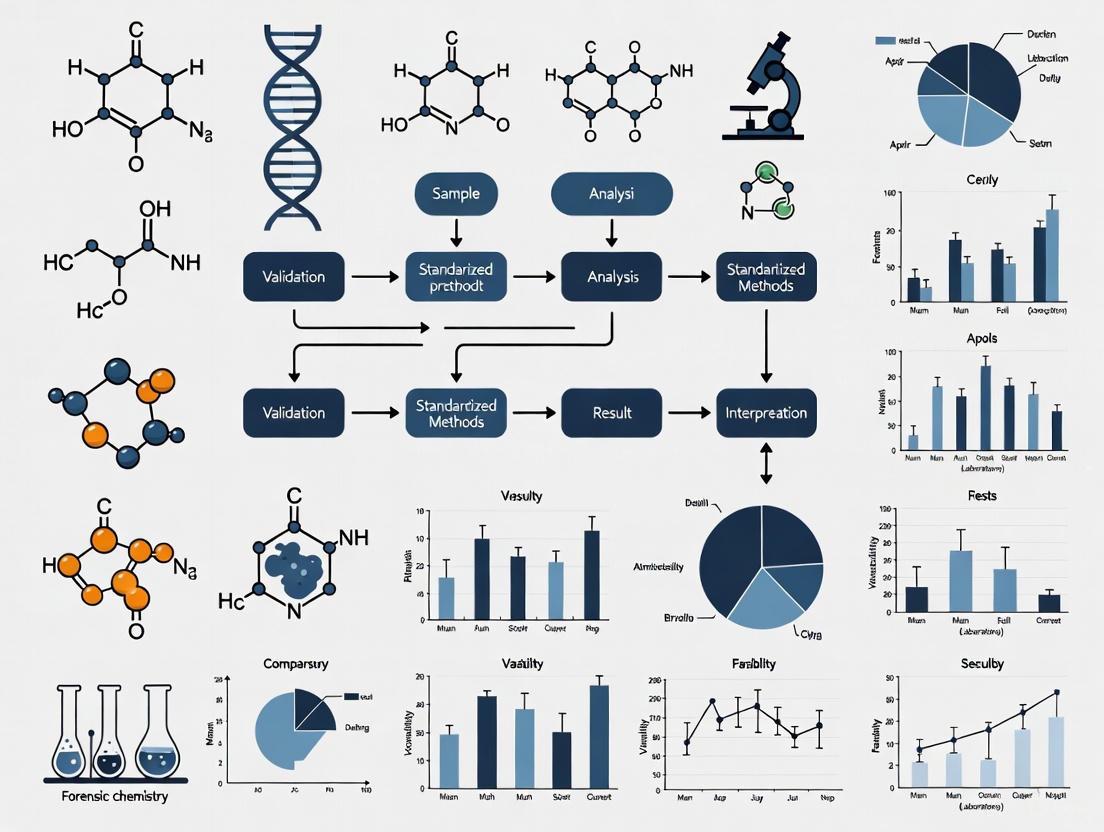
This article provides a comprehensive overview of the critical role inter-laboratory validation and standardized methods play in strengthening the foundations of forensic chemistry.
Advancing Forensic Chemistry: A Strategic Roadmap for Inter-Laboratory Validation and Standardized Methods
Abstract
This article provides a comprehensive overview of the critical role inter-laboratory validation and standardized methods play in strengthening the foundations of forensic chemistry. Aimed at researchers, scientists, and drug development professionals, it explores the current landscape of forensic standards, details the development and implementation of robust methodological protocols, addresses common challenges and optimization strategies, and establishes frameworks for rigorous validation and comparative analysis. Synthesizing insights from recent reports, standards updates, and peer-reviewed research, the content is designed to guide the adoption of practices that enhance the validity, reliability, and consistency of forensic analyses for both research and casework.
The Landscape of Standardization in Forensic Chemistry: Building a Foundation for Reliability
In forensic science, the reliability of evidence presented in court hinges on the scientific validity and reproducibility of the analytical methods used. A significant gap exists between the development of novel analytical techniques in research and their routine application in casework. This gap is bridged through inter-laboratory validation and the establishment of standardized methods, which are critical for demonstrating that a technique produces reliable, consistent, and reproducible results across different laboratories and practitioners. The legal system imposes rigorous standards for the admissibility of expert testimony, including the Daubert Standard and Federal Rule of Evidence 702, which require that methods have been tested, peer-reviewed, have a known error rate, and are generally accepted in the scientific community [1]. This review identifies key challenges in the field through the lens of inter-laboratory studies, providing a comparative analysis of method performance and outlining the essential pathway from research innovation to forensically validated practice.
Critical Gaps and Comparative Analysis of Forensic Methods
Despite advancements, several forensic chemistry subfields face challenges related to standardization, objectivity, and the need for robust quantitative metrics. The table below summarizes the current state and identified gaps for several key evidence types based on recent inter-laboratory studies.
Table 1: Critical Gaps in Forensic Evidence Analysis Identified Through Inter-Laboratory Studies
| Evidence Type | Analytical Method(s) | Key Challenge/Gap | Inter-Laboratory Study Findings | Quantitative Performance Data |
|---|---|---|---|---|
| Duct Tape Physical Fits [2] | Physical comparison of edge patterns (Edge Similarity Score - ESS) | Lack of standardized protocols for examination and interpretation. | High accuracy (>95% for high-confidence fits) but greater variance in mid-range similarity scores [2]. | Overall accuracy of 95.5% (Study 2); False positive rate of 0.7% [2]. |
| Drug Analysis & Novel Psychoactive Substances (NPS) [3] | DART-MS, GC-MS, HPLC | Rapidly evolving drug market and need for efficient, confident identification [3]. | Need for standardized databases, algorithms, and methods for instrument calibration [3]. | NIST program focuses on developing standard methods and data-sharing tools [3]. |
| Glass Fragments [4] | Particle-Induced X-ray Emission (PIXE), µ-XRF, LA-ICP-MS | Insufficient discriminative power of classical methods (e.g., refractive index) [4]. | Machine learning models on combined lab data achieved equal or better accuracy than lab-specific models [4]. | Unified classification model accuracy >80% for car manufacturer identification [4]. |
| Shooting Distance Estimation [5] | Color tests (MGT, SRT), SEM-EDS, FTIR-ATR | Subjectivity and lack of sensitivity in traditional color tests [5]. | Integrated instrumental methods (SEM-EDS, FTIR) enhanced sensitivity and objectivity vs. color tests alone [5]. | RSD for SRT increased to 28.6% at 100 cm; strong negative correlation (PCC = -0.72) between distance and residue [5]. |
| Comprehensive GC×GC [1] | GC×GC-MS (Various applications) | Transition from research to court-admissible method requires extensive validation [1]. | Most applications (e.g., fire debris, drugs) are at low Technology Readiness Levels (TRLs) for routine forensic use [1]. | Requires defined error rates and intra-/inter-laboratory validation to meet legal standards [1]. |
Experimental Protocols: A Case Study in Standardization
The evolution of a method for duct tape physical fit analysis exemplifies the rigorous process required to develop a standardized protocol. The following workflow and detailed methodology from recent inter-laboratory studies highlight the steps taken to ensure reliability and objectivity.
Detailed Experimental Methodology for Duct Tape Physical Fits
The inter-laboratory study for duct tape physical fits provides a model for rigorous method validation [2].
- Sample Preparation: Test samples were originating from medium-quality grade duct tape (Duck Brand Electrician's Grade Gray Duct Tape). A large population study of over 3,000 duct tape samples informed the selection of samples representing a range of edge patterns from hand-torn separations [2].
- Experimental Design: Selected tape comparison pairs were divided into seven groups, each containing three similar pairs. These were assembled into three distribution kits. Each kit contained seven pairs: three with high-confidence fits (F+ with Edge Similarity Score (ESS) of 86-99%), one with moderate similarity (F with ESS of 50-85%), two with low similarity (F- with ESS of 20-49%), and one known non-fit (NF). This design tested participants' ability to distinguish subtle differences [2].
- Analysis Protocol: Participants followed a systematic method for examining, documenting, and interpreting duct tape physical fits. The core of the method involved calculating an Edge Similarity Score (ESS), a quantitative metric estimating the percentage of corresponding scrim fiber ("scrim bins") along the fracture edge between two tape pieces. This objective score was supplemented with qualitative descriptors and a final conclusion (Fit, No Fit, or Inconclusive) [2].
- Data Consolidation and Analysis: The coordinating body collected all participant data and compared the reported ESS scores against pre-established consensus values. Statistical analysis measured overall accuracy, false positive/negative rates, and inter-participant agreement. A key finding was that most participant scores fell within a 95% confidence interval of the mean consensus values, demonstrating the method's robustness [2].
The Scientist's Toolkit: Essential Research Reagent Solutions
Forensic chemistry relies on a suite of analytical instruments and reagents, each chosen based on the evidence type and required information. The following table details key tools and their functions in modern forensic analysis.
Table 2: Essential Research Reagent Solutions and Instrumentation in Forensic Chemistry
| Tool/Reagent | Primary Function in Forensic Analysis | Common Applications |
|---|---|---|
| Gas Chromatography-Mass Spectrometry (GC-MS) [1] [6] | Separates complex mixtures (GC) and identifies individual components by mass (MS). Considered the "gold standard" for many analyses. | Drug identification, toxicology, fire debris analysis (ignitable liquids), explosive residues [1] [6]. |
| Fourier Transform Infrared Spectroscopy (FTIR) [6] [5] | A nondestructive technique that identifies organic and inorganic materials by measuring their absorption of infrared light. | Polymer identification (e.g., tapes, paints), drug screening, detection of organic gunshot residues [6] [5]. |
| Scanning Electron Microscopy with Energy Dispersive X-ray Spectroscopy (SEM-EDS) [5] | Provides high-resolution imaging and simultaneous elemental composition of a sample. | Inorganic gunshot residue (GSR) analysis, identification of trace metals, examination of material morphology [5]. |
| Particle-Induced X-ray Emission (PIXE) [4] | A non-destructive nuclear analytical technique for determining the elemental composition of a material. | Analysis of glass fragments, paint layers, and other trace evidence for major, minor, and trace elements [4]. |
| Direct Analysis in Real Time Mass Spectrometry (DART-MS) [3] | An ambient ionization technique that allows for rapid, high-throughput analysis of samples with minimal preparation. | Rapid screening of drugs of abuse, novel psychoactive substances (NPS), and other chemical evidence [3]. |
| Modified Griess Test (MGT) & Sodium Rhodizonate Test (SRT) [5] | Color tests used as chemical reagents to detect specific compounds. MGT detects nitrites, SRT detects lead. | Presumptive tests for gunshot residue patterns on fabrics to estimate shooting distance [5]. |
The path to overcoming the grand challenges in forensic evidence analysis is unequivocally paved with robust, multi-laboratory validation. As demonstrated by the case studies in duct tape, glass, and shooting distance estimation, the consistent application of standardized methods, objective quantitative metrics, and inter-laboratory collaboration is paramount. These practices directly address the core requirements of the legal system for reliable, reproducible, and error-rated scientific evidence. Future research must prioritize large-scale validation studies, the development of standardized data-sharing platforms, and the integration of objective statistical models to quantify the weight of evidence. By closing these critical gaps, the forensic science community can fortify the foundation of expert testimony, thereby enhancing the administration of justice.
In forensic chemistry, the legal system requires the use of scientifically valid and reliable methods to ensure that evidence presented in courts is consistent, accurate, and trustworthy [7] [8]. The 2009 National Academies report, "Strengthening Forensic Science in the United States: A Path Forward," highlighted significant challenges within the forensic science community, noting that it often lacked the culture of rigorous validation, bias avoidance, and connection to peer-reviewed research that characterizes other scientific fields [8]. This identified need for greater scientific rigor has driven the development of centralized standards.
The Organization of Scientific Area Committees for Forensic Science (OSAC), administered by the National Institute of Standards and Technology (NIST), was created to address the critical lack of discipline-specific, technically sound standards [9]. OSAC strengthens the nation's use of forensic science by facilitating the development and promoting the use of high-quality standards that define minimum requirements, best practices, and standard protocols to help ensure that forensic results are reliable and reproducible [9]. The OSAC Registry, a key output of this effort, serves as a repository of approved standards that have undergone a rigorous technical and quality review process, encouraging the forensic science community to adopt them to advance the practice of forensic science [10].
The OSAC Registry: Structure and Core Components
Architecture of the OSAC Registry
The OSAC Registry is a dynamic repository containing two distinct types of standards, both of which have passed a stringent review process that encourages feedback from practitioners, research scientists, statisticians, legal experts, and the public [10].
- SDO-Published Standards: These are standards that have completed the consensus process of an external Standards Developing Organization (SDO), such as ASTM International or the Academy Standards Board (ASB), and have subsequently been approved by OSAC for placement on the Registry [10]. Placement on the Registry requires a consensus (evidenced by a two-thirds vote or more) of both the relevant OSAC subcommittee and the Forensic Science Standards Board [10].
- OSAC Proposed Standards: These are draft standards that have been developed by OSAC and handed off to an SDO for the external development and publication process [10]. They remain on the Registry as proposed standards to help fill the standards gap while the SDO completes its own consensus process. OSAC encourages laboratories to implement these proposed standards even before the SDO publishes a final version [10].
The Registry covers a wide array of forensic disciplines, including specific subcommittees for Human Forensic Biology, Seized Drugs, Trace Materials, and Ignitable Liquids, Explosives & Gunshot Residue [10] [3]. As of the latest data, the OSAC Registry hosts 245 standards in total, comprising 162 SDO-published standards and 83 OSAC Proposed Standards [10].
The Standards Development Workflow
The process for creating and vetting a standard that is ultimately posted to the OSAC Registry is a transparent, consensus-based endeavor that involves multiple stages of development and review. The following diagram illustrates the key stages a standard passes through before being added to the OSAC Registry.
Comparative Analysis: OSAC Registry vs. Traditional Validation Approaches
The implementation of standards from the OSAC Registry facilitates a more collaborative and efficient model for method validation compared to traditional, insular approaches. The following table summarizes the key differences between these two paradigms, drawing on a collaborative model proposed in forensic literature.
| Feature | Traditional Isolated Validation | OSAC Registry & Collaborative Validation |
|---|---|---|
| Core Philosophy | Individual laboratories tailor validations to their specific needs, often modifying parameters. | Adopt and verify standardized methods from the Registry; promotes uniformity [7]. |
| Resource Expenditure | High redundancy; each lab spends significant time and resources on similar tasks [7]. | Significant savings by sharing expertise and data; reduces activation energy for smaller labs [7]. |
| Methodological Consistency | Results in many similar techniques with minor differences across labs, hindering data comparison [7]. | Enables direct cross-comparison of data between labs using the same standardized methods [7]. |
| Scientific Rigor | Varies by laboratory; no universal benchmark for performance. | Incorporates technically sound, consensus-based standards from inception, raising all labs to a high level [7]. |
| Implementation Speed | Slow; each lab must navigate method development and validation independently. | Accelerated; labs can move directly to verification if they adopt a published, validated method [7]. |
Quantitative Impact of Collaborative Validation
A proposed collaborative validation model demonstrates the profound efficiency gains achievable when Forensic Science Service Providers (FSSPs) adopt published standards and validation data. The table below quantifies the benefits, using a business case analysis from a published model.
Table: Quantitative Business Case for Collaborative Validation Model [7]
| Metric | Traditional Independent Validation | Collaborative Validation (Using Published Data) |
|---|---|---|
| Primary Activity | Method development and full validation | Method verification |
| Reported Cost Savings | Baseline | Significant savings in salary, sample, and opportunity costs |
| Data Comparability | No benchmark for cross-lab comparison | Provides an inter-laboratory study, building a shared knowledge base [7]. |
| Path to Publication | Rarely pursued for individual validations | Encouraged; original validations are published for community use [7]. |
Experimental Protocols for Implementing OSAC Standards
Protocol for Verifying an OSAC-Registered Standard Method
This protocol is designed for a laboratory (the "verifying lab") that wishes to implement a method previously validated by another FSSP (the "originating lab") and published in a peer-reviewed journal, in alignment with OSAC's principles [7].
Method Selection and Documentation Review:
- Identify the specific OSAC-registered standard and the corresponding peer-reviewed publication detailing the original validation [7].
- Obtain the exact written method, including all instrumentation, software, reagents, and procedural parameters from the originating lab.
Acquisition and Calibration:
- Procure the specified instrumentation, reagents, and quality control materials as defined in the method.
- Perform installation, operational, and performance qualification (IQ/OQ/PQ) of equipment as required. Calibrate instruments according to the manufacturer's and the method's specifications.
Verification Testing and Competency Assessment:
- Analyze a representative set of samples that mimic evidence, including positive controls, negative controls, and authentic or mock case samples.
- Lab personnel must successfully complete training and demonstrate competency by generating data that meets the performance characteristics (e.g., precision, accuracy, sensitivity) established in the original published validation.
Data Analysis and Report Generation:
- Compare the verification data against the benchmarks set by the originating lab. The results should demonstrate that the verifying lab can successfully operate the method and obtain comparable results.
- Compile a verification report that documents the process, presents all data, and includes a statement of successful verification, authorizing the method for use in casework.
Workflow for Standard Implementation and Verification
The following diagram outlines the end-to-end process for a laboratory to adopt and verify a method based on an OSAC-registered standard and published validation data.
The Scientist's Toolkit: Essential Research Reagent Solutions
The following table details key reagents, materials, and instruments commonly referenced in OSAC standards and foundational to modern forensic chemistry research and analysis [11] [3].
Table: Key Research Reagent Solutions in Forensic Chemistry
| Item | Function / Application in Forensic Chemistry |
|---|---|
| Gas Chromatography (GC) Systems | Separates volatile components in complex mixtures, such as drugs, ignitable liquids, and explosives residues. Often coupled with mass spectrometry (MS) for detection [11]. |
| Mass Spectrometry (MS) | Provides definitive identification of compounds based on their mass-to-charge ratio. Central to methods like DART-MS for drug analysis and LA-ICP-MS for glass evidence [3]. |
| Inductively Coupled Plasma Mass Spectrometry (ICP-MS) | An ultra-sensitive technique for elemental analysis, used in the characterization of materials like glass and gunshot residue [11]. |
| Infrared Spectroscopy | Used for the identification of organic compounds, including seized drugs and trace materials, by analyzing the absorption of infrared light by molecular bonds [11]. |
| Polarized Light Microscopy | A fundamental tool for the forensic examination and comparison of trace evidence such as soils, fibers, and explosives [10]. |
| Certified Reference Materials | High-purity standards with certified chemical composition or properties, essential for instrument calibration, method validation, and ensuring quantitative accuracy [3]. |
The OSAC Registry represents a transformative shift in forensic science, moving from a fragmented landscape of individual laboratory practices to a unified community built on shared, scientifically robust standards. For researchers and professionals in forensic chemistry and drug development, the Registry provides a critical foundation for ensuring that analytical methods are reliable, reproducible, and legally defensible. The collaborative validation approach it enables—where one lab's rigorous validation paves the way for others' efficient verification—dramatically increases efficiency, reduces costs, and enhances the overall scientific rigor of the discipline [7]. By providing a central hub for high-quality, technically sound standards, the OSAC Registry is not just a repository of documents but a proactive engine for continuous improvement and trust in forensic science.
For researchers, scientists, and drug development professionals, the presentation of scientific evidence in a legal context is a critical juncture where rigorous laboratory work meets the procedural rules of the courtroom. The admissibility of forensic chemical data and expert opinions hinges on specific legal standards designed to ensure the reliability and relevance of scientific testimony. The Daubert Standard and Federal Rule of Evidence 702 collectively form the primary framework governing this process in federal courts and many state jurisdictions [12] [13]. These standards establish trial judges as "gatekeepers" responsible for screening expert testimony to prevent "junk science" from influencing legal proceedings [12] [14]. For forensic chemistry research involving inter-laboratory validation of standardized methods, understanding these legal benchmarks is not merely academic—it is essential for ensuring that scientific findings will be deemed admissible and persuasive in litigation.
The evolution of these standards reflects an ongoing effort to balance scientific innovation with legal reliability. The older Frye Standard, stemming from the 1923 case Frye v. United States, admitted scientific evidence only if it was "generally accepted" by the relevant scientific community [15] [13]. This was largely superseded in federal courts by the more flexible Daubert Standard, established in the 1993 Supreme Court case Daubert v. Merrell Dow Pharmaceuticals, Inc. [12] [16]. Subsequent cases including General Electric Co. v. Joiner and Kumho Tire Co. v. Carmichael (collectively known as the "Daubert Trilogy") reinforced and expanded this gatekeeping role, culminating in the codification of these principles in Federal Rule of Evidence 702 [12] [17] [16]. A significant clarification to Rule 702 took effect in December 2023, emphasizing that the proponent of expert testimony must demonstrate to the court that "it is more likely than not" that the testimony meets the rule's admissibility requirements [14] [18] [19].
Comparative Analysis of Evidentiary Standards
The landscape of expert evidence admissibility is not monolithic across the United States. While federal courts uniformly apply the Daubert framework, state courts exhibit a diverse patchwork of standards, with some retaining the older Frye test, others adopting Daubert, and many implementing hybrid approaches [15]. This variation necessitates that forensic chemists and researchers understand the specific jurisdictional requirements where their evidence might be presented.
Table 1: Comparison of Frye and Daubert Evidentiary Standards
| Feature | Frye Standard | Daubert Standard |
|---|---|---|
| Originating Case | Frye v. United States (1923) [13] | Daubert v. Merrell Dow Pharmaceuticals, Inc. (1993) [12] |
| Core Question | Is the method "generally accepted" in the relevant scientific community? [15] [13] | Is the testimony based on reliable methodology and principles, and are they reliably applied to the facts? [12] [17] |
| Gatekeeper | Scientific community [15] | Trial judge [12] |
| Primary Focus | Consensus within the scientific field [13] | Methodological reliability and relevance [12] [13] |
| Flexibility | Rigid; excludes novel science [13] [18] | Flexible; allows for case-by-case evaluation [15] [13] |
| Impact on New Methods | Excludes "good science" that is not yet widely accepted [15] [18] | Potentially admits reliable but novel science [15] [13] |
| Sample Jurisdictions | California, Illinois, Pennsylvania, Washington [15] [16] | All federal courts and the majority of states (e.g., Arizona, Georgia, Texas) [15] |
The fundamental distinction lies in the locus of authority. Under Frye, the scientific community serves as the gatekeeper through its established consensus, whereas under Daubert, the judge actively assumes this role [15] [12]. This has practical implications: Frye offers a "bright-line rule" that is simple to apply but can exclude reliable emerging science, while Daubert provides a more nuanced, multi-factor test that requires judges to engage more deeply with the scientific methodology [15] [13] [18]. As one court noted, Daubert may admit reliable but not yet generally accepted methodologies, while excluding "bad science" derived from an otherwise accepted method [18].
Table 2: State Jurisdictions and Their Primary Evidentiary Standards
| Daubert Standard | Frye Standard | Hybrid or Modified Standards |
|---|---|---|
| Alabama [15] | California [15] [16] | Colorado (Shreck/Daubert) [15] |
| Arizona [15] | Illinois [15] [16] | Connecticut (Porter/Daubert) [15] |
| Florida [15] | Maryland [15] | Indiana (Modified Daubert) [15] |
| Georgia [15] | Pennsylvania [18] [16] | New Jersey (varies by case type) [15] |
| Texas (Modified Daubert) [15] | Washington [15] [16] | New Mexico (Daubert/Alberico) [15] |
Federal Rule of Evidence 702: A Detailed Framework
Federal Rule of Evidence 702 codifies the Daubert standard and provides the specific criteria that expert testimony must meet to be admissible in federal court. The rule was amended in 2023 to clarify and emphasize the judge's gatekeeping role and the proponent's burden of proof [14] [18] [19].
The current rule states: A witness who is qualified as an expert by knowledge, skill, experience, training, or education may testify in the form of an opinion or otherwise if the proponent demonstrates to the court that it is more likely than not that: (a) the expert’s scientific, technical, or other specialized knowledge will help the trier of fact to understand the evidence or to determine a fact in issue; (b) the testimony is based on sufficient facts or data; (c) the testimony is the product of reliable principles and methods; and (d) the expert’s opinion reflects a reliable application of the principles and methods to the facts of the case. [17] [14] [18]
The 2023 amendments introduced two critical clarifications. First, they explicitly state that the proponent must demonstrate admissibility by a preponderance of the evidence ("more likely than not") [14] [19]. Second, they change the language from "the expert has reliably applied" to "the expert’s opinion reflects a reliable application," making clear that the court must assess whether the expert's conclusions are within the bounds of what the methodology can reliably support [18] [20]. This reinforces that questions about the sufficiency of an expert's basis and the application of their methodology are threshold questions of admissibility for the judge, not merely questions of weight for the jury [19] [20].
The Daubert Factors and Inter-Laboratory Validation
The Daubert decision provided a non-exclusive checklist of factors for judges to consider in evaluating expert testimony [12] [17]. For forensic chemists, these factors align closely with the principles of robust scientific practice and validation.
Figure 1: Mapping Daubert Legal Factors to Forensic Chemistry Research Practices
Experimental Protocols for Legal Readiness
To satisfy Daubert's factors and the requirements of Rule 702, forensic chemistry research protocols must be designed with legal admissibility as a key objective. The following methodological framework is essential for establishing reliability.
Inter-Laboratory Validation Studies: A core methodology for addressing the testing and standards factors of Daubert involves designing and executing inter-laboratory validation studies [21]. These studies should engage multiple independent laboratories to perform the same analytical method on homogeneous, representative reference materials. The experimental workflow must be thoroughly documented in a detailed study protocol that specifies the standardized method, equipment specifications, reagent qualifications, data acceptance criteria, and statistical analysis plan. The resulting data is analyzed to determine key validation metrics, including inter-laboratory precision (e.g., reproducibility standard deviation), bias estimates, and the method's robustness to variations in operational and environmental conditions.
Error Rate and Uncertainty Quantification: To address the error rate factor, researchers must employ rigorous statistical analysis to establish the reliability of their methods [12] [21]. This involves calculating the method's total uncertainty budget by quantifying all significant sources of uncertainty, including those from calibration, instrumentation, and sample preparation. Proficiency testing using blinded samples should be conducted regularly to monitor ongoing performance and estimate potential false-positive and false-negative rates. Statistical confidence intervals (e.g., at 95% or 99% confidence) must be reported for all quantitative results to communicate the inherent limitations and reliability of the data to the court.
Peer-Review and Publication Strategy: A deliberate strategy for peer review and publication is critical for demonstrating that a methodology has been scrutinized by the scientific community [12] [16]. Researchers should prioritize submitting their complete validation study reports, including all experimental data and statistical analyses, to reputable, peer-reviewed scientific journals. The peer review process itself serves as independent validation of the method's scientific soundness. Furthermore, presenting these findings at major scientific conferences provides additional opportunities for professional critique and acceptance, strengthening the argument for the method's reliability under the Daubert framework.
The Scientist's Toolkit: Essential Research Reagent Solutions
The following reagents and materials are fundamental to conducting forensic chemistry research that meets the exacting standards of legal admissibility.
Table 3: Essential Research Reagents and Materials for Legally Defensible Forensic Chemistry
| Item | Function in Research & Validation |
|---|---|
| Certified Reference Materials (CRMs) | Provides traceable calibration and method validation with known purity and uncertainty, essential for establishing the accuracy and reliability of quantitative analyses. |
| Analytical Grade Solvents & Reagents | Ensures minimal interference from impurities during sample preparation and analysis, directly supporting the "standards and controls" factor of Daubert. |
| Stable Isotope-Labeled Internal Standards | Compensates for matrix effects and analytical variability in mass spectrometric methods, allowing for precise quantification and supporting a known, controlled error rate. |
| Proficiency Test Materials | Allows for blind testing of laboratory performance and method reproducibility across different operators and instruments, providing empirical data on method error rates. |
| Quality Control Check Standards | Monitors the stability and precision of analytical instrumentation over time, demonstrating the existence of maintained standards and controls for the methodology. |
For the forensic chemistry research community, the path to legal readiness is paved with rigorous, transparent, and collaborative science. The Daubert Standard and Federal Rule of Evidence 702 are not merely legal hurdles but embody principles of sound scientific inquiry: testability, peer scrutiny, error awareness, standardized operation, and eventual consensus. By consciously designing inter-laboratory validation studies and routine analytical workflows with the Daubert factors in mind, researchers and drug development professionals can ensure that their scientific findings are not only chemically sound but also legally admissible. This synergy between scientific and legal rigor fortifies the integrity of both disciplines and ensures that the evidence presented in courtrooms is founded upon the most reliable scientific knowledge available.
The reliability of forensic evidence presented in courtrooms hinges on the rigor and consistency of the analytical methods used in crime laboratories. In forensic chemistry, the analysis of seized drugs and trace evidence represents a critical front in the legal system's pursuit of justice. A broader thesis on inter-laboratory validation posits that without standardized methods, forensic results remain vulnerable to challenge, potentially undermining their probative value. The scientific and legal communities have increasingly recognized this imperative, leading to a concerted effort to develop, refine, and implement robust standards that ensure analytical results are both reliable and reproducible across different laboratories and jurisdictions.
This guide explores the current landscape of standardization initiatives, objectively comparing emerging and established analytical techniques. It places particular emphasis on the legal admissibility criteria, such as the Daubert Standard, which requires that scientific evidence be derived from testable methods with known error rates and general acceptance within the relevant scientific community [1]. The drive for standardization is not merely academic; it is a foundational element for ensuring that forensic science can meet these legal benchmarks.
Current Standardization Initiatives and Key Organizations
The movement toward forensic standardization is championed by several key organizations. The Organization of Scientific Area Committees (OSAC) for Forensic Science, administered by the National Institute of Standards and Technology (NIST), plays a pivotal role in evaluating and registering consensus-based standards for a wide range of forensic disciplines [22] [23]. Similarly, Standards Developing Organizations (SDOs) like the Academy Standards Board (ASB) and ASTM International are actively generating new standards and updating existing ones.
Recent initiatives highlight a significant focus on the analysis of seized drugs, a critical area given the ongoing opioid crisis. As of early 2025, several new standard proposals are moving through the development pipeline at ASTM, indicating a direct response to evolving forensic needs [24]. These include:
- WK93504: A new test method for the analysis of seized drugs using Gas Chromatography/Mass Spectrometry (GC/MS), designed to comprehensively identify over 400 substances [24].
- WK93971: A proposed new standard for analyzing fentanyl and related substances using Gas Chromatography-Infrared Spectroscopy (GC-IR) [22].
- WK93533: A new practice for establishing intralaboratory blind quality control programs specific to seized-drugs analysis [24].
Furthermore, there is a concerted effort to reinstate and revise foundational guides, such as the standard guide for sampling seized drugs for qualitative and quantitative analysis (WK93516) [24]. This flurry of activity underscores a dynamic and responsive standards environment aimed at enhancing the quality and consistency of forensic chemical analysis.
Comparison of Analytical Techniques and Their Standardization Status
Forensic laboratories employ a variety of techniques for drug identification and analysis, each with distinct advantages, limitations, and varying levels of acceptance within the standardization framework. The table below provides a comparative overview of key technologies.
Table 1: Comparison of Forensic Drug Testing Techniques
| Technique | Principle of Operation | Detection Capabilities & Accuracy | Ease of Use & Cost | Standardization & Legal Readiness |
|---|---|---|---|---|
| Mass Spectrometry (MS) [25] | Measures mass-to-charge ratio of ions. Often coupled with GC or LC for separation. | Gold standard. High specificity & sensitivity (detection to attomolar range). Identifies virtually any substance. | Requires expert operator. High equipment cost ($5k-$1M). High ongoing costs. | Well-established, legally accepted. GC/MS is subject of new standard (WK93504) [24]. |
| Immunoassays [26] | Antibody-based detection of drug classes. | Presumptive only. Prone to false positives/negatives due to cross-reactivity. Lower sensitivity. | Easy to use, low cost. Suitable for point-of-care. | Well-established for clinical use; considered presumptive in forensic context. |
| Comprehensive 2D Gas Chromatography (GC×GC) [1] | Two sequential GC separations with different stationary phases, greatly increasing resolution. | Superior separation of complex mixtures. Higher peak capacity and signal-to-noise vs 1D GC. | Expert operation needed. Specialized equipment. Higher cost than 1D GC. | Early research stage. Not yet routine. Lacks extensive validation and standardized methods for court. |
| Ion Mobility Spectrometry (IMS) [25] | Separates ions based on speed through a carrier gas. | Fast, accurate for small molecules. Selective (ppb detection). Non-destructive. | Does not require trained operator. Requires database for identification. | Gaining traction; standard methods are developing. |
Insights from Comparative Data
The choice of technique involves a clear trade-off between discriminatory power and accessibility. While MS remains the undisputed gold standard for confirmatory analysis, its cost and operational complexity can be prohibitive for non-laboratory settings [25]. Immunoassays, though affordable and easy to use, serve only as a preliminary screening tool due to their inherent limitations in specificity [26].
Emerging techniques like GC×GC offer a powerful solution for complex mixtures that challenge conventional 1D-GC, such as emerging psychoactive substances or intricate trace evidence. However, its technology readiness level for routine forensic casework remains low, primarily due to a lack of intra- and inter-laboratory validation studies and established, court-ready standards [1]. In contrast, IMS strikes a balance, offering rapid and reliable identification that is easier to operationalize than MS, making it a strong candidate for harmonization and future standard adoption in point-of-care or field applications [25].
Experimental Protocols for Standardized Analysis
The path from a submitted evidence sample to a forensically defensible result requires a meticulously controlled workflow. The following protocols detail the standardized methodologies for the most critical techniques in seized drug analysis.
Gas Chromatography-Mass Spectrometry (GC/MS) for Seized Drugs
GC/MS is the cornerstone of confirmatory drug analysis. The proposed ASTM standard WK93504 will provide a formalized test method for analyzing over 400 seized drug substances [24]. A generalized, high-level workflow is as follows:
- Sample Preparation: A small, representative portion (e.g., milligrams) of the seized material is weighed. The sample is then dissolved and diluted in an appropriate solvent (e.g., methanol). The solution may be centrifuged and filtered to remove particulate matter.
- Instrumental Analysis:
- Separation (GC): A microliter of the prepared sample is injected into the GC inlet, vaporized, and carried by an inert gas through a capillary column. The components of the mixture separate based on their differing interactions with the column's stationary phase.
- Ionization and Detection (MS): As separated compounds elute from the GC column, they are ionized (commonly by Electron Ionization, EI) in the MS source. The ions are separated by their mass-to-charge ratio (m/z) in the mass analyzer, and a detector records the abundance of each m/z.
- Data Interpretation & Confirmation: The resulting mass spectrum for each compound is compared against a certified reference library of known controlled substances. Identification is confirmed based on the retention time and the correspondence of the sample's mass spectrum with the reference spectrum, including the relative abundances of characteristic ions.
Inter-Laboratory Validation Workflow
For any method to be considered standardized and reliable, it must undergo rigorous inter-laboratory validation. This process assesses whether different laboratories can reproduce the same results from the same sample, a core requirement for legal admissibility [1] [5]. The workflow, adapted from successful models in trace evidence like glass analysis [4], can be visualized below.
The corresponding protocol for this workflow involves:
- Single-Laboratory Validation: A lead laboratory fully optimizes and validates the analytical method, establishing standard operating procedures (SOPs) and key performance metrics [27].
- Sample and Lab Selection: Homogeneous and stable blind samples (e.g., certified drug standards or characterized seized material) are prepared. Multiple independent laboratories with relevant expertise are recruited.
- Parallel Testing and Data Collection: All participating laboratories receive the same set of blind samples and the SOP. They perform the analysis independently and report their raw data and results to a central coordinating body.
- Statistical Analysis and Assessment: The coordinating body performs a statistical analysis of the collated data. Key metrics include:
- Relative Standard Deviation (RSD): Measures the precision of quantitative results (e.g., drug concentration) across labs. A low RSD indicates high reproducibility [5].
- Pearson Correlation Coefficient (PCC): Assesses the strength of the linear relationship between results from different labs, indicating consistent trends [5].
- Paired t-tests: Determine if there are statistically significant differences between the results obtained by different laboratories [5].
- Standard Formulation: Based on the outcomes of the inter-laboratory study, the method is refined, and a consensus-based standard is drafted, balloted, and published by an SDO like ASTM or ASB [22] [24].
Essential Research Reagents and Materials
The execution of standardized forensic methods relies on a suite of high-quality reagents and reference materials. The following table details key components essential for reliable seized drug analysis.
Table 2: Key Reagents and Materials for Forensic Drug Analysis
| Reagent/Material | Function/Application | Importance in Standardization |
|---|---|---|
| Certified Reference Materials (CRMs) [4] | Pure analyte standards used for method calibration, qualification of instruments, and comparison/identification of unknown compounds. | Provides the metrological traceability essential for accurate and defensible results. The cornerstone of inter-laboratory reproducibility. |
| Internal Standards (IS) [25] | A known quantity of a non-native compound added to a sample to correct for variability during sample preparation and instrument analysis. | Improves the precision and accuracy of quantitative analyses, a critical factor in achieving consistent results across different labs. |
| Chromatography Solvents [25] | High-purity solvents (e.g., methanol, acetonitrile) used for sample dissolution, dilution, and mobile phase preparation in GC and LC. | Minimizes background interference and chemical noise, ensuring optimal separation and detection while protecting instrumentation. |
| Derivatization Reagents | Chemicals that modify a drug molecule to improve its volatility, stability, or chromatographic behavior for GC analysis. | Standardized derivatization protocols are necessary for analyzing certain drugs (e.g., cannabinoids) to ensure consistent and reproducible chromatographic profiles. |
| Quality Control (QC) Materials [24] | Characterized control samples with known drug identity and concentration, used to monitor ongoing analytical performance. | The use of blind QC samples is the subject of a proposed new standard (WK93533), vital for continuous assessment of laboratory proficiency [24]. |
The field of forensic chemistry is in a dynamic state of advancement, driven by a clear mandate for greater scientific rigor and reliability. Current initiatives led by OSAC, ASTM, and ASB are actively producing and refining standards that directly address the analysis of seized drugs and trace evidence. The progression of techniques like GC×GC from research to routine application is contingent upon successful inter-laboratory validation, which provides the necessary data on error rates and reproducibility demanded by the Daubert Standard.
For researchers and forensic service providers, engagement in this ongoing standardization process is crucial. This can be achieved by participating in public comment periods for draft standards, conducting and publishing validation studies, and implementing registered standards in daily practice. The ultimate goal is a robust, scientifically sound, and universally trusted forensic science system, where analytical results stand up to scrutiny both in the laboratory and the courtroom.
From Theory to Practice: Implementing Standardized Protocols and Novel Techniques
The global escalation of drug-related crimes has placed unprecedented pressure on forensic laboratories, where analytical backlogs can impede judicial processes and law enforcement responses. Within this challenging context, Gas Chromatography-Mass Spectrometry (GC-MS) has remained a cornerstone technique in forensic drug analysis due to its high specificity and sensitivity [28] [29]. However, traditional GC-MS methods often require extensive analysis times, creating a critical need for faster analytical techniques that do not compromise evidential accuracy. The emergence of rapid GC-MS methodologies presents a promising solution, potentially reducing analysis times from approximately 30 minutes to as little as 10 minutes or even one minute with certain configurations [28] [30].
The adoption of any new analytical technique in forensic science necessitates rigorous validation to ensure its reliability and admissibility in legal proceedings. Courts rely on standards such as the Daubert Standard and Federal Rule of Evidence 702, which require demonstrated testing, peer review, known error rates, and general acceptance within the scientific community [1]. A significant challenge facing the forensic chemistry community has been the lack of standardized validation protocols, making instrument validation a challenging and time-consuming task that can hinder technological adoption [31] [32]. This case study explores how structured validation templates facilitate the implementation of a rapid GC-MS method for seized drug screening, providing a framework for inter-laboratory standardization and robust method validation.
Validation Framework: Components for Forensic Reliability
A comprehensive validation framework for rapid GC-MS methods must address multiple performance characteristics to establish forensic reliability. Recent research has systematized this process through a nine-component validation template, providing laboratories with a structured approach to evaluate instrumental capabilities and limitations [31] [32]. This framework encompasses:
- Selectivity: Assessing the method's ability to distinguish target analytes from other compounds and matrix interferences.
- Matrix Effects: Evaluating how different sample matrices influence analytical results.
- Precision: Measuring the reproducibility of retention times and mass spectral matches under varying conditions.
- Accuracy: Determining the correctness of identifications through comparison with known standards.
- Range: Establishing the concentration interval over which the method provides accurate and precise results.
- Carryover/Contamination: Verifying that samples do not contaminate subsequent analyses.
- Robustness: Testing the method's resilience to deliberate, small variations in operational parameters.
- Ruggedness: Assessing performance across different instruments, operators, or laboratories.
- Stability: Determining the constancy of analytical results over time [31] [32].
This multi-faceted approach provides forensic laboratories with a comprehensive template for establishing method validity, addressing the stringent requirements of legal standards while creating a pathway for inter-laboratory comparison and standardization.
Experimental Comparison: Rapid GC-MS Versus Conventional Methodology
Instrumentation and Operational Parameters
The optimized rapid GC-MS method employs specific instrumentation and parameters to achieve faster analysis times while maintaining analytical integrity. The following workflow illustrates the key steps in the rapid GC-MS analysis process for seized drugs:
Instrumentation: Development and validation typically utilize an Agilent 7890B gas chromatograph coupled with an Agilent 5977A single quadrupole mass spectrometer, equipped with a standard 30-m DB-5 ms column (30 m × 0.25 mm × 0.25 μm) [28] [29].
Key Method Parameters: The dramatic reduction in analysis time is achieved primarily through optimized temperature programming and flow rate adjustments as detailed in the table below:
Table 1: Comparative Instrumental Parameters for Conventional and Rapid GC-MS Methods
| Method Parameter | Conventional Method | Rapid GC-MS Method |
|---|---|---|
| Temperature Program | Initial: 70°C, ramp to 300°C at 15°C/min (hold 12 min) | Initial: 120°C, ramp to 300°C at 70°C/min (hold 7.43 min) |
| Total Run Time | 30.33 minutes | 10.00 minutes |
| Carrier Gas Flow Rate | 1 mL/min | 2 mL/min |
| Injection Type | Split (20:1 fixed) | Split (20:1 fixed) |
| Inlet Temperature | 280°C | 280°C |
| Ion Source Temperature | 230°C | 230°C |
| Mass Scan Range | m/z 40 to m/z 550 | m/z 40 to m/z 550 |
Analytical Performance and Detection Capabilities
Systematic validation studies demonstrate that the optimized rapid GC-MS method not only reduces analysis time but also enhances several key performance metrics compared to conventional approaches:
Table 2: Performance Metrics for Rapid GC-MS Method in Drug Screening
| Performance Metric | Conventional GC-MS | Rapid GC-MS | Improvement |
|---|---|---|---|
| Analysis Time | 30.33 minutes | 10.00 minutes | 67% reduction |
| Cocaine LOD | 2.5 μg/mL | 1.0 μg/mL | 60% improvement |
| Heroin LOD | Comparable improvement | ≥50% better | ≥50% improvement |
| Retention Time Precision (RSD) | Variable | <0.25% | Excellent repeatability |
| Spectral Match Scores | Typically high | >90% | Consistently high accuracy |
| Application to Case Samples | Reliable | 20/20 accurate IDs | Maintained reliability |
The method has been successfully applied to diverse drug classes, including synthetic opioids, stimulants, cannabinoids, and benzodiazepines, with match quality scores consistently exceeding 90% across tested concentrations [28] [29]. When applied to 20 real case samples from forensic laboratories, the rapid GC-MS method accurately identified controlled substances in both solid and trace samples, demonstrating its utility in authentic forensic contexts [28].
Practical Application: From Validation to Casework Implementation
Sample Preparation and Processing
The validation template emphasizes standardized sample preparation protocols to ensure consistent results across different sample types:
Solid Samples: Tablets and capsules are ground into a fine powder using a mortar and pestle. Approximately 0.1 g of material is added to 1 mL of methanol, followed by sonication for 5 minutes and centrifugation. The supernatant is transferred to a GC-MS vial for analysis [28].
Trace Samples: Swabs moistened with methanol are used to collect residues from drug-related items using a single-direction technique to maintain controlled pressure and prevent contamination. Swab tips are immersed in 1 mL of methanol, vortexed vigorously, and the extract is transferred to a GC-MS vial [28].
Data Processing: Advanced software solutions like PARADISe (PARAFAC2 based Deconvolution and Identification System) enable robust processing of complex GC-MS data, effectively handling challenges such as overlapped peaks, retention time shifts, and low signal-to-noise ratios [33]. This integrated approach converts raw data files into compiled peak tables with automated compound identification using integrated NIST library searches.
Essential Research Reagent Solutions
The following reagents and reference materials are critical for implementing and validating rapid GC-MS methods for seized drug screening:
Table 3: Essential Research Reagents and Materials for Rapid GC-MS Drug Screening
| Reagent/Material | Function/Application | Source Examples |
|---|---|---|
| Drug Reference Standards | Qualitative identification and quantification | Sigma-Aldrich (Cerilliant), Cayman Chemical |
| Methanol (99.9%) | Primary extraction solvent for solid and trace samples | Sigma-Aldrich |
| Helium Carrier Gas (99.999%) | Mobile phase for chromatographic separation | Various suppliers |
| DB-5 ms Capillary Column | Stationary phase for compound separation | Agilent J&W |
| Wiley Spectral Library | Compound identification through spectral matching | 2021 Edition |
| Cayman Spectral Library | Specialized database for emerging drugs | September 2024 Edition |
Implementation Strategy: Toward Inter-Laboratory Standardization
The transition from conventional to rapid GC-MS methods requires careful implementation planning and consideration of legal standards. Successful adoption involves several critical phases:
Validation Template Adoption: Laboratories can utilize published validation templates that include validation plans and automated workbooks specifically designed for rapid GC-MS applications [31] [32]. These resources reduce implementation barriers by providing structured frameworks for assessing the nine key validation components.
Technology Readiness Assessment: Current rapid GC-MS methods for seized drug screening demonstrate high technology readiness levels, with extensive validation studies and successful application to real case samples [30] [31]. The technology meets forensic admissibility standards through demonstrated reliability, peer-reviewed publication, and established error rates.
Legal Considerations: Forensic methods must satisfy legal admissibility standards, including the Daubert Standard and Federal Rule of Evidence 702 in the United States, which emphasize testing, peer review, error rates, and general acceptance [1]. The comprehensive validation approach for rapid GC-MS directly addresses these requirements through systematic error rate determination and demonstration of robust performance across operational parameters.
Organizational Standards Alignment: Implementation should align with established quality assurance standards, such as the FBI Quality Assurance Standards for forensic laboratories, which were updated in 2025 to include provisions for rapid DNA technologies, setting a precedent for rapid analytical methods [34]. Additionally, standards organizations like OSAC (Organization of Scientific Area Committees) maintain registries of validated methods that support forensic standardization [35].
The validation template approach for rapid GC-MS method implementation represents a significant advancement in forensic chemistry standardization. By providing a structured framework for assessing key performance characteristics, these templates facilitate robust method validation while supporting inter-laboratory comparability. The case study demonstrates that properly validated rapid GC-MS methods can reduce analysis time by over 65% while simultaneously improving detection limits and maintaining the high accuracy required for forensic evidence.
As forensic laboratories continue to face increasing caseloads and evolving substance threats, standardized validation protocols for rapid screening technologies will play an increasingly vital role in ensuring both efficiency and reliability. The template-based approach outlined here provides a pathway for laboratories to adopt innovative methodologies with confidence, supported by comprehensive validation data that meets the rigorous standards of the judicial system. Through continued refinement and inter-laboratory collaboration, these validation frameworks will strengthen the foundation of forensic chemistry practice and enhance the administration of justice.
The analysis of complex mixtures represents a significant challenge in fields ranging from forensic chemistry to pharmaceutical development. While conventional one-dimensional gas chromatography-mass spectrometry (1D GC-MS) has long been the gold standard, its limitations in resolving power become apparent when dealing with increasingly complex samples. Comprehensive two-dimensional gas chromatography coupled with mass spectrometry (GC×GC-MS) addresses these limitations by providing superior separation capabilities, enhancing compound detectability, and offering a more complete chemical profile of samples. Within the context of forensic chemistry research, the adoption of any new analytical technique must be framed within a rigorous framework of inter-laboratory validation and standardized methods to ensure the reliability, reproducibility, and ultimate admissibility of generated data in legal proceedings [1]. This article objectively compares the performance of GC×GC-MS against established alternatives, providing supporting experimental data and detailing the methodologies required to validate this powerful technology for routine application.
Technology Comparison: GC×GC-MS vs. Alternatives
The selection of an analytical technique for mixture analysis depends on the specific requirements of resolution, sensitivity, speed, and operational considerations. The following table provides a structured comparison of GC×GC-MS against other chromatographic techniques.
Table 1: Technical Comparison of Separation Technologies
| Technology | Separation Mechanism | Key Strengths | Key Limitations | Typical Forensic Applications |
|---|---|---|---|---|
| GC×GC-MS | Two independent separation columns connected via a modulator [1]. | Highest peak capacity; enhanced signal-to-noise ratio; superior for non-targeted analysis of complex mixtures [1]. | Higher instrumental cost; complex data processing; requires specialized expertise; not yet standardized for routine forensic use [1]. | Illicit drug profiling, ignitable liquid residue (ILR) analysis, odor decomposition, fingerprint aging [1] [36]. |
| Rapid GC-MS | A single column with optimized, fast temperature programming and/or shorter columns [28]. | Very fast analysis (as low as 1-10 minutes); high-throughput screening; reduced solvent consumption [37] [28]. | Lower resolution; limited peak capacity; potential for co-elution [37]. | High-throughput seized drug screening [37] [28]. |
| Conventional GC-MS | A single column with standard temperature programming. | "Gold standard"; well-established, validated protocols; widely accepted in court; extensive spectral libraries [1]. | Limited peak capacity leading to co-elution; lower sensitivity for trace analytes in complex matrices [1]. | Confirmatory analysis of seized drugs, toxicology [37] [1]. |
| GC-VUV | A single column with separation confirmed by vacuum ultraviolet spectroscopy. | Provides spectral differentiation of isomers that MS struggles with; can deconvolute co-eluting peaks [36]. | Emerging technique; limited established application base and library data compared to MS. | Distinguishing positional isomers of synthetic cannabinoids [36]. |
The quantitative performance of these techniques further elucidates their differences. The data below, synthesized from validation studies, highlights key metrics.
Table 2: Comparative Quantitative Performance Data
| Performance Metric | GC×GC-TOF-MS [1] | Rapid GC-MS [28] | Conventional GC-MS [28] |
|---|---|---|---|
| Analysis Time | Long (can be >60 min) | Short (~10 min) | Long (~30 min) |
| Peak Capacity | Very High (up to 1000) | Low | Moderate (100-500) |
| Limit of Detection (LOD) | Significantly improved for trace compounds | 1 µg/mL (Cocaine) | 2.5 µg/mL (Cocaine) |
| Retention Time Precision (%RSD) | Data not available in search results | < 0.25% | Data not available in search results |
| Isomer Differentiation | Excellent | Limited [37] | Moderate |
Experimental Protocols for Method Validation
For a technology to be adopted in forensic laboratories, its methods must undergo comprehensive validation. The following protocols are critical for establishing the reliability of GC×GC-MS and are prerequisites for inter-laboratory studies.
Selectivity and Isomer Separation
Objective: To assess the method's ability to separate and distinguish analytes from each other and from the matrix, with a focus on challenging isomer pairs [37].
Protocol:
- Preparation: Analyze single- and multi-compound test solutions of commonly encountered compounds and their isomers (e.g., synthetic cannabinoid positional isomers) [37] [36].
- Data Acquisition: Process data using chemometric strategies such as PARAFAC2 (PARAllel FACtor analysis 2) or MCR-ALS (Multivariate Curve Resolution - Alternating Least Squares) for peak deconvolution and resolution [38].
- Assessment: Evaluate separation based on two independent retention times (1D and 2D) and mass spectral data. For GC×GC-VUV, apply second-derivative processing of VUV absorbance curves to reveal unique spectral features for each isomer [36].
Precision and Ruggedness
Objective: To determine the method's repeatability (intra-day precision) and reproducibility (inter-day, inter-operator, inter-instrument precision) [37].
Protocol:
- Preparation: Prepare a custom 14-compound test solution at a specified concentration (e.g., 0.25 mg/mL per compound) [37].
- Analysis: Analyze the solution repeatedly (n=5) within a single day and over multiple days (n=15) by different analysts [37].
- Data Analysis: Calculate the percent relative standard deviation (%RSD) for both retention time and mass spectral search scores. An acceptance criterion of ≤10% RSD is commonly used in accredited forensic laboratories [37].
Sensitivity and Limit of Detection (LOD)
Objective: To determine the lowest concentration of an analyte that can be reliably detected.
Protocol:
- Preparation: Serially dilute a standard solution of the target analyte to create a concentration series [28].
- Analysis: Analyze each dilution and establish the signal-to-noise ratio (S/N).
- Calculation: The LOD is typically defined as the concentration yielding an S/N of 3:1. This process demonstrated a 50% improvement in LOD for substances like cocaine with rapid GC-MS (1 µg/mL) compared to conventional methods (2.5 µg/mL), and GC×GC-MS offers further gains for trace compounds [28].
Workflow and Legal Admissibility Pathway
The analytical process for forensic substance analysis using advanced techniques involves a structured workflow, and the path to legal admissibility for new methods like GC×GC-MS is defined by specific legal standards.
Diagram 1: Forensic Analysis Workflow
Diagram 2: Legal Admissibility Pathway
The Scientist's Toolkit: Essential Research Reagents and Materials
Successful implementation and validation of GC×GC-MS methods require specific, high-quality materials and reagents.
Table 3: Essential Research Reagents and Materials for GC×GC-MS Analysis
| Item | Function / Purpose | Example Specifications / Notes |
|---|---|---|
| Reference Standards | Provides known retention times and mass spectra for compound identification and quantification. | Analytical reference materials (e.g., from Cayman Chemical, Cerilliant/Sigma-Aldrich); custom multi-compound mixtures [37] [28]. |
| GC×GC Column Set | Provides two independent separation mechanisms; the heart of the GC×GC system. | A primary column (e.g., non-polar 5% phenyl polysilphenylene-siloxane) and a secondary column (e.g., mid-polarity) connected via a modulator [1]. |
| Modulator | The "heart" of GC×GC; traps and re-injects effluent from the first column onto the second. | Can be thermal or pneumatic; critical for preserving 1D separation and creating the 2D chromatogram [1]. |
| Mass Spectrometer | Provides detection, identification, and structural elucidation of separated compounds. | Time-of-flight (TOF) MS is often preferred for its fast acquisition rate, essential for capturing narrow peaks from the second dimension [1] [36]. |
| Chemometrics Software | Processes complex, high-dimensional data from GC×GC-MS for peak detection, deconvolution, and pattern recognition. | PARADISe (for PARAFAC2), MCR-ALS algorithms; essential for interpreting results [38]. |
| Extraction Solvents | Used in sample preparation to extract analytes from the sample matrix. | High-purity solvents like methanol (HPLC grade) or acetonitrile are used for liquid-liquid extraction [37] [28]. |
| Carrier Gas | The mobile phase that carries the sample through the chromatographic system. | Helium is traditional, but hydrogen is increasingly used due to shortages and for its faster analysis times [39]. |
GC×GC-MS represents a powerful analytical tool with demonstrated superiority in separating complex mixtures, as evidenced by its high peak capacity and application in challenging forensic domains such as drug isomer differentiation, fingerprint aging, and decomposition odor analysis. However, its performance must be objectively weighed against factors like operational complexity, cost, and the current lack of standardized, court-ready validation compared to the entrenched status of conventional GC-MS and the raw speed of rapid GC-MS. The future integration of GC×GC-MS into routine forensic practice is inextricably linked to a concerted, community-wide effort focused on rigorous inter-laboratory validation, the establishment of standardized protocols, and a clear demonstration of its reliability under the stringent criteria set by the Daubert and Frye standards. By systematically addressing these challenges, the forensic science community can fully leverage this advanced technology to uncover deeper insights from complex evidence, thereby enhancing the accuracy and reliability of chemical analysis within the justice system.
The forensic science disciplines have historically exhibited wide variability in techniques, methodologies, and training, creating a pressing need for uniform and enforceable standards. In response to the landmark 2009 National Research Council report "Strengthening Forensic Science in the United States: A Path Forward," the National Institute of Standards and Technology (NIST) established the Organization of Scientific Area Committees (OSAC) for Forensic Science to accelerate the development and adoption of high-quality, technically sound standards [40]. OSAC-approved standards provide minimum requirements, best practices, standard protocols, and definitions to help ensure that forensic analysis results are valid, reliable, and reproducible [40].
This guide examines the implementation of three OSAC Proposed Standards within the context of inter-laboratory validation for forensic chemistry research. For researchers and forensic science service providers (FSSPs), understanding these standards' technical requirements and implementation pathways is crucial for advancing methodological rigor. The voluntary adoption of these standards strengthens forensic chemistry research by providing a consistent framework for evaluating analytical techniques across different laboratory environments [41].
OSAC Standards Landscape and Registry Process
The OSAC Registry serves as a repository of high-quality published and proposed standards for forensic science, with the Registry recently growing to contain 225 standards (152 published and 73 OSAC Proposed) representing over 20 forensic science disciplines as of January 2025 [35]. Standards progress through a multi-tiered development pathway before achieving full recognition, as visualized below:
Figure 1: OSAC Standards Development and Registry Pathway
The implementation of these standards across forensic laboratories remains voluntary, with OSAC encouraging adoption through its "Open Enrollment" approach for collecting implementation data. By 2024, 224 Forensic Science Service Providers had contributed implementation data to OSAC, representing a significant increase in participation over previous years [35]. This growing engagement demonstrates the forensic community's recognition of standards as critical for ensuring reliability and building trust in forensic results [41].
Comparative Analysis of Selected OSAC Proposed Standards
Standard for the Examination and Comparison of Toolmarks for Source Attribution (OSAC 2024-S-0002)
This standard establishes a standardized methodology for toolmark examination, addressing one of the most subjective areas in forensic science. It provides requirements for the analytical process of comparing toolmarks to determine if they originate from the same source, with particular relevance to research on manufacturing marks and their reproducibility.
Key Technical Requirements:
- Defines standardized protocols for microscopic examination of toolmarks
- Establishes criteria for identifying subclass and individual characteristics
- Provides framework for concluding on source attribution
- Supports implementation of 3D technologies for toolmark analysis [42]
Research Implications: Implementation of this standard enables inter-laboratory studies on toolmark reproducibility, allowing researchers to quantify error rates and validate comparison methodologies across different instrumental platforms.
Best Practice Recommendation for the Chemical Processing of Footwear and Tire Impression Evidence (OSAC 2022-S-0032)
This standard addresses the chemical enhancement of footwear and tire impression evidence, providing a critical framework for evaluating development techniques on various substrates. For forensic chemistry research, it establishes baseline protocols for comparing the efficacy of different chemical treatments.
Key Technical Requirements:
- Standardizes chemical processing sequences for impression evidence
- Establishes validation requirements for new chemical formulations
- Defines substrate-specific application protocols
- Provides guidance on documentation and quality control
Research Implications: The standard enables controlled studies comparing sensitivity, specificity, and background interference of chemical enhancement methods across multiple laboratories, strengthening the evidential value of footwear and tire impression evidence.
Standard Practice for the Forensic Analysis of Geological Materials by SEM/EDX (OSAC 2024-S-0012)
This standard provides comprehensive guidelines for analyzing geological materials using scanning electron microscopy with energy dispersive X-ray spectrometry (SEM/EDX). Currently, no other standards specifically address forensic applications of SEM analysis of geological material, making this particularly valuable for inter-laboratory validation studies [35].
Key Technical Requirements:
- Standardizes sample preparation methods for diverse geological materials
- Establishes instrument calibration and validation protocols
- Defines analytical parameters for SEM/EDX analysis
- Provides framework for comparative analysis of geological samples
Research Implications: This standard enables multi-laboratory validation of SEM/EDX methods for forensic geology, allowing researchers to establish error rates, discrimination power, and transfer probabilities for geological evidence.
Implementation Workflow for OSAC Proposed Standards
Successful implementation of OSAC Proposed Standards requires a systematic approach that integrates validation, training, and quality assurance processes. The following workflow outlines the key stages for laboratories adopting these standards:
Figure 2: OSAC Proposed Standards Implementation Workflow
For inter-laboratory validation studies, particular emphasis should be placed on the Method Validation and Proficiency Testing phases, where consistent application of the standard across participating laboratories is essential for generating comparable data. The OSAC Implementation Reporting phase contributes to the broader forensic community's understanding of standard effectiveness [41].
Experimental Design for Inter-laboratory Validation Studies
Core Methodological Framework
Inter-laboratory validation of OSAC Proposed Standards requires carefully controlled experimental designs that isolate variables while testing the standards' applicability across different laboratory environments. The core methodology should include:
- Blinded Sample Sets: Circulate identical sample sets to participating laboratories with known ground truth unknown to analysts
- Standardized Data Collection Forms: Ensure consistent recording of observations and results across all participants
- Control Samples: Include known positive and negative controls to monitor analytical performance
- Statistical Power Analysis: Determine appropriate sample sizes to detect significant differences between methods
Quantitative Metrics for Standard Assessment
Table 1: Key Metrics for Inter-laboratory Validation of OSAC Proposed Standards
| Metric Category | Specific Measurement | Application to Footwear Standards | Application to Toolmarks Standards | Application to Geological Materials Standards |
|---|---|---|---|---|
| Accuracy Measures | False Positive Rate | Chemical processing interference | Erroneous source attribution | Misclassification of mineral components |
| False Negative Rate | Failure to develop usable impression | Missed true matches | Failure to detect trace elements | |
| Precision Measures | Intra-laboratory Reproducibility | Consistency of enhancement quality | Repeatability of comparison conclusions | SEM/EDX measurement variability |
| Inter-laboratory Reproducibility | Cross-lab consistency of developed impressions | Agreement on source conclusions between labs | Instrument-to-instrument calibration consistency | |
| Sensitivity Measures | Limit of Detection | Minimal impression residue detectable | Minimal toolmark characteristics identifiable | Minimal elemental concentrations quantifiable |
| Robustness Measures | Substrate Variability | Performance on porous vs. non-porous surfaces | Consistency across different tool materials | Analysis of heterogeneous geological samples |
Table 2: Research Reagent Solutions and Essential Materials for OSAC Standards Implementation
| Item/Category | Technical Function | Application Examples |
|---|---|---|
| 3D Surface Scanning Microscopes | Creation of virtual models for comparative analysis | Firearm and toolmark analysis using standardized 3D protocols [42] |
| Algorithm Comparison Software | Generation of numerical match scores for objective comparison | Bullet and cartridge case comparison with quantifiable uncertainty metrics [42] |
| Standard Reference Materials | Instrument calibration and method validation | SEM/EDX analysis of geological materials using certified reference standards [35] |
| Chemical Enhancement Reagents | Development of latent impressions on various substrates | Footwear and tire impression processing using standardized chemical sequences [35] |
| Validated Sampling Kits | Standardized collection and preservation of evidence | Geological sample collection maintaining chain of custody and sample integrity [35] |
| Quality Control Materials | Monitoring analytical process performance | Positive and negative controls for toolmark examination procedures [41] |
Data Interpretation and Statistical Framework
The implementation of OSAC Proposed Standards necessitates proper statistical frameworks for data interpretation, particularly for inter-laboratory studies. The likelihood-ratio framework has emerged as the logically correct method for interpreting forensic evidence and is incorporated into international standards such as ISO 21043 [43]. This approach provides a transparent method for weighing evidence and expressing analytical uncertainty, which is particularly valuable when implementing standards that introduce new technologies such as 3D imaging systems for firearm and toolmark analysis [42].
For the three standards examined here, specific statistical considerations include:
- Toolmark Analysis: Implementation of 3D systems generates algorithmically-derived match statistics that express the amount of uncertainty in the analysis, providing a quantitative measure that investigators and jurors can use when weighing evidence [42]
- Geological Materials: Multivariate statistical approaches for comparing SEM/EDX spectral data from multiple laboratories
- Footwear Impressions: Binary logistic regression models for predicting development success rates across different substrate types
The implementation of OSAC Proposed Standards for footwear, toolmarks, and geological materials represents a significant advancement in forensic chemistry research methodology. By providing standardized frameworks for analytical procedures, these standards enable robust inter-laboratory validation studies that strengthen the scientific foundation of forensic science. The ongoing development of these standards through OSAC's consensus-based process ensures they remain current with technological advances while maintaining the rigorous technical requirements necessary for producing valid and reliable forensic results [40].
As these standards move through the development pathway from OSAC Proposed to SDO Published status, researchers have the opportunity to contribute validation data and practical implementation experiences that will shape the final published versions. Active participation in this process advances the broader thesis of standardized methods in forensic chemistry research while building the empirical foundation needed for widespread adoption across the forensic science community.
The fields of forensic chemistry, biomedical research, and drug development are undergoing a profound transformation driven by the convergence of three powerful technological domains: artificial intelligence (AI), multi-omics technologies, and next-generation sequencing (NGS). This integration represents a paradigm shift from traditional, often siloed analytical approaches to unified, data-driven discovery frameworks capable of generating unprecedented insights into biological systems and chemical evidence. Next-generation sequencing has revolutionized genomics by making large-scale DNA and RNA sequencing faster, cheaper, and more accessible than ever, processing millions of DNA fragments simultaneously compared to traditional single-fragment Sanger sequencing [44] [45]. The integration of AI and machine learning (ML) has become indispensable for interpreting the massive, complex datasets generated by these technologies, uncovering patterns and insights that traditional methods miss [44] [46]. Meanwhile, multi-omics approaches provide a comprehensive analytical framework by combining genomics with other biological data layers including transcriptomics, proteomics, metabolomics, and epigenomics [44].
Within forensic chemistry research, this technological convergence offers powerful new capabilities for evidence analysis while introducing significant challenges in validation and standardization necessary for courtroom admissibility. The legal frameworks governing forensic evidence, including the Daubert Standard in the United States and the Mohan Criteria in Canada, require demonstrated reliability, known error rates, and general acceptance in the scientific community—standards that new analytical techniques must rigorously meet [1]. This article examines these emerging technical integrations through the critical lens of inter-laboratory validation and standardized method development, providing researchers and drug development professionals with a comparative analysis of performance characteristics, experimental protocols, and implementation pathways.
Technological Foundations and Performance Comparisons
Evolution and Current State of Sequencing Technologies
DNA sequencing technology has evolved through distinct generations, each offering unique capabilities and limitations. Understanding this evolution is essential for selecting appropriate analytical tools for specific research or forensic applications.
Table 1: Comparison of Sequencing Technology Generations
| Feature | First-Generation (Sanger) | Second-Generation (NGS) | Third-Generation (Long-Read) |
|---|---|---|---|
| Sequencing Principle | Chain-termination method | Massively parallel sequencing of short fragments | Real-time sequencing of single molecules |
| Read Length | Long (500-1000 base pairs) [45] | Short (50-600 base pairs) [45] | Very long (thousands to millions of base pairs) [45] |
| Throughput | Low (single genes) [45] | Extremely high (entire genomes) [44] [45] | High (complex genomic regions) [45] |
| Primary Applications | Targeted sequencing, validation [45] | Whole genomes, exomes, transcriptomes [44] | Structural variants, epigenetic modifications [46] |
| Key Platforms | Traditional capillary systems | Illumina NovaSeq X, Ion Torrent [44] | Oxford Nanopore, SMRT sequencing [44] |
NGS platforms continue to evolve, with recent advances including Illumina's NovaSeq X series offering unmatched speed and data output for large-scale projects, and Oxford Nanopore Technologies expanding boundaries with real-time, portable sequencing capabilities [44]. The choice between short-read (NGS) and long-read (third-generation) sequencing depends heavily on the research question—while short-read NGS remains the cost-effective workhorse for most variant detection applications, long-read technologies excel at resolving complex genomic regions that confuse short-read methods [45].
AI Integration in Genomic Analysis Workflows
Artificial intelligence, particularly machine learning and deep learning, has transformed genomic data analysis across all phases of experimental work. AI's impact extends throughout the entire research workflow, from initial planning through data interpretation.
Table 2: AI Applications Across Genomic Research Workflows
| Research Phase | AI Tools/Frameworks | Specific Applications | Performance Advantages |
|---|---|---|---|
| Pre-Wet-Lab (Experimental Design) | Benchling, DeepGene, LabGPT [46] | Protocol optimization, outcome prediction, virtual experiments [46] | Reduces design time, predicts potential failures before wet-lab work [46] |
| Wet-Lab (Implementation) | Tecan Fluent, YOLOv8 integration [46] | Automated liquid handling, real-time quality control [46] | Improves reproducibility, detects errors in pipetting and volumes [46] |
| Post-Wet-Lab (Data Analysis) | DeepVariant, CRISPResso2, DeepCRISPR [46] | Variant calling, CRISPR off-target analysis, biological interpretation [44] [46] | Identifies genetic variants with greater accuracy than traditional methods [44] |
The integration of AI in genomic pipelines is no longer a luxury but a necessity for precision drug development and complex forensic analysis [47]. AI models, particularly convolutional neural networks (CNNs) and recurrent neural networks (RNNs), now outperform traditional methods in applications ranging from variant calling to epigenomic profiling and single-cell sequencing [46]. For instance, DeepVariant utilizes deep learning to identify genetic variants with greater accuracy than traditional heuristic-based methods [44] [46].
Multi-Omics Integration Approaches
While genomics provides foundational genetic information, multi-omics approaches deliver a more comprehensive analytical picture by integrating multiple biological data layers. This holistic perspective is particularly valuable for understanding complex disease mechanisms and biological systems.
- Transcriptomics: RNA expression levels reveal gene activity states and regulatory mechanisms [44].
- Proteomics: Protein abundance and interactions provide functional readouts of cellular processes [44].
- Metabolomics: Metabolic pathways and compounds offer insights into physiological states and biochemical activities [44].
- Epigenomics: DNA methylation and other epigenetic modifications illuminate regulatory mechanisms beyond the genetic code [44].
In cancer research, multi-omics helps dissect the tumor microenvironment, revealing critical interactions between cancer cells and their surroundings [44]. For complex diseases such as cardiovascular and neurodegenerative conditions, multi-omics approaches can identify biomarkers and unravel complex pathogenic pathways that single-omics approaches might miss [44].
Inter-Laboratory Validation and Standardization
Experimental Designs for Method Comparison Studies
Robust experimental design is fundamental for validating new analytical methods and establishing their reliability across laboratories. The comparison of methods experiment is particularly critical for assessing systematic errors that occur with real patient specimens or forensic samples [48].
Key design considerations include:
- Sample Selection: At least 40 different patient specimens should be tested, carefully selected to cover the entire clinically meaningful measurement range and represent the spectrum of expected conditions [48] [49]. Larger sample sizes (100-200 specimens) are recommended to assess method specificity and identify matrix-related interferences [48].
- Measurement Approach: While single measurements are common practice, duplicate measurements provide a validity check by identifying sample mix-ups, transposition errors, and other mistakes that could disproportionately impact conclusions [48].
- Time Frame: Analysis should span multiple runs over a minimum of 5 days to minimize systematic errors that might occur in a single run, with extension to 20 days being preferable for comprehensive validation [48].
- Specimen Handling: Specimens should generally be analyzed within two hours of each other by the test and comparative methods unless stability data supports longer intervals, with careful standardization of handling procedures to prevent handling variables from masquerading as analytical errors [48].
Statistical Approaches for Method Comparison
Proper statistical analysis is essential for interpreting method comparison data and avoiding common pitfalls. Correlation analysis and t-tests, frequently misused in method comparison studies, are inadequate for assessing method agreement [49].
Recommended statistical approaches include:
- Graphical Data Inspection: Difference plots (Bland-Altman plots) displaying test minus comparative results versus comparative results, or comparison plots displaying test results versus comparative results, provide essential visual assessment of agreement across the measurement range and help identify discrepant results [48] [49].
- Regression Analysis: For data covering a wide analytical range, linear regression statistics (slope, y-intercept, standard deviation about the regression line) allow estimation of systematic error at medical decision concentrations and provide information about the proportional or constant nature of the error [48].
- Bias Calculation: For narrow analytical ranges, calculating the average difference between methods (bias) with the standard deviation of differences provides appropriate estimates of systematic error [48].
Interlaboratory Proficiency Testing
Recent interlaboratory exercises have established critical foundations for proficiency testing in advanced sequencing applications. A 2024 study involving five forensic DNA laboratories from four countries assessed massively parallel sequencing (MPS) methods across different kits and platforms, analyzing STR and SNP genotyping for autosomal, Y-chromosomal, and X-chromosomal markers [50].
Key findings from this interlaboratory comparison include:
- High Concordance: Results showed good agreement across laboratories regardless of platform, demonstrating the robustness of MPS methods when properly validated [50].
- Software Importance: The findings emphasized the importance of using multiple software tools for accurate ancestry and phenotype prediction, with genotyping issues often related to software algorithms used for artifact filtering and in-house interpretation rules [50].
- Quality Metrics: All participating laboratories maintained sequencing quality metrics within manufacturer-specified optimal intervals, establishing benchmark values for future proficiency testing [50].
This study identified key issues affecting genotyping accuracy that are crucial for developing effective proficiency tests, including library preparation characteristics, sequencing technologies, and bioinformatic analysis approaches [50].
Forensic Applications and Legal Admissibility
Analytical Readiness of Advanced Techniques
The translation of emerging analytical techniques from research to forensic applications requires careful assessment of their readiness for evidentiary analysis. Comprehensive two-dimensional gas chromatography (GC×GC) exemplifies this transition, with forensic applications including illicit drug analysis, fingerprint residue characterization, toxicological evidence, decomposition odor analysis, and petroleum analysis for arson investigations [1].
Current research indicates varying technology readiness levels (TRLs) across applications:
- Level 4 (Established): Oil spill forensics and ignitable liquid residue analysis [1]
- Level 3 (Advanced): Illicit drug analysis and chemical, biological, nuclear, and radioactive (CBNR) forensics [1]
- Level 2 (Intermediate): Fingerprint chemistry and decomposition odor analysis [1]
For GC×GC and other advanced separations techniques, future directions should focus on increased intra- and inter-laboratory validation, error rate analysis, and standardization to advance technological readiness for forensic implementation [1].
Legal Standards for Scientific Evidence
The admission of expert testimony based on new analytical techniques in legal proceedings requires meeting rigorous standards that vary by jurisdiction. In the United States, the Daubert Standard (based on Daubert v. Merrell Dow Pharmaceuticals, Inc., 1993) serves as the benchmark for federal courts and many state courts, requiring assessment of: (1) whether the technique can be and has been tested; (2) whether the technique has been peer-reviewed and published; (3) the known or potential error rate; and (4) general acceptance in the relevant scientific community [1]. This standard was incorporated into the Federal Rule of Evidence 702 in 2000 [1].
In Canada, the Mohan criteria (from R. v. Mohan, 1994) establish that expert evidence is admitted based on: (1) relevance to the case; (2) necessity in assisting the trier of fact; (3) absence of any exclusionary rule; and (4) a properly qualified expert [1]. Both frameworks emphasize the reliability of scientific expert testimony as a fundamental requirement for admissibility [1].
Implementation Frameworks and Research Reagents
Essential Research Reagents and Platforms
The implementation of integrated AI-omics-NGS workflows requires specific research reagents and platforms that form the foundation of reproducible analytical methods.
Table 3: Essential Research Reagents and Platforms for Integrated AI-Omics-NGS Workflows
| Reagent/Platform Category | Specific Examples | Primary Function | Application Context |
|---|---|---|---|
| NGS Library Preparation Kits | ForenSeq DNA Signature Prep Kit, Precision ID GlobalFiler NGS STR Panel v2 [50] | Prepare DNA samples for sequencing by fragmenting, adapter ligation, and amplification [45] | Forensic STR/SNP analysis, clinical genomics [50] |
| Sequencing Platforms | Illumina NovaSeq X, MiSeq FGx, Oxford Nanopore MinION [44] [50] | Perform massively parallel sequencing of prepared libraries | Large-scale genomics, portable sequencing [44] |
| AI-Assisted Analysis Software | DeepVariant, Universal Analysis Software, Converge Software [44] [50] | Basecalling, variant identification, genotype interpretation [44] [46] | Variant calling, forensic genotyping [44] [50] |
| Automated Laboratory Systems | Tecan Fluent, Opentrons OT-2 with YOLOv8 integration [46] | Automated liquid handling, real-time quality control | High-throughput screening, protocol automation [46] |
| Multi-Omics Assay Kits | Various proteomic, metabolomic, and epigenomic profiling kits | Generate complementary molecular data beyond genomics | Comprehensive biological profiling [44] |
Workflow Integration and Data Analysis
The successful integration of AI, omics, and NGS technologies requires well-defined analytical workflows that incorporate both laboratory and computational components. The following diagram illustrates a generalized workflow for integrated AI-NGS analysis:
Integrated AI-NGS Analytical Workflow
Data analysis in integrated workflows presents significant computational challenges. Cloud computing platforms such as Amazon Web Services (AWS) and Google Cloud Genomics provide scalable infrastructure to store, process, and analyze terabyte-scale genomic datasets, enabling global collaboration and cost-effective access to advanced computational tools [44]. These platforms comply with strict regulatory frameworks including HIPAA and GDPR, ensuring secure handling of sensitive genomic data [44].
Future Directions and Implementation Challenges
Addressing Technical and Ethical Challenges
The integration of AI, omics, and NGS technologies faces several significant challenges that must be addressed for widespread adoption, particularly in regulated fields like forensic chemistry and drug development.
- Data Quality and Bias: Biomedical AI faces challenges with noisy labels, limited samples, imbalanced classes, batch effects, and poor metadata standards that can compromise accuracy and reproducibility [51]. Solutions include better annotation practices, diverse data sources, and robust quality control measures [51].
- Privacy and Ethical Considerations: Genomic and medical information represents sensitive personal data requiring strict compliance with privacy laws (GDPR, HIPAA) and ethical standards [44] [51]. Privacy-preserving technologies such as federated learning and differential privacy are becoming essential for maintaining patient trust while enabling research [51].
- Workforce and Infrastructure: The scarcity of trained professionals with expertise in both computational biology and AI remains a critical concern, particularly for smaller research institutions [51]. High capital requirements for AI-based bioinformatics platform deployment also limit adoption across resource-constrained settings [51].
Emerging Innovations and Market Trajectories
The global genomics market is projected to reach USD 175.18 billion by 2034, increasing from USD 44.21 billion in 2025, representing a compound annual growth rate (CAGR) of 16.53% [47]. Similarly, the AI in bioinformatics market is projected to reach USD 136.3 million by 2033, rising from USD 3.8 million in 2023, with a remarkable CAGR of 42.9% [51].
Key innovations driving this growth include:
- Portable Genomics Devices: Development of affordable, portable genomic testing devices like Oxford Nanopore's MinION is creating new opportunities for point-of-care and field-based applications [47].
- Federated Learning: This approach enables model training across decentralized data sources without exchanging the data itself, addressing critical privacy concerns while leveraging diverse datasets [46] [51].
- Interpretable AI: Advances in explainable AI are improving clinical trust and adoption by making algorithmic decisions more transparent and understandable to researchers and legal professionals [46].
Regional analysis indicates that North America currently leads in AI-bioinformatics adoption (46.5% market share in 2023), while the Asia-Pacific region is projected to experience the fastest growth due to substantial government funding in artificial intelligence and rapid healthcare infrastructure improvements [51].
The integration of artificial intelligence, multi-omics technologies, and next-generation sequencing represents a transformative convergence that is reshaping analytical capabilities across forensic chemistry, biomedical research, and drug development. These emerging technical approaches offer unprecedented power for deciphering complex biological systems and chemical evidence, but their successful implementation requires rigorous validation frameworks and standardized methodologies. Inter-laboratory proficiency testing, careful method comparison studies, and adherence to legal standards for scientific evidence are essential components for translating these technological advances from research tools to reliable analytical methods. As these technologies continue to evolve rapidly, maintaining focus on validation, standardization, and ethical implementation will be critical for realizing their full potential while ensuring the reliability and admissibility of their results in both scientific and legal contexts.
Overcoming Implementation Hurdles: Funding, Resources, and Method Optimization
Addressing Funding Constraints and Resource Limitations in Forensic Laboratories
Forensic laboratories worldwide face a critical challenge: escalating demands for analytical services amid significant funding constraints and resource limitations. This reality necessitates innovative approaches to maintain scientific rigor, particularly in developing and implementing standardized methods for forensic chemistry research. The convergence of federal funding cuts, expanding case backlogs, and stringent legal admissibility standards creates a perfect storm that laboratories must navigate through strategic adaptation and evidence-based resource allocation.
Table 1: Impact of Federal Funding Reductions on Forensic Laboratories
| Funding Program | Previous Funding Level | Proposed/Current Level | Reduction | Primary Impact Area |
|---|---|---|---|---|
| Paul Coverdell Forensic Science Improvement Grants | $35 million | $10 million (proposed) | Approximately 70% | All forensic disciplines [52] |
| Capacity Enhancement for Backlog Reduction (CEBR) | $151 million (authorized) | $94-95 million (actual) | Nearly 40% shortfall | DNA-specific casework [52] |
| Operational Metric | 2017 Baseline | 2023 Current | Change | Impact on Justice System |
| DNA casework turnaround times | Baseline | Current | Increased 88% | Delayed investigations and prosecutions [52] |
| Controlled substances analysis | Baseline | Current | Increased 232% | Delayed drug crime prosecutions [52] |
| Post-mortem toxicology | Baseline | Current | Increased 246% | Delayed death investigations [52] |
Strategic Framework for Resource Optimization
Forensic laboratories have developed multifaceted strategies to optimize limited resources while maintaining analytical rigor and meeting legal standards. The following workflow illustrates the interconnected approaches laboratories are implementing to address these challenges:
Strategic Grant Utilization for Targeted Innovation
Proactive laboratories have shifted from using grants for general operations to strategically targeting competitive funding for specific innovations. The Michigan State Police Forensic Science Division exemplifies this approach, using a competitive CEBR grant to validate low-input and degraded DNA extraction methods. This targeted investment yielded a 17% increase in interpretable DNA profiles from complex evidence within 12 months, simultaneously supporting the hiring of two additional DNA analysts [52].
Coverdell grants have proven particularly valuable for cross-disciplinary improvements, funding initiatives such as:
- Cross-training DNA analysts in toxicology or trace evidence
- Supporting laboratory accreditation costs
- Funding overtime to manage specific backlogs [52]
Workflow Optimization Through Lean Principles
Process improvement methodologies have demonstrated significant efficiency gains in multiple laboratory settings. The Louisiana State Police Crime Laboratory implemented Lean Six Sigma principles through a $600,000 NIJ Efficiency Grant, achieving remarkable results:
- Average turnaround time reduction from 291 days to 31 days
- 95% of DNA requests completed within 30 days
- DNA case throughput tripled from approximately 50 to 160 cases per month [52]
Connecticut's laboratory system applied similar LEAN-inspired workflow redesign to reduce a backlog of over 12,000 cases, achieving an average DNA turnaround under 60 days and reducing the backlog below 1,700 cases while maintaining zero audit deficiencies for three consecutive years [52].
Resource sharing through regional partnerships has emerged as a sustainable model for enhancing capabilities without duplicating infrastructure. Shelby County, Tennessee partnered with the Memphis City Council in 2025 to fund a $1.5 million regional crime lab integrating DNA, ballistics, and digital forensics [52]. This model demonstrates how multiple jurisdictions can pool resources to create shared forensic capacity that would be unattainable individually.
Evidence Triage and Acceptance Protocols
With resources increasingly constrained, laboratories have implemented formal evidence triage protocols to prioritize cases with the greatest potential impact. Orange County, California established a property crime DNA platform with submission review processes involving both lab analysts and prosecutors. This system enabled:
- More precise assignment of property case submissions based on probative value
- Prioritization of CODIS-eligible samples
- Reduction of redundant administrative steps
- Improved overall throughput of DNA case processing [52]
Some jurisdictions, like Oregon, have made difficult decisions to pause DNA testing for property crime samples entirely until sexual assault kit backlogs could be reduced, reflecting the necessity of strategic prioritization in resource-constrained environments [52].
Experimental Protocols for Standardized Method Implementation
Standard Addition in Quantitative Toxicology
The method of standard addition represents an efficient, cost-effective alternative to traditional external calibration curves, particularly valuable for emerging novel psychoactive substances (NPS) with short lifespans and limited validated methods [53].
Table 2: Standard Addition vs. External Calibration Comparative Analysis
| Parameter | Standard Addition Protocol | Traditional External Calibration | Advantage for Resource-Limited Labs |
|---|---|---|---|
| Method validation time | Significantly reduced | Minimum 5 days [53] | Faster response to emerging substances |
| Required replicates per sample | 4 (1 blank + 3 up-spiked) [53] | Multiple calibration standards + controls | Reduced analytical time per sample |
| Matrix effects compensation | Built into methodology [53] | Requires separate validation | Improved accuracy without additional validation |
| Ideal application scope | Emerging drugs, low-frequency analytes [53] | High-volume, established analytes | Targeted resource allocation |
| Implementation cost | Lower | Higher | More efficient use of limited budgets |
Experimental Protocol: Standard Addition for Novel Psychoactive Substances
Sample Preparation: Aliquot four replicate case samples
- One sample remains "blank" with no drug standard added
- Three samples are "up-spiked" at appropriate concentrations for the specific drug [53]
Extraction Procedure:
- Perform liquid-liquid extraction (LLE) using borax buffer (0.1 M, pH 10.4)
- Use N-butyl chloride and ethyl acetate (70:30, v:v) as extraction solvents [53]
Instrumental Analysis:
- Utilize LC-MS/MS systems (e.g., Waters Xevo TQ-S micro)
- Maintain consistent chromatographic conditions across replicates [53]
Quantitation Calculation:
- Plot analyte-internal standard peak area ratios (PAR) against up-spike concentrations
- Require correlation (R²) > 0.98 between data points
- Calculate drug concentration using x-intercept of plotted trendline [53]
Method Verification:
- Assess linearity over target range, limit of detection, and recovery
- Evaluate potential interference from matrix, analyte, internal standard, and commonly encountered drugs
- Perform mock standard addition on fortified control samples [53]
This approach has been successfully implemented for various NPS classes including isotonitazene (opioid), eutylone (stimulant), and flualprazolam (benzodiazepine) [53].
Implementation of Standardized Methods Across Laboratories
The Organization of Scientific Area Committees (OSAC) for Forensic Science maintains a registry of standardized methods to support consistency and reliability across laboratories. As of January 2025, the registry contained 225 standards (152 published and 73 OSAC Proposed) representing over 20 forensic science disciplines [35].
Recent additions particularly relevant to forensic chemistry include:
- OSAC 2024-S-0012: Standard Practice for the Forensic Analysis of Geological Materials by Scanning Electron Microscopy and Energy Dispersive X-Ray Spectrometry [35]
- OSAC 2022-S-0032: Best Practice Recommendation for the Chemical Processing of Footwear and Tire Impression Evidence [35]
- ANSI/ASB Standard 056: Standard for Evaluation of Measurement Uncertainty in Forensic Toxicology (new standard) [35]
The Scientist's Toolkit: Essential Research Reagent Solutions
Table 3: Key Analytical Resources for Forensic Chemistry Research
| Resource | Function & Application | Implementation Consideration |
|---|---|---|
| GC×GC–MS Systems | Provides enhanced separation of complex mixtures for illicit drugs, toxicology, and ignitable liquid residues [1] | Requires significant validation for courtroom admissibility under Daubert Standard [1] |
| LC-MS/MS Systems (e.g., Waters Xevo TQ-S micro) | Enables sensitive quantification of novel psychoactive substances via standard addition methodology [53] | Ideal for targeted analysis of emerging drugs with limited lifespan |
| Chemometric Software (e.g., ChemoRe) | Facilitates multivariate analysis of chemical data for identification, classification, and comparison [54] | Free R-based platform increases accessibility for resource-limited labs |
| ASTM Forensic Standards | Provides standardized methodologies for various forensic analyses including document examination and gunshot residue [11] | Critical for maintaining quality and consistency across laboratories |
| Lean Six Sigma Framework | Systematic approach to process optimization and workflow efficiency [52] | Can be implemented incrementally without major capital investment |
Forensic laboratories face a reality of increasing demands and constrained resources, requiring strategic approaches to maintain scientific rigor and service delivery. The most successful laboratories have embraced multifaceted strategies including targeted grant utilization, workflow optimization, regional partnerships, and evidence triage protocols. The implementation of efficient analytical approaches like standard addition methodology and adherence to standardized protocols from organizations like OSAC and ASTM provide pathways to maintain quality amid resource constraints. As funding challenges persist, the forensic science community's ability to innovate and adapt will be essential to fulfilling its critical role in the justice system.
In forensic chemistry, the reliability of analytical data is paramount, as it directly influences legal outcomes and the pursuit of justice. The management of complex data generated by advanced instrumentation forms the bedrock of this reliability. Forensic chemistry applies chemistry and its subfield, forensic toxicology, in a legal setting, where a forensic chemist assists in the identification of unknown materials found at a crime scene [6]. The field relies on a wide array of sophisticated methods and instruments, including high-performance liquid chromatography (HPLC), gas chromatography-mass spectrometry (GC-MS), atomic absorption spectroscopy (AAS), Fourier transform infrared spectroscopy (FTIR), and thin-layer chromatography [6]. The integrity of results from these instruments is critical, as forensic chemists commonly testify in court as expert witnesses regarding their findings [6].
The process of ensuring data quality begins even before analysis, with the proper configuration of instrumentation. Scientists recognize the value of high-quality and consistent data as the first variable to eliminate, allowing them to concentrate on interpreting results rather than worrying about a lack of resolution or introduced artifacts [55]. Optimizing settings for a signal is more efficient than attempting to manipulate data retrospectively when some information may be permanently lost. This foundational approach to data quality is a prerequisite for the subsequent interlaboratory validation that standardizes methods across the forensic science community [56] [57].
Foundational Principles of Analytical Data Quality
The transition from raw analog signals to trustworthy digital data hinges on mastering three core technical parameters: sampling rate, amplification, and filtering. Misconfiguring any of these can introduce artifacts, reduce resolution, or irrevocably lose critical information.
Sampling Rate Optimization
The sampling rate is the regular interval at which analysis software records a data value from the data acquisition (DAQ) unit [55]. For example, a 10 Hz rate means the software records a value ten times every second. The spacing between these points directly impacts how accurately the resulting curve represents the original signal.
- Risks of Improper Sampling: A sampling rate that is too low will cause a loss of information and fail to represent the original signal correctly [55]. Conversely, an excessively high rate may capture unnecessary noise or artifacts, leading to contaminated signals and unnecessarily large data files that slow down processing [55].
- The Nyquist Criterion: The fundamental rule for selecting a sampling rate is the Nyquist frequency, which states that the minimum sampling rate must be at least double the highest expected frequency component in the analog signal [55]. For instance, recording a human ECG with components up to 50 Hz requires a minimum sampling rate of 100 Hz.
- The "Magic Number 20" Rule: A more general guideline is to use a sampling rate that yields approximately 20 data points across the peaks of the waveform signal. This typically results in a smooth curve with adequate detail for analysis [55].
Amplification and Resolution
Amplification, also referred to as range, determines the span of values between which the hardware looks for information and has a direct effect on resolution [55].
- Understanding Resolution: Resolution refers to the number of data points on the y-axis used to create the digital representation of the signal. In a 16-bit system, the y-axis is divided into 2^16 (65,536) segments [55].
- The Range-Resolution Trade-off: Selecting an appropriate range is a balance. A range that is too wide (e.g., ±10 V) spreads these segments thinly, resulting in a coarse, "blocky" digital signal where small variations are lost. A range that is too narrow will clip the peaks and troughs of the signal, also destroying data. Reducing the range to fit the expected signal amplitude tightly improves the resolution, allowing for the capture of finer details [55].
Strategic Filtering of Signals
Filters are essential for removing unwanted noise from a signal and are categorized as either analog (hardware) or digital (software).
- Analog (Hardware) Filters: These filter the continuous, incoming signal before it is digitized and amplified. They are beneficial for removing known frequency noise early, improving the signal-to-noise ratio before digitization. However, they alter the raw data in real-time and cannot be removed after recording, making correct initial setup critical [55].
- Digital (Software) Filters: These are applied to the data after it has been converted to a digital signal and stored in its raw form. They can be used in real-time or after recording and adjusted without the need to re-record data, offering greater flexibility [55].
The following table summarizes common filter types and their applications.
Table 1: Common Filter Types for Data Conditioning
| Filter Type | Function | Common Application in Forensic Chemistry |
|---|---|---|
| Low Pass | Allows low frequencies to pass while removing high frequencies. | Smoothing a noisy signal; general noise reduction. |
| High Pass | Allows high frequencies to pass while eliminating low frequencies. | Removing a drifting baseline from a chromatogram. |
| Notch | Removes one specific frequency. | Eliminating 50/60 Hz mains hum from electrical equipment. |
| Band-Pass | Allows only a specific band of frequencies to pass. | Isolating a specific signal of interest from a complex mixture. |
| Band-Stop | Removes a specific band of frequencies. | Blocking a known, persistent interference. |
Method Validation and Verification in Forensic Chemistry
For data to be admissible and meaningful in a legal context, the methods that generate it must be rigorously validated and verified. This process ensures methods are fit for purpose and performed correctly within a laboratory.
The ISO Framework: Validation vs. Verification
International standards, particularly the ISO 16140 series, provide a structured framework for analytical methods in microbiological testing of the food chain, offering a model for forensic chemistry practice [57]. These protocols distinguish between two critical stages:
- Method Validation: This is the primary process of proving that a method is fit for its intended purpose. According to ISO guidelines, validation is typically conducted through a method comparison study, often followed by an interlaboratory study to establish performance characteristics like accuracy, precision, and specificity [57]. For example, the Scientific Working Group on the Analysis of Seized Drugs proposes standards that forensic chemists must follow [6].
- Method Verification: This is the subsequent process where a laboratory demonstrates that it can satisfactorily perform a validated method in its own environment. Verification is described in ISO 16140-3 and involves testing reference materials or validated items to confirm the laboratory's competency with the method [57].
Table 2: Tiers of Method Validation and Verification
| Tier | Objective | Typical Scope | Key Standard/Protocol |
|---|---|---|---|
| Full Validation | Prove a new method is fit-for-purpose. | Comprehensive assessment of all performance characteristics (accuracy, precision, LOD, LOQ, etc.). | ISO 16140-2, ISO 16140-4 [57] |
| Single-Lab Validation | Establish method performance when no interlaboratory study is conducted. | Performance data is specific to the laboratory that conducted the study. | ISO 16140-4 [57] |
| Implementation Verification | Demonstrate a lab can properly execute a validated method. | Testing one of the same items evaluated in the validation study. | ISO 16140-3 [57] |
| Item Verification | Demonstrate method performance for specific, challenging sample types. | Testing several challenging items relevant to the lab's scope of work. | ISO 16140-3 [57] |
Interlaboratory Studies and Collaborative Validation
Interlaboratory studies are a cornerstone of method validation, providing a statistical basis for assessing a method's precision—its repeatability (within a lab) and reproducibility (between labs) [56]. The harmonized protocols for the design and interpretation of collaborative studies are critical for establishing standardized methods that can be reliably used across different laboratories, a practice directly applicable to forensic chemistry [56]. This ensures that results are consistent and comparable, regardless of which accredited laboratory performs the analysis, which is essential for the integrity of forensic evidence.
Application in Forensic Chemistry: Instrumentation and Data Analysis
The principles of data quality and validation converge in the practical application of specific analytical techniques within the forensic laboratory.
Core Analytical Techniques
Forensic chemists have a suite of instruments at their disposal, each with strengths for different types of evidence.
- Gas Chromatography-Mass Spectrometry (GC-MS): Often considered the "gold standard" in forensic analysis due to its sensitivity and versatility, GC-MS combines the separation power of gas chromatography with the identification capabilities of mass spectrometry [6] [58]. It is extensively used for drug identification, arson investigations (analyzing accelerants), and toxicology.
- Fourier Transform Infrared Spectroscopy (FTIR): A nondestructive technique that uses infrared light to identify substances based on their molecular bonds and functional groups [6]. Its nondestructive nature and minimal sample preparation make it an excellent first step in analyzing unknown materials.
- Atomic Absorption Spectroscopy (AAS): A destructive technique used to determine the elemental composition of a sample. It is particularly valuable in cases of suspected heavy metal poisoning (e.g., arsenic, lead, cadmium) [6].
- High-Performance Liquid Chromatography (HPLC): Especially useful for separating nonvolatile liquid mixtures. Modern HPLC instruments are capable of detecting substances at concentrations as low as parts per trillion, making them ideal for analyzing complex biological samples for drugs and toxins [6] [58].
Advanced Data Processing: Chemometrics and Machine Learning
The complexity of modern forensic data necessitates advanced processing tools. There is a growing need for sophisticated chemometric and machine learning algorithms to interpret findings and support crime-solving [59]. Multivariate, multiobjective optimization can be used to fine-tune analytical methods, such as GC-MS, by determining the optimal set of instrument parameters that improve data quality and are amenable to algorithm development [60]. This represents the cutting edge of forensic analytical chemistry, where the combination of high-quality instrumental data and powerful computational analysis provides deeper, more targeted insights.
Experimental Protocols for Method Optimization and Validation
A Generalized Workflow for Analytical Method Optimization
The following diagram illustrates a modern, systematic approach to tuning complex instrumentation like GC-MS, moving beyond traditional one-factor-at-a-time experiments.
Diagram 1: Method Optimization Workflow
This protocol involves a structured, multivariate approach [60]:
- Determine Objectives: Define the analytical goals, such as maximizing signal-to-noise ratio, minimizing peak broadening, or achieving a specific resolution, that should be maximized or minimized [60].
- Screening Experiment: Conduct an initial experiment to identify which of the many instrument parameters have a potentially significant effect on the defined objectives.
- ANOVA Analysis: Perform Analysis of Variance (ANOVA) on the screening data to statistically determine which parameters have a significant effect and should be focused on for further optimization [60].
- Model Fitting: Conduct a more detailed experimental design (e.g., a Box-Behnken design) to collect data for fitting an objective equation that describes the relationship between the key parameters and the performance objectives [60].
- Constraint Application and Solution: Determine the physical constraints of the instrumentation parameters and solve using conditions (like the Karush-Kuhn-Tucker conditions) to find the optimal method parameters within feasible bounds [60].
Experimental Protocol for GC-MS Performance Comparison
When comparing the performance of a new GC-MS instrument against an established model or a competitor's system, the following experimental methodology provides robust, quantitative data.
- Objective: To quantitatively compare the sensitivity, resolution, and reproducibility of two GC-MS systems (Instrument A vs. Instrument B) using a standardized test mixture.
- Sample Preparation: Prepare a serial dilution of a certified reference material (e.g., a mix of semi-volatile internal standards like deuterated PAHs or drugs) in a suitable solvent. A typical range might be from 100 ppb down to 1 ppt.
- Instrument Parameters:
- GC: Use identical column (type, length, film thickness), carrier gas, and flow rate for both instruments. Implement a standardized temperature ramp.
- MS: While the absolute voltages may differ, tune both instruments to meet standard performance criteria (e.g., using perfluorotributylamine). Set the MS to operate in Selective Ion Monitoring (SIM) mode for the most sensitive and reproducible results.
- Data Acquisition and Analysis:
- Inject each dilution in replicate (n=5) in a randomized sequence to account for drift.
- Signal-to-Noise Ratio (S/N): Measure the S/N for the target analyte at each concentration level. A higher S/N indicates better sensitivity.
- Peak Width at Half Height: Measure this for a well-retained peak to assess chromatographic resolution. A narrower peak indicates superior performance.
- Retention Time Stability: Calculate the relative standard deviation (RSD%) of the retention time for the replicate injections. Lower RSD% indicates better system stability.
- Peak Area Reproducibility: Calculate the RSD% of the peak areas for the replicate injections. Lower RSD% indicates superior precision.
Table 3: Example Experimental Data from a GC-MS Comparison Study
| Performance Metric | Instrument A | Instrument B | Implication of Superior Result |
|---|---|---|---|
| S/N at 10 ppt (for analyte X) | 15:1 | 8:1 | Lower detection limits; better for trace analysis. |
| Peak Width at Half Height (s) | 2.1 | 2.8 | Better chromatographic resolution; can separate complex mixtures. |
| Retention Time RSD% (n=5) | 0.05% | 0.12% | Greater system stability and injection precision. |
| Peak Area RSD% (n=5) | 3.5% | 5.8% | Better quantitative reproducibility and precision. |
The Scientist's Toolkit: Essential Research Reagents and Materials
The following table details key reagents and consumables critical for maintaining data quality in forensic chemical analysis.
Table 4: Essential Research Reagents and Materials for Forensic Analysis
| Item | Function/Application | Importance for Data Quality |
|---|---|---|
| Certified Reference Materials (CRMs) | Calibrating instruments, quantifying unknowns, method validation. | Provides traceability to SI units; ensures accuracy and legal defensibility of results. |
| Deuterated Internal Standards | Added to samples prior to analysis by GC-MS or LC-MS. | Corrects for matrix effects and losses during sample preparation; improves quantitative precision and accuracy. |
| High-Purity Solvents (HPLC/MS Grade) | Sample preparation, mobile phase preparation, instrument maintenance. | Minimizes background noise and ghost peaks; prevents contamination of instrumentation. |
| Solid Phase Extraction (SPE) Cartridges | Extracting, cleaning up, and concentrating analytes from complex matrices (e.g., blood, urine). | Reduces matrix interference, lowers detection limits, and protects analytical columns from fouling. |
| Derivatization Reagents | Chemically modifying analytes to improve volatility (for GC), detectability, or stability. | Enables analysis of otherwise non-amenable compounds; can enhance sensitivity and selectivity. |
In forensic chemistry, the analytical methods used to analyze evidence must meet rigorous analytical and legal standards to be admitted in court [1]. The core challenge lies in mitigating error and establishing the reliability of evidence, which can originate from various sources and be of varying quality. This guide objectively compares different frameworks and methodologies for assessing evidence quality, focusing on their application in inter-laboratory validation studies within forensic chemistry. We provide a comparative analysis of experimental protocols, quantitative performance data, and the statutory criteria these methods must satisfy for courtroom acceptance.
Comparative Analysis of Evidence Grading Frameworks
Various systems have been developed to rate the quality of a body of scientific evidence. These systems assess multiple discrete domains to determine the overall confidence in the evidence. The following table summarizes the core domains used by several major systems for rating the quality of evidence on intervention effectiveness [61].
Table 1: Domains for Rating the Quality of a Body of Evidence
| Evidence Domain | Description | Role in Quality Assessment |
|---|---|---|
| Study Design | The fundamental structure of the research (e.g., randomized trial vs. observational study). | Often the starting point; randomized trials typically begin as "high" quality. |
| Study Limitations (Risk of Bias) | Flaws in the design or execution of a study that may bias its estimates (e.g., lack of blinding). | Used to downgrade the confidence in the evidence. |
| Inconsistency | Unexplained variability in results across different studies. | Used to downgrade the confidence in the evidence. |
| Indirectness | Evidence is not directly relevant to the research question (P), intervention (I), comparison (C), or outcome (O). | Used to downgrade the confidence in the evidence. |
| Imprecision | Results are uncertain due to wide confidence intervals or small sample sizes. | Used to downgrade the confidence in the evidence. |
| Publication Bias | The selective publication of studies based on the direction or strength of their results. | Used to downgrade the confidence in the evidence. |
| Magnitude of Effect | A large effect size that is unlikely to be due to bias alone. | Can upgrade the confidence for non-randomized studies. |
| Dose-Response Gradient | The presence of a correlation between the dose of an intervention and the size of its effect. | Can upgrade the confidence for non-randomized studies. |
| Plausible Confounding | The presence of confounding factors that would, if accounted for, strengthen the observed effect. | Can upgrade the confidence for non-randomized studies. |
Among these systems, the Grading of Recommendations Assessment, Development and Evaluation (GRADE) approach is unique in its comprehensive guidance, rigorous development, and widespread dissemination [61]. It is used by over 100 organizations worldwide and is mandatory for Cochrane intervention reviews [61]. In the GRADE framework, evidence from randomized trials starts as "high" quality, while evidence from observational studies starts as "low" quality. This initial rating is then downgraded based on limitations in five domains—risk of bias, inconsistency, indirectness, imprecision, and publication bias—or upgraded for non-randomized studies based on a large magnitude of effect, a dose-response relationship, or if all plausible biases would reduce an apparent treatment effect [62] [61]. The final rating is categorized into one of four levels: high, moderate, low, or very low.
Experimental Protocols for Inter-Laboratory Validation
A critical step in implementing new forensic methodologies is establishing their performance and robustness through inter-laboratory studies [2]. These studies, led by a coordination body, involve multiple practitioners from different laboratories analyzing the same samples under set conditions to evaluate a method's reproducibility [2]. The following workflow details a generalized protocol for such studies, drawing from recent research in forensic chemistry.
Detailed Methodological Steps
- Define Scope and Method: The coordination body defines the experimental design, selects the specific method to be evaluated (e.g., a systematic method for examining duct tape physical fits), and has it reviewed by an expert panel [2].
- Prepare Sample Kits: The coordination body prepares and distributes sample kits containing known comparison pairs with a verified "ground truth." These kits are designed to include samples representing a range of difficulties, such as high-confidence fits, borderline fits, and definitive non-fits [2].
- Conduct Blind Analyses: Participating laboratories, which are often experienced in the general area of examination but new to the specific method being tested, analyze the samples blindly. They follow the standardized protocol and report their results using predefined criteria and quantitative metrics [2].
- Perform Statistical Analysis: The coordination body collects the data and performs statistical analysis. This involves calculating overall accuracy rates, false positive and false negative rates, and measuring inter-participant agreement to establish consensus values [2].
- Assess Consensus and Accuracy: The results are compared against the known ground truth and the pre-established consensus values. The method's limitations and sources of error are identified, and participant feedback is incorporated to refine the protocol [2].
Performance Data from Forensic Case Studies
The following table summarizes quantitative data from a recent inter-laboratory study on duct tape physical fit examinations, illustrating the performance metrics used to validate a systematic method [2].
Table 2: Performance Data from Duct Tape Physical Fit Inter-laboratory Study
| Study Round | Number of Participants | Overall Accuracy | False Positive Rate | False Negative Rate | Inter-participant Agreement |
|---|---|---|---|---|---|
| First Study | 38 participants across 23 labs | High | Low | Low | High, with most scores within a 95% CI of consensus |
| Second Study | (Implied refinement from feedback) | Generally high | -- | -- | Improved after method refinement |
The study found that the proposed method, which used an Edge Similarity Score (ESS), demonstrated low misidentification rates. Factors such as the quality grade of the tape, the separation method (e.g., scissor-cut vs. hand-torn), and the level of stretching were found to influence the ESS, but the physical fit comparisons still led to low overall error rates [2]. This process of iterative testing and refinement is vital for establishing a method's reliability and error rate.
Legal Readiness and Courtroom Admissibility
For an analytical method to be adopted by forensic laboratories, it must adhere to standards set by the legal system. The following diagram outlines the primary legal benchmarks for the admissibility of scientific expert testimony in the United States and Canada [1].
The Daubert Standard, which has been incorporated into the Federal Rule of Evidence 702, is particularly influential [1]. It requires the judge to act as a gatekeeper and consider several factors, including:
- Whether the theory or technique can be and has been tested.
- Whether it has been subjected to peer review and publication.
- The known or potential error rate of the technique.
- The existence and maintenance of standards controlling its operation.
- Its general acceptance within the relevant scientific community [1].
The inter-laboratory studies and quantitative error rate analysis described in the previous sections are direct responses to these legal requirements, providing the necessary data to demonstrate a method's reliability in a courtroom setting.
The Scientist's Toolkit: Essential Research Reagents & Materials
The following table details key materials and solutions used in forensic chemistry research, particularly in studies involving physical fit examinations and chemical analysis [2] [1].
Table 3: Key Research Reagents and Materials for Forensic Evidence Analysis
| Item | Function & Application |
|---|---|
| Reference Standard Materials | Certified materials with known properties used to calibrate instruments and validate methods, ensuring accuracy and traceability. |
| GC×GC-MS System | A comprehensive two-dimensional gas chromatography system coupled with mass spectrometry for the separation and analysis of complex mixtures like illicit drugs or ignitable liquid residues [1]. |
| Modulator (GC×GC) | The "heart" of a GC×GC system; it collects effluent from the first column and injects it into the second column, vastly increasing peak capacity and separation [1]. |
| Controlled Sample Sets | Datasets of known "fit" and "non-fit" items (e.g., hand-torn and scissor-cut duct tape pairs) used for method development and validation [2]. |
| Statistical Analysis Software | Software used to calculate quantitative metrics (e.g., Edge Similarity Scores), error rates, and inter-participant agreement, providing objective measures of performance [2]. |
In forensic chemistry, the implementation of new analytical techniques is paramount for staying ahead of evolving challenges, such as the identification of novel psychoactive substances. However, the validation process required to ensure these methods are reliable, reproducible, and legally defensible is notoriously resource-intensive. A comprehensive validation can take several months to complete, a process often further protracted when forensic chemists must design and conduct validation alongside their active casework [37]. This creates a significant bottleneck, contributing to laboratory workload and growing backlogs. Consequently, there is a pressing need for validation strategies that are not only scientifically robust but also designed with workflow efficiency as a core principle. This guide compares different validation approaches, focusing on their impact on laboratory efficiency and providing a framework for designing studies that minimize workload while maximizing throughput and maintaining strict quality standards.
Comparative Analysis of Validation Approaches
The design and execution of a validation study directly impact laboratory efficiency. The table below compares three common approaches, highlighting their key characteristics and implications for laboratory workload and backlog management.
Table 1: Comparison of Validation Approaches for Laboratory Workflow Efficiency
| Validation Approach | Key Features | Typical Duration | Impact on Workload | Best Suited For |
|---|---|---|---|---|
| Traditional In-House Validation | Developed from scratch by laboratory staff; highly customizable but requires significant design effort. | Several months to over a year [37] | High internal workload; diverts staff from casework. | Unique methods with no available templates; laboratories with dedicated R&D capacity. |
| Lean Workflow Restructuring | Applies Lean management principles to eliminate waste and non-value-added steps in the pre-analytical phase [63]. | Varies (continuous improvement) | Reduces pre-analytical bottlenecks; one study showed a 13% reduction in turnaround times for glucose tests in an emergency service [63]. | Laboratories facing delays in sample processing and reporting; aims to improve overall operational efficiency. |
| Pre-Developed Validation Templates | Uses existing, comprehensive validation plans (e.g., for techniques like rapid GC-MS or DART-MS) that can be adopted or slightly modified [37]. | Significantly reduced vs. traditional | Drastically reduces development time; allows immediate start of experimental work. | Implementing established techniques (e.g., seized drug screening); ideal for minimizing design burden. |
Experimental Protocols for Efficient Validation
The following section outlines detailed methodologies for key experiments cited in the comparison, providing a roadmap for laboratories to implement efficient validation studies.
Protocol for a Lean Workflow Intervention
A prospective study with a quasi-experimental design can be implemented to optimize pre-analytical workflow, a major source of delays [63].
- Primary Outcome Measure: Turnaround Time (TTA key metric for laboratory efficiency, defined as the time interval between a sample's arrival at the laboratory and the final result [63].
- Benchmarking Parameters: Common tests like glucose and haematocrit are selected for benchmarking.
- Workflow Mapping:
- Pre-intervention: Document the existing sample flow, staff functions, and physical layout to identify bottlenecks, such as discontinuous flow and accumulation of samples.
- Intervention:
- Staff Restructuring: Reassign and delineate staff functions to generate a continuous, unidirectional flow. Establish rotating work schemes and prioritize samples based on origin, urgency, and test type.
- Infrastructure Modification: Knock down walls separating reception and distribution areas to improve flow. Relocate equipment to minimize travel distance and designate a centrifuge exclusively for priority samples.
- Data Analysis: Compare TAT data from pre- and post-intervention periods using statistical tests like the Mann-Whitney U test to determine significance (p < 0.05) [63].
Protocol for a Template-Based Seized Drug Screening Validation
For techniques like rapid GC-MS, using a pre-developed validation template dramatically accelerates the process [37]. The following protocol is adapted from a comprehensive plan for seized drug screening.
- Study Design: The validation assesses multiple performance components, many of which can be run concurrently.
- Materials: A custom 14-compound test solution (e.g., 0.25 mg/mL per compound in isopropanol) and analytical reference materials.
- Experimental Components: Key components and their acceptance criteria are tested as follows:
- Selectivity: Inject mixtures of isomeric compounds to assess the ability to differentiate them based on retention time and mass spectral data.
- Precision: Inject the same 14-compound solution five times and calculate the % Relative Standard Deviation (% RSD), with a typical acceptance criterion of ≤10% RSD [37].
- Accuracy: Analyze a set of real-world case samples and compare the screening results to those obtained from confirmatory analyses.
- Robustness: Have a second analyst perform the same set of analyses to ensure the method performance is consistent across different users.
- Data Analysis: The validation package includes a workbook for automated data processing, streamlining the evaluation of results against pre-set acceptance criteria [37].
Visualizing Efficient Validation Workflows
The following diagrams illustrate the logical flow of the two primary experimental protocols discussed, providing a clear visual representation of the steps involved in streamlining laboratory validation.
Diagram 1: Lean Workflow Optimization Process
Diagram 2: Template-Based Validation Pathway
The Scientist's Toolkit: Essential Reagents & Materials
Efficient validation relies on well-characterized materials and standardized reagents. The following table details key solutions and their functions in validation studies for forensic drug analysis.
Table 2: Key Research Reagent Solutions for Seized Drug Validation
| Reagent/Material | Function in Validation | Application Example |
|---|---|---|
| Custom Multi-Compound Test Solution | A prepared mixture of target analytes used for efficient testing of multiple validation parameters (e.g., precision, robustness) simultaneously [37]. | A 14-compound solution in isopropanol used to evaluate the precision of a rapid GC-MS method in a single sequence [37]. |
| Analytical Reference Materials | Highly pure, certified materials used to establish retention times, mass spectra, and ensure the accuracy and selectivity of the method [37]. | Used in selectivity studies to differentiate between isomeric species like methamphetamine and its isomers [37]. |
| Matrix-matched Quality Controls | Control samples prepared in a matrix similar to real case samples (e.g., with common adulterants) to assess matrix effects and ensure method accuracy in complex backgrounds. | Studying the effect of various contaminants on the reliability of DNA RFLP patterns in forensic samples [64]. |
| Methanol & Acetonitrile (HPLC Grade) | High-purity solvents used for preparing standard solutions, sample dilutions, and extracts. Their purity is critical for preventing interference and ensuring reproducible results [37]. | Used as received for preparing in-house solutions during validation of rapid GC-MS methods [37]. |
The choice of validation strategy has a profound impact on a laboratory's operational efficiency and its ability to manage casework backlogs. While traditional in-house validation offers customization, it comes at the cost of significant time and internal resources. Evidence demonstrates that alternative approaches, such as Lean workflow restructuring and the adoption of pre-developed validation templates, offer scientifically rigorous pathways to achieving compliance while minimizing workload. Lean principles directly attack procedural waste, leading to measurable improvements in turnaround times [63]. Meanwhile, validation templates for established techniques can reduce the development phase from months to a matter of days, allowing laboratories to quickly implement new, efficiency-enhancing technologies [37]. For forensic laboratories committed to both quality and throughput, integrating these efficient study designs is not just an option but a necessity for modern, responsive forensic science.
Ensuring Analytical Rigor: Validation Frameworks and Comparative Method Assessment
Defining Technology Readiness Levels (TRLs) for Forensic Chemistry Applications
Technology Readiness Levels (TRLs) are a systematic metric used to assess the maturity of a particular technology, originally developed by NASA during the 1970s [65]. These levels enable consistent and uniform discussions of technical maturity across different types of technology [65]. In forensic chemistry, TRLs provide a critical framework for evaluating the transition of novel analytical techniques from basic research to validated methods suitable for courtroom evidence. The adoption of standardized TRL frameworks in forensic science is increasingly important as legal systems impose rigorous standards for the admissibility of scientific evidence, including the Daubert Standard and Federal Rule of Evidence 702 in the United States and the Mohan Criteria in Canada [1]. These legal benchmarks require demonstrated reliability, known error rates, and general acceptance in the scientific community – all factors that can be systematically tracked through TRL progression.
For forensic chemistry applications, TRLs serve as vital tools for technology managers and laboratory directors to make decisions concerning technology funding, development, and implementation in casework [65]. The primary purpose of using TRLs is to help management in making decisions concerning the development and transitioning of technology, providing a common understanding of technology status, and facilitating risk management [65]. This review examines the various TRL frameworks applicable to forensic chemistry, compares their specific requirements, and details the experimental validation necessary at each stage of development to meet both scientific and legal standards.
TRL Frameworks: Comparative Analysis for Forensic Applications
Standardized TRL Frameworks Across Sectors
Multiple TRL frameworks have been developed across different sectors, each tailored to specific application domains while maintaining the core principle of assessing technological maturity. Table 1 provides a comparative analysis of the most widely recognized TRL frameworks, highlighting their relevance to forensic chemistry applications.
Table 1: Comparative Analysis of Technology Readiness Level Frameworks
| TRL | NASA/Standard 9-Level Scale [66] [65] [67] | Forensic Chemistry 4-Level Scale [68] [69] | Medical Countermeasures (Diagnostics) [70] | Relevance to Forensic Chemistry Applications |
|---|---|---|---|---|
| 1 | Basic principles observed and reported | Basic research phenomenon observed or basic theory proposed | Review of scientific knowledge | Foundation for novel analytical techniques; paper studies of basic properties |
| 2 | Technology concept and/or application formulated | Development of theory with demonstrated application | Concept generation and development of experimental designs | Invention begins; practical applications based on basic principles |
| 3 | Experimental proof of concept | Application with figures of merit and intra-laboratory validation | Characterization of preliminary candidate and feasibility demonstration | Active R&D; analytical studies and laboratory studies with non-integrated components |
| 4 | Component validation in laboratory environment | Inter-laboratory validation of standardized method | Optimization and preparation for assay/component development | Basic technological components integrated and tested in laboratory environment |
| 5 | Component validation in relevant environment | - | Product development - reagents, components, subsystems | Components integrated for testing in simulated forensic environment |
| 6 | Model/prototype demonstration in relevant environment | - | System integration & testing | Prototype representing near-desired configuration tested in simulated operational lab |
| 7 | Prototype demonstration in operational environment | - | Analytical verification and preparation for clinical studies | Prototype ready for demonstration in operational forensic laboratory |
| 8 | System complete and qualified | - | Clinical studies, FDA clearance, GMP manufacturing | Technology proven in final form under expected forensic conditions |
| 9 | Actual system proven in operational environment | - | - | Successful deployment in routine casework under real-life conditions |
The standard 9-level TRL scale, utilized by NASA, the European Union, and the Canadian government, progresses from basic principles (TRL 1) to proven operational systems (TRL 9) [66] [65] [67]. In contrast, the journal Forensic Chemistry employs a simplified 4-level scale specifically tailored to the needs of forensic science practitioners and researchers [68] [69]. This specialized framework focuses on the critical stages from basic research (TRL 1) to methods ready for implementation in crime laboratories (TRL 4), acknowledging that many forensic technologies represent methodological applications rather than novel hardware systems.
Forensic Chemistry TRL Framework: Detailed Requirements
The specialized 4-level TRL framework adopted by Forensic Chemistry journal provides specific criteria relevant to forensic applications. At TRL 1, research involves observing basic phenomena or proposing theories that may find forensic application, exemplified by one-off instruments making unique measurements or fundamental studies of chemical properties of evidence such as explosives or ignitable liquids [68] [69]. TRL 2 requires development of a theory or phenomenon with demonstrated application to a specified area of forensic chemistry, including supporting data, such as the first application of an instrument to a forensic problem or development of chemometric tools to describe evidentiary significance [68] [69].
TRL 3 represents a significant advancement, requiring application of an established technique to a specified forensic domain with measured figures of merit, uncertainty quantification, and aspects of intra-laboratory validation [68] [69]. Methods at this level must be practicable on commercially available instruments, and initial inter-laboratory trials may be reported. The highest level in this framework, TRL 4, requires refinement, enhancement, and inter-laboratory validation of standardized methods ready for forensic laboratory implementation [68] [69]. This includes fully validated methods, protocols undergoing standardization, error rate measurements, and database development – all essential for courtroom admissibility.
Experimental Protocols for TRL Advancement in Forensic Chemistry
Method Validation Requirements Across TRLs
Advancing through TRL stages requires increasingly rigorous experimental validation. Table 2 details the specific methodological requirements and validation criteria for each TRL stage in forensic chemistry applications, with examples from techniques such as comprehensive two-dimensional gas chromatography (GC×GC).
Table 2: Experimental Validation Requirements for TRL Progression in Forensic Chemistry
| TRL Stage | Methodological Requirements | Validation Criteria | Example from GC×GC Forensic Applications [1] |
|---|---|---|---|
| TRL 1-2 | Proof-of-concept demonstration; preliminary data collection | Verification of basic functionality; feasibility assessment | First application of GC×GC to forensic samples like illicit drugs or ignitable liquids |
| TRL 3 | Figures of merit (precision, accuracy, LOD, LOQ); preliminary uncertainty measurement; intra-laboratory validation | Method robustness assessment; controlled environment testing | GC×GC method development with measured figures of merit for specific evidence types |
| TRL 4 | Inter-laboratory validation; standardized protocols; error rate analysis; database development | Reproducibility across multiple laboratories; compliance with standards | Multi-laboratory validation of GC×GC methods for oil spill tracing or arson investigation |
| TRL 5-6 | Testing in simulated operational environments; prototype integration | Performance verification in relevant conditions; user feedback | Testing GC×GC systems in mock casework scenarios with case-type samples |
| TRL 7-8 | Demonstration in operational forensic laboratories; extensive validation studies | Adherence to quality assurance standards; fitness-for-purpose assessment | Implementation of GC×GC in accredited forensic laboratories following FBI QAS |
| TRL 9 | Successful casework application; proficiency testing; continuous monitoring | Courtroom acceptance; established reliability and relevance | Routine use of GC×GC in casework with successful admission in legal proceedings |
Inter-Laboratory Validation Protocols
Inter-laboratory validation represents a critical step for methods advancing from TRL 3 to TRL 4 in forensic chemistry. This process requires carefully designed experimental protocols to establish method reproducibility and reliability across multiple laboratory environments. The key components of inter-laboratory validation include:
Study Design: Development of a standardized protocol distributed to participating laboratories, including specific instructions for sample preparation, instrumentation parameters, and data analysis procedures. This design must incorporate balanced randomization of samples to avoid systematic bias and include appropriate control materials.
Sample Selection and Distribution: Selection of representative forensic materials that reflect the range of samples encountered in casework. These may include authentic case samples, simulated samples, or certified reference materials, carefully characterized and homogenized before distribution to participating laboratories.
Data Collection and Analysis: Implementation of standardized data collection forms or electronic systems to ensure consistent reporting across laboratories. Statistical analysis must include measures of inter-laboratory precision (e.g., reproducibility standard deviation), bias assessment against reference values, and robustness testing under minor method variations.
Uncertainty Quantification: Comprehensive evaluation of measurement uncertainty sources, including contributions from sample preparation, instrumental analysis, and data interpretation. This quantification is essential for meeting legal standards for forensic evidence.
The Organization of Scientific Area Committees (OSAC) for Forensic Science plays a critical role in establishing standardized protocols for forensic methods, with the OSAC Registry currently containing 225 standards representing over 20 forensic science disciplines [35]. Recent additions to the registry include standards for DNA-based taxonomic identification in forensic entomology and standard practices for the forensic analysis of geological materials by SEM/EDX [35], illustrating the ongoing development of standardized methods across forensic chemistry domains.
Visualization of TRL Progression in Forensic Chemistry
The following workflow diagram illustrates the progression of a forensic chemistry method from basic research to courtroom application, highlighting key validation milestones and decision points at each TRL stage.
Diagram 1: TRL Progression Pathway in Forensic Chemistry. This workflow illustrates the progression of forensic chemistry methods from basic research to courtroom application, highlighting key validation milestones and external standards that influence development at each stage.
Essential Research Toolkit for TRL Validation Studies
The implementation and validation of analytical techniques across TRL stages in forensic chemistry requires specialized instrumentation, reagents, and computational tools. Table 3 details the essential components of a forensic chemistry research toolkit for TRL advancement studies.
Table 3: Essential Research Toolkit for Forensic Chemistry TRL Validation Studies
| Tool Category | Specific Examples | Function in TRL Validation | Relevance to Legal Standards |
|---|---|---|---|
| Separation Instruments | Comprehensive two-dimensional gas chromatography (GC×GC) [1]; Liquid chromatography (HPLC, UPLC) | Provides enhanced separation of complex forensic mixtures; increases peak capacity and detectability | Meets Daubert requirement for reliable methodology based on established scientific principles |
| Detection Systems | Mass spectrometry (MS, TOF-MS, HR-MS); Flame ionization detection (FID); Spectroscopic detectors | Enables compound identification and quantification; provides sensitivity for trace evidence analysis | Supports error rate determination through definitive compound identification |
| Chemometric Software | Multivariate statistical packages; Pattern recognition algorithms; Database management systems | Facilitates data interpretation and evidence significance assessment; enables objective comparison | Provides measurable criteria for evidence interpretation, addressing legal reliability requirements |
| Reference Materials | Certified reference standards; Quality control materials; Proficiency test samples | Ensures method accuracy and precision; enables inter-laboratory comparison | Establishes method validation and measurement traceability for courtroom testimony |
| Standardized Protocols | OSAC Registry standards [35]; ASTM International guides; ASB standards | Provides validated procedures for specific evidence types; ensures methodological consistency | Demonstrates adherence to generally accepted standards in the scientific community |
The research toolkit must evolve as a method progresses through TRL stages. At lower TRLs (1-3), emphasis is on instrumentation capable of method development and preliminary validation. At mid-level TRLs (4-6), standardized protocols, reference materials, and chemometric tools become increasingly important for intra- and inter-laboratory studies. At higher TRLs (7-9), quality assurance materials, proficiency testing programs, and comprehensive documentation systems are essential for maintaining operational readiness and demonstrating compliance with legal standards.
The systematic application of Technology Readiness Levels provides an essential framework for advancing forensic chemistry methods from basic research to courtroom implementation. The specialized 4-level TRL scale adopted by Forensic Chemistry journal offers a practical approach for evaluating method maturity specifically for forensic applications, while the traditional 9-level scale provides more granularity for complex instrumental systems. Inter-laboratory validation represents the critical bridge between method development (TRL 3) and implementation readiness (TRL 4), requiring carefully designed experimental protocols, statistical analysis, and uncertainty quantification.
As forensic chemistry continues to evolve with techniques such as GC×GC demonstrating enhanced separation capabilities for complex evidence types including ignitable liquids, illicit drugs, and decomposition odors [1], the TRL framework ensures that these advances meet the rigorous standards required for legal admissibility. Future directions should emphasize increased intra- and inter-laboratory validation, error rate analysis, and standardization through organizations such as OSAC to facilitate the adoption of novel analytical techniques in operational forensic laboratories. Through the systematic application of TRLs, forensic chemists can demonstrate that their methodologies satisfy both scientific rigor and legal relevance, ultimately enhancing the reliability and interpretability of chemical evidence in the justice system.
Within forensic chemistry, the accurate and reliable identification of illicit drugs is a cornerstone of the criminal justice system. Gas chromatography coupled with mass spectrometry (GC-MS) has long been the gold standard for this purpose, providing the necessary specificity and sensitivity for forensic evidence [71] [72]. This guide objectively compares the capabilities of traditional one-dimensional GC-MS (1D GC-MS) with the emerging, more powerful technique of comprehensive two-dimensional gas chromatography-mass spectrometry (GC×GC-MS). The context is a broader thesis on inter-laboratory validation of standardized methods, underscoring the need for techniques that are not only analytically superior but also reproducible and reliable across different laboratories. As forensic samples, such as synthetic drug mixtures and complex plant-based materials, become more complex, the limitations of 1D GC-MS in resolving all components become more pronounced. This analysis delves into the comparative performance data, experimental protocols, and practical implications of both techniques to guide researchers and scientists in method selection and development.
Traditional 1D GC-MS
Traditional 1D GC-MS separates the components of a mixture based on their differential partitioning between a mobile gas phase and a stationary phase held within a single column. The separated compounds are then detected by a mass spectrometer, which provides characteristic mass spectra for identification [71]. This technique is highly versatile and has a long history of successful application in forensic labs for analyzing a wide range of drugs, from opioids and stimulants to cannabinoids [72]. Its strengths lie in its robustness, established validation protocols, and extensive spectral libraries.
Comprehensive Two-Dimensional GC-MS (GC×GC-MS)
GC×GC-MS is a significant advancement that employs two separate GC columns with distinct stationary phases, connected by a special interface known as a modulator. The modulator periodically traps, focuses, and re-injects effluent bands from the first column onto the second column. This process results in a two-dimensional chromatogram where compounds are separated based on two different chemical properties (e.g., volatility and polarity), dramatically increasing the separation power or peak capacity of the system [71]. The result is a more detailed "fingerprint" of complex samples, with chemically related compounds often forming structured patterns in the 2D separation space.
Visualization of Separation Mechanisms
The following diagrams illustrate the core difference in how the two techniques separate complex mixtures.
Diagram 1: A comparison of the fundamental workflows for 1D GC-MS and GC×GC-MS. The key differentiator in GC×GC-MS is the modulator, which enables a second, orthogonal separation step, thereby reducing co-elution.
Diagram 2: An experimental workflow decision path. For simple mixtures, 1D GC-MS may suffice. For complex samples where co-elution is suspected, the GC×GC-MS path provides a superior separation outcome.
Comparative Performance Data
The following tables summarize key performance metrics for the two techniques, drawing on data from forensic and analytical chemistry studies.
Table 1: Qualitative and Resolution Performance Comparison
| Performance Parameter | Traditional 1D GC-MS | GC×GC-MS |
|---|---|---|
| Peak Capacity | Limited, single dimension | High, product of two dimensions [71] |
| Resolution | Can struggle with complex mixtures | Superior, separates co-eluting compounds [71] |
| Sensitivity | Good, but minor components can be masked | Enhanced for minor components due to focusing in modulator [71] |
| Structural Information | MS spectra only | MS spectra plus 2D retention index pattern |
| Data Complexity | Standard chromatograms and spectra | High-dimensional data requiring specialized software [36] |
| Isomer Differentiation | May require specific columns or long run times | Improved through orthogonal separation [36] |
Table 2: Quantitative and Practical Considerations
| Practical Consideration | Traditional 1D GC-MS | GC×GC-MS |
|---|---|---|
| Analysis Speed | Can be rapid (e.g., 10 min methods [28]) | Longer run times and data acquisition |
| Method Development | Well-established, straightforward | More complex, requires optimization of two columns and modulation |
| Instrument Cost & Maintenance | Lower | Higher initial investment and maintenance |
| Operator Skill Level | Standard training for forensic chemists | Requires specialized expertise [36] |
| Inter-laboratory Reproducibility | High for validated methods [28] | Can be challenging; requires stringent standardization [73] [36] |
| Legal Defensibility | Long history of precedent [72] | Emerging, must meet standards for error rates and repeatability [36] |
Experimental Protocols and Methodologies
A Protocol for Traditional 1D GC-MS in Drug Analysis
A recent 2025 study provides an optimized and validated protocol for the rapid screening of seized drugs using 1D GC-MS [28].
- Instrumentation: Agilent 7890B GC system coupled to a 5977A single quadrupole mass spectrometer, equipped with an Agilent J&W DB-5 ms column (30 m × 0.25 mm × 0.25 µm).
- Carrier Gas: Helium at a constant flow rate of 2.0 mL/min.
- Temperature Program: The rapid method utilized an optimized oven program: initial temperature 80°C, ramped to 280°C at a rate of 40°C/min, with a total run time of 10 minutes [28].
- Sample Preparation: For solid samples, approximately 0.1 g of powdered material was extracted with 1 mL of methanol via sonication for 5 minutes and centrifugation. For trace samples, swabs moistened with methanol were used to collect residues from surfaces, which were then vortexed in methanol for extraction [28].
- Validation Data: This method demonstrated excellent performance, with a limit of detection (LOD) for cocaine as low as 1 µg/mL (a 50% improvement over conventional methods) and repeatability with relative standard deviations (RSDs) of less than 0.25% for retention times [28].
A Protocol for GC×GC-MS in Complex Forensic Analysis
While specific protocols for illicit drug analysis via GC×GC-MS are still emerging in the literature, applications in analyzing complex forensic evidence like sexual lubricants and automotive paints illustrate the methodology [71].
- Instrumentation: A 7890B gas chromatograph coupled to a 5977 quadrupole mass spectrometer, equipped with a two-dimensional column set and a differential flow modulator (DFM) [71].
- Column Set: A common configuration uses a non-polar (e.g., 5%-phenyl) column as the first dimension and a mid-polar (e.g., 50%-phenyl) column as the second dimension.
- Modulation: The modulator is the heart of the system, periodically collecting effluent from the first column and injecting it as a narrow band into the second column. The modulation period (e.g., 2-10 seconds) is a critical optimization parameter.
- Temperature Program: A typical program might involve a moderate ramp (e.g., 3-5°C/min) to adequately separate components in the first dimension, allowing time for multiple modulations across each peak.
- Data Analysis: Results are visualized as contour plots (see Diagram 1), where the x-axis represents the first-dimension retention time and the y-axis the second-dimension retention time. This allows for the visualization of hundreds of separated compounds, revealing patterns not discernible with 1D GC-MS [71].
The Scientist's Toolkit: Essential Research Reagents and Materials
Table 3: Key Reagents and Materials for GC-MS Analysis of Illicit Drugs
| Item | Function | Example in Context |
|---|---|---|
| GC-MS System | Instrumentation for separation and identification. | Agilent 7890B/5977A system [28] [71]. |
| Chromatography Columns | Medium for chemical separation. | 1D: DB-5 ms (30 m) [28]. GC×GC: DB-5 (1D) / DB-17 (2D) [71]. |
| Certified Reference Standards | Method development, calibration, and identification. | Commercially available from Sigma-Aldrich/Cerilliant or Cayman Chemical [28]. |
| High-Purity Solvents | Sample preparation, extraction, and dilution. | Methanol (99.9%) for liquid-liquid extraction of drug powders and trace residues [28]. |
| Internal Standards | Correction for analytical variability and improved quantification. | Deuterated drug analogs (e.g., 2378 13C TCDD in dioxin analysis) are routinely used [74]. |
| Performance Standards | Testing instrument sensitivity and linearity. | Commercially available mixes (e.g., Wellington Laboratories' TF-TCDD-MXB) [74]. |
The choice between traditional 1D GC-MS and GC×GC-MS is not a matter of one being universally superior, but rather of selecting the right tool for the analytical problem at hand.
Traditional 1D GC-MS remains the workhorse for routine drug analysis. Its strengths are speed, cost-effectiveness, operational simplicity, and a robust framework of validated methods that ensure legal defensibility [28] [72]. For high-throughput labs analyzing a large volume of relatively simple drug exhibits (e.g., powders or pills with one or two active components), optimized 1D GC-MS methods are highly efficient and entirely fit-for-purpose.
GC×GC-MS is a powerful solution for the most challenging forensic samples. Its unparalleled peak capacity and sensitivity make it ideal for deconvoluting complex mixtures such as synthetic cannabinoid blends, plant-based materials, and trace residues where minor components are forensically relevant [71] [36]. The technique's ability to reveal hidden compounds and provide structured chromatographic patterns offers a depth of analysis that 1D GC-MS cannot match.
From the perspective of inter-laboratory validation and standardized methods, 1D GC-MS currently holds a significant advantage. Its long history of use has led to well-understood protocols and established acceptance criteria for parameters like specificity, linearity, and precision [75]. For GC×GC-MS to become a mainstream forensic tool, similar standardized protocols, reference libraries, and rigorous inter-laboratory studies are needed to prove its reproducibility and reliability across different instruments and laboratories [73] [36].
In conclusion, while 1D GC-MS will continue to be the primary tool for most forensic drug chemistry cases, GC×GC-MS represents the cutting edge for tackling complex, emerging analytical challenges. The future of forensic chemistry lies in leveraging the strengths of both techniques, ensuring that the field can respond with both efficiency and unparalleled analytical power to support the justice system.
Conformity assessment represents a critical framework for ensuring that forensic methods and results are reliable, reproducible, and legally admissible across jurisdictions. In forensic chemistry, where analytical results can determine judicial outcomes, establishing robust conformity assessment schemes is paramount for maintaining scientific integrity and public trust. These schemes provide standardized protocols for validating analytical techniques, comparing method performance, and demonstrating compliance with both scientific and legal standards. The complex landscape of international jurisdictions, each with distinct legal precedents and regulatory requirements, creates significant challenges for forensic researchers and practitioners seeking to implement universally accepted assessment protocols.
The foundation of any conformity assessment scheme rests on method validation and method comparison, processes that verify a technique is technically sound and capable of producing defensible analytical results [76]. For forensic science disciplines, this validation is not merely an academic exercise but a necessity for courtroom admissibility under legal standards such as the Daubert Standard in the United States and the Mohan Criteria in Canada [1]. These legal frameworks require that forensic methods be empirically tested, peer-reviewed, have known error rates, and be generally accepted in the relevant scientific community [77]. As forensic chemistry continues to evolve with advanced techniques like comprehensive two-dimensional gas chromatography (GC×GC), the development of internationally recognized conformity assessment schemes becomes increasingly crucial for facilitating cross-jurisdictional acceptance of forensic evidence.
Legal and Regulatory Frameworks Across Jurisdictions
Comparative Analysis of Legal Standards for Scientific Evidence
Forensic chemistry methods must satisfy distinct legal standards that vary across international jurisdictions, creating a complex landscape for conformity assessment development. These standards establish the criteria for admitting scientific evidence and expert testimony in legal proceedings, directly influencing the validation requirements for analytical techniques.
Table 1: International Legal Standards for Forensic Evidence Admissibility
| Jurisdiction | Legal Standard | Key Criteria | Implications for Forensic Methods |
|---|---|---|---|
| United States | Daubert Standard [1] | Testability, peer review, error rates, general acceptance [77] | Requires empirical validation, known uncertainty, and inter-laboratory reproducibility |
| United States | Frye Standard [1] | General acceptance in relevant scientific community | Emphasizes consensus within forensic chemistry field over empirical validation |
| Canada | Mohan Criteria [1] | Relevance, necessity, absence of exclusionary rules, qualified expert | Focuses on application-specific validity and expert qualifications |
| Federal Rules (US) | Rule 702 [1] | Sufficient facts/data, reliable principles/methods, proper application | Mandates thorough documentation and appropriate application of validated methods |
The Daubert Standard, derived from the 1993 Supreme Court case Daubert v. Merrell Dow Pharmaceuticals, has profoundly influenced the validation requirements for forensic methods in the United States [1] [77]. This standard requires judges to act as gatekeepers assessing whether scientific testimony rests on a reliable foundation, focusing on factors including whether the theory or technique can be (and has been) tested, whether it has been subjected to peer review and publication, its known or potential error rate, and whether it has attained widespread acceptance within the relevant scientific community [1]. For forensic chemists, this translates to a necessity for rigorous empirical validation and error rate quantification for analytical methods before they can be implemented in casework.
Internationally, the Mohan Criteria established by the Supreme Court of Canada emphasize different aspects of evidence admissibility, focusing on relevance, necessity, the absence of any exclusionary rule, and a properly qualified expert [1]. While less prescriptive about specific validation protocols, these criteria nonetheless require forensic chemists to demonstrate that their methods are fit-for-purpose and necessary for assisting the trier of fact. The convergence across these legal standards is the requirement for demonstrable reliability and scientific rigor, providing a foundation for developing harmonized conformity assessment schemes that can transcend jurisdictional boundaries.
Regulatory Compliance Frameworks for Product Conformity
Beyond courtroom admissibility, forensic chemistry methods must often comply with product regulatory frameworks when they involve commercial instruments or reagents. These frameworks establish conformity assessment procedures that ensure consistency and reliability across manufacturing and implementation cycles.
Table 2: Leading Regulatory Compliance Providers for Testing and Certification
| Company | Global Coverage | Specialization | Technology Platform | Year Founded |
|---|---|---|---|---|
| MiCOM Labs | 5 direct + 10 testing authority [78] | Multi-MRA RF/Wireless and Non-wireless | Proprietary MiTest/MiCMS [78] | 2001 |
| Nemko | 150+ countries [78] | Global market access specialist | Integrated platforms | 1933 |
| SGS | Global presence [78] | World's largest testing, inspection, certification | Digital solutions | 1878 |
| TÜV SÜD | Major markets [78] | German engineering excellence | Connected platforms | 1866 |
| Intertek | 1,000+ laboratories [78] | Total quality assurance | ATIC services | 1885 |
Recent regulatory developments highlight the dynamic nature of conformity assessment requirements across jurisdictions. For instance, Saudi Arabia's RoHS recast introduces new obligations for economic operators, including requirements for technical documentation retention for ten years, comprehensive risk assessment procedures, and conformity assessment based on the Type S form from SASO (Saudi Arabian Standards, Metrology and Quality Organization) [79]. Similarly, California's packaging regulations (SB54) establish an extended producer responsibility (EPR) framework requiring specific recyclability and source reduction targets, with a shift toward a single-producer responsibility organization (PRO) model [79]. These evolving regulatory landscapes necessitate flexible yet rigorous conformity assessment schemes that can adapt to jurisdictional specificities while maintaining core scientific principles.
Experimental Design for Method Comparison Studies
Core Principles of Method Comparison
Method comparison studies form the experimental foundation of conformity assessment in forensic chemistry, providing empirical data on the equivalence and performance characteristics of analytical techniques. These studies are designed to determine whether a new or alternative method can be validly substituted for an established reference method without compromising result quality or interpretive value. The fundamental question addressed in method comparison is whether two methods for measuring the same analyte produce equivalent results that would not affect scientific or medical decisions based on those results [80].
The key terminology in method comparison studies includes bias (the mean difference between values obtained with two different methods), precision (the degree to which the same method produces the same results on repeated measurements), and limits of agreement (the range within which 95% of differences between methods are expected to fall) [80]. It is crucial to distinguish these concepts from inappropriate statistical measures such as correlation coefficients, which merely indicate association rather than agreement. As demonstrated in one study, two glucose methods could have a perfect correlation coefficient (r=1.00) while exhibiting substantial, clinically significant differences in actual values [49]. This highlights the necessity of designing comparison studies that specifically measure agreement rather than mere association.
Experimental Protocols for Method Validation
Well-designed method comparison studies share common methodological elements regardless of the specific analytical technique being evaluated. The Clinical and Laboratory Standards Institute (CLSI) EP09-A3 standard provides guidance for estimating bias by comparison of measurement procedures using patient samples [49], while the CLSI EP12-A2 protocol specifically addresses evaluation of qualitative test performance [81].
The essential design considerations for method comparison studies include:
Sample Selection and Number: A minimum of 40 patient specimens should be tested, preferably 100 or more, selected to cover the entire clinically meaningful measurement range [48] [49]. These specimens should represent the spectrum of diseases and conditions expected in routine application of the method.
Measurement Timing: Specimens should generally be analyzed within two hours by both test and comparative methods to ensure specimen stability, unless the analyte is known to have longer stability [48]. Simultaneous sampling is ideal, though randomized sequential measurement may be acceptable for stable analytes.
Replication and Duration: Duplicate measurements by both methods are preferred to identify outliers and measurement errors [48]. The study should extend across multiple runs and at least five days to minimize the impact of systematic errors that might occur in a single run [48] [49].
Reference Method Selection: When possible, a certified reference method should be used as the comparator, as this allows any observed differences to be attributed to the test method [48]. When using routine methods as comparators, discrepancies require additional experimentation to determine which method is inaccurate.
Data Analysis and Interpretation in Method Comparison
Statistical Approaches for Quantitative Methods
The analysis of method comparison data requires appropriate statistical techniques that quantify both the systematic differences (bias) and random variations between methods. For quantitative analyses covering a wide analytical range, linear regression statistics are generally preferred as they allow estimation of systematic error at multiple decision levels and provide information about the proportional or constant nature of the error [48]. The regression approach yields a slope (indicating proportional error) and y-intercept (indicating constant error), enabling the calculation of systematic error (SE) at critical decision concentrations using the formula: Yc = a + bXc, then SE = Yc - Xc [48].
For data with a narrow analytical range, the calculation of average difference (bias) between methods is often more appropriate than regression analysis [48]. This approach utilizes paired t-test calculations to determine the mean difference between methods along with the standard deviation of these differences. The 95% limits of agreement are then calculated as bias ± 1.96SD, providing the range within which 95% of differences between the two methods are expected to fall [80]. This Bland-Altman methodology has become a standard approach for assessing agreement between clinical measurement methods and is equally applicable to forensic chemistry applications.
Graphical Data Analysis Techniques
Visual representation of method comparison data provides critical insights that complement statistical analysis, helping researchers identify patterns, outliers, and potential issues that might not be apparent from numerical analysis alone.
Scatter Plots: These diagrams display paired measurements from both methods, with the reference method on the x-axis and the test method on the y-axis [49]. Scatter plots help visualize the distribution of data across the measurement range and identify gaps that might limit the validity of statistical conclusions. For example, a cluster of points at only high or low concentrations would indicate an inadequate measurement range for proper method evaluation.
Difference Plots (Bland-Altman Plots): These plots display the average of paired measurements on the x-axis against the difference between measurements on the y-axis [49] [80]. Horizontal lines represent the mean difference (bias) and the limits of agreement (bias ± 1.96SD). Difference plots readily reveal whether the variability between methods is consistent across the measurement range or whether it changes with concentration, informing decisions about method interchangeability.
Performance Metrics for Qualitative Methods
For qualitative forensic tests (those producing positive/negative or present/absent results), method comparison follows different analytical approaches centered on contingency table analysis. The fundamental tool for these comparisons is the 2×2 contingency table that cross-tabulates results from the test and comparator methods [81].
Table 3: Performance Metrics for Qualitative Method Comparison
| Metric | Calculation | Interpretation | Application Context |
|---|---|---|---|
| Positive Percent Agreement (PPA) | 100 × (a / (a + c)) [81] | Ability to detect true positives | When reference method accuracy is uncertain |
| Negative Percent Agreement (NPA) | 100 × (d / (b + d)) [81] | Ability to correctly identify negatives | When reference method accuracy is uncertain |
| Sensitivity (%Sens) | 100 × (TP / (TP + FN)) [81] | True positive detection rate | When using gold standard reference method |
| Specificity (%Spec) | 100 × (TN / (TN + FP)) [81] | True negative detection rate | When using gold standard reference method |
| Positive Predictive Value (PPV) | (TP + FN) / N [81] | Probability positive result is correct | Dependent on disease prevalence |
| Negative Predictive Value (NPV) | (TN + FP) / N [81] | Probability negative result is correct | Dependent on disease prevalence |
The distinction between percent agreement versus sensitivity/specificity depends on the validity of the comparative method. When using a well-established reference method with documented accuracy, sensitivity and specificity calculations are appropriate. However, when the comparative method's accuracy is uncertain, positive and negative percent agreement provide more conservative estimates of performance [81]. This distinction is crucial in forensic chemistry where true gold standard methods may be unavailable for novel analytes or matrices.
Implementation in Forensic Chemistry: GC×GC Case Study
Technology Readiness Assessment for GC×GC
Comprehensive two-dimensional gas chromatography (GC×GC) represents an advanced separation technique with significant potential for forensic applications, providing enhanced peak capacity and sensitivity compared to traditional one-dimensional GC. The implementation of GC×GC in forensic laboratories illustrates the complex pathway from promising research technique to legally admissible analytical method, highlighting the critical role of conformity assessment schemes in this transition.
GC×GC technology expands upon traditional separation by adjoining two columns of different stationary phases in series with a modulator, significantly increasing the peak capacity and enabling more comprehensive separation of complex mixtures [1]. This enhanced separation power has been explored in diverse forensic applications including illicit drug analysis, fingerprint residue characterization, toxicological evidence, decomposition odor analysis, and petroleum analysis for arson investigations [1]. Despite these promising applications, GC×GC has not yet achieved routine implementation in forensic laboratories, primarily due to the rigorous validation requirements for courtroom admissibility.
Research into forensic applications of GC×GC has progressed substantially since early proof-of-concept studies in 1999-2012, with particular advancement in oil spill forensics and decomposition odor analysis, each exceeding 30 published works [1]. To systematically evaluate the maturity of GC×GC for various forensic applications, researchers have employed a technology readiness scale (levels 1-4) that characterizes the advancement of research in each application area relative to courtroom admissibility criteria [1]. This assessment framework provides a structured approach for prioritizing validation efforts and resource allocation across different forensic applications.
Research Reagent Solutions for Forensic Method Development
The development and validation of analytical methods in forensic chemistry requires specific reagents, reference materials, and instrumentation to ensure accurate, reproducible, and defensible results.
Table 4: Essential Research Reagents and Materials for Forensic Method Development
| Category | Specific Examples | Function in Conformity Assessment | Quality Requirements |
|---|---|---|---|
| Reference Standards | Certified reference materials (CRMs), deuterated internal standards [1] | Quantification, method calibration, quality control | Certified purity, traceability, stability documentation |
| Chromatography Supplies | GC columns (primary and secondary), liners, septa [1] | Compound separation, matrix complexity resolution | Column selectivity, inertness, reproducibility between lots |
| Sample Preparation | Solid-phase extraction (SPE) cartridges, derivatization reagents [1] | Matrix cleanup, analyte enrichment, analyte stabilization | Recovery efficiency, selectivity, minimal interference |
| Quality Control Materials | Positive controls, negative controls, proficiency test materials [76] | Method performance verification, error detection | Commutability with patient samples, defined target values |
| Instrument Calibration | Tuning standards, retention index standards, mass calibration compounds [1] | System performance verification, retention time alignment | Stability, appropriate chemical properties, purity |
The selection of appropriate research reagents represents a critical component of method development and validation, directly impacting the reliability and defensibility of analytical results. Certified reference materials provide the foundation for method calibration and accuracy assessment, while appropriate chromatography supplies ensure consistent separation performance [1]. Quality control materials enable ongoing verification of method performance throughout the validation process and during routine implementation. Together, these components form a complete system that supports the generation of scientifically valid and legally defensible analytical results.
Toward Standardized Conformity Assessment Schemes
Framework for Inter-laboratory Validation
The development of robust conformity assessment schemes requires inter-laboratory collaboration to establish method reproducibility across different instruments, operators, and environments. Inter-laboratory validation represents the pinnacle of method validation, providing real-world assessment of method performance under varied conditions that mirror the actual implementation landscape.
The generalized framework for scientifically defensible validation being developed through collaboration between RTI and NIST aims to address the critical need for standardized validation approaches across forensic science disciplines [76]. This framework seeks to promote greater consistency in how validation is approached across different laboratories and disciplines, strengthening the robustness of validation studies designed to support forensic methods in operational practice. By establishing common protocols and performance criteria, such frameworks facilitate the acceptance of method validity across jurisdictional boundaries.
The President's Council of Advisors on Science and Technology (PCAST) and the National Research Council (NRC) have emphasized the fundamental need for empirical validation of forensic feature-comparison methods, noting that with the exception of nuclear DNA analysis, most forensic methods have not been rigorously shown to consistently demonstrate connections between evidence and specific sources with high degrees of certainty [77]. This assessment highlights the critical importance of inter-laboratory validation in establishing the scientific foundation for forensic chemistry methods.
Guidelines for Validating Forensic Comparison Methods
Inspired by the Bradford Hill Guidelines for causal inference in epidemiology, researchers have proposed a parallel framework for evaluating the validity of forensic feature-comparison methods [77]. These guidelines provide a structured approach for assessing method validity across four key dimensions:
Plausibility: The scientific rationale underlying the method, including theoretical foundation and mechanistic understanding of the analytical principles.
Sound Research Design and Methods: The construct and external validity of validation studies, including appropriate experimental design, statistical power, and real-world relevance.
Intersubjective Testability: The replicability and reproducibility of methods across different laboratories, operators, and instrument platforms.
Valid Inference Methodology: The availability of appropriate statistical frameworks for reasoning from analytical data to source conclusions, including understanding uncertainties and error rates.
These guidelines emphasize that forensic methods must be validated at both the class level (identifying general characteristics) and, when claimed, the specific source level (identifying unique sources) [77]. The application of this framework to techniques like comprehensive two-dimensional gas chromatography provides a structured pathway for demonstrating method validity and securing cross-jurisdictional acceptance.
The development of conformity assessment schemes across jurisdictions represents a critical endeavor for advancing forensic chemistry research and practice. As analytical techniques continue to evolve with increasing sophistication, establishing standardized frameworks for method validation, comparison, and implementation becomes essential for ensuring the reliability, reproducibility, and legal defensibility of forensic evidence. The integration of rigorous experimental design, appropriate statistical analysis, and inter-laboratory validation provides a foundation for transcending jurisdictional boundaries and creating universally accepted standards.
The case of comprehensive two-dimensional gas chromatography illustrates both the challenges and opportunities in this domain, demonstrating the pathway from promising research technique to courtroom-admissible method through systematic validation against established legal and scientific criteria. By embracing structured guidelines for validating forensic comparison methods and implementing robust method comparison protocols, the forensic chemistry community can advance toward truly standardized conformity assessment schemes that ensure scientific rigor while accommodating jurisdictional specificities. This harmonized approach ultimately strengthens the scientific foundation of forensic chemistry and enhances the administration of justice through reliable, defensible analytical evidence.
Error Rate Analysis and Proficiency Testing for Continuous Method Improvement
In forensic chemistry, the reliability of evidence presented in a court of law is paramount. Error rate analysis and proficiency testing (PT) form the cornerstone of a robust quality assurance framework, ensuring that analytical results are accurate, reproducible, and scientifically defensible. These processes are critical for validating methods, identifying sources of error, and implementing corrective actions for continuous improvement. Within the broader thesis of inter-laboratory validation of standardized methods in forensic chemistry research, this guide objectively compares the performance of different analytical techniques and protocols. It synthesizes data from recent interlaboratory studies—the gold standard for assessing method performance across multiple laboratories—to provide researchers, scientists, and drug development professionals with a clear comparison of current practices, their associated error rates, and the experimental data supporting these findings.
Theoretical Framework: Proficiency Testing and Error Classification
Proficiency testing (PT), also known as external quality assessment (EQA), is a crucial process where samples of known composition are periodically distributed to participating laboratories for analysis [82]. The results from each laboratory are then compared with those from other laboratories or against a pre-determined correct value [82]. This process provides an external, independent check on a laboratory's performance, helping to identify systematic biases and random errors that may not be apparent through internal quality control alone.
A fundamental aspect of leveraging PT for improvement is the systematic classification of errors encountered during testing. One widely adopted framework, used by organizations like the College of American Pathologists (CAP), categorizes errors as follows [82]:
- Clerical Errors: Mistakes in data transcription, result entry, unit selection, or incorrect method codes on PT reporting forms.
- Methodological Errors: Deficiencies related to the analytical method itself, including improper calibration, unstable instrument performance, inadequate method validation, or the use of reagents that have not been properly stored.
- Technical Errors: Failures in the execution of the method, such as incorrect specimen handling, use of uncalibrated pipettes, poor technique in sample preparation (e.g., blood smear preparation), or misidentification of morphological features.
- PT Material Stability Errors: Issues arising from the degradation of PT samples during shipment or storage, often due to temperature excursions or delays in transit.
- Random Errors: Unpredictable errors for which no specific cause can be identified.
Understanding this classification allows laboratories to diagnose the root cause of unsatisfactory PT performance and implement targeted corrective actions, which is the essence of continuous method improvement.
Comparative Performance in Forensic Evidence Analysis
Interlaboratory studies provide invaluable data on the real-world performance and error rates of various forensic methods. The tables below summarize quantitative data from recent studies on duct tape physical fits and forensic glass analysis, comparing accuracy and error rates across different methods and sample types.
Table 1: Performance Metrics from a Duct Tape Physical Fit Interlaboratory Study (2023) [2]
| Separation Method | Number of Participants/Labs | Overall Accuracy | False Positive Rate | False Negative Rate | Key Factors Influencing Performance |
|---|---|---|---|---|---|
| Hand-Torn | 38 Participants / 23 Labs | High (98-100% reported in foundational studies) | Low (approx. 0-3%) | Low (approx. 0-3%) | Level of stretching, edge pattern complexity, examiner training |
| Scissor-Cut | 38 Participants / 23 Labs | Slightly Lower (81% reported in foundational studies) | Highest (approx. 3%) | Low | Simplicity of cut edge, lower individuality of features |
Table 2: Performance Metrics from a Forensic Glass Analysis Interlaboratory Study (2021) [83]
| Analytical Technique | Overall Correct Association Rate (Same Source) | Overall Correct Exclusion Rate (Different Sources) | Key Strengths | Key Limitations |
|---|---|---|---|---|
| Refractive Index (RI) | >92% | 82% | Standardized method (ASTM E1967); non-destructive | Limited discrimination for modern flat glass |
| micro-X-Ray Fluorescence (μXRF) | >92% | 96% | Non-destructive; excellent discrimination; standardized (ASTM E2926) | Less sensitive than LA-ICP-MS |
| Laser Induced Breakdown Spectroscopy (LIBS) | >92% | 87% | Good discrimination; minimal sample preparation | No standardized test method yet |
Experimental Protocols for Key Studies
1. Duct Tape Physical Fits [2]
- Objective: To evaluate a standardized method for examining, documenting, and interpreting duct tape physical fits using Edge Similarity Scores (ESS).
- Sample Preparation: Samples were prepared from medium-quality grade duct tape. A large population study of over 3,000 comparisons informed the selection of samples for the interlaboratory study. Sample pairs were grouped into kits representing a range of ESS values, including high-confidence fits (F+, 86-99% ESS), moderate-confidence fits (F, 49-64% ESS), and non-fits (NF, <35% ESS).
- Procedure: Thirty-eight participants from 23 laboratories received the sample kits. They were asked to examine the tape pairs according to the proposed method, which involved documenting the alignment of the cloth scrim fibers along the fracture edge. Participants assigned an ESS and a qualitative conclusion (Fit+, Fit, Inconclusive, or Non-Fit).
- Data Analysis: Participant results were compared against consensus values and ground truth to determine accuracy and inter-participant agreement. The study also incorporated feedback to refine the method and training.
2. Forensic Glass Analysis [83]
- Objective: To assess the performance of refractive index (RI), μXRF, and LIBS for the forensic comparison of glass samples and to evaluate the interpretation and reporting language used by practitioners.
- Sample Preparation: Glass fragments from the inner and outer panes of automotive windshields were distributed to 17 participating laboratories as blind samples. The samples included known (K) and questioned (Q) items that originated from the same source and from different vehicles.
- Procedure: Participating laboratories were asked to compare the K and Q samples using their standard operational protocols for one or more of the techniques (RI, μXRF, LIBS). They were to report their findings, including the analytical data and their interpreted conclusion (e.g., associated, excluded, inconclusive), as they would in casework.
- Data Analysis: The correct association and exclusion rates were calculated for each technique. The reporting language and the use of verbal scales or databases to assign significance to the evidence were also analyzed.
Visualization of Workflows and Relationships
The following diagrams, created using the specified color palette, illustrate the core processes and relationships discussed in this article.
The Proficiency Testing Cycle for Continuous Improvement
This workflow diagrams the cyclical process of using PT for ongoing method enhancement.
A Unified Workflow for Forensic Evidence Analysis
This workflow outlines a generalized, rigorous process for the analysis and interpretation of forensic evidence, incorporating principles to minimize bias.
The Scientist's Toolkit: Essential Research Reagent Solutions
The following table details key materials, reagents, and instruments that are fundamental to the experiments and techniques discussed in this field.
Table 3: Essential Research Reagents and Materials for Forensic Chemistry Studies
| Item Name | Function / Application | Specific Example from Research |
|---|---|---|
| Standard Reference Material (SRM) 1831 | Quality control material for forensic glass analysis; used to verify instrument calibration and analytical accuracy. | Distributed to participants in the glass interlaboratory study to serve as a quality control sample as recommended by ASTM E2926 [83]. |
| Duck Brand Electrician's Grade Gray Duct Tape | A standardized substrate for developing and validating physical fit examination methods due to its consistent cloth scrim layer. | Used as the sole source of tape for creating all sample pairs in the duct tape physical fit interlaboratory studies [2]. |
| Uninterruptible Power Supply (UPS) | Provides stable electrical power to analytical instruments, preventing methodological errors and data loss due to power fluctuations or outages. | Installed for all equipment in the Ghana/Burkina Faso clinical trials centers to ensure stable power during operation, a key corrective action for methodological errors [82]. |
| Calibrated Pipettes | Ensure precise and accurate volumetric measurements during sample and reagent preparation, minimizing technical errors. | Highlighted as essential for using high purity water in preparation of chemistry reagents, calibrators, and controls to avoid technical errors [82]. |
| Levy-Jennings Charts | A quality control tool used to visually monitor the performance and stability of an analytical method over time, helping to determine optimal calibration frequencies. | Reviewed in the clinical laboratory study to determine the proper frequency of calibration intervals for chemistry equipment [82]. |
Discussion and Synthesis of Findings
The data from interlaboratory studies consistently demonstrates that while modern forensic methods can achieve high levels of accuracy, error rates are a persistent reality that must be managed. The duct tape study achieved high overall accuracy, but its design was crucial for identifying limitations; the inclusion of complex samples and multiple examiners revealed that performance is influenced by the separation method and examiner training [2]. This underscores that a method's theoretical performance is not always replicated in practice across different laboratories.
A critical finding across multiple studies is the disconnect between analytical results and their interpretation. The forensic glass study revealed that even with high correct association and exclusion rates (>92% and >82%, respectively), there was "wide variation in the reported conclusions" between laboratories [83]. This highlights a significant challenge: a laboratory can generate perfect analytical data but still fail to communicate the weight of that evidence correctly. The recommendation from this study is clear: forensic practitioners must strive to incorporate standardized verbal scales and/or background databases to provide a consistent measure of significance to their evidence [83].
The clinical laboratory case study in West Africa provides a powerful model for continuous improvement. By implementing a rigorous quality system focused on GCLP, the centers reduced their overall error rate per survey by 35%, from 7.5 errors/survey to 4.9 errors/survey [82]. The most significant reductions were in clerical errors (from 31 to 10) and methodological errors (from 131 to 115), demonstrating that targeted interventions, such as double-checking data entry and improving equipment qualification, directly and measurably enhance performance.
Finally, emerging statistical tools like Design of Experiments (DoE) are proving valuable in the forensic context. DoE offers a structured approach to optimize complex analytical methods, allowing researchers to efficiently evaluate multiple variables and their interactions simultaneously [84]. This leads to more robust, optimized methods with fewer resources, ultimately contributing to lower error rates and more reliable forensic analyses.
Error rate analysis through proficiency testing is not merely a regulatory hurdle but a fundamental component of the scientific method in forensic chemistry. The interlaboratory studies discussed provide compelling evidence that continuous method improvement is achievable through a systematic approach: participating in PT, classifying and investigating errors, implementing targeted corrective actions, and embracing standardized interpretation frameworks. As the field moves forward, the adoption of robust quality systems, standardized reporting language, and advanced optimization tools like DoE will be crucial for further enhancing the reliability and scientific validity of forensic evidence.
Conclusion
The strategic implementation of inter-laboratory validation and standardized methods is paramount for advancing the scientific rigor of forensic chemistry. By addressing the foundational challenges of accuracy and reliability, actively developing and applying new methodological standards, troubleshooting real-world implementation barriers, and adhering to rigorous validation frameworks, the field can significantly strengthen the validity of forensic evidence. Future progress hinges on increased intra- and inter-laboratory collaboration, a sustained focus on error rate quantification, and the widespread adoption of science-based standards. These efforts will not only enhance fairness and impartiality within the criminal justice system but also provide a more robust and reliable scientific foundation for drug development and clinical research that relies on forensic analytical techniques.
References
- 1. Are We Ready for It? A Review of Forensic Applications and ... [https://pmc.ncbi.nlm.nih.gov/articles/PMC12012292/]
- 2. Forensic interlaboratory evaluations of a systematic ... [https://www.sciencedirect.com/science/article/abs/pii/S2468170923000231]
- 3. Forensic Chemistry | NIST [https://www.nist.gov/programs-projects/forensic-chemistry]
- 4. Inter-laboratory workflow for forensic applications [https://www.sciencedirect.com/science/article/abs/pii/S0379073822000469]
- 5. An Inter-laboratory Study in Forensic Chemistry [https://benthamscience.com/public/article/144958]
- 6. Forensic chemistry [https://en.wikipedia.org/wiki/Forensic_chemistry]
- 7. Collaborative versus traditional method validation approach [https://pmc.ncbi.nlm.nih.gov/articles/PMC7452674/]
- 8. Forensic Science [https://www.acs.org/policy/publicpolicies/science-policy/forensic-science.html]
- 9. The Organization of Scientific Area Committees for Forensic Science | NIST [https://www.nist.gov/adlp/spo/organization-scientific-area-committees-forensic-science]
- 10. OSAC Registry | NIST [https://www.nist.gov/osac/registry]
- 11. Forensic Science Standards - Standards Products [https://store.astm.org/products-services/standards-and-publications/standards/forensic-science-standards.html]
- 12. Daubert Standard | Wex | LII / Legal Information Institute [https://www.law.cornell.edu/wex/daubert_standard]
- 13. Understanding the Daubert Standard vs. Frye ... [https://intellex.com/expert-insights/daubert-vs-frye-standard/]
- 14. The New Federal Rule of Evidence 702 and the Fight ... [https://attorneyatlawmagazine.com/legal/opinion/the-new-federal-rule-of-evidence-702-and-the-fight-against-scientific-skepticism]
- 15. Daubert vs. Frye: A State-by-State Comparison [https://www.expertinstitute.com/resources/insights/daubert-versus-frye-a-national-look-at-expert-evidentiary-standards/]
- 16. Daubert standard [https://en.wikipedia.org/wiki/Daubert_standard]
- 17. Rule 702. Testimony by Expert Witnesses - Cornell Law School [https://www.law.cornell.edu/rules/fre/rule_702]
- 18. Legal Intelligencer: Battle of the Experts (Standards): 'Frye,' ... [https://www.khflaw.com/news/legal-intelligencer-battle-of-the-experts-standards-frye-daubert-and-federal-rule-of-evidence-702/]
- 19. Federal Rule of Evidence 702 [https://harvardlawreview.org/print/vol-138/federal-rule-of-evidence-702/]
- 20. Don't Say Daubert – Reviving Rule 702 [https://www.winston.com/en/blogs-and-podcasts/product-liability-and-mass-torts-digest/dont-say-daubert-reviving-rule-702]
- 21. Forensic Evidence Admissibility & Expert Witnesses [https://www.forensicsciencesimplified.org/legal/daubert.html]
- 22. OSAC Standards Bulletin - April 2025 [https://content.govdelivery.com/accounts/USNIST/bulletins/3d8cb20]
- 23. OSAC Standards Bulletin - February 2025 | NIST [https://www.nist.gov/magazine/osac-standards-bulletin/february-2025]
- 24. OSAC Standards Bulletin - March 2025 [https://content.govdelivery.com/accounts/USNIST/bulletins/3d0c2e3]
- 25. An overview of forensic drug testing methods and their ... [https://harmreductionjournal.biomedcentral.com/articles/10.1186/s12954-017-0179-5]
- 26. Drug Testing - StatPearls - NCBI Bookshelf - NIH [https://www.ncbi.nlm.nih.gov/books/NBK459334/]
- 27. Standardized assays to monitor drug sensitivity in ... [https://www.nature.com/articles/s41420-023-01722-5]
- 28. Rapid GC-MS method for screening seized drugs in ... [https://www.frontiersin.org/journals/chemistry/articles/10.3389/fchem.2025.1559279/full]
- 29. Rapid GC-MS method for screening seized drugs in ... [https://pmc.ncbi.nlm.nih.gov/articles/PMC12185466/]
- 30. Development & Validation of A Rapid GC-MS Method for ... [https://www.nist.gov/publications/development-validation-rapid-gc-ms-method-seized-drug-screening]
- 31. Validation of a Rapid GC-MS Method for Forensic Seized ... [https://www.nist.gov/publications/validation-rapid-gc-ms-method-forensic-seized-drug-screening-applications]
- 32. Validation of a Rapid GC-MS Method for Forensic Seized ... [https://chemrxiv.org/engage/chemrxiv/article-details/66799359c9c6a5c07a47fc67]
- 33. Gas chromatography – mass spectrometry data processing ... [https://www.sciencedirect.com/science/article/pii/S0021967317306489]
- 34. 2025 FBI Quality Assurance Standards [https://a2la.org/2025-fbi-quality-assurance-standards/]
- 35. OSAC Standards Bulletin - January 2025 | NIST [https://www.nist.gov/magazine/osac-standards-bulletin/january-2025]
- 36. Forensic Perspectives on Gas Chromatography [https://www.chromatographyonline.com/view/forensic-perspectives-on-gas-chromatography]
- 37. Validation of a rapid GC–MS method for forensic seized ... [https://www.sciencedirect.com/science/article/abs/pii/S2468170924000614]
- 38. On the road to automation: a comparative review ... [https://www.sciencedirect.com/science/article/pii/S0165993625001542]
- 39. Latest News on Mass Specs – February 2025 [https://www.phenomenex.com/news/news/2025/02/mass-specs?srsltid=AfmBOorogHfsbJWvl2VZWj5PHadkCp-_cDzt0lGM1sAucrXjaKWYiS1H]
- 40. Forensic Science Standards Program | NIST [https://www.nist.gov/spo/forensic-science-standards-program]
- 41. OSAC Registry Implementation | NIST [https://www.nist.gov/adlp/spo/organization-scientific-area-committees-forensic-science/osac-registry-implementation]
- 42. Two New Forensic Firearm Examination Standards ... [https://forensicstats.org/blog/2022/08/10/two-new-forensic-firearm-examination-standards-to-the-osac-registry-of-approved-standards/]
- 43. A guide to ISO 21043 Forensic Sciences from the ... [https://www.sciencedirect.com/science/article/pii/S1355030625000887]
- 44. 2025 and Beyond: The Future of Genomic Data Analysis ... [https://blog.crownbio.com/2025-and-beyond-the-future-of-genomic-data-analysis-and-innovations-in-genomics-services]
- 45. Next-generation sequencing: 2025 Revolution [https://lifebit.ai/blog/next-generation-sequencing/]
- 46. Integrating Artificial Intelligence in Next-Generation Sequencing [https://pmc.ncbi.nlm.nih.gov/articles/PMC12191491/]
- 47. Genomics Market Surges with PCR and AI Technologies ... [https://www.biospace.com/press-releases/genomics-market-surges-with-pcr-and-ai-technologies-projected-to-reach-usd-175-18-billion-by-2034]
- 48. The Comparison of Methods Experiment [https://www.westgard.com/lessons/basic-method-validation/lesson23.html]
- 49. Statistical analysis in method comparison studies part one [https://acutecaretesting.org/en/articles/statistical-analysis-in-method-comparison-studies-part-one]
- 50. Interlaboratory exercise to establish proficiency testing for ... [https://www.sciencedirect.com/science/article/abs/pii/S1872497325000651]
- 51. AI in Bioinformatics Tackles Bias Challenges, Targets ... [https://media.market.us/ai-in-bioinformatics-market-news-2025/]
- 52. How DNA Labs Are Holding the Line as Federal Funding ... [https://promega.foleon.com/theishireport/the-ishi-report-august-2025/undermined-how-dna-labs-are-holding-the-line-as-federal-funding-falters]
- 53. Quantitative Forensic Toxicology by Standard Addition [https://www.cfsre.org/resources/presentations/quantitative-forensic-toxicology-by-standard-addition-consideration-experimentation-and-implementation]
- 54. Chemometrics in forensic chemistry — Part II: Standardized ... [https://www.sciencedirect.com/science/article/abs/pii/S037907381930550X]
- 55. High quality, consistent research data | LabChart [https://www.adinstruments.com/tips/data-quality?srsltid=AfmBOor1FQqtfyo7rtJO2RtdLh4iWB9H5_HZDqzwvPGA8gqEqyucwIYn]
- 56. Chapter 14 Method validation by interlaboratory studies [https://www.sciencedirect.com/science/article/pii/S0922348797800445]
- 57. Method validation and method verification - Introduction - ISO [https://committee.iso.org/sites/tc34sc9/home/essential-information/content-left-area/validation-of-methods/method-validation-and-method-ver.html]
- 58. Forensic chemistry | Research Starters [https://www.ebsco.com/research-starters/chemistry/forensic-chemistry]
- 59. New Approaches in Forensic Analytical Chemistry [https://www.frontiersin.org/research-topics/11118/new-approaches-in-forensic-analytical-chemistry/magazine]
- 60. Advanced Method Optimization for Sampling and Analysis ... [https://pubmed.ncbi.nlm.nih.gov/38984743/]
- 61. Rating the quality of a body of evidence on the effectiveness of ... [https://pmc.ncbi.nlm.nih.gov/articles/PMC6001464/]
- 62. What is “quality of evidence” and why is it important to ... [https://pmc.ncbi.nlm.nih.gov/articles/PMC2364804/]
- 63. Workflow optimization in a clinical laboratory using Lean ... [https://pmc.ncbi.nlm.nih.gov/articles/PMC7857853/]
- 64. Validation studies on the forensic analysis of restriction ... [https://pubmed.ncbi.nlm.nih.gov/7911823/]
- 65. Technology readiness level [https://en.wikipedia.org/wiki/Technology_readiness_level]
- 66. Technology Readiness Levels [https://www.nasa.gov/directorates/somd/space-communications-navigation-program/technology-readiness-levels/]
- 67. Technology readiness levels [https://ised-isde.canada.ca/site/innovation-canada/en/technology-readiness-levels]
- 68. Guide for authors - Forensic Chemistry - ISSN 2468-1709 [https://www.sciencedirect.com/journal/forensic-chemistry/publish/guide-for-authors]
- 69. Subscribe to Forensic Chemistry - 2468-1709 [https://shop.elsevier.com/journals/forensic-chemistry/2468-1709]
- 70. TECHNOLOGY READINESS LEVELS (TRLs) FOR ... [https://medicalcountermeasures.gov/trl/trls-for-medical-devices]
- 71. GC×GC–MS for Forensic Analysis [https://www.spectroscopyonline.com/view/gc-gc-ms-forensic-analysis-1]
- 72. Forensic Mass Spectrometry: Scientific and Legal Precedents [https://pmc.ncbi.nlm.nih.gov/articles/PMC10326920/]
- 73. Peer inter-laboratory validation study of a harmonized ... [https://www.sciencedirect.com/science/article/pii/S0956713520307398]
- 74. Instrument Performance Standards: How to Test GC–MS ... [https://www.chromatographyonline.com/view/instrument-performance-standards-how-test-gc-ms-sensitivity-and-performance-quickly-and-efficiently]
- 75. Conducting GC Method Validation Using High Accuracy ... [https://www.environics.com/2024/08/23/gc-method-validation-high-accuracy-standards/]
- 76. Forensic Science Validation - ForensicRTI [https://forensicrti.org/forensic-validation/]
- 77. Scientific guidelines for evaluating the validity of forensic ... [https://pmc.ncbi.nlm.nih.gov/articles/PMC10576079/]
- 78. The Top Regulatory Compliance Companies: 2025 List [https://micomlabs.com/top-regulatory-compliance-companies-2025/]
- 79. 2025 Regulatory Compliance Updates: 11th - 25th July [https://www.complianceandrisks.com/blog/the-biweekly-pulse-2025-regulatory-compliance-11th-25th-july-update/]
- 80. Design, Analysis and Interpretation of Method-Comparison ... [https://pmc.ncbi.nlm.nih.gov/articles/PMC2944826/]
- 81. A Central Requirement for New Test Methods [https://dcndx.com/insights/method-comparison-experiment-central-requirement-new-test-methods/]
- 82. Good Clinical Laboratory Practices Improved Proficiency Testing Performance at Clinical Trials Centers in Ghana and Burkina Faso | PLOS One [https://journals.plos.org/plosone/article?id=10.1371/journal.pone.0039098]
- 83. An interlaboratory study evaluating the interpretation of ... [https://pmc.ncbi.nlm.nih.gov/articles/PMC8408829/]
- 84. Use of statistical design of experiments (DoE) in Forensic ... [https://www.sciencedirect.com/science/article/abs/pii/S2468170924000067]