Advances in Microanalysis of Gunshot Residue and Explosives: From Foundational Research to Forensic Application
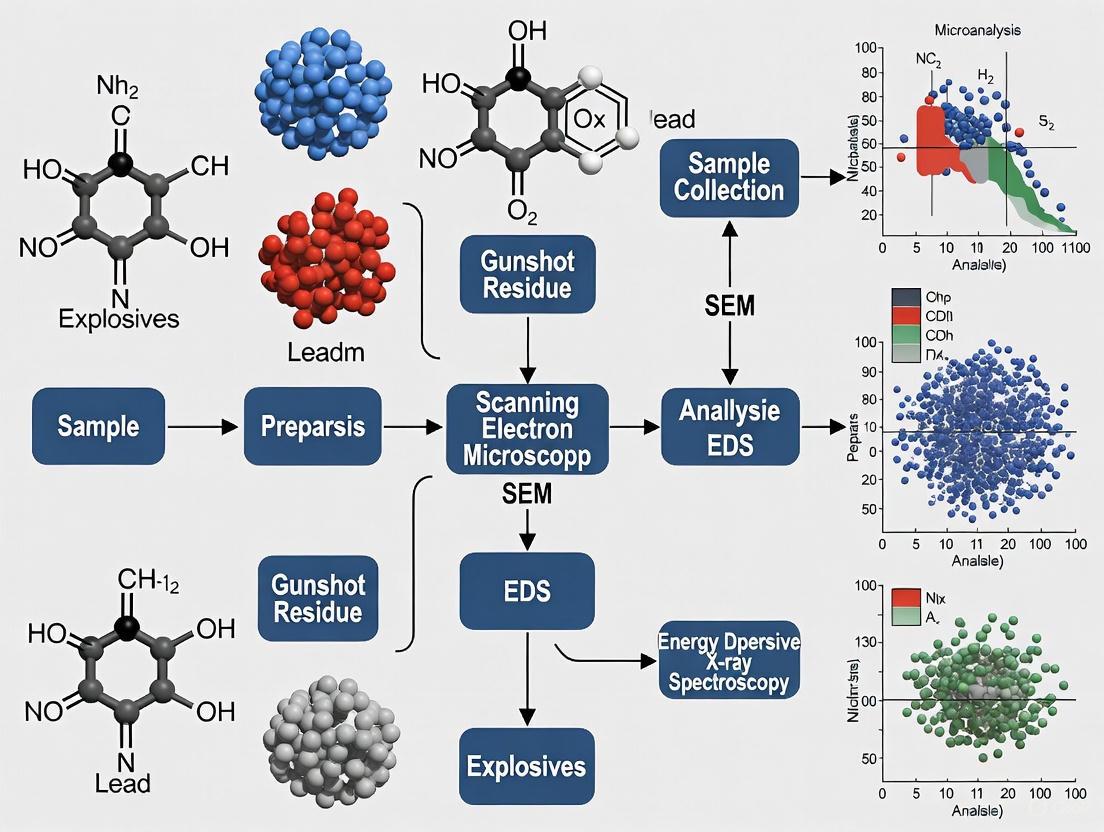
This article provides a comprehensive review of the fundamental research and technological advancements in the microanalysis of gunshot residue (GSR) and explosives, critical for forensic science and investigative applications.
Advances in Microanalysis of Gunshot Residue and Explosives: From Foundational Research to Forensic Application
Abstract
This article provides a comprehensive review of the fundamental research and technological advancements in the microanalysis of gunshot residue (GSR) and explosives, critical for forensic science and investigative applications. It explores the foundational chemistry and composition of inorganic and organic residues, detailing the evolution and current state of analytical methodologies, including scanning electron microscopy with energy-dispersive X-ray spectroscopy (SEM-EDS), spectroscopy, and chromatography. The scope extends to troubleshooting persistent challenges such as environmental contamination, lead-free ammunition, and GSR persistence, while evaluating the validation and comparative efficacy of emerging techniques like laser-induced breakdown spectroscopy (LIBS), electrochemical sensors, and Raman spectroscopy. This synthesis is tailored for researchers, forensic scientists, and development professionals seeking to enhance analytical precision and develop novel applications in forensic microanalysis.
The Core Composition and Forensic Significance of Gunshot Residue
The discharge of a firearm is a rapid, complex chemical event that produces a characteristic residue, a complex mixture of organic and inorganic materials. Gunshot residue (GSR) serves as crucial trace evidence in firearm-related investigations, aiding in the reconstruction of events and establishing shooter involvement [1]. The definitive analysis of GSR requires a fundamental understanding of its two principal component classes: inorganic gunshot residue (IGSR), which originates predominantly from the primer, and organic gunshot residue (OGSR), which derives mainly from the propellant (gunpowder) and associated additives [2] [3]. This guide provides an in-depth technical examination of the chemistry, analysis, and interpretation of these components within the context of fundamental research microanalysis for explosives and GSR.
Core Chemical Components of GSR
Inorganic GSR (IGSR) from the Primer
The primer is a shock-sensitive mixture contained within the cartridge casing that, upon impact from the firearm's firing pin, undergoes deflagration to ignite the main propellant charge. The inorganic components of GSR predominantly stem from this primer mixture [3].
- Characteristic Elements: Traditional primer formulations are characterized by the presence of lead (Pb), barium (Ba), and antimony (Sb). These elements originate from lead styphnate (the primary explosive), barium nitrate (the oxidizer), and antimony sulfide (the fuel) [2] [4] [3].
- Particle Morphology: The violent, high-temperature reaction causes these elements to vaporize and subsequently re-condense into distinctive, often spherical, particulates. The combination of their elemental profile and spherical morphology is a key identifier for IGSR [2].
- Evolution of Formulations: Due to environmental and health concerns, "heavy-metal-free" or "green" ammunition is increasingly common. These formulations replace Pb, Ba, and Sb with other compounds, such as copper, zinc, titanium, strontium, or organic primers based on materials like tetracene or diazodinitrophenol. This shift presents new challenges for forensic analysis, as the resulting IGSR particles are less characteristic and more common in the environment [3].
Table 1: Characteristic Inorganic GSR Components from the Primer
| Source | Component | Chemical Formula | Functional Role |
|---|---|---|---|
| Primer | Lead Styphnate | C₆HN₃O₈Pb | Primary explosive, initiator [5] |
| Primer | Barium Nitrate | Ba(NO₃)₂ | Oxidizer [2] [5] |
| Primer | Antimony Sulfide | Sb₂S₃ | Fuel [2] [5] |
| Primer | Zinc, Titanium, Strontium | Zn, Ti, Sr | Metals found in some "green" primers [3] |
Organic GSR (OGSR) from the Propellant
The propellant, or gunpowder, is the main energy source that propels the bullet through the barrel. Its incomplete combustion leads to the deposition of organic gunshot residue [2] [3].
- Propellant Types: Smokeless gunpowder, the most common propellant, can be single-based (nitrocellulose, NC), double-based (NC and nitroglycerin, NG), or triple-based (NC, NG, and nitroguanidine) [3].
- Key Additives and Their Markers: Propellant formulations include various additives to control stability, burn rate, and wear. The combustion and degradation of these compounds produce the organic markers targeted in OGSR analysis.
- Stabilizers: Diphenylamine (DPA) is added to prevent the decomposition of nitrocellulose and nitroglycerin. Its nitrated derivatives, such as 2-nitrodiphenylamine (2-NDPA) and 4-nitrodiphenylamine (4-NDPA), are also important OGSR analytes [2] [5].
- Plasticizers and Coolants: Ethyl centralite (EC) and methyl centralite (MC) act as stabilizers and plasticizers [2]. Dimethyl phthalate (DMP) is another common plasticizer [2].
- Explosives: Nitroglycerin (NG) is a key component in double-based propellants [3] [5].
- Deposition and Persistence: OGSR is dispersed as both unburned/partially burned propellant particles and as vapors that condense on surfaces. These condensed compounds adhere to skin via lipophilic interactions and are not prone to secondary transfer, a significant advantage over IGSR. The primary mechanisms of loss are evaporation and skin permeation over several hours [2].
Table 2: Characteristic Organic GSR Components from the Propellant
| Component | Functional Role | Significance in OGSR Analysis |
|---|---|---|
| Nitrocellulose (NC) | Primary explosive propellant [3] | Base component of smokeless powder. |
| Nitroglycerin (NG) | Explosive propellant, plasticizer [3] [5] | Key marker for double-based powders. |
| Diphenylamine (DPA) | Stabilizer [2] [5] | A primary target; its degradation products (e.g., nitrated DPAs) are also analyzed. |
| Ethyl Centralite (EC) | Stabilizer, plasticizer [2] [5] | A compound with high evidentiary value when detected in combination with NG [6] [7]. |
| 2,4-Dinitrotoluene (2,4-DNT) | Additive [5] | A common OGSR analyte. |
| Dimethyl Phthalate (DMP) | Plasticizer [2] | A target compound in OGSR studies. |
Advanced Analytical Methodologies
Analytical Techniques for IGSR and OGSR
A range of analytical techniques is employed for GSR detection, each with specific strengths and applications.
Table 3: Analytical Techniques for Gunshot Residue Analysis
| Technique | Target | Principle | Key Advantages | Key Limitations |
|---|---|---|---|---|
| SEM-EDX [2] [3] | IGSR | Combines electron microscopy for particle morphology with X-ray spectroscopy for elemental composition. | Non-destructive; gold standard for IGSR; provides simultaneous morphological and elemental data. | Time-consuming (2-8 hrs/sample); requires high vacuum; incompatible with volatile OGSR. |
| ICP-MS [6] [3] | IGSR | Ionizes sample and separates ions by mass-to-charge ratio for elemental (and isotopic) quantification. | Extremely sensitive (ppb-ppt); can analyze "green" primers; provides isotopic information. | Destructive; requires sample digestion; loses particle morphology. |
| LC-MS/MS [5] | OGSR & IGSR | Chromatographic separation followed by tandem mass spectrometry detection. | Can target both OGSR and IGSR (via complexation) in a single run (~20 min); high sensitivity and selectivity for organics. | Destructive; requires extraction. |
| Raman Spectroscopy [1] | OGSR & IGSR | Measures inelastic scattering of light to provide a molecular "fingerprint". | Can provide information on both organic and inorganic compounds; minimal sample preparation. | Can be affected by fluorescence; lower sensitivity compared to MS. |
| IMS [2] | OGSR | Separates gas-phase ions in an electric field based on size and shape. | Potential for rapid field screening. | Requires significant development for reliable field use; pattern matching algorithms need refinement. |
Detailed Experimental Workflow for Combined OGSR/IGSR Analysis
The following workflow details a methodology for the simultaneous extraction and analysis of organic and inorganic GSR components from a single sample using Liquid Chromatography-Tandem Mass Spectrometry (LC-MS/MS), as demonstrated in recent research [5].
Sample Collection
- Procedure: Hand swabs are collected from a suspect using a moistened swabbing material. The study identified muslin and a Nomex blend as optimal media due to their efficiency in collecting both particulate and vapor-deposited residues [2].
- Rationale: The goal is to maximize collection efficiency from the skin surface. The sampling medium must be wettable with a benign solvent (e.g., isopropanol or ethanol), compatible with multiple instruments, and free of contaminants [2].
Swab Extraction and Complexation
This is the critical sample preparation step that enables simultaneous analysis.
- Extraction: The swab is extracted using a suitable solvent, typically methanol or acetonitrile, to dissolve the OGSR compounds and any metallic particulates [5].
- Complexation Chemistry: To enable the chromatographic separation and MS detection of inorganic ions, the extract is treated with complexing agents.
- Macrocycle Complexation: 18-crown-6-ether (18C6) is added to form host-guest complexes with lead (Pb²⁺) and barium (Ba²⁺) ions. This encapsulation allows the metals to elute from the chromatographic column [5].
- Chelation: Tartaric acid is used as a chelating agent to complex with antimony (Sb) ions, similarly enabling its analysis via LC-MS [5].
- Benefit: This complexation strategy retains the natural isotopic abundance patterns of the elements, allowing for unambiguous identification [5].
Instrumental Analysis via LC-MS/MS
- Chromatographic Separation: The extracted and complexed sample is injected into the LC system. The column separates the OGSR compounds (e.g., DPA, NG, EC) and the metal-complexes based on their chemical properties [5].
- Tandem Mass Spectrometry Detection: The eluting compounds are ionized and analyzed by the mass spectrometer. The MS/MS configuration provides high selectivity and sensitivity by isolating precursor ions and analyzing their characteristic fragment ions.
- OGSR: Identified based on retention time and unique fragmentation patterns.
- IGSR: The metal complexes are detected, and the isotopic ratios of the complexed metals (e.g., Pb²⁺-18C6) are used for confirmation [5].
- Performance: This method has a total analysis time of under 20 minutes per sample, with linear dynamic ranges in the low parts-per-billion (ppb) for OGSR and low parts-per-million (ppm) for IGSR [5].
Key Research Reagents and Materials
The following table details essential reagents and materials used in the featured LC-MS/MS protocol and other standard GSR analyses [2] [5].
Table 4: Research Reagent Solutions for GSR Analysis
| Reagent/Material | Function/Application | Brief Explanation |
|---|---|---|
| Muslin / Nomex Swabs | Sample Collection | Optimal sampling media for efficient collection of both particulate and condensed OGSR from skin [2]. |
| 18-Crown-6-Ether (18C6) | Complexation Agent | Forms host-guest complexes with Pb²⁺ and Ba²⁺ ions, allowing their analysis by LC-MS [5]. |
| Tartaric Acid | Complexation Agent | Acts as a chelating agent to complex with antimony (Sb) ions for LC-MS analysis [5]. |
| Methanol (MeOH) / Acetonitrile (ACN) | Extraction Solvent | Organic solvents used to efficiently extract OGSR compounds and solubilize metallic residues from collection swabs [5]. |
| Diphenylamine (DPA) & Nitrated DPA Standards | Analytical Standards | High-purity reference standards used for calibration, identification, and quantification of OGSR components [2] [5]. |
| Lead, Barium, Antimony Standard Solutions | Analytical Standards | Certified reference materials for calibrating IGSR detection, whether by SEM-EDX, ICP-MS, or complexation LC-MS [5]. |
Critical Considerations for Research and Interpretation
Stability and Storage of GSR Evidence
The integrity of GSR evidence is highly dependent on storage conditions.
- OGSR Stability: Organic compounds are volatile and subject to degradation. Hand swab samples require cold, dark storage conditions and should be analyzed within 2 weeks of collection when stored at -20°C. Significant degradation of volatile compounds like DMP occurs after a few days at room temperature [2].
- IGSR Stability: Inorganic particles are generally more robust. Recent studies indicate that IGSR particles remain chemically stable for at least 60 days under various storage conditions, including uncontrolled ambient conditions, with no significant variation in their elemental profiles [1].
Evidentiary Value and Population Prevalence
Interpreting GSR results requires understanding the potential for environmental contamination.
- OGSR Specificity: While some OGSR components like 2,6-dinitrotoluene (2,6-DNT) can be found in non-shooting environments, others like nitroglycerin (NG), especially when detected in conjunction with markers like ethyl centralite (EC), hold stronger evidentiary value [6] [7]. The analysis of multiple OGSR compounds in combination is crucial.
- IGSR and "Green" Ammunition: The probative value of traditional IGSR (Pb-Sb-Ba) is high, but the rise of "green" ammunition using common metals (e.g., zinc, titanium) or organic primers diminishes the evidential weight of IGSR alone, necessitating combined OGSR/IGSR analysis [3].
- Secondary Transfer: A key difference between components is that vapor-deposited OGSR is not prone to secondary transfer, whereas IGSR particulates can be transferred via contact with contaminated surfaces [2]. This makes the detection of specific, non-transferable OGSR compounds highly significant for linking a suspect directly to a firing event.
The definitive analysis of gunshot residue rests on a comprehensive understanding of its dual nature. Inorganic residues from the primer and organic residues from the propellant provide complementary lines of evidence. While established methods like SEM-EDX remain the standard for IGSR, the evolution of ammunition and the need for higher specificity are driving the adoption of sophisticated, combined analytical approaches. Techniques like LC-MS/MS with complexation chemistry represent the cutting edge, allowing for the simultaneous detection of organic and inorganic constituents from a single sample, thereby significantly increasing the confidence of results. Future research in fundamental microanalysis will continue to refine these protocols, expand population studies for background prevalence, and develop standardized interpretation frameworks to fully leverage the evidentiary power of GSR in forensic investigations.
The forensic analysis of gunshot residue (GSR) is a critical discipline for reconstructing shooting incidents and establishing connections between individuals, firearms, and discharge events. The evolution of GSR analysis reflects a broader trajectory in forensic science, moving from presumptive chemical tests toward sophisticated instrumental microanalysis. This progression has been driven by the need for higher specificity, sensitivity, and quantitative results, particularly within fundamental research on explosives and micro-traces. Early methods provided a foundation for scene assessment but were plagued by limitations, while contemporary techniques like scanning electron microscopy with energy-dispersive X-ray spectroscopy (SEM-EDS) and liquid chromatography-tandem mass spectrometry (LC-MS/MS) now offer definitive characterization of both inorganic and organic components of GSR. This whitepaper details the historical development, current methodologies, and emerging trends in GSR analysis, providing researchers and forensic professionals with a comprehensive technical guide grounded in the latest advancements.
The Early Era: Colorimetric and Presumptive Tests
The initial phase of GSR analysis was dominated by colorimetric tests, which relied on chemical reactions to produce a visible color change indicating the possible presence of residue constituents.
Key Historical Tests and Protocols
- Paraffin Test (Dermal Nitrate Test): This early test involved coating a suspect's hands with molten paraffin wax. Once solidified and peeled off, the wax cast was treated with a solution of diphenylamine in sulfuric acid. The development of blue spots was interpreted as a positive reaction for nitrates and nitrites from gunpowder [8] [9]. Its protocol is now obsolete due to a high frequency of false positives from common environmental contaminants like fertilizers and urine [8] [9].
- Walker Test: This was a transfer technique used to detect nitrite residues on clothing. A document moistened with a reagent containing 2-naphthylamine and sulfanilic acid in acid was pressed against the questioned fabric. The appearance of an orange-red color indicated the presence of nitrites [9].
- Modified Griess Test: This test improves upon earlier methods for detecting nitrite compounds, a combustion by-product of smokeless powder. The protocol involves transferring nitrites from a fabric sample to a reagent-soaked paper using a heated press. The reagent, typically containing sulfanilamide and N-(1-naphthyl)ethylenediamine in an acidic medium, produces an orange-red color with nitrites [8] [9]. It remains a valuable tool for determining a gun's muzzle-to-target distance.
- Sodium Rhodizonate Test: This test is used to detect the presence of lead and, to a lesser extent, barium. The protocol involves treating the sample with a sodium rhodizonate solution; lead produces a pink-red or purple color, while barium produces a reddish-brown color. It is often used to confirm bullet holes [9].
- Harrison and Gilroy Test: Introduced in 1959, this test sequentially applied different reagents to a single sample swab to detect antimony (orange color), barium (red-brown spots), and lead (blue-black spots). However, its poor sensitivity and specificity make it unreliable for modern casework [9].
Table 1: Summary of Historical Colorimetric Tests for GSR
| Test Name | Target Analyte | Key Reagents | Positive Result Indicator | Major Limitations |
|---|---|---|---|---|
| Paraffin Test | Nitrates/Nitrites | Diphenylamine, Sulfuric Acid | Dark Blue Spots | High false positives from fertilizers, urine [8] [9] |
| Walker Test | Nitrites | Naphthylamine, Sulfanilic Acid | Red Coloration | Lacks specificity for GSR [9] |
| Modified Griess Test | Nitrites | Sulfanilamide, N-(1-naphthyl)ethylenediamine | Orange-Red Coloration | Detects nitrites, not specific to GSR [9] |
| Sodium Rhodizonate | Lead, Barium | Sodium Rhodizonate | Red or Purple Color (Pb) | Environmental sources of heavy metals [9] |
| Harrison & Gilroy | Antimony, Barium, Lead | Various Sequential Reagents | Orange, Red-Brown, Blue-Black Colors | Low sensitivity and specificity [9] |
Limitations and Historical Significance
These colorimetric tests were groundbreaking for their time, offering a practical, if rudimentary, means of initial scene assessment. However, they are destructive, lack specificity for GSR due to ubiquitous environmental interferents, and provide no information on the elemental or molecular composition of the residue [8] [10]. Their decline marked a necessary shift toward instrumental methods capable of providing confirmatory evidence.
The Instrumental Revolution: Microanalysis of Inorganic GSR
The introduction of instrumental techniques marked a paradigm shift, enabling the definitive identification of GSR through its unique inorganic elemental signature.
Scanning Electron Microscopy with Energy-Dispersive X-Ray Spectroscopy (SEM-EDS)
SEM-EDS emerged as the gold standard for inorganic GSR (IGSR) analysis and remains the cornerstone of modern GSR analysis in forensic laboratories worldwide [11]. This technique provides simultaneous morphological and elemental information from individual particles.
Experimental Protocol: The standard methodology, as outlined in ASTM E1588-20, involves collecting samples from a person of interest (typically hands, face, or clothing) using adhesive aluminum stubs [12] [11]. The stub is then placed in the SEM vacuum chamber. The electron beam scans the sample surface, and detectors collect multiple signals:
- Secondary Electrons (SE): Generate high-resolution topographic images, revealing the characteristic spherical morphology of GSR particles formed from condensation [11].
- Backscattered Electrons (BSE): Produce compositional contrast, where heavier elements (like Pb, Ba, Sb) appear brighter, guiding the analyst to potential GSR particles [11].
- Energy-Dispersive X-ray Spectroscopy (EDS): When the electron beam excites an atom, it emits characteristic X-rays. The EDS detector collects this signal to determine the elemental composition of each particle [11].
Interpretation and Classification: Particles are classified based on their elemental composition into categories defined by ASTM E1588-20 [12]:
- Characteristic of GSR: Contain all three core elements (Pb, Ba, Sb).
- Consistent with GSR: Contain two of the three elements (e.g., Pb-Ba, Sb-Ba).
- Commonly Associated with GSR: Contain a single element like Ba, Pb, or Sb.
Table 2: ASTM E1588-20 Classification of Inorganic GSR Particles [12]
| Particle Category | Elemental Composition | Interpretation and Discriminating Power |
|---|---|---|
| Characteristic of GSR | Lead (Pb), Barium (Ba), Antimony (Sb) | Considered unique to primer discharge; highest evidential value. |
| Consistent with GSR | Combinations of two elements (e.g., Pb-Ba, Sb-Ba) | Strongly associated with GSR, but requires more contextual information. |
| Commonly Associated with GSR | Single elements (Ba, Pb, or Sb) | Least discriminating, as these elements are common in the environment. |
Advancements and Complementary Techniques
While SEM-EDS is powerful, research continues into complementary methods. Laser-Induced Breakdown Spectroscopy (LIBS) has shown significant potential for rapid elemental analysis of GSR, including from lead-free ammunition, with the advantage of minimal sample destruction [8]. Furthermore, the rise of "non-toxic" or heavy-metal-free ammunition, which uses compositions like titanium, zinc, and aluminum, has challenged traditional SEM-EDS classification and spurred the development of new databases and analytical criteria [8] [12].
The Modern Paradigm: Integration of Organic GSR and Multi-Method Approaches
Recognizing the limitations of analyzing inorganic components alone, the field has expanded to integrate the analysis of organic GSR (OGSR), leading to a more robust and comprehensive evidential framework.
Analysis of Organic GSR (OGSR)
OGSR originates from the propellant (smokeless powder) and its additives. Key analytes include nitrocellulose (NC), nitroglycerin (NG), stabilizers like diphenylamine (DPA), ethyl centralite (EC), and flash inhibitors like dinitrotoluene (DNT) [8] [12].
- Primary Analytical Protocols:
- Gas Chromatography-Mass Spectrometry (GC-MS) & Liquid Chromatography-Tandem Mass Spectrometry (LC-MS/MS): These are the principal confirmatory techniques for OGSR. Samples are typically collected via swabbing or solvent washing. After extraction, the analytes are separated by chromatography and identified by their mass spectra. LC-MS/MS is particularly favored for its high sensitivity and ability to detect a broad range of propellant-related compounds without derivatization [12] [13].
- Ion Mobility Spectrometry (IMS): Often deployed as a rapid screening tool at airports and security checkpoints, IMS can detect trace explosives and propellant vapors but is generally considered less specific than chromatographic methods [8].
A Multi-Method and Data-Integration Framework
The most advanced current research employs a multi-method approach, combining inorganic and organic analysis to drastically improve the confidence of GSR identification [13].
A landmark 2025 study by Ledergerber et al. exemplifies this paradigm. The experimental protocol integrated:
- Real-Time Atmospheric Sampling: Using particle counters and custom air samplers to measure the concentration and size distribution of airborne GSR before, during, and after a discharge event [13].
- High-Speed Videography and Laser Sheet Scattering: To visually capture and qualitatively analyze the flow dynamics and dispersion of the GSR plume under different environmental conditions [13].
- Confirmatory Chemical Analysis: Subsequent analysis of collected samples using SEM-EDS for IGSR and LC-MS/MS for OGSR to confirm the elemental and molecular makeup of the residues [13].
This holistic methodology provided breakthrough insights into how long GSR remains airborne and how it deposits on shooters, bystanders, and passers-by, directly addressing complex interpretation challenges in casework [13].
Statistical Interpretation and Machine Learning
The complexity of integrated IGSR and OGSR data has necessitated advanced statistical interpretation. Likelihood Ratio (LR) frameworks are increasingly being adopted to quantitatively assess the strength of evidence, comparing the probability of finding the GSR traces under competing prosecution and defense hypotheses [12]. Furthermore, machine learning (ML) and neural networks (NN) are being trained on large datasets to classify samples as originating from a shooter or a non-shooter with high accuracy, moving analysis beyond categorical reporting toward probabilistic assessment [12].
Table 3: Performance Comparison of Modern GSR Analysis Techniques
| Analytical Technique | Target GSR Component | Key Advantages | Key Limitations / Challenges |
|---|---|---|---|
| SEM-EDS | Inorganic (IGSR) | Gold standard; combined morphology & elemental data; automated particle analysis. | Time-consuming; high equipment cost; challenged by "lead-free" ammunition [8] [12]. |
| LIBS | Inorganic (IGSR) | Very rapid analysis; portable systems available; minimal sample destruction. | Less established for casework; database development ongoing [8]. |
| LC-MS/MS | Organic (OGSR) | High sensitivity & specificity; confirmatory for propellant compounds. | Lower persistence of OGSR on skin (~1 hour); complex sample preparation [9] [12]. |
| IMS | Organic (OGSR) | Real-time, high-throughput screening; portable. | Less specific; prone to false positives from environmental compounds [8]. |
| Multi-Method (e.g., SEM-EDS + LC-MS/MS) | Inorganic & Organic | Maximizes specificity and evidential weight; enables complex transfer studies. | Data integration complexity; requires significant resources and expertise [13]. |
The Scientist's Toolkit: Essential Research Reagents and Materials
Table 4: Key Reagents and Materials for GSR Research and Analysis
| Item Name | Function / Application | Technical Notes |
|---|---|---|
| Adhesive Aluminum Stubs | Sample collection for SEM-EDS analysis. Standardized substrate that is conductive and compatible with SEM vacuum chambers [13] [11]. | |
| Modified Griess Test Reagents | Presumptive test for nitrite compounds on surfaces. Used for muzzle-to-target distance estimation. Typically includes sulfanilamide and N-(1-naphthyl)ethylenediamine in acid [9]. | |
| Sodium Rhodizonate Solution | Presumptive test for lead and barium. Used to confirm bullet holes and GSR patterns on surfaces [9]. | |
| Organic Solvents (e.g., Acetonitrile) | Extraction of organic GSR compounds from swabs or collection media prior to LC-MS/MS or GC-MS analysis [12]. | |
| SEM Conductive Coating (e.g., Carbon) | Applied to non-conductive samples to prevent charging under the electron beam, ensuring high-quality imaging [11]. | |
| Certified Reference Materials | Calibration and validation of instrumental methods (SEM-EDS, LC-MS/MS). Includes elemental standards and certified propellant mixtures. |
The evolution of GSR analysis from basic color tests to integrated instrumental microanalysis illustrates a relentless pursuit of scientific rigor in forensic science. The initial presumptive tests, while historically significant, have been superseded by powerful techniques like SEM-EDS and LC-MS/MS that provide definitive, court-defensible evidence. The current state-of-the-art involves multi-modal approaches that combine inorganic and organic analysis with advanced data interpretation using likelihood ratios and machine learning. Future directions will focus on standardizing these integrated methods, expanding databases for new ammunition types, and developing robust, portable technologies for on-site analysis. This ongoing refinement ensures that GSR analysis remains a vital and reliable tool for fundamental explosives research and the administration of justice.
The Impact of Lead-Free Ammunition on GSR Elemental Profiles and Detection
The proliferation of lead-free ammunition represents a significant paradigm shift in forensic science, particularly in the domain of gunshot residue (GSR) analysis. Driven by health and environmental concerns over lead exposure, these new ammunition formulations fundamentally alter the elemental composition of residual particles produced during firearm discharge [14] [8]. This transformation challenges the established analytical frameworks that have long relied on detecting lead (Pb), barium (Ba), and antimony (Sb) as characteristic signatures of firearm discharge [15] [16]. The forensic community now faces the critical task of developing new identification criteria and analytical methodologies to maintain evidentiary standards in cases involving lead-free ammunition. This technical guide examines the altered elemental profiles of GSR from lead-free primers, evaluates advanced detection techniques, and provides detailed experimental protocols to support fundamental research in microanalysis of gunshot residue and explosives.
Elemental Profile Shifts in Lead-Free Ammunition
The elimination of lead and other heavy metals from ammunition primers has necessitated the use of alternative chemical compositions, resulting in GSR particles with distinctly different elemental signatures compared to conventional ammunition.
Table 1: Characteristic Elemental Compositions of Conventional vs. Lead-Free GSR Particles
| Ammunition Type | Characteristic Elements | Common Elemental Combinations | Source Components |
|---|---|---|---|
| Conventional | Pb, Sb, Ba | Pb-Sb-Ba, Pb-Sb, Pb-Ba, Sb-Ba | Primer: lead styphnate (initiator), barium nitrate (oxidizer), antimony sulfide (fuel) [17] [18] |
| Lead-Free | Zn, Ti, Cu, Al, K, Si, Gd, Sn | Ti-Zn, Al-Zn, Cu-Zn, K-Cl-Zn, Si-K-Al, Gd-Ti-Zn [19] [8] | Varied by manufacturer; may include zinc peroxide, titanium powder, tetrazene, diazonitrophenol, nitrocellulose [18] |
The fundamental challenge in GSR analysis of lead-free ammunition stems from the absence of standardized formulations across manufacturers. Unlike conventional primers that largely adhered to the Pb-Sb-Ba triad, lead-free primers employ diverse chemistries [19] [16]. Research has identified particles containing gadolinium (Gd), titanium (Ti), zinc (Zn), or gallium (Ga) combined with copper (Cu) and tin (Sn) as characteristic of certain lead-free formulations [19]. Other studies have reported GSR particles with combinations such as Ti-Zn-K-Cu-Zn and Al-Si-K-S-Cu-Zn [19]. Some manufacturers have introduced distinctive markers like samarium oxide and titanium oxide, resulting in Sm-K-Si-Ti-Ca-Al-type particles that facilitate identification [19].
Table 2: Quantitative Elemental Analysis of Lead-Free GSR Using Various Techniques
| Analytical Technique | Detected Elements in Lead-Free GSR | Particle Size Range | Analysis Time |
|---|---|---|---|
| SEM-EDX | Al, Si, K, Ti, Fe, S, Cu, Zn [19] [8] | 0.5-5 μm [18] | Hours (including manual verification) |
| LIBS | Cu, Al, Zn, K, Ti [19] | >1 μm [19] | Minutes (rapid screening) |
| sp-ICP-TOF-MS | Multi-element fingerprints, including trace metals [20] | Nanoparticles (smaller than SEM-EDX detection) [20] | Minutes (thousands of particles per minute) |
| LC-QTOF MS | Organic components: NQ, HMX, RDX, DNAN, TNT, PENT, MC, EC, DPA, DMP, DEP [21] | Not particle-based | 30-minute analysis [21] |
The morphological characteristics of GSR particles remain important for distinguishing them from environmental contaminants. Lead-free GSR particles typically maintain the spherical, molten metal appearance characteristic of fast-cooled droplets, allowing for differentiation from crystalline environmental particles even when elemental composition overlaps with common contaminants like paints containing titanium and zinc [18].
Analytical Challenges and Methodological Adaptations
Limitations of Standard SEM-EDX Protocols
The traditional SEM-EDX approach, standardized in ASTM E1588, faces significant challenges with lead-free ammunition. This method relies on automated particle screening based on the Pb-Sb-Ba elemental combination, which is inherently ineffective for detecting the varied elemental profiles of lead-free GSR [15] [22]. The result is a potentially higher rate of false negatives when examiners rely exclusively on established protocols [16]. Additionally, particles from lead-free ammunition may be smaller than those from conventional ammunition, potentially falling below the optimal detection range of standard SEM-EDX systems [20].
Environmental contamination presents another significant challenge. Many elements found in lead-free GSR, such as zinc, titanium, copper, and aluminum, are common in environmental and occupational settings [8] [18]. Without the relatively unique Pb-Sb-Ba combination, distinguishing GSR particles from environmental contaminants becomes more difficult, requiring careful consideration of particle morphology and analytical context [15].
Enhanced Detection Strategies
To address these challenges, researchers have developed multi-modal approaches that combine inorganic and organic GSR analysis. The analysis of organic gunshot residues (OGSR) has gained prominence as a confirmatory technique when inorganic analysis is inconclusive [21] [16]. OGSR components include stabilizers (e.g., diphenylamine, methyl centralite, ethyl centralite), plasticizers (e.g., dimethyl phthalate, diethyl phthalate), and explosives (e.g., nitroguanidine, cyclonite) that can be detected regardless of the primer composition [21] [8].
The following decision framework illustrates the recommended analytical pathway for GSR analysis in the context of lead-free ammunition:
Case-to-case approach has emerged as a necessary strategy, where the evidentiary value is assessed based on the mutual consistency of particles found in a specific case rather than comparison to arbitrary classification schemes [15]. This approach requires more sophisticated data analysis and interpretation frameworks that consider the specific context of each case.
Advanced Analytical Techniques for Lead-Free GSR
Mass Spectrometry Methods
Liquid chromatography coupled with high-resolution mass spectrometry has demonstrated significant utility for OGSR analysis. A developed LC-QTOF method can identify 18 compounds commonly found in smokeless powders, including explosives (nitroguanidine, HMX, RDX), stabilizers (methyl centralite, ethyl centralite, diphenylamine), plasticizers (dimethyl phthalate, diethyl phthalate), and their metabolites [21]. This method enables confident identification through accurate mass measurements of both parent and fragment ions, with high sensitivity and specificity even at low concentration levels [21].
Single-particle inductively coupled plasma time-of-flight mass spectrometry (sp-ICP-TOF-MS) represents another advanced approach, capable of analyzing thousands of particles per minute with minimal sample preparation [20]. This technique can detect multi-elemental nanoparticles smaller than those typically identified by SEM-EDX, providing comprehensive elemental fingerprints of GSR particles that are particularly valuable for lead-free ammunition characterization [20].
Laser-Induced Breakdown Spectroscopy (LIBS)
LIBS has emerged as a powerful complementary technique for GSR analysis, especially for shooting distance determination with lead-free ammunition. The iForenLIBS system can detect copper originating from ammunition casings and projectiles on fabric surfaces, enabling shooting distance estimation regardless of primer composition [19]. This method generates density maps that allow the evaluation of short, medium, and long-range shooting distances based on the distribution of copper and other elements [19].
LIBS offers several advantages for lead-free GSR analysis, including rapid analysis time (minutes versus hours for SEM-EDX), preservation of sample integrity for subsequent analysis, and simultaneous multi-element detection capability that is ideal for the varied compositions of lead-free ammunition [19] [8].
Experimental Protocols for Lead-Free GSR Analysis
Sample Collection and Preparation
GSR Collection Using Adhesive Stubs
- Materials: Aluminum SEM stubs (12.7 mm diameter) with carbon adhesive tabs [19]; Sterile tweezers; Evidence packaging containers
- Procedure:
- Using tweezers, remove protective covering from carbon adhesive surface
- Firmly press stub onto sampling surface (hands, clothing, or other substrates)
- Repeat approximately 100 dubbings to ensure representative particle collection [15]
- Place stub in clean container and seal properly to prevent contamination
- Document collection location, time, and conditions
- Note: Tape lifting is the most common technique for inorganic residues, while swabbing (with methanol-soaked cotton) may be preferred for organic residues [21]
Sample Preparation for SEM-EDX Analysis
- Materials: Sputter coater with graphite target; Conductive carbon thread; Vacuum desiccator
- Procedure:
- Mount collected stubs in specimen chamber
- Coat samples with conductive graphite layer using SCD 050 sputter or equivalent [15]
- Apply carbon coating sufficiently to prevent charging effects without immersing particles
- Store coated samples in vacuum desiccator until analysis to prevent contamination
SEM-EDX Analysis Protocol for Lead-Free GSR
Equipment Setup
- Scanning Electron Microscope (e.g., JSM-5800) with backscattered electron detector [15]
- Energy Dispersive X-ray Spectrometer (e.g., Oxford Instruments ISIS 300) [15]
- Automated particle analysis software (e.g., Phenom Perception GSR) [22]
Analysis Parameters
- Accelerating voltage: 20 kV [15]
- Working distance: 10-25 mm
- Spot size: optimized for resolution and counting statistics
- Magnification: 500-10,000× depending on particle size
Automated Particle Screening
- Define scan area by drawing circle on sample stub using optical view camera [22]
- Implement dual thresholding: first for particle detection, second for higher magnification imaging [22]
- Set particle size detection range: 0.5-50 μm
- Program automated EDS spectrum acquisition for each detected particle
- Execute scan frame-by-frame across entire defined area
Data Interpretation
- Manual verification of automatically classified particles
- Characterize particles by morphology (spherical, molten appearance) and composition
- Document all particles with elemental combinations including: Zn, Ti, Cu, Al, K, Si, Gd, Sn, Sr [19] [18]
- Record particle sizes, locations, and elemental ratios
LC-QTOF Method for Organic GSR Analysis
Chromatographic Conditions [21]
- Column: Zorbax Eclipse Plus C18 (100 mm × 4.6 mm, 1.8 μm)
- Mobile phase A: 2 mM ammonium acetate in UHP water
- Mobile phase B: methanol
- Gradient: 0 min (40% B), 0-10 min (40-95% B), 10-15 min (95% B), 15-15.10 min (95-40% B), 15.10-20 min (40% B)
- Flow rate: 0.4 mL/min
- Injection volume: 5 μL
- Column temperature: 30°C
Mass Spectrometry Parameters [21]
- Ionization: Electrospray ionization (ESI) in positive and negative modes
- Gas temperature: 300°C
- Drying gas: 8 L/min
- Nebulizer: 35 psig
- Sheath gas temperature: 350°C
- Sheath gas flow: 11 L/min
- Capillary voltage: 3500 V
- Nozzle voltage: 0 V
- Fragmentor voltage: 150 V
- Skimmer voltage: 65 V
- OCT 1 RF Vpp: 750 V
- Mass range: 50-1700 m/z
Target Analytes: Nitroguanidine (NQ), octogen (HMX), cyclonite (RDX), 2,4-dinitroanisole (DNAN), trinitrotoluene (TNT), pentaerythritol tetranitrate (PENT), methylcentralite (MC), ethylcentralite (EC), diphenylamine (DPA), dimethyl phthalate (DMP), diethyl phthalate (DEP), 2,4-dinitrotoluene (2,4-DNT), N-nitrosodiphenylamine (N-NDPA), 4-nitrodiphenylamine (4-NDPA), 2,4-dinitrodipheylamine (2,4-DNDPA), 2-nitrodipheylamine (2-NDPA), 2-amine-4,6-dinitrotoluene (4-ADNT), 4-amine-2,6-dinitrotoluene (2-ADNT) [21]
LIBS Protocol for Shooting Distance Determination
Equipment Setup [19]
- iForenLIBS system or equivalent LIBS instrument
- Disposable tips and plastic support platforms to prevent cross-contamination
- Computer with spectral analysis software
Analysis Parameters
- Laser wavelength: 1064 nm
- Laser pulse energy: 10-100 mJ
- Spot size: 50-200 μm
- Detection window: 1-5 μs after laser pulse
- Spectral range: 200-900 nm
- Number of shots per sample: 3-5 for statistical representativeness
Procedure for Shooting Distance Estimation
- Collect fabric samples from shooting experiments at known distances (e.g., 8-200 cm) [19]
- Mount samples on LIBS platform without additional preparation
- Perform raster scanning across sample surface with predefined pattern
- Detect copper emissions at 324.7 nm and 327.4 nm, plus other elements (Al, Ti, Zn, K) as needed
- Generate two-dimensional density maps of element distribution
- Correlate signal intensity and distribution pattern with shooting distance using calibration curves
Essential Research Reagents and Materials
Table 3: Essential Research Reagents and Materials for Lead-Free GSR Analysis
| Category | Specific Items | Research Function | Technical Notes |
|---|---|---|---|
| Chromatography | Zorbax Eclipse Plus C18 column [21] | Separation of organic GSR components | 100 mm × 4.6 mm, 1.8 μm particle size |
| Ammonium acetate, LC-MS grade methanol [21] | Mobile phase components | 2 mM ammonium acetate in UHP water with methanol gradient | |
| Mass Spectrometry | Analytical standards: NG, NC, DPA, MC, EC, DMP, DEP, etc. [21] [16] | Identification and quantification of OGSR | Critical for method development and validation |
| Microscopy | Aluminum SEM stubs with carbon adhesive tabs [15] [19] | GSR particle collection and analysis | Standardized for automated SEM-EDX systems |
| Conductive graphite coating materials [15] | Sample preparation for SEM | Prevents charging effects during analysis | |
| Spectroscopy | LIBS disposable tips and platforms [19] | Prevention of cross-contamination in LIBS analysis | Essential for maintaining evidence integrity |
| Standard reference materials for calibration | Quality assurance and method validation | Required for quantitative analysis |
The transition to lead-free ammunition has fundamentally transformed GSR elemental profiles, necessitating significant methodological adaptations in forensic analysis. The characteristic Pb-Sb-Ba signature of conventional ammunition has been replaced by diverse elemental combinations including Zn, Ti, Cu, Al, K, and Si, depending on manufacturer-specific formulations. This shift requires integrated analytical approaches that combine advanced techniques such as SEM-EDX with modified classification criteria, LC-MS/MS for organic component detection, and emerging methods like LIBS and sp-ICP-TOF-MS. The experimental protocols detailed in this guide provide comprehensive methodologies for detecting and characterizing both inorganic and organic components of GSR from lead-free ammunition. As ammunition formulations continue to evolve, the forensic research community must maintain dynamic analytical frameworks capable of addressing these changes while upholding the rigorous evidentiary standards required in legal contexts.
The forensic analysis of Gunshot Residue (GSR) plays a pivotal role in the investigation of firearm-related crimes. The value of this evidence, however, extends far beyond its mere detection. Its scientific interpretation within the context of a case—determining whether an individual discharged a firearm, was an adjacent bystander, or acquired residues via indirect means—is entirely dependent on a robust understanding of three dynamic factors: persistence, transfer, and prevalence [23] [24]. This framework is not unique to GSR and forms a cornerstone of fundamental research in trace evidence microanalysis, including the study of explosives and other particulate materials. For GSR, the gradual shift in forensic interpretation from source-level (what is this particle?) to activity-level (how did this particle get here?) propositions underscores the critical need to quantify these factors through empirical data and probabilistic models [24] [25]. This technical guide synthesizes current research to provide scientists and researchers with a comprehensive overview of the key principles, quantitative data, and methodological approaches essential for the accurate interpretation of GSR evidence.
Fundamental Concepts in GSR Evidence Interpretation
GSR is a complex mixture of inorganic and organic components originating from the primer, propellant, and other ammunition constituents [24]. Inorganic GSR (IGSR), historically characterized by the presence of lead (Pb), barium (Ba), and antimony (Sb), is typically analyzed via Scanning Electron Microscopy with Energy Dispersive X-ray Spectroscopy (SEM-EDS), which remains the "gold standard" for its ability to provide simultaneous morphological and chemical data [25] [8]. Organic GSR (OGSR), comprising nitrocellulose, nitroglycerin, and stabilizers, is increasingly analyzed using techniques like Liquid Chromatography-Tandem Mass Spectrometry (LC-MS/MS) to provide complementary orthogona l information [24] [13]. The interpretation of findings is hierarchically structured across three levels:
- Source Level: Concerns the identification of a particle as GSR.
- Activity Level: Addresses how the GSR was deposited on a surface or individual (e.g., firing a gun vs. secondary transfer).
- Offence Level: Pertains to the ultimate issue of guilt or innocence in a legal proceeding [24].
This guide focuses on the activity level, where the factors of transfer, persistence, and prevalence are most consequential. A significant contemporary challenge is the development of "non-toxic" or "lead-free" ammunition, which utilizes primer compositions based on elements like titanium (Ti) and zinc (Zn) [24] [8]. This shift complicates IGSR analysis and increases the potential for false positives, thereby elevating the importance of OGSR analysis and a more nuanced, integrated interpretation framework [24] [8].
Transfer of Gunshot Residue
The transfer of GSR particles refers to their movement from a source to a surface. This process is categorized to understand the various pathways through which an individual may acquire residues.
Mechanisms and Pathways of Transfer
- Primary Transfer: This is the direct deposition of GSR onto a surface or individual from the discharge plume of a firearm. This includes impact deposition (e.g., onto a shooter's hands) and fallout deposition (e.g., onto a bystander standing in the settling cloud of particles) [23] [13]. Recent studies using high-speed videography and laser sheet scattering have visually documented the complex flow dynamics of this plume, showing how GSR can disperse and settle in enclosed environments, potentially exposing multiple individuals [13].
- Secondary and Tertiary Transfer: This involves the indirect movement of GSR. Secondary transfer occurs when GSR is moved from a contaminated surface to a person (e.g., a suspect touching a contaminated police car interior or an officer's gloves transferring residue during an arrest). Tertiary transfer involves further steps removed from the original source [23] [25]. These pathways are critical for the defense proposition that a suspect acquired GSR without having fired a weapon.
Quantitative Data on GSR Transfer
Meta-analyses of transfer studies provide essential probabilistic data for activity-level interpretation. The following table summarizes key transfer rates:
Table 1: Quantitative Data on GSR Transfer Rates
| Transfer Scenario | Median Transfer Rate | Key Experimental Findings | Source |
|---|---|---|---|
| Secondary Transfer (Contact) | 1.1% to 3.3% (to hands) | Varies with type of contact; mock arrests show transfer is possible but generally low. | [23] |
| Secondary Transfer (Contact) | 1.2% to 18% (to sleeves) | Transfer to clothing can be significantly higher than to hands. | [23] |
| Transfer during Gun Handling | Median 61% (heavy handling) | The type of handling is a major factor; heavy gun handling results in substantial transfer. | [23] |
| Primary Transfer (Bystander) | Similar concentrations to shooter | Bystanders can have GSR particle counts on hands comparable to shooters after 15 minutes, making differentiation by count alone difficult. | [13] |
Persistence of Gunshot Residue
Persistence describes the duration for which GSR remains on a surface after initial deposition. It is a function of continuous loss due to activities and environmental factors.
Factors Affecting GSR Loss
Persistence is not static and is influenced by the substrate and an individual's activities. Key findings include:
- On Hands: GSR particles are rapidly lost from hands and are "unlikely to remain after a few hours of normal activity" [23]. One study specifically noted that particles on hands persist for less than two hours [24].
- On Clothing: The process of loss is similar but generally occurs at a slower rate than on hands, making clothing a potentially more reliable substrate for sampling after a time delay [23].
- Airborne Persistence: A novel area of research using real-time atmospheric samplers has revealed that GSR particles can remain suspended in the air for several hours after a shooting event in an enclosed room, creating a risk of contamination for anyone entering that space [13].
Experimental Persistence Data
The following table summarizes persistence data from experimental studies:
Table 2: Experimental Data on GSR Persistence
| Substrate | Persistence Timeline | Experimental Context | Source |
|---|---|---|---|
| Hands | < 2 hours | Particles are continuously lost during normal activity. | [24] |
| Gloves | Slower rate than hands | Study of persistence on assembly-type gloves. | [23] |
| Airborne Particles | Up to several hours | Measured using particle counters in an enclosed room post-discharge. | [13] |
Prevalence and Background Levels of GSR
Prevalence refers to the occurrence of GSR-like particles in the general environment or on individuals not involved in a shooting. Understanding background levels is crucial for assessing the potential for false positives.
- Environmental and Occupational Sources: Particles with elemental compositions similar to GSR can originate from sources such as brake pad dust, industrial processes, and pyrotechnics (fireworks) [7] [8]. Automotive mechanical parts often contain Sb and Ba, which can form particles morphologically and chemically consistent with GSR [23].
- Police Equipment: Studies have documented the presence of GSR on the gloves and equipment of police officers who have handled their firearms at the start of a shift, representing a potential vector for contamination and secondary transfer to suspects [23].
- OGSR in the Environment: Certain OGSR components, like 2,6-dinitrotoluene (2,6-DNT), are more common in non-shooting environments. However, the detection of specific compounds like trinitroglycerine (TNG) in conjunction with ethyl centralite (EC) is considered to have stronger evidentiary value due to its rarity in background environments [7].
Prevalence Studies and Evidential Value
Surveys across various population groups generally indicate that the prevalence of characteristic GSR particles on the hands of the general public is low [23] [7]. This low background prevalence strengthens the evidential value of finding multiple characteristic GSR particles on a suspect's hands shortly after a shooting. However, the probabilistic assessment must always consider the possibility of occupational exposure or transfer from contaminated surfaces.
Analytical Frameworks for Activity-Level Interpretation
Moving from source identification to activity-level inference requires formal interpretive frameworks. The Bayesian approach and the calculation of Likelihood Ratios (LRs) are increasingly advocated for this purpose [24].
The Likelihood Ratio Framework
The LR framework weighs the probability of the evidence under two competing propositions posed by the prosecution (Hp) and defense (Hd). For GSR, a typical pair of activity-level propositions would be:
- Hp: The individual discharged a firearm.
- Hd: The individual acquired the residue by secondary transfer (or was a bystander).
The LR is expressed as: LR = P(E | Hp, I) / P(E | Hd, I), where E is the evidence (e.g., number and type of GSR particles found), and I is the background case information [24]. An LR greater than 1 supports the prosecution's proposition, while an LR less than 1 supports the defense's proposition.
Bayesian Networks for GSR Interpretation
Bayesian Networks (BNs) are graphical models that represent the complex probabilistic relationships between variables and are considered highly suitable for interpreting GSR evidence at the activity level [24]. They can integrate data on transfer, persistence, prevalence, and case-specific circumstances (e.g., time since event, activities of the suspect).
The following diagram illustrates a simplified Bayesian Network for GSR evidence evaluation:
Simplified Bayesian Network for GSR Evidence
Advanced Experimental Protocols in GSR Research
Cutting-edge research employs multi-method approaches to unravel the complexities of GSR production and dispersion. The following workflow details a novel protocol from recent literature.
Multi-Sensor Workflow for GSR Deposition and Transfer Studies
A recent study employed an integrated protocol to investigate GSR flow and deposition mechanisms [13]. The objective was to simultaneously measure airborne particle dynamics and visualize GSR plumes to understand primary transfer to shooters, bystanders, and passersby.
Table 3: Research Reagent Solutions and Essential Materials for GSR Flow Studies
| Item / Solution | Function in the Experiment | Analytical Technique |
|---|---|---|
| Firearms & Ammunition | Source of GSR particles; variables include caliber, number of shots. | N/A |
| Custom Atmospheric Particle Samplers | Measure population and size distribution of airborne particles in real-time before, during, and after discharge. | Particle Counting/Sizing |
| High-Speed Video Camera | Captures visual and qualitative information about the flow of GSR. | Videography |
| Laser Sheet Scattering System | Visually illuminates the GSR plume for qualitative flow analysis. | Laser Scattering |
| Carbon Adhesive Stubs | Collect IGSR particles from surfaces for confirmatory analysis. | SEM-EDS |
| Swabs (e.g., Cotton/Viscose) | Collect OGSR residues from surfaces for confirmatory analysis. | LC-MS/MS |
The experimental workflow is summarized in the following diagram:
Multi-Sensor Experimental Workflow for GSR Studies
Key Experimental Steps:
- Controlled Discharge: Conduct firearm discharges in various environments (indoor, outdoor, semi-enclosed) using different firearms and ammunition.
- Real-time Atmospheric Sampling: Deploy particle counters and sizing systems at multiple distances to measure the concentration and size distribution of airborne GSR over time.
- Plume Visualization: Use high-speed videography synchronized with a laser sheet to visually track the expansion, flow, and settlement of the GSR cloud, especially around mock shooters and bystanders.
- Surface Sampling: Use carbon stubs and swabs to collect residues from surfaces, hands, and clothing at predetermined intervals and locations.
- Confirmatory Analysis: Analyze stubs via SEM-EDS to confirm the presence and composition of IGSR particles. Analyze swabs via LC-MS/MS to identify and quantify organic compounds.
- Data Integration: Correlate data from all sensors to build a comprehensive model of GSR production, transport, and deposition.
The accurate interpretation of GSR evidence is fundamentally dependent on a deep and quantitative understanding of persistence, transfer, and prevalence. This whitepaper has detailed how these factors interact to determine the evidential value of a GSR finding. The field is moving decisively towards probabilistic, activity-level evaluation using Likelihood Ratios and Bayesian Networks, which provide a transparent and logically robust framework for communicating findings to the court [24]. Future challenges, particularly the widespread adoption of non-traditional ammunition, will necessitate a greater reliance on orthogonal methods that combine IGSR and OGSR analysis [24] [8]. For researchers and forensic scientists, bridging the gap between novel research and routine practice requires a concerted focus on generating standardized, large-scale data on these key factors, ensuring that the interpretation of GSR evidence remains both scientifically sound and forensically relevant.
Analytical Techniques in GSR Microanalysis: From Gold Standard to Novel Methods
Gunshot residue (GSR) analysis is a specialized branch of forensic science that focuses on the trace evidence left behind following the discharge of a firearm. When a firearm is discharged, it releases a cloud of microscopic particles that deposit on surrounding surfaces, including the hands of the shooter. GSR consists of both organic components (originating from propellants and lubricants) and inorganic components (originating from the primer, case, and barrel) [22]. The inorganic telltale signs that indicate a firearm has been discharged are particles containing a combination of lead (Pb), barium (Ba), and antimony (Sb), which primarily originate from the primer compound [22]. The primary explosion compound is typically lead styphnate, while barium nitrate and antimony sulfide act as the oxidation and reduction compounds, respectively [22].
The detection of GSR confirms that a firearm was discharged, but the analysis provides further crucial information. By studying the distribution patterns of residues, forensic experts can determine the number of shots fired and estimate the proximity between the firearm and its target [22]. Ultimately, GSR analysis can link individuals or objects to the action of discharging a firearm, playing a pivotal role in identifying potential perpetrators, reconstructing crime events, and corroborating or challenging witness testimony [22].
SEM-EDS: The Established Gold Standard
Scanning Electron Microscopy with Energy-Dispersive X-ray Spectroscopy (SEM-EDS) has emerged as the internationally accepted gold standard for the analysis of inorganic gunshot residue (IGSR) [22] [16]. It was introduced for this purpose in 1974 and has since become the cornerstone technique due to its unique capabilities [16].
SEM-EDS stands out as the superior method for several key reasons. It allows investigators to visualize and characterize GSR particles at the nanoscale level, enabling the precise identification of unique morphological features (such as fast-cooled droplets of molten materials) that are characteristic of GSR [22]. This high resolution ensures accurate differentiation between GSR and other similar substances, reducing the risk of false positives [22]. Furthermore, the integrated EDS facilitates simultaneous elemental analysis on the individual particle level, allowing for the unambiguous detection of the characteristic elemental signature of primer-derived particles [22]. Finally, SEM-EDS is a non-destructive technique, meaning the sample is preserved for additional testing or reexamination if necessary, making it a reliable and invaluable tool for forensic investigations [22].
The technique's status as the gold standard is historically rooted in the reliability of detecting lead (Pb), antimony (Sb), and barium (Ba) in discrete particles from the primer [16]. However, the forensic community faces new challenges with the increasing commercialization of lead-free and heavy metal-free ammunition, which can potentially lead to false negative results with standard SEM-EDS analysis [16]. Additionally, IGSR-like particles can be derived from environmental and occupational sources such as brake linings, fireworks, and paints, presenting a risk of false positives in some situations [16]. These limitations have spurred interest in complementary techniques, particularly for the analysis of organic gunshot residues (OGSR).
Comparison of GSR Analytical Techniques
Table 1: A comparison of different analytical techniques used in Gunshot Residue analysis.
| Technique | Target Components | Key Advantages | Key Limitations |
|---|---|---|---|
| SEM-EDS [22] [16] | Inorganic (IGSR) | Non-destructive; reveals morphology & composition; automated analysis | Limited utility for lead-free ammunition; potential for environmentally-sourced false positives |
| Mass Spectrometry [16] | Organic (OGSR) | High selectivity & sensitivity; can identify specific explosives & additives | Destructive technique; requires complementary technique for IGSR |
| Colorimetric Tests [22] | Inorganic | Early, simple tests | Prone to artifacts from environmental contamination |
| Neutron Activation Analysis [22] | Inorganic | Detects Sb and Ba | Requires large sample & nuclear reactor; slow |
| Atomic Absorption Spectroscopy [22] | Inorganic | Detects Pb, Ba, Sb in trace samples | Expensive, destructive, and slow |
Automated SEM-EDS and the ASTM E1588 Standard
To ensure accuracy and reproducibility across forensic laboratories worldwide, technical standards have been established. ASTM International released standard E1588-07: Standard Guide for Gunshot Residue Analysis by Scanning Electron Microscopy/Energy Dispersive X-ray Spectrometry [26]. This guide covers the analysis of GSR by SEM/EDS using both manual and automated methods [26].
A critical requirement of the ASTM E1588 standard is that analysis must be performed through automated software control to screen the sample for candidate GSR particles [22]. Automation ensures an accurate and repeatable workflow that is free from user bias and generates actionable, standardized reports [22]. The standard acknowledges that while the analysis can be performed "manually" by an operator, a significant portion can be controlled by pre-set software functions requiring little intervention [26].
The Automated GSR Workflow
Automated SEM-EDS systems, such as those utilizing the Phenom Perception GSR software, consolidate imaging and analysis functions into a simplified, accessible interface compliant with ASTM E1588 [22]. The typical automated workflow is as follows:
- Sample Collection: GSR is collected from surfaces like hands, clothing, or vehicles using an aluminum stub with a carbon adhesive tape in a simple tape lift-off method [22].
- Defining Scan Area: The user defines the analysis area on each sample stub by drawing a circle on an optical view camera. The system automatically saves the X-Y coordinates and working distance for each location [22].
- Automated Particle Screening: The system automatically segments the sample stub into fields and scans them frame-by-frame. It uses a backscattered electron detector (BSD) to detect particles based on their atomic contrast [22].
- Elemental Analysis: When a particle is detected, the system automatically pauses to acquire an EDS spectrum to determine its elemental composition [22].
- Data Storage and Mapping: Images and EDS spectra of each particle are saved. A map indicating the location of every detected particle within the scan area is generated [22].
- Manual Confirmatory Analysis: Once the automated screening is complete, manual review is necessary to verify the classification of candidate GSR particles based on both their morphology and elemental signature [22].
Diagram 1: Automated SEM-EDS GSR analysis workflow per ASTM E1588.
The Scientist's Toolkit: Essential Research Reagents and Materials
Table 2: Key Research Reagent Solutions and Materials for SEM-EDS GSR Analysis
| Item / Reagent | Function / Purpose |
|---|---|
| Carbon Adhesive Tabs | Mounting and securing particulate samples on SEM stubs for analysis; provides a conductive path [22]. |
| Aluminum SEM Stubs | Standard substrate for holding samples within the SEM chamber; compatible with automated stage systems [22]. |
| Phenom Perception GSR Software | Automated particle analysis software that controls the SEM-EDS system to execute ASTM E1588-compliant workflows [22]. |
| Certified Reference Materials | Particles with known composition and morphology used for instrument calibration and validation of analytical methods. |
| Backscattered Electron Detector | Critical detector for identifying high-atomic number particles (like GSR) based on material contrast during automated screening [22]. |
| Cerium Hexaboride (CeB6) Electron Source | Provides a brighter and more stable electron beam compared to tungsten, enabling high-resolution imaging over long durations [22]. |
The microanalysis of gunshot residue (GSR) represents a critical frontier in forensic chemistry, essential for reconstructing firearm-related events and linking suspects to criminal activities. Traditional analysis, particularly via scanning electron microscopy with energy-dispersive X-ray spectroscopy (SEM-EDS), has long served as the accepted standard for characterizing the inorganic components (IGSR) based on elemental composition (Pb, Ba, Sb) and particulate morphology [16] [3]. However, the forensic landscape is shifting due to the proliferation of lead-free, "non-toxic" ammunition, which eliminates characteristic heavy metal signatures and increases the potential for false-negative results [16] [8] [3]. Concurrently, the limitations of traditional methods—including their destructive nature, time-consuming processes, and inability to analyze organic GSR (OGSR)—have driven research into advanced spectroscopic techniques [27] [8].
Laser-Induced Breakdown Spectroscopy (LIBS), Raman Spectroscopy, and Ion Mobility Spectrometry (IMS) have emerged as powerful tools capable of addressing these analytical gaps. These techniques offer a paradigm shift towards rapid, sensitive, and complementary analysis of both inorganic and organic constituents of GSR. This whitepaper provides an in-depth technical examination of these three core spectroscopic methods, detailing their fundamental principles, experimental protocols, and data interpretation workflows. The objective is to frame their application within fundamental research on microanalysis, highlighting their combined potential to deliver a more comprehensive and forensically robust characterization of gunshot residue and explosive materials.
Laser-Induced Breakdown Spectroscopy (LIBS)
Principle: LIBS is a form of atomic emission spectroscopy that utilizes a high-energy pulsed laser to ablate a microscopic portion of the sample, generating a transient plasma with temperatures exceeding 10,000 K [28]. This plasma atomizes and excites the constituent material. As the plasma cools, excited electrons return to lower energy states, emitting element-specific wavelengths of light, which are dispersed and detected to provide a quantitative and qualitative elemental fingerprint [29] [28].
Strengths and Forensically Relevant Parameters:
- Minimal Sample Preparation: Solids, including GSR collected on adhesive stubs, can be analyzed directly [30] [28].
- Rapid Analysis and High Throughput: A single laser pulse can provide a full elemental spectrum in seconds, enabling high-throughput screening [29].
- Spatial Resolution: Capable of single-particle targeting and mapping of elemental distribution across a sample surface [30] [31].
- Portability: Systems can be miniaturized for field-deployable, on-scene analysis [30] [29].
Raman Spectroscopy
Principle: Raman spectroscopy is a molecular vibrational technique based on the inelastic scattering of monochromatic light. When a laser interacts with a sample, a tiny fraction of the scattered photons shifts in energy corresponding to the vibrational modes of the molecular bonds present. This resulting "Raman shift" provides a unique molecular fingerprint, allowing for the identification of organic compounds and functional groups [27] [31].
Strengths and Forensically Relevant Parameters:
- Non-Destructive Analysis: The sample remains intact for subsequent analysis, a crucial factor in evidence preservation [27] [31].
- Molecular Specificity: Excellent for identifying organic components such as stabilizers (e.g., diphenylamine, ethyl centralite) and explosives (e.g., nitroglycerin) in OGSR [27] [8].
- Hyperspectral Imaging: Can be used for rapid imaging of macroscopic GSR particles on complex substrates [31].
- Complementarity with LIBS: Raman and LIBS can be performed sequentially on the same particle, providing correlated molecular and elemental data from a single micro-sample [31].
Ion Mobility Spectrometry (IMS)
Principle: IMS separates ionized gas-phase molecules based on their size, shape, and charge as they drift under the influence of an electric field through a buffer gas. The measured drift time is converted to a collision cross-section, providing a characteristic identifier for the analyte [16] [8].
Strengths and Forensically Relevant Parameters:
- High Sensitivity: Capable of detecting trace levels of explosive and propellant vapors and particles [16] [8].
- Rapid, Real-Time Analysis: Provides results in near real-time, making it suitable for security screening and rapid field testing [16].
- Portability: Handheld IMS devices are commercially available and widely used in the field [8].
Table 1: Comparative Analysis of Spectroscopic Techniques for GSR
| Parameter | LIBS | Raman Spectroscopy | Ion Mobility Spectrometry (IMS) |
|---|---|---|---|
| Primary Information | Elemental Composition | Molecular Vibrational Fingerprint | Ion Drift Time / Collisional Cross-Section |
| Analysis Target | Inorganic GSR (IGSR) | Organic GSR (OGSR) & some inorganic | Organic GSR (OGSR), Explosives |
| Sample Throughput | Very High (seconds/sample) | Moderate to High | Very High (near real-time) |
| Destructive? | Minimally Destructive (ablation) | Non-Destructive | Destructive (sample is consumed) |
| Key Forensic Applications | Elemental mapping, shooter identification, ammunition differentiation [29] [31] | Ammunition manufacturer identification, particle identification [27] [31] | Rapid screening for explosives and propellants [16] [8] |
| Notable Limitations | Matrix effects, spectral interferences [28] | Fluorescence interference from substrates | False positives from environmental contaminants [31] |
Experimental Protocols and Methodologies
Standardized GSR Sample Collection
A critical precursor to all laboratory analysis is the integrity of sample collection. The prevalent method, as outlined in Brazilian police protocols and similar to practices worldwide, involves using a 3M double-sided transparent adhesive tape to swab the hands of a suspect [29]. The tape is applied to the dorsum and palms of the hands, focusing on the thumb and index finger, to collect loose GSR particles. The tape is then placed on a rigid substrate, such as an aluminum stub, for transport and direct analysis under microscopy or spectroscopic instrumentation [30] [29].
Detailed LIBS Analytical Protocol
1. Instrument Calibration and Setup:
- A pulsed Nd:YAG laser (typically at 1064 nm fundamental or its harmonics) is used as the ablation source [28].
- The laser is focused onto the sample surface using a plan-convex lens to a spot size of a few micrometers to tens of micrometers [30].
- An argon or helium gas flow is often directed at the ablation point to enhance analyte signal intensity by suppressing plasma background and preventing atmospheric oxygen interaction [30].
- The emitted light is collected by a lens or fiber optic cable and coupled to a high-resolution spectrometer (e.g., Czerny-Turner configuration) with an ICCD (Intensified Charge-Coupled Device) detector for time-gated signal acquisition [28].
2. Data Acquisition for GSR:
- The sample stage is manipulated to target individual particles of interest, which can be visually located via an integrated camera system [30].
- Multiple laser pulses (typically 3-5) are fired at each analysis location to remove surface contamination and obtain a representative spectrum, averaging the resulting emissions to improve the signal-to-noise ratio.
- Key elemental emission lines for IGSR analysis include: Ba (455.4 nm, 493.4 nm), Pb (405.8 nm), Sb (259.8 nm, 323.0 nm), and Cu (324.7 nm, 327.4 nm) [29].
3. Data Processing and Machine Learning:
- Raw spectra undergo preprocessing: baseline correction, normalization (e.g., vector normalization), and peak integration [29].
- For classification (e.g., Shooter vs. Non-Shooter), machine learning algorithms such as Support Vector Machine (SVM) are trained on the spectral data. A probabilistic-based protocol can then classify samples with high specificity, introducing an "Undefined" category for uncertain results to minimize false positives/negatives [29].
Detailed Raman Spectroscopy Analytical Protocol
1. Two-Step Detection and Identification:
- As developed by Lednev et al., a two-step method is highly effective [27].
- Step 1: Fluorescence Hyperspectral Imaging. The sample area is first scanned using fluorescence imaging to detect potential GSR particles, which often exhibit strong fluorescence.
- Step 2: Confirmatory Raman Spectroscopy. Identified fluorescent particles are then targeted for Raman analysis. A 785 nm laser wavelength is commonly used to minimize fluorescence interference.
2. Data Acquisition:
- The Raman spectrometer is calibrated daily using a silicon wafer standard (peak at 520.7 cm⁻¹).
- Spectra are collected with a high signal-to-noise ratio, employing multiple accumulations (e.g., 10-30 seconds per accumulation).
- Characteristic peaks for OGSR include: Nitroglycerin (NG) (~855 cm⁻¹, 1275 cm⁻¹), Diphenylamine (DPA) (~1000 cm⁻¹, 1300 cm⁻¹), and Ethyl Centralite (EC) (~1000 cm⁻¹, 1600 cm⁻¹) [31].
3. Chemometric Analysis:
- Advanced statistical methods (e.g., Principal Component Analysis - PCA) are applied to Raman datasets to differentiate between GSR from different ammunition types and manufacturers, overcoming the inherent visual similarity of spectra [27] [31].
Sequential LIBS/Raman Analysis Protocol
For maximal information from a single microscopic particle, a sequential analytical protocol is recommended [31]:
- A particle of interest is first located and documented using high-resolution optical microscopy.
- Raman analysis is performed to obtain a molecular fingerprint, confirming the particle as OGSR and identifying its organic constituents.
- LIBS analysis is subsequently performed on the exact same particle to obtain its elemental signature. This correlated data provides a powerful, multi-attribute fingerprint for highly selective ammunition differentiation.
The following workflow diagram illustrates the integrated experimental pathway from sample collection to data analysis using these complementary techniques.
The Scientist's Toolkit: Essential Research Reagents and Materials
Table 2: Key Research Reagents and Materials for GSR Microanalysis
| Item | Function/Application | Technical Notes |
|---|---|---|
| 3M Double-Sided Adhesive Tape | Standardized collection of GSR particles from hands, clothing, and surfaces. | Compatible with SEM-EDS, LIBS, and Raman analysis protocols; prevents particle loss [29]. |
| Aluminum Sampling Stubs | Rigid substrate for mounting tape-borne GSR samples for instrumental analysis. | Standard size ensures compatibility with automated stages in SEM and LIBS instruments [30]. |
| Argon Gas (High Purity) | Inert atmosphere for LIBS plasma enhancement. | Flow over the ablation site increases signal intensity and stability by reducing atmospheric interference [30]. |
| Silicon Wafer Standard | Daily wavelength calibration of Raman spectrometers. | Provides a sharp, characteristic Raman peak at 520.7 cm⁻¹ for accurate instrument calibration [31]. |
| Lead-Free Ammunition Reference Materials | Critical control samples for method development and validation. | Essential for creating spectral libraries and training machine learning models to address modern ammunition challenges [8] [3]. |
| NIST-Traceable Element/Molecular Standards | Quality control and validation of LIBS and Raman quantitative methods. | Ensures analytical accuracy and reproducibility across experiments and instruments. |
The integration of LIBS, Raman spectroscopy, and IMS represents a significant advancement in the microanalysis of gunshot residue and explosives. While SEM-EDS remains the institutional standard for IGSR, these spectroscopic techniques offer compelling advantages: speed, portability, sensitivity to organic constituents, and the capacity for non-destructive, sequential analysis. The synergy of LIBS-based elemental mapping and Raman-based molecular fingerprinting, powered by robust chemometric analysis, provides a more complete forensic profile. This multi-technique approach is no longer merely supplemental but is evolving into a fundamental research and casework methodology, poised to meet the evolving challenges posed by new ammunition formulations and the stringent demands of the modern forensic science laboratory.
Chromatographic Methods for Analyzing Organic Explosives and Propellant Additives
The chromatographic analysis of organic explosives and propellant additives is a cornerstone of modern forensic science, providing essential data for criminal investigations and national security. This technical guide details established and emerging chromatographic methods for the separation, identification, and quantification of key organic energetic compounds. It covers fundamental principles, experimental protocols, and validation data for techniques including Reverse-Phase High-Performance Liquid Chromatography (RP-HPLC) and Gas Chromatography-Mass Spectrometry (GC-MS). Framed within fundamental research on microanalysis of gunshot residue and explosives, this document provides researchers and forensic scientists with a detailed reference for conducting reliable and legally defensible analyses.
The forensic analysis of organic explosives and propellant additives is critical for investigating security incidents, from pre-blast interventions to post-blast investigations. These analyses aim to detect and identify trace amounts of energetic materials, which can be challenging due to their low concentrations in complex environmental matrices [6]. Organic gunshot residue (OGSR), originating from deflagrated smokeless powder, contains compounds such as nitroglycerine (TNG) and stabilizers, which serve as valuable forensic markers [3]. The probative value of these traces is high, as studies indicate that high explosives like RDX and PETN are rarely found in public areas, making their detection forensically significant [6].
Chromatography, particularly when coupled with mass spectrometry, is the principal analytical platform in this field due to its unparalleled ability to separate complex mixtures, identify individual compounds, and provide precise quantification [6] [32]. This guide details the core chromatographic methodologies, providing validated protocols and data to support researchers in the field of microanalysis.
Fundamental Principles of Chromatographic Analysis
Chromatographic analysis is bifurcated into two complementary approaches: qualitative and quantitative analysis.
- Qualitative Analysis focuses on identifying the components in a sample. The primary parameter for identification is the retention time, which is characteristic for each compound under a fixed set of chromatographic conditions [33]. This identification is often confirmed by comparing the sample's retention time and spectral data (e.g., from a UV or mass spectrometer) to those of certified reference standards.
- Quantitative Analysis determines the concentration or amount of specific analytes. The most common approach involves constructing a calibration curve by analyzing standard solutions of known concentrations. The peak area or height in the chromatogram is then plotted against concentration, and this relationship is used to determine the concentration of the analyte in unknown samples [33] [34]. The use of an internal standard is a key practice to correct for variations during sample preparation and analysis, thereby improving the accuracy and precision of the results [34].
Chromatographic Methods and Experimental Protocols
Reverse-Phase High-Performance Liquid Chromatography (RP-HPLC)
RP-HPLC is highly effective for the simultaneous determination of a wide range of organic explosives, as it can analyze thermally unstable compounds without the need for derivatization [35].
- Instrumentation: An HPLC system equipped with a quaternary pump, an autosampler, a column oven, and a Diode Array Detector (DAD) is used.
- Column: Eclipse XDB-C18 (5 µm, 4.6 x 150 mm).
- Mobile Phase: Isopropyl alcohol (IPA) and water. The optimal separation was achieved with a ratio of 22% IPA and 78% water.
- Flow Rate: 1.7 mL/min.
- Column Temperature: 25 °C.
- Injection Volume: 10 µL.
- Detection: DAD set at multiple wavelengths: 200 nm (for PETN, DNT, HMX, RDX, EGDN), 210 nm (for picric acid and TNG), and 222 nm (for TNT and Tetryl).
- Sample Preparation: Standards and real samples are dissolved in a water-acetonitrile mixture (60:40, v/v) and filtered through a 0.45 µm PTFE syringe filter prior to injection.
The optimization of mobile phase composition and flow rate is critical. A study systematically evaluated eight different methods, with the optimum defined by a high theoretical plate count (N) and a resolution (Rs) closest to 1.5 for critical peak pairs like TNT and Tetryl [35].
The following table summarizes the performance characteristics of the validated RP-HPLC method for various organic explosives.
Table 1: Validation parameters for the RP-HPLC analysis of organic explosives.
| Analyte | Linear Range (mg/L) | R² | Mean Recovery (%) | LOD (mg/L) | LOQ (mg/L) |
|---|---|---|---|---|---|
| PETN | 6.5 - 100 | 0.998 - 0.999 | 95.3 - 103.3 | 0.09 | 0.31 |
| TNT | 6.5 - 100 | 0.998 - 0.999 | 95.3 - 103.3 | 0.21 | 0.72 |
| RDX | 6.5 - 100 | 0.998 - 0.999 | 95.3 - 103.3 | 0.16 | 0.55 |
| HMX | 6.5 - 100 | 0.998 - 0.999 | 95.3 - 103.3 | 0.11 | 0.38 |
| Tetryl | 6.5 - 100 | 0.998 - 0.999 | 95.3 - 103.3 | 0.19 | 0.65 |
| Picric Acid | 6.5 - 100 | 0.998 - 0.999 | 95.3 - 103.3 | 1.32 | 4.42 |
| DNT | 0.625 - 10 | 0.998 - 0.999 | 95.3 - 103.3 | 0.10 | 0.34 |
| EGDN | 0.625 - 10 | 0.998 - 0.999 | 95.3 - 103.3 | 0.13 | 0.45 |
| TNG | 0.625 - 10 | 0.998 - 0.999 | 95.3 - 103.3 | 0.15 | 0.51 |
Gas Chromatography-Mass Spectrometry (GC-MS)
GC-MS is a powerful technique for the analysis of volatile and semi-volatile organic explosives, providing superior separation efficiency and definitive identification through mass spectral data.
This protocol outlines a comprehensive approach for analyzing explosive residues in soil following an explosion.
- Sample Collection: Post-blast debris and soil samples are collected from the scene, with strict anti-contamination measures.
- Extraction:
- Artificial Explosives in Sand: 100 g of sand is spiked with known amounts of explosive. The sand is extracted with 50 mL of acetone for 30 minutes using a warm Soxhlet apparatus.
- Concentration: The extract is filtered and concentrated to 2 mL at 40°C under a gentle stream of nitrogen gas.
- Clean-up: Solid-Phase Extraction (SPE) is employed to remove interfering compounds from the sample matrix.
- Instrumentation - GC-MS:
- Column: A standard non-polar or mid-polar capillary column (e.g., HP-5MS) is used.
- Oven Program: A temperature program is optimized to separate the target analytes. For PETN analysis, a lower inlet temperature (e.g., 175°C) is recommended to prevent thermal degradation.
- Ionization: Electron Impact (EI) ionization at 70 eV.
- Detection: Mass selective detector operated in scan mode (e.g., m/z 50-500) for untargeted analysis, or Selected Ion Monitoring (SIM) for enhanced sensitivity of target compounds.
- Confirmatory Analysis: For thermally labile compounds like PETN, which may decompose in standard GC-EI-MS, additional techniques such as chemical derivatization or the use of GC/Vacuum Ultraviolet (VUV) spectroscopy can provide confirmatory data [32].
Complementary and Emerging Techniques
- Thin-Layer Chromatography (TLC): TLC remains a useful, rapid, and cost-effective tool for preliminary qualitative analysis. In post-blast analysis, soil extracts are separated on TLC plates using a solvent system like trichloroethylene-acetone (4:1 v/v). Spots are visualized by spraying with reagents such as sodium hydroxide followed by Griess reagent, which produces a color change for nitro-containing compounds [32].
- Liquid Chromatography-Mass Spectrometry (LC-MS): LC-MS is ideally suited for quantitative analysis in complex matrices, combining the separation power of HPLC with the high sensitivity and structural confirmation capabilities of mass spectrometry [33]. It is particularly valuable for OGSR analysis.
- Ion Mobility Spectrometry (IMS): IMS is a rapid, sensitive technique deployed for on-site screening of explosives, offering excellent mass detection limits and small sample requirements [32].
The Scientist's Toolkit: Essential Research Reagents and Materials
The following table catalogs key reagents, standards, and materials essential for conducting reliable analysis in this field.
Table 2: Key Research Reagent Solutions and Materials for Explosives Analysis.
| Reagent/Material | Function & Application | Source / Example |
|---|---|---|
| Certified Reference Standards | Essential for qualitative identification (retention time matching) and quantitative calibration. | e.g., TNT, RDX, PETN, HMX from Ultra Scientific; NG, EGDN from HPC [35]. |
| HPLC-Grade Solvents | Used as mobile phase components and for sample dissolution. Critical for achieving low background noise and reproducible separations. | e.g., Isopropyl Alcohol (IPA), Acetonitrile (ACN), Water from Merck, Fluka, etc. [35]. |
| Solid-Phase Extraction (SPE) Cartridges | For sample clean-up and pre-concentration of analytes from complex matrices like soil extracts, removing interferents. | Used in post-blast analysis protocols [32]. |
| C18 Reverse-Phase Columns | The workhorse stationary phase for RP-HPLC separation of a wide range of organic explosives. | e.g., Eclipse XDB-C18 (5 µm, 4.6 x 150 mm) [35]. |
| Griess Reagent | A classical chemical reagent used in color tests and TLC for the visualization of nitroaromatic and nitrate ester compounds. | Used in TLC to develop spots for explosives like TNT and PETN [32]. |
| PTFE Syringe Filters | For filtration of samples prior to injection into HPLC or LC-MS systems to remove particulate matter and protect the instrumentation. | 0.45 µm pore size [35]. |
Workflow and Method Development Diagrams
The following diagram illustrates the logical workflow for developing and applying an analytical method for explosives, from optimization to final report.
The following diagram outlines the specific multi-technique approach for the complex analysis of post-blast residues.
Chromatographic methods, particularly RP-HPLC and GC-MS, provide the sensitivity, specificity, and quantitative rigor required for the forensic analysis of organic explosives and propellant additives. The continuous advancement of these techniques, coupled with robust validation protocols as detailed in this guide, ensures that forensic scientists can deliver reliable and definitive results. This capability is fundamental to supporting criminal justice outcomes and advancing research in the microanalysis of explosives and gunshot residue. The integration of classical techniques with advanced instrumentation creates a powerful, defensible analytical framework for this critical field.
The forensic analysis of gunshot residue (GSR) and explosives is a critical component of modern criminal investigations and security operations, providing essential information to determine whether an individual discharged a firearm, reconstruct shooting incidents, and identify explosive materials [10] [36]. Traditional analytical methods for GSR and explosives detection, while sensitive, are predominantly laboratory-based, time-consuming, expensive, and require highly trained personnel [10] [36]. These limitations have driven research toward developing portable, rapid, and cost-effective on-site screening tools that can provide reliable results in field conditions without compromising analytical accuracy [37] [36].
This technical guide explores the emergence of two prominent classes of on-site detection technologies—electrochemical sensors and photoluminescent kits—within the context of fundamental research microanalysis of GSR and explosives. The convergence of sensor miniaturization, nanomaterials science, and IoT connectivity has accelerated the development of integrated sampling and detection systems that offer forensic investigators unprecedented capabilities for real-time evidence screening [37] [38]. These technological advances align with the growing need for standardized, reliable field-deployable tools that can bridge the gap between crime scene discovery and sophisticated laboratory confirmation.
Fundamental Composition of Gunshot Residue and Explosives
Gunshot Residue Components
Gunshot residue is a complex mixture of organic and inorganic components originating from various parts of ammunition and the firearm itself. The composition varies significantly based on ammunition type, firearm characteristics, and environmental conditions, creating distinct signature profiles that can be leveraged for forensic analysis [10] [36].
Table 1: Primary Components of Gunshot Residue
| Component Type | Specific Compounds/Elements | Origin | Significance in Detection |
|---|---|---|---|
| Inorganic GSR | Lead (Pb), Barium (Ba), Antimony (Sb) | Primer compounds | Characteristic elemental trio traditionally used for identification |
| Lead styphnate, Barium nitrate, Antimony trisulfide | Primer mixture | Primary explosive, oxidizer, and fuel respectively | |
| Organic GSR | Nitrocellulose (NC), Nitroglycerine (NG) | Propellant (smokeless gunpowder) | Primary propellant components |
| Diphenylamine (DPA), Ethyl Centralite (EC) | Stabilizers | Additives with specific detection profiles | |
| Metallic Particles | Copper, Zinc, Nickel | Cartridge case, bullet jacket | Secondary indicators of ammunition type |
Inorganic gunshot residue (IGSR) primarily originates from the primer component of ammunition, which contains an explosive initiator (typically lead styphnate), an oxidizer (barium nitrate), and a fuel (antimony trisulfide) [10] [22]. The combination of these three elements (Pb, Ba, Sb) has historically formed the basis for GSR identification, though lead-free ammunition formulations are becoming increasingly prevalent, creating new analytical challenges [10] [22]. When a firearm is discharged, the high-temperature and high-pressure environment causes these components to form molten spheroidal particles ranging from 0.5-10μm in size that rapidly cool and deposit on surrounding surfaces including the shooter's hands, clothing, and adjacent surfaces [10] [36].
Organic gunshot residue (OGSR) derives mainly from propellant materials (smokeless gunpowder) and lubricants [10] [36]. Smokeless powder typically consists of nitrocellulose (single-base), or nitrocellulose with nitroglycerine (double-base), with military-grade ammunition sometimes containing nitroguanidine as well [10]. These organic components are accompanied by various stabilizers (e.g., diphenylamine, ethyl centralite), plasticizers, coolants, and other additives that create distinctive chemical signatures [36].
Explosives Components
While the search results provided limited specific information on explosives composition, nitroaromatic explosives are mentioned as a key detection target for emerging sensor technologies [37]. These compounds include 2,4,6-trinitrotoluene (TNT), 1,3,5-trinitroperhydro-1,3,5-triazine (RDX), and pentaerythritol tetranitrate (PETN), which share nitro-functional groups that enable their electrochemical and optical detection [37].
Conventional Analysis Methods: Limitations and Context
Understanding emerging on-site tools requires contextualizing them against established laboratory-based methods whose limitations they aim to address. Traditional GSR analysis has evolved through several technological generations, from primitive colorimetric tests to sophisticated instrumentation [10] [36].
Table 2: Comparison of Conventional GSR Analysis Techniques
| Method | Target Analytes | Detection Limit | Advantages | Limitations |
|---|---|---|---|---|
| Colorimetric Tests | Nitrates, nitrites | Variable | Rapid, simple, low-cost | Poor sensitivity, false positives, destructive |
| SEM-EDS | Particulate morphology + elemental composition | ~0.1-0.5μm | High resolution, non-destructive, automated | Expensive, laboratory-only, trained personnel |
| ICP-MS | Elemental composition | ppb-ppt range | Multi-element, sensitive | Destructive, expensive, laboratory-only |
| GC-MS | Organic compounds | ppb range | Specific identification, sensitive | Destructive, sample preparation, laboratory-only |
Scanning Electron Microscopy with Energy Dispersive X-ray Spectroscopy (SEM-EDS) represents the current gold standard for GSR analysis, enabling simultaneous morphological characterization and elemental composition analysis of individual particles [22] [36]. This technique is particularly valuable because it preserves the particulate structure of GSR, allowing for discrimination based on characteristic spheroidal morphologies resulting from rapid cooling of molten materials [22]. Automated SEM systems operating according to ASTM E1588 standards can screen samples for candidate GSR particles while minimizing operator bias [22]. However, these systems require significant laboratory infrastructure, specialized training, and cannot be deployed in field settings [36].
Other laboratory techniques include Inductively Coupled Plasma Mass Spectrometry (ICP-MS) for elemental analysis, Gas Chromatography-Mass Spectrometry (GC-MS) for organic residue characterization, and various spectroscopic methods [10] [36]. While these offer exceptional sensitivity and specificity, they share common limitations including destructive analysis, lengthy procedures, high costs, and laboratory confinement [36]. These constraints highlight the critical need for field-deployable alternatives that can provide rapid screening while maintaining analytical reliability.
Emerging On-Site Detection Technologies
Electrochemical Sensing Platforms
Electrochemical sensors have emerged as promising alternatives for on-site GSR and explosives detection due to their portability, sensitivity, selectivity, and cost-effectiveness [10] [36]. These devices operate by measuring electrical signals (current, potential, or impedance changes) resulting from electrochemical reactions between target analytes and electrode surfaces [36]. Recent advancements have focused on integrating sampling and detection into unified platforms, modifying electrodes with nanomaterials to enhance sensitivity, and developing multiplexed sensors for simultaneous detection of multiple analytes [37] [38].
The "Forensic Finger" sensor represents a groundbreaking advancement in this field—a solid-state, finger-worn device that integrates sampling and detection of both GSR and explosives into a single platform [37]. This "lab-on-a-finger" concept enables seamless evidence collection and analysis while minimizing contamination risks [37]. The device incorporates multiple working electrodes functionalized with different recognition elements for parallel detection of inorganic and organic GSR components alongside nitroaromatic explosives [37].
Screen-printed carbon electrodes (SPCEs) have gained prominence in electrochemical sensor development due to their low cost, disposability, and customizability [10] [36]. These platforms can be modified with various nanomaterials (e.g., graphene, carbon nanotubes, metal nanoparticles) to increase electroactive surface area and enhance electron transfer kinetics [36] [38]. Specific electrochemical techniques employed for GSR detection include:
- Square-Wave Voltammetry (SWV): Used for sensitive detection of heavy metals (Pb, Ba, Sb) in inorganic GSR through anodic stripping analysis [10] [36]
- Cyclic Voltammetry (CV): Employed for characterizing redox reactions of organic GSR components like nitroglycerine and stabilizers [10]
- Differential Pulse Voltammetry (DPV): Applied for simultaneous detection of multiple explosive compounds through their reduction peaks [37]
Recent research has demonstrated successful electrochemical detection of GSR at parts-per-billion (ppb) concentration levels, approaching the sensitivity of laboratory techniques but with significantly faster analysis times (minutes versus hours) [10] [36]. The integration of these electrochemical platforms with Internet of Things (IoT) technology enables real-time data transmission to centralized databases, facilitating rapid decision-making and evidence tracking [38].
Photoluminescent Sensing Kits
While the search results provide limited specific information on photoluminescent kits for GSR detection, they represent a complementary approach to electrochemical sensing, particularly for organic components and explosives. These kits typically utilize fluorescence quenching or enhancement mechanisms upon interaction with target analytes [37].
The development of aggregation-induced emission (AIE) effects demonstrates the potential for improving photoluminescent sensor specificity [39]. AIE-active materials display enhanced emission in the aggregated state, overcoming the common aggregation-caused quenching problem that limits conventional fluorophores [39]. When applied to GSR and explosives detection, these materials can provide amplified signals upon interaction with specific target analytes, improving detection sensitivity and reducing false positives [39].
Photoluminescent approaches can be integrated with electrochemiluminescence (ECL) systems, which combine electrochemical stimulation with light emission [39]. ECL microscopy technology features low background noise, high controllability, and high spatial resolution, enabling precise detection of single particles [39]. Multimodal regulation strategies—including temperature control, ultrasonic enhancement, and optical regulation—can further improve ECL signal precision and measurement sensitivity [39].
Experimental Protocols and Methodologies
Electrochemical Sensor Fabrication and Operation
Screen-Printed Electrode Modification Protocol:
- Substrate Preparation: Begin with commercial or custom-designed screen-printed carbon electrodes (SPCEs) featuring carbon working and counter electrodes with silver/silver chloride reference [36].
- Surface Activation: Electrochemically activate the carbon working electrode by performing cyclic voltammetry in 0.1 M H₂SO₄ from 0 to +1.5 V for 10-20 cycles until stable voltammograms are obtained [36].
- Nanomaterial Deposition: Prepare nanomaterial suspensions (e.g., graphene oxide in dimethylformamide, carbon nanotubes in water with surfactant, metal nanoparticle solutions) and deposit 5-10 μL aliquots onto the working electrode area [36] [38].
- Modification Stabilization: Allow solvent evaporation at room temperature or through mild heating (40-60°C), followed by electrochemical conditioning in appropriate buffer solutions through repeated potential cycling [36].
GSR Sample Collection and Preparation for Electrochemical Analysis:
- Sample Collection: Using adhesive carbon tape mounted on SEM aluminum stubs or specialized swabbing kits to collect particles from hands, clothing, or surfaces [22] [36]. The tape lifting method is preferred for its efficiency in particle transfer [22].
- Sample Extraction: Immerse collection media in 1-2 mL of appropriate extraction solution (acidic media for metals, organic solvents for propellant components) with 5-10 minutes of ultrasonication [36].
- Solution Transfer: Pipette exact volumes (typically 10-50 μL) of extracted solution onto the electrochemical sensor surface, ensuring complete coverage of the working electrode [10] [36].
Square-Wave Anodic Stripping Voltammetry (SWASV) for Heavy Metal Detection:
- Preconcentration Step: Apply a negative deposition potential (-1.2 V to -1.4 V vs. Ag/AgCl) for 60-180 seconds with stirring to reduce and deposit metal ions onto the electrode surface [10] [36].
- Equilibration Period: Allow 10-15 seconds rest time without stirring to stabilize the system [36].
- Stripping Scan: Initiate square-wave potential scan from -1.0 V to +0.5 V with parameters: step potential 4-5 mV, amplitude 20-25 mV, frequency 15-25 Hz [10] [36].
- Peak Identification: Identify characteristic peak potentials: Sb ≈ -0.15 V, Pb ≈ -0.55 V, Ba ≈ -0.90 V (values dependent on exact experimental conditions) [10].
Solid-State Forensic Finger Sensor Operation
The "lab-on-a-finger" platform represents an integrated approach to field detection [37]:
- Sampling Protocol: The finger-worn device is gently pressed against the suspected surface (hands, clothing, or objects), with the adhesive sampling interface collecting trace particles through mechanical contact [37].
- Integrated Analysis: Following sampling, the wearer activates the sensor through a touch interface or wireless command, initiating automated electrochemical analysis without removing the device [37].
- Multi-analyte Detection: The embedded sensor array simultaneously targets:
- Inorganic GSR components (Sb, Pb, Ba) via anodic stripping voltammetry
- Organic explosives (nitroaromatics) via reduction peaks
- Propellant residues via specific redox signatures [37]
- Data Transmission: Results are wirelessly transmitted to mobile devices or central databases via Bluetooth or other IoT protocols, enabling real-time decision support [37] [38].
On-Site GSR Detection Workflow
Research Reagent Solutions and Essential Materials
The development and implementation of advanced on-site detection tools requires specialized materials and reagents optimized for forensic applications.
Table 3: Essential Research Reagents for GSR and Explosives Sensor Development
| Category | Specific Materials | Function/Application | Notes |
|---|---|---|---|
| Electrode Materials | Screen-printed carbon electrodes (SPCEs) | Disposable sensor substrates | Custom designs for specific targets |
| Graphene oxide, Carbon nanotubes | Electrode modification | Enhance surface area and electron transfer | |
| Gold nanoparticles, Metal oxides | Signal amplification | Catalyze specific redox reactions | |
| Recognition Elements | Molecularly imprinted polymers (MIPs) | Selective binding | Synthetic antibody mimics |
| Cyclodextrins, Calixarenes | Host-guest chemistry | Explosives complexation | |
| Thiolated aptamers | Surface functionalization | Target-specific recognition | |
| Electrochemical Media | Acetate buffer (pH 4.5-5.5) | Heavy metal detection | Optimal for anodic stripping |
| Phosphate buffer saline (PBS) | Biological/organic detection | Physiological compatibility | |
| Ionic liquids | Enhanced conductivity | Stability improvement | |
| Signal Transduction | Ruthenium complexes | Electrochemiluminescence | ECL signal generation |
| Quantum dots | Photoluminescence | Optical detection | |
| Redox mediators | Electron transfer facilitation | Signal amplification |
Analytical Performance and Validation
Rigorous validation of on-site detection tools is essential for forensic applications where results may have significant legal implications. Performance metrics including sensitivity, selectivity, reproducibility, and false positive/negative rates must be established through controlled studies.
Electrochemical sensors for GSR detection have demonstrated detection limits in the parts-per-billion (ppb) range for heavy metals like Pb, Sb, and Ba, approaching the sensitivity of laboratory-based techniques like AAS and ICP-MS but with significantly faster analysis times (minutes versus hours) [10] [36]. The reproducibility of these sensors typically shows relative standard deviations of 3-8% for intra-assay measurements and 5-12% for inter-assay comparisons, depending on the electrode modification strategy and detection method [36].
Selectivity remains a challenge for electrochemical approaches due to potential interference from environmental contaminants with similar redox potentials [10] [36]. Advanced strategies to address this limitation include:
- Chemometric Analysis: Multivariate pattern recognition of multiple peak parameters rather than single peak analysis [36]
- Array-based Sensing: Using multiple working electrodes with different modifications to generate distinctive response patterns [37]
- Additional Separation Steps: Incorporating brief extraction or filtration protocols to remove common interferents [36]
The integration of machine learning and artificial intelligence for data analysis is emerging as a powerful approach to improve detection reliability and reduce false positives [10] [36]. These computational methods can identify subtle patterns in complex electrochemical data that may not be apparent through conventional analysis, potentially distinguishing between environmental contaminants and genuine GSR particles based on multiple parameters [10].
Future Perspectives and Research Directions
The field of on-site GSR and explosives detection continues to evolve rapidly, with several promising research directions emerging:
- Multimodal Detection Platforms: Integration of electrochemical, optical, and spectroscopic techniques in miniaturized formats to provide orthogonal verification and enhanced reliability [39] [37]
- Artificial Intelligence Integration: Implementation of machine learning algorithms for automated pattern recognition, reducing operator dependency and improving identification accuracy [10] [38]
- Nanomaterial Innovations: Development of novel functional nanomaterials with tailored properties for specific recognition of GSR and explosives components [36] [38]
- IoT and Connectivity: Advancement of sensor networks with cloud-based data management, enabling real-time monitoring and collaborative analysis across multiple locations [38]
- Sustainability Focus: Incorporation of biodegradable materials and environmentally friendly manufacturing processes to reduce the ecological impact of disposable sensors [38]
The convergence of these technological advances promises to deliver increasingly sophisticated yet user-friendly tools that will transform forensic field investigation while maintaining the rigorous standards required for legal proceedings.
Technology Integration Pathway
Addressing Analytical Challenges and Enhancing GSR Detection
Overcoming Environmental Contamination and False Positives
The forensic analysis of gunshot residue (GSR) and explosives is a critical tool for investigating firearm-related incidents and bombings. However, the evidentiary value of this analysis is fundamentally challenged by the risks of environmental contamination and false positives. These challenges are compounded by the increasing prevalence of lead-free ammunition and the dual-use nature of many chemical compounds found in both explosives and common commercial products [6] [16]. This technical guide examines the sources of contamination and false positives in microanalysis and details advanced methodologies to overcome these challenges, thereby enhancing the reliability of forensic evidence for researchers and forensic professionals.
Core Challenges in GSR and Explosives Analysis
The detection of false positives arises from environmental substances that share chemical or elemental similarities with target GSR and explosive compounds.
- GSR-like Particles: Particles originating from brake pad dust, fireworks, paints, and certain occupational environments can mimic the elemental composition of traditional inorganic GSR (IGSR), which typically contains lead (Pb), barium (Ba), and antimony (Sb) [16] [8]. These sources can generate particles with similar morphology and elemental makeup, creating a significant risk of misinterpretation.
- Organic Compound Interference: Many organic compounds used in explosives and propellants are also found in commercial products. For instance, some organic GSR (OGSR) components like 2,6-dinitrotoluene (2,6-DNT) can be detected in non-shooting environments, while ammonium nitrate is used in both explosives and fertilizers [6].
- Lead-Free Ammunition: The trend toward "non-toxic" or "lead-free" ammunition has introduced new elemental markers—such as aluminum, titanium, zinc, copper, and strontium—which are less unique to firearms and more prevalent in the general environment, thereby increasing the potential for false positives [8].
Persistence and Transferability
GSR particles are ephemeral and easily transferred, complicating evidence interpretation.
- Particle Loss: Studies indicate that GSR can be removed from a shooter's hands within 4 to 5 hours through routine activities like washing, rubbing hands together, or placing hands in pockets [40].
- Secondary and Tertiary Transfer: GSR particles can transfer from a contaminated surface to an innocent individual, though this typically involves only a small percentage of the original particles [40]. This risk underscores the necessity of rapid evidence collection and strict anti-contamination protocols.
Table 1: Common Sources of False Positives in GSR and Explosives Analysis
| Source Type | Examples | Interfering Components |
|---|---|---|
| Environmental | Brake linings, fireworks, industrial paints | Particles containing Pb, Ba, Sb, or other metallic elements [16] [8] |
| Occupational | Law enforcement (from handling firearms), mechanics, pyrotechnics workers | IGSR particles, OGSR compounds, heavy metals [40] |
| Commercial Products | Fertilizers, cosmetics, smokeless powders | Ammonium nitrate, organic nitrates, stabilizers [6] [41] |
| Lead-Free Ammunition | Ammunition with non-toxic primers | Al, Zn, Ti, Cu, Sr, and other alternative metallic components [8] |
Advanced Analytical Methodologies
Overcoming contamination challenges requires a multi-faceted approach that leverages sophisticated instrumentation, complementary techniques, and rigorous protocols.
Complementary IGSR and OGSR Analysis
The combined analysis of inorganic and organic gunshot residue provides a more specific chemical profile than either analysis alone.
- Scanning Electron Microscopy with Energy Dispersive X-Ray Spectroscopy (SEM-EDS): This is the internationally accepted standard for IGSR analysis. It is a non-destructive technique that provides simultaneous morphological and elemental information on individual particles, allowing for the identification of characteristic spherical particles containing Pb, Ba, and Sb [16] [40]. Its major limitation is the inability to detect organic compounds.
- Mass Spectrometry (MS) Techniques: The analysis of OGSR typically employs chromatographic separation coupled with mass spectrometry. These techniques are highly sensitive and selective for a wide range of organic compounds.
- Gas Chromatography-Mass Spectrometry (GC-MS) and Liquid Chromatography-Mass Spectrometry (LC-MS): These are powerful tools for separating, identifying, and quantifying organic explosives and propellant components such as nitroglycerin (NG), diphenylamine (DPA), and ethyl centralite (EC) [6] [16].
- Ambient Mass Spectrometry (AMS): Techniques like desorption electrospray ionization (DESI) allow for rapid, sensitive, and selective analysis of trace materials with minimal sample preparation, holding promise for real-world environmental analysis [6].
Integrated Workflow for Combined Analysis
A robust analytical strategy involves a sequential workflow that maximizes information yield from a single sample.
Diagram 1: Workflow for Total Chemical Profiling. This integrated protocol allows for OGSR analysis via SPME-GC-MS followed by IGSR analysis via SEM-EDS on the same sample stub [42].
Promising Emerging Techniques
Several novel analytical methods are being developed to address the limitations of current standard practices.
- Laser-Induced Breakdown Spectroscopy (LIBS): LIBS offers rapid elemental analysis and can be used as a screening tool prior to SEM-EDS. It requires minimal sample preparation and leaves the sample largely intact for subsequent analysis [8].
- Surface-Enhanced Raman Spectroscopy (SERS): This technique provides molecular fingerprinting with high sensitivity, capable of detecting both organic and inorganic compounds relevant to GSR and explosives [8].
- Ion Mobility Spectrometry (IMS): IMS is a highly sensitive technique for detecting trace levels of nitro-containing explosives and propellants, often used in security screening [8].
Table 2: Comparison of Key Analytical Techniques for GSR and Explosives
| Technique | Target | Key Advantages | Key Limitations | Typical LOD |
|---|---|---|---|---|
| SEM-EDS | IGSR (Elements) | Non-destructive; provides morphology & elemental composition; standard method [40] | Cannot detect organics; time-consuming analysis | pg level [6] |
| GC-MS / LC-MS | OGSR, Explosives | High selectivity & sensitivity; can identify a wide range of compounds [16] | Requires sample preparation; destructive technique | pg–ng level [6] |
| ICP-MS | IGSR (Elements) | Extreme sensitivity for elemental analysis; can detect novel markers in lead-free ammo [6] [8] | Destructive; provides elemental, not molecular, information | ng level [6] |
| LIBS | IGSR (Elements) | Rapid analysis; minimal sample preparation; preserves sample [8] | Less established for GSR; database development ongoing | Information missing |
| Raman/SERS | OGSR, Explosives | Molecular fingerprint; can analyze mixtures [6] [8] | Can be affected by fluorescence; requires standards for identification | μg/ng level (SERS) [6] |
Detailed Experimental Protocols
Protocol for Combined OGSR and IGSR Analysis from a Single Sample
This protocol outlines the procedure for generating a total chemical profile from a single adhesive stub sample [42].
1. Sample Collection
- Materials: Adhesive carbon tabs mounted on aluminum stubs (standard GSR collection kits).
- Procedure: Collect samples from the back and palms of the hands of a suspected shooter. Press the adhesive stub firmly onto the skin surface. Seal the stub in its container immediately after collection, maintaining the chain of custody.
2. Solid Phase Microextraction (SPME) for OGSR
- Principle: SPME is a solvent-free extraction technique that uses a fused silica fiber to adsorb and pre-concentrate volatile and semi-volatile organic compounds from the sample headspace.
- Procedure:
- a. Place the entire collected stub in a sealed vial.
- b. Condition and expose the SPME fiber to the headspace of the vial.
- c. Heat the vial to 80°C for 35 minutes to facilitate the transfer of organic compounds onto the fiber [42].
3. Gas Chromatography-Mass Spectrometry (GC-MS) Analysis
- Procedure:
- a. Desorb the SPME fiber directly into the GC inlet.
- b. Use a standard GC-MS system with a suitable capillary column (e.g., DB-5MS).
- c. Employ a temperature program: for example, start at 60°C (hold 1 min), ramp to 300°C at 10°C/min, and hold for 5 min.
- d. Operate the mass spectrometer in electron impact (EI) mode.
- Data Interpretation: Identify characteristic OGSR compounds by comparing their retention times and mass spectra with analytical standards. Key targets include nitroglycerin (NG), diphenylamine (DPA), ethyl centralite (EC), and dinitrotoluene (DNT) isomers [16] [42].
4. Scanning Electron Microscopy/Energy Dispersive X-Ray Spectrometry (SEM-EDS) Analysis
- Procedure:
- a. After SPME-GC-MS, the same stub is directly mounted into the SEM.
- b. Analyze the stub using automated particle search software to locate particles of interest.
- c. Manually confirm particles that meet the following criteria:
- Morphology: Spherical, molten appearance.
- Elemental Composition: A single particle containing a combination of key elements such as Pb, Ba, and Sb (for traditional ammunition) or other combinations indicative of lead-free primers [40].
- Quality Control: Analyze a positive control and a blank stub concurrently to ensure instrument performance and the absence of laboratory contamination.
The Scientist's Toolkit: Key Research Reagent Solutions
Table 3: Essential Materials and Reagents for GSR and Explosives Research
| Item / Reagent | Function / Application | Technical Notes |
|---|---|---|
| Adhesive Carbon Stubs | Standard collection device for GSR particles; carbon coating makes them conductive for SEM [40] | Prevents charging under the electron beam. |
| SPME Fiber Assembly | Solvent-free extraction and pre-concentration of OGSR compounds for GC-MS analysis [42] | Fiber coating (e.g., PDMS/CAR/DVB) should be selected based on target analytes. |
| Analytical Standards | Critical for identification and quantification via GC-MS and LC-MS [6] | Must include NG, DPA, EC, DNTs, TNT, RDX, PETN, etc. |
| High-Purity Solvents | Sample preparation, extraction, and mobile phases for chromatography. | Acetonitrile, methanol, acetone of LC-MS/MS grade. |
| Certified Reference Materials | Quality assurance and method validation. | Standard materials with known concentrations of target analytes. |
The reliable forensic analysis of GSR and explosives in the face of environmental contamination is a formidable but surmountable challenge. Success hinges on a layered analytical strategy that integrates multiple techniques, with the combined analysis of inorganic and organic residues representing the most powerful approach. The continued development and adoption of standard protocols for OGSR analysis, alongside the refinement of emerging technologies like LIBS and SERS, are crucial for the future of the field. By implementing these sophisticated methodologies and maintaining rigorous anti-contamination practices, researchers and forensic scientists can significantly reduce false positives, thereby strengthening the evidentiary value of microanalytical findings in judicial proceedings.
Strategies for Analyzing GSR from Lead-Free and Non-Toxic Ammunition
The forensic analysis of gunshot residue (GSR) faces significant challenges due to the increasing prevalence of lead-free and non-toxic ammunition (NTA). Traditional GSR analysis has relied on detecting heavy metals like lead (Pb), barium (Ba), and antimony (Sb) originating from primer mixtures. However, environmental concerns and health regulations have driven ammunition manufacturers to develop alternative formulations that eliminate or reduce these heavy metals [8]. This shift necessitates fundamental changes in analytical approaches within fundamental research microanalysis of gunshot residue and explosives, requiring updated methodologies, expanded classification criteria, and a re-evaluation of interpretation frameworks [43].
The development of "non-toxic" or "lead-free" ammunition aims to reduce hazardous lead exposure in humans and wildlife. However, this evolution complicates forensic detection because traditional inorganic GSR (IGSR) analysis depends on identifying lead, barium, and antimony combinations. The removal of these signature elements has increased the potential for false-positive results from environmental contaminants, making simultaneous analysis of both inorganic and organic GSR (OGSR) components increasingly important for accurate ammunition profiling [8]. This technical guide outlines advanced strategies and methodologies for reliably detecting and characterizing GSR from modern ammunition formulations.
Analytical Techniques for Non-Toxic GSR
Scanning Electron Microscopy with Energy Dispersive X-Ray Spectroscopy (SEM/EDS)
SEM/EDS remains the standard method for inorganic GSR analysis, allowing simultaneous morphological examination and elemental composition analysis of individual particles. The technique is particularly valuable for identifying characteristic spheroidal particles resulting from fast-cooled molten materials discharged during firearm firing [22]. Modern implementations follow ASTM E1588-20 standards and typically employ automated software control to screen samples for candidate GSR particles, ensuring accurate and repeatable workflows free from user bias [22] [43].
For non-toxic ammunition analysis, SEM/EDS faces specific challenges. A 2025 study analyzing GSR from Fiocchi non-toxic ammunition employed by Dubai Police demonstrated these limitations firsthand. The research found that the current ASTM E1588-20 classification scheme resulted in no identifiable Heavy-Metal-Free (HMF) GSR particles for Fiocchi NTA, despite its lead-free designation. Surprisingly, the ammunition still contained detectable lead particles, though at lower concentrations than traditional ammunitions [43]. This finding emphasizes the need for expanded classification criteria that can accommodate evolving ammunition formulations and their complex elemental signatures.
Table 1: Key Elemental Compositions in Traditional vs. Non-Toxic Ammunition GSR
| Ammunition Type | Characteristic Elements | Particle Size Range | Notes |
|---|---|---|---|
| Traditional | Lead (Pb), Barium (Ba), Antimony (Sb) | Predominantly below 3 µm [43] | Consistent spheroidal morphology |
| Non-Toxic/Lead-Free | Zinc (Zn), Titanium (Ti), Aluminum (Al), Silicon (Si), Potassium (K) [8] [43] | Predominantly below 3 µm [43] | May include trace elements: Iron (Fe), Sulfur (S), Strontium (Sr) [8] |
Complementary Analytical Techniques
Given the limitations of SEM/EDS for non-toxic GSR analysis, several complementary techniques show significant promise:
Laser-Induced Breakdown Spectroscopy (LIBS) demonstrates considerable potential for GSR detection, offering rapid analysis while preserving evidence integrity. LIBS can identify elements like barium, aluminum, silicon, and potassium, as well as trace levels of titanium, iron, and sulfur in lead-free ammunition residues. The technique requires less analysis time compared to SEM/EDS and only ablates a small sample area, preserving material for subsequent reanalysis [8].
Ion Mobility Spectrometry (IMS) and Surface Enhanced Raman Spectroscopy (SERS) have emerged as valuable techniques for detecting organic GSR components, which become increasingly important when traditional inorganic markers are absent. These methods can identify organic compounds from propellants, including stabilizers like diphenylamine (DPA), methyl centralite (MC), and ethyl centralite (EC), as well as flash suppressors like 2,4-dinitrotoluenes (2,4-DNT) and similar isomers [8].
Inductively Coupled Plasma Mass Spectrometry (ICP-MS) offers exceptional sensitivity for elemental analysis, detecting trace metals at concentrations as low as micrograms per liter. Research has successfully identified novel IGSR markers including aluminum, zinc, copper, and strontium in non-toxic ammunition discharges using ICP-MS [8].
Table 2: Analytical Techniques for Non-Toxic GSR Characterization
| Technique | Target Analytes | Advantages | Limitations |
|---|---|---|---|
| SEM/EDS | Elemental composition (Zn, Ti, Al, etc.), particle morphology | Non-destructive, automated workflow, morphological data | Limited classification schemes for NTA, may miss organic components |
| LIBS | Ba, Al, Si, K, Ti, Fe, S | Rapid analysis, minimal sample consumption | Less established forensic protocols, limited database |
| ICP-MS | Trace elements (Al, Zn, Cu, Sr, etc.) | Exceptional sensitivity, quantitative results | Destructive technique, requires sample digestion |
| IMS/SERS | Organic compounds (NG, DPA, EC, etc.) | Complements inorganic analysis, high specificity | Technically challenging, not yet routine in labs |
Experimental Protocols for GSR Analysis
Sample Collection and Preparation
Proper sample collection is fundamental for successful GSR analysis. The most common method involves a simple tape lift-off technique using SEM aluminum stubs with carbon adhesive to collect samples from various surfaces including hands, clothing, or automotive parts [22]. For consistent results, the number of stub collections per surface should be standardized, with research protocols typically specifying multiple lifts from the same area [43].
SEM/EDS Analysis Protocol for Non-Toxic GSR
Sample Preparation: Mount collection stubs securely in the SEM chamber to ensure electrical conductivity and stability during analysis.
Instrument Calibration: Calibrate the SEM and EDS detectors according to manufacturer specifications and ASTM E1588-20 guidelines. For automated systems like the Phenom Perception GSR, perform automatic EDS calibration as part of the recipe setup [22].
Scan Area Definition: Define the scan area for each sample stub by drawing circles on each sample location using the optical view camera. The system automatically saves X-Y coordinates and working distance for each location [22].
Automated Particle Analysis: Implement automated scanning using backscattered electron detection to identify candidate particles based on atomic density. Utilize dual thresholding features where the first threshold loosely defines contrast to identify particles, and the second detection threshold acquires higher magnification images for precise particle size measurement [22].
Elemental Characterization: For each detected particle, acquire EDS spectra to determine elemental composition. Compare elemental signatures against known profiles for both traditional and non-toxic ammunition.
Data Interpretation: Classify particles according to updated classification schemes that include markers for non-toxic ammunition. Note that particles from non-toxic ammunition predominantly measure below 3 μm, similar to traditional GSR, but contain distinctive elemental combinations [43].
Integrated Organic and Inorganic Analysis Protocol
For comprehensive characterization, implement a sequential analysis protocol:
Non-destructive SEM/EDS Analysis: Perform initial characterization without altering sample integrity.
LIBS Analysis: Conduct LIBS analysis on selected areas of interest to obtain complementary elemental data.
Organic Component Extraction: Carefully extract a portion of the sample using appropriate solvents for organic analysis.
OGSR Analysis: Utilize IMS or chromatographic techniques to identify organic propellant components that can help confirm shooting incidents, particularly with heavy-metal-free ammunition.
The Scientist's Toolkit: Essential Research Reagents and Materials
Table 3: Essential Materials for Non-Toxic GSR Analysis
| Item | Function | Application Notes |
|---|---|---|
| Carbon Adhesive SEM Stubs | Sample collection from various surfaces | Standardized size ensures compatibility with automated SEM stages |
| Phenom Perception GSR Software | Automated particle analysis | ASTM E1588-20 compliant, allows customized workflow recipes |
| Certified Reference Materials | Method validation and calibration | Should include both traditional and heavy-metal-free GSR analogues |
| Lead-Free Ammunition Samples | Control specimens and reference databases | Essential for establishing characteristic elemental profiles |
| Solvent Kits for OGSR Extraction | Extraction of organic components | Typically include acetone, methanol, and hexane for comprehensive extraction |
Method Selection Workflow
The following diagram illustrates the decision process for selecting appropriate analytical methods based on evidence type and available instrumentation:
Future Perspectives and Research Needs
The field of GSR analysis requires ongoing research and method development to keep pace with evolving ammunition technology. Future efforts should focus on:
Expanded Classification Schemes: Current classification systems, including ASTM E1588-20, require revision to better accommodate heavy-metal-free and non-toxic ammunition formulations. This necessitates collaborative efforts between forensic laboratories, ammunition manufacturers, and standardization organizations [43].
Comprehensive Databases: There is a critical need for large-scale comparative studies analyzing conventional and lead-free ammunition from various manufacturers and calibers. Such databases would provide invaluable reference material for the forensic community [8].
Integrated Analytical Frameworks: Future protocols should emphasize simultaneous analysis of both inorganic and organic GSR components to address limitations inherent in either approach alone. The complementary use of multiple techniques enhances evidential value and helps overcome false positives associated with environmental contaminants [8].
Bayesian Statistical Approaches: Implementing Bayesian Networks (BNs) for evidence interpretation can help address the complexities of GSR transfer, persistence, and background levels in the context of modern ammunition formulations [44].
As ammunition technology continues to evolve, forensic science must adapt through innovative methodologies, collaborative research initiatives, and updated standards to maintain the evidentiary value of gunshot residue analysis in legal proceedings.
Optimizing Sample Collection and Preparation for Maximum Particle Recovery
In the field of forensic microanalysis, the integrity of trace evidence is paramount. For gunshot residue (GSR) and explosives research, the efficacy of subsequent analysis is fundamentally constrained by the initial steps of sample collection and preparation. Maximum particle recovery is not merely a procedural goal but a scientific necessity for accurate and reliable results. This technical guide, framed within broader fundamental research on microanalysis, details optimized methodologies for the collection and preparation of GSR and explosive particulates. These protocols are designed for researchers and scientists engaged in high-sensitivity trace evidence analysis, where the minimization of particle loss directly correlates with the robustness of analytical outcomes.
The Critical Importance of Sample Collection
The probative value of GSR and explosives evidence is highly ephemeral. Particles begin to degrade and are lost within the first 2 hours post-discharge, with significant reduction continuing for up to 12 hours, making swift and effective collection a critical factor [36]. The composition of this evidence is complex, broadly categorized into inorganic and organic components. Inorganic Gunshot Residue (IGSR) predominantly originates from the primer, containing elements like lead (Pb), barium (Ba), and antimony (Sb), though lead-free ammunition is altering this profile [36] [16]. Organic Gunshot Residue (OGSR) and explosive traces stem from propellants and the explosive materials themselves, comprising compounds like nitroglycerin (NG), nitrocellulose (NC), diphenylamine (DPA), and various stabilizers and plasticizers [36] [16]. The collection strategy must be chosen with the target analyte—inorganic particulates or organic compounds—in mind.
Sample Collection Methodologies
Selecting the appropriate collection technique is the first determinant of recovery efficiency. The following methods are standard in the field, each with specific applications and considerations.
Table 1: Comparison of Primary Sample Collection Methods
| Collection Method | Principle | Optimal Use Cases | Advantages | Limitations |
|---|---|---|---|---|
| Adhesive Tape Lifting [36] [22] | Physical attachment of particles to a sticky surface. | Hands, clothing, and non-porous surfaces for IGSR analysis via SEM-EDX. | High efficiency for particulate collection; non-destructive; simple and rapid. | Potential interference from fibers and debris; may not be ideal for some organic residues. |
| Swabbing [36] | Mechanical removal using a moistened or dry swab. | Skin surfaces (hands, face), curved or uneven surfaces for both IGSR and OGSR. | Effective on skin; can target specific, small areas. | Lower recovery efficiency compared to tape lifts; potential for sample contamination. |
| Vacuum Lifting [36] | Airflow-assisted particle collection onto a filter. | Large surface areas (e.g., car interiors, floors). | Covers large areas efficiently. | Dilutes the sample; high potential for contamination from the environment or the apparatus. |
| Glue Lifting / Gel Lifters [36] | Adherence to a gelatin-based adhesive. | Textured or curved surfaces capturing particle impressions. | Can conform to textured surfaces, recovering particles from impressions. | More specialized application; can be delicate to handle. |
Detailed Experimental Protocol: Adhesive Tape Lifting for SEM-EDX Analysis
This protocol is standardized for the collection of IGSR particles for automated analysis using Scanning Electron Microscopy with Energy-Dispersive X-ray Spectroscopy (SEM-EDX), which is considered the "gold standard" for IGSR identification [16] [22].
Materials:
- Aluminum SEM stubs with a conductive adhesive (e.g., carbon tape) [22].
- Disposable powder-free gloves.
- Clean, plastic forceps.
- Evidence packaging (e.g., static-free stub boxes).
Procedure:
- Don Gloves: Contamination from the collector's hands must be prevented.
- Prepare Stub: Using clean forceps, remove the protective cover from the conductive adhesive on the aluminum stub.
- Sample Application: Firmly and systematically press the adhesive surface of the stub onto the area to be sampled (e.g., the back of a subject's hands, focusing on the thumb-web and index finger). Apply uniform pressure without dragging.
- Securing the Sample: After collection, place the stub back into its dedicated, labeled storage box. Ensure the box is sealed to prevent contamination and sample loss.
- Controls: It is critical to collect a procedural blank (a stub prepared and handled identically but without contact with a surface) to account for any background contamination.
- Documentation: Record the exact location, date, time, and collector's information for each sample.
Sample Preparation for Analysis
Following collection, samples often require preparation to make them compatible with analytical instrumentation.
Preparation for SEM-EDX Analysis
Samples collected via tape lifts on aluminum stubs are typically analyzed directly with no further preparation, which is a key advantage of this non-destructive method [22]. The stubs are placed directly into the SEM chamber. For automated analysis, as per ASTM E1588 standards, the sample stub is scanned under software control. The backscattered electron detector (BSD) identifies potential GSR particles based on their atomic contrast, and Energy-Dispersive X-ray spectroscopy (EDS) is automatically deployed to determine their elemental composition [22].
Preparation for Mass Spectrometry and Chromatographic Analysis
The analysis of OGSR and explosive residues using techniques like Liquid Chromatography-Mass Spectrometry (LC-MS) or Gas Chromatography-MS (GC-MS) requires extraction of the organic compounds from the collection medium [16].
- Extraction from Swabs: Swab heads are typically placed into a vial, and an appropriate organic solvent (e.g., acetone, methanol) is added. The vial is then vortexed or subjected to ultrasonication to dissolve and extract the organic residues from the swab fibers [16].
- Solid-Phase Microextraction (SPME): This technique can be used for headspace analysis, where a specialized fiber is exposed to the vapor above a sample in a sealed vial, absorbing volatile and semi-volatile organic compounds for direct injection into a GC-MS [16].
The Scientist's Toolkit: Essential Research Reagent Solutions
Table 2: Key Materials and Reagents for GSR and Explosives Sample Collection and Preparation
| Item | Function & Application |
|---|---|
| Aluminum SEM Stubs with Carbon Adhesive [22] | The standard substrate for tape-lift collection of IGSR particles. The conductive surface is essential for high-resolution SEM-EDX analysis. |
| Cotton or Nylon Swabs [36] | Used for the wet or dry swabbing method, typically for collecting residues from skin or specific small areas for both inorganic and organic analysis. |
| Extraction Solvents (e.g., Acetone, Methanol) [16] | High-purity solvents are required to dissolve and extract organic residues (NG, stabilizers, explosives) from swabs or other collection media prior to LC-MS or GC-MS. |
| Conductive Stub Storage Boxes | Evidence packaging designed to safely store and transport SEM stubs without introducing static electricity or particulate contamination. |
Troubleshooting and Optimization Strategies
- Low Particle Yield: Ensure collection occurs as soon as possible after the incident. Verify that the adhesive of the tape or stub is fresh and has not dried out. For swabbing, the moisture level and swabbing technique should be consistent and validated.
- High Background Contamination: Always collect and analyze procedural blanks. Perform collection in a clean environment to the extent possible. The use of adhesive tape can sometimes be compromised by excessive fibers or debris, which may necessitate more careful sample site selection.
- Inconsistency Between Replicates: Standardize the pressure and pattern of application for tape lifts and swabs across all samples. Implement rigorous training for all personnel involved in sample collection.
Workflow Visualization
The following diagram illustrates the logical workflow from sample collection through to analysis, highlighting the critical pathways for different analytes.
In the specialized field of fundamental research on microanalysis of gunshot residue (GSR) and explosives, the transition from research findings to standardized forensic practice is fraught with challenges. The existence of a research-practice gap can hinder the effective application of scientific advances in real-world investigations, potentially impacting justice and public safety. This whitepaper explores how systematic data harmonization—the practice of reconciling various types, levels, and sources of data into compatible and comparable formats—can serve as a critical bridge across this divide [45]. For forensic scientists and drug development professionals, harmonizing complex analytical data from techniques like scanning electron microscopy with energy-dispersive X-ray spectroscopy (SEM-EDX) and chromatography is not merely a technical exercise but a fundamental requirement for producing robust, defensible, and actionable scientific evidence.
Within the context of GSR and explosives research, the need for harmonization is further amplified by a changing technological and regulatory landscape. The traditional reliance on inorganic heavy metals like lead (Pb), barium (Ba), and antimony (Sb) as unique GSR identifiers is being challenged by the proliferation of "heavy metal-free" ammunition, driven by environmental and health concerns [3]. This paradigm shift necessitates a greater focus on the analysis of organic GSR (OGSR) compounds and the integration of multiple analytical data sources, making the harmonization of disparate data types—from elemental composition to organic molecular signatures—a cornerstone of modern forensic microanalysis.
The Data Harmonization Imperative in Microanalysis
Defining Data Harmonization
Data harmonization is the process of "reconciling various types, levels and sources of data in formats that are compatible and comparable, and thus useful for better decision-making" [45]. In practice, for GSR and explosives research, this involves resolving heterogeneity across several dimensions of data:
- Syntax (Data Format): Raw data can be generated in various technical formats (e.g., proprietary instrument software outputs, .csv, JSON) which require processing before they can be integrated and compared [45].
- Structure (Conceptual Schema): Data structures can range from highly organized tables to unstructured raw text or images. For instance, data on GSR particle concentrations might be structured as event data (one row per particle) or as panel data (one row per sample per day), requiring alignment [45].
- Semantics (Intended Meaning): The same terminology may conceal different meanings. A "characteristic GSR particle" might be defined by different elemental thresholds or morphological criteria across laboratories, necessitating a unified semantic framework to ensure comparisons are valid [45].
Harmonization can be approached with varying degrees of flexibility. Stringent harmonization employs identical measures and procedures across all studies, while flexible harmonization ensures that different datasets, though not identical, are inferentially equivalent and transformed into a common format [45]. The choice between these approaches depends on the diversity of the source data and the objectives of the research or practice.
The Gap Between Research and Practice
The research-practice gap in GSR analysis manifests in several ways. Novel analytical techniques developed in research settings, such as advanced mass spectrometry methods or new chemometric models for OGSR, often face delays in adoption by operational forensic laboratories. This delay can be attributed to:
- Lack of Standardization: Without standardized protocols, new methods cannot be reliably validated or implemented across different laboratories.
- Interpretation Challenges: Complex data outputs from research-grade instruments may not be easily interpretable within the established frameworks used in casework.
- Training and Resource Limitations: Practical constraints in training and equipment can prevent the immediate adoption of research advances.
Data harmonization directly addresses these issues by creating a structured pathway for converting research data into standardized, actionable information. It enables the fusion of data from multiple sources and studies, building the large, robust datasets needed to validate new methods and establish them as reliable tools for practice [46].
Analytical Methodologies in GSR and Explosives Research
A comprehensive approach to GSR and explosives analysis involves a suite of analytical techniques targeting both inorganic and organic components. The following sections detail the core methodologies, their protocols, and the critical reagents involved.
Analysis of Inorganic Gunshot Residue (IGSR)
Scanning Electron Microscopy with Energy-Dispersive X-Ray Spectroscopy (SEM-EDX) is the established standard method for IGSR analysis, capable of providing simultaneous morphological and elemental information from microscopic particles [3] [22].
Table 1: Comparison of Primary Analytical Techniques for Gunshot Residue
| Technique | Target Components | Key Principles | Advantages | Limitations |
|---|---|---|---|---|
| SEM-EDX [3] [22] | Inorganic (Pb, Ba, Sb, etc.) | High-resolution electron imaging with X-ray fluorescence for elemental analysis. | Non-destructive; high resolution; automated analysis possible; combines morphology and composition. | Lower sensitivity for light elements; requires vacuum. |
| Inductively Coupled Plasma Mass Spectrometry (ICP-MS) [3] | Inorganic (multi-element) | Ionization of sample in plasma and detection by mass spectrometer. | High sensitivity; detects trace elements; quantitative. | Destructive; no morphological information. |
| Gas Chromatography-Mass Spectrometry (GC-MS) [3] | Organic (NG, NC, DPA, etc.) | Separation by volatility and identification by mass spectrum. | Excellent for volatile and semi-volatile organics; high sensitivity. | Destructive; requires sample preparation. |
| Liquid Chromatography-Mass Spectrometry (LC-MS) [3] | Organic (less volatile compounds) | Separation in liquid phase and identification by mass spectrum. | Suitable for non-volatile and thermally labile compounds. | Destructive; can be complex method development. |
Experimental Protocol for Automated SEM-EDX GSR Analysis [22]:
- Sample Collection: GSR particles are collected from surfaces like hands, clothing, or vehicles using an aluminum stub with a conductive carbon adhesive tape.
- Sample Loading: The sample stub is loaded into the SEM chamber. Modern automated systems can hold dozens of stubs for continuous, high-throughput analysis.
- Defining Scan Area: Using an integrated optical camera, the user defines one or multiple scan areas on the stub by drawing circles or rectangles on the digital image.
- Automated Particle Screening: The software automatically scans the defined area frame-by-frame. A backscattered electron detector (BSD) is used to detect particles based on their atomic contrast (heavier elements appear brighter).
- EDS Analysis: When a candidate particle is detected, the system automatically stops and acquires an EDS spectrum to determine its elemental composition.
- Particle Classification: Software classifies particles based on predefined elemental criteria (e.g., the presence of Pb, Ba, and Sb). The location, image, and spectrum of each particle are saved.
- Manual Verification: Following automated screening (per standards like ASTM E1588), a forensic expert manually reviews the classified particles to confirm their identity, leveraging morphological features such as their characteristic spherical, often hollow, appearance as fast-cooled molten droplets [22].
Analysis of Organic Gunshot Residue (OGSR) and Explosives
The propellant in ammunition is a key source of OGSR. Smokeless gunpowder can be single-based (nitrocellulose, NC), double-based (NC and nitroglycerin, NG), or triple-based (NC, NG, and nitroguanidine) [3]. Stabilizers (e.g., diphenylamine, DPA), plasticizers, and other additives are also present and contribute to the OGSR profile. Chromatographic techniques coupled to mass spectrometry are the primary tools for analyzing these organic compounds.
General Workflow for OGSR Analysis via GC-MS or LC-MS:
- Sample Collection: Swabbing with solvents or tape-lifting.
- Sample Preparation: Extraction of organic compounds from the collection medium using a suitable solvent (e.g., acetone, methanol). The extract may be concentrated.
- Instrumental Analysis:
- GC-MS: The extract is injected into a GC where compounds are separated based on their volatility and interaction with the chromatographic column. The separated compounds are then ionized and identified by the mass spectrometer.
- LC-MS: For less volatile or thermally labile compounds, LC-MS is preferred. Separation occurs in a liquid phase, and ionization is achieved at atmospheric pressure.
- Data Analysis: Identification is based on comparing the retention time and mass spectrum of detected compounds to reference standards. Quantification can be performed if calibrated.
Table 2: Key Research Reagent Solutions in GSR and Explosives Analysis
| Reagent / Material | Function in Analysis |
|---|---|
| Carbon Adhesive Tapes [22] | Used for sample collection for SEM-EDX; provides a conductive background for electron microscopy. |
| Solvents (e.g., Acetone, Methanol) | For the extraction of organic compounds (OGSR, explosives) from collection media prior to chromatographic analysis. |
| Certified Reference Standards | Pure analytical standards of compounds like NG, NC, DPA, and its transformation products. Essential for instrument calibration, method validation, and definitive identification. |
| Lead Styphnate, Barium Nitrate [3] | Primary explosive and oxidizer, respectively, in traditional primer formulations. Used as reference materials for IGSR analysis. |
| Nitrocellulose (NC) [3] | The base component of smokeless gunpowder; a key target compound for OGSR analysis. |
| Nitroglycerin (NG) [3] | An explosive component in double-based gunpowder; a key target compound for OGSR analysis. |
Integrated GSR Analysis Workflow
A Framework for Harmonizing GSR and Explosives Data
To effectively bridge the research-practice gap, a systematic framework for harmonizing data is essential. This framework must account for the multi-modal nature of the data and the need for both technical and conceptual alignment.
The Harmonization Process
The process can be broken down into sequential stages, transforming raw, heterogeneous data into a harmonized, actionable resource.
Data Harmonization Process Flow
- Assess and Classify: The first step involves a thorough inventory of all available data sources, including their syntax, structure, and semantic properties. This includes identifying the specific instruments, software versions, and data formats used for both IGSR and OGSR analysis.
- Resolve Syntax: Data from different sources are converted into a common, interoperable format (e.g., converting all spectral data into an open standard like .mzML for mass spectrometry data).
- Resolve Structure: The conceptual schema of the datasets is aligned. For example, data from a panel-structured database (like OxCGRT for policy data) must be transformed to match an event-based structure, or vice versa, to enable direct comparison [45].
- Resolve Semantics: This is the most critical step for ensuring scientific validity. It involves creating a unified ontology—a controlled vocabulary that defines key concepts and their relationships. For instance, a harmonized ontology must unambiguously define what constitutes a "characteristic GSR particle" from a new, heavy-metal-free primer, specifying the exact elements and their ratios that are considered diagnostic.
- Apply Statistical Harmonization: Computational techniques are used to remove technical bias and variance introduced by different instruments, protocols, or laboratories. This can involve batch effect correction algorithms, normalization procedures, and the use of internal standards to make data from different sources directly comparable [46].
- Create Final Harmonized Dataset: The output is a unified dataset where all elements are compatible and comparable, ready for robust statistical analysis, meta-analysis, or the development of validated forensic databases.
Quantitative Data Comparison and Visualization
Effective communication of harmonized data relies on clear and accessible visualizations. For comparing quantitative data between different groups—such as the concentration of a specific stabilizer in GSR from different ammunition types—specific graphical and numerical summaries are most effective.
Numerical Summaries: Data should be summarized for each group (e.g., mean, median, standard deviation). When two groups are compared, the difference between their means or medians should be computed [47].
Table 3: Hypothetical Summary of Diphenylamine (DPA) Concentration in GSR from Two Ammunition Types
| Ammunition Type | Mean (ng/swab) | Median (ng/swab) | Std. Dev. | Sample Size (n) |
|---|---|---|---|---|
| Type A | 150.5 | 145.0 | 30.2 | 20 |
| Type B | 89.7 | 85.5 | 25.8 | 20 |
| Difference (A - B) | 60.8 | 59.5 | - | - |
Visualization: The best graphical choices for comparing quantitative data across groups are:
- Boxplots: Ideal for showing the distribution (median, quartiles, potential outliers) across multiple groups simultaneously [47] [48].
- Bar Charts: Effective for comparing the mean or median values of a few groups [48].
- 2-D Dot Charts: Useful for smaller datasets, showing individual data points and their distribution within groups [47].
The research-practice gap in fundamental microanalysis of GSR and explosives is a significant challenge, but it is not insurmountable. Data harmonization provides a powerful, systematic framework for closing this gap. By deliberately reconciling the syntax, structure, and semantics of disparate data sources—from traditional SEM-EDX to advanced chromatographic techniques—the forensic science community can build the robust, integrated datasets necessary for validating new methods, establishing reliable standards for evolving materials like heavy-metal-free ammunition, and ultimately providing more impactful and reliable evidence. For researchers and practitioners alike, embracing harmonization is not just a technical necessity but a professional imperative for advancing the field and strengthening the interface between science and justice.
Evaluating Method Efficacy and the Future of GSR Analysis
Comparative Analysis of Sensitivity, Specificity, and Destructiveness Across Techniques
In forensic science, the analysis of gunshot residue (GSR) and explosives is paramount for reconstructing events and linking evidence to suspects. This technical guide provides a comparative analysis of the key analytical techniques used in microanalysis, evaluating their sensitivity, specificity, and destructiveness [8]. The evolution towards "lead-free" ammunition and the need to detect trace organic explosives have driven advancements in analytical methodologies [3]. This review, framed within broader fundamental research on microanalysis, provides a critical evaluation of current technologies to guide researchers and scientists in method selection and development.
Technical Performance Comparison of Analytical Techniques
The following table summarizes the core performance metrics of prominent techniques for GSR and explosives analysis, based on current literature and established methodologies [6] [8] [36].
Table 1: Comparative Analysis of Techniques for GSR and Explosives Detection
| Analytical Technique | Target Analytes | Sensitivity (Typical LOD) | Specificity | Destructiveness |
|---|---|---|---|---|
| Scanning Electron Microscopy/Energy Dispersive X-ray Spectroscopy (SEM-EDS) | Inorganic GSR particles (Pb, Ba, Sb) | ~picograms (pg) [6] | High (for characteristic elemental composition & morphology) [11] | Non-destructive [11] |
| Gas Chromatography-Mass Spectrometry (GC-MS) | Organic GSR, explosives, stabilizers (NG, NC, DPA, EC) | picograms to nanograms (pg–ng) [6] [8] | High (molecular identification via mass spectrum) [8] [49] | Destructive |
| Liquid Chromatography-Mass Spectrometry (LC-MS) | Organic GSR, explosives, stabilizers | picograms to nanograms (pg–ng) [6] | High (molecular identification via mass spectrum) [50] | Destructive |
| Ion Mobility Spectrometry (IMS) | Organic explosives, nitro-containing compounds | picograms to nanograms (pg–ng) [6] [8] | Medium to High [6] [8] | Destructive |
| Raman Spectroscopy | Organic & inorganic compounds (explosives, GSR) | micrograms (μg); nanograms (ng) with SERS [6] | High (structural fingerprint) [6] [49] | Non-destructive [49] |
| Laser-Induced Breakdown Spectroscopy (LIBS) | Elements (inorganic GSR) | Not fully established, research ongoing [8] | Medium (elemental analysis only) [8] | Minimally Destructive [8] |
| Inductively Coupled Plasma Mass Spectrometry (ICP-MS) | Elements (inorganic GSR) | nanograms (ng) [6] | High (elemental analysis, isotopic) [6] [3] | Destructive |
| Atomic Absorption Spectroscopy (AAS) | Elements (Pb, Ba, Sb in GSR) | ~90% positive detection rate for GSR metals [36] | Medium (elemental analysis only) [8] | Destructive |
Detailed Experimental Protocols
Protocol for SEM-EDS Analysis of Inorganic GSR Particles
SEM-EDS is the gold standard for detecting characteristic inorganic GSR particles and is considered a non-destructive method, preserving the sample for subsequent analysis [11].
- Sample Collection: Use adhesive carbon tape or aluminum stubs to lift residues from a suspect's hands, clothing, or surfaces. Alternatively, collection can be performed with swabs, which are then transferred to a stub [11] [36].
- Sample Preparation: If the sample is non-conductive, coat it with a thin layer (10-20 nm) of conductive material like carbon or gold/palladium using a sputter coater. This prevents charging and improves image quality [11].
- Instrumental Setup:
- Mount the stub in the SEM chamber.
- Set the vacuum to an appropriate level (typically high vacuum).
- Select an accelerating voltage (usually 15-25 kV) to efficiently excite characteristic X-rays from the target elements.
- Use the Backscattered Electron (BSE) detector for initial imaging, as particles with heavier elements (e.g., Pb, Ba, Sb) will appear brighter, facilitating rapid location [11].
- Particle Analysis:
- Scan the sample surface at low magnification (e.g., 100-500x) to identify potential GSR particles.
- Switch to higher magnification (e.g., 1000-5000x) to examine the morphology of candidate particles. Characteristic GSR particles are often spherical due to melting and rapid solidification [11].
- Once a candidate particle is located, perform EDS analysis by focusing the electron beam on the particle.
- Acquire an X-ray spectrum for a live time of 20-60 seconds to identify the elemental composition.
- Data Interpretation: Identify particles as characteristic of GSR if they contain a combination of lead (Pb), barium (Ba), and antimony (Sb). Particles containing only one or two of these elements are considered consistent with GSR but not unique [11] [3].
Protocol for LC-MS/MS Analysis of Organic GSR
LC-MS/MS is highly sensitive and specific for detecting organic components from smokeless powders and their residues post-discharge [50].
- Sample Collection: Collect residues from a shooter's hands using swabs moistened with an appropriate solvent, such as isopropyl alcohol or acetonitrile [50] [36].
- Sample Extraction:
- Place the swab head in a vial.
- Add a known volume (e.g., 2-5 mL) of a solvent like acetonitrile or a methanol/water mixture to extract the organic compounds.
- Sonicate the sample for 15-30 minutes to enhance extraction efficiency.
- Centrifuge the extract and filter the supernatant through a 0.45 μm or 0.22 μm polytetrafluoroethylene (PTFE) syringe filter.
- LC-MS/MS Analysis:
- Chromatography: Inject an aliquot (e.g., 1-10 μL) of the filtered extract into the LC system. Use a reversed-phase C18 column maintained at a constant temperature (e.g., 40°C). Employ a gradient elution with mobile phases such as (A) water with 0.1% formic acid and (B) acetonitrile with 0.1% formic acid, at a flow rate of 0.3-0.4 mL/min [50].
- Mass Spectrometry: Operate the mass spectrometer in Multiple Reaction Monitoring (MRM) mode for high sensitivity and specificity. Key target analytes and their transitions include [50]:
- Nitroglycerin (NG): Precursor ion > Product ion
- Diphenylamine (DPA): 170 > 152
- Ethyl Centralite (EC): 269 > 148
- N-Nitrosodiphenylamine (N-NO-DPA): 199 > 169
- Use electrospray ionization (ESI) in positive or negative mode, optimized for each analyte.
- Data Analysis: Identify compounds by matching their retention times and MRM transitions with those of certified analytical standards. Quantification can be performed using internal standard calibration curves [50].
Signaling Pathways and Experimental Workflows
The following diagram illustrates the logical decision-making workflow for selecting an appropriate analytical technique based on sample type and analytical requirements, a common challenge in forensic microanalysis.
The Scientist's Toolkit: Essential Research Reagents and Materials
Successful analysis in this field relies on specific reagents and materials for sample collection, preparation, and analysis.
Table 2: Key Research Reagent Solutions for GSR and Explosives Analysis
| Reagent/Material | Function/Application | Brief Explanation |
|---|---|---|
| Adhesive Carbon Tapes/Stubs | Sample collection and mounting for SEM-EDS | Provides a conductive surface for lifting and holding GSR particles, crucial for high-quality SEM imaging and EDS analysis without interference [11]. |
| Solvent Extraction Mixtures | Sample preparation for chromatographic analysis | Solvents like acetonitrile, methanol, and isopropanol are used to extract organic GSR components (e.g., NG, stabilizers) from swabs or other substrates for subsequent LC-MS or GC-MS analysis [50]. |
| Certified Analytical Standards | Calibration and identification | Pure standards of compounds like lead styphnate, nitroglycerin (NG), diphenylamine (DPA), and ethyl centralite (EC) are essential for calibrating instruments and confirming the identity of detected analytes [6] [50]. |
| ISOSTATIC Press Swabs | Sample collection from hands/surfaces | A commonly used swab type in forensic protocols for the efficient collection of both organic and inorganic GSR particles from the hands of a suspect [36]. |
| Sputter Coating Materials | Sample preparation for SEM | Thin layers of carbon or gold/palladium are applied to non-conductive samples to prevent surface charging under the electron beam, ensuring clear imaging and accurate EDS results [11]. |
| Chromatographic Columns | Separation in LC/GC analysis | Columns like reversed-phase C18 are critical for separating complex mixtures of organic compounds (e.g., smokeless powder additives) before they enter the mass spectrometer for detection [50]. |
The Role of Machine Learning and Chemometrics in Data Interpretation and Classification
The field of forensic microanalysis, particularly gunshot residue (GSR) and explosives research, faces the complex challenge of interpreting vast multivariate datasets generated by modern analytical instruments. Chemometrics, defined as the chemical discipline that uses mathematics, statistics, and formal logic to extract relevant chemical information from measured data, provides the foundational framework for this analysis [51]. Machine learning (ML), a subfield of artificial intelligence (AI), extends these capabilities by developing models that learn from data without explicit programming, enabling the identification of complex, non-linear patterns that often elude traditional methods [52]. The integration of AI with analytical techniques represents a paradigm shift in spectroscopy and microanalysis, facilitating rapid, non-destructive, and high-throughput chemical analysis [52]. Within the specific context of GSR and explosives research, this integration is transforming how analysts classify residue particles, determine firing distances, and identify explosive materials, thereby providing stronger, more defensible evidence for legal proceedings [22] [53].
Foundational Concepts and Definitions
Core Disciplines
- Artificial Intelligence (AI): The engineering of systems capable of producing intelligent outputs, predictions, or decisions based on human-defined objectives [52].
- Chemometrics: Primarily relies on linear relationships within data and is used for optimizing methods and extracting results from analytical data. Classical methods include Principal Component Analysis (PCA) and Partial Least Squares (PLS) regression [51] [52].
- Machine Learning (ML): A subset of AI that deals with large and non-linear datasets. ML algorithms learn from data by example and can make intelligent decisions based on their training [51] [52].
- Deep Learning (DL): A specialized subset of ML that uses multi-layered neural networks for hierarchical feature extraction. Convolutional Neural Networks (CNNs) are particularly relevant for image and spectral analysis [52].
Types of Machine Learning
- Supervised Learning: Models are trained on labeled data to perform regression (predicting continuous values) or classification (assigning categories). Examples include PLS, Support Vector Machines (SVMs), and Random Forest [52].
- Unsupervised Learning: Algorithms discover latent structures in unlabeled data. Common techniques include PCA, clustering, and manifold learning, used for exploratory analysis and outlier detection [52].
- Reinforcement Learning: Algorithms learn optimal actions by maximizing rewards in dynamic environments. This is less common but is explored for adaptive calibration in spectroscopy [52].
Exploratory Data Analysis
Principal Component Analysis (PCA) serves as the cornerstone of exploratory chemometrics. PCA is used to visualize complex multivariate data, detect clusters and outliers, and compress data by reducing dimensionality. It works by projecting original variables into a new set of axes, called Principal Components (PCs), which are built to maximize the variance in the data, effectively separating signal from noise [54]. For GSR analysis, PCA can help visualize the natural clustering of particle compositions, potentially distinguishing between different ammunition types or environmental contaminants.
Hierarchical Clustering Analysis (HCA) is an unsupervised method that assembles or dissociates sets of samples successively based on their similarity, resulting in a dendrogram. The tree structure visually represents the distance between groups, and the final clusters are determined by a user-defined threshold [54]. This can group GSR particles based on elemental composition without prior class assignments.
Regression and Quantitative Calibration
Partial Least Squares (PLS) Regression is the most widely used method in chemometrics for building predictive models when variables are numerous and collinear, a common scenario in spectroscopy. Unlike PCA, which only considers the variance in the predictor variables (X), the PLS algorithm calculates latent variables (LVs) by maximizing the covariance between X and the response variable (y) [54]. This makes PLS generally more performant than Principal Component Regression (PCR) for quantitative analysis, such as predicting the concentration of an explosive compound from a spectral signal [55] [54].
Multiple Linear Regression (MLR) is a straightforward method but is limited by its inability to handle collinear variables and situations where the number of variables exceeds the number of samples, which is typical for spectral data [54].
Supervised Classification
PLS-Discriminant Analysis (PLS-DA) is a derivative of PLS used for classification tasks. The response variable (y) is coded as a binary matrix (1 or 0) indicating class membership. PLS-DA focuses on finding the directions in the data that best separate the predefined classes [54]. In GSR analysis, PLS-DA could be used to classify spectra as originating from lead-based or lead-free primers.
Support Vector Machines (SVM) are powerful for non-linear classification problems. SVMs find the optimal decision boundary (hyperplane) that maximizes the margin between different classes in a high-dimensional space. Using kernel functions, SVMs can handle complex, non-linear relationships in data, making them suitable for classifying complex residue patterns where linear models may fail [52] [54].
Deep Learning Architectures
Convolutional Neural Networks (CNNs) are a class of deep learning models particularly adept at processing structured, grid-like data such as spectra or images. CNNs can automatically learn hierarchical features from raw or minimally pre-processed data, reducing the need for manual feature engineering. Studies have shown that CNNs can achieve strong performance in spectroscopic analysis and, with techniques like wavelet transforms, maintain physical interpretability [55] [52].
Table 1: Summary of Key Chemometric and Machine Learning Methods
| Method | Type | Primary Use | Key Advantage | Common Application in GSR/Explosives |
|---|---|---|---|---|
| PCA | Unsupervised | Exploration, Dimensionality Reduction | Visualizes multivariate structure, identifies outliers | Exploratory analysis of SEM-EDS particle data [54] |
| PLS | Supervised | Quantitative Regression | Handles collinear data, models covariance with Y | Quantifying analyte concentration from spectra [55] [54] |
| PLS-DA | Supervised | Classification | Maximizes separation between known classes | Classifying primer types from spectral signatures [54] |
| SVM | Supervised | Classification, Regression | Effective for complex, non-linear data | Differentiating GSR from environmental particles [52] [54] |
| Random Forest | Supervised | Classification, Regression | Robust, handles noise, provides feature importance | Identifying key spectral wavelengths for explosive detection [52] |
| CNN | Supervised (DL) | Classification, Feature Extraction | Learns features directly from raw data | Pattern recognition in raw spectra or particle images [55] [52] |
Experimental Protocols and Workflows in GSR and Explosives Analysis
Standardized Gunshot Residue Analysis Using SEM/EDS
The following protocol, compliant with ASTM E1588, outlines the standard workflow for automated GSR particle analysis using Scanning Electron Microscopy with Energy Dispersive X-ray Spectroscopy (SEM/EDS) [22].
- Sample Collection: GSR particles are collected from surfaces (e.g., hands, clothing) using an aluminum stub with a carbon adhesive tape [22] [53].
- Automated Particle Screening: The stub is loaded into an SEM (e.g., a Phenom XL system). The software (e.g., Perception GSR) defines a scan area on the stub. The system uses a backscattered electron detector (BSD) to automatically screen the area frame-by-frame, detecting particles based on their atomic contrast [22].
- Elemental Analysis: For each detected particle, the system acquires an EDS spectrum to determine its elemental composition [22] [53].
- Particle Classification: Automated algorithms classify candidate GSR particles based on predefined elemental criteria (e.g., the presence of lead (Pb), barium (Ba), and antimony (Sb)) [22].
- Manual Confirmatory Analysis: A forensic expert manually re-examines the images and EDS spectra of all candidate particles to confirm their classification. This step is critical for minimizing false positives [22].
The workflow below summarizes the GSR analysis process.
Integration of Machine Learning for Enhanced GSR Classification
The standard workflow can be enhanced with ML to address its limitations, particularly the potential for bias during manual confirmation and the challenge of interpreting complex spectra [53]. A proposed advanced workflow incorporates quantitative data analysis.
- Feature Extraction: Beyond simple presence/absence of elements, quantitative metrics are extracted from EDS spectra. This includes peak intensities, ratios, and full spectral shapes, providing a richer dataset for analysis [53].
- Model Training & Validation: A classification model (e.g., SVM, Random Forest, or CNN) is trained on a library of EDS spectra from confirmed GSR and non-GSR particles. The model learns to distinguish between classes based on the quantitative spectral features.
- Probabilistic Classification: New, unknown particles are analyzed by the trained model, which outputs a probabilistic classification (e.g., "99.9% chance this particle is GSR") rather than a simple binary result. This provides a more defensible and objective metric [53].
- Expert Review: The analyst reviews the ML-generated classifications, focusing on borderline cases, and uses this information to form a final, evidence-based conclusion.
The enhanced workflow incorporating machine learning is shown below.
The Scientist's Toolkit: Essential Reagents and Materials
Table 2: Key Research Reagent Solutions and Materials for Forensic Microanalysis
| Item | Function / Application | Technical Context |
|---|---|---|
| Carbon Adhesive Tabs/Stubs | Sample collection and mounting for SEM. | Provides a conductive surface for SEM analysis. Used to collect GSR from hands, clothing, and surfaces via a tape-lift method [22]. |
| Lead Styphnate Reference Material | Analytical standard for primer and explosive analysis. | Used as a calibration standard for detecting lead styphnate, a common primary explosive in primers, via techniques like MS-MS or SEM-EDS [56]. |
| Lead-Free Primer Reference Material | Analytical standard for "green" ammunition. | Essential for validating methods against newer, environmentally friendly ammunitions that may not contain Pb, Ba, or Sb [22]. |
| Certified Gunshot Residue Particles | Quality control and method validation. | Commercially available particles with known composition used to validate and calibrate both automated SEM/EDS systems and ML classification models [22]. |
| Wavelet Transform Algorithms | Spectral pre-processing. | A mathematical tool used to denoise and enhance features in spectral data (e.g., from Raman or IR), improving performance for both linear and deep learning models [55]. |
Application in Explosives and Post-Blast Residue Analysis
The analysis of explosives and post-blast residues presents similar challenges to GSR, often involving the identification of trace inorganic and organic components. Raman Spectroscopy and Ambient Mass Spectrometry (AMS) are promising techniques for rapid, sensitive detection of explosives like TNT, RDX, and PETN [57]. The application of chemometrics and ML is crucial here for several reasons:
- Identifying Rare Traces: The detection of high explosive traces in public areas is statistically rare. ML models can screen large datasets from environmental samples to identify low-probability events with high sensitivity [57].
- Organic Residue Analysis: Techniques like tandem mass spectrometry (MS-MS) are used to identify organic ions, such as the styphnate ion from lead styphnate-based primers [56]. ML can assist in classifying these complex spectral patterns.
- Particle Morphology and Composition: Combined SEM-EDS analysis provides data on both the elemental composition and the morphological characteristics of post-blast particles, which can indicate high-temperature formation. ML models can integrate these multi-modal data (morphology + composition) to provide stronger evidence of a deflagration event [56].
Table 3: Quantitative Performance Comparison of Modeling Approaches on Spectroscopic Data
| Modeling Approach | Pre-processing Methods | Case Study (Data Size) | Reported Performance / Findings | Source |
|---|---|---|---|---|
| Interval PLS (iPLS) | Classical & Wavelet Transforms | Beer dataset (40 training samples) | Better performance; competitive on larger datasets | [55] |
| Convolutional Neural Network (CNN) | Raw spectra & Wavelet Transforms | Waste lubricant oil dataset (273 training samples) | Good performance on raw data; improved with pre-processing | [55] |
| LASSO | Wavelet Transforms | N/A | 5 models evaluated as part of a comprehensive comparison | [55] |
| PLS | Classical Chemometric (9 models) | Two low-dimensional case studies | Baseline performance; outperformed by specialized approaches in some cases | [55] |
The integration of machine learning and chemometrics is fundamentally advancing the field of forensic microanalysis for gunshot residue and explosives. While classical chemometric methods like PLS remain vital, ML and deep learning offer powerful new capabilities for handling non-linear relationships, automating feature extraction, and managing complex, high-dimensional data from techniques like SEM-EDS, Raman, and mass spectrometry. The evolution towards quantitative, probabilistic reporting, supported by ML models, enhances the objectivity and defensibility of forensic evidence. Future progress will depend on the development of larger, curated spectral databases and a continued collaboration between forensic scientists, data analysts, and the broader scientific community to ensure these advanced tools are applied robustly and ethically.
The journey of a novel analytical method from initial laboratory research to its acceptance as reliable evidence in a court of law is complex and rigorous. This path is particularly critical in fundamental research areas like microanalysis of gunshot residue (GSR) and explosives, where scientific findings can have profound legal implications. Despite steady innovation, a significant gap often persists between research developments and their adoption into routine forensic practice [25]. A comprehensive literature review reveals that publications on GSR have increased over the past 20 years, with approximately 42% of recent publications focusing on novel method development [25]. Conversely, this innovation primarily concentrates on improving current methods rather than establishing new courtroom-ready techniques, highlighting the critical need for robust validation frameworks that can accelerate the transition of promising technologies from research laboratories to forensic casework.
The challenge is multifaceted. Practitioners in accredited laboratories report having little time for research beyond their routine duties, with surveys indicating that 95% of experts struggle to engage in developmental work [25]. Meanwhile, the forensic community strongly supports collecting additional data on fundamental issues such as GSR persistence, prevalence, and secondary transfer—research that requires harmonized methodologies to produce useful, interpretable results [25]. This technical guide establishes a comprehensive validation framework designed to address these challenges by providing researchers, scientists, and forensic development professionals with structured pathways for establishing the scientific validity and legal admissibility of novel analytical methods for GSR and explosives analysis.
Foundational Concepts and Current Landscape
The Standard Practice and Emerging Methods
Current forensic analysis of inorganic gunshot residue (IGSR) relies heavily on scanning electron microscopy coupled with energy dispersive X-ray spectroscopy (SEM-EDS), which has remained the "gold standard" for over 40 years despite its relatively high cost and time-consuming analysis [25]. This technique enables the identification of characteristic spherical particles containing elements such as lead (Pb), barium (Ba), and antimony (Sb) from primer compounds [36]. For organic gunshot residue (OGSR) analysis, techniques including liquid chromatography-tandem mass spectrometry (LC-MS/MS) and gas chromatography-mass spectrometry (GC-MS) are employed to detect propellant-derived compounds like nitroglycerin, diphenylamine, and their derivatives [13] [36].
The limitations of current standard methods have driven research into novel approaches. Recent advancements include:
- Portable Instrumentation: Technologies like portable Laser-Induced Breakdown Spectroscopy (LIBS) and electrochemical systems are being developed for potential on-site testing, transforming case management and decision-making processes [58].
- Photoluminescent Detection: A novel method converting lead particles in GSR into light-emitting semiconductors (perovskites) offers rapid, sensitive detection that remains effective even after extensive washing of a shooter's hands [59].
- Multi-sensor Approaches: Integrated systems combining atmospheric particle sampling, high-speed videography, and spectrochemical techniques provide breakthrough knowledge of GSR production, transport, and deposition mechanisms [13].
- Sensor-based Methods: Electrochemical sensors are emerging as promising tools that offer portability, reliability, cost-effectiveness, and rapid detection compared to laboratory-based instruments [36].
The Legal Standards Framework
For any novel method to achieve courtroom adoption, it must satisfy established legal standards for the admissibility of scientific evidence. While specific requirements vary by jurisdiction, most legal systems follow foundational principles established in cases such as Daubert v. Merrell Dow Pharmaceuticals, which emphasize testability, peer review, error rates, and general acceptance within the scientific community. A robust validation framework explicitly addresses these legal criteria through documented scientific evidence, providing the necessary foundation for expert testimony.
A Comprehensive Validation Framework
Stage 1: Foundational Research and Development
The initial stage focuses on establishing proof-of-concept and optimizing analytical parameters for the novel method.
1.1 Define Performance Metrics: Establish target values for key analytical figures of merit including sensitivity, specificity, precision, accuracy, and limit of detection (LOD)/quantification (LOQ). For GSR methods, this should include the ability to distinguish characteristic particles from environmental contaminants [36].
1.2 Develop Standardized Protocols: Create detailed, reproducible procedures for sample collection, preparation, and analysis. The development of "characterized organic and inorganic GSR reference standards representative of modern ammunition" is particularly valuable for this stage [58].
1.3 Initial Method Optimization: Systematically vary key parameters to establish optimal operating conditions. For the novel photoluminescent lead detection method, this included modifying the perovskite reagent formulation "that reacts especially well with lead atoms in gunshot residue and produces a long-lasting green glow" [59].
Stage 2: Internal Validation Studies
This stage assesses method performance under controlled conditions using known samples to establish reliability and reproducibility.
2.1 Specificity and Selectivity Studies: Evaluate the method's ability to distinguish target analytes from interferents. For GSR analysis, this is crucial given that "bystanders standing approximately two meters away from the shooter also tested positive for lead traces on their hands" [59], highlighting potential interpretation challenges.
2.2 Sensitivity and Linearity Assessment: Determine the method's detection capabilities across relevant concentration ranges. Research demonstrates that the photoluminescent method "revealed well-defined luminescent patterns that were clearly visible to the naked eye, even at extended distances" [59].
2.3 Precision and Accuracy Evaluation: Conduct repeatability and reproducibility studies using appropriate statistical measures. Intra-day, inter-day, and inter-operator precision should be documented.
2.4 Robustness Testing: Evaluate the method's resilience to minor, deliberate variations in analytical parameters. For field-deployable GSR methods, this should include testing under various environmental conditions [59].
Stage 3: Comparative Performance Testing
This stage benchmarks the novel method against established standard methods and reference materials.
3.1 Reference Material Analysis: Test the method using certified reference materials when available. Recent research initiatives have focused on "developing novel reference standard materials and analytical methods for the analysis and interpretation of organic and inorganic gunshot residue" [58] specifically for this purpose.
3.2 Parallel Case-Type Sample Analysis: Process authentic samples using both the novel and standard methods. One comprehensive study "compared the performance and cost-efficiency of portable and bench-top LIBS and electrochemical systems, using over 1000 authentic GSR samples and standards" [58].
3.3 Statistical Correlation Analysis: Apply appropriate statistical tests to compare results between methods and establish correlation coefficients, agreement metrics, and error estimates.
Stage 4: Casework Simulation and Transfer Studies
This stage evaluates method performance under realistic conditions that simulate actual forensic casework.
4.1 Controlled Scenario Testing: Apply the method to simulated case scenarios with known ground truth. The novel multi-sensor approach to understanding GSR deposition "employed a novel multi-sensor approach to enhance the current understanding of GSR deposition, transference, and persistence" using controlled shooting experiments [13].
4.2 Sample Stability and Preservation Studies: Evaluate the method's performance with aged or suboptimal samples, as "after firing, the sample starts to degrade within the first 2 h till 12 h at a high rate" [36].
4.3 Transfer and Persistence Studies: Investigate fundamental issues identified as priorities by practitioners, including "primary and secondary transfer, persistence and prevalence" [25]. One comprehensive study developed "novel routes for studying the transfer and persistence of IGSR and OGSR using our tailor-made standard" by depositing "a known number of characterized GSR particles on over 600 specimens under systematic and controlled conditions" [58].
Stage 5: Legal Admissibility Preparation
The final stage focuses on assembling the evidence required for courtroom acceptance.
5.1 Documentation and Standardization: Prepare detailed standard operating procedures, validation summaries, and technical reference guides.
5.2 Proficiency Testing: Establish and participate in proficiency testing programs to demonstrate ongoing method reliability and analyst competency.
5.3 Uncertainty Measurement: Quantitate and document sources of uncertainty in analytical measurements, applying "statistical methods for interpreting GSR evidence considering probabilistic approaches and Bayesian networks" [58].
The following diagram illustrates the complete validation pathway and its key decision points:
Experimental Protocols for Key Validation Studies
Protocol for GSR Transfer and Persistence Studies
Understanding transfer and persistence mechanisms is fundamental to interpreting the evidentiary significance of GSR findings.
Objective: To quantitatively evaluate the transfer and persistence characteristics of inorganic and organic GSR under controlled conditions.
Materials and Reagents:
- Characterized GSR reference standards [58]
- Firearms and ammunition of varying calibers
- Collection substrates (carbon stubs, adhesive tapes, swabs)
- SEM-EDS instrumentation for IGSR analysis [25]
- LC-MS/MS instrumentation for OGSR analysis [13]
- Statistical software for data analysis
Methodology:
- Standardized Deposition: Using a tailor-made standard, deposit a known number of characterized GSR particles on over 600 specimens under systematic and controlled conditions [58].
- Variable Manipulation: Evaluate different factors affecting GSR retention including activities, time, ammunition, and clothing types [58].
- Systematic Sampling: Collect samples at predetermined time intervals using standardized collection techniques.
- Multi-method Analysis: Analyze samples using complementary techniques including SEM-EDS for IGSR and LC-MS/MS for OGSR to obtain orthogonal information [13].
- Data Integration: Compile and integrate data on particle counts, composition, and distribution patterns.
Data Interpretation:
- Apply statistical methods for interpreting GSR evidence using probabilistic approaches and Bayesian networks [58].
- Develop models that incorporate analytical data with collection, deposition, and persistence information to assess the weight of evidence [58].
Protocol for Novel Method Comparative Testing
Rigorous comparison against established methods is essential for demonstrating reliability.
Objective: To compare the performance and cost-efficiency of novel portable systems against bench-top standard instrumentation.
Materials and Reagents:
- Over 1000 authentic GSR samples and standards [58]
- Reference materials (when available)
- Portable LIBS or electrochemical instrumentation [58]
- Standard SEM-EDS instrumentation [25]
- Statistical analysis software
Methodology:
- Sample Preparation: Divide authentic samples for parallel analysis by both novel and standard methods.
- Blinded Analysis: Conduct analyses without knowledge of paired results to minimize bias.
- Data Collection: Record all relevant analytical data including detection results, quantitative measurements, and analysis time.
- Cost Assessment: Document resource requirements including time, labor, and consumables for both methods.
Data Analysis:
- Calculate concordance rates between methods for qualitative analyses.
- Determine correlation coefficients for quantitative measurements.
- Evaluate statistical significance of observed differences.
- Assess practical significance through error rate analysis and cost-benefit evaluation.
Quantitative Data Analysis and Interpretation
Statistical Approaches for GSR Evidence Interpretation
The interpretation of GSR evidence is increasingly moving from source attribution to activity-level inference, requiring sophisticated statistical approaches.
Table 1: Statistical Methods for GSR Evidence Interpretation
| Method | Application | Considerations | Implementation Example |
|---|---|---|---|
| Descriptive Analysis | Summarize particle counts, size distributions, elemental composition | Provides baseline data but limited inferential power | Calculate averages and distributions of GSR particles from reference populations [58] |
| Diagnostic Analysis | Understand relationships between variables (e.g., firearm type and GSR composition) | Identifies patterns but does not establish causation | Examine correlations between ammunition type and OGSR chemical profiles [13] |
| Inferential Statistics | Make population inferences from sample data | Requires appropriate sampling methods and meeting test assumptions | Hypothesis testing for differences in GSR deposition between shooters and bystanders [13] |
| Bayesian Networks | Evaluate evidence under competing activity propositions | Provides framework for expressing the probative value of evidence | Implement probabilistic models for GSR evidence considering transfer, persistence, and background prevalence [58] |
| Cluster Analysis | Identify natural groupings in GSR compositional data | Useful for classifying unknown samples | Group GSR particles from different ammunition types based on elemental and chemical profiles [13] |
Performance Metrics for Method Validation
Establishing standardized performance metrics enables objective comparison between novel and established methods.
Table 2: Key Validation Metrics for Novel GSR Methods
| Performance Characteristic | Evaluation Method | Acceptance Criteria | Data Analysis Approach |
|---|---|---|---|
| Sensitivity | Analysis of serial dilutions of reference standards | Detection of target analytes at forensically relevant concentrations | Limit of Detection (LOD) and Limit of Quantification (LOQ) calculation |
| Specificity | Challenge with potential interferents (e.g., brake dust, environmental particles) | Reliable discrimination of GSR from similar particulate matter | False positive rate assessment in blinded studies |
| Precision | Repeated analysis of quality control materials | Relative Standard Deviation (RSD) <15-20% for quantitative methods | Intra-day, inter-day, and inter-operator variability analysis |
| Accuracy | Analysis of certified reference materials (when available) | Recovery rates of 80-120% for quantitative methods | Comparison to reference values or standard method results |
| Robustness | Deliberate variation of analytical parameters | Method performance maintained under slight modifications | Statistical evaluation of parameter effects on results |
| Reproducibility | Multi-operator, multi-instrument studies | Concordance >90% for qualitative methods | Inter-laboratory comparison and proficiency testing |
The Scientist's Toolkit: Essential Research Reagents and Materials
Successful validation of novel analytical methods requires access to well-characterized materials and reagents. The following table details essential components for conducting validation studies in GSR and explosives research.
Table 3: Essential Research Reagents and Materials for GSR Method Validation
| Item | Function | Application Examples | Technical Considerations |
|---|---|---|---|
| Characterized GSR Reference Standards | Quality control, method calibration, and interlaboratory testing | Tailor-made standards representative of modern ammunition for validating existing and new methods [58] | Should include both organic and inorganic components; must be representative of current ammunition formulations |
| Carbon Stubs/SEM-EDS Substrates | Collection and analysis of inorganic GSR particles | Standard collection from hands for SEM-EDS analysis [25] | Surface conductivity and adhesive properties affect particle retention and imaging quality |
| Swabbing Materials | Sample collection from various surfaces | Recovery of both IGSR and OGSR from skin, clothing, and other substrates [36] | Material composition must not interfere with analytical techniques; efficiency varies by surface type |
| Portable Particle Samplers | Real-time atmospheric sampling and analysis | Measuring airborne GSR populations before, during, and after firearm discharge [13] | Sampling rate, particle size discrimination, and flow characteristics affect collection efficiency |
| Perovskite Reagent Formulations | Photoluminescent detection of lead particles | Convert lead-containing surfaces into light-emitting semiconductors for GSR visualization [59] | Specific formulation developed for GSR applications produces long-lasting green glow under UV light |
| LC-MS/MS Reference Standards | Identification and quantification of organic GSR components | Target analysis of propellant powders and stabilizers including nitroglycerin, diphenylamine, and derivatives [13] [36] | Chemical stability, purity, and appropriate storage conditions are critical for method accuracy |
| Electrochemical Sensor Strips | Rapid, on-site detection of GSR components | Portable detection platforms for field deployment [58] [36] | Single-strip designs improve usability; surface modification specificity determines detection capabilities |
Implementation Roadmap and Future Directions
The successful implementation of a validation framework requires systematic planning and execution. The following workflow outlines the critical pathway from research concept to forensic application, highlighting key decision points and stakeholder engagement activities.
Addressing Current Challenges and Future Needs
Closing the gap between research and practice requires addressing systemic challenges beyond technical validation. Current research priorities identified by practitioners include more studies on "primary and secondary transfer, persistence and prevalence" of GSR [25]. However, such research often "struggles to produce useful results" due to a lack of harmonized methods [25]. Future directions should focus on:
- Enhanced Collaboration: Increased collaboration between academics and practitioners to define and conduct more impactful GSR research [25].
- Standardized Metadata: Implementation of standardized supplementary materials and metadata fields to improve research findability and accessibility [60].
- Workforce Development: Educating and training the next generation of forensic scientists on validated methods and statistical interpretation [58].
- Technology Transfer: Establishing clear pathways for transferring technology from laboratory to marketplace through strategic partnerships with industry [58].
By adopting the comprehensive validation framework outlined in this technical guide, researchers and forensic professionals can systematically advance novel analytical methods from fundamental research to confident courtroom application, ultimately enhancing the scientific foundation of forensic evidence and contributing to more just legal outcomes.
The field of microanalysis of gunshot residue (GSR) and explosives is undergoing a transformative shift, driven by technological innovation and a growing recognition of the need for more sophisticated data interpretation frameworks. Current forensic practices, while scientifically valid, face significant challenges including lengthy analysis times, complex evidence interpretation, and limitations in database utility. This whitepaper examines the trajectory of three critical innovation vectors—integrated analytical platforms, portable instrumentation, and expanded databases—that are poised to redefine fundamental research and casework applications. The convergence of these technologies promises to enhance analytical efficiency, improve investigative outcomes, and strengthen the scientific foundation of forensic evidence presented in judicial proceedings.
Integrated Analytical Platforms
The Paradigm of Corroborative Multi-Technique Analysis
Integrated platforms combine complementary analytical techniques into unified workflows, providing a more comprehensive evidential picture than any single method can achieve. The current gold standard for inorganic GSR (IGSR) analysis, Scanning Electron Microscopy with Energy-Dispersive X-ray Spectroscopy (SEM-EDS), excels at confirming the presence of characteristic spherical particles containing lead (Pb), barium (Ba), and antimony (Sb) [11] [61]. However, this technique is time-consuming, requiring hours to scan a single sample [30] [62]. Similarly, chromatography-mass spectrometry platforms, while powerful for organic explosives and organic GSR (OGSR) analysis, represent a separate workflow that cannot directly correlate inorganic and organic findings [6].
The future lies in sequential and integrated analysis where techniques are applied to the same sample with minimal manipulation. For instance, a particle initially located and morphologically characterized by SEM-EDS could subsequently undergo molecular analysis via Raman spectroscopy or Laser-Induced Breakdown Spectroscopy (LIBS) without transfer, preserving spatial context and analytical integrity. This approach is particularly valuable for addressing environmentally complex samples where interferents like brake pad dust or agricultural chemicals may mimic explosive or GSR signatures [6]. The integration of organic and inorganic analysis into a cohesive interpretive framework significantly strengthens evidentiary conclusions by providing multiple, independent data points from a single evidentiary item.
Experimental Protocol for a Corroborative Workflow
A representative protocol for an integrated GSR analysis, synthesizing current best practices with emerging approaches, would proceed as follows:
- Sample Collection: Evidence is collected from a subject's hands using standard aluminum stubs with carbon-adhesive tape, following established guidelines like ASTM E1588-20 [61].
- Initial SEM-EDS Screening: The stub is first analyzed via automated SEM-EDS. The system scans the sample surface, utilizing Backscattered Electron (BSE) imaging to identify high-atomic-number particles and Energy-Dispersive X-ray Spectroscopy (EDS) for elemental composition. Particles are classified based on morphology and elemental profile [11] [61].
- In-Situ LIBS Interrogation: Characteristic particles identified by SEM-EDS (e.g., Pb-Ba-Sb compositions) are targeted for subsequent analysis using a coordinated LIBS system. The same sample stage ensures precise relocation. LIBS provides rapid, element-specific confirmation and can detect lighter elements not efficiently captured by EDS.
- OGSR Analysis via Chromatography: Following non-destructive elemental analysis, the same collection stub is solvent-extracted. The extract is analyzed using Liquid Chromatography-Mass Spectrometry (LC-MS) or Gas Chromatography-Mass Spectrometry (GC-MS) to identify organic residues such as nitroglycerin (TNG), diphenylamine (DPA), and ethyl centralite (EC) [6] [63].
- Data Fusion and Interpretation: Results from all techniques are compiled into a unified report. The presence of both inorganic GSR particles and organic propellant compounds provides a higher level of confidence in linking a sample to a firearm discharge event.
Table 1: Comparison of Core Analytical Techniques in an Integrated Platform
| Technique | Primary Target | Key Advantages | Key Limitations | Role in Integrated Workflow |
|---|---|---|---|---|
| SEM-EDS | IGSR (Pb, Ba, Sb) | High specificity via morphology + elemental composition; Gold standard [11] [61]. | Time-consuming (hours per sample); High cost [30] [62]. | Initial particle location, morphological classification, and elemental screening. |
| LIBS | IGSR (Pb, Ba, Sb) | Very rapid (minutes); Sensitive; Portable systems available [30] [62]. | Less specific morphology data; Can be destructive to the sample. | Rapid screening and in-situ confirmation of elements identified by SEM-EDS. |
| LC-MS/GC-MS | OGSR, Explosives (e.g., TNG, DPA, TNT) | High sensitivity and specificity for molecular species [6] [63]. | Destructive; Requires sample preparation; Not portable. | Confirmatory analysis of organic propellants and explosives. |
| Electrochemistry | IGSR & OGSR | Rapid, cost-effective screening; Portable [63]. | Lower specificity; Mainly a screening tool. | Preliminary field screening to guide laboratory analysis. |
Workflow Visualization
The following diagram illustrates the information flow and decision points in a modern, integrated microanalysis workflow for forensic residues.
Portable Instruments for Field-Deployable Analysis
Revolutionizing Point-of-Need Screening
Portable instruments are transitioning from novel prototypes to essential tools for rapid triage at crime scenes. Their primary value lies in delivering laboratory-grade analytical capabilities in the field, enabling investigators to make informed decisions about evidence collection and suspect prioritization in near real-time. This capability can drastically reduce the turnaround time for analyses, which traditionally can take up to two months [30] [62].
Laser-Induced Breakdown Spectroscopy (LIBS) is at the forefront of this shift. Recent advancements have addressed early limitations, resulting in mobile LIBS instruments with enhanced magnification for single-particle targeting, integrated argon gas flow to improve signal-to-noise ratio, and custom stages compatible with standard SEM stubs [30] [62]. This compatibility is crucial, as it allows samples analyzed in the field to be securely transported for subsequent confirmatory SEM-EDS analysis in the laboratory without the need for transfer, preserving evidence integrity. Validation studies on such portable LIBS systems have demonstrated accuracy rates exceeding 98.8% in classifying shooter and non-shooter samples [30].
Portable Electrochemical (EC) Sensors represent another promising technology for field screening. These devices use disposable screen-printed carbon electrodes to detect both inorganic and organic GSR components, including lead, antimony, copper, nitroglycerin, and stabilizers like diphenylamine and ethyl centralite [63]. A 2022 study comparing portable and benchtop potentiostats demonstrated exceptional accuracies of 96.5% and 95.7%, respectively, in analyzing authentic shooter samples [63]. The method is rapid, cost-efficient, and provides a complementary data stream to optical techniques like LIBS.
Experimental Protocol for Field-Based GSR Screening with Portable LIBS
The deployment of a portable LIBS system at a crime scene follows a structured protocol to ensure evidentiary value:
- Scene Safety and Instrument Calibration: Secure the scene. Power on the portable LIBS instrument and perform calibration using a certified reference material containing known concentrations of key elements (Pb, Ba, Sb).
- Sample Collection from Person of Interest (POI): Using a new, clean aluminum stub with adhesive carbon tape, collect samples from the back of the POI's hands, following standard procedures.
- Sample Loading and Visualization: Place the collection stub onto the portable LIBS instrument's custom stage. Use the integrated camera and magnification system to visualize the sample surface and identify potential regions of interest for analysis.
- LIBS Spectral Acquisition: Under a controlled argon atmosphere, fire the laser at the targeted locations on the sample. The system collects plasma emission spectra, which are analyzed in real-time by the onboard software for the characteristic emission lines of Pb, Ba, and Sb.
- Data Interpretation and Action: The software provides a presumptive result (e.g., "GSR Detected" or "GSR Not Detected") based on the presence of the elemental trio. This result guides immediate investigative decisions, such as whether to detain the POI for further testing. The stub is then sealed and sent to a laboratory for confirmatory SEM-EDS analysis, preserving the chain of custody.
Table 2: Performance Metrics of Portable Screening Technologies
| Technology | Target Analytes | Reported Accuracy | Analysis Time | Key Advantage |
|---|---|---|---|---|
| Portable LIBS [30] [62] | IGSR (Pb, Ba, Sb) | >98.8% | Minutes | High accuracy and speed; Direct analysis of SEM stubs. |
| Portable Electrochemistry [63] | IGSR (Pb, Sb, Cu) & OGSR (NG, DPA, EC) | 96.5% | Minutes | Detects both inorganic and organic compounds; Very low cost per test. |
| Raman Spectroscopy [6] [62] | OGSR, Explosives (e.g., TNT, PETN) | Data not provided in results | Minutes | Molecular fingerprinting; Non-destructive. |
Expanded Databases and Advanced Data Interpretation
Beyond Direct Matching: The Role of Context and Kinship
The utility of any analytical finding is constrained by the scope and richness of the database against which it is compared. Future directions involve expanding databases both physically (increasing the number of reference profiles) and scientifically (enhancing the informational content of each profile and employing advanced matching algorithms) [64].
For GSR and explosives, this means moving beyond simple binary detection to building databases that incorporate contextual metadata. This includes:
- Ammunition and Firearm Specificity: Linking GSR particle morphometry (e.g., Feret diameter, circularity) and chemical composition to specific calibers, manufacturers, and firearm types (e.g., pistol vs. rifle) [61]. A 2025 study using the CART (Classification and Regression Tree) method achieved 76% accuracy in distinguishing between short and long firearms based solely on GSR particle morphometry [61].
- Environmental Prevalence Data: Systematically cataloging the detection of explosive and GSR-related compounds in public, non-military environments to assess the risk of "innocent contamination" [6] [57]. Research indicates that high explosives like TNT, RDX, and PETN are statistically rare in public spaces, strengthening the evidentiary value of their detection [6].
- Impurity and Degradation Product Profiling: Including trace impurities and environmental degradation products in explosive profiles can provide insights into the source and age of a material, a concept often referred to as "impurity profiling" [6].
The paradigm of indirect matching, successfully applied in DNA analysis [64], offers a model for microchemical data. While not directly transferable, the conceptual framework of using a profile to search for "kinship" or similarity—such as linking a GSR sample to a specific class of ammunition known to produce particles with a certain morphometric signature—represents a powerful future direction.
Research Reagent Solutions for Microanalysis
Table 3: Essential Research Reagents and Materials for GSR and Explosives Microanalysis
| Item | Specification / Example | Primary Function in Research |
|---|---|---|
| SEM-EDS System | With automated particle recognition and BSE detector [11] [61]. | High-resolution imaging and elemental analysis of particulate evidence; Gold standard for IGSR. |
| Aluminum Collection Stubs | With double-sided carbon/adhesive tape [61]. | Standardized sample collection from hands, surfaces, or clothing for SEM and other analyses. |
| Certified Ammunition Standards | e.g., CBC 0.40 S&W, 9mm [61]. | Provides controlled, characteristic GSR particles for method validation and database building. |
| High-Purity Analytical Standards | e.g., Nitroglycerin, 2,4-DNT, TNT, RDX [6] [63]. | Essential for calibrating instruments (LC-MS, GC-MS, EC) and confirming analyte identity. |
| NIST Traceable Calibration Reference | e.g., NIST RM 8820 [61]. | Ensures spatial and spectral calibration of instruments like SEM and LIBS for accurate measurement. |
| Portable LIBS or EC Instrument | Customized for GSR analysis with argon flow and stub compatibility [30] [63]. | Enables rapid, on-site screening and triage of evidence, guiding further investigative steps. |
Synthesis and Future Outlook
The integration of analytical platforms, the deployment of portable instruments, and the expansion of contextual databases are interdependent trends that collectively address the core challenges in GSR and explosives microanalysis. Integrated workflows maximize the informational yield from minute evidentiary samples. Portable instruments transform the timeliness and efficiency of investigations. Expanded databases enhance the statistical weight and interpretative power of analytical findings.
Future research must focus on the seamless data interchange between these pillars. Standardizing metadata reporting, as suggested by scientometric reviews of the explosives literature, is a critical step [60]. Furthermore, the application of advanced statistical models and machine learning to the rich, multi-technique datasets generated by these platforms will unlock new capabilities for classification, source attribution, and activity-level interpretation. By pursuing these directions, the forensic science community can deliver more robust, reliable, and actionable intelligence from the micro-traces of gunshot residue and explosives.
Conclusion
The microanalysis of gunshot residue and explosives is a dynamically evolving field, underscored by a critical transition from traditional inorganic particle analysis towards integrated methodologies that also capture organic components. The enduring status of SEM-EDS as the gold standard is now complemented by a suite of faster, more sensitive, and potentially portable techniques like LIBS, electrochemical detection, and advanced spectroscopy, which address longstanding challenges including environmental contamination and the rise of lead-free ammunition. Future progress hinges on systemic collaboration between researchers and practitioners to harmonize methods, build extensive databases for emerging ammunition types, and leverage machine learning for robust evidence interpretation. The successful development and validation of these integrated, non-destructive analytical platforms will not only modernize forensic practice but also significantly enhance the reliability and probative value of scientific evidence in judicial systems worldwide.
References
- 1. Temporal analysis of inorganic and organic gunshot ... [https://pubmed.ncbi.nlm.nih.gov/40576900/]
- 2. Organic Gunshot Residue Analysis for Potential Shooter ... [https://www.crime-scene-investigator.net/organic-gunshot-residue-analysis-for-potential-shooter-determination.html]
- 3. Chemical Analysis of Gunpowder and Gunshot Residues [https://pmc.ncbi.nlm.nih.gov/articles/PMC10386329/]
- 4. Analysis of Metallic Components of GSR from Various Types ... [https://dsc.duq.edu/gsrs/2018/proceedings/3/]
- 5. Detection of organic and inorganic gunshot residues from ... [https://pubs.rsc.org/en/content/articlehtml/2021/ay/d1ay00778e]
- 6. Investigation and analysis of explosive traces in public ... [https://pubs.rsc.org/en/content/articlehtml/2025/ay/d5ay00183h]
- 7. Investigation and analysis of explosive traces in public ... [https://pubmed.ncbi.nlm.nih.gov/40214030/]
- 8. A chronological study of gunshot residue (GSR) detection ... [https://ejfs.springeropen.com/articles/10.1186/s41935-023-00369-8]
- 9. Gunshot residue [https://en.wikipedia.org/wiki/Gunshot_residue]
- 10. Gunshot Residues-Forensic Spectrometric and ... [https://juniperpublishers.com/jfsci/JFSCI.MS.ID.555990.php]
- 11. Scanning Electron Microscopy Techniques in the Analysis ... [https://www.mdpi.com/2076-3417/15/5/2634]
- 12. Evaluation of organic and inorganic gunshot residues in ... [https://www.sciencedirect.com/science/article/abs/pii/S2468170921000850]
- 13. Uncovering gunshot residue flow and deposition mechanisms ... [https://pubs.rsc.org/en/content/articlehtml/2025/ay/d4ay02283a]
- 14. Performance of Lead-Free versus Lead-Based Hunting ... [https://pmc.ncbi.nlm.nih.gov/articles/PMC4100882/]
- 15. Scanning Electron Microscopy and X-Ray Microanalysis for ... [https://pmc.ncbi.nlm.nih.gov/articles/PMC4082842/]
- 16. Detection of Gunshot Residues Using Mass Spectrometry [https://pmc.ncbi.nlm.nih.gov/articles/PMC4055073/]
- 17. Gunshot Residue (GSR) Analysis [https://www.asteetrace.org/gsr]
- 18. Examination of Gunshot Residue [https://webpath.med.utah.edu/TUTORIAL/GUNS/GUNGSR.html]
- 19. Assessing the shooting distance of lead-free ammunition ... [https://pmc.ncbi.nlm.nih.gov/articles/PMC10785574/]
- 20. Rapid analysis of gunshot residues with single-particle ... [https://www.sciencedirect.com/science/article/pii/S0379073822000329]
- 21. Characterization of organic gunshot residues in lead-free ... [https://www.sciencedirect.com/science/article/abs/pii/S0379073814004678]
- 22. Gunshot Residue Analysis | GSR | Automated SEM [https://www.nanoscience.com/applications/automated-gunshot-residue-analysis-using-scanning-electron-microscopy/]
- 23. Transfer, persistence, contamination and background ... [https://www.sciencedirect.com/science/article/abs/pii/S2468170924000298]
- 24. Interpretation of GSR evidence at activity level: feasible or ... [https://www.sciencedirect.com/science/article/abs/pii/S0379073825003263]
- 25. (Re-)positionning forensic research & development for ... [https://www.sciencedirect.com/science/article/pii/S0379073825001987]
- 26. Standard Guide for Gunshot Residue Analysis by Scanning... E 1588 [https://store.astm.org/e1588-07.html]
- 27. Forensic Chemist Receives DOJ Support for Gunshot ... [https://www.albany.edu/news-center/news/2025-forensic-chemist-receives-doj-support-gunshot-residue-detection-tool]
- 28. Evaluation of laser-induced breakdown spectroscopy (LIBS ... [https://nofor.org/2023/06/26/evaluation-of-laser-induced-breakdown-spectroscopy-libsapplications-in-the-aspect-of-forensic-chemistry/]
- 29. Probabilistic-based identification of gunshot residues (GSR ... [https://www.sciencedirect.com/science/article/abs/pii/S0026265X24022549]
- 30. Portable LIBS Paves the Way for More Effective Gunshot ... [https://www.spectroscopyonline.com/view/portable-libs-paves-the-way-for-more-effective-gunshot-residue-testing]
- 31. Identification and highly selective differentiation of organic ... [https://www.sciencedirect.com/science/article/abs/pii/S138614252300001X]
- 32. Systematic analysis of post-blast organic traces in soil ... [https://www.sciencedirect.com/science/article/abs/pii/S0021967325001244]
- 33. Exploring Qualitative and Quantitative Analysis in ... [https://www.drawellanalytical.com/exploring-qualitative-and-quantitative-analysis-in-chromatography-processes-and-techniques/]
- 34. The Role of Quantitative Analysis in Chromatography [https://www.longdom.org/open-access/the-role-of-quantitative-analysis-in-chromatography-methods-and-applications-109777.html]
- 35. Development and validation of a new RP-HPLC method for ... [https://pmc.ncbi.nlm.nih.gov/articles/PMC10503966/]
- 36. Gunshot residue detection technologies—a review [https://ejfs.springeropen.com/articles/10.1186/s41935-021-00223-9]
- 37. Solid-state Forensic Finger sensor for integrated sampling and... [https://pubs.rsc.org/en/content/articlelanding/2013/an/c3an01179h]
- 38. in Recent and IoT for... Advancements Electrochemical Sensors [https://think.taylorandfrancis.com/special_issues/recent-advancements-in-electrochemical-sensors-and-iot-for-environmental-monitoring/]
- 39. in Electrochemiluminescence Microscopy... Recent Advances [https://pubmed.ncbi.nlm.nih.gov/41254444/]
- 40. The Current Status of GSR Examinations [https://www.crime-scene-investigator.net/the-current-status-of-gsr-examinations.html]
- 41. A Complete Guide to Extraction Methods of Microplastics from ... [https://pmc.ncbi.nlm.nih.gov/articles/PMC10420958/]
- 42. The analysis of organic and inorganic gunshot residue ... [https://www.sciencedirect.com/science/article/abs/pii/S037907381930132X]
- 43. Comparative SEM/EDS Analysis of Gunshot Residues from ... [https://www.frontiersin.org/journals/chemistry/articles/10.3389/fchem.2025.1670901/full]
- 44. Explosives and gunshot residue (GSR) [https://www.ucl.ac.uk/engineering/forensic-sciences/research/trace-evidence-dynamics/explosives-and-gunshot-residue-gsr]
- 45. A General Primer for Data Harmonization - PMC - NIH [https://pmc.ncbi.nlm.nih.gov/articles/PMC10831085/]
- 46. Data harmonisation for information fusion in digital ... [https://www.sciencedirect.com/science/article/pii/S156625352200015X]
- 47. 14 Comparing quantitative data between individuals [https://bookdown.org/pkaldunn/SRM-Textbook/BetweenQuantData.html]
- 48. 7 Best Comparison Charts for Effective Data Visualization [https://ninjatables.com/types-of-comparison-charts/?srsltid=AfmBOorYzOkeNr-3Hhn-7IcUlOgb7c6oKRG_3B0v5ikRsZ4oD7R0mShR]
- 49. What Spectroscopy Techniques are Most Useful in ... [https://www.azooptics.com/Article.aspx?ArticleID=2456]
- 50. Characterization and classification of organic gunshot ... [https://www.sciencedirect.com/science/article/abs/pii/S2468170925000451]
- 51. Navigating with chemometrics and machine learning in ... [https://pmc.ncbi.nlm.nih.gov/articles/PMC9870782/]
- 52. Recent Research in Chemometrics and AI for ... [https://www.spectroscopyonline.com/view/recent-research-in-chemometrics-and-ai-for-spectroscopy-part-i-foundations-definitions-and-the-integration-of-artificial-intelligence-in-chemometric-analysis]
- 53. Forensic Trace Evidence | NIST [https://www.nist.gov/mml/mmsd/microscopy-and-microanalysis-research-group/forensic-trace-evidence]
- 54. Chemometrics and Machine Learning Methods [https://ondalys.fr/en/scientific-resources/machine-learning-methods/]
- 55. A comparative analysis of deep learning and chemometric ... [https://www.sciencedirect.com/science/article/pii/S0003267025001606]
- 56. Forensic analysis of post- blast residues from lead styphnate [https://www.ovid.com/journals/jofsc/pdf/10.1111/1556-4029.70183~forensic-analysis-of-post-blast-residues-from-lead]
- 57. Investigation and analysis of explosive traces in public ... [https://pubs.rsc.org/en/content/articlelanding/2025/ay/d5ay00183h]
- 58. Comprehensive Assessment of Novel Reference Standard ... [https://nij.ojp.gov/library/publications/comprehensive-assessment-novel-reference-standard-materials-and-analytical]
- 59. Researchers introduce a brand-new method to detect ... [https://www.sciencedaily.com/releases/2025/04/250416135748.htm]
- 60. A scientometric review of explosives research: Challenges ... [https://www.sciencedirect.com/science/article/pii/S0379073825001513]
- 61. Statistical Analysis of GSR Particles Morphometry Using ... [https://www.sciepublish.com/article/pii/652]
- 62. Evolution of LIBS technology to mobile instrumentation for ... [https://www.sciencedirect.com/science/article/abs/pii/S0584854723001283]
- 63. Comparison of portable and benchtop electrochemical ... [https://pubmed.ncbi.nlm.nih.gov/35490301/]
- 64. Expanding DNA database effectiveness - PMC [https://pmc.ncbi.nlm.nih.gov/articles/PMC8991311/]