A Universe of Opportunities
The Scientific Breakthroughs Shaping Our Future in 2025
From quantum leaps in computing to medical marvels that restore movement and cure genetic diseases, 2025 is proving to be a landmark year in human scientific achievement.
The Dawn of a New Scientific Renaissance
Imagine a world where computers solve problems in minutes that would take classical machines the age of the universe to crack, where genetic diseases once thought incurable are routinely treated, and where our very thoughts can control machines to restore lost abilities.
This isn't science fiction—this is the remarkable reality taking shape in 2025, a landmark year in human scientific achievement. Across continents and disciplines, researchers are pushing boundaries in what feels like a collective leap forward for humanity.
From the intricate molecular machinery inside our cells to the vast expanses of the cosmos, science is delivering solutions to some of our most pressing challenges while opening doors to possibilities we're only beginning to imagine.
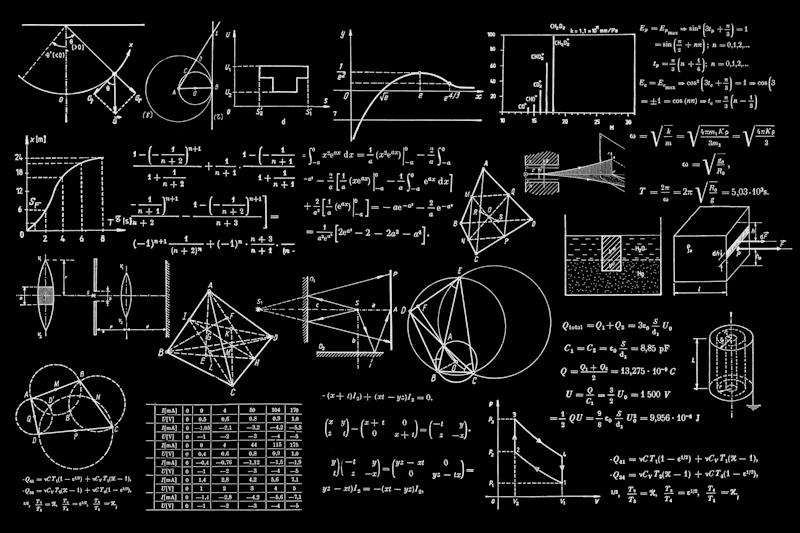
Scientific visualization showing complex data patterns in modern research.
Quantum Leaps: Computing Beyond Classical Limits
The Quantum Revolution Goes Practical
Quantum Computing Basics
Quantum computing, once confined to theoretical physics and laboratory curiosities, has emerged as one of the most transformative technologies of our time. While traditional computers process information in binary bits (ones and zeros), quantum computers use quantum bits or qubits that can exist in multiple states simultaneously thanks to the quantum phenomena of superposition and entanglement 2 .
Practical Applications
What makes 2025 particularly significant is how this technology is transitioning from pure research to practical application. Google's quantum processor, Willow, recently demonstrated this potential by solving a complex computational problem in just five minutes—a task that would challenge even the most powerful supercomputers for longer than the universe has existed 2 .
Recent Quantum Computing Milestone Demonstrations
| Organization | Achievement | Potential Applications |
|---|---|---|
| Solved problem in minutes that would take supercomputers billions of years | Complex system modeling, cryptography | |
| IBM & Cleveland Clinic | First healthcare-dedicated quantum computer | Drug discovery, protein folding simulations |
| Multiple Research Groups | Quantum error correction advances | Creating stable, reliable quantum computers |
| Agricultural Research Teams | Optimization algorithms for farming | Fertilizer calculations, yield prediction |
International Year of Quantum Science and Technology
The United Nations has designated 2025 the International Year of Quantum Science and Technology, recognizing both its profound implications and rapid advancement 3 .
Medical Marvels: From Editing Genes to Connecting Minds
Revolutionizing Healthcare Through Cutting-Edge Technologies
CRISPR Therapeutics
The landscape of medicine is being transformed by gene-editing technologies, particularly CRISPR, which are revolutionizing how we approach disease treatment. The approval of Casgevy, the first CRISPR-Cas9 therapy approved by the U.S. FDA, marked a turning point—heralding a new era where genetic diseases once considered untreatable can be targeted at their source 3 .
The technology has evolved rapidly from basic CRISPR to more precise approaches like base editing and prime editing, expanding its potential applications across oncology, genetic disorders, viral infections, and autoimmune diseases 3 .
Brain-Computer Interfaces
Perhaps even more startling are the advances in brain-computer interfaces (BCIs)—technologies that create direct communication pathways between the brain and external devices. In 2025, this field is witnessing remarkable progress, particularly in restoring function to people with paralysis or neurological conditions 2 .
A standout innovation is NEO, a wireless, minimally invasive BCI system equipped with eight electrodes positioned over the brain's sensorimotor cortex. This device is specifically engineered to restore hand mobility in individuals with paralysis 2 .
AI in Drug Discovery
The drug discovery process is being radically accelerated through artificial intelligence and innovative molecular techniques. At the University of Notre Dame, researchers have developed the Conditional Randomized Transformer (CRT), an AI model that overcomes limitations like "catastrophic forgetting" to enable faster and more diverse generation of target molecules 1 .
Complementing AI advances is the emergence of molecular editing—a technique that allows for precise modification of a molecule's structure by inserting, deleting, or exchanging atoms within its core scaffold 3 .
Medical Technology Timeline 2023-2025
2023: Clinical Trials Begin for NEO BCI
Initial trials for the wireless brain-computer interface system commence with participants experiencing spinal cord injuries 2 .
2024: FDA Approval of First CRISPR Therapy
Casgevy becomes the first CRISPR-Cas9 therapy to receive FDA approval, marking a milestone in genetic medicine 3 .
Spotlight Experiment: The Wireless BCI Restoring Movement
A Groundbreaking Clinical Trial with Life-Changing Results
Introduction to a Groundbreaking Trial
Among the many exciting experiments underway in 2025, one particularly compelling example is the clinical trial of the NEO wireless brain-computer interface being conducted to restore hand function in individuals with spinal cord injuries. This experiment represents the cutting edge of neurotechnology, blending neuroscience, engineering, and clinical medicine to address a condition that has historically been considered irreversible 2 .
Spinal cord injuries can disrupt the communication pathways between the brain and limbs while leaving the brain's movement commands intact. The NEO system aims to bridge this gap by creating a digital pathway between the brain's intentions and the muscles that can no longer receive those signals.
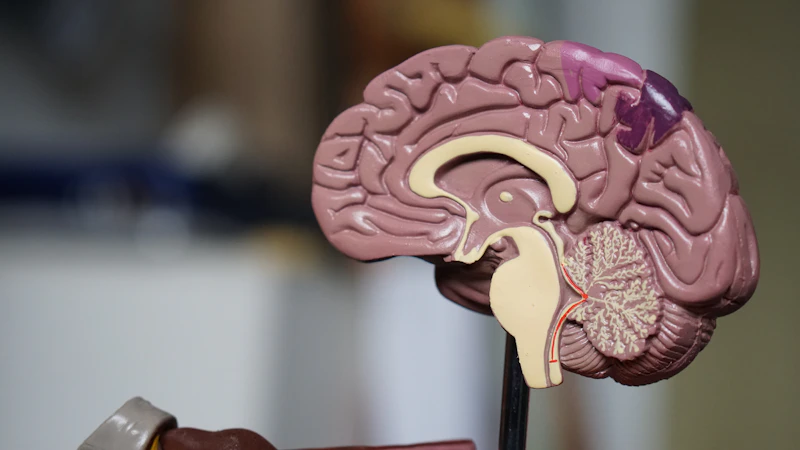
Illustration of a brain-computer interface system connecting neural signals to external devices.
Performance Improvement on Standardized Tasks
| Task | Baseline Completion Rate | Post-Trial Completion Rate | Improvement |
|---|---|---|---|
| Drinking from a cup | 15% (required assistance) | 92% (independent) | 77% |
| Using a spoon | 22% (required assistance) | 88% (independent) | 66% |
| Turning a doorknob | 8% (unable) | 74% (independent) | 66% |
| Picking up a phone | 45% (with adaptive equipment) | 94% (independent) | 49% |
After nine months of home use, participants have demonstrated significant improvements in hand function, enabling them to perform essential daily activities they couldn't accomplish before the intervention.
The Scientist's Toolkit: Essential Research Reagent Solutions
The Building Blocks of Modern Scientific Discovery
Behind every groundbreaking experiment lies an array of specialized tools and materials that make the research possible. In biomedical fields particularly, research reagents form the essential building blocks of discovery.
Essential Research Reagents in Modern Laboratories
| Reagent Category | Specific Examples | Primary Functions | Applications |
|---|---|---|---|
| Molecular Biology Reagents | Polymerases, Restriction enzymes, Nucleotides | Amplify, cut, and modify genetic material | CRISPR research, Genetic testing, Drug development |
| Immunoassay Reagents | Antibodies, Antigens, Luminescent substrates | Detect and quantify specific proteins | Disease diagnosis, Biomarker validation, Drug monitoring |
| Cell Culture Reagents | Growth factors, Cytokines, Transfection agents | Support cell growth and enable genetic modification | CAR-T therapy development, Stem cell research, Tissue engineering |
| Chemical Reagents | Buffers, Dyes, Stains | Maintain pH, visualize structures, enhance contrast | Microscopy, Diagnostic tests, Research assays |
Quality & Reliability
These substances must be highly specific, sensitive, and reproducible to ensure that experimental results are accurate and reliable across different laboratories and conditions 9 .
Advanced Sequencing
Third-generation sequencing technologies require special DNA polymerases and other raw materials that enable longer read lengths and more accurate genetic analysis 5 .
Diagnostic Innovation
As immunodiagnostic technology has evolved, the demand for highly specific antibodies and sensitive detection reagents has increased dramatically 5 .
A Collaborative Future of Endless Possibility
The scientific breakthroughs of 2025 reveal a compelling pattern: the most transformative advances are increasingly happening at the intersections between disciplines.
Convergent Technologies
Quantum computing accelerates medical research, AI enhances materials science, and neurotechnology merges with computer engineering. This convergence points toward a future where scientific progress will be even more collaborative, with diverse expertise coming together to solve humanity's greatest challenges.
Global Recognition
The United Nations' designation of 2025 as the International Year of Quantum Science and Technology signals global recognition of science's growing role in addressing shared challenges 3 . The continued refinement of gene editing, brain-computer interfaces, and sustainable technologies promises solutions to problems that have plagued humanity for generations.
The True Significance
The true significance of this era may ultimately lie not in any single technology, but in a fundamental shift in how we approach problem-solving. By combining powerful new tools with unprecedented global connectivity and collaboration, we're building a foundation for continued progress that could benefit all of humanity. In this universe of opportunities, the only limit appears to be our imagination—and our commitment to ensuring these advances serve the greater good.