A Comprehensive Guide to Forensic Sample Collection and Preservation: Protocols, Pitfalls, and Best Practices for Researchers
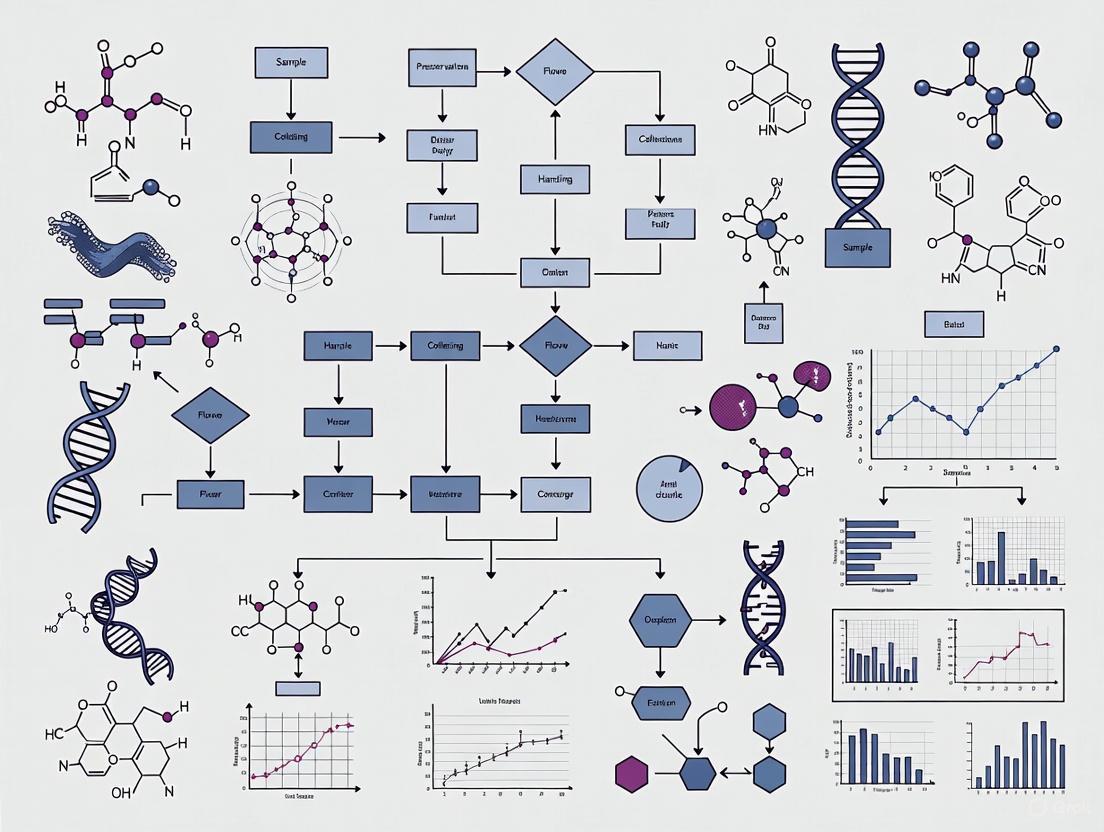
This guide provides researchers, scientists, and drug development professionals with a systematic framework for forensic sample collection and preservation.
A Comprehensive Guide to Forensic Sample Collection and Preservation: Protocols, Pitfalls, and Best Practices for Researchers
Abstract
This guide provides researchers, scientists, and drug development professionals with a systematic framework for forensic sample collection and preservation. It covers foundational principles, detailed methodological protocols for diverse sample types, strategies for troubleshooting common errors, and the latest validation standards. The article synthesizes current best practices, from ANSI/ASB guidelines and ISO 21043 standards to advanced techniques like Next-Generation Sequencing, to ensure evidence integrity, support reliable analytical results, and maintain legal admissibility in biomedical and clinical research contexts.
Core Principles and Standards for Forensic Sample Integrity
Understanding the Critical Role of Sample Integrity in Forensic Analysis
In forensic science, the ability to extract reliable and admissible evidence hinges on a single, foundational principle: sample integrity. From the crime scene to the laboratory, the preservation of a sample's physical and chemical state directly determines the validity of analytical results. This guide details the core principles, standardized protocols, and advanced methodologies that researchers and forensic professionals must implement to safeguard sample integrity, thereby ensuring that scientific evidence stands up to legal scrutiny.
Core Principles of Sample Integrity
Maintaining sample integrity is not a single action but a continuous process governed by several non-negotiable principles.
Contamination Prevention: This is the paramount concern. Personnel must wear full personal protective equipment (PPE), including disposable caps, masks, gloves, and protective clothing [1]. Gloves should be changed after handling each individual sample or after touching different surfaces to prevent cross-contamination [1]. All collection tools must be either single-use or thoroughly sterilized before use [1].
Chain of Custody: This is the documented chronological history of a sample's movement and handling [1]. Every step—from sample discovery, collection, packaging, transportation, storage, to final handover to the laboratory—must be meticulously recorded [1]. Details must include the time, location, collector, every individual who handled the evidence, and the storage conditions. A robust chain of custody is essential for ensuring evidence admissibility in court [1].
Non-Destructive First, Photography First: Before any physical sample is touched or collected, its original state must be comprehensively documented through photography and video recording [1]. Furthermore, analytical priorities should favor non-destructive testing methods, such as examination under UV or multi-band light sources, before proceeding to any physical extraction that might alter the sample [1].
Collection of Control Samples: When collecting suspected biological stains, it is critical to also collect a "blank substrate" sample from an unstained area nearby [1]. This practice helps exclude environmental background interference and reagent contamination during laboratory analysis, providing a crucial baseline for comparison [1].
Technical Protocols for Sample Collection and Preservation
The following protocols outline the specific methods required for different evidence types, emphasizing techniques that preserve sample integrity for subsequent analysis.
Biological Samples
Biological evidence is a primary source of DNA and requires careful handling to prevent degradation.
Table 1: Collection and Preservation Methods for Biological Evidence
| Sample Type | Detection Method | Extraction Method | Packaging and Storage |
|---|---|---|---|
| Blood/Bloodstains | Visual, white/blue-green light | Wet stains: Absorb with sterile gauze or syringe. Dry stains: Collect entire item if movable; for immovable surfaces, use a water-moistened swab, air-dry, and place in evidence bag [1]. | Paper bags/envelopes (dried swabs/stains); cryotubes (liquid blood). Avoid sealing wet samples in plastic. Refrigerate short-term; -20°C long-term [1]. |
| Semen/Vaginal Secretions | UV fluorescence (confirm with pre-test) | Similar to bloodstains. Use a swab moistened with deionized water to rotate and scrub firmly. FTA cards for direct adsorption are excellent for PCR and preservation [1]. | Air-dry, package in paper bags. Refrigerate [1]. |
| Saliva Stains (e.g., cigarette butts) | Visual inspection | Collect entirely with forceps. For surfaces like bottle mouths, use moistened swabs [1]. | Paper bags. Refrigerate [1]. |
| Hair | Visual, strong light | Collect with clean forceps. Focus on roots with follicles (nuclear DNA). Plucked hair is superior to naturally shed hair [1]. | Place in paper folds or screw-top tubes to avoid static loss. Room temperature or refrigerate [1]. |
| Bones/Teeth | Excavation | Select dense bones (e.g., mid-shaft of long bones, teeth). Clean surface, grind to remove contaminants, and drill bone powder [1]. | Paper bags. Room temperature [1]. |
| Touch DNA | Trace, invisible | High contamination risk. Use the double-swab method (one dry, one wet, or both wet) on suspected contact surfaces. Alternatively, use tape lifting [1]. | Air-dry swabs, place in evidence tubes. Refrigerate [1]. |
Non-Biological Evidence
A wide array of non-biological materials can serve as critical evidence and require specialized handling.
Fingerprints:
- Visible Prints (e.g., in dust or blood): Photograph directly before any enhancement [1].
- Latent Prints: The development technique is substrate-dependent. For hard surfaces (e.g., glass, metal), use magnetic or fluorescent powder followed by tape lifting onto evidence cards. For porous surfaces (e.g., paper, wood), use ninhydrin or DFO reagent fuming. For wet surfaces, small particle reagent (SPR) is effective, while plastic bags often require cyanoacrylate (502 glue) fuming [1].
Trace Evidence:
- Fibers: Collect with forceps or adhesive tape and compare with on-site blank samples [1].
- Glass Fragments: Collect entirely for physical matching and elemental analysis [1].
- Soil: Collect samples from different layers for geological provenance analysis [1].
- Gunshot Residue (GSR): Collect from suspects' hands using adhesive carbon stubs for subsequent SEM-EDS composition analysis [1].
Digital Evidence:
- For devices like phones, computers, and hard drives, disconnect power immediately to avoid triggering self-destruction mechanisms. Place the device in a Faraday bag to block all signals and prevent remote wiping. The device should then be handed over to digital forensic experts for laboratory-based imaging and extraction [1].
Analytical Techniques and Sample Integrity
The choice of analytical technique is crucial, with many modern methods prioritizing non-destructive or minimal-damage analysis to preserve sample integrity.
Fourier Transform Infrared (FTIR) microscopy is a macroscopically useful technique for forensic scientists as it enables rapid, non-destructive investigation of microscopic samples [2]. For example, it can be used to:
- Analyze illicit pills without requiring sample dissolution, which can degrade evidence [2].
- Chemically image ink on paper and multi-layer paint chips, providing unambiguous data for comparison without destroying the sample [2].
- Examine hair fibers to detect residual styling agents or protein structural changes from bleaching, combining visual inspection with chemical information [2].
Workflow for Evidence Integrity Management
The entire process, from crime scene to lab, must follow a strict, standardized workflow to preserve sample integrity. The following diagram visualizes this integrated system.
The Scientist's Toolkit: Essential Research Reagents and Materials
Successful sample collection and preservation rely on a suite of essential tools and reagents.
Table 2: Essential Materials for Forensic Sample Collection
| Category / Item | Specific Examples | Function and Importance |
|---|---|---|
| Personal Protective Equipment (PPE) | Disposable protective suits, shoe covers, N95 masks, powder-free gloves [1] | Primary barrier for contamination prevention, protecting both the evidence and the personnel [1]. |
| Collection Tools | Sterile swabs, FTA cards, scalpels, forceps, syringes, pipettes [1] | Enable sterile, precise collection of various sample types (biological, trace). FTA cards stabilize DNA for transport and storage [1]. |
| Packaging Materials | Paper bags, kraft paper envelopes, screw-top evidence bottles, leak-proof biohazard bags [1] | Secure evidence while allowing breathability (critical for biological samples). Prevents degradation and cross-contamination [1]. |
| Detection & Lighting | Multi-band light sources, UV lamps, magnifiers [1] | Reveal latent or invisible evidence like bodily fluids, fingerprints, and hairs that are not visible to the naked eye [1]. |
| Preservation & Storage | Low-temperature ice packs, -20°C/-80°C dry ice, portable refrigerators [1] | Maintain sample integrity by slowing biological and chemical degradation during transport and before lab analysis [1]. |
| Analytical Instruments | FTIR Microscope (e.g., Nicolet iN10), Portable Rapid DNA Analyzers [2] [1] | Provide non-destructive chemical analysis (FTIR) or rapid on-site DNA screening, guiding the investigation while preserving evidence [2] [1]. |
Advanced Technologies and Future Outlook
The field of forensic science is evolving with new technologies that enhance the ability to maintain and extract information from evidence.
- Portable Rapid DNA Analyzers: These devices provide Short Tandem Repeat (STR) profiles on-site within hours, offering rapid leads for investigators. However, laboratory confirmation is still required for formal reporting [1].
- Microbiome Analysis: This innovative approach analyzes the microbial communities on corpses or in the environment to estimate the post-mortem interval (PMI) or suggest a geographic location [1].
- Forensic Phenotyping: This technique predicts a person's biogeographic ancestry, hair color, eye color, and other external visible characteristics from DNA evidence, providing invaluable investigative leads [1].
- Environmental DNA (eDNA): It is now possible to extract human DNA from soil or water samples to help locate burial sites or submerged evidence [1].
By 2025, forensic testing services are expected to become more integrated with AI and machine learning, enabling faster and more accurate analysis. The trend points toward a more automated, secure, and interoperable forensic ecosystem [3].
The critical role of sample integrity in forensic analysis cannot be overstated. It is the bedrock upon which reliable, defensible, and scientifically sound evidence is built. This guide has outlined the systematic approach—from strict adherence to core principles, implementation of detailed technical protocols, and the use of advanced technologies—required to achieve this goal. For researchers and forensic professionals, ongoing training, development of detailed standard operating procedures, and rigorous quality control are not merely recommendations but essential practices to ensure that the integrity of evidence is preserved from the crime scene to the courtroom.
Forensic science relies on standardized frameworks to ensure the validity, reliability, and reproducibility of its analytical results. This technical guide provides researchers, scientists, and drug development professionals with an in-depth analysis of two cornerstone standards in forensic sample collection and preservation: the ANSI/ASB Best Practice Recommendation 156 and the ISO 21043 Forensic Sciences series. These documents provide a structured, end-to-end framework for the forensic process, from crime scene to courtroom. Adherence to these standards is critical for reducing variability, minimizing cognitive bias, and ensuring that forensic evidence meets the rigorous demands of both scientific inquiry and the justice system [4] [5].
The development of uniform, enforceable standards addresses long-identified needs within forensic science, aiming to strengthen its scientific foundation and quality management [5]. Standards provide:
- Minimum Requirements & Best Practices: Defining essential procedures to ensure evidence integrity.
- Standard Protocols & Definitions: Creating a common language and methodology across laboratories and jurisdictions.
- Quality Management: Offering a framework for accreditation and audits, enhancing confidence in forensic results.
Internationally, standards are developed and maintained by organizations such as the International Organization for Standardization (ISO), the Academy Standards Board (ASB), and ASTM International. In the United States, the National Institute of Standards and Technology (NIST) administers the Organization of Scientific Area Committees (OSAC) for Forensic Science, which maintains a public registry of high-quality, technically sound standards for implementation by forensic service providers [6] [5].
ANSI/ASB Best Practice 156: Specimen Collection & Preservation
ANSI/ASB Best Practice Recommendation 156, titled "Best Practices for Specimen Collection and Preservation for Forensic Toxicology," provides targeted guidelines for the early stages of the forensic process. Its primary scope covers specimen collection for laboratories performing analysis in postmortem toxicology, human performance toxicology (e.g., drug-facilitated crimes, driving under the influence), and other forensic testing (e.g., court-ordered toxicology). It is not intended for the specific area of breath alcohol toxicology [7].
The standard delineates specific guidelines for:
- Types of specimens to be collected
- Required amounts or volumes
- Appropriate preservatives to use
- Optimal storage conditions for various sample types
By standardizing these pre-analytical variables, the guideline helps ensure that specimens arriving at the laboratory are of sufficient quality and quantity to permit reliable toxicological analysis, thereby safeguarding the integrity of the entire testing process.
Research Reagent Solutions & Essential Materials
The following table details key materials and reagents referenced in forensic standards for specimen collection and analysis.
Table: Essential Materials for Forensic Specimen Collection and Analysis
| Item | Primary Function | Application Context |
|---|---|---|
| Specimen Containers | Secure containment and preservation of biological samples. | Collection of blood, urine, and other fluids; may contain preservatives like EDTA or sodium fluoride [7]. |
| Solvents for Extraction | Separation of analytes from complex matrices. | Techniques like solvent extraction of ignitable liquid residues from fire debris [8]. |
| Chemical Test Reagents | Presumptive testing for specific elements or compounds. | Reagents for chemical testing of suspected projectile impacts for copper and lead [8]. |
| Microspectrophotometry | Color measurement and analysis of microscopic materials. | Forensic fiber analysis, providing objective data on color and composition [6] [8]. |
| Polarized Light Microscopy | Identification and characterization of crystalline materials. | Forensic examination and comparison of soils and analysis of explosives [6]. |
ISO 21043 is an international standard series designed specifically for forensic science. It provides requirements and recommendations structured around the complete forensic process. The importance of ISO 21043 extends beyond traditional quality management; it is guided by principles of logic, transparency, and relevance, and introduces a common language to support both evaluative and investigative interpretation [4]. This standard works in tandem with established standards like ISO/IEC 17025 (for testing and calibration laboratories), but removes the guesswork in applying them to the unique context of forensic service providers [4].
Structure of ISO 21043
The ISO 21043 series is organized into five parts, each corresponding to a different stage of the forensic process [9] [4]:
- Part 1: Vocabulary - Establishes standardized terminology, providing the essential common language for discussing forensic science and reducing fragmentation across disciplines. It contains definitions but no requirements or recommendations [4].
- Part 2: Recognition, recording, collecting, transport and storage of items - Addresses the initial crime scene phase, covering the handling of items (the standard's term for evidential material) in a way that "can make or break anything that follows" [4].
- Part 3: Analysis - Specifies requirements for the analysis of items of potential forensic value, including the selection and application of suitable methods, use of controls, and analytical strategies. It applies to work at the scene and within a facility [10].
- Part 4: Interpretation - Centers on linking observations from analysis to the questions in a case, forming opinions based on a logically correct framework (the likelihood-ratio framework) and helping to minimize cognitive bias [9] [4].
- Part 5: Reporting - Governs the communication of results, covering forensic reports and testimony, ensuring findings are conveyed accurately and clearly [4].
Key Terminology and Requirements
In ISO standards, specific keywords have legally significant meanings that indicate the level of obligation [4]:
Shall: Indicates a mandatory requirement. Compliance is obligatory unless physically or legally impossible ("comply or explain").Should: Indicates a recommendation, not a strict requirement. Organizations should have justifiable reasons for deviating.May: Indicates permission or an allowable option.Can: Refers to a possibility or capability.
It is critical to note that a standard can never require an action that breaks the law. The legal context of forensic science means that the law of the land can overrule a requirement in a standard, though the law may itself require adherence to such standards [4].
Integrated Workflow: From Collection to Reporting
The following diagram illustrates the integrated forensic process as defined by the ISO 21043 series, showing how each part of the standard maps to the workflow from crime scene to courtroom.
This workflow visualizes the logical flow of information and evidence through the forensic process. The process begins with a Request, which is the input for the recovery phase (covered by ISO 21043-2). The output of this phase is a number of Items (the standard's term for evidential material). These items serve as the input for the Analysis phase (ISO 21043-3), which results in Observations (a term encompassing both instrumental results and direct visual examinations). The observations are then the input for Interpretation (ISO 21043-4), where they are logically linked to the case questions to produce Opinions. Finally, these opinions, along with all prior data, become the input for Reporting (ISO 21043-5), with the final output being a Report or testimony [4]. This structured process ensures traceability, transparency, and scientific rigor at every stage.
The following tables summarize key quantitative data from the forensic standards landscape, providing a clear overview of the scope and activity in this field.
Table: OSAC Forensic Science Standards Library Metrics (as of 2024-2025)
| Standard Category | Count | Description |
|---|---|---|
| OSAC Registry | 225-245+ | Approved standards endorsed for implementation [6] [11]. |
| SDO Published | 262+ | Standards developed via consensus and published by a standards body [6]. |
| In SDO Development | 277+ | Standards currently under development at an SDO [6]. |
Table: Recent Standard Additions to OSAC Registry (2025 Examples)
| Standard Designation | Subject Area | Type |
|---|---|---|
| ANSI/ASTM E1386-23 | Separation of Ignitable Liquid Residues by Solvent Extraction | SDO Published [8]. |
| OSAC 2023-N-0014 | Standard for the Medical Forensic Examination in the Clinical Setting | OSAC Proposed [8]. |
| OSAC 2025-N-0002 | Standard for Qualifications for Forensic Anthropology Practitioners | OSAC Proposed [8]. |
Implementation and Impact
The implementation of these standards is critical for advancing forensic science as a unified discipline. As of early 2025, over 220 Forensic Science Service Providers (FSSPs) had contributed data on their implementation of OSAC Registry standards, reflecting a significant and growing adoption within the community [11]. The benefits of implementation extend far beyond quality management [4]:
- Scientific Progress: Standards anchor previous scientific progress and provide the common language necessary for productive debate and further innovation.
- Reduced Error: By promoting transparent, reproducible methods and a logically correct framework for evidence interpretation (the likelihood-ratio framework), standards reduce cognitive bias and enhance the reliability of expert opinions.
- Trust in Justice: Improving the quality of forensic science through standardization is a fundamental path toward reducing errors in the justice system, potentially leading to fewer wrongful convictions and more accurate identifications of the guilty [4].
For researchers and drug development professionals, understanding and applying these standards ensures that forensic data generated during research—whether related to toxicology, material analysis, or other disciplines—is forensically and legally defensible, thereby strengthening the overall validity and impact of their work.
The modern forensic process represents an integrated, holistic system where actions at the crime scene directly determine outcomes in the laboratory. This seamless continuity from scene to laboratory is fundamental to maintaining the integrity and evidential value of forensic findings, ensuring that scientific analysis can withstand legal scrutiny. The process is governed by an international standard, ISO 21043, which provides requirements and recommendations designed to ensure the quality of the entire forensic process, from initial recovery through to reporting [9]. Within this framework, every step—from the first documentation of the scene to the final statistical interpretation of results—forms an unbroken chain that must be meticulously managed and documented.
This technical guide examines the forensic holistic process through the lens of the forensic-data-science paradigm, which emphasizes methods that are transparent, reproducible, intrinsically resistant to cognitive bias, and use the logically correct framework for evidence interpretation [9]. For researchers and forensic professionals, understanding this integrated process is critical for generating reliable, defensible results that advance both case resolution and scientific knowledge.
Crime Scene Phase: Evidence Recovery & Preservation
The initial scene handling phase sets the foundation for all subsequent laboratory analysis. Proper execution at this stage preserves evidence that would otherwise be lost, contaminated, or rendered inadmissible.
Core Principles of Evidence Handling
The fundamental principles for handling forensic evidence focus on preservation and documentation. Practitioners must wear appropriate personal protective equipment including gloves, gowns, and goggles to protect both the evidence and themselves from cross-contamination [12]. Key considerations include:
- Minimal Handling: Objects should be handled as little as possible to prevent loss of evidence or cross-contamination [12].
- Preservation of State: Evidence should not be rinsed, washed, or wiped, as this directly impacts the amount and integrity of available evidence [12].
- Early Documentation: Photography should capture the state of evidence before removal, and the patient's hands should be secured in paper bags to preserve trace evidence [12].
- Proper Clothing Removal: When removing clothing, cut near seams or around bullet/stab holes to preserve the original shape of damaged areas [12].
Specialized Evidence Collection Techniques
Different evidence types require specialized collection methodologies to preserve their analytical value:
- Ballistic Evidence: Bullet retrieval must be performed using nonmetal instruments or instruments with rubber shods to prevent scratching the surface and preserving firing patterns that can match bullets to specific firearms [12].
- Biological Evidence: Collection must prevent degradation; the use of appropriate preservatives and controlled storage conditions is essential [7].
- Trace Evidence: The application of a universal experimental protocol for transfer and persistence enables reliable collection and subsequent analysis of materials like fibers, pollen, GSR, and DNA [13].
The Chain of Custody Documentation
Maintaining an unbroken chain of custody is a legal requirement for forensic evidence. This process involves a paper log that tracks possession from collection to courtroom, including dates, times, evidence types, and signatures of all individuals handling the evidence [12]. When evidence is transferred to law enforcement, the official's name and badge number are recorded, creating a documented pedigree that proves the evidence has not been tampered with and ensuring its admissibility in legal proceedings [12].
Table 1: Evidence Packaging Specifications
| Evidence Type | Packaging Material | Preservation Rationale | Labeling Requirements |
|---|---|---|---|
| Clothing/Textiles | Paper bags | Prevents deterioration, condensation, or microbial growth | Patient ID, date, time, collector |
| Bullets/Cartridges | Plastic containers | Preserves markings and firing patterns on metal surfaces | Patient ID, date, time, ballistic info |
| Biological Fluids | Sealed containers with preservatives | Prevents degradation and bacterial growth | Patient ID, date, time, biohazard warning |
| Trace Evidence | Paper/pharmacal folds | Prevents static buildup and loss of particles | Patient ID, date, time, source location |
Laboratory Analysis Phase: From Receipt to Results
Once evidence enters the laboratory, it undergoes systematic analysis using increasingly sophisticated technologies and methodologies that must balance sensitivity, specificity, and statistical robustness.
Modern Forensic Technologies
Forensic laboratories now employ technologies that seemed futuristic just a decade ago. According to Forensic Science Colleges, the field is experiencing 14% job growth for forensic science technicians between 2023-2033, largely driven by new techniques that enhance the availability and reliability of objective forensic information [14].
- Next-Generation Sequencing (NGS): This groundbreaking forensic technology allows scientists to analyze DNA in greater detail than ever before, examining entire genomes or specific regions with high precision [14]. Unlike traditional DNA profiling, NGS is particularly useful for damaged, minimal, or aged DNA samples, significantly speeding up investigations and reducing backlogs through parallel sample processing [14] [15].
- Next Generation Identification (NGI) System: This advanced biometric technology enhances law enforcement identification capabilities through integrated palm prints, facial recognition, improved fingerprint analysis, and iris scans [14]. A key feature is the 'Rap Back' system that continuously monitors individuals in law enforcement databases, providing real-time updates on new criminal activity, particularly valuable for tracking individuals on probation or parole [14].
- Automated Firearm Identification: The Integrated Ballistic Identification System (IBIS) represents cutting-edge solutions for firearm and tool mark identification, facilitating the sharing, comparison, and automated identification of exhibit information across imaging networks [14]. The latest generation features exceptional 3D imaging, advanced comparison algorithms, and robust infrastructure for police and military organizations [14].
- Artificial Intelligence in Forensics: AI is increasingly deployed across forensic domains, from digital forensics to fingerprint comparison and photograph analysis [14] [15]. These systems can identify patterns or anomalies in vast datasets that would take human investigators weeks or months to uncover, though they require careful validation to ensure courtroom admissibility [14] [15].
Analytical Chemistry in Forensic Science
The core of forensic laboratory work involves sophisticated chemical analysis to identify substances and determine their concentrations.
- Qualitative Analysis: This aims to identify the presence or absence of specific chemicals, often relying on physical properties such as color, texture, and melting point [16]. This type of analysis is essential for confirming the presence of substances like illicit drugs or poisons, though it doesn't determine quantities [16].
- Quantitative Analysis: Following qualitative identification, quantitative analysis measures how much of each identified substance is present, providing critical information for cases like assessing blood alcohol levels or drug concentrations [16].
- Analytical Techniques: Forensic laboratories employ various sophisticated techniques, including chromatography and spectroscopy, which can be adapted for both qualitative and quantitative purposes [16]. For example, liquid chromatography coupled with mass spectrometry (LC-MS) is widely used for confirmatory and quantitative analyses and serves as a powerful tool for drug screening [16].
Table 2: Analytical Techniques in Forensic Chemistry
| Technique | Primary Use | Applications | Quantitative/Qualitative |
|---|---|---|---|
| Gas Chromatography-Mass Spectrometry (GC-MS) | Drug screening, toxicology | Quantifying alcohol, illicit drugs in body fluids | Both |
| Liquid Chromatography-Mass Spectrometry (LC-MS) | Confirmatory drug analysis | Drug metabolites, explosives, marker dyes | Both |
| Fourier Transform Infrared (FTIR) Spectroscopy | Material identification | Polymers, fibers, paints, drugs | Primarily qualitative, can be quantitative |
| High-Performance Liquid Chromatography (HPLC) | Drug analysis | Metabolites, explosives, inks | Both |
| Ultraviolet-Visible Spectrophotometry | Screening | Determining presence/absence of suspected compounds | Both with standards |
Experimental Design & Data Interpretation
The forensic-data-science paradigm requires methods that are transparent, reproducible, and use empirically validated frameworks for evidence interpretation.
Statistical Design of Experiments (DoE) in Forensic Analysis
The application of Statistical Design of Experiments (DoE) represents a significant advancement in forensic methodology. DoE offers substantial advantages over traditional "one factor at a time" (OFAT) experimentation by requiring fewer experiments, involving lower costs, shorter analysis time, and less consumption of samples and reagents [17]. Critically, DoE allows the effect of interactions between independent variables to be assessed, which OFAT approaches cannot detect [17].
The DoE process in forensic analysis typically follows a structured pipeline:
- Screening Stage: When working with numerous independent variables, screening methodologies (Full, Fractional, or Plackett-Burman Designs) identify factors that significantly affect the response [17].
- Optimization Stage: Response surface methodologies (Central Composite, Face-Centered Central Composite, and Box-Behnken Designs) generate polynomial equations that describe datasets and create predictive mathematical models [17].
- Model Validation: The final model's quality is assessed through its ability to fit experimental data (model adequacy) and its predictive utility (model validation) by comparing predictions with additional experimental data [17].
Universal Experimental Protocols
The development and implementation of universal experimental protocols for transfer and persistence of trace evidence represents another significant methodological advancement. These protocols enable consistent methodology across studies, allowing meaningful comparison of results between experiments [13].
A recent implementation involved over 2500 images collected from 57 highly replicated transfer experiments and 2 persistence experiments, with results showing reliable and consistent outcomes under all conditions tested [13]. The protocol utilizes computational image analysis with open-source software like ImageJ for particle counting, ensuring objective, reproducible measurements [13].
The transfer ratio is calculated as the number of particles that have moved from the donor to the receiver material as a proportion of the total number of particles originally recorded on the donor material prior to transfer, with complete transfer represented by a ratio of 1 and no transfer by 0 [13].
Research Reagent Solutions & Essential Materials
The following toolkit details essential materials and reagents used in modern forensic analysis, particularly in trace evidence and toxicological studies.
Table 3: Essential Research Reagent Solutions for Forensic Analysis
| Reagent/Material | Function/Application | Technical Specifications |
|---|---|---|
| UV Powder-Flour Mixture | Proxy material for transfer studies | 1:3 ratio by weight; enables fluorescence tracking under UV light [13] |
| Fluorescent Carbon Dot Powder | Fingerprint enhancement | Applied to fingerprints, fluoresces under UV light in red, yellow, or orange [14] |
| Immunochromatography Test Strips | Rapid substance detection | Detects drugs, medications in bodily fluids; some smartphone-compatible [14] |
| Solid Phase Extraction (SPE) Sorbents | Sample preparation | Extracts and concentrates analytes from complex biological matrices [17] |
| Dispersive Liquid-Liquid Microextraction (DLLME) Solvents | Microscale sample preparation | Provides high enrichment factors for trace analyte detection [17] |
| Stable Isotope-Labeled Standards | Quantitative analysis | Internal standards for mass spectrometry-based quantification [16] |
| Biosensors | Fingerprint analysis | Detects age, medications, gender from trace bodily fluids in fingerprints [14] |
| Nanosensors | Molecular detection | Examines illegal drugs, explosives on molecular level [14] |
Visualization of Forensic Processes
Holistic Forensic Workflow
Trace Evidence Transfer & Persistence Protocol
The holistic forensic process represents an increasingly sophisticated integration of crime scene handling with advanced laboratory methodologies. The future of this field lies in technologies like Next-Generation Sequencing, Artificial Intelligence, and automated identification systems that enhance both the speed and reliability of forensic analysis [14] [15]. Underpinning these technological advances must be rigorous methodological frameworks including Statistical Design of Experiments, universal experimental protocols, and adherence to international standards like ISO 21043 [17] [13] [9].
For researchers and forensic professionals, success demands expertise that spans from meticulous crime scene preservation to sophisticated statistical interpretation of laboratory results. The continuity between these phases—maintained through unbroken chain of custody documentation, standardized protocols, and quality assurance processes—ensures that forensic science continues to provide reliable, defensible evidence that meets both scientific and legal standards. As the field evolves, this holistic approach will become increasingly critical for delivering justice through scientific rigor.
Essential Pre-Collection Planning and Kit Preparation
The integrity and admissibility of forensic evidence are fundamentally established during the pre-collection phase, long before any sample is gathered. In forensic science, the reliability of analytical results—whether for toxicological screening, DNA profiling, or substance identification—is entirely dependent on the meticulous planning and preparation undertaken prior to evidence collection. Proper kit preparation constitutes the first and most critical link in the chain of custody, ensuring that biological and physical evidence can withstand legal scrutiny while producing scientifically defensible results. This guide provides researchers, scientists, and drug development professionals with comprehensive technical protocols for assembling and utilizing forensic collection kits across various evidence types, incorporating both established standards and emerging technological solutions.
The convergence of biological and digital evidence in modern forensic labs demands increasingly sophisticated collection methodologies [18]. As forensic technology advances, with techniques such as probabilistic genotyping providing greater statistical power to DNA mixture interpretations [19] and novel methods emerging for quantitative fracture analysis [20], the initial collection and preservation protocols become even more crucial. Failure to implement forensically secure procedures during collection may jeopardize the acceptance of analytical results as evidence in criminal, civil, judicial, or administrative proceedings [21]. This guide establishes essential frameworks for maintaining specimen integrity through standardized kit configurations, specialized handling protocols, and rigorous documentation practices that meet international quality standards.
Forensic Collection Kit Configurations
Core Components and Specifications
Forensic collection kits must be tailored to specific evidence types while maintaining consistent standards for preservation, documentation, and contamination prevention. The following table summarizes essential components across various specialized kits:
Table 1: Forensic Collection Kit Components and Specifications
| Kit Type | Primary Components | Preservation Methods | Volume/Quantity Requirements | Special Considerations |
|---|---|---|---|---|
| Blood Collection | Sterile tubes, lancets/needles, alcohol swabs, gauze, sealable bags, labels, transport containers [22] | Anticoagulants to prevent clotting; preservatives (e.g., 1% sodium fluoride) to prevent alcohol formation and drug degradation [21] | Minimum 10 mL for forensic toxicology; collect both heart and peripheral blood if possible for postmortem cases [21] | Use gray top Vacutainer tubes or equivalent with fluoride/oxalate preservative; avoid freezing in glass tubes [21] |
| Postmortem Toxicology | Containers for blood, urine, vitreous fluid, gastric contents, tissues; seals; chain-of-custody forms [21] | Fluoride preservative for blood; light-protected containers for urine and vitreous fluid to prevent photo-decomposition [21] | 10 mL femoral blood; up to 40 mL urine; up to 40 mL gastric contents; up to 10 mL bile [21] | Each specimen container must be individually labeled with anatomic site of origin; collect specimens before embalming [21] |
| DNA Evidence | Swabs, sterile containers, desiccant, protective packaging [23] [18] | Drying at room temperature; desiccant for stabilization; anhydrobiosis technology for long-term storage [24] | Varies by source; specialized protocols for low-quantity samples (≤1 ng) [24] | Prevent contamination through single-use components; maintain dry environment to inhibit DNA degradation [23] |
| Urine Examination | Sterile collection cups, tamper-evident seals, preservatives, temperature strips [21] | Refrigeration or chemical preservation; protection from light for light-sensitive substances [21] | Up to 40 mL; record total volume and appearance [21] | Wrap containers in foil to protect against photo-decomposition of light-sensitive substances [21] |
| Digital Evidence | Faraday bags, write-blockers, static-free packaging, encrypted storage media [18] | Climate-controlled environments; bit-for-bit forensic imaging; hash verification [18] | Complete sector-level copies of storage media [18] | Maintain logical access controls (encryption, passwords); preserve metadata integrity [18] |
Specialized Kit Configurations for Unique Scenarios
Certain forensic scenarios require highly specialized collection approaches with particular attention to preservation methods and potential analytical interference:
Sexual Assault Evidence Kits: These comprehensive kits typically include swabs for biological fluid collection, alternative light sources for evidence detection, paper bags for clothing collection, and drying racks to prevent microbial degradation of biological evidence. Proper documentation includes detailed anatomical collection sites.
Toolmark and Fracture Surface Evidence: Specialized kits for physical matching should include sterile gloves, anti-static tools, magnification equipment, and rigid containers to prevent contact damage. The emerging science of quantitative fracture matching relies on undisturbed surface topography, making careful handling essential [20].
Post-Accident Industrial Testing: For workplace incident investigation, kits should accommodate both blood and urine collection to maximize detection windows. As the presence of drugs and toxicants in any biological fluid is time-dependent, the two specimens offer the greatest opportunity for detection [21].
Technical Protocols for Sample Collection and Handling
Standardized Collection Workflows
The following diagram illustrates the generalized workflow for forensic sample collection, emphasizing critical decision points and documentation requirements:
Specialized Collection Methodologies
Postmortem Specimen Collection Protocol
Postmortem specimens require particular attention to anatomical site documentation and prevention of postmortem redistribution effects:
Femoral Blood Collection: Using a clean knife, cut the iliac veins while avoiding arteries. Press blood from the upper portion of the iliac veins, then from the popliteal and femoral veins into the collection tube. Pool blood from both sides, avoiding the lower vena cava. Add potassium fluoride to a concentration of 1% or place directly into a gray top Vacutainer tube [21].
Vitreous Fluid Collection: Collect vitreous from one eye, then wait 3 hours to collect from the other eye. Send vitreous fluid from each eye separately in screw-capped, foil-wrapped plastic vials to prevent photo-decomposition of light-sensitive substances [21].
Gastric Contents Documentation: Note the total amount, appearance (including recognizable constituents), color, and odor found during initial examination. Intact tablets, capsules, or other materials should be packaged separately and identified as being found in stomach contents [21].
DNA Preservation Protocol for Room Temperature Storage
Recent advances in DNA stabilization technologies offer alternatives to conventional frozen storage:
Anhydrobiosis Technology Application: Add 1.65 mL of ultra-pure water to dehydrated GenTegra matrix. Once rehydrated, store at 4°C and use within three months [24].
Sample Preparation: Place 15 µL of rehydrated matrix into a 200 µL well of a 96-well plate and dry for 24 hours under a laminar flow hood at room temperature (average 20°C) and constant air humidity (average 35%) prior to sample deposit [24].
Sample Preservation: Apply 30 µL of the sample solution onto the prepared matrix and dry for 24 hours under a laminar flow hood at room temperature with constant humidity. Seal plates with self-adhesive film and store in the dark [24].
Quality Assurance and Methodological Frameworks
Evidence Integrity and Documentation Standards
Maintaining an unbroken chain of custody is fundamental to forensic evidence admissibility. The following documentation practices must be implemented:
Collection Documentation: Record date, time, location, and person responsible for initial collection. For biological specimens, document anatomical collection sites and preservation methods applied [21] [18].
Transfer Documentation: Log each transfer of custody, including identity of relinquishing and receiving parties, reason for transfer, and exact date and time [18].
Storage Conditions: Document secure storage location with specific details of environmental conditions (temperature, humidity) and access restrictions [18].
Disposition Tracking: Final documentation must record return, destruction, or long-term archiving of evidence with appropriate authorization [18].
Storage and Preservation Requirements
Different evidence categories demand specific storage conditions to maintain analytical integrity:
Table 2: Evidence Storage Requirements and Preservation Methods
| Evidence Type | Short-Term Storage | Long-Term Preservation | Temperature Monitoring | Integrity Verification |
|---|---|---|---|---|
| Biological (DNA) | Refrigeration (4°C) or freezing (-20°C) for blood and tissue [21] | Anhydrobiosis technology for room temperature DNA storage [24] | Continuous temperature logging with alarm systems [18] | DNA quantification and degradation index measurement [24] |
| Chemical/Toxicology | Specific temperature controls (refrigeration); protection from light [21] [18] | Frozen storage (-20°C to -80°C) with limited freeze-thaw cycles [21] | Calibrated temperature monitoring devices [18] | Positive controls and calibration verification [21] |
| Trace Evidence | Dry, cool environment; individual packaging to prevent loss [18] | Climate-controlled environments with humidity control [18] | Environmental monitoring systems [18] | Microscopic examination and comparative analysis [20] |
| Digital Evidence | Climate-controlled server rooms; Faraday bags for active devices [18] | Offline storage for backups; periodic data integrity checks [18] | Server room environmental monitoring [18] | Hash value verification throughout lifecycle [18] |
Advanced Experimental Protocols
Quantitative Fracture Matching Methodology
Emerging quantitative approaches to fracture matching provide statistical foundations for physical comparisons:
Imaging Protocol: Acquire three-dimensional topological images of fracture surfaces at appropriate magnification and field of view. The imaging scale should be greater than approximately 10 times the self-affine transition scale (typically 50-75 μm for metallic materials) to avert signal aliasing [20].
Surface Topography Analysis: Calculate height-height correlation functions to characterize surface roughness: δh(δx)=⟨[h(x+δx)−h(x)]²⟩ₓ, where the ⟨⋯⟩ operator denotes averaging over the x-direction. Identify the transition scale where roughness characteristics deviate from self-affine behavior and reach saturation [20].
Statistical Classification: Employ multivariate statistical learning tools to classify articles based on spectral analysis of surface topography. Use likelihood ratios or log-odds ratios for classifying matching and non-matching surfaces, estimating misclassification probabilities through validation testing [20].
Probabilistic Genotyping for DNA Mixtures
Complex DNA mixtures require advanced statistical approaches for interpretation:
Software Selection: Choose between qualitative software (LRmix Studio) that considers detected alleles or quantitative software (STRmix, EuroForMix) that incorporates both allele identification and peak height information [19].
Likelihood Ratio Calculation: Compute likelihood ratios comparing probabilities of observations given alternative hypotheses about contributors to the mixture. Quantitative tools generally produce higher LR values than qualitative approaches, with three-contributor mixtures typically yielding lower LRs than two-contributor mixtures [19].
Result Interpretation: Understand that different software products utilize distinct mathematical and statistical models, necessarily producing different LR values. Forensic experts must comprehend underlying methodologies to support conclusions in legal proceedings [19].
The Scientist's Toolkit: Research Reagent Solutions
Table 3: Essential Research Reagents and Materials for Forensic Sample Processing
| Item | Function | Application Notes |
|---|---|---|
| GenTegra DNA Matrix | Stabilizes DNA extracts in dry, ambient state through protective coating [24] | Enables room temperature DNA storage; effective for quantities as low as 0.2 ng; uses Active Chemical Protection technology [24] |
| Sodium Fluoride/Potassium Oxalate | Preservative for forensic blood samples [21] | Prevents alcohol formation and slows drug degradation; used at 1% concentration in blood samples [21] |
| Crime Prep Adem-Kit | DNA extraction from forensic samples [24] | Validated for casework samples; compatible with subsequent quantification and amplification steps [24] |
| Investigator Quantiplex Pro Kit | Quantitative PCR for DNA quantification and degradation assessment [24] | Provides DNA concentration and degradation index; can be used with half-volume reactions to conserve sample [24] |
| GlobalFiler IQC Kit | STR amplification for DNA profiling [24] | 30 amplification cycles; compatible with capillary electrophoresis on platforms such as Applied Biosystems 3500XL Genetic Analyzer [24] |
| NIST Standard Reference Material | Quantitation standards for method validation [24] | Provides reference DNA for standardization and quality control; essential for maintaining measurement traceability [24] |
Essential pre-collection planning and kit preparation represent the foundational stage of forensic analysis, determining the ultimate reliability and admissibility of scientific evidence. As forensic science continues to evolve, with emerging technologies such as quantitative fracture matching [20], probabilistic genotyping [19], and ambient DNA storage [24], the principles of meticulous preparation remain constant. By implementing the standardized protocols, specialized methodologies, and quality assurance frameworks outlined in this guide, researchers and forensic professionals can ensure that evidence collection meets the rigorous standards required for both scientific validity and legal proceedings. The integration of these established and emerging approaches strengthens the foundation of forensic science, supporting accurate and defensible analytical outcomes across the spectrum of forensic disciplines.
In forensic science, the validity of analytical results is entirely dependent on the integrity of the sample from which they are derived. Two interdependent principles form the foundation of reliable forensic practice: contamination prevention and chain of custody. Contamination prevention encompasses the procedures and protocols designed to maintain the biological and chemical purity of evidence from collection through analysis. The chain of custody provides the chronological documentation that tracks every individual who handles the evidence, ensuring its integrity can be verified throughout its lifecycle. Together, these principles ensure that forensic evidence remains legally defensible and scientifically valid, ultimately serving the interests of justice. This technical guide examines the core protocols, emerging technologies, and standardized procedures that constitute universal best practices in forensic sample management, providing researchers and drug development professionals with the framework necessary to maintain evidentiary integrity.
Foundational Principles of Evidence Integrity
The Critical Role of Chain of Custody
The chain of custody represents the procedural lifeline that preserves evidence integrity from crime scene to courtroom. This foundational principle encompasses the chronological documentation and systematic tracking of evidence throughout its entire lifecycle—from collection and movement to storage and final disposition. Its primary function is to establish an unbroken digital trail demonstrating that evidence has been collected, handled, and preserved in a manner that prevents tampering, loss, or contamination. Research indicates that improper evidence handling contributed to wrongful convictions in approximately 29% of DNA exoneration cases, underscoring the profound real-world consequences of chain-of-custody failures [25].
The integrity of this process rests on several critical pillars. Documentation requires that every interaction with evidence must be recorded, creating a transparent and traceable history that includes who collected the evidence, when, where, and under what conditions. Secure storage mandates that evidence be stored in environments protecting it from tampering, contamination, or degradation, with specific standards often set by accrediting bodies like the American Society of Crime Laboratory Directors/Laboratory Accreditation Board (ASCLD/LAB). Transfer protocols govern the movement of evidence between custodians, requiring sealed and signed evidence bags, documented handovers, and secure transport methods. These elements work in concert to create a robust framework for evidence integrity [25].
The Pervasive Challenge of Contamination
Contamination represents the introduction of exogenous materials or substances that compromise the analytical integrity of a sample. In forensic contexts, this can include cross-contamination between evidence items, introduction of environmental contaminants, or inadvertent addition of human DNA through improper handling. The challenges are particularly acute with modern analytical techniques capable of detecting minute quantities of genetic material. For instance, a recent study demonstrated the feasibility of extracting human mitochondrial DNA from air samples, highlighting both the sensitivity of modern forensic tools and the corresponding need for stringent contamination controls [26].
The consequences of contamination extend beyond scientific validity to legal admissibility. Courts increasingly scrutinize the protocols used to handle evidence, and failure to demonstrate adequate contamination controls can result in evidence being excluded from proceedings. This is especially critical in pharmaceutical research and development, where contaminated samples can lead to inaccurate toxicological assessments, flawed pharmacokinetic data, and compromised drug safety profiles.
Current Landscape: Knowledge and Practice Gaps
Assessment of Current Practitioner Knowledge
Research reveals significant gaps in forensic knowledge among healthcare professionals who often serve as first responders in evidence collection. A recent study assessing nurses' knowledge and practices regarding forensic evidence found that among 110 participants, the majority (61.8%) possessed only a moderate level of knowledge, while just 32.7% demonstrated adequate knowledge related to the collection, preservation, and transportation of forensic evidence. Perhaps more concerningly, only 0.9% of nurses had received any formal education, certification, or workshops related to forensic nursing, indicating a substantial training deficit among frontline healthcare providers [27].
This knowledge gap manifests in critical procedural errors. The same study documented deficient practices in sample handling: gastric content samples were frequently collected and sent without preservatives, oral samples were rarely preserved in moist conditions, and proper collection techniques for hair samples and genital swabs were inconsistently applied. These findings highlight an urgent need for standardized, evidence-based training programs for all professionals potentially involved in forensic sample collection [27].
Table 1: Knowledge Assessment and Practices Among Healthcare Professionals in Forensic Evidence Handling
| Assessment Area | Finding | Percentage | Implication |
|---|---|---|---|
| Overall Knowledge | Moderate knowledge level | 61.8% | Significant knowledge gaps among frontline staff |
| Adequate knowledge level | 32.7% | Minority demonstrate competency | |
| Formal Training | Received forensic education | 0.9% | Extreme training deficit |
| Evidence Collection Experience | Had practical experience | 9.1% | Limited hands-on exposure |
| Specific Practice Deficiencies | Gastric content sent without preservative | Common practice | Potential sample degradation |
| Oral samples preserved moist | 1.8% | Improper preservation technique | |
| Hair sample collection | 1.8% | Rarely performed procedure |
Common Procedural Challenges and Vulnerabilities
The implementation of contamination prevention and chain-of-custody protocols faces numerous practical challenges. Human error represents the most pervasive vulnerability, manifesting as mislabeling evidence, improper handling leading to contamination, or failure to document custody transfers. Technological failures present growing concerns, with cybersecurity reports noting a over 50% increase in cyberattacks targeting digital evidence storage systems over the past five years. Logistical complexities emerge in multi-agency investigations where variations in procedures and standards between organizations can create weaknesses in the chain of evidence [25].
Additional challenges include inadequate training and awareness among personnel, who may not fully comprehend the critical nature of their role in preserving evidence integrity. The complexity of modern evidence types, particularly digital evidence and advanced biological samples, further complicates proper handling. Environmental factors also pose significant threats, with improper environmental controls responsible for approximately 15% of evidence degradation incidents [25].
Technical Protocols for Contamination Prevention
Standardized Collection Methodologies
Proper evidence collection forms the first line of defense against contamination. Techniques must be tailored to specific evidence types while maintaining universal precautions. For physical evidence, protocols include wearing appropriate personal protective equipment (gloves, masks, coveralls), using sterile, single-use instruments for each sample, and collecting control samples from the environment when appropriate. For biological specimens, specific containers and preservatives are required—for example, blood samples for DNA analysis should be collected in color-coded vacutainers containing EDTA to prevent coagulation and preserve DNA integrity [27].
Advanced collection techniques are emerging for novel sample types. AirDNA collection, for instance, employs specialized filtration systems with either glass fiber or cotton filters to capture airborne genetic material. Research indicates cotton filters may provide superior recovery for mitochondrial DNA sequencing, offering valuable insights for forensic investigations where nuclear DNA is scarce or degraded [26]. The selection of collection materials must be evidence-specific, considering the potential for sample absorption, chemical interaction, or DNA adhesion.
Table 2: Forensic Sample Collection and Preservation Specifications
| Sample Type | Collection Method | Preservation Solution | Storage Conditions | Key Considerations |
|---|---|---|---|---|
| Blood for DNA | Color-coded vacutainer | EDTA | Room temperature | Prevents coagulation; maintains DNA integrity |
| Gastric Content | Sterile container | Appropriate preservative | Refrigeration | Often sent without preservative—critical error |
| Oral Swabs | Sterile swab | Maintain moisture | Room temperature | Only 1.8% properly preserved moist [27] |
| Tissue for Morphology & DNA | DESS solution | DMSO/EDTA/saturated NaCl | Room temperature | Maintains both morphology and DNA [28] |
| AirDNA | Vacuum filtration | Cotton filters preferred | -20°C | Better for mtDNA sequencing [26] |
| Digital Evidence | Forensic imaging | Write-blockers | Secure server | Creates bit-for-bit copy without altering original |
Preservation Solutions and Stabilization Methods
Effective preservation is sample-specific and critical for maintaining analytical integrity. Traditional methods like ethanol fixation effectively preserve DNA but often compromise morphological integrity through tissue dehydration and hardening. Recent research demonstrates that DESS (DMSO/EDTA/saturated NaCl solution) effectively preserves both high molecular weight DNA and morphological features across diverse taxonomic groups at room temperature [28].
The DESS preservation method offers particular advantages for field collection and institutions lacking cryogenic facilities. Studies show that DESS-preserved nematode samples maintained DNA integrity even after 10 years of room temperature storage, with DNA fragments exceeding 15 kb remaining viable for analysis. Notably, DNA integrity was maintained even after complete evaporation of the DESS solution, providing unexpected robustness to preservation failures [28]. For biological samples intended for RNA analysis, immediate preservation in RNAlater solution and flash-freezing in liquid nitrogen followed by storage at -80°C represents the gold standard, though even these measures don't prevent all degradation—one study noted RNA Integrity Numbers (RIN) as low as 1.1-3.1 for most sample types despite proper preservation [29].
Metatranscriptomic Workflow for Body Fluid Identification
Advanced forensic identification increasingly employs metatranscriptomic analysis to characterize active microbial communities in body fluids. The detailed methodology below demonstrates a contamination-aware workflow:
This workflow demonstrates sophisticated contamination controls throughout processing. Samples including venous blood, semen, saliva, vaginal secretion, menstrual blood, and skin tissue are collected with immediate preservation in RNA stabilization solutions to prevent degradation. Following flash-freezing in liquid nitrogen and storage at -80°C, total RNA extraction includes a critical host RNA depletion step to enrich for microbial transcripts. Following sequencing on platforms such as MGI, bioinformatic processing involves quality control, host read filtering, and assembly of hundreds of thousands of unigenes. Taxonomic annotation identifies thousands of microbial species, with diversity analyses revealing distinct profiles for different body fluids. Finally, machine learning models (Artificial Neural Networks, Random Forest, and Support Vector Machines) are trained on these metatranscriptomic profiles to accurately classify unknown samples, with research demonstrating particularly strong performance from ANN and RF models for this multidimensional data [29].
Chain of Custody Documentation Framework
Comprehensive Tracking Workflow
The chain of custody process requires meticulous documentation at each transition point from collection through final disposition. The following workflow visualization encapsulates the complete evidence journey:
This workflow illustrates the continuous documentation requirements throughout the evidence lifecycle. Initial collection must capture foundational information including precise date/time, location, and collector identity. Proper labeling requires unique identifiers and tamper-evident sealing. Secure storage necessitates restricted access facilities with appropriate environmental controls—improper storage conditions contribute to approximately 15% of evidence degradation incidents [25]. Each transfer between custodians requires complete documentation including signatures from both the releasing and receiving parties. Any access to stored evidence must be logged with purpose stated, and the final disposition (whether return, destruction, or archiving) must be thoroughly documented to complete the chain.
Specialized Research Reagents and Materials
The following toolkit details essential materials for forensic evidence collection and preservation, compiled from current research protocols:
Table 3: Essential Research Reagent Solutions for Forensic Sample Preservation
| Reagent/Material | Composition/Type | Primary Function | Application Specifics |
|---|---|---|---|
| DESS Solution | 20% DMSO, 250 mM EDTA, saturated NaCl | DNA preservation at room temperature | Maintains DNA integrity >15 kb after 10 years; preserves morphology [28] |
| EDTA Vacutainers | EDTA anticoagulant | Prevents blood coagulation | Preserves DNA for analysis; color-coded for identification [27] |
| RNA Stabilization Solutions | Quaternary ammonium salts, glycerol | RNA preservation | Prevents degradation; used before freezing [29] |
| Cotton Filters | Natural cellulose fibers | AirDNA collection | Superior mtDNA recovery compared to glass fiber [26] |
| Glass Fiber Filters | Borosilicate microfibers | Particulate collection | Heated to 450°C to destroy organic contaminants [26] |
| Tamper-Evident Seals | Security tape with unique patterns | Evidence integrity | Shows visible damage if opened improperly [25] |
| Sterile Swabs | Medical-grade cotton/polyester | Biological sample collection | Single-use with controlled pressure application [27] |
Advanced Analytical Techniques and Emerging Technologies
Spectroscopic Methods for Forensic Analysis
Advanced spectroscopic techniques are revolutionizing forensic analysis through non-destructive, rapid characterization of evidence. Raman spectroscopy is being deployed in mobile systems with improved optics and advanced data processing, enabling field-based analysis of diverse sample types. Handheld X-ray fluorescence (XRF) spectrometers provide non-destructive elemental analysis, with researchers demonstrating the ability to distinguish between tobacco brands through analysis of cigarette ash composition [30].
ATR FT-IR spectroscopy combined with chemometrics has shown remarkable capability in estimating the age of bloodstains, providing crucial temporal information for crime scene reconstruction. Similarly, near-infrared (NIR) and ultraviolet-visible (UV-vis) spectroscopy are being investigated for determining time since deposition of bloodstains, offering potential improvements in dating accuracy. The development of portable LIBS (Laser-Induced Breakdown Spectroscopy) sensors enables rapid, on-site analysis of forensic samples with enhanced sensitivity, functioning in both handheld and tabletop configurations for field deployment [30].
Novel Molecular Approaches
Metatranscriptomic analysis represents a paradigm shift in forensic microbiology, moving beyond composition to function by examining actively transcribed microbial genes. This approach has demonstrated exceptional capability for body fluid identification, with one study annotating 4690 microbial species across six forensic sample types (venous blood, menstrual blood, semen, saliva, vaginal secretion, and skin) [29]. Unlike DNA-based methods, metatranscriptomics reveals the active microbial community at the time of collection, potentially providing more relevant information for sample identification.
The sensitivity of modern molecular techniques continues to advance, with studies now successfully recovering airDNA from enclosed spaces. This approach captures both nuclear and mitochondrial DNA from skin cells and respiratory droplets suspended in air or settled as dust. While nuclear DNA quantification remains challenging from air samples, mitochondrial DNA sequencing has proven viable, offering a potential method for demonstrating presence in locations where surface samples are unavailable [26].
The universal core principles of contamination prevention and chain of custody represent interdependent components of forensic integrity. Contamination prevention requires specialized knowledge, appropriate materials, and standardized procedures throughout collection, preservation, and analysis. The chain of custody provides the verification framework that documents evidence integrity through an unbroken documentation trail. Implementation challenges—including knowledge gaps among practitioners, human error, and technological limitations—require ongoing training, quality control measures, and adoption of technological solutions like evidence management software.
Emerging technologies including advanced spectroscopic methods, metatranscriptomic analysis, and novel sampling approaches like airDNA collection are expanding forensic capabilities while introducing new contamination control considerations. As these techniques evolve, the fundamental principles outlined in this guide will remain essential for maintaining the scientific validity and legal defensibility of forensic evidence. For researchers and drug development professionals, adherence to these protocols ensures data integrity, reproducibility, and ultimately, the credibility of analytical results in both scientific and regulatory contexts.
Practical Protocols for Specific Biological and Trace Evidence Collection
The integrity of forensic biological evidence, pivotal for criminal investigations and judicial outcomes, is fundamentally dependent on the initial steps of collection, preservation, and transportation. This guide provides an in-depth technical overview of standardized methodologies for collecting key biological fluids—blood, semen, and saliva—using swabs, gauze, and FTA cards. It synthesizes current practices, highlights knowledge gaps among practitioners, and introduces advanced analytical techniques that are revolutionizing forensic serology. The article is structured to serve researchers, scientists, and drug development professionals by providing detailed protocols, comparative data on preservation methods, and a discussion on the integration of novel omic technologies for body fluid identification.
Biological fluids such as blood, semen, and saliva are frequently encountered as critical evidence in forensic investigations. They can provide a direct link between a crime scene, a victim, and a perpetrator through DNA analysis [31] [32]. The reliability of this DNA evidence, however, is contingent upon the proper collection and preservation of the biological samples at the outset. Inadequate handling can lead to sample degradation, contamination, or false-negative results, ultimately compromising the forensic investigation [27].
The expanding role of various healthcare and forensic personnel in evidence collection necessitates a clear and standardized approach. Studies indicate that knowledge regarding the optimal collection, preservation, and transportation of forensic evidence is often moderate, with expressed practices frequently deviating from established standards [27]. This guide details the core methods for collecting blood, semen, and saliva stains using three common mediums—swabs, gauze, and FTA cards—therely aiming to bridge the gap between research and practice within the broader context of forensic science.
Core Collection Methodologies
The choice of collection medium is determined by the nature of the stain, the substrate it is on, and the anticipated analytical techniques.
Swab Collection
Swabs with cotton or synthetic tips are universally employed for collecting latent or dried stains from surfaces.
- Procedure: The swab tip is moistened slightly with deionized water to facilitate the transfer of cellular material from the surface to the swab. The stained area is then swabbed with a rotating motion to maximize recovery. The swab must be air-dried completely at room temperature before packaging to prevent microbial growth and DNA degradation [32]. It should then be placed in a paper envelope or breathable container [27].
Gauze Collection
Gauze, typically sterile cotton gauze, is suitable for collecting larger volumes of liquid blood or pooling stains.
- Procedure: For liquid blood, the gauze is gently pressed against the fluid to allow for absorption. For dried stains, a moistened section of the gauze can be used. As with swabs, the blood-stained gauze must be thoroughly air-dried before final packaging. Research on expressed practices shows that blood samples for DNA analysis are often collected on dried gauze pieces and stored in paper bags or envelopes [27].
FTA Card Collection
FTA (Flinders Technology Associates) cards are chemically treated filter papers designed for the rapid preservation of biological samples for molecular analysis.
- Procedure: Liquid samples, such as blood or saliva, are spotted directly onto the indicated area of the FTA card. For stains, a small cutting from the evidence can be pressed onto the card, or a moistened swab can be applied to the card's surface. The chemicals on the card lyse cells, denature proteins, and protect DNA from nucleases and oxidative damage, allowing for stable storage at room temperature [33] [27]. Once the sample is applied, the card is air-dried and can be stored in a protective envelope.
Collection and Preservation Workflow
The process from sample collection to laboratory analysis follows a strict, sequential workflow to ensure evidence integrity. The diagram below illustrates the generalized pathway for handling biological fluid stains.
Comparative Data on Collection Methods
Table 1: Comparative analysis of biological fluid collection methods and their performance characteristics.
| Collection Method | Typical Use Case | Preservation Action | Key Advantages | Documented Issues & Considerations |
|---|---|---|---|---|
| Cotton Swab | Latent stains on surfaces | Air-drying | High flexibility, good recovery from various surfaces | Potential for DNA retention on swab fibers; requires careful drying [27] |
| Gauze Piece | Large liquid blood volumes | Air-drying | Highly absorbent, cost-effective | May require larger storage space; same drying requirements as swabs [27] |
| FTA Card | Liquid blood & saliva, reference samples | Chemical lysis & DNA stabilization | Integrated DNA preservation, room-temperature storage, direct amplification possible [33] | Higher per-unit cost; not always suitable for all stain types |
Table 2: Performance metrics of modern body fluid identification (BFID) technologies following sample collection [34].
| Technology | Specificity (%) | Sensitivity (%) | Error Rate (%) | Key Characteristics |
|---|---|---|---|---|
| Targeted Proteomics | 100 | 88.5 | 0 | Identifies specific protein markers via mass spectrometry |
| mRNA Profiling | 99.7 | 94.1 | 1.5 | Can detect multiple fluids in a single reaction |
| DNA Methylation | 99.5 | 72.5 | 3.8 | Uses epigenetic markers to distinguish fluid origin |
| Immunoassay (Traditional) | ~96 | ~87.1 | ~15.9 | Rapid but limited specificity for some fluids |
| Shotgun Proteomics | 93.4 | 67.7 | 32.3 | Large-scale screening, higher false positives |
Advanced Body Fluid Identification Technologies
Following proper collection, identifying the specific body fluid present is crucial for reconstructing events. Traditional methods rely on presumptive tests (e.g., catalytic tests for blood) and confirmatory tests (e.g., microscopic identification of spermatozoa) [31] [35]. These methods, while useful, can lack specificity and are often destructive.
The field is rapidly advancing with "omic" technologies that offer greater specificity and sensitivity, even with mixed samples [34].
- mRNA Profiling: Identifies body fluid-specific gene expression patterns. It can differentiate between multiple fluids, including venous and menstrual blood [34] [29].
- DNA Methylation Analysis: Distinguishes body fluids based on their unique patterns of DNA methylation, which regulates gene expression [34].
- Proteomics: Involves the large-scale study of proteins. Targeted proteomics focuses on a pre-defined set of proteins and has demonstrated 100% specificity in body fluid identification [34].
- Metatranscriptomics: This emerging approach characterizes the active microbial communities (microbiome) in different body fluids through RNA sequencing, providing a new dimension for identification [29].
- Fluorescence Spectroscopy: A non-destructive technique that identifies body fluids based on their unique fluorescent signatures when exposed to different wavelengths of light [36].
The diagram below outlines the decision-making process for selecting an appropriate body fluid identification technology based on the sample and investigation needs.
The Scientist's Toolkit: Essential Research Reagents
Table 3: Key reagents and materials for forensic biological evidence collection and analysis.
| Reagent/Material | Primary Function | Application Notes |
|---|---|---|
| FTA Cards | Chemical preservation of DNA; lysis of cells and inactivation of nucleases. | Enables stable, room-temperature storage of reference samples (buccal, blood); facilitates direct amplification [33]. |
| Prep-n-Go Buffer | Lysis buffer for direct amplification of DNA. | Used to lyse reference samples (swab tips, FTA punches); lysate can be directly added to PCR amplification mix, bypassing DNA extraction [33]. |
| GlobalFiler PCR Kit | Amplification of multiple STR loci for DNA profiling. | Designed for purified DNA but can be adapted for direct amplification from lysates with optimized protocols [33]. |
| RSID Kits (e.g., RSID-Saliva) | Immunochromatographic identification of body fluid-specific proteins. | Used as a confirmatory test for saliva (human salivary α-amylase) and other fluids; higher specificity than presumptive tests [35]. |
| Phadebas Amylase Test | Presumptive test for salivary α-amylase activity. | Detects enzymatic activity; blue pigment release is measured quantitatively or qualitatively [35]. |
| DESS Solution | Long-term room-temperature preservation of tissue and DNA. | A solution of DMSO, EDTA, and saturated NaCl; effective for maintaining DNA integrity without freezing, useful for diverse specimens [28]. |
| Luminol/Bluestar | Chemiluminescent presumptive test for latent blood. | Detects the peroxidase-like activity of heme; highly sensitive for detecting diluted or cleaned bloodstains [31] [37]. |
The meticulous collection of biological fluids using appropriate methods such as swabs, gauze, and FTA cards forms the foundational step upon which all subsequent forensic analysis is built. While traditional methods remain in practice, the integration of advanced omic-based identification technologies like mRNA profiling and targeted proteomics is setting a new standard for specificity and sensitivity. For researchers and forensic scientists, adhering to rigorous, standardized collection protocols is not merely a procedural formality but a scientific necessity to ensure that the evidentiary value of biological samples is fully realized and sustained from the crime scene to the courtroom. Future research should continue to focus on developing non-destructive, rapid, and highly specific analytical methods while improving the knowledge and practices of all personnel involved in the evidence collection chain.
The recovery and analysis of genetic material from challenging biological sources is a cornerstone of modern forensic science, anthropological research, and historical investigations. Success in these endeavors depends critically on employing specialized handling techniques tailored to each specific source material's properties and preservation state. This technical guide provides an in-depth examination of processing methodologies for four pivotal DNA sources: hair, bones, teeth, and touch DNA. Each presents unique challenges—from the highly degraded nuclear DNA in hair shafts to the mineral-bound DNA in skeletal elements and the trace-level deposits characteristic of touch DNA. Proper handling from collection through analysis is paramount to maximizing DNA yield, ensuring result reliability, and minimizing contamination. The following sections detail standardized protocols, compare methodological efficiencies, and outline essential reagent toolkits to support researchers in navigating the complexities of forensic DNA analysis.
Hair DNA Handling
Collection and Decontamination
Hair samples, particularly those without roots, contain limited and degraded nuclear DNA, necessitating meticulous handling. The initial decontamination process is critical for removing exogenous contaminants while preserving endogenous DNA. The established protocol involves a sequential wash: first, immerse samples in 5-6% sodium hypochlorite (household bleach) for 30-40 seconds, followed by three rinses in distilled water (ddH₂O). Finally, soak samples in sterile ethanol and allow them to air-dry in a controlled environment [38]. All procedures should be conducted in a laminar flow hood while personnel wear appropriate personal protective equipment (PPE), including gloves, face masks, and laboratory coats to minimize contamination.
DNA Extraction Protocol
A highly efficient method for extracting DNA from hair shafts utilizes ordinary enzymatic laundry powder. This approach is cost-effective and can be completed in under two hours [38].
- Sample Preparation: Cut the decontaminated hair shafts into approximately 2 mm fragments using sterile scalpel or scissors.
- Digestion: Digest each sample (e.g., 1 mg) in 100 µL of extraction reagent (pH 10.3) for 1.5 hours at 50°C. The extraction reagent consists of 3 mg of enzymatic laundry powder (e.g., Diao, Keon, or OMO brands) in 1X PCR buffer.
- Enzyme Inactivation: After digestion, gradually heat the extraction solution to 95°C and maintain this temperature for 10 minutes to inactivate the enzymes.
- Storage: Centrifuge the solution briefly and store the supernatant (containing the DNA) at -18°C until required for analysis [38].
Analysis and Quantification
Post-extraction, DNA quantification can be performed using an ultra-sensitive fluorescent nucleic acid stain like PicoGreen, which is capable of detecting double-stranded DNA (dsDNA) at concentrations as low as 0.3 ng/mL [38]. For genetic analysis, a two-round PCR amplification is often necessary due to the low quantity of nuclear DNA. The first round uses the extract solution directly as a template, while the second round uses the product from the first amplification.
Table 1: Experimental Design for Hair Shaft DNA Analysis via Real-Time PCR
| Sample Weight (mg) | Extraction Volume (µL) | 1st Round PCR Template (µL) | Microsatellite Markers |
|---|---|---|---|
| 0.1 - 5.0 | 100 | 0.1, 0.2, 0.5, 1, 2, 5 | ETH225, HAUT27 |
Bones and Teeth DNA Handling
Sample Preparation and Demineralization
Bones and teeth, due to their calcified matrices, offer superior DNA protection from environmental degradation. The femur and teeth are preferred sources because of their high density and potential for better DNA preservation [39]. Successful DNA extraction from these tissues requires a demineralization step to dissolve the inorganic hydroxyapatite matrix and release trapped DNA fragments. For ancient or highly degraded samples, ancient DNA (aDNA) extraction techniques are particularly effective. The recently developed FADE (Forensic aDNA-based Extraction) method optimizes lysis and purification conditions, significantly improving success rates with compromised samples [40].
Optimized Extraction Protocols
FADE Method for Degraded Samples: This method is specifically designed for highly degraded femoral diaphyses and heat-treated teeth. In validation studies, it significantly improved peak heights in STR analysis by 30% and 45% for samples subjected to 30 and 40 minutes of heat treatment, respectively, compared to standard methods. It also yielded a greater number of amplified loci and alleles [40].
Rapid Semi-Automated Extraction: For more recent samples, such as those in disaster victim identification (DVI), a rapid, semi-automated protocol can complete DNA extraction from finely ground bone powder within one hour. Key to this method is achieving a very fine bone powder granulation and the use of specialized equipment like Hamilton AutoLys tubes to ensure full separation of bone powder remnants from the DNA-containing supernatant before automated processing on an instrument such as the Promega Maxwell FSC [41].
Organic Extraction for Teeth: An established protocol for DNA isolation from dental hard tissues (enamel and dentin) involves organic extraction. The multi-step process is outlined below, highlighting its complexity and the need for careful execution [42].
Analysis of Dental Calculus
Dental calculus (calcified plaque) is a remarkable reservoir of preserved biomolecules. Notably, DNA within dental calculus often demonstrates superior preservation compared to DNA from skeletal remains, even in challenging tropical conditions. One study found that 70% of Pacific/ISEA calculus samples derived over 80% of their microbial content from an endogenous oral microbiome source, whereas only 2.7% of skeletal remains from the same region contained detectable human DNA at levels above 5% endogenous content [43]. This makes calculus a prime target for metagenomic studies of ancient oral microbiomes and human migration patterns.
Touch DNA Handling
Evidence Collection Techniques
Touch DNA consists of trace amounts of genetic material transferred via skin contact onto surfaces. The efficiency of collection is highly dependent on the surface type and the method employed. The following table summarizes the primary collection methods and their recommended applications based on recent comparative studies [44] [45].
Table 2: Efficacy of Touch DNA Collection Methods Across Different Surfaces
| Collection Method | Principle | Best For | Efficiency Notes |
|---|---|---|---|
| Single-Swab | Swab rubbed on surface to collect cells. | Non-porous, smooth surfaces (e.g., glass, plastic). | Found to have higher DNA recovery in a variety of settings [44]. |
| Double-Swab | First swab is moistened, second is dry. | General use, but not conclusively superior. | Does not consistently improve recovery rates over single-swab [44]. |
| Tape Lifting | Adhesive tape lifts material from surface. | Porous surfaces (e.g., wood, paper, cloth). | Can recover more DNA from porous surfaces than swabbing [44] [45]. |
| FTA Card Scraping | Scraping surface with an FTA card. | An alternative to swabbing. | May collect greater amounts of DNA due to larger surface area [45]. |
| Cutting | Removing a piece of the evidence itself. | Small items where value is not lost. | Prevents sample loss during transfer from substrate [45]. |
Laboratory Processing and Challenges
The analysis of touch DNA is fraught with challenges, primarily due to the low quantity of DNA (Low Template DNA - LT-DNA) and the high potential for mixed profiles from multiple handlers. Factors influencing the success of analysis include [46] [44]:
- Shedder Status: The propensity of an individual to deposit DNA varies greatly; men, particularly younger males, tend to shed more than women.
- Substrate: Rough, porous surfaces like fabrics often retain more DNA than non-porous surfaces like metal or glass.
- Contact Factors: Pressure, friction, and duration of contact can increase the amount of DNA transferred.
In the laboratory, workflow involves DNA extraction, quantification, amplification (often with increased PCR cycles), and analysis via capillary electrophoresis. To interpret complex low-level mixtures, forensic scientists are increasingly using advanced methods like next-generation sequencing (NGS) and high-level mixture deconvolution software that employs sophisticated mathematics to resolve profiles from multiple contributors [46].
The Scientist's Toolkit: Essential Research Reagents & Materials
The following table catalogues key reagents and materials essential for conducting DNA analysis from the discussed biological sources, along with their primary functions.
Table 3: Essential Reagents and Materials for Forensic DNA Analysis
| Reagent / Material | Function / Application |
|---|---|
| Enzymatic Laundry Powder | Digests keratin in hair shafts to release DNA; cost-effective [38]. |
| Phenol/Chloroform/Isoamyl Alcohol | Organic extraction for purifying DNA from proteins and other cellular debris (e.g., from teeth) [42]. |
| Proteinase K | Enzyme that digests proteins and nucleases during lysis, crucial for breaking down tissues [42]. |
| Ethylenediaminetetraacetic Acid (EDTA) | Chelating agent that binds calcium, aiding in the demineralization of bone and tooth powder [42]. |
| Sodium Dodecyl Sulfate (SDS) | Detergent used in lysis buffer to disrupt cell membranes and release DNA [42]. |
| Isopropanol | Precipitates DNA from aqueous solution during the purification step [42]. |
| Quant-iT PicoGreen dsDNA Reagent | Ultra-sensitive fluorescent dye for quantifying trace amounts of double-stranded DNA [38]. |
| FLOQSwabs | Swabs with specialized tips designed to minimize entrapment of cellular material, improving DNA recovery for touch DNA [45]. |
| Hamilton AutoLys Tubes | Specialized tubes used in rapid bone DNA extraction to ensure full separation of bone powder from supernatant [41]. |
The effective handling of diverse DNA sources such as hair, bones, teeth, and touch deposits demands a rigorous, source-specific approach. As detailed in this guide, methodologies range from specialized digestion and demineralization techniques for hard tissues to highly sensitive collection and amplification strategies for trace evidence. The consistent themes across all sample types are the critical importance of contamination control, appropriate reagent selection, and adherence to optimized, validated protocols. Continued refinement of these techniques, particularly through the integration of advanced technologies like next-generation sequencing and automated platforms, will further empower researchers to retrieve genetic information from the most challenging and degraded biological samples, thereby expanding the frontiers of forensic and archaeological science.
In forensic sample collection and preservation, the integrity of biological evidence is paramount. The choice of packaging material and storage temperature directly influences the degradation rate of DNA and other macromolecules, ultimately determining the success of downstream analyses. This guide provides a technical framework for researchers and drug development professionals, detailing the properties of paper and plastic packaging and defining protocols for storage at 4°C, -20°C, and -80°C. The recommendations are framed within the context of minimizing sample degradation and maximizing DNA recovery for reliable forensic results.
Material Science: Paper vs. Plastic Packaging
The selection between paper and plastic packaging involves a critical balance of physical properties, environmental conditions, and the specific needs of the sample. The following sections detail the characteristics of each material.
Quantitative Comparison of Material Properties
The table below summarizes the key properties of paper and plastic packaging materials relevant to forensic sample storage.
Table 1: Technical Properties of Paper and Plastic Packaging Materials
| Property | Paper/Cardboard | Plastic (General) |
|---|---|---|
| Durability & Protection | Less durable; susceptible to water damage, mould, and physical crushing [47]. | Excellent durability; withstands falls and trauma without damage; provides superior physical protection [47]. |
| Weight & Logistics | Heavier and bulkier, leading to a larger logistics footprint during transportation [47]. | Lightweight, reducing transportation-related emissions and simplifying handling [47]. |
| Moisture Resistance | Low; liquids can seep in and compromise the sample and packaging integrity [47]. | High; provides an effective barrier against moisture and liquids [47]. |
| Environmental GHG Impact | Production can be energy and water-intensive; end-of-life emissions can be lower if uncontaminated and recycled [47] [48]. | Derived from fossil fuels; however, in 15 out of 16 applications studied, plastic products incurred 10-90% fewer GHG emissions across their life cycle than alternatives [48]. |
| End-of-Life & Recycling | Biodegradable and highly recyclable if uncontaminated by biological samples [47]. Contaminated forensic packaging may require incineration. | Not biodegradable; recycling rates are often low, though advanced methods like chemical recycling are emerging [47]. Contaminated forensic packaging is typically treated as biohazardous waste. |
Material Selection for Forensic Contexts
The choice between paper and plastic is not universally applicable and must be guided by the sample type and the specific stage of the forensic chain of custody.
Plastic for Primary Containment: Plastic is often preferred for primary sample containment due to its superior moisture resistance and durability. Its ability to form a sealed barrier (e.g., in cryovials or plastic specimen bags) is critical for preventing sample desiccation, cross-contamination, and exposure to ambient pathogens [47]. This is especially crucial for wet samples or those requiring long-term storage at low temperatures, where moisture can compromise integrity.
Paper for Secondary Packaging: Paper and cardboard are well-suited for secondary packaging, such as boxes or void-fill material. They are reusable, recyclable, and offer good printability for labeling [47]. However, their susceptibility to moisture and physical damage makes them inappropriate for direct contact with biological evidence unless the sample is fully dried, as in the case of some bloodstain cards.
The Critical Role of Temperature Control
Temperature is one of the most critical factors affecting DNA stability in stored forensic samples. Systematic studies have quantified the relationship between storage temperature, time, and DNA recovery.
DNA Degradation Across Temperature Regimes
Quantitative data on DNA recovery under different storage conditions provides a scientific basis for protocol development.
Table 2: DNA Recovery in Relation to Storage Temperature and Time
| Storage Temperature | Storage Duration | Impact on DNA Recovery |
|---|---|---|
| Room Temperature | Up to 316 days | DNA degradation observed in STR analyses, with visible effects due to decreased amplification efficiencies in longer amplicons [49]. |
| 4°C | 1 month | Significant decline in the amount of DNA recovered from touch samples [50]. |
| 37°C | Up to 316 days | Significantly increased DNA recovery compared to samples stored at room temperature and 4°C, but with typical degradation effects in STR analysis [49]. |
A key finding from recent research is that DNA degradation in forensic samples is a complex process. While fragmentation is a component, conventional quantitative PCR (qPCR) degradation indices often showed no correlation with storage time across various temperatures, suggesting that the degradation affecting forensic STR typing involves more than just fragmentation [49]. The use of uracil DNA glycosylase (UNG) in qPCR assays only slightly increased the sensitivity of detecting this degradation in one kit, highlighting the need for robust and validated protocols [49].
Experimental Protocol: Assessing DNA Degradation
The following methodology outlines a standardized approach for evaluating DNA integrity in stored samples, based on published research [49].
Title: Quantification of DNA Degradation in Stored Blood Samples Objective: To systematically analyze the effect of storage temperature and time on DNA quality and its impact on downstream STR analysis. Materials:
- Blood samples
- DNA quantification kits (e.g., quantitative real-time PCR systems)
- STR multiplex kits
- Thermal cycler
- Capillary electrophoresis system
- Uracil DNA glycosylase (UNG) (optional)
Methodology:
- Sample Preparation and Storage: Aliquot blood samples and store them under defined conditions (e.g., 4°C, room temperature, and 37°C) for a period of up to 316 days [49].
- DNA Extraction: Extract DNA from stored samples at predetermined time points using a standardized extraction method.
- DNA Quantification and Quality Assessment:
- Quantify the recovered DNA using commercially available qPCR systems that provide a degradation index (DI) [49].
- Optional: Perform a parallel qPCR assay incorporating UNG to assess if it increases sensitivity in detecting degradation [49].
- Use electrophoretic methods (e.g., agarose gel electrophoresis) to visually assess DNA fragmentation.
- STR Analysis: Amplify extracted DNA using a standard multiplex STR kit. Analyze the resulting profiles for typical degradation effects, such as a steep drop-off in signal intensity for longer amplicons [49].
- Data Analysis: Statistically analyze the correlation between DNA recovery, DI, storage time, and STR profile quality using tools like ANOVA [49] [50].
Integrated Workflow for Forensic Sample Packaging & Storage
The following diagram synthesizes the decision-making process for selecting appropriate packaging and storage conditions to preserve sample integrity, from collection to long-term storage.
The Scientist's Toolkit: Essential Research Reagents & Materials
Successful forensic sample preservation relies on a suite of specialized reagents and materials. The following table details key items and their functions.
Table 3: Essential Reagents and Materials for Forensic Sample Preservation
| Item | Function |
|---|---|
| Quantitative Real-time PCR (qPCR) Kits | Highly sensitive detection and quantification of human DNA; some systems provide a degradation index (DI) for assessing DNA quality [49]. |
| Uracil DNA Glycosylase (UNG) | Enzyme used in some qPCR assays to increase sensitivity in detecting DNA degradation by removing uracil residues incorporated due of damage [49]. |
| STR Multiplex Kits | For simultaneous amplification of multiple short tandem repeat (STR) markers; used to assess the functional quality of DNA for forensic genotyping [49]. |
| Cryogenic Vials | Primary plastic containers designed to withstand extreme temperatures (e.g., -80°C) without cracking, ensuring sample integrity during long-term storage. |
| DNA Extraction Kits | Standardized reagents for isolating and purifying DNA from various biological sources, maximizing yield and quality while removing inhibitors. |
| SYBR Gold Nucleic Acid Gel Stain | A fluorescent dye used in agarose gel electrophoresis to visualize DNA and assess fragmentation or degradation [50]. |
The evolution of modern forensic science is marked by technological advancements that push the boundaries of evidence detection and analysis. For researchers and forensic professionals, the collection and preservation of trace evidence—particularly fingerprints, fibers, and gunshot residue (GSR)—present persistent challenges due to their transient nature and susceptibility to degradation. This technical guide examines groundbreaking methodologies that are redefining forensic capabilities, enabling the recovery of evidence previously considered lost and providing unprecedented analytical sensitivity. These innovations, framed within the broader context of forensic sample collection and preservation research, offer enhanced pathways for linking suspects to crime scenes and reconstructing criminal events with greater scientific rigor.
Fingerprint Evidence: Recovery from Fired Ammunition Casings
A Paradigm Shift in Latent Print Recovery
The recovery of latent fingerprints from fired ammunition casings has long been considered the "Holy Grail" of forensic investigation due to the destructive effects of high temperatures, friction, and gases during firearm discharge [51]. Traditional methods often fail as thermal exposure degrades biological residues. Recently, researchers at Maynooth University have developed an electrochemical process that successfully reveals fingerprint ridges on brass casings even after exposure to extreme heat [51] [52]. This breakthrough fundamentally challenges longstanding assumptions about the destruction of fingerprint evidence during firearm operation.
Experimental Protocol: Electrochemical Visualization
The following protocol details the methodology for recovering fingerprints from brass substrates:
- Step 1: Sample Preparation - Brass ammunition casings are collected and handled with clean forceps to prevent contamination. No preliminary cleaning is performed, as the "burnt material" remaining on the casing surface acts as a natural stencil for the process [52].
- Step 2: Electrochemical Cell Setup - The casing is placed inside an electrochemical cell containing a specialized chemical solution. The solution utilizes environmentally friendly polymers and non-toxic materials, enhancing safety compared to traditional chemical methods [51].
- Step 3: Voltage Application - A mild electrical voltage is applied via a potentiostat, transforming the casing into an electrode [52]. The voltage is carefully controlled to optimize deposition without damaging latent ridge details.
- Step 4: Deposition and Visualization - The applied voltage drives chemicals toward the casing surface, where they deposit material in the gaps between fingerprint ridges [51] [52]. This creates a high-contrast image of the fingerprint pattern within seconds.
- Step 5: Documentation and Analysis - The developed print is photographed using forensic imaging techniques. Testing has validated this method's effectiveness on samples aged up to 16 months, demonstrating remarkable durability [51].
Technical Specifications and Comparative Analysis
Table 1: Quantitative Comparison of Fingerprint Development Techniques
| Parameter | Electrochemical Method | Traditional Chemical Methods |
|---|---|---|
| Processing Time | Seconds [51] | Minutes to hours |
| Required Equipment | Potentiostat (potentially portable) [52] | Fuming chambers, specialized lighting |
| Heat Resistance | Effective on fired casings [51] | Typically destroyed by heat |
| Sample Aging | Effective on samples aged to 16 months [51] | Varies; generally less effective over time |
| Toxicity | Uses non-toxic materials [51] | Often requires toxic chemicals |
| Primary Application | Fired brass ammunition casings [51] | Variety of non-porous surfaces |
Fiber Evidence: Microscopic Analysis and Classification
Forensic Significance of Fiber Evidence
Fibers and filaments serve as essential trace evidence in criminal investigations due to their ease of transfer during physical contact between individuals, individuals and objects, or between objects [53]. As class evidence, fibers cannot provide definitive identification alone but can strongly corroborate other evidence by establishing connections between suspects, victims, and crime scenes [53] [54]. The evidential value increases significantly with fiber rarity, unusual characteristics, or the presence of multiple matching fibers [53].
Standardized Fiber Analysis Workflow
The forensic examination of fibers follows a structured analytical progression from collection to identification:
- Step 1: Collection - Fibers are recovered from crime scenes using tape lifting, fine forceps, or gentle scraping methods. Care is taken to prevent contamination during collection [54].
- Step 2: Initial Microscopic Examination - Fibers are first examined with a stereomicroscope to document physical characteristics including crimp, length, color, relative diameter, luster, apparent cross-section, damage, and adhering debris [54].
- Step 3: Comparative Microscopy - Potential matching fibers are examined side-by-side using a comparison microscope, enabling point-by-point analysis of morphological features [54].
- Step 4: Chemical and Compositional Analysis - Advanced techniques include Thin-Layer Chromatography (TLC) for dye analysis [54] and Fourier Transform Infrared (FT-IR) spectroscopy for synthetic fiber identification [54].
Fiber Classification System
Table 2: Forensic Classification of Textile Fibers
| Fiber Type | Subcategories | Key Identifying Characteristics | Forensic Considerations |
|---|---|---|---|
| Natural Fibers | Plant (e.g., cotton, flax) | Cotton: twisted, flattened tubes; irregular appearance [53] | Most common natural fiber; limited discriminatory power |
| Animal (e.g., wool, silk) | Wool: keratin composition; scale patterns [53] | Species identification possible through microscopic examination | |
| Mineral (e.g., asbestos) | Fibrous crystalline structure | Highly distinctive but rarely encountered | |
| Human-Made Fibers | Artificial (e.g., rayon) | Lengthwise striations; indented circular cross-section [53] | Derived from natural materials like cellulose |
| Synthetic (e.g., nylon, polyester) | Smooth, uniform appearance; manufacturer-specific cross-sections [53] | Potentially high evidential value due to manufacturer-specific characteristics |
Gunshot Residue: Advanced Detection Methods
Limitations of Current GSR Analysis
Conventional gunshot residue analysis methods are often costly, time-consuming, and destructive to samples, limiting their utility in forensic investigations [55]. Gunshot residue consists of a complex mixture of particles including partially burned propellant, primer, and cartridge case materials deposited on hands, clothing, and surfaces following firearm discharge [55]. The need for non-destructive, rapid analysis techniques has driven research into spectroscopic approaches.
Laser-Based Detection Protocol
A novel technology combining Raman spectroscopy and machine learning is being developed to address current limitations in GSR analysis:
- Step 1: Fluorescence Hyperspectral Imaging - The sample area is first scanned using highly sensitive fluorescence hyperspectral imaging to detect potential GSR particles [55]. This initial screening identifies regions of interest for further analysis.
- Step 2: Raman Spectroscopic Analysis - Monochromatic laser light is directed onto particles of interest, and the scattered radiation is measured [55]. The resulting spectrum serves as a unique chemical fingerprint for the material.
- Step 3: Machine Learning Classification - Advanced statistical algorithms and machine learning models analyze the spectral data to identify the chemical composition of the residue [55].
- Step 4: Additional Characterization - The method can potentially determine ammunition type and manufacturer through spectral pattern recognition [55].
This combined approach preserves samples for future testing and generates results nearly instantaneously, making it suitable for both laboratory and potential field applications [55].
Technical Comparison of GSR Analysis Methods
Table 3: Comparative Analysis of Gunshot Residue Detection Techniques
| Analysis Parameter | Raman Spectroscopy with ML | Traditional Methods (e.g., SEM-EDX) |
|---|---|---|
| Analysis Time | Nearly instantaneous [55] | Time-consuming; requires significant processing |
| Sample Integrity | Non-destructive; preserves sample [55] | Often destructive; sample consumed |
| Equipment Portability | Potential for handheld devices [55] | Laboratory-bound equipment |
| Analytical Capabilities | Chemical composition; potential ammunition typing [55] | Primarily elemental composition |
| Cost Considerations | Lower operational cost | High equipment and maintenance costs |
The Scientist's Toolkit: Essential Research Reagents and Materials
Table 4: Key Reagents and Materials for Advanced Evidence Analysis
| Item | Technical Function | Application Context |
|---|---|---|
| Potentiostat | Controls voltage in electrochemical cells; drives reactions at electrode surfaces [52] | Fingerprint development on metallic surfaces |
| Electrochemical Polymers | Environmentally friendly materials deposited in fingerprint ridge gaps to create contrast [51] | Latent print visualization on brass casings |
| Raman Spectrometer | Shines monochromatic light on samples and measures scattered radiation for chemical fingerprinting [55] | Non-destructive GSR and trace evidence analysis |
| Comparison Microscope | Enables side-by-side, point-by-point examination of microscopic evidence [54] | Fiber and hair comparison and identification |
| Thin-Layer Chromatography (TLC) Plates | Stationary phase for separating dye components in forensic fiber analysis [54] | Comparative analysis of textile dye compositions |
| Microfluidic DNA Extraction Chips | Automates DNA extraction on miniature scale; reduces contamination risk [56] | DNA recovery from trace biological evidence |
| Fluorescence Hyperspectral Imager | Detects potential GSR particles through fluorescence signatures [55] | Initial screening in combined GSR analysis protocol |
The landscape of forensic evidence collection and analysis is undergoing a significant transformation through technological innovation. The electrochemical recovery of fingerprints from fired ammunition, the standardized microscopic and chemical analysis of fibers, and the non-destructive detection of gunshot residue via Raman spectroscopy represent substantial advances in forensic capabilities. For researchers and practitioners, these methodologies offer enhanced sensitivity, efficiency, and evidential value while addressing longstanding challenges in trace evidence preservation and analysis. As these technologies undergo validation and adoption, they promise to strengthen the scientific foundation of criminal investigations and contribute to the broader framework of forensic sample collection research. The integration of these advanced techniques into standardized protocols will further establish their reliability and applicability in pursuit of scientific justice.
In the evolving landscape of forensic science, the preservation of digital evidence has become a critical component of criminal investigations and legal proceedings. Digital evidence, encompassing data from smartphones, computers, and various electronic storage media, provides crucial insights in an increasingly connected world. However, this evidence is uniquely vulnerable to immediate and irreversible alteration or destruction. The preservation process begins at the moment of seizure, where investigators must act swiftly to stabilize the evidence and protect its integrity against a growing array of threats, including remote wiping commands, built-in security features, and time-sensitive data degradation. This technical guide examines the core protocols for the seizure, isolation, and preservation of digital evidence, with particular focus on the scientifically-grounded use of Faraday bags as a primary shielding technology. The procedures outlined herein form the foundational framework for maintaining evidential integrity from crime scene to forensic laboratory, ensuring that digital evidence remains admissible and reliable for judicial processes.
The Critical Role of Faraday Bags in Evidence Isolation
Faraday bags serve as the first line of defense in preserving the integrity of seized electronic devices. Their operational principle is based on electromagnetic shielding, creating a barrier that blocks radio frequency (RF) signals from reaching the device inside. This isolation is paramount for preventing remote evidence tampering.
Mechanism of Action
A Faraday bag is constructed from conductive materials, typically featuring layers of metal-lined fabric such as aluminum, copper, or nickel mesh [57] [58]. These overlapping layers form a continuous enclosure that acts as a Faraday cage. When properly sealed, this enclosure distributes electromagnetic charges externally, preventing cellular (4G/5G), Wi-Fi, Bluetooth, GPS, NFC, and other wireless signals from penetrating the barrier or escaping from within [58]. This effectively "freezes" the device in its seized state, preventing any remote communication that could alter its contents.
Efficacy and Validation
Independent laboratory testing confirms that high-quality, properly sealed Faraday bags can block nearly 100% of electromagnetic signals across common communication frequencies [57]. The Department of Justice explicitly recommends their use to prevent data loss during seizure [57]. Real-world applications demonstrate their critical value; in one documented case, a shielded smartphone retained crucial evidence despite repeated remote wipe commands sent to the device via cellular and Wi-Fi networks [58]. Conversely, failure to properly shield a device can lead to irreversible data loss, as demonstrated in a corporate espionage case where a remotely triggered wipe command deleted critical emails and messages from an unshielded tablet minutes after seizure [58].
Modern Challenges in Mobile Evidence Preservation
While Faraday bags provide essential signal isolation, modern smartphone security features and data management practices introduce complex challenges that demand expedited processing. The traditional approach of seizing a device and performing forensic analysis weeks later is no longer viable due to several critical factors outlined in the table below.
Table 1: Modern Smartphone Evidence Degradation Threats
| Threat Category | Specific Mechanism | Impact on Digital Evidence |
|---|---|---|
| Location-Based Security | Features like Apple's "Stolen Device Protection" lock down devices when moved from familiar locations [59]. | A device functional at seizure may become inaccessible when transported to a forensic lab. |
| Automatic Reboots | iOS and privacy-focused OS (e.g., GrapheneOS) automatically restart after a set period (10 mins - 72 hrs) [59]. | Reboots can clear volatile data and trigger stronger authentication, reducing data accessibility. |
| USB Restrictions | Phones disable data ports after a period without being unlocked [59]. | Prevents forensic tools from extracting data, even if the device is powered on. |
| Temporary Data | Location data, call histories, and deleted files may be automatically purged after 7-30 days [59]. | Evidence is permanently lost regardless of network connection if not captured promptly. |
| Self-Destruct Applications | "Dead-man switches" are programmed to wipe devices if not unlocked within a specific timeframe [59]. | Can lead to complete and irreversible data erasure before forensic examination. |
These threats necessitate a paradigm shift in digital evidence handling. As expert Jessica Hyde notes, the traditional mindset of "placing the phone in a Faraday enclosure and imaging later in the lab is obsolete as data degradation begins immediately" [59]. Near-immediate acquisition is now required to preserve the most comprehensive data set [59].
Standardized Protocols for Seizure and Handling
Adherence to standardized protocols is fundamental to preserving evidence integrity and maintaining chain of custody. The following workflow and detailed procedures are aligned with best practices from forensic authorities [60].
Figure 1: Digital Evidence Seizure and Preservation Workflow
Initial Seizure and Isolation Procedures
Upon identifying a digital device, first responders must execute a methodical process to preserve volatile evidence and prevent remote tampering.
Network Isolation: For devices with wireless capabilities, immediate isolation is critical. Place the device into a tested Faraday bag without delay [60]. If a Faraday bag is unavailable, a temporary field-expedient solution involves wrapping the device in seven or more layers of standard aluminum foil to block signals [60]. For powered-on computers, isolate from networks by disconnecting Ethernet cables or disabling Wi-Fi [60].
Power State Management: The correct action depends on the device type. For mobile devices (phones, tablets), if powered on, leave them on. A powered-on state offers the best chance for a full data extraction [60]. For desktop computers and laptops, if powered off, leave them off [60]. If a destructive process is observed on a computer (e.g., disk encryption initializing), immediately remove power by unplugging the power cord from the back of the unit or, for laptops, removing the battery if possible [60].
Documentation: Prior to touching any device, consider and document potential physical evidence such as latent fingerprints or DNA [60]. Photograph the device's condition, including any information displayed on the screen, and the rear and sides of computers to record attached peripherals [60]. Document all actions taken, including any manual activation of "Airplane Mode" [60].
Packaging, Transportation, and Submission
Proper packaging and swift transport are crucial for maintaining evidence integrity between the seizure scene and the forensic laboratory.
Faraday Bag Usage: Ensure the Faraday bag is completely sealed along its closure. Do not run power cords through the bag's opening, as they can act as an antenna; some specialized bags include a shielded USB port for this purpose [60]. Place Faraday-shielded devices in protective, non-static wrapping and secure them in a properly sealed evidence bag, box, or paper bag for submission [60].
Securing Additional Data: Consider what evidence may be stored with cloud service providers and initiate preservation requests with the appropriate legal authority [60]. Attempt to obtain passcodes, patterns, or passwords from the device user, as this can be critical for accessing data [60]. Collect all associated power cords and accessories, as they are often model-specific [60].
Laboratory Submission: Transport digital evidence to the laboratory as soon as practicable [60]. This is especially urgent for powered-on devices, which may reboot and lock after a manufacturer-defined idle period (as little as 72 hours) [60]. Submit a detailed examination request form, including a copy of the legal authority (search warrant or consent form) permitting the device search, device owner information, and specific data sought [60].
Essential Materials and Research Reagents
The following toolkit details essential equipment and materials required for the proper collection and preservation of digital evidence in a field or laboratory setting.
Table 2: Digital Evidence Preservation Toolkit
| Tool / Material | Primary Function | Technical Specification / Usage Notes |
|---|---|---|
| Faraday Bags | Blocks RF signals (Cellular, Wi-Fi, Bluetooth) to prevent remote wiping/tampering. | Must be tested and verified for signal blocking across LTE/5G bands. Ensure a complete seal [57] [58]. |
| Anti-Static Bags/Bubble Wrap | Protects devices from physical damage and electrostatic discharge (ESD). | Note: Anti-static bags do not block signals and are not a substitute for Faraday bags [60]. |
| External Power Banks | Maintains charge for powered-on mobile devices during transport. | Prevents data loss from battery depletion. Connect via a Faraday bag's shielded port if available [60]. |
| Aluminum Foil | Interim signal blocking when Faraday bags are unavailable. | Requires a minimum of 7 wraps for effective isolation [60]. |
| Evidence Bags/Boxes | Maintains chain of custody and provides physical protection after signal isolation. | Used to package the device after it is placed in a Faraday bag [60]. |
| Tamper-Evident Tape | Secures computer panels and provides evidence of unauthorized access. | Used for larger devices like desktop computers where full bagging is impractical [60]. |
The protocols for digital evidence preservation represent a critical intersection of forensic science and rapidly evolving technology. The use of Faraday bags remains a scientifically validated and forensically essential practice for the immediate isolation of wireless devices at the point of seizure. However, as this guide demonstrates, this tool is only one component of a comprehensive preservation strategy. The increasing sophistication of smartphone security features—from automatic reboots and location-based locks to time-sensitive data degradation—demands a more agile and expedited forensic response. The window for capturing a complete evidentiary picture is narrowing, requiring investigators and legal professionals to move beyond traditional timelines and adopt near-immediate acquisition protocols. Continued development of standardized best practices through organizations like the Scientific Working Group on Digital Evidence (SWGDE) is paramount to ensuring reliable, consistent, and legally defensible handling of digital evidence across the criminal justice system [61]. The integrity of digital evidence, and by extension the judicial outcomes that depend on it, relies on the rigorous application of these evolving protocols.
The integrity of forensic toxicology analysis is fundamentally dependent on the initial procedures of specimen collection, preservation, and storage. The analytical result, no matter how technologically advanced, is profoundly influenced by the quality and quantity of the sample available for examination [62]. This guide synthesizes best practices and recent research to provide a comprehensive framework for handling forensic toxicology specimens, encompassing both postmortem investigation and human performance testing (e.g., driving under the influence, drug-facilitated crimes) [7]. Adherence to standardized protocols is critical not only for ensuring analytical validity but also for maintaining the legal defensibility of the findings in a court of law.
Forensic toxicology operates within a framework of standardized best practices to ensure consistency and reliability across laboratories. The ANSI/ASB Best Practice Recommendation 156 provides explicit guidelines for the collection of forensic toxicology specimens, including their amounts, preservatives, and storage conditions [7]. These guidelines are designed to cover major sub-disciplines such as postmortem toxicology and human performance toxicology. Furthermore, international bodies like the European Council of Legal Medicine have approved detailed guidelines to address the specific challenges of sample collection for antemortem and postmortem toxicological analysis, emphasizing that numerous pre-analytical aspects must be considered to obtain samples of sufficient quality and quantity [62].
A critical understanding for practitioners is that there is no single all-inclusive "toxin screen"; the choice of samples must be guided by the specific toxins or groups of toxins suspected in a case [63]. This underscores the importance of a hypothesis-driven approach to specimen collection.
Specimen Collection Protocols
The procedures for collecting biological specimens vary significantly between living individuals and postmortem cases. Each sample type offers unique advantages and limitations for toxicological interpretation.
In Vivo (Antemortem) Specimens
Samples from living individuals should be obtained as close as possible to the time of the incident, ideally before the implementation of therapeutic measures that could alter toxicological findings [62]. Clean technique is paramount to avoid contamination.
- Blood: Collect 5-10 mL of whole blood into tubes containing EDTA or heparin as an anticoagulant [63]. Blood is the primary sample for quantitative analysis as it best correlates with toxic effects at the time of collection [62].
- Urine: Collect 25-50 mL into a plastic screw-capped tube [63]. Urine is invaluable for qualitative screening due to its relatively large volume and the high concentration of many drugs and metabolites, providing a longer window of detection.
- Oral Fluid (Saliva): Collect 1-2 mL into an appropriate plastic container, often with a preservative [62]. Its collection is less invasive than venipuncture and offers a good correlation with blood concentrations of the free, non-ionized fraction of xenobiotics. To prevent dilution or contamination, the donor should be observed for 10-15 minutes before collection without smoking, drinking, or eating [62].
- Hair: Collect 1-2 grams. Hair is particularly useful for providing a historical record of exposure over weeks to months, depending on the length of the hair shaft analyzed.
- Other In Vivo Samples: Additional samples include breast milk (∼30 mL, without preservative) to assess infant exposure, sweat (collected over at least one week), and meconium (a minimum of 2 grams) to evaluate prenatal drug exposure [62].
Postmortem Specimens
Postmortem samples present unique difficulties, including putrefactive changes and postmortem redistribution of drugs. Samples should be collected without delay after death, and if an autopsy cannot be performed immediately, the body should be refrigerated [62].
- Blood: Collect at least 30 mL from a peripheral site such as the femoral vein. Using blood from the femoral region is preferred over cardiac blood, as the latter is more susceptible to postmortem redistribution phenomena that can artificially elevate drug concentrations [62]. The use of a preservative is not mandatory, but the sampling site must be clearly documented [62].
- Vitreous Humour: Collect all available fluid (typically 2-5 mL in adults) by ophthalmocentesis. It should be placed in a container with a preservative added [62]. Vitreous is especially useful for analyzing ethanol and other volatile substances, as it is relatively isolated and resistant to putrefaction.
- Urine: If present, collect as much as possible. It is a valuable sample for screening purposes, similar to its use in antemortem testing.
- Gastric Content: The entire contents should be collected and submitted without preservative. This sample can provide evidence of unabsorbed drug, indicating recent oral ingestion [63].
- Solid Tissues: The liver (100-250 g) is a key specimen due to its role in drug metabolism and its ability to accumulate many substances. Brain (30 g), kidney (100-250 g), and spleen (100 g) are also routinely collected. These tissues should be placed in plastic containers without preservatives [62] [63].
- Alternative and Specialty Samples: In cases of advanced decomposition or trauma, alternative samples can be crucial. These include blood clots from the subdural or epidural spaces, which can act as "time capsules" reflecting xenobiotic concentrations at the time of injury, and pleural effusions [62]. Bone (100 g or more) and hair can also be collected postmortem when other samples are unavailable [63].
Table 1: Summary of Specimen Collection and Preservation Guidelines
| Specimen Type | Recommended Amount | Container/Preservative | Storage Conditions | Primary Utility |
|---|---|---|---|---|
| Blood (In Vivo) | 5-10 mL [63] | EDTA or heparin tube [63] | Chilled [63] | Quantitative analysis [62] |
| Blood (Postmortem) | 30 mL [62] | Plastic container, no preservative mandatory [62] | Frozen [63] | Quantitative & screening [62] |
| Urine | 25-50 mL [63] | Plastic screw-cap tube [63] | Frozen [63] | Qualitative screening |
| Vitreous Humour | All available (2-5 mL adult) [62] | Plastic container; add preservative [62] | Frozen [63] | Ethanol, volatiles, biochemistry |
| Liver | 100-250 g [63] | Plastic container, no preservative [63] | Frozen [63] | Metabolite identification & accumulation |
| Gastric Content | As much as possible [63] | Plastic container, no preservative [63] | Frozen [63] | Evidence of unabsorbed drug |
| Brain | 30 g [62] | Plastic container, no preservative [62] | Frozen [63] | Lipophilic & volatile xenobiotics |
| Hair | 1-2 g [63] | Plastic container or paper envelope | Room temperature, dry | Historical exposure record |
| Oral Fluid | 1-2 mL [62] | Plastic container, often with preservative [62] | Not specified | Correlation with free blood fraction |
Experimental Protocols and Advanced Applications
Metatranscriptomic Profiling for Body Fluid Identification
Emerging methodologies are expanding the information that can be gleaned from forensic samples. Metatranscriptomic analysis, which sequences microbial RNA, is a novel approach for body fluid identification (BFID). This technique moves beyond traditional methods by characterizing the active microbial communities present in different body fluids [29].
Protocol Summary:
- Sample Collection: Venous blood, semen, saliva, vaginal secretion, menstrual blood, and skin tissue are collected from healthy volunteers with informed consent [29].
- Preservation: Immediately after collection, samples are placed in a specialized RNA preservation solution, flash-frozen in liquid nitrogen, and subsequently stored at -80 °C until sequencing to minimize RNA degradation [29].
- RNA Sequencing: Total RNA is extracted and sequenced using a platform like the MGI platform for paired-end microbial RNA sequencing [29].
- Data Analysis: The resulting sequences are assembled and annotated to identify active species. Machine learning models (e.g., Artificial Neural Networks, Random Forest, Support Vector Machine) are then applied to the microbial transcriptome profiles to classify and identify the body fluid type [29].
This protocol demonstrates the increasing complexity of forensic toxicology, where preserving the integrity of macromolecules like RNA is essential for advanced applications.
DESS for Room-Temperature DNA Preservation
While freezing is the gold standard for preserving biological molecules, it is not always feasible. Research into alternative preservation methods has shown that DESS (DMSO/EDTA/saturated NaCl solution) is highly effective for maintaining DNA integrity at room temperature [28].
Protocol Summary:
- Solution Preparation: DESS is a saturated NaCl solution containing 20% dimethyl sulfoxide (DMSO) and 250 mM EDTA [28].
- Specimen Preservation: Tissue samples or whole small organisms are immersed directly in the DESS solution.
- Storage: Samples can be stored at room temperature (15–30 °C) in the dark. Studies have shown that DESS maintained high molecular weight DNA (>15 kb) across various species, with nematode samples retaining DNA integrity even after 10 years of storage [28].
- Application: This method is particularly valuable for preserving specimens in remote fieldwork or in institutions without reliable cryogenic facilities. It is effective for many species, though it may not be suitable for those with calcium carbonate structures [28].
Workflow Visualization
The following diagram illustrates the critical decision points and pathways for handling forensic toxicology specimens from collection to analysis, integrating both standard and advanced methodologies.
Diagram 1: Forensic Toxicology Specimen Workflow. This chart outlines the key stages and decision points for handling specimens, from collection through preservation to the selection of an appropriate analytical method.
The Scientist's Toolkit: Key Research Reagents and Materials
The following table details essential reagents, materials, and their specific functions in the collection, preservation, and analysis of forensic toxicology specimens, as derived from the cited protocols.
Table 2: Essential Research Reagents and Materials
| Reagent/Material | Function/Application | Key Details |
|---|---|---|
| EDTA (Ethylenediaminetetraacetic acid) | Anticoagulant for blood collection; chelates metal ions to inhibit enzyme-driven degradation [62]. | Used in vacutainers for in vivo blood collection [27]; also a component of DESS solution [28]. |
| Sodium Heparin | Anticoagulant for blood collection [63]. | An alternative to EDTA for certain analyses. |
| DESS Solution | Room-temperature DNA preservation for tissues and small organisms [28]. | Contains DMSO, EDTA, saturated NaCl; effective for long-term morphology and DNA integrity [28]. |
| RNA Preservation Solution | Stabilizes RNA in samples intended for transcriptomic analysis [29]. | Prevents degradation of labile RNA; critical for metatranscriptomic studies [29]. |
| Dimethyl Sulfoxide (DMSO) | Cytoprotectant and penetrant [28]. | Key component of DESS, facilitates entry of other preservatives into cells [28]. |
| Saturated NaCl Solution | Creates a hypertonic environment, dehydrating and preserving tissue [28]. | Key component of DESS; inhibits microbial growth [28]. |
| Flinders Technology Associates (FTA) Paper | Medium for collection and storage of blood for DNA analysis [27]. | Blood is spotted and dried on chemically-treated paper for stable storage. |
| Color-coded Vacutainers | Standardized blood collection tubes with pre-added preservatives or anticoagulants [27]. | Ensures correct additive is used (e.g., EDTA for toxicology). |
| Charcoal-based Adsorbent Tubes | Dynamic headspace concentration of volatiles from fire debris or other samples [64]. | Used in standard methods like ASTM E1413-19 [64]. |
The rigorous and scientifically grounded collection, preservation, and storage of toxicology specimens form the bedrock of reliable forensic analysis. This guide has detailed the standardized amounts, containers, and storage conditions for a wide array of specimens critical for both postmortem and human performance investigations. Furthermore, it has highlighted cutting-edge experimental protocols and reagents that are expanding the frontiers of forensic science, from metatranscriptomic body fluid identification to room-temperature DNA preservation. For forensic researchers, scientists, and drug development professionals, a meticulous adherence to these protocols is not merely a procedural formality but a fundamental requirement to ensure that the data generated is accurate, interpretable, and forensically defensible, thereby upholding the integrity of the justice system.
Identifying and Mitigating Common Errors in Forensic Sample Management
Forensic science serves as a critical pillar in modern criminal investigations, yet its reliability is fundamentally dependent on the integrity of evidence handling procedures. The journey of physical evidence from a crime scene to the courtroom is fraught with potential pitfalls that can compromise scientific analysis and derail the pursuit of justice. Within the context of forensic sample collection and preservation research, three error categories emerge as particularly consequential: evidence contamination, preservation failures, and chain of custody gaps. These pre-analytical variables represent the most vulnerable phase in forensic investigations, where improper evidence handling can irrevocably alter results regardless of technological sophistication in subsequent laboratory analysis. Research by the National Institute of Justice indicates that in approximately half of wrongful convictions involving forensic evidence, improved technology, testimony standards, or practice standards might have prevented the erroneous outcome at the time of trial [65]. This technical guide examines these core vulnerabilities through an empirical lens, providing researchers and drug development professionals with evidence-based frameworks for safeguarding evidentiary integrity throughout the investigative lifecycle.
Evidence Contamination
Mechanisms and Impact
Evidence contamination occurs when foreign materials are introduced to a sample, or when samples are cross-mixed, compromising their analytical integrity. Contamination represents a fundamental breakdown in forensic protocol that can occur at multiple points: at the crime scene, during collection, transportation, or laboratory analysis [66]. The implications are particularly severe for sensitive analytical techniques like DNA analysis, where minuscule biological transfers can generate misleading associations. A well-documented case involved Josiah Sutton, who was wrongfully convicted of rape after Houston Crime Lab analysts misidentified his DNA due to cross-contamination and human error [67]. The failure resulted in a four-year prison sentence before exoneration, highlighting the profound real-world consequences of contamination events.
Contamination risks are heightened by cognitive biases, particularly confirmation bias, where forensic analysts may unconsciously steer results to fit an established investigative narrative [66]. This phenomenon was starkly demonstrated in the case of Brandon Mayfield, an Oregon attorney wrongly linked to the 2004 Madrid train bombings through a faulty fingerprint match. The FBI's initial confidence in the match influenced subsequent analyses, with investigators "forcing the evidence to fit their theory" despite the print only partially resembling Mayfield's [67]. Such cases underscore how psychological factors can compound technical errors, leading to systematic forensic failures.
Preventive Experimental Protocols
Research-validated protocols for contamination prevention emphasize procedural controls and environmental management:
Crime Scene Controls: Establish properly secured crime scenes with restricted access points before evidence collection commences. All personnel entering the scene must wear appropriate personal protective equipment (PPE) including masks, gloves, and disposable coveralls to minimize the introduction of exogenous materials [68].
Equipment Decontamination: Implement rigorous cleaning protocols for all equipment between sample collections. For forensic laboratory equipment, this includes regular maintenance, proper calibration, and the use of UV sterilization chambers between processing different evidence items [66] [68].
Sample Segregation: Process one item of evidence at a time in dedicated workspaces, with appropriate temporal or physical separation between different specimens. This procedural control prevents cross-contamination between samples that could lead to false associations [66] [67].
Negative Controls: Incorporate procedural controls throughout analysis to detect contamination events. For DNA analysis, this includes processing "blank" samples alongside evidence items to monitor for laboratory-derived contamination [67].
Preservation Failures
Preservation Challenges Across Evidence Types
Proper preservation maintains evidence in its original state from collection through analysis, preventing degradation that compromises analytical results. Different evidence categories present distinct preservation challenges, particularly for biological materials susceptible to environmental degradation. Research indicates that biological samples require strict temperature control to prevent degradation, with improper storage rendering DNA samples or physical biological evidence inadmissible in court [66]. The table below summarizes preservation requirements for common forensic evidence types:
Table: Preservation Requirements for Forensic Evidence Types
| Evidence Type | Preservation Requirements | Common Failures | Impact of Failure |
|---|---|---|---|
| Blood (DNA analysis) | Cold chain maintenance; dried gauze pieces or color-coded vacutainers [27] | Improper temperature control; incorrect preservatives | DNA degradation; loss of genetic markers |
| Gastric Content | Addition of preservatives; temperature control [27] | Sent without preservatives; delayed analysis | Biochemical alterations; loss of toxicological evidence |
| Hair Samples | Proper drying; protection from humidity [66] | Moisture exposure; improper packaging | Microbial growth; DNA degradation |
| Digital Evidence | Forensic imaging; write-blockers [69] | Direct access to original media; poor storage | Metadata alteration; data corruption |
Recent research on DNA specimen preservation has demonstrated the efficacy of DESS (DMSO/EDTA/saturated NaCl solution) for maintaining DNA integrity at room temperature across diverse biological specimens, offering a promising alternative when freezer storage is impractical [28]. This finding has significant implications for field collection scenarios and resource-limited settings where cryopreservation is not immediately available.
Empirical Data on Preservation Knowledge Gaps
A descriptive study from North India assessing nurses' knowledge and practices regarding forensic evidence preservation revealed significant gaps in professional practice. The research found that while 61.8% of nurses had a moderate level of knowledge regarding evidence preservation, expressed practices were frequently deficient [27]. For instance, gastric content samples—the most frequently collected evidence type with 5,497 cases documented—were typically "collected and sent without any addition of preservative" [27]. Similarly, oral samples were preserved moist by only 1.8% of nurses, despite proper moisture control being essential for maintaining cellular integrity [27]. These findings highlight how theoretical knowledge does not necessarily translate to correct practice, emphasizing the need for improved training and procedural implementation.
Chain of Custody Gaps
Fundamental Principles and Documentation
The chain of custody represents the documented chronological record of evidence handling from collection through courtroom presentation. This procedural backbone establishes a continuous trail of accountability, with each transfer of evidence meticulously recorded to demonstrate that the item has not been altered, tampered with, or substituted [70]. Proper chain of custody documentation serves three primary functions: (1) to enable testing laboratories to ask pertinent questions about analyses, (2) to maintain a definitive custody record, and (3) to document that the sample was handled only by authorized personnel and was inaccessible to tampering prior to analysis [71].
According to forensic research, chain of custody documentation must contain specific essential elements to maintain evidentiary integrity:
- Unique identifier for each evidence item
- Name and signature of the person collecting the sample
- Address and telephone number of collecting personnel
- Detailed description of each sample
- Type of analysis required
- Conditions of collection including location, date, and time
- Security measures implemented during storage and transfer [71]
Modern advancements in chain of custody management include automated systems like HORIZON LIMS (Laboratory Information Management System), which provides fully automated control through unique coded containers registered in a system that certifies chain of custody via electronic signatures with unique IDs and encrypted passwords [71]. Such technological solutions reduce human error and create more robust audit trails.
Consequences of Custody Breakdowns
Breaks in the chain of custody create vulnerabilities that defense attorneys can exploit to challenge evidence authenticity. While minor documentation gaps may not necessarily invalidate evidence, significant discrepancies due to mishandling can lead to evidence exclusion in court [70]. The impact of custody failures is particularly acute for fungible evidence such as drugs or biological samples, which can easily be substituted or contaminated without proper documentation [70].
Digital evidence presents unique chain of custody challenges, where failure to maintain proper documentation can compromise entire investigations. Common mistakes include failing to document every transfer of evidence with timestamps and personnel involved, neglecting to use write-blockers when creating forensic images, and inadequate preservation of metadata that establishes file authenticity [69]. Unlike physical evidence, digital evidence can be altered without visible signs, making meticulous documentation particularly critical.
Table: Forensic Disciplines with Highest Documented Error Rates in Wrongful Convictions
| Forensic Discipline | Percentage of Examinations Containing At Least One Case Error | Percentage with Individualization/Classification Errors |
|---|---|---|
| Seized drug analysis | 100% | 100% |
| Bitemark analysis | 77% | 73% |
| Shoe/foot impression | 66% | 41% |
| Fire debris investigation | 78% | 38% |
| Forensic medicine (pediatric sexual abuse) | 72% | 34% |
| Blood spatter (crime scene) | 58% | 27% |
| Serology | 68% | 26% |
| Hair comparison | 59% | 20% |
| DNA | 64% | 14% |
Data sourced from National Institute of Justice analysis of 732 wrongful conviction cases [65]
Integrated Workflow for Evidence Integrity
The interrelationship between contamination prevention, proper preservation, and chain of custody maintenance requires an integrated systematic approach to forensic evidence management. The following workflow visualization represents the critical pathway for maintaining evidence integrity from collection to analysis:
The Researcher's Toolkit: Essential Materials and Reagents
Table: Essential Research Reagents and Materials for Forensic Evidence Preservation
| Item | Function | Application Context |
|---|---|---|
| DESS Solution (DMSO/EDTA/NaCl) | DNA preservation at room temperature | Biological specimen storage when cryopreservation unavailable [28] |
| Tamper-evident Evidence Bags | Secure packaging with unique identification | Chain of custody maintenance during evidence transfer [71] |
| Personal Protective Equipment (PPE) | Minimize contamination introduction | Crime scene processing and evidence handling [68] |
| Forensic Evidence Drying Cabinets | Controlled drying environment for biological evidence | Prevention of degradation before storage; removes airborne pathogens [68] |
| Write-blockers | Prevent alteration of original digital data | Digital evidence acquisition [69] |
| Color-coded Vacutainers | Proper blood sample preservation with appropriate additives | Blood collection for DNA analysis and toxicology [27] |
| Forensic-grade Ethanol | Tissue fixation and DNA preservation | Biological specimen storage; concentration-dependent effects [28] |
Contamination, preservation failures, and chain of custody gaps represent a trifecta of vulnerability in forensic analysis that can fundamentally compromise investigative outcomes. The empirical data and case studies examined in this technical guide demonstrate that these pre-analytical factors contribute significantly to wrongful convictions and investigative failures. Research indicates that specific forensic disciplines—particularly seized drug analysis, bitemark comparison, and impression evidence—exhibit disproportionately high error rates in wrongful conviction cases [65]. Successful forensic research and practice requires systematic implementation of contamination controls, evidence-based preservation methods tailored to specific sample types, and meticulous chain of custody documentation throughout the evidence lifecycle. Emerging technologies, including automated laboratory information management systems and novel preservative solutions like DESS, offer promising avenues for enhancing procedural reliability. As forensic science continues to evolve, maintaining focus on these foundational elements of evidence integrity remains paramount for both research accuracy and judicial fairness.
In forensic science, the integrity of biological evidence is the foundation upon which reliable data and just legal outcomes are built. Sample degradation—the process by which biological materials break down and lose their analytical value—poses a significant threat to the success of both criminal investigations and research applications. Studies indicate that approximately 75% of laboratory errors originate during the pre-analytical phase, primarily due to improper sample handling, contamination, or suboptimal collection practices [72]. The expanding role of various professionals, including nurses in clinical settings and researchers in laboratory environments, in collecting and preserving forensic evidence further underscores the need for standardized, science-based protocols to prevent degradation [27].
This guide provides an in-depth examination of the strategies and methodologies essential for maintaining sample integrity from collection to analysis. By focusing on two cornerstone principles—environmental control and timely processing—we will explore how understanding and mitigating the factors that drive degradation can preserve the evidentiary value of biological samples, ensure the reproducibility of results, and uphold the highest standards of forensic research and practice.
Understanding Sample Degradation: Mechanisms and Impacts
Sample degradation is a progressive process involving the chemical and physical breakdown of biological molecules, such as DNA, RNA, and proteins, which are the target analytes in most forensic analyses. This process begins the moment a sample is collected from its native environment and continues until it is stabilized. The primary drivers of degradation are enzymatic activity (e.g., nucleases), oxidation, and microbial contamination [72] [73].
The impacts of degradation are severe and often irreversible. Degraded samples can lead to:
- False Positives/Negatives: Skewed data that misrepresents the original biological state [72].
- Loss of Reproducibility: Inconsistent results across repeated experiments, undermining the reliability of findings [72] [29].
- Reduced Analytical Sensitivity: The inability to detect target analytes, particularly those at low concentrations, which is critical in trace evidence analysis [72] [29].
Ultimately, a degraded sample compromises the value of all subsequent analytical efforts, potentially rendering months of research invalid and obstructing justice in forensic cases [72] [73].
Environmental Control: A Multi-Factor Strategy
Controlling the sample's environment is the most effective strategy to slow down degradation processes. This involves meticulous management of temperature, exposure to light, and physical contamination throughout the sample's lifecycle.
Temperature Management
Temperature is the single most critical factor in controlling the rate of biochemical reactions that lead to degradation. The following table summarizes recommended storage conditions for various sample types, synthesized from multiple studies.
Table 1: Sample Storage Conditions for Different Materials and Analyses
| Sample Type / Analysis | Short-Term Storage | Long-Term Storage | Key Supporting Evidence |
|---|---|---|---|
| General Biological Samples (Proteins, DNA) | -80°C freezer [74] | -80°C or cryogenic (-196°C) [75] | Preserves molecular activity and structure [74]. |
| Pharmaceuticals in SPE Cartridges | 1 month at 4°C [76] | 6 months at -18°C [76] | Compounds like acetaminophen and antibiotics remained stable [76]. |
| RNA Samples for Metatranscriptomics | Immediate flash-freezing in liquid nitrogen [29] | -80°C freezer [29] | Prevents degradation; even with preservation, RIN values can be low [29]. |
| DESS-Preserved Tissues (for DNA) | Room temperature (validated) [28] | Room temperature (long-term) [28] | Maintained high molecular weight DNA >15 kb for years [28]. |
The transition between storage temperatures must be managed carefully. For frozen samples, avoid repeated freeze-thaw cycles, which cause irreversible damage to cellular structures and biomolecules. Instead, aliquot samples into smaller volumes for single-use applications [74].
Light and Atmosphere Control
- Light Exposure: Many compounds are photosensitive. For instance, pharmaceuticals like oxytetracycline can degrade when exposed to light. Storing samples in amber or opaque containers is a simple yet highly effective mitigation strategy [74] [76].
- Headspace Minimization: The air within a storage container, particularly oxygen, can promote oxidative degradation. Using containers with minimal headspace or purging with an inert gas like nitrogen or argon can significantly enhance sample stability [74].
Contamination Prevention
Contamination introduces foreign substances that can degrade a sample or interfere with its analysis. Prevention requires a multi-pronged approach:
- Tools and Equipment: Use single-use disposable tools (e.g., plastic homogenizer probes) where possible to eliminate cross-contamination risk [72]. For reusable tools, implement and validate rigorous cleaning protocols, including a final rinse with a blank solution to check for residual analytes [72].
- Work Environment: Perform sample processing in a controlled environment, such as a laminar flow hood or cleanroom, to minimize the introduction of airborne particles and microorganisms [72]. Regularly decontaminate surfaces with solutions appropriate for the analysis (e.g., 70% ethanol, 10% bleach, or DNA-degrading solutions like DNA Away for genetic work) [72].
- Personal Protective Equipment (PPE): Lab coats, gloves, and face masks are essential to prevent contamination from skin cells, hair, or breath [72].
Timely Processing and Workflow Optimization
Alongside environmental control, a streamlined and timely workflow is crucial to minimize the "degradation window"—the period between sample collection and stabilization.
From Collection to Stabilization: The Critical First Steps
The initial handling of a sample sets the stage for its long-term integrity.
- Collection: Use appropriate containers that are chemically inert and do not leach or absorb substances (e.g., certain plastics can be unsuitable for organic solvents) [74].
- Immediate Preservation: The choice of preservative depends on the intended analysis. Options include:
- DESS Solution: A highly effective, room-temperature preservative for DNA, shown to maintain high molecular weight DNA in diverse taxa, from nematodes to insect tissues [28].
- Ethanol: A common preservative for morphological and some molecular studies, though it can dehydrate and harden tissues, potentially complicating DNA extraction [28].
- Commercial Stabilization Solutions: Products like RNA_later stabilize RNA and DNA profiles by inactiating RNases and DNases immediately upon immersion [29].
- Documentation: Maintain rigorous chain-of-custody records and sample metadata. Inadequate documentation is a critical failure point that can invalidate forensic evidence [27] [73].
Strategic Workflow for Sample Integrity
The diagram below outlines a generalized workflow designed to prevent degradation at every stage, from collection to analysis.
Applied Experimental Protocols
To illustrate the practical application of these principles, here are detailed methodologies from recent research.
Protocol: Preservation with DESS for Room-Temperature DNA Storage
This protocol, adapted from museum collection studies, provides a robust method for preserving DNA without freezing [28].
- Materials:
- DESS Solution: Prepare a saturated NaCl solution containing 20% Dimethyl Sulfoxide (DMSO) and 250 mM EDTA (Ethylenediaminetetraacetic acid). EDTA chelates metal ions required by nucleases, while DMSO penetrates tissues and inhibits nuclease activity [28].
- Airtight Container: Use leak-proof vials or tubes.
- Procedure:
- Tissue Preparation: For whole small organisms or tissue samples, use a tissue-to-preservative volume ratio of at least 1:5.
- Immersion: Fully submerge the sample in DESS solution, ensuring no air bubbles are trapped.
- Storage: Seal the container and store at room temperature, protected from light. Studies show DNA integrity can be maintained for over a decade under these conditions [28].
- Key Consideration: DESS is highly effective for many species but may not be suitable for organisms with calcium carbonate structures, as the solution can dissolve these elements [28].
Protocol: Metatranscriptomic Analysis of Forensic Body Fluids
This pilot study protocol highlights the measures needed for working with highly labile RNA from forensic samples [29].
- Sample Collection & Immediate Handling:
- Collect body fluids (e.g., venous blood, saliva, semen) using sterile swabs or containers.
- Immediately place the sample into a commercial RNA preservation solution.
- Flash-freeze the preserved sample in liquid nitrogen. This step is critical to "lock in" the transcriptomic profile.
- Transfer to a -80°C freezer for storage until RNA extraction [29].
- RNA Extraction & Quality Control:
- Extract total RNA using a standardized kit, performing all steps in a clean environment to prevent RNase contamination.
- Assess RNA integrity using an instrument such as a Bioanalyzer to determine the RNA Integrity Number (RIN). Despite all precautions, forensic samples often show degradation (RIN 1.1–3.1), underscoring the challenge [29].
- Application: The resulting metatranscriptomic data can be used with machine learning models (e.g., Random Forest) to identify the body fluid source based on active microbial communities [29].
The Scientist's Toolkit: Essential Reagents and Materials
The following table catalogs key reagents and materials critical for effective sample preservation, as cited in the research.
Table 2: Key Reagent Solutions for Sample Preservation
| Reagent/Material | Primary Function | Application Example |
|---|---|---|
| DESS Solution | Preserves high molecular weight DNA at room temperature by inactivating nucleases [28]. | Long-term storage of tissue samples from diverse taxa without freezer access [28]. |
| RNA_later & Similar | Rapidly penetrates tissues to stabilize and protect RNA profiles by inactivating RNases [29]. | Preservation of forensic body fluid samples for metatranscriptomic studies [29]. |
| EDTA Vials | Anticoagulant and chelating agent; binds metal ions to inhibit metal-dependent enzyme activity [27] [76]. | Collection and preservation of venous blood samples for DNA or toxicology analysis [27]. |
| Solid-Phase Extraction (SPE) Cartridges | Pre-concentrate analytes from liquid samples; the cartridges can then be stored stable for extended periods [76]. | Stabilization of pharmaceutical compounds from water samples for environmental analysis [76]. |
| 2D-Barcoded Tubes | Provide unique, trackable identification for each sample, preventing misidentification and linking to digital records [75]. | Secure management of sample inventories in large biobanks and research repositories [75]. |
Preventing sample degradation is not a single action but a continuous, vigilant process integrated into every stage of forensic research. The synergistic application of strict environmental controls—most notably temperature management—and the optimization of processing workflows for speed and efficiency forms the bedrock of sample integrity. As technological advancements push the boundaries of sensitivity in analytical techniques like metatranscriptomics and trace DNA analysis, the value of a perfectly preserved sample only increases. By adhering to the detailed protocols and principles outlined in this guide, researchers and forensic professionals can ensure that the biological evidence under their care retains its full analytical power, thereby supporting the generation of reliable, reproducible, and forensically sound scientific data.
Managing Cognitive Bias in Forensic Analysis and Evidence Interpretation
Cognitive bias presents a significant challenge in forensic science, potentially undermining the reliability and validity of evidence interpretation. Substantial research following the 2009 National Academy of Sciences (NAS) report has demonstrated that even highly skilled, ethical forensic practitioners remain vulnerable to cognitive influences that operate outside conscious awareness [77]. This technical guide examines the mechanisms through which cognitive bias infiltrates forensic decision-making and provides evidence-based frameworks and practical methodologies for mitigating its effects within forensic sample collection and preservation research.
Theoretical Framework of Cognitive Bias
Defining Cognitive Bias in Forensic Contexts
Forensic cognitive bias represents "the class of effects through which an individual's preexisting beliefs, expectations, motives, and situational context influence the collection, perception, and interpretation of evidence during the course of a criminal case" [77]. Unlike intentional discriminatory biases, cognitive biases typically function subconsciously, making them particularly challenging to recognize and control [78]. These biases arise from fundamental human cognition processes, including the brain's tendency to employ mental shortcuts or "fast thinking" to manage complex decision-making environments [78].
Dual Process Theory of Cognition
Human cognitive processing operates through two distinct systems according to Kahneman's theoretical framework [78]:
- System 1 Thinking: Fast, reflexive, intuitive, and low-effort cognitive processing that emerges from innate predispositions and learned experience-based patterns
- System 2 Thinking: Slow, effortful, and intentional processing executed through logic, deliberate memory search, and conscious rule application
Forensic experts routinely employ both systems, but the efficiency of System 1 thinking creates vulnerability to cognitive bias, particularly when practitioners face complex, ambiguous, or high-volume evidentiary materials [78].
Expert Fallacies and the Bias Blind Spot
Cognitive neuroscientist Itiel Dror identified six critical fallacies that prevent experts from recognizing their vulnerability to cognitive bias [78]:
Table 1: Six Expert Fallacies in Forensic Practice
| Fallacy | Description | Impact on Forensic Practice |
|---|---|---|
| Unethical Practitioner Fallacy | Belief that only unscrupulous practitioners commit cognitive biases | Prevents ethical practitioners from recognizing their own vulnerability |
| Incompetence Fallacy | Assumption that biases result only from incompetence | Leads technically competent experts to overlook their own biased decisions |
| Expert Immunity Fallacy | Notion that expertise itself provides immunity from bias | Encourages overconfidence and dismissiveness toward mitigation protocols |
| Technological Protection Fallacy | Belief that technology, algorithms, or standardized tools eliminate bias | Creates false sense of security; ignores how bias affects tool selection and interpretation |
| Bias Blind Spot | Tendency to perceive others as vulnerable to bias but not oneself | Prevents self-assessment and implementation of personal mitigation strategies |
| Bias Awareness Fallacy | Assumption that mere awareness of bias enables control over it | Underestimates the subconscious nature of bias, leading to inadequate safeguards |
Research indicates that the majority of forensic examiners maintain a "bias blind spot," recognizing that outside information could potentially affect their analysis while simultaneously denying that those expectations would affect their own final conclusions [79]. A 2017 survey found that many forensic examiners lacked proper training about cognitive bias and were consequently unable to properly mitigate its effects in their work [79].
Cognitive biases in forensic science originate from multiple interdependent sources. Dror categorizes these into eight specific sources that collectively form a complex network of potential influence throughout the forensic analytical process [77].
3.1.1 Data (The Evidence Itself) The physical evidence can introduce bias when examiners extract extraneous contextual information during analysis [77]. For example, the size and style of clothing examined in sexual assault cases may reveal personal information about the wearer, while threatening written content examined for handwriting analysis may create emotional responses that influence objective assessment.
3.1.2 Reference Materials The order and manner in which reference materials are presented can significantly influence comparative analyses. Presenting a single suspect sample alongside the evidence creates inherent assumptions that differ from presenting multiple samples in a "line-up" format [77].
3.1.3 Task-Irrelevant Contextual Information Extraneous information about a suspect's criminal history, ethnicity, eyewitness identifications, or other investigative details can potentially bias examiners throughout their analysis [79]. This information, while irrelevant to the actual analytical process, creates expectations that influence perception and interpretation.
3.1.4 Task-Relevant Contextual Information Even forensically relevant information requires careful management, as its timing and sequence can impact analytical objectivity [77].
3.1.5 Base Rate The inherent probability or statistical frequency of certain findings within a population can create expectations that influence the interpretation of ambiguous evidence [77].
3.2.1 Organizational Factors Laboratory protocols, workplace culture, production pressures, and implicit motivational structures can create environments conducive to biased decision-making [77]. These factors may include unconscious pressures to produce results aligning with investigative hypotheses.
3.2.2 Education and Training Inadequate training about cognitive bias, insufficient feedback mechanisms, and lack of ongoing education contribute to persistence of biased practices [77]. Forensic practitioners often operate in "feedback vacuums," cut off from corrective feedback and peer review that might reveal biased patterns [78].
3.2.3 Personal Factors Individual characteristics, including stress, mental fatigue, vicarious trauma, and physical well-being, can impact cognitive performance and increase susceptibility to bias [77].
Category C: Human Cognitive Architecture
The fundamental structure and function of the human brain creates inherent vulnerability to cognitive biases through its reliance on pattern recognition, heuristic processing, and cognitive efficiency mechanisms [78] [77].
Table 2: Hierarchical Structure of Cognitive Bias Sources in Forensic Science
| Category | Bias Source | Description | Mitigation Complexity |
|---|---|---|---|
| A: Case-Related | Data | Biasing information from the evidence itself | Medium |
| Reference Materials | Influence from presentation of known samples | High | |
| Task-Irrelevant Context | Extraneous case information | Low | |
| Task-Relevant Context | Forensically relevant but potentially biasing information | Medium | |
| Base Rate | Statistical expectations affecting interpretation | High | |
| B: Practitioner & Organizational | Organizational Factors | Laboratory protocols, culture, and pressures | High |
| Education and Training | Gaps in bias awareness and mitigation skills | Medium | |
| Personal Factors | Individual stress, fatigue, and well-being | Medium | |
| C: Human Cognitive Architecture | Brain & Cognitive Factors | Fundamental human thought processes | Very High |
The following diagram illustrates the hierarchical relationship between these bias sources and their pathways to influencing forensic decisions:
Mitigation Frameworks and Protocols
Linear Sequential Unmasking (LSU) and Expanded Protocol (LSU-E)
Linear Sequential Unmasking represents a structured approach to managing the flow of information to forensic examiners [79]. The expanded LSU-E protocol broadens this framework to encompass all forensic disciplines while reducing "noise" from additional human factors [80] [77].
4.1.1 Core LSU-E Protocol Parameters The strength of LSU-E derives from its application of three evaluation parameters for all case information [77]:
- Biasing Power: The information's perceived strength of influence on the outcome of an analysis
- Objectivity: The information's perceived extent of variability of meaning to different individuals
- Relevance: The information's perceived relevance to the specific analytical process
4.1.2 LSU-E Implementation Workflow The following diagram outlines the sequential decision-making process for implementing LSU-E protocols in forensic casework:
4.1.3 Practical Implementation Tools Forensic laboratories have developed specialized worksheets to facilitate the practical application of LSU-E parameters during case evaluation [77]. These tools provide structured frameworks for assessing information before it reaches analytical personnel, enabling case managers to screen case-related information for analytical relevance prior to dissemination [77].
Exposure Control and Case Management
The exposure control approach involves systematic measures to ensure forensic examiners remain unexposed to potentially biasing information throughout the analytical process [79]. This methodology includes:
4.2.1 Case Manager Systems Dedicated case managers screen case-related information to determine its analytical relevance before dissemination to forensic examiners [77]. This creates a protective barrier between investigative context and analytical processes while ensuring examiners receive necessary information at appropriate stages.
4.2.2 Information Sequencing Protocols Laboratories implementing exposure control establish strict protocols governing when specific information types become available to examiners [79]. For example, examiners may complete initial evidence analysis before receiving reference samples or investigative context.
Blind Verification Procedures
Blind verification represents a critical safeguard against cognitive bias by preserving the independence of verification processes [77]. This approach ensures that verifying examiners form opinions and draw conclusions without influence from original analytical work or its conclusions.
Implementation of blind verification requires:
- Segregation of original and verifying examiners throughout the analytical process
- Provision of case materials without revealing previous analytical results
- Independent documentation of verification findings before comparison with original results
Evidence Line-ups for Comparative Analyses
Studies demonstrate that providing "line-ups" consisting of several known-innocent samples alongside suspect samples reduces bias originating from inherent assumptions when only a single sample is provided [77]. This approach mitigates the natural tendency to confirm expectations when examiners work with simple one-to-one comparisons.
Practical Implementation Strategies
Practitioner-Implementable Actions
Individual forensic practitioners can implement specific, practical actions to minimize cognitive bias regardless of organizational protocols [77]. These strategies address the eight sources of bias identified in Dror's framework.
Table 3: Practitioner-Implementable Bias Mitigation Strategies
| Bias Source | Practitioner Actions | Implementation Example |
|---|---|---|
| Data (Evidence) | Educate submitters about masking features of interest | Request masking of non-relevant contextual information on evidence |
| Reference Materials | Analyze evidence before reference materials; request multiple reference samples for line-ups | Establish and document order of analysis; request known-innocent samples for comparison sets |
| Task-Irrelevant Context | Avoid reading unnecessary submission documentation; document accidental exposure | Limit review to essential analytical information; record context exposure with timestamps |
| Task-Relevant Context | Document what information was learned and when; distinguish relevant from irrelevant data | Maintain case notes detailing information receipt timeline and perceived impact |
| Base Rate | Consider alternative outcomes; reorder notes to support pseudo-blinding | Actively generate competing hypotheses; reorganize documentation to obscure expected patterns |
| Organizational Factors | Examine laboratory protocols for undue influence; advocate for bias-aware policies | Identify and report procedural pressures; propose revised protocols based on bias research |
| Education & Training | Request ongoing cognitive bias training; seek corrective feedback | Participate in bias mitigation workshops; establish peer review mechanisms |
| Personal Factors | Document justification for analytical decisions; recognize symptoms of stress and fatigue | Maintain contemporaneous decision logs; implement self-care and mental health practices |
Laboratory-Level Implementation Models
The Department of Forensic Sciences in Costa Rica designed and implemented a comprehensive pilot program within its Questioned Documents Section that successfully incorporated multiple research-based mitigation tools [80]. This program integrated:
- Linear Sequential Unmasking-Expanded (LSU-E) protocols
- Blind verification procedures
- Case manager systems
- Structured documentation frameworks
This implementation demonstrated that existing recommendations in the literature can be effectively operationalized within laboratory systems to reduce error and bias in practice [80]. The systematic approach addressed key barriers to implementation and maintenance, providing a transferable model for other laboratories prioritizing resource allocation for bias mitigation [80].
Table 4: Research Reagent Solutions for Cognitive Bias Mitigation
| Tool/Resource | Function | Application Context |
|---|---|---|
| LSU-E Worksheets | Structured assessment of information parameters | Case intake and information sequencing decisions |
| Blind Verification Protocols | Independent confirmation of results without prior knowledge | Quality assurance processes and complex case analysis |
| Evidence Line-up Frameworks | Presentation of multiple comparison samples to reduce confirmation bias | Pattern evidence analysis and comparative examinations |
| Case Manager Systems | Screening and controlled dissemination of case information | Laboratory information flow management |
| Cognitive Bias Training Modules | Education on bias mechanisms and mitigation strategies | Practitioner onboarding and continuing education |
| Documentation Templates | Standardized recording of analytical decisions and information exposure | Case note documentation and transparency requirements |
| Alternative Hypothesis Checklists | Systematic consideration of competing explanations | Complex evidence interpretation and ambiguous findings |
Managing cognitive bias in forensic analysis requires acknowledging its pervasive influence and implementing structured, evidence-based mitigation strategies throughout the analytical process. The frameworks and protocols outlined in this technical guide provide forensic researchers and practitioners with practical methodologies for enhancing objectivity and reliability in evidence interpretation. As forensic science continues to evolve, ongoing research into cognitive bias mechanisms and mitigation represents a critical component of maintaining scientific rigor and promoting justice through reliable forensic analysis.
Addressing Inadequate Sample Sizes and Low-Quality DNA Yields
The integrity of forensic and biomedical research is fundamentally dependent on the quality and quantity of DNA obtained from biological samples. Challenges such as inadequate sample sizes and degraded DNA yields present significant obstacles to reliable genetic analysis, potentially compromising downstream applications including PCR, sequencing, and forensic identification. This technical guide examines the primary causes of DNA degradation and provides evidence-based methodologies for optimizing sample preservation, extraction, and quality control. By implementing these advanced protocols, researchers can significantly improve DNA recovery rates and integrity, even from limited or compromised samples, thereby enhancing the reliability of genomic analyses in forensic investigations and drug development research.
Understanding DNA Degradation Mechanisms
DNA degradation is a natural process that severely impacts genetic material quality, complicating analysis and amplification. Understanding these mechanisms is crucial for developing effective countermeasures throughout sample handling protocols.
- Oxidation: Caused by exposure to environmental stressors like heat, UV radiation, or reactive oxygen species (ROS), leading to nucleotide base modifications and strand breaks. Protection strategies include using antioxidants and storing samples at -80°C or in oxygen-free environments [81].
- Hydrolysis: Occurs when water molecules break chemical bonds in the DNA backbone, causing depurination and fragmentation. Stable pH buffers and dry/frozen storage conditions mitigate hydrolytic damage [81].
- Enzymatic Breakdown: Primarily caused by nucleases in biological samples that rapidly degrade nucleic acids. Effective inhibition requires heat treatment, chelating agents like EDTA, and nuclease inhibitors during extraction and storage [81].
- Mechanical Shearing: Overly aggressive mechanical processing during extraction causes DNA fragmentation. Precise control of homogenization parameters minimizes mechanical stress on DNA [81].
Optimized Methodologies for Forensic Samples
Advanced Sample Collection and Preservation
Effective DNA preservation begins at collection. Different biological materials require tailored approaches:
- Whole Blood: Collect in EDTA tubes to preserve DNA integrity better than heparin or citrate. Store at 4°C short-term and at -80°C for long-term preservation, avoiding repeated freeze-thaw cycles [82].
- Saliva: Use sterile, DNA-free containers or commercial saliva collection kits to manage mucins and microbes that can create insoluble materials [82].
- Alternative Preservation: DESS solution (DMSO/EDTA/saturated NaCl) effectively preserves high molecular weight DNA at room temperature across diverse specimen types, maintaining DNA fragments >15 kb. This is particularly valuable for field collections and institutions lacking cryogenic facilities [28].
Table 1: Sample Collection and Preservation Guidelines
| Sample Type | Optimal Collection Method | Storage Conditions | Key Considerations |
|---|---|---|---|
| Whole Blood | EDTA vacutainers | Short-term: 4°C; Long-term: -80°C | Avoid heparin (PCR inhibitor); minimize freeze-thaw cycles [82] |
| Saliva | Sterile containers or commercial kits | Per manufacturer's instructions; freezing for long-term | Contains inhibitors; requires specialized processing [82] |
| Tissue Specimens | DESS solution or flash freezing | DESS: room temperature; Flash freezing: -80°C | DESS maintains morphology and DNA; freezing is gold standard [28] |
| FFPE Tissues | Standard histological processing | Room temperature | Cross-linking damages DNA; requires optimized extraction [83] |
Efficient DNA Extraction Protocols
SHIFT-SP Method for Rapid, High-Yield Extraction
The SHIFT-SP (Silica bead-based High-yield Fast Tip-based Sample Prep) method represents a significant advancement in nucleic acid extraction technology, achieving efficient extraction in just 6-7 minutes with nearly complete nucleic acid recovery [84].
Key Optimized Parameters:
- Binding Buffer pH: Lower pH (4.1 vs. 8.6) significantly improves DNA binding to silica beads by reducing electrostatic repulsion between negatively charged silica and DNA. At pH 4.1, 98.2% of input DNA binds within 10 minutes compared to 84.3% at pH 8.6 [84].
- Bead Mixing Method: "Tip-based" mixing (aspirating and dispensing repeatedly) dramatically improves binding efficiency compared to orbital shaking. For 100 ng input DNA, tip-based mixing achieves ~85% binding within 1 minute versus ~61% with orbital shaking [84].
- Bead Quantity: Higher DNA inputs require increased bead volumes. For 1000 ng input DNA, increasing beads from 10μL to 30μL improved binding from ~56% to ~92% with 2-minute tip-based mixing [84].
- Elution Conditions: Optimal elution efficiency is achieved with appropriate buffer pH, temperature, and duration. Multiple elution steps can increase overall yield [84].
Table 2: Comparison of Nucleic Acid Extraction Methods
| Method | Processing Time | DNA Yield | Key Advantages | Limitations |
|---|---|---|---|---|
| SHIFT-SP | 6-7 minutes | Nearly 100% recovery | Extreme speed; high efficiency; automation compatible | Requires protocol optimization [84] |
| Commercial Bead-Based | ~40 minutes | Similar to SHIFT-SP | Robust; established protocols | Longer processing time [84] |
| Commercial Column-Based | ~25 minutes | ~50% of SHIFT-SP | Widely accessible; simple workflow | Lower yield [84] |
| Magnetic Beads | Variable (often 30-60 min) | High with optimization | Automation friendly; scalable | Risk of bead carryover; requires specialized equipment [82] |
Mechanical Homogenization Optimization
For tough samples like bone, plant material, or forensic swabs with limited cellular material, mechanical homogenization must balance effective disruption with DNA preservation.
- Bead-Based Homogenization: The Bead Ruptor Elite system enables precise control over speed, cycle duration, and temperature. Optimization of these parameters ensures efficient lysis while minimizing mechanical stress on DNA [81].
- Combined Approach: Difficult samples like bone require both chemical (EDTA for demineralization) and mechanical homogenization. However, EDTA is a known PCR inhibitor, requiring careful balance in protocol design [81].
- Temperature Control: Excessive heating during homogenization accelerates DNA oxidation and hydrolysis. Advanced systems minimize heat buildup, with cryo cooling options available for sensitive samples [81].
FFPE Tissue DNA Extraction Optimization
Archived Formalin-Fixed Paraffin-Embedded (FFPE) tissues present particular challenges due to cross-linking and fragmentation, often resulting in insufficient DNA yield and quality for advanced genomic applications.
Optimized Protocol:
- Kit Selection: Both QIAamp DNA FFPE Tissue Kit and QIAamp DNA FFPE Advanced Kit are effective with protocol modifications [83].
- Systematic Modification: Deviating from manufacturer's protocols to address tissue limitations can increase DNA yields by 82% compared to standard protocols [83].
- Quality Assessment: Combined use of NanoDrop 2000 spectrophotometer and Qubit dsDNA Broad-Range assay provides comprehensive quantification. DNA integrity evaluation with Bioanalyzer or TapeStation demonstrated improvement in DNA Integrity Number (DIN) from 3.2 to 7.2 with optimized protocols [83].
Quality Control and Validation
Robust quality control measures are essential for verifying sample suitability, particularly when working with limited or challenging specimens.
- Fragment Analysis: Provides detailed DNA size distribution, crucial for assessing degradation levels and guiding extraction strategy adjustments [81].
- Multi-Method Assessment: Spectrophotometric analysis checks purity, while quantitative PCR assesses both concentration and amplification potential [81].
- Integrated Checkpoints: Implementing quality assessment throughout the extraction workflow, rather than only at the end, enables early problem identification and protocol adjustment [81].
The Scientist's Toolkit: Essential Research Reagents and Materials
Table 3: Key Research Reagent Solutions for DNA Preservation and Extraction
| Reagent/Material | Function | Application Notes |
|---|---|---|
| EDTA (Ethylenediaminetetraacetic acid) | Chelating agent that binds metal ions, inhibiting nuclease activity | Essential in blood collection tubes and preservation solutions like DESS; concentration typically 250mM [28] |
| DMSO (Dimethyl sulfoxide) | Penetrates cell membranes and stabilizes DNA structure | Component of DESS solution at 20% concentration; enables room temperature DNA preservation [28] |
| Guanidine Salts | Chaotropic agent that denatures proteins and facilitates DNA binding to silica | Effective against DNases and viral inactivation; requires thorough washing as PCR inhibitor [84] |
| Proteinase K | Broad-spectrum serine protease that digests proteins and inactivates nucleases | Critical for tissue lysis; incubation of 1-3 hours improves digestion efficiency [82] |
| Silica Magnetic Beads | Solid matrix for nucleic acid binding in presence of chaotropic salts | Enable automation; risk of bead carryover can inhibit downstream applications [84] [82] |
| DESS Solution | Comprehensive preservation solution for DNA and morphology | Contains DMSO, EDTA, and saturated NaCl; effective for diverse specimens at room temperature [28] |
Addressing the dual challenges of inadequate sample sizes and low-quality DNA yields requires a comprehensive approach spanning collection, preservation, extraction, and quality control. The methodologies outlined in this guide—including optimized SHIFT-SP extraction, mechanical homogenization control, DESS preservation, and systematic FFPE protocol modifications—provide researchers with evidence-based strategies to maximize DNA recovery and integrity. Implementation of these advanced techniques, coupled with robust quality control checkpoints, significantly enhances the reliability of downstream genomic analyses. This is particularly crucial in forensic contexts where sample integrity directly impacts judicial outcomes, and in drug development where research validity depends on molecular data quality. As genomic technologies continue to advance, these foundational practices in sample management will remain essential for generating scientifically valid and reproducible results across biomedical research disciplines.
In forensic science, the reliability of analytical results is foundational to the administration of justice. This reliability is directly contingent on the rigorous calibration of equipment, systematic maintenance protocols, and the strict use of properly validated methods. Failures in these areas can introduce significant errors, compromising entire investigations and leading to wrongful convictions or the unjust exoneration of the guilty. Framed within a broader research context on forensic sample collection and preservation, this technical guide details the critical equipment and procedural pitfalls encountered in forensic toxicology and genetics. It provides researchers and scientists with a structured overview of documented failures, updated standards, and definitive protocols designed to uphold the highest levels of scientific integrity and analytical precision.
Documented Pitfalls in Forensic Analysis
Recent casework and quality assurance reviews have highlighted recurring, systemic vulnerabilities in forensic laboratory operations. The errors documented below reveal patterns that underscore the necessity for robust technical controls.
Case Studies of Analytical Failures
Minnesota Breath Alcohol Control Target Error: In 2025, it was discovered that a DataMaster DMT breath alcohol analyzer operated for nearly a year with an incorrectly entered control target value. This calibration error resulted in 73 potentially invalid test results across multiple law enforcement agencies. The error persisted because the laboratory's internal quality controls failed to detect the mistake; it was only identified through an independent review by defense counsel and external experts. The laboratory initially deflected responsibility by attributing the error solely to the operating agency, despite the absence of a verification step that should have caught such a data-entry mistake [85].
University of Illinois Chicago (UIC) THC Isomer Misidentification: From 2021 to 2024, a forensic laboratory used a testing method that could not distinguish between delta-9-THC (the psychoactive compound targeted by law) and delta-8-THC. Laboratory personnel were aware of this critical methodological flaw as early as 2021 but failed to disclose it until 2023. This validation failure compromised approximately 1,600 marijuana-impaired driving cases and led to wrongful convictions. In some instances, laboratory analysts provided unsupported testimony, claiming that THC metabolites in urine could determine impairment, a notion contradicted by established science [85].
University of Kentucky Equine Testing Fraud: In 2025, the director of an equine testing laboratory was terminated for systematic misconduct. An audit revealed that the director had falsified results and failed to perform confirmatory analysis on 91 samples that had initially screened positive for banned substances. In one instance, a sample reported as negative was discovered to have never been opened or analyzed. Weak internal controls, including unrestricted data access for all staff and sole authority for the director to communicate results, created an environment where this misconduct could occur undetected [85].
Recurring Patterns and Systemic Vulnerabilities
Analysis of these and other errors reveals consistent patterns that point to systemic issues [85]:
- Extended Detection Times: Errors often persist for months or years before discovery.
- External Discovery: Problems are frequently identified by defense attorneys, whistleblowers, or independent experts, rather than through internal quality controls.
- Institutional Resistance: Laboratories may view transparency requests as hostile, leading to a culture where concealment becomes normalized.
- Systemic Impact: Individual errors can affect dozens to thousands of cases before being rectified.
Standards and Accreditation Requirements
Adherence to established international and national standards is a primary defense against the pitfalls described above. These standards provide a framework for quality management and technical competence.
Table 1: Key Forensic Science Standards and Guidelines
| Standard/Guideline | Issuing Body | Scope and Focus | Key Relevance to Pitfalls |
|---|---|---|---|
| ISO/IEC 17025 [86] | International Organization for Standardization (ISO) | General requirements for the competence of testing and calibration laboratories. | Provides the core framework for management and technical requirements, including equipment calibration, method validation, and quality assurance. |
| ISO 21043 [9] | International Organization for Standardization (ISO) | A multi-part standard covering the entire forensic process, from vocabulary to reporting. | Ensures quality and consistency across the forensic process, emphasizing transparent and reproducible methods. |
| FBI Quality Assurance Standards (QAS) [87] | Federal Bureau of Investigation (FBI) | Quality assurance for Forensic DNA Testing and Databasing Laboratories. | Specific standards for DNA analysis, updated effective July 2025, including new guidance on Rapid DNA testing. |
| ANSI/ASB Standard 152 [88] | American Academy of Forensic Sciences (AAFS) | Minimum content requirements for forensic toxicology procedures. | Mandates minimum requirements for analytical procedures to ensure reliability and reproducibility in toxicology. |
| HHS Mandatory Guidelines [89] | U.S. Department of Health and Human Services (HHS) | Regulated workplace drug testing programs for urine and oral fluid. | Specifies mandatory protocols for federal workplace drug testing, including analytes, cutoffs, and nomenclature. |
The U.S. Department of Justice has reinforced the importance of accreditation by announcing policies that require its forensic labs to maintain accreditation and encouraging state and local labs to do the same through grant incentives [90]. Accreditation provides independent verification that a laboratory operates with technical competence and has a reliable management system in place [90].
Protocols for Calibration, Maintenance, and Method Validation
Implementing detailed, standardized protocols is the practical application of quality standards. The following sections outline critical procedures for maintaining analytical integrity.
Equipment Calibration and Maintenance
A rigorous calibration program is essential for generating reliable data.
- Fundamental Calibration Requirements: Calibrations must be performed using traceable reference standards and cover the entire operating range of the instrument. For quantitative analysis, a multi-point calibration curve is mandatory. The frequency of calibration should be defined based on manufacturer recommendations, instrument stability, and workload, and must be documented in a calibration certificate [91].
- Critical Control Checks: Instruments like the DataMaster DMT breath analyzer require verified control targets. The Minnesota case demonstrates that a single data-entry error without a secondary verification step can invalidate a year's worth of results [85]. Laboratories must implement independent review steps for critical calibration parameters.
- Preventive Maintenance: A scheduled preventive maintenance program, based on the manufacturer's guidelines and laboratory experience, must be in place and strictly followed. All maintenance activities, including parts replacement and performance verification, must be documented in a dedicated log for each instrument.
Method Validation and Verification
Before a method is deployed in casework, its performance characteristics must be empirically established through validation.
- Core Validation Parameters: For analytical methods, key parameters include sensitivity, specificity, accuracy, precision, and the limit of detection/quantification. The "Method Validation" series from the NLCP provides detailed guidance for validating various techniques, including immunoassays, gas chromatography-mass spectrometry (GC-MS), and liquid chromatography-mass spectrometry (LC-MS/MS) [91].
- Specific Validation Challenges:
- Opioid Hydrolysis: Enzymatic or acid hydrolysis is essential for accurately quantifying opioids in urine. Insufficient hydrolysis efficiency is a known pitfall that can lead to erroneous results. Laboratories must validate their hydrolysis procedures to ensure consistent and complete conversion of glucuronidated opioids to their free forms [91].
- Isomer Differentiation: The UIC case exemplifies the critical need to validate a method's specificity, particularly for isomers like Δ8-THC and Δ9-THC. Methods must be proven to unequivocally distinguish between structurally similar compounds that have different legal statuses [85].
- Ongoing Verification via Proficiency Testing: Continual participation in proficiency testing (PT) is a cornerstone of quality assurance. PT programs provide an external check on a laboratory's performance. The NLCP administers PT samples that have uncovered issues such as cannabinoid conversion during derivatization and periodate oxidation errors in amphetamine testing [91].
Table 2: Research Reagent Solutions for Forensic Analysis
| Reagent / Material | Function in Analysis | Associated Pitfall |
|---|---|---|
| Certified Reference Standards | Used for instrument calibration and method validation to ensure accuracy and traceability. | Using unverified or impure standards leads to quantitative inaccuracies and invalid results. |
| Hydrolysis Reagents (Enzymes/Acid) | Break down drug glucuronide conjugates in urine to release the target analyte for detection. | Insufficient hydrolysis efficiency causes false negative or falsely low quantitative results [91]. |
| Silica-Coated Magnetic Beads | Selective DNA binding and purification from inhibitory substances in forensic genetics. | Inefficient extraction leads to DNA loss, PCR inhibition, and failure to generate a profile [92]. |
| Validated Immunoassay Kits | Initial screening of samples for the presence of drug classes. | Unvetted kits may have undesirable cross-reactivity or fail to detect target analytes, producing misleading results [93]. |
| Specific Product Ions (Transitions) | Unique mass-spectrometric signatures for target analytes in LC-MS/MS to confirm identity. | Poorly selected or optimized transitions reduce method sensitivity and specificity, increasing risk of false positives/negatives [91]. |
Standard Operating Procedures (SOPs) and Documentation
SOPs are the primary tool for ensuring that all processes are performed consistently and correctly by all personnel. They must provide sufficient detail to eliminate ambiguity. As emphasized in the NLCP newsletter, SOPs are critical for ensuring quality, safety, and compliance in forensic toxicology laboratories [91]. Any deviation from an SOP must be documented and justified. Furthermore, the integrity of evidence is maintained through an unbroken chain of custody, which chronologically documents the movement and control of specimens from collection through analysis [91].
Workflow and Process Diagrams
The following diagrams map the core processes for maintaining equipment reliability and validating analytical methods, highlighting critical control points.
Forensic Equipment Assurance Workflow
The diagram below outlines the continuous lifecycle of forensic equipment management, from installation to decommissioning, emphasizing the checks that prevent failures.
Forensic Method Validation Pathway
This chart visualizes the sequential stages of developing and implementing a new analytical method in a forensic laboratory, from definition to routine use.
The pitfalls associated with equipment calibration, maintenance, and method validation are significant, but they are not inevitable. As demonstrated by recent casework, the consequences of failure are severe, leading to wrongful convictions and a loss of public trust. The path to reliable forensic science is paved with strict adherence to international standards like ISO/IEC 17025 and ISO 21043, the implementation of detailed, validated protocols, and the cultivation of a culture that prioritizes scientific integrity over expediency. For researchers and scientists, this means embracing a framework of continuous quality improvement, underpinned by robust proficiency testing, transparent documentation, and independent accreditation. By rigorously applying these principles, the field can mitigate risks, uphold the highest standards of analytical rigor, and ensure that forensic evidence presented in judicial proceedings is both scientifically sound and reliable.
In the high-stakes domain of forensic science, errors can have profound consequences, including wrongful convictions, the undermining of justice, and threats to public safety. The forensic science process, from sample collection to analysis and testimony, operates within a complex sociotechnical system where human and technological elements interact in ways that can either mitigate or amplify risks [94]. A 2021 analysis of stressors in forensic organizations revealed that examiners face multiple challenges, including vicarious trauma from violent crime details, severe case backlogs leading to fatigue, ambiguous decision thresholds, and the constant fear of making errors [95]. These stressors create an environment where errors are not merely possible but likely, necessitating a systematic approach to error management rather than a punitive one.
Traditional approaches in forensic science have often focused on error prevention through standardization and training. While valuable, this perspective alone is insufficient because it operates under the false premise that errors can be entirely eliminated [94]. Modern error management acknowledges the inevitability of errors in complex systems and emphasizes developing capabilities to detect, respond to, and learn from errors when they occur. This framework explores how forensic organizations can implement comprehensive error management strategies that transform near-misses and actual errors into opportunities for systemic improvement, thereby enhancing organizational resilience and the reliability of forensic science practice.
Theoretical Foundations of Error Management
High Reliability Organization (HRO) Principles
Forensic laboratories can draw significant insights from High Reliability Organizations (HROs)—entities like nuclear power plants and aviation crews that operate successfully in high-risk environments. Research on forensic organizations has identified five key HRO principles that contribute to reliable performance [95]:
Preoccupation with Failure: Personnel in HROs maintain constant vigilance for potential errors and problems. In a forensic context, this means treating "close calls" (errors caught before causing harm) as valuable learning opportunities rather than secrets to be covered up. Organizations should create incentives for identifying potential failures and their solutions before they impact casework [95].
Reluctance to Simplify Interpretations: HROs acknowledge the complexity of their work and resist oversimplifying causes when errors occur. When an error emerges in a forensic setting, the response should extend beyond blaming an individual examiner to conduct a systematic root cause analysis of how various components of the process may have contributed to the error [95].
Sensitivity to Operations: HROs maintain heightened awareness of the state of relevant systems and processes. Forensic laboratories exist in political environments where they must compete for funding while understanding how operational changes (e.g., modifying evidence submission policies) affect outcomes across the justice system [95].
Commitment to Resilience: Organizations demonstrate resilience by developing the capacity to respond to difficulties while maintaining normal functionality. For forensic laboratories, this requires cross-monitoring among examiners, redundancy in critical processes, solid quality management programs, and comprehensive succession planning to ensure no individual becomes irreplaceable [95].
Deference to Expertise: Rather than blindly following hierarchy, HROs defer to those with the most relevant expertise for specific situations. In forensic science, this means creating cultures where technical expertise is valued and respected regardless of organizational position [95].
Adaptive Error Management (AEM) and Organizational Learning
Adaptive Error Management (AEM) provides a structured framework for organizations to not only address errors but also evolve from them through continuous learning. This approach is particularly relevant to forensic science due to the field's complexity and the serious consequences of errors. AEM operates through three interconnected phases based on triple-loop learning principles [94]:
Pre-Operational Phase: This preparatory phase occurs before forensic tasks are performed and involves anticipating potential errors and vulnerabilities. Activities include equipping individuals and teams with the skills and knowledge needed to navigate potential challenges, conducting risk assessments on new methodologies, and ensuring proper resources are available for complex casework [94].
Operational Phase: During task execution, this phase focuses on real-time error detection through monitoring systems and human observation. It emphasizes decision-making flexibility, empowering forensic examiners to adapt to evolving situations and maintain effective communication channels to address errors promptly and collaboratively [94].
Post-Operational Phase: Following task completion or after an error is discovered, this phase centers on learning and reflection. Key activities include conducting after-action reviews, analyzing root causes of errors, and identifying opportunities for continuous improvement in processes, structures, and organizational culture [94].
The triple-loop learning model embedded in AEM creates three feedback mechanisms: single-loop learning (correcting actions during operations), double-loop learning (re-evaluating assumptions and processes), and triple-loop learning (scrutinizing the broader learning context itself) [94]. This ensures the error management system itself remains adaptable and effective.
Implementing Error Management in Forensic Practice
Error Causal Factors and Countermeasures
Understanding the common causes of errors is essential for developing effective management strategies. Research across safety-critical industries, including aviation, has identified recurring patterns of error causation that are highly relevant to forensic science. The "Dirty Dozen" concept provides a framework for categorizing these causal factors [94]. The table below outlines these factors with forensic-specific examples and corresponding countermeasures:
Table 1: Common Error Causal Factors and Management Strategies in Forensic Science
| Causal Factor | Description | Forensic Examples | Management Strategies |
|---|---|---|---|
| Lack of Communication | Incomplete information transfer between team members or shifts | Unclear case notes; insufficient context in handovers; ambiguous reporting | Standardized communication protocols; read-back procedures; comprehensive case documentation |
| Distraction | Interruption of focused attention during critical tasks | Phone calls during complex pattern analysis; laboratory interruptions | Designated quiet zones; "do not disturb" protocols during sensitive analyses; task batching |
| Lack of Resources | Insufficient personnel, equipment, or time | Backlog pressures; outdated instrumentation; inadequate staffing | Strategic resource advocacy; workload management; capital planning; overtime policies |
| Stress | Psychological pressure affecting cognitive function | Vicarious trauma; testimony anxiety; productivity demands | Mental health support; realistic deadlines; stress recognition training; workload distribution |
| Complacency | Overconfidence from repeated routine tasks | Automation bias in DNA analysis; overlooking details in familiar evidence | Blind verification; fresh-eye reviews; rotating tasks; humility reminders |
| Fatigue | Physical or mental exhaustion impairing performance | Overtime addressing backlogs; shift work disrupting sleep patterns | Reasonable work hours; fatigue risk management; break policies; workload monitoring |
| Lack of Teamwork | Poor coordination and collaboration | Insufficient consultation on complex cases; hierarchical barriers | Team training; collaborative case reviews; flattening communication hierarchies |
| Pressure | Real or perceived urgency to complete tasks | Court deadlines; political or media attention; backlog reduction targets | Realistic timeline setting; management advocacy; priority clarification |
| Lack of Awareness | Failure to recognize situation requirements | Unfamiliarity with new analytical methods; cognitive biases in interpretation | Continuing education; cognitive bias training; proficiency testing; mentorship programs |
| Lack of Knowledge | Insufficient training or expertise | New examiners without adequate supervision; evolving standards | Competency-based training; knowledge assessments; ongoing professional development |
| Norms | Cultural acceptance of deviant practices | "Shortcuts" becoming standard practice; tolerating minor procedure breaches | Just culture implementation; procedure adherence monitoring; psychological safety |
| Ambiguous Thresholds | Unclear decision criteria | Subjective pattern comparison disciplines without clear standards | Decision guidelines; threshold calibration; transparent reporting of uncertainty |
Error Management in Sample Collection and Preservation
The initial phases of forensic investigation—sample collection and preservation—represent critical points where errors can occur with cascading effects throughout the entire judicial process. Proper error management at these stages requires both technical precision and systematic vigilance [1].
The collection of biological evidence for DNA analysis exemplifies the rigorous approach needed to prevent and manage errors. The table below outlines specific protocols for different sample types, emphasizing contamination prevention and preservation integrity:
Table 2: Error Management in Forensic Biological Sample Collection and Preservation
| Sample Type | Common Error Risks | Prevention Strategies | Preservation Methods |
|---|---|---|---|
| Blood/Bloodstains | Contamination during collection; improper drying; degradation | Use sterile gauze/swabs; change gloves between samples; air-dry completely before packaging | Paper bags/envelopes for dried stains; refrigeration (4°C) short-term; -20°C long-term |
| Semen/Vaginal Secretions | Misidentification; UV degradation; contamination | Confirm with preliminary tests; photograph fluorescence; use separate collection tools | Air-dry swabs; paper packaging; refrigerate; avoid plastic containers for moist samples |
| Saliva Stains | Overlooking sources; contamination during collection | Systematic search patterns; use clean forceps for cigarette butts; moistened swabs for surfaces | Paper bags; refrigeration; proper labeling of collection location |
| Hair | Focusing on hair shafts without roots; DNA degradation | Prioritize roots with follicles; collect with clean forceps; document collection method | Paper folds or screw-cap tubes; room temperature or refrigerated storage |
| Bones/Teeth | Surface contamination; improper cleaning; degradation | Select dense bones; clean surfaces; drill interior bone powder | Paper bags; room temperature storage; protection from physical damage |
| Touch DNA | Low quantity; contamination; transfer issues | Double-swab method (wet then dry); minimize handling; use tape lifting techniques | Air-dry swabs; evidence tubes; refrigeration; rapid processing |
The chain of custody protection represents a critical error management component throughout sample handling. Every step from sample discovery, collection, packaging, transportation, storage, to laboratory transfer must be thoroughly documented with time, location, personnel, and conditions [1]. Breaks in this chain can render evidence inadmissible, representing a catastrophic process error regardless of analytical quality.
Emerging technologies offer new opportunities for error management in sample collection. Portable Rapid DNA analyzers enable preliminary assessment at crime scenes, potentially identifying collection errors immediately rather than weeks later [1]. However, these technologies introduce new error risks, such as overreliance on preliminary results, necessitating robust protocols governing their use.
Visualizing the Error Management Framework
Adaptive Error Management Cycle
The following diagram illustrates the continuous learning cycle of Adaptive Error Management (AEM) in forensic organizations, showing how each phase connects through organizational learning feedback loops:
Forensic Error Causation Screening Model
Based on empirical research across process industries, including forensic science, the following diagram visualizes the three higher-order factors of human error causation that organizations can screen for to proactively manage risks:
The Forensic Scientist's Error Management Toolkit
Implementing effective error management requires specific tools and resources tailored to forensic science practice. The following table outlines essential components of a comprehensive error management toolkit:
Table 3: Essential Error Management Resources for Forensic Science
| Tool/Resource | Function | Application Context | Implementation Considerations |
|---|---|---|---|
| Root Cause Analysis (RCA) Framework | Systematically identifies underlying causes of errors rather than symptoms | Post-error analysis; proficiency test failures; near-miss investigation | Requires trained facilitators; psychological safety for participants; management commitment |
| National Crime Victimization Survey API | Provides access to national crime data for contextual analysis and comparison | Validating forensic intelligence; understanding base rates; assessing representativeness | Statistical expertise required; integration with laboratory information systems |
| Quality Management Systems | Establishes standardized processes for quality control and assurance | Daily operations; equipment calibration; procedure adherence | FBI Quality Assurance Standards (2025) compliance; documentation requirements; audit preparedness |
| Cognitive Bias Training Materials | Increases awareness of contextual and confirmation biases | Pattern evidence interpretation; evidence processing; report writing | Integration into regular training; reinforcement through case reviews; blind verification protocols |
| Proficiency Testing Programs | Assesses examiner competency and method reliability | Individual performance monitoring; method validation; continuing education | External providers for independence; realistic test materials; corrective action follow-up |
| Evidence Preservation Protocols | Maintains sample integrity from collection to analysis | Biological evidence storage; chain of custody documentation; contamination prevention | Temperature monitoring; access controls; preservation method selection based on sample type |
| Error Reporting Database | Collects and analyzes error data for trend identification | Voluntary near-miss reporting; error classification; preventive strategy development | Non-punitive reporting structure; confidentiality assurance; organizational learning feedback |
| Fatigue Risk Management System | Monitors and mitigates fatigue-related performance degradation | Overtime management; shift scheduling; workload assessment | Work hour policies; break scheduling; fatigue awareness training |
Effective error management in forensic science requires a fundamental shift from hiding errors to learning from them. The framework presented—grounded in High Reliability Organization principles, Adaptive Error Management, and practical forensic protocols—provides a roadmap for transforming errors into systemic improvements. The implementation of this approach requires commitment across all organizational levels, from front-line examiners to laboratory leadership.
Forensic organizations must recognize that in complex sociotechnical systems, errors are inevitable [94]. The true measure of organizational excellence lies not in claiming infallibility but in developing robust systems to detect, respond to, and learn from errors when they occur. By embracing this framework, forensic science can enhance its reliability, strengthen its scientific foundation, and better fulfill its critical role in the justice system. The 2025 updates to the FBI Quality Assurance Standards provide an opportune moment for laboratories to integrate these error management principles into their quality systems [87].
Ensuring Reliability: Validation, Standards, and Emerging Technologies
Establishing Method Validity and Understanding Error Rates in Forensic Science
This technical guide examines the foundational principles of establishing method validity and interpreting error rates in forensic science, framed within the critical context of forensic sample collection and preservation. We explore the distinction between method conformance and method performance as complementary components of reliability assessment, advocating for a shift from traditional error rate calculations toward more nuanced interpretations of empirical validation data. The integration of robust validation protocols with proper evidence handling procedures forms the cornerstone of scientifically sound forensic practice, ensuring that analytical results maintain their evidentiary value throughout the criminal justice process.
Method validity in forensic science represents the demonstrated ability of analytical procedures to produce accurate, reliable, and reproducible results that consistently meet predefined standards of quality. Determination of reliability requires consideration of both method conformance and method performance [96]. In recent years, heightened judicial scrutiny under standards such as Daubert has necessitated more transparent characterization of forensic methodologies, particularly for feature-comparison disciplines where traditional binary decision frameworks have proven inadequate [97] [98]. The legal admissibility of forensic evidence now frequently depends on demonstrating known error rates, peer review, and general acceptance within the scientific community [99].
The relationship between pre-analytical phases (sample collection and preservation) and analytical validity cannot be overstated. Proper sample collection, handling, and preservation are vital for effective forensic analysis [100], as degradation or contamination during these initial stages fundamentally compromises even the most validated analytical techniques. Contemporary approaches to establishing method validity therefore must encompass the entire forensic process—from crime scene to courtroom—while acknowledging that error rates alone do not adequately characterize method performance for non-binary conclusion scales [96].
Theoretical Framework: Conformance vs. Performance
Defining Key Concepts
A critical advancement in assessing forensic method validity involves distinguishing between two complementary concepts:
Method Conformance: Relates to an assessment of whether the outcome of a method is the result of the analyst's adherence to the procedures that define the method [96] [98]. Conformance evaluation examines whether the examiner properly followed established protocols, utilized appropriate controls, and maintained documentation standards throughout the analytical process.
Method Performance: Reflects the capacity of a method to discriminate between different propositions of interest (e.g., mated and non-mated comparisons) when properly applied [96] [98]. Performance characterization requires empirical testing under controlled conditions to establish the method's inherent capabilities and limitations.
This distinction acknowledges that a method may demonstrate excellent performance in validation studies yet produce unreliable results if not properly followed, or conversely, perfect conformance may yield uninformative results if the method itself lacks discriminatory power.
The Inconclusive Result Paradigm
Traditional error rate calculations become problematic when applied to forensic disciplines that permit inconclusive decisions as a valid outcome. Rather than being classified as "correct" or "incorrect," inconclusive results are more appropriately judged as either "appropriate" or "inappropriate" given the quality of the evidence and the limitations of the method [96]. This framework recognizes that inconclusive opinions can represent legitimate scientific judgments when evidence quality prevents more definitive conclusions, thereby reframing them as scientifically responsible outcomes rather than methodological failures.
Error Rates in Forensic Science: Current Understanding
Limitations of Traditional Error Rate Calculations
Forensic science has historically relied on error rates as a primary metric for establishing method reliability, but this approach contains significant limitations, particularly for disciplines utilizing non-binary conclusion scales. Traditional error rate calculations typically omit inconclusive decisions from their denominators, potentially distorting the actual frequency of uninformative outcomes and overstating method reliability [96]. Furthermore, most validity studies disproportionately focus on false positive rates while neglecting adequate characterization of false negative errors [101].
Recent surveys of forensic analysts reveal that practitioners perceive all types of errors to be rare, with false positive errors considered even more rare than false negatives [102]. However, these same surveys indicate that most analysts cannot specify where error rates for their discipline are documented or published, and their estimates of error in their fields are widely divergent—with some estimates unrealistically low [102]. This suggests a concerning disconnect between perceived and empirically demonstrated reliability across several forensic disciplines.
The False Negative Neglect
A significant asymmetry exists in how forensic methodologies treat different error types. While recent reforms have appropriately focused on reducing false positives, eliminations—often based on class characteristics or intuitive judgments—receive little empirical scrutiny despite their potential to exclude true sources [101]. This neglect is particularly problematic in cases involving a closed pool of suspects, where eliminations can function as de facto identifications, introducing serious risk of error [101].
The professional guidelines and major government reports that shape forensic practice, including those from AFTE, NAS, and PCAST, have historically reinforced this asymmetry by emphasizing false positive risks while providing limited guidance on validating elimination decisions [101]. Without balanced attention to both false positives and false negatives, the forensic community risks developing lopsided validation frameworks that address only half of the potential error spectrum.
Table 1: Error Rate Types and Their Implications in Forensic Practice
| Error Type | Definition | Typical Prevalence in Studies | Potential Impact |
|---|---|---|---|
| False Positive | Incorrect association between non-matching samples | Commonly reported [102] | Wrongful conviction |
| False Negative | Failure to associate matching samples | Underreported [101] | Perpetrator not identified |
| Inconclusive | Decision that evidence quality prevents definitive conclusion | Often excluded from error rate calculations [96] | Lost investigative leads |
Experimental Protocols for Validation Studies
Core Validation Methodology
Robust validation of forensic methods requires carefully designed experiments that simulate real-world operating conditions while controlling for potential confounding variables. The following protocol outlines a comprehensive approach to establishing both method conformance and performance:
Study Design Phase: Define the propositions of interest and establish criteria for each possible decision outcome (identification, elimination, inconclusive). Determine sample size requirements through power analysis to ensure statistically meaningful results.
Sample Selection and Preparation: Curate representative sets of known source materials that reflect the variation encountered in casework, including both mated (same source) and non-mated (different source) comparisons. Studies that characterize the performance of a particular method are only relevant if conformance can be demonstrated [96].
Blinded Examination Procedure: Implement rigorous blinding protocols to prevent contextual bias. Examiners should analyze specimens without access to potentially biasing information about reference samples or investigative context.
Data Collection and Analysis: Record all examiner decisions, including inconclusive results. Calculate performance metrics using all conducted tests in denominators to prevent artificial inflation of apparent reliability.
Conformance Assessment: Simultaneously evaluate adherence to methodological protocols through direct observation, documentation review, and results tracking.
Validation for Sample Collection Methods
Validation protocols must extend to sample collection and preservation techniques, as these pre-analytical phases fundamentally impact downstream analytical validity:
Collection Efficiency Studies: Compare recovery rates across different collection methods (e.g., swabbing, scraping, taping) using standardized samples with known quantities of target material.
Preservation Stability Studies: Assess DNA integrity or chemical stability over time under various storage conditions (temperature, humidity, preservative solutions) to establish expiration timelines.
Contamination Control Studies: Implement negative controls and environmental monitoring to establish background contamination levels and validate decontamination procedures.
Reproducibility Testing: Conduct inter-operator comparisons to assess the consistency of collection outcomes across different practitioners.
Table 2: Key Reagent Solutions for Forensic Sample Preservation
| Reagent/Solution | Chemical Composition | Primary Function | Applicable Sample Types |
|---|---|---|---|
| EDTA Anticoagulant | Ethylenediaminetetraacetic acid | Chelates calcium ions to prevent clotting | Blood samples [103] |
| Saturated Salt Solution | Sodium chloride in water | Creates osmotic pressure to inhibit microbial growth | Human viscera (except acid poisoning) [104] |
| Rectified Spirit | High-concentration ethanol | Denatures proteins and dehydrates tissues | Human viscera in acid poisoning [104] |
| Formalin (10%) | Formaldehyde in buffer | Cross-links proteins to preserve tissue architecture | Tissue for histopathology [104] |
| Liquid Paraffin | Mineral oil | Creates oxygen barrier to prevent oxidation | Blood in carbon monoxide poisoning [104] |
Empirical Data Presentation
Performance Metrics for Forensic Methods
Comprehensive characterization of forensic method performance requires multiple complementary metrics that collectively provide a more nuanced understanding than traditional error rates alone. The following table summarizes key performance indicators derived from empirical validation studies:
Table 3: Performance Metrics for Forensic Method Validation
| Performance Metric | Calculation Method | Interpretation | Strengths | Limitations |
|---|---|---|---|---|
| False Positive Rate | Proportion of non-mated comparisons reported as identifications | Probability of incorrect association | Directly relevant to wrongful conviction risk | Often excludes inconclusives from denominator |
| False Negative Rate | Proportion of mated comparisons reported as eliminations | Probability of missing true association | Relevant to investigative sensitivity | Understudied in many disciplines [101] |
| Inconclusive Rate | Proportion of all comparisons resulting in inconclusive decisions | Frequency of uninformative outcomes | Indicates evidence quality challenges | Not traditionally considered an "error" |
| Discriminatory Power | Ability to distinguish between different sources | Measure of method specificity | Fundamental method characteristic | Sample-dependent |
| Repeatability | Consistency of results when same examiner repeats analysis | Measure of intra-examiner reliability | Assesses method robustness | Time and resource intensive |
Case Study: Firearm Comparison Error Rates
Recent black-box studies on firearm comparisons reveal the importance of comprehensive error rate reporting. One such study demonstrated that while false positive rates were consistently low (approximately 1%), false negative rates showed considerably more variation across participants (ranging from 5-20%) [101]. This asymmetry highlights the potential for different error types to have disparate impacts depending on case context and the propositions being considered.
Additionally, the same research found that inconclusive rates varied significantly based on evidence quality, with degraded or suboptimal specimens producing inconclusive decisions in up to 30% of comparisons [101]. This dependence on evidence quality underscores the interrelationship between sample integrity and analytical performance, reinforcing the necessity of proper evidence preservation.
Integration with Sample Collection and Preservation
Chain of Integrity
The concept of method conformance extends to the initial phases of evidence handling through what might be termed the "chain of integrity"—the documented preservation of sample quality from collection through analysis. Proper sample collection and preservation represent the first critical steps in ensuring methodological validity, as even the most sophisticated analytical techniques cannot recover information lost through improper evidence handling [104] [103].
Specific preservation protocols must be tailored to both sample type and potential analytical methods:
Biological evidence for DNA analysis: Requires prevention of microbial growth and DNA degradation through desiccation, freezing, or chemical preservatives [103] [23].
Toxicological samples: Demand appropriate anticoagulants and preservatives specific to suspected toxins, with special considerations for volatile substances [104].
Digital evidence: Necessitates write-blocking procedures and cryptographic hashing to verify data integrity [99].
Emerging Preservation Technologies
Recent advances in sample preservation have introduced several innovative approaches designed to maintain molecular integrity under challenging conditions:
Direct-to-PCR tissue preservation: Methods that enable direct amplification without DNA extraction, particularly valuable for degraded samples [23].
Room-temperature stabilization solutions: Chemical formulations that protect nucleic acids from degradation in high ambient temperatures, crucial for field collection in remote locations [23].
Advanced chemical preservatives: Tissue storage solutions specifically formulated to maintain DNA integrity while inhibiting bacterial and enzymatic degradation [23].
These technological innovations directly impact method validity by expanding the range of evidence quality that can yield informative results, thereby potentially reducing inconclusive rates and strengthening the empirical foundation of forensic conclusions.
Implementation Framework
Recommendations for Forensic Practitioners
Implementing comprehensive method validation requires systematic approaches at both organizational and individual case levels:
Balanced Validation Studies: Design studies that explicitly measure both false positive and false negative rates, with inconclusive results included in overall performance assessments [101].
Contextualized Reporting: Include information about method performance with case results, specifically referencing validation data obtained using samples with similar characteristics to the evidence being considered [97].
Conformance Documentation: Maintain detailed records demonstrating adherence to validated protocols, including quality control results and analyst qualifications.
Sample Quality Assessment: Implement standardized procedures for evaluating and documenting evidence integrity at receipt, enabling appropriate weighting of analytical results based on preservation status.
Policy Implications
The evolving understanding of method validity and error rates carries significant implications for forensic science policy and standards development:
Standardized Performance Metrics: Development of discipline-specific guidelines for characterizing method performance beyond simple error rates.
Validation Requirements: Establishment of minimum validation standards for both analytical methods and sample collection/preservation techniques.
Transparency Protocols: Implementation of requirements for disclosing method limitations and performance characteristics in case reports and testimony.
Continual Reassessment: Commitment to ongoing validation as methods evolve and new data emerges regarding performance characteristics.
Establishing method validity in forensic science requires a multifaceted approach that integrates rigorous validation studies with transparent reporting of both method performance and conformance. The traditional reliance on simplified error rates fails to capture the complexity of forensic decision-making, particularly for disciplines utilizing non-binary conclusion scales. By embracing a framework that distinguishes between appropriate and inappropriate inconclusive decisions, while simultaneously addressing both false positive and false negative errors, the forensic community can develop more scientifically robust and legally defensible practices.
The critical interdependence between analytical validity and proper sample collection/preservation underscores the necessity of viewing method reliability as a continuous chain from evidence recovery through analytical interpretation. Future advancements in forensic science will depend on continued refinement of validation methodologies, coupled with honest assessment and disclosure of methodological limitations across all phases of forensic analysis.
Laboratory Proficiency Testing and Quality Control Measures
Proficiency Testing (PT), also known as External Quality Assessment (EQA), represents a fundamental component of quality assurance in analytical laboratories. It is an impartial system for evaluating laboratory performance through the analysis of specimens provided by an independent organization [105] [106]. For forensic laboratories engaged in sample collection and preservation research, PT provides an essential objective evaluation of analytical capabilities, ensuring that results are reliable, accurate, and defensible in legal contexts. Within the framework of forensic science, where evidence integrity is paramount, participation in rigorously designed proficiency testing programs validates methodological approaches and demonstrates analytical competence.
The relationship between internal quality control (QC) and external proficiency testing forms the cornerstone of laboratory quality systems. While internal QC compares laboratory performance to itself over time through the analysis of control materials, PT provides the critical external validation that this stable performance aligns with true values and peer laboratory results [107]. This distinction is crucial: internal QC ensures consistency, while PT verifies accuracy. For forensic toxicology, blood alcohol analysis, DNA profiling, and volatile poison detection, this dual approach ensures that results withstand legal scrutiny and contribute meaningfully to investigative processes.
Regulatory Framework and Standards
CLIA Proficiency Testing Updates 2025
The Clinical Laboratory Improvement Amendments (CLIA) have implemented significant updates to proficiency testing requirements effective January 1, 2025 [108] [109]. These changes mark the first major overhaul in decades and reflect evolving analytical capabilities and quality expectations. The updated regulations introduce stricter performance criteria for numerous analytes, add newly regulated tests, and modify personnel qualifications [110] [111]. For forensic laboratories performing human diagnostic testing, compliance with these updated standards is mandatory for maintaining CLIA certification.
A key change involves sharper focus on analytical accuracy, with revised acceptance limits for many clinically significant tests. For example, hemoglobin A1c is now a regulated analyte with performance ranges set at ±8% by CMS and ±6% by the College of American Pathologists [111]. Similarly, acceptance criteria for tests like creatinine, glucose, and potassium have been tightened, requiring improved analytical performance [108]. These updated standards necessitate careful review of current laboratory practices and potential methodological adjustments to meet stricter tolerance limits.
Personnel Qualification Updates
The 2025 CLIA updates include significant modifications to personnel qualifications, particularly for point-of-care testing. Nursing degrees no longer automatically qualify as equivalent to biological science degrees for high-complexity testing, though new equivalency pathways have been established [111]. Technical consultant qualifications now emphasize specific education and professional experience requirements. These changes aim to align personnel standards with modern laboratory practices while ensuring analytical competence. Laboratories must review personnel files to ensure compliance with updated qualification standards, though previously qualified staff are typically grandfathered under prior criteria [110].
Proficiency Testing Methodologies
Core PT Procedural Framework
Proficiency testing follows a standardized methodological framework designed to ensure unbiased performance assessment. The typical PT cycle consists of several key phases, which can be visualized in the following workflow:
Proficiency Testing (PT) Workflow illustrates the cyclical process of external quality assessment, from sample receipt to quality improvement.
PT providers distribute identical samples to participating laboratories at regular intervals, typically 2-3 times annually [105] [106]. These samples are analyzed as routine specimens by laboratory staff, with results submitted to the PT provider for evaluation. The provider performs statistical analysis on all submitted results, often grouped by methodology (peer groups), and generates individual performance reports comparing each laboratory's results to established criteria [105]. This process evaluates a laboratory's ability to maintain analytical accuracy and identify potential systematic errors that might not be detected through internal QC alone.
Statistical Evaluation Methods
PT programs employ various statistical approaches to evaluate laboratory performance. The most common method involves peer group comparison, where results are grouped by analytical methodology or instrument type, with means and standard deviations calculated for each group [105]. Acceptance criteria often require results to fall within ±3 standard deviations of the peer group mean. Alternative approaches include fixed-range grading, where results must fall within predetermined limits of target values, and consensus-based grading for qualitative tests like microbial identification or cellular morphology [108] [105].
For quantitative analyses, performance is typically evaluated using standard deviation indices (SDI) or similar metrics that express the difference between a laboratory's result and the peer group mean in standard deviation units. This approach allows for standardized performance assessment across different analytes and concentration levels. For forensic applications, where result interpretation often depends on threshold concentrations, accurate performance across the analytical measurement range is essential.
Quality Control Integration and Complementary Systems
QC-Data Comparison Programs
QC-data comparison programs provide valuable supplementary information to traditional PT by leveraging data from daily quality control measurements [105]. Unlike PT, which uses periodically distributed external samples, QC-data comparison utilizes a laboratory's internal quality control results, providing continuous performance monitoring rather than periodic assessment. These programs collect QC data from multiple laboratories using the same methods or instruments, generating comparative reports that help laboratories evaluate their long-term analytical stability [105] [112].
The College of American Pathologists (CAP) offers Quality Cross Check programs that exemplify this approach, providing customized reports with peer group comparisons and instrument comparability statistics [112]. These programs help identify potential instrument problems before they impact patient testing or PT results, serving as an early warning system for methodological drift. For forensic laboratories, this continuous monitoring supports the demonstration of analytical consistency, which is crucial for evidential reliability.
Integration with Internal Quality Control
Effective quality systems strategically integrate both internal QC and external PT to provide comprehensive quality assurance. Internal QC, through daily analysis of control materials, monitors method stability and precision, detecting immediate analytical problems [107]. PT provides external validation of accuracy and identifies systematic errors that might be masked by internal QC processes. Research demonstrates that laboratories implementing robust corrective action protocols for PT failures show significant performance improvements, with one study noting failure rates declining from 40.3% to 20.6% over a two-year period following implementation of systematic quality improvements [106].
Determinants of PT Performance and Corrective Action
Key Performance Determinants
Research has identified several critical factors that significantly influence PT performance. A 2024 study evaluating PT performance across multiple laboratories found that reporting results without appropriate units of measurement increased the odds of unacceptable performance by 7.5 times, while failure to implement corrective actions for nonconformance increased failure odds by 7.1 times [106]. Reagent unavailability was also identified as a significant factor, increasing failure odds by 6.1 times [106]. These findings highlight the importance of both technical and procedural elements in maintaining analytical quality.
Performance variation across laboratory disciplines has also been documented, with microbiology sections showing higher failure rates (56.5%) compared to molecular biology (22.2%) in multi-year assessments [106]. This variability underscores the need for discipline-specific quality approaches and targeted interventions in areas with historically higher error rates. For forensic laboratories, which often span multiple disciplines, this suggests that quality systems should be tailored to address the specific challenges of each analytical section.
Corrective Action Protocols
The investigation of unacceptable PT results represents a critical opportunity for quality improvement. The NCCLS Guideline on PT outlines systematic approaches for investigating PT failures, focusing on identifying root causes rather than simply addressing immediate errors [105]. Effective investigation encompasses all phases of testing, including sample handling, analytical processing, and result reporting. Implementation of structured corrective action protocols has been demonstrated to significantly improve subsequent PT performance, with laboratories showing progressive improvement across testing cycles [106].
For forensic applications, documentation of PT investigations and corrective actions provides evidence of a laboratory's commitment to quality and continuous improvement. This documentation becomes particularly important when laboratory results are challenged in legal proceedings, demonstrating rigorous quality systems and systematic error management.
Application in Forensic Sample Collection and Analysis
Forensic Biological Evidence Considerations
Proper collection, preservation, and transportation of biological evidence are foundational to reliable forensic analysis, particularly for DNA analysis where sample degradation can compromise results [73]. Biological evidence is inherently susceptible to degradation, and careful handling from collection through storage is essential for maintaining sample integrity. The application of DNA technology in forensic science has revolutionized criminal and civil investigations, but its effectiveness depends entirely on proper pre-analytical sample management [73].
The chain of custody documentation represents a unique aspect of forensic quality systems, requiring meticulous tracking of sample handling from collection through analysis. While not typically evaluated through traditional PT programs, chain of custody integrity is essential for forensic evidentiary value and represents a critical quality component specific to forensic applications.
Specialized Requirements for Volatile Compounds
The analysis of volatile organic compounds (VOCs) and volatile poisons in biological samples presents particular challenges for forensic toxicology [113]. These analytes are inherently unstable and require specialized collection and storage approaches to prevent degradation or evaporation. Recommended practices include using airtight containers, appropriate preservatives, minimal headspace, and maintaining cold chain conditions during transport and storage [113]. The instability of these compounds makes them particularly susceptible to pre-analytical errors, emphasizing the importance of standardized protocols.
Recent research has explored innovative approaches for volatile compound preservation, including hydrophobic coatings that create barriers against moisture penetration and solid-phase microextraction techniques that stabilize volatile analytes [113]. For forensic laboratories analyzing blood alcohol content or volatile poisons, participation in PT programs specifically designed for these unstable analytes provides essential verification of analytical competence despite pre-analytical challenges.
Research Reagent Solutions for Forensic Analysis
Table: Essential Research Reagents for Forensic Sample Analysis
| Reagent/Material | Primary Function | Application Context |
|---|---|---|
| Hydrophobic Coatings | Creates moisture-repelling barrier to preserve volatile organic compounds | Sample container pretreatment for volatile poison analysis [113] |
| Solid-Phase Microextraction (SPME) Fibers | Extracts and concentrates volatile analytes without solvents | Pre-analytical concentration of volatile poisons from biological samples [113] |
| Anticoagulants (EDTA, Heparin) | Prevents blood coagulation and preserves cellular integrity | Liquid blood sample collection for DNA analysis and toxicology [73] |
| Protease Inhibitors | Inhibits protein degradation and protects DNA from nucleases | Biological evidence preservation for subsequent DNA profiling [73] |
| Antimicrobial Preservatives | Prevents microbial growth and sample biodegradation | Long-term storage of biological evidence at room temperature [73] |
| Matrix-Matched Controls | Provides analytical controls with similar properties to forensic samples | Quality control for mass spectrometry-based analytical methods [113] |
Proficiency testing and quality control measures represent dynamic components of forensic laboratory operations, with recently implemented regulatory standards raising performance expectations across analytical disciplines. The integration of internal QC, external PT, and QC-comparison programs creates a robust quality framework that supports the reliability of forensic analytical results. For forensic sample collection and preservation research, these quality systems provide essential validation of methodological approaches and demonstrate analytical competence.
The specialized requirements of forensic analyses, particularly for volatile compounds and DNA evidence, necessitate tailored approaches to quality assurance that address pre-analytical variables alongside analytical performance. As forensic science continues to evolve, with increasingly sensitive analytical methodologies and expanding applications, proficiency testing programs will similarly advance to meet new challenges. Through ongoing participation in these programs and implementation of responsive quality systems, forensic laboratories can ensure the continued reliability and legal defensibility of their analytical results.
Comparative Analysis of DNA Extraction and Amplification Techniques (e.g., STR Analysis, Probabilistic Genotyping)
The evolution of forensic DNA analysis has transformed legal investigations, providing unprecedented power to link evidence to individuals with high statistical confidence. This technical guide examines the core methodologies of Short Tandem Repeat (STR) analysis and probabilistic genotyping within the critical framework of forensic sample collection and preservation. The integrity of this forensic process hinges on the initial handling of biological evidence, where proper protocols ensure that subsequent genetic analysis yields reliable, admissible results. Current forensic practice has moved beyond simple single-source DNA profiles to address complex mixtures from touch DNA samples, low-template evidence, and scenarios involving multiple contributors [114]. These challenges necessitate sophisticated interpretation methods that can account for stochastic effects such as allele drop-in and allele drop-out, which complicate traditional binary interpretation approaches [115].
The foundational principle of forensic genetics, Locard's exchange principle, states that every contact leaves a trace [114]. This trace evidence, often in the form of DNA, must be carefully collected, preserved, and analyzed to extract meaningful information. As forensic DNA collection techniques have become more sensitive, laboratories increasingly encounter complex mixture samples that reveal multiple contributors of varying proportion and clarity [115]. This complexity has driven the adoption of probabilistic approaches that can objectively evaluate the weight of evidence in challenging cases where traditional methods prove insufficient [116].
Fundamental Techniques in DNA Profiling
Short Tandem Repeat (STR) Analysis
Short Tandem Repeats (STRs) represent the gold standard in forensic DNA typing worldwide. These genetic markers consist of short repeating sequences of 2-6 base pairs that are tandemly repeated numerous times throughout non-coding regions of the human genome [114]. The power of STR analysis lies in the high degree of polymorphism between individuals in the number of repeat units at specific chromosomal locations. Although STRs constitute approximately 3% of human genetics, their non-coding nature makes them ideal for forensic identification without revealing sensitive health information [114].
The STR analysis process involves several critical steps. First, DNA is extracted from biological evidence using various extraction methods optimized for different sample types. The extracted DNA is then amplified using the polymerase chain reaction (PCR) with primers flanking the STR loci of interest. Modern forensic laboratories employ multiplex PCR systems that simultaneously amplify multiple STR loci (typically 20 or more) along with gender determination markers [114]. The amplified products are then separated by size using capillary electrophoresis (CE), which separates DNA fragments based on their migration rate through a polymer matrix under an electric field [117]. The resulting data, visualized as an electropherogram, displays peaks corresponding to alleles at each STR locus, which are compiled to create a DNA profile [117].
Capillary Electrophoresis Optimization
Proper configuration of capillary electrophoresis instruments is essential for generating high-quality STR profiles. Five key parameters must be optimized for accurate forensic genotyping:
Analytical Thresholds (AT): The analytical threshold represents the minimum peak height at which a signal can be distinguished from background noise with statistical confidence [117]. Setting appropriate ATs is crucial as they directly impact whether true allelic peaks are detected or missed during analysis. Modern approaches recommend calculating AT using statistical methods such as average noise + 3 × standard deviation for each dye channel, rather than older methods based on extreme value calculations [117].
Stutter Filter Implementation: Stutter artifacts—smaller peaks that appear adjacent to true alleles—are common in CE analysis and must be properly identified. Traditional marker-specific stutter filters are increasingly being replaced with allele-specific stutter filters that account for variations within markers based on repeat length, sequence complexity, marker size, and stutter position [117]. Research demonstrates that allele-specific filters significantly improve accuracy in complex mixture interpretation [117].
Contamination Database Establishment: A comprehensive DNA contamination database helps identify potential contamination sources quickly and efficiently. This database should include DNA profiles from laboratory personnel, reagent manufacturers, regular visitors, and known contamination events from the past [117].
Control Concordance Monitoring: Positive and negative controls are vital for ensuring analytical reliability. Positive controls verify that extraction and amplification processes work correctly, while negative controls (no DNA controls, reagent blanks) identify contamination in the process [117]. Internal control probes monitor PCR efficiency and sample degradation [117].
Analysis Template Standardization: Forensic labs must use standardized analysis templates to define important parameters for each sample, including size standards, panel configuration, and peak calling thresholds. Templates ensure consistency, reduce user variability, and simplify the analysis process [117].
Table 1: Key STR Analysis Parameters and Their Forensic Significance
| Parameter | Description | Forensic Significance |
|---|---|---|
| Short Tandem Repeats (STRs) | 2-6 bp repeating sequences in non-coding DNA | High polymorphism provides discrimination power; standard markers used worldwide |
| Capillary Electrophoresis | Separation technique based on fragment size | Generates electropherograms for allele designation; must be optimized for reliable results |
| Analytical Threshold (AT) | Minimum peak height to distinguish signal from noise | Affects sensitivity and specificity; set statistically for each dye channel |
| Stutter Artifacts | Minor peaks adjacent to true alleles | Must be filtered to avoid false allele calls; allele-specific filters improve accuracy |
| Contamination Database | Collection of known laboratory personnel profiles | Identifies contamination sources; essential for quality assurance |
Advanced Interpretation Methods
Probabilistic Genotyping Systems
Probabilistic genotyping has emerged as a powerful solution for interpreting complex DNA mixtures that defy traditional binary interpretation. These software-based systems use statistical models to evaluate the probability of observing an evidence DNA profile under different prosecution and defense propositions [118]. The core output is a likelihood ratio (LR), which represents the ratio of two probabilities: the probability of the observed DNA data if the person of interest contributed to the mixture versus the probability of the observed data if they did not [118] [115].
Probabilistic genotyping systems address the limitations of binary methods, which cannot adequately account for uncertainty in complex mixtures with overlapping alleles, stochastic effects, and multiple contributors [116]. The two primary systems used in the United States are STRmix and TrueAllele, while EuroForMix represents another widely adopted platform [115]. These systems employ sophisticated computational approaches, often based on Markov Chain Monte Carlo (MCMC) algorithms, to simulate countless possible genotype combinations and evaluate their probability given the observed evidence [115]. This represents a form of machine learning applied to forensic DNA interpretation.
Types of Probabilistic Genotyping Models
Probabilistic genotyping systems can be categorized into three distinct groups based on their approach to data interpretation:
Binary Models: Early statistical models that assigned weights of 0 or 1 based on whether genotype sets accounted for observed peaks without considering drop-out or drop-in. These are not truly probabilistic in nature as they do not treat DNA profile information probabilistically beyond specifying genotypes as possible or impossible [118].
Qualitative (Semi-Continuous) Models: These systems calculate weights as combinations of probabilities of drop-out and drop-in as required by the genotype set under consideration. While they do not model peak heights directly, they can use them to inform nuisance parameters for probability of drop-out or to infer major donor genotypes [118].
Quantitative (Continuous) Models: The most complete systems that take full account of peak height information to assign numerical values to weights. Using various statistical models, these quantitative systems describe the expectation of peak behavior in DNA profiles through parameters that align with real-world properties such as DNA amount and degradation [118].
Table 2: Comparison of Major Probabilistic Genotyping Systems
| System | Model Type | Key Features | Application Scope |
|---|---|---|---|
| STRmix | Bayesian continuous | Uses Markov Chain Monte Carlo (MCMC); specifies prior distributions on unknown parameters | Complex mixtures; low-template DNA; database searching |
| EuroForMix | Maximum likelihood using γ model | Quantitative LR MLE based; open-source platform | Mixture deconvolution; integrated with CaseSolver for complex cases |
| TrueAllele | Continuous model | MCMC-based; fully continuous interpretation | Complex mixtures; low-level DNA evidence |
| DNAStatistX | Maximum likelihood using γ model | Shares theory with EuroForMix; independently developed | Mixture interpretation; validated for forensic casework |
Experimental Protocols and Methodologies
Direct Single Cell Subsampling (DSCS) Protocol
Direct single cell subsampling has emerged as a powerful method to reduce mixture complexity by physically separating individual cells from bulk mixtures prior to analysis [119]. The protocol involves several meticulous steps:
Cell Suspension Preparation: Donor buccal swabs are agitated in 300 μL of TE−4, water, or 1× PBS (depending on experiment). The resulting solutions are centrifuged at 300 RCF for 7 minutes to form an epithelial cell pellet. After discarding the supernatant, the pellet is resuspended in 300 μL of TE−4, water, or 1× PBS. The Countess II FL automated cell counter is used to determine cell concentration according to manufacturer protocols [119].
Mixture Sample Creation: Appropriate volumes of individual donor cell suspensions are mixed to create various mixture samples with desired donor ratios (e.g., 1:1 2-person, 1:1:1 3-person, up to 1:1:1:1:1:1 6-person mixtures). Samples are stored frozen at 4°C [119].
Gel-Film Slide Creation: Sixty microliters of each mixture is pipetted onto Gel Film microscope slides and spread with a sterile swab. Slides are stained for 1-2 minutes with Trypan Blue, gently rinsed with nuclease-free water, and air-dried overnight. The Gel Film microscope slides are prepared before mixture deposition by affixing Gel-Pak Gel-Film to clean glass microscope slides via adhesive backing [119].
Cell Recovery: Sample slides are visualized using a Leica M205C stereomicroscope at 190-240× magnification. Cells are collected directly into 1 μL Prep-n-Go Buffer in sterile 0.2 mL PCR tubes via a tungsten needle and 3M water soluble adhesive. The adhesive-tipped needle is used to adhere selected cells from the sample slide, then inserted into the lysis-containing amplification tube until the adhesive solubilizes [119].
Direct Lysis and STR Amplification: One to five-cell subsamples collected in 1 μL of Prep-n-Go Buffer are incubated at 90°C for 20 minutes followed by 25°C for 15 minutes. The GlobalFiler Express amplification kit is used with an increased cycle number of 32 cycles (compared to standard 29 cycles). The amplification reaction mix consists of 2 μL master mix and 2 μL primer set added directly to the 0.2 mL tubes containing lysed cells [119].
PCR Product Detection: One microliter of amplified product is added to a master mix of 9.5 μL Hi-Di formamide and 0.5 μL GeneScan 600 LIZ size standard. Samples are injected on the 3500 Genetic Analyzer using Module J6 (15s injection, 1.2kV, 60°C) with POP-4 polymer. GeneMapper ID-X v1.6 software analyzes samples with analytically determined thresholds [119].
Validation Protocol for Probabilistic Genotyping Software
Validation of probabilistic genotyping systems for forensic applications follows rigorous scientific standards:
Two-Phase Validation Process: The validation process comprises two phases: empirical determination of analytically derived parameters that confound forensic DNA mixture analysis, followed by testing of these parameters to analyze known samples [119].
Reference Sample Processing: According to manufacturer protocols, reference profiles and standard bulk mixture samples are extracted using the QIAamp DNA Investigator Kit and quantified using the Quantifiler Duo DNA Quantification kit on the Applied Biosystems 7500 real-time PCR instrument. One nanogram of DNA extracts is amplified using the GlobalFiler amplification kit at 29 PCR cycles [119].
Probabilistic Genotyping Implementation: Probabilistic genotyping of donor reference profiles and complex equimolar 2-6 person mixtures is conducted using STRmix v2.8 and EuroForMix v3.1.0 according to the known number of contributors [119].
Threshold Determination: Analytical thresholds are determined using statistical methods based on analysis of 30 negative control subsamples. For the validation study, these were set to Blue: 53, Green: 86, Yellow: 46, Red: 63, and Purple: 63 [119].
Signaling Pathways and Workflow Visualization
DNA Analysis Decision Workflow: This diagram illustrates the complete forensic DNA analysis pathway from sample collection through interpretation, highlighting the critical decision point between binary and probabilistic interpretation methods based on mixture complexity.
Research Reagent Solutions Toolkit
Table 3: Essential Research Reagents for Forensic DNA Analysis
| Reagent/Kit | Application | Function |
|---|---|---|
| QIAamp DNA Investigator Kit | DNA extraction | Silica-based membrane technology for efficient DNA purification from forensic samples |
| Quantifiler Duo DNA Quantification Kit | DNA quantification | Simultaneous quantification of total human and human male DNA using real-time PCR |
| GlobalFiler Express PCR Amplification Kit | STR amplification | Multiplex amplification of 21 autosomal STR loci, 7 Y-STRs, and amelogenin |
| Prep-n-Go Buffer | Direct PCR | Preparation buffer for direct amplification of samples without DNA extraction |
| GeneScan 600 LIZ Size Standard | Capillary electrophoresis | Internal size standard for accurate fragment sizing in genetic analyzers |
| Hi-Di Formamide | Sample preparation | Denaturing agent for DNA samples prior to capillary electrophoresis |
| POP-4 Polymer | Capillary electrophoresis | Performance optimized polymer for separation of DNA fragments |
| 5-Bromo-PAPS/5-Nitro-PAPS | Colorimetric detection | Pyridylazophenol dyes for visual detection of nucleic acid amplification |
Comparative Performance Analysis
Validation Metrics for Probabilistic Genotyping
The validation of probabilistic genotyping systems for single-cell applications demonstrates their performance across multiple parameters:
Single Cell vs. Bulk Analysis: Single/few cell analysis applied to mixture deconvolution represents a growing field in forensic DNA analysis. By analyzing individual or few cell subsamples collected from bulk complex DNA mixtures, researchers achieve increased probative DNA information compared to standard bulk mixture approaches [119]. In single cell analysis, high quality single source DNA profiles are often obtainable, significantly decreasing mixture complexity since a single recovered cell originates from only one of several individuals comprising the mixture [119].
Multiple Cell Subsampling: To improve DNA quantity and profile quality, multiple cells can be collected within an individual subsample. This improves chances of recovering a full DNA profile if all collected cells originate from the same donor, or a simplified "mini-mixture" if cells originated from multiple donors. Even in these mini-mixtures, profile complexity is often decreased by artificially altering the number of contributors or donor weight ratios compared to standard bulk mixture [119].
Software Replicate Analysis Function: With probabilistic genotyping applications, multiple cell subsamples originating from the same donor can be combined into a single analysis using the software replicate analysis function, often resulting in full profile donor information (i.e., likelihood ratios equaling the inverse of the random match probability of the donor reference profile) [119].
Limitations and Considerations
Despite their advanced capabilities, probabilistic genotyping systems have important limitations that must be considered:
Input Dependencies: Although probabilistic genotyping systems promise automated and objective mixture deconvolution, the contributor-genotype combinations simulated are constrained by the operating analyst who inputs initial settings, particularly the estimation of the number of contributors to the mixture [115]. Determining the true number of contributors can be exceptionally difficult for complex mixtures, and inaccurately specifying this parameter can affect analysis results [115].
Genetic Relatedness Assumptions: Probabilistic genotyping systems tend to assume that possible contributors to a mixture are unrelated, sharing little similarity in their genetic allele profiles. Genetic relatedness can mask the true number of alleles and their abundance, confounding attempts to identify the number of contributors and their relative DNA fraction [115].
Result Reliability: The software will always report a result regardless of DNA sample quality, number of contributors, or the algorithm's ability to find a likely contributor-genotype combination. Generally, a profile with limited information will produce a likelihood ratio close to 1.0, indicating uninformative results [115]. Different software can yield contradictory results after analyzing the same sample, as different software is based on different models and assumptions [115].
The comparative analysis of DNA extraction and amplification techniques reveals a sophisticated ecosystem of complementary technologies for forensic genetics. STR analysis remains the foundational methodology for generating DNA profiles from biological evidence, with ongoing optimization of capillary electrophoresis parameters enhancing sensitivity and reliability. The emergence of probabilistic genotyping represents a paradigm shift in mixture interpretation, enabling statistical evaluation of complex DNA evidence that was previously deemed inconclusive.
The integration of these techniques within a rigorous framework of forensic sample collection and preservation ensures the integrity of the entire analytical process. As forensic evidence continues to play a crucial role in criminal investigations and judicial proceedings, maintaining the highest standards in both technical implementation and methodological validation remains paramount. Future advancements will likely focus on increasing automation, standardizing validation protocols across platforms, and enhancing the statistical frameworks that underpin probabilistic genotyping systems.
Implementing Probabilistic Genotyping and Statistical Interpretation with Software like STRmix
The evolution of DNA analysis in forensics has necessitated advanced methods for interpreting complex, low-level, or mixed DNA samples. Probabilistic genotyping represents a paradigm shift from traditional methods, moving beyond simple allele identification to using statistical modeling to calculate the likelihood of observed DNA evidence under different proposed scenarios. This approach provides a robust, quantitative framework for interpreting forensic evidence, which is crucial for the criminal justice system. Its implementation, particularly with sophisticated software like STRmix, is founded on a rigorous scientific and statistical basis, ensuring that results are both reliable and defensible in court.
The integrity of this advanced analysis is, however, entirely contingent upon the initial handling of biological evidence. As highlighted in a broader thesis on forensic sample collection, the quality of DNA used for analysis is a critical factor that depends on proper collection and preservation prior to DNA extraction [23]. Inadequate preservation methods, inappropriate chemical preservatives, and suboptimal storage conditions can lead to DNA degradation, which directly impacts the quality and quantity of DNA available for probabilistic genotyping, potentially compromising the entire analytical process [120] [23].
Core Principles of Probabilistic Genotyping
Statistical Foundations and Likelihood Ratios
Probabilistic genotyping software operates on core Bayesian statistical principles. The fundamental output is the Likelihood Ratio (LR), which provides a measure of the strength of the evidence. The LR answers the question: "How much more likely is the observed DNA evidence if it originated from a specific person of interest (the prosecution proposition) compared to if it originated from an unknown, unrelated individual (the defense proposition)?" [73]. A large LR value (e.g., in the millions or billions) provides strong support for the prosecution's proposition, while an LR close to 1 offers little support to either side.
The calculation involves modeling all possible genotype combinations that could explain the mixed DNA profile and summing their probabilities. This process comprehensively accounts for biological phenomena such as stutter, drop-in, and drop-out, which are common challenges in analyzing low-template or complex mixtures. By quantitatively evaluating every possible genotype, probabilistic genotyping removes the subjective "all-or-nothing" thresholds of manual interpretation, allowing for the analysis of samples that were previously considered too complex or degraded for reporting.
The Critical Role of DNA Sample Integrity
The performance of probabilistic models is highly dependent on the input DNA quality. Environmental factors experienced by biological evidence before collection or during storage significantly affect DNA stability and integrity, which in turn influences the accuracy of the statistical interpretation [120].
- Temperature: High temperatures accelerate DNA degradation through hydrolysis and oxidation, leading to fragmented DNA molecules [120]. This fragmentation reduces the number of intact alleles available for analysis, increasing the complexity of the profile and the computational burden on the software. Low temperatures slow degradation but do not completely prevent it, underscoring the need for stringent temperature control during sample handling, storage, and transportation [120] [23].
- Humidity: High humidity promotes microbial growth and enzymatic activity (nucleases) that contaminate and break down DNA [120]. It also facilitates the hydrolysis of DNA strands. Maintaining optimal humidity levels is therefore essential to preserve DNA integrity from the crime scene to the laboratory [120].
- Sunlight Exposure: Ultraviolet (UV) radiation from sunlight causes photodamage, resulting in DNA strand breakage and cross-linking [120]. Long-term exposure can cause significant deterioration, making forensic analysis and reliable genotyping challenging.
Table 1: Environmental Factors Affecting DNA Quality for Genotyping
| Environmental Factor | Impact on DNA | Effect on Probabilistic Genotyping |
|---|---|---|
| High Temperature | Accelerates degradation via hydrolysis and oxidation; causes DNA fragmentation [120]. | Reduces the number of intact alleles; increases model complexity and uncertainty. |
| High Humidity | Promotes microbial growth and nuclease activity; facilitates DNA hydrolysis [120]. | Introduces potential contamination; leads to allele drop-out and lower DNA yield. |
| Sunlight (UV) Exposure | Causes strand breakage and cross-linking through photodamage [120]. | Results in partial or uninterpretable DNA profiles; complicates allele designation. |
| Substrate Type | Porous surfaces (e.g., cloth) can better protect DNA than non-porous ones (e.g., glass) [120]. | Influences the initial quality and quantity of DNA recoverable for analysis. |
Implementation with STRmix: A Technical Workflow
STRmix is a leading software that embodies the principles of probabilistic genotyping. Implementing it requires a meticulous and standardized workflow to ensure valid and reproducible results.
Input Requirements and Data Pre-processing
The first step involves preparing the raw data for analysis. The primary input is the electropherogram (epg) data generated by capillary electrophoresis instruments. Before loading into STRmix, the DNA profile must be thoroughly reviewed and vetted. This includes:
- Peak Annotation: Alleles are identified based on their size in base pairs.
- Baseline Analysis: The baseline signal is assessed and adjusted if necessary to accurately call peaks.
- Quality Thresholds: Laboratory-specific thresholds for peak height, stutter, and analytical thresholds are established and applied.
Crucially, the software requires the user to input laboratory-derived parameters. These are empirically determined by each lab through validation studies and are critical for the model's accuracy. They include:
- Stutter Ratios: The average proportion of stutter for each locus.
- Drop-out Rates: The probability that a true allele fails to amplify, often related to the starting DNA quantity and quality.
- Locus-specific Mutation Rates.
The integrity of this input data is a direct reflection of the sample preservation techniques employed. As noted in preservation research, "the use of inappropriate chemical preservatives, inadequate storage conditions, and extended sample transit... can lead to the degradation of DNA quality" [23], which would negatively impact the pre-processing stage by increasing baseline noise and drop-out events.
Model Execution and Interpretation
Once the data and parameters are loaded, the user constructs hypotheses. For a simple case, this might be:
- Prosecution Proposition (Hp): The DNA originated from the suspect and one unknown contributor.
- Defense Proposition (Hd): The DNA originated from two unknown contributors.
STRmix then performs Markov Chain Monte Carlo (MCMC) sampling to explore the vast space of all possible genotype combinations that are consistent with the observed DNA profile under each proposition. It computes the likelihood of the evidence for each proposition, and the ratio of these two likelihoods is the final LR.
The following diagram visualizes this comprehensive workflow, from sample collection to the final statistical report, highlighting the critical steps that depend on initial sample quality.
Experimental Protocols for Validation and Use
Protocol for Internal Software Validation
Before implementing STRmix for casework, a laboratory must conduct an exhaustive internal validation. This process verifies that the software performs as expected within the specific laboratory environment.
- Objective: To demonstrate that the laboratory can reliably and accurately interpret DNA profiles using STRmix, establishing reliable parameters and interpretation guidelines.
- Materials:
- STRmix software and a validated computing environment.
- DNA samples of known genotype (single-source and mixtures).
- Approved DNA extraction, quantitation, and amplification kits.
- Capillary Electrophoresis instrument.
- Methodology:
- Sample Preparation: Create a series of controlled samples, including single-source profiles, two-person mixtures at varying ratios (e.g., 1:1, 1:5, 1:10), and three-person mixtures. Include samples with low-template DNA (≤100 pg) to stress-test the model's drop-out parameters.
- Data Generation: Process all samples through the laboratory's standard DNA analysis pipeline to generate epg data.
- Parameter Estimation: Use a subset of the data (e.g., single-source samples) to empirically determine laboratory-specific stutter ratios and other model parameters.
- Blinded Analysis: Analyze the remaining profiles in a blinded fashion. For mixture samples, calculate LRs for both true and non-contributors.
- Data Analysis:
- Assess the sensitivity and specificity of the system.
- For true contributors, the LR should be >1 (supporting Hp).
- For non-contributors, the LR should be <1 (supporting Hd).
- Record the LR distribution for true and non-contributors to establish reliable reporting thresholds.
- Acceptance Criteria: The validation is considered successful when the software consistently produces LRs greater than a pre-defined threshold (e.g., 10,000) for true contributors and LRs less than 1 for non-contributors in a statistically significant number of tests.
Protocol for Analyzing Casework Samples
The following protocol outlines the standard procedure for analyzing forensic casework samples using STRmix.
- Objective: To determine the likelihood ratio for a given proposition regarding the contributors to a forensic DNA sample.
- Materials:
- Epg data from the casework sample.
- Reference DNA profiles from suspects and/victims.
- Validated STRmix software with laboratory-defined parameters.
- Methodology:
- Data Integrity Check: Review the epg data for the casework sample to ensure it meets the laboratory's minimum requirements for probabilistic analysis (e.g., peak height, number of loci).
- Proposition Formulation: In consultation with relevant stakeholders, define the prosecution (Hp) and defense (Hd) propositions. The number of contributors to the mixture must be estimated.
- Software Run: Input the epg data, reference profiles, and propositions into STRmix. Execute the model, which may take from minutes to several hours depending on the complexity.
- Result Assessment: Review the calculated LR. Scrutinize the model's fit by examining the estimated genotype parameters and the MCMC diagnostics to ensure the model has converged properly.
- Reporting: Report the LR in the context of the stated propositions. The report should clearly state the propositions used and any limitations or assumptions made during the analysis.
The Scientist's Toolkit: Research Reagent Solutions
Successful implementation of probabilistic genotyping relies on a foundation of high-quality laboratory materials and reagents. The following table details essential items and their functions in the workflow.
Table 2: Essential Reagents and Materials for Forensic DNA Analysis
| Item/Category | Specific Examples | Function in Workflow |
|---|---|---|
| DNA Extraction Kits | Silica-based magnetic bead kits, Organic extraction reagents | Purifies DNA from biological material, removing inhibitors that can affect downstream PCR amplification [23]. |
| DNA Quantitation Kits | Quantitative PCR (qPCR) kits targeting human-specific DNA regions | Precisely measures the amount of human DNA in an extract, critical for normalizing input for PCR and informing probabilistic models about potential drop-out [120]. |
| STR Amplification Kits | GlobalFiler, PowerPlex Fusion | Contains primers, enzymes, and nucleotides to enzymatically amplify specific STR loci via PCR, generating millions of copies for detection [73]. |
| Chemical Preservatives | Ethanol, Sodium Chloride, Commercial tissue storage solutions | Preserves biological tissue samples by inhibiting microbial and enzymatic degradation, stabilizing DNA prior to extraction [23]. |
| Capillary Electrophoresis Consumables | Polymer, Array plates, Size standards | Facilitates the physical separation of amplified DNA fragments by size and their detection via fluorescence, generating the raw electropherogram data [73]. |
Visualization of the STRmix Computational Process
The core of STRmix is a sophisticated computational engine that resolves genotype mixtures. The following diagram illustrates the logical flow of its statistical process.
The reliability of forensic science hinges fundamentally on the initial steps of specimen collection and preservation, which must conform to legally and scientifically defensible standards to ensure evidence integrity. Recent technological advancements are pushing forensic analysis beyond traditional capabilities, particularly when dealing with challenged evidence such as degraded, low-quantity, or mixed samples. Among the most transformative developments are Next-Generation Sequencing (NGS) and Rapid DNA technology. These methodologies represent a paradigm shift, with NGS providing unprecedented genetic resolution and Rapid DNA offering unprecedented speed. This evaluation frames these technologies within the context of best practices for forensic sample handling [7], examining their core principles, operational protocols, benefits, limitations, and their combined impact on the future of forensic investigation.
Core Technological Principles
Next-Generation Sequencing (NGS)
Next-Generation Sequencing, also known as Massively Parallel Sequencing (MPS), represents a fundamental leap from traditional genetic analysis. Unlike earlier methods that analyze a single DNA fragment at a time, NGS enables the simultaneous sequencing of millions of DNA fragments, creating a high-throughput, data-rich analytical environment [121].
Sequencing Chemistry: NGS is not a single technology but a suite of platforms utilizing different biochemical principles. Common methods include sequencing-by-synthesis (used by Illumina), which employs reversible dye-terminators to detect nucleotide incorporation, and semiconductor sequencing (used by Ion Torrent), which detects hydrogen ions released during DNA polymerization [121]. Emerging third-generation platforms like Pacific Biosciences' SMRT and Oxford Nanopore technologies perform single-molecule real-time sequencing without the need for PCR amplification, additionally providing extremely long read lengths that are valuable for resolving complex genomic regions [121].
Data Output: The power of NGS lies in its ability to generate not just the length-based information traditionally used for Short Tandem Repeats (STRs), but also the precise nucleotide sequence of each fragment [122]. This reveals single nucleotide polymorphisms (SNPs) and sequence variations within STR regions, providing a much higher level of discrimination. This allows forensic scientists to simultaneously analyze multiple genetic marker types—autosomal STRs, Y-chromosome STRs, mitochondrial DNA, and SNPs—from a single, often limited, sample [123] [122].
Rapid DNA
Rapid DNA technology is designed for simplicity and speed, automating the entire process of DNA identification from sample to result outside a conventional laboratory.
Integration and Automation: The core of Rapid DNA is a fully integrated, portable instrument that automates the traditional multi-step laboratory process of DNA extraction, amplification, separation, detection, and bioanalysis into a single, push-button system [124]. This process, which traditionally takes weeks in a lab, is completed in under two hours [124].
Chemistry and Interpretation: These systems use optimized, pre-packaged chemical cartridges containing all necessary reagents for amplification of the standard CODIS Core Loci (e.g., 20 loci in the U.S.) [124]. The integrated software automatically analyzes the amplification products, generates a genetic profile, and compares it against existing databases. Modern systems like ANDE are approved for the direct upload of eligible profiles to the FBI's Combined DNA Index System (CODIS), making them a powerful tool for immediate suspect identification [124].
Privacy by Design: A critical feature of Rapid DNA in a forensic context is that it is not whole genome sequencing. It generates a forensic DNA profile consisting of a specific set of numbers corresponding to the CODIS loci, which is used for human identification but contains no information on health, ancestry, or phenotypic traits, thus protecting individual privacy [124].
Comparative Analysis and Experimental Protocols
A direct comparison of NGS and Rapid DNA reveals distinct operational profiles, with each technology serving different, complementary roles in modern forensic science.
Table 1: Comparative Analysis of NGS and Rapid DNA Technologies
| Feature | Next-Generation Sequencing (NGS) | Rapid DNA |
|---|---|---|
| Primary Strength | Comprehensive genetic information, superior for complex/damaged samples [125] [122] | Speed and automation, provides actionable leads in hours [124] |
| Throughput | High; sequences millions of fragments simultaneously [121] | Low; processes 1-5 samples per instrument run [124] |
| Analysis Depth | Sequence-level data (STRs, SNPs, mtDNA); can infer ancestry/traits [123] [122] | Length-based STR profile only; for identification only [124] |
| Sample Input | Can work with low-quantity and highly degraded DNA [125] [122] | Requires sufficient, relatively intact DNA (e.g., from a cheek swab) [124] |
| Time to Result | Several days to weeks, including complex data analysis [121] | Less than 2 hours, fully automated [124] |
| User Expertise | Requires highly trained laboratory personnel and bioinformaticians [121] | Minimal training; operated by non-technical personnel (e.g., police officers) [124] |
| Cost Structure | High initial instrument and recurring reagent costs; complex data management [121] | Lower overall cost per sample for its specific purpose [124] |
Detailed NGS Experimental Protocol
The application of NGS in forensic science requires a multi-step process that, while more time-consuming, extracts maximum information from biological evidence.
- Sample Preparation and DNA Extraction: The protocol begins with the careful preparation of the forensic sample, adhering to best practices for collection and preservation to minimize contamination and degradation [7]. DNA is extracted using methods optimized for the sample type (e.g., bone, tissue, touched surface).
- Library Preparation: This is a critical step where the extracted DNA is fragmented, and platform-specific adapters are ligated to the ends of each fragment. These adapters allow the DNA fragments to be immobilized on a sequencing flow cell and facilitate the amplification and sequencing reactions. For forensic applications, targeted library preparation methods are used to enrich for specific markers of interest (e.g., STRs, SNPs).
- Clonal Amplification (for most platforms): The adapter-ligated fragments are amplified on a solid surface (e.g., Illumina's bridge PCR) or in water-in-oil emulsions (emulsion PCR) to create clusters of identical DNA molecules. This clonal amplification is necessary to generate a detectable signal during sequencing [121].
- Massively Parallel Sequencing: The sequencing instrument performs sequencing-by-synthesis cycles. In the case of Illumina, fluorescently labeled nucleotides compete for incorporation, and a digital image is captured after the incorporation of each nucleotide to determine the sequence of each cluster [121].
- Bioinformatic Analysis: The raw image data is converted into sequence data (base calling). The short sequence reads are then aligned to a human reference genome. For STR analysis, specialized bioinformatics pipelines count repeat sequences and call alleles, while also identifying sequence variation within the repeats. SNP calls are made for ancestry, phenotype, and identity-informative markers [121] [122].
Detailed Rapid DNA Experimental Protocol
The Rapid DNA process is designed for maximum simplicity and speed, condensing the traditional laboratory workflow into a fully automated system.
- Sample Collection and Loading: A reference sample, typically a buccal (cheek) swab or a sample from a known object like a weapon or cigarette butt, is collected. The swab or a small cutting is placed directly into a single-use, disposable reagent cartridge that contains all necessary chemicals for the process [124].
- Cartridge Insertion and Automated Run: The cartridge is inserted into the Rapid DNA instrument. The operator selects the run type on the instrument's interface and initiates the process. The instrument automatically performs all subsequent steps without user intervention [124].
- Integrated Automated Processes:
- Lysis and Extraction: The instrument releases and purifies DNA from the sample within the cartridge.
- Amplification (PCR): The purified DNA is amplified using primers for the standard CODIS core loci.
- Separation and Detection: The amplified DNA fragments are separated by size and detected.
- Analysis and Interpretation: The instrument's software automatically analyzes the data, generates an electropherogram-like profile, and calls the alleles for each locus [124].
- Database Comparison (if configured): For eligible arrestee samples processed at approved booking stations, the profile can be automatically searched against the local DNA index system or, following the Rapid DNA Act of 2017, uploaded to CODIS for a potential match [124].
The following workflow diagrams illustrate the key procedural and data generation differences between these two technologies.
Diagram 1: Comparative Workflows of NGS and Rapid DNA
Diagram 2: NGS Data Analysis Pathway for Forensic Genomics
The Scientist's Toolkit: Essential Research Reagents and Materials
Successful implementation of these technologies requires a specific set of reagents and materials, each playing a critical role in the experimental workflow.
Table 2: Essential Research Reagents and Materials for Forensic DNA Technologies
| Reagent/Material | Function | Technology |
|---|---|---|
| Targeted Library Prep Kit | Prepares DNA for sequencing by fragmenting, repairing ends, and ligating platform-specific adapters; enriches for forensic markers (STRs/SNPs). | NGS |
| NGS Sequencing Flow Cell | The glass slide containing nanoscale wells where clonal amplification and sequencing-by-synthesis occur. | NGS (e.g., Illumina) |
| Bioinformatics Software Suite | Converts raw imaging data into sequence reads, aligns them to a reference genome, and calls genetic variants (alleles, SNPs). | NGS |
| Integrated Identification Cartridge | A single-use disposable containing all necessary reagents for DNA extraction, amplification, separation, and detection. | Rapid DNA |
| Reference Sample Collection Kit | Contains buccal swabs and packaging designed to collect known reference samples for direct loading into the Rapid DNA system. | Rapid DNA |
| Positive Control Standards | DNA samples with known, validated profiles used to ensure the entire process, from sample preparation to analysis, is functioning correctly. | NGS & Rapid DNA |
Discussion and Future Directions
The advent of NGS and Rapid DNA is reshaping the forensic science landscape. NGS offers a powerful solution for the maximum information recovery from the most challenging evidence encountered in casework, including degraded remains from mass disasters and cold cases [125] [122]. Its ability to provide ancestry and phenotypic inference (e.g., predicting hair, eye, and skin color) can generate investigative leads even when a database search fails to produce a match [123] [122]. Rapid DNA, conversely, addresses the critical need for speed and operational efficiency. Its ability to deliver actionable DNA intelligence in hours rather than weeks revolutionizes booking station procedures, disaster victim identification, and military operations [124].
Future progress will depend on continued research and development. The National Institute of Justice (NIJ) has highlighted innovative research on AI and evaluations of emerging technology implementation as key interests for 2025 [126]. This aligns with the needs in the NGS field to develop better algorithms for data analysis and in both fields to integrate AI for pattern recognition and interpretation. Furthermore, the forensic community is moving towards smarter, more sustainable practices [127], which will drive the development of more efficient, cost-effective, and environmentally friendly reagents and protocols. As these technologies mature and their underlying methods become more standardized, they will become integral, complementary tools in the forensic toolkit—Rapid DNA for speed and efficiency in the field, and NGS for depth and comprehensiveness in the laboratory.
The evolving landscape of forensic science has witnessed significant advancements in analytical technologies that enable investigators to extract unprecedented information from biological and chemical evidence. Three areas—forensic DNA phenotyping, microbiome analysis, and portable gas analyzers—represent particularly transformative approaches that complement traditional forensic methodologies. DNA phenotyping allows investigators to predict externally visible characteristics of suspects from biological samples, providing investigative leads when no reference DNA profiles exist in databases [128] [129]. Microbiome analysis leverages next-generation sequencing to characterize microbial communities associated with human samples, offering applications from geolocation to individual identification [130] [131]. Meanwhile, portable gas analyzers provide rapid, on-site detection and measurement of volatile compounds with applications in arson investigation, environmental forensics, and hazardous material response [132] [133]. When integrated into a structured forensic framework with proper specimen collection and preservation protocols [7] [134], these technologies significantly enhance the capability to solve complex criminal investigations while presenting unique ethical and implementation considerations that require careful regulatory frameworks.
Forensic DNA Phenotyping: Predicting Physical Appearance from Biological Evidence
Scientific Basis and Methodologies
Forensic DNA phenotyping (FDP) refers to the prediction of externally visible characteristics (EVCs) from biological material recovered from crime scenes [129]. This approach addresses a fundamental limitation of standard forensic DNA analysis using short tandem repeats (STRs), which can only identify individuals through direct comparison with reference samples already available to investigators [128]. FDP provides investigative leads in cases where no suspect has been identified or no DNA match exists in databases.
The molecular basis of FDP lies in polymorphisms located in DNA coding or regulatory regions that lead to amino acid substitutions, altering the functional properties of translated proteins and consequently expressing distinct visible phenotypes [129]. Unlike STR profiling, which compares specific genetic markers between samples, FDP analyzes single nucleotide polymorphisms (SNPs) associated with physical traits through established genotype-phenotype associations.
Table 1: DNA Phenotyping Systems for Externably Visible Characteristics Prediction
| System Name | Predictive Focus | Key Genetic Markers | Reported Accuracy | Limitations |
|---|---|---|---|---|
| IrisPlex [129] | Eye color | HERC2, OCA2, SLC24A4, SLC45A2, TYR, IRF4 | >90% for blue/brown eyes [129] | Lower accuracy for intermediate colors and Asian populations |
| HIrisPlex [129] | Eye & hair color | Adds MC1R, EXOC2, KITLG, ASIP, TYRP1 to IrisPlex markers | 75%-92% for hair color [129] | Lower accuracy (69.5%) for blond hair prediction |
| HIrisPlex-S [129] | Eye, hair & skin color | 36 markers across 16 pigmentation genes | 72%-97% depending on skin tone categories [129] | Population-specific variations in prediction accuracy |
Predictive Accuracy and Technical Considerations
Current forensically validated DNA test systems are available for categorizing eye, hair, and skin color with varying degrees of accuracy. Statistical measures demonstrate area under the curve (AUC) values in the range of 0.74–0.99 for eye color, 0.64–0.94 for hair color, and 0.72–0.99 for skin color, depending on the predictive model and color category used [128]. It is important to note that positive predictive values (PPV) are typically lower than these AUC values [128].
The prediction of complex traits like facial features and height remains technically challenging due to their polygenic nature and significant environmental influences. Additionally, age-dependent phenotype changes present limitations, such as hair darkening during childhood that reduces the accuracy of hair color prediction from adult samples [129].
Implementation Status and Ethical Framework
As of December 2019, forensic DNA phenotyping has been explicitly regulated and permitted by law in several EU member states, including the Netherlands and Slovakia, while being practiced in compliance with existing laws in several others [128]. Germany legalized FDP for eye, hair, and skin color prediction in November 2019, though notably excluded biogeographic ancestry inference from permissible analyses [128].
The ethical implications of FDP necessitate proper regulatory frameworks to minimize risks of privacy violation and ethnic discrimination [128]. Empirical social-scientific research has shown that preserving privacy and protecting against discrimination are major ethical considerations that must be addressed through transparent and proportionate use policies [128].
Microbiome Analysis in Forensic Investigations
Analytical Approaches and Sequencing Technologies
Microbiome analysis in forensic science leverages the diverse microbial communities associated with human samples to provide investigative information. The two primary approaches for microbiome characterization are marker gene analysis (e.g., 16S rRNA sequencing) and shotgun metagenomics [130] [131].
16S ribosomal RNA gene sequencing identifies and compares bacteria present within a sample by targeting conserved hypervariable regions that serve as unique barcodes for taxonomic classification [130] [131]. This method typically utilizes Illumina MiSeq platforms with 2×300 sequencing length to cover multiple variable regions [130]. Operational taxonomic units (OTUs) are commonly used with 97% or 99% divergence thresholds to bin sequences into distinct categories for analysis [130].
Shotgun metagenomic sequencing enables comprehensive sampling of all genes in all organisms within a complex microbial sample, allowing for simultaneous identification of bacteria, fungi, DNA viruses, and other microbes [131]. This approach provides not only taxonomic information but also functional potential of the microbial community through gene coding sequence analysis [130]. Method selection depends on research questions, with 16S sequencing offering cost-effective community profiling and shotgun metagenomics providing deeper functional insights.
Table 2: Comparison of Microbiome Analysis Methods
| Method | Target | Key Applications | Advantages | Limitations |
|---|---|---|---|---|
| 16S rRNA Sequencing [130] [131] | Bacterial 16S gene | Taxonomic profiling, community comparison | Cost-effective, standardized pipelines | Limited to bacteria, lower resolution |
| ITS Sequencing [130] | Fungal ITS regions | Fungal community analysis | Specific to fungi | Less established databases |
| Shotgun Metagenomics [130] [131] | All genomic material | Taxonomic & functional analysis | Comprehensive, detects all microbes | Higher cost, computational demands |
| Metatranscriptomics [130] [131] | Expressed RNA | Microbial gene expression | Functional activity assessment | RNA stability challenges |
Experimental Considerations and Data Analysis
Critical considerations in microbiome analysis include DNA extraction methodology, which significantly impacts results. A 2024 study demonstrated that different DNA extraction kits yield substantial variations in microbial community profiles, with the AllPrep DNA/RNA Mini Kit (APK) producing higher DNA concentration and microbial diversity compared to the QIAamp Fast DNA Stool Mini Kit (FSK) [135]. The absence of a bead-beating step in the FSK protocol caused underrepresentation of gram-positive bacteria, highlighting how methodological choices affect results [135].
Microbiome data presents unique analytical challenges as it is high-dimensional, under-determined, overdispersed, compositional, and zero-inflated [136]. Statistical analysis typically involves both alpha diversity (within-sample diversity) and beta diversity (between-sample diversity) metrics [130]. Common alpha diversity measures include species richness estimators (observed OTUs, Chao1 index) and diversity indices that incorporate richness and evenness (Shannon, Inverse Simpson) [130].
Forensic Applications
Microbiome analysis has diverse forensic applications, including:
- Geolocation: Regional microbial signatures can associate samples with specific locations
- Individual identification: Personal microbiome patterns may provide discriminatory information
- Postmortem interval estimation: Microbial succession patterns during decomposition
- Substance analysis: Microbial metabolites in drug preparations
- Trace evidence: Linking objects through transferred microbial communities
Portable Analyzers for Forensic Chemical Analysis
Portable gas analyzers represent specialized tools for on-site detection and measurement of volatile compounds in forensic investigations. These instruments are particularly valuable in arson investigation, environmental crimes, and hazardous material incidents where rapid, field-based analysis is essential [132] [133].
Portable analyzers are characterized by three key capabilities:
- Specificity: Ability to distinguish between different compounds, unlike non-specific technologies like photoionization detectors (PIDs) that merely indicate the presence of unspecified gases [133]
- Multicomponent capacity: Simultaneous measurement of multiple gases without prior knowledge of sample composition [133]
- Portability: Compact, handheld designs enabling immediate on-site analysis without sample transport [132] [133]
Fixed gas analyzers provide continuous monitoring in specific locations but lack the flexibility required for crime scene investigation [132]. The selection between portable and fixed systems depends on operational requirements, with portable units ideal for crime scene work and fixed systems suitable for monitoring high-risk stationary locations.
Operational Principles of FTIR Analyzers
Fourier Transform Infrared (FTIR) spectroscopy represents one of the most effective technologies for portable gas analysis in forensic applications. Instruments like the Gasmet GT5000 Terra analyzer utilize FTIR principles to identify and quantify multiple gases simultaneously through infrared absorption spectroscopy [133].
The fundamental operational principle involves:
- Passing infrared radiation through a gas sample
- Measuring wavelength-specific absorption patterns
- Applying Fourier transformation to interference patterns
- Comparing resulting spectra to reference libraries for compound identification
- Quantifying concentrations based on absorption intensity
This approach enables identification of unknown compounds without prior expectation of sample composition, making it particularly valuable for forensic applications where evidence may contain unexpected chemical substances.
Integrated Experimental Protocols
DNA Phenotyping Workflow
DNA Phenotyping Workflow
Microbiome Analysis Protocol
Microbiome Analysis Protocol
Portable Gas Analysis Procedure
Portable Gas Analysis Procedure
Essential Research Reagent Solutions
Table 3: Key Research Reagents and Materials for Advanced Forensic Analysis
| Category | Specific Product/Kit | Primary Application | Critical Features |
|---|---|---|---|
| DNA Phenotyping Kits [129] | HIrisPlex-S System | Eye, hair, and skin color prediction | 36 markers across 16 pigmentation genes |
| DNA Extraction Kits [135] | AllPrep DNA/RNA Mini Kit | Microbiome DNA extraction | Bead-beating step for gram-positive bacteria |
| DNA Extraction Kits [135] | QIAamp Fast DNA Stool Mini Kit | Rapid fecal DNA extraction | Automated processing via QIAcube |
| Blood Collection [134] | Yellow Top Vacutainers (ACD) | Reference blood samples | Acid Citrate Dextrose for serology & DNA |
| Blood Collection [134] | Purple Top Vacutainers (EDTA) | DNA reference samples | EDTA preservation for DNA analysis |
| Sequencing Kits [130] [131] | Illumina Nextera XT | Metagenomic library prep | Compatible with shotgun metagenomics |
| Portable Analyzers [133] | Gasmet GT5000 Terra | FTIR gas analysis | Portable FTIR with multi-component capability |
The integration of DNA phenotyping, microbiome analysis, and portable gas analyzers represents a significant advancement in forensic science capabilities. These technologies expand the informational yield from evidence samples, providing investigative leads in otherwise stagnant cases. DNA phenotyping offers physical descriptors from biological material, microbiome analysis provides contextual information about sample origin and individual characteristics, and portable analyzers deliver immediate chemical intelligence at crime scenes.
Successful implementation requires careful consideration of methodological standardization, ethical frameworks, and integration with traditional forensic approaches. Each technology presents unique requirements for sample collection, preservation, and analysis that must be addressed through validated protocols and rigorous quality control. As these fields continue to evolve, they hold promise for transforming forensic investigations through enhanced evidence utilization and improved investigative efficiency.
Conclusion
Effective forensic sample collection and preservation is a multidisciplinary endeavor that hinges on strict adherence to foundational principles, meticulous application of methodological protocols, proactive error management, and rigorous validation. By integrating established standards like ANSI/ASB 156 and ISO 21043 with emerging technologies such as Next-Generation Sequencing and portable DNA analyzers, researchers can significantly enhance the reliability and admissibility of scientific evidence. The future of forensic science in biomedical research points toward greater automation, advanced data interpretation frameworks, and a stronger culture of continuous improvement through error analysis. This evolution will further solidify the critical role of robust forensic practices in ensuring the integrity of drug development and clinical research outcomes.
References
- 1. Comprehensive Forensic Sample Collection and Extraction ... [https://www.chenyanglobal.com/comprehensive-forensic-sample-collection-and-extraction-solution-protocols-and-best-practices.html]
- 2. analysis and crime scene investigation with FTIR Forensic [https://www.news-medical.net/whitepaper/20250505/Advancing-forensic-analysis-and-crime-scene-investigation-with-FTIR.aspx]
- 3. How Forensic Testing Services Works — In One Simple Flow ( 2025 ) [https://www.linkedin.com/pulse/how-forensic-testing-services-works-one-simple-flow-2025-js0kc]
- 4. Finally a really forensic worldwide standard: ISO 21043 ... [https://pmc.ncbi.nlm.nih.gov/articles/PMC12166772/]
- 5. Forensic Science Standards Program | NIST [https://www.nist.gov/spo/forensic-science-standards-program]
- 6. Science Forensic Library | NIST Standards [https://www.nist.gov/osac/standards-library]
- 7. for Specimen Best and Practices for... Collection Preservation [https://www.aafs.org/asb-standard/best-practices-specimen-collection-and-preservation-forensic-toxicology]
- 8. OSAC Standards Bulletin - May 2025 [https://content.govdelivery.com/accounts/USNIST/bulletins/3de1da5]
- 9. A guide to ISO 21043 Forensic Sciences from the ... [https://www.sciencedirect.com/science/article/pii/S1355030625000887]
- 10. ISO 21043-3:2025 - Forensic sciences — Part 3: Analysis [https://www.iso.org/standard/72040.html]
- 11. OSAC Standards Bulletin - January 2025 | NIST [https://www.nist.gov/magazine/osac-standards-bulletin/january-2025]
- 12. Handling Forensic Specimens [https://www.aorn.org/article/handling-forensic-specimens]
- 13. Creation of a universal experimental protocol for the ... [https://pmc.ncbi.nlm.nih.gov/articles/PMC8429916/]
- 14. 10 Modern Forensic Technologies Used Today [https://www.forensicscolleges.com/blog/resources/10-modern-forensic-science-technologies]
- 15. Forensic Science in 2025: Navigating Future of Crime ... [https://drsatendra.com/forensic-science-in-2025/]
- 16. Quantitative and qualitative analysis of chemicals in forensics [https://www.ebsco.com/research-starters/chemistry/quantitative-and-qualitative-analysis-chemicals-forensics]
- 17. Use of statistical design of experiments (DoE) in Forensic ... [https://www.sciencedirect.com/science/article/abs/pii/S2468170924000067]
- 18. Forensic Labs in the Age of Digital and Biological Evidence [https://www.labmanager.com/forensic-labs-in-the-age-of-digital-and-biological-evidence-34471]
- 19. Quantification of forensic genetic evidence: Comparison ... [https://www.sciencedirect.com/science/article/pii/S1872497322000564]
- 20. Quantitative matching of forensic evidence fragments using ... [https://pmc.ncbi.nlm.nih.gov/articles/PMC11381546/]
- 21. Step 1: Collection and Submission - Forensic Testing [https://www.nmslabs.com/resources/support/sample-submissions/step-1-collection-and-submission-forensic-testing]
- 22. Forensic Blood Kits: Setup & Operation - Medlabbio [https://www.medlabio.com/forensic-blood-kits-setup-operation/]
- 23. Cutting-edge methods for the preservation and storage ... [https://ejournals.eu/czasopismo/problems-of-forensic-sciences/artykul/cutting-edge-methods-for-the-preservation-and-storage-of-forensic-pathology-tissue-samples]
- 24. Long-Term DNA Storage of Challenging Forensic ... [https://www.mdpi.com/2673-8856/5/2/29]
- 25. The Crucial Role of Chain of Custody: Ensuring Evidence ... [https://evidencemanagement.com/the-crucial-role-of-chain-of-custody-ensuring-evidence-integrity-and-quality-assurance/]
- 26. Forensic identification using airDNA: a preliminary study on ... [https://pmc.ncbi.nlm.nih.gov/articles/PMC12270289/]
- 27. Knowledge and Expressed Practices regarding Collection ... [https://www.jaypeejournals.com/abstractArticleContentBrowse/IJCNRS/40700/JPJ/fullText]
- 28. DNA Specimen Preservation Using DESS and ... [https://www.mdpi.com/2079-7737/14/6/730]
- 29. Metatranscriptomic characterization of six types of forensic ... [https://www.sciencedirect.com/science/article/abs/pii/S1872497323001539]
- 30. The Future of Forensic Analysis: The Latest Studies [https://www.spectroscopyonline.com/view/the-future-of-forensic-analysis-the-latest-studies]
- 31. A review on forensic analysis of bio fluids (blood, semen ... [https://www.sciencedirect.com/science/article/abs/pii/S0379073824004250]
- 32. DNA Evidence: How It's Done [https://www.forensicsciencesimplified.org/dna/how.html]
- 33. A single direct amplification method for forensic casework ... [https://www.sciencedirect.com/science/article/pii/S2665910722000068]
- 34. Direct Comparison of Body Fluid Identification Technologies [https://nij.ojp.gov/topics/articles/direct-comparison-body-fluid-identification-technologies]
- 35. Current Methods for Body Fluid Identification Related to ... [https://www.mdpi.com/2075-4418/10/9/693]
- 36. Specific fluorescent signatures for body fluid identification ... [https://www.nature.com/articles/s41598-023-30241-7]
- 37. On the Identification of Body Fluids and Tissues: A Crucial ... [https://pmc.ncbi.nlm.nih.gov/articles/PMC8617621/]
- 38. A Simple Method to Extract DNA from Hair Shafts Using ... [https://pmc.ncbi.nlm.nih.gov/articles/PMC3726667/]
- 39. Bone Testing | Uncover Vital Clues from Skeletal Remains [https://sorensonforensics.com/bone-testing/]
- 40. Development and evaluation of an optimized Ancient DNA ... [https://pubmed.ncbi.nlm.nih.gov/41056792/]
- 41. A rapid and efficient method for DNA extraction from bone ... [https://www.sciencedirect.com/science/article/pii/S2665910720300487]
- 42. DNA isolation from teeth by organic extraction and ... - PMC [https://pmc.ncbi.nlm.nih.gov/articles/PMC4799513/]
- 43. Exploring the potential of dental calculus to shed light on ... [https://www.nature.com/articles/s41467-024-53920-z]
- 44. Touch DNA Sampling Methods: Efficacy Evaluation and ... [https://pmc.ncbi.nlm.nih.gov/articles/PMC9779423/]
- 45. A review on touch DNA collection, extraction, amplification, ... [https://www.sciencedirect.com/science/article/abs/pii/S0379073822001827]
- 46. Touch DNA: How to Detect Invisible Traces at Crime Scenes [https://www.forensicscolleges.com/blog/touch-dna-technology]
- 47. Plastic vs Paper Packaging: The Pros and Cons [https://www.swiftpak.co.uk/insights/plastic-vs-paper-packaging-the-pros-and-cons]
- 48. Replacing Plastics with Alternatives Is Worse for ... [https://pmc.ncbi.nlm.nih.gov/articles/PMC10867844/]
- 49. Detecting DNA damage in stored blood samples [https://pubmed.ncbi.nlm.nih.gov/36355320/]
- 50. Effects of Temperature and Time since Deposition on ... [https://indigo.uic.edu/articles/thesis/Effects_of_Temperature_and_Time_since_Deposition_on_Recovery_of_DNA_from_Touch_Samples/12480872]
- 51. Scientists achieve forensics' “Holy Grail” by recovering ... [https://www.sciencedaily.com/releases/2025/11/251102011206.htm]
- 52. New Test Recovers Fingerprints From Ammunition Casing [https://scitechdaily.com/forensics-holy-grail-new-test-recovers-fingerprints-from-ammunition-casing/]
- 53. Fibers and filaments in crime scene investigations [https://www.ebsco.com/research-starters/applied-sciences/fibers-and-filaments-crime-scene-investigations]
- 54. Forensic Fiber Analysis Standards [https://blog.ansi.org/ansi/forensic-fiber-analysis-standards/]
- 55. Forensic Chemist Receives DOJ Support for Gunshot ... [https://www.albany.edu/news-center/news/2025-forensic-chemist-receives-doj-support-gunshot-residue-detection-tool]
- 56. Emerging Technologies in Forensic DNA Analysis [https://www.sciepublish.com/article/pii/279]
- 57. Can a Faraday Bag Truly Protect Your Digital Evidence? [https://www.jemic.com/faraday-bag/faraday-bag-digital-evidence/]
- 58. Can Faraday Bags Preserve Digital Evidence? [https://www.jemic.com/faraday-bag/faraday-bags-digital-evidence/]
- 59. Disappearing Evidence—Why Your Phone Can't Wait For ... [https://www.forbes.com/sites/larsdaniel/2025/03/24/disappearing-evidence-why-your-phone-cant-wait-for-forensics/]
- 60. Digital Evidence - NH State Police [https://www.nhsp.dos.nh.gov/our-services/forensic-laboratory/digital-evidence]
- 61. Building best practice on digital evidence in North America [https://www.forensicanalytics.io/us/knowledge-hub/forensic-analytics-and-swgde-building-best-practice-in-digital-evidence]
- 62. Guidelines for Collection of Biological Samples for Clinical ... [https://pmc.ncbi.nlm.nih.gov/articles/PMC6197137/]
- 63. Sample Collection Guidelines for Toxicology Analysis [https://vdl.uky.edu/sample-collection-guidelines-toxicology-analysis]
- 64. OSAC Standards Bulletin - September 2020 [https://www.nist.gov/magazine/osac-standards-bulletin/september-2020]
- 65. The Impact of False or Misleading Forensic Evidence on ... [https://nij.ojp.gov/topics/articles/impact-false-or-misleading-forensic-evidence-wrongful-convictions]
- 66. Common Forensic Analysis Mistakes in Criminal ... [https://www.alariddefense.com/blog/common-forensic-analysis-mistakes-in-criminal-investigations]
- 67. When the Evidence Lies: Understanding Contamination ... [https://jenniferdornbush.com/when-the-evidence-lies-understanding-contamination-and-misinterpretation-in-forensics/]
- 68. Lab Equipment Chain of Custody Forensic [https://www.airscience.com/chain-of-custody-forensic-lab-equipment]
- 69. 8 Digital Evidence Collection Mistakes Investigators Must Avoid [https://digitalevidence.ai/blog/8-digital-evidence-collection-mistakes-investigators-must-avoid]
- 70. | Research Starters | EBSCO Research Chain of custody [https://www.ebsco.com/research-starters/science/chain-custody]
- 71. The Chain in the Era of Modern Forensics: From the... of Custody [https://pmc.ncbi.nlm.nih.gov/articles/PMC10000967/]
- 72. How to Reduce Sample Contamination [https://blog.omni-inc.com/blog/how-to-reduce-sample-contamination]
- 73. Collection, preservation and transportation o... [https://www.ijaresm.com/collection-preservation-and-transportation-of-biological-evidence-for-forensic-dna-analysis]
- 74. How can you prevent sample degradation during storage? [https://www.linkedin.com/advice/1/how-can-you-prevent-sample-degradation-during-12odf]
- 75. 3 Important Levels: Temperature Controlled Sample Storage [https://sampled.com/temperature-controlled-sample-storage/]
- 76. Environmental Sample Stability for Pharmaceutical ... [https://pmc.ncbi.nlm.nih.gov/articles/PMC10602706/]
- 77. Reducing the impact of cognitive bias in decision making [https://pmc.ncbi.nlm.nih.gov/articles/PMC10319185/]
- 78. A Forensic Science-Based Model for Identifying and ... [https://jaapl.org/content/early/2025/05/05/JAAPL.250019-25]
- 79. Forensic Confirmation Bias (Cognitive Bias in Forensics) [https://www.news-medical.net/life-sciences/Forensic-Confirmation-Bias-(Cognitive-Bias-in-Forensics).aspx]
- 80. A practical approach to mitigating cognitive bias effects in ... [https://www.sciencedirect.com/science/article/pii/S2589871X24001165]
- 81. How to Work with Challenging or Limited Genomic ... [https://blog.omni-inc.com/blog/how-to-work-with-challenging-or-limited-genomic-samples-updated-for-2025]
- 82. Optimizing Sample Preparation for DNA Extraction [https://dpxtechnologies.com/optimizing-sample-preparation-for-dna-extraction/]
- 83. Maximizing DNA Yield and Integrity from Limited FFPE ... [https://scholarworks.utrgv.edu/somrs/2025/posters/150/]
- 84. A rapid and high-yield method for nucleic acid extraction [https://www.nature.com/articles/s41598-025-95226-0]
- 85. Recent Toxicology Testing Errors: 2025 Update [https://iaftc.org/newsletter/13548885]
- 86. ISO/IEC 17025 Forensic Calibration Accreditation - ANAB [https://anab.ansi.org/accreditation/iso-iec-17025-forensic-calibration/?srsltid=AfmBOorL5O9qebNnC6s3Uj2oUlNzIk3HUxRwIG2mjI-H0xq9z-0ts1nE]
- 87. 2025 FBI Quality Assurance Standards [https://a2la.org/2025-fbi-quality-assurance-standards/]
- 88. Standard for the Minimum Content Requirements of ... [https://www.aafs.org/asb-standard/standard-minimum-content-requirements-forensic-toxicology-procedures]
- 89. Mandatory Guidelines for Federal Workplace Drug Testing ... [https://www.federalregister.gov/documents/2025/01/16/2025-00425/mandatory-guidelines-for-federal-workplace-drug-testing-programs-authorized-testing-panels]
- 90. Justice Department Announces New Accreditation Policies ... [https://www.justice.gov/archives/opa/pr/justice-department-announces-new-accreditation-policies-advance-forensic-science]
- 91. Drug Testing Matters - ForensicRTI [https://forensicrti.org/nlcp/drug-testing-matters/]
- 92. Avoiding Errors and Pitfalls in Evidence Sampling for ... [https://www.intechopen.com/chapters/19159]
- 93. Avoiding Critical Mistakes in Forensic Audits [https://www.linkedin.com/pulse/avoiding-critical-mistakes-forensic-audits-best-2025-singh-ph-d-4saef]
- 94. A Model of Adaptive Error Management Practices ... [https://www.mdpi.com/2313-576X/10/3/64]
- 95. Stressors in forensic organizations: Risks and solutions [https://pmc.ncbi.nlm.nih.gov/articles/PMC9136358/]
- 96. Inconclusive decisions and error rates in forensic science [https://www.sciencedirect.com/science/article/pii/S2589871X24000196]
- 97. How to Handle Inconclusive Decisions and Error Rates [https://www.forensicmag.com/3594-All-News/617244-How-to-Handle-Inconclusive-Decisions-and-Error-Rates/]
- 98. Inconclusive Decisions and Error Rates in Forensic Science [https://www.nist.gov/publications/inconclusive-decisions-and-error-rates-forensic-science]
- 99. What is forensic validation and how is it used? [https://www.envistaforensics.com/knowledge-center/insights/articles/forensic-validation-pay-attention-to-the-man-behind-the-curtain/]
- 100. (PDF) Quality sample , handling, and collection for an... preservation [https://www.academia.edu/51125917/Quality_sample_collection_handling_and_preservation_for_an_effective_microbial_forensics_program]
- 101. Why forensic comparisons need false negative rates [https://pubmed.ncbi.nlm.nih.gov/40791577/]
- 102. Perceptions and estimates of error rates in forensic science [https://forensicstats.org/blog/portfolio/perceptions-and-estimates-of-error-rates-in-forensic-science-a-survey-of-forensic-analysts-2/]
- 103. Guidelines for Collection and Preservation of Samples for Forensic ... [https://link.springer.com/chapter/10.1007/978-981-15-6655-4_29]
- 104. and Forensic .pptx Sample Collection Preservation [https://www.slideshare.net/slideshow/forensic-sample-collection-and-preservationpptx/252565272]
- 105. Proficiency testing versus QC-data-comparison programs [https://acutecaretesting.org/en/articles/proficiency-testing-versus-qcdatacomparison-programs]
- 106. Performances and determinants of proficiency testing in ... [https://pmc.ncbi.nlm.nih.gov/articles/PMC10987491/]
- 107. QC - Proficiency Testing, EQC, and Peer Groups [https://www.westgard.com/lessons/basic-qc-practices-l/qc-pt-eqa.html]
- 108. 2025 CLIA Acceptance Limits for Proficiency Testing [https://www.westgard.com/clia-a-quality/quality-requirements/2024-clia-requirements.html]
- 109. Implementation Deadline Approaching for Adapting to ... [https://achc.org/implementation-deadline-approaching-for-adapting-to-proficiency-testing-regulations/]
- 110. What 2025 CLIA Updates Mean for Labs and Compliance [https://reesscientific.com/blog/2025-clia-updates-for-labs]
- 111. 2025 Changes to Point-of-Care Testing Regulatory ... [https://myadlm.org/education/point-of-care-testing-professional-certification/the-point/articles/2025/may]
- 112. Quality Cross Check Programs [https://www.cap.org/laboratory-improvement/proficiency-testing/quality-cross-check-programs]
- 113. Recommendations, trends and analytical strategies ... [https://www.sciencedirect.com/science/article/abs/pii/S0165993624005168]
- 114. Use of Autosomal Short Tandem Repeats in Forensic DNA ... [https://pmc.ncbi.nlm.nih.gov/articles/PMC9650913/]
- 115. Probabilistic Genotyping Systems for Low-Quality and ... [https://www.fjc.gov/content/361268/probabilistic-genotyping-systems-low-quality-and-mixture-forensic-samples]
- 116. Revolutionize DNA Analysis with Probabilistic Genotyping ... [https://sorensonforensics.com/probabilistic-genotyping-software/]
- 117. How to Optimize Forensic Genotyping Settings for Accurate ... [https://go.softgenetics.com/guides/establishing-forensic-genotyping-settings]
- 118. A Review of Probabilistic Genotyping Systems: EuroForMix ... [https://pmc.ncbi.nlm.nih.gov/articles/PMC8535381/]
- 119. Validation of Probabilistic Genotyping Software for Single Cell ... [https://pmc.ncbi.nlm.nih.gov/articles/PMC10048617/]
- 120. Environmental Factors Affecting the Concentration of DNA ... [https://www.forensicscijournal.com/journals/jfsr/jfsr-aid1057.php]
- 121. Next-Generation Sequencing Technology: Current Trends ... [https://pmc.ncbi.nlm.nih.gov/articles/PMC10376292/]
- 122. Next-Generation Sequencing (NGS) [https://www.cfsre.org/research/forensic-biology/next-generation-sequencing]
- 123. Application of Next-generation Sequencing Technology in ... [https://www.sciencedirect.com/science/article/pii/S1672022914001053]
- 124. What is Rapid DNA? [https://www.ande.com/what-is-rapid-dna]
- 125. Next generation sequencing: an application in forensic ... [https://pubmed.ncbi.nlm.nih.gov/28948844/]
- 126. NIJ: Anticipated Forensic Research Interests in 2025 [https://www.forensicmag.com/3594-All-News/617061-NIJ-Anticipated-Forensic-Research-Interests-in-2025/]
- 127. Current Trends in Forensic Toxicology Symposium (2025) [https://www.cfsre.org/education/continuing-professional-education/archival-on-demand-education/current-trends-in-forensic-toxicology-symposium-2025]
- 128. The Use of Forensic DNA Phenotyping in Predicting ... [https://pmc.ncbi.nlm.nih.gov/articles/PMC6976916/]
- 129. DNA phenotyping: current application in forensic science [https://www.dovepress.com/dna-phenotyping-current-application-in-forensic-science-peer-reviewed-fulltext-article-RRFMS]
- 130. Tools for Analysis of the Microbiome - PMC [https://pmc.ncbi.nlm.nih.gov/articles/PMC7598837/]
- 131. Human Microbiome Analysis | Profile microbial ... [https://www.illumina.com/areas-of-interest/microbiology/human-microbiome-analysis.html]
- 132. Portable vs. Fixed Gas Analyzers: Choosing the Right Tool for ... [https://www.ecotecco.com/blog/portable-vs-fixed-gas-analyzers-choosing-the-right-tool-for-industrial-gas-monitoring/]
- 133. Benefits of Using Portable and Specific Gas Analyzers for ... [https://www.gasmet.com/blog/benefits-of-using-portable-and-specific-gas-analyzers/]
- 134. Collection and Preservation of Blood Evidence from Crime ... [https://www.crime-scene-investigator.net/blood.html]
- 135. Choice of DNA extraction method affects stool microbiome recovery... [https://www.nature.com/articles/s41598-024-54353-w?error=cookies_not_supported&code=4ed42d8c-8dfb-4878-bf8c-8c0612d97dba]
- 136. Methodology for microbiome data analysis: An overview [https://www.sciencedirect.com/science/article/pii/S0010482525005086]