FTIR Spectroscopy for Paint Analysis: A Comprehensive Guide to Composition, Techniques, and Applications
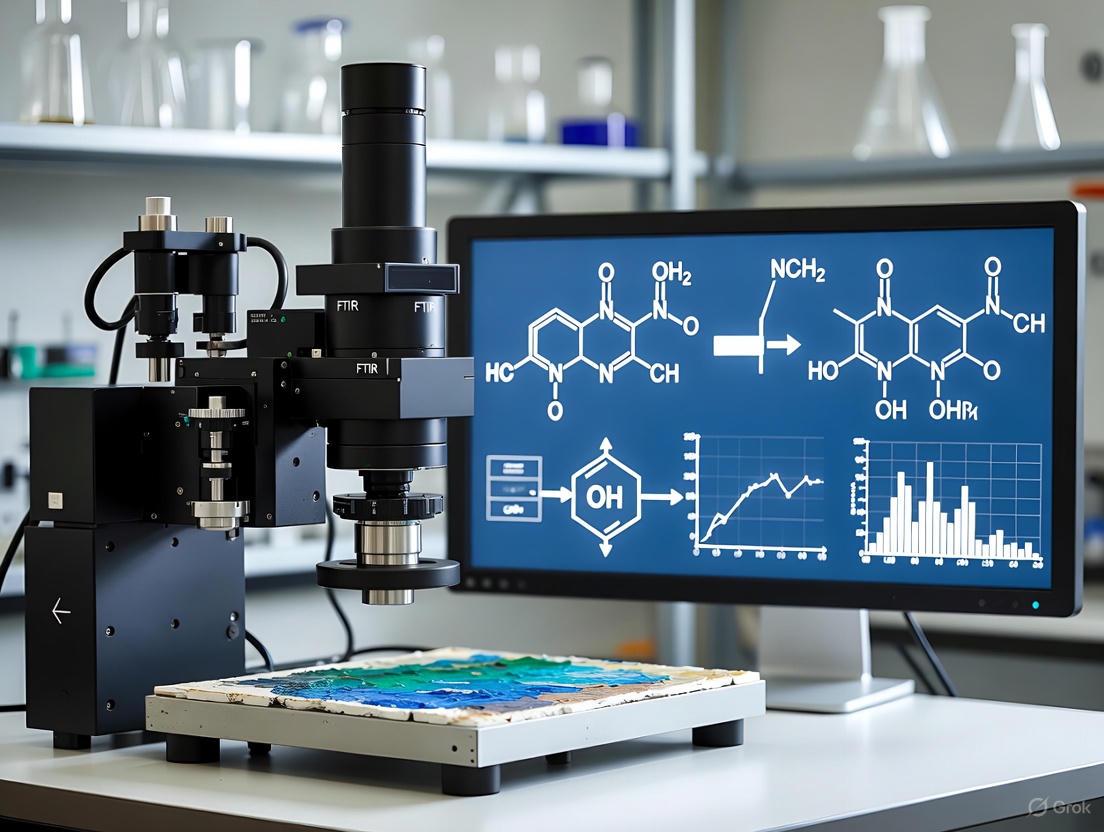
This article provides a comprehensive overview of Fourier Transform Infrared (FTIR) spectroscopy for analyzing paint layer composition.
FTIR Spectroscopy for Paint Analysis: A Comprehensive Guide to Composition, Techniques, and Applications
Abstract
This article provides a comprehensive overview of Fourier Transform Infrared (FTIR) spectroscopy for analyzing paint layer composition. It covers the fundamental principles of molecular vibration detection, explores various sampling methodologies including non-destructive and micro-destructive techniques, addresses common analytical challenges with optimization strategies, and compares FTIR with complementary analytical methods. Designed for conservation scientists, forensic analysts, and industrial coating specialists, this guide synthesizes current research and practical applications to support material identification, authentication, and preservation efforts.
Understanding FTIR Fundamentals: How Molecular Vibrations Decode Paint Composition
Fourier Transform Infrared (FTIR) spectroscopy has become an indispensable technique for analyzing the complex, multi-layered composition of paints in art conservation, forensics, and materials science. Its operational principle is rooted in the interaction between infrared light and the fundamental vibrational modes of molecules, producing a unique "chemical fingerprint" that allows researchers to non-destructively identify pigments, binders, and fillers within paint layers [1].
Molecular Vibrations: The Foundation of FTIR
The Nature of Molecular Vibrations
The atoms within molecules are in constant motion, vibrating around their equilibrium positions. These vibrations occur at specific frequencies that are characteristic of the particular chemical bonds and the overall molecular structure [1]. Even a simple triatomic molecule like water exhibits multiple distinct vibrational modes: symmetric stretching, antisymmetric stretching, and bending (deformation) vibrations [1]. Each vibration frequency is determined by the masses of the atoms involved and the strength of the chemical bonds connecting them—lighter atoms and stronger bonds vibrate at higher frequencies [2].
Infrared Absorption Mechanism
When infrared light interacts with a molecule, its energy can be absorbed if the frequency of the light matches one of the molecule's natural vibrational frequencies [1]. This absorption excites the molecular vibration, causing bonds to stretch and bend with increased amplitude. The resulting infrared absorption spectrum plots the amount of light absorbed against the frequency of the infrared light, revealing which specific vibrational modes were excited [2]. This spectrum serves as a unique identifier for chemical species because the precise combination and intensities of absorption bands are dictated by the molecule's composition and structure [1].
Figure 1: Molecular Vibration and IR Absorption Mechanism. Infrared light provides energy to excite specific molecular vibrations, which produces a characteristic absorption spectrum.
FTIR Instrumentation and Measurement
Fourier Transform Methodology
FTIR improves upon traditional infrared spectroscopy by using an interferometer to simultaneously measure all infrared wavelengths, rather than examining them sequentially [1]. The core component is a Michelson interferometer containing a beam splitter that divides infrared light between a fixed mirror and a moving mirror [3]. When the recombined beams interfere with each other, they create an interferogram—a complex signal encoding spectral information across all wavelengths [3]. A mathematical operation called a Fourier transform converts this time-domain interferogram into a conventional frequency-domain spectrum [1].
Sampling Techniques for Paint Analysis
Different sampling techniques enable FTIR analysis of various paint sample types, from micro-samples to entire artworks:
Table 1: FTIR Sampling Techniques for Paint Analysis
| Technique | Principle | Contact Required? | Sample Preparation | Best For |
|---|---|---|---|---|
| Transmission [1] | IR light passes through sample | Yes | Extensive (grinding, pressing into KBr pellets) | Laboratory analysis of micro-samples |
| Attenuated Total Reflection (ATR) [1] | IR light evanescently penetrates sample surface | Yes, with crystal | Minimal; sample placed on crystal | Solid paints, thick layers, routine analysis |
| External Reflectance [4] [5] | IR light reflects off sample surface | No | None; non-contact measurement | Intact artworks, delicate surfaces |
| Diffuse Reflectance [6] | IR light scatters off powdered samples | Yes | Powdered samples on IR-transparent window | Powder pigments, rough surfaces |
Experimental Protocols for Paint Layer Analysis
Non-Contact Reflectance Analysis of Artworks
The ConservatIR external reflection accessory enables completely non-destructive analysis of paintings and other cultural heritage objects [4]:
- Instrument Setup: Mount the ConservatIR external reflection accessory in the FTIR spectrometer and configure the instrument for reflectance measurements [5].
- Sample Positioning: Place the artwork 1-2 mm from the sampling aperture without making physical contact [5].
- Optimization: Adjust the distance while monitoring the IR signal and integrated video image to achieve optimal focus and signal strength [5].
- Spectral Collection: Collect mid-IR spectra (4000-400 cmâ»Â¹) using a KBr beamsplitter and DTGS detector at 4 cmâ»Â¹ resolution [5].
- Data Processing: Apply Kramers-Kronig transformation to correct reflectance spectra for anomalous dispersion effects, producing spectra comparable to conventional absorption measurements [5].
Far-IR Analysis for Inorganic Pigments
Far-infrared spectroscopy (below 400 cmâ»Â¹) provides complementary information crucial for identifying inorganic pigments:
- Instrument Configuration: Use a solid substrate beamsplitter and DTGS detector with polyethylene window for far-IR measurements (1800-100 cmâ»Â¹) [5].
- ATR Measurements: For enhanced signal from inorganic compounds, employ ATR mode with dedicated far-IR detector [5].
- Spectral Interpretation: Focus on low-frequency region where inorganic pigments exhibit strong absorption bands (e.g., Cadmium Yellow at 275 cmâ»Â¹) [5].
- Validation: Compare with mid-IR data to distinguish binder contributions from pigment signatures [5].
Figure 2: FTIR Paint Analysis Workflow. The process involves selecting appropriate sampling methods based on analytical needs, from completely non-destructive to micro-destructive approaches.
Spectral Interpretation and Data Analysis
Characteristic Vibrational Bands in Paint Components
The identification of paint components relies on recognizing characteristic absorption bands in specific infrared regions:
Table 2: Characteristic FTIR Absorption Bands for Paint Components
| Component Type | Example Materials | Characteristic Bands (cmâ»Â¹) | Vibration Assignment |
|---|---|---|---|
| Organic Binders | Acrylic binder [5] | 1730, 1450, 1180 | C=O stretch, C-H bend, C-O stretch |
| Inorganic Pigments | Prussian Blue [5] | ~2100 | C≡N stretch of cyano groups |
| Inorganic Fillers | Alumina trihydrate [5] | 3700-3200, 1000-500 | O-H stretch, Al-O vibrations |
| Inorganic Pigments | Cadmium Yellow [5] | 275 | Cd-S lattice vibration |
| Organic Pigments | Benzimidazolone Yellow [5] | Multiple in mid-IR | Complex aromatic structure vibrations |
Complementary Spectral Regions for Comprehensive Analysis
Combining mid-IR and far-IR spectral data provides the most complete picture of paint composition:
- Mid-IR (4000-400 cmâ»Â¹): Ideal for identifying organic components including binders, synthetic organic pigments, and some fillers through their fundamental molecular vibrations [5].
- Far-IR (below 400 cmâ»Â¹): Particularly valuable for characterizing inorganic pigments that may show weak or no spectral features in the mid-IR region, as it probes lattice vibrations and metal-oxygen bonds [5].
Table 3: Key Research Reagent Solutions for FTIR Paint Analysis
| Resource | Function | Application Example |
|---|---|---|
| ConservatIR External Reflection Accessory [4] | Enables non-contact reflectance measurements | Analyzing intact paintings without sampling |
| ATR Crystals (diamond, germanium, ZnSe) [1] | Provides internal reflection element for ATR measurements | Analyzing paint micro-samples with minimal preparation |
| KBr Powder [1] | IR-transparent matrix for transmission measurements | Preparing pellets for micro-sample analysis |
| Pigment Reference Databases [6] | Spectral libraries for material identification | Matching unknown paint spectra to reference materials |
| Kramers-Kronig Transformation Software [5] | Corrects reflectance spectra for dispersion artifacts | Converting reflectance data to absorption-like spectra |
The fundamental principles of molecular vibrations and infrared absorption make FTIR spectroscopy uniquely powerful for deconstructing the complex layered chemistry of paint systems. By measuring the specific vibrational frequencies of chemical bonds, FTIR provides researchers with a non-destructive analytical method that can identify organic and inorganic components alike, spanning applications from art authentication to forensic investigation and industrial quality control.
Fourier Transform Infrared (FTIR) spectroscopy has become an indispensable analytical technique for characterizing paint layer composition in conservation science and materials research. This technical guide details the complete FTIR workflow, from the generation of an interferogram to the transformation and interpretation of spectra, with specific application to paint analysis. We present current methodologies, including advanced algorithms for mixture analysis and baseline correction, and provide standardized protocols for analyzing paint binders, pigments, and degradation products. The integration of FTIR with complementary techniques such as SEM-EDS and DART-MS is discussed to enhance material discrimination in complex, multi-layered paint systems. This whitepaper serves as a comprehensive resource for researchers requiring precise chemical characterization of architectural, artistic, and industrial coatings.
Fourier Transform Infrared (FTIR) spectroscopy is a powerful analytical technique that provides molecular-level information about the chemical composition of materials, including complex paint systems. The underlying principle of FTIR is that chemical bonds within molecules vibrate at specific frequencies when exposed to infrared light, creating unique absorption patterns that serve as molecular "fingerprints" for identification and characterization [2] [7]. In paint analysis, this capability is crucial for identifying organic binders, pigments, additives, and degradation products without causing significant damage to valuable samples [8] [9].
The fundamental process involves irradiating a sample with broad-spectrum infrared light and measuring which wavelengths are absorbed. These absorption patterns correspond to specific molecular vibrations and provide detailed information about functional groups present in the material [10]. For paint research, FTIR can identify binder types such as acrylics, oils, or proteins, characterize pigment compositions, and detect oxidative degradation products that form as paints age [8]. The technique's sensitivity to chemical structure makes it particularly valuable for understanding paint composition, monitoring conservation treatments, and authenticating artworks and architectural finishes.
The FTIR Instrumentation and Signal Transformation Pathway
Core Components of an FTIR Spectrometer
FTIR spectrometers consist of several key components that work in concert to collect spectral data. The system begins with an infrared source, typically a heated filament that emits broad-spectrum infrared radiation across the mid-infrared range (approximately 4000-400 cmâ»Â¹) [10]. This light is directed into an interferometer, the heart of the FTIR system, which uses a beamsplitter to divide the incoming beam into two paths—one reflecting off a fixed mirror and the other off a moving mirror [2] [11]. The recombined beams create an interference pattern due to the path difference introduced by the moving mirror.
The resulting interferogram passes through the sample compartment where specific frequencies are absorbed by the material based on its molecular structure. The transmitted light then reaches a detector, which measures the intensity of the interference pattern over time [7]. Common detectors include DTGS (deuterated triglycine sulfate) for routine analysis and MCT (mercury cadmium telluride) for higher sensitivity applications [10]. Finally, a computer system with specialized software performs the Fourier transform mathematical operation, converting the time-domain interferogram into a frequency-domain spectrum that displays absorbance or transmittance as a function of wavenumber [11].
From Interferogram to Spectrum: A Visual Guide
The following diagram illustrates the complete FTIR signal transformation pathway, from infrared source to interpretable spectrum, with particular emphasis on the critical Fourier transform step.
Mathematical Foundation of Fourier Transformation
The Fourier transform operation is fundamental to converting the raw interferogram into an interpretable spectrum. Mathematically, the process converts a function in the time domain into its frequency domain components. For FTIR, the interferogram ( I(\delta) ) is recorded as a function of the optical path difference ( \delta ), and the Fourier transform calculates the intensity ( I(\tilde{\nu}) ) at each wavenumber ( \tilde{\nu} ) using the integral transform:
[ I(\tilde{\nu}) = \int_{-\infty}^{\infty} I(\delta) \cos(2\pi\tilde{\nu}\delta) d\delta ]
In practice, this computation is performed digitally using the Fast Fourier Transform (FFT) algorithm, enabling rapid processing of the interference pattern into a spectrum [11]. This mathematical operation allows all frequencies to be measured simultaneously during the entire scan duration, providing the multiplex (Fellgett's) and throughput (Jacquinot's) advantages that give FTIR its superior signal-to-noise ratio compared to traditional dispersive infrared instruments [10] [11].
Sampling Methodologies for Paint Layer Analysis
Selection of Appropriate FTIR Sampling Techniques
Different sampling techniques are employed in FTIR analysis depending on the nature of the paint sample and the specific information required. The selection of an appropriate method is critical for obtaining high-quality spectra with minimal artifact interference. The most common techniques for paint analysis include:
Attenuated Total Reflectance (ATR): This technique is particularly valuable for paint analysis as it requires minimal sample preparation and is suitable for a wide range of sample types [7]. ATR works by pressing the sample against a high-refractive-index crystal. The infrared beam undergoes total internal reflection within the crystal, generating an evanescent wave that penetrates a short distance (typically 0.5-5 microns) into the sample [7]. This makes ATR ideal for analyzing surface layers, thin films, and small paint fragments without destructive preparation.
Transmission: The traditional FTIR method where the infrared beam passes directly through a prepared sample [10]. For paint analysis, this typically requires creating a thin section or embedding micro-samples in KBr pellets. While this method can provide excellent spectra, it often requires more extensive sample preparation than ATR.
Specular Reflection: This technique measures the light reflected directly from a smooth, reflective surface [7]. It is particularly useful for analyzing paints on metallic substrates, as the technique can characterize thin coatings on reflective surfaces without requiring sample removal.
Diffuse Reflectance (DRIFTS): Suitable for powdered samples, DRIFTS measures the scattered light from rough surfaces or powders [7]. For paint analysis, this can be useful for studying pigment powders or gently abraded paint samples.
Advanced FTIR Imaging for Paint Stratigraphy
FTIR imaging extends conventional spectroscopy by combining spatial and chemical information. Using focal plane array (FPA) detectors, these systems can simultaneously collect thousands of spectra across a sample area, creating chemical maps that show the distribution of specific components [12]. For complex paint layer systems, this capability is invaluable for visualizing stratigraphy, identifying heterogeneous domains, and mapping degradation products without physical separation of layers.
Data Processing and Spectral Interpretation Framework
Preprocessing and Advanced Analysis Algorithms
Raw FTIR spectra often require preprocessing to correct for artifacts and enhance meaningful chemical information. Common preprocessing steps include atmospheric compensation (removing COâ‚‚ and Hâ‚‚O vapor contributions), baseline correction, and spectral normalization [13]. Recent algorithmic advances have significantly improved the quantitative aspects of FTIR for complex mixtures like paints:
Baseline Correction: The RA-ICA (Relative Absorbance-Independent Component Analysis) algorithm specifically addresses baseline distortions caused by overlapping absorption peaks in mixtures [13]. By calculating relative absorbance spectra and extracting independent components, this method reconstructs hidden baselines more accurately than traditional polynomial fitting approaches.
Robust Quantitative Analysis: A "suppress-adapt-optimize" model incorporating spectral denoising, residual distribution modeling, and specialized optimizers like Yogi has demonstrated a 15% improvement in quantification precision for challenging analytes [13]. This approach is particularly valuable for quantifying minor components or degradation products in aged paint systems.
Adaptive Band Selection: The ID-ABS (Information Density-Adaptive Band Selection) method dynamically evaluates information density across the full spectral range to identify optimal regions for quantitative analysis [13]. This corrects for absorption saturation effects that commonly occur with high pigment loadings in paints.
Spectral Interpretation for Paint Components
Interpreting FTIR spectra of paints requires knowledge of characteristic absorption frequencies for common binders, pigments, and additives. The table below summarizes key spectral regions and their assignments relevant to paint analysis:
Table 1: Characteristic FTIR Absorption Bands for Paint Components
| Wavenumber Range (cmâ»Â¹) | Assignment | Paint Component Examples |
|---|---|---|
| 3300-3400 | O-H stretching | Gums (arabic), polyalcohols, cellulose |
| 2920-2950 & 2850-2870 | C-H asymmetric & symmetric stretching | Oils, acrylics, alkyds |
| 1730-1750 | C=O stretching | Acrylics, oil esters, urethanes |
| 1610-1640 | C=C stretching | Unsaturated oils, aromatic pigments |
| 1270-1290 | C-O-C stretching | Acrylics, vinyl polymers |
| 1000-1100 | Si-O-Si stretching | Silicate extenders, fillers |
The "fingerprint region" (1500-500 cmâ»Â¹) contains complex absorption patterns resulting from coupled vibrations that are highly specific to molecular structure [10]. This region is particularly valuable for distinguishing between different paint formulations and identifying specific pigments and extenders.
For conservation science, tracking spectral changes over time provides insights into paint degradation mechanisms. For example, a decrease in ester carbonyl intensity (∼1730 cmâ»Â¹) with a concomitant increase in carboxylic acid bands (∼1710 cmâ»Â¹) indicates hydrolysis of acrylic binders, while broad hydroxyl bands (∼3400 cmâ»Â¹) suggest oxidative degradation in oil-based paints [8].
Experimental Protocols for Paint Analysis
Standard Operating Procedure for ATR-FTIR Analysis of Paint Samples
The following protocol outlines a standardized methodology for analyzing paint samples using ATR-FTIR, based on techniques employed in recent conservation science research [8]:
Sample Preparation:
- For liquid paints, apply a small droplet directly to the ATR crystal.
- For solid paint chips, select a representative area (approximately 2mm²) and ensure flat contact with the crystal.
- Use minimal pressure to achieve good contact without damaging the crystal.
Instrument Setup:
- Configure the FTIR spectrometer with the following parameters:
- Spectral range: 4000-400 cmâ»Â¹
- Resolution: 4 cmâ»Â¹
- Scans per spectrum: 32
- Apodization function: Happ-Genzel
- Configure the FTIR spectrometer with the following parameters:
Background Collection:
- Clean the ATR crystal with isopropyl alcohol and ensure it is completely dry.
- Collect a background spectrum with the same acquisition parameters.
Sample Measurement:
- Position the sample on the crystal and apply consistent pressure.
- Collect the sample spectrum using the established parameters.
- For heterogeneous samples, collect multiple spectra from different regions.
Data Processing:
- Apply atmospheric suppression to remove COâ‚‚ and water vapor artifacts.
- Perform baseline correction using the RA-ICA algorithm for complex mixtures [13].
- Normalize spectra to the most intense band for comparative analysis.
Accelerated Aging Studies for Paint Stability Assessment
To evaluate the chemical stability of paint materials, accelerated aging protocols coupled with FTIR analysis provide valuable predictive data:
Thermal Aging:
- Expose paint samples to elevated temperatures (e.g., 120°C) in a controlled environment for predetermined intervals (1, 4, 10, 46, and 96 days) [8].
- After each interval, acquire FTIR spectra following the standard protocol.
- Monitor changes in key functional groups to assess degradation pathways.
Light Aging:
- Subject samples to controlled irradiation in a xenon-arc lamp chamber with a daylight filter (225 MW/m²) for 1, 3, 7, 10, and 14 days [8].
- Analyze spectral changes after each exposure period to identify photodegradation products.
Natural Aging:
- Maintain control samples under standard museum conditions (typically 21°C ± 3°C and 50% ± 5% RH) for extended periods (e.g., 4 years) [8].
- Compare aged samples with unaged references to identify long-term degradation patterns.
Table 2: Research Reagent Solutions for FTIR Paint Analysis
| Reagent/Material | Function/Application | Technical Specification |
|---|---|---|
| ATR Crystals (Diamond, ZnSe, Ge) | Sample interface for ATR measurements | Diamond: universal use; ZnSe: general purpose; Ge: high refractive index |
| KBr (Potassium Bromide) | Matrix for transmission measurements | FTIR grade, purified, for pellet preparation |
| Solvent Mixtures (e.g., Acetone, Ethanol) | Sample cleaning and preparation | HPLC grade, low residue |
| Nujol Mineral Oil | Medium for mull preparation | For analysis of water-sensitive samples |
| Pressure Gauge | Consistent pressure application | For ATR accessories requiring controlled force |
| Calibration Standards (Polystyrene, COâ‚‚) | Instrument performance verification | Certified reference materials |
Complementary Techniques and Data Integration
Multi-Technique Approach for Comprehensive Paint Characterization
While FTIR provides exceptional molecular information about organic components in paints, integrating it with complementary analytical techniques creates a more comprehensive characterization strategy. The following workflow diagram illustrates how FTIR integrates with other analytical methods in a paint investigation:
Technical Synergies in Paint Analysis
FTIR and SEM-EDS: While FTIR identifies organic binders and some pigments, SEM-EDS provides elemental composition data for inorganic pigments and extenders [9]. For example, FTIR can identify acrylic binders (C=O stretch at ∼1730 cmâ»Â¹) while SEM-EDS detects inorganic elements like Ti (from TiOâ‚‚ white pigment) or Cd (from cadmium yellow) [8] [9].
FTIR and DART-MS: Direct Analysis in Real Time-Mass Spectrometry (DART-MS) complements FTIR by detecting low-concentration additives and plasticizers that may not yield strong IR signals [9]. Recent research shows DART-MS can identify tributyl citrate plasticizers and polyethylene glycol additives in architectural paints that were not detected by FTIR alone [9].
FTIR and Raman Spectroscopy: Raman spectroscopy provides complementary vibrational information, often yielding stronger signals for symmetric bonds and inorganic pigments that may be weak in IR spectra. The combined approach is particularly powerful for characterizing complex pigment mixtures.
FTIR spectroscopy remains a cornerstone technique for paint analysis, providing detailed molecular-level information about organic components through a well-established process from interferogram to interpretable spectrum. Recent algorithmic advances in mixture analysis, baseline correction, and quantitative modeling have significantly enhanced FTIR's capabilities for complex paint systems [13]. The integration of FTIR with complementary techniques like SEM-EDS and DART-MS creates a powerful multidisciplinary approach for comprehensive paint characterization [9].
Future developments in FTIR technology for paint research will likely focus on increased portability for in-situ analysis, enhanced imaging capabilities with higher spatial resolution, and more sophisticated algorithms for automated mixture decomposition and degradation prediction. As these advancements mature, FTIR will continue to be an essential tool for conservation scientists, forensic analysts, and materials researchers requiring precise chemical characterization of paint layers and their degradation pathways.
Fourier Transform Infrared (FTIR) spectroscopy has emerged as an indispensable analytical technique for deciphering the complex molecular composition of paint layers, serving a critical role in authentication, conservation, and art historical research. The fundamental premise of FTIR analysis is that chemical bonds within molecules vibrate at specific frequencies when exposed to infrared light, creating a unique absorption spectrum that acts as a molecular fingerprint for each material [2]. In the context of paint analysis, this enables researchers to identify organic binders, inorganic pigments, fillers, and even degradation products within stratified layers without necessarily causing damage to precious artworks [4].
The application of FTIR spectroscopy to paint layer composition research provides insights that extend far beyond simple material identification. By analyzing the specific functional groups present in paint components, conservators can date art objects through the identification of modern versus historical materials, verify authenticity by matching pigment periods with artistic timelines, and determine appropriate conservation treatments based on the chemical compatibility of materials [4]. For instance, the ability to distinguish between zinc white (commercially available since the 19th century) and titanium white (later development) through their far-IR signatures can help establish the temporal provenance of a painting [5]. Furthermore, the detection of metal carboxylate salts (metal soaps) – degradation products formed from interactions between inorganic pigments and fatty acids in oil binders – is crucial for diagnosing and treating condition issues that threaten the structural integrity of paintings [14].
Theoretical Foundation: FTIR Spectral Interpretation of Paint Components
Fundamental Principles of FTIR Spectroscopy
FTIR spectroscopy operates on the principle that molecules absorb specific frequencies of infrared radiation that correspond to the natural vibrational frequencies of their chemical bonds. When infrared light interacts with a sample, chemical bonds undergo various vibrational modes including stretching (symmetrical and asymmetrical) and bending (scissoring, rocking, wagging, twisting) [2]. The absorption of infrared radiation occurs only when the frequency of light matches the vibrational frequency of a molecular bond and when the vibration causes a change in the dipole moment of the molecule [15].
The resulting FTIR spectrum presents a plot of absorbance (or transmittance) against wavenumber (cmâ»Â¹), with each absorption peak corresponding to specific molecular vibrations. The interpretation of these spectra relies on recognizing characteristic patterns and positions of absorption bands that are indicative of particular functional groups [15]. For example, carbonyl groups (C=O) in binders like oils or acrylics exhibit strong stretching vibrations between 1650-1750 cmâ»Â¹, while hydroxyl groups (O-H) in carbohydrates or water show broad stretching bands around 3200-3550 cmâ»Â¹ [16]. The region from approximately 1500-400 cmâ»Â¹, known as the fingerprint region, contains complex absorption patterns that are unique to specific molecules, enabling definitive material identification when compared to reference libraries [2].
FTIR Spectral Features of Major Paint Components
Table 1: Characteristic FTIR Absorption Bands for Organic Binders and Media
| Functional Group | Vibration Mode | Spectral Range (cmâ»Â¹) | Characteristic Features | Paint Component |
|---|---|---|---|---|
| O-H stretching | Hydrogen-bonded | 3200-3550 | Strong, broad band | Alcohol, phenol (binders) |
| O-H stretching | Free | 3584-3700 | Strong, sharp | Alcohol, phenol (binders) |
| O-H stretching | Carboxylic acid | 2500-3300 | Very strong, very broad | Drying oil binders |
| C=O stretching | Esters | 1735-1750 | Strong, sharp | Acrylic binders, oil paints |
| C=O stretching | Aliphatic ketone | 1705-1725 | Strong, sharp | Ketone resins |
| C=O stretching | Carboxylic acid | 1706-1720 | Strong, broad | Oil paint degradation products |
| C-O stretching | Primary alcohol | 1050-1085 | Strong, sharp | Alcohol-based binders |
| C-O stretching | Esters | 1163-1210 | Strong, sharp | Acrylic polymers |
| C-H stretching | Alkane | 2840-3000 | Medium intensity | Aliphatic chains in binders |
Table 2: Characteristic FTIR Absorption Bands for Pigments and Fillers
| Functional Group/Bond | Vibration Mode | Spectral Range (cmâ»Â¹) | Characteristic Features | Paint Component |
|---|---|---|---|---|
| C≡N stretching | Cyano groups | 2222-2260 | Weak to medium, sharp | Prussian Blue pigment [5] |
| M–O stretching | Metal-oxygen | 400-600 | Strong, broad | Inorganic pigments, fillers [16] |
| S=O stretching | Sulfate | 1380-1415 | Strong, sharp | Fillers like alumina trihydrate [5] |
| C≡C stretching | Alkyne | 2190-2260 | Weak | Organic pigments |
| N-H stretching | Primary amine | 3300-3400 | Medium, sharp | Synthetic organic pigments |
| N-O stretching | Nitro compound | 1500-1550 | Strong | Modern organic pigments |
The interpretation of FTIR spectra from actual paint samples is complicated by the fact that artists' paints are complex mixtures of pigments, fillers, and binders. The spectral features often represent superimposed signals from multiple components, requiring careful deconvolution and reference matching. For instance, the identification of a specific organic pigment like benzimidazolone yellow (developed in the 1960s) within an acrylic binder requires spectral subtraction techniques to isolate the pigment spectrum from the dominant binder signals [5]. Similarly, the detection of degradation products like metal soaps is evidenced by the appearance of carboxylate bands between 1500-1600 cmâ»Â¹, which can be mapped to specific metal cations (lead, zinc, copper) based on their exact positions and shapes [14].
Methodological Approaches: FTIR Techniques for Paint Analysis
Non-Destructive Reflectance FTIR Spectroscopy
Traditional FTIR analysis of paintings often required the removal of tiny samples for transmission or attenuated total reflectance (ATR) measurements, necessitating physical contact with or removal of material from the artwork [4]. The development of non-contact, non-destructive FTIR reflectance spectroscopy has revolutionized the field by enabling in-situ analysis without sampling. The ConservatIR FTIR External Reflection Accessory allows characterization of various artists' paints without making direct contact with the painting surface, eliminating the need to remove samples while still providing comprehensive molecular information [4].
The experimental protocol for external reflection FTIR involves positioning the artwork 1-2 mm from the sampling aperture of the ConservatIR accessory, which is mounted in an FTIR spectrometer such as the Thermo Scientific Nicolet iS50 [5]. The integrated camera captures a magnified image of the sampled spot, allowing precise targeting of analysis areas. Mid-IR spectra are typically collected from 4000 to 400 cmâ»Â¹ at 4 cmâ»Â¹ resolution using a KBr beamsplitter and DTGS detector, while far-IR spectra (1800-100 cmâ»Â¹) are collected using a solid substrate beamsplitter and DTGS detector with polyethylene window [5]. A critical aspect of the methodology involves applying Kramers-Kronig (KK) transformation to the raw reflectance spectra to correct for derivative-like spectral distortions caused by anomalous dispersion in specular reflection measurements, producing spectra consistent with other FTIR methodologies like ATR [5].
Microspectroscopic Mapping of Cross-Sections
For detailed stratigraphic analysis, FTIR microspectroscopy can be performed on paint cross-sections to identify and map the distribution of components throughout the layer structure. The standard protocol involves embedding microscopic paint samples in polyester resin or potassium bromide (KBr) followed by grinding and polishing using standard petrographic techniques [14] [17]. A final wet polishing step using an aqueous slurry of 0.05 µm alumina particles is performed to create a smooth surface that maximizes specular reflection [14].
Two primary FTIR mapping approaches are employed: external reflection FTIR (R-FTIR) mapping and attenuated total reflection (ATR) FTIR mapping. R-FTIR mapping is performed using instruments such as the Agilent Cary 670 FTIR spectrometer with Cary 620 microscope system equipped with a focal plane array (FPA) detector, allowing simultaneous acquisition of thousands of spectra across areas up to 422.4 × 422.4 µm with pixel resolutions of approximately 3.3 µm [14]. This non-contact method is particularly valuable for analyzing fragile or heterogeneous samples where contact might cause damage. ATR-FTIR mapping employs objectives with germanium or silicon crystals pressed into contact with the sample surface, providing higher spatial resolution (as fine as 7.5 µm² effective analysis area) but requiring physical contact [17]. Typical parameters for ATR mapping include spectral range of 4000-675 cmâ»Â¹, resolution of 4 cmâ»Â¹, and step sizes of 4-20 µm depending on the features of interest [17].
Multivariate statistical methods, particularly Principal Component Analysis (PCA), are increasingly applied to the complex hyperspectral data cubes generated by FTIR mapping. This approach helps extract meaningful information from datasets where univariate analysis is challenged by matrix effects, mixture complexity, and band overlapping [17]. The brushing approach – which links score plots with spatial score maps – enables unambiguous identification of the investigated areas corresponding to each spectral cluster, facilitating interpretation of the distribution of various painting materials [17].
The Scientist's Toolkit: Essential Research Reagents and Materials
Table 3: Key Research Reagents and Materials for FTIR Paint Analysis
| Item | Function/Application | Technical Specifications | Research Context |
|---|---|---|---|
| ConservatIR FTIR External Reflection Accessory | Non-contact, non-destructive analysis of artworks | Wide range of possible angles; sampling aperture at end of arm; integrated camera | Enables reflectance measurements without physical contact with priceless artworks [4] |
| Nicolet iS50 FTIR Spectrometer | Main instrument platform for FTIR analysis | Configurable for mid-IR and far-IR measurements; built-in ATR | Versatile system for comprehensive paint characterization [5] |
| Germanium ATR Crystal | High-resolution microspectroscopic analysis | Conical geometry; high refractive index | Provides high spatial resolution for mapping cross-sections [17] |
| Potassium Bromide (KBr) | Embedding medium for cross-section preparation | Purity > 99.9%; transparent to IR radiation | Standard matrix for preparing samples for transmission analysis [17] |
| Alumina Polishing Suspension | Final polishing of cross-sections | 0.05 µm particle size | Creates smooth surface that maximizes specular reflection [14] |
| Gold-Palladium Reference Mirrors | Background measurements for R-FTIR | Sputter-coated using 40 mA current for 60 seconds | Provides reference surface for reflection measurements [14] |
| Suc-Ala-Ala-Pro-Gly-pNA | Suc-Ala-Ala-Pro-Gly-pNA, MF:C23H30N6O9, MW:534.5 g/mol | Chemical Reagent | Bench Chemicals |
| (Val3,Pro8)-Oxytocin | (Val3,Pro8)-Oxytocin, MF:C41H60N12O12S2, MW:977.1 g/mol | Chemical Reagent | Bench Chemicals |
Advanced Applications and Analytical Strategies
Case Study: Differentiation of Historically Significant Pigments
The power of FTIR analysis in authentication and dating is exemplified by its ability to distinguish between pigments with similar appearance but different historical introduction periods. In one documented analysis, FTIR reflectance measurements in both mid-IR and far-IR regions successfully differentiated cadmium yellow (commercially available since 1919) from benzimidazolone yellow (introduced in the late 1970s) [5]. The cadmium yellow pigment, composed primarily of cadmium sulfide (CdS), showed features dominated by the acrylic binder in the mid-IR region with a characteristic strong, broad absorption at 275 cmâ»Â¹ in the far-IR spectrum. In contrast, the benzimidazolone yellow organic pigment exhibited both acrylic binder peaks and many strong features in the mid-IR region attributable to the organic pigment molecule [5].
Similarly, the analysis of white pigments demonstrates the complementary value of mid-IR and far-IR measurements. While Zinc White and Titanium White acrylic paints appear nearly identical in the mid-IR region due to dominance of the acrylic binder spectrum, they are readily distinguished in the far-IR region based on their distinct metal-oxygen vibrational signatures [5]. This capability to differentiate historically significant pigments provides crucial evidence for dating artworks and detecting anachronisms that might indicate forgery.
Degradation Product Mapping and Conservation Science
FTIR spectroscopy has proven particularly valuable in identifying and mapping metal soap degradation products that threaten the structural integrity of oil paintings. These metal carboxylate salts form from interactions between inorganic pigments and free fatty acids in the oil binding medium, leading to condition issues such as protrusions, surface haze, and interlayer adhesion failure [14]. Well-crystallized metal carboxylate salts give sharp, characteristic peaks in the mid-IR between approximately 1500-1600 cmâ»Â¹, with the exact position depending on the specific metal cation (zinc, lead, calcium, copper) and fatty acid involved [14].
In a groundbreaking study using R-FTIR spectroscopy on polished cross-sections, researchers successfully identified and mapped the distribution of zinc, lead, calcium, and copper fatty acid salts along with various pigments and the oil binding medium [14]. The application of Kramers-Kronig transformations to the reflection spectra generated transmission/absorption-like spectra that facilitated identification of these degradation species. The distribution was mapped by integrating characteristic absorption features, revealing the spatial relationships between original materials and their degradation products – information crucial for developing targeted conservation strategies.
The integration of multivariate analysis methods has further enhanced the capability to extract subtle chemical information from complex paint matrices. In the analysis of historical samples from mural paintings and art objects, Principal Component Analysis enabled the identification and spatial localization of thin organic layers such as varnishes and preparation layers that were challenging to detect with univariate methods alone [17]. The creation of false-color RGB images based on score values from three principal components effectively visualized the distribution of various painting materials in a single comprehensive image, revealing stratigraphic relationships that inform both art historical interpretation and conservation treatment decisions.
FTIR spectroscopy provides an unparalleled analytical window into the molecular composition of paint layers, enabling precise identification of functional groups that characterize binding media, pigments, fillers, and degradation products. The technique's evolution from destructive sampling methods to non-contact reflectance spectroscopy has transformed its application in cultural heritage science, allowing in-situ analysis of priceless artworks while generating comprehensive molecular data. The integration of far-IR capabilities has extended its sensitivity to inorganic pigments, while multivariate analysis methods have enhanced the extraction of meaningful information from complex spectral datasets.
As FTIR technology continues to advance, its role in paint layer composition research expands correspondingly, offering increasingly sophisticated solutions to questions of authentication, dating, and conservation treatment. The ability to map degradation products like metal soaps throughout paint stratigraphy represents just one example of how FTIR spectroscopy contributes to preserving cultural heritage for future generations. For conservation scientists and art historians, the molecular fingerprints revealed by FTIR analysis provide not only identification of materials but also insights into the chemical processes that unfold within paintings over time, informing both scholarly understanding and practical preservation strategies.
Fourier Transform Infrared (FTIR) spectroscopy has emerged as a cornerstone technique in the analysis of paint layer composition, enabling researchers to decipher the complex chemical identity of organic binders, inorganic pigments, and various additives non-destructively. The value of this technique for artistic and forensic applications lies in its inherent sensitivity, specificity, and non-destructive capabilities [18]. In the context of a broader thesis on paint layer composition research, FTIR provides a critical methodological framework for understanding not only what materials are present but also their interactions and degradation pathways. This technical guide explores the fundamental principles, experimental protocols, and analytical frameworks for using FTIR spectroscopy to discriminate between organic and inorganic components in complex paint systems, providing researchers with a comprehensive toolkit for advanced materials characterization.
Fundamental Principles of FTIR Spectroscopy in Paint Analysis
Theoretical Basis of Molecular Vibrations
FTIR spectroscopy operates on the principle that chemical bonds within molecules vibrate at specific frequencies when exposed to infrared light [19]. These vibrations are directly related to molecular structure, making FTIR a powerful tool for identifying and characterizing chemical compounds. When infrared radiation interacts with a paint sample, specific wavelengths are absorbed by the molecules, exciting various vibrational modes including stretching (where bond lengths change) and bending (where bond angles change) [19]. The resulting infrared absorption spectrum serves as a molecular fingerprint that can be utilized to identify and analyse the substance.
The fingerprint region (1500-600 cmâ»Â¹) is particularly diagnostic for paint analysis, as it contains absorption features specific to different polymer binders and inorganic pigments [20]. For instance, acrylate binders typically show strong carbonyl (C=O) stretching bands around 1725-1740 cmâ»Â¹, while alkyd binders may display additional peaks associated with their phthalate content (1254-1069 cmâ»Â¹) [21]. The differences in spectral signatures between organic and inorganic components arise from their fundamentally different chemical structures: organic molecules primarily feature covalent bonds between carbon, hydrogen, oxygen, and nitrogen atoms, while inorganic pigments often contain metal-oxygen bonds that vibrate at lower frequencies [16].
Complementary Vibrational Spectroscopies
While FTIR spectroscopy is highly effective for many paint components, its combination with Raman spectroscopy provides a more comprehensive analytical approach [22]. These techniques are complementary due to their different fundamental selection rules. FTIR relies on absorption of infrared radiation and requires a change in dipole moment during vibration, while Raman spectroscopy measures the inelastic scattering of light and depends on changes in molecular polarizability [22].
This complementarity is particularly valuable for pigment analysis. For example, cadmium sulfide yellow pigment (PY37) can only be identified by Raman spectroscopy, as it has no absorption bands in the mid-IR region [21]. Conversely, hydrated chromium oxide green (PG18) shows strong O-H vibrations at 3077 cmâ»Â¹ and Cr-O vibrations between 547-483 cmâ»Â¹ in FTIR spectra, while its Raman spectrum is less definitive [21]. Artificial ultramarine blue (PB29) demonstrates both Si-O vibrations at 981 cmâ»Â¹ in FTIR and multiple lazurite vibrational modes (255, 547, and 1097 cmâ»Â¹) in Raman spectroscopy [21].
Characterization of Organic Binders
Synthetic Polymer Binders in Modern Paints
Synthetic polymers have largely replaced traditional natural binders in modern paints, with acrylic and alkyd resins being the most prevalent [21]. Acrylic copolymers, typically composed of methyl methacrylate (MMA) and either ethyl acrylate (EA) or n-butyl acrylate (nBA), are valued for their stability, excellent optical and mechanical properties, and rapid drying [21]. Alkyd binders are oil-modified polyester resins consisting of polyhydric alcohol (e.g., glycerol or pentaerythritol) and polybasic carboxylic acid (typically phthalic anhydride), with the addition of oils and free fatty acids to create a flexible polymer suitable for paint films [21].
The distinction between these binder types via FTIR spectroscopy is achieved by identifying characteristic functional groups. Acrylic binders typically exhibit strong carbonyl stretching (C=O) at 1726 cmâ»Â¹ and C-H stretching between 2955-2874 cmâ»Â¹ [21]. Alkyd binders also show carbonyl stretching around 1720 cmâ»Â¹ but can be distinguished by the presence of phthalate-associated peaks at 1250 cmâ»Â¹ (C-O-C stretching asymmetric), 1114 cmâ»Â¹ (C-O-C stretching symmetric), and 747-709 cmâ»Â¹ (aromatic out-of-plane bending) [21].
FTIR Spectral Features of Common Binders
Table 1: Characteristic FTIR Absorption Bands for Common Paint Binders
| Binder Type | Wavenumber (cmâ»Â¹) | Assignment | Intensity & Shape |
|---|---|---|---|
| Acrylic | 2955-2874 | C-H stretching (sym-asym) | Strong |
| 1726 | C=O stretching | Strong, sharp | |
| 1237-1144 | C-O-C stretching (asym) | Strong | |
| 1450 | C-H bending | Medium | |
| Alkyd | 2925-2854 | C-H stretching | Strong |
| 1720 | C=O stretching (oil and phthalate) | Strong | |
| 1250 | C-O-C stretching (phthalate) | Strong | |
| 747-709 | Aromatic out-of-plane bending | Medium | |
| Epoxy | 1500-1610 | Aromatic C=C stretching | Medium |
| 1245 | Aryl-O stretching | Strong | |
| 830-910 | Epoxide ring vibrations | Variable | |
| Urethane | 3320 | N-H stretching | Medium, broad |
| 1690-1740 | C=O stretching (urethane) | Strong | |
| 1530 | N-H bending + C-N stretching | Strong |
Analysis of Inorganic Pigments and Additives
Common Inorganic Pigments in Paint Formulations
Inorganic pigments represent approximately 80% of the pigments presently used in the world, with artificial ultramarine blue (PB29), hydrated chromium oxide green (PG18), and cadmium sulfide yellow (PY37) being among the most prevalent due to their high chemical and physical stability [21]. These pigments are typically composed of insoluble materials dispersed in a polymeric matrix, forming suspensions of varying consistency [21]. Unlike organic dyes, inorganic pigments often contain metal-oxygen bonds that produce distinct infrared absorption patterns.
FTIR analysis of inorganic pigments is particularly effective for identifying metal oxides, carbonates, sulfates, and silicates. For instance, calcium carbonate (CaCO₃), a common extender pigment, shows characteristic strong bands at approximately 1415 cmâ»Â¹ (asymmetric stretch), 876 cmâ»Â¹ (out-of-plane bend), and 712 cmâ»Â¹ (in-plane bend) [22]. Titanium dioxide (TiOâ‚‚), whether in rutile or anatase form, exhibits broad metal-oxygen stretching bands below 700 cmâ»Â¹ [22]. Barium sulfate (BaSOâ‚„), another common filler, shows strong sulfate stretching vibrations between 1080-1180 cmâ»Â¹ [22].
Spectral Interpretation of Inorganic Components
Table 2: Characteristic FTIR Absorption Bands for Common Inorganic Pigments and Additives
| Pigment/Additive | Chemical Formula | Wavenumber (cmâ»Â¹) | Assignment | Detection Method |
|---|---|---|---|---|
| Titanium Dioxide | TiOâ‚‚ | <700 | Ti-O stretching | FTIR |
| 595 (2° optical mode) | Raman signature | Raman [21] | ||
| Artificial Ultramarine Blue | Na₈₋â‚â‚€Al₆Si₆Oâ‚‚â‚„Sâ‚‚â‚‹â‚„ | 981 | Si-O vibrations | FTIR [21] |
| 255, 547, 1097 | Lazurite vibrations | Raman [21] | ||
| Hydrated Chromium Oxide Green | Cr₂O₃·nH₂O | 3077 | O-H vibrations | FTIR [21] |
| 547-483 | Cr-O vibrations | FTIR [21] | ||
| 488, 578, 271 | Hydrated oxide | Raman [21] | ||
| Cadmium Sulfide Yellow | CdS | <600 | Below detector cut-off | FTIR (not detectable) [21] |
| 290, 595 | Optical longitudinal modes | Raman [21] | ||
| Calcium Carbonate | CaCO₃ | 1415, 876, 712 | CO₃²⻠vibrations | FTIR [22] |
| Barium Sulfate | BaSO₄ | 1080-1180 | SO₄²⻠stretching | FTIR [22] |
Multi-Modal Analytical Approach
Integrating Complementary Techniques
While FTIR spectroscopy provides invaluable molecular information about paint components, its combination with other analytical techniques creates a powerful multi-modal approach for comprehensive paint characterization [22]. Scanning Electron Microscopy with Energy Dispersive X-ray Spectroscopy (SEM/EDX) provides critical elemental composition data that complements the molecular information from FTIR [22]. EDX can detect elements including C, O, Mg, Si, S, Cl, Ca, Ti, Fe, Cu, Zn, and Ba in varying proportions, reflecting the compositions of pigments and biocidal additives [20].
This multi-technique approach is particularly valuable for complex paint systems such as ship paints, where components like rosin-based antifouling agents may be misclassified when relying solely on FTIR spectral libraries [20]. Similarly, in forensic analysis of automotive paint chips, the combination of ATR-FTIR imaging, Raman microspectrometry, and SEM/EDX has proven highly effective for characterizing complex multi-layer paint systems [22].
Experimental Workflow for Paint Layer Characterization
The analytical workflow begins with careful visual examination of the paint sample under magnification to identify layer structure and physical characteristics [22]. For cross-sectional analysis, paint chips are typically embedded in epoxy resin and carefully polished to reveal the stratigraphic layer structure [22]. ATR-FTIR imaging is then performed to obtain spatial chemical information across the layered cross-section, providing molecular speciation of polymer resins, inorganic components, and their distribution [22].
Raman microspectrometry complements this data by identifying inorganic pigments (TiO₂, ZnO, Fe₃O₄), mineral fillers (kaolinite, talc, pyrophyllite), and inorganic fillers (BaSO₄, Al₂(SO₄)₃, Zn₃(PO₄)₂, CaCO₃) that may have weak or overlapping FTIR signals [22]. Finally, SEM/EDX analysis provides high-resolution imaging of layer morphology and elemental composition that supports and verifies the FTIR and Raman findings [22]. The integration of these complementary datasets enables comprehensive characterization of the complex paint system.
Quantitative Analysis Methodologies
Development of Calibration Models
While qualitative identification of binders and pigments is well-established, quantitative analysis of their ratios presents greater challenges that require carefully developed calibration methodologies [21]. Quantitative FTIR analysis relies on the fundamental principle that the area of specific spectral bands is directly proportional to the concentration of the chemical groups associated with them [21]. To establish this relationship, researchers prepare reference samples with known pigment/binder ratios to create calibration curves using linear regression of the experimental points representing ATR-FTIR or Raman spectral band area versus the relative concentration of the corresponding component [21].
The accuracy of quantitative FTIR analysis depends heavily on proper baseline selection for spectral integration [21]. The integration baseline can be calculated automatically by instrument software or determined manually, with each approach having distinct advantages and limitations [21]. For precise quantification, characteristic spectral features that act as signatures for specific components must be identified. For binder quantification, the carbonyl stretching band (around 1720-1726 cmâ»Â¹) is frequently used, while pigment-specific bands such as Si-O vibrations for ultramarine blue (981 cmâ»Â¹) or Cr-O vibrations for chromium oxide green (547-483 cmâ»Â¹) serve for pigment quantification [21].
Experimental Protocol for Quantitative Paint Analysis
Sample Preparation:
- Prepare reference paint samples with known pigment/binder ratios in a systematic series (e.g., 1:1, 1:2, 1:3 pigment to binder weight ratios) [21].
- For cross-section analysis, embed samples in epoxy resin and polish using multiple-step polishing with progressively finer sand papers (200, 800, 1200, 2000, and 2400 mesh numbers) to create smooth surfaces without destroying layered structures [22].
- Ensure consistent sample thickness and homogeneity to minimize spectral variance unrelated to concentration.
Instrumental Parameters for ATR-FTIR:
- Use a spectrometer with ATR accessory equipped with a diamond crystal.
- Collect spectra in the range of 4000-600 cmâ»Â¹ with resolution of 4 cmâ»Â¹.
- Accumulate 32-64 scans per spectrum to ensure adequate signal-to-noise ratio.
- Maintain consistent pressure on the ATR crystal for all measurements to ensure reproducible contact.
Data Analysis:
- Select characteristic absorption bands for each component of interest.
- Establish consistent baseline integration methods (automated or manual) across all spectra.
- Measure integrated band areas for the selected characteristic peaks.
- Construct calibration curves by plotting integrated band areas against known concentrations.
- Apply linear regression to establish quantitative relationships for unknown samples.
Research Reagent Solutions and Materials
Table 3: Essential Materials for FTIR Analysis of Paint Components
| Material/Reagent | Function/Application | Example Components |
|---|---|---|
| Reference Pigments | Calibration standards for quantitative analysis | Artificial ultramarine blue (PB29), Hydrated chromium oxide green (PG18), Cadmium sulfide yellow (PY37), Titanium dioxide (TiOâ‚‚) [21] |
| Polymer Binders | Reference materials for binder identification | Acrylic Plextol D498, Alkyd Medium 4, Epoxy resins, Urethane polymers [21] [20] |
| Embedding Resins | Sample preparation for cross-section analysis | Bisphenol-A-epichlorohydrin epoxy resin with triethylenetetramine hardening agent [22] |
| Polishing Materials | Creating smooth cross-sectional surfaces | Sand papers (200-2400 mesh), Polishing cloths, Diamond suspension [22] |
| ATR Crystals | FTIR sampling interface | Diamond, Germanium, or ZnSe crystals for attenuated total reflectance measurements [23] |
| Spectral Libraries | Reference databases for component identification | Commercial and custom libraries of polymer binders, pigments, and additives [20] |
Applications in Heritage Science and Forensics
Cultural Heritage Conservation
FTIR spectroscopy plays a crucial role in the conservation and restoration of fine art and historical objects by identifying the molecular composition of paints, varnishes, and other materials non-destructively [18]. This application is particularly valuable for determining the effect of aging, including damage caused by UV exposure, thermal stress, and environmental pollution [18]. For example, FTIR analysis can detect the formation of oxalates on historical painted surfaces, which are common by-products of micro-organisms such as fungi and algae that feed off of paint components [18].
The advent of handheld FTIR instruments has revolutionized heritage science by enabling in-situ analysis of valuable objects that cannot be moved to laboratories [18]. These instruments allow conservators to analyze paintings, documents, manuscripts, historical photographs, statuary, architecture, tapestries, tiles, mosaics, and wooden objects without sampling [18]. This capability is particularly important for large-scale objects such as mural paintings, architectural elements, and historical buildings where sampling is impractical or ethically problematic.
Forensic Paint Analysis
In forensic science, FTIR spectroscopy provides valuable evidence through the analysis of paint chips recovered from crime scenes, particularly in hit-and-run accidents [22]. The multi-layered structure of automotive paints, with specific sequences and compositions of primer, basecoat, and clearcoat layers, provides distinctive fingerprints that can be linked to vehicle manufacturers and models [22]. The chemical profile obtained through FTIR analysis, especially when combined with Raman spectroscopy and SEM/EDX, enables forensic experts to compare paint fragments from crime scenes with reference samples from suspected vehicles [22].
The non-destructive nature of FTIR analysis is particularly valuable in forensic applications, as it preserves evidence for additional testing and courtroom presentation [23]. Furthermore, the development of chemometric analysis methods for FTIR spectra has enhanced the discrimination power between visually similar paints, enabling more confident conclusions about the origin of evidentiary paint samples [23].
FTIR spectroscopy provides an powerful analytical framework for characterizing the complex organic and inorganic components in paint systems. When properly integrated with complementary techniques such as Raman spectroscopy and SEM/EDX, it enables comprehensive paint layer composition analysis that supports diverse research fields from heritage science to forensic investigation. The continuing development of quantitative methods, handheld instrumentation, and advanced spectral interpretation approaches ensures that FTIR will remain a cornerstone technique in paint analysis research, providing critical insights into material composition, degradation processes, and conservation strategies for valuable cultural artifacts and modern industrial materials alike.
FTIR Sampling Techniques in Practice: From Non-Destructive Analysis to Cross-Sectional Mapping
Fourier Transform Infrared (FTIR) spectroscopy is a powerful analytical technique used to identify the chemical makeup of materials by measuring the absorption of infrared light. While traditional FTIR methods like transmission and Attenuated Total Reflectance (ATR) often require sample removal or preparation, reflectance FTIR spectroscopy offers a non-destructive approach crucial for analyzing delicate or irreplaceable samples [4]. In reflectance measurements, the infrared light reflected from the sample surface is detected, rather than the light that passes through it [24]. This fundamental difference makes reflectance FTIR exceptionally valuable for investigating materials that are difficult or impossible to analyze destructively, including layered paint systems in art conservation, forensic analysis, and industrial coatings [24] [4].
The application of non-destructive reflectance FTIR within paint layer composition research provides critical insights for authentication, preservation, and material science. It enables researchers to identify pigments, binders, fillers, and other components without compromising the integrity of the artwork or sample [4] [22]. This is particularly important for forensic analysis of multi-layered paint chips in hit-and-run cases and for conserving cultural heritage objects where sampling is unacceptable [4] [22].
Theoretical Foundations of Reflectance Techniques
When infrared light interacts with a sample, several optical phenomena can occur. In the context of reflectance FTIR, two primary mechanisms are utilized for chemical analysis: external reflection and diffuse reflection [25].
External reflection techniques involve the direct reflection of infrared light from a surface and can be further subdivided based on the sample's properties. On smooth, reflective surfaces, specular reflection dominates, where the angle of incidence equals the angle of reflection [24] [25]. For thin films on reflective substrates, reflection-absorption (or transflectance) occurs, where IR light passes through the sample, reflects off the substrate, and passes through the sample again, effectively doubling the pathlength [24].
In contrast, diffuse reflection occurs primarily with rough surfaces or powdered materials where IR light penetrates the sample and is scattered in multiple directions by sample particles [24] [25]. This scattering effect provides chemical information from both the surface and the bulk of the material. The theoretical basis for interpreting these different reflectance signals varies, with specular reflection data often requiring Kramers-Kronig transformation and diffuse reflection spectra typically being treated with the Kubelka-Munk function to produce spectra comparable to transmission measurements [24].
External Reflectance FTIR
Principles and Mechanisms
External reflectance FTIR encompasses techniques where infrared light reflects directly from a sample surface without the use of an internal reflection element like in ATR [25]. The two main forms are specular reflection and reflection-absorption (transflectance). In specular reflection, IR light reflects directly off a smooth, reflective surface at the same angle as the incident light [24] [25]. This technique is particularly sensitive to surface characteristics and is ideal for analyzing thin films on metallic substrates, smooth polymer surfaces, and coatings [24]. For reflection-absorption, the IR beam passes through a thin sample, reflects off a reflective substrate, and passes through the sample again, effectively doubling the path length and enhancing sensitivity for ultra-thin layers [24].
The incident angle of the IR light beam significantly affects the measurement sensitivity. Increasing the incident angle extends the path the IR light travels through the sample, which increases the amount of IR light absorbed [24]. This principle enables the analysis of extremely thin samples, including monolayers only one molecule thick, by using large incident angles [24]. For micrometer-range thickness coatings, angles around 30° are typical, while for monolayer analysis at Angstrom-level thickness, grazing angles of 80-85° are employed for maximum sensitivity [25].
Applications in Paint Layer Analysis
External reflectance FTIR provides exceptional capabilities for paint layer research, particularly through its non-contact, non-destructive nature [4]. This makes it invaluable for analyzing valuable artworks where sampling is prohibited. Using external reflectance accessories, conservation scientists can characterize various artists' paints without direct contact with the painting and without needing to remove samples from the artwork [4].
The technique enables identification of both organic and inorganic components in paints across different spectral regions. Mid-IR reflectance measurements (4000-400 cmâ»Â¹) can identify binders like acrylics and oils, while far-IR measurements (200-10 cmâ»Â¹) are particularly useful for differentiating inorganic pigments that may have weak or no mid-IR spectral signatures [4]. For instance, far-IR reflectance can distinguish between Zinc White and Titanium White paints whose acrylic binder renders their mid-IR spectra nearly identical [4]. This capability also allows researchers to date art objects and verify authenticity by identifying modern pigments like Pyrrole Red (developed in the 1980s) alongside historical pigments like Prussian Blue (first synthesized in 1704) [4].
Experimental Protocol for External Reflectance Measurement
Sample Considerations: Specular reflection requires smooth, reflective surfaces such as coated metals, plastics, glass, and gemstones [24]. Reflection-absorption needs thin samples on reflective substrates [24].
Instrument Setup: Position the sample for optimal reflection using an external reflection accessory. For paint analysis on artworks, use an integrated camera to identify the sampled spot without contact [4]. Select the appropriate incident angle based on coating thickness: near-perpendicular for thicker coatings (micrometer range) and grazing angles (80-85°) for monolayers or Angstrom-level thickness [25].
Data Collection Parameters:
- Spectral range: Collect data in both mid-IR (4000-400 cmâ»Â¹) and far-IR (200-10 cmâ»Â¹) regions for comprehensive pigment and binder identification [4]
- Resolution: Typically 4-8 cmâ»Â¹
- Scans: 64-128 scans for adequate signal-to-noise ratio
Spectral Processing: For specular reflection spectra, apply Kramers-Kronig transformation (KKT) to correct for distortions caused by variations in refractive index and produce spectra comparable to transmission measurements [24]. KKT requires the IR beam to be perpendicular to the sample and the sample to show only specularly reflected light without scattering [24].
Table 1: External Reflectance Modes and Their Applications in Paint Analysis
| Reflectance Mode | Sample Type | Primary Applications in Paint Research | Key Considerations |
|---|---|---|---|
| Specular Reflection | Smooth, reflective surfaces (metal coatings, plastics, glass) [24] | Rapid material identification; analysis of surface coatings; art restoration [24] | Requires Kramers-Kronig transformation for meaningful interpretation [24] |
| Reflection-Absorption (Transflectance) | Thin films on reflective substrates [24] | Analysis of ultra-thin coatings; monolayer characterization; coating thickness determination [24] | Pathlength increases with incident angle; suitable for samples one molecule thick [24] |
| Grazing Angle | Monolayers and Angstrom-level coatings on reflective surfaces [25] | Analysis of thin paint layers; surface contamination studies; forensic paint chip analysis [25] | Uses high angles of incidence (80-85°) for enhanced sensitivity [25] |
Diffuse Reflectance FTIR (DRIFTS)
Principles and Mechanisms
Diffuse Reflectance Infrared Fourier Transform Spectroscopy (DRIFTS) measures the scattered infrared light from rough surface samples such as powders, fibers, or matt surfaces [24] [25]. When IR light interacts with these samples, it penetrates the surface and undergoes multiple scattering events by particles within the sample, re-emerging in all directions [24]. This diffuse reflection provides volumetric chemical information rather than just surface characteristics.
The amount of diffusely reflected light depends heavily on sample properties including particle size, shape, compactness, and refractive index [24]. The quality of the resulting DRIFTS spectrum is directly related to the amount of diffusely reflected light collected, which necessitates proper sample preparation to ensure deep IR penetration and sufficient scattering [24]. Unlike specular reflection, DRIFTS accessories are often designed with off-axis optics to collect diffusely reflected light while eliminating the specular component, which can adversely affect the spectral quality [25].
The resulting DRIFTS spectrum differs significantly from transmission spectra in both peak intensities and shapes [24]. The relationship between concentration and band intensity that exists in transmission measurements is not directly maintained in DRIFTS. To correct these differences and produce spectra comparable to transmission measurements, the Kubelka-Munk function is applied to the raw reflectance data [24].
Applications in Paint Layer Analysis
DRIFTS is particularly valuable for analyzing solid samples encountered in paint research, including raw pigments, soil particles on painted surfaces, catalyst studies, and mining materials [24]. The technique enables researchers to investigate powdered components without dissolution or extensive preparation, maintaining the material's original state.
In forensic paint analysis, DRIFTS can identify inorganic extenders and pigments that might be missed by other techniques [9]. The method's sensitivity to various solid-state forms makes it ideal for polymorph detection and crystal structure analysis in inorganic pigments. Additionally, DRIFTS can be used quantitatively for solid samples when proper calibration is performed using the Kubelka-Munk relationship [24].
The technique also shows promise in degradation studies of historical paints, where researchers can analyze minute samples of deteriorating paint without further altering their chemical structure. This provides crucial information for conservation science and understanding material aging processes.
Experimental Protocol for DRIFTS Measurement
Sample Preparation: Proper preparation is critical for high-quality DRIFTS spectra. The sample must be ground to create small, uniform particles and well-mixed to ensure homogeneity [24]. For optimal results, dilute the sample with a non-absorbing solid matrix such as potassium bromide (KBr) at typical concentrations of 1-5% sample in diluent [24]. This dilution reduces specular reflection and increases IR penetration depth, enhancing the diffuse reflection signal.
Instrument Setup: Use a DRIFTS accessory with off-axis collection optics to maximize diffuse light collection while minimizing specular reflection [25]. Ensure proper alignment according to manufacturer specifications. Place the prepared sample in the DRIFTS cup and level the surface without compacting, as packing density affects scattering efficiency.
Data Collection Parameters:
- Spectral range: 4000-400 cmâ»Â¹
- Resolution: 4 cmâ»Â¹
- Scans: 64-128 scans per spectrum
- Reference: Pure KBr or the diluent material
Spectral Processing: Apply the Kubelka-Munk transformation to convert reflectance data to a spectrum comparable to transmission measurements [24]. The Kubelka-Munk function is defined as: f(R∞) = (1-R∞)²/2R∞ = k/s Where R∞ is the absolute reflectance of the sample, k is the molar absorption coefficient, and s is the scattering coefficient.
Table 2: Comparison of External Reflectance and Diffuse Reflectance FTIR Techniques
| Parameter | External Reflectance | Diffuse Reflectance (DRIFTS) |
|---|---|---|
| Primary Mechanism | Direct reflection from surface [24] | Scattering from particles within sample [24] |
| Sample Types | Smooth, reflective surfaces; thin films on reflective substrates [24] | Powders, rough surfaces, matt finishes [24] [25] |
| Spectral Processing | Kramers-Kronig transformation [24] | Kubelka-Munk function [24] |
| Information Depth | Surface and thin films [24] | Bulk composition (volumetric) [24] |
| Sample Preparation | Minimal; often direct analysis [4] | Extensive; grinding and dilution required [24] |
| Primary Paint Applications | Surface coatings; thin paint layers; non-destructive art analysis [4] | Pigment identification; powdered samples; degradation studies [24] |
Experimental Design and Methodologies
Multi-Modal Approach for Comprehensive Paint Analysis
For thorough characterization of complex paint systems, a multi-modal analytical approach combining multiple FTIR techniques with complementary methods provides the most comprehensive information [22]. Paint is a complex mixture of organics (binders, polymers, additives) and inorganics (pigments, fillers, minerals), making single-technique analysis insufficient for complete characterization [22].
Integrated analysis combining ATR-FTIR imaging, Raman microspectrometry (RMS), and scanning electron microscopy/energy-dispersive X-ray spectrometry (SEM/EDX) has proven highly effective for multi-layered paint chips [22]. This combination provides complementary data: ATR-FTIR identifies polymer resins and some inorganics; RMS detects inorganic pigments and fillers; and SEM/EDX determines elemental composition and layer structure [22].
The workflow begins with non-destructive techniques before proceeding to micro-destructive methods if necessary. For paint layer analysis, this typically involves:
- Visual examination under optical microscopy to identify layer structure
- External reflectance FTIR for non-destructive surface analysis
- DRIFTS for powdered samples or bulk composition
- Micro-FTIR (including ATR-FTIR imaging) for spatial resolution of layers
- RMS and SEM/EDX for additional molecular and elemental information
Spectral Interpretation and Data Processing
Interpretation of reflectance FTIR spectra requires understanding of technique-specific artifacts and processing needs. Follow a systematic 12-step interpretation process for optimal results [26]:
- Always interpret quality spectra with low noise, minimal baseline offset, flat baseline, on-scale peaks, and no artifacts [26]
- Avoid mixtures when possible to simplify interpretation
- Use other knowledge of the sample including physical properties and origin
- Determine how the spectrum was measured including resolution and sampling method
- Identify spectral artifacts from atmospheric gases (COâ‚‚, Hâ‚‚O) before analyzing sample peaks [26]
- Identify peaks from known components like substrates or contaminants
- Read from left to right focusing on group wavenumbers in the functional group region (4000-1500 cmâ»Â¹) before the fingerprint region (1500-400 cmâ»Â¹) [26]
- Assign intense bands first as they are most diagnostically useful
- Track down secondary bands of functional groups already identified
- Assign other bands as needed for complete interpretation
For reflectance spectra, additional processing is often required. Baseline correction is essential for removing offsets caused by scattering effects [27]. Polynomial fitting and derivatives based on Savitzky-Golay filters are common baseline removal methods [27]. Kramers-Kronig transformation for specular reflection spectra eliminates distortions from refractive index variations, producing true absorption-like spectra [24]. The Kubelka-Munk function converts DRIFTS spectra to linearize the relationship with concentration [24].
Essential Research Tools and Reagents
Successful implementation of reflectance FTIR for paint analysis requires specific instrumentation, accessories, and reagents. The selection of appropriate tools directly impacts data quality and analytical outcomes.
Table 3: Research Reagent Solutions for Reflectance FTIR Paint Analysis
| Tool/Reagent | Function/Application | Technical Specifications |
|---|---|---|
| FTIR Spectrometer with Reflectance Capability | Core instrumentation for measurement | Spectral range covering mid-IR (4000-400 cmâ»Â¹) and far-IR (200-10 cmâ»Â¹); FTIR configuration with interferometer [4] [27] |
| External Reflection Accessory | Non-contact analysis of paint surfaces | Integrated camera for sample positioning; adjustable incident angles (30° for µm layers, 80-85° for monolayers) [4] [25] |
| DRIFTS Accessory | Analysis of powdered pigments and solids | Off-axis collection optics to eliminate specular component; environmental chamber for controlled atmosphere [24] [25] |
| KBr (Potassium Bromide) | Diluent for DRIFTS measurements | IR-transparent matrix; spectroscopic grade; used at 95-99% dilution with sample [24] |
| Reference Materials | Spectral validation and calibration | Certified reference materials for common pigments (e.g., Zinc White, Titanium White, Prussian Blue) [4] |
| Non-Absorbing Diluents | DRIFTS sample preparation | KBr, KCl, or diamond powder for reducing specular reflection in powder samples [24] |
External reflectance and diffuse reflectance FTIR spectroscopy provide powerful, non-destructive approaches for analyzing paint layer composition across diverse applications from art conservation to forensic science. The complementary nature of these techniques—with external reflectance excelling in surface analysis and DRIFTS providing bulk composition of solids—enables comprehensive characterization of complex paint systems.
The non-destructive nature of these methods makes them particularly valuable for analyzing culturally significant objects where sampling is prohibited, providing critical information for authentication, dating, and preservation planning. When combined with complementary techniques like Raman spectroscopy and SEM/EDX in a multi-modal approach, reflectance FTIR offers unprecedented insights into the complex chemistry of paint materials.
As analytical technology advances, particularly in imaging capabilities and computational analysis, reflectance FTIR methodologies continue to evolve, offering increasingly sophisticated tools for unraveling the complex material history embedded in layered paint systems.
Fourier-transform infrared (FTIR) spectroscopy has emerged as a cornerstone technique for analyzing the complex, multi-layered structure of paint systems in cultural heritage and industrial applications. The analysis of paint cross-sections using attenuated total reflectance (ATR) FTIR and FTIR microscopy represents a significant advancement in micro-destructive characterization, providing detailed molecular information about pigments, binders, fillers, and degradation products with minimal sample requirement. This technical guide explores the fundamental principles, methodologies, and applications of these techniques within the broader context of paint layer composition research, demonstrating how they reveal historical manufacturing techniques, material interactions, and degradation pathways essential for conservation science and materials characterization.
Technical Principles and Advantages
ATR-FTIR spectroscopy operates on the principle of generating an evanescent wave that extends beyond the surface of a high-refractive-index crystal into the sample in contact with it, typically penetrating 0.5-2 micrometers. Molecular bonds absorb infrared radiation at specific wavelengths corresponding to their vibrational modes, producing characteristic spectra for organic and inorganic components. When coupled with microscopy, this technique enables spatial mapping of chemical functional groups at resolutions ranging from 0.5 to 25 μm, depending on the instrument configuration, optical components, and light source [28].
The significant advantages of ATR-FTIR microscopy for paint cross-section analysis include:
- Minimal sample destruction: Only micro-samples (typically <1 mm) are required, preserving artwork integrity [29]
- Enhanced spatial resolution: Micro-ATR FTIR microscopy provides a factor of four spatial resolution enhancement over transmission mode FTIR, enabling characterization of thin layers down to approximately 2-10 μm [30]
- No thickness requirement: Unlike transmission FTIR which requires samples thin enough (5-30 μm) for IR transmission, ATR can analyze samples regardless of thickness [30]
- Molecular specificity: Identifies both organic and inorganic components through their characteristic infrared absorption bands [29]
The development of focal plane array (FPA) detectors and "live ATR imaging" with enhanced chemical contrast has further advanced the field by enabling real-time monitoring of sample-to-crystal contact, allowing ultralow-pressure measurements that prevent buckling of delicate cross-sections and eliminate the need for resin embedding [30].
Experimental Protocols and Methodologies
Sample Collection and Preparation
The work on the 17th-century painting 'The Coronation and Assumption of the Blessed Virgin Mary' exemplifies the standard protocol for micro-sampling from cultural heritage objects. Due to the immense artistic and historical value of the artwork, researchers extracted only five micro-samples from discrete and representative areas of the painting, each taken from strategically important and prevalent hues [29].
Cross-Section Preparation:
- Embedding: Micro-samples are typically embedded in resin to maintain structural integrity during sectioning. The resin block is then polished to expose a clean cross-sectional surface.
- Microtomy: For extremely small fragments (<1 mm), ultramicrotomy using diamond knives produces thin sections (≤1 μm) ideal for transmission FTIR microscopy [31].
- Mounting: For conventional ATR-FTIR mapping, the polished cross-section is positioned with the layered structure facing upward for contact with the ATR crystal.
- Alternative approach: For unsupported analysis, samples can be mounted in a micro-vice and cross-sectioned with a razor before direct contact with the ATR crystal, eliminating embedding steps [30].
Instrumental Parameters and Data Collection
The analysis of the 17th-century painting employed a linear array detector with a micro-ATR imaging accessory, achieving a spatial resolution of approximately 5 microns with a pixel size at the sample of 6.25 μm [29]. Typical instrumental parameters include:
- Spectral range: 4000-400 cmâ»Â¹ (mid-infrared)
- Spectral resolution: 4-8 cmâ»Â¹
- Scans co-added: 64-128 scans per spectrum
- ATR crystal: Germanium (Ge) or Diamond
- Detector: Mercury Cadmium Telluride (MCT) focal plane array or linear array
For "live ATR imaging" approaches, the system utilizes real-time feedback to monitor contact quality between the sample and ATR crystal before data collection, enabling the use of extremely low pressure that facilitates analysis of delicate, unsupported cross-sections [30].
Data Processing and Analysis
Raw ATR-FTIR spectra require correction for the wavelength-dependent penetration depth of the evanescent wave, typically applied automatically by instrument software. For mapping data sets, multivariate analysis techniques such as alternating least squares (ALS) or modified alternating least squares (MALS) are employed to extract pure component spectra from heterogeneous areas where spatial mixing occurs [31].
Spectral interpretation relies on comparison with reference databases of pigments, binders, and degradation products. For complex mixtures, spectral subtraction may be employed to isolate components, such as subtracting binder spectra to identify pigment signatures [5].
Table 1: Key Spectral Assignments for Common Paint Components
| Component Type | Specific Material | Characteristic IR Bands (cmâ»Â¹) | Assignment |
|---|---|---|---|
| Pigments | Calcium carbonate | 1390-1420, 870-880, 710-730 | C-O stretching and bending |
| Lead white (2PbCO₃·Pb(OH)₂) | 1390-1490, 1040, 680-780 | CO₃²⻠vibrations | |
| Prussian blue (Fe₄[Fe(CN)₆]₃) | ~2100 | C≡N stretch | |
| Copper arsenite | 900-1100, 500-600 | Cu-O, As-O vibrations | |
| Binders | Proteinaceous (egg, casein) | 3280 (Amide A), 1650 (Amide I), 1540 (Amide II), 1450 (Amide III) | N-H, C=O, C-N stretching and bending |
| Drying oils | 2920, 2850 (C-H stretch), 1740 (C=O ester), 1160-1180 (C-O ester) | Aliphatic chains, ester groups | |
| Terpenic resins | 2920, 2850, 1690 (C=O), 1280, 1100 | Hydrocarbon skeleton, carboxylic acids | |
| Degradation Products | Calcium oxalate monohydrate (whewellite) | 1620, 1320 | C=O stretching |
| Copper oxalate (moolooite) | 1645, 1325 | C=O stretching | |
| Lead soaps | 1540, 1510 (COOâ» antisymmetric) | Carboxylate vibrations |
Research Reagent Solutions and Essential Materials
Table 2: Essential Materials for ATR-FTIR Analysis of Paint Cross-Sections
| Item | Function | Specific Examples/Properties |
|---|---|---|
| Embedding Resins | Structural support for fragile samples during sectioning | Epoxy resins (e.g., Araldite), acrylic resins; must produce minimal IR interference |
| Polishing Materials | Creating smooth cross-sectional surfaces for optimal crystal contact | Successively finer lapping papers (30 μm to 1 μm), diamond suspensions |
| ATR Crystals | Generating evanescent wave for measurement | Germanium (Ge), Diamond; high refractive index, chemical inertness |
| Microtome Knives | Sectioning samples to appropriate thickness | Steel blades for preliminary cuts, diamond knives for ultramicrotomy (≤1 μm sections) |
| Reference Materials | Spectral identification and validation | Pure pigments, binders, degradation products (e.g., calcium oxalate, lead soaps) |
| Mounting Media | Securing samples during analysis | Micro-vices for unsupported samples, custom holders for embedded cross-sections |
Analytical Workflow and Data Interpretation
The complete analytical process for ATR-FTIR analysis of paint cross-sections follows a systematic workflow from sample selection to data interpretation, as illustrated below:
Case Study: 17th-Century Panel Painting
The analysis of 'The Coronation and Assumption of the Blessed Virgin Mary' demonstrates the application of this workflow. ATR-FTIR mapping of cross-sections revealed a rich palette of materials, including [29]:
- White pigments: Lead white (2PbCO₃·Pb(OH)₂) and calcium carbonate (CaCO₃)
- Blue pigments: Azurite (2CuCO₃·Cu(OH)₂)
- Red pigments: Red ochre (Fe₂O₃) and cinnabar (HgS)
- Binding media: Proteinaceous (egg) and drying oils
- Degradation products: Whewellite (CaC₂O₄·H₂O), moolooite (CuC₂O₄), and lead soaps
The distribution of these components within the layer structure provided insights into the painting technique, including the use of intermediate layers and specific pigment-binder combinations characteristic of the North European School of Painting [29].
Industrial Paint Analysis
In forensic automotive paint analysis, ATR-FTIR of cross-sections enables discrimination of individual layers in multi-layer systems. The combination of ultramicrotomy for sample preparation and modified alternating least squares (MALS) for spectral deconvolution allows identification of individual layer compositions even in complex paint smears, which is crucial for vehicle identification in hit-and-run investigations [31].
Technical Diagrams
ATR-FTIR Cross-Section Analysis Principle
Advanced Applications and Synergistic Techniques
Synchrotron-Based ATR-FTIR
The development of synchrotron macro-ATR-FTIR represents a significant advancement for high-resolution chemical mapping. The high brightness of synchrotron IR beams (100-1000× brighter than conventional thermal sources) enables dramatically improved signal-to-noise ratios and spatial resolution, allowing molecular characterization at the single-cell level in biological materials and unprecedented detail in cultural heritage materials [28]. This technique has been applied to study the effects of surfactants on plant leaf surfaces, demonstrating its capability to detect alterations in spectral signatures associated with lipids, proteins, and carbohydrates [28].
Complementary Analytical Techniques
ATR-FTIR microscopy is most powerful when combined with complementary analytical techniques:
- Optical microscopy: Provides initial examination of layer structure and morphology [29]
- SEM-EDX: Offers elemental composition and high-resolution morphological data [29]
- Raman spectroscopy: Particularly effective for pigment identification, especially inorganic pigments [31]
- XRF: Provides elemental composition data that complements molecular information from FTIR [32]
The integration of these techniques in a multi-analytical approach provides comprehensive characterization of complex paint systems, enabling complete understanding of both elemental composition and molecular structure.
ATR-FTIR and FTIR microscopy of cross-sections represent powerful micro-destructive analytical techniques that have revolutionized the study of paint layer composition. By providing molecular-level information with spatial resolution sufficient to resolve individual layers in complex multi-layer systems, these methods enable detailed characterization of both historical and modern paint materials. The continuing development of instrumentation, including synchrotron-based sources, focal plane array detectors, and advanced computational analysis methods, promises even greater capabilities for non-destructive and micro-destructive analysis of cultural heritage and industrial materials. As these technologies evolve, they will further enhance our ability to understand material composition, degradation processes, and historical manufacturing techniques, providing essential knowledge for conservation science, forensic investigation, and materials characterization.
Automotive paint protection films (PPFs) are multilayer polymeric films applied to vehicle surfaces to safeguard against scratches, scuffs, and rock chips [33]. With the global PPF market projected to grow from approximately USD 590 million in 2024 to USD 960 million by 2032, their forensic significance has increased substantially [34]. When vehicles equipped with PPFs are involved in incidents, these films can be transferred as trace evidence, necessitating robust analytical methods for characterization and discrimination [33]. This case study examines the application of Fourier Transform Infrared (FTIR) spectroscopy within a multimodal analytical framework for forensic PPF analysis, contextualizing its role within broader research on automotive paint layer composition.
Technical Foundation: PPF Composition and Analytical Challenges
Multilayered Structure of PPFs
Paint protection films feature a sophisticated layered architecture, with each stratum serving a distinct protective or adhesive function [34]:
- Hydrophobic Topcoat: The outermost layer, providing water-repelling properties and high optical clarity.
- Thermoplastic Polyurethane (TPU) Layer: An aliphatic TPU core that delivers essential elasticity, durability, and impact resistance. This layer may possess self-healing properties.
- Pressure-Sensitive Adhesive (PSA) Layer: An acrylic-based adhesive that enables firm bonding to automotive painted surfaces.
This complex structure mirrors the multilayer systems of conventional automotive paints, which typically comprise an electrocoat primer, surfacer, colorant/basecoat, and clear coat [35]. Consequently, established forensic paint analysis paradigms require adaptation for effective PPF examination.
Analytical Challenges in PPF Characterization
Forensic analysis of PPFs presents unique challenges distinct from traditional paint evidence:
- Minimal Inorganic Components: Unlike automotive paints that frequently contain inorganic pigments and additives, PPFs are predominantly organic polymers, complicating analysis techniques reliant on elemental characterization [34].
- Physical Flexibility: The thin, pliable nature of PPF layers complicates traditional sample preparation methods like cross-sectioning [34].
- Material Similarity: TPU layers across different PPF brands often exhibit high chemical similarity, necessitating highly discriminating analytical techniques [34].
Analytical Workflow for Forensic PPF Characterization
A comprehensive approach combining physical examination and chemical analysis provides optimal discrimination of PPF samples. The integrated workflow proceeds through sequential stages:
Figure 1: Comprehensive analytical workflow for forensic PPF characterization.
Initial Physical Examination
The analytical process begins with visual classification based on color (colorless, black, grey) and finish (gloss, matte) [34]. Subsequent stereomicroscopy examines cross-sectional layer structure, revealing the distinct architectural composition of PPFs. This preliminary physical characterization informs subsequent spectroscopic analysis and facilitates sample selection.
FTIR Spectroscopy Methodology
Fourier Transform Infrared spectroscopy provides molecular-level characterization through measurement of infrared radiation absorption by chemical bonds.
Experimental Protocol: ATR-FTIR Analysis
- Instrumentation: Attenuated Total Reflectance (ATR) accessory with diamond crystal, typically integrated with FTIR spectrometer [36].
- Spectral Range: Collection from 4000 cmâ»Â¹ to 400 cmâ»Â¹, with extended range capabilities to 100 cmâ»Â¹ for inorganic additives [36].
- Sample Preparation: Direct placement of PPF samples on ATR crystal; minimal preparation required [34].
- Acquisition Parameters: 16-32 scans at 4 cmâ»Â¹ resolution; background spectrum collected prior to sample measurement [34].
- Layer-Specific Analysis: Sequential analysis of topcoat, TPU, and adhesive layers when possible [34].
ATR-FTIR's minimal sample preparation requirements and non-destructive nature make it particularly valuable for forensic evidence where sample preservation is crucial [36].
Advanced FTIR Microspectroscopy Techniques
For challenging samples, advanced FTIR approaches offer enhanced capabilities:
- μ-FTIR Chemical Imaging: Enables analysis of cross-sections without manual layer separation through transmission or transflection modes [37].
- O-PTIR Spectroscopy: Provides superior spatial resolution for thin layers (e.g., ~5 μm primers on plastic substrates) with complementary Raman data [37].
Complementary Analytical Techniques
Pyrolysis-Gas Chromatography-Mass Spectrometry (Py-GC-MS)
- Principle: Thermal decomposition followed by chromatographic separation and mass spectrometric detection [34].
- Protocol: ~0.5 mg sample; pyrolysis at 600°C; GC-MS analysis of pyrolysates [34].
- Role: Enhances discrimination of chemically similar TPU layers by identifying specific polymer additives and plasticizers [34].
Raman Microspectroscopy
- Principle: Inelastic scattering of monochromatic light providing molecular fingerprint [35].
- Protocol: Multiple laser wavelengths (455 nm, 532 nm, 785 nm) to manage fluorescence; baseline correction [35].
- Advantage: Effective identification of pigments like titanium dioxide (rutile) that may be challenging for FTIR [35].
Key Research Findings and Data Interpretation
Discrimination Power of Analytical Techniques
Recent research evaluating 28 PPF samples from seven brands reveals the varying discriminatory power of different analytical methods:
Table 1: Discrimination Power of Analytical Techniques for PPF Characterization
| Analytical Technique | Targeted PPF Layer | Discrimination Effectiveness | Key Identifiable Components |
|---|---|---|---|
| Visual & Microscopic | Complete structure | Preliminary classification | Color, finish, layer structure |
| ATR-FTIR | Topcoat | High discrimination | Polymer matrix, additives |
| ATR-FTIR | TPU Layer | Limited discrimination | Polyurethane type |
| ATR-FTIR | Adhesive Layer | Moderate discrimination | Acrylic polymers |
| Py-GC-MS | TPU Layer | Enhanced discrimination | Polymer additives, plasticizers |
| Raman | All layers | Pigment identification | TiOâ‚‚, organic pigments |
The data clearly demonstrates that ATR-FTIR analysis of the topcoat layer, combined with preliminary physical examination, provides the most efficient approach for rapid discrimination of PPF samples [34].
Spectral Interpretation and Comparative Analysis
FTIR spectral analysis focuses on characteristic absorption bands to identify polymer components:
- Polyurethane Peaks: C=O stretch (~1700 cmâ»Â¹), N-H bend (~1530 cmâ»Â¹), C-N stretch (~1220 cmâ»Â¹) [34]
- Acrylic Adhesives: Strong C=O stretch (~1730 cmâ»Â¹), C-O stretches (1150-1270 cmâ»Â¹) [34]
- Topcoat Components: Siloxane signatures (Si-O-Si, ~1000-1100 cmâ»Â¹) for hydrophobic properties [34]
Comparative analysis employs both characteristic peak identification and correlation coefficient methods to establish matches or differences between known and questioned samples [38].
The Scientist's Toolkit: Essential Research Reagents and Materials
Successful forensic analysis of PPFs requires specific materials and instrumentation throughout the analytical process:
Table 2: Essential Research Reagents and Materials for PPF Analysis
| Category | Specific Items | Function/Application |
|---|---|---|
| Sample Collection | Micro-tweezers, PTFE sheets, BaFâ‚‚ windows | Secure handling, cross-sectioning, and substrate for analysis [35] |
| FTIR Analysis | Diamond ATR crystal, Desiccant pellets, KBr powder | Sample contact for ATR, moisture control, pellet preparation [36] |
| Reference Materials | Polymer libraries (polyurethane, acrylic), Pigment standards | Spectral comparison and component identification [35] |
| Chromatography | Pyrolysis cups, GC columns (5% phenyl polysiloxane), Calibration standards | Sample containment, separation, instrument calibration [34] |
| Microscopy | Epoxy resins, Microtome blades, Polishing compounds | Sample embedding, cross-sectioning, surface preparation [35] |
| 7-Hydroxymethotrexate-d3 | 7-Hydroxymethotrexate-d3, MF:C20H22N8O6, MW:473.5 g/mol | Chemical Reagent |
| Cxcr4-IN-2 | Cxcr4-IN-2, MF:C21H20F6N4S, MW:474.5 g/mol | Chemical Reagent |
Integration with Broader Automotive Paint Analysis Research
The analytical framework for PPFs extends established methodologies from automotive paint analysis, while addressing unique material characteristics:
Methodological Continuity with Paint Analysis
Traditional automotive paint examination employs a similar multimodal approach, analyzing the complex layered structure (electrocoat primer, surfacer, basecoat, clear coat) through complementary techniques [35]. The Paint Data Query (PDQ) database maintained by the Royal Canadian Mounted Police exemplifies the systematic approach to automotive finish classification, providing a model for potential PPF database development [35].
Analytical Technique Adaptation
Established paint analysis techniques require specific adaptations for PPF characterization:
- FTIR Microspectroscopy: For paint chips, μ-FTIR in transmission mode with 10×10 μm² aperture and 5 μm steps effectively characterizes layer composition without separation [37].
- Spectral Range Considerations: Extended range ATR (down to 100 cmâ»Â¹) enables identification of inorganic pigments in paints, similarly useful for PPF additive characterization [36].
- Cross-Section Analysis: Both paint and PPF analysis benefit from chemical imaging of cross-sections to visualize layer-specific composition [37].
Figure 2: Relationship between established automotive paint analysis and emerging PPF characterization methodologies.
Forensic analysis of automotive paint protection films represents an evolving frontier in trace evidence examination, building upon established frameworks from automotive paint research. ATR-FTIR spectroscopy emerges as a cornerstone technique, particularly when applied to the topcoat layer and integrated with physical examination and Py-GC-MS analysis. This multimodal approach enables effective discrimination of PPF samples, facilitating reliable forensic comparisons. As PPF adoption continues to grow, standardized analytical protocols and dedicated spectral databases will become increasingly vital for forensic laboratories worldwide. The continued adaptation of FTIR methodologies within this context underscores its enduring value in forensic chemistry and materials characterization.
This whitepaper explores the pivotal role of Fourier Transform Infrared (FTIR) spectroscopy in deconstructing the material composition and execution techniques of modernist murals. Through detailed case studies of 20th-century monumental paintings, we demonstrate how FTIR analysis, particularly when integrated with complementary analytical techniques, provides unprecedented insights into the innovative materials that defined modern artistic practice. The research reveals how artists of the Ruptura generation and their contemporaries experimented with industrial binding media and synthetic pigments, creating artistic legacies that now require sophisticated scientific interrogation for both conservation and art historical understanding.
Fourier Transform Infrared Spectroscopy has revolutionized the study of cultural heritage by enabling precise molecular characterization of organic and inorganic materials in art objects. For researchers investigating modernist murals, FTIR provides critical data on: binding media (natural and synthetic), pigments, fillers, and additives that collectively reveal an artist's technical choices and working methods [4] [39]. The period spanning approximately 1940-1970 witnessed unprecedented experimentation among mural artists who increasingly incorporated industrial materials into their practice, including acrylic emulsions, nitrocellulose lacquers, polyvinyl acetate, and various synthetic organic pigments [40] [41].
The fundamental principle underlying FTIR analysis involves exposing a material to infrared light and measuring the specific frequencies absorbed as molecular bonds vibrate. The resulting spectrum serves as a molecular fingerprint unique to specific compounds, enabling identification of both primary components and trace materials that might escape visual detection [39]. For mural conservation and research, this capability proves particularly valuable in diagnosing degradation mechanisms, informing treatment protocols, and authenticating artworks through material evidence.
FTIR Methodologies in Modern Mural Analysis
Sampling Techniques and Instrumental Approaches
The analysis of mural paintings by FTIR spectroscopy can be performed through several methodological approaches, each with distinct advantages and limitations:
Attenuated Total Reflectance (ATR-FTIR): This micro-destructive technique requires minimal sampling (microsamples weighing just several micrograms) and provides high-quality spectra for comprehensive material identification. In the study of Rafael Coronel's Paisaje Abstracto (1964), microsamples were analyzed directly on a diamond crystal, yielding identification of poly(methyl methacrylate) as the primary binder alongside cadmium sulfide and titanium dioxide pigments [40].
Specular Reflectance FTIR (SR-FTIR): A non-contact methodology particularly suitable for in-situ analysis of unvarnished paintings. Research on 1960s artworks at the Galleria Nazionale (Rome) established that SR-FTIR could reliably differentiate between acrylic, PVAc, alkyd, and oil/resin binders through characteristic band ratios, notably comparing carbonyl band intensity (~1730-1735 cmâ»Â¹) with markers at ~1160 cmâ»Â¹ (acrylic), ~1230 cmâ»Â¹ (PVAc), and 1270 cmâ»Â¹ (alkyds) [42].
FTIR Microspectroscopy (μ-FTIR): This technique combines microscopy with FTIR spectroscopy, enabling chemical characterization of individual stratigraphic layers in cross-section. In the investigation of Almada Negreiros' murals (1946-1949), μ-FTIR provided crucial information about the layer-by-layer construction of the paintings, revealing complex sequences of materials that would be indistinguishable through visual examination alone [43].
Non-Invasive and Portable FTIR Systems
Recent advancements in portable FTIR instrumentation have transformed mural analysis by enabling on-site examination without sampling. Systems such as the Bruker ALPHA II with front reflection modules allow contactless analysis with a working distance of approximately 15mm and spot sizes of 3-5mm [44]. These instruments incorporate integrated video cameras for precise targeting and can operate cordlessly via Wi-Fi connections, making them ideal for museum environments and architectural settings where moving artworks is impractical [18] [44].
Table 1: FTIR Operational Modes for Mural Analysis
| Technique | Sampling Requirement | Spatial Resolution | Primary Applications | Key Advantages |
|---|---|---|---|---|
| ATR-FTIR | Micro-destructive (micrograms) | ~1-2 mm | Comprehensive identification of organic/inorganic components | High-quality spectra; minimal sample preparation |
| μ-FTIR | Micro-destructive (cross-sections) | ~10-20 μm | Stratigraphic analysis of layer structure | Correlates molecular information with visual stratigraphy |
| SR-FTIR | Non-invasive | 3-5 mm | In-situ binder identification; large area mapping | No contact with surface; suitable for fragile paintings |
| Diffuse Reflectance | Non-invasive | 5-10 mm | Surface analysis of pigments and fillers | Rapid screening of multiple points |
Historical and Artistic Context
Rafael Coronel's Paisaje Abstracto, created for the Museo Nacional de AntropologÃa in Mexico City, represents a technically innovative approach to mural painting that diverged dramatically from traditional fresco techniques employed by earlier Mexican muralists [40]. As a member of the younger Ruptura generation, Coronel rejected the social realism of the Mexican muralism movement in favor of experimental approaches that incorporated industrial materials and techniques [40]. The painting's unusual poured technique created a thick, topographical surface that has proven vulnerable to cracking and detachment due to incompatibility between the rigid painting layers and the wood panel support.
Multi-Technique Analytical Strategy
The investigation of Paisaje Abstracto employed a comprehensive analytical methodology centered around FTIR but incorporating complementary techniques:
Optical Microscopy: Initial examination of cross-sections revealed a complex stratigraphy of six distinct layers without traditional ground preparation, with the artist applying paint directly to the support [40].
SEM-EDS: Elemental analysis identified cadmium (Cd) and sulfur (S) in yellow regions, confirming the presence of cadmium sulfide pigments, while titanium (Ti) and oxygen (O) indicated titanium white [40].
ATR-FTIR and μ-FTIR: Critical identification of the binding medium as poly(methyl methacrylate) (pMMA), an early acrylic resin not commonly used by artists at the time [40].
GC/MS: Detection of organic additives including benzoyl peroxide (polymerization initiator), dibutyl phthalate (plasticizer), and 1-octadecanol (additive) [40].
NMR Spectroscopy: Provided complementary molecular structural information that confirmed the FTIR findings, despite the technique's traditional sensitivity limitations with small samples [40].
Key Findings and Implications
The FTIR analysis revealed Coronel's innovative use of pMMA as a primary binder, likely polymerized directly on the painting support. This technical approach explains both the visual characteristics of the work (thick, poured surfaces with bubble-like textures) and its conservation challenges, as the rigid pMMA layers cannot accommodate the dimensional changes of the wood panel in response to environmental fluctuations [40]. The identification of this unconventional medium provides art historians with crucial evidence of the material experimentation that characterized the Ruptura movement's break with traditional mural practices.
Case Study: David Alfaro Siqueiros'Untitled Mural 3(1964-1972)
Experimental Materials in Outdoor Murals
David Alfaro Siqueiros, known for his radical technical innovations, created Untitled Mural 3 as part of material durability experiments for outdoor monumental painting [41]. Unlike Coronel's interior work, Siqueiros specifically designed these murals to test material performance under environmental exposure, making accurate material identification essential for understanding both his technique and the resulting degradation patterns.
FTIR Analysis of Complex Layering Systems
The examination of microsamples from Untitled Mural 3 employed ATR-FTIR and μ-FTIR in reflection mode to characterize the complex stratigraphy. The analysis revealed:
Multiple Binder Systems: FTIR spectra identified acrylic resins, nitrocellulose lacquers, and polyvinyl acetate (PVAc) coexisting in successive layers without apparent systematic order [41].
Pigment and Filler Identification: The detection of titanium white and unexpected chrome yellow instead of the anticipated ochre pigments demonstrated Siqueiros' unpredictable material selections [41].
Plasticizer Detection: FTIR analysis revealed diethylhexyl phthalate (DEHP) as a plasticizing additive, explaining the flexibility and durability requirements for outdoor exposure [41].
The research confirmed that Siqueiros employed a "multiple binder" approach, combining different synthetic polymers in a single work to achieve specific visual and technical effects. This finding illustrates the value of FTIR in deciphering complex technical approaches that would remain invisible through visual examination alone.
Table 2: Material Identifications in Modernist Murals via FTIR
| Artwork/Artist | Period | Binding Media | Pigments Identified | Additives/Fillers |
|---|---|---|---|---|
| Rafael Coronel: Paisaje Abstracto | 1964 | poly(methyl methacrylate) (pMMA) | Cadmium sulfide (CdS), Titanium dioxide (TiOâ‚‚), PR181 | Dibutyl phthalate, 1-octadecanol, benzoyl peroxide |
| David Alfaro Siqueiros: Untitled Mural 3 | 1964-1972 | Acrylic, nitrocellulose, polyvinyl acetate (PVAc) | Titanium white, iron red oxide, chrome yellow | DEHP plasticizer, quartz, asbestos, talc |
| Almada Negreiros: Maritime Station Murals | 1946-1949 | Lime mortar (fresco) with synthetic additions | Cadmium pigments, synthetic ultramarine blue, emerald green | Not specified |
| Mario Schifano: Nottetempo | 1986 | Nitrocellulose, alkyd resin | Cobalt blue, titanium white | Not specified |
Experimental Protocols for FTIR Analysis of Murals
Integrated Methodological Workflow
Based on the case studies examined, a robust analytical protocol for modernist murals combines multiple techniques:
Diagram 1: Integrated analytical workflow for mural painting investigation
Detailed FTIR Analysis Protocol
For ATR-FTIR analysis of microsamples, the following standardized protocol should be implemented:
Sample Preparation: Embed microscopic paint fragments in unsaturated polyester resin (e.g., Struers Clarocit containing 80-100% polyester resin and 10-20% styrene) and polish until original material is exposed [41].
Instrument Parameters:
Spectral Processing:
Data Interpretation: Identify key spectroscopic markers:
- Carbonyl stretch: ~1730-1735 cmâ»Â¹ (esters in binders)
- C-O-C stretches: 1000-1300 cmâ»Â¹ (binder differentiation)
- CH stretches: 2850-2950 cmâ»Â¹ (organic materials)
- Inorganic bands: <1000 cmâ»Â¹ (pigments, fillers) [42]
The Scientist's Toolkit: Essential Research Reagents and Materials
Table 3: Essential Materials for FTIR Analysis of Mural Paintings
| Category | Specific Materials | Function/Application |
|---|---|---|
| Reference Binders | Poly(methyl methacrylate), PVAc, nitrocellulose, alkyd resins, acrylic emulsions | Spectral matching for binder identification |
| Reference Pigments | Cadmium sulfide, titanium white, cobalt blue, chrome yellow, synthetic ultramarine | Pigment database development and validation |
| Sample Preparation | Unsaturated polyester resin (Struers Clarocit), silver chloride powder, polishing compounds | Cross-section preparation for microanalysis |
| Spectroscopic Standards | Polystyrene film, background reference materials | Instrument calibration and validation |
| Solvents & Reagents | CDCl₃, DMSO-d₆ (for NMR), HPLC-grade solvents (for GC/MS) | Sample preparation for complementary techniques |
| NK3R-IN-1 | NK3R-IN-1, MF:C17H16FN5OS, MW:357.4 g/mol | Chemical Reagent |
Data Interpretation and Analytical Challenges
Complexities in Modern Paint Analysis
The analysis of modernist murals presents unique interpretive challenges that require careful consideration:
Signal Overlap: Complex paint formulations containing multiple binders, pigments, and additives produce overlapping spectral features that can obscure identification. In the Siqueiros study, the coexistence of acrylic, nitrocellulose, and PVAc in successive layers required sophisticated spectral deconvolution to resolve individual components [41].
Sample Heterogeneity: The inherent heterogeneity of mural painting materials, particularly in thick, impasto applications, means that microsamples may not fully represent the overall composition. This limitation can be mitigated through multiple sampling and non-invasive mapping techniques [40].
Degradation Interference: Aged and degraded materials produce altered FTIR spectra that may not perfectly match reference standards for pristine materials. The study of street art murals has demonstrated that binder degradation can lead to "chalking effects" where filler enrichment at the surface complicates analysis [46].
Complementary Technique Integration
FTIR analysis achieves maximum diagnostic power when integrated with complementary analytical methods:
SEM-EDS: Provides elemental composition that supports FTIR molecular identification, particularly for inorganic pigments and fillers [40] [41].
NMR Spectroscopy: Offers detailed structural information for organic compounds and can identify specific monomer compositions in synthetic polymers [40] [41].
GC/MS: Enables identification of specific organic additives, plasticizers, and degradation products that may be present in trace amounts [40].
Raman Spectroscopy: Particularly effective for identifying specific pigments, especially synthetic organic pigments that may have weak FTIR signatures [42].
FTIR spectroscopy has emerged as an indispensable tool for unraveling the complex material histories of modernist murals. Through the case studies presented, we have demonstrated how this technique enables researchers to identify binding media, pigments, and additives with unprecedented precision, revealing the experimental approaches that defined modern artistic practice. The integration of FTIR with complementary analytical methods creates a powerful methodological framework for technical art history, conservation science, and cultural heritage preservation.
As FTIR technology continues to advance, particularly in the realm of non-invasive portable instrumentation, our capacity to study mural paintings in situ will expand dramatically, enabling more comprehensive documentation of these culturally significant works without compromising their preservation. The ongoing development of spectral databases specifically tailored to artistic materials will further enhance the diagnostic capabilities of this already powerful technique, ensuring its continued centrality in the interdisciplinary investigation of our artistic heritage.
Fourier transform infrared (FTIR) spectroscopy stands as a cornerstone technique for analyzing the complex chemical composition of paint layers in art conservation and materials science. A significant challenge in employing external reflection FTIR (R-FTIR), a non-contact and non-destructive method, is the occurrence of distorted, derivative-like spectra due to the Reststrahlen effect. This technical guide details the application of the Kramers-Kronig Transformation (KKT), a mathematical relation that corrects these distortions, thereby converting reflectance data into conventional absorption-like spectra. When applied within the context of paint layer research, this data processing pipeline enables the precise identification and spatial mapping of constituent materials, including binders, pigments, and critical degradation products such as metal soaps, which is paramount for authentication, conservation, and technical art history.
The analysis of paint layers, whether from historical artworks or industrial coatings, requires techniques that can identify organic and inorganic components with high chemical specificity. FTIR spectroscopy fulfills this role by probing molecular vibrations [4]. While transmission and Attenuated Total Reflection (ATR) modes are common, they often require physical contact with or removal of a sample, which can be prohibitive for valuable artworks [5].
External Reflection FTIR (R-FTIR) has emerged as a vital alternative, enabling non-contact, non-destructive analysis directly on a painting's surface or on cross-sections [4] [47]. This is particularly valuable for in-situ analysis of paintings, polymer-coated metals, and other coated surfaces [47]. However, a major complication arises: for many materials, the reflected IR beam produces spectra with strong, derivative-like bands, complicating direct comparison with standard transmission or ATR spectral libraries [47] [5]. This phenomenon, known as the Reststrahlen effect, occurs due to a sharp change in the refractive index near strong absorption bands, which prevents IR light from propagating through the material and distorts the reflected signal [47].
The Kramers-Kronig Transformation (KKT) is the fundamental mathematical solution to this problem. It is a integral relation that connects the real and imaginary parts of a complex function, such as the complex refractive index [48]. In practical FTIR spectroscopy, applying KKT to a distorted reflectance spectrum allows for the calculation of the absorption index, effectively generating a corrected, transmission-like spectrum that can be directly used for material identification [47] [24].
Theoretical Foundation of Kramers-Kronig Relations
The Kramers-Kronig relations are a consequence of causality and are foundational in linear optics. They establish that the real part of the complex refractive index (related to dispersion) and the imaginary part (related to absorption) are intrinsically linked and not independent [48].
In one form, the relations connect the refractive index (n(\omega)) to the intensity absorption coefficient (\alpha(\omega)) across all frequencies [48]: $$n(\omega ) = 1 + \frac{c}{\pi }\;\wp \int\limits_0^{ + \infty } {\frac{{\alpha (\Omega )}}{{{\Omega ^2} - {\omega ^2}}}{\textrm{d}}\Omega } $$
Here, (\wp) denotes the Cauchy principal value, which is necessary to handle the singularity in the integral where (\Omega = \omega) [48]. The requirement for integration from zero to infinite frequency presents a significant practical challenge, as measured spectra are always finite. The accuracy of the KKT result is therefore dependent on the procedures used to extrapolate the data beyond the measured spectral range [49].
Recent methodological advances have focused on mitigating errors from these finite measurement ranges. As highlighted in a 2022 study, simple and reliable methods now exist to perform Kramers-Kronig analysis without needing to extrapolate measured data for higher wavenumbers beyond the measurement range, and with robust material-independent extrapolation for lower wavenumbers [49]. These developments have led to "fast and sufficiently accurate methods, which are easily implementable into existing spectrometer software" [49], enhancing the reliability of quantitative data extracted from reflectance spectra.
KKT Processing Workflow for Paint Analysis
The following diagram illustrates the standard workflow for processing external reflection FTIR data from paint samples using the Kramers-Kronig transformation, from sample preparation to final interpretation.
Experimental Protocols for Reflectance FTIR
The efficacy of KKT is highly dependent on proper experimental setup and sample preparation. The following protocols are critical for obtaining reliable data.
Sample Preparation for Cross-Sectional Analysis: For the highest spatial resolution mapping of paint cross-sections, samples are mounted in polyester resin and polished to a high gloss using an aqueous slurry of 0.05 µm alumina particles. This polishing step is crucial as it maximizes specular reflection and minimizes diffuse scattering, which satisfies the conditions for valid KKT application [14]. For direct analysis of artworks, no sample preparation is needed, which is the primary advantage of the external reflection method [4].
Instrumental Configuration: Analysis is performed using an FTIR spectrometer equipped with an external reflection accessory (e.g., ConservatIR). The accessory is mounted in the spectrometer's sample compartment, and the sampling head is positioned 1-2 mm from the sample surface. A gold-palladium reference mirror is typically used for background collection. For microscopic mapping of cross-sections, an FTIR microscope with a focal plane array (FPA) detector is used, allowing for the simultaneous collection of thousands of spectra from a defined area [14] [47] [5].
Data Collection Parameters: Mid-IR spectra are typically collected from 4000 to 600 cmâ»Â¹ at a resolution of 4 cmâ»Â¹. The co-addition of 512 or more scans is common to ensure an adequate signal-to-noise ratio, especially for weakly reflecting paint surfaces [14] [5]. For cross-section mapping, the entire field of view (e.g., 422.4 µm × 422.4 µm) is analyzed at once with an FPA detector [14].
Application of the Kramers-Kronig Transformation
Once the raw reflectance spectrum is acquired, the KKT is applied using the spectrometer's operating software (e.g., Thermo Scientific OMNIC) [5]. The transformation process involves calculating the phase spectrum from the reflectance spectrum via a Kramers-Kronig integral, which is then used to determine the absorption index [47]. The final output is a "transmission equivalent" spectrum where the distorted, derivative-like bands are converted into the more familiar absorption peaks [47].
Table 1: Spectral Features Before and After KKT Application in Paint Analysis
| Spectral Feature | Raw Reflectance Spectrum | After KKT Correction |
|---|---|---|
| Band Shape | Derivative-like, dispersive [5] | Gaussian/Lorentzian absorption peaks [5] |
| Ester C=O Stretch (~1730 cmâ»Â¹) | Distorted, difficult to identify [47] | Clear absorption peak, confirms oil/acrylic binder [47] [5] |
| Pigment Identification | Obscured by band shape | Enabled via library matching [5] |
| Metal Soap Carboxylate Stretch (~1500-1600 cmâ»Â¹) | Broad, obscured features [14] | Sharper, identifiable peaks for lead, zinc, copper soaps [14] |
Key Research Applications in Paint Layer Composition
The correction of reflectance spectra via KKT unlocks several advanced applications in the study of paint layers.
Identification and Mapping of Metal Soap Degradation
Metal carboxylate salts (metal soaps) are common degradation products in oil paintings, formed from reactions between metal-containing pigments and free fatty acids in the binding medium. They can cause flaking, protrusions, and hazing [14]. Well-crystallized metal soaps exhibit sharp, characteristic IR peaks in the 1500–1600 cmâ»Â¹ region [14]. Using R-FTIR on polished cross-sections followed by KKT, researchers have successfully identified and mapped the distribution of zinc, lead, calcium, and copper soaps within complex paint stratigraphies [14]. This spatial information is "of paramount importance if conservation intervention is to be successful" [14].
Binder and Pigment Differentiation
The corrected spectra allow for reliable identification of both organic and inorganic paint components.
- Binder Identification: The KKT-corrected spectrum clearly reveals the key peaks of acrylic binders (at ~1730, 1450, and 1180 cmâ»Â¹) or oil binders, which can help in dating and authenticating artworks. For instance, the finding of an acrylic binder in a painting signed by an early 1900s artist was key to ruling it out as an original [47].
- Pigment and Filler Analysis: KKT facilitates the identification of both organic and inorganic pigments. For example, the unique C≡N stretch of Prussian blue at ~2100 cmâ»Â¹ becomes evident after transformation [5]. Furthermore, the use of far-IR reflectance (up to 100 cmâ»Â¹) combined with KKT is particularly powerful for distinguishing inorganic pigments like Zinc White and Titanium White, which have nearly identical mid-IR spectra dominated by the acrylic binder but show distinct features in the far-IR region [5].
Table 2: Essential Research Reagents and Materials for R-FTIR Paint Analysis
| Item | Function / Application |
|---|---|
| Polyester Resin | For embedding paint samples to create stable cross-sections [14]. |
| Alumina Polishing Slurry (0.05 µm) | For final polishing of cross-sections to achieve a high-gloss, specular surface [14]. |
| Gold-Palladium Reference Mirror | A highly reflective, spectrally featureless surface used for collecting background spectra [14]. |
| ConservatIR (or similar accessory) | External reflection accessory enabling non-contact FTIR measurements [4] [5]. |
| Focal Plane Array (FPA) Detector | Allows for high-resolution chemical mapping of cross-sections by collecting thousands of spectra simultaneously [14]. |
The Kramers-Kronig transformation is an indispensable data processing tool that unlocks the full potential of external reflection FTIR spectroscopy. By converting distorted reflectance spectra into readily interpretable, absorption-like profiles, it bridges the gap between non-destructive analysis and high-fidelity chemical identification. Within the field of paint research, this capability is transformative. It empowers conservators and scientists to precisely map the distribution of pigments, binders, and, most critically, degradation products like metal soaps within complex paint layers. This detailed chemical intelligence directly informs authentication studies, guides appropriate conservation strategies, and deepens our understanding of artistic materials and their long-term behavior, thereby ensuring the preservation of cultural heritage for the future.
Overcoming Analytical Challenges: Strategies for Complex Paint Systems
Fourier-Transform Infrared (FTIR) spectroscopy has become an indispensable tool for the analysis of paint layer composition in cultural heritage and industrial research. This non-destructive analytical technique provides molecular-level information about the organic and inorganic components that constitute paint systems, including binders, pigments, and fillers [50] [5]. The fundamental principle of FTIR analysis involves exposing a sample to infrared radiation and measuring the frequencies at which the material absorbs this radiation, which correspond to the vibrational energies of its chemical bonds [51] [52]. These absorption patterns create a molecular fingerprint that can identify specific functional groups and compounds present in the sample.
The analysis of paint layers presents unique challenges due to their complex, multi-component nature. Artists' paints and industrial coatings are sophisticated mixtures of binders (the film-forming component), pigments (providing color and opacity), fillers (extending volume and modifying properties), and various additives [20] [5]. When these components are combined in a paint layer, their infrared absorption features overlap and interact, creating complex spectra that require careful interpretation. This spectral complexity is further compounded by the fact that strong infrared absorbers, such as certain pigments, can dominate the spectrum and obscure the weaker signals from organic binders [50] [53]. Understanding and managing this spectral complexity, particularly the interplay between binder dominance and pigment identification, forms the core challenge in FTIR analysis of paint systems.
Theoretical Foundations of Spectral Features and Interferences
Fundamental Principles of Infrared Absorption
The positions of absorption peaks in an FTIR spectrum are determined by the molecular structure of the compounds present in the sample. According to the harmonic oscillator model, the wavenumber (W) of absorption can be described by the equation W = (1/2Ï€c)√(k/MR), where c is the speed of light, k is the force constant of the chemical bond (related to bond strength), and MR is the reduced mass of the vibrating atoms [51]. This relationship explains why functional groups with strong bonds and light atoms (e.g., O-H stretches around 3200-3550 cmâ»Â¹) absorb at higher wavenumbers, while groups with heavier atoms (e.g., metal-oxygen bonds below 600 cmâ»Â¹) absorb at lower wavenumbers [51] [16].
The intensity (height) and width of absorption bands provide additional crucial information. Peak height follows Beer's Law (A = εlc), where absorbance (A) is proportional to the absorptivity (ε), pathlength (l), and concentration (c) of the absorbing species [51]. However, absorptivity is matrix-sensitive and can change with temperature, pressure, and chemical environment, meaning that the same compound may exhibit different spectral features in different contexts [51]. Peak width is influenced by factors such as hydrogen bonding, with strongly hydrogen-bonded groups like O-H producing characteristically broad peaks (~1000 cmâ»Â¹ wide) compared to the sharper peaks of N-H stretches (~200 cmâ»Â¹ wide) [51].
Spectral Regions and Their Diagnostic Value
FTIR spectra are typically divided into two main regions with distinct interpretive values. The functional group region (4000-1500 cmâ»Â¹) contains absorption bands characteristic of specific functional groups, such as O-H stretches (3200-3550 cmâ»Â¹), C=O stretches (1650-1750 cmâ»Â¹), and C-H stretches (2840-3100 cmâ»Â¹) [16] [52]. The fingerprint region (1500-400 cmâ»Â¹) contains complex patterns resulting from coupled vibrations that are highly characteristic of the molecular structure as a whole, making this region particularly useful for compound identification [52].
The near-infrared (NIR) region (7500-4000 cmâ»Â¹), dominated by overtone and combination bands of fundamental vibrations, offers advantages for analyzing complex layered structures. These weaker absorption bands allow deeper penetration of infrared radiation, potentially providing information about subsurface layers in paint systems [53]. Additionally, the NIR spectral features of organic binders are less affected by ageing processes, making them more reliable for identifying historical materials [53].
Methodological Approaches in FTIR Analysis
FTIR Operational Modes for Paint Analysis
Different FTIR sampling modes offer distinct advantages and limitations for paint analysis, and selecting the appropriate approach is critical for successful characterization.
Table 1: Comparison of FTIR Sampling Techniques for Paint Analysis
| Technique | Contact with Sample | Spectral Quality | Key Advantages | Primary Limitations |
|---|---|---|---|---|
| External Reflection (ER-FTIR) | Non-contact, ~1 mm distance | Derivative-like distortions, reststrahlen bands | Totally non-invasive; suitable for in-situ analysis of artworks [50] | Complex spectra requiring advanced processing (Kramers-Kronig transform) [50] [5] |
| Attenuated Total Reflection (ATR) | Direct contact with crystal | Well-resolved, comparable to transmission libraries | Minimal sample preparation; high-quality spectra [50] [5] | Potential damage to fragile surfaces; pressure application required [50] |
| Near-Infrared (FT-NIR) | Non-contact | Weaker overtone/combination bands | Deeper penetration for stratigraphic information; less affected by ageing [53] | Broader, less resolved bands; requires multivariate analysis for interpretation [53] |
Experimental Workflow for Paint Characterization
The following diagram illustrates a systematic approach to FTIR analysis of paint layers, integrating multiple techniques to overcome spectral complexity:
Detailed Experimental Protocol for Pigment-Binder Systems
Based on systematic studies of pigment-binder interactions, the following protocol provides a methodological framework for comprehensive paint analysis [50]:
Sample Preparation:
- Substrate Selection: Prepare appropriate substrates matching the analyzed object (e.g., parchment for manuscripts, wooden panels for easel paintings) [50] [53].
- Paint Application: Apply pigment-binder mixtures using a brush to simulate historical techniques. Recommended thickness ranges between 10-200 microns [50].
- Binder Selection: Include representative binders: gum Arabic (carbohydrate), egg yolk and egg white (proteinaceous), and drying oils (lipid-based) [50] [53].
- Pigment Selection: Incorporate pigments spanning the color range and chemical classes: carbonates (azurite, lead white), sulfates (vermilion), silicates (ultramarine, green earth), and organic pigments [50].
Instrumental Parameters for ER-FTIR:
- Instrument Configuration: Use a portable FTIR spectrometer with external reflection module [50].
- Spectral Range: Collect data from 7500-400 cmâ»Â¹ to capture both fundamental and combination bands [50] [53].
- Resolution and Scans: Set resolution to 4 cmâ»Â¹ with 40-200 scans to optimize signal-to-noise ratio [50] [53].
- Sampling Distance: Maintain approximately 1 mm distance between spectrometer aperture and sample surface [5].
- Analysis Area: The analyzed area typically ranges from 5-6 mm in diameter [50] [53].
Spectral Processing and Analysis:
- Reflection Spectrum Correction: Apply Kramers-Kronig transformation to convert distorted reflection spectra to more conventional absorption-like spectra [5].
- Baseline Correction: Implement appropriate baseline correction algorithms to account for scattering effects [5].
- Spectral Comparison: Compare ER-FTIR results with reference ATR spectra collected from the same samples [50].
- Multivariate Analysis: For NIR data, employ Principal Component Analysis (PCA) to differentiate binder types and identify mixtures [53].
Analytical Strategies for Managing Spectral Complexity
Binder Identification and Pigment Interference
The identification of organic binders in paint systems is particularly challenging due to the dominating spectral features of many pigments. Systematic studies have revealed that certain pigment classes pose greater challenges than others for binder identification [50]:
Table 2: Pigment Interference Effects on Binder Identification in ER-FTIR
| Pigment Type | Example Pigments | Interference Level | Impact on Binder Identification |
|---|---|---|---|
| Carbonates | Azurite, Lead White, Chalk | High | Significant hindrance due to intense reststrahlen bands that dominate spectrum [50] |
| Silicates | Ultramarine, Green Earth, Smalt | Medium | Moderate interference; binder markers may still be detectable [50] |
| Sulfides | Vermilion, Cadmium Yellow | Medium | Variable interference depending on particle size and concentration [50] [5] |
| Organic Pigments | Indigo, Madder Lake | Low | Binder features typically visible; potential overlap in C-H/O-H regions [50] |
| Oxides/Hydroxides | Red Lead, Yellow Ochre | Low to Medium | Generally allow binder identification with minor interference [50] |
The ability to discriminate between different binder classes varies significantly. Gum Arabic (a polysaccharide) can usually be distinguished from protein-based binders (egg yolk, egg white) by the characteristic δ(OH) bending vibration at approximately 1600-1640 cmâ»Â¹ in ER-FTIR spectra [50]. Lipid-based binders (drying oils) exhibit distinctive C-H stretching bands between 2800-3000 cmâ»Â¹ and a strong C=O stretch at approximately 1730-1740 cmâ»Â¹ [5] [53]. In proteinaceous binders, the amide I (≈1660 cmâ»Â¹) and amide II (≈1550 cmâ»Â¹) bands serve as characteristic markers, though these may overlap with pigment signals [50].
Far-IR and NIR Applications for Enhanced Characterization
When mid-IR analysis proves insufficient for complete material identification, extending analysis to other spectral regions provides complementary information:
Far-IR Spectroscopy (400-100 cmâ»Â¹):
- Particularly valuable for identifying inorganic pigments that lack distinctive mid-IR features [5]
- Enables discrimination between visually similar pigments (e.g., Zinc White vs. Titanium White) through their distinct metal-oxygen vibrations [5]
- Cadmium sulfide (CdS) shows a strong, broad absorption at approximately 275 cmâ»Â¹ [5]
Near-IR Spectroscopy (NIR, 7500-4000 cmâ»Â¹):
- Provides deeper stratigraphic information due to greater penetration depth of NIR radiation [53]
- Combination bands (e.g., ν+δ(N-H) at ≈4890 cmâ»Â¹ for proteinaceous materials) serve as diagnostic markers less affected by pigment interference [50] [53]
- Spectral patterns in the NIR region are less affected by ageing processes, making them more reliable for analyzing historical materials [53]
Advanced Data Analysis Techniques
Managing complex paint spectra often requires advanced analytical approaches beyond conventional spectral matching:
Spectral Subtraction:
- Enables isolation of pigment spectra by digitally subtracting binder reference spectra [5]
- Facilitates identification of both components in complex mixtures
- Requires high-quality reference spectra collected under identical instrumental conditions
Multivariate Analysis:
- Principal Component Analysis (PCA) of NIR spectral data can differentiate binder types and identify mixtures [53]
- Helps resolve overlapping spectral features from multiple components
- Particularly valuable for analyzing complex layered structures and binder mixtures
Complementary Elemental Analysis:
- Energy Dispersive X-ray Spectroscopy (EDS) provides elemental profiles that aid pigment identification [20]
- Detection of elements such as Cu, Pb, Fe, Hg, and Zn helps confirm pigment identities when IR data is ambiguous [20]
- Combined FTIR-EDS approach creates a more robust identification system, especially for heavily pigmented paints [20]
Essential Research Tools and Materials
Table 3: Research Reagent Solutions for FTIR Paint Analysis
| Material Category | Specific Examples | Function in Research |
|---|---|---|
| Reference Binders | Gum Arabic, Egg Yolk, Egg White, Linseed Oil, Walnut Oil, Animal Glue | Provide reference spectra for identifying unknown binders in historical paints [50] [53] |
| Historical Pigments | Azurite, Vermilion, Lead White, Malachite, Red Lead, Yellow Ochre | Enable study of pigment-binder spectral interactions; create reference paintouts [50] |
| Modern Pigments | Titanium White, Zinc White, Benzimidazolone Yellow, Pyrrole Red | Allow comparison with historical materials; study of modern synthetic organics [5] |
| Substrate Materials | Parchment, Wooden Panels, Glass Slides (for references) | Provide appropriate support for reference samples matching historical contexts [50] [53] |
| FTIR Accessories | ATR Crystals (diamond, Si), External Reflection Modules, Gold Mirrors (background) | Enable different sampling techniques optimized for various sample types [50] [5] |
Managing spectral complexity in FTIR analysis of paint layers requires a systematic approach that acknowledges the intricate interactions between binders and pigments. Through the strategic application of multiple FTIR techniques—including external reflection, ATR, and NIR spectroscopy—coupled with advanced data processing methods, researchers can successfully navigate the challenges posed by dominant pigment signals and overlapping spectral features. The integration of complementary analytical techniques, such as EDS for elemental analysis, further strengthens the identification process. As FTIR technology continues to evolve, with improvements in portability, sensitivity, and data processing algorithms, the capacity to non-invasively unravel the complex composition of paint layers will continue to advance, providing increasingly sophisticated insights for both cultural heritage conservation and industrial materials characterization.
The analysis of paint layers, crucial for fields ranging from forensic science to art conservation, relies heavily on advanced spectroscopic techniques like Fourier-transform infrared (FTIR) spectroscopy. A significant challenge in these analyses is preparing thin, uniform cross-sections from small, multi-layered paint chips to achieve high-quality, interpretable data. This whitepaper details how ultramicrotomy—a precision sectioning method—provides an optimal solution for creating nanoscale thin sections of complex paint samples. By integrating ultramicrotomy with FTIR and complementary analytical techniques, researchers can achieve a comprehensive compositional analysis, unlocking detailed information on polymers, pigments, and fillers within individual paint layers essential for material characterization and historical verification.
The detailed chemical analysis of multi-layered paint systems is fundamental to industrial quality control, forensic investigation, and the conservation of cultural heritage. Fourier-transform infrared (FTIR) spectroscopy is a powerful tool for identifying the molecular components of paints, including binders (e.g., acrylic, alkyd, epoxy), pigments, and fillers [5] [4]. However, the effectiveness of FTIR analysis is profoundly dependent on sample preparation. Poorly prepared sections can lead to scattering artifacts, poor spectral quality, and an inability to resolve individual layers within a paint chip.
Ultramicrotomy addresses these challenges by using precision diamond knives to cut ultrathin sections (typically 50–200 nm) from resin-embedded samples [54] [55]. This process produces uniform, thin sections that are ideal for transmission FTIR analysis, as they are thin enough to be electron-transparent and to produce high-quality IR spectra without excessive absorption or scattering. Furthermore, the ability to prepare intact cross-sections of all layers in a paint chip allows for the spatial resolution of chemical information, which is critical for understanding the layer-by-layer composition of a sample [22]. This guide explores the synergy between ultramicrotomy and FTIR analysis, providing a technical roadmap for researchers seeking to enhance their compositional analysis of complex, multi-layered materials.
Fundamentals of Ultramicrotomy
Ultramicrotomy is a specialized sample preparation technique designed to produce extremely thin slices, or "ultrathin sections," for high-resolution microscopy and microanalysis [56] [54]. While historically rooted in biological TEM studies, its application has expanded to include a wide range of materials, including polymers, composites, and industrial materials like paints [56] [55].
Core Principles and Instrumentation
The ultramicrotome is a precision instrument that advances a sample block against a sharp knife at incremental steps as fine as a few nanometers. The key to its operation is the combination of a sharp cutting edge—typically a diamond or glass knife—and a fine, controlled feed mechanism [55]. The process involves several key steps:
- Sample Mounting: The specimen, often embedded in a supportive resin, is secured in a specimen holder [55].
- Knife Engagement: The cutting edge moves steadily against the sample. A slow, controlled cutting speed (e.g., 0.1 to 0.5 mm/s) is crucial to minimize compression and tearing [55].
- Section Collection: The ultrathin sections float on a liquid surface (usually water) in a "boat" attached to the knife, which prevents mechanical damage and allows them to be collected onto appropriate substrates [54] [57].
Advantages over Alternative Techniques
For porous or fine-grained materials like paint chips, ultramicrotomy offers distinct advantages over other preparation methods, such as focused ion beam (FIB) milling [58]. While FIB allows for site-specific sampling, it can introduce ion beam damage, amorphous surface layers, and "curtaining" artifacts in heterogeneous samples. In contrast, ultramicrotomy can produce many TEM specimens with nearly constant thickness from one sample, free from ion beam damage or redeposition artifacts [58]. This is particularly valuable for unique or precious samples where every specimen is precious and artifact-free analysis is paramount.
Ultramicrotomy in FTIR Analysis of Paints
The Need for Thin, Defined Sections in FTIR
The primary challenge in analyzing multi-layered paint chips is their complex structure; they are often comprised of numerous layers, each with a specific composition of polymers, pigments, and fillers [22]. FTIR spectroscopy in transmission mode requires the sample to be thin enough (typically on the order of microns) to be transparent to the infrared beam and to produce spectra with appropriate peak intensities [5]. When a sample is too thick, the IR beam is completely absorbed, leading to saturated peaks and uninterpretable spectra. Ultramicrotomy solves this by producing sections with controlled, uniform thickness, which is a prerequisite for quantitative or semi-quantitative FTIR analysis.
A Multi-Modal Analytical Approach
Ultramicrotomy is often the foundational step in a multi-modal analytical workflow. The thin sections produced can be analyzed sequentially or simultaneously by several techniques, each providing complementary information:
- Optical Microscopy and SEM: Provide information on the number of layers, layer thickness, and physical heterogeneity [22].
- ATR-FTIR Imaging: Identifies the molecular species of polymer resins (e.g., alkyd, acrylic, epoxy) and some inorganic compounds, and maps their spatial distribution across the paint cross-section [22].
- Raman Microspectrometry (RMS): Excellent for identifying inorganic pigments (e.g., TiOâ‚‚, ZnO) and mineral fillers (e.g., talc, kaolinite), often providing sharp, unique spectral fingerprints [22].
- Scanning Electron Microscopy/Energy-Dispersive X-ray Spectrometry (SEM/EDX): Reveals the elemental composition and distribution within the layers, confirming the presence of elements associated with specific pigments and fillers [22] [20].
This combined approach was successfully demonstrated in the forensic analysis of car paint chips, where it elucidated the chemical and physical characteristics in detail, proving powerful for determining the potential credentials of cars involved in hit-and-run accidents [22].
Experimental Protocol: From Bulk Paint Chip to Analyzable Section
The following protocol outlines the key steps for preparing a paint chip cross-section for multi-modal analysis, incorporating ultramicrotomy as a critical step.
Workflow for Paint Chip Cross-Section Preparation
1. Sample Embedding
- Purpose: To provide mechanical support for the fragile, multi-layered paint chip during sectioning.
- Procedure: The paint chip sample (approximately 2.5 × 1.5 mm) is held vertically and embedded in a liquid epoxy resin (e.g., bisphenol-A-epichlorohydrin mixed with a hardening agent like triethylenetetramine). The resin is then allowed to solidify into a cylinder-shaped mold [22].
2. Block Trimming and Polishing
- Purpose: To expose the layered cross-section and create a perfectly flat and parallel block face for sectioning.
- Procedure: The solidified mold is polished using a multi-step process with progressively finer sandpapers (e.g., from 200 to 2400 mesh) to uncover a smooth cross-sectional surface of the paint chip without destroying its layered structure [22]. The block face is typically trimmed to a trapezoidal or square shape of about 1-2 mm in size [57].
3. Ultramicrotomy Sectioning
- Purpose: To generate ultrathin, uniform sections of the entire paint chip cross-section.
- Procedure: The embedded and polished block is mounted in the ultramicrotome's specimen holder. A diamond knife with a water-filled boat is used. The knife angle and cutting speed are optimized (e.g., a clearance angle of 5-6° and a speed of 0.5-1.5 mm/s) [55] [57]. Sections are cut at a defined thickness (e.g., 100-500 nm for FTIR imaging) and float on the water surface.
4. Section Collection
- Purpose: To transfer the flawless sections onto a substrate suitable for subsequent analysis.
- Procedure: A ribbon of sections is carefully manipulated with an eyelash brush. For FTIR and other analyses, sections can be collected onto low-background IR substrates or TEM grids [22] [57]. A Perfect Loop or similar tool is used to lift the sections from the water surface.
Optimizing Ultramicrotomy for Challenging Paint Samples
Different paint components present unique sectioning challenges that require specific adjustments to the ultramicrotomy process.
Material-Specific Challenges and Solutions
Table: Troubleshooting Ultramicrotomy for Different Paint Components
| Material Type | Key Challenge | Recommended Solution | Rationale |
|---|---|---|---|
| Soft Polymers (e.g., acrylic binders) | Compression, stretching, and distortion [55]. | Use cryo-ultramicrotomy; lower cutting speed; ensure knife is sharp [55]. | Freezing hardens the polymer; slower speed reduces shear forces. |
| Brittle Pigments (e.g., metal oxides, ceramics) | Cracking, chipping, and fragmenting [55]. | Use a sharp diamond knife; lower the feed rate; ensure thorough resin impregnation [55]. | Reduced force per cut; resin supports brittle particles. |
| Multi-layered Composites | Delamination of layers [55]. | Adjust knife angle; ensure even cutting pressure; optimize embedding to ensure adhesion between layers and resin [55]. | Minimizes shear stress at layer interfaces. |
Research Reagent Solutions
Table: Essential Materials for Ultramicrotomy of Paint Samples
| Item | Function | Technical Considerations |
|---|---|---|
| Diamond Knife | Primary cutting tool for hard/composite materials. | Essential for paints containing brittle pigments; provides durability and a consistent edge [22] [55]. |
| Epoxy Embedding Resin | Provides mechanical support for sample during sectioning. | Must fully infiltrate the sample pore space; choice of resin (e.g., Epon, Vestopal) can affect hardness and cutting properties [22] [58]. |
| Glass Knives | For rough trimming of the epoxy block before final sectioning. | Less expensive than diamond but dull quickly; not suitable for final sectioning of most paint samples [54] [57]. |
| Perfect Loop / Eyelash Brush | Tools for manipulating and collecting floating sections. | Allows for precise positioning of sections without damage [22] [57]. |
Data Interpretation and Integration
Correlating FTIR Data with Complementary Techniques
The power of this approach lies in correlating data from multiple techniques applied to the same ultramicrotomed section. For instance, ATR-FTIR imaging can identify an acrylic binder in a specific layer, while RMS simultaneously detects the pigment TiOâ‚‚ in the same location, and SEM/EDX confirms the presence of titanium and oxygen [22]. This correlation provides unambiguous evidence of the paint's formulation.
FTIR is particularly powerful in the "fingerprint region" (1500–600 cmâ»Â¹) where organic polymers and many inorganic fillers have characteristic absorption peaks [20]. For example, acrylic binders show key peaks at approximately 1730 cmâ»Â¹ (C=O stretch), 1450 cmâ»Â¹, and 1180 cmâ»Â¹ [5]. However, the presence of inorganic pigments can complicate spectral interpretation. Some inorganic pigments have weak or no features in the mid-IR region but show strong spectral signatures in the far-IR (e.g., below 500 cmâ»Â¹). This was demonstrated in the differentiation of Zinc White and Titanium White paints, whose mid-IR spectra were dominated by the acrylic binder, but whose far-IR spectra readily distinguished them [5] [4].
Overcoming FTIR Limitations for Paint Analysis
The composite nature of paints means their FTIR spectra are a superposition of signals from all components. This can lead to spectral overlap and potential misclassification if only automated library matching is used [20]. For example, one study found that acrylate- and rosin-based antifouling paints could be misclassified as alkyd or urethane polymers when relying solely on spectral libraries [20]. The integration of elemental data from EDS, which can detect key elements from pigments (e.g., Ti, Zn, Fe, Cu, Ba) and fillers, is crucial for validating the FTIR identification and providing a complete picture of the paint's composition [22] [20].
Ultramicrotomy has established itself as an indispensable sample preparation method for the advanced chemical analysis of complex, multi-layered materials like paints. By enabling the reliable production of thin, uniform cross-sections, it directly enhances the quality and reliability of FTIR spectroscopy data. When integrated into a multi-modal analytical framework that includes Raman microspectrometry and SEM/EDX, ultramicrotomy provides a comprehensive physical and chemical profile of a sample at the microscale. This powerful combination is invaluable for pushing the boundaries of research in forensic science, art conservation, materials development, and environmental analysis, allowing scientists to extract maximum information from minimal and often priceless samples.
Fourier Transform Infrared (FTIR) spectroscopy has emerged as a cornerstone technique for the analysis of multilayer paint systems, enabling researchers to determine chemical composition across stratified layers without compromising sample integrity. This technical guide examines FTIR methodologies within the broader thesis of paint layer composition research, focusing on stratigraphic resolution capabilities that provide critical insights for conservation science, authentication, and forensic analysis. The fundamental principle of FTIR analysis involves exposing a sample to infrared light, where component molecules absorb specific frequencies corresponding to their chemical bonds and vibrational modes, producing a spectral fingerprint that identifies organic, polymeric, and inorganic materials present in each layer [59].
The analysis of paint stratigraphy presents unique challenges due to the complex mixture of binders, pigments, fillers, and additives that may be present in micron-thick layers. FTIR spectroscopy addresses these challenges through multiple sampling modalities that balance analytical depth with non-destructiveness. When applied to multilayer investigations, FTIR enables the identification of molecular structures characteristic of specific artistic periods, manufacturing processes, or restoration interventions, creating a chemical timeline that mirrors the physical stratigraphy [4]. This capability frames FTIR as an indispensable tool in the broader research context of understanding cultural heritage materials, industrial coating technologies, and forensic trace evidence analysis.
FTIR Methodologies for Stratigraphic Analysis
Sampling Techniques and Their Applications
The stratigraphic analysis of paint systems utilizes various FTIR sampling techniques, each with distinct advantages and limitations for resolving layered compositions. The following table summarizes the primary methodologies employed in multilayer paint characterization:
Table 1: FTIR Sampling Techniques for Paint Stratigraphic Analysis
| Technique | Spatial Resolution | Sample Preparation | Primary Applications | Key Advantages |
|---|---|---|---|---|
| ATR-FTIR Imaging | ~1-10 μm [22] | Polished cross-sections, embedding required [22] | Multi-layered paint chips; spatial chemical mapping [22] | High spatial resolution; minimal signal scattering |
| External Reflectance FTIR | ~3-5 mm spot size [44] | Non-contact; in-situ measurement | On-site analysis of artworks; varnish identification [5] [44] | completely non-destructive; no sampling required |
| Transmission FTIR | Dependent on aperture size | Thin sections (5-30 μm); KBr pellets [5] | Binder identification; quantitative analysis [59] | High spectral quality; extensive library matches |
| Microscopic FTIR | ~10 μm resolution [59] | ATR probe positioning on area of interest | Single particle analysis; small area characterization [59] | Precise positioning; minimal sample destruction |
Attenuated Total Reflectance (ATR)-FTIR imaging has proven particularly valuable for analyzing complex multi-layered systems such as automotive paint chips, where cross-sectional analysis can resolve up to nine distinct layers through spectral imaging of polished samples embedded in epoxy resin [22]. This approach enables simultaneous characterization of polymer resins (alkyd, alkyd-melamine, acrylic, epoxy, and butadiene) and inorganic compounds within individual strata with micrometer-scale spatial resolution.
External reflectance FTIR offers a completely non-destructive alternative for analyzing culturally significant objects where sampling is prohibited. The technique employs an external reflection accessory with an integrated camera for precise positioning, maintaining a 1-2 mm working distance while collecting reflectance spectra that can be transformed to conventional absorption spectra using Kramers-Kronig transformation (KKT) [5]. This methodology has been successfully applied to paintings by artists ranging from Giotto (c. 1330) to Mario Schifano (1986), identifying components including titanium white, cobalt blue, calcium oxalate, calcium sulfate, and terpenic varnish without physical contact [44].
Complementary Analytical Techniques
FTIR analysis achieves maximum stratigraphic resolution when integrated within a multimodal analytical framework. Combining FTIR with complementary techniques addresses the inherent limitations of individual methods and provides comprehensive layer characterization:
Table 2: Complementary Techniques for Enhanced Stratigraphic Resolution
| Technique | Analytical Information | Complementary Role to FTIR | Stratigraphic Application |
|---|---|---|---|
| Raman Microspectrometry (RMS) | Molecular speciation of inorganic pigments, fillers [22] | Identifies compounds with weak FTIR signatures (e.g., TiO₂, ZnO, Fe₃O₄) [22] | Pigment identification; differentiation of chemically similar fillers |
| SEM/EDX | Elemental composition; layer morphology [22] | Correlates elemental profiles with molecular FTIR data | Detection of pigment elements (Ba, Cu, Zn, Ti); layer thickness measurement |
| Far-IR Spectroscopy | Inorganic pigment signatures (50-600 cmâ»Â¹) [5] | Extends identification capability for inorganic components | Differentiation of Zinc White vs. Titanium White [5] |
| Density Analysis | Physical particle density (1.177-2.615 g/cm³) [20] | Supports material identification; explains separation behavior | Antifouling paint characterization; microplastic sourcing |
The synergistic combination of ATR-FTIR imaging, RMS, and SEM/EDX creates a particularly powerful analytical triad for forensic paint analysis. SEM provides critical information on physical layer structures and thickness, EDX generates elemental composition profiles, while FTIR and Raman offer molecular speciation of both organic and inorganic components [22]. This integrated approach enables the discrimination of layered paint systems that may appear visually similar but possess distinct chemical signatures related to their manufacturing origin or application history.
Experimental Protocols for Multilayer Paint Analysis
Cross-Sectional Analysis of Embedded Paint Samples
The preparation and analysis of polished cross-sections represents the gold standard for high-resolution stratigraphic characterization of multi-layered paint systems:
Sample Preparation Protocol:
- Embedding: Vertically orient paint chips (approximately 2.5 × 1.5 mm²) using double ringed heart-shaped stainless-steel clips and place in plastic petri dishes. Pour liquid epoxy resin (bisphenol-A-epichlorohydrin) mixed with triethylenetetramine hardening agent until clips are fully embedded [22].
- Solidification: Allow resin to solidify completely, then break away plastic cases to recover solid cylinder-shaped molds.
- Polishing: Employ multiple-step polishing using a precision polisher (e.g., TwinPrep3) with sequentially finer sand papers (200, 800, 1200, 2000, and 2400 mesh numbers) to create smooth cross-sectional surfaces without destroying layered structures [22].
- Surface Verification: Verify layer integrity and interface preservation using optical microscopy prior to spectroscopic analysis.
FTIR Imaging Analysis:
- Instrument Configuration: Utilize an FTIR spectrometer equipped with ATR imaging capability and a focal plane array (FPA) detector.
- Spectral Acquisition: Collect spectra across the cross-sectional surface with spatial resolution of 1-10 μm per pixel, spanning the mid-IR region (4000-680 cmâ»Â¹) at 4-8 cmâ»Â¹ spectral resolution [22].
- Data Processing: Apply atmospheric correction, baseline correction, and multivariate statistical analysis (e.g., principal component analysis) to identify chemical distributions within layers.
- Spectral Interpretation: Reference library spectra for common paint components including polymer binders (acrylic, alkyd, epoxy), pigments (Prussian blue, cadmium yellow), and fillers (alumina trihydrate, barium sulfate) [5].
Non-Contact External Reflectance Analysis
For analysis of culturally significant objects where sampling is not permitted, external reflectance FTIR provides a non-destructive alternative:
Measurement Protocol:
- Instrument Setup: Mount FTIR spectrometer (e.g., Bruker ALPHA II or Thermo Scientific Nicolet iS50 with ConservatIR accessory) on a stable tripod or positioning stage facing the artwork [5] [44].
- Positioning: Using the integrated video camera, position the spectrometer aperture 1-2 mm from the surface at the region of interest, maintaining a 15 mm working distance to prevent accidental contact [44].
- Spectral Collection: Collect reflectance spectra in both mid-IR (4000-400 cmâ»Â¹) and far-IR (1800-100 cmâ»Â¹) regions at 4 cmâ»Â¹ resolution, employing a KBr beamsplitter for mid-IR and solid substrate beamsplitter for far-IR measurements [5].
- Spectral Transformation: Apply Kramers-Kronig transformation (KKT) to correct for anomalous dispersion artifacts in raw reflectance spectra, converting derivative-like features into conventional absorption bands for library matching [5] [44].
- Component Identification: Compare transformed spectra to reference libraries, utilizing spectral subtraction to isolate pigment spectra from binder contributions when necessary [5].
Quantitative Analysis of Laser-Induced Effects
FTIR spectroscopy enables quantitative assessment of alteration effects in paint layers following conservation treatments such as laser cleaning:
Experimental Protocol:
- Sample Preparation: Prepare linseed oil paint models using historically relevant pigments (lead white, vermilion, chrome yellow, ultramarine, Prussian blue, zinc white) at two pigment volume concentrations (PVC) - low PVC for gloss paints and high PVC for matte paints [60].
- Laser Exposure: Apply laser irradiation at wavelengths of 213 nm (Nd:YAG fourth harmonic), 266 nm (Nd:YAG fifth harmonic), or 2940 nm (Er:YAG) at fluence levels slightly above the predetermined damage threshold [60].
- DR-FTIR Analysis: Perform diffuse reflectance FTIR measurements on irradiated areas, focusing on spectral regions indicative of binder degradation (carbonyl stretch ~1740 cmâ»Â¹) and pigment alteration.
- Quantitative Assessment: Calculate signal-to-background ratios in μRaman spectra and monitor IR reflectance band shifts and distortions to quantitatively compare laser-induced effects across different wavelengths and pigment compositions [60].
- Threshold Determination: Establish damage threshold fluence levels for each laser wavelength and paint composition, identifying the protective role of oil binder volume against pigment discoloration [60].
Research Reagent Solutions and Essential Materials
Table 3: Essential Research Materials for FTIR Paint Stratigraphy
| Material/Reagent | Function/Application | Technical Specifications | Research Context |
|---|---|---|---|
| Epoxy Embedding Resin | Sample support for cross-section analysis | Bisphenol-A-epichlorohydrin resin with triethylenetetramine hardener [22] | Provides structural stability during polishing of fragile paint chips |
| ATR Crystals | Internal reflection element for FTIR | Diamond (durability), ZnSe (general use), Ge (high refractive index) [59] | Determines penetration depth and spatial resolution for microspectroscopy |
| Reference Pigments | Spectral library development | Prussian Blue (Fe₄[Fe(CN)₆]₃), Cadmium Yellow (CdS), Zinc White (ZnO) [5] | Enables identification of historical and modern pigment formulations |
| Polishing Abrasives | Surface preparation for cross-sections | Sequential grit sizes (200-2400 mesh) [22] | Creates optically flat surfaces for optimal IR contact analysis |
| Kramers-Kronig Transformation Software | Spectral processing | Algorithm included in OPUS (Bruker) and OMNIC (Thermo Scientific) platforms [5] [44] | Converts distorted reflectance spectra to conventional absorption format |
Data Interpretation and Analytical Challenges
Spectral Interpretation Strategies
The interpretation of FTIR spectra from multilayer paint systems requires systematic approaches to deconvolute complex spectral signatures:
Binder Identification: Characteristic absorption bands facilitate identification of common paint binders: acrylics (C=O stretch ~1730 cmâ»Â¹, C-O stretch ~1160-1240 cmâ»Â¹), oil-based binders (ester C=O ~1740 cmâ»Â¹, C-O ~1150-1200 cmâ»Â¹), and alkyd resins (additional aromatic C=C ~1600 cmâ»Â¹, C-H ~740 cmâ»Â¹) [5]. The presence of multiple binder systems within a stratigraphic sequence may indicate previous restoration interventions or complex artistic techniques.
Pigment and Filler Discrimination: Far-IR spectroscopy (600-100 cmâ»Â¹) proves particularly valuable for identifying inorganic pigments that exhibit weak or no mid-IR spectral signatures. For example, Zinc White shows a characteristic absorption at ~380 cmâ»Â¹ while Titanium White exhibits a broad feature at ~275 cmâ»Â¹, enabling discrimination even when binders render mid-IR regions nearly identical [5]. Similarly, fillers such as alumina trihydrate display distinctive spectra in the 3700-3200 cmâ»Â¹ (O-H stretch) and 1000-500 cmâ»Â¹ (Al-O vibrations) regions [5].
Analytical Limitations and Mitigation Strategies
Despite its powerful capabilities, FTIR analysis of paint stratigraphy presents several analytical challenges that require strategic mitigation:
Spectral Overlap and Misclassification: Complex paint formulations containing multiple components can produce overlapping spectral features, potentially leading to misidentification. For example, acrylate- and rosin-based ship paints exhibit significant spectral similarity with alkyd- and urethane-based polymers in library matching [20]. Mitigation approaches include:
- Applying spectral subtraction to isolate individual component signatures
- Utilizing far-IR data for inorganic pigment discrimination
- Implementing multivariate statistical analysis for complex mixtures
Spatial Resolution Limitations: Conventional FTIR techniques face diffraction-limited spatial resolution (~10 μm), potentially obscuring thin layers or heterogeneous distributions within individual strata. Advanced approaches include:
- Employing ATR-FTIR imaging with focal plane array detectors for ~1 μm resolution [22]
- Integrating optical photothermal infrared (O-PTIR) spectroscopy for sub-micron resolution
- Correlating with higher-resolution techniques like Raman microscopy or SEM/EDX
Quantification Challenges: FTIR primarily serves as a qualitative technique, with quantitative analysis complicated by variable penetration depths, scattering effects, and matrix-dependent absorption coefficients. Quantitative applications require:
- Developing matrix-matched calibration standards
- Utilizing peak ratios rather than absolute intensities
- Applying multivariate calibration methods (PLSR) for complex mixtures
FTIR spectroscopy provides an indispensable methodological framework for the stratigraphic resolution of multilayer paint systems, combining molecular specificity with flexible sampling approaches adaptable to diverse research contexts. The technique's capacity for both non-destructive in-situ analysis and high-resolution cross-sectional investigation establishes its central role within the broader thesis of paint layer composition research. As FTIR methodologies continue to evolve alongside complementary analytical techniques, their integration within multimodal characterization strategies will further enhance our ability to resolve complex stratigraphic relationships across cultural heritage, forensic, and industrial applications.
Fourier Transform Infrared (FTIR) spectroscopy has established itself as an indispensable technique for analyzing the molecular composition of paint layers in cultural heritage and forensic contexts. However, its effectiveness is fundamentally constrained by the limitations of commercial spectral databases when investigating historical materials. This technical guide examines these limitations and provides detailed methodologies for constructing custom spectral libraries, framed within the broader thesis of how FTIR analyzes paint layer composition. The accurate identification of pigments, binders, and varnishes in complex, aged paint systems requires specialized reference collections that account for material degradation, historical manufacturing processes, and complex mixture effects that standard databases cannot adequately address [6].
The process of building these custom libraries is not merely an academic exercise but a practical necessity for reliable analysis. As this guide will demonstrate through specific experimental protocols and case studies, customized spectral libraries significantly enhance the precision of both qualitative identification and quantitative analysis of paint layer components, enabling more accurate art historical attributions, forensic comparisons, and conservation treatments.
Limitations of Standard FTIR Spectral Databases
Standard commercial FTIR databases provide excellent starting points for general material identification but present significant challenges when analyzing historical paint materials. These limitations stem from fundamental differences between modern pure materials and the complex, often degraded compositions found in historical artifacts.
Critical Limitations of Standard Databases
| Limitation Category | Specific Challenge | Impact on Historical Paint Analysis |
|---|---|---|
| Material Composition | Lack of historical formulation data; aging and degradation effects not represented [6] | Inaccurate identification of historical pigments and organic binders |
| Sample Presentation | Designed for transmission/ATR; inadequate for diffuse reflectance (DRIFTS) [6] | Spectral distortions when using non-invasive field analysis techniques |
| Spectral Quality | Pure component spectra only; no mixture or substrate interference data [6] | Inability to deconvolute complex, multi-layered paint systems |
| Quantitative Capability | Primarily qualitative; lacks concentration data for Beer's Law applications [61] | Limited utility for determining pigment/binder ratios in paint layers |
The most significant limitation emerges when using diffuse reflectance FTIR (DRIFTS), a non-invasive technique essential for analyzing priceless artworks. As research has demonstrated, DRIFTS spectra differ substantially from standard transmission or ATR-FTIR spectra due to additional scattering effects, making direct comparison with standard databases problematic [6]. Even for well-known historical pigments like azurite, the spectrum obtained from a pure powder differs markedly from that of the same pigment in a paint swatch combined with an acrylic binder and cardboard support [6].
Methodologies for Building Custom Spectral Libraries
Constructing specialized spectral libraries requires meticulous attention to material selection, sample preparation, and spectral acquisition protocols. The following methodologies provide a framework for developing historically relevant, analytically robust custom libraries.
Historical Reference Material Collection and Preparation
- Comprehensive Material Sourcing: Acquire historically accurate pigments, binders, and substrates documented in art historical sources and technical studies. The Pigments Checker reference collection provides an exemplary model, containing historical pigments from antiquity to the early 1950s [6].
- Systematic Sample Preparation: Create painted mock-ups that replicate historical techniques, applying pigments with appropriate binders (e.g., egg tempera, linseed oil, acrylic) on period-appropriate substrates (e.g., canvas, wood panels, parchment) [6].
- Controlled Aging Studies: Incorporate artificially aged samples to simulate natural degradation processes, including light exposure, thermal cycling, and humidity variations to capture spectral changes in historical materials.
- Pure Component Banking: Preserve spectra of pure powder pigments without binders or substrates, acquired by depositing powder on IR transparent windows to prevent probe contamination [6].
Spectral Acquisition Protocols
Different analytical questions require tailored measurement approaches. The workflow below outlines the decision process for building a comprehensive custom library:
Quantitative Analysis Foundation Building
For libraries supporting quantitative analysis, establish Beer's Law compliance through controlled experiments:
[A = \sum{j=1}^{a} \epsilonj l c_j]
Where (A) is absorbance at a given wavenumber, (a) is the number of components, (\epsilonj) is absorptivity of component (j), (l) is path length, and (cj) is concentration of component (j) [61].
- Concentration Series: Create standard matrices with systematically varied concentrations (e.g., 0.33 mg/300 mg KBr) to establish quantitative relationships [61].
- Particle Size Control: Grind samples to particle sizes ≤2.5μm to avoid scattering effects, decreased absorption intensity, and sloped baselines [61].
- Background Subtraction: Implement Linear Background Subtraction Procedures (LBSP) to minimize adverse background effects and improve quantitative accuracy [61].
Experimental Protocols for Library Development
Sample Preparation for Quantitative Analysis
Consistent, meticulous sample preparation is critical for generating reliable spectral data, particularly for quantitative applications.
- Particle Size Reduction: Grind samples in a puck mill with absolute ethanol for 5 minutes, then centrifuge at 750 rpm for 3 minutes to remove particles >2.5μm [61].
- Homogeneous Distribution: Mix 1 mg sample with 900 mg IR-grade KBr for 45 seconds using a Wig-L-Bug mixer or equivalent to ensure uniform distribution [61].
- Pellet Preparation: Split mixtures into three 300 mg aliquots and press into transparent pellets under vacuum at 10,000 psi for 10 minutes to ensure reproducibility [61].
- Spectral Collection Parameters: Acquire spectra in mid-IR region (4000-400 cmâ»Â¹) at 4 cmâ»Â¹ resolution with 2 cmâ»Â¹ steps and 16 scans per sample to optimize signal-to-noise ratio [61].
Non-Invasive Analysis Protocol for Historical Objects
When analyzing priceless artifacts where sampling is prohibited, specialized non-invasive approaches are required:
- DRIFTS Configuration: Utilize handheld FTIR spectrometer with diffuse reflectance probe positioned directly on the artifact surface [6].
- Reference Database Integration: Compare artifact spectra against custom libraries containing pure pigments, historical binders, and substrate materials [6].
- Multi-Region Analysis: Collect spectra from multiple locations to account for material heterogeneity and degradation variations across the object surface.
- Validation through Mock-ups: Confirm identifications by comparing artifact spectra with laboratory-prepared mock-ups that replicate proposed material combinations.
Data Analysis and Validation Methods
Advanced Spectral Analysis Techniques
| Analysis Method | Application | Advantages | Limitations |
|---|---|---|---|
| Non-Negative Least Squares (NNLS) | Quantitative mineral analysis [61] | Eliminates meaningless negative concentrations; robust for complex mixtures | Requires comprehensive standard matrix |
| Multi-Pass Local Adaptive Mesh Refinement | Analysis of biological and chemical mixtures [62] | Handles components differing by 3 orders of magnitude; robust to noisy spectra | Algorithm complexity may challenge occasional users |
| Classic Least-Squares | Traditional quantitative analysis [61] | Straightforward implementation; widely understood | Can produce negative coefficients; requires pure components |
| Principal Component Regression | Pattern recognition in complex mixtures [61] | Identifies underlying spectral patterns; reduces data dimensionality | Interpretation requires statistical expertise |
Case Study: Antiphonary Analysis
A compelling demonstration of custom library utility comes from the analysis of a 16th-century antiphonary parchment. Researchers successfully identified azurite in a blue letter by comparing its DRIFTS spectrum against a custom database containing pure azurite powder reference spectra. Without this specialized reference collection, correct identification would have been compromised by spectral contributions from the parchment substrate and binding media [6].
Essential Research Reagent Solutions
Successful implementation of custom spectral libraries requires specific materials and analytical resources. The following table details essential research reagents and their functions:
| Research Reagent | Function | Critical Specifications |
|---|---|---|
| IR-Grade KBr | Pellet matrix for transmission analysis | 99.9% purity; minimal moisture absorption [61] |
| Historical Pigments | Reference materials for library building | Documented historical authenticity; pure composition [6] |
| Absolute Ethanol | Grinding medium for particle size reduction | Anhydrous; prevents water absorption in KBr pellets [61] |
| IR Transparent Windows | Substrate for pure powder analysis | Chemically inert; minimal background spectrum [6] |
| Reference Binders | Historical adhesive replication | Egg tempera, linseed oil, gum arabic for period accuracy [6] |
Building custom spectral libraries for historical materials is not merely a solution to database limitations but a fundamental requirement for advancing FTIR analysis of paint layer composition. Through meticulous material selection, controlled sample preparation, specialized spectral acquisition protocols, and advanced data analysis methods, researchers can develop historically grounded reference collections that significantly enhance analytical accuracy. These custom libraries enable more precise identification of pigments, binders, and degradation products in cultural heritage objects, ultimately supporting more informed art historical scholarship, forensic investigations, and conservation decisions. As FTIR technology continues to evolve, particularly in non-invasive applications, the development of comprehensive, specialized spectral libraries will remain essential for unlocking the material secrets preserved in historical paint layers.
Fourier-Transform Infrared (FTIR) spectroscopy stands as a cornerstone technique in the molecular analysis of paint layers, enabling researchers to identify binding media, pigments, and fillers through their characteristic vibrational signatures. However, conventional mid-IR analysis (4000–400 cmâ»Â¹) encounters significant limitations when investigating the inorganic pigments that provide color and structure to artistic and industrial paints. Many historically and forensically important inorganic pigments, including oxides and sulfides, either exhibit no spectral features or only weak, non-characteristic absorptions in the mid-IR region [63]. This spectral gap creates a critical analytical challenge for researchers seeking to fully characterize paint layer composition for applications ranging from art authentication to forensic vehicle identification.
The far-infrared region (approximately 500–100 cmâ»Â¹) provides a powerful solution to this limitation, as it probes the lattice vibrations and metal-oxygen bonds that serve as unique identifiers for inorganic compounds [63] [5]. This technical guide examines the fundamental principles, experimental methodologies, and practical applications of far-IR spectroscopy for targeting inorganic pigments beyond the capabilities of conventional mid-IR analysis, positioning this approach as an essential component in the comprehensive molecular analysis of paint systems.
Theoretical Foundations: Molecular Vibrations in the Far-IR Region
The Physical Basis of Far-IR Spectroscopy
FTIR spectroscopy operates on the principle that chemical bonds absorb infrared radiation at specific frequencies corresponding to their natural vibrational energies [19]. In the context of paint analysis, the far-IR region specifically targets low-energy molecular vibrations, including:
- Lattice vibrations: Collective motions of atoms within crystalline structures
- Metal-oxygen stretching: Vibrations involving heavy metal atoms and oxygen ligands
- Bending modes: Low-frequency deformation vibrations of inorganic complexes [63]
These vibrations occur at precisely defined energies that serve as molecular fingerprints, enabling unambiguous identification of inorganic pigments even within complex paint matrices [19]. The theoretical foundation rests on the harmonic oscillator model, where the vibrational frequency (ν) relates to the bond force constant (k) and reduced mass (μ) through the relationship ν = 1/(2πc) × √(k/μ), where c represents the speed of light [19]. This relationship explains why heavy metal atoms in inorganic pigments exhibit characteristic vibrations in the far-IR region, as their large atomic masses result in lower vibrational frequencies.
Complementary Information from Mid-IR and Far-IR Regions
The strategic value of far-IR analysis emerges when combined with mid-IR data, creating a comprehensive spectroscopic profile of paint components:
Table 1: Spectral Characteristics of Paint Components in Different IR Regions
| Component Type | Mid-IR Signatures (4000-400 cmâ»Â¹) | Far-IR Signatures (500-100 cmâ»Â¹) | Examples |
|---|---|---|---|
| Organic Binders | Strong C-H, C=O, C-O stretches | Minimal to no activity | Acrylic polymers, drying oils, alkyd resins |
| Organic Pigments | Functional group vibrations | Minimal characteristic features | Benzimidazolone Yellow, Quinacridone Red |
| Inorganic Pigments | Often weak or non-specific | Strong lattice vibrations | Cadmium Yellow (CdS), Prussian Blue, Zinc White |
| Fillers/Extenders | Carbonate, sulfate stretches | Crystal lattice modes | Chalk (CaCO₃), Gypsum (CaSO₄·2H₂O) |
This complementary relationship enables researchers to discriminate between materials that appear identical in one spectral region but exhibit distinct profiles in another [5]. For instance, acrylic binder spectra can dominate the mid-IR region of paint samples, completely obscuring the spectral features of inorganic pigments, while the far-IR region reveals pigment-specific signatures unaffected by the organic matrix [5].
Experimental Protocols for Far-IR Pigment Analysis
Sample Preparation Methodologies
Successful far-IR analysis requires specific sample preparation techniques tailored to the analytical configuration and sample characteristics:
ATR-FTIR Analysis of Reference Pigments: For micro-ATR analysis in the 550–230 cmâ»Â¹ range, researchers employ a standardized protocol involving mixing pure pigment powders with linseed oil in approximately 1:1 mass ratio [63]. This approach significantly improves spectral quality compared to pure pigments by reducing the refractive index mismatch between the diamond ATR crystal and the sample, thereby enhancing the depth of penetration and signal-to-noise ratio [63]. The paste is applied directly to the diamond micro-ATR crystal and gently compressed using the instrument's pressure applicator to ensure optimal crystal contact.
Non-Contact Reflectance Analysis: For valuable cultural heritage objects where sampling is prohibited, external reflectance FTIR offers a non-destructive alternative [4] [5]. Samples are prepared by applying paint to card stock and allowing them to dry completely. The ConservatIR External Reflection Accessory is then positioned 1–2 mm from the sample surface, with the optimal distance determined by maximizing the IR signal while observing a sharp video image of the sampled spot [5]. This configuration enables analysis without physical contact with delicate surfaces.
Cross-Sectional Analysis of Multi-Layer Paint Systems: For stratigraphic analysis of paint chips, samples are embedded in polyester or epoxy resin and polished using a multi-step procedure [22] [14]. Sequential polishing with sand papers of decreasing abrasiveness (200, 800, 1200, 2000, and 2400 mesh) culminates in a final wet polish with 0.05 μm alumina slurry to create an optically flat surface essential for high-quality reflectance measurements [14].
Instrumentation Configuration and Parameters
Far-IR analysis requires specific instrumental configurations that differ from standard mid-IR setups:
Table 2: Typical Instrumental Parameters for Far-IR Pigment Analysis
| Parameter | ATR-FTIR Analysis | External Reflectance FTIR |
|---|---|---|
| Spectral Range | 550–230 cmâ»Â¹ | 1800–100 cmâ»Â¹ |
| Resolution | 4 cmâ»Â¹ | 4 cmâ»Â¹ |
| Beamsplitter | CsI optics | Solid substrate beamsplitter |
| Detector | DLaTGS with CsI windows | DTGS with polyethylene window |
| ATR Crystal | Diamond (refractive index 2.418) | Not applicable |
| Accumulations | 64–128 scans | 512 scans |
| Accessory | Horizontal single-bounce micro-ATR | ConservatIR External Reflection Accessory |
The interferometer serves as the core optical component, typically employing a Michelson design with a moving mirror that creates an optical path difference (OPD) [64] [65]. The maximum OPD determines the spectral resolution, with higher resolutions (e.g., 0.5 cmâ»Â¹) requiring longer mirror travel distances (e.g., 2 cm) [65]. For far-IR measurements, the KBr beamsplitter used in mid-IR work is replaced with a solid substrate beamsplitter appropriate for the lower energy radiation [5].
Spectral Processing and Data Interpretation
Raw far-IR data requires specific processing approaches to generate interpretable spectra:
Kramers-Kronig Transformation (KKT): For reflectance spectra exhibiting derivative-like features due to anomalous dispersion, KKT converts the distorted reflectance data into conventional absorption-like spectra for easier interpretation and library matching [5]. This mathematical correction is essential for accurate identification of pigment components in non-contact analysis.
Apodization: The application of apodization functions (e.g., Happ-Genzel) to interferograms reduces spectral leakage artifacts that arise from the finite mirror travel in the interferometer, minimizing sidelobes associated with sharp spectral features at the expense of minor resolution reduction [64].
Atmospheric Suppression: Water vapor absorption presents significant challenges in the far-IR region, necessitating instrument purging with dry air or nitrogen and the application of atmospheric subtraction algorithms to remove residual vapor contributions from sample spectra [64].
The following diagram illustrates the complete experimental workflow from sample preparation to pigment identification:
Analytical Capabilities: Pigment Identification in the Far-IR
Characteristic Far-IR Signatures of Common Pigments
The diagnostic value of far-IR spectroscopy resides in the specific spectral signatures exhibited by inorganic pigments in this region:
Table 3: Far-IR Absorption Bands of Common Inorganic Pigments
| Pigment | Chemical Composition | Characteristic Far-IR Bands (cmâ»Â¹) | Mid-IR Limitations |
|---|---|---|---|
| Cadmium Yellow | CdS | Strong, broad absorption at 275 cmâ»Â¹ [5] | No distinctive features in mid-IR [5] |
| Zinc White | ZnO | Multiple bands between 400–200 cmâ»Â¹ [63] [5] | Obscured by binder spectra in mid-IR [5] |
| Titanium White (rutile) | TiOâ‚‚ | Distinctive pattern 500–300 cmâ»Â¹ [63] [5] | Identical to Zinc White in mid-IR when in acrylic binder [5] |
| Prussian Blue | Feâ‚„[Fe(CN)₆]₃ | Features in 500–300 cmâ»Â¹ range [63] | Only C≡N stretch at ~2100 cmâ»Â¹ in mid-IR [5] |
| Red Lead | Pb₃Oâ‚„ | Multiple bands 500–230 cmâ»Â¹ [63] | No characteristic absorptions in mid-IR [63] |
| Cinnabar | HgS | Diagnostic bands 500–230 cmâ»Â¹ [63] | No characteristic absorptions in mid-IR [63] |
| Chalk | CaCO₃ | Lattice vibrations below 400 cmâ»Â¹ [63] | Carbonate stretches at 1400–1500 cmâ»Â¹ in mid-IR |
The data demonstrates how far-IR spectroscopy enables discrimination between visually similar pigments that cannot be distinguished by mid-IR analysis alone. For example, Zinc White and Titanium White appear nearly identical in the mid-IR region when incorporated in acrylic binders, but exhibit completely different spectral profiles in the far-IR, enabling unambiguous identification [5].
Dating and Authentication Through Pigment Identification
The far-IR identification of synthetic organic pigments provides crucial chronological markers for artwork authentication. For instance, benzimidazolone yellow (developed 1960s, introduced as artist pigment late 1970s) exhibits strong features in the mid-IR region due to its organic molecular structure, while cadmium yellow (commercially available since 1919) shows its strongest feature at 275 cmâ»Â¹ in the far-IR [5]. This complementary information allows conservators to establish terminus post quem dates for artworks based on the pigment identification, potentially detecting anachronisms that indicate forgery or later restoration.
Advanced Applications: Multi-Modal Analysis of Complex Paint Systems
Integration with Complementary Analytical Techniques
While far-IR spectroscopy provides crucial information about inorganic pigments, its maximum analytical power emerges when integrated with complementary techniques in a multi-modal approach:
SEM/EDX: Scanning Electron Microscopy with Energy-Dispersive X-ray spectroscopy provides elemental composition data that supports far-IR identification of inorganic pigments [22]. For example, EDX detection of cadmium and sulfur correlates with the far-IR signature of cadmium yellow at 275 cmâ»Â¹, providing confirmation through elemental analysis [22].
Raman Microspectrometry (RMS): Raman spectroscopy offers complementary molecular information, particularly for pigments with symmetric bonds that produce strong Raman signals but weak IR absorptions [22]. RMS can identify TiOâ‚‚ polymorphs (rutile vs. anatase) and carbon-based pigments that may not exhibit strong far-IR features.
ATR-FTIR Imaging: Mapping the spatial distribution of both organic and inorganic components across paint cross-sections reveals stratigraphic relationships between layers and degradation products [22] [14]. This approach has proven particularly valuable for identifying and mapping metal soap degradation products that form at pigment-binder interfaces [14].
The following diagram illustrates how these techniques interact to provide comprehensive paint characterization:
Case Study: Analysis of Metal Soap Degradation
Far-IR spectroscopy plays a crucial role in identifying and mapping metal soap degradation products that form through interactions between inorganic pigments and oil-based binding media [14]. These metal carboxylates (e.g., zinc, lead, copper, and calcium soaps) can cause significant condition issues in historical paintings, including protrusions, delamination, and surface haze. External reflection FTIR in the far-IR region has successfully identified and mapped the distribution of these degradation products within paint cross-sections, informing conservation strategies for preserving culturally significant artworks [14].
The Scientist's Toolkit: Essential Materials and Reagents
Table 4: Research Reagent Solutions for Far-IR Pigment Analysis
| Reagent/Material | Function | Application Notes |
|---|---|---|
| Diamond ATR Crystal | Internal reflection element | High refractive index (2.418) enables far-IR measurements [63] |
| Linseed Oil | Matrix for reference samples | Mixing pigment with oil improves spectral quality in far-IR region [63] |
| Polyester Resin | Embedding medium | For cross-sectional analysis of multi-layer paint samples [22] [14] |
| Alumina Polishing Slurry (0.05 μm) | Surface preparation | Creates optically flat surfaces essential for reflectance measurements [14] |
| Gold-Palladium Coating | Reference mirror | Sputter-coated reference for background measurements in reflectance FTIR [14] |
| Potassium Bromide (KBr) | Beamsplitter material | Standard for mid-IR region; replaced for far-IR measurements [5] |
| Cesium Iodide (CsI) | Optical material | Optics and windows for far-IR measurements [63] |
The far-IR spectral region represents an essential frontier in the comprehensive analysis of paint layer composition, specifically targeting the inorganic pigments that elude characterization by mid-IR spectroscopy alone. Through specialized instrumental configurations and sample preparation techniques, researchers can access the lattice vibrations and metal-oxygen bonds that serve as unique identifiers for historically and forensically significant pigments. When integrated with complementary analytical methods in a multi-modal approach, far-IR spectroscopy provides indispensable data for artwork authentication, conservation science, and forensic investigations, enabling a complete molecular understanding of complex paint systems that transcends the limitations of conventional FTIR analysis.
FTIR in the Analytical Toolkit: Complementary Techniques and Validation Protocols
The chemical analysis of paint layers, whether for forensic investigation of automotive chips or the conservation of cultural heritage, presents a significant analytical challenge. Paints are complex multi-layered systems comprising organic polymers (binders, additives) and inorganic compounds (pigments, fillers, extenders). No single analytical technique can fully characterize this chemical heterogeneity, making a multimodal approach not merely beneficial but essential [22]. Within this framework, Fourier Transform Infrared (FTIR) spectroscopy and Raman spectroscopy have emerged as two cornerstone vibrational techniques that provide complementary molecular-level information. FTIR spectroscopy detects changes in dipole moments during molecular vibrations, making it highly sensitive to functional groups in organic materials. In contrast, Raman spectroscopy measures the inelastic scattering of light due to molecular vibrations involving changes in polarizability, making it particularly effective for characterizing symmetric covalent bonds and inorganic crystal lattices [22] [66]. When applied to paint layer composition research, their complementary nature enables comprehensive characterization of both organic and inorganic components across multiple stratified layers, providing crucial data for vehicle identification in hit-and-run cases [22] [67], authentication of artworks [66], and informed conservation of cultural heritage objects [68] [69].
Fundamental Principles and Technical Comparisons
Mechanism of Action and Molecular Sensitivity
The fundamental difference in how FTIR and Raman spectroscopy probe molecular vibrations leads to their complementary strengths in paint analysis. FTIR is an absorption technique that measures the energy required for molecular bonds to vibrate, with strong sensitivity to asymmetric vibrations and polar functional groups (e.g., C=O, O-H, N-H) that are characteristic of polymer binders, varnishes, and organic additives [22] [66]. This makes it exceptionally powerful for identifying the molecular class of binding media such as alkyd, acrylic, epoxy, and alkyd-melamine resins commonly found in automotive and artistic paints [22].
Raman spectroscopy is a scattering technique that relies on the inelastic scattering of monochromatic light, typically from a laser source. It exhibits superior sensitivity for symmetric covalent bonds, non-polar functional groups, and inorganic crystal lattices [66]. This characteristic makes it particularly effective for identifying inorganic pigments and fillers such as titanium dioxide (TiO₂, in both rutile and anatase forms), zinc oxide (ZnO), iron oxides (Fe₃O₄), barium sulfate (BaSO₄), and various phosphates (Zn₃(PO₄)₂, CaCO₃) [22] [70]. The technique's ability to provide sharp, fingerprint-like spectra for crystalline materials allows for precise pigment identification, often distinguishing between different polymorphs of the same compound [22].
Direct Technical Comparison
The table below summarizes the key technical parameters and application-focused strengths of each technique for paint layer analysis.
Table 1: Technical Comparison of FTIR and Raman Spectroscopy for Paint Analysis
| Parameter | FTIR Spectroscopy | Raman Spectroscopy |
|---|---|---|
| Fundamental Principle | Absorption of infrared radiation | Inelastic scattering of visible/NIR light |
| Molecular Sensitivity | Polar functional groups (C=O, O-H, N-H) | Non-polar bonds, symmetric vibrations, crystal lattices |
| Primary Paint Applications | Polymer binders, organic additives, varnishes | Inorganic pigments, fillers, mineral compounds |
| Spectral Range | 680–4000 cmâ»Â¹ [22] | 50–4000 cmâ»Â¹ [22] |
| Key Advantages | Excellent for organic molecular classes; extensive library databases | Sharp peaks for inorganic speciation; better lateral resolution (μm-scale) [22] |
| Key Limitations | Limited to IR-active compounds; water interference possible | Fluorescence interference; potential laser-induced sample damage [22] |
| Sample Preparation | ATR imaging of polished cross-sections; ultramicrotomy for thin layers [22] [31] | Minimal; often non-contact and requires no preparation [71] |
| Forensic Value | Binder identification for paint origin | Pigment identification for vehicle assembly plant discrimination [31] |
Experimental Protocols for Comprehensive Paint Characterization
Standardized Workflow for Multi-layered Paint Chip Analysis
A robust analytical protocol for complete paint layer characterization integrates both techniques alongside elemental analysis. The following workflow, visualized in the diagram below, has been demonstrated effective for forensic analysis of multi-layered automotive paint chips [22] and can be adapted for other paint systems.
Diagram 1: Multimodal Analysis Workflow for Paint Chips
Step 1: Sample Preparation for Cross-Sectional Analysis
- Embedding: Vertically orient the paint chip sample (approximately 2.5 × 1.5 mm) using a heart-shaped stainless-steel clip and embed in liquid epoxy resin (e.g., bisphenol-A-epichlorohydrin with triethylenetetramine hardener) [22].
- Polishing: After resin solidification, progressively polish the cross-sectional surface using a multi-step protocol with sandpapers of decreasing abrasive size (200, 800, 1200, 2000, and 2400 mesh) to create a smooth surface that reveals the layered structure without destruction [22].
Step 2: Initial Physical and Elemental Characterization
- Optical and Scanning Electron Microscopy (SEM): Examine the polished cross-section to determine the number of layers, their individual thicknesses, and physical heterogeneity [22].
- Energy-Dispersive X-ray Spectroscopy (EDX): Perform elemental analysis to obtain chemical profiles and compositions for each layer, identifying key elements that hint at specific pigments or fillers [22].
Step 3: Molecular Speciation via Vibrational Spectroscopy
- ATR-FTIR Imaging: Analyze the polished cross-section using an FTIR microscope equipped with an ATR objective. Collect spectral data across an image grid to spatially resolve the distribution of molecular species. This step identifies polymer resins (e.g., alkyd, acrylic, epoxy) and some inorganic compounds [22].
- Raman Microspectrometry (RMS): Using appropriate laser wavelengths (e.g., 532 nm, 785 nm, or 1064 nm to manage fluorescence), analyze the same cross-section to identify inorganic pigments (TiO₂, Fe₃O₄), mineral fillers (kaolinite, talc), and other inorganic fillers (BaSO₄, CaCO₃) based on their characteristic sharp Raman peaks [22].
Essential Research Reagents and Materials
The following table details key reagents and reference materials required for the calibration and validation of spectroscopic analyses of paints.
Table 2: Essential Research Reagents and Materials for Paint Spectroscopy
| Reagent/Material | Function/Application | Example Use Case |
|---|---|---|
| Reference Pigments (e.g., Rutile, Anatase, BaSOâ‚„, ZnO) [22] | Spectral calibration and validation | Confirming identification of TiOâ‚‚ polymorphs in white paint layers [22]. |
| Reference Minerals (e.g., Kaolinite, Talc) [22] | Identification of mineral fillers | Differentiating between common silicate-based fillers in paint formulations [22]. |
| Polymer Resin Standards (e.g., Alkyd, Acrylic, Epoxy) | Binder identification and classification | Building a reference library for identifying binding media in forensic paint samples [22] [67]. |
| Embedding Resin (Bisphenol-A-epichlorohydrin with hardener) [22] | Sample preparation for cross-sectioning | Creating stable, polished cross-sections of multi-layered paint chips for imaging analysis [22]. |
| Hydrofluoric Acid (HF) [69] | Sample pre-treatment | Selectively removing silicate materials to reduce spectral interference in binder analysis [69]. |
Analytical Synergy in Practical Applications
Case Study: Forensic Analysis of Automotive Paint Chips
In hit-and-run investigations, the multi-modal approach proves indispensable. Research has demonstrated that ATR-FTIR imaging effectively identifies the molecular species of polymer resins (alkyd, alkyd-melamine, acrylic, epoxy), while Raman microspectrometry concurrently speciates inorganic pigments and fillers (TiO₂, ZnO, Fe₃O₄, kaolinite, talc, BaSO₄) [22]. This chemical profile, combined with the layer sequence from microscopy, creates a highly specific fingerprint for a vehicle. Notably, Raman spectroscopy has shown superior performance in discriminating between automotive clear coats from different vehicle assembly plants due to its well-separated Raman bands, outperforming FTIR where bands often overlap [31]. This discrimination is crucial for narrowing down the make and model of a vehicle in a forensic investigation.
Case Study: Cultural Heritage and Binder Analysis
The analysis of organic binders in cultural heritage objects presents unique challenges, including small sample sizes, complex mixtures, and interference from inorganic components. FTIR microscopy is a primary tool for characterizing binder classes such as plant gums, animal fats, waxes, and natural/synthetic resins [69]. However, when binders are present in low concentrations or are obscured by strong pigment absorptions, Raman spectroscopy provides complementary data. The combination is powerful; for instance, FTIR can identify a tree resin like "tigaso oil" specific to Papua New Guinea Highlands ceremonial objects, while Raman can simultaneously identify associated synthetic organic pigments [69]. For particularly challenging samples, pre-treatment with hydrofluoric acid (HF) to remove silicate interference, followed by FTIR analysis, has proven effective for successful binder identification [69].
FTIR and Raman spectroscopy are not competing but rather profoundly complementary techniques for the comprehensive analysis of paint layers. FTIR spectroscopy excels in the identification of organic components, particularly polymer binders, while Raman spectroscopy is unparalleled for the speciation of inorganic pigments and fillers. Their integrated application, within a workflow that includes microscopic and elemental analysis, provides a complete chemical and physical profile of multi-layered paint systems. This synergistic approach is fundamental to advancing research across multiple fields, from providing crucial evidence in forensic science to informing preservation strategies in cultural heritage conservation. The continued development of spectral databases and standardized protocols will further enhance the power of this combined analytical strategy.
Elemental Correlation: Integrating SEM-EDS and XRF with FTIR Data
Fourier Transform Infrared (FTIR) spectroscopy has established itself as a cornerstone technique in the molecular analysis of paint layers, capable of identifying organic components such as binders, polymers, and additives through their characteristic vibrational signatures [34] [4]. However, the comprehensive characterization of complex paint systems—which are intrinsically heterogeneous composites of organic and inorganic materials—requires analytical capabilities beyond molecular identification. This technical guide details the strategic integration of two elemental analysis techniques, Scanning Electron Microscopy with Energy Dispersive X-ray Spectroscopy (SEM-EDS) and X-ray Fluorescence (XRF), with FTIR data. This synergistic approach provides a complete picture of paint composition, linking organic functional groups identified by FTIR to elemental profiles from inorganic pigments, fillers, and additives, thereby overcoming the inherent limitations of any single technique [20] [72].
The core thesis of this guide is that while FTIR is unparalleled for identifying the organic matrix of a paint, its effectiveness is vastly augmented by elemental correlation. FTIR alone may struggle with inorganic pigments that have weak or no spectral features in the mid-IR region and can be confounded by spectral overlaps in complex mixtures [20] [4]. The integration with SEM-EDS and XRF addresses these gaps directly, enabling researchers to achieve a level of discrimination and material identification essential for advanced applications in forensic trace evidence, cultural heritage science, and environmental microplastic analysis [34] [20].
Technique Fundamentals and Complementary Roles
The power of this integrated methodology stems from the distinct yet complementary information provided by each analytical technique.
FTIR Spectroscopy: The Molecular Identifier
FTIR spectroscopy probes the vibrational energies of chemical bonds, providing a molecular fingerprint of the organic components in a paint sample. It excels at identifying the polymer binder (e.g., acrylic, alkyd, polyurethane) and organic additives [34] [23]. Attenuated Total Reflectance (ATR) FTIR is particularly valuable for forensic and heritage applications as it allows for rapid, non-destructive analysis of small samples with minimal preparation [34] [23]. However, its primary limitation is its relative insensitivity to inorganic compounds and elements, which are crucial constituents of pigments and fillers.
XRF Spectroscopy: The Bulk Elemental Analyzer
XRF is a non-destructive technique used for determining the elemental composition of a material. It is highly effective for identifying and quantifying key elements present in pigments, such as titanium (Ti) in TiOâ‚‚ (white), copper (Cu) in blue/green pigments, and cadmium (Cd) in cadmium-based reds and yellows [73] [72]. Its non-destructiveness makes it ideal for an initial survey of an object, especially in cultural heritage settings where preserving the integrity of the artifact is paramount [73] [72]. Macro-XRF (MA-XRF) scanning further extends this capability by creating elemental distribution maps across large areas, such as an entire painting [72]. A key limitation of XRF is that it provides elemental information but cannot reveal the chemical speciation or spatial distribution of elements at a microscopic scale.
SEM-EDS: The Micro-Scale Elemental Mapper
SEM-EDS combines high-resolution imaging with elemental analysis. While SEM provides topographical and morphological information at a micron-scale, EDS detects the elements present in a defined micro-region. This is critical for characterizing the complex, multi-layered structure of paints and for identifying the specific location of inorganic particles within those layers [73] [20]. EDS can detect a wide range of elements, including carbon (C) and oxygen (O), and is indispensable for linking elemental data directly to the paint's physical structure [20]. Its main drawback is that it is typically a micro-destructive technique, requiring the removal and coating of a small sample.
Table 1: Comparison of Core Analytical Techniques for Paint Characterization
| Technique | Information Obtained | Key Strengths | Inherent Limitations | Sample Considerations |
|---|---|---|---|---|
| FTIR | Molecular structure; organic functional groups; polymer types [34] [74] | Non-destructive (ATR mode); rapid; compound-specific information [23] | Weak for inorganic pigments; spectral overlaps can cause misidentification [20] [4] | Can analyze tiny fragments directly; non-contact reflection mode possible [4] |
| XRF | Elemental composition (Mg to U); bulk analysis [73] [72] | Entirely non-destructive; portable systems available; good for initial screening [72] | No molecular speciation; limited spatial resolution; matrix effects [72] | No sample preparation needed; ideal for valuable/intact objects [73] |
| SEM-EDS | Elemental composition & distribution; high-resolution morphology [73] [20] | Excellent spatial resolution (~µm); correlates elements with physical structure [20] | Vacuum required; often requires conductive coating; micro-destructive [73] | Requires a small, solid sample; cross-sections are ideal [73] [20] |
Experimental Protocols for Integrated Analysis
A robust analytical workflow strategically sequences these techniques to maximize the use of sample material and the integrity of the data.
Sample Collection and Preliminary Examination
The initial step involves a careful visual and microscopic inspection of the paint sample to document its layer structure, color, and texture [34]. For cross-sectional analysis, a micro-sample is embedded in resin and polished to reveal a pristine profile of all layers. This cross-section becomes the physical anchor for all subsequent micro-analytical techniques.
Non-Destructive and Micro-Destructive Workflow
The recommended sequence prioritizes non-destructive techniques first.
- Initial XRF Analysis: Begin with XRF spectroscopy on the intact sample or specific regions of interest. This provides a bulk elemental inventory that guides subsequent analysis. The detection of elements like Ti, Zn, Ca, Ba, Cu, Pb, or Cd points towards specific pigment families [73] [20].
- FTIR Spectroscopy: Perform ATR-FTIR analysis on the sample surface or on the cross-section. For a cross-section, FTIR can be used to characterize the molecular composition of individual layers, identifying the binder (e.g., acrylic, oil) and any organic pigments [34] [4].
- SEM-EDS Analysis: The same paint cross-section is then introduced into the SEM. High-resolution images are acquired to visualize the layer morphology and the dispersion of particles. EDS analysis is then performed:
- Point Analysis: To determine the elemental composition of specific micron-sized particles within a layer.
- Area Mapping: To create spatial distribution maps of elements across the entire cross-section, visually correlating elements like Ti (from TiOâ‚‚ white pigment) with a specific primer layer, or Cu (from a blue pigment) with a specific pictorial layer [73] [20].
The following diagram illustrates this integrated experimental workflow.
Data Integration and Correlation Protocol
The final and most critical step is the synthesis of the multimodal dataset.
- Correlating Elements and Molecules: Use the elemental markers from XRF and EDS to interpret the FTIR data. For example, the simultaneous detection of Cadmium (Cd) by XRF/EDS and Selenium (Se) by EDS strongly suggests the presence of cadmium selenide (CdSe), the pigment for cadmium red, confirming an FTIR spectrum that may have been ambiguous [73]. Conversely, an FTIR identification of calcium carbonate (CaCO₃) as a filler can be confirmed by the strong EDS signals for Calcium (Ca) [20].
- Layer-by-Layer Characterization: Combine the molecular (FTIR) and elemental (EDS) data from the exact same micro-location on a cross-section to build a complete chemical profile for each layer. This is powerful for discriminating between paints from different manufacturers that may use subtly different pigment-binder combinations [34] [20].
- Overcoming Misidentification: The integrated approach is a powerful guard against misclassification. For instance, one study on ship paints found that acrylate- and rosin-based paints could be misidentified as alkyd or urethane using FTIR spectral libraries alone. However, the distinct elemental profiles provided by EDS, revealing specific pigments and biocidal additives (e.g., Cu, Zn), allowed for correct identification [20].
The logical process of data correlation is summarized in the following diagram.
Essential Research Reagent Solutions and Materials
The following table details key materials and reagents commonly encountered in the analysis of paint layers, as identified in the cited research.
Table 2: Key Research Reagents and Materials in Paint Analysis
| Material/Reagent | Function / Role in Paint | Technical Notes & Analytical Detection |
|---|---|---|
| Thermoplastic Polyurethane (TPU) | Binder layer in automotive Paint Protection Films (PPFs); provides elasticity and durability [34]. | Identified by FTIR via characteristic N-H, C=O, and C-O-C stretches [34]. |
| Acrylic Resin | Common binder in automotive, artistic, and marine paints [20] [4]. | FTIR identifies C=O and C-O stretches. EDS shows strong C and O peaks [20]. |
| Titanium Dioxide (TiOâ‚‚) | White pigment used in primers and topcoats for opacity and brightness [73] [20]. | Strongly detected by XRF/EDS via Ti signal; FTIR may be weak for this inorganic [73] [4]. |
| Barium Sulfate (BaSOâ‚„) | Extender/filler pigment; provides hardness and density [20]. | EDS/XRF clearly identifies Ba and S; a key elemental marker [20]. |
| Cadmium Sulfide/Selenide (CdS/CdSe) | Pigments for yellows, oranges, and reds [73]. | XRF/EDS detects Cd (and Se for reds); correlation with FTIR confirms identity [73]. |
| Calcium Carbonate (CaCO₃) | Common extender/filler [20]. | FTIR shows characteristic carbonate bands; EDS shows strong Ca signal [20]. |
| Zinc Oxide (ZnO) | Pigment in primers and antifouling paints [20]. | XRF/EDS detects Zn; serves as a metallic component in marine coatings [20]. |
| Copper (Cu) and its compounds | Biocidal additive in antifouling ship paints [20]. | A key elemental tracer (via XRF/EDS) for marine paint microplastics [20]. |
The integration of SEM-EDS and XRF with FTIR spectroscopy represents a paradigm of modern materials characterization, where the whole is unequivocally greater than the sum of its parts. This guide has detailed how the molecular specificity of FTIR in analyzing paint layer composition is fundamentally enhanced and contextualized by the elemental data provided by XRF and SEM-EDS. This correlation is not merely complementary but is often essential for definitive material identification, resolving spectral ambiguities, and achieving a level of discrimination required for advanced research in fields ranging from forensic trace evidence to the preservation of cultural heritage. By adopting this multimodal framework, researchers can unlock a more complete, robust, and reliable understanding of complex paint systems.
Fourier-Transform Infrared Spectroscopy (FTIR) has established itself as a fundamental analytical technique in paint layer composition research, capable of identifying organic and inorganic components through their molecular fingerprints. However, the inherent complexity of paint matrices, featuring overlapping spectral bands from binders, pigments, and additives, necessitates a rigorous validation framework to confirm molecular specificity. This technical guide details a systematic methodology for corroborating FTIR findings through complementary analytical techniques, specifically Pyrolysis-Gas Chromatography-Mass Spectrometry (Py-GC-MS) and Nuclear Magnetic Resonance (NMR) spectroscopy. By presenting integrated experimental protocols, quantitative data comparisons, and structured workflows, this whitepaper provides researchers with a validated framework for enhancing analytical confidence in paint composition analysis, ultimately supporting advanced conservation science and materials characterization.
Fourier-Transform Infrared Spectroscopy serves as a primary investigative tool in paint research due to its capability to simultaneously identify organic functional groups and inorganic constituents within complex matrices. The technique operates by measuring the absorption of infrared radiation by molecular bonds, producing a vibrational spectrum that acts as a molecular "fingerprint" for the sample [75]. In paint analysis, this enables the detection of binder types (such as acrylics, alkyds, or oils), pigment compositions, and various additives [76] [5]. FTIR can be deployed in multiple modes, including transmission, attenuated total reflectance (ATR), and non-contact external reflectance, with the latter being particularly valuable for analyzing irreplaceable art objects without physical sampling [5].
Despite its utility, FTIR analysis of paints faces significant challenges in molecular specificity. Complex paint formulations often yield spectra with overlapping absorption bands, making unambiguous identification difficult. For instance, the strong spectral features of fillers or pigments can obscure the weaker signals from organic binders [77] [17]. Furthermore, the technique may struggle to detect synthetic organic pigments present in minimal quantities, despite their vivid coloring effects [77]. These limitations underscore the critical need for a confirmatory analytical framework that validates FTIR findings through orthogonal techniques with different chemical separation and detection principles, thereby ensuring accurate molecular characterization for conservation science and materials research.
Analytical Techniques: Principles and Comparative Strengths
FTIR Spectroscopy
Principle: FTIR identifies chemical bonds by measuring their absorption of infrared light, producing a spectrum representing the vibrational modes of functional groups present in the sample. The resulting "chemical fingerprint" allows for material identification through comparison with reference spectral libraries [75] [5].
Strengths and Limitations: FTIR excels at identifying functional groups and polymer types, with modern instruments capable of analyzing particles as small as 10μm [75]. It is particularly effective for binder identification, with characteristic peaks for acrylic binders appearing at approximately 1730 cmâ»Â¹ (C=O stretch), 1450 cmâ»Â¹, and 1180 cmâ»Â¹ [5]. However, its limitations include potential spectral interference from mixed materials, difficulty analyzing particles smaller than 10μm, and challenges in detecting minor organic components in the presence of dominant inorganic fillers [77] [75].
Pyrolysis-Gas Chromatography-Mass Spectrometry (Py-GC-MS)
Principle: Py-GC-MS is a thermoanalytical technique that decomposes samples at high temperatures (typically 500-800°C) in an inert atmosphere. The resulting pyrolysis fragments are separated by gas chromatography and identified by mass spectrometry, providing detailed molecular information about the sample's composition [75] [76].
Strengths and Limitations: Py-GC-MS offers high discriminating power for complex organic materials, enabling precise identification of synthetic polymers, additives, and minor constituents [75] [76]. When combined with thermally-assisted hydrolysis and methylation using tetramethylammonium hydroxide (TMAH), the technique proves particularly effective for analyzing alkyd resins and drying oils by converting polar compounds into more volatile methyl derivatives [76]. Its primary limitations include the destructive nature of analysis, potential poor reproducibility between different pyrolyzer systems, and the requirement for precise temperature control [75].
Nuclear Magnetic Resonance (NMR) Spectroscopy
Principle: NMR spectroscopy exploits the magnetic properties of certain atomic nuclei (e.g., ¹H, ¹³C) when placed in a strong magnetic field. By measuring the interaction of these nuclei with radiofrequency waves, NMR provides detailed information about molecular structure, dynamics, and chemical environment.
Strengths and Limitations: NMR offers unparalleled capabilities for elucidating molecular structure and quantifying components in complex mixtures without the need for chromatographic separation. It is non-destructive for solid-state applications and provides quantitative data on relative concentrations of different molecular species. However, NMR typically requires larger sample amounts compared to FTIR or Py-GC-MS and has lower sensitivity for trace components, making it less suitable for analyzing limited cultural heritage samples.
Table 1: Comparative Analysis of Techniques for Paint Characterization
| Technique | Analytical Principle | Key Strengths | Primary Limitations | Sample Requirements |
|---|---|---|---|---|
| FTIR | Molecular vibration absorption | Rapid analysis; Polymer identification; Non-destructive (reflectance mode) | Spectral overlap; Limited sensitivity for trace organics | Minimal (μg); Non-contact possible |
| Py-GC-MS | Thermal fragmentation with chromatographic separation | High specificity for organics; Detects minor components | Destructive; Requires calibration | ~50-100 μg; Destructive |
| NMR | Magnetic nuclear resonance | Molecular structure elucidation; Quantitative without standards | Lower sensitivity; Complex data interpretation | mg quantities; May require dissolution |
Table 2: Representative Spectral Markers for Paint Components Identified by FTIR
| Component Type | Specific Material | Characteristic FTIR Bands (cmâ»Â¹) | Spectral Assignment |
|---|---|---|---|
| Binder | Acrylic | 1730, 1450, 1180 | C=O stretch, C-H deformation, C-O stretch |
| Pigment | Prussian Blue | ~2100 | C≡N stretch (cyano groups in iron hexacyanoferrate) |
| Filler | Alumina Trihydrate | 3700-3200, 1000-500 | O-H stretch, Al-O vibrations |
| Pigment | Cadmium Yellow | 275 (far-IR) | Cd-S lattice vibration |
Integrated Methodological Workflow for Validation
The validation of FTIR findings requires a systematic, multi-technique approach that leverages the complementary strengths of each analytical method. The following workflow outlines a standardized procedure for confirming paint composition analysis:
Figure 1: Workflow for Validating FTIR Findings with Complementary Techniques. This diagram illustrates the sequential process for corroborating paint composition analysis, beginning with FTIR screening and proceeding through targeted verification using Py-GC-MS and NMR spectroscopy.
Experimental Protocols
FTIR Analysis Protocol
Sample Preparation: For micro-sampling, embed paint fragments in potassium bromide (KBr) and cross-section using dry polishing with silicon carbide papers (progressing from 2400 to 12,000 grit) [17]. For non-destructive analysis, utilize external reflectance accessories without any sample preparation [5].
Instrumental Parameters: Employ a germanium crystal for ATR measurements or a reflectance accessory with all-reflectance optics. Collect spectra in the range of 4000-675 cmâ»Â¹ at a resolution of 4 cmâ»Â¹ with 64 scans to ensure adequate signal-to-noise ratio [17] [5].
Data Processing: Apply Kramers-Kronig transformation to reflectance spectra to correct for anomalous dispersion effects, producing spectra comparable to transmission or ATR measurements. Perform baseline correction and, when necessary, multivariate analysis (PCA) to extract information from complex, overlapping spectral features [17] [5].
Py-GC-MS Analysis Protocol
Sample Preparation: Pre-treat samples (~50 μg) with tetramethylammonium hydroxide (TMAH) for thermally-assisted hydrolysis and methylation. This step is particularly crucial for analyzing alkyd resins and drying oils, as it methylates carboxylic acids, improving chromatographic resolution of polar compounds [76].
Instrumental Parameters: Utilize a pyrolyzer interface coupled to GC-MS. Set pyrolysis temperature to 600°C with interface temperature at 300°C. Employ a non-polar capillary column (e.g., DB-5MS) with helium carrier gas. Use a temperature program: 40°C (hold 2 min), ramp to 300°C at 10°C/min, final hold 10 min. Set mass spectrometer to scan m/z 50-650 [76].
Data Interpretation: Identify marker compounds through mass spectral library matching and published reference data. For alkyd paints, key markers include dicarboxylic acids from the polyester component (phthalic acid, isophthalic acid) and fatty acids from drying oils (azelaic, palmitic, stearic acids) [76].
NMR Analysis Protocol
Sample Preparation: For solution-state NMR, extract soluble components using deuterated solvents (e.g., CDCl₃, DMSO-d6). For solid-state NMR, pack finely ground paint samples into magic-angle spinning (MAS) rotors.
Instrumental Parameters: Acquire ¹H NMR spectra at 400-600 MHz with sufficient scans to achieve adequate signal-to-noise. For ¹³C NMR, utilize cross-polarization (CP) for solid samples or broadband decoupling for solution studies. Implement T₠relaxation measurements for quantitative analysis.
Data Interpretation: Identify molecular structures through chemical shift analysis, coupling constants, and integration ratios. Compare with reference compounds and published data for pigment and binder identification.
Case Study: Validation of Alkyd Paint Degradation
A systematic investigation of artists' alkyd paints demonstrates the powerful synergy between FTIR and Py-GC-MS for analyzing complex paint systems [76]. In this study, researchers exposed alkyd paint mock-ups to ozone at different relative humidity levels (50% and 80% RH) for 168 hours to simulate accelerated aging. The analytical approach combined surface characterization with bulk analysis to provide comprehensive insights into degradation behavior.
FTIR Findings and Limitations
ATR-FTIR analysis successfully identified the main functional groups of both unaged and aged alkyd paints, detecting changes in the binder composition after ozone exposure. However, the technique faced limitations in precisely characterizing the complex degradation products due to overlapping absorption bands from pigments, fillers, and the binder matrix [76]. While FTIR provided valuable information about surface-level chemical changes, it offered limited insight into the specific molecular transformations occurring throughout the bulk material.
Py-GC-MS Validation
Py-GC-MS with TMAH derivatization enabled precise identification of the organic compounds before and after accelerated aging. The technique detected and quantified various degradation products, including specific ratios of dicarboxylic acids that indicated the progression of oxidative degradation [76]. This quantitative approach provided molecular-level validation of the degradation pathways suggested by FTIR, confirming the breakdown of the polyester component and modification of fatty acid profiles in the drying oil component of the alkyd resin.
Quantitative Correlation
The study successfully correlated FTIR spectral changes with quantitative Py-GC-MS data, establishing a validated framework for interpreting degradation mechanisms in alkyd paints. This integrated approach demonstrated that combined spectroscopic and chromatographic techniques provide more comprehensive insights than either method alone, enabling both surface and bulk characterization of complex paint systems [76].
Table 3: Research Reagent Solutions for Paint Analysis
| Reagent | Technical Function | Application Context |
|---|---|---|
| Tetramethylammonium Hydroxide (TMAH) | Thermally-assisted hydrolysis and methylation | Derivatization of polar compounds in Py-GC-MS analysis of alkyd paints and drying oils |
| Potassium Bromide (KBr) | Infrared-transparent matrix material | FTIR sample preparation for transmission measurements of paint cross-sections |
| Deuterated Chloroform (CDCl₃) | NMR solvent for organic compounds | Dissolution of organic components from paint samples for solution-state NMR analysis |
| Germanium Crystal | High refractive index ATR element | FTIR-ATR microspectroscopy for high spatial resolution analysis of paint stratigraphy |
| Silicon Carbide Papers | Abrasive polishing material | Sequential polishing of paint cross-sections for stratigraphic analysis |
Advanced Data Integration and Multivariate Analysis
For complex paint samples featuring multiple layers and component mixtures, advanced statistical approaches enhance the interpretation of FTIR data and facilitate correlation with complementary techniques. Principal Component Analysis (PCA) represents a powerful method for extracting meaningful information from hyperspectral FTIR datasets [17].
Multivariate Workflow Implementation
The methodological workflow begins with collecting μATR-FTIR spectral maps from paint cross-sections, followed by preprocessing (normalization, baseline correction) and PCA computation. The resulting score values are converted into chemical maps that visualize the spatial distribution of different components within the sample stratigraphy [17]. The brushing approach then enables direct interaction between the score plot and chemical map, allowing researchers to select score clusters and immediately visualize their corresponding spatial locations within the sample.
This multivariate methodology proved particularly valuable for identifying thin organic layers in complex paint stratigraphies, where conventional univariate analysis failed to detect these features due to their minimal thickness and complex chemical composition [17]. When combined with Py-GC-MS and NMR data, this approach provides a comprehensive understanding of both the molecular composition and spatial distribution of components within paint systems.
Figure 2: Multivariate Analysis Workflow for Complex Paint Samples. This diagram outlines the process for applying multivariate statistics to FTIR data, enabling enhanced interpretation and targeted validation of specific sample regions using complementary techniques.
The validation of FTIR findings through Py-GC-MS and NMR represents a methodological imperative in paint layer composition research. While FTIR provides rapid, non-destructive screening capable of identifying major functional groups and material classes, its limitations in molecular specificity necessitate corroboration through techniques with orthogonal separation and detection principles. The integrated workflow presented in this technical guide establishes a robust framework for achieving validated molecular characterization, combining the surface sensitivity of FTIR with the bulk organic analysis of Py-GC-MS and the structural elucidation capabilities of NMR.
This multi-technique approach proves particularly valuable for analyzing complex paint systems, where component mixtures, degradation products, and stratigraphic complexity present analytical challenges that exceed the capabilities of any single technique. Through case studies and experimental protocols, we have demonstrated how systematic validation enhances analytical confidence, supports conservation decisions, and advances our understanding of paint materials and their degradation mechanisms. As cultural heritage science continues to evolve, this integrated methodological framework will remain essential for generating reliable, molecular-specific data to guide preservation strategies for historic and artistic paints.
Fourier Transform Infrared (FTIR) spectroscopy serves as a powerful analytical technique for characterizing paint layer composition, yet its optimal application requires careful consideration of specific analytical scenarios. This technical guide provides a structured framework for researchers and scientists to determine when FTIR methodology presents the most advantageous approach for paint analysis compared to complementary techniques. Through examination of specific case studies, comparative performance data, and detailed experimental protocols, we establish clear decision pathways for method selection based on analytical objectives, sample characteristics, and data requirements. The guidance presented enables more efficient and effective deployment of FTIR within broader paint analysis research paradigms.
Fourier Transform Infrared (FTIR) spectroscopy has become an indispensable technique for analyzing the molecular composition of paint materials, enabling identification of binders, pigments, fillers, and other components through their characteristic vibrational signatures. The technique's fundamental principle relies on the fact that chemical bonds in molecules vibrate at specific frequencies when exposed to infrared light, creating a unique spectral "fingerprint" for each material [2] [19]. In paint analysis research, FTIR provides critical insights into composition for applications ranging from art conservation and authentication to forensic investigations and materials science.
Despite its widespread use, FTIR represents just one tool in the analytical arsenal available to researchers. The technique possesses distinct strengths and limitations that must be carefully considered within the context of specific research questions. This guide establishes a scenario-based selection framework to help researchers determine when FTIR should be the primary analytical method versus when it should be supplemented or replaced by complementary techniques. By aligning method capabilities with analytical requirements, researchers can optimize their experimental designs and generate more robust, interpretable data for paint layer characterization.
Theoretical Foundations of FTIR for Paint Analysis
Fundamental Principles
FTIR spectroscopy operates on the principle that molecules absorb specific frequencies of infrared radiation that correspond to the natural vibrational frequencies of their chemical bonds. When IR radiation interacts with a paint sample, chemical components within the sample absorb energy at characteristic frequencies, causing bonds to stretch, bend, or vibrate in other specific modes [2]. The resulting absorption spectrum provides a molecular fingerprint that can identify organic binders (such as oils, acrylics, or alkyds), inorganic pigments, and various additives present in the paint formulation.
The Fourier transform aspect of the methodology enables simultaneous measurement across all wavelengths through the use of an interferometer, which splits incoming infrared light into two beams that travel different paths before recombining to create an interference pattern [2] [19]. Mathematical processing of this interferogram via Fourier transformation generates the familiar infrared absorption spectrum, displaying absorbance or transmittance as a function of wavenumber (cmâ»Â¹). This process provides significant advantages over traditional dispersive IR instruments, including faster data collection, higher signal-to-noise ratio, and greater spectral accuracy [19].
FTIR Operational Modes for Paint Analysis
Different sampling techniques expand FTIR's applicability across diverse paint analysis scenarios:
- Attenuated Total Reflectance (ATR-FTIR): Requires minimal sample preparation and is ideal for analyzing thick paint chips or samples with irregular surfaces. The technique measures changes in the evanescent wave generated when IR radiation undergoes total internal reflection within a high-refractive-index crystal pressed against the sample [78] [79].
- Diffuse Reflectance (DRIFTS): Particularly valuable for analyzing powdered samples or rough paint surfaces without requiring contact, making it suitable for fragile or valuable specimens [80].
- External Reflectance: Offers a non-contact, non-destructive method for analyzing intact paint surfaces without removing samples from artworks or objects [4] [5]. This approach is especially valuable for analyzing valuable art objects where sampling is prohibited.
- Transmission: The traditional FTIR method requiring samples to be thin enough to allow IR radiation to pass through, typically necessitating microtoming of paint cross-sections [5].
Scenario-Based Selection Framework
Primary FTIR Application Scenarios
FTIR should be selected as the primary analytical method in the following research scenarios:
Organic Binder Identification: FTIR excels at characterizing the molecular composition of paint binders including oils, acrylics, alkyds, proteins, and carbohydrates [78] [20]. Specific absorption bands identify functional groups: carbonyl stretches (∼1700 cmâ»Â¹) indicate ester groups in oil binders or acrylic polymers; amine bands (∼3300 cmâ»Â¹ and ∼1640 cmâ»Â¹) suggest protein-based binders; broad OH stretches (∼3400 cmâ»Â¹) may indicate polysaccharide materials [2] [78].
Polymer Degradation Studies: When investigating photo-oxidation, hydrolysis, or other degradation pathways in paint films, FTIR identifies newly formed degradation products through emerging absorption bands (e.g., carbonyl bands from oxidation products) [20]. Spectral changes in the fingerprint region (1500–600 cmâ»Â¹) provide evidence of molecular restructuring due to environmental exposure [20].
Varnish and Coating Characterization: FTIR successfully identifies natural and synthetic varnish layers on paintings, distinguishing between dammar, mastic, and synthetic resins such as polycyclohexanone (Laropal K80) based on their spectral signatures [80]. Portable FTIR (pFTIR) enables in situ analysis of varnish layers without sampling, making it ideal for museum settings [80].
Preliminary Screening Before Micro-Destructive Analysis: As a rapid, often non-destructive initial technique, FTIR provides comprehensive molecular information that guides subsequent targeted analysis using more sensitive but destructive methods like GC-MS or Py-GC-MS [9].
FTIR with Complementary Techniques
FTIR should be used alongside complementary techniques in these scenarios:
Inorganic Pigment Analysis: While FTIR can identify some inorganic compounds, it should be paired with elemental analysis techniques like SEM-EDS or XRF when characterizing pigments containing heavy metals (e.g., Cd, Pb, Hg) or when analyzing mixtures where organic and inorganic components overlap spectrally [9] [20]. SEM-EDS demonstrates greater sensitivity for detecting trace inorganic compounds and can differentiate pigments with similar elemental profiles [9].
Complex Mixture Deconvolution: For complex paint formulations containing multiple organic components with overlapping spectral features, FTIR benefits from supplementation with separation techniques like pyrolysis-GC-MS or DART-MS, which can identify individual components in mixtures that FTIR cannot resolve [9]. DART-MS has proven particularly effective at identifying specific plasticizers, additives, and polymers in architectural paints that FTIR alone may miss [9].
Trace Component Detection: When analyzing minor components (additives, plasticizers, or contaminants) present at low concentrations (<5%), FTIR's detection limits may be insufficient, requiring more sensitive mass spectrometry-based methods [9].
Limited FTIR Applicability Scenarios
FTIR has limited value and should not be the primary technique in these scenarios:
- Elemental Composition Determination: FTIR provides no elemental information; techniques like SEM-EDS or XRF are essential for determining elemental composition of inorganic pigments and fillers [9] [20].
- Trace Metal Analysis: For detecting heavy metal contaminants or pigments at trace concentrations, inductively coupled plasma (ICP) techniques offer far superior sensitivity and quantification capabilities [20].
- Molecular Structure Elucidation of Unknowns: For completely unknown compounds without reference spectra, techniques like NMR or high-resolution MS provide more structural information than FTIR.
- Depth Profiling of Thin Layers: FTIR typically provides bulk composition information; techniques like confocal Raman microscopy offer better depth resolution for characterizing thin, layered paint systems.
Comparative Analytical Performance
Table 1: Technique Comparison for Paint Component Analysis
| Analytical Technique | Optimal Paint Components | Detection Limits | Spatial Resolution | Sample Preparation | Quantitative Capability |
|---|---|---|---|---|---|
| FTIR | Organic binders, polymers, some inorganic fillers | ~1-5% (major components) | 10-20 µm (micro-FTIR) | Minimal (ATR), moderate (transmission) | Good with chemometrics [78] |
| Raman Spectroscopy | Pigments, fillers, some binders | ~0.1-1% | ~1 µm | Minimal | Moderate |
| SEM-EDS | Elemental composition of inorganic pigments | ~0.1-1% (elemental) | ~1 µm | Moderate to extensive | Semi-quantitative |
| DART-MS | Organic additives, plasticizers, polymers | ~0.01% for some compounds | Bulk analysis | Minimal | Good with standards |
| Py-GC-MS | Organic binders, additives, pigments | ~0.01% | Requires sampling | Extensive | Excellent with calibration |
Table 2: FTIR Spectral Assignments for Common Paint Components
| Component Type | Specific Material | Characteristic FTIR Bands (cmâ»Â¹) | Spectral Assignment |
|---|---|---|---|
| Binders | Acrylic polymer | 1730 (s), 1450 (m), 1180 (s) | C=O stretch, C-H bend, C-O stretch [5] |
| Linseed oil | 1740 (s), 1160 (m), 2920/2850 (s) | Ester C=O, C-O, C-H stretches | |
| Alkyd resin | 1730 (s), 1280 (m), 1120 (m) | Ester C=O, C-O-C stretches | |
| Pigments | Prussian Blue | 2090 (s), 1410 (w) | C≡N stretch [5] |
| Titanium White | Below 700 (broad) | Ti-O lattice vibrations [5] | |
| Cadmium Yellow | 275 (s, far-IR) | Cd-S lattice vibrations [5] | |
| Fillers | Alumina trihydrate | 3700-3200 (broad), 1020 (s), 570 (m) | O-H stretch, Al-OH vibrations [5] |
| Calcium carbonate | 1420 (s), 875 (m), 712 (m) | CO₃²⻠vibrations | |
| Varnishes | Dammar | 1700 (s), 1460 (m), 1380 (m) | C=O, C-H deformations |
| Mastic | 1700 (s), 1440 (m), 1380 (m) | C=O, C-H deformations |
Experimental Protocols
Non-Destructive Analysis of Paint Surfaces Using Reflectance FTIR
Application: In-situ analysis of painted surfaces without sampling [4] [5]
Materials and Equipment:
- FTIR spectrometer with external reflectance accessory (e.g., ConservatIR)
- Spectral library of reference materials
- Positioning stage for artifact support
Procedure:
- Configure FTIR spectrometer with appropriate beamsplitter and detector for desired spectral range (mid-IR: 4000-400 cmâ»Â¹; far-IR: 1800-100 cmâ»Â¹)
- Position painting approximately 1-2 mm from sampling aperture of reflectance accessory
- Optimize IR signal while observing real-time video image of sampled spot
- Collect reflectance spectrum at 4 cmâ»Â¹ resolution with 64-128 scans
- Apply Kramers-Kronig transformation to correct for anomalous dispersion effects in reflectance spectra
- Compare transformed spectrum to reference spectral library for component identification
Data Interpretation: Corrected spectra show excellent agreement with ATR reference spectra, enabling identification of binders, pigments, and fillers through characteristic absorption bands [5].
Quantitative Analysis of Paint Mixtures Using ATR-FTIR with Chemometrics
Application: Quantification of component ratios in paint mixtures [78] [79]
Materials and Equipment:
- FTIR spectrometer with ATR accessory (diamond crystal preferred)
- Certified reference materials for calibration
- Chemometric software with Partial Least Squares (PLS) regression capability
Procedure:
- Prepare calibration set of standard mixtures with known composition ratios covering expected concentration ranges
- Collect ATR-FTIR spectra for all standard mixtures using consistent pressure application
- Pre-process spectra (baseline correction, normalization, derivative treatments as needed)
- Develop PLS regression model correlating spectral features with component concentrations
- Validate model using cross-validation and independent test set
- Apply validated model to unknown samples for quantitative prediction
Performance Metrics: This method typically achieves standard measurement uncertainties below 3 g/100 g for binary, ternary, and quaternary mixtures of common binding media and pigments [78].
Integrated FTIR-EDS Protocol for Comprehensive Paint Characterization
Application: Complete characterization of complex paint materials containing both organic and inorganic components [20]
Materials and Equipment:
- FTIR spectrometer (ATR or reflectance mode)
- Scanning Electron Microscope with Energy Dispersive X-ray Spectroscopy
- Cross-section preparation equipment (microtome or polished blocks)
Procedure:
- If possible, prepare paint cross-sections to expose layer structure
- Perform FTIR analysis to characterize organic components (binders, organic pigments, additives)
- Transfer sample to SEM-EDS system
- Acquire secondary electron images to document morphology
- Perform EDS analysis to determine elemental composition of inorganic components
- Correlate FTIR and EDS data to identify specific compounds present
- Combine findings for comprehensive material identification
Data Integration: EDS confirms elemental profiles from pigments and additives, while FTIR identifies molecular structures of binders and organic components, providing complementary data for definitive identification [20].
Decision Framework and Workflow
Diagram 1: Analytical Technique Selection Workflow for Paint Analysis
Essential Research Reagents and Materials
Table 3: Essential Reference Materials for FTIR Paint Analysis
| Reference Material | Application in Paint Analysis | Characteristic FTIR Features | Preparation Method |
|---|---|---|---|
| Pure Polymer Binders | Identification of unknown binders through spectral matching | Acrylics: 1730 cmâ»Â¹; Oils: 1740 cmâ»Â¹; Alkyds: 1730, 1280, 1120 cmâ»Â¹ | Thin films cast on IR-transparent windows |
| Historical Varnish References | Characterization of natural resin varnishes on artworks | Dammar: 1700, 1460, 1380 cmâ»Â¹; Mastic: 1700, 1440, 1380 cmâ»Â¹ [80] | Solvent-cast films simulating historical applications |
| Pigment Libraries | Identification of inorganic pigments and fillers | Carbonates: 1420-1450 cmâ»Â¹; Sulfates: 1100-1200 cmâ»Â¹; Silicates: 1000-1100 cmâ»Â¹ | Powder samples mixed with KBr for transmission or analyzed by ATR |
| Calibration Mixtures | Quantitative analysis of paint components | Varies with composition | Precisely weighed mixtures covering expected concentration ranges [78] |
| Degradation Reference Materials | Study of paint deterioration processes | Oxidation products: 1710-1740 cmâ»Â¹; Hydrolysis products: 1650-1680 cmâ»Â¹ | Artificially aged paint samples using established protocols |
FTIR spectroscopy remains a cornerstone technique for paint analysis research, offering unparalleled capabilities for molecular characterization of organic components while presenting specific limitations for inorganic pigment analysis and trace component detection. The scenario-based selection framework presented here enables researchers to make informed decisions about when FTIR should serve as the primary analytical method and when it should be integrated with complementary techniques. By aligning methodological capabilities with specific research questions through the systematic workflow provided, scientists can optimize their analytical strategies for more efficient and comprehensive paint layer characterization. Future methodological developments will likely enhance FTIR's capabilities further, but the fundamental principles of scenario-based selection will remain relevant for guiding effective research design.
Conclusion
FTIR spectroscopy stands as a cornerstone technique for paint analysis, offering unparalleled capability for molecular identification of both organic and inorganic components across diverse applications from forensic science to cultural heritage. Its true power is realized through strategic method selection—employing non-destructive reflectance for priceless artworks, high-sensitivity ATR for forensic traces, and advanced mapping for complex stratigraphy. Future directions point toward increased portability for on-site analysis, expanded spectral databases for historical materials, and more sophisticated computational integration with complementary techniques like Raman and SEM-EDS. This synergy creates a comprehensive analytical framework that continues to transform our understanding of paint materials, driving advances in authentication, conservation, and materials science.
References
- 1. Guide to FT-IR Spectroscopy [https://www.bruker.com/en/products-and-solutions/infrared-and-raman/ft-ir-routine-spectrometer/what-is-ft-ir-spectroscopy.html]
- 2. Fourier transform infrared spectroscopic technique for analysis ... [https://pubs.rsc.org/en/content/articlehtml/2025/na/d5na00522a]
- 3. ExperimentIRSpectroscopy Documentation [https://www.emeraldcloudlab.com/helpfiles/experimentirspectroscopy]
- 4. Scientific Analysis of Fine Art with FTIR [https://www.thermofisher.com/blog/materials/scientific-analysis-of-fine-art-with-ftir/]
- 5. Reflectance FTIR for Paint Analysis [https://www.azom.com/article.aspx?ArticleID=21787]
- 6. FTIR Diffuse Reflectance. Pigments Checker Database [https://chsopensource.org/about-scientific-examination-of-art/chsos-application-notes/chsos-application-note-2-ftir-diffuse-reflectance-pigments-checker-database/]
- 7. FTIR 傅里å¶å˜æ¢çº¢å¤–光谱å¦é™¢ - 赛默飞 [https://www.thermofisher.cn/cn/zh/home/industrial/spectroscopy-elemental-isotope-analysis/molecular-spectroscopy/fourier-transform-infrared-spectroscopy/resources/ftir-spectroscopy-academy.html]
- 8. Research into physicochemical changes in the retouching ... [https://www.nature.com/articles/s40494-025-01720-z]
- 9. Evaluating the capabilities of DART-MS compared to FTIR ... [https://www.sciencedirect.com/science/article/abs/pii/S037907382500043X]
- 10. 傅里å¶çº¢å¤–光谱FT-IRå…¨è§£æž [https://www.huasuankeji.com/news/?p=368499]
- 11. 傅立葉轉æ›ç´…外線光èœå„€åˆ†æžåŽŸç†(FTIR) [https://blog.kohan.com.tw/%E5%88%86%E6%9E%90%E8%88%87%E9%91%91%E5%AE%9A/%E5%82%85%E7%AB%8B%E8%91%89%E8%BD%89%E6%8F%9B%E7%B4%85%E5%A4%96%E7%B7%9A%E5%85%89%E8%AD%9C%E5%88%86%E6%9E%90%E5%8E%9F%E7%90%86ftir/]
- 12. å‚…ç«‹å¶å˜æ¢çº¢å¤–(F-IR)æˆåƒæŒ‡å— [https://www.bruker.com/zh/products-and-solutions/infrared-and-raman/ft-ir-microscopes/what-is-ft-ir-imaging.html]
- 13. 科å¦å²›å›¢é˜Ÿçªç ´å‚…里å¶çº¢å¤–光谱算法ä¸æ··åˆç‰©è¯†åˆ«æŠ€æœ¯ç“¶é¢ˆ [https://www.hf.cas.cn/kxyj/kyjz/202511/t20251121_8015494.html]
- 14. Infrared chemical mapping of degradation products in ... [https://www.nature.com/articles/s40494-019-0313-7]
- 15. 12.8: Infrared Spectra of Some Common Functional Groups [https://chem.libretexts.org/Bookshelves/Organic_Chemistry/Organic_Chemistry_(Morsch_et_al.)/12%3A_Structure_Determination_-_Mass_Spectrometry_and_Infrared_Spectroscopy/12.08%3A_Infrared_Spectra_of_Some_Common_Functional_Groups]
- 16. FTIR Functional Group Database Table with Search [https://instanano.com/all/characterization/ftir/ftir-functional-group-search/]
- 17. A Multivariate Methodological Workflow for the Analysis of ... [https://pmc.ncbi.nlm.nih.gov/articles/PMC5733134/]
- 18. Handheld FTIR Analysis for the Conservation and ... [https://www.spectroscopyonline.com/view/handheld-ftir-analysis-conservation-and-restoration-fine-art-and-historical-objects]
- 19. Fourier transform infrared spectroscopic technique for ... [https://pmc.ncbi.nlm.nih.gov/articles/PMC12426772/]
- 20. Characterization of ship paint-derived microplastics by ... [https://www.sciencedirect.com/science/article/abs/pii/S0304389425027098]
- 21. Pigment and Binder Concentrations in Modern Paint ... [https://pmc.ncbi.nlm.nih.gov/articles/PMC6032916/]
- 22. Multi-Modal Compositional Analysis of Layered Paint ... [https://pmc.ncbi.nlm.nih.gov/articles/PMC6479518/]
- 23. Chemometric Analysis on ATR-FT-IR Spectra of Spray ... [https://www.spectroscopyonline.com/view/chemometric-analysis-on-atr-ft-ir-spectra-of-spray-paint-samples-for-forensic-purposes]
- 24. Reflectance Infrared (FT-IR) Spectroscopy [https://www.bruker.com/en/products-and-solutions/infrared-and-raman/ft-ir-routine-spectrometer/what-is-ft-ir-spectroscopy/reflectance-infrared-spectroscopy.html]
- 25. FTIR – Diffuse and Specular reflectance techniques [https://specac.com/theory-articles/animated-guides/diffuse-and-specular-reflectance-techniques/]
- 26. A Process for Successful Infrared Spectral Interpretation [https://www.spectroscopyonline.com/view/process-successful-infrared-spectral-interpretation]
- 27. Exploring the Steps of Infrared (IR) Spectral Analysis [https://pmc.ncbi.nlm.nih.gov/articles/PMC10574384/]
- 28. Synchrotron macroâ€ATRâ€FTIR: a powerful technique for ... [https://pmc.ncbi.nlm.nih.gov/articles/PMC12101795/]
- 29. Application of ATR-FTIR mapping to identification and ... [https://www.sciencedirect.com/science/article/abs/pii/S0924203119300700]
- 30. Sample Preparation - Free Micro ATR FT-IR Chemical ... [https://www.spectroscopyonline.com/view/sample-preparation-free-micro-atr-ft-ir-chemical-imaging-polymers-and-polymer-laminates]
- 31. Applying Raman and Infrared Spectroscopy in Forensic ... [https://www.spectroscopyonline.com/view/applying-raman-and-infrared-spectroscopy-in-forensic-paint-analysis]
- 32. Review of in-situ non- and micro-destructive techniques for ... [https://www.nature.com/articles/s40494-025-01675-1]
- 33. Forensic characterization and discrimination of automotive ... [https://pubmed.ncbi.nlm.nih.gov/41242141/?utm_source=FeedFetcher&utm_medium=rss&utm_campaign=None&utm_content=0MkDbDdwKLEZ14mIYYSfuOgRRd9PF64NeTU6Pf1h_vB&fc=None&ff=20251124035917&v=2.18.0.post22+67771e2]
- 34. Forensic Characterization and Discrimination of ... [https://www.sciencedirect.com/science/article/abs/pii/S0379073825003706]
- 35. How Forensic Labs Investigate Automobile Chip Paint Layers [https://www.azom.com/article.aspx?ArticleID=22199]
- 36. With Extended Range ATR is No Mystery Analyzing Automotive Paints [https://www.thermofisher.com/blog/materials/analyzing-automotive-paints-with-extended-range-atr-is-no-mystery/]
- 37. of Analysis on plastic substrates using... automotive paint layers [https://pubmed.ncbi.nlm.nih.gov/38943352/]
- 38. FTIR-based Vehicles Paint Comparison [https://pubmed.ncbi.nlm.nih.gov/23697113/]
- 39. Conservation Tools: Fourier-Transform Infrared Spectroscopy ... [https://blogs.getty.edu/iris/conservation-tools-fourier-transform-infrared-spectroscopy-ftir/]
- 40. Microanalytical Characterization of an Innovative Modern ... [https://pmc.ncbi.nlm.nih.gov/articles/PMC9861809/]
- 41. Challenges of analytical methods for the characterization ... [https://pmc.ncbi.nlm.nih.gov/articles/PMC11695650/]
- 42. On-site contactless surface analysis of modern paintings ... [https://www.sciencedirect.com/science/article/abs/pii/S0039914021000801]
- 43. Modern Muralists in the Spotlight: Technical and Material ... [https://www.mdpi.com/2571-9408/7/6/156]
- 44. Contactless Analysis of Paintings with FTIR Spectroscopy [https://www.azom.com/article.aspx?ArticleID=15230]
- 45. The Application of FTIR-Microscopy to the Analysis of Paint ... [https://www.nationalgallery.org.uk/research/research-resources/technical-bulletin/the-application-of-ftir-microscopy-to-the-analysis-of-paint-binders-in-easel-paintings]
- 46. Rapid chromatic alteration of Street Art: Mechanisms ... [https://www.sciencedirect.com/science/article/pii/S0143720825001032]
- 47. External Reflection Analysis of Surface Coatings [https://www.spectroscopyonline.com/view/external-reflection-analysis-surface-coatings]
- 48. Kramers–Kronig Relations [https://www.rp-photonics.com/kramers_kronig_relations.html]
- 49. Infrared refraction spectroscopy - Kramers-Kronig analysis ... [https://www.sciencedirect.com/science/article/abs/pii/S1386142521013767]
- 50. Non-invasive identification of paint binders in illuminated ... [https://www.nature.com/articles/s40494-019-0249-y]
- 51. Infrared Spectral Interpretation, In The Beginning I [https://www.spectroscopyonline.com/view/infrared-spectral-interpretation-in-the-beginning-i-the-meaning-of-peak-positions-heights-and-widths]
- 52. FTIR Analysis Beginner's Guide: Interpreting Results [https://www.innovatechlabs.com/newsroom/1882/interpreting-analyzing-ftir-results/]
- 53. FT-NIR Spectroscopy for the Non-Invasive Study of Binders ... [https://pmc.ncbi.nlm.nih.gov/articles/PMC8914679/]
- 54. Ultramicrotomy [https://en.wikipedia.org/wiki/Ultramicrotomy]
- 55. How to use an ultramicrotome for challenging sample ... [https://www.cntech.co.uk/news/how-to-use-an-ultramicrotome-for-challenging-sample-preparation]
- 56. Essential Guide to Ultramicrotomy | Learn & Share [https://www.leica-microsystems.com/science-lab/life-science/essential-guide-to-ultramicrotomy/]
- 57. Ultramicrotomy for Electron Microscopy [https://bitesizebio.com/43238/ultramicrotomy-for-electron-microscopy/]
- 58. Combined Focused Ion Beam-Ultramicrotomy Method for TEM ... [https://pmc.ncbi.nlm.nih.gov/articles/PMC7050410/]
- 59. FTIR Analysis [https://rtilab.com/techniques/ftir-analysis/]
- 60. Quantitative spectroscopic characterization of laser ... [https://www.sciencedirect.com/science/article/pii/S1296207423002303]
- 61. Quantitative Mineral Analysis by FTIR Spectroscopy [https://www.irdg.org/ijvs/ijvs-volume-5-edition-1/quantitative-mineral-analysis-by-ftir-spectroscopy]
- 62. Simple, fast, and accurate methodology for quantitative ... [https://www.sciencedirect.com/science/article/pii/S2215016116000091]
- 63. ATR-FT-IR spectroscopy in the region of 550–230 cm [https://www.sciencedirect.com/science/article/pii/S1386142509007033]
- 64. Fourier-transform infrared spectroscopy [https://en.wikipedia.org/wiki/Fourier-transform_infrared_spectroscopy]
- 65. FT-IR Spectroscopy [https://www.newport.com/n/introduction-to-ftir-spectroscopy]
- 66. Pigments through the Ages - Spectroscopy [https://www.webexhibits.org/pigments/intro/spectroscopy.html]
- 67. Characterisation of paint samples by infrared and Raman ... [https://www.sciencedirect.com/science/article/abs/pii/S0022286010009683]
- 68. Canvas Painting Analysis Using Spectroscopic ... [https://pmc.ncbi.nlm.nih.gov/articles/PMC8878647/]
- 69. FTIR and Raman microscopy of organic binders ... [https://www.sciencedirect.com/science/article/abs/pii/S0026265X16303629]
- 70. Comparison of Pigment Content of Paint Samples Using ... [https://pubmed.ncbi.nlm.nih.gov/24813282/]
- 71. Raman spectroscopy for art and cultural heritage [https://www.renishaw.com/en/raman-spectroscopy-for-art-and-cultural-heritage--7982?srsltid=AfmBOopkDkUHfz5h5l-uuBBBn3C2ozQcP4GEvCqxCPlG9KWgsI6MiuV_]
- 72. X-ray fluorescence (XRF) on painted heritage objects [https://www.nature.com/articles/s40494-024-01135-2]
- 73. Combining XRF, Multispectral Imaging and SEM/EDS to ... [https://www.mdpi.com/2412-382X/7/2/13]
- 74. Application of fourier transform infrared (FTIR) ... [https://www.sciencedirect.com/science/article/pii/S2772582024000214]
- 75. Performance Comparison of Py-GCMS and FTIR [https://universallab.org/blog/performance_comparison_of_py_gcms_%20and_ftir]
- 76. How Can Ozone and Relative Humidity Affect Artists' Alkyd ... [https://www.mdpi.com/2073-4360/14/9/1831]
- 77. Micro-FTIR and Micro-RAMAN Study of Paints Used by ... [https://sites.ucmerced.edu/cmenke/publications/micro-ftir-and-micro-raman-study-paints-used-sam-francis]
- 78. ATR-FTIR spectroscopy and quantitative multivariate ... [https://www.sciencedirect.com/science/article/abs/pii/S1386142514008385]
- 79. ATR-FTIR spectroscopy and quantitative multivariate ... [https://pubmed.ncbi.nlm.nih.gov/24945861/]
- 80. A non-invasive screening study of varnishes applied to ... [https://www.nature.com/articles/s40494-019-0327-1]